EP0451007B1 - Sulphonylphenyl-beta-D-thioxylosides, process for their preparation and their use in therapy - Google Patents
Sulphonylphenyl-beta-D-thioxylosides, process for their preparation and their use in therapy Download PDFInfo
- Publication number
- EP0451007B1 EP0451007B1 EP91400750A EP91400750A EP0451007B1 EP 0451007 B1 EP0451007 B1 EP 0451007B1 EP 91400750 A EP91400750 A EP 91400750A EP 91400750 A EP91400750 A EP 91400750A EP 0451007 B1 EP0451007 B1 EP 0451007B1
- Authority
- EP
- European Patent Office
- Prior art keywords
- formula
- compound
- group
- atom
- preparation
- Prior art date
- Legal status (The legal status is an assumption and is not a legal conclusion. Google has not performed a legal analysis and makes no representation as to the accuracy of the status listed.)
- Expired - Lifetime
Links
- 0 OC(C1O)[C@](*C(C=C2)=CC=C*2N=O)NC[C@]1O Chemical compound OC(C1O)[C@](*C(C=C2)=CC=C*2N=O)NC[C@]1O 0.000 description 7
- MGXQEEYTRSFLCS-UHFFFAOYSA-N CN(C)C1SC1Cl Chemical compound CN(C)C1SC1Cl MGXQEEYTRSFLCS-UHFFFAOYSA-N 0.000 description 1
Classifications
-
- C—CHEMISTRY; METALLURGY
- C07—ORGANIC CHEMISTRY
- C07H—SUGARS; DERIVATIVES THEREOF; NUCLEOSIDES; NUCLEOTIDES; NUCLEIC ACIDS
- C07H15/00—Compounds containing hydrocarbon or substituted hydrocarbon radicals directly attached to hetero atoms of saccharide radicals
- C07H15/20—Carbocyclic rings
- C07H15/203—Monocyclic carbocyclic rings other than cyclohexane rings; Bicyclic carbocyclic ring systems
-
- A—HUMAN NECESSITIES
- A61—MEDICAL OR VETERINARY SCIENCE; HYGIENE
- A61P—SPECIFIC THERAPEUTIC ACTIVITY OF CHEMICAL COMPOUNDS OR MEDICINAL PREPARATIONS
- A61P7/00—Drugs for disorders of the blood or the extracellular fluid
- A61P7/02—Antithrombotic agents; Anticoagulants; Platelet aggregation inhibitors
-
- A—HUMAN NECESSITIES
- A61—MEDICAL OR VETERINARY SCIENCE; HYGIENE
- A61P—SPECIFIC THERAPEUTIC ACTIVITY OF CHEMICAL COMPOUNDS OR MEDICINAL PREPARATIONS
- A61P9/00—Drugs for disorders of the cardiovascular system
-
- C—CHEMISTRY; METALLURGY
- C07—ORGANIC CHEMISTRY
- C07C—ACYCLIC OR CARBOCYCLIC COMPOUNDS
- C07C323/00—Thiols, sulfides, hydropolysulfides or polysulfides substituted by halogen, oxygen or nitrogen atoms, or by sulfur atoms not being part of thio groups
- C07C323/64—Thiols, sulfides, hydropolysulfides or polysulfides substituted by halogen, oxygen or nitrogen atoms, or by sulfur atoms not being part of thio groups containing thio groups and sulfur atoms, not being part of thio groups, bound to the same carbon skeleton
- C07C323/65—Thiols, sulfides, hydropolysulfides or polysulfides substituted by halogen, oxygen or nitrogen atoms, or by sulfur atoms not being part of thio groups containing thio groups and sulfur atoms, not being part of thio groups, bound to the same carbon skeleton containing sulfur atoms of sulfone or sulfoxide groups bound to the carbon skeleton
Definitions
- the present invention relates, as new industrial products, to the sulfonyl-phenyl- ⁇ -D-thioxyloside compounds of formula I below. It also relates to their process of preparation and their use in therapy, as antithrombotic agents, in particular venous antithrombotics.
- EP-B-0 051 023 derivatives of benzoyl-phenyl-osides and of ⁇ -hydroxybenzyl-phenyl-osides as anti-ulcer agents, anti-platelet aggregating agents, antithrombotic agents and cerebral oxygenators.
- EP-A-0 290 321 discloses benzoyl-phenyl-thioxylose, ⁇ -hydroxybenzyl-phenyl-thioxylose and benzyl-phenyl-thioxylose derivatives proposed as antithrombotic agents.
- aliphatic acyl groups which are suitable according to the invention, mention may be made of those which contain a total of 2 to 5 carbon atoms, the preferred aliphatic acyl group being CH3CO.
- C1-C4 alkyl group is meant here a branched or linear hydrocarbon residue, containing 1 to 4 carbon atoms, the preferred alkyl group being methyl.
- halogen atom is meant here the chlorine, fluorine and bromine atoms, the preferred halogen atom being the fluorine atom.
- Compounds III, IV and V can be of the ⁇ or ⁇ configuration or in the form of an anomeric mixture of the two configurations.
- glycosylation reactions of the compounds of formula II were carried out either from the compound III in the presence of a catalyst such as the salts or oxides of silver, mercury or zinc, or from the compound V in the presence of a Lewis acid, in particular boron trifluoride etherate or zinc chloride, or again starting from compound IV in the presence of a Lewis acid.
- a catalyst such as the salts or oxides of silver, mercury or zinc
- a Lewis acid in particular boron trifluoride etherate or zinc chloride
- acylthioxylosyl III halide inert solvent chosen from polar solvents or apolar (such as, for example, dimethylformamide, tetrahydrofuran, dioxane, acetonitrile, nitromethane, benzene, toluene, xylenes and their mixtures), in the presence of mercuric cyanide.
- polar solvents or apolar such as, for example, dimethylformamide, tetrahydrofuran, dioxane, acetonitrile, nitromethane, benzene, toluene, xylenes and their mixtures
- 2,3,4-tri-O-acetyl-5-thio- ⁇ -D-xylopyranosyl bromide is used in a benzene-nitromethane mixture (1/1) v: v, in the presence of 1.1 to 1 , 3 moles of mercuric cyanide, at a temperature between 0 ° C and the reflux temperature of the reaction medium, preferably at about 40-50 ° C, for 1 to 4 hours, preferably for about 2 hours.
- 2,3,4-tri-O-acetyl-5-thio-D-xylopyranosyl bromide is used in dichloromethane or a dichloromethane / acetonitrile mixture in the presence of 1.5 to 1.7 moles of imidazolate. silver and 2 to 2.2 moles of zinc chloride, at a temperature between 0 ° C and the reflux temperature of the reaction medium, preferably at about 40-60 ° C, for 24 to 48 hours.
- 2,3,4-tri-O-acetyl-5-thio-D-xylopyranosyl bromide will be used in a toluene / acetonitrile mixture, in the presence of 0.5 to 1.2 moles of zinc oxide, to a temperature between room temperature and the reflux temperature of the reaction medium, preferably at about 40-60 ° C, for 18 to 48 hours.
- acylthioxylosyl trichloroacetimidate in an inert solvent (such as, for example, dichloromethane or acetonitrile) in the presence of boron trifluoride etherate or zinc chloride.
- 2,3,4-tri-O-acetyl-5-thio- ⁇ -D-xylopyranosyl trichloroacetimidate will be used in dichloromethane, in the presence of 0.1 to 0.4 mole of boron trifluoride etherate in solution in dichloromethane or acetonitrile, or in the presence of zinc chloride, at a temperature between - 40 ° C and room temperature (15-25 ° C), preferably at about - 20 ° C at 0 ° C, for 1 to 5 hours.
- the glycosylation reaction leads in all cases to a mixture of the isomers of configuration ⁇ and ⁇ in variable proportions.
- the ⁇ configuration isomer is isolated according to methods known to those skilled in the art, such as, for example, fractional crystallization or chromatography, in particular "flash chromatography” [i.e. chromatography on a silica column and under pressure according to the technique described by W.C. STILL et al. in J. Org. Chem. (1978), 42 (No. 14) 2923].
- flash chromatography i.e. chromatography on a silica column and under pressure according to the technique described by W.C. STILL et al. in J. Org. Chem. (1978), 42 (No. 14) 2923].
- the derivatives obtained are subjected, where appropriate, to deacylation, more particularly to deacetylation, which is carried out at a temperature between 0 ° C. and the reflux temperature of the reaction medium in a lower C en-C4 alcohol, in the presence of the corresponding metal alcoholate.
- deacylation more particularly to deacetylation
- methanol will be chosen as the lower alcohol and sodium or magnesium methanolate as the metal alcoholate.
- the deacylation reaction can optionally be carried out after glycosylation without isolating the intermediate acylated compound formed.
- the deacylation reaction can also be carried out enzymatically, for example by the action of pig liver esterase.
- a therapeutic composition characterized in that it contains, in association with a physiologically acceptable excipient, at least one compound chosen from the group consisting of the products of formula I.
- a physiologically acceptable excipient at least one compound chosen from the group consisting of the products of formula I.
- the active ingredient intervenes in a therapeutically effective amount.
- the compounds of formula I are useful in therapy as antithrombotic agents. They are particularly useful in the prevention and treatment of disorders of the venous circulation.
- the use of a substance belonging to all of the compounds of formula I is recommended for obtaining an antithrombotic medicament intended for therapeutic use with respect to disorders of the venous circulation.
- Venous stasis is performed under hypercoagulation according to the technique described by WESSLER et al. (J. Applied Physiol. 1959, p. 943-946)
- the hypercoagulant agent used is, as in the technique described by J. HAUPMAN et al. (Thrombosis and Haemostasis 43 (2) 1980, p. 118), a solution of activated factor X (Xa) supplied by the company called Flow Laboratories (71 Knat for 12.5 ml of physiological saline).
- the study is carried out on male Wistar rats, not fasted, of 250 to 280 g divided into batches of 10 animals each.
- the products to be tested are administered per os, suspended in PEG 400.
- Thrombosis is induced 4 hours after this treatment and the thrombus formed is removed and weighed.
Landscapes
- Chemical & Material Sciences (AREA)
- Organic Chemistry (AREA)
- Health & Medical Sciences (AREA)
- Life Sciences & Earth Sciences (AREA)
- Engineering & Computer Science (AREA)
- General Health & Medical Sciences (AREA)
- Biochemistry (AREA)
- Biotechnology (AREA)
- Genetics & Genomics (AREA)
- Molecular Biology (AREA)
- General Chemical & Material Sciences (AREA)
- Public Health (AREA)
- Veterinary Medicine (AREA)
- Chemical Kinetics & Catalysis (AREA)
- Bioinformatics & Cheminformatics (AREA)
- Medicinal Chemistry (AREA)
- Nuclear Medicine, Radiotherapy & Molecular Imaging (AREA)
- Pharmacology & Pharmacy (AREA)
- Animal Behavior & Ethology (AREA)
- Diabetes (AREA)
- Heart & Thoracic Surgery (AREA)
- Cardiology (AREA)
- Hematology (AREA)
- Pharmaceuticals Containing Other Organic And Inorganic Compounds (AREA)
- Saccharide Compounds (AREA)
- Cephalosporin Compounds (AREA)
- Organic Low-Molecular-Weight Compounds And Preparation Thereof (AREA)
- Acyclic And Carbocyclic Compounds In Medicinal Compositions (AREA)
- Preparation Of Compounds By Using Micro-Organisms (AREA)
- Mechanical Coupling Of Light Guides (AREA)
- Thiazole And Isothizaole Compounds (AREA)
Abstract
Description
La présente invention concerne, en tant que produits industriels nouveaux, les composés sulfonyl-phényl-β-D-thioxylosides de formule I ci-dessous. Elle concerne également leur procédé de préparation et leur utilisation en thérapeutique, en tant qu'agents antithrombotiques, notamment antithrombotiques veineux.The present invention relates, as new industrial products, to the sulfonyl-phenyl-β-D-thioxyloside compounds of formula I below. It also relates to their process of preparation and their use in therapy, as antithrombotic agents, in particular venous antithrombotics.
On a déjà proposé dans EP-B-0 051 023 des dérivés de benzoyl-phényl-osides et d'α-hydroxybenzyl-phényl-osides en tant qu'agents anti-ulcéreux, anti-agrégants plaquettaires, antithrombotiques et oxygénateurs cérébraux.There have already been proposed in EP-B-0 051 023 derivatives of benzoyl-phenyl-osides and of α-hydroxybenzyl-phenyl-osides as anti-ulcer agents, anti-platelet aggregating agents, antithrombotic agents and cerebral oxygenators.
On connait également de EP-A-0 133 103 des benzyl-phényl-osides utiles en tant qu'agents hypocholestérolémiants et hypolipidémiants, certains de ces composés, en particulier le produit de l'exemple 1, présentant en outre des effets antithrombotiques.There are also known from EP-A-0 133 103 benzyl-phenyl-osides useful as cholesterol-lowering and lipid-lowering agents, some of these compounds, in particular the product of Example 1, further exhibiting antithrombotic effects.
On connait enfin de EP-A-0 290 321 des dérivés de benzoyl-phényl-thioxylose, α-hydroxybenzyl-phényl-thioxylose et benzyl-phényl-thioxylose proposés en tant qu'agents antithrombotiques.Finally, EP-A-0 290 321 discloses benzoyl-phenyl-thioxylose, α-hydroxybenzyl-phenyl-thioxylose and benzyl-phenyl-thioxylose derivatives proposed as antithrombotic agents.
On vient à présent de trouver que les composés sulfonyl-phényl-β-D-thioxylosides selon l'invention, structurellement différents des produits connus de l'art antérieur, sont utiles dans le traitement et la prévention des maladies liées aux troubles circulatoires, notamment en tant qu'agents antithrombotiques veineux.We have now found that the sulfonyl-phenyl-β-D-thioxylosides compounds according to the invention, structurally different from the products known from the prior art, are useful in the treatment and prevention of diseases related to circulatory disorders, in particular as venous antithrombotic agents.
Les nouveaux produits selon l'invention sont caractérisés en ce qu'ils sont choisis parmi l'ensemble constitué par les sulfonyl-phényl-β-D-thioxylosides de formule :

dans laquelle :
- X représente un atome de soufre ou un atome d'oxygène,
- R représente un groupe alkyle en C₁-C₄, un groupe amino substitué NR₁R₂, où R₁ et R₂, identiques ou différents, représentent chacun un groupe alkyle en C₁-C₄, R₁ et R₂ considérés ensemble pouvant former avec l'atome d'azote auquel ils sont liés un groupe pipéridinyle ou morpholinyle, ou un groupe phényle éventuellement substitué en position para par un groupe cyano ou par un atome d'halogène; et,
- Y représente l'atome d'hydrogène ou un groupe acyle aliphatique.
in which :
- X represents a sulfur atom or an oxygen atom,
- R represents a C₁-C₄ alkyl group, a substituted amino group NR₁R₂, where R₁ and R₂, identical or different, each represent a C₁-C₄ alkyl group, R₁ and R₂ considered together which may form with the nitrogen atom to which they are linked a piperidinyl or morpholinyl group, or a phenyl group optionally substituted in the para position by a cyano group or by a halogen atom; and,
- Y represents the hydrogen atom or an aliphatic acyl group.
Parmi les groupes acyles aliphatiques qui conviennent selon l'invention, on peut mentionner ceux qui renferment au total 2 à 5 atomes de carbone, le groupe acyle aliphatique préféré étant CH₃CO.Among the aliphatic acyl groups which are suitable according to the invention, mention may be made of those which contain a total of 2 to 5 carbon atoms, the preferred aliphatic acyl group being CH₃CO.
Par groupe alkyle en C₁-C₄, on entend ici un reste hydrocarboné, ramifié ou linéaire, contenant 1 à 4 atomes de carbone, le groupe alkyle préféré étant le groupe méthyle.By C₁-C₄ alkyl group is meant here a branched or linear hydrocarbon residue, containing 1 to 4 carbon atoms, the preferred alkyl group being methyl.
Par atome d'halogène, on entend ici les atomes de chlore, de fluor et de brome, l'atome d'halogène préféré étant l'atome de fluor.By halogen atom is meant here the chlorine, fluorine and bromine atoms, the preferred halogen atom being the fluorine atom.
Selon l'invention on préfère les composés de formule I dans laquelle X représente l'atome de soufre.According to the invention, the compounds of formula I in which X represents the sulfur atom are preferred.
Les composés de formule I et les composés acylés correspondants peuvent être préparés selon une réaction de glycosylation caractérisée en ce que :
- (i) on fait réagir un composé de formule :

avec un dérivé du thioxylose choisi parmi l'ensemble comprenant :- (i) les halogénures d'acylthioxylosyle de formule :

- (ii) les thioxyloses peracylés de formule :

- (iii) les trichloracétimidates d'acylthioxylosyle de formule :

- (i) les halogénures d'acylthioxylosyle de formule :
- (ii) si nécessaire, on soumet le composé de formule I ainsi obtenu où Y est un groupe acyle en C₂-C₅ à une réaction de désacylation à une température comprise entre 0°C et la température de reflux du milieu réactionnel, dans un alcool inférieur en C₁-C₄, de préférence le méthanol, en présence d'un alcoolate métallique, de préférence le méthylate de magnésium ou le méthylate de sodium, pour obtenir un composé de formule I où Y est H.
- (i) a compound of formula is reacted:
with a thioxylose derivative chosen from the group comprising:- (i) acylthioxylosyl halides of formula:
- (ii) peracylated thioxyloses of formula:
- (iii) acylthioxylosyl trichloroacetimidates of formula:
- (i) acylthioxylosyl halides of formula:
- (ii) if necessary, the compound of formula I thus obtained in which Y is a C₂-C₅ acyl group is subjected to a deacylation reaction at a temperature between 0 ° C and the reflux temperature of the reaction medium, in an alcohol lower in C₁-C₄, preferably methanol, in the presence of a metal alcoholate, preferably magnesium methylate or sodium methylate, to obtain a compound of formula I where Y is H.
Les composés III, IV et V peuvent être de configuration α ou β ou sous forme d'un mélange anomérique des deux configurations.Compounds III, IV and V can be of the α or β configuration or in the form of an anomeric mixture of the two configurations.
Les réactions de glycosylation des composés de formule II ont été conduites, soit au départ du composé III en présence d'un catalyseur comme les sels ou oxydes d'argent, de mercure ou de zinc, soit au départ du composé V en présence d'un acide de Lewis, notamment l'éthérate de trifluorure de bore ou le chlorure de zinc, soit encore au départ du composé IV en présence d'un acide de Lewis.The glycosylation reactions of the compounds of formula II were carried out either from the compound III in the presence of a catalyst such as the salts or oxides of silver, mercury or zinc, or from the compound V in the presence of a Lewis acid, in particular boron trifluoride etherate or zinc chloride, or again starting from compound IV in the presence of a Lewis acid.
Selon un mode préféré de mise en oeuvre de l'invention, on préconise de condenser 1 mole du composé de formule II avec environ 1,1 à 1,2 moles d'halogénure d'acylthioxylosyle III dans un solvant inerte choisi parmi les solvants polaires ou apolaires (comme par exemple le diméthylformamide, le tétrahydrofuranne, le dioxanne, l'acétonitrile, le nitrométhane, le benzène, le toluène, les xylènes et leurs mélanges), en présence de cyanure mercurique.According to a preferred embodiment of the invention, it is recommended to condense 1 mole of the compound of formula II with approximately 1.1 to 1.2 moles of acylthioxylosyl III halide in an inert solvent chosen from polar solvents or apolar (such as, for example, dimethylformamide, tetrahydrofuran, dioxane, acetonitrile, nitromethane, benzene, toluene, xylenes and their mixtures), in the presence of mercuric cyanide.
On utilise avantageusement le bromure de 2,3,4-tri-O-acétyl-5-thio-α-D-xylopyranosyle dans un mélange benzène-nitrométhane (1/1) v:v, en présence de 1,1 à 1,3 moles de cyanure mercurique, à une température comprise entre 0°C et la température de reflux du milieu réactionnel, de préférence à environ 40-50°C, pendant 1 à 4 heures, de préférence pendant environ 2 heures.Advantageously, 2,3,4-tri-O-acetyl-5-thio-α-D-xylopyranosyl bromide is used in a benzene-nitromethane mixture (1/1) v: v, in the presence of 1.1 to 1 , 3 moles of mercuric cyanide, at a temperature between 0 ° C and the reflux temperature of the reaction medium, preferably at about 40-50 ° C, for 1 to 4 hours, preferably for about 2 hours.
Selon un deuxième mode préféré de mise en oeuvre de l'invention, on préconise de condenser 1 mole du composé de formule II avec environ 1,1 à 1,2 moles d'halogénure d'acylthioxylosyle III dans un solvant inerte (comme par exemple le dichlorométhane ou l'acétonitrile) en présence d'imidazolate d'argent et de chlorure de zinc.According to a second preferred embodiment of the invention, it is recommended to condense 1 mole of the compound of formula II with approximately 1.1 to 1.2 moles of acylthioxylosyl III halide in a solvent inert (such as, for example, dichloromethane or acetonitrile) in the presence of silver imidazolate and zinc chloride.
On utilisera avantageusement le bromure de 2,3,4-tri-O-acétyl-5-thio-D-xylopyranosyle dans du dichlorométhane ou un mélange dichlorométhane/acétonitrile en présence de 1,5 à 1,7 moles d'imidazolate d'argent et de 2 à 2,2 moles de chlorure de zinc, à une température comprise entre 0°C et la température de reflux du milieu réactionnel, de préférence à environ 40-60°C, pendant 24 à 48 heures.Advantageously, 2,3,4-tri-O-acetyl-5-thio-D-xylopyranosyl bromide is used in dichloromethane or a dichloromethane / acetonitrile mixture in the presence of 1.5 to 1.7 moles of imidazolate. silver and 2 to 2.2 moles of zinc chloride, at a temperature between 0 ° C and the reflux temperature of the reaction medium, preferably at about 40-60 ° C, for 24 to 48 hours.
Selon un troisième mode préféré de mise en oeuvre de l'invention, on préconise de condenser 1 mole du composé de formule II avec environ 0,6 à 1 mole d'halogénure d'acylthioxylosyle III dans un solvant inerte (comme par exemple le toluène et/ou l'acétonitrile) en présence d'oxyde de zinc.According to a third preferred embodiment of the invention, it is recommended to condense 1 mole of the compound of formula II with approximately 0.6 to 1 mole of acylthioxylosyl III halide in an inert solvent (such as, for example, toluene and / or acetonitrile) in the presence of zinc oxide.
On utilisera avantageusement le bromure de 2,3,4-tri-O-acétyl-5-thio-D-xylopyranosyle dans un mélange toluène/acétonitrile, en présence de 0,5 à 1,2 moles d'oxyde de zinc, à une température comprise entre la température ambiante et la température de reflux du milieu réactionnel, de préférence à environ 40-60°C, pendant 18 à 48 heures.Advantageously, 2,3,4-tri-O-acetyl-5-thio-D-xylopyranosyl bromide will be used in a toluene / acetonitrile mixture, in the presence of 0.5 to 1.2 moles of zinc oxide, to a temperature between room temperature and the reflux temperature of the reaction medium, preferably at about 40-60 ° C, for 18 to 48 hours.
Selon un quatrième mode préféré de mise en oeuvre de l'invention, on préconise de condenser 1 mole du composé de formule II, avec environ 1,1 à 1,3 moles de trichloracétimidate d'acylthioxylosyle dans un solvant inerte (comme par exemple le dichlorométhane ou l'acétonitrile) en présence d'éthérate de trifluorure de bore ou de chlorure de zinc.According to a fourth preferred embodiment of the invention, it is recommended to condense 1 mole of the compound of formula II, with approximately 1.1 to 1.3 moles of acylthioxylosyl trichloroacetimidate in an inert solvent (such as, for example, dichloromethane or acetonitrile) in the presence of boron trifluoride etherate or zinc chloride.
On utilisera avantageusement le trichloracétimidate de 2,3,4-tri-O-acétyl-5-thio-α-D-xylopyranosyle dans du dichlorométhane, en présence de 0,1 à 0,4 mole d'éthérate de trifluorure de bore en solution dans du dichlorométhane ou de l'acétonitrile, ou en présence de chlorure de zinc, à une température comprise entre - 40°C et la température ambiante (15-25°C), de préférence à environ - 20°C à 0°C, pendant 1 à 5 heures.Advantageously, 2,3,4-tri-O-acetyl-5-thio-α-D-xylopyranosyl trichloroacetimidate will be used in dichloromethane, in the presence of 0.1 to 0.4 mole of boron trifluoride etherate in solution in dichloromethane or acetonitrile, or in the presence of zinc chloride, at a temperature between - 40 ° C and room temperature (15-25 ° C), preferably at about - 20 ° C at 0 ° C, for 1 to 5 hours.
La réaction de glycosylation conduit dans tous les cas à un mélange des isomères de configuration α et β en proportions variables.The glycosylation reaction leads in all cases to a mixture of the isomers of configuration α and β in variable proportions.
L'isomère de configuration β est isolé selon les méthodes connues de l'homme de l'art, comme par exemple la cristallisation fractionnée ou la chromatographie, notamment la "flash chromatography" [i.e. chromatographie sur colonne de silice et sous pression selon la technique décrite par W.C. STILL et al. dans J. Org. Chem. (1978), 42 (N° 14) 2923].The β configuration isomer is isolated according to methods known to those skilled in the art, such as, for example, fractional crystallization or chromatography, in particular "flash chromatography" [i.e. chromatography on a silica column and under pressure according to the technique described by W.C. STILL et al. in J. Org. Chem. (1978), 42 (No. 14) 2923].
Les dérivés obtenus sont soumis, le cas échéant, à une désacylation, plus particulièrement à une désacétylation, qui est réalisée à une température comprise entre 0°C et la température de reflux du milieu réactionnel dans un alcool inférieur en C₁-C₄, en présence de l'alcoolate métallique correspondant. De préférence, on choisira le méthanol comme alcool inférieur et le méthanolate de sodium ou de magnésium comme alcoolate métallique.The derivatives obtained are subjected, where appropriate, to deacylation, more particularly to deacetylation, which is carried out at a temperature between 0 ° C. and the reflux temperature of the reaction medium in a lower C en-C₄ alcohol, in the presence of the corresponding metal alcoholate. Preferably, methanol will be chosen as the lower alcohol and sodium or magnesium methanolate as the metal alcoholate.
La réaction de désacylation peut éventuellement être conduite après glycosylation sans isoler le composé acylé intermédiaire formé.The deacylation reaction can optionally be carried out after glycosylation without isolating the intermediate acylated compound formed.
On peut également réaliser la réaction de désacylation par voie enzymatique, par exemple par action de l'estérase de foie de porc.The deacylation reaction can also be carried out enzymatically, for example by the action of pig liver esterase.
Pour accéder aux composés intermédiaires de formule II où X = S on préconise :
- (i) de condenser, en milieu basique fort, le chlorure de diméthyl-amino-thiocarbamoyle, de formule :

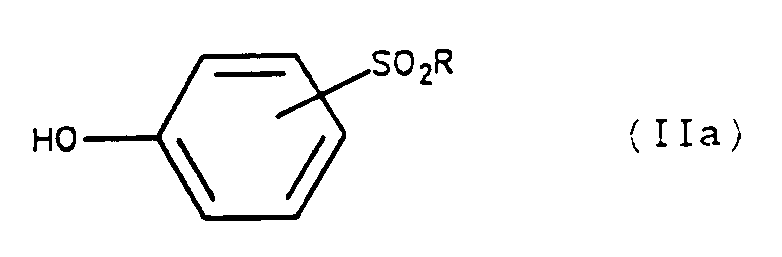

- (ii) soumettre le composé de formule VII ainsi obtenu à un réarrangement de Newmann (J. Org. Chem. (1966) 31, p 3980), par chauffage, pour obtenir un composé de formule :

- (iii) traiter le composé de formule VIII ainsi obtenu par un alcoolate métallique, de préférence le méthanolate de sodium ou de magnésium, dans un alcool inférieur en C₁-C₄, de préférence le méthanol, le diméthylformamide ou le dioxanne pour obtenir un composé de formule II où X = S.
- (i) to condense, in a strong basic medium, the dimethyl-amino-thiocarbamoyl chloride, of formula:
- (ii) subjecting the compound of formula VII thus obtained to a rearrangement of Newmann (J. Org. Chem. (1966) 31, p 3980), by heating, to obtain a compound of formula:
- (iii) treating the compound of formula VIII thus obtained with a metal alcoholate, preferably sodium or magnesium methanolate, in a lower C₁-C₄ alcohol, preferably methanol, dimethylformamide or dioxane to obtain a compound of formula II where X = S.
On peut également accéder aux composés intermédiaires de formule II où X = S par substitution nucléophile d'un composé halogénobenzène approprié selon la méthode décrite par L. TESTAFERRI dans Tetrahedron Letters Vol. 21 p.3099-3100 (1980).It is also possible to access the intermediate compounds of formula II where X = S by nucleophilic substitution of an appropriate halobenzene compound according to the method described by L. TESTAFERRI in Tetrahedron Letters Vol. 21 p.3099-3100 (1980).
Certains composés intermédiaires de formule II où X = S sont des composés nouveaux.Certain intermediate compounds of formula II where X = S are new compounds.
Les composés de formule :
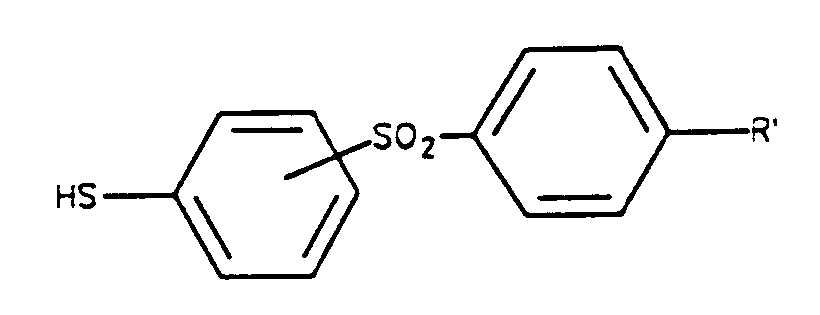
dans laquelle :
- R′ représente un atome de fluor, un atome de brome ou un groupe cyano, constituent donc un des objets de l'invention.
in which :
- R ′ represents a fluorine atom, a bromine atom or a cyano group, therefore constitute one of the objects of the invention.
Selon l'invention, on propose une composition thérapeutique caractérisée en ce qu'elle renferme, en association avec un excipient physiologiquement acceptable, au moins un composé choisi parmi l'ensemble constitué par les produits de formule I. Bien entendu, dans une telle composition l'ingrédient actif intervient en quantité thérapeutiquement efficace.According to the invention, a therapeutic composition is proposed, characterized in that it contains, in association with a physiologically acceptable excipient, at least one compound chosen from the group consisting of the products of formula I. Of course, in such a composition the active ingredient intervenes in a therapeutically effective amount.
Les composés de formule I sont utiles en thérapeutique en tant qu'agents antithrombotiques. Ils sont notamment utiles dans la prévention et le traitement des troubles de la circulation veineuse.The compounds of formula I are useful in therapy as antithrombotic agents. They are particularly useful in the prevention and treatment of disorders of the venous circulation.
Selon l'invention, on préconise l'utilisation d'une substance appartenant à l'ensemble des composés de formule I pour l'obtention d'un médicament antithrombotique destiné à une utilisation thérapeutique vis-vis des troubles de la circulation veineuse.According to the invention, the use of a substance belonging to all of the compounds of formula I is recommended for obtaining an antithrombotic medicament intended for therapeutic use with respect to disorders of the venous circulation.
D'autres caractéristiques et avantages de l'invention seront mieux compris à la lecture qui va suivre, d'exemples de préparation, nullement limitatifs, donnés à titre d'illustration, et de résultats d'essais pharmacologiques.Other characteristics and advantages of the invention will be better understood on reading which follows, of examples of preparation, in no way limiting, given by way of illustration, and of results of pharmacological tests.
Dans les exemples de préparation qui suivent, les composés ont été nommés en précisant la configuration α ou β quand ladite configuration a été déterminée. Lorsque la configuration n'est pas indiquée, cela signifie que le produit correspondant est un mélange anomérique des configurations α et β dans des proportions qui n'ont pas été déterminées.In the examples of preparation which follow, the compounds have been named while specifying the α or β configuration when said configuration has been determined. When the configuration is not indicated, this means that the corresponding product is an anomeric mixture of the configurations α and β in proportions which have not been determined.
1,25 g de thiométhanolate de sodium sont additionnés sous atmosphère d'azote à une solution de 15 g (0,0593 mole) de 1-chloro-4-(phénylsulfonyl)-benzène dans 150 ml d'hexaméthyl phosphoramide. Le mélange obtenu est chauffé pendant 4 heures à 100°C puis, après refroidissement, hydrolysé sur un mélange glace/eau. Le milieu réactionnel obtenu est extrait à l'acétate d'éthyle puis la phase aqueuse obtenue est versée sur une solution d'acide chlorhydrique 4N à 0°C. Le produit formé précipite. Après filtration, lavage à l'eau jusqu'à pH neutre et séchage, on obtient 13,44 g (rendement : 90,5 %) du produit attendu.
F = 117°C1.25 g of sodium thiomethanolate are added under a nitrogen atmosphere to a solution of 15 g (0.0593 mole) of 1-chloro-4- (phenylsulfonyl) -benzene in 150 ml of hexamethyl phosphoramide. The mixture obtained is heated for 4 hours at 100 ° C. and then, after cooling, hydrolyzed on an ice / water mixture. The reaction medium obtained is extracted with ethyl acetate then the aqueous phase obtained is poured onto a 4N hydrochloric acid solution at 0 ° C. The product formed precipitates. After filtration, washing with water until neutral pH and drying, 13.44 g (yield: 90.5%) of the expected product are obtained.
F = 117 ° C
10,6 g de cyanure mercurique (Hg(CN)₂) sont additionnés sous azote à une solution de 10 g (0,0399 mole) de 1-mercapto-4-(phénylsulfonyl)benzène dans 300 ml d'un mélange toluène/nitrométhane 1/1 (v/v), puis le mélange obtenu est agité 1 heure à 40-45°C. On observe une précipitation. 17,7 g (0,0498 mole) de 2,3,4-tri-O-acétyl-1-bromo-5-thio-β-D-xylopyranoside sont ensuite ajoutés au mélange. Après 3,5 h d'agitation à 40-45°C le milieu réactionnel devient limpide. La phase organique obtenue après refroidissement est lavée successivement à l'aide d'une solution d'acide chlorhydrique 1N à 0°C, d'une solution de soude 1N à 0°C, à l'eau puis à l'aide d'une solution saturée de chlorure de sodium. On obtient après évaporation des solvants 24 g d'une mousse jaune qui cristallise par addition d'éther. On obtient finalement 8,6 g du produit attendu (rendement : 41 %).
F = 159°C
[α]D²³ = + 58,2° (c = 0,5 ; CHCl₃)10.6 g of mercuric cyanide (Hg (CN) ₂) are added under nitrogen to a solution of 10 g (0.0399 mole) of 1-mercapto-4- (phenylsulfonyl) benzene in 300 ml of a toluene / nitromethane 1/1 (v / v), then the mixture obtained is stirred for 1 hour at 40-45 ° C. There is precipitation. 17.7 g (0.0498 mole) of 2,3,4-tri-O-acetyl-1-bromo-5-thio-β-D-xylopyranoside are then added to the mixture. After 3.5 h of stirring at 40-45 ° C the reaction medium becomes clear. The organic phase obtained after cooling is washed successively using a 1N hydrochloric acid solution at 0 ° C, a 1N sodium hydroxide solution at 0 ° C, with water and then using a saturated solution of sodium chloride. After evaporation of the solvents, 24 g of a yellow foam are obtained which crystallizes on addition of ether. 8.6 g of the expected product are finally obtained (yield: 41%).
F = 159 ° C
[α] D ²³ = + 58.2 ° (c = 0.5; CHCl₃)
0,35 cm³ de méthylate de sodium en solution dans le méthanol (3,5 molaire) sont ajoutés à une suspension de 6,5 g de 4-(phénylsulfonyl)phényl 2,3,4-tri-O-acétyl 1,5-dithio-β-D-xylopyranoside dans 150 ml de méthanol. Le mélange obtenu est agité à température ambiante pendant 1,5 h sous azote, puis 250 cm³ de tétrahydrofurane sont ajoutés. On obtient une solution limpide avant d'additionner de la résine AmberliteR IR 120 H⁺ jusqu'à pH 6. On filtre et évapore les solvants sous pression réduite. Après recristallisation dans un mélange méthanol/eau 50/50 (v/v) puis dissolution dans un mélange éthanol/eau 50/50 (v/v) et lyophilisation, on obtient 3,3 g du produit attendu (rendement : 67 %).
F = plage de fusion de 85°C à 97°C
[α]D²³ = + 44,8° (c = 0,42 ; diméthylsulfoxyde)0.35 cm³ of sodium methylate in solution in methanol (3.5 molar) are added to a suspension of 6.5 g of 4- (phenylsulfonyl) phenyl 2,3,4-tri-O-acetyl 1,5 -dithio-β-D-xylopyranoside in 150 ml of methanol. The mixture obtained is stirred at room temperature for 1.5 h under nitrogen, then 250 cm³ of tetrahydrofuran are added. A clear solution is obtained before adding Amberlite R IR 120 H⁺ resin to pH 6. The solvents are filtered and evaporated under reduced pressure. After recrystallization from a methanol / water mixture 50/50 (v / v) then dissolution in an ethanol / water mixture 50/50 (v / v) and lyophilization, 3.3 g of the expected product are obtained (yield: 67%) .
F = melting range from 85 ° C to 97 ° C
[α] D ²³ = + 44.8 ° (c = 0.42; dimethyl sulfoxide)
Une solution de 5 g (0,0246 mole) de 1-bromo-2-(méthylthio)-benzène dans 10 ml de méthanol est refroidie à 0°C sous atmosphère d'azote puis 1,27 g d'acide 3-chloroperoxybenzoïque (MCPBA) à 50 % sont ajoutés. L'agitation à 0°C est maintenue pendant 45 minutes puis 6 g de fluorure de potassium sont additionnés et l'hydrolyse est poursuivie pendant 12 heures. Le milieu obtenu est filtré sur CéliteR, puis le produit obtenu après évaporation des solvants est purifié par "flash chromatography" en éluant avec un mélange toluène/acétate d'éthyle 95/5 (v/v). On obtient 5,63 g (rendement : 97 %) du produit attendu.
F = 98°CA solution of 5 g (0.0246 mole) of 1-bromo-2- (methylthio) -benzene in 10 ml of methanol is cooled to 0 ° C under a nitrogen atmosphere then 1.27 g of 3-chloroperoxybenzoic acid (MCPBA) at 50% are added. Stirring at 0 ° C. is maintained for 45 minutes then 6 g of potassium fluoride are added and the hydrolysis is continued for 12 hours. The medium obtained is filtered through Celite R , then the product obtained after evaporation of the solvents is purified by "flash chromatography", eluting with a toluene / ethyl acetate mixture 95/5 (v / v). 5.63 g is obtained (yield: 97%) of the expected product.
F = 98 ° C
En opérant de façon analogue à la préparation I a) on obtient le produit attendu.
F = 57°C.By following a procedure analogous to preparation I a) the expected product is obtained.
Mp 57 ° C.
8,43 g (0,0251 mole) de 1-bromo-2,3,4-tri-O-acétyl-5-thio-β-D-xylopyranoside sont ajoutés à un mélange de 4,3 g (0,0228 mole) de 1-mercapto-2-(méthylsulfonyl)-benzène et de 1,95 g d'oxyde de zinc dans 90 ml de toluène/acétonitrile 1/1 (v/v) et le mélange obtenu est chauffé à 45°C pendant 2 heures. Le milieu obtenu est filtré sur CéliteR puis la phase organique est lavée au moyen d'une solution d'HCl 1N, d'une solution de soude 1N, puis à l'eau jusqu'à pH neutre. Après évaporation des solvants sous pression réduite on obtient une huile qui cristallise par addition d'éther. Les 5,33 g de produit cristallisé obtenus sont ensuite purifiés par "flash chromatography" en éluant avec un mélange toluène/acétate d'éthyle 8/2 (v/v). On obtient 4,35 g (rendement : 41 %) du produit attendu.
F = 209°C
[α]D²⁰ = + 38,4° (c = 0,5 ; CHCl₃)8.43 g (0.0251 mole) of 1-bromo-2,3,4-tri-O-acetyl-5-thio-β-D-xylopyranoside are added to a mixture of 4.3 g (0.0228 mole) of 1-mercapto-2- (methylsulfonyl) -benzene and 1.95 g of zinc oxide in 90 ml of toluene / acetonitrile 1/1 (v / v) and the mixture obtained is heated at 45 ° C for 2 hours. The medium obtained is filtered through Celite R then the organic phase is washed with a 1N HCl solution, a 1N sodium hydroxide solution, then with water until neutral pH. After evaporation of the solvents under reduced pressure, an oil is obtained which crystallizes on addition of ether. The 5.33 g of crystallized product obtained are then purified by "flash chromatography", eluting with a toluene / ethyl acetate 8/2 (v / v) mixture. 4.35 g are obtained (yield: 41%) of the expected product.
F = 209 ° C
[α] D ²⁰ = + 38.4 ° (c = 0.5; CHCl₃)
En opérant de façon analogue à la préparation I c) on obtient le produit attendu.
F = 139°C
[α]D²⁰ = + 38,8° (c = 0,5 ; CH₃OH)By following a procedure analogous to preparation I c) the expected product is obtained.
F = 139 ° C
[α] D ²⁰ = + 38.8 ° (c = 0.5; CH₃OH)
En opérant de façon analogue à la préparation II c) on obtient une huile incolore qui cristallise dans l'éther.
F = 105-110°C
[α]D²⁰ = + 71° (c = 0,5 ; CHCl₃)By following a procedure analogous to preparation II c) a colorless oil is obtained which crystallizes from ether.
F = 105-110 ° C
[α] D ²⁰ = + 71 ° (c = 0.5; CHCl₃)
En opérant de façon analogue à la préparation I c) on obtient le produit attendu après recristallisation dans un mélange méthanol/éthanol.
F > 250°C
[α]D²⁰ = + 19,2° (c = 0,5 ; CH₂Cl₂;CH₃OH 1/1 (v/v))By following a procedure analogous to Preparation I c) the expected product is obtained after recrystallization from a methanol / ethanol mixture.
F> 250 ° C
[α] D ²⁰ = + 19.2 ° (c = 0.5; CH₂Cl₂; CH₃OH 1/1 (v / v))
Un mélange de 2 g (0,012 mole) de 1-hydroxy-4-(méthylsulfonyl)benzène, de 3,17 g de chlorure de zinc (ZnCl₂), de 4,5 g (0,013 mole) de 1-bromo-2,3,4-tri-O-acétyl-5-thio-β-D-xylopyranoside et de 3,1 g (0,0177 mole) d'imidazolate d'argent (C₃H₃AgN₂) dans 70 ml de chlorure de méthylène est chauffé pendant 20 heures à 50°C. Après refroidissement le milieu réactionnel est filtré puis la phase organique obtenue est lavée successivement au moyen d'une solution d'acide chlorhydrique 1N, d'eau et d'une solution de soude 1N puis le solvant est évaporé sous pression réduite. On obtient après purification par "flash chromatography" en éluant avec un mélange toluène/acétate d'éthyle 3/1 (v/v) puis précipitation dans l'éther éthylique 1,1 g du produit attendu (rendement : 21,2 %).
F = 168°C
[α]D²² = - 75° (c = 0,6 ; CHCl₃)A mixture of 2 g (0.012 mole) of 1-hydroxy-4- (methylsulfonyl) benzene, 3.17 g of zinc chloride (ZnCl₂), 4.5 g (0.013 mole) of 1-bromo-2, 3,4-tri-O-acetyl-5-thio-β-D-xylopyranoside and 3.1 g (0.0177 mol) of silver imidazolate (C₃H₃AgN₂) in 70 ml of methylene chloride is heated for 20 hours at 50 ° C. After cooling, the reaction medium is filtered and the organic phase obtained is washed successively using a 1N hydrochloric acid solution, water and a 1N sodium hydroxide solution, then the solvent is evaporated off under reduced pressure. Obtained after purification by "flash chromatography", eluting with a toluene / ethyl acetate 3/1 (v / v) mixture then precipitation in ethyl ether 1.1 g of the expected product (yield: 21.2%) .
F = 168 ° C
[α] D ²² = - 75 ° (c = 0.6; CHCl₃)
En opérant de façon analogue à la préparation I c) on obtient le produit attendu après lyophilisation.
F = 180°C
[α]D²² = - 77,2° (c = 0,5 ; CH₃OH)By following a procedure analogous to preparation I c) the expected product is obtained after lyophilization.
F = 180 ° C
[α] D ²² = - 77.2 ° (c = 0.5; CH₃OH)
En opérant de façon analogue à la préparation I a) on obtient le produit attendu sous forme d'huile.
nD²⁴ = 1,5891By following a procedure analogous to preparation I a) the expected product is obtained in the form of an oil.
n D ²⁴ = 1.5891
En opérant de façon analogue à la préparation I b) on obtient le produit attendu.
F = 136-137°C
[α]D²³ = + 36,7° (c = 0,45 ; CHCl₃)By following a procedure analogous to preparation I b) the expected product is obtained.
M = 136-137 ° C
[α] D ²³ = + 36.7 ° (c = 0.45; CHCl₃)
En opérant de façon analogue à la préparation I c) on obtient le produit attendu.
F = 130-135°C
[α]D²³ = + 26,8° (c = 0,485 ; méthanol)By following a procedure analogous to preparation I c) the expected product is obtained.
F = 130-135 ° C
[α] D ²³ = + 26.8 ° (c = 0.485; methanol)
En opérant de façon analogue à la préparation II c) on obtient le produit attendu.
F = 147-150°C
[α]D²¹ = - 10,5° (c = 0,3 ; CHCl₃)By following a procedure analogous to preparation II c) the expected product is obtained.
F = 147-150 ° C
[α] D ²¹ = - 10.5 ° (c = 0.3; CHCl₃)
En opérant de façon analogue à la préparation I c) on obtient le produit attendu.
F = 169-172°C
[α]D²² = - 12,2° (c = 0,45 ; diméthylsulfoxyde)By following a procedure analogous to preparation I c) the expected product is obtained.
F = 169-172 ° C
[α] D ²² = - 12.2 ° (c = 0.45; dimethyl sulfoxide)
A une suspension de 1 g (0,00398 mole) de 4-[(4-fluorophényl)sulfonyl]-benzènamine dans une solution d'acide chlorhydrique (1,68 ml d'acide chlorhydrique concentré dans 5 ml d'eau) à -5°C, on ajoute une solution de nitrite de sodium (302 mg dans 1 ml d'eau). Après 5 minutes sous agitation, cette solution est ajoutée goutte à goutte à une solution de 2,47 g de xanthate d'éthyle potassium dans 5 ml d'eau à 70°C. Le mélange réactionnel est dilué au moyen d'acétate d'éthyle. La phase organique est lavée au moyen d'une solution de soude 1N, d'une solution saturée de chlorure de sodium puis séchée sur sulfate de magnésium. Après évaporation des solvants, le résidu est repris dans 15 ml d'éthanol. On ajoute 1,47 g de potasse et on chauffe à 45°C pendant 10 minutes. Le mélange réactionnel est ensuite versé sur une solution aqueuse glacée et partiellement purifié par extraction à l'acétate d'éthyle. La phase aqueuse, refroidie avec de la glace, est rendue acide par addition d'acide chlorhydrique concentré puis extraite à l'acétate d'éthyle. La phase organique est séchée sur sulfate de magnésium et les solvants sont évaporés à sec. On obtient ainsi 640 mg (rendement : 60 %) du produit attendu.
F = 116°CTo a suspension of 1 g (0.00398 mole) of 4 - [(4-fluorophenyl) sulfonyl] -benzenamine in a solution of hydrochloric acid (1.68 ml of concentrated hydrochloric acid in 5 ml of water) at -5 ° C, a solution of sodium nitrite (302 mg in 1 ml of water) is added. After 5 minutes with stirring, this solution is added dropwise to a solution of 2.47 g of ethyl potassium xanthate in 5 ml of water at 70 ° C. The reaction mixture is diluted with ethyl acetate. The organic phase is washed using a 1N sodium hydroxide solution, a saturated solution of sodium chloride and then dried over magnesium sulfate. After evaporation of the solvents, the residue is taken up in 15 ml of ethanol. 1.47 g of potassium hydroxide are added and the mixture is heated at 45 ° C for 10 minutes. The reaction mixture is then poured onto an ice-cold aqueous solution and partially purified by extraction with ethyl acetate. The aqueous phase, cooled with ice, is made acidic by addition of concentrated hydrochloric acid and then extracted with ethyl acetate. The organic phase is dried over magnesium sulfate and the solvents are evaporated to dryness. 640 mg (yield: 60%) of the expected product are thus obtained.
F = 116 ° C
En opérant de façon analogue à la préparation II c) on obtient le produit attendu.
F = 80°C
[α]D²¹ = + 48,4° (c = 0,5 ; CHCl₃).By following a procedure analogous to preparation II c) the expected product is obtained.
F = 80 ° C
[α] D ²¹ = + 48.4 ° (c = 0.5; CHCl₃).
En opérant de façon analogue à la préparation I c) on obtient le produit attendu.
F = 136-138°C
[α]D²¹ = + 40° (c = 0,5 ; diméthylsulfoxyde).By following a procedure analogous to preparation I c) the expected product is obtained.
F = 136-138 ° C
[α] D ²¹ = + 40 ° (c = 0.5; dimethyl sulfoxide).
Dans un mélange de 120 ml d'éthanol et 12 ml d'eau on ajoute 6 g (0,0248 mole) de 4-[(4-méthoxyphényl)thio]-benzonitrile puis 18,45 g de monoperoxyphtalate de magnésium hexahydraté. Le milieu réactionnel est maintenu à 40°C pendant 20 minutes. Après hydrolyse sur de l'eau glacée, la solution est filtrée et le solide blanc est lavé à l'eau. On obtient ainsi 5,2 g (rendement : 77 %) du produit attendu.
F = 135°C6 g (0.0248 mol) of 4 - [(4-methoxyphenyl) thio] -benzonitrile and then 18.45 g of magnesium monoperoxyphthalate hexahydrate are added to a mixture of 120 ml of ethanol and 12 ml of water. The reaction medium is maintained at 40 ° C for 20 minutes. After hydrolysis on ice water, the solution is filtered and the white solid is washed with water. 5.2 g are thus obtained (yield: 77%) of the expected product.
F = 135 ° C
Un mélange de 5,12 g (0,0187 mole) de 4-[(4-méthoxyphényl)sulfonyl]benzonitrile et de 21,6 g de chlorhydrate de pyridinium est maintenu à 200°C pendant 2 heures. Après refroidissement, le milieu réactionnel est hydrolysé sur une solution d'acide chlorhydrique 1N. Le précipité formé est filtré, rincé au moyen d'une solution d'acide chlorhydrique 1N puis au moyen d'eau jusqu'à pH neutre. On obtient ainsi 4,5 g (rendement : 99 %) du produit attendu sous forme de solide gris.
F = 177°CA mixture of 5.12 g (0.0187 mole) of 4 - [(4-methoxyphenyl) sulfonyl] benzonitrile and 21.6 g of pyridinium hydrochloride is kept at 200 ° C for 2 hours. After cooling, the reaction medium is hydrolyzed on a 1N hydrochloric acid solution. The precipitate formed is filtered, rinsed with a 1N hydrochloric acid solution and then with water until neutral pH. 4.5 g (yield: 99%) of the expected product are thus obtained in the form of a gray solid.
F = 177 ° C
A une solution de 570 mg de potasse dans 35 ml d'eau on ajoute 2,36 g (0,0097 mole) de 4-[(4-hydroxyphényl)sulfonyl]-benzonitrile. La solution est maintenue 15 minutes à température ambiante. Après refroidissement à 0°C on ajoute, goutte à goutte, une solution de 1,38 g de chlorure de N,N-diméthylthiocarbamoyle dans 35 ml d'acétone. Après 4 heures le mélange réactionnel est hydrolysé sur une solution d'acide chlorhydrique 1N. La solution est extraite à l'acétate d'éthyle. La phase organique est lavée à l'eau jusqu'à pH neutre, séchée sur sulfate de magnésium et concentrée à sec. On obtient ainsi 3 g (rendement : 100 %) du produit attendu.
F = 158-167°CTo a solution of 570 mg of potassium hydroxide in 35 ml of water is added 2.36 g (0.0097 mole) of 4 - [(4-hydroxyphenyl) sulfonyl] -benzonitrile. The solution is kept for 15 minutes at room temperature. After cooling to 0 ° C., a solution of 1.38 g of N, N-dimethylthiocarbamoyl chloride in 35 ml of acetone is added dropwise. After 4 hours the reaction mixture is hydrolyzed on a solution of 1N hydrochloric acid. The solution is extracted with ethyl acetate. The organic phase is washed with water until neutral pH, dried over magnesium sulfate and concentrated to dryness. 3 g (yield: 100%) of the expected product are thus obtained.
F = 158-167 ° C
3 g (0,0096 mole) de diméthylthiocarbamate de O-[4-((4-cyanophényl)sulfonyl)phényle] sont maintenus à 200°C pendant 30 minutes. Après chromatographie sur gel de silice en éluant au moyen d'un mélange toluène/acétate d'éthyle 8/2 (v/v) on obtient 2,29 g (rendement : 76 %) du produit attendu.
F = 140°C3 g (0.0096 mol) of O- [4 - (((4-cyanophenyl) sulfonyl) phenyl] dimethylthiocarbamate) are kept at 200 ° C. for 30 minutes. After chromatography on silica gel, eluting with a toluene / ethyl acetate mixture 8/2 (v / v), 2.29 g (yield: 76%) of the expected product are obtained.
F = 140 ° C
A une solution de 2,25 g (0,0075 mole) de diméthylthiocarbamate de S-[4-((4-cyanophényl) sulfonyl)phényle] dans 45 ml de N,N-diméthylformamide à 0°C, on ajoute 4,1 ml de méthanolate de sodium (8 % de Na (p/v) dans le méthanol). Le mélange réactionnel est ensuite hydrolysé sur une solution glacée d'acide chlorhydrique 1N. Après filtration, le précipité formé est lavé à l'eau puis séché. On obtient ainsi 1,54 g (rendement : 78 %) du produit attendu.
F = 166°CTo a solution of 2.25 g (0.0075 mol) of S- [4 - (((4-cyanophenyl) sulfonyl) phenyl]] dimethylthiocarbamate in 45 ml of N, N-dimethylformamide at 0 ° C., 4 is added, 1 ml of sodium methanolate (8% Na (w / v) in methanol). The reaction mixture is then hydrolyzed on an ice-cold solution of 1N hydrochloric acid. After filtration, the precipitate formed is washed with water and then dried. 1.54 g are thus obtained (yield: 78%) of the expected product.
F = 166 ° C
En opérant de façon analogue à la préparation I b) on obtient le produit attendu.
F = 194-195°C
[α]D²⁰ = + 51° (c = 0,5 ; CHCl₃)By following a procedure analogous to preparation I b) the expected product is obtained.
F = 194-195 ° C
[α] D ²⁰ = + 51 ° (c = 0.5; CHCl₃)
En opérant de façon analogue à la préparation I c) on obtient le produit attendu.
F = 175-183°C
[α]D²⁰ = + 58,6° (c = 0,5 diméthylsulfoxyde).By following a procedure analogous to preparation I c) the expected product is obtained.
M = 175-183 ° C
[α] D ²⁰ = + 58.6 ° (c = 0.5 dimethylsulfoxide).
En opérant de façon analogue à la préparation I b) on obtient le produit attendu.
F = 120°C
[α]D²⁰ = + 35,4° (c = 0,56 ; CHCl₃)By following a procedure analogous to preparation I b) the expected product is obtained.
F = 120 ° C
[α] D ²⁰ = + 35.4 ° (c = 0.56; CHCl₃)
En opérant de façon analogue à la préparation I c) on obtient le produit attendu.
F = 208-213°C
[α]D²⁴ = + 21,4° (c = 0,42 ; diméthylsulfoxyde).By following a procedure analogous to preparation I c) the expected product is obtained.
F = 208-213 ° C
[α] D ²⁴ = + 21.4 ° (c = 0.42; dimethyl sulfoxide).
En opérant de façon analogue à la préparation IV a) on obtient le produit attendu.
F = 85°C puis 164-167°C (double point de fusion)
[α]D²⁵ = - 57,6° (c = 0,33 ; CHCl₃)By following a procedure analogous to preparation IV a) the expected product is obtained.
F = 85 ° C then 164-167 ° C (double melting point)
[α] D ²⁵ = - 57.6 ° (c = 0.33; CHCl₃)
En opérant de façon analogue à la préparation I c) on obtient le produit attendu.
F = 205°C
[α]D²¹ = - 70,4° (c = 0,27 ; méthanol)By following a procedure analogous to preparation I c) the expected product is obtained.
F = 205 ° C
[α] D ²¹ = - 70.4 ° (c = 0.27; methanol)
En opérant de façon analogue à la préparation I a) on obtient le produit attendu.
F = 93°CBy following a procedure analogous to preparation I a) the expected product is obtained.
F = 93 ° C
En opérant de façon analogue à la préparation I b) on obtient le produit attendu.
F = 175-180°C
[α]D²² = + 39,8° (c = 0,425 ; CHCl₃)By following a procedure analogous to preparation I b) the expected product is obtained.
F = 175-180 ° C
[α] D ²² = + 39.8 ° (c = 0.425; CHCl₃)
En opérant de façon analogue à la préparation I c) on obtient le produit attendu.
F= 145-149°C
[α]D²² = + 23,8° (c = 0,21 ; méthanol)By following a procedure analogous to preparation I c) the expected product is obtained.
M = 145-149 ° C
[α] D ²² = + 23.8 ° (c = 0.21; methanol)
En opérant de façon analogue à la préparation I a) on obtient le produit attendu.
F = 128°CBy following a procedure analogous to preparation I a) the expected product is obtained.
F = 128 ° C
En opérant de façon analogue à la préparation I b) on obtient le produit attendu.
F = 120-123°C
[α]D²² = + 39° (c = 0,39 ; CHCl₃)By following a procedure analogous to preparation I b) the expected product is obtained.
F = 120-123 ° C
[α] D ²² = + 39 ° (c = 0.39; CHCl₃)
En opérant de façon analogue à la préparation I c) on obtient le produit attendu.
F = 90-105°C
[α]D²² = + 20,4° (c = 0,56 ; diméthylsulfoxyde) De façon non limitative, on a consigné les composés suivant l'invention dans le tableau I donné ci-après.By following a procedure analogous to preparation I c) the expected product is obtained.
F = 90-105 ° C
[α] D ²² = + 20.4 ° (c = 0.56; dimethyl sulfoxide) In a nonlimiting manner, the compounds according to the invention have been recorded in Table I given below.
L'activité anti-thrombotique des produits selon l'invention a été mise en évidence selon le protocole opératoire de thrombose veineuse suivant :The anti-thrombotic activity of the products according to the invention has been demonstrated according to the following venous thrombosis operating protocol:
On réalise une stase veineuse sous hypercoagulation selon la technique décrite par WESSLER et al. (J. Applied Physiol. 1959, p. 943-946) L'agent hypercoagulant utilisé est, comme dans la technique décrite par J. HAUPMAN et al. (Thrombosis and Haemostasis 43 (2) 1980, p. 118), une solution de facteur X activé (Xa) fourni par la société dite Flow Laboratories (71 Knat pour 12,5 ml de sérum physiologique).Venous stasis is performed under hypercoagulation according to the technique described by WESSLER et al. (J. Applied Physiol. 1959, p. 943-946) The hypercoagulant agent used is, as in the technique described by J. HAUPMAN et al. (Thrombosis and Haemostasis 43 (2) 1980, p. 118), a solution of activated factor X (Xa) supplied by the company called Flow Laboratories (71 Knat for 12.5 ml of physiological saline).
L'étude est réalisée sur des rats mâles Wistar, non à jeûn, de 250 à 280 g répartis en lots de 10 animaux chacun. Les produits à tester sont administrés per os, en suspension dans le PEG 400. Une thrombose est induite 4 heures après ce traitement et le thrombus formé est prélevé et pesé.The study is carried out on male Wistar rats, not fasted, of 250 to 280 g divided into batches of 10 animals each. The products to be tested are administered per os, suspended in PEG 400. Thrombosis is induced 4 hours after this treatment and the thrombus formed is removed and weighed.
Les résultats obtenus à la dose de 3 mg/kg p.o. ont été consignés dans le tableau I. On a également consigné dans ce tableau les résultats obtenus avec les produits connus de l'art antérieur précité.


Claims (8)
- An oside compound selected from the group consisting of the sulfonylphenyl-β-D-thioxylosides of the formula
 - X is a sulfur atom or an oxygen atom ;- R is a C₁-C₄ alkyl group, a substituted amino group NR₁R₂, wherein R₁ and R₂, which are identical or different, are each a C₁-C₄ alkyl group, it being possible for R₁ and R₂, taken together, to form a piperidinyl or morpholinyl group with the nitrogen atom to which they are bonded, or a phenyl group which is unsubstituted or substituted in the para position by a cyano group or by a halogen atom ; and,- Y is the hydrogen atom or an aliphatic acyl group.
 - An oside compound according to claim 1, wherein X is the sulfur atom.
- An oside compound according to claim 1 or claim 2, wherein the aliphatic acyl group Y contains from 2 to 5 carbon atoms and is especially the group CH₃CO.
- A therapeutic composition containing, in association with a physiologically acceptable excipient, at least one oside compound according to any one of claims 1 to 3.
- A use of an oside compound of the formula I according to any one of claims 1 to 3 for the obtention of an antithrombotic drug destined to a therapeutical use vis-a-vis disorders of the venous circulation.
- A method of preparing a sulfonylphenyl-β-D-thioxyloside of formula I according to claim 1, which comprises(i) reacting a compound of the formula
 (i) the acylthioxylosyl halides of the formula
 (ii) the peracylated thioxyloses of the formula
 (iii) the acylthioxylosyl trichloroacetimidates of the formulain an inert solvent, at a rate of 1 mol of II to about 0.6 to 1.2 mol of compound III, IV or V, in the presence of an acid acceptor and/or a Lewis acid, and
 (ii) if necessary, subjecting the resulting compound of formula I in which Y is a C₂-C₅ aliphatic acyl group to a deacylation reaction at a temperature of between 0°C and the reflux temperature of the reaction medium, in a C₁-C₄ lower alcohol, preferably methanol, in the presence of a metal alcoholate, preferably magnesium methylate or sodium methylate, to give a compound of formula I in which Y is H.
 - A method according to claim 6, which is further characterized by the fact that the compound of formula II in which X is the sulfur atom, involved in stage (i), is prepared according to the following steps :a) condensation of dimethylaminothiocarbamoyl chloride of the formula


 b) rearrangement of the resulting compound of formula VII, by heating, to give a compound of the formula
 c) treatment of the resulting compound of formula VIII with a metal alcoholate, preferably sodium or magnesium methylate, in a C₁-C₄ lower alcohol, dimethylformamide or dioxane, to give a compound of formula II in which X = S.
 - A novel intermediate compound involved in the synthesis of the sulfonylphenyl-β-D-thioxylosides of formula I in which X is the sulfur atom, according to claim 2, selected from the group consisting of the compounds of the formula
 - R' is a fluorine atom, a bromine atom or a cyano group.
Applications Claiming Priority (2)
| Application Number | Priority Date | Filing Date | Title |
|---|---|---|---|
| FR9004173 | 1990-04-02 | ||
| FR9004173A FR2660313B1 (en) | 1990-04-02 | 1990-04-02 | NEW SULFONYL-PHENYL-BETHA-D-THIOXYLOSIDES, THEIR PREPARATION PROCESS AND THEIR USE IN THERAPEUTICS. |
Publications (2)
| Publication Number | Publication Date |
|---|---|
| EP0451007A1 EP0451007A1 (en) | 1991-10-09 |
| EP0451007B1 true EP0451007B1 (en) | 1995-11-08 |
Family
ID=9395342
Family Applications (1)
| Application Number | Title | Priority Date | Filing Date |
|---|---|---|---|
| EP91400750A Expired - Lifetime EP0451007B1 (en) | 1990-04-02 | 1991-03-20 | Sulphonylphenyl-beta-D-thioxylosides, process for their preparation and their use in therapy |
Country Status (25)
| Country | Link |
|---|---|
| US (1) | US5100913A (en) |
| EP (1) | EP0451007B1 (en) |
| JP (1) | JP2670195B2 (en) |
| KR (1) | KR970001534B1 (en) |
| CN (1) | CN1026323C (en) |
| AT (1) | ATE130007T1 (en) |
| AU (1) | AU632411B2 (en) |
| CA (1) | CA2039249C (en) |
| CZ (1) | CZ284579B6 (en) |
| DE (1) | DE69114337T2 (en) |
| DK (1) | DK0451007T3 (en) |
| ES (1) | ES2081447T3 (en) |
| FI (1) | FI102477B1 (en) |
| FR (1) | FR2660313B1 (en) |
| GR (1) | GR3018929T3 (en) |
| HU (1) | HU215596B (en) |
| IE (1) | IE70911B1 (en) |
| IL (1) | IL97733A (en) |
| NO (1) | NO174104C (en) |
| NZ (1) | NZ237633A (en) |
| PT (1) | PT97212B (en) |
| RU (1) | RU2033995C1 (en) |
| TW (1) | TW210342B (en) |
| UA (1) | UA26438A (en) |
| ZA (1) | ZA912175B (en) |
Cited By (1)
| Publication number | Priority date | Publication date | Assignee | Title |
|---|---|---|---|---|
| WO2008037923A1 (en) | 2006-09-27 | 2008-04-03 | Laboratoires Fournier S.A. | New derivatives of 5-thioxilopyranose |
Families Citing this family (5)
| Publication number | Priority date | Publication date | Assignee | Title |
|---|---|---|---|---|
| NZ244301A (en) * | 1991-09-20 | 1994-08-26 | Merck & Co Inc | Preparation of 2-pyridylmethylsulphinylbenzimidazole and pyridoimidazole derivatives from the corresponding sulphenyl compounds |
| HUP9601756A3 (en) * | 1996-06-25 | 1999-05-28 | Richter Gedeon Vegyeszet | New anticoagulant glycosides and pharmaceutical compositions containing them |
| AU2003254903B9 (en) * | 2002-08-09 | 2008-08-21 | Taisho Pharmaceutical Co., Ltd. | Method for selective preparation of aryl 5-thio-beta-D-aldohexopyranosides |
| FR2860234B1 (en) * | 2003-09-25 | 2005-12-23 | Fournier Lab Sa | NEW THIOXYLOSE DERIVATIVES 666 |
| FR2883561B1 (en) * | 2005-03-25 | 2009-03-20 | Fournier S A Sa Lab | NOVEL COMPOUNDS DERIVED FROM 5-THIOXYLOSE AND THEIR THERAPEUTIC USE |
Family Cites Families (2)
| Publication number | Priority date | Publication date | Assignee | Title |
|---|---|---|---|---|
| FR2614893B1 (en) * | 1987-05-04 | 1989-12-22 | Fournier Innovation Synergie | NOVEL B-D-PHENYL-THIOXYLOSIDES, THEIR PREPARATION PROCESS AND THEIR APPLICATION IN THERAPEUTICS |
| IE63544B1 (en) * | 1988-10-18 | 1995-05-17 | Fournier Ind & Sante | Novel Beta-d-phenylthioxylosides their method of preparation and their use in therapy |
-
1990
- 1990-04-02 FR FR9004173A patent/FR2660313B1/en not_active Expired - Fee Related
-
1991
- 1991-03-20 EP EP91400750A patent/EP0451007B1/en not_active Expired - Lifetime
- 1991-03-20 DK DK91400750.5T patent/DK0451007T3/en active
- 1991-03-20 DE DE69114337T patent/DE69114337T2/en not_active Expired - Fee Related
- 1991-03-20 ES ES91400750T patent/ES2081447T3/en not_active Expired - Lifetime
- 1991-03-20 AT AT91400750T patent/ATE130007T1/en not_active IP Right Cessation
- 1991-03-21 TW TW080102211A patent/TW210342B/zh active
- 1991-03-22 NO NO911160A patent/NO174104C/en not_active IP Right Cessation
- 1991-03-22 ZA ZA912175A patent/ZA912175B/en unknown
- 1991-03-25 US US07/674,131 patent/US5100913A/en not_active Expired - Fee Related
- 1991-03-25 FI FI911442A patent/FI102477B1/en active
- 1991-03-27 CA CA002039249A patent/CA2039249C/en not_active Expired - Fee Related
- 1991-03-27 AU AU73835/91A patent/AU632411B2/en not_active Ceased
- 1991-03-28 NZ NZ237633A patent/NZ237633A/en unknown
- 1991-03-28 IE IE104491A patent/IE70911B1/en not_active IP Right Cessation
- 1991-03-29 HU HU911052A patent/HU215596B/en not_active IP Right Cessation
- 1991-03-29 IL IL9773391A patent/IL97733A/en not_active IP Right Cessation
- 1991-04-01 RU SU914895094A patent/RU2033995C1/en active
- 1991-04-01 PT PT97212A patent/PT97212B/en not_active IP Right Cessation
- 1991-04-01 CN CN91102035A patent/CN1026323C/en not_active Expired - Fee Related
- 1991-04-01 UA UA4895094A patent/UA26438A/en unknown
- 1991-04-02 CZ CS91905A patent/CZ284579B6/en not_active IP Right Cessation
- 1991-04-02 JP JP3070120A patent/JP2670195B2/en not_active Expired - Lifetime
- 1991-04-03 KR KR1019910005334A patent/KR970001534B1/en not_active Expired - Fee Related
-
1996
- 1996-02-07 GR GR960400335T patent/GR3018929T3/en unknown
Cited By (1)
| Publication number | Priority date | Publication date | Assignee | Title |
|---|---|---|---|---|
| WO2008037923A1 (en) | 2006-09-27 | 2008-04-03 | Laboratoires Fournier S.A. | New derivatives of 5-thioxilopyranose |
Also Published As
Similar Documents
| Publication | Publication Date | Title |
|---|---|---|
| EP0290321B1 (en) | Beta-d-phenyl-thioxylosides, process for their preparation and their use in therapy | |
| EP0051023A1 (en) | Derivatives of the benzoyl and alpha hydroxybenzyl-phenyl osides family, method for their preparation and their therapeutic application | |
| EP0421829B1 (en) | Benzopyranone-beta-D-thioxylosides, method for their preparation and their use | |
| EP0365397B1 (en) | Beta-D-phenyl thioxylosides, method for their preparation and their use in therapy | |
| EP0001193B1 (en) | Carbocylic amino acids, methods for their preparation and pharmaceutical compositions containing them | |
| EP0133103B1 (en) | Benzyl-phenyl osides, process for their preparation and their use | |
| EP0151072B1 (en) | Derivatives of methylenediphosphonic acid, process for their preparation and antirheumatic pharmaceutical compositions containing them | |
| EP0451007A1 (en) | Sulphonylphenyl-beta-D-thioxylosides, process for their preparation and their use in therapy | |
| HU208830B (en) | Process for producing anti-virus pharmaceutical preparatives containing phospholididic derivatives | |
| EP0576347A1 (en) | Hydroxy-4-benzenethio derivatives, their preparation as well as their use for the preparation of aminoalkoxybenzenesulfonyle derivatives | |
| BE897617A (en) | ACETYLSALICYLIC ACID THIOESTERS PROCESS FOR THEIR PREPARATION AND PHARMACEUTICAL COMPOSITIONS CONTAINING THE SAME | |
| EP0376850A1 (en) | Benzene derivates, their preparation and pharmaceutical compositions containing them | |
| EP1090017B1 (en) | Novel compounds derived from alpha-d-xylose, preparation method and therapeutic use | |
| EP0327455A1 (en) | Alkyl or benzyl ethers of phenol, processes for their preparation and their therapeutical use | |
| FR2688221A1 (en) | Estratrienol- beta -D-thioxylosides, process for preparing them and their therapeutic use | |
| FR2659659A1 (en) | New benzopyran-4-one-beta-d-thioxylosides, process for preparing them and their therapeutic use | |
| LU87900A1 (en) | NOVEL DERIVATIVES OF 5-PHENYL-1H-PYRAZOLE-4-PROPIONIC ACID, THEIR PREPARATION AND THEIR USE AS MEDICAMENTS | |
| FR2652353A1 (en) | New benzopyran-2-one-ss-D-thioxylosides, process for preparing them and their therapeutic use | |
| FR2638749A1 (en) | New beta -D-phenylthioxylosides, process for preparing them and their therapeutic use | |
| EP1240177B1 (en) | Benzophenone alpha-d-glycopyranosides, preparation and therapeutic use | |
| EP0378941A2 (en) | 2-Deoxyribonucleoside derivatives and their use | |
| FR2694936A1 (en) | Substituted deoxy-myoinositol derivatives, process for their preparation and their use in medicaments | |
| FR2648819A1 (en) | New beta -D-phenylthioxylosides, process for preparing them and their therapeutic use | |
| WO1998042700A1 (en) | N-(arginyl)benzenesulphonamide derivatives and use thereof as antithrombotic agents | |
| WO2001047940A1 (en) | Benzophenone glycopyranosides, preparation and therapeutic use |
Legal Events
| Date | Code | Title | Description |
|---|---|---|---|
| PUAI | Public reference made under article 153(3) epc to a published international application that has entered the european phase |
Free format text: ORIGINAL CODE: 0009012 |
|
| AK | Designated contracting states |
Kind code of ref document: A1 Designated state(s): AT BE CH DE DK ES FR GB GR IT LI LU NL SE |
|
| 17P | Request for examination filed |
Effective date: 19911212 |
|
| 17Q | First examination report despatched |
Effective date: 19941215 |
|
| GRAA | (expected) grant |
Free format text: ORIGINAL CODE: 0009210 |
|
| AK | Designated contracting states |
Kind code of ref document: B1 Designated state(s): AT BE CH DE DK ES FR GB GR IT LI LU NL SE |
|
| REF | Corresponds to: |
Ref document number: 130007 Country of ref document: AT Date of ref document: 19951115 Kind code of ref document: T |
|
| REF | Corresponds to: |
Ref document number: 69114337 Country of ref document: DE Date of ref document: 19951214 |
|
| GBT | Gb: translation of ep patent filed (gb section 77(6)(a)/1977) |
Effective date: 19951216 |
|
| ITF | It: translation for a ep patent filed | ||
| REG | Reference to a national code |
Ref country code: DK Ref legal event code: T3 |
|
| REG | Reference to a national code |
Ref country code: CH Ref legal event code: NV Representative=s name: ROTTMANN, ZIMMERMANN + PARTNER AG |
|
| REG | Reference to a national code |
Ref country code: ES Ref legal event code: FG2A Ref document number: 2081447 Country of ref document: ES Kind code of ref document: T3 |
|
| REG | Reference to a national code |
Ref country code: GR Ref legal event code: FG4A Free format text: 3018929 |
|
| PLBE | No opposition filed within time limit |
Free format text: ORIGINAL CODE: 0009261 |
|
| STAA | Information on the status of an ep patent application or granted ep patent |
Free format text: STATUS: NO OPPOSITION FILED WITHIN TIME LIMIT |
|
| 26N | No opposition filed | ||
| PGFP | Annual fee paid to national office [announced via postgrant information from national office to epo] |
Ref country code: FR Payment date: 20010110 Year of fee payment: 11 |
|
| PGFP | Annual fee paid to national office [announced via postgrant information from national office to epo] |
Ref country code: SE Payment date: 20010119 Year of fee payment: 11 |
|
| PGFP | Annual fee paid to national office [announced via postgrant information from national office to epo] |
Ref country code: AT Payment date: 20010122 Year of fee payment: 11 |
|
| PGFP | Annual fee paid to national office [announced via postgrant information from national office to epo] |
Ref country code: GR Payment date: 20010131 Year of fee payment: 11 |
|
| PGFP | Annual fee paid to national office [announced via postgrant information from national office to epo] |
Ref country code: DK Payment date: 20010209 Year of fee payment: 11 |
|
| PGFP | Annual fee paid to national office [announced via postgrant information from national office to epo] |
Ref country code: ES Payment date: 20010212 Year of fee payment: 11 |
|
| PGFP | Annual fee paid to national office [announced via postgrant information from national office to epo] |
Ref country code: BE Payment date: 20010213 Year of fee payment: 11 |
|
| PGFP | Annual fee paid to national office [announced via postgrant information from national office to epo] |
Ref country code: LU Payment date: 20010223 Year of fee payment: 11 |
|
| PGFP | Annual fee paid to national office [announced via postgrant information from national office to epo] |
Ref country code: CH Payment date: 20010227 Year of fee payment: 11 |
|
| PGFP | Annual fee paid to national office [announced via postgrant information from national office to epo] |
Ref country code: GB Payment date: 20010315 Year of fee payment: 11 |
|
| PGFP | Annual fee paid to national office [announced via postgrant information from national office to epo] |
Ref country code: NL Payment date: 20010330 Year of fee payment: 11 |
|
| PGFP | Annual fee paid to national office [announced via postgrant information from national office to epo] |
Ref country code: DE Payment date: 20010531 Year of fee payment: 11 |
|
| REG | Reference to a national code |
Ref country code: GB Ref legal event code: IF02 |
|
| PG25 | Lapsed in a contracting state [announced via postgrant information from national office to epo] |
Ref country code: LU Free format text: LAPSE BECAUSE OF NON-PAYMENT OF DUE FEES Effective date: 20020320 Ref country code: GB Free format text: LAPSE BECAUSE OF NON-PAYMENT OF DUE FEES Effective date: 20020320 Ref country code: AT Free format text: LAPSE BECAUSE OF NON-PAYMENT OF DUE FEES Effective date: 20020320 |
|
| PG25 | Lapsed in a contracting state [announced via postgrant information from national office to epo] |
Ref country code: SE Free format text: LAPSE BECAUSE OF NON-PAYMENT OF DUE FEES Effective date: 20020321 Ref country code: ES Free format text: LAPSE BECAUSE OF NON-PAYMENT OF DUE FEES Effective date: 20020321 |
|
| PG25 | Lapsed in a contracting state [announced via postgrant information from national office to epo] |
Ref country code: LI Free format text: LAPSE BECAUSE OF NON-PAYMENT OF DUE FEES Effective date: 20020331 Ref country code: CH Free format text: LAPSE BECAUSE OF NON-PAYMENT OF DUE FEES Effective date: 20020331 Ref country code: BE Free format text: LAPSE BECAUSE OF NON-PAYMENT OF DUE FEES Effective date: 20020331 |
|
| PG25 | Lapsed in a contracting state [announced via postgrant information from national office to epo] |
Ref country code: DK Free format text: LAPSE BECAUSE OF NON-PAYMENT OF DUE FEES Effective date: 20020402 |
|
| BERE | Be: lapsed |
Owner name: *FOURNIER INDUSTRIE ET SANTE Effective date: 20020331 |
|
| PG25 | Lapsed in a contracting state [announced via postgrant information from national office to epo] |
Ref country code: NL Free format text: LAPSE BECAUSE OF NON-PAYMENT OF DUE FEES Effective date: 20021001 Ref country code: DE Free format text: LAPSE BECAUSE OF NON-PAYMENT OF DUE FEES Effective date: 20021001 |
|
| PG25 | Lapsed in a contracting state [announced via postgrant information from national office to epo] |
Ref country code: GR Free format text: LAPSE BECAUSE OF NON-PAYMENT OF DUE FEES Effective date: 20021007 |
|
| EUG | Se: european patent has lapsed |
Ref document number: 91400750.5 |
|
| GBPC | Gb: european patent ceased through non-payment of renewal fee |
Effective date: 20020320 |
|
| REG | Reference to a national code |
Ref country code: CH Ref legal event code: PL |
|
| REG | Reference to a national code |
Ref country code: DK Ref legal event code: EBP |
|
| PG25 | Lapsed in a contracting state [announced via postgrant information from national office to epo] |
Ref country code: FR Free format text: LAPSE BECAUSE OF NON-PAYMENT OF DUE FEES Effective date: 20021129 |
|
| NLV4 | Nl: lapsed or anulled due to non-payment of the annual fee |
Effective date: 20021001 |
|
| REG | Reference to a national code |
Ref country code: FR Ref legal event code: ST |
|
| REG | Reference to a national code |
Ref country code: ES Ref legal event code: FD2A Effective date: 20030410 |
|
| PG25 | Lapsed in a contracting state [announced via postgrant information from national office to epo] |
Ref country code: IT Free format text: LAPSE BECAUSE OF NON-PAYMENT OF DUE FEES Effective date: 20050320 |