EP0420397B1 - Fulgimide derivatives - Google Patents
Fulgimide derivatives Download PDFInfo
- Publication number
- EP0420397B1 EP0420397B1 EP90308032A EP90308032A EP0420397B1 EP 0420397 B1 EP0420397 B1 EP 0420397B1 EP 90308032 A EP90308032 A EP 90308032A EP 90308032 A EP90308032 A EP 90308032A EP 0420397 B1 EP0420397 B1 EP 0420397B1
- Authority
- EP
- European Patent Office
- Prior art keywords
- group
- formula
- reaction
- compound
- atom
- Prior art date
- Legal status (The legal status is an assumption and is not a legal conclusion. Google has not performed a legal analysis and makes no representation as to the accuracy of the status listed.)
- Expired - Lifetime
Links
- 125000000217 alkyl group Chemical group 0.000 claims abstract description 32
- 229920000642 polymer Polymers 0.000 claims abstract description 19
- 125000003118 aryl group Chemical group 0.000 claims abstract description 18
- 229920001577 copolymer Polymers 0.000 claims abstract description 6
- 125000000753 cycloalkyl group Chemical group 0.000 claims abstract description 5
- 150000001875 compounds Chemical class 0.000 claims description 50
- 239000000463 material Substances 0.000 claims description 33
- -1 sulphonyl group Chemical group 0.000 claims description 33
- 125000004435 hydrogen atom Chemical group [H]* 0.000 claims description 27
- 125000005843 halogen group Chemical group 0.000 claims description 23
- 238000000034 method Methods 0.000 claims description 18
- 125000003545 alkoxy group Chemical group 0.000 claims description 14
- 125000003277 amino group Chemical group 0.000 claims description 14
- 125000001424 substituent group Chemical group 0.000 claims description 14
- 125000003710 aryl alkyl group Chemical group 0.000 claims description 13
- 125000002887 hydroxy group Chemical group [H]O* 0.000 claims description 12
- 125000003178 carboxy group Chemical group [H]OC(*)=O 0.000 claims description 9
- 125000000542 sulfonic acid group Chemical group 0.000 claims description 9
- 125000004036 acetal group Chemical group 0.000 claims description 8
- 125000004104 aryloxy group Chemical group 0.000 claims description 8
- 125000002485 formyl group Chemical group [H]C(*)=O 0.000 claims description 8
- 125000004430 oxygen atom Chemical group O* 0.000 claims description 8
- 239000012454 non-polar solvent Substances 0.000 claims description 7
- 125000002947 alkylene group Chemical group 0.000 claims description 6
- 238000006297 dehydration reaction Methods 0.000 claims description 6
- 239000000178 monomer Substances 0.000 claims description 6
- 229910052717 sulfur Inorganic materials 0.000 claims description 6
- 125000004434 sulfur atom Chemical group 0.000 claims description 6
- BUGBHKTXTAQXES-UHFFFAOYSA-N Selenium Chemical group [Se] BUGBHKTXTAQXES-UHFFFAOYSA-N 0.000 claims description 5
- 239000000203 mixture Substances 0.000 claims description 5
- 229910052711 selenium Inorganic materials 0.000 claims description 5
- 239000007858 starting material Substances 0.000 claims description 5
- 150000003839 salts Chemical class 0.000 claims description 4
- 125000000732 arylene group Chemical group 0.000 claims description 3
- 125000002993 cycloalkylene group Chemical group 0.000 claims description 3
- NINIDFKCEFEMDL-UHFFFAOYSA-N Sulfur Chemical group [S] NINIDFKCEFEMDL-UHFFFAOYSA-N 0.000 claims description 2
- 239000007795 chemical reaction product Substances 0.000 claims 1
- 125000001544 thienyl group Chemical group 0.000 abstract description 8
- 125000000391 vinyl group Chemical group [H]C([*])=C([H])[H] 0.000 abstract description 6
- 125000002541 furyl group Chemical group 0.000 abstract description 4
- 125000001041 indolyl group Chemical group 0.000 abstract description 2
- 125000002924 primary amino group Chemical group [H]N([H])* 0.000 abstract 1
- XEKOWRVHYACXOJ-UHFFFAOYSA-N Ethyl acetate Chemical compound CCOC(C)=O XEKOWRVHYACXOJ-UHFFFAOYSA-N 0.000 description 105
- 238000006243 chemical reaction Methods 0.000 description 105
- 239000000243 solution Substances 0.000 description 70
- HEDRZPFGACZZDS-UHFFFAOYSA-N Chloroform Chemical compound ClC(Cl)Cl HEDRZPFGACZZDS-UHFFFAOYSA-N 0.000 description 66
- VLKZOEOYAKHREP-UHFFFAOYSA-N n-Hexane Chemical compound CCCCCC VLKZOEOYAKHREP-UHFFFAOYSA-N 0.000 description 54
- 238000003756 stirring Methods 0.000 description 43
- 230000015572 biosynthetic process Effects 0.000 description 42
- 238000003786 synthesis reaction Methods 0.000 description 40
- YXFVVABEGXRONW-UHFFFAOYSA-N Toluene Chemical compound CC1=CC=CC=C1 YXFVVABEGXRONW-UHFFFAOYSA-N 0.000 description 39
- 238000004821 distillation Methods 0.000 description 36
- 239000013078 crystal Substances 0.000 description 31
- 239000012046 mixed solvent Substances 0.000 description 29
- 238000004440 column chromatography Methods 0.000 description 28
- 239000000945 filler Substances 0.000 description 28
- 239000003480 eluent Substances 0.000 description 27
- 238000004458 analytical method Methods 0.000 description 25
- YMWUJEATGCHHMB-UHFFFAOYSA-N Dichloromethane Chemical compound ClCCl YMWUJEATGCHHMB-UHFFFAOYSA-N 0.000 description 24
- XLYOFNOQVPJJNP-UHFFFAOYSA-N water Substances O XLYOFNOQVPJJNP-UHFFFAOYSA-N 0.000 description 24
- 125000001997 phenyl group Chemical group [H]C1=C([H])C([H])=C(*)C([H])=C1[H] 0.000 description 23
- CTQNGGLPUBDAKN-UHFFFAOYSA-N O-Xylene Chemical compound CC1=CC=CC=C1C CTQNGGLPUBDAKN-UHFFFAOYSA-N 0.000 description 21
- 239000008096 xylene Substances 0.000 description 21
- HEDRZPFGACZZDS-MICDWDOJSA-N Trichloro(2H)methane Chemical compound [2H]C(Cl)(Cl)Cl HEDRZPFGACZZDS-MICDWDOJSA-N 0.000 description 20
- 239000002904 solvent Substances 0.000 description 20
- 238000010992 reflux Methods 0.000 description 19
- IRBWFLKPZMNZEW-LDADJPATSA-N (3e)-3-[1-(2-methyl-5-phenylthiophen-3-yl)ethylidene]-4-propan-2-ylideneoxolane-2,5-dione Chemical compound CC(C)=C1C(=O)OC(=O)\C1=C(/C)C1=C(C)SC(C=2C=CC=CC=2)=C1 IRBWFLKPZMNZEW-LDADJPATSA-N 0.000 description 18
- UHOVQNZJYSORNB-UHFFFAOYSA-N Benzene Chemical compound C1=CC=CC=C1 UHOVQNZJYSORNB-UHFFFAOYSA-N 0.000 description 18
- VEXZGXHMUGYJMC-UHFFFAOYSA-N Hydrochloric acid Chemical compound Cl VEXZGXHMUGYJMC-UHFFFAOYSA-N 0.000 description 18
- ZMXDDKWLCZADIW-UHFFFAOYSA-N N,N-Dimethylformamide Chemical compound CN(C)C=O ZMXDDKWLCZADIW-UHFFFAOYSA-N 0.000 description 18
- KWYUFKZDYYNOTN-UHFFFAOYSA-M Potassium hydroxide Chemical compound [OH-].[K+] KWYUFKZDYYNOTN-UHFFFAOYSA-M 0.000 description 18
- PLIKAWJENQZMHA-UHFFFAOYSA-N 4-aminophenol Chemical compound NC1=CC=C(O)C=C1 PLIKAWJENQZMHA-UHFFFAOYSA-N 0.000 description 16
- 230000002378 acidificating effect Effects 0.000 description 13
- CSCPPACGZOOCGX-UHFFFAOYSA-N Acetone Chemical compound CC(C)=O CSCPPACGZOOCGX-UHFFFAOYSA-N 0.000 description 12
- ZMANZCXQSJIPKH-UHFFFAOYSA-N Triethylamine Chemical compound CCN(CC)CC ZMANZCXQSJIPKH-UHFFFAOYSA-N 0.000 description 12
- 125000002496 methyl group Chemical group [H]C([H])([H])* 0.000 description 12
- WETWJCDKMRHUPV-UHFFFAOYSA-N acetyl chloride Chemical compound CC(Cl)=O WETWJCDKMRHUPV-UHFFFAOYSA-N 0.000 description 11
- 239000012346 acetyl chloride Substances 0.000 description 11
- 229910052739 hydrogen Inorganic materials 0.000 description 11
- 238000005160 1H NMR spectroscopy Methods 0.000 description 10
- 125000004432 carbon atom Chemical group C* 0.000 description 10
- 125000000524 functional group Chemical group 0.000 description 10
- 239000012044 organic layer Substances 0.000 description 10
- OKKJLVBELUTLKV-UHFFFAOYSA-N Methanol Chemical compound OC OKKJLVBELUTLKV-UHFFFAOYSA-N 0.000 description 9
- UAOMVDZJSHZZME-UHFFFAOYSA-N diisopropylamine Chemical compound CC(C)NC(C)C UAOMVDZJSHZZME-UHFFFAOYSA-N 0.000 description 9
- DTWXDGGIWRHTLM-FYWRMAATSA-N (3e)-3-[1-(2,5-dimethylfuran-3-yl)-2-methylpropylidene]-4-propan-2-ylideneoxolane-2,5-dione Chemical compound C1=C(C)OC(C)=C1/C(C(C)C)=C1/C(=O)OC(=O)C1=C(C)C DTWXDGGIWRHTLM-FYWRMAATSA-N 0.000 description 8
- JUJWROOIHBZHMG-UHFFFAOYSA-N Pyridine Chemical compound C1=CC=NC=C1 JUJWROOIHBZHMG-UHFFFAOYSA-N 0.000 description 8
- PMZURENOXWZQFD-UHFFFAOYSA-L Sodium Sulfate Chemical compound [Na+].[Na+].[O-]S([O-])(=O)=O PMZURENOXWZQFD-UHFFFAOYSA-L 0.000 description 8
- FSUBDXPWXDGTBG-UHFFFAOYSA-N diethyl 2-propan-2-ylidenebutanedioate Chemical compound CCOC(=O)CC(=C(C)C)C(=O)OCC FSUBDXPWXDGTBG-UHFFFAOYSA-N 0.000 description 8
- VZGDMQKNWNREIO-UHFFFAOYSA-N tetrachloromethane Chemical compound ClC(Cl)(Cl)Cl VZGDMQKNWNREIO-UHFFFAOYSA-N 0.000 description 8
- CBCKQZAAMUWICA-UHFFFAOYSA-N 1,4-phenylenediamine Chemical compound NC1=CC=C(N)C=C1 CBCKQZAAMUWICA-UHFFFAOYSA-N 0.000 description 7
- 238000007796 conventional method Methods 0.000 description 7
- 239000011259 mixed solution Substances 0.000 description 7
- 239000002244 precipitate Substances 0.000 description 7
- KZNICNPSHKQLFF-UHFFFAOYSA-N succinimide Chemical compound O=C1CCC(=O)N1 KZNICNPSHKQLFF-UHFFFAOYSA-N 0.000 description 7
- WKBOTKDWSSQWDR-UHFFFAOYSA-N Bromine atom Chemical compound [Br] WKBOTKDWSSQWDR-UHFFFAOYSA-N 0.000 description 6
- ZAMOUSCENKQFHK-UHFFFAOYSA-N Chlorine atom Chemical compound [Cl] ZAMOUSCENKQFHK-UHFFFAOYSA-N 0.000 description 6
- PXGOKWXKJXAPGV-UHFFFAOYSA-N Fluorine Chemical compound FF PXGOKWXKJXAPGV-UHFFFAOYSA-N 0.000 description 6
- CSNNHWWHGAXBCP-UHFFFAOYSA-L Magnesium sulfate Chemical compound [Mg+2].[O-][S+2]([O-])([O-])[O-] CSNNHWWHGAXBCP-UHFFFAOYSA-L 0.000 description 6
- MZRVEZGGRBJDDB-UHFFFAOYSA-N N-Butyllithium Chemical compound [Li]CCCC MZRVEZGGRBJDDB-UHFFFAOYSA-N 0.000 description 6
- WYURNTSHIVDZCO-UHFFFAOYSA-N Tetrahydrofuran Chemical compound C1CCOC1 WYURNTSHIVDZCO-UHFFFAOYSA-N 0.000 description 6
- 150000008065 acid anhydrides Chemical class 0.000 description 6
- VSCWAEJMTAWNJL-UHFFFAOYSA-K aluminium trichloride Chemical compound Cl[Al](Cl)Cl VSCWAEJMTAWNJL-UHFFFAOYSA-K 0.000 description 6
- GDTBXPJZTBHREO-UHFFFAOYSA-N bromine Substances BrBr GDTBXPJZTBHREO-UHFFFAOYSA-N 0.000 description 6
- 229910052794 bromium Inorganic materials 0.000 description 6
- 125000000484 butyl group Chemical group [H]C([*])([H])C([H])([H])C([H])([H])C([H])([H])[H] 0.000 description 6
- 239000000460 chlorine Substances 0.000 description 6
- 229910052801 chlorine Inorganic materials 0.000 description 6
- 125000001495 ethyl group Chemical group [H]C([H])([H])C([H])([H])* 0.000 description 6
- 229910052731 fluorine Inorganic materials 0.000 description 6
- 239000011737 fluorine Substances 0.000 description 6
- 125000001436 propyl group Chemical group [H]C([*])([H])C([H])([H])C([H])([H])[H] 0.000 description 6
- 238000007363 ring formation reaction Methods 0.000 description 6
- NGNBDVOYPDDBFK-UHFFFAOYSA-N 2-[2,4-di(pentan-2-yl)phenoxy]acetyl chloride Chemical compound CCCC(C)C1=CC=C(OCC(Cl)=O)C(C(C)CCC)=C1 NGNBDVOYPDDBFK-UHFFFAOYSA-N 0.000 description 5
- ZCYVEMRRCGMTRW-UHFFFAOYSA-N 7553-56-2 Chemical compound [I] ZCYVEMRRCGMTRW-UHFFFAOYSA-N 0.000 description 5
- 239000011630 iodine Substances 0.000 description 5
- 229910052740 iodine Inorganic materials 0.000 description 5
- 239000000126 substance Substances 0.000 description 5
- KOOQOYCGWBVAAS-CPNJWEJPSA-N (3e)-1-(4-aminophenyl)-3-[1-(2,5-dimethylfuran-3-yl)ethylidene]-4-propan-2-ylidenepyrrolidine-2,5-dione Chemical compound CC(C)=C1C(=O)N(C=2C=CC(N)=CC=2)C(=O)\C1=C(/C)C=1C=C(C)OC=1C KOOQOYCGWBVAAS-CPNJWEJPSA-N 0.000 description 4
- DGFDSLDZLUGGSR-LFVJCYFKSA-N (3e)-1-(4-hydroxyphenyl)-3-[1-(2-methyl-5-phenylthiophen-3-yl)ethylidene]-4-propan-2-ylidenepyrrolidine-2,5-dione Chemical compound CC(C)=C1C(=O)N(C=2C=CC(O)=CC=2)C(=O)\C1=C(/C)C(=C(S1)C)C=C1C1=CC=CC=C1 DGFDSLDZLUGGSR-LFVJCYFKSA-N 0.000 description 4
- ITMSLXOTORBGQJ-UKTHLTGXSA-N (3e)-3-[1-(2,5-dimethylfuran-3-yl)ethylidene]-4-propan-2-ylideneoxolane-2,5-dione Chemical compound CC(C)=C1C(=O)OC(=O)\C1=C(/C)C1=C(C)OC(C)=C1 ITMSLXOTORBGQJ-UKTHLTGXSA-N 0.000 description 4
- RTZKZFJDLAIYFH-UHFFFAOYSA-N Diethyl ether Chemical compound CCOCC RTZKZFJDLAIYFH-UHFFFAOYSA-N 0.000 description 4
- SNRUBQQJIBEYMU-UHFFFAOYSA-N Dodecane Natural products CCCCCCCCCCCC SNRUBQQJIBEYMU-UHFFFAOYSA-N 0.000 description 4
- KEAYESYHFKHZAL-UHFFFAOYSA-N Sodium Chemical compound [Na] KEAYESYHFKHZAL-UHFFFAOYSA-N 0.000 description 4
- QFHMNFAUXJAINK-UHFFFAOYSA-N [1-(carbamoylamino)-2-methylpropyl]urea Chemical group NC(=O)NC(C(C)C)NC(N)=O QFHMNFAUXJAINK-UHFFFAOYSA-N 0.000 description 4
- KIFFTEMDTOXKKW-ZXVVBBHZSA-N [4-[(3e)-3-[1-(2-methyl-5-phenylthiophen-3-yl)ethylidene]-2,5-dioxo-4-propan-2-ylidenepyrrolidin-1-yl]phenyl] 2-methylprop-2-enoate Chemical compound CC(C)=C1C(=O)N(C=2C=CC(OC(=O)C(C)=C)=CC=2)C(=O)\C1=C(/C)C(=C(S1)C)C=C1C1=CC=CC=C1 KIFFTEMDTOXKKW-ZXVVBBHZSA-N 0.000 description 4
- 239000002253 acid Substances 0.000 description 4
- 229910052799 carbon Inorganic materials 0.000 description 4
- 125000003438 dodecyl group Chemical group [H]C([H])([H])C([H])([H])C([H])([H])C([H])([H])C([H])([H])C([H])([H])C([H])([H])C([H])([H])C([H])([H])C([H])([H])C([H])([H])C([H])([H])* 0.000 description 4
- 238000000605 extraction Methods 0.000 description 4
- 239000010410 layer Substances 0.000 description 4
- 125000002347 octyl group Chemical group [H]C([*])([H])C([H])([H])C([H])([H])C([H])([H])C([H])([H])C([H])([H])C([H])([H])C([H])([H])[H] 0.000 description 4
- UMJSCPRVCHMLSP-UHFFFAOYSA-N pyridine Natural products COC1=CC=CN=C1 UMJSCPRVCHMLSP-UHFFFAOYSA-N 0.000 description 4
- 239000012312 sodium hydride Substances 0.000 description 4
- 229910000104 sodium hydride Inorganic materials 0.000 description 4
- 125000004079 stearyl group Chemical group [H]C([*])([H])C([H])([H])C([H])([H])C([H])([H])C([H])([H])C([H])([H])C([H])([H])C([H])([H])C([H])([H])C([H])([H])C([H])([H])C([H])([H])C([H])([H])C([H])([H])C([H])([H])C([H])([H])C([H])([H])C([H])([H])[H] 0.000 description 4
- 229960002317 succinimide Drugs 0.000 description 4
- MBEDYFHGCRGIDN-LFVJCYFKSA-N (3e)-1-(4-aminophenyl)-3-[1-(2-methyl-5-phenylthiophen-3-yl)ethylidene]-4-propan-2-ylidenepyrrolidine-2,5-dione Chemical compound CC(C)=C1C(=O)N(C=2C=CC(N)=CC=2)C(=O)\C1=C(/C)C(=C(S1)C)C=C1C1=CC=CC=C1 MBEDYFHGCRGIDN-LFVJCYFKSA-N 0.000 description 3
- DSKDKNYTGAYFRK-HZHRSRAPSA-N (3e)-3-[1-(1,2-dimethylindol-3-yl)ethylidene]-1-(4-hydroxyphenyl)-4-propan-2-ylidenepyrrolidine-2,5-dione Chemical compound O=C1\C(=C(/C)C=2C3=CC=CC=C3N(C)C=2C)C(=C(C)C)C(=O)N1C1=CC=C(O)C=C1 DSKDKNYTGAYFRK-HZHRSRAPSA-N 0.000 description 3
- WEJWKQHSXFVOPE-XUTLUUPISA-N (3e)-3-[1-(2,5-dimethylfuran-3-yl)-2-methylpropylidene]-1-(4-hydroxyphenyl)-4-propan-2-ylidenepyrrolidine-2,5-dione Chemical compound C1=C(C)OC(C)=C1/C(C(C)C)=C(C(C1=O)=C(C)C)/C(=O)N1C1=CC=C(O)C=C1 WEJWKQHSXFVOPE-XUTLUUPISA-N 0.000 description 3
- IOEUZINQSRILMS-CPNJWEJPSA-N (3e)-3-[1-(2,5-dimethylfuran-3-yl)ethylidene]-1-(4-hydroxyphenyl)-4-propan-2-ylidenepyrrolidine-2,5-dione Chemical compound CC(C)=C1C(=O)N(C=2C=CC(O)=CC=2)C(=O)\C1=C(/C)C=1C=C(C)OC=1C IOEUZINQSRILMS-CPNJWEJPSA-N 0.000 description 3
- UFZPPTZFCRYOGM-FYWRMAATSA-N (3e)-3-[1-(2,5-dimethylthiophen-3-yl)-2-methylpropylidene]-4-propan-2-ylideneoxolane-2,5-dione Chemical compound C1=C(C)SC(C)=C1/C(C(C)C)=C1/C(=O)OC(=O)C1=C(C)C UFZPPTZFCRYOGM-FYWRMAATSA-N 0.000 description 3
- PEHQVSYIKBKMEL-WOJGMQOQSA-N (3e)-3-[1-(5-methoxy-1,2-dimethylindol-3-yl)ethylidene]-4-propan-2-ylideneoxolane-2,5-dione Chemical compound C12=CC(OC)=CC=C2N(C)C(C)=C1\C(C)=C1\C(=O)OC(=O)C1=C(C)C PEHQVSYIKBKMEL-WOJGMQOQSA-N 0.000 description 3
- GREAZYFTAJMZFD-UHFFFAOYSA-N 1-(2-methyl-5-phenylthiophen-3-yl)ethanone Chemical compound S1C(C)=C(C(=O)C)C=C1C1=CC=CC=C1 GREAZYFTAJMZFD-UHFFFAOYSA-N 0.000 description 3
- ZUMAKYZWDBDHIG-UHFFFAOYSA-N 1-(5-methoxy-1,2-dimethylindol-3-yl)ethanone Chemical compound COC1=CC=C2N(C)C(C)=C(C(C)=O)C2=C1 ZUMAKYZWDBDHIG-UHFFFAOYSA-N 0.000 description 3
- NEKXRPVOSZHILM-UHFFFAOYSA-N 2-methyl-5-phenylthiophene Chemical compound S1C(C)=CC=C1C1=CC=CC=C1 NEKXRPVOSZHILM-UHFFFAOYSA-N 0.000 description 3
- 125000000094 2-phenylethyl group Chemical group [H]C1=C([H])C([H])=C(C([H])=C1[H])C([H])([H])C([H])([H])* 0.000 description 3
- WFDIJRYMOXRFFG-UHFFFAOYSA-N Acetic anhydride Chemical compound CC(=O)OC(C)=O WFDIJRYMOXRFFG-UHFFFAOYSA-N 0.000 description 3
- VVQNEPGJFQJSBK-UHFFFAOYSA-N Methyl methacrylate Chemical compound COC(=O)C(C)=C VVQNEPGJFQJSBK-UHFFFAOYSA-N 0.000 description 3
- HEMHJVSKTPXQMS-UHFFFAOYSA-M Sodium hydroxide Chemical compound [OH-].[Na+] HEMHJVSKTPXQMS-UHFFFAOYSA-M 0.000 description 3
- QAOWNCQODCNURD-UHFFFAOYSA-N Sulfuric acid Chemical compound OS(O)(=O)=O QAOWNCQODCNURD-UHFFFAOYSA-N 0.000 description 3
- 238000002835 absorbance Methods 0.000 description 3
- HFBMWMNUJJDEQZ-UHFFFAOYSA-N acryloyl chloride Chemical compound ClC(=O)C=C HFBMWMNUJJDEQZ-UHFFFAOYSA-N 0.000 description 3
- 125000001797 benzyl group Chemical group [H]C1=C([H])C([H])=C(C([H])=C1[H])C([H])([H])* 0.000 description 3
- 229940043279 diisopropylamine Drugs 0.000 description 3
- 230000000694 effects Effects 0.000 description 3
- 125000000219 ethylidene group Chemical group [H]C(=[*])C([H])([H])[H] 0.000 description 3
- QSHDDOUJBYECFT-UHFFFAOYSA-N mercury Chemical compound [Hg] QSHDDOUJBYECFT-UHFFFAOYSA-N 0.000 description 3
- 229910052753 mercury Inorganic materials 0.000 description 3
- 238000000465 moulding Methods 0.000 description 3
- 125000001624 naphthyl group Chemical group 0.000 description 3
- 125000004923 naphthylmethyl group Chemical group C1(=CC=CC2=CC=CC=C12)C* 0.000 description 3
- 125000006187 phenyl benzyl group Chemical group 0.000 description 3
- 125000004344 phenylpropyl group Chemical group 0.000 description 3
- 238000006798 ring closing metathesis reaction Methods 0.000 description 3
- 239000000725 suspension Substances 0.000 description 3
- YLQBMQCUIZJEEH-UHFFFAOYSA-N tetrahydrofuran Natural products C=1C=COC=1 YLQBMQCUIZJEEH-UHFFFAOYSA-N 0.000 description 3
- 125000003944 tolyl group Chemical group 0.000 description 3
- LVLUDEBMLAMYSZ-XSFVSMFZSA-N (3e)-1-(2-hydroxyethyl)-3-[1-(2-methyl-5-phenylthiophen-3-yl)ethylidene]-4-propan-2-ylidenepyrrolidine-2,5-dione Chemical compound CC(C)=C1C(=O)N(CCO)C(=O)\C1=C(/C)C1=C(C)SC(C=2C=CC=CC=2)=C1 LVLUDEBMLAMYSZ-XSFVSMFZSA-N 0.000 description 2
- VPSNSXDPNYAYBV-XUTLUUPISA-N (3e)-1-(4-aminophenyl)-3-[1-(2,5-dimethylfuran-3-yl)-2-methylpropylidene]-4-propan-2-ylidenepyrrolidine-2,5-dione Chemical compound C1=C(C)OC(C)=C1/C(C(C)C)=C(C(C1=O)=C(C)C)/C(=O)N1C1=CC=C(N)C=C1 VPSNSXDPNYAYBV-XUTLUUPISA-N 0.000 description 2
- YFWIGJFHKRLMMB-BUVRLJJBSA-N (3e)-1-(4-aminophenyl)-3-[1-(5-methoxy-1,2-dimethylindol-3-yl)ethylidene]-4-propan-2-ylidenepyrrolidine-2,5-dione Chemical compound C12=CC(OC)=CC=C2N(C)C(C)=C1\C(C)=C(C(C1=O)=C(C)C)\C(=O)N1C1=CC=C(N)C=C1 YFWIGJFHKRLMMB-BUVRLJJBSA-N 0.000 description 2
- SPLPSCVIWSCIOY-MTDXEUNCSA-N (3e)-1-(5-aminonaphthalen-1-yl)-3-[1-(2-methyl-5-phenylthiophen-3-yl)ethylidene]-4-propan-2-ylidenepyrrolidine-2,5-dione Chemical compound CC(C)=C1C(=O)N(C=2C3=CC=CC(N)=C3C=CC=2)C(=O)\C1=C(/C)C(=C(S1)C)C=C1C1=CC=CC=C1 SPLPSCVIWSCIOY-MTDXEUNCSA-N 0.000 description 2
- OZSLALVXSJBRJG-NJZRLIGZSA-N (3e)-1-[4-[(4-aminophenyl)methyl]phenyl]-3-[1-(2-methyl-5-phenylthiophen-3-yl)ethylidene]-4-propan-2-ylidenepyrrolidine-2,5-dione Chemical compound CC(C)=C1C(=O)N(C=2C=CC(CC=3C=CC(N)=CC=3)=CC=2)C(=O)\C1=C(/C)C(=C(S1)C)C=C1C1=CC=CC=C1 OZSLALVXSJBRJG-NJZRLIGZSA-N 0.000 description 2
- DUCPSKDZEJTXFR-GZTJUZNOSA-N (3e)-3-[1-(1,2-dimethylindol-3-yl)ethylidene]-4-propan-2-ylideneoxolane-2,5-dione Chemical compound CC(C)=C1C(=O)OC(=O)\C1=C(/C)C1=C(C)N(C)C2=CC=CC=C12 DUCPSKDZEJTXFR-GZTJUZNOSA-N 0.000 description 2
- JUENOJBBPYADOD-XDJHFCHBSA-N (3e)-3-[1-(2,5-dimethylfuran-3-yl)ethylidene]-1-(6-hydroxyhexyl)-4-propan-2-ylidenepyrrolidine-2,5-dione Chemical compound CC(C)=C1C(=O)N(CCCCCCO)C(=O)\C1=C(/C)C1=C(C)OC(C)=C1 JUENOJBBPYADOD-XDJHFCHBSA-N 0.000 description 2
- MTZMXPVGCJOEJU-XUTLUUPISA-N (3e)-3-[1-(2,5-dimethylthiophen-3-yl)-2-methylpropylidene]-1-(4-hydroxyphenyl)-4-propan-2-ylidenepyrrolidine-2,5-dione Chemical compound C1=C(C)SC(C)=C1/C(C(C)C)=C(C(C1=O)=C(C)C)/C(=O)N1C1=CC=C(O)C=C1 MTZMXPVGCJOEJU-XUTLUUPISA-N 0.000 description 2
- OQPNDCHKFIHPBY-UHFFFAOYSA-N 1,2-dichloro-2-methylpropane Chemical compound CC(C)(Cl)CCl OQPNDCHKFIHPBY-UHFFFAOYSA-N 0.000 description 2
- RTIDNJAWGADXJK-UHFFFAOYSA-N 1-(1,2-dimethylindol-3-yl)ethanone Chemical compound C1=CC=C2C(C(=O)C)=C(C)N(C)C2=C1 RTIDNJAWGADXJK-UHFFFAOYSA-N 0.000 description 2
- UJPKMTDFFUTLGM-UHFFFAOYSA-N 1-aminoethanol Chemical compound CC(N)O UJPKMTDFFUTLGM-UHFFFAOYSA-N 0.000 description 2
- RBLXWIPBPPVLPU-UHFFFAOYSA-N 1-phenylpentane-1,4-dione Chemical compound CC(=O)CCC(=O)C1=CC=CC=C1 RBLXWIPBPPVLPU-UHFFFAOYSA-N 0.000 description 2
- GWQOOADXMVQEFT-UHFFFAOYSA-N 2,5-Dimethylthiophene Chemical compound CC1=CC=C(C)S1 GWQOOADXMVQEFT-UHFFFAOYSA-N 0.000 description 2
- GSNUFIFRDBKVIE-UHFFFAOYSA-N 2,5-dimethylfuran Chemical compound CC1=CC=C(C)O1 GSNUFIFRDBKVIE-UHFFFAOYSA-N 0.000 description 2
- OZAIFHULBGXAKX-UHFFFAOYSA-N 2-(2-cyanopropan-2-yldiazenyl)-2-methylpropanenitrile Chemical compound N#CC(C)(C)N=NC(C)(C)C#N OZAIFHULBGXAKX-UHFFFAOYSA-N 0.000 description 2
- ALYNCZNDIQEVRV-UHFFFAOYSA-N 4-aminobenzoic acid Chemical compound NC1=CC=C(C(O)=O)C=C1 ALYNCZNDIQEVRV-UHFFFAOYSA-N 0.000 description 2
- IJGRMHOSHXDMSA-UHFFFAOYSA-N Atomic nitrogen Chemical compound N#N IJGRMHOSHXDMSA-UHFFFAOYSA-N 0.000 description 2
- XDTMQSROBMDMFD-UHFFFAOYSA-N Cyclohexane Chemical compound C1CCCCC1 XDTMQSROBMDMFD-UHFFFAOYSA-N 0.000 description 2
- LFQSCWFLJHTTHZ-UHFFFAOYSA-N Ethanol Chemical compound CCO LFQSCWFLJHTTHZ-UHFFFAOYSA-N 0.000 description 2
- QIGBRXMKCJKVMJ-UHFFFAOYSA-N Hydroquinone Chemical compound OC1=CC=C(O)C=C1 QIGBRXMKCJKVMJ-UHFFFAOYSA-N 0.000 description 2
- CERQOIWHTDAKMF-UHFFFAOYSA-N Methacrylic acid Chemical compound CC(=C)C(O)=O CERQOIWHTDAKMF-UHFFFAOYSA-N 0.000 description 2
- 235000019502 Orange oil Nutrition 0.000 description 2
- UIIMBOGNXHQVGW-UHFFFAOYSA-M Sodium bicarbonate Chemical compound [Na+].OC([O-])=O UIIMBOGNXHQVGW-UHFFFAOYSA-M 0.000 description 2
- 238000006600 Stobbe condensation reaction Methods 0.000 description 2
- PPBRXRYQALVLMV-UHFFFAOYSA-N Styrene Chemical compound C=CC1=CC=CC=C1 PPBRXRYQALVLMV-UHFFFAOYSA-N 0.000 description 2
- HACIGKLXKRTHSR-ZNTNEXAZSA-N [4-[(3e)-3-[1-(2,5-dimethylfuran-3-yl)-2-methylpropylidene]-2,5-dioxo-4-propan-2-ylidenepyrrolidin-1-yl]phenyl] prop-2-enoate Chemical compound C1=C(C)OC(C)=C1/C(C(C)C)=C(C(C1=O)=C(C)C)/C(=O)N1C1=CC=C(OC(=O)C=C)C=C1 HACIGKLXKRTHSR-ZNTNEXAZSA-N 0.000 description 2
- YGRWUWQCILAEAV-PXLXIMEGSA-N [4-[(3e)-3-[1-(2,5-dimethylfuran-3-yl)ethylidene]-2,5-dioxo-4-propan-2-ylidenepyrrolidin-1-yl]phenyl] prop-2-enoate Chemical compound CC(C)=C1C(=O)N(C=2C=CC(OC(=O)C=C)=CC=2)C(=O)\C1=C(/C)C=1C=C(C)OC=1C YGRWUWQCILAEAV-PXLXIMEGSA-N 0.000 description 2
- 125000005073 adamantyl group Chemical group C12(CC3CC(CC(C1)C3)C2)* 0.000 description 2
- 150000008064 anhydrides Chemical group 0.000 description 2
- 239000007864 aqueous solution Substances 0.000 description 2
- HUMNYLRZRPPJDN-UHFFFAOYSA-N benzaldehyde Chemical compound O=CC1=CC=CC=C1 HUMNYLRZRPPJDN-UHFFFAOYSA-N 0.000 description 2
- 125000002529 biphenylenyl group Chemical group C1(=CC=CC=2C3=CC=CC=C3C12)* 0.000 description 2
- 238000009835 boiling Methods 0.000 description 2
- FUSUHKVFWTUUBE-UHFFFAOYSA-N buten-2-one Chemical compound CC(=O)C=C FUSUHKVFWTUUBE-UHFFFAOYSA-N 0.000 description 2
- 230000007547 defect Effects 0.000 description 2
- 229910001873 dinitrogen Inorganic materials 0.000 description 2
- 238000001035 drying Methods 0.000 description 2
- 150000002148 esters Chemical class 0.000 description 2
- 239000011521 glass Substances 0.000 description 2
- 238000004519 manufacturing process Methods 0.000 description 2
- VHRYZQNGTZXDNX-UHFFFAOYSA-N methacryloyl chloride Chemical compound CC(=C)C(Cl)=O VHRYZQNGTZXDNX-UHFFFAOYSA-N 0.000 description 2
- 238000002156 mixing Methods 0.000 description 2
- YYAZEMMYCAIBAB-CJLVFECKSA-N n-[4-[(3e)-3-[1-(2,5-dimethylfuran-3-yl)ethylidene]-2,5-dioxo-4-propan-2-ylidenepyrrolidin-1-yl]phenyl]-2-methylprop-2-enamide Chemical compound CC(C)=C1C(=O)N(C=2C=CC(NC(=O)C(C)=C)=CC=2)C(=O)\C1=C(/C)C=1C=C(C)OC=1C YYAZEMMYCAIBAB-CJLVFECKSA-N 0.000 description 2
- 125000004957 naphthylene group Chemical group 0.000 description 2
- 239000003921 oil Substances 0.000 description 2
- 235000019198 oils Nutrition 0.000 description 2
- 239000010502 orange oil Substances 0.000 description 2
- XHXFXVLFKHQFAL-UHFFFAOYSA-N phosphoryl trichloride Chemical compound ClP(Cl)(Cl)=O XHXFXVLFKHQFAL-UHFFFAOYSA-N 0.000 description 2
- 229920006395 saturated elastomer Polymers 0.000 description 2
- 238000013112 stability test Methods 0.000 description 2
- KDYFGRWQOYBRFD-UHFFFAOYSA-N succinic acid Chemical compound OC(=O)CCC(O)=O KDYFGRWQOYBRFD-UHFFFAOYSA-N 0.000 description 2
- 230000002194 synthesizing effect Effects 0.000 description 2
- 125000006836 terphenylene group Chemical group 0.000 description 2
- RLCGWENSOOYEBL-RVDMUPIBSA-N (3e)-3-[1-(2,5-dimethylfuran-3-yl)ethylidene]-1-(2-hydroxyethyl)-4-propan-2-ylidenepyrrolidine-2,5-dione Chemical compound CC(C)=C1C(=O)N(CCO)C(=O)\C1=C(/C)C1=C(C)OC(C)=C1 RLCGWENSOOYEBL-RVDMUPIBSA-N 0.000 description 1
- WSLDOOZREJYCGB-UHFFFAOYSA-N 1,2-Dichloroethane Chemical compound ClCCCl WSLDOOZREJYCGB-UHFFFAOYSA-N 0.000 description 1
- BJMUOUXGBFNLSN-UHFFFAOYSA-N 1,2-dimethylindole Chemical compound C1=CC=C2N(C)C(C)=CC2=C1 BJMUOUXGBFNLSN-UHFFFAOYSA-N 0.000 description 1
- AZQWKYJCGOJGHM-UHFFFAOYSA-N 1,4-benzoquinone Chemical compound O=C1C=CC(=O)C=C1 AZQWKYJCGOJGHM-UHFFFAOYSA-N 0.000 description 1
- RZYMXMZJVMXDRP-UHFFFAOYSA-N 1-(2-hydroxyethoxy)ethanol Chemical compound CC(O)OCCO RZYMXMZJVMXDRP-UHFFFAOYSA-N 0.000 description 1
- NPEIGRBGMUJNFE-UHFFFAOYSA-N 1-aminohexan-1-ol Chemical compound CCCCCC(N)O NPEIGRBGMUJNFE-UHFFFAOYSA-N 0.000 description 1
- SMZOUWXMTYCWNB-UHFFFAOYSA-N 2-(2-methoxy-5-methylphenyl)ethanamine Chemical compound COC1=CC=C(C)C=C1CCN SMZOUWXMTYCWNB-UHFFFAOYSA-N 0.000 description 1
- CSEWAUGPAQPMDC-UHFFFAOYSA-N 2-(4-aminophenyl)acetic acid Chemical compound NC1=CC=C(CC(O)=O)C=C1 CSEWAUGPAQPMDC-UHFFFAOYSA-N 0.000 description 1
- NIXOWILDQLNWCW-UHFFFAOYSA-N 2-Propenoic acid Natural products OC(=O)C=C NIXOWILDQLNWCW-UHFFFAOYSA-N 0.000 description 1
- BKOOMYPCSUNDGP-UHFFFAOYSA-N 2-methylbut-2-ene Chemical group CC=C(C)C BKOOMYPCSUNDGP-UHFFFAOYSA-N 0.000 description 1
- 125000003903 2-propenyl group Chemical group [H]C([*])([H])C([H])=C([H])[H] 0.000 description 1
- KBSVBCHYXYXDAG-UHFFFAOYSA-N 3-acetyl-2,5-dimethylfuran Chemical compound CC(=O)C=1C=C(C)OC=1C KBSVBCHYXYXDAG-UHFFFAOYSA-N 0.000 description 1
- MCSXGCZMEPXKIW-UHFFFAOYSA-N 3-hydroxy-4-[(4-methyl-2-nitrophenyl)diazenyl]-N-(3-nitrophenyl)naphthalene-2-carboxamide Chemical compound Cc1ccc(N=Nc2c(O)c(cc3ccccc23)C(=O)Nc2cccc(c2)[N+]([O-])=O)c(c1)[N+]([O-])=O MCSXGCZMEPXKIW-UHFFFAOYSA-N 0.000 description 1
- YBRVSVVVWCFQMG-UHFFFAOYSA-N 4,4'-diaminodiphenylmethane Chemical compound C1=CC(N)=CC=C1CC1=CC=C(N)C=C1 YBRVSVVVWCFQMG-UHFFFAOYSA-N 0.000 description 1
- ZQEITTQBVJWDMT-XUTLUUPISA-N 4-[(3e)-3-[1-(2,5-dimethylfuran-3-yl)-2-methylpropylidene]-2,5-dioxo-4-propan-2-ylidenepyrrolidin-1-yl]benzoic acid Chemical compound C1=C(C)OC(C)=C1/C(C(C)C)=C(C(C1=O)=C(C)C)/C(=O)N1C1=CC=C(C(O)=O)C=C1 ZQEITTQBVJWDMT-XUTLUUPISA-N 0.000 description 1
- SNCJAJRILVFXAE-UHFFFAOYSA-N 9h-fluorene-2,7-diamine Chemical compound NC1=CC=C2C3=CC=C(N)C=C3CC2=C1 SNCJAJRILVFXAE-UHFFFAOYSA-N 0.000 description 1
- QTBSBXVTEAMEQO-UHFFFAOYSA-M Acetate Chemical compound CC([O-])=O QTBSBXVTEAMEQO-UHFFFAOYSA-M 0.000 description 1
- HRPVXLWXLXDGHG-UHFFFAOYSA-N Acrylamide Chemical compound NC(=O)C=C HRPVXLWXLXDGHG-UHFFFAOYSA-N 0.000 description 1
- NLHHRLWOUZZQLW-UHFFFAOYSA-N Acrylonitrile Chemical compound C=CC#N NLHHRLWOUZZQLW-UHFFFAOYSA-N 0.000 description 1
- QGZKDVFQNNGYKY-UHFFFAOYSA-O Ammonium Chemical compound [NH4+] QGZKDVFQNNGYKY-UHFFFAOYSA-O 0.000 description 1
- GAWIXWVDTYZWAW-UHFFFAOYSA-N C[CH]O Chemical group C[CH]O GAWIXWVDTYZWAW-UHFFFAOYSA-N 0.000 description 1
- DKMROQRQHGEIOW-UHFFFAOYSA-N Diethyl succinate Chemical compound CCOC(=O)CCC(=O)OCC DKMROQRQHGEIOW-UHFFFAOYSA-N 0.000 description 1
- DGAQECJNVWCQMB-PUAWFVPOSA-M Ilexoside XXIX Chemical compound C[C@@H]1CC[C@@]2(CC[C@@]3(C(=CC[C@H]4[C@]3(CC[C@@H]5[C@@]4(CC[C@@H](C5(C)C)OS(=O)(=O)[O-])C)C)[C@@H]2[C@]1(C)O)C)C(=O)O[C@H]6[C@@H]([C@H]([C@@H]([C@H](O6)CO)O)O)O.[Na+] DGAQECJNVWCQMB-PUAWFVPOSA-M 0.000 description 1
- WHXSMMKQMYFTQS-UHFFFAOYSA-N Lithium Chemical compound [Li] WHXSMMKQMYFTQS-UHFFFAOYSA-N 0.000 description 1
- FXHOOIRPVKKKFG-UHFFFAOYSA-N N,N-Dimethylacetamide Chemical compound CN(C)C(C)=O FXHOOIRPVKKKFG-UHFFFAOYSA-N 0.000 description 1
- ZLMJMSJWJFRBEC-UHFFFAOYSA-N Potassium Chemical compound [K] ZLMJMSJWJFRBEC-UHFFFAOYSA-N 0.000 description 1
- UIIMBOGNXHQVGW-DEQYMQKBSA-M Sodium bicarbonate-14C Chemical compound [Na+].O[14C]([O-])=O UIIMBOGNXHQVGW-DEQYMQKBSA-M 0.000 description 1
- QAOWNCQODCNURD-UHFFFAOYSA-L Sulfate Chemical compound [O-]S([O-])(=O)=O QAOWNCQODCNURD-UHFFFAOYSA-L 0.000 description 1
- 229910021627 Tin(IV) chloride Inorganic materials 0.000 description 1
- XTXRWKRVRITETP-UHFFFAOYSA-N Vinyl acetate Chemical compound CC(=O)OC=C XTXRWKRVRITETP-UHFFFAOYSA-N 0.000 description 1
- ORYOVQSYERDRHL-YZSQISJMSA-N [4-[(3e)-3-[1-(1,2-dimethylindol-3-yl)ethylidene]-2,5-dioxo-4-propan-2-ylidenepyrrolidin-1-yl]phenyl] prop-2-enoate Chemical compound O=C1\C(=C(/C)C=2C3=CC=CC=C3N(C)C=2C)C(=C(C)C)C(=O)N1C1=CC=C(OC(=O)C=C)C=C1 ORYOVQSYERDRHL-YZSQISJMSA-N 0.000 description 1
- BLKDXLHDMWBLMH-XQNSMLJCSA-N [4-[(3e)-3-[2-(1,2-dimethylindol-3-yl)ethylidene]-2,5-dioxo-4-propan-2-ylidenepyrrolidin-1-yl]phenyl] prop-2-enoate Chemical compound O=C1\C(=C\CC=2C3=CC=CC=C3N(C)C=2C)C(=C(C)C)C(=O)N1C1=CC=C(OC(=O)C=C)C=C1 BLKDXLHDMWBLMH-XQNSMLJCSA-N 0.000 description 1
- 238000000862 absorption spectrum Methods 0.000 description 1
- 125000002777 acetyl group Chemical group [H]C([H])([H])C(*)=O 0.000 description 1
- 125000005396 acrylic acid ester group Chemical group 0.000 description 1
- 125000002252 acyl group Chemical group 0.000 description 1
- 229910052783 alkali metal Inorganic materials 0.000 description 1
- 150000001340 alkali metals Chemical class 0.000 description 1
- 229960004050 aminobenzoic acid Drugs 0.000 description 1
- 125000004618 benzofuryl group Chemical group O1C(=CC2=C1C=CC=C2)* 0.000 description 1
- 125000004196 benzothienyl group Chemical group S1C(=CC2=C1C=CC=C2)* 0.000 description 1
- 230000005587 bubbling Effects 0.000 description 1
- 239000003054 catalyst Substances 0.000 description 1
- KXZJHVJKXJLBKO-UHFFFAOYSA-N chembl1408157 Chemical compound N=1C2=CC=CC=C2C(C(=O)O)=CC=1C1=CC=C(O)C=C1 KXZJHVJKXJLBKO-UHFFFAOYSA-N 0.000 description 1
- 239000011248 coating agent Substances 0.000 description 1
- 239000008199 coating composition Substances 0.000 description 1
- 238000000576 coating method Methods 0.000 description 1
- 239000003086 colorant Substances 0.000 description 1
- 238000007334 copolymerization reaction Methods 0.000 description 1
- 125000000113 cyclohexyl group Chemical group [H]C1([H])C([H])([H])C([H])([H])C([H])(*)C([H])([H])C1([H])[H] 0.000 description 1
- 125000004956 cyclohexylene group Chemical group 0.000 description 1
- 125000001511 cyclopentyl group Chemical group [H]C1([H])C([H])([H])C([H])([H])C([H])(*)C1([H])[H] 0.000 description 1
- 125000004979 cyclopentylene group Chemical group 0.000 description 1
- 125000001559 cyclopropyl group Chemical group [H]C1([H])C([H])([H])C1([H])* 0.000 description 1
- 125000004980 cyclopropylene group Chemical group 0.000 description 1
- 230000018044 dehydration Effects 0.000 description 1
- VAYGXNSJCAHWJZ-UHFFFAOYSA-N dimethyl sulfate Chemical compound COS(=O)(=O)OC VAYGXNSJCAHWJZ-UHFFFAOYSA-N 0.000 description 1
- YWEUIGNSBFLMFL-UHFFFAOYSA-N diphosphonate Chemical compound O=P(=O)OP(=O)=O YWEUIGNSBFLMFL-UHFFFAOYSA-N 0.000 description 1
- 238000004090 dissolution Methods 0.000 description 1
- 230000032050 esterification Effects 0.000 description 1
- 238000005886 esterification reaction Methods 0.000 description 1
- 238000005562 fading Methods 0.000 description 1
- 239000000835 fiber Substances 0.000 description 1
- 238000010438 heat treatment Methods 0.000 description 1
- 239000001257 hydrogen Substances 0.000 description 1
- 230000007062 hydrolysis Effects 0.000 description 1
- 238000006460 hydrolysis reaction Methods 0.000 description 1
- 125000002768 hydroxyalkyl group Chemical group 0.000 description 1
- 239000005457 ice water Substances 0.000 description 1
- 125000002883 imidazolyl group Chemical group 0.000 description 1
- 229910052500 inorganic mineral Inorganic materials 0.000 description 1
- PNDPGZBMCMUPRI-UHFFFAOYSA-N iodine Chemical compound II PNDPGZBMCMUPRI-UHFFFAOYSA-N 0.000 description 1
- 125000000842 isoxazolyl group Chemical group 0.000 description 1
- 239000007788 liquid Substances 0.000 description 1
- 229910052744 lithium Inorganic materials 0.000 description 1
- 238000005259 measurement Methods 0.000 description 1
- FQPSGWSUVKBHSU-UHFFFAOYSA-N methacrylamide Chemical compound CC(=C)C(N)=O FQPSGWSUVKBHSU-UHFFFAOYSA-N 0.000 description 1
- 125000005397 methacrylic acid ester group Chemical group 0.000 description 1
- 239000011707 mineral Substances 0.000 description 1
- 235000010755 mineral Nutrition 0.000 description 1
- QRWZCJXEAOZAAW-UHFFFAOYSA-N n,n,2-trimethylprop-2-enamide Chemical compound CN(C)C(=O)C(C)=C QRWZCJXEAOZAAW-UHFFFAOYSA-N 0.000 description 1
- 229940088644 n,n-dimethylacrylamide Drugs 0.000 description 1
- YLGYACDQVQQZSW-UHFFFAOYSA-N n,n-dimethylprop-2-enamide Chemical compound CN(C)C(=O)C=C YLGYACDQVQQZSW-UHFFFAOYSA-N 0.000 description 1
- MGXDVAAUIIXWMP-NHFVQZBWSA-N n-[4-[(3e)-3-[1-(2,5-dimethylfuran-3-yl)-2-methylpropylidene]-2,5-dioxo-4-propan-2-ylidenepyrrolidin-1-yl]phenyl]octadecanamide Chemical compound C1=CC(NC(=O)CCCCCCCCCCCCCCCCC)=CC=C1N(C(=O)C\1=C(C)C)C(=O)C/1=C(\C(C)C)C1=C(C)OC(C)=C1 MGXDVAAUIIXWMP-NHFVQZBWSA-N 0.000 description 1
- KQSABULTKYLFEV-UHFFFAOYSA-N naphthalene-1,5-diamine Chemical compound C1=CC=C2C(N)=CC=CC2=C1N KQSABULTKYLFEV-UHFFFAOYSA-N 0.000 description 1
- 125000004433 nitrogen atom Chemical group N* 0.000 description 1
- 125000002868 norbornyl group Chemical group C12(CCC(CC1)C2)* 0.000 description 1
- WTBAHSZERDXKKZ-UHFFFAOYSA-N octadecanoyl chloride Chemical compound CCCCCCCCCCCCCCCCCC(Cl)=O WTBAHSZERDXKKZ-UHFFFAOYSA-N 0.000 description 1
- 125000000962 organic group Chemical group 0.000 description 1
- 125000002971 oxazolyl group Chemical group 0.000 description 1
- 125000001312 palmitoyl group Chemical group O=C([*])C([H])([H])C([H])([H])C([H])([H])C([H])([H])C([H])([H])C([H])([H])C([H])([H])C([H])([H])C([H])([H])C([H])([H])C([H])([H])C([H])([H])C([H])([H])C([H])([H])C([H])([H])[H] 0.000 description 1
- QNGNSVIICDLXHT-UHFFFAOYSA-N para-ethylbenzaldehyde Natural products CCC1=CC=C(C=O)C=C1 QNGNSVIICDLXHT-UHFFFAOYSA-N 0.000 description 1
- 125000000843 phenylene group Chemical group C1(=C(C=CC=C1)*)* 0.000 description 1
- DLYUQMMRRRQYAE-UHFFFAOYSA-N phosphorus pentoxide Inorganic materials O1P(O2)(=O)OP3(=O)OP1(=O)OP2(=O)O3 DLYUQMMRRRQYAE-UHFFFAOYSA-N 0.000 description 1
- 229920003229 poly(methyl methacrylate) Polymers 0.000 description 1
- 239000003505 polymerization initiator Substances 0.000 description 1
- 238000006116 polymerization reaction Methods 0.000 description 1
- 239000004926 polymethyl methacrylate Substances 0.000 description 1
- 239000011591 potassium Substances 0.000 description 1
- 229910052700 potassium Inorganic materials 0.000 description 1
- 238000002360 preparation method Methods 0.000 description 1
- 125000001501 propionyl group Chemical group O=C([*])C([H])([H])C([H])([H])[H] 0.000 description 1
- 238000000746 purification Methods 0.000 description 1
- 125000003226 pyrazolyl group Chemical group 0.000 description 1
- 125000000168 pyrrolyl group Chemical group 0.000 description 1
- 239000011541 reaction mixture Substances 0.000 description 1
- 239000011347 resin Substances 0.000 description 1
- 229920005989 resin Polymers 0.000 description 1
- 239000011734 sodium Substances 0.000 description 1
- 229910052708 sodium Inorganic materials 0.000 description 1
- 235000017557 sodium bicarbonate Nutrition 0.000 description 1
- 229910000030 sodium bicarbonate Inorganic materials 0.000 description 1
- 239000001384 succinic acid Substances 0.000 description 1
- 229940014800 succinic anhydride Drugs 0.000 description 1
- 125000004964 sulfoalkyl group Chemical group 0.000 description 1
- 125000000472 sulfonyl group Chemical group *S(*)(=O)=O 0.000 description 1
- 125000000335 thiazolyl group Chemical group 0.000 description 1
- HPGGPRDJHPYFRM-UHFFFAOYSA-J tin(iv) chloride Chemical compound Cl[Sn](Cl)(Cl)Cl HPGGPRDJHPYFRM-UHFFFAOYSA-J 0.000 description 1
- JOXIMZWYDAKGHI-UHFFFAOYSA-N toluene-4-sulfonic acid Chemical compound CC1=CC=C(S(O)(=O)=O)C=C1 JOXIMZWYDAKGHI-UHFFFAOYSA-N 0.000 description 1
- 150000004961 triphenylmethanes Chemical class 0.000 description 1
- 125000003774 valeryl group Chemical group O=C([*])C([H])([H])C([H])([H])C([H])([H])C([H])([H])[H] 0.000 description 1
- 238000005406 washing Methods 0.000 description 1
Classifications
-
- C—CHEMISTRY; METALLURGY
- C07—ORGANIC CHEMISTRY
- C07D—HETEROCYCLIC COMPOUNDS
- C07D207/00—Heterocyclic compounds containing five-membered rings not condensed with other rings, with one nitrogen atom as the only ring hetero atom
- C07D207/02—Heterocyclic compounds containing five-membered rings not condensed with other rings, with one nitrogen atom as the only ring hetero atom with only hydrogen or carbon atoms directly attached to the ring nitrogen atom
-
- C—CHEMISTRY; METALLURGY
- C07—ORGANIC CHEMISTRY
- C07D—HETEROCYCLIC COMPOUNDS
- C07D403/00—Heterocyclic compounds containing two or more hetero rings, having nitrogen atoms as the only ring hetero atoms, not provided for by group C07D401/00
- C07D403/02—Heterocyclic compounds containing two or more hetero rings, having nitrogen atoms as the only ring hetero atoms, not provided for by group C07D401/00 containing two hetero rings
- C07D403/06—Heterocyclic compounds containing two or more hetero rings, having nitrogen atoms as the only ring hetero atoms, not provided for by group C07D401/00 containing two hetero rings linked by a carbon chain containing only aliphatic carbon atoms
-
- C—CHEMISTRY; METALLURGY
- C07—ORGANIC CHEMISTRY
- C07D—HETEROCYCLIC COMPOUNDS
- C07D405/00—Heterocyclic compounds containing both one or more hetero rings having oxygen atoms as the only ring hetero atoms, and one or more rings having nitrogen as the only ring hetero atom
- C07D405/02—Heterocyclic compounds containing both one or more hetero rings having oxygen atoms as the only ring hetero atoms, and one or more rings having nitrogen as the only ring hetero atom containing two hetero rings
- C07D405/06—Heterocyclic compounds containing both one or more hetero rings having oxygen atoms as the only ring hetero atoms, and one or more rings having nitrogen as the only ring hetero atom containing two hetero rings linked by a carbon chain containing only aliphatic carbon atoms
-
- C—CHEMISTRY; METALLURGY
- C07—ORGANIC CHEMISTRY
- C07D—HETEROCYCLIC COMPOUNDS
- C07D409/00—Heterocyclic compounds containing two or more hetero rings, at least one ring having sulfur atoms as the only ring hetero atoms
- C07D409/02—Heterocyclic compounds containing two or more hetero rings, at least one ring having sulfur atoms as the only ring hetero atoms containing two hetero rings
- C07D409/06—Heterocyclic compounds containing two or more hetero rings, at least one ring having sulfur atoms as the only ring hetero atoms containing two hetero rings linked by a carbon chain containing only aliphatic carbon atoms
-
- G—PHYSICS
- G03—PHOTOGRAPHY; CINEMATOGRAPHY; ANALOGOUS TECHNIQUES USING WAVES OTHER THAN OPTICAL WAVES; ELECTROGRAPHY; HOLOGRAPHY
- G03C—PHOTOSENSITIVE MATERIALS FOR PHOTOGRAPHIC PURPOSES; PHOTOGRAPHIC PROCESSES, e.g. CINE, X-RAY, COLOUR, STEREO-PHOTOGRAPHIC PROCESSES; AUXILIARY PROCESSES IN PHOTOGRAPHY
- G03C1/00—Photosensitive materials
- G03C1/72—Photosensitive compositions not covered by the groups G03C1/005 - G03C1/705
- G03C1/73—Photosensitive compositions not covered by the groups G03C1/005 - G03C1/705 containing organic compounds
-
- G—PHYSICS
- G03—PHOTOGRAPHY; CINEMATOGRAPHY; ANALOGOUS TECHNIQUES USING WAVES OTHER THAN OPTICAL WAVES; ELECTROGRAPHY; HOLOGRAPHY
- G03C—PHOTOSENSITIVE MATERIALS FOR PHOTOGRAPHIC PURPOSES; PHOTOGRAPHIC PROCESSES, e.g. CINE, X-RAY, COLOUR, STEREO-PHOTOGRAPHIC PROCESSES; AUXILIARY PROCESSES IN PHOTOGRAPHY
- G03C1/00—Photosensitive materials
- G03C1/72—Photosensitive compositions not covered by the groups G03C1/005 - G03C1/705
- G03C1/73—Photosensitive compositions not covered by the groups G03C1/005 - G03C1/705 containing organic compounds
- G03C1/733—Photosensitive compositions not covered by the groups G03C1/005 - G03C1/705 containing organic compounds with macromolecular compounds as photosensitive substances, e.g. photochromic
Definitions
- This invention relates to a fulgimide derivative having photochromic activity and useful as recording and memory materials, copying materials, printed photosensitive bodies, photosensitive materials for laser, photosensitive materials for photo-composing, photosensitive materials for display, etc.
- Photochromic compounds Compounds having properties of producing changes in absorption spectra when exposed to irradiation of ultraviolet light, or visible light of short wave-length, are generally called photochromic compounds. These photochromic compounds are expected to be useful as recording and memory materials, copying materials, printed photosensitive bodies, photosensitive materials for laser, photosensitive materials for photo-composing, photosensitive materials for display, etc. As these photochromic compounds, there are generally well known azobenzenes, viologens, triphenylmethanes, spirobenzopyrans, spironaphthoxazines, fulgides, etc. Among these compounds, spirobenzopyrans and spironaphthoxazines are widely studied now. These compounds form colors when exposed to light, but have a defect in that fading takes place by heat even if stored in the dark. Therefore, there are problems in using these compounds as recording media.
- fulgide compounds form a color on exposure to light of wavelength 300 to 400 nm, and the color formed is hardly faded by heat but is extinguished by visible light.
- fulgide compounds have recently been noted as photochromic compounds which are useful in a recording medium.
- Such fulgide compounds include fulgide derivatives having a dicarboxylic anhydride structure, and fulgimide derivatives.
- the former class of fulgide derivatives have water resistance and heat resistance problems owing to their dicarboxylic anhydride structure. Therefore, the fulgimide derivatives are preferred as a recording medium.
- Fulgimide derivatives are produced, for example, as follows: A compound of the formula: wherein R1, R2, R3 and R4 are independently a hydrogen atom, a halogen atom, an alkyl group which can have one or more substituents, an alkoxy group, a cycloalkyl group, an aryl group, an aralkyl group or an aryloxy group, or R2 and R3 may be bonded each other to form a ring group such as an adamantyl group, a norbornyl group, etc.; R4 is a group of the formula: wherein R1′ is a hydrogen atom, a halogen atom, an alkyl group or an alkoxy group; R2′, R3′, R4′ and R5′ are independently a hydrogen atom, an alkyl group, an alkoxy group, an aryl group, an aralkyl group, an aryloxy group or a halogen atom; W′ is an oxygen atom
- the fulgimide derivative of the formula [I′] has no reactive functional group, so that its application is limited to i) mixing with a suitable monomer for polymerization and molding, ii) dissolving with a suitable solvent to dye a molded resin therein, and iii) dissolving with a suitable solvent for use as a coating composition, an ink, a dye, etc. Further, articles obtained by coating with a fulgimide derivative of the formula [I′] or mixing a polymer with a fulgimide derivative of the formula [I′], followed by molding, are not only poor in water resistance (release of the fulgimide derivative by washing with water) and chemical resistance, but non-uniform in color formation when exposed to light. Improvement of these defects has long been desired.
- the invention provides a fulgimide derivative having a vinyl group, which is useful as a starting material for producing a polymeric compound having a photochromic action.
- the present invention also provide a process for producing a fulgimide derivative of the formula [I] wherein R is an amino group which may have one or more substituents, a hydroxyl group; a formyl group, a carboxyl group, a sulfonic acid group, an acetal group or a halogen atom, which comprises subjecting a compound of the formula: wherein R1, R2, R3 and R4 are as defined above, or a compound of the formula: wherein R1, R2, R3 and R4 are as defined above, or a mixture of a compound of the formula [II] and a compound of the formula [III], and a compound of the formula: H2N-X-R [IV] wherein X and R are as defined above, to azeotropic dehydration reaction in a non-polar solvent.
- R is an amino group which may have one or more substituents, a hydroxyl group; a formyl group, a carboxyl group, a sulfonic
- the present invention further provides a process for using a fulgimide derivative of the formula and R' is a hydrogen atom or an alkyl group, as a starting material for producing a polymeric compound having a photochromic action.
- the invention also extends to the resulting polymer.
- Fulgimide derivatives having a functional group such as an amino group, a hydroxyl group, etc. can be produced easily and effectively by the process of the invention. That is, in the reaction of dehydration ring closure of succinimide acid to yield a fulgimide derivative, since a compound of the formula [IV] is used in place of an acid chloride or an acid anhydride and the ring closure is carried out by azeotropic dehydration reaction in a non-polar solvent, a reactive functional group can easily be introduced into the resulting fulgimide derivative.
- a fulgimide derivative having a vinyl group can easily be synthesized.
- the fulgimide derivative of the formula [I] has a functional group, it can be used for producing a polymer of fulgimide derivative, producing a film by the Langmuir-Blodgett (LB) method, fixing a fulgimide derivative to surfaces of various fibers by chemical bonds.
- LB Langmuir-Blodgett
- R1, R2 and R3 are independently a hydrogen atom; a halogen atom such as fluorine, chlorine, bromine or iodine; a straight- or branched-chain alkyl group preferably having 1 to 30 carbon atoms such as methyl, ethyl, propyl, butyl, octyl, dodecyl, octadecyl, etc., said alkyl group being able to have one or more substituents such as a hydroxyl group, a straight- or branched-chain alkoxy group such as methoxy, ethoxy, propoxy, butoxy, amyloxy, for example, or a halogen atom such as fluorine, chlorine, bromine or iodine; a straight-or branched-chain lower alkoxy group preferably having 1 to 6 carbon atoms such as methoxy, ethoxy, propoxy, butoxy, for example; a cycloalkyl group preferably having
- R4 is a group represented by the formula wherein R 1' is a hydrogen atom; a halogen atom such as fluorine, chlorine, bromine, or iodine; a straight-or branched-chain ⁇ alkyl group preferably having 1 to 6 carbon atoms such as methyl, ethyl, propyl, butyl, for example; a straight- or branched-chain alkoxy group preferably having 1 to 6 carbon atoms such as methoxy, ethoxy, propoxy, butoxy, for example; R 2' , R 3' , R 4' and R 5' are independently a hydrogen atom; an alkyl group (either straight- or branched-chain) preferably having 1 to 30 carbon atoms such as methyl, ethyl, propyl, butyl, octyl, dodecyl, octadecyl, for example; an alkoxy group (either straight- or branched-chain)
- X is a divalent organic group such as a straight- or branched-chain alkylene group (including a polymethylene group) such as methylene, ethylene, propylene, butylene, amylene, hexylene, heptylene, octylene, nonylene, decylene, undecylene, dodecylene ,for example; an arylene group such as phenylene, methylphenylene, naphthylene.
- Y' is a straight- or branched-chain alkylene group such as methylene, ethylene, propylene, for example; a group of the formula: wherein Z' is an oxygen atom, a sulfur atom, or a sulfonyl group; or a cycloalkylene group, e.g. cyclopropylene, cyclopentylene, or cyclohexylene.
- X is a group having aromaticity and bonding directly to the N atom of the fulgimide, e.g., a phenylene group, a naphthylene group, a biphenylene group, a terphenylene group, ⁇ the resulting fulgimide derivatives are ⁇ preferred since they have better thermal stability.
- R in the formulae [I] and [IV] is an amino group which may have one or more substituents, a hydroxyl group, a formyl group, a carboxyl group, a sulfonic acid group, an acetal group, a halogen atom such as fluorine, chlorine, bromine, or iodine, or a group of the formula: wherein R' is a hydrogen atom or an alkyl group such as methyl, ethyl, propyl, butyl, for example.
- substituents for the amino group there can for example be used a straight- or branched-chain alkyl group preferably having 1 to 18 carbon atoms such as methyl, ethyl, propyl, butyl, octyl, dodecyl, octadecyl, for example; a hydroxyalkyl group such as hydroxyethyl, hydroxypropyl, for example; sulfoalkyl groups such as sulfopropyl, sulfobutyl for example; or a straight- or branched-chain acyl group preferably having 2 to 36 carbon atoms such as acetyl, propionyl, butylyl, valeryl, palmitoyl, for example.
- R is an amino group or a substituted amino group
- these groups can optionally be in the form of a mineral acid salt such as a hydrochloride or a sulfate for example, or an organic acid salt such as an acetate or a p-toluenesulfonate, for example.
- R is a carboxyl group or a sulfonic acid group
- these groups can form a salt together with ammonium or an alkali metal such as lithium, sodium, potassium, for example.
- R1 is a relatively bulky group such as a higher alkyl group or an aryl group. This is because, when R1 is a relatively bulky group, a fulgimide derivative of the formula [I] hardly produces isomers in the color forming reaction by ring closure when the fulgimide derivative is exposed to ultraviolet light.
- fulgimide derivatives of the formula [I] are as follows.
- the fulgimide derivative of the formula [I] can easily be produced by the folllowing processes.
- a compound of the formula [II] or a compound of the formula [III] or a mixture thereof in an amount of 1 mole, and 1 mole or more, preferably 1 to 2 moles, of a compound of the formula [IV] are subject to azeotropic dehydration reaction in a non-polar solvent for 1 to 60 hours, preferably 24 to 48 hours to yield a fulgimide derivative of the formula [I-1] wherein R is an amino group which may have one or more substituents, a hydroxyl group, a formyl group, a carboxyl group, a sulfonic acid group, an acetal group or a halogen atom.
- non-polar solvent there can be used a solvent having azeotropic properties with water, preperably an aromatic non-polar solvent having azotropic properties with water and a relatively high boiling point.
- non-polar solvent examples include benzene, toluene, xylene, etc.
- the fulgimide derivative of the formula [I-1] is then subjected to purification in a conventional manner, dissolution in a solvent such a benzene, chloroform, dichloromethane, etc., dropwise addition of a compound of the formula [V] in an amount of 1 to 1.2 moles per mole of the compound of the formula [I-1] at 5°C or lower in the presence of a basic catalyst such as triethylamine, pyridine, etc., and a reaction at near room temperature for 1 to 5 hours to give a fulgimide derivative of the formula [I-2] wherein R is a group of the formula:
- a corresponding acid anhydride or ester can also be used in place of the compound of the formula [V].
- a compound of the formula: R4-CO-R1 [VI] wherein R1 and R4 are as defined above, and a compound of the formula: wherein R2 and R3 are as defined above; and M1 and M2 are independently an alkyl group, are subjected to the Stobbe condensation, followed by hydrolysis by a conventional method to give a compound of the formula [III].
- the compound of the formula [III] can further be subjected to dehydration reaction using an acid chloride or acid anhydride by a conventional method to yield a compound of the formula [II].
- the compound of the formula [VI] can be produced by reacting a compound of the formula: R4-H wherein R4 is as defined above, with a compound of the formula: R1-COCl wherein R1 is as defined above, and anhydrous aluminum chloride.
- the compound of the formula [VII] can be produced by subjecting a dialkyl ester of succinic acid and a compound of the formula: wherein R2 and R3 are as defined above, to the Stobbe condensation, followed by esterification by a conventional method.
- the compound of the formula [IV] is available commercially. It can also be synthesized by a conventional method.
- the compound of the formula [V] is available commercially. It can also be synthesized by a conventional method.
- the fulgimide derivatives of the formula [I] have a photochromic action and can effectively be used as recording and memory materials, copying materials, printed photosensitive bodies, laser photosensitive materials ⁇ , photosensitive materials for photo-composing, photosensitive materials for display, for example.
- the fulgimide derivatives of the formula [I-1] wherein R is an amino group which may have one or more substituents, a hydroxyl group, a formyl group, a carboxyl group, a sulfonic acid group, an acetal group or a halogen atom can effectively be used as starting materials for synthesizing fulgimide derivatives further having various useful functional groups, since they have a reactive functional group in their molecules.
- fulgimide derivatives of the formula [I-2] wherein R is a group of the formula: wherein R' is hydrogen or an alkyl group have a vinyl group in their molecules, so that they can be polymerized by a conventional method, or can be copolymerized with suitable monomers such as acrylic acid, methacrylic acid, acrylic acid ester, methacrylic acid ester, styrene, vinyl acetate, acrylamide, methacrylamide, N,N-dimethylacrylamide, N,N-dimethylmethacrylamide, acrylonitrile, for example by a conventional method, to give polymeric compounds having photochromic action.
- suitable monomers such as acrylic acid, methacrylic acid, acrylic acid ester, methacrylic acid ester, styrene, vinyl acetate, acrylamide, methacrylamide, N,N-dimethylacrylamide, N,N-dimethylmethacrylamide, acrylonitrile, for example by a conventional method, to give polymeric
- a polymeric compound having photochromic action can be produced from the fulgimide derivative [I-2], for example, as follows.
- a compound of the formula [I-2] wherein R is in an amount of 1 mole and 20 to 5000 moles, preferably 30 to 1000 moles of a monomer such as methacrylic acid, methyl methacrylate, etc. are reacted in a solvent such as dimethylformamide in a nitrogen gas stream at 50 to 80°C for 2 to 10 hours with stirring using a polymerization initiator such as azobisisobutyronitrile.
- a copolymer using a fulgimide derivative of the formula [I-2] it is preferable to select reaction conditions so as to make the content of the fulgimide derivative of the formula [I-2] in an amount of preferably 0.1 to 60 w/w%, more preferably 0.5 to 50 w/w%.
- the content of the compound of the formula [I-2] is too low, the color forming ability when exposed to ultraviolet light is insufficient, while when the content is too great, ⁇ moldability is worsened when processed into various articles by molding, etc.
- the finished articles can easily be molded using the thus produced polymeric compounds having photochromic action as photochromic materials. Further, the finished articles have excellent water resistance and chemical resistance, and have an advantage in that the color forming before and after irradiation with light is uniform. Therefore, the polymeric compounds having photochromic action are particularly useful as recording and memory materials.
- the reaction was carried out under reflux for 4 hours. After the reaction, the solvent was removed from the reaction solution by distillation. The objected substance was extracted with dichloromethane and purified by distillation under reduced pressure to give diethylisopropylidene succinate in yield of 51%.
- Example 2 The process of Example 2 was repeated except for using 1,5-diaminonaphthalene in place of p-phenylenediamine to give N-(5-amino-1-naphthyl)-2-[(E)-1-(2-methyl-5-phenyl-3-thienyl)ethylidene]-3-isopropylidenesuccinimide in yield of 10.0%.
- Example 2 The process of Example 2 was repeated by using 4,4′-methylenebis(aniline) in place of p-phenylenediamine to give N-[4-(4-aminobenzyl)phenyl]-2-[(E)-1-(2-methyl-5-phenyl-3-thienyl)ethylidene]-3-isopropylidenesuccinimide in yield of 11.2%.
- Example 5 The process of Example 5 was repeated except for using 1-aminoethanol in place of p-aminophenol to give an orange oil of N-(2-hydroxyethyl)-2-[(E)-1-(2,5-dimethyl-3-furyl)ethylidene]-3-iospropylidenesuccinimide in yield of 25.4%.
- Example 5 The process of Example 5 was repeated except for using 1-aminohexanol in place of p-aminophenol to give an orange oil of N-(6-hydroxyhexyl)-2-[(E)-1-(2,5-dimethyl-3-furyl)ethylidene]-3-isopropylidenesuccinimide in yield of 10.2%.
- Example 8 The process of Example 8 was repeated except for using 1-aminoethanol in place of p-aminophenol to give reddish violet crystals of N-(2-hydroxyethyl)-2-[(E)-1-(2-methyl-5-phenyl-3-thienyl)ethylidene]-3-isopropylidenesuccinimide in yield of 21.3%.
- a colored sample was subjected to measurement of absorbance at 550 nm.
- the storing stability of color formed was obtained from the following equation: wherein A0 is an absorbance of a sample at 550 nm immediately after irradiation of ultraviolet light; and A is an absorbance of a sample at 550 nm after stored for a predetermined fine after irradiation of ultraviolet light.
- Table 1 Sample No. Storing stability (%) 120 h 192 h 1 4.8 8.9 2 6.7 16.7
- the storing stability of color formed of the polymer obtained from a fulgimide derivative having a vinyl group of the present invention is significantly higher than that of a simple mixture of a fulgimide derivative and the polymer.
- the fulgimide derivatives of the present invention have photochromic activity and useful as recording and memory materials, copying materials, printed photosensitive bodies, laser photosensitive materials, photosensitive materials for photo-composing, photosensitive materials for display, etc. by themselves. Further, since the fulgimide derivatives of the present invention have a reactive functional group in their molecules, they can be effectively used as starting materials for synthesizing fulgimide derivatives having various useful functional groups introduced therein. In addition, fulgimide derivatives of the present invention having a vinyl group can be used for producing polymers and copolymers with suitable other monomers, having photochromic activity.
Landscapes
- Chemical & Material Sciences (AREA)
- Organic Chemistry (AREA)
- Physics & Mathematics (AREA)
- Engineering & Computer Science (AREA)
- Materials Engineering (AREA)
- General Physics & Mathematics (AREA)
- Spectroscopy & Molecular Physics (AREA)
- Plural Heterocyclic Compounds (AREA)
- Pharmaceuticals Containing Other Organic And Inorganic Compounds (AREA)
- Acyclic And Carbocyclic Compounds In Medicinal Compositions (AREA)
- Addition Polymer Or Copolymer, Post-Treatments, Or Chemical Modifications (AREA)
Abstract
Description
- This invention relates to a fulgimide derivative having photochromic activity and useful as recording and memory materials, copying materials, printed photosensitive bodies, photosensitive materials for laser, photosensitive materials for photo-composing, photosensitive materials for display, etc.
- Compounds having properties of producing changes in absorption spectra when exposed to irradiation of ultraviolet light, or visible light of short wave-length, are generally called photochromic compounds. These photochromic compounds are expected to be useful as recording and memory materials, copying materials, printed photosensitive bodies, photosensitive materials for laser, photosensitive materials for photo-composing, photosensitive materials for display, etc. As these photochromic compounds, there are generally well known azobenzenes, viologens, triphenylmethanes, spirobenzopyrans, spironaphthoxazines, fulgides, etc. Among these compounds, spirobenzopyrans and spironaphthoxazines are widely studied now. These compounds form colors when exposed to light, but have a defect in that fading takes place by heat even if stored in the dark. Therefore, there are problems in using these compounds as recording media.
- On the other hand, fulgide compounds form a color on exposure to light of wavelength 300 to 400 nm, and the color formed is hardly faded by heat but is extinguished by visible light. Thus, fulgide compounds have recently been noted as photochromic compounds which are useful in a recording medium. Such fulgide compounds include fulgide derivatives having a dicarboxylic anhydride structure, and fulgimide derivatives. However, the former class of fulgide derivatives have water resistance and heat resistance problems owing to their dicarboxylic anhydride structure. Therefore, the fulgimide derivatives are preferred as a recording medium.
- Fulgimide derivatives are produced, for example, as follows:
A compound of the formula:
wherein R¹, R², R³ and R⁴ are independently a hydrogen atom, a halogen atom, an alkyl group which can have one or more substituents, an alkoxy group, a cycloalkyl group, an aryl group, an aralkyl group or an aryloxy group, or R² and R³ may be bonded each other to form a ring group such as an adamantyl group, a norbornyl group, etc.; R⁴ is a group of the formula:
wherein R¹′ is a hydrogen atom, a halogen atom, an alkyl group or an alkoxy group; R²′, R³′, R⁴′ and R⁵′ are independently a hydrogen atom, an alkyl group, an alkoxy group, an aryl group, an aralkyl group, an aryloxy group or a halogen atom; W′ is an oxygen atom, a sulfur atom, a selenium atom or = N - R⁶′; R⁶′ is a hydrogen atom, an alkyl group, an aralkyl group or an aryl group; R˝ is an alkyl group, is reacted with
R#NHMgBr
wherein R# is a hydrogen atom, an alkyl group, an alkoxy group, an aryl group or an aralkyl group, to form a corresponding succinimide acid, followed by reaction with an acid chloride or acid anhydride to yield a fulgimide derivative of the formula:
wherein R¹, R², R³, R⁴ and R# are as defined above (German Offenlegungsschrift 2,441,759 and 2,647,850). - Alternatively, a compound of the formula:
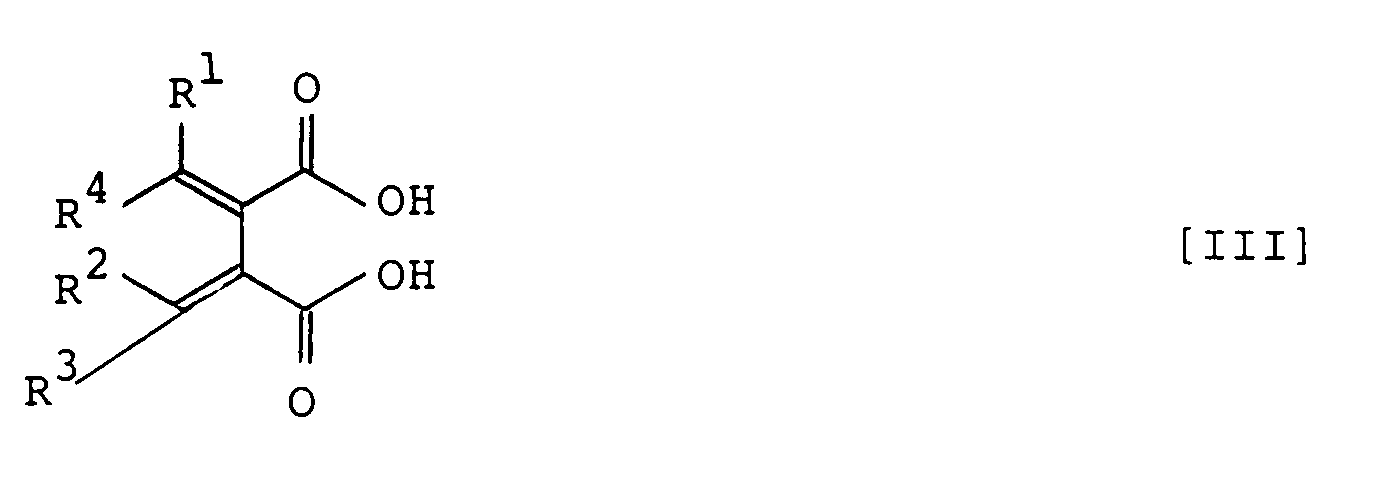
wherein R¹, R², R³ and R⁴ are as defined above, is reacted with
R#NH₂
wherein R# is as defined above, to form a succinimide acid, followed by reaction with an acid chloride or an acid anhydride to yield a fulgimide derivative of the formula [I′] (German Offenlegungsschrift 2,441,759 and 2,647,850). - According to these processes, since an acid chloride or acid anhydride is used in the reaction, it is very difficult to synthesize fulgimide derivatives having a reactive functional group such as an amino group, a hydroxyl group, or the like. Further, it is more difficult to introduce a functional group such as an amino group, a hydroxyl group, or the like into the fulgimide derivative of the formula [I′] thus synthesized.
- The fulgimide derivative of the formula [I′] has no reactive functional group, so that its application is limited to i) mixing with a suitable monomer for polymerization and molding, ii) dissolving with a suitable solvent to dye a molded resin therein, and iii) dissolving with a suitable solvent for use as a coating composition, an ink, a dye, etc. Further, articles obtained by coating with a fulgimide derivative of the formula [I′] or mixing a polymer with a fulgimide derivative of the formula [I′], followed by molding, are not only poor in water resistance (release of the fulgimide derivative by washing with water) and chemical resistance, but non-uniform in color formation when exposed to light. Improvement of these defects has long been desired.
- It is an object of the present invention to provide a fulgimide derivative having a photochromic action and useful as recording and memory materials, copying materials, printed photosensitive bodies, photosensitive materials for laser, photosensitive materials for photo-composing, materials for display, etc., and a process for production thereof.
- In one embodiment the invention provides a fulgimide derivative having a vinyl group, which is useful as a starting material for producing a polymeric compound having a photochromic action.
- The present invention provides a fulgimide derivative of the formula:

wherein R¹, R² and R³ are independently a hydrogen atom, a halogen atom, an alkyl group which may have one or more substituents, an alkoxy group, a cycloalkyl group, an aryl group, an aralkyl group or an aryloxy group, and R² and R³ may be bonded each other to form a ring group; R⁴ is a group of the formula:
wherein R¹′ is a hydrogen atom, a halogen atom, an alkyl group or an alkoxy group; R²′, R³′, R⁴′, and R⁵′ are independently a hydrogen atom, an alkyl group, an alkoxy group, an aryl group, an aralkyl group, an aryloxy group or a halogen atom; W′ is an oxygen atom, a sulfur atom, a selenium atom, or = N - R⁶′; R⁶′ is a hydrogen atom, an alkyl group, an aralkyl group or an aryl group; X is a straight or branched-chain alkylene group, a cycloalkylene group, an arylene group, a group of the formula: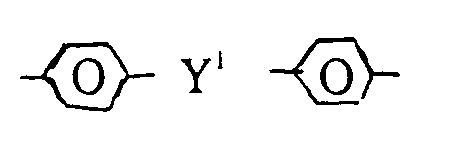
wherein Y¹ is a straight-or-branched-chain alkylene group, or a group of the formula:
wherein Z¹ is an oxygen atom, a sulphur atom or a sulphonyl group; R is an amino group which may have one or more substituents, a hydroxyl group, a formyl group, a carboxyl group, a sulfonic acid group, an acetal group, a halogen atom,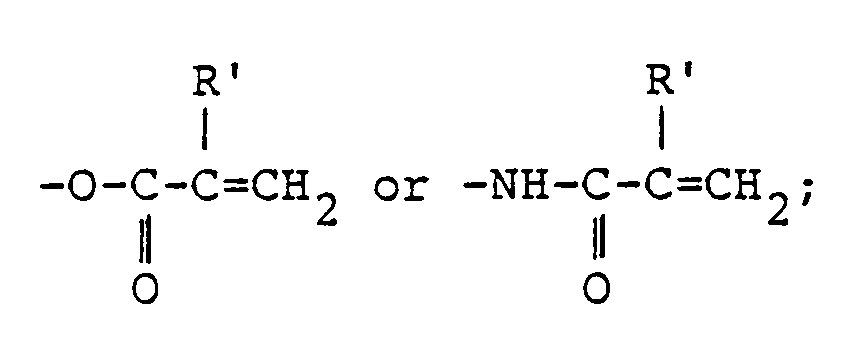
R' is a hydrogen atom or an alkyl group, or a salt thereof. - The present invention also provide a process for producing a fulgimide derivative of the formula [I] wherein R is an amino group which may have one or more substituents, a hydroxyl group; a formyl group, a carboxyl group, a sulfonic acid group, an acetal group or a halogen atom, which comprises subjecting a compound of the formula:
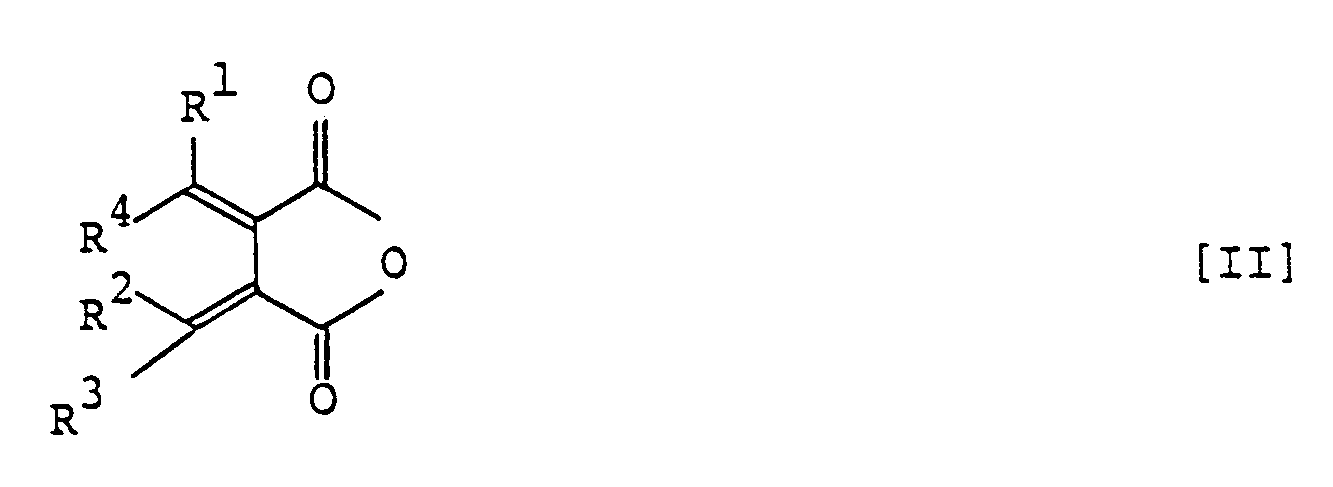
wherein R¹, R², R³ and R⁴ are as defined above, or a compound of the formula:
wherein R¹, R², R³ and R⁴ are as defined above, or a mixture of a compound of the formula [II] and a compound of the formula [III], and a compound of the formula:
H₂N-X-R [IV]
wherein X and R are as defined above, to azeotropic dehydration reaction in a non-polar solvent. - The present invention further provides a process for using a fulgimide derivative of the formula

and R' is a hydrogen atom or an alkyl group, as a starting material for producing a polymeric compound having a photochromic action. The invention also extends to the resulting polymer. - Fulgimide derivatives having a functional group such as an amino group, a hydroxyl group, etc. can be produced easily and effectively by the process of the invention. That is, in the reaction of dehydration ring closure of succinimide acid to yield a fulgimide derivative, since a compound of the formula [IV] is used in place of an acid chloride or an acid anhydride and the ring closure is carried out by azeotropic dehydration reaction in a non-polar solvent, a reactive functional group can easily be introduced into the resulting fulgimide derivative. Further, when the resulting fulgimide derivative is reacted with, for example, a compound of the formula:
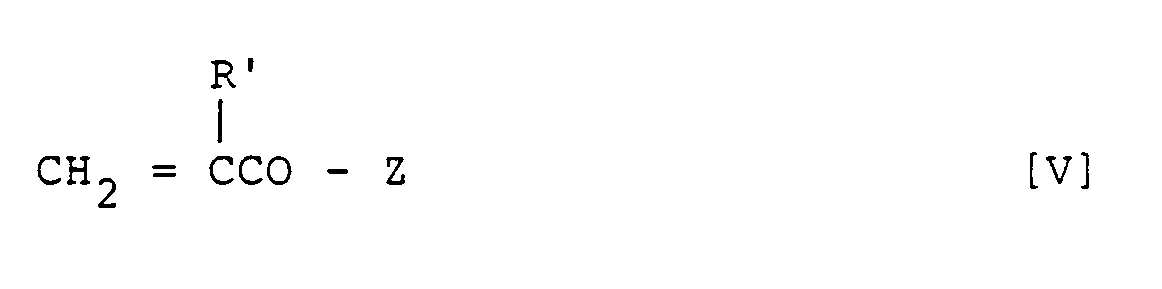
wherein Z is a halogen atom such as chlorine, bromine, fluorine or iodine; and R' is a hydrogen atom or an alkyl group, a fulgimide derivative having a vinyl group can easily be synthesized. - Since the fulgimide derivative of the formula [I] has a functional group, it can be used for producing a polymer of fulgimide derivative, producing a film by the Langmuir-Blodgett (LB) method, fixing a fulgimide derivative to surfaces of various fibers by chemical bonds.
- In the compounds of the following formulae [I] to [III]:


the defitions of the substituents are as follows. - R¹, R² and R³ are independently a hydrogen atom; a halogen atom such as fluorine, chlorine, bromine or iodine; a straight- or branched-chain alkyl group preferably having 1 to 30 carbon atoms such as methyl, ethyl, propyl, butyl, octyl, dodecyl, octadecyl, etc., said alkyl group being able to have one or more substituents such as a hydroxyl group, a straight- or branched-chain alkoxy group such as methoxy, ethoxy, propoxy, butoxy, amyloxy, for example, or a halogen atom such as fluorine, chlorine, bromine or iodine; a straight-or branched-chain lower alkoxy group preferably having 1 to 6 carbon atoms such as methoxy, ethoxy, propoxy, butoxy, for example; a cycloalkyl group preferably having 3 to 6 carbon atoms such as cyclopropyl, cyclopentyl, cyclohexyl, for example; an aryl group such as phenyl, tolyl, ethylphenyl, naphthyl, methylnaphthyl, ethylnaphthyl, for example; an aralkyl group such as benzyl, phenethyl, phenylpropyl, naphthylmethyl, phenylbenzyl, phenylnaphthylmethyl, for example; an aryloxy group such as phenoxy, methylphenoxy, naphthoxy, phenylphenoxy, phenylnaphthoxy, for example. R¹, R² and R³ may be the same or different from each other. Further, R² and R³ can be bonded each other to form a ring group such as an adamantyl group or a norbonyl group, for example.
- R⁴ is a group represented by the formula

wherein R1' is a hydrogen atom; a halogen atom such as fluorine, chlorine, bromine, or iodine; a straight-or branched-chain ― alkyl group preferably having 1 to 6 carbon atoms such as methyl, ethyl, propyl, butyl, for example; a straight- or branched-chain alkoxy group preferably having 1 to 6 carbon atoms such as methoxy, ethoxy, propoxy, butoxy, for example; R2', R3', R4' and R5' are independently a hydrogen atom; an alkyl group (either straight- or branched-chain) preferably having 1 to 30 carbon atoms such as methyl, ethyl, propyl, butyl, octyl, dodecyl, octadecyl, for example; an alkoxy group (either straight- or branched-chain) preferably having 1 to 4 carbon atoms such as methoxy, ethoxy, propoxy, butoxy, for example; an aryl group such as phenyl, tolyl, ethylphenyl, naphthyl, methylnaphthyl, ethylnaphthyl, etc.; an aralkyl group such as benzyl, phenethyl, phenylpropyl, naphthylmethyl, phenylbenzyl, phenylnaphthylmethyl, for example; an aryloxy group such as phenoxy, methylphenoxy, naphthoxy, phenylphenoxy, phenylnaphthoxy, for example; or a halogen atom such as fluorine, chlorine, bromine, or iodine; R2', R3', R4' and R5' may be the same or different from each other; and W' is an oxygen atom, a sulfur atom, a selenium atom or =N - R6'. - More concretely, in the case of W' being an oxygen atom, R⁴ is is preferably a furyl group, a benzofuryl group, a an oxazolyl group or isoxazolyl group; in the case of W' being a sulfur atom, R⁴ is preferably a thienyl group, a benzothienyl group, or a thiazolyl group, in the case of W' being a selenium atom, R⁴ is preferably a selenyl group,or a benzoselenyl group ; and in the case of W' being =N - R6', R⁴ is preferably a pyrrolyl group, an indolyl group, an imidazolyl group or a pyrazolyl group. R6' in the =N - R6' group is a hydrogen atom; an alkyl group (either straight- or branched-chain) preferably having 1 to 30 carbon atoms such as methyl, ethyl, propyl, butyl, octyl, dodecyl, octadecyl, etc.; an aryl group such as phenyl, tolyl, ethylphenyl, naphthyl, methylnaphthyl, ethylnaphthyl, for example; or an aralkyl group such as benzyl, phenethyl, phenylpropyl, naphthylmethyl, phenylbenzyl, phenylnaphthylmethyl, for example
- In the compounds of the formula [I] and the formula:
H₂N-X-R [IV]
X is a divalent organic group such as a straight- or branched-chain alkylene group (including a polymethylene group) such as methylene, ethylene, propylene, butylene, amylene, hexylene, heptylene, octylene, nonylene, decylene, undecylene, dodecylene ,for example; an arylene group such as phenylene, methylphenylene, naphthylene. methylnaphthylene, biphenylene, terphenylene, for example; a group of the formula:
wherein Y' is a straight- or branched-chain alkylene group such as methylene, ethylene, propylene, for example; a group of the formula:
wherein Z' is an oxygen atom, a sulfur atom, or a sulfonyl group; or a cycloalkylene group, e.g. cyclopropylene, cyclopentylene, or cyclohexylene. ― - When X is a group having aromaticity and bonding directly to the N atom of the fulgimide, e.g., a phenylene group, a naphthylene group, a biphenylene group, a terphenylene group,

― the resulting fulgimide derivatives are ― preferred since they have better thermal stability. - R in the formulae [I] and [IV] is an amino group which may have one or more substituents, a hydroxyl group, a formyl group, a carboxyl group, a sulfonic acid group, an acetal group, a halogen atom such as fluorine, chlorine, bromine, or iodine, or a group of the formula:

wherein R' is a hydrogen atom or an alkyl group such as methyl, ethyl, propyl, butyl, for example. As the substituents for the amino group, there can for example be used a straight- or branched-chain alkyl group preferably having 1 to 18 carbon atoms such as methyl, ethyl, propyl, butyl, octyl, dodecyl, octadecyl, for example; a hydroxyalkyl group such as hydroxyethyl, hydroxypropyl, for example; sulfoalkyl groups such as sulfopropyl, sulfobutyl for example; or a straight- or branched-chain acyl group preferably having 2 to 36 carbon atoms such as acetyl, propionyl, butylyl, valeryl, palmitoyl, for example. - When R is an amino group or a substituted amino group, these groups can optionally be in the form of a mineral acid salt such as a hydrochloride or a sulfate for example, or an organic acid salt such as an acetate or a p-toluenesulfonate, for example. Further, when R is a carboxyl group or a sulfonic acid group, these groups can form a salt together with ammonium or an alkali metal such as lithium, sodium, potassium, for example.
- In the formula [I], it is preferable that R¹ is a relatively bulky group such as a higher alkyl group or an aryl group. This is because, when R¹ is a relatively bulky group, a fulgimide derivative of the formula [I] hardly produces isomers in the color forming reaction by ring closure when the fulgimide derivative is exposed to ultraviolet light.
- Preferable examples of the fulgimide derivatives of the formula [I] are as follows.


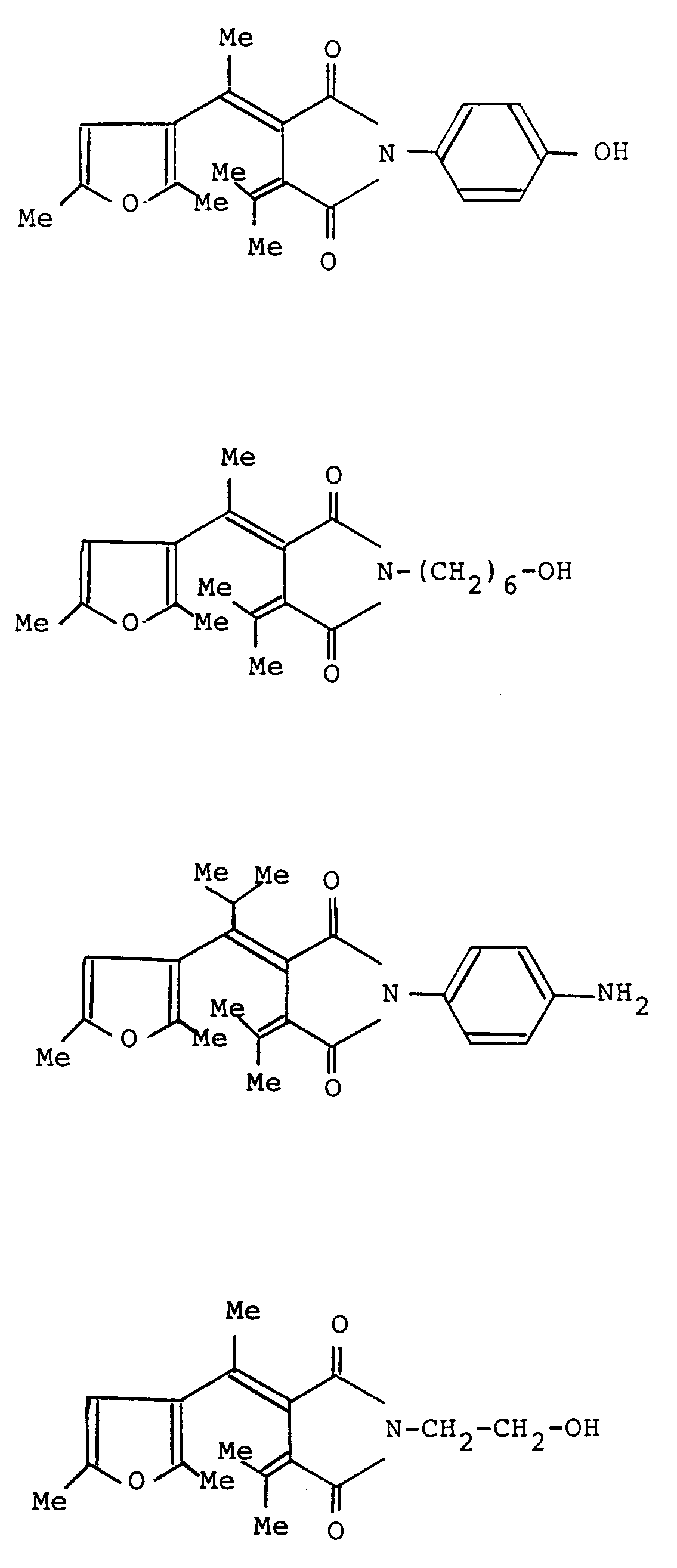


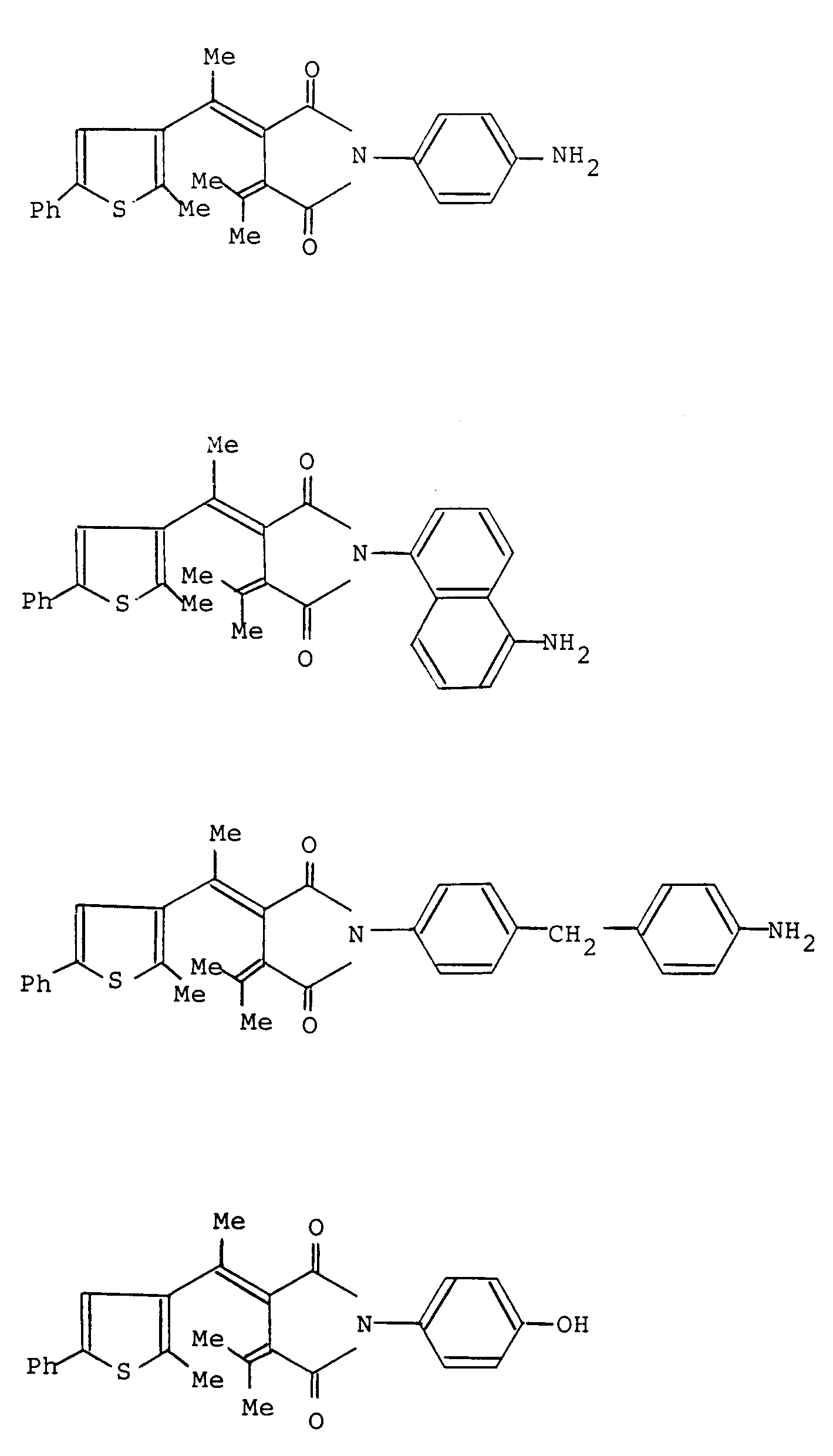


The fulgimide derivative of the formula [I] can easily be produced by the folllowing processes. - A compound of the formula [II] or a compound of the formula [III] or a mixture thereof in an amount of 1 mole, and 1 mole or more, preferably 1 to 2 moles, of a compound of the formula [IV] are subject to azeotropic dehydration reaction in a non-polar solvent for 1 to 60 hours, preferably 24 to 48 hours to yield a fulgimide derivative of the formula [I-1] wherein R is an amino group which may have one or more substituents, a hydroxyl group, a formyl group, a carboxyl group, a sulfonic acid group, an acetal group or a halogen atom.
- As the non-polar solvent, there can be used a solvent having azeotropic properties with water, preperably an aromatic non-polar solvent having azotropic properties with water and a relatively high boiling point. Examples of such non-polar solvent are benzene, toluene, xylene, etc.
- The fulgimide derivative of the formula [I-1] is then subjected to purification in a conventional manner, dissolution in a solvent such a benzene, chloroform, dichloromethane, etc., dropwise addition of a compound of the formula [V] in an amount of 1 to 1.2 moles per mole of the compound of the formula [I-1] at 5°C or lower in the presence of a basic catalyst such as triethylamine, pyridine, etc., and a reaction at near room temperature for 1 to 5 hours to give a fulgimide derivative of the formula [I-2] wherein R is a group of the formula:

In the above-mentioned reaction, a corresponding acid anhydride or ester can also be used in place of the compound of the formula [V]. - The compounds of the formulae [II] and [III] can be produced as follows.
- A compound of the formula:
R⁴-CO-R¹ [VI]
wherein R¹ and R⁴ are as defined above, and a compound of the formula:
wherein R² and R³ are as defined above; and M¹ and M² are independently an alkyl group, are subjected to the Stobbe condensation, followed by hydrolysis by a conventional method to give a compound of the formula [III]. The compound of the formula [III] can further be subjected to dehydration reaction using an acid chloride or acid anhydride by a conventional method to yield a compound of the formula [II]. - The compound of the formula [VI] can be produced by reacting a compound of the formula:
R⁴-H
wherein R⁴ is as defined above, with a compound of the formula:
R¹-COCl
wherein R¹ is as defined above, and anhydrous aluminum chloride. - The compound of the formula [VII] can be produced by subjecting a dialkyl ester of succinic acid and a compound of the formula:
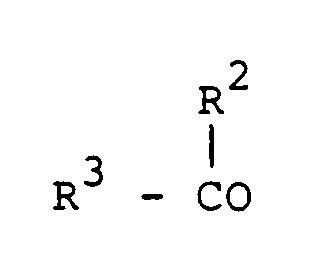
wherein R² and R³ are as defined above, to the Stobbe condensation, followed by esterification by a conventional method. - The compound of the formula [IV] is available commercially. It can also be synthesized by a conventional method.
- The compound of the formula [V] is available commercially. It can also be synthesized by a conventional method.
- The fulgimide derivatives of the formula [I] have a photochromic action and can effectively be used as recording and memory materials, copying materials, printed photosensitive bodies, laser photosensitive materials ―, photosensitive materials for photo-composing, photosensitive materials for display, for example. Particularly the fulgimide derivatives of the formula [I-1] wherein R is an amino group which may have one or more substituents, a hydroxyl group, a formyl group, a carboxyl group, a sulfonic acid group, an acetal group or a halogen atom, can effectively be used as starting materials for synthesizing fulgimide derivatives further having various useful functional groups, since they have a reactive functional group in their molecules.
- The fulgimide derivatives of the formula [I-2] wherein R is a group of the formula:
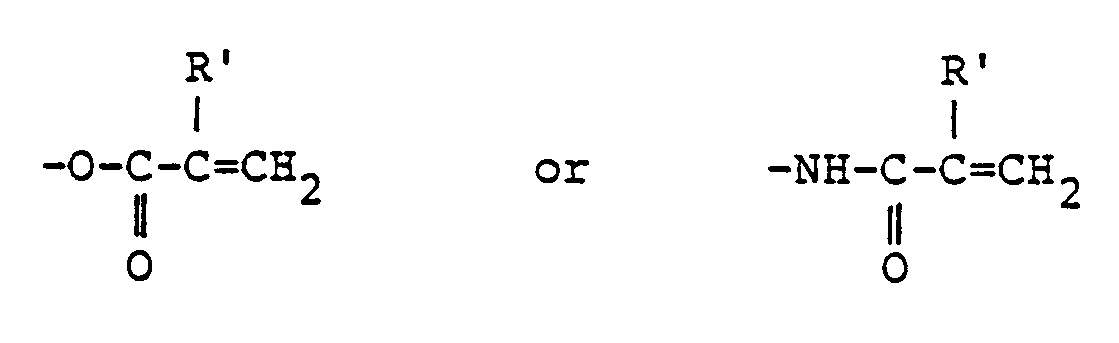
wherein R' is hydrogen or an alkyl group, have a vinyl group in their molecules, so that they can be polymerized by a conventional method, or can be copolymerized with suitable monomers such as acrylic acid, methacrylic acid, acrylic acid ester, methacrylic acid ester, styrene, vinyl acetate, acrylamide, methacrylamide, N,N-dimethylacrylamide, N,N-dimethylmethacrylamide, acrylonitrile, for example by a conventional method, to give polymeric compounds having photochromic action. - A polymeric compound having photochromic action can be produced from the fulgimide derivative [I-2], for example, as follows.
- A compound of the formula [I-2] wherein R is

in an amount of 1 mole and 20 to 5000 moles, preferably 30 to 1000 moles of a monomer such as methacrylic acid, methyl methacrylate, etc. are reacted in a solvent such as dimethylformamide in a nitrogen gas stream at 50 to 80°C for 2 to 10 hours with stirring using a polymerization initiator such as azobisisobutyronitrile. - In the production of a copolymer using a fulgimide derivative of the formula [I-2], it is preferable to select reaction conditions so as to make the content of the fulgimide derivative of the formula [I-2] in an amount of preferably 0.1 to 60 w/w%, more preferably 0.5 to 50 w/w%. When the content of the compound of the formula [I-2] is too low, the color forming ability when exposed to ultraviolet light is insufficient, while when the content is too great, ― moldability is worsened when processed into various articles by molding, etc.
- Various articles can easily be molded using the thus produced polymeric compounds having photochromic action as photochromic materials. Further, the finished articles have excellent water resistance and chemical resistance, and have an advantage in that the color forming before and after irradiation with light is uniform. Therefore, the polymeric compounds having photochromic action are particularly useful as recording and memory materials.
- The present invention is illustrated by way of the following Examples, in which all parts and percents are by weight, unless otherwise specified.
- To 1200 ml of dimethylformamide (DMF) containing 3 moles of benzaldehyde and heated at 35°C, a mixed solution of 0.3 mole of sodium cyanide and 2400 ml of DMF was added dropwise in 30 minutes, and the reaction was carried out for further 30 minutes with stirring. To the reaction solution, a mixed solution of 2.25 moles of methyl vinyl ketone and 2400 ml of DMF was added dropwise in 30 minutes, and the reaction was carried out for further 1 hour. After the reaction, water was poured into the reaction solution, followed by extraction with chloroform. The obtained chloroform solution was washed with dilute sulfuric acid, saturated aqueous solution of sodium bicarbonate, and water in this order, and dried over anhydrous sodium sulfate. The solvent was removed by distillation. The resulting residue was distilled under reduced pressure to give a fraction of pale yellow liquid of 1-phenyl-1,4-pentanedione having a boiling point of 124-127°C/0.15 mmHg (yield 40%).
- A mixture of 1 mole of the 1-phenyl-1,4-pentadione obtained in above (1) and 1.1 moles of phosphorus pentoxide was heated to 125-130°C and reacted for 1 hour. After the reaction, the objected material was extracted from the reaction solution with ether. The resulting ether solution was washed with a saturated aqueous solution of sodium bicarbonate and water in this order, and dried over anhydrous sodium sulfate. The solvent was removed by distillation. The resulting residue was purified by column chromatography [filler: Wakogel C-300 (Registered Trade Mark) mfd. by Wako Pure Chemical Industries, Ltd.), eluent: a mixed solvent of n-hexane and ethyl acetate] to give yellow crystals of 2-methyl-5-phenylthiophene in yield of 60%, m.p. 49-51°C.
- To a benzene solution containing 1 mole of the 2-methyl-5-phenylthiophene obtained in above (2) and 1 mole of acetic anhydride cooled at 0°C, a benzene solution containing 1 mole of anhydrous stannic chloride was added dropwise in 1.5 hours with stirring. After reacting for further 2 hours with stirring, the reaction solution was poured into 1.5 kg of ice containing 400 ml of 6M HCl. An organic layer was separated, washed with water, dried over anhydrous sodium sulfate, and concentrated. The resulting residue was purified by column chromatography (filler:Wakogel C-300 (Registered Trade Mark),eluent: a mixed solvent of n-hexane and chloroform) to give yellow crystals of 3-acetyl-2-methyl-5-phenylthiophene in yield of 60%.
- Sodium hydride in an amount of 2 moles was suspended in 1.0 liter of toluene and heated at 40°C. To this, a mixed solution of 1 mole of diethyl succinate and 1.2 moles of acetone was added dropwise in 3 hours with stirring. The reaction was carried out for further 3 hours. Then, the reaction solution was poured into 1 kg of ice. The water layer was separated, made acidic by pouring 700 ml of 5M HCl thereinto, and extracted with 1.0 liter of 1,2-dichloroethane. The resulting organic layer was dried over anhydrous sodium sulfate, and concentrated. To the resulting residue, 1.0 liter of ethanol and 30 ml of concentrated sulfuric acid were added. The reaction was carried out under reflux for 4 hours. After the reaction, the solvent was removed from the reaction solution by distillation. The objected substance was extracted with dichloromethane and purified by distillation under reduced pressure to give diethylisopropylidene succinate in yield of 51%.
- To a suspension of 700 ml of benzene and 52.8 g of sodium hydride, a mixed solution of 119 g of the 3-acetyl-2-methyl-5-phenylthiophene obtained in above (3) and 118 g of the diethylisopropylidene succinate obtained in above (4) was added dropwise in 2 hours with stirring. After further 7 hours' reaction with stirring, the reaction solution was poured into 2 kg of ice. The water layer was separated, made acidic by pouring 690 ml of 5M HCl thereinto, and extracted with 1.5 liters of ethyl acetate. The resulting organic layer was concentrated. To the residue, 1.85 liters of 5 w/v% ethanolic potassium hydroxide was added and the reaction was carried out under reflux for 15 hours. After the reaction, the reaction solution was made acidic with HCl. A precipitate produced was dissolved in chloroform. After removing the solvent from the obtained chloroform solution by distillation, acetyl chloride was added to the residue to carry out the ring closing reaction. After the reaction, excess acetyl chloride was removed by distillation. The residue was purified by column chromatography (filler: Wakogel C-300 (Registered Trade Mark), eluent: a mixed solvent of n-hexane and ethyl acetate) to give pale yellow crystals of 2-[(E)-1-(2-methyl-5-phenyl-3-thienyl)ethylidene]-3-isopropylidene succinic anhydride of the formula:

wherein Me is a methyl group, and Ph is a phenyl group, in yield of 15%. - To a suspension of 700 ml of benzene with 52.8 g of sodium hydride, 118 g of a mixed solution 76 g of 3-acetyl-2,5-dimethylfuran (mfd. by Aldrich Chemical Co., Inc.) and 118 g of the diethylisopropylidene succinate obtained in Reference Example 1 (4) was added dropwise in 2 hours with stirring. After reacting for further 7 hours with stirring, the reaction solution was poured into 2 kg of ice. The water layer was separated, made acidic with 690 ml of 5M HCl, and extracted with 1.5 liters of ethyl acetate. The resulting organic layer was concentrated. To the residue, 1.85 liters of 5 w/v% ethanolic potassium hydroxide was added and reaction was carried out for 15 hours under relux. After the reaction, the reaction solution was made acidic with HCl. A precipitate produced was dissolved in chloroform. The solvent was removed from the resulting chloroform solution by distillation. To the residue, acetyl chloride was added and ring closing reaction was carried out. After the reaction, excess acetyl chloride was removed by distillation. The residue was purified by column chromatography (filler: Wakogel C-300 (Registered Trade Mark), eluent: a mixed solvent of n-hexane and ethyl acetate) to give pale yellow crystals of 2-[(E)-1-(2,5-dimethyl-3-furyl)ethylidene]-3-isopropylidene succinic anhydride of the formula:

wherein Me is a methyl group, in yield of 15%. -
- (1) Synthesis of 3-isobutylyl-2,5-dimethyl-furan
To a solution obtained by dissolving 1.1 moles of aluminum chloride in 200 ml of carbon tetrachloride and cooled at 0°C, a carbon tetrachloride solution containing 1 mole of 2,5-dimethylfuran and 1 mole of isobutylylfluorite was added dropwise with stirring in 2.0 hours. After reacting for further 2 hours with stirring, the reaction solution was poured into 1.5 kg of ice containing 400 ml of 6M HCl. An organic layer was separated, washed with water, dried over anhydrous sodium sulfate, and concentrated. The resulting residue was purified by distillation under reduced pressure to yield a yellow oil of 3-isobutylyl-2,5-dimethylfuran in yield of 40%. - (2) To a suspension of 500 ml of toluene containing 50 g of sodium hydride, a mixed solution of 83 g of 3-isobutylyl-2,5-dimethylfuran and 107 g of diethylisopropylidene succinate obtained in Reference Example 1 (4) was added dropwise with stirring in 2 hours. After reacting for further 3 hours with stirring, the reaction solution was poured in 2 kg of ice. A water layer was separated and made acidic by pouring 375 ml of 5M HCl thereinto. Then, the reaction solution was extracted with 1.5 liters of ethyl acetate. The resulting organic layer was concentrated. To the residue, 1.85 liters of 5 w/v% ethanolic potassium hydroxide was added and reacted for 15 hours under reflux. After the reaction, the reaction solution was made acidic with HCl and a produced precipitated was dissolved in chloroform. After removing the solvent from the resulting chloroform solution by distillation, acetyl chloride was added to the residue to carry out a ring closing reaction. After the reaction, excess acetyl chloride was removed by distillation. The residue was purified by column chromatography (filler: Wakogel C-300 (Registered Trade Mark), eluent: a mixed solvent of n-hexane and ethyl acetate) to give pale yellow crystals of 2-[(E)-1-(2,5-dimethyl-3-furyl)isobutylidene]-3-isopropylidene succinic anhydride of the formula:

-
- (1) Synthesis of 3-isobutylyl-2,5-dimethylthiophene
To a carbon tetrachloride solution containing 1.1 moles of aluminum chloride cooled at 0°C, a carbon tetrachloride solution containing 1 mole of 2,5-dimethylthiophene and 1 mole of isobutylyl chloride was added dropwise in 2 hours. After reacting for further 2 hours with stirring, the reaction solution was poured into 1.5 kg of ice containing 400 ml of 6M HCl. An organic layer was separated, washed with water, dried over anhydrous sodium sulfate, and concentrated. The resulting residue was purified by distillation under reduced pressure to give a yellow oil of 3-isobutylyl-2,5-dimethylthiophene in yield of 60%. - (2) To a solution obtained by dissolving 61 g of diisopropylamine in 400 ml of tetrahydrofuran, 280 ml of n-butyllithium was added at low temperatures (-10 ∼ -40°C), and 71 g of diethylisopropylidene succinate obtained in Reference Example 1 (4) and 55 g of 3-isobutylyl-2,5-dimethylthiophene were added dropwise in 30 minutes with stirring. After reacting for further 8 hours with stirring, the reaction solution was made acidic by pouring 1050 ml of 10% HCl thereinto, followed by extraction with 1.5 liters of ethyl acetate. The resulting organic layer was concentrated. To the residue, 1.85 liters of 5 w/v% ethanolic potassium hydroxide was added and the reaction was carried out for 15 hours under reflux. After the reaction, the reaction solution was made acidic with HCl and a precipitate produced was dissolved in chloroform. After remvoing the solvent from the resulting chloroform solution by distillation, acetyl chloride was added to the residue to carry out a ring closing reaction. After the reaction, excess acetyl chloride was removed by distillation. The residue was purified by column chromatography (filler: Wakogel C-300 (Registered Trade Mark), eluent: a mixed solvent of n-hexane and ethyl acetate) to give pale yellow crystals of 2-[(E)-1-(2,5-dimethyl-3-thienyl)isobutylidene]-3-isopropylidene succinic anhydride of the formula:
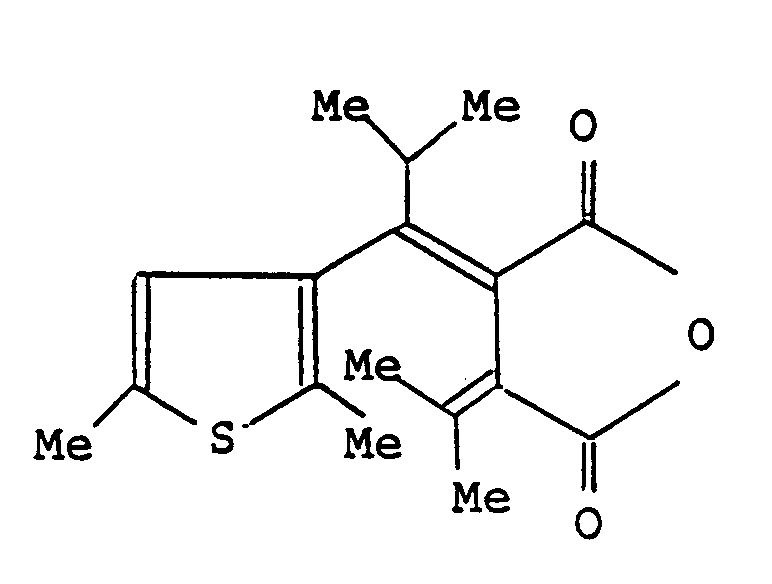
-
- (1) Synthesis of 3-acetyl-1,2-dimethylindole
To a solution of 6 moles of N,N-dimethylacetamide and cooled at 0°C, 1.5 moles of phosphorus oxychloride was added dropwise in 30 minutes with stirring. After further adding 1 mole of 1,2-dimethylindole thereto, the reaction was carried out at 85 - 90°C for 2 hours. Then, the reaction solution was poured into 2 liters of ice water. The reaction solution was made alkaline, extracted with 0.5 liter of ethyl acetate, washed with water, dried over anhydrous sodium sulfate, and concentrated. The residue was recrystallized from ethyl acetate to give yellow crystals in yield of 80%. - (2) To a solution obtained by dissolving 76 g of diisopropylamine in 750 ml of tetrahydrofuran, 350 ml of n-butyllithium was added at low temperatures (-10 ∼ -40°C), and 91 g of diethylisopropylidene succinate obtained in Reference Example 1 (4) and 70 g of 3-acetyl-1,2-dimethylindole were added dropwise with stirring in 30 minutes. After further reacting for 8 hours with stirring, the reaction solution was made acidic by pouring 1050 ml of 10% HCl thereinto, followed by extraction with 1.5 liters of ethyl acetate. The resulting organic layer was concentrated. The residue was added with 1.85 liters of 5 w/v% ethanolic potassium hydroxide and reacted for 15 hours under reflux. After the reaction, the reaction solution was made acidic with HCl and a precipitate produced was dissolved in chloroform. After removing the solvent from the chloroform solution by distillation, acetyl chloride was added to the residue to carry out a ring closing reaction. After the reaction, excess acetyl chloride was removed by distillation. The residue was purified by column chromatography (filler:Wakogel C-300 (Registered Trade Mark),eluent: a mixed solvent of n-hexane and ethyl acetate) to give pale yellow crystals of 2-[(E)-1-(1,2-dimethyl-3-indolyl)ethylidene]-3-isopropylene succinic anhydride of the formula:

-
- (1) Synthesis of 3-acetyl-5-methoxy-1,2-dimethylindole
To an acetone solution containing 1 mole of p-quinone, an acetone solution containing 1 mole of acetylacetonemonomethylimine was added dropwise at room temperature in 1.0 hour. After reacting for further 1 hour with stirring, the reaction solution was filtered to obtain brown crystals. The crystals were dissolved in 1 liter of 1,4-diethylene glycol and 5 moles of 2N sodium hydroxide. To the resulting solution, 1.5 moles of dimethyl sulfate was added dropwise in 1 hour at room temperature. After reacting for further 2 hours with stirring, the reaction solution was poured into 1.5 liters of ice containing HCl. The resulting solution was extracted with 1 liter of ethyl acetate, washed with water, dried over anhydrous sodium sulfate, and concentrated. The resulting residue was purified by column chromatography (filler:Wakogel C-300 (Registered Trade Mark),eluent: a mixed solvent of chloroform and methanol) to give yellow crystals of 3-acetyl-5-methoxy-1,2-dimethylindole in yield of 16%. - (2) To a solution obtained by dissolving 76 g of diisopropylamine in 750 ml of tetrahydrofuran, 350 ml of n-butyllithium was added at low temperatures (-10 ∼ -40°C), and 91 g of diethylisopropylidene succinate obtained in Reference Example 1 (4) and 81 g of 3-acetyl-5-methoxy-1,2-dimethylindole were added dropwise thereto in 30 minutes with stirring. After reacting for further 8 hours with stirring, the reaction solution was made acidic by pouring 1050 ml of 10% HCl thereinto, followed by extraction with 1.5 liters of ethyl acetate. The resulting organic layer was concentrated. To the residue, 1.85 liters of 5 w/v% ethanolic potassium hydroxide was added to carry out the reaction for 15 hours under reflux. After the reaction, the reaction solution was made acidic with HCl. A precipitate produced was dissolved in chloroform. After removing the solvent from the resulting chloroform solution by distillation, acetyl chloride was added to the residue to carry out a ring closing reaction. The residue was purified by column chromatography (filler:Wakogel C-300 (Registered Trade Mark),eluent: a mixed solvent of n-hexane and ethyl acetate) to give pale yellow crystals of 2-[(E)-1-(1,2-dimethyl-5-methoxy-3-indolyl)ethylidene]-3-isopropylidene succinic anhydride of the formula:

- To 20 ml of xylene, 1.04 g of (E)-2-[1-(2,5-dimethyl-3-furyl)ethylidene]-3-isopropylidene succinic anhydride obtained in Reference Example 2 and 0.216 g of p-phenylenediamine were added to carry out the reaction for 30 hours with stirring under reflux. After the reaction, the xylene was removed by distillation. The resulting residue was purified by column chromatography (filler: Wakogel C-300 (Registered Trade Mark), eluent: a mixed solvent of n-hexane and ethyl acetate) to give pale red crystals of N-(4-aminophenyl)-2-[(E)-1-(2,5-dimethyl-3-furyl)ethylidene]-3-isopropylidenesuccinimide in yield of 12.0%.
- m.p.:
- 209 - 211°C
- MS:
- 350 (M⁺), 335 (M⁺ -15)
- IR (KBr) cm⁻¹:
- 3375 (NH₂), 2800-3000 (CH₂, CH₃), 1740, 1700 (NCO, CO), 1510 (phenyl), 760, 780 (furyl)
- ¹HNMR (CDCl₃) δ ppm:
- 1.35 (3H, s, CH₃), 2.01 (3H, s, CH₃), 2.17 (3H, s, CH₃), 2.28 (3H, s, CH₃), 2.40 (3H, s, CH₃), 5.88 (1H, s, H), 6.5-7.3 (4H, q, phenyl)
- To 20 ml of xylene, 2.03 g of 2-[(E)-1-(2-methyl-5-phenyl-3-thienyl)ethylidene]-3-isopropylidene succinic anhydride obtained in Reference Example 1 and 0.324 g of p-phenylenediamine were added to carry out the reaction for 30 hours with stirring under reflux. After the reaction, the xylene was removed by distillation. The resulting residue was purified by column chromatography (filler: Wakogel C-300 (Registered Trade Mark), eluent: a mixed solvent of n-hexane and ethyl acetate) to give pale red crystals of N-(4-aminophenyl)-2-[(E)-1-(2-methyl-5-phenyl-3-thienyl)ethylidene]-3-isopropylidenesuccinimide in yield of 6.0%.
- m.p.:
- 193 - 195°C
- MS
- : 428 (M⁺), 413 (M⁺ -15)
- IR (KBr):
- 3375 (NH₂), 2800-3000 (CH₂, CH₃), 1740, 1690 (NCO, CO), 152.0 (phenyl), 750, 690 (thienyl)
- ¹HNMR (CDCl₃):
- 1.35 (3H, s, CH₃), 2.29 (6H, s, CH₃x2), 2.68 (3H, s, CH₃), 7.10 (1H, s, H), 7.19-7.56 (9H, m, phenyl)
- The process of Example 2 was repeated except for using 1,5-diaminonaphthalene in place of p-phenylenediamine to give N-(5-amino-1-naphthyl)-2-[(E)-1-(2-methyl-5-phenyl-3-thienyl)ethylidene]-3-isopropylidenesuccinimide in yield of 10.0%.
- m.p.:
- 155 - 158°C
- MS:
- 478 (M⁺)
- UV (λmax
- in chloroform, after irradiation of ultraviolet light): 556 nm,
- IR (KBr):
- 3375 (NH₂), 2800-3000 (CH₂, CH₃), 1750, 1700 (NCO), 1520 (phenyl), 750, 690 (thienyl)
- ¹HNMR (CDCl₃):
- 1.41 (3H, s, CH₃), 2.81 (6H, s, CH₃x2), 2.71 (3H, s, CH₃), 7.14 (1H, s, H), 7.36-7.58 (11H, m, aromatic)
- The process of Example 2 was repeated by using 4,4′-methylenebis(aniline) in place of p-phenylenediamine to give N-[4-(4-aminobenzyl)phenyl]-2-[(E)-1-(2-methyl-5-phenyl-3-thienyl)ethylidene]-3-isopropylidenesuccinimide in yield of 11.2%.
- m.p.:
- 82 - 94°C
- MS:
- 518 (M⁺)
- IR (KBr):
- 3375 (NH₂), 2800-3000 (CH₂, CH₃), 1740, 1760 (NCO), 1510 (phenyl), 760, 690 (thienyl)
- ¹HNMR (CDCl₃):
- 1.24 (3H, s, CH₃), 2.29 (6H, s, CH₃x2), 2.68 (3H, s, CH₃), 3.95 (2H, s, CH₂), 7.10 (1H, s, H), 7.36-7.56 (13H, m, aromatic)
- To 30 ml of toluene, 1.3 g of 2-[(E)-1-(2,5-dimethyl-3-furyl)ethylidene]-3-isopropylidene succinic anhydride obtained in Reference Example 2 and 0.55 g of p-aminophenol were added to carry out the reaction for 30 hours with stirring under reflux. After the reaction, the toluene was removed by distillation. The resulting residue was purified by column chromatography (filler: Wakogel C-300, eluent: a mixed solvent of n-hexane and ethyl acetate) to give red crystals of N-(4-hydroxyphenyl)-2-[(E)-1-(2,5-dimethyl-3-furyl)ethylidene]-3-isopropylidenesuccinimide in yield of 36.0%.
- m.p.:
- 206 - 208°C
- MS:
- 351 (M⁺)
- UV (λmax in toluene):
- 320 nm (after irradiation of ultraviolet light: 503 nm)
- IR (KBr):
- 3450 (NH₂), 2800-3000 (CH₂, CH₃), 1740, 1690 (NCO), 1520, 1600 (phenyl), 1390, 1440 (CH₃)
- ¹HNMR (CDCl₃):
- 1.40 (3H, s, CH₃), 2.10 (3H, s, CH₃), 2.30 (3H, s, CH₃), 2.40 (3H, s, CH₃), 2.60 (3H, s, CH₃), 5.90 (1H, s, H), 6.4-7.3 (4H, q, phenyl)
- The process of Example 5 was repeated except for using 1-aminoethanol in place of p-aminophenol to give an orange oil of N-(2-hydroxyethyl)-2-[(E)-1-(2,5-dimethyl-3-furyl)ethylidene]-3-iospropylidenesuccinimide in yield of 25.4%.
Elementary analysis: C H N Calcd. (%) 67.31 6.98 4.62 Found (%) 67.20 7.21 4.49 - UV (λmax in toluene):
- 324 nm (after irradiation of ultraviolet light: 500 nm)
- IR (nujol):
- 3500 (OH), 2800-3000 (CH₂, CH₃), 1740, 1690 (NCO), 1040 (OH)
- ¹HNMR (CDCl₃):
- 1.33 (3H, s, CH₃), 1.98 (3H, s, CH₃), 2.23 (3H, s, CH₃), 2.30 (3H, s, CH₃), 2.42 (3H, s, CH₃), 2.83 (1H, s, OH), 3.97-3.67 (4H, m, CH₂x2), 5.76 (1H, s, H)
- The process of Example 5 was repeated except for using 1-aminohexanol in place of p-aminophenol to give an orange oil of N-(6-hydroxyhexyl)-2-[(E)-1-(2,5-dimethyl-3-furyl)ethylidene]-3-isopropylidenesuccinimide in yield of 10.2%.
Elementary analysis: C N H Calcd. (%) 70.17 8.13 3.90 Found (%) 69.29 8.02 3.67 - UV (λmax in toluene):
- 316 nm (after irradiation of ultraviolet light: 496 nm)
- To 30 ml of toluene, 3.38 g of 2-[(E)-1-(2-methyl-5-phenyl-3-thienyl)ethylidene]-3-isopropylidene succinic anhydride obtained in Reference Example 1 and 1.1 g of p-aminophenol were added to carry out the reaction for 30 hours with stirring under reflux. After the reaction, the toluene was removed by distillation. The resulting residue was purified by column chromatography (filler:Wakogel C-300 (Registered Trade Mark),eluent: a mixed solvent of n-hexane and ethyl acetate) to give N-(4-hydroxyphenyl)-2-[(E)-1-(2-methyl-5-phenyl-3-thienyl)ethylidene]-3-isopropylidenesuccinimide in yield of 36%.
- m.p.:
- 213 - 215°C
- MS:
- 429 (M⁺)
- IR (KBr):
- 3400 (OH), 2800-3000 (CH₂, CH₃), 1740, 1680 (NCO), 830, 750 (thienyl)
- The process of Example 8 was repeated except for using 1-aminoethanol in place of p-aminophenol to give reddish violet crystals of N-(2-hydroxyethyl)-2-[(E)-1-(2-methyl-5-phenyl-3-thienyl)ethylidene]-3-isopropylidenesuccinimide in yield of 21.3%.
Elementary analysis: C H N Calcd. (%) 69.26 6.07 3.67 Found (%) 68.14 6.08 3.15 - UV (λmax
- in toluene, after irradiation of ultraviolet light): 542 nm.
- To 20 ml of xylene, 2.88 g of (E)-2-[1-(2,5-dimethyl-3-furyl)isobutylidene]-3-isopropylidene succinic anhydride obtained in Reference Example 3 and 1.14 g of p-phenylenediamine were added to carry out the reaction for 30 hours with stirring under reflux. After the reaction, the xylene was removed by distillation. The resulting residue was purified by column chromatography (filler:Wakogel C-300 (Registered Trade Mark),eluent: a mixed solvent of n-hexane and ethyl acetate) to give yellow crystals of N-(4-aminophenyl)-2-[(E)-1-(2,5-dimethyl-3-furyl)isobutylidene]-3-isopropylidenesuccinimide in yield of 28.0%.
- m.p.:
- 150 - 152°C
- MS:
- 378 (M⁺), 363 (M⁺ -15)
- UV (λmax in chloroform):
- 520 nm
- To 20 ml of xylene, 3.05 g of (E)-2-[1-(2,5-dimethyl-3-thienyl)isobutylidene]-3-isopropylidene succinic anhydride obtained in Reference Example 4 and 1.1 g of p-aminophenol were added to carry out the reaction for 30 hours with stirring under reflux. After the reaction, the xylene was removed by distillation. The resulting residue was purified by column chromatography (filler:Wakogel C-300 (Registered Trade Mark),eluent: a mixed solvent of n-hexane and ethyl acetate) to give yellow crystals of N-(4-hydroxyphenyl)-2-[(E)-1-(2,5-dimethyl-3-thienyl)isobutylidene]-3-isopropylidenesuccinimide in yield of 28.0%.
- m.p.:
- 136 - 138°C
- MS:
- 395 (M⁺), 380 (M⁺ -15)
- UV (λmax in chloroform):
- 550 nm
- To 20 ml of xylene, 2.88 g of (E)-2-[1-(2,5-dimethyl-3-furyl)isobutylidene]-3-isopropylidene succinic anhydride obtained in Reference Example 3 and 1.44 g of p-phenylenediamine were added to carry out the reaction for 30 hours with stirring under reflux. After the reaction, 20 ml of pyridine and 3 g of stearoyl chloride were added to the reaction mixture to carry out the reaction for 1 hour. Then, the xylene was removed by distillation. The resulting residue was purified by column chromatography (filler:Wakogel C-300 (Registered Trade Mark),eluent: a mixed solvent of n-hexane and ethyl acetate) to give yellow crystals of N-(4-stearoylamidophenyl)2-[(E)-1-(2,5-dimethyl-3-furyl)isobotylidene]-3-isopropylidenesuccinimide in yield of 18.0%.
- m.p.:
- 68 - 70°C
- MS:
- 645 (M⁺), 620 (M⁺ -15)
- UV (λmax in chloroform):
- 522 nm
- To 20 ml of xylene, 2.88 g of (E)-2-[1-(2,5-dimethyl-3-furyl)isobutylidene]-3-isopropylidene succinic anhydride obtained in Reference Example 3 and 2.74 g of 4-aminobenzoic acid were added to carry out the reaction for 30 hours with stirring under reflux. After the reaction, the xylene was removed by distillation. The resulting residue was purified by column chromatography (filler:Wakogel C-300 (Registered Trade Mark),eluent: a mixed solvent of n-hexane and ethyl acetate) to give yellow crystals of N-(4-carboxyphenyl)-2-[(E)-1-(2,5-dimethyl-3-furyl)isobutylidene]-3-isopropylidenesuccinimide in yield of 9.0%.
- m.p.:
- 195 - 197°C
- MS:
- 408 (M⁺), 393 (M⁺ -15)
- UV (λmax in chloroform):
- 520 nm
- To 20 ml of xylene, 2.88 g of (E)-2-[1-(2,5-dimethyl-3-furyl)isobutylidene]-3-isopropylidene succinic anhydride obtained in Reference Example 3 and 3.0 g of p-aminophenylacetic acid were added to carry out the reaction for 30 hours with stirring under reflux. After the reaction, the xylene was removed by distillation. The resulting residue was purified by column chromatography (filler:Wakogel C-300 (Registered Trade Mark),eluent: a mixed solvent of n-hexane and ethyl acetate) to give yellow crystals of N-(4-carboxymethyl)-2-[(E)-1-(2,5-dimethyl-3-furyl)isobutylidene-3-isopropylidenesuccinimide in yield of 25.0%.
- m.p.:
- 154 - 156°C
- MS:
- 421 (M⁺), 406 (M⁺ -15)
- UV (λmax in chloroform):
- 520 nm
-
To 20 ml of xylene, 2.88 g of (E)-2-[1-(2,5-dimethyl-3-furyl)isobutylidene]-3-isopropylidene succinic anhydride obtained in Reference Example 3 and 4.0 g of 2,7-diaminofluorene were added to carry out the reaction for 30 hours with stirring under reflux. After the reaction, the xylene was removed by distillation. The resulting residue was purified by column chromatography (filler:Wakogel C-300 (Registered Trade Mark),eluent: a mixed solvent of n-hexane and ethyl acetate) to give yellow crystals of N-(2-aminofluorene)-2-[(E)-1-(2,5-dimethyl-3-furyl)isobutylidene]-3-isopropylidene succinimide in yield of 25.0%. - m.p.:
- 190 - 192°C
- MS:
- 467 (M⁺), 452 (M⁺ -15)
- UV (λmax in chloroform):
- 522 pm
- To 20 ml of xylene, 3.09 g of (E)-2-[1-(1,2-dimethyl-3-indolyl)ethylidene]-3-isopropylidenesuccinic anhydride obtained in Reference Example 5 and 2.2 g of p-aminophenol were added to carry out the reaction for 30 hours with stirring under reflux. After the reaction, the xylene was removed by distillation. The resulting residue was purified by column chromatography (filler:Wakogel C-300 (Registered Trade Mark),eluent: a mixed solvent of n-hexane and ethyl acetate) to give yellow crystals of N-(4-hydroxyphenyl)-2-[(E)-1-(1,2-dimethyl-3-indolyl)ethylidene]-3-isopropylidenesuccinimide in yield of 25.0%.
- m.p.:
- 231 - 233°C
- MS:
- 400 (M⁺), 385 (M⁺ -15)
- UV (λmax in chloroform):
- 585 nm
- To 20 ml of xylene, 3.40 g of (E)-2-[1-(1,2-dimethyl-5-methoxy-3-indolyl)ethylidene]-3-isopropylidene succinic anhydride obtained in Reference Example 6 and 2.2 g of p-phenylene diamine were added to carry out the reaction for 30 hours with stirring under reflux. After the reaction, the xylene was removed by distillation. The resulting residue was purified by column chromatography (filler:Wakogel C-300 (Registered Trade Mark),eluent: a mixed solvent of n-hexane and ethyl acetate) to give yellow crystals of N-(4-aminophenyl)-2-[(E)-1-(1,2-dimethyl-5-methoxy-3-indolyl)ethylidene]-3-isopropylidenesuccinimide in yield of 20.0%.
- m.p.:
- 195 - 197°C
- MS:
- 429 (M⁺), 414 (M⁺ -15)
- UV (λmax in chloroform):
- 620 nm
- To 30 ml of toluene, 1.3 g of 2-[(E)-1-(2,5-dimethyl-3-furyl)isobutylidene]-3-isopropylidene succinic anhydride obtained in Reference Example 3 and 0.55 g of p-aminophenol were added to carry out the reaction for 30 hours with stirring under reflux. After the reaction, the toluene was removed by distillation. The resulting residue was purified by column chromatography (filler: Wakogel C-300 (Registered Trade Mark),eleunt: a mixed solvent of n-hexane and ethyl acetate) to give yellow crystals of N-(4-hydroxyphenyl)-2-[(E)-1-(2,5-dimethyl-3-furyl)isobutylidene]-3-isopropylidenesuccinimide in yield of 36.0%.
- m.p.:
- 170 - 172°C
- MS:
- 379 (M⁺)
- UV (λmax in chloroform):
- 330 nm (after irradiation of ultraviolet light: 520 nm)
- IR (KBr) cm⁻¹:
- 2800-3000 (CH₂, CH₃), 1740, 1690 (NCO), 1520, 1600 (phenyl), 1390, 1440 (CH₃)
- ¹HNMR (CDCl₃) δppm:
- 0.87 (3H, bd, CH₃), 1.30 (3H, bd, CH₃), 1.40 (3H, s, CH₃), 1.90 (3H, s, CH₃), 2.26 (3H, s, CH₃), 2.28 (3H, s, CH₃), 4.50 (H, m, H), 5.90 (1H, s, H), 6.4-7.3 (4H, q, phenyl)
- To a solution obtained by dissolving 211 mg of N-(4-hydroxyphenyl)-2-[(E)-1-(2,5-dimethyl-3-furyl)ethylidene]-3-isopropylidenesuccinimide obtained in Example 5 in 5 ml of dichloromethane, 72 mg of triethylamine was added, followed by dropwise addition of 66 mg of acryloyl chloride in 10 minutes. The reaction was carried out at room temperature for 30 minutes with stirring. After the reaction, the reaction solution was well washed with water, dried over anhydrous magnesium sulfate, and subjected to removal of the solvent by distillation. The resulting residue was purified by column chromatography (filler:Wakogel C-300 (Registered Trade Mark),eluent: a mixed solvent of n-hexane and ethyl acetate) to give pale red crystals of N-(4-acryloyloxyphenyl)-2-[(E)-1-(2,5-dimethyl-3-furyl)ethylidene]-3-isopropylidenesuccinimide in yield of 44.0%.
- m.p.:
- 157 - 158°C
- MS:
- 405 (M⁺)
- UV (λmax in chloroform):
- 332 nm
- IR (KBr) cm⁻¹:
- 2800-3000 (CH₂, CH₃), 1740, 1700 (NCO, COO), 1420, 1600 (phenyl), 1380 (CH₃)
- ¹HNMR (CDCl₃) δ ppm:
- 1.38 (3H, s, CH₃), 2.05 (3H, s, CH₃), 2.25 (3H, s, CH₃) 2.33 (3H, s, CH₃), 2.60 (3H, s, CH₃), 5.90 (1H, s, H), 6.0-6.5 (3H, m, allyl), 7.2-7.45 (4H, q, phenyl)
- To a solution obtained by dissolving 430 mg of N-(4-hydroxyphenyl)-2-[(E)-1-(2-methyl-5-phenyl-3-thienyl)ethylidene]-3-isopropylidenesuccinimide obtained in Example 8 in 10 ml of dichloromethane, 202 mg of triethylamine was added, followed by dropwise addition of 209 mg of methacryloyl chloride in 10 minutes. The reaction was carried out at room temperature for further 1 hour. After the reaction, the reaction solution was washed with water, dried over anhydrous magnesium sulfate, and subjected to removal of the solvent by distillation. The resulting residue was purified by column chromatography (filler:Wakogel C-300 (Registered Trade Mark),eluent: a mixed solution of n-hexane and ethyl acetate) to give organce crystals of N-(4-methacryloyloxyphenyl)-2-[(E)-1-(2-methyl-5-phenyl-3-thienyl)ethylidene]-3-isopropylidenesuccinimide in yield of 44.0%.
- m.p.:
- 152 - 153°C
- MS:
- 498 (M⁺)
- IR (KBr) cm⁻¹:
- 2800-3000 (CH₂, CH₃), 1740, 1720, 1700 (NCO, COO), 1500 (phenyl), 1370, 1200, 1160 (CH₃), 770, 700 (thienyl)
- ¹HNMR (CDCl₃) δ ppm:
- 1.35 (3H, s, CH₃), 2.08 (3H, s, CH₃), 2.31 (6H, s, CH₃x2), 2.70 (3H, s, CH₃), 5.77, 6.37 (2H, d, CH₂), 7.11 (1H, s, H), 7.23-7.56 (9H, m, phenyl)
- To a solution obtained by dissolving 105 mg of N-(4-aminophenyl)-2-[(E)-1-(2,5-dimethyl-3-furyl)ethylidene]-3-isopropylidenesuccinimide obtained in Example 1 in 2 ml of chloroform, 5 ml of pyridine was added, followed by dropwise addition of 0.84 ml of methacryloyl chloride in 10 minutes. The reaction was carried out at room temperature for additional 4 hours with stirring. After the reaction, the reaction solution was well washed with water, dried over anhydrous magnesium sulfate, and subjected to the removal of the solvent by distillation. The resulting residue was purified by column chromatography (filler:Wakogel C-300 (Registered Trade Mark),eluent: a mixed solvent of n-hexane and ethyl acetate) to give yellow crystals of N-(4-methacryloylaminophenyl)-2-[(E)-1-(2,5-dimethyl-3-furyl)ethyliden]-3-isopropylidenesuccinimide in yield of 40.0%.
- m.p.:
- 102 - 104°C
- MS:
- 418 (M⁺)
- IR (KBr) cm⁻¹:
- 2800-3000 (CH₂, CH₃), 1740, 1700 (NCO), 1510, 1600 (phenyl), 1370 (CH₃), 830, 750 (furyl)
- ¹HNMR (CDCl₃) δ ppm:
- 1.37 (3H, s, CH₃), 2.05 (3H, s, CH₃), 2.07 (3H, s, CH₃), 2.25 (3H, s, CH₃), 2.37 (3H, s, CH₃), 2.60 (3H, s, CH₃), 5.48, 5.80 (2H, d, CH₂), 5.94 (1H, s, H), 7.34-7.70 (4H, m, phenyl)
- To a solution obtained by dissolving 1.13 g of n-(4-hydroxyphenyl)-2-[(E)-1-(2,5-dimethyl-3-furyl)-isobutylidene]-3-isopropylidenesuccinimide obtained in Example 18 in 30 ml of dichloromethane, 0.62 ml of triethylamine, followed by dropwise addition of 0.36 ml of acryloyl chloride in 10 minutes. The reaction was carried out at room temperature for additional 30 minutes with stirring. After the reaction, the reaction solution was well washed with water, dried over anhydrous magnesium sulfate, and subjected to removal of the solvent by distillation. The resulting residue was purified by column chromatography (filler:Wakogel C-300 (Registered Trade Mark),eluent: a mixed solvent of n-hexane and ethyl acetate) to give yellow crystals of N-(4-acryloyloxyphenyl)-2-[(E)-1-(2,5-dimethyl-3-furyl)isobutylidene]-3-isopropylidenesuccinimide in yield of 60%.
- m.p.:
- 50 - 52°C
- MS:
- 433 (M⁺)
- UV (λmax in chloroform):
- 332 nm
- IR (KBr) cm⁻¹:
- 2800-3000 (CH₂, CH₃), 1740, 1720, 1700 (NCO, COO), 1420, 1600 (phenyl), 1380 (CH₃)
- To a solution obtained by dissolving 1.2 g of N-(4-hydroxyphenyl)-2-[(E)-1-(1,2-dimethyl-3-indolyl)ethylidene]-3-isopropylidenesuccinimide obtained in Example 16 in 25 ml of dichloromethane, followed by dropwise addition of 0.36 ml of acryloyl chloride in 10 minutes. The reaction was carried out at room temperature for additional 30 minutes with stirring. After the reaction, the reaction solution was well washed with water, dried over anhydrous magnesium sulfate, followed by removal of the solvent by distillation. The resulting residue was purified by column chromatography (filler: Wakogel C-300 (Registered Trade Mark), eluent: a mixed solvent of n-hexane and ethyl acetate) to give yellow crystals of N-(4-acryloyloxyphenyl)-2-[(E)-1-(1,2-dimethyl-3-indolyl)ethylidene]-3-isopropylidenesuccinimide in yield of 88.5%.
- m.p.:
- 172 - 174°C
- MS:
- 455 (M⁺)
- UV (λmax in chloroform):
- 373 nm
- IR (KBr) cm⁻¹:
- 2800-3300 (CH₂, CH₃), 1740, 1720, 1700 (NCO, COO), 1420, 1600 (phenyl), 1380 (CH₃)
- To 6 ml of dimethylformamide, 0.1 g of N-(4-methacryloyloxyphenyl)-2-[(E)-1-(2-methyl-5-phenyl-3-thienyl)ethylidene]-3-isopropylidenesuccinimide obtained in Example 20 and 1.0 g of methyl methacrylate were added and subjected to stirring for 30 minutes, while bubbling nitrogen gas thereinto with heating by an outer bath temperature of 60°C. After adding 6.0 mg of azobisiosbutyronitrile to the resulting solution, the reaction was carried out at 60°C for further 8 hours with stirring. After the reaction, the reaction solution was poured into methanol containing a small amount of hydroquinone. Then, a precipitate produced was filtered and dissolved in acetone, followed by pouring into the methanol to reprecipitate, repeating these procedures three times. The finally obtained precipitate was dried in vacuum to give 230 mg of copolymer of N-(4-methacryloyloxyphenyl)-2-[(E)-1-(2-methyl-5-phenyl-3-thienyl)ethylidene]-3-isopropylidenesuccinimide [A] and methyl methacrylate [B] in yield of 21%.
- The results of elementary analysis values of the copolymer revealed that the copolymerization ratio of [A] to [B] was about 1:10.6 (weight ratio).
- To a solution obtained by dissolving 86 mg of N-(4-hydroxyphenyl)-2-[(E)-1-(2-methyl-5-phenyl-3-thienyl)ethylidene]-3-isopropylidenesuccinimide obtained in Example 8 in 2 ml of dry dichloromethane, 0.1 ml of pyridine was added, followed by dropwise addition of a solution obtained by dissolving 43 mg of isobutylyl chloride in 2 ml of dry dichloromethane in 5 minutes. The reaction was carried out at room temperature for additional 1 hour with stirring. After the reaction, the reaction solution was well washed with water, dried over anhydrous magnesium sulfate, and subjected to removal of the solvent by distillation. The resulting residue was purified by column chromatography (filler: Wakogel C-300 (Registered Trade Mark), eluent: a mixed solvent of n-hexane and ethyl acetate) to give pale yellow crystals of N-(4-isobutylyloxyphenyl)-2-[(E)-1-(2-methyl-5-phenyl-3-thienyl)ethylidene]-3-isopropylidenesuccinimide in yield of 70.0%.
- m.p.:
- 158 - 159°C
- MS:
- 499 (M⁺)
- IR (KBr) cm⁻¹:
- 2800-3000 (CH₂, CH₃), 1740, 1720, 1700 (NCO, COO), 1500 (phenyl), 1370, 1200, 1160 (CH₃), 770, 700 (thienyl)
- Storing stability of color formed by exposing the polymer type fulgimide derivative obtained in Example 24 and the fulgimide derivative obtained in Reference Example 7 to ultraviolet light was examined as follows.
- A solution obtained by dissolving 1 part of the polymer type fulgimide derivative obtained in Example 24 in 10 parts of a mixed solvent of acetone and cyclohexane (1:1 by weight) was coated on a glass plate in an amount of 5 ml using a bar coater, followed by drying to form a film (Sample No. 1).
- A solution obtained by dissolving 0.1 part of the fulgimide derivative obtained in Reference Example 7 and 0.9 part of poly(methyl methacrylate) (average molecular weight: 12,000, mfd. by Aldrich Chemical Co., Inc.) in 10 parts of a mixed solvent of acetone and cyclohexane (1:1 weight ratio) was coated on a glass plate in an amount of 5 ml using a bar coater, followed by drying to form a film (Sample No. 2).
- The above-mentioned samples were exposed to ultraviolet light of near 360 nm [light source: 500 W ultra-high pressure mercury lamp (mfd. by Ushio Inc.), filter: IRA-25S and UV-D36C (mfd. by Toshiba Glass Co., Ltd.)] for 2 minutes for color formation, followed by storing in the dark (temperature: 80°C) for predetermined times as listed in Table 1.
- After storing for a predetermined time, a colored sample was subjected to measurement of absorbance at 550 nm. The storing stability of color formed was obtained from the following equation:
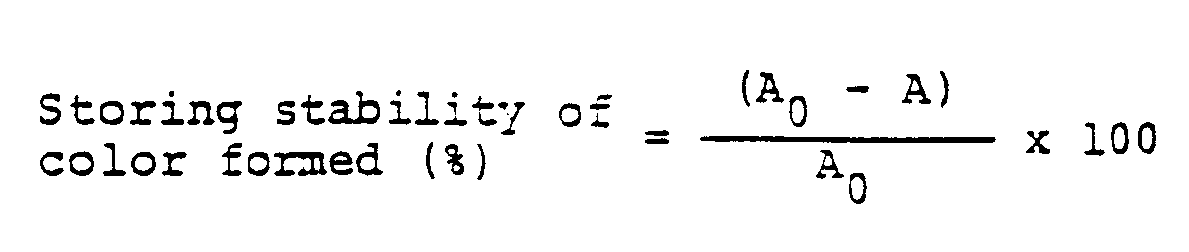
wherein A₀ is an absorbance of a sample at 550 nm immediately after irradiation of ultraviolet light; and A is an absorbance of a sample at 550 nm after stored for a predetermined fine after irradiation of ultraviolet light. - The results are shown in Table 1.
Table 1 Sample No. Storing stability (%) 120 h 192 h 1 4.8 8.9 2 6.7 16.7 - As is clear from the results of Table 1, the storing stability of color formed of the polymer obtained from a fulgimide derivative having a vinyl group of the present invention is significantly higher than that of a simple mixture of a fulgimide derivative and the polymer.
- As mentioned above, the fulgimide derivatives of the present invention have photochromic activity and useful as recording and memory materials, copying materials, printed photosensitive bodies, laser photosensitive materials, photosensitive materials for photo-composing, photosensitive materials for display, etc. by themselves. Further, since the fulgimide derivatives of the present invention have a reactive functional group in their molecules, they can be effectively used as starting materials for synthesizing fulgimide derivatives having various useful functional groups introduced therein. In addition, fulgimide derivatives of the present invention having a vinyl group can be used for producing polymers and copolymers with suitable other monomers, having photochromic activity.
| Elementary analysis: | |||
| C | H | N | |
| Calcd. (%) | 71.99 | 6.33 | 7.99 |
| Found (%) | 71.55 | 6.24 | 7.90 |
When the obtained N-(4-aminophenyl)-2-[(E)-1-(2,5-dimethyl-3-furyl)ethylidene]-3-isopropylidenesuccinimide was dissolved in chloroform and exposed to ultraviolet light of 310-380 nm [light source: ultra-high pressure mercury lamp (mfd. by Ushio Inc.), filter: UV-35 and UVD-35 (trade names, mfd. by Toshiba Glass Co., Ltd.)] for 1 minute, the color of the solution was changed to deep red (λmax: 518 nm). In the next place, when the solution was exposed to visible light of 470 nm or more [light source: 250W Xe lamp (mfg. by Ushio Inc.), filter: IRA-25S and Y-47 (trade names, mfd. by Toshiba Glass Co., Ltd.)] for 1 minute, the solution showed the state before the exposure to ultraviolet light. The above mentioned procedures were repeated a number of times, and the results were the same at every repetition.
| Elementary analysis: | |||
| C | H | N | |
| Calc. (%) | 72.88 | 5.64 | 6.53 |
| Found (%) | 71.84 | 5.83 | 6.28 |
When the obtained N-(4-aminophenyl)-2-[(E)-1-(2-methyl-5-phenyl-3-thienyl)ethylidene]-3-isopropylidenesuccinimide was dissolved in chloroform and exposed to ultraviolet light of 310-380 nm [light source: ultra-high pressure mercury lamp (mfd. by Ushio Inc.), filter: UV-35 and UVD-35 (mfd. by Toshiba Glass Co., Ltd.)] for 1 minute, the solution was changed to deep reddish violet (λmax: 554 nm). In the next place, when the solution was exposed to visible light of 500 nm or more [light source: 250W Xe lamp (mfd. by Ushio Inc.), filter: IRA-25S and O-54 (trade names, mfd. by Toshiba Glass Co., Ltd.)] for 1 minute, the solution showed the state before the exposure to ultraviolet light. The above-mentioned procedures repeated a number of times, and the results were the same at every repetition.
| Elementary analysis: | |||
| C | H | N | |
| Calcd. (%) | 75.28 | 5.47 | 5.85 |
| Found (%) | 74.81 | 5.72 | 5.63 |
| Elementary analysis: | |||
| C | H | N | |
| Calcd. (%) | 76.42 | 5.30 | 5.40 |
| Found (%) | 75.68 | 5.52 | 5.10 |
| Elementary analysis: | |||
| C | H | N | |
| Calcd. (%) | 71.77 | 6.02 | 3.98 |
| Found (%) | 71.50 | 6.26 | 3.74 |
| Elementary analysis: | |||
| C | H | N | |
| Calcd. (%) | 72.71 | 5.39 | 3.26 |
| Found (%) | 72.56 | 5.31 | 3.18 |
| Elementary analysis: | |||
| C | H | N | |
| Calcd. (%) | 72.99 | 6.92 | 7.40 |
| Found (%) | 73.12 | 6.98 | 7.42 |
| Elementary analysis: | |||
| C | H | N | |
| Calcd. (%) | 69.93 | 6.38 | 3.54 |
| Found (%) | 69.98 | 6.45 | 3.50 |
| Elementary analysis: | |||
| C | H | N | |
| Calcd. (%) | 76.35 | 9.38 | 4.34 |
| Found (%) | 76.21 | 9.32 | 4.30 |
| Elementary analysis: | |||
| C | H | N | |
| Calcd. (%) | 70.64 | 6.42 | 3.43 |
| Found (%) | 70.58 | 6.40 | 3.41 |
| Elementary analysis: | |||
| C | H | N | |
| Calcd. (%) | 71.30 | 6.46 | 3.32 |
| Found (%) | 71.28 | 6.45 | 3.33 |
| Elementary analysis: | |||
| C | H | N | |
| Calcd. (%) | 77.23 | 6.48 | 6.00 |
| Found (%) | 77.12 | 6.40 | 5.98 |
| Elementary analysis: | |||
| C | H | N | |
| Calcd. (%) | 74.98 | 6.04 | 6.99 |
| Found (%) | 74.67 | 6.00 | 6.92 |
| Elementary analysis: | |||
| C | H | N | |
| Calcd. (%) | 72.71 | 6.33 | 9.78 |
| Found (%) | 72.65 | 6.25 | 9.72 |
| Elementary analysis: | |||
| C | H | N | |
| Calcd. (%) | 72.80 | 6.64 | 3.69 |
| Found (%) | 72.71 | 6.58 | 3.68 |
| Elementary analysis: | |||
| C | H | N | |
| Calcd. (%) | 71.10 | 5.72 | 3.47 |
| Found (%) | 70.94 | 5.48 | 3.53 |
| Elementary analysis: | |||
| C | H | N | |
| Calcd. (%) | 72.41 | 5.46 | 2.81 |
| Found (%) | 72.17 | 5.47 | 2.57 |
| Elementary analysis: | |||
| C | H | N | |
| Calcd. (%) | 71.75 | 6.29 | 6.69 |
| Found (%) | 71.35 | 6.82 | 6.72 |
| Elementary analysis: | |||
| C | H | N | |
| Calcd. (%) | 72.03 | 6.27 | 3.23 |
| Found (%) | 71.76 | 6.21 | 3.15 |
| Elementary analysis: | |||
| C | H | N | |
| Calcd. (%) | 73.82 | 5.97 | 6.14 |
| Found (%) | 73.76 | 6.03 | 6.10 |
| Elementary analysis: | |||
| C | H | N | |
| Calcd. (%) | 72.13 | 5.85 | 2.81 |
| Found (%) | 72.36 | 5.93 | 2.82 |
Claims (8)
- A recording or memory material incorporating a photochromic material which is a) a fulgimide derivative which derivative is a compound of the following formula:


b) a salt of said derivative, or
c) a photochromic polymer or copolymer of a monomer of formula I which monomer has a group R of formula: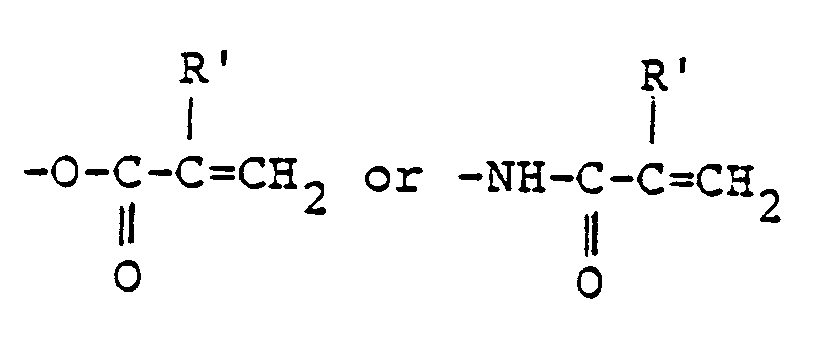
- A material according to claim 1 wherein R in the formula [I] is an amino group which may have one or more substituents, a hydroxyl group, a formyl group, a carboxyl group, a sulfonic acid group, an acetal group or a halogen atom.
- A material according to claim 1 wherein R in the formula [I] is a group of the formula:

- A process for producing a fulgimide derivative of claim 1, wherein R is an amino group which may have one or more substituents, a hydroxyl group, a formyl group, a carboxyl group, a sulfonic acid group, an acetal group or a halogen atom, which comprises subjecting (a) a compound of the formula:


H₂N-X-R [IV]
wherein R is as defined above; X is as defined in claim 1, to azeotropic dehydration reaction in a non-polar solvent. - A process for using a fulgimide derivative of claim 1, wherein R is

- A polymer obtained from a fulgimide derivative of claim 3.
- A process for producing a fulgimide derivative of claim 1, wherein R is


- Use of a fulgimide derivative of the formula of claim 1 for preparing a material with photochromic properties.
Applications Claiming Priority (4)
| Application Number | Priority Date | Filing Date | Title |
|---|---|---|---|
| JP19564089 | 1989-07-28 | ||
| JP195640/89 | 1989-07-28 | ||
| JP24244689 | 1989-09-19 | ||
| JP242446/89 | 1989-09-19 |
Publications (2)
| Publication Number | Publication Date |
|---|---|
| EP0420397A1 EP0420397A1 (en) | 1991-04-03 |
| EP0420397B1 true EP0420397B1 (en) | 1995-11-29 |
Family
ID=26509269
Family Applications (1)
| Application Number | Title | Priority Date | Filing Date |
|---|---|---|---|
| EP90308032A Expired - Lifetime EP0420397B1 (en) | 1989-07-28 | 1990-07-23 | Fulgimide derivatives |
Country Status (4)
| Country | Link |
|---|---|
| US (1) | US5359085A (en) |
| EP (1) | EP0420397B1 (en) |
| AT (1) | ATE130850T1 (en) |
| DE (1) | DE69023865T2 (en) |
Cited By (1)
| Publication number | Priority date | Publication date | Assignee | Title |
|---|---|---|---|---|
| US9428548B2 (en) | 2009-09-01 | 2016-08-30 | Genentech, Inc. | Enhanced protein purification through a modified protein A elution |
Families Citing this family (74)
| Publication number | Priority date | Publication date | Assignee | Title |
|---|---|---|---|---|
| DE4007636A1 (en) * | 1990-03-10 | 1991-09-12 | Basf Ag | PHOTOCHROME MONOMERS AND PHOTOCHROME POLYMERISATES MADE THEREOF |
| US5644416A (en) * | 1991-11-26 | 1997-07-01 | Fuji Xerox Co., Ltd. | Light modulation device and method of light modulation using the same |
| AU658271B2 (en) * | 1992-03-26 | 1995-04-06 | Tanabe Seiyaku Co., Ltd. | Butadiene derivatives and process for preparing the same |
| AUPN443695A0 (en) * | 1995-07-28 | 1995-08-17 | Sola International Holdings Ltd | Photochromic polymer |
| CO4780021A1 (en) * | 1996-03-29 | 1999-05-26 | Tanabe Seiyaku Co | BUTADIENE DERIVATIVES AND PROCEDURE FOR THE PREPARATION OF THE SAME |
| DE19645313A1 (en) | 1996-11-04 | 1998-05-07 | Basf Ag | Substituted 3-benzylpyrazoles |
| BR9913869A (en) * | 1998-09-11 | 2004-12-28 | Ppg Ind Ohio Inc | Naphthoopyran Compound and Photochromic Articles |
| US6555028B2 (en) | 1998-09-11 | 2003-04-29 | Transitions Optical, Inc. | Polymeric matrix compatibilized naphthopyrans |
| US6348604B1 (en) | 1999-09-17 | 2002-02-19 | Ppg Industries Ohio, Inc. | Photochromic naphthopyrans |
| US6296785B1 (en) | 1999-09-17 | 2001-10-02 | Ppg Industries Ohio, Inc. | Indeno-fused photochromic naphthopyrans |
| US6433043B1 (en) * | 2000-11-28 | 2002-08-13 | Transitions Optical, Inc. | Removable imbibition composition of photochromic compound and kinetic enhancing additive |
| US8017720B2 (en) | 2005-12-16 | 2011-09-13 | Ppg Industries Ohio, Inc. | Sulfur-containing oligomers and high index polyurethanes prepared therefrom |
| US7368072B2 (en) * | 2001-12-10 | 2008-05-06 | Ppg Industries Ohio, Inc. | Photochromic contact lenses and methods of manufacturing |
| US20050258408A1 (en) * | 2001-12-20 | 2005-11-24 | Molock Frank F | Photochromic contact lenses and methods for their production |
| US20030141490A1 (en) * | 2001-12-21 | 2003-07-31 | Walters Robert W. | Photochromic polymer compositions and articles thereof |
| US7029833B2 (en) * | 2002-02-15 | 2006-04-18 | Ricoh Company, Ltd. | Image display medium, process for forming image, and multicolor image-forming apparatus |
| US20040063006A1 (en) * | 2002-07-01 | 2004-04-01 | Hiroyuki Takahashi | Optical memory device and process for operating the same |
| US7009032B2 (en) | 2002-12-20 | 2006-03-07 | Ppg Industries Ohio, Inc. | Sulfide-containing polythiols |
| US7166357B2 (en) * | 2003-03-20 | 2007-01-23 | Transitions Optical, Inc. | Photochromic articles that activate behind ultraviolet radiation blocking transparencies and methods for preparation |
| US7262295B2 (en) | 2003-03-20 | 2007-08-28 | Transitions Optical, Inc. | Indeno-fused photochromic naphthopyrans, naphthols and photochromic articles |
| US20040186241A1 (en) * | 2003-03-20 | 2004-09-23 | Gemert Barry Van | Photochromic ocular devices |
| US7320826B2 (en) * | 2003-03-20 | 2008-01-22 | Ppg Industries Ohio, Inc. | Photochromic articles with reduced temperature dependency and methods for preparation |
| US7632540B2 (en) | 2003-07-01 | 2009-12-15 | Transitions Optical, Inc. | Alignment facilities for optical dyes |
| US8518546B2 (en) * | 2003-07-01 | 2013-08-27 | Transitions Optical, Inc. | Photochromic compounds and compositions |
| US8698117B2 (en) | 2003-07-01 | 2014-04-15 | Transitions Optical, Inc. | Indeno-fused ring compounds |
| US20110140056A1 (en) * | 2003-07-01 | 2011-06-16 | Transitions Optical, Inc. | Indeno-fused ring compounds |
| US8545984B2 (en) * | 2003-07-01 | 2013-10-01 | Transitions Optical, Inc. | Photochromic compounds and compositions |
| US9096014B2 (en) | 2003-07-01 | 2015-08-04 | Transitions Optical, Inc. | Oriented polymeric sheets exhibiting dichroism and articles containing the same |
| US7342112B2 (en) | 2003-07-01 | 2008-03-11 | Ppg Industries Ohio, Inc. | Photochromic compounds |
| US8211338B2 (en) | 2003-07-01 | 2012-07-03 | Transitions Optical, Inc | Photochromic compounds |
| US7256921B2 (en) | 2003-07-01 | 2007-08-14 | Transitions Optical, Inc. | Polarizing, photochromic devices and methods of making the same |
| US7094368B2 (en) * | 2003-12-10 | 2006-08-22 | Transitions Optical, Inc. | Pyrano-quinolines, pyrano-quinolinones, combinations thereof, photochromic compositions and articles |
| US7144966B2 (en) * | 2004-03-04 | 2006-12-05 | Basf Corporation | Acrylic composition for use in coating applications and a method of forming the same |
| US7261843B2 (en) * | 2004-03-04 | 2007-08-28 | Transitions Optical, Inc. | Photochromic optical article |
| US7465415B2 (en) * | 2004-07-30 | 2008-12-16 | Ppg Industries Ohio, Inc. | Photochromic materials derived from ring-opening monomers and photochromic initiators |
| US9464169B2 (en) | 2004-09-01 | 2016-10-11 | Ppg Industries Ohio, Inc. | Polyurethanes, articles and coatings prepared therefrom and methods of making the same |
| US11149107B2 (en) | 2004-09-01 | 2021-10-19 | Ppg Industries Ohio, Inc. | Polyurethanes, articles and coatings prepared therefrom and methods of making the same |
| US11248083B2 (en) | 2004-09-01 | 2022-02-15 | Ppg Industries Ohio, Inc. | Aircraft windows |
| US9598527B2 (en) | 2004-09-01 | 2017-03-21 | Ppg Industries Ohio, Inc. | Polyurethanes, articles and coatings prepared therefrom and methods of making the same |
| US20090280329A1 (en) | 2004-09-01 | 2009-11-12 | Ppg Industries Ohio, Inc. | Polyurethanes, Articles and Coatings Prepared Therefrom and Methods of Making the Same |
| US20090280709A1 (en) | 2004-09-01 | 2009-11-12 | Ppg Industries Ohio, Inc. | Polyurethanes, Articles and Coatings Prepared Therefrom and Methods of Making the Same |
| US11008418B2 (en) | 2004-09-01 | 2021-05-18 | Ppg Industries Ohio, Inc. | Polyurethanes, articles and coatings prepared therefrom and methods of making the same |
| US11591436B2 (en) | 2004-09-01 | 2023-02-28 | Ppg Industries Ohio, Inc. | Polyurethane article and methods of making the same |
| CY2527B1 (en) * | 2004-10-05 | 2006-05-12 | Akiram Trading Ltd | |
| US20060093844A1 (en) * | 2004-10-29 | 2006-05-04 | Conklin Jeanine A | Photochromic coating compositions, methods of making coated articles and articles thereof |
| US9052438B2 (en) | 2005-04-08 | 2015-06-09 | Johnson & Johnson Vision Care, Inc. | Ophthalmic devices comprising photochromic materials with reactive substituents |
| US20060226402A1 (en) * | 2005-04-08 | 2006-10-12 | Beon-Kyu Kim | Ophthalmic devices comprising photochromic materials having extended PI-conjugated systems |
| US7556750B2 (en) * | 2005-04-08 | 2009-07-07 | Transitions Optical, Inc. | Photochromic materials with reactive substituents |
| US8147725B2 (en) | 2005-04-08 | 2012-04-03 | Transitions Optical, Inc | Photochromic materials having extended pi-conjugated systems and compositions and articles including the same |
| US9028728B2 (en) | 2005-04-08 | 2015-05-12 | Transitions Optical, Inc. | Photochromic materials that include indeno-fused naphthopyrans |
| US8158037B2 (en) | 2005-04-08 | 2012-04-17 | Johnson & Johnson Vision Care, Inc. | Photochromic materials having extended pi-conjugated systems and compositions and articles including the same |
| US8647538B2 (en) | 2005-04-08 | 2014-02-11 | Transitions Optical, Inc. | Photochromic compounds having at least two photochromic moieties |
| US20060228557A1 (en) * | 2005-04-08 | 2006-10-12 | Beon-Kyu Kim | Photochromic materials having extended pi-conjugated systems and compositions and articles including the same |
| US20060227287A1 (en) * | 2005-04-08 | 2006-10-12 | Frank Molock | Photochromic ophthalmic devices made with dual initiator system |
| US9139552B2 (en) | 2005-04-08 | 2015-09-22 | Transitions Optical, Inc. | Indeno-fused naphthopyrans having ethylenically unsaturated groups |
| US20070257238A1 (en) * | 2006-05-05 | 2007-11-08 | Transitions Optical, Inc. | Polymerizable photochromic compositions with multiple initiators |
| US20080160318A1 (en) | 2006-05-05 | 2008-07-03 | Howard Senkfor | Polyurea/polythiourea coatings |
| US20080187749A1 (en) * | 2007-01-11 | 2008-08-07 | Ppg Industries Ohio, Inc. | Optical element having light influencing property |
| US7906214B2 (en) | 2007-01-26 | 2011-03-15 | Transitions Optical, Inc. | Optical elements comprising compatiblizing coatings and methods of making the same |
| US8110127B2 (en) | 2008-06-19 | 2012-02-07 | Essilor International (Compagnie Generale D'optique) | Photochromic coating exhibiting improved performance |
| US20100232003A1 (en) | 2009-03-13 | 2010-09-16 | Transitions Optical, Inc. | Vision enhancing optical articles |
| US8759377B2 (en) * | 2009-11-23 | 2014-06-24 | Vanderbilt University | Substituted dioxopiperidines and dioxopyrrolidines as MGLUR4 allosteric potentiators, compositions, and methods of treating neurological dysfunction |
| US8608988B2 (en) | 2010-11-23 | 2013-12-17 | Transitions Optical, Inc. | Curable photochromic compositions and optical articles prepared therefrom |
| US8848288B2 (en) | 2011-03-04 | 2014-09-30 | Ppg Industries Ohio, Inc. | Composite optical articles |
| US8641933B2 (en) | 2011-09-23 | 2014-02-04 | Ppg Industries Ohio, Inc | Composite crystal colloidal array with photochromic member |
| US9133362B2 (en) | 2012-07-16 | 2015-09-15 | Ppg Industries Ohio, Inc. | Coating composition having mechanochromic crystals |
| US9568643B2 (en) | 2012-12-13 | 2017-02-14 | Ppg Industries Ohio, Inc. | Polyurethane urea-containing compositions and optical articles and methods for preparing them |
| US10423061B2 (en) | 2015-09-03 | 2019-09-24 | Transitions Optical, Inc. | Multilayer photochromic articles |
| US10866455B2 (en) | 2017-10-19 | 2020-12-15 | Ppg Industries Ohio, Inc. | Display devices including photochromic-dichroic compounds and dichroic compounds |
| ES2929943T3 (en) * | 2017-12-29 | 2022-12-05 | Essilor Int | Manufacturing process of a light-absorbing polymeric matrix |
| WO2021037374A1 (en) | 2019-08-30 | 2021-03-04 | Transitions Optical, Ltd. | Photochromic composition with polyol and poly(anhydride) |
| KR102805876B1 (en) | 2019-08-30 | 2025-05-09 | 트랜지션즈 옵티칼 리미티드 | Photochromic film laminate |
| MX2023005404A (en) | 2020-11-10 | 2023-05-22 | Transitions Optical Ltd | PHOTOCHROMATIC-DICHROIC ARTICLES. |
| MX2023005405A (en) | 2020-11-10 | 2023-07-04 | Transitions Optical Ltd | Method for preparing a coated article. |
Family Cites Families (3)
| Publication number | Priority date | Publication date | Assignee | Title |
|---|---|---|---|---|
| GB1442628A (en) * | 1973-09-01 | 1976-07-14 | Heller H G | Photochromic compounds |
| IT1079147B (en) * | 1976-08-31 | 1985-05-08 | Heller George H | PHOTOCROMIC COMPOUNDS AND THEIR PREPARATION PROCESS |
| US4220708A (en) * | 1977-07-22 | 1980-09-02 | Heller Harold G | Photochromic compounds |
-
1990
- 1990-07-23 AT AT90308032T patent/ATE130850T1/en not_active IP Right Cessation
- 1990-07-23 EP EP90308032A patent/EP0420397B1/en not_active Expired - Lifetime
- 1990-07-23 DE DE69023865T patent/DE69023865T2/en not_active Expired - Fee Related
- 1990-07-27 US US07/558,549 patent/US5359085A/en not_active Expired - Fee Related
Cited By (1)
| Publication number | Priority date | Publication date | Assignee | Title |
|---|---|---|---|---|
| US9428548B2 (en) | 2009-09-01 | 2016-08-30 | Genentech, Inc. | Enhanced protein purification through a modified protein A elution |
Also Published As
| Publication number | Publication date |
|---|---|
| EP0420397A1 (en) | 1991-04-03 |
| DE69023865D1 (en) | 1996-01-11 |
| ATE130850T1 (en) | 1995-12-15 |
| US5359085A (en) | 1994-10-25 |
| DE69023865T2 (en) | 1996-10-17 |
Similar Documents
| Publication | Publication Date | Title |
|---|---|---|
| EP0420397B1 (en) | Fulgimide derivatives | |
| US5922612A (en) | Optical sensor system for determining pH values and ionic strengths | |
| JP3170613B2 (en) | Benzoselenazoline vinyl spiropyran compounds and polymers containing the compounds | |
| JPWO1991013072A1 (en) | Benzoselenazolin-based vinyl spiropyran compounds and polymers containing said compounds | |
| WO2008023828A1 (en) | Chromene compound | |
| JP2003064354A (en) | Photochromic material | |
| JP7721679B2 (en) | Oxime ester photoinitiators with chalcone structure, and methods for producing and using the same | |
| EP0698608B1 (en) | Spiropyran compound | |
| JP3526929B2 (en) | Perfluorocyclopentene derivative, photochromic material and optical recording medium | |
| JP3404156B2 (en) | Perfluorocyclopentene derivative, photochromic material, optical recording medium, and optical recording method | |
| CN1965051A (en) | Polymerisable naphthopyran derivatives and polymer materials obtained from said derivatives | |
| US5241027A (en) | Macromolecular spiropyran compounds | |
| US5468874A (en) | Benzothiophene/indole-substituted maleimide derivatives, photochromic material comprising said derivatives and optical recording material using the same material | |
| KR20000014038A (en) | Process for preparing diarylethene substituted styrene copolymer and photorecordig thin film | |
| JPH07300484A (en) | Spiropyrans | |
| JPH03148258A (en) | Fulgimide derivative | |
| CN112409295B (en) | Fluorene initiator, photocuring composition containing same and application thereof | |
| JP3358682B2 (en) | Benzothiophene-thiophene type diarylmaleimide derivative, photochromic material and optical recording medium | |
| JPH03107839A (en) | Organic compound having perfluoroalkyl group and monomolecular film formed by using the same and application thereof | |
| EP0640605B1 (en) | Spiropyran compound, optically active spiropyran compound, and use thereof | |
| JPH08143564A (en) | Perfluorocyclopentene derivative, photochromic material, light recording material and light recording method | |
| JPH03178961A (en) | New fulgimide derivative | |
| Itoh et al. | Synthesis and polymerization of 1‐(2, 4, 6‐tricyanophenylthio)‐3‐[3, 5‐bis (n, n‐dimethylamino) phenoxy]‐2‐propyl methacrylate; polymer effect on intramolecular charge–transfer interaction | |
| WO1994020502A1 (en) | Spiropyran compound, optically active spiropyran compound, and use thereof | |
| JP2774830B2 (en) | Spirooxazine compound and method for producing the same |
Legal Events
| Date | Code | Title | Description |
|---|---|---|---|
| PUAI | Public reference made under article 153(3) epc to a published international application that has entered the european phase |
Free format text: ORIGINAL CODE: 0009012 |
|
| AK | Designated contracting states |
Kind code of ref document: A1 Designated state(s): AT BE CH DE DK ES FR GB GR IT LI LU NL SE |
|
| 17P | Request for examination filed |
Effective date: 19910829 |
|
| 17Q | First examination report despatched |
Effective date: 19940203 |
|
| GRAA | (expected) grant |
Free format text: ORIGINAL CODE: 0009210 |
|
| AK | Designated contracting states |
Kind code of ref document: B1 Designated state(s): AT BE CH DE DK ES FR GB GR IT LI LU NL SE |
|
| PG25 | Lapsed in a contracting state [announced via postgrant information from national office to epo] |
Ref country code: NL Free format text: LAPSE BECAUSE OF FAILURE TO SUBMIT A TRANSLATION OF THE DESCRIPTION OR TO PAY THE FEE WITHIN THE PRESCRIBED TIME-LIMIT Effective date: 19951129 Ref country code: LI Effective date: 19951129 Ref country code: GR Free format text: LAPSE BECAUSE OF FAILURE TO SUBMIT A TRANSLATION OF THE DESCRIPTION OR TO PAY THE FEE WITHIN THE PRESCRIBED TIME-LIMIT Effective date: 19951129 Ref country code: ES Free format text: THE PATENT HAS BEEN ANNULLED BY A DECISION OF A NATIONAL AUTHORITY Effective date: 19951129 Ref country code: DK Effective date: 19951129 Ref country code: CH Effective date: 19951129 Ref country code: BE Effective date: 19951129 Ref country code: AT Effective date: 19951129 |
|
| REF | Corresponds to: |
Ref document number: 130850 Country of ref document: AT Date of ref document: 19951215 Kind code of ref document: T |
|
| ITF | It: translation for a ep patent filed | ||
| REF | Corresponds to: |
Ref document number: 69023865 Country of ref document: DE Date of ref document: 19960111 |
|
| PG25 | Lapsed in a contracting state [announced via postgrant information from national office to epo] |
Ref country code: SE Effective date: 19960229 |
|
| ET | Fr: translation filed | ||
| NLV1 | Nl: lapsed or annulled due to failure to fulfill the requirements of art. 29p and 29m of the patents act | ||
| REG | Reference to a national code |
Ref country code: CH Ref legal event code: PL |
|
| PG25 | Lapsed in a contracting state [announced via postgrant information from national office to epo] |
Ref country code: GB Effective date: 19960723 |
|
| PG25 | Lapsed in a contracting state [announced via postgrant information from national office to epo] |
Ref country code: LU Free format text: LAPSE BECAUSE OF NON-PAYMENT OF DUE FEES Effective date: 19960731 |
|
| PLBE | No opposition filed within time limit |
Free format text: ORIGINAL CODE: 0009261 |
|
| STAA | Information on the status of an ep patent application or granted ep patent |
Free format text: STATUS: NO OPPOSITION FILED WITHIN TIME LIMIT |
|
| 26N | No opposition filed | ||
| GBPC | Gb: european patent ceased through non-payment of renewal fee |
Effective date: 19960723 |
|
| PG25 | Lapsed in a contracting state [announced via postgrant information from national office to epo] |
Ref country code: FR Effective date: 19970328 |
|
| PG25 | Lapsed in a contracting state [announced via postgrant information from national office to epo] |
Ref country code: DE Effective date: 19970402 |
|
| REG | Reference to a national code |
Ref country code: FR Ref legal event code: ST |
|
| PG25 | Lapsed in a contracting state [announced via postgrant information from national office to epo] |
Ref country code: IT Free format text: LAPSE BECAUSE OF NON-PAYMENT OF DUE FEES;WARNING: LAPSES OF ITALIAN PATENTS WITH EFFECTIVE DATE BEFORE 2007 MAY HAVE OCCURRED AT ANY TIME BEFORE 2007. THE CORRECT EFFECTIVE DATE MAY BE DIFFERENT FROM THE ONE RECORDED. Effective date: 20050723 |