EP0415413A1 - Acat inhibitors - Google Patents
Acat inhibitors Download PDFInfo
- Publication number
- EP0415413A1 EP0415413A1 EP90116662A EP90116662A EP0415413A1 EP 0415413 A1 EP0415413 A1 EP 0415413A1 EP 90116662 A EP90116662 A EP 90116662A EP 90116662 A EP90116662 A EP 90116662A EP 0415413 A1 EP0415413 A1 EP 0415413A1
- Authority
- EP
- European Patent Office
- Prior art keywords
- phenyl
- amino
- bis
- methylethyl
- carbon atoms
- Prior art date
- Legal status (The legal status is an assumption and is not a legal conclusion. Google has not performed a legal analysis and makes no representation as to the accuracy of the status listed.)
- Withdrawn
Links
Classifications
-
- C—CHEMISTRY; METALLURGY
- C07—ORGANIC CHEMISTRY
- C07D—HETEROCYCLIC COMPOUNDS
- C07D295/00—Heterocyclic compounds containing polymethylene-imine rings with at least five ring members, 3-azabicyclo [3.2.2] nonane, piperazine, morpholine or thiomorpholine rings, having only hydrogen atoms directly attached to the ring carbon atoms
- C07D295/22—Heterocyclic compounds containing polymethylene-imine rings with at least five ring members, 3-azabicyclo [3.2.2] nonane, piperazine, morpholine or thiomorpholine rings, having only hydrogen atoms directly attached to the ring carbon atoms with hetero atoms directly attached to ring nitrogen atoms
- C07D295/26—Sulfur atoms
-
- A—HUMAN NECESSITIES
- A61—MEDICAL OR VETERINARY SCIENCE; HYGIENE
- A61P—SPECIFIC THERAPEUTIC ACTIVITY OF CHEMICAL COMPOUNDS OR MEDICINAL PREPARATIONS
- A61P3/00—Drugs for disorders of the metabolism
- A61P3/06—Antihyperlipidemics
-
- A—HUMAN NECESSITIES
- A61—MEDICAL OR VETERINARY SCIENCE; HYGIENE
- A61P—SPECIFIC THERAPEUTIC ACTIVITY OF CHEMICAL COMPOUNDS OR MEDICINAL PREPARATIONS
- A61P9/00—Drugs for disorders of the cardiovascular system
- A61P9/10—Drugs for disorders of the cardiovascular system for treating ischaemic or atherosclerotic diseases, e.g. antianginal drugs, coronary vasodilators, drugs for myocardial infarction, retinopathy, cerebrovascula insufficiency, renal arteriosclerosis
-
- C—CHEMISTRY; METALLURGY
- C07—ORGANIC CHEMISTRY
- C07C—ACYCLIC OR CARBOCYCLIC COMPOUNDS
- C07C233/00—Carboxylic acid amides
- C07C233/01—Carboxylic acid amides having carbon atoms of carboxamide groups bound to hydrogen atoms or to acyclic carbon atoms
- C07C233/02—Carboxylic acid amides having carbon atoms of carboxamide groups bound to hydrogen atoms or to acyclic carbon atoms having nitrogen atoms of carboxamide groups bound to hydrogen atoms or to carbon atoms of unsubstituted hydrocarbon radicals
- C07C233/04—Carboxylic acid amides having carbon atoms of carboxamide groups bound to hydrogen atoms or to acyclic carbon atoms having nitrogen atoms of carboxamide groups bound to hydrogen atoms or to carbon atoms of unsubstituted hydrocarbon radicals with carbon atoms of carboxamide groups bound to acyclic carbon atoms of an acyclic saturated carbon skeleton
- C07C233/07—Carboxylic acid amides having carbon atoms of carboxamide groups bound to hydrogen atoms or to acyclic carbon atoms having nitrogen atoms of carboxamide groups bound to hydrogen atoms or to carbon atoms of unsubstituted hydrocarbon radicals with carbon atoms of carboxamide groups bound to acyclic carbon atoms of an acyclic saturated carbon skeleton having the nitrogen atom of at least one of the carboxamide groups bound to a carbon atom of a six-membered aromatic ring
-
- C—CHEMISTRY; METALLURGY
- C07—ORGANIC CHEMISTRY
- C07C—ACYCLIC OR CARBOCYCLIC COMPOUNDS
- C07C233/00—Carboxylic acid amides
- C07C233/01—Carboxylic acid amides having carbon atoms of carboxamide groups bound to hydrogen atoms or to acyclic carbon atoms
- C07C233/02—Carboxylic acid amides having carbon atoms of carboxamide groups bound to hydrogen atoms or to acyclic carbon atoms having nitrogen atoms of carboxamide groups bound to hydrogen atoms or to carbon atoms of unsubstituted hydrocarbon radicals
- C07C233/11—Carboxylic acid amides having carbon atoms of carboxamide groups bound to hydrogen atoms or to acyclic carbon atoms having nitrogen atoms of carboxamide groups bound to hydrogen atoms or to carbon atoms of unsubstituted hydrocarbon radicals with carbon atoms of carboxamide groups bound to carbon atoms of an unsaturated carbon skeleton containing six-membered aromatic rings
-
- C—CHEMISTRY; METALLURGY
- C07—ORGANIC CHEMISTRY
- C07C—ACYCLIC OR CARBOCYCLIC COMPOUNDS
- C07C237/00—Carboxylic acid amides, the carbon skeleton of the acid part being further substituted by amino groups
- C07C237/02—Carboxylic acid amides, the carbon skeleton of the acid part being further substituted by amino groups having the carbon atoms of the carboxamide groups bound to acyclic carbon atoms of the carbon skeleton
- C07C237/04—Carboxylic acid amides, the carbon skeleton of the acid part being further substituted by amino groups having the carbon atoms of the carboxamide groups bound to acyclic carbon atoms of the carbon skeleton the carbon skeleton being acyclic and saturated
-
- C—CHEMISTRY; METALLURGY
- C07—ORGANIC CHEMISTRY
- C07C—ACYCLIC OR CARBOCYCLIC COMPOUNDS
- C07C237/00—Carboxylic acid amides, the carbon skeleton of the acid part being further substituted by amino groups
- C07C237/02—Carboxylic acid amides, the carbon skeleton of the acid part being further substituted by amino groups having the carbon atoms of the carboxamide groups bound to acyclic carbon atoms of the carbon skeleton
- C07C237/20—Carboxylic acid amides, the carbon skeleton of the acid part being further substituted by amino groups having the carbon atoms of the carboxamide groups bound to acyclic carbon atoms of the carbon skeleton the carbon skeleton containing six-membered aromatic rings
-
- C—CHEMISTRY; METALLURGY
- C07—ORGANIC CHEMISTRY
- C07C—ACYCLIC OR CARBOCYCLIC COMPOUNDS
- C07C237/00—Carboxylic acid amides, the carbon skeleton of the acid part being further substituted by amino groups
- C07C237/02—Carboxylic acid amides, the carbon skeleton of the acid part being further substituted by amino groups having the carbon atoms of the carboxamide groups bound to acyclic carbon atoms of the carbon skeleton
- C07C237/22—Carboxylic acid amides, the carbon skeleton of the acid part being further substituted by amino groups having the carbon atoms of the carboxamide groups bound to acyclic carbon atoms of the carbon skeleton having nitrogen atoms of amino groups bound to the carbon skeleton of the acid part, further acylated
-
- C—CHEMISTRY; METALLURGY
- C07—ORGANIC CHEMISTRY
- C07C—ACYCLIC OR CARBOCYCLIC COMPOUNDS
- C07C237/00—Carboxylic acid amides, the carbon skeleton of the acid part being further substituted by amino groups
- C07C237/24—Carboxylic acid amides, the carbon skeleton of the acid part being further substituted by amino groups having the carbon atom of at least one of the carboxamide groups bound to a carbon atom of a ring other than a six-membered aromatic ring of the carbon skeleton
-
- C—CHEMISTRY; METALLURGY
- C07—ORGANIC CHEMISTRY
- C07C—ACYCLIC OR CARBOCYCLIC COMPOUNDS
- C07C271/00—Derivatives of carbamic acids, i.e. compounds containing any of the groups, the nitrogen atom not being part of nitro or nitroso groups
- C07C271/06—Esters of carbamic acids
- C07C271/08—Esters of carbamic acids having oxygen atoms of carbamate groups bound to acyclic carbon atoms
- C07C271/10—Esters of carbamic acids having oxygen atoms of carbamate groups bound to acyclic carbon atoms with the nitrogen atoms of the carbamate groups bound to hydrogen atoms or to acyclic carbon atoms
- C07C271/20—Esters of carbamic acids having oxygen atoms of carbamate groups bound to acyclic carbon atoms with the nitrogen atoms of the carbamate groups bound to hydrogen atoms or to acyclic carbon atoms to carbon atoms of hydrocarbon radicals substituted by nitrogen atoms not being part of nitro or nitroso groups
-
- C—CHEMISTRY; METALLURGY
- C07—ORGANIC CHEMISTRY
- C07C—ACYCLIC OR CARBOCYCLIC COMPOUNDS
- C07C271/00—Derivatives of carbamic acids, i.e. compounds containing any of the groups, the nitrogen atom not being part of nitro or nitroso groups
- C07C271/06—Esters of carbamic acids
- C07C271/08—Esters of carbamic acids having oxygen atoms of carbamate groups bound to acyclic carbon atoms
- C07C271/10—Esters of carbamic acids having oxygen atoms of carbamate groups bound to acyclic carbon atoms with the nitrogen atoms of the carbamate groups bound to hydrogen atoms or to acyclic carbon atoms
- C07C271/22—Esters of carbamic acids having oxygen atoms of carbamate groups bound to acyclic carbon atoms with the nitrogen atoms of the carbamate groups bound to hydrogen atoms or to acyclic carbon atoms to carbon atoms of hydrocarbon radicals substituted by carboxyl groups
-
- C—CHEMISTRY; METALLURGY
- C07—ORGANIC CHEMISTRY
- C07C—ACYCLIC OR CARBOCYCLIC COMPOUNDS
- C07C271/00—Derivatives of carbamic acids, i.e. compounds containing any of the groups, the nitrogen atom not being part of nitro or nitroso groups
- C07C271/06—Esters of carbamic acids
- C07C271/32—Esters of carbamic acids having oxygen atoms of carbamate groups bound to carbon atoms of rings other than six-membered aromatic rings
- C07C271/34—Esters of carbamic acids having oxygen atoms of carbamate groups bound to carbon atoms of rings other than six-membered aromatic rings with the nitrogen atoms of the carbamate groups bound to hydrogen atoms or to acyclic carbon atoms
-
- C—CHEMISTRY; METALLURGY
- C07—ORGANIC CHEMISTRY
- C07C—ACYCLIC OR CARBOCYCLIC COMPOUNDS
- C07C275/00—Derivatives of urea, i.e. compounds containing any of the groups, the nitrogen atoms not being part of nitro or nitroso groups
- C07C275/46—Derivatives of urea, i.e. compounds containing any of the groups, the nitrogen atoms not being part of nitro or nitroso groups containing any of the groups, X being a hetero atom, Y being any atom, e.g. acylureas
- C07C275/48—Y being a hydrogen or a carbon atom
- C07C275/50—Y being a hydrogen or an acyclic carbon atom
-
- C—CHEMISTRY; METALLURGY
- C07—ORGANIC CHEMISTRY
- C07C—ACYCLIC OR CARBOCYCLIC COMPOUNDS
- C07C311/00—Amides of sulfonic acids, i.e. compounds having singly-bound oxygen atoms of sulfo groups replaced by nitrogen atoms, not being part of nitro or nitroso groups
- C07C311/15—Sulfonamides having sulfur atoms of sulfonamide groups bound to carbon atoms of six-membered aromatic rings
- C07C311/16—Sulfonamides having sulfur atoms of sulfonamide groups bound to carbon atoms of six-membered aromatic rings having the nitrogen atom of at least one of the sulfonamide groups bound to hydrogen atoms or to an acyclic carbon atom
- C07C311/19—Sulfonamides having sulfur atoms of sulfonamide groups bound to carbon atoms of six-membered aromatic rings having the nitrogen atom of at least one of the sulfonamide groups bound to hydrogen atoms or to an acyclic carbon atom to an acyclic carbon atom of a hydrocarbon radical substituted by carboxyl groups
-
- C—CHEMISTRY; METALLURGY
- C07—ORGANIC CHEMISTRY
- C07C—ACYCLIC OR CARBOCYCLIC COMPOUNDS
- C07C323/00—Thiols, sulfides, hydropolysulfides or polysulfides substituted by halogen, oxygen or nitrogen atoms, or by sulfur atoms not being part of thio groups
- C07C323/50—Thiols, sulfides, hydropolysulfides or polysulfides substituted by halogen, oxygen or nitrogen atoms, or by sulfur atoms not being part of thio groups containing thio groups and carboxyl groups bound to the same carbon skeleton
- C07C323/51—Thiols, sulfides, hydropolysulfides or polysulfides substituted by halogen, oxygen or nitrogen atoms, or by sulfur atoms not being part of thio groups containing thio groups and carboxyl groups bound to the same carbon skeleton having the sulfur atoms of the thio groups bound to acyclic carbon atoms of the carbon skeleton
- C07C323/60—Thiols, sulfides, hydropolysulfides or polysulfides substituted by halogen, oxygen or nitrogen atoms, or by sulfur atoms not being part of thio groups containing thio groups and carboxyl groups bound to the same carbon skeleton having the sulfur atoms of the thio groups bound to acyclic carbon atoms of the carbon skeleton with the carbon atom of at least one of the carboxyl groups bound to nitrogen atoms
-
- C—CHEMISTRY; METALLURGY
- C07—ORGANIC CHEMISTRY
- C07C—ACYCLIC OR CARBOCYCLIC COMPOUNDS
- C07C335/00—Thioureas, i.e. compounds containing any of the groups, the nitrogen atoms not being part of nitro or nitroso groups
- C07C335/04—Derivatives of thiourea
- C07C335/06—Derivatives of thiourea having nitrogen atoms of thiourea groups bound to acyclic carbon atoms
- C07C335/10—Derivatives of thiourea having nitrogen atoms of thiourea groups bound to acyclic carbon atoms of an unsaturated carbon skeleton
- C07C335/12—Derivatives of thiourea having nitrogen atoms of thiourea groups bound to acyclic carbon atoms of an unsaturated carbon skeleton the carbon skeleton containing six-membered aromatic rings
-
- C—CHEMISTRY; METALLURGY
- C07—ORGANIC CHEMISTRY
- C07C—ACYCLIC OR CARBOCYCLIC COMPOUNDS
- C07C335/00—Thioureas, i.e. compounds containing any of the groups, the nitrogen atoms not being part of nitro or nitroso groups
- C07C335/04—Derivatives of thiourea
- C07C335/16—Derivatives of thiourea having nitrogen atoms of thiourea groups bound to carbon atoms of six-membered aromatic rings of a carbon skeleton
- C07C335/18—Derivatives of thiourea having nitrogen atoms of thiourea groups bound to carbon atoms of six-membered aromatic rings of a carbon skeleton being further substituted by singly-bound oxygen atoms
-
- C—CHEMISTRY; METALLURGY
- C07—ORGANIC CHEMISTRY
- C07C—ACYCLIC OR CARBOCYCLIC COMPOUNDS
- C07C335/00—Thioureas, i.e. compounds containing any of the groups, the nitrogen atoms not being part of nitro or nitroso groups
- C07C335/04—Derivatives of thiourea
- C07C335/16—Derivatives of thiourea having nitrogen atoms of thiourea groups bound to carbon atoms of six-membered aromatic rings of a carbon skeleton
- C07C335/20—Derivatives of thiourea having nitrogen atoms of thiourea groups bound to carbon atoms of six-membered aromatic rings of a carbon skeleton being further substituted by nitrogen atoms, not being part of nitro or nitroso groups
-
- C—CHEMISTRY; METALLURGY
- C07—ORGANIC CHEMISTRY
- C07D—HETEROCYCLIC COMPOUNDS
- C07D209/00—Heterocyclic compounds containing five-membered rings, condensed with other rings, with one nitrogen atom as the only ring hetero atom
- C07D209/02—Heterocyclic compounds containing five-membered rings, condensed with other rings, with one nitrogen atom as the only ring hetero atom condensed with one carbocyclic ring
- C07D209/04—Indoles; Hydrogenated indoles
- C07D209/10—Indoles; Hydrogenated indoles with substituted hydrocarbon radicals attached to carbon atoms of the hetero ring
- C07D209/18—Radicals substituted by carbon atoms having three bonds to hetero atoms with at the most one bond to halogen, e.g. ester or nitrile radicals
- C07D209/20—Radicals substituted by carbon atoms having three bonds to hetero atoms with at the most one bond to halogen, e.g. ester or nitrile radicals substituted additionally by nitrogen atoms, e.g. tryptophane
-
- C—CHEMISTRY; METALLURGY
- C07—ORGANIC CHEMISTRY
- C07D—HETEROCYCLIC COMPOUNDS
- C07D213/00—Heterocyclic compounds containing six-membered rings, not condensed with other rings, with one nitrogen atom as the only ring hetero atom and three or more double bonds between ring members or between ring members and non-ring members
- C07D213/02—Heterocyclic compounds containing six-membered rings, not condensed with other rings, with one nitrogen atom as the only ring hetero atom and three or more double bonds between ring members or between ring members and non-ring members having three double bonds between ring members or between ring members and non-ring members
- C07D213/04—Heterocyclic compounds containing six-membered rings, not condensed with other rings, with one nitrogen atom as the only ring hetero atom and three or more double bonds between ring members or between ring members and non-ring members having three double bonds between ring members or between ring members and non-ring members having no bond between the ring nitrogen atom and a non-ring member or having only hydrogen or carbon atoms directly attached to the ring nitrogen atom
- C07D213/24—Heterocyclic compounds containing six-membered rings, not condensed with other rings, with one nitrogen atom as the only ring hetero atom and three or more double bonds between ring members or between ring members and non-ring members having three double bonds between ring members or between ring members and non-ring members having no bond between the ring nitrogen atom and a non-ring member or having only hydrogen or carbon atoms directly attached to the ring nitrogen atom with substituted hydrocarbon radicals attached to ring carbon atoms
- C07D213/54—Radicals substituted by carbon atoms having three bonds to hetero atoms with at the most one bond to halogen, e.g. ester or nitrile radicals
- C07D213/56—Amides
-
- C—CHEMISTRY; METALLURGY
- C07—ORGANIC CHEMISTRY
- C07D—HETEROCYCLIC COMPOUNDS
- C07D333/00—Heterocyclic compounds containing five-membered rings having one sulfur atom as the only ring hetero atom
- C07D333/02—Heterocyclic compounds containing five-membered rings having one sulfur atom as the only ring hetero atom not condensed with other rings
- C07D333/04—Heterocyclic compounds containing five-membered rings having one sulfur atom as the only ring hetero atom not condensed with other rings not substituted on the ring sulphur atom
- C07D333/06—Heterocyclic compounds containing five-membered rings having one sulfur atom as the only ring hetero atom not condensed with other rings not substituted on the ring sulphur atom with only hydrogen atoms, hydrocarbon or substituted hydrocarbon radicals, directly attached to the ring carbon atoms
- C07D333/24—Radicals substituted by carbon atoms having three bonds to hetero atoms with at the most one bond to halogen, e.g. ester or nitrile radicals
-
- C—CHEMISTRY; METALLURGY
- C07—ORGANIC CHEMISTRY
- C07C—ACYCLIC OR CARBOCYCLIC COMPOUNDS
- C07C2601/00—Systems containing only non-condensed rings
- C07C2601/06—Systems containing only non-condensed rings with a five-membered ring
- C07C2601/08—Systems containing only non-condensed rings with a five-membered ring the ring being saturated
-
- C—CHEMISTRY; METALLURGY
- C07—ORGANIC CHEMISTRY
- C07C—ACYCLIC OR CARBOCYCLIC COMPOUNDS
- C07C2603/00—Systems containing at least three condensed rings
- C07C2603/02—Ortho- or ortho- and peri-condensed systems
- C07C2603/04—Ortho- or ortho- and peri-condensed systems containing three rings
- C07C2603/06—Ortho- or ortho- and peri-condensed systems containing three rings containing at least one ring with less than six ring members
- C07C2603/10—Ortho- or ortho- and peri-condensed systems containing three rings containing at least one ring with less than six ring members containing five-membered rings
- C07C2603/12—Ortho- or ortho- and peri-condensed systems containing three rings containing at least one ring with less than six ring members containing five-membered rings only one five-membered ring
- C07C2603/18—Fluorenes; Hydrogenated fluorenes
Definitions
- This invention relates to chemical compounds having pharmacological activity, to pharmaceutical compositions which include these compounds, and to a pharmaceutical method of treatment. More particularly, this invention concerns certain amino acid amide compounds which inhibit the enzyme acyl-coenzyme A:cholesterol acyltransferase (ACAT), pharmaceutical compositions containing these compounds, and a method of treating hypercholesterolemia and atherosclerosis.
- ACAT acyl-coenzyme A:cholesterol acyltransferase
- This invention also describes novel intermediates useful in preparing the pharmaceutically active compounds of this invention.
- LDL cholesterol low density lipoprotein cholesterol
- HDL cholesterol high density lipoprotein cholesterol
- dietary cholesterol is absorbed as free cholesterol which must be esterified by the action of the enzyme acyl-CoA: cholesterol acyltransferase (ACAT) before it can be packaged into the chylomicrons which are then released into the blood stream.
- ACAT cholesterol acyltransferase
- the present invention provides a class of compounds which have acyl-coenzyme A: cholesterol acyltransferase (ACAT) inhibitory activity and intermediates useful in preparing said compounds having the following general Formula I: wherein R is (a) phenyl(CH2) n - wherein n is zero to 2 and wherein the phenyl ring is unsubstituted or is substituted with from 1 to 3 substituents selected from alkyl having from 1 to 6 carbon atoms and which is straight or branched, alkoxy having from 1 to 6 carbon atoms and which is straight or branched, phenoxy, hydroxy, fluorine, chlorine, bromine, nitro, trifluoromethyl, -COOH, -COOalkyl wherein alkyl has from 1 to 4 carbon atoms -NR5R6 wherein R5 and R6 are independently hydrogen or straight or branched alkyl of from 1 to 4 carbon atoms; (b) 1- or 2-naphthyl which is un
- This invention also provides pharmaceutical compositions containing the compounds of Formula I and methods of use of these compounds for the manufacturing of pharmaceuticals for treating hypercholesterolemia and atherosclerosis.
- the compounds of Formula I wherein R3 and R4 are both hydrogen are useful as intermediates in preparing pharmaceutically useful compounds of the invention. All the other compounds of Formula I are ACAT inhibitors.
- the compounds of the present invention as represented by Formula I provide a novel class of N,N′-disubstituted amino acid amide compounds which are ACAT inhibitors rendering them useful in treating hypercholesterolemia and atherosclerosis. Additionally N-[2,6-bis(1-methylethyl)phenyl]-2-bromopropanamide, N-[2,6-bis(1-methylethyl)phenyl]-2-bromo-2-phenylacetamide, and N-[2,6-bis(1-methylethyl) phenyl]-2-bromoacetamide in addition to being useful as intermediates to prepare compounds of Formula I are useful as ACAT inhibitors and are a part of the present invention.
- Illustrative examples of straight or branched saturated alkyl groups having from 1 to 20 carbon atoms include methyl, ethyl, n -propyl, isopropyl, n -butyl, iso-butyl, tert-butyl, n -pentyl, isopentyl, n -hexyl, n -heptyl, n -octyl, n -undecyl, n -dodecyl, n -hexadecyl, 2,2-dimethyldodecyl, 2-ethyltetradecyl, and n -octadecyl groups.
- Illustrative straight or branched alkyl groups having from 1 to 20 carbon atoms and having from 1 to 3 double bonds are ethenyl, 2-propenyl, 2-butenyl, 3-pentenyl, 2-octenyl, 5-nonenyl, 4-undecenyl, 5-hepadecenyl, 3-octadecenyl, 9-octadecenyl, 2,2-dimethyl-11-eicosenyl, 9,12-octadecadienyl, and hexadecenyl.
- Straight or branched alkoxy groups having from 1 to 6 carbon atoms include, for example, methoxy, ethoxy, n -propoxy, t-butoxy, and pentyloxy.
- the group p -phenylmethoxybenzyl has the structure: represents the sulfide derivative as well as the sulfone and sulfoxide and can be further illustrated as follows: -CH2CH2SCH3,
- the group R may represent the group phenyl-(CH2) n - wherein n is zero, one, or two wherein the phenyl moiety is unsubstituted or substituted.
- R may represent phenyl, benzyl, or phenylethyl wherein the phenyl ring or phenyl moiety is substituted on any positions two through six or is unsubstituted.
- the -NR5R6 substituent defined herein is amino, that is each of R5 and R6 is hydrogen or is a secondary amine when one of R5 and R6 represents hydrogen and the other represents lower alkyl or is a tertiary amine when each of R5 and R6 represents a lower alkyl group.
- Illustrative examples of lower alkyl groups which R5 and R6 may represent are methyl, ethyl, and n -propyl.
- Illustrative examples of straight or branched alkyl groups having from 1 to 6 carbon atoms as used herein are methyl, ethyl, n -propyl, isopropyl, n -butyl, tert-butyl, n -pentyl and n -hexyl.
- the substituent group R is a substituted phenyl group
- the phenyl ring may be substituted in any of positions two or six.
- the substituent groups R12 and R13 may represent an aromatic monocyclic heterocyclic group having from 1 to 3 oxygen, sulfur, or nitrogen therein.
- Such heterocyclic groups are the following: 2- or 3-thienyl; 2- or 3-furanyl; 2-, or 3-, or 4-pyridyl or -pyridyl-N-oxides; 2, 4, or 5-pyrimidinyl; 3- or 4-pyridazinyl; 2-pyrazinyl; 2- or 3-pyrrolyl; 3-, 4-, or 5-pyrazolyl, 3-, 4-, or 5-isoxazolyl; 3-, 4-, or 5-oxazolyl; 3-, 4-, or 5-isothiazolyl, 5-tetrazolyl; 3- or 5-(1,2,4-)triazolyl; 4- or 5-(1,2,3-)triazolyl; 2-, 4-, or 5-imidazolyl.
- Preferred compounds of this invention are those wherein R is phenyl or substituted phenyl and more preferably phenyl substituted on the 2,6-positions.
- Other preferred compounds of this invention are those wherein R3 represents the group wherein q, r, s, Ar, t, w, R11, R12, and R13 have the meanings defined in Formula I.
- Each of the substituents and/or moieties cited in the preferred groups is itself preferred, so that the invention likewise applies to combinations of individually preferred substituents and/or moieties with substituents and/or moieties of other groups as disclosed in the invention.
- the acid addition salts may be generated from the free base forms of the compounds by reaction of the latter with one equivalent of a suitable nontoxic, pharmaceutically acceptable acid, followed by evaporation of the solvent employed for the reaction and recrystallization of the salt, if required.
- the free base may be recovered from the acid addition salt by reaction of the salt with a water solution of the salt with a suitable base such as sodium carbonate, sodium bicarbonate, potassium carbonate, sodium hydroxide, and the like.
- Suitable acids for forming acid addition salts of the compounds of this invention include, but are not necessarily limited to acetic, benzoic, benzene-sulfonic, tartaric, hydrobromic, hydrochloric, citric, fumaric, gluconic, glucuronic, glutamic, lactic, malic, maleic, methanesulfonic, pamoic, salicylic, stearic, succinic, sulfuric, and tartaric acids.
- the class of acids suitable for the formation of nontoxic, pharmaceutically acceptable salts is well known to practitioners of the pharmaceutical formulation arts. (See, for example, Stephen N. Berge, et al. J. Pharm. Sciences , 66:1-19 (1977).
- the compounds of the present invention may also exist in different stereoisomeric forms by virtue of the presence of one or more asymmetric centers in the compound.
- the present invention contemplates all stereoisomeric forms of the compounds as well as mixtures thereof, including racemic mixtures. Individual stereoisomers may be obtained, if desired by methods known in the art as, for example, the separation of stereoisomers in chiral chromatographic columns.
- the compounds of this invention may exist in unsolvated as well as solvated forms with pharmaceutically acceptable solvents such as water, ethanol and the like.
- the solvated forms are considered equivalent to the unsolvated forms for the purposes of this invention.
- the compounds of the present invention are potent inhibitors of the enzyme acyl-CoA:cholesterol acyl-transferase (ACAT), and are thus effective in inhibiting the esterification and transport of cholesterol across the intestinal cell wall.
- ACAT acyl-CoA:cholesterol acyl-transferase
- the compounds of the present invention are thus useful in pharmaceutical formulations for the treatment of hypercholesterolemia or atherosclerosis.
- test assesses the ability of a test compound to inhibit the acylation of cholesterol by oleic acid by measuring the amount of radio-labeled cholesterol oleate formed from radiolabeled oleic acid in a tissue preparation containing rabbit intestinal microsomes.
- the compounds of Formula I are administered to the patient at dosage levels of from 250 to 3000 mg per day. For a normal human adult of approximately 70 kg of body weight, this translates into a dosage of from 5 to 40 mg/kg of body weight per day.
- the specific dosages employed, however, may be varied depending upon the requirements of the patient, the severity of the condition being treated, and the activity of the compound being employed. The determination of optimum dosages for a particular situation is within the skill of the art.
- inert, pharmaceutically acceptable carriers can be either solid or liquid.
- Solid form preparations include powders, tablets, dispersible granules, capsules, and cachets.
- a solid carrier can be one or more substances which may also act as diluents, flavoring agents, solubilizers, lubricants, suspending agents, binders, or tablet disintegrating agents; it can also be an encapsulating material.
- the carrier is a finely divided solid which is in a mixture with the finely divided active component.
- the active compound is mixed with the carrier having the necessary binding properties in suitable proportions and compacted in the shape and size desired.
- Powders and tablets preferably contain between about 5 to about 70% by weight of the active ingredient.
- Suitable carriers are magnesium carbonate, magnesium stearate, talc, lactose, sugar, pectin, dextrin, starch, tragacanth, methyl cellulose, sodium carboxymethyl cellulose, a low-melting wax, cocoa butter, and the like.
- preparation is intended to include the formulation of the active compound with encapsulating material as a carrier providing a capsule in which the active component (with or without other carriers) is surrounded by a carrier, which is thus in association with it.
- cachets are also included.
- Tablets, powders, cachets, and capsules can be used as solid dosage forms suitable for oral administration.
- Liquid form preparations include solutions suitable for oral administration, or suspensions and emulsions suitable for oral administration.
- Aqueous solutions for oral administration can be prepared by dissolving the active compound in water and adding suitable flavorants, coloring agents, stabilizers, and thickening agents as desired.
- Aqueous suspensions for oral use can be made by dispersing the finely divided active component in water together with a viscous material such as natural or synthetic gums, resins, methyl cellulose, sodium carboxymethyl cellulose, and other suspending agents known to the pharmaceutical formulation art.
- the pharmaceutical preparation is in unit dosage form.
- the preparation is divided into unit doses containing appropriate quantities of the active component.
- the unit dosage form can be a packaged preparation, the package containing discrete quantities of the preparation, for example, packeted tablets, capsules, and powders in vials or ampoules.
- the unit dosage form can also be a capsule, cachet, or tablet itself, or it can be the appropriate number of any of these package forms.
- the compounds of this invention can be prepared in various ways, all of which are well known in the art.
- the compounds can be prepared by reacting a ⁇ -haloacyl halide (1) with an amine (2) in acetonitrile or a nonpolar aprotic solvent such as THF, ethyl acetate, diethyl ether, dichloromethane, or dioxane for from about 5 minutes to about 2 hours at a temperature varying from about -78° to room temperature.
- a nonpolar aprotic solvent such as THF, ethyl acetate, diethyl ether, dichloromethane, or dioxane
- the compounds of (5) may be alkylated or acylated to give other compounds of Formula I as represented by (6) by procedures well known in the art.
- the reaction time may vary from a few minutes to several days depending on the acylating or alkylating reagent employed.
- the reactions may be carried out in any aprotic nonpolar solvent.
- the alkylation reaction may also be carried out in DMF with heating.
- the compounds of this invention may also be prepared by the procedure outlined in Scheme 2 of Chart 1 whereby an appropriate amino acid (7) is protected with, e.g., t-butoxy-carbonyl or benzyloxycarbonyl by treatment with (t-butylO2C)2O or benzylchloroformate.
- the reaction may be carried out in e.g., triethylamine, THF and sodium bicarbonate, dioxane and water for from 1 to 24 hours at a temperature of from about 0°C to room temperature to give the protected amine (8).
- the protected amine (8) is then treated with a haloformate of the formula halo-COOR20 wherein R20 is, e.g., isobutyl for from 1 to 3 hours at from about -40° to 0°C in solvents such as THF, dichloromethane, ethyl acetate or diethyl ether, after which an amine of the formula RNH2 is added and the reaction is permitted to proceed for from about 1 to 72 hours to give the amide (9).
- the amide is deprotected using, e.g., by using mineral acid or trifluoroacetic acid or by hydrogenolysis or HBr in acetic acid to give the free amine (10).
- the amide may also be deprotected using HCl gas and methylene chloride at 0°C.
- the amine is alkylated and acylated as generally described above to give compounds of Formula I.
- the alkylation may also be achieved by reductive amination.
- the compounds represented in Scheme 1 as formula (5) may also be prepared by heating a mixture of the amine (10) in Scheme 2 and a suitable carbamyl compound (X- -Y wherein X-CH-Y is R3) in an inert solvent such as toluene heating to reflux in the presence of a catalyst such as hydrogen chloride and removing the generated water with a Dean Stark trap.
- R2 represents -CH2CH2S(O)0-2-CH3 and R2 is the sulfone or sulfoxide derivative are prepared by treating the corresponding sulfide compound with a stoichiometric amount of an oxidizing agent such as meta-chloroperbenzoic acid in an inert solvent such as dichloromethane for 1 to 36 hours.
- an oxidizing agent such as meta-chloroperbenzoic acid
- the amino acids (7) wherein R1 is hydrogen can be synthesized by reacting a malonic acid derivative [AcNHCH(CO2C2H5)2] with an alkyl halide (R2 halo) in the presence of a suitable base such as sodium ethoxide.
- a suitable base such as sodium ethoxide.
- Acid (6N HCl) or base (5N NaOH) catalyzed hydrolysis can be employed to give the amino acid (7).
- benzhydrylamines which compounds (2) and (4) may represent are commercially available or may be prepared by procedures well known in the art, for example, by reduction of the corresponding benzophenone oxime or by condensation of an appropriate benzhydrol with benzyl carbamate in an acidic media followed by alkaline hydrolysis.
- the preparation of benzophenones is well known in the art, see, e.g., the review by D. A. Walsh, Synthesis , 1980, 677.
- heterocyclic phenones required for the synthesis of the heterocyclic analogues of the benzhydryl amines may be prepared as outlined for the benzophenones by D. A. Walsh, Synthesis 1980, 677.
- Alternative methods may also be employed to synthesize the required heterocyclic amines (e.g., from suitably protected phenylglycinonitriles by methods outlined by Meyers and Sircar "Addition to the Cyano Group to form Heterocycles," in the Chemistry of the Cyano Group, Ed. Z. Rappoport, J. Wiley and Sons, New York, p. 341 (1970).
- Bromoacetylbromide (4.5 mL) was added dropwise to a solution of 8.85 g 2,6-diisopropylaniline and 7.0 mL triethylamine in 200 mL. EtoAc at 0°C. After stirring 10 minutes at 0°C, 9.15 g aminodiphenylmethane and 10 mL triethylamine were added and the resulting mixture was removed from the cooling bath and heated on the steambath for thirty minutes. The reaction mixture was allowed to sit overnight at room temperature. The mixture was filtered, heated an additional 30 minutes on the steambath, filtered again and concentrated to a brown oil/solid.
- Phenylisothiocyanate (0.103 g) was added to the product of Example 6 in a few mL ethyl acetate at room temperature. This mixture was allowed to sit 4 days at room temperature, concentrated, and the resulting solid collected by filtration from a slurry in hexane. 0.31 g (84%).
- NMR (CDCl3) ⁇ 1.21 (12H, d), ⁇ 1.74-2.14 (8H, m), ⁇ 3.08 (2H, m), ⁇ 3.89 (2H, s), ⁇ 4.92 (2H, bs), ⁇ 618 (1H, s), ⁇ 6.67 (2H, d), ⁇ 7.06-7.51 (11H, m), ⁇ 8.88 (1H, s).
- Phenylisocyanate (0.092 g) was added to a solution of the product of Example ⁇ (0.250 g) in a few mL ethyl acetate at room temperature. The reaction mixture was allowed to sit 4 days at room temperature, concentrated, and the resulting white solid collected by filtration from a slurry in hexane. 0.30 g (94%).
- NMR (CDCl3) ⁇ 1.14 (2H, d), ⁇ 1.S9 2.10 (8H, m), ⁇ 3.04 (2H, m), ⁇ 3.61 (2H, s), ⁇ 4.12 (2H, bs), ⁇ 5.55 (1H, s), ⁇ 6.77-7.51 (13H, m), ⁇ 8.26 (1H, bs).
- 2,6-Diisopropylphenylisocyanate (0.24 g) and the product of Example 6 (0.45 g) were mixed and then diluted with a few mL of ethyl acetate. The solution was heated on the steambath and then concentrated to an oil which was heated on the steambath. Upon cooling to room temperature the oil partially solidified. Addition of hexane/EtoAc, 1/1 caused crystallization of the product which was collected by filtration. 0.30 g (44%).
- Example 6 To a mixture of the product of Example 6 (0.46 g) and excess triethylamine at room temperature was added 0.22 g p-toluene sulfonyl chloride. This mixture was diluted with ethyl acetate, concentrated, and triethylamine and ethyl acetate added a second time. The reaction mixture was then concentrated to a brown oil. After sitting 5 days at room temperature, the oil was taken up in ethyl acetate, washed with NaHCO3 and NaCl solutions, dried over MgSO4, filtered, and concentrated to an oil. The oil was purified by chromatography on silica gel using hexane/EtoAc, 8/21 as eluant.
- Triethylamine (4.13 mL, 29.6 mmol) was added to a cooled (-10°C) solution of N-boc-O-benzyl-(L)-tyrosine (10.0 g, 26.9 mmol) in THF (130 mL). The resulting solution was stirred (15 min, -10°C), then 2,6-diisopropylaniline (5.59 mL, 29.6 mmol) was added in one portion. The resulting slurry was warmed to room temperature, stirred (16 hours, 25°), then filtered. The filtrate was concentrated in vacuo, and the residue was taken up in ethyl acetate (300 mL).
- Step 2 Preparation of ( ⁇ )-N-[2,6-bis(1-methylethyl)phenyl]- ⁇ -[phenylmethyl)amino] benzeneacetamide
- Bromopropionylbromide (9.4 mL, 90 mmol) was added dropwise to a cooled (0°C) solution of 2,6-diisopropylaniline (15.9 g, 89.7 mmol), and triethylamine (12.5 mL, 89.7 mmol) in ethyl acetate (1600 mL). The resulting slurry was warmed (25°C) and stirred (1.5 hours, 25°C).
- Step 2 Preparation of ( ⁇ )-N-[2,6-bis(1-methylethyl)phenyl]-2-[(2,2 diphenylethyl)amino]propanamide
- Example 58 Following the procedure of Example 58 only using the product of Example 51 and t-butylisocyanate, the title compound was obtained, mp 241-242°C.
- Example 58 Following the procedure of Example 58 only using the product of Example 50 and phenylisocyanate, the title compound was obtained, mp 225-233°C.
- Example 58 Following the procedure of Example 58 only using the product of Example 50 and t-butylisocyanate, the title compound was obtained, mp 205-206°C.
- Example 58 Following the procedure of Example 58 only using the product of Example 49 and phenylisocyanate, the title compound was obtained, mp 240-241°C.
- Ethylisocyanato acetate (1 mL) was added to a mixture of the product from Example 4 (0.60 g) and ethyl acetate (100 mL) at room temperature. A white solid resulted upon concentration to dryness. Ethyl acetate was added to the solid and ethylisocyanato acetate (1 mL) was again added. The reaction mixture was concentrated to dryness. A white solid remained and was collected by filtration from a slurry in hexane/EtOAc, 1/1. (0.49 g (62%).
- Bromoacetylbromide (4.5 mL) was added portionwise to a mixture of 8.85 g 2,6-diisopropylaniline and 7.0 mL triethylamine in 300 mL EtoAc at 0°C. Upon completing the addition, excess triethylamine and 5.4 g benzylamine were added and the entire mixture was heated on the steambath for 30 minutes. The reaction mixture was allowed to sit overnight at room temperature, and was then filtered, concentrated, and filtered through silica gel (70-230 mesh) using hexane/EtoAc, 1/1, as eluant. A total of 15.62 g (96%) of the title product was obtained.
- Example 71 When in the procedure of Example 71 an appropriate amount of benzyhydrylamine was substituted for benzylamine and an appropriate amount of 2,4,6-trimethoxyaniline was substituted for 2,6-diisoproplyaniline and the general procedure of Example 71 was followed the title compound was obtained. Total yield, 3.93 g (48%).
- Example 71 When in the procedure of Example 71 an appropriate amount of 4-dimethylaminobenzylamine was substituted for benzylamine and the general procedure of Example 71 was followed the title compound was obtained. Total yield, 1.29 g (16%).
- Example 71 When in the procedure of Example 71 an appropriate amount of benzhydrylamine was substituted for benzylamine and an appropriate amount of 2,6-difluoroaniline was substituted for 2,6-diisoproplyaniline and the general procedure of Example 71 was followed the title compound was obtained. Total yield, 4.53 g (26%) .
- Example 71 When in the procedure of Example 71 an appropriate amount of benzhydrylamine was substituted for benzylamine and an appropriate amount of 2,6-diethylaniline was substituted for 2,6-diisoproplyaniline and the general procedure of Example 71 was followed the title compound was obtained. Total yield, 6.67 g (36%).
- Example 71 When in the procedure of Example 71 an appropriate amount of benzhydrylamine was substituted for benzylamine and an appropriate amount of 2,6-dimethylaniline was substituted for 2,6-diisoproplyaniline and the general procedure of Example 71 was followed the title compound was obtained. Total yield, 7.08 g (41%).
- Example 5 The produce of Example 5 (0.73 g) and 30 mL acetic anhydride was heated on the steambath for 2 hours. The excess acetic anhydride was removed on the rotary evaporator and the residue triturated with hexane/EtoAc, 40/1.
- Example 80 When in the procedure of Example 80 an appropriate amount of the product of Example 76 was substituted for the product of Example 70, and an appropriate amount of phenylisocyanate was substituted for ethyl isocyanato acetate and the general procedure of Example 80 was followed the title compound was obtained. Total yield, 1.30 g (96%). Anal for C30H29N3O2 ⁇ 1/3 C4H8O2: Calcd: C, 76.35; H, 6.47; N, 8.52. Found: C, 7S.18; 11, 6.40; N, 7.90. IR (KBr) 3242, 2961, 1659, 1522, 1056, 697 cm ⁇ 1.
- Example 80 When in the procedure of Example 80 an appropriate amount of the product of Example 71 was substituted for the product of Example 70 and the general procedure of Example 80 was followed the title compound was obtained. Total yield, 0.77 g (88%).
- Example 80 When in the procedure of Example 80 an appropriate amount of phenylisocyanate was substituted for ethyl isocyanato acetate and an appropriate amount of the product of Example 71 was substituted for the product of Example 70 and the general procedure of Example 80 was followed the title compound was obtained. Total yield, 0.73 g (81%).
- Example 80 When in the procedure of Example 80 an appropriate amount of the product of Example 77 was substituted for the product of Example 70 and an appropriate amount of propylisocyanate was substituted for ethyl isocyanato acetate and the general procedure of Example 80 was followed the title compound was obtained. Total yield, 0.73 g (68%). Anal for C31H37N3O2: Calcd: C, 76.98; H, 7.71; N, 8.69. Found: C, 76.63; H, 7.79; N, 8.47. IR (KBr) 3278, 2966, 1736, 1719, 1636, 1539, 1452, 1230, 997, 701 cm ⁇ 1.
- Example 80 When in the procedure of Example 80 an appropriate amount of the product of Example 77 was substituted for the product of Example 70 and an appropriate amount of phenylisocyanate was substituted for ethyl isocyanato acetate and the general procedure of Example 80 was followed the title compound was obtained. Total yield, 0.53 g (68%). Anal for C34H35N3O2: Calcd: C, 78.89; H, 6.81; N, 8.12. Found: C, 78.49; H, 6.71; N, 8.00. IR (KBr) 3290, 2963, 1683, 1674, 1669, 1642, 1540, 1500, 1446, 745 cm ⁇ 1.
- Example 80 When in the procedure of Example 80 an appropriate amount of the product of Example 75 was substituted for the product of Example 70 and an appropriate amount of 2,6-dimethylphenylisocyanate was substituted for ethyl isocyanato acetate and the general procedure of Example 80 was followed the title compound was obtained. Total yield, 0.98 g (94%).
- Example 80 When in the procedure of Example 80 an appropriate amount of the product of Example 71 was substituted for the product of Example 70 and an appropriate amount of 4-dimethylaminophenylisothiocyanate was substituted for ethyl isocyanato acetate the title compound was obtained. Total yield, 0.84 g (80%).
- Example 80 When in the procedure of Example 80 an appropriate amount of 4-dimethylaminophenylisothiocyanate was substituted for ethyl isocyanato acetate and the general procedure of Example 80 was followed the title compound was obtained. Total yield, 1.15 g (70%).
- Example 80 When in the procedure of Example 80 an appropriate amount of 4-methoxyphenylisothiocyanate was substituted for ethyl isocyanato acetate and an appropriate amount of the product of Example 4 was substituted for the product of Example 70 and the general procedure of Example 80 was followed the title compound was obtained. Total yield, 1.69 g (80%). Anal for C34H39N3O2S: Calcd: C, 74.30; H, 6.95; N, 7.43. Found: C, 73.66; H, 6.83; N, 7.09. IR (KBr) 2964, 1662, 1513, 1497, 1361, 702 cm ⁇ 1.
- Example 80 When in the procedure of Example 80 an appropriate amount of 4-dimethylaminophenylisothiocyanate was substituted for ethyl isocyanato acetate and an appropriate amount of the product of Example 4 was substituted for the product of Example 70 and the general procedure of Example 80 was followed the title compound was obtained. Total yield, 0.38 g (33%).
- 2-Methoxy benzoyl chloride (0.65 g) was added to a mixture of 1.50 g the product of Example 4 and excess triethylamine in 100 mL EtoAc.
- the reaction mixture was allowed to sit 2 days at room temperature and was then concentrated to dryness, the residue dissolved in 250 mL CH2Cl2, the organic solution washed with dilute sulfuric acid, brine, potassium carbonate solution, and brine.
- the solution was dried over MgSO4, filtered, and concentrated to an oil which crystallized upon addition of 1/1, hexane/EtoAc to give the title compound.
- Example 94 When in the procedure of Example 94 an appropriate amount of 4-methoxycarbonylbenzoylchloride was substituted for 2-methoxylbenzoylchloride and the general procedure of Example 94 was followed the title compound was obtained. Total yield, 1.82 g (86%).
- Example 94 When in the procedure of Example 94 an appropriate amount of 2-trifluoromethylbenzoyl chloride was substituted for 2-methoxybenzoyl chloride and the general procedure of Example 94 was followed the title compound was obtained. Total yield, 1.77 g (82%).
- Example 79 When in the procedure of Example 79 an appropriate amount of the product of Example 4 was substituted for the product of Example 5 and an appropriate amount of heptafluorobutyric anhydride was substituted for acetic anhydride and the general procedure of Example 79 was followed the title compound was obtained. Total yield, 1.33 g (59%).
- Example 94 When in the procedure of Example 94 an appropriate amount of 4-nitrobenzoylchloride was substituted for 2-methoxybenzoyl chloride and the general procedure of Example 94 was followed the title compound was obtained. Total yield, 1.60 g (78%).
- Example 94 When in the procedure of Example 94 an appropriate amount of the product of Example 75 was substituted for the product of Example 4 and an appropriate amount of 2,5-dimethoxybenzoyl chloride was substituted for 2-methoxybenzoyl chloride and the general procedure of Example 94 was followed the title compound was obtained. Total yield, 0.35 g (51%).
- Example 78 When in the procedure of Example 78 an appropriate amount of the product of Example 70 was substituted for the product of Example 71 and the general procedure of Example 78 was followed the title compound was obtained. Total yield, 0.74 g (79%). Total yield, 0.74 g (79%). Anal for C32H38N2O4: Calcd: C, 74,68; H, 7.44; N, 5.44. Found: C, 72.45; H, 7.40; N, 4.99. IR (KBr) 3271, 3264, 2962, 1721, 1702, 1696, 1652, 1637, 1451, 1178, 701 cm ⁇ 1.
- Example 94 When in the procedure of Example 94 an appropriate amount of product of Example 77 was substituted for the product of Example 4 and an appropriate amount of benzoyl chloride was substituted for 2-methoxybenzoyl chloride and the general procedure of Example 94 was followed the title compound was obtained. Total yield, 0.56 g (76%).
- Example 71 The product from Example 71 (0.72 g) was mixed with 0.42 g benzyl bromide, and excess triethylamine in 50 mL EtoAc and then heated on the steambath 2 hours. The reaction mixture was concentrated to dryness, the residue taken up in EtoAc, the solution filtered and then concentrated to a white solid. The solid was purified by chromatography on silica gel (70-230 mesh) using hexane/EtoAc, 1/1, as eluant. The product was obtained as a white solid. Total yield, 0.33 g (36%). Anal for C28H34N2O: Calcd: C, 81.12; H, 8.27; N, 6.75. Found: C, 80.94; H, 8.36; N, 6.40. IR (KBr) 3317, 2966, 2833, 1667, 1494, 1486, 1473, 702 cm ⁇ 1.
- Example 103 When in the procedure of Example 103 an appropriate amount of bromoacetic acid ethyl ester was substituted for benzylbromide and the general procedure of Example 103 was followed the title compound was obtained. Total yield, 0.64 g (50%). Anal for C25H34N2O3: Calcd: C, 73.14; H, 8.35; N, 6.82. Found: C, 73.17; H, 8.47; N, 6.55. IR (KBr) 3277, 2967, 1730, 1678, 1496, 1204, 799 cm ⁇ 1.
- Example 94 When in the procedure of Example 94 an appropriate amount of the product of Example 77 was substituted for the product of Example 4 and an appropriate amount of phenoxycarbonyl chloride was substituted for 2-methoxybenzoyl chloride and the general procedure of Example 94 was followed the title compound was obtained. Total yield, 0.94 g (82%).
- Example 80 When in the procedure of Example 80 an appropriate amount of 4-dimethylaminophenylisothiocyanate was substituted for ethyl isocyanato acetate and an appropriate amount of the product of Example 4 was substituted for the product of Example 70 and the general procedure of Example 80 was followed the title compound was obtained. Total yield, 0.68 g (62%). Anal for C34H38N4OS: Calcd: C, 74.15; H, 6.95; N, 10.17. Found: C, 76.21; H, 6.98; N, 8.98. IR (KBr) 3233, 1652, 1539, 1522, 1509, 1362, 702 cm ⁇ 1.
- the resulting slurry was diluted with dichloromethane (200 mL), washed with 1N HCl (2 ⁇ 65 mL), washed with brine (1 ⁇ 69 mL), washed with saturated sodium bicarbonate (1 ⁇ 65 mL), again with brine (1 ⁇ 65 mL) then dried (MgSO4) and concentrated in vacuo.
- the resulting solid was recrystallized from ethyl acetate to yield 1.36 g (76.3%) of the title compound as a white solid, mp 264-265.5°C.
- Example 20 Employing the method of Example 20, but using an appropriate amount of N-boc-(L)-tryptophan instead of N-boc-O-benzyl-(L)-tyrosine and using a mixture of 2,4,6-trimethoxyaniline hydrochloride and triethylamine instead of 2,6-diisopropylaniline, the title compound was prepared, mp 89.5-97.5°C.
- N-[2,6-bis(1-Methylethyl)phenyl]-2-bromoacetamide (1.1 g, 3.4 mmol) was added to a solution of triethylamine (0.6 mL, 4.2 mmol) and amino(2-naphthyl)phenylmethane (1.0 g, 4.2 mmol) in toluene (10 mL). The mixture was heated at reflux for 3 hours. After cooling and filtration, the filtrate was concentrated.
- Example 122 Employing the method of Example 122, but using an appropriate amount of amino (4-bromophenyl)phenylmethane instead of amino(2-naphthyl)phenylmethane, the title compound was prepared, mp 154-155°C.
- Example 122 Employing the method of Example 122, but using an appropriate amount of amino(4-methoxyphenyl)phenylmethane instead of amino(2-naphthyl)phenylmethane, the title compound was prepared, mp 117-118°C.
- Example 122 Employing the method of Example 122, but using an appropriate amount of aminophenyl(2-thienyl)methane instead of amino[2-naphthyl)phenyl(methane, the title compound was prepared, mp 164-166°C.
- Example 122 Employing the method of Example 122, but using an appropriate amount of aminophenyl(2-pyridinyl) methane instead of amino(2-naphthyl)phenylmethane, the title compound was prepared, mp 135-136°C.
- Example 122 Employing the method of Example 122, but using an appropriate amount of amino(1-naphthyl)phenylmethane instead of amino(2-naphthyl)phenylmethane, the title compound was prepared, mp 149-151°C.
- Example 122 Employing the method of Example 122, but using an appropriate amount of amino-bis(2-pyridinyl)methane instead of amino(2-naphthyl)phenylmethane, the title compound was prepared, mp 134-135°C.
- Example 122 Employing the method of Example 122, but using an appropriate amount of amino[4-(dimethylamino)phenyl]phenylmethane instead of amino (2-naphthyl)phenylmethane, the title compound was prepared, mp 116-117°C.
- Example 122 Employing the method of Example 122, but using an appropriate amount of amino(4-hydroxyphenyl)phenylmethane instead of amino(2-naphthyl)phenylmethane, the title compound was prepared, mp 190-192°C.
- Example 122 Employing the method of Example 122, but using an appropriate amount of 1-(2-methoxyphenyl)ethylamine instead of amino(2-naphthyl)phenylmethane, the title compound was prepared, mp 68-70°C.
- Example 122 Employing the method of Example 122, but using an appropriate amount of 1-(2-pyridinyl)ethylamine instead of amino(2-naphthyl)phenylmethane, the title compound was prepared, mp 99-101°C.
- Example 122 Employing the method of Example 122, but using an appropriate amount of amino bis(4-chlorophenyl)methane instead of amino(2-naphthyl)phenylmethane, the title compound was prepared, mp 180-181°C.
- Example 122 Employing the method of Example 122 but using an appropriate amount of amino(4-fluorophenyl)phenylmethane instead of amino(2-naphthyl)phenylmethane, the title compound was prepared, mp 161°C.
- Example 122 Employing the method of Example 122, but using an appropriate amount of amino(2-methoxyphenyl)phenylmethane instead of amino(2-naphthyl)phenylmethane, the title compound was prepared, mp 133-134°C.
- Example 122 Employing the method of Example 122, but using an appropriate amount of amino(4-methylphenyl)phenylmethane instead of amino(2-naphthyl)phenylmethane, the title compound was prepared, mp 165-166°C.
- Example 122 Employing the method of Example 122, but using an appropriate amount of amino-bis(4-fluorophenyl)methane instead of amino(2-naphthyl)phenylmethane, the title compound was prepared, mp 150-151°C.
- Example 122 Employing the method of Example 122, but using an appropriate amount of amino bis(4-methoxy phenyl)methane instead of amino(2-naphthyl)phenylmethane, the title compound was prepared, mp 84-85°C.
- Example 122 Employing the method of Example 122, but using an appropriate amount of amino(3-methylphenyl)phenylmethane, instead of amino(2-naphthyl)phenylmethane, the title compound was prepared, mp 119-120°C.
- Example 122 Employing the method of Example 122, but using an appropriate amount of amino(2-chlorophenyl)phenylmethane instead of amino(2-naphthyl)phenylmethane, the title compound was prepared, mp 119-121°C.
- Example 122 Employing the method of Example 122, but using an appropriate amount of amino(2-methylphenyl)phenylmethane instead of amino(2-naphthyl)phenylmethane, the title compound was prepared, mp 163-164°C.
- Example 122 Employing the method of Example 122, but using an appropriate amount of amino(4-nitrophenyl)phenylmethane instead of amino(2-naphthyl)phenylmethane, the title compound was prepared, mp 177-179°C.
- Example 122 Employing the method of Example 122, but using an appropriate amount of amino-bis[3-(trifluoromethyl)phenyl]methane instead of amino(2-naphthyl)phenylmethane, the title compound was prepared, mp 144-45°C.
- Example 122 Employing the method of Example 122, but using an appropriate amount of amino[3,5-dimethoxyphenyl)phenylmethane instead of amino(2-naphthyl)phenylmethane, the title compound was prepared, mp 111-112°C.
- Example 122 Employing the method of Example 122, but using an appropriate amount of 3-(aminophenylmethyl)benzoic acidmethyl ester instead of amino(2-naphthyl)phenylmethane the title compound was prepared, mp 131-132°C.
- the title compound was prepared by the reduction of the product of Example 149 by LiA1H4 at room temperature, mp 57-62°C.
- the title compound was prepared by the hydrolysis of the product of Example 149 by NaOH in aqueous methanol, mp 190-191°C.
- Example 122 Employing the method of Example 122, but using an appropriate amount of 4-(aminophenylmethyl)benzoic acid ethyl ester instead of amino(2-naphthyl)phenylmethane, the title compound was prepared, mp 139-140°C.
- the title compound was prepared by the hydrolysis of the product of Example 152 by NaOH in aqueous methanol, mp 245-246°C.
- Example 122 Employing the method of Example 122, but using an appropriate amount of amino(3,5-dimethoxyphenyl) (2-methylphenyl)methane instead of amino(2-naphthyl) phenylmethane, the title compound was prepared, mp 138-139°C.
- Example 159 When in the procedure of Example 159 an appropriate amount of ⁇ -bromophenylacetyl bromide was substituted for bromoacetyl bromide and the general procedure of Example 159 is followed, N-[2,6-bis (1-methylethyl)phenyl]-2-bromophenylacetamide was obtained.
Landscapes
- Chemical & Material Sciences (AREA)
- Organic Chemistry (AREA)
- Health & Medical Sciences (AREA)
- Engineering & Computer Science (AREA)
- Bioinformatics & Cheminformatics (AREA)
- Veterinary Medicine (AREA)
- General Health & Medical Sciences (AREA)
- Public Health (AREA)
- Animal Behavior & Ethology (AREA)
- Chemical Kinetics & Catalysis (AREA)
- General Chemical & Material Sciences (AREA)
- Medicinal Chemistry (AREA)
- Nuclear Medicine, Radiotherapy & Molecular Imaging (AREA)
- Pharmacology & Pharmacy (AREA)
- Life Sciences & Earth Sciences (AREA)
- Heart & Thoracic Surgery (AREA)
- Vascular Medicine (AREA)
- Cardiology (AREA)
- Urology & Nephrology (AREA)
- Diabetes (AREA)
- Hematology (AREA)
- Obesity (AREA)
- Acyclic And Carbocyclic Compounds In Medicinal Compositions (AREA)
- Organic Low-Molecular-Weight Compounds And Preparation Thereof (AREA)
- Pharmaceuticals Containing Other Organic And Inorganic Compounds (AREA)
- Indole Compounds (AREA)
- Pyridine Compounds (AREA)
Abstract
The present invention are novel amino acid amide compounds of the following general formula which inhibit the enzyme acylcoenzyme A:cholesterol acyltransferase:
wherein R is phenyl or 1- or 2-naphthyl which are unsubstituted or may be substituted; R₁ is hydrogen or a straight or branched alkyl group having from 1 to 6 carbon atoms; R₂ is hydrogen, an aliphatic group, an aromatic group, an aralkyl or diarylalkyl group or R₁ and R₂ form a carbocyclic group; R₃ is hydrogen, an aliphatic group, an aralkyl group wherein the alkyl moiety may contain a carbocyclic entity; R₄ is hydrogen, an aliphatic group, SO₂R₁₄, -C(=S)NHR₁₅, -CO₂R₁₅, -COR₁₈, or -C(=O)NHR₁₅ wherein R₁₄ is morpholino, phenyl or substituted phenyl; R₁₅ is an alkyl group, phenyl or phenylalkyl wherein the phenyl group may be substituted; and R₁₈ is the same is R₁₅ or is halo-substituted alkyl, 9-fluorenylmethylene or pyrrolidino.
Description
- This invention relates to chemical compounds having pharmacological activity, to pharmaceutical compositions which include these compounds, and to a pharmaceutical method of treatment. More particularly, this invention concerns certain amino acid amide compounds which inhibit the enzyme acyl-coenzyme A:cholesterol acyltransferase (ACAT), pharmaceutical compositions containing these compounds, and a method of treating hypercholesterolemia and atherosclerosis. This invention also describes novel intermediates useful in preparing the pharmaceutically active compounds of this invention.
- In recent years the role which elevated blood plasma levels of cholesterol plays in pathological conditions in man has received much attention. Deposits of cholesterol in the vascular system have been indicated as causative of a variety of pathological conditions including coronary heart disease.
- Initially, studies of this problem were directed toward finding therapeutic agents which would be effective in lowering total serum cholesterol levels. It is now known that cholesterol is transported in the blood in the form of complex particles consisting of a core of cholesteryl esters plus triglycerides and an exterior consisting primarily of phospholipids and a variety of types of protein which are recognized by specific receptors. For example, cholesterol is carried to the sites of deposit in blood vessels in the form of low density lipoprotein cholesterol (LDL cholesterol) and away from such sites of deposit by high density lipoprotein cholesterol (HDL cholesterol).
- Following these discoveries, the search for therapeutic agents which control serum cholesterol turned to finding compounds which are more selective in their action; that is, agents which are effective in elevating the blood serum levels of HDL cholesterol and/or lowering the levels of LDL cholesterol. While such agents are effective in moderating the levels of serum cholesterol, they have little or no effect on controlling the initial absorption of dietary cholesterol in the body through the intestinal wall.
- In intestinal mucosal cells, dietary cholesterol is absorbed as free cholesterol which must be esterified by the action of the enzyme acyl-CoA: cholesterol acyltransferase (ACAT) before it can be packaged into the chylomicrons which are then released into the blood stream. Thus, therapeutic agents which effectively inhibit the action of ACAT prevent the intestinal absorption of dietary cholesterol into the blood stream or the reabsorption of cholesterol which has been previously released into the intestine through the body's own regulatory action.
- The present invention provides a class of compounds which have acyl-coenzyme A: cholesterol acyltransferase (ACAT) inhibitory activity and intermediates useful in preparing said compounds having the following general Formula I:

(a) phenyl(CH₂)n- wherein n is zero to 2 and wherein the phenyl ring is unsubstituted or is substituted with from 1 to 3 substituents selected from
alkyl having from 1 to 6 carbon atoms and which is straight or branched,
alkoxy having from 1 to 6 carbon atoms and which is straight or branched,
phenoxy,
hydroxy,
fluorine,
chlorine,
bromine,
nitro,
trifluoromethyl,
-COOH,
-COOalkyl wherein alkyl has from 1 to 4 carbon atoms
-NR₅R₆ wherein
R₅ and R₆ are independently hydrogen or straight or branched alkyl of from 1 to 4 carbon atoms;
(b) 1- or 2-naphthyl which is unsubstituted or substituted with from one to three substituents selected from
alkyl having from 1 to 6 carbon atoms and which is straight or branched;
alkoxy having from 1 to 6 carbon atoms and which is straight or branched,
hydroxy,
fluorine,
chlorine
bromine
nitro,
trifluoromethyl,
-COOH,
-COOalkyl wherein alkyl has from 1 to 4 carbon atoms
-NR₅R₆ wherein R₅ and R₆ are as defined above;
wherein R₁ is
(a) hydrogen, or
(b) alkyl having from 1 to 6 carbon atoms and is straight or branched;
wherein R₂ is
(a) hydrogen
(b) a straight or branched hydrocarbon chain having 1 to 20 carbon atoms and which is saturated or contains from 1 to 3 double bonds;
(c)p-phenylmethoxybenzyl;
(f) phenyl, 1- or 2-naphthyl which is unsubstituted or is substituted with one or two substituents selected from alkyl having from 1 to 4 carbon atoms and which is straight or branched, alkoxy having from 1 to 4 carbon atoms, hydroxy, chlorine, fluorine, bromine, trifluoromethyl, or amino;
(g) the group
(h) R₁ and R₂ taken together with the carbon atom to which they are attached form a saturated carbocyclic ring having from 3 to 7 carbon atoms;
R₃ is
(a) hydrogen
(b) a straight or branched hydrocarbon chain having from 1 to 20 carbon atoms and which is saturated or contains from 1 to 3 double bonds;
(c) the group
phenyl,
1- or 2-naphthyl,
phenyl or 1- or 2- naphthyl substituted with alkyl of from 1 to 6 carbon atoms, and which is straight or branched,
alkoxy of from 1 to 6 carbon atoms, and which is straight or branched,
hydroxy,
benzyloxy,
fluorine,
chlorine,
bromine,
nitro,
trifluoromethyl,
-NH-COCH₃,
-CONH₂,
-COOH,
-COOalkyl wherein alkyl has from 1 to 4 carbon atoms, and is straight or branched,
-CH₂COOH,
-CH₂CONH₂,
-NR₇R₈ wherein
R₇ and R₈ are independently hydrogen, alkyl of from 1 to 6 carbon atoms the terminal carbon of which optionally is substituted with an OR₉ group where R₉ is hydrogen, alkyl of from 1 to 6 carbon atoms, alkanoyl having from 2 to 5 carbon atoms, benzoyl, or R₅ and R₆ taken together with the nitrogen atom to which they are attached form a 5- or 6-membered ring optionally interrupted by an oxygen atom or -NR₉; wherein R₉ is as defined above;
-CH₂NR₇R₈ where R₇ and R₈ are as defined above;
-CH₂OR₉ where R₉ is as defined above;
-COO-alkyl where alkyl is from 1 to 6 carbons and is straight or branched and the terminal carbon of which optionally is substituted with an OR₉ group or NR₇R₈ where R₇, R₈, and R₉ are as defined above;
-NH-(CH₂)-COO-alkyl where alkyl is from 1 to 4 carbon atoms and is straight or branched;
-SO₂NR₇R₈ where R₇ and R₈ are as defined above;
SO₂OR₉ where R₉ is as defined above, or
-NH-SO₂R₁₀ where R₁₀ is alkyl of 1 to 4 carbon atoms or phenyl;
a N-oxide or
(d) the group
(e) 9-fluorenyl, 9-fluorenyl monosubstituted or di-substituted with chlorine, bromine, or fluorine, or 9-fluorenyl mono-substituted on the 1-, 2-, or 4-position with a straight or branched alkyl group having from 1 to 6 carbon atoms, straight or branched alkoxy having from 1 to 6 carbon atoms, hydroxy, hydroxymethyl, -COOH, -COOalkyl wherein the alkyl group is straight or branched and has from 1 to 6 carbon atoms, or -CONR₅R₅ wherein R₅ and R₆ have the meanings defined above;
R₄ is
(a) hydrogen;
(b) a straight or branched hydrocarbon chain having from 1 to 20 carbon atoms and which is saturated or contains from 1 to 3 double bonds;
(c) the group
(d) -SO₂R₁₄
wherein R₁₄ is morpholino, phenyl or phenyl substituted with straight or branched alkyl having from 1 to 4 carbon atoms, or R₁₄ is a straight or branched hydrocarbon chain having from 1 to 20 carbon atoms which is saturated or contains from 1 to 3 double bonds;
(e) --NHR₁₅ wherein R₁₅ is a straight or branched hydrocarbon chain having from 1 to 20 carbon atoms which is saturated or contains from 1 to 3 double bonds, phenyl(CH₂)x- wherein x is zero to two and wherein the phenyl ring is unsubstituted or is substituted with from one to three substituents selected from straight or branched alkyl having from 1 to 4 carbon atoms, chlorine, bromine, fluorine, trifluoromethyl, NR₅R₆ wherein R₅ and R₆ have the meanings defined above, -CH₂NR₅R₆ wherein R₅ and R₆ have the meanings defined above, straight or branched alkoxy having from 1 to 4 carbon atoms, diphenylmethyl, nitro, -(CH₂)p-COOR₂₀ wherein R₂₀ is hydrogen or straight or branched alkyl having from 1 to 4 carbon atoms, and p is zero, one, or two;
(f) -CO₂R₁₅
wherein R₁₅ has the meaning defined above;
(g) -COR₁₈
wherein R₁₈ is selected from the groups defined for R₁₅ or is straight or branched alkyl having from 1 to 10 carbon atoms and is substituted with from 1 to 7 halogen atoms selected from chlorine, fluorine, or bromine; 9-fluorenylmethylene; pyrrolidino; or the group:
(h) -NHR₁₅
wherein R₁₅ has the meaning defined above;
(i) or R₃ is hydrogen or a saturated straight hydrocarbon chain having from 1 to 4 carbon atoms and R₄ is trityl;
(j) 9-fluorenyl or 9-fluorenyl substituted with from 1 to 3 substituents selected from fluorine, chlorine, bromine, straight or branched alkyl having from 1 to 4 carbon atoms, -NHCOalkyl or -CO₂ alkyl wherein alkyl is straight or branched and has from 1 to 4 carbon atoms;
(k) phenyl or phenyl substituted with one or two substituents selected from straight or branched alkyl having from 1 to 4 carbon atoms, chlorine, bromine, fluorine, trifluoromethyl, hydroxy, straight or branched alkoxy having from 1 to 4 carbon atoms, amino or nitro; or
(1) -(CH₂)p-COOR₂₀ wherein p and R₂₀ have the meanings defined above;
or pharmaceutically acceptable salts thereof, with the proviso that each of R₁, R₂, R₃, and R₄ are not hydrogen at the same time; each of R₂, R₃, and R₄ is not at the same time a straight or branched hydrocarbon chain having from 1 to 20 carbon atoms and which is saturated or contains 1 to 3 double bonds; when each of R₂, R₃, and R₄ represents the group
- This invention also provides pharmaceutical compositions containing the compounds of Formula I and methods of use of these compounds for the manufacturing of pharmaceuticals for treating hypercholesterolemia and atherosclerosis. The compounds of Formula I wherein R₃ and R₄ are both hydrogen are useful as intermediates in preparing pharmaceutically useful compounds of the invention. All the other compounds of Formula I are ACAT inhibitors.
- The compounds of the present invention as represented by Formula I provide a novel class of N,N′-disubstituted amino acid amide compounds which are ACAT inhibitors rendering them useful in treating hypercholesterolemia and atherosclerosis. Additionally N-[2,6-bis(1-methylethyl)phenyl]-2-bromopropanamide, N-[2,6-bis(1-methylethyl)phenyl]-2-bromo-2-phenylacetamide, and N-[2,6-bis(1-methylethyl) phenyl]-2-bromoacetamide in addition to being useful as intermediates to prepare compounds of Formula I are useful as ACAT inhibitors and are a part of the present invention.
- Illustrative examples of straight or branched saturated alkyl groups having from 1 to 20 carbon atoms include methyl, ethyl, n-propyl, isopropyl, n-butyl, iso-butyl, tert-butyl, n-pentyl, isopentyl, n-hexyl, n-heptyl, n-octyl, n-undecyl, n-dodecyl, n-hexadecyl, 2,2-dimethyldodecyl, 2-ethyltetradecyl, and n-octadecyl groups.
- Illustrative straight or branched alkyl groups having from 1 to 20 carbon atoms and having from 1 to 3 double bonds are ethenyl, 2-propenyl, 2-butenyl, 3-pentenyl, 2-octenyl, 5-nonenyl, 4-undecenyl, 5-hepadecenyl, 3-octadecenyl, 9-octadecenyl, 2,2-dimethyl-11-eicosenyl, 9,12-octadecadienyl, and hexadecenyl.
- Straight or branched alkoxy groups having from 1 to 6 carbon atoms include, for example, methoxy, ethoxy, n-propoxy, t-butoxy, and pentyloxy.
- The group p-phenylmethoxybenzyl has the structure:


- The group R may represent the group phenyl-(CH₂)n- wherein n is zero, one, or two wherein the phenyl moiety is unsubstituted or substituted. In other words R may represent phenyl, benzyl, or phenylethyl wherein the phenyl ring or phenyl moiety is substituted on any positions two through six or is unsubstituted.
- The -NR₅R₆ substituent defined herein is amino, that is each of R₅ and R₆ is hydrogen or is a secondary amine when one of R₅ and R₆ represents hydrogen and the other represents lower alkyl or is a tertiary amine when each of R₅ and R₆ represents a lower alkyl group. Illustrative examples of lower alkyl groups which R₅ and R₆ may represent are methyl, ethyl, and n-propyl.
- Illustrative examples of straight or branched alkyl groups having from 1 to 6 carbon atoms as used herein are methyl, ethyl, n-propyl, isopropyl, n-butyl, tert-butyl, n-pentyl and n-hexyl.
- When the substituent group R is a substituted phenyl group the phenyl ring may be substituted in any of positions two or six.
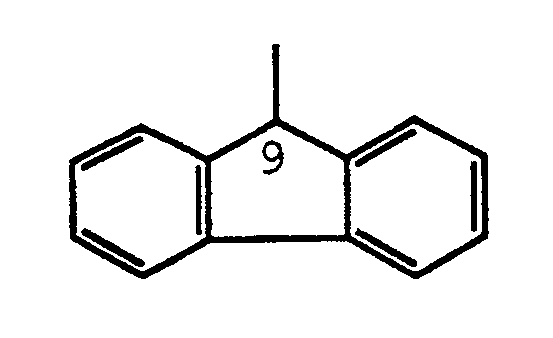
- The group 9-fluorenyl as used herein means a substituent of the following structure being attached through the 9-position:
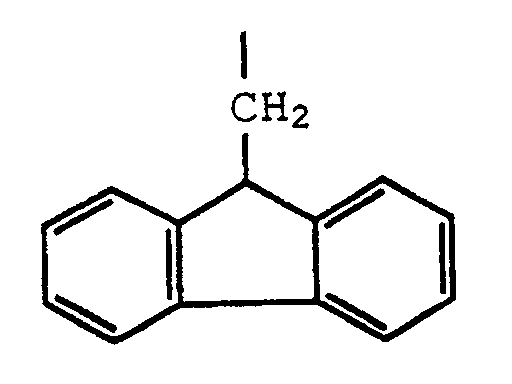
- The group 9-fluorenylmethylene as used herein means a substituent of the following structure:
- The substituent groups R₁₂ and R₁₃ may represent an aromatic monocyclic heterocyclic group having from 1 to 3 oxygen, sulfur, or nitrogen therein. Illustrative of such heterocyclic groups are the following:
2- or 3-thienyl; 2- or 3-furanyl; 2-, or 3-, or 4-pyridyl or -pyridyl-N-oxides; 2, 4, or 5-pyrimidinyl; 3- or 4-pyridazinyl; 2-pyrazinyl; 2- or 3-pyrrolyl; 3-, 4-, or 5-pyrazolyl, 3-, 4-, or 5-isoxazolyl; 3-, 4-, or 5-oxazolyl; 3-, 4-, or 5-isothiazolyl, 5-tetrazolyl; 3- or 5-(1,2,4-)triazolyl; 4- or 5-(1,2,3-)triazolyl; 2-, 4-, or 5-imidazolyl. - Preferred compounds of this invention are those wherein R is phenyl or substituted phenyl and more preferably phenyl substituted on the 2,6-positions. Other preferred compounds of this invention are those wherein R₃ represents the group

Each of the substituents and/or moieties cited in the preferred groups is itself preferred, so that the invention likewise applies to combinations of individually preferred substituents and/or moieties with substituents and/or moieties of other groups as disclosed in the invention. - Pharmaceutically acceptable salts of the compounds of Formula I are also included as a part of the present invention.
- The acid addition salts may be generated from the free base forms of the compounds by reaction of the latter with one equivalent of a suitable nontoxic, pharmaceutically acceptable acid, followed by evaporation of the solvent employed for the reaction and recrystallization of the salt, if required. The free base may be recovered from the acid addition salt by reaction of the salt with a water solution of the salt with a suitable base such as sodium carbonate, sodium bicarbonate, potassium carbonate, sodium hydroxide, and the like.
- Suitable acids for forming acid addition salts of the compounds of this invention include, but are not necessarily limited to acetic, benzoic, benzene-sulfonic, tartaric, hydrobromic, hydrochloric, citric, fumaric, gluconic, glucuronic, glutamic, lactic, malic, maleic, methanesulfonic, pamoic, salicylic, stearic, succinic, sulfuric, and tartaric acids. The class of acids suitable for the formation of nontoxic, pharmaceutically acceptable salts is well known to practitioners of the pharmaceutical formulation arts. (See, for example, Stephen N. Berge, et al. J. Pharm. Sciences, 66:1-19 (1977).
- The compounds of the present invention may also exist in different stereoisomeric forms by virtue of the presence of one or more asymmetric centers in the compound. The present invention contemplates all stereoisomeric forms of the compounds as well as mixtures thereof, including racemic mixtures. Individual stereoisomers may be obtained, if desired by methods known in the art as, for example, the separation of stereoisomers in chiral chromatographic columns.
- Further, the compounds of this invention may exist in unsolvated as well as solvated forms with pharmaceutically acceptable solvents such as water, ethanol and the like. In general, the solvated forms are considered equivalent to the unsolvated forms for the purposes of this invention.
- As shown by the data presented below in Table 1, the compounds of the present invention are potent inhibitors of the enzyme acyl-CoA:cholesterol acyl-transferase (ACAT), and are thus effective in inhibiting the esterification and transport of cholesterol across the intestinal cell wall. The compounds of the present invention are thus useful in pharmaceutical formulations for the treatment of hypercholesterolemia or atherosclerosis.
- The ability of representative compounds of the present invention to inhibit ACAT was measured using an in vitro test more fully described in Field, F. J. and Salone, R. G., Biochemica et Biophysica 712: 557-570 (1982). The test assesses the ability of a test compound to inhibit the acylation of cholesterol by oleic acid by measuring the amount of radio-labeled cholesterol oleate formed from radiolabeled oleic acid in a tissue preparation containing rabbit intestinal microsomes.
- The data appear in Table 1 where they are expressed as IC₅₀ values; i.e. the concentration of test compound required to inhibit 50% expression of the enzyme.
TABLE 1 Compound of Example IC₅₀ (µM) 4 0.055 10 0.10 21 1.05 41 0.35 52 0.96 - In one in vivo screen, designated APCC, male Sprague-Dawley rats (200 to 225 g) were randomly divided into treatment groups and dosed at 4 PM with either vehicle (CMC/Tween) or suspensions of compounds in vehicle. The normal, chow diet was then replaced with the PCC diet (RR 740-02122) with either 1% or 0.5% cholic acid, as indicated. The rats consumed this diet ad libitum during the night and were sacrificed at 8 AM to obtain blood samples for cholesterol analysis using standard procedures (RR 740-02122). Statistical differences between mean cholesterol values for the same vehicle were determined using analysis of variance followed by Fisher's least significant test. The results of this trial for representative compounds of the present invention appear in Table 2.
TABLE 2 Compound of Example % Change (mg/dl) 4 -45 10 -30 11 -3 14 -24 - In therapeutic use as agents for treating hypercholesterolemia or atherosclerosis, the compounds of Formula I are administered to the patient at dosage levels of from 250 to 3000 mg per day. For a normal human adult of approximately 70 kg of body weight, this translates into a dosage of from 5 to 40 mg/kg of body weight per day. The specific dosages employed, however, may be varied depending upon the requirements of the patient, the severity of the condition being treated, and the activity of the compound being employed. The determination of optimum dosages for a particular situation is within the skill of the art.
- For preparing pharmaceutical compositions from the compounds of this invention, inert, pharmaceutically acceptable carriers can be either solid or liquid. Solid form preparations include powders, tablets, dispersible granules, capsules, and cachets.
- A solid carrier can be one or more substances which may also act as diluents, flavoring agents, solubilizers, lubricants, suspending agents, binders, or tablet disintegrating agents; it can also be an encapsulating material.
- In powders, the carrier is a finely divided solid which is in a mixture with the finely divided active component. In tablets, the active compound is mixed with the carrier having the necessary binding properties in suitable proportions and compacted in the shape and size desired.
- Powders and tablets preferably contain between about 5 to about 70% by weight of the active ingredient. Suitable carriers are magnesium carbonate, magnesium stearate, talc, lactose, sugar, pectin, dextrin, starch, tragacanth, methyl cellulose, sodium carboxymethyl cellulose, a low-melting wax, cocoa butter, and the like.
- The term "preparation" is intended to include the formulation of the active compound with encapsulating material as a carrier providing a capsule in which the active component (with or without other carriers) is surrounded by a carrier, which is thus in association with it. In a similar manner, cachets are also included.
- Tablets, powders, cachets, and capsules can be used as solid dosage forms suitable for oral administration.
- Liquid form preparations include solutions suitable for oral administration, or suspensions and emulsions suitable for oral administration. Aqueous solutions for oral administration can be prepared by dissolving the active compound in water and adding suitable flavorants, coloring agents, stabilizers, and thickening agents as desired. Aqueous suspensions for oral use can be made by dispersing the finely divided active component in water together with a viscous material such as natural or synthetic gums, resins, methyl cellulose, sodium carboxymethyl cellulose, and other suspending agents known to the pharmaceutical formulation art.
- Preferably, the pharmaceutical preparation is in unit dosage form. In such form, the preparation is divided into unit doses containing appropriate quantities of the active component. The unit dosage form can be a packaged preparation, the package containing discrete quantities of the preparation, for example, packeted tablets, capsules, and powders in vials or ampoules. The unit dosage form can also be a capsule, cachet, or tablet itself, or it can be the appropriate number of any of these package forms.
- The compounds of this invention can be prepared in various ways, all of which are well known in the art. In referring to Chart I, Scheme I, the compounds can be prepared by reacting a α-haloacyl halide (1) with an amine (2) in acetonitrile or a nonpolar aprotic solvent such as THF, ethyl acetate, diethyl ether, dichloromethane, or dioxane for from about 5 minutes to about 2 hours at a temperature varying from about -78° to room temperature. To the resulting amide (3) is added the amine (4) and the reaction is allowed to proceed for from about 1 hour to 3 days at from about 0°C to 100°C, depending on the amine (4) employed. One may also remove the solvent from the amide (3) and combine the amide (3) and the amine (4) in DMF and heat the reaction to boiling, each procedure giving compounds of Formula I wherein R₄ is hydrogen (5). The compounds of (5) may be alkylated or acylated to give other compounds of Formula I as represented by (6) by procedures well known in the art. The reaction time may vary from a few minutes to several days depending on the acylating or alkylating reagent employed. The reactions may be carried out in any aprotic nonpolar solvent. The alkylation reaction may also be carried out in DMF with heating.
- The compounds of this invention may also be prepared by the procedure outlined in Scheme 2 of Chart 1 whereby an appropriate amino acid (7) is protected with, e.g., t-butoxy-carbonyl or benzyloxycarbonyl by treatment with (t-butylO₂C)₂O or benzylchloroformate. The reaction may be carried out in e.g., triethylamine, THF and sodium bicarbonate, dioxane and water for from 1 to 24 hours at a temperature of from about 0°C to room temperature to give the protected amine (8). The protected amine (8) is then treated with a haloformate of the formula halo-COOR₂₀ wherein R₂₀ is, e.g., isobutyl for from 1 to 3 hours at from about -40° to 0°C in solvents such as THF, dichloromethane, ethyl acetate or diethyl ether, after which an amine of the formula RNH₂ is added and the reaction is permitted to proceed for from about 1 to 72 hours to give the amide (9). The amide is deprotected using, e.g., by using mineral acid or trifluoroacetic acid or by hydrogenolysis or HBr in acetic acid to give the free amine (10). The amide may also be deprotected using HCl gas and methylene chloride at 0°C. The amine is alkylated and acylated as generally described above to give compounds of Formula I. The alkylation may also be achieved by reductive amination.
- In Chart I the symbols R, R₁, R₂, R₃, and R₄ have the meanings defined in Formula I and halo is chlorine or bromine, and B is t-butyl or benzyl.
- The compounds represented in Scheme 1 as formula (5) may also be prepared by heating a mixture of the amine (10) in Scheme 2 and a suitable carbamyl compound
(X--Y wherein X-CH-Y is R₃) in an inert solvent such as toluene heating to reflux in the presence of a catalyst such as hydrogen chloride and removing the generated water with a Dean Stark trap.
- In Scheme 1 in Chart I when R₃ in the amine H₂NR₃ is hindered and/or R₁ and R₂ in compounds of formula (3) are other than hydrogen forcing conditions such as high temperatures and long reaction times may be required to effect the displacement of the halo with R₃NH₂.
- Compounds of this invention wherein R₂ represents -CH₂CH₂S(O)0-2-CH₃ and R₂ is the sulfone or sulfoxide derivative are prepared by treating the corresponding sulfide compound with a stoichiometric amount of an oxidizing agent such as meta-chloroperbenzoic acid in an inert solvent such as dichloromethane for 1 to 36 hours.
- In Scheme 2 the amino acids (7) wherein R₁ is hydrogen can be synthesized by reacting a malonic acid derivative [AcNHCH(CO₂C₂H₅)₂] with an alkyl halide (R₂ halo) in the presence of a suitable base such as sodium ethoxide. Acid (6N HCl) or base (5N NaOH) catalyzed hydrolysis can be employed to give the amino acid (7).
- The benzhydrylamines which compounds (2) and (4) may represent are commercially available or may be prepared by procedures well known in the art, for example, by reduction of the corresponding benzophenone oxime or by condensation of an appropriate benzhydrol with benzyl carbamate in an acidic media followed by alkaline hydrolysis. The preparation of benzophenones is well known in the art, see, e.g., the review by D. A. Walsh, Synthesis, 1980, 677.
- The heterocyclic phenones required for the synthesis of the heterocyclic analogues of the benzhydryl amines may be prepared as outlined for the benzophenones by D. A. Walsh, Synthesis 1980, 677. Alternative methods may also be employed to synthesize the required heterocyclic amines (e.g., from suitably protected phenylglycinonitriles by methods outlined by Meyers and Sircar "Addition to the Cyano Group to form Heterocycles," in the Chemistry of the Cyano Group, Ed. Z. Rappoport, J. Wiley and Sons, New York, p. 341 (1970).
- In Scheme 1 of Chart I the amines (4) wherein R₃ represents the group

- A solution of (±) 2-bromopropionyl bromide (2.16 g, 10 mmol) in CH₂Cl₂ (5 mL) was added to a well stirred ice-cold solution of 2,6 diisopropyl aniline (1.77 g, 10 mmol) in CH₂Cl₂ (25 mL) containing Et₃N (1.1 g, 10 mmol). The ice-bath was removed after 30 minutes, and the reaction mixture was stirred at room temperature for 16 hours followed by heating under reflux for 2 hours. It was diluted with CH₂Cl₂ (25 mL), and the solution was washed with water, dried over anhydrous MgSO₄, and evaporated to yield 3.5 g of a soft solid. It was triturated with hexane and filtered to give 2.2 g (70%) of a white solid. ¹H NMR was consistent with the title compound. By substituting chloroacetyl chloride in place of 2-bromopropionyl bromide in the above experiment 2.3 g (90%) of (±)-N-[2,6-bis(1-Methylethyl)phenyl]-2-chloroacetanilide derivative was obtained. Similarly by substituting (±) 2-bromohexanoyl bromide in place of 2-bromopropionyl bromide in the above experiment 2.8 g (79%) of (±)-N-[2,6-bis(1-Methylethyl)phenyl]-2-bromohexaneamide derivative was obtained.
- A mixture of 1.1 g (3.5 mmol) of (±)-N-[2,6-bis(1-Methylethyl)phenyl]-2-bromopropanamide, 0.62 g (3.5 mmol) of 1-phenyl cyclopentyl amine and 0.4 g (4.0 mmol) of Et₃N in CH₃CN (20 mL) was heated under reflux for 18 hour. The solution was evaporated, and the residue was dissolved in EtOAc. The solution was washed with water, dried over anhydrous MgSO₄ and stripped to yield a solid which was purified via chromatography (SiO₂ CH₂Cl₂/CH₃OH (10%) to give 0.3 g (21%) of the desired material.
Analyzed for C₂₇H₃₈N₂0.0.2 H₂₁O:
Calcd: C, 79.10; H, 9.34; N, 6.83.
Found: C, 79.00; H, 9.4.1; N, 6.63 . - Similarly, by using (±)-N-[2,6-bis(1-Methylethyl)phenyl]-2-bromohexaneamide in the above procedure. (±)-N-[2,6-bis(1-Methylethyl)phenyl]-2-[[(1-phenylcyclopentyl)methyl]amino] hexanamide was obtained in 52% yield.
Analyzed for C₃₀H₄₄N₂O:
Calcd: C, 80.35; H, 9.82; N, 6.25.
Found: C, 80.13; H, 9.85; N, 6.02. -
- 2.0 g (6.36 mmol) of the N-morpholinosulfonylphenylaniline was added to ice-cold SOCl₂ (4 mL), and the reaction mixture was gradually warmed to room temperature and stirred overnight at room temperature. The solvent was evaporated under rotary evaporator. Toluene (10 mL) was added and the solution was evaporated. This process was repeated twice to remove any excess HCl(g). This was dissolved in THF (20 mL) and added slowly to a solution of 2,6-diisopropylaniline (1.0 g, 5.72 mmol) and Et₃N (1.3 mL, 12.7 mmol) in THF (20 mL). The solution was stirred overnight at room temperature to complete the reaction. THF was evaporated, the residue was dissolved in CH₂Cl₂, and the solution was washed successively with 1N HCl, saturated NaHCO₃, and brine. The solution was dried over anhydrous MgSO₄, stripped and chromatographed (SiO₂, 0-2% MeOH/CHCl₃) to give 3 g (85%) of the desired product.
Anal for C₂₅H₃₅N30₄S. 0.45 CHCl₃:
Calcd: C, 57.96; H, 6.77; N, 7.97.
Found: C, 58.01; H, 6.75; N, 7.91. Mass spectrum indicate molecular ion peak at 473. [α]
- Bromoacetylbromide (4.5 mL) was added dropwise to a solution of 8.85 g 2,6-diisopropylaniline and 7.0 mL triethylamine in 200 mL. EtoAc at 0°C. After stirring 10 minutes at 0°C, 9.15 g aminodiphenylmethane and 10 mL triethylamine were added and the resulting mixture was removed from the cooling bath and heated on the steambath for thirty minutes. The reaction mixture was allowed to sit overnight at room temperature. The mixture was filtered, heated an additional 30 minutes on the steambath, filtered again and concentrated to a brown oil/solid. This oil/solid was triturated with a solution of hexane/EtoAc, 1/1, and the insoluble material collected by filtration. The resulting solid was then filtered through SiO₂ (70-230 mesh) using EtoAc as eluant. Concentration of the appropriate fractions yielded the product 5.65 g, as a white solid. Concentration and silica gel filtration of the mother liquors yielded an additional 4.45 g of product. Total yield, 10.1 g (50.5%). NMR (CDCl₃) δ 1.20 (12H, d), δ 3.04 (2H, m), δ 3.50 (2H, s), δ 4.96 (1H, s), δ 7.08-7.43 (13H, m), δ 8.61 (1H, s) IR (KBr) 3236, 2965, 1656, 1540, 1493, 1453, 1385, 766, 701 cm⁻¹.
- The title compound was prepared according to the procedure for Example 1 by substituting 1,1-dimethyl-2-phenylethyl amine for benzhydrylamine. 9.93 g, (54.2%). NMR( CDCl₃) δ 1.18 δ 18H, s, d), δ 2.74 (2H, s), δ 3.01 (2H, m), δ 3.48 (2H, s), δ 7.15-7.34 (8H, m), δ 8.91 (1H, bs). IR (KBr) 3277, 2961, 2930, 2919, 1659, 1497, 1458, 744, 724 cm⁻¹.
- The title compound was prepared according to the procedure for Example 1 by substituting phenylcyclopentylmetyylamine for benzhydrylamine. 2.28 g, (58.2%). NMR (CDCl₃) δ 1.18 (12H, d), δ 1.71 (4H, m), δ 1.98 (4H, m), δ 2.84 (2H, s), δ 2.91 (2H, m), δ 3.30 (2H, s), δ 7.14-7.35 (8H, m), δ 8.47 (1H, bs). IR (film) 3294, 2960, 1683, 1505, 1496, 796, 749, 701 cm⁻¹.
- The title compound was prepared according to the procedure for Example 1 by substituting oleyl amine for benzhydryl amine and 2,4,6-trimethoxy aniline for 2,6-diisopropyl aniline. 11.45 g (58%). NMR (CDCl₃) δ 0.88 (3H, t), δ 1.2-1.52 (24H, m), δ 2.01 (4H, m), δ 2.71 (2H, t), δ 3.42 (2H, m), δ 3.68 (3H, s), δ 3.79 (6H, s), δ 5.33 (2H, m), δ 6.13, (2H, d), δ 8.31 (1H, bs) IR (film) 3310, 3003, 2928, 1669, 1346, 1062, 954, 811 cm⁻¹.
- The title compound was prepared according to the procedure for Example 1 by substituting oleyl amine for benzhydryl amine and 2,6-dimethyl aniline for 2,6-diisopropyl aniline. 11.2 g (65%). NMR (CDCl₃) δ 0.88 (3H, t), δ 1.24-1.73 (24H, m), δ 1.98 (4H, m), δ 2.23 (6H, s), δ 2.72 (2H, t), δ 3.43 (2H, s), δ 5.34 (2H, m), δ 7.06 (3H, s), δ 8/82 (1H, bs). IR (film) 2925, 2855, 1665, 1504, 1468, 1377, 768. 724 cm⁻¹.
- The title compound was prepared according to the procedure for Example 1 by substituting 2-phenylethylamine for benzhydryl amine. 14.8 g (88%). NMR (CDCl₃) δ 1.19 (12H, d), δ 1.68 (1H, bs), δ 2.87 (2H, t), 3.01 (4H, m), δ 3.45 (2H, s), δ 7.10-7.34 (8H, m), δ 8.66 (1H, bs). IR (KBr) 3224, 2965, 1653, 1529, 1453, 700 cm⁻¹.
- Phenylisothiocyanate (0.103 g) was added to the product of Example 6 in a few mL ethyl acetate at room temperature. This mixture was allowed to sit 4 days at room temperature, concentrated, and the resulting solid collected by filtration from a slurry in hexane. 0.31 g (84%). NMR (CDCl₃) δ 1.21 (12H, d), δ 1.74-2.14 (8H, m), δ 3.08 (2H, m), δ 3.89 (2H, s), δ 4.92 (2H, bs), δ 618 (1H, s), δ 6.67 (2H, d), δ 7.06-7.51 (11H, m), δ 8.88 (1H, s). IR (KBr) 2963, 2871, 1668, 1600, 1518, 1499, 1350, 1204, 703 cm⁻¹.
- Phenylisocyanate (0.092 g) was added to a solution of the product of Example δ (0.250 g) in a few mL ethyl acetate at room temperature. The reaction mixture was allowed to sit 4 days at room temperature, concentrated, and the resulting white solid collected by filtration from a slurry in hexane. 0.30 g (94%). NMR (CDCl₃) δ 1.14 (2H, d), δ 1.S₉ 2.10 (8H, m), δ 3.04 (2H, m), δ 3.61 (2H, s), δ 4.12 (2H, bs), δ 5.55 (1H, s), δ 6.77-7.51 (13H, m), δ 8.26 (1H, bs). IR (KBr) 2963, 2871, 1668, 1599, 1534, 1501, 1446, 1312, 1240, 703 cm⁻¹.
- The title compound was prepared according to the procedure for Example 11 by substituting 2,4-difluorophenylisocyanate for phenyl isocyanate. 0.37 g (97%) NMR (CDCl₃) δ 1.12 (12H, d), δ 1.58-2.10 (8H, m), 6 2.96 (2H, m), δ 3.63 (2H, s), δ 3.97 (2H, s ), δ 5.83 (1H, bs ), δ 6.70 7.4g (11H, m), δ 7.85 (1H, bs). IR (KBr) 2964, 2872, 1666, 1518, 1432, 1258, 1142, 968, 704 cm⁻¹.
- 2,6-Diisopropylphenylisocyanate (0.24 g) and the product of Example 6 (0.45 g) were mixed and then diluted with a few mL of ethyl acetate. The solution was heated on the steambath and then concentrated to an oil which was heated on the steambath. Upon cooling to room temperature the oil partially solidified. Addition of hexane/EtoAc, 1/1 caused crystallization of the product which was collected by filtration. 0.30 g (44%). NMR (CDCl₃) δ 1.08 (12H ,d), δ 1.17 (12H, d), δ 1.60-2.13 (8H, m), δ 2.65 (2H, m), δ 3.04 (2H, m), δ 3.71 (2H, s), δ 4.04 (211, bs), 5.24 (1H, bs), δ 7.04-7.48 (11H, m), δ 7.94 (1H, bs). IR (KBr) 3025, 2965, 2871, 1682. 1637, 1519, 1364, 1230, 958, 801, 700 cm⁻¹.
- To a mixture of the product of Example 6 (0.46 g) and excess triethylamine at room temperature was added 0.22 g p-toluene sulfonyl chloride. This mixture was diluted with ethyl acetate, concentrated, and triethylamine and ethyl acetate added a second time. The reaction mixture was then concentrated to a brown oil. After sitting 5 days at room temperature, the oil was taken up in ethyl acetate, washed with NaHCO₃ and NaCl solutions, dried over MgSO₄, filtered, and concentrated to an oil. The oil was purified by chromatography on silica gel using hexane/EtoAc, 8/21 as eluant. The appropriate fractions were concentrated to an oil which crystallized upon trituration with hexane. 0.44 g (69%). NMR (CDCl₃) δ 1.17 (6H, d), δ 1.64-1.82 (4H, m), δ 2.03 (4H, m), δ 2.42 (3H, s), δ 2.97 (2H, m), δ 3.42 (2H, s), δ 3.55 (2H, s), δ 7.13-7.65 (12H, m). IR (KBr) 3370, 2965, 2870, 1673, 1497, 1328, 1158, 1092, 755, 550 cm⁻¹.
- N-[2-[[2,6-bis(1-Methylethyl)phenyl]amino]-2-oxoethyl]-N-[(1-phenylcyclopentyl)methyl]benzamide
- To a solution of 0.48 g of the product of Example 6 and excess triethylamine in ethyl acetate at room temperature was added 0.16 mL benzoyl chloride all at once. The reaction mixture was allowed to sit 4 days at room temperature. The solution was then diluted with ethyl acetate and washed with dilute HCl, NaHCO₃, and NaCl solutions, dried over MgSO₄, filtered, and concentrated to an oil which was crystallized from diethyl ether. The white solid was collected by filtration. 0.48 g (61%). NMR (CDCl₃) δ 1.12 ( 12H, d), δ 1.6-2.15 (8H, m), δ 2.99 (2H, m), δ 3.27 (2H, bs ), δ 3 .80 (2H, bs), δ 6.20 (1H, bs ) δ 7.04. 7.42 (13H, m). IR (KBr) 3269, 2963, 2869, 1696, 1600, 1520, 1461, 1254, 1222, 703 cm⁻¹.
- To a mixture of 0.50 g of the product of Example 7 and 0.3 g benzylbromide was added excess triethylamine and ethyl acetate. The mixture was heated on the steambath and then allowed to sit 3 days at room temperature. The reaction mixture was washed with NaHCO₃ and NaCl solutions, the organic layer dried over MgSO₄, filtered, and concentrated. The residue was chromatographed on SiO₂ (70-230 mesh) using hexane/EtoAc, 1/1, as eluant. Combination of the appropriate fractions and concentration yielded the product as a light yellow oil. 0.91 g (32%). NMR (CDCl₃) δ 0.88 (3H, t), δ 1.25 (24H, m), δ 1.55 (2H, m), δ 1.97 (4H, m), δ 2.54 (2H, m), 63.23 (2H, s), δ 3.73 (9H, m), δ 5.32 (2H, m), δ 6.15 (2H, s), δ 7.25-7.38 (5H, m), δ 8.38 (1H, bs). IR (film) 3353, 2925, 1599, 1517, 1466, 1206, 1131, 699 cm⁻¹.
- A mixture of 0.50 g of the product of Example 7, 0.2 g 2-phenethyl isocyanate, and a few mL ethyl acetate were briefly heated on the steambath and then allowed to sit 3 days at room temperature. The reaction mixture was then washed with dilute H₃PO₄, NaHCO₃, and HaCl solutions, dried over MgSO₄, filtered, and concentrated to an oil. The oil was chromatographed on SiO₂ (70-230 mesh) using EtoAc as eluant. The product was obtained as an oil which crystallized on standing. 0.28 g (44%). NMR (CDCl₃) δ 0.88 (3H, t), δ 1.25 (24H, m), δ 1.96 (4H, m) δ 2.84 (2H, t), δ 3.23 (2H, t), δ 3.51 (2H, g), δ 3.69 (6H, s), δ 3.77 (3H, s), δ 4.03 (2H, s), δ 4.70 (1H, t), δ 5.35 (2H, t), δ 6.13 (2H, s), δ 7.16-7.31 (5H, m), δ 7.46 (1H, s). IR (KBr) 3251, 2925, 1662, 1621, 1533, 1465, 1156, 1128, 810 cm⁻¹.
- A mixture of 0.50 g of the product of Example 7, 0.22 g 2,6-diisopropylphenylisocyanate and a few mL ethyl acetate was allowed to sit 3 days at room temperature. The solvent was removed and the residue chromatographed on SiO₂ (70-230 mesh) using hexane/EtoAc, 1/1, as eluant. The product was obtained as a white solid. 0.33 g (46%). NMR (CDCl₃) δ 0.88 (3H, t), δ 1.15 (12H, d), δ 1.21-1.26 (22H, m) δ 1.78 (2H, m), δ 2.02 (4H, m) , δ 3.10 (2H, m), δ 3.47 (2H, t), δ 3.75 (6H, s), δ 3.80 (3H, s), δ 4.17 (2H, s), δ 5.35 (2H, t), δ 6.07 (1H, s), δ 6.14 (2H, s), δ 7.13-7.25 (3H, m), δ 7.72 (1H, s). IR (KBr) 3242, 2959, 2525, 1675, 1627, 1508, 1156, 1135 cm⁻¹.
- To a mixture of 0.50 g of the product of Example 7, excess triethylamine, and ethyl acetate at room temperature was added 0.25 g p-toluene sulfonyl chloride and this was allowed to sit 3 days at room temperature. The reaction mixture was then washed with H₃PO₄, NaHCO₃, and NaCl solutions, dried over MgSO₄, filtered, and stripped to an oil. This oil was purified by chromatography on silica gel (70-230 mesh) using 1/1 hexane/EtoAc as eluant. The product was obtained as a viscous oil. 0.28 g (42%). MNR (CDCl₃) δ 0.88 (3H, z), δ 1.26 (24H, m) δ 1.66 (2H, m), δ 2.01 (4H, m), δ 2.44 (3H, s), δ 3.21 (2H, m), δ 3.79-3.88 (9H, m), δ 5.34 (2H, m), δ 6.15 (2H, s), δ 7.26-7.75 (5H, m). IR (KBr) 3019, 2925, 1599, 1466, 1206 cm⁻¹.
- Triethylamine (4.13 mL, 29.6 mmol) was added to a cooled (-10°C) solution of N-boc-O-benzyl-(L)-tyrosine (10.0 g, 26.9 mmol) in THF (130 mL). The resulting solution was stirred (15 min, -10°C), then 2,6-diisopropylaniline (5.59 mL, 29.6 mmol) was added in one portion. The resulting slurry was warmed to room temperature, stirred (16 hours, 25°), then filtered. The filtrate was concentrated in vacuo, and the residue was taken up in ethyl acetate (300 mL). The ethyl acetate layer was washed with water (1 × 100 mL) with saturated aqueous sodium bicarbonate (1 × 100 mL), with brine (1 × 100 mL), then dried (MgSO₄) and concentrated. The resulting solid was washed with cold ether:hexane (1:1), collected by filtration, and dried in a vacuum oven at 45°C to yield 8.8 g (61.5%) of the title compound as a white solid.
Anal for C₃₃H₄₂N₂O₄:
Calcd: C, 74.69; H, 7.98; N, 5.28.
Found: C, 74.48; H, 7.91; N, 5.06.
¹H NMR (CDCl₃): δ 7.45-7.20 (m, 8H), 7.11 (d, 2H, J = 8.1 Hz), 6.93 (d, 2H, J = 8.1 Hz), 5.14 (br d, 1H, J = 8.1 Hz), .04 (s, 2H), 4.53 (q, 1H, J = 7.4 Hz), 3.11 (m, 2H), 2.76 (m, 2H), 1.46 (s, 9H), and 1.08 (apparent t, 12H). IR: principle absorptions at 3400, 2870, 1695, 1650, 1250, and 1150 cm⁻¹. Melting point: 144-150°C. - Palladium on activated charcoal (0.2 g, 20%) was added in one portion to a solution of (S)-1,1-dimethylethyl[2-[[2,6-bis(1-Methylethyl)phenyl]amino)-2-oxo-1-[[4-(phenylmethoxy)phenyl]methyl]ethyl]carbamate (1.0 g, 1.9 mmol) in methanol (100 mL) under a nitrogen atmosphere. The nitrogen was evacuated and 50 PSI of hydrogen was introduced. After vigorous shaking (22 hours, 25°C) the resulting suspension was filtered and the filtrate concentrated in vacuo to yield 0.73 g (88.0%) of the title compound as a solid foam. ¹H NMR (CDCl₃): δ 7.37 (s, 1H), 7.26 (t, 1H, J = 7.7 Hz), 7.12 (overlapping d, 2H, d, 2H), 5.86 (br s, 1H), 5.12 (br d, 1H), 4.51 (q, 1H, J = 8.0 Hz), 3.09 (m, 2H), 2.77 (m, 2H), 1.68 (br s, 1H), 1.47 (s, 9H), and 1.08 (apparent t, 12H). IR: Principle absorptions at 3300, 2950, 1670, 1520, 1250, and 1170 cm⁻¹. Melting point: 92°-107°C.
- Hydrogen chloride gas was bubbled through a cooled (0°C) solution of (S)-1,1-dimethylethyl-[2-[[2,6-bis(1-Methylethyl)phenyl]amino]-2-oxo-1 [4-(phenylmethoxy)phenyl]methyl]ethyl]carbamate (6.0 g, 11.3 mmol) in dichloromethane (100 mL) for 5 minutes. The resulting solution was stirred (1 hour, 0°C), then an excess of solid sodium bicarbonate was added slowly. The resulting slurry was warmed to room temperature, stirred (20 minutes, 25°C), then partitioned between dichloromethane (200 mL) and water (100 mL). The organic layer was washed with brine (1 × 100 mL), then dried and concentrated to an oil. Ether was added and the resulting solid was collected by filtration and washed with cold ether to yield 4.3 g (88.3%) of the title compound as a white powder. ¹H NMR (CDCl₃): δ 8.83 (s, 1H), 7.46-7.10 (m, 10H), 6.95 (d, 2H, J = 8.5 Hz), 5.06 (s, 2H), 3.79 (dd, 1H, J = 9.2, 3.9 Hz), 3.28 (dd, 1H, J = 13.8, 3.9 Hz), 2.97 (heptet, 2H, J = 6.9 Hz), 2.86 (dd, 1H, J = 13.8, 9.2 Hz), 1.63 (s, 2H), and 1.17 (d, 12H, J = 6.9 Hz). IR: Principle absorptions at 3300, 2950, 1670, 1510, 1250, and 750 cm⁻¹. Melting point: 117-122°C.
- A solution of (S)-α-amino-N-[2,6-bis(1-Methylethyl)phenyl]-4-(phenylmethoxy)benzenepropanamide (1.4 g, 3.3 mmol) and tert-butylisocyanate (0.37 mL, 3.3 mmol) in ethyl acetate (100 mL) was stirred (16 hours, 25°C). The resulting mixture was cooled (0°C), and the solid (gel) was collected by filtration. The resulting solid was dried in a vacuum oven at 45°C to yield 1.3 g (75.6%) of the title compound, melting point 228-231°C. ¹H NMR (DMSO-d₆): δ 9.20 (s, 1H), 7.46-7.28 (m, 5H), 7.19 (apparent t, 3H), 7.06 (d, 2H, J = 7.4 Hz), 6.92 (d, 2H, J = 8.5 Hz), 6.06 (d, 1H, J = 8.7 Hz), 5.86 (s, 1H), 5.06 (s, 2H), 4.61 (q, 1H, J = 7.8 Hz), 2.96 (dd, 1H, J = 13.6, 7.0 Hz), 2.78 (dd, 1H, J = 13.6, 7.7 Hz), 1.24 (s, 9H), and 1.03 (apparent t, 12H). IR: principle absorptions at 3300, 2950, 1650, 1550, 1250, 750, and 695 cm⁻¹.
- To a cooled (0°C) solution of (S)-α-amino-N-[2,6-bis(1-Methylethyl)phenyl]-4-(phenylmethoxy)benzenepropanamide (1.15 g, 2.67 mmol) and triethylamine (0.37 mL, 2.67 mmol) in THF (50 mL) was added tert-butylacetylchloride (0.39 mL, 2.80 mmol) dropwise. The resulting slurry was warmed to 25°C and stirred (1 hour, 25°C). The resulting slurry was diluted with ethyl acetate (200 mL). The organic layer was washed with 1.0 N aqueous HCl (1 × 65 mL), with brine (1 × 65 mL), with saturated aqueous sodium bicarbonate (1 × 65 mL), with brine again (1 × 65 mL), then dried (MgSO₄) and concentrated. The resulting oil was triturated with ether, and cooled. The resulting solid was collected by filtration, washed with cold ether, and dried in a vacuum oven at 40°C to yield 1.2 g (85.1%) of the title compound as a white solid, melting point 209-211.5°C.
Anal. for C₃₄H₄₄N₂O₃
Calcd: C, 77.24; H, 8.39; N, 5.30.
Found: C, 77.01; H, 8.37; N, 5.00.
¹H NMR (CDCl₃): δ 7.75 (s, 1H), 7.36 (m, 5H), 7.21 (apparent t, 3H), 7.08 (d, 2H, J = 7.4 Hz), 6.89 (d, 2H, J = 8.6 Hz), 6.56 (d, 1H, J = 8.3 Hz), 5.10 (q, 1H, J = 7.9 Hz), 4.99 (s, 2H), 3.13 (m, 2H), 2.71 (m, 2H), 1.99 (s, 2H), 1.07 (d, 6H, J = 6.8 Hz), 1.01 (d, 6H, J = 6.7 Hz), and 0.88 (s, 9H). IR: principle absorptions at 3300, 2950, 1640, 1500, and 1240 cm⁻¹. - Employing the method of Example 20, but using 2,4,6-trifluoroaniline instead of 2,6-diisopropylaniline, the title compound was prepared, melting point 145-155°C dec. ¹H NMR (CDCl₃): δ 7.92 (br s, 1H, 7.36 (m, 5H), 7.16 (d, 2H, J = 8.5 Hz), 6.91 (d, 2H, J = 8.5 Hz), 6.68 (t, 2H, J = 8.1 Hz), 5.23 (br d, 1H, J = 7.4 Hz), 5.01 (s, 2H, 4.61 (br s, 1H), 3.09 (dd, 2H, J = 6.45, 6.45), and 1.39 (s, 9H). 1R: principle absorptions at 3300, 1680, 1530, 1250, 1170, 1120, and 1050.
- Employing the method of Example 22, but using (S)-1,1-dimethylethyl[2-oxo-1-[[4-(phenylmethoxy)phenyl]methyl]-2-[(2,4,6-trifluorophenyl)amino]ethyl]carbamate instead of (S)-1,1-dimethylethyl[[2,6-bis(1-Methylethyl)phenyl}amino}-2-oxo-1-[[4-phenylmethoxy)phenyl]methyl]ethyl]carbamate, the title compound was prepared, mp 80.5-86.5°C.
Anal for C₂₂H₁₉F₃N₂O₂:
Calcd: C, 66.00; H, 4.78; N, 7.00.
Found: C, 65.89; H, 4.68; N, 6.61
¹H NMR (CDCl₃): δ 8.88 (s, 1H), 7.38 (m, 5H), 7.17 (d, 2H, J = 8.6 Hz), 6.73 (t, 2H, J = 8.1 Hz), 5.04 (s, 2H), 3.78 (dd, J = 8.8, 4.2 Hz), 3.25 (dd, 1H, J =14.0, 4.2 Hz), 2.85 (dd, 1H, J = 14.0, 8.8 Hz), and 1.74 (br s, 2H). IR: principle absorptions at 3300, 1670, 1600, 1550, 1520, 1450, 1250, 1130, and 1050. - Employing the method of Example 23, but using (S)-α-amino-4-(phenylmethoxy)-N-(2,4,6-trifluorophenyl)benzenepropanamide instead of (S)-α-amino-N-[2,6-bis(1-Methylethyl)phenyl]-4-(phenylmethoxy)benzenepropanamide, the title compound was prepared, mp 195-196°C dec.
Analyzed for C₂₇H₂₈F₃N₃O₃:
Calcd: C, 64.92; H, 5.65; N, 8.41.
Found: C, 64.74; H, 5.60; N, 8.21.
¹H NMR (CDCl₃): δ 8.91 (s, 1H), 7. 04 (m, 5H), 6.85 (d, 2H, J = 8.6 Hz), 6.55 (d, 2H, J = 8.6 Hz), 6.40 (apparent t, 2H), 5.67 (d, 1H, J = 8.3), 5.44 (s, 1H), 4.69 (s, 2H), 4.40 (apparent q, 1H), 2.78 (dd, 1H, J = 13.9, 6.1 Hz), 2.63 (dd, 1H, J = 13.9, 6.9 Hz), and 0.93 (s, 9H). IR: principle absorptions at 3400, 3200, 3050, 2950, 1640, 1540, 1450, 1250, 1140, and 1050 cm⁻¹. - Employing the method of Example 24, but using (S)-α-amino-4-(phenylmethoxy)-N-(2,4,6-trifluorophenyl)benzenepropanamide instead of (S)-α-amino-N-[2,6-bis(1-Methylethyl)phenyl]-4-(phenylmethoxy)benzenepropanamide, the title compound was prepared, mp 150-157°C.
Analyzed for C₂₈H₂₉F₃N₂O₃:
Calcd: C, 67.46; H, 5.86; N, 5.62.
Found: C, 67.58; H, 5.87; N, 5.38.
¹H NMR (CDCl₃): δ 8.58 (s, 1H), 7.36 (m, 5H), 7.16 (d, 2H, J = 8.5 Hz), 6.87 (d, 2H, J = 8.5 Hz), 6.64 (apparent t, 2H), 6.52 (d, 1H, J = 8.1 Hz), 5.09 (apparent q, 1H), 4.99 (s, 2H), 3.17 (dd, 1H, J = 14.1, 6.5 Hz), 3.04 (dd, 1H, J = 14.1, 7.7 Hz), 2.01 (s, 2H), and 0.89 (s, 9H). IR: principle absorptions at 3300, 1650, 1550, 1520, 1450, 1240, 1120, 1000. - Employing the method of Example 20, but using N-boc-(L)-pryptophan, instead of N-boc-O-benzyl-(L)-tyrosine, the title compound was prepared, mp 87-99°C dec.
Analyzed for C₂₈H₃₇N₃O₃:
Calcd: C, 72.54; H, 8.04; N, 9.06.
Found: C, 72.18; H, 7.70; N, 8.59.
¹H NMR (CDCl₃): δ 8.19 (s. 1H), 8.73 (d, 1H, J = 7.4 Hz ), 7.38-7.02 (m, 8H), 5.20 (br d, 1H), 4.74 (apparent q, 1H, J = 6.5 Hz), 3.34 (d, 2H, J = 6.5 Hz), 2.70 (br s, 2H), 1.47 (s, 9H), 1.05 (d, 6H, J = 6.8 Hz), and 1.00 (br d, 6H, J = 7.4 Hz). IR: principle absorptions at 3400, 2950, 1680, 1500, 1170, and 750 cm⁻¹. - Employing the method of Example 22, but using (S)-1,1-dimethyl[2-[[2,6-bis(1-Methylethyl)phenyl] amino]-1-(1H-indol-3-ylmethyl)-2-oxoethyl]carbamate instead of (S)-1,1-dimethylethyl[2-[[2,6-bis(1-Methylethyl)phenyl]amino]-2-oxo-1-[[4-(phenylmethoxy)phenyl]methyl]ethyl]carbamate, the title compound was prepared, mp 185-187°C.
Analyzed for C₂₃H₂₉N₃O:
Calcd: C, 76.00; H, 8.04; N, 11.56.
Found: C, 75.78; H, 8.08; N, 11.25.
¹H NMR (CDCl₃): δ 9.77 (s, 1H), 8.96 (s, 1H), 7.70 (d, 1H, J = 7.7 Hz), 7.41-7.05 (m, 7H), 3.93 (dd, 1H, J = 9.4, 3.9 Hz), 3.49 (m, 1H), 3.00 (m, 3H), 1.66 (br s, 2H), and 1.67 (overlapping d, d, 12H). IR: principle absorptions at 3300, 2950, 1670, and 750 cm⁻¹. - Employing the method of Example 20, but using 2,4,6-trifluoroaniline instead of 2,6-diisopropylaniline and N-boc-(L)-tryptophan instead of N-boc-O-benzyl-(L)-tyrosine, the title compound was prepared, mp 69-85°C dec.
Analyzed for C₂₂H₂₂F₃N₃O₃:
Calcd: C, 60.97; H, 5.12.
Found: C, 61.37; H, 5.28.
¹H NMR (CDCl₃): δ 8.16 (s, 1H), 7.70 (d, 1H, J = 7.6 Hz), 7.46-7.11 (m, 5H), 6.69 (apparent t, 2H), 5.17 (br s, 1H), 4.68 (br s, 1H), 3.33 (apparent br t, 2H), and 1.43 (s, 9H). IR: principle absorptions at 3400, 1700, 1530, 1450, 1350, 1180, 1140, 1050, and 750 cm⁻¹. - Employing the method of Example 22, but using (S)-(1,1-dimethylethyl[1-1H-indol-3-ylmethyl)-2-oxo-2-[2,4,6-trifluorophenyl)amino]ethyl]carbamate instead of (S)-1,1-dimethylethyl[2-[[2,6-bis(1-Methylethyl)phenyl]amino]-2-oxo-1-[[4-(phenylmethoxy)phenyl]methyl]ethyl]carbamate, the title compound was prepared, mp 45-55°C.
- Employing the method of Example 20, but using N-CBZ-(L)-phenylglycine instead of N-boc-O-benzyl-(L)-tyrosine, the title compound was prepared, mp 199-202.5°C.
- The title compound was prepared according to the procedure for Example 4 by substituting 2,4,6-trimethoxy aniline for 2,6-diisopropylaniline. 3.93 g (48%). NMR (CDCl₃) δ 3.42 (2H, s), δ 3.78 (9H, s), δ 4.98 (1H, s), δ 6.16 (2H, s), δ 3.78 (9H, s), δ 4.98 (1H, s), δ 6.16 (2H, s), δ 7.05-7.25 (10H, m), δ 8.20 (1H, s). IR (LF) 3004, 1671, 1598, 1519, 1205, 1130, 703 cm⁻¹.
-
- Employing the method of Example 20, but using N-boc-(L)-methionine instead of N-boc-O-benzyl-(L)-tyrosine, the title compound was prepared, mp 187-189°C.
- Employing the method of Example 20, but using N-boc-(L)-alanine instead of N-boc-O-benzyl-(L)-tyrosine, the title compound was prepared, mp 179-182°C.
- Employing the method of Example 20, but using N-FMOC-(L)-phenylalanine instead of N-boc-O-benzyl-(L)-tyrosine, the title compound was prepared, mp 210-212.5°C.
- Employing the method of Example 20, but using N-FMOC-O-benzyl-(L)-tyrosine instead of N-boc-O-benzyl-(L)-tyrosine, the title compound was prepared, mp 168.5-171°C.
-
- A solution of α-bromophenylacetic acid (19.3 g, 89.7 mmol) in thionylchloride (100 mL) was refluxed (2 hours), cooled (25°C), and stirred (25°C, 14 hours). The resulting solution was concentrated in vacuo, diluted with ether, and concentrated again to yield 21.0 g (100%) of α-bromophenylacetylchloride as a slightly yellow oil which was used without further purification.
- The α-bromophenylacetylchloride (21.0 g, 89.7 mmol) was added slowly via pipet to a cooled (0°C) solution of 2,6-diisopropylaniline (15.9 g, 89.7 mmol) and triethylamine (12.5 mL, 89.7 mmol) in ethyl acetate (1600 mL). The resulting slurry was warmed (25°C) then stirred (1 hour). The resulting mixture was diluted with ethyl acetate (1000 mL) and dichloro methane (500 mL), then washed with water (1000 mL), with 0.5 N aqueous HCl (2 x 1000 mL), with saturated aqueous sodium bicarbonate (1 x 600 mL), with brine (1 x 600 mL), then dried (MgSO₄) and concentrated to a solid. The solid was recrystallized from ethyl acetate to yield 27.2 g (81.0%) of (±)-N-[2,6-bis(1-Methylethyl)phenyl]-α-bromobenzeneacetamide as a white solid, mp 207-209.5°C.
- A solution of (±)-N-[2,6-bis(1-Methylethyl)phenyl]-α-bromobenzeneacetamide (4.3 g, 12 mmol), benzylamine (1.8 g, 18 mmol), and triethylamine (8.0 mL, 57 mmol) in toluene was refluxed (96 hours) then cooled and concentrated in vacuo. The residue was taken up in ethyl acetate (300 mL), washed with water (2 x 100 mL), with saturated aqueous sodium bicarbonate (1 x 100 mL), with brine (1 x 100 mL), then dried (MgSO₄) and concentrated to a solid. The solid was recrystallized from ethyl acetate/hexane to yield 3.35 g (72.8%) of the title compound as a white solid, mp 134-137°C.
- Bromopropionylbromide (9.4 mL, 90 mmol) was added dropwise to a cooled (0°C) solution of 2,6-diisopropylaniline (15.9 g, 89.7 mmol), and triethylamine (12.5 mL, 89.7 mmol) in ethyl acetate (1600 mL). The resulting slurry was warmed (25°C) and stirred (1.5 hours, 25°C). The resulting mixture was diluted with ethyl acetate (500 mL), washed with water (1 x 1000 mL), with 0.5 N aqueous HCl (2 x 600 mL), with saturated aqueous sodium bicarbonate (1 x 600 mL), with brine (1 x 600 mL), then dried (MgSO₄) and concentrated. The resulting solid was washed with cold ether and dried in a vacuum oven at 40°C (16 hours) to yield 21.33 g (76.1%) of (±)-N-[2,6-bis(1-Methylethyl)phenyl]-2-bromopropanamide as a white solid.
Anal. for C₁₆H₂₂BrNO:
Calcd: C, 57.70; H, 7.10; N, 4.49.
Found: C, 57.81; H, 7.01; N, 4.37. - A solution of (±)-N-[2,6-bis(1-Methylethyl)phenyl]-2-bromopropanamide (2.0 g, 6.4 mmol), 2,2-diphenylethylamine (1.26 g, 6.41 mmol) and triethylamine (1.8 mL, 13 mmol) in acetonitrile (30 mL) was refluxed (96 hours), then cooled (25°C). The resulting slurry was diluted with ethyl acetate (300 mL), washed with water (1 x 100 mL), with saturated aqueous sodium bicarbonate (1 x 100 mL), with brine (1 x 100 mL), then dried (MgSO₄) and concentrated. Crystallization from ethyl acetate/hexane yielded 2.0 g (72.8%) of the title compound as a white solid, mp 206.5-208.5°C.
- Ten g N-L-phenylalanine and 4.55 mL (0.0415 mol) N-methyl morpholine were dissolved in 200 mL dichloromethane. The solution was cooled to -10°C and 5.42 mL (0.0415 mol) iso-butyl chloroformate was added dropwise. After 30 minutes 8.5 mL (0.045 mole) of 2,6-diisopropylaniline was added. The cool bath was removed and the reaction was stirred for 64 hours at room temperature. The reaction mixture was diluted with 100 mL dichloromethane and was washed in separation funnel with 1 N citric acid and 0.5 N aqueous sodium hydroxide. The organic layer was dried over magnesium sulfate, filtered, and evaporated. The residue was crystallized from dichloromethane/petrol ether. Yield: 10.48 g white crystals with mp 192-193°C.
- Following the procedure of Example 41 only using appropriate amounts of 2,6-diethylaniline and N-acetyl-L-phenylaniline the title compound was obtained, mp 205-206°C.
- Following the procedure of Example 41 only using 2,6-dimethylaniline and N-benzyloxycarbonyl-D,L-phenylaniline the title compound was obtained, mp 164-165°C.
- Following the procedure of Example 41 only using 2,6-diethylaniline and N-benzyloxycarbonyl-D,L-phenylaniline the title compound was obtained, mp 165-166°C.
- Following the procedure of Example 1 only using 2,6-diisopropylaniline and N-benzyloxycarbonyl-D,L-phenylaniline the title compound was obtained, mp 170-171°C.
- Following the procedure of Example 41 only using 2,6-diisopropylaniline and N-acetyl-L-phenylaniline the title compound was obtained, mp 228-229°C.
- Following the procedure of Example 41 only using 2,4,6-trifluoroaniline and N-t-butoxycarbonyl-L- phenylaniline the title compound was obtained, mp 125-126°C.
- Following the procedure of Example 41 only using 2,6-dimethylaniline and N-acetyl-L-phenylaniline the title compound was obtained, mp 217-218°C.
- 9.23 g of 2,6-diisopropylaniline)-N-BOC-L-phenylalanine was suspended in 150 mL 1 N hydrochloric acid and was heated to reflux. When the starting material had been dissolved completely, after about 25 minutes the reaction was cooled to room temperature. The reaction mixture was adjusted to pH 12 with sodium carbonate and then it was extracted with dichloromethane extensively. The combined organic extracts were dried over magnesium sulfate, filtered, and concentrated in vacuo. Yield: 6.94 g colorless oil which crystallized upon standing, mp 153-154°C.,
- Following the procedure of Example 49 only starting with the product of Example 47, the title compound was obtained. ¹HNMR (DMSO): δ 7.25 (m, 7H), 3.65 (dd, 1H), 3.32 (s, 2H), 3.05 (dd, 1H), 2.75 (dd, 1H).
- Following the procedure of Example 49 only starting with the product of Example 45, the title compound was obtained, mp 153-154°C.
- To a solution of 0.61 g (1.88 mmol) (2,6-diisopropylaniline)-L-phenylalanine and 0.3 mL triethylamine in 20 mL dichloromethane at 0°C was added 0.38 g (2.0 mmol) tosyl chloride. After 30 minutes the cool bath was removed and the reaction was stirred for 16 hours. The reaction mixture was taken up in dichloromethane and washed successively with dilute aqueous citric acid and water. The organic layer was dried over magnesium sulfate, filtered, and evaporated. Obtained was a white powder that was recrystallized from diethyl ether. Yield: 0.75 g, mp 183-184°C.
- Following the procedure of Example 52 only substituting 4-chlorobutrylchloride for tosyl chloride, the titel compound was obtained, mp 212-215°C.
- Following the procedure of Example 52 only using the product of Example 51 and benzoylchloride, the title compound was obtained, mp 257-258°C.
- Following the procedure of Example 52 only using the product of Example 51 and valeric anhydride, the title compound was obtained, mp 237-238°C.
- Following the procedure of Example 52 only using the product of Example 50 and tosyl chloride, the title compound was obtained, mp 180-181°C.
- Following the procedure of Example 52 only using the product of Example 51 and 9-octadecenoyl chloride, the title compound was obtained. ¹HNMR (CDCl₃) δ 7.45-7.05 (m, 9Y), 6.23 (d, 1H), 5.37 (m, 2H), 4.92 (q, 1H), 3.24 (dd, 1H), 3.14 (dd, 1H), 3.73 (broad s, 2H), 2.20 (t, 2H), 2.05 (m, 4H), 1.7-1.5 (m, 4H), 1.30 (m, 18H), 1.08 (d, 12H), 0.88 (t, 3H).
- 0.65 g (2.0 mol) (2.6-diisopropylaniline)-L-phenylalanine was dissolved in 2 mL dichloromethane. Upon addition of 0.25 mL (2.4 mol) phenylisocyanate a white precipitate began to form. After four hours the precipitate was collected, washed with diethyl ether and dried in vacuum oven at 50°C. Yield: 0.62 g white solid, mp 270-271°C.
- Following the procedure of Example 58 only using the product of Example 51 and t-butylisocyanate, the title compound was obtained, mp 241-242°C.
- Following the procedure of Example 58 only substituting n-butylthioisocyanate for phenylisocyanate, the title compound is obtained, mp 214-215°C.
- Following the procedure of Example 58 only using the product of Example 50 and phenylisocyanate, the title compound was obtained, mp 225-233°C.
- Following the procedure of Example 58 only using the product of Example 50 and t-butylisocyanate, the title compound was obtained, mp 205-206°C.
- Following the procedure of Example 58 only using the product of Example 49 and phenylisocyanate, the title compound was obtained, mp 240-241°C.
- Following the procedure of Example 58 only using the product of Example 50 and n-butylisocyanate, the title compound was obtained, mp 217-218°C.
- Acetic anhydride (40 mL) was added to the product from Example 4 (0.60 g) and the resulting mixture was stripped to dryness on the rotary evaporator at 60°C. This process was repeated and EtOAc/hexane, 1/1 was added to the residue and a white solid resulted. Hexane was added and the solid was collected by filtration. 0.48 g (73%). NMR (CDCl₃) δ 1.09 (12H, d), δ 2.32 (3H, s), δ 2.73 (2H, m), δ 4.25 (2H, s), δ 6.35 (1H, s ), δ 7.0-7.5 (13H, m), δ 7.81 (1H, s). IR (KBr) 3437, 2964, 1634, 1383, 700 cm⁻¹.
- Several milliliters of methylchloroformate was added to the product from Example 4 (0.60 g) in a mixture of excess NEt₃ and EtOAc at room temperature. Vigorous outgassing occurred with the formation of a precipitate. The solution was stripped to dryness and the residue taken up in a mixture of 50 mL THF and 50 mL saturated NaHCO₃ solution. Excess methyl chloroformate was added at room temperature. This solution was allowed to sit 5 days at room temperature. The reaction mixture was diluted with EtOAc and washed with aqueous K₂CO₃ solution and aqueous NaCl solution. The organic layer was dried over MgSO₄, filtered, and concentrated to a white solid. The solid was slurried in hexane/EtOAC 9/1 and collected by filtration. 0.55 g (80%). NMR (CDCl₃) δ 1.06 (12H, d), δ 2.56 (2H, m), δ 3.84 (3H, s), δ 4.20 (2H, s), δ 6,80 (1H, bs), δ 7.0-7.5 (13H, m). IR (KBr) 3443, 2963, 1705, 1685, 699 cm⁻¹.
- Ethylisocyanato acetate (1 mL) was added to a mixture of the product from Example 4 (0.60 g) and ethyl acetate (100 mL) at room temperature. A white solid resulted upon concentration to dryness. Ethyl acetate was added to the solid and ethylisocyanato acetate (1 mL) was again added. The reaction mixture was concentrated to dryness. A white solid remained and was collected by filtration from a slurry in hexane/EtOAc, 1/1. (0.49 g (62%). NMR (CDCl₃) δ 1.09 (12H, d), δ 1.26 (3H, t), δ 2.72 (2H, m), δ 3.99 (2H, d), δ 4.13-4.22 (4H, m), δ 5.70 (1H, bt), δ 6.69 (1H, s), δ 7.0-7.5 (13H, m). IR (KBr) 3389, 2963, 1757, 1652, 1641, 1497, 1194, 700.
- Benzoyl chloride (0.4 mL) was added to a mixture of the product from Example 4, excess NEt₃, and EtOAc at room temperature. The reaction mixture was allowed to sit for 8 days at room temperature then diluted with EtOAc, washed with K₂CO₃ (aq) and NaCl (aq), dried over MgSO₄, filtered, and stripped to an oil/solid. The oil/solid was triturated with hexane and the resulting solid was collected by filtration. (0.66 g) (87%). NMR (CDCl₃) δ 1.10 (12H, d), δ 2.78 (2H, m), δ 4.39 (2H, bs), δ 6.34 (1H, bs), δ 7.0-7.6 (18, m). IR (KBr) 3437, 1623, 1496, 699 cm⁻¹.
- Excess phenylisocyanate (0.44 g) was added to a mixture of the product from Example 4 (0.60 g) in 100 mL EtOAc at room temperature. After sitting for a short period of time at room temperature, the solvent was removed in vacuo. EtOAc was added to the residue and allowed to sit 2 days at room temperature. The ethyl acetate was removed on the rotary evaporator. The residual solid was slurried in hexane/EtOAc, 1/1 and collected by filtration. (0.82 g) (100%). NMR (CDCl₃) δ 1.06 (12H, d), δ 2.66 (2H, m), δ 4.24 (2H, s), δ 6.44 (1H, bs), δ 6.9-7.5 (18H, m), δ 7.93 (1H, bs). IR (KBr) 3391, 2964, 1648, 1531, 1444, 752, 700 cm⁻¹.
- The title compound was prepared according to the procedure for Example 4 by substituting 2,2-diphenylethylamine for benzhydryl amine. 13.25 g (68%). NMR (CDCl₃) δ 1.16 (12H, d), δ 2.95 (2H, m), δ 3.4 (2H, d), δ 3.48 (2H, s), δ 4.18 (1H, t), δ 7.0-7.4 (13H, m), δ 8.59 (1H, s). IR (KBr) 3210, 2963, 1674, 1652, 1641, 1495, 1136, 698 cm⁻¹.
- Bromoacetylbromide (4.5 mL) was added portionwise to a mixture of 8.85 g 2,6-diisopropylaniline and 7.0 mL triethylamine in 300 mL EtoAc at 0°C. Upon completing the addition, excess triethylamine and 5.4 g benzylamine were added and the entire mixture was heated on the steambath for 30 minutes. The reaction mixture was allowed to sit overnight at room temperature, and was then filtered, concentrated, and filtered through silica gel (70-230 mesh) using hexane/EtoAc, 1/1, as eluant. A total of 15.62 g (96%) of the title product was obtained.
Anal for C₂₁H₂₈N₂O:
Calcd: C, 77.74; H, 8.70; N, 8.63.
Found: C, 76.88; H, 8.46; N, 8.25.
IR (KBr) 3336, 3289, 2955, 1677, 1499, 750 cm⁻¹. - When in the procedure of Example 71 an appropriate amount of benzyhydrylamine was substituted for benzylamine and an appropriate amount of 2,4,6-trimethoxyaniline was substituted for 2,6-diisoproplyaniline and the general procedure of Example 71 was followed the title compound was obtained. Total yield, 3.93 g (48%).
Anal for C₂₄H₂₆N₂O₄:
Calcd: C, 70.92; H, 6.45; N, 6.89.
Found: C, 70.53; H, 6.61; N, 6.52.
IR (film) 3004, 2940, 1684, 1676, 1598, 1519, 1130, 750 cm⁻¹. - When in the procedure of Example 71 an appropriate amount of 4-dimethylaminobenzylamine was substituted for benzylamine and the general procedure of Example 71 was followed the title compound was obtained. Total yield, 1.29 g (16%).
Anal for C₂₃H₃₃N₃O:
Calcd: C, 75.16; H, 9.05; N, 11.43.
Found: C, 74.61; H, 9.10; N, 10.98.
IR (film) 3284, 3263, 3245, 2932, 1725, 1684, 1675, 1653, 1506, 910, 730 cm⁻¹. - When in the procedure of Example 71 an appropriate amount of benzhydrylamine was substituted for benzylamine and an appropriate amount of 2,6-difluoroaniline was substituted for 2,6-diisoproplyaniline and the general procedure of Example 71 was followed the title compound was obtained. Total yield, 4.53 g (26%)
. Anal for C₂₁H₁₈F₂N₂O:
Calcd: C, 71.58; H, 5.15; N, 7.95.
Found: C, 71.96; H, 5.49; N, 7.22.
IR (film) 3027, 1694, 1685, 1521, 1516, 1016, 783, 743 cm⁻¹. - When in the procedure of Example 71 an appropriate amount of benzhydrylamine was substituted for benzylamine and an appropriate amount of 2,6-diethylaniline was substituted for 2,6-diisoproplyaniline and the general procedure of Example 71 was followed the title compound was obtained. Total yield, 6.67 g (36%).
Anal for C₂₅H₂₈M₂O:
Calcd: C, 80.61; H, 7.58; N, 7.52.
Found: C, 80.36; H, 7.58; N, 7.36.
IR (KBr) 3238, 3231, 2966, 1652, 1531, 1454, 748, 683 cm⁻¹. - When in the procedure of Example 71 an appropriate amount of benzhydrylamine was substituted for benzylamine and an appropriate amount of 2,6-dimethylaniline was substituted for 2,6-diisoproplyaniline and the general procedure of Example 71 was followed the title compound was obtained. Total yield, 7.08 g (41%).
Anal for C₂₃H₂₄N₂O:
Calcd: C, 80.20; H, 7.02; N, 8.13.
Found: C, 79.79; H, 7.08; N, 8.04.
IR (KBr) 3233, 3032, 1657, 1538, 1469, 1297, 1271, 960, 702 cm⁻¹. - When in the procedure of Example 71 an appropriate amount of 9-fluorenylamine was substituted for benzylamine and the general procedure of Example 71 was followed the title compound was obtained. Total yield, 7.19 g (36%).
Anal for C₂₇H₃₀N₂O:
Calcd: C, 81.37; H, 7.59; N, 7.04.
Found: C, 81.05; H, 7.68; N, 6,84.
IR (KBr) 3309, 1655, 1499, 1449, 740 cm⁻¹. - A mixture of 0.65 g of the product from Example 71 and 0.22 g succinic anhydride in 10 mL EtoAc was heated on the steambath until solution occurred. The reaction mixture was concentrated to dryness, redissolved in EtoAc, heated on the steambath for 30 minutes, allowed to sit overnight at room temperature, concentrated to dryness, and triturated with hexane/EtoAc, 20/1 to give the product as a solid. Total yield, 0.66 g (78%).
Anal for C₂₅H₃₂N₂O₄.
Calcd: C, 70.73; H, 7.60; N, 6.60.
Found: C, 70.40; H, 7.59; N, 6.36.
IR (KBr) 3259, 3233, 3216, 1683, 1669, 1653, 1532, 1456, 1401, 700 cm⁻¹. - The produce of Example 5 (0.73 g) and 30 mL acetic anhydride was heated on the steambath for 2 hours. The excess acetic anhydride was removed on the rotary evaporator and the residue triturated with hexane/EtoAc, 40/1.
- The resulting solid was collected by filtration to give the title product 0.59 g (73%).
Anal for C₂₆H₃₆N₂O₂:
Calcd: C, 76.43; H, 8.88; N, 6.86.
Found: C, 76.22; H, 8.77; N, 6.75.
IR (KBr) 3476, 3433, 3272, 1698, 1645, 1637, 1213, 702 cm⁻¹. - A mixture of 0.76 g of the product of Example 70 and 0.31 g ethyl isocyanato acetate in 10 mL EtoAc was heated on the steambath for 1 hour. The reaction mixture was concentrated to dryness and the residue triturated with hexane/EtoAc 10/1 to give a solid which was collected by filtration to give the title compound. Total yield, 0.64 g (64%).
Anal for C₃₃H₃₉N₃O₄:
Calcd: C, 73.17; H, 7.26; N, 7.76.
Found: C, 72.75; H, 7.65; N, 7.56.
IR (KBr) 3356, 2962, 1750, 1747, 1744, 1663, 1653, 1522, 1490, 702cm⁻¹. - When in the procedure of Example 79 an appropriate amount of the product from Example 73 was substituted for the product of Example 5 the title compound was obtained. Total yield, 0.41 g (73%).
Anal for C₂₅H₃₃N₃O₂:
Calcd: C, 73.31; H, 8.61; N, 10.26.
Found: C, 72.97; H, 8.76; N, 10.11.
IR (KBr) 3292, 3244, 2961, 1695, 1683, 1662, 1652, 1646, 1524, 1444, 1235, 805 cm⁻¹. - When in the procedure of Example 79 an appropriate amount of the product of Example 71 was substituted for the product of Example 5 the title compound was obtained. Total yield, 0.51 g (79%).
Anal for C₂₃H₃₀N₂O₂:
Calcd: C, 75.38; H, 8.25; N, 7.64.
Found: C, 75.01; H, 8.30; N, 7.35.
IR (KBr) 2964, 1666, 1645, 1431, 736 cm⁻¹. - When in the procedure of Example 80 an appropriate amount of the product of Example 76 was substituted for the product of Example 70, and an appropriate amount of phenylisocyanate was substituted for ethyl isocyanato acetate and the general procedure of Example 80 was followed the title compound was obtained. Total yield, 1.30 g (96%).
Anal for C₃₀H₂₉N₃O₂·1/3 C₄H₈O₂:
Calcd: C, 76.35; H, 6.47; N, 8.52.
Found: C, 7S.18; 11, 6.40; N, 7.90.
IR (KBr) 3242, 2961, 1659, 1522, 1056, 697 cm⁻¹. - When in the procedure of Example 80 an appropriate amount of 2-methoxyphenylisocyanate was substituted for ethyl isocyanato acetate and an appropriate amount of the product of Example 4 was substituted for the product of Example 70 and the general procedure of Example 80 was followed the title compound was obtained. Total yield, 1.56 g (76%).
Anal for C₃₅H₃₉N₃O₃:
Calcd: C, 76.47; H, 7.15; N, 7.64.
Found: C, 76.51; H, 7.09; N, 7.27.
IR (KBr) 2963, 1695, 1683, 1662, 1652, 1496, 748 cm⁻¹. - When in the procedure of Example 80 an appropriate amount of the product of Example 71 was substituted for the product of Example 70 and the general procedure of Example 80 was followed the title compound was obtained. Total yield, 0.77 g (88%).
Anal for C₂₆H₃₅N₃O₄:
Calcd: C, 68.85; H, 7.78; N, 9.26.
Found: C, 69.30; H, 7.79; N, 9.05.
IR (KBr) 3362, 3238, 2962, 1732, 1649, 1515, 1262, 701 cm⁻¹. - When in the procedure of Example 80 an appropriate amount of phenylisocyanate was substituted for ethyl isocyanato acetate and an appropriate amount of the product of Example 71 was substituted for the product of Example 70 and the general procedure of Example 80 was followed the title compound was obtained. Total yield, 0.73 g (81%).
Anal for C₂₈H₃₃N₃O₂:
Calcd: C, 75.82; H, 7.50; N, 9.47.
Found: C, 75.90; H, 7.55; N, 9.33.
IR (KBr) 3261, 2962, 1683, 1667, 1652, 1533, 1445, 1311 cm⁻¹. - When in the procedure of Example 80 an appropriate amount of the product of Example 77 was substituted for the product of Example 70 and an appropriate amount of propylisocyanate was substituted for ethyl isocyanato acetate and the general procedure of Example 80 was followed the title compound was obtained. Total yield, 0.73 g (68%).
Anal for C₃₁H₃₇N₃O₂:
Calcd: C, 76.98; H, 7.71; N, 8.69.
Found: C, 76.63; H, 7.79; N, 8.47.
IR (KBr) 3278, 2966, 1736, 1719, 1636, 1539, 1452, 1230, 997, 701 cm⁻¹. - When in the procedure of Example 80 an appropriate amount of the product of Example 77 was substituted for the product of Example 70 and an appropriate amount of phenylisocyanate was substituted for ethyl isocyanato acetate and the general procedure of Example 80 was followed the title compound was obtained. Total yield, 0.53 g (68%).
Anal for C₃₄H₃₅N₃O₂:
Calcd: C, 78.89; H, 6.81; N, 8.12.
Found: C, 78.49; H, 6.71; N, 8.00.
IR (KBr) 3290, 2963, 1683, 1674, 1669, 1642, 1540, 1500, 1446, 745 cm⁻¹. - When in the procedure of Example 80 an appropriate amount of the product of Example 75 was substituted for the product of Example 70 and an appropriate amount of 2,6-dimethylphenylisocyanate was substituted for ethyl isocyanato acetate and the general procedure of Example 80 was followed the title compound was obtained. Total yield, 0.98 g (94%).
Anal for C₃₄H₃₇N₃O₂:
Calcd: C, 78.58; H, 7.18; N, 8.09.
Found: C, 78.32; H, 7.33; N, 8.04.
IR (KBr) 3352, 3349, 3296, 3286, 1655, 1647, 1639, 1601, 1519, 1515, 1451, 1306, 771, 698 cm⁻¹. - When in the procedure of Example 80 an appropriate amount of the product of Example 71 was substituted for the product of Example 70 and an appropriate amount of 4-dimethylaminophenylisothiocyanate was substituted for ethyl isocyanato acetate the title compound was obtained. Total yield, 0.84 g (80%).
Anal for C₃₀H₃₈N₄OS:
Calcd: C, 71.68; H, 7.62; N, 11.15.
Found: C, 71.74; H, 7.66; N, 10.89.
IR (KBr) 3247, 3226, 2959, 1683, 1663, 1473, 1338, 1209, 1200, 699 cm⁻¹. - When in the procedure of Example 80 an appropriate amount of 4-dimethylaminophenylisothiocyanate was substituted for ethyl isocyanato acetate and the general procedure of Example 80 was followed the title compound was obtained. Total yield, 1.15 g (70%).
Anal for C₃₇H₄₄N₄OS:
Calcd: C, 74.96; H, 7.48; N, 9.45.
Found: C, 74.93; H, 7.49; N, 9.08.
IR (KBr) 3256, 2962, 1665, 1538, 1523, 1180 cm⁻¹. - When in the procedure of Example 80 an appropriate amount of 4-methoxyphenylisothiocyanate was substituted for ethyl isocyanato acetate and an appropriate amount of the product of Example 4 was substituted for the product of Example 70 and the general procedure of Example 80 was followed the title compound was obtained. Total yield, 1.69 g (80%). Anal for C₃₄H₃₉N₃O₂S:
Calcd: C, 74.30; H, 6.95; N, 7.43.
Found: C, 73.66; H, 6.83; N, 7.09.
IR (KBr) 2964, 1662, 1513, 1497, 1361, 702 cm⁻¹. - When in the procedure of Example 80 an appropriate amount of 4-dimethylaminophenylisothiocyanate was substituted for ethyl isocyanato acetate and an appropriate amount of the product of Example 4 was substituted for the product of Example 70 and the general procedure of Example 80 was followed the title compound was obtained. Total yield, 0.38 g (33%).
Anal for C₃₆H₄₂N₄OS:
Calcd: C, 74.70; H, 7.31; N, 9.68.
Found: C, 73.62; H, 7.28; N, 9.06.
IR (KBr) 3356, 2963, 1660, 1521, 1466, 1359, 1221, 703 cm⁻¹. - 2-Methoxy benzoyl chloride (0.65 g) was added to a mixture of 1.50 g the product of Example 4 and excess triethylamine in 100 mL EtoAc. The reaction mixture was allowed to sit 2 days at room temperature and was then concentrated to dryness, the residue dissolved in 250 mL CH₂Cl₂, the organic solution washed with dilute sulfuric acid, brine, potassium carbonate solution, and brine. The solution was dried over MgSO₄, filtered, and concentrated to an oil which crystallized upon addition of 1/1, hexane/EtoAc to give the title compound. Total yield, 1.53 g (76%
Anal for C₃₅H₃₈N₂O₃:
Calcd: C, 78.62; H, 7.16; N, 5.24.
Found: C, 77.39; H, 7.21; N, 4.73.
IR (KBr) 3272, 2962, 1615, 1601, 1463, 1245, 752 cm⁻¹. - When in the procedure of Example 94 an appropriate amount of 4-methoxycarbonylbenzoylchloride was substituted for 2-methoxylbenzoylchloride and the general procedure of Example 94 was followed the title compound was obtained. Total yield, 1.82 g (86%).
Anal for C₃₆H₃₈N₂O₄:
Calcd: C, 76.84; H, 6.81; N, 4.98.
Found: C, 75.81; H, 6.68; N, 4.56.
IR (KBr) 3359, 2964, 1725, 1689, 1635, 1505, 1435, 1277, 743 cm⁻¹. - When in the procedure of Example 94 an appropriate amount of 2-trifluoromethylbenzoyl chloride was substituted for 2-methoxybenzoyl chloride and the general procedure of Example 94 was followed the title compound was obtained. Total yield, 1.77 g (82%).
Anal for C₃₅H₃₅N₂F₃O₂:
Calcd: C, 73,41; H, 6.16; N, 4.89.
Found: C, 73.39; H, 6.23; N, 4.89.
IR (KBr) 3435, 2967, 2928, 1683, 1630, 1508, 1399, 1315, 1171, 755 cm⁻¹. - When in the procedure of Example 79 an appropriate amount of the product of Example 4 was substituted for the product of Example 5 and an appropriate amount of heptafluorobutyric anhydride was substituted for acetic anhydride and the general procedure of Example 79 was followed the title compound was obtained. Total yield, 1.33 g (59%).
Anal for C₃₁H₃₁F₇N₂O₂:
Calcd: C, 62.41; H, 5.24; N, 4.70.
Found: C, 61.72; H, 5.11; N, 4.27.
IR (KBr) 334D, 1703, 16S7, 1659, 1497, 1232, 1217, 700 cm⁻¹. - When in the procedure of Example 94 an appropriate amount of 4-nitrobenzoylchloride was substituted for 2-methoxybenzoyl chloride and the general procedure of Example 94 was followed the title compound was obtained. Total yield, 1.60 g (78%).
Anal for C₃₄H₃₅N₃O₄:
Calcd: C, 74.29; H, 6.42; N, 7.64.
Found: C, 74.28; H, 6.38; N, 7.36.
IR (KBr) 3352, 2965, 1684, 1637, 1523, 1507, 1352, 1313, 862, 701. - When in the procedure of Example 94 an appropriate amount of 2,6-dimethoxybenzoyl chloride was substituted 2-methoxybenzoyl chloride and the general procedure of Example 94 was followed the title compound was obtained. Total yield, 1.69 g (80%).
Anal for C₃₆H₄₀N₂O₄:
Calcd: C, 76.57; H, 7.14; N, 4.96.
Found: C, 76.72; H, 7.14; N, 4.65.
IR (KBr) 3392, 2967, 1680, 1653, 1641, 1500, 1432, 1222, 1038, 749 cm⁻¹. - When in the procedure of Example 94 an appropriate amount of the product of Example 75 was substituted for the product of Example 4 and an appropriate amount of 2,5-dimethoxybenzoyl chloride was substituted for 2-methoxybenzoyl chloride and the general procedure of Example 94 was followed the title compound was obtained. Total yield, 0.35 g (51%).
Anal for C₃₂H₃₂N₂O₂:
Calcd: C, 80.64; H, 6.66; N, 5.88.
Found: C, 80.29; H, 6.66; N, 5.79.
IR (KBr) 3304, 3029, 2966, 1695, 1672, 1640, 1601, 1539, 1521, 1448, 1223, 752, 740 cm⁻¹. - When in the procedure of Example 78 an appropriate amount of the product of Example 70 was substituted for the product of Example 71 and the general procedure of Example 78 was followed the title compound was obtained. Total yield, 0.74 g (79%). Total yield, 0.74 g (79%).
Anal for C₃₂H₃₈N₂O₄:
Calcd: C, 74,68; H, 7.44; N, 5.44.
Found: C, 72.45; H, 7.40; N, 4.99.
IR (KBr) 3271, 3264, 2962, 1721, 1702, 1696, 1652, 1637, 1451, 1178, 701 cm⁻¹. - When in the procedure of Example 94 an appropriate amount of product of Example 77 was substituted for the product of Example 4 and an appropriate amount of benzoyl chloride was substituted for 2-methoxybenzoyl chloride and the general procedure of Example 94 was followed the title compound was obtained. Total yield, 0.56 g (76%).
Anal for C₃₄H₃₄N₂O₂:
Calcd: C, 81.24; H, 6.82; N, 5.57.
Found: C, 80.54; H, 6.95; N, 5.17.
IR (KBr) 3357, 2936, 1691, 1631, 1601, 1501, 1453, 1399, 1217, 750, 742 cm⁻¹. - The product from Example 71 (0.72 g) was mixed with 0.42 g benzyl bromide, and excess triethylamine in 50 mL EtoAc and then heated on the steambath 2 hours. The reaction mixture was concentrated to dryness, the residue taken up in EtoAc, the solution filtered and then concentrated to a white solid. The solid was purified by chromatography on silica gel (70-230 mesh) using hexane/EtoAc, 1/1, as eluant. The product was obtained as a white solid. Total yield, 0.33 g (36%).
Anal for C₂₈H₃₄N₂O:
Calcd: C, 81.12; H, 8.27; N, 6.75.
Found: C, 80.94; H, 8.36; N, 6.40.
IR (KBr) 3317, 2966, 2833, 1667, 1494, 1486, 1473, 702 cm ⁻¹. - When in the procedure of Example 103 an appropriate amount of bromoacetic acid ethyl ester was substituted for benzylbromide and the general procedure of Example 103 was followed the title compound was obtained. Total yield, 0.64 g (50%).
Anal for C₂₅H₃₄N₂O₃:
Calcd: C, 73.14; H, 8.35; N, 6.82.
Found: C, 73.17; H, 8.47; N, 6.55.
IR (KBr) 3277, 2967, 1730, 1678, 1496, 1204, 799 cm⁻¹. - When in the procedure of Example 94 an appropriate amount of the product of Example 77 was substituted for the product of Example 4 and an appropriate amount of phenoxycarbonyl chloride was substituted for 2-methoxybenzoyl chloride and the general procedure of Example 94 was followed the title compound was obtained. Total yield, 0.94 g (82%).
Anal for C₃₄H₃₄N₂O₃:
Calcd: C, 78.74; H, 6.61; N, 5.40.
Found: C, 78.87; H, 6.70; N, 5.30.
IR (KBr) 3313, 1714, 1701, 1685, 1653, 1507, 1442, 1383, 1202, 744 cm⁻¹. - When in the procedure of Example 80 an appropriate amount of 4-dimethylaminophenylisothiocyanate was substituted for ethyl isocyanato acetate and an appropriate amount of the product of Example 4 was substituted for the product of Example 70 and the general procedure of Example 80 was followed the title compound was obtained. Total yield, 0.68 g (62%).
Anal for C₃₄H₃₈N₄OS:
Calcd: C, 74.15; H, 6.95; N, 10.17.
Found: C, 76.21; H, 6.98; N, 8.98.
IR (KBr) 3233, 1652, 1539, 1522, 1509, 1362, 702 cm⁻¹. - Employing the method of Example 20, but using an appropriate amount of N-boc-glysine instead of N-boc-O-benzyl-(L)-tyrosine, the title compound was prepared, mp 130-135°C.
- A solution of (S)-α-amino-N-[2,6-bis(1-Methylethyl)phenyl]benzenepropanamide (1.0 g, 3.1 mmol) and benzaldehyde (0.33 g, 3.1 mmol) in toluene (100 mL) was heated under reflux for 1 hour with the azeotropic removal of water then cooled (25°C). To the resulting solution was added one equivalent of Raney nickel, and the resulting slurry was shaken vigorously under hydrogen (53 psi, 82 min 25°C). The resulting slurry was filtered, and the filtrate was concentrated. The resulting oil was triturated with ether/hexane (1:1), and the resulting precipitate was collected by filtration to yield 0.27 g (21%) of the title compound, mp 120-124°C.
- A solution of (S)-α-amino-4-(phenylmethoxy)-N-(2,4,6-trifluorophenyl)benzenepropanamide (1.0 g, 2.3 mmol) and benzaldehyde (0.25 g, 2.3 mmol) in toluene was heated under reflux with the azeotropic removal of water (1 hr). The resulting solution was cooled (25°C), then methanol (30 mL) and an excess of sodium borohydride was added, and the resulting slurry was stirred (2h, 25°C). To the resulting mixture was added 3% aqueous H₂O₂ (ca. 10 mL), and the resulting mixture was again stirred (1 hr, 25°C). The resulting mixture was diluted with ethyl acetate (200 mL), washed with water (2 × 100 mL), washed with brine (1 × 100 mL), then dried (MgSO₄) and concentrated. The resulting oil was triturated with ether:hexane (1:1) and the resulting precipitate was collected by filtration to yield 0.11 g (9.1%) of the title compound, mp 127-129°C.
- Employing the method of Example 20, but using an appropriate amount of (±)-N-boc-N-methylphenylalanine instead of of N-boc-O-benzyl-(L)-tyrosine, the title compound was prepared, mp 90-92°C.
Anal for C₂₇H₃₈N₂O₃:
Calcd: C, 73.94; H, 8.73; H, 6.39.
Found: C, 73.92; H, 8.52, N, 6.20. - Employing the method of Example 20, but using an appropriate amount of (S)-N-boc-N-methylphenylalanine instead of N-boc-O-benzyl-(L)-tyrosine, the title compound was prepared as an oil.
¹H NMR (250 MHz, CDCl₃) δ 7.51 (S, 1H), 7.2 (m, 8H), 5.07 (dd, 1H), 3.43 (dd, 1H), 2.98 (dd, 1H), 2.90 (S, 3H), 2.76 (m, 2H), 1.48 (S, 9H), 1.08 (d, 6H), and 1.04 (d, 6H). - Employing the method of Example 20, but using an appropriate amount of (S)-N-boc-α-amino-4-phenylbutanoic acid instead of N-boc-O-benzyl-(L)-tyrosine, the title compound was prepared, mp 193-197°C.
- Employing the method of Example 22, but using an appropriate amount of (S)-[2-[2,6-bis(1-Methylethyl)phenyl]-amino]-1-methylethyl]carbamic acid, 1,1-dimethylethyl ester instead of (S)-1,1-dimethylethyl-[2-[2,6-bis(1-Methylethyl)phenyl]amino]-2-oxo-1-[4-(phenylmethoxy)phenyl]methyl]ethyl]carbamate, the title compound was prepared, mp 118.5-121.5°C.
- A solution of (S)-2-amino-N-[2,6-bis(1-Methylethyl)phenyl]propanamide (5.0 g, 20 mmol), benzhydryl bromide (5.0 g, 20 mmol), and triethylamine (2.8 mL, 20 mmol) in acetonitrile (100 mL) was heated under reflux for 5 hours. The resulting solution was cooled (25°C) and concentrated in vacuo. The residue was taken up in ethyl acetate (300 mL) , washed with water (1 × 100 mL), washed with saturated sodium bicarbonate (1 × 100 mL), washed with brine (1 × 100 mL), then dried (MgSO₄) and concentrated in vacuo. The resulting solid was recrystallized from ether/hexane to yield 4.77 g (57.1%) of the title compound as fine white needles, mp 134-138.5°C.
- A solution of diphenylacetyl chloride (0.93 g, 4.0 mmol) in THF (5 mL) was added to a cooled (0°C) solution of (S)-2-amino-N-[2,6-bis(1-Methylethyl)phenyl]propanamide (1.0 g, 4.0 mmol) and triethylamine (0.56 mL, 4.0 mmol) in THF (20 mL) dropwise via pipet. The ice bath was removed and the resulting slurry was stirred (1 hr, 25°C). The resulting slurry was diluted with dichloromethane (200 mL), washed with 1N HCl (2 × 65 mL), washed with brine (1 × 69 mL), washed with saturated sodium bicarbonate (1 × 65 mL), again with brine (1 × 65 mL) then dried (MgSO₄) and concentrated in vacuo. The resulting solid was recrystallized from ethyl acetate to yield 1.36 g (76.3%) of the title compound as a white solid, mp 264-265.5°C.
- To a coded (0°C) solution of (S)-α-amino-N-[2,6-bis(1-Methylethyl)phenyl]-4-(phenylmethoxy)benzenepropanamide (4.50 g, 10.5 mmol) and triethylamine (1.75 mL, 12.5 mmol) in THF (125 mL) was added methylchloroformate (0.97 mL, 12.5 mmol). The resulting slurry was stirred (1 hr, 0°C) then filtered, and the filtrate was concentrated. The residue was taken up in ethyl acetate (300 mL), washed with water (1 × mL), washed with saturated sodium bicarbonate (1 × 100 mL), washed with brine (1 × 100 mL), then dried (MgSO₄) and concentrated in vacuo. The resulting solid was recrystallized from ethyl acetate to yield 3.0 g (59%) of the title compound, mp 179-182°C.
- A solution of (S)-α-amino-N-[2,6-bis(1-Methylethyl)phenyl]-4-(phenylmethoxy)benzenepropanamide (3.0 g, 7.0 mmol), 30% aqueous formaldehyde (2.1 mL, 21 mmol), and sodium cyanoborohydride (0.88 g, 14 mmol) in ethanol (100 mL) was stirred at room temperature (3 hr) and, using bromocresol green as an indicator, was maintained at a blue-green endpoint by adding 1.0 N aqueous HCl. The resulting mixture was concentrated. The residue was taken up in ethyl acetate (300 mL), washed with saturated sodium bicarbonate (1 × 100 mL), washed with brine (1 × 100 mL), then dried (MgSO₄) and concentrated in vacuo. The resulting oil was crystallized by triturating with ether/hexane to yield 2.3 g (72%) of the title compound, mp 103-107°C.
- Employing the method of Example 114 but using an appropriate amount of (S)-α-amino-N-[2,6-bis(1-Methylethyl)phenyl]-4-(phenylmethoxy)benzenepropanamide instead of (S)-2-amino-N-[2,6-bis(1-Methylethyl)phenyl]propanamide, the title compound was prepared, mp 148.5-150°C.
- Employing the method of Example 20, but using an appropriate amount of N-boc-N-methyl-(L)-alanine instead of N-boc-O-benzyl-(L)-tyrosine, the title compound was prepared, mp 108-110°C.
- Employing the method of Example 20, but using an appropriate amount of a mixture of 2,4,6-trimethoxyaniline hydrochloride and triethyl amine instead of 2,6-diisopropylaniline, the title compound was prepared, mp 89-95°C.
- Employing the method of Example 20, but using an appropriate amount of N-boc-(L)-tryptophan instead of N-boc-O-benzyl-(L)-tyrosine and using a mixture of 2,4,6-trimethoxyaniline hydrochloride and triethylamine instead of 2,6-diisopropylaniline, the title compound was prepared, mp 89.5-97.5°C.
- N-[2,6-bis(1-Methylethyl)phenyl]-2-bromoacetamide (1.1 g, 3.4 mmol) was added to a solution of triethylamine (0.6 mL, 4.2 mmol) and amino(2-naphthyl)phenylmethane (1.0 g, 4.2 mmol) in toluene (10 mL). The mixture was heated at reflux for 3 hours. After cooling and filtration, the filtrate was concentrated. Flash chromatography on silica gel (3:7 ethyl acetate/hexane) provided 1.4 g of a white foam, which was recrystallized (ethyl acetate/hexane) to afford 1.0 g (69%) of the product as a white solid, mp 146-148°C. IR (KBr) 3248, 2962, 1656, 1507, 1493, 1452, 816, 747, 701 cm⁻¹; ¹H NMR (250 MHz, CDCl₃) δ 8.61 (s, 1H), 7.90-7.77 (m, 4H), 7.50-7.15 (m, 11H), 5.12 (s, 1H), 3.56 (s, 2H), 3.02 (m, 2%), 2.4B (brs, 1H), 1.20 (d, 12H).
Anal for C₃₁H₃₄N₂O:
Calcd: C, 82.63; H, 7.60; N, 6.22
Found: C, 82.32; H, 7.63; N, 5.98. - Employing the method of Example 122, but using an appropriate amount of amino (4-bromophenyl)phenylmethane instead of amino(2-naphthyl)phenylmethane, the title compound was prepared, mp 154-155°C.
- Employing the method of Example 122, but using an appropriate amount of amino(4-methoxyphenyl)phenylmethane instead of amino(2-naphthyl)phenylmethane, the title compound was prepared, mp 117-118°C.
- Employing the method of Example 122, but using an appropriate amount of aminophenyl(2-thienyl)methane instead of amino[2-naphthyl)phenyl(methane, the title compound was prepared, mp 164-166°C.
- Employing the method of Example 122, but using an appropriate amount of aminophenyl(2-pyridinyl) methane instead of amino(2-naphthyl)phenylmethane, the title compound was prepared, mp 135-136°C.
- Employing the method of Example 122, but using an appropriate amount of amino(1-naphthyl)phenylmethane instead of amino(2-naphthyl)phenylmethane, the title compound was prepared, mp 149-151°C.
- Employing the method of Example 122, but using an appropriate amount of amino-bis(2-pyridinyl)methane instead of amino(2-naphthyl)phenylmethane, the title compound was prepared, mp 134-135°C.
- Employing the method of Example 122, but using an appropriate amount of amino[4-(dimethylamino)phenyl]phenylmethane instead of amino (2-naphthyl)phenylmethane, the title compound was prepared, mp 116-117°C.
- Employing the method of Example 122, but using an appropriate amount of amino(4-hydroxyphenyl)phenylmethane instead of amino(2-naphthyl)phenylmethane, the title compound was prepared, mp 190-192°C.
- Employing the method of Example 122, but using an appropriate amount of (S)-1-(1-naphthyl)ethylamine instead of amino(2-naphthyl)phenylmethane, the title compound was prepared, mp 154-155°C. [α]

- Employing the method of Example 122, but using an appropriate amount of (R)-1-(1-naphthyl)ethylamine instead of amino(2-naphthyl)phenylmethane, the title compound was prepared, mp 153-155°C, [α]

- Employing the method of Example 122, but using an appropriate amount of (R)-α-methylbenzylamine instead of amino(2-naphthyl)phenylmethane, the title compound was prepared, mp 119-120°C, [α]

- Employing the method of Example 122, but using an appropriate amount of (S)-α-methyl benzylamine instead of amino(2-naphthyl)phenylmethane, the title compound was prepared, mp 120-121°C, [α]

- Employing the method of Example 122, but using an appropriate amount of 1-(2-methoxyphenyl)ethylamine instead of amino(2-naphthyl)phenylmethane, the title compound was prepared, mp 68-70°C.
- Employing the method of Example 122, but using an appropriate amount of 1-(2-pyridinyl)ethylamine instead of amino(2-naphthyl)phenylmethane, the title compound was prepared, mp 99-101°C.
- Employing the method of Example 122, but using an appropriate amount of amino bis(4-chlorophenyl)methane instead of amino(2-naphthyl)phenylmethane, the title compound was prepared, mp 180-181°C.
- Employing the method of Example 122 but using an appropriate amount of amino(4-fluorophenyl)phenylmethane instead of amino(2-naphthyl)phenylmethane, the title compound was prepared, mp 161°C.
- Employing the method of Example 122, but using an appropriate amount of amino(2-methoxyphenyl)phenylmethane instead of amino(2-naphthyl)phenylmethane, the title compound was prepared, mp 133-134°C.
- Employing the method of Example 122, but using an appropriate amount of amino(4-methylphenyl)phenylmethane instead of amino(2-naphthyl)phenylmethane, the title compound was prepared, mp 165-166°C.
- Employing the method of Example 122, but using an appropriate amount of amino-bis(4-fluorophenyl)methane instead of amino(2-naphthyl)phenylmethane, the title compound was prepared, mp 150-151°C.
- Employing the method of Example 122, but using an appropriate amount of amino bis(4-methoxy phenyl)methane instead of amino(2-naphthyl)phenylmethane, the title compound was prepared, mp 84-85°C.
- Employing the method of Example 122, but using an appropriate amount of amino(3-methylphenyl)phenylmethane, instead of amino(2-naphthyl)phenylmethane, the title compound was prepared, mp 119-120°C.
- Employing the method of Example 122, but using an appropriate amount of amino(2-chlorophenyl)phenylmethane instead of amino(2-naphthyl)phenylmethane, the title compound was prepared, mp 119-121°C.
- Employing the method of Example 122, but using an appropriate amount of amino(2-methylphenyl)phenylmethane instead of amino(2-naphthyl)phenylmethane, the title compound was prepared, mp 163-164°C.
- Employing the method of Example 122, but using an appropriate amount of amino(4-nitrophenyl)phenylmethane instead of amino(2-naphthyl)phenylmethane, the title compound was prepared, mp 177-179°C.
- Employing the method of Example 122, but using an appropriate amount of amino-bis[3-(trifluoromethyl)phenyl]methane instead of amino(2-naphthyl)phenylmethane, the title compound was prepared, mp 144-45°C.
- Employing the method of Example 122, but using an appropriate amount of amino[3,5-dimethoxyphenyl)phenylmethane instead of amino(2-naphthyl)phenylmethane, the title compound was prepared, mp 111-112°C.
- Employing the method of Example 122, but using an appropriate amount of 3-(aminophenylmethyl)benzoic acidmethyl ester instead of amino(2-naphthyl)phenylmethane the title compound was prepared, mp 131-132°C.
- The title compound was prepared by the reduction of the product of Example 149 by LiA1H₄ at room temperature, mp 57-62°C.
- The title compound was prepared by the hydrolysis of the product of Example 149 by NaOH in aqueous methanol, mp 190-191°C.
- Employing the method of Example 122, but using an appropriate amount of 4-(aminophenylmethyl)benzoic acid ethyl ester instead of amino(2-naphthyl)phenylmethane, the title compound was prepared, mp 139-140°C.
- The title compound was prepared by the hydrolysis of the product of Example 152 by NaOH in aqueous methanol, mp 245-246°C.
- Employing the method of Example 122, but using an appropriate amount of amino(3,5-dimethoxyphenyl) (2-methylphenyl)methane instead of amino(2-naphthyl) phenylmethane, the title compound was prepared, mp 138-139°C.
- To a well-stirred solution of (±)-N-[2,6-[bis(1-methylethyl)phenyl]-2-[(3,5-dimethoxy)(2-methylphenyl)methyl]amino]acetamide (0.48 g, 1.0 mmol), triethylamine (0.1 g, 1.0 mmol) in toluene (20 mL) was added acetyl chloride (0.08 g, 1.0 mmol). The resulting slurry was stirred for 30 minutes and filtered. It was diluted with ethyl acetate (50 mL) and washed with brine (1 . 50 mL), saturated sodium bicarbonate (1 × 50 mL), with brine again (1 × 50 mL), then dried (MgSO₄) and concentrated. Flash chromatography on silica gel (1:1 ethyl acetate/hexane) provided 0.45 g of white solid, which was recrystallized (ethyl acetate/hexane) to afford 0.33 g (64%) of product, mp 142-145°C.
- When in the procedure of Example 39, Step 2, an appropriate amount of 2,2-diphenylethylamine was substituted for benzyl amine and the general procedure of Example 39 was followed the title compound was obtained, mp 174-176°C.
- When in the procedure of Example 39, Step 2, an appropriate amount of phenylethylamine was substituted for benzylamine and the general procedure of Example 39 was followed the title compound was obtained, mp 120-123°C.
- When in the procedure of Example 39, Step 2, an appropriate amount of hexylamine was substituted for benzylamine and the general procedure of Example 39 was followed the title compound was obtained, mp 110-112°C.
- Bromoacetyl bromide (17.0 g, 84.6 mmol) was added dropwise to a well-stirred ice cold solution of 2,6-diisopropylaniline (10.0 g, 56.4 mmol) in acetone (25 mL) and water (25 mL) containing sodium acetate (15.3 g, 112.8 mmol). The reaction mixture was stirred at room temperature for an hour and then diluted with water (100 mL). The product was filtered and washed with cold water, saturated sodium, bicarbonate, again with water, and finally with hexane. It was dried in a vacuum at 40°C to yield 14.5 g (86%) of title compound as a white solid ¹H NMR was consistent with the title compound.
- When in the procedure of Example 159 an appropriate amount of α-bromophenylacetyl bromide was substituted for bromoacetyl bromide and the general procedure of Example 159 is followed, N-[2,6-bis (1-methylethyl)phenyl]-2-bromophenylacetamide was obtained.


Claims (24)
1. A compound of the formula

wherein R is
(a) phenyl(CH₂)n- wherein n is zero to 2 and wherein the phenyl ring is unsubstituted or is substituted with from 1 to 3 substituents selected from
alkyl having from 1 to 6 carbon atoms and which is straight or branched,
alkoxy having from 1 to 6 carbon atoms and which is straight or branched,
phenoxy,
hydroxy,
fluorine,
chlorine,
bromine,
nitro,
trifluoromethyl,
-COOH,
-COO alkyl wherein alkyl has from 1 to 4 carbon atoms
-NR₅R₆ wherein
R₅ and R₆ are independently hydrogen or straight or branched alkyl of from 1 to 4 carbon atoms;
(b) 1- or 2-naphthyl which is unsubstituted or substituted with from one to three substituents selected from
alkyl having from 1 to 6 carbon atoms and which is straight or branched;
alkoxy having from 1 to 6 carbon atoms and which is straight or branched,
hydroxy,
fluorine,
chlorine,
bromine,
nitro,
trifluoromethyl,
-COOH,
-COOalkyl wherein alkyl has from 1 to 4 carbon atoms
-NR₅R₆ wherein R₅ and R₆ are as defined above;
wherein R₁ is
(a) hydrogen, or
(b) alkyl having from 1 to 6 carbon atoms and is straight or branched;
wherein R₂ is
(a) hydrogen;
(b) a straight or branched hydrocarbon chain having from 1 to 20 carbon atoms and which is saturated or contains from 1 to 3 double bonds;
(c) p-phenylmethoxybenzyl; 
(e) -CH₂CH₂S(O)0_2CH₃; or
(f) phenyl, 1- or 2-naphthyl which is unsubstituted or is substituted with one or two substituents selected from alkyl having from 1 to 4 carbon atoms and which is straight or branched, alkoxy having from 1 to 4 carbon atoms, hydroxy, chlorine, fluorine, bromine, trifluoromethyl, or amino;
(g) the group 
wherein t is zero to 4; w is zero to 4 with the proviso that the sum of t and w is not greater than 5; R₁₁ and R₁₂ are independently selected from hydrogen or alkyl having from 1 to 6 carbon atoms, or when R₁₁ is hydrogen, R₁₂ can be selected from the groups defined for R₁₃; and R₁₃ is an aromatic monocyclic heterocyclic group having from 1 to 3 nitrogen, oxygen or sulfur atoms, phenyl, 1- 2-naphthyl, or phenyl 1- or 2-naphthyl substituted with from one to three substituents selected from straight or branched alkyl having from 1 to 6 carbon atoms, straight or branched alkoxy having from 1 to 6 carbon atoms, phenoxy, hydroxy, fluorine, chlorine, bromine, nitro, hydroxymethyl, trifluoromethyl, -COOH, COOalkyl wherein alkyl has from 1 to 4 carbon atoms, and is straight or branched, -NR₅R₆ wherein R₅ and R₆ have the meanings defined above, or -CH₂NR₅R₆ wherein R₅ and R₆ have the meanings defined above;
(h ) R₁ and R₂ taken together with the carbon atom to which they are attached form a saturated carbocyclic ring having from 3 to 7 carbon atoms;
R₃ is
(a) hydrogen
(b) a straight or branched hydrocarbon chain having from 1 to 20 carbon atoms and which is saturated or contains from 1 to 3 double bonds;
(c) the group 
wherein q is zero to 3; r is zero to 2; s is 2 to 6; and Ar is
phenyl
, 1- or 2-naphthyl,
phenyl or 1- or 2-naphthyl substituted with straight or branched alkyl of from 1 to 6 carbon atoms,
straight or branched alkoxy of from 1 to 6 carbon atoms,
hydroxy,
benzyloxy,
fluorine,
chlorine,
bromine,
nitro,
trifluoromethyl,
-NH-COCH₃,
-CONH₂,
-COOH,
-COOalkyl wherein alkyl has from 1 to 4 carbon atoms and is straight or branched,
-CH₂COOH,
-CH₂CONH₂,
-NR₇R₈ wherein
R₇ and R₈ are independently hydrogen, alkyl of from 1 to 6 carbon atoms the terminal carbon of which optionally is substituted with an OR₉ group where R₉ is hydrogen, alkyl of from 1 to 6 carbon atoms, alkanoyl having from 2 to 5 carbon atoms, benzoyl, or R₅ and R₆ taken together with the nitrogen atom to which they are attached form a 5- or 6-membered ring optionally interrupted by an oxygen atom or -NR₉; wherein R₉ is as defined above;
-CH₂NR₇R₈ where R₈ and R₈ are as defined above;
-CH₂OR₉ where R₉ is as defined above;
-COO-alkyl where alkyl is from 1 to 6 carbons and is straight or branched and the terminal carbon of which optionally is substituted with an OR₉ group or NR₇R₈ where R₇, R₈, and R₉ are as defined above;
-NH-(CH₂)-COO-alkyl where alkyl is from 1 to 4 carbon atoms and is straight or branched;
-SO₂NR₇R₈ where R₇ and R₈ are as defined above;
-SO₂OR₉ where R₉ is as defined above, or
-NH-SO₂R₁₀ where R₁₀ is alkyl of 1 to 4 carbon atoms or phenyl;
(d) the group 
wherein t, w, R₁₁, R₁₂, and R₁₃ have the meanings defined hereinabove: or
(e) 9-fluorenyl, 9-fluorenyl mono-substituted or di-substituted with chlorine, fluorine or bromine; or 9-fluorenyl mono-substituted on the 1-, 2-, or 4-position with straight or branched alkyl having from 1 to 6 carbon atoms, straight or branched alkoxy having from 1 to 6 carbon atoms, hydroxy, hydroxymethyl, -COOH, -COOalkyl wherein the alkyl group is straight or branched and has from 1 to 6 carbon atoms, or -CONR₅R₆ wherein R₅ and R₆ have the meaning defined above;
R₄ is
(a) hydrogen;
(b) a straight or branched hydrocarbon chain having from 1 to 20 carbon atoms and which is saturated or contains from 1 to 3 double bonds;
(c) the group 
wherein t, w, R₁₁, R₁₂, and R₁₃ have the meanings defined herein above;
(d) -SO₂R₁₄
wherein R₁₄ is morpholino, phenyl, phenyl substituted with straight or branched alkyl having from 1 to 4 carbon atoms, or R₁₄ is a straight or branched hydrocarbon chain having from 1 to 20 carbon atoms and which is saturated or contains from 1 to 3 double bonds;
(e) - -NHR₁₅
wherein R₁₅ is a straight or branched hydrocarbon chain having from 1 to 20 carbon atoms and which is saturated or contains from 1 to 3 double bonds, phenyl(CH₂)x- wherein x is zero to 2 and wherein the phenyl ring is unsubstituted or is substituted with one or two substituents selected from straight or branched alkyl having from 1 to 4 carbon atoms, chlorine, bromine, fluorine, trifluoromethyl, NR₅R₆ wherein R₅ and R₆ have the meanings defined above, -CH₂NR₅R₆ wherein R₅ and R₅ have the meanings defined above, straight or branched alkoxy having from 1 to 4 carbon atoms, diphenylmethyl, nitro, -(CH₂)p-COOR₂₀ wherein p is zero, one, or two and R₂₀ is hydrogen or straight or branched alkyl of from 1 to 4 carbon atoms;
(f) -CO₂R₁₅
wherein R₁₅ has the meaning defined above;
(g) -COR₁₈
wherein R₁₈ is selected from the groups defined for R₁₅ or is straight or branched alkyl having from 1 to 10 carbon atoms and is substituted with from 1 to 7 halogen atoms selected from chlorine, fluorine, or bromine; 9-fluorenylmethylene; pyrrolidino; or the group: 
wherein R₁₆ is phenyl or phenyl substituted with one or two groups selected from straight or branched alkyl having from 1 to 4 carbon atoms, fluorine, chlorine or bromine, and R₁₇ is straight or branched lower alkyl having from 1 to 4 carbon atoms;
(h) - NHR₁₅
NHR₁₅
wherein R₁₅ has the meaning defined hereinabove;
(i) or R₃ is hydrogen or a saturated straight hydrocarbon chain having from 1 to 4 carbon atoms and R₄ is trityl;
(j) 9-fluorenyl or 9-fluorenyl substituted with from 1 to 3 substituents selected from fluorine, chlorine, bromine, straight or branched alkyl having from 1 to 4 carbon atoms, -NHCO alkyl or -CO₂ alkyl wherein alkyl has from 1 to 4 carbon atoms and is straight or branched;
(k) phenyl or phenyl substituted with one or two substituents selected from straight or branched alkyl having from 1 to 4 carbon atoms, chlorine, bromine, fluorine, trifluoromethyl, hydroxy, straight or branched alkoxy having from 1 to 4 carbon atoms, amino or nitro; or
(1) -(CH₂)p-COOR₂₀ wherein p and R₂₀ have the meanings defined above;
or a pharmaceutically acceptable salt thereof; with the provisos that each of R₁, R₂, R₃, and R₄ is not hydrogen at the same time; each of R₂, R₃, and R₄ is not at the same time a straight or branched hydrocarbon chain having from 1 to 20 carbon atoms and which is saturated or contains from 1 to 3 double bonds; and when each of R₂, R₃, and R₄ represents the group 
R₁₂ does not have the same meaning as R₁₃; and R₁₂ and R₁₃ are not a 9-fluorenyl substituted at the same time.
(a) phenyl(CH₂)n- wherein n is zero to 2 and wherein the phenyl ring is unsubstituted or is substituted with from 1 to 3 substituents selected from
alkyl having from 1 to 6 carbon atoms and which is straight or branched,
alkoxy having from 1 to 6 carbon atoms and which is straight or branched,
phenoxy,
hydroxy,
fluorine,
chlorine,
bromine,
nitro,
trifluoromethyl,
-COOH,
-COO alkyl wherein alkyl has from 1 to 4 carbon atoms
-NR₅R₆ wherein
R₅ and R₆ are independently hydrogen or straight or branched alkyl of from 1 to 4 carbon atoms;
(b) 1- or 2-naphthyl which is unsubstituted or substituted with from one to three substituents selected from
alkyl having from 1 to 6 carbon atoms and which is straight or branched;
alkoxy having from 1 to 6 carbon atoms and which is straight or branched,
hydroxy,
fluorine,
chlorine,
bromine,
nitro,
trifluoromethyl,
-COOH,
-COOalkyl wherein alkyl has from 1 to 4 carbon atoms
-NR₅R₆ wherein R₅ and R₆ are as defined above;
wherein R₁ is
(a) hydrogen, or
(b) alkyl having from 1 to 6 carbon atoms and is straight or branched;
wherein R₂ is
(a) hydrogen;
(b) a straight or branched hydrocarbon chain having from 1 to 20 carbon atoms and which is saturated or contains from 1 to 3 double bonds;
(c) p-phenylmethoxybenzyl;
(f) phenyl, 1- or 2-naphthyl which is unsubstituted or is substituted with one or two substituents selected from alkyl having from 1 to 4 carbon atoms and which is straight or branched, alkoxy having from 1 to 4 carbon atoms, hydroxy, chlorine, fluorine, bromine, trifluoromethyl, or amino;
(g) the group
(h ) R₁ and R₂ taken together with the carbon atom to which they are attached form a saturated carbocyclic ring having from 3 to 7 carbon atoms;
R₃ is
(a) hydrogen
(b) a straight or branched hydrocarbon chain having from 1 to 20 carbon atoms and which is saturated or contains from 1 to 3 double bonds;
(c) the group
phenyl
, 1- or 2-naphthyl,
phenyl or 1- or 2-naphthyl substituted with straight or branched alkyl of from 1 to 6 carbon atoms,
straight or branched alkoxy of from 1 to 6 carbon atoms,
hydroxy,
benzyloxy,
fluorine,
chlorine,
bromine,
nitro,
trifluoromethyl,
-NH-COCH₃,
-CONH₂,
-COOH,
-COOalkyl wherein alkyl has from 1 to 4 carbon atoms and is straight or branched,
-CH₂COOH,
-CH₂CONH₂,
-NR₇R₈ wherein
R₇ and R₈ are independently hydrogen, alkyl of from 1 to 6 carbon atoms the terminal carbon of which optionally is substituted with an OR₉ group where R₉ is hydrogen, alkyl of from 1 to 6 carbon atoms, alkanoyl having from 2 to 5 carbon atoms, benzoyl, or R₅ and R₆ taken together with the nitrogen atom to which they are attached form a 5- or 6-membered ring optionally interrupted by an oxygen atom or -NR₉; wherein R₉ is as defined above;
-CH₂NR₇R₈ where R₈ and R₈ are as defined above;
-CH₂OR₉ where R₉ is as defined above;
-COO-alkyl where alkyl is from 1 to 6 carbons and is straight or branched and the terminal carbon of which optionally is substituted with an OR₉ group or NR₇R₈ where R₇, R₈, and R₉ are as defined above;
-NH-(CH₂)-COO-alkyl where alkyl is from 1 to 4 carbon atoms and is straight or branched;
-SO₂NR₇R₈ where R₇ and R₈ are as defined above;
-SO₂OR₉ where R₉ is as defined above, or
-NH-SO₂R₁₀ where R₁₀ is alkyl of 1 to 4 carbon atoms or phenyl;
(d) the group
(e) 9-fluorenyl, 9-fluorenyl mono-substituted or di-substituted with chlorine, fluorine or bromine; or 9-fluorenyl mono-substituted on the 1-, 2-, or 4-position with straight or branched alkyl having from 1 to 6 carbon atoms, straight or branched alkoxy having from 1 to 6 carbon atoms, hydroxy, hydroxymethyl, -COOH, -COOalkyl wherein the alkyl group is straight or branched and has from 1 to 6 carbon atoms, or -CONR₅R₆ wherein R₅ and R₆ have the meaning defined above;
R₄ is
(a) hydrogen;
(b) a straight or branched hydrocarbon chain having from 1 to 20 carbon atoms and which is saturated or contains from 1 to 3 double bonds;
(c) the group
(d) -SO₂R₁₄
wherein R₁₄ is morpholino, phenyl, phenyl substituted with straight or branched alkyl having from 1 to 4 carbon atoms, or R₁₄ is a straight or branched hydrocarbon chain having from 1 to 20 carbon atoms and which is saturated or contains from 1 to 3 double bonds;
(e) -
wherein R₁₅ is a straight or branched hydrocarbon chain having from 1 to 20 carbon atoms and which is saturated or contains from 1 to 3 double bonds, phenyl(CH₂)x- wherein x is zero to 2 and wherein the phenyl ring is unsubstituted or is substituted with one or two substituents selected from straight or branched alkyl having from 1 to 4 carbon atoms, chlorine, bromine, fluorine, trifluoromethyl, NR₅R₆ wherein R₅ and R₆ have the meanings defined above, -CH₂NR₅R₆ wherein R₅ and R₅ have the meanings defined above, straight or branched alkoxy having from 1 to 4 carbon atoms, diphenylmethyl, nitro, -(CH₂)p-COOR₂₀ wherein p is zero, one, or two and R₂₀ is hydrogen or straight or branched alkyl of from 1 to 4 carbon atoms;
(f) -CO₂R₁₅
wherein R₁₅ has the meaning defined above;
(g) -COR₁₈
wherein R₁₈ is selected from the groups defined for R₁₅ or is straight or branched alkyl having from 1 to 10 carbon atoms and is substituted with from 1 to 7 halogen atoms selected from chlorine, fluorine, or bromine; 9-fluorenylmethylene; pyrrolidino; or the group:
(h) -
wherein R₁₅ has the meaning defined hereinabove;
(i) or R₃ is hydrogen or a saturated straight hydrocarbon chain having from 1 to 4 carbon atoms and R₄ is trityl;
(j) 9-fluorenyl or 9-fluorenyl substituted with from 1 to 3 substituents selected from fluorine, chlorine, bromine, straight or branched alkyl having from 1 to 4 carbon atoms, -NHCO alkyl or -CO₂ alkyl wherein alkyl has from 1 to 4 carbon atoms and is straight or branched;
(k) phenyl or phenyl substituted with one or two substituents selected from straight or branched alkyl having from 1 to 4 carbon atoms, chlorine, bromine, fluorine, trifluoromethyl, hydroxy, straight or branched alkoxy having from 1 to 4 carbon atoms, amino or nitro; or
(1) -(CH₂)p-COOR₂₀ wherein p and R₂₀ have the meanings defined above;
or a pharmaceutically acceptable salt thereof; with the provisos that each of R₁, R₂, R₃, and R₄ is not hydrogen at the same time; each of R₂, R₃, and R₄ is not at the same time a straight or branched hydrocarbon chain having from 1 to 20 carbon atoms and which is saturated or contains from 1 to 3 double bonds; and when each of R₂, R₃, and R₄ represents the group
2. A compound of Claim 1 wherein R₁ is hydrogen.
3. A compound of Claim 1 wherein two of R₁, R₂, and R₃ is hydrogen.
4. A compound of Claim 3 wherein R₄ is the group

5. A compound of Claim 4 wherein R₁₃ is phenyl or phenyl substituted with from one to three substituents selected from straight or branched alkyl having from 1 to 6 carbon atoms, straight or branched alkoxy having from 1 to 6 carbon atoms, phenoxy, hydroxy, fluorine, chlorine, bromine, nitro, hydroxymethyl trifluoromethyl, -COOH, -cooalkyl wherein alkyl has from 1 to 4 carbon atoms and is straight or branched, -NR₅R₆ wherein each R₅ and R₆ is hydrogen or an alkyl group having from 1 to 4 carbon atoms, or -CH₂NR₅R₆ wherein R₅ and R₆ have the meanings defined above.
6. A compound of Claim 5 which is:
N-[2,6-bis(1-Methylethyl)phenyl]-2-[(diphenylmethyl)amino]acetamide;
N-[2,6-bis(1-Methylethyl)phenyl]-2-[(1,1-dimethyl-2-phenylethyl)amino]acetamide;
N-[2,6-bis(1-Methylethyl)phenyl]-2-[(diphenyl methyl)amino]acetamide;
2-[(Diphenylmethyl)amino]-N-(2,4,6-trimethoxyphenyl) acetamide;
(±)-N-[2,6-bis(1-Methylethyl)phenyl]-α-[(phenylmethyl)amino]benzeneacetamide;
(±)-N-[2,6-bis(1-Methylethyl)phenyl]-2-[(2,2-diphenylethyl)amino]propanamide;
N-[2,6-bis(1-Methylethyl)phenyl]-2-[(2,2-diphenyl ethyl)amino]-acetamide;
N-[2,6-bis(1-Methylethyl)phenyl]-2-[(phenylmethyl)amino]acetamide;
N-(2,6-difluorophenyl)-2-[(diphenylmethyl)amino]acetamide;
N-[2,6-bis(1-Methylethyl)phenyl]-2-[[[4-(dimethylamino)phenyl]methyl]amino]acetamide;
N-(2,6-Diethylphenyl)-2-[(diphenylmethyl)amino]acetamide;
2[(Diphenylmethyl)amino]-N-[2,4,6-trimethoxyphenyl)acetamide;
N-(2,6-dimethylphenyl)-2-[(diphenylmethyl)amino]acetamide;
2-[Acetyl(1,1-dimethyl-2-phenylethyl)amino]-N-[2,6-bis(1-Methylethyl)phenyl]acetamide;
N-[[[2-[[2,6-bis(1-Methylethyl)phenyl]amino]-2-oxoethyl](2,2-diphenylethyl)amino]carbonyl]glycine, ethyl ester;
2-[Acetyl[[4-(dimethylamino)phenyl]methyl]amino]N-[2,6-bis(1-Methylethyl)phenyl]acetamide;
N-[2-[[2,6-bis(1-Methylethyl)phenyl]amino]-2-oxoethyl]-N-(phenylmethyl)acetamide;
N-[2,6-bis(1-Methylethyl)phenyl]-2-[(diphenylmethyl)-[[(2-methoxyphenyl)amino]carbonyl]amino]acetamide;
N-(2,6-Diethylphenyl)-2-[[[(2,6-dimethylphenyl)amino]carbonyl](diphenylmethyl)amino]acetamide;
N-[2,6-bis(1-Methylethyl)phenyl]-2-[[[[4-(dimethylamino)phenyl]amino]thioxomethyl](2,2-diphenylethyl)amino]acetamide;
N-[2,6-bis(1-Methylethyl)phenyl]-2-[(diphenylmethyl)-[[(4-methoxyphenyl)amino]thioxomethyl]]amino]acetamide;
N-[2,6-bis(1-Methylethyl)phenyl]-2-[[[[4-(dimethylamino)phenyl]amino]thioxomethy](diphenylmethyl)amino]acetamide;
N-[2-[[2,6-bis(1-Methylethyl)phenyl]amino]-2-oxoethyl]-N-(diphenylmethyl)-2-methoxybenzamide;
4-[[[2-[[2,6-bis(1-Methylethyl)phenyl]amino]-2-oxoethyl](diphenylmethyl)amino]carbonyl]benzoic acid methyl ester;
N-[2[[2,6-bis(1-Methylethyl)phenyl]amino]-2-oxoethyl]-N-(diphenylmethyl)-2-(trifluoromethyl)benzamide;
N-[2-[[2,6-bis(1-Methylethyl)phenyl]amino]-2-oxoethyl]-N-(diphenylmethyl)-2,2,3,3,4,4,4-heptafluorobutanamide; N-(2,6-Dimethylphenyl)-2-[[N-(diphenylmethyl)-N-(phenylamino)carbonyl]amino] acetamide;
N-[2-[[2,6-bis(1-Methylethyl)phenyl]amino]-2-oxoethyl]-N-(diphenylmethyl)-4-nitro benzamide;
N-[2-[[2,6-bis(1-Methylethyl)phenyl]amino]-2-oxoethyl]-N-(diphenylmethyl)-2,5-dimethoxy benzamide;
N-[2-[(2,6-diethylphenyl)amino]-2-oxoethyl]-N-(diphenylmethyl)benzamide;
4-[[2-[[2,6-bis(1-Methylethyl)phenyl]amino]-2-oxoethyl]-(2,2-diphenylethyl)amino]-4-oxo butanoic acid;
N-[2,6-bis(1-Methylethyl)phenyl]-2-[bis(phenylmethyl)amino]acetamide;
N-(2,6-Diethylphenyl)-2-[[[[4-(dimethylamino)phenyl]amino]thioxomethyl](diphenylmethyl)amino]acetamide;
(S)-N-[2,6-bis(1-Methylethyl)phenyl]-α-[(phenylmethyl)amino]benzenepropanamide;
(S)-N-[2,6-bis(1-Methylethyl)phenyl]-4-(phenylmethoxy)-α-[(phenylmethyl)amino]benzenepropanamide;
(S)-N-[2,6-bis(1-Methylethyl)phenyl]-2-[(diphenylmethyl)amino]propanamide;
(S)-N-[2,6-bis(1-Methylethyl)phenyl-α-[(diphenylmethyl)amino]-4-(phenylmethoxy)benzenepropanamide;
(±)-N-[2,6-bis(1-Methylethyl)phenyl]-2-[(4-methoxyphenyl)phenylmethyl]aminoacetamide
(±)-N-[2,6-bis(1-Methylethyl)phenyl]-2-[[4-(dimethylamino)phenyl]phenylmethyl]aminoacetamide;
(R)-N-[2,6-bis(1-Methylethyl)phenyl]-2-[(1-phenylethyl)amino]acetamide;
(S)-N-[2,6-bis(1-Methylethyl)phenyl]-2-[(1-phenylethyl)amino]acetamide;
(±)-N-[2,6-bis(1-Methylethyl)phenyl-2-[(4-hydroxy-phenyl)phenylmethyl]aminoacetamide;
(±)-N-[2,6-bis(1-Methylethyl)phenyl]-2-[1-(2-methoxyphenyl)ethyl]aminoacetamide;
N-[2,6-bis(1-Methylethyl)phenyl]-2-[[bis(4-chlorophenyl)methylamino]acetamide;
(±)-N-[2,6-bis(1-Methylethyl)phenyl]-2-[[(4-fluorophenyl)phenylmethyl]amino]acetamide;
(±)-N-[2,6-bis(1-Methylethyl)p[henyl]-2-[[(2-methoxyphenyl)phenylmethyl]amino]acetamide;
(±)-N-[2,6-bis(1-Methylethyl)phenyl]-2-[[(4-methylphenyl)phenylmethyl]amino]acetamide;
N-[2,6-bis(1-Methylethyl)phenyl]-2-[[bis(4-fluorophenyl)methyl]amino]acetamide;
N-[2,6-bis(1-Methylethyl)phenyl]-2-[[bis(4-methoxyphenyl)methyl]amino]acetamide;
(±)-N-[2,6-bis(1-Methylethyl)phenyl]-2-[[(3-methylphenyl)phenylmethyl]amino]acetamide
(±)-N-[2,6-bis(1-Methylethyl)phenyl]-2-[[(2-chlorophenyl)phenylmethyl]amino]acetamide;
(±)-N-[2,6-bis(1-Methylethyl)phenyl]-2-[[(2-methylphenyl)phenylmethyl]amino]acetamide;
(±)-N-[2,6-bis(1-Methylethyl)phenyl]-2-[[(4-nitro-phenyl)phenylmethyl]amino]acetamide;
N-[2,6-bis(1-Methylethyl)phenyl]-2-[[bis(3-(trifluoromethyl)phenyl)methyl]amino]acetamide;
(±)-N-[2,6-bis(1-Methylethyl)phenyl]-2-[[(3,5-dimethoxyphenyl)phenylmethyl]amino]acetamide;
(±)-3-[[[2-[[2,6-bis(1-Methylethyl)phenyl]-amino]-2-oxoethyl]amino]phenylmethyl]benzoic acid methyl ester;
(±)-N-[2,6-bis(1-Methylethyl)phenyl]-2-[[[3-(hydroxymethyl)phenyl]phenylmethyl]amino]acetamide;
(±)-3-[[[2-[[2,6-bis(1-Methylethyl)phenyl]amino]-2-oxoethyl]amino]phenylmethyl]benzoic acid;
(±)-4-[[[2-[[2,6-bis(1-Methylethyl)phenyl]amino]-2-oxoethyl]amino]phenylmethyl]benzoic acid ethyl ester;
(±)-4-[[[2-[[2,6-bis(1-Methylethyl)phenyl]amino]-2-oxoethyl]amino]phenylmethyl]benzoic acid;
(±)-N-[2,6-bis(1-Methylethyl)phenyl]-2-[[(3,5-dimethoxyphenyl)(2-methylphenyl)methyl]amino]acetamide;
(±)-2-[Acetyl[(3,5-dimethoxylphenyl)(2-methylphenyl)methyl]amino]-N-[2,6-bis(1-Methylethyl)phenyl]acetamide;
N-[2,6-bis(1-Methylethyl)phenyl]-(±)-[(2,2-diphenylethyl)amino]benzeneacetamide; or
N-[2,6-bis(1-Methylethyl)phenyl]-(±)-[(2-phenylethyl)amino]benzeneacetamide.
N-[2,6-bis(1-Methylethyl)phenyl]-2-[(diphenylmethyl)amino]acetamide;
N-[2,6-bis(1-Methylethyl)phenyl]-2-[(1,1-dimethyl-2-phenylethyl)amino]acetamide;
N-[2,6-bis(1-Methylethyl)phenyl]-2-[(diphenyl methyl)amino]acetamide;
2-[(Diphenylmethyl)amino]-N-(2,4,6-trimethoxyphenyl) acetamide;
(±)-N-[2,6-bis(1-Methylethyl)phenyl]-α-[(phenylmethyl)amino]benzeneacetamide;
(±)-N-[2,6-bis(1-Methylethyl)phenyl]-2-[(2,2-diphenylethyl)amino]propanamide;
N-[2,6-bis(1-Methylethyl)phenyl]-2-[(2,2-diphenyl ethyl)amino]-acetamide;
N-[2,6-bis(1-Methylethyl)phenyl]-2-[(phenylmethyl)amino]acetamide;
N-(2,6-difluorophenyl)-2-[(diphenylmethyl)amino]acetamide;
N-[2,6-bis(1-Methylethyl)phenyl]-2-[[[4-(dimethylamino)phenyl]methyl]amino]acetamide;
N-(2,6-Diethylphenyl)-2-[(diphenylmethyl)amino]acetamide;
2[(Diphenylmethyl)amino]-N-[2,4,6-trimethoxyphenyl)acetamide;
N-(2,6-dimethylphenyl)-2-[(diphenylmethyl)amino]acetamide;
2-[Acetyl(1,1-dimethyl-2-phenylethyl)amino]-N-[2,6-bis(1-Methylethyl)phenyl]acetamide;
N-[[[2-[[2,6-bis(1-Methylethyl)phenyl]amino]-2-oxoethyl](2,2-diphenylethyl)amino]carbonyl]glycine, ethyl ester;
2-[Acetyl[[4-(dimethylamino)phenyl]methyl]amino]N-[2,6-bis(1-Methylethyl)phenyl]acetamide;
N-[2-[[2,6-bis(1-Methylethyl)phenyl]amino]-2-oxoethyl]-N-(phenylmethyl)acetamide;
N-[2,6-bis(1-Methylethyl)phenyl]-2-[(diphenylmethyl)-[[(2-methoxyphenyl)amino]carbonyl]amino]acetamide;
N-(2,6-Diethylphenyl)-2-[[[(2,6-dimethylphenyl)amino]carbonyl](diphenylmethyl)amino]acetamide;
N-[2,6-bis(1-Methylethyl)phenyl]-2-[[[[4-(dimethylamino)phenyl]amino]thioxomethyl](2,2-diphenylethyl)amino]acetamide;
N-[2,6-bis(1-Methylethyl)phenyl]-2-[(diphenylmethyl)-[[(4-methoxyphenyl)amino]thioxomethyl]]amino]acetamide;
N-[2,6-bis(1-Methylethyl)phenyl]-2-[[[[4-(dimethylamino)phenyl]amino]thioxomethy](diphenylmethyl)amino]acetamide;
N-[2-[[2,6-bis(1-Methylethyl)phenyl]amino]-2-oxoethyl]-N-(diphenylmethyl)-2-methoxybenzamide;
4-[[[2-[[2,6-bis(1-Methylethyl)phenyl]amino]-2-oxoethyl](diphenylmethyl)amino]carbonyl]benzoic acid methyl ester;
N-[2[[2,6-bis(1-Methylethyl)phenyl]amino]-2-oxoethyl]-N-(diphenylmethyl)-2-(trifluoromethyl)benzamide;
N-[2-[[2,6-bis(1-Methylethyl)phenyl]amino]-2-oxoethyl]-N-(diphenylmethyl)-2,2,3,3,4,4,4-heptafluorobutanamide; N-(2,6-Dimethylphenyl)-2-[[N-(diphenylmethyl)-N-(phenylamino)carbonyl]amino] acetamide;
N-[2-[[2,6-bis(1-Methylethyl)phenyl]amino]-2-oxoethyl]-N-(diphenylmethyl)-4-nitro benzamide;
N-[2-[[2,6-bis(1-Methylethyl)phenyl]amino]-2-oxoethyl]-N-(diphenylmethyl)-2,5-dimethoxy benzamide;
N-[2-[(2,6-diethylphenyl)amino]-2-oxoethyl]-N-(diphenylmethyl)benzamide;
4-[[2-[[2,6-bis(1-Methylethyl)phenyl]amino]-2-oxoethyl]-(2,2-diphenylethyl)amino]-4-oxo butanoic acid;
N-[2,6-bis(1-Methylethyl)phenyl]-2-[bis(phenylmethyl)amino]acetamide;
N-(2,6-Diethylphenyl)-2-[[[[4-(dimethylamino)phenyl]amino]thioxomethyl](diphenylmethyl)amino]acetamide;
(S)-N-[2,6-bis(1-Methylethyl)phenyl]-α-[(phenylmethyl)amino]benzenepropanamide;
(S)-N-[2,6-bis(1-Methylethyl)phenyl]-4-(phenylmethoxy)-α-[(phenylmethyl)amino]benzenepropanamide;
(S)-N-[2,6-bis(1-Methylethyl)phenyl]-2-[(diphenylmethyl)amino]propanamide;
(S)-N-[2,6-bis(1-Methylethyl)phenyl-α-[(diphenylmethyl)amino]-4-(phenylmethoxy)benzenepropanamide;
(±)-N-[2,6-bis(1-Methylethyl)phenyl]-2-[(4-methoxyphenyl)phenylmethyl]aminoacetamide
(±)-N-[2,6-bis(1-Methylethyl)phenyl]-2-[[4-(dimethylamino)phenyl]phenylmethyl]aminoacetamide;
(R)-N-[2,6-bis(1-Methylethyl)phenyl]-2-[(1-phenylethyl)amino]acetamide;
(S)-N-[2,6-bis(1-Methylethyl)phenyl]-2-[(1-phenylethyl)amino]acetamide;
(±)-N-[2,6-bis(1-Methylethyl)phenyl-2-[(4-hydroxy-phenyl)phenylmethyl]aminoacetamide;
(±)-N-[2,6-bis(1-Methylethyl)phenyl]-2-[1-(2-methoxyphenyl)ethyl]aminoacetamide;
N-[2,6-bis(1-Methylethyl)phenyl]-2-[[bis(4-chlorophenyl)methylamino]acetamide;
(±)-N-[2,6-bis(1-Methylethyl)phenyl]-2-[[(4-fluorophenyl)phenylmethyl]amino]acetamide;
(±)-N-[2,6-bis(1-Methylethyl)p[henyl]-2-[[(2-methoxyphenyl)phenylmethyl]amino]acetamide;
(±)-N-[2,6-bis(1-Methylethyl)phenyl]-2-[[(4-methylphenyl)phenylmethyl]amino]acetamide;
N-[2,6-bis(1-Methylethyl)phenyl]-2-[[bis(4-fluorophenyl)methyl]amino]acetamide;
N-[2,6-bis(1-Methylethyl)phenyl]-2-[[bis(4-methoxyphenyl)methyl]amino]acetamide;
(±)-N-[2,6-bis(1-Methylethyl)phenyl]-2-[[(3-methylphenyl)phenylmethyl]amino]acetamide
(±)-N-[2,6-bis(1-Methylethyl)phenyl]-2-[[(2-chlorophenyl)phenylmethyl]amino]acetamide;
(±)-N-[2,6-bis(1-Methylethyl)phenyl]-2-[[(2-methylphenyl)phenylmethyl]amino]acetamide;
(±)-N-[2,6-bis(1-Methylethyl)phenyl]-2-[[(4-nitro-phenyl)phenylmethyl]amino]acetamide;
N-[2,6-bis(1-Methylethyl)phenyl]-2-[[bis(3-(trifluoromethyl)phenyl)methyl]amino]acetamide;
(±)-N-[2,6-bis(1-Methylethyl)phenyl]-2-[[(3,5-dimethoxyphenyl)phenylmethyl]amino]acetamide;
(±)-3-[[[2-[[2,6-bis(1-Methylethyl)phenyl]-amino]-2-oxoethyl]amino]phenylmethyl]benzoic acid methyl ester;
(±)-N-[2,6-bis(1-Methylethyl)phenyl]-2-[[[3-(hydroxymethyl)phenyl]phenylmethyl]amino]acetamide;
(±)-3-[[[2-[[2,6-bis(1-Methylethyl)phenyl]amino]-2-oxoethyl]amino]phenylmethyl]benzoic acid;
(±)-4-[[[2-[[2,6-bis(1-Methylethyl)phenyl]amino]-2-oxoethyl]amino]phenylmethyl]benzoic acid ethyl ester;
(±)-4-[[[2-[[2,6-bis(1-Methylethyl)phenyl]amino]-2-oxoethyl]amino]phenylmethyl]benzoic acid;
(±)-N-[2,6-bis(1-Methylethyl)phenyl]-2-[[(3,5-dimethoxyphenyl)(2-methylphenyl)methyl]amino]acetamide;
(±)-2-[Acetyl[(3,5-dimethoxylphenyl)(2-methylphenyl)methyl]amino]-N-[2,6-bis(1-Methylethyl)phenyl]acetamide;
N-[2,6-bis(1-Methylethyl)phenyl]-(±)-[(2,2-diphenylethyl)amino]benzeneacetamide; or
N-[2,6-bis(1-Methylethyl)phenyl]-(±)-[(2-phenylethyl)amino]benzeneacetamide.
7. A compound of Claim 4 wherein R₁₃ is 1- or 2-naphthyl substituted with from one to three substituents selected from straight or branched alkyl having from 1 to 6 carbon atoms, straight or branched alkoxy having from 1 to 6 carbon atoms, phenoxy, hydroxy, fluorine, chlorine, bromine, nitro, hydroxymethyl, trifluoromethyl, -COOH, -cooalkyl wherein alkyl has from 1 to 4 carbon atoms and is straight or branched -NR₅R₆ wherein each of R₅ and R₆ is hydrogen or alkyl of from 1 to 4 carbon atoms, or -CH₂NR₅R₆ wherein R₅ and R₆ have the meanings defined above.
8. A compound of Claim 7 which is:
(±)-N-[2,6-bis(1-Methylethyl)phenyl]-2-[(1-naphthalenyl)phenylmethyl]aminoacetamide;
(S)-N-[2,6-bis(1-Methylethyl)phenyl]-2-[1-[(1-naphthalenyl)ethyl]amino]acetamide; or
(R)-N-[2,6-bis(1-Methylethyl)phenyl]-2-[1-[(1-naphthalenyl)ethyl]amino]acetamide.
(±)-N-[2,6-bis(1-Methylethyl)phenyl]-2-[(1-naphthalenyl)phenylmethyl]aminoacetamide;
(S)-N-[2,6-bis(1-Methylethyl)phenyl]-2-[1-[(1-naphthalenyl)ethyl]amino]acetamide; or
(R)-N-[2,6-bis(1-Methylethyl)phenyl]-2-[1-[(1-naphthalenyl)ethyl]amino]acetamide.
9. A compound of Claim 4 wherein R₁₃ is an aromatic monocyclic heterocyclic group having from 1 to 3 nitrogen, oxygen, or sulfur atoms.
10. A compound of Claim 9 which is:
(±)-N-[2,6-bis(1-Methylethyl)phenyl]-2-[phenyl-(2-thienyl)methyl]aminoacetamide;
(±)-N-[2,6-bis(1-Methylethyl)phenyl]-2-[phenyl(2-pyridinyl)methyl]aminoacetamide;
(±)-N-[2,6-bis(1-methylethyl)phenyl]-2-[bis(2-pyridinyl)methyl]aminoacetamide;
(±)-N-[2,6-bis(1-methylethyl)phenyl]-2-[1-(2-pyridinyl)ethyl]aminoacetamide;
(±)-N-[2,6-bis(1-Methylethyl)phenyl]-2-[phenyl-(2-thienyl)methyl]aminoacetamide;
(±)-N-[2,6-bis(1-Methylethyl)phenyl]-2-[phenyl(2-pyridinyl)methyl]aminoacetamide;
(±)-N-[2,6-bis(1-methylethyl)phenyl]-2-[bis(2-pyridinyl)methyl]aminoacetamide;
(±)-N-[2,6-bis(1-methylethyl)phenyl]-2-[1-(2-pyridinyl)ethyl]aminoacetamide;
11. A compound of Claim 3 wherein R₄ is the group -COR₁₈ wherein R₁₈ is straight or branched alkyl having from 1 to 10 carbon atoms; phenyl(CH₂)x- wherein x is zero and 2 and wherein the phenyl ring is unsubstituted or is substituted with one or two substituents selected from straight or branched alkyl having from 1 to 4 carbon atoms, chlorine, bromine, fluorine, trifluoromethyl, NR₅R₆ wherein R₅ and R₆ have the meanings defined above, -CH₂NR₅R₆ wherein R₅ and R₆ have the meanings defined above -NH(CH₂)bPh wherein b is zero or one, and Ph is phenyl, straight or branched alkoxy having from 1 to 4 carbon atoms, diphenylmethyl, nitro, -(CH₂)p-COOR₂₀ wherein p is zero, one or two and R₂₀ is hydrogen or straight or branched alkyl of from 1 to 4 carbon atoms, straight or branched alkyl having from 1 to 10 carbon atoms and which alkyl is substituted with from 1 to 7 halogen atoms selected from chlorine, fluorine, or bromine; 9-fluorenylmethylene, pyrrolidino; or the group:
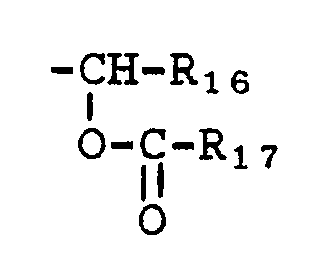
wherein R₁₆ is phenyl or phenyl substituted with one or two groups selected from straight or branched alkyl having from 1 to 4 carbon atoms, fluorine, chlorine or bromine, and R₁₇ is straight or branched lower alkyl having from 1 to 4 carbon atoms.
12. A compound of Claim 11 which is:
(S)-N-[2,6-bis(1-Methylethyl)phenyl]-α-[(3,3-dimethyl-1-oxobutyl)amino]-4-(phenylmethoxy)benzenepropanamide;
(S)-α-[(3,3-Dimethyl-1-oxobutyl)-amino]-4-(phenylmethoxy)-N-(2,4,6-trifluorophenyl)benzenepropanamide;
(S)-α-N-(2,6-Diisopropylphenyl)benzenepropanamide;
(S)-α-(Acetylamino)-N-(2,6-diethylphenyl)benzenepropanamide;
(S)-α-(Acetylamino)-N-[2,6-bis(1-Methylethyl)phenyl]benzenepropanamide;
(S)-α-(Acetylamino)-N-[2,6-dimethylphenyl]benzene-propanamide;
(S)-N-[2,6-bis(1-Methylethyl)phenyl]-α-[(4-chloro-1-oxobutyl)amino]benzenepropanamide;
(±)-α-(Benzyoylamino)-N-[2,6-bis(1-Methylethyl)phenyl]benzenepropanamide;
(±)-N-[2,6-bis(1-Methylethyl)phenyl]-α-[(1-oxopentyl)amino]benzenepropanamide;
(±)-cis-N-[2,6-bis(1-Methylethyl)phenyl]-α-(1-oxo-9-octadecenyl)benzenepropanamide;
2-[Acetyl(diphenylmethyl)amino]-N-[2,6-bis(1-methylethyl)phenyl]-acetamide;
N-[2-[[2,6-bis(1-Methylethyl)phenyl]amino]-2-oxoethyl-N-(diphenylmethyl)-benzamide; and
(S)-N-[2-[2,6-bis(1-Methylethyl)phenyl]amino]-1-methyl-2-oxoethyl]-α-phenylbenzeneacetamide.
(S)-N-[2,6-bis(1-Methylethyl)phenyl]-α-[(3,3-dimethyl-1-oxobutyl)amino]-4-(phenylmethoxy)benzenepropanamide;
(S)-α-[(3,3-Dimethyl-1-oxobutyl)-amino]-4-(phenylmethoxy)-N-(2,4,6-trifluorophenyl)benzenepropanamide;
(S)-α-N-(2,6-Diisopropylphenyl)benzenepropanamide;
(S)-α-(Acetylamino)-N-(2,6-diethylphenyl)benzenepropanamide;
(S)-α-(Acetylamino)-N-[2,6-bis(1-Methylethyl)phenyl]benzenepropanamide;
(S)-α-(Acetylamino)-N-[2,6-dimethylphenyl]benzene-propanamide;
(S)-N-[2,6-bis(1-Methylethyl)phenyl]-α-[(4-chloro-1-oxobutyl)amino]benzenepropanamide;
(±)-α-(Benzyoylamino)-N-[2,6-bis(1-Methylethyl)phenyl]benzenepropanamide;
(±)-N-[2,6-bis(1-Methylethyl)phenyl]-α-[(1-oxopentyl)amino]benzenepropanamide;
(±)-cis-N-[2,6-bis(1-Methylethyl)phenyl]-α-(1-oxo-9-octadecenyl)benzenepropanamide;
2-[Acetyl(diphenylmethyl)amino]-N-[2,6-bis(1-methylethyl)phenyl]-acetamide;
N-[2-[[2,6-bis(1-Methylethyl)phenyl]amino]-2-oxoethyl-N-(diphenylmethyl)-benzamide; and
(S)-N-[2-[2,6-bis(1-Methylethyl)phenyl]amino]-1-methyl-2-oxoethyl]-α-phenylbenzeneacetamide.
13. A compound of Claim 3 wherein R₄ is the group -CO₂R₁₅ wherein R₁₅ is a straight or branched hydrocarbon chain having from 1 to 20 carbon atoms and which is saturated or contains from 1 to 3 double bonds, phenyl(CH₂)x- wherein s is zero to 2 and wherein the phenyl ring is unsubstituted or is substituted with one or two substituents selected from straight or branched alkyl having from 1 to 4 carbon atoms, chlorine, bromine, fluorine, trifluoromethyl, NR₅R₆ wherein R₅ and R₆ have the meanings defined above, -CH₂NR₅R₆ wherein R₅ and R₆ have the meanings defined above, straight or branched alkoxy having from 1 to 4 carbon atoms, diphenylmethyl, nitro, -(CH₂)p-COOR₂₀ wherein p is zero, one, or two and R₂₀ is hydrogen or straight or branched alkyl of from 1 to 4 carbon atoms.
14. A compound of Claim 13 which is:
(S)-1,1-Dimethylethyl[2-[[2,6-bis-(1-methylethyl)phenyl]amino]-2-oxo-1-[[4-(phenylmethoxy) phenyl]methyl]ethyl]carbamate;
(S)-1,1-dimethylethyl[2-[[2,6-bis-(1-methylethyl)phenyl]amino]-1-[(4-hydroxyphenyl)methyl]-2-oxoethyl]carbamate;
(S)-1,1-Dimethylethyl[2-oxo-1-[[4-(phenylmethoxy)phenyl|methyl]-2-[(2,4,6-trifluorophenyl)amino]ethyl]carbamate;
(S)-1,1-Dimethylethyl[2-[[2,6-bis(1-Methylethyl)phenyl]amino]-1-(1H-indol-3-ylmethyl)-2-oxoethyl]carbamate;
(S)-(1,1-Dimethylethyl[1-(1H-indol-3-ylmethyl)-2-oxo-2-[2,4,6-trifluorophenyl)amino]ethyl]carbamate;
(S)-[2-[[2,6-bis(1-Methylethyl)phenyl]amino]-2-oxo-1-phenylethyl]carbamic acid, phenylmethyl ester;
(S)-[1,[[[2,6-bis(1-Methylethyl)-phenyl]amino]carbonyl]-3-(methylthio)propyl]carbamic acid, 1,1-dimethylethyl ester;
(S)-[2-[[2,6-bis(1-Methylethyl)phenyl]amino]-1-methylethyl]carbamic acid, 1,1-dimethylethyl ester;
(S)-[2-[[2,6-bis(1-Methylethyl)phenyl]amino]-2-oxo-1-[[4-(phenylmethoxy)phenyl]methyl]ethyl]carbamic acid, 9H-fluoren-9-ylmethyl ester;
(S)-[2-[[2,6-bis(1-methylethyl)phenyl]amino]-2-oxo-1-[[4-(phenylmethoxy)phenyl]methyl]ethyl]carbamic acid, 9H-fluoren-9-ylmethyl ester;
Phenylmethyl(±)-2-[(2,6-dimethylphenyl)amino]-2-oxo-1-(phenylmethyl)ethyl]carbamate;
Phenylmethyl(±)-2-(2,6-diethylphenyl)amino]-2-oxo-1-(phenylmethyl)ethyl]carbamate;
Phenylmethyl(±)-[2-[[2,6-bis(1-Methylethyl)phenyl]amino]-2-oxo-1-(phenylmethyl)ethyl]carbamate;
1,1-Dimethylethyl(S)-2-oxo-1-(phenylmethyl)-2-[(2,4,6-trifluorophenyl)amino]ethyl]carbamate;
[2-[[2,6-bis(1-Methylethyl)phenyl]amino]-2-oxo-ethyl]-(diphenylmethyl)-carbamic acid methyl ester;
1,1-Dimethylethyl-[2-[2,6-bis-(1-methylethyl)phenyl]amino]-2-oxoethyl]carbamate;
(±)-1,1-Dimethylethyl-[2-[[2,6-bis(1-methylethyl) phenyl]amino]-2-oxo-1-phenylmethyl)ethyl]methylcarbamate;
(S)-1,1-Dimethylethyl-[2-[[2,6-bis(1-Methylethyl)phenyl]amino]-2-oxo-1-phenylmethyl)ethyl]methylcarbamate;
(S)-[1-[[[2,6-bis(1-Methylethyl)phenyl]amino]carbonyl]-3-phenylpropyl]-carbamic acid, 1,1-dimethylethyl ester;
[2-[[2,6-bis(1-Methylethyl)phenyl]amino]-2-oxo-1-[[4-(phenylmethoxy)phenyl]methyl]ethyl]carbamic acid, methyl ester;
(S)-[2-[[2,6-bis(1-Methylethyl)phenyl]amino]-1-methyl-2-oxoethyl]methylcarbamic acid, 1,1-dimethylethyl ester;
(S)-[2-Oxo-1-[[4-(phenylmethoxy)phenyl]methyl]-2-[(2,4,6-trimethoxyphenyl)amino]ethyl]carbamic acid, 1,1-dimethylethyl ester; and
(S)-[1-(1H-Indol-3-ylmethyl)-2-oxo-2-[2,4,6-trimethoxy-phenyl)amino]ethyl]carbamic acid, 1,1-dimethylethyl ester.
(S)-1,1-Dimethylethyl[2-[[2,6-bis-(1-methylethyl)phenyl]amino]-2-oxo-1-[[4-(phenylmethoxy) phenyl]methyl]ethyl]carbamate;
(S)-1,1-dimethylethyl[2-[[2,6-bis-(1-methylethyl)phenyl]amino]-1-[(4-hydroxyphenyl)methyl]-2-oxoethyl]carbamate;
(S)-1,1-Dimethylethyl[2-oxo-1-[[4-(phenylmethoxy)phenyl|methyl]-2-[(2,4,6-trifluorophenyl)amino]ethyl]carbamate;
(S)-1,1-Dimethylethyl[2-[[2,6-bis(1-Methylethyl)phenyl]amino]-1-(1H-indol-3-ylmethyl)-2-oxoethyl]carbamate;
(S)-(1,1-Dimethylethyl[1-(1H-indol-3-ylmethyl)-2-oxo-2-[2,4,6-trifluorophenyl)amino]ethyl]carbamate;
(S)-[2-[[2,6-bis(1-Methylethyl)phenyl]amino]-2-oxo-1-phenylethyl]carbamic acid, phenylmethyl ester;
(S)-[1,[[[2,6-bis(1-Methylethyl)-phenyl]amino]carbonyl]-3-(methylthio)propyl]carbamic acid, 1,1-dimethylethyl ester;
(S)-[2-[[2,6-bis(1-Methylethyl)phenyl]amino]-1-methylethyl]carbamic acid, 1,1-dimethylethyl ester;
(S)-[2-[[2,6-bis(1-Methylethyl)phenyl]amino]-2-oxo-1-[[4-(phenylmethoxy)phenyl]methyl]ethyl]carbamic acid, 9H-fluoren-9-ylmethyl ester;
(S)-[2-[[2,6-bis(1-methylethyl)phenyl]amino]-2-oxo-1-[[4-(phenylmethoxy)phenyl]methyl]ethyl]carbamic acid, 9H-fluoren-9-ylmethyl ester;
Phenylmethyl(±)-2-[(2,6-dimethylphenyl)amino]-2-oxo-1-(phenylmethyl)ethyl]carbamate;
Phenylmethyl(±)-2-(2,6-diethylphenyl)amino]-2-oxo-1-(phenylmethyl)ethyl]carbamate;
Phenylmethyl(±)-[2-[[2,6-bis(1-Methylethyl)phenyl]amino]-2-oxo-1-(phenylmethyl)ethyl]carbamate;
1,1-Dimethylethyl(S)-2-oxo-1-(phenylmethyl)-2-[(2,4,6-trifluorophenyl)amino]ethyl]carbamate;
[2-[[2,6-bis(1-Methylethyl)phenyl]amino]-2-oxo-ethyl]-(diphenylmethyl)-carbamic acid methyl ester;
1,1-Dimethylethyl-[2-[2,6-bis-(1-methylethyl)phenyl]amino]-2-oxoethyl]carbamate;
(±)-1,1-Dimethylethyl-[2-[[2,6-bis(1-methylethyl) phenyl]amino]-2-oxo-1-phenylmethyl)ethyl]methylcarbamate;
(S)-1,1-Dimethylethyl-[2-[[2,6-bis(1-Methylethyl)phenyl]amino]-2-oxo-1-phenylmethyl)ethyl]methylcarbamate;
(S)-[1-[[[2,6-bis(1-Methylethyl)phenyl]amino]carbonyl]-3-phenylpropyl]-carbamic acid, 1,1-dimethylethyl ester;
[2-[[2,6-bis(1-Methylethyl)phenyl]amino]-2-oxo-1-[[4-(phenylmethoxy)phenyl]methyl]ethyl]carbamic acid, methyl ester;
(S)-[2-[[2,6-bis(1-Methylethyl)phenyl]amino]-1-methyl-2-oxoethyl]methylcarbamic acid, 1,1-dimethylethyl ester;
(S)-[2-Oxo-1-[[4-(phenylmethoxy)phenyl]methyl]-2-[(2,4,6-trimethoxyphenyl)amino]ethyl]carbamic acid, 1,1-dimethylethyl ester; and
(S)-[1-(1H-Indol-3-ylmethyl)-2-oxo-2-[2,4,6-trimethoxy-phenyl)amino]ethyl]carbamic acid, 1,1-dimethylethyl ester.
15. A compound of Claim 3 wherein R₄ is -CONHR₁₅ wherein R₁₅ is a straight or branched hydrocarbon chain having from 1 to 20 carbon atoms and which is saturated or contains from 1 to 3 double bonds, phenyl(CH₂)x- wherein x is zero to two and wherein the phenyl ring is unsubstituted or is substituted with one or two substituents selected from straight or branched alkyl having from 1 to 4 carbon atoms, chlorine, bromine, fluorine, trifluoromethyl, NR₅R₆ wherein R₅ and R₆ have the meanings defined above, -CH₂NR₅R₆ wherein R₅ and R₆ have the meanings defined above, straight or branched alkoxy having from 1 to 4 carbon atoms, diphenylmethyl, nitro, -(CH₂)p-COOR₂₀ wherein p is zero, one, or two and R₂₀ is hydrogen or straight or branched alkyl of from 1 to 4 carbon atoms.
16. A compound of Claim 15 which is:
(S)-N-[2,6-bis(1-Methylethyl)phenyl]-α-[[[(1,1-dimethylethyl)amino]carbonyl]amino]-4-phenylmethoxy)benzenepropanamide;
(S)-α-[[[(1,1-Dimethylethyl)amino]carbonyl]amino]-4-(phenylmethoxy)-N-(2,4,6-trifluorophenyl)benzenepropanamide;
N-[2,6-bis(1-Methylethyl)phenyl]-α-[[(phenylamino)ethyl)amino]carbonyl]amino]benzenepropanamide;
N-[2,6-bis(1-Methylethyl)phenyl]-α-[[[(1,1-dimethylethyl)amino]carbonyl]amino]benzenepropanamide;
(S)-α-[[(Phenylamino)carbonyl]amino]-N-(2,4,6-trifluorophenyl)benzenepropanamide;
(S)-α-[[[(1,1-Dimethylethyl)amino]carbonyl]amino]-N-(2,4,6-trifluorophenyl)benzenepropanamide;
(S)-N-[2,6-bis(1-Methylethyl)phenyl]-α-[[[(phenylmethyl)amino]carbonyl]amino]benzenepropanamide;
(S)-α-[[(Butylamino)carbonyl]amino]N-(2,4,6-trifluorophenyl)benzenepropanamide;
N-[[[2-[[2,6-bis(1-Methylethyl)phenyl]amino]2-oxo-ethyl](diphenylmethyl)amino]carbonyl]glycine ethyl ester;
N-[2,6-bis(1-Methylethyl)phenyl]-2-[(diphenylmethyl)-[(phenylamino)carbonyl]amino]acetamide; and
N-[2,6-bis(1-Methylethyl)phenyl]-2-[[(phenylamino)-carbonyl](phenylmethyl)amino]acetamide.
(S)-N-[2,6-bis(1-Methylethyl)phenyl]-α-[[[(1,1-dimethylethyl)amino]carbonyl]amino]-4-phenylmethoxy)benzenepropanamide;
(S)-α-[[[(1,1-Dimethylethyl)amino]carbonyl]amino]-4-(phenylmethoxy)-N-(2,4,6-trifluorophenyl)benzenepropanamide;
N-[2,6-bis(1-Methylethyl)phenyl]-α-[[(phenylamino)ethyl)amino]carbonyl]amino]benzenepropanamide;
N-[2,6-bis(1-Methylethyl)phenyl]-α-[[[(1,1-dimethylethyl)amino]carbonyl]amino]benzenepropanamide;
(S)-α-[[(Phenylamino)carbonyl]amino]-N-(2,4,6-trifluorophenyl)benzenepropanamide;
(S)-α-[[[(1,1-Dimethylethyl)amino]carbonyl]amino]-N-(2,4,6-trifluorophenyl)benzenepropanamide;
(S)-N-[2,6-bis(1-Methylethyl)phenyl]-α-[[[(phenylmethyl)amino]carbonyl]amino]benzenepropanamide;
(S)-α-[[(Butylamino)carbonyl]amino]N-(2,4,6-trifluorophenyl)benzenepropanamide;
N-[[[2-[[2,6-bis(1-Methylethyl)phenyl]amino]2-oxo-ethyl](diphenylmethyl)amino]carbonyl]glycine ethyl ester;
N-[2,6-bis(1-Methylethyl)phenyl]-2-[(diphenylmethyl)-[(phenylamino)carbonyl]amino]acetamide; and
N-[2,6-bis(1-Methylethyl)phenyl]-2-[[(phenylamino)-carbonyl](phenylmethyl)amino]acetamide.
17. A compound of Claim 3 wherein R₄ is a straight or branched hydrocarbon chain which is saturated or contains from 1 to 3 double bonds.
18. A compound of Claim 17 which is:
(Z)-2-[(9-Octadecenyl)(phenylmethyl)amino]-N-(2,4,6-trimethoxyphenyl)acetamide;
(Z)-2-[9-Octadecenyl[[(2-phenylethyl)amino]carbonyl]amino]-N-(2,4,6-trimethoxyphenyl)acetamide;
(Z)-[[[[2,6-bis(1-Methylethyl)phenyl]amino]carbonyl]-9-octadecenylamino]-N-[2,4,6-triacetamide;
(Z)-2-[[(4-Methylphenyl)sulfonyl](9-octadecenyl)amino]-N-(2,4,6-trimethoxyphenyl)acetamide;
(Z)-2-(9-Octadecenylamino)-N-(2,4,6-trimethoxyphenyl)acetamide; and
(Z)-N-(2,6-dimethylphenyl)-2-(9-octadecenylamino)acetamide.
(Z)-2-[(9-Octadecenyl)(phenylmethyl)amino]-N-(2,4,6-trimethoxyphenyl)acetamide;
(Z)-2-[9-Octadecenyl[[(2-phenylethyl)amino]carbonyl]amino]-N-(2,4,6-trimethoxyphenyl)acetamide;
(Z)-[[[[2,6-bis(1-Methylethyl)phenyl]amino]carbonyl]-9-octadecenylamino]-N-[2,4,6-triacetamide;
(Z)-2-[[(4-Methylphenyl)sulfonyl](9-octadecenyl)amino]-N-(2,4,6-trimethoxyphenyl)acetamide;
(Z)-2-(9-Octadecenylamino)-N-(2,4,6-trimethoxyphenyl)acetamide; and
(Z)-N-(2,6-dimethylphenyl)-2-(9-octadecenylamino)acetamide.
19. A compound of Claim 3 wherein R₄ is the group -SO₂R₁₄ wherein R₁₄ is morpholino, phenyl, phenyl substituted with straight or branched alkyl having from 1 to 4 carbon atoms, or R₁₄ is a straight or branched hydrocarbon chain having from 1 to 20 carbon atoms which is saturated or contains from 1 to 3 double bonds.
20. A compound of Claim 19 which is:
(±)-N-[2,6-bis(1-Methylethyl)phenyl]-α-[(4-morpholinylsulfonyl)amino] benzenepropanamide;
(S)-N-[2,6-bis(1-Methylethyl)phenyl]-α-[[(4-methylphenyl)sulfonyl]amino]benzenepropanamide; and
(S)-α-[[(4-Methylphenyl)sulfonyl]amino]-N-(2,4,6-trifluorophenyl)benzenepropanamide.
(±)-N-[2,6-bis(1-Methylethyl)phenyl]-α-[(4-morpholinylsulfonyl)amino] benzenepropanamide;
(S)-N-[2,6-bis(1-Methylethyl)phenyl]-α-[[(4-methylphenyl)sulfonyl]amino]benzenepropanamide; and
(S)-α-[[(4-Methylphenyl)sulfonyl]amino]-N-(2,4,6-trifluorophenyl)benzenepropanamide.
21. A compound selected from N-[2,6-bis(1-methylethyl)phenyl]-2-bromopropanamide, N-[2,6-bis(1-methylethyl)phenyl]-2-bromoacetamide and N-[2,6-bis(1-methylethyl)phenyl]-2-bromophenylacetamide.
22. A pharmaceutical composition for regulating cholesterol comprising of an effective amount of a compound of Claim 1 and a pharmaceutically acceptable carrier.
23. A method of use of a compound of Formula I of Claim 1 for the manufacturing of pharmaceuticals for treating hypercholesterolemia and atherosclerosis.
24. Process for the manufacturing of a compound of general formula I according to Claims 1 to 21 which comprises the following steps wherein the substituents R, R₁, R₃ and R₄ have the meanings defined in Claim 1
(a) reacting an α-haloacyl halide of the fomula

with an amine of the formula RNH₂ in a suitable solvent to give an amide of the formula

which is reacted with an amine of the Formula H₂NR₃ in a suitable solvent and heating the reaction to boiling to give compounds of Formula I wherein R₄ is hydrogen which said compounds may be further alkylated or acylated to give compounds of Formula I wherein R₄ is other than hydrogen; or
(b) reacting an suitably protected amino acid of the formula

wherein B is a suitable protecting group with a haloformate of the formula halo-COOR₂₀ wherein R₂₀ is isobutyl followed by deprotection of the amine and alkylating or acylating the resulting free amine; and
(c) when preparing compounds of Formula I wherein R₂ is the group -CH₂CH₂S(O)₁₋₂CH₃ treating the compounds of Formula I wherein R₂ is the group: -CH₂CH₂SCH₃ with a stoichiometric amount of an oxidizing agent; and
(d) to obtain a pharmaceutically acceptable salt thereof treating the thus obtained compound with a pharmaceutically acceptable acid.
Applications Claiming Priority (4)
| Application Number | Priority Date | Filing Date | Title |
|---|---|---|---|
| US40136789A | 1989-08-31 | 1989-08-31 | |
| US401367 | 1989-08-31 | ||
| US07/557,204 US5153226A (en) | 1989-08-31 | 1990-07-30 | Acat inhibitors for treating hypocholesterolemia |
| US557204 | 1995-11-14 |
Publications (1)
| Publication Number | Publication Date |
|---|---|
| EP0415413A1 true EP0415413A1 (en) | 1991-03-06 |
Family
ID=27017414
Family Applications (1)
| Application Number | Title | Priority Date | Filing Date |
|---|---|---|---|
| EP90116662A Withdrawn EP0415413A1 (en) | 1989-08-31 | 1990-08-30 | Acat inhibitors |
Country Status (15)
| Country | Link |
|---|---|
| US (1) | US5153226A (en) |
| EP (1) | EP0415413A1 (en) |
| JP (1) | JPH03148247A (en) |
| KR (1) | KR910004543A (en) |
| CN (1) | CN1050376A (en) |
| AU (1) | AU640680B2 (en) |
| CA (1) | CA2024300A1 (en) |
| FI (1) | FI904223A7 (en) |
| HU (1) | HUT54628A (en) |
| IE (1) | IE903150A1 (en) |
| IL (1) | IL95372A0 (en) |
| NO (1) | NO903799L (en) |
| NZ (1) | NZ235109A (en) |
| PH (1) | PH27372A (en) |
| PT (1) | PT95148A (en) |
Cited By (22)
| Publication number | Priority date | Publication date | Assignee | Title |
|---|---|---|---|---|
| WO1993001160A1 (en) * | 1991-07-05 | 1993-01-21 | Merck Sharp & Dohme Limited | Aromatic compounds, pharmaceutical compositions containing them and their use in therapy |
| EP0557171A1 (en) * | 1992-02-14 | 1993-08-25 | Lipha, Lyonnaise Industrielle Pharmaceutique | Azaindoles, process for their preparation and medicines containing them |
| WO1993024465A1 (en) * | 1992-05-27 | 1993-12-09 | Merck Sharp & Dohme Limited | 2/3-(heterocyclic alkyl amino)-1-(subst.-phenyl-methoxy)-ethanes/propanes as tachykinin-receptor antagonists |
| WO1994025438A1 (en) * | 1993-04-28 | 1994-11-10 | The Du Pont Merck Pharmaceutical Company | Novel trisubstituted aromatic amines useful for the treatment of cognitive deficits |
| WO1995014657A1 (en) * | 1993-11-22 | 1995-06-01 | Parke, Davis & Company | Alpha-aryl or heteroaryl-substituted amide ester acat inhibitors |
| WO1996022279A1 (en) * | 1995-01-19 | 1996-07-25 | Pierre Fabre Medicament | New derivatives of glycylanilides, preparation and therapeutical application |
| WO1998007718A1 (en) * | 1996-08-22 | 1998-02-26 | Warner-Lambert Company | Non-peptide bombesin receptor antagonists |
| WO1998011128A1 (en) * | 1996-09-10 | 1998-03-19 | Dr. Karl Thomae Gmbh | Modified aminoacids, pharmaceuticals containing these compounds and method for their production |
| RU2130923C1 (en) * | 1994-08-19 | 1999-05-27 | Санофи | Derivatives of glycineamide, method of their synthesis, intermediate compounds and pharmaceutical composition |
| RU2157363C2 (en) * | 1994-06-28 | 2000-10-10 | Байер Аг | Valineamide derivatives, method of preparation thereof, and methods of preparation of intermediate products |
| US6313097B1 (en) | 1999-03-02 | 2001-11-06 | Boehringer Ingelheim Pharma Kg | Antagonists of calcitonin gene-related peptide |
| EP1032377A4 (en) * | 1997-11-21 | 2006-06-14 | Euro Celtique Sa | Substituted 2-aminoacetamides and the use thereof |
| US7244743B2 (en) | 2002-06-05 | 2007-07-17 | Solvay Pharmaceuticals Gmbh | Non-peptidic BRS-3 agonists |
| US7276518B2 (en) | 2001-05-09 | 2007-10-02 | Gruenenthal Gmbh | Substituted cyclohexane-1,4-diamine compounds |
| WO2008006625A3 (en) * | 2006-07-10 | 2008-04-17 | Galapagos Sas | Derivatives of urea and related diamines, methods for their manufacture, and uses therefor |
| USRE40259E1 (en) | 1997-12-31 | 2008-04-22 | Newron Pharmaceuticals, S.P.A. | Alpha-aminoamide derivatives useful as analgesic agents |
| US7875609B2 (en) | 2005-11-25 | 2011-01-25 | Galapagos Sasu | Urea derivatives, processes for their preparation, their use as medicaments, and pharmaceutical compositions containing them |
| US8247412B2 (en) | 2005-04-29 | 2012-08-21 | Galapagos Sasu | Urea derivatives methods for their manufacture and uses thereof |
| US8324396B2 (en) | 2007-07-10 | 2012-12-04 | Amgen Inc. | Derivatives of urea and related diamines, methods for their manufacture, and uses therefor |
| WO2013137832A1 (en) * | 2012-03-16 | 2013-09-19 | Nanyang Technological University | Myostatin inhibitors |
| US11274090B2 (en) | 2018-02-16 | 2022-03-15 | Constellation Pharmaceuticals, Inc. | P300/CBP HAT inhibitors |
| US11414384B2 (en) | 2018-02-16 | 2022-08-16 | Constellation Pharmaceuticals, Inc. | P300/CBP hat inhibitors |
Families Citing this family (16)
| Publication number | Priority date | Publication date | Assignee | Title |
|---|---|---|---|---|
| CN1042728C (en) * | 1992-07-27 | 1999-03-31 | 杏林制药株式会社 | Aryl glycinamide derivatives and preparation method thereof |
| JP3429338B2 (en) * | 1992-07-27 | 2003-07-22 | 杏林製薬株式会社 | Novel arylglycinamide derivative and method for producing the same |
| CN1097043C (en) | 1995-10-05 | 2002-12-25 | 京都药品工业株式会社 | novel heterocyclic derivatives and medicinal use thereof |
| US5741926A (en) * | 1997-02-12 | 1998-04-21 | Shaman Pharmaceuticals, Inc. | Aniline derivatives having antihyperglycemic activity |
| US6048899A (en) * | 1997-03-17 | 2000-04-11 | Research Corporation Tech., Inc. | Anticonvulsant enantiomeric amino acid derivatives |
| US6103733A (en) * | 1998-09-09 | 2000-08-15 | Bachmann; Kenneth A. | Method for increasing HDL cholesterol levels using heteroaromatic phenylmethanes |
| US6613801B2 (en) * | 2000-05-30 | 2003-09-02 | Transtech Pharma, Inc. | Method for the synthesis of compounds of formula I and their uses thereof |
| US6987131B1 (en) | 2000-06-26 | 2006-01-17 | Burzynski Stanislaw R | Phenylacetic acid compositions for treating or preventing hypercholesterolemia |
| KR100389292B1 (en) * | 2001-01-22 | 2003-06-27 | 박용석 | Positively Charged Lipid and Liposome Containing the Same |
| CA2440042C (en) * | 2001-03-05 | 2011-09-27 | Transtech Pharma, Inc. | Carboxamide derivatives as therapeutic agents |
| EP2324830A1 (en) * | 2002-03-05 | 2011-05-25 | TransTech Pharma Inc. | Process for the preparation of a monocyclic azole derivative that inhibits the interaction of ligands with rage |
| PL374919A1 (en) * | 2002-07-17 | 2005-11-14 | Kyoto Pharmaceutical Industries, Ltd. | Novel indoline compound and medicinal use thereof |
| WO2005000295A1 (en) * | 2003-05-20 | 2005-01-06 | Transtech Pharma, Inc. | Rage antagonists as agents to reverse amyloidosis and diseases associated therewith |
| JP5128599B2 (en) * | 2006-08-30 | 2013-01-23 | エフ.ホフマン−ラ ロシュ アーゲー | Inhibitor of GLYT-1 |
| CA2772797C (en) | 2009-09-30 | 2018-09-25 | Transtech Pharma, Inc. | Substituted imidazole derivatives |
| TWI407049B (en) | 2010-04-19 | 2013-09-01 | Ind Tech Res Inst | Lamp assembly |
Citations (8)
| Publication number | Priority date | Publication date | Assignee | Title |
|---|---|---|---|---|
| FR1599759A (en) * | 1967-09-07 | 1970-07-20 | ||
| FR2068405A1 (en) * | 1969-10-15 | 1971-08-27 | Sudaka Charles | Synergistic acetanilide type/benzoic ester type local anaesthetics |
| FR2118985A1 (en) * | 1970-12-22 | 1972-08-04 | Astra Pharma Prod | |
| GB1309874A (en) * | 1971-06-04 | 1973-03-14 | Etd Ind Pharma Centre | Xylidene derivative |
| EP0124791A1 (en) * | 1983-05-06 | 1984-11-14 | American Cyanamid Company | Aralkanamidophenyl compounds |
| FR2549471A1 (en) * | 1983-07-21 | 1985-01-25 | Eszakmagyar Vegyimuevek | N-SUBSTITUTED N-DICHLORACETYL-GLYCINAMIDES AND POSSIBLY ON N 'AND THEIR USE AS ANTIDOTES IN HERBICIDES |
| EP0283742A2 (en) * | 1987-02-24 | 1988-09-28 | Warner-Lambert Company | Fatty acid amides as inhibitors of acyl-CoA: cholesterol acyltransferase |
| EP0293880A1 (en) * | 1987-06-02 | 1988-12-07 | Warner-Lambert Company | Antihyperlipidemic and antiatherosclerotic urea compounds |
Family Cites Families (7)
| Publication number | Priority date | Publication date | Assignee | Title |
|---|---|---|---|---|
| US4218477A (en) * | 1971-07-28 | 1980-08-19 | Astra Pharmaceutical Products, Inc. | Primary aminoacylanilides, methods of making the same and use as antiarrhythmic drugs |
| US4310429A (en) * | 1978-06-19 | 1982-01-12 | The B. F. Goodrich Company | Stabilized polymers, novel stabilizers, and synthesis thereof |
| DE3010599A1 (en) * | 1979-03-22 | 1980-10-09 | Continental Pharma | DERIVATIVES OF GLYCINAMIDE, THEIR PRODUCTION AND USE |
| US4500662A (en) * | 1981-04-03 | 1985-02-19 | The B. F. Goodrich Company | Polysubstituted α-aminoacetamides |
| GB8517854D0 (en) * | 1985-07-15 | 1985-08-21 | Roussell Lab Ltd | Chemical compounds |
| US4891058A (en) * | 1988-07-18 | 1990-01-02 | Ici Americas Inc. | 1-alkyl-3-aryl imidazolidine-2,4-diones and herbicidal use |
| US4944796A (en) * | 1988-11-14 | 1990-07-31 | Ici Americas Inc. | Certain 2-(disubstituted amino) acetanilide herbicides |
-
1990
- 1990-07-30 US US07/557,204 patent/US5153226A/en not_active Expired - Fee Related
- 1990-08-14 IL IL95372A patent/IL95372A0/en unknown
- 1990-08-27 PH PH41085A patent/PH27372A/en unknown
- 1990-08-27 FI FI904223A patent/FI904223A7/en not_active Application Discontinuation
- 1990-08-28 AU AU61901/90A patent/AU640680B2/en not_active Ceased
- 1990-08-30 PT PT95148A patent/PT95148A/en not_active Application Discontinuation
- 1990-08-30 CA CA002024300A patent/CA2024300A1/en not_active Abandoned
- 1990-08-30 JP JP2226830A patent/JPH03148247A/en active Pending
- 1990-08-30 NZ NZ235109A patent/NZ235109A/en unknown
- 1990-08-30 EP EP90116662A patent/EP0415413A1/en not_active Withdrawn
- 1990-08-30 NO NO90903799A patent/NO903799L/en unknown
- 1990-08-30 HU HU905708A patent/HUT54628A/en unknown
- 1990-08-30 IE IE315090A patent/IE903150A1/en unknown
- 1990-08-30 KR KR1019900013485A patent/KR910004543A/en not_active Withdrawn
- 1990-08-31 CN CN90107397A patent/CN1050376A/en active Pending
Patent Citations (8)
| Publication number | Priority date | Publication date | Assignee | Title |
|---|---|---|---|---|
| FR1599759A (en) * | 1967-09-07 | 1970-07-20 | ||
| FR2068405A1 (en) * | 1969-10-15 | 1971-08-27 | Sudaka Charles | Synergistic acetanilide type/benzoic ester type local anaesthetics |
| FR2118985A1 (en) * | 1970-12-22 | 1972-08-04 | Astra Pharma Prod | |
| GB1309874A (en) * | 1971-06-04 | 1973-03-14 | Etd Ind Pharma Centre | Xylidene derivative |
| EP0124791A1 (en) * | 1983-05-06 | 1984-11-14 | American Cyanamid Company | Aralkanamidophenyl compounds |
| FR2549471A1 (en) * | 1983-07-21 | 1985-01-25 | Eszakmagyar Vegyimuevek | N-SUBSTITUTED N-DICHLORACETYL-GLYCINAMIDES AND POSSIBLY ON N 'AND THEIR USE AS ANTIDOTES IN HERBICIDES |
| EP0283742A2 (en) * | 1987-02-24 | 1988-09-28 | Warner-Lambert Company | Fatty acid amides as inhibitors of acyl-CoA: cholesterol acyltransferase |
| EP0293880A1 (en) * | 1987-06-02 | 1988-12-07 | Warner-Lambert Company | Antihyperlipidemic and antiatherosclerotic urea compounds |
Non-Patent Citations (1)
| Title |
|---|
| CHEMICAL ABSTRACTS, Vol. 106, No. 25, 22 June 1987, page 622, Abstract No. 213545a, Columbus, Ohio, US; W. CHEN et al.: "Studies on uranium mobilization agents. III. Synthesis of 2,3-dihydroxy-5-carboalkoxybenzylaminocarboxylic acid amides chelating ahents", & Yaoxue Xuebao 1987, Vol. 22, No. 1, pages 62-66, Abstract. * |
Cited By (36)
| Publication number | Priority date | Publication date | Assignee | Title |
|---|---|---|---|---|
| US5629347A (en) * | 1991-07-05 | 1997-05-13 | Merck Sharp & Dohme Ltd. | Aromatic compounds, pharmaceutical compositions containing them and their use in therapy |
| EP0522808A3 (en) * | 1991-07-05 | 1993-01-27 | MERCK SHARP & DOHME LTD. | Aromatic compounds, pharmaceutical compositions containing them and their use in therapy |
| WO1993001160A1 (en) * | 1991-07-05 | 1993-01-21 | Merck Sharp & Dohme Limited | Aromatic compounds, pharmaceutical compositions containing them and their use in therapy |
| US5338849A (en) * | 1992-02-14 | 1994-08-16 | Lipha, Lyonnaise Industrielle Pharmaceutique | Azaindoles, preparation processes and medicinal products containing them |
| EP0557171A1 (en) * | 1992-02-14 | 1993-08-25 | Lipha, Lyonnaise Industrielle Pharmaceutique | Azaindoles, process for their preparation and medicines containing them |
| US5494926A (en) * | 1992-05-27 | 1996-02-27 | Merck Sharp & Dohme Ltd. | 2/3-(heterocyclic alkyl amino)-1-(subst.-phenyl-methoxy)-ethanes/propanes as tachykinin-receptor antagonists |
| WO1993024465A1 (en) * | 1992-05-27 | 1993-12-09 | Merck Sharp & Dohme Limited | 2/3-(heterocyclic alkyl amino)-1-(subst.-phenyl-methoxy)-ethanes/propanes as tachykinin-receptor antagonists |
| WO1994025438A1 (en) * | 1993-04-28 | 1994-11-10 | The Du Pont Merck Pharmaceutical Company | Novel trisubstituted aromatic amines useful for the treatment of cognitive deficits |
| WO1995014657A1 (en) * | 1993-11-22 | 1995-06-01 | Parke, Davis & Company | Alpha-aryl or heteroaryl-substituted amide ester acat inhibitors |
| US5502198A (en) * | 1993-11-22 | 1996-03-26 | Warner-Lambert Company | α-aryl or heteroaryl-substituted amide ester ACAT inhibitors |
| RU2157363C2 (en) * | 1994-06-28 | 2000-10-10 | Байер Аг | Valineamide derivatives, method of preparation thereof, and methods of preparation of intermediate products |
| RU2130923C1 (en) * | 1994-08-19 | 1999-05-27 | Санофи | Derivatives of glycineamide, method of their synthesis, intermediate compounds and pharmaceutical composition |
| AU707456B2 (en) * | 1995-01-19 | 1999-07-08 | Pierre Fabre Medicament | New derivatives of glycylanilides, preparation and therapeutical application |
| WO1996022279A1 (en) * | 1995-01-19 | 1996-07-25 | Pierre Fabre Medicament | New derivatives of glycylanilides, preparation and therapeutical application |
| FR2729665A1 (en) * | 1995-01-19 | 1996-07-26 | Pf Medicament | NOVEL GLYCYLANILIDE DERIVATIVES, THEIR PREPARATION AND THERAPEUTIC USE THEREOF |
| US5760087A (en) * | 1995-01-19 | 1998-06-02 | Pierre Fabre Medicament | Glycylanilide derivatives, their preparation and their application in therapy |
| US6194437B1 (en) * | 1996-08-22 | 2001-02-27 | Warner-Lambert Company | Non-peptide bombesin receptor antagonists |
| WO1998007718A1 (en) * | 1996-08-22 | 1998-02-26 | Warner-Lambert Company | Non-peptide bombesin receptor antagonists |
| AU733226B2 (en) * | 1996-08-22 | 2001-05-10 | Warner-Lambert Company | Non-peptide bombesin receptor antagonists |
| WO1998011128A1 (en) * | 1996-09-10 | 1998-03-19 | Dr. Karl Thomae Gmbh | Modified aminoacids, pharmaceuticals containing these compounds and method for their production |
| EP1440976A1 (en) * | 1996-09-10 | 2004-07-28 | Boehringer Ingelheim Pharma GmbH & Co.KG | Modified aminoacids, pharmaceuticals containing these compounds and method for their production |
| EP1032377A4 (en) * | 1997-11-21 | 2006-06-14 | Euro Celtique Sa | Substituted 2-aminoacetamides and the use thereof |
| US7872127B2 (en) | 1997-11-21 | 2011-01-18 | Purdue Neuroscience Company | Substituted 2-aminoacetamides and the use thereof |
| US7541465B2 (en) | 1997-11-21 | 2009-06-02 | Purdue Neuroscience Company | Substituted 2-aminoacetamides and the use thereof |
| US8426431B2 (en) | 1997-11-21 | 2013-04-23 | Purdue Neuroscience Company | Substituted 2-aminoacetamides and the use thereof |
| USRE40259E1 (en) | 1997-12-31 | 2008-04-22 | Newron Pharmaceuticals, S.P.A. | Alpha-aminoamide derivatives useful as analgesic agents |
| US6313097B1 (en) | 1999-03-02 | 2001-11-06 | Boehringer Ingelheim Pharma Kg | Antagonists of calcitonin gene-related peptide |
| US7276518B2 (en) | 2001-05-09 | 2007-10-02 | Gruenenthal Gmbh | Substituted cyclohexane-1,4-diamine compounds |
| US7244743B2 (en) | 2002-06-05 | 2007-07-17 | Solvay Pharmaceuticals Gmbh | Non-peptidic BRS-3 agonists |
| US8247412B2 (en) | 2005-04-29 | 2012-08-21 | Galapagos Sasu | Urea derivatives methods for their manufacture and uses thereof |
| US7875609B2 (en) | 2005-11-25 | 2011-01-25 | Galapagos Sasu | Urea derivatives, processes for their preparation, their use as medicaments, and pharmaceutical compositions containing them |
| WO2008006625A3 (en) * | 2006-07-10 | 2008-04-17 | Galapagos Sas | Derivatives of urea and related diamines, methods for their manufacture, and uses therefor |
| US8324396B2 (en) | 2007-07-10 | 2012-12-04 | Amgen Inc. | Derivatives of urea and related diamines, methods for their manufacture, and uses therefor |
| WO2013137832A1 (en) * | 2012-03-16 | 2013-09-19 | Nanyang Technological University | Myostatin inhibitors |
| US11274090B2 (en) | 2018-02-16 | 2022-03-15 | Constellation Pharmaceuticals, Inc. | P300/CBP HAT inhibitors |
| US11414384B2 (en) | 2018-02-16 | 2022-08-16 | Constellation Pharmaceuticals, Inc. | P300/CBP hat inhibitors |
Also Published As
| Publication number | Publication date |
|---|---|
| NZ235109A (en) | 1992-10-28 |
| NO903799L (en) | 1991-03-01 |
| HUT54628A (en) | 1991-03-28 |
| KR910004543A (en) | 1991-03-28 |
| CN1050376A (en) | 1991-04-03 |
| IL95372A0 (en) | 1991-06-30 |
| JPH03148247A (en) | 1991-06-25 |
| US5153226A (en) | 1992-10-06 |
| AU6190190A (en) | 1991-03-07 |
| AU640680B2 (en) | 1993-09-02 |
| NO903799D0 (en) | 1990-08-30 |
| PT95148A (en) | 1991-05-22 |
| CA2024300A1 (en) | 1991-03-01 |
| IE903150A1 (en) | 1991-03-13 |
| FI904223A7 (en) | 1991-03-01 |
| PH27372A (en) | 1993-06-21 |
| FI904223A0 (en) | 1990-08-27 |
Similar Documents
| Publication | Publication Date | Title |
|---|---|---|
| US5153226A (en) | Acat inhibitors for treating hypocholesterolemia | |
| US5610320A (en) | Sulfonamide phenyl substituted compounds | |
| US5981755A (en) | Tachykinin antagonists | |
| US5236921A (en) | Arylalkylamines, process for preparing them and pharmaceutical compositions containing them | |
| US5767088A (en) | Tachykinin antagonists | |
| US5017610A (en) | Derivatives of p-substituted phenyl ester of pivalic acid | |
| RU2072986C1 (en) | Method of synthesis of carboxylic or sulfonic acid amides or their physiologically compatible salts | |
| US8569505B2 (en) | Aminotetralin-derived urea modulators of vanilloid VR1 receptor | |
| US5789412A (en) | Piperazides derived from arylpiperazine, processes for their preparation, their use as medicaments and pharmaceutical compositions comprising them | |
| US5872138A (en) | Thrombin inhibitors | |
| US5707994A (en) | 2,3-diaminopropionic acid derivative | |
| RU2345061C2 (en) | Derivatives of (2-aminophenyl)-amide of arylenecarboxilic acid as pharmaceutical preparations | |
| US4960792A (en) | Cycloalkyl-substituted glutaramide diuretic agents | |
| EP0433662A2 (en) | Acat inhibitors | |
| EP0432442A1 (en) | ACAT inhibitors | |
| EP0556308B1 (en) | Oxysulfonyl urea acat inhibitors | |
| MXPA06003030A (en) | Aminoalkylamide substituted cyclohexyl derivatives. | |
| US5602161A (en) | Tetrazolylphenyl pivalate derivatives and medicinal composition containing the same as effective component | |
| US5106873A (en) | ACAT inhibitors | |
| US5142094A (en) | Aryl substituted carbamate derivatives which are acat inhibitors | |
| EP0555351B1 (en) | Oxysulfonyl carbamates | |
| US4994465A (en) | Antihyperlipidemic and antiatherosclerotic trisubstituted urea compounds | |
| JPH09118662A (en) | Urea derivative | |
| KR100292070B1 (en) | Thiourea derivatives or their non-toxic salts inhibit the growth of las mutant cells | |
| US5087726A (en) | Carbamate ACAT inhibitors |
Legal Events
| Date | Code | Title | Description |
|---|---|---|---|
| PUAI | Public reference made under article 153(3) epc to a published international application that has entered the european phase |
Free format text: ORIGINAL CODE: 0009012 |
|
| 17P | Request for examination filed |
Effective date: 19900830 |
|
| AK | Designated contracting states |
Kind code of ref document: A1 Designated state(s): AT BE CH DE DK ES FR GB GR IT LI LU NL SE |
|
| 17Q | First examination report despatched |
Effective date: 19930810 |
|
| STAA | Information on the status of an ep patent application or granted ep patent |
Free format text: STATUS: THE APPLICATION IS DEEMED TO BE WITHDRAWN |
|
| 18D | Application deemed to be withdrawn |
Effective date: 19950923 |