EP0402450B1 - Production of fermented food products - Google Patents
Production of fermented food products Download PDFInfo
- Publication number
- EP0402450B1 EP0402450B1 EP90901275A EP90901275A EP0402450B1 EP 0402450 B1 EP0402450 B1 EP 0402450B1 EP 90901275 A EP90901275 A EP 90901275A EP 90901275 A EP90901275 A EP 90901275A EP 0402450 B1 EP0402450 B1 EP 0402450B1
- Authority
- EP
- European Patent Office
- Prior art keywords
- organism
- enzyme
- fermented food
- gene
- variant
- Prior art date
- Legal status (The legal status is an assumption and is not a legal conclusion. Google has not performed a legal analysis and makes no representation as to the accuracy of the status listed.)
- Revoked
Links
Images
Classifications
-
- A—HUMAN NECESSITIES
- A23—FOODS OR FOODSTUFFS; TREATMENT THEREOF, NOT COVERED BY OTHER CLASSES
- A23C—DAIRY PRODUCTS, e.g. MILK, BUTTER OR CHEESE; MILK OR CHEESE SUBSTITUTES; PREPARATION THEREOF
- A23C9/00—Milk preparations; Milk powder or milk powder preparations
- A23C9/12—Fermented milk preparations; Treatment using microorganisms or enzymes
- A23C9/123—Fermented milk preparations; Treatment using microorganisms or enzymes using only microorganisms of the genus lactobacteriaceae; Yoghurt
- A23C9/1238—Fermented milk preparations; Treatment using microorganisms or enzymes using only microorganisms of the genus lactobacteriaceae; Yoghurt using specific L. bulgaricus or S. thermophilus microorganisms; using entrapped or encapsulated yoghurt bacteria; Physical or chemical treatment of L. bulgaricus or S. thermophilus cultures; Fermentation only with L. bulgaricus or only with S. thermophilus
-
- C—CHEMISTRY; METALLURGY
- C12—BIOCHEMISTRY; BEER; SPIRITS; WINE; VINEGAR; MICROBIOLOGY; ENZYMOLOGY; MUTATION OR GENETIC ENGINEERING
- C12N—MICROORGANISMS OR ENZYMES; COMPOSITIONS THEREOF; PROPAGATING, PRESERVING, OR MAINTAINING MICROORGANISMS; MUTATION OR GENETIC ENGINEERING; CULTURE MEDIA
- C12N1/00—Microorganisms; Compositions thereof; Processes of propagating, maintaining or preserving microorganisms or compositions thereof; Processes of preparing or isolating a composition containing a microorganism; Culture media therefor
- C12N1/20—Bacteria; Culture media therefor
- C12N1/205—Bacterial isolates
-
- C—CHEMISTRY; METALLURGY
- C12—BIOCHEMISTRY; BEER; SPIRITS; WINE; VINEGAR; MICROBIOLOGY; ENZYMOLOGY; MUTATION OR GENETIC ENGINEERING
- C12N—MICROORGANISMS OR ENZYMES; COMPOSITIONS THEREOF; PROPAGATING, PRESERVING, OR MAINTAINING MICROORGANISMS; MUTATION OR GENETIC ENGINEERING; CULTURE MEDIA
- C12N15/00—Mutation or genetic engineering; DNA or RNA concerning genetic engineering, vectors, e.g. plasmids, or their isolation, preparation or purification; Use of hosts therefor
- C12N15/01—Preparation of mutants without inserting foreign genetic material therein; Screening processes therefor
-
- C—CHEMISTRY; METALLURGY
- C12—BIOCHEMISTRY; BEER; SPIRITS; WINE; VINEGAR; MICROBIOLOGY; ENZYMOLOGY; MUTATION OR GENETIC ENGINEERING
- C12N—MICROORGANISMS OR ENZYMES; COMPOSITIONS THEREOF; PROPAGATING, PRESERVING, OR MAINTAINING MICROORGANISMS; MUTATION OR GENETIC ENGINEERING; CULTURE MEDIA
- C12N9/00—Enzymes; Proenzymes; Compositions thereof; Processes for preparing, activating, inhibiting, separating or purifying enzymes
- C12N9/10—Transferases (2.)
- C12N9/12—Transferases (2.) transferring phosphorus containing groups, e.g. kinases (2.7)
-
- C—CHEMISTRY; METALLURGY
- C12—BIOCHEMISTRY; BEER; SPIRITS; WINE; VINEGAR; MICROBIOLOGY; ENZYMOLOGY; MUTATION OR GENETIC ENGINEERING
- C12N—MICROORGANISMS OR ENZYMES; COMPOSITIONS THEREOF; PROPAGATING, PRESERVING, OR MAINTAINING MICROORGANISMS; MUTATION OR GENETIC ENGINEERING; CULTURE MEDIA
- C12N9/00—Enzymes; Proenzymes; Compositions thereof; Processes for preparing, activating, inhibiting, separating or purifying enzymes
- C12N9/14—Hydrolases (3)
- C12N9/24—Hydrolases (3) acting on glycosyl compounds (3.2)
- C12N9/2402—Hydrolases (3) acting on glycosyl compounds (3.2) hydrolysing O- and S- glycosyl compounds (3.2.1)
- C12N9/2468—Hydrolases (3) acting on glycosyl compounds (3.2) hydrolysing O- and S- glycosyl compounds (3.2.1) acting on beta-galactose-glycoside bonds, e.g. carrageenases (3.2.1.83; 3.2.1.157); beta-agarase (3.2.1.81)
- C12N9/2471—Beta-galactosidase (3.2.1.23), i.e. exo-(1-->4)-beta-D-galactanase
-
- C—CHEMISTRY; METALLURGY
- C12—BIOCHEMISTRY; BEER; SPIRITS; WINE; VINEGAR; MICROBIOLOGY; ENZYMOLOGY; MUTATION OR GENETIC ENGINEERING
- C12Y—ENZYMES
- C12Y302/00—Hydrolases acting on glycosyl compounds, i.e. glycosylases (3.2)
- C12Y302/01—Glycosidases, i.e. enzymes hydrolysing O- and S-glycosyl compounds (3.2.1)
- C12Y302/01023—Beta-galactosidase (3.2.1.23), i.e. exo-(1-->4)-beta-D-galactanase
-
- C—CHEMISTRY; METALLURGY
- C12—BIOCHEMISTRY; BEER; SPIRITS; WINE; VINEGAR; MICROBIOLOGY; ENZYMOLOGY; MUTATION OR GENETIC ENGINEERING
- C12R—INDEXING SCHEME ASSOCIATED WITH SUBCLASSES C12C - C12Q, RELATING TO MICROORGANISMS
- C12R2001/00—Microorganisms ; Processes using microorganisms
- C12R2001/01—Bacteria or Actinomycetales ; using bacteria or Actinomycetales
- C12R2001/225—Lactobacillus
Definitions
- the present invention relates to novel methods of making a fermented food product, especially fermented dairy products. Further, the invention relates to novel mutant strains of Lactobacillus bulgaricus ( L . bulgaricus ) and methods of making them which are useful in the preparation of yogurt and other fermented food products. The invention also relates to novel mutant genes and organisms transformed with such genes.
- a variety of food products are available worldwide which depend on active bacterial cultures in the final form of the food product for flavor, preservation of quality, claimed health benefits and/or pH.
- Examples are fermented vegetable products, such as sauerkraut from cabbage and pickles from cucumbers; fermented fish products such as fish paste or burongdalog; fermented seeds such as coffee or cocoa beans; fermented starch-rich food products; fermented meat products, fermented cassava; or fermented fruit juices.
- Particularly important are fermented dairy products such as yogurt, sour cream, creme fraché; buttermilk, and the like. These fermented dairy products depend, to a certain degree, on organisms which metabolize lactose to produce flavor and lower the pH to preserve the food. These products can be especially important those people with lactose intolerance; i.e., the inability or difficulty in metabolizing lactose.
- Yogurt is an extremely popular fermented dairy product.
- Microbiologically, yogurt may be defined in the United States and many other countries as the end product of a controlled fermentation of milk with a mixture of Streptococcus thermophilus ( S . thermophilus ) and L . bulgaricus .
- the fermentation is carried out within a temperature range of 35 - 45°C with about 42 - 45°C being preferred.
- S . thermophilus grows rapidly dominating the fermentation and lowering the oxidation-reduction potential of the system.
- L . bulgaricus grows slowly during the early fermentation but liberates sufficient amounts of peptides and amino acids to stimulate growth of S .
- thermophilus which results in moderate production of lactic acid, acetic acid, acetaldehyde, diacetyl and formic acid.
- pH of the fermentation mix is sufficiently lowered to around 5.5, the rapid growth of S . thermophilus is arrested and the growth of L . bulgaricus is favored. Depletion of oxygen from the system and the availability of formate is believed to stimulate such growth.
- the major portion of lactic acid and acetaldehyde necessary for the characteristic flavor of yogurt is contributed by the L . bulgaricus which has been aided by the initial activity of the S. thermophilus component.
- the pH drops further to about 5.0 or less the product is cooled to about 10°C or less for storage.
- L . bulgaricus which exhibited both decreased production of lactic acid at the storage temperature of yogurt yet still retained acceptable levels of activity under production conditions of yogurt where the mutation is defined and which could be transferable to new starters starting from any single strain of L . bulgaricus and remains viable in the yogurt product. It would also be useful to have such organism produce less acid at temperatures below 20°C or at pH 5.5 or lower in order to give more flexibility during production and handling after production. Furthermore, it would aid in the manufacture of fermented products to have the fermentation slow or stop after reaching a certain range of temperature and/or pH rather than using a quick refrigeration to decrease the rate of acid formation.
- the invention provides a method of mutating an organism for use in making a fermented food product which comprises:
- the organism used in step (e) is one from which the corresponding native gene sequence has been removed.
- the invention provides a method for making a fermented food product comprising performing the method of the first aspect, and wherein said step of culturing the organism employs as a substrate source an unfermented food product selected so that the culturing leads to formation of the desired fermented food product.
- the food product may be a fermented dairy product, particularly yogurt.
- the invention provides a method of making a gene coding for a variant of an enzyme, comprising performing steps (a) to (e) as set forth above.
- the invention provides a method of making a plasmid containing a gene coding for a variant of an enzyme, comprising performing steps (a) to (e) as set forth above, wherein the vector is a plasmid.
- the invention provides a fermented food comprising a viable lactic acid producing organism, said organism having inserted into the genome or inserted by use of a replicable plasmid, a gene encoding for the production of an enzyme active in the lactose to lactic acid pathway of the organism and having a mutation in the amino acid sequence, wherein the production rate of lactic acid by the enzyme in the organism is at least 90% of that of an enzyme without the mutation under the fermentation conditions of the food, and the production rate of lactic acid by the enzyme in the organism is at least 20% less than that of an enzyme without the mutation when the fermented food is at a temperature of 20° or less or a pH of 5.5 or less.
- the invention provides a fermented dairy product produced by means of a variant L. bulgaricus organism which produces a non-naturally occurring variant enzyme active in the lactose to lactic acid pathway of the organism and differing from the wild-type enzyme in that at a temperature of 20° or less or a pH of 5.5 or less the activity of the enzym is reduced so that lactic acid production is at least 20% less than would be the case for a wild-type organism; whereas under the production conditions of the food, the rate of production of lactic acid is at least 90% of that of a wild-type organism; said dairy product containing said variant organism in viable state.
- Fermented food products are those foods in which an active bacterial culture remains in a food and wherein the active bacterial culture has metabolized a specific substrate to produce a desired taste, pH or lowered pH to preserve the food.
- vegetable products may use Pseudomonas , Flavobacterium , Aerobacter , Bacillus , Leuconostoc , and Lactobacillus
- fermented fish products may use Leuconostoc mesenteroides , Lactobacillus brevis , Pediococcus cerevisea , Lactobacillus plantarium , and Bacillus species
- fermented seed may use Bacillus natto ; fermented starch-rich materials may use Corynebacterium species; fermented meat products may use Lactobacillus species; fermented melons may use Corynebacterium species, Geotrichum candidum , Leuconistoc species;
- a preferred fermented food product is the fermented dairy products, especially yogurt.
- the desired substrate as used herein is the substrate the selected organism will metabolize in the metabolic pathway of the final compund which produces a desired taste or pH. So, for example, when using a L . bulgaricus organism to produce yogurt, the desired substrate is lactose or an intermediate which is metabolized to lactic acid.
- the normal storage conditions refers to the physical conditions such as pH or temperature under which one would hold the food while it was awaiting consumption.
- L . bulgaricus organisms suitable for making yogurt or other fermented dairy products are widely utilized naturallyoccuring food grade organisms useful in various commercial applications. As described above, L . bulgaricus is used as one of the organisms in the production of yogurt or other fermented dairy products. L . bulgaricus produces a number of enzymes which are responsible for the metabolism of lactose to lactic acid. Most notable is a permease which is responsible for the transport of lactose into the L . bulgaricus organism and ⁇ -galactosidase which metabolizes lactose directly to glucose and galactose.
- Glucose is further metabolized and other enzymes in this pathway include glucokinase, phosphoglucose isomerase, phosphofructokinase, aldolase, triose phosphate isomerase, phosphoglycerate kinase, phosphoglyceromutase, enolase, pyruvate kinase, and lactate dehydrogenase (Henry R. Mahler and Eugene Cordes, In Biological Chemistry , Harper & Row, New York, New York, 1966).
- Preferred genes in the lactic acid pathway for mutation are those coding for lactose permease, See The Lactose Transport System of Streptococcus thermophilus : A Hybrid Protein with Homology to the Melibiose Carrier and Enzyme III of PEP-Dependant Phosphotransferase Systems from Genencor attached, B. Poolman, T. Royer, S. Mainzer and B. Schmidt., J. of Bateriol. (in press), Molec. Gen. Genet ., pp. 159, 239-248 (1978); Nature , Vol. 283, pp.
- vector relates to a gene sequence which includes at least the gene coding for the enzyme of interest. This form could be linear DNA, a plasmid of some type, or the like.
- the vector may be of the replicable type, a type which is incorporated into the chromosome for replication or a gene sequence which must be combined with some other gene sequence or shuttle mechanism for incorporation into an organism in a replicable form.
- the vector may be mutated in vitro by any number of chemical mutagens.
- chemical mutagens For instance, the single and double stranded chemical mutagenesis procedures illustrated in the examples.
- Other methods of mutation include alpha thiol misincorporation, cassette mutagenesis or other methods of site specific mutagenesis.
- Applicant has noted that approximately 1 in 1000 - 5000 transformants appear to achieve the desired attributes of the invention. The results are reproducible and just a matter of screening a number of mutants.
- the mutated gene can be reinserted in a replicable and expressible form, either in a plasmid or integrated into the chromosome of an organism and tested.
- One satisfactory preferred method involves construction of a plasmid using the ⁇ -galactosidase gene, performing the mutagenesis in vitro on the plasmid and then transforming a relatively easily replicable organism like E . coli (or L. bulgaricus or L . casei ).
- the transformed organisms can be screened to see if reaction conditions are such that they meet the desired conditions.
- the clone normally produces a similar enzyme to that being expressed, it is desirable that that gene for the similar enzyme be removed from the host.
- the naturally occurring ⁇ -galactosidase gene could be removed from the host L . bulgaricus .
- a temperature conditional mutant for use in the production of yogurt will be one which exhibits a decrease in metabolism of lactose below 20°C, yet only exhibit a 10% or less decrease in activity at processing temperature; i.e. 35°C - 45°C.
- a pH conditional mutant for use in the production of yogurt will exhibit a decrease in activity of at least 20% at pH's of 5.5 or less and retain at least at least 90% activity at the beginning processing pH of the fermented food product compared to wild type enzymes.
- the proper gene sequence is selected from the variant enzymes, it can be reincorporated into the organism of choice in such a manner that it replicates; i.e., plasmid or homologous genome integration, preferably, as suggested above, with the corresponding native gene sequence previously removed.
- the transformed organism of the invention can then be used to produce a fermented food product with improved shelf life using conventional techniques (without introducing any foreign DNA since only the mutated enzyme will be replaced in the organism).
- the fermented food product made will have a longer shelf life, better taste and texture than the fermented food product made without this invention after extended storage.
- Plasmid Construction Two BamHI fragments were deleted from the pKK223-3 vector (Pharmacia Molecular Biologicals, Piscataway, New Jersey 08854) that carries the L . bulgaricus ⁇ -galactosidase gene on the 7 kb insert.
- the resulting plasmid has the tac promoter (deBoer, H.A. et. al., PNAS , Vol. No. 78, pg. 21, (1983)) removed from the pKK223-3 vector and the ⁇ -galactosidase gene is now on a 4.3 kb HindIII-BamHI fragment. Mutagenesis .
- Plasmid DNA ( ⁇ 5 ug) in 10mM Tris-HCl and 1 mM Na2EDTA (pH 7.6) was added to 7 ul of 1 M potassium phosphate (pH 5.2), 20 ul 3 M sodium acetate (pH 4.5) and water for a final volume of 0.1 ml. Then 0.1 ml of 2 M hydroxylamine (HA) in ethylene glycol was added to the DNA solution. The reaction was incubated at 65 or 75°C with 20 ul aliquots removed at various times from 0 to 10 minutes. The DNA in the aliquots was immediately precipitated with 2 ul 3 M sodium acetate and 50 ul ethanol.
- HA hydroxylamine
- the dried precipitate was dissolved in 30 ul 10 mM Tris-HCl and 1mM Na2EDTA (pH 7.6) and used to transform E . coli JM105, JM108 and JM109 cells (Maniatis, T.; Fritsch, E.F.; Sambrook, J., "Transformation Protocol", In Molecular Cloning: A Laboratory Manual , p. 250, 1983).
- the transformation mix was plated on Luria Agar plates containing X-gal (5-Bromo-4-chloro-3 indoyl-B-D galactopyranoside, Sigma Chemical Co., St. Louis, Missouri)and 50 ug/ml carbenicillin. Mutants were screened as discussed below.
- Plasmid Construction The ⁇ -galactosidase gene on the 4.3 kb HindIII-BamHI fragment was cloned into pUC118. Single-stranded DNA was isolated from this clone after the addition of M13 helper phage (the pUC118 vector has a 470 bp M13 replicon inserted into the NdeI site of pUC18). Unique PstI and XbaI sites were introduced at nucleotides 23 and 441, respectively, using oligonucleotide site directed mutagenesis. Single-stranded DNA from this mutant was used in the chemical mutagenesis described below. Mutagensis .
- ethylene glycol, 50 ul was added to 150 ul of 1M sodium acetate containing 1M methoxylamine hydrochloride (MA) (pH 5). Then single-stranded DNA in 10 ul ( ⁇ 5ug) was added and incubated in the dark at 50°C for 45, 60, 90 or 120 minutes. The reaction was stopped by ethanol precipitation and JM105 cells transformed and plated as described above. The transformation mix was plated on X-gal-containing medium and screened as described below.
- MA methoxylamine hydrochloride
- a nitrocellulose filter is placed on a Luria Agar carbenicillin plate.
- the transformed E . coli are spread on top and colonies grown overnight at 37°C.
- Two nitrocellulose replica filters are made from this master.
- One filter is layered on an X-gal plate at 37°C and ⁇ -galactosidase activity is detected by the appearance of blue colonies.
- the other filter is layered on a Luria Agar carbenicillin plate, grown for about 20 hours at 37°C then placed at 4°C overnight. The filter is lifted off the plate and placed on an X-gal plate at 4°C overnight.
- Colonies of the invention are those that are blue at 37°C but are white at 4°C.
- CS1 and CS4 Wild type plasmids and plasmids isolated from this mutant were digested with NcoI and then the 1282 bp NcoI fragments and the vector fragments (carrying the rest of the ⁇ -galactosidase gene) were isolated from polyacylamide gels. The mutant 1282 bp fragment was ligated into the wild type vector and the 1282 bp wild type fragment was ligated into the mutant vector. The construction with the 1282 bp NC0I mutant restriction fragment was temperature conditional while the other construction gave a wild type phenotype. Thus, the temperature conditional mutation lies between nucleotides 792 and 2074 (the NcoI fragment) in the structural gene of L . bulgaricus ⁇ -galactosidase in this mutant.
- CS2 The structural gene for ⁇ -galactosidase from wild type and mutant plasmids were removed on a BamHI-XbaI fragment. The wild type structural gene was hooked up to the mutant promoter and the mutant structural gene was hooked up to the wild type promoter. Only the construction containing the mutant structural gene had a temperature conditional phenotype. Thus, the mutation is in the structural part of the gene and in the promoter region in this mutant.
- CS3 By using identical methods as described for CS2, the mutation in this mutant was also localized in the structural gene and not in the promoter region.
- mutants which began to exhibit the desirable characteristics (decreased rate of acidification) at about pH 5.5 - 6.0 would be useful under production and storage conditions of pH of about 4.5 and below.
- a nitrocellulose filter is placed on a Luria Agar carbenicillin plate.
- the transformed E . coli are spread on top and colonies grown overnight at 37°C.
- Two nitrocellulose replica filters are made from this master.
- the cells are lysed by 3 minute chloroform exposure.
- the control filter is placed in 25ml of a 20mM MgSO4 pH7, 10mM NaH2PO4, 50mM NaOAc buffer for 15 minutes and transferred to the same buffer containing 0.2 ml 2% X-gal.
- the other filter is placed in a low pH (5-5.5) 100mM NaH2PO4, 2mM MgSO4, 50mM NaOAc buffer for 15 minutes. Then the filter is transferred to a low pH buffer containing X-gal.
- a positive colony is one that is blue at pH 7 and white at pH 4.5 or 5.0.
- Mutant and wild-type enzyme could be purified from E . coli by the following protocol: Enzyme purified by this procedure was measured for activity at a variety of temperatures from 10 - 40°C.
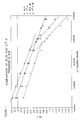
- Figure 1 is a plot of the log of the apparent initial rate constant vs. the reciprocal of the absolute temperature for two concentrations of mutant C s 4 and wild-type enzyme. While the slope of the wild-type enzyme is linear over the entire temperature range, the mutant clearly shows a decrease in rate below 18°C. Furthermore, above 20°C the slope for both the wild-type and mutant enzymes are identical. The data clearly indicates that a C s 4 enzyme has been produced which is equal in activity to wild-type at production temperatures but reduced in activity at storage temperatures.
Landscapes
- Life Sciences & Earth Sciences (AREA)
- Health & Medical Sciences (AREA)
- Chemical & Material Sciences (AREA)
- Engineering & Computer Science (AREA)
- Genetics & Genomics (AREA)
- Organic Chemistry (AREA)
- Wood Science & Technology (AREA)
- Bioinformatics & Cheminformatics (AREA)
- Zoology (AREA)
- Biotechnology (AREA)
- General Engineering & Computer Science (AREA)
- Biomedical Technology (AREA)
- Microbiology (AREA)
- Biochemistry (AREA)
- General Health & Medical Sciences (AREA)
- Molecular Biology (AREA)
- Medicinal Chemistry (AREA)
- Virology (AREA)
- Physics & Mathematics (AREA)
- Biophysics (AREA)
- Tropical Medicine & Parasitology (AREA)
- Plant Pathology (AREA)
- Food Science & Technology (AREA)
- Polymers & Plastics (AREA)
- Dairy Products (AREA)
- Micro-Organisms Or Cultivation Processes Thereof (AREA)
- General Preparation And Processing Of Foods (AREA)
- Seeds, Soups, And Other Foods (AREA)
- Enzymes And Modification Thereof (AREA)
Abstract
Description
- The present invention relates to novel methods of making a fermented food product, especially fermented dairy products. Further, the invention relates to novel mutant strains of Lactobacillus bulgaricus (L. bulgaricus) and methods of making them which are useful in the preparation of yogurt and other fermented food products. The invention also relates to novel mutant genes and organisms transformed with such genes.
- A variety of food products are available worldwide which depend on active bacterial cultures in the final form of the food product for flavor, preservation of quality, claimed health benefits and/or pH. Examples are fermented vegetable products, such as sauerkraut from cabbage and pickles from cucumbers; fermented fish products such as fish paste or burongdalog; fermented seeds such as coffee or cocoa beans; fermented starch-rich food products; fermented meat products, fermented cassava; or fermented fruit juices. Particularly important are fermented dairy products such as yogurt, sour cream, creme fraché; buttermilk, and the like. These fermented dairy products depend, to a certain degree, on organisms which metabolize lactose to produce flavor and lower the pH to preserve the food. These products can be especially important those people with lactose intolerance; i.e., the inability or difficulty in metabolizing lactose.
- Yogurt is an extremely popular fermented dairy product. Microbiologically, yogurt may be defined in the United States and many other countries as the end product of a controlled fermentation of milk with a mixture of Streptococcus thermophilus (S. thermophilus) and L. bulgaricus. The fermentation is carried out within a temperature range of 35 - 45°C with about 42 - 45°C being preferred. Early in the incubation, S. thermophilus grows rapidly dominating the fermentation and lowering the oxidation-reduction potential of the system. L. bulgaricus grows slowly during the early fermentation but liberates sufficient amounts of peptides and amino acids to stimulate growth of S. thermophilus which results in moderate production of lactic acid, acetic acid, acetaldehyde, diacetyl and formic acid. When the pH of the fermentation mix is sufficiently lowered to around 5.5, the rapid growth of S. thermophilus is arrested and the growth of L. bulgaricus is favored. Depletion of oxygen from the system and the availability of formate is believed to stimulate such growth. The major portion of lactic acid and acetaldehyde necessary for the characteristic flavor of yogurt is contributed by the L. bulgaricus which has been aided by the initial activity of the S. thermophilus component. When the pH drops further to about 5.0 or less the product is cooled to about 10°C or less for storage. Although the rate of production of lactic acid is diminished under the normal storage conditions of yogurt (4 - 10°C), production of lactic acid continues to such a degree that the yogurt product is, depending on strain or process, rendered unpalatable (sour) after 3 or 4 weeks. Attempts to further slow or arrest the production of lactic acid during storage while maintaining viable organisms have been largely unsuccessful. Preservatives have been tried but have been undesirable side effect of affecting the viability or killing the yogurt organism. Attempts at mutating the organism directly; e.g., through chemical or other mutagenesis techniques have not only produced organisms with decreased lactic acid production at lower temperature and pH, but organisms also showing a proportional decrease in lactic acid production at fermentation temperatures and a decreased growth, thus producing an unsatisfactory yogurt product or products which are limited to the strain which has been mutated (with an unknown effect), which can not be easily transferred to new starters (see U.S. Patent 4,734,361 to Meiji Milk Products wherein a method is described for isolating a naturally-occuring varient of Lactobacillus bulgaricus). This temperature-sensitive organism produces less than .1% lactic acid at 10°C for 7 days. This method is dependent on a strain being present which matches the description of the invention, and, to date, only one such natural isolate is known to exist, 0LL 1074. Currently no cultures, especially of L. bulgaricus, are available which combine the desired needs of texture and taste while maintaining the extended lowered metabolism under storage temperature, have the site of mutation defined and are transferable to new starters.
- It would be useful to construct a L. bulgaricus which exhibited both decreased production of lactic acid at the storage temperature of yogurt yet still retained acceptable levels of activity under production conditions of yogurt where the mutation is defined and which could be transferable to new starters starting from any single strain of L. bulgaricus and remains viable in the yogurt product. It would also be useful to have such organism produce less acid at temperatures below 20°C or at pH 5.5 or lower in order to give more flexibility during production and handling after production. Furthermore, it would aid in the manufacture of fermented products to have the fermentation slow or stop after reaching a certain range of temperature and/or pH rather than using a quick refrigeration to decrease the rate of acid formation.
- It is an object of this invention to provide novel organisms and methods for obtaining them where such organisms are for use in fermented food products where the organism exhibits decreased metabolism beyond what is normal under storage temperatures of the fermented food products, yet retains its activity and viability under production conditions of the fermented food product.
- It is further an object of the invention to provide novel fermented food products containing viable organisms which, under normal storage conditions of the fermented food products, develop excess acidity or off flavors more slowly than previously fermented food products containing viable organisms.
- It is also an object of the invention to provide methods of producing fermented food products.
- It is also an object of this invention to provide novel organisms which exhibit decreased production of lactic acid at the storage conditions of yogurt or other food products, yet essentially the novel organisms retain their activity and viability under production and storage conditions. It is a further object of this invention to provide a method of obtaining such organisms.
- Even further it is an object of the invention to provide a method of producing yogurt or other food products which simplifies both the processing and handling of the product. It is yet a further object of this invention to provide yogurt or other food products containing viable organisms which are storage stable below 20°C and/or at pH 5.5.
- In one aspect the invention provides a method of mutating an organism for use in making a fermented food product which comprises:
- a) selecting an organism suitable for use in making a fermented food product;
- b) removing the gene which codes for an enzyme involved in the metabolism of a substrate to a desired product from the organism of step a);
- c) inserting the gene of b) in a vector;
- d) performing mutations on a plurality of vectors of step c);
- e) selecting those vectors of step d) in which said gene is mutated so that when a selected vector is used to transform an organism, expression of the selected gene produces a variant enzyme which exhibits decreased activity at a rate of at least 20% less than the enzyme produced by the organism found in nature from which the variant enzyme is derived, under the storage conditions of the fermented food product; but where the variant enzyme retains at least 90% of its activity at the production conditions of the fermented food products when compared with the enzyme produced by the organism found in nature from which the variant enzyme is derived;
- f) inserting and expressing a selected gene coding for the variant enzyme of step (e) into an organism suitable for the production of the fermented food product; and
- g) culturing the organism into which the gene has been inserted.
- Preferably the organism used in step (e) is one from which the corresponding native gene sequence has been removed.
- In a second aspect the invention provides a method for making a fermented food product comprising performing the method of the first aspect, and wherein said step of culturing the organism employs as a substrate source an unfermented food product selected so that the culturing leads to formation of the desired fermented food product. The food product may be a fermented dairy product, particularly yogurt.
- In a third aspect the invention provides a method of making a gene coding for a variant of an enzyme, comprising performing steps (a) to (e) as set forth above.
- In a fourth aspect the invention provides a method of making a plasmid containing a gene coding for a variant of an enzyme, comprising performing steps (a) to (e) as set forth above, wherein the vector is a plasmid.
- In a fifth aspect the invention provides a fermented food comprising a viable lactic acid producing organism, said organism having inserted into the genome or inserted by use of a replicable plasmid, a gene encoding for the production of an enzyme active in the lactose to lactic acid pathway of the organism and having a mutation in the amino acid sequence, wherein the production rate of lactic acid by the enzyme in the organism is at least 90% of that of an enzyme without the mutation under the fermentation conditions of the food, and the production rate of lactic acid by the enzyme in the organism is at least 20% less than that of an enzyme without the mutation when the fermented food is at a temperature of 20° or less or a pH of 5.5 or less.
- In a sixth aspect the invention provides a fermented dairy product produced by means of a variant L. bulgaricus organism which produces a non-naturally occurring variant enzyme active in the lactose to lactic acid pathway of the organism and differing from the wild-type enzyme in that at a temperature of 20° or less or a pH of 5.5 or less the activity of the enzym is reduced so that lactic acid production is at least 20% less than would be the case for a wild-type organism; whereas under the production conditions of the food, the rate of production of lactic acid is at least 90% of that of a wild-type organism; said dairy product containing said variant organism in viable state.
- Fermented food products are those foods in which an active bacterial culture remains in a food and wherein the active bacterial culture has metabolized a specific substrate to produce a desired taste, pH or lowered pH to preserve the food. As discussed above, such foods and the organisms to produce them, are widely know, for example: vegetable products may use Pseudomonas, Flavobacterium, Aerobacter, Bacillus, Leuconostoc, and Lactobacillus; fermented fish products may use Leuconostoc mesenteroides, Lactobacillus brevis, Pediococcus cerevisea, Lactobacillus plantarium, and Bacillus species; fermented seed may use Bacillus natto; fermented starch-rich materials may use Corynebacterium species; fermented meat products may use Lactobacillus species; fermented melons may use Corynebacterium species, Geotrichum candidum, Leuconistoc species; fermented fruit juices may use Zymononas species; soy sauce uses Asperqillus species; and wine and beer use Saacharomyces species. As other species of bacteria, yeast and fungi are developed for food, it is clear that they would be covered also and are contemplated within the scope of the invention. A preferred fermented food product is the fermented dairy products, especially yogurt. The desired substrate as used herein is the substrate the selected organism will metabolize in the metabolic pathway of the final compund which produces a desired taste or pH. So, for example, when using a L. bulgaricus organism to produce yogurt, the desired substrate is lactose or an intermediate which is metabolized to lactic acid.
- As used herein the normal storage conditions refers to the physical conditions such as pH or temperature under which one would hold the food while it was awaiting consumption.
- Previous attempts to affect the storage performance of organisms for making fermented food products, such as L. bulgaricus, without affecting the fermented food-making capabilities have been largely unsuccessful. The effects of classical mutation techniques, e.g., chemical, u.v., on the metabolic pathway have been global; i.e., a decrease in the metabolic rate at storage conditions was accompanied by an unacceptable change in metabolic rate at production conditions or, most importantly, they have been undefined or nontransferable to other starter strains of L. bulgaricus. It has been discovered unexpectedly that when a gene coding for an enzyme in the metabolic pathway is mutated in vitro; i.e., the gene removed from the organism; that chemical mutation of the gene will produce a percentage of variants which exhibit at least a 20% decrease in metabolism below 20°C and/or pH 5.5 or less, yet retain at least at least 90% activity at the production conditions of the fermented food products when expressed in a transformed organism. In a preferred environment the mutants selected have essentially no change in activity of the modified enzyme. The measurement of change is against the original form of the enzyme found in nature. It is, of course, possible to achieve such mutations after several successive generations of gene mutations so that a direct comparison of metabolic rates of successive mutants does not appear to produce the desired change. The change in the desired mutant would still, however, be compared against the form of the organism found in nature. The mutated gene may then be used to transform another similar organism (or other desired organism) to achieve the organism of the invention using methods known in the art.
- As used herein L. bulgaricus organisms suitable for making yogurt or other fermented dairy products are widely utilized naturallyoccuring food grade organisms useful in various commercial applications. As described above, L. bulgaricus is used as one of the organisms in the production of yogurt or other fermented dairy products. L.bulgaricus produces a number of enzymes which are responsible for the metabolism of lactose to lactic acid. Most notable is a permease which is responsible for the transport of lactose into the L. bulgaricus organism and β-galactosidase which metabolizes lactose directly to glucose and galactose. Glucose is further metabolized and other enzymes in this pathway include glucokinase, phosphoglucose isomerase, phosphofructokinase, aldolase, triose phosphate isomerase, phosphoglycerate kinase, phosphoglyceromutase, enolase, pyruvate kinase, and lactate dehydrogenase (Henry R. Mahler and Eugene Cordes, In Biological Chemistry, Harper & Row, New York, New York, 1966). In other organisms, other pathways such as the pentose phosphate or Entner-Doudoroff pathway, among others could be used (Gerhard Gottschalk, "In Bacterial Metabolism", 1979). Permease and β-galactosidase are especially interesting because in the lactose to lactic acid pathway; they are the only enzymes in this metabolic pathway, which do not appear to be substantially involved in some other metabolic function.
- Preferred genes in the lactic acid pathway for mutation are those coding for lactose permease, See The Lactose Transport System of Streptococcus thermophilus: A Hybrid Protein with Homology to the Melibiose Carrier and Enzyme III of PEP-Dependant Phosphotransferase Systems from Genencor attached, B. Poolman, T. Royer, S. Mainzer and B. Schmidt., J. of Bateriol. (in press), Molec. Gen. Genet., pp. 159, 239-248 (1978); Nature, Vol. 283, pp. 541 - 545, February 7, 1980;
and β-galactosidase (See The Cloning, Expression and Sequencing of the Beta-Galactosidase Gene From Lactobacillus Bulgaricus Into E. Coli, from Genencor presented at the Second Symposium on Lactic Acid Bacteria on September 22 - 25, 1987, Wageningen, The Netherlands by Schmidt, B. et al., J. of Bacteriol. (in press). As used in the specification and claims, vector relates to a gene sequence which includes at least the gene coding for the enzyme of interest. This form could be linear DNA, a plasmid of some type, or the like. The vector may be of the replicable type, a type which is incorporated into the chromosome for replication or a gene sequence which must be combined with some other gene sequence or shuttle mechanism for incorporation into an organism in a replicable form. - When producing the mutant organism of the invention, the vector may be mutated in vitro by any number of chemical mutagens. For instance, the single and double stranded chemical mutagenesis procedures illustrated in the examples. Other methods of mutation include alpha thiol misincorporation, cassette mutagenesis or other methods of site specific mutagenesis. Applicant has noted that approximately 1 in 1000 - 5000 transformants appear to achieve the desired attributes of the invention. The results are reproducible and just a matter of screening a number of mutants. In order to test such a large number of variants in a reasonable time period, the mutated gene can be reinserted in a replicable and expressible form, either in a plasmid or integrated into the chromosome of an organism and tested. One satisfactory preferred method (see also examples) involves construction of a plasmid using the β-galactosidase gene, performing the mutagenesis in vitro on the plasmid and then transforming a relatively easily replicable organism like E. coli (or L. bulgaricus or L. casei). The transformed organisms can be screened to see if reaction conditions are such that they meet the desired conditions. Where the clone normally produces a similar enzyme to that being expressed, it is desirable that that gene for the similar enzyme be removed from the host. In this example, the naturally occurring β-galactosidase gene could be removed from the host L. bulgaricus.
- Primarily, there will be two types of preferred mutants screened for: temperature sensitive conditional (Cs) and pH sensitive conditional (PHs), although other parameters are possible. Some combination of types of mutants may obviously also be desirable. For example, a temperature conditional mutant for use in the production of yogurt will be one which exhibits a decrease in metabolism of lactose below 20°C, yet only exhibit a 10% or less decrease in activity at processing temperature; i.e. 35°C - 45°C. Likewise, a pH conditional mutant for use in the production of yogurt will exhibit a decrease in activity of at least 20% at pH's of 5.5 or less and retain at least at least 90% activity at the beginning processing pH of the fermented food product compared to wild type enzymes.
- Once the proper gene sequence is selected from the variant enzymes, it can be reincorporated into the organism of choice in such a manner that it replicates; i.e., plasmid or homologous genome integration, preferably, as suggested above, with the corresponding native gene sequence previously removed. The transformed organism of the invention can then be used to produce a fermented food product with improved shelf life using conventional techniques (without introducing any foreign DNA since only the mutated enzyme will be replaced in the organism). In a preferred embodiment the fermented food product made will have a longer shelf life, better taste and texture than the fermented food product made without this invention after extended storage.
- The following examples are representative of the invention. One skilled in the art will see that the success rate is such that the experiments are easily reproduced and as such, no deposits have made of organisms or genes. One skilled in the art could devise other screens or use other direct mutagenesis techniques without undue experimentation.
- Plasmid Construction. Two BamHI fragments were deleted from the pKK223-3 vector (Pharmacia Molecular Biologicals, Piscataway, New Jersey 08854) that carries the L. bulgaricus β-galactosidase gene on the 7 kb insert. The resulting plasmid has the tac promoter (deBoer, H.A. et. al., PNAS, Vol. No. 78, pg. 21, (1983)) removed from the pKK223-3 vector and the β-galactosidase gene is now on a 4.3 kb HindIII-BamHI fragment.
Mutagenesis. Plasmid DNA (∼5 ug) in 10mM Tris-HCl and 1 mM Na₂EDTA (pH 7.6) was added to 7 ul of 1 M potassium phosphate (pH 5.2), 20 ul 3 M sodium acetate (pH 4.5) and water for a final volume of 0.1 ml. Then 0.1 ml of 2 M hydroxylamine (HA) in ethylene glycol was added to the DNA solution. The reaction was incubated at 65 or 75°C with 20 ul aliquots removed at various times from 0 to 10 minutes. The DNA in the aliquots was immediately precipitated with 2 ul 3 M sodium acetate and 50 ul ethanol. The dried precipitate was dissolved in 30 ul 10 mM Tris-HCl and 1mM Na₂EDTA (pH 7.6) and used to transform E. coli JM105, JM108 and JM109 cells (Maniatis, T.; Fritsch, E.F.; Sambrook, J., "Transformation Protocol", In Molecular Cloning: A Laboratory Manual, p. 250, 1983). The transformation mix was plated on Luria Agar plates containing X-gal (5-Bromo-4-chloro-3 indoyl-B-D galactopyranoside, Sigma Chemical Co., St. Louis, Missouri)and 50 ug/ml carbenicillin. Mutants were screened as discussed below. - Plasmid Construction. The β-galactosidase gene on the 4.3 kb HindIII-BamHI fragment was cloned into pUC118. Single-stranded DNA was isolated from this clone after the addition of M13 helper phage (the pUC118 vector has a 470 bp M13 replicon inserted into the NdeI site of pUC18). Unique PstI and XbaI sites were introduced at nucleotides 23 and 441, respectively, using oligonucleotide site directed mutagenesis. Single-stranded DNA from this mutant was used in the chemical mutagenesis described below.
Mutagensis. First, ethylene glycol, 50 ul, was added to 150 ul of 1M sodium acetate containing 1M methoxylamine hydrochloride (MA) (pH 5). Then single-stranded DNA in 10 ul (∼5ug) was added and incubated in the dark at 50°C for 45, 60, 90 or 120 minutes. The reaction was stopped by ethanol precipitation and JM105 cells transformed and plated as described above. The transformation mix was plated on X-gal-containing medium and screened as described below. - A nitrocellulose filter is placed on a Luria Agar carbenicillin plate. The transformed E. coli are spread on top and colonies grown overnight at 37°C. Two nitrocellulose replica filters are made from this master. One filter is layered on an X-gal plate at 37°C and β-galactosidase activity is detected by the appearance of blue colonies. The other filter is layered on a Luria Agar carbenicillin plate, grown for about 20 hours at 37°C then placed at 4°C overnight. The filter is lifted off the plate and placed on an X-gal plate at 4°C overnight. Colonies of the invention are those that are blue at 37°C but are white at 4°C.
- Starting with the Cs4 variant phenotype which is blue on 37°C X-gal plates and using MA as a mutagen, additional mutants were generated through a second round of mutagenesis.
- Approximately 12,000 colonies have been screened using the double- and single-stranded mutagenesis methods. In a typical experiment, 0.1 - 0.2% of the total colonies are white at 37°C and 2-4% are white at 4°C. Colonies that were blue at 37°C and white at 4°C were double checked for the temperature conditional phenotype by replating at the high and low temperatures. Plasmid DNA was isolated from these colonies and used to transform JM105 or JM109 E. coli cells and a consistent temperature conditional β-galactosidase activity was conferred by the plasmids. To localize the region of the mutation, various restriction fragments of the mutant gene were exchanged for wild type fragments. A characterization of 3 of the mutants is given below:
CS1 and CS4: Wild type plasmids and plasmids isolated from this mutant were digested with NcoI and then the 1282 bp NcoI fragments and the vector fragments (carrying the rest of the β-galactosidase gene) were isolated from polyacylamide gels. The mutant 1282 bp fragment was ligated into the wild type vector and the 1282 bp wild type fragment was ligated into the mutant vector. The construction with the 1282 bp NC0I mutant restriction fragment was temperature conditional while the other construction gave a wild type phenotype. Thus, the temperature conditional mutation lies between nucleotides 792 and 2074 (the NcoI fragment) in the structural gene of L. bulgaricus β-galactosidase in this mutant. - CS2: The structural gene for β-galactosidase from wild type and mutant plasmids were removed on a BamHI-XbaI fragment. The wild type structural gene was hooked up to the mutant promoter and the mutant structural gene was hooked up to the wild type promoter. Only the construction containing the mutant structural gene had a temperature conditional phenotype. Thus, the mutation is in the structural part of the gene and in the promoter region in this mutant.
- CS3: By using identical methods as described for CS2, the mutation in this mutant was also localized in the structural gene and not in the promoter region.
- The following table lists the results of the 27 β-galactosidase mutants obtained in the screen:


- The colonies from all the temperature conditional mutants listed above do turn light to medium blue on X-gal plates after 1-3 weeks at 4°C.
- Similarly, the same mutations may be screened for pH sensitivity as follows:
Since the controlled fermentation is normally stopped at pH 5.5 or less, it was felt that mutants which began to exhibit the desirable characteristics (decreased rate of acidification) at about pH 5.5 - 6.0 would be useful under production and storage conditions of pH of about 4.5 and below. - A nitrocellulose filter is placed on a Luria Agar carbenicillin plate. The transformed E. coli are spread on top and colonies grown overnight at 37°C. Two nitrocellulose replica filters are made from this master. The cells are lysed by 3 minute chloroform exposure. The control filter is placed in 25ml of a 20mM MgSO₄ pH7, 10mM NaH₂PO₄, 50mM NaOAc buffer for 15 minutes and transferred to the same buffer containing 0.2 ml 2% X-gal. The other filter is placed in a low pH (5-5.5) 100mM NaH₂PO₄, 2mM MgSO₄, 50mM NaOAc buffer for 15 minutes. Then the filter is transferred to a low pH buffer containing X-gal. A positive colony is one that is blue at pH 7 and white at pH 4.5 or 5.0.
- Deletion of the host β-galactosidase (or permease) and reincorporation of the mutant gene back into L. bulgaricus can then be done by one skilled in the art. For example, the methods in Journal of Bacteriology, May 1984, pp. 411-418 and Journal of Baceriology, November 1988, pp. 5102 - 5109 would generate the necessary reincorporation mutant L. bulgaricus organisms.


- Mutant and wild-type enzyme could be purified from E. coli by the following protocol:

Enzyme purified by this procedure was measured for activity at a variety of temperatures from 10 - 40°C. Figure 1 is a plot of the log of the apparent initial rate constant vs. the reciprocal of the absolute temperature for two concentrations of mutant Cs4 and wild-type enzyme. While the slope of the wild-type enzyme is linear over the entire temperature range, the mutant clearly shows a decrease in rate below 18°C. Furthermore, above 20°C the slope for both the wild-type and mutant enzymes are identical. The data clearly indicates that a Cs4 enzyme has been produced which is equal in activity to wild-type at production temperatures but reduced in activity at storage temperatures.
Claims (20)
- A method of mutating an organism for use in making a fermented food product which comprises:a) selecting an organism suitable for use in making a fermented food product;b) removing the gene which codes for an enzyme involved in the metabolism of a substrate to a desired product from the organism of step a);c) inserting the gene of b) in a vector;d) performing mutations on a plurality of vectors of step c);e) selecting those vectors of step d) in which said gene is mutated so that when a selected vector is used to transform an organism, expression of the selected gene produces a variant enzyme which exhibits decreased activity at a rate of at least 20% less than the enzyme produced by the organism found in nature from which the variant enzyme is derived, under the storage conditions of the fermented food product; but where the variant enzyme retains at least 90% of its activity at the production conditions of the fermented food products when compared with the enzyme produced by the organism found in nature from which the variant enzyme is derived;f) inserting and expressing a selected gene coding for the variant enzyme of step (e) into an organism suitable for the production of the fermented food product; andg) culturing the organism into which the gene has been inserted.
- A method according to claim 1 wherein the organism is a lactic acid producing organism.
- A method according to claim 2 wherein said enzyme is active in a lactose-to-lactic acid pathway of the organism.
- A method according to any preceding claim wherein said decreased activity is exhibited in an organism containing the enzyme when at a temperature of below 20°C and/or at a pH ≦ 5.5.
- A method according to any preceding claim wherein the enzyme is a β-galactosidase or a permease.
- A method according to any preceding claim wherein the organism is L. bulgaricus.
- A method according to any preceding claim wherein in step (f) the gene is inserted in a plasmid or with genomic integration, whereby it is replicable.
- A method according to any preceding claim wherein step (d) employs a mutagenesis process selected from single stranded chemical mutagenesis, double stranded chemical mutagenesis, α-thiol misincorporation or cassette mutagenesis.
- A method according to any preceding claim wherein in step (f) the selected gene is inserted into an organism from which a corresponding native gene sequence has been removed.
- A method for making a fermented food product comprising performing the method of any preceding claim, wherein said step of culturing the organism employs as a substrate source an unfermented food product selected so that the culturing leads to formation of the desired fermented food product.
- A method according to claim 10 wherein the fermented food product is a fermented dairy product.
- A method according to claim 11 wherein the fermented food product is yogurt.
- A method according to claim 10, 11 or 12 wherein said organism which is cultured to produce the food product is L. bulgaricus.
- A method of making a gene coding for a variant of an enzyme, comprising performing steps (a) to (e) as set forth in claim 1.
- A method of making a plasmid containing a gene coding for a variant of an enzyme, comprising performing steps (a) to (e) as set forth in claim 1, wherein the vector is a plasmid.
- A method of making a variant of an enzyme, comprising performing the method of claim 1 and then isolating the enzyme from the organism.
- A method according to claim 14, 15 or 16 wherein the enzyme is β-galactosidase or permease.
- A fermented food comprising a viable lactic acid producing organism, said organism having inserted into the genome or inserted by use of a replicable plasmid, a gene encoding for the production of an enzyme active in the lactose to lactic acid pathway of the organism and having a mutation in the amino acid sequence, wherein the production rate of lactic acid by the enzyme in the organism is at least 90% of that of an enzyme without the mutation under the fermentation conditions of the food, and the production rate of lactic acid by the enzyme in the organism is at least 20% less than that of an enzyme without the mutation when the fermented food is at a temperature of 20° or less or a pH of 5.5 or less.
- A fermented food according to claim 18 which is a fermented dairy product.
- A fermented dairy product produced by means of a variant L. bulgaricus organism which produces a nonnaturally occurring variant enzyme active in the lactose to lactic acid pathway of the organism and differing from the wild-type enzyme in that at a temperature of 20° or less or a pH of 5.5 or less the activity of the enzyme is reduced so that lactic acid production is at least 20% less than would be the case for a wild-type organism; whereas under the production conditions of the food, the rate of production of lactic acid is at least 90% of that of a wild-type organism; said dairy product containing said variant organism in viable state.
Priority Applications (1)
| Application Number | Priority Date | Filing Date | Title |
|---|---|---|---|
| AT9090901275T ATE105143T1 (en) | 1988-11-21 | 1989-11-21 | MANUFACTURE OF FERMENTED FOOD PRODUCTS. |
Applications Claiming Priority (3)
| Application Number | Priority Date | Filing Date | Title |
|---|---|---|---|
| US27458288A | 1988-11-21 | 1988-11-21 | |
| US274582 | 1988-11-21 | ||
| PCT/US1989/005352 WO1990005459A1 (en) | 1988-11-21 | 1989-11-21 | Production of fermented food products |
Publications (2)
| Publication Number | Publication Date |
|---|---|
| EP0402450A1 EP0402450A1 (en) | 1990-12-19 |
| EP0402450B1 true EP0402450B1 (en) | 1994-05-04 |
Family
ID=23048789
Family Applications (1)
| Application Number | Title | Priority Date | Filing Date |
|---|---|---|---|
| EP90901275A Revoked EP0402450B1 (en) | 1988-11-21 | 1989-11-21 | Production of fermented food products |
Country Status (14)
| Country | Link |
|---|---|
| EP (1) | EP0402450B1 (en) |
| CN (1) | CN1054031C (en) |
| AR (1) | AR245223A1 (en) |
| AU (1) | AU622968B2 (en) |
| CA (1) | CA2002796C (en) |
| DE (1) | DE68915160T2 (en) |
| ES (1) | ES2055899T3 (en) |
| GR (1) | GR1000585B (en) |
| HU (1) | HU214779B (en) |
| MA (1) | MA22666A1 (en) |
| MX (1) | MX171939B (en) |
| MY (1) | MY106175A (en) |
| NZ (1) | NZ231454A (en) |
| WO (1) | WO1990005459A1 (en) |
Families Citing this family (8)
| Publication number | Priority date | Publication date | Assignee | Title |
|---|---|---|---|---|
| DE69205070T2 (en) * | 1991-06-14 | 1996-02-29 | Nestle Sa | Yogurt containing live microorganisms. |
| LT4245B (en) | 1996-03-01 | 1997-11-25 | Akcine Bendrove Kauno Pienas | Process for preparing yoghurt |
| FR2778921B1 (en) * | 1998-05-22 | 2001-05-11 | Gervais Danone Sa | MUTANT STRAINS OF LACTOBACILLUS BULGARICUS WITHOUT BETA-GALACTOSIDASE ACTIVITY |
| AU2001262250A1 (en) * | 2000-05-15 | 2001-11-26 | Societe Des Produits Nestle S.A. | Probiotic lactic acid bacteria, unable to utilize lactose |
| MY143693A (en) | 2004-03-24 | 2011-06-30 | Nestec Sa | Shelf stable product wih living micro-organisms |
| TW200719833A (en) * | 2005-03-24 | 2007-06-01 | Suntory Ltd | Novel microorganism and method of processing fresh coffee beans by using the same |
| WO2016177698A1 (en) | 2015-05-07 | 2016-11-10 | Compagnie Gervais Danone | Manufacture of strained fermented dairy products |
| US12441977B2 (en) | 2019-03-14 | 2025-10-14 | International N&H Denmark Aps | Lactic acid bacteria |
Family Cites Families (1)
| Publication number | Priority date | Publication date | Assignee | Title |
|---|---|---|---|---|
| US4734361A (en) * | 1985-06-26 | 1988-03-29 | Meiji Milk Products Co., Ltd. | Low temperature-sensitive variant of lactobacillus bulgaricus and a selection method therefor |
-
1989
- 1989-11-10 CA CA002002796A patent/CA2002796C/en not_active Expired - Fee Related
- 1989-11-17 MX MX1841089A patent/MX171939B/en unknown
- 1989-11-18 MY MYPI89001606A patent/MY106175A/en unknown
- 1989-11-20 AR AR89315490A patent/AR245223A1/en active
- 1989-11-20 GR GR890100766A patent/GR1000585B/en not_active IP Right Cessation
- 1989-11-20 MA MA21936A patent/MA22666A1/en unknown
- 1989-11-20 NZ NZ231454A patent/NZ231454A/en unknown
- 1989-11-21 DE DE68915160T patent/DE68915160T2/en not_active Revoked
- 1989-11-21 AU AU47434/90A patent/AU622968B2/en not_active Ceased
- 1989-11-21 HU HU90498A patent/HU214779B/en not_active IP Right Cessation
- 1989-11-21 CN CN89108729A patent/CN1054031C/en not_active Expired - Fee Related
- 1989-11-21 ES ES90901275T patent/ES2055899T3/en not_active Expired - Lifetime
- 1989-11-21 WO PCT/US1989/005352 patent/WO1990005459A1/en not_active Ceased
- 1989-11-21 EP EP90901275A patent/EP0402450B1/en not_active Revoked
Also Published As
| Publication number | Publication date |
|---|---|
| MY106175A (en) | 1995-03-31 |
| EP0402450A1 (en) | 1990-12-19 |
| DE68915160T2 (en) | 1994-10-27 |
| HU900498D0 (en) | 1991-10-28 |
| CN1054350A (en) | 1991-09-11 |
| CA2002796C (en) | 1999-02-16 |
| GR890100766A (en) | 1990-12-31 |
| AU622968B2 (en) | 1992-04-30 |
| AU4743490A (en) | 1990-06-12 |
| NZ231454A (en) | 1992-09-25 |
| HU214779B (en) | 1998-05-28 |
| MA22666A1 (en) | 1993-07-01 |
| WO1990005459A1 (en) | 1990-05-31 |
| ES2055899T3 (en) | 1994-09-01 |
| CN1054031C (en) | 2000-07-05 |
| AR245223A1 (en) | 1993-12-30 |
| HUT57014A (en) | 1991-11-28 |
| GR1000585B (en) | 1992-08-26 |
| MX171939B (en) | 1993-11-24 |
| DE68915160D1 (en) | 1994-06-09 |
| CA2002796A1 (en) | 1990-05-21 |
Similar Documents
| Publication | Publication Date | Title |
|---|---|---|
| Harris et al. | Novel paired starter culture system for sauerkraut, consisting of a nisin-resistant Leuconostoc mesenteroides strain and a nisin-producing Lactococcus lactis strain | |
| Lamoureux et al. | Production of oligosaccharides in yogurt containing bifidobacteria and yogurt cultures | |
| CA2070591C (en) | Yogourt | |
| EP3599877B1 (en) | Lactic acid bacteria composition for preparing fermented food products with increased natural sweetness and flavor | |
| MX2008015834A (en) | Low post-acidifying lactic acid bacteria. | |
| AU754472B2 (en) | Novel genetically modified lactic acid bacteria having modified diacetyl reductase activities | |
| EA028250B1 (en) | NOVEL LACTIC ACID BACTERIUM HAVING SUPERTEXTURIZING PROPERTY WITH MUTATIONS IN THE GalK GENE AND METHODS FOR MANUFACTURING SAME | |
| JP3016218B2 (en) | Lactobacillus bulgaricus having reduced acid production and / or improved aroma and flavor development, and a food composition comprising the lactobacillus bulgaricus | |
| EP0928333B1 (en) | Metabolically engineered lactic acid bacteria and their use | |
| CZ20004359A3 (en) | Mutant strain Lactobacillus bulgaricus | |
| US20260125635A1 (en) | New lactic acid bacteria | |
| AU622968B2 (en) | Production of fermented food products | |
| JP4931914B2 (en) | Mutants of lactic acid bacteria with non-phosphorylated lactose permease | |
| AU753558B2 (en) | Production of L(+)-Lactate | |
| US5639648A (en) | Production of fermented food | |
| US5827552A (en) | Production of fermented food products | |
| US6413765B1 (en) | Genetically modified lactic acid bacteria having modified diacetyl reductase activities | |
| AU783660B2 (en) | Lactic acid bacteria transformed to be provided with respiratory metabolism, and ferments comprising said lactic acid bacteria | |
| KR900004641B1 (en) | Preparation method of lactic acid bacteria beverage using rice | |
| JP2005211068A (en) | Bacillus natto with high glutaminate polypeptidase activity and fermented soybean improved in threading property | |
| JP2005185270A (en) | Levansucrase activity-defective bacillus natto and high soybean oligosaccharide-containing fermented soybean | |
| JPH0970292A (en) | Method for introducing foreign gene into food microorganism chromosome, vector for introducing foreign gene, and transformant in which foreign gene is introduced | |
| MXPA98003427A (en) | Production of l (+) - lact | |
| JPH1066583A (en) | Novel gene and novel yeast containing the gene | |
| UA113270C2 (en) | Lactic Acid Bacterium STREPTOCOCCUS THERMOPHILUS WITH MODIFIED GALACTOCINASE EXPRESSION FOR TESTING OF FOOD PRODUCTS FOR THE EXPEDITION OF OXIDEXPULSE |
Legal Events
| Date | Code | Title | Description |
|---|---|---|---|
| PUAI | Public reference made under article 153(3) epc to a published international application that has entered the european phase |
Free format text: ORIGINAL CODE: 0009012 |
|
| 17P | Request for examination filed |
Effective date: 19900821 |
|
| AK | Designated contracting states |
Kind code of ref document: A1 Designated state(s): AT BE CH DE ES FR GB IT LI LU NL SE |
|
| RBV | Designated contracting states (corrected) |
Designated state(s): AT BE CH DE ES FR GB IT LI LU NL SE |
|
| 17Q | First examination report despatched |
Effective date: 19920304 |
|
| GRAA | (expected) grant |
Free format text: ORIGINAL CODE: 0009210 |
|
| AK | Designated contracting states |
Kind code of ref document: B1 Designated state(s): AT BE CH DE ES FR GB IT LI LU NL SE |
|
| REF | Corresponds to: |
Ref document number: 105143 Country of ref document: AT Date of ref document: 19940515 Kind code of ref document: T |
|
| REF | Corresponds to: |
Ref document number: 68915160 Country of ref document: DE Date of ref document: 19940609 |
|
| ITF | It: translation for a ep patent filed | ||
| ET | Fr: translation filed | ||
| REG | Reference to a national code |
Ref country code: ES Ref legal event code: FG2A Ref document number: 2055899 Country of ref document: ES Kind code of ref document: T3 |
|
| EAL | Se: european patent in force in sweden |
Ref document number: 90901275.9 |
|
| PLBI | Opposition filed |
Free format text: ORIGINAL CODE: 0009260 |
|
| 26 | Opposition filed |
Opponent name: NESTEC S.A. Effective date: 19950130 Opponent name: STICHTING BEHARTIGING OCTROOIBELANGEN Effective date: 19950126 |
|
| NLR1 | Nl: opposition has been filed with the epo |
Opponent name: NESTEC S.A. Opponent name: STICHT. BEHARTIGING OCTROOIBELANGEN COOP. ZUIVELIN |
|
| PLBF | Reply of patent proprietor to notice(s) of opposition |
Free format text: ORIGINAL CODE: EPIDOS OBSO |
|
| PGFP | Annual fee paid to national office [announced via postgrant information from national office to epo] |
Ref country code: FR Payment date: 19961111 Year of fee payment: 8 |
|
| PGFP | Annual fee paid to national office [announced via postgrant information from national office to epo] |
Ref country code: GB Payment date: 19961112 Year of fee payment: 8 |
|
| PGFP | Annual fee paid to national office [announced via postgrant information from national office to epo] |
Ref country code: AT Payment date: 19961114 Year of fee payment: 8 |
|
| RDAH | Patent revoked |
Free format text: ORIGINAL CODE: EPIDOS REVO |
|
| PGFP | Annual fee paid to national office [announced via postgrant information from national office to epo] |
Ref country code: SE Payment date: 19961118 Year of fee payment: 8 |
|
| PGFP | Annual fee paid to national office [announced via postgrant information from national office to epo] |
Ref country code: NL Payment date: 19961128 Year of fee payment: 8 |
|
| PGFP | Annual fee paid to national office [announced via postgrant information from national office to epo] |
Ref country code: ES Payment date: 19961129 Year of fee payment: 8 |
|
| PGFP | Annual fee paid to national office [announced via postgrant information from national office to epo] |
Ref country code: LU Payment date: 19961201 Year of fee payment: 8 |
|
| PGFP | Annual fee paid to national office [announced via postgrant information from national office to epo] |
Ref country code: DE Payment date: 19961202 Year of fee payment: 8 |
|
| PGFP | Annual fee paid to national office [announced via postgrant information from national office to epo] |
Ref country code: CH Payment date: 19961209 Year of fee payment: 8 |
|
| PGFP | Annual fee paid to national office [announced via postgrant information from national office to epo] |
Ref country code: BE Payment date: 19970116 Year of fee payment: 8 |
|
| RDAG | Patent revoked |
Free format text: ORIGINAL CODE: 0009271 |
|
| STAA | Information on the status of an ep patent application or granted ep patent |
Free format text: STATUS: PATENT REVOKED |
|
| GBPR | Gb: patent revoked under art. 102 of the ep convention designating the uk as contracting state |
Free format text: 961128 |
|
| REG | Reference to a national code |
Ref country code: CH Ref legal event code: PL |
|
| 27W | Patent revoked |
Effective date: 19961128 |
|
| NLR2 | Nl: decision of opposition |