EP0400958B1 - Live vaccines - Google Patents
Live vaccines Download PDFInfo
- Publication number
- EP0400958B1 EP0400958B1 EP90305819A EP90305819A EP0400958B1 EP 0400958 B1 EP0400958 B1 EP 0400958B1 EP 90305819 A EP90305819 A EP 90305819A EP 90305819 A EP90305819 A EP 90305819A EP 0400958 B1 EP0400958 B1 EP 0400958B1
- Authority
- EP
- European Patent Office
- Prior art keywords
- ompr
- salmonella
- gene
- process according
- mutation
- Prior art date
- Legal status (The legal status is an assumption and is not a legal conclusion. Google has not performed a legal analysis and makes no representation as to the accuracy of the status listed.)
- Expired - Lifetime
Links
- 229960005486 vaccine Drugs 0.000 title claims abstract description 14
- 108090000623 proteins and genes Proteins 0.000 claims abstract description 42
- 241000894006 Bacteria Species 0.000 claims abstract description 25
- 238000000034 method Methods 0.000 claims abstract description 23
- 230000014509 gene expression Effects 0.000 claims abstract description 14
- 230000002238 attenuated effect Effects 0.000 claims description 24
- 230000035772 mutation Effects 0.000 claims description 22
- 101150091444 ompR gene Proteins 0.000 claims description 21
- 241000293871 Salmonella enterica subsp. enterica serovar Typhi Species 0.000 claims description 17
- 101150037081 aroA gene Proteins 0.000 claims description 15
- 241001167018 Aroa Species 0.000 claims description 12
- 101100491986 Emericella nidulans (strain FGSC A4 / ATCC 38163 / CBS 112.46 / NRRL 194 / M139) aromA gene Proteins 0.000 claims description 12
- 241000293869 Salmonella enterica subsp. enterica serovar Typhimurium Species 0.000 claims description 12
- 239000000427 antigen Substances 0.000 claims description 11
- 102000036639 antigens Human genes 0.000 claims description 11
- 108091007433 antigens Proteins 0.000 claims description 11
- 241000392514 Salmonella enterica subsp. enterica serovar Dublin Species 0.000 claims description 8
- 239000000203 mixture Substances 0.000 claims description 8
- 241000607142 Salmonella Species 0.000 claims description 6
- 238000009472 formulation Methods 0.000 claims description 6
- 244000052769 pathogen Species 0.000 claims description 6
- 101150040872 aroE gene Proteins 0.000 claims description 4
- 239000000546 pharmaceutical excipient Substances 0.000 claims description 4
- 241000588832 Bordetella pertussis Species 0.000 claims description 3
- 230000001717 pathogenic effect Effects 0.000 claims description 3
- 230000037361 pathway Effects 0.000 claims description 3
- 101100163490 Alkalihalobacillus halodurans (strain ATCC BAA-125 / DSM 18197 / FERM 7344 / JCM 9153 / C-125) aroA1 gene Proteins 0.000 claims description 2
- 101100216993 Bacillus subtilis (strain 168) aroD gene Proteins 0.000 claims description 2
- 241000588807 Bordetella Species 0.000 claims description 2
- 108090000790 Enzymes Proteins 0.000 claims description 2
- 102000004190 Enzymes Human genes 0.000 claims description 2
- 241000588722 Escherichia Species 0.000 claims description 2
- 241000606790 Haemophilus Species 0.000 claims description 2
- 241000606768 Haemophilus influenzae Species 0.000 claims description 2
- 241000588652 Neisseria gonorrhoeae Species 0.000 claims description 2
- 241001138501 Salmonella enterica Species 0.000 claims description 2
- 241000607598 Vibrio Species 0.000 claims description 2
- 101150042732 aroC gene Proteins 0.000 claims description 2
- 101150102858 aroD gene Proteins 0.000 claims description 2
- 101150108612 aroQ gene Proteins 0.000 claims description 2
- 229940047650 haemophilus influenzae Drugs 0.000 claims description 2
- 125000003118 aryl group Chemical group 0.000 claims 1
- 239000003814 drug Substances 0.000 abstract description 8
- 241000282414 Homo sapiens Species 0.000 abstract description 6
- 241001465754 Metazoa Species 0.000 abstract description 5
- 108010013381 Porins Proteins 0.000 abstract description 2
- 230000033228 biological regulation Effects 0.000 abstract description 2
- 101710116435 Outer membrane protein Proteins 0.000 abstract 1
- 102000007739 porin activity proteins Human genes 0.000 abstract 1
- 241000699670 Mus sp. Species 0.000 description 14
- 238000012217 deletion Methods 0.000 description 13
- 230000037430 deletion Effects 0.000 description 13
- 101150075472 ycf27 gene Proteins 0.000 description 12
- 239000004098 Tetracycline Substances 0.000 description 9
- 229960002180 tetracycline Drugs 0.000 description 9
- 229930101283 tetracycline Natural products 0.000 description 9
- 235000019364 tetracycline Nutrition 0.000 description 9
- 150000003522 tetracyclines Chemical class 0.000 description 9
- 238000003752 polymerase chain reaction Methods 0.000 description 8
- 230000001419 dependent effect Effects 0.000 description 7
- 241000588724 Escherichia coli Species 0.000 description 6
- 229940079593 drug Drugs 0.000 description 6
- 210000004185 liver Anatomy 0.000 description 6
- 239000006166 lysate Substances 0.000 description 6
- LXNHXLLTXMVWPM-UHFFFAOYSA-N pyridoxine Chemical compound CC1=NC=C(CO)C(CO)=C1O LXNHXLLTXMVWPM-UHFFFAOYSA-N 0.000 description 6
- 210000000952 spleen Anatomy 0.000 description 6
- 150000001491 aromatic compounds Chemical class 0.000 description 5
- 101150092055 envZ gene Proteins 0.000 description 5
- 230000004927 fusion Effects 0.000 description 5
- 239000003550 marker Substances 0.000 description 5
- WOLVEMPZUIFSII-IHHOKICGSA-N (2e,4e)-n-[(2s,5s)-5-(hydroxymethyl)-1-methyl-3-oxo-2-propan-2-yl-2,4,5,6-tetrahydro-1,4-benzodiazocin-8-yl]-5-[4-(trifluoromethyl)phenyl]penta-2,4-dienamide Chemical compound CN([C@H](C(N[C@H](CO)CC1=C2)=O)C(C)C)C1=CC=C2NC(=O)\C=C\C=C\C1=CC=C(C(F)(F)F)C=C1 WOLVEMPZUIFSII-IHHOKICGSA-N 0.000 description 4
- 241001607429 Salmonella enterica subsp. enterica serovar Typhimurium str. SL1344 Species 0.000 description 4
- 238000010276 construction Methods 0.000 description 4
- 101150066314 dtpA gene Proteins 0.000 description 4
- 208000015181 infectious disease Diseases 0.000 description 4
- HQKMJHAJHXVSDF-UHFFFAOYSA-L magnesium stearate Chemical compound [Mg+2].CCCCCCCCCCCCCCCCCC([O-])=O.CCCCCCCCCCCCCCCCCC([O-])=O HQKMJHAJHXVSDF-UHFFFAOYSA-L 0.000 description 4
- 239000013612 plasmid Substances 0.000 description 4
- MTCFGRXMJLQNBG-REOHCLBHSA-N (2S)-2-Amino-3-hydroxypropansäure Chemical compound OC[C@H](N)C(O)=O MTCFGRXMJLQNBG-REOHCLBHSA-N 0.000 description 3
- 108020004414 DNA Proteins 0.000 description 3
- MTCFGRXMJLQNBG-UHFFFAOYSA-N Serine Natural products OCC(N)C(O)=O MTCFGRXMJLQNBG-UHFFFAOYSA-N 0.000 description 3
- VYPSYNLAJGMNEJ-UHFFFAOYSA-N Silicium dioxide Chemical compound O=[Si]=O VYPSYNLAJGMNEJ-UHFFFAOYSA-N 0.000 description 3
- 230000009604 anaerobic growth Effects 0.000 description 3
- 230000001580 bacterial effect Effects 0.000 description 3
- 230000012010 growth Effects 0.000 description 3
- 239000001963 growth medium Substances 0.000 description 3
- 238000001727 in vivo Methods 0.000 description 3
- 210000001165 lymph node Anatomy 0.000 description 3
- 239000002609 medium Substances 0.000 description 3
- 210000001986 peyer's patch Anatomy 0.000 description 3
- 235000008160 pyridoxine Nutrition 0.000 description 3
- 239000011677 pyridoxine Substances 0.000 description 3
- 238000012216 screening Methods 0.000 description 3
- 241000894007 species Species 0.000 description 3
- 239000003826 tablet Substances 0.000 description 3
- 210000001519 tissue Anatomy 0.000 description 3
- 230000026683 transduction Effects 0.000 description 3
- 238000010361 transduction Methods 0.000 description 3
- 229940011671 vitamin b6 Drugs 0.000 description 3
- LQIAZOCLNBBZQK-UHFFFAOYSA-N 1-(1,2-Diphosphanylethyl)pyrrolidin-2-one Chemical compound PCC(P)N1CCCC1=O LQIAZOCLNBBZQK-UHFFFAOYSA-N 0.000 description 2
- 229910002016 Aerosil® 200 Inorganic materials 0.000 description 2
- 229920001817 Agar Polymers 0.000 description 2
- 238000011725 BALB/c mouse Methods 0.000 description 2
- 102000004163 DNA-directed RNA polymerases Human genes 0.000 description 2
- 108090000626 DNA-directed RNA polymerases Proteins 0.000 description 2
- 241000282412 Homo Species 0.000 description 2
- 108700028353 OmpC Proteins 0.000 description 2
- 108700006385 OmpF Proteins 0.000 description 2
- 206010039438 Salmonella Infections Diseases 0.000 description 2
- 241000701835 Salmonella virus P22 Species 0.000 description 2
- UIIMBOGNXHQVGW-UHFFFAOYSA-M Sodium bicarbonate Chemical compound [Na+].OC([O-])=O UIIMBOGNXHQVGW-UHFFFAOYSA-M 0.000 description 2
- 229930006000 Sucrose Natural products 0.000 description 2
- CZMRCDWAGMRECN-UGDNZRGBSA-N Sucrose Chemical compound O[C@H]1[C@H](O)[C@@H](CO)O[C@@]1(CO)O[C@@H]1[C@H](O)[C@@H](O)[C@H](O)[C@@H](CO)O1 CZMRCDWAGMRECN-UGDNZRGBSA-N 0.000 description 2
- 239000008272 agar Substances 0.000 description 2
- UUQMNUMQCIQDMZ-UHFFFAOYSA-N betahistine Chemical compound CNCCC1=CC=CC=N1 UUQMNUMQCIQDMZ-UHFFFAOYSA-N 0.000 description 2
- 229940031416 bivalent vaccine Drugs 0.000 description 2
- 239000002775 capsule Substances 0.000 description 2
- 210000000349 chromosome Anatomy 0.000 description 2
- 238000010367 cloning Methods 0.000 description 2
- 239000002702 enteric coating Substances 0.000 description 2
- 238000009505 enteric coating Methods 0.000 description 2
- 230000002068 genetic effect Effects 0.000 description 2
- 230000036039 immunity Effects 0.000 description 2
- 230000000415 inactivating effect Effects 0.000 description 2
- 239000004615 ingredient Substances 0.000 description 2
- 238000011081 inoculation Methods 0.000 description 2
- 239000002054 inoculum Substances 0.000 description 2
- 235000019359 magnesium stearate Nutrition 0.000 description 2
- 239000000463 material Substances 0.000 description 2
- 239000012528 membrane Substances 0.000 description 2
- 244000005700 microbiome Species 0.000 description 2
- 238000002360 preparation method Methods 0.000 description 2
- 230000001105 regulatory effect Effects 0.000 description 2
- 206010039447 salmonellosis Diseases 0.000 description 2
- 101150003830 serC gene Proteins 0.000 description 2
- 239000005720 sucrose Substances 0.000 description 2
- 239000000725 suspension Substances 0.000 description 2
- 238000013518 transcription Methods 0.000 description 2
- 230000035897 transcription Effects 0.000 description 2
- 238000011144 upstream manufacturing Methods 0.000 description 2
- WTFXTQVDAKGDEY-UHFFFAOYSA-N (-)-chorismic acid Natural products OC1C=CC(C(O)=O)=CC1OC(=C)C(O)=O WTFXTQVDAKGDEY-UHFFFAOYSA-N 0.000 description 1
- NHBKXEKEPDILRR-UHFFFAOYSA-N 2,3-bis(butanoylsulfanyl)propyl butanoate Chemical compound CCCC(=O)OCC(SC(=O)CCC)CSC(=O)CCC NHBKXEKEPDILRR-UHFFFAOYSA-N 0.000 description 1
- 108010038550 3-dehydroquinate dehydratase Proteins 0.000 description 1
- 108010020183 3-phosphoshikimate 1-carboxyvinyltransferase Proteins 0.000 description 1
- 229920003084 Avicel® PH-102 Polymers 0.000 description 1
- 208000035143 Bacterial infection Diseases 0.000 description 1
- 241000242722 Cestoda Species 0.000 description 1
- 241000606161 Chlamydia Species 0.000 description 1
- 108010003662 Chorismate synthase Proteins 0.000 description 1
- 241000193449 Clostridium tetani Species 0.000 description 1
- 206010010144 Completed suicide Diseases 0.000 description 1
- 101100038183 Dictyostelium discoideum polr2a gene Proteins 0.000 description 1
- 206010059866 Drug resistance Diseases 0.000 description 1
- 101710146739 Enterotoxin Proteins 0.000 description 1
- 101100172469 Escherichia coli (strain K12) envZ gene Proteins 0.000 description 1
- 241000701959 Escherichia virus Lambda Species 0.000 description 1
- 206010016952 Food poisoning Diseases 0.000 description 1
- 208000019331 Foodborne disease Diseases 0.000 description 1
- 241000710198 Foot-and-mouth disease virus Species 0.000 description 1
- 206010018612 Gonorrhoea Diseases 0.000 description 1
- 229920003085 Kollidon® CL Polymers 0.000 description 1
- 108010014691 Lithostathine Proteins 0.000 description 1
- 102100027361 Lithostathine-1-alpha Human genes 0.000 description 1
- 241000124008 Mammalia Species 0.000 description 1
- 108090000301 Membrane transport proteins Proteins 0.000 description 1
- 102000003939 Membrane transport proteins Human genes 0.000 description 1
- 201000009906 Meningitis Diseases 0.000 description 1
- 229920000168 Microcrystalline cellulose Polymers 0.000 description 1
- 241001529936 Murinae Species 0.000 description 1
- 241000204031 Mycoplasma Species 0.000 description 1
- 241000244206 Nematoda Species 0.000 description 1
- 108091028043 Nucleic acid sequence Proteins 0.000 description 1
- 108091034117 Oligonucleotide Proteins 0.000 description 1
- 201000005702 Pertussis Diseases 0.000 description 1
- 235000014676 Phragmites communis Nutrition 0.000 description 1
- 102000017033 Porins Human genes 0.000 description 1
- 241000711798 Rabies lyssavirus Species 0.000 description 1
- 241000702670 Rotavirus Species 0.000 description 1
- 241001354013 Salmonella enterica subsp. enterica serovar Enteritidis Species 0.000 description 1
- 101100406416 Salmonella typhi ompR gene Proteins 0.000 description 1
- 238000012300 Sequence Analysis Methods 0.000 description 1
- 241000607760 Shigella sonnei Species 0.000 description 1
- 206010041660 Splenomegaly Diseases 0.000 description 1
- 241000282887 Suidae Species 0.000 description 1
- 108010055044 Tetanus Toxin Proteins 0.000 description 1
- 101710182223 Toxin B Proteins 0.000 description 1
- 241000242541 Trematoda Species 0.000 description 1
- 208000037386 Typhoid Diseases 0.000 description 1
- 108010067390 Viral Proteins Proteins 0.000 description 1
- JLCPHMBAVCMARE-UHFFFAOYSA-N [3-[[3-[[3-[[3-[[3-[[3-[[3-[[3-[[3-[[3-[[3-[[5-(2-amino-6-oxo-1H-purin-9-yl)-3-[[3-[[3-[[3-[[3-[[3-[[5-(2-amino-6-oxo-1H-purin-9-yl)-3-[[5-(2-amino-6-oxo-1H-purin-9-yl)-3-hydroxyoxolan-2-yl]methoxy-hydroxyphosphoryl]oxyoxolan-2-yl]methoxy-hydroxyphosphoryl]oxy-5-(5-methyl-2,4-dioxopyrimidin-1-yl)oxolan-2-yl]methoxy-hydroxyphosphoryl]oxy-5-(6-aminopurin-9-yl)oxolan-2-yl]methoxy-hydroxyphosphoryl]oxy-5-(6-aminopurin-9-yl)oxolan-2-yl]methoxy-hydroxyphosphoryl]oxy-5-(6-aminopurin-9-yl)oxolan-2-yl]methoxy-hydroxyphosphoryl]oxy-5-(6-aminopurin-9-yl)oxolan-2-yl]methoxy-hydroxyphosphoryl]oxyoxolan-2-yl]methoxy-hydroxyphosphoryl]oxy-5-(5-methyl-2,4-dioxopyrimidin-1-yl)oxolan-2-yl]methoxy-hydroxyphosphoryl]oxy-5-(4-amino-2-oxopyrimidin-1-yl)oxolan-2-yl]methoxy-hydroxyphosphoryl]oxy-5-(5-methyl-2,4-dioxopyrimidin-1-yl)oxolan-2-yl]methoxy-hydroxyphosphoryl]oxy-5-(5-methyl-2,4-dioxopyrimidin-1-yl)oxolan-2-yl]methoxy-hydroxyphosphoryl]oxy-5-(6-aminopurin-9-yl)oxolan-2-yl]methoxy-hydroxyphosphoryl]oxy-5-(6-aminopurin-9-yl)oxolan-2-yl]methoxy-hydroxyphosphoryl]oxy-5-(4-amino-2-oxopyrimidin-1-yl)oxolan-2-yl]methoxy-hydroxyphosphoryl]oxy-5-(4-amino-2-oxopyrimidin-1-yl)oxolan-2-yl]methoxy-hydroxyphosphoryl]oxy-5-(4-amino-2-oxopyrimidin-1-yl)oxolan-2-yl]methoxy-hydroxyphosphoryl]oxy-5-(6-aminopurin-9-yl)oxolan-2-yl]methoxy-hydroxyphosphoryl]oxy-5-(4-amino-2-oxopyrimidin-1-yl)oxolan-2-yl]methyl [5-(6-aminopurin-9-yl)-2-(hydroxymethyl)oxolan-3-yl] hydrogen phosphate Polymers Cc1cn(C2CC(OP(O)(=O)OCC3OC(CC3OP(O)(=O)OCC3OC(CC3O)n3cnc4c3nc(N)[nH]c4=O)n3cnc4c3nc(N)[nH]c4=O)C(COP(O)(=O)OC3CC(OC3COP(O)(=O)OC3CC(OC3COP(O)(=O)OC3CC(OC3COP(O)(=O)OC3CC(OC3COP(O)(=O)OC3CC(OC3COP(O)(=O)OC3CC(OC3COP(O)(=O)OC3CC(OC3COP(O)(=O)OC3CC(OC3COP(O)(=O)OC3CC(OC3COP(O)(=O)OC3CC(OC3COP(O)(=O)OC3CC(OC3COP(O)(=O)OC3CC(OC3COP(O)(=O)OC3CC(OC3COP(O)(=O)OC3CC(OC3COP(O)(=O)OC3CC(OC3COP(O)(=O)OC3CC(OC3COP(O)(=O)OC3CC(OC3CO)n3cnc4c(N)ncnc34)n3ccc(N)nc3=O)n3cnc4c(N)ncnc34)n3ccc(N)nc3=O)n3ccc(N)nc3=O)n3ccc(N)nc3=O)n3cnc4c(N)ncnc34)n3cnc4c(N)ncnc34)n3cc(C)c(=O)[nH]c3=O)n3cc(C)c(=O)[nH]c3=O)n3ccc(N)nc3=O)n3cc(C)c(=O)[nH]c3=O)n3cnc4c3nc(N)[nH]c4=O)n3cnc4c(N)ncnc34)n3cnc4c(N)ncnc34)n3cnc4c(N)ncnc34)n3cnc4c(N)ncnc34)O2)c(=O)[nH]c1=O JLCPHMBAVCMARE-UHFFFAOYSA-N 0.000 description 1
- 230000004913 activation Effects 0.000 description 1
- 239000012190 activator Substances 0.000 description 1
- 238000000246 agarose gel electrophoresis Methods 0.000 description 1
- 239000003242 anti bacterial agent Substances 0.000 description 1
- 229940088710 antibiotic agent Drugs 0.000 description 1
- 239000003125 aqueous solvent Substances 0.000 description 1
- 235000015241 bacon Nutrition 0.000 description 1
- 210000003578 bacterial chromosome Anatomy 0.000 description 1
- 208000022362 bacterial infectious disease Diseases 0.000 description 1
- 244000052616 bacterial pathogen Species 0.000 description 1
- 230000003115 biocidal effect Effects 0.000 description 1
- 230000006696 biosynthetic metabolic pathway Effects 0.000 description 1
- 230000015572 biosynthetic process Effects 0.000 description 1
- 239000000872 buffer Substances 0.000 description 1
- 108010079058 casein hydrolysate Proteins 0.000 description 1
- 210000004027 cell Anatomy 0.000 description 1
- 229940030156 cell vaccine Drugs 0.000 description 1
- 239000001913 cellulose Substances 0.000 description 1
- 229920002678 cellulose Polymers 0.000 description 1
- 235000010980 cellulose Nutrition 0.000 description 1
- 229920002301 cellulose acetate Polymers 0.000 description 1
- WTFXTQVDAKGDEY-HTQZYQBOSA-N chorismic acid Chemical compound O[C@@H]1C=CC(C(O)=O)=C[C@H]1OC(=C)C(O)=O WTFXTQVDAKGDEY-HTQZYQBOSA-N 0.000 description 1
- 239000011248 coating agent Substances 0.000 description 1
- 238000000576 coating method Methods 0.000 description 1
- 150000001875 compounds Chemical class 0.000 description 1
- 230000034994 death Effects 0.000 description 1
- 231100000517 death Toxicity 0.000 description 1
- 238000010790 dilution Methods 0.000 description 1
- 239000012895 dilution Substances 0.000 description 1
- PXEDJBXQKAGXNJ-QTNFYWBSSA-L disodium L-glutamate Chemical compound [Na+].[Na+].[O-]C(=O)[C@@H](N)CCC([O-])=O PXEDJBXQKAGXNJ-QTNFYWBSSA-L 0.000 description 1
- 230000000694 effects Effects 0.000 description 1
- 239000000147 enterotoxin Substances 0.000 description 1
- 231100000655 enterotoxin Toxicity 0.000 description 1
- 230000007613 environmental effect Effects 0.000 description 1
- 238000002474 experimental method Methods 0.000 description 1
- 239000012634 fragment Substances 0.000 description 1
- 238000004108 freeze drying Methods 0.000 description 1
- 230000002496 gastric effect Effects 0.000 description 1
- 238000003304 gavage Methods 0.000 description 1
- 230000007773 growth pattern Effects 0.000 description 1
- 238000009396 hybridization Methods 0.000 description 1
- 239000001866 hydroxypropyl methyl cellulose Substances 0.000 description 1
- 235000010979 hydroxypropyl methyl cellulose Nutrition 0.000 description 1
- 229920003088 hydroxypropyl methyl cellulose Polymers 0.000 description 1
- UFVKGYZPFZQRLF-UHFFFAOYSA-N hydroxypropyl methyl cellulose Chemical compound OC1C(O)C(OC)OC(CO)C1OC1C(O)C(O)C(OC2C(C(O)C(OC3C(C(O)C(O)C(CO)O3)O)C(CO)O2)O)C(CO)O1 UFVKGYZPFZQRLF-UHFFFAOYSA-N 0.000 description 1
- 230000001771 impaired effect Effects 0.000 description 1
- 238000000338 in vitro Methods 0.000 description 1
- 238000010348 incorporation Methods 0.000 description 1
- 206010022000 influenza Diseases 0.000 description 1
- 238000001990 intravenous administration Methods 0.000 description 1
- 238000002955 isolation Methods 0.000 description 1
- 238000013507 mapping Methods 0.000 description 1
- 230000001404 mediated effect Effects 0.000 description 1
- 238000013160 medical therapy Methods 0.000 description 1
- 235000019813 microcrystalline cellulose Nutrition 0.000 description 1
- 239000008108 microcrystalline cellulose Substances 0.000 description 1
- 229940016286 microcrystalline cellulose Drugs 0.000 description 1
- 235000013923 monosodium glutamate Nutrition 0.000 description 1
- 229940031348 multivalent vaccine Drugs 0.000 description 1
- 239000002773 nucleotide Substances 0.000 description 1
- 125000003729 nucleotide group Chemical group 0.000 description 1
- 101150047779 ompB gene Proteins 0.000 description 1
- 101150110245 ompC gene Proteins 0.000 description 1
- 101150073640 ompF gene Proteins 0.000 description 1
- 239000007935 oral tablet Substances 0.000 description 1
- 229940096978 oral tablet Drugs 0.000 description 1
- 210000000056 organ Anatomy 0.000 description 1
- 230000003071 parasitic effect Effects 0.000 description 1
- 238000007911 parenteral administration Methods 0.000 description 1
- 239000008188 pellet Substances 0.000 description 1
- 239000008194 pharmaceutical composition Substances 0.000 description 1
- 239000002953 phosphate buffered saline Substances 0.000 description 1
- 238000007747 plating Methods 0.000 description 1
- 230000004983 pleiotropic effect Effects 0.000 description 1
- 229940100467 polyvinyl acetate phthalate Drugs 0.000 description 1
- 229920000036 polyvinylpyrrolidone Polymers 0.000 description 1
- 235000013855 polyvinylpyrrolidone Nutrition 0.000 description 1
- 229940069328 povidone Drugs 0.000 description 1
- 239000000843 powder Substances 0.000 description 1
- 102000004196 processed proteins & peptides Human genes 0.000 description 1
- 108090000765 processed proteins & peptides Proteins 0.000 description 1
- 238000011321 prophylaxis Methods 0.000 description 1
- 102000004169 proteins and genes Human genes 0.000 description 1
- 230000006798 recombination Effects 0.000 description 1
- 238000005215 recombination Methods 0.000 description 1
- 230000022532 regulation of transcription, DNA-dependent Effects 0.000 description 1
- 238000011160 research Methods 0.000 description 1
- 101150047139 rpo1N gene Proteins 0.000 description 1
- 101150037064 rpoA gene Proteins 0.000 description 1
- 229940115939 shigella sonnei Drugs 0.000 description 1
- 235000017557 sodium bicarbonate Nutrition 0.000 description 1
- 229910000030 sodium bicarbonate Inorganic materials 0.000 description 1
- 229940073490 sodium glutamate Drugs 0.000 description 1
- 229940118376 tetanus toxin Drugs 0.000 description 1
- 230000002103 transcriptional effect Effects 0.000 description 1
- 230000002463 transducing effect Effects 0.000 description 1
- 230000014621 translational initiation Effects 0.000 description 1
- 201000008297 typhoid fever Diseases 0.000 description 1
- 210000003462 vein Anatomy 0.000 description 1
- 230000035899 viability Effects 0.000 description 1
- 230000003612 virological effect Effects 0.000 description 1
Images
Classifications
-
- A—HUMAN NECESSITIES
- A61—MEDICAL OR VETERINARY SCIENCE; HYGIENE
- A61K—PREPARATIONS FOR MEDICAL, DENTAL OR TOILETRY PURPOSES
- A61K39/00—Medicinal preparations containing antigens or antibodies
- A61K39/02—Bacterial antigens
- A61K39/025—Enterobacteriales, e.g. Enterobacter
- A61K39/0275—Salmonella
-
- A—HUMAN NECESSITIES
- A61—MEDICAL OR VETERINARY SCIENCE; HYGIENE
- A61K—PREPARATIONS FOR MEDICAL, DENTAL OR TOILETRY PURPOSES
- A61K39/00—Medicinal preparations containing antigens or antibodies
- A61K39/02—Bacterial antigens
- A61K39/095—Neisseria
-
- A—HUMAN NECESSITIES
- A61—MEDICAL OR VETERINARY SCIENCE; HYGIENE
- A61K—PREPARATIONS FOR MEDICAL, DENTAL OR TOILETRY PURPOSES
- A61K39/00—Medicinal preparations containing antigens or antibodies
- A61K39/02—Bacterial antigens
- A61K39/102—Pasteurellales, e.g. Actinobacillus, Pasteurella; Haemophilus
-
- A—HUMAN NECESSITIES
- A61—MEDICAL OR VETERINARY SCIENCE; HYGIENE
- A61K—PREPARATIONS FOR MEDICAL, DENTAL OR TOILETRY PURPOSES
- A61K39/00—Medicinal preparations containing antigens or antibodies
- A61K2039/51—Medicinal preparations containing antigens or antibodies comprising whole cells, viruses or DNA/RNA
- A61K2039/52—Bacterial cells; Fungal cells; Protozoal cells
- A61K2039/522—Bacterial cells; Fungal cells; Protozoal cells avirulent or attenuated
-
- A—HUMAN NECESSITIES
- A61—MEDICAL OR VETERINARY SCIENCE; HYGIENE
- A61K—PREPARATIONS FOR MEDICAL, DENTAL OR TOILETRY PURPOSES
- A61K39/00—Medicinal preparations containing antigens or antibodies
- A61K2039/54—Medicinal preparations containing antigens or antibodies characterised by the route of administration
- A61K2039/541—Mucosal route
- A61K2039/542—Mucosal route oral/gastrointestinal
-
- Y—GENERAL TAGGING OF NEW TECHNOLOGICAL DEVELOPMENTS; GENERAL TAGGING OF CROSS-SECTIONAL TECHNOLOGIES SPANNING OVER SEVERAL SECTIONS OF THE IPC; TECHNICAL SUBJECTS COVERED BY FORMER USPC CROSS-REFERENCE ART COLLECTIONS [XRACs] AND DIGESTS
- Y02—TECHNOLOGIES OR APPLICATIONS FOR MITIGATION OR ADAPTATION AGAINST CLIMATE CHANGE
- Y02A—TECHNOLOGIES FOR ADAPTATION TO CLIMATE CHANGE
- Y02A50/00—TECHNOLOGIES FOR ADAPTATION TO CLIMATE CHANGE in human health protection, e.g. against extreme weather
- Y02A50/30—Against vector-borne diseases, e.g. mosquito-borne, fly-borne, tick-borne or waterborne diseases whose impact is exacerbated by climate change
-
- Y—GENERAL TAGGING OF NEW TECHNOLOGICAL DEVELOPMENTS; GENERAL TAGGING OF CROSS-SECTIONAL TECHNOLOGIES SPANNING OVER SEVERAL SECTIONS OF THE IPC; TECHNICAL SUBJECTS COVERED BY FORMER USPC CROSS-REFERENCE ART COLLECTIONS [XRACs] AND DIGESTS
- Y10—TECHNICAL SUBJECTS COVERED BY FORMER USPC
- Y10S—TECHNICAL SUBJECTS COVERED BY FORMER USPC CROSS-REFERENCE ART COLLECTIONS [XRACs] AND DIGESTS
- Y10S424/00—Drug, bio-affecting and body treating compositions
- Y10S424/826—Bacterial vaccine for avian species, e.g. poultry or other birds
Definitions
- the invention relates to attenuated bacteria for use in animal and human medicine and to pharmaceutical compositions containing them.
- ompR forms a two gene operon, previously designated ompB .
- the nucleotide sequence of this locus is highly conserved between Escherichia coli and Salmonella typhimurium .
- the ompR gene is primarily concerned with the regulation of osmotically-responsive genes and acts in concert with envZ .
- ompR and envZ genes form a single transcription unit with translationally -coupled expression (Liljestrom et al ., J.Mol.Biol. 201 , 663-673 1988).
- OmpR has been identified as a positive activator of gene expression (Jo et al .
- EnvZ acts as an environmental sensor and transmits signals to OmpR, modulating the transcriptional control activity of the latter (Hall and Silhavy, J.Mol.Biol. 151 1 1981).
- a pleiotropic mutation in envZ has been shown to be suppressed by a mutation in ompR , providing genetic evidence that the products of these genes functionally interact (Matsuyama et al ., J.Bacteriol 168 1309-1314 1986). Moreover, suppressor mutations of envZ have been mapped to rpoA , the gene coding for the A subunit of RNA polymerase. This suggests that OmpR and RNA polymerase interact (Garrett and Silhavy, J.Bacteriol 169 1379 1987; Matsuyama and Mizushima, J.Mol.Biol. 195 847 1987).
- the genes which are ompR dependent for transcription are primarily those coding for the major outer membrane porins OmpC and OmpF, although expression of the S.typhimurium tppB operon, coding for a tripeptide permease, has been reported to be OmpR-dependent (Gibson et al Mol. Gen. Genet. 297 120-129 1987).
- Ikenada et al (Mol. Gen. Genet. 211 538-540 1988) identified a dominant mutation in E.coli ompR which prevents activation of porin expression. Binding sites for OmpR have been biochemically identified upstream of the ompC and ompF promoters (Norioka et al ., supra ).
- a vaccine formulation comprising a bacterium attenuated by a non-reverting mutation in the ompR gene in admixture with a pharmaceutically acceptable excipient.
- the attenuated bacteria are preferably Gram-negative bacteria which can invade and grow within eucaryotic cells and colonise the mucosal surface.
- Gram-negative bacteria examples include members of the genera Salmonella, Bordetella, Vibrio, Haemophilus, Escherichia.
- S.typhi the cause of human typhoid
- S.typhimurium the cause of salmonellosis in several animal species
- S.enteritidis a cause of food poisoning in humans
- S.cholerae-suis the cause of salmonellosis in pigs
- Bordetella pertussis the cause of whooping cough
- Haemophilus influenzae a cause of meningitis
- Neisseria gonorrhoeae the cause of gonorrhoea.
- an attenuated microorganism is to be used in a live form in a vaccine preparation, it is clearly important that such a microorganism does not revert back to the virulent parent.
- the probability of this happening with a single mutation is considered to be small; however, the risk of reversion occuring in a strain harbouring mutations in two discrete genes, located in different places in the genome, is considered to be insignificant.
- the present invention also provides a vaccine formulation comprising an attenuated bacterium harbouring a mutation in the ompR gene and a second mutation in a second gene.
- the second gene is a gene encoding for an enzyme involved in an essential biosynthetic pathway, in particular genes involved in the pre-chorismate pathway involved in the biosynthesis of aromatic compounds.
- the mutations will preferably be in aroA (the gene encoding 5-enolpyruvyl shikimate-3-phosphate synthase), aroC (chorismate synthase), aroD (3-dehydroquinase) or aroE .
- the attenuated bacteria are constructed by the introduction of a stable mutation into the ompR gene. These mutations may be made by any method known to those skilled in the art. In one embodiment non-reverting mutations were generated by transducing an LT2 ompR ::Tn 10 marker into S.typhi and S.typhimurium strains. Tn 10 transposon carries a gene encoding for tetracycline resistance. Transductants are selected that are tetracycline resistant by growing colonies on an appropriate medium. Further selection is undertaken by screening for those organisms which have lost the tetracycline resistance gene and which derepressed a tppB ::Mud1-8 (lac fusion) under anaerobic growth conditions.
- Alternative methods for generating non-reverting mutations include cloning the ompR gene into a vector, eg a plasmid or cosmid, and incorporating a selectable marker gene into the cloned gene, at the same time inactivating the gene.
- a plasmid carrying the inactivated gene and a different selectable marker can be introduced into the organism by known techniques. It is then possible by suitable selection to identify a mutant wherein the inactivated gene has recombined into the organism's own chromosome and the organism's own copy of the gene has been lost.
- the vector used is one which is unstable in the organism (ie. a 'suicide' vector) and will be spontaneously lost.
- the mutated gene on the plasmid and the organisms own copy of the gene on its chromosome may be exchanged by a genetic cross-over event.
- Additional methods eliminate the introduction of foreign DNA into vaccine strains at the site of mutations. This can be achieved by cloning the target organism's native gene into a suitable suicide vector (carrying a drug resistance marker) as described above but making a defined deletion in the gene (inactivating it) rather than introducing a selectable marker. This can be introduced into the target organism and the initial selection is made for a single crossover (ie. the organism is drug resistant). Subsequent growth of the strain in the absence of antibiotic and screening of several thousand colonies allows identification of drug sensitive organisms. This may occur in two ways: i) the vector harbouring the deleted gene is lost, ie.
- PCR polymerase chain reaction
- Oligonucleotides are synthesised corresponding to regions either side of the deleted region and are used as primers for PCR to amplify the deleted regions from drug sensitive colonies.
- the amplified product can be analysed by agarose gel electrophoresis. It is possible to distinguish strains harbouring a deleted region as the PCR product is smaller for the deleted gene than for the wild type gene.
- the PCR product can also be directly sequenced allowing the deletions to be completely defined.
- the strains used in the present invention may be genetically engineered so as to express antigens from one or more different pathogens.
- the invention includes a vaccine formulation wherein the attenuated bacterium is transformed with an expression cassette comprising a gene encoding an antigen from a heterologous pathogen.
- pathogens may be viral, bacterial, protozoal or of higher parasitic organisms.
- the pathogens may infect both humans and other mammals, but may be species selective, or even species specific.
- Such strains could then form the basis of a bi or multivalent vaccine.
- useful antigens include E. coli heat labile toxin B subunit (LT-B), E.
- coli K88 antigens coli K88 antigens, FMDV (Foot and Mouth) peptides, Influenza viral proteins, 69Kd protein from B.pertussis , C fragment from tetanus toxin of C.tetani .
- Other antigens which could be usefully expressed would be those from Chlamydia, flukes, mycoplasma, roundworms, tapeworms, rabies virus and rotavirus.
- antigens may be produced by the introduction of the gene or genes encoding them into expression cassettes.
- Expression cassettes will include DNA sequences, in addition to that coding for the structural gene, which will encode for transcriptional and translational initiation and termination regions.
- the expression cassette may also include regulatory regions.
- Such expression cassettes are well known in the art and it is well within the skill of the skilled man to construct them.
- the expression cassette may be a construct or a naturally occuring plasmid.
- An example of a genetically engineered attenuated Salmonella which expresses a foreign antigen can be found in EP application No. 0 127 153 A (SSVI/Wellcome).
- the expression cassette may also be engineered to allow the incorporation of the heterologous gene into the bacterial chromosome, making use of the suicide vector and PCR techniques as previously described and introducing the DNA encoding for foreign antigen into a suitable gene such as ompR , aroA , C or D .
- a further bivalent vaccine comprising an attenuated Salmonella typhi , capable of expressing the E.coli heat-labile enterotoxin subunit B, was disclosed by Clements et al (Infection and Immunity, 46 , No. 2., Nov 1984, p564-569).
- Ty21a has been used to express other antigens such as the Shigella sonnei form I antigen (Formal et al , Infection and Immunity 34 746-750).
- the vaccine of the invention is advantageously presented in a lyophilised form, for example in a capsular form, for oral administration to a patient.
- Such capsules may be provided with an enteric coating comprising for example Eudragate "S” Eudragate “L” Cellulose acetate, cellulose pthalate or hydroxy propylmethyl cellulose.
- the lyopholised material may be reconstituted prior to administration, e.g. as a suspension. Reconstitution is advantageously effected in a buffer at a suitable pH to ensure the viability of the organisms.
- a sodium bicarbonate preparation is advantageously administered before each administration of the vaccine.
- the vaccine may be prepared for parenteral administration, intranasal administration or intramammary.
- the present invention also provides an attenuated bacterium as described above for use in medical therapy, for example for use in the prophylactic treatment of a bacterial infection.
- the dosage employed will be dependent on various clinical factors, including the size and weight of the patient, and the type of vaccine formulated. However, for attenuated S. typhi a dosage comprising the administration of 109 to 1011 S. typhi organisms per dose is generally convenient for a 70kg adult human patient.
- An S.typhimurium ompR ⁇ (BRD 578) strain has been deposited at National Collection of Type Cultures, 61 Colindale Avenue, London, NW9 5HT, UK under No. NCTC 12396 on 25th May 1990.
- An S.dublin (BRD 579) ompR ⁇ strain has been deposited at National Collection of Type Cultures, 61 Colindale Avenue, London, NW9 5HT, UK under No. NCTC 12398 on 25th May 1990.
- An S.typhimurium (BRD 731) ompR ⁇ aroA ⁇ strain has been deposited at National Collection of Type Cultures, 61 Colindale Avenue, London, NW9 5HT, UK under No. NCTC 12397 on 25th May 1990.
- An S.dublin (BRD 582) ompR ⁇ aroA ⁇ strain has been deposited at National Collection of Type Cultures, 61 Colindale Avenue, London, NW9 5HT, UK under No. NCTC 12399 on 25th May 1990.
- S.typhi Ty2 aroA was prepared as follows: A cosmid bank of S.typhi was constructed into ⁇ phage, and used to transduce a well characterised aroA mutant of E.coli . This facilitated the isolation of an aro A clone of S.typhi . Subsequent mapping and sequence analysis allowed the identification of convenient restruction sites which were used to construct a defined deletion.
- the aroA gene harbouring the deletion was introduced into the suicide vector gP704 and a method developed for electroporating into S.typhi .
- the drug resistant colonies were grown in the absence of antibiotics and drug sensitive variants isolated. These were screened for their dependence an aromatic compounds for growth in vitro. A colony that was dependent on these compounds for growth was analysed using Southern hybridisation and PCR confirming the deletion in aro A and absence of any vector DNA. An ompR deletion was introduced into this strain as described in Example 3.
- the CJD359 strain (now BRD 578) was constructed using transposon-linked mutations into S.typhimurium SL1344 using bacteriophage P22-mediated transduction, as described in Example 1.
- BALB/c males of 8-10 weeks of age were used throughout, bred in the animal unit at Wellcome Research Laboratories from breeders originally purchased for OLAC (1976) UK Ltd (Black, Bicester, Oxfordshire, UK).
- the culture was centrifuged and the bacterial pellet was resuspended in its own volume and diluted in phosphate buffered salines (pH 7.2) as required. Bacteria in 0.2ml were administered in 0.2ml volumes orally to lightly anaethetised mice by gavage needle. The inoculum was calculated by plating appropriate dilutions on L-agar pour plates. For intravenous (iv.) inoculation, mice were injected with 0.2ml of bacterial suspension into the tail vein. Deaths were recorded over the following four weeks and the LD50 was calculated by the method of Reed and Muench 1938 Am.J.Hyg, 27, 493-497.
- CJD359 After oral administration CJD359 had an LD50 of greater 9.64 log units as compared to the parental strain, SL 1344, which has an LD50 of 6.38 log units. (All LD50 were calculated after 28 days). Thus CJD359 is highly attenuated. After iv. administration CJD359 had an iv. LD50 of Log 5.13 compared to ⁇ Log 10 for SL1344 and we again conclude that CJD359 is highly attenuated compared to SL1344.
- mice challenged iv with CJD359 exhibited a pronounced splenomegaly during the early phases of the infection.
- Log 9.8 SL1344 and Log 9.5 CJD359 organisms were administered orally to BALB/c mice and the levels of organisms were assessed in livers, spleens, peyers patches and mesenteric lymph nodes at different times after challenge.
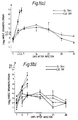
- CJD359 exhibited an impaired ability to grow in vivo compared to SL1344 (Fig 1b).
- SL1344 invaded the tissues of all mice challenged and grew rapidly until all mice had died within 14 days of challenge.
- CJD359 was also able to invade and organisms were detected in peyers patches and mesenteric lymph nodes by day 1 post challenge. By day 4 bacteria had reached liver and spleen and attained a maximal level of colonisation of the host tissue around day 7. Thereafter CJD359 was slowly cleared from the tissues.
- mice Protection of mice after oral challenge .
- mice were immunised with Log 1010 CJD359 and challenged 28 days later with the virulent parental strain SL1344. Mice vaccinated with CJD359 showed excellent protection against challenge with SL1344. The LD50 in immunised animals was >Log 9.64 compared with Log 5.64 for unimmunised controls. Thus mice vaccinated orally with CJD359 were well protected against virulent SL1344 challenge.
- An attenuated bacterium of the present invention is preferably presented in oral tablet form.
- Ingredient mg/tablet Core-tablets 1) Freeze-dried excipient carrier containing 109-1010 attenuated bacteria 70.0 2) Silica dioxide (Aerosil 200*) 0.5 3) Dipac* (97% sucrose) 235.0 4) Cross-linked Povidone (Kollidon CL*) 7.0 5) Microcrystalline Cellulose (Avicel pH 102*) 35.0 6. Magnesium Stearate 2.5 350.0 Coating 7) Opadry Enteric, OY-P-7156 (Polyvinyl acetate phthalate + Diethylphthate) 35.0 385.0 An asterisk (*) indicates a Trade Name
- a carrier containing 5% sucrose 1% sodium glutamate and 1% bacto casitone in an aqueous solvent is prepared.
- the organisms are suspended in this carrier and then subjected to freeze-drying.
- the freeze-dried material is blended with Aerosil 200 and the blended mixture is sifted through a screen.
- the sifted powder is mixed with Dipac, Kollidan CL, Aricel pH 102 and Magnesium Stearate in a blender. This blend is compressed into tablets for subsequent enteric coatings.
Landscapes
- Health & Medical Sciences (AREA)
- Life Sciences & Earth Sciences (AREA)
- Chemical & Material Sciences (AREA)
- Immunology (AREA)
- Medicinal Chemistry (AREA)
- Microbiology (AREA)
- Mycology (AREA)
- Pharmacology & Pharmacy (AREA)
- Epidemiology (AREA)
- Animal Behavior & Ethology (AREA)
- General Health & Medical Sciences (AREA)
- Public Health (AREA)
- Veterinary Medicine (AREA)
- Medicines Containing Antibodies Or Antigens For Use As Internal Diagnostic Agents (AREA)
- Micro-Organisms Or Cultivation Processes Thereof (AREA)
- Medicines Containing Material From Animals Or Micro-Organisms (AREA)
Abstract
Description
- The invention relates to attenuated bacteria for use in animal and human medicine and to pharmaceutical compositions containing them.
- In 1950 Bacon et al (Br.J.Exp.Path. 31, 714-724) demonstrated that certain auxotrophic mutants of S.typhi were attenuated in mice when compared to the parental strain. Certain of these auxotrophic mutants have been proposed as being suitable candidates for the basis of a whole cell vaccine. (See for example Hosieth and Stocker (Nature 241, 238-39, UK patent application 87/30037, The Wellcome Foundation)).
- Together with envZ, ompR forms a two gene operon, previously designated ompB. The nucleotide sequence of this locus is highly conserved between Escherichia coli and Salmonella typhimurium. The ompR gene is primarily concerned with the regulation of osmotically-responsive genes and acts in concert with envZ. ompR and envZ genes form a single transcription unit with translationally -coupled expression (Liljestrom et al., J.Mol.Biol. 201, 663-673 1988). OmpR has been identified as a positive activator of gene expression (Jo et al. J.Bacteriol, 140, 843-847; Norioka et al J.Biol.Chem, 261 15252 1986) while EnvZ has been shown to be associated with the inner membrane (Forst et al., J.Biol.Chem. 262 16433 1987). It has been proposed that EnvZ acts as an environmental sensor and transmits signals to OmpR, modulating the transcriptional control activity of the latter (Hall and Silhavy, J.Mol.Biol. 151 1 1981). A pleiotropic mutation in envZ has been shown to be suppressed by a mutation in ompR, providing genetic evidence that the products of these genes functionally interact (Matsuyama et al., J.Bacteriol 168 1309-1314 1986). Moreover, suppressor mutations of envZ have been mapped to rpoA, the gene coding for the A subunit of RNA polymerase. This suggests that OmpR and RNA polymerase interact (Garrett and Silhavy, J.Bacteriol 169 1379 1987; Matsuyama and Mizushima, J.Mol.Biol. 195 847 1987). The genes which are ompR dependent for transcription are primarily those coding for the major outer membrane porins OmpC and OmpF, although expression of the S.typhimurium tppB operon, coding for a tripeptide permease, has been reported to be OmpR-dependent (Gibson et al Mol. Gen. Genet. 297 120-129 1987). Ikenada et al (Mol. Gen. Genet. 211 538-540 1988) identified a dominant mutation in E.coli ompR which prevents activation of porin expression. Binding sites for OmpR have been biochemically identified upstream of the ompC and ompF promoters (Norioka et al., supra). Expression of these genes is reciprocally regulated by growth medium osmolarity in an OmpR-dependent manner (Aiba et al., J.Bacteriol 169 3007 1987; Kawaji et al., J.Bacteriol 140 843-847 1979; Mizuno, PNAS(USA) 81 1966-70 1987; van Alphen and Lutenberg, J.Bacteriol 131 625-630 1977). In growth media of high osmolarity, the level of OmpC is elevated while that of OmpF is repressed; in media of low osmolarity, the reverse is true.
- The present inventors have found that it is possible to attenuate pathogenic bacteria by introducing a mutation into the ompR gene. Thus, according to the present invention there is provided a vaccine formulation comprising a bacterium attenuated by a non-reverting mutation in the ompR gene in admixture with a pharmaceutically acceptable excipient.
- The attenuated bacteria are preferably Gram-negative bacteria which can invade and grow within eucaryotic cells and colonise the mucosal surface. Examples of these include members of the genera Salmonella, Bordetella, Vibrio, Haemophilus, Escherichia. In particular the following species can be particularly mentioned; S.typhi -the cause of human typhoid; S.typhimurium - the cause of salmonellosis in several animal species; S.enteritidis - a cause of food poisoning in humans; S.cholerae-suis - the cause of salmonellosis in pigs; Bordetella pertussis - the cause of whooping cough; Haemophilus influenzae - a cause of meningitis; and Neisseria gonorrhoeae - the cause of gonorrhoea.
- If an attenuated microorganism is to be used in a live form in a vaccine preparation, it is clearly important that such a microorganism does not revert back to the virulent parent. The probability of this happening with a single mutation is considered to be small; however, the risk of reversion occuring in a strain harbouring mutations in two discrete genes, located in different places in the genome, is considered to be insignificant.
- The present invention also provides a vaccine formulation comprising an attenuated bacterium harbouring a mutation in the ompR gene and a second mutation in a second gene. Preferably the second gene is a gene encoding for an enzyme involved in an essential biosynthetic pathway, in particular genes involved in the pre-chorismate pathway involved in the biosynthesis of aromatic compounds. The mutations will preferably be in aroA (the gene encoding 5-enolpyruvyl shikimate-3-phosphate synthase), aroC (chorismate synthase), aroD (3-dehydroquinase) or aroE.
- The attenuated bacteria are constructed by the introduction of a stable mutation into the ompR gene. These mutations may be made by any method known to those skilled in the art. In one embodiment non-reverting mutations were generated by transducing an LT2 ompR::Tn10 marker into S.typhi and S.typhimurium strains. Tn10 transposon carries a gene encoding for tetracycline resistance. Transductants are selected that are tetracycline resistant by growing colonies on an appropriate medium. Further selection is undertaken by screening for those organisms which have lost the tetracycline resistance gene and which derepressed a tppB::Mud1-8 (lac fusion) under anaerobic growth conditions.
- Alternative methods for generating non-reverting mutations include cloning the ompR gene into a vector, eg a plasmid or cosmid, and incorporating a selectable marker gene into the cloned gene, at the same time inactivating the gene. A plasmid carrying the inactivated gene and a different selectable marker can be introduced into the organism by known techniques. It is then possible by suitable selection to identify a mutant wherein the inactivated gene has recombined into the organism's own chromosome and the organism's own copy of the gene has been lost. In particular, the vector used is one which is unstable in the organism (ie. a 'suicide' vector) and will be spontaneously lost. The mutated gene on the plasmid and the organisms own copy of the gene on its chromosome may be exchanged by a genetic cross-over event.
- Additional methods eliminate the introduction of foreign DNA into vaccine strains at the site of mutations. This can be achieved by cloning the target organism's native gene into a suitable suicide vector (carrying a drug resistance marker) as described above but making a defined deletion in the gene (inactivating it) rather than introducing a selectable marker. This can be introduced into the target organism and the initial selection is made for a single crossover (ie. the organism is drug resistant). Subsequent growth of the strain in the absence of antibiotic and screening of several thousand colonies allows identification of drug sensitive organisms. This may occur in two ways: i) the vector harbouring the deleted gene is lost, ie. the organism is wild type and ii) a second recombination event (resulting in a double crossover) has occured resulting in the replacement of the wild type gene with the deleted gene. We have developed a novel method for screening for the presence of the deletion using the polymerase chain reaction (PCR). Oligonucleotides are synthesised corresponding to regions either side of the deleted region and are used as primers for PCR to amplify the deleted regions from drug sensitive colonies. The amplified product can be analysed by agarose gel electrophoresis. It is possible to distinguish strains harbouring a deleted region as the PCR product is smaller for the deleted gene than for the wild type gene. The PCR product can also be directly sequenced allowing the deletions to be completely defined.
- The strains used in the present invention may be genetically engineered so as to express antigens from one or more different pathogens. The invention includes a vaccine formulation wherein the attenuated bacterium is transformed with an expression cassette comprising a gene encoding an antigen from a heterologous pathogen. Such pathogens, may be viral, bacterial, protozoal or of higher parasitic organisms. The pathogens may infect both humans and other mammals, but may be species selective, or even species specific. Such strains could then form the basis of a bi or multivalent vaccine. Examples of useful antigens include E. coli heat labile toxin B subunit (LT-B), E. coli K88 antigens, FMDV (Foot and Mouth) peptides, Influenza viral proteins, 69Kd protein from B.pertussis, C fragment from tetanus toxin of C.tetani. Other antigens which could be usefully expressed would be those from Chlamydia, flukes, mycoplasma, roundworms, tapeworms, rabies virus and rotavirus.
- These antigens may be produced by the introduction of the gene or genes encoding them into expression cassettes. Expression cassettes will include DNA sequences, in addition to that coding for the structural gene, which will encode for transcriptional and translational initiation and termination regions. The expression cassette may also include regulatory regions. Such expression cassettes are well known in the art and it is well within the skill of the skilled man to construct them. The expression cassette may be a construct or a naturally occuring plasmid. An example of a genetically engineered attenuated Salmonella which expresses a foreign antigen can be found in EP application No. 0 127 153 A (SSVI/Wellcome). The expression cassette may also be engineered to allow the incorporation of the heterologous gene into the bacterial chromosome, making use of the suicide vector and PCR techniques as previously described and introducing the DNA encoding for foreign antigen into a suitable gene such as ompR, aroA, C or D.
- A further bivalent vaccine comprising an attenuated Salmonella typhi, capable of expressing the E.coli heat-labile enterotoxin subunit B, was disclosed by Clements et al (Infection and Immunity, 46, No. 2., Nov 1984, p564-569). Ty21a has been used to express other antigens such as the Shigella sonnei form I antigen (Formal et al, Infection and Immunity 34 746-750).
- The vaccine of the invention is advantageously presented in a lyophilised form, for example in a capsular form, for oral administration to a patient. Such capsules may be provided with an enteric coating comprising for example Eudragate "S" Eudragate "L" Cellulose acetate, cellulose pthalate or hydroxy propylmethyl cellulose. These capsules may be used as such, or alternatively, the lyopholised material may be reconstituted prior to administration, e.g. as a suspension. Reconstitution is advantageously effected in a buffer at a suitable pH to ensure the viability of the organisms. In order to protect the attenuated bacteria and the vaccine from gastric acidity, a sodium bicarbonate preparation is advantageously administered before each administration of the vaccine. Alternatively the vaccine may be prepared for parenteral administration, intranasal administration or intramammary.
- The present invention also provides an attenuated bacterium as described above for use in medical therapy, for example for use in the prophylactic treatment of a bacterial infection. The dosage employed will be dependent on various clinical factors, including the size and weight of the patient, and the type of vaccine formulated. However, for attenuated S. typhi a dosage comprising the administration of 10⁹ to 10¹¹ S. typhi organisms per dose is generally convenient for a 70kg adult human patient.
- In the following, examples are provided of experimental details in accordance with the present invention. It will be understood that these examples are not intended to limit the invention in any way.
- An OmpR deletion was introduced into S.typhimurium SL1344, and S.dublin using phage P22 (available from Dr. T. Foster, Trinity College, Dublin) transduction. A phage lysate prepared on strain CJD359 was used to transduce all the Salmonella strains, selecting for tetracycline-resistant colonies. Strain CJD359 carries Tn10 inserted in the ompR gene. In order to ensure that the strains were of the OmpR phenotype, P22 lysates were prepared on each strain and used to transduce strain CH776 (available from Prof.C.F.Higgins, ICRF Laboratories, Institute of Molecular Medicine, John Radcliffe Hospital, Oxford, OX3 9DU) which carries a tppB::Mud1-8 (lac) fusion. The strain was checked for derepression of the fusion under anaerobic growth conditions after transduction with the P22 lysates. One isolate from each strain was used to prepare tetracycline-sensitive derivatives by selection on Bochner medium. Several of these were purified and checked for the ompR deletion using PCR technique described above.
- An S.typhimurium ompR⁻ (BRD 578) strain has been deposited at National Collection of Type Cultures, 61 Colindale Avenue, London, NW9 5HT, UK under No. NCTC 12396 on 25th May 1990. An S.dublin (BRD 579) ompR⁻ strain has been deposited at National Collection of Type Cultures, 61 Colindale Avenue, London, NW9 5HT, UK under No. NCTC 12398 on 25th May 1990.
- An aroA deletion was introduced into S.typhimurium SL1344, and S.dublin. using the method of McFarland and Stocker. A phage lysate prepared from strain TT472 (available from Dr. B.A.D. Stocker, Stanford University, California) was used to transduce all the Salmonella strains, selecting for tetracycline-resistant colonies. Strain TT472 carries Tn10 inserted within serC which is upstream of and within the same operon as aroA. Tetracycline-resistant transductants were aromatic compound, serine and pyridoxine dependent. A second P22 lysate was prepared, grown on SL5254, (available from Dr. B.A.D. Stocker, Stanford University, California) which has a known deletion within aroA. This was used to transduce the tetracycline resistant strains which were serC:: Tn10 and transductants were selected on minimal medium lacking serine and pyridoxine but containing aromatic compounds but in the absence of serine and pyridoxine were tetracycline-sensitive and aromatic compound dependent.
- An OmpR deletion was then introduced into all the strains using the method described in example 1.
- An S.typhimurium (BRD 731) ompR⁻ aroA⁻ strain has been deposited at National Collection of Type Cultures, 61 Colindale Avenue, London, NW9 5HT, UK under No. NCTC 12397 on 25th May 1990. An S.dublin (BRD 582) ompR⁻ aroA⁻ strain has been deposited at National Collection of Type Cultures, 61 Colindale Avenue, London, NW9 5HT, UK under No. NCTC 12399 on 25th May 1990.
- An ompR deletion was introduced into S.typhi Ty2 as described in example 1. In order to ensure that the strain was of the OmpR phenotype a P22 lysate was prepared on strain CH776 which carries a tppB::Mud1-8 (lac fusion), and transduced into the S.typhi strain. The strain was then tested for derepression of the fusion under anaerobic growth conditions.
- S.typhi Ty2 aroA was prepared as follows: A cosmid bank of S.typhi was constructed into λ phage, and used to transduce a well characterised aroA mutant of E.coli. This facilitated the isolation of an aroA clone of S.typhi. Subsequent mapping and sequence analysis allowed the identification of convenient restruction sites which were used to construct a defined deletion. The aroA gene harbouring the deletion was introduced into the suicide vector gP704 and a method developed for electroporating into S.typhi. The drug resistant colonies were grown in the absence of antibiotics and drug sensitive variants isolated. These were screened for their dependence an aromatic compounds for growth in vitro. A colony that was dependent on these compounds for growth was analysed using Southern hybridisation and PCR confirming the deletion in aroA and absence of any vector DNA. An ompR deletion was introduced into this strain as described in Example 3.
- S.typhi (BRD 732) ompR⁻ aroA⁻ was deposited at National Collection of Type Cultures, 61 Colindale Avenue, London, UK, under Accession no. NCTC 12395 on 25th May 1990.
-
- The CJD359 strain (now BRD 578) was constructed using transposon-linked mutations into S.typhimurium SL1344 using bacteriophage P22-mediated transduction, as described in Example 1.
- BALB/c males of 8-10 weeks of age were used throughout, bred in the animal unit at Wellcome Research Laboratories from breeders originally purchased for OLAC (1976) UK Ltd (Black, Bicester, Oxfordshire, UK). Livers, spleens, mesenteric lymph nodes and Peyer's patches were homogenised as previously described, Mashell et al 1987 Microb.Pathogen, 3, 129-141. Viable counts were performed on these homogenates using L-agar as growth medium. Counts are shown in the figures as
geometric means 1 standard errors (n=4 mice per point). For oral inoculation into mice bacteria were grown statically at 37° overnight in 2 litres of L-broth. The culture was centrifuged and the bacterial pellet was resuspended in its own volume and diluted in phosphate buffered salines (pH 7.2) as required. Bacteria in 0.2ml were administered in 0.2ml volumes orally to lightly anaethetised mice by gavage needle. The inoculum was calculated by plating appropriate dilutions on L-agar pour plates. For intravenous (iv.) inoculation, mice were injected with 0.2ml of bacterial suspension into the tail vein. Deaths were recorded over the following four weeks and the LD₅₀ was calculated by the method of Reed and Muench 1938 Am.J.Hyg, 27, 493-497. - After oral administration CJD359 had an LD₅₀ of greater 9.64 log units as compared to the parental strain,
SL 1344, which has an LD₅₀ of 6.38 log units. (All LD₅₀ were calculated after 28 days). Thus CJD359 is highly attenuated. After iv. administration CJD359 had an iv. LD₅₀ of Log 5.13 compared to < Log 10 for SL1344 and we again conclude that CJD359 is highly attenuated compared to SL1344. -
- The ability of SL13444 and CJD359 to grow in vivo after oral or iv administration was assessed. For the iv experiment the numbers of viable organisms in the livers and spleens at different days after challenge were assessed (Fig 1a). After iv administration of Log 3.7 SL1344 the strain grew rapidly in livers and spleen and all mice died within seven days of challenge. After administration iv of Log 4.2 CJD359 a level of about 10% of the inoculum was detected in the livers and spleens 24 hours later. After this initial drop CJD359 appeared to grow slowly reaching a maximal level of about
Log 5 organisms byday 14 and was then slowly cleared. All mice challenged iv with CJD359 exhibited a pronounced splenomegaly during the early phases of the infection. Log 9.8 SL1344 and Log 9.5 CJD359 organisms were administered orally to BALB/c mice and the levels of organisms were assessed in livers, spleens, peyers patches and mesenteric lymph nodes at different times after challenge. Again CJD359 exhibited an impaired ability to grow in vivo compared to SL1344 (Fig 1b). SL1344 invaded the tissues of all mice challenged and grew rapidly until all mice had died within 14 days of challenge. CJD359 was also able to invade and organisms were detected in peyers patches and mesenteric lymph nodes byday 1 post challenge. By day 4 bacteria had reached liver and spleen and attained a maximal level of colonisation of the host tissue aroundday 7. Thereafter CJD359 was slowly cleared from the tissues. - Mice were immunised with Log 10¹⁰ CJD359 and challenged 28 days later with the virulent parental strain SL1344. Mice vaccinated with CJD359 showed excellent protection against challenge with SL1344. The LD₅₀ in immunised animals was >Log 9.64 compared with Log 5.64 for unimmunised controls. Thus mice vaccinated orally with CJD359 were well protected against virulent SL1344 challenge.
- An attenuated bacterium of the present invention is preferably presented in oral tablet form.
Ingredient mg/tablet Core-tablets 1) Freeze-dried excipient carrier containing 10⁹-10¹⁰ attenuated bacteria 70.0 2) Silica dioxide (Aerosil 200*) 0.5 3) Dipac* (97% sucrose) 235.0 4) Cross-linked Povidone (Kollidon CL*) 7.0 5) Microcrystalline Cellulose (Avicel pH 102*) 35.0 6. Magnesium Stearate 2.5 350.0 Coating 7) Opadry Enteric, OY-P-7156 (Polyvinyl acetate phthalate + Diethylphthate) 35.0 385.0 An asterisk (*) indicates a Trade Name - A carrier containing 5
% sucrose 1% sodium glutamate and 1% bacto casitone in an aqueous solvent is prepared. The organisms are suspended in this carrier and then subjected to freeze-drying. - The freeze-dried material is blended with Aerosil 200 and the blended mixture is sifted through a screen. The sifted powder is mixed with Dipac, Kollidan CL, Aricel pH 102 and Magnesium Stearate in a blender. This blend is compressed into tablets for subsequent enteric coatings.
- The skilled man will appreciate that many of the ingredients in this formulation could be replaced by functionally equivalent pharmaceutically acceptable excipients.
Claims (13)
- A process for precaring a vaccine formulation, which process comprises formulating a bacterium attenuated by a non-reverting mutation in the ompR gene with a pharmaceutically acceptable excipient.
- A process according to claim 1 wherein the attenuated bacterium is a gram negative bacterium.
- A process according to claim 1 wherein the attenuated bacterium is selected from the genera Salmonella, Bordetella, Vibrio, Haemophilus and Escherichia.
- A process according to claim 1 wherein the attenuated bacterium is selected from Salmonella typhi, Salmonella typhimurium, Salmonella enteriditidis, Salmonella cholerae-suis, Bordetella pertussis, Haemophilus influenzae and Neisseria gonorrhoeae.
- A process according to any one of the preceding claims wherein the attenuated bacterium additionally harbours a second mutation in a second gene.
- A process according to claim 5 wherein the second mutation is in an essential auxotrophic pathway.
- A process according to claim 6 wherein the second mutation is in a gene encoding an enzyme in an aromatic pathway.
- A process according to claim 7 wherein the second mutation is in a gene selected from aroA, aroC, aroD and aroE.
- A process according to claim 1 wherein the attenuated bacterium is selected from Salmonella typhi ompR⁻, Salmonella typhimurium ompR⁻, Salmonella dublin ompR⁻, Salmonella typhi aroA⁻ ompR⁻, Salmonella typhimurium aroA⁻ ompR⁻, and Salmonella dublin aroA⁻ ompR⁻.
- A process according to any one of the preceding claims wherein the attenuated bacterium is transformed with an expression cassette comprising a gene encoding an antigen from a heterologous pathogen.
Applications Claiming Priority (2)
| Application Number | Priority Date | Filing Date | Title |
|---|---|---|---|
| GB8912330 | 1989-05-30 | ||
| GB898912330A GB8912330D0 (en) | 1989-05-30 | 1989-05-30 | Live vaccines |
Publications (3)
| Publication Number | Publication Date |
|---|---|
| EP0400958A2 EP0400958A2 (en) | 1990-12-05 |
| EP0400958A3 EP0400958A3 (en) | 1991-09-18 |
| EP0400958B1 true EP0400958B1 (en) | 1995-09-13 |
Family
ID=10657547
Family Applications (1)
| Application Number | Title | Priority Date | Filing Date |
|---|---|---|---|
| EP90305819A Expired - Lifetime EP0400958B1 (en) | 1989-05-30 | 1990-05-29 | Live vaccines |
Country Status (9)
| Country | Link |
|---|---|
| US (2) | US5527529A (en) |
| EP (1) | EP0400958B1 (en) |
| JP (1) | JP3024982B2 (en) |
| AT (1) | ATE127694T1 (en) |
| DE (1) | DE69022290T2 (en) |
| DK (1) | DK0400958T3 (en) |
| ES (1) | ES2077028T3 (en) |
| GB (1) | GB8912330D0 (en) |
| GR (1) | GR3017535T3 (en) |
Cited By (3)
| Publication number | Priority date | Publication date | Assignee | Title |
|---|---|---|---|---|
| RU2140288C1 (en) * | 1998-04-09 | 1999-10-27 | Государственный научный центр вирусологии и биотехнологии "Вектор" | Method of live antimeasles vaccine preparing |
| WO2003060105A1 (en) * | 2001-12-28 | 2003-07-24 | University Of Southern Queensland | Defective entities and uses therefor |
| US7943122B2 (en) | 2001-09-11 | 2011-05-17 | Acambis Research Limited | Attenuated bacteria useful in vaccines |
Families Citing this family (36)
| Publication number | Priority date | Publication date | Assignee | Title |
|---|---|---|---|---|
| US5811105A (en) * | 1987-12-23 | 1998-09-22 | Glaxo Wellcome, Inc. | Vaccines containing bacteria attenuated by mutations in two genes of the aromatic amino acid biosynthetic pathway |
| GB9007194D0 (en) * | 1990-03-30 | 1990-05-30 | Wellcome Found | Live vaccines |
| ATE180280T1 (en) * | 1991-03-05 | 1999-06-15 | Wellcome Found | EXPRESSION OF RECOMBINANT PROTEINS IN ATTENUATE BACTERIA |
| JP3633933B2 (en) * | 1992-07-31 | 2005-03-30 | アカンビス、リサーチ、リミテッド | Expression of recombinant fusion proteins in attenuated bacteria |
| US6153406A (en) * | 1993-07-23 | 2000-11-28 | North American Vaccine, Inc. | Method for the high level expression, purification and refolding of the outer membrane protein P2 from Haemophilus influenzae type B |
| WO1995004133A1 (en) * | 1993-07-30 | 1995-02-09 | The University Of North Carolina At Chapel Hill | Production of gonorrheal pi proteins and vaccines in e. coli and salmonella |
| US6254874B1 (en) * | 1995-04-13 | 2001-07-03 | President And Fellows Of Harvard College | Attenuated auxotrophic microorganisms having a combination of non-attenuating mutations and method for making same |
| AUPN631395A0 (en) * | 1995-11-02 | 1995-11-23 | Commonwealth Scientific And Industrial Research Organisation | Vaccine and biological vector(II) |
| EP0810283A3 (en) * | 1996-05-31 | 1997-12-10 | Akzo Nobel N.V. | Live attenuated RTX-procucing bacteria of the family Pasteurellaceae |
| HU226219B1 (en) * | 1996-05-31 | 2008-06-30 | Intervet Int Bv | Live attenuated rtx-producing bacteria of the family pasteurellaceae |
| EP0991761B1 (en) * | 1997-08-21 | 2008-01-16 | De Staat Der Nederlanden Vertegenwoordigd Door De Minister Van Welzijn, Volksgezondheid En Cultuur | Novel mutants of gram negative mucosal bacteria and application thereof in vaccines |
| WO1999013053A1 (en) | 1997-09-10 | 1999-03-18 | Vion Pharmaceuticals, Inc. | Genetically modified tumor-targeted bacteria with reduced virulence |
| US6080849A (en) | 1997-09-10 | 2000-06-27 | Vion Pharmaceuticals, Inc. | Genetically modified tumor-targeted bacteria with reduced virulence |
| GB9726233D0 (en) * | 1997-12-11 | 1998-02-11 | Medeva Europ Ltd | Vaccines containing attenuated bacteria |
| US6905691B1 (en) | 1997-12-11 | 2005-06-14 | Celltech Pharma Europe Limited | Vaccines containing attenuated bacteria |
| GB9806449D0 (en) | 1998-03-25 | 1998-05-27 | Peptide Therapeutics Ltd | Attenuated bacteria useful in vaccines |
| ES2286905T3 (en) | 1998-12-02 | 2007-12-01 | University Of Maryland, Baltimore | PLASMID STABILIZATION SYSTEM FOR THE SUPPLY OF ANTIGENS. |
| US8076130B2 (en) * | 1998-12-02 | 2011-12-13 | University Of Maryland, Baltimore | Plasmid maintenance system for antigen delivery |
| US6413768B1 (en) | 1998-12-02 | 2002-07-02 | University Of Maryland | Expression plasmids |
| ATE318924T1 (en) * | 1998-12-04 | 2006-03-15 | Univ Manitoba | TWO-STEP PROCESS FOR VACCINATION AGAINST CHLAMYDIA |
| US6962696B1 (en) | 1999-10-04 | 2005-11-08 | Vion Pharmaceuticals Inc. | Compositions and methods for tumor-targeted delivery of effector molecules |
| NZ519477A (en) * | 1999-12-23 | 2004-04-30 | Microscience Ltd | Attenuated microorganisms for the treatment of infection |
| US6872547B1 (en) | 2000-10-11 | 2005-03-29 | Washington University | Functional balanced-lethal host-vector systems |
| JP4886122B2 (en) * | 2001-05-31 | 2012-02-29 | 日水製薬株式会社 | Vibrio parahaemolyticus detection medium |
| WO2002102409A1 (en) * | 2001-06-19 | 2002-12-27 | Medical Research Council | Inactivated mycobacterial ompatb and uses thereof |
| WO2003096812A1 (en) * | 2002-04-15 | 2003-11-27 | Washington University | Regulated attenuation of live vaccines to enhance cross protective immunogenicity |
| US7357935B2 (en) | 2003-05-14 | 2008-04-15 | Wyeth | Avian E. coli vaccine for protection against colibacillosis |
| US7297338B2 (en) | 2003-05-14 | 2007-11-20 | Wyeth | Avian vaccine composition for the protection of poultry against disease and infection caused by E. coli and Salmonella |
| US7364745B2 (en) * | 2004-02-06 | 2008-04-29 | Virginia Tech Intellectual Properties, Inc. | Development of a live, attenuated, recombinant vaccine for Brucellosis |
| GB2412259A (en) * | 2004-03-16 | 2005-09-21 | Wolfson Ltd | A CMOS folded-cascode operational amplifier having low flicker noise |
| CN1276076C (en) * | 2004-12-14 | 2006-09-20 | 华东理工大学 | No mark gene deletion deoxidated mutant strain of wild Manhu bacteria and its use |
| FR2898276B1 (en) * | 2006-03-08 | 2008-07-25 | Univ Claude Bernard Lyon | NOVEL VACCINES FOR THE TREATMENT OR PREVENTION OF PARASITE INFECTIONS OF THE FAMILY OF TAENIDAE AND ESPECIALLY OF THE GENUS ECHINOCOCCUS |
| CN106794236B (en) | 2014-04-15 | 2021-09-03 | 格里菲斯大学 | Group A streptococcus vaccine |
| US10676723B2 (en) | 2015-05-11 | 2020-06-09 | David Gordon Bermudes | Chimeric protein toxins for expression by therapeutic bacteria |
| US11180535B1 (en) | 2016-12-07 | 2021-11-23 | David Gordon Bermudes | Saccharide binding, tumor penetration, and cytotoxic antitumor chimeric peptides from therapeutic bacteria |
| JP7825273B2 (en) | 2019-11-25 | 2026-03-06 | グリフィス ユニバーシティー | Immunogenic proteins for gonorrhea |
Family Cites Families (6)
| Publication number | Priority date | Publication date | Assignee | Title |
|---|---|---|---|---|
| GB184086A (en) * | 1921-09-16 | 1922-08-10 | William Henry Taylor | Improvements relating to endless conveyors |
| IL59663A (en) * | 1980-03-19 | 1983-02-23 | Univ Ramot | Vaccines obtained from bacterial mutant strains of enterobacteriaceae and pseudomonaceae |
| US4735801A (en) * | 1982-09-07 | 1988-04-05 | Board Of Trustees Of Leland Stanford Jr. University | Novel non-reverting salmonella live vaccines |
| US4837151A (en) * | 1980-05-19 | 1989-06-06 | The Board Of Trustees Of The Leland Stanford Junior University, Stanford University | Live vaccines comprising two mutations and foreign antigen |
| DK189788D0 (en) * | 1988-04-07 | 1988-04-07 | Wolf Watz Hans | VACCINE |
| WO1990011687A1 (en) * | 1989-03-31 | 1990-10-18 | Washington University | VACCINES CONTAINING AVIRULENT phoP-TYPE MICROORGANISMS |
-
1989
- 1989-05-30 GB GB898912330A patent/GB8912330D0/en active Pending
-
1990
- 1990-05-29 ES ES90305819T patent/ES2077028T3/en not_active Expired - Lifetime
- 1990-05-29 DK DK90305819.6T patent/DK0400958T3/en active
- 1990-05-29 AT AT90305819T patent/ATE127694T1/en not_active IP Right Cessation
- 1990-05-29 JP JP2139566A patent/JP3024982B2/en not_active Expired - Lifetime
- 1990-05-29 DE DE69022290T patent/DE69022290T2/en not_active Expired - Lifetime
- 1990-05-29 EP EP90305819A patent/EP0400958B1/en not_active Expired - Lifetime
-
1995
- 1995-04-10 US US08/419,741 patent/US5527529A/en not_active Expired - Lifetime
- 1995-04-10 US US08/419,618 patent/US5851519A/en not_active Expired - Lifetime
- 1995-09-27 GR GR950402655T patent/GR3017535T3/en unknown
Non-Patent Citations (1)
| Title |
|---|
| PROCEEDINGS OF THE NATL. ACADEMY OF SCIENCES USA, vol. 86, 1989, Washington, DC (US); MILLER et al., pp. 5054-5058 * |
Cited By (3)
| Publication number | Priority date | Publication date | Assignee | Title |
|---|---|---|---|---|
| RU2140288C1 (en) * | 1998-04-09 | 1999-10-27 | Государственный научный центр вирусологии и биотехнологии "Вектор" | Method of live antimeasles vaccine preparing |
| US7943122B2 (en) | 2001-09-11 | 2011-05-17 | Acambis Research Limited | Attenuated bacteria useful in vaccines |
| WO2003060105A1 (en) * | 2001-12-28 | 2003-07-24 | University Of Southern Queensland | Defective entities and uses therefor |
Also Published As
| Publication number | Publication date |
|---|---|
| JP3024982B2 (en) | 2000-03-27 |
| EP0400958A3 (en) | 1991-09-18 |
| GB8912330D0 (en) | 1989-07-12 |
| ATE127694T1 (en) | 1995-09-15 |
| DK0400958T3 (en) | 1996-01-15 |
| JPH03117481A (en) | 1991-05-20 |
| EP0400958A2 (en) | 1990-12-05 |
| DE69022290D1 (en) | 1995-10-19 |
| US5851519A (en) | 1998-12-22 |
| GR3017535T3 (en) | 1995-12-31 |
| ES2077028T3 (en) | 1995-11-16 |
| DE69022290T2 (en) | 1996-09-05 |
| US5527529A (en) | 1996-06-18 |
Similar Documents
| Publication | Publication Date | Title |
|---|---|---|
| US5851519A (en) | Live vaccines | |
| EP0524205B1 (en) | Live vaccines | |
| JP3004049B2 (en) | Vaccine containing non-pathogenic phoP-type microorganisms | |
| JP3415145B2 (en) | Expression of recombinant proteins in attenuated bacteria | |
| EP0315682B1 (en) | Avirulent microbes and uses therefor | |
| EP0322237B1 (en) | Vaccines | |
| HK1000469B (en) | Vaccines | |
| CN1360594A (en) | Attenuated microorganisms for treatment of infection | |
| US5811105A (en) | Vaccines containing bacteria attenuated by mutations in two genes of the aromatic amino acid biosynthetic pathway | |
| US6254874B1 (en) | Attenuated auxotrophic microorganisms having a combination of non-attenuating mutations and method for making same | |
| AU659995C (en) | Live vaccines |
Legal Events
| Date | Code | Title | Description |
|---|---|---|---|
| PUAI | Public reference made under article 153(3) epc to a published international application that has entered the european phase |
Free format text: ORIGINAL CODE: 0009012 |
|
| 17P | Request for examination filed |
Effective date: 19900602 |
|
| AK | Designated contracting states |
Kind code of ref document: A2 Designated state(s): AT BE CH DE DK ES FR GB GR IT LI LU NL SE |
|
| PUAL | Search report despatched |
Free format text: ORIGINAL CODE: 0009013 |
|
| AK | Designated contracting states |
Kind code of ref document: A3 Designated state(s): AT BE CH DE DK ES FR GB GR IT LI LU NL SE |
|
| RAP1 | Party data changed (applicant data changed or rights of an application transferred) |
Owner name: THE WELLCOME FOUNDATION LIMITED Owner name: THE ROYAL SOCIETY Owner name: THE LISTER INSTITUTE OF PREVENTIVE MEDICINE Owner name: THE UNIVERSITY OF DUNDEE, UNIVERSITY COURT |
|
| K1C3 | Correction of patent application (complete document) published |
Effective date: 19901205 |
|
| 17Q | First examination report despatched |
Effective date: 19940131 |
|
| RAP1 | Party data changed (applicant data changed or rights of an application transferred) |
Owner name: THE WELLCOME FOUNDATION LIMITED Owner name: THE ROYAL SOCIETY Owner name: THE LISTER INSTITUTE OF PREVENTIVE MEDICINE Owner name: THE UNIVERSITY COURT OF THE UNIVERSITY OF DUNDEE |
|
| GRAA | (expected) grant |
Free format text: ORIGINAL CODE: 0009210 |
|
| ITF | It: translation for a ep patent filed | ||
| AK | Designated contracting states |
Kind code of ref document: B1 Designated state(s): AT BE CH DE DK ES FR GB GR IT LI LU NL SE |
|
| REF | Corresponds to: |
Ref document number: 127694 Country of ref document: AT Date of ref document: 19950915 Kind code of ref document: T |
|
| REF | Corresponds to: |
Ref document number: 69022290 Country of ref document: DE Date of ref document: 19951019 |
|
| REG | Reference to a national code |
Ref country code: ES Ref legal event code: FG2A Ref document number: 2077028 Country of ref document: ES Kind code of ref document: T3 |
|
| REG | Reference to a national code |
Ref country code: GR Ref legal event code: FG4A Free format text: 3017535 |
|
| ET | Fr: translation filed | ||
| REG | Reference to a national code |
Ref country code: DK Ref legal event code: T3 |
|
| PLBE | No opposition filed within time limit |
Free format text: ORIGINAL CODE: 0009261 |
|
| STAA | Information on the status of an ep patent application or granted ep patent |
Free format text: STATUS: NO OPPOSITION FILED WITHIN TIME LIMIT |
|
| 26N | No opposition filed | ||
| REG | Reference to a national code |
Ref country code: GB Ref legal event code: IF02 |
|
| REG | Reference to a national code |
Ref country code: CH Ref legal event code: PFA Owner name: THE LISTER INSTITUTE OF PREVENTIVE MEDICINE Free format text: THE LISTER INSTITUTE OF PREVENTIVE MEDICINE#BROCKLEY HILL#STANMORE/MIDDX (GB) $ THE WELLCOME FOUNDATION LIMITED#160 EUSTON ROAD, UNICORN HOUSE#LONDON NW1 2BP (GB) $ THE ROYAL SOCIETY#6, CARLTON HOUSE TERRACE#LONDON SW1Y 5AG (GB) $ THE UNIVERSITY COURT OF THE UNIVERSITY OF DUNDEE# #DUNDEE DD1 4HN (GB) -TRANSFER TO- THE LISTER INSTITUTE OF PREVENTIVE MEDICINE#BROCKLEY HILL#STANMORE/MIDDX (GB) $ THE WELLCOME FOUNDATION LIMITED#160 EUSTON ROAD, UNICORN HOUSE#LONDON NW1 2BP (GB) $ THE ROYAL SOCIETY#6, CARLTON HOUSE TERRACE#LONDON SW1Y 5AG (GB) $ THE UNIVERSITY COURT OF THE UNIVERSITY OF DUNDEE# #DUNDEE DD1 4HN (GB) |
|
| PGFP | Annual fee paid to national office [announced via postgrant information from national office to epo] |
Ref country code: DK Payment date: 20090514 Year of fee payment: 20 Ref country code: ES Payment date: 20090605 Year of fee payment: 20 Ref country code: NL Payment date: 20090504 Year of fee payment: 20 |
|
| PGFP | Annual fee paid to national office [announced via postgrant information from national office to epo] |
Ref country code: SE Payment date: 20090512 Year of fee payment: 20 Ref country code: DE Payment date: 20090527 Year of fee payment: 20 Ref country code: AT Payment date: 20090514 Year of fee payment: 20 Ref country code: FR Payment date: 20090515 Year of fee payment: 20 Ref country code: LU Payment date: 20090616 Year of fee payment: 20 Ref country code: IT Payment date: 20090521 Year of fee payment: 20 |
|
| PGFP | Annual fee paid to national office [announced via postgrant information from national office to epo] |
Ref country code: BE Payment date: 20090525 Year of fee payment: 20 |
|
| PGFP | Annual fee paid to national office [announced via postgrant information from national office to epo] |
Ref country code: CH Payment date: 20090513 Year of fee payment: 20 |
|
| PGFP | Annual fee paid to national office [announced via postgrant information from national office to epo] |
Ref country code: GR Payment date: 20090421 Year of fee payment: 20 Ref country code: GB Payment date: 20090527 Year of fee payment: 20 |
|
| BE20 | Be: patent expired |
Owner name: THE *WELLCOME FOUNDATION LTD Effective date: 20100529 Owner name: THE *UNIVERSITY COURT OF THE UNIVERSITY OF DUNDEE Effective date: 20100529 Owner name: THE *LISTER INSTITUTE OF PREVENTIVE MEDICINE Effective date: 20100529 Owner name: THE *ROYAL SOCIETY Effective date: 20100529 |
|
| REG | Reference to a national code |
Ref country code: CH Ref legal event code: PL |
|
| REG | Reference to a national code |
Ref country code: NL Ref legal event code: V4 Effective date: 20100529 |
|
| REG | Reference to a national code |
Ref country code: DK Ref legal event code: EUP |
|
| EUG | Se: european patent has lapsed | ||
| REG | Reference to a national code |
Ref country code: ES Ref legal event code: FD2A Effective date: 20100531 |
|
| PG25 | Lapsed in a contracting state [announced via postgrant information from national office to epo] |
Ref country code: NL Free format text: LAPSE BECAUSE OF EXPIRATION OF PROTECTION Effective date: 20100529 |
|
| PG25 | Lapsed in a contracting state [announced via postgrant information from national office to epo] |
Ref country code: ES Free format text: LAPSE BECAUSE OF EXPIRATION OF PROTECTION Effective date: 20100531 |
|
| PG25 | Lapsed in a contracting state [announced via postgrant information from national office to epo] |
Ref country code: GB Free format text: LAPSE BECAUSE OF EXPIRATION OF PROTECTION Effective date: 20100528 |
|
| PG25 | Lapsed in a contracting state [announced via postgrant information from national office to epo] |
Ref country code: DE Free format text: LAPSE BECAUSE OF EXPIRATION OF PROTECTION Effective date: 20100529 |