EP0366332A2 - Digital memory system - Google Patents
Digital memory system Download PDFInfo
- Publication number
- EP0366332A2 EP0366332A2 EP89310644A EP89310644A EP0366332A2 EP 0366332 A2 EP0366332 A2 EP 0366332A2 EP 89310644 A EP89310644 A EP 89310644A EP 89310644 A EP89310644 A EP 89310644A EP 0366332 A2 EP0366332 A2 EP 0366332A2
- Authority
- EP
- European Patent Office
- Prior art keywords
- bitline
- transistor
- pullup
- source
- terminal
- Prior art date
- Legal status (The legal status is an assumption and is not a legal conclusion. Google has not performed a legal analysis and makes no representation as to the accuracy of the status listed.)
- Granted
Links
Images


Classifications
-
- G—PHYSICS
- G11—INFORMATION STORAGE
- G11C—STATIC STORES
- G11C7/00—Arrangements for writing information into, or reading information out from, a digital store
- G11C7/06—Sense amplifiers; Associated circuits, e.g. timing or triggering circuits
- G11C7/065—Differential amplifiers of latching type
-
- G—PHYSICS
- G11—INFORMATION STORAGE
- G11C—STATIC STORES
- G11C11/00—Digital stores characterised by the use of particular electric or magnetic storage elements; Storage elements therefor
- G11C11/21—Digital stores characterised by the use of particular electric or magnetic storage elements; Storage elements therefor using electric elements
- G11C11/34—Digital stores characterised by the use of particular electric or magnetic storage elements; Storage elements therefor using electric elements using semiconductor devices
- G11C11/40—Digital stores characterised by the use of particular electric or magnetic storage elements; Storage elements therefor using electric elements using semiconductor devices using transistors
- G11C11/41—Digital stores characterised by the use of particular electric or magnetic storage elements; Storage elements therefor using electric elements using semiconductor devices using transistors forming static cells with positive feedback, i.e. cells not needing refreshing or charge regeneration, e.g. bistable multivibrator or Schmitt trigger
- G11C11/413—Auxiliary circuits, e.g. for addressing, decoding, driving, writing, sensing, timing or power reduction
- G11C11/417—Auxiliary circuits, e.g. for addressing, decoding, driving, writing, sensing, timing or power reduction for memory cells of the field-effect type
- G11C11/419—Read-write [R-W] circuits
-
- G—PHYSICS
- G11—INFORMATION STORAGE
- G11C—STATIC STORES
- G11C7/00—Arrangements for writing information into, or reading information out from, a digital store
- G11C7/12—Bit line control circuits, e.g. drivers, boosters, pull-up circuits, pull-down circuits, precharging circuits, equalising circuits, for bit lines
Definitions
- This invention relates to digital memory systems and, more specifically, to a high speed static random access memory (RAM) system.
- RAM static random access memory
- V It/C
- I the bitline charging current
- C the bitline capacitance
- a digital memory system of the type which includes an amplifier transistor connected to provide an amplified bitline signal corresponding to the state of a selected memory cell.
- the system overcomes several limitations associated with the above mentioned high speed circuits by including a bitline pullup transistor positioned to function as a current source for the bitline and as a load device for the amplifier transistor.
- the system includes a column of memory cells and a plurality of word lines connected for selecting a memory cell.
- a bitline is connected to each memory cell in the column and a bitline pullup transistor having first, second and third terminals is arranged to form a current source at the seccnd terminal.
- First and second source/drain electrodes of an amplifier transistor are connected to the second terminal of the pullup transistor and the bitline respectively.
- the gate electrode of the amplifier transistor is connected to receive a bias voltage.
- An amplified bitline signal corresponding to the state of a selected memory cell is available at an output node between the pullup and amplifier transistors.
- the preferred embodiment of the memory system includes first and second bitlines connected to each memory cell in the column.
- a bitline pullup transistor and an amplifier transistor are associated with each bit line as described above.
- An output node between the first pullup and amplifier transistors provides an amplified bitline signal corresponding to the state of a selected memory cell while a second output node between the seccnd pullup transistor and the second amplifier transistor provides an amplified bitline signal corresponding to the inverted state of a selected memory cell.
- the gate electrode of the first amplifier transistor is connected to the second source/drain electrode of the second amplifier transistor and the gate electrode of the second amplifier transistor is connected to the second source/drain electrode of the first amplifier transistor.
- These gate connections provide gate to source voltages in proportion to the difference between voltage levels of the first and second bit lines.
- the first and second pullup transistors are field effect transistors and the system further includes a diode serially connected between the bitline and a reference potential.
- high speed static random access memory operation is enhanced by isolating the capacitance of a bitline from the associated bitline pullup device.
- the pullup device functions as the sense amplifier load as well as the bitline current source to provide faster and simpler operation.
- bitline current could be used to generate a sufficiently large signal, a simpler, lower power, faster system would be available.
- speed requirements of high density memories preclude obtaining the full amplitude signal directly from the bitlines.
- a merged bitline pullup - sense amplifier circuit provides an impedance transformation, i.e., a current to voltage conversion of the bitline signal. This results in a highly amplified voltage output signal indicative of the state of a selected memory cell.
- Figure 1 is a partial schematic view of a high speed static RAM device 10 comprising a merged bitline pullup-sense amplifier circuit in conjunction with an exemplary column of 64 memory cells 12.
- the device 10 is presented in simplified form to more clearly describe the invention, it is to be understood that the device includes numerous additional components present in conventional static RAM architecture such as row and column address circuitry, decode logic and output circuitry. See U.S. Patent No. 4,665,508 which is incorporated by reference.
- the device 10 may be a 4K GaAs MESFET Static RAM containing 4,096 memory cells organized in a 64 row by 64 column array.
- Decoding may be implemented with a single level of 64 six-input NOR gates.
- the decoded 6-bit row and column addresses enable the word lines and select a particular column of memory cells. Data are sequentially written into or read out of selected memory cells in accordance with the state of the write enable, data in and chip select signals.
- the memory cells 12 illustrated in Figure 1 may each be, for example, of a conventional six transistor design including two cross-coupled switching transistors, two load transistors and a pair of pass transistors.
- a plurality of word lines WL i and bitlines BL i are connected for memory cell selection.
- bitlines BL1 and BL2 are coupled to the memory cells 12 along opposing sides of the column.
- the bitlines are coupled to a power supply line V DD by bitline pullup - sense amplifier circuitry which includes a pair of dual function pullup/load transistors 18 and 20 as well as a pair of amplifier transistors 22 and 24 each positioned between a bitline and one of the dual function transistors 18 or 20.
- An amplifier output node 28 or 30 is located between each dual function transistor 18 or 20 and an adjacent amplifier transistor 22 or 24.
- the amplifier transistors 22 and 24 are positioned to isolate the bitline capacitance from the output nodes 28 and 30. With this isolation each transistor 18 and 20 serves as the load to an adjacent amplifier transistor. The arrangement enables a very fast amplified output to be developed at the output nodes 28 and 30.
- each amplifier transistor 22 and 24 is connected to an opposing bitline and all four transistors 18, 20, 22 and 24 are depletion mode MESFETs.
- the transistors 18 and 20 are each arranged with the drain electrode coupled to V DD and the gate tied to the source electrode thereby providing a current source.
- a clamping diode 42 may be serially connected between each bitline and a reference potential 44.
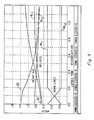
- a computer simulation has been carried out to compare the performance of the device 10 with the memory device 50 of Figure 2, which is based on a conventional sense amplifier design.
- the device 50 also includes the clamping diodes 42 of the present invention in order to obtain similar voltage swings, this permitting a more objective evaluation of the merged bitline - pullup circuitry of the present invention.
- the comparison was performed by reading data out of two adjacent memory cells 12 in a column.
- the adjacent cells were initialized to opposite states in order to require reversal of voltages in bitlines BL1 and BL2. That is, simultaneously switching WL1 and WL2 reverses the memory cell selection and causes the bitlines to charge to opposite states.
- the bitlines were assumed to each include 0.3 pF of capacitance.
- lapsed time between the word line and sense out cross points is approximately 0.1 ns shorter for the device 10.
- the rise time of the device 10 sense out signal e.g., to 90 percent of the peak to peak value, is also much shorter.
- V DD for device 50 was 2.7 volts while V DD for the device 10 was only 2.2 volts. Nevertheless, the output signal of the device 10 was much larger, i.e., approximately 0.5 volts.
- the device 10 is capable of providing output signals of acceptable magnitude faster than the device 50.
- the device 10 provides a sense out signal of 0.5 volts (as measured from the sense out cross points) in approximately 0.1 ns.
- the device 50 requires greater than a 0.5 ns rise time to develop a 0.5 volt output. ⁇ Thus higher speed memory operation is attainable with the merged bitline - pullup circuitry of the present invention.
- a corresponding method for enhancing high speed static random access memory operation comprises the step of isolating the capacitance of a bitline from the associated bitline pullup device.
- the pullup device is positioned to function as the sense amplifier load as well as the bitline current source. The result is faster and simpler memory operation.
- a feature of the preferred embodiment circuit 10 is that the gate electrode 40 of each amplifier transistor 22 and 24 is connected to an opposing bitline.
- the gate bias of each amplifier transistor could be provided with a DC voltage
- the cross coupled scheme of Figure 1 is advantageous for three reasons. First, the coupling eliminates the need for providing an external voltage bias. Second, the amplified signal response times at the output nodes 28 and 30 are nearly symmetrical in comparison to the bitline response. Third, the amplifier sensitivity is approximately doubled because the gate to source voltage of each amplifier transistor is essentially the difference between the two bitline voltages.
- the designs disclosed herein are more power efficient because the same current that charges the bitlines provides the output signal through a simple impedance transformation.
- a single bitline e.g., BL1
- one pullup/load transistor 18 and one amplifier transistor 22 provide sufficient gain for RAM operation although a longer response time may be required in order to develop a desired sense out voltage response.
- the advantages of this embodiment are lower power dissipation and fewer components.
- transistors 18, 20, 22 and 24 be of equal size, this is not necessary. Nor do the transistors have to be MESFETs. They may, for example, be replaced with MOS, bipolar or other types of devices. All of the devices 18 - 24 could be high electron mobility transistors (HEMTs). Furthermore, designs incorporating enhancement mode devices are within the scope of substitutions, although these may not provide satisfactory performance. Accordingly, the scope of the invention is only to be limited by the claims which follow.
Landscapes
- Engineering & Computer Science (AREA)
- Microelectronics & Electronic Packaging (AREA)
- Computer Hardware Design (AREA)
- Static Random-Access Memory (AREA)
Abstract
Description
- The U.S. Government has a paid-up license in this invention and the right in limited circumstances to require the patent owner to license others on reasonable terms as provided for by the terms of Contract No. F33615-85-C-1797 awarded by the Air Force Wright Aeronautical Laboratories.
- This invention relates to digital memory systems and, more specifically, to a high speed static random access memory (RAM) system.
- In high speed static RAM systems such as, for example, one disclosed in U.S. Patant No. 4,665,508 assigned to the assignee of the present invention, the typical combination of a high bitline capacitance and a relatively low level of bitline charging current necessitates a low bitline voltage swing. Accordingly, conventional static RAM designs have employed relatively complex and power consumptive circuitry to provide sufficient signal magnification. Even so, sense amplifier gain has been a limiting factor in the speed of memory operations, e.g., reading data out of memory cells. That is, for a given level of amplification a minimum bitline swing voltage must be provided in order to develop a signal of sufficient magnitude to permit proper operation of adjoining circuitry.
- The response time, t, for developing a voltage swing, V, is proportional to the voltage, i.e.,
V = It/C
where I is the bitline charging current and C is the bitline capacitance. The desire in the art is to minimize the response time in order to provide higher speed memory operation. In the process of increasing the density of static RAM devices it is also desirable to minimize power dissipation as well as the area occupied by the circuit components. - In accordance with the present invention there is provided a digital memory system of the type which includes an amplifier transistor connected to provide an amplified bitline signal corresponding to the state of a selected memory cell. The system overcomes several limitations associated with the above mentioned high speed circuits by including a bitline pullup transistor positioned to function as a current source for the bitline and as a load device for the amplifier transistor.
- In a general form the system includes a column of memory cells and a plurality of word lines connected for selecting a memory cell. A bitline is connected to each memory cell in the column and a bitline pullup transistor having first, second and third terminals is arranged to form a current source at the seccnd terminal. First and second source/drain electrodes of an amplifier transistor are connected to the second terminal of the pullup transistor and the bitline respectively. The gate electrode of the amplifier transistor is connected to receive a bias voltage. An amplified bitline signal corresponding to the state of a selected memory cell is available at an output node between the pullup and amplifier transistors.
- The preferred embodiment of the memory system includes first and second bitlines connected to each memory cell in the column. A bitline pullup transistor and an amplifier transistor are associated with each bit line as described above. An output node between the first pullup and amplifier transistors provides an amplified bitline signal corresponding to the state of a selected memory cell while a second output node between the seccnd pullup transistor and the second amplifier transistor provides an amplified bitline signal corresponding to the inverted state of a selected memory cell.
- According to the preferred embodiment the gate electrode of the first amplifier transistor is connected to the second source/drain electrode of the second amplifier transistor and the gate electrode of the second amplifier transistor is connected to the second source/drain electrode of the first amplifier transistor. These gate connections provide gate to source voltages in proportion to the difference between voltage levels of the first and second bit lines. Preferably, the first and second pullup transistors are field effect transistors and the system further includes a diode serially connected between the bitline and a reference potential.
- According to the method disclosed herein high speed static random access memory operation is enhanced by isolating the capacitance of a bitline from the associated bitline pullup device. Preferably the pullup device functions as the sense amplifier load as well as the bitline current source to provide faster and simpler operation.
- The invention may best be understood by reference to the detailed description when read in conjunction with the following drawing, wherein:
- Figure 1 provides a partial schematic view of a high speed static RAM device according to the present invention;
- Figure 2 illustrates a memory device based on a conventional sense amplifier design;
- Figure 3 displays computer simulation results illustrating performance characteristics of a static RAM device constructed according to the invention; and
- Figure 4 displays computer simulation results illustrating performance characteristics of a static RAM device based on a conventional sense amplifier design.
- Similar reference numbers are used in various figures to designate similar features and components. Certain preferred embodiments of the invention are disclosed herein. However, it should be appreciated that the specific materials, component arrangements and memory sizes disclosed herein are merely illustrative and do not delimit the scope of the invention.
- If the bitline current could be used to generate a sufficiently large signal, a simpler, lower power, faster system would be available. However, as already noted, the speed requirements of high density memories preclude obtaining the full amplitude signal directly from the bitlines. According to the present invention a merged bitline pullup - sense amplifier circuit provides an impedance transformation, i.e., a current to voltage conversion of the bitline signal. This results in a highly amplified voltage output signal indicative of the state of a selected memory cell.
- Figure 1 is a partial schematic view of a high speed
static RAM device 10 comprising a merged bitline pullup-sense amplifier circuit in conjunction with an exemplary column of 64memory cells 12. Although thedevice 10 is presented in simplified form to more clearly describe the invention, it is to be understood that the device includes numerous additional components present in conventional static RAM architecture such as row and column address circuitry, decode logic and output circuitry. See U.S. Patent No. 4,665,508 which is incorporated by reference. - By way of illustration, the
device 10 may be a 4K GaAs MESFET Static RAM containing 4,096 memory cells organized in a 64 row by 64 column array. Decoding may be implemented with a single level of 64 six-input NOR gates. The decoded 6-bit row and column addresses enable the word lines and select a particular column of memory cells. Data are sequentially written into or read out of selected memory cells in accordance with the state of the write enable, data in and chip select signals. - The
memory cells 12 illustrated in Figure 1 may each be, for example, of a conventional six transistor design including two cross-coupled switching transistors, two load transistors and a pair of pass transistors. A plurality of word lines WLi and bitlines BLi are connected for memory cell selection. As illustrated in Figure 1, bitlines BL₁ and BL₂ are coupled to thememory cells 12 along opposing sides of the column. The bitlines are coupled to a power supply line VDD by bitline pullup - sense amplifier circuitry which includes a pair of dual function pullup/load transistors amplifier transistors dual function transistors - An
amplifier output node dual function transistor adjacent amplifier transistor amplifier transistors output nodes transistor output nodes - As a minimum the circuit only requires four devices to perform both bitline charging and amplification of the otherwise low level bitline signals. In the preferred embodiment the gate electrode 40 of each
amplifier transistor transistors transistors clamping diode 42 may be serially connected between each bitline and areference potential 44. - A computer simulation has been carried out to compare the performance of the
device 10 with thememory device 50 of Figure 2, which is based on a conventional sense amplifier design. Thedevice 50 also includes theclamping diodes 42 of the present invention in order to obtain similar voltage swings, this permitting a more objective evaluation of the merged bitline - pullup circuitry of the present invention. The comparison was performed by reading data out of twoadjacent memory cells 12 in a column. - The adjacent cells were initialized to opposite states in order to require reversal of voltages in bitlines BL₁ and BL₂. That is, simultaneously switching WL₁ and WL₂ reverses the memory cell selection and causes the bitlines to charge to opposite states. The bitlines were assumed to each include 0.3 pF of capacitance.
- The simulation results based on the designs of
devices - In each case the voltage changes in the bitlines BL₁ and BL₂ and the word linear WL₁ and WL₂ are plotted along with the amplified Sense Out waveforms SO.
- The output waveforms of the
device 10, designated in Figure 3 as SO(28) andSO (30), exhibit faster and more symmetrical rise and fall times than those of thedevice 50. For example, lapsed time between the word line and sense out cross points is approximately 0.1 ns shorter for thedevice 10. The rise time of thedevice 10 sense out signal, e.g., to 90 percent of the peak to peak value, is also much shorter. Furthermore, in modeling the response time VDD fordevice 50 was 2.7 volts while VDD for thedevice 10 was only 2.2 volts. Nevertheless, the output signal of thedevice 10 was much larger, i.e., approximately 0.5 volts. - The combination of faster rise time and higher gain provide a relatively larger output signal for a given response time. Thus the
device 10 is capable of providing output signals of acceptable magnitude faster than thedevice 50. For example, thedevice 10 provides a sense out signal of 0.5 volts (as measured from the sense out cross points) in approximately 0.1 ns. In comparison, thedevice 50 requires greater than a 0.5 ns rise time to develop a 0.5 volt output. <Thus higher speed memory operation is attainable with the merged bitline - pullup circuitry of the present invention. - A corresponding method for enhancing high speed static random access memory operation comprises the step of isolating the capacitance of a bitline from the associated bitline pullup device. In a preferred form the pullup device is positioned to function as the sense amplifier load as well as the bitline current source. The result is faster and simpler memory operation.
- A feature of the
preferred embodiment circuit 10 is that the gate electrode 40 of eachamplifier transistor output nodes - In addition to requiring fewer components than conventional memory devices, the designs disclosed herein are more power efficient because the same current that charges the bitlines provides the output signal through a simple impedance transformation.
- In alternative embodiments of the invention a single bitline, e.g., BL₁, in combination with one pullup/
load transistor 18 and oneamplifier transistor 22 provide sufficient gain for RAM operation although a longer response time may be required in order to develop a desired sense out voltage response. The advantages of this embodiment are lower power dissipation and fewer components. - Certain embodiments of the invention have been described. Various other arrangements and configurations of the disclosed embodiments and components thereof will be apparent. For example, while GaAs components may be preferred for high speed operation, other semiconductor materials such as silicon are applicable. To realize advantages of the design principles disclosed herein semiconductor components are not required.
- While it is preferred that the
transistors
Claims (14)
at least one column of memory cells;
a plurality of word lines connected for selecting a memory cell;
a first bitline connected to each memory cell in the column for determining the state of a selected cell;
a bitline pullup transistor having first, second and third terminals, the first terminal connectable to a source of power and the third terminal connected to form a current source at the second terminal;
an amplifier transistor having first and second source/drain electrodes and a gate electrode, the first source/drain electrode connected to the second terminal of the pullup transistor, the second source/drain electrode connected to the bitline and the gate electrode connected to receive a bias voltage; and
an output node between the pullup and amplifier transistors providing an amplified bitline signal corresponding to the state of a selected memory cell.
a second bitline also connected to each memory cell in the column;
a second bitline pullup transistor having first, second and third terminals, the first terminal connectable to the source of power and the third terminal connected to form a current source at the second terminal;
a second amplifier transistor having first and second source/drain electrodes and a gate electrode, the first source/drain electrode connected to the second terminal of the second pullup transistor, the second source/drain electrode connected to the second bitline and the gate electrode connected to receive a bias voltage; and
a second output node between the second pullup transistor and the second amplifier transistor providing an amplified bitline signal corresponding to the inverted state of a selected memory cell.
the gate electrode of the first amplifier transistor is connected to the second source/drain electrode of the second amplifier transistor; and
the gate electrode of the second amplifier transistor is connected to the second source/drain electrode of the first amplifier transistor said connections providing gate to source voltages in proportion to the difference between voltage levels of the first and second bit lines relative to a reference potential.
at least a first column of memory cells;
a plurality of word lines connected for selecting a memory cell;
a first bitline connected to each memory cell in the column for determining the state of a selected cell;
an amplifier transistor connected to provide an amplified bitline signal corresponding to the state of a selected memory cell; and
a bitline pullup transistor connectable to a source of power and positioned to function as a current source for the bitline and as a load device for the amplifier transistor.
Applications Claiming Priority (2)
| Application Number | Priority Date | Filing Date | Title |
|---|---|---|---|
| US07/262,402 US4951252A (en) | 1988-10-25 | 1988-10-25 | Digital memory system |
| US262402 | 1999-03-04 |
Publications (3)
| Publication Number | Publication Date |
|---|---|
| EP0366332A2 true EP0366332A2 (en) | 1990-05-02 |
| EP0366332A3 EP0366332A3 (en) | 1992-03-18 |
| EP0366332B1 EP0366332B1 (en) | 1995-12-20 |
Family
ID=22997345
Family Applications (1)
| Application Number | Title | Priority Date | Filing Date |
|---|---|---|---|
| EP89310644A Expired - Lifetime EP0366332B1 (en) | 1988-10-25 | 1989-10-17 | Digital memory system |
Country Status (4)
| Country | Link |
|---|---|
| US (1) | US4951252A (en) |
| EP (1) | EP0366332B1 (en) |
| JP (1) | JP2752197B2 (en) |
| DE (1) | DE68925181T2 (en) |
Families Citing this family (7)
| Publication number | Priority date | Publication date | Assignee | Title |
|---|---|---|---|---|
| JPH0793033B2 (en) * | 1989-08-24 | 1995-10-09 | 日本電気株式会社 | Sense amplifier |
| US5430677A (en) * | 1991-02-11 | 1995-07-04 | Intel Corporation | Architecture for reading information from a memory array |
| US5285408A (en) * | 1992-09-15 | 1994-02-08 | Micron Semiconductor, Inc. | Method and apparatus for providing a faster ones voltage level restore operation in a dram |
| DE69526336D1 (en) * | 1995-04-28 | 2002-05-16 | St Microelectronics Srl | Read circuit for memory cells with a low supply voltage |
| JP3967493B2 (en) * | 1999-06-18 | 2007-08-29 | 株式会社東芝 | Semiconductor memory device |
| US7110311B2 (en) * | 2004-06-15 | 2006-09-19 | Atmel Corporation | Sense amplifier for reduced sense delay in low power mode |
| US7161861B2 (en) * | 2004-11-15 | 2007-01-09 | Infineon Technologies Ag | Sense amplifier bitline boost circuit |
Family Cites Families (4)
| Publication number | Priority date | Publication date | Assignee | Title |
|---|---|---|---|---|
| DE2309616C2 (en) * | 1973-02-27 | 1982-11-11 | Ibm Deutschland Gmbh, 7000 Stuttgart | Semiconductor memory circuit |
| US4665508A (en) * | 1985-05-23 | 1987-05-12 | Texas Instruments Incorporated | Gallium arsenide MESFET memory |
| JP2559028B2 (en) * | 1986-03-20 | 1996-11-27 | 富士通株式会社 | Semiconductor memory device |
| JPS62252597A (en) * | 1986-04-24 | 1987-11-04 | Sony Corp | Sense amplifier |
-
1988
- 1988-10-25 US US07/262,402 patent/US4951252A/en not_active Expired - Lifetime
-
1989
- 1989-10-17 DE DE68925181T patent/DE68925181T2/en not_active Expired - Fee Related
- 1989-10-17 EP EP89310644A patent/EP0366332B1/en not_active Expired - Lifetime
- 1989-10-24 JP JP27700289A patent/JP2752197B2/en not_active Expired - Fee Related
Also Published As
| Publication number | Publication date |
|---|---|
| JP2752197B2 (en) | 1998-05-18 |
| US4951252A (en) | 1990-08-21 |
| DE68925181D1 (en) | 1996-02-01 |
| DE68925181T2 (en) | 1996-05-02 |
| EP0366332A3 (en) | 1992-03-18 |
| EP0366332B1 (en) | 1995-12-20 |
| JPH02244493A (en) | 1990-09-28 |
Similar Documents
| Publication | Publication Date | Title |
|---|---|---|
| US5371713A (en) | Semiconductor integrated circuit | |
| US4247791A (en) | CMOS Memory sense amplifier | |
| US5243573A (en) | Sense amplifier for nonvolatile semiconductor storage devices | |
| US4779226A (en) | Complementary high performance cam cell | |
| EP0199501B1 (en) | Cmos current sense amplifiers | |
| US4933906A (en) | Non-volatile semiconductor memory device | |
| US4932002A (en) | Bit line latch sense amp | |
| JPH07147094A (en) | Ram detection configuration using ferroelectric containing bit-line capacity separation | |
| US5226014A (en) | Low power pseudo-static ROM | |
| US5243569A (en) | Differential cell-type eprom incorporating stress test circuit | |
| US5453950A (en) | Five transistor memory cell with shared power line | |
| US6292418B1 (en) | Semiconductor memory device | |
| US5668485A (en) | Row decoder with level translator | |
| US4951252A (en) | Digital memory system | |
| US5898611A (en) | SRAM with high speed read/write operation | |
| JP2756797B2 (en) | FET sense amplifier | |
| US5083295A (en) | Integrated memory circuit with interconnected sense amplifiers | |
| US5022003A (en) | Semiconductor memory device | |
| US5677889A (en) | Static type semiconductor device operable at a low voltage with small power consumption | |
| US4380055A (en) | Static RAM memory cell | |
| EP0195631A2 (en) | Semiconductor memory | |
| US5623440A (en) | Multiple-bit random access memory cell | |
| US4899309A (en) | Current sense circuit for a ROM system | |
| JPH06333386A (en) | Semiconductor memory device | |
| US4896299A (en) | Static semiconductor memory device having function of resetting stored data |
Legal Events
| Date | Code | Title | Description |
|---|---|---|---|
| PUAI | Public reference made under article 153(3) epc to a published international application that has entered the european phase |
Free format text: ORIGINAL CODE: 0009012 |
|
| AK | Designated contracting states |
Kind code of ref document: A2 Designated state(s): DE FR GB IT NL |
|
| RIN1 | Information on inventor provided before grant (corrected) |
Inventor name: TADDIKEN, ALBERT HENRY Inventor name: WHITE, WILLIAM ALVIN |
|
| PUAL | Search report despatched |
Free format text: ORIGINAL CODE: 0009013 |
|
| AK | Designated contracting states |
Kind code of ref document: A3 Designated state(s): DE FR GB IT NL |
|
| 17P | Request for examination filed |
Effective date: 19920828 |
|
| 17Q | First examination report despatched |
Effective date: 19930423 |
|
| GRAA | (expected) grant |
Free format text: ORIGINAL CODE: 0009210 |
|
| AK | Designated contracting states |
Kind code of ref document: B1 Designated state(s): DE FR GB IT NL |
|
| ITF | It: translation for a ep patent filed | ||
| REF | Corresponds to: |
Ref document number: 68925181 Country of ref document: DE Date of ref document: 19960201 |
|
| ET | Fr: translation filed | ||
| PLBE | No opposition filed within time limit |
Free format text: ORIGINAL CODE: 0009261 |
|
| STAA | Information on the status of an ep patent application or granted ep patent |
Free format text: STATUS: NO OPPOSITION FILED WITHIN TIME LIMIT |
|
| 26N | No opposition filed | ||
| PGFP | Annual fee paid to national office [announced via postgrant information from national office to epo] |
Ref country code: NL Payment date: 20010921 Year of fee payment: 13 |
|
| PGFP | Annual fee paid to national office [announced via postgrant information from national office to epo] |
Ref country code: DE Payment date: 20011030 Year of fee payment: 13 |
|
| REG | Reference to a national code |
Ref country code: GB Ref legal event code: IF02 |
|
| PG25 | Lapsed in a contracting state [announced via postgrant information from national office to epo] |
Ref country code: DE Free format text: LAPSE BECAUSE OF NON-PAYMENT OF DUE FEES Effective date: 20030501 Ref country code: NL Free format text: LAPSE BECAUSE OF NON-PAYMENT OF DUE FEES Effective date: 20030501 |
|
| NLV4 | Nl: lapsed or anulled due to non-payment of the annual fee |
Effective date: 20030501 |
|
| PG25 | Lapsed in a contracting state [announced via postgrant information from national office to epo] |
Ref country code: IT Free format text: LAPSE BECAUSE OF NON-PAYMENT OF DUE FEES;WARNING: LAPSES OF ITALIAN PATENTS WITH EFFECTIVE DATE BEFORE 2007 MAY HAVE OCCURRED AT ANY TIME BEFORE 2007. THE CORRECT EFFECTIVE DATE MAY BE DIFFERENT FROM THE ONE RECORDED. Effective date: 20051017 |
|
| PGFP | Annual fee paid to national office [announced via postgrant information from national office to epo] |
Ref country code: GB Payment date: 20070918 Year of fee payment: 19 |
|
| REG | Reference to a national code |
Ref country code: FR Ref legal event code: ST Effective date: 20080630 |
|
| PGFP | Annual fee paid to national office [announced via postgrant information from national office to epo] |
Ref country code: FR Payment date: 20061003 Year of fee payment: 18 |
|
| PG25 | Lapsed in a contracting state [announced via postgrant information from national office to epo] |
Ref country code: FR Free format text: LAPSE BECAUSE OF NON-PAYMENT OF DUE FEES Effective date: 20071031 |
|
| GBPC | Gb: european patent ceased through non-payment of renewal fee |
Effective date: 20081017 |
|
| PG25 | Lapsed in a contracting state [announced via postgrant information from national office to epo] |
Ref country code: GB Free format text: LAPSE BECAUSE OF NON-PAYMENT OF DUE FEES Effective date: 20081017 |