EP0355409B1 - Use of prolylendopeptidase inhibitors in the treatment of AIDS - Google Patents
Use of prolylendopeptidase inhibitors in the treatment of AIDS Download PDFInfo
- Publication number
- EP0355409B1 EP0355409B1 EP89113351A EP89113351A EP0355409B1 EP 0355409 B1 EP0355409 B1 EP 0355409B1 EP 89113351 A EP89113351 A EP 89113351A EP 89113351 A EP89113351 A EP 89113351A EP 0355409 B1 EP0355409 B1 EP 0355409B1
- Authority
- EP
- European Patent Office
- Prior art keywords
- aids
- hiv
- cells
- pep
- formula
- Prior art date
- Legal status (The legal status is an assumption and is not a legal conclusion. Google has not performed a legal analysis and makes no representation as to the accuracy of the status listed.)
- Expired - Lifetime
Links
Classifications
-
- A—HUMAN NECESSITIES
- A61—MEDICAL OR VETERINARY SCIENCE; HYGIENE
- A61K—PREPARATIONS FOR MEDICAL, DENTAL OR TOILETRY PURPOSES
- A61K31/00—Medicinal preparations containing organic active ingredients
- A61K31/33—Heterocyclic compounds
- A61K31/395—Heterocyclic compounds having nitrogen as a ring hetero atom, e.g. guanethidine or rifamycins
-
- A—HUMAN NECESSITIES
- A61—MEDICAL OR VETERINARY SCIENCE; HYGIENE
- A61K—PREPARATIONS FOR MEDICAL, DENTAL OR TOILETRY PURPOSES
- A61K38/00—Medicinal preparations containing peptides
- A61K38/005—Enzyme inhibitors
-
- A—HUMAN NECESSITIES
- A61—MEDICAL OR VETERINARY SCIENCE; HYGIENE
- A61K—PREPARATIONS FOR MEDICAL, DENTAL OR TOILETRY PURPOSES
- A61K38/00—Medicinal preparations containing peptides
- A61K38/16—Peptides having more than 20 amino acids; Gastrins; Somatostatins; Melanotropins; Derivatives thereof
- A61K38/55—Protease inhibitors
-
- A—HUMAN NECESSITIES
- A61—MEDICAL OR VETERINARY SCIENCE; HYGIENE
- A61P—SPECIFIC THERAPEUTIC ACTIVITY OF CHEMICAL COMPOUNDS OR MEDICINAL PREPARATIONS
- A61P37/00—Drugs for immunological or allergic disorders
- A61P37/02—Immunomodulators
- A61P37/04—Immunostimulants
Definitions
- This invention relates to preventive and curative agents for acquired immune deficiency syndrome (AIDS) and anti-HIV agents, and more specifically to high-safety preventive and curative agents for AIDS and high-safety anti-HIV agents.
- AIDS acquired immune deficiency syndrome
- anti-HIV agents and more specifically to high-safety preventive and curative agents for AIDS and high-safety anti-HIV agents.
- AIDS is a viral infectious disease whose first victim was reported in 1981 in the United States. As of May, 1988, 85,000 cases were reported around the world, centering at the United States and including 97 patients in Japan [AIDS Information File (24), Nihon Iji Shimpo 3379, 119 (1989)].
- the number of T-helper cells which play a key role in the immune system of the human being has been reduced significantly so that an immunological deficient state has occurred.
- the patient develops a malignant tumor such as Kaposi's sarcoma, Pneumocystis carinii or candidiasis or other opportunistic infections.
- neurological symptoms such as dementia due to spreading of the infection to the nervous tissue is also observed frequently.
- AIDS was a special disease limited to male homosexuals and drug abusers (addicts).
- its transmission routes have been being uncovered recently.
- mother-to-infant infections, infections from the use of contaminated blood or blood derivatives, and infections of medical workers through accidents have been reported. It has also been known that infections take place by heterosexual intercourse.
- AIDS has become a serious social problem in many years led by the United States, because in spite of its very high death rate, namely, no report of cure, no therapeutic method has been established and measures for the prevention of infection are insufficient.
- This invention therefore provides the use of a PEP inhibitor as defined in Claim 1 in the manufacture of preventive and curative agents for AIDS and anti-HIV agents.
- PEP inhibitors useful in the present invention are those represented by the following formula (I): wherein X means and Y denotes in which R is hydrogen, formyl, carboxyl or C1 ⁇ 4 alcoxycarbonyl.
- R is hydrogen, formyl, carboxyl or C1 ⁇ 4 alcoxycarbonyl.
- R groups such as methoxycarbonyl, ethoxycarbonyl and propoxycarbonyl are preferred.
- the compounds of the formula (I) can be prepared by a general peptide synthesis process, for example, in accordance with the following reaction formula: wherein x and Y have the same meanings as defined above.
- the compounds (I) can be obtained by reacting amino acid derivatives (II) and amino acids or their related compounds (III), both of which contain benzyloxycarbonyl-blocked amino groups as moieties corresponding to X and Y respectively, in the presence of a condensing agent.
- the condensing agent so long as it is employed for the condensation of amino acids.
- Dicyclohexylcarbodiimide may be mentioned by way of example. It is preferable to conduct the reaction at a temperature of from -10°C to 50°C in an inert solvent.
- the solvent include ether solvents such as tetrahydrofuran and dioxane, aromatic hydrocarbons such as benzene, and alkyl halides such as dichloromethane and chloroform.
- the PEP inhibitors being used as AIDS-curing agents or anti-HIV agents can be formed into suitable preparation forms, for example, tablets, capsules, soft capsules, powders, injections, and plasters.
- suitable preparation forms for example, tablets, capsules, soft capsules, powders, injections, and plasters.
- excipients, dissolution aids and the like can be used.
- Administration can be effected by a variety of methods, for example, various injections such as intravenous injection, subcutaneous injection, intramuscular injection and intramedullary injection, oral administration, and diadermic administration. Particularly preferred are oral administration and intravenous administration.
- the preferable dialy dosage is 5-900 mg as PEP inhibitor in oral administration and 1-500 mg as PEP inhibitor in intravenous administration. The dosage can however be changed depending on the conditions of AIDS, the administration method, etc., so that they can be administered outside the above ranges.
- the AIDS preventive and curative agents according to this invention inhibit the syncytium forming phenomenon characteristic to intercellular infection form HIV.
- the preventive and curative agents of this invention prevent and cure AIDS by inhibiting HIV infection from infected cells to non-infected cells, in other words, by anti-HIV activities.
- the syncytium forming phenomenon is considered to be a cell fusion based on the interactions of external envelope glycoprotein (gp 120) of HIV infected cells and cell membrane receptors for HIV in uninfected cells.
- the preventive and curative agents of this invention which inhibit the formation of syncytia, are high-specificity peptidase inhibitors. They are hence believed to inhibit viral encapsulation and even the digestion of cell membranes upon infiltration of HIV into T cells. This effect is believed to prevent direct infection of T cells from HIV.
- PEP inhibitors of this invention represented by formula (I) have high safety as already been reported in Japanese Patent Application Laid-Open No. 188317/1985, and EP-A-0154353.
- the preventive and curative agents of this invention have excellent anti-HIV activities and high safety and are useful for the prevention and cure of AIDS.
- N-benzyloxycarbonyl-proline (22.1 g) was dissolved in tetrahydrofuran (200 ml), followed by the addition of N-hydroxysuccinimide (11.5 g) and dicyclohexylcarbodiimide (20.6 g) under cooling with sodium chloride and ice. The resultant mixture was stirred at 4°C for 21 hours. The reaction mixture was filtered, and the solvent was distilled off from the filtrate to obtain a semi-solid matter. The semi-solid matter was recrystallized from isopropyl alcohol to obtain a white solid matter. Tetrahydrofuran (450 ml) was added to the solid matter to dissolve the latter, followed by the addition of L-prolinol (8.2 g).
- LAV-1 infected CEM cells CEM/LAV-1, 2 x 10⁴) and MOLT4 Clone 8 (1 x 10⁵) were used as HIV-infected cells and non-infected cells, respectively.
- Those two types of cells were cultured in 200 ⁇ l/well of RPMI1640 medium added with 10% FCS in a 96-well microplate.
- the PEP inhibitors of this invention and comparative product, which are shown in Table 1, were separately added. The cells were cultured at 37°C for 18 hours in a capneic incubator. Formation of syncytia was observed. Results are shown in Table 1.
- the PEP inhibitions (IC50; nM) of the tested compounds are also shown in Table 1.
- the PEP inhibitory action was measured according to the following method.
- Z-Gly-Pro- ⁇ -naphtyl amide was used as a substrate and the inhibitory action against PEP derived from bovine brain was measured.
- the PEP inhibitors of this invention can inhibit the formation of syncytia and their inhibitory effects increase with their concentrations.
Landscapes
- Health & Medical Sciences (AREA)
- Life Sciences & Earth Sciences (AREA)
- Immunology (AREA)
- Veterinary Medicine (AREA)
- Chemical & Material Sciences (AREA)
- Medicinal Chemistry (AREA)
- Public Health (AREA)
- Pharmacology & Pharmacy (AREA)
- Animal Behavior & Ethology (AREA)
- General Health & Medical Sciences (AREA)
- Epidemiology (AREA)
- Bioinformatics & Cheminformatics (AREA)
- Engineering & Computer Science (AREA)
- Proteomics, Peptides & Aminoacids (AREA)
- General Chemical & Material Sciences (AREA)
- Organic Chemistry (AREA)
- Nuclear Medicine, Radiotherapy & Molecular Imaging (AREA)
- Chemical Kinetics & Catalysis (AREA)
- Gastroenterology & Hepatology (AREA)
- Medicines That Contain Protein Lipid Enzymes And Other Medicines (AREA)
- Pharmaceuticals Containing Other Organic And Inorganic Compounds (AREA)
- Peptides Or Proteins (AREA)
- Pyrrole Compounds (AREA)
- Thiazole And Isothizaole Compounds (AREA)
- Plural Heterocyclic Compounds (AREA)
Abstract
Description
- This invention relates to preventive and curative agents for acquired immune deficiency syndrome (AIDS) and anti-HIV agents, and more specifically to high-safety preventive and curative agents for AIDS and high-safety anti-HIV agents.
- AIDS is a viral infectious disease whose first victim was reported in 1981 in the United States. As of May, 1988, 85,000 cases were reported around the world, centering at the United States and including 97 patients in Japan [AIDS Information File (24), Nihon Iji Shimpo 3379, 119 (1989)]. In each AIDS patient, the number of T-helper cells which play a key role in the immune system of the human being has been reduced significantly so that an immunological deficient state has occurred. As a result, the patient develops a malignant tumor such as Kaposi's sarcoma, Pneumocystis carinii or candidiasis or other opportunistic infections. Furthermore, neurological symptoms such as dementia due to spreading of the infection to the nervous tissue is also observed frequently.
- At first, there was a view that AIDS was a special disease limited to male homosexuals and drug abusers (addicts). However, its transmission routes have been being uncovered recently. For example, mother-to-infant infections, infections from the use of contaminated blood or blood derivatives, and infections of medical workers through accidents have been reported. It has also been known that infections take place by heterosexual intercourse.
- AIDS has become a serious social problem in many years led by the United States, because in spite of its very high death rate, namely, no report of cure, no therapeutic method has been established and measures for the prevention of infection are insufficient.
- In the meantime, a great deal of work has been being conducted with respect to AIDS, led by the discovery and identification of the HIV (human immunodeficiency virus) as an infectious virus in 1983. Substantial knowledge has hence been accumulated in a short period of time. Nevertheless, no satisfactory results have been achieved. For example, it is very difficult to develop a vaccine because the AIDS virus is prone to mutation. On the other hand, azidothymidine (AZT) analogous to nucleic acids has already been recognized effective as a curative drug. It has however been found that this drug has strong toxicity such as inhibition of bone marrow function and is unable to promise complete cure.
- It has hence been desired to provide a medicine effective for the prevention of infection of T cells from the AIDS virus thereby developing a measure for the prevention of AIDS infection and also for the treatment of AIDS.
- Under these circumstances, the present inventors have proceeded with an investigation on the mechanism of infection of T cells from HIV. As a result, it has been found that certain inhibitors against prolylendopeptidase, which is a sort of peptidase and is hereinafter abbreviated as "PEP", have excellent anti-HIV activities and are effective for the prevention of infection form AIDS, leading to completion of this invention. It has been known that benzyloxycarbonylamino ester piperides of the type used by the present invention have analgesic and antiacetylcholine activities (JP-A-7301078).
- This invention therefore provides the use of a PEP inhibitor as defined in Claim 1 in the manufacture of preventive and curative agents for AIDS and anti-HIV agents.
- PEP inhibitors useful in the present invention are those represented by the following formula (I):

wherein X means
and Y denotes
in which R is hydrogen, formyl, carboxyl or C₁₋₄ alcoxycarbonyl. As the lower alcoxycarbonyl represented by R groups such as methoxycarbonyl, ethoxycarbonyl and propoxycarbonyl are preferred. - Some of these compounds have already been known from Japanese Patent Application Laid-Open No. 188317/1985 and page 396, Abstracts of Lectures at the 108th Annual Conference of the Pharmaceutical Society of Japan (1988).
- The compounds of the formula (I) can be prepared by a general peptide synthesis process, for example, in accordance with the following reaction formula:

wherein x and Y have the same meanings as defined above. - Namely, the compounds (I) can be obtained by reacting amino acid derivatives (II) and amino acids or their related compounds (III), both of which contain benzyloxycarbonyl-blocked amino groups as moieties corresponding to X and Y respectively, in the presence of a condensing agent.
- No particular limitation is imposed on the condensing agent so long as it is employed for the condensation of amino acids. Dicyclohexylcarbodiimide may be mentioned by way of example. It is preferable to conduct the reaction at a temperature of from -10°C to 50°C in an inert solvent. Examples of the solvent include ether solvents such as tetrahydrofuran and dioxane, aromatic hydrocarbons such as benzene, and alkyl halides such as dichloromethane and chloroform.
- The PEP inhibitors being used as AIDS-curing agents or anti-HIV agents, can be formed into suitable preparation forms, for example, tablets, capsules, soft capsules, powders, injections, and plasters. For these preparation forms, excipients, dissolution aids and the like can be used. Administration can be effected by a variety of methods, for example, various injections such as intravenous injection, subcutaneous injection, intramuscular injection and intramedullary injection, oral administration, and diadermic administration. Particularly preferred are oral administration and intravenous administration. The preferable dialy dosage is 5-900 mg as PEP inhibitor in oral administration and 1-500 mg as PEP inhibitor in intravenous administration. The dosage can however be changed depending on the conditions of AIDS, the administration method, etc., so that they can be administered outside the above ranges.
- The AIDS preventive and curative agents according to this invention inhibit the syncytium forming phenomenon characteristic to intercellular infection form HIV.
- When HIV-infected T cells and non-infected T cells are mixed in a test tube, the infected T cells and non-infected T cells undergo fusion and form giant cells. This "syncytium forming phenomenon" has already been known to be observed upon their mixing. This phenomenon is characteristic to intercellular infection from HIV and is regarded as an evidence for HIV infection of T cells.
- When these PEP inhibitors are added to a mixed culture system of HIV-infected T cells and non-infected T cells, the above-mentioned syncytium forming phenomenon is inhibited effectively. Further, a certain correlation is observed between PEP inhibitory activities and syncytium formation inhibitory activities.
- As has been described above, the preventive and curative agents of this invention prevent and cure AIDS by inhibiting HIV infection from infected cells to non-infected cells, in other words, by anti-HIV activities.
- The syncytium forming phenomenon is considered to be a cell fusion based on the interactions of external envelope glycoprotein (gp 120) of HIV infected cells and cell membrane receptors for HIV in uninfected cells. The preventive and curative agents of this invention, which inhibit the formation of syncytia, are high-specificity peptidase inhibitors. They are hence believed to inhibit viral encapsulation and even the digestion of cell membranes upon infiltration of HIV into T cells. This effect is believed to prevent direct infection of T cells from HIV.
- In addition, the PEP inhibitors of this invention represented by formula (I) have high safety as already been reported in Japanese Patent Application Laid-Open No. 188317/1985, and EP-A-0154353.
- Therefore, the preventive and curative agents of this invention have excellent anti-HIV activities and high safety and are useful for the prevention and cure of AIDS.
-
- The AIDS preventive and curative agents of this invention will hereinafter be described in further detail by the following examples.
- N-benzyloxycarbonyl-proline (22.1 g) was dissolved in tetrahydrofuran (200 ml), followed by the addition of N-hydroxysuccinimide (11.5 g) and dicyclohexylcarbodiimide (20.6 g) under cooling with sodium chloride and ice. The resultant mixture was stirred at 4°C for 21 hours. The reaction mixture was filtered, and the solvent was distilled off from the filtrate to obtain a semi-solid matter. The semi-solid matter was recrystallized from isopropyl alcohol to obtain a white solid matter. Tetrahydrofuran (450 ml) was added to the solid matter to dissolve the latter, followed by the addition of L-prolinol (8.2 g). The thus-obtained mixture was stirred for 72 hours at room temperature. After distilling off the tetrahydrofuran, the residue was dissolved in ethyl acetate (300 ml). The resultant solution was washed with 1 M Na₂CO₃ (100 ml), dried over anhydrous Na₂SO₄ followed by evaporation to dryness to obtain N-benzyloxycarbonyl (hereinafter referred to as Z)-prolyl-prolinol.
- The resultant white solid matter was added with 1-(3-dimethylaminopropyl)-3-ethylcarbodiimide hydrochloride (40.5 g) and redistilled dimethyl sulfoxide (150 ml), followed by stirring for 10 minutes. Thereafter, 6.3 ml of a 2 M solution of anhydrous H₃PO₄ in dimethyl sulfoxide was added, followed by stirring for additional 2 hours. After terminating the reaction with a 1 M potassium phosphate buffer (350 ml, pH: 7.5), the reaction mixture was extracted with ethyl acetate (200 ml) and then dried over anhydrous Na₂SO₄. The ethyl acetate was distilled off and the residue was dissolved in ethanol (200 ml). NaHSO₃ (200 g) dissolved in water (350 ml) was then added, followed by vigorous mixing for 10 minutes. After concentration of the ethanol to about 350 ml, the unreacted compounds were removed twice with 100-ml portions of ethyl ether. Solid Na₂CO₃ was then added until the pH was raised to 9. Five minutes later, the resultant mixture was extracted twice with 100-ml portions of ethyl ether. The ethyl ether was distilled off, and the residue was recrystallized from the ethyl ether to obtain the title compound. Yield: 3.4 g (10.3%).
- The following compounds were prepared in a similar manner to Preparation Example 1 using Z-proline or Z-thioproline and various cyclic amines as starting materials. The materials were subjected to a condensation reaction and, when required, a subsequent oxidation reaction.


- LAV-1 infected CEM cells (CEM/LAV-1, 2 x 10⁴) and MOLT4 Clone 8 (1 x 10⁵) were used as HIV-infected cells and non-infected cells, respectively. Those two types of cells were cultured in 200 µl/well of RPMI1640 medium added with 10% FCS in a 96-well microplate. The PEP inhibitors of this invention and comparative product, which are shown in Table 1, were separately added. The cells were cultured at 37°C for 18 hours in a capneic incubator. Formation of syncytia was observed. Results are shown in Table 1. The PEP inhibitions (IC₅₀; nM) of the tested compounds are also shown in Table 1. The PEP inhibitory action was measured according to the following method.
- Z-Gly-Pro-β-naphtyl amide was used as a substrate and the inhibitory action against PEP derived from bovine brain was measured.
- 0.7 ml of 20 mM-tris HCl buffer (pH 7.0) containing 10 mM of EDTA and 10 mM of 2-mercaptoethanol was added with 100 µl of PEP (about 0.14 u/ml) and 100 µl of a test solution which had been prepared to have a predetermined concentration (0, 10⁻⁹ - 10⁻⁴M), and subjected to preincubation at 37°C for 5 minutes. To this was added various concentrations of a substrate which had been dissolved in 100 µl of 40% dioxane followed by incubation at 37°C for 15 minutes to proceed an exzymatic reaction. The reaction was terminated by the use of 25% trichloroacetic acid. The solution was centrifugally separated at 3,000 rpm for 10 minutes to obtain 0.5 ml of a supernatent, to which was added 0.5 ml of 0.1% nitrous acid, and 3 minutes after, 0.05% N-(1-naphtyl)ethylendediaminedihydrochloride ethanol solution. After allowing the mixture to stand at 37°C for 25 minutes, the absorbance at 570 nm was measured. The following equation was used to obtain the enzyme activity at each concentration and, based on the activity, 50% inhibition concentration (IC₅₀) was obtained.

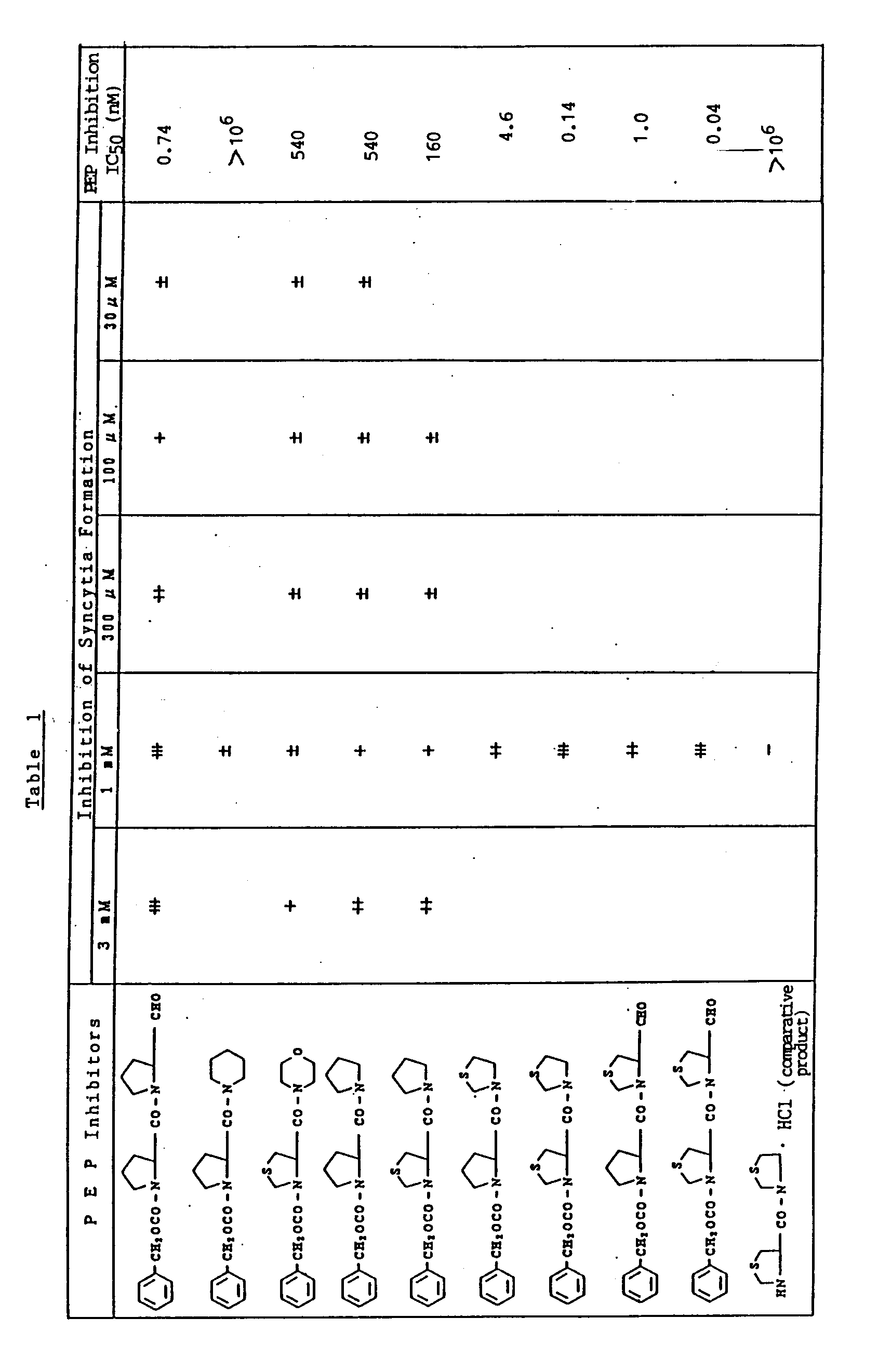

- From the above results, it is understood that the PEP inhibitors of this invention can inhibit the formation of syncytia and their inhibitory effects increase with their concentrations.
Claims (4)
- Process to prepare a peptide derivative with prolylendopeptidase inhibitory activity, useful as preventive and curative agent for acquired immune deficiency syndrome, of formula (I):


H - Y (III)
wherein X and Y have the same meanings as defined above, and carrying out the reaction in the presence of a condensing agent at a temperature between -10°C and 50°C and in an inert solvent. - Process accoring to claim 1, wherein said condensing agent is dicyclohexylcarbodiimide.
- Process according to claim 1, wherein said solvent is selected from ethers, aromatic hydrocarbons and alkyl halides.
- Process according to claim 1, wherein said solvent is selected from tetrahydrofuran, dioxane, benzene,dichloromethane and chloroform.
Applications Claiming Priority (2)
| Application Number | Priority Date | Filing Date | Title |
|---|---|---|---|
| JP185259/88 | 1988-07-25 | ||
| JP18525988 | 1988-07-25 |
Publications (3)
| Publication Number | Publication Date |
|---|---|
| EP0355409A2 EP0355409A2 (en) | 1990-02-28 |
| EP0355409A3 EP0355409A3 (en) | 1991-04-03 |
| EP0355409B1 true EP0355409B1 (en) | 1994-11-09 |
Family
ID=16167692
Family Applications (1)
| Application Number | Title | Priority Date | Filing Date |
|---|---|---|---|
| EP89113351A Expired - Lifetime EP0355409B1 (en) | 1988-07-25 | 1989-07-20 | Use of prolylendopeptidase inhibitors in the treatment of AIDS |
Country Status (7)
| Country | Link |
|---|---|
| EP (1) | EP0355409B1 (en) |
| JP (1) | JPH02124818A (en) |
| KR (1) | KR0124028B1 (en) |
| AT (1) | ATE113843T1 (en) |
| CA (1) | CA1335079C (en) |
| DE (1) | DE68919301T2 (en) |
| ES (1) | ES2065951T3 (en) |
Families Citing this family (3)
| Publication number | Priority date | Publication date | Assignee | Title |
|---|---|---|---|---|
| CA2089890A1 (en) * | 1991-06-20 | 1992-12-21 | Makoto Yoshihama | Prolyl endopeptidase inhibitors sna-115 and sna-115t, production thereof, and strain which produces said inhibitors |
| HUP9700442A1 (en) * | 1997-02-14 | 1999-09-28 | Chinoin Gyógyszer és Vegyészeti Termékek Gyára Rt. | Cyclic amide derivatives, pharmaceutical compositions containing them, process for producing them and their use |
| CN115778946B (en) * | 2022-11-04 | 2023-08-01 | 中国农业科学院兰州兽医研究所 | Application of Compound ZPP in the Preparation of Antiviral Drugs |
Family Cites Families (1)
| Publication number | Priority date | Publication date | Assignee | Title |
|---|---|---|---|---|
| JPS60188317A (en) * | 1984-03-09 | 1985-09-25 | Yakult Honsha Co Ltd | Antiamnestic agent |
-
1989
- 1989-07-11 CA CA000605307A patent/CA1335079C/en not_active Expired - Fee Related
- 1989-07-14 KR KR1019890010050A patent/KR0124028B1/en not_active Expired - Fee Related
- 1989-07-14 JP JP1181781A patent/JPH02124818A/en active Pending
- 1989-07-20 ES ES89113351T patent/ES2065951T3/en not_active Expired - Lifetime
- 1989-07-20 DE DE68919301T patent/DE68919301T2/en not_active Expired - Fee Related
- 1989-07-20 EP EP89113351A patent/EP0355409B1/en not_active Expired - Lifetime
- 1989-07-20 AT AT89113351T patent/ATE113843T1/en not_active IP Right Cessation
Also Published As
| Publication number | Publication date |
|---|---|
| EP0355409A2 (en) | 1990-02-28 |
| DE68919301T2 (en) | 1995-06-08 |
| EP0355409A3 (en) | 1991-04-03 |
| KR900001368A (en) | 1990-02-27 |
| CA1335079C (en) | 1995-04-04 |
| ATE113843T1 (en) | 1994-11-15 |
| JPH02124818A (en) | 1990-05-14 |
| DE68919301D1 (en) | 1994-12-15 |
| ES2065951T3 (en) | 1995-03-01 |
| KR0124028B1 (en) | 1997-11-27 |
Similar Documents
| Publication | Publication Date | Title |
|---|---|---|
| CA1209906A (en) | Pharmaceutical composition suitable for intestinal administration | |
| CN114057702A (en) | Novel inhibitor of coronavirus main protease and preparation method and application thereof | |
| US4687778A (en) | Anti-amnestic agent | |
| JPH03503635A (en) | Coumarins inhibit reverse transcriptase in humans | |
| EP0865788A1 (en) | Specific cyclooxygenase 2 inhibitor and anti-inflammatory agent | |
| KR20050120663A (en) | Long acting biologically active conjugates | |
| CN115745830B (en) | Binaphthyl dicarboxylic acid derivatives and preparation methods and applications thereof | |
| WO2022156620A1 (en) | Broad-spectrum coronavirus membrane fusion inhibitor and pharmaceutical use thereof | |
| JPS63310819A (en) | Antiretroviral sugar protein treatment inhibitor | |
| Davis et al. | Inhibition of the human immunodeficiency virus-1 protease and human immunodeficiency virus-1 replication by bathocuproine disulfonic acid CU1+ | |
| US5026726A (en) | Gossylic iminolactones and gossylic lactones and their anti-viral activities | |
| CA1335079C (en) | Preventive and curative agents for acquired immune deficiency syndrome (aids) | |
| JPH11500130A (en) | Antiviral triaza compounds | |
| SK103797A3 (en) | Mixture of compounds and pharmaceutical composition containing the same | |
| US5098927A (en) | Antiretroviral agent, method of use thereas, and method of preparation | |
| JP3949198B2 (en) | V-ATPase uncoupled H + pump inhibitor | |
| Fehrentz et al. | Statine based tripeptides as potent inhibitors of HIV-1 replication | |
| EP0762878B1 (en) | Use of a naphthalenesulfonic acid compound for inhibiting retroviral infection | |
| JPS63264527A (en) | Anti-aids virus agent | |
| CA2197207C (en) | Hiv protease inhibitor combination | |
| CN114053297A (en) | Application of alginic acid derivative in resisting coronavirus and diseases caused by coronavirus | |
| RU2281297C2 (en) | Polyanionic norbornan derivatives, method for production thereof and reproduction inhibitors of human immunogenicity virus based on the same | |
| EP0649426B1 (en) | Inhibitors of retroviral proteases | |
| US20040121963A1 (en) | Composition for inhibiting hiv activity extracted from paecilomyces sp. (tochu-kaso) j300 | |
| NO159082B (en) | ANALOGY PROCEDURE FOR THE PREPARATION OF THERAPEUTICALLY ACTIVE PHENANTREN METHANOL DERIVATIVES. |
Legal Events
| Date | Code | Title | Description |
|---|---|---|---|
| PUAI | Public reference made under article 153(3) epc to a published international application that has entered the european phase |
Free format text: ORIGINAL CODE: 0009012 |
|
| AK | Designated contracting states |
Kind code of ref document: A2 Designated state(s): AT BE CH DE ES FR GB GR IT LI LU NL SE |
|
| PUAL | Search report despatched |
Free format text: ORIGINAL CODE: 0009013 |
|
| AK | Designated contracting states |
Kind code of ref document: A3 Designated state(s): AT BE CH DE ES FR GB GR IT LI LU NL SE |
|
| 17P | Request for examination filed |
Effective date: 19910926 |
|
| 17Q | First examination report despatched |
Effective date: 19920218 |
|
| GRAA | (expected) grant |
Free format text: ORIGINAL CODE: 0009210 |
|
| AK | Designated contracting states |
Kind code of ref document: B1 Designated state(s): AT BE CH DE ES FR GB GR IT LI LU NL SE |
|
| REF | Corresponds to: |
Ref document number: 113843 Country of ref document: AT Date of ref document: 19941115 Kind code of ref document: T |
|
| REF | Corresponds to: |
Ref document number: 68919301 Country of ref document: DE Date of ref document: 19941215 |
|
| ITF | It: translation for a ep patent filed | ||
| EAL | Se: european patent in force in sweden |
Ref document number: 89113351.4 |
|
| REG | Reference to a national code |
Ref country code: GR Ref legal event code: FG4A Free format text: 3013933 |
|
| ET | Fr: translation filed | ||
| REG | Reference to a national code |
Ref country code: ES Ref legal event code: FG2A Ref document number: 2065951 Country of ref document: ES Kind code of ref document: T3 |
|
| PLBE | No opposition filed within time limit |
Free format text: ORIGINAL CODE: 0009261 |
|
| STAA | Information on the status of an ep patent application or granted ep patent |
Free format text: STATUS: NO OPPOSITION FILED WITHIN TIME LIMIT |
|
| 26N | No opposition filed | ||
| PGFP | Annual fee paid to national office [announced via postgrant information from national office to epo] |
Ref country code: SE Payment date: 19980707 Year of fee payment: 10 |
|
| PGFP | Annual fee paid to national office [announced via postgrant information from national office to epo] |
Ref country code: FR Payment date: 19980709 Year of fee payment: 10 |
|
| PGFP | Annual fee paid to national office [announced via postgrant information from national office to epo] |
Ref country code: GB Payment date: 19980713 Year of fee payment: 10 Ref country code: AT Payment date: 19980713 Year of fee payment: 10 |
|
| PGFP | Annual fee paid to national office [announced via postgrant information from national office to epo] |
Ref country code: LU Payment date: 19980720 Year of fee payment: 10 Ref country code: ES Payment date: 19980720 Year of fee payment: 10 |
|
| PGFP | Annual fee paid to national office [announced via postgrant information from national office to epo] |
Ref country code: DE Payment date: 19980724 Year of fee payment: 10 |
|
| PGFP | Annual fee paid to national office [announced via postgrant information from national office to epo] |
Ref country code: NL Payment date: 19980728 Year of fee payment: 10 |
|
| PGFP | Annual fee paid to national office [announced via postgrant information from national office to epo] |
Ref country code: GR Payment date: 19980731 Year of fee payment: 10 |
|
| PGFP | Annual fee paid to national office [announced via postgrant information from national office to epo] |
Ref country code: CH Payment date: 19980806 Year of fee payment: 10 |
|
| PGFP | Annual fee paid to national office [announced via postgrant information from national office to epo] |
Ref country code: BE Payment date: 19980914 Year of fee payment: 10 |
|
| PG25 | Lapsed in a contracting state [announced via postgrant information from national office to epo] |
Ref country code: LU Free format text: LAPSE BECAUSE OF NON-PAYMENT OF DUE FEES Effective date: 19990720 Ref country code: GB Free format text: LAPSE BECAUSE OF NON-PAYMENT OF DUE FEES Effective date: 19990720 Ref country code: AT Free format text: LAPSE BECAUSE OF NON-PAYMENT OF DUE FEES Effective date: 19990720 |
|
| PG25 | Lapsed in a contracting state [announced via postgrant information from national office to epo] |
Ref country code: ES Free format text: LAPSE BECAUSE OF NON-PAYMENT OF DUE FEES Effective date: 19990721 |
|
| PG25 | Lapsed in a contracting state [announced via postgrant information from national office to epo] |
Ref country code: SE Free format text: THE PATENT HAS BEEN ANNULLED BY A DECISION OF A NATIONAL AUTHORITY Effective date: 19990730 |
|
| PG25 | Lapsed in a contracting state [announced via postgrant information from national office to epo] |
Ref country code: LI Free format text: LAPSE BECAUSE OF NON-PAYMENT OF DUE FEES Effective date: 19990731 Ref country code: GR Free format text: LAPSE BECAUSE OF NON-PAYMENT OF DUE FEES Effective date: 19990731 Ref country code: FR Free format text: THE PATENT HAS BEEN ANNULLED BY A DECISION OF A NATIONAL AUTHORITY Effective date: 19990731 Ref country code: CH Free format text: LAPSE BECAUSE OF NON-PAYMENT OF DUE FEES Effective date: 19990731 Ref country code: BE Free format text: LAPSE BECAUSE OF NON-PAYMENT OF DUE FEES Effective date: 19990731 |
|
| BERE | Be: lapsed |
Owner name: YAKULT HONSHA K.K. Effective date: 19990731 |
|
| PG25 | Lapsed in a contracting state [announced via postgrant information from national office to epo] |
Ref country code: NL Free format text: LAPSE BECAUSE OF NON-PAYMENT OF DUE FEES Effective date: 20000201 |
|
| GBPC | Gb: european patent ceased through non-payment of renewal fee |
Effective date: 19990720 |
|
| REG | Reference to a national code |
Ref country code: CH Ref legal event code: PL |
|
| EUG | Se: european patent has lapsed |
Ref document number: 89113351.4 |
|
| NLV4 | Nl: lapsed or anulled due to non-payment of the annual fee |
Effective date: 20000201 |
|
| PG25 | Lapsed in a contracting state [announced via postgrant information from national office to epo] |
Ref country code: DE Free format text: LAPSE BECAUSE OF NON-PAYMENT OF DUE FEES Effective date: 20000503 |
|
| REG | Reference to a national code |
Ref country code: FR Ref legal event code: ST |
|
| REG | Reference to a national code |
Ref country code: ES Ref legal event code: FD2A Effective date: 20000810 |
|
| PG25 | Lapsed in a contracting state [announced via postgrant information from national office to epo] |
Ref country code: IT Free format text: LAPSE BECAUSE OF NON-PAYMENT OF DUE FEES Effective date: 20050720 |