EP0342048A2 - Hydrogen peroxide production method using platinum/palladium catalysts - Google Patents
Hydrogen peroxide production method using platinum/palladium catalysts Download PDFInfo
- Publication number
- EP0342048A2 EP0342048A2 EP89304825A EP89304825A EP0342048A2 EP 0342048 A2 EP0342048 A2 EP 0342048A2 EP 89304825 A EP89304825 A EP 89304825A EP 89304825 A EP89304825 A EP 89304825A EP 0342048 A2 EP0342048 A2 EP 0342048A2
- Authority
- EP
- European Patent Office
- Prior art keywords
- platinum
- palladium
- catalyst
- hydrogen peroxide
- hydrogen
- Prior art date
- Legal status (The legal status is an assumption and is not a legal conclusion. Google has not performed a legal analysis and makes no representation as to the accuracy of the status listed.)
- Ceased
Links
Images


Classifications
-
- B—PERFORMING OPERATIONS; TRANSPORTING
- B01—PHYSICAL OR CHEMICAL PROCESSES OR APPARATUS IN GENERAL
- B01J—CHEMICAL OR PHYSICAL PROCESSES, e.g. CATALYSIS OR COLLOID CHEMISTRY; THEIR RELEVANT APPARATUS
- B01J23/00—Catalysts comprising metals or metal oxides or hydroxides, not provided for in group B01J21/00
- B01J23/38—Catalysts comprising metals or metal oxides or hydroxides, not provided for in group B01J21/00 of noble metals
- B01J23/40—Catalysts comprising metals or metal oxides or hydroxides, not provided for in group B01J21/00 of noble metals of the platinum group metals
- B01J23/44—Palladium
-
- C—CHEMISTRY; METALLURGY
- C01—INORGANIC CHEMISTRY
- C01B—NON-METALLIC ELEMENTS; COMPOUNDS THEREOF; METALLOIDS OR COMPOUNDS THEREOF NOT COVERED BY SUBCLASS C01C
- C01B15/00—Peroxides; Peroxyhydrates; Peroxyacids or salts thereof; Superoxides; Ozonides
- C01B15/01—Hydrogen peroxide
- C01B15/029—Preparation from hydrogen and oxygen
-
- B—PERFORMING OPERATIONS; TRANSPORTING
- B01—PHYSICAL OR CHEMICAL PROCESSES OR APPARATUS IN GENERAL
- B01J—CHEMICAL OR PHYSICAL PROCESSES, e.g. CATALYSIS OR COLLOID CHEMISTRY; THEIR RELEVANT APPARATUS
- B01J21/00—Catalysts comprising the elements, oxides, or hydroxides of magnesium, boron, aluminium, carbon, silicon, titanium, zirconium, or hafnium
- B01J21/06—Silicon, titanium, zirconium or hafnium; Oxides or hydroxides thereof
- B01J21/08—Silica
-
- B—PERFORMING OPERATIONS; TRANSPORTING
- B01—PHYSICAL OR CHEMICAL PROCESSES OR APPARATUS IN GENERAL
- B01J—CHEMICAL OR PHYSICAL PROCESSES, e.g. CATALYSIS OR COLLOID CHEMISTRY; THEIR RELEVANT APPARATUS
- B01J23/00—Catalysts comprising metals or metal oxides or hydroxides, not provided for in group B01J21/00
- B01J23/38—Catalysts comprising metals or metal oxides or hydroxides, not provided for in group B01J21/00 of noble metals
- B01J23/40—Catalysts comprising metals or metal oxides or hydroxides, not provided for in group B01J21/00 of noble metals of the platinum group metals
- B01J23/42—Platinum
-
- B—PERFORMING OPERATIONS; TRANSPORTING
- B01—PHYSICAL OR CHEMICAL PROCESSES OR APPARATUS IN GENERAL
- B01J—CHEMICAL OR PHYSICAL PROCESSES, e.g. CATALYSIS OR COLLOID CHEMISTRY; THEIR RELEVANT APPARATUS
- B01J37/00—Processes, in general, for preparing catalysts; Processes, in general, for activation of catalysts
- B01J37/0009—Use of binding agents; Moulding; Pressing; Powdering; Granulating; Addition of materials ameliorating the mechanical properties of the product catalyst
- B01J37/0027—Powdering
- B01J37/0045—Drying a slurry, e.g. spray drying
Definitions
- the present invention relates to methods for producing hydrogen peroxide from the direct combination of hydrogen and oxygen.
- U.S. Patent No. 4,681,751 to Gosser describes a process for making hydrogen peroxide from hydrogen and oxygen using a palladium on carbon catalyst and superatmospheric pressure.
- the reaction medium contains substantially no organic component.
- the present invention is a process for making hydrogen peroxide from the direct combination of hydrogen and oxygen using a platinum/palladium catalyst in which the ratio of platinum to platinum plus palladium is optimized.
- the ratio is in the range of about 0.02 to about 0.2, on a weight basis.
- the drawing consists of four figures.
- the ratio of platinum to platinum plus palladium is a result-effective variable in the process, and that the process can be optimized by carefully controlling the ratio. It has been found that the optimum ratio is from about 0.02 to about 0.2 on a weight basis.
- the present invention is a direct combination process using (1) an aqueous reaction medium, having no organic component present in excess of about 2% by weight of the reaction medium; (2) a source of hydrogen ions; (3) either a bromide ion or chloride ion promoter; and a catalyst comprising platinum and palladium, the weight ratio of Pt to (Pt + Pd) being from about 0.02 to about 0.2.
- the platinum and palladium may be supported on an optional support.
- the support may be alumina, silica, carbon, and others well-known in the art.
- the bimetallic catalyst may be prepared from bulk material, colloids, salts, or by other routes well known to those knowledgeable in the art.
- An advantage of the bimetallic catalyst is its empirically observed resistance to reaction "upsets”.
- Supported Pt-Pd bimetallic catalysts for Examples 1, 2 and 3 were prepared using a two-step procedure.
- the first step involved the synthesis of aqueous bimetallic colloids (sols). Generally, these colloids contained very small (less than or equal to 100A) zerovalent Pt-Pd particles.
- the second step in the catalyst synthesis involved the deposition of these pre-formed zerovalent bimetallic particles onto a support, either by adsorption or by spray drying. The so-formed supported bimetallic catalysts were then heat treated in hydrogen at 200°C to form the active catalyst. Details of the procedure used to prepare the catalysts used in Examples 1, 2 and 3 follow.
- Platinum-palladium bimetallic colloids for Examples 1, 2 and 3 were prepared according to a method similar to that described in Turkevich et al., Proc, of VII Int. Congr. Catal. (Elsevier, New York, 1981) at page 160. All glassware was cleaned with aqua regia prior to use. The water was purified by distillation and then filtered through a water purification system equipped with mixed bed ion exchangers and an organic/colloid removal column. PdCl2 solutions and chloroplatinic acid solutions were made up at the specified molarities. Generally 1 mL of 1N HCl was added per 50 mL of water when making up the chloropalladic acid solution.
- the monometallic Pt sols (colloids) in Examples 1, 2 and 3 were prepared similarly, and a procedure for their preparation is found in 8th Simposio Iberoamericano de Catalysis , La Rabida Huelva, 1982 at p. 27.
- the monometallic Pd sols were prepared similarly, except that six hours of reflux is required to make the colloidal Pd particles. Additionally, the Pd sols do not require storage by refrigeration. A procedure for the preparation of colloidal Pd may be found in Science , Vol. 160, 1970 at p. 873.
- the powder was loaded into a quartz tube containing a medium-porosity fritted disc. This tube was put in a vertical Lindberg tube furnace.
- the flow meter was set at 70 mL/min and the sample was purged with helium for twenty minutes, after which the feed gas was switched to hydrogen, and allowed to flow for ten minutes before being heated to 200°C for one hour in hydrogen. It was then allowed to cool in the hydrogen atmosphere until room temperature was reached. The sample was then flushed with helium for twenty minutes. This material was then used as the active catalyst.
- the apparatus for these experiments was a nominally 400 mL autoclave containing a glass liner.
- the free space in the empty autoclave-liner combination was about 350 mL.
- the autoclave was mounted on a shaking table in a large metal barricade with facilities for adding the removing gases and monitoring the pressure and the temperature of the metal autoclave from outside of the barricade.
- the experiment was started by weighing the empty glass liner. A catalyst and 20 g of 0.1N aqueous HCl were added, and the liner was reweighed. The liner was placed in the autoclave and the autoclave was placed in a cooling jacket on the shaker table. Argon (about 1000 psi) was added to check for leaks.
- the pressure was reduced to about 5 psia and then about 360 psia H2 and about 1650 psia O2 were added. After about 15 minutes O2 was added to restore the total pressure to about 2000 psia. The shaking was started and continued for about three hours. The remaining gas was released and the vessel was filled to 50 psig with argon and vented three times to remove the last of the H2/O2 mixture. The liner was then removed from the autoclave and reweighed. A portion of the reaction mixture was titrated with potassium permanganate solution.
- the wt% H2O2 obtained from the titration and the weight gain can be used to calculate the selectivity as moles H2O2 formed divided by the sum of moles water formed and moles H2O2 formed. This value was multiplied by 100 to express it as a percentage in the synthesis Tables. Additional details of the individual experiments are given in the Tables. The results are shown graphically in correspondingly numbered Figures 1 to 4.
- Table 1-A Preparation of Colloids Used to Prepare Catalysts in Example 1 Prep. PdCl2 Sol'n. 3.4x10 ⁇ 2M H2PtCl6 ⁇ 6H2O Sol'n.
- the rest of the carbon supported catalysts were prepared by forming a slurry containing 380 mL of colloid with two grams of wide pore carbon (325 mesh) having a surface area of 560 m2/g. This slurry was stirred for one hour and then filtered through a 0.22 micrometer millipore filter. UV-VIS spectroscopy was used to demonstrate the absence of bimetallic colloid in the filtrate. The solid remaining on the filter was allowed to air dry and then was loaded into a quartz tube to carry out the hydrogen treatment procedure described in Example 1. The material collected after the hydrogen treatment was the active catalyst. Table 2-A Preparation of Colloids Used to Prepare Catalysts in Example 2 Prep. PdCl2 Sol'n.
- a series of Pt-Pd catalysts were prepared on silica using metal salts as the metal source.
- the relative amounts of PdCl2 and H2PtCl6 ⁇ 6H2O used are indicated in Table 4-A.
- the catalysts were prepared according to the following procedure. The water employed in the catalyst preparation was purified prior to use, as described previously. For each catalyst synthesis, the required amount of H2PtCl6 ⁇ 6H2O was weighed out and dissolved in 380 mL of water. The PdCl2 was also weighed out and added to 380 mL of water with the addition of 3 mL 1N HCl. The as-prepared PdCl2 and chloroplatinic acid solutions were combined and stirred for approximately ten minutes.
- aqueous colloidal dispersion of silica particles (commercially available from E. I. Du Pont de Nemours and Company under the registered trademark Ludox-HS-40) was added. This mixture was stirred for approximately 5 minutes and then spray dried using a Buchi laboratory scale spray dryer. Generally the spray drying was done using an inlet temperature of 220°C and an outlet temperature of 110°C. In Preps 4a-4g, the material collected from the spray drying was a light orange powder. Run 4H afforded a light yellow powder after spray drying. The powder was then subjected to a hydrogen treatment procedure similar to that described previously, except that 300°C was used. This material was used as the active catalyst.
Landscapes
- Chemical & Material Sciences (AREA)
- Organic Chemistry (AREA)
- Inorganic Chemistry (AREA)
- Engineering & Computer Science (AREA)
- Materials Engineering (AREA)
- Chemical Kinetics & Catalysis (AREA)
- Catalysts (AREA)
Abstract
Description
- The present invention relates to methods for producing hydrogen peroxide from the direct combination of hydrogen and oxygen.
- Methods for producing hydrogen peroxide from the direct combination of hydrogen and oxygen are known.
- U.S. Patent No. 4,681,751 to Gosser describes a process for making hydrogen peroxide from hydrogen and oxygen using a palladium on carbon catalyst and superatmospheric pressure. The reaction medium contains substantially no organic component.
- Allowed United States patent application Serial No. 932,360, filed November 19, 1986, discloses a direct combination process for the production of hydrogen peroxide. This application discloses the preparation and use of combination platinum/palladium catalysts.
- The present invention is a process for making hydrogen peroxide from the direct combination of hydrogen and oxygen using a platinum/palladium catalyst in which the ratio of platinum to platinum plus palladium is optimized. The ratio is in the range of about 0.02 to about 0.2, on a weight basis.
- The drawing consists of four figures.
- Figure 1 shows weight percentage H₂O₂ vs. Pt/(Pt + Pd), using an alumina support.
- Figure 2 shows weight percentage H₂O₂ vs. Pt/(Pt + Pd), using a carbon support.
- Figure 3 shows weight percentage H₂O₂ vs. Pt/(Pt + Pd), using a silica support.
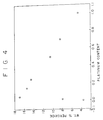
- Figure 4 shows weight percentage H₂O₂ vs. Pt/(Pt + Pd), using a silica support. The catalyst was prepared from metal salts.
- The production of hydrogen peroxide from the direct combination of hydrogen and oxygen using a combination of platinum/palladium supported catalyst and a bromide promoter is described in allowed U.S. Patent Application Serial No. 932,360, filed November 19, 1986, which is incorporated herein by reference.
- It has now been found that the ratio of platinum to platinum plus palladium is a result-effective variable in the process, and that the process can be optimized by carefully controlling the ratio. It has been found that the optimum ratio is from about 0.02 to about 0.2 on a weight basis.
- Accordingly, the present invention is a direct combination process using (1) an aqueous reaction medium, having no organic component present in excess of about 2% by weight of the reaction medium; (2) a source of hydrogen ions; (3) either a bromide ion or chloride ion promoter; and a catalyst comprising platinum and palladium, the weight ratio of Pt to (Pt + Pd) being from about 0.02 to about 0.2. The platinum and palladium may be supported on an optional support. The support may be alumina, silica, carbon, and others well-known in the art.
- The bimetallic catalyst may be prepared from bulk material, colloids, salts, or by other routes well known to those knowledgeable in the art. An advantage of the bimetallic catalyst is its empirically observed resistance to reaction "upsets".
- Further details regarding the preparation and use of the optimized catalyst in accordance with the present invention may be found in the following non-limiting examples and in the figures.
- Supported Pt-Pd bimetallic catalysts for Examples 1, 2 and 3 were prepared using a two-step procedure. The first step involved the synthesis of aqueous bimetallic colloids (sols). Generally, these colloids contained very small (less than or equal to 100A) zerovalent Pt-Pd particles. The second step in the catalyst synthesis involved the deposition of these pre-formed zerovalent bimetallic particles onto a support, either by adsorption or by spray drying. The so-formed supported bimetallic catalysts were then heat treated in hydrogen at 200°C to form the active catalyst. Details of the procedure used to prepare the catalysts used in Examples 1, 2 and 3 follow.
- Platinum-palladium bimetallic colloids for Examples 1, 2 and 3 were prepared according to a method similar to that described in Turkevich et al., Proc, of VII Int. Congr. Catal. (Elsevier, New York, 1981) at page 160. All glassware was cleaned with aqua regia prior to use. The water was purified by distillation and then filtered through a water purification system equipped with mixed bed ion exchangers and an organic/colloid removal column. PdCl₂ solutions and chloroplatinic acid solutions were made up at the specified molarities. Generally 1 mL of 1N HCl was added per 50 mL of water when making up the chloropalladic acid solution. Required aliquots of the above solutions were then used in the colloid synthesis. For each colloid synthesis, the specified amounts of PdCl₂ solution and chloroplatinic acid solution are shown in Tables 1-A, 2-A and 3-A along with the amounts of water and 3.4 x 10⁻² M sodium citrate solution used.
- All solutions were filtered through a 0.22 micrometer millipore filter prior to use. A round bottom flask was then charged with the specified amount of water. The water was brought to boiling with an electric heating mantle, and then the PdCl₂ solution and the chloroplatinic acid solution were added. The resulting solution was yellow. The solution was brought to boiling and then the sodium citrate solution was added. Generally, within fifteen minutes the solution became darker, and at the end of thirty minutes was completely black. This solution was refluxed for four hours, after which it was allowed to cool, and then transferred to a refrigerator for storage.
- The monometallic Pt sols (colloids) in Examples 1, 2 and 3 were prepared similarly, and a procedure for their preparation is found in 8th Simposio Iberoamericano de Catalysis, La Rabida Huelva, 1982 at p. 27.
- The monometallic Pd sols were prepared similarly, except that six hours of reflux is required to make the colloidal Pd particles. Additionally, the Pd sols do not require storage by refrigeration. A procedure for the preparation of colloidal Pd may be found in Science, Vol. 160, 1970 at p. 873.
- The synthesis of supported catalysts involved using 380 mL of bimetallic colloid prepared as described above. Specific synthesis details for each colloid are shown in Tables 1-A, 2-A and 3-A. Generally, 380 mL of a Pt-Pd colloid was stirred with 2 g of support (Sumitomo AKP-50 alumina having a surface area of about 12 m²/g for Example 1). The resulting mixture was then spray dried using a Buchi laboratory scale spray dryer. Generally, the spray drying was done using an inlet temperature of 220°C, and an outlet temperature of 110°C. The material collected from the spray drying procedure was a gray-brown powder. This powder was then given a hydrogen treatment according to the following procedure. The powder was loaded into a quartz tube containing a medium-porosity fritted disc. This tube was put in a vertical Lindberg tube furnace. The flow meter was set at 70 mL/min and the sample was purged with helium for twenty minutes, after which the feed gas was switched to hydrogen, and allowed to flow for ten minutes before being heated to 200°C for one hour in hydrogen. It was then allowed to cool in the hydrogen atmosphere until room temperature was reached. The sample was then flushed with helium for twenty minutes. This material was then used as the active catalyst.
- The apparatus for these experiments was a nominally 400 mL autoclave containing a glass liner. The free space in the empty autoclave-liner combination was about 350 mL. The autoclave was mounted on a shaking table in a large metal barricade with facilities for adding the removing gases and monitoring the pressure and the temperature of the metal autoclave from outside of the barricade. In each case, the experiment was started by weighing the empty glass liner. A catalyst and 20 g of 0.1N aqueous HCl were added, and the liner was reweighed. The liner was placed in the autoclave and the autoclave was placed in a cooling jacket on the shaker table. Argon (about 1000 psi) was added to check for leaks. The pressure was reduced to about 5 psia and then about 360 psia H₂ and about 1650 psia O₂ were added. After about 15 minutes O₂ was added to restore the total pressure to about 2000 psia. The shaking was started and continued for about three hours. The remaining gas was released and the vessel was filled to 50 psig with argon and vented three times to remove the last of the H₂/O₂ mixture. The liner was then removed from the autoclave and reweighed. A portion of the reaction mixture was titrated with potassium permanganate solution. The wt% H₂O₂ obtained from the titration and the weight gain can be used to calculate the selectivity as moles H₂O₂ formed divided by the sum of moles water formed and moles H₂O₂ formed. This value was multiplied by 100 to express it as a percentage in the synthesis Tables. Additional details of the individual experiments are given in the Tables. The results are shown graphically in correspondingly numbered Figures 1 to 4.
Table 1-A Preparation of Colloids Used to Prepare Catalysts in Example 1 Prep. PdCl₂ Sol'n. 3.4x10⁻²M H₂PtCl₆·6H₂O Sol'n. Sodium Citrate Water (mL) 1a 75 mL of 7.4 x 10⁻³M - 120 mL 945 1b 225 mL of 7.4 x 10⁻³M 0.9 mL of 4.8 x 10⁻³M 360 mL 2832 1c 75 mL of 7.4 x 10⁻³M 1.0 mL of 4.8 x 10⁻³M 120 mL 944 1d 675 mL of 7.4 x 10⁻³M 45 mL of 5.7 x 10⁻³M 1080 mL 8460 1e 65 mL of 7.4 x 10⁻³M 10 mL of 4.8 x 10⁻³M 120 mL 945 1f 300 mL of 3.7 x 10⁻³M 60 mL of 4.8 x 10⁻³M 360 mL 2700 1g 150 mL of 3.7 x 10⁻³M 60 mL of 4.8 x 10⁻³M 240 mL 1830 1h 150 mL of 3.7 x 10⁻³M 120 mL of 4.8 x 10⁻³M 360 mL 2790 1i - 180 mL of 4.8 x 10⁻³M 360 mL 2880 
- The preparation of carbon supported catalysts involved using 380 mL of colloid prepared as described above. The specific synthesis details for each colloid are shown in Table 2-A. The bimetallic particles were deposited onto the carbon support by adsorption except for Prep 2a in Table 2-A. In this case, the Pd was deposited onto the carbon by forming a slurry of colloid with carbon followed by spray drying. The spray drying was carried out as described in Example 1.
- The rest of the carbon supported catalysts were prepared by forming a slurry containing 380 mL of colloid with two grams of wide pore carbon (325 mesh) having a surface area of 560 m²/g. This slurry was stirred for one hour and then filtered through a 0.22 micrometer millipore filter. UV-VIS spectroscopy was used to demonstrate the absence of bimetallic colloid in the filtrate. The solid remaining on the filter was allowed to air dry and then was loaded into a quartz tube to carry out the hydrogen treatment procedure described in Example 1. The material collected after the hydrogen treatment was the active catalyst.
Table 2-A Preparation of Colloids Used to Prepare Catalysts in Example 2 Prep. PdCl₂ Sol'n. H₂PtCL₆·6H₂O Sol'n. 3.4x10⁻²M Sodium Citrate Water (mL) 2a 500 mL of 1.86 x 10⁻³M - 1000 mL 1000 2b 75 mL of 7.4 x 10⁻³M 1.0 mL of 4.8 x 10⁻³M 120 mL 944 2c 75 mL of 7.4 x 10⁻³M 5.0 mL of 4.8 x 10⁻³M 120 mL 940 2d 65 mL of 7.4 x 10⁻³M 10 mL of 4.8 x 10⁻³M 120 mL 945 2e 100 mL of 7.4 x 10⁻³M 20 mL of 3.7 x 10⁻³M 120 mL 900 2f 150 mL of 7.4 x 10⁻³M 60 mL of 3.7 x 10⁻³M 240 mL 1830 2g - 60 mL of 4.8 x 10⁻³M 120 mL 960 
- The synthesis of silica supported catalysts involved using 380 mL of colloid prepared as described above. The specific synthesis details for each colloid are shown in Table 3-A. Generally, 380 mL of colloid was mixed with 5 g of an aqueous colloidal dispersion of silica particles commercially available from E. I. du Pont de Nemours and Company under the registered trademark Ludox-HS-40. This mixture was stirred and then spray dired as described above. The material collected after spray drying was then treated in hydrogen as described previously. The material obtained after hydrogen treatment was the active catalyst.
Table 3-A Preparation of Colloids Used to Prepare Catalysts in Example 3 Prep. PdCl₂ Sol'n. H₂PtCL₆·6H₂O Sol'n. 3.4x10⁻²M Sodium Citrate Water (mL) 3a 75 mL of 7.4 x 10⁻³M - 120 mL 945 3b 225 mL of 7.4 x 10⁻³M 0.9 mL of 4.8 x 10⁻³M 360 mL 2832 3c 75 mL of 7.4 x 10⁻³M 1.0 mL of 4.8 x 10⁻³M 120 mL 944 3d 75 mL of 7.4 x 10⁻³M 5.0 mL of 4.8 x 10⁻³M 120 mL 940 3e 65 mL of 7.4 x 10⁻³M 10 mL of 4.8 x 10⁻³M 120 mL 945 3f 300 mL of 3.7 x 10⁻³M 60 mL of 4.8 x 10⁻³M 360 mL 2700 3g 150 mL of 3.7 x 10⁻³M 60 mL of 4.8 x 10⁻³M 240 mL 1830 3h - 180 mL of 4.8 x 10⁻³M 360 mL 2880 
- A series of Pt-Pd catalysts were prepared on silica using metal salts as the metal source. For each catalyst prepared, the relative amounts of PdCl₂ and H₂PtCl₆·6H₂O used are indicated in Table 4-A. The catalysts were prepared according to the following procedure. The water employed in the catalyst preparation was purified prior to use, as described previously. For each catalyst synthesis, the required amount of H₂PtCl₆·6H₂O was weighed out and dissolved in 380 mL of water. The PdCl₂ was also weighed out and added to 380 mL of water with the addition of 3 mL 1N HCl. The as-prepared PdCl₂ and chloroplatinic acid solutions were combined and stirred for approximately ten minutes. Next, 10 g of an aqueous colloidal dispersion of silica particles (commercially available from E. I. Du Pont de Nemours and Company under the registered trademark Ludox-HS-40) was added. This mixture was stirred for approximately 5 minutes and then spray dried using a Buchi laboratory scale spray dryer. Generally the spray drying was done using an inlet temperature of 220°C and an outlet temperature of 110°C. In Preps 4a-4g, the material collected from the spray drying was a light orange powder. Run 4H afforded a light yellow powder after spray drying. The powder was then subjected to a hydrogen treatment procedure similar to that described previously, except that 300°C was used. This material was used as the active catalyst.
Table 4-A Pt-Pd/SiO₂ From Metal Salts Preparation of Catalysts Used in Table 4-B Prep. Wt. PdCl₂ Used Wt. H₂PtCl₆·6H₂O Used 4a 0.0333 g - 4b 0.0667 g 0.0018 g 4c 0.0632 g 0.0052 g 4d 0.0567 g 0.0159 g 4e 0.0500 g 0.0265 g 4f 0.0320 g 0.0468 g 4g 0.0200 g 0.0743 g 4h - 0.0531 g 
Claims (4)
the improvement comprising using the platinum and palladium in amounts such that the weight ratio of platinum to platinum plus palladium is in the range of about 0.02 to about 0.2.
Applications Claiming Priority (2)
| Application Number | Priority Date | Filing Date | Title |
|---|---|---|---|
| US07/193,843 US4832938A (en) | 1988-05-13 | 1988-05-13 | Hydrogen peroxide production method using platinum/palladium catalysts |
| US193843 | 1988-05-13 |
Publications (2)
| Publication Number | Publication Date |
|---|---|
| EP0342048A2 true EP0342048A2 (en) | 1989-11-15 |
| EP0342048A3 EP0342048A3 (en) | 1990-12-12 |
Family
ID=22715246
Family Applications (1)
| Application Number | Title | Priority Date | Filing Date |
|---|---|---|---|
| EP19890304825 Ceased EP0342048A3 (en) | 1988-05-13 | 1989-05-12 | Hydrogen peroxide production method using platinum/palladium catalysts |
Country Status (11)
| Country | Link |
|---|---|
| US (1) | US4832938A (en) |
| EP (1) | EP0342048A3 (en) |
| KR (1) | KR890017171A (en) |
| CN (1) | CN1016959B (en) |
| AR (1) | AR246495A1 (en) |
| AU (1) | AU608976B2 (en) |
| BR (1) | BR8902234A (en) |
| CA (1) | CA1312720C (en) |
| NZ (1) | NZ229087A (en) |
| PT (1) | PT90542A (en) |
| TR (1) | TR24229A (en) |
Cited By (3)
| Publication number | Priority date | Publication date | Assignee | Title |
|---|---|---|---|---|
| WO1992004976A1 (en) * | 1990-09-25 | 1992-04-02 | E.I. Du Pont De Nemours And Company | Improved silica microspheres, method of improving attrition resistance and use |
| WO1992015520A1 (en) * | 1991-03-05 | 1992-09-17 | Solvay Interox | Direct synthesis of hydrogen peroxyde by heterogeneous catalysis, catalyst for said synthesis, and method of preparation of said catalyst |
| US20130081540A1 (en) * | 2011-09-30 | 2013-04-04 | Uchicago Argonne, Llc. | Low-cost method for fabricating palladium and palladium-alloy thin films on porous supports |
Families Citing this family (53)
| Publication number | Priority date | Publication date | Assignee | Title |
|---|---|---|---|---|
| US5352645A (en) * | 1989-04-14 | 1994-10-04 | E. I. Du Pont De Nemours And Company | Silica microspheres, method of improving attrition resistance and use |
| US5120524A (en) * | 1991-07-18 | 1992-06-09 | Kerr-Mcgee Corporation | Co-production of hydrogen peroxide and a useful ester |
| US5162166A (en) * | 1991-07-19 | 1992-11-10 | Kerr-Mcgee Corporation | Devices providing electrical energy from fuel/oxygen mixtures |
| US5169618A (en) * | 1992-01-13 | 1992-12-08 | Kerr-Mcgee Corporation | Process for producing hydrogen peroxide |
| US5906892A (en) * | 1993-08-09 | 1999-05-25 | The Trustees Of Princeton University | Electron acceptor compositions on polymer templates |
| US5512263A (en) * | 1994-05-06 | 1996-04-30 | The Dow Chemical Company | Method for chemical synthesis employing a composite membrane |
| CN1073645C (en) * | 1995-10-06 | 2001-10-24 | 陶氏化学公司 | Composite membrane and use thereof for chemical synthesis |
| BE1009767A3 (en) * | 1995-11-10 | 1997-08-05 | Dsm Nv | Process for the preparation of hydroxylammonium. |
| DE19642770A1 (en) | 1996-10-16 | 1998-04-23 | Basf Ag | Process for the production of hydrogen peroxide |
| US6346228B1 (en) * | 1999-02-19 | 2002-02-12 | Council Of Scientific And Industrial Research | Hydrophobic multicomponent catalyst useful for direct oxidation of hydrogen to hydrogen peroxide |
| DE19912733A1 (en) * | 1999-03-20 | 2000-09-21 | Degussa | Process for the production of hydrogen peroxide by direct synthesis |
| US6448199B1 (en) | 2000-09-05 | 2002-09-10 | Council Of Scientific & Industrial Research | Hydrophobic composite Pd-membrane catalyst useful for non-hazardous direct oxidation of hydrogen by oxygen to hydrogen peroxide and method of its preparation |
| US6432376B1 (en) | 2000-09-05 | 2002-08-13 | Council Of Scientific & Industrial Research | Membrane process for the production of hydrogen peroxide by non-hazardous direct oxidation of hydrogen by oxygen using a novel hydrophobic composite Pd-membrane catalyst |
| US6534440B2 (en) * | 2000-11-29 | 2003-03-18 | Council Of Scientific And Industrial Research | Process for the activation of a metallic palladium based catalyst useful for the direct oxidation of hydrogen to hydrogen peroxide |
| US7115192B1 (en) | 2001-05-07 | 2006-10-03 | Uop Llc | Apparatus and process for the synthesis of hydrogen peroxide directly from hydrogen and oxygen |
| US6713036B1 (en) * | 2001-05-07 | 2004-03-30 | Uop Llc | Process for mixing and reacting two or more fluids |
| US20060131161A1 (en) * | 2001-05-07 | 2006-06-22 | Towler Gavin P | Air sanitation with hydrogen peroxide |
| US6768013B1 (en) | 2001-06-15 | 2004-07-27 | Uop Llc | Intrinsically safe oxidation process |
| DE10134470A1 (en) * | 2001-07-16 | 2003-01-30 | Basf Ag | Process for the production of hydrogen peroxide from hydrogen and oxygen |
| ITMI20011688A1 (en) * | 2001-08-02 | 2003-02-02 | Enichem Spa | CATALYST AND ITS USE IN THE SYNTHESIS OF OXYGEN WATER |
| DE10153546A1 (en) * | 2001-10-30 | 2003-05-22 | Degussa | Direct synthesis of hydrogen peroxide and its integration in oxidation processes |
| ES2378875T3 (en) * | 2002-03-14 | 2012-04-18 | Repsol Qu�?Mica S.A. | Procedure for obtaining hydrogen peroxide |
| DE60330746D1 (en) * | 2003-02-03 | 2010-02-11 | Repsol Quimica Sa | Integrated process for the selective oxidation of organic compounds |
| US20060102492A1 (en) * | 2003-02-19 | 2006-05-18 | Corradi Jason T | In situ generation of hydrogen peroxide |
| US7067103B2 (en) * | 2003-03-28 | 2006-06-27 | Headwaters Nanokinetix, Inc. | Direct hydrogen peroxide production using staged hydrogen addition |
| US7192562B1 (en) | 2003-04-17 | 2007-03-20 | Uop Llc | Hydrogen-oxygen mixer-sparger |
| US7442350B1 (en) | 2003-04-17 | 2008-10-28 | Uop Llc | Plate design for mixer sparger |
| US7569508B2 (en) * | 2004-11-17 | 2009-08-04 | Headwaters Technology Innovation, Llc | Reforming nanocatalysts and method of making and using such catalysts |
| US7045479B2 (en) * | 2003-07-14 | 2006-05-16 | Headwaters Nanokinetix, Inc. | Intermediate precursor compositions used to make supported catalysts having a controlled coordination structure and methods for preparing such compositions |
| US7011807B2 (en) * | 2003-07-14 | 2006-03-14 | Headwaters Nanokinetix, Inc. | Supported catalysts having a controlled coordination structure and methods for preparing such catalysts |
| US7655137B2 (en) * | 2003-07-14 | 2010-02-02 | Headwaters Technology Innovation, Llc | Reforming catalysts having a controlled coordination structure and methods for preparing such compositions |
| US7144565B2 (en) * | 2003-07-29 | 2006-12-05 | Headwaters Nanokinetix, Inc. | Process for direct catalytic hydrogen peroxide production |
| US7029647B2 (en) * | 2004-01-27 | 2006-04-18 | Velocys, Inc. | Process for producing hydrogen peroxide using microchannel technology |
| US7632775B2 (en) | 2004-11-17 | 2009-12-15 | Headwaters Technology Innovation, Llc | Multicomponent nanoparticles formed using a dispersing agent |
| US7045481B1 (en) | 2005-04-12 | 2006-05-16 | Headwaters Nanokinetix, Inc. | Nanocatalyst anchored onto acid functionalized solid support and methods of making and using same |
| GB0514075D0 (en) * | 2005-07-11 | 2005-08-17 | Cardiff University | Improvements in catalysts |
| US7396795B2 (en) * | 2005-08-31 | 2008-07-08 | Headwaters Technology Innovation, Llc | Low temperature preparation of supported nanoparticle catalysts having increased dispersion |
| US7288500B2 (en) * | 2005-08-31 | 2007-10-30 | Headwaters Technology Innovation, Llc | Selective hydrogenation of nitro groups of halonitro aromatic compounds |
| US7935652B2 (en) * | 2005-09-15 | 2011-05-03 | Headwaters Technology Innovation, Llc. | Supported nanoparticle catalysts manufactured using caged catalyst atoms |
| US7892299B2 (en) * | 2005-09-15 | 2011-02-22 | Headwaters Technology Innovation, Llc | Methods of manufacturing fuel cell electrodes incorporating highly dispersed nanoparticle catalysts |
| US7514476B2 (en) * | 2006-03-17 | 2009-04-07 | Headwaters Technology Innovation, Llc | Stable concentrated metal colloids and methods of making same |
| US7718710B2 (en) * | 2006-03-17 | 2010-05-18 | Headwaters Technology Innovation, Llc | Stable concentrated metal colloids and methods of making same |
| US7632774B2 (en) * | 2006-03-30 | 2009-12-15 | Headwaters Technology Innovation, Llc | Method for manufacturing supported nanocatalysts having an acid-functionalized support |
| US7541309B2 (en) * | 2006-05-16 | 2009-06-02 | Headwaters Technology Innovation, Llc | Reforming nanocatalysts and methods of making and using such catalysts |
| US7604719B2 (en) * | 2006-05-25 | 2009-10-20 | Uop Llc | In situ generation of hydrogen peroxide |
| US7563742B2 (en) | 2006-09-22 | 2009-07-21 | Headwaters Technology Innovation, Llc | Supported nickel catalysts having high nickel loading and high metal dispersion and methods of making same |
| US7601668B2 (en) | 2006-09-29 | 2009-10-13 | Headwaters Technology Innovation, Llc | Methods for manufacturing bi-metallic catalysts having a controlled crystal face exposure |
| EP2000205A1 (en) * | 2007-06-01 | 2008-12-10 | Repsol Ypf S.A. | Process to obtain hydrogen peroxide |
| US8182776B2 (en) | 2010-08-10 | 2012-05-22 | Electric Power Research Institute, Inc. | Process for operating a fossil fuel fired power plant |
| US9610573B2 (en) | 2011-07-15 | 2017-04-04 | Solvay Sa | Process to obtain hydrogen peroxide, and catalyst supports for the same process |
| CN104039442B (en) * | 2011-11-07 | 2017-02-22 | 索尔维公司 | Catalysts comprising zirconia for the direct synthesis of hydrogen peroxide |
| KR102055389B1 (en) | 2013-11-26 | 2019-12-12 | 에스케이이노베이션 주식회사 | Method for Preparing Catalyst Having Pt-Pd Deposited Polymer Electrolyte Multi-layer Treated with Sulfuric Acid |
| SI25590A (en) | 2018-01-15 | 2019-07-31 | Univerza V Ljubljani | Process for preparation of isotope labeled hydrogen peroxide |
Family Cites Families (7)
| Publication number | Priority date | Publication date | Assignee | Title |
|---|---|---|---|---|
| NL294400A (en) * | 1962-06-21 | |||
| FR1366253A (en) * | 1963-06-21 | 1964-07-10 | Ici Ltd | Manufacturing process of hydrogen peroxide |
| JPS514097A (en) * | 1974-07-02 | 1976-01-13 | Tokuyama Soda Kk | Kasankasuisono seizohoho |
| JPS5271000A (en) * | 1975-12-10 | 1977-06-13 | Tokuyama Soda Co Ltd | Production of hydrogen peroxide |
| DE3462598D1 (en) * | 1983-06-22 | 1987-04-16 | Du Pont | Catalytic process for making h2o2 from hydrogen and oxygen |
| US4681751A (en) * | 1983-06-22 | 1987-07-21 | E. I. Du Pont De Nemours And Company | Catalytic process for making H2 O2 from hydrogen and oxygen |
| US4772458A (en) * | 1986-11-19 | 1988-09-20 | E. I. Du Pont De Nemours And Company | Catalytic process for making hydrogen peroxide from hydrogen and oxygen employing a bromide promoter |
-
1988
- 1988-05-13 US US07/193,843 patent/US4832938A/en not_active Expired - Lifetime
-
1989
- 1989-05-11 NZ NZ229087A patent/NZ229087A/en unknown
- 1989-05-12 AU AU34760/89A patent/AU608976B2/en not_active Ceased
- 1989-05-12 BR BR898902234A patent/BR8902234A/en active Search and Examination
- 1989-05-12 AR AR89313922A patent/AR246495A1/en active
- 1989-05-12 PT PT90542A patent/PT90542A/en not_active Application Discontinuation
- 1989-05-12 CA CA000599580A patent/CA1312720C/en not_active Expired - Fee Related
- 1989-05-12 EP EP19890304825 patent/EP0342048A3/en not_active Ceased
- 1989-05-13 CN CN89104296A patent/CN1016959B/en not_active Expired
- 1989-05-13 KR KR1019890006445A patent/KR890017171A/en not_active Withdrawn
- 1989-05-15 TR TR89/0423A patent/TR24229A/en unknown
Cited By (6)
| Publication number | Priority date | Publication date | Assignee | Title |
|---|---|---|---|---|
| WO1992004976A1 (en) * | 1990-09-25 | 1992-04-02 | E.I. Du Pont De Nemours And Company | Improved silica microspheres, method of improving attrition resistance and use |
| WO1992015520A1 (en) * | 1991-03-05 | 1992-09-17 | Solvay Interox | Direct synthesis of hydrogen peroxyde by heterogeneous catalysis, catalyst for said synthesis, and method of preparation of said catalyst |
| BE1004650A3 (en) * | 1991-03-05 | 1993-01-05 | Interox Internat Sa | Summary direct hydrogen peroxide catalyzed heterogeneous catalyst for synthesis thereof and method of preparation thereof catalyst. |
| US5447706A (en) * | 1991-03-05 | 1995-09-05 | Solvay Interox | Direct synthesis of hydrogen peroxide by heterogeneous catalysis, catalyst for the said synthesis and method of preparation of the said catalyst |
| US20130081540A1 (en) * | 2011-09-30 | 2013-04-04 | Uchicago Argonne, Llc. | Low-cost method for fabricating palladium and palladium-alloy thin films on porous supports |
| US8585807B2 (en) * | 2011-09-30 | 2013-11-19 | Uchicago Argonne, Llc | Low-cost method for fabricating palladium and palladium-alloy thin films on porous supports |
Also Published As
| Publication number | Publication date |
|---|---|
| NZ229087A (en) | 1990-08-28 |
| KR890017171A (en) | 1989-12-15 |
| AU608976B2 (en) | 1991-04-18 |
| TR24229A (en) | 1991-07-03 |
| CA1312720C (en) | 1993-01-19 |
| CN1037874A (en) | 1989-12-13 |
| EP0342048A3 (en) | 1990-12-12 |
| CN1016959B (en) | 1992-06-10 |
| AR246495A1 (en) | 1994-08-31 |
| AU3476089A (en) | 1989-11-16 |
| US4832938A (en) | 1989-05-23 |
| BR8902234A (en) | 1990-01-09 |
| PT90542A (en) | 1989-11-30 |
Similar Documents
| Publication | Publication Date | Title |
|---|---|---|
| EP0342048A2 (en) | Hydrogen peroxide production method using platinum/palladium catalysts | |
| US4772458A (en) | Catalytic process for making hydrogen peroxide from hydrogen and oxygen employing a bromide promoter | |
| EP0102934B1 (en) | A method in the production of hydrogen peroxide | |
| EP1160195B1 (en) | Process for the continuous production of hydrogen peroxide in organic solvents, using a hydrogen concentration smaller than 4,5%Vol. and an oxigen concentration smaller than 21,5%Vol. | |
| US6387346B1 (en) | Process for producing hydrogen peroxide by direct synthesis | |
| JP5129423B2 (en) | Method for producing hydrogen peroxide | |
| AU670058B2 (en) | Production of hydrogen peroxide | |
| KR100445847B1 (en) | Catalyst and process for the direct synthesis of hydrogen peroxide | |
| DE68917255T2 (en) | Hydrogen peroxide production. | |
| JP4108132B2 (en) | Process for producing aromatic amines by gas phase hydrogenation | |
| EP0141596B1 (en) | Platinum catalyst supported on hydrophobic,cristalline silica and coated with a water-repellant,gas-permeable polymer. | |
| KR102310640B1 (en) | Controlled Pressure Hydrothermal Treatment of ODH Catalysts | |
| JP2004528261A (en) | Direct synthesis of hydrogen peroxide in multicomponent solvent systems | |
| CA2389428C (en) | Method for producing hydrogen peroxide | |
| US7166557B2 (en) | Process for the preparation of a microspheroidal catalyst | |
| EP0647611B1 (en) | Process for producing unsaturated glycol diester | |
| JP2732262B2 (en) | How to purify arsine | |
| JPS5811042A (en) | Catalyst for production of trichlorosilane and production thereof | |
| SU973152A1 (en) | Catalyst for hydrochlorination of acetylene | |
| JPH0825929B2 (en) | Method for separating iodine and its compounds from carbonylation products obtained during carbonylation of dimethyl ether, methyl acetate or methanol | |
| JPH0453585B2 (en) | ||
| Corma et al. | Metal dispersity and activity for methylcyclohexane dehydrogenation on Pt/NaY zeolite | |
| JP2700398B2 (en) | Hydride gas purification method | |
| JPH02152973A (en) | Production of dibenzofurans |
Legal Events
| Date | Code | Title | Description |
|---|---|---|---|
| PUAI | Public reference made under article 153(3) epc to a published international application that has entered the european phase |
Free format text: ORIGINAL CODE: 0009012 |
|
| AK | Designated contracting states |
Kind code of ref document: A2 Designated state(s): CH DE ES GB GR LI |
|
| PUAL | Search report despatched |
Free format text: ORIGINAL CODE: 0009013 |
|
| AK | Designated contracting states |
Kind code of ref document: A3 Designated state(s): CH DE ES GB GR LI |
|
| 17P | Request for examination filed |
Effective date: 19901212 |
|
| 17Q | First examination report despatched |
Effective date: 19920724 |
|
| STAA | Information on the status of an ep patent application or granted ep patent |
Free format text: STATUS: THE APPLICATION HAS BEEN REFUSED |
|
| 18R | Application refused |
Effective date: 19930813 |