EP0337945A1 - Monoketo-pyrrolopyrrole - Google Patents
Monoketo-pyrrolopyrrole Download PDFInfo
- Publication number
- EP0337945A1 EP0337945A1 EP89810253A EP89810253A EP0337945A1 EP 0337945 A1 EP0337945 A1 EP 0337945A1 EP 89810253 A EP89810253 A EP 89810253A EP 89810253 A EP89810253 A EP 89810253A EP 0337945 A1 EP0337945 A1 EP 0337945A1
- Authority
- EP
- European Patent Office
- Prior art keywords
- alkyl
- group
- phenyl
- hydrogen
- halogen
- Prior art date
- Legal status (The legal status is an assumption and is not a legal conclusion. Google has not performed a legal analysis and makes no representation as to the accuracy of the status listed.)
- Withdrawn
Links
Classifications
-
- C—CHEMISTRY; METALLURGY
- C07—ORGANIC CHEMISTRY
- C07D—HETEROCYCLIC COMPOUNDS
- C07D487/00—Heterocyclic compounds containing nitrogen atoms as the only ring hetero atoms in the condensed system, not provided for by groups C07D451/00 - C07D477/00
- C07D487/02—Heterocyclic compounds containing nitrogen atoms as the only ring hetero atoms in the condensed system, not provided for by groups C07D451/00 - C07D477/00 in which the condensed system contains two hetero rings
- C07D487/04—Ortho-condensed systems
-
- C—CHEMISTRY; METALLURGY
- C07—ORGANIC CHEMISTRY
- C07D—HETEROCYCLIC COMPOUNDS
- C07D487/00—Heterocyclic compounds containing nitrogen atoms as the only ring hetero atoms in the condensed system, not provided for by groups C07D451/00 - C07D477/00
- C07D487/02—Heterocyclic compounds containing nitrogen atoms as the only ring hetero atoms in the condensed system, not provided for by groups C07D451/00 - C07D477/00 in which the condensed system contains two hetero rings
-
- C—CHEMISTRY; METALLURGY
- C07—ORGANIC CHEMISTRY
- C07D—HETEROCYCLIC COMPOUNDS
- C07D487/00—Heterocyclic compounds containing nitrogen atoms as the only ring hetero atoms in the condensed system, not provided for by groups C07D451/00 - C07D477/00
- C07D487/12—Heterocyclic compounds containing nitrogen atoms as the only ring hetero atoms in the condensed system, not provided for by groups C07D451/00 - C07D477/00 in which the condensed system contains three hetero rings
- C07D487/14—Ortho-condensed systems
-
- C—CHEMISTRY; METALLURGY
- C09—DYES; PAINTS; POLISHES; NATURAL RESINS; ADHESIVES; COMPOSITIONS NOT OTHERWISE PROVIDED FOR; APPLICATIONS OF MATERIALS NOT OTHERWISE PROVIDED FOR
- C09B—ORGANIC DYES OR CLOSELY-RELATED COMPOUNDS FOR PRODUCING DYES, e.g. PIGMENTS; MORDANTS; LAKES
- C09B57/00—Other synthetic dyes of known constitution
- C09B57/004—Diketopyrrolopyrrole dyes
-
- G—PHYSICS
- G03—PHOTOGRAPHY; CINEMATOGRAPHY; ANALOGOUS TECHNIQUES USING WAVES OTHER THAN OPTICAL WAVES; ELECTROGRAPHY; HOLOGRAPHY
- G03G—ELECTROGRAPHY; ELECTROPHOTOGRAPHY; MAGNETOGRAPHY
- G03G5/00—Recording-members for original recording by exposure, e.g. to light, to heat or to electrons; Manufacture thereof; Selection of materials therefor
- G03G5/02—Charge-receiving layers
- G03G5/04—Photoconductive layers; Charge-generation layers or charge-transporting layers; Additives therefor; Binders therefor
- G03G5/06—Photoconductive layers; Charge-generation layers or charge-transporting layers; Additives therefor; Binders therefor characterised by the photoconductive material being organic
- G03G5/0622—Heterocyclic compounds
- G03G5/0644—Heterocyclic compounds containing two or more hetero rings
- G03G5/0646—Heterocyclic compounds containing two or more hetero rings in the same ring system
- G03G5/0648—Heterocyclic compounds containing two or more hetero rings in the same ring system containing two relevant rings
-
- G—PHYSICS
- G03—PHOTOGRAPHY; CINEMATOGRAPHY; ANALOGOUS TECHNIQUES USING WAVES OTHER THAN OPTICAL WAVES; ELECTROGRAPHY; HOLOGRAPHY
- G03G—ELECTROGRAPHY; ELECTROPHOTOGRAPHY; MAGNETOGRAPHY
- G03G5/00—Recording-members for original recording by exposure, e.g. to light, to heat or to electrons; Manufacture thereof; Selection of materials therefor
- G03G5/02—Charge-receiving layers
- G03G5/04—Photoconductive layers; Charge-generation layers or charge-transporting layers; Additives therefor; Binders therefor
- G03G5/06—Photoconductive layers; Charge-generation layers or charge-transporting layers; Additives therefor; Binders therefor characterised by the photoconductive material being organic
- G03G5/0622—Heterocyclic compounds
- G03G5/0644—Heterocyclic compounds containing two or more hetero rings
- G03G5/0646—Heterocyclic compounds containing two or more hetero rings in the same ring system
- G03G5/065—Heterocyclic compounds containing two or more hetero rings in the same ring system containing three relevant rings
Definitions
- the present invention relates to new 1-keto-4-thioketo or 1-keto-4-mercapto and 1-keto-4-amino-pyrrolo [3,4-c] pyrroles and their use for dyeing high molecular weight organic Material or as photoconductive substances, as well as the intermediates for their production.
- 1,4-Diketo-pyrrolo [3,4-c] pyrroles and their use as pigments are e.g. known from US 4,415,685, US 4,579,949, US 4,720,305, US 4,659,775 and EP-A-232 222.
- 1,4-Dithioketo-pyrrolo [3,4-c] pyrroles and their suitability as photoconductive substances are described, for example, in US Pat. No. 4,632,893 and US Pat. No. 4,760,004.
- keto group of 1,4-diketo-pyrrolo [3,4-c] pyrrole can surprisingly be replaced without ring opening, with new interesting monoketo-pyrrolopyrroles being obtained.
- These new products can be used as colorants for coloring high molecular weight organic material, especially synthetic polymers, preferably polyolefins, polyesters and polyamides, and, especially if the keto group is replaced by a thioketo group (which was previously not possible), also for incorporation into Photoelectric recording materials are used as photoconductive substances.
- the present invention accordingly relates to pyrrolopyrroles of the formulas or wherein A and B are independently carbocyclic or heterocyclic aromatic radicals, acyclic or cyclic aliphatic radicals or araliphatic radicals, Q is a divalent carbocyclic or heterocyclic aromatic, acyclic or cyclic aliphatic or araliphatic radical, E is a direct bond or a group -CO- or -CS- is, X is a group -SR or -NRR ', where R and R' independently of one another are hydrogen, carbocyclic or heterocyclic aromatic radicals, acyclic or cyclic aliphatic radicals or araliphatic radicals and R 'is additionally a group -Q-halogen or -Q-EY- (C1-C5-alkyl), in which YO or S means, or R and R 'with the N atom to which they are attached form a 5- or 6-membered heterocyclic radical
- A, B, R and R ′ represent carbocyclic aromatic radicals, then e.g. mono-, bi-, tri- or tetracyclic, especially mono- or bicyclic radicals, such as phenyl, diphenyl or naphthyl.
- A, B, R and R ' are heterocyclic aromatic radicals, then for example mono- to tricyclic. These can be purely heterocyclic or contain a heterocyclic ring and one or more fused-on benzene rings, where they can in each case be bonded both via the heterocyclic and via the carbocyclic part.
- heterocyclic aromatic radicals are pyridyl, pyrimidyl, pyrazinyl, triazinyl, furyl, pyrrolyl, thiophenyl, quinolyl, coumarinyl, benzofuryl, Benzimidazolyl, benzoxazolyl, dibenzofuryl, benzothiophenyl, dibenzothiophenyl, indolyl, carbazolyl, pyrazolyl, imidazolyl, oxazolyl, isoxazolyl, thiazolyl, indazolyl, benzthiazolyl, pyridazinyl, quinolinyl, quinazolylyl, quinoxylyl Sulfobenzoekladyl, maleimidyl, Naphtharidinyl, benzimidazolonyl, benzoxazolonyl, Benzthiazolonyl, Benzthiazothionyl
- A, B, R and R ′ represent acyclic aliphatic radicals, then e.g. branched or unbranched, saturated or unsaturated aliphatic radicals, in particular C1-C18-alkyl groups, such as methyl, ethyl, n-propyl, isopropyl, n-butyl, sec.-butyl, tert.-butyl, tert.-amyl, n-pentyl , n-Hexyl, n-octyl, 1,1,3,3-tetramethylbutyl, nonyl, decyl, undecyl, dodecyl, tetradecyl, hexadecyl and octadecyl, or C2-C12-alkenyl groups, such as vinyl, allyl, 1-propenyl, 1 -Methylvinyl, 2-butenyl, 2-pentenyl, 3-hex
- cyclic aliphatic radicals A, B, R and R ′ mean e.g. C5-C6-cycloalkyl, such as cyclopentyl or in particular cyclohexyl.
- araliphatic radicals mean A, B, R and R 'for example C7-C18 aralkyl and in particular 1-phenylethyl, 1,1-dimethylbenzyl, 2-phenylethyl or especially benzyl.
- acyclic and cyclic aliphatic radicals can also have conventional non-water-solubilizing substituents, e.g. those listed under items 1, 3 to 16, 18 and 19.
- Q is preferably a group of the formulas and, if E is a direct bond, preferably a group of the formulas IV or V, wherein in the formulas III to V R7 and R8 independently of one another are hydrogen, C1-C5-alkyl, C5-C8-cycloalkyl, unsubstituted or by halogen, hydroxy , C1-C5-alkyl or C1-C5-alkoxy or phenoxy substituted phenyl or benzyl or one of the groups or - (CH2 S is (C1-C5alkyl), R9, R10, R11 and R12 independently of one another are hydrogen, C1-C5-alkyl, C5-C6-cycloalkyl, phenyl or benzyl which is unsubstituted or substituted by halogen, hydroxy, C1-C5-alkyl or C1-C5-
- radicals Q of the formula III are and CH- (CH2 SCH3.
- radicals Q of the formula IV are examples of radicals Q of the formula IV.
- radicals Q of the formula V are examples of radicals Q of the formula V.
- pyrrolopyrroles of the formulas I or II in which A and B are independently one of the groups mean in which R15 and R16 independently of one another hydrogen, halogen, nitro, carbamoyl, cyano, trifluoromethyl, C2-C13-alkylcarbamoyl, C1-C12-alkyl, C1-C12-alkoxy, C1-C12-alkylmercapto, C2-C13-alkoxycarbonyl, C2-C13-alkanoylamino, C1-C12-monoalkylamino, C2-C24-dialkylamino, mono- (C5-C7-cycloalkyl) -amino, di- (C5-C7-cycloalkyl) -amino, N-pyrrolidino, N-piperidino, N-morpholino, phenyl, phenoxy, phenylmercapto, phenoxycarbonyl or phen
- C1-C5 alkyl groups are methyl, ethyl, n-propyl, isopropyl, n-butyl, sec-butyl, tert-butyl, n-pentyl and tert-amyl, and of C1-C12 alkyl groups additionally e.g. nor n-hexyl, 1,1,3,3-tetramethylbutyl, n-heptyl, n-octyl, nonyl, decyl, undecyl and dodecyl.
- C5-C6 cycloalkyl groups are cyclopentyl and especially cyclohexyl.
- C1-C5 alkoxy groups are, for example: methoxy, ethoxy, propoxy, isopropoxy, n-butoxy, sec.-butoxy, tert.-butoxy, n-pentyloxy and tert.-amyloxy and C1-C12-alkoxy groups in addition e.g. nor n-hexyloxy, n-heptyloxy, n-octyloxy, decyloxy and dodecyloxy.
- C1-C5 alkylmercapto means e.g. Methylmercapto, ethylmercapto, propylmercapto, isopropylmercapto, n-butylmercapto, sec.-butylmercapto, tert.-butylmercapto and tert.-amylmercapto.
- C2-C13-alkylcarbamoyl groups are N-methylcarbamoyl, N-ethylcarbamoyl, N, N-dimethylcarbamoyl, N-butylcarbamoyl, N, N-dibutylcarbamoyl and N, N-dihexylcarbamoyl.
- C1-C12 alkylmercapto means e.g. Methylmercapto, ethylmercapto, propylmercapto, butylmercapto, n-pentylmercapto, tert-amylmercapto, n-hexylmercapto, decylmercapto and dodecylmercapto.
- C2-C13 alkoxycarbonyl groups represent e.g. Methoxy, ethoxy, propoxy, isopropoxy, n-butoxy, tert-butoxy, n-hexyloxy, n-octyloxy and dodecyloxy-carbonyl.
- C2-C13 alkanoylamino is e.g. Acetylamino, propionylamino, butyrylamino.
- C1-C12-monoalkylamino means, for example, methylamino, ethylamino, isopropylamino, n-butylamino, n-octylamino and n-decylamino.
- Mono- (C5-C7-cycloalkyl) amino means e.g. Cyclohexylamino.
- C1-C12 dialkylamino means e.g. Dimethylamino, diethylamino, dibutylamino and dihexylamino.
- Di- (C5-C7-cycloalkyl) amino means e.g. Dicyclohexylamino.
- Halogen is e.g. Fluorine, bromine and especially chlorine.
- Pyrrolopyrroles of the formulas I or II are preferred, in which A and B are identical and one of the groups mean in which one of the substituents R15 and R16 is a hydrogen, chlorine or bromine atom, a methyl, methoxy, methylmercapto, cyano, phenyl, phenoxy or phenyl mercapto group and the other is a hydrogen atom,
- X represents a group -SH or -NHR ′
- R ′ is C1-C12-alkyl, phenyl which is unsubstituted or substituted by halogen, cyano, nitro, methyl, methoxy, methylmercapto, methoxy- or ethoxycarbonyl or denotes a group -Q-EY (C1-C5-alkyl)
- the compounds of the formulas VI, VII, IX and X are known compounds. If some are still new, they can be produced in analogy to generally known methods.
- the compounds of the formula IX are expediently e.g. their alkali metal salts and the compounds of formula X e.g. their chlorohydrates.
- Suitable solvents for step b) are, for example, water or anhydrous organic solvents which are inert to the compounds of the formula VIII, such as e.g. the halogenated aliphatic hydrocarbons dichloroethane, tetrachloroethane, chloroform or carbon tetrachloride or in particular the tetrahydrothiophene-1,1-dioxide known under the name of sulfolane.
- water or anhydrous organic solvents which are inert to the compounds of the formula VIII, such as e.g. the halogenated aliphatic hydrocarbons dichloroethane, tetrachloroethane, chloroform or carbon tetrachloride or in particular the tetrahydrothiophene-1,1-dioxide known under the name of sulfolane.
- Suitable catalysts are expediently used in cyclizations according to step c).
- cyclizations of compounds of the formula I in which X is a group -NH-Q halogen means, for example, metallic copper or copper halides or mixtures thereof are suitable.
- cyclizations of compounds of the formula I in which X is a group -NH-Q-EY- (C1-C5 alkyl) means acidic catalysts such as glacial acetic acid or p-toluenesulfonic acid are particularly suitable.
- pyrrolopyrroles of the formula VIII in which A and B are independently one of the groups mean in which R15 and R16 independently of one another hydrogen, halogen, nitro, carbamoyl, cyano, trifluoromethyl, C2-C13-alkylcarbamoyl, C1-C12-alkyl, C1-C12-alkoxy, C1-C12-alkylmercapto, C2-C13-alkoxycarbonyl, C2-C13-alkanoylamino, C1-C12-monoalkylamino, C2-C24-dialkylamino, mono- (C5-C7-cycloalkyl) -amino, di- (C5-C7-cycloalkyl) -amino, H-pyrrolidino, H-piperidino, N-morpholino, unsubstituted or substituted by halogen, C1-C12-alkyl or C1
- Preferred intermediates are pyrrolopyrroles of the formula VIII, in which A and B are the same and one of the groups mean in which one of the substituents R15 and R16 is a hydrogen, chlorine or bromine atom, a methyl, methoxy, methylmercapto, cyano, phenyl, phenoxy or phenyl mercapto group and the other is a hydrogen atom, and T is chlorine or a group -OG, wherein G one of the groups -POCl2 or POClZ, where Z is phenyl, phenoxy or phenylamino.
- Particularly preferred intermediates are pyrrolopyrroles of the formula VIII, in which A and B are the same and one group mean in which one of the substituents R15 and R16 is a hydrogen or chlorine atom, a methyl, cyan or phenyl group and the other is a hydrogen atom, and T is chlorine or a group -O-POCl2.
- the pyrrolopyrroles of the formulas I and II, and of those of the formula I in particular those in which X is a group -NRR ', are suitable for dyeing high-molecular organic material, in particular synthetic polymers, such as, for example, polycarbonates, polyacrylates, polymethacrylates, ABS, Polyether ketones, polyurethanes, polyolefins, polyesters and polyamides, individually or in mixtures, and above all the engineering materials (Engineering Plastics), whereby they have brilliant, transparent colors with good general resistance surrender.
- the coloring of polyolefins, polyesters and polyamides is particularly preferred. But they can also be used for coloring paints and printing inks.
- the dyeing is carried out by the customary methods, for example by mixing the colorant with the plastic granules or powder and extruding the mixture into fibers, films or granules. The latter can then be injection molded into objects.
- the dyeings obtained are notable for a yellow to blue hue, a very high color strength, high saturation, good dispersibility, good fastness to overpainting, migration, heat, light and weather, and good gloss and good IR reflectance behavior.
- the compounds of formulas I and II can also be used as photoelectrophoretic toners.
- the compounds of the formulas I and II are present in solution in the polymers used, they are also notable for their pure color, high color strength, good fastness properties, in particular fastness to light and sublimation, and also high fluorescence. They are suitable in solar energy collectors and for the production of laser beams.
- the pyrrolopyrroles of the formulas I and II also have a photoconductive action. Accordingly, they can be incorporated as photoconductive substances, for example in electrophotographic recording materials.
- electrophotographic recording materials The structure of such electrophotographic recording materials, the possibilities for incorporating the photoconductive substances and their mode of action are described in EP-A-187 620 with reference to dithioketopyrrolopyrroles. The same principles apply to the thioketo-pyrrolopyrroles according to the invention.
- a mixture consisting of 2.88 g of 1,4-diketo-3,6-diphenylpyrrolo [3,4-c] pyrrole, 4.7 g of phosphorus oxychloride and 25 ml of tetrahydrothiophene-1,1-dioxide (sulfolane) is in a 100 ml sulfonation flask submitted under argon. 2 drops of dimethylacetamide ( ⁇ 90 mg) are added as a catalyst. The mixture is heated to 120 ° C and held at this temperature for 2 hours. The starting pigment goes into solution. After cooling to 115 ° C., the unused phosphorus oxychloride ( ⁇ 1.5 ml) is distilled off under reduced pressure ( ⁇ 200 mbar).
- the contents of the flask are then cooled to about 80 ° C. while flushing with argon and 1.46 g of 4-aminobenzonitrile are added.
- the mixture is heated to 120 ° C. again and held at this temperature for 2 hours.
- the suspension is then cooled to 30 ° C., poured into an ice-cold 5% aqueous ammonia solution and stirred for 15 minutes.
- the precipitated product is then filtered off and washed with water until the filtrate is colorless and neutral. After drying in a vacuum drying cabinet at 80 ° C., 3.9 g (100% of theory) of crude product are obtained.
- Example 4 If Example 4 is repeated with the only exception that the 4-aminobenzonitrile is replaced by 1.7 g of 4-nitroaniline, 3.7 g are isolated during the precipitation by pouring the reaction mixture into a 5% strength aqueous ammonia solution (91.4% of theory) crude product. After cleaning by boiling in a mixture of methylene chloride and methanol (4: 1 parts by volume) at reflux, 2.5 g of a dark blue product of the formula are obtained with a melting point above 300 ° C and the following analytical values: calculated found C. 70.58% 69.9% H 3.95% 3.8% N 13.72% 13.5%
- Example 4 If Example 4 is repeated with the only difference that the 4-aminobenzonitrile is replaced by 1.55 g of 4-chloroaniline, 3.4 g is isolated during the precipitation by pouring the reaction mixture into a 5% strength aqueous ammonia solution (85.4% of theory) crude product. After cleaning in boiling methanol at reflux, 2.5 g of a red-blue product of the formula are obtained with a melting point above 300 ° C and the following analytical values: calculated found C. 72.45% 72.0% H 4.05% 4.08% N 10.56% 10.25% Cl 8.91% 8.75%
- a mixture of 5.76 g of 1,4-diketo-3,6-diphenylpyrrolo [3,4-c] pyrrole, 4.64 g of phosphorus oxychloride and 50 ml of tetrahydrothiophene-1,1-dioxide (sulfolane) is in a 200 ml Sulfier flask placed under nitrogen, then 4 drops of dimethylacetamide ( ⁇ 180 mg) are added as a catalyst. The mixture is heated to 118 ° C., held at this temperature for 13 hours and then cooled to room temperature. The unreacted starting material is filtered off and washed with a little warm sulfolane. After that it will Filtrate treated for complete removal of any remaining phosphorus oxychloride in a rotary evaporator at 80 ° C under vacuum.
Landscapes
- Chemical & Material Sciences (AREA)
- Organic Chemistry (AREA)
- Physics & Mathematics (AREA)
- General Physics & Mathematics (AREA)
- Nitrogen Condensed Heterocyclic Rings (AREA)
- Indole Compounds (AREA)
- Photoreceptors In Electrophotography (AREA)
- Compositions Of Macromolecular Compounds (AREA)
Abstract
Pyrrolopyrrole der Formeln <IMAGE> oder <IMAGE> worin A und B unabhängig voneinander carbocyclische oder heterocyclische aromatische Reste, acyclische oder cyclische aliphatische Reste oder araliphatische Reste sind, Q einen zweiwertigen carbocyclischen oder heterocyclischen aromatischen, acyclischen oder cyclischen aliphatischen oder araliphatischen Rest bedeutet, E eine direkte Bindung oder eine Gruppe -CO- oder -CS- ist, X eine Gruppe -SR oder -NRR' bedeutet, worin R und R' unabhängig voneinander Wasserstoff, carbocyclische oder heterocyclische aromatische Reste, acyclische oder cyclische aliphatische Reste oder araliphatische Reste sind und R' zusätzlich eine Gruppe -Q-Halogen oder -Q-EY-(C1-C5-Alkyl), worin Y O oder S bedeutet, sein kann, oder R und R' mit dem N-Atom, an dem sie gebunden sind, einen 5- oder 6-gliedrigen heterocyclischen Rest bilden. Pyrrolopyrrole dieser Art eignen sich zum Färben von hochmolekularem organischem Material, wobei farbstarke, brillante und transparente Ausfärbungen mit guten Allgemeinbeständigkeiten erhalten werden, sowie für den Einsatz in photoelektrischen Aufzeichnungsmaterialien als photoleitfähige Substanzen.
Description
- Die vorliegende Erfindung betrifft neue 1-Keto-4-thioketo- bzw. 1-Keto-4-mercapto- und 1-Keto-4-amino-pyrrolo[3,4-c]-pyrrole und ihre Verwendung zum Färben von hochmolekularem organischem Material oder als photoleitfähige Substanzen, sowie die Zwischenprodukte zu ihrer Herstellung.
- 1,4-Diketo-pyrrolo[3,4-c]-pyrrole und ihre Verwendung als Pigmente sind z.B. aus US 4 415 685, US 4 579 949, US 4 720 305, US 4 659 775 und EP-A-232 222 bekannt. 1,4-Dithioketo-pyrrolo[3,4-c]-pyrrole und ihre Eignung als photoleitfähige Substanzen sind beispielsweise in US 4 632 893 und US 4 760 004 beschrieben.
- In Angew. Chem. 99 (1987) Nr. 6, 567, beschreiben F. Closs und R. Gompper die Umsetzung von 1,4-Diketo-3,6-diphenyl-pyrrolo[3,4-c]-pyrrol mit Phosphoroxychlorid und Phosphorpentachlorid in Gegenwart von Diethylanilin, wobei einer der beiden Pyrrolringe geöffnet wird.
- Es ist nun gefunden worden, dass man eine Ketogruppe von 1,4-Diketo-pyrrolo[3,4-c]-pyrrol überraschenderweise ohne Ringöffnung ersetzen kann, wobei man neue interessante Monoketo-pyrrolopyrrole erhält. Diese neuen Produkte können als Farbmittel zum Färben von hochmolekularem organischem Material, insbesondere von synthetischen Polymeren, bevorzugt von Polyolefinen, Polyestern und Polyamiden, und, vor allem wenn die Ketogruppe durch eine Thioketogruppe ersetzt wird (was bisher nicht möglich war), auch zum Einarbeiten in photoelektrische Aufzeichnungsmaterialien als photoleitfähige Substanzen, eingesetzt werden.
- Die vorliegende Erfindung betrifft demnach Pyrrolopyrrole der Formeln


- Bedeuten A, B, R und R′ carbocyclische aromatische Reste, dann z.B. mono-, bi-, tri- oder tetracyclische, insbesondere mono- oder bicyclische Reste, wie Phenyl, Diphenyl oder Naphthyl.
- Bedeuten A, B, R und R′ heterocyclische aromatische Reste, dann z.B. mono- bis tricyclische. Diese können rein heterocyclisch sein oder einen heterocyclischen Ring und einen oder mehrere ankondensierte Benzolringe enthalten, wobei sie jeweils sowohl über den heterocyclischen wie über den carbocyclischen Teil gebunden sein können. Beispiele von heterocyclischen aromatischen Resten sind Pyridyl, Pyrimidyl, Pyrazinyl, Triazinyl, Furyl, Pyrrolyl, Thiophenyl, Chinolyl, Cumarinyl, Benzofuryl, Benzimidazolyl, Benzoxazolyl, Dibenzofuryl, Benzothiophenyl, Dibenzothiophenyl, Indolyl, Carbazolyl, Pyrazolyl, Imidazolyl, Oxazolyl, Isoxazolyl, Thiazolyl, Indazolyl, Benzthiazolyl, Pyridazinyl, Chinolinyl, Chinazolyl, Chinoxalyl, Phthalazinyl, Phthalazindionyl, Phthalamidyl, Chromonyl, Naphtholactamyl, Chinolonyl, ortho-Sulfobenzoesäureimidyl, Maleinimidyl, Naphtharidinyl, Benzimidazolonyl, Benzoxazolonyl, Benzthiazolonyl, Benzthiazothionyl, Chinazolonyl, Chinoxalonyl, Phthalazonyl, Dioxopyrimidinyl, Pyridonyl, Isochinolonyl, Isochinolinyl, Isothiazolyl, Benzisoxazolyl, Benzisothiazolyl, Indazolonyl, Anthrachinonyl, Acridinyl, Acridonyl, Chinazolindionyl, Chinoxalindionyl, Benzoxazindionyl, Benzoxazinonyl und Naphthalimidyl.
- Bedeuten A, B, R und R′ acyclische aliphatische Reste, dann z.B. verzweigte oder unverzweigte, gesättigte oder ungesättigte aliphatische Reste, insbesondere C₁-C₁₈-Alkylgruppen, wie Methyl, Ethyl, n-Propyl, Isopropyl, n-Butyl, sec.-Butyl, tert.-Butyl, tert.-Amyl, n-Pentyl, n-Hexyl, n-Octyl, 1,1,3,3-Tetramethylbutyl, Nonyl, Decyl, Undecyl, Dodecyl, Tetradecyl, Hexadecyl und Octadecyl, oder C₂-C₁₂-Alkenylgruppen, wie Vinyl, Allyl, 1-Propenyl, 1-Methylvinyl, 2-Butenyl, 2-Pentenyl, 3-Hexenyl, 2-Octenyl und 2-Dodecenyl.
- Als cyclische aliphatische Reste bedeuten A, B, R und R′ z.B. C₅-C₆-Cycloalkyl, wie Cyclopentyl oder insbesondere Cyclohexyl.
- Als araliphatische Reste bedeuten A, B, R und R′ zum Beispiel C₇-C₁₈-Aralkyl und insbesondere 1-Phenylethyl, 1,1-Dimethylbenzyl, 2-Phenylethyl oder vor allem Benzyl.
- Sowohl die carbocyclischen als auch die heterocyclischen aromatischen Reste, sowie die araliphatischen Reste können übliche nichtwasserlöslichmachende Substituenten aufweisen, wie z.B.:
- 1) Halogenatome, beispielsweise Chlor, Brom oder Fluor.
- 2) Verzweigte oder unverzweigte Alkylgruppen mit vorzugsweise 1 bis 18, insbesondere 1 bis 12, vor allem 1 bis 8 und besonders bevorzugt mit 1 bis 5 C-Atomen. Diese Alkylgruppen können nicht-wasserlöslichmachende Substituenten aufweisen, wie beispielsweise Fluor, Hydroxy, Cyano, -OCOR₁, -OR₂, -COOR₁, -CONR₂R₃ oder -OCONHR₁, worin R₁ Alkyl, unsubstituiertes oder durch Halogen, Alkyl oder -O-Alkyl substituiertes Phenyl oder Naphthyl, R₂ und R₃ Wasserstoff, unsubstituiertes oder durch Cyano oder Hydroxy substituiertes Alkyl, C₅-C₆-Cycloalkyl, unsubstituiertes oder durch Halogen, Alkyl oder -O-Alkyl substituiertes Phenyl bedeuten, oder worin R₂ und R₃ zusammen mit dem H-Atom einen 5-6-gliedrigen Heteroring bilden, wie beispielsweise einen Morpholin-, Piperidin- oder Phthalimidring. Weitere mögliche Substituenten an den Alkylgruppen sind mono- oder dialkylierte Aminogruppen, unsubstituiertes oder durch Halogen, Alkyl oder -O-Alkyl substituiertes Phenyl, Naphthyl oder ferner heterocyclische aromatische Reste, wie z.B. die 2-Thienyl-, 2-Benzoxazolyl-, 2-Benzthiazolyl-, 2-Benzimidazolyl-, 6-Benzimidazolonyl-, 2-, 3- oder 4-Pyridyl-, 2-, 4- oder 6-Chinolylreste.
Enthalten die unter 2) genannten Substituenten ihrerseits wieder Alkyl, so kann dieses Alkyl verzweigt oder unverzweigt sein und vorzugsweise 1 bis 18, insbesondere 1 bis 12, vor allem 1 bis 8 und besonders bevorzugt 1 bis 5 C-Atomen enthalten.
Beispiele von unsubstituierten oder substituierten Alkylgruppen sind Methyl, Ethyl, n-Propyl, Isopropyl, n-Butyl, sec.-Butyl, tert.-Butyl, tert.-Amyl, n-Pentyl, n-Hexyl, 1,1,3,3-Tetramethylbutyl, n-Heptyl, n-Octyl, Nonyl, Decyl, Undecyl, Dodecyl, Hydroxymethyl, Trifluormethyl, Trifluorethyl, Cyanmethyl, Methoxycarbonylmethyl, Acetoxymethyl oder Benzyl. - 3) Die Cyangruppe.
- 4) Die Gruppe der Formel -NR₂R₃, worin R₂ und R₃ die unter 2) angegebene Bedeutung haben. Als Beispiele seien genannt: Amino, Methylamino, Dimethylamino, Ethylamino, Diethylamino, Isopropylamino, β-Hydroxyethylamino, β-Hydroxypropylamino, N,N-Bis-(β-hydroxyethyl)-amino, N,N-Bis-(β-cyanethyl)-amino, Cyclohexylamino, Phenylamino, N-Methylphenylamino, Benzylamino, Dibenzylamino, Piperidyl, 2,2,6,6-Tetramethylpiperid-1-yl oder -4-yl oder Morpholyl.
- 5) Die Gruppe der Formel -CYOR₁, worin Y O oder S ist und R₁ die unter 2) angegebene Bedeutung hat. Als Beispiele für R₁ seinen genannt: Methyl, Ethyl, Isopropyl, tert.-Butyl, n-Butyl, t-Amyl, Phenyl, Benzyl, Furfuryl, 2-(Dimethylamino)-ethyl oder 2-Cyanoethyl.
- 6) Die Gruppe -OR₄, worin R₄ Wasserstoff, Alkyl, Aryl, beispielsweise Naphthyl oder insbesondere unsubstituiertes oder durch Halogen, Alkyl, oder -O-Alkyl substituiertes Phenyl, C₅-C₆-Cycloalkyl, Aralkyl oder einen heterocyclischen Rest bedeutet. In den Definitionen von R₄ vorkommendes Alkyl kann z.B. eine der unter 2) als bevorzugt angegebenen Anzahl C-Atome haben. Als Beispiele von R₄ seien genannt: Methyl, Ethyl, n-Propyl, Isopropyl, Trifluorethyl, Phenyl, o-, m- oder p-Chlorphenyl, o-, m- oder p-Methylphenyl, α- oder β-Naphthyl, Cyclohexyl, Benzyl, Thienyl oder Pyranylmethyl.
- 7) Die Gruppe -SR₄, worin R₄ die unter 6) angegebene Bedeutung hat. Als Beispiele für R₄ seien genannt: Methyl, Ethyl, n-Propyl, Isopropyl, Phenyl, o-, m- oder p-Chlorphenyl, o-, m- oder p-Methylphenyl, α- oder β-Naphthyl, Cyclohexyl, Benzyl, Thienyl oder Pyranylmethyl.
- 8) Die Gruppe der Formel -CYR₄, worin Y O oder S ist und R₄ die unter 6) angegebene Bedeutung hat. Als Beispiele für R₄ seien genannt: Methyl, Ethyl, tert.-Butyl, Phenyl, o-, m- oder p-Chlorphenyl, o-, m- oder p-Methylphenyl, oder α- bzw. β-Naphthyl, 2-Cyanethyl oder 2-Mercaptoethyl.
- 9) Die Gruppe der Formel -NR₅CYR₁, worin Y O oder S ist, R₁ die unter 2) angegebene Bedeutung hat, R₅ Wasserstoff, Alkyl, Aryl, beispielsweise Naphthyl oder insbesondere unsubstituiertes oder durch Halogen, Alkyl oder -O-Alkyl substituiertes Phenyl, C₅-C₆-Cycloalkyl, Aralkyl oder den Rest -COR₁ bedeutet, wobei zwei Reste -COR₁ zusammen mit dem N-Atom einen heterocyclischen Ring bilden können. In den Definitionen von R₅ vorkommendes Alkyl kann z.B. eine der unter 2) als bevorzugt angegebenen Anzahl C-Atome haben. Als Beispiele seien genannt: Acetylamino, Thioacetylamino, Propionylamino, Butyrylamino, Benzoylamino, Thiobenzoylamino, p-Chlorbenzoylamino, p-Methylbenzoylamino, N-Methylacetylamino, N-Methyl-benzoylamino, N-Succinimido oder N-Phthalimido.
- 10) Die Gruppe der Formel -NR₄COOR₁, worin R₁ und R₄ die unter 2) bzw. 6) angegebene Bedeutung haben. Als Beispiele seien die Gruppen -NHCOOCH₃, -NHCOOC₂H₅ oder -NHCOOC₆H₅ genannt.
- 11) Die Gruppe der Formel -NR₄CYNR₂R₃, worin Y O oder S ist, R₄, R₂ und R₃ die unter 6) bzw. 2) angegebene Bedeutung haben. Als Beispiele seien genannt: Ureido, N-Methylureido, N-Phenylureido oder N, N-2′ ,4′-Dimethylphenylureido, sowie deren Thiocarbonyl-Analoge.
- 12) Die Gruppe der Formel -NR₅SO₂R₁, worin R₁ die unter 2) und R₅ die unter 9) angegebene Bedeutung haben. Als Beispiele seien genannt: Methansulfonylamino, Phenylsulfonylamino, p-Toluylsulfonylamino oder β-Naphthylsulfonylamino.
- 13) Die Gruppen der Formel -SO₂R₁ oder -SOR₁, worin R₁ die unter 2) angegebene Bedeutung hat. Als Beispiele seien genannt: Methylsulfonyl, Ethylsulfonyl, Phenylsulfonyl, 2-Naphthylsulfonyl, Phenylsulfoxidyl.
- 14) Die Gruppe der Formel -SO₂OR₁, worin R₁ die unter 2) angegebene Bedeutung hat. Als Beispiele für R₁ seien genannt: Methyl, Ethyl, Phenyl, o-, m- oder p-Chlorphenyl, o-, m- oder p-Methylphenyl, α-oder β-Naphthyl.
- 15) Die Gruppe der Formel -CYNR₂R₃, worin Y O oder S ist und R₂ und R₃ die unter 2) angegebene Bedeutung haben. Als Beispiele seien genannt: Carbamoyl, N-Methylcarbamoyl, N-Ethylcarbamoyl, N-Phenylcarbamoyl, N,N-Dimethyl-carbamoyl, N-Methyl-N-phenylcarbamoyl, N-α-Naphthylcarbamoyl, oder N-Piperidylcarbamoyl, sowie deren Thiocarbonyl-Analoge.
- 16) Die Gruppe der Formel -SO₂NR₂R₃, worin R₂ und R₃ die unter 2) angegebene Bedeutung haben. Als Beispiele seien genannt: Sulfamoyl, N-Methylsulfamoyl, N-Ethylsulfamoyl, N-Phenylsulfamoyl, N-Methyl-N-phenylsulfamoyl oder N-Morpholylsulfamoyl.
- 17) Die Gruppe der Formel -N=N-R₆, worin R₆ den Rest einer Kupplungskomponente oder einen unsubstituierten oder durch Halogen, Alkyl oder -O-Alkyl substituierten Phenylrest bedeutet. In den Definitionen von R₆ vorkommendes Alkyl kann z.B. eine der unter 2) als bevorzugt angegebenen Anzahl C-Atome haben. Als Beispiele für R₆ seien genannt: die Acetoacetarylid-, Pyrazolonyl-, Pyridonyl-, o- oder p-Hydroxyphenyl-, o-Hydroxynaphthyl-, p-Aminophenyl- oder p-N,N-Dimethylaminophenylreste.
- 18) Die Gruppe der Formel -OCOR₁, worin R₁ die unter 2) angegebene Bedeutung hat. Als Beispiele für R₁ seien genannt: Methyl, Ethyl, Phenyl, o-, m- oder p-Chlorphenyl, 2-, 3- oder 4-Pyridyl.
- 19) Die Gruppe der Formel -OCONHR₁, worin R₁ die unter 2) angegebene Bedeutung hat. Als Beispiele für R₁ seien genannt: Methyl, Ethyl, Phenyl, o-, m- oder p-Chlorphenyl.
- Die acyclischen und cyclischen aliphatischen Reste können auch übliche nichtwasserlöslichmachende Substituenten aufweisen, wie z.B. diejenigen, die unter den Punkten 1, 3 bis 16, 18 und 19 aufgeführt werden.
- Q ist in Verbindungen der Formel II, wenn E -CO- oder -CS- bedeutet, bevorzugt eine Gruppe der Formeln

 S(C₁-C₅-Alkyl) bedeuten,
R₉, R₁₀, R₁₁ und R₁₂ unabhängig voneinander Wasserstoff, C₁-C₅-Alkyl, C₅-C₆-Cycloalkyl, unsubstituiertes oder durch Halogen, Hydroxy, C₁-C₅-Alkyl oder C₁-C₅-Alkoxy substituiertes Phenyl oder Benzyl bedeuten oder R₁₀ und R₁₂ zusammen mit den C-Atomen, an denen sie gebunden sind, eine C₅-C₆-Cycloalkylengruppe bilden, und R₁₃ und R₁₄ unabhängig voneinander Wasserstoff, C₁-C₅-Alkyl, C₅-C₆-Cycloalkyl, unsubstituiertes oder durch Halogen, Hydroxy, C₁-C₅-Alkyl oder C₁-C₅-Alkoxy substituiertes Phenyl oder Benzyl bedeuten, oder R₁₃ und R₁₄ zusammen mit den C-Atomen, an denen sie gebunden sind, einen Naphthalin-, Anthracen- oder Phenanthrenring oder eine der Gruppen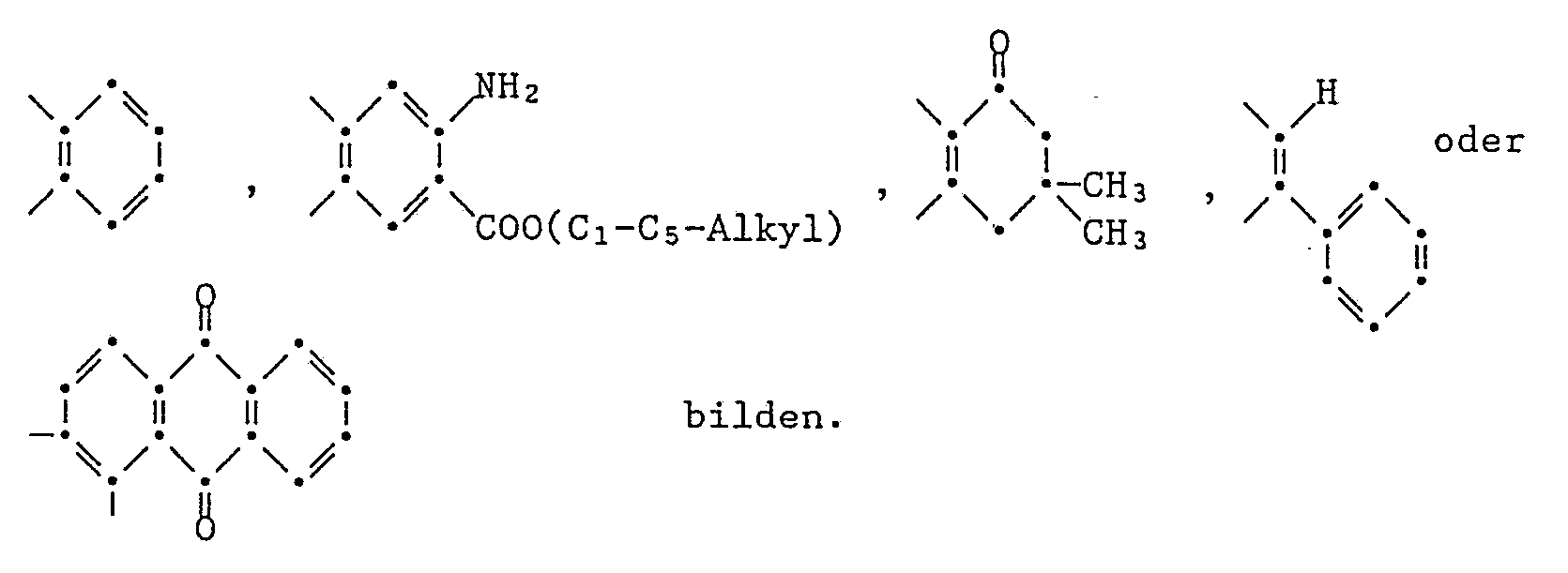

- Beispiele für Reste Q der Formel III sind
 CH-(CH₂
 SCH₃.
SCH₃.
- Beispiele für Reste Q der Formel IV sind

- Beispiele für Reste Q der Formel V sind

- Bedeutet X in der Verbindung der Formel I eine Gruppe SH oder NHR′ (d.h. wenn R Wasserstoff bedeutet), so entspricht die Strukturformel I jeweils nur einer ihrer möglichen tautomeren Formen. Diese Verbindungen liegen allerdings auch, und in vielen Fällen sogar bevorzugt, in der in den folgenden Formeln dargestellten Form vor:

- Von besonderem Interesse sind Pyrrolopyrrole der Formeln I oder II, worin A und B unabhängig voneinander eine der Gruppen
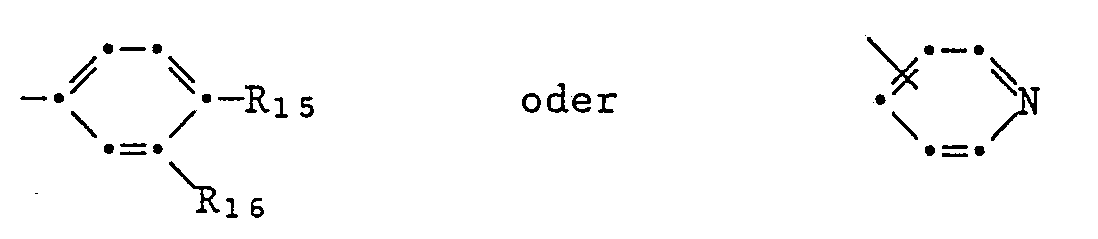
X eine Gruppe -SR oder -NRR′ bedeutet,
R Wasserstoff, C₁-C₁₂-Alkyl, Cyclohexyl, β-Methoxyallyl, Benzyl, unsubstituiertes oder durch Halogen, Cyano, Nitro, C₁-C₅-Alkyl, C₁-C₅-Alkoxy, (C₁-C₅-Alkoxy)-carbonyl, C₁-C₅-Alkylmercapto, Phenylmercapto oder Phenoxy substituiertes Phenyl ist, oder R ferner Pyridyl, Pyrimidyl, Pyrazinyl, Triazinyl, Furyl, Pyrrolyl, Thienyl, Chinolinyl, Cumarinyl, Benzofuryl, Benzimidazolyl oder Benzoxazolyl bedeutet,
R′ C₁-C₁₂-Alkyl, β-Dimethylaminoethyl, Cyclohexyl, Cyanethyl, β-Ethoxycarbonylethyl, Benzyl, 1-Phenyl-2-ethoxycarbonyl-vinyl, unsubstituiertes oder durch Halogen, Cyano, Nitro, C₁-C₅-Alkyl, C₁-C₅-Alkoxy, (C₁-C₅-Alkoxy)-carbonyl, C₁-C₅-Alkylmercapto, Phenoxy oder Phenylmercapto substituiertes Phenyl ist, oder R′ ferner Pyridyl, Pyrimidyl, Chinolinyl, Pyrazinyl, Triazinyl, Furyl, Pyrrolyl, Thienyl, Cumarinyl, Benzofuryl, Anthrachinonyl, Benzimidazolyl oder Benzoxazolyl ist, oder eine Gruppe
-Q-EY-(C₁-C₅-Alkyl),
bedeutet, oder R und R′ zusammen mit dem N-Atom einen Piperidin-, 2,2,6,6-Tetramethylpiperidin-, Pyrrol-, Morpholin-, Pyrrolidin- oder Phthalimidring bilden,
E und Y die oben angegebene Bedeutung haben, und
Q unsubstituiertes oder durch Halogen, Cyano, Nitro, C₁-C₅-Alkyl, C₁-C₅-Alkoxy oder (C₁-C₅-Alkoxy)-carbonyl substituiertes o-Phenylen oder eine zweiwertige Gruppe der Formel
-C(R₇)(R₈)- oder -CR₁₃=CR₁₄- bedeutet,
R₇ und R₈ unabhängig voneinander Wasserstoff, C₁-C₅-Alkyl oder Phenyl sind und
R₁₃ und R₁₄ unabhängig voneinander Wasserstoff, C₁-C₅-Alkyl oder Phenyl sind oder zusammen mit den C-Atomen an denen sie gebunden sind, einen Naphthalin-, Anthracen- oder Phenanthrenring bilden. - Beispiele von C₁-C₅-Alkylgruppen sind Methyl, Ethyl, n-Propyl, Isopropyl, n-Butyl, sec.-Butyl, tert.-Butyl, n-Pentyl und tert.-Amyl, und von C₁-C₁₂-Alkylgruppen zusätzlich z.B. noch n-Hexyl, 1,1,3,3-Tetramethylbutyl, n-Heptyl, n-Octyl, Nonyl, Decyl, Undecyl und Dodecyl.
- Beispiele von C₅-C₆ Cycloalkylgruppen sind Cyclopentyl und insbesondere Cyclohexyl.
- C₁-C₅-Alkoxygruppen sind z.B.: Methoxy, Ethoxy, Propoxy, Isopropoxy, n-Butoxy, sec.-Butoxy, tert.-Butoxy, n-Pentyloxy and tert.-Amyloxy und C₁-C₁₂-Alkoxygruppen zusätzlich z.B. noch n-Hexyloxy, n-Heptyloxy, n-Octyloxy, Decyloxy und Dodecyloxy.
- C₁-C₅-Alkylmercapto bedeutet z.B. Methylmercapto, Ethylmercapto, Propylmercapto, Isopropylmercapto, n-Butylmercapto, sec.-Butylmercapto, tert.-Butylmercapto und tert.-Amylmercapto.
- Beispiele von C₂-C₁₃-Alkylcarbamoylgruppen sind N-Methylcarbamoyl, N-Ethylcarbamoyl, N,N-Dimethylcarbamoyl, N-Butylcarbamoyl, N,N-Dibutylcarbamoyl und N,N-Dihexylcarbamoyl.
- C₁-C₁₂-Alkylmercapto bedeutet z.B. Methylmercapto, Ethylmercapto, Propylmercapto, Butylmercapto, n-Pentylmercapto, tert.-Amylmercapto, n-Hexylmercapto, Decylmercapto und Dodecylmercapto.
- C₂-C₁₃-Alkoxycarbonylgruppen stellen z.B. Methoxy-, Ethoxy-, Propoxy-, Isopropoxy-, n-Butoxy-, tert.-Butoxy-, n-Hexyloxy-, n-Octyloxy- und Dodecyloxy-carbonyl dar.
- C₂-C₁₃-Alkanoylamino ist z.B. Acetylamino, Propionylamino, Butyrylamino.
- C₁-C₁₂-Monoalkylamino bedeutet z.B. Methylamino, Ethylamino, Isopropylamino, n-Butylamino, n-Octylamino und n-Decylamino.
- Mono-(C₅-C₇-cycloalkyl)-amino bedeutet z.B. Cyclohexylamino.
- C₁-C₁₂-Dialkylamino bedeutet z.B. Dimethylamino, Diethylamino, Dibutylamino und Dihexylamino.
- Di-(C₅-C₇-cycloalkyl)-amino bedeutet z.B. Dicyclohexylamino.
- Halogen ist z.B. Fluor, Brom und insbesondere Chlor.
- Bevorzugt sind Pyrrolopyrrole der Formeln I oder II, worin A und B gleich sind und eine der Gruppen

X eine Gruppe -SH oder -NHR′ bedeutet,
R′ C₁-C₁₂-Alkyl, unsubstituiertes oder durch Halogen, Cyano, Nitro, Methyl, Methoxy, Methylmercapto, Methoxy- oder Ethoxycarbonyl substituiertes Phenyl ist oder eine Gruppe -Q-EY(C₁-C₅-Alkyl) bedeutet,
E und Y die oben angegebene Bedeutungen haben und
Q o-Phenylen oder eine zweiwertige Gruppe der Formel
-CHR₈- oder -CR₁₃=CR₁₄-
bedeutet,
R₈ Wasserstoff, Methyl oder Phenyl bedeutet und
R₁₃ und R₁₄ Wasserstoff, Methyl oder Phenyl sind. - Besonders bevorzugt werden Pyrrolopyrrole der Formeln I oder II, worin A und B gleich sind und eine Gruppe

X eine Gruppe -SH oder -NHR′ bedeutet,
R′ unsubstituiertes oder durch Chlor, Brom, Methyl, Cyano, Nitro, Methoxy, Methylmercapto, Methoxy- oder Ethoxycarbonyl substituiertes Phenyl ist,
E die oben angegebene Bedeutung hat und
Q o-Phenylen bedeutet. - Die Herstellung der Pyrrolopyrrole der Formeln I und II kann z.B. nach folgenden Verfahren erfolgen:
- a) Durch Umsetzung eines Pyrrolopyrrols der Formel

in Gegenwart eines geeigneten Katalysators, bevorzugt eines sekundären Amids, wie z.B. Dimethylformamid, Dimethylacetamid oder N-Methylpyrrolidon, erhält man ein Pyrrolopyrrol der Formel
D ist bevorzugt Chlor und G ist bevorzugt eine Gruppe -POClZ, worin Z Phenyl, Phenoxy, Dimethylamino oder Phenylamino bedeutet, oder insbesondere eine Gruppe -POCl₂. - b) Durch Umsetzung des Zwischenproduktes der Formel VIII nach an sich bekannten Methoden mit einer Verbindung der Formel
HSR (IX)
oder HNRR′ (X),
worin R und R′ die oben angegebene Bedeutung haben, oder mit Salzen der Verbindungen der Formeln IX oder X, erhält man nach dem Neutralisieren, um die Isolierung eines Halohydrates zu vermeiden, die entsprechende Verbindung der Formel I. - c) Erwärmt man Pyrrolopyrrole der Formel I, worin X eine Gruppe
-NH-Q-Halogen oder
-NH-Q-EY-(C₁-C₅-Alkyl)
bedeutet, in einem geeigneten organischen Lösungsmittel, gegebenenfalls in Gegenwart eines geeigneten Katalysators, nach allgemein bekannten Cyclisierungsmethoden, so erhält man durch Cyclisierung die entsprechende Verbindung der Formel II. - Bei den Verbindungen der Formeln VI, VII, IX und X handelt es sich um bekannte Verbindungen. Sollten einige noch neu sein, so können sie in Analogie zu allgemein bekannten Methoden hergestellt werden.
- Verwendet man für den Schritt b) Salze der Verbindungen der Formeln IX oder X, so handelt es sich zweckmässig bei den Verbindungen der Formel IX z.B. um deren Alkalimetallsalze und bei den Verbindungen der Formel X z.B um deren Chlorhydrate.
- Geeignete Lösungsmittel für den Schritt b) sind beispielsweise Wasser oder wasserfreie organische Lösungsmittel, die gegenüber den Verbindungen der Formel VIII inert sind, wie z.B. die halogenierten aliphatischen Kohlenwasserstoffe Dichlorethan, Tetrachlorethan, Chloroform oder Tetrachlorkohlenstoff oder insbesondere das unter dem Namen Sulfolan bekannte Tetrahydrothiophen-1,1-dioxyd.
- Bei der Umsetzung mit Verbindungen der Formel IX, worin R Wasserstoff ist, empfiehlt es sich, die entsprechenden Alkalisalze, wie z.B. Natrium- oder Kaliumsulfid, einzusetzen.
- Bei Cyclisierungen gemäss Schritt c) werden zweckmässig geeignete Katalysatoren eingesetzt. Bei Cyclisierungen von Verbindungen der Formel I, worin X eine Gruppe
-NH-Q-Halogen
bedeutet, eignen sich z.B. metallisches Kupfer oder Kupferhalogenide oder Gemische davon. Bei Cyclisierungen von Verbindungen der Formel I, worin X eine Gruppe
-NH-Q-EY-(C₁-C₅-Alkyl)
bedeutet, eignen sich insbesondere saure Katalysatoren, wie z.B. Eisessig oder p-Toluolsulfonsäure. - Die oben beschriebene Herstellung von Verbindungen der Formel I kann sowohl stufenweise, mit oder ohne Isolierung des Zwischenproduktes der Formel VIII, oder im Eintopfverfahren durchgeführt werden. Für das Eintopfverfahren hat sich Sulfolan als geeignetstes Lösungsmittel erwiesen.
- Die als Zwischenprodukte entstehenden Pyrrolopyrrole der Formel

sind neu und bilden einen weiteren Gegenstand der vorliegenden Erfindung. - Von besonderem Interesse als Zwischenprodukte sind Pyrrolopyrrole der Formel VIII, worin A und B unabhängig voneinander eine der Gruppen

- Bevorzugt als Zwischenprodukte sind Pyrrolopyrrole der Formel VIII, worin A und B gleich sind und eine der Gruppen

T Chlor oder eine Gruppe -O-G ist, worin
G eine der Gruppen
-POCl₂ oder POClZ,
worin Z Phenyl, Phenoxy oder Phenylamino ist, bedeutet. - Besonders bevorzugte Zwischenprodukte sind Pyrrolopyrrole der Formel VIII, worin A und B gleich sind und eine Gruppe

T Chlor oder eine Gruppe -O-POCl₂ ist. - Die Pyrrolopyrrole der Formeln I und II, und unter denen der Formel I insbesondere diejenigen, worin X eine Gruppe -NRR′ bedeutet, eignen sich zum Färben von hochmolekularem organischem Material, insbesondere von synthetischen Polymeren, wie z.B. Polycarbonate, Polyacrylate, Polymethacrylate, ABS, Polyetherketone, Polyurethane, Polyolefine, Polyester und Polyamide, einzeln oder in Mischungen, und darunter vor allem die Ingenieurwerkstoffe (Engineering Plastics), wobei sie farbstarke brillante, transparente Ausfärbungen mit guten Allgemeinbeständigkeiten ergeben. Besonders bevorzugt ist die Einfärbung von Polyolefinen, Polyestern und Polyamiden. Sie können aber auch zum Einfärben von Lacken und Druckfarben verwendet werden.
- Die Einfärbung erfolgt nach den üblichen Verfahren, beispielsweise durch Mischen des Farbmittels mit dem Kunststoffgranulat oder -pulver und Extrudieren der Mischung zu Fasern, Folien oder Granulaten. Letztere können dann im Spritzgussverfahren zu Gegenständen verformt werden.
- Die erhaltenen Färbungen, beispielsweise in Kunststoffen, Fasern, Lacken oder Drucken, zeichnen sich durch einen gelben bis blauen Farbton, eine sehr grosse Farbstärke, hohe Sättigung, gute Dispergierbarkeit, gute Ueberlackier-, Migrations-, Hitze-, Licht- und Wetterechtheit sowie durch einen guten Glanz und gutes IR-Remissionsverhalten aus.
- Die Verbindungen der Formeln I und II können auch als photoelektrophoretische Toner verwendet werden.
- Wenn die Verbindungen der Formeln I und II in den angewandten Polymeren gelöst vorliegen, zeichnen sie sich ebenfalls durch reinen Farbton, grosse Farbstärke, gute Echtheiten, insbesondere Licht- und Sublimierechtheit, und ausserdem durch hohe Fluoreszenz aus. Sie eignen sich in Sonnenenergie-Kollektoren und zur Herstellung von Laser-Strahlen.
- Die Pyrrolopyrrole der Formeln I und II, insbesondere aber diejenigen der Formel I, worin X eine Gruppe -SH bedeutet, haben, wie bereits erwähnt, auch eine photoleitende Wirkung. Sie können demnach als photoleitfähige Substanzen, beispielsweise in elektrophotographische Aufzeichnungsmaterialien, eingearbeitet werden. Der Aufbau solcher elektrophotographischer Aufzeichnungsmaterialien, die Einarbeitungsmöglichkeiten der photoleitfähigen Substanzen und ihre Wirkungsweise sind in EP-A-187 620 mit Bezug auf Dithioketopyrrolopyrrole beschrieben. Für die erfindungsgemässen Thioketo-pyrrolopyrrole gelten die gleichen Prinzipien.
- Die nachfolgenden Beispiele dienen zur Erläuterung der Erfindung.
- In einem 750 ml Sulfierkolben mit Rührer, Thermometer, Rückflusskühler und Stickstoff-Spülung werden 28,8 g 1,4-Diketo-3,6-diphenylpyrrolo[3,4-c]pyrrol und 275 ml Phosphoroxychlorid vorgelegt. Nach Zugabe einer katalytischen Menge Dimethylformamid (∼0,2 g) wird die Suspension auf Rückflusstemperatur (105-106°C) erhitzt und etwa 20 Stunden bei dieser Temperatur gerührt, wobei das Ausgangsmaterial in Lösung geht und das gebildete Produkt teilweise ausfällt. Das Reaktionsgemisch wird auf ∼4°C mit einem Eisbad gekühlt und etwa 5 Stunden bei dieser Temperatur gerührt. Das kristalline Produkt wird schliesslich abfiltriert, mit Ether gewaschen und unter Feuchtigkeitsausschluss bei 80°C im Vakuumtrockenschrank getrocknet. Man erhält 38,6 g (87,5 % d.Th) eines roten Produkts der Formel

Elementar-Analyse: berechnet gefunden C 48,95 % 50,2 % H 2,74 % 2,90 % N 6,34 % 6,33 % Cl 24,1 % 22,3 % P 7,01 % 6,7 % Schmelzpunkt: 235-237°C (Zers.). - 4,51 g des Produktes von Beispiel 1 werden mit 40 ml kaltem Wasser in einem 200 ml Sulfierkolben mit Rührer unter Stickstoff vorgelegt. Die Suspension wird auf 2-4°C mit einem Eisbad gekühlt, und dann wird eine wässrige Natriumsulfidlösung aus 8,03 g Na₂S·8H₂O und 20 ml Wasser in der Weise zugegeben, dass der pH im Bereich zwischen 8,5 und 11 gehalten wird und die Temperatur spontan bis auf 20°C ansteigt. Die Natriumsulfidlösung wird wie oben beschrieben so lange zudosiert, bis keine Aenderung des pH mehr eintritt. Dabei wird nach dreistündigem Rühren bei 20°C das Reaktionsgemisch auf 32-34°C erwärmt und so lange bei dieser Temperatur gehalten, bis die Umsetzung beendet ist (insgesamt 7 Stunden). Die Suspension wird danach auf Raumtemperatur abgekühlt, filtriert und mit warmem Wasser neutral gewaschen. Das feuchte Produkt wird anschliessend in 100 ml Eisessig aufgeschlämmt und während 1½ Stunden bei 80°C nachbehandelt, dann auf 45°C abgekühlt, abfiltriert und nacheinander mit Methanol und warmem Wasser neutral gewaschen. Nach dem Trocknen bei 80°C im Vakuumtrockenschrank erhält man 2,34 g (77 % d.Th.) einer Verbindung der Formel

- Durch Umkristallisieren aus Dimethylformamid erhält man ein violett-blaues Produkt mit einem Schmelzpunkt über 300°C und folgenden Analysewerten:
berechnet gefunden C 71,03 % 71,2 % H 3,97 % 4,05 % N 9,20 % 9,12 % S 10,53 % 10,2 % - 0,65 g des Produktes von Beipiel 1 und 0,57 g Anilin werden in 10 ml 1,1,2,2-Tetrachlorethan in einem Rundkolben 3 Stunden am Rückfluss gekocht. Nach dem Abkühlen wird das Reaktionsprodukt mit Aceton verdünnt, abgenutscht, mit Aceton und dann mit Wasser neutral gewaschen und schliesslich über eine SiO₂-Säule gereinigt (Eluiermittel: Methylenchlorid/Methanol, 95:5 Volumenteile). Man erhält 0,22 g einer Verbindung der Formel

Elementar-Analyse: berechnet gefunden C 79,3 % 78,5 % H 4,7 % 4,8 % N 11,6 % 11,4 % - Ein Gemisch bestehend aus 2,88 g 1,4-Diketo-3,6-diphenylpyrrolo[3,4-c]pyrrol, 4,7 g Phosphoroxychlorid und 25 ml Tetrahydrothiophen-1,1-dioxyd (Sulfolan) wird in einem 100 ml Sulfierkolben unter Argon vorgelegt. Es werden noch 2 Tropfen Dimethylacetamid (∼90 mg) als Katalysator zugesetzt. Das Gemisch wird auf 120°C erhitzt und 2 Stunden bei dieser Temperatur gehalten. Das Ausgangspigment geht dabei in Lösung. Nach dem Abkühlen auf 115°C wird unter vermindertem Druck (∼200 mbar) das unverbrauchte Phosphoroxychlorid (∼1,5 ml) abdestilliert. Unter Spülung mit Argon wird danach der Kolbeninhalt auf ca 80°C abgekühlt und mit 1,46 g 4-Aminobenzonitril versetzt. Man heizt wieder auf 120°C und hält 2 Stunden bei dieser Temperatur. Anschliessend wird die Suspension auf 30°C abgekühlt, in eine eiskalte 5 %ige wässrige Ammoniak-Lösung gegossen und 15 Minuten verrührt. Das ausgefallene Produkt wird dann abfiltriert und mit Wasser gewaschen, bis das Filtrat farblos und neutral abläuft. Nach der Trocknung im Vakuumtrockenschrank bei 80°C erhält man 3,9 g (100 % d.Th.) Rohprodukt. Nach Reinigung in kochendem Methanol am Rückfluss isoliert man 2,75 g eines violetten Produktes der Formel

berechnet gefunden C 77,30 % 76,70 % H 4,15 % 4,25 % N 14,42 % 14,65 % - Wiederholt man das Beispiel 4 mit der einzigen Ausnahme, dass man das 4-Aminobenzonitril durch 1,7 g 4-Nitroanilin ersetzt, so isoliert man bei der Fällung durch Eingiessen des Reaktionsgemisches in eine 5 %-ige wässrige Ammoniak-Lösung 3,7 g (91,4 % d.Th.) Rohprodukt. Hach Reinigung durch Kochen in einer Mischung von Methylenchlorid und Methanol (4:1 Volumenteile) am Rückfluss erhält man 2,5 g eines dunkelblauen Produktes der Formel

berechnet gefunden C 70,58 % 69,9 % H 3,95 % 3,8 % N 13,72 % 13,5 % - Wiederholt man das Beispiel 4 mit dem einzigen Unterschied, dass man das 4-Aminobenzonitril durch 1,55 g 4-Chloranilin ersetzt, so isoliert man bei der Fällung durch Eingiessen des Reaktionsgemisches in eine 5 %-ige wässrige Ammoniak-Lösung 3,4 g (85,4 % d.Th.) Rohprodukt. Nach Reinigung in kochendem Methanol am Rückfluss erhält man 2,5 g eines rotblauen Produktes der Formel

berechnet gefunden C 72,45 % 72,0 % H 4,05 % 4,08 % N 10,56 % 10,25 % Cl 8,91 % 8,75 % - Ein Gemisch aus 5,76 g 1,4-Diketo-3,6-diphenylpyrrolo[3,4-c]pyrrol, 4,64 g Phosphoroxychlorid und 50 ml Tetrahydrothiophen-1,1-dioxyd (Sulfolan) wird in einem 200 ml Sulfierkolben unter Stickstoff vorgelegt, dann werden noch 4 Tropfen Dimethylacetamid (∼180 mg) als Katalysator zugesetzt. Das Gemisch wird auf 118°C erwärmt, 13 Stunden bei dieser Temperatur gehalten und anschliessend auf Raumtemperatur abgekühlt. Das unreagierte Ausgangsmaterial wird abfiltriert und mit wenig warmem Sulfolan gewaschen. Danach wird das Filtrat zur vollständigen Entfernung von noch vorhandenem Phosphoroxychlorid 1½ Stunden im Rotationsverdampfer bei 80°C unter Vakuum behandelt.
- Die zurückgebliebene Lösung wird in einem 200 ml Sulfierkolben unter Stickstoff vorgelegt, dann werden 8,32 g technischer Anthranilsäureethylester (∼95 %ig) zugefügt. Das Gemisch wird auf 87°C geheizt und 8 Stunden bei dieser Temperatur gehalten. Nach dem Abkühlen auf Raumtemperatur wird die Reaktionslösung unter kräftigem Rühren auf 400 ml kaltes Wasser gegossen, wobei das Rohprodukt ausfällt. Die stark saure Suspension wird mit Triethanolamin auf pH 7 gestellt, auf 50°C erwärmt, 1 Stunde gerührt und filtriert. Das Nutschgut wird mit Wasser und Ethanol gewaschen und bei 80°C im Vakuumtrockenschrank getrocknet. Man erhält 3,74 g eines violetten Produktes der Formel

berechnet gefunden C 74,47 % 73,30 % H 4,86 % 4,82 % N 9,65 % 9,55 % - 2,22 g des Produktes aus Beispiel 7 werden zusammen mit 2 ml Eisessig und 25 ml reinem o-Dichlorbenzol in einem 100 ml Sulfierkolben vorgelegt und kräftig gerührt. Die erhaltene Suspension wird auf 125°C geheizt und 4½ Stunden bei dieser Temperatur weitergerührt. Dabei geht vorerst das Ausgangsmaterial in Lösung und dann fällt das cyclisierte Produkt aus. Das Reaktionsgemisch wird auf 50°C abgekühlt, das kristalline Produkt wird abfiltriert, mit Aceton und Methanol gewaschen, bis die Auswaschlösung farblos abläuft, und im Vakuumtrockenschrank bei 80°C getrocknet. Man isoliert 1,41 g eines einheitlichen violetten Produktes der Formel
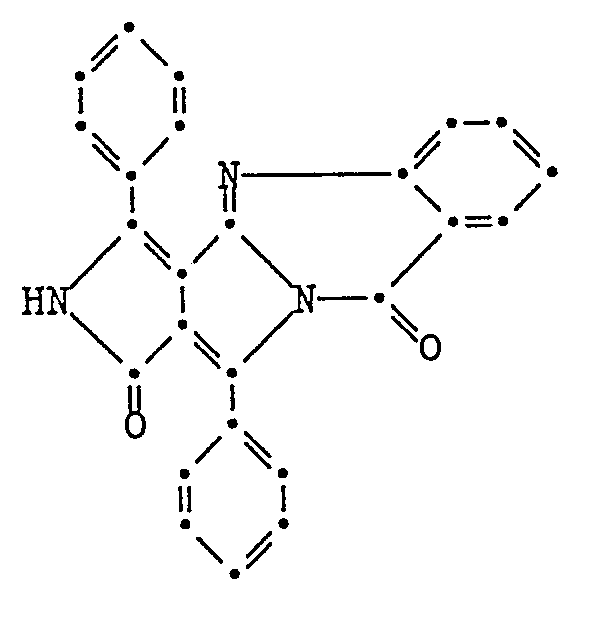
berechnet gefunden C 77,11 % 76,60 % H 3,88 % 3,99 % N 10,79 % 10,73 % - Analog Beispiel 1 werden 10 g 1,4-Diketo-3,6-(3,4-dimethylphenyl)-pyrrolo[3,4-c]-pyrrol in 133 g Phosphoroxychlorid in Gegenwart von 4 Tropfen Dimethylformamid behandelt. Man isoliert 6,6 g dunkelrotes Pulver. Analog Beispiel 3 werden 2,0 g dieses Produktes in 15 ml Ethylenchlorid mit 0,41 g Anilin in Gegenwart von 0,45 g Triethylamin behandelt. Man isoliert 1,50 g (89 %) eines dunkelroten Produktes der Formel
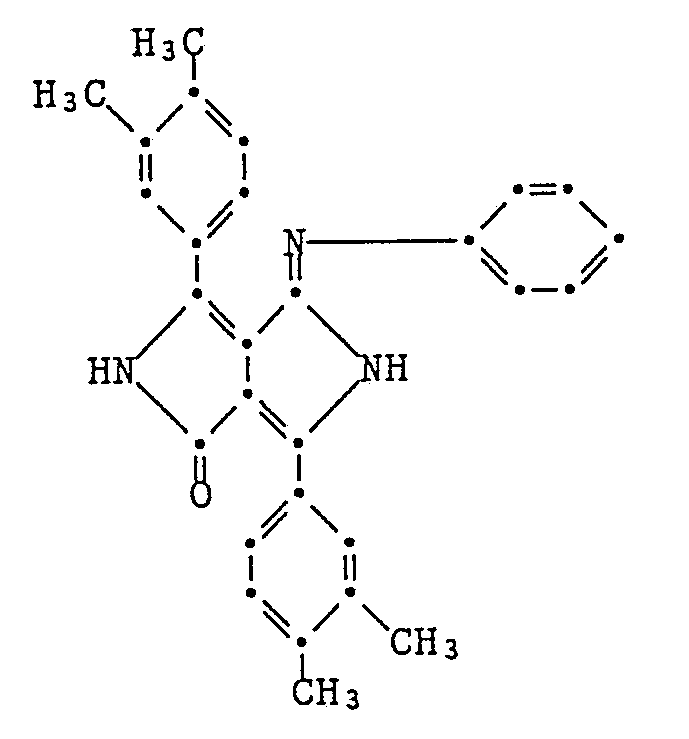
- 1,0 g des Produktes aus Beispiel 1 wird in 10 ml Ethylenchlorid mit 0,40 g Mercaptobenzthiazol und 0,25 g Triethylamin 20 Std. unter Rückfluss erhitzt. Nach dem Abkühlen, der Filtration und dem Waschen mit Aceton isoliert man 0,76 g eines Gemisches aus 1,4-Diketo-3,6-diphenyl-pyrrolo[3,4-c]-pyrrol und einem Produkt der Formel

- 10.16 g des Produktes aus Beispiel 1 und 4.60 g p-Chloranthranilsäureethylester werden unter Feuchtigkeitsausschluss in 300 ml o-Dichlorbenzol 18 Stunden bei 75°C gerührt. Das Reaktionsgemisch wird auf Raumtemperatur gekühlt und 3,2 ml Triethylamin zugegeben. Das Reaktionsgemisch wird in 500 ml eines 1:1 Gemisches von Toluol und Essigsäureethylester gegossen und 2 Stunden bei 80°C gerührt. Nach dem Abkühlen auf Raumtemperatur wird filtriert und der Rückstand mit 500 ml eines 1:1 Gemisches von Toluol und Essigsäureethylester gewaschen. Nach dem Trocknen des Rückstandes im Vakuumtrockenschrank erhält man 12,60 g Festprodukt. Durch Filtration an wenig Kieselgel mit MethylenchloridMethanol 1:1 wird ein unlösliches Nebenprodukt abgetrennt und man erhält nach dem Eindampfen 7,3 g eines Gemisches der Produkte der Formeln

- 5 g des Gemisches aus Beispiel 11 werden in 400 ml o-Dichlorbenzol suspendiert, mit 20 ml Essigsäure versetzt und 22 Stunden auf 140°C erwärmt. Nach dem Abkühlen auf Raumtemperatur wird filtriert und mit 400 ml o-Dichlorbenzol und 500 ml Methylenchlorid gewaschen. Trocknen im Vakuumtrockenschrank liefert 2,24 g Produkt der Formel

Elementaranalyse: berechnet gefunden C 70,84 69,05 H 3,33 3,63 N 9,91 9,36 Cl 8,36 8,94 - 100 g eines bei 110°C unter Hochvakuum getrockneten Polyestergranulats (TERLENKA®, der Firma Enka) werden mit 0,2 g des Produktes von Beispiel 8 während 30 Minuten auf einer Schüttelmaschine vermischt. Das erhaltene, gleichmässig gefärbte Granulat wird dann in einem Laborextruder des Typs Weber ET 20® bei 260°C zu einem dünnen durchsichtigen, fluoreszierenden, roten Band extrudiert. Die Ausfärbung zeichnet sich durch einen farbstarken, reinen Farbton und durch gute Allgemeinbeständigkeiten aus.
- Eine Ausfärbung mit ähnlichen Eigenschaften erhält man, wenn das Produkt von Beispiel 8 durch das Produkt von Beispiel 7 ersetzt wird.
- (Anwendung im Alkyd-Melamin-Einbrennlack) In einer 100 ml Schraubdeckelflasche werden 135 g Glasperlen (4,5 mm), 400 mg Produkt aus dem Beispiel 8, 7,6 g TiO₂ (®,Bayertitan R-KB-3), 9,0 ml Methylisobutylketon und 30,0 g Alkydmelamin-Einbrennlack der Zusammensetzung
67,5 % Alkydharz (®Alkydal F-27), 60 % in Xylol, 26,5 % Melaminharz (®Maprenal TTX), 55 % in Xylol, 5,0 % Xylol und 1,0 % Siliconöl, 1 % in Xylol
Claims (13)
1. Pyrrolopyrrole der Formeln

oder

worin A und B unabhängig voneinander carbocyclische oder heterocyclische aromatische Reste, acyclische oder cyclische aliphatische Reste oder araliphatische Reste sind, Q einen zweiwertigen carbocyclischen oder heterocyclischen aromatischen, acyclischen oder cyclischen aliphatischen oder araliphatischen Rest bedeutet, E eine direkte Bindung oder eine Gruppe -CO- oder -CS- ist, X eine Gruppe -SR oder -NRR′ bedeutet, worin R und R′ unabhängig voneinander Wasserstoff, carbocyclische oder heterocyclische aromatische Reste, acyclische oder cyclische aliphatische Reste oder araliphatische Reste sind und R′ zusätzlich eine Gruppe -Q-Halogen oder -Q-EY-(C₁-C₅-Alkyl), worin Y O oder S bedeutet, sein kann, oder R und R′ mit dem N-Atom, an dem sie gebunden sind, einen 5- oder 6-gliedrigen heterocyclischen Rest bilden.
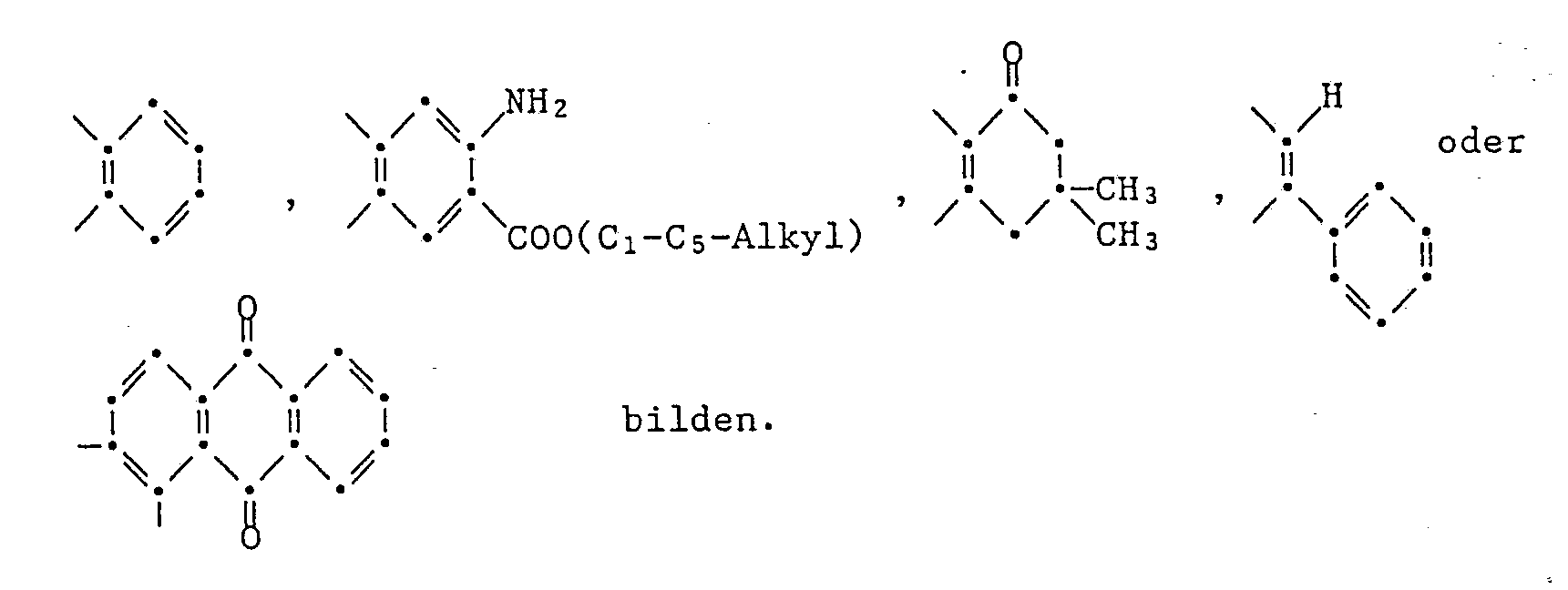
2. Pyrrolopyrrole der Formel II, gemäss Anspruch 1, worin Q, wenn E -CO- oder -CS- bedeutet, eine Gruppe der Formeln

und, wenn E eine direkte Bindung bedeutet, eine Gruppe der Formeln IV oder V ist, wobei in den Formeln III bis V R₇ und R₈ unabhängig voneinander Wasserstoff, C₁-C₅-Alkyl, C₅-C₈-Cycloalkyl, unsubstituiertes oder durch Halogen, Hydroxy, C₁-C₅-Alkyl oder C₁-C₅-Alkoxy oder Phenoxy substituiertes Phenyl oder Benzyl oder eine der Gruppen

oder -(CH₂ S(C₁-C₅-Alkyl) bedeuten, R₉, R₁₀, R₁₁ und R₁₂ unabhängig voneinander Wasserstoff, C₁-C₄-Alkyl, C₅-C₆-Cycloalkyl, unsubstituiertes oder durch Halogen, Hydroxy, C₁-C₅-Alkyl oder C₁-C₅-Alkoxy substituiertes Phenyl oder Benzyl bedeuten oder R₁₀ und R₁₂ zusammen mit den C-Atomen, an denen sie gebunden sind, eine C₅-C₆-Cycloalkylengruppe bilden, und R₁₃ und R₁₄ unabhängig voneinander Wasserstoff, C₁-C₅-Alkyl, C₅-C₆-Cycloalkyl, unsubstituiertes oder durch Halogen, Hydroxy, C₁-C₅-Alkyl oder C₁-C₅-Alkoxy substituiertes Phenyl oder Benzyl bedeuten oder R₁₃ und R₁₄ zusammen mit den C-Atomen, an denen sie gebunden sind, einen Naphthalin-, Anthracen- oder Phenanthrenring oder eine der Gruppen
3. Pyrrolopyrrole der Formeln I oder II gemäss Anspruch 1, worin A und B unabhängig voneinander eine der Gruppen

bedeuten, worin R₁₅ und R₁₆ unabhängig voneinander Wasserstoff, Halogen, Nitro, Carbamoyl, Cyano, Trifluormethyl, C₂-C₁₃-Alkylcarbamoyl, C₁-C₁₂-Alkyl, C₁-C₁₂-Alkoxy, C₁-C₁₂-Alkylmercapto, C₂-C₁₃-Alkoxycarbonyl, C₂-C₁₃-Alkanoylamino, C₁-C₁₂-Monoalkylamino, C₂-C₂₄-Dialkylamino, Mono-(C₅-C₇-cycloalkyl)-amino, Di-(C₅-C₇-cycloalkyl)-amino, H-Pyrrolidino, N-Piperidino, N-Morpholino, unsubstituiertes oder durch Halogen, C₁-C₁₂-Alkyl oder C₁-C₁₂-Alkoxy substituiertes Phenyl, Phenoxy, Phenylmercapto, Phenoxycarbonyl oder Phenylcarbamoyl sind,
X eine Gruppe -SR oder -NRR′ bedeutet,
R Wasserstoff, C₁-C₁₂-Alkyl, Cyclohexyl, β-Methoxyallyl, Benzyl, unsubstituiertes oder durch Halogen, Cyano, Nitro, C₁-C₅-Alkyl, C₁-C₅-Alkoxy, (C₁-C₅-Alkoxy)-carbonyl, C₁-C₅-Alkylmercapto, Phenylmercapto oder Phenoxy substituiertes Phenyl ist, oder R ferner Pyridyl, Pyrimidyl, Pyrazinyl, Triazinyl, Furyl, Pyrrolyl, Thienyl, Chinolinyl, Cumarinyl, Benzofuryl, Benzimidazolyl oder Benzoxazolyl bedeutet,
R′ C₁-C₁₂-Alkyl, β-Dimethylaminoethyl, Cyclohexyl, Cyanethyl, β-Ethoxycarbonylethyl, Benzyl, 1-Phenyl-2-ethoxycarbonyl-vinyl, unsubstituiertes oder durch Halogen, Cyano, Nitro, C₁-C₅-Alkyl, C₁-C₅-Alkoxy, (C₁-C₅-Alkoxy)-carbonyl, C₁-C₅-Alkylmercapto, Phenoxy oder Phenylmercapto substituiertes Phenyl ist, oder R′ ferner Pyridyl, Pyrimidyl, Chinolinyl, Pyrazinyl, Triazinyl, Furyl, Pyrrolyl, Thienyl, Cumarinyl, Benzofuryl, Anthrachinonyl, Benzimidazolyl oder Benzoxazolyl ist oder eine Gruppe
-Q-EY-(C₁-C₅-Alkyl),
bedeutet, oder R und R′ zusammen mit dem N-Atom einen Piperidin-, 2,2,6,6-Tetramethylpiperidin-, Pyrrol-, Morpholin-, Pyrrolidin- oder Phthalimidring bilden,
E und Y die in Anspruch 1 angegebene Bedeutung haben, und
Q unsubstituiertes oder durch Halogen, Cyano, Nitro, C₁-C₅-Alkyl, C₁-C₅-Alkoxy oder (C₁-C₅-Alkoxy)-carbonyl substituiertes o-Phenylen oder eine zweiwertige Gruppe der Formel
-C(R₇)(R₈)- oder -CR₁₃=CR₁₄- bedeutet,
R₇ und R₈ unabhängig voneinander Wasserstoff, C₁-C₅-Alkyl oder Phenyl sind und
R₁₃ und R₁₄ unabhängig voneinander Wasserstoff, C₁-C₄-Alkyl oder Phenyl sind oder zusammen mit den C-Atomen an denen sie gebunden sind einen Naphthalin-, Anthracen- oder Phenanthrenring bilden.
X eine Gruppe -SR oder -NRR′ bedeutet,
R Wasserstoff, C₁-C₁₂-Alkyl, Cyclohexyl, β-Methoxyallyl, Benzyl, unsubstituiertes oder durch Halogen, Cyano, Nitro, C₁-C₅-Alkyl, C₁-C₅-Alkoxy, (C₁-C₅-Alkoxy)-carbonyl, C₁-C₅-Alkylmercapto, Phenylmercapto oder Phenoxy substituiertes Phenyl ist, oder R ferner Pyridyl, Pyrimidyl, Pyrazinyl, Triazinyl, Furyl, Pyrrolyl, Thienyl, Chinolinyl, Cumarinyl, Benzofuryl, Benzimidazolyl oder Benzoxazolyl bedeutet,
R′ C₁-C₁₂-Alkyl, β-Dimethylaminoethyl, Cyclohexyl, Cyanethyl, β-Ethoxycarbonylethyl, Benzyl, 1-Phenyl-2-ethoxycarbonyl-vinyl, unsubstituiertes oder durch Halogen, Cyano, Nitro, C₁-C₅-Alkyl, C₁-C₅-Alkoxy, (C₁-C₅-Alkoxy)-carbonyl, C₁-C₅-Alkylmercapto, Phenoxy oder Phenylmercapto substituiertes Phenyl ist, oder R′ ferner Pyridyl, Pyrimidyl, Chinolinyl, Pyrazinyl, Triazinyl, Furyl, Pyrrolyl, Thienyl, Cumarinyl, Benzofuryl, Anthrachinonyl, Benzimidazolyl oder Benzoxazolyl ist oder eine Gruppe
-Q-EY-(C₁-C₅-Alkyl),
bedeutet, oder R und R′ zusammen mit dem N-Atom einen Piperidin-, 2,2,6,6-Tetramethylpiperidin-, Pyrrol-, Morpholin-, Pyrrolidin- oder Phthalimidring bilden,
E und Y die in Anspruch 1 angegebene Bedeutung haben, und
Q unsubstituiertes oder durch Halogen, Cyano, Nitro, C₁-C₅-Alkyl, C₁-C₅-Alkoxy oder (C₁-C₅-Alkoxy)-carbonyl substituiertes o-Phenylen oder eine zweiwertige Gruppe der Formel
-C(R₇)(R₈)- oder -CR₁₃=CR₁₄- bedeutet,
R₇ und R₈ unabhängig voneinander Wasserstoff, C₁-C₅-Alkyl oder Phenyl sind und
R₁₃ und R₁₄ unabhängig voneinander Wasserstoff, C₁-C₄-Alkyl oder Phenyl sind oder zusammen mit den C-Atomen an denen sie gebunden sind einen Naphthalin-, Anthracen- oder Phenanthrenring bilden.
4. Pyrrolopyrrole der Formeln I oder II gemäss Anspruch 1, worin A und B gleich sind und eine der Gruppen

bedeuten, worin einer der Substituenten R₁₅ und R₁₆ ein Wasserstoff-, Chlor- oder Bromatom, eine Methyl-, Methoxy-, Methylmercapto-, Cyan-, Phenyl-, Phenoxy- oder Phenylmercaptogruppe ist und der andere ein Wasserstoffatom bedeutet,
X eine Gruppe -SH oder -NHR′ bedeutet,
R′ C₁-C₁₂-Alkyl, unsubstituiertes oder durch Halogen, Cyano, Nitro, Methyl, Methoxy, Methylmercapto, Methoxy- oder Ethoxycarbonyl substituiertes Phenyl ist oder eine Gruppe -Q-EY(C₁-C₅-Alkyl) bedeutet,
E und Y die in Anspruch 1 angegebene Bedeutungen haben und
Q o-Phenylen oder eine zweiwertige Gruppe der Formel
-CHR₈- oder -CR₁₃=CR₁₄-
bedeutet,
R₈ Wasserstoff, Methyl oder Phenyl bedeutet und
R₁₃ und R₁₄ Wasserstoff, Methyl oder Phenyl sind.
X eine Gruppe -SH oder -NHR′ bedeutet,
R′ C₁-C₁₂-Alkyl, unsubstituiertes oder durch Halogen, Cyano, Nitro, Methyl, Methoxy, Methylmercapto, Methoxy- oder Ethoxycarbonyl substituiertes Phenyl ist oder eine Gruppe -Q-EY(C₁-C₅-Alkyl) bedeutet,
E und Y die in Anspruch 1 angegebene Bedeutungen haben und
Q o-Phenylen oder eine zweiwertige Gruppe der Formel
-CHR₈- oder -CR₁₃=CR₁₄-
bedeutet,
R₈ Wasserstoff, Methyl oder Phenyl bedeutet und
R₁₃ und R₁₄ Wasserstoff, Methyl oder Phenyl sind.
5. Pyrrolopyrrole der Formeln I oder II gemäss Anspruch 1, worin A und B gleich sind und eine Gruppe
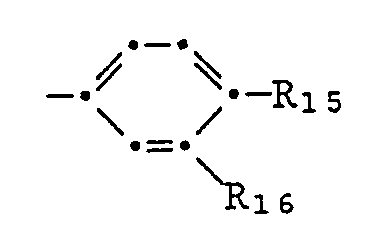
bedeuten, worin einer der Substituenten R₁₅ und R₁₆ ein Wasserstoff- oder Chloratom, eine Methyl-, Cyan- oder Phenylgruppe ist und der andere ein Wasserstoffatom bedeutet,
X eine Gruppe -SH oder -NHR′ bedeutet,
R′ unsubstituiertes oder durch Chlor, Brom, Methyl, Cyano, Nitro, Methoxy, Methylmercapto, Methoxy- oder Ethoxycarbonyl substituiertes Phenyl ist,
E die in Anspruch 1 angegebene Bedeutung hat und
Q o-Phenylen bedeutet.
X eine Gruppe -SH oder -NHR′ bedeutet,
R′ unsubstituiertes oder durch Chlor, Brom, Methyl, Cyano, Nitro, Methoxy, Methylmercapto, Methoxy- oder Ethoxycarbonyl substituiertes Phenyl ist,
E die in Anspruch 1 angegebene Bedeutung hat und
Q o-Phenylen bedeutet.
6. Pyrrolopyrrole der Formel

worin A und B unabhängig voneinander carbocyclische oder heterocyclische aromatische Reste, acyclische oder cyclische aliphatische Reste oder araliphatische Reste sind, und T Chlor, Brom oder eine Gruppe -O-G bedeutet, worin G eine Gruppe -SOCl, -SOBr, -POCl₂, -POClBr, -POBr₂, -POClZ oder -POBrZ bedeutet und Z Phenyl, Phenoxy, Phenylmercapto, Di-(C₁-C₄-alkyl)-amino, Phenylamino, Diphenylamino oder Phenyl-(C₁-C₄-alkyl)-amino ist, wobei die Phenylgruppen auch durch Halogen oder C₁-C₅-Alkyl substituiert sein können.
7. Pyrrolopyrrole der Formel VIII gemäss Anspruch 6, worin A und B unabhängig voneinander eine der Gruppen
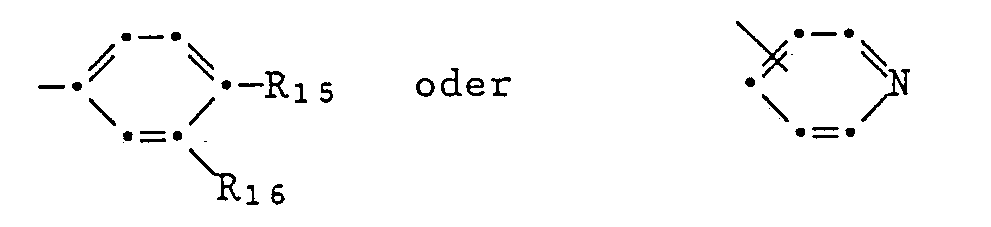
bedeuten, worin R₁₅ und R₁₆ unabhängig voneinander Wasserstoff, Halogen, Nitro, Carbamoyl, Cyano, Trifluormethyl, C₂-C₁₃-Alkylcarbamoyl, C₁-C₁₂-Alkyl, C₁-C₁₂-Alkoxy, C₁-C₁₂-Alkylmercapto, C₂-C₁₃-Alkoxycarbonyl, C₂-C₁₃-Alkanoylamino, C₁-C₁₂-Monoalkylamino, C₂-C₂₄-Dialkylamino, Mono-(C₅-C₇-cycloalkyl)-amino, Di-(C₅-C₇-cycloalkyl)-amino, N-Pyrrolidino, N-Piperidino, N-Morpholino, unsubstituiertes oder durch Halogen, C₁-C₁₂-Alkyl oder C₁-C₁₂-Alkoxy substituiertes Phenyl, Phenoxy, Phenylmercapto, Phenoxycarbonyl oder Phenylcarbamoyl sind, und T die in Anspruch 6 angegebene Bedeutung hat.
8. Pyrrolopyrrole der Formel VIII gemäss Anspruch 6, worin A und B gleich sind und eine der Gruppen

bedeuten, worin einer der Substituenten R₁₅ und R₁₆ ein Wasserstoff-, Chlor- oder Bromatom, eine Methyl-, Methoxy-, Methylmercapto-, Cyan-, Phenyl-, Phenoxy- oder Phenylmercaptogruppe ist und der andere ein Wasserstoffatom bedeutet, und
T Chlor oder eine Gruppe -O-G ist, worin
G eine der Gruppen
-POCl₂ oder POClZ,
worin Z Phenyl, Phenoxy oder Phenylamino ist, bedeutet.
T Chlor oder eine Gruppe -O-G ist, worin
G eine der Gruppen
-POCl₂ oder POClZ,
worin Z Phenyl, Phenoxy oder Phenylamino ist, bedeutet.
9. Pyrrolopyrrole der Formel VIII gemäss Anspruch 6, worin A und B gleich sind und eine Gruppe

bedeuten, worin einer der Substituenten R₁₅ und R₁₆ ein Wasserstoff- oder Chloratom, eine Methyl-, Cyan- oder Phenylgruppe ist und der andere ein Wasserstoffatom bedeutet, und
T Chlor oder eine Gruppe -O-POCl₂ ist.
T Chlor oder eine Gruppe -O-POCl₂ ist.
10. Stoffzusammensetzung enthaltend ein hochmolekulares organisches Material und als Färbemittel ein Pyrrolopyrrol der Formeln I oder II gemäss Anspruch 1.
11. Stoffzusammensetzung gemäss Anspruch 10 enthaltend ein synthetisches Polymer und als Färbemittel ein Pyrrolopyrrol der Formel I, worin X eine Gruppe -NRR′ bedeutet, oder der Formel II.
12. Elektrophotographisches Aufzeichnungsmaterial enthaltend als photoleitfähige Substanz ein Pyrrolopyrrol der Formeln I oder II gemäss Anspruch 1.
13. Elektrophotographisches Aufzeichnungsmaterial gemäss Anspruch 12 enthaltend als photoleitfähige Substanz ein Pyrrolopyrrol der Formel I, worin X eine Gruppe -SR bedeutet.
Applications Claiming Priority (2)
| Application Number | Priority Date | Filing Date | Title |
|---|---|---|---|
| CH1334/88 | 1988-04-12 | ||
| CH133488 | 1988-04-12 |
Publications (1)
| Publication Number | Publication Date |
|---|---|
| EP0337945A1 true EP0337945A1 (de) | 1989-10-18 |
Family
ID=4208044
Family Applications (1)
| Application Number | Title | Priority Date | Filing Date |
|---|---|---|---|
| EP89810253A Withdrawn EP0337945A1 (de) | 1988-04-12 | 1989-04-04 | Monoketo-pyrrolopyrrole |
Country Status (4)
| Country | Link |
|---|---|
| US (1) | US5017706A (de) |
| EP (1) | EP0337945A1 (de) |
| JP (1) | JPH026485A (de) |
| KR (1) | KR900016409A (de) |
Families Citing this family (5)
| Publication number | Priority date | Publication date | Assignee | Title |
|---|---|---|---|---|
| JPH0739391Y2 (ja) * | 1991-04-22 | 1995-09-13 | 落合刃物工業株式会社 | 茶葉摘採機の走行台車 |
| DE59510186D1 (de) * | 1994-03-25 | 2002-06-06 | Ciba Sc Holding Ag | Cyaniminogruppen enthaltende Pyrrolo(3,4-c)pyrrole |
| HUE043663T2 (hu) * | 2012-10-31 | 2019-08-28 | Fujifilm Toyama Chemical Co Ltd | Új aminszármazék vagy sója TNF-alfa inhibitorként |
| CN110845707B (zh) * | 2019-06-13 | 2022-09-09 | 中山大学 | 一种吡咯并吡咯单酮并四苯类似物聚合物及其制备方法和应用 |
| JP7530433B2 (ja) * | 2020-09-23 | 2024-08-07 | 富士フイルム株式会社 | 組成物、膜、光学フィルタ、固体撮像素子、画像表示装置、赤外線センサ、カメラモジュール、化合物および赤外線吸収剤 |
Citations (6)
| Publication number | Priority date | Publication date | Assignee | Title |
|---|---|---|---|---|
| US4415685A (en) * | 1981-03-20 | 1983-11-15 | Ciba-Geigy Corporation | Process for dyeing high-molecular organic material, and novel polycyclic pigments |
| EP0133156A2 (de) * | 1983-06-29 | 1985-02-13 | Ciba-Geigy Ag | Neue 1,4-Diketopyrrolo-(3,4-c)-pyrrole |
| EP0181290A2 (de) * | 1984-11-07 | 1986-05-14 | Ciba-Geigy Ag | Pigmentmischungen |
| EP0187620A2 (de) * | 1985-01-03 | 1986-07-16 | Ciba-Geigy Ag | Dithioketo-pyrrolo-pyrrole, Verfahren zu deren Herstellung und Verwendung |
| EP0224445A2 (de) * | 1985-11-26 | 1987-06-03 | Ciba-Geigy Ag | Pyrrolo-pyrrol Pigmentpräparate, Verfahren zu deren Herstellung sowie ihre Verwendung |
| EP0232222A2 (de) * | 1986-01-31 | 1987-08-12 | Ciba-Geigy Ag | Verfahren zur Herstellung von bromierten Pyrrolo-[3,4-c]-pyrrolen |
Family Cites Families (3)
| Publication number | Priority date | Publication date | Assignee | Title |
|---|---|---|---|---|
| ATE22104T1 (de) * | 1982-05-17 | 1986-09-15 | Ciba Geigy Ag | Herstellung von pyrrolo-(3,4-c)-pyrrolen. |
| DE3581512D1 (de) * | 1984-11-07 | 1991-02-28 | Ciba Geigy Ag | Verfahren zur herstellung von pyrrolo-(3,4-c)-pyrrolen und neue pyrrolo-(3,4-c)-pyrrole. |
| US4760004A (en) * | 1986-11-10 | 1988-07-26 | Ciba-Geigy Corporation | Thioquinacridones and isothioquinacridones, preparation and use thereof |
-
1989
- 1989-04-03 US US07/332,199 patent/US5017706A/en not_active Expired - Fee Related
- 1989-04-04 EP EP89810253A patent/EP0337945A1/de not_active Withdrawn
- 1989-04-12 KR KR1019890004825A patent/KR900016409A/ko not_active Withdrawn
- 1989-04-12 JP JP1092801A patent/JPH026485A/ja active Pending
Patent Citations (6)
| Publication number | Priority date | Publication date | Assignee | Title |
|---|---|---|---|---|
| US4415685A (en) * | 1981-03-20 | 1983-11-15 | Ciba-Geigy Corporation | Process for dyeing high-molecular organic material, and novel polycyclic pigments |
| EP0133156A2 (de) * | 1983-06-29 | 1985-02-13 | Ciba-Geigy Ag | Neue 1,4-Diketopyrrolo-(3,4-c)-pyrrole |
| EP0181290A2 (de) * | 1984-11-07 | 1986-05-14 | Ciba-Geigy Ag | Pigmentmischungen |
| EP0187620A2 (de) * | 1985-01-03 | 1986-07-16 | Ciba-Geigy Ag | Dithioketo-pyrrolo-pyrrole, Verfahren zu deren Herstellung und Verwendung |
| EP0224445A2 (de) * | 1985-11-26 | 1987-06-03 | Ciba-Geigy Ag | Pyrrolo-pyrrol Pigmentpräparate, Verfahren zu deren Herstellung sowie ihre Verwendung |
| EP0232222A2 (de) * | 1986-01-31 | 1987-08-12 | Ciba-Geigy Ag | Verfahren zur Herstellung von bromierten Pyrrolo-[3,4-c]-pyrrolen |
Also Published As
| Publication number | Publication date |
|---|---|
| US5017706A (en) | 1991-05-21 |
| JPH026485A (ja) | 1990-01-10 |
| KR900016409A (ko) | 1990-11-13 |
Similar Documents
| Publication | Publication Date | Title |
|---|---|---|
| EP0224445B1 (de) | Pyrrolo-pyrrol Pigmentpräparate, Verfahren zu deren Herstellung sowie ihre Verwendung | |
| EP0061426B1 (de) | Verfahren zum Färben von hochmolekularem organischem Material und neue polycyclische Pigmente | |
| EP0184982B1 (de) | Verfahren zur Herstellung von Pyrrolo-[3,4-c]-pyrrolen und neue Pyrrolo-[3,4-c]-pyrrole | |
| EP0133156A2 (de) | Neue 1,4-Diketopyrrolo-(3,4-c)-pyrrole | |
| EP0094911B1 (de) | Herstellung von Pyrrolo-(3,4-c)-pyrrolen | |
| EP0657436B1 (de) | Verfahren zur Herstellung von Perylen-3,4-dicarbonsäurederivaten | |
| EP0654506B1 (de) | Verfahren zur Herstellung synergistischer Pigmentgemische | |
| EP0302018B1 (de) | Verfahren zur Herstellung von Pyrrolo-(3,4-c)pyrrolen | |
| EP0648770A2 (de) | Neue Pyrrolo 3,4-c pyrrole | |
| EP0704497A1 (de) | Mischkristalle und feste Lösungen von 1,4-Diketopyrrolopyrrolen | |
| EP0098808B1 (de) | Herstellung von 1,4-Diketopyrrolo-(3,4-c)-pyrrolen | |
| EP0711812B1 (de) | Verfahren zur Herstellung von Perylenimiden, neue di-, tri- und tetrachromophore Perylenfarbstoffe und deren Verwendung | |
| DE69813541T2 (de) | Thiazin-indigo pigmente, diese enthaltende feste lösungen und ihre herstellung | |
| EP0769532A1 (de) | Naphthalinlactamimid-Fluoreszenzfarbstoffe | |
| EP0232222B1 (de) | Verfahren zur Herstellung von bromierten Pyrrolo-[3,4-c]-pyrrolen | |
| EP0673979A1 (de) | Cyaniminogruppen enthaltende Fluorreszenzfarbstoffe | |
| US5017706A (en) | Monoketopyrrolopyrroles | |
| EP0867477A1 (de) | Polycyclische Verbindungen | |
| EP0673940B1 (de) | Cyaniminogruppen enthaltende Pyrrolo(3,4-c)pyrrole | |
| EP0267873B1 (de) | Neue Thiochinacridone und Isothiochinacridone, Verfahren zu deren Herstellung und Verwendung | |
| US3272821A (en) | Delta form of quinacridone pigment | |
| EP0163609A2 (de) | Verfahren zum Färben von hochmolekularem organischem Material, neue polycyclische Verbindungen sowie deren Herstellung | |
| EP0403812B1 (de) | Diketopiperazin Derivate, deren Herstellung und deren Vervendung zum Färben von Kunststoffen | |
| EP0037372A1 (de) | 1:1-Nickelkomplexe von Isoindolin-azinen, Verfahren zu deren Herstellung und Verwendung | |
| EP0349809A2 (de) | Metallkomplex-Pigmente |
Legal Events
| Date | Code | Title | Description |
|---|---|---|---|
| PUAI | Public reference made under article 153(3) epc to a published international application that has entered the european phase |
Free format text: ORIGINAL CODE: 0009012 |
|
| 17P | Request for examination filed |
Effective date: 19890406 |
|
| AK | Designated contracting states |
Kind code of ref document: A1 Designated state(s): DE FR GB IT |
|
| 17Q | First examination report despatched |
Effective date: 19911121 |
|
| STAA | Information on the status of an ep patent application or granted ep patent |
Free format text: STATUS: THE APPLICATION IS DEEMED TO BE WITHDRAWN |
|
| 18D | Application deemed to be withdrawn |
Effective date: 19930608 |