EP0331983A2 - Stilbene derivatives, their preparation and their use in medicines - Google Patents
Stilbene derivatives, their preparation and their use in medicines Download PDFInfo
- Publication number
- EP0331983A2 EP0331983A2 EP89103182A EP89103182A EP0331983A2 EP 0331983 A2 EP0331983 A2 EP 0331983A2 EP 89103182 A EP89103182 A EP 89103182A EP 89103182 A EP89103182 A EP 89103182A EP 0331983 A2 EP0331983 A2 EP 0331983A2
- Authority
- EP
- European Patent Office
- Prior art keywords
- tetrahydro
- propenyl
- tetramethyl
- naphthyl
- lower alkyl
- Prior art date
- Legal status (The legal status is an assumption and is not a legal conclusion. Google has not performed a legal analysis and makes no representation as to the accuracy of the status listed.)
- Granted
Links
- 0 CC(C=C1)=CCC1C(*)=C(*)C(C=C(*)C(*)[C@]1*)=C1S Chemical compound CC(C=C1)=CCC1C(*)=C(*)C(C=C(*)C(*)[C@]1*)=C1S 0.000 description 4
- IQKRLFAJORROTP-GXDHUFHOSA-N N/C(/c(c(O)c1N)cc(N)c1N)=C(\c(cc1)ccc1N)/P Chemical compound N/C(/c(c(O)c1N)cc(N)c1N)=C(\c(cc1)ccc1N)/P IQKRLFAJORROTP-GXDHUFHOSA-N 0.000 description 1
Classifications
-
- C—CHEMISTRY; METALLURGY
- C07—ORGANIC CHEMISTRY
- C07D—HETEROCYCLIC COMPOUNDS
- C07D295/00—Heterocyclic compounds containing polymethylene-imine rings with at least five ring members, 3-azabicyclo [3.2.2] nonane, piperazine, morpholine or thiomorpholine rings, having only hydrogen atoms directly attached to the ring carbon atoms
- C07D295/04—Heterocyclic compounds containing polymethylene-imine rings with at least five ring members, 3-azabicyclo [3.2.2] nonane, piperazine, morpholine or thiomorpholine rings, having only hydrogen atoms directly attached to the ring carbon atoms with substituted hydrocarbon radicals attached to ring nitrogen atoms
- C07D295/08—Heterocyclic compounds containing polymethylene-imine rings with at least five ring members, 3-azabicyclo [3.2.2] nonane, piperazine, morpholine or thiomorpholine rings, having only hydrogen atoms directly attached to the ring carbon atoms with substituted hydrocarbon radicals attached to ring nitrogen atoms substituted by singly bound oxygen or sulfur atoms
- C07D295/084—Heterocyclic compounds containing polymethylene-imine rings with at least five ring members, 3-azabicyclo [3.2.2] nonane, piperazine, morpholine or thiomorpholine rings, having only hydrogen atoms directly attached to the ring carbon atoms with substituted hydrocarbon radicals attached to ring nitrogen atoms substituted by singly bound oxygen or sulfur atoms with the ring nitrogen atoms and the oxygen or sulfur atoms attached to the same carbon chain, which is not interrupted by carbocyclic rings
- C07D295/088—Heterocyclic compounds containing polymethylene-imine rings with at least five ring members, 3-azabicyclo [3.2.2] nonane, piperazine, morpholine or thiomorpholine rings, having only hydrogen atoms directly attached to the ring carbon atoms with substituted hydrocarbon radicals attached to ring nitrogen atoms substituted by singly bound oxygen or sulfur atoms with the ring nitrogen atoms and the oxygen or sulfur atoms attached to the same carbon chain, which is not interrupted by carbocyclic rings to an acyclic saturated chain
-
- C—CHEMISTRY; METALLURGY
- C07—ORGANIC CHEMISTRY
- C07C—ACYCLIC OR CARBOCYCLIC COMPOUNDS
- C07C323/00—Thiols, sulfides, hydropolysulfides or polysulfides substituted by halogen, oxygen or nitrogen atoms, or by sulfur atoms not being part of thio groups
- C07C323/10—Thiols, sulfides, hydropolysulfides or polysulfides substituted by halogen, oxygen or nitrogen atoms, or by sulfur atoms not being part of thio groups containing thio groups and singly-bound oxygen atoms bound to the same carbon skeleton
- C07C323/11—Thiols, sulfides, hydropolysulfides or polysulfides substituted by halogen, oxygen or nitrogen atoms, or by sulfur atoms not being part of thio groups containing thio groups and singly-bound oxygen atoms bound to the same carbon skeleton having the sulfur atoms of the thio groups bound to acyclic carbon atoms of the carbon skeleton
- C07C323/16—Thiols, sulfides, hydropolysulfides or polysulfides substituted by halogen, oxygen or nitrogen atoms, or by sulfur atoms not being part of thio groups containing thio groups and singly-bound oxygen atoms bound to the same carbon skeleton having the sulfur atoms of the thio groups bound to acyclic carbon atoms of the carbon skeleton the carbon skeleton containing six-membered aromatic rings
-
- A—HUMAN NECESSITIES
- A61—MEDICAL OR VETERINARY SCIENCE; HYGIENE
- A61K—PREPARATIONS FOR MEDICAL, DENTAL OR TOILETRY PURPOSES
- A61K31/00—Medicinal preparations containing organic active ingredients
- A61K31/13—Amines
- A61K31/135—Amines having aromatic rings, e.g. ketamine, nortriptyline
-
- A—HUMAN NECESSITIES
- A61—MEDICAL OR VETERINARY SCIENCE; HYGIENE
- A61K—PREPARATIONS FOR MEDICAL, DENTAL OR TOILETRY PURPOSES
- A61K31/00—Medicinal preparations containing organic active ingredients
- A61K31/33—Heterocyclic compounds
-
- A—HUMAN NECESSITIES
- A61—MEDICAL OR VETERINARY SCIENCE; HYGIENE
- A61P—SPECIFIC THERAPEUTIC ACTIVITY OF CHEMICAL COMPOUNDS OR MEDICINAL PREPARATIONS
- A61P17/00—Drugs for dermatological disorders
-
- A—HUMAN NECESSITIES
- A61—MEDICAL OR VETERINARY SCIENCE; HYGIENE
- A61P—SPECIFIC THERAPEUTIC ACTIVITY OF CHEMICAL COMPOUNDS OR MEDICINAL PREPARATIONS
- A61P29/00—Non-central analgesic, antipyretic or antiinflammatory agents, e.g. antirheumatic agents; Non-steroidal antiinflammatory drugs [NSAID]
-
- A—HUMAN NECESSITIES
- A61—MEDICAL OR VETERINARY SCIENCE; HYGIENE
- A61P—SPECIFIC THERAPEUTIC ACTIVITY OF CHEMICAL COMPOUNDS OR MEDICINAL PREPARATIONS
- A61P35/00—Antineoplastic agents
-
- A—HUMAN NECESSITIES
- A61—MEDICAL OR VETERINARY SCIENCE; HYGIENE
- A61P—SPECIFIC THERAPEUTIC ACTIVITY OF CHEMICAL COMPOUNDS OR MEDICINAL PREPARATIONS
- A61P37/00—Drugs for immunological or allergic disorders
- A61P37/08—Antiallergic agents
-
- A—HUMAN NECESSITIES
- A61—MEDICAL OR VETERINARY SCIENCE; HYGIENE
- A61P—SPECIFIC THERAPEUTIC ACTIVITY OF CHEMICAL COMPOUNDS OR MEDICINAL PREPARATIONS
- A61P43/00—Drugs for specific purposes, not provided for in groups A61P1/00-A61P41/00
-
- C—CHEMISTRY; METALLURGY
- C07—ORGANIC CHEMISTRY
- C07C—ACYCLIC OR CARBOCYCLIC COMPOUNDS
- C07C211/00—Compounds containing amino groups bound to a carbon skeleton
- C07C211/01—Compounds containing amino groups bound to a carbon skeleton having amino groups bound to acyclic carbon atoms
- C07C211/02—Compounds containing amino groups bound to a carbon skeleton having amino groups bound to acyclic carbon atoms of an acyclic saturated carbon skeleton
- C07C211/09—Diamines
- C07C211/10—Diaminoethanes
-
- C—CHEMISTRY; METALLURGY
- C07—ORGANIC CHEMISTRY
- C07C—ACYCLIC OR CARBOCYCLIC COMPOUNDS
- C07C211/00—Compounds containing amino groups bound to a carbon skeleton
- C07C211/43—Compounds containing amino groups bound to a carbon skeleton having amino groups bound to carbon atoms of six-membered aromatic rings of the carbon skeleton
- C07C211/44—Compounds containing amino groups bound to a carbon skeleton having amino groups bound to carbon atoms of six-membered aromatic rings of the carbon skeleton having amino groups bound to only one six-membered aromatic ring
- C07C211/53—Compounds containing amino groups bound to a carbon skeleton having amino groups bound to carbon atoms of six-membered aromatic rings of the carbon skeleton having amino groups bound to only one six-membered aromatic ring having the nitrogen atom of at least one of the amino groups further bound to a hydrocarbon radical substituted by amino groups
-
- C—CHEMISTRY; METALLURGY
- C07—ORGANIC CHEMISTRY
- C07C—ACYCLIC OR CARBOCYCLIC COMPOUNDS
- C07C317/00—Sulfones; Sulfoxides
- C07C317/16—Sulfones; Sulfoxides having sulfone or sulfoxide groups and singly-bound oxygen atoms bound to the same carbon skeleton
- C07C317/18—Sulfones; Sulfoxides having sulfone or sulfoxide groups and singly-bound oxygen atoms bound to the same carbon skeleton with sulfone or sulfoxide groups bound to acyclic carbon atoms of the carbon skeleton
-
- C—CHEMISTRY; METALLURGY
- C07—ORGANIC CHEMISTRY
- C07C—ACYCLIC OR CARBOCYCLIC COMPOUNDS
- C07C317/00—Sulfones; Sulfoxides
- C07C317/16—Sulfones; Sulfoxides having sulfone or sulfoxide groups and singly-bound oxygen atoms bound to the same carbon skeleton
- C07C317/22—Sulfones; Sulfoxides having sulfone or sulfoxide groups and singly-bound oxygen atoms bound to the same carbon skeleton with sulfone or sulfoxide groups bound to carbon atoms of six-membered aromatic rings of the carbon skeleton
-
- C—CHEMISTRY; METALLURGY
- C07—ORGANIC CHEMISTRY
- C07C—ACYCLIC OR CARBOCYCLIC COMPOUNDS
- C07C323/00—Thiols, sulfides, hydropolysulfides or polysulfides substituted by halogen, oxygen or nitrogen atoms, or by sulfur atoms not being part of thio groups
- C07C323/10—Thiols, sulfides, hydropolysulfides or polysulfides substituted by halogen, oxygen or nitrogen atoms, or by sulfur atoms not being part of thio groups containing thio groups and singly-bound oxygen atoms bound to the same carbon skeleton
- C07C323/11—Thiols, sulfides, hydropolysulfides or polysulfides substituted by halogen, oxygen or nitrogen atoms, or by sulfur atoms not being part of thio groups containing thio groups and singly-bound oxygen atoms bound to the same carbon skeleton having the sulfur atoms of the thio groups bound to acyclic carbon atoms of the carbon skeleton
- C07C323/12—Thiols, sulfides, hydropolysulfides or polysulfides substituted by halogen, oxygen or nitrogen atoms, or by sulfur atoms not being part of thio groups containing thio groups and singly-bound oxygen atoms bound to the same carbon skeleton having the sulfur atoms of the thio groups bound to acyclic carbon atoms of the carbon skeleton the carbon skeleton being acyclic and saturated
-
- C—CHEMISTRY; METALLURGY
- C07—ORGANIC CHEMISTRY
- C07C—ACYCLIC OR CARBOCYCLIC COMPOUNDS
- C07C323/00—Thiols, sulfides, hydropolysulfides or polysulfides substituted by halogen, oxygen or nitrogen atoms, or by sulfur atoms not being part of thio groups
- C07C323/23—Thiols, sulfides, hydropolysulfides or polysulfides substituted by halogen, oxygen or nitrogen atoms, or by sulfur atoms not being part of thio groups containing thio groups and nitrogen atoms, not being part of nitro or nitroso groups, bound to the same carbon skeleton
- C07C323/24—Thiols, sulfides, hydropolysulfides or polysulfides substituted by halogen, oxygen or nitrogen atoms, or by sulfur atoms not being part of thio groups containing thio groups and nitrogen atoms, not being part of nitro or nitroso groups, bound to the same carbon skeleton having the sulfur atoms of the thio groups bound to acyclic carbon atoms of the carbon skeleton
- C07C323/25—Thiols, sulfides, hydropolysulfides or polysulfides substituted by halogen, oxygen or nitrogen atoms, or by sulfur atoms not being part of thio groups containing thio groups and nitrogen atoms, not being part of nitro or nitroso groups, bound to the same carbon skeleton having the sulfur atoms of the thio groups bound to acyclic carbon atoms of the carbon skeleton the carbon skeleton being acyclic and saturated
-
- C—CHEMISTRY; METALLURGY
- C07—ORGANIC CHEMISTRY
- C07D—HETEROCYCLIC COMPOUNDS
- C07D295/00—Heterocyclic compounds containing polymethylene-imine rings with at least five ring members, 3-azabicyclo [3.2.2] nonane, piperazine, morpholine or thiomorpholine rings, having only hydrogen atoms directly attached to the ring carbon atoms
- C07D295/04—Heterocyclic compounds containing polymethylene-imine rings with at least five ring members, 3-azabicyclo [3.2.2] nonane, piperazine, morpholine or thiomorpholine rings, having only hydrogen atoms directly attached to the ring carbon atoms with substituted hydrocarbon radicals attached to ring nitrogen atoms
- C07D295/08—Heterocyclic compounds containing polymethylene-imine rings with at least five ring members, 3-azabicyclo [3.2.2] nonane, piperazine, morpholine or thiomorpholine rings, having only hydrogen atoms directly attached to the ring carbon atoms with substituted hydrocarbon radicals attached to ring nitrogen atoms substituted by singly bound oxygen or sulfur atoms
-
- C—CHEMISTRY; METALLURGY
- C07—ORGANIC CHEMISTRY
- C07D—HETEROCYCLIC COMPOUNDS
- C07D295/00—Heterocyclic compounds containing polymethylene-imine rings with at least five ring members, 3-azabicyclo [3.2.2] nonane, piperazine, morpholine or thiomorpholine rings, having only hydrogen atoms directly attached to the ring carbon atoms
- C07D295/04—Heterocyclic compounds containing polymethylene-imine rings with at least five ring members, 3-azabicyclo [3.2.2] nonane, piperazine, morpholine or thiomorpholine rings, having only hydrogen atoms directly attached to the ring carbon atoms with substituted hydrocarbon radicals attached to ring nitrogen atoms
- C07D295/12—Heterocyclic compounds containing polymethylene-imine rings with at least five ring members, 3-azabicyclo [3.2.2] nonane, piperazine, morpholine or thiomorpholine rings, having only hydrogen atoms directly attached to the ring carbon atoms with substituted hydrocarbon radicals attached to ring nitrogen atoms substituted by singly or doubly bound nitrogen atoms
- C07D295/125—Heterocyclic compounds containing polymethylene-imine rings with at least five ring members, 3-azabicyclo [3.2.2] nonane, piperazine, morpholine or thiomorpholine rings, having only hydrogen atoms directly attached to the ring carbon atoms with substituted hydrocarbon radicals attached to ring nitrogen atoms substituted by singly or doubly bound nitrogen atoms with the ring nitrogen atoms and the substituent nitrogen atoms attached to the same carbon chain, which is not interrupted by carbocyclic rings
- C07D295/13—Heterocyclic compounds containing polymethylene-imine rings with at least five ring members, 3-azabicyclo [3.2.2] nonane, piperazine, morpholine or thiomorpholine rings, having only hydrogen atoms directly attached to the ring carbon atoms with substituted hydrocarbon radicals attached to ring nitrogen atoms substituted by singly or doubly bound nitrogen atoms with the ring nitrogen atoms and the substituent nitrogen atoms attached to the same carbon chain, which is not interrupted by carbocyclic rings to an acyclic saturated chain
-
- C—CHEMISTRY; METALLURGY
- C07—ORGANIC CHEMISTRY
- C07C—ACYCLIC OR CARBOCYCLIC COMPOUNDS
- C07C2602/00—Systems containing two condensed rings
- C07C2602/02—Systems containing two condensed rings the rings having only two atoms in common
- C07C2602/04—One of the condensed rings being a six-membered aromatic ring
- C07C2602/08—One of the condensed rings being a six-membered aromatic ring the other ring being five-membered, e.g. indane
-
- C—CHEMISTRY; METALLURGY
- C07—ORGANIC CHEMISTRY
- C07C—ACYCLIC OR CARBOCYCLIC COMPOUNDS
- C07C2602/00—Systems containing two condensed rings
- C07C2602/02—Systems containing two condensed rings the rings having only two atoms in common
- C07C2602/04—One of the condensed rings being a six-membered aromatic ring
- C07C2602/10—One of the condensed rings being a six-membered aromatic ring the other ring being six-membered, e.g. tetraline
Definitions
- the present invention relates to new stilbene derivatives of the general formula wherein R1 and R2 are independently lower alkyl; or together represent alkylene with 3-5 C atoms in a straight chain; one of R3 and R4 is hydrogen and the other is hydrogen or lower alkyl; R6 and R7 are hydrogen or lower alkyl; R5 and R8 are hydrogen, lower alkyl, lower alkoxy or halogen; X -O-, -S-, -SO-, -SO2- or -NR9; R9 is hydrogen, lower alkyl or acyl; Y is -S (O) m R10 or -NHet, and, if X is -NR9-, -S-, -SO- or -SO2-, is also -N (R11) 2 or -OR12; R10 lower alkyl; R11 and R12 are hydrogen, lower alkyl or acyl; -Nhet one over an N atom-bonded, 5-8-membered, saturated
- Alkyl and alkoxy groups can be straight-chain or branched, such as methyl, ethyl, propyl, isopropyl, butyl, sec-butyl or tert-butyl or methoxy, ethoxy, propoxy, isopropoxy, butoxy, sec-butoxy and tert.- Butoxy.
- alkyl radical with 3-5 C atoms in a straight chain can have branches, examples of such alkylene radicals are 1,3-propylene, 1,4-butylene and 1,5-pentylene and lower alkyl-substituted Derivatives thereof, such as the radicals -C (CH3) 2-CH2-C (CH3) 2-, -C (CH3) 2-CH2CH2-C (CH3) 2- and -CH2CH2-C (CH3) 2-CH2CH2-.
- the compounds of formula I can exist as trans or cis isomers or cis / trans isomer mixtures. In general, the trans compounds of formula I are preferred.
- Preferred groups of compounds of formula I are those in which R1 and R2 together represent a radical -C (CH3) 2-CH2-C (CH3) 2- or -C (CH3) 2-CH2CH2-C (CH3) 2- , R4, R5 and R8 are hydrogen; and R3 is methyl. Furthermore, the compounds of formula I in which R1 and R8 are lower alkyl, especially tert-butyl, are of particular interest.
- the reaction according to process variant a) can be carried out under the usual process conditions of a Wittig reaction.
- the components are in the presence of an acid binding agent, e.g. in the presence of a strong base, e.g. Butyllithium, sodium hydride, potassium tert-butoxide or the sodium salt of dimethyl sulfoxide, but primarily in the presence of an ethylene oxide which may be substituted by lower alkyl, such as 1,2-butylene oxide, optionally in a solvent, e.g. in an ether, such as diethyl ether or tetrahydrofuran, or in an aromatic hydrocarbon, such as benzene or toluene, in a temperature range between room temperature and the boiling point of the reaction mixture.
- a strong base e.g. Butyllithium, sodium hydride, potassium tert-butoxide or the sodium salt of dimethyl sulfoxide
- an ethylene oxide which may be substituted by lower alkyl, such
- the aryl radical Q is preferably a phenyl radical or a substituted phenyl radical, such as p-tolyl.
- the reaction according to process variant b) can be carried out under the usual conditions of a Horner reaction.
- the components are thereby removed using a base and preferably in the presence of an inert organic solvent, e.g. with the help of sodium hydride in benzene, toluene, dimethylformamide, DMSO, tetrahydrofuran, dioxane or 1,2-dimethoxyethane, or also with the help of a sodium alcoholate in an alkanol, e.g. Sodium methylate in methanol, condensed in a temperature range between 0 ° and the boiling point of the reaction mixture.
- an inert organic solvent e.g. with the help of sodium hydride in benzene, toluene, dimethylformamide, DMSO, tetrahydrofuran, dioxane or 1,2-dimethoxyethane, or also with the help of a sodium alcoholate in an alkanol, e.g.
- the alkoxy radicals RO are primarily lower alkoxy radicals with 1-6 carbon atoms, such as methoxy or ethoxy.
- the reaction according to process variant c) can be expedient in an organic solvent such as dimethylformamide with heating to the reflux temperature of the reaction mixture.
- organic solvent such as dimethylformamide
- leaving groups L are halogen such as chlorine; Mesyloxy and tosyloxy.
- the cation M+ in a compound of formula VI is advantageously an alkali metal cation such as Na+.
- the oxidation of a sulfide group X or Y to a sulfoxide group and the oxidation of a sulfoxide group X or Y to a sulfonyl group can be carried out with oxidizing agents such as peracids, e.g. Peracetic acid or m-chloroperbenzoic acid.
- oxidizing agents such as peracids, e.g. Peracetic acid or m-chloroperbenzoic acid.
- the oxidation of a sulfide group to the sulfoxide group can also be carried out using periodates such as sodium periodate.
- Compounds of the general formula III can be prepared from p-hydroxy, p-mercapto, p-amino, p-alkylamino or p-acylamino substituted benzaldehydes or acetophenones, propiophenones or homologues thereof by reaction with a compound of formula Y ( CR6, R7) n Cl in the presence of a base, such as NaH, or by reacting a p-halogeno-benzaldehyde with an amine of the formula NHR9- (CR6, R7) n Y or a mercaptan of the formula HS- (CR6, R7) n Y in the presence of a base such as K2CO3.
- a base such as NaH
- Compounds of the general formula V can start from p-hydroxy, p-mercapto or p-amino, alkylamino or Acylamino-substituted benzoic acid esters are prepared by reaction with a compound of the formula Y (CR6, R7) n Cl, reduction of the ester group with dibal or LiAlH4 to the corresponding alcohol, exchange of the hydroxyl group for bromine, for example by reaction with PBr3 and reaction of the bromide with trialkyl phosphite Phosphonate of the general formula V.
- the compounds of the formula I can be used for topical and systemic therapy of benign and malignant neoplasias, of pre-malignant lesions, and also for systemic and topical prophylaxis of the above-mentioned affections.
- the process products of the formula I can also be used to combat mucosal diseases with inflammatory or degenerative or metaplastic changes be used.
- the compounds of the formula I preferably in topical preparations, can be used for the treatment and prophylaxis of light-damaged skin (aging skin).
- the agents can be administered enterally, parenterally or topically.
- enteral application e.g. Preparations in the form of tablets, capsules, dragées, syrups, suspensions, solutions and suppositories.
- Agents in the form of infusion or injection solutions are suitable for parenteral administration.
- the dosages in which the preparations are administered can vary depending on the type of application and route of use, and on the needs of the patients. Daily doses of about 0.1-100 mg / kg, preferably 1-50 mg / kg, are generally suitable for adults.
- the preparations can contain inert or pharmacodynamically active additives.
- Tablets or granules e.g. can contain a number of binders, fillers, carriers or diluents.
- Liquid preparations can, for example, be in the form of a sterile, water-miscible solution.
- capsules can also contain a filler or thickener.
- taste-improving additives and the substances usually used as preservatives, stabilizers, humectants and emulsifiers, and also salts for changing the osmotic pressure, buffers and other additives can be present.
- the above-mentioned carriers and diluents can consist of organic or inorganic substances, for example water, gelatin, milk sugar, starch, magnesium stearate, talc, gum arabic, polyalkylene glycols and the like.
- organic or inorganic substances for example water, gelatin, milk sugar, starch, magnesium stearate, talc, gum arabic, polyalkylene glycols and the like.
- the requirement is that everyone at auxiliaries used in the preparation of the preparations are non-toxic.
- the active ingredients are expediently used in the form of ointments, tinctures, creams, solutions, lotions, sprays, suspensions and the like. Ointments and creams and solutions are preferred.
- These preparations intended for topical use can be prepared by admixing the process products as an effective component of non-toxic, inert, solid or liquid carriers which are customary in such preparations and are suitable for topical treatment.
- ointments or creams are expedient for topical use suitable.
- An antioxidant e.g. Tocopherol, N-methyl-q-tocopheramine and butylated hydroxyanisole or butylated hydroxytoluene can be added.
- 332 g of 2 - [(5,6,7,8-tetrahydro-5,5,8,8-tetramethyl-2-naphthyl) ethyl] triphenylphosphonium bromide are suspended in 1.2 l of tetrahydrofuran.
- 406 ml of butyllithium (1.6 molar in hexane) are added dropwise at 0 ° C. with stirring.
- a solution of 120 g of 4- (2-morpholinoethoxy) benzaldehyde in 400 ml of tetrahydrofuran is added dropwise to the dark red solution.
- the p - [[2- (dimethylamino) ethyl] methylamino] benzaldehyde used as the starting product can be prepared as follows:
- a mixture of 10 g of 4-fluorobenzaldehyde, 9.7 g of trimethylethylenediamine and 13.1 g of potassium carbonate in 20 ml of dimethylformamide is heated to 150 ° C. for 16 hours. After cooling, the mixture is diluted with water and extracted with ethyl acetate. The organic phase is washed several times with water, dried and evaporated. The brownish oil (13.7 g) is dried under high vacuum and reacted without further purification.
- the p - [[2- (dimethylamino) ethyl] amino] benzaldehyde used as the starting product can be as in Example 12 described, be prepared from 4-fluorobenzaldehyde and 2-dimethylaminoethylamine as a brownish oil.
- the p - [[2- (morpholino) ethyl] methylamino] benzaldehyde used as the starting product can, as described in Example 12, be obtained from 4-fluorobenzaldehyde and 4- (2- (N-methylamino) ethyl) morpholine as a brownish oil, which in the cold crystallizes.
- Hard gelatin capsules can be made as follows: Components mg / capsule 1. spray dried powder containing 75% compound I 200 2nd Sodium dioctyl sulfosuccinate 0.2 3rd Sodium carboxymethyl cellulose 4.8 4th microcrystalline cellulose 86.0 5. Talk 8.0 6. Magnesium stearate 1.0 Total 300
- the spray-dried powder which is based on the active ingredient, gelatin and microcrystalline cellulose and has an average grain size of the active ingredient of ⁇ 1 m (measured by means of autocorrelation spectroscopy), is moistened and kneaded with an aqueous solution of sodium carboxymethyl cellulose and sodium dioctylsulfosuccinate.
- the resulting mass is granulated, dried and sieved, and the granules obtained are mixed with microcrystalline cellulose, talc and magnesium stearate.
- the powder is filled into size 0 capsules.
- Tablets can be made as follows: Components mg / tablet 1.
- Compound I as a finely ground powder 500 2nd Milk sugar powder.
- the finely ground substance is mixed with milk sugar and part of the corn starch.
- the mixture is moistened with an aqueous solution of Povidone K30 and kneaded, and the resulting mass is granulated, dried and sieved.
- the granules are mixed with the remaining corn starch, talc and magnesium stearate and pressed into tablets of a suitable size.
- Soft gelatin capsules can be made as follows: Components mg / capsule 1. Compound I 50 2nd Triglyceride 450 Total 500
- a lotion can be made as follows: Components 1. Compound I, finely ground 3.0 g 2nd Carbopol 934 9.6 g 3rd Sodium hydroxide qs ad pH 6 4th Ethanol, 94% 50.0 g 5. demineralized water ad 100.0 g
- the active ingredient is incorporated into the ethanol, 94% strength / water mixture under light protection.
- Carbopol 934 is stirred in until complete gelation and the pH is adjusted with sodium hydroxide.
Landscapes
- Chemical & Material Sciences (AREA)
- Organic Chemistry (AREA)
- Health & Medical Sciences (AREA)
- General Health & Medical Sciences (AREA)
- Veterinary Medicine (AREA)
- Public Health (AREA)
- Medicinal Chemistry (AREA)
- Animal Behavior & Ethology (AREA)
- Life Sciences & Earth Sciences (AREA)
- Pharmacology & Pharmacy (AREA)
- Nuclear Medicine, Radiotherapy & Molecular Imaging (AREA)
- General Chemical & Material Sciences (AREA)
- Chemical Kinetics & Catalysis (AREA)
- Bioinformatics & Cheminformatics (AREA)
- Engineering & Computer Science (AREA)
- Epidemiology (AREA)
- Rheumatology (AREA)
- Pain & Pain Management (AREA)
- Immunology (AREA)
- Dermatology (AREA)
- Pulmonology (AREA)
- Pharmaceuticals Containing Other Organic And Inorganic Compounds (AREA)
- Organic Low-Molecular-Weight Compounds And Preparation Thereof (AREA)
- Acyclic And Carbocyclic Compounds In Medicinal Compositions (AREA)
- Nitrogen- Or Sulfur-Containing Heterocyclic Ring Compounds With Rings Of Six Or More Members (AREA)
- Heterocyclic Carbon Compounds Containing A Hetero Ring Having Nitrogen And Oxygen As The Only Ring Hetero Atoms (AREA)
- Plural Heterocyclic Compounds (AREA)
Abstract
Die neuen Verbindungen der allgemeinen Formel

können als Wirkstoffe zur Behandlung von Krankheiten, z.B. Neoplasien, Dermatosen oder Altershaut Verwendung finden. The new compounds of the general formula
can be used as active ingredients for the treatment of diseases, for example neoplasias, dermatoses or aging skin.
Description
Die vorliegende Erfindung betrifft neue Stilbenderivate der allgemeinen Formel

Die Erfindung betrifft weiterhin ein Verfahren zur Herstellung der Verbindungen der Formel I, pharmazeutische Präparate auf Basis der Verbindungen der Formel I, die Verbidnungen der Formel I bei der Behandlung und Prophylaxe von Neoplasien, Dermatosen und Altershaut sowie der Verwendung der Verbindungen der Formel I bei der Herstellung von pharmazeutischen Präparaten zur Behandlung und Prophylaxe solcher Erkrankungen.The invention further relates to a process for the preparation of the compounds of the formula I, pharmaceutical preparations based on the compounds of the formula I, the compounds of the formula I in the treatment and prophylaxis of neoplasia, dermatoses and aging skin and the use of the compounds of the formula I in the Manufacture of pharmaceutical preparations for the treatment and prophylaxis of such diseases.
Die Bezeichnung "nieder" bezieht sich auf Gruppen mit 1-6 C-Atomen. Alkyl- und Alkoxygruppen können geradkettig oder verzweigt sein, wie Methyl, Aethyl, Propyl, Isopropyl, Butyl, sek.-Butyl oder tert.-Butyl bzw. Methoxy, Aethoxy, Propoxy, Isopropoxy, Butoxy, sek.-Butoxy und tert.-Butoxy. Beispiele von Acyloxygruppen sind Alkanoyloxygruppen, vorzugsweise nieder-Alkanoyloxygruppen, wie Acetoxy, Propionyloxy, Butyryloxy, Pivaloyloxy und Caproyloxy; oder Aroyloxygruppen wie Benzoyloxy, p-Nitrobenzoyloxy und Toluoyloxy; oder Aralkanoyloxygruppen wie Phenylacetoxy. Halogen umfasst Fluor, Chlor, Brom und Jod. Bevorzugte heterocyclische Reste -NHet sind solche der Formel -N
Die Verbindungen der Formel I können als trans- oder cis-Isomere oder cis/trans-Isomerengemische vorliegen. Im allgemeinen sind die trans-Verbindungen der Formel I bevorzugt.The compounds of formula I can exist as trans or cis isomers or cis / trans isomer mixtures. In general, the trans compounds of formula I are preferred.
Bevorzugte Gruppen von Verbindungen der Formel I sind solche, in denen R¹ und R² gemeinsam einen Rest -C(CH₃)₂-CH₂-C(CH₃)₂- oder -C(CH₃)₂-CH₂CH₂-C(CH₃)₂- darstellen, R⁴, R⁵ und R⁸ Wasserstoff; und R³ Methyl darstellen. Weiterhin sind die Verbidnungen der Formel I, in denen R¹ und R⁸ nieder-Alkyl, insbesondere tert.-Butyl, sind, von besonderem Interesse. Ferner sind Verbindungen der Formel I, in denen X -O- und Y -NHet ist, wie das 4-[2-[p-[(E)-2-(5,6,7,8-Tetrahydro-5,5,8,8-tetramethyl -2-naphthyl)propenyl]phenoxy]äthyl]morpholin, bevorzugt.Preferred groups of compounds of formula I are those in which R¹ and R² together represent a radical -C (CH₃) ₂-CH₂-C (CH₃) ₂- or -C (CH₃) ₂-CH₂CH₂-C (CH₃) ₂- , R⁴, R⁵ and R⁸ are hydrogen; and R³ is methyl. Furthermore, the compounds of formula I in which R¹ and R⁸ are lower alkyl, especially tert-butyl, are of particular interest. Furthermore, compounds of the formula I in which X is -O- and Y are -NHet, such as 4- [2- [p - [(E) -2- (5,6,7,8-tetrahydro-5,5 , 8,8-tetramethyl -2-naphthyl) propenyl] phenoxy] ethyl] morpholine, preferred.
Von besonderem Interesse sind weiterhin Verbindungen der Formel I, in denen X -S-, -SO-, -SO₂- oder NR⁹ und Y -S(O)mR¹⁰ oder -NHet ist.Of particular interest are also compounds of formula I in which X is -S-, -SO-, -SO₂- or NR⁹ and Y -S (O) m R¹⁰ or -NHet.
Typische Vertreter der erfindungsgemässen Verbindungen sind die in den Beispielen beschriebenen sowie die nachstehend aufgeführten Verbindungen:
4-[2-[p-[(E)-2-(5,6,7,8-tetrahydro-5,5,8,8-tetramethyl-2-naphthyl)propenyl]anilino]äthyl]morpholin;
4-[2-[p-[(E)-2-(5,6,7,8-tetrahydro-5,5,8,8-tetramethyl-2-naphthyl)propenyl]phenyl]thio]äthyl]morpholin;
1-Methyl-4-[2-[p-[(E)-2-(5,6,7,8-tetrahydro-5,5,8,8-tetramethyl-2-naphthyl)propenyl]phenoxy]äthyl]piperazin;
cis-2,6-Dimethyl-4-[2-[p-[2-(E)-5,6,7,8-tetrahydro-5,5,8,8-tetramethyl-2-naphthyl]propenyl]phenoxy]äthyl]morpholin;
Tetrahydro-4-[2-[p-[(E)-2-(5,6,7,8-tetrahydro-5,5,8,8-tetramethyl-2-naphthyl)propenyl]phenoxy]äthyl]-2H-1,4-thiazin;
Tetrahydro-4-[2-[p-[(E)-2-(6,7,8,9-tetrahydro-7,7-dimethyl-5H-benzocyclohepten-2-yl)propenyl]anilino]äthyl]-2H-1,4-thiazin;
1-[2-[p-[(E)-2-(5,6,7,8-Tetrahydro-5,5,8,8-tetramethyl-2-naphthyl)propenyl]phenoxy]äthyl]pyrrol;
1-[2-[p-[(E)-2-(5,6,7,8-Tetrahydro-5,5,8,8-tetramethyl-2-naphthyl)propenyl]phenoxy]äthyl]imidazol.Typical representatives of the compounds according to the invention are the compounds described in the examples and the compounds listed below:
4- [2- [p - [(E) -2- (5,6,7,8-tetrahydro-5,5,8,8-tetramethyl-2-naphthyl) propenyl] anilino] ethyl] morpholine;
4- [2- [p - [(E) -2- (5,6,7,8-tetrahydro-5,5,8,8-tetramethyl-2-naphthyl) propenyl] phenyl] thio] ethyl] morpholine;
1-methyl-4- [2- [p - [(E) -2- (5,6,7,8-tetrahydro-5,5,8,8-tetramethyl-2-naphthyl) propenyl] phenoxy] ethyl] piperazine;
cis-2,6-dimethyl-4- [2- [p- [2- (E) -5,6,7,8-tetrahydro-5,5,8,8-tetramethyl-2-naphthyl] propenyl] phenoxy ] ethyl] morpholine;
Tetrahydro-4- [2- [p - [(E) -2- (5,6,7,8-tetrahydro-5,5,8,8-tetramethyl-2-naphthyl) propenyl] phenoxy] ethyl] -2H -1,4-thiazine;
Tetrahydro-4- [2- [p - [(E) -2- (6,7,8,9-tetrahydro-7,7-dimethyl-5H-benzocyclohepten-2-yl) propenyl] anilino] ethyl] -2H -1,4-thiazine;
1- [2- [p - [(E) -2- (5,6,7,8-tetrahydro-5,5,8,8-tetramethyl-2-naphthyl) propenyl] phenoxy] ethyl] pyrrole;
1- [2- [p - [(E) -2- (5,6,7,8-tetrahydro-5,5,8,8-tetramethyl-2-naphthyl) propenyl] phenoxy] ethyl] imidazole.
Die Verbindungen der Formel I können erfindungsgemäss dadurch erhalten werden, dass man
- a) eine Verbindung der allgemeinen Formel
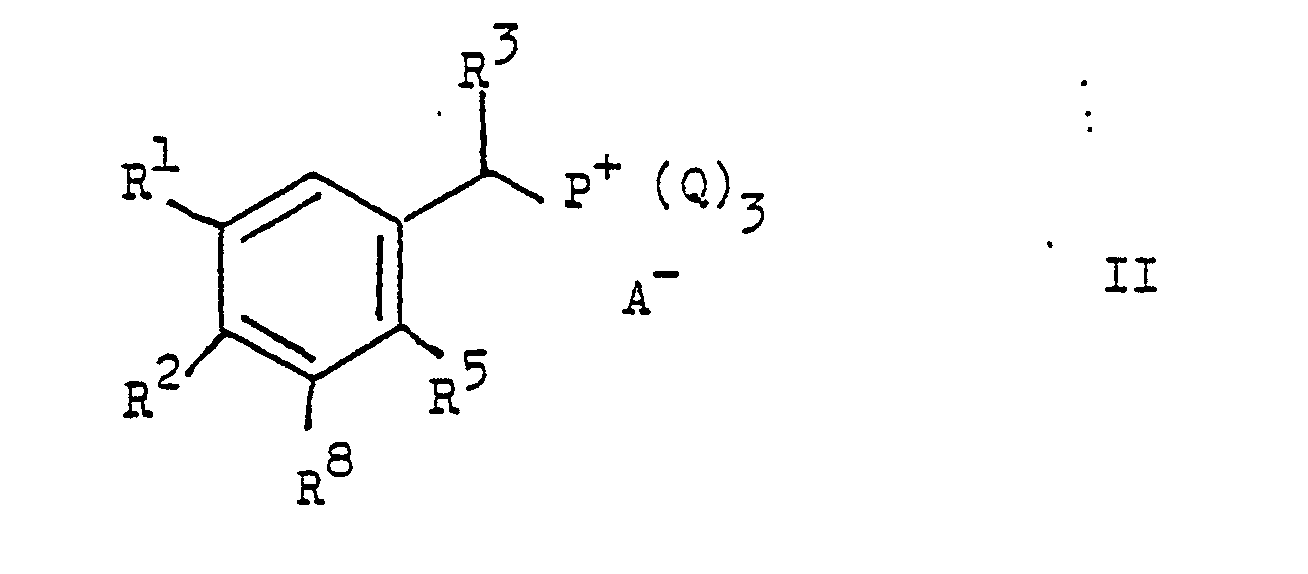
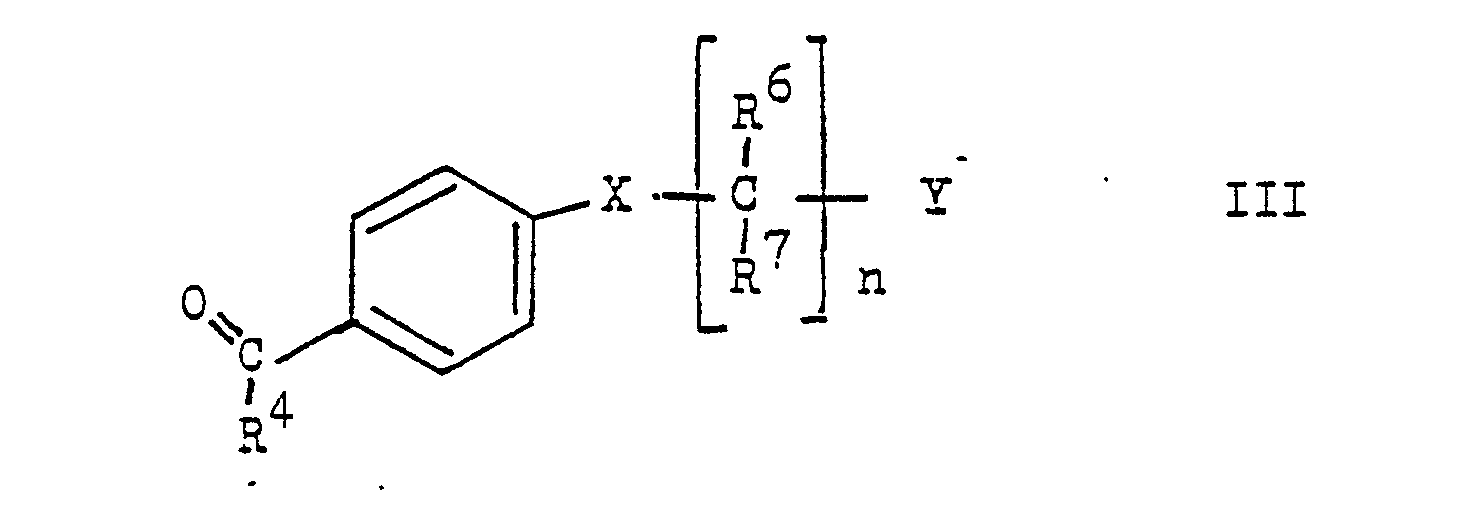
- b) eine Verbindung der allgemeinen Formel


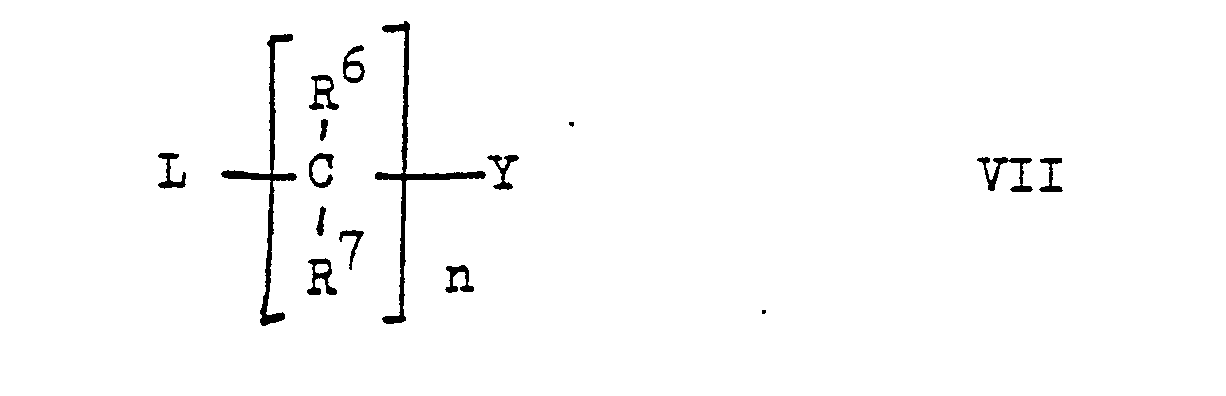
- c) eine Verbindung der allgemeinen Formel


- a) a compound of the general formula
- b) a compound of the general formula
- c) a compound of the general formula
Die Umsetzung gemäss Verfahrensvariante a) kann unter den üblichen Verfahrensbedingungen einer Wittig-Reaktion durchgeführt werden. Dabei werden die Komponenten in Gegenwart eines säurebindenden Mittels, z.B. in Gegenwart einer starken Base, wie z.B. Butyllithium, Natriumhydrid, Kalium-tert.-butylat oder dem Natriumsalz von Dimethylsulfoxyd, vornehmlich aber in Gegenwart eines gegebenenfalls durch niederes Alkyl substituierten Aethylenoxyds, wie 1,2-Butylenoxyd, gegebenenfalls in einem Lösungsmittel, z.B. in einem Aether, wie Diäthyläther oder Tetrahydrofuran, oder in einem aromatischen Kohlenwasserstoff, wie Benzol oder Toluol, in einem zwischen Raumtemperatur und dem Siedepunkt des Reaktionsgemisches liegenden Temperaturbereich miteinander umgesetzt.The reaction according to process variant a) can be carried out under the usual process conditions of a Wittig reaction. The components are in the presence of an acid binding agent, e.g. in the presence of a strong base, e.g. Butyllithium, sodium hydride, potassium tert-butoxide or the sodium salt of dimethyl sulfoxide, but primarily in the presence of an ethylene oxide which may be substituted by lower alkyl, such as 1,2-butylene oxide, optionally in a solvent, e.g. in an ether, such as diethyl ether or tetrahydrofuran, or in an aromatic hydrocarbon, such as benzene or toluene, in a temperature range between room temperature and the boiling point of the reaction mixture.
Von den anorganischen Säureanionen A⁻ ist das Chlor- und Brom-ion oder das Hydrosulfat-ion, von den organischen Säureanionen ist das Tosyloxy-ion bevorzugt. Der Arylrest Q ist vorzugsweise ein Phenylrest oder ein substituierter Phenylrest, wie p-Tolyl.Of the inorganic acid anions A⁻ the chlorine and bromine ion or the hydrosulfate ion is preferred, of the organic acid anions the tosyloxy ion is preferred. The aryl radical Q is preferably a phenyl radical or a substituted phenyl radical, such as p-tolyl.
Die Umsetzung nach Verfahrensvariante b) kann unter den üblichen Bedingungen einer Horner-Reaktion durchgeführt werden. Dabei werden die Komponenten mit Hilfe einer Base und vorzugsweise in Gegenwart eines inerten organischen Lösungsmittels, z.B. mit Hilfe von Natriumhydrid in Benzol, Toluol, Dimethylformamid, DMSO, Tetrahydrofuran, Dioxan oder 1,2-Dimethoxyäthan, oder auch mit Hilfe eines Natriumalkoholates in einem Alkanol, z.B. Natriummethylat in Methanol, in einem zwischen 0° und dem Siedepunkt des Reaktionsgemisches liegenden Temperaturbereich kondensiert.The reaction according to process variant b) can be carried out under the usual conditions of a Horner reaction. The components are thereby removed using a base and preferably in the presence of an inert organic solvent, e.g. with the help of sodium hydride in benzene, toluene, dimethylformamide, DMSO, tetrahydrofuran, dioxane or 1,2-dimethoxyethane, or also with the help of a sodium alcoholate in an alkanol, e.g. Sodium methylate in methanol, condensed in a temperature range between 0 ° and the boiling point of the reaction mixture.
Die Alkoxyreste RO sind vornehmlich niedere Alkoxyreste mit 1-6 Kohlenstoffatomen, wie Methoxy oder Aethoxy.The alkoxy radicals RO are primarily lower alkoxy radicals with 1-6 carbon atoms, such as methoxy or ethoxy.
Die Umsetzung nach Verfahrensvariante c) kann in einem organischen Lösungsmittel wie Dimethylformamid, zweckmässig unter Erwärmen bis zur Rückflusstemperatur des Reaktionsgemisches, vorgenommen werden. Beispiele von Abgangsgruppen L sind Halogen, wie Chlor; Mesyloxy und Tosyloxy. Das Kation M⁺ in einer Verbindung der Formel VI ist zweckmässig ein Alkalimetall-Kation wie Na⁺.The reaction according to process variant c) can be expedient in an organic solvent such as dimethylformamide with heating to the reflux temperature of the reaction mixture. Examples of leaving groups L are halogen such as chlorine; Mesyloxy and tosyloxy. The cation M⁺ in a compound of formula VI is advantageously an alkali metal cation such as Na⁺.
Die Oxidation einer Sulfidgruppe X oder Y zu einer Sulfoxidgruppe und die Oxidation einer Sulfoxidgruppe X oder Y zu einer Sulfonylgruppe kann mit Oxidationsmitteln wie Persäuren, z.B. Peressigsäure oder m-Chlorperbenzoesäure, durchgeführt werden. Die Oxidation einer Sulfidgruppe zur Sulfoxidgruppe kann auch mittels Perjodaten wie Natriumperjodat erfolgen.The oxidation of a sulfide group X or Y to a sulfoxide group and the oxidation of a sulfoxide group X or Y to a sulfonyl group can be carried out with oxidizing agents such as peracids, e.g. Peracetic acid or m-chloroperbenzoic acid. The oxidation of a sulfide group to the sulfoxide group can also be carried out using periodates such as sodium periodate.
Die Ausgangsverbindungen der allgemeinen Formeln II-VII können, soweit sie nicht bekannt oder hier beschrieben sind, in Analogie zu bekannten oder hier beschriebenen Methoden hergestellt werden.Unless they are known or described here, the starting compounds of the general formulas II-VII can be prepared analogously to known methods or described here.
Verbindungen der allgemeinen Formel II und IV und ihre Herstellung sind z.B. in den deutschen Offenlegungsschriften 2 414 619 und 2 819 213 und der europäischen Patentschrift 2 742 beschrieben.Compounds of general formula II and IV and their preparation are e.g. described in German Offenlegungsschriften 2,414,619 and 2,819,213 and European Patent 2,742.
Verbindungen der allgemeinen Formel III können ausgehend von p-Hydroxy-, p-Mercapto-, p-Amino-, p-Alkylamino- oder p-Acylamino-substituierten Benzaldehyden oder Acetophenonen, Propiophenonen oder Homologen davon durch Umsetzung mit einer Verbindung der Formel Y(CR⁶,R⁷)nCl in Gegenwart einer Base, wie NaH hergestellt werden oder durch Umsetzung eines p-Halogen-Benzaldehyds mit einem Amin der Formel NHR⁹-(CR⁶,R⁷)nY oder einem Mercaptan der Formel HS-(CR⁶,R⁷)nY in Gegenwart einer Base wie K₂CO₃.Compounds of the general formula III can be prepared from p-hydroxy, p-mercapto, p-amino, p-alkylamino or p-acylamino substituted benzaldehydes or acetophenones, propiophenones or homologues thereof by reaction with a compound of formula Y ( CR⁶, R⁷) n Cl in the presence of a base, such as NaH, or by reacting a p-halogeno-benzaldehyde with an amine of the formula NHR⁹- (CR⁶, R⁷) n Y or a mercaptan of the formula HS- (CR⁶, R⁷) n Y in the presence of a base such as K₂CO₃.
Verbindungen der allgemeinen Formel V können ausgehend von p-Hydroxy-, p-Mercapto- oder p-Amino-, Alkylamino- oder Acylamino-substituierten Benzoesäureestern hergestellt werden durch Umsetzung mit einer Verbindung der Formel Y(CR⁶,R⁷)nCl, Reduktion der Estergruppe mit Dibal oder LiAlH₄ zum entsprechenden Alkohol, Austausch der Hydroxygruppe gegen Brom z.B. durch Umsetzung mit PBr₃ und Umsetzung des Bromids mit Trialkylphosphit zum Phosphonat der allgemeinen Formel V.Compounds of the general formula V can start from p-hydroxy, p-mercapto or p-amino, alkylamino or Acylamino-substituted benzoic acid esters are prepared by reaction with a compound of the formula Y (CR⁶, R⁷) n Cl, reduction of the ester group with dibal or LiAlH₄ to the corresponding alcohol, exchange of the hydroxyl group for bromine, for example by reaction with PBr₃ and reaction of the bromide with trialkyl phosphite Phosphonate of the general formula V.
Verbindungen der allgemeinen Formel VI, in denen Z Hydroxy darstellt, können aus Verbindungen der allgemeinen Formel II und Verbindungen der allgemeinen Formel

durch Wittig-Reaktion und anschliessende Abspaltung der Schutzgruppe hergestellt werden. Verbindungen der allgemeinen Formel VI, in denen Z eine SH-Gruppe ist, können aus Verbindungen der allgemeinen Formel II durch Umsetzung mit S-(4-Formylphenyl)-dimethylthiocarbamat (vgl. EP 58370 Bl) und anschliessende Spaltung der Thiocarbamatgruppe durch Behandlung mit LiAlH₄ hergestellt werden.Compounds of the general formula VI in which Z represents hydroxy can be obtained from compounds of the general formula II and compounds of the general formula
by Wittig reaction and subsequent cleavage of the protective group. Compounds of the general formula VI in which Z is an SH group can be obtained from compounds of the general formula II by reaction with S- (4-formylphenyl) dimethylthiocarbamate (cf. EP 58370 B1) and subsequent cleavage of the thiocarbamate group by treatment with LiAlH₄ getting produced.
Verbindungen der allgemeinen Formel VI in der Z ein Rest -NHR⁹ ist, können dadurch hergestellt werden, dass man aus einer Verbindung der allgemeinen Formel II und p-Nitrobenzaldehyd durch Wittig-Reaktion eine der allgemeinen Formel VI entsprechende Verbindung mit Z = NO₂ herstellt, worauf die Nitrogruppe, z.B. mit Na₂S₂O₄ oder nascierenden Wasserstoff zur Aminogruppe reduziert wird, die schliesslich zur Gruppe -NHR⁹ alkyliert oder acyliert wird.Compounds of the general formula VI in which Z is a radical -NHR⁹ can be prepared by preparing a compound corresponding to the general formula VI with Z = NO₂ from a compound of the general formula II and p-nitrobenzaldehyde by Wittig reaction, whereupon the nitro group, e.g. is reduced with Na₂S₂O₄ or nascent hydrogen to the amino group, which is finally alkylated or acylated to the group -NHR⁹.
Verbindungen der Formel VI, in denen Z ein Rest -SO
Die biologische Wirksamkeit der erfindungsgemässen Verbindung kann z.B. mit den in der deutschen Offenlegungsschrift 3 715 955 beschriebenen Versuchsanord- nungen ermittelt werden. Bei der Prüfung der Wirkung gegen chemisch induzierte (orale Verabreichung von Dimethylbenzanthracen) Mammatumoren bei Ratten wurden mit der Verbindung der Formel I, 4-[2-[p-[(E)-2-(5,6,7,8-Tetrahydro-5,5,8,8-tetramethyl- -2-naphthyl)propenyl]phenoxy]äthyl]morpholin die nachstehend zusammengefassten Resultate erhalten:
Die Verbindungen der Formel I können zur topischen und systemischen Therapie von benignen und malignen Neoplasien, von prämalignen Läsionen, sowie ferner auch zur systemischen und topischen Prophylaxe der genannten Affektionen verwendet werden.The compounds of the formula I can be used for topical and systemic therapy of benign and malignant neoplasias, of pre-malignant lesions, and also for systemic and topical prophylaxis of the above-mentioned affections.
Sie sind des weiteren für die topische und systemische Therapie von Akne, Psoriasis und anderen, mit einer verstärkten oder pathologisch veränderten Verhornung einhergehenden, Dermatosen, wie auch von entzündlichen und allergischen dermatologischen Affektionen geeignet. Die Verfahrensprodukte der Formel I können ferner auch zur Bekämpfung von Schleimhauterkrankungen mit entzündlichen oder degenerativen bzw. metaplastischen Veränderungen eingesetzt werden. Weiterhin können die Verbindungen der Formel I, vorzugsweise in topischen Präparaten, zur Behandlung und Prophylaxe lichtgeschädigter Haut (Altershaut) verwendet werden.They are also suitable for topical and systemic therapy of acne, psoriasis and other dermatoses associated with increased or pathologically altered keratinization, as well as inflammatory and allergic dermatological disorders. The process products of the formula I can also be used to combat mucosal diseases with inflammatory or degenerative or metaplastic changes be used. Furthermore, the compounds of the formula I, preferably in topical preparations, can be used for the treatment and prophylaxis of light-damaged skin (aging skin).
Die Mittel können enteral, parenteral oder topisch verabreicht werden. Für die enterale Applikation eignen sich z.B. Mittel in Form von Tabletten, Kapseln, Dragées, Sirupen, Suspensionen, Lösungen und Suppositorien. Für die parenterale Applikation sind Mittel in Form von Infusions- oder Injektionslösungen geeignet.The agents can be administered enterally, parenterally or topically. For enteral application, e.g. Preparations in the form of tablets, capsules, dragées, syrups, suspensions, solutions and suppositories. Agents in the form of infusion or injection solutions are suitable for parenteral administration.
Die Dosierungen, in denen die Präparate verabreicht werden, können je nach Anwendungsart und Anwendungsweg sowie nach den Bedürfnissen der Patienten variieren. Im allgemeinen kommen für den Erwachsenen tägliche Dosen von etwa 0,1-100 mg/kg, vorzugsweise 1-50 mg/kg in Betracht.The dosages in which the preparations are administered can vary depending on the type of application and route of use, and on the needs of the patients. Daily doses of about 0.1-100 mg / kg, preferably 1-50 mg / kg, are generally suitable for adults.
Die Präparate können inerte oder auch pharmakodynamisch aktive Zusätze enthalten. Tabletten oder Granula z.B. können eine Reihe von Bindemitteln, Füllstoffen, Trägersubstanzen oder Verdünnungsmitteln enthalten. Flüssige Präparate können beispielsweise in Form einer sterilen, mit Wasser mischbaren Lösung vorliegen. Kapseln können neben dem Wirkstoff zusätzlich ein Füllmaterial oder Verdickungsmittel enthalten. Des weiteren können geschmacksverbessernde Zusätze sowie die üblicherweise als Konservierungs-, Stabilisierungs-, Feuchthalte- und Emulgiermittel verwendeten Stoffe, ferner auch Salze zur Veränderung des osmotischen Druckes, Puffer und andere Zusätze vorhanden sein.The preparations can contain inert or pharmacodynamically active additives. Tablets or granules e.g. can contain a number of binders, fillers, carriers or diluents. Liquid preparations can, for example, be in the form of a sterile, water-miscible solution. In addition to the active ingredient, capsules can also contain a filler or thickener. In addition, taste-improving additives and the substances usually used as preservatives, stabilizers, humectants and emulsifiers, and also salts for changing the osmotic pressure, buffers and other additives can be present.
Die vorstehend erwähnten Trägersubstanzen und Verdünnungsmittel können aus organischen oder anorganischen Stoffen, z.B. aus Wasser, Gelatine, Milchzucker, Stärke, Magnesiumstearat, Talkum, Gummi arabicum, Polyalkylenglykolen und dgl. bestehen. Voraussetzung ist, dass alle bei der Herstellung der Präparate verwendeten Hilfsstoffe untoxisch sind.The above-mentioned carriers and diluents can consist of organic or inorganic substances, for example water, gelatin, milk sugar, starch, magnesium stearate, talc, gum arabic, polyalkylene glycols and the like. The requirement is that everyone at auxiliaries used in the preparation of the preparations are non-toxic.
Zur topischen Anwendung werden die Wirkstoffe zweckmässig in Form von Salben, Tinkturen, Crèmen, Lösungen, Lotionen, Sprays, Suspensionen und dgl. verwendet. Bevorzugt sind Salben und Crèmen sowie Lösungen. Diese zur topischen Anwendung bestimmten Präparate können dadurch hergestellt werden, dass man die Verfahrensprodukte als wirksamen Bestandteil nichttoxischen, inerten, für topische Behandlung geeigneten, an sich in solchen Präparaten üblichen, festen oder flüssigen Trägern zumischt.For topical use, the active ingredients are expediently used in the form of ointments, tinctures, creams, solutions, lotions, sprays, suspensions and the like. Ointments and creams and solutions are preferred. These preparations intended for topical use can be prepared by admixing the process products as an effective component of non-toxic, inert, solid or liquid carriers which are customary in such preparations and are suitable for topical treatment.
Für die topische Anwendung sind zweckmässig ca. 0,1-5%ige, vorzugsweise 0,3-2%ige Lösungen, sowie ca. 0,1-5%ige, vorzugsweise ca. 0,3-2%ige Salben oder Crèmen geeignet.Approximately 0.1-5%, preferably 0.3-2%, and approximately 0.1-5%, preferably approximately 0.3-2%, ointments or creams are expedient for topical use suitable.
Den Präparaten kann gegebenenfalls ein Antioxydationsmittel, z.B. Tocopherol, N-Methyl-q-tocopheramin sowie butyliertes Hydroxyanisol oder butyliertes Hydroxytoluol beigemischt sein.An antioxidant, e.g. Tocopherol, N-methyl-q-tocopheramine and butylated hydroxyanisole or butylated hydroxytoluene can be added.
Die nachstehenden Beispiele erläutern die Erfindung weiter. Die Temperaturen sind in Celsiusgraden angegeben.The following examples further illustrate the invention. The temperatures are given in degrees Celsius.
332 g 2-[(5,6,7,8-Tetrahydro-5,5,8,8-tetramethyl -2-naphthyl)äthyl]triphenylphosphoniumbromid werden in 1,2 l Tetrahydrofuran suspendiert. Unter Rühren tropft man bei 0°C 406 ml Butyllithium (1,6 molar in Hexan) hinzu. Nach 1-stündigem Rühren bei 0°C tropft man zu der dunkelroten Lösung eine Lösung von 120 g 4-(2-Morpholinoäthoxy) benzaldehyd in 400 ml Tetrahydrofuran. Nach 2-stündigem Rühren bei Raumtemperatur giesst man das Reaktionsgemisch in 3 l eines Methanol/Wasser-Gemisches (6:4) und extrahiert mit Hexan. Die organische Phase wird mit Wasser gewaschen, über Natriumsulfat getrocknet und eingedampft. Der gelbliche, kristalline Rückstand wird aus Essigester/Hexan umkristallisiert und ergibt 123 g 4-[2-[p-[(E)-2-(5,6,7,8-Tetrahydro-5,5,8,8-tetramethyl -2-naphthyl)propenyl]phenoxy]äthyl]-morpholin in weissen Kristallen, Schmelzpunkt 107-109°C.332 g of 2 - [(5,6,7,8-tetrahydro-5,5,8,8-tetramethyl-2-naphthyl) ethyl] triphenylphosphonium bromide are suspended in 1.2 l of tetrahydrofuran. 406 ml of butyllithium (1.6 molar in hexane) are added dropwise at 0 ° C. with stirring. After stirring for 1 hour at 0 ° C., a solution of 120 g of 4- (2-morpholinoethoxy) benzaldehyde in 400 ml of tetrahydrofuran is added dropwise to the dark red solution. After stirring for 2 hours at room temperature, the reaction mixture is poured into 3 l of a methanol / water mixture (6: 4) and extracted with Hexane. The organic phase is washed with water, dried over sodium sulfate and evaporated. The yellowish, crystalline residue is recrystallized from ethyl acetate / hexane and gives 123 g of 4- [2- [p - [(E) -2- (5,6,7,8-tetrahydro-5,5,8,8-tetramethyl -2-naphthyl) propenyl] phenoxy] ethyl] morpholine in white crystals, melting point 107-109 ° C.
Der als Ausgangsprodukt verwendete 4-(2-Morpholinoäthoxy)benzaldehyd kann wie folgt hergestellt werden:The 4- (2-morpholinoethoxy) benzaldehyde used as the starting product can be prepared as follows:
92,8 g 4-Hydroxybenzaldehyd werden in 820 ml Dimethylformamid gelöst. Nach Zugabe von 228 g 4-(2-Chloräthyl)-morpholin und 415 g fein gepulvertem Kaliumcarbonat wird das Reaktionsgemisch unter Argon und kräftigem Rühren über Nacht auf 100°C erwärmt. Die abgekühlte Lösung wird auf 3 l Eiswasser gegossen, mit Essigester extrahiert, mit Wasser gewaschen, getrocknet und eingedampft. Das zurückbleibende dunkle Oel wird am Hochvakuum destilliert und ergibt 132 g 4-(2-Morpholinoäthoxy)benzaldehyd als gelbliches Oel, Siedepunkt 145-150°C/33 Pa.92.8 g of 4-hydroxybenzaldehyde are dissolved in 820 ml of dimethylformamide. After adding 228 g of 4- (2-chloroethyl) morpholine and 415 g of finely powdered potassium carbonate, the reaction mixture is heated to 100 ° C. overnight under argon and with vigorous stirring. The cooled solution is poured onto 3 l of ice water, extracted with ethyl acetate, washed with water, dried and evaporated. The remaining dark oil is distilled under high vacuum and gives 132 g of 4- (2-morpholinoethoxy) benzaldehyde as a yellowish oil, boiling point 145-150 ° C / 33 Pa.
In zu Beispiel 1 analoger Weise erhält man aus 26 g Triphenyl[1-(1,1,3,3-tetramethyl-5-indenyl)äthyl]phosphoniumbromid und 10 g 4-(2-Morpholinoäthoxy)benzaldehyd nach Umkristallisation aus Hexan 13,6 g 4-[2-[p-[(E)-2-(1,1,3,3-Tetramethyl-5-indenyl)propenyl]phenoxy]äthyl]morpholin in weissen Kristallen, Schmelzpunkt 85-86°C.In an analogous manner to Example 1, 26 g of triphenyl [1- (1,1,3,3-tetramethyl-5-indenyl) ethyl] phosphonium bromide and 10 g of 4- (2-morpholinoethoxy) benzaldehyde are obtained after recrystallization from hexane 13. 6 g of 4- [2- [p - [(E) -2- (1,1,3,3-tetramethyl-5-indenyl) propenyl] phenoxy] ethyl] morpholine in white crystals, melting point 85-86 ° C.
0,75 g einer 50%igen Suspension von Natriumhydrid in Mineralöl werden in 10 ml Dimethylformamid suspendiert. Unter Rühren tropft man bei 0°C eine Lösung von 5 g p-[(E)-2-(5,6,7,8-Tetrahydro-5,5,8,8-tetramethyl -2-naphthyl)-propenyl]phenol in 30 ml Dimethylformamid hinzu. Nach 1-stündigem Rühren bei 0°C wird eine Lösung von 3,6 g N-(2-Chloräthyl)pyrrolidin in 30 ml Dimethylformamid tropfenweise hinzugefügt. Das Reaktionsgemisch wird anschliessend 2 Stunden auf 70°C erwärmt, danach abgekühlt, auf Eis-Wasser gegossen und mit Essigester extrahiert. Die organische Lösung wird mehrfach mit Wasser gewaschen, getrocknet und eingedampft. Man erhält ein gelbbraunes Oel, das durch Filtration über Kieselgel (Eluierungsmittel Essigester + 10% Aethanol) gereinigt und aus Hexan umkristallisiert wird. Isoliert werden 4,5 g 1-[p-[2-[2-(5,6,7,8-Tetrahydro-5,5,8,8-tetramethyl -2-naphthyl)propenyl]phenoxy]-äthyl]pyrrolidin in weissen Kristallen, Schmelzpunkt 80-82°C.0.75 g of a 50% suspension of sodium hydride in mineral oil are suspended in 10 ml of dimethylformamide. A solution of 5 g of p - [(E) -2- (5,6,7,8-tetrahydro-5,5,8,8-tetramethyl -2-naphthyl) propenyl] is added dropwise at 0 ° C. with stirring. phenol in 30 ml of dimethylformamide. To A solution of 3.6 g of N- (2-chloroethyl) pyrrolidine in 30 ml of dimethylformamide is added dropwise for 1 hour at 0 ° C. The reaction mixture is then heated to 70 ° C. for 2 hours, then cooled, poured onto ice-water and extracted with ethyl acetate. The organic solution is washed several times with water, dried and evaporated. A yellow-brown oil is obtained which is purified by filtration through silica gel (eluent ethyl acetate + 10% ethanol) and recrystallized from hexane. 4.5 g of 1- [p- [2- [2- (5,6,7,8-tetrahydro-5,5,8,8-tetramethyl-2-naphthyl) propenyl] phenoxy] ethyl] pyrrolidine are isolated in white crystals, melting point 80-82 ° C.
In zu Beispiel 3 analoger Weise erhält man aus 5 g p[(E)-2-(5,6,7,8-Tetrahydro-5,5,8,8-tetramethyl -2-naphthyl)propenyl]phenol und 4,7 g 1-(2-Chloräthyl)-piperidin 5,2 g 1-[2-[p-[(E)-2-(5,6,7,8-Tetrahydro-5,5,8,8-tetramethyl -2-naphthyl)propenyl]phenoxy]äthyl]piperidin in weissen Kristallen, Schmelzpunkt 91-93°C.In a manner analogous to Example 3, 5 gp of [(E) -2- (5,6,7,8-tetrahydro-5,5,8,8-tetramethyl-2-naphthyl) propenyl] phenol and 4.7 are obtained g 1- (2-chloroethyl) piperidine 5.2 g 1- [2- [p - [(E) -2- (5,6,7,8-tetrahydro-5,5,8,8-tetramethyl - 2-naphthyl) propenyl] phenoxy] ethyl] piperidine in white crystals, melting point 91-93 ° C.
Ein Gemisch von 6 g p-[(E)-2-(5,6,7,8-Tetrahydro-5,5,8,8-tetramethyl -2-naphthyl)propenyl]phenol, 4,8 g 2-Chloräthyl-methylsulfid und 10,5 g fein gepulvertem Kaliumcarbonat in 100 ml Dimethylformamid wird während 20 Stunden auf 100°C erwärmt. Das erkaltete Reaktionsgemisch wird mit Wasser verdünnt und mehrfach mit Essigester extrahiert. Der nach dem Trocknen und Eindampfen der organische Phase erhaltene kristalline Rückstand wird aus Hexan umkristallisiert und ergibt 5,5 g Methyl 2-[p-[(E)-2-(5,6,7,8-tetrahydro-5,5,8,8-tetramethyl -2-naphthyl)prophenyl]phenoxy]äthylsulfid in farblosen Kristallen, Schmelzpunkt 94-96°C.A mixture of 6 g p - [(E) -2- (5,6,7,8-tetrahydro-5,5,8,8-tetramethyl -2-naphthyl) propenyl] phenol, 4.8 g 2-chloroethyl methyl sulfide and 10.5 g of finely powdered potassium carbonate in 100 ml of dimethylformamide are heated to 100 ° C. over 20 hours. The cooled reaction mixture is diluted with water and extracted several times with ethyl acetate. The crystalline residue obtained after drying and evaporation of the organic phase is recrystallized from hexane and gives 5.5 g of methyl 2- [p - [(E) -2- (5,6,7,8-tetrahydro-5,5, 8,8-tetramethyl -2-naphthyl) prophenyl] phenoxy] ethyl sulfide in colorless crystals, melting point 94-96 ° C.
2,1 g der in Beispiel 5 erhaltenen Verbindung werden in 50 ml Chloroform gelöst und bei 0°C langsam mit einer Lösung von 1,2 g m-Chlorperbenzoesäure (90%) in 10 ml Chloroform versetzt. Nach 20-stündigem Rühren bei 0°C wäscht man mit verdünnter Sodalösung und Wasser, trocknet und dampft ein. Das so erhaltene gelbe Oel wird über eine kleine Kieselgel-Säule (Eluierungsmittel Hexan/Essigester = 1:2) filtriert und aus Essigester umkristallisiert. Man erhält 1,7 g Methyl 2-[p-[(E)-2-(5,6,7,8-tetrahydro-5,5,8,8-tetramethyl -2-naphthyl)propenyl]phenoxy]äthylsulfoxid, Schmelzpunkt 134-136°C.2.1 g of the compound obtained in Example 5 are dissolved in 50 ml of chloroform and a solution of 1.2 g of m-chloroperbenzoic acid (90%) in 10 ml of chloroform is slowly added at 0.degree. After stirring for 20 hours at 0 ° C, wash with dilute soda solution and water, dry and evaporate. The yellow oil thus obtained is filtered through a small silica gel column (eluent hexane / ethyl acetate = 1: 2) and recrystallized from ethyl acetate. 1.7 g of methyl 2- [p - [(E) -2- (5,6,7,8-tetrahydro-5,5,8,8-tetramethyl-2-naphthyl) propenyl] phenoxy] ethyl sulfoxide are obtained, Melting point 134-136 ° C.
In Analogie zu Beispiel 6 erhält man aus 2,8 g Methyl 2-[p-[(E)-2-(5,6,7,8-tetrahydro-5,5,8,8-tetramethyl -2-naphthyl)propenyl]phenoxy]äthylsulfid und 3,1 g m Chlorperbenzoesäure (90%) nach Filtration des Rohproduktes über eine kleine Kieselgel-Säule (Eluierungsmittel Hexan/Essigester = 1:1) und Umkristallisation aus Essigester 1,7 g Methyl 2-[p-[(E)-2-(5,6,7,8-tetrahydro-5,5,8,8-tetramethyl -2-naphthyl)propenyl]phenoxy]äthylsulfon, Schmelzpunkt 169-171°C.Analogously to Example 6, 2.8 g of methyl 2- [p - [(E) -2- (5,6,7,8-tetrahydro-5,5,8,8-tetramethyl -2-naphthyl) propenyl] phenoxy] ethyl sulfide and 3.1 gm chloroperbenzoic acid (90%) after filtration of the crude product through a small silica gel column (eluent hexane / ethyl acetate = 1: 1) and recrystallization from ethyl acetate 1.7 g methyl 2- [p- [ (E) -2- (5,6,7,8-tetrahydro-5,5,8,8-tetramethyl -2-naphthyl) propenyl] phenoxy] ethyl sulfone, melting point 169-171 ° C.
In Analogie zu Beispiel 5 erhält man aus 8,2 g p-[(E)-2-(5,6,7,8-Tetrahydro-5,5,8,8-tetramethyl 2-naphthyl)prophenyl]thiophenol, 12 g 1-Chlor-2-dimethylamino-äthan und 6,9 g Kaliumcarbonat durch 3-stündiges Erwärmen auf 60°C in Dimethylformamid nach Umkristallisation aus Hexan 3,5 g N,N-Dimethyl-2-[[p-[(E)-2-(5,6,7,8-tetrahydro-5,5,8,8 -tetramethyl-2-naphthyl)propenyl]phenyl]thio]äthylamin, Schmelzpunkt 57-59°C.Analogously to Example 5, 8.2 g of p - [(E) -2- (5,6,7,8-tetrahydro-5,5,8,8-tetramethyl-2-naphthyl) prophenyl] thiophenol, 12 are obtained g 1-chloro-2-dimethylaminoethane and 6.9 g potassium carbonate by heating for 3 hours at 60 ° C. in dimethylformamide after recrystallization from hexane 3.5 g N, N-dimethyl-2 - [[p - [(E ) -2- (5,6,7,8-tetrahydro-5,5,8,8-tetramethyl-2-naphthyl) propenyl] phenyl] thio] ethylamine, melting point 57-59 ° C.
In Analogie zu Beispiel 8 erhält man aus 8,2 g p-[(E)-2-(5,6,7,8-Tetrahydro-5,5,8,8-tetramethyl 2-naphthyl)prophenyl]thiophenol, 10,6 g 2-Chloräthyl-methyläther und 6,9 g Kaliumcarbonat nach Umkristallisation aus Hexan 5 g 2-Methoxyäthyl p-[(E)-2-(5,6,7,8-tetrahydro-5,5,8,8-tetramethyl -2-naphthyl)propenyl]phenylsulfid, Schmelzpunkt 48-50°C.Analogously to Example 8, 8.2 g of p - [(E) -2- (5,6,7,8-tetrahydro-5,5,8,8-tetramethyl-2-naphthyl) prophenyl] thiophenol, 10 are obtained , 6 g of 2-chloroethyl methyl ether and 6.9 g of potassium carbonate after recrystallization from hexane 5 g of 2-methoxyethyl p - [(E) -2- (5,6,7,8-tetrahydro-5,5,8,8 -tetramethyl -2-naphthyl) propenyl] phenyl sulfide, melting point 48-50 ° C.
In Analogie zu Beispiel 8 erhält man aus 8,2 g p-[(E)-2-(5,6,7,8-Tetrahydro-5,5,8,8-tetramethyl 2-naphthyl)prophenyl]thiophenol, 12,4 g 2-Chloräthyl-methyläther und 6,9 g Kaliumcarbonat nach Umkristallisation aus Hexan 3,5 g 2-Thiomethoxyäthyl p-[(E)-2-(5,6,7,8-tetrahydro-5,5,8,8-tetramethyl -2-naphthyl)propenyl]phenylsulfid, Schmelzpunkt 65-67°C.Analogously to Example 8, 8.2 g of p - [(E) -2- (5,6,7,8-tetrahydro-5,5,8,8-tetramethyl-2-naphthyl) prophenyl] thiophenol, 12 are obtained , 4 g of 2-chloroethyl methyl ether and 6.9 g of potassium carbonate after recrystallization from hexane 3.5 g of 2-thiomethoxyethyl p - [(E) -2- (5,6,7,8-tetrahydro-5,5,8 , 8-tetramethyl -2-naphthyl) propenyl] phenyl sulfide, melting point 65-67 ° C.
3 g Natrium p-[2-(5,6,7,8-tetrahydro-5,5,8,8-tetramethyl -2-naphthyl)propenyl]phenylsulfinat werden in 30 ml Dimethylformamid suspendiert und mit 1,5 g 2-Chloräthylmethyläther versetzt. Nach 20-stündigem Erwärmen auf 90°C verdünnt man mit Wasser, extrahiert mit Essigester, trocknet und dampft ein. Das Rohprodukt wird über eine Kieselgel-Säule (Eluierungsmittel Hexan/Essigester = 4:1) filtriert und ergibt nach Umkristallisation aus Hexan/Aether 1,8 g 2-Methoxyäthyl p-[(E)-2-[5,6,7,8-tetrahydro-5,5,8,8-tetramethyl -2-naphthyl]propenyl]phenylsulfon, Schmelzpunkt 104-106°C.3 g of sodium p- [2- (5,6,7,8-tetrahydro-5,5,8,8-tetramethyl-2-naphthyl) propenyl] phenyl sulfinate are suspended in 30 ml of dimethylformamide and mixed with 1.5 g of 2- Chloräthylmethyläther added. After heating to 90 ° C. for 20 hours, the mixture is diluted with water, extracted with ethyl acetate, dried and evaporated. The crude product is filtered through a silica gel column (eluent hexane / ethyl acetate = 4: 1) and, after recrystallization from hexane / ether, gives 1.8 g of 2-methoxyethyl p - [(E) -2- [5,6,7, 8-tetrahydro-5,5,8,8-tetramethyl -2-naphthyl] propenyl] phenyl sulfone, melting point 104-106 ° C.
In Analogie zu Beispiel 1 erhält man aus 38,5 g [1-(5,6,7,8-Tetrahydro-5,5,8,8-tetramethyl -2-naphthyl)-äthyl]triphenylphosphoniumbromid, 45 ml Butyllithium und 13,7 g p-[[2-(Dimethylamino)äthyl]methylamino]benzaldehyd nach Filtration über Kieselgel (Eluierungsmittel Essigester, dann Essigester/Aethanol = 1:1 unter Zusatz von 1% Triäthylamin) und Umkristallisation aus Hexan 9,2 g N,N,N′-Trimethyl-N-[p-[(E)-2-(5,6,7,8-tetrahydro-5,5,8,8 -tetramethyl-2-naphthyl)propenyl]phenyl]äthylendiamin, Schmelzpunkt 46-48°C.Analogously to Example 1, 38.5 g are obtained [1- (5,6,7,8-tetrahydro-5,5,8,8-tetramethyl -2-naphthyl) ethyl] triphenylphosphonium bromide, 45 ml butyl lithium and 13.7 g p - [[2- (dimethylamino) ethyl] methylamino] benzaldehyde after filtration over silica gel (eluent ethyl acetate, then ethyl acetate / ethanol = 1: 1 with the addition of 1% triethylamine) and recrystallization from hexane 9.2 g N, N, N'-trimethyl-N- [p- [(E) -2- (5,6,7,8-tetrahydro-5,5,8,8 -tetramethyl-2-naphthyl) propenyl] phenyl] ethylenediamine, melting point 46-48 ° C.
Der als Ausgangsprodukt verwendete p-[[2-(Dimethylamino)äthyl]methylamino]benzaldehyd kann wie folgt hergestellt werden:The p - [[2- (dimethylamino) ethyl] methylamino] benzaldehyde used as the starting product can be prepared as follows:
Ein Gemisch von 10 g 4-Fluorbenzaldehyd, 9,7 g Trimethyläthylendiamin und 13,1 g Kaliumcarbonat in 20 ml Dimethylformamid wird während 16 Stunden auf 150°C erwärmt. Nach dem Erkalten verdünnt man mit Wasser und extrahiert mit Essigester. Die organische Phase wird mehrfach mit Wasser gewaschen, getrocknet und eingedampft. Das bräunliche Oel (13,7 g) wird am Hochvakuum getrocknet und ohne weitere Reinigung umgesetzt.A mixture of 10 g of 4-fluorobenzaldehyde, 9.7 g of trimethylethylenediamine and 13.1 g of potassium carbonate in 20 ml of dimethylformamide is heated to 150 ° C. for 16 hours. After cooling, the mixture is diluted with water and extracted with ethyl acetate. The organic phase is washed several times with water, dried and evaporated. The brownish oil (13.7 g) is dried under high vacuum and reacted without further purification.
In Analogie zu Beispiel 12 erhält man aus 10,4 g [1-(5,6,7,8-Tetrahydro-5,5,8,8-tetramethyl -2-naphthyl)-äthyl]triphenylphosphoniumbromid, 12,2 ml Butyllithium und 3,4 g p-[[2-(Dimethylamino)äthyl]amino]benzaldehyd nach Umkristallisation aus Hexan/Essigester 2 g N,N-Dimethyl-N′-[p-[(E)-2-(5,6,7,8-tetrahydro-5,5,8,8 -tetramethyl-2--naphthyl)propenyl]phenyl]äthylendiamin, Schmelzpunkt 102-104°C.Analogously to Example 12, 12.2 ml of butyllithium are obtained from 10.4 g of [1- (5,6,7,8-tetrahydro-5,5,8,8-tetramethyl-2-naphthyl) ethyl] triphenylphosphonium bromide and 3.4 g of p - [[2- (dimethylamino) ethyl] amino] benzaldehyde after recrystallization from hexane / ethyl acetate 2 g of N, N-dimethyl-N ′ - [p - [(E) -2- (5.6 , 7,8-tetrahydro-5,5,8,8 -tetramethyl-2-naphthyl) propenyl] phenyl] ethylenediamine, melting point 102-104 ° C.
Der als Ausgangsprodukt verwendete p-[[2-(Dimethylamino)äthyl]amino]benzaldehyd kann wie in Beispiel 12 beschrieben, aus 4-Fluorbenzaldehyd und 2-Dimethylaminoäthylamin als bräunliches Oel hergestellt werden.The p - [[2- (dimethylamino) ethyl] amino] benzaldehyde used as the starting product can be as in Example 12 described, be prepared from 4-fluorobenzaldehyde and 2-dimethylaminoethylamine as a brownish oil.
2,1 g [1-(6,7,8,9-Tetrahydro-7,7-dimethyl-5H-benzocyclohepten -2-yl)äthyl]triphenylphosphoniumbromid werden in 10 ml Toluol suspendiert und bei 0°C mit 0,5 g Kalium-tert-butylat versetzt. Nach 2-stündigem Rühren bei Raumtemperatur tropft man eine Lösung von 0,94 g 4-(2-Morpholinoäthoxy)benzaldehyd in 5 ml Toluol hinzu und rührt 3 Stunden bei Raumtemperatur nach. Nach dem Abdampfen der Hauptmenge des Lösungsmittels giesst man auf ein Gemisch aus Methanol/Wasser (6:4) und extrahiert mehrfach mit Hexan. Die organische Phase wird mit Wasser gewaschen, getrocknet und eingedampft. Umkristallisation des Rückstandes aus Hexan ergibt 0,4 g 4-[2-[p-[(E)-2-(6,7,8,9-Tetrahydro-7,7-dimethyl -5H-benzocyclohepten-2-yl)propenyl]phenoxy]äthyl]morpholin, Schmelzpunkt 78-79°C.2.1 g [1- (6,7,8,9-tetrahydro-7,7-dimethyl-5H-benzocyclohepten -2-yl) ethyl] triphenylphosphonium bromide are suspended in 10 ml of toluene and at 0 ° C with 0.5 g of potassium tert-butoxide are added. After stirring for 2 hours at room temperature, a solution of 0.94 g of 4- (2-morpholinoethoxy) benzaldehyde in 5 ml of toluene is added dropwise and stirring is continued for 3 hours at room temperature. After the majority of the solvent has been evaporated off, the mixture is poured onto a mixture of methanol / water (6: 4) and extracted several times with hexane. The organic phase is washed with water, dried and evaporated. Recrystallization of the residue from hexane gives 0.4 g of 4- [2- [p - [(E) -2- (6,7,8,9-tetrahydro-7,7-dimethyl -5H-benzocyclohepten-2-yl) propenyl] phenoxy] ethyl] morpholine, melting point 78-79 ° C.
In Analogie zu Beispiel 1 erhält man aus 22 g 2-[(5,6,7,8-Tetrahydro-5,5,8,8-tetramethyl-2-naphthyl)-äthyl]triphenylphosphoniumbromid und 9,5 g p-[[2-(Morpholino)äthyl]methylamino]benzaldehyd nach Umkristallisation aus Hexan 7 g 4-[2-[N-Methyl-p-[(E)-2-(5,6,7,8-tetrahydro-5,5,8,8-tetramethyl-2-naphthyl)propenyl]anilino]äthyl]morpholin, Schmelzpunkt 86-88°C, in weissen Kristallen.Analogously to Example 1, 22 g of 2 - [(5,6,7,8-tetrahydro-5,5,8,8-tetramethyl-2-naphthyl) ethyl] triphenylphosphonium bromide and 9.5 g of p- [ [2- (Morpholino) ethyl] methylamino] benzaldehyde after recrystallization from hexane 7 g 4- [2- [N-methyl-p - [(E) -2- (5,6,7,8-tetrahydro-5,5 , 8,8-tetramethyl-2-naphthyl) propenyl] anilino] ethyl] morpholine, melting point 86-88 ° C, in white crystals.
Der als Ausgangsprodukt verwendete p-[[2-(Morpholino)-äthyl]methylamino]benzaldehyd kann wie in Beispiel 12 beschrieben aus 4-Fluorbenzaldehyd und 4-(2-(N-Methylamino)-äthyl)morpholin als bräunliches Oel, das in der Kälte kristallisiert, hergestellt werden.The p - [[2- (morpholino) ethyl] methylamino] benzaldehyde used as the starting product can, as described in Example 12, be obtained from 4-fluorobenzaldehyde and 4- (2- (N-methylamino) ethyl) morpholine as a brownish oil, which in the cold crystallizes.
Analog Beispiel 1 erhält man aus 2-[(5,6,7,8-Tetrahydro-5,5,8,8-tetramethyl-2-naphthyl)äthyl]triphenylphosphoniumbromid und 4-[2-(Tetrahydro-4′H-1,4-thiazin-4′-yl)äthoxy]-benzaldehyd 1′,1′-dioxid nach 16-stündigem Rühren bei Raumtemperatur, Aufarbeitung, Flashchromatographie an Kieselgel mit Hexan-Essigester (1:2) und Kristallisation aus Essigester-Hexan das Tetrahydro-4-[2-[p-[(E)-2-(5,6,7,8-tetrahydro-5,5,8,8-tetramethyl-2-naphthyl)propenyl]phenoxy]-äthyl]-2H-1,4-thiazin 1,1-dioxid vom Schmelzpunkt 144-145°.Analogously to Example 1, 2 - [(5,6,7,8-tetrahydro-5,5,8,8-tetramethyl-2-naphthyl) ethyl] triphenylphosphonium bromide and 4- [2- (tetrahydro-4′H- 1,4-thiazin-4'-yl) ethoxy] benzaldehyde 1 ', 1'-dioxide after 16 hours of stirring at room temperature, working up, flash chromatography on silica gel with hexane-ethyl acetate (1: 2) and crystallization from ethyl acetate-hexane the tetrahydro-4- [2- [p - [(E) -2- (5,6,7,8-tetrahydro-5,5,8,8-tetramethyl-2-naphthyl) propenyl] phenoxy] ethyl] -2H-1,4-thiazine 1,1-dioxide with a melting point of 144-145 °.
Das 4-[2-(Tetrahydro-4′H-1,4-thiazin-4′-yl)äthoxy]-benzaldehyd 1′, 1′-dioxid kann wie folgt hergestellt werden:The 4- [2- (tetrahydro-4′H-1,4-thiazin-4′-yl) ethoxy] benzaldehyde 1 ′, 1′-dioxide can be prepared as follows:
11,6 g 4-Hydroxybenzaldehyd in 160 ml Dimethylformamid werden mit 15,6 g 4-(2-Chloräthyl)-tetrahydro-2H-1,4-thiazin 1,1-dioxid und 21,6 g pulverisiertem Kaliumcarbonat unter Argon 2 Stunden auf 100° erwärmt. Nach dem Abkühlen wird auf 150 g Eis gegossen, dreimal mit 300 ml Essigester extrahiert und die organischen Phasen noch zweimal mit 150 ml Wasser gewaschen, über Natriumsulfat getrocknet und im Vakuum eingedampft. Der beige, kristalline Rückstand (22,1 g) wird direkt für obige Wittigreaktion verwendet. Eine Probe wurde an Kieselgel mit Essigester-Hexan (4:1) chromatographiert und lieferte aus Essigester-Hexan farblose Kristalle vom Schmelzpunkt 101-102°C.11.6 g of 4-hydroxybenzaldehyde in 160 ml of dimethylformamide are mixed with 15.6 g of 4- (2-chloroethyl) tetrahydro-2H-1,4-thiazine 1,1-dioxide and 21.6 g of powdered potassium carbonate under argon for 2 hours heated to 100 °. After cooling, it is poured onto 150 g of ice, extracted three times with 300 ml of ethyl acetate and the organic phases are washed twice with 150 ml of water, dried over sodium sulfate and evaporated in vacuo. The beige, crystalline residue (22.1 g) is used directly for the above Wittig reaction. A sample was chromatographed on silica gel with ethyl acetate-hexane (4: 1) and gave colorless crystals of melting point 101-102 ° C. from ethyl acetate-hexane.
Die Herstellung von Gebrauchsformen der Verbindungen der Formel I kann in üblicher Weise, z.B. anhand der nachstehenden Beispiele, erfolgen.The use forms of the compounds of the formula I can be prepared in a customary manner, for example using the examples below.
Hartgelatinekapseln können wie folgt hergestellt werden:
Das sprühgetrocknete Pulver, das auf dem Wirkstoff, Gelatine und mikrokristalliner Cellulose basiert und eine mittlere Korngrösse des Wirkstoffes von <1 m aufweist (mittels Autokorrelationsspektroskopie gemessen), wird mit einer wässrigen Lösung von Natriumcarboxymethylcellulose und Natriumdioctylsulfosuccinat befeuchtet und geknetet. Die resultierende Masse wird granuliert, getrocknet und gesiebt, und das erhaltene Granulat mit mikrokristalliner Cellulose, Talk und Magnesiumstearat vermischt. Das Pulver wird in Kapseln der Grösse 0 abgefüllt.The spray-dried powder, which is based on the active ingredient, gelatin and microcrystalline cellulose and has an average grain size of the active ingredient of <1 m (measured by means of autocorrelation spectroscopy), is moistened and kneaded with an aqueous solution of sodium carboxymethyl cellulose and sodium dioctylsulfosuccinate. The resulting mass is granulated, dried and sieved, and the granules obtained are mixed with microcrystalline cellulose, talc and magnesium stearate. The powder is filled into size 0 capsules.
Tabletten können wie folgt hergestellt werden:
Die feingemahlene Substanz wird mit Milchzucker und einem Teil der Maisstärke gemischt. Die Mischung wird mit einer wässrigen Lösung von Povidone K30 befeuchtet und geknetet, und die resultierende Masse granuliert, getrocknet und gesiebt. Das Granulat wird mit der restlichen Maisstärke, Talk und Magnesiumstearat vermischt und zu Tabletten geeigneter Grösse verpresst.The finely ground substance is mixed with milk sugar and part of the corn starch. The mixture is moistened with an aqueous solution of Povidone K30 and kneaded, and the resulting mass is granulated, dried and sieved. The granules are mixed with the remaining corn starch, talc and magnesium stearate and pressed into tablets of a suitable size.
Weichgelatinekapseln können wie folgt hergestellt werden:
10 g Verbindung I werden unter Rühren, Inertbegasung und Lichtschutz in 90 g mittelkettigem Triglycerid gelöst. Diese Lösung wird als Kapselfüllmasse zu Weichgelatinekapseln à 50 mg Wirkstoff verarbeitet.10 g of compound I are dissolved in 90 g of medium-chain triglyceride with stirring, inert gassing and light protection. This solution is processed as a capsule filling compound into soft gelatin capsules containing 50 mg of active ingredient.
Eine Lotion kann wie folgt hergestellt werden:
Der Wirkstoff wird unter Lichtschutz in die Mischung Aethanol, 94%ig/Wasser eingearbeitet. Carbopol 934 wird bis zur vollständigen Gelierung eingerührt und der pH Wert mit Natriumhydroxid eingestellt.The active ingredient is incorporated into the ethanol, 94% strength / water mixture under light protection. Carbopol 934 is stirred in until complete gelation and the pH is adjusted with sodium hydroxide.
Claims (15)

dadurch gekennzeichnet, dass man
a) eine Verbindung der allgemeinen Formel


b) eine Verbindung der allgemeinen Formel


c) eine Verbindung der allgemeinen Formel


wobei in den vorgenannten Formeln II-VII R¹, R², R³, R⁴, R⁵, R⁶, R⁷, R⁸, X, Y und n die oben angegebene Bedeutung haben; Q Aryl; A⁻ ein Anion einer anorganischen oder organischen Säure; R eine niedere Alkylgruppe; Z Hydroxy, Mercapto, -NHR⁹ oder -SO

characterized in that one
a) a compound of the general formula
b) a compound of the general formula
c) a compound of the general formula
wherein in the above formulas II-VII R¹, R², R³, R⁴, R⁵, R⁶, R⁷, R⁸, X, Y and n have the meaning given above; Q aryl; A⁻ an anion of an inorganic or organic acid; R is a lower alkyl group; Z Hydroxy, Mercapto, -NHR⁹ or -SO

1-[p-[2-[2-(5,6,7,8-Tetrahydro-5,5,8,8-tetramethyl-2-naphthyl)propenyl]phenoxy]äthyl]pyrrolidin,
1-[2-[p-[(E)-2-(5,6,7,8-Tetrahydro-5,5,8,8-tetramethyl-2-naphthyl)propenyl]phenoxy]äthyl]piperidin und
4-[2-[p-[(E)-2-(6,7,8,9-Tetrahydro-7,7-dimethyl-5H-benzocyclohepten-2-yl)propenyl]phenoxy]äthyl]morpholin.8. The method according to claim 1 for the preparation of 4- [2- [p - [(E) -2- (1,1,3,3-tetramethyl-5-indenyl) propenyl] phenoxy] ethyl] morpholine,
1- [p- [2- [2- (5,6,7,8-Tetrahydro-5,5,8,8-tetramethyl-2-naphthyl) propenyl] phenoxy] ethyl] pyrrolidine,
1- [2- [p - [(E) -2- (5,6,7,8-tetrahydro-5,5,8,8-tetramethyl-2-naphthyl) propenyl] phenoxy] ethyl] piperidine and
4- [2- [p - [(E) -2- (6,7,8,9-tetrahydro-7,7-dimethyl-5H-benzocyclohepten-2-yl) propenyl] phenoxy] ethyl] morpholine.
4-[2-[N-Methyl-p-[(E)-2-(5,6,7,8-tetrahydro-5,5,8,8-tetramethyl-2-naphthyl)propenyl]anilino]äthyl]morpholin.9. The method according to claim 1 for the preparation of 4- [2- [p - [(E) -2- (5,6,7,8-tetrahydro-5,5,8,8-tetramethyl-2-naphthyl) propenyl ] phenoxy] ethyl] -2H-1,4-thiazine-1,1-dioxide and
4- [2- [N-Methyl-p - [(E) -2- (5,6,7,8-tetrahydro-5,5,8,8-tetramethyl-2-naphthyl) propenyl] anilino] ethyl] morpholine.
Methyl 2-[p-[(E)-2-(5,6,7,8-tetrahydro-5,5,8,8-tetramethyl-2-naphthyl)propenyl]phenoxy]äthylsulfoxid,
Methyl 2-[p-[(E)-2-(5,6,7,8-tetrahydro-5,5,8,8-tetramethyl-2-naphthyl)propenyl]phenoxy]äthylsulfon,
N,N-Dimethyl-2-[[p-[(E)-2-(5,6,7,8-tetrahydro-5,5,8,8-tetramethyl-2-naphthyl)propenyl]phenyl]thio]äthylamin,
2-Methoxyäthyl p-[(E)-2-(5,6,7,8-tetrahydro-5,5,8,8-tetramethyl-2-naphthyl)propenyl]phenylsulfid,
2-Thiomethoxyäthyl p-[(E)-2-(5,6,7,8-tetrahydro-5,5,8,8-tetramethyl-2-naphthyl)propenyl]phenylsulfid,
2-Methoxyäthyl p-[(E)-2-(5,6,7,8-tetrahydro-5,5,8,8-tetramethyl-2-naphthyl)propenyl]phenylsulfon,
N,N,N′-Trimethyl-N-[p-[(E)-2-(5,6,7,8-tetrahydro-5,5,8,8-tetramethyl-2-naphthyl)propenyl]phenyl]äthylendiamin und
N,N,-Dimethyl-N′-[p-[(E)-2-(5,6,7,8-tetrahydro-5,5,8,8-tetramethyl-2-naphthyl)propenyl]phenyl]äthylendiamin.10. The method according to claim 1 for the preparation of methyl 2- [p - [(E) -2- (5,6,7,8-tetrahydro-5,5,8,8-tetramethyl-2-naphthyl) propenyl] phenoxy ] ethyl sulfide,
Methyl 2- [p - [(E) -2- (5,6,7,8-tetrahydro-5,5,8,8-tetramethyl-2-naphthyl) propenyl] phenoxy] ethyl sulfoxide,
Methyl 2- [p - [(E) -2- (5,6,7,8-tetrahydro-5,5,8,8-tetramethyl-2-naphthyl) propenyl] phenoxy] ethyl sulfone,
N, N-Dimethyl-2 - [[p - [(E) -2- (5,6,7,8-tetrahydro-5,5,8,8-tetramethyl-2-naphthyl) propenyl] phenyl] thio] ethylamine,
2-methoxyethyl p - [(E) -2- (5,6,7,8-tetrahydro-5,5,8,8-tetramethyl-2-naphthyl) propenyl] phenyl sulfide,
2-thiomethoxyethyl p - [(E) -2- (5,6,7,8-tetrahydro-5,5,8,8-tetramethyl-2-naphthyl) propenyl] phenyl sulfide,
2-methoxyethyl p - [(E) -2- (5,6,7,8-tetrahydro-5,5,8,8-tetramethyl-2-naphthyl) propenyl] phenyl sulfone,
N, N, N'-trimethyl-N- [p - [(E) -2- (5,6,7,8-tetrahydro-5,5,8,8-tetramethyl-2-naphthyl) propenyl] phenyl] ethylenediamine and
N, N, -Dimethyl-N '- [p - [(E) -2- (5,6,7,8-tetrahydro-5,5,8,8-tetramethyl-2-naphthyl) propenyl] phenyl] ethylenediamine .

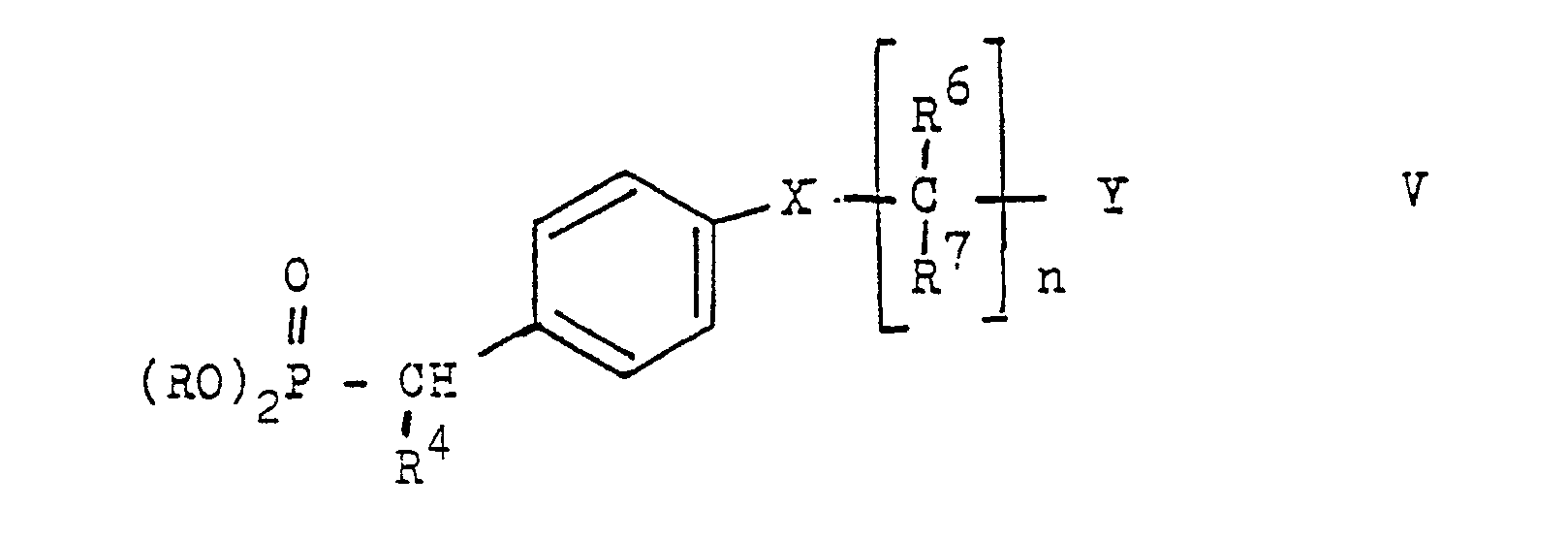
Applications Claiming Priority (4)
| Application Number | Priority Date | Filing Date | Title |
|---|---|---|---|
| CH68988 | 1988-02-24 | ||
| CH689/88 | 1988-02-24 | ||
| CH4622/88 | 1988-12-14 | ||
| CH462288 | 1988-12-14 |
Publications (3)
| Publication Number | Publication Date |
|---|---|
| EP0331983A2 true EP0331983A2 (en) | 1989-09-13 |
| EP0331983A3 EP0331983A3 (en) | 1990-11-07 |
| EP0331983B1 EP0331983B1 (en) | 1994-12-14 |
Family
ID=25685375
Family Applications (1)
| Application Number | Title | Priority Date | Filing Date |
|---|---|---|---|
| EP89103182A Expired - Lifetime EP0331983B1 (en) | 1988-02-24 | 1989-02-23 | Stilbene derivatives, their preparation and their use in medicines |
Country Status (24)
| Country | Link |
|---|---|
| US (2) | US4940707A (en) |
| EP (1) | EP0331983B1 (en) |
| JP (1) | JP2556577B2 (en) |
| KR (1) | KR0148217B1 (en) |
| CN (1) | CN1030702C (en) |
| AT (1) | ATE115573T1 (en) |
| AU (1) | AU623880B2 (en) |
| BG (1) | BG60935B2 (en) |
| CA (1) | CA1340955C (en) |
| CS (1) | CS277022B6 (en) |
| DE (1) | DE58908751D1 (en) |
| DK (1) | DK84889A (en) |
| ES (1) | ES2065929T3 (en) |
| FI (1) | FI91860C (en) |
| GR (1) | GR3015268T3 (en) |
| HU (1) | HU204766B (en) |
| IE (1) | IE66675B1 (en) |
| IL (1) | IL89327A (en) |
| IS (1) | IS1593B (en) |
| MC (1) | MC2011A1 (en) |
| NO (1) | NO169836C (en) |
| NZ (1) | NZ228028A (en) |
| PT (1) | PT89814B (en) |
| YU (1) | YU48067B (en) |
Cited By (6)
| Publication number | Priority date | Publication date | Assignee | Title |
|---|---|---|---|---|
| EP0480315A3 (en) * | 1990-10-12 | 1993-02-03 | F. Hoffmann-La Roche Ag | Use of a retinoid |
| WO1997003046A1 (en) * | 1995-07-07 | 1997-01-30 | Schering Aktiengesellschaft | Triphenyl ethylenes with anti-oestrogenic properties |
| US6833373B1 (en) | 1998-12-23 | 2004-12-21 | G.D. Searle & Co. | Method of using an integrin antagonist and one or more antineoplastic agents as a combination therapy in the treatment of neoplasia |
| US6858598B1 (en) | 1998-12-23 | 2005-02-22 | G. D. Searle & Co. | Method of using a matrix metalloproteinase inhibitor and one or more antineoplastic agents as a combination therapy in the treatment of neoplasia |
| DE112007000790T5 (en) | 2006-03-28 | 2009-04-23 | Council Of Scientific & Industrial Research | Single stage microwave-induced process for the preparation of substituted stilbenes and their analogues |
| WO2009060282A3 (en) * | 2007-11-06 | 2010-06-10 | Orchid Research Laboratories Limited | Stilbene derivatives as pstat3/il-6 inhibitors |
Families Citing this family (22)
| Publication number | Priority date | Publication date | Assignee | Title |
|---|---|---|---|---|
| JPS5734030A (en) * | 1980-07-30 | 1982-02-24 | Ishizuka Glass Ltd | Preparation of glassware having opening with irregular shape |
| DE3926148A1 (en) * | 1989-08-08 | 1991-02-28 | Basf Ag | DIARYLACETYLENE, THEIR MANUFACTURE AND USE |
| US5430062A (en) * | 1992-05-21 | 1995-07-04 | Research Corporation Technologies, Inc. | Stilbene derivatives as anticancer agents |
| US5449638A (en) * | 1994-06-06 | 1995-09-12 | United Microelectronics Corporation | Process on thickness control for silicon-on-insulator technology |
| FR2772512B1 (en) | 1997-12-16 | 2004-04-16 | Commissariat Energie Atomique | MICROSYSTEM WITH DEFORMABLE ELEMENT UNDER THE EFFECT OF A THERMAL ACTUATOR |
| US7105552B2 (en) | 1998-05-08 | 2006-09-12 | Theracos, Inc. | Heterocyclic analogs of diphenylethylene compounds |
| US6624197B1 (en) | 1998-05-08 | 2003-09-23 | Calyx Therapeutics, Inc. | Diphenylethylene compounds |
| US6245814B1 (en) | 1998-05-08 | 2001-06-12 | Calyx Therapeutics, Inc. | Diphenylethylene compounds |
| US6331633B1 (en) | 1998-05-08 | 2001-12-18 | Calyx Therapeutics Inc. | Heterocyclic analogs of diphenylethylene compounds |
| US7407978B2 (en) * | 1999-04-06 | 2008-08-05 | Theracos, Inc. | Heterocyclic analogs of diphenylethylene compounds |
| JP3498634B2 (en) | 1999-05-31 | 2004-02-16 | 関西日本電気株式会社 | Method for manufacturing semiconductor device |
| US6525093B1 (en) * | 1999-11-08 | 2003-02-25 | Calyx Therapeutics Inc. | Compounds to treat diabetes and associated conditions |
| US20080108825A1 (en) * | 1999-11-08 | 2008-05-08 | Theracos, Inc. | Compounds for treatment of inflammation, diabetes and related disorders |
| US20020002200A1 (en) * | 2000-02-04 | 2002-01-03 | Bishwagit Nag | Novel diphenylethylene compounds |
| US7323496B2 (en) * | 1999-11-08 | 2008-01-29 | Theracos, Inc. | Compounds for treatment of inflammation, diabetes and related disorders |
| US20080103302A1 (en) * | 2000-02-04 | 2008-05-01 | Theracos, Inc. | Compounds for treatment of inflammation, diabetes and related disorders |
| FR2830860A1 (en) * | 2001-10-12 | 2003-04-18 | Univ Pasteur | New process for preparing (Z)-3,5,4'-trimethoxystilbene from (E)-3,5,4'-trimethoxystilbene, and its use against cancer, malaria, cystic fibrosis and other disorders |
| WO2005009342A2 (en) * | 2003-07-16 | 2005-02-03 | Pharmacia Corporation | Method for the treatment or prevention of dermatological disorders with a cyclooxygenase-2 inhibitor alone and in combination with a dermatological treatment agent and compositions therewith |
| WO2010113005A2 (en) | 2009-03-27 | 2010-10-07 | Council Of Scientific & Industrial Research | One pot multicomponent synthesis of some novel hydroxy stilbene derivatives with alpha, beta-carbonyl conjugation under microwave irradiation |
| EP2724156B1 (en) | 2011-06-27 | 2017-08-16 | The Jackson Laboratory | Methods and compositions for treatment of cancer and autoimmune disease |
| TW201702218A (en) | 2014-12-12 | 2017-01-16 | 美國杰克森實驗室 | Compositions and methods relating to the treatment of cancer, autoimmune disease, and neurodegenerative disease |
| CN112190688A (en) * | 2020-09-09 | 2021-01-08 | 广州医科大学附属第一医院(广州呼吸中心) | Application of mucin MUC1 in preparation of medicine with effect of delaying lung aging |
Family Cites Families (16)
| Publication number | Priority date | Publication date | Assignee | Title |
|---|---|---|---|---|
| DE544087C (en) * | 1927-04-17 | 1932-02-13 | I G Farbenindustrie Akt Ges | Process for the preparation of aromatic N-dialkylaminoalkylaminoaldehydes and their derivatives |
| GB456534A (en) * | 1935-05-11 | 1936-11-11 | Ig Farbenindustrie Ag | Process for the manufacture of nitrogenous aromatic aldehydes |
| NL302207A (en) * | 1962-12-19 | |||
| US3437607A (en) * | 1965-03-31 | 1969-04-08 | Upjohn Co | Polyurethane pre-mixes containing dihydroxy nitrogen containing phosphonates |
| US3483209A (en) * | 1967-05-02 | 1969-12-09 | Ciba Geigy Corp | Aralkylamines |
| CH481061A (en) * | 1967-06-01 | 1969-11-15 | Agripat Sa | Process for the preparation of new quaternary ammonium salts |
| DE1767931C3 (en) * | 1967-10-26 | 1973-09-27 | Boehringer Mannheim Gmbh, 6800 Mannheim | Diagnostic means and method for the detection of urobilinogen bodies |
| JPS546948B2 (en) * | 1972-06-05 | 1979-04-02 | ||
| JPS6045632B2 (en) * | 1978-03-09 | 1985-10-11 | 三菱化学株式会社 | ω-aminoalkoxystilbenes and their acid addition salts |
| US4369310A (en) * | 1979-11-19 | 1983-01-18 | Ciba-Geigy Ltd. | Bleachable dyes |
| DE3040911A1 (en) * | 1980-10-30 | 1982-06-03 | Bayer Ag, 5090 Leverkusen | CATIONIC STYRYLIC DYES, THEIR PRODUCTION AND THEIR USE FOR COLORING NATURAL AND SYNTHETIC CATIONICALLY COLORABLE SUBSTRATES |
| CA1162200A (en) * | 1981-02-13 | 1984-02-14 | Michael Klaus | Process for the manufacture of indanyl (or tetrahydronaphthyl)propenyl phenyl derivatives |
| JPS62964A (en) * | 1985-06-26 | 1987-01-06 | Minolta Camera Co Ltd | Electrophotographic sensitive body |
| DE3770547D1 (en) * | 1986-02-18 | 1991-07-11 | Electronics For Industry Ltd | METHOD AND DEVICE FOR COOKING PASTA. |
| CH668962A5 (en) * | 1986-05-13 | 1989-02-15 | Hoffmann La Roche | New hydroxy:phenyl:propenyl substd. naphthalene cpds. |
| ZW7487A1 (en) * | 1986-05-23 | 1987-12-16 | Hoffmann La Roche | Tetrahydronaphthaline and indane derivatives |
-
1989
- 1989-01-30 CA CA000589502A patent/CA1340955C/en not_active Expired - Fee Related
- 1989-02-14 CS CS89962A patent/CS277022B6/en unknown
- 1989-02-14 US US07/310,442 patent/US4940707A/en not_active Expired - Fee Related
- 1989-02-17 NZ NZ228028A patent/NZ228028A/en unknown
- 1989-02-17 IL IL8932789A patent/IL89327A/en not_active IP Right Cessation
- 1989-02-20 HU HU89816A patent/HU204766B/en not_active IP Right Cessation
- 1989-02-21 JP JP1039496A patent/JP2556577B2/en not_active Expired - Lifetime
- 1989-02-21 MC MC892034A patent/MC2011A1/en unknown
- 1989-02-22 FI FI890842A patent/FI91860C/en not_active IP Right Cessation
- 1989-02-22 YU YU39589A patent/YU48067B/en unknown
- 1989-02-23 DK DK084889A patent/DK84889A/en not_active Application Discontinuation
- 1989-02-23 IE IE58189A patent/IE66675B1/en not_active IP Right Cessation
- 1989-02-23 NO NO890767A patent/NO169836C/en unknown
- 1989-02-23 CN CN89100484A patent/CN1030702C/en not_active Expired - Fee Related
- 1989-02-23 AU AU30257/89A patent/AU623880B2/en not_active Ceased
- 1989-02-23 EP EP89103182A patent/EP0331983B1/en not_active Expired - Lifetime
- 1989-02-23 PT PT89814A patent/PT89814B/en not_active IP Right Cessation
- 1989-02-23 DE DE58908751T patent/DE58908751D1/en not_active Expired - Fee Related
- 1989-02-23 IS IS3437A patent/IS1593B/en unknown
- 1989-02-23 ES ES89103182T patent/ES2065929T3/en not_active Expired - Lifetime
- 1989-02-23 KR KR1019890002126A patent/KR0148217B1/en not_active Expired - Fee Related
- 1989-02-23 AT AT89103182T patent/ATE115573T1/en not_active IP Right Cessation
-
1990
- 1990-04-19 US US07/510,705 patent/US5106981A/en not_active Expired - Fee Related
-
1994
- 1994-02-24 BG BG098548A patent/BG60935B2/en unknown
-
1995
- 1995-03-02 GR GR950400454T patent/GR3015268T3/en unknown
Cited By (8)
| Publication number | Priority date | Publication date | Assignee | Title |
|---|---|---|---|---|
| EP0480315A3 (en) * | 1990-10-12 | 1993-02-03 | F. Hoffmann-La Roche Ag | Use of a retinoid |
| US5242909A (en) * | 1990-10-12 | 1993-09-07 | Hoffmann-La Roche Inc. | Method of using 4-(2-(p-((e)-2-(5,6,7,8-tetrahydro-5,5,8,8-tetramethyl-2-naphthyl) propenyl)phenoxy)ethyl)morpholine with cytostatics |
| AU651998B2 (en) * | 1990-10-12 | 1994-08-11 | F. Hoffmann-La Roche Ag | Use of a retinoid |
| WO1997003046A1 (en) * | 1995-07-07 | 1997-01-30 | Schering Aktiengesellschaft | Triphenyl ethylenes with anti-oestrogenic properties |
| US6833373B1 (en) | 1998-12-23 | 2004-12-21 | G.D. Searle & Co. | Method of using an integrin antagonist and one or more antineoplastic agents as a combination therapy in the treatment of neoplasia |
| US6858598B1 (en) | 1998-12-23 | 2005-02-22 | G. D. Searle & Co. | Method of using a matrix metalloproteinase inhibitor and one or more antineoplastic agents as a combination therapy in the treatment of neoplasia |
| DE112007000790T5 (en) | 2006-03-28 | 2009-04-23 | Council Of Scientific & Industrial Research | Single stage microwave-induced process for the preparation of substituted stilbenes and their analogues |
| WO2009060282A3 (en) * | 2007-11-06 | 2010-06-10 | Orchid Research Laboratories Limited | Stilbene derivatives as pstat3/il-6 inhibitors |
Also Published As
Similar Documents
| Publication | Publication Date | Title |
|---|---|---|
| EP0331983A2 (en) | Stilbene derivatives, their preparation and their use in medicines | |
| EP0253302B1 (en) | Tetrahydronaphthalène and indane derivatives, their synthesis and application in pharmaceutical preparations | |
| EP0350846B1 (en) | Condensed heterocyclic compounds and their use in therapy | |
| DE3316932C2 (en) | ||
| EP0054168A1 (en) | 1,1,2-Triphenyl-but-1-ene derivatives, process for their manufacture and their use as pharmaceutical agents | |
| EP0412387A2 (en) | Diarylacetylenes, their process and use | |
| EP0315071A2 (en) | Benzocyclohepten derivatives, their preparation and utilisation for pharmaceutics | |
| DD201677A5 (en) | PROCESS FOR THE PREPARATION OF TRISUBSTITUTED IMIDAZOLE DERIVATIVES | |
| DD229116A5 (en) | PROCESS FOR THE PRODUCTION OF PHENYL COMPOUNDS | |
| DE3715809A1 (en) | TETRAHYDRONAPHTHALINE DERIVATIVES | |
| EP0568898A1 (en) | Benzothiepine-, benzothiopyrane- and benzothiophenyle derivatives, their preparation and use as medicine | |
| EP0058370B1 (en) | Tetrahydronaphthalene and indan compounds, their production and pharmaceutical preparations | |
| CA1245663A (en) | 1-nitrogen containing-7-hydroxy-indone derivatives and salts thereof | |
| CH648554A5 (en) | GLYCIDYLISOCYANURIC ACID COMPOUNDS. | |
| DE69014798T2 (en) | THIONAPHTHALENE DERIVATIVES, METHOD FOR THE PRODUCTION AND ANTIALLERGIC MEANS THEREOF. | |
| DE68902772T2 (en) | SULFURED EICOSANOIDS AND THEIR USE IN MEDICINAL PRODUCTS AND COSMETICS. | |
| DE69209099T2 (en) | Sulfonamide derivatives | |
| EP0046961A1 (en) | Epoxy-cycloalkylalkanecarboxylic acids, process for their preparation, their use and medicaments containing them | |
| EP0033095B1 (en) | 5-aminotetrazole derivatives of retinoic acids, their preparation and pharmaceutical compositions containing them | |
| DE3038593A1 (en) | NEW INFLAMMATORY AND IMMUNEGULATORY PYRIDINE AND PYRIMIDINE | |
| US4036983A (en) | Ferrocene compounds and pharmaceutical composition for use in treatment of iron deficiency in an animal | |
| DE2651979A1 (en) | POLYENE COMPOUNDS | |
| DE3434948A1 (en) | VINYLTETRAZOLYLPHENYL DERIVATIVES, THEIR PRODUCTION AND USE | |
| EP0149818A2 (en) | 1,4-Naphthoquinone derivatives, process for their preparation and their use as medicines | |
| DD201788A5 (en) | PROCESS FOR PREPARING NEW DIARYL-IMIDAZOLE COMPOUNDS |
Legal Events
| Date | Code | Title | Description |
|---|---|---|---|
| PUAI | Public reference made under article 153(3) epc to a published international application that has entered the european phase |
Free format text: ORIGINAL CODE: 0009012 |
|
| 17P | Request for examination filed |
Effective date: 19890223 |
|
| AK | Designated contracting states |
Kind code of ref document: A2 Designated state(s): AT BE CH DE ES FR GB GR IT LI LU NL SE |
|
| PUAL | Search report despatched |
Free format text: ORIGINAL CODE: 0009013 |
|
| AK | Designated contracting states |
Kind code of ref document: A3 Designated state(s): AT BE CH DE ES FR GB GR IT LI LU NL SE |
|
| 17Q | First examination report despatched |
Effective date: 19930625 |
|
| GRAA | (expected) grant |
Free format text: ORIGINAL CODE: 0009210 |
|
| AK | Designated contracting states |
Kind code of ref document: B1 Designated state(s): AT BE CH DE ES FR GB GR IT LI LU NL SE |
|
| REF | Corresponds to: |
Ref document number: 115573 Country of ref document: AT Date of ref document: 19941215 Kind code of ref document: T |
|
| REF | Corresponds to: |
Ref document number: 58908751 Country of ref document: DE Date of ref document: 19950126 |
|
| ITF | It: translation for a ep patent filed | ||
| REG | Reference to a national code |
Ref country code: ES Ref legal event code: FG2A Ref document number: 2065929 Country of ref document: ES Kind code of ref document: T3 |
|
| ET | Fr: translation filed | ||
| GBT | Gb: translation of ep patent filed (gb section 77(6)(a)/1977) |
Effective date: 19950301 |
|
| REG | Reference to a national code |
Ref country code: GR Ref legal event code: FG4A Free format text: 3015268 |
|
| PLBE | No opposition filed within time limit |
Free format text: ORIGINAL CODE: 0009261 |
|
| STAA | Information on the status of an ep patent application or granted ep patent |
Free format text: STATUS: NO OPPOSITION FILED WITHIN TIME LIMIT |
|
| 26N | No opposition filed | ||
| PGFP | Annual fee paid to national office [announced via postgrant information from national office to epo] |
Ref country code: DE Payment date: 19991231 Year of fee payment: 12 |
|
| PGFP | Annual fee paid to national office [announced via postgrant information from national office to epo] |
Ref country code: SE Payment date: 20000207 Year of fee payment: 12 |
|
| PGFP | Annual fee paid to national office [announced via postgrant information from national office to epo] |
Ref country code: FR Payment date: 20000210 Year of fee payment: 12 |
|
| PGFP | Annual fee paid to national office [announced via postgrant information from national office to epo] |
Ref country code: AT Payment date: 20000211 Year of fee payment: 12 |
|
| PGFP | Annual fee paid to national office [announced via postgrant information from national office to epo] |
Ref country code: LU Payment date: 20000221 Year of fee payment: 12 |
|
| PGFP | Annual fee paid to national office [announced via postgrant information from national office to epo] |
Ref country code: GB Payment date: 20000223 Year of fee payment: 12 |
|
| PGFP | Annual fee paid to national office [announced via postgrant information from national office to epo] |
Ref country code: GR Payment date: 20000225 Year of fee payment: 12 |
|
| PGFP | Annual fee paid to national office [announced via postgrant information from national office to epo] |
Ref country code: NL Payment date: 20000228 Year of fee payment: 12 Ref country code: CH Payment date: 20000228 Year of fee payment: 12 |
|
| PGFP | Annual fee paid to national office [announced via postgrant information from national office to epo] |
Ref country code: BE Payment date: 20000412 Year of fee payment: 12 |
|
| PGFP | Annual fee paid to national office [announced via postgrant information from national office to epo] |
Ref country code: ES Payment date: 20010131 Year of fee payment: 13 |
|
| PG25 | Lapsed in a contracting state [announced via postgrant information from national office to epo] |
Ref country code: LU Free format text: LAPSE BECAUSE OF NON-PAYMENT OF DUE FEES Effective date: 20010223 Ref country code: GB Free format text: LAPSE BECAUSE OF NON-PAYMENT OF DUE FEES Effective date: 20010223 Ref country code: AT Free format text: LAPSE BECAUSE OF NON-PAYMENT OF DUE FEES Effective date: 20010223 |
|
| PG25 | Lapsed in a contracting state [announced via postgrant information from national office to epo] |
Ref country code: SE Free format text: LAPSE BECAUSE OF NON-PAYMENT OF DUE FEES Effective date: 20010224 |
|
| PG25 | Lapsed in a contracting state [announced via postgrant information from national office to epo] |
Ref country code: LI Free format text: LAPSE BECAUSE OF NON-PAYMENT OF DUE FEES Effective date: 20010228 Ref country code: GR Free format text: LAPSE BECAUSE OF NON-PAYMENT OF DUE FEES Effective date: 20010228 Ref country code: CH Free format text: LAPSE BECAUSE OF NON-PAYMENT OF DUE FEES Effective date: 20010228 Ref country code: BE Free format text: LAPSE BECAUSE OF NON-PAYMENT OF DUE FEES Effective date: 20010228 |
|
| BERE | Be: lapsed |
Owner name: F. HOFFMANN-LA ROCHE A.G. Effective date: 20010228 |
|
| PG25 | Lapsed in a contracting state [announced via postgrant information from national office to epo] |
Ref country code: NL Free format text: LAPSE BECAUSE OF NON-PAYMENT OF DUE FEES Effective date: 20010901 |
|
| REG | Reference to a national code |
Ref country code: CH Ref legal event code: PL |
|
| EUG | Se: european patent has lapsed |
Ref document number: 89103182.5 |
|
| GBPC | Gb: european patent ceased through non-payment of renewal fee |
Effective date: 20010223 |
|
| PG25 | Lapsed in a contracting state [announced via postgrant information from national office to epo] |
Ref country code: FR Free format text: LAPSE BECAUSE OF NON-PAYMENT OF DUE FEES Effective date: 20011031 |
|
| NLV4 | Nl: lapsed or anulled due to non-payment of the annual fee |
Effective date: 20010901 |
|
| REG | Reference to a national code |
Ref country code: FR Ref legal event code: ST |
|
| PG25 | Lapsed in a contracting state [announced via postgrant information from national office to epo] |
Ref country code: DE Free format text: LAPSE BECAUSE OF NON-PAYMENT OF DUE FEES Effective date: 20011201 |
|
| PG25 | Lapsed in a contracting state [announced via postgrant information from national office to epo] |
Ref country code: ES Free format text: LAPSE BECAUSE OF NON-PAYMENT OF DUE FEES Effective date: 20020225 |
|
| REG | Reference to a national code |
Ref country code: ES Ref legal event code: FD2A Effective date: 20031122 |
|
| PG25 | Lapsed in a contracting state [announced via postgrant information from national office to epo] |
Ref country code: IT Free format text: LAPSE BECAUSE OF NON-PAYMENT OF DUE FEES;WARNING: LAPSES OF ITALIAN PATENTS WITH EFFECTIVE DATE BEFORE 2007 MAY HAVE OCCURRED AT ANY TIME BEFORE 2007. THE CORRECT EFFECTIVE DATE MAY BE DIFFERENT FROM THE ONE RECORDED. Effective date: 20050223 |