EP0327342A2 - A process for producing erythritol - Google Patents
A process for producing erythritol Download PDFInfo
- Publication number
- EP0327342A2 EP0327342A2 EP89300974A EP89300974A EP0327342A2 EP 0327342 A2 EP0327342 A2 EP 0327342A2 EP 89300974 A EP89300974 A EP 89300974A EP 89300974 A EP89300974 A EP 89300974A EP 0327342 A2 EP0327342 A2 EP 0327342A2
- Authority
- EP
- European Patent Office
- Prior art keywords
- erythritol
- fermentation tank
- concentration
- cells
- liquid
- Prior art date
- Legal status (The legal status is an assumption and is not a legal conclusion. Google has not performed a legal analysis and makes no representation as to the accuracy of the status listed.)
- Granted
Links
Images

Classifications
-
- C—CHEMISTRY; METALLURGY
- C12—BIOCHEMISTRY; BEER; SPIRITS; WINE; VINEGAR; MICROBIOLOGY; ENZYMOLOGY; MUTATION OR GENETIC ENGINEERING
- C12M—APPARATUS FOR ENZYMOLOGY OR MICROBIOLOGY; APPARATUS FOR CULTURING MICROORGANISMS FOR PRODUCING BIOMASS, FOR GROWING CELLS OR FOR OBTAINING FERMENTATION OR METABOLIC PRODUCTS, i.e. BIOREACTORS OR FERMENTERS
- C12M47/00—Means for after-treatment of the produced biomass or of the fermentation or metabolic products, e.g. storage of biomass
- C12M47/02—Separating microorganisms from the culture medium; Concentration of biomass
-
- C—CHEMISTRY; METALLURGY
- C12—BIOCHEMISTRY; BEER; SPIRITS; WINE; VINEGAR; MICROBIOLOGY; ENZYMOLOGY; MUTATION OR GENETIC ENGINEERING
- C12M—APPARATUS FOR ENZYMOLOGY OR MICROBIOLOGY; APPARATUS FOR CULTURING MICROORGANISMS FOR PRODUCING BIOMASS, FOR GROWING CELLS OR FOR OBTAINING FERMENTATION OR METABOLIC PRODUCTS, i.e. BIOREACTORS OR FERMENTERS
- C12M29/00—Means for introduction, extraction or recirculation of materials, e.g. pumps
- C12M29/04—Filters; Permeable or porous membranes or plates, e.g. dialysis
-
- C—CHEMISTRY; METALLURGY
- C12—BIOCHEMISTRY; BEER; SPIRITS; WINE; VINEGAR; MICROBIOLOGY; ENZYMOLOGY; MUTATION OR GENETIC ENGINEERING
- C12M—APPARATUS FOR ENZYMOLOGY OR MICROBIOLOGY; APPARATUS FOR CULTURING MICROORGANISMS FOR PRODUCING BIOMASS, FOR GROWING CELLS OR FOR OBTAINING FERMENTATION OR METABOLIC PRODUCTS, i.e. BIOREACTORS OR FERMENTERS
- C12M29/00—Means for introduction, extraction or recirculation of materials, e.g. pumps
- C12M29/18—External loop; Means for reintroduction of fermented biomass or liquid percolate
-
- C—CHEMISTRY; METALLURGY
- C12—BIOCHEMISTRY; BEER; SPIRITS; WINE; VINEGAR; MICROBIOLOGY; ENZYMOLOGY; MUTATION OR GENETIC ENGINEERING
- C12M—APPARATUS FOR ENZYMOLOGY OR MICROBIOLOGY; APPARATUS FOR CULTURING MICROORGANISMS FOR PRODUCING BIOMASS, FOR GROWING CELLS OR FOR OBTAINING FERMENTATION OR METABOLIC PRODUCTS, i.e. BIOREACTORS OR FERMENTERS
- C12M47/00—Means for after-treatment of the produced biomass or of the fermentation or metabolic products, e.g. storage of biomass
- C12M47/04—Cell isolation or sorting
-
- C—CHEMISTRY; METALLURGY
- C12—BIOCHEMISTRY; BEER; SPIRITS; WINE; VINEGAR; MICROBIOLOGY; ENZYMOLOGY; MUTATION OR GENETIC ENGINEERING
- C12M—APPARATUS FOR ENZYMOLOGY OR MICROBIOLOGY; APPARATUS FOR CULTURING MICROORGANISMS FOR PRODUCING BIOMASS, FOR GROWING CELLS OR FOR OBTAINING FERMENTATION OR METABOLIC PRODUCTS, i.e. BIOREACTORS OR FERMENTERS
- C12M47/00—Means for after-treatment of the produced biomass or of the fermentation or metabolic products, e.g. storage of biomass
- C12M47/12—Purification
-
- C—CHEMISTRY; METALLURGY
- C12—BIOCHEMISTRY; BEER; SPIRITS; WINE; VINEGAR; MICROBIOLOGY; ENZYMOLOGY; MUTATION OR GENETIC ENGINEERING
- C12P—FERMENTATION OR ENZYME-USING PROCESSES TO SYNTHESISE A DESIRED CHEMICAL COMPOUND OR COMPOSITION OR TO SEPARATE OPTICAL ISOMERS FROM A RACEMIC MIXTURE
- C12P7/00—Preparation of oxygen-containing organic compounds
- C12P7/02—Preparation of oxygen-containing organic compounds containing a hydroxy group
- C12P7/04—Preparation of oxygen-containing organic compounds containing a hydroxy group acyclic
- C12P7/18—Preparation of oxygen-containing organic compounds containing a hydroxy group acyclic polyhydric
-
- Y—GENERAL TAGGING OF NEW TECHNOLOGICAL DEVELOPMENTS; GENERAL TAGGING OF CROSS-SECTIONAL TECHNOLOGIES SPANNING OVER SEVERAL SECTIONS OF THE IPC; TECHNICAL SUBJECTS COVERED BY FORMER USPC CROSS-REFERENCE ART COLLECTIONS [XRACs] AND DIGESTS
- Y10—TECHNICAL SUBJECTS COVERED BY FORMER USPC
- Y10S—TECHNICAL SUBJECTS COVERED BY FORMER USPC CROSS-REFERENCE ART COLLECTIONS [XRACs] AND DIGESTS
- Y10S435/00—Chemistry: molecular biology and microbiology
- Y10S435/813—Continuous fermentation
-
- Y—GENERAL TAGGING OF NEW TECHNOLOGICAL DEVELOPMENTS; GENERAL TAGGING OF CROSS-SECTIONAL TECHNOLOGIES SPANNING OVER SEVERAL SECTIONS OF THE IPC; TECHNICAL SUBJECTS COVERED BY FORMER USPC CROSS-REFERENCE ART COLLECTIONS [XRACs] AND DIGESTS
- Y10—TECHNICAL SUBJECTS COVERED BY FORMER USPC
- Y10S—TECHNICAL SUBJECTS COVERED BY FORMER USPC CROSS-REFERENCE ART COLLECTIONS [XRACs] AND DIGESTS
- Y10S435/00—Chemistry: molecular biology and microbiology
- Y10S435/818—Aeration or oxygen transfer technique
-
- Y—GENERAL TAGGING OF NEW TECHNOLOGICAL DEVELOPMENTS; GENERAL TAGGING OF CROSS-SECTIONAL TECHNOLOGIES SPANNING OVER SEVERAL SECTIONS OF THE IPC; TECHNICAL SUBJECTS COVERED BY FORMER USPC CROSS-REFERENCE ART COLLECTIONS [XRACs] AND DIGESTS
- Y10—TECHNICAL SUBJECTS COVERED BY FORMER USPC
- Y10S—TECHNICAL SUBJECTS COVERED BY FORMER USPC CROSS-REFERENCE ART COLLECTIONS [XRACs] AND DIGESTS
- Y10S435/00—Chemistry: molecular biology and microbiology
- Y10S435/8215—Microorganisms
- Y10S435/911—Microorganisms using fungi
Definitions
- the present invention relates to a process for producing erythritol as a kind of polyols by using erythritol-producing microorganisms.
- Erythritol is also called erythrit, and has the following characteristics: Melting point : 122°C, Decomposed temperature: 329°C, Chemical formula : C 4O4H10, Rational formula : CH2OH-CHOH-CHOH-CH2OH,
- Erythritol is a sugar alcohol, and demand for erythritol has recently been increasing due to its sweetness twice that of sucrose.
- the present invention has been accomplished to solve the above-mentioned problems, and to provide a process for producing erythritol of which production rate can be assured at a high level by a compact apparatus.
- a process for continuously producing erythritol by cultivating erythritol-producing microorganisms under aerobic conditions which comprises the steps of: maintaining the concentration of dissolved oxygen in a culture broth inside a fermentation tank at not less than 0.2 ppm; separating a part of the culture broth into a concentrated liquid in which the concentration of cells is increased and a clarified liquid by a cell separator; returning said concentrated liquid to the fermentation tank; controlling an amount of the clarified liquid to be extracted outside an erythritol-producing system and an amount of the culture broth and/or the concentrated liquid to be extracted outside the system such that the concentration of the cells in the culture broth in the fermentation tank may be kept in a range from 40 to 200 g/l when calculated as a weight of dried cells; and recovering erythritol from the clarified liquid.
- a process for continuously producing erythritol by cultivating the erythritol-producing microorganisms under aerobic conditions which comprises the steps of: maintaining the concentrating of dissolved oxygen in a culture broth in a fermentation tank at not less than 0.2 ppm; separating a clarified liquid containing erythritol from the culture broth by a cell separator arranged inside the fermentation tank; controlling an extracting amount of the erythritol-containing clarified liquid separated by the cell separator and an amount of the culture broth to be extracted such that the concentration of the cells in the culture broth in the fermentation tank may be kept in a range from 40 to 200 g/l when calculated as a weight of dried cells; and recovering erythritol from the clarified liquid.
- the production rate of erythritol can greatly be increased.
- a substrate is continuously charged into a fermentation tank together with an inorganic salt such as KH2PO4, MgSO4, K2SO4, CaSO4, FeSO4, MnSO4, ZnSO4, (NH4)2HPO4, or CaCl2, a nitrogen source such as (NH4)2SO4, urea, NH4NO3, or NH4Cl, a nutrient source such as corn steep liquor, yeast extract, peptone, various amino acids, thiamine, or bitotin, while a liquid inside the fermentation tank is stirred by a stirrer 2 under blowing of air clarified with an air filter 4 thereinto through an air feeding pipe 3 at the bottom.
- an inorganic salt such as KH2PO4, MgSO4, K2SO4, CaSO4, FeSO4, MnSO4, ZnSO4, (NH4)2HPO4, or CaCl2
- a nitrogen source such as (NH4)2SO4, urea, NH4NO3, or NH4Cl
- a nutrient source such as corn steep liquor,
- a reference numeral 5 is a cell separator arranged outside the fermentation tank.
- the liquid inside the fermentation tank is separated into a concentrated liquid containing the erythritol-producing microorganisms and a clarified erythritol liquid containing no or a small amount of the erythritol-producing microorganisms by the cell separator 5.
- the concentrated liquid is returned into the fermentation tank 1 through a line 6.
- the clarified liquid is extracted outside the fermentation system as a fermented product.
- the concentration of the cells in the liquid inside the fermentation tank gradually increases. Consequently, the production rate of erythritol lowers, and the cells are difficult to separate in the cell separator. Therefore, according to the present invention, a part of the liquid inside the fermentation tank is extracted outside through an extracting line 7 to control the amount of the cells in the tank.
- the concentration of the cells is adjusted mainly by extracting a part of the culture broth outside the system by using the extracting pipe 7.
- a part of the concentrated liquid is extracted outside through the above-mentioned line 6.
- the thus extracted culture broth may be separated into a clarified liquid and a cell concentrated liquid by the solid-liquid separator so that the clarified liquid may be utilized to obtain a fermented product.
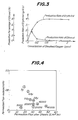
- a graph shown in Fig. 3 was obtained by effecting experiments under the conditions that the concentration of the cells was kept at 100 g/l, while the concentration of oxygen dissolved was varied by changing the amount of air blown to various levels.
- the cell separator use may be made of a liquid cyclone to be used in ordinary solid-liquid separation and a solid-liquid separator such as a precipitation separating tank. Noting the size of the erythritol-producing microorganisms, it is preferable to use a separated plate type (De Laval type) or inclined type (super decant type) centrifugal precipitation device which can continuously separate the cells from the liquid by utilizing centrifugal forces of 1,000 G to 10,000 G, a microfiltration membrane, or a ultra filtration membrane.
- a separated plate type De Laval type
- inclined type super decant type centrifugal precipitation device
- a separating membrane of the membrane separator employed as the cell separator it is preferable to use a microfiltration membrane having pores of not more than 1 ⁇ m in diameter or a ultra filtration membrane having a cut off molecular weight of not less than 10,000 for the purpose of assuredly separating the cells. If the pore diameter is more than 1 ⁇ m, the pores of the filter are likely to be plugged by the yeast, etc. Consequently, a permeation flux tends to lower in a short time. Similarly, if the fractionation molecular weight is not more than 10,000, the permeation flux drops. Thus, advantageous separation becomes impossible.
- Fig. 4 show results obtained by testing characteristics of such separation membranes with use of a flat membrane type tester.
- Reference numerals 1 through 4 denote filters having diameters of pores (3 ⁇ 0.2 ⁇ )allotted thereto in Fig. 4, respectively, and reference numerals 5 through 9 show those having allotted a cut-off molecular weights (5,000 ⁇ 40,000), respectively.
- the material of each of the filters is as follows: 1, 4 metal 2, 3 ceramic 5, 6, 7, 9 polyacryl nitrile 8 polyester sulfone In the tests, a liquid containing 94 g/l of cells, 19% of erythritol and 2% of glucose was continuously flown under pressure of 1 kg/cm2 for 2 hours.
- the liquid inside the fermentation tank can be separated into the cell-containing concentrated liquid and the filtrate containing erythritol by using appropriate separation membrane 5.
- the amount of the liquid extracted from the fermentation tank through the line 7 is determined such that the amount of the cells in the fermentation tank may be kept at 40 to 200 g/l when calculated as a dried cell weight.
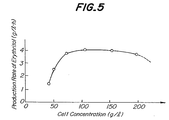
- the amount of the liquid to be extracted is set at not greater than that of the clarified liquid to be extracted. As shown in Fig. 5, if the amount of the cells is less than 40 g/l, the cells becomes insufficient to lower the production rate of erythritol. On the other hand, if the amount is more than 200 g/l, the cells become excessive to also lower the production rate of erythritol require a greater amount of oxygen, and drop the production rate per unit power. For this reason, the amount of the cells is set preferably at 40 to 200 g/l, more preferably 80 to 150 g/l.
- a graph shown in Fig. 5 was obtained under the following conditions: Substrate: glucose 40%, yeast extract: 2%, Separation membrane: ceramic porous membrane (pore diameter 0.2 ⁇ m), Fermentation liquid amount: fermentation tank volume 2.5 l, circulating line 1.5 l, Blown air amount: 1-2 m3/m3 ⁇ min, Substrate feed amount: 2 l/day (residence time: 48 hours)
- Fig. 2 shows a fermentation system to be used in the second aspect of the present invention.
- a separating membrane 5 is designed in a tubular type, which is arranged inside a fermentation tank 1.
- the line 6 in Fig. 1 can be omitted.
- a filtering pressure may be applied to the filtering membrane 5 by sealing an upper face of the fermentation tank 1 and pressurizing the liquid surface.
- Examples 1 and 2 belong to the first aspect of the present invention, and Example 3 to the second aspect of the invention.
- Erythritol-producing microorganisms (Aureobasidium sp. SN-G42) was cultivated in 200 ml of a liquid culture medium containing 30% (w/v) of glucose and 1% (w/v) of yeast extract at 35°C for 72 hours under shaking, which was added to 3.8 l of an initial culture medium containing 40% (w/v) of glucose and 2% (w/v) of yeast extract. The mixture was batch cultivated at 35°C and a stirring rate of 800 rpm while air was being passed at 1 vvm.
- 1.5 l of seed cultures of erythritol-producing microorganisms (Aureobasidium sp. SN-G42), which had been cultivated in a culture broth containing 30% (w/v) of glucose and 0.675% (w/v) of yeast extract in a rotary shaker at 30°C for 72 hours under shaking, were added to 25 l of an initial culture medium which was placed in a 50 l fermentation tank and which contained 40% (w/v) of glucose and 6.7% (w/v) of corn steep liquor and was adjusted at pH 4.2.
- the mixture was cultivated under sufficiently aerobic conditions of 35°C, forcedly stirring at 600 rpm and pressure of 0.5 g/cm2, while aseptic air was being fed at a rate of 37.5 l/min.
- the concentration of glucose in the culture medium reached 2% (w/v) after 90 hours, a substrate having the same composition as that of the initial culture medium was started to be fed.
- the feed rate of the substrate was then kept constant at 0.58 l/h.
- the liquid was extracted and fed from the fermentation tank at 1.74 l/h to a separated plate type (De Laval type) centrifugal precipitation device.
- the cells were separated from the liquid by centrifugal forces of 6,000 G, 0.58 l/h of a clarified liquid was extracted outside the system as a product, and the remaining cell-concentrated liquid was returned to the fermentation tank.
- the feed rate for the centrifugal precipitation device was dropped to 0.96 l/h, and at the same time the amount of the clarified liquid extracted from the centrifugal separator was reduced to 0.32 l/h.
- the culture broth inside the fermentation tank was directly extracted at 0.26 l/h. The fermentation system reached a stable state 250 hours after the cultivation, and the cultivation was further continued for 150 hours.
- the average concentration of erythritol in a mixed liquid consisting of 0.32 l/h of the clarified liquid and 0.26 l/h of the extracted culture broth was 194 g/l, and the yield and the production rate of erythritol were 48.5% and 4.5 g/l/h, respectively.
- Erythritol-producing microorganisms (Aureobasidium sp. SN G42) were cultivated in 200 ml of a liquid culture medium placed in a 500 ml conical flask and containing 30% (w/v) of glucose and 1% (w/v) of yeast extract at 35°C for 48 hours under shaking, which was added to a 7 vol l fermentation tank.
- the fermentation tank contained 3 l of a culture medium containing 40% (w/v) of glucose and 8% (w/v) of corn steep liquor, and was equipped with a cell separator (denoted by a reference numeral 5 in Fig. 2).
- batch cultivation was effected under conditions of 35°C, pH 4.2 and a stirring rate of 1,000 rpm, while air was passed at 1 vvm.
- concentration of glucose in the culture medium reached 5% or less after 70 hours
- a culture medium containing 40% (w/v) of glucose and 8% (w/v) of corn steep liquor was fed at 83.3 ml/h as a substrate.
- a cultivation filtrate was also extracted using a filter at the same rate, continuous cultivation was effected.
- the extracting rate of the cultivation filtrate was dropped to 41.65 ml/h and at the same time the culture broth was extracted directly from the fermentation tank at a rare of 41.65 ml/h so as to keep the concentration of the cells constant. Then, cultivation was continuously effected for 167 hours, while the concentration of the cells was kept at 100 g/l. During the cultivation, the average production rate and the yield of erythritol were 5.1 g/l/h and 50%, respectively.
- the present invention has succeeded in raising the production rate of erythritol to twice the conventional rate while maintaining the concentration of the cells at an appropriate level, by controlling the concentration of dissolved oxygen, separating the cells, and extracting the culture broth inside the fermentation tank to the outside.
- the entire fermentation apparatus can be made compact with no need to use a large scale of a fermentation tank as in the conventional batch type production.
- Aureobasidium Sp. Sn-G42 is publicly available, deposit no. FERM BP-1430.
Landscapes
- Life Sciences & Earth Sciences (AREA)
- Engineering & Computer Science (AREA)
- Organic Chemistry (AREA)
- Chemical & Material Sciences (AREA)
- Zoology (AREA)
- Health & Medical Sciences (AREA)
- Wood Science & Technology (AREA)
- Bioinformatics & Cheminformatics (AREA)
- Biotechnology (AREA)
- Biochemistry (AREA)
- Microbiology (AREA)
- General Engineering & Computer Science (AREA)
- General Health & Medical Sciences (AREA)
- Genetics & Genomics (AREA)
- Sustainable Development (AREA)
- Biomedical Technology (AREA)
- Chemical Kinetics & Catalysis (AREA)
- General Chemical & Material Sciences (AREA)
- Cell Biology (AREA)
- Molecular Biology (AREA)
- Preparation Of Compounds By Using Micro-Organisms (AREA)
- Apparatus Associated With Microorganisms And Enzymes (AREA)
Abstract
Description
- The present invention relates to a process for producing erythritol as a kind of polyols by using erythritol-producing microorganisms.
- Erythritol is also called erythrit, and has the following characteristics:
Melting point : 122°C,
Decomposed temperature: 329°C,
Chemical formula : C ₄O₄H₁₀,
Rational formula : CH₂OH-CHOH-CHOH-CH₂OH,
- Erythritol is a sugar alcohol, and demand for erythritol has recently been increasing due to its sweetness twice that of sucrose.
- Processes have already been known for producing erythritol by using erythritol-producing microorganisms. For example, Japanese Patent Application Laid-open Nos. 60-110,295 and 61-31,091 disclose processes for producing erythritol from fermentable saccharides such as glucose with use of the erythritol-producing micro organisms, and U.S. Patent No. 3,756,917 discloses a process for producing erythritol from hydrocarbons. However, as described in these publications, there have heretofore been employed batch type producing processes in which a substrate and erythritol-producing microorganisms are charged into a fermentation tank and fermented for 1 to 2 weeks, a broth is taken out from the tank, and a reaction product is separated therefrom. Therefore, the conventional processes have problems in that the volume of the producing apparatus is great, that the production cost is high, and that the production rate of the erythritol cannot be increased to not less than 1.5 g/ℓ·H. In order to solve the above problems, the present inventors have tried a continuous fermentation process in which a liquid inside a tank is extracted, while a substrate is continuously charged thereinto. However, since it was difficult to maintain the concentration of cells at a high level due to much flowout of the cells, the erythritol production rate could not greatly be increased.
- The present invention has been accomplished to solve the above-mentioned problems, and to provide a process for producing erythritol of which production rate can be assured at a high level by a compact apparatus.
- According to a first aspect of the present invention, there is a provision of a process for continuously producing erythritol by cultivating erythritol-producing microorganisms under aerobic conditions, which comprises the steps of: maintaining the concentration of dissolved oxygen in a culture broth inside a fermentation tank at not less than 0.2 ppm; separating a part of the culture broth into a concentrated liquid in which the concentration of cells is increased and a clarified liquid by a cell separator; returning said concentrated liquid to the fermentation tank; controlling an amount of the clarified liquid to be extracted outside an erythritol-producing system and an amount of the culture broth and/or the concentrated liquid to be extracted outside the system such that the concentration of the cells in the culture broth in the fermentation tank may be kept in a range from 40 to 200 g/ℓ when calculated as a weight of dried cells; and recovering erythritol from the clarified liquid.
- According to a second aspect of the present invention, there is a provision of a process for continuously producing erythritol by cultivating the erythritol-producing microorganisms under aerobic conditions, which comprises the steps of: maintaining the concentrating of dissolved oxygen in a culture broth in a fermentation tank at not less than 0.2 ppm; separating a clarified liquid containing erythritol from the culture broth by a cell separator arranged inside the fermentation tank; controlling an extracting amount of the erythritol-containing clarified liquid separated by the cell separator and an amount of the culture broth to be extracted such that the concentration of the cells in the culture broth in the fermentation tank may be kept in a range from 40 to 200 g/ℓ when calculated as a weight of dried cells; and recovering erythritol from the clarified liquid.
- According to the present invention, the production rate of erythritol can greatly be increased.
- These and other optional features, and advantages of the invention will be appreciated upon reading of the following description of the invention when taken in conjunction with the attached drawings, with the understanding that some modifications, variations and changes of the same could be made by the skilled person in the art to which the invention pertains.
- For a better understanding of the invention, reference is made to the attached drawings, wherein:
- Fig. 1 is a sectional view of an apparatus for use in the present invention;
- Fig. 2 is a sectional view of a modification of Fig. 1;
- Fig. 3 is a graph showing the relationship between the concentration of dissolved oxygen and the production rate of erythritol;
- Fig. 4 is a graph showing results of a variety of separating membranes in characteristic-checking tests; and
- Figs. 5 is a graph showing the relationship between the concentration of cells and the production rate of erythritol.
- The present invention will be explained in more detail below.
- In the first aspect of the present invention, as shown in Fig. 1, a substrate is continuously charged into a fermentation tank together with an inorganic salt such as KH₂PO₄, MgSO₄, K₂SO₄, CaSO₄, FeSO₄, MnSO₄, ZnSO₄, (NH₄)₂HPO₄, or CaCℓ₂, a nitrogen source such as (NH₄)₂SO₄, urea, NH₄NO₃, or NH₄Cℓ, a nutrient source such as corn steep liquor, yeast extract, peptone, various amino acids, thiamine, or bitotin, while a liquid inside the fermentation tank is stirred by a
stirrer 2 under blowing of air clarified with anair filter 4 thereinto through anair feeding pipe 3 at the bottom. Thereby, fermentation is continuously effected with erythritol-producing microorganisms in the liquid inside the tank. The concentration of dissolved oxygen is kept at not less than 0.2 ppm by blowing air at a rate of 0.5 to 2 m³/m³·min. In Fig. 1, areference numeral 5 is a cell separator arranged outside the fermentation tank. The liquid inside the fermentation tank is separated into a concentrated liquid containing the erythritol-producing microorganisms and a clarified erythritol liquid containing no or a small amount of the erythritol-producing microorganisms by thecell separator 5. The concentrated liquid is returned into the fermentation tank 1 through aline 6. On the other hand, the clarified liquid is extracted outside the fermentation system as a fermented product. When the erythritol-producing microorganisms are prevented from flowing outside the fermentation tank in this manner, the concentration of the cells in the liquid inside the fermentation tank gradually increases. Consequently, the production rate of erythritol lowers, and the cells are difficult to separate in the cell separator. Therefore, according to the present invention, a part of the liquid inside the fermentation tank is extracted outside through an extracting line 7 to control the amount of the cells in the tank. Thus, the concentration of the cells is adjusted mainly by extracting a part of the culture broth outside the system by using the extracting pipe 7. However, it may be that a part of the concentrated liquid is extracted outside through the above-mentionedline 6. The thus extracted culture broth may be separated into a clarified liquid and a cell concentrated liquid by the solid-liquid separator so that the clarified liquid may be utilized to obtain a fermented product. - Next, various constituent features of the present invention will more concretely be explained.
- The reason why the concentration of the dissolved oxygen in the culture broth inside the fermentation tank is limited to not less than 0.2 ppm is that the fermentation reaction is effected under aerobic conditions, and that as shown in Fig. 3, since ethanol is produced in anaerobic fermentation if the concentration is less than 0.2 ppm, the production rate of erythritol lowers. A graph shown in Fig. 3 was obtained by effecting experiments under the conditions that the concentration of the cells was kept at 100 g/ℓ, while the concentration of oxygen dissolved was varied by changing the amount of air blown to various levels.
- As the cell separator, use may be made of a liquid cyclone to be used in ordinary solid-liquid separation and a solid-liquid separator such as a precipitation separating tank. Noting the size of the erythritol-producing microorganisms, it is preferable to use a separated plate type (De Laval type) or inclined type (super decant type) centrifugal precipitation device which can continuously separate the cells from the liquid by utilizing centrifugal forces of 1,000 G to 10,000 G, a microfiltration membrane, or a ultra filtration membrane.
- As a separating membrane of the membrane separator employed as the cell separator, it is preferable to use a microfiltration membrane having pores of not more than 1 µm in diameter or a ultra filtration membrane having a cut off molecular weight of not less than 10,000 for the purpose of assuredly separating the cells. If the pore diameter is more than 1 µm, the pores of the filter are likely to be plugged by the yeast, etc. Consequently, a permeation flux tends to lower in a short time. Similarly, if the fractionation molecular weight is not more than 10,000, the permeation flux drops. Thus, advantageous separation becomes impossible.
- Fig. 4 show results obtained by testing characteristics of such separation membranes with use of a flat membrane type tester. Reference numerals ① through ④ denote filters having diameters of pores (3 µ∼0.2 µ)allotted thereto in Fig. 4, respectively, and
reference numerals ⑤ through ⑨ show those having allotted a cut-off molecular weights (5,000∼40,000), respectively. The material of each of the filters is as follows:
①, ④ metal
②, ③ ceramic
⑤, ⑥, ⑦, ⑨ polyacryl nitrile
⑧ polyester sulfone
In the tests, a liquid containing 94 g/ℓ of cells, 19% of erythritol and 2% of glucose was continuously flown under pressure of 1 kg/cm² for 2 hours. Evaluations were made based on the permeation flux and the permeation flux-reduced rate "m" at the time of 2 hours from the flowing. The permeation flux-reduced rate "m" were determined by the following equation.
J/J₀ = (T/T₀)-m
in which J and J₀ are a permeation flux after T hours and the permeation flux at initial T₀ hours, respectively. - As mentioned above, the liquid inside the fermentation tank can be separated into the cell-containing concentrated liquid and the filtrate containing erythritol by using
appropriate separation membrane 5. - The amount of the liquid extracted from the fermentation tank through the line 7 is determined such that the amount of the cells in the fermentation tank may be kept at 40 to 200 g/ℓ when calculated as a dried cell weight. When the fermentation system is normally operated, the amount of the liquid to be extracted is set at not greater than that of the clarified liquid to be extracted. As shown in Fig. 5, if the amount of the cells is less than 40 g/ℓ, the cells becomes insufficient to lower the production rate of erythritol. On the other hand, if the amount is more than 200 g/ℓ, the cells become excessive to also lower the production rate of erythritol require a greater amount of oxygen, and drop the production rate per unit power. For this reason, the amount of the cells is set preferably at 40 to 200 g/ℓ, more preferably 80 to 150 g/ℓ.
- A graph shown in Fig. 5 was obtained under the following conditions:
Substrate:
glucose 40%, yeast extract: 2%,
Separation membrane:
ceramic porous membrane (pore diameter 0.2 µm),
Fermentation liquid amount:
fermentation tank volume 2.5 ℓ, circulating line 1.5 ℓ,
Blown air amount:
1-2 m³/m³·min,
Substrate feed amount:
2 ℓ/day (residence time: 48 hours) - As is clear from the foregoing explanation, according to the present invention, it is possible to remarkably increase the production rate of erythritol from a conventional rate of 1.5 g/ℓ·H to 4.0 g/ℓ·H.
- Fig. 2 shows a fermentation system to be used in the second aspect of the present invention. A separating
membrane 5 is designed in a tubular type, which is arranged inside a fermentation tank 1. In this case, theline 6 in Fig. 1 can be omitted. Further, in the embodiment of Fig. 2, a filtering pressure may be applied to thefiltering membrane 5 by sealing an upper face of the fermentation tank 1 and pressurizing the liquid surface. - In the following, examples of the present invention will be explained below. Examples 1 and 2 belong to the first aspect of the present invention, and Example 3 to the second aspect of the invention.
- Erythritol-producing microorganisms (Aureobasidium sp. SN-G42) was cultivated in 200 mℓ of a liquid culture medium containing 30% (w/v) of glucose and 1% (w/v) of yeast extract at 35°C for 72 hours under shaking, which was added to 3.8 ℓ of an initial culture medium containing 40% (w/v) of glucose and 2% (w/v) of yeast extract. The mixture was batch cultivated at 35°C and a stirring rate of 800 rpm while air was being passed at 1 vvm. When the concentration of glucose in the culture medium reached 5% or less, a circulating pump directly connected to a ceramic membrane having pores of 0.2 µm was started, and a substrate having the same composition as the initial culture medium was begun to be fed at 83.3 mℓ/h. While a cultivation filtrate was extracted through the ceramic membrane at the same rate, cultivation was continuously effected. When the concentration of the cells in the fermentation tank reached 100 g (dried weight)/ℓ the cultivation filtrate-extracting rate was dropped to 42 mℓ/h and at the same time, the culture broth was extracted directly from the fermentation tank at a rate of 41.3 mℓ/h, so that the concentration of the cells might be kept constant. Thereafter, the continuous filtration-cultivation was effected, while the concentration of the cells was kept at about 100 g/ℓ. During the cultivation, the average production rate of erythritol was 4.2 g/ℓ·h.
- 1.5 ℓ of seed cultures of erythritol-producing microorganisms (Aureobasidium sp. SN-G42), which had been cultivated in a culture broth containing 30% (w/v) of glucose and 0.675% (w/v) of yeast extract in a rotary shaker at 30°C for 72 hours under shaking, were added to 25 ℓ of an initial culture medium which was placed in a 50 ℓ fermentation tank and which contained 40% (w/v) of glucose and 6.7% (w/v) of corn steep liquor and was adjusted at pH 4.2. The mixture was cultivated under sufficiently aerobic conditions of 35°C, forcedly stirring at 600 rpm and pressure of 0.5 g/cm², while aseptic air was being fed at a rate of 37.5 ℓ/min. Since the concentration of glucose in the culture medium reached 2% (w/v) after 90 hours, a substrate having the same composition as that of the initial culture medium was started to be fed. The feed rate of the substrate was then kept constant at 0.58 ℓ/h. In order to prevent elevation of the liquid surface level inside the fermentation tank, the liquid was extracted and fed from the fermentation tank at 1.74 ℓ/h to a separated plate type (De Laval type) centrifugal precipitation device. The cells were separated from the liquid by centrifugal forces of 6,000 G, 0.58 ℓ/h of a clarified liquid was extracted outside the system as a product, and the remaining cell-concentrated liquid was returned to the fermentation tank. From the time when the concentration of the cells inside the fermentation tank reached 100 g/ℓ when calculated as a dried cell weight, the feed rate for the centrifugal precipitation device was dropped to 0.96 ℓ/h, and at the same time the amount of the clarified liquid extracted from the centrifugal separator was reduced to 0.32 ℓ/h. On the other hand, in order to keep the concentration of the cells inside the fermentation tank, the culture broth inside the fermentation tank was directly extracted at 0.26 ℓ/h. The fermentation system reached a stable state 250 hours after the cultivation, and the cultivation was further continued for 150 hours. After the system reached the stable state, the average concentration of erythritol in a mixed liquid consisting of 0.32 ℓ/h of the clarified liquid and 0.26 ℓ/h of the extracted culture broth was 194 g/ℓ, and the yield and the production rate of erythritol were 48.5% and 4.5 g/ℓ/h, respectively.
- Erythritol-producing microorganisms (Aureobasidium sp. SN G42) were cultivated in 200 mℓ of a liquid culture medium placed in a 500 mℓ conical flask and containing 30% (w/v) of glucose and 1% (w/v) of yeast extract at 35°C for 48 hours under shaking, which was added to a 7 vol ℓ fermentation tank. The fermentation tank contained 3 ℓ of a culture medium containing 40% (w/v) of glucose and 8% (w/v) of corn steep liquor, and was equipped with a cell separator (denoted by a
reference numeral 5 in Fig. 2). Then, batch cultivation was effected under conditions of 35°C, pH 4.2 and a stirring rate of 1,000 rpm, while air was passed at 1 vvm. When the concentration of glucose in the culture medium reached 5% or less after 70 hours, a culture medium containing 40% (w/v) of glucose and 8% (w/v) of corn steep liquor was fed at 83.3 mℓ/h as a substrate. While a cultivation filtrate was also extracted using a filter at the same rate, continuous cultivation was effected. When the concentration of the cells reached 98.5 g (dried cell weight)/ℓ after 113 hours following the cultivation, the extracting rate of the cultivation filtrate was dropped to 41.65 mℓ/h and at the same time the culture broth was extracted directly from the fermentation tank at a rare of 41.65 mℓ/h so as to keep the concentration of the cells constant. Then, cultivation was continuously effected for 167 hours, while the concentration of the cells was kept at 100 g/ℓ. During the cultivation, the average production rate and the yield of erythritol were 5.1 g/ℓ/h and 50%, respectively. - As is clear from the foregoing explanation, the present invention has succeeded in raising the production rate of erythritol to twice the conventional rate while maintaining the concentration of the cells at an appropriate level, by controlling the concentration of dissolved oxygen, separating the cells, and extracting the culture broth inside the fermentation tank to the outside. In addition, according to the present invention, the entire fermentation apparatus can be made compact with no need to use a large scale of a fermentation tank as in the conventional batch type production. Aureobasidium Sp. Sn-G42 is publicly available, deposit no. FERM BP-1430.
Claims (2)
maintaining a concentration of dissolved oxygen in a culture broth inside a fermentation tank at not less than 0.2 ppm;
separating a part of the culture broth into a concentrated liquid in which a concentration of cells is increased and a clarified liquid by a cell separator;
returning said concentrated liquid to the fermentation tank;
controlling an amount of said clarified liquid to be extracted outside an erythritol-producing system and an amount of the culture broth and/or the concentrated liquid to be extracted outside the producing system such that the concentration of the cells in the culture broth in the fermentation tank may be kept in a range from 40 to 200 g/ℓ when calculated as a weight of dried cells;
and recovering erythritol from said clarified liquid.
maintaining a concentration of oxygen dissolved in a culture broth in a fermentation tank at not less than 0.2 ppm;
separating a clarified liquid containing erythritol from the culture broth by a cell separator arranged inside the fermentation tank;
controlling an extracting amount of said clarified liquid separated by the cell separator and an amount of the culture broth to be extracted such that the concentration of the cells in the culture broth in the fermentation tank may be kept in a range from 40 to 200 g/ℓ when calculated as a weight of dried cells;
and recovering erythritol from said clarified liquid.
Applications Claiming Priority (2)
| Application Number | Priority Date | Filing Date | Title |
|---|---|---|---|
| JP24813/88 | 1988-02-03 | ||
| JP63024813A JPH0734749B2 (en) | 1988-02-03 | 1988-02-03 | Method for producing erythritol |
Publications (3)
| Publication Number | Publication Date |
|---|---|
| EP0327342A2 true EP0327342A2 (en) | 1989-08-09 |
| EP0327342A3 EP0327342A3 (en) | 1990-08-22 |
| EP0327342B1 EP0327342B1 (en) | 1995-07-19 |
Family
ID=12148630
Family Applications (1)
| Application Number | Title | Priority Date | Filing Date |
|---|---|---|---|
| EP89300974A Expired - Lifetime EP0327342B1 (en) | 1988-02-03 | 1989-02-01 | A process for producing erythritol |
Country Status (4)
| Country | Link |
|---|---|
| US (1) | US4923812A (en) |
| EP (1) | EP0327342B1 (en) |
| JP (1) | JPH0734749B2 (en) |
| DE (1) | DE68923464T2 (en) |
Cited By (8)
| Publication number | Priority date | Publication date | Assignee | Title |
|---|---|---|---|---|
| EP0447256A3 (en) * | 1990-03-16 | 1992-01-08 | Hitachi, Ltd. | Methods and apparatus for incubation and sterilization |
| WO1999053015A1 (en) * | 1998-04-14 | 1999-10-21 | Dsm N.V. | Membrane filtration |
| US5981241A (en) * | 1997-12-04 | 1999-11-09 | Mitsubishi Chemical Corporation | Method of producing erythritol |
| EP0967290A1 (en) * | 1998-06-24 | 1999-12-29 | Roquette Frˬres | Process for producing erythritol by repeated fedbatch fermentation |
| WO2000024918A1 (en) * | 1998-10-27 | 2000-05-04 | Cargill, Incorporated | Method for purifying a polyol product stream |
| EP1052289A1 (en) * | 1999-05-11 | 2000-11-15 | Roquette Frˬres | Process for the production of arabitol by continuous fermentation |
| EP0878540A4 (en) * | 1996-01-19 | 2002-08-21 | Nikken Chemicals Co Ltd | VARIANT HAVING HIGH ERYTHRITOL PRODUCTION CAPACITY AND METHOD FOR PRODUCING ERYTHRITOL |
| AT504230B1 (en) * | 2006-10-03 | 2008-06-15 | Jungbunzlauer Austria Ag | PROCESS FOR PREPARING ERYTHRITE |
Families Citing this family (18)
| Publication number | Priority date | Publication date | Assignee | Title |
|---|---|---|---|---|
| WO1993005191A1 (en) * | 1991-09-02 | 1993-03-18 | Sumitomo Electric Industries, Ltd. | Hard alloy and production thereof |
| TW232751B (en) * | 1992-10-09 | 1994-10-21 | Semiconductor Energy Res Co Ltd | Semiconductor device and method for forming the same |
| DE69720379T2 (en) * | 1996-12-02 | 2004-02-12 | Mitsubishi Chemical Corp. | Process for the preparation of erythritol |
| KR100246820B1 (en) * | 1997-12-30 | 2000-03-15 | 정수련 | Method for preparing erythritol using novel trigonopsis variabilis |
| KR100271137B1 (en) * | 1998-06-24 | 2000-11-01 | 유병택 | Trichosporonoides media ds911 and method for producing erythritol using the same |
| FI106853B (en) | 1998-11-18 | 2001-04-30 | Xyrofin Oy | Process for preparing polyols from materials containing arabinoxylane |
| US6300107B1 (en) * | 2000-06-02 | 2001-10-09 | Food Industry Research & Development Institute | Erythritol-producing yeast strains |
| CN1974755B (en) * | 2000-07-21 | 2010-06-16 | 食品工业发展研究所 | Yeast strain for producing erythritol |
| JP5098122B2 (en) * | 2001-04-27 | 2012-12-12 | 三菱化学株式会社 | Method for producing erythritol by continuous culture |
| US7704248B2 (en) * | 2005-12-21 | 2010-04-27 | Boston Scientific Scimed, Inc. | Ablation device with compression balloon |
| JP5287029B2 (en) * | 2007-08-22 | 2013-09-11 | 東レ株式会社 | Process for producing chemicals by continuous fermentation |
| JP2009296921A (en) * | 2008-06-12 | 2009-12-24 | Toray Ind Inc | Continuous culture device and method for producing chemical |
| JP5659466B2 (en) * | 2009-08-07 | 2015-01-28 | 東レ株式会社 | Method and apparatus for producing chemicals by continuous culture |
| JP2011092041A (en) * | 2009-10-28 | 2011-05-12 | Kansai Chemical Engineering Co Ltd | Apparatus for continuously culturing and fermenting ethanol-producing microorganism |
| US8801682B2 (en) | 2010-01-27 | 2014-08-12 | Human Med Ag | Apparatus for separating tissue cells from a fluid |
| DE102010001292B4 (en) * | 2010-01-27 | 2013-08-01 | Human Med Ag | Device for separating tissue cells from a liquid |
| EP2436772A1 (en) * | 2010-09-30 | 2012-04-04 | Annikki GmbH | Method for the production of erythritol |
| JP7154093B2 (en) * | 2018-10-04 | 2022-10-17 | 佐竹マルチミクス株式会社 | Cultivation device having medium withdrawal mechanism and medium replacement method for this culture device |
Family Cites Families (14)
| Publication number | Priority date | Publication date | Assignee | Title |
|---|---|---|---|---|
| CA613267A (en) * | 1961-01-24 | Commercial Solvents (Great Britain) Limited | Fermentation process for the production of d-arabitol | |
| CA557492A (en) * | 1958-05-13 | F. T. Spencer John | Production of glycerol and d-arabitol | |
| US2986495A (en) * | 1959-02-20 | 1961-05-30 | Noda Ind And Scient Res Lab | Process for the simultaneous production of d-arabitol, erythritol and glycerol |
| US3756917A (en) * | 1971-11-12 | 1973-09-04 | Pfizer | Fermentation process for the production of erythritol |
| MX7665E (en) * | 1983-08-24 | 1990-06-29 | Cpc International Inc | MICROBIOLOGICAL PROCEDURE FOR OBTAINING A MIXTURE OF POLYOLS |
| MX7651E (en) * | 1983-08-24 | 1990-06-06 | Cpc International Inc | MICROBIOLOGICAL PROCEDURE FOR OBTAINING POLYOLS |
| GB8322750D0 (en) * | 1983-08-24 | 1983-09-28 | Cpc International Inc | Production of polyols |
| AR246307A1 (en) * | 1983-08-24 | 1994-07-29 | Cpc International Inc | Industrial-scale process for the production of polyols by fermentation of sugars (1111111) |
| FR2554126B1 (en) * | 1983-10-27 | 1986-04-18 | Santerre Orsan | PROCESS AND PLANT FOR THE PRODUCTION OF GLUTAMIC ACID BY FERMENTATION |
| JPS6131082A (en) * | 1984-07-25 | 1986-02-13 | Norin Suisansyo Shokuhin Sogo Kenkyusho | new microorganisms |
| JPS6131091A (en) * | 1984-07-25 | 1986-02-13 | Norin Suisansyo Shokuhin Sogo Kenkyusho | Preparation of polyol by fermentation |
| DE3614712A1 (en) * | 1986-04-30 | 1987-11-05 | Diessel Gmbh & Co | DEVICE FOR CULTIVATING CELL CULTURES |
| JPS6296090A (en) * | 1986-10-22 | 1987-05-02 | Natl Food Res Inst | Method for producing polyhydric alcohols by fermentation using new microorganisms |
| JPH06103109A (en) * | 1992-09-22 | 1994-04-15 | Hitachi Ltd | Data processor and debug device using the same |
-
1988
- 1988-02-03 JP JP63024813A patent/JPH0734749B2/en not_active Expired - Lifetime
-
1989
- 1989-02-01 DE DE68923464T patent/DE68923464T2/en not_active Expired - Lifetime
- 1989-02-01 EP EP89300974A patent/EP0327342B1/en not_active Expired - Lifetime
- 1989-06-29 US US07/373,694 patent/US4923812A/en not_active Expired - Lifetime
Cited By (14)
| Publication number | Priority date | Publication date | Assignee | Title |
|---|---|---|---|---|
| EP0447256A3 (en) * | 1990-03-16 | 1992-01-08 | Hitachi, Ltd. | Methods and apparatus for incubation and sterilization |
| EP0878540A4 (en) * | 1996-01-19 | 2002-08-21 | Nikken Chemicals Co Ltd | VARIANT HAVING HIGH ERYTHRITOL PRODUCTION CAPACITY AND METHOD FOR PRODUCING ERYTHRITOL |
| US5981241A (en) * | 1997-12-04 | 1999-11-09 | Mitsubishi Chemical Corporation | Method of producing erythritol |
| WO1999053015A1 (en) * | 1998-04-14 | 1999-10-21 | Dsm N.V. | Membrane filtration |
| US6515115B1 (en) | 1998-04-14 | 2003-02-04 | Dsm N.V. | Membrane filtration |
| US6365383B1 (en) | 1998-06-24 | 2002-04-02 | Roquette Freres | Method of producing erythritol by repeated fed-batch fermentation |
| FR2780414A1 (en) * | 1998-06-24 | 1999-12-31 | Roquette Freres | PROCESS FOR PRODUCING ERYTHRITOL BY REPEATED DISCONTINUOUS FERMENTATION |
| EP0967290A1 (en) * | 1998-06-24 | 1999-12-29 | Roquette Frˬres | Process for producing erythritol by repeated fedbatch fermentation |
| WO2000024918A1 (en) * | 1998-10-27 | 2000-05-04 | Cargill, Incorporated | Method for purifying a polyol product stream |
| EP1052289A1 (en) * | 1999-05-11 | 2000-11-15 | Roquette Frˬres | Process for the production of arabitol by continuous fermentation |
| FR2793498A1 (en) * | 1999-05-11 | 2000-11-17 | Roquette Freres | PROCESS FOR THE PRODUCTION OF ARABITOL BY CONTINUOUS FERMENTATION |
| US6268190B1 (en) | 1999-05-11 | 2001-07-31 | Roquette Freres | Method of producing arabitol by continuous fermentation |
| AT504230B1 (en) * | 2006-10-03 | 2008-06-15 | Jungbunzlauer Austria Ag | PROCESS FOR PREPARING ERYTHRITE |
| US8187847B2 (en) | 2006-10-03 | 2012-05-29 | Jungbunzlauer Austria Ag | Process for producing erythritol using Moniliella tomentosa strains in the presence of neutral inorganic nitrates, such as potassium nitrate, ammonium nitrate or sodium nitrate, as nitrogen source |
Also Published As
| Publication number | Publication date |
|---|---|
| JPH01199584A (en) | 1989-08-10 |
| EP0327342B1 (en) | 1995-07-19 |
| JPH0734749B2 (en) | 1995-04-19 |
| EP0327342A3 (en) | 1990-08-22 |
| US4923812A (en) | 1990-05-08 |
| DE68923464T2 (en) | 1996-03-21 |
| DE68923464D1 (en) | 1995-08-24 |
Similar Documents
| Publication | Publication Date | Title |
|---|---|---|
| EP0327342B1 (en) | A process for producing erythritol | |
| US4751003A (en) | Crossflow microfiltration process for the separation of biotechnologically produced materials | |
| EP1306442A2 (en) | A process for the simultaneous production of xylitol and ethanol | |
| US4413058A (en) | Continuous production of ethanol by use of flocculent zymomonas mobilis | |
| Matsumura et al. | Continuous butanol/isopropanol fermentation in down‐flow column reactor coupled with pervaporation using supported liquid membrane | |
| CA1160974A (en) | Continuous fermenter and reactor | |
| EP2014760A1 (en) | A method for producing a biopolymer (e.g. polypeptide) in a continuous fermentation process | |
| EP0371783A3 (en) | Culturing method, system and apparatus for cell culture | |
| US4567145A (en) | Continuous production of ethanol by use of respiration deficient mutant yeast | |
| JPH11113587A (en) | Method and apparatus for producing alcohol by alcohol fermentation | |
| Hayakawa et al. | High density culture of Lactobacillus casei by a cross-flow culture method based on kinetic properties of the microorganism | |
| Comberbach et al. | Continuous ethanol production in the gas-lift tower fermenter | |
| Netto et al. | Ethanol fermentation by flocculating yeast: performance and stability dependence on a critical fermentation rate | |
| Wieczorek et al. | Continuous production of citric acid with recirculation of the fermentation broth after product recovery: Part 1: Continuous production of citric acid | |
| RU2044773C1 (en) | Method for fermentation of carbohydrate-containing mediums with the help of bacteria which produce butanol, acetone, ethanol and/or isopropanol and device for its realization | |
| US4654305A (en) | Multiphase reactor systems based on foams for simultaneous growth and separation of products | |
| JP2500353B2 (en) | Continuous alcohol production method for recycling flocculent microorganisms | |
| Willetts et al. | The production of single-cell protein from whey | |
| Shuler et al. | Prospects and problems in the large scale production of metabolites from plant cell tissue cultures | |
| Shabtai et al. | Control of ethanol production and monitoring of membrane performance by mass-spectrometric gas analysis in the coupled fermentation-pervaporation of whey permeate | |
| Park et al. | Effects of periodic backflushing with filtrate on filtration performance in an internal-filtration bioreactor | |
| KR20090027217A (en) | How to prepare yeast fermented beverages | |
| Yamasaki et al. | Improvement of performance for cross-flow membrane filtration of pullulan broth | |
| JP3149000B2 (en) | Bioreactor | |
| Lohr et al. | Continuous cultivation of Streptomyces tendae in different media |
Legal Events
| Date | Code | Title | Description |
|---|---|---|---|
| PUAI | Public reference made under article 153(3) epc to a published international application that has entered the european phase |
Free format text: ORIGINAL CODE: 0009012 |
|
| AK | Designated contracting states |
Kind code of ref document: A2 Designated state(s): BE CH DE FR GB IT LI NL SE |
|
| PUAL | Search report despatched |
Free format text: ORIGINAL CODE: 0009013 |
|
| AK | Designated contracting states |
Kind code of ref document: A3 Designated state(s): BE CH DE FR GB IT LI NL SE |
|
| 17P | Request for examination filed |
Effective date: 19901012 |
|
| 17Q | First examination report despatched |
Effective date: 19920908 |
|
| RAP1 | Party data changed (applicant data changed or rights of an application transferred) |
Owner name: MITSUBISHI CHEMICAL CORPORATION Owner name: NGK INSULATORS, LTD. Owner name: NIKKEN CHEMICALS CO., LTD. |
|
| GRAA | (expected) grant |
Free format text: ORIGINAL CODE: 0009210 |
|
| AK | Designated contracting states |
Kind code of ref document: B1 Designated state(s): BE CH DE FR GB IT LI NL SE |
|
| REF | Corresponds to: |
Ref document number: 68923464 Country of ref document: DE Date of ref document: 19950824 |
|
| ITF | It: translation for a ep patent filed | ||
| ET | Fr: translation filed | ||
| PLBE | No opposition filed within time limit |
Free format text: ORIGINAL CODE: 0009261 |
|
| STAA | Information on the status of an ep patent application or granted ep patent |
Free format text: STATUS: NO OPPOSITION FILED WITHIN TIME LIMIT |
|
| 26N | No opposition filed | ||
| PGFP | Annual fee paid to national office [announced via postgrant information from national office to epo] |
Ref country code: GB Payment date: 20010122 Year of fee payment: 13 |
|
| PGFP | Annual fee paid to national office [announced via postgrant information from national office to epo] |
Ref country code: CH Payment date: 20010219 Year of fee payment: 13 Ref country code: SE Payment date: 20010219 Year of fee payment: 13 |
|
| PGFP | Annual fee paid to national office [announced via postgrant information from national office to epo] |
Ref country code: NL Payment date: 20010226 Year of fee payment: 13 |
|
| PGFP | Annual fee paid to national office [announced via postgrant information from national office to epo] |
Ref country code: BE Payment date: 20010228 Year of fee payment: 13 |
|
| REG | Reference to a national code |
Ref country code: GB Ref legal event code: IF02 |
|
| PG25 | Lapsed in a contracting state [announced via postgrant information from national office to epo] |
Ref country code: GB Free format text: LAPSE BECAUSE OF NON-PAYMENT OF DUE FEES Effective date: 20020201 |
|
| PG25 | Lapsed in a contracting state [announced via postgrant information from national office to epo] |
Ref country code: SE Free format text: LAPSE BECAUSE OF NON-PAYMENT OF DUE FEES Effective date: 20020202 |
|
| PG25 | Lapsed in a contracting state [announced via postgrant information from national office to epo] |
Ref country code: LI Free format text: LAPSE BECAUSE OF NON-PAYMENT OF DUE FEES Effective date: 20020228 Ref country code: CH Free format text: LAPSE BECAUSE OF NON-PAYMENT OF DUE FEES Effective date: 20020228 Ref country code: BE Free format text: LAPSE BECAUSE OF NON-PAYMENT OF DUE FEES Effective date: 20020228 |
|
| BERE | Be: lapsed |
Owner name: MITSUBISHI CHEMICAL CORP. Effective date: 20020228 Owner name: NIKKEN CHEMICALS CO. LTD Effective date: 20020228 Owner name: NGK INSULATORS LTD Effective date: 20020228 |
|
| PG25 | Lapsed in a contracting state [announced via postgrant information from national office to epo] |
Ref country code: NL Free format text: LAPSE BECAUSE OF NON-PAYMENT OF DUE FEES Effective date: 20020901 |
|
| GBPC | Gb: european patent ceased through non-payment of renewal fee |
Effective date: 20020201 |
|
| EUG | Se: european patent has lapsed |
Ref document number: 89300974.6 |
|
| REG | Reference to a national code |
Ref country code: CH Ref legal event code: PL |
|
| NLV4 | Nl: lapsed or anulled due to non-payment of the annual fee |
Effective date: 20020901 |
|
| PGFP | Annual fee paid to national office [announced via postgrant information from national office to epo] |
Ref country code: DE Payment date: 20080124 Year of fee payment: 20 Ref country code: IT Payment date: 20080226 Year of fee payment: 20 |
|
| PGFP | Annual fee paid to national office [announced via postgrant information from national office to epo] |
Ref country code: FR Payment date: 20080208 Year of fee payment: 20 |