EP0309983A2 - Enzymatic process for peptide preparation, in particular of dipeptides, and device therefor - Google Patents
Enzymatic process for peptide preparation, in particular of dipeptides, and device therefor Download PDFInfo
- Publication number
- EP0309983A2 EP0309983A2 EP88115873A EP88115873A EP0309983A2 EP 0309983 A2 EP0309983 A2 EP 0309983A2 EP 88115873 A EP88115873 A EP 88115873A EP 88115873 A EP88115873 A EP 88115873A EP 0309983 A2 EP0309983 A2 EP 0309983A2
- Authority
- EP
- European Patent Office
- Prior art keywords
- amino acid
- protected
- peptide
- enzyme
- reaction
- Prior art date
- Legal status (The legal status is an assumption and is not a legal conclusion. Google has not performed a legal analysis and makes no representation as to the accuracy of the status listed.)
- Withdrawn
Links
Images

Classifications
-
- C—CHEMISTRY; METALLURGY
- C07—ORGANIC CHEMISTRY
- C07K—PEPTIDES
- C07K1/00—General methods for the preparation of peptides, i.e. processes for the organic chemical preparation of peptides or proteins of any length
- C07K1/14—Extraction; Separation; Purification
- C07K1/16—Extraction; Separation; Purification by chromatography
- C07K1/20—Partition-, reverse-phase or hydrophobic interaction chromatography
-
- C—CHEMISTRY; METALLURGY
- C07—ORGANIC CHEMISTRY
- C07K—PEPTIDES
- C07K1/00—General methods for the preparation of peptides, i.e. processes for the organic chemical preparation of peptides or proteins of any length
- C07K1/02—General methods for the preparation of peptides, i.e. processes for the organic chemical preparation of peptides or proteins of any length in solution
-
- C—CHEMISTRY; METALLURGY
- C07—ORGANIC CHEMISTRY
- C07K—PEPTIDES
- C07K5/00—Peptides containing up to four amino acids in a fully defined sequence; Derivatives thereof
-
- Y—GENERAL TAGGING OF NEW TECHNOLOGICAL DEVELOPMENTS; GENERAL TAGGING OF CROSS-SECTIONAL TECHNOLOGIES SPANNING OVER SEVERAL SECTIONS OF THE IPC; TECHNICAL SUBJECTS COVERED BY FORMER USPC CROSS-REFERENCE ART COLLECTIONS [XRACs] AND DIGESTS
- Y02—TECHNOLOGIES OR APPLICATIONS FOR MITIGATION OR ADAPTATION AGAINST CLIMATE CHANGE
- Y02P—CLIMATE CHANGE MITIGATION TECHNOLOGIES IN THE PRODUCTION OR PROCESSING OF GOODS
- Y02P20/00—Technologies relating to chemical industry
- Y02P20/50—Improvements relating to the production of bulk chemicals
- Y02P20/55—Design of synthesis routes, e.g. reducing the use of auxiliary or protecting groups
-
- Y—GENERAL TAGGING OF NEW TECHNOLOGICAL DEVELOPMENTS; GENERAL TAGGING OF CROSS-SECTIONAL TECHNOLOGIES SPANNING OVER SEVERAL SECTIONS OF THE IPC; TECHNICAL SUBJECTS COVERED BY FORMER USPC CROSS-REFERENCE ART COLLECTIONS [XRACs] AND DIGESTS
- Y10—TECHNICAL SUBJECTS COVERED BY FORMER USPC
- Y10S—TECHNICAL SUBJECTS COVERED BY FORMER USPC CROSS-REFERENCE ART COLLECTIONS [XRACs] AND DIGESTS
- Y10S435/00—Chemistry: molecular biology and microbiology
- Y10S435/803—Physical recovery methods, e.g. chromatography, grinding
-
- Y—GENERAL TAGGING OF NEW TECHNOLOGICAL DEVELOPMENTS; GENERAL TAGGING OF CROSS-SECTIONAL TECHNOLOGIES SPANNING OVER SEVERAL SECTIONS OF THE IPC; TECHNICAL SUBJECTS COVERED BY FORMER USPC CROSS-REFERENCE ART COLLECTIONS [XRACs] AND DIGESTS
- Y10—TECHNICAL SUBJECTS COVERED BY FORMER USPC
- Y10S—TECHNICAL SUBJECTS COVERED BY FORMER USPC CROSS-REFERENCE ART COLLECTIONS [XRACs] AND DIGESTS
- Y10S435/00—Chemistry: molecular biology and microbiology
- Y10S435/813—Continuous fermentation
Definitions
- the invention relates to a process for the preparation of optionally N-protected peptides, in particular dipeptides, by enzymatic reaction of N-protected amino acid alkyl ester with amino acid used in a large excess in the aqueous phase in the presence of serine protease or peptidase and enzymatic cleavage of the protective group from the formed Peptide and a suitable device.
- Di- and oligopeptides such as. B. Tyr-Ala
- peptides are characterized in part by highly interesting pharmacological properties, such as the peptide hormones (e.g. Tyr-Arg).
- their approval as pharmaceutical agents requires high purity, in particular enantiomeric purity of more than 99.9 ee.
- Such high enantiomeric purities can only be achieved with great effort in conventional chemical processes. The enzymatic peptide synthesis therefore appears particularly attractive.
- N-protected (N-acylated) dipeptides by enzymatic reaction of N-acylamino acid alkyl esters (A) with optionally C-ge is known from US Pat. No. 4,339,534 protected amino acid (B) using carboxypeptidase as an enzyme, which is used in particular in immobilized form (carrier-fixed).
- the examples outline a batch-wise production with chromatographic separation of the reaction mixture at the end.
- benzoyl-, acetyl- and benzyloxycarbonyl are predominantly used as N-protecting groups from a plurality of groups specified as possible.
- F. Widmer et al. (“Enzymatic Peptide Synthesis” in "Peptides 1982” Walter de Gruyter & Co, Berlin New York, 1983, pages 375 to 379) also describes the use of the N-phenacetyl group as a protective group for the implementation of N-acyl-amino acid alkyl ester with amino acid amide in the presence of carboxypeptidase Y was reported and a possible enzymatic cleavage of the protective group with penicillin acylase was pointed out.
- the aim of the invention is now to increase the economy of the peptide synthesis by continuous operation, paying particular attention to a minimal enzyme consumption and the additional separation of the C-protecting group is to be avoided by using amino acid as component B.
- the process according to the invention of the type mentioned at the outset, which was developed for this purpose, is characterized in that the reaction is carried out continuously with the exclusion of organic solubilizers and with enzyme retained in the reaction space, with such an excess of amino acids and with a residence time which leads to the quantitative conversion of the amino acid ester, that the N-protected peptide by adsorption on a hydro separates phobic adsorber from the reaction mixture leaving the reaction space, which is returned for conversion and that, if appropriate, the protective group is finally cleaved off enzymatically from the N-protected peptide eluted with aqueous solution from the adsorber.
- N-protected dipeptides or oligopeptides can optionally be obtained economically.
- the enzyme is used in particular in a carrier-fixed form (for example a high-molecular carrier with epoxy groups on eupergite; in general, high-molecular carriers with groups which are chemically reactive for protein attachment) or in an enzyme membrane reactor.
- a carrier-fixed form for example a high-molecular carrier with epoxy groups on eupergite; in general, high-molecular carriers with groups which are chemically reactive for protein attachment
- an enzyme membrane reactor for example a carrier-fixed form (for example a high-molecular carrier with epoxy groups on eupergite; in general, high-molecular carriers with groups which are chemically reactive for protein attachment) or in an enzyme membrane reactor.
- Amberlite XAD-2 is used in particular to separate the N-protected (di) peptide formed from the reaction mixture.
- the molar ratio of amino acid to N-protected amino acid ester is in particular> 50: 1, preferably ⁇ 200: 1, depending on the components to be reacted.
- a ratio of approximately 500: 1 was successfully used.
- Carboxypeptidases especially carboxypeptidase Y, are used in particular as enzymes for peptide formation.
- the N-protected amino acid alkyl ester (component A) is in particular an N-acyl, especially a phenacetylamino acid alkyl ester, and in particular penicillin-G acylase is used for the enzymatic removal of the protective group (especially in the enzyme membrane reactor or in a fixed form).
- N-phenacetylamino acid alkyl ester is, in particular, an ester of an aromatic amino acid and, in particular, N-phenacetyltyrosine lower alkyl ester (lower alkyl should in particular comprise 1 to 4 carbon atoms).
- the peptide formation (I) was carried out both in the enzyme membrane reactor (EMR; see, for example, EP-A-23 346 and 24 547) and with an enzyme immobilized on a support.
- EMR enzyme membrane reactor
- CPDY from Carlbiotech was used as the enzyme.
- Eupergit a polymer carrier with oxirane rings was used for the fixation. With residence times of less than 10 min. worked, which were determined in advance depending on the enzyme concentration. The enzyme deactivation was about 0.7% / d. It was found that the selectivity of the reaction was slightly increased (by 5 to 10%) with homogeneous catalysis (in the enzyme membrane reactor).
- the N-acylated dipeptide obtained in the reaction (I) was adsorbed from the reaction mixture a hydrophobic adsorber, such as. B. Amberlite XAD-2, on which the N-acyl dipeptide from the EMR run is adsorbed without any pH change being necessary.
- a hydrophobic adsorber such as. B. Amberlite XAD-2, on which the N-acyl dipeptide from the EMR run is adsorbed without any pH change being necessary.
- two layers of Amberlite are expediently used, one of which is charged with an EMR discharge, while the other accumulates the N-acyl dipeptide accumulated in phase 1.
- the amino acid used in large excess is not retained by the adsorber and is returned to the reaction.
- the protective group (reaction II) is advantageously split off with penicillin-G-acylase at pH values of 7 to 8.5, in particular around 7.5.
- This reaction can also be carried out both with carrier-fixed enzyme and in a homogeneous phase in the EMR.
- the reaction with enzyme immobilized on Eupergit proved to be particularly suitable.
- the dipeptide obtained can be obtained from the reaction mixture, e.g. B. can be obtained by crystallization and cleaned.
- the apparatus shown in FIG. 2 with inlet at a and outlet at b comprises a compensating and substrate storage vessel 1, which is charged with starting material and receives recycled alanine (after removal of the alcohol by gas stripping). Of this is pumped through a primary filter 2 by means of a metering pump 3 via a sterile filter 4 reaction liquid into the enzyme membrane reactor 5 for peptide synthesis, which works at 25 ° C.
- the outlet of the reactor runs over one of the columns 6, operated alternately for product separation, where the N-acyl dipeptide formed is collected on the column until breakthrough, while the alanine in the outlet of the column runs back to the outlet via a polarimeter 7, with the aid of which the Residual alanine concentration is determined.
- rinsing liquid (dilute hydrochloric acid) is pumped from a supply 8 into the fully loaded column and subsequently from 9 elution liquid (dilute NaOH).
- the elution liquid enters the vessel 10, which acts as a compensation vessel and in which the pH is brought into the range suitable for the deacylation.
- a 10 ml EMR was operated with 1 mg CPDY at 25 ° C. The residence time was 10 minutes. The concentration of the substrate solution corresponded to 2 mM Phenac-Tyr-OMe and 1 M alanine. Her pH was 8.4.
- the product solution drawn off from the EMR contained 65% N-acylated dipeptide and 35% hydrolyzate N-Phenac-Tyr (based on the ester used) with a space-time yield of 50.6 g / ld. Enzyme deactivation was 0.7% per day, i.e. H. 3.4 mg of enzyme were consumed per kg of dipeptide.
- the N-acyl dipeptide was separated by adsorption on Amberlite XAD-2. The unreacted alanine was again mixed with Phenac-Tyr-OMe and returned to the reactor.
- the adsorbed N-acyl dipeptide was desorbed from amberlite with 50 mM NaOH, the solution was brought to pH 7.7 with dilute HCl and the protecting group Phenac in aqueous solution with the help of penicillin-G-acylase immobilized on Eupergit (10 mg enzyme / 1 g Eupergit) at 25 ° C.
- the cleavage was complete when the residence time in the column was 55 minutes.
- the residence time is usually selected in the range from 40 to 70 minutes, with excessively long residence times being avoided because of the then increasing hydrolysis of the dipeptide. In the enzyme membrane reactor, residence times down to 10 minutes could be achieved with comparable enzyme concentrations.
- the phenylacetic acid contained in the drain was removed from the product solution by adsorption on Amberlite XAD-2.
- a 2 mM N-acyl dipeptide solution (outflow from the Amberlite XAD-2 column) was adjusted to pH 7.8 and pumped with a residence time of 15 min through a 10 ml EMR with a membrane with a cut-off of 5000. There were 20 mg penicillin G acylase in the reactor. The maximum turnover was 85%. Enzyme deactivation was 1.3% per day.
- N-protected peptide ester For the production of oligopeptides, of course, instead of the free amino acid, free peptide and / or instead of the N-protected amino acid ester, an N-protected peptide ester is used.
Landscapes
- Chemical & Material Sciences (AREA)
- Organic Chemistry (AREA)
- General Health & Medical Sciences (AREA)
- Life Sciences & Earth Sciences (AREA)
- Biochemistry (AREA)
- Biophysics (AREA)
- Health & Medical Sciences (AREA)
- Genetics & Genomics (AREA)
- Medicinal Chemistry (AREA)
- Molecular Biology (AREA)
- Proteomics, Peptides & Aminoacids (AREA)
- Analytical Chemistry (AREA)
- Preparation Of Compounds By Using Micro-Organisms (AREA)
Abstract
Ggf. N-geschützte Peptide, insbesondere Dipeptide, werden durch kontinuierliche enzymatische Umsetzung von N-geschütztem Aminosäurealkylester in Gegenwart von Serinprotease oder Peptidase, insbesondere von Carboxypeptidasen, in wäßriger Phase unter Ausschluß organischer Lösungsvermittler und unter Zurückhaltung des Enzyms im Reaktionsraum mit einem solchen Überschuß an freier Aminosäure (Molverhältnis > 50 : 1) und einer solchen Verweilzeit erhalten, die zur quantitativen Umwandlung des Esters unter Bildung des N-geschützten Peptids führen, das von der vom Reaktionsraum abgehenden Reaktionsmischung durch Adsorption an einem hydrophoben Adsorber abgetrennt wird, während der aminosäurehaltige Rest der Reaktionsmischung zum Reaktionsraum zurückgeht. Vom Adsorber wird das N-geschützte Peptid mit wäßriger Lösung eluiert und dann enzymatisch desacyliert. Peptidbildung und Schutzgruppenabspaltung erfolgen vorzugsweise im Enzymmembranreaktor oder mit träger-fixiertem Enzym. Als N-geschützter Aminosäureester dient insbesondere N-Phenacetyl-aminosäurealkylester, dessen Schutzgruppe enzymatisch mit Penicillin-G-Acylase abgespalten wird. Besonders untersucht wurde die Umsetzung von N-geschütztem aromatischen Aminosäureester mit freier aliphatischer Aminosäure (insbesondere Bildung von TyrAla). 
Description
Die Erfindung bezieht sich auf ein Verfahren zur Herstellung von ggf. N-geschützten Peptiden, insbesondere Dipeptiden, durch enzymatische Umsetzung von N-geschütztem Aminosäurealkylester mit in hohem Überschuß verwendeter Aminosäure in wässriger Phase in Gegenwart von Serinprotease oder Peptidase und enzymatische Abspaltung der Schutzgruppe vom gebildeten Peptid sowie aufeine dafür geeignete Vorrichtung.The invention relates to a process for the preparation of optionally N-protected peptides, in particular dipeptides, by enzymatic reaction of N-protected amino acid alkyl ester with amino acid used in a large excess in the aqueous phase in the presence of serine protease or peptidase and enzymatic cleavage of the protective group from the formed Peptide and a suitable device.
Di- und Oligopeptide, wie z. B. Tyr-Ala, werden möglicherweise in Zukunft eine bedeutende Rolle in der parenteralen Ernährung spielen: sie verursachen eine geringe Osmolarität und sind ausgezeichnet wasserlöslich und damit für Infusionslösungen gut brauchbar. Ferner zeichnen sich Peptide zum Teil durch hochinteressante pharmakologische Eigenschaften aus, wie etwa die Peptid-Hormone (z. B. Tyr-Arg). Ihre Zulassung als pharmazeutische Mittel erfordert allerdings eine hohe Reinheit, insbesondere Enantiomerenreinheit von mehr als 99,9 ee. Solche hohen Enantiomerenreinheiten sind bei herkömmlichen chemischen Verfahren nur mit hohem Aufwand zu erreichen. Die enzymatische Peptidsynthese erscheint daher besonders attraktiv.Di- and oligopeptides, such as. B. Tyr-Ala, may play an important role in parenteral nutrition in the future: they cause a low osmolarity and are excellent water-soluble and therefore well usable for infusion solutions. Furthermore, peptides are characterized in part by highly interesting pharmacological properties, such as the peptide hormones (e.g. Tyr-Arg). However, their approval as pharmaceutical agents requires high purity, in particular enantiomeric purity of more than 99.9 ee. Such high enantiomeric purities can only be achieved with great effort in conventional chemical processes. The enzymatic peptide synthesis therefore appears particularly attractive.
Bekannt ist aus der US-PS 4 339 534 ein Verfahren zur Herstellung von N-geschützten (N-acylierten) Dipeptiden durch enzymatische Umsetzung von N-Acylaminosäurealkylestern (A) mit gegebenenfalls C-ge schützter Aminosäure (B) unter Verwendung von Carboxypeptidase als Enzym, die insbesondere in immobilisierter Form (trägerfixiert) verwendet wird.A process for the preparation of N-protected (N-acylated) dipeptides by enzymatic reaction of N-acylamino acid alkyl esters (A) with optionally C-ge is known from US Pat. No. 4,339,534 protected amino acid (B) using carboxypeptidase as an enzyme, which is used in particular in immobilized form (carrier-fixed).
Aus den Beispielen der US-PS entnimmt man die Nützlichkeit eines organischen Lösungsvermittlers (üblicherweise Alkohol) sowie die Verwendung von stark überschüssiger Aminosäure im Vergleich zum Ester. Weiter zeigen die mitgeteilten Ergebnisse eine deutliche Verbesserung, wenn die Aminosäurekomponente B in Form von Amid und nicht als freie Säure verwendet wird (was allerdings eine zusätzliche Schutzgruppenabtrennung nötig macht, um zum Peptid selbst zu gelangen).The usefulness of an organic solubilizer (usually alcohol) and the use of excess amino acid compared to the ester can be seen from the examples in US Pat. Furthermore, the results reported show a clear improvement if the amino acid component B is used in the form of amide and not as free acid (which, however, requires additional protective group removal in order to arrive at the peptide itself).
Detaillierte Angaben über die Abspaltung der Schutzgruppen, insbesondere der N-Acyl-gruppe vom N-geschützten Dipeptid sind in der US-PS nicht enthalten.Detailed information about the cleavage of the protective groups, especially the N-acyl group from the N-protected dipeptide, is not contained in the US patent.
Die Beispiele skizzieren eine batch-weise Herstellung mit chromatographischer Auftrennung der Reaktionsmischung am Ende.The examples outline a batch-wise production with chromatographic separation of the reaction mixture at the end.
Nähere Einzelheiten über eine Verfahrensweise zur Herstellung von N-Acyl-dipeptid-amid am Beispiel der Umsetzung von N-Acyl-arginin mit Methioninamid in Gegenwart von immobilisierter Carboxypeptidase werden von S. M. Cramer u. a. im J. Chromat. 394 (1987) 305 - 314 angegeben, die eine Peptidbildung im Festbettreaktor mit umgepumpter Reaktionsmischung und Aufarbeitung des Produktes nach ausreichender Umsetzung durch Verdrängungschromatographie der in einem Zwischenbehälter auf pH 2,5 gebrachten Reaktionsmischung im Batchbetrieb beschreiben.SM Cramer et al. J. Chromat. Provides more details on a procedure for the preparation of N-acyl-dipeptide-amide using the example of the reaction of N-acyl-arginine with methioninamide in the presence of immobilized carboxypeptidase. 394 (1987) 305-314, which describe a peptide formation in a fixed bed reactor with pumped-over reaction mixture and work-up of the product after sufficient conversion by displacement chromatography of the reaction mixture brought to pH 2.5 in an intermediate container in batch operation.
Als N-Schutzgruppen werden gemäß der o. g. US-PS vornehmlich Benzoyl-, Acetyl- und Benzyloxycarbonyl aus einer Mehrzahl von als möglich angegebenen Gruppen verwendet. Von F. Widmer u. a. ("Enzymatische Peptidsynthese" in "Peptides 1982" Walter de Gruyter & Co, Berlin New York, 1983, Seiten 375 bis 379) wird aber auch über die Verwendung der N-Phenacetyl-Gruppe als Schutzgruppe für die Umsetzung von N-Acyl-aminosäurealkylester mit Aminosäureamid in Gegenwart von Carboxypeptidase Y berichtet und auf eine eventuell mögliche enzymatische Abspaltbarkeit der Schutzgruppe mit Penicillin-Acylase hingewiesen.According to the above-mentioned US patent, benzoyl-, acetyl- and benzyloxycarbonyl are predominantly used as N-protecting groups from a plurality of groups specified as possible. F. Widmer et al. ("Enzymatic Peptide Synthesis" in "Peptides 1982" Walter de Gruyter & Co, Berlin New York, 1983, pages 375 to 379) also describes the use of the N-phenacetyl group as a protective group for the implementation of N-acyl-amino acid alkyl ester with amino acid amide in the presence of carboxypeptidase Y was reported and a possible enzymatic cleavage of the protective group with penicillin acylase was pointed out.
C. Fuganti und P. Grasselli berichten in Tetrahedron Letters, 27 (1986), Seiten 3191 - 3194 über die erfolgreiche enzymatische Desacylierung von N-Phenacetyl-dipeptid-ester, d. h. von einem C-geschützten N-Acyldipeptid mittels an Eupergit immobilisierter Penicillin-Acylase während die Schutzgruppe von der N-acylierten Aminosäure selbst nicht abgespalten wurde.C. Fuganti and P. Grasselli report in Tetrahedron Letters, 27 (1986), pages 3191-3144 about the successful enzymatic deacylation of N-phenacetyl dipeptide ester, ie of a C-protected N-acyl dipeptide using penicillin immobilized on Eupergit. Acylase while the protecting group was not split off from the N-acylated amino acid itself.
Ziel der Erfindung ist nun eine Erhöhung der Wirtschaftlichkeit der Peptidsynthese durch kontinuierliche Arbeitsweise, wobei insbesondere auf einen minimalen Enzymverbrauch geachtet und durch Verwendung von Aminosäure als Komponente B die zusätzliche Abtrennung der C-Schutzgruppe vermieden werden soll.The aim of the invention is now to increase the economy of the peptide synthesis by continuous operation, paying particular attention to a minimal enzyme consumption and the additional separation of the C-protecting group is to be avoided by using amino acid as component B.
Das zu diesem Zweck entwickelte erfindungsgemäße Verfahren der eingangs genannten Art ist dadurch gekennzeichnet, daß man die Umsetzung kontinuierlich unter Ausschluß organischer Lösungsvermittler und mit im Reaktionsraum zurückgehaltenem Enzym, mit einem solchen Aminosäureüberschuß und einer solchen Verweilzeit ablaufen läßt, die zur quantitativen Umwandlung des Aminosäureesters führt, daß man das N-geschützte Peptid durch Adsorption an einem hydro phoben Adsorber von der aus dem Reaktionsraum abgehenden Reaktionsmischung abtrennt, die zur Umwandlung zurückgegeben wird und daß man schließlich ggf. die Schutzgruppe von dem mit wässriger Lösung vom Adsorber eluierten N-geschützten Peptid enzymatisch abspaltet.The process according to the invention of the type mentioned at the outset, which was developed for this purpose, is characterized in that the reaction is carried out continuously with the exclusion of organic solubilizers and with enzyme retained in the reaction space, with such an excess of amino acids and with a residence time which leads to the quantitative conversion of the amino acid ester, that the N-protected peptide by adsorption on a hydro separates phobic adsorber from the reaction mixture leaving the reaction space, which is returned for conversion and that, if appropriate, the protective group is finally cleaved off enzymatically from the N-protected peptide eluted with aqueous solution from the adsorber.
Auf diese Weise können ggf. N-geschützte Dipeptide bzw. Oligopeptide in wirtschaftlicher Weise erhalten werden.In this way, N-protected dipeptides or oligopeptides can optionally be obtained economically.
Das Enzym wird dabei insbesondere in trägerfixierter Form (z. B. an Eupergit ein hochmolekularer Träger mit Epoxygruppen; allgemein können hochmolekulare Träger mit für die Proteinanlagerung chemisch reaktiven Gruppen vorgesehen werden) oder in einem Enzymmembranreaktor angewandt.The enzyme is used in particular in a carrier-fixed form (for example a high-molecular carrier with epoxy groups on eupergite; in general, high-molecular carriers with groups which are chemically reactive for protein attachment) or in an enzyme membrane reactor.
Für eine Abtrennung des gebildeten N-geschützten (Di)Peptids von der Reaktionsmischung dient insbesondere Amberlite XAD-2.Amberlite XAD-2 is used in particular to separate the N-protected (di) peptide formed from the reaction mixture.
Das Molverhältnis von Aminosäure zu N-geschütztem Aminosäureester liegt insbesondere bei > 50 : 1, vorzugsweise bei ≳200 : 1 abhängig von den speziell umzusetzenden Komponenten. Für die Umsetzung von Ala mit Phenac-Tyr-OMe wurde ein Verhältnis von etwa 500 : 1 mit Erfolg angewandt.The molar ratio of amino acid to N-protected amino acid ester is in particular> 50: 1, preferably ≳200: 1, depending on the components to be reacted. For the conversion of Ala with Phenac-Tyr-OMe, a ratio of approximately 500: 1 was successfully used.
Als Enzyme für die Peptidbildung dienen insbesondere Carboxypeptidasen, speziell Carboxypeptidase Y.Carboxypeptidases, especially carboxypeptidase Y, are used in particular as enzymes for peptide formation.
Der N-geschützte Aminosäurealkylester (Komponente A) ist insbesondere ein N-Acyl-, speziell ein Phenacetylaminosäurealkylester und zur enzymatischen Abspaltung der Schutzgruppe wird insbesondere Penicillin-G-Acylase (speziell im Enzymmembranreaktor oder in trägerfixierter Form) verwendet.The N-protected amino acid alkyl ester (component A) is in particular an N-acyl, especially a phenacetylamino acid alkyl ester, and in particular penicillin-G acylase is used for the enzymatic removal of the protective group (especially in the enzyme membrane reactor or in a fixed form).
Als N-Phenacetylaminosäurealkylester dient insbesondere ein Ester einer aromatischen Aminosäure und insbesondere N-Phenacetyltyrosinniederalkylester (wobei Niederalkyl insbesondere 1 bis 4 C-Kohlenstoffatome umfassen soll).An N-phenacetylamino acid alkyl ester is, in particular, an ester of an aromatic amino acid and, in particular, N-phenacetyltyrosine lower alkyl ester (lower alkyl should in particular comprise 1 to 4 carbon atoms).
Als Komponente B wurden erfolgreich Alanin, Serin, Glycin, Methionin, Isoleucin, Valin, Leucin sowie Arginin und insbesondere Alanin verwendet.Alanine, serine, glycine, methionine, isoleucine, valine, leucine and arginine, and in particular alanine, have been successfully used as component B.
Speziell untersucht wurde die LL-Dipeptidbildung zwischen einer gutlöslichen aliphatischen und einer schlechtlöslichen aromatischen Aminosäure am Beispiel Tyrosin, Alanin. Die nachfolgenden Reaktionsgleichungen zeigen die durchgeführte Umsetzung:

Die vorstehenden Reaktionen laufen in wässriger Phase ab und wurden kontinuierlich durchgeführt.The above reactions proceed in the aqueous phase and were carried out continuously.
Die Peptidbildung (I) wurde sowohl im Enzymmembranreaktor (EMR; siehe z. B. EP-A-23 346 und 24 547) als auch mit an einem Träger fixiertem immobilisierten Enzym durchgeführt. Als Enzym wurde CPDY der Firma Carlbiotech verwendet. Für die Fixierung diente Eupergit (ein mit Oxiranringen versehener Polymerträger). Es wurde mit Verweilzeiten bis unter 10 min. gearbeitet, die in Abhängigkeit von der Enzymkonzentration vorab ermittelt wurden. Die Enzymdesaktivierung lag bei ca. 0,7 %/d. Es zeigte sich, daß die Selektivität der Reaktion bei homogener Katalyse (im Enzymmembranreaktor) leicht erhöht war (um 5 bis 10 %).The peptide formation (I) was carried out both in the enzyme membrane reactor (EMR; see, for example, EP-A-23 346 and 24 547) and with an enzyme immobilized on a support. CPDY from Carlbiotech was used as the enzyme. Eupergit (a polymer carrier with oxirane rings) was used for the fixation. With residence times of less than 10 min. worked, which were determined in advance depending on the enzyme concentration. The enzyme deactivation was about 0.7% / d. It was found that the selectivity of the reaction was slightly increased (by 5 to 10%) with homogeneous catalysis (in the enzyme membrane reactor).
Das bei der Umsetzung (I) gewonnene N-acylierte Dipeptid wurde von der Reaktionsmischung durch Adsorption an einem hydrophoben Adsorber, wie z. B. Amberlite XAD-2, abgetrennt, an dem das N-Acyl-dipeptid aus dem EMR-Ablauf adsorbiert wird, ohne daß irgendeine pH-Änderung notwendig wäre. Für kontinuierlichen Betrieb werden zweckmäßigerweise zwei Amberlite-Säulen umschichtig verwendet, von denen die eine mit EMR-Ablauf beaufschlagt wird, während aus der anderen das in Phase 1 akkumulierte N-Acyl-dipeptid eluiert wird.The N-acylated dipeptide obtained in the reaction (I) was adsorbed from the reaction mixture a hydrophobic adsorber, such as. B. Amberlite XAD-2, on which the N-acyl dipeptide from the EMR run is adsorbed without any pH change being necessary. For continuous operation, two layers of Amberlite are expediently used, one of which is charged with an EMR discharge, while the other accumulates the N-acyl dipeptide accumulated in phase 1.
Die im großem Überschuß eingesetzte Aminosäure wird vom Adsorber nicht festgehalten und zur Umsetzung rückgeführt.The amino acid used in large excess is not retained by the adsorber and is returned to the reaction.
Die Abspaltung der Schutzgruppe (Umsetzung II) mit Penicillin-G-Acylase erfolgt zweckmäßigerweise bei pH-Werten von 7 bis 8,5, insbesondere um 7,5. Auch diese Reaktion kann sowohl mit trägerfixiertem Enzym als auch in homogener Phase im EMR durchgeführt werden. Als besonders geeignet erwies sich die Umsetzung mit an Eupergit immobilisiertem Enzym. Das erhaltene Dipeptid kann aus der Reaktionsmischung, z. B. durch Kristallisation gewonnen und gereinigt werden.The protective group (reaction II) is advantageously split off with penicillin-G-acylase at pH values of 7 to 8.5, in particular around 7.5. This reaction can also be carried out both with carrier-fixed enzyme and in a homogeneous phase in the EMR. The reaction with enzyme immobilized on Eupergit proved to be particularly suitable. The dipeptide obtained can be obtained from the reaction mixture, e.g. B. can be obtained by crystallization and cleaned.
Die angefügten Zeichnungen veranschaulichen die durchgeführte Umsetzung; es zeigen
- Figur 1 ein Reaktionsschema und
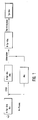
- Figur 2 ein Schema für die kontinuierlich arbeitende Apparatur zur Dipeptidherstellung
- Figure 1 is a reaction scheme and
- Figure 2 is a diagram for the continuously operating apparatus for dipeptide production
Die in Figur 2 dargestellte Apparatur mit Eingang bei a und Ausgang bei b umfaßt ein Ausgleichs- und Substratvorratsgefäß 1, das mit Ausgangsmaterial beschickt wird und rezykliertes Alanin (nach Entfernung des Alkohols durch Gasstrippen) erhält. Von diesem aus wird über ein Primärfilter 2 mittels einer Dosierpumpe 3 über ein Sterilfilter 4 Reaktionsflüssigkeit in den Enzymmembranreaktor 5 für die Peptidsynthese gepumpt, der bei 25°C arbeitet.The apparatus shown in FIG. 2 with inlet at a and outlet at b comprises a compensating and substrate storage vessel 1, which is charged with starting material and receives recycled alanine (after removal of the alcohol by gas stripping). Of this is pumped through a primary filter 2 by means of a metering pump 3 via a sterile filter 4 reaction liquid into the enzyme membrane reactor 5 for peptide synthesis, which works at 25 ° C.
Der Ablauf des Reaktors läuft über eine der abwechselnd zur Produktabtrennung betriebenen Säulen 6, wo das gebildete N-Acyldipeptid bis zum Durchbruch auf der Säule angesammelt wird, während das im Ablauf der Säule befindliche Alanin zum Ausgang zurückläuft über ein Polarimeter 7, mit dessen Hilfe die Alaninrestkonzentration bestimmt wird.The outlet of the reactor runs over one of the
Aus einem Vorrat 8 wird Spülflüssigkeit (verdünnte Salzsäure) nach Umschaltung der Säulen in die vollständig beladene Säule gepumpt und nachfolgend aus 9 Elutionsflüssigkeit (verdünnte NaOH).After switching the columns, rinsing liquid (dilute hydrochloric acid) is pumped from a
Die Elutionsflüssigkeit gelangt in das Gefäß 10, das als Ausgleichsgefäß wirkt und in dem der pH-Wert in den für die Desacylierung geeigneten Bereich gebracht wird.The elution liquid enters the
Pumpe und Sterilfilter sind wiederum mit 3 bzw. 4 bezeichnet. P sind Druckaufnehmer. Die Desacylierung findet schließlich im Enzymmembranreaktor 11 bei 25°C statt, aus dessen Ablauf das Dipeptid ohne Schwierigkeit von der anwesenden Phenylessigsäure und dem von der Hydrolyse in der Synthesestufe I herrührenden Tyrosin durch selektive Adsorptionen oder Kristallisation abgetrennt werden kann.Pump and sterile filter are again labeled 3 and 4, respectively. P are pressure transducers. The deacylation finally takes place in the enzyme membrane reactor 11 at 25 ° C., from the course of which the dipeptide can be separated from the phenylacetic acid present and the tyrosine resulting from the hydrolysis in synthesis stage I by selective adsorption or crystallization.
Nachfolgend wird das erfindungsgemäße Verfahren anhand eines praktischen Beispiels näher erläutert:The method according to the invention is explained in more detail below using a practical example:
Ein 10 ml EMR wurde mit 1 mg CPDY bei 25°C betrieben. Die Verweilzeit betrug 10 Minuten. Die Konzentration der Substratlösung entsprach 2 mM Phenac-Tyr-OMe und 1 M Alanin. Ihr pH-Wert lag bei 8,4. Die aus dem EMR abgezogene Produktlösung enthielt 65 % N-acyliertes Dipeptid und 35 % Hydrolysat N-Phenac-Tyr (bezogen auf den eingesetzten Ester) bei einer Raum-Zeit-Ausbeute von 50,6 g/ld. Die Enzymdesaktivierung lag bei 0,7 % pro Tag, d. h. es wurden 3,4 mg Enzym pro kg Dipeptid verbraucht. Das N-Acyldipeptid wurde durch Adsorption an Amberlite XAD-2 abgetrennt. Das nicht umgesetzte Alanin wurde wieder mit Phenac-Tyr-OMe versetzt und in den Reaktor zurückgeführt.A 10 ml EMR was operated with 1 mg CPDY at 25 ° C. The residence time was 10 minutes. The concentration of the substrate solution corresponded to 2 mM Phenac-Tyr-OMe and 1 M alanine. Her pH was 8.4. The product solution drawn off from the EMR contained 65% N-acylated dipeptide and 35% hydrolyzate N-Phenac-Tyr (based on the ester used) with a space-time yield of 50.6 g / ld. Enzyme deactivation was 0.7% per day, i.e. H. 3.4 mg of enzyme were consumed per kg of dipeptide. The N-acyl dipeptide was separated by adsorption on Amberlite XAD-2. The unreacted alanine was again mixed with Phenac-Tyr-OMe and returned to the reactor.
Das adsorbierte N-Acyl-dipeptid wurde vom Amberlite mit 50 mM NaOH desorbiert, die Lösung mit verdünnter HCl auf pH 7,7 gebracht und die Schutzgruppe Phenac in wässriger Lösung mit Hilfe von an Eupergit immobilisierter Penicillin-G-Acylase (10 mg Enzym/1 g Eupergit) bei 25°C abgespalten. Die Abspaltung war vollständig, wenn die Verweilzeit in der Säule bei 55 Min lag. Die Verweilzeit wird üblicherweise im Bereich von 40 - 70 Min gewählt, wobei zu lange Verweilzeiten wegen der dann zunehmenden Hydrolyse des Dipeptids vermieden werden sollten. Im Enzymmembranreaktor konnten mit vergleichbaren Enzymkonzentrationen Verweilzeiten bis herab zu 10 Min erreicht werden.The adsorbed N-acyl dipeptide was desorbed from amberlite with 50 mM NaOH, the solution was brought to pH 7.7 with dilute HCl and the protecting group Phenac in aqueous solution with the help of penicillin-G-acylase immobilized on Eupergit (10 mg enzyme / 1 g Eupergit) at 25 ° C. The cleavage was complete when the residence time in the column was 55 minutes. The residence time is usually selected in the range from 40 to 70 minutes, with excessively long residence times being avoided because of the then increasing hydrolysis of the dipeptide. In the enzyme membrane reactor, residence times down to 10 minutes could be achieved with comparable enzyme concentrations.
Die im Ablauf enthaltene Phenylessigsäure wurde durch Adsorption an Amberlite XAD-2 aus der Produktlösung entfernt.The phenylacetic acid contained in the drain was removed from the product solution by adsorption on Amberlite XAD-2.
Aufgearbeitet wurde durch fraktionierte Kristallisation. Die optische Reinheit des erhaltenen Dipeptids lag bei > 99 ee (Nachweisgrenze).It was worked up by fractional crystallization. The optical purity of the dipeptide obtained was> 99 ee (detection limit).
Alternativ wurde die Desacylierung im Enzymmembranreaktor durchgeführt:Alternatively, the deacylation was carried out in the enzyme membrane reactor:
Dazu wurde eine 2 mM N-Acyldipeptidlösung (Ablauf der Amberlite XAD-2 Säule) auf pH 7,8 eingestellt und mit einer Verweilzeit von 15 Min durch einen 10 ml EMR mit einer Membran mit einem cut-off von 5000 gepumpt. In dem Reaktor befanden sich 20 mg Penicillin-G-Acylase. Der maximale Umsatz lag bei 85 %. Die Enzymdesaktivierung lag bei 1,3 % pro Tag.For this purpose, a 2 mM N-acyl dipeptide solution (outflow from the Amberlite XAD-2 column) was adjusted to pH 7.8 and pumped with a residence time of 15 min through a 10 ml EMR with a membrane with a cut-off of 5000. There were 20 mg penicillin G acylase in the reactor. The maximum turnover was 85%. Enzyme deactivation was 1.3% per day.
Obwohl im Vorstehenden vornehmlich die Herstellung von freien Dipeptiden beschrieben wird, können erfindungsgemäß selbstverständlich auch N-geschützte Peptide bzw. Dipeptide erhalten werden, die als Zwischenprodukte oder auch ggf. selbst mit eigener pharmakologischer Wirkung begabt von Interesse sein können.Although the production of free dipeptides is primarily described above, according to the invention it is of course also possible to obtain N-protected peptides or dipeptides which may be of interest as intermediates or, if appropriate, with their own pharmacological action.
Für die Herstellung von Oligopeptiden wird selbstverständlich statt der freien Aminosäure freies Peptid und/oder statt des N-geschützten Aminosäureesters ein N-geschützter Peptidester verwendet.For the production of oligopeptides, of course, instead of the free amino acid, free peptide and / or instead of the N-protected amino acid ester, an N-protected peptide ester is used.
Claims (10)
dadurch gekennzeichnet,
daß man die Umsetzung kontinuierlich unter Ausschluß organischer Lösungsvermittler und mit im Reaktionsraum zurückgehaltenem Enzym, mit einem solchen Aminosäureüberschuß und einer solchen Verweilzeit ablaufen läßt, die zur quantitativen Umwandlung des Aminosäureesters führt, daß man das N-geschützte Peptid durch Adsorption an einem hydrophoben Adsorber von der aus dem Reaktionsraum abgehenden Reaktionsmischung abtrennt, die zur Umwandlung zurückgegeben wird und daß man schließlich ggf. die Schutzgruppe von dem mit wässriger Lösung vom Adsorber eluierten N-geschützten Peptid enzymatisch abspaltet.1. Process for the preparation of optionally N-protected peptides, in particular dipeptides, by enzymatic reaction of N-protected amino acid alkyl ester with amino acid used in excess in an aqueous phase in the presence of serine protease or peptidase and enzymatic cleavage of the protective group from the peptide formed,
characterized,
that the reaction is carried out continuously with the exclusion of organic solubilizers and with the enzyme retained in the reaction space, with such an excess of amino acids and such a residence time that leads to the quantitative conversion of the amino acid ester that the N-protected peptide is adsorbed on a hydrophobic adsorber by the separating the reaction mixture leaving the reaction space, which is returned for the conversion and that eventually the protective group is enzymatically split off from the N-protected peptide eluted with aqueous solution from the adsorber.
dadurch gekennzeichnet,
daß die Peptidbildung im Enzymmembranreaktor oder mit an einem Träger, insbesondere Eupergit, fixiertem Enzym erfolgt.2. The method according to claim 1,
characterized,
that the peptide formation takes place in the enzyme membrane reactor or with enzyme fixed to a support, in particular Eupergit.
dadurch gekennzeichnet,
daß die Abtrennung des N-geschützten Peptids von der Reaktionsmischung durch Adorption an Amberlite XAD-2 erfolgt.3. The method according to claim 1 or 2,
characterized,
that the N-protected peptide is separated from the reaction mixture by adsorption on Amberlite XAD-2.
dadurch gekennzeichnet,
daß mit einem Molverhältnis von Aminosäure : N-geschütztem Aminosäureester von > 50 : 1, insbesondere von größenordnungsmäßig 500 : 1 gearbeitet wird.4. The method according to any one of the preceding claims,
characterized,
that a molar ratio of amino acid: N-protected amino acid ester of> 50: 1, in particular of the order of 500: 1 is used.
dadurch gekennzeichnet,
daß die Peptidbildung in Gegenwart von Carboxypeptidasen, insbesondere Carboxypeptidase Y stattfindet.5. The method according to any one of the preceding claims,
characterized,
that the peptide formation takes place in the presence of carboxypeptidases, especially carboxypeptidase Y.
dadurch gekennzeichnet,
daß der N-geschützte Aminosäurealkylester ein N-Acyl-, insbesondere N-Phenacetylaminosäurealkylester ist und zur enzymatischen Abspaltung der Schutzgruppe Penicillin-G-Acylase verwendet wird.6. The method according to any one of the preceding claims,
characterized,
that the N-protected amino acid alkyl ester is an N-acyl, especially N-phenacetylamino acid alkyl ester and is used for the enzymatic elimination of the protective group penicillin-G-acylase.
dadurch gekennzeichnet,
daß die enzymatische Desacylierung in wäßriger Phase mit trägerfixierter Penicillin-G-Acylase oder im Enzymmembranreaktor erfolgt.7. The method according to claim 6,
characterized,
that the enzymatic deacylation takes place in the aqueous phase with carrier-fixed penicillin G acylase or in the enzyme membrane reactor.
dadurch gekennzeichnet,
daß als N-Phenacetylaminosäurealkylester ein Ester einer aromatischen Aminosäure und insbesondere N-Phenacetyl-tyrosinniederalkylester verwendet wird.8. The method according to claim 6,
characterized,
that an N-phenacetylamino acid alkyl ester is an aromatic amino acid and in particular N-phenacetyl-tyrosine lower alkyl ester.
dadurch gekennzeichnet,
daß man als Aminosäure Alanin, Serin, Glycin, Methionin, Isoleucin, Valin, Leucin oder Arginin, insbesondere Alanin, verwendet.9. The method according to any one of the preceding claims,
characterized,
that one uses alanine, serine, glycine, methionine, isoleucine, valine, leucine or arginine, in particular alanine, as the amino acid.
gekennzeichnet durch
einen ersten EMR (5), dessen Ausgang abwechselnd mit zwei wechselseitig zu betreibenden Säulen (6) mit hydrophobem Adsorber zu verbinden ist, von denen jeweils die eine als Akkumulationssäule geschaltet ist, deren Ausgang über ein Polarimeter (7) zum EMR-Eingang zurückgelangt, während der Ausgang der anderen mit Elutionsmittel beaufschlagten Säule zu einem weiteren EMR (11) für die Schutzgruppenabspaltung oder zu einer entsprechenden Enzymkolonne führt.10. Device for peptide synthesis according to one of the preceding claims,
marked by
a first EMR (5), the output of which is to be connected alternately to two mutually operated columns (6) with hydrophobic adsorber, one of which is connected as an accumulation column, the output of which returns to the EMR input via a polarimeter (7), while the exit of the other column charged with eluent leads to a further EMR (11) for deprotection or to a corresponding enzyme column.
Applications Claiming Priority (2)
| Application Number | Priority Date | Filing Date | Title |
|---|---|---|---|
| DE3733198 | 1987-10-01 | ||
| DE19873733198 DE3733198A1 (en) | 1987-10-01 | 1987-10-01 | ENZYMATIC METHOD FOR PRODUCING DIPEPTIDES |
Publications (2)
| Publication Number | Publication Date |
|---|---|
| EP0309983A2 true EP0309983A2 (en) | 1989-04-05 |
| EP0309983A3 EP0309983A3 (en) | 1991-03-27 |
Family
ID=6337394
Family Applications (1)
| Application Number | Title | Priority Date | Filing Date |
|---|---|---|---|
| EP19880115873 Withdrawn EP0309983A3 (en) | 1987-10-01 | 1988-09-27 | Enzymatic process for peptide preparation, in particular of dipeptides, and device therefor |
Country Status (6)
| Country | Link |
|---|---|
| US (1) | US5057415A (en) |
| EP (1) | EP0309983A3 (en) |
| JP (1) | JPH01222795A (en) |
| DD (1) | DD282918A5 (en) |
| DE (1) | DE3733198A1 (en) |
| DK (1) | DK549688A (en) |
Cited By (1)
| Publication number | Priority date | Publication date | Assignee | Title |
|---|---|---|---|---|
| EP0996627A4 (en) * | 1997-01-08 | 2002-01-02 | Proligo L L C | Method for solution phase synthesis of oligonucleotides and peptides |
Families Citing this family (15)
| Publication number | Priority date | Publication date | Assignee | Title |
|---|---|---|---|---|
| DE4014564C1 (en) * | 1990-05-07 | 1991-07-18 | Forschungszentrum Juelich Gmbh, 5170 Juelich, De | |
| DE4101895C1 (en) * | 1991-01-23 | 1991-12-05 | Forschungszentrum Juelich Gmbh, 5170 Juelich, De | |
| JPH11171895A (en) * | 1997-12-11 | 1999-06-29 | Ajinomoto Co Inc | Separation and purification of aspartame and aspartame derivative |
| US20030032083A1 (en) * | 2001-05-23 | 2003-02-13 | Diversa Corporation | Peptide synthesis method |
| US20120282652A1 (en) * | 2011-02-28 | 2012-11-08 | Polytechnic Institute Of New York University | Preparation of peptide mixtures by protease catalysis designed to provide useful biological and physical properties |
| HUE054006T2 (en) | 2011-12-28 | 2021-08-30 | Chugai Pharmaceutical Co Ltd | Peptide-compound cyclization method |
| US10815489B2 (en) | 2015-03-13 | 2020-10-27 | Chugai Seiyaku Kabushiki Kaisha | Modified aminoacyl-tRNA synthetase and use thereof |
| US12391971B2 (en) | 2017-01-31 | 2025-08-19 | Chugai Seiyaku Kabushiki Kaisha | Method for synthesizing peptides in cell-free translation system |
| KR102744693B1 (en) | 2017-06-09 | 2024-12-18 | 추가이 세이야쿠 가부시키가이샤 | Method for synthesizing peptide containing n-substituted amino acid |
| CN111479819B (en) | 2017-12-15 | 2024-06-14 | 中外制药株式会社 | Method for preparing peptide and method for treating base |
| KR102841441B1 (en) | 2018-11-07 | 2025-07-31 | 추가이 세이야쿠 가부시키가이샤 | Method for preparing O-substituted serine derivatives |
| CN113056475B (en) | 2018-11-30 | 2024-09-24 | 中外制药株式会社 | Deprotection method for peptide compound or amide compound and resin removal method in solid phase reaction and method for producing peptide compound |
| JP7472101B2 (en) | 2019-03-15 | 2024-04-22 | 中外製薬株式会社 | Method for producing aromatic amino acid derivatives |
| BR112022007535A2 (en) | 2019-11-07 | 2022-07-12 | Chugai Pharmaceutical Co Ltd | CYCLIC PEPTIDE COMPOUND HAVING KRAS INHIBITORY ACTION |
| DE102021108406A1 (en) * | 2021-04-01 | 2022-10-06 | Jacobs University Bremen Ggmbh | Device and method for separating proteins contained in a carrier liquid |
Family Cites Families (4)
| Publication number | Priority date | Publication date | Assignee | Title |
|---|---|---|---|---|
| ZA801929B (en) * | 1979-04-06 | 1981-11-25 | Forenede Bryggerier As | A process for enzymatic production of peptides |
| DE2930070A1 (en) * | 1979-07-25 | 1981-02-19 | Biotechnolog Forschung Gmbh | METHOD FOR THE CONTINUOUS ENCYMATIC CONVERSION OF WATER-SOLUBLE ALPHA KETOCARBONIC ACIDS INTO THE CORRESPONDING AMINO ACIDS |
| DE2930087A1 (en) * | 1979-07-25 | 1981-02-26 | Biotechnolog Forschung Gmbh | METHOD FOR THE CONTINUOUS ENCYMATIC CONVERSION OF WATER-SOLUBLE ALPHA KETOCARBONIC ACIDS INTO THE CORRESPONDING ALPHA HYDROXYCARBONIC ACIDS |
| DK72587D0 (en) * | 1987-02-13 | 1987-02-13 | Carlsberg Biotechnology Ltd | PROCEDURE FOR ENZYMATIC DIPEPTID PREPARATION |
-
1987
- 1987-10-01 DE DE19873733198 patent/DE3733198A1/en not_active Withdrawn
-
1988
- 1988-09-27 EP EP19880115873 patent/EP0309983A3/en not_active Withdrawn
- 1988-09-29 DD DD88320269A patent/DD282918A5/en not_active IP Right Cessation
- 1988-09-29 JP JP63242646A patent/JPH01222795A/en active Pending
- 1988-09-30 US US07/251,176 patent/US5057415A/en not_active Expired - Fee Related
- 1988-09-30 DK DK549688A patent/DK549688A/en not_active Application Discontinuation
Cited By (1)
| Publication number | Priority date | Publication date | Assignee | Title |
|---|---|---|---|---|
| EP0996627A4 (en) * | 1997-01-08 | 2002-01-02 | Proligo L L C | Method for solution phase synthesis of oligonucleotides and peptides |
Also Published As
| Publication number | Publication date |
|---|---|
| US5057415A (en) | 1991-10-15 |
| DK549688D0 (en) | 1988-09-30 |
| EP0309983A3 (en) | 1991-03-27 |
| DK549688A (en) | 1989-04-02 |
| JPH01222795A (en) | 1989-09-06 |
| DD282918A5 (en) | 1990-09-26 |
| DE3733198A1 (en) | 1989-04-13 |
Similar Documents
| Publication | Publication Date | Title |
|---|---|---|
| EP0309983A2 (en) | Enzymatic process for peptide preparation, in particular of dipeptides, and device therefor | |
| EP0087750B1 (en) | Amino acid preparations containing glutaminic residues | |
| DE3884976T2 (en) | Process for the enzymatic production of dipeptides. | |
| DE3789309T2 (en) | ENZYMATIC MEMBRANE, METHOD FOR THE PRODUCTION AND SEPARATION OF PEPTIDES. | |
| DE3887246T2 (en) | Process for the preparation of glutamine derivatives. | |
| DE69125614T2 (en) | METHOD FOR PRODUCING C-TERMINAL AMIDATED PEPTIDES | |
| DE3781555T2 (en) | METHOD FOR PRODUCING A DIASTEREOISOMERIC MIXTURE CONTAINING TWO DIASTEREOISOMERIC N-ACYLAMINO ACID ESTERES. | |
| DE3203292C2 (en) | ||
| DE10220740A1 (en) | Production of enantiomer enriched N-unprotected beta-aminoacids, useful for production of pharmaceuticals, comprises enzymatic hydrolysis of beta-aminoacid esters with hydrolase in two-phase system of water and organic solvent | |
| EP1300392B1 (en) | Process for producing optically active alpha-amino acid and optically active alpha-amino acid amide | |
| JP2734876B2 (en) | Method for producing optically active 4-chloro-3-hydroxybutyronitrile | |
| JP2001011034A (en) | Separation and recovery method of optically active amino acid and optically active amino acid amide | |
| JP2001328970A (en) | Method for producing optically active α-amino acid and optically active α-amino acid amide | |
| FR2496660A1 (en) | PROCESS FOR THE PREPARATION OF N-ACYLCARNOSINE | |
| DE10320211A1 (en) | Enantiomerically enriched beta-amino acid preparation, for use e.g. as drug intermediate, comprises selective enzymatic hydrolysis of new or known racemic beta-aminoacid ester other than the methyl or ethyl ester | |
| EP0321722B1 (en) | Process for obtaining dipeptides | |
| JPS58189149A (en) | Semisynthesis of human insulin | |
| DE3787882T2 (en) | Enzyme-mediated coupling reactions. | |
| DE19529211C2 (en) | Process for the preparation of (R) tertiary leucine | |
| EP0310012A2 (en) | Process for the preparation of optically pure homophenyl alanine | |
| EP0491173B1 (en) | Method of producing hydrochloride of alpha-L-aspartyl-L-phenylalanine methyl ester | |
| EP0253199A2 (en) | Process for the biocatalytic conversion of substrates having a poor solubility in aqueous solutions | |
| JP3647065B2 (en) | Method for producing optically active alanine | |
| EP0534992A1 (en) | Process for producing peptides. | |
| DE19834308C2 (en) | Process for the production of acid amides |
Legal Events
| Date | Code | Title | Description |
|---|---|---|---|
| PUAI | Public reference made under article 153(3) epc to a published international application that has entered the european phase |
Free format text: ORIGINAL CODE: 0009012 |
|
| AK | Designated contracting states |
Kind code of ref document: A2 Designated state(s): AT BE CH DE FR GB IT LI LU NL SE |
|
| RAP3 | Party data changed (applicant data changed or rights of an application transferred) |
Owner name: FORSCHUNGSZENTRUM JUELICH GMBH |
|
| PUAL | Search report despatched |
Free format text: ORIGINAL CODE: 0009013 |
|
| AK | Designated contracting states |
Kind code of ref document: A3 Designated state(s): AT BE CH DE FR GB IT LI LU NL SE |
|
| 17P | Request for examination filed |
Effective date: 19910805 |
|
| STAA | Information on the status of an ep patent application or granted ep patent |
Free format text: STATUS: THE APPLICATION HAS BEEN WITHDRAWN |
|
| 18W | Application withdrawn |
Withdrawal date: 19921109 |