EP0301181B1 - Reagent for reticulocyte counting by flow cytometry - Google Patents
Reagent for reticulocyte counting by flow cytometry Download PDFInfo
- Publication number
- EP0301181B1 EP0301181B1 EP88107088A EP88107088A EP0301181B1 EP 0301181 B1 EP0301181 B1 EP 0301181B1 EP 88107088 A EP88107088 A EP 88107088A EP 88107088 A EP88107088 A EP 88107088A EP 0301181 B1 EP0301181 B1 EP 0301181B1
- Authority
- EP
- European Patent Office
- Prior art keywords
- staining
- solution
- auramine
- solvent
- flow cytometry
- Prior art date
- Legal status (The legal status is an assumption and is not a legal conclusion. Google has not performed a legal analysis and makes no representation as to the accuracy of the status listed.)
- Expired - Lifetime
Links
- 210000001995 reticulocyte Anatomy 0.000 title claims description 27
- 238000000684 flow cytometry Methods 0.000 title claims description 16
- 239000003153 chemical reaction reagent Substances 0.000 title claims description 13
- KSCQDDRPFHTIRL-UHFFFAOYSA-N auramine O Chemical compound [H+].[Cl-].C1=CC(N(C)C)=CC=C1C(=N)C1=CC=C(N(C)C)C=C1 KSCQDDRPFHTIRL-UHFFFAOYSA-N 0.000 claims description 35
- 239000000243 solution Substances 0.000 claims description 24
- LYCAIKOWRPUZTN-UHFFFAOYSA-N Ethylene glycol Chemical compound OCCO LYCAIKOWRPUZTN-UHFFFAOYSA-N 0.000 claims description 21
- 238000010186 staining Methods 0.000 claims description 19
- MTHSVFCYNBDYFN-UHFFFAOYSA-N diethylene glycol Chemical compound OCCOCCO MTHSVFCYNBDYFN-UHFFFAOYSA-N 0.000 claims description 15
- 239000011550 stock solution Substances 0.000 claims description 10
- 239000007853 buffer solution Substances 0.000 claims description 7
- ZIBGPFATKBEMQZ-UHFFFAOYSA-N triethylene glycol Chemical compound OCCOCCOCCO ZIBGPFATKBEMQZ-UHFFFAOYSA-N 0.000 claims description 5
- JKMHFZQWWAIEOD-UHFFFAOYSA-N 2-[4-(2-hydroxyethyl)piperazin-1-yl]ethanesulfonic acid Chemical compound OCC[NH+]1CCN(CCS([O-])(=O)=O)CC1 JKMHFZQWWAIEOD-UHFFFAOYSA-N 0.000 claims description 3
- 239000007995 HEPES buffer Substances 0.000 claims description 3
- CFBILACNYSPRPM-UHFFFAOYSA-N 2-amino-2-(hydroxymethyl)propane-1,3-diol;2-[[1,3-dihydroxy-2-(hydroxymethyl)propan-2-yl]amino]acetic acid Chemical compound OCC(N)(CO)CO.OCC(CO)(CO)NCC(O)=O CFBILACNYSPRPM-UHFFFAOYSA-N 0.000 claims 1
- 239000007997 Tricine buffer Substances 0.000 claims 1
- 239000008055 phosphate buffer solution Substances 0.000 claims 1
- 239000002904 solvent Substances 0.000 description 48
- 239000012192 staining solution Substances 0.000 description 40
- OKKJLVBELUTLKV-UHFFFAOYSA-N Methanol Chemical compound OC OKKJLVBELUTLKV-UHFFFAOYSA-N 0.000 description 18
- 239000000975 dye Substances 0.000 description 18
- VVBLNCFGVYUYGU-UHFFFAOYSA-N 4,4'-Bis(dimethylamino)benzophenone Chemical compound C1=CC(N(C)C)=CC=C1C(=O)C1=CC=C(N(C)C)C=C1 VVBLNCFGVYUYGU-UHFFFAOYSA-N 0.000 description 12
- LFQSCWFLJHTTHZ-UHFFFAOYSA-N Ethanol Chemical compound CCO LFQSCWFLJHTTHZ-UHFFFAOYSA-N 0.000 description 12
- 230000007423 decrease Effects 0.000 description 10
- 238000002474 experimental method Methods 0.000 description 9
- 238000006460 hydrolysis reaction Methods 0.000 description 9
- 238000005259 measurement Methods 0.000 description 9
- BDERNNFJNOPAEC-UHFFFAOYSA-N propan-1-ol Chemical compound CCCO BDERNNFJNOPAEC-UHFFFAOYSA-N 0.000 description 8
- 230000000694 effects Effects 0.000 description 7
- 230000007062 hydrolysis Effects 0.000 description 6
- 238000000034 method Methods 0.000 description 6
- 239000000203 mixture Substances 0.000 description 6
- 210000004369 blood Anatomy 0.000 description 5
- 239000008280 blood Substances 0.000 description 5
- 210000000601 blood cell Anatomy 0.000 description 5
- 210000003743 erythrocyte Anatomy 0.000 description 5
- FAPWRFPIFSIZLT-UHFFFAOYSA-M sodium chloride Inorganic materials [Na+].[Cl-] FAPWRFPIFSIZLT-UHFFFAOYSA-M 0.000 description 5
- 230000002411 adverse Effects 0.000 description 4
- 239000003795 chemical substances by application Substances 0.000 description 4
- BFMYDTVEBKDAKJ-UHFFFAOYSA-L disodium;(2',7'-dibromo-3',6'-dioxido-3-oxospiro[2-benzofuran-1,9'-xanthene]-4'-yl)mercury;hydrate Chemical compound O.[Na+].[Na+].O1C(=O)C2=CC=CC=C2C21C1=CC(Br)=C([O-])C([Hg])=C1OC1=C2C=C(Br)C([O-])=C1 BFMYDTVEBKDAKJ-UHFFFAOYSA-L 0.000 description 4
- 238000004128 high performance liquid chromatography Methods 0.000 description 4
- 238000002360 preparation method Methods 0.000 description 4
- KCXVZYZYPLLWCC-UHFFFAOYSA-N EDTA Chemical compound OC(=O)CN(CC(O)=O)CCN(CC(O)=O)CC(O)=O KCXVZYZYPLLWCC-UHFFFAOYSA-N 0.000 description 3
- 230000003204 osmotic effect Effects 0.000 description 3
- 239000011780 sodium chloride Substances 0.000 description 3
- NBIIXXVUZAFLBC-UHFFFAOYSA-N Phosphoric acid Chemical compound OP(O)(O)=O NBIIXXVUZAFLBC-UHFFFAOYSA-N 0.000 description 2
- 239000006172 buffering agent Substances 0.000 description 2
- 230000006866 deterioration Effects 0.000 description 2
- 239000004615 ingredient Substances 0.000 description 2
- XNWFRZJHXBZDAG-UHFFFAOYSA-N 2-METHOXYETHANOL Chemical compound COCCO XNWFRZJHXBZDAG-UHFFFAOYSA-N 0.000 description 1
- POAOYUHQDCAZBD-UHFFFAOYSA-N 2-butoxyethanol Chemical compound CCCCOCCO POAOYUHQDCAZBD-UHFFFAOYSA-N 0.000 description 1
- ZNQVEEAIQZEUHB-UHFFFAOYSA-N 2-ethoxyethanol Chemical compound CCOCCO ZNQVEEAIQZEUHB-UHFFFAOYSA-N 0.000 description 1
- 208000032467 Aplastic anaemia Diseases 0.000 description 1
- 206010057248 Cell death Diseases 0.000 description 1
- 208000032843 Hemorrhage Diseases 0.000 description 1
- 239000002253 acid Substances 0.000 description 1
- 230000001154 acute effect Effects 0.000 description 1
- 230000001476 alcoholic effect Effects 0.000 description 1
- 150000001298 alcohols Chemical class 0.000 description 1
- 239000003513 alkali Substances 0.000 description 1
- 229910000147 aluminium phosphate Inorganic materials 0.000 description 1
- 239000012062 aqueous buffer Substances 0.000 description 1
- 239000003125 aqueous solvent Substances 0.000 description 1
- XKRFYHLGVUSROY-UHFFFAOYSA-N argon Substances [Ar] XKRFYHLGVUSROY-UHFFFAOYSA-N 0.000 description 1
- 229910052786 argon Inorganic materials 0.000 description 1
- -1 argon ion Chemical class 0.000 description 1
- 239000000981 basic dye Substances 0.000 description 1
- 238000006243 chemical reaction Methods 0.000 description 1
- 238000012790 confirmation Methods 0.000 description 1
- 125000000853 cresyl group Chemical group C1(=CC=C(C=C1)C)* 0.000 description 1
- 230000009089 cytolysis Effects 0.000 description 1
- 238000003745 diagnosis Methods 0.000 description 1
- XXJWXESWEXIICW-UHFFFAOYSA-N diethylene glycol monoethyl ether Chemical compound CCOCCOCCO XXJWXESWEXIICW-UHFFFAOYSA-N 0.000 description 1
- 229940075557 diethylene glycol monoethyl ether Drugs 0.000 description 1
- 201000010099 disease Diseases 0.000 description 1
- 208000037265 diseases, disorders, signs and symptoms Diseases 0.000 description 1
- 238000001647 drug administration Methods 0.000 description 1
- 239000000706 filtrate Substances 0.000 description 1
- 208000007475 hemolytic anemia Diseases 0.000 description 1
- 238000011534 incubation Methods 0.000 description 1
- 230000002452 interceptive effect Effects 0.000 description 1
- 238000009533 lab test Methods 0.000 description 1
- 238000002156 mixing Methods 0.000 description 1
- 238000012544 monitoring process Methods 0.000 description 1
- NZYCYASKVWSANA-UHFFFAOYSA-M new methylene blue Chemical compound [Cl-].CCNC1=C(C)C=C2N=C(C=C(C(NCC)=C3)C)C3=[S+]C2=C1 NZYCYASKVWSANA-UHFFFAOYSA-M 0.000 description 1
- 239000002244 precipitate Substances 0.000 description 1
- 238000001556 precipitation Methods 0.000 description 1
- 238000002203 pretreatment Methods 0.000 description 1
- 230000035945 sensitivity Effects 0.000 description 1
- 239000000126 substance Substances 0.000 description 1
- ACOJCCLIDPZYJC-UHFFFAOYSA-M thiazole orange Chemical compound CC1=CC=C(S([O-])(=O)=O)C=C1.C1=CC=C2C(C=C3N(C4=CC=CC=C4S3)C)=CC=[N+](C)C2=C1 ACOJCCLIDPZYJC-UHFFFAOYSA-M 0.000 description 1
- 230000000007 visual effect Effects 0.000 description 1
- XLYOFNOQVPJJNP-UHFFFAOYSA-N water Substances O XLYOFNOQVPJJNP-UHFFFAOYSA-N 0.000 description 1
Images


Classifications
-
- G—PHYSICS
- G01—MEASURING; TESTING
- G01N—INVESTIGATING OR ANALYSING MATERIALS BY DETERMINING THEIR CHEMICAL OR PHYSICAL PROPERTIES
- G01N33/00—Investigating or analysing materials by specific methods not covered by groups G01N1/00 - G01N31/00
- G01N33/48—Biological material, e.g. blood, urine; Haemocytometers
- G01N33/50—Chemical analysis of biological material, e.g. blood, urine; Testing involving biospecific ligand binding methods; Immunological testing
- G01N33/80—Chemical analysis of biological material, e.g. blood, urine; Testing involving biospecific ligand binding methods; Immunological testing involving blood groups or blood types or red blood cells
-
- G—PHYSICS
- G01—MEASURING; TESTING
- G01N—INVESTIGATING OR ANALYSING MATERIALS BY DETERMINING THEIR CHEMICAL OR PHYSICAL PROPERTIES
- G01N33/00—Investigating or analysing materials by specific methods not covered by groups G01N1/00 - G01N31/00
- G01N33/48—Biological material, e.g. blood, urine; Haemocytometers
- G01N33/50—Chemical analysis of biological material, e.g. blood, urine; Testing involving biospecific ligand binding methods; Immunological testing
- G01N33/5005—Chemical analysis of biological material, e.g. blood, urine; Testing involving biospecific ligand binding methods; Immunological testing involving human or animal cells
- G01N33/5094—Chemical analysis of biological material, e.g. blood, urine; Testing involving biospecific ligand binding methods; Immunological testing involving human or animal cells for blood cell populations
-
- Y—GENERAL TAGGING OF NEW TECHNOLOGICAL DEVELOPMENTS; GENERAL TAGGING OF CROSS-SECTIONAL TECHNOLOGIES SPANNING OVER SEVERAL SECTIONS OF THE IPC; TECHNICAL SUBJECTS COVERED BY FORMER USPC CROSS-REFERENCE ART COLLECTIONS [XRACs] AND DIGESTS
- Y10—TECHNICAL SUBJECTS COVERED BY FORMER USPC
- Y10T—TECHNICAL SUBJECTS COVERED BY FORMER US CLASSIFICATION
- Y10T436/00—Chemistry: analytical and immunological testing
- Y10T436/13—Tracers or tags
Definitions
- the present invention relates to a reagent for reticulocyte counting by flow cytometry. More particularly, the present invention relates to a reagent for reticulocyte counting by flow cytometry which consists of two solutions, namely, a stock solution for staining and a buffer solution.
- reticulocytes Immature erythrocytes in the blood are called reticulocytes, and normally account for 0.7 - 2.2% of the total count of erythrocytes. Determination of reticulocyte count helps confirmation of the diagnosis of such diseases as acute internal hemorrhage, hemolytic anemia, aplastic anemia, etc., and also helps in monitoring the progress of a patient's conditions after drug administration; thus it is regarded as being very important in the field of laboratory tests.
- a method which has been employed for the counting of said reticulocytes is conducted as follows: a smear of blood sample stained with a basic dye such as new methylene blue, brilliant cresyl blue, etc. is observed and the percentage of the count of stained reticulocytes is determined with respect to the total erythrocyte count.
- This method requires a lot of time and involves a considerable workload for pre-treatment of blood samples, e.g. staining, etc., as well as for visual counting after staining, and is inappropriate when the number of samples is large.
- Staining solutions with the four different compositions shown in Table 2 were prepared and stored in baths whose temperatures were controlled at 5.4°C, 22.3°C and 39.0°C, respectively, and the residual amount of Auramine O in each solution was studied up to the 12th day by HPLC.
- Table 2 Composition of Staining Solution * Sample No. pH Auramine O Concentration ( ⁇ g/ml) 1 7.0 1,000 2 7.5 750 3 8.0 500 4 8.5 250 * 20 mM HEPES buffer solution, 160 mM-(NaCl)
- Fig. 1 shows an example of results at 37°C. From this figure, it will be clearly seen that the hydrolysis reaction of Auramine O is of first-order.
- the hydrolysis reaction rate constants of each staining solution at respective temperatures are shown in Table 3.
- Table 3 Hydrolysis Rate of Auramine O at each pH and Temperature (sec ⁇ 1) Sample No. pH 5.4°C 22.3°C 39.0°C 1 7.0 - 1.64 x 10 ⁇ 7 7.93 x 10 ⁇ 7 2 7.5 2.91 x 10 ⁇ 8 2.18 x 10 ⁇ 7 1.65 x 10 ⁇ 6 3 8.0 5.52 x 10 ⁇ 8 5.81 x 10 ⁇ 7 3.50 x 10 ⁇ 6 4 8.5 1.69 x 10 ⁇ 7 1.58 x 10 ⁇ 6 8.97 x 10 ⁇ 6
- a staining solution whose residual dye amount had been determined by HPLC was filtered for the purpose of avoiding possible adverse effects by employing precipitated Michler's ketone.
- 10 ⁇ l of EDTA anti-coagulated fresh flood was added to 2 ml of the filtrate. After incubation for 1 minute, the sample was subjected to flow cytometer in which argon ion laser of 488 nm (10 mW) was used as a light source, and forward scattering and fluorescence from blood corpuscles were determined.
- A shows the range corresponding to mature erythrocytes
- B reticulocytes
- C platelets, respectively.
- the present invention provides a stable reagent for reticulocyte counting which is free from deterioration, i.e., decrease in the dye content, wherein for the purpose of preventing the decrease in the amount of a fluorochrome, Auramine O, due to hydrolysis, the reagent is divided into two solutions, namely, a dye solution in which the fluorochrome is dissolved in an anhydrous solvent, and an aqueous buffer solution which satisfies the optimum staining conditions; and these two solutions are mixed immediately prior to use.
- the present invention provides a reagent for flow cytometry according to the first part of Claim 1.
- a reagent which consists of two solutions, a stock solution for staining in which a dye (thiazole orange) is dissolved in a non-aqueous solvent (methanol), and a buffer solution, is disclosed in EP-A-0226272.
- the stock solution according to the present invention for staining comprises Auramine O as dye and as nonaqueous solvent ethylene glycol or triethylene glycol or diethylene glycol.
- the nonaqueous solvent should satisfy the following requirements:
- alcohols comprise preferable solvents, and ten alcoholic solvents were examined in detail taking account of these conditions.
- Staining solutions of pH 8.0 with the composition shown above were prepared immediately prior to measurement so as to contain various solvents at concentrations of 0.40%, 0.63%, 1.00%, 1.6%, 2.5%, 4.0%, 6.25%, 10.0%, 16.0% and 25.0%, respectively (all percentages are expressed by volume).
- the concentration with which erythrocytelysis occurs differs with the type of solvent. In the case of solvents which cause erythrocytolysis even when the solvent content in the staining solution is over 10%, little or no effects were observed on measurements of forward scattered light up to a solvent content of about 10%; in the case of solvents which cause erythrocytolysis at a solvent content of less than about 10%, the same was true until immediately prior to the occurrence of the cytolysis phenomena.
- the intensity of fluorochrome staining decreases with the increase in the amount of solvent added.
- the reticulocyte counting is free from suffering the effects of solvent addition up to a certain critical amount by increasing the sensitivity of the flow cytometry.
- the critical amount of addition differs with the type of solvent.
- the final staining solution should have a desired dye concentration.
- a desired amount of dye should be dissolved in a stock solution for staining.
- the amount of solvents contained in the stock solution for staining should be as small as possible in the final staining solution. Therefore, a solvent in which Auramine O has a large solubility is preferred. If such a solvent is selected, a desired concentration of the final staining solution can be obtained with the addition of a smaller amount of a stock solution for staining (and therefore, a smaller amount of solvent). This corresponds to item (1) mentioned above as a requirement for a suitable nonaqueous solvent.
- the preparation of a staining solution with the final dye concentration shown in Table 2 requires the solubility of Auramine O in the solvent to be as shown in Table 7 for each level of solvent content in the final staining solution.
- Table 7 may be interpreted as follows: in order to have the dye concentration of 1,000 ⁇ g/ml in the final staining solution at a solvent content level of 1 v/v%, the solubility of Auramine O in the solvent should be 10.0 g/100 ml.
- the actual solubility in each solvent is 2 - 3 g/100 ml in the cases of methanol, ethanol and n-propanol.
- the maximum amount of ethanol and methanol that can be added is 6.25 v/v%, as shown in Table 6, and in order to have the dye concentration of 1,000 ⁇ g/ml in the final staining solution, a solubility of 1.6 g/100 ml is required, as shown in Table 7. Methanol and ethanol can therefore be used from the viewpoint of solubility.
- the maximum amount of n-propanol that can be added is 2.5 v/v%.
- Table 7 shows that this degree of solubility is too small to provide a dye concentration of 1,000 ⁇ g/ml in the final staining solution, as the maximum dye concentration in the final staining solution could at most be between 500 and 750 ⁇ g/ml.
- Table 7 Solubility Necessary for Preparing Final Staining Solution (g/100 ml) Content of solvent (v/v%) Dye concentration in the final staining solution (mg/l or ⁇ g/ml) 250 500 750 1,000 1.0 2.5 5.0 7.5 10.0 1.6 1.6 3.2 4.8 6.4 2.5 1.0 2.0 3.0 4.0 4.0 0.63 1.25 1.88 2.5 6.25 0.4 0.8 1.2 1.6
- the Auramine O solubility in the remaining 4 solvents is 2 - 3% which is too small to prepare a staining solution of 1,000 ⁇ g/ml without interfering with the reticulocyte counting, and the maximum concentration of the dye in the staining solution that can be prepared with this solvent is 750 ⁇ g/ml.
- these four solvents are not appropriate from the viewpoint of item (3) above.
- the solvents which can be used for the objects of the present invention are preferably ethylene glycol, diethylene glycol and triethylene glycol; if such characteristics as the effects on erythrocytes and viscosity are further considered, ethylene glycol is the most preferable.
- a buffer solution contains a buffering agent and an osmotic pressure-compensating agent.
- a buffering agent is added to maintain the pH of a staining solution, and an acceptable content is one wherein fluorescent intensity change does not occur with the pH fluctuation of the staining solution.
- An osmotic pressure-compensating agent is added to prevent extreme deformation of blood corpuscles.
- the contents of these agents are as described in DE-A-35 44 867; the final staining solution is prepared so that the concentration of an osmotic pressure-compensating agent is 5 - 20 mg/ml, and the pH is adjusted to 6.0 - 9.5.
- the reagent for the present invention comprises two solutions, namely, a stack solution for staining and a buffer solution.
- the dye Auramine O is maintained in a nonaqueous solvent until immediately before measurement, so that Michler's ketone which affects the reticulocyte counting adversely will not be precipitated, and any decrease in the amount of Auramine O during storage can also be prevented.
- Solution 1 and Solution 2 whose compositions are as shown below were prepared: Solution 1 Ingredient Concentration HEPES 20 mM NaCl 160 mM pH 8.5 Solution 2 Ingredient Concentration Auramine O 1.25 w/v% ethylene glycol the rest
- Two ml of a staining solution was prepared by mixing 1960 ⁇ l of Solution 1 and 40 ⁇ l of Solution 2 so that the Auramine O concentration became 250 ⁇ g/ml.
- 10 ⁇ l of EDTA anti-coagulated fresh blood was added to prepare a sample. After staining had been conducted for 30 seconds at room temperatures, the sample was subjected to the aforementioned flow cytometer to measure the forward scattered light and fluorescence.
- the two-solution composition of the present invention allows measurement immediately after the staining solution is made. Therefore, decrease in the residual amount of dye with the lapse of time after the preparation of a staining solution, as observed in the aforementioned Table 5 of Experiment 2 and Fig. 3-II-a to Fig. 3-III-c, is not observed at all.
- Table 5 the column corresponding to "2 hours after the preparation of staining solution”
- Fig. 3-I-a, Fig. 3-I-b and Fig. 3-I-c can always be obtained.
Landscapes
- Health & Medical Sciences (AREA)
- Life Sciences & Earth Sciences (AREA)
- Engineering & Computer Science (AREA)
- Hematology (AREA)
- Immunology (AREA)
- Urology & Nephrology (AREA)
- Biomedical Technology (AREA)
- Chemical & Material Sciences (AREA)
- Molecular Biology (AREA)
- Cell Biology (AREA)
- Biotechnology (AREA)
- Microbiology (AREA)
- Food Science & Technology (AREA)
- Medicinal Chemistry (AREA)
- Physics & Mathematics (AREA)
- Analytical Chemistry (AREA)
- Biochemistry (AREA)
- General Health & Medical Sciences (AREA)
- General Physics & Mathematics (AREA)
- Pathology (AREA)
- Ecology (AREA)
- Tropical Medicine & Parasitology (AREA)
- Investigating Or Analysing Biological Materials (AREA)
Description
- The present invention relates to a reagent for reticulocyte counting by flow cytometry. More particularly, the present invention relates to a reagent for reticulocyte counting by flow cytometry which consists of two solutions, namely, a stock solution for staining and a buffer solution.
- Immature erythrocytes in the blood are called reticulocytes, and normally account for 0.7 - 2.2% of the total count of erythrocytes. Determination of reticulocyte count helps confirmation of the diagnosis of such diseases as acute internal hemorrhage, hemolytic anemia, aplastic anemia, etc., and also helps in monitoring the progress of a patient's conditions after drug administration; thus it is regarded as being very important in the field of laboratory tests.
- A method which has been employed for the counting of said reticulocytes is conducted as follows: a smear of blood sample stained with a basic dye such as new methylene blue, brilliant cresyl blue, etc. is observed and the percentage of the count of stained reticulocytes is determined with respect to the total erythrocyte count.
- This method requires a lot of time and involves a considerable workload for pre-treatment of blood samples, e.g. staining, etc., as well as for visual counting after staining, and is inappropriate when the number of samples is large.
- Therefore, many methods have been proposed in which reticulocyte counting is automated by the application of flow cytometry. For example, methods in which a fluorochrome reagent containing Auramine O is used for counting reticulocytes by flow cytometry are disclosed in DE-A-35 44 867 and Japanese Patent Public Disclosure No. 34058/1987.
- W. C. Holmes, et al. explain that the above-mentioned Auramine O undergoes a hydrolysis reaction, as shown below, which is catalyzed by an acid or an alkali, and that the higher the reaction temperature, the larger the rate constant [Journal of The American Chemical Society, 46, 2343 - 2348, (1924)].

The time required for 5% of Auramine O to be hydrolyzed under the conditions specified in the aforementioned article, calculated on the basis of data described in the same, is shown in Table 1. In the Table, K denotes the rate constant.Table 1 Time Required for 5% of Auramine O to be Hydrolyzed pH Temperature (°C) K*1) (/sec) Time required for 5% to be hydrolyzed*2) (hr) c.a. 7 30 2.1 x 10⁻⁷ 67.8 " 40 6.4 x 10⁻⁷ 22.3 " 45 1.4 x 10⁻⁶ 10.0 " 50 2.6 x 10⁻⁶ 5.57 " 60 6.4 x 10⁻⁶ 2.22 " 70 1.5 x 10⁻⁵ 0.923 " 80 3.5 x 10⁻⁵ 0.427 " 90 7.6 x 10⁻⁵ 0.187 " 100 1.6 x 10⁻⁴ 0.0896 3.5 " 1.8 x 10⁻⁴ 0.0810 3.0 " 2.0 x 10⁻⁴ 0.0720 2.9 " 2.5 x 10⁻⁴ 0.0577 2.2 " 8.8 x 10⁻⁴ 0.0162 1.8 " 3.8 x 10⁻³ 0.00372 *1) Converted from literature values (hr⁻¹) *2) Theoretical values - Since, however, Table 1 cannot cover all of the conditions under which Auramine O is used for counting reticulocytes,
Experiment 1 was conducted to determine in detail the time required for 5% of Auramine O to be hydrolyzed under actual staining conditions. This experiment is described below. - Staining solutions with the four different compositions shown in Table 2 were prepared and stored in baths whose temperatures were controlled at 5.4°C, 22.3°C and 39.0°C, respectively, and the residual amount of Auramine O in each solution was studied up to the 12th day by HPLC.
Table 2 Composition of Staining Solution* Sample No. pH Auramine O Concentration (µg/ml) 1 7.0 1,000 2 7.5 750 3 8.0 500 4 8.5 250 * 20 mM HEPES buffer solution, 160 mM-(NaCl) - Fig. 1 shows an example of results at 37°C. From this figure, it will be clearly seen that the hydrolysis reaction of Auramine O is of first-order. The hydrolysis reaction rate constants of each staining solution at respective temperatures are shown in Table 3.
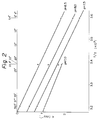
Table 3 Hydrolysis Rate of Auramine O at each pH and Temperature (sec⁻¹) Sample No. pH 5.4°C 22.3°C 39.0° C 1 7.0 - 1.64 x 10⁻⁷ 7.93 x 10⁻⁷ 2 7.5 2.91 x 10⁻⁸ 2.18 x 10⁻⁷ 1.65 x 10⁻⁶ 3 8.0 5.52 x 10⁻⁸ 5.81 x 10⁻⁷ 3.50 x 10⁻⁶ 4 8.5 1.69 x 10⁻⁷ 1.58 x 10⁻⁶ 8.97 x 10⁻⁶ - The relationship between the hydrolysis rate and temperature for each staining solution (Arrhenius plot) is shown in Fig. 2. As shown in the figure, the points of measurement form an almost straight line. Thus, hydrolysis rate constants at temperatures not actually employed in the experiment can be obtained easily. From the experimental results described above, the time required for 5% of Auramine O to be hydrolyzed under conditions actually employed for staining reticulocytes was estimated as shown in Table 4.

- A staining solution whose residual dye amount had been determined by HPLC was filtered for the purpose of avoiding possible adverse effects by employing precipitated Michler's ketone. To 2 ml of the filtrate, 10 µl of EDTA anti-coagulated fresh flood was added. After incubation for 1 minute, the sample was subjected to flow cytometer in which argon ion laser of 488 nm (10 mW) was used as a light source, and forward scattering and fluorescence from blood corpuscles were determined.
- The HPLC results are shown in Table 5 for the staining solution (pH 8.5) shown in Table 2. Samples stored at three levels of temperature (5.4°C, 22.3°C and 39.0°C) were subjected to measurement five times during the period between the day of preparation and the 12th day; that is, 60 measurements were made altogether. In Table 5, however, the results at pH 8.5 only are shown because at this pH, the effects of temperature at which the staining solution was stored are maximum.
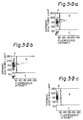
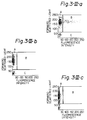
- As shown in Fig. 3-I-a to Fig. 3-III-c, the intensity of staining measured by flow cytometry decreases with the decrease in the residual amount of dye determined by HPLC.

- As shown above, the results of
Experiment 1 revealed that Auramine O is hydrolyzed even under normal staining conditions claimed in DE-A-35 44 867. The solubility in water of the Michler's ketone which is formed at the time of hydrolysis is extremely small. It is only dissolved in an amount equivalent to not more than 10 µg/ml of Auramine O. For example, in a staining solution whose pH is 8.0 and Auramine O concentration 400 µg/ml, the Michler's ketone precipitates in 5 days when stored at a temperature of 4°C, and in about half a day when stored at room temperature. Therefore, if this staining solution is used, reticulocyte counting will be adversely affected. - One method of solving this problem would be to solubilize the Michler's ketone by the addition of a solvent. However, this method is directed only at reducing the interference caused by the precipitation of Michler's ketone with reticulocyte counting, and does not compensate for the deterioration of the reagent's characteristic due to the decrease in Auramine O content.
- Fig. 1 shows the change with time of the residual Auramine O amount up to the 12th day after staining solutions of four compositions shown in Table 2 were prepared and stored in a airbath maintained to 39.0°C;
- Fig. 2 is an Arrhenius plot which shows the relationship between the hydrolysis rate and temperature for each of the aforementioned staining solutions; and
- Figs. 3-I-a, 3-I-b, 3-I-c, 3-II-a, 3-II-b, 3-II-c, 3-III-a, 3-III-b and 3-III-c show the results of measurements of forward scattered light and fluorescence from blood corpuscles when a staining solution at pH 8.5 was used under the time and temperature conditions shown in Table 5, respectively. Here, the configuration of these figures corresponds to the entry in Table 5.
- In the above figures, A shows the range corresponding to mature erythrocytes, B: reticulocytes and C: platelets, respectively.
- The present invention provides a stable reagent for reticulocyte counting which is free from deterioration, i.e., decrease in the dye content, wherein for the purpose of preventing the decrease in the amount of a fluorochrome, Auramine O, due to hydrolysis, the reagent is divided into two solutions, namely, a dye solution in which the fluorochrome is dissolved in an anhydrous solvent, and an aqueous buffer solution which satisfies the optimum staining conditions; and these two solutions are mixed immediately prior to use.
- In other words, the present invention provides a reagent for flow cytometry according to the first part of
Claim 1. Such a reagent which consists of two solutions, a stock solution for staining in which a dye (thiazole orange) is dissolved in a non-aqueous solvent (methanol), and a buffer solution, is disclosed in EP-A-0226272. - The stock solution according to the present invention for staining comprises Auramine O as dye and as nonaqueous solvent ethylene glycol or triethylene glycol or diethylene glycol. The nonaqueous solvent should satisfy the following requirements:
- (1) It should be polar enough to dissolve Auramine O, and the solubility of Auramine O in it should not be less than several %.
- (2) It should not interfere with the blood corpuscles. At least, it should not deform the results of counting by flow cytometry.
- (3) It should not adversely affect the flow system of the apparatus for flow cytometry.
- (4) It should have little volatility, and hardly any propensity to deteriorate, degenerate, or decrease over long periods of storage.
- In view of these requirements, alcohols comprise preferable solvents, and ten alcoholic solvents were examined in detail taking account of these conditions.
- First, the effects of the solvent addition on the reticulocyte counting mentioned under item (2) above was examined in the following
Experiment 2. In actual flow cytometric analysis, Auramine O is dissolved in a solvent, and this Auramine O stock solution and a buffer solution are mixed to prepare a final staining solution for reticulocyte counting. In this experiment, however, a solvent alone was added to a staining solution which already contained Auramine O, and the effects of the solvent addition on the reticulocyte count determination were examined. -
Auramine O 400 mg/l Phosphoric acid 20 mM/ l Sodium chloride 150 mM/l - Staining solutions of pH 8.0 with the composition shown above were prepared immediately prior to measurement so as to contain various solvents at concentrations of 0.40%, 0.63%, 1.00%, 1.6%, 2.5%, 4.0%, 6.25%, 10.0%, 16.0% and 25.0%, respectively (all percentages are expressed by volume).
- To 2 ml of each staining solution, 10 µl of EDTA anti-coagulated fresh blood was added. The blood corpuscles were stained for 30 seconds at 25°C, and the forward scattering and fluorescence were measured by flow cytometry.
- The concentration with which erythrocytelysis occurs differs with the type of solvent. In the case of solvents which cause erythrocytolysis even when the solvent content in the staining solution is over 10%, little or no effects were observed on measurements of forward scattered light up to a solvent content of about 10%; in the case of solvents which cause erythrocytolysis at a solvent content of less than about 10%, the same was true until immediately prior to the occurrence of the cytolysis phenomena.
- On the other hand, the intensity of fluorochrome staining decreases with the increase in the amount of solvent added. For such cases the reticulocyte counting is free from suffering the effects of solvent addition up to a certain critical amount by increasing the sensitivity of the flow cytometry. The critical amount of addition differs with the type of solvent.
- In relation to the addition of various solvents, the content of solvent over which erythrocytolysis occurs and the maximum possible solvent content that allows the reticulocyte counting by flow cytometry are shown in Table 6.
Table 6 Solvent Content which Allows Reticulocyte Counting by Flow Cytometer (v/v%) Solvent Content over which erythrocytolysis occurs Maximum possible content which allows reticulocyte counting by flow cytometry methanol more than 25 6.25 ethanol more than 25 6.25 n-propanol 16.0 2.5 ethylene glycol more than 25 6.25 diethylene glycol more than 25 2.5 triethylene glycol 4.0 1.6 ethylene glycol monomethyl ether 16.0 4.0 ethylene glycol monoethyl ether 10.0 2.5 ethylene glycol mono-(n-butyl) ether 6.25 2.5 diethylene glycol monoethyl ether 16.0 2.5 - From Table 6, it is obvious that the maximum amount of solvent that can be added is determined by the range in which flow cytometry is possible. However, since it is desirable that the decrease in the intensity of fluorescence be minimized, it is preferable that the amount of solvent to be added is also minimized.
- In order for reticulocyte counting to be possible, the final staining solution should have a desired dye concentration. For that purpose, a desired amount of dye should be dissolved in a stock solution for staining. On the other hand, as is explained above, the amount of solvents contained in the stock solution for staining should be as small as possible in the final staining solution. Therefore, a solvent in which Auramine O has a large solubility is preferred. If such a solvent is selected, a desired concentration of the final staining solution can be obtained with the addition of a smaller amount of a stock solution for staining (and therefore, a smaller amount of solvent). This corresponds to item (1) mentioned above as a requirement for a suitable nonaqueous solvent.
- Of course, a solvent in which Auramine O has such small solubility that a desired concentration in the final staining solution cannot be obtained unless the solvent is added in an amount exceeding the maximum allowable amount shown in Table 6 cannot be used for a stock solution for staining.
- For example, the preparation of a staining solution with the final dye concentration shown in Table 2 requires the solubility of Auramine O in the solvent to be as shown in Table 7 for each level of solvent content in the final staining solution. Table 7 may be interpreted as follows: in order to have the dye concentration of 1,000 µg/ml in the final staining solution at a solvent content level of 1 v/v%, the solubility of Auramine O in the solvent should be 10.0 g/100 ml.
- The actual solubility in each solvent is 2 - 3 g/100 ml in the cases of methanol, ethanol and n-propanol. The maximum amount of ethanol and methanol that can be added is 6.25 v/v%, as shown in Table 6, and in order to have the dye concentration of 1,000 µg/ml in the final staining solution, a solubility of 1.6 g/100 ml is required, as shown in Table 7. Methanol and ethanol can therefore be used from the viewpoint of solubility. On the other hand, the maximum amount of n-propanol that can be added is 2.5 v/v%. Table 7 shows that this degree of solubility is too small to provide a dye concentration of 1,000 µg/ml in the final staining solution, as the maximum dye concentration in the final staining solution could at most be between 500 and 750 µg/ml.
Table 7 Solubility Necessary for Preparing Final Staining Solution (g/100 ml) Content of solvent (v/v%) Dye concentration in the final staining solution (mg/l or µg/ml) 250 500 750 1,000 1.0 2.5 5.0 7.5 10.0 1.6 1.6 3.2 4.8 6.4 2.5 1.0 2.0 3.0 4.0 4.0 0.63 1.25 1.88 2.5 6.25 0.4 0.8 1.2 1.6 - In the cases of ethylene glycol, diethylene glycol and triethylene glycol, the solubility of Auramine O in these solvents is 6 - 8%; therefore, the staining solution of the dye concentrations shown in Table 2 can easily be prepared within the range of the maximum possible amount of solvent addition shown in Table 6.
- Of the solvents listed in Table 1, the Auramine O solubility in the remaining 4 solvents is 2 - 3% which is too small to prepare a staining solution of 1,000 µg/ml without interfering with the reticulocyte counting, and the maximum concentration of the dye in the staining solution that can be prepared with this solvent is 750 µg/ml. In addition, these four solvents are not appropriate from the viewpoint of item (3) above.
- In regard to item (4), methanol, ethanol and n-propanol have high volatility, and thus are not appropriate.
- Therefore, the solvents which can be used for the objects of the present invention are preferably ethylene glycol, diethylene glycol and triethylene glycol; if such characteristics as the effects on erythrocytes and viscosity are further considered, ethylene glycol is the most preferable.
- A buffer solution contains a buffering agent and an osmotic pressure-compensating agent. A buffering agent is added to maintain the pH of a staining solution, and an acceptable content is one wherein fluorescent intensity change does not occur with the pH fluctuation of the staining solution. An osmotic pressure-compensating agent is added to prevent extreme deformation of blood corpuscles.
- The contents of these agents are as described in DE-A-35 44 867; the final staining solution is prepared so that the concentration of an osmotic pressure-compensating agent is 5 - 20 mg/ml, and the pH is adjusted to 6.0 - 9.5.
- The reagent for the present invention comprises two solutions, namely, a stack solution for staining and a buffer solution. In this reagent, the dye Auramine O is maintained in a nonaqueous solvent until immediately before measurement, so that Michler's ketone which affects the reticulocyte counting adversely will not be precipitated, and any decrease in the amount of Auramine O during storage can also be prevented. By combining these two solutions immediately before measurement, a stable final staining solution for reticulocyte counting can always be obtained.
- In the following, the present invention is further illustrated in detail by example.
- First,
Solution 1 andSolution 2 whose compositions are as shown below were prepared:Solution 1Ingredient Concentration HEPES 20 mM NaCl 160 mM pH 8.5 Solution 2Ingredient Concentration Auramine O 1.25 w/v% ethylene glycol the rest - Two ml of a staining solution was prepared by mixing 1960 µl of
Solution 1 and 40 µl ofSolution 2 so that the Auramine O concentration became 250 µg/ml. To this solution, 10 µl of EDTA anti-coagulated fresh blood was added to prepare a sample. After staining had been conducted for 30 seconds at room temperatures, the sample was subjected to the aforementioned flow cytometer to measure the forward scattered light and fluorescence. - As described above, the two-solution composition of the present invention allows measurement immediately after the staining solution is made. Therefore, decrease in the residual amount of dye with the lapse of time after the preparation of a staining solution, as observed in the aforementioned Table 5 of
Experiment 2 and Fig. 3-II-a to Fig. 3-III-c, is not observed at all. In other words, by combiningSolution 1 andSolution 2 immediately before use, results that are the same as those shown in Table 5 (the column corresponding to "2 hours after the preparation of staining solution"), Fig. 3-I-a, Fig. 3-I-b and Fig. 3-I-c can always be obtained.
Claims (2)
- A reagent for reticulocyte counting by flow cytometry which comprises two solutions,
namely a stock solution for staining and a buffer solution,
characterized in that
in the stock solution for staining Auramine O is dissolved in ethylene glycol, triethylene glycol or diethylene glycol. - A reagent according to claim 1 in which the buffer solution is HEPES buffer solution, phosphate buffer solution or Tris-Tricine buffer solution.
Applications Claiming Priority (2)
| Application Number | Priority Date | Filing Date | Title |
|---|---|---|---|
| JP62192413A JP2549665B2 (en) | 1987-07-31 | 1987-07-31 | Reticulocyte assay reagent for flow cytometry |
| JP192413/87 | 1987-07-31 |
Publications (3)
| Publication Number | Publication Date |
|---|---|
| EP0301181A2 EP0301181A2 (en) | 1989-02-01 |
| EP0301181A3 EP0301181A3 (en) | 1991-03-06 |
| EP0301181B1 true EP0301181B1 (en) | 1994-10-26 |
Family
ID=16290905
Family Applications (1)
| Application Number | Title | Priority Date | Filing Date |
|---|---|---|---|
| EP88107088A Expired - Lifetime EP0301181B1 (en) | 1987-07-31 | 1988-05-03 | Reagent for reticulocyte counting by flow cytometry |
Country Status (4)
| Country | Link |
|---|---|
| US (1) | US4981803A (en) |
| EP (1) | EP0301181B1 (en) |
| JP (1) | JP2549665B2 (en) |
| DE (1) | DE3851923T2 (en) |
Families Citing this family (19)
| Publication number | Priority date | Publication date | Assignee | Title |
|---|---|---|---|---|
| JPH02187661A (en) * | 1989-01-13 | 1990-07-23 | J M L:Kk | Novel dyeing method for reticulocyte |
| JP3049254B2 (en) * | 1990-02-08 | 2000-06-05 | シスメックス株式会社 | Optical particle analyzer with two types of light sources |
| US5360739A (en) * | 1991-12-05 | 1994-11-01 | Miles Inc. | Methods for the identification and characterization of reticulocytes in whole blood |
| US5350695A (en) * | 1991-12-05 | 1994-09-27 | Miles Inc. | Methods for the identification and characterization of reticulocytes in whole blood |
| US5284771A (en) * | 1991-12-05 | 1994-02-08 | Miles Inc. | Reagent compositions and their use in sphering cells |
| DE69424079T2 (en) * | 1993-02-22 | 2000-09-07 | Sysmex Corp., Kobe | A reagent for the detection of malaria-infected cells and a detection method for malaria-infected cells using the same |
| US5563070A (en) * | 1993-05-28 | 1996-10-08 | Omron Corporation | Method of counting reticulocytes |
| US5691204A (en) * | 1995-04-21 | 1997-11-25 | Abbott Laboratories | Compositions and methods for the rapid analysis of reticulocytes |
| US6114173A (en) * | 1997-04-03 | 2000-09-05 | Bayer Corporation | Fully automated method and reagent composition therefor for rapid identification and characterization of reticulocytes erythrocytes and platelets in whole blood |
| DE69937425T2 (en) | 1998-06-11 | 2008-08-07 | Asahi Kasei Kabushiki Kaisha | Roof railing and method for its production |
| US20080102526A1 (en) | 2006-10-30 | 2008-05-01 | Sysmex Corporation | Reagent, reagent kit and analyzing method |
| CN101349644B (en) * | 2007-07-20 | 2012-06-27 | 深圳迈瑞生物医疗电子股份有限公司 | Leukocytes classification agent and use method thereof |
| CN101475754A (en) * | 2008-01-04 | 2009-07-08 | 深圳迈瑞生物医疗电子股份有限公司 | Asymmetric cyanine fluorescent dye, composition and application in biological sample dyeing |
| CN101602762B (en) * | 2008-06-10 | 2013-10-16 | 深圳迈瑞生物医疗电子股份有限公司 | Asymmetric cyanine compound, preparation method and application thereof |
| CN101726579B (en) * | 2008-10-17 | 2014-06-18 | 深圳迈瑞生物医疗电子股份有限公司 | Blood test reagent and method |
| US8367358B2 (en) * | 2008-12-17 | 2013-02-05 | Shenzhen Mindray Bio-Medical Electronics Co., Ltd. | Reagent, kit and method for differentiating and counting leukocytes |
| CN101988082B (en) * | 2009-07-31 | 2015-04-08 | 深圳迈瑞生物医疗电子股份有限公司 | Leukocyte classified counting reagent, kit and preparation method thereof and method of leukocyte classified counting |
| CN101825533B (en) * | 2010-06-01 | 2011-11-02 | 苏州大学 | Giemsa staining method of mouse macrophage cells |
| EP2798087B1 (en) * | 2011-12-27 | 2018-03-07 | Abbott Laboratories | Cellular analysis of body fluids |
Family Cites Families (12)
| Publication number | Priority date | Publication date | Assignee | Title |
|---|---|---|---|---|
| FR2240272B1 (en) * | 1973-08-10 | 1976-11-19 | Ugine Kuhlmann | |
| FR2240271A1 (en) * | 1973-08-10 | 1975-03-07 | Ugine Kuhlmann | Auramine hydrobromide or hydrofluoride concentrates - for dyeing paper, textiles, leather and printing inks |
| US4288543A (en) * | 1977-01-28 | 1981-09-08 | Pfizer Inc. | Method and apparatus for identifying microorganisms |
| CA1132034A (en) * | 1978-06-26 | 1982-09-21 | Ivan E. Modrovich | Stabilization of hydrolysis prone labile organic reagents in liquid media |
| CH660599A5 (en) * | 1984-07-26 | 1987-05-15 | Ciba Geigy Ag | ANIONIC DYE SOLUTIONS. |
| JPS61280565A (en) * | 1985-06-06 | 1986-12-11 | Toa Medical Electronics Co Ltd | Reagent for measuring reticulocyte for flow sightmetry |
| JPS6234058A (en) * | 1985-08-06 | 1987-02-14 | Toa Medical Electronics Co Ltd | Method for measuring reticulocyte by flow sight meter |
| DE3677916D1 (en) * | 1985-11-01 | 1991-04-11 | Becton Dickinson Co | DETECTION OF RETICULOYCYTES. |
| US4835101A (en) * | 1986-02-10 | 1989-05-30 | Kallestad Diagnostics, Inc. | Luminescent analyses with enhanced storage stability |
| US4842646A (en) * | 1986-09-23 | 1989-06-27 | Saranda Consolidated Limited Partnership | Substantive dyes, inks and dye baths |
| US4835103A (en) * | 1986-11-24 | 1989-05-30 | Boris Cercek | Differential binding of membrane potential sensitive materials to lymphocytes |
| DE3736490A1 (en) * | 1987-10-28 | 1989-05-11 | Merck Patent Gmbh | STABILIZERS FOR COLOR SOLUTIONS |
-
1987
- 1987-07-31 JP JP62192413A patent/JP2549665B2/en not_active Expired - Lifetime
- 1987-11-04 US US07/117,026 patent/US4981803A/en not_active Expired - Lifetime
-
1988
- 1988-05-03 DE DE3851923T patent/DE3851923T2/en not_active Expired - Fee Related
- 1988-05-03 EP EP88107088A patent/EP0301181B1/en not_active Expired - Lifetime
Also Published As
| Publication number | Publication date |
|---|---|
| JPS6435366A (en) | 1989-02-06 |
| JP2549665B2 (en) | 1996-10-30 |
| US4981803A (en) | 1991-01-01 |
| EP0301181A2 (en) | 1989-02-01 |
| DE3851923T2 (en) | 1995-04-27 |
| DE3851923D1 (en) | 1994-12-01 |
| EP0301181A3 (en) | 1991-03-06 |
Similar Documents
| Publication | Publication Date | Title |
|---|---|---|
| US4981803A (en) | Reagent for reticulocyte counting by flow cytometry | |
| US4213876A (en) | Multi-purpose blood diluent for use in electronic blood analysis instrumentation | |
| Morley et al. | Manual and autoanalyzer methods for measuring blood glucose using guaiacum and glucose oxidase | |
| US6664110B1 (en) | Erythroblast diagnostic flow-cytometry method and reagents | |
| Roberts et al. | Red blood cell distribution width index in some hematologic diseases | |
| US4219440A (en) | Multiple analysis hematology reference control reagent and method of making the same | |
| EP0842410B1 (en) | Compositions and methods for the rapid analysis of reticulocytes | |
| CA1075608A (en) | Saccharide and formaldehyde containing lysable blood preservative composition | |
| US6114173A (en) | Fully automated method and reagent composition therefor for rapid identification and characterization of reticulocytes erythrocytes and platelets in whole blood | |
| US4978624A (en) | Reagent for the determination of a differential white blood cell count | |
| DE60224287T2 (en) | LYTIC REAGENT COMPOSITION FOR DETERMINING CELL CORE-CONTAINING RED BLOOD BODIES | |
| EP0214613B1 (en) | Method for determination of a differential white blood cell count | |
| DE69733590T2 (en) | Reagent for measuring reticulocytes and method for measuring same | |
| US6632676B1 (en) | Multi-purpose reagent system and method for enumeration of red blood cells, white blood cells and thrombocytes and differential determination of white blood cells | |
| US20040241769A1 (en) | Multi-purpose reagent system and method for enumeration of red blood cells, white blood cells and thrombocytes and differential determination of white blood cells | |
| Kojima et al. | An automated optoelectronic reticulocyte counter | |
| JPS634145B2 (en) | ||
| EP0301182A2 (en) | Reagent for reticulocyte counting by flow cytometry | |
| Moulin’ et al. | Serum erythropoietin and reticulocyte maturity index after renal transplantation: a prospective longitudinal study | |
| JPH10307135A (en) | Method for detecting abnormal shape of erythrocyte | |
| Valentine | The metabolism of the leukemic leukocyte | |
| US5281536A (en) | Stable liquid control serum or calibration system for use in clinical diagnostics | |
| Stockham et al. | Equine glucose-6-phosphate dehydrogenase deficiency | |
| US4244837A (en) | Multi-purpose blood diluent for use in electronic blood analysis instrumentation | |
| Blaies et al. | A simplified method for staining mast cells with astra blue |
Legal Events
| Date | Code | Title | Description |
|---|---|---|---|
| PUAI | Public reference made under article 153(3) epc to a published international application that has entered the european phase |
Free format text: ORIGINAL CODE: 0009012 |
|
| AK | Designated contracting states |
Kind code of ref document: A2 Designated state(s): DE FR GB IT NL |
|
| PUAL | Search report despatched |
Free format text: ORIGINAL CODE: 0009013 |
|
| AK | Designated contracting states |
Kind code of ref document: A3 Designated state(s): DE FR GB IT NL |
|
| 17P | Request for examination filed |
Effective date: 19910403 |
|
| 17Q | First examination report despatched |
Effective date: 19921201 |
|
| RAP1 | Party data changed (applicant data changed or rights of an application transferred) |
Owner name: TOA MEDICAL ELECTRONICS CO., LTD. |
|
| ITF | It: translation for a ep patent filed | ||
| GRAA | (expected) grant |
Free format text: ORIGINAL CODE: 0009210 |
|
| AK | Designated contracting states |
Kind code of ref document: B1 Designated state(s): DE FR GB IT NL |
|
| REF | Corresponds to: |
Ref document number: 3851923 Country of ref document: DE Date of ref document: 19941201 |
|
| ET | Fr: translation filed | ||
| PLBE | No opposition filed within time limit |
Free format text: ORIGINAL CODE: 0009261 |
|
| STAA | Information on the status of an ep patent application or granted ep patent |
Free format text: STATUS: NO OPPOSITION FILED WITHIN TIME LIMIT |
|
| 26N | No opposition filed | ||
| REG | Reference to a national code |
Ref country code: GB Ref legal event code: IF02 |
|
| PGFP | Annual fee paid to national office [announced via postgrant information from national office to epo] |
Ref country code: DE Payment date: 20060427 Year of fee payment: 19 |
|
| PGFP | Annual fee paid to national office [announced via postgrant information from national office to epo] |
Ref country code: GB Payment date: 20060503 Year of fee payment: 19 |
|
| PGFP | Annual fee paid to national office [announced via postgrant information from national office to epo] |
Ref country code: FR Payment date: 20060515 Year of fee payment: 19 |
|
| PGFP | Annual fee paid to national office [announced via postgrant information from national office to epo] |
Ref country code: NL Payment date: 20060517 Year of fee payment: 19 |
|
| PGFP | Annual fee paid to national office [announced via postgrant information from national office to epo] |
Ref country code: IT Payment date: 20060531 Year of fee payment: 19 |
|
| GBPC | Gb: european patent ceased through non-payment of renewal fee |
Effective date: 20070503 |
|
| PG25 | Lapsed in a contracting state [announced via postgrant information from national office to epo] |
Ref country code: NL Free format text: LAPSE BECAUSE OF NON-PAYMENT OF DUE FEES Effective date: 20071201 |
|
| NLV4 | Nl: lapsed or anulled due to non-payment of the annual fee |
Effective date: 20071201 |
|
| REG | Reference to a national code |
Ref country code: FR Ref legal event code: ST Effective date: 20080131 |
|
| PG25 | Lapsed in a contracting state [announced via postgrant information from national office to epo] |
Ref country code: DE Free format text: LAPSE BECAUSE OF NON-PAYMENT OF DUE FEES Effective date: 20071201 |
|
| PG25 | Lapsed in a contracting state [announced via postgrant information from national office to epo] |
Ref country code: GB Free format text: LAPSE BECAUSE OF NON-PAYMENT OF DUE FEES Effective date: 20070503 |
|
| PG25 | Lapsed in a contracting state [announced via postgrant information from national office to epo] |
Ref country code: FR Free format text: LAPSE BECAUSE OF NON-PAYMENT OF DUE FEES Effective date: 20070531 |
|
| PG25 | Lapsed in a contracting state [announced via postgrant information from national office to epo] |
Ref country code: IT Free format text: LAPSE BECAUSE OF NON-PAYMENT OF DUE FEES Effective date: 20070503 |