EP0298706B1 - Use of glycans in the manufacturing of anti-viral medicaments. - Google Patents
Use of glycans in the manufacturing of anti-viral medicaments. Download PDFInfo
- Publication number
- EP0298706B1 EP0298706B1 EP19880306127 EP88306127A EP0298706B1 EP 0298706 B1 EP0298706 B1 EP 0298706B1 EP 19880306127 EP19880306127 EP 19880306127 EP 88306127 A EP88306127 A EP 88306127A EP 0298706 B1 EP0298706 B1 EP 0298706B1
- Authority
- EP
- European Patent Office
- Prior art keywords
- glucan
- sulfate
- salt
- use according
- side chain
- Prior art date
- Legal status (The legal status is an assumption and is not a legal conclusion. Google has not performed a legal analysis and makes no representation as to the accuracy of the status listed.)
- Expired - Lifetime
Links
Images

Classifications
-
- C—CHEMISTRY; METALLURGY
- C08—ORGANIC MACROMOLECULAR COMPOUNDS; THEIR PREPARATION OR CHEMICAL WORKING-UP; COMPOSITIONS BASED THEREON
- C08B—POLYSACCHARIDES; DERIVATIVES THEREOF
- C08B37/00—Preparation of polysaccharides not provided for in groups C08B1/00 - C08B35/00; Derivatives thereof
- C08B37/006—Heteroglycans, i.e. polysaccharides having more than one sugar residue in the main chain in either alternating or less regular sequence; Gellans; Succinoglycans; Arabinogalactans; Tragacanth or gum tragacanth or traganth from Astragalus; Gum Karaya from Sterculia urens; Gum Ghatti from Anogeissus latifolia; Derivatives thereof
Definitions
- the present invention relates to antiviral agents comprising glycans, their derivatives and salts thereof. These agents may for example be used to treat human immunodeficiency virus (HIV or AIDS virus). These antiviral agents are useful as drugs or components thereof, for the prophylaxis and treatment of viral diseases.
- HIV human immunodeficiency virus
- Carbohydrate Polymers 2 (1982)115-121 describes in vitro tests in which a variety of sulphated polysaccharides, such as alginic acids, amylose, cellulose, chitosan, curdlan, dextran, guaran, laminaran and locust bean gum, were investigated for anticoagulant activity.
- sulphated polysaccharides such as alginic acids, amylose, cellulose, chitosan, curdlan, dextran, guaran, laminaran and locust bean gum
- Chemical Abstracts 81 (1974)150306r indicates that sulfated polysaccharides from yeast cell walls are effective against stomach ulcers and arteriosclerosis.
- Chemical Abstracts 83 (1975)12692d indicates that sulfated glucans containing ⁇ (1 ⁇ 3)glycoside bond structures, such as sulfated glucan from Fomes macgugorii , have activity against blood clotting and inflammation.
- a substance selected from the following and mixtures thereof a curdlan sulfate or a salt thereof; a glucan sulfuric ester (other than lentinan sulfate) having at least one compound selected from xylose, ribose, galactose, arabinose, glucose and oligomers thereof as a branching side chain on the parent glucan or salt thereof; a ribopyranan sulfate, a ribofuranan sulfate or salt thereof; in the manufacture of a medicament for the prophylaxis or treatment of acquired immunodeficiency syndrome.
- the glucan is a ⁇ -1,3 glucan or cellulose.
- the glucans have the side chain located at the 6-position of the glucose unit. The degree of branching of the side chain is preferably 5 to 60 per 100 glucose.
- ribopyranan sulfates, and ribofuranan sulfates which are used as effective components of antiviral agents according to the present invention are known substances and can easily be prepared using known techniques, see for example K. Hatanaka et al. , J. Med. Chem ., 1987, vol. 30, No. 5, 810-814; Published Unexamined Japanese Patent Application Nos. 130310/86 and 130302/86.
- Derivatives containing the basic structures of these compounds can also be prepared by applying conventional techniques known in the art.
- salts of these compounds and derivatives thereof can be prepared according to known techniques.
- R OSO3Na or OH Ribofuranan sulfates J. Med. Chemistry, 1987, 30 (5), P. 810-814
- R OSO3Na or OH Ribopyranan sulfates (synthesized)
- curdlan derived from bacteria; ⁇ -1,3-glucan
- known glucan derivatives for example, published unexamined Japanese Patent Application Nos. 130301/86 and 130302/86; K. Hatanaka et al., J. Med. Chem supra).
- glucan examples include ⁇ -1,3-glucan such as curdlan, pachman, ⁇ -(1 ⁇ 3)-glucan of yeast cell wall, or ⁇ -(1 ⁇ 4)-glucan such as cellulose.
- Mannopyranose, galactopyranose, arabinofuranose or oligomers thereof such as dimers, or trimers are bound to the side chains of these glucans.
- the degree of branching (number of branches bound per 100 glycose units) is suitably in the range 5 to 60.
- the branched chain is preferably bound at the 6-position.
- Derivatives containing the basic structures of these compounds and salts of both the compounds and the derivatives can be prepared by applying known techniques.
- the medicament comprising the antiviral agents according to the present invention may be used in the form of, for example, tablets, capsules, elixirs, microcapsules, liquids, powders or pastes.
- the antiviral agents according to the present invention can be administered to a patient in a dose range of 0.01 to 2,000 mg, preferably 0.02 to 500 mg, per person, per day, generally as several individual doses of up to 1,000 mg each.
- the dose will be varied depending on the severity of disease, body weight of the patient and other factors recognized by practitioners skilled in the art.
- the antiviral agents or physiologically acceptable salts thereof can be mixed with vehicles, carriers, excipients, binders, antiseptics, stabilizers, flavours etc. (referred to generally herein as pharmaceutical carriers) to prepare a pharmaceutically acceptable preparation which provides suitable unit doses of the antiviral agent.
- suitable unit doses of the antiviral agent referred to generally herein as pharmaceutical carriers.
- the amount of the active substance in these preparations is incorporated at a level which gives an appropriate dose, or sub-unit thereof, in the range indicated.
- binders such as tragacanth, gum arabic, corn starch or gelatin
- excipients such as fine crystalline cellulose
- swelling agents such as corn starch, pregelatinized starch and alginic acid
- lubricants such as magnesium stearate
- sweeteners such as sucrose, lactose or saccharine
- flavours such as peppermint, akamono-oil or cherry.
- liquid carriers such as oils and fats can also be incorporated into the materials described above.
- a variety of other pharmaceutical carriers may be incorporated as coating agents or as agents to change the physical form of the pharmaceutical preparation. For example, tablets can be coated with shellac and/or sugar.
- Syrup or elixir may contain sucrose as a sweetener, methyl- and propylparabens as antiseptics and pigments, and flavours such as cherry or orange flavour.
- sucrose as a sweetener
- methyl- and propylparabens as antiseptics and pigments
- flavours such as cherry or orange flavour.
- an enteric coating an 8% aqueous solution of hydroxyphenylmethyl cellulose may be used as a coating pretreatment agent, and then using 10% aqueous solution of hydroxypropylmethyl cellulose phthalate and 3% aqueous solution of polyacetyne as coating agents. These solutions are used according to known techniques.
- Sterile preparations for injection can be made according to conventional techniques by dissolving or suspending the active antiviral agents together with naturally occurring plant oils such as sesame oil, coconut oil, peanut oil, cotton seed oil, or synthetic fatty vehicle such as ethyl oleate in a vehicle such as water for injection. Buffers, antiseptics, and antioxidants may be added, as necessary.
- plant oils such as sesame oil, coconut oil, peanut oil, cotton seed oil, or synthetic fatty vehicle such as ethyl oleate
- Buffers, antiseptics, and antioxidants may be added, as necessary.
- Ribofuranan sulfate (molecular weight, 10 x 103) Prepared according to the method described by K. Hatanaka et al., J. Med. Chem. , 1987, 30 , 810
- MOLT-4 cell HTLV was a particular strain of HIV prepared from the supernatant of cells infected with HIV.
- Titer of the viral preparation (6 x 10⁵ plaque formation units/ml) was determined by the plaque assay method using MT-4 cells.
- the anti-HIV activity of the glycan derivatives is expressed as HIV-derived cytopathic effect (CPE) and expression of virus-specific antigen.
- MT-4 cells were mixed with HIV in 0.002 MOI (multiplicity of infection) followed by incubation at 37°C for 60 minutes. After adsorption of virus, the cells were washed and adjusted to 3 x 10⁵ cells/ml (RPMI 1640 supplemented with 10% bovine fetal serum and antibiotic).
- MOLT-4 and HIVHTLV-IIB-infected MOLT-4 cells were mixed together in a ratio of 9:1 and 1 ml aliquots were adjusted to a concentration of 3 x 10⁵ cells/ml and placed in a series of cell culture wells. The aliquots of the mixed cell suspension were then cultured in the presence of the glycan derivatives at various concentrations, and multinucleated giant cell formation was measured.
- RT reverse transferase
- Table 1 The results of studies on the inhibition of reverse transferase activity are shown in Table 1.
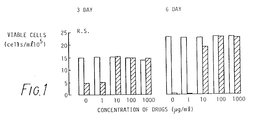
- the relationship between viable cell count and concentration of glycan derivatives is shown in Figure 1.
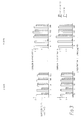
- the relationship between the percentage of IF-positive cells and concentration of glycan derivatives is shown in Figure 2.
- Table 1 Inhibitory Effect of Compound of This Invention on RT Activity of AMV and HIV Concentration ( ⁇ g/ml) Ribofuranan Sulfate AMV HIV 0 - - 0.1 20 45 1 34 49 10 70 52 100 96 90
- the inhibitory activity is expressed as a percentage of the inhibition of RT activity when no sample of glucan derivative was used.
- lentinan 0.100 g was dissolved in 35 mls of dimethylsulphoxide (dried over a molecular sieve) and 600 mg of piperidine sulfate was added to the solution. The mixture was stirred at 85 to 90°C for an hour. Then the sulfates formed were neutralized with a saturated aqueous solution of sodium bicarbonate.
- the neutralized solution was then dialyzed against 18 litres of saturated aqueous solution of sodium bicarbonate for 6 hours, followed by dialysis against pure water for 72 hours.
- the dialysate was then concentrated whilst maintaining the temperature at 35°C or less.
- the concentrated dialysate was then filtered and the sulfates freeze dried. The yield of sulfate was 0.094 g.
- glycan sulfates having xylose, ribose, galactose, arabinose, glucose and oligomers thereof as branching side chains thereof, can be prepared according to the described methods giving yields of about 0.1 g.
Landscapes
- Chemical & Material Sciences (AREA)
- Life Sciences & Earth Sciences (AREA)
- Health & Medical Sciences (AREA)
- Biochemistry (AREA)
- Molecular Biology (AREA)
- Engineering & Computer Science (AREA)
- General Health & Medical Sciences (AREA)
- Materials Engineering (AREA)
- Chemical Kinetics & Catalysis (AREA)
- Medicinal Chemistry (AREA)
- Polymers & Plastics (AREA)
- Organic Chemistry (AREA)
- Pharmaceuticals Containing Other Organic And Inorganic Compounds (AREA)
- Polysaccharides And Polysaccharide Derivatives (AREA)
Description
- The present invention relates to antiviral agents comprising glycans, their derivatives and salts thereof. These agents may for example be used to treat human immunodeficiency virus (HIV or AIDS virus). These antiviral agents are useful as drugs or components thereof, for the prophylaxis and treatment of viral diseases.
- Carbohydrate Polymers 2 (1982)115-121 describes in vitro tests in which a variety of sulphated polysaccharides, such as alginic acids, amylose, cellulose, chitosan, curdlan, dextran, guaran, laminaran and locust bean gum, were investigated for anticoagulant activity.
- Chemical Abstracts 81 (1974)150306r indicates that sulfated polysaccharides from yeast cell walls are effective against stomach ulcers and arteriosclerosis.
- Chemical Abstracts 83 (1975)12692d indicates that sulfated glucans containing β(1→3)glycoside bond structures, such as sulfated glucan from Fomes macgugorii, have activity against blood clotting and inflammation.
- US-4,590,181 (McCarthy) discloses that mycodextran sulfates and pustulan sulfates having molecular weights within specified ranges are useful as adjuvants in immunisation against viral disease.
- According to the present invention there is provided the use of a substance selected from the following and mixtures thereof;
a curdlan sulfate or a salt thereof;
a glucan sulfuric ester (other than lentinan sulfate) having at least one compound selected from xylose, ribose, galactose, arabinose, glucose and oligomers thereof as a branching side chain on the parent glucan or salt thereof;
a ribopyranan sulfate, a ribofuranan sulfate or salt thereof;
in the manufacture of a medicament for the prophylaxis or treatment of acquired immunodeficiency syndrome. - Preferably, the glucan is a β-1,3 glucan or cellulose. Preferably, the glucans have the side chain located at the 6-position of the glucose unit. The degree of branching of the side chain is preferably 5 to 60 per 100 glucose.
- The ribopyranan sulfates, and ribofuranan sulfates which are used as effective components of antiviral agents according to the present invention are known substances and can easily be prepared using known techniques, see for example K. Hatanaka et al. , J. Med. Chem., 1987, vol. 30, No. 5, 810-814; Published Unexamined Japanese Patent Application Nos. 130310/86 and 130302/86. Derivatives containing the basic structures of these compounds can also be prepared by applying conventional techniques known in the art. Furthermore, salts of these compounds and derivatives thereof can be prepared according to known techniques.
- The basic structures of these compounds are shown as follows:

R: OSO₃Na or OH
Ribofuranan sulfates
J. Med. Chemistry, 1987, 30 (5), P. 810-814
R: OSO₃Na or OH
Ribopyranan sulfates (synthesized)
Other compounds utilised in embodiments of the present invention can be prepared using curdlan (derived from bacteria; β-1,3-glucan) or known glucan derivatives (for example, published unexamined Japanese Patent Application Nos. 130301/86 and 130302/86; K. Hatanaka et al., J. Med. Chem supra). - Examples of the glucan include β-1,3-glucan such as curdlan, pachman, β-(1 → 3)-glucan of yeast cell wall, or β-(1 → 4)-glucan such as cellulose.
- Mannopyranose, galactopyranose, arabinofuranose or oligomers thereof such as dimers, or trimers are bound to the side chains of these glucans. The degree of branching (number of branches bound per 100 glycose units) is suitably in the
range 5 to 60. To enhance water solubility the branched chain is preferably bound at the 6-position. - Derivatives containing the basic structures of these compounds and salts of both the compounds and the derivatives can be prepared by applying known techniques.
- The medicament comprising the antiviral agents according to the present invention may be used in the form of, for example, tablets, capsules, elixirs, microcapsules, liquids, powders or pastes.
- The antiviral agents according to the present invention can be administered to a patient in a dose range of 0.01 to 2,000 mg, preferably 0.02 to 500 mg, per person, per day, generally as several individual doses of up to 1,000 mg each. The dose will be varied depending on the severity of disease, body weight of the patient and other factors recognized by practitioners skilled in the art.
- The antiviral agents or physiologically acceptable salts thereof can be mixed with vehicles, carriers, excipients, binders, antiseptics, stabilizers, flavours etc. (referred to generally herein as pharmaceutical carriers) to prepare a pharmaceutically acceptable preparation which provides suitable unit doses of the antiviral agent. The amount of the active substance in these preparations is incorporated at a level which gives an appropriate dose, or sub-unit thereof, in the range indicated.
- Specific examples of pharmaceutical carriers are: binders such as tragacanth, gum arabic, corn starch or gelatin; excipients such as fine crystalline cellulose; swelling agents such as corn starch, pregelatinized starch and alginic acid; lubricants such as magnesium stearate; sweeteners such as sucrose, lactose or saccharine; flavours such as peppermint, akamono-oil or cherry. Where the pharmaceutically acceptable preparation is in the form of a capsule, liquid carriers such as oils and fats can also be incorporated into the materials described above. A variety of other pharmaceutical carriers may be incorporated as coating agents or as agents to change the physical form of the pharmaceutical preparation. For example, tablets can be coated with shellac and/or sugar. Syrup or elixir may contain sucrose as a sweetener, methyl- and propylparabens as antiseptics and pigments, and flavours such as cherry or orange flavour. For an enteric coating, an 8% aqueous solution of hydroxyphenylmethyl cellulose may be used as a coating pretreatment agent, and then using 10% aqueous solution of hydroxypropylmethyl cellulose phthalate and 3% aqueous solution of polyacetyne as coating agents. These solutions are used according to known techniques. Sterile preparations for injection can be made according to conventional techniques by dissolving or suspending the active antiviral agents together with naturally occurring plant oils such as sesame oil, coconut oil, peanut oil, cotton seed oil, or synthetic fatty vehicle such as ethyl oleate in a vehicle such as water for injection. Buffers, antiseptics, and antioxidants may be added, as necessary.
- The present invention will now be described in more detail by referring to specific examples.
- MT-4 cell (HTLV-I infected human T4 antigen positive cell line)
MOLT-4 cell
HTLV was a particular strain of HIV prepared from the supernatant of cells infected with HIV. - Titer of the viral preparation (6 x 10⁵ plaque formation units/ml) was determined by the plaque assay method using MT-4 cells.
- The anti-HIV activity of the glycan derivatives is expressed as HIV-derived cytopathic effect (CPE) and expression of virus-specific antigen.
- MT-4 cells were mixed with HIV in 0.002 MOI (multiplicity of infection) followed by incubation at 37°C for 60 minutes. After adsorption of virus, the cells were washed and adjusted to 3 x 10⁵ cells/ml (RPMI 1640 supplemented with 10% bovine fetal serum and antibiotic).
- After infection, aliquots of the cell suspension were cultured in the presence of samples of the glycan derivatives at various concentrations. The cells were incubated in a carbon dioxide gas incubator for three days. The medium from each test culture was then exchanged with fresh medium containing the appropriate concentration of the glycan derivative under test. The numbers of surviving viable cells and antigen positive cells (i.e. cells expressing the HIV antigen) were measured by pigment removal (e.g. the trypan blue dye exclusion test) and indirect immunofluorescence (IF) respectively (known techniques).
- MOLT-4 and HIVHTLV-IIB-infected MOLT-4 cells were mixed together in a ratio of 9:1 and 1 ml aliquots were adjusted to a concentration of 3 x 10⁵ cells/ml and placed in a series of cell culture wells. The aliquots of the mixed cell suspension were then cultured in the presence of the glycan derivatives at various concentrations, and multinucleated giant cell formation was measured.
- The inhibition of reverse transferase (RT) was measured with (rA)n.(dT)₁₂₋₁₈ using RT activity as a template-primer.
- The results of studies on the inhibition of reverse transferase activity are shown in Table 1. The relationship between viable cell count and concentration of glycan derivatives is shown in Figure 1. The relationship between the percentage of IF-positive cells and concentration of glycan derivatives is shown in Figure 2.
Table 1 Inhibitory Effect of Compound of This Invention on RT Activity of AMV and HIV Concentration (µg/ml) Ribofuranan Sulfate AMV HIV 0 - - 0.1 20 45 1 34 49 10 70 52 100 96 90 - The inhibitory activity is expressed as a percentage of the inhibition of RT activity when no sample of glucan derivative was used.
- 0.100 g of lentinan was dissolved in 35 mls of dimethylsulphoxide (dried over a molecular sieve) and 600 mg of piperidine sulfate was added to the solution. The mixture was stirred at 85 to 90°C for an hour. Then the sulfates formed were neutralized with a saturated aqueous solution of sodium bicarbonate.
- The neutralized solution was then dialyzed against 18 litres of saturated aqueous solution of sodium bicarbonate for 6 hours, followed by dialysis against pure water for 72 hours. The dialysate was then concentrated whilst maintaining the temperature at 35°C or less. The concentrated dialysate was then filtered and the sulfates freeze dried. The yield of sulfate was 0.094 g.
- Following the method described above for the preparation of lentinan sulfate, 0.100 g of curdlan having a β-galactose as a branch on the side chain thereof, was used in place of lentinan. The sulfate esterification step was repeated in the manner described above to prepare 0.087 g of the sulfate.
- Use of 0.50 g of curdlan yielded 0.58 g of the sulfate.
- Other glycan sulfates having xylose, ribose, galactose, arabinose, glucose and oligomers thereof as branching side chains thereof, can be prepared according to the described methods giving yields of about 0.1 g.
- The anti-HIV activity of the samples prepared above were tested using MT-4 cells infected with HTLV-III where MOI = 0.002, as described in Example 1.
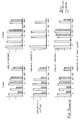
- The relationship between viable cell count and concentrations of the various sulfates is shown in Figure 3. The relationship between the percentage of IF positive cells and concentration of the various sulfates is shown in Fig. 4.
Claims (5)
- Use of a substance selected from the following and mixtures thereof;
a curdlan sulfate or a salt thereof;
a glucan sulfuric ester (other than lentinan sulfate) having at least one compound selected from xylose, ribose, galactose, arabinose, glucose and oligomers thereof as a branching side chain on the parent glucan or salt thereof;
a ribopyranan sulfate, a ribofuranan sulfate or salt thereof;
in the manufacture of a medicament for the prophylaxis or treatment of acquired immunodeficiency syndrome. - A use according to claim 1 wherein the glucan is a β-1,3-glucan or cellulose.
- A use according to claim 1 or claim 2 wherein the side chain is located at the 6-position of the glucose unit in the glucan.
- A use according to any one of the preceding claims wherein the branching degree of the side chain is 5 to 60 per 100 glycose units.
- A use according to claim 1 wherein the substance is a curdlan sulfate or a salt thereof.
Applications Claiming Priority (6)
| Application Number | Priority Date | Filing Date | Title |
|---|---|---|---|
| JP16956387A JPS6413026A (en) | 1987-07-07 | 1987-07-07 | Antiviral agent |
| JP169563/87 | 1987-07-07 | ||
| JP16956487 | 1987-07-07 | ||
| JP169564/87 | 1987-07-07 | ||
| JP283930/87 | 1987-11-10 | ||
| JP62283930A JP2626892B2 (en) | 1987-07-07 | 1987-11-10 | New antiviral agents |
Publications (3)
| Publication Number | Publication Date |
|---|---|
| EP0298706A2 EP0298706A2 (en) | 1989-01-11 |
| EP0298706A3 EP0298706A3 (en) | 1989-08-02 |
| EP0298706B1 true EP0298706B1 (en) | 1994-09-07 |
Family
ID=27323192
Family Applications (1)
| Application Number | Title | Priority Date | Filing Date |
|---|---|---|---|
| EP19880306127 Expired - Lifetime EP0298706B1 (en) | 1987-07-07 | 1988-07-06 | Use of glycans in the manufacturing of anti-viral medicaments. |
Country Status (2)
| Country | Link |
|---|---|
| EP (1) | EP0298706B1 (en) |
| DE (1) | DE3851386T2 (en) |
Families Citing this family (9)
| Publication number | Priority date | Publication date | Assignee | Title |
|---|---|---|---|---|
| JPH02124902A (en) * | 1988-07-21 | 1990-05-14 | Takeda Chem Ind Ltd | Blood coagulation inhibitor |
| JPH0725802B2 (en) * | 1988-11-28 | 1995-03-22 | 味の素株式会社 | Process for producing curdlan or lentinan sulfate or salt thereof |
| US6063773A (en) * | 1995-09-29 | 2000-05-16 | Polydex Pharmaceuticals Ltd. | Cellulose sulfate for use as antimicrobial and contraceptive agent |
| CN1067405C (en) * | 1998-04-24 | 2001-06-20 | 华中理工大学 | Indocalamus-leaf polyose sulfate and preparation process therefor |
| CA2414320C (en) | 2000-06-30 | 2008-04-01 | Polydex Pharmaceuticals Limited | Cellulose sulfate and other sulfated polysaccharides to prevent and treat papilloma virus infection and other infections |
| NO20014256D0 (en) | 2001-09-03 | 2001-09-03 | Bjoern Kristiansen | Preparation of immunostimulatory compound |
| US7514085B2 (en) | 2004-07-16 | 2009-04-07 | Medimush A/S | Immune modulating compounds from fungi |
| WO2006133707A2 (en) | 2005-06-15 | 2006-12-21 | Medimush A/S | Anti-cancer combination treatment and kit-of-part |
| CN105532685A (en) * | 2015-12-28 | 2016-05-04 | 北京市农林科学院 | Pesticide composite for preventing and curing crop viral diseases and pests |
Family Cites Families (1)
| Publication number | Priority date | Publication date | Assignee | Title |
|---|---|---|---|---|
| US4590181A (en) * | 1982-12-20 | 1986-05-20 | Board Of Regents Of The University Of Nebraska | Synthetic immunoregulators and methods of use and preparation |
-
1988
- 1988-07-06 EP EP19880306127 patent/EP0298706B1/en not_active Expired - Lifetime
- 1988-07-06 DE DE19883851386 patent/DE3851386T2/en not_active Expired - Fee Related
Also Published As
| Publication number | Publication date |
|---|---|
| DE3851386D1 (en) | 1994-10-13 |
| DE3851386T2 (en) | 1995-03-30 |
| EP0298706A3 (en) | 1989-08-02 |
| EP0298706A2 (en) | 1989-01-11 |
Similar Documents
| Publication | Publication Date | Title |
|---|---|---|
| Baba et al. | Pentosan polysulfate, a sulfated oligosaccharide, is a potent and selective anti-HIV agent in vitro | |
| US3766167A (en) | Orally active anticoagulant | |
| AU642023B2 (en) | Anti-virus agent | |
| IE45524B1 (en) | Complement inhibitors | |
| US5683991A (en) | Blocking the attachment of germs to human cells | |
| EP0298706A2 (en) | Use of glycans in the manufacturing of anti-viral medicaments. | |
| EP0296626B1 (en) | Anti-hiv agents and method of producing the same | |
| US5272261A (en) | Preparation of sulfated polysaccharide fractions | |
| EP0312222B1 (en) | Treatment of diseases caused by viruses | |
| AU644895B2 (en) | Antiviral agent | |
| EP1411956B1 (en) | Use of oversulfated polysaccharides as inhibitors of hiv | |
| JPH0725802B2 (en) | Process for producing curdlan or lentinan sulfate or salt thereof | |
| US5498602A (en) | Oligosaccharide aromatic glycoside and sulfate thereof | |
| US5264621A (en) | Anti-virus agent | |
| JPS58192898A (en) | Regulant for complements | |
| EP0406512B1 (en) | Polysaccharide fraction with anti-hiv activity | |
| JPH03145425A (en) | Antiviral agent | |
| JP2772813B2 (en) | Composition having antiviral action and immunostimulatory action | |
| EP0351625B1 (en) | Anti-hiv activity of bv-3608 | |
| JPH04308531A (en) | Therapeutic agent for retrovirus infection containing sulfated beta-glucan having anti-aids virus activity | |
| JPH03218317A (en) | Anti-retrovirus agent | |
| Lugowski | Immunotherapy in gram-negative bacterial infections. | |
| RU1808331C (en) | Method for obtaining biologically active yeast product | |
| WO1988009332A1 (en) | Therapeutic nucleosides | |
| RU2333222C2 (en) | Epimerised k5 polysaccharide derivatives with high sulfation degree |
Legal Events
| Date | Code | Title | Description |
|---|---|---|---|
| PUAI | Public reference made under article 153(3) epc to a published international application that has entered the european phase |
Free format text: ORIGINAL CODE: 0009012 |
|
| AK | Designated contracting states |
Kind code of ref document: A2 Designated state(s): DE FR GB |
|
| PUAL | Search report despatched |
Free format text: ORIGINAL CODE: 0009013 |
|
| AK | Designated contracting states |
Kind code of ref document: A3 Designated state(s): DE FR GB |
|
| 17P | Request for examination filed |
Effective date: 19891204 |
|
| 17Q | First examination report despatched |
Effective date: 19910919 |
|
| GRAA | (expected) grant |
Free format text: ORIGINAL CODE: 0009210 |
|
| AK | Designated contracting states |
Kind code of ref document: B1 Designated state(s): DE FR GB |
|
| REF | Corresponds to: |
Ref document number: 3851386 Country of ref document: DE Date of ref document: 19941013 |
|
| ET | Fr: translation filed | ||
| PLBE | No opposition filed within time limit |
Free format text: ORIGINAL CODE: 0009261 |
|
| STAA | Information on the status of an ep patent application or granted ep patent |
Free format text: STATUS: NO OPPOSITION FILED WITHIN TIME LIMIT |
|
| 26N | No opposition filed | ||
| PGFP | Annual fee paid to national office [announced via postgrant information from national office to epo] |
Ref country code: GB Payment date: 20010822 Year of fee payment: 14 |
|
| PGFP | Annual fee paid to national office [announced via postgrant information from national office to epo] |
Ref country code: FR Payment date: 20010919 Year of fee payment: 14 |
|
| PGFP | Annual fee paid to national office [announced via postgrant information from national office to epo] |
Ref country code: DE Payment date: 20010922 Year of fee payment: 14 |
|
| REG | Reference to a national code |
Ref country code: GB Ref legal event code: IF02 |
|
| PG25 | Lapsed in a contracting state [announced via postgrant information from national office to epo] |
Ref country code: GB Free format text: LAPSE BECAUSE OF NON-PAYMENT OF DUE FEES Effective date: 20020706 |
|
| PG25 | Lapsed in a contracting state [announced via postgrant information from national office to epo] |
Ref country code: DE Free format text: LAPSE BECAUSE OF NON-PAYMENT OF DUE FEES Effective date: 20030201 |
|
| GBPC | Gb: european patent ceased through non-payment of renewal fee |
Effective date: 20020706 |
|
| PG25 | Lapsed in a contracting state [announced via postgrant information from national office to epo] |
Ref country code: FR Free format text: LAPSE BECAUSE OF NON-PAYMENT OF DUE FEES Effective date: 20030331 |
|
| REG | Reference to a national code |
Ref country code: FR Ref legal event code: ST |