EP0293133A2 - Mikroorganismen und Prozesse zur Herstellung von fungiziden Tri-yne-Carbonaten - Google Patents
Mikroorganismen und Prozesse zur Herstellung von fungiziden Tri-yne-Carbonaten Download PDFInfo
- Publication number
- EP0293133A2 EP0293133A2 EP88304494A EP88304494A EP0293133A2 EP 0293133 A2 EP0293133 A2 EP 0293133A2 EP 88304494 A EP88304494 A EP 88304494A EP 88304494 A EP88304494 A EP 88304494A EP 0293133 A2 EP0293133 A2 EP 0293133A2
- Authority
- EP
- European Patent Office
- Prior art keywords
- atcc
- agar
- growth
- compound
- formula
- Prior art date
- Legal status (The legal status is an assumption and is not a legal conclusion. Google has not performed a legal analysis and makes no representation as to the accuracy of the status listed.)
- Ceased
Links
Images
Classifications
-
- A—HUMAN NECESSITIES
- A01—AGRICULTURE; FORESTRY; ANIMAL HUSBANDRY; HUNTING; TRAPPING; FISHING
- A01N—PRESERVATION OF BODIES OF HUMANS OR ANIMALS OR PLANTS OR PARTS THEREOF; BIOCIDES, e.g. AS DISINFECTANTS, AS PESTICIDES OR AS HERBICIDES; PEST REPELLANTS OR ATTRACTANTS; PLANT GROWTH REGULATORS
- A01N43/00—Biocides, pest repellants or attractants, or plant growth regulators containing heterocyclic compounds
- A01N43/02—Biocides, pest repellants or attractants, or plant growth regulators containing heterocyclic compounds having rings with one or more oxygen or sulfur atoms as the only ring hetero atoms
- A01N43/24—Biocides, pest repellants or attractants, or plant growth regulators containing heterocyclic compounds having rings with one or more oxygen or sulfur atoms as the only ring hetero atoms with two or more hetero atoms
- A01N43/26—Biocides, pest repellants or attractants, or plant growth regulators containing heterocyclic compounds having rings with one or more oxygen or sulfur atoms as the only ring hetero atoms with two or more hetero atoms five-membered rings
- A01N43/28—Biocides, pest repellants or attractants, or plant growth regulators containing heterocyclic compounds having rings with one or more oxygen or sulfur atoms as the only ring hetero atoms with two or more hetero atoms five-membered rings with two hetero atoms in positions 1,3
-
- C—CHEMISTRY; METALLURGY
- C07—ORGANIC CHEMISTRY
- C07D—HETEROCYCLIC COMPOUNDS
- C07D317/00—Heterocyclic compounds containing five-membered rings having two oxygen atoms as the only ring hetero atoms
- C07D317/08—Heterocyclic compounds containing five-membered rings having two oxygen atoms as the only ring hetero atoms having the hetero atoms in positions 1 and 3
- C07D317/10—Heterocyclic compounds containing five-membered rings having two oxygen atoms as the only ring hetero atoms having the hetero atoms in positions 1 and 3 not condensed with other rings
- C07D317/32—Heterocyclic compounds containing five-membered rings having two oxygen atoms as the only ring hetero atoms having the hetero atoms in positions 1 and 3 not condensed with other rings with hetero atoms or with carbon atoms having three bonds to hetero atoms with at the most one bond to halogen, e.g. ester or nitrile radicals, directly attached to ring carbon atoms
- C07D317/34—Oxygen atoms
- C07D317/36—Alkylene carbonates; Substituted alkylene carbonates
-
- C—CHEMISTRY; METALLURGY
- C12—BIOCHEMISTRY; BEER; SPIRITS; WINE; VINEGAR; MICROBIOLOGY; ENZYMOLOGY; MUTATION OR GENETIC ENGINEERING
- C12N—MICROORGANISMS OR ENZYMES; COMPOSITIONS THEREOF; PROPAGATING, PRESERVING, OR MAINTAINING MICROORGANISMS; MUTATION OR GENETIC ENGINEERING; CULTURE MEDIA
- C12N1/00—Microorganisms; Compositions thereof; Processes of propagating, maintaining or preserving microorganisms or compositions thereof; Processes of preparing or isolating a composition containing a microorganism; Culture media therefor
- C12N1/20—Bacteria; Culture media therefor
- C12N1/205—Bacterial isolates
-
- C—CHEMISTRY; METALLURGY
- C12—BIOCHEMISTRY; BEER; SPIRITS; WINE; VINEGAR; MICROBIOLOGY; ENZYMOLOGY; MUTATION OR GENETIC ENGINEERING
- C12P—FERMENTATION OR ENZYME-USING PROCESSES TO SYNTHESISE A DESIRED CHEMICAL COMPOUND OR COMPOSITION OR TO SEPARATE OPTICAL ISOMERS FROM A RACEMIC MIXTURE
- C12P17/00—Preparation of heterocyclic carbon compounds with only O, N, S, Se or Te as ring hetero atoms
- C12P17/02—Oxygen as only ring hetero atoms
- C12P17/04—Oxygen as only ring hetero atoms containing a five-membered hetero ring, e.g. griseofulvin, vitamin C
-
- C—CHEMISTRY; METALLURGY
- C12—BIOCHEMISTRY; BEER; SPIRITS; WINE; VINEGAR; MICROBIOLOGY; ENZYMOLOGY; MUTATION OR GENETIC ENGINEERING
- C12R—INDEXING SCHEME ASSOCIATED WITH SUBCLASSES C12C - C12Q, RELATING TO MICROORGANISMS
- C12R2001/00—Microorganisms ; Processes using microorganisms
- C12R2001/01—Bacteria or Actinomycetales ; using bacteria or Actinomycetales
- C12R2001/365—Nocardia
-
- C—CHEMISTRY; METALLURGY
- C12—BIOCHEMISTRY; BEER; SPIRITS; WINE; VINEGAR; MICROBIOLOGY; ENZYMOLOGY; MUTATION OR GENETIC ENGINEERING
- C12R—INDEXING SCHEME ASSOCIATED WITH SUBCLASSES C12C - C12Q, RELATING TO MICROORGANISMS
- C12R2001/00—Microorganisms ; Processes using microorganisms
- C12R2001/01—Bacteria or Actinomycetales ; using bacteria or Actinomycetales
- C12R2001/625—Streptoverticillium
Definitions
- the invention relates to novel microorganisms and a process for the manufacture of the tri-yne carbonate of formula I.
- Such compound can be produced by isolating it from the fermentation broth of ATCC-53614, ATCC-53615 or ATCC-53616.
- the tri-yne carbonate has antifungal activity.
- This invention relates to a process of manufacture of the compound 5-(1-hydroxy-2,4,6-heptatriynl)-2-oxo-1,3 dioxolane having the general structure of formula I:
- the tri-yne carbonate of Formula I has antifungal activity.
- the compounds of this invention are useful as antifungal agents against pathogenic fungi systemic to and upon the exterior of humans and animals; against agricultural fungi affecting living plants; and against surface fungi on inanimate objects.
- the antifungal agents may be administered to humans and animals topically, orally or parenterally in the form of a medicated liquid, paste or powder, a capsule, a tablet, an injectable preparation or the like. It is usually desirable to use the oral route.
- Formulations containing the active ingredients are readily prepared. Doses may be varied, depending on the age, severity, body weight and other conditions of human patients but daily dosage for adults is within a range of from about 10 mg/kg to 500 mg/kg (preferably 25 to 100 mg/kg) which may be given in two to four divided doses. Higher doses may be favorably employed as required. Topically, the antifungal agents may be administered at a dosage of from 0.25 to 5 percent of a suitable topical preparation.
- the instant compounds are useful against pathogenic mycotic infections upon the surface of or systemic within the body of living animals such as fungi of the Trichophyton spp. species, Crypotococcus spp., Hormodendrum spp., Geotrichum spp., Candida spp., and the like.
- the pharmaceutically acceptable salts of the compounds of this invention include those formed from cations such as sodium, potassium, aluminum, calcium, lithium, magnesium, zinc, and from bases such as ammonia, ethylenediamine, N-methyl-glucamine, lysine, arginine, ornithine, choline, N,N′-dibenzylethylenediamine, chloroprocaine, diethanolamine, procaine, N-benzylphenethylamine, diethylamine, piperazine, tris(hydroxymethyl)aminomethane, and tetramethylammonium hydroxide.
- bases such as ammonia, ethylenediamine, N-methyl-glucamine, lysine, arginine, ornithine, choline, N,N′-dibenzylethylenediamine, chloroprocaine, diethanolamine, procaine, N-benzylphenethylamine, diethylamine, piperazine, tris(
- fungicide is intended to include controlling fungi broadly so as to include the killing of fungi as well as inhibiting the growth of fungi.
- Fields of technology adversely affected by the lack of effective fungicides are many and include the paint, wood, textile, cosmetic, leather, tobacco, fur, rope, paper, pulp, plastics, fuel, rubber and food industries. Fungicides are also utilized for agricultural application, for instance in preventing or minimizing fungus growth on plants, fruits, seeds or soil.
- the compounds of the invention are effective in controlling the growth of Aspergillus species, for example A. niger , A. flavus , A. fumigatus , A. oryzae, A. luchensis , A. versicolor , A. sydowi , A. nidulans , A. flaucus and A. terreus , Penicillium species, for example P. notatum , P. roqueforti , P. chrysogenum , P. oxalicum , P. spinulosum , P. martensii , P. citrinium , P. digitatum , P. expansum , P. italicum , P.
- Aspergillus species for example A. niger , A. flavus , A. fumigatus , A. oryzae, A. luchensis , A. versicolor , A. sydow
- cyclopium . and P. funiculosum Neurospora species such as N. sitophila , Phoma species such as P. terrestrius , Rhizopus species, Alternaria species such as A. solani , Chaetomium species such as C. globosum , Chaetomicum species, for example, C. clivaceum , and Monilia species such as M. sitophila and M. nigra .
- the above fungi may be found on cosmetics, leather, electrical insulation, textiles, and numerous other materials capable of supporting their growth.
- the compounds of this invention may be employed in treatment of plants, soils, fruits, seeds, fur, wood and the like.
- the fungicidal compounds can be used against soil fungi, such as Rhizoctonia solani , Fusarium solani , and Pythium ultimum , plant fungi, for instance Erysiphe polygoni , Alternaria solani and Cochliobolus miyabanus as well as against saprophytes known to attack wood, pulp and lumber such as Lenzites trabea and Ceratocystis pilifera and the fungus Pullularia pullulans which attacks paint.
- the compounds of this invention are useful in controlling those agricultural fungus infections that attack growing plants.
- the compounds are particularly effective against those fungi, which cause rice blast, tomato late blight, tomato early blight, wheat leaf rust, bean powdery mildew and tomato Fusarium wilt.
- the compounds may be utilized in diverse formulations, solid, including finely divided powders and granular materials as well as liquid, such as solutions, emulsions, suspensions, concentrates, emulsifiable concentrate, slurries and the like, depending upon the application intended and the formulation media desired.
- compositions containing such compounds as essentially active ingredients thereof, which compositions may also include finely divided dry or liquid diluents, extenders, fillers, conditioners and excipients, including various clays, diatomaceous earth, talc, and the like, or water and various organic liquids such as lower alkanols, for example ethanol and isopropanol, or kerosene, benzene, toluene and other petroleum distillate fractions or mixtures thereof.
- lower alkanols for example ethanol and isopropanol, or kerosene, benzene, toluene and other petroleum distillate fractions or mixtures thereof.
- one or more of the compounds may be uniformly distributed in a vehicle that is chemically compatible with the particular compound selected, noninhibiting with respect to the action of the antifungal and essentially non-injurious to body tissue under the conditions of use.
- the compound of formula I is efficacious against medically important fungi, especially yeast-like fungi, for example, Crypotococcus neoformans , Candida albicans , Ca. parapsilosis , Ca. tropicalis , Ca. pseudotropicalis , Ca. krusei , Ca. rugosa , Ca. guilliermondii , Ca. stellatoidea , Torulopsis glabrata , Sac. cerevisiae , Aspergillus fumigatus , A. flavus and Penicillium italicum .
- yeast-like fungi for example, Crypotococcus neoformans , Candida albicans , Ca. parapsilosis , Ca. tropicalis , Ca. pseudotropicalis , Ca. krusei , Ca. rugosa , Ca. guilliermondii , Ca. stellatoidea ,
- the compound of formula I can be prepared by growing under controlled conditions the microorganism ATCC-53614, ATCC-53615 or ATCC-53616, with ATCC-53614 being preferred because it produces the largest quantities of the compound of formula I.
- the compound is obtained by fermentation of one of said microorganisms followed by isolation of the compound, all as described hereinbelow.
- ATCC-53614 and MA ATCC-53615 are new strains of the species Streptoverticillium hiroshimense .
- ATCC-53616 is a strain of the genus Nocardia .
- a sample of ATCC-53614, ATCC-53615 and ATCC-53616 has been deposited, without restriction as to availability, in the permanent culture collection of the American Type Culture Collection at 12301 Parklawn Drive, Rockville, Md. 20852 and have been assigned the accession numbers that such microorganisms have been referred to herein.
- ATCC-53614 vegetative growth
- A aerial mycelium
- SP soluble pigment
- Sporophores form short branches produced in a verticil or whorl at intervals along the aerial mycelium. These branches in turn produce several secondary branches that form straight chains of 10-15 spores. Spores are cylindrical, 0.9 x 1.2-1.7 microns. Spore surface is smooth.
- V Reverse - dark brown with vectors of dark red
- A Velvety, dark pink with pinkish-white & rose-beige vectors and red flecks SP: None
- ISP Medium 4 Inorganic salts-starch agar
- Peptone-iron-yeast extract agar (ISP Medium 6)
- Sporophores form short branches produced in a verticil or whorl at intervals along the aerial mycelium. These branches in turn produce several secondary branches that form straight chains of 10-15 spores. Spores are cylindrical, 0.9 x 1.2-1.7 microns (970x). Spore surface is smooth (TEM).
- ISP Medium 4 Inorganic salts-starch agar
- Peptone-iron-yeast extract agar (ISP Medium 6)
- V Reverse - dark red with vectors of lighter red
- A Pinkish-white with vectors of light pink SP: very light brown
- Morphology Vegatative hyphae were fully developed with branching. Fragmentation of hyphae occured in older cultures.
- ISP Medium 4 Inorganic salts-starch agar
- Peptone-iron-yeast extract agar (ISP Medium 6)
- the present invention is not limited to the use of ATCC-53614, ATCC-53615 or ATCC-53616. It is especially desired and intended to include the use of natural or artificial mutants produced from the described organisms, or other variants of ATCC-53614, ATCC-53615 or ATCC-53616 as far as they can produce the compound of formula I.
- the artificial production of mutants may be achieved by a conventional operation such as X-ray or ultraviolet (UV) radiation, or by the use of chemical mutagens such as; nitrogen mustards, nitrosoguanidine, camphor and the like, or by means of recombinant DNA technology.
- the compound of formula I can be produced by utilizing a preserved source of ATCC-53614, ATCC-53615 or ATCC-53616 under controlled aerobic conditions in a liquid nutrient medium as follows.
- the preserved source is utilized to inoculate a liquid nutrient medium containing sources of carbon, nitrogen, phosphorus, calcium and magnesium and other elements necessary for life. This medium is incubated at 28°C.
- the flask containing the culture and liquid nutrient medium is incubated with agitation on a rotary shaker at 220 RPM. After 48 hours, when growth is abundant, the culture growth is used to inoculate a flask containing a medium which supports production of the product.
- production media are inoculated with the culture growth and are incubated at 28°C for 4 days with agitation at 180 to 220 RPM, most often 220 RPM.
- Such media contain carbon sources such as glycerol, dextrose, cottonseed oil, cod liver oil or corn gluten. They contain nitrogen and sulfur sources such as beef extract, yeast extract, ardamine pH, Edamine, Hycase and corn gluten. Also included are inorganic ions such as calcium, as well as some inert materials as celite.
- the fermentation broth In order to isolate the compound of formula I, the fermentation broth must be clarified by filtration.
- the compounds of interest reside in the broth filtrate.
- the crude product may be purified by chromatography using an appropriate adsorbent such as polymeric organic based resins such as Amberlite XAD-2 or Mitsubishi HP-20, silica gel and hydroxypropyl cross linked dextran gels such as Pharmacia LH-20.
- the compound of formula I is eluted from the adsorbents with suitable solvents or mixture of solvents. Solvent extraction is also used.
- Media are prepared in a 250 ml Erlenmeyer flask. The contents are sterilized with steam at 121°C, 15 pounds pressure for 20 minutes.
- a culture of ATCC-53614 is inoculated from an L-tube (lyophilized tube) into a 250 ml baffled erlenmeyer flask containing 44 ml. of KE seed medium and grown for two days at 28°C and shaken in a rotary shaker (2 inch throw) at 220 rpm. Two ml of the grown seed medium is then inoculated into a 250 ml unbaffled erlenmeyer flask containing about 54 ml. of the production medium LP and grown at 28°C and shaken in a rotary shaker (2 inch throw) for four days at 220 rpm.
- the compound of formula I is contained in this broth.
- a culture of ATCC-53615 is inoculated from an L-tube into a 250 ml erlenmeyer flask containing 54 ml of BAMII and celite seed medium.
- the flask is incubated at 28°C and shaken in a rotary shaker (2 inch throw) at 220 rpm for 48 hours.
- 10 ml from this flask is used to inoculate a two liter baffled erlenmeyer flask containing 250 ml of NPA-2 production medium.
- This flask is incubated at 28°C, and shaken in a rotary shaker (2 inch throw) for 96 hours at 180 rpm.
- the compound of formula I is contained in this broth.
- a culture of ATCC-53616 is inoculated from an L-tube into a 250 ml baffled erlenmeyer flask containing 54 ml of KE medium. The flask was then placed on a rotary shaker (2 inch throw) and shaken at 220 rpm for 2 days in a 28°C room. Two ml of the broth were then used to inoculate a 250 ml unbaffled erlenmeyer flask containing 44 ml of KH medium. This flask was then placed on a rotary shaker (2 inch throw) at 28°C and shaken for four days at 220 rpm.
- the compound of formula I can be isolated from each of the broths of ATCC-53614, ATCC-53615 and ATCC-53616 by the following procedure. It should be noted that the following isolation procedure can be utilized for varying volumes of whole broth by adjusting proportionately the volumes of the solvents and adsorbents.
- Mass spectral data were obtained on MAT 212 mass spectrometer at 90 ev in the electron impact mode. High resolution data were obtained on the same instrument using the peak matching method.
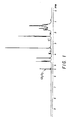
- the spectrum is in Fig. I.
- the spectrum has been recorded in CD2Cl2 at ambient room temperature on a Varian XL400 spectrometer. Chemical shifts are shown in ppm relative to tetramethylsilane (TMS) at zero ppm using the solvent peak at w5.32 as internal reference.
- TMS tetramethylsilane
- the antifungal activity of the compound of formula I was determined by an agar dilution assay as follows:
- the compound of formula I was added to cooled, molten yeast nitrogen base plus glucose agar (1.0 ml of drug plus 9.0 ml agar). Appropriate solvent and media controls (drug free) also were prepared. Prepared plates were stored in the dark at room temperature overnight prior to use.
- yeast cultures maintained in yeast maltose (YM) broth, were transferred to fresh YM medium and incubated overnight at 37°C with shaking (250 rpm). After incubation, each culture was diluted in sterile saline to yield final concentrations of 3 x 10⁵ to 3 x 10⁶ colony forming units (CFU)/ml.
- the isolates of Aspergillus and Penicillium were maintained on potato dextrose agar slants and spore suspensions made following vigourous shaking with sterile glass beads. The spore preparations were used as the inocula for these three filamentous fungi.
- Each prepared plate was inoculated with 21 yeast-like and filamentous fungi using a Denley Multipoint Inoculator (Denley, Wales, England).
- the inoculator delivers approximately 0.001 ml to the agar surface resulting in inoculation of from 3 x 10² to 3 x 10³ CFUs.
- the plates were incubated at 28°C for 48 hours.
- the minimum inhibitory concentrations (MICs) were recorded as the lowest concentration of drug showing no growth or less than three CFU/spot.
Landscapes
- Chemical & Material Sciences (AREA)
- Organic Chemistry (AREA)
- Life Sciences & Earth Sciences (AREA)
- Engineering & Computer Science (AREA)
- Health & Medical Sciences (AREA)
- Zoology (AREA)
- Wood Science & Technology (AREA)
- General Health & Medical Sciences (AREA)
- Biotechnology (AREA)
- Genetics & Genomics (AREA)
- Bioinformatics & Cheminformatics (AREA)
- Microbiology (AREA)
- Biochemistry (AREA)
- General Engineering & Computer Science (AREA)
- Virology (AREA)
- Pest Control & Pesticides (AREA)
- Medicinal Chemistry (AREA)
- Tropical Medicine & Parasitology (AREA)
- General Chemical & Material Sciences (AREA)
- Biomedical Technology (AREA)
- Agronomy & Crop Science (AREA)
- Chemical Kinetics & Catalysis (AREA)
- Plant Pathology (AREA)
- Dentistry (AREA)
- Environmental Sciences (AREA)
- Micro-Organisms Or Cultivation Processes Thereof (AREA)
- Pharmaceuticals Containing Other Organic And Inorganic Compounds (AREA)
- Preparation Of Compounds By Using Micro-Organisms (AREA)
- Medicines That Contain Protein Lipid Enzymes And Other Medicines (AREA)
- Medicines Containing Material From Animals Or Micro-Organisms (AREA)
Applications Claiming Priority (2)
| Application Number | Priority Date | Filing Date | Title |
|---|---|---|---|
| US5392687A | 1987-05-26 | 1987-05-26 | |
| US53926 | 1987-05-26 |
Publications (2)
| Publication Number | Publication Date |
|---|---|
| EP0293133A2 true EP0293133A2 (de) | 1988-11-30 |
| EP0293133A3 EP0293133A3 (de) | 1990-01-31 |
Family
ID=21987499
Family Applications (1)
| Application Number | Title | Priority Date | Filing Date |
|---|---|---|---|
| EP88304494A Ceased EP0293133A3 (de) | 1987-05-26 | 1988-05-18 | Mikroorganismen und Prozesse zur Herstellung von fungiziden Tri-yne-Carbonaten |
Country Status (3)
| Country | Link |
|---|---|
| EP (1) | EP0293133A3 (de) |
| JP (1) | JPH01104188A (de) |
| DK (1) | DK175644B1 (de) |
Cited By (1)
| Publication number | Priority date | Publication date | Assignee | Title |
|---|---|---|---|---|
| EP0293131A3 (de) * | 1987-05-26 | 1990-01-31 | Merck & Co. Inc. | Fungizide Tri-yn-Karbonate |
Family Cites Families (6)
| Publication number | Priority date | Publication date | Assignee | Title |
|---|---|---|---|---|
| JPS56102793A (en) * | 1979-12-28 | 1981-08-17 | Takeda Chem Ind Ltd | Preparation of antibiotic c-15003 p-3 |
| US4311693A (en) * | 1980-11-17 | 1982-01-19 | Merck & Co., Inc. | Discovery of MSD A63A, a new efrotomycin-line antibiotic fermentation broth |
| JPH01502475A (ja) * | 1985-11-20 | 1989-08-31 | クロップ ジェネティクス インターナショナル コーポレイション | 農薬生産性内共生微生物およびその製法および使用法 |
| US4780311A (en) * | 1987-05-26 | 1988-10-25 | Merck & Co., Inc. | Antihypercholesterolemic tri-yne carbonates |
| US4806565A (en) * | 1987-05-26 | 1989-02-21 | Merck & Co., Inc. | Antifugal tri-yne carbonates |
| US4806566A (en) * | 1987-05-26 | 1989-02-21 | Merck & Co., Inc. | Anti-gram positive bacteria tri-yne carbonates |
-
1988
- 1988-05-18 EP EP88304494A patent/EP0293133A3/de not_active Ceased
- 1988-05-20 DK DK198802803A patent/DK175644B1/da not_active IP Right Cessation
- 1988-05-24 JP JP63125099A patent/JPH01104188A/ja active Pending
Cited By (1)
| Publication number | Priority date | Publication date | Assignee | Title |
|---|---|---|---|---|
| EP0293131A3 (de) * | 1987-05-26 | 1990-01-31 | Merck & Co. Inc. | Fungizide Tri-yn-Karbonate |
Also Published As
| Publication number | Publication date |
|---|---|
| DK175644B1 (da) | 2005-01-03 |
| JPH01104188A (ja) | 1989-04-21 |
| DK280388D0 (da) | 1988-05-20 |
| EP0293133A3 (de) | 1990-01-31 |
| DK280388A (da) | 1988-11-23 |
Similar Documents
| Publication | Publication Date | Title |
|---|---|---|
| US4931352A (en) | Antifungal fermentation product | |
| US4806565A (en) | Antifugal tri-yne carbonates | |
| EP0311193B1 (de) | Fungizides Fermentationsprodukt | |
| EP0157553B1 (de) | Antifungische Substanzen und ihre Herstellung und sie enthaltende Mittel | |
| EP0551304A1 (de) | Fungizid wirksame verbindungen | |
| US5801172A (en) | Antifungal agent from sporomiella minimoides | |
| US5028537A (en) | Novel antifungal substances and process for their production | |
| EP0234752A1 (de) | Antifungizide beta-lactone | |
| EP0469843A1 (de) | Neues Fermentationsprodukt mit antiparasitärer Aktivität | |
| US4780311A (en) | Antihypercholesterolemic tri-yne carbonates | |
| EP0301744A2 (de) | Fungizide Fermentationsprodukte und daraus hergestellte Zusammensetzungen | |
| US4806566A (en) | Anti-gram positive bacteria tri-yne carbonates | |
| US5770587A (en) | Antifungal agents | |
| US5130445A (en) | Antifungal substances and process for their production | |
| EP0050964B1 (de) | Makrozyklische Laktone, deren Herstellung und Anwendung als Parasiten tötendes Mittel, deren Zusammensetzungen und eine biologische Züchtung, welche zu ihrer Herstellung dient | |
| AU4945893A (en) | A fungicidal compound | |
| US6172006B1 (en) | Furyl-pyridone compounds, useful as fungicides and obtained from the fungus Cladobotryum | |
| US5091413A (en) | Antibiotic agent | |
| WO1997023486A1 (en) | Active bio-compounds | |
| EP0637916A1 (de) | Landwirtschaftliche verwendung bestimmter verbindungen, zusammensetzungen und verfahren zur herstellung dieser verbindungen | |
| US5702929A (en) | Antifungal agent | |
| US5543429A (en) | Antifungal agents | |
| JPH01104188A (ja) | 抗真菌トリ−アイン炭酸塩の製造における微生物及びその過程 | |
| WO1994000443A1 (en) | Fungicidally active compounds | |
| EP0205308B1 (de) | Scytophycine |
Legal Events
| Date | Code | Title | Description |
|---|---|---|---|
| PUAI | Public reference made under article 153(3) epc to a published international application that has entered the european phase |
Free format text: ORIGINAL CODE: 0009012 |
|
| AK | Designated contracting states |
Kind code of ref document: A2 Designated state(s): CH DE FR GB IT LI NL |
|
| ITCL | It: translation for ep claims filed |
Representative=s name: SOCIETA' ITALIANA BREVETTI S.P.A. |
|
| PUAL | Search report despatched |
Free format text: ORIGINAL CODE: 0009013 |
|
| AK | Designated contracting states |
Kind code of ref document: A3 Designated state(s): CH DE FR GB IT LI NL |
|
| 17P | Request for examination filed |
Effective date: 19900608 |
|
| 17Q | First examination report despatched |
Effective date: 19920526 |
|
| STAA | Information on the status of an ep patent application or granted ep patent |
Free format text: STATUS: THE APPLICATION HAS BEEN REFUSED |
|
| 18R | Application refused |
Effective date: 19921006 |