EP0288685B1 - Use of pyrrolidone derivatives as anti-amnestic agents - Google Patents
Use of pyrrolidone derivatives as anti-amnestic agents Download PDFInfo
- Publication number
- EP0288685B1 EP0288685B1 EP88102956A EP88102956A EP0288685B1 EP 0288685 B1 EP0288685 B1 EP 0288685B1 EP 88102956 A EP88102956 A EP 88102956A EP 88102956 A EP88102956 A EP 88102956A EP 0288685 B1 EP0288685 B1 EP 0288685B1
- Authority
- EP
- European Patent Office
- Prior art keywords
- pyrrolidone
- group
- denotes
- case
- chlorobenzenesulfonyl
- Prior art date
- Legal status (The legal status is an assumption and is not a legal conclusion. Google has not performed a legal analysis and makes no representation as to the accuracy of the status listed.)
- Expired - Lifetime
Links
- 230000003496 anti-amnesic effect Effects 0.000 title claims description 21
- 150000004040 pyrrolidinones Chemical class 0.000 title claims description 15
- 150000001875 compounds Chemical class 0.000 claims description 21
- MNKFPWSNHAGXGA-UHFFFAOYSA-N 1-(4-chlorophenyl)sulfonylpyrrolidin-2-one Chemical compound C1=CC(Cl)=CC=C1S(=O)(=O)N1C(=O)CCC1 MNKFPWSNHAGXGA-UHFFFAOYSA-N 0.000 claims description 17
- 239000003795 chemical substances by application Substances 0.000 claims description 17
- 125000000449 nitro group Chemical group [O-][N+](*)=O 0.000 claims description 15
- 125000005843 halogen group Chemical group 0.000 claims description 10
- 125000002023 trifluoromethyl group Chemical group FC(F)(F)* 0.000 claims description 9
- HRSUALBDOVEBRR-UHFFFAOYSA-N 1-(benzenesulfonyl)pyrrolidin-2-one Chemical compound O=C1CCCN1S(=O)(=O)C1=CC=CC=C1 HRSUALBDOVEBRR-UHFFFAOYSA-N 0.000 claims description 6
- 239000004480 active ingredient Substances 0.000 claims description 4
- QSLSMNVAWPRQSH-UHFFFAOYSA-N 1-(4-tert-butylbenzoyl)pyrrolidin-2-one Chemical compound C1=CC(C(C)(C)C)=CC=C1C(=O)N1C(=O)CCC1 QSLSMNVAWPRQSH-UHFFFAOYSA-N 0.000 claims description 3
- 125000000217 alkyl group Chemical group 0.000 claims description 3
- 125000004435 hydrogen atom Chemical group [H]* 0.000 claims description 3
- 229910052739 hydrogen Inorganic materials 0.000 claims 1
- 239000001257 hydrogen Substances 0.000 claims 1
- HEDRZPFGACZZDS-UHFFFAOYSA-N Chloroform Chemical compound ClC(Cl)Cl HEDRZPFGACZZDS-UHFFFAOYSA-N 0.000 description 18
- 238000006243 chemical reaction Methods 0.000 description 17
- ZMANZCXQSJIPKH-UHFFFAOYSA-N Triethylamine Chemical compound CCN(CC)CC ZMANZCXQSJIPKH-UHFFFAOYSA-N 0.000 description 15
- ZXNRTKGTQJPIJK-UHFFFAOYSA-N aniracetam Chemical compound C1=CC(OC)=CC=C1C(=O)N1C(=O)CCC1 ZXNRTKGTQJPIJK-UHFFFAOYSA-N 0.000 description 15
- 229960000793 aniracetam Drugs 0.000 description 15
- 238000012360 testing method Methods 0.000 description 14
- WYURNTSHIVDZCO-UHFFFAOYSA-N Tetrahydrofuran Chemical compound C1CCOC1 WYURNTSHIVDZCO-UHFFFAOYSA-N 0.000 description 12
- 239000012046 mixed solvent Substances 0.000 description 11
- 239000000203 mixture Substances 0.000 description 11
- 239000002904 solvent Substances 0.000 description 11
- 230000000694 effects Effects 0.000 description 10
- 238000000034 method Methods 0.000 description 10
- YMWUJEATGCHHMB-UHFFFAOYSA-N Dichloromethane Chemical compound ClCCl YMWUJEATGCHHMB-UHFFFAOYSA-N 0.000 description 9
- XEKOWRVHYACXOJ-UHFFFAOYSA-N Ethyl acetate Chemical compound CCOC(C)=O XEKOWRVHYACXOJ-UHFFFAOYSA-N 0.000 description 9
- 238000002360 preparation method Methods 0.000 description 8
- OAYLNYINCPYISS-UHFFFAOYSA-N ethyl acetate;hexane Chemical compound CCCCCC.CCOC(C)=O OAYLNYINCPYISS-UHFFFAOYSA-N 0.000 description 7
- 239000000243 solution Substances 0.000 description 7
- 208000000044 Amnesia Diseases 0.000 description 6
- 208000031091 Amnestic disease Diseases 0.000 description 6
- UHOVQNZJYSORNB-UHFFFAOYSA-N Benzene Chemical compound C1=CC=CC=C1 UHOVQNZJYSORNB-UHFFFAOYSA-N 0.000 description 6
- 241000699666 Mus <mouse, genus> Species 0.000 description 6
- SJRJJKPEHAURKC-UHFFFAOYSA-N N-Methylmorpholine Chemical compound CN1CCOCC1 SJRJJKPEHAURKC-UHFFFAOYSA-N 0.000 description 6
- VYPSYNLAJGMNEJ-UHFFFAOYSA-N Silicium dioxide Chemical compound O=[Si]=O VYPSYNLAJGMNEJ-UHFFFAOYSA-N 0.000 description 6
- YXFVVABEGXRONW-UHFFFAOYSA-N Toluene Chemical compound CC1=CC=CC=C1 YXFVVABEGXRONW-UHFFFAOYSA-N 0.000 description 6
- HEDRZPFGACZZDS-MICDWDOJSA-N Trichloro(2H)methane Chemical compound [2H]C(Cl)(Cl)Cl HEDRZPFGACZZDS-MICDWDOJSA-N 0.000 description 6
- 230000006986 amnesia Effects 0.000 description 6
- 239000013078 crystal Substances 0.000 description 6
- YPHMISFOHDHNIV-FSZOTQKASA-N cycloheximide Chemical compound C1[C@@H](C)C[C@H](C)C(=O)[C@@H]1[C@H](O)CC1CC(=O)NC(=O)C1 YPHMISFOHDHNIV-FSZOTQKASA-N 0.000 description 6
- 239000003814 drug Substances 0.000 description 6
- 239000000499 gel Substances 0.000 description 6
- 239000000741 silica gel Substances 0.000 description 6
- 229910002027 silica gel Inorganic materials 0.000 description 6
- YLQBMQCUIZJEEH-UHFFFAOYSA-N tetrahydrofuran Natural products C=1C=COC=1 YLQBMQCUIZJEEH-UHFFFAOYSA-N 0.000 description 6
- 102000056251 Prolyl Oligopeptidases Human genes 0.000 description 5
- 101710178372 Prolyl endopeptidase Proteins 0.000 description 5
- 241000700159 Rattus Species 0.000 description 5
- QSKWJTXWJJOJFP-UHFFFAOYSA-N chloroform;ethoxyethane Chemical compound ClC(Cl)Cl.CCOCC QSKWJTXWJJOJFP-UHFFFAOYSA-N 0.000 description 5
- 229940079593 drug Drugs 0.000 description 5
- 230000002401 inhibitory effect Effects 0.000 description 5
- XLYOFNOQVPJJNP-UHFFFAOYSA-N water Chemical compound O XLYOFNOQVPJJNP-UHFFFAOYSA-N 0.000 description 5
- LUBVCBITQHEVCJ-UHFFFAOYSA-N 1-trimethylsilylpyrrolidin-2-one Chemical compound C[Si](C)(C)N1CCCC1=O LUBVCBITQHEVCJ-UHFFFAOYSA-N 0.000 description 4
- 229930000680 A04AD01 - Scopolamine Natural products 0.000 description 4
- STECJAGHUSJQJN-GAUPFVANSA-N Hyoscine Natural products C1([C@H](CO)C(=O)OC2C[C@@H]3N([C@H](C2)[C@@H]2[C@H]3O2)C)=CC=CC=C1 STECJAGHUSJQJN-GAUPFVANSA-N 0.000 description 4
- STECJAGHUSJQJN-UHFFFAOYSA-N N-Methyl-scopolamin Natural products C1C(C2C3O2)N(C)C3CC1OC(=O)C(CO)C1=CC=CC=C1 STECJAGHUSJQJN-UHFFFAOYSA-N 0.000 description 4
- JUJWROOIHBZHMG-UHFFFAOYSA-N Pyridine Chemical compound C1=CC=NC=C1 JUJWROOIHBZHMG-UHFFFAOYSA-N 0.000 description 4
- 238000004587 chromatography analysis Methods 0.000 description 4
- 239000000047 product Substances 0.000 description 4
- 239000002994 raw material Substances 0.000 description 4
- 239000011541 reaction mixture Substances 0.000 description 4
- STECJAGHUSJQJN-FWXGHANASA-N scopolamine Chemical compound C1([C@@H](CO)C(=O)O[C@H]2C[C@@H]3N([C@H](C2)[C@@H]2[C@H]3O2)C)=CC=CC=C1 STECJAGHUSJQJN-FWXGHANASA-N 0.000 description 4
- 229960002646 scopolamine Drugs 0.000 description 4
- VZGDMQKNWNREIO-UHFFFAOYSA-N tetrachloromethane Chemical compound ClC(Cl)(Cl)Cl VZGDMQKNWNREIO-UHFFFAOYSA-N 0.000 description 4
- 238000005160 1H NMR spectroscopy Methods 0.000 description 3
- ZWEHNKRNPOVVGH-UHFFFAOYSA-N 2-Butanone Chemical compound CCC(C)=O ZWEHNKRNPOVVGH-UHFFFAOYSA-N 0.000 description 3
- QOSSAOTZNIDXMA-UHFFFAOYSA-N Dicylcohexylcarbodiimide Chemical compound C1CCCCC1N=C=NC1CCCCC1 QOSSAOTZNIDXMA-UHFFFAOYSA-N 0.000 description 3
- RTZKZFJDLAIYFH-UHFFFAOYSA-N Diethyl ether Chemical compound CCOCC RTZKZFJDLAIYFH-UHFFFAOYSA-N 0.000 description 3
- 241000699670 Mus sp. Species 0.000 description 3
- ZMXDDKWLCZADIW-UHFFFAOYSA-N N,N-Dimethylformamide Chemical compound CN(C)C=O ZMXDDKWLCZADIW-UHFFFAOYSA-N 0.000 description 3
- 238000004458 analytical method Methods 0.000 description 3
- 230000003111 delayed effect Effects 0.000 description 3
- 238000010828 elution Methods 0.000 description 3
- 238000000434 field desorption mass spectrometry Methods 0.000 description 3
- 230000000704 physical effect Effects 0.000 description 3
- 238000010992 reflux Methods 0.000 description 3
- 239000000725 suspension Substances 0.000 description 3
- PAMIQIKDUOTOBW-UHFFFAOYSA-N 1-methylpiperidine Chemical compound CN1CCCCC1 PAMIQIKDUOTOBW-UHFFFAOYSA-N 0.000 description 2
- YYROPELSRYBVMQ-UHFFFAOYSA-N 4-toluenesulfonyl chloride Chemical compound CC1=CC=C(S(Cl)(=O)=O)C=C1 YYROPELSRYBVMQ-UHFFFAOYSA-N 0.000 description 2
- CSCPPACGZOOCGX-UHFFFAOYSA-N Acetone Chemical compound CC(C)=O CSCPPACGZOOCGX-UHFFFAOYSA-N 0.000 description 2
- VEXZGXHMUGYJMC-UHFFFAOYSA-N Hydrochloric acid Chemical compound Cl VEXZGXHMUGYJMC-UHFFFAOYSA-N 0.000 description 2
- JLTDJTHDQAWBAV-UHFFFAOYSA-N N,N-dimethylaniline Chemical compound CN(C)C1=CC=CC=C1 JLTDJTHDQAWBAV-UHFFFAOYSA-N 0.000 description 2
- CTQNGGLPUBDAKN-UHFFFAOYSA-N O-Xylene Chemical compound CC1=CC=CC=C1C CTQNGGLPUBDAKN-UHFFFAOYSA-N 0.000 description 2
- 102000035195 Peptidases Human genes 0.000 description 2
- 108091005804 Peptidases Proteins 0.000 description 2
- PMZURENOXWZQFD-UHFFFAOYSA-L Sodium Sulfate Chemical compound [Na+].[Na+].[O-]S([O-])(=O)=O PMZURENOXWZQFD-UHFFFAOYSA-L 0.000 description 2
- FAPWRFPIFSIZLT-UHFFFAOYSA-M Sodium chloride Chemical compound [Na+].[Cl-] FAPWRFPIFSIZLT-UHFFFAOYSA-M 0.000 description 2
- 230000007059 acute toxicity Effects 0.000 description 2
- 231100000403 acute toxicity Toxicity 0.000 description 2
- 150000004945 aromatic hydrocarbons Chemical class 0.000 description 2
- 238000009833 condensation Methods 0.000 description 2
- 230000005494 condensation Effects 0.000 description 2
- 150000002148 esters Chemical class 0.000 description 2
- 238000002474 experimental method Methods 0.000 description 2
- 229960003692 gamma aminobutyric acid Drugs 0.000 description 2
- 150000008282 halocarbons Chemical class 0.000 description 2
- 239000012442 inert solvent Substances 0.000 description 2
- 238000002955 isolation Methods 0.000 description 2
- 150000007530 organic bases Chemical class 0.000 description 2
- 239000008188 pellet Substances 0.000 description 2
- 235000010482 polyoxyethylene sorbitan monooleate Nutrition 0.000 description 2
- 229920000136 polysorbate Polymers 0.000 description 2
- 229920000053 polysorbate 80 Polymers 0.000 description 2
- BWHMMNNQKKPAPP-UHFFFAOYSA-L potassium carbonate Chemical compound [K+].[K+].[O-]C([O-])=O BWHMMNNQKKPAPP-UHFFFAOYSA-L 0.000 description 2
- 235000019833 protease Nutrition 0.000 description 2
- 238000000746 purification Methods 0.000 description 2
- UMJSCPRVCHMLSP-UHFFFAOYSA-N pyridine Natural products COC1=CC=CN=C1 UMJSCPRVCHMLSP-UHFFFAOYSA-N 0.000 description 2
- HNJBEVLQSNELDL-UHFFFAOYSA-N pyrrolidin-2-one Chemical group O=C1CCCN1 HNJBEVLQSNELDL-UHFFFAOYSA-N 0.000 description 2
- 238000007363 ring formation reaction Methods 0.000 description 2
- 239000011780 sodium chloride Substances 0.000 description 2
- 238000003756 stirring Methods 0.000 description 2
- 239000000126 substance Substances 0.000 description 2
- GETQZCLCWQTVFV-UHFFFAOYSA-N trimethylamine Chemical compound CN(C)C GETQZCLCWQTVFV-UHFFFAOYSA-N 0.000 description 2
- 239000008096 xylene Substances 0.000 description 2
- SCYULBFZEHDVBN-UHFFFAOYSA-N 1,1-Dichloroethane Chemical compound CC(Cl)Cl SCYULBFZEHDVBN-UHFFFAOYSA-N 0.000 description 1
- RYHBNJHYFVUHQT-UHFFFAOYSA-N 1,4-Dioxane Chemical compound C1COCCO1 RYHBNJHYFVUHQT-UHFFFAOYSA-N 0.000 description 1
- AAXCXJDQWSSCHL-UHFFFAOYSA-N 1-(4-methylphenyl)sulfonylpyrrolidin-2-one Chemical compound C1=CC(C)=CC=C1S(=O)(=O)N1C(=O)CCC1 AAXCXJDQWSSCHL-UHFFFAOYSA-N 0.000 description 1
- SGTNSNPWRIOYBX-UHFFFAOYSA-N 2-(3,4-dimethoxyphenyl)-5-{[2-(3,4-dimethoxyphenyl)ethyl](methyl)amino}-2-(propan-2-yl)pentanenitrile Chemical compound C1=C(OC)C(OC)=CC=C1CCN(C)CCCC(C#N)(C(C)C)C1=CC=C(OC)C(OC)=C1 SGTNSNPWRIOYBX-UHFFFAOYSA-N 0.000 description 1
- ABFPKTQEQNICFT-UHFFFAOYSA-M 2-chloro-1-methylpyridin-1-ium;iodide Chemical compound [I-].C[N+]1=CC=CC=C1Cl ABFPKTQEQNICFT-UHFFFAOYSA-M 0.000 description 1
- OLFODGXQLMGVNI-UHFFFAOYSA-N 4-[(4-chlorophenyl)sulfonylamino]butanoic acid Chemical compound OC(=O)CCCNS(=O)(=O)C1=CC=C(Cl)C=C1 OLFODGXQLMGVNI-UHFFFAOYSA-N 0.000 description 1
- ZLYBFBAHAQEEQQ-UHFFFAOYSA-N 4-chlorobenzenesulfonyl chloride Chemical compound ClC1=CC=C(S(Cl)(=O)=O)C=C1 ZLYBFBAHAQEEQQ-UHFFFAOYSA-N 0.000 description 1
- 239000004925 Acrylic resin Substances 0.000 description 1
- 229920000178 Acrylic resin Polymers 0.000 description 1
- 208000024827 Alzheimer disease Diseases 0.000 description 1
- 241000581652 Hagenia abyssinica Species 0.000 description 1
- SECXISVLQFMRJM-UHFFFAOYSA-N N-Methylpyrrolidone Chemical compound CN1CCCC1=O SECXISVLQFMRJM-UHFFFAOYSA-N 0.000 description 1
- 0 O*(CCC1)C1=O Chemical compound O*(CCC1)C1=O 0.000 description 1
- GMZVRMREEHBGGF-UHFFFAOYSA-N Piracetam Chemical compound NC(=O)CN1CCCC1=O GMZVRMREEHBGGF-UHFFFAOYSA-N 0.000 description 1
- 206010039966 Senile dementia Diseases 0.000 description 1
- 229920002472 Starch Polymers 0.000 description 1
- AKUNRPXJLWGUSM-UHFFFAOYSA-N acetonitrile;formamide Chemical compound CC#N.NC=O AKUNRPXJLWGUSM-UHFFFAOYSA-N 0.000 description 1
- 239000013543 active substance Substances 0.000 description 1
- 230000032683 aging Effects 0.000 description 1
- CSKNSYBAZOQPLR-UHFFFAOYSA-N benzenesulfonyl chloride Chemical compound ClS(=O)(=O)C1=CC=CC=C1 CSKNSYBAZOQPLR-UHFFFAOYSA-N 0.000 description 1
- 230000037396 body weight Effects 0.000 description 1
- 239000012267 brine Substances 0.000 description 1
- 229940088033 calan Drugs 0.000 description 1
- JBNULYRBVMNPIS-OWJCAWTQSA-L calcium;4-[[(2r)-2,4-dihydroxy-3,3-dimethylbutanoyl]amino]butanoate;hydrate Chemical compound O.[Ca+2].OCC(C)(C)[C@@H](O)C(=O)NCCCC([O-])=O.OCC(C)(C)[C@@H](O)C(=O)NCCCC([O-])=O JBNULYRBVMNPIS-OWJCAWTQSA-L 0.000 description 1
- 125000003178 carboxy group Chemical group [H]OC(*)=O 0.000 description 1
- 239000003054 catalyst Substances 0.000 description 1
- 239000003153 chemical reaction reagent Substances 0.000 description 1
- AOGYCOYQMAVAFD-UHFFFAOYSA-N chlorocarbonic acid Chemical class OC(Cl)=O AOGYCOYQMAVAFD-UHFFFAOYSA-N 0.000 description 1
- 230000008878 coupling Effects 0.000 description 1
- 238000010168 coupling process Methods 0.000 description 1
- 238000005859 coupling reaction Methods 0.000 description 1
- 238000011161 development Methods 0.000 description 1
- 230000018109 developmental process Effects 0.000 description 1
- 239000003085 diluting agent Substances 0.000 description 1
- 239000012153 distilled water Substances 0.000 description 1
- 150000002170 ethers Chemical class 0.000 description 1
- -1 ethyl acetate Chemical class 0.000 description 1
- RIFGWPKJUGCATF-UHFFFAOYSA-N ethyl chloroformate Chemical compound CCOC(Cl)=O RIFGWPKJUGCATF-UHFFFAOYSA-N 0.000 description 1
- 239000000706 filtrate Substances 0.000 description 1
- 229950001260 hopantenic acid Drugs 0.000 description 1
- KXPXJGYSEPEXMF-WYHSTMEOSA-N hyoscine hydrochloride Chemical compound Cl.C1([C@@H](CO)C(=O)OC2C[C@@H]3N([C@H](C2)[C@@H]2[C@H]3O2)C)=CC=CC=C1 KXPXJGYSEPEXMF-WYHSTMEOSA-N 0.000 description 1
- 239000004615 ingredient Substances 0.000 description 1
- 239000003112 inhibitor Substances 0.000 description 1
- 230000005764 inhibitory process Effects 0.000 description 1
- 238000002347 injection Methods 0.000 description 1
- 239000007924 injection Substances 0.000 description 1
- 150000002576 ketones Chemical class 0.000 description 1
- 230000014759 maintenance of location Effects 0.000 description 1
- 238000005259 measurement Methods 0.000 description 1
- 238000002483 medication Methods 0.000 description 1
- 238000002156 mixing Methods 0.000 description 1
- 239000012044 organic layer Substances 0.000 description 1
- 230000000144 pharmacologic effect Effects 0.000 description 1
- 239000002504 physiological saline solution Substances 0.000 description 1
- 229960004526 piracetam Drugs 0.000 description 1
- 229910000027 potassium carbonate Inorganic materials 0.000 description 1
- 230000003389 potentiating effect Effects 0.000 description 1
- 239000002243 precursor Substances 0.000 description 1
- 239000002510 pyrogen Substances 0.000 description 1
- 150000003839 salts Chemical class 0.000 description 1
- HPALAKNZSZLMCH-UHFFFAOYSA-M sodium;chloride;hydrate Chemical compound O.[Na+].[Cl-] HPALAKNZSZLMCH-UHFFFAOYSA-M 0.000 description 1
- 239000011343 solid material Substances 0.000 description 1
- 229910001220 stainless steel Inorganic materials 0.000 description 1
- 239000010935 stainless steel Substances 0.000 description 1
- 239000008107 starch Substances 0.000 description 1
- 235000019698 starch Nutrition 0.000 description 1
- 238000007920 subcutaneous administration Methods 0.000 description 1
- 208000024891 symptom Diseases 0.000 description 1
- 238000012549 training Methods 0.000 description 1
- 238000005406 washing Methods 0.000 description 1
Images

Classifications
-
- A—HUMAN NECESSITIES
- A61—MEDICAL OR VETERINARY SCIENCE; HYGIENE
- A61K—PREPARATIONS FOR MEDICAL, DENTAL OR TOILETRY PURPOSES
- A61K31/00—Medicinal preparations containing organic active ingredients
- A61K31/63—Compounds containing para-N-benzenesulfonyl-N-groups, e.g. sulfanilamide, p-nitrobenzenesulfonyl hydrazide
- A61K31/635—Compounds containing para-N-benzenesulfonyl-N-groups, e.g. sulfanilamide, p-nitrobenzenesulfonyl hydrazide having a heterocyclic ring, e.g. sulfadiazine
-
- A—HUMAN NECESSITIES
- A61—MEDICAL OR VETERINARY SCIENCE; HYGIENE
- A61K—PREPARATIONS FOR MEDICAL, DENTAL OR TOILETRY PURPOSES
- A61K31/00—Medicinal preparations containing organic active ingredients
- A61K31/33—Heterocyclic compounds
- A61K31/395—Heterocyclic compounds having nitrogen as a ring hetero atom, e.g. guanethidine or rifamycins
- A61K31/40—Heterocyclic compounds having nitrogen as a ring hetero atom, e.g. guanethidine or rifamycins having five-membered rings with one nitrogen as the only ring hetero atom, e.g. sulpiride, succinimide, tolmetin, buflomedil
-
- A—HUMAN NECESSITIES
- A61—MEDICAL OR VETERINARY SCIENCE; HYGIENE
- A61P—SPECIFIC THERAPEUTIC ACTIVITY OF CHEMICAL COMPOUNDS OR MEDICINAL PREPARATIONS
- A61P25/00—Drugs for disorders of the nervous system
- A61P25/28—Drugs for disorders of the nervous system for treating neurodegenerative disorders of the central nervous system, e.g. nootropic agents, cognition enhancers, drugs for treating Alzheimer's disease or other forms of dementia
Definitions
- the present invention relates to a pyrrolidone derivative for use as an anti-amnestic agent and to an anti-amnestic agent comprising such pyrrolidone derivative as an active ingredient.
- the anti-amnestic agent according to the present invention contains as an active ingredient a pyrrolidone derivative represented by the following formula [I]; wherein: R represents a group X represents -SO2-or -CO-; R' represents a hydrogen atom, a lower alkyl group, a trifluoromethyl group, a halogen atom or a nitro group; n denotes an integer of 1 to 5; and when n is an integer of 2 or more R' may be the same or different,provided that
- the pyrrolidone derivative which is an active ingredient of the anti-amnestic agent according to the present invention has an anti-amnestic activity more effective than aniracetam which is known as an anti-amnestic agent.
- the pyrrolidone derivative used as an effective ingredient of the anti-amnestic agent according to the present invention is represented by the formula [I] described above.
- the pyrrolidone derivative (I) according to the present invention may be prepared by an optional method suitable for the object.
- One of the specific preparation methods comprises providing the R- moiety and the pyrrolidone moiety of the compound of the formula (I) respectively from separate compounds and coupling them, and specifically it includes the reaction of a compound R-Z wherein Z represents a halogen atom and N-trimethylsilyl-2-pyrrolidone.
- the reaction is ordinarily carried out by the use of an appropriate solvent, but when the reaction proceeds slow, it can be made rapid by conducting it in the absence of solvents.
- the solvents used for the reaction may be any inert solvents which will not participate in the reaction.
- Preferable examples are: aromatic hydrocarbons such as benzene, toluene, and xylene; halogenated hydrocarbons such as methylene chloride, chloroform and carbon tetrachloride; ethers such as diethyl ether, dioxane and tetrahydrofuran; ketones such as acetone and methyl ethyl ketone; esters such as ethyl acetate; acetonitrile; and dimethylformamide used singly or as a mixture thereof.
- the amount of the solvent used is not critical and it is generally used in an amount of 0 to 20 times those of the raw materials used.
- the reaction temperature is not critical and generally ranges from 0°C to 150°C.
- the reaction is generally completed in 30 minutes to 24 hours. In some cases, unreacted raw materials may be recovered, even if the reaction is continued further.
- reaction ordinarily proceeds even in the absence of a catalyst
- addition of an organic base such as triethylamine, pyridine, N-methyl-morpholine or dimethylaniline may accelerate it in the case where it proceeds too slowly.
- the isolation of the compound from the obtained reaction mixture and the purification thereof are usually carried out by using the techniques common to the instant field or organic synthetic chemistry.
- Another specific preparation method comprises forming a pyrrolidone moiety from a linear structure in a precursor for the compound represented by the formula (I) by cyclization reaction, specifically by the condensation-cyclization reaction of a compound R-NH-(CH2)3-COOH in the presence of an appropriate condensation agent.
- the condensation agents used herein are preferably dicyclohexylcarbodiimide (DCC), chlorocarbonate esters, and onium salts.
- DCC dicyclohexylcarbodiimide
- chlorocarbonate esters and onium salts.
- an organic base such as triethylamine, dimethylaniline, N-methylmorpholine, pyridine, N-methylpiperidine, or N-methylpyrrolidone may be added to the reaction.
- the solvents used for the reaction may be any inert solvents which will not participate in the reaction and will readily dissolve the raw materials and reagents.
- Preferable solvents are: aromatic hydrocarbons such as benzene, toluene, and xylene; halogenated hydrocarbons such as methylene chloride, chloroform, dichloroethane, and carbon tetrachloride; and esters such as ethyl acetate, used singly or as a mixture thereof.
- aromatic hydrocarbons such as benzene, toluene, and xylene
- halogenated hydrocarbons such as methylene chloride, chloroform, dichloroethane, and carbon tetrachloride
- esters such as ethyl acetate, used singly or as a mixture thereof.
- the reaction proceeds rapidly at a temperature of -10°C to 50°C and is ordinarily completed in 30 minutes to 24 hours.
- the solvent is usually used in an amount of 1 to 20 times that of the raw materials.
- the product is generally isolated from the reaction mixture by subjecting it to isolation and purification procedures which are generally employed in the instant field of organic synthetic chemistry.
- the pyrrolidone derivative represented by the formula (I) is useful as an anti-amnestic agent.
- the compound exhibits an anti-amnestic activity by inhibiting the activity or proline specific endopeptidase, and the inhibitory effect is more intensive than that of aniracetam which is a conventionally well-known anti-amnestic agent.
- a pyrrolidone derivative represented by the formula (I) can be formulated into preparations and administered in the same manner as the anti-amnestic agents such as aniracetam. It may be administered through either oral or perenteral route such as injection. It is generally formulated into a preparation by incorporating an appropriate carrier or diluent (e.g. pyrogen free distilled water, and starch). It is also possible to formulate into a preparation by blending the compound (I) to an anti-amnestic agent comprising the said compound with a compatible physiologically active substance or medicament.
- an appropriate carrier or diluent e.g. pyrogen free distilled water, and starch
- the dosage should be determined by the judgement of a doctor for individual patients, it may be said that the compound can be administered in a dosage lower than that of well-known aniracetam based on their proline specific endopeptidase inhibitory effects.
- the typical dosage may be 0.1 to 10 mg/kg body weight.
- the powdery residue was suspended in a mixed solvent of hexane-ethyl acetate (3:2), and the suspension was subjected to chromatography on a column (D 40 mm x L 500 mm) of 300 g of silica gel (Wako Gel C-200) eluted with a mixed solvent of hexane-ethyl acetate (3:2).
- the crystalline product thus obtained was recrystallized from a mixture of chloroform-ether to give 2.98 g of N-(4'-toluenesulfonyl)-2-pyrrolidone as colorless crystals (a) mp: 144.5 to 145.5°C.
- the inhibitory effects of the compounds represented by the formula (I) were determined by measuring the residual peptidase activity.
- the experimental procedure followed the method by Tadashi Yoshimoto and Hironori Tsuru: Tanpakushitsu, Kakusan and Koso, 29 (2), 127 (1984).
- the test was carried out in accordance with the method described by Nabeshima et al.: Phychopharmacology, (1986) 89 , 334 - 337. That is, a wooden platform (4 x 4 x 4 cm) was placed in the center on a floor of a stainless steel grid (30 x 30 cm), and the whole apparatus was surrounded with clear acrylic resin plates.
- a mouse (ddY, male, 5 to 6 week old) was placed on the platform, and electric stimulus was applied for 20 seconds immediately after the mouse stepped down on the grid. Then the mouse was taken out of the apparatus and cycloheximide hydrochloride (30 mg/kg) was administered subcutaneously in order to induce amnesia.
- N-(4'-chlorobenzenesulfonyl)-2-pyrrolidone and aniracetam were individually suspended in 0.3% Tween® 80 and administered orally at 20 minutes before acquisition test.
- N-(4'-chlorobenzenesulfonyl)-2-pyrrolidone significantly remitted the cycloheximide induced amnesia in a dosage of 0.1 - 1.0 mg/kg.
- Aniracetam showed an effectiveness in a dosage of 5 - 20 mg/kg.
- N-(4'-chlorobenzenesulfonyl)-2-pyrrolidone showed remission of scopolamine induced amnesia at several dosages and delay times.
- aniracetam did not remit at all scopolamine induced amnesia as shown in Fig. 4.
- N-(4'-chlorobenzenesulfonyl)-2-pyrrolidone exhibited an anti-amnestic effect and was more effective than aniracetam.
- Acute toxicity was evaluated by oral administration of the compounds to ddY male mice (7 week old).
Landscapes
- Health & Medical Sciences (AREA)
- Medicinal Chemistry (AREA)
- Veterinary Medicine (AREA)
- Public Health (AREA)
- General Health & Medical Sciences (AREA)
- Animal Behavior & Ethology (AREA)
- Life Sciences & Earth Sciences (AREA)
- Chemical & Material Sciences (AREA)
- Pharmacology & Pharmacy (AREA)
- Epidemiology (AREA)
- Neurology (AREA)
- Neurosurgery (AREA)
- Biomedical Technology (AREA)
- Bioinformatics & Cheminformatics (AREA)
- Engineering & Computer Science (AREA)
- General Chemical & Material Sciences (AREA)
- Nuclear Medicine, Radiotherapy & Molecular Imaging (AREA)
- Organic Chemistry (AREA)
- Chemical Kinetics & Catalysis (AREA)
- Psychiatry (AREA)
- Hospice & Palliative Care (AREA)
- Pyrrole Compounds (AREA)
- Pharmaceuticals Containing Other Organic And Inorganic Compounds (AREA)
Description
- The present invention relates to a pyrrolidone derivative for use as an anti-amnestic agent and to an anti-amnestic agent comprising such pyrrolidone derivative as an active ingredient.
- Recently there has begun an aging of the human population in many places, and thus the problem of senile dementia has become serious year by year. Accordingly, if a medication could be developed in order to suppress or lessen the dementic symptoms, it would be a great boon to the society because of its usefulness. Such a medication includes calcium hopantenate (Hopate), Calan, aniracetam, piracetam and the like, but the effects of these medications have not always been defined clearly. Accordingly, the development of a medication which evinces anti-amnestic activity more definitely has been eagerly desired.
- We have aggressively studied inhibitors of proline specific endopeptidase for the purpose of developing a medication having the aforementioned pharmaceutical activity. As a result, we have found that some pyrrolidone compounds are more potent than aniracetam here used as a standard substance.
- Thus, the anti-amnestic agent according to the present invention contains as an active ingredient a pyrrolidone derivative represented by the following formula [I];

wherein: R represents a group
X represents -SO₂-or -CO-; R' represents a hydrogen atom, a lower alkyl group, a trifluoromethyl group, a halogen atom or a nitro group; n denotes an integer of 1 to 5; and when n is an integer of 2 or more R' may be the same or different,provided that - (a) when X is -SO₂-, there is no case where R' is 3-CF₃, 4-Cl-5-CF₃, 3,5-(CF₃)₂ or 3-NO₂;
- (b) when X is -CO-, there is no case where n denotes 1 or 2 and R' is a halogen atom or a nitro group;
- (c) when X is -SO₂-, there is no case where n denotes 1 or 2 and R' is a group other than 4-Cl or 3-NO₂; and
- (d) when n denotes 2, there is no case where the groups R' represents the same group which is a halogen atom or a nitro group.
- The pyrrolidone derivative which is an active ingredient of the anti-amnestic agent according to the present invention has an anti-amnestic activity more effective than aniracetam which is known as an anti-amnestic agent.
- In the drawings:
- Fig. 1 is a graph indicating effects of N-(4'-chlorobenzenesulfonyl)-2-pyrrolidone on cycloheximide (hereinafter referred to as CXM)- induced amnesia in mice;
- Fig. 2 is a graph indicating effects of aniracetam on CXM-induced amnesia in mice;
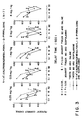
- Fig. 3 is a group of graphs indicating effects of intragastically administered N-(4'-chlorobenzenesulfonyl)-2-pyrrolidone on delayed discrimination response in rats, N-(4'-chlorobenzenesulfonyl)-2-pyrrolidone (or Tween 80) being administered 20 min before, and scopolamine (or saline) being administered 10 min before the start of the test session, respectively; and
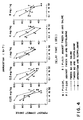
- Fig. 4 is a group of graphs indicating effects of intragastically administered aniracetam on delayed discrimination response in rats, aniracetam (or Tween 80) being administered 20 min before and scopolamine (or saline) being administered 10 min before the start of the test session, respectively.
- The pyrrolidone derivative used as an effective ingredient of the anti-amnestic agent according to the present invention is represented by the formula [I] described above.
- Specific examples of the compounds represented by the formula [I] are:
- (a) N-(4'-toluenesulfonyl)-2-pyrrolidone,
- (b) N-(4'-chlorobenzenesulfonyl)-2-pyrrolidone,
- (c) N-benzenesulfonyl-2-pyrrolidone, and
- (d) N-[4'-(1'',1''-dimethylethyl)benzoyl]-2-pyrrolidone, among which the compound (b) is preferred.
- These compounds are well-known and described in Chemical Abstract with Registry Nos. 10019-95-1, 73096-15-8, 88000-68-4 and 73665-30-2, respectively. The first two of these are also disclosed in Japanese Patent Application Laid-Open No. 153763/80.
- The pyrrolidone derivative (I) according to the present invention may be prepared by an optional method suitable for the object.
- One of the specific preparation methods comprises providing the R- moiety and the pyrrolidone moiety of the compound of the formula (I) respectively from separate compounds and coupling them, and specifically it includes the reaction of a compound R-Z wherein Z represents a halogen atom and N-trimethylsilyl-2-pyrrolidone.
- This process can be carried out in accordance with the method of M. SAKAKIBARA et al.: Agric. Biol. Chem., 37(5), 1131 (1973).
- The reaction is ordinarily carried out by the use of an appropriate solvent, but when the reaction proceeds slow, it can be made rapid by conducting it in the absence of solvents. The solvents used for the reaction may be any inert solvents which will not participate in the reaction. Preferable examples are: aromatic hydrocarbons such as benzene, toluene, and xylene; halogenated hydrocarbons such as methylene chloride, chloroform and carbon tetrachloride; ethers such as diethyl ether, dioxane and tetrahydrofuran; ketones such as acetone and methyl ethyl ketone; esters such as ethyl acetate; acetonitrile; and dimethylformamide used singly or as a mixture thereof. The amount of the solvent used is not critical and it is generally used in an amount of 0 to 20 times those of the raw materials used.
- The reaction temperature is not critical and generally ranges from 0°C to 150°C. The reaction is generally completed in 30 minutes to 24 hours. In some cases, unreacted raw materials may be recovered, even if the reaction is continued further.
- Although the reaction ordinarily proceeds even in the absence of a catalyst, addition of an organic base such as triethylamine, pyridine, N-methyl-morpholine or dimethylaniline may accelerate it in the case where it proceeds too slowly.
- The isolation of the compound from the obtained reaction mixture and the purification thereof are usually carried out by using the techniques common to the instant field or organic synthetic chemistry.
- Another specific preparation method comprises forming a pyrrolidone moiety from a linear structure in a precursor for the compound represented by the formula (I) by cyclization reaction, specifically by the condensation-cyclization reaction of a compound R-NH-(CH₂)₃-COOH in the presence of an appropriate condensation agent.
- This process can be carried out in accordance with the method disclosed in Japanese Patent Application Laid-Open No. 153763/80.
- The condensation agents used herein are preferably dicyclohexylcarbodiimide (DCC), chlorocarbonate esters, and onium salts. In order to accelerate the reaction, an organic base such as triethylamine, dimethylaniline, N-methylmorpholine, pyridine, N-methylpiperidine, or N-methylpyrrolidone may be added to the reaction. The solvents used for the reaction may be any inert solvents which will not participate in the reaction and will readily dissolve the raw materials and reagents. Preferable solvents are: aromatic hydrocarbons such as benzene, toluene, and xylene; halogenated hydrocarbons such as methylene chloride, chloroform, dichloroethane, and carbon tetrachloride; and esters such as ethyl acetate, used singly or as a mixture thereof. The reaction proceeds rapidly at a temperature of -10°C to 50°C and is ordinarily completed in 30 minutes to 24 hours. The solvent is usually used in an amount of 1 to 20 times that of the raw materials.
- The product is generally isolated from the reaction mixture by subjecting it to isolation and purification procedures which are generally employed in the instant field of organic synthetic chemistry.
- The pyrrolidone derivative represented by the formula (I) is useful as an anti-amnestic agent.
- More specifically, the compound exhibits an anti-amnestic activity by inhibiting the activity or proline specific endopeptidase, and the inhibitory effect is more intensive than that of aniracetam which is a conventionally well-known anti-amnestic agent.
- There have already been reported several works with reference to the anti-amnestic effects of proline specific endopeptidase inhibitory agents [such as (a) Shin Kubota, Tohru Nakajima, Shunichi Okada, Tetsuo Hayashi and Keiji Nakamura: Abstracts of the Reports in the 56th Meeting of the Pharmacological Society of Japan, 141, (1983); (b) Tadashi Yoshimoto, Nobuhiro Kohriyama, Kunio Kaku, Hiroshi Oyama and Hironori Tsuru: Abstracts of the Reports in the 59th Meeting of the Biochemical Society of Japan, 621 (1986); (c) Tadashi Yoshimoto, Kenichi Tsukumo, Hiroshi Matsubara and Hironori Tsuru: Abstracts of the Reports in the 56th Meeting of the Biochemical Society of Japan, 831 (1983); (d) Japanese Patent Application Laid-Open No. 37764/1986.]
- A pyrrolidone derivative represented by the formula (I) can be formulated into preparations and administered in the same manner as the anti-amnestic agents such as aniracetam. It may be administered through either oral or perenteral route such as injection. It is generally formulated into a preparation by incorporating an appropriate carrier or diluent (e.g. pyrogen free distilled water, and starch). It is also possible to formulate into a preparation by blending the compound (I) to an anti-amnestic agent comprising the said compound with a compatible physiologically active substance or medicament.
- Although the dosage should be determined by the judgement of a doctor for individual patients, it may be said that the compound can be administered in a dosage lower than that of well-known aniracetam based on their proline specific endopeptidase inhibitory effects. The typical dosage may be 0.1 to 10 mg/kg body weight.
- The present invention is described in more detail by referring to the following examples, which are all illustrative of preferred embodiments of and not to limitative of the present invention.
- To a solution of 7.6 g of tosyl chloride (0.04 mole) and 6.9 g of N-trimethylsilyl-2-pyrrolidone (0.044 mole) in 50 ml of anhydrous tetrahydrofuran was added 0.2 ml of triethylamine, and the mixture was stirred at 90°C for 16 hours. The solvent was removed under vacuum, and the residue was dissolved in 50 ml of chloroform. To this solution was added 15 g of silica gel (Wako-Gel C-200), and then chloroform was removed under vacuum. The powdery residue was suspended in a mixed solvent of hexane-ethyl acetate (3:2), and the suspension was subjected to chromatography on a column (
D 40 mm x L 500 mm) of 300 g of silica gel (Wako Gel C-200) eluted with a mixed solvent of hexane-ethyl acetate (3:2). The crystalline product thus obtained was recrystallized from a mixture of chloroform-ether to give 2.98 g of N-(4'-toluenesulfonyl)-2-pyrrolidone as colorless crystals
(a) mp: 144.5 to 145.5°C.
(b)
(c) ¹H-NMR (100 MHz, CDCl₃) δ: 2.04 (quintet, J = 7 Hz, 1H), 2.07 (quintet, J = 7 Hz, 1H), 2.43 (t, J = 7 Hz, 1H), 2.44 (s, 3H), 2.45 (t, J = 7 Hz, 1H), 3.90 (t, J = 7 Hz, 2H), 7.34 (d, J = 8 Hz, 2H), 7.93 (d, J = 8 Hz, 2H).
(d) Elementary analysis:Calculated for C₁₁H₁₃NO₃S; C: 55.21, H: 5.48, N: 5.85, Found; C: 55.44, H: 5.60, N: 5.77.
(e) FDMS (m/z): 239 (M⁺). - In 10 ml of chloroform was suspended 2.57 g of N-(4'-toluenesulfonyl)-4-aminobutyric acid (0.01 mole), and 1.21 g of triethylamine (0.012 mole) was added dropwise to the mixture with stirring on a water bath at ca. 20°C. While the mixture thus obtained was stirred on an ice-salt bath, a solution of 1.41 g of ethyl chlorocarbonate (0.013 mole) in 2 ml of chloroform was added dropwise at ca. 20°C. After completion of addition, stirring was continued for further 2 hours, and the reaction was diluted with 15 ml of ethyl acetate, washed sequentially with water (5 ml x 2), 1N HCl
(5 ml) and water (5 ml x 2), and dried over anhydrous sodium sulfate. The solution was filtered, and the solvent was removed under reduced pressure. The residue thus obtained was recrystallized from a mixed solvent of chloroform-ether to give 2.37 g of N-(4'-toluenesulfonyl)-2-pyrrolidone as colorless crystals. Physical properties were identical with those in Synthetic Example 1. -
- To a solution of 8.4 g of 4-chlorobenzenesulfonyl chloride (0.04 mole) and 6.9 g of N-trimethylsilyl-2-pyrrolidone (0.044 mole) in 50 ml of anhydrous tetrahydrofuran was added 0.2 ml of trimethylamine, and the mixture was stirred at the reflux temperature for 30.5 hours. The solvent was removed from the reaction under reduced pressure, and the residue was dissolved in 50 ml of chloroform. After addition of 15 g of silica gel (Wako Gel C-200) to the solution, chloroform was again removed under reduced pressure. The powdery residue thus obtained was supended in a mixed solvent of hexane-ethyl acetate (7:3). The suspension was subjected to chromatography on a column (
D 40 mm x L 500 mm) of 300 g of silica gel (Wako Gel C-200). Elution with a mixed solvent of hexane-ethyl acetate (7:3) followed by a mixed solvent of hexane-ethyl acetate (3:2) gave a crystalline product, which was recrystallized from a mixed solvent of chloroform-ether to give 5.83 g of N-(4'-chlorobenzenesulfonyl)-2-pyrrolidone as crystals.
(a) mp: 155 - 155.5°C (mp: 150 - 151 °C, which is disclosed in Japanese Patent Application No. 153763/80),
(b)
(c) ¹H-NMR (100 MHz, CDCl₃) δ: 2.10 (quintet, J = 7 Hz, 2H), 2.46 (t, J = 7 Hz, 2H), 3.91 (t, J = 7 Hz, 2H), 7.52 (d, J = 8 Hz, 2H), 8.00 (d, J = 8 Hz, 2H).
(d) Elementary analysis:Calculated for C₁₀H₁₀NClO₃S; C: 46.24, H: 3.88, N: 5,39, Found; C: 46.50, H: 3.96, N: 5.45.
(e) FDMS (m/z): 259 (M⁺). - In 20 ml of tetrahydrofuran was dissolved 2.78 g of N-(4'-chlorobenzenesulfonyl)-4-aminobutyric acid (0.01 mole). To the stirred solution on an ice bath was added 2.06 g of dicyclohexylcarbodiimide (0.01 mole), and the mixture was stirred at 0°C for 21 hours. The reaction mixture was filtered, and the solid material was washed with anhydrous tetrahydrofuran. The filtrate and the washings were combined, and tetrahydrofuran was removed under reduced pressure. The residue thus obtained was recrystallized from a mixed solvent of chloroform-ether to give 2.37 g of N-(4'-chlorobenzenesulfonyl)-2-pyrrolidone as crystals. Physical properties were identical with those in Synthetic Example 3.
- To 7.06 g of benzenesulfonyl chloride (0.04 mole) was added 6.9 g of N-trimethylsilyl-2-pyrrolidone (0.044 mole), and the mixture was stirred at the reflux temperature for 30 minutes. The reaction mixture was subjected to chromatography on a column (
D 40 mmx L 250 mm) of 150 g of silica gel (Wako Gel C-200). Elution with a mixed solvent of hexane-ethyl acetate (3:2) gave a crystalline product, which was recrystallized from a mixed solvent of chloroform-ether to give 3.34 g of N-benzenesulfonyl-2-pyrrolidone as colorless crystals.
(a) mp: 83°C,
(b)
(c) ¹H-NMR (100 MHz, CDCl₃) δ: 2.08 (quintet, J = 7 Hz, 2H), 2.44 (t, J = 7 Hz, 2H), 3.91 (t, J = 7 Hz, 2H), 7.61 (m, 3H), 8.06 (m, 2H).
(d) Elementary analysis:Calculated for C₁₀H₁₁NO₃S; C: 53.32, H: 4.92, N: 6.22, Found; C: 53.20, H: 4.82, N: 6.11.
(e) FDMS (m/z): 226 (M⁺). - To 100 ml of anhydrous methylene chloride were added 2.43 g of N-benezenesulfonyl-4-aminobutyric acid (0.01 mole), 4.0 g of 2-chloro-1-methylpyridinium iodide and 3.0 g of triethylamine, and the mixture was stirred at the reflux temperature for 8 hours. A 50 ml portion of 10% aqueous potassium carbonate was added to the reaction, and the mixture was extracted with chloroform. The organic layer was washed with brine and dried over anhydrous sodium sulfate. The solvent was removed under reduced pressure. The residue was subjected to chromatography on a column (
D 40 mmx L 200 mm) of 120 g of silica gel (Wako Gel C-200). Elution with a mixed solvent of hexane-ethyl acetate (3:2)yielded 2.15 g of N-benzenesulfonyl-2-pyrrolidone as colorless crystals. Physical properties were identical with those in Synthetic Example 5. - The inhibitory effects of the compounds represented by the formula (I) were determined by measuring the residual peptidase activity. The experimental procedure followed the method by Tadashi Yoshimoto and Hironori Tsuru: Tanpakushitsu, Kakusan and Koso, 29 (2), 127 (1984).
- The results are shown in the following table. A residual activity of the peptidase for a well-known aniracetam used as a standard is also shown in the table.

- The test was carried out in accordance with the method described by Nabeshima et al.: Phychopharmacology, (1986) 89, 334 - 337. That is, a wooden platform (4 x 4 x 4 cm) was placed in the center on a floor of a stainless steel grid (30 x 30 cm), and the whole apparatus was surrounded with clear acrylic resin plates. In acquisition test, a mouse (ddY, male, 5 to 6 week old) was placed on the platform, and electric stimulus was applied for 20 seconds immediately after the mouse stepped down on the grid. Then the mouse was taken out of the apparatus and cycloheximide hydrochloride (30 mg/kg) was administered subcutaneously in order to induce amnesia. In the retention test, the mouse was again placed on the platform, and the time before the mouse stepped down on the grid was measured as the step-down latency. N-(4'-chlorobenzenesulfonyl)-2-pyrrolidone and aniracetam were individually suspended in 0.3
% Tween® 80 and administered orally at 20 minutes before acquisition test. - As shown in Fig. 1, N-(4'-chlorobenzenesulfonyl)-2-pyrrolidone significantly remitted the cycloheximide induced amnesia in a dosage of 0.1 - 1.0 mg/kg. Aniracetam showed an effectiveness in a dosage of 5 - 20 mg/kg.
- An apparatus equipped with two lever switches on the respective sides of the front face of the inside of an operant experimental box (25 x 31 x 33 cm), red lamps just above respective levers and a white lamp at a further upper position was used for the experiment. A rat bred under restricted feeding (SD, male, 150 to 300 g) was placed in the apparatus. Either one of the red lamps arranged on the right and left sides was lit for 5 seconds, and, at a specific time (delayed time) after it was turned off, the white lamp at the center was lit. The system of the apparatus was so set that if the lever which was at the side of the red lamp having lit was pushed, a feed pellet (ca. 50 mg) was given as a correct choice, and if another lever was pushed no pellet was given as an incorrect choice. After the training had been conducted to ensure that, in the test of delay time being 0.1 sec, the correct choice rate was maintained at the level of 80 % or more for three consecutive days, the test was conducted. In the test, delay times were set at 0.1, 4, 16 and 32 seconds, and, at each of the delay times, 6 runs were conducted at random (24 runs in total, 1 run/minute). The test was started after 10 minutes of subcutaneous administration of 0.06 mg/kg of (-)-scopolamine hydrochloride to obtain an amnestic rat which showed a low level of the correct selection rate compared with a control administered with a physiological saline. N-(4'-chlorobenzenesulfonyl)-2-pyrrolidone and aniracetam were administered orally in the form of suspensions in 0.3
% Tween® 80 at 20 minutes before test. - As shown in Fig. 3, N-(4'-chlorobenzenesulfonyl)-2-pyrrolidone showed remission of scopolamine induced amnesia at several dosages and delay times. On the other hand, aniracetam did not remit at all scopolamine induced amnesia as shown in Fig. 4.
- In either case of the above-described tests, N-(4'-chlorobenzenesulfonyl)-2-pyrrolidone exhibited an anti-amnestic effect and was more effective than aniracetam.
- Acute toxicity was evaluated by oral administration of the compounds to ddY male mice (7 week old).
- High level of safety was confirmed for N-(4'-chlorobenzenesulfonyl)-pyrrolidone according to the present invention because of its LD₅₀ being 2000 mg/kg or more.
Claims (6)
- A pyrrolidone derivative represented by the following formula [I] for use as an anti-amnestic agent:

 (a) when X is -SO₂-, there is no case where R' is 3-CF₃, 4-Cl-5-CF₃, 3,5-(CF₃)₂ or 3-NO₂;(b) when X is -CO-, there is no case where n denotes 1 or 2 and R' is a halogen atom or a nitro group;(c) when X is -SO₂-, there is no case where n denotes 1 or 2 and R' is a group other than 4-Cl or 3-NO₂, and(d) when n denotes 2, there is no case where the groups R' represent the same group which is a halogen atom or a nitro group.
 - A pyrrolidone derivative according to Claim 1, wherein the compound represented by the formula [I] is selected from the group consisting of N-(4'-toluenesulfonyl)-2-pyrrolidone, N-(4'-chlorobenzenesulfonyl)-2-pyrrolidone, N-benzenesulfonyl-2-pyrrolidone and N-[4'-(1'',1''-dimethylethyl)benzoyl]-2-pyrrolidone.
- A pyrrolidone derivative according to Claim 2, wherein the compound represented by the formula [I] is N-(4'-chlorobenzenesulfonyl)-2-pyrrolidone.
- An anti-amnestic agent comprising as an active ingredient a pyrrolidone derivative represented by the following formula [I];

 (a) when X is -SO₂-, there is no case where R' is 3-CF₃, 4-Cl-5-CF₃, 3,5-(CF₃)₂ or 3-NO₂;(b) when X is -CO-, there is no case where n denotes 1 or 2 and R' is a halogen atom or a nitro group;(c) when X is -SO₂-, there is no case where n denotes 1 or 2 and R' is a group other than 4-Cl or 3-NO₂; and(d) when n denotes 2, there is no case where the groups R' represent the same group which is a halogen atom or a nitro group.
 - An anti-amnestic agent according to Claim 4, wherein the compound represented by the formula [I] is selected from the group consisting of N-(4'-toluenesulfonyl)-2-pyrrolidone, N-(4'-chlorobenzenesulfonyl)-2-pyrrolidone, N-benzenesulfonyl-2-pyrrolidone and N-[4'-(1'',1''-dimethylethyl)benzoyl]-2-pyrrolidone.
- An anti-amnestic agent according to Claim 5, wherein the compound represented by the formula [I] is N-(4'-chlorobenzenesulfonyl)-2-pyrrolidone.
Applications Claiming Priority (2)
| Application Number | Priority Date | Filing Date | Title |
|---|---|---|---|
| JP62046474A JPH0813740B2 (en) | 1987-02-28 | 1987-02-28 | Antiamnestic |
| JP46474/87 | 1987-02-28 |
Publications (3)
| Publication Number | Publication Date |
|---|---|
| EP0288685A2 EP0288685A2 (en) | 1988-11-02 |
| EP0288685A3 EP0288685A3 (en) | 1990-10-31 |
| EP0288685B1 true EP0288685B1 (en) | 1993-05-26 |
Family
ID=12748187
Family Applications (1)
| Application Number | Title | Priority Date | Filing Date |
|---|---|---|---|
| EP88102956A Expired - Lifetime EP0288685B1 (en) | 1987-02-28 | 1988-02-27 | Use of pyrrolidone derivatives as anti-amnestic agents |
Country Status (4)
| Country | Link |
|---|---|
| US (1) | US4833156A (en) |
| EP (1) | EP0288685B1 (en) |
| JP (1) | JPH0813740B2 (en) |
| DE (1) | DE3881270T2 (en) |
Families Citing this family (8)
| Publication number | Priority date | Publication date | Assignee | Title |
|---|---|---|---|---|
| JP2527958B2 (en) * | 1987-04-01 | 1996-08-28 | 三生製薬株式会社 | Central nervous system treatment |
| IT1216461B (en) * | 1988-02-26 | 1990-03-08 | Milano | DERIVATIVES OF 1_ARIL SOLFONIL2_PIRROLIDINONE THEIR PROCESSES OF PREPARATION AND THEIR USE AS MEDICINAL PRODUCTS. |
| US5164514A (en) * | 1988-02-26 | 1992-11-17 | Roussel Uclaf | Derivatives of 1-arylsulphonyl-2-pyrolidinone |
| IT1228454B (en) * | 1989-02-22 | 1991-06-19 | Roussel Maestretti S P A Milan | DERIVATIVES OF 1-ARILSOLFONIL 2 PIPERIDONE, THEIR PREPARATION PROCEDURE AND THEIR USE AS DRUGS. |
| JPH05508147A (en) * | 1989-10-25 | 1993-11-18 | ザ リージェンツ オブ ザ ユニバーシティ オブ カリフォルニア | Method of inhibiting L-glutamate transport |
| IT1244881B (en) * | 1990-12-13 | 1994-09-12 | Roussel Pharma Spa | DERIVATIVES OF 1-ARILSOLFONIL 2-PYROLIDONE, THEIR PREPARATION PROCEDURE AND THE NEW INTERMEDIATES SO OBTAINED, THEIR USE AS DRUGS AND THE PHARMACEUTICAL COMPOSITIONS CONTAINING THEM |
| FR2681864B1 (en) * | 1991-09-27 | 1995-03-31 | Adir | NOVEL BICYCLIC NITROGEN DERIVATIVES, THEIR PREPARATION PROCESS AND THE PHARMACEUTICAL COMPOSITIONS CONTAINING THE SAME. |
| JP4641595B2 (en) * | 2000-07-14 | 2011-03-02 | 日本電産コパル株式会社 | Claw pole permanent magnet type stepping motor |
Family Cites Families (1)
| Publication number | Priority date | Publication date | Assignee | Title |
|---|---|---|---|---|
| FR2553409B1 (en) * | 1983-10-18 | 1986-04-18 | Choay Sa | NOVEL BENZENESULFONYL-LACTAMES, PROCESS FOR THEIR PREPARATION AND THEIR USE AS ACTIVE SUBSTANCE OF PHARMACEUTICAL COMPOSITIONS |
-
1987
- 1987-02-28 JP JP62046474A patent/JPH0813740B2/en not_active Expired - Lifetime
-
1988
- 1988-02-26 US US07/160,600 patent/US4833156A/en not_active Expired - Fee Related
- 1988-02-27 DE DE8888102956T patent/DE3881270T2/en not_active Expired - Fee Related
- 1988-02-27 EP EP88102956A patent/EP0288685B1/en not_active Expired - Lifetime
Also Published As
| Publication number | Publication date |
|---|---|
| DE3881270D1 (en) | 1993-07-01 |
| EP0288685A3 (en) | 1990-10-31 |
| JPH0813740B2 (en) | 1996-02-14 |
| JPS63215625A (en) | 1988-09-08 |
| EP0288685A2 (en) | 1988-11-02 |
| US4833156A (en) | 1989-05-23 |
| DE3881270T2 (en) | 1993-09-16 |
Similar Documents
| Publication | Publication Date | Title |
|---|---|---|
| DE19510566A1 (en) | Benzazepine, benzoxazepine and benzothiazepine N-acetic acid derivatives and process for their preparation and medicaments containing these compounds | |
| US4916146A (en) | Amino acid imide derivatives, usage thereof, and medicinal composition containing the same | |
| RU2145957C1 (en) | Derivatives of 5-[(2h-pyrrole-2-ylidene)methyl]-2,2'-bi-1h- -pyrrole showing immunomodulating activity, method of their synthesis, pharmaceutical composition based on thereof | |
| KR100188504B1 (en) | Formulations Useful for Inhibiting Overrelease of Brain Glutamate | |
| EP0830863A1 (en) | Drugs for increasing gastrointestinal blood supply | |
| EP0288685B1 (en) | Use of pyrrolidone derivatives as anti-amnestic agents | |
| US3723617A (en) | Anti-inflammatory compositions containing acylated-{62 -d-glucopyranosides and methods of using them | |
| JPH01131156A (en) | piperidine derivatives | |
| EP0175465A1 (en) | An association of, or composition comprising, haloperidol and a diphenylalkyl adenosine or a diphenylalkyl-2-amino adenosine | |
| DE68911776T2 (en) | Conjugated oxybutenolides for the treatment of ulcers. | |
| US3947475A (en) | 5-Furoyl-2,2,4-trimethyl-1,4-dihydro-1H-1,5-benzodiazepine as an anti-inflammatory agent | |
| DE60126046T2 (en) | Bicyclic amino-pyrazone derivatives, their preparation and pharmaceutical compositions | |
| US4077951A (en) | L-pyroglutamyl-L-prolinamide | |
| EP0721945A1 (en) | Benzolactam derivative | |
| US3836656A (en) | Substituted purines as hypolipidemics | |
| US4946963A (en) | Compounds for the control of hyperlipidemia using N-substituted isoxazolidine-3,5-diones | |
| GB2142635A (en) | Organogermanium compound and an opioid peptide-degrading enzyme inhibitor containing the same | |
| US4794115A (en) | Method of treating hyperlipemia | |
| EP0226753B1 (en) | Alpha-tocopherol (halo) uridine phosphoric acid diester, salts thereof, and methods for producing the same | |
| JP2517582B2 (en) | Pyrrolidone derivative and its use | |
| US5859046A (en) | Biologically active oreido derivatives useful in the treatment of multiple sclerosis | |
| JPH0324054A (en) | 1-acyl-2-pyrolyzinon and its compound for increasing learning and memory capability | |
| KR100309902B1 (en) | New medicinal uses of dihydropyridine derivatives | |
| US3621056A (en) | Substituted benzylideneamino guanidines | |
| EP0680321B1 (en) | Lysine salt of 6-chloro-5-fluoro-3-(2-thenoyl)-2-oxindole-1-carboxamide |
Legal Events
| Date | Code | Title | Description |
|---|---|---|---|
| PUAI | Public reference made under article 153(3) epc to a published international application that has entered the european phase |
Free format text: ORIGINAL CODE: 0009012 |
|
| AK | Designated contracting states |
Kind code of ref document: A2 Designated state(s): BE CH DE FR GB IT LI NL |
|
| PUAL | Search report despatched |
Free format text: ORIGINAL CODE: 0009013 |
|
| AK | Designated contracting states |
Kind code of ref document: A3 Designated state(s): BE CH DE FR GB IT LI NL |
|
| 17P | Request for examination filed |
Effective date: 19901218 |
|
| 17Q | First examination report despatched |
Effective date: 19911203 |
|
| GRAA | (expected) grant |
Free format text: ORIGINAL CODE: 0009210 |
|
| AK | Designated contracting states |
Kind code of ref document: B1 Designated state(s): BE CH DE FR GB IT LI NL |
|
| REF | Corresponds to: |
Ref document number: 3881270 Country of ref document: DE Date of ref document: 19930701 |
|
| ET | Fr: translation filed | ||
| ITF | It: translation for a ep patent filed | ||
| PLBE | No opposition filed within time limit |
Free format text: ORIGINAL CODE: 0009261 |
|
| STAA | Information on the status of an ep patent application or granted ep patent |
Free format text: STATUS: NO OPPOSITION FILED WITHIN TIME LIMIT |
|
| 26N | No opposition filed | ||
| PGFP | Annual fee paid to national office [announced via postgrant information from national office to epo] |
Ref country code: BE Payment date: 20000117 Year of fee payment: 13 |
|
| PGFP | Annual fee paid to national office [announced via postgrant information from national office to epo] |
Ref country code: GB Payment date: 20000223 Year of fee payment: 13 |
|
| PGFP | Annual fee paid to national office [announced via postgrant information from national office to epo] |
Ref country code: NL Payment date: 20000229 Year of fee payment: 13 |
|
| PGFP | Annual fee paid to national office [announced via postgrant information from national office to epo] |
Ref country code: DE Payment date: 20000323 Year of fee payment: 13 |
|
| PGFP | Annual fee paid to national office [announced via postgrant information from national office to epo] |
Ref country code: CH Payment date: 20000526 Year of fee payment: 13 |
|
| PG25 | Lapsed in a contracting state [announced via postgrant information from national office to epo] |
Ref country code: GB Free format text: LAPSE BECAUSE OF NON-PAYMENT OF DUE FEES Effective date: 20010227 |
|
| PG25 | Lapsed in a contracting state [announced via postgrant information from national office to epo] |
Ref country code: LI Free format text: LAPSE BECAUSE OF NON-PAYMENT OF DUE FEES Effective date: 20010228 Ref country code: CH Free format text: LAPSE BECAUSE OF NON-PAYMENT OF DUE FEES Effective date: 20010228 Ref country code: BE Free format text: LAPSE BECAUSE OF NON-PAYMENT OF DUE FEES Effective date: 20010228 |
|
| PGFP | Annual fee paid to national office [announced via postgrant information from national office to epo] |
Ref country code: FR Payment date: 20010423 Year of fee payment: 14 |
|
| BERE | Be: lapsed |
Owner name: KIRIN BEER K.K. Effective date: 20010228 |
|
| PG25 | Lapsed in a contracting state [announced via postgrant information from national office to epo] |
Ref country code: NL Free format text: LAPSE BECAUSE OF NON-PAYMENT OF DUE FEES Effective date: 20010901 |
|
| REG | Reference to a national code |
Ref country code: CH Ref legal event code: PL |
|
| GBPC | Gb: european patent ceased through non-payment of renewal fee |
Effective date: 20010227 |
|
| PG25 | Lapsed in a contracting state [announced via postgrant information from national office to epo] |
Ref country code: FR Free format text: LAPSE BECAUSE OF NON-PAYMENT OF DUE FEES Effective date: 20011031 |
|
| NLV4 | Nl: lapsed or anulled due to non-payment of the annual fee |
Effective date: 20010901 |
|
| REG | Reference to a national code |
Ref country code: FR Ref legal event code: ST |
|
| PG25 | Lapsed in a contracting state [announced via postgrant information from national office to epo] |
Ref country code: DE Free format text: LAPSE BECAUSE OF NON-PAYMENT OF DUE FEES Effective date: 20011201 |
|
| PG25 | Lapsed in a contracting state [announced via postgrant information from national office to epo] |
Ref country code: IT Free format text: LAPSE BECAUSE OF NON-PAYMENT OF DUE FEES Effective date: 20050227 |