EP0680321B1 - Lysine salt of 6-chloro-5-fluoro-3-(2-thenoyl)-2-oxindole-1-carboxamide - Google Patents
Lysine salt of 6-chloro-5-fluoro-3-(2-thenoyl)-2-oxindole-1-carboxamide Download PDFInfo
- Publication number
- EP0680321B1 EP0680321B1 EP94906511A EP94906511A EP0680321B1 EP 0680321 B1 EP0680321 B1 EP 0680321B1 EP 94906511 A EP94906511 A EP 94906511A EP 94906511 A EP94906511 A EP 94906511A EP 0680321 B1 EP0680321 B1 EP 0680321B1
- Authority
- EP
- European Patent Office
- Prior art keywords
- oxindole
- chloro
- carboxamide
- fluoro
- thenoyl
- Prior art date
- Legal status (The legal status is an assumption and is not a legal conclusion. Google has not performed a legal analysis and makes no representation as to the accuracy of the status listed.)
- Expired - Lifetime
Links
Classifications
-
- C—CHEMISTRY; METALLURGY
- C07—ORGANIC CHEMISTRY
- C07D—HETEROCYCLIC COMPOUNDS
- C07D409/00—Heterocyclic compounds containing two or more hetero rings, at least one ring having sulfur atoms as the only ring hetero atoms
- C07D409/02—Heterocyclic compounds containing two or more hetero rings, at least one ring having sulfur atoms as the only ring hetero atoms containing two hetero rings
- C07D409/06—Heterocyclic compounds containing two or more hetero rings, at least one ring having sulfur atoms as the only ring hetero atoms containing two hetero rings linked by a carbon chain containing only aliphatic carbon atoms
-
- A—HUMAN NECESSITIES
- A61—MEDICAL OR VETERINARY SCIENCE; HYGIENE
- A61K—PREPARATIONS FOR MEDICAL, DENTAL OR TOILETRY PURPOSES
- A61K31/00—Medicinal preparations containing organic active ingredients
- A61K31/33—Heterocyclic compounds
- A61K31/395—Heterocyclic compounds having nitrogen as a ring hetero atom, e.g. guanethidine or rifamycins
- A61K31/40—Heterocyclic compounds having nitrogen as a ring hetero atom, e.g. guanethidine or rifamycins having five-membered rings with one nitrogen as the only ring hetero atom, e.g. sulpiride, succinimide, tolmetin, buflomedil
-
- A—HUMAN NECESSITIES
- A61—MEDICAL OR VETERINARY SCIENCE; HYGIENE
- A61P—SPECIFIC THERAPEUTIC ACTIVITY OF CHEMICAL COMPOUNDS OR MEDICINAL PREPARATIONS
- A61P25/00—Drugs for disorders of the nervous system
- A61P25/04—Centrally acting analgesics, e.g. opioids
-
- A—HUMAN NECESSITIES
- A61—MEDICAL OR VETERINARY SCIENCE; HYGIENE
- A61P—SPECIFIC THERAPEUTIC ACTIVITY OF CHEMICAL COMPOUNDS OR MEDICINAL PREPARATIONS
- A61P29/00—Non-central analgesic, antipyretic or antiinflammatory agents, e.g. antirheumatic agents; Non-steroidal antiinflammatory drugs [NSAID]
Definitions
- Kadin in United States Patent 4,556,672 describes certain 2-oxindole-1-carboxamide compounds with acyl substituents at the 3-position which are inhibitors of cyclo-oxygenase (CO) and lipoxygenase (LO) enzymes. These compounds are useful as analgesic agents in mammals and are useful in ameliorating or eliminating pain, such as pain experienced by patients recovering from surgery or trauma. These compounds are also useful for chronic administration to mammals to alleviate the symptoms of chronic diseases such as the inflammation and pain associated with rheumatoid arthritis and osteoarthritis.
- CO cyclo-oxygenase
- LO lipoxygenase
- Kadin specifically claims a method of eliciting an analgesic response, and also a method of treating an inflammatory disease, in a mammalian subject, which comprises treating said mammalian subject with an effective amount of a member selected from a genus of 2-oxindole-1-carboxamides.
- This genus includes the chemical compound 6-chloro-5-fluoro-3-(2-thenoyl)-2-oxindole-1-carboxamide. However, use of this latter compound is not specifically identified.
- the 2-oxindole-1-carboxamides of Kadin are highly effective analgesics and antiinflammatories; but 5-chloro-3-(2-thenoyl)-2-oxindole-1-carboxamide in this group of compounds has been found to induce non-progressive, reversible proteinuria in some patients. 6-Chloro-5-fluoro-3-(2-thenoyl)-2-oxindole-1-carboxamide does not induce proteinuria.
- This invention provides an improved method (not claimed) of eliciting an analgesic or antiinflammatory response in a human subject by administering to said human subject an effective analgesic or anti-inflammatory amount of a 3-acyl-2-oxindole-1-carboxamide compound, in which the improvement comprises eliciting such analgesic or anti-inflammatory response while maintaining a normal urine protein/creatinine ratio in said subject by administering an analgesic or anti-inflammatory, and non-proteinuria eliciting amount of 6-chloro-5-fluoro-3-(2-thenoyl)-2-oxindole-1-carboxamide or a pharmaceutically acceptable base salt thereof.
- This invention also provides the novel lysine salt of 6-chloro-5-fluoro-3-(2-thenoyl)-2-oxindole-1-carboxamide which has advantageous properties for formulation.
- This invention also provides a method (not claimed) of eliciting an analgesic response or treating an inflammatory disease in a mammalian subject which comprises administering to said mammalian subject an analgesic or antiinflammatory effective amount of a lysine salt of 6-chloro-5-fluoro-3-(2-thenoyl)-2-oxindole carboxamide.
- this invention provides a method (not claimed) of eliciting an analgesic or anti-inflammatory response while maintaining normal urine protein/creatinine ratio in a human subject suffering from pain or inflammatory condition, which human subject is at risk from non-progressive reversible proteinuria induced by 2-oxindole-1-carboxamide analgesics and anti-inflammatories, which comprises administering to said human subject an effective analgesic or anti-inflammatory and non-proteinuria eliciting amount of the lysine salt of 6-chloro-5-fluoro-3-(2-thenoyl)-2-oxindole-1-carboxamide.
- This invention further provides a pharmaceutical composition
- a pharmaceutical composition comprising a lysine salt of 6-chloro-5-fluoro-3-(2-thenoyl)-2-oxindole-1-carboxamide and a pharmaceutically acceptable carrier.
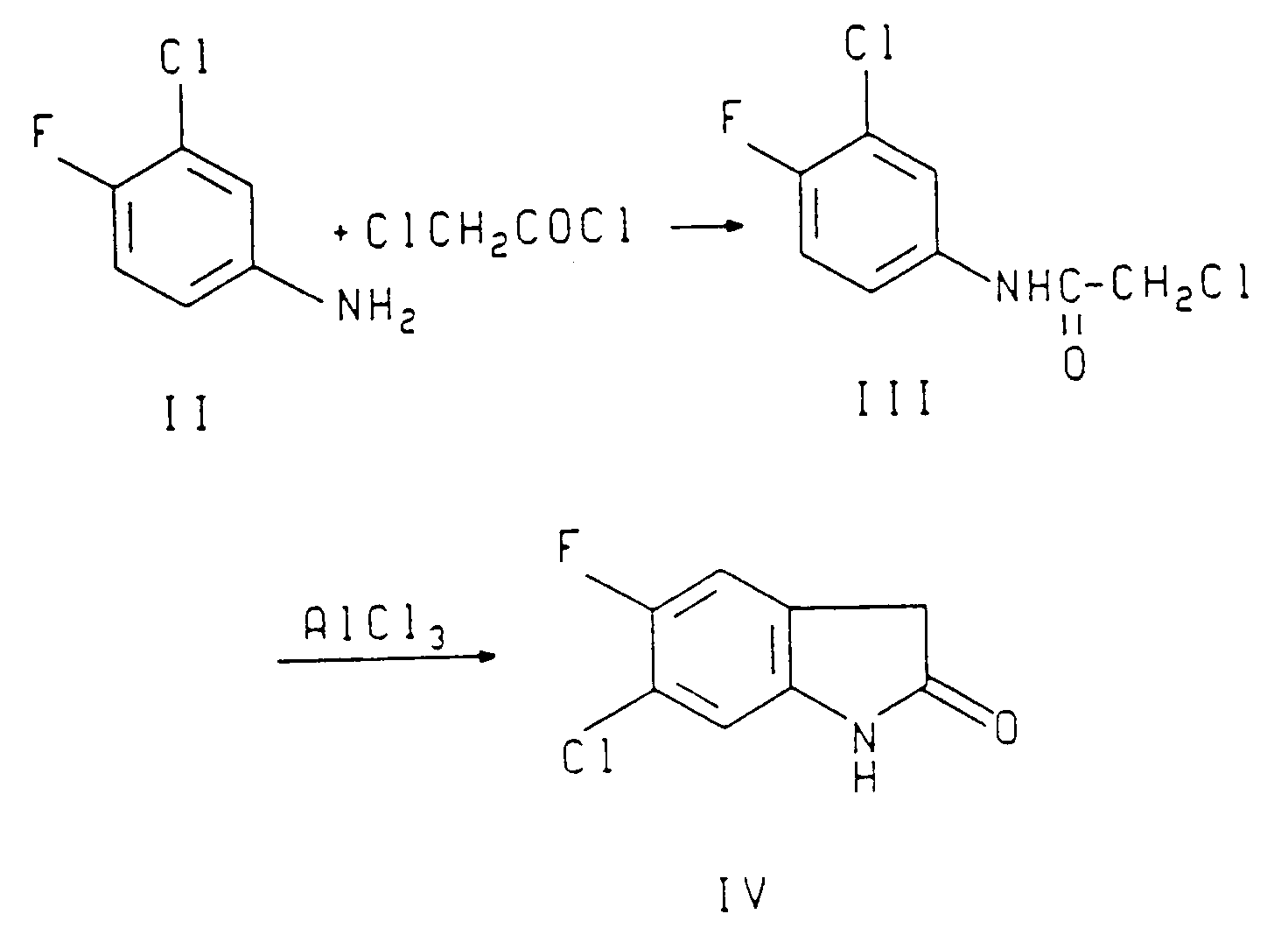
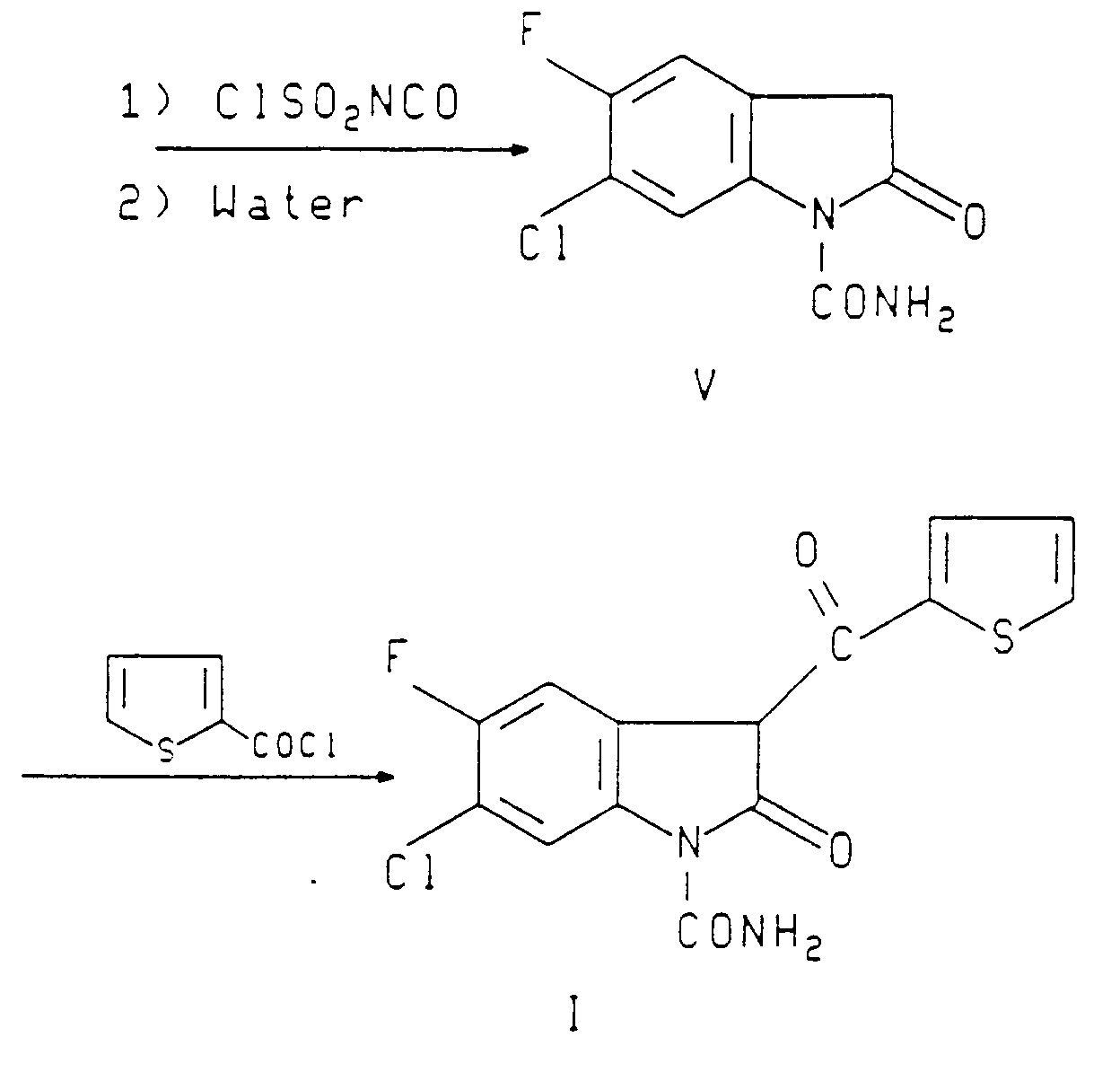
- 6-chloro-5-fluoro-3-(2-thenoyl)-2-oxindole-1-carboxamide (I) is prepared by the following sequence of reactions as described in U.S. 4,556,672 herein incorporated by reference and preparations 1-3.
- 6-chloro-5-fluoro-3-(2-thenoyl)-2-oxindole-1-carboxamide is acidic and forms base salts.
- All such base salts, including the lysine salt can be prepared by conventional methods. For example, they can be prepared simply by combining the acidic and basic entities, usually in a stoichiometric ratio, in either an aqueous, non-aqueous or partially aqueous medium, as appropriate, or by interconverting one salt with another salt. The salts are recovered either by filtration, by precipitation with another solvent followed by filtration, by evaporation of the solvent, as appropriate, or, in the case of aqueous solutions, by lyophilization.
- Lysine as used herein means L-lysine, D-lysine, racemic lysine or mixtures thereof.
- anhydrous, crystalline L-lysine salt of 6-chloro-5-fluoro-3-(2-thenoyl)-2-oxindole-1-carboxamide possesses valuable and unobvious properties.
- this salt is readily handled and formulated into dosage forms such as capsules. It is not hygroscopic, remaining stable in dosage forms even at 100% relative humidity.
- the salt has high crystallinity, a high melting point and good solubility in water.
- the sodium and potassium salts absorb significant amounts of water from moist air.
- This advantageous crystalline salt is generally formulated and used as an analgesic according to earlier disclosure of Kadin, cited above, hereby incorporated by reference.
- 6-Chloro-5-fluoro-3-(2-thenoyl)-2-oxindole-1-carboxamide is recognized to exist in a number of enolic forms, such as 6-chloro-5-fluoro-3-(hydroxy-thiopen-2-yl-methylene)-2-oxo-2,3-dihydro-indole-1-carboxamide. All such tautomers are within the scope of this invention, and are suitable starting materials for the lysine salt of this invention.
- This activity can be demonstrated in mice by showing blockage of the abdominal stretching induced by administration of 2-phenyl-1,4-benzoquinone (PBQ).
- PBQ 2-phenyl-1,4-benzoquinone
- the method is based on that of Siegmund et al., Proc. Soc. Exp. Biol. Med. , 95 , 729-731, (1957), as adapted for high throughput [see further Milne and Twomey, Agents and Actions , 10 , 31-37, (1980)].
- the mice used in these experiments are Carworth males, albino CF-1 strain, weighing 18-20 g. All mice are fasted overnight prior to drug administration and testing.
- 6-Chloro-5-fluoro-3-(2-thenoyl)-2-oxindole-1-carboxamide is dissolved or suspended in a vehicle consisting of ethanol (5%), emulphor 620 (a mixture of polyoxyethylene fatty acid esters, 5%) and saline (90%).
- a vehicle consisting of ethanol (5%), emulphor 620 (a mixture of polyoxyethylene fatty acid esters, 5%) and saline (90%).
- This vehicle also served as control.
- Doses are on a logarithmic scale (i.e.,...0.32, 1.0, 3.2, 10.32...mg/kg), and are calculated from weights of the salt when applicable.
- the route of administration is oral, with concentrations varied to allow a constant dosage of 10 ml/kg of mouse.
- the aforesaid method of Milne and Towney is used to determine efficacy and potency.
- mice are treated with compounds orally, and one hour later received PBQ, 2 mg/kg intraperitoneally. Individual mice are then immediately placed in a warmed lucite chamber, and, starting five minutes after PBQ administration, the number of abdominal constrictions during the subsequent 5 minutes are recorded.
- the degree of analgesic protection, Maximal Possible Effect (%MPE) is calculated on the basis of suppression of abdominal constriction relative to counts from concurrent control animals run on the same day. At least four such determinations provide dose-response data for generation of an MPE 50 , the best estimate of the dose that reduces abdominal constriction to 50% of control levels.
- 6-Chloro-5-fluoro-3-(2-thenoyl)-2-oxindole-1-carboxamide also possesses anti-inflammatory activity. This activity can be demonstrated in rats by a method based on the standard carrageenin-induced rat-foot edema test. [Winter et al., Proc. Soc. Exp. Biol. Med. , 111 , 544, (1963)].
- Unanesthetized, adult, male, albino rats of 150 g to 190 g body weight are numbered, weighed, and an ink mark placed on the right lateral malleolus. Each paw is immersed in mercury exactly to the ink mark.
- the mercury is contained in a glass cylinder, connected to a Statham Pressure Transducer. The output from the transducer is fed through a control unit to a microvoltameter. The volume of mercury displaced by the immersed paw is read.
- the drug is given by gavage.
- edema is induced by injection of 0.05 ml of 1% solution of carrageenin into the plantar tissue of the marked paws. Immediately thereafter, the volume of the injected foot is measured. The increase in foot volume 3 hours after the injection of carrageenin constitutes the individual inflammatory response.
- 6-chloro-5-fluoro-3-(2-thenoyl)-2-oxindole-1-carboxamide and salts thereof make them useful for acute administration to mammals for the control of pain, e.g., post-operative pain and the pain of trauma.
- 6-chloro-5-fluoro-3-(2-thenoyl)-2-oxindole-1-carboxamide is useful for chronic administration to mammals for the alleviation of the symptoms of chronic diseases, such as the inflammation of rheumatoid arthritis, and the pain associated with inflammation in osteoarthritis and other musculoskeletal and inflammatory disorders.
- a normal urine protein/creatinine ratio is herein defined as the protein/creatinine ratio exhibited by the subject prior to administration of any medication.
- a "non-proteinuria eliciting amount” is herein defined as a dosage of an analgesic or anti-inflammatory compound which does not significantly increase the urine protein/creatinine ratio of the subject over the normal value.
- “Significant increase or decrease” for proteinuria effects is herein defined as an increase or decrease having statistical significance as determined by conducting an analysis of variance (ANOVA). First, a regression line is fitted to protein/creatinine (PC) ratio data for each patient and treatment period, and a slope is determined. The slope is then analyzed using an ANOVA to test for sequence, period and treatment effects, to determine if a difference exists between the control and treated groups.
- ANOVA analysis of variance
- 5-Chloro-3-(2-thenoyl)-2-oxindole-1-carboxamide has been found to cause proteinuria in 10-15% of patients within four weeks at 80 mg/day; the proteinuria is non-progressive and reversible upon discontinuation of medication.
- the compound of this invention does not cause proteinuria at 320 mg/day. See Examples 1 and 2.
- 6-chloro-5-fluoro-3-(2-thenoyl)-2-oxindole-1-carboxamide or a pharmaceutically acceptable salt thereof is to be used as either an analgesic agent or an anti-inflammatory agent, it can be administered to a human subject either alone, or, preferably, in combination with pharmaceutically-acceptable carriers or diluents in a pharmaceutical composition, according to standard pharmaceutical practice.
- the compound can be administered orally or parenterally.
- Parenteral administration includes intravenous, intramuscular, intraperitoneal, subcutaneous and topical administration.
- the weight ratio of carrier to active ingredient will normally be in the range from 1:4 to 4:1, and preferably 1:2 to 2:1. However, in any given case, the ratio chosen will depend on such factors as the solubility of the active component, the dosage contemplated and the precise route of administration.
- the compound can be administered, for example, in the form of tablets or capsules, or as an aqueous solution or suspension.
- carriers which are commonly used include lactose and corn starch, and lubricating agents, such as magnesium stearate, are commonly added.
- useful diluents are lactose and dried corn starch.
- aqueous suspensions are required for oral use, the active ingredient is combined with emulsifying and suspending agents. If desired, certain sweetening and/or flavoring agents can be added.
- sterile solutions of the active ingredient are usually prepared, and the pH of the solutions should be suitably adjusted and buffered.
- the total concentration of solutes should be controlled to render the preparation isotonic.
- the daily dosage will normally be determined by the prescribing physician. Moreover, the dosage will vary according to the age, weight and response of the individual patient, as well as the severity of the patient's symptoms and the potency of the particular formulation being administered. However, for acute administration to relieve pain, an effective dose in most instances will be 0.01 to 0.5 g as needed (e.g., every four to six hours). For chronic administration, in most instances an effective dose will be from 0.01 to 1.0 g per day, and preferably 1 to 320 mg per day and more preferably 40 to 160 mg per day, in single or divided doses. On the other hand, it may be necessary to use dosages outside these limits in some cases.
- 6-chloro-5-fluoro-3-(2-thenoyl)-2-oxindole-1-carboxamide was administered to 36 patients at dose levels of 40, 80, 160 and 320 mg, once daily. A single dose was given on day 1, followed by a seven day washout period, and then dosing was continued for a further 21 days. At each dose level, nine subjects received 6-chloro-5-fluoro-3-(2-thenoyl)-2-oxindole-1-carboxamide and three subjects received placebo, with the placebo given as an identical matching form.
- the study was double blind with respect to within group assignment and single blind with respect to between group assignment. Computer generated randomization was used to assign subjects to the various treatment regimens.
- Each dose (drug and placebo) was administered after an overnight fast with 240 ml of water.
- blood sufficient for 1 ml plasma was collected at hour 0 (for baseline) and 0.5, 1, 2, 3, 4, 6, 8, 12, 16, 24, 48, 72, 96, 120, 144 and 168 hours postdose (for the last day of dosing 192, 216 and 240 hour samples were also collected).
- Urine 24 hr was also collected on the first and last day of dosing for the determination of creatinine, uric acid, ⁇ 2-microglobulin, albumin and total protein.
- 6-chloro-5-fluoro-3-(2-thenoyl)-2-oxindole-1-carboxamide was administered to 25 patients at a dose level of 80 mg/day. Patients were randomized to receive either 6-chloro-5-fluoro-3-(2-thenoyl)-2-oxindole-1-carboxamide for four weeks followed by placebo for four weeks, or to receive placebo for four weeks followed by 6-chloro-5-fluoro-3-(2-thenoyl)-2-oxindole-1-carboxamide for four weeks. Patients could switch to the second leg of the treatment regimen earlier if symptoms became intolerable.
- Urine protein/creatinine ratio was determined at baseline and weekly during the study. The protocol required 24 hour urine collections to confirm any increase in estimated 24 hour protein excretion based on the protein/creatinine ratios. No significant changes in the urine protein/creatinine ratio was observed during 6-chloro-5-fluoro-3-(2-thenoyl)-2-oxindole-1-carboxamide treatment and no significant differences between the protein/creatinine ratio during 6-chloro-5-fluoro-3-(2-thenoyl)-2-oxindole-1-carboxamide and placebo treatment were seen.
- a two liter flask was fitted with a mechanical stirrer, a reflux condenser and a thermometer.
- the flask was charged with 50.0 g (0.15 mol) of 6-chloro-5-fluoro-3-(2-thenoyl)-2-oxindole-1-carboxamide, 42.3 g (0.15 mol) of 51.5% aqueous L-lysine, 500 ml of ethanol and 99.5 ml of deionized water.
- the mixture was heated with stirring until the internal temperature was 40°C, then the dark brown solution was filtered through paper under vacuum.
- the filtrate was charged to a two liter flask fitted with a mechanical stirrer, a distillation apparatus and a thermometer.
- the pot volume was reduced to approximately 250 ml under vacuum at 30°C.
- the water content was reduced azeotropically under the same conditions by the slow addition of 1250 ml of ethanol, keeping the pot volume at 200 to 300 ml.
- the final water content was 1% by Karl Fischer.
- the resulting slurry was granulated for 1 h and the product was obtained by filtration under vacuum, washing the solids with 4x30 ml of ethanol.
- the solids were dried in a vacuum oven at 65°C overnight, yielding 67.5 g (93%) of the lysine salt, m.p. 197°C.
- Soft gelatin capsules containing 100 mg.A were prepared on a conventional capsule filling machine, using a fill weight of 375 mg. of the finished blend. These capsules demonstrated excellent bioavailability when orally dosed in dogs, showing by blood levels a high 89% bioavailability relative to an orally dosed solution.
Landscapes
- Health & Medical Sciences (AREA)
- Chemical & Material Sciences (AREA)
- Organic Chemistry (AREA)
- Veterinary Medicine (AREA)
- Medicinal Chemistry (AREA)
- Pharmacology & Pharmacy (AREA)
- Life Sciences & Earth Sciences (AREA)
- Animal Behavior & Ethology (AREA)
- General Health & Medical Sciences (AREA)
- Public Health (AREA)
- General Chemical & Material Sciences (AREA)
- Pain & Pain Management (AREA)
- Nuclear Medicine, Radiotherapy & Molecular Imaging (AREA)
- Chemical Kinetics & Catalysis (AREA)
- Biomedical Technology (AREA)
- Neurology (AREA)
- Neurosurgery (AREA)
- Bioinformatics & Cheminformatics (AREA)
- Epidemiology (AREA)
- Engineering & Computer Science (AREA)
- Rheumatology (AREA)
- Indole Compounds (AREA)
- Pharmaceuticals Containing Other Organic And Inorganic Compounds (AREA)
- Plural Heterocyclic Compounds (AREA)
Abstract
Description
| Lysine salt of 6-chloro-5-fluoro-3-(2-thenoyl)-2-oxindole-1-carboxamide | 600.00 g. (561.52 g.) |
| Microcrystalline cellulose (Avicel PH101) | 885.75 g. |
| Hydrated corn starch | 236.25 g. |
| Povidone (PVC-30) | 105.00 g. |
| Sodium starch glycolate (Explotab) | 210.00 g. |
| Magnesium stearate | 42.00 g. |
| Sodium lauryl sulfate | 21.00 g. |
Claims (6)
- A lysine salt of 6-chloro-5-fluoro-3-(2-thenoyl)-2-oxindole-1-carboxamide.
- The lysine salt of claim 1 which is the L-lysine salt of 6-chloro-5-fluoro-3-(2-thenoyl)-2-oxindole-1-carboxamide.
- A pharmaceutical composition comprising a lysine salt of 6-chloro-5-fluoro-3-(2-thenoyl)-2-oxindole-1-carboxamide and a pharmaceutically acceptable carrier.
- A composition of claim 3 wherein said lysine salt is the L-lysine salt of 6-chloro-5-fluoro-3-(2-thenoyl)-2-oxindole-1-carboxamide.
- Use of a lysine salt of 6-chloro-5-fluoro-3-(2-thenoyl)-2-oxindole-1-carboxamide in the manufacture of an analgesic or anti-inflammatory medicament.
- The use as claimed in claim 5, wherein the lysine salt is the L-lysine salt of 6-chloro-5-fluoro-3-(2-thenoyl)-2-oxindole-1-carboxamide.
Applications Claiming Priority (5)
| Application Number | Priority Date | Filing Date | Title |
|---|---|---|---|
| US08/007,217 US5298522A (en) | 1993-01-22 | 1993-01-22 | 6-chloro-5-fluoro-3-(2-thenoyl)-2-oxindole-1-carboxamide as an analgesic and anti-inflammatory agent while maintaining a normal urine protein/creatinine ratio |
| US7217 | 1993-01-22 | ||
| US13827793A | 1993-10-18 | 1993-10-18 | |
| PCT/US1994/000096 WO1994016694A1 (en) | 1993-01-22 | 1994-01-06 | Lysine salt of 6-chloro-5-fluoro-3-(2-thenoyl)-2-oxindole-1-carboxamide |
| US138277 | 2002-05-03 |
Publications (2)
| Publication Number | Publication Date |
|---|---|
| EP0680321A1 EP0680321A1 (en) | 1995-11-08 |
| EP0680321B1 true EP0680321B1 (en) | 1998-09-23 |
Family
ID=26676677
Family Applications (1)
| Application Number | Title | Priority Date | Filing Date |
|---|---|---|---|
| EP94906511A Expired - Lifetime EP0680321B1 (en) | 1993-01-22 | 1994-01-06 | Lysine salt of 6-chloro-5-fluoro-3-(2-thenoyl)-2-oxindole-1-carboxamide |
Country Status (27)
| Country | Link |
|---|---|
| EP (1) | EP0680321B1 (en) |
| JP (1) | JP2711939B2 (en) |
| CN (1) | CN1116822A (en) |
| AP (1) | AP468A (en) |
| AT (1) | ATE171373T1 (en) |
| AU (1) | AU671533B2 (en) |
| BG (1) | BG61966B1 (en) |
| BR (1) | BR9405661A (en) |
| CA (1) | CA2153050C (en) |
| CZ (1) | CZ182895A3 (en) |
| DE (1) | DE69413518T2 (en) |
| DK (1) | DK0680321T3 (en) |
| DZ (1) | DZ1748A1 (en) |
| ES (1) | ES2122236T3 (en) |
| FI (1) | FI940309A7 (en) |
| HU (1) | HUT69687A (en) |
| IL (1) | IL108326A0 (en) |
| LV (1) | LV10920B (en) |
| MA (1) | MA23095A1 (en) |
| NO (1) | NO952904L (en) |
| NZ (1) | NZ261449A (en) |
| OA (1) | OA10173A (en) |
| PL (1) | PL309957A1 (en) |
| SK (1) | SK91395A3 (en) |
| UY (1) | UY23723A1 (en) |
| WO (1) | WO1994016694A1 (en) |
| YU (1) | YU48719B (en) |
Families Citing this family (3)
| Publication number | Priority date | Publication date | Assignee | Title |
|---|---|---|---|---|
| WO1997022605A1 (en) * | 1995-12-19 | 1997-06-26 | Pfizer Inc. | Stable, long acting salts of indole derivatives for the treatment of joint diseases |
| EP0826685A1 (en) * | 1996-08-21 | 1998-03-04 | Pfizer Inc. | Stable, long acting salts of carboxamides for the treatment of joint disease |
| DE10106852A1 (en) * | 2001-02-14 | 2002-09-05 | T Luger | Anti-inflammatory compounds |
Family Cites Families (5)
| Publication number | Priority date | Publication date | Assignee | Title |
|---|---|---|---|---|
| US4556672A (en) * | 1984-03-19 | 1985-12-03 | Pfizer Inc. | 3-Substituted 2-oxindole-1-carboxamides as analgesic and anti-inflammatory agents |
| US4853409A (en) * | 1988-04-13 | 1989-08-01 | Pfizer Inc. | 3-substituted-2-oxindole-1-carboxamides for suppressing T-cell function |
| DE4111306C2 (en) * | 1991-04-08 | 1994-06-01 | Mack Chem Pharm | Pharmaceutical preparations containing a 2-oxindole-1-carboxamide derivative and intended for injection |
| DE4111305C2 (en) * | 1991-04-08 | 1994-12-01 | Mack Chem Pharm | Pharmaceutical preparation for rectal administration, which contains a 2-oxindole-1-carboxamide derivative |
| US5298522A (en) * | 1993-01-22 | 1994-03-29 | Pfizer Inc. | 6-chloro-5-fluoro-3-(2-thenoyl)-2-oxindole-1-carboxamide as an analgesic and anti-inflammatory agent while maintaining a normal urine protein/creatinine ratio |
-
1994
- 1994-01-06 SK SK913-95A patent/SK91395A3/en unknown
- 1994-01-06 BR BR9405661A patent/BR9405661A/en not_active Application Discontinuation
- 1994-01-06 WO PCT/US1994/000096 patent/WO1994016694A1/en not_active Ceased
- 1994-01-06 EP EP94906511A patent/EP0680321B1/en not_active Expired - Lifetime
- 1994-01-06 CZ CZ951828A patent/CZ182895A3/en unknown
- 1994-01-06 PL PL94309957A patent/PL309957A1/en unknown
- 1994-01-06 AT AT94906511T patent/ATE171373T1/en not_active IP Right Cessation
- 1994-01-06 NZ NZ261449A patent/NZ261449A/en unknown
- 1994-01-06 DE DE69413518T patent/DE69413518T2/en not_active Expired - Fee Related
- 1994-01-06 CA CA002153050A patent/CA2153050C/en not_active Expired - Fee Related
- 1994-01-06 ES ES94906511T patent/ES2122236T3/en not_active Expired - Lifetime
- 1994-01-06 JP JP6517040A patent/JP2711939B2/en not_active Expired - Lifetime
- 1994-01-06 DK DK94906511T patent/DK0680321T3/en active
- 1994-01-06 AU AU60198/94A patent/AU671533B2/en not_active Ceased
- 1994-01-06 CN CN94190974A patent/CN1116822A/en active Pending
- 1994-01-13 AP APAP/P/1994/000609A patent/AP468A/en active
- 1994-01-13 IL IL10832694A patent/IL108326A0/en unknown
- 1994-01-19 DZ DZ940002A patent/DZ1748A1/en active
- 1994-01-20 UY UY23723A patent/UY23723A1/en not_active IP Right Cessation
- 1994-01-21 FI FI940309A patent/FI940309A7/en unknown
- 1994-01-21 MA MA23401A patent/MA23095A1/en unknown
- 1994-01-21 YU YU2394A patent/YU48719B/en unknown
- 1994-01-21 HU HU9400176A patent/HUT69687A/en unknown
-
1995
- 1995-07-05 BG BG99767A patent/BG61966B1/en unknown
- 1995-07-21 OA OA60690A patent/OA10173A/en unknown
- 1995-07-21 LV LVP-95-220A patent/LV10920B/en unknown
- 1995-07-21 NO NO952904A patent/NO952904L/en unknown
Also Published As
Similar Documents
| Publication | Publication Date | Title |
|---|---|---|
| US5298522A (en) | 6-chloro-5-fluoro-3-(2-thenoyl)-2-oxindole-1-carboxamide as an analgesic and anti-inflammatory agent while maintaining a normal urine protein/creatinine ratio | |
| KR100424124B1 (en) | Treatment of arteriosclerosis and xanthoma | |
| HU226976B1 (en) | Use of pirrolidine derivatives having kappa-opium-agonist effect for the preparation of a medicament for treating of inflammatory diseases of the intestine | |
| JPS63107970A (en) | Thiolactam-N-acetic acid derivative | |
| EP0228959B1 (en) | Aminostyryl compound, leukotriene antagonistic composition containing the same as effective ingredients and method of antagonizing srs by employing the same | |
| KR100436254B1 (en) | Methyl-N [(1S) -1-phenyl-2 - ((3S) -3-hydroxypyrrolidin- 1 -yl) ethyl] -2,2-diphenylacetamide | |
| EP0680321B1 (en) | Lysine salt of 6-chloro-5-fluoro-3-(2-thenoyl)-2-oxindole-1-carboxamide | |
| JP2002053557A (en) | Apolipoprotein a-i-producing facilitator | |
| WO1989003682A1 (en) | Benzothiazine dioxide derivatives | |
| EP0321090A2 (en) | Isoxazolidine-3,5-diones in the treatment of hyperlipidemia | |
| JPH11509520A (en) | Novel N-acetylated 4-hydroxyphenylamine derivatives having analgesic properties and pharmaceutical compositions containing the same | |
| KR100556559B1 (en) | 2- (4- (4- (4,5-dichloro-2-methylimidazol-1-yl) butyl) -1-piperazinyl) -5-fluoropyrimidine, the preparation method thereof and its Therapeutic use | |
| JP4011780B2 (en) | Dihydroquinoline derivatives | |
| JPH0228113A (en) | Improving and treating agent for hyperuricemia | |
| JP2955768B2 (en) | New diazocin derivatives | |
| JPH03197463A (en) | Novel benzazepine | |
| SI9400099A (en) | LYSINE SOL 6-CHLORO-5-FLUORO-3- {2-TENOIL) -2-OXINDOL-1-CARBOXIAMIDE | |
| JP2002539195A (en) | Novel salt of (2R, 3R, 4R) -3,4-dihydroxy-2-hydroxymethylpyrrolidine | |
| JPH09301868A (en) | Anticataractal agent | |
| JPH01287023A (en) | Diuretic | |
| JPWO1998003201A1 (en) | Novel therapeutic pharmaceutical compositions | |
| WO1998003201A1 (en) | Novel medicinal compositions for therapeutic use | |
| JPS6144818A (en) | Antiarteriosclerotic agent |
Legal Events
| Date | Code | Title | Description |
|---|---|---|---|
| PUAI | Public reference made under article 153(3) epc to a published international application that has entered the european phase |
Free format text: ORIGINAL CODE: 0009012 |
|
| 17P | Request for examination filed |
Effective date: 19950622 |
|
| AK | Designated contracting states |
Kind code of ref document: A1 Designated state(s): AT BE CH DE DK ES FR GB GR IE IT LI LU NL PT SE |
|
| 17Q | First examination report despatched |
Effective date: 19961126 |
|
| GRAG | Despatch of communication of intention to grant |
Free format text: ORIGINAL CODE: EPIDOS AGRA |
|
| GRAG | Despatch of communication of intention to grant |
Free format text: ORIGINAL CODE: EPIDOS AGRA |
|
| GRAH | Despatch of communication of intention to grant a patent |
Free format text: ORIGINAL CODE: EPIDOS IGRA |
|
| GRAH | Despatch of communication of intention to grant a patent |
Free format text: ORIGINAL CODE: EPIDOS IGRA |
|
| GRAA | (expected) grant |
Free format text: ORIGINAL CODE: 0009210 |
|
| AK | Designated contracting states |
Kind code of ref document: B1 Designated state(s): AT BE CH DE DK ES FR GB GR IE IT LI LU NL PT SE |
|
| REF | Corresponds to: |
Ref document number: 171373 Country of ref document: AT Date of ref document: 19981015 Kind code of ref document: T |
|
| REG | Reference to a national code |
Ref country code: CH Ref legal event code: EP |
|
| PGFP | Annual fee paid to national office [announced via postgrant information from national office to epo] |
Ref country code: FR Payment date: 19981029 Year of fee payment: 6 |
|
| REF | Corresponds to: |
Ref document number: 69413518 Country of ref document: DE Date of ref document: 19981029 |
|
| PGFP | Annual fee paid to national office [announced via postgrant information from national office to epo] |
Ref country code: BE Payment date: 19981110 Year of fee payment: 6 |
|
| PGFP | Annual fee paid to national office [announced via postgrant information from national office to epo] |
Ref country code: GR Payment date: 19981111 Year of fee payment: 6 |
|
| REG | Reference to a national code |
Ref country code: CH Ref legal event code: NV Representative=s name: E. BLUM & CO. PATENTANWAELTE |
|
| PGFP | Annual fee paid to national office [announced via postgrant information from national office to epo] |
Ref country code: SE Payment date: 19981203 Year of fee payment: 6 |
|
| ET | Fr: translation filed | ||
| PGFP | Annual fee paid to national office [announced via postgrant information from national office to epo] |
Ref country code: PT Payment date: 19981215 Year of fee payment: 6 Ref country code: CH Payment date: 19981215 Year of fee payment: 6 |
|
| REG | Reference to a national code |
Ref country code: IE Ref legal event code: FG4D Ref country code: ES Ref legal event code: FG2A Ref document number: 2122236 Country of ref document: ES Kind code of ref document: T3 |
|
| PG25 | Lapsed in a contracting state [announced via postgrant information from national office to epo] |
Ref country code: SE Free format text: LAPSE BECAUSE OF FAILURE TO SUBMIT A TRANSLATION OF THE DESCRIPTION OR TO PAY THE FEE WITHIN THE PRESCRIBED TIME-LIMIT Effective date: 19981223 |
|
| PG25 | Lapsed in a contracting state [announced via postgrant information from national office to epo] |
Ref country code: LU Free format text: LAPSE BECAUSE OF NON-PAYMENT OF DUE FEES Effective date: 19990106 Ref country code: IE Free format text: LAPSE BECAUSE OF NON-PAYMENT OF DUE FEES Effective date: 19990106 Ref country code: GB Free format text: LAPSE BECAUSE OF NON-PAYMENT OF DUE FEES Effective date: 19990106 Ref country code: AT Free format text: LAPSE BECAUSE OF NON-PAYMENT OF DUE FEES Effective date: 19990106 |
|
| PG25 | Lapsed in a contracting state [announced via postgrant information from national office to epo] |
Ref country code: ES Free format text: LAPSE BECAUSE OF NON-PAYMENT OF DUE FEES Effective date: 19990107 |
|
| PG25 | Lapsed in a contracting state [announced via postgrant information from national office to epo] |
Ref country code: DK Free format text: LAPSE BECAUSE OF NON-PAYMENT OF DUE FEES Effective date: 19990202 |
|
| REG | Reference to a national code |
Ref country code: PT Ref legal event code: SC4A Free format text: AVAILABILITY OF NATIONAL TRANSLATION Effective date: 19981127 |
|
| REG | Reference to a national code |
Ref country code: DK Ref legal event code: T3 |
|
| PLBE | No opposition filed within time limit |
Free format text: ORIGINAL CODE: 0009261 |
|
| STAA | Information on the status of an ep patent application or granted ep patent |
Free format text: STATUS: NO OPPOSITION FILED WITHIN TIME LIMIT |
|
| PG25 | Lapsed in a contracting state [announced via postgrant information from national office to epo] |
Ref country code: NL Free format text: LAPSE BECAUSE OF NON-PAYMENT OF DUE FEES Effective date: 19990801 |
|
| GBPC | Gb: european patent ceased through non-payment of renewal fee |
Effective date: 19990106 |
|
| 26N | No opposition filed | ||
| PG25 | Lapsed in a contracting state [announced via postgrant information from national office to epo] |
Ref country code: DE Free format text: LAPSE BECAUSE OF NON-PAYMENT OF DUE FEES Effective date: 19991103 |
|
| REG | Reference to a national code |
Ref country code: IE Ref legal event code: MM4A |
|
| PG25 | Lapsed in a contracting state [announced via postgrant information from national office to epo] |
Ref country code: LI Free format text: LAPSE BECAUSE OF NON-PAYMENT OF DUE FEES Effective date: 20000131 Ref country code: GR Free format text: LAPSE BECAUSE OF NON-PAYMENT OF DUE FEES Effective date: 20000131 Ref country code: CH Free format text: LAPSE BECAUSE OF NON-PAYMENT OF DUE FEES Effective date: 20000131 Ref country code: BE Free format text: LAPSE BECAUSE OF NON-PAYMENT OF DUE FEES Effective date: 20000131 |
|
| REG | Reference to a national code |
Ref country code: DK Ref legal event code: EBP |
|
| BERE | Be: lapsed |
Owner name: PFIZER INC. Effective date: 20000131 |
|
| PG25 | Lapsed in a contracting state [announced via postgrant information from national office to epo] |
Ref country code: PT Free format text: LAPSE BECAUSE OF NON-PAYMENT OF DUE FEES Effective date: 20000731 |
|
| REG | Reference to a national code |
Ref country code: CH Ref legal event code: PL |
|
| PG25 | Lapsed in a contracting state [announced via postgrant information from national office to epo] |
Ref country code: FR Free format text: LAPSE BECAUSE OF NON-PAYMENT OF DUE FEES Effective date: 20000929 |
|
| REG | Reference to a national code |
Ref country code: FR Ref legal event code: ST |
|
| REG | Reference to a national code |
Ref country code: PT Ref legal event code: MM4A Free format text: LAPSE DUE TO NON-PAYMENT OF FEES Effective date: 20000731 |
|
| REG | Reference to a national code |
Ref country code: ES Ref legal event code: FD2A Effective date: 20010503 |
|
| PG25 | Lapsed in a contracting state [announced via postgrant information from national office to epo] |
Ref country code: IT Free format text: LAPSE BECAUSE OF NON-PAYMENT OF DUE FEES Effective date: 20050106 |