EP0282575B1 - Method for inhibiting sulfide stress corrosion cracking and hydrogen induced stepwise cracking - Google Patents
Method for inhibiting sulfide stress corrosion cracking and hydrogen induced stepwise cracking Download PDFInfo
- Publication number
- EP0282575B1 EP0282575B1 EP87906547A EP87906547A EP0282575B1 EP 0282575 B1 EP0282575 B1 EP 0282575B1 EP 87906547 A EP87906547 A EP 87906547A EP 87906547 A EP87906547 A EP 87906547A EP 0282575 B1 EP0282575 B1 EP 0282575B1
- Authority
- EP
- European Patent Office
- Prior art keywords
- metal
- cracking
- glycolipid
- fluid
- composition
- Prior art date
- Legal status (The legal status is an assumption and is not a legal conclusion. Google has not performed a legal analysis and makes no representation as to the accuracy of the status listed.)
- Expired - Lifetime
Links
- 238000005336 cracking Methods 0.000 title claims abstract description 31
- 230000007797 corrosion Effects 0.000 title claims abstract description 27
- 238000005260 corrosion Methods 0.000 title claims abstract description 27
- 238000000034 method Methods 0.000 title claims abstract description 24
- UCKMPCXJQFINFW-UHFFFAOYSA-N Sulphide Chemical compound [S-2] UCKMPCXJQFINFW-UHFFFAOYSA-N 0.000 title claims abstract description 19
- UFHFLCQGNIYNRP-UHFFFAOYSA-N Hydrogen Chemical compound [H][H] UFHFLCQGNIYNRP-UHFFFAOYSA-N 0.000 title claims abstract description 16
- 229910052739 hydrogen Inorganic materials 0.000 title claims abstract description 15
- 239000001257 hydrogen Substances 0.000 title claims abstract description 15
- 230000002401 inhibitory effect Effects 0.000 title claims abstract description 8
- 229930186217 Glycolipid Natural products 0.000 claims abstract description 52
- HVCOBJNICQPDBP-UHFFFAOYSA-N 3-[3-[3,5-dihydroxy-6-methyl-4-(3,4,5-trihydroxy-6-methyloxan-2-yl)oxyoxan-2-yl]oxydecanoyloxy]decanoic acid;hydrate Chemical compound O.OC1C(OC(CC(=O)OC(CCCCCCC)CC(O)=O)CCCCCCC)OC(C)C(O)C1OC1C(O)C(O)C(O)C(C)O1 HVCOBJNICQPDBP-UHFFFAOYSA-N 0.000 claims abstract description 43
- 229910052751 metal Inorganic materials 0.000 claims abstract description 28
- 239000002184 metal Substances 0.000 claims abstract description 28
- 229910000831 Steel Inorganic materials 0.000 claims abstract description 16
- 239000010959 steel Substances 0.000 claims abstract description 16
- 238000000855 fermentation Methods 0.000 claims abstract description 13
- 230000004151 fermentation Effects 0.000 claims abstract description 13
- 241000222120 Candida <Saccharomycetales> Species 0.000 claims abstract description 7
- 239000000203 mixture Substances 0.000 claims description 15
- 239000003112 inhibitor Substances 0.000 claims description 14
- 239000012530 fluid Substances 0.000 claims description 13
- 239000012043 crude product Substances 0.000 claims description 11
- 235000014113 dietary fatty acids Nutrition 0.000 claims description 11
- 229930195729 fatty acid Natural products 0.000 claims description 11
- 239000000194 fatty acid Substances 0.000 claims description 11
- 150000004665 fatty acids Chemical class 0.000 claims description 11
- VNWKTOKETHGBQD-UHFFFAOYSA-N methane Chemical compound C VNWKTOKETHGBQD-UHFFFAOYSA-N 0.000 claims description 10
- 239000010779 crude oil Substances 0.000 claims description 5
- 239000003345 natural gas Substances 0.000 claims description 5
- 150000001720 carbohydrates Chemical class 0.000 claims description 3
- 235000014633 carbohydrates Nutrition 0.000 claims description 3
- 150000001875 compounds Chemical class 0.000 claims description 3
- 238000010438 heat treatment Methods 0.000 claims description 3
- 229920006395 saturated elastomer Polymers 0.000 claims description 3
- 230000005526 G1 to G0 transition Effects 0.000 claims description 2
- 125000004432 carbon atom Chemical group C* 0.000 claims description 2
- 238000001816 cooling Methods 0.000 claims description 2
- 150000002430 hydrocarbons Chemical group 0.000 claims description 2
- 238000005461 lubrication Methods 0.000 claims description 2
- 229930195734 saturated hydrocarbon Natural products 0.000 claims description 2
- 229930195735 unsaturated hydrocarbon Natural products 0.000 claims description 2
- 241000894007 species Species 0.000 claims 1
- 230000035882 stress Effects 0.000 description 28
- XLYOFNOQVPJJNP-UHFFFAOYSA-N water Substances O XLYOFNOQVPJJNP-UHFFFAOYSA-N 0.000 description 17
- 229910001868 water Inorganic materials 0.000 description 17
- RWSOTUBLDIXVET-UHFFFAOYSA-N Dihydrogen sulfide Chemical compound S RWSOTUBLDIXVET-UHFFFAOYSA-N 0.000 description 12
- 239000000463 material Substances 0.000 description 10
- VLKZOEOYAKHREP-UHFFFAOYSA-N n-Hexane Chemical compound CCCCCC VLKZOEOYAKHREP-UHFFFAOYSA-N 0.000 description 9
- 229910000037 hydrogen sulfide Inorganic materials 0.000 description 8
- 239000004094 surface-active agent Substances 0.000 description 8
- 238000006243 chemical reaction Methods 0.000 description 7
- 238000000576 coating method Methods 0.000 description 7
- 239000003921 oil Substances 0.000 description 7
- 238000012360 testing method Methods 0.000 description 7
- 239000011248 coating agent Substances 0.000 description 6
- 239000012535 impurity Substances 0.000 description 6
- 150000002739 metals Chemical class 0.000 description 6
- 239000000243 solution Substances 0.000 description 6
- 238000002474 experimental method Methods 0.000 description 5
- 239000007789 gas Substances 0.000 description 5
- 238000004519 manufacturing process Methods 0.000 description 5
- 230000000813 microbial effect Effects 0.000 description 5
- 229910002092 carbon dioxide Inorganic materials 0.000 description 4
- 235000019198 oils Nutrition 0.000 description 4
- 239000000047 product Substances 0.000 description 4
- 230000001681 protective effect Effects 0.000 description 4
- 239000008346 aqueous phase Substances 0.000 description 3
- 238000000605 extraction Methods 0.000 description 3
- QTBSBXVTEAMEQO-UHFFFAOYSA-N Acetic acid Chemical compound CC(O)=O QTBSBXVTEAMEQO-UHFFFAOYSA-N 0.000 description 2
- IJGRMHOSHXDMSA-UHFFFAOYSA-N Atomic nitrogen Chemical compound N#N IJGRMHOSHXDMSA-UHFFFAOYSA-N 0.000 description 2
- CURLTUGMZLYLDI-UHFFFAOYSA-N Carbon dioxide Chemical compound O=C=O CURLTUGMZLYLDI-UHFFFAOYSA-N 0.000 description 2
- YZCKVEUIGOORGS-UHFFFAOYSA-N Hydrogen atom Chemical compound [H] YZCKVEUIGOORGS-UHFFFAOYSA-N 0.000 description 2
- 239000002253 acid Substances 0.000 description 2
- 238000010923 batch production Methods 0.000 description 2
- 238000011161 development Methods 0.000 description 2
- 239000006185 dispersion Substances 0.000 description 2
- 238000000746 purification Methods 0.000 description 2
- 239000011593 sulfur Substances 0.000 description 2
- 229910052717 sulfur Inorganic materials 0.000 description 2
- BKEZMZVEGZWQJN-VEDVMXKPSA-N CC[C@](C)(CCC(C)(N=N)O)[O]=C Chemical compound CC[C@](C)(CCC(C)(N=N)O)[O]=C BKEZMZVEGZWQJN-VEDVMXKPSA-N 0.000 description 1
- OKTJSMMVPCPJKN-UHFFFAOYSA-N Carbon Chemical group [C] OKTJSMMVPCPJKN-UHFFFAOYSA-N 0.000 description 1
- 229930091371 Fructose Natural products 0.000 description 1
- 239000005715 Fructose Substances 0.000 description 1
- RFSUNEUAIZKAJO-ARQDHWQXSA-N Fructose Chemical compound OC[C@H]1O[C@](O)(CO)[C@@H](O)[C@@H]1O RFSUNEUAIZKAJO-ARQDHWQXSA-N 0.000 description 1
- WQZGKKKJIJFFOK-GASJEMHNSA-N Glucose Natural products OC[C@H]1OC(O)[C@H](O)[C@@H](O)[C@@H]1O WQZGKKKJIJFFOK-GASJEMHNSA-N 0.000 description 1
- 241000218378 Magnolia Species 0.000 description 1
- MUPFEKGTMRGPLJ-RMMQSMQOSA-N Raffinose Natural products O(C[C@H]1[C@@H](O)[C@H](O)[C@@H](O)[C@@H](O[C@@]2(CO)[C@H](O)[C@@H](O)[C@@H](CO)O2)O1)[C@@H]1[C@H](O)[C@@H](O)[C@@H](O)[C@@H](CO)O1 MUPFEKGTMRGPLJ-RMMQSMQOSA-N 0.000 description 1
- CZMRCDWAGMRECN-UGDNZRGBSA-N Sucrose Chemical compound O[C@H]1[C@H](O)[C@@H](CO)O[C@@]1(CO)O[C@@H]1[C@H](O)[C@@H](O)[C@H](O)[C@@H](CO)O1 CZMRCDWAGMRECN-UGDNZRGBSA-N 0.000 description 1
- 229930006000 Sucrose Natural products 0.000 description 1
- NINIDFKCEFEMDL-UHFFFAOYSA-N Sulfur Chemical compound [S] NINIDFKCEFEMDL-UHFFFAOYSA-N 0.000 description 1
- QAOWNCQODCNURD-UHFFFAOYSA-N Sulfuric acid Chemical compound OS(O)(=O)=O QAOWNCQODCNURD-UHFFFAOYSA-N 0.000 description 1
- MUPFEKGTMRGPLJ-UHFFFAOYSA-N UNPD196149 Natural products OC1C(O)C(CO)OC1(CO)OC1C(O)C(O)C(O)C(COC2C(C(O)C(O)C(CO)O2)O)O1 MUPFEKGTMRGPLJ-UHFFFAOYSA-N 0.000 description 1
- 241001149679 [Candida] apicola Species 0.000 description 1
- QFGIVKNKFPCKAW-UHFFFAOYSA-N [Mn].[C] Chemical compound [Mn].[C] QFGIVKNKFPCKAW-UHFFFAOYSA-N 0.000 description 1
- 229960000583 acetic acid Drugs 0.000 description 1
- 230000009471 action Effects 0.000 description 1
- 239000008186 active pharmaceutical agent Substances 0.000 description 1
- 150000001335 aliphatic alkanes Chemical class 0.000 description 1
- 150000001336 alkenes Chemical class 0.000 description 1
- 239000000956 alloy Substances 0.000 description 1
- 229910045601 alloy Inorganic materials 0.000 description 1
- 238000013459 approach Methods 0.000 description 1
- WQZGKKKJIJFFOK-VFUOTHLCSA-N beta-D-glucose Chemical compound OC[C@H]1O[C@@H](O)[C@H](O)[C@@H](O)[C@@H]1O WQZGKKKJIJFFOK-VFUOTHLCSA-N 0.000 description 1
- 230000005540 biological transmission Effects 0.000 description 1
- 230000015572 biosynthetic process Effects 0.000 description 1
- 239000001569 carbon dioxide Substances 0.000 description 1
- 230000015556 catabolic process Effects 0.000 description 1
- 230000002301 combined effect Effects 0.000 description 1
- 235000005687 corn oil Nutrition 0.000 description 1
- 239000002285 corn oil Substances 0.000 description 1
- 230000003111 delayed effect Effects 0.000 description 1
- 230000001627 detrimental effect Effects 0.000 description 1
- 150000002016 disaccharides Chemical group 0.000 description 1
- 230000000694 effects Effects 0.000 description 1
- 229920001971 elastomer Polymers 0.000 description 1
- 238000011156 evaluation Methods 0.000 description 1
- 239000002360 explosive Substances 0.000 description 1
- 230000006355 external stress Effects 0.000 description 1
- 239000003925 fat Substances 0.000 description 1
- 230000002349 favourable effect Effects 0.000 description 1
- 239000012362 glacial acetic acid Substances 0.000 description 1
- 239000011521 glass Substances 0.000 description 1
- 125000005640 glucopyranosyl group Chemical group 0.000 description 1
- 239000008103 glucose Substances 0.000 description 1
- 229930182470 glycoside Natural products 0.000 description 1
- 150000002338 glycosides Chemical class 0.000 description 1
- 230000006872 improvement Effects 0.000 description 1
- 230000000977 initiatory effect Effects 0.000 description 1
- 230000003993 interaction Effects 0.000 description 1
- 150000002596 lactones Chemical class 0.000 description 1
- 238000011068 loading method Methods 0.000 description 1
- 238000003754 machining Methods 0.000 description 1
- 230000007246 mechanism Effects 0.000 description 1
- QXLPXWSKPNOQLE-UHFFFAOYSA-N methylpentynol Chemical compound CCC(C)(O)C#C QXLPXWSKPNOQLE-UHFFFAOYSA-N 0.000 description 1
- 244000005700 microbiome Species 0.000 description 1
- 229910052757 nitrogen Inorganic materials 0.000 description 1
- 231100000252 nontoxic Toxicity 0.000 description 1
- 230000003000 nontoxic effect Effects 0.000 description 1
- 235000015097 nutrients Nutrition 0.000 description 1
- 239000003208 petroleum Substances 0.000 description 1
- 238000005191 phase separation Methods 0.000 description 1
- 229920001084 poly(chloroprene) Polymers 0.000 description 1
- MUPFEKGTMRGPLJ-ZQSKZDJDSA-N raffinose Chemical compound O[C@H]1[C@H](O)[C@@H](CO)O[C@@]1(CO)O[C@@H]1[C@H](O)[C@@H](O)[C@H](O)[C@@H](CO[C@@H]2[C@@H]([C@@H](O)[C@@H](O)[C@@H](CO)O2)O)O1 MUPFEKGTMRGPLJ-ZQSKZDJDSA-N 0.000 description 1
- 238000011084 recovery Methods 0.000 description 1
- 150000003839 salts Chemical class 0.000 description 1
- 239000004576 sand Substances 0.000 description 1
- 238000000926 separation method Methods 0.000 description 1
- HBMJWWWQQXIZIP-UHFFFAOYSA-N silicon carbide Chemical compound [Si+]#[C-] HBMJWWWQQXIZIP-UHFFFAOYSA-N 0.000 description 1
- 229910010271 silicon carbide Inorganic materials 0.000 description 1
- 239000007787 solid Substances 0.000 description 1
- 238000000638 solvent extraction Methods 0.000 description 1
- 230000002269 spontaneous effect Effects 0.000 description 1
- 239000005720 sucrose Substances 0.000 description 1
- 239000003760 tallow Substances 0.000 description 1
- 239000012085 test solution Substances 0.000 description 1
- 231100000331 toxic Toxicity 0.000 description 1
- 230000002588 toxic effect Effects 0.000 description 1
- 230000001988 toxicity Effects 0.000 description 1
- 231100000419 toxicity Toxicity 0.000 description 1
Images
Classifications
-
- C—CHEMISTRY; METALLURGY
- C09—DYES; PAINTS; POLISHES; NATURAL RESINS; ADHESIVES; COMPOSITIONS NOT OTHERWISE PROVIDED FOR; APPLICATIONS OF MATERIALS NOT OTHERWISE PROVIDED FOR
- C09K—MATERIALS FOR MISCELLANEOUS APPLICATIONS, NOT PROVIDED FOR ELSEWHERE
- C09K8/00—Compositions for drilling of boreholes or wells; Compositions for treating boreholes or wells, e.g. for completion or for remedial operations
- C09K8/54—Compositions for in situ inhibition of corrosion in boreholes or wells
-
- C—CHEMISTRY; METALLURGY
- C23—COATING METALLIC MATERIAL; COATING MATERIAL WITH METALLIC MATERIAL; CHEMICAL SURFACE TREATMENT; DIFFUSION TREATMENT OF METALLIC MATERIAL; COATING BY VACUUM EVAPORATION, BY SPUTTERING, BY ION IMPLANTATION OR BY CHEMICAL VAPOUR DEPOSITION, IN GENERAL; INHIBITING CORROSION OF METALLIC MATERIAL OR INCRUSTATION IN GENERAL
- C23F—NON-MECHANICAL REMOVAL OF METALLIC MATERIAL FROM SURFACE; INHIBITING CORROSION OF METALLIC MATERIAL OR INCRUSTATION IN GENERAL; MULTI-STEP PROCESSES FOR SURFACE TREATMENT OF METALLIC MATERIAL INVOLVING AT LEAST ONE PROCESS PROVIDED FOR IN CLASS C23 AND AT LEAST ONE PROCESS COVERED BY SUBCLASS C21D OR C22F OR CLASS C25
- C23F11/00—Inhibiting corrosion of metallic material by applying inhibitors to the surface in danger of corrosion or adding them to the corrosive agent
- C23F11/04—Inhibiting corrosion of metallic material by applying inhibitors to the surface in danger of corrosion or adding them to the corrosive agent in markedly acid liquids
-
- C—CHEMISTRY; METALLURGY
- C23—COATING METALLIC MATERIAL; COATING MATERIAL WITH METALLIC MATERIAL; CHEMICAL SURFACE TREATMENT; DIFFUSION TREATMENT OF METALLIC MATERIAL; COATING BY VACUUM EVAPORATION, BY SPUTTERING, BY ION IMPLANTATION OR BY CHEMICAL VAPOUR DEPOSITION, IN GENERAL; INHIBITING CORROSION OF METALLIC MATERIAL OR INCRUSTATION IN GENERAL
- C23F—NON-MECHANICAL REMOVAL OF METALLIC MATERIAL FROM SURFACE; INHIBITING CORROSION OF METALLIC MATERIAL OR INCRUSTATION IN GENERAL; MULTI-STEP PROCESSES FOR SURFACE TREATMENT OF METALLIC MATERIAL INVOLVING AT LEAST ONE PROCESS PROVIDED FOR IN CLASS C23 AND AT LEAST ONE PROCESS COVERED BY SUBCLASS C21D OR C22F OR CLASS C25
- C23F11/00—Inhibiting corrosion of metallic material by applying inhibitors to the surface in danger of corrosion or adding them to the corrosive agent
- C23F11/08—Inhibiting corrosion of metallic material by applying inhibitors to the surface in danger of corrosion or adding them to the corrosive agent in other liquids
- C23F11/10—Inhibiting corrosion of metallic material by applying inhibitors to the surface in danger of corrosion or adding them to the corrosive agent in other liquids using organic inhibitors
- C23F11/173—Macromolecular compounds
Definitions
- a method for inhibiting sulfide stress corrosion cracking (SSC) as well as hydrogen induced cracking (HIC) in metals is provided.
- the method is particularly useful in pipelines transporting materials such as natural gas or crude oil that contain water, hydrogen sulfide and carbon dioxide.
- SSC sulfide stress cracking
- HIC hydrogen induced stepwise cracking
- the gas In pipelines transporting natural gas, the gas often is accompanied by water, sand, H 2 S, C0 2 , and other impurities, particularly near the well head; natural gas containing significant concentrations of H 2 S is referred to as sour gas.
- sour gas natural gas containing significant concentrations of H 2 S is referred to as sour gas.
- Efforts are made to dewater the gas and remove hydrogen sulfide before the gas enters the transmission pipeline, but these are not always successful.
- Hydrogen sulfide dissolved in the water forms a weak acid, which corrodes the metal at the internal surface of the pipe.
- the presence of C0 2 reduces the pH of the solution to approximately 3, aggravating the corrosion problem and breaking down any protective films that may form during the corrosion reaction.
- SSC and HIC usually are accompanied by minimal material loss as a result of the corrosion reactions.
- the problem of HIC typically is manifested by the formation of internal cracks and/or surface blisters, which may link up through the pipe wall and lead to a leak in the line.
- the cracks and blisters form as the result of a buildup of high hydrogen-gas pressures at internal interfaces in the steel, and no external stress is required for HIC to occur.
- SSC involves the interaction of hydrogen in the steel with stress (residual stress and applied service stress), and can result in the development of a delayed, brittle failure in the line.
- SSC sulfide stress cracking
- Sour service is the term commonly used to denote service in the presence of hydrogen sulfide.
- the most common approaches have been to remove water and hydrogen sulfide from the gas or oil and to use inhibitors in the line, usually by applying with a rubber pig and then replenishing by adding them at various entry points in a batch process.
- Internal coatings have not been used extensively, presumably because any breach in the coating would lead to accelerated localized corrosion.
- One method that has met with limited success is the development of steels that form protective films during the corrosion reactions.
- Typical film-forming alloys contain approximately 0.25 percent Cu; however, when the pH of the environment drops to about 3.5, such as when significant C0 2 is present, the protective film formed by these steels becomes unstable.
- the use of low-sulfur steels with inclusion-shape control provides improved resistance to HIC only.
- a more costly alternative is the use of internal polymeric liners; such liners have been used only to a limited extent.
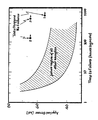
- the Drawing illustrates the improved degree of protection afforded by the glycolipid against sulfide stress corrosion compared to samples that were not protected.
- Glycolipids produced by a fermentation process have been found surprisingly useful in inhibiting sulfide stress cracking.
- the production of these glycolipids (also referred to as sophorolipids) by Torulopsis bombicola (T. bombicola) [and related Torulopsis apicola, (Spencer, Gorin, and Tulloch, 1970); [and related Torulopsis magnolia (Tulloch, Hill, and Spencer, 1967)] is well known in the art [U.S. Patent 4,201,844; U.S. Patent 3,312,684; U.S. Patent 3,445,337; U.S. Patent 3,205,150; J. F. T.
- glycolipids are obtained by the simultaneous fermentation of a carbohydrate source and a suitable fatty acid source using a stationary phase culture of T. bombicola.
- Suitable carbohydrates include glucose, sucrose, raffinose, and fructose.
- Suitable fatty acid sources include fats and oils, alkanes, alkenes, and fatty acids all preferably with chain lengths in the range from C 16 to C 22 .
- Other nutrient salts may be added.
- the temperature should be between 20C and 35C and preferably in the range from 22C to 25C and pH in the range from 3.5 to 4.5.
- An equilibrium mixture of the crude product containing glycolipid is initially recovered from the fermentation tanks by spontaneous phase separation. This separation may be aided by heating. Following fermentation the unreacted fatty acid sources (corn oil, tallow, etc.) will be on top of the aqueous phase. The crude product separates to the bottom of the fermentation vessel, below the aqueous phase, with some glycolipid remaining in the aqueous phase. The crude product that separates to the bottom is about 45 percent glycolipid and 55 percent water and will contain various impurities including unreacted fatty acid sources.
- This crude equilibrium mixture from the fermentation was applied in Examples 1 and 2.
- the glycolipid can be purified by known methods such as extraction with hexane to remove unreacted fatty acid sources. This latter mixture was used in Example 3.
- glycolipid produced by T. bombicola and surfactant produced by T. bombicola refer to the same material, which may be in the form of crude product or crude product that has been purified of fatty acids by solvent extraction; both forms of the product contain approximately equal parts water and glycolipid.
- the glycolipids thus produced are a mixture of glycosides consisting of a 2-0-P-D-glucopyranosyl-D-glucopyranose unit linked 1- ⁇ -glycosidically to the terminal or penultimate carbon residue of fatty acids having variable chain length usually in the range from C 13 to C 18 and variable degrees of saturation. While these are the predominant chain lengths expected, longer chain lengths are possible and have been reported in the literature.
- the disaccharide moiety may be acetylated in the C 6 position of either or both glucopyranosyl units.
- the glycolipids may exist in a free acid form or as a macrocyclic lactone. See Formulas I and II below: and where
- the glycolipids are mixed in a composition which may be: The original crude product, the mixture of glycolipid and a fluid to be transported or the mixture of the glycolipid and a carrier useful for lubrication, cooling or heating.
- glycolipid Although the production of the glycolipid described is well-known, its value as an inhibitor of sulfide stress corrosion cracking (SSC) or hydrogen induced cracking is not known. The discovery that the glycolipid gives excellent protection against these two forms of failure was surprising and unexpected. The invention thus proposes to use this known glycolipid in a new and unobvious way.
- SSC sulfide stress corrosion cracking
- Materials that require longer periods of time to fail at a given stress level generally are judged to be slightly more resistant to SSC. More importantly, materials that exhibit a higher threshold stress for SSC, which is the stress below which SSC is not observed for any period of time, generally are judged to be significantly more resistant to SSC. A wide range of materials has been evaluated by the procedures outlined in NACE Standard TM-01-77.
- the specimens were put in uniaxial tensile loading fixtures and the standard NACE SSC solution containing approximately 1 percent of the glycolipid inhibitor was added to each cell. The solution then was deaerated for about 20 minutes using dry nitrogen. The specimens then were loaded to the calculated load and H 2 S gas was then bubbled through each cell.
- Example 1 To evaluate the effectiveness of the glycolipid in inhibiting SSC, two experiments at applied stresses of 374 x 10 6 Pa (Sample 1) and 442 x 10 6 Pa (Sample 2) were performed with specimens from the X70 pipe. Numerous similar materials, including the steel used to evaluate the microbial surfactant, have been characterized with the NACE procedure and have exhibited failures within approximately 100 hours and 10 hours, respectively, at those applied stresses. However, with the application of the microbial surfactant to the specimen surfaces, the specimens did not fail; the 374 x 10 6 Pa test was terminated after 880 hours and the 442 x 10 6 Pa test was terminated after 140 hours. The Table and the Drawing illustrate these results.
- the crosshatched area of the Drawing indicates the region where previous tests have fallen for uncoated samples.
- the two data points from Examples 1 and 2 are plotted for the time at which the tests were intentionally stopped and no failure occurred. Had the tests continued it is expected that the results would have been even better in that they would have been further to the right on the time scale (see the drawing figure).
- the dramatic increase in specimen life resulting from the use of the glycolipid in the method of the invention was surprising and unexpected.
- the glycolipid is expected to be a useful inhibitor of sulfide stress cracking (SSC), as well as of hydrogen induced stepwise cracking (HIC) in sour environments. Although evaluations only were performed for sulfide stress cracking it is expected that the glycolipid will perform similarly to prevent hydrogen induced cracking. This is because HIC occurs as a result of atomic hydrogen that is generated during corrosion reactions, similarly to the manner in which hydrogen is developed during SSC. The surfactant appears to prevent the corrosion reactions which generate the hydrogen and thereby protect the metal from SSC.
- SSC sulfide stress cracking
- HIC hydrogen induced stepwise cracking
- Examples 1 and 2 illustrate coating of a metal to be protected with the glycolipid concurrent with the addition of glycolipid to the standard NACE SSC solution
- the coating step is optional.
- the preferred method of practicing the invention is to mix an effective amount of glycolipid with a fluid that is in contact with the metal.
- the fluid could include petroleum oils, crude oils, natural gas, and similar materials.
- the glycolipid product When added to the fluid the glycolipid product will, on contacting the fluid, spontaneously disperse coat the metal, and protect the metal from sulfide stress cracking and hydrogen induced cracking.
- the surfactant can be added at various entry points in a batch process, similar to current practice with conventional inhibitors, but with a higher degree of effectiveness.
- An effective inhibiting amount of glycolipid is the concentration of the glycolipid in a carrier or fluid that inhibits sulfide stress cracking or hydrogen induced cracking when in contact with a metal to be protected.
- a carrier or fluid that inhibits sulfide stress cracking or hydrogen induced cracking when in contact with a metal to be protected.
- Examples 1 and 2 about a 2 percent concentration of crude product containing about half glycolipid and half water was found to be effective.
- Example 3 about a 1 percent concentration of the half-glycolipid/half-water product, which was purified of fatty acids by extraction with hexane, was found to be effective.
- the net concentration of glycolipid was 1 percent in Examples 1 and 2 and percent in Example 3. Lower amounts of the glycolipid are expected to be useful.
- the effective amount will vary with the metal to be protected and with the type of fluid in contact with the metal. The most efficient effective amount should be easily determinable by those skilled in the art once knowing the teachings of the invention.
- a crude product of the fermentation process is all that is expected to be needed for most applications (e.g. in pipeline service) with only some specialized applications (e.g. where high tolerance or technical machining is involved) requiring a purified form of the glycolipid.
- One or more extractions with hexane will provide a purified glycolipid inhibitor. This purification removes unreacted oils, in which the glycolipid is essentially nonsoluble.
- the glycolipids produced by T. bombicola are water-insoluble in the pH range below about 5.3.
- the solubility of the glycolipids in water are less than 10 ppm. This property is in fact exploited in the recovery of the glycolipid from the fermentation mixture where the crude glycolipid separates to the bottom of the fermentation vessel. It is below this pH level where sulfide-stress cracking in sour gas or oil is the most severe.
- the glycolipid becomes more polar and is water soluble.
- the solubility of glycolipid in water is over 10,000 ppm. Sulfide-stress cracking becomes less of a problem in this pH range.
- a low pH results in accelerated attack of steel by the mechanisms discussed herein, primarily as a result of the breakdown of protective films.
- a low pH also causes the glycolipid to be insoluble in water, thus favoring the coating of the metal by the glycolipid. Therefore, the application of the glycolipid to inhibit SSC and HIC is limited to the pH range below 5.3 for pipelines transporting sour oil or sour gas.
- API-5L X70 pipe steel Although the examples illustrate the protection of API-5L X70 pipe steel only, the method should be applicable to other metals commonly used in pipelines. These include lower strength carbon-manganese steels, such as API-5L X42, X52, and X60, as well as other microalloyed steels such as API-5L X60 and X65.
Landscapes
- Chemical & Material Sciences (AREA)
- Engineering & Computer Science (AREA)
- Materials Engineering (AREA)
- Organic Chemistry (AREA)
- Mechanical Engineering (AREA)
- Metallurgy (AREA)
- Life Sciences & Earth Sciences (AREA)
- General Life Sciences & Earth Sciences (AREA)
- Production Of Liquid Hydrocarbon Mixture For Refining Petroleum (AREA)
- Preventing Corrosion Or Incrustation Of Metals (AREA)
Abstract
Description
- A method is provided for inhibiting sulfide stress corrosion cracking (SSC) as well as hydrogen induced cracking (HIC) in metals. The method is particularly useful in pipelines transporting materials such as natural gas or crude oil that contain water, hydrogen sulfide and carbon dioxide.
- Stress and corrosion acting alone can reduce the service life of metals. There are circumstances, however, where the combined effects of these two factors is greater than the total of the factors acting alone. Particular practical problems are presented where a metal as in a pipeline is stressed and simultaneously subjected to the action of a corrosive medium such as aqueous hydrogen sulfide. The terms associated with these conditions are sulfide stress cracking (SSC) and hydrogen induced stepwise cracking (HIC). Sulfide stress cracking (SSC) is synonymous with sulfide stress corrosion cracking (SSCC).
- In pipelines transporting natural gas, the gas often is accompanied by water, sand, H2S, C02, and other impurities, particularly near the well head; natural gas containing significant concentrations of H2S is referred to as sour gas. Efforts are made to dewater the gas and remove hydrogen sulfide before the gas enters the transmission pipeline, but these are not always successful. Hydrogen sulfide dissolved in the water forms a weak acid, which corrodes the metal at the internal surface of the pipe. The presence of C02 reduces the pH of the solution to approximately 3, aggravating the corrosion problem and breaking down any protective films that may form during the corrosion reaction. During the corrosion reaction, atomic hydrogen is evolved at the pipe surface, and some of the hydrogen is absorbed by the metal. Depending on the condition of the metal and the concentration of hydrogen absorbed, SSC and/or HIC may occur. A similar situation exists for sour crude oil, which contains similar impurities. Crude oil also contains various impurities, including suspended solids, water, and sulfur. Even after some purification, where water and other impurities are removed, sufficient impurities that are detrimental to the pipeline may remain.
- SSC and HIC usually are accompanied by minimal material loss as a result of the corrosion reactions. The problem of HIC typically is manifested by the formation of internal cracks and/or surface blisters, which may link up through the pipe wall and lead to a leak in the line. The cracks and blisters form as the result of a buildup of high hydrogen-gas pressures at internal interfaces in the steel, and no external stress is required for HIC to occur. In contrast, SSC involves the interaction of hydrogen in the steel with stress (residual stress and applied service stress), and can result in the development of a delayed, brittle failure in the line. When sulfide stress cracking (SSC) occurs, the cracking often is associated with welds or localized regions of elevated hardness and residual stress. Both HIC and SSC are serious problems in sour-gas and sour-oil applications; however, the consequences of SSC may be more severe.
- The pipeline industry has made various efforts at controlling SSC and HIC in sour service. Sour service is the term commonly used to denote service in the presence of hydrogen sulfide. The most common approaches have been to remove water and hydrogen sulfide from the gas or oil and to use inhibitors in the line, usually by applying with a rubber pig and then replenishing by adding them at various entry points in a batch process. Internal coatings have not been used extensively, presumably because any breach in the coating would lead to accelerated localized corrosion. One method that has met with limited success is the development of steels that form protective films during the corrosion reactions. Typical film-forming alloys contain approximately 0.25 percent Cu; however, when the pH of the environment drops to about 3.5, such as when significant C02 is present, the protective film formed by these steels becomes unstable. In addition, the use of low-sulfur steels with inclusion-shape control provides improved resistance to HIC only. A more costly alternative is the use of internal polymeric liners; such liners have been used only to a limited extent.
- While removal of water and the use of inhibitors appear to represent the current state of the art in controlling SSC and HIC, there is room for improvement. Some instances of failure in sour environments have occurred when inhibitors reportedly were being used. This experience may indicate that the method of application of the inhibitors provides incomplete coverage of the internal surfaces of the pipeline, possibly as a result of limited dispersion of the inhibitor in the carrier. Also, currently used inhibitors are flammable and/or explosive, and may be highly toxic. Thus, there is a need for a nonflammable, nonexplosive, and nontoxic inhibitor with improved dispersion properties, better adherence to metals, and which will inhibit the corrosion reactions that lead to SSC and HIC in sour service. The present invention as defined in
claim 1 appears to satisfy all of these criteria. - Additional background material on corrosion may be found in the book Marine and Offshore Corrosion by Kenneth A. Chandler, Butterworths, London, 1985 and in the book Corrosion Engineering, 2nd Edition by Mars G. Fontana and Norbert D. Greene, McGraw Hill, N.Y., 1978. Paper No. 240, Initiation and Propagation Morphology of Sulfide Stress Corrosion Cracking at Welds in Linepipe Steels, by K. Ume et al, presented at Corrosion 85, The International Corrosion Forum, March 25-29, 1985, Boston, Massachusetts, and Paper No. 160, Sulfide Stress Corrosion Cracking of Linepipe, by M. Kimura et al, presented at Corrosion 86, The International Corrosion Forum, March 17-21, 1986, Houston, Texas, provide updated discussions of sulfide stress cracking in pipelines.
- Compounds of formulae I and II are disclosed in the following reference: Biotechnology, Ed. H. J. Rehm and G. Reed (1986), Vol. 4, p. 204205. They are listed among other biosurfactants usable as emulsifiers and for enhanced oil recovery. The reference indicates that they are obtained from the yeast Torulopsis bombicola and related species growing on mixtures of glucose and either alkanes, vegetable oils, or free fatty acids.
- The Drawing illustrates the improved degree of protection afforded by the glycolipid against sulfide stress corrosion compared to samples that were not protected.
- Glycolipids produced by a fermentation process have been found surprisingly useful in inhibiting sulfide stress cracking. The production of these glycolipids (also referred to as sophorolipids) by Torulopsis bombicola (T. bombicola) [and related Torulopsis apicola, (Spencer, Gorin, and Tulloch, 1970); [and related Torulopsis magnolia (Tulloch, Hill, and Spencer, 1967)] is well known in the art [U.S. Patent 4,201,844; U.S. Patent 3,312,684; U.S. Patent 3,445,337; U.S. Patent 3,205,150; J. F. T. Spencer et al, Canadian Journal of Chemistry, 39, 846, (1961); David Paddock, "Surface Activity of Torulopsis Species", Thesis, McGill University, Montreal, Canada, December, 1982]. The best yield of glycolipids are obtained by the simultaneous fermentation of a carbohydrate source and a suitable fatty acid source using a stationary phase culture of T. bombicola. Suitable carbohydrates include glucose, sucrose, raffinose, and fructose. Suitable fatty acid sources include fats and oils, alkanes, alkenes, and fatty acids all preferably with chain lengths in the range from C16 to C22. Other nutrient salts may be added. The temperature should be between 20C and 35C and preferably in the range from 22C to 25C and pH in the range from 3.5 to 4.5.
- An equilibrium mixture of the crude product containing glycolipid is initially recovered from the fermentation tanks by spontaneous phase separation. This separation may be aided by heating. Following fermentation the unreacted fatty acid sources (corn oil, tallow, etc.) will be on top of the aqueous phase. The crude product separates to the bottom of the fermentation vessel, below the aqueous phase, with some glycolipid remaining in the aqueous phase. The crude product that separates to the bottom is about 45 percent glycolipid and 55 percent water and will contain various impurities including unreacted fatty acid sources. This crude equilibrium mixture from the fermentation was applied in Examples 1 and 2. The glycolipid can be purified by known methods such as extraction with hexane to remove unreacted fatty acid sources. This latter mixture was used in Example 3.
- As used herein the terms glycolipid produced by T. bombicola and surfactant produced by T. bombicola refer to the same material, which may be in the form of crude product or crude product that has been purified of fatty acids by solvent extraction; both forms of the product contain approximately equal parts water and glycolipid. The glycolipids thus produced are a mixture of glycosides consisting of a 2-0-P-D-glucopyranosyl-D-glucopyranose unit linked 1-β-glycosidically to the terminal or penultimate carbon residue of fatty acids having variable chain length usually in the range from C13 to C18 and variable degrees of saturation. While these are the predominant chain lengths expected, longer chain lengths are possible and have been reported in the literature. Use of these longer chain length molecules is contemplated in the invention. The disaccharide moiety may be acetylated in the C6 position of either or both glucopyranosyl units. The glycolipids may exist in a free acid form or as a macrocyclic lactone. See Formulas I and II below:


- R1 = COCH3 or H
- R2 = COCH3 or H
- R3 = CH3 or H and
- R4 = a saturated or unsaturated hydrocarbon group having 11 to 15 carbon atoms.
- The glycolipids are mixed in a composition which may be: The original crude product, the mixture of glycolipid and a fluid to be transported or the mixture of the glycolipid and a carrier useful for lubrication, cooling or heating.
- Although the production of the glycolipid described is well-known, its value as an inhibitor of sulfide stress corrosion cracking (SSC) or hydrogen induced cracking is not known. The discovery that the glycolipid gives excellent protection against these two forms of failure was surprising and unexpected. The invention thus proposes to use this known glycolipid in a new and unobvious way.
- Further description of the microorganism and production conditions may be obtained from: Spencer, J. F. T., P. A. J. Gorin, and A. P. Tulloch, "Torulopsis bombicola sp. n", Antonie van Leeuwenhoek J. Microbial. Seral., 36: pp. 129-133, 1970. Tulloch, A. P., A. Hill, and J. F. T. Spencer, "A New Type of Macrocyclic Lactone from Torulopsis apicola", Chemical Communication, pp. 584―586, 1967. Cooper, D. G., and D. A. Paddock, "Production of a Biosurfactant from Torulopsis bombicola", Applied and Environmental Microbiology, 47, pp. 173-176, 1984.
- Standard experiments to evaluate the SSC resistance of materials for sour service were performed with specimens that were protected by the microbial surfactant and compared with data for unprotected specimens that were tested previously. The experimental procedure is covered by National Association of Corrosion Engineers (NACE) Standard TM-01-77, "Testing of Metals for Resistance to Sulfide Stress Cracking at Ambient Temperatures". The procedure involves exposing tensile specimens under constant load to a severe sour environment consisting of an H2S-saturated aqueous NaCI solution, to which glacial acetic acid is added to adjust the initial pH to 3, and determining the time to failure as a function of applied stress. Materials that require longer periods of time to fail at a given stress level generally are judged to be slightly more resistant to SSC. More importantly, materials that exhibit a higher threshold stress for SSC, which is the stress below which SSC is not observed for any period of time, generally are judged to be significantly more resistant to SSC. A wide range of materials has been evaluated by the procedures outlined in NACE Standard TM-01-77.
- Three specimens of pipe steel were tested. Those specimens were tensile bars with a 0.626 cm (4") diameter reduced section containing a production seam weld. The specimens were prepared from an API 5L Grade X70 steel pipe, with a minimum specified yield strength of 476 x 106 Pa, which has been evaluated without a glycolipid coating. The specimens were hand polished in the reduced section through 600 grit silicon carbide abrasive paper. Each specimen was mounted in a glass cell sealed with neoprene sheet gaskets.
Specimens 1 and 2 were first coated with the crude product from fermentation containing the glycolipid, while Specimen 3 was not coated. The specimens were put in uniaxial tensile loading fixtures and the standard NACE SSC solution containing approximately 1 percent of the glycolipid inhibitor was added to each cell. The solution then was deaerated for about 20 minutes using dry nitrogen. The specimens then were loaded to the calculated load and H2S gas was then bubbled through each cell. - To evaluate the effectiveness of the glycolipid in inhibiting SSC, two experiments at applied stresses of 374 x 106 Pa (Sample 1) and 442 x 106 Pa (Sample 2) were performed with specimens from the X70 pipe. Numerous similar materials, including the steel used to evaluate the microbial surfactant, have been characterized with the NACE procedure and have exhibited failures within approximately 100 hours and 10 hours, respectively, at those applied stresses. However, with the application of the microbial surfactant to the specimen surfaces, the specimens did not fail; the 374 x 106 Pa test was terminated after 880 hours and the 442 x 106 Pa test was terminated after 140 hours. The Table and the Drawing illustrate these results.

- The crosshatched area of the Drawing indicates the region where previous tests have fallen for uncoated samples. The two data points from Examples 1 and 2 are plotted for the time at which the tests were intentionally stopped and no failure occurred. Had the tests continued it is expected that the results would have been even better in that they would have been further to the right on the time scale (see the drawing figure). The dramatic increase in specimen life resulting from the use of the glycolipid in the method of the invention was surprising and unexpected.
- A third experiment was performed with another specimen from the same welded pipe used in Examples 1 and 2. In this experiment, the microbial surfactant was not applied to the surface of the specimen, but was only added to the test solution; the amount of the product (containing approximately equal parts water and glycolipid) added made up 1 percent of the solution volume. The specimen was loaded in tension at a stress of 442 x 106 Pa. The specimen did not fail, and the test was intentionally stopped after 573.1 hours. This example demonstrates the ease of use of the invention, since direct application of a coating of the surfactant onto the metal is not needed. Results are shown in the Table and the Drawing.
- The glycolipid is expected to be a useful inhibitor of sulfide stress cracking (SSC), as well as of hydrogen induced stepwise cracking (HIC) in sour environments. Although evaluations only were performed for sulfide stress cracking it is expected that the glycolipid will perform similarly to prevent hydrogen induced cracking. This is because HIC occurs as a result of atomic hydrogen that is generated during corrosion reactions, similarly to the manner in which hydrogen is developed during SSC. The surfactant appears to prevent the corrosion reactions which generate the hydrogen and thereby protect the metal from SSC.
- While Examples 1 and 2 illustrate coating of a metal to be protected with the glycolipid concurrent with the addition of glycolipid to the standard NACE SSC solution, the coating step is optional. The preferred method of practicing the invention is to mix an effective amount of glycolipid with a fluid that is in contact with the metal. For a pipeline system the fluid could include petroleum oils, crude oils, natural gas, and similar materials. When added to the fluid the glycolipid product will, on contacting the fluid, spontaneously disperse coat the metal, and protect the metal from sulfide stress cracking and hydrogen induced cracking. The surfactant can be added at various entry points in a batch process, similar to current practice with conventional inhibitors, but with a higher degree of effectiveness.
- Further additional favorable characteristics of the crude product containing glycolipid include:
- (1) it is readily dispersable in water;
- (2) it adheres to metals at pH 5.3 and below;
- (3) it is nonflammable;
- (4) it is nonexplosive; and
- (5) it has much lower toxicity compared to current inhibitors.
- An effective inhibiting amount of glycolipid is the concentration of the glycolipid in a carrier or fluid that inhibits sulfide stress cracking or hydrogen induced cracking when in contact with a metal to be protected. In Examples 1 and 2 about a 2 percent concentration of crude product containing about half glycolipid and half water was found to be effective. In Example 3 about a 1 percent concentration of the half-glycolipid/half-water product, which was purified of fatty acids by extraction with hexane, was found to be effective. The net concentration of glycolipid was 1 percent in Examples 1 and 2 and percent in Example 3. Lower amounts of the glycolipid are expected to be useful. The effective amount will vary with the metal to be protected and with the type of fluid in contact with the metal. The most efficient effective amount should be easily determinable by those skilled in the art once knowing the teachings of the invention.
- A crude product of the fermentation process is all that is expected to be needed for most applications (e.g. in pipeline service) with only some specialized applications (e.g. where high tolerance or technical machining is involved) requiring a purified form of the glycolipid. One or more extractions with hexane will provide a purified glycolipid inhibitor. This purification removes unreacted oils, in which the glycolipid is essentially nonsoluble.
- The glycolipids produced by T. bombicola are water-insoluble in the pH range below about 5.3. For example, at pH 4.0 the solubility of the glycolipids in water are less than 10 ppm. This property is in fact exploited in the recovery of the glycolipid from the fermentation mixture where the crude glycolipid separates to the bottom of the fermentation vessel. It is below this pH level where sulfide-stress cracking in sour gas or oil is the most severe. In the pH range above 5.3 the glycolipid becomes more polar and is water soluble. For example, at pH 5.6 the solubility of glycolipid in water is over 10,000 ppm. Sulfide-stress cracking becomes less of a problem in this pH range.
- A low pH results in accelerated attack of steel by the mechanisms discussed herein, primarily as a result of the breakdown of protective films. However, a low pH also causes the glycolipid to be insoluble in water, thus favoring the coating of the metal by the glycolipid. Therefore, the application of the glycolipid to inhibit SSC and HIC is limited to the pH range below 5.3 for pipelines transporting sour oil or sour gas.
- Although the examples illustrate the protection of API-5L X70 pipe steel only, the method should be applicable to other metals commonly used in pipelines. These include lower strength carbon-manganese steels, such as API-5L X42, X52, and X60, as well as other microalloyed steels such as API-5L X60 and X65.
Claims (11)


Priority Applications (1)
| Application Number | Priority Date | Filing Date | Title |
|---|---|---|---|
| AT87906547T ATE56036T1 (en) | 1986-09-23 | 1987-09-23 | METHOD OF INHIBITING SULFIDE STRESS CORROSION CRACKING AND HYDROGEN INDUCED STEPPAGE CRACKING. |
Applications Claiming Priority (4)
| Application Number | Priority Date | Filing Date | Title |
|---|---|---|---|
| US91058786A | 1986-09-23 | 1986-09-23 | |
| US910587 | 1986-09-23 | ||
| US07/096,941 US4830828A (en) | 1986-09-23 | 1987-09-21 | Method for inhibiting sulfide stress corrosion cracking and hydrogen induced stepwise cracking |
| US96941 | 1987-09-21 |
Publications (2)
| Publication Number | Publication Date |
|---|---|
| EP0282575A1 EP0282575A1 (en) | 1988-09-21 |
| EP0282575B1 true EP0282575B1 (en) | 1990-08-29 |
Family
ID=26792226
Family Applications (1)
| Application Number | Title | Priority Date | Filing Date |
|---|---|---|---|
| EP87906547A Expired - Lifetime EP0282575B1 (en) | 1986-09-23 | 1987-09-23 | Method for inhibiting sulfide stress corrosion cracking and hydrogen induced stepwise cracking |
Country Status (5)
| Country | Link |
|---|---|
| US (1) | US4830828A (en) |
| EP (1) | EP0282575B1 (en) |
| JP (1) | JPH01500840A (en) |
| CA (1) | CA1297350C (en) |
| WO (1) | WO1988002391A1 (en) |
Families Citing this family (10)
| Publication number | Priority date | Publication date | Assignee | Title |
|---|---|---|---|---|
| NZ230686A (en) * | 1988-09-26 | 1991-11-26 | Calgon Corp | Inhibiting sulphide attack on carbon steels with a water-soluble polymer |
| US5205290A (en) | 1991-04-05 | 1993-04-27 | Unger Evan C | Low density microspheres and their use as contrast agents for computed tomography |
| US5853620A (en) * | 1995-02-28 | 1998-12-29 | Intercorr-Cli International, Inc. | Compositions and compounds to minimize hydrogen charging and hydrogen induced cracking of steels |
| DE10004273B4 (en) * | 2000-02-01 | 2004-04-15 | BEB Erdgas und Erdöl GmbH | Process for protecting conduits for the transportation of natural gases against internal corrosion |
| US8691030B2 (en) * | 2007-06-18 | 2014-04-08 | Exxonmobil Upstream Research Company | Low alloy steels with superior corrosion resistance for oil country tubular goods |
| US9884986B2 (en) * | 2014-04-21 | 2018-02-06 | Baker Hughes, A Ge Company, Llc | Method of using biosurfactants as acid corrosion inhibitors in well treatment operations |
| US9683164B2 (en) * | 2014-04-21 | 2017-06-20 | Baker Hughes Incorporated | Method of using sophorolipids or mannosylerythritol lipids as acid corrosion inhibitors in well treatment operations |
| US10190038B2 (en) * | 2014-04-21 | 2019-01-29 | Baker Hughes, A Ge Company, Llc | Method of using sophorolipids in well treatment operations |
| US20170247601A1 (en) * | 2014-10-16 | 2017-08-31 | Halliburton Energy Services, Inc. | Method for inhibiting sulfide stress cracking of metals |
| CN114674670B (en) * | 2022-03-18 | 2025-09-16 | 中国石油大学(北京) | Hydrogen induced cracking test device and method for pipeline steel under condition containing hydrogen sulfide and threshold stress intensity factor determination method |
Family Cites Families (4)
| Publication number | Priority date | Publication date | Assignee | Title |
|---|---|---|---|---|
| US3585069A (en) * | 1967-12-06 | 1971-06-15 | Halliburton Co | Method of inhibiting sulfide cracking with a reaction product of b-hydroxy butyraldehyde and hydrogen sulfide |
| US4501674A (en) * | 1982-09-01 | 1985-02-26 | Phillips Petroleum Company | Method for reducing corrosiveness of aqueous fluids |
| US4618348A (en) * | 1983-11-02 | 1986-10-21 | Petroleum Fermentations N.V. | Combustion of viscous hydrocarbons |
| JPH05146744A (en) * | 1991-11-27 | 1993-06-15 | Masayuki Endo | Decorative material and display board and their production |
-
1987
- 1987-09-21 US US07/096,941 patent/US4830828A/en not_active Expired - Fee Related
- 1987-09-22 CA CA000547478A patent/CA1297350C/en not_active Expired - Lifetime
- 1987-09-23 EP EP87906547A patent/EP0282575B1/en not_active Expired - Lifetime
- 1987-09-23 WO PCT/US1987/002430 patent/WO1988002391A1/en not_active Ceased
- 1987-09-23 JP JP62505914A patent/JPH01500840A/en active Pending
Non-Patent Citations (4)
| Title |
|---|
| American Type Culture Collection, Catalogue of Fungi/Yeasts,16th Edition, 1984, edited bz S C Jong and M J Gantt, pages 320 to 321 * |
| Biotechnology, Vol 4, by H J Rehm and G Reed, Edition VCH (1986), pages 204 and 205 * |
| Chemical Abstracts, vol 101, no 15, 8 Oct 1984 (Columbus, Ohio, US) S Lang et al.: 'Comparison of interfacial active properties of glycolipids from microorganisms', page 270, abstract no 125317u * |
| The Yeasts, Vol 2, A H Rose and J S Harrison, Edition Academic Press, London and New York (1971), pages 156 and 157. * |
Also Published As
| Publication number | Publication date |
|---|---|
| CA1297350C (en) | 1992-03-17 |
| JPH01500840A (en) | 1989-03-23 |
| WO1988002391A1 (en) | 1988-04-07 |
| US4830828A (en) | 1989-05-16 |
| EP0282575A1 (en) | 1988-09-21 |
Similar Documents
| Publication | Publication Date | Title |
|---|---|---|
| JP5792077B2 (en) | Suppression of corrosion and scaling of surfaces in contact with sulfur-containing materials | |
| EP0282575B1 (en) | Method for inhibiting sulfide stress corrosion cracking and hydrogen induced stepwise cracking | |
| EP0290486B1 (en) | Corrosion inhibitors for clear, calcium-free high density fluids | |
| US2756211A (en) | jones | |
| US4636256A (en) | Corrosion inhibiting system containing alkoxylated amines | |
| US2614980A (en) | Process for inhibiting corrosion in oil wells | |
| EP0810302B1 (en) | Use of a mixture of surfactants for corrosion inhibiting | |
| US4640786A (en) | Phosphonium salt-containing corrosion inhibitors for high density brines | |
| Tsai et al. | The embrittlement of duplex stainless steel in sulfide-containing 3.5 wt% NaCl solution | |
| RU2148621C1 (en) | Protective lubricating material | |
| US3959158A (en) | High temperature corrosion inhibitor for gas and oil wells | |
| US4435361A (en) | Corrosion inhibition system containing dicyclopentadiene sulfonate salts | |
| US5223160A (en) | Sulfur deposition reduction | |
| US2675355A (en) | Method for inhibiting corrosion | |
| US3462239A (en) | Method of preventing hydrogen sulfide corrosion and embrittlement | |
| US2840525A (en) | Method of inhibiting corrosion of metal surfaces | |
| US3549532A (en) | Weighted corrosion inhibitors | |
| Agarwal | Effect of ammonia concentration on environment-assisted failures in a low-nickel copper alloy | |
| AU576061B2 (en) | Corrosion inhibitor for high density brines | |
| WO2020226996A1 (en) | Corrosion inhibitor formulation | |
| US20240301275A1 (en) | Corrosion inhibitor composition for wet sour crude | |
| CA2074983A1 (en) | Methods for inhibiting metal corrosion in aqueous systems | |
| Anand et al. | A STUDY ON CORROSION INHIBITION OF MILD STEEL USED AS A MATERIAL IN THE CONSTRUCTION OF SHIP USING FORMAZAN DERIVATIVES AS INHIBITOR IN HYDROCHLORIC ACID MEDIUM |
Legal Events
| Date | Code | Title | Description |
|---|---|---|---|
| PUAI | Public reference made under article 153(3) epc to a published international application that has entered the european phase |
Free format text: ORIGINAL CODE: 0009012 |
|
| 17P | Request for examination filed |
Effective date: 19880518 |
|
| AK | Designated contracting states |
Kind code of ref document: A1 Designated state(s): AT BE CH DE FR GB IT LI LU NL SE |
|
| 17Q | First examination report despatched |
Effective date: 19890217 |
|
| GRAA | (expected) grant |
Free format text: ORIGINAL CODE: 0009210 |
|
| AK | Designated contracting states |
Kind code of ref document: B1 Designated state(s): AT BE CH DE FR GB IT LI LU NL SE |
|
| REF | Corresponds to: |
Ref document number: 56036 Country of ref document: AT Date of ref document: 19900915 Kind code of ref document: T |
|
| REF | Corresponds to: |
Ref document number: 3764635 Country of ref document: DE Date of ref document: 19901004 |
|
| ET | Fr: translation filed | ||
| ITF | It: translation for a ep patent filed | ||
| PLBE | No opposition filed within time limit |
Free format text: ORIGINAL CODE: 0009261 |
|
| STAA | Information on the status of an ep patent application or granted ep patent |
Free format text: STATUS: NO OPPOSITION FILED WITHIN TIME LIMIT |
|
| 26N | No opposition filed | ||
| PGFP | Annual fee paid to national office [announced via postgrant information from national office to epo] |
Ref country code: FR Payment date: 19920812 Year of fee payment: 6 |
|
| PGFP | Annual fee paid to national office [announced via postgrant information from national office to epo] |
Ref country code: SE Payment date: 19920814 Year of fee payment: 6 Ref country code: CH Payment date: 19920814 Year of fee payment: 6 Ref country code: AT Payment date: 19920814 Year of fee payment: 6 |
|
| PGFP | Annual fee paid to national office [announced via postgrant information from national office to epo] |
Ref country code: DE Payment date: 19920820 Year of fee payment: 6 |
|
| PGFP | Annual fee paid to national office [announced via postgrant information from national office to epo] |
Ref country code: BE Payment date: 19920825 Year of fee payment: 6 |
|
| PGFP | Annual fee paid to national office [announced via postgrant information from national office to epo] |
Ref country code: GB Payment date: 19920826 Year of fee payment: 6 |
|
| PGFP | Annual fee paid to national office [announced via postgrant information from national office to epo] |
Ref country code: LU Payment date: 19920828 Year of fee payment: 6 |
|
| ITTA | It: last paid annual fee | ||
| PGFP | Annual fee paid to national office [announced via postgrant information from national office to epo] |
Ref country code: NL Payment date: 19920930 Year of fee payment: 6 |
|
| EPTA | Lu: last paid annual fee | ||
| PG25 | Lapsed in a contracting state [announced via postgrant information from national office to epo] |
Ref country code: LU Free format text: LAPSE BECAUSE OF NON-PAYMENT OF DUE FEES Effective date: 19930923 Ref country code: GB Effective date: 19930923 Ref country code: AT Effective date: 19930923 |
|
| PG25 | Lapsed in a contracting state [announced via postgrant information from national office to epo] |
Ref country code: SE Effective date: 19930924 |
|
| PG25 | Lapsed in a contracting state [announced via postgrant information from national office to epo] |
Ref country code: LI Effective date: 19930930 Ref country code: CH Effective date: 19930930 Ref country code: BE Effective date: 19930930 |
|
| BERE | Be: lapsed |
Owner name: BATTELLE MEMORIAL INSTITUTE Effective date: 19930930 |
|
| PG25 | Lapsed in a contracting state [announced via postgrant information from national office to epo] |
Ref country code: NL Effective date: 19940401 |
|
| NLV4 | Nl: lapsed or anulled due to non-payment of the annual fee | ||
| GBPC | Gb: european patent ceased through non-payment of renewal fee |
Effective date: 19930923 |
|
| PG25 | Lapsed in a contracting state [announced via postgrant information from national office to epo] |
Ref country code: FR Free format text: LAPSE BECAUSE OF NON-PAYMENT OF DUE FEES Effective date: 19940531 |
|
| REG | Reference to a national code |
Ref country code: CH Ref legal event code: PL |
|
| PG25 | Lapsed in a contracting state [announced via postgrant information from national office to epo] |
Ref country code: DE Effective date: 19940601 |
|
| REG | Reference to a national code |
Ref country code: FR Ref legal event code: ST |
|
| EUG | Se: european patent has lapsed |
Ref document number: 87906547.2 Effective date: 19940410 |
|
| PG25 | Lapsed in a contracting state [announced via postgrant information from national office to epo] |
Ref country code: IT Free format text: LAPSE BECAUSE OF NON-PAYMENT OF DUE FEES Effective date: 20050923 |