EP0279425B1 - Verwendung von Benzothiazepin-Derivaten, insbesondere Diltiazem zur Herstellung von Arzneimitteln zur Protektion von Lymphozyten - Google Patents
Verwendung von Benzothiazepin-Derivaten, insbesondere Diltiazem zur Herstellung von Arzneimitteln zur Protektion von Lymphozyten Download PDFInfo
- Publication number
- EP0279425B1 EP0279425B1 EP88102294A EP88102294A EP0279425B1 EP 0279425 B1 EP0279425 B1 EP 0279425B1 EP 88102294 A EP88102294 A EP 88102294A EP 88102294 A EP88102294 A EP 88102294A EP 0279425 B1 EP0279425 B1 EP 0279425B1
- Authority
- EP
- European Patent Office
- Prior art keywords
- dihydro
- diltiazem
- lymphocytes
- benzothiazepine
- hydrochloride
- Prior art date
- Legal status (The legal status is an assumption and is not a legal conclusion. Google has not performed a legal analysis and makes no representation as to the accuracy of the status listed.)
- Expired - Lifetime
Links
- 210000004698 lymphocyte Anatomy 0.000 title claims abstract description 34
- 150000007657 benzothiazepines Chemical class 0.000 title claims abstract description 5
- 229940085242 benzothiazepine derivative selective calcium channel blockers with direct cardiac effects Drugs 0.000 title claims abstract description 4
- HSUGRBWQSSZJOP-RTWAWAEBSA-N diltiazem Chemical compound C1=CC(OC)=CC=C1[C@H]1[C@@H](OC(C)=O)C(=O)N(CCN(C)C)C2=CC=CC=C2S1 HSUGRBWQSSZJOP-RTWAWAEBSA-N 0.000 title claims description 20
- 229960004166 diltiazem Drugs 0.000 title claims description 20
- 239000003814 drug Substances 0.000 title claims description 11
- 238000004519 manufacturing process Methods 0.000 title description 3
- 150000001875 compounds Chemical class 0.000 claims description 9
- 239000000824 cytostatic agent Substances 0.000 claims description 9
- 230000001085 cytostatic effect Effects 0.000 claims description 9
- 125000004435 hydrogen atom Chemical group [H]* 0.000 claims description 8
- VEXZGXHMUGYJMC-UHFFFAOYSA-N Hydrochloric acid Chemical compound Cl VEXZGXHMUGYJMC-UHFFFAOYSA-N 0.000 claims description 6
- 241000725303 Human immunodeficiency virus Species 0.000 claims description 5
- 231100000331 toxic Toxicity 0.000 claims description 5
- 230000002588 toxic effect Effects 0.000 claims description 5
- 239000003440 toxic substance Substances 0.000 claims description 5
- 125000001309 chloro group Chemical group Cl* 0.000 claims description 4
- 150000003839 salts Chemical class 0.000 claims description 3
- HSUGRBWQSSZJOP-UHFFFAOYSA-N 5-[2-(dimethylamino)ethyl]-2-(4-methoxyphenyl)-4-oxo-2,3,4,5-tetrahydro-1,5-benzothiazepin-3-yl acetate Chemical compound C1=CC(OC)=CC=C1C1C(OC(C)=O)C(=O)N(CCN(C)C)C2=CC=CC=C2S1 HSUGRBWQSSZJOP-UHFFFAOYSA-N 0.000 claims description 2
- CIUQDSCDWFSTQR-UHFFFAOYSA-N [C]1=CC=CC=C1 Chemical group [C]1=CC=CC=C1 CIUQDSCDWFSTQR-UHFFFAOYSA-N 0.000 claims description 2
- 125000002777 acetyl group Chemical group [H]C([H])([H])C(*)=O 0.000 claims description 2
- 125000004432 carbon atom Chemical group C* 0.000 claims description 2
- 229910052801 chlorine Chemical group 0.000 claims description 2
- 125000000956 methoxy group Chemical group [H]C([H])([H])O* 0.000 claims description 2
- 125000002496 methyl group Chemical group [H]C([H])([H])* 0.000 claims description 2
- 208000030507 AIDS Diseases 0.000 abstract description 5
- 241000124008 Mammalia Species 0.000 abstract description 2
- 208000011580 syndromic disease Diseases 0.000 abstract description 2
- 238000011282 treatment Methods 0.000 abstract description 2
- 239000000126 substance Substances 0.000 description 13
- 210000004027 cell Anatomy 0.000 description 12
- 241000700605 Viruses Species 0.000 description 11
- 230000000694 effects Effects 0.000 description 9
- 230000001506 immunosuppresive effect Effects 0.000 description 8
- 102000005962 receptors Human genes 0.000 description 8
- 108020003175 receptors Proteins 0.000 description 8
- 241000700159 Rattus Species 0.000 description 7
- CMSMOCZEIVJLDB-UHFFFAOYSA-N Cyclophosphamide Chemical compound ClCCN(CCCl)P1(=O)NCCCO1 CMSMOCZEIVJLDB-UHFFFAOYSA-N 0.000 description 6
- 229960004397 cyclophosphamide Drugs 0.000 description 6
- 208000015181 infectious disease Diseases 0.000 description 6
- 229940079593 drug Drugs 0.000 description 5
- 241001465754 Metazoa Species 0.000 description 4
- 230000009471 action Effects 0.000 description 4
- HVYWMOMLDIMFJA-DPAQBDIFSA-N cholesterol Chemical compound C1C=C2C[C@@H](O)CC[C@]2(C)[C@@H]2[C@@H]1[C@@H]1CC[C@H]([C@H](C)CCCC(C)C)[C@@]1(C)CC2 HVYWMOMLDIMFJA-DPAQBDIFSA-N 0.000 description 4
- 210000001151 cytotoxic T lymphocyte Anatomy 0.000 description 4
- 230000007246 mechanism Effects 0.000 description 4
- -1 stearic acid) Chemical class 0.000 description 4
- 102000000853 LDL receptors Human genes 0.000 description 3
- 108010001831 LDL receptors Proteins 0.000 description 3
- 230000001391 lymphocytotoxic effect Effects 0.000 description 3
- 239000012528 membrane Substances 0.000 description 3
- 231100000065 noncytotoxic Toxicity 0.000 description 3
- 230000002020 noncytotoxic effect Effects 0.000 description 3
- 239000007787 solid Substances 0.000 description 3
- 230000003612 virological effect Effects 0.000 description 3
- QGMGHALXLXKCBD-UHFFFAOYSA-N 4-amino-n-(2-aminophenyl)benzamide Chemical compound C1=CC(N)=CC=C1C(=O)NC1=CC=CC=C1N QGMGHALXLXKCBD-UHFFFAOYSA-N 0.000 description 2
- 206010025327 Lymphopenia Diseases 0.000 description 2
- 210000001744 T-lymphocyte Anatomy 0.000 description 2
- 230000003213 activating effect Effects 0.000 description 2
- 230000000118 anti-neoplastic effect Effects 0.000 description 2
- 210000004369 blood Anatomy 0.000 description 2
- 239000008280 blood Substances 0.000 description 2
- 210000001185 bone marrow Anatomy 0.000 description 2
- 229960002588 cefradine Drugs 0.000 description 2
- RDLPVSKMFDYCOR-UEKVPHQBSA-N cephradine Chemical compound C1([C@@H](N)C(=O)N[C@H]2[C@@H]3N(C2=O)C(=C(CS3)C)C(O)=O)=CCC=CC1 RDLPVSKMFDYCOR-UEKVPHQBSA-N 0.000 description 2
- 235000012000 cholesterol Nutrition 0.000 description 2
- 238000011284 combination treatment Methods 0.000 description 2
- 230000008030 elimination Effects 0.000 description 2
- 238000003379 elimination reaction Methods 0.000 description 2
- 210000000987 immune system Anatomy 0.000 description 2
- 230000005764 inhibitory process Effects 0.000 description 2
- 238000002347 injection Methods 0.000 description 2
- 239000007924 injection Substances 0.000 description 2
- 230000007774 longterm Effects 0.000 description 2
- 231100000355 lymphocytotoxic Toxicity 0.000 description 2
- 230000000329 lymphopenic effect Effects 0.000 description 2
- HQKMJHAJHXVSDF-UHFFFAOYSA-L magnesium stearate Chemical compound [Mg+2].CCCCCCCCCCCCCCCCCC([O-])=O.CCCCCCCCCCCCCCCCCC([O-])=O HQKMJHAJHXVSDF-UHFFFAOYSA-L 0.000 description 2
- 125000003854 p-chlorophenyl group Chemical group [H]C1=C([H])C(*)=C([H])C([H])=C1Cl 0.000 description 2
- 244000052769 pathogen Species 0.000 description 2
- 230000001681 protective effect Effects 0.000 description 2
- 230000002441 reversible effect Effects 0.000 description 2
- 125000005853 β-dimethylaminoethyl group Chemical group 0.000 description 2
- LNAZSHAWQACDHT-XIYTZBAFSA-N (2r,3r,4s,5r,6s)-4,5-dimethoxy-2-(methoxymethyl)-3-[(2s,3r,4s,5r,6r)-3,4,5-trimethoxy-6-(methoxymethyl)oxan-2-yl]oxy-6-[(2r,3r,4s,5r,6r)-4,5,6-trimethoxy-2-(methoxymethyl)oxan-3-yl]oxyoxane Chemical compound CO[C@@H]1[C@@H](OC)[C@H](OC)[C@@H](COC)O[C@H]1O[C@H]1[C@H](OC)[C@@H](OC)[C@H](O[C@H]2[C@@H]([C@@H](OC)[C@H](OC)O[C@@H]2COC)OC)O[C@@H]1COC LNAZSHAWQACDHT-XIYTZBAFSA-N 0.000 description 1
- IJARWRUCZWTVLF-UHFFFAOYSA-N 2-(2,4-dichlorophenyl)-5-[2-(dimethylamino)ethyl]-3-hydroxy-2,3-dihydro-1,5-benzothiazepin-4-one;hydrochloride Chemical compound Cl.OC1C(=O)N(CCN(C)C)C2=CC=CC=C2SC1C1=CC=C(Cl)C=C1Cl IJARWRUCZWTVLF-UHFFFAOYSA-N 0.000 description 1
- DECQATVANKRLCF-UHFFFAOYSA-N 2-(3,4-dimethoxyphenyl)-5-[2-(dimethylamino)ethyl]-3-hydroxy-2,3-dihydro-1,5-benzothiazepin-4-one;hydrochloride Chemical compound Cl.C1=C(OC)C(OC)=CC=C1C1C(O)C(=O)N(CCN(C)C)C2=CC=CC=C2S1 DECQATVANKRLCF-UHFFFAOYSA-N 0.000 description 1
- VJLAADQXATVBBX-UHFFFAOYSA-N 2-(4-chlorophenyl)-5-[2-(dimethylamino)ethyl]-3-hydroxy-2,3-dihydro-1,5-benzothiazepin-4-one Chemical compound OC1C(=O)N(CCN(C)C)C2=CC=CC=C2SC1C1=CC=C(Cl)C=C1 VJLAADQXATVBBX-UHFFFAOYSA-N 0.000 description 1
- FEDJGPQLLNQAIY-UHFFFAOYSA-N 2-[(6-oxo-1h-pyridazin-3-yl)oxy]acetic acid Chemical compound OC(=O)COC=1C=CC(=O)NN=1 FEDJGPQLLNQAIY-UHFFFAOYSA-N 0.000 description 1
- HDRXZJPWHTXQRI-UHFFFAOYSA-N 2-[3-acetyloxy-2-(4-methoxyphenyl)-4-oxo-2,3-dihydro-1,5-benzothiazepin-5-yl]ethyl-dimethylazanium;chloride Chemical compound Cl.C1=CC(OC)=CC=C1C1C(OC(C)=O)C(=O)N(CCN(C)C)C2=CC=CC=C2S1 HDRXZJPWHTXQRI-UHFFFAOYSA-N 0.000 description 1
- 125000005809 3,4,5-trimethoxyphenyl group Chemical group [H]C1=C(OC([H])([H])[H])C(OC([H])([H])[H])=C(OC([H])([H])[H])C([H])=C1* 0.000 description 1
- 125000004172 4-methoxyphenyl group Chemical group [H]C1=C([H])C(OC([H])([H])[H])=C([H])C([H])=C1* 0.000 description 1
- LOYPAOBZMOFHMS-UHFFFAOYSA-N 5-[1-(dimethylamino)propan-2-yl]-3-hydroxy-2-(4-methoxyphenyl)-2,3-dihydro-1,5-benzothiazepin-4-one;oxalic acid Chemical compound OC(=O)C(O)=O.C1=CC(OC)=CC=C1C1C(O)C(=O)N(C(C)CN(C)C)C2=CC=CC=C2S1 LOYPAOBZMOFHMS-UHFFFAOYSA-N 0.000 description 1
- QDMCRQNFNHIXCY-UHFFFAOYSA-N 5-[2-(dimethylamino)ethyl]-3-hydroxy-2-(3,4,5-trimethoxyphenyl)-2,3-dihydro-1,5-benzothiazepin-4-one hydrobromide Chemical compound Br.COC1=C(OC)C(OC)=CC(C2C(C(=O)N(CCN(C)C)C3=CC=CC=C3S2)O)=C1 QDMCRQNFNHIXCY-UHFFFAOYSA-N 0.000 description 1
- NZHUXMZTSSZXSB-UHFFFAOYSA-N 5-[2-(dimethylamino)ethyl]-3-hydroxy-2-(4-methoxyphenyl)-2,3-dihydro-1,5-benzothiazepin-4-one Chemical compound C1=CC(OC)=CC=C1C1C(O)C(=O)N(CCN(C)C)C2=CC=CC=C2S1 NZHUXMZTSSZXSB-UHFFFAOYSA-N 0.000 description 1
- MYRJZVYYMSPRRW-UHFFFAOYSA-N 5-[2-(dimethylamino)ethyl]-3-hydroxy-2-(4-methylphenyl)-2,3-dihydro-1,5-benzothiazepin-4-one Chemical compound OC1C(=O)N(CCN(C)C)C2=CC=CC=C2SC1C1=CC=C(C)C=C1 MYRJZVYYMSPRRW-UHFFFAOYSA-N 0.000 description 1
- CGBSNIBRKNBOJG-UHFFFAOYSA-N 5-[2-(dimethylamino)ethyl]-3-hydroxy-2-phenyl-2,3-dihydro-1,5-benzothiazepin-4-one Chemical compound OC1C(=O)N(CCN(C)C)C2=CC=CC=C2SC1C1=CC=CC=C1 CGBSNIBRKNBOJG-UHFFFAOYSA-N 0.000 description 1
- CMJXQQRKDJQRFY-UHFFFAOYSA-N 5-[3-(dimethylamino)propyl]-3-hydroxy-2-(3,4,5-trimethoxyphenyl)-2,3-dihydro-1,5-benzothiazepin-4-one;hydrochloride Chemical compound Cl.COC1=C(OC)C(OC)=CC(C2C(C(=O)N(CCCN(C)C)C3=CC=CC=C3S2)O)=C1 CMJXQQRKDJQRFY-UHFFFAOYSA-N 0.000 description 1
- XPTFVNNAARLHHO-UHFFFAOYSA-N 5-[3-(dimethylamino)propyl]-3-hydroxy-2-(4-methoxyphenyl)-2,3-dihydro-1,5-benzothiazepin-4-one;hydrochloride Chemical compound Cl.C1=CC(OC)=CC=C1C1C(O)C(=O)N(CCCN(C)C)C2=CC=CC=C2S1 XPTFVNNAARLHHO-UHFFFAOYSA-N 0.000 description 1
- UFFVUZOQCSVQRH-UHFFFAOYSA-N 5-[3-(dimethylamino)propyl]-3-hydroxy-2-(4-methylphenyl)-2,3-dihydro-1,5-benzothiazepin-4-one;hydrochloride Chemical compound Cl.OC1C(=O)N(CCCN(C)C)C2=CC=CC=C2SC1C1=CC=C(C)C=C1 UFFVUZOQCSVQRH-UHFFFAOYSA-N 0.000 description 1
- YWZMZIPZGCXDJZ-UHFFFAOYSA-N 5-[3-(dimethylamino)propyl]-3-hydroxy-2-phenyl-2,3-dihydro-1,5-benzothiazepin-4-one Chemical compound OC1C(=O)N(CCCN(C)C)C2=CC=CC=C2SC1C1=CC=CC=C1 YWZMZIPZGCXDJZ-UHFFFAOYSA-N 0.000 description 1
- ZQOLDWNTAKHHSM-UHFFFAOYSA-N 7-chloro-2-(2,4-dichlorophenyl)-5-[2-(dimethylamino)ethyl]-3-hydroxy-2,3-dihydro-1,5-benzothiazepin-4-one;hydrochloride Chemical compound Cl.OC1C(=O)N(CCN(C)C)C2=CC(Cl)=CC=C2SC1C1=CC=C(Cl)C=C1Cl ZQOLDWNTAKHHSM-UHFFFAOYSA-N 0.000 description 1
- GANWGSFLPCTLQI-UHFFFAOYSA-N 7-chloro-2-(4-chlorophenyl)-5-[2-(dimethylamino)ethyl]-3-hydroxy-2,3-dihydro-1,5-benzothiazepin-4-one;hydrochloride Chemical compound Cl.OC1C(=O)N(CCN(C)C)C2=CC(Cl)=CC=C2SC1C1=CC=C(Cl)C=C1 GANWGSFLPCTLQI-UHFFFAOYSA-N 0.000 description 1
- GKTLYSXXIXSECO-UHFFFAOYSA-N 7-chloro-5-[2-(dimethylamino)ethyl]-3-hydroxy-2-(3,4,5-trimethoxyphenyl)-2,3-dihydro-1,5-benzothiazepin-4-one perchloric acid Chemical compound OCl(=O)(=O)=O.COC1=C(OC)C(OC)=CC(C2C(C(=O)N(CCN(C)C)C3=CC(Cl)=CC=C3S2)O)=C1 GKTLYSXXIXSECO-UHFFFAOYSA-N 0.000 description 1
- FLILAZAALZJIOM-UHFFFAOYSA-N 7-chloro-5-[2-(dimethylamino)ethyl]-3-hydroxy-2-(4-methoxyphenyl)-2,3-dihydro-1,5-benzothiazepin-4-one Chemical compound C1=CC(OC)=CC=C1C1C(O)C(=O)N(CCN(C)C)C2=CC(Cl)=CC=C2S1 FLILAZAALZJIOM-UHFFFAOYSA-N 0.000 description 1
- SSTPHJDDEYXDKH-UHFFFAOYSA-N 7-chloro-5-[2-(dimethylamino)ethyl]-3-hydroxy-2-(4-methylphenyl)-2,3-dihydro-1,5-benzothiazepin-4-one hydrochloride Chemical compound Cl.OC1C(=O)N(CCN(C)C)C2=CC(Cl)=CC=C2SC1C1=CC=C(C)C=C1 SSTPHJDDEYXDKH-UHFFFAOYSA-N 0.000 description 1
- XLSRIEVDRHGCGI-UHFFFAOYSA-N 7-chloro-5-[3-(dimethylamino)propyl]-3-hydroxy-2-(4-methoxyphenyl)-2,3-dihydro-1,5-benzothiazepin-4-one Chemical compound C1=CC(OC)=CC=C1C1C(O)C(=O)N(CCCN(C)C)C2=CC(Cl)=CC=C2S1 XLSRIEVDRHGCGI-UHFFFAOYSA-N 0.000 description 1
- GOBUQMMSTNEXIF-UHFFFAOYSA-N 7-chloro-5-[3-(dimethylamino)propyl]-3-hydroxy-2-phenyl-2,3-dihydro-1,5-benzothiazepin-4-one;oxalic acid Chemical compound OC(=O)C(O)=O.OC1C(=O)N(CCCN(C)C)C2=CC(Cl)=CC=C2SC1C1=CC=CC=C1 GOBUQMMSTNEXIF-UHFFFAOYSA-N 0.000 description 1
- 229920001817 Agar Polymers 0.000 description 1
- 201000010000 Agranulocytosis Diseases 0.000 description 1
- GUBGYTABKSRVRQ-XLOQQCSPSA-N Alpha-Lactose Chemical compound O[C@@H]1[C@@H](O)[C@@H](O)[C@@H](CO)O[C@H]1O[C@@H]1[C@@H](CO)O[C@H](O)[C@H](O)[C@H]1O GUBGYTABKSRVRQ-XLOQQCSPSA-N 0.000 description 1
- 206010002091 Anaesthesia Diseases 0.000 description 1
- 229940127291 Calcium channel antagonist Drugs 0.000 description 1
- QCLIHIUHGUHKBZ-UHFFFAOYSA-N Cl.OC1C(=O)N(CCN(C)C)C2=CC(Cl)=CC=C2SC1C1=CC=CC=C1 Chemical compound Cl.OC1C(=O)N(CCN(C)C)C2=CC(Cl)=CC=C2SC1C1=CC=CC=C1 QCLIHIUHGUHKBZ-UHFFFAOYSA-N 0.000 description 1
- 208000035473 Communicable disease Diseases 0.000 description 1
- 229930105110 Cyclosporin A Natural products 0.000 description 1
- PMATZTZNYRCHOR-CGLBZJNRSA-N Cyclosporin A Chemical compound CC[C@@H]1NC(=O)[C@H]([C@H](O)[C@H](C)C\C=C\C)N(C)C(=O)[C@H](C(C)C)N(C)C(=O)[C@H](CC(C)C)N(C)C(=O)[C@H](CC(C)C)N(C)C(=O)[C@@H](C)NC(=O)[C@H](C)NC(=O)[C@H](CC(C)C)N(C)C(=O)[C@H](C(C)C)NC(=O)[C@H](CC(C)C)N(C)C(=O)CN(C)C1=O PMATZTZNYRCHOR-CGLBZJNRSA-N 0.000 description 1
- 108010036949 Cyclosporine Proteins 0.000 description 1
- FBPFZTCFMRRESA-KVTDHHQDSA-N D-Mannitol Chemical compound OC[C@@H](O)[C@@H](O)[C@H](O)[C@H](O)CO FBPFZTCFMRRESA-KVTDHHQDSA-N 0.000 description 1
- 108010010803 Gelatin Proteins 0.000 description 1
- 206010018687 Granulocytopenia Diseases 0.000 description 1
- 208000031886 HIV Infections Diseases 0.000 description 1
- 208000037357 HIV infectious disease Diseases 0.000 description 1
- 206010061598 Immunodeficiency Diseases 0.000 description 1
- 208000029462 Immunodeficiency disease Diseases 0.000 description 1
- 206010062016 Immunosuppression Diseases 0.000 description 1
- 102000007330 LDL Lipoproteins Human genes 0.000 description 1
- 108010007622 LDL Lipoproteins Proteins 0.000 description 1
- GUBGYTABKSRVRQ-QKKXKWKRSA-N Lactose Natural products OC[C@H]1O[C@@H](O[C@H]2[C@H](O)[C@@H](O)C(O)O[C@@H]2CO)[C@H](O)[C@@H](O)[C@H]1O GUBGYTABKSRVRQ-QKKXKWKRSA-N 0.000 description 1
- 229930195725 Mannitol Natural products 0.000 description 1
- CXOFVDLJLONNDW-UHFFFAOYSA-N Phenytoin Chemical compound N1C(=O)NC(=O)C1(C=1C=CC=CC=1)C1=CC=CC=C1 CXOFVDLJLONNDW-UHFFFAOYSA-N 0.000 description 1
- 229920002472 Starch Polymers 0.000 description 1
- 235000021355 Stearic acid Nutrition 0.000 description 1
- 206010052779 Transplant rejections Diseases 0.000 description 1
- 208000036142 Viral infection Diseases 0.000 description 1
- PPCAFFJZFCUHSS-UHFFFAOYSA-N [5-[2-(dimethylamino)ethyl]-2-(4-methylphenyl)-4-oxo-2,3-dihydro-1,5-benzothiazepin-3-yl] acetate;hydrochloride Chemical compound Cl.CC(=O)OC1C(=O)N(CCN(C)C)C2=CC=CC=C2SC1C1=CC=C(C)C=C1 PPCAFFJZFCUHSS-UHFFFAOYSA-N 0.000 description 1
- RDMXOVGUPWFUJY-UHFFFAOYSA-N [5-[2-(dimethylamino)ethyl]-4-oxo-2-phenyl-2,3-dihydro-1,5-benzothiazepin-3-yl] acetate Chemical compound CC(=O)OC1C(=O)N(CCN(C)C)C2=CC=CC=C2SC1C1=CC=CC=C1 RDMXOVGUPWFUJY-UHFFFAOYSA-N 0.000 description 1
- FYWZUTNVDVAIEK-UHFFFAOYSA-N [5-[3-(dimethylamino)propyl]-2-(4-methylphenyl)-4-oxo-2,3-dihydro-1,5-benzothiazepin-3-yl] acetate;hydrochloride Chemical compound Cl.CC(=O)OC1C(=O)N(CCCN(C)C)C2=CC=CC=C2SC1C1=CC=C(C)C=C1 FYWZUTNVDVAIEK-UHFFFAOYSA-N 0.000 description 1
- UDZCUEDMFBDYGZ-UHFFFAOYSA-N [5-[3-(dimethylamino)propyl]-4-oxo-2-(3,4,5-trimethoxyphenyl)-2,3-dihydro-1,5-benzothiazepin-3-yl] acetate;hydrochloride Chemical compound Cl.COC1=C(OC)C(OC)=CC(C2C(C(=O)N(CCCN(C)C)C3=CC=CC=C3S2)OC(C)=O)=C1 UDZCUEDMFBDYGZ-UHFFFAOYSA-N 0.000 description 1
- QICOHVYXESLEJH-UHFFFAOYSA-N [5-[3-(dimethylamino)propyl]-4-oxo-2-phenyl-2,3-dihydro-1,5-benzothiazepin-3-yl] acetate;hydrochloride Chemical compound Cl.CC(=O)OC1C(=O)N(CCCN(C)C)C2=CC=CC=C2SC1C1=CC=CC=C1 QICOHVYXESLEJH-UHFFFAOYSA-N 0.000 description 1
- WXIROVITAOVZLE-UHFFFAOYSA-N [7-chloro-2-(4-chlorophenyl)-5-[3-(dimethylamino)propyl]-4-oxo-2,3-dihydro-1,5-benzothiazepin-3-yl] acetate;hydrochloride Chemical compound Cl.CC(=O)OC1C(=O)N(CCCN(C)C)C2=CC(Cl)=CC=C2SC1C1=CC=C(Cl)C=C1 WXIROVITAOVZLE-UHFFFAOYSA-N 0.000 description 1
- PYJHIFHPPZDHGW-UHFFFAOYSA-N [7-chloro-5-[2-(dimethylamino)ethyl]-2-(4-methoxyphenyl)-4-oxo-2,3-dihydro-1,5-benzothiazepin-3-yl] acetate;hydrochloride Chemical compound Cl.C1=CC(OC)=CC=C1C1C(OC(C)=O)C(=O)N(CCN(C)C)C2=CC(Cl)=CC=C2S1 PYJHIFHPPZDHGW-UHFFFAOYSA-N 0.000 description 1
- VVGMKLRJQVATCE-UHFFFAOYSA-N [7-chloro-5-[3-(dimethylamino)propyl]-4-oxo-2-phenyl-2,3-dihydro-1,5-benzothiazepin-3-yl] acetate;hydrochloride Chemical compound Cl.CC(=O)OC1C(=O)N(CCCN(C)C)C2=CC(Cl)=CC=C2SC1C1=CC=CC=C1 VVGMKLRJQVATCE-UHFFFAOYSA-N 0.000 description 1
- 230000004913 activation Effects 0.000 description 1
- 239000004480 active ingredient Substances 0.000 description 1
- 239000013543 active substance Substances 0.000 description 1
- 239000000654 additive Substances 0.000 description 1
- 239000008272 agar Substances 0.000 description 1
- 235000010419 agar Nutrition 0.000 description 1
- 230000000735 allogeneic effect Effects 0.000 description 1
- 230000037005 anaesthesia Effects 0.000 description 1
- 239000003242 anti bacterial agent Substances 0.000 description 1
- 230000001028 anti-proliverative effect Effects 0.000 description 1
- 229940088710 antibiotic agent Drugs 0.000 description 1
- 229940030600 antihypertensive agent Drugs 0.000 description 1
- 239000002220 antihypertensive agent Substances 0.000 description 1
- 239000002246 antineoplastic agent Substances 0.000 description 1
- 230000001363 autoimmune Effects 0.000 description 1
- 230000015572 biosynthetic process Effects 0.000 description 1
- 230000000903 blocking effect Effects 0.000 description 1
- 239000001506 calcium phosphate Substances 0.000 description 1
- 229910000389 calcium phosphate Inorganic materials 0.000 description 1
- 235000011010 calcium phosphates Nutrition 0.000 description 1
- 230000002213 calciumantagonistic effect Effects 0.000 description 1
- 239000000969 carrier Substances 0.000 description 1
- 230000004663 cell proliferation Effects 0.000 description 1
- 230000008859 change Effects 0.000 description 1
- 239000003795 chemical substances by application Substances 0.000 description 1
- ANTSCNMPPGJYLG-UHFFFAOYSA-N chlordiazepoxide Chemical compound O=N=1CC(NC)=NC2=CC=C(Cl)C=C2C=1C1=CC=CC=C1 ANTSCNMPPGJYLG-UHFFFAOYSA-N 0.000 description 1
- 229960004782 chlordiazepoxide Drugs 0.000 description 1
- 229960001265 ciclosporin Drugs 0.000 description 1
- 230000007423 decrease Effects 0.000 description 1
- 230000007123 defense Effects 0.000 description 1
- 235000014113 dietary fatty acids Nutrition 0.000 description 1
- 229960005316 diltiazem hydrochloride Drugs 0.000 description 1
- 229950007388 dinalin Drugs 0.000 description 1
- 238000006073 displacement reaction Methods 0.000 description 1
- 238000002474 experimental method Methods 0.000 description 1
- 239000000194 fatty acid Substances 0.000 description 1
- 229930195729 fatty acid Natural products 0.000 description 1
- 150000004665 fatty acids Chemical class 0.000 description 1
- 235000003599 food sweetener Nutrition 0.000 description 1
- 239000008273 gelatin Substances 0.000 description 1
- 229920000159 gelatin Polymers 0.000 description 1
- 235000019322 gelatine Nutrition 0.000 description 1
- 235000011852 gelatine desserts Nutrition 0.000 description 1
- 210000002443 helper t lymphocyte Anatomy 0.000 description 1
- 208000033519 human immunodeficiency virus infectious disease Diseases 0.000 description 1
- 229910052739 hydrogen Inorganic materials 0.000 description 1
- 239000001257 hydrogen Substances 0.000 description 1
- 230000000642 iatrogenic effect Effects 0.000 description 1
- 210000002865 immune cell Anatomy 0.000 description 1
- 230000036737 immune function Effects 0.000 description 1
- 230000007813 immunodeficiency Effects 0.000 description 1
- 229960003444 immunosuppressant agent Drugs 0.000 description 1
- 230000001861 immunosuppressant effect Effects 0.000 description 1
- 239000003018 immunosuppressive agent Substances 0.000 description 1
- 238000000338 in vitro Methods 0.000 description 1
- 238000011534 incubation Methods 0.000 description 1
- 230000006698 induction Effects 0.000 description 1
- 230000002401 inhibitory effect Effects 0.000 description 1
- 230000003993 interaction Effects 0.000 description 1
- 239000008101 lactose Substances 0.000 description 1
- 210000000265 leukocyte Anatomy 0.000 description 1
- 230000000610 leukopenic effect Effects 0.000 description 1
- 150000002632 lipids Chemical class 0.000 description 1
- 239000007788 liquid Substances 0.000 description 1
- 231100001023 lymphopenia Toxicity 0.000 description 1
- 235000019359 magnesium stearate Nutrition 0.000 description 1
- 239000000594 mannitol Substances 0.000 description 1
- 235000010355 mannitol Nutrition 0.000 description 1
- 239000000463 material Substances 0.000 description 1
- 238000000034 method Methods 0.000 description 1
- RFKMCNOHBTXSMU-UHFFFAOYSA-N methoxyflurane Chemical compound COC(F)(F)C(Cl)Cl RFKMCNOHBTXSMU-UHFFFAOYSA-N 0.000 description 1
- 229960002455 methoxyflurane Drugs 0.000 description 1
- 229920000609 methyl cellulose Polymers 0.000 description 1
- 239000001923 methylcellulose Substances 0.000 description 1
- 235000010981 methylcellulose Nutrition 0.000 description 1
- 231100000252 nontoxic Toxicity 0.000 description 1
- 230000003000 nontoxic effect Effects 0.000 description 1
- QIQXTHQIDYTFRH-UHFFFAOYSA-N octadecanoic acid Chemical compound CCCCCCCCCCCCCCCCCC(O)=O QIQXTHQIDYTFRH-UHFFFAOYSA-N 0.000 description 1
- OQCDKBAXFALNLD-UHFFFAOYSA-N octadecanoic acid Natural products CCCCCCCC(C)CCCCCCCCC(O)=O OQCDKBAXFALNLD-UHFFFAOYSA-N 0.000 description 1
- 244000039328 opportunistic pathogen Species 0.000 description 1
- 239000002245 particle Substances 0.000 description 1
- 230000002093 peripheral effect Effects 0.000 description 1
- 229960002036 phenytoin Drugs 0.000 description 1
- 229920001223 polyethylene glycol Polymers 0.000 description 1
- 229920000642 polymer Polymers 0.000 description 1
- 239000002243 precursor Substances 0.000 description 1
- 238000002360 preparation method Methods 0.000 description 1
- 238000004321 preservation Methods 0.000 description 1
- 230000002265 prevention Effects 0.000 description 1
- 230000008569 process Effects 0.000 description 1
- 230000035755 proliferation Effects 0.000 description 1
- 238000011321 prophylaxis Methods 0.000 description 1
- 208000011581 secondary neoplasm Diseases 0.000 description 1
- 210000002966 serum Anatomy 0.000 description 1
- 239000002904 solvent Substances 0.000 description 1
- 238000001228 spectrum Methods 0.000 description 1
- 239000003381 stabilizer Substances 0.000 description 1
- 239000008107 starch Substances 0.000 description 1
- 235000019698 starch Nutrition 0.000 description 1
- 239000008117 stearic acid Substances 0.000 description 1
- 238000001356 surgical procedure Methods 0.000 description 1
- 230000004083 survival effect Effects 0.000 description 1
- 239000003765 sweetening agent Substances 0.000 description 1
- 239000000454 talc Substances 0.000 description 1
- 229910052623 talc Inorganic materials 0.000 description 1
- 235000012222 talc Nutrition 0.000 description 1
- 238000002560 therapeutic procedure Methods 0.000 description 1
- 229940125725 tranquilizer Drugs 0.000 description 1
- 239000003204 tranquilizing agent Substances 0.000 description 1
- 230000002936 tranquilizing effect Effects 0.000 description 1
- 238000002054 transplantation Methods 0.000 description 1
- QORWJWZARLRLPR-UHFFFAOYSA-H tricalcium bis(phosphate) Chemical compound [Ca+2].[Ca+2].[Ca+2].[O-]P([O-])([O-])=O.[O-]P([O-])([O-])=O QORWJWZARLRLPR-UHFFFAOYSA-H 0.000 description 1
- 235000019871 vegetable fat Nutrition 0.000 description 1
- 230000009385 viral infection Effects 0.000 description 1
Images


Classifications
-
- A—HUMAN NECESSITIES
- A61—MEDICAL OR VETERINARY SCIENCE; HYGIENE
- A61K—PREPARATIONS FOR MEDICAL, DENTAL OR TOILETRY PURPOSES
- A61K31/00—Medicinal preparations containing organic active ingredients
- A61K31/33—Heterocyclic compounds
- A61K31/395—Heterocyclic compounds having nitrogen as a ring hetero atom, e.g. guanethidine or rifamycins
- A61K31/55—Heterocyclic compounds having nitrogen as a ring hetero atom, e.g. guanethidine or rifamycins having seven-membered rings, e.g. azelastine, pentylenetetrazole
-
- A—HUMAN NECESSITIES
- A61—MEDICAL OR VETERINARY SCIENCE; HYGIENE
- A61P—SPECIFIC THERAPEUTIC ACTIVITY OF CHEMICAL COMPOUNDS OR MEDICINAL PREPARATIONS
- A61P31/00—Antiinfectives, i.e. antibiotics, antiseptics, chemotherapeutics
- A61P31/12—Antivirals
-
- A—HUMAN NECESSITIES
- A61—MEDICAL OR VETERINARY SCIENCE; HYGIENE
- A61P—SPECIFIC THERAPEUTIC ACTIVITY OF CHEMICAL COMPOUNDS OR MEDICINAL PREPARATIONS
- A61P31/00—Antiinfectives, i.e. antibiotics, antiseptics, chemotherapeutics
- A61P31/12—Antivirals
- A61P31/14—Antivirals for RNA viruses
- A61P31/18—Antivirals for RNA viruses for HIV
-
- A—HUMAN NECESSITIES
- A61—MEDICAL OR VETERINARY SCIENCE; HYGIENE
- A61P—SPECIFIC THERAPEUTIC ACTIVITY OF CHEMICAL COMPOUNDS OR MEDICINAL PREPARATIONS
- A61P37/00—Drugs for immunological or allergic disorders
Definitions
- AIDS Abreliable Immune Deficiency Syndrome
- benzothiazepines have become known, the tranquilizer activity of which should be superior to that of chlorodiazepoxide. It was later found that the compounds described therein can be at least partially attributed to calcium-antagonistic activity.
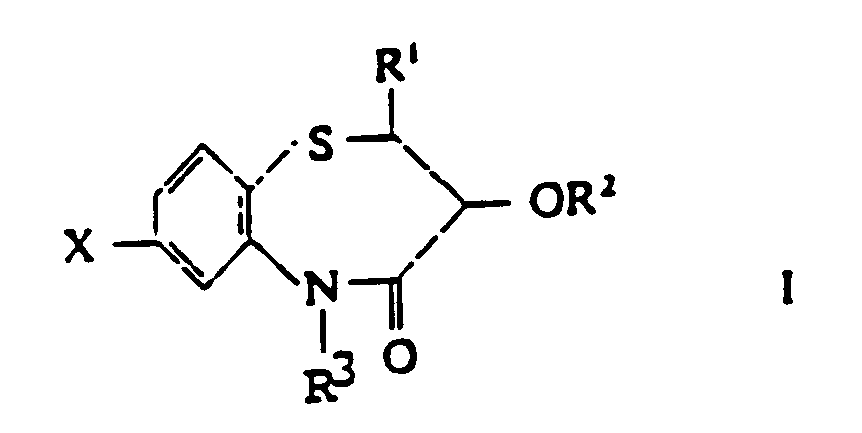
- the present patent application therefore relates to the use of benzothiazepine derivatives of the general formula I in which R1 is hydrogen or a phenyl radical which is optionally substituted by a methyl group, 1 to 3 methoxy groups or 1 to 2 chlorine atoms, R2 is a hydrogen atom or the acetyl group, X is a hydrogen atom or a chlorine atom and R3 is a hydrogen atom or the group represents, wherein Y is an alkylene radical having 2 or 3 carbon atoms and their pharmaceutically usable salts for the manufacture of medicaments for preventing toxic effects on lymphocytes which are more pronounced by lymphocytotropic noxae or medicaments, with the exception of cytostatics. Humans and higher mammals.
- diltiazem hydrochloride is particularly preferred.
- the compounds of the general formula I accordingly represent agents which can be used to prevent toxic effects on lymphocytes caused by drugs or lymphocytotropic viruses. They enable a new therapy concept in the sense of "selective lymphocyte protection".
- lymphocytotoxic drugs are understood to mean substances of different active substance classes (for example cytostatics, antibiotics or antihypertensives), provided that these either reduce the number of lymphocytes circulating in the blood or impair their immunological functions. Both effects lead to a more or less pronounced failure of the immune system, which results in an increased willingness to infect the organism.
- lymphocytopenic cytostatics such as cyclophosphamide can be assigned, due to an activity that inhibits cell proliferation, immature and immunocompetent lymphocyte precursors accumulate in the bone marrow, while at the same time the number of mature and immunologically functional cells circulating in the blood Lymphocyte decreases.
- the second type of action mentioned leads to a change in lymphocyte functions if the number of lymphocytes remains unchanged. This effect can occur in very different ways.
- the immunosuppressant cyclosporin A for example, inhibits the activation of the actual defense lymphocytes (cytotoxic T lymphocytes) by inhibiting the production of the activating messenger substance by the so-called T helper lymphocytes. This substance also inhibits the formation of those Receptors on cytotoxic T cells to which the activating messenger binds are discussed.
- Reversible blocking of these receptors by non-cytotoxic substances also provides protection of the lymphocyte surface against lymphocytotropic noxae.
- lymphocytotropic noxae also means lymphocytotropic viruses.
- lymphocytotropic viruses can either immortalize their target cells, i.e. transform them malignantly or provoke their elimination by virus-induced autoimmune processes (HIV in the case of T helper cells). So far there is no effective medication for the lymphocytotropic viral infections mentioned. Patients generally succumb to generalized infections due to the virus-induced massive immune insufficiency.
- lymphocytotropic viruses compared to the non-lymphocytotropic viruses is that they preferentially infect cells of the immune system and therefore switch off exactly the mechanisms which are essential for the elimination of these viruses themselves as well as accompanying opportunistic pathogens.
- the object of the invention is to find non-cytotoxic substances which are also characterized by a high level of general tolerance and which displace chemical or viral binding partners toxic to lymphocytes from their specific receptors on lymphocyte surfaces or hinder their interaction with these target cells by other mechanisms.
- lymphocytotropic viruses the receptors used by the pathogens for attachment to lymphocyte surfaces can be blocked in a non-toxic manner according to the invention.
- a limited prophylaxis in risk situations is to be considered here, but even in the case of an already manifest infection, long-term restitution of immune competence is expected due to the prevention of infection of further immune cells supplied by the bone marrow. It is then e.g. the preservation of patients' lives that was previously unattainable with HIV infection (AIDS infection)
- the cholesterol-rich lipid particles of the serum are introduced into the cells via the LDL receptors.
- the increased presence of these receptors on lymphocyte surfaces can possibly be seen in connection with their high division rate, which results in an increased consumption of the membrane building block cholesterol.
- the known binding of diltiazem to the LDL receptors can be used for its Membrane effects or displacement mechanisms can also be responsible for viral binding partners on lymphocyte surfaces.
- the increased LDL receptor density on lymphocytes could also explain the selectivity of the proven protective effect for the lymphocyte population.
- the reversible non-cytotoxic arrest of the lymphocyte proliferation and the influencing of receptors on the lymphocyte surface can accordingly represent mechanisms of the lymphocyte protection according to the invention against chemically and virally caused lymphocytotropic noxae by the compounds of the general formula I.
- Lymphocyte protection against lymphocytotropic viruses is demonstrated in vitro using treated human lymphocytes or lymphocyte cell lines in culture and 125J-labeled, heat-inactivated HIV. After incubation of the cells with the virus, the radioactivity is determined in a Geiger counter in comparison to untreated control lymphocytes. Diphenylhydantoin [Dtsch. Med. Schusch. 25 , pp. 1001-1002 (1986)].
- diltiazem also influences the immunosuppressive activity of substances in which it does not come about through lymphopenic effects but through the inhibition of lymphocyte functions. Cefradin has no lymphopenic but a strong immunosuppressive effect. Simultaneous treatment of the animals with diltiazem led to a large abolition of this activity with this substance in high doses (Table 1). In the combination treatment, diltiazem was administered before the substance to be antagonized, at least every half hour.
- the compounds I in particular diltiazem in a suitable dosage, provide selective protection of peripheral lymphocytes, in particular T-lymphocytes, against quantitative and qualitative drugs Allow damage to this cell population.
- peripheral lymphocytes in particular T-lymphocytes
- this also includes protection against viral lymphocytotropic binding partners (eg HIV) in the spectrum of action of the substances according to the invention.
- the compounds I can be administered enterally or parenterally in humans in liquid or solid form.
- Aqueous injection which contains the usual additives such as stabilizing agents and solubilizers, is primarily used as the injection medium.
- Solid carriers are e.g. Starch, lactose, mannitol, methyl cellulose, talc, highly disperse silicas, higher molecular fatty acids (such as stearic acid), gelatin, agar, calcium phosphate, magnesium stearate, animal and vegetable fats, solid high molecular polymers (such as polyethylene glycols);
- Preparations suitable for oral administration can, if desired, contain flavorings and / or sweeteners.
Landscapes
- Health & Medical Sciences (AREA)
- Life Sciences & Earth Sciences (AREA)
- Medicinal Chemistry (AREA)
- Veterinary Medicine (AREA)
- Public Health (AREA)
- General Health & Medical Sciences (AREA)
- Animal Behavior & Ethology (AREA)
- Pharmacology & Pharmacy (AREA)
- Chemical & Material Sciences (AREA)
- Nuclear Medicine, Radiotherapy & Molecular Imaging (AREA)
- Chemical Kinetics & Catalysis (AREA)
- Organic Chemistry (AREA)
- Virology (AREA)
- General Chemical & Material Sciences (AREA)
- Epidemiology (AREA)
- Oncology (AREA)
- Communicable Diseases (AREA)
- Molecular Biology (AREA)
- AIDS & HIV (AREA)
- Engineering & Computer Science (AREA)
- Bioinformatics & Cheminformatics (AREA)
- Immunology (AREA)
- Tropical Medicine & Parasitology (AREA)
- Pharmaceuticals Containing Other Organic And Inorganic Compounds (AREA)
- Nitrogen- Or Sulfur-Containing Heterocyclic Ring Compounds With Rings Of Six Or More Members (AREA)
Description
- AIDS (Acquired Immune Deficiency Syndrome) ist eine sehr ernst zu nehmende Infektionskrankheit, gegen die bisher wirksame Mittel nicht aufgefunden werden konnten.
- Aus der DE-PS 18 05 714 sind Benzothiazepine bekannt geworden, deren Tranquilizerwirksamkeit dem Chlordiazepoxid überlegen sein sollte. Später fand man, daß den dort beschriebenen Verbindungen mindestens teilweise eine calciumantagonistische Wirksamkeit zugeschrieben werden kann. Das 2-(4-Methoxyphenyl)-3-acetoxy-5(β-dimethylaminoethyl)-2,3-dihydro-1,5-benzothiazepin-4(5H)-on (Diltiazem), insbesondere dessen Hydrochlorid gehört mittlerweile zu den klassischen Calciumantagonisten und wird weltweit eingesetzt. Es ist auch auf GB-A-2120941 bekannt, daß Diltiazem die Wirkung von Zytostatika erhöhen kann.
- Es wurde nun gefunden, daß der Verbindungsklasse der DE-PS 18 05 714 noch eine weitere hochinteressante Indikation zugeschrieben werden kann, nämlich eine überraschende Schutzwirkung gegenüber immunkompetenten Lymphozyten.
- Gegenstand der vorliegenden Patentanmeldung ist daher die Verwendung von Benzothiazepin-Derivaten der allgemeinen Formel I

in der R¹ Wasserstoff oder einen Phenylrest, der gegebenenfalls durch eine Methylgruppe, 1 bis 3 Methoxygruppen oder 1 bis 2 Chloratome substituiert ist, R² ein Wasserstoffatom oder die Acetylgruppe, X ein Wasserstoffatom oder ein Chloratom und R³ ein Wasserstoffatom oder die Gruppe
darstellt, wobei Y einen Alkylenrest mit 2 oder 3 Kohlenstoffatomen bedeutet
und deren pharmazeutisch verwendbaren Salzen zur Herstellung von Arzneimitteln zur Verhinderung der durch lymphozytotrope Noxen oder Arzneimittel, mit Ausnahme von Zytostatika, hervorgernfere toxische Wirkungen auf lymphozyten. Menschen und höherer Säugetiere. - Besonders bevorzugt ist die Verwendung von Diltiazem-Hydrochlorid.
- Die Verbindungen der allgemeinen Formel I stellen demnach Mittel dar, mit deren Hilfe durch Arzneimittel oder lymphozytotrope Viren bedingte toxische Wirkungen auf Lymphozyten verhindert werden können. Sie ermöglichen ein neues Therapiekonzept im Sinne einer "selektiven Lymphozytenprotektion".
- Unter lymphozytotoxischen Arzneimitteln werden im vorliegenden Zusammenhang Substanzen unterschiedlicher Wirkstoffklassen (z.B. Cytostatika, Antibiotika oder Antihypertensiva) verstanden, sofern diese entweder die Zahl der im Blut kreisenden Lymphozyten vermindern oder ihre immunologischen Funktionen beeinträchtigen. Beide Effekte führen zu einem mehr oder weniger ausgeprägten Versagen der Immunabwehr mit der Folge einer erhöhten Infektionsbereitschaft des Organismus. Bei dem erstgenannten Wirkungstyp, dem insbesondere lymphozytopenisch wirkende Cytostatika wie Cyclophosphamid zuzuordnen sind, kommt es aufgrund einer die Zellproliferation hemmenden Aktivität in den meisten Fällen zur Anhäufung unreifer und immuninkompetenter Lymphozyten-Vorstufen im Knochenmark, während gleichzeitig die Zahl der im Blut kreisenden reifen und immunologisch funktionsfähigen Lymphozyten abnimmt. Der zweite genannte Wirkungstyp führt bei unveränderter Lymphozytenzahl zu einer Veränderung von Lymphozytenfunktionen. Dieser Effekt kann auf sehr unterschiedliche Weise zustandekommen. Das Immunsuppressivum Cyclosporin A z.B. hemmt die Aktivierung der eigentlichen Abwehr-Lymphozyten (zytotoxische T-Lymphozyten) über eine Hemmung der Produktion des aktivierenden Botenstoffs durch die sogenannten T-Helferlymphozyten. Es wird bei dieser Substanz darüberhinaus auch eine Hemmung der Ausbildung jener Rezeptoren auf zytotoxischen T-Zellen diskutiert, an welche der sie aktivierende Botenstoff bindet.
- Auch durch reversible Blockierung dieser Rezeptoren durch nichtzytotoxische Substanzen erzielt man einen Schutz der Lymphozytenoberfläche gegenüber lymphozytotropen Noxen.
- Unter lymphozytotropen Noxen versteht man im vorliegenden Fall auch lymphozytotrope Viren. Bekanntlich geht der eigentlichen Infektion der Zelle durch diese Erreger zunächst deren Bindung an bestimmte Rezeptoren auf der Zelloberfläche voraus, wonach der Rezeptor-Virus-Komplex dann in das Zellinnere eingestülpt wird. Lymphozytotrope Viren können ihre Targetzellen entweder immortalisieren, d.h. sie maligne transformieren oder deren Elimination durch virusinduzierte Autoimmunprozesse (HIV im Fall von T-Helferzellen) provozieren. Für die genannten lymphozytotropen Virusinfektionen gibt es bisher keine wirksame Medikation. Die Patienten erliegen im allgemeinen aufgrund der virusinduzierten massiven Immuninsuffizienz generalisierten Infekten.
- Die besondere Problematik der lymphozytotropen Viren im Vergleich zu den nicht lymphozytotropen Viren besteht demnach darin, daß sie bevorzugt Zellen des Immunsystems infizieren und daher genau die Mechanismen ausschalten, welche für die Elimination dieser Viren selbst wie auch begleitender opportunistischer Erreger unverzichtbar sind.
- Aufgabe der Erfindung ist es, nicht zytotoxische und darüberhinaus durch eine hohe allgemeine Verträglichkeit gekennzeichnete Substanzen zu finden, welche für Lymphozyten toxische Bindungspartner chemischer oder viraler Art von ihren spezifischen Rezeptoren auf Lymphozytenoberflächen verdrängen oder ihre Interaktion mit diesen Targetzellen über andere Mechanismen behindern.
- Im Fall der lymphozytotoxischen Cytostatika kann damit die bei diesen Antitumormitteln dosislimitierende und die Patienten häufig vital gefährdende Immunsuppression verhindert werden.
- Darüberhinaus kann man langfristig auch die bekannte Induktion von Sekundärtumoren durch Cytostatika beeinflussen, deren Entstehung durch die iatrogene Immunschwäche begünstigt wird.
- Im Fall lymphozytotroper Viren können erfindungsgemäß die zur Anheftung an Lymphozytenoberflächen von den Erregern benutzten Rezeptoren auf untoxische Weise blockiert werden. Hierbei ist an eine limitierte Prophylaxe in Risikosituationen zu denken, aber auch bei bereits manifestem Infekt wird aufgrund der Verhinderung der Infektion weiterer, vom Knochenmark nachgelieferter Immunzellen langfristig eine Restitution der Immunkompetenz erwartet. Es ist dann z.B. die bei HIV-Infekten (AIDS-Infektion) bisher nicht zu erzielende Erhaltung des Lebens der Patienten möglich.
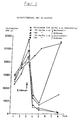
- Bei Versuchen zur Antagonisierung der immunsuppressiven Wirkung der antineoplastisch wirkenden Substanz Dinalin [= 4-Amino-N-(2ʹ-aminophenyl)-benzamid, vgl. EP-PS 0 116 967] in einem Hauttransplantationsmodell bei Ratten wurde erstmals nachgewiesen, daß Diltiazem in einer Dosierung von 200 mg/kg/Tag, intragastral verabreicht, die immunsuppressive Aktivität von Dinalin deutlich antagonisiert (Tab. 1, Abb. 1). Da die immunsuppressive Aktivität in diesem Modell über eine Inhibition zytotoxischer T-Lymphozyten bzw. deren Funktion zustandekommt, kann man auf einen Schutz dieser Zellpopulation unter Diltiazem gegenüber der antiproliferativen Wirkung dieses Antineoplastikums schließen. Daß Diltiazem einen Einfluß auf zytotoxische T-Lymphozyten haben muß, wurde auch dadurch deutlich, daß die Substanz, allein verabreicht, selbst eine mäßige Verzögerung der Transplantatabstoßung bewirkt (Tabelle 1).
- Über die LDL-Rezeptoren werden die cholesterinreichen Lipidartikel des Serums (low density lipoproteins) in die Zellen eingeschleust. Das vermehrte Vorkommen dieser Rezeptoren auf Lymphozytenoberflächen ist möglicherweise in Verbindung mit deren hoher Teilungsrate zu sehen, die einen erhöhten Verbrauch des Membranbausteins Cholesterin mit sich bringt. Die bekannte Bindung von Diltiazem an die LDL Rezeptoren kann für seine Membranwirkung bzw. Verdrängungsmechanismen auch gegenüber viralen Bindungspartnern an Lymphozytenoberflächen verantwortlich sein. Die erhöhte LDL-Rezeptordichte auf Lymphozyten könnte auch die Selektivität der nachgewiesenen Schutzwirkung für die Lymphozytenpopulation erklären.
- Die reversible nichtzytotoxische Arretierung der Lymphozytenproliferation und die Beeinflußung von Rezeptoren auf der Lymphozytenoberfläche können demnach Mechanismen der erfindungsgemäßen Lymphozytenprotektion gegenüber chemisch und viral bedingten lymphozytotropen Noxen durch die Verbindungen der allgemeinen Formel I darstellen.
- Versuche zur Protektion von T-Lymphozyten gegenüber arzneimittelinduzierten lymphozytotoxischen Effekten wurden an einem Rattenhaut-Transplantationsmodell nach Waynforth (Experimental and Surgical Techniques in the Rat, Academic Press, 1980) modifiziert nach Heystek, durchgeführt. Es werden je 2 allogene Hauttransplantate histoinkompatibler Spender-Ratten auf Empfänger-Ratten übertragen. Die Transplantate werden mit einer Stanze gewonnen, präparativ vom Panniculus carnosus befreit und in ebenfalls ausgestanzte Transplantatbetten des Empfängers plaziert. Die Transplantate werden mit speziellem Verbandmaterial bedeckt und mit einer Bandage fixiert. Endpunkt der Untersuchung ist der Tag, an dem mindestens 50 % der Tiere beide Transplantate abgestoßen haben. Die immunsuppressive Aktivität eines Wirkstoffs wird anhand der Verlängerung des normalen Transplantatüberlebens (Tage) der nicht behandelten Kontrolltiere bestimmt (Fig. 1, Tab. 1).
- Weiterhin wurden Versuche zur Beeinflussung der Cyclophosphamid-induzierten Lymphopenie an Ratten durchgeführt. Eine Gruppe, die ausschließlich Diltiazem erhielt, diente als Kontrolle. Zwei Dosierungen von Cyclophosphamid, als Einzeldosen verabreicht, wurden mit einer Kombination des Cytostatikums mit Diltiazem verglichen, wobei der Kombinationsbehandlung eine 2-tägige Vorbehandlung mit Diltiazem vorausging. Die Bestimmung von Leukozyten- und Lymphozytenzahlen erfolgte im Blut, das jeweils am Morgen vor der Substanzgabe aus der Retroorbitalhöhle in Penthrane®-Kurznarkose entnommen wurde. Die Ergebnisse sind in den Figuren 2 und 3 dargestellt.
- Der Nachweis der Lymphozytenprotektion gegenüber lymphozytotropen Viren wird in vitro anhand behandelter Humanlymphozyten oder Lymphozyten-Zellinien in Kultur und ¹²⁵J-markiertem, hitzeinaktiviertem HIV erbracht. Nach Inkubation der Zellen mit dem Virus wird die Radioaktivität im Vergleich zu nicht behandelten Kontroll-Lymphozyten in einem Geigerzähler bestimmt. Als Positivstandard dient Diphenylhydantoin [Dtsch. Med. Wochensch. 25, S. 1001-1002 (1986)].
- Am Beispiel des stark leukopenisch wirkenden Cytostatikums Cyclophosphamid konnte gezeigt werden, daß eine intragastrale Vorbehandlung mit Diltiazem in einer Dosierung von 200 mg/kg/Tag die durch hohe orale Einzeldosen von 15o mg/kg Cyclophosphamid bei Ratten induzierte massive Lymphozytopenie vollständig verhindert (Fig. 2). Die durch Cyclophosphamid ebenfalls induzierte Granulozytopenie wurde durch Diltiazem nicht beeinflußt (Fig. 3). Es handelt sich folglich um einen für Lymphozyten spezifischen Effekt.
- Weiterhin wurde untersucht, ob Diltiazem die immunsuppressive Aktivität auch solcher Substanzen beeinflußt, bei welchen diese nicht über lymphopenische Wirkungen sondern über die Hemmung von Lymphozytenfunktionen zustandekommt. Cefradin hat keine lymphopenische aber eine starke immunsuppressive Wirkung. Eine gleichzeitige Behandlung der Tiere mit Diltiazem führte bei dieser Substanz in hoher Dosierung zu einer weitgehenden Aufhebung dieser Aktivität (Tabelle 1). Bei der Kombinationsbehandlung wurde Diltiazem jeweils vor der zu antagonisierenden Substanz, und zwar in mindestens halbstündigem Abstand, verabreicht.
- Aufgrund der insgesamt durchgeführten Versuche ist es offensichtlich, daß die Verbindungen I, insbesondere Diltiazem in geeigneter Dosierung einen selektiven Schutz peripherer Lymphozyten, insbesondere T-Lymphozyten, gegenüber arzneimittelbedingten quantitativen und qualitativen Schädigungen dieser Zellpopulation ermöglichen. Insbesondere aufgrund der Antagonisierung der immunsuppressiven Wirkung von Cefradin, welche wohl auf Rezeptorebene abläuft, schließt dies den Schutz auch gegenüber viralen lymphozytotropen Bindungspartnern (z.B. HIV) in das Wirkungsspektrum der erfindungsgemäßen Substanzen ein.
- Bei orientierenden Versuchen mit den Verbindungen der Formel I hat sich nämlich herausgestellt, daß diese über eine direkte Membranwirkung die Bindungsstellen der Zelle für das AIDS-Virus verändert, so daß davon ausgegangen werden kann, daß sich z.B. Diltiazem innerhalb des verträglichen Dosisbereichs von 10 - 100 mg pro orale Einzeldosis zur Bekämpfung von AIDS beim Menschen eignet.
- Die Verbindungen I können erfindungsgemäß beim Menschen in flüssiger oder fester Form enteral oder parenteral appliziert werden. Als Injektionsmedium kommen vor allem wäßrige Phasen zur Anwendung, welche die üblichen Zusätze wie Stabilisierungsmittel und Lösungsvermittler enthalten. Feste Trägerstoffe sind z.B. Stärke, Lactose, Mannit, Methylcellulose, Talkum, hochdisperse Kieselsäuren, höhermolekulare Fettsäuren (wie Stearinsäure), Gelatine, Agar-Agar, Kalziumphosphat, Magnesiumstearat, tierische und pflanzliche Fette, feste hochmolekulare Polymere (wie Polyäthylenglykole); für orale Applikation geeignete Zubereitungen können gewünschtenfalls Geschmacks- und/oder Süßstoffe enthalten.
- Neben Diltiazem lassen sich auch folgende Verbindungen erfindungsgemäß einsetzen, die sämtlich aus der DE-PS 18 05 714 bekannt sind:
2-(4-Chlorphenyl)-3-hydroxy-5-(β-dimethylaminoäthyl)-2,3-dihydro-1,5-benzothiazepin-4(5H)-on;
2-(3,4,5-Trimethoxyphenyl)-3-hydroxy-5-(β-dimethylaminoäthyl)-7-chlor-2,3-dihydro-1,5-benzothiazepin-4(5H)-on-perchlorat;
2-(4-Methylphenyl)-3-hydroxy-5-(β-dimethylaminoäthyl)-7-chlor-2,3-dihydro-1,5-benzothiazepin-4(5H)-on-hydrochlorid;
2-(2,4-Dichlorphenyl)-3-hydroxy-5-(β-dimethylaminoäthyl)-7-chlor-2,3-dihydro-1,5-benzothiazepin-4(5H)-on-hydrochlorid;
2-(4-Methylphenyl)-3-hydroxy-5-(β-dimethylaminoäthyl)-2,3-dihydro-1,5-benzothiazepin-4(5H)-on;
2-(4-Methoxyphenyl)-3-hydroxy-5-(β-dimethylaminoäthyl)-7-chlor-2,3-dihydro-1,5-benzothiazepin-4(5H)-on;
2-(4-Chlorphenyl)-3-hydroxy-5-(β-dimethylaminoäthyl)-7-chlor-2,3-dihydro-1,5-benzothiazepin-4(5H)-on-hydrochlorid;
2-Phenyl-3-hydroxy-5-(β-dimethylaminoäthyl)-2,3-dihydro-1,5-benzothiazepin-4(5H)-on;
2-(3,4-Dimethoxyphenyl)-3-hydroxy-5-(β-dimethylaminoäthyl)-2,3-dihydro-1,5-benzothiazepin-4(5H)-on-hydrochlorid;
2-(3,4,5-Trimethoxyphenyl)-3-hydroxy-5-(β-dimethylaminoäthyl)-2,3-dihydro-1,5-benzothiazepin-4(5H)-on-hydrobromid;
2-(2,4-Dichlorphenyl)-3-hydroxy-5-(β-dimethylaminoäthyl)-2,3-dihydro-1,5-benzothiazepin-4(5H)-on-hydrochlorid;
2-Phenyl-3-hydroxy-5-(β-dimethylaminoäthyl)-7-chlor-2,3-dihydro-1,5-benzothiazepin-4(5H)-on-hydrochlorid;
2-(3,4-Dimethoxyphenyl-3-hydroxy-5-(β-dimethyalminoäthyl)-7-chlor-2,3-dihydro-1,5-benzothiazepin-4(5H)-on-hydrochlorid;
2-(4-Methoxyphenyl)-3-hydroxy-5-(β-dimethylaminoäthyl)-2,3-dihydro-1,5-benzothiazepin-4(5H)-on;
2-Phenyl-3-hydroxy-5-(γ-dimethylamino-n-propyl)-2,3-dihydro-1,5-benzothiazepin-4(5H)-on;
2-(4-Methoxyphenyl)-3-hydroxy-5-(γ-dimethyl-amino-n-propyl)-2,3-dihydro-1,5-benzothiazepin-4(5H)-on-hydrochlorid;
2-(3,4,5-Trimethoxyphenyl)-3-hydroxy-5-(γ-dimethylamino-n-propyl)-2,3-dihydro-1,5-benzothiazepin-4(5H)-on-hydrochlorid;
2-(4-Methylphenyl)-3-hydroxy-5-(γ-dimethyl-amino-n-propyl)-2,3-dihydro-1,5-benzothiazepin-4(5H)-on-hydrochlorid;
2-Phenyl-3-hydroxy-5-(γ-dimethylamino-n-propyl)-7-chlor-2,3-dihydro-1,5-benzothiazepin-4(5H)-on-oxalat;
2-(4-Chlorphenyl)-3-hydroxy-5-(γ-dimethylamino-n-propy)7-chlor-2,3-dihydro-1,5-benzothiazepin-4(5H)-on-hydrochlorid;
2-(4-Methoxyphenyl-3-hydroxy-5-(α-methyl-β-dimethylaminoäthyl)-2,3-dihydro-1,5-benzothiazepin-4(5H)-on-oxalat;
2-(4-Methoxyphenyl)-3-hydroxy-5-(γ-dimethylamino-n-propyl)-7-chlor-2,3-dihydro-1,5-benzothiazepin-4(5H)-on;
2-Phenyl-3-acetoxy-5-(β-dimethylaminoäthyl)-2,3-dihydro-1,5-benzothiazepin-4(5H)-on;
2-(4-Methoxyphenyl)-3-acetoxy-5-(β-dimethylaminoäthyl)-2,3-dihydro-1,5-benzothiazepin-4(5H)-on-hydrochlorid;
2-(3,4,5-Trimethoxyphenyl)-3-acetoxy-5-(β-dimethylaminoäthyl-2,3-dihydro-1,5-benzothiazepin-4(5H)-on-oxalat;
2-(4-Methylphenyl)-3-acetoxy-5-(β-dimethylaminoäthyl)-2,3-dihydro-1,5-benzothiazepin-4(5H)-on-hydrochlorid;
4-Phenyl-3-acetoxy-5-(β-dimethylaminoäthyl)-7-chlor-2,3-dihydro-1,5-benzothiazepin-4(5H)-on-hydrochlorid;
2-(4-Methoxyphenyl)-3-acetoxy-5-(β-dimethylaminoäthyl)-7-chlor-2,3-dihydro-1,5-benzothiazepin-4(5H)-on-hydrochlorid;
2-(4-Chlorphenyl)-3-acetoxy-5-(β-dimethylaminoäthyl)-7-chlor-2,3-dihydro-1,5-benzothiazepin-4(5H)-on-hydrochlorid;
2-Phenyl-3-acetoxy-5-(γ-dimethylamino-n-propyl)-2,3-dihydro-1,5-benzothiazepin-4(5H)-on-hydrochlorid;
2-(4-Methylphenyl)-3-acetoxy-5-(γ-dimethylamino-n-propyl)-2,3-dihydro-1,5-benzothiazepin-4(5H)-on-hydrochlorid;
2-(3,4,5-Trimethoxyphenyl)-3-acetoxy-5-(γ-dimethylamino-n-propyl)-2,3-dihydro-1,5-benzothiazepin-4(5H)-on-hydrochlorid;
2-Phenyl-3-acetoxy-5-(γ-dimethylamino-n-propyl)-7-chlor-2,3-dihydro-1,5-benzothiazepin-4(5H)-on-hydrochlorid;
2-(4-Methoxyphenyl)-4-acetoxy-5-(γ-dimethylamino-n-propyl)-7-chlor-2,3-dihydro-1,5-benzothiazepin-4(5H)-on-hydrochlorid;
2-(4-Chlorphenyl)-3-acetoxy-5-(γ-dimethylamino-n-propyl)-7-chlor-2,3-dihydro-1,5-benzothiazepin-4(5H)-on-hydrochlorid.
Claims (4)
- Verwendung von Benzothiazepin-Derivaten der allgemeinen Formel I

- Verwendung von 2-(4-Methoxyphenyl)-3-acetoxy-5(β-dimethylaminoethyl)-2,3-dihydro-1,5-benzothiazepin-4(5H)-on (Diltiazem) und von dessen pharmazeutisch verwendbaren Salzen nach Anspruch 1.
- Verwendung von Diltiazem.Hydrochlorid nach Anspruch 1 und 2.
- Verwendung von Verbindungen gemäß der Ansprüche 1 bis 3 zur Herstellung von Arzneitmitteln zur Behandlung der durch AIDS-Viren hervorgerufene toxischen Wirkungen auf Lymphozyten.
Priority Applications (1)
| Application Number | Priority Date | Filing Date | Title |
|---|---|---|---|
| AT88102294T ATE92322T1 (de) | 1987-02-18 | 1988-02-17 | Verwendung von benzothiazepin-derivaten, insbesondere diltiazem zur herstellung von arzneimitteln zur protektion von lymphozyten. |
Applications Claiming Priority (2)
| Application Number | Priority Date | Filing Date | Title |
|---|---|---|---|
| DE19873705117 DE3705117A1 (de) | 1987-02-18 | 1987-02-18 | Verwendung von benzothiazepin-derivaten, insbesondere diltiazem bei der protektion von lymphozyten |
| DE3705117 | 1987-02-18 |
Publications (3)
| Publication Number | Publication Date |
|---|---|
| EP0279425A2 EP0279425A2 (de) | 1988-08-24 |
| EP0279425A3 EP0279425A3 (en) | 1990-09-19 |
| EP0279425B1 true EP0279425B1 (de) | 1993-08-04 |
Family
ID=6321241
Family Applications (1)
| Application Number | Title | Priority Date | Filing Date |
|---|---|---|---|
| EP88102294A Expired - Lifetime EP0279425B1 (de) | 1987-02-18 | 1988-02-17 | Verwendung von Benzothiazepin-Derivaten, insbesondere Diltiazem zur Herstellung von Arzneimitteln zur Protektion von Lymphozyten |
Country Status (5)
| Country | Link |
|---|---|
| US (1) | US4861770A (de) |
| EP (1) | EP0279425B1 (de) |
| JP (1) | JPS63222117A (de) |
| AT (1) | ATE92322T1 (de) |
| DE (2) | DE3705117A1 (de) |
Families Citing this family (6)
| Publication number | Priority date | Publication date | Assignee | Title |
|---|---|---|---|---|
| CA2024040C (en) * | 1989-08-29 | 2002-02-19 | Karl D. Hargrave | Dibenz [b,f] [1,4]oxazepin (and thiazepin)-11 (10h)-ones and-thiones and their use in the prevention or treatment of aids |
| CA2030159A1 (en) * | 1989-11-22 | 1991-05-23 | Nahed K. Ahmed | Anti-cancer drug potentiators |
| CA2030160A1 (en) * | 1989-11-22 | 1991-05-23 | Nahed K. Ahmed | Benzothiazepine metastasis treatment |
| GB9109557D0 (en) * | 1991-05-02 | 1991-06-26 | Wellcome Found | Chemical compounds |
| US6413967B1 (en) * | 1995-03-30 | 2002-07-02 | The University Of Virginia Patents Foundation | Inhibition of novel calcium entry pathway in electrically non-excitable cells acting as an anti-proliferative therapy |
| US7015212B1 (en) | 1999-05-12 | 2006-03-21 | The United States Of America As Represented By The Department Of Health And Human Services | Thiazepine inhibitors of HIV-1 integrase |
Family Cites Families (4)
| Publication number | Priority date | Publication date | Assignee | Title |
|---|---|---|---|---|
| JPS58208222A (ja) * | 1982-05-28 | 1983-12-03 | Japan Found Cancer | 抗腫瘍剤効果増強剤 |
| DE3305755A1 (de) * | 1983-02-19 | 1984-08-23 | Gödecke AG, 1000 Berlin | N-phenyl-benzamid-derivate, verfahren zu deren herstellung und deren verwendung bei der bekaempfung von erkranungen des immunsystems |
| US4690935A (en) * | 1983-03-31 | 1987-09-01 | Wayne State University | Inhibition of tumor growth and metastasis with calcium channel blocker compounds |
| US4663317A (en) * | 1984-04-18 | 1987-05-05 | Board Of Regents, University Of Texas System | Methods and compositions for treating viral infections |
-
1987
- 1987-02-18 DE DE19873705117 patent/DE3705117A1/de not_active Ceased
-
1988
- 1988-02-01 US US07/150,578 patent/US4861770A/en not_active Expired - Fee Related
- 1988-02-17 EP EP88102294A patent/EP0279425B1/de not_active Expired - Lifetime
- 1988-02-17 DE DE8888102294T patent/DE3882734D1/de not_active Expired - Fee Related
- 1988-02-17 AT AT88102294T patent/ATE92322T1/de not_active IP Right Cessation
- 1988-02-18 JP JP63036441A patent/JPS63222117A/ja active Pending
Also Published As
| Publication number | Publication date |
|---|---|
| EP0279425A2 (de) | 1988-08-24 |
| JPS63222117A (ja) | 1988-09-16 |
| EP0279425A3 (en) | 1990-09-19 |
| DE3882734D1 (de) | 1993-09-09 |
| DE3705117A1 (de) | 1988-09-01 |
| ATE92322T1 (de) | 1993-08-15 |
| US4861770A (en) | 1989-08-29 |
Similar Documents
| Publication | Publication Date | Title |
|---|---|---|
| EP0759295B1 (de) | Verwendung von Adamantan-Derivaten zur Behandlung von Tinnitus | |
| DE69328558T2 (de) | Pharmazeutisches Präparat zur synergistischen Aktivierung natürlicher Killerzellen | |
| DE69430440T2 (de) | Zusammensetzungen zur inhibition von retroviraler verbreitung, die 2',3'-dideoxy-inosin und hydroxyharnstoff enthalten | |
| DE3305755C2 (de) | ||
| EP0001796B1 (de) | Mittel gegen Malaria | |
| EP0453898A2 (de) | Verwendung von anti-TNF-Antikörpern als Arzneimittel bei der Behandlung von Ischämien und deren Folgen | |
| EP0857065A2 (de) | Verwendung von 4-amino-4-(4-fluorbenzylamino)-1-ethoxycarbonylaminobenzen zur prophylaxe und behandlung der folgen der akuten und chronischen zerebralen minderdurchblutung sowie neurodegenerativer erkrankungen | |
| DE3607381A1 (de) | Verwendung von diphenylhydantoin und seinen derivaten zur behandlung von immunerkrankungen | |
| DE69006707T2 (de) | Verwendung von Fluorochinolon-Derivaten zur Behandlung der Pneumocystis carinii Pneumonie. | |
| EP0279425A2 (de) | Verwendung von Benzothiazepin-Derivaten, insbesondere Diltiazem zur Herstellung von Arzneimitteln zur Protektion von Lymphozyten | |
| DE3638124C2 (de) | Neue pharmazeutische Verwendung von Ebselen | |
| EP0374096A1 (de) | 2',3'-Dideoxypurinnucleosid/Purinnucleosid-Phosphorylase-Inhibitor Kombinationstherapie und Zusammensetzungen dafür | |
| EP0919244A2 (de) | Kombinationspräparate für die Therapie von Tumoren | |
| DE19806354B4 (de) | Verwendung von α-Liponsäure oder deren physiologisch verträgliche Salze zur Behandlung von LDL-Hypercholesterinämie | |
| EP0271023A2 (de) | Verwendung von Dihydrophenylaminosäurederivaten und diese enthaltende Arzneimittel zur Immunmodulation und Cytostase | |
| EP0979083B1 (de) | Verwendung von 1-ar(alk)yl-imidazolin-2-one zur behandlung von angst- und spannungszuständen | |
| AT408719B (de) | Mittel zur behandlung von hepatitis c | |
| DE3419425C2 (de) | ||
| DE2314387C3 (de) | Arzneimittel zur Behandlung bösartiger Neubildungen | |
| EP1227808B1 (de) | Verwendung von treosulfan zur konditionierung von patienten vor knochenmarktransplantation oder blutstammzelltransplantation | |
| EP0539920A1 (de) | Arzneimittel zur Behandlung von AIDS | |
| EP0473844B1 (de) | Arzneimittel enthaltend eine Kombination von AZT und Amantadin für die Behandlung von AIDS | |
| DE3406837C2 (de) | ||
| DE3439055A1 (de) | Substituierte 4h-3,1 benzoxazine und ein benzodiazepin-derivat enthaltendes arzneimittel | |
| DE3816937C2 (de) |
Legal Events
| Date | Code | Title | Description |
|---|---|---|---|
| PUAI | Public reference made under article 153(3) epc to a published international application that has entered the european phase |
Free format text: ORIGINAL CODE: 0009012 |
|
| 17P | Request for examination filed |
Effective date: 19880217 |
|
| AK | Designated contracting states |
Kind code of ref document: A2 Designated state(s): AT BE CH DE FR GB IT LI LU NL SE |
|
| PUAL | Search report despatched |
Free format text: ORIGINAL CODE: 0009013 |
|
| AK | Designated contracting states |
Kind code of ref document: A3 Designated state(s): AT BE CH DE FR GB IT LI LU NL SE |
|
| 17Q | First examination report despatched |
Effective date: 19910701 |
|
| GRAA | (expected) grant |
Free format text: ORIGINAL CODE: 0009210 |
|
| AK | Designated contracting states |
Kind code of ref document: B1 Designated state(s): AT BE CH DE FR GB IT LI LU NL SE |
|
| REF | Corresponds to: |
Ref document number: 92322 Country of ref document: AT Date of ref document: 19930815 Kind code of ref document: T |
|
| REF | Corresponds to: |
Ref document number: 3882734 Country of ref document: DE Date of ref document: 19930909 |
|
| ET | Fr: translation filed | ||
| ITF | It: translation for a ep patent filed | ||
| GBT | Gb: translation of ep patent filed (gb section 77(6)(a)/1977) |
Effective date: 19930928 |
|
| EPTA | Lu: last paid annual fee | ||
| PLBE | No opposition filed within time limit |
Free format text: ORIGINAL CODE: 0009261 |
|
| STAA | Information on the status of an ep patent application or granted ep patent |
Free format text: STATUS: NO OPPOSITION FILED WITHIN TIME LIMIT |
|
| 26N | No opposition filed | ||
| PGFP | Annual fee paid to national office [announced via postgrant information from national office to epo] |
Ref country code: GB Payment date: 19950110 Year of fee payment: 8 |
|
| PGFP | Annual fee paid to national office [announced via postgrant information from national office to epo] |
Ref country code: AT Payment date: 19950120 Year of fee payment: 8 |
|
| PGFP | Annual fee paid to national office [announced via postgrant information from national office to epo] |
Ref country code: SE Payment date: 19950124 Year of fee payment: 8 |
|
| EAL | Se: european patent in force in sweden |
Ref document number: 88102294.1 |
|
| PGFP | Annual fee paid to national office [announced via postgrant information from national office to epo] |
Ref country code: FR Payment date: 19950214 Year of fee payment: 8 |
|
| PGFP | Annual fee paid to national office [announced via postgrant information from national office to epo] |
Ref country code: DE Payment date: 19950224 Year of fee payment: 8 |
|
| PGFP | Annual fee paid to national office [announced via postgrant information from national office to epo] |
Ref country code: NL Payment date: 19950228 Year of fee payment: 8 |
|
| PGFP | Annual fee paid to national office [announced via postgrant information from national office to epo] |
Ref country code: BE Payment date: 19950308 Year of fee payment: 8 |
|
| PGFP | Annual fee paid to national office [announced via postgrant information from national office to epo] |
Ref country code: LU Payment date: 19950401 Year of fee payment: 8 |
|
| PGFP | Annual fee paid to national office [announced via postgrant information from national office to epo] |
Ref country code: CH Payment date: 19950420 Year of fee payment: 8 |
|
| PG25 | Lapsed in a contracting state [announced via postgrant information from national office to epo] |
Ref country code: LU Free format text: LAPSE BECAUSE OF NON-PAYMENT OF DUE FEES Effective date: 19960217 Ref country code: GB Effective date: 19960217 Ref country code: AT Effective date: 19960217 |
|
| PG25 | Lapsed in a contracting state [announced via postgrant information from national office to epo] |
Ref country code: SE Effective date: 19960218 |
|
| PG25 | Lapsed in a contracting state [announced via postgrant information from national office to epo] |
Ref country code: BE Effective date: 19960228 |
|
| PG25 | Lapsed in a contracting state [announced via postgrant information from national office to epo] |
Ref country code: LI Effective date: 19960229 Ref country code: CH Effective date: 19960229 |
|
| BERE | Be: lapsed |
Owner name: GODECKE A.G. Effective date: 19960228 |
|
| PG25 | Lapsed in a contracting state [announced via postgrant information from national office to epo] |
Ref country code: NL Effective date: 19960901 |
|
| GBPC | Gb: european patent ceased through non-payment of renewal fee |
Effective date: 19960217 |
|
| REG | Reference to a national code |
Ref country code: CH Ref legal event code: PL |
|
| PG25 | Lapsed in a contracting state [announced via postgrant information from national office to epo] |
Ref country code: FR Effective date: 19961031 |
|
| NLV4 | Nl: lapsed or anulled due to non-payment of the annual fee |
Effective date: 19960901 |
|
| PG25 | Lapsed in a contracting state [announced via postgrant information from national office to epo] |
Ref country code: DE Effective date: 19961101 |
|
| REG | Reference to a national code |
Ref country code: FR Ref legal event code: ST |
|
| PG25 | Lapsed in a contracting state [announced via postgrant information from national office to epo] |
Ref country code: IT Free format text: LAPSE BECAUSE OF NON-PAYMENT OF DUE FEES;WARNING: LAPSES OF ITALIAN PATENTS WITH EFFECTIVE DATE BEFORE 2007 MAY HAVE OCCURRED AT ANY TIME BEFORE 2007. THE CORRECT EFFECTIVE DATE MAY BE DIFFERENT FROM THE ONE RECORDED. Effective date: 20050217 |