EP0249397B1 - Improved penetrating topical pharmaceutical compositions - Google Patents
Improved penetrating topical pharmaceutical compositions Download PDFInfo
- Publication number
- EP0249397B1 EP0249397B1 EP87304945A EP87304945A EP0249397B1 EP 0249397 B1 EP0249397 B1 EP 0249397B1 EP 87304945 A EP87304945 A EP 87304945A EP 87304945 A EP87304945 A EP 87304945A EP 0249397 B1 EP0249397 B1 EP 0249397B1
- Authority
- EP
- European Patent Office
- Prior art keywords
- penetration
- butanediol
- mixtures
- compositions
- hydroxy
- Prior art date
- Legal status (The legal status is an assumption and is not a legal conclusion. Google has not performed a legal analysis and makes no representation as to the accuracy of the status listed.)
- Expired - Lifetime
Links
Classifications
-
- A—HUMAN NECESSITIES
- A61—MEDICAL OR VETERINARY SCIENCE; HYGIENE
- A61K—PREPARATIONS FOR MEDICAL, DENTAL OR TOILETRY PURPOSES
- A61K47/00—Medicinal preparations characterised by the non-active ingredients used, e.g. carriers or inert additives; Targeting or modifying agents chemically bound to the active ingredient
- A61K47/06—Organic compounds, e.g. natural or synthetic hydrocarbons, polyolefins, mineral oil, petrolatum or ozokerite
- A61K47/08—Organic compounds, e.g. natural or synthetic hydrocarbons, polyolefins, mineral oil, petrolatum or ozokerite containing oxygen, e.g. ethers, acetals, ketones, quinones, aldehydes, peroxides
- A61K47/10—Alcohols; Phenols; Salts thereof, e.g. glycerol; Polyethylene glycols [PEG]; Poloxamers; PEG/POE alkyl ethers
-
- A—HUMAN NECESSITIES
- A61—MEDICAL OR VETERINARY SCIENCE; HYGIENE
- A61K—PREPARATIONS FOR MEDICAL, DENTAL OR TOILETRY PURPOSES
- A61K8/00—Cosmetics or similar toiletry preparations
- A61K8/18—Cosmetics or similar toiletry preparations characterised by the composition
- A61K8/30—Cosmetics or similar toiletry preparations characterised by the composition containing organic compounds
- A61K8/49—Cosmetics or similar toiletry preparations characterised by the composition containing organic compounds containing heterocyclic compounds
- A61K8/494—Cosmetics or similar toiletry preparations characterised by the composition containing organic compounds containing heterocyclic compounds with more than one nitrogen as the only hetero atom
- A61K8/4953—Cosmetics or similar toiletry preparations characterised by the composition containing organic compounds containing heterocyclic compounds with more than one nitrogen as the only hetero atom containing pyrimidine ring derivatives, e.g. minoxidil
-
- A—HUMAN NECESSITIES
- A61—MEDICAL OR VETERINARY SCIENCE; HYGIENE
- A61K—PREPARATIONS FOR MEDICAL, DENTAL OR TOILETRY PURPOSES
- A61K9/00—Medicinal preparations characterised by special physical form
- A61K9/0012—Galenical forms characterised by the site of application
- A61K9/0014—Skin, i.e. galenical aspects of topical compositions
-
- A—HUMAN NECESSITIES
- A61—MEDICAL OR VETERINARY SCIENCE; HYGIENE
- A61P—SPECIFIC THERAPEUTIC ACTIVITY OF CHEMICAL COMPOUNDS OR MEDICINAL PREPARATIONS
- A61P17/00—Drugs for dermatological disorders
-
- A—HUMAN NECESSITIES
- A61—MEDICAL OR VETERINARY SCIENCE; HYGIENE
- A61Q—SPECIFIC USE OF COSMETICS OR SIMILAR TOILETRY PREPARATIONS
- A61Q7/00—Preparations for affecting hair growth
Definitions
- the present invention relates to improved topical compositions containing known hydroxy iminopyrimidine pharmaceutical agents, such as Minoxidil.
- Minoxidil has been disclosed to be effective for increasing terminal hair growth and for stimulating the conversion of vellus hair to growth as terminal hair.
- Alopecia a deficiency of hair, either normal or abnormal, is primarily a cosmetic problem in humans. It is a deficiency of terminal hair, the broad diameter, colored hair that is readily visible to the eye. However, in the so-called bald person, although there is a noticeable absence of terminal hair, the skin does contain vellus hair (a fine colorless hair) which may require microscopic examination to be seen. This vellus hair may be a precursor to terminal hair.
- R3 and R2 may be hydrogen, lower alkyl, lower alkenyl, lower aralkyl, or lower cycloalkyl and, taken together, R3 and R2 may be a heterocyclic group, such as aziridinyl, azetidinyl, pyrrolidinyl, piperidino, hexahydroazepinyl, heptamethylenimino, octamethylenimino, morpholino and 4-lower-alkylpiperazinyl, where each of these heterocyclic groups may have up to three lower alkyl, hydroxy, or alkoxy substituents.
- R1 may be hydrogen, lower alkyl, lower alkenyl, lower alkoxyalkyl, lower cycloalkyl, lower aryl, lower aralkyl, lower alkaryl, lower alkaralkyl, lower alkoxyaralkyl or lower haloaralkyl. It has also been taught that when these compounds are administered topically they act to stimulate the conversion of vellus hair to terminal hair and prevent the transformation of terminal hair to vellus hair. In short, the topical use of these compounds has been taught to increase the growth of perceivable mammalian hair.
- topical vehicles which are said to improve the penetration of a variety of pharmaceutical actives through the skin. Indeed, it is well-recognized that the development of such vehicles would provide a very useful method for the delivery of pharmaceuticals. It has been taught that a binary penetration system comprising specific polar lipid cell-envelope disordering compounds, such as oleic acid or methyl laurate, together with specific diol compounds, such as propylene glycol, can be used to topically deliver systemic levels of selected pharmaceutical agents, such as steroids and non-steroidal anti-inflammatory agents. However, these vehicles have not been found to be equally effective for enhancing the delivery of all pharmaceutical agents.
- the vehicle In order to be useful as a topical vehicle for a hair-growth stimulating agent, the vehicle must satisfy four stringent requirements:
- hydroxy iminopyrimidine compounds of the formula (I) can be effectively delivered percutaneously by incorporating them into a specific vehicle which provides an exceptional increase in penetration over conventional vehicles.
- this vehicle satisfies all four of the requirements set forth above.
- the present invention provides an aesthetically acceptable topical vehicle which can enhance the mammalian hair growth effects of the 1,2-dihydro-1-hydroxyiminopyrimidine compounds, such as Minoxidil.
- a specific binary surfactant system comprising a polar lipid compound and a diol or trio compound can consistently and dramatically improve the topical delivery of 1,2-dihydro-1-hydroxyiminopyrimidine compounds (formula (I)).
- the topical administration of these compounds to stimulate mammalian hair growth is disclosed in U.S.-A-4,139,619, Chidsey, III, issued February 13, 1979.
- Standard aqueous solutions, ointments and creams, such as those based on propylene glycol, ethanol, n-methyl-pyrrolidone, or petrolatum are used for the topical formulations.
- compositions useful in the treatment of acne contain benzoyl peroxide, C6-C14 primary alcohols, and a diol selected from 1,2-propanediol, 1,2-butanediol, 1,3-butanediol, and 2,3-butanediol.
- compositions for topical application are suitable for effective delivery of lipophilic, pharmacologically-active compounds using primary alcohols or various carboxylate compounds in combination with selected diols.
- EP-A-95,813, published December 7, 1983 discloses a binary penetration system utilizing a diol and a cell-envelope disordering compound to aid in the penetration of 9-hydroxyethoxymethyl (and related) derivatives of 6- and 2,6-substituted purines. These purine compounds are reported to be effective in the treatment of viral infections, especially herpes, and can be administered parenterally, orally or topically. 9-(2-hydroxyethoxymethyl) guanine is disclosed as being a particularly preferred active.
- EP-A-171,742 published February 18, 1986, discloses topical compositions which provide systemically active doses of opioids to the user.
- the penetration enhancing topical vehicle comprises at least one of a saturated fatty acid or fatty alcohol of 8-15 carbon atoms or of an unsaturated fatty alcohol or fatty acid of 8-18 carbon atoms, and a pharmaceutical carrier such as propylene glycol.
- 1,2-propanediol (“propylene glycol”) and the C10-C14 alcohols have been used, separately, in cosmetic and pharmaceutical formulations.
- propylene glycol has been described in several articles in the literature as enhancing the penetration of certain pharmacologically active agents, such as the corticosteroids. See Rosuold, J., et al., "Effect of Formulation on In Vitro Release and In Vivo Absorption of Corticosteroids from Ointments", Medd.
- CA 92 153, 181j describes an indomethacin ointment containing 10% propylene glycol and 1.1% disopropanolamine.
- the present invention relates to improved topical compositions for stimulating the growth of hair in humans and animals.
- the invention is based on the use of specific hydroxy iminopyrimidine compounds together with a well-defined binary mixture of a polar lipid compound and a small polar solvent (diol or trio compound).
- the present invention provides a penetration-enhancing pharmaceutical composition for topical application comprising::
- topical administration is meant directly laying on or spreading on outer skin (membrane epidermal tissue) or hair.
- safe and effective amount is meant a sufficient amount of the composition to provide the desired hair growth stimulation effect at a reasonable benefit/risk ratio attendant with any medical treatment.
- the amount of pharmaceutical active used may vary with the particular condition being treated, the severity of the condition, the cause of the condition, the duration of the treatment, the specific active compound employed, its concentration, the specific vehicle utilized, the general health of the patient, other drugs being administered to the patient, and like factors within the specific knowledge and expertise of the patient or the attending physician.
- compositions and processes of this invention are meant that various other compatible drugs and medicaments, as well as inert ingredients, occlusive agents, and cosmetic vehicles, can be conjointly employed in the compositions and processes of this invention, as long as the critical binary penetration enhancement vehicle and pharmaceutical active are used in the manner disclosed herein.
- the term “comprising” thus encompasses and includes the more restrictive terms “consisting of” and “consisting essentially of” which characterize the use of the essential ingredients in the manner disclosed herein.
- application situs is meant a localized area where it is desired that hair growth be stimulated.
- the application situs can, for example, be on the head, pubic area, upper lip, eyebrows and eyelids.
- animals raised for their pelts for example, mink
- the application situs can be over the entire surface of the body to improve the overall pelt for commercial reasons.
- the present invention can also be used for cosmetic reasons in animals, eg, application to the skin of dogs or cats having bald patches due to mange or other diseases.
- penetration-enhancing is meant that the binary penetration enhancing carriers of this invention provide marked transepidermal or percutaneous delivery of the incorporated 6-amino-1,3-dihydro-1-hydroxy-2-iminopyrimidine compound when compared to other compositions at equal chemical potential.
- This latter aspect is important, since varying solubilities of drugs in different vehicles will necessarily affect their transport across skin. Thus, for example, if a drug is soluble in vehicle A to the extent of 24%, and in vehicle B to the extent of 4%, if the compositions were to be compared at equal percentage concentration, rather than equal chemical potential, the lower solubility carrier will show a misleading six-fold difference in transport over the more soluble vehicle.
- the simplest way of assuring equal chemical potential for evaluating penetration enhancement is to use saturated solutions or solutions of equal percentage of saturation of pharmacological active in the various vehicles. It should be emphasized that while saturated solutions are useful for comparing the skin penetrating efficacy of vehicles, the compositions of the present invention need not be formulated so as to be saturated with the hydroxy iminopyrimidine component.
- compositions of this invention require, at a minimum, hydroxy iminopyrimidine compound, as defined below, a diol or triol compound (small polar solvent), and a C16 or C18 alcohol compound (polar lipid).
- the compositions of this invention may additionally contain optional conventional components which reduce skin irritation or enhance their cosmetic appeal and acceptability, i.e., thickeners, pigments, and the like.
- the compositions are substantially free from penetration-interfering straight chain C4, C6 or C18-C20 saturated primary alcohols, and C4-C20 mono- or dicarboxylic acids.
- hydroxy iminopyrimidine compounds which form the pharmaceutically-active component of the present invention are known in the art to stimulate the growth of mammalian hair when applied topically.
- the compounds for use in the present invention are 6-amino-1,2-dihydro-1-hydroxy-2-imino-4-piperidino-pyrimidine, in either its free base or hydrochloric acid salt.
- This compound (II) is identified by the tradename Minoxidil R and is available commercially as a fully formulated tablet, Loniten R , from the Upjohn Company, Kalamazoo, Michigan.
- suitable acid salts of this compound include the phosphoric acid, acetic acid, citric acid or lactic acid salts.
- This compound is sometimes referred to herein as 6-amino-1,2-dihydro-1-hydroxy-2-iminopyrimidine or "the hydroxy iminopyrimidine”.
- compositions of the present invention contain a safe and effective amount of the hydroxy iminopyrimidine active component; preferably the compositions contain from 0.01% to 10%, more preferably from 0.25% to 5%, most preferably 1%, of this component.
- the level of active component will vary with the nature and cause of the condition being treated, the surface area available for application, the particular vehicle selected, and the precise application regimen.
- the vehicles of the present invention significantly enhance the skin penetration of the hydroxy iminopyrimidine active component. They comprise, at a minimum, a diol or triol (small polar solvent) together with a polar lipid compound.
- the C3-C4 diol compounds useful in the compositions of the instant invention include 1,2-propanediol, 1,2-butanediol, 1,3-butanediol, or mixtures of these diol compounds.
- 1,2-propanediol and 1,2-butanediol are preferred diol compounds.
- 1,2-propanediol is an especially preferred compound, and is preferably used at a level of at least 7.5% of the total composition.
- the C3-C6 triol compounds useful herein include, for example, glycerol 1,2,6-hexanetriol, 1,2,5-pentanetriol, 1,2,4-butanetriol, 1,2,5-hexanetriol, or mixtures of triol compounds.
- Preferred triols are glycerol and 1,2,6-hexanetriol. Mixtures of diol and triol compounds may also be used.
- the polar lipid compounds useful in the compositions of the present invention include C16 or C18 monounsaturated or branched chain saturated alcohols. Examples of these compounds include ⁇ 9C18:1 oleyl alcohol, ⁇ 9C16:1 palmitoleyl alcohol, ⁇ 9C18:1 elaidyl alcohol, ⁇ 11C18:1 vaccenyl alcohol (cis or trans), ⁇ 6C18:1 petroselinyl alcohol, ⁇ 6C18:1 petroselaidyl alcohol, and mixtures thereof.
- Preferred polar lipid compounds include oleyl alcohol, isocetyl alcohol, and mixtures thereof.
- polar lipid (cell envelope disordering) compounds such as oleic acid, methyl laurate, monoolein and myristyl alcohol
- oleyl alcohol a preferred component of the present invention, has been taught in the art to be irritating to the skin when topically applied.
- oleyl alcohol it should be used at a level of at least 0.25% of the total composition.
- Binary mixtures of any of the foregoing diol or trio compounds together with polar lipid compounds, in a weight ratio of diol/triol compound: polar lipid compound of from 1:1 to 500:1, provide significant enhancement of penetration for the hydroxy iminopyrimidine compound described herein.
- a ratio of diol/triol compound: polar lipid compound of from 5:1 to 100:1 is preferred, and the penetrating components are most preferably present in a ratio of from 10:1 to 100:1. In a highly preferred embodiment, the penetrating components are present in a ratio of from 15:1 to 50:1.
- compositions of this invention typically contain from 5% to 99.9%, and preferably from 10% to 99.5%, by weight, of the penetration-enhancing binary mixture of the diol or trio compounds and polar lipid compounds, employing the ratios described above.
- compositions employing a weight:weight ratio of from 1:1 to 10:1 will not demonstrate the same degree of penetration enhancement as a system employing the same components at a weight ratio of from 10:1 to 50:1.
- ratios (1:1 - 10:1) may be preferred for certain vehicles or systems because they frequently produce better aesthetic qualities. It should be noted that while not generally providing maximum penetration, such aesthetically pleasing compositions nonetheless demonstrate a dramatic enhancement of penetration when compared to conventional or art-disclosed vehicles or systems.
- compositions comprising a binary mixture at a level of from 20% to 45% of the overall composition and employing diol/triol: polar lipid compound weight ratios of from 4:1 to 6:1 provide an excellent compromise or balance of cosmetic acceptability and enhanced penetration and are accordingly preferred.
- compositions of this invention may optionally contain a cosmetically acceptable solvent.
- the solvent if used, should not significantly interfere with the penetration action of the binary combination, and should preferably evaporate rapidly and completely to leave only the active components of the composition at the site of application.
- Preferred solvents include ethanol and isopropanol.
- Water may be used as a solvent or component in the compositions of the present invention.
- simple addition of water to these compositions may cause some or all of the penetration-enhancing compounds to precipitate out.
- Such action in the formulation of the compositions of the present invention may significantly reduce the overall effectiveness of the system.
- One way to accomplish this may be through the formation of an emulsion or gel.
- Emulsifiers or gelling agents may be used to accomplish this.
- Such solvents i.e., water, ethanol or 2-propanol (isopropanol; isopropyl alcohol), may comprise from 0% to 90% of the total composition by weight.
- Ethanol and 2-propanol are preferably present at a level of from 0% to 85%.
- hydrocarbons such as liquid petrolatum (mineral oil, liquid paraffin, paraffin oil), white petrolatum, yellow petrolatum, paraffin, microcrystalline wax, and ceresin are all known generally to be useful as hydrophobic vehicles or structural matrix formers in topical pharmaceutical formulations.
- all of these excipients are capable of significantly interfering with the penetration-enhancing abilities of the present invention. While a certain level of such ingredients can be tolerated in a system which is otherwise particularly effective, in a preferred embodiment of the present invention such ingredients are limited to less than about 10%, and preferably less than about 5%.
- compositions of the present invention are substantially free of such compounds, i.e., any particular compound should be present at a level of less than 3.5%, and more preferably at a level less than 1% by weight of the entire composition. In a highly preferred embodiment the compositions of the present invention contain less than 0.5% of any specific member of said alcohol group.
- compositions of the present invention are also capable of gross interference with penetration by the compositions of the present invention.
- These acids include the straight chain C4-C20 saturated monocarboxylic and dicarboxylic acids.
- Octanoic and decanoic acid are particularly harmful to the vehicles of the present system.
- the compositions of the present invention are substantially free of these acids, i.e., contain less than 3.5% of any particular member of C4-C20 saturated monocarboxylic and dicarboxylic acids, and more preferably less than 1% of said acids by weight of the entire composition. In a highly preferred embodiment the compositions of the present invention contain less than 0.5% of any specific member of said acid group.
- compositions of the present invention may additionally contain other compatible adjunct components conventionally found in pharmaceutical compositions, not recited above, at their art-established usage levels.
- the compositions may contain additional compatible pharmaceutically-active materials for combination therapy or may contain materials useful in physically formulating various dosage forms of the present invention, such as excipients, dyes, perfumes, fragrances, preservatives, anti-oxidants, opacifiers, thickening agents and stabilizers.
- materials when added, should be selected so they do not unduly interfere with the penetration enhancement of these compositions.
- the inclusion of dimethylisosorbide tends to inhibit penetration of the active, while the inclusion of xanthan gum does not.
- Such formula modifications to improve cosmetic acceptability are well within the skill of workers in the cosmetic and dermatological arts and, by themselves, constitute no part of the present invention.
- compositions of the present invention permit considerable variation, so long as the critical components of hydroxy iminopyrimidine compound, diol or trio compound and polar lipid compound are present within the ranges indicated above and the stated penetration interfering components are minimized.
- the compositions of the present invention may be formulated as a shampoo, an aerosol spray, a nonaerosol spray, or a mousse.
- compositions of the present invention may be applied to hairy areas to prevent hair loss.
- the present invention permits the significantly improved topical application of the hydroxy iminopyrimidine actives defined herein in an aesthetically acceptable, skin substantive composition, without irritating the skin at the site of application.
- Topical treatment regimens suitable herein comprise applying the compositions herein directly to the skin, i.e., at the application situs, usually one to six times daily.
- the rate of application and duration of treatment will, of course, depend on many factors.
- a typical safe and effective usage rate for topical treatment is from about 1 mg to about 10 mg of the total topical composition per square centimeter of skin per application.
- compositions of the present invention will be used such that a total of from about 2.5 mg to about 100 mg of the hydroxy iminopyrimidine active will be applied each day.
- compositions can be applied from once every twenty-four hours to once every hour. Application intervals of every 4 hours to every 12 hours are preferred. A treatment regimen of application every 12 hours is particularly preferred because it minimizes the amount of active which is applied at any one time while reducing the inconvenience of frequent applications. However, any treatment regimen which allows a safe and effective amount of hydroxy iminopyrimidine active to reach the afflicted situs can be employed while using the compositions of this invention.
- compositions of the present invention are conventionally formulated by mixing all components thoroughly.
- composition I 6-amino-1,2-dihydro-1-hydroxy-2-iminopyrimidine, free base 5.0% Propylene Glycol (1,2-propanediol) 91.0% Oleyl alcohol 4.0% Composition II 6-amino-1,2-dihydro-1-hydroxy-2-iminopyrimidine hydrochloride 1.0% Propylene Glycol (1,2-propanediol) 94.0% Oleyl alcohol 5.0% Composition III 6-amino-1,2-dihydro-1-hydroxy-2-iminopyrimidine, free base 1.0% Propylene Glycol (1,2-propanediol) 30.0% Plamitoleyl alcohol 0.5% Ethanol 50.0% Water 18.5% Composition IV 6-amino-1,2-dihydro-1-hydroxy-2-iminopyrimidine, free base 5.0% Propylene Glycol (1,2-propanediol) 30.0% Isocetyl alcohol 1.0% Ethanol 50.0% Water 14.0% Composition V
- composition I is applied to a bald human scalp at a rate of 5 mg of composition per square centimeter of skin three times daily to stimulate the growth of terminal hair. Substantially similar results are obtained when the composition is replaced by compositions II, III, IV or V, above.
- the penetration studies demonstrate the penetration-enhancing capabilities of the compositions and methods of the present invention. These studies demonstrate the ability of the compositions of the present invention to enhance penetration of the hydroxy iminopyrimidine compounds described in this application when compared to a propylene glycol or a propylene glycol-containing vehicle formulated without the presence of the critical polar lipid compound, as well as when compared to other topical vehicles known in the art.
- the receptor solution is kept at a constant temperature of about 37°C.
- the diffusate from the receptor compartment is withdrawn through a sidearm.
- Levels of drug active in the diffusate are measured using standard analytical techniques. Each trial is run on a separate sample of skin.
- compositions of the present invention were then formed by adding oleyl alcohol or isocetyl alcohol such that it comprised 0.5%, 1.0%, 2.5%, 5.0% or 10.0% of the vehicle component. Five replicates were tested per formulation. The cumulative penetration of the active component over a 24 hour period is given in the following table.
- compositions of the present invention demonstrate the clear skin penetration benefit provided by the compositions of the present invention when compared w ith art-disclosed topical formulations of Minoxidil.
- triol-containing compositions of the present invention were determined.
- the formulations tested are set forth in the first table, with the penetration results set forth beneath. Five replicates were tested per formulation.
- compositions 1-3 were formulated as lotions and compositions 4-6 were formulated as mousse products.
- the skin penetration of the Minoxidil active (cumulative over a 24 hour period) was measured using the technique described above. Five replicates ere run per formulation; average values are reported.
- the following shampoo composition is formulated by conventional means.
- the above composition is used on the scalp once a day (10 grams/usage) as a shampoo to stimulate the growth of terminal hair.
Landscapes
- Health & Medical Sciences (AREA)
- Life Sciences & Earth Sciences (AREA)
- Animal Behavior & Ethology (AREA)
- Veterinary Medicine (AREA)
- Public Health (AREA)
- General Health & Medical Sciences (AREA)
- Chemical & Material Sciences (AREA)
- Epidemiology (AREA)
- Pharmacology & Pharmacy (AREA)
- Medicinal Chemistry (AREA)
- Dermatology (AREA)
- Engineering & Computer Science (AREA)
- Chemical Kinetics & Catalysis (AREA)
- General Chemical & Material Sciences (AREA)
- Oil, Petroleum & Natural Gas (AREA)
- Birds (AREA)
- Bioinformatics & Cheminformatics (AREA)
- Nuclear Medicine, Radiotherapy & Molecular Imaging (AREA)
- Organic Chemistry (AREA)
- Medicinal Preparation (AREA)
- Pharmaceuticals Containing Other Organic And Inorganic Compounds (AREA)
- Cosmetics (AREA)
Description
- The present invention relates to improved topical compositions containing known hydroxy iminopyrimidine pharmaceutical agents, such as Minoxidil. Among other pharmaceutical properties, Minoxidil has been disclosed to be effective for increasing terminal hair growth and for stimulating the conversion of vellus hair to growth as terminal hair.
- Alopecia (baldness), a deficiency of hair, either normal or abnormal, is primarily a cosmetic problem in humans. It is a deficiency of terminal hair, the broad diameter, colored hair that is readily visible to the eye. However, in the so-called bald person, although there is a noticeable absence of terminal hair, the skin does contain vellus hair (a fine colorless hair) which may require microscopic examination to be seen. This vellus hair may be a precursor to terminal hair.
- It is known that the 1,2-dihydro-1-hydroxypyrimidines of formula (I), when used systemically, are useful as antihypertensive agents.
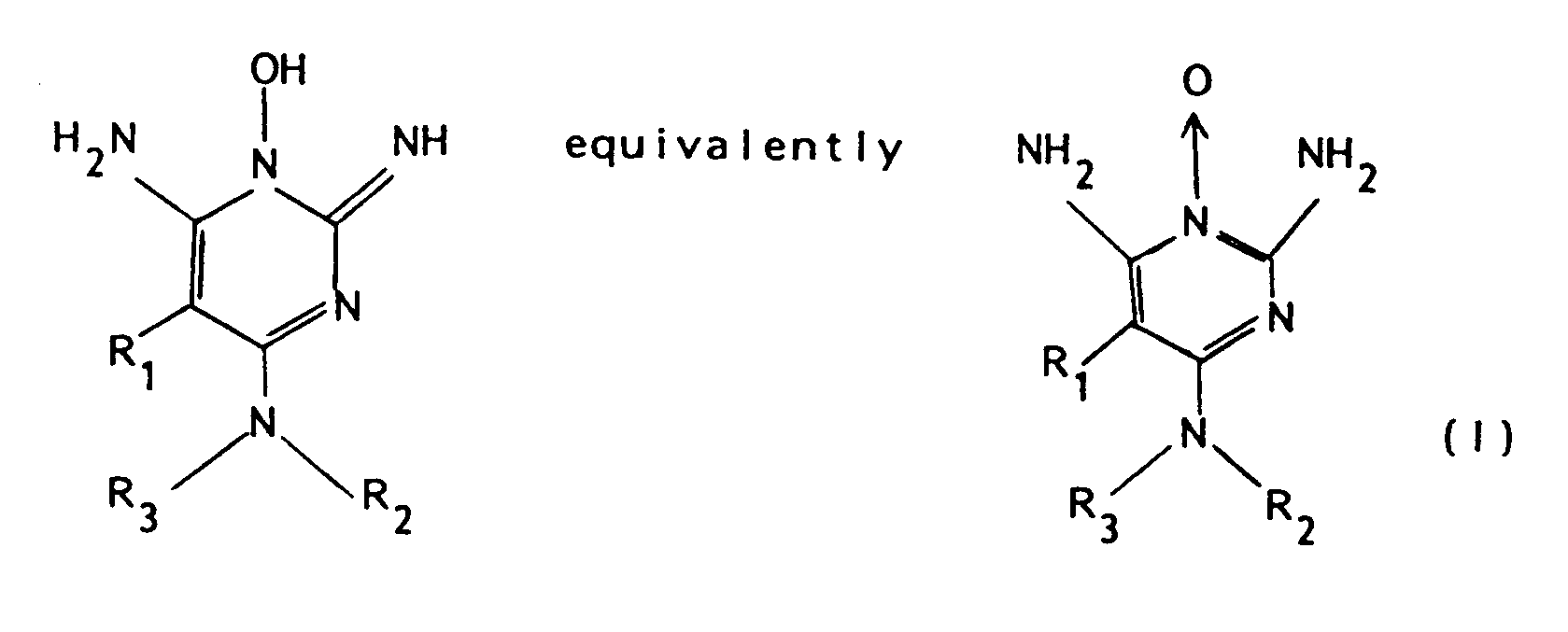
In these compounds, R₃ and R₂ may be hydrogen, lower alkyl, lower alkenyl, lower aralkyl, or lower cycloalkyl and, taken together, R₃ and R₂ may be a heterocyclic group, such as aziridinyl, azetidinyl, pyrrolidinyl, piperidino, hexahydroazepinyl, heptamethylenimino, octamethylenimino, morpholino and 4-lower-alkylpiperazinyl, where each of these heterocyclic groups may have up to three lower alkyl, hydroxy, or alkoxy substituents. R₁ may be hydrogen, lower alkyl, lower alkenyl, lower alkoxyalkyl, lower cycloalkyl, lower aryl, lower aralkyl, lower alkaryl, lower alkaralkyl, lower alkoxyaralkyl or lower haloaralkyl. It has also been taught that when these compounds are administered topically they act to stimulate the conversion of vellus hair to terminal hair and prevent the transformation of terminal hair to vellus hair. In short, the topical use of these compounds has been taught to increase the growth of perceivable mammalian hair. - The art is replete with disclosures of topical vehicles which are said to improve the penetration of a variety of pharmaceutical actives through the skin. Indeed, it is well-recognized that the development of such vehicles would provide a very useful method for the delivery of pharmaceuticals. It has been taught that a binary penetration system comprising specific polar lipid cell-envelope disordering compounds, such as oleic acid or methyl laurate, together with specific diol compounds, such as propylene glycol, can be used to topically deliver systemic levels of selected pharmaceutical agents, such as steroids and non-steroidal anti-inflammatory agents. However, these vehicles have not been found to be equally effective for enhancing the delivery of all pharmaceutical agents.
- In order to be useful as a topical vehicle for a hair-growth stimulating agent, the vehicle must satisfy four stringent requirements:
- (1) the vehicle must provide enhanced penetration of the agent through the skin;
- (2) the vehicle must have cosmetically-acceptable aesthetics;
- (3) the vehicle must not be irritating to the skin; and
- (4) the vehicle must be preferentially substantive to the scalp or skin rather than to, for example, the comb or clothing. While some vehicles may satisfy several of these criteria, the best vehicles will be optimum for all of them.
- It has now been found that hydroxy iminopyrimidine compounds of the formula (I) can be effectively delivered percutaneously by incorporating them into a specific vehicle which provides an exceptional increase in penetration over conventional vehicles. In addition, this vehicle satisfies all four of the requirements set forth above. Thus, the present invention provides an aesthetically acceptable topical vehicle which can enhance the mammalian hair growth effects of the 1,2-dihydro-1-hydroxyiminopyrimidine compounds, such as Minoxidil. Specifically, it has been discovered that a specific binary surfactant system comprising a polar lipid compound and a diol or trio compound can consistently and dramatically improve the topical delivery of 1,2-dihydro-1-hydroxyiminopyrimidine compounds (formula (I)).
- US-A-3,461,461, Anthony et al, issued August 12, 1969, discloses a class of 6-amino-1,2-dihydro-1-hydroxy-2-iminopyrimidines and describes the use of these compounds as antihypertensive agents. The topical administration of these compounds to stimulate mammalian hair growth is disclosed in U.S.-A-4,139,619, Chidsey, III, issued February 13, 1979. Standard aqueous solutions, ointments and creams, such as those based on propylene glycol, ethanol, n-methyl-pyrrolidone, or petrolatum are used for the topical formulations. A closely related group of compounds, 6-amino-1,2-dihydro-1-hydroxy-2-imino4-phenoxypyrimidines, is disclosed in US-A-3,382,247, Anthony et al, issued May 7, 1968. A process for preparing 6-substituted-4-amino-1,2-dihydro-1-hydroxy-2-iminopyrimidines is taught in US-A-3,644,364, Anthony, issued February 22, 1972.
- US-A-4,070,462, Ecker, issued February 24, 1978, discloses a topical vehicle which includes (i) 5-15% 1,2-propanediol, 2,3-butanediol or 2-methyl-2,4,propanediol; (ii) 1-3% propylene glycol monostearate; and (iii) petrolatums and waxes to 100%.
- EP-A-13,459, published July 23, 1980, describes compositions useful in the treatment of acne. These compositions contain benzoyl peroxide, C₆-C₁₄ primary alcohols, and a diol selected from 1,2-propanediol, 1,2-butanediol, 1,3-butanediol, and 2,3-butanediol.
- EP-A-43,738, published January 13, 1982, describes compositions for topical application. The compositions described are suitable for effective delivery of lipophilic, pharmacologically-active compounds using primary alcohols or various carboxylate compounds in combination with selected diols.
- EP-A-95,813, published December 7, 1983, discloses a binary penetration system utilizing a diol and a cell-envelope disordering compound to aid in the penetration of 9-hydroxyethoxymethyl (and related) derivatives of 6- and 2,6-substituted purines. These purine compounds are reported to be effective in the treatment of viral infections, especially herpes, and can be administered parenterally, orally or topically. 9-(2-hydroxyethoxymethyl) guanine is disclosed as being a particularly preferred active.
- US-A-4,552,872, Cooper, et al, issued November 12, 1985, describes topical pharmaceutical compositions containing corticosteroids and a skin penetration enhancing vehicle comprising selected diols and cell-envelope disordering compounds. These compositions are taught to provide systemically active levels of the corticosteroids via topical administration. A similar disclosure is provided in EP-A-129,283, published December 27, 1984.
- US-A-4,557,934, Cooper, issued December 10, 1985, describes pharmaceutical compositions for topical application containing any of a wide range of pharmaceutical actives together with a diol compound and 1-dodecyl-azacycloheptan-2-one. See also EP-A-129,284, published December 27, 1984. US-A-4,537,776, Cooper, issued August 27, 1985, describes pharmaceutical compositions for topical application containing any of a wide range of pharmaceutical actives together with N-(2-hydroxyethyl)pyrrolidone. A similar disclosure is provided in EP-A-129,285, published December 27, 1984.
- EP-A-171,742, published February 18, 1986, discloses topical compositions which provide systemically active doses of opioids to the user. The penetration enhancing topical vehicle comprises at least one of a saturated fatty acid or fatty alcohol of 8-15 carbon atoms or of an unsaturated fatty alcohol or fatty acid of 8-18 carbon atoms, and a pharmaceutical carrier such as propylene glycol.
- 1,2-propanediol ("propylene glycol") and the C₁₀-C₁₄ alcohols have been used, separately, in cosmetic and pharmaceutical formulations. In particular, propylene glycol has been described in several articles in the literature as enhancing the penetration of certain pharmacologically active agents, such as the corticosteroids. See Rosuold, J., et al., "Effect of Formulation on In Vitro Release and In Vivo Absorption of Corticosteroids from Ointments", Medd. Novsk Favm Selsk, 44, 21-45 (1982); see also, Anjo, D.M., et al., "Methods for Predicting Percutaneous Penetration in Man", Percutaneous Absorption of Steroids, pp 31-51, Academic Press, New York, New York (1980).
- US-A-3,535,422, Cox, et al., October 20, 1970, relates to stable benzoyl peroxide compositions containing organic emollients selected from C₄-C₂₀ aliphatic alcohols, C₂-C₃ glycols, C₁₂-C₂₀ fatty acids and their esters, and mixtures thereof.
- US-A-4,070,462, Ecker, issued January 24, 1978, describes topical steroid compositions containing 6% propylene glycol and 1% propylene glycol monostearate.
- CA-A-1,072,009, Sipos, issued February 19, 1980, describes topical antimicrobial compositions containing C₅-C₁₀ straight chain alcohols or C₁₇ branched chain alcohols in which the longest chain is C₅-C₁₀.
- CA 92: 153, 181j describes an indomethacin ointment containing 10% propylene glycol and 1.1% disopropanolamine.
- B. ldson, Cosmetics & Toiletries, 95, 59 (1980), states that the factors affecting drug penetration and, consequently in most cases, effectiveness, are complex. He observes that the vehicle that provides ideal penetration conditions for one drug may prove unsatisfactory for another. The author concludes that prediction is not simple and product suitability must be assessed by human trials.
- US-A-4,299,826, Luedders, issued November 10, 1981, describes a composition for the treatment of acne which includes diisopropyl sebacate in combination with an alcohol as a penetration enhancer for an erythromycin derivative.
- The present invention relates to improved topical compositions for stimulating the growth of hair in humans and animals. The invention is based on the use of specific hydroxy iminopyrimidine compounds together with a well-defined binary mixture of a polar lipid compound and a small polar solvent (diol or trio compound).
- The present invention provides a penetration-enhancing pharmaceutical composition for topical application comprising::
- (a) a safe and effective amount of 6-amino-1,2-dihydro-1-hydroxy-2-imino-4-piperidino-pyrimidine and pharmaceutically acceptable acid addition salts thereof;
- (b) 0% to 90% by weight of a solvent selected from water, ethanol or 2-propanol; and
- (c) 5% to 99.9% by weight of a penetration-enhancing carrier consisting essentially of:
- (i) a small polar solvent selected from 1,2-propanediol, 1,2-butanediol, 1,3-butanediol, 2,3-butanediol, C₃-C₆ triols, or mixtures thereof, and
- (ii) a polar lipid compound selected from C₁₆ mono-unsaturated alcohols, C₁₆ branched chain saturated alcohols, C₁₈ mono-unsaturated alcohols, C₁₈ branched chain alcohols, and mixtures thereof;
- By "topical administration", as used herein, is meant directly laying on or spreading on outer skin (membrane epidermal tissue) or hair.
- By "safe and effective amount", as used herein, is meant a sufficient amount of the composition to provide the desired hair growth stimulation effect at a reasonable benefit/risk ratio attendant with any medical treatment. Within the scope of sound medical judgment, the amount of pharmaceutical active used may vary with the particular condition being treated, the severity of the condition, the cause of the condition, the duration of the treatment, the specific active compound employed, its concentration, the specific vehicle utilized, the general health of the patient, other drugs being administered to the patient, and like factors within the specific knowledge and expertise of the patient or the attending physician.
- By "toxicologically-acceptable" or "pharmaceutically-acceptable", as used herein, is meant that drugs, medicaments or inert ingredients which the term describes are suitable for use in contact with the tissues of humans and lower animals without undue toxicity, irritation, allergic response, and the like, commensurate with a reasonable benefit/risk ratio.
- By the term "comprising", as used herein, is meant that various other compatible drugs and medicaments, as well as inert ingredients, occlusive agents, and cosmetic vehicles, can be conjointly employed in the compositions and processes of this invention, as long as the critical binary penetration enhancement vehicle and pharmaceutical active are used in the manner disclosed herein. The term "comprising" thus encompasses and includes the more restrictive terms "consisting of" and "consisting essentially of" which characterize the use of the essential ingredients in the manner disclosed herein.
- By "application situs", as used herein, is meant a localized area where it is desired that hair growth be stimulated. In humans the application situs can, for example, be on the head, pubic area, upper lip, eyebrows and eyelids. In animals raised for their pelts (for example, mink) the application situs can be over the entire surface of the body to improve the overall pelt for commercial reasons. The present invention can also be used for cosmetic reasons in animals, eg, application to the skin of dogs or cats having bald patches due to mange or other diseases.
- By "penetration-enhancing", as used herein, is meant that the binary penetration enhancing carriers of this invention provide marked transepidermal or percutaneous delivery of the incorporated 6-amino-1,3-dihydro-1-hydroxy-2-iminopyrimidine compound when compared to other compositions at equal chemical potential. This latter aspect is important, since varying solubilities of drugs in different vehicles will necessarily affect their transport across skin. Thus, for example, if a drug is soluble in vehicle A to the extent of 24%, and in vehicle B to the extent of 4%, if the compositions were to be compared at equal percentage concentration, rather than equal chemical potential, the lower solubility carrier will show a misleading six-fold difference in transport over the more soluble vehicle. The simplest way of assuring equal chemical potential for evaluating penetration enhancement is to use saturated solutions or solutions of equal percentage of saturation of pharmacological active in the various vehicles. It should be emphasized that while saturated solutions are useful for comparing the skin penetrating efficacy of vehicles, the compositions of the present invention need not be formulated so as to be saturated with the hydroxy iminopyrimidine component.
- As used herein, all percentages are by weight unless otherwise specified.
- The compositions of this invention require, at a minimum, hydroxy iminopyrimidine compound, as defined below, a diol or triol compound (small polar solvent), and a C₁₆ or C₁₈ alcohol compound (polar lipid). The compositions of this invention may additionally contain optional conventional components which reduce skin irritation or enhance their cosmetic appeal and acceptability, i.e., thickeners, pigments, and the like. The compositions are substantially free from penetration-interfering straight chain C₄, C₆ or C₁₈-C₂₀ saturated primary alcohols, and C₄-C₂₀ mono- or dicarboxylic acids.
- The hydroxy iminopyrimidine compounds which form the pharmaceutically-active component of the present invention are known in the art to stimulate the growth of mammalian hair when applied topically.
- The compounds for use in the present invention are 6-amino-1,2-dihydro-1-hydroxy-2-imino-4-piperidino-pyrimidine, in either its free base or hydrochloric acid salt. This compound (II) is identified by the tradename MinoxidilR and is available commercially as a fully formulated tablet, LonitenR, from the Upjohn Company, Kalamazoo, Michigan. Examples of other suitable acid salts of this compound include the phosphoric acid, acetic acid, citric acid or lactic acid salts.

- This compound is sometimes referred to herein as 6-amino-1,2-dihydro-1-hydroxy-2-iminopyrimidine or "the hydroxy iminopyrimidine".
- Compositions of the present invention contain a safe and effective amount of the hydroxy iminopyrimidine active component; preferably the compositions contain from 0.01% to 10%, more preferably from 0.25% to 5%, most preferably 1%, of this component. Of course, the level of active component will vary with the nature and cause of the condition being treated, the surface area available for application, the particular vehicle selected, and the precise application regimen.
- The vehicles of the present invention significantly enhance the skin penetration of the hydroxy iminopyrimidine active component. They comprise, at a minimum, a diol or triol (small polar solvent) together with a polar lipid compound.
- The C₃-C₄ diol compounds useful in the compositions of the instant invention include 1,2-propanediol, 1,2-butanediol, 1,3-butanediol, or mixtures of these diol compounds. 1,2-propanediol and 1,2-butanediol are preferred diol compounds. 1,2-propanediol is an especially preferred compound, and is preferably used at a level of at least 7.5% of the total composition. The C₃-C₆ triol compounds useful herein include, for example, glycerol 1,2,6-hexanetriol, 1,2,5-pentanetriol, 1,2,4-butanetriol, 1,2,5-hexanetriol, or mixtures of triol compounds. Preferred triols are glycerol and 1,2,6-hexanetriol. Mixtures of diol and triol compounds may also be used.
- The polar lipid compounds useful in the compositions of the present invention include C₁₆ or C₁₈ monounsaturated or branched chain saturated alcohols. Examples of these compounds include Δ9C₁₈:1 oleyl alcohol, Δ9C₁₆:1 palmitoleyl alcohol, Δ9C₁₈:1 elaidyl alcohol, Δ11C₁₈:1 vaccenyl alcohol (cis or trans), Δ6C₁₈:1 petroselinyl alcohol, Δ6C₁₈:1 petroselaidyl alcohol, and mixtures thereof. Preferred polar lipid compounds include oleyl alcohol, isocetyl alcohol, and mixtures thereof.
- Although other polar lipid (cell envelope disordering) compounds, such as oleic acid, methyl laurate, monoolein and myristyl alcohol, have been disclosed for use in certain topical vehicles, it has now been discovered that, in hydroxy iminopyrimidine formulations for use to stimulate hair growth, it is necessary to use the specific above-described alcohols as the polar lipid compound in order to get compositions which enhance skin penetration of the active, do not irritate the skin, are aesthetically acceptable, and are substantive to skin and scalp. This is particularly surprising since oleyl alcohol, a preferred component of the present invention, has been taught in the art to be irritating to the skin when topically applied. Where oleyl alcohol is used in the present invention, it should be used at a level of at least 0.25% of the total composition.
- Binary mixtures of any of the foregoing diol or trio compounds together with polar lipid compounds, in a weight ratio of diol/triol compound: polar lipid compound of from 1:1 to 500:1, provide significant enhancement of penetration for the hydroxy iminopyrimidine compound described herein. A ratio of diol/triol compound: polar lipid compound of from 5:1 to 100:1 is preferred, and the penetrating components are most preferably present in a ratio of from 10:1 to 100:1. In a highly preferred embodiment, the penetrating components are present in a ratio of from 15:1 to 50:1.
- The compositions of this invention typically contain from 5% to 99.9%, and preferably from 10% to 99.5%, by weight, of the penetration-enhancing binary mixture of the diol or trio compounds and polar lipid compounds, employing the ratios described above.
- The preferences expressed above are predicated solely upon maximizing penetration. In certain topical formulations, however, aesthetic and cosmetic qualities may be of equal or even paramount importance. Accordingly, ranges other than those described above may be preferred. In general, a composition employing a weight:weight ratio of from 1:1 to 10:1 will not demonstrate the same degree of penetration enhancement as a system employing the same components at a weight ratio of from 10:1 to 50:1. However, such ratios (1:1 - 10:1) may be preferred for certain vehicles or systems because they frequently produce better aesthetic qualities. It should be noted that while not generally providing maximum penetration, such aesthetically pleasing compositions nonetheless demonstrate a dramatic enhancement of penetration when compared to conventional or art-disclosed vehicles or systems. Compositions comprising a binary mixture at a level of from 20% to 45% of the overall composition and employing diol/triol: polar lipid compound weight ratios of from 4:1 to 6:1 provide an excellent compromise or balance of cosmetic acceptability and enhanced penetration and are accordingly preferred.
- In addition to the components described above, the compositions of this invention may optionally contain a cosmetically acceptable solvent. The solvent, if used, should not significantly interfere with the penetration action of the binary combination, and should preferably evaporate rapidly and completely to leave only the active components of the composition at the site of application. Preferred solvents include ethanol and isopropanol.
- Water may be used as a solvent or component in the compositions of the present invention. However, simple addition of water to these compositions may cause some or all of the penetration-enhancing compounds to precipitate out. Such action in the formulation of the compositions of the present invention may significantly reduce the overall effectiveness of the system. In order to prevent this, it is important that the hydroxy iminopyrimidine active be soluble in the compositions of the present invention. One way to accomplish this may be through the formation of an emulsion or gel. Emulsifiers or gelling agents may be used to accomplish this.
- Such solvents, i.e., water, ethanol or 2-propanol (isopropanol; isopropyl alcohol), may comprise from 0% to 90% of the total composition by weight. Ethanol and 2-propanol are preferably present at a level of from 0% to 85%.
- However, certain solvents, cosolvents, excipients, and lipid materials as described below, are preferably avoided in the practice of the present invention. It is thought that such compounds bind or change the solubility of the polar lipids in the binary system such that they can no longer enter the stratum corneum. This inhibition of penetration prevents the disruption or disordering of the lipids of the stratum corneum necessary for altering the barrier properties of skin. Some of these compounds may also act as surface reservoirs and inhibit penetration of the hydroxy iminopyrimidine active across the skin. For example, if dimethylisosorbide, a commonly-used film-forming solvent, is included in the present invention, penetration of the active (eg, Minoxidil) is inhibited. Thus, such compounds are preferably avoided when formulating the compositions of the present invention. If used, such compounds should generally be used as sparingly as possible, far below art-established levels.
- For example, hydrocarbons such as liquid petrolatum (mineral oil, liquid paraffin, paraffin oil), white petrolatum, yellow petrolatum, paraffin, microcrystalline wax, and ceresin are all known generally to be useful as hydrophobic vehicles or structural matrix formers in topical pharmaceutical formulations. However, all of these excipients are capable of significantly interfering with the penetration-enhancing abilities of the present invention. While a certain level of such ingredients can be tolerated in a system which is otherwise particularly effective, in a preferred embodiment of the present invention such ingredients are limited to less than about 10%, and preferably less than about 5%.
- Certain straight chain, saturated C₄, C₆ and C₁₈-C₂₀ normal fatty alcohols should also be avoided. Stearyl alcohol is an extremely common ingredient in topical formulations. Yet, this alcohol is capable of significant interference with the penetration enhancement of the present vehicle. This alcohol, as well as the C₁₈ saturated normal alcohol, is likely to retard the penetration enhancing abilities of the systems of the present invention. Accordingly, the compositions of the present invention are substantially free of such compounds, i.e., any particular compound should be present at a level of less than 3.5%, and more preferably at a level less than 1% by weight of the entire composition. In a highly preferred embodiment the compositions of the present invention contain less than 0.5% of any specific member of said alcohol group.
- Certain fatty acids are also capable of gross interference with penetration by the compositions of the present invention. These acids include the straight chain C₄-C₂₀ saturated monocarboxylic and dicarboxylic acids. Octanoic and decanoic acid are particularly harmful to the vehicles of the present system. The compositions of the present invention are substantially free of these acids, i.e., contain less than 3.5% of any particular member of C₄-C₂₀ saturated monocarboxylic and dicarboxylic acids, and more preferably less than 1% of said acids by weight of the entire composition. In a highly preferred embodiment the compositions of the present invention contain less than 0.5% of any specific member of said acid group.
- The compositions of the present invention may additionally contain other compatible adjunct components conventionally found in pharmaceutical compositions, not recited above, at their art-established usage levels. Thus, for example, the compositions may contain additional compatible pharmaceutically-active materials for combination therapy or may contain materials useful in physically formulating various dosage forms of the present invention, such as excipients, dyes, perfumes, fragrances, preservatives, anti-oxidants, opacifiers, thickening agents and stabilizers. Such materials, when added, should be selected so they do not unduly interfere with the penetration enhancement of these compositions. For example, the inclusion of dimethylisosorbide tends to inhibit penetration of the active, while the inclusion of xanthan gum does not. Such formula modifications to improve cosmetic acceptability are well within the skill of workers in the cosmetic and dermatological arts and, by themselves, constitute no part of the present invention.
- It can be seen from the foregoing that the compositions of the present invention permit considerable variation, so long as the critical components of hydroxy iminopyrimidine compound, diol or trio compound and polar lipid compound are present within the ranges indicated above and the stated penetration interfering components are minimized. Thus, in addition to conventional topical compositions, such as gels, lotions, salves, ointments and solutions, the compositions of the present invention may be formulated as a shampoo, an aerosol spray, a nonaerosol spray, or a mousse.
- In addition, the compositions of the present invention may be applied to hairy areas to prevent hair loss. The present invention permits the significantly improved topical application of the hydroxy iminopyrimidine actives defined herein in an aesthetically acceptable, skin substantive composition, without irritating the skin at the site of application.
- Topical treatment regimens suitable herein comprise applying the compositions herein directly to the skin, i.e., at the application situs, usually one to six times daily. The rate of application and duration of treatment will, of course, depend on many factors. A typical safe and effective usage rate for topical treatment is from about 1 mg to about 10 mg of the total topical composition per square centimeter of skin per application. The skilled artisan will appreciate that this application rate will vary with the desired effect, the condition being treated and its cause, its progress and response, the area involved, the severity and nature of the condition being treated, the precise identity of the active and or carriers being used, the presence or absence of penetration-interfering solvents, cosolvents, excipients and lipids, the physical condition of the patient, concurrent therapies being administered, the concentration of the actives or carriers being used, as well as other factors within the particular knowledge of the patent and/or physician within the scope of sound medical judgment. Generally, the compositions of the present invention will be used such that a total of from about 2.5 mg to about 100 mg of the hydroxy iminopyrimidine active will be applied each day.
- The compositions can be applied from once every twenty-four hours to once every hour. Application intervals of every 4 hours to every 12 hours are preferred. A treatment regimen of application every 12 hours is particularly preferred because it minimizes the amount of active which is applied at any one time while reducing the inconvenience of frequent applications. However, any treatment regimen which allows a safe and effective amount of hydroxy iminopyrimidine active to reach the afflicted situs can be employed while using the compositions of this invention.
- The following nonlimiting examples illustrate the compositions of the present invention. They are conventionally formulated by mixing all components thoroughly.
-
Composition I 6-amino-1,2-dihydro-1-hydroxy-2-iminopyrimidine, free base 5.0% Propylene Glycol (1,2-propanediol) 91.0% Oleyl alcohol 4.0% Composition II 6-amino-1,2-dihydro-1-hydroxy-2-iminopyrimidine hydrochloride 1.0% Propylene Glycol (1,2-propanediol) 94.0% Oleyl alcohol 5.0% Composition III 6-amino-1,2-dihydro-1-hydroxy-2-iminopyrimidine, free base 1.0% Propylene Glycol (1,2-propanediol) 30.0% Plamitoleyl alcohol 0.5% Ethanol 50.0% Water 18.5% Composition IV 6-amino-1,2-dihydro-1-hydroxy-2-iminopyrimidine, free base 5.0% Propylene Glycol (1,2-propanediol) 30.0% Isocetyl alcohol 1.0% Ethanol 50.0% Water 14.0% Composition V 6-amino-1,2-dihydro-1-hydroxy-2-iminopyrimidine, free base 0.5% Propylene Glycol (1,2-propanediol) 97.5% Oleyl alcohol 2.0% Composition VI 6-amino-1,2-dihydro-1-hydroxy-2-iminopyrimidine, free base 6.0% 1,2-butanediol 90.0% Isocetyl alcohol 4.0% Composition VII 6-amino-1,2-dihydro-1-hydroxy-2-iminopyrimidine, free base 0.5% 1,3-butanediol 97.5% Oleyl alcohol 2.0% Composition VIII 6-amino-1,2-dihydro-1-hydroxy-2-iminopyrimidine, free base 2.0% 1,3-butanediol 93.0% Isocetyl alcohol 5.0% Composition IX 6-amino-1,2-dihydro-1-hydroxy-2-iminopyrimidine, free base 2.0% Glycerol 93.0% Oleyl alcohol 5.0% Composition X 6-amino-1,2-dihydro-1-hydroxy-2-iminopyrimidine, free base 5.0% 1,2-butanediol 92.0% Oleyl alcohol 1.5% Isocetyl alcohol 1.5% Composition XI 6-amino-1,2-dihydro-1-hydroxy-2-iminopyrimidine, citrate salt 1.0% Propylene glycol (1,2-propanediol) 94.0% Isocetyl alcohol 5.0% Composition XII 6-amino-1,2-dihydro-1-hydroxy-2-iminopyrimidine, lactate salt 5.0% Propylene Glycol (1,2-propanediol) 91.0% Vaccenyl alcohol 4.0% Composition XIII 6-amino-1,2-dihydro-1-hydroxy-2-iminopyrimidine, free base 12.0% 1,2,6-hexanetriol 54.0% Oleyl alcohol 4.0% Ethanol 30.0% Composition XIV 6-amino-1,2-dihydro-1-hydroxy-2-iminopyrimidine, free base 8.0% 1,3-butanediol 55.0% Oleyl alcohol 1.0% Isopropanol 36.0% - The following nonlimiting examples illustrate the compositions and the methods of the present invention.
- Composition I is applied to a bald human scalp at a rate of 5 mg of composition per square centimeter of skin three times daily to stimulate the growth of terminal hair. Substantially similar results are obtained when the composition is replaced by compositions II, III, IV or V, above.
- The penetration studies demonstrate the penetration-enhancing capabilities of the compositions and methods of the present invention. These studies demonstrate the ability of the compositions of the present invention to enhance penetration of the hydroxy iminopyrimidine compounds described in this application when compared to a propylene glycol or a propylene glycol-containing vehicle formulated without the presence of the critical polar lipid compound, as well as when compared to other topical vehicles known in the art.
- The following penetration studies were carried out in the manner described. The procedure is described in Merritt and Cooper, J. Controlled Release, 2: 161-162 (1984), incorporated herein by reference. Human skin (heat-separated or dermatomed abdominal epidermis, taken at autopsy, or excised, full thickness hairless mouse skin) is placed in a modified Franz diffusion apparatus in a horizontal position between a lower, capped receptor compartment and an upper, open donor compartment (the experiment may also be run with upper chamber occluded). A normal saline solution is added to the receptor compartment abutting the subcutaneous side of the skin. The test composition (comprising a solution of active or actives added to the carrier at the indicated formulation in a conventional manner by thoroughly mixing) is added to the donor compartment abutting the epidermal side of the skin at the levels indicated.
- The receptor solution is kept at a constant temperature of about 37°C. At appropriate or desired intervals (these are the time designations given in the following examples) the diffusate from the receptor compartment is withdrawn through a sidearm. Levels of drug active in the diffusate are measured using standard analytical techniques. Each trial is run on a separate sample of skin.
- The following experiments were carried out using human skin. 20 ul doses (7000 ug Minoxidil/cm²) were given at time 0 and 24 hours. The Minoxidil concentration used was 70g/l and the cell area was 0.2 cm². Eight replicates were run per formulation tested. The averages are reported in the table below.


- Using the experimental procedure described above, the ability of several compositions of the present invention to penetrate skin was determined. The control composition contained 1% Minoxidil and a vehicle comprising 15% propylene glycol, 65% ethanol and 20% water. This composition is a topical Minoxidil composition which has been disclosed in the art (eg, U.S. Patent 4,139,619). Compositions of the present invention were then formed by adding oleyl alcohol or isocetyl alcohol such that it comprised 0.5%, 1.0%, 2.5%, 5.0% or 10.0% of the vehicle component. Five replicates were tested per formulation. The cumulative penetration of the active component over a 24 hour period is given in the following table.
- These data demonstrate the clear skin penetration benefit provided by the compositions of the present invention when compared w ith art-disclosed topical formulations of Minoxidil.


- Using the experimental procedure described above, the ability of several triol-containing compositions of the present invention to penetrate skin was determined. The formulations tested are set forth in the first table, with the penetration results set forth beneath. Five replicates were tested per formulation.

- The following compositions were formulated by conventional means. Compositions 1-3 were formulated as lotions and compositions 4-6 were formulated as mousse products. The skin penetration of the Minoxidil active (cumulative over a 24 hour period) was measured using the technique described above. Five replicates ere run per formulation; average values are reported.

- Substantially similar results are obtained when the oleyl alcohol in the above composition is replaced, in whole or in part, by isocetyl alcohol, or when the propylene glycol is replaced in whole or in part, by 1,3-propanediol, 1,2-butanediol, 1,3-butanediol, 1,4-butanediol, glycerol, 1,2,6-hexanetriol, or mixtures thereof.
- The following shampoo composition is formulated by conventional means.


- The above composition is used on the scalp once a day (10 grams/usage) as a shampoo to stimulate the growth of terminal hair.
- Substantially similar results are obtained when the oleyl alcohol in the above composition is replaced, in whole or in part, by isocetyl alcohol, or when the propylene glycol is replaced, in whole or in part, by 1,2-butanediol, 1,3-butanediol, glycerol, 1,2,6-hexanetriol, or mixtures thereof.
Claims (8)
- A penetration-enhancing pharmaceutical composition for topical application characterized in that it comprises:(a) a safe and effective amount of 6-amino-1,2-dihydro-1-hydroxy-2-imino-4-piperidino-pyrimidine and pharmaceutically acceptable acid addition salts thereof;(b) 0% to 90% by weight of a solvent selected from water, ethanol or 2-propanol; and(c) 5% to 99.9% by weight of a penetration-enhancing carrier consisting essentially of:wherein said small polar solvent and said polar lipid compound are present in a ratio of solvent: polar lipid compound of from 1:1 to 500:1, and further characterized in that the composition contains less than 3.5% of any single compound selected from C₄,C₆ and C₁₈-C₂₀ straight chain, saturated normal fatty alcohols, and C₄-C₂₀ straight chain, saturated mono and dicarboxylic acids.(i) a small polar solvent selected from 1,2-propanediol, 1,2-butanediol, 1,3-butanediol, 2,3-butanediol, C₃-C₆ triols, or mixtures thereof, and(ii) a polar lipid compound selected from C₁₆ mono-unsaturated alcohols, C₁₆ branched chain saturated alcohols, C₁₈ mono-unsaturated alcohols, C₁₈ branched chain alcohols, and mixtures thereof;
- A composition according to Claim 1 wherein the small polar solvent is selected from 1,2-propanediol, 1,2-butanediol, 1,3-butanediol, 2,3-butanediol, or mixtures thereof.
- A composition according to Claim 1 or 2 which contains from 0.01% to 10% by weight of 6-amino-1, 2-dihydro-1-hydroxy-2-imino-4-piperidino-pyrimidine.
- A composition according to any of Claims 1-3 wherein the polar lipid compound is selected from oleyl alcohol, isocetyl alcohol, and mixtures thereof.
- A composition according to any of Claims 1-4 wherein the small polar solvent compound is selected from 1,2-propanediol, 1,2-butanediol, and mixtures thereof.
- A penetration-enhancing pharmaceutical composition according to claim 1 characterized in that it comprises:(a) 0.25% to 5% by weight of 6-amino-1,2-dihydro-1-hydroxy-2-imino-4-piperidino-pyrimidine and pharmaceutically acceptable acid addition salts thereof;(b) 0% to 90% by weight of a solvent selected from water, ethanol or 2-propanol; and(c) 5% to 99.5% by weight of a penetration-enhancing carrier consisting essentially of:wherein said diol and said polar lipid compound are present in a ratio of diol: polar lipid compound of from 10:1 by weight.(i) a diol selected from 1,2-propanediol, 1,2-butane-diol, or mixtures thereof(ii) a polar lipid compound selected from C₁₆ mono-unsaturated alcohols, C₁₆ branched chain saturated alcohols, C₁₈ mono-unsaturated alcohols, C₁₈ branched chain saturated alcohols and mixtures thereof;
- A composition according to Claim 6 wherein the diol compound is 1,2-propanediol.
- A composition according to Claim 6 or 7 wherein the polar lipid compound is selected from oleyl alcohol, isocetyl alcohol, and mixtures thereof.
Applications Claiming Priority (2)
| Application Number | Priority Date | Filing Date | Title |
|---|---|---|---|
| US87424886A | 1986-06-13 | 1986-06-13 | |
| US874248 | 1986-06-13 |
Publications (3)
| Publication Number | Publication Date |
|---|---|
| EP0249397A2 EP0249397A2 (en) | 1987-12-16 |
| EP0249397A3 EP0249397A3 (en) | 1988-03-23 |
| EP0249397B1 true EP0249397B1 (en) | 1992-08-12 |
Family
ID=25363318
Family Applications (1)
| Application Number | Title | Priority Date | Filing Date |
|---|---|---|---|
| EP87304945A Expired - Lifetime EP0249397B1 (en) | 1986-06-13 | 1987-06-04 | Improved penetrating topical pharmaceutical compositions |
Country Status (9)
| Country | Link |
|---|---|
| EP (1) | EP0249397B1 (en) |
| JP (1) | JP2562455B2 (en) |
| AU (1) | AU593656B2 (en) |
| CA (1) | CA1302269C (en) |
| DE (1) | DE3781034T2 (en) |
| ES (1) | ES2042564T3 (en) |
| FI (1) | FI86598C (en) |
| IE (1) | IE59793B1 (en) |
| PH (1) | PH24005A (en) |
Cited By (2)
| Publication number | Priority date | Publication date | Assignee | Title |
|---|---|---|---|---|
| DE102005051862A1 (en) | 2005-10-25 | 2007-04-26 | Beiersdorf Ag | Emulsion for treating e.g. skin aging comprises a lipid phase of polar and/or moderately polar, having specified interfacial tension toward water; and at least one 1,2-alkanediol having specified 1-octanol/water distribution coefficient |
| US7404965B2 (en) | 2000-08-03 | 2008-07-29 | Antares Pharma Ipl Ag | Composition for transdermal and/or transmucosal administration of active compounds that ensures adequate therapeutic levels |
Families Citing this family (25)
| Publication number | Priority date | Publication date | Assignee | Title |
|---|---|---|---|---|
| US5470876A (en) * | 1985-07-18 | 1995-11-28 | Proctor; Peter H. | Topical sod for treating hair loss |
| US5728714A (en) * | 1985-07-18 | 1998-03-17 | Proctor; Peter H. | Method for treating hair loss using tempo |
| US5723502A (en) * | 1985-07-18 | 1998-03-03 | Proctor; Peter H. | Topical spin trap composition and method |
| US5714510A (en) * | 1985-07-18 | 1998-02-03 | Proctor; Peter H. | Topical proxyl composition and method |
| US5714482A (en) * | 1985-07-18 | 1998-02-03 | Proctor; Peter H. | Topical spin labels and method |
| US5472687A (en) * | 1985-07-18 | 1995-12-05 | Proctor; Peter H. | Topical pyridine N-oxides |
| US6150405A (en) * | 1985-07-18 | 2000-11-21 | Proctor; Peter H. | Hair loss treatment with ascorbates |
| US5716947A (en) * | 1985-07-18 | 1998-02-10 | Proctor; Peter H. | Topical doxyl composition and method |
| LU86548A1 (en) * | 1986-08-07 | 1988-03-02 | Oreal | COMPOSITION IN THE FORM OF GEL FOR INDUCING AND STIMULATING HAIR GROWTH AND REDUCING THEIR FALL BASED ON PIPERIDINO-PYRIMIDINE DERIVATIVES |
| US4888354A (en) * | 1987-12-21 | 1989-12-19 | Theratech, Inc. | Skin penetration enhancement using free base and acid addition salt combinations of active agents |
| GB8801318D0 (en) * | 1988-01-21 | 1988-02-17 | Leo Pharm Prod Ltd | Pharmaceutical preparations |
| AUPP310798A0 (en) | 1998-04-22 | 1998-05-14 | Soltec Research Pty Ltd | Vehicle system for a composition comprising a piperidinopyrimidine derivative |
| AU5460800A (en) * | 1999-06-02 | 2000-12-18 | Aviana Biopharm | Pharmaceutical transdermal compositions |
| US7198801B2 (en) | 2000-08-03 | 2007-04-03 | Antares Pharma Ipl Ag | Formulations for transdermal or transmucosal application |
| WO2005039531A1 (en) | 2003-10-10 | 2005-05-06 | Antares Pharma Ipl Ag | Transdermal pharmaceutical formulation for minimizing skin residues |
| US8980290B2 (en) | 2000-08-03 | 2015-03-17 | Antares Pharma Ipl Ag | Transdermal compositions for anticholinergic agents |
| JP4020607B2 (en) | 2001-09-10 | 2007-12-12 | 日本発条株式会社 | Ball joint and manufacturing method thereof |
| SE0104421D0 (en) * | 2001-12-21 | 2001-12-21 | Ponsus Pharma Ab | New composition |
| US7425340B2 (en) | 2004-05-07 | 2008-09-16 | Antares Pharma Ipl Ag | Permeation enhancing compositions for anticholinergic agents |
| BRPI0518676A2 (en) | 2004-11-29 | 2008-12-02 | Ambria Dermatology Ab | composition, use thereof, and methods of making a composition and treating a microbial infection |
| WO2006125642A1 (en) | 2005-05-27 | 2006-11-30 | Antares Pharma Ipl Ag | Methods and apparatus for transdermal or transmucosal application of testosterone |
| NZ571460A (en) | 2006-04-21 | 2010-10-29 | Antares Pharma Ipl Ag | Methods of treating hot flashes with formulations for transdermal or transmucosal application |
| WO2012078649A1 (en) | 2010-12-06 | 2012-06-14 | Follica, Inc. | Methods for treating baldness and promoting hair growth |
| JP7072346B2 (en) * | 2015-03-27 | 2022-05-20 | 大正製薬株式会社 | Lotion |
| EP3359198B1 (en) * | 2015-10-06 | 2020-05-13 | Assos Ilaç Kimya Gida Ürünleri Üretim Ve Tic. A.S. | Topical minoxidil composition |
Citations (1)
| Publication number | Priority date | Publication date | Assignee | Title |
|---|---|---|---|---|
| EP0129285A2 (en) * | 1983-06-21 | 1984-12-27 | The Procter & Gamble Company | Penetrating topical pharmaceutical compositions containing N-(2-hydroxyethyl)pyrrolidone |
Family Cites Families (4)
| Publication number | Priority date | Publication date | Assignee | Title |
|---|---|---|---|---|
| US4139619A (en) * | 1976-05-24 | 1979-02-13 | The Upjohn Company | 6-Amino-4-(substituted amino)-1,2-dihydro-1-hydroxy-2-iminopyrimidine, topical compositions and process for hair growth |
| CA1165240A (en) * | 1980-07-09 | 1984-04-10 | The Procter & Gamble Company | Penetrating topical pharmaceutical compositions |
| EP0095813A3 (en) * | 1982-06-01 | 1985-05-08 | THE PROCTER & GAMBLE COMPANY | Penetrating topical pharmaceutical compositions containing 9-(2-hydroxyethoxymethyl) guanine |
| US4552872A (en) * | 1983-06-21 | 1985-11-12 | The Procter & Gamble Company | Penetrating topical pharmaceutical compositions containing corticosteroids |
-
1987
- 1987-06-04 EP EP87304945A patent/EP0249397B1/en not_active Expired - Lifetime
- 1987-06-04 ES ES87304945T patent/ES2042564T3/en not_active Expired - Lifetime
- 1987-06-04 DE DE8787304945T patent/DE3781034T2/en not_active Expired - Fee Related
- 1987-06-08 PH PH35361A patent/PH24005A/en unknown
- 1987-06-12 FI FI872630A patent/FI86598C/en not_active IP Right Cessation
- 1987-06-12 IE IE156187A patent/IE59793B1/en not_active IP Right Cessation
- 1987-06-12 JP JP62146806A patent/JP2562455B2/en not_active Expired - Lifetime
- 1987-06-12 CA CA000539566A patent/CA1302269C/en not_active Expired - Lifetime
- 1987-06-12 AU AU74182/87A patent/AU593656B2/en not_active Ceased
Patent Citations (1)
| Publication number | Priority date | Publication date | Assignee | Title |
|---|---|---|---|---|
| EP0129285A2 (en) * | 1983-06-21 | 1984-12-27 | The Procter & Gamble Company | Penetrating topical pharmaceutical compositions containing N-(2-hydroxyethyl)pyrrolidone |
Cited By (3)
| Publication number | Priority date | Publication date | Assignee | Title |
|---|---|---|---|---|
| US7404965B2 (en) | 2000-08-03 | 2008-07-29 | Antares Pharma Ipl Ag | Composition for transdermal and/or transmucosal administration of active compounds that ensures adequate therapeutic levels |
| DE102005051862A1 (en) | 2005-10-25 | 2007-04-26 | Beiersdorf Ag | Emulsion for treating e.g. skin aging comprises a lipid phase of polar and/or moderately polar, having specified interfacial tension toward water; and at least one 1,2-alkanediol having specified 1-octanol/water distribution coefficient |
| DE102005051862B4 (en) | 2005-10-25 | 2018-08-30 | Beiersdorf Ag | Emulsion containing 1,2-alkanediols, emulsifiers and polar oil components and their use |
Also Published As
| Publication number | Publication date |
|---|---|
| DE3781034D1 (en) | 1992-09-17 |
| FI86598B (en) | 1992-06-15 |
| DE3781034T2 (en) | 1993-02-18 |
| AU593656B2 (en) | 1990-02-15 |
| ES2042564T3 (en) | 1993-12-16 |
| PH24005A (en) | 1990-02-09 |
| FI872630A0 (en) | 1987-06-12 |
| AU7418287A (en) | 1987-12-17 |
| IE59793B1 (en) | 1994-04-06 |
| JPS6345212A (en) | 1988-02-26 |
| EP0249397A2 (en) | 1987-12-16 |
| FI86598C (en) | 1992-09-25 |
| FI872630L (en) | 1987-12-14 |
| EP0249397A3 (en) | 1988-03-23 |
| CA1302269C (en) | 1992-06-02 |
| JP2562455B2 (en) | 1996-12-11 |
| IE871561L (en) | 1987-12-13 |
Similar Documents
| Publication | Publication Date | Title |
|---|---|---|
| US5041439A (en) | Penetrating topical pharmaceutical compositions | |
| AU593656B2 (en) | Improved penetrating topical pharmaceutical compositions | |
| US9750750B2 (en) | Compositions and methods for stimulating hair growth | |
| US9149484B2 (en) | Compositions and methods for stimulating hair growth | |
| EP0095813A2 (en) | Penetrating topical pharmaceutical compositions containing 9-(2-hydroxyethoxymethyl) guanine | |
| JPH07316022A (en) | Hair restorer | |
| HK1231769A1 (en) | Compositions and methods for stimulating hair growth | |
| HK1174270B (en) | Compositions and methods for stimulating hair growth | |
| HK1174270A (en) | Compositions and methods for stimulating hair growth | |
| AU2017228614A1 (en) | Compositions and methods for stimulating hair growth | |
| UA118835C2 (en) | COMPOSITION AND METHOD OF STIMULATING HAIR GROWTH |
Legal Events
| Date | Code | Title | Description |
|---|---|---|---|
| PUAI | Public reference made under article 153(3) epc to a published international application that has entered the european phase |
Free format text: ORIGINAL CODE: 0009012 |
|
| AK | Designated contracting states |
Kind code of ref document: A2 Designated state(s): BE CH DE ES FR GB IT LI LU NL SE |
|
| PUAL | Search report despatched |
Free format text: ORIGINAL CODE: 0009013 |
|
| AK | Designated contracting states |
Kind code of ref document: A3 Designated state(s): BE CH DE ES FR GB IT LI LU NL SE |
|
| 17P | Request for examination filed |
Effective date: 19880907 |
|
| 17Q | First examination report despatched |
Effective date: 19890606 |
|
| GRAA | (expected) grant |
Free format text: ORIGINAL CODE: 0009210 |
|
| AK | Designated contracting states |
Kind code of ref document: B1 Designated state(s): BE CH DE ES FR GB IT LI LU NL SE |
|
| ITF | It: translation for a ep patent filed | ||
| ET | Fr: translation filed | ||
| REF | Corresponds to: |
Ref document number: 3781034 Country of ref document: DE Date of ref document: 19920917 |
|
| PLBE | No opposition filed within time limit |
Free format text: ORIGINAL CODE: 0009261 |
|
| STAA | Information on the status of an ep patent application or granted ep patent |
Free format text: STATUS: NO OPPOSITION FILED WITHIN TIME LIMIT |
|
| PGFP | Annual fee paid to national office [announced via postgrant information from national office to epo] |
Ref country code: SE Payment date: 19930614 Year of fee payment: 7 Ref country code: CH Payment date: 19930614 Year of fee payment: 7 |
|
| PGFP | Annual fee paid to national office [announced via postgrant information from national office to epo] |
Ref country code: ES Payment date: 19930616 Year of fee payment: 7 |
|
| PGFP | Annual fee paid to national office [announced via postgrant information from national office to epo] |
Ref country code: NL Payment date: 19930630 Year of fee payment: 7 |
|
| PGFP | Annual fee paid to national office [announced via postgrant information from national office to epo] |
Ref country code: BE Payment date: 19930709 Year of fee payment: 7 |
|
| PGFP | Annual fee paid to national office [announced via postgrant information from national office to epo] |
Ref country code: LU Payment date: 19930719 Year of fee payment: 7 |
|
| 26N | No opposition filed | ||
| EPTA | Lu: last paid annual fee | ||
| REG | Reference to a national code |
Ref country code: ES Ref legal event code: FG2A Ref document number: 2042564 Country of ref document: ES Kind code of ref document: T3 |
|
| PG25 | Lapsed in a contracting state [announced via postgrant information from national office to epo] |
Ref country code: LU Free format text: LAPSE BECAUSE OF NON-PAYMENT OF DUE FEES Effective date: 19940604 |
|
| PG25 | Lapsed in a contracting state [announced via postgrant information from national office to epo] |
Ref country code: SE Effective date: 19940605 |
|
| PG25 | Lapsed in a contracting state [announced via postgrant information from national office to epo] |
Ref country code: ES Free format text: LAPSE BECAUSE OF EXPIRATION OF PROTECTION Effective date: 19940606 |
|
| PG25 | Lapsed in a contracting state [announced via postgrant information from national office to epo] |
Ref country code: LI Effective date: 19940630 Ref country code: CH Effective date: 19940630 Ref country code: BE Effective date: 19940630 |
|
| BERE | Be: lapsed |
Owner name: THE PROCTER & GAMBLE CY Effective date: 19940630 |
|
| PG25 | Lapsed in a contracting state [announced via postgrant information from national office to epo] |
Ref country code: NL Effective date: 19950101 |
|
| EUG | Se: european patent has lapsed |
Ref document number: 87304945.6 Effective date: 19950110 |
|
| NLV4 | Nl: lapsed or anulled due to non-payment of the annual fee | ||
| REG | Reference to a national code |
Ref country code: CH Ref legal event code: PL |
|
| EUG | Se: european patent has lapsed |
Ref document number: 87304945.6 |
|
| REG | Reference to a national code |
Ref country code: ES Ref legal event code: FD2A Effective date: 19990601 |
|
| PGFP | Annual fee paid to national office [announced via postgrant information from national office to epo] |
Ref country code: GB Payment date: 20010502 Year of fee payment: 15 |
|
| PGFP | Annual fee paid to national office [announced via postgrant information from national office to epo] |
Ref country code: FR Payment date: 20010531 Year of fee payment: 15 |
|
| PGFP | Annual fee paid to national office [announced via postgrant information from national office to epo] |
Ref country code: DE Payment date: 20010627 Year of fee payment: 15 |
|
| REG | Reference to a national code |
Ref country code: GB Ref legal event code: IF02 |
|
| PG25 | Lapsed in a contracting state [announced via postgrant information from national office to epo] |
Ref country code: GB Free format text: LAPSE BECAUSE OF NON-PAYMENT OF DUE FEES Effective date: 20020604 |
|
| PG25 | Lapsed in a contracting state [announced via postgrant information from national office to epo] |
Ref country code: DE Free format text: LAPSE BECAUSE OF NON-PAYMENT OF DUE FEES Effective date: 20030101 |
|
| GBPC | Gb: european patent ceased through non-payment of renewal fee |
Effective date: 20020604 |
|
| PG25 | Lapsed in a contracting state [announced via postgrant information from national office to epo] |
Ref country code: FR Free format text: LAPSE BECAUSE OF NON-PAYMENT OF DUE FEES Effective date: 20030228 |
|
| REG | Reference to a national code |
Ref country code: FR Ref legal event code: ST |
|
| PG25 | Lapsed in a contracting state [announced via postgrant information from national office to epo] |
Ref country code: IT Free format text: LAPSE BECAUSE OF NON-PAYMENT OF DUE FEES;WARNING: LAPSES OF ITALIAN PATENTS WITH EFFECTIVE DATE BEFORE 2007 MAY HAVE OCCURRED AT ANY TIME BEFORE 2007. THE CORRECT EFFECTIVE DATE MAY BE DIFFERENT FROM THE ONE RECORDED. Effective date: 20050604 |