EP0248546A2 - Method of heat treating bearing materials - Google Patents
Method of heat treating bearing materials Download PDFInfo
- Publication number
- EP0248546A2 EP0248546A2 EP87304126A EP87304126A EP0248546A2 EP 0248546 A2 EP0248546 A2 EP 0248546A2 EP 87304126 A EP87304126 A EP 87304126A EP 87304126 A EP87304126 A EP 87304126A EP 0248546 A2 EP0248546 A2 EP 0248546A2
- Authority
- EP
- European Patent Office
- Prior art keywords
- bearing
- aluminum
- layer
- weight percent
- temperature
- Prior art date
- Legal status (The legal status is an assumption and is not a legal conclusion. Google has not performed a legal analysis and makes no representation as to the accuracy of the status listed.)
- Granted
Links
- 239000000463 material Substances 0.000 title claims abstract description 42
- 238000000034 method Methods 0.000 title claims abstract description 24
- XAGFODPZIPBFFR-UHFFFAOYSA-N aluminium Chemical compound [Al] XAGFODPZIPBFFR-UHFFFAOYSA-N 0.000 claims abstract description 39
- 229910052782 aluminium Inorganic materials 0.000 claims abstract description 38
- 239000002245 particle Substances 0.000 claims abstract description 22
- 230000006872 improvement Effects 0.000 claims abstract description 5
- 239000012255 powdered metal Substances 0.000 claims abstract description 5
- 238000010438 heat treatment Methods 0.000 claims abstract 2
- 239000010410 layer Substances 0.000 claims description 44
- 239000000843 powder Substances 0.000 claims description 17
- 238000001816 cooling Methods 0.000 claims description 12
- XEEYBQQBJWHFJM-UHFFFAOYSA-N Iron Chemical compound [Fe] XEEYBQQBJWHFJM-UHFFFAOYSA-N 0.000 claims description 10
- 229910052751 metal Inorganic materials 0.000 claims description 10
- 239000002184 metal Substances 0.000 claims description 10
- 239000000203 mixture Substances 0.000 claims description 9
- 239000000654 additive Substances 0.000 claims description 7
- RYGMFSIKBFXOCR-UHFFFAOYSA-N Copper Chemical compound [Cu] RYGMFSIKBFXOCR-UHFFFAOYSA-N 0.000 claims description 6
- PXHVJJICTQNCMI-UHFFFAOYSA-N Nickel Chemical compound [Ni] PXHVJJICTQNCMI-UHFFFAOYSA-N 0.000 claims description 6
- 229910052802 copper Inorganic materials 0.000 claims description 6
- 239000010949 copper Substances 0.000 claims description 6
- ATJFFYVFTNAWJD-UHFFFAOYSA-N Tin Chemical compound [Sn] ATJFFYVFTNAWJD-UHFFFAOYSA-N 0.000 claims description 5
- 239000002131 composite material Substances 0.000 claims description 5
- 229910052742 iron Inorganic materials 0.000 claims description 5
- 229910052718 tin Inorganic materials 0.000 claims description 5
- 230000000573 anti-seizure effect Effects 0.000 claims description 4
- 229910052793 cadmium Inorganic materials 0.000 claims description 4
- BDOSMKKIYDKNTQ-UHFFFAOYSA-N cadmium atom Chemical compound [Cd] BDOSMKKIYDKNTQ-UHFFFAOYSA-N 0.000 claims description 4
- 229910052710 silicon Inorganic materials 0.000 claims description 4
- 239000010703 silicon Substances 0.000 claims description 4
- 239000002344 surface layer Substances 0.000 claims description 4
- VYZAMTAEIAYCRO-UHFFFAOYSA-N Chromium Chemical compound [Cr] VYZAMTAEIAYCRO-UHFFFAOYSA-N 0.000 claims description 3
- FYYHWMGAXLPEAU-UHFFFAOYSA-N Magnesium Chemical compound [Mg] FYYHWMGAXLPEAU-UHFFFAOYSA-N 0.000 claims description 3
- XUIMIQQOPSSXEZ-UHFFFAOYSA-N Silicon Chemical compound [Si] XUIMIQQOPSSXEZ-UHFFFAOYSA-N 0.000 claims description 3
- RTAQQCXQSZGOHL-UHFFFAOYSA-N Titanium Chemical compound [Ti] RTAQQCXQSZGOHL-UHFFFAOYSA-N 0.000 claims description 3
- HCHKCACWOHOZIP-UHFFFAOYSA-N Zinc Chemical compound [Zn] HCHKCACWOHOZIP-UHFFFAOYSA-N 0.000 claims description 3
- QCWXUUIWCKQGHC-UHFFFAOYSA-N Zirconium Chemical compound [Zr] QCWXUUIWCKQGHC-UHFFFAOYSA-N 0.000 claims description 3
- 229910052787 antimony Inorganic materials 0.000 claims description 3
- WATWJIUSRGPENY-UHFFFAOYSA-N antimony atom Chemical compound [Sb] WATWJIUSRGPENY-UHFFFAOYSA-N 0.000 claims description 3
- 230000015572 biosynthetic process Effects 0.000 claims description 3
- 229910052797 bismuth Inorganic materials 0.000 claims description 3
- JCXGWMGPZLAOME-UHFFFAOYSA-N bismuth atom Chemical compound [Bi] JCXGWMGPZLAOME-UHFFFAOYSA-N 0.000 claims description 3
- 229910052804 chromium Inorganic materials 0.000 claims description 3
- 239000011651 chromium Substances 0.000 claims description 3
- 229910052749 magnesium Inorganic materials 0.000 claims description 3
- 239000011777 magnesium Substances 0.000 claims description 3
- WPBNNNQJVZRUHP-UHFFFAOYSA-L manganese(2+);methyl n-[[2-(methoxycarbonylcarbamothioylamino)phenyl]carbamothioyl]carbamate;n-[2-(sulfidocarbothioylamino)ethyl]carbamodithioate Chemical compound [Mn+2].[S-]C(=S)NCCNC([S-])=S.COC(=O)NC(=S)NC1=CC=CC=C1NC(=S)NC(=O)OC WPBNNNQJVZRUHP-UHFFFAOYSA-L 0.000 claims description 3
- 229910052759 nickel Inorganic materials 0.000 claims description 3
- 239000010936 titanium Substances 0.000 claims description 3
- 229910052719 titanium Inorganic materials 0.000 claims description 3
- 229910052725 zinc Inorganic materials 0.000 claims description 3
- 239000011701 zinc Substances 0.000 claims description 3
- 229910052726 zirconium Inorganic materials 0.000 claims description 3
- 238000005253 cladding Methods 0.000 claims description 2
- 238000005245 sintering Methods 0.000 claims description 2
- 239000010959 steel Substances 0.000 description 7
- 229910000831 Steel Inorganic materials 0.000 description 6
- 229910045601 alloy Inorganic materials 0.000 description 4
- 239000000956 alloy Substances 0.000 description 4
- 230000000694 effects Effects 0.000 description 4
- 238000004519 manufacturing process Methods 0.000 description 4
- 238000007669 thermal treatment Methods 0.000 description 4
- 238000000137 annealing Methods 0.000 description 3
- 238000004663 powder metallurgy Methods 0.000 description 3
- 239000001996 bearing alloy Substances 0.000 description 2
- 230000008901 benefit Effects 0.000 description 2
- 238000012986 modification Methods 0.000 description 2
- 230000004048 modification Effects 0.000 description 2
- 238000005096 rolling process Methods 0.000 description 2
- 238000005728 strengthening Methods 0.000 description 2
- 229910000838 Al alloy Inorganic materials 0.000 description 1
- 229910000851 Alloy steel Inorganic materials 0.000 description 1
- 238000007792 addition Methods 0.000 description 1
- 230000000996 additive effect Effects 0.000 description 1
- 238000005275 alloying Methods 0.000 description 1
- 238000010420 art technique Methods 0.000 description 1
- 230000015556 catabolic process Effects 0.000 description 1
- 230000008859 change Effects 0.000 description 1
- 238000005336 cracking Methods 0.000 description 1
- 238000006731 degradation reaction Methods 0.000 description 1
- 230000001419 dependent effect Effects 0.000 description 1
- 239000006185 dispersion Substances 0.000 description 1
- LQBJWKCYZGMFEV-UHFFFAOYSA-N lead tin Chemical compound [Sn].[Pb] LQBJWKCYZGMFEV-UHFFFAOYSA-N 0.000 description 1
- 230000008569 process Effects 0.000 description 1
- 230000009467 reduction Effects 0.000 description 1
- 229910000679 solder Inorganic materials 0.000 description 1
- 239000000758 substrate Substances 0.000 description 1
- 238000011282 treatment Methods 0.000 description 1
Images
Classifications
-
- B—PERFORMING OPERATIONS; TRANSPORTING
- B22—CASTING; POWDER METALLURGY
- B22F—WORKING METALLIC POWDER; MANUFACTURE OF ARTICLES FROM METALLIC POWDER; MAKING METALLIC POWDER; APPARATUS OR DEVICES SPECIALLY ADAPTED FOR METALLIC POWDER
- B22F3/00—Manufacture of workpieces or articles from metallic powder characterised by the manner of compacting or sintering; Apparatus specially adapted therefor ; Presses and furnaces
- B22F3/24—After-treatment of workpieces or articles
-
- B—PERFORMING OPERATIONS; TRANSPORTING
- B22—CASTING; POWDER METALLURGY
- B22F—WORKING METALLIC POWDER; MANUFACTURE OF ARTICLES FROM METALLIC POWDER; MAKING METALLIC POWDER; APPARATUS OR DEVICES SPECIALLY ADAPTED FOR METALLIC POWDER
- B22F7/00—Manufacture of composite layers, workpieces, or articles, comprising metallic powder, by sintering the powder, with or without compacting wherein at least one part is obtained by sintering or compression
- B22F7/02—Manufacture of composite layers, workpieces, or articles, comprising metallic powder, by sintering the powder, with or without compacting wherein at least one part is obtained by sintering or compression of composite layers
- B22F7/04—Manufacture of composite layers, workpieces, or articles, comprising metallic powder, by sintering the powder, with or without compacting wherein at least one part is obtained by sintering or compression of composite layers with one or more layers not made from powder, e.g. made from solid metal
-
- Y—GENERAL TAGGING OF NEW TECHNOLOGICAL DEVELOPMENTS; GENERAL TAGGING OF CROSS-SECTIONAL TECHNOLOGIES SPANNING OVER SEVERAL SECTIONS OF THE IPC; TECHNICAL SUBJECTS COVERED BY FORMER USPC CROSS-REFERENCE ART COLLECTIONS [XRACs] AND DIGESTS
- Y10—TECHNICAL SUBJECTS COVERED BY FORMER USPC
- Y10S—TECHNICAL SUBJECTS COVERED BY FORMER USPC CROSS-REFERENCE ART COLLECTIONS [XRACs] AND DIGESTS
- Y10S148/00—Metal treatment
- Y10S148/902—Metal treatment having portions of differing metallurgical properties or characteristics
- Y10S148/906—Roller bearing element
Definitions
- the present invention relates generally to an aluminum base bearing made by powder metallurgy techniques and, more particularly, to a bearing having a surface layer of pre-alloyed aluminum base particles.
- the present invention relates to a method of producing a powdered metal aluminum base bearing material having superior fatigue and anti-seizure properties which method comprises:
- the present invention relates to a method of producing bearing materials which exhibit properties not obtainable heretofore by prior art techniques.
- the instant invention represents a significant improvement over the method disclosed in U.S. Patents 3,797,084 and 4,069,369. Specifically, this improvement is achieved via the unexpected discovery that a superior bearing material is produced when the thermal processing of the bearing material having a rigid backing layer clad thereto is controlled such that the material is heated at a temperature ranging from about 700° F to about 900° F for at least 30 seconds to effect alloy solutionizing and then rapidly cooled.
- the cooling rate is dependent upon the solution treating temperature wherein this rate is more rapid for the higher portion of the solution heat treating range than for the lower portion but in all cases more rapid than the 50° F/hr. associated with standard full annealing and in fact more rapid than 100° F/hr. That is, the cooling rate for the instant invention is higher for materials heated to 900° F than for those heated to 700° F.
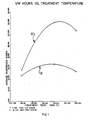
- Figure 1 illustrates the effect of post clad thermal treatments on bearing fatigue life as measured by the Underwood test. Bearings manufactured in accordance with this invention exhibited more than twice the life of those manufactured with the standard thermal process. Each data point represents the average of four test results. All tests were conducted at a unit load of 8000 PSI (theoretical peak film pressure of 117,500 PSI) and terminated at the first sign of cracking (failure).
- PSI theoretical peak film pressure of 117,500 PSI
- test bearings were made from material prepared in the manner described herein. This material came from the same source, i.e. a single coil.
- the furnace cooling cycle was accomplished by means of a controller which was programmed to cool the furnace at a rate of 50° F per hour after the material had soaked at the desired temperature for 30 minutes.
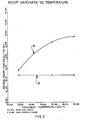
- Figure 2 illustrates the effect of the post clad thermal treatments on bearing alloy hardness as measured by the Knoop micro- hardness scale. Each point represents the average of 5 readings. Hardness is a fairly good indicator of the tensile and fatigue strength of the material.
Landscapes
- Engineering & Computer Science (AREA)
- Manufacturing & Machinery (AREA)
- Mechanical Engineering (AREA)
- Chemical & Material Sciences (AREA)
- Composite Materials (AREA)
- Materials Engineering (AREA)
- Sliding-Contact Bearings (AREA)
- Powder Metallurgy (AREA)
Abstract
Description
- The present invention relates generally to an aluminum base bearing made by powder metallurgy techniques and, more particularly, to a bearing having a surface layer of pre-alloyed aluminum base particles.
- It has been known to make aluminum base bearings by powder metallurgy techniques containing a bearing phase of conventional materials such as lead, tin, copper, cadmium, etc. However, considerable difficulty has been experienced in the fabrication and use of such bearings, especially in imparting superior bearing load carrying capacity and anti-seizure properties to the bearing structure. One method used to achieve improved bearing properties was to have a bearing layer in which the particles of the bearing layer are in pre-alloyed powder form, particularly where the bearing phase is in an intra-particle position relative to the aluminum. This bearing with a fine dispersion of the bearing phase in the individual aluminum particles and method of manufacture are described in U.S. Patents 3,797,084, and 4,069,369 filed December 18, 1972 and May 4, 1973, respectively, and owned by the assignee of the instant application.
- The current trend toward higher output engines, such as turbo charged engines, has given rise to the need for even higher performance bearing materials. Presently, the only bearing materials which consistently meet the performance requirement of these higher output engines are overlay plated tri-metal bearings. These bearings while having good performance characteristics are expensive to produce, exhibit accelerated wear and provide clearance control problems.
- Accordingly, it is a principal object of this invention to provide a method of making an aluminum based bearing by powder metallurgy techniques which has improved bearing load carrying capacity and anti-seizure properties.
- In one aspect, the present invention relates to a method of producing a powdered metal aluminum base bearing material having superior fatigue and anti-seizure properties which method comprises:
- a) simultaneously roll compacting three distinct layers of aluminum base powder particles in which
- the bottom layer of said layers constitutes a powder metal bonding layer consisting essentially of more than 55 weight percent aluminum and the balance selected from a first group of additives consisting of silicon, copper, manganese, magnesium, nickel, iron, zinc, chromium, zirconium, titanium and mixtures thereof
- the intermediate layer of said layers constituting a powder metal bearing layer consisting essentially of at least 55 up to about 95 weight percent aluminum, with the balance selected from said first group of materials in an amount of 0 to about 20 weight percent and from a second group of bearing phase materials in the amount of 5 to 25 weight percent, said second group consisting of lead, tin, cadmium, bismuth, antimony and mixtures thereof;
- the surface layer of said layers constituting a sacrificial layer deposited on said powder metal bearing layer and consisting essentially of more than 50 weight percent of aluminum particles and the balance of additives selected from said first and second groups,
- with said aluminum and said bearing phase materials of said bearing layer being placed in prealloyed particle form to establish an intra-particle position relative to each other and the bearing phase particles in said sacrificial layer being formed for establishing an interstitial position therein relative to the aluminum particles;
- b) sintering the so-formed three-layered composite; and
- c) roll cladding the bonding layer face to face onto a rigid backing layer; wherein the improvement comprises: heat treating the roll clad composite material in a continuous manner to a temperature from about 700° F to about 900° F for a period of at least thirty seconds and then cooling the material at a rate of at least 100 F/hr.
- The present invention relates to a method of producing bearing materials which exhibit properties not obtainable heretofore by prior art techniques.
- As below noted, the instant invention represents a significant improvement over the method disclosed in U.S. Patents 3,797,084 and 4,069,369. Specifically, this improvement is achieved via the unexpected discovery that a superior bearing material is produced when the thermal processing of the bearing material having a rigid backing layer clad thereto is controlled such that the material is heated at a temperature ranging from about 700° F to about 900° F for at least 30 seconds to effect alloy solutionizing and then rapidly cooled. The cooling rate is dependent upon the solution treating temperature wherein this rate is more rapid for the higher portion of the solution heat treating range than for the lower portion but in all cases more rapid than the 50° F/hr. associated with standard full annealing and in fact more rapid than 100° F/hr. That is, the cooling rate for the instant invention is higher for materials heated to 900° F than for those heated to 700° F.
- The techniques and materials utilized in the practice of the instant invention are generally described in U.S. Patent 3,797,084 except for the above-described critical thermal treatment. Accordingly, for the sake of brevity the disclosure of the 3,797,084 patent will not be repeated here but simply incorporated by reference.
- Thermal processing according to the instant invention has been totally redefined over the prior art. Specific elements of this redefinition are as follows:
- a) Post thermal processing is mandatory, not optional.
- b) The thermal processing has been changed from full annealing to solution treating. This change has produced the unexpected result of obtaining the strengthening effect of the copper and/or other alloy additions without experiencing the potential bearing surface property degradation generally associated with solution treating of bearing materials.
- c) The thermal treating temperature has been redefined from 600° F - 750° F to 700° F - 900° F to obtain effective solutionizing.
- d) The cooling rate has been changed from less than 50° F/hr. required for full annealing where material , hardness is at a minimum and ductility is at a maximum to greater than 100° F/hr. to take advantage of the strengthening influences of the alloying elements. The preferred rate to maximize material properties is in excess of an average of 50° F/min. during the first three minutes of cooling.
- Materials used in the practice of the present invention included:
- a) The bottom layer, i.e. the powder metal bonding layer, can consist essentially of more than 55 weight percent aluminum with the balance being selected from a first group of additives consisting of silicon, copper, manganese, magnesium, nickel, iron, zinc, chromium, zirconium, titanium and mixtures thereof.
- b) The intermediate layer, i.e. the powder metal bearing layer, can consist essentially of at least 55 and up to about 95 weight percent aluminum, with the balance selected from the first group of additive - materials in an amount of 0 to about 20 weight percent and from a second group of bearing phase materials in the amount of 5 to 25 weight percent, the second group consisting of lead, tin, cadmium, bismuth, antimony and mixtures thereof.
- c) The surface layer, i.e., the sacrificial layer deposited on the powder metal bearing layer, can consist essentially of more than 50 weight percent of aluminum particles with the balance of additives being selected from the first and second groups.
- The following is a detailed example showing the practice of the instant invention.
- (1) An air atomize bearing powder material was produced by the techniques described in U.S. Patent 3,797,084. The nominal composition in weight percent of the alloy was 7.5% lead, 1.5% tin, 0.9% copper, 4.0% silicon, with balance being aluminum.
- (2) A sacrificial layer material was produced which had a nominal composition in weight percent of 80% aluminum, and 20% of an 85/15 lead-tin solder powder.
- (3) A bonding layer material consisting of essentially pure aluminum was produced.
- (4) The pure aluminum powder, bearing alloy powder, and sacrificial powder were simultaneously roll compacted to produce a green, three layered strip with the alloy powder interposed between the aluminum (bonding) layer and the sacrificial layer.
- (5) The compacted strip, in coil form, was sintered in an air furnace at a temperature of 975° F + 25 °F for a minimum of 12 hours.
- (6) Prior to roll bonding the above sintered strip to a steel substrate, it was heated for 2 hours at 400° F followed by 2 hours at 800° F to preclude moisture related blister formation. (This technique is preferred, but not mandatory).
- (7) The sintered and thermally treated strip was roll bonded to a dead soft steel backing in the following preferred manner:
- a) Alkaline clean and rinse the steel;
- b) Grind the steel surface to remove oxides and provide fresh, rough surface for bonding;
- c) Wire brush the pure aluminum side of sintered strip to remove oxides and provide active bonding surface; and
- d) Simultaneously pass the sintered strip with freshly prepared aluminum layer and ground steel backing, face to face, through a rolling mill, wherein the sintered strip is reduced in thickness a minimum of 55% and a metallurgical bond effected between the aluminum and steel.
- (8) In the preferred method, an additional cold reduction of the steel/aluminum alloy composition of about 5% is achieved in another rolling operation which is performed after roll bonding.
- (9) The finished rolled structure is thermally treated in a continuous manner wherein:
- a) The structure is heated to a temperature range of about 700° F to about 900° F;
- b) The structure is soaked for a time of at least 30 seconds but no longer than the time required for the formation of brittle aluminum/iron intermetallic. For example, the maximum time limit at 900° F would typically be about five minutes.
- c) Cooling the so heat-treated structure at a rate of at least 100° F per hour, and
- d) In the preferred practice of the invention, the structure is heated to a temperature of about 750° F to about 800° F and soaked for a minimum of 2 minutes.
- The following is a detailed description of various tests conducted to show the benefit of the instant invention.
- Specifically, Figure 1 illustrates the effect of post clad thermal treatments on bearing fatigue life as measured by the Underwood test. Bearings manufactured in accordance with this invention exhibited more than twice the life of those manufactured with the standard thermal process. Each data point represents the average of four test results. All tests were conducted at a unit load of 8000 PSI (theoretical peak film pressure of 117,500 PSI) and terminated at the first sign of cracking (failure).
- All test bearings were made from material prepared in the manner described herein. This material came from the same source, i.e. a single coil.
- All processing except the final thermal treatment was performed in production. A laboratory furnace was used for the treatments shown in Figure 1. The air cooling cycle involved removing material from the furnace after it had soaked at the desired temperature for 2 minutes and allowing it to cool in air.
- Under the above conditions, the following cooling cycles were recorded!

- The furnace cooling cycle was accomplished by means of a controller which was programmed to cool the furnace at a rate of 50° F per hour after the material had soaked at the desired temperature for 30 minutes.
- Figure 2 illustrates the effect of the post clad thermal treatments on bearing alloy hardness as measured by the Knoop micro- hardness scale. Each point represents the average of 5 readings. Hardness is a fairly good indicator of the tensile and fatigue strength of the material.
- In Figures 1 and 2 the properties of material processed according to the instant invention are shown in curve A whereas those of material outside of the scope of the invention are illustrated by curve B.
- From the foregoing it is noted that superior bearing material can be produced via the practice of the present invention.
- While there have been described herein what are at present considered to be the preferred embodiments of this invention, it will be apparent to those skilled in the art that various changes and modifications may be made therein without departing from the invention, and it is, therefore, intended in the appended claims to cover all such changes and modifications as fall within the true spirit and scope of the invention.
Claims (5)
Applications Claiming Priority (2)
| Application Number | Priority Date | Filing Date | Title |
|---|---|---|---|
| US06/869,489 US4734967A (en) | 1986-06-02 | 1986-06-02 | Method of heat treating bearing materials |
| US869489 | 1986-06-02 |
Publications (3)
| Publication Number | Publication Date |
|---|---|
| EP0248546A2 true EP0248546A2 (en) | 1987-12-09 |
| EP0248546A3 EP0248546A3 (en) | 1989-10-04 |
| EP0248546B1 EP0248546B1 (en) | 1992-08-12 |
Family
ID=25353632
Family Applications (1)
| Application Number | Title | Priority Date | Filing Date |
|---|---|---|---|
| EP87304126A Expired - Lifetime EP0248546B1 (en) | 1986-06-02 | 1987-05-08 | Method of heat treating bearing materials |
Country Status (10)
| Country | Link |
|---|---|
| US (1) | US4734967A (en) |
| EP (1) | EP0248546B1 (en) |
| JP (1) | JP2502600B2 (en) |
| KR (1) | KR960007502B1 (en) |
| AU (1) | AU585816B2 (en) |
| BR (1) | BR8702767A (en) |
| CA (1) | CA1278154C (en) |
| DE (1) | DE3781032T2 (en) |
| IN (1) | IN167764B (en) |
| MX (1) | MX164473B (en) |
Cited By (1)
| Publication number | Priority date | Publication date | Assignee | Title |
|---|---|---|---|---|
| EP0559230A3 (en) * | 1992-03-06 | 1994-07-13 | Toshiba Kk | Electroconductive article, method of producing same, and motor produced from the article |
Families Citing this family (7)
| Publication number | Priority date | Publication date | Assignee | Title |
|---|---|---|---|---|
| US5885379A (en) * | 1997-03-28 | 1999-03-23 | The Landover Company | Tempered powdered metallurgical construct and method |
| FR2775034B1 (en) * | 1998-02-17 | 2000-04-07 | Renault | MULTI-LAYERED MATERIAL, MOTOR BEARING FORMED FROM SUCH A MATERIAL AND MANUFACTURING METHOD |
| JP4215965B2 (en) * | 2001-04-27 | 2009-01-28 | エヌデーシー株式会社 | Aluminum-based powder sintered composite material for bearing and its manufacturing method |
| CN100335199C (en) * | 2004-03-01 | 2007-09-05 | 德尔克轨道控股有限公司 | Top plate for fastening assembly and manufacturing method thereof |
| KR100855542B1 (en) * | 2007-03-20 | 2008-09-01 | 강원대학교산학협력단 | Method for producing plate-shaped aluminum powder |
| DE102008030002A1 (en) | 2008-06-24 | 2009-12-31 | Dürkopp Adler AG | Gripper for a double lockstitch sewing machine |
| JP7198479B2 (en) * | 2018-08-31 | 2023-01-04 | 学校法人早稲田大学 | Semiconductor device bonding structure, method for producing semiconductor device bonding structure, and conductive bonding agent |
Family Cites Families (10)
| Publication number | Priority date | Publication date | Assignee | Title |
|---|---|---|---|---|
| DE897924C (en) * | 1950-10-08 | 1953-11-26 | Salzgitter Maschinen Ag | Process for the production of objects from self-lubricating metal |
| DE1191114B (en) * | 1958-03-14 | 1965-04-15 | Karl Schmidt Ges Mit Beschraen | Roll-bonded composite material made of two aluminum alloys for sliding purposes, especially for bearing shells or bearing bushes |
| US3198676A (en) * | 1964-09-24 | 1965-08-03 | Aluminum Co Of America | Thermal treatment of aluminum base alloy article |
| US3637441A (en) * | 1968-04-08 | 1972-01-25 | Aluminum Co Of America | Aluminum-copper-magnesium-zinc powder metallurgy alloys |
| US4069369A (en) * | 1970-12-15 | 1978-01-17 | Gould Inc. | Fine dispersion aluminum base bearing |
| US3797084A (en) * | 1972-12-18 | 1974-03-19 | Gould Inc | Method of making a fine dispersion aluminum base bearing |
| JPS5220336A (en) * | 1975-08-08 | 1977-02-16 | Daido Metal Co Ltd | Multilayer sliding material and its production method |
| US4361629A (en) * | 1980-07-11 | 1982-11-30 | Daido Metal Company Ltd. | Bearing material and method of producing same |
| JPS57143472A (en) * | 1981-03-02 | 1982-09-04 | Sumitomo Light Metal Ind Ltd | Manufacture of aluminum alloy sheet for forming |
| JPS57161045A (en) * | 1981-03-31 | 1982-10-04 | Sumitomo Light Metal Ind Ltd | Fine-grain high-strength aluminum alloy material and its manufacture |
-
1986
- 1986-06-02 US US06/869,489 patent/US4734967A/en not_active Expired - Lifetime
-
1987
- 1987-05-08 DE DE8787304126T patent/DE3781032T2/en not_active Expired - Lifetime
- 1987-05-08 EP EP87304126A patent/EP0248546B1/en not_active Expired - Lifetime
- 1987-05-12 IN IN408/DEL/87A patent/IN167764B/en unknown
- 1987-05-14 MX MX6477A patent/MX164473B/en unknown
- 1987-05-29 BR BR8702767A patent/BR8702767A/en not_active IP Right Cessation
- 1987-06-01 KR KR1019870005544A patent/KR960007502B1/en not_active Expired - Fee Related
- 1987-06-01 CA CA000538523A patent/CA1278154C/en not_active Expired - Lifetime
- 1987-06-01 JP JP62138036A patent/JP2502600B2/en not_active Expired - Fee Related
- 1987-06-02 AU AU73740/87A patent/AU585816B2/en not_active Ceased
Cited By (1)
| Publication number | Priority date | Publication date | Assignee | Title |
|---|---|---|---|---|
| EP0559230A3 (en) * | 1992-03-06 | 1994-07-13 | Toshiba Kk | Electroconductive article, method of producing same, and motor produced from the article |
Also Published As
| Publication number | Publication date |
|---|---|
| MX164473B (en) | 1992-08-19 |
| EP0248546B1 (en) | 1992-08-12 |
| EP0248546A3 (en) | 1989-10-04 |
| CA1278154C (en) | 1990-12-27 |
| AU7374087A (en) | 1987-12-03 |
| DE3781032T2 (en) | 1992-12-17 |
| DE3781032D1 (en) | 1992-09-17 |
| IN167764B (en) | 1990-12-15 |
| US4734967A (en) | 1988-04-05 |
| KR960007502B1 (en) | 1996-06-05 |
| JP2502600B2 (en) | 1996-05-29 |
| JPS63259218A (en) | 1988-10-26 |
| KR880000711A (en) | 1988-03-29 |
| AU585816B2 (en) | 1989-06-22 |
| BR8702767A (en) | 1988-03-01 |
Similar Documents
| Publication | Publication Date | Title |
|---|---|---|
| US4121928A (en) | Method for the manufacture of multi-layer sliding material | |
| CA2104606C (en) | Method of producing bearings | |
| US4002472A (en) | Process for making composite bearing material | |
| EP0713972B2 (en) | Swash plate for a swash plate type compressor | |
| JP2002521632A5 (en) | Friction bearing and manufacturing method thereof | |
| US4189522A (en) | Multi-layer sliding material and method for manufacturing the same | |
| JPS62130253A (en) | Aluminum bearing alloy and its manufacture | |
| US4734967A (en) | Method of heat treating bearing materials | |
| US6332906B1 (en) | Aluminum-silicon alloy formed from a metal powder | |
| EP0846058A1 (en) | Aluminum alloy bearing and method of making same | |
| EP0556065B1 (en) | Method for manufacturing ejection powder for mechanical plating and mechanical plating method using the same | |
| US4818628A (en) | Process for making composite bearing material produced thereby | |
| US3997099A (en) | Method of producing composite material for bearings or sliding members | |
| US3732083A (en) | Composite article | |
| US4904537A (en) | Copper-lead composite bearing material having fine lead size and method of producing same | |
| EP0143449B1 (en) | Process for making composite bearing material and bearing material produced thereby | |
| JP2551981B2 (en) | Multi-layer iron copper lead alloy bearing material | |
| JPS5853044B2 (en) | Manufacturing method of multilayer sliding material | |
| US6706126B2 (en) | Aluminum alloy for sliding bearing and its production method | |
| US4431462A (en) | Method of making multi-bonded silver-cadmium oxide material | |
| JPS5844140B2 (en) | Composite sliding material | |
| US20040022663A1 (en) | Production method of aluminum alloy for sliding bearing | |
| Bonda et al. | Unlubricated sliding wear of nickel aluminides at room temperature and 400° C | |
| EP0306495B1 (en) | Process for making composite bearing material and bearing material produced thereby | |
| JPH11501105A (en) | Plain bearing with overlay |
Legal Events
| Date | Code | Title | Description |
|---|---|---|---|
| PUAI | Public reference made under article 153(3) epc to a published international application that has entered the european phase |
Free format text: ORIGINAL CODE: 0009012 |
|
| AK | Designated contracting states |
Kind code of ref document: A2 Designated state(s): DE FR GB IT |
|
| PUAL | Search report despatched |
Free format text: ORIGINAL CODE: 0009013 |
|
| AK | Designated contracting states |
Kind code of ref document: A3 Designated state(s): DE FR GB IT |
|
| 17P | Request for examination filed |
Effective date: 19891021 |
|
| 17Q | First examination report despatched |
Effective date: 19901130 |
|
| ITTA | It: last paid annual fee | ||
| GRAA | (expected) grant |
Free format text: ORIGINAL CODE: 0009210 |
|
| ITF | It: translation for a ep patent filed | ||
| AK | Designated contracting states |
Kind code of ref document: B1 Designated state(s): DE FR GB IT |
|
| ET | Fr: translation filed | ||
| REF | Corresponds to: |
Ref document number: 3781032 Country of ref document: DE Date of ref document: 19920917 |
|
| PLBE | No opposition filed within time limit |
Free format text: ORIGINAL CODE: 0009261 |
|
| STAA | Information on the status of an ep patent application or granted ep patent |
Free format text: STATUS: NO OPPOSITION FILED WITHIN TIME LIMIT |
|
| 26N | No opposition filed | ||
| REG | Reference to a national code |
Ref country code: GB Ref legal event code: 732E |
|
| REG | Reference to a national code |
Ref country code: GB Ref legal event code: IF02 |
|
| REG | Reference to a national code |
Ref country code: FR Ref legal event code: TP |
|
| PGFP | Annual fee paid to national office [announced via postgrant information from national office to epo] |
Ref country code: DE Payment date: 20030626 Year of fee payment: 17 |
|
| PGFP | Annual fee paid to national office [announced via postgrant information from national office to epo] |
Ref country code: GB Payment date: 20030813 Year of fee payment: 17 |
|
| PGFP | Annual fee paid to national office [announced via postgrant information from national office to epo] |
Ref country code: FR Payment date: 20030820 Year of fee payment: 17 |
|
| PG25 | Lapsed in a contracting state [announced via postgrant information from national office to epo] |
Ref country code: GB Free format text: LAPSE BECAUSE OF NON-PAYMENT OF DUE FEES Effective date: 20040508 |
|
| PG25 | Lapsed in a contracting state [announced via postgrant information from national office to epo] |
Ref country code: DE Free format text: LAPSE BECAUSE OF NON-PAYMENT OF DUE FEES Effective date: 20041201 |
|
| GBPC | Gb: european patent ceased through non-payment of renewal fee |
Effective date: 20040508 |
|
| PG25 | Lapsed in a contracting state [announced via postgrant information from national office to epo] |
Ref country code: FR Free format text: LAPSE BECAUSE OF NON-PAYMENT OF DUE FEES Effective date: 20050131 |
|
| REG | Reference to a national code |
Ref country code: FR Ref legal event code: ST |
|
| PG25 | Lapsed in a contracting state [announced via postgrant information from national office to epo] |
Ref country code: IT Free format text: LAPSE BECAUSE OF NON-PAYMENT OF DUE FEES;WARNING: LAPSES OF ITALIAN PATENTS WITH EFFECTIVE DATE BEFORE 2007 MAY HAVE OCCURRED AT ANY TIME BEFORE 2007. THE CORRECT EFFECTIVE DATE MAY BE DIFFERENT FROM THE ONE RECORDED. Effective date: 20050508 |