EP0248518A1 - Separation of nickel from copper in autoclave - Google Patents
Separation of nickel from copper in autoclave Download PDFInfo
- Publication number
- EP0248518A1 EP0248518A1 EP19870303580 EP87303580A EP0248518A1 EP 0248518 A1 EP0248518 A1 EP 0248518A1 EP 19870303580 EP19870303580 EP 19870303580 EP 87303580 A EP87303580 A EP 87303580A EP 0248518 A1 EP0248518 A1 EP 0248518A1
- Authority
- EP
- European Patent Office
- Prior art keywords
- nickel
- copper
- sulphidic
- solution
- particles
- Prior art date
- Legal status (The legal status is an assumption and is not a legal conclusion. Google has not performed a legal analysis and makes no representation as to the accuracy of the status listed.)
- Granted
Links
- PXHVJJICTQNCMI-UHFFFAOYSA-N Nickel Chemical compound [Ni] PXHVJJICTQNCMI-UHFFFAOYSA-N 0.000 title claims abstract description 257
- 229910052759 nickel Inorganic materials 0.000 title claims abstract description 128
- 239000010949 copper Substances 0.000 title claims abstract description 97
- RYGMFSIKBFXOCR-UHFFFAOYSA-N Copper Chemical compound [Cu] RYGMFSIKBFXOCR-UHFFFAOYSA-N 0.000 title claims abstract description 96
- 229910052802 copper Inorganic materials 0.000 title claims abstract description 96
- 238000000926 separation method Methods 0.000 title claims description 27
- 239000002002 slurry Substances 0.000 claims abstract description 62
- 238000000034 method Methods 0.000 claims abstract description 59
- 239000002245 particle Substances 0.000 claims abstract description 59
- 239000007787 solid Substances 0.000 claims abstract description 54
- ZAMOUSCENKQFHK-UHFFFAOYSA-N Chlorine atom Chemical compound [Cl] ZAMOUSCENKQFHK-UHFFFAOYSA-N 0.000 claims abstract description 48
- 239000000460 chlorine Substances 0.000 claims abstract description 48
- 229910052801 chlorine Inorganic materials 0.000 claims abstract description 48
- VEXZGXHMUGYJMC-UHFFFAOYSA-M Chloride anion Chemical compound [Cl-] VEXZGXHMUGYJMC-UHFFFAOYSA-M 0.000 claims abstract description 22
- 229910045601 alloy Inorganic materials 0.000 claims abstract description 20
- 239000000956 alloy Substances 0.000 claims abstract description 20
- 239000010941 cobalt Substances 0.000 claims abstract description 18
- 229910017052 cobalt Inorganic materials 0.000 claims abstract description 18
- GUTLYIVDDKVIGB-UHFFFAOYSA-N cobalt atom Chemical compound [Co] GUTLYIVDDKVIGB-UHFFFAOYSA-N 0.000 claims abstract description 18
- 239000010970 precious metal Substances 0.000 claims abstract description 18
- 238000004090 dissolution Methods 0.000 claims abstract description 13
- BWFPGXWASODCHM-UHFFFAOYSA-N copper monosulfide Chemical compound [Cu]=S BWFPGXWASODCHM-UHFFFAOYSA-N 0.000 claims abstract description 11
- 230000002378 acidificating effect Effects 0.000 claims abstract description 9
- 239000000243 solution Substances 0.000 claims description 75
- 238000002386 leaching Methods 0.000 claims description 54
- 238000011084 recovery Methods 0.000 claims description 25
- KZBUYRJDOAKODT-UHFFFAOYSA-N Chlorine Chemical compound ClCl KZBUYRJDOAKODT-UHFFFAOYSA-N 0.000 claims description 17
- 239000000203 mixture Substances 0.000 claims description 14
- 238000007792 addition Methods 0.000 claims description 11
- 239000003929 acidic solution Substances 0.000 claims description 9
- 230000000717 retained effect Effects 0.000 claims description 9
- 238000002347 injection Methods 0.000 claims description 6
- 239000007924 injection Substances 0.000 claims description 6
- UCKMPCXJQFINFW-UHFFFAOYSA-N Sulphide Chemical compound [S-2] UCKMPCXJQFINFW-UHFFFAOYSA-N 0.000 claims description 4
- QVGXLLKOCUKJST-UHFFFAOYSA-N atomic oxygen Chemical group [O] QVGXLLKOCUKJST-UHFFFAOYSA-N 0.000 claims description 4
- 239000004568 cement Substances 0.000 claims description 4
- 239000007789 gas Substances 0.000 claims description 4
- 239000001301 oxygen Chemical group 0.000 claims description 4
- 229910052760 oxygen Chemical group 0.000 claims description 4
- 230000001376 precipitating effect Effects 0.000 claims description 2
- 229910021586 Nickel(II) chloride Inorganic materials 0.000 claims 19
- QMMRZOWCJAIUJA-UHFFFAOYSA-L nickel dichloride Chemical compound Cl[Ni]Cl QMMRZOWCJAIUJA-UHFFFAOYSA-L 0.000 claims 19
- WWNBZGLDODTKEM-UHFFFAOYSA-N sulfanylidenenickel Chemical compound [Ni]=S WWNBZGLDODTKEM-UHFFFAOYSA-N 0.000 claims 1
- XEEYBQQBJWHFJM-UHFFFAOYSA-N Iron Chemical compound [Fe] XEEYBQQBJWHFJM-UHFFFAOYSA-N 0.000 description 10
- YOCUPQPZWBBYIX-UHFFFAOYSA-N copper nickel Chemical compound [Ni].[Cu] YOCUPQPZWBBYIX-UHFFFAOYSA-N 0.000 description 9
- 229910000570 Cupronickel Inorganic materials 0.000 description 8
- 238000013019 agitation Methods 0.000 description 8
- 239000012141 concentrate Substances 0.000 description 5
- 239000000706 filtrate Substances 0.000 description 5
- 229910052742 iron Inorganic materials 0.000 description 5
- 150000004763 sulfides Chemical class 0.000 description 5
- VEXZGXHMUGYJMC-UHFFFAOYSA-N Hydrochloric acid Chemical compound Cl VEXZGXHMUGYJMC-UHFFFAOYSA-N 0.000 description 4
- 238000003723 Smelting Methods 0.000 description 4
- 238000000605 extraction Methods 0.000 description 4
- 229910052751 metal Inorganic materials 0.000 description 4
- 239000002184 metal Substances 0.000 description 4
- NINIDFKCEFEMDL-UHFFFAOYSA-N Sulfur Chemical compound [S] NINIDFKCEFEMDL-UHFFFAOYSA-N 0.000 description 3
- 239000005864 Sulphur Substances 0.000 description 3
- 238000006243 chemical reaction Methods 0.000 description 3
- IJGRMHOSHXDMSA-UHFFFAOYSA-N Atomic nitrogen Chemical compound N#N IJGRMHOSHXDMSA-UHFFFAOYSA-N 0.000 description 2
- QAOWNCQODCNURD-UHFFFAOYSA-L Sulfate Chemical compound [O-]S([O-])(=O)=O QAOWNCQODCNURD-UHFFFAOYSA-L 0.000 description 2
- 230000009286 beneficial effect Effects 0.000 description 2
- 230000008901 benefit Effects 0.000 description 2
- 238000007796 conventional method Methods 0.000 description 2
- 238000005363 electrowinning Methods 0.000 description 2
- 238000002474 experimental method Methods 0.000 description 2
- 239000012527 feed solution Substances 0.000 description 2
- -1 ferrous metals Chemical class 0.000 description 2
- 239000000543 intermediate Substances 0.000 description 2
- 150000002500 ions Chemical class 0.000 description 2
- 239000007788 liquid Substances 0.000 description 2
- 230000014759 maintenance of location Effects 0.000 description 2
- 150000002739 metals Chemical class 0.000 description 2
- 230000001590 oxidative effect Effects 0.000 description 2
- 239000002244 precipitate Substances 0.000 description 2
- 238000000638 solvent extraction Methods 0.000 description 2
- 229910021653 sulphate ion Inorganic materials 0.000 description 2
- XLYOFNOQVPJJNP-UHFFFAOYSA-N water Substances O XLYOFNOQVPJJNP-UHFFFAOYSA-N 0.000 description 2
- BPQQTUXANYXVAA-UHFFFAOYSA-N Orthosilicate Chemical compound [O-][Si]([O-])([O-])[O-] BPQQTUXANYXVAA-UHFFFAOYSA-N 0.000 description 1
- QAOWNCQODCNURD-UHFFFAOYSA-N Sulfuric acid Chemical compound OS(O)(=O)=O QAOWNCQODCNURD-UHFFFAOYSA-N 0.000 description 1
- RTAQQCXQSZGOHL-UHFFFAOYSA-N Titanium Chemical compound [Ti] RTAQQCXQSZGOHL-UHFFFAOYSA-N 0.000 description 1
- 238000009835 boiling Methods 0.000 description 1
- ORTQZVOHEJQUHG-UHFFFAOYSA-L copper(II) chloride Chemical group Cl[Cu]Cl ORTQZVOHEJQUHG-UHFFFAOYSA-L 0.000 description 1
- ARUVKPQLZAKDPS-UHFFFAOYSA-L copper(II) sulfate Chemical class [Cu+2].[O-][S+2]([O-])([O-])[O-] ARUVKPQLZAKDPS-UHFFFAOYSA-L 0.000 description 1
- 238000010586 diagram Methods 0.000 description 1
- ZOMNIUBKTOKEHS-UHFFFAOYSA-L dimercury dichloride Chemical class Cl[Hg][Hg]Cl ZOMNIUBKTOKEHS-UHFFFAOYSA-L 0.000 description 1
- 239000003792 electrolyte Substances 0.000 description 1
- 230000008030 elimination Effects 0.000 description 1
- 238000003379 elimination reaction Methods 0.000 description 1
- 238000005516 engineering process Methods 0.000 description 1
- 239000012535 impurity Substances 0.000 description 1
- 238000009533 lab test Methods 0.000 description 1
- 239000006193 liquid solution Substances 0.000 description 1
- 229910052757 nitrogen Inorganic materials 0.000 description 1
- 238000001556 precipitation Methods 0.000 description 1
- 239000000047 product Substances 0.000 description 1
- 238000000746 purification Methods 0.000 description 1
- 238000004064 recycling Methods 0.000 description 1
- 239000008247 solid mixture Substances 0.000 description 1
- 230000003381 solubilizing effect Effects 0.000 description 1
- 150000003467 sulfuric acid derivatives Chemical class 0.000 description 1
- 239000001117 sulphuric acid Substances 0.000 description 1
- 235000011149 sulphuric acid Nutrition 0.000 description 1
- 239000010936 titanium Substances 0.000 description 1
- 229910052719 titanium Inorganic materials 0.000 description 1
Images



Classifications
-
- C—CHEMISTRY; METALLURGY
- C22—METALLURGY; FERROUS OR NON-FERROUS ALLOYS; TREATMENT OF ALLOYS OR NON-FERROUS METALS
- C22B—PRODUCTION AND REFINING OF METALS; PRETREATMENT OF RAW MATERIALS
- C22B23/00—Obtaining nickel or cobalt
- C22B23/04—Obtaining nickel or cobalt by wet processes
- C22B23/0407—Leaching processes
- C22B23/0415—Leaching processes with acids or salt solutions except ammonium salts solutions
- C22B23/0423—Halogenated acids or salts thereof
-
- Y—GENERAL TAGGING OF NEW TECHNOLOGICAL DEVELOPMENTS; GENERAL TAGGING OF CROSS-SECTIONAL TECHNOLOGIES SPANNING OVER SEVERAL SECTIONS OF THE IPC; TECHNICAL SUBJECTS COVERED BY FORMER USPC CROSS-REFERENCE ART COLLECTIONS [XRACs] AND DIGESTS
- Y02—TECHNOLOGIES OR APPLICATIONS FOR MITIGATION OR ADAPTATION AGAINST CLIMATE CHANGE
- Y02P—CLIMATE CHANGE MITIGATION TECHNOLOGIES IN THE PRODUCTION OR PROCESSING OF GOODS
- Y02P10/00—Technologies related to metal processing
- Y02P10/20—Recycling
Definitions
- This invention relates to the hydrometallurgical treatment of solid particles selected from sulphidic matte and alloys, more particularly to the selective leaching of nickel from predominantly copper and nickel-containing sulphidic matte and alloys, and subsequently to recovering copper and precious metals from the residue.
- Mattes are the products of smelting sulphidic ores.
- the sulphidic ores and concentrates usually contain nickel, cobalt, iron, copper, other non-ferrous metals and some precious metals.
- the underlaying matte contains most of the copper, nickel and cobalt originally present in the ore and concentrate, mainly in the form of sulphides together with minor amounts of oxides,some retained iron and other non-ferrous metals as impurities, and all the precious metals initially combined with copper and nickel in the concentrate or ore.
- the present invention is directed to extracting copper, nickel and precious metals from sulphidic matte and alloy particles by hydrometallurgical methods solubilizing nickel, and cobalt if present, selectively as chloride and retaining copper and precious metals in the form of sulphides in the residue.
- the recovery of copper and precious metals is carried out by conventional means and processes subsequently, and do not form part of the present process description.
- the second stage is often referred to as a cementation step.
- the residue in the first stage of the leaching is composed of partially leached sulphides and retained elemental sulphur.
- excess nickel bearing sulphides will precipitate or cement out the copper in solution as sulphide, with more nickel going into solution as chloride.
- the precipitation is enhanced by the reaction with elemental sulphur, which is also present in the slurry.
- the copper is cemented out while all the nickel in the solids go into solution.
- the fresh sulphidic particles are added to the nickel-enriched leach liquor obtained by the autoclave treatment to cement out at atmospheric pressure any copper co-dissolved with nickel in the leach liquor.
- cementation of dissolved copper in the leach liquor by fresh sulphidic particle addition is conducted in an autoclave.
- the over-atmospheric pressure leaching in an autoclave is conducted in the presence of chlorine gas.
- the over-atmospheric pressure leaching is conducted with chlorine and oxygen injections in the autoclave.
- the over-atmospheric leaching of the slurry to obtain a nickel enriched chloride solution and a nickel depleted residue, and the subsequent cementation of copper onto fresh sulphidic particles added to the slurry of the over-atmospheric leaching step are both conducted in separate autoclaves.
- the different embodiments of the present invention combine the pressure leaching of copper-nickel containing sulphi d ic matte or sulphidic alloys obtained by smelting, in a chloride ion-containing aqueous slurry with the known methods of atmospheric chlorine leaching of such sulphidic mattes and alloys.
- an autoclave is described as a vessel appropriately lined, which can be sealed to withstand above-atmospheric internal pressures with or without gas injection, and simultaneously the contents of the vessel can be heated to temperatures in the region of 100-300°C.
- Examples 3 to 9 show the various embodiments of the present process wherein the pressure leaching conducted in an autoclave is incorporated at various states with atmospheric chlorine leaching. These embodiments will be further illustrated by the appropriate flow sheets.
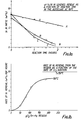
- FIG. la The rate of nickel removal by leaching is shown in Figure la where the nickel content of the matte is plotted against the duration of leaching in the tests shown in TABLE 1.
- Fig. lb indicates how the amount of nickel dissolved during leaching is effected by the amount of chlorine absorbed during leaching at elevated temperature. The beneficial effects of increased leach temperature and chlorine additions on the nickel dissolution from ground copper-nickel matte are clearly illustrated.
- the slurrying solution had the following initial and final compositions in grams per litre:
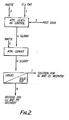
- FIG. 2 An atmospheric leaching process is shown schematically in Fig. 2 which is conducted according to conventional methods.
- Ground, untreated matte was fed through line (3) together with chlorine gas (1) and an acidic chloride solution (2) to a vessel at atmospheric pressure.
- the feeding of matte, and chlorine were coordinated so that the redox potential of the slurry was maintained at 360 to 380 mV, measured against S.C.E.
- the residence time of the matte was around 3 hours with constant agitation.
- the slurry temperature was close to the boiling point about 105-110°C.
- the feed solution was spent nickel electrolyte, but other nickel and copper chloride bearing solutions would serve as well.
- the feed solution was acidic, containing 2-5g per litre hydrochloric acid.
- the leached slurry was transferred (4) to an atmospheric cementation vessel, with fresh untreated matte added through line (5).
- the duration of the cementation step was around three hours, after which the slurry was removed (6) and subjected to liquid-solid separation.
- the filtrate or overflow was removed (7) for nickel recovery by electrowinning, solvent extraction or similar known processes.
- the residue or solids in the underflow was further treated for copper and precious metal recovery by conventional methods.
- TABLE 3 summarizes solution and solid compositions including slurries of solids in solution; as fed at various intermediate stages of the process and after the final liquid-solution separation.
- the process described in this example illustrates the selective leaching of nickel from copper-nickel matte with an autoclave pressure leach step incorporated in the process.
- the schematic flow sheet is shown in Fig. 3.
- the slurry from the atmospheric chlorine leach was taken by a line (4) to an autoclave to be pressure leached at 4 atmospheres pressure with agitation for 3 hours and at a temperature range of 140-150°C.
- the gas phase in the autoclave above the slurry was air.
- the redox potential of the slurry in the pressure leaching autoclave was found to be in the range of 240-290mV.
- the pressure leached slurry from the autoclave was fed (5) to an atmospheric cementation vessel with the addition of fresh untreated matte (3).
- the retention time in the cementation vessel was 1.5 hours; at 70°C, and the redox potential of the slurry ranged between 80-120mV measured against S.C.E.
- the nickel concentration in the residue when obtained by the process of the embodiment depicted in this example is reduced to 5 wt.%, while the copper has increased to 54.1%.
- the amount of copper retained in the solution to be treated for nickel and cobalt recovery is negligible, and hence requires no further separation treatment.
- the process of this example is another variation of the embodiment described in Example 4.
- the matte was subjected to atmospheric chlorine leaching and cementation as has been described in Example 3, and treated in a first liquid solid separation step.
- the filtrate was treated for nickel recovery in a conventional manner, but as discussed above, the residue still retained 15 wt.% nickel, and hence was treated in a second atmospheric chlorine leach step.
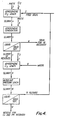
- the flow sheet of the process of Example 5 is shown in Fig. 4.
- the thickened slurry of the residue was fed (7) to an atmospheric chlorine leach vessel, with chlorine gas (1) and water (8) additions.
- the second atmospheric chlorine leach with agitation was conducted at 105°C for a period of 2 hours.
- the second chlorine leach slurry was fed through line (9) to an autoclave to be pressure leached at 3-4 atmospheres and 150°C for further two hours.
- the slurry redox potential ranged between 180-200mV measured against S.C.E.
- the pressure-leach slurry was fed (10) to a liquid-solid separating equipment.
- the separated filtrate (11) was returned to the first atmospheric leaching vessel through line (2).
- compositions of the slurries, solutions and the solids in the respective streams are tabulated in TABLE 5.
- the filtrate from the first liquid-solid separation step still contained some copper, which could be removed if required by a relatively inexpensive process step before recovering nickel from the solution.
- the filtrate from the second liquid-solid separation (11) had a relatively high nickel and copper concentration which was utilized by recycling to the first chlorine leach vessel.
- the pressure leaching step is conducted between the atmospheric chlorine leaching and the atmospheric cementation steps.
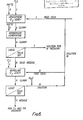
- the flow sheet of this process is schematically shown in Fig. 5 .
- the atmospheric leach was carried out shown in the first stage of Example 3, at a temperature range of 105-115°C, and the redox potential being controlled between 340-380 mV against S.C.E., with agitation, and in three hours residence time.
- the slurry was then fed (4) together with matte (3) to a pressure cementation autoclave.
- the slurry was agitated in the autoclave with the pressure being held at 4 atmospheres and the temperature between 140-150°C.
- the slurry residence time was three hours and the redox potential in the autoclave had a range of 230-300 mV measured against S.C.E.
- the slurry rrom the autoclave cementation was fed (5) to an atmospheric cementation vessel for a further 1.5 hours residence with matte additions (3) and agitation.
- the redox potential ranged between 80-120 mV against S.C.E. during the cementation and temperature was 70°C.
- compositions of the various streams of slurries, solids and solutions are shown in TABLE 6, together with matte feed rates to the cementation vessels. It can be seen that the copper content of the solution from the liquid-solid separation stage has a very low copper content and thus could be directly treated for nickel recovery. The separated residue was very high in copper, 55.9 wt.%, and retained only about 6 wt.% of nickel and cobalt in total, which is an economically acceptable degree of separation.
- the improved separation of nickel from copper contained in sulphidic matte particles described in this example incorporates an autoclave leaching step with chlorine gas injection into the atmospheric chlorine leach process.
- the process is shown schematically in Fig. 6.
- the two stages of the atmospheric chlorine leaching and cementation were conducted as described in Example 3, followed by a liquid-solid separation step.
- the solution from the liquid-solid separation through line (7) was taken for nickel recovery as was conducted in Example 3; the solids which were still high in nickel (15 wt.%) were fed (8) to an autoclave to be pressure leached at 4 atmospheres pressure with chlorine additions (1) and agitation.
- the temperature in the pressure leach step was 140-150°C.
- the duration of the pressure leach was two hours.
- the slurry from the autoclave was fed through line (9) to a second liquid-solid separation stage.
- the solution obtained (10) was returned to the atmospheric chlorine leach stage, a diluted bleed stream being taken to the chlorine- pressure leach autoclave to form a slurry with the solid residues from the first liquid-solid separation step.
- the residue from the chlorine-pressure leach (11) was treated for copper and precious metal recovery.
- the composition of the solution and the residues fed to and obtained from the chlorine pressure leach autoclave are shown in TABLE 7.
- the residue obtained in the autoclave leach step was low in nickel and high in copper and was further treated for copper and precious metal recovery.
- the separated solution was relatively high in copper and hence was returned to the atmospheric chlorine leach stage.
- the high copper content may be due to the relatively high acidity and sulphate content formed during the chlorine pressure leaching stage.
- This process was a variation on the process described in Example 7, wherein the autoclave chlorine pressure leach stage followed directly the atmospheric chlorine leach and cementation stages without a liquid solid separation step.
- the autoclave chlorine pressure leach was followed by an autoclave cementation step and an atmospheric cementation step.
- the flow sheet of this process is shown in Fig. 7.
- the atmospheric chlorine leach and atmospheric cementation-I stages were conducted in a manner similar to Example 7.
- the slurry from the first cementation stage was fed through line (6) to an autoclave for a chlorine pressure leach step, with chlorine injection and agitation, at 4 atmospheres pressure and at a temperature range of 140-150°C.
- the redox potential in the autoclave was held between 300-320 mV measured against S.C.E.
- the slurry for the chlorine pressure leach was fed (8) to an autoclave cementation step with agitation, together with fresh untreated matte (7). Residence time in both autoclaves was 1.5 hours. The temperature in the second autoclave was also between 140-150 C and the pressure was 4 atmospheres. The redox potential measured against S.C.E. was found to be 230-360 mV.
- the autoclave cementation was followed by atmospheric cementation-II, by feeding the autoclave cemented slurry through line (9) to an open cementation vessel. Untreated matte (7) was added at the same rate as in the autoclave cementation. The temperature of the slurry in the atmospheric cementation was 70°C.
- the redox potential was between 80-120 mV (S.C.E.) and the residence time was 1.5 hours.
- the slurry for the atmospheric cementation vessel was fed (10) to liquid-solid separation.
- the solution (11) was treated for nickel recovery and the residue (12) for copper and precious metal recovery.
- TABLE 8 shows the composition of the various slurries fed to the autoclaves and to the second atmospheric cementation vessel, as well as the matte composition and its feed rate.
- the compositions of the separated'solution and the separated residue are also shown. It can be seen that the solution could be treated directly for nickel and cobalt recovery after the iron having been removed if desired, as the copper content was negligible.
- the residue had high copper content with the total nickel and cobalt retained being less than 6 wt.%.
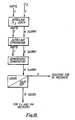
- Fig. 8 A simplified process based on the embodiment described in Example 8 is shown in Fig. 8.
- nickel and copper containing chloride solution was fed through line (2) to an autoclave with matte particles added (3) and leached in the presence of chlorine gas.
- the pressure inside the autoclave was 3-4 atmospheres and the temperature was between 140-150°C.
- the redox potential was controlled at 310-320 Mv (S.C.E.); the slurry had a residence time of 2 hours.
- the slurry was subsequently taken through line (4) to an autoclave cementation stage and then to an atmospheric cementation vessel through line (6). Untreated matte was added to both cementation stages through lines (5) and (7) respectively.
- the autoclave cementation was conducted at 3-4 atm.
- the redox potential ranges of the slurry was 240-250 mV (S.C.E.) and the duration of the autoclave cementation was around 2 hours.
- the atmospheric cementation was carried out in an open vessel for 1.5 hours at 80°C and in a redox potential range of 50-110 mV (S.C.E.).
- the slurry from the atmospheric cementation (8) was subjected to liquid-solid separation, yielding a solution (9) with negligible copper content and a residue (10) with high copper content, and total nickel and cobalt content less than 6 wt.%.
- composition of the slurries in the various streams together with a final solution and residue compositions are shown in TABLE 9.
Landscapes
- Engineering & Computer Science (AREA)
- Chemical & Material Sciences (AREA)
- Manufacturing & Machinery (AREA)
- Materials Engineering (AREA)
- Mechanical Engineering (AREA)
- Metallurgy (AREA)
- Organic Chemistry (AREA)
- Manufacture And Refinement Of Metals (AREA)
- Inorganic Compounds Of Heavy Metals (AREA)
Abstract
Description
- This invention relates to the hydrometallurgical treatment of solid particles selected from sulphidic matte and alloys, more particularly to the selective leaching of nickel from predominantly copper and nickel-containing sulphidic matte and alloys, and subsequently to recovering copper and precious metals from the residue.
- Mattes are the products of smelting sulphidic ores. The sulphidic ores and concentrates usually contain nickel, cobalt, iron, copper, other non-ferrous metals and some precious metals. During the smelting process, which often includes a converting step as well, most of the iron and silicate-containing gangue is slagged off, and the underlaying matte contains most of the copper, nickel and cobalt originally present in the ore and concentrate, mainly in the form of sulphides together with minor amounts of oxides,some retained iron and other non-ferrous metals as impurities, and all the precious metals initially combined with copper and nickel in the concentrate or ore.
- The present invention is directed to extracting copper, nickel and precious metals from sulphidic matte and alloy particles by hydrometallurgical methods solubilizing nickel, and cobalt if present, selectively as chloride and retaining copper and precious metals in the form of sulphides in the residue. The recovery of copper and precious metals is carried out by conventional means and processes subsequently, and do not form part of the present process description.
- Chlorine leaching of sulphidic particles in acidic chloride solutions at atmospheric pressure is described in U.S. patents 3,880,653 and 3,975,189 (inventor Hougen). The above process is carried out in two stages: In the first stage the ground matte slurried in a chloride ion bearing solution, is leached with chlorine gas at a redox potential range of 200 to 500 mV measured against SCE (saturated calomel electrode), which is maintained by controlling the feeding of both the solids and the chlorine gas to the slurry. In the second stage, untreated nickel rich sulphides are added to the agitated slurry obtained in the first stage to preferentially recover nickel into the solution and precipitate copper as sulphide. The second stage is often referred to as a cementation step. In the atmospheric chlorine leaching at the required redox potential range, a large portion of the nickel contained in the matte will dissolve and also a small portion of the copper. The residue in the first stage of the leaching is composed of partially leached sulphides and retained elemental sulphur. In the second stage excess nickel bearing sulphides will precipitate or cement out the copper in solution as sulphide, with more nickel going into solution as chloride. The precipitation is enhanced by the reaction with elemental sulphur, which is also present in the slurry. Ideally in the second leaching stage of the process the copper is cemented out while all the nickel in the solids go into solution. In practice, however, the incompletely leached particles and the freshly added nickel rich sulphide particles become coated with copper sulphide and thus the dissolution process is slowed down. Hence the total extraction of nickel into the solution and elimination of copper from the solution are not attained in commercially economical residence times and temperatures of this atmospheric leaching process.
- Prior processes have attempted to complete the selective dissolution process of nickel from matte by the use of autoclave leaching, thereby increasing the reaction temperature and hence the rate of the reaction. The process of U.S. patent 3,652,265 (Marschik et al.) utilizes an oxidative acidic pressure leach by treating ground matte and sulphur together with oxygen injection in an autoclave. This process, however, produces sulphuric acid and the nickel is dissolved in the form of sulphates, together with substantial amounts of highly soluble copper sulphates.
- Another process is described in U.S. patent 4,384,940 (inventors D.L. Jones et al.) which subjects nickel, cobalt and iron containing sulphidic-matte slurried in hydrochloric acid to oxygen-pressure leaching in an autoclave, and the separated residue is subsequently chlorine leached under atmospheric condition. Any copper present initially in the matte is co-dissolved with the nickel, and requires separation by other purification steps subsequently.
- Yet another process utilizing pressure leaching a copper-nickel containing matte for selective extraction of nickel is described in U.S. 4,323,541 under oxidative conditions; this process, however, is directed totally to sulphate extractive process technology.
- It is the object of the present invention to selectively leach most of the nickel, and cobalt if present, contained in copper and nickel bearing sulphidic matte and similar sulphidic alloy particles in a chloride solution, and subsequently to recover the nickel and cobalt from the separated nickel containing solution by electrowinning, solvent extraction or other known methods; while retaining substantially all the copper and precious metals in the residue, for treatment in separate copper and precious metal recovery process steps.
- An improved process has now been found for the separation of nickel from copper contained in solid particles selected from sulphidic matte and sulphidic alloys, which particles have been slurried in an acidic solution and chlorine leached at atmospheric pressure to provide a slurry in a chloride solution, wherein said slurry is subjected to leaching at over-atmospheric pressure at a pH less than 4, and at temperatures higher than 110°C, in an autoclave, to obtain a nickel-enriched chloride solution and a predominantly copper sulphide containing residue, subsequently precipitating dissolved copper in said nickel-enriched chloride solution by cementation onto freshly added sulphidic particles, and treating the separated nickel depleted residues for copper recovery. The nickel-enriched chloride solution is further treated for nickel recovery.
- In one embodiment of this process the fresh sulphidic particles are added to the nickel-enriched leach liquor obtained by the autoclave treatment to cement out at atmospheric pressure any copper co-dissolved with nickel in the leach liquor.
- In another embodiment of this invention the cementation of dissolved copper in the leach liquor by fresh sulphidic particle addition is conducted in an autoclave.
- In yet another embodiment of this invention the over-atmospheric pressure leaching in an autoclave is conducted in the presence of chlorine gas.
- In yet another embodiment of this invention the over-atmospheric pressure leaching is conducted with chlorine and oxygen injections in the autoclave.
- In yet another embodiment of this invention the over-atmospheric leaching of the slurry to obtain a nickel enriched chloride solution and a nickel depleted residue, and the subsequent cementation of copper onto fresh sulphidic particles added to the slurry of the over-atmospheric leaching step, are both conducted in separate autoclaves.
- The following drawings illustrate the working of the preferred embodiments of this invention.
- Figure I/a and 1/b show plots of nickel leach rate studies at above atmospheric_pressure.
- Figures 2 to 8 show schematic flow diagrams of preferred embodiments of the present invention.
- The preferred embodiments of the present invention will now be described in detail and illustrated by way of examples.
- It is the object of most hydrometallurgical.processes to convert the valuable metals present in ores, concentrates or heat treated intermediates such as mattes, into a water soluble form and to extract these in a pure form by further treatment steps. If all the valuable metals are dissolved together their respective subsequent separation can however, be very costly. Hence a selective dissolution process such as chlorine leaching of nickel-copper sulphidic mattes and alloys conducted at well controlled redox potentials have great advantages. The different embodiments of the present invention combine the pressure leaching of copper-nickel containing sulphidic matte or sulphidic alloys obtained by smelting, in a chloride ion-containing aqueous slurry with the known methods of atmospheric chlorine leaching of such sulphidic mattes and alloys.
- As already discussed above, the selective leaching of matte and other sulphidic alloys aims at combining the maximum dissolution of nickel, and cobalt if present, consistent with minimum copper content in solution, with the substantially complete retention of copper and attendant precious metals in the residue. These objectives can be attained faster at elevated temperatures and pressures, and are advantageously carried out according to the present invention in an autoclave. For the purposes of this invention an autoclave is described as a vessel appropriately lined, which can be sealed to withstand above-atmospheric internal pressures with or without gas injection, and simultaneously the contents of the vessel can be heated to temperatures in the region of 100-300°C.
- The first two of the following examples are included to show the beneficial effects of utilizing over-atmospheric pressure leaching in selectively extracting nickel contained in copper-nickel matte. Examples 3 to 9 show the various embodiments of the present process wherein the pressure leaching conducted in an autoclave is incorporated at various states with atmospheric chlorine leaching. These embodiments will be further illustrated by the appropriate flow sheets.
- Laboratory experiments were conducted to show the improvement in nickel dissolution from ground copper nickel matte when the leaching is conducted at above atmospheric pressure and at elevated temperatures. The leaching experiments were carried out in a 6 litre titanium lined autoclave, having a chlorine atmosphere above the leach solution slurried with the ground matte. The solution at the start of the experiments had the following compositions:
- Ni ions 185 g/L
- Cu ions 25 g/L
-

- The rate of nickel removal by leaching is shown in Figure la where the nickel content of the matte is plotted against the duration of leaching in the tests shown in TABLE 1. Fig. lb indicates how the amount of nickel dissolved during leaching is effected by the amount of chlorine absorbed during leaching at elevated temperature. The beneficial effects of increased leach temperature and chlorine additions on the nickel dissolution from ground copper-nickel matte are clearly illustrated.
- Laboratory autoclave leaching tests were conducted for selectively leaching nickel from a copper-nickel matte which was obtained by smelting copper concentrate. The matte was ground, slurried with a solution and leached in an autoclave at 135°C, having a two hour residence time. Chlorine together with air were injected into the autoclave during the leaching and the gas composition in the autoclave above the slurried matte was as follows:
-
Chlorine 50 vol. % - .
Oxygen 10 vol. % - Nitrogen 40 vol. %
- The slurrying solution had the following initial and final compositions in grams per litre:

- The solids fed into the autoclave and leached, were analyzed, and were found to have the following initial and final composition in weight %.

- An atmospheric leaching process is shown schematically in Fig. 2 which is conducted according to conventional methods. Ground, untreated matte was fed through line (3) together with chlorine gas (1) and an acidic chloride solution (2) to a vessel at atmospheric pressure. The feeding of matte, and chlorine were coordinated so that the redox potential of the slurry was maintained at 360 to 380 mV, measured against S.C.E. The residence time of the matte was around 3 hours with constant agitation. The slurry temperature was close to the boiling point about 105-110°C. The feed solution was spent nickel electrolyte, but other nickel and copper chloride bearing solutions would serve as well. The feed solution was acidic, containing 2-5g per litre hydrochloric acid.
- The leached slurry was transferred (4) to an atmospheric cementation vessel, with fresh untreated matte added through line (5). The duration of the cementation step was around three hours, after which the slurry was removed (6) and subjected to liquid-solid separation. The filtrate or overflow was removed (7) for nickel recovery by electrowinning, solvent extraction or similar known processes. The residue or solids in the underflow was further treated for copper and precious metal recovery by conventional methods.
- TABLE 3 summarizes solution and solid compositions including slurries of solids in solution; as fed at various intermediate stages of the process and after the final liquid-solution separation.
- It is clear that the initial 39 wt.% nickel content in the matte was considerably reduced and the copper content was increased by the two stage atmospheric leaching process. The nickel content of the residue however was still around 15% and the copper, although increased was only 48.9% in the separated residue, requiring further selective extraction treatment.
- The process described in this example illustrates the selective leaching of nickel from copper-nickel matte with an autoclave pressure leach step incorporated in the process. The first stage of the atmospheric chlorine leach as shown in Example 3 and in Fig. 2, was followed by an autoclave leach and subsequently by an atmospheric cementation process step. The schematic flow sheet is shown in Fig. 3. The slurry from the atmospheric chlorine leach was taken by a line (4) to an autoclave to be pressure leached at 4 atmospheres pressure with agitation for 3 hours and at a temperature range of 140-150°C. The gas phase in the autoclave above the slurry was air. The redox potential of the slurry in the pressure leaching autoclave was found to be in the range of 240-290mV. The pressure leached slurry from the autoclave was fed (5) to an atmospheric cementation vessel with the addition of fresh untreated matte (3). The retention time in the cementation vessel was 1.5 hours; at 70°C, and the redox potential of the slurry ranged between 80-120mV measured against S.C.E.
- The composition of the slurries, solutions and solids in the various streams of Fig. 3 are shown in TABLE 4.
- It can be seen that the nickel concentration in the residue when obtained by the process of the embodiment depicted in this example is reduced to 5 wt.%, while the copper has increased to 54.1%. The amount of copper retained in the solution to be treated for nickel and cobalt recovery is negligible, and hence requires no further separation treatment.
- The process of this example is another variation of the embodiment described in Example 4. The matte was subjected to atmospheric chlorine leaching and cementation as has been described in Example 3, and treated in a first liquid solid separation step. The filtrate was treated for nickel recovery in a conventional manner, but as discussed above, the residue still retained 15 wt.% nickel, and hence was treated in a second atmospheric chlorine leach step. The flow sheet of the process of Example 5 is shown in Fig. 4. The thickened slurry of the residue was fed (7) to an atmospheric chlorine leach vessel, with chlorine gas (1) and water (8) additions. The second atmospheric chlorine leach with agitation was conducted at 105°C for a period of 2 hours. The second chlorine leach slurry was fed through line (9) to an autoclave to be pressure leached at 3-4 atmospheres and 150°C for further two hours. The slurry redox potential ranged between 180-200mV measured against S.C.E. The pressure-leach slurry was fed (10) to a liquid-solid separating equipment. The separated filtrate (11) was returned to the first atmospheric leaching vessel through line (2). The separated solids (12), high in copper sulphides, were treated for copper and precious metal recovery.
- The compositions of the slurries, solutions and the solids in the respective streams are tabulated in TABLE 5.
- It can be seen that the separated residue was substantially depleted of nickel. The filtrate from the first liquid-solid separation step still contained some copper, which could be removed if required by a relatively inexpensive process step before recovering nickel from the solution. The filtrate from the second liquid-solid separation (11) had a relatively high nickel and copper concentration which was utilized by recycling to the first chlorine leach vessel.
- In the embodiment shown in Example 6, the pressure leaching step is conducted between the atmospheric chlorine leaching and the atmospheric cementation steps. The flow sheet of this process is schematically shown in Fig. 5 . The atmospheric leach was carried out shown in the first stage of Example 3, at a temperature range of 105-115°C, and the redox potential being controlled between 340-380 mV against S.C.E., with agitation, and in three hours residence time. The slurry was then fed (4) together with matte (3) to a pressure cementation autoclave. The slurry was agitated in the autoclave with the pressure being held at 4 atmospheres and the temperature between 140-150°C. The slurry residence time was three hours and the redox potential in the autoclave had a range of 230-300 mV measured against S.C.E. The slurry rrom the autoclave cementation was fed (5) to an atmospheric cementation vessel for a further 1.5 hours residence with matte additions (3) and agitation. The redox potential ranged between 80-120 mV against S.C.E. during the cementation and temperature was 70°C.
- The compositions of the various streams of slurries, solids and solutions are shown in TABLE 6, together with matte feed rates to the cementation vessels. It can be seen that the copper content of the solution from the liquid-solid separation stage has a very low copper content and thus could be directly treated for nickel recovery. The separated residue was very high in copper, 55.9 wt.%, and retained only about 6 wt.% of nickel and cobalt in total, which is an economically acceptable degree of separation.
- The improved separation of nickel from copper contained in sulphidic matte particles described in this example incorporates an autoclave leaching step with chlorine gas injection into the atmospheric chlorine leach process. The process is shown schematically in Fig. 6. The two stages of the atmospheric chlorine leaching and cementation were conducted as described in Example 3, followed by a liquid-solid separation step. The solution from the liquid-solid separation through line (7) was taken for nickel recovery as was conducted in Example 3; the solids which were still high in nickel (15 wt.%) were fed (8) to an autoclave to be pressure leached at 4 atmospheres pressure with chlorine additions (1) and agitation. The temperature in the pressure leach step was 140-150°C. The duration of the pressure leach was two hours. The slurry from the autoclave was fed through line (9) to a second liquid-solid separation stage. The solution obtained (10) was returned to the atmospheric chlorine leach stage, a diluted bleed stream being taken to the chlorine- pressure leach autoclave to form a slurry with the solid residues from the first liquid-solid separation step. The residue from the chlorine-pressure leach (11) was treated for copper and precious metal recovery.
- The composition of the solution and the residues fed to and obtained from the chlorine pressure leach autoclave are shown in TABLE 7. The residue obtained in the autoclave leach step was low in nickel and high in copper and was further treated for copper and precious metal recovery. The separated solution was relatively high in copper and hence was returned to the atmospheric chlorine leach stage. The high copper content may be due to the relatively high acidity and sulphate content formed during the chlorine pressure leaching stage.
- This process was a variation on the process described in Example 7, wherein the autoclave chlorine pressure leach stage followed directly the atmospheric chlorine leach and cementation stages without a liquid solid separation step. The autoclave chlorine pressure leach was followed by an autoclave cementation step and an atmospheric cementation step. The flow sheet of this process is shown in Fig. 7. The atmospheric chlorine leach and atmospheric cementation-I stages were conducted in a manner similar to Example 7. The slurry from the first cementation stage was fed through line (6) to an autoclave for a chlorine pressure leach step, with chlorine injection and agitation, at 4 atmospheres pressure and at a temperature range of 140-150°C. The redox potential in the autoclave was held between 300-320 mV measured against S.C.E. The slurry for the chlorine pressure leach was fed (8) to an autoclave cementation step with agitation, together with fresh untreated matte (7). Residence time in both autoclaves was 1.5 hours. The temperature in the second autoclave was also between 140-150 C and the pressure was 4 atmospheres. The redox potential measured against S.C.E. was found to be 230-360 mV. The autoclave cementation was followed by atmospheric cementation-II, by feeding the autoclave cemented slurry through line (9) to an open cementation vessel. Untreated matte (7) was added at the same rate as in the autoclave cementation. The temperature of the slurry in the atmospheric cementation was 70°C. The redox potential was between 80-120 mV (S.C.E.) and the residence time was 1.5 hours. The slurry for the atmospheric cementation vessel was fed (10) to liquid-solid separation. The solution (11) was treated for nickel recovery and the residue (12) for copper and precious metal recovery.
- TABLE 8 shows the composition of the various slurries fed to the autoclaves and to the second atmospheric cementation vessel, as well as the matte composition and its feed rate. The compositions of the separated'solution and the separated residue are also shown. It can be seen that the solution could be treated directly for nickel and cobalt recovery after the iron having been removed if desired, as the copper content was negligible. The residue had high copper content with the total nickel and cobalt retained being less than 6 wt.%.
- A simplified process based on the embodiment described in Example 8 is shown in Fig. 8. In this process, nickel and copper containing chloride solution was fed through line (2) to an autoclave with matte particles added (3) and leached in the presence of chlorine gas. The pressure inside the autoclave was 3-4 atmospheres and the temperature was between 140-150°C. The redox potential was controlled at 310-320 Mv (S.C.E.); the slurry had a residence time of 2 hours. The slurry was subsequently taken through line (4) to an autoclave cementation stage and then to an atmospheric cementation vessel through line (6). Untreated matte was added to both cementation stages through lines (5) and (7) respectively. The autoclave cementation was conducted at 3-4 atm. pressure, at the range of 140-150°C. The redox potential ranges of the slurry was 240-250 mV (S.C.E.) and the duration of the autoclave cementation was around 2 hours. The atmospheric cementation was carried out in an open vessel for 1.5 hours at 80°C and in a redox potential range of 50-110 mV (S.C.E.). The slurry from the atmospheric cementation (8) was subjected to liquid-solid separation, yielding a solution (9) with negligible copper content and a residue (10) with high copper content, and total nickel and cobalt content less than 6 wt.%.
- The composition of the slurries in the various streams together with a final solution and residue compositions, are shown in TABLE 9.
- The various embodiments of combining autoclave leaching with atmospheric chlorine leach and cementation process steps for the improved separation of nickel and cobalt, from copper contained in particles of sulphidic matte and sulphidic alloys, are described above. The objective of obtaining a solution to be treated for nickel and cobalt recovery with very low copper content can be attained in all the embodiments described. The nickel and cobalt retained in the separated copper and precious metals containing residue can be varied between 1-6 wt.% according to the requirements dictated by market conditions and extraction process costs.
- Further embodiments will be readily apparent to those skilled in the art, the scope of the invention being defined in the appended claims.


The leach temperature was controlled at 150+1°C; other conditions of the tests are tabulated in TABLE 1 below.
Claims (15)
Applications Claiming Priority (3)
| Application Number | Priority Date | Filing Date | Title |
|---|---|---|---|
| US855897 | 1986-04-24 | ||
| US06/855,897 US4828809A (en) | 1983-10-18 | 1986-04-24 | Separation of nickel from copper in autoclave |
| CA 539730 CA1327452C (en) | 1986-04-24 | 1987-06-15 | Separation of nickel from copper in autoclave |
Publications (2)
| Publication Number | Publication Date |
|---|---|
| EP0248518A1 true EP0248518A1 (en) | 1987-12-09 |
| EP0248518B1 EP0248518B1 (en) | 1991-11-13 |
Family
ID=25671382
Family Applications (1)
| Application Number | Title | Priority Date | Filing Date |
|---|---|---|---|
| EP19870303580 Expired - Lifetime EP0248518B1 (en) | 1986-04-24 | 1987-04-23 | Separation of nickel from copper in autoclave |
Country Status (7)
| Country | Link |
|---|---|
| EP (1) | EP0248518B1 (en) |
| JP (1) | JP2552136B2 (en) |
| AU (1) | AU589519B2 (en) |
| CA (1) | CA1327452C (en) |
| FI (1) | FI88728C (en) |
| NO (1) | NO173613C (en) |
| ZA (1) | ZA872869B (en) |
Cited By (9)
| Publication number | Priority date | Publication date | Assignee | Title |
|---|---|---|---|---|
| US5595642A (en) * | 1994-12-01 | 1997-01-21 | Xue; Tao | Pressure leaching of nickel and cobalt sulphides with chlorine under controlled redox potential conditions |
| EP2584055A4 (en) * | 2010-06-21 | 2016-01-20 | Sumitomo Metal Mining Co | METHOD FOR REMOVING COPPER IONS FROM A COPPER-CONTAINING NICKEL CHLORIDE SOLUTION, AND PROCESS FOR PRODUCING ELECTROLYTIC NICKEL |
| CN108977662A (en) * | 2018-07-13 | 2018-12-11 | 兰州金川新材料科技股份有限公司 | A method of cobalt chloride solution and copper-bath are prepared using ferro-cobalt |
| CN109762986A (en) * | 2019-03-20 | 2019-05-17 | 金川集团股份有限公司 | A kind of devices and methods therefor extracting nickel from nickel electrowinning copper ashes |
| CN112095016A (en) * | 2020-08-27 | 2020-12-18 | 矿冶科技集团有限公司 | Method for reducing nickel content of high nickel matte leaching residues through hot pressing treatment |
| US11718894B2 (en) | 2017-12-18 | 2023-08-08 | Sumitomo Metal Mining Co., Ltd. | Method for separating copper, and nickel and cobalt |
| US11959151B2 (en) | 2017-09-29 | 2024-04-16 | Sumitomo Metal Mining Co., Ltd. | Method for separating copper from nickel and cobalt |
| US12000018B2 (en) | 2017-10-23 | 2024-06-04 | Sumitomo Metal Mining Co., Ltd. | Method for separating copper from nickel and cobalt |
| US12500283B2 (en) | 2021-07-20 | 2025-12-16 | Sumitomo Metal Mining Co., Ltd. | Method for treating alloy |
Families Citing this family (13)
| Publication number | Priority date | Publication date | Assignee | Title |
|---|---|---|---|---|
| US6428604B1 (en) * | 2000-09-18 | 2002-08-06 | Inco Limited | Hydrometallurgical process for the recovery of nickel and cobalt values from a sulfidic flotation concentrate |
| CA2568144A1 (en) * | 2004-05-21 | 2005-12-01 | Wmc Resources Ltd | Recovery of nickel |
| JP5803491B2 (en) * | 2011-09-22 | 2015-11-04 | 住友金属鉱山株式会社 | Chlorine leaching method for metal sulfide and metal smelting method |
| JP5803492B2 (en) * | 2011-09-22 | 2015-11-04 | 住友金属鉱山株式会社 | Chlorine leaching method for metal sulfides |
| JP5884870B1 (en) * | 2014-08-13 | 2016-03-15 | 住友金属鉱山株式会社 | How to recover nickel |
| JP6540548B2 (en) * | 2016-03-01 | 2019-07-10 | 住友金属鉱山株式会社 | Method for removing copper ions from aqueous solution of nickel chloride, copper ion removal treatment apparatus |
| JP6519628B2 (en) | 2017-10-23 | 2019-05-29 | 住友金属鉱山株式会社 | Separation method of copper and nickel and cobalt |
| WO2021166755A1 (en) | 2020-02-21 | 2021-08-26 | 住友金属鉱山株式会社 | Method for treating alloy |
| JP7604806B2 (en) | 2020-08-17 | 2024-12-24 | 住友金属鉱山株式会社 | Methods for Treating Sulfides |
| JP7245423B1 (en) | 2021-09-29 | 2023-03-24 | 住友金属鉱山株式会社 | Alloy treatment method |
| CN113957243B (en) * | 2021-10-22 | 2023-10-17 | 金川镍钴研究设计院有限责任公司 | Method for realizing open circuit of nickel, copper and iron in high-nickel matte and enriching noble metals |
| US20250043383A1 (en) | 2021-12-06 | 2025-02-06 | Sumitomo Metal Mining Co., Ltd. | Treatment method for alloy |
| JP2024024163A (en) | 2022-08-09 | 2024-02-22 | 住友金属鉱山株式会社 | How to dispose of waste batteries |
Citations (14)
| Publication number | Priority date | Publication date | Assignee | Title |
|---|---|---|---|---|
| FR367717A (en) * | 1906-07-04 | 1906-11-08 | Metals Extraction Corp Ltd | Process for the extraction and recovery of cobalt and nickel, ores and oxidized mattes |
| FR441785A (en) * | 1911-07-08 | 1912-08-16 | Alexander Mckechnie | Process for treating nickel-copper mattes |
| US3085054A (en) * | 1960-02-25 | 1963-04-09 | Falconbridge Nickel Mines Ltd | Recovery of nickel |
| FR2146299A1 (en) * | 1971-07-16 | 1973-03-02 | Int Nickel Canada | |
| US3819801A (en) * | 1972-04-17 | 1974-06-25 | Int Nickel Co | Preferential sulfiding of nickel and cobalt oxides |
| US3880653A (en) * | 1971-03-18 | 1975-04-29 | Falconbridge Nickel Mines Ltd | Chlorine leach process |
| FR2273875A2 (en) * | 1971-03-18 | 1976-01-02 | Falconbridge Nickel Mines Ltd | SELECTIVE LESSIVING PROCESS OF METALS SUCH AS COPPER, NICKEL AND PRECIOUS METALS |
| US3975189A (en) * | 1971-03-18 | 1976-08-17 | Falconbridge Nickel Mines Limited | Recovery of copper sulphide and nickel from solution |
| US3981962A (en) * | 1975-06-30 | 1976-09-21 | The United States Of America As Represented By The Secretary Of The Interior | Decomposition leach of sulfide ores with chlorine and oxygen |
| US4260588A (en) * | 1978-09-16 | 1981-04-07 | Duisburger Dupferhutte | Production of sulphidic copper concentrates |
| US4384940A (en) * | 1982-01-21 | 1983-05-24 | Inco Limited | Chlorine leaching of nickel-cobalt-iron sulphides |
| US4435368A (en) * | 1976-02-06 | 1984-03-06 | Mitsubishi Rayon Co., Ltd. | Hydrometallurgical process for selective dissolution of mixtures of oxy compounds |
| WO1985001748A1 (en) * | 1983-10-18 | 1985-04-25 | Thomas Thomassen | Chlorine leaching of copper sulphide concentrates in an autoclave |
| CA1193107A (en) * | 1982-09-28 | 1985-09-10 | Robert W. Stanley | Process for the selective dissolution of cobalt from cobaltite-pyrite concentrates |
Family Cites Families (1)
| Publication number | Priority date | Publication date | Assignee | Title |
|---|---|---|---|---|
| AU487488B2 (en) * | 1975-06-02 | 1976-12-09 | Falconbridge Limited | Copper sulphide precipitation from nickeliferous solution containing dissolved copper |
-
1987
- 1987-04-23 EP EP19870303580 patent/EP0248518B1/en not_active Expired - Lifetime
- 1987-04-23 ZA ZA872869A patent/ZA872869B/xx unknown
- 1987-04-23 NO NO871686A patent/NO173613C/en unknown
- 1987-04-23 FI FI871780A patent/FI88728C/en not_active IP Right Cessation
- 1987-04-24 AU AU71952/87A patent/AU589519B2/en not_active Expired
- 1987-04-24 JP JP10024087A patent/JP2552136B2/en not_active Expired - Lifetime
- 1987-06-15 CA CA 539730 patent/CA1327452C/en not_active Expired - Lifetime
Patent Citations (14)
| Publication number | Priority date | Publication date | Assignee | Title |
|---|---|---|---|---|
| FR367717A (en) * | 1906-07-04 | 1906-11-08 | Metals Extraction Corp Ltd | Process for the extraction and recovery of cobalt and nickel, ores and oxidized mattes |
| FR441785A (en) * | 1911-07-08 | 1912-08-16 | Alexander Mckechnie | Process for treating nickel-copper mattes |
| US3085054A (en) * | 1960-02-25 | 1963-04-09 | Falconbridge Nickel Mines Ltd | Recovery of nickel |
| FR2273875A2 (en) * | 1971-03-18 | 1976-01-02 | Falconbridge Nickel Mines Ltd | SELECTIVE LESSIVING PROCESS OF METALS SUCH AS COPPER, NICKEL AND PRECIOUS METALS |
| US3975189A (en) * | 1971-03-18 | 1976-08-17 | Falconbridge Nickel Mines Limited | Recovery of copper sulphide and nickel from solution |
| US3880653A (en) * | 1971-03-18 | 1975-04-29 | Falconbridge Nickel Mines Ltd | Chlorine leach process |
| FR2146299A1 (en) * | 1971-07-16 | 1973-03-02 | Int Nickel Canada | |
| US3819801A (en) * | 1972-04-17 | 1974-06-25 | Int Nickel Co | Preferential sulfiding of nickel and cobalt oxides |
| US3981962A (en) * | 1975-06-30 | 1976-09-21 | The United States Of America As Represented By The Secretary Of The Interior | Decomposition leach of sulfide ores with chlorine and oxygen |
| US4435368A (en) * | 1976-02-06 | 1984-03-06 | Mitsubishi Rayon Co., Ltd. | Hydrometallurgical process for selective dissolution of mixtures of oxy compounds |
| US4260588A (en) * | 1978-09-16 | 1981-04-07 | Duisburger Dupferhutte | Production of sulphidic copper concentrates |
| US4384940A (en) * | 1982-01-21 | 1983-05-24 | Inco Limited | Chlorine leaching of nickel-cobalt-iron sulphides |
| CA1193107A (en) * | 1982-09-28 | 1985-09-10 | Robert W. Stanley | Process for the selective dissolution of cobalt from cobaltite-pyrite concentrates |
| WO1985001748A1 (en) * | 1983-10-18 | 1985-04-25 | Thomas Thomassen | Chlorine leaching of copper sulphide concentrates in an autoclave |
Non-Patent Citations (2)
| Title |
|---|
| HYDROMETALLURGY, vol. 10, no. 3, June 1983, pages 359-366, Elsevier Science Publishers B.V., Amsterdam, NL; R.C. HUBLI et al.: "A ferrous chloride-oxygen leach process for nickel-copper sulphide concentrates" * |
| HYDROMETALLURGY, vol. 15, no. 1, October 1985, pages 25-32, Elsevier Science Publishers B.V., Amsterdam, NL; T.K. MUKHERJEE et al.: "A cupric chloride-oxygen leach process for a nickel-copper sulphide concentrate" * |
Cited By (10)
| Publication number | Priority date | Publication date | Assignee | Title |
|---|---|---|---|---|
| US5595642A (en) * | 1994-12-01 | 1997-01-21 | Xue; Tao | Pressure leaching of nickel and cobalt sulphides with chlorine under controlled redox potential conditions |
| EP2584055A4 (en) * | 2010-06-21 | 2016-01-20 | Sumitomo Metal Mining Co | METHOD FOR REMOVING COPPER IONS FROM A COPPER-CONTAINING NICKEL CHLORIDE SOLUTION, AND PROCESS FOR PRODUCING ELECTROLYTIC NICKEL |
| US11959151B2 (en) | 2017-09-29 | 2024-04-16 | Sumitomo Metal Mining Co., Ltd. | Method for separating copper from nickel and cobalt |
| US12000018B2 (en) | 2017-10-23 | 2024-06-04 | Sumitomo Metal Mining Co., Ltd. | Method for separating copper from nickel and cobalt |
| US11718894B2 (en) | 2017-12-18 | 2023-08-08 | Sumitomo Metal Mining Co., Ltd. | Method for separating copper, and nickel and cobalt |
| CN108977662A (en) * | 2018-07-13 | 2018-12-11 | 兰州金川新材料科技股份有限公司 | A method of cobalt chloride solution and copper-bath are prepared using ferro-cobalt |
| CN109762986A (en) * | 2019-03-20 | 2019-05-17 | 金川集团股份有限公司 | A kind of devices and methods therefor extracting nickel from nickel electrowinning copper ashes |
| CN112095016A (en) * | 2020-08-27 | 2020-12-18 | 矿冶科技集团有限公司 | Method for reducing nickel content of high nickel matte leaching residues through hot pressing treatment |
| CN112095016B (en) * | 2020-08-27 | 2022-06-10 | 矿冶科技集团有限公司 | Method for reducing nickel content of high nickel matte leaching residues through hot pressing treatment |
| US12500283B2 (en) | 2021-07-20 | 2025-12-16 | Sumitomo Metal Mining Co., Ltd. | Method for treating alloy |
Also Published As
| Publication number | Publication date |
|---|---|
| JP2552136B2 (en) | 1996-11-06 |
| FI88728B (en) | 1993-03-15 |
| NO173613C (en) | 1994-01-05 |
| AU589519B2 (en) | 1989-10-12 |
| ZA872869B (en) | 1987-10-12 |
| EP0248518B1 (en) | 1991-11-13 |
| JPS63259033A (en) | 1988-10-26 |
| CA1327452C (en) | 1994-03-08 |
| NO173613B (en) | 1993-09-27 |
| NO871686L (en) | 1987-10-26 |
| FI88728C (en) | 1993-06-28 |
| NO871686D0 (en) | 1987-04-23 |
| FI871780L (en) | 1987-10-25 |
| AU7195287A (en) | 1987-10-29 |
| FI871780A0 (en) | 1987-04-23 |
Similar Documents
| Publication | Publication Date | Title |
|---|---|---|
| EP0248518B1 (en) | Separation of nickel from copper in autoclave | |
| US4828809A (en) | Separation of nickel from copper in autoclave | |
| US5380354A (en) | Recovery of metals from sulphidic material | |
| CA2417413C (en) | Method for recovering copper from sulfide ore materials using high temperature pressure leaching, solvent extraction and electrowinning | |
| TW493008B (en) | Chloride assisted hydrometallurgical extraction of metal | |
| AU662961B2 (en) | Upgrading copper sulphide residues containing nickel and arsenic | |
| US3293027A (en) | Method of leaching high grade nickel matte | |
| AU2006329807B2 (en) | Method for recovering rare metals in a zinc leaching process | |
| AU725971B2 (en) | Method for leaching zinc concentrate in atmospheric conditions | |
| US2822263A (en) | Method of extracting copper values from copper bearing mineral sulphides | |
| NO129913B (en) | ||
| US4135918A (en) | Roast-reductive leach process for copper recovery | |
| US4082629A (en) | Hydrometallurgical process for treating metal sulfides containing lead sulfide | |
| ZA200602040B (en) | Method for processing anode sludge | |
| US4435369A (en) | Hydrometallurgical process for extraction of nickel | |
| US2616781A (en) | Treatment of nickeliferous oxide concentrates for recovery of nickel values therefrom | |
| US4276084A (en) | Hydrometallurgical process for the recovery of lead | |
| NO133812B (en) | ||
| CA2530355C (en) | Method for processing sulfide ores containing precious metals | |
| JP2008115429A (en) | Silver recovery method in wet copper smelting process | |
| CA1071569A (en) | Hydrometallurgical process for treating metal sulfides containing lead sulfide | |
| WO1988003912A1 (en) | Process for recovering metal values from ferrite wastes | |
| US1509947A (en) | Metallurgical process | |
| AU2004257844B2 (en) | Method for processing sulfide ores containing precious metals |
Legal Events
| Date | Code | Title | Description |
|---|---|---|---|
| PUAI | Public reference made under article 153(3) epc to a published international application that has entered the european phase |
Free format text: ORIGINAL CODE: 0009012 |
|
| AK | Designated contracting states |
Kind code of ref document: A1 Designated state(s): BE DE ES FR GB GR |
|
| 17P | Request for examination filed |
Effective date: 19880115 |
|
| 17Q | First examination report despatched |
Effective date: 19891207 |
|
| GRAA | (expected) grant |
Free format text: ORIGINAL CODE: 0009210 |
|
| AK | Designated contracting states |
Kind code of ref document: B1 Designated state(s): BE DE ES FR GB GR |
|
| PG25 | Lapsed in a contracting state [announced via postgrant information from national office to epo] |
Ref country code: GR Free format text: LAPSE BECAUSE OF FAILURE TO SUBMIT A TRANSLATION OF THE DESCRIPTION OR TO PAY THE FEE WITHIN THE PRESCRIBED TIME-LIMIT Effective date: 19911113 |
|
| REF | Corresponds to: |
Ref document number: 3774489 Country of ref document: DE Date of ref document: 19911219 |
|
| ET | Fr: translation filed | ||
| PG25 | Lapsed in a contracting state [announced via postgrant information from national office to epo] |
Ref country code: ES Free format text: LAPSE BECAUSE OF FAILURE TO SUBMIT A TRANSLATION OF THE DESCRIPTION OR TO PAY THE FEE WITHIN THE PRESCRIBED TIME-LIMIT Effective date: 19920224 |
|
| PLBE | No opposition filed within time limit |
Free format text: ORIGINAL CODE: 0009261 |
|
| STAA | Information on the status of an ep patent application or granted ep patent |
Free format text: STATUS: NO OPPOSITION FILED WITHIN TIME LIMIT |
|
| 26N | No opposition filed | ||
| REG | Reference to a national code |
Ref country code: GB Ref legal event code: IF02 |
|
| PGFP | Annual fee paid to national office [announced via postgrant information from national office to epo] |
Ref country code: FR Payment date: 20060410 Year of fee payment: 20 |
|
| PGFP | Annual fee paid to national office [announced via postgrant information from national office to epo] |
Ref country code: GB Payment date: 20060419 Year of fee payment: 20 |
|
| PGFP | Annual fee paid to national office [announced via postgrant information from national office to epo] |
Ref country code: DE Payment date: 20060420 Year of fee payment: 20 |
|
| PGFP | Annual fee paid to national office [announced via postgrant information from national office to epo] |
Ref country code: BE Payment date: 20060614 Year of fee payment: 20 |
|
| REG | Reference to a national code |
Ref country code: GB Ref legal event code: PE20 |
|
| PG25 | Lapsed in a contracting state [announced via postgrant information from national office to epo] |
Ref country code: GB Free format text: LAPSE BECAUSE OF EXPIRATION OF PROTECTION Effective date: 20070422 |
|
| BE20 | Be: patent expired |
Owner name: *FALCONBRIDGE LTD Effective date: 20070423 |