EP0220792B1 - A method for producing 2-aryl-propionaldehydes - Google Patents
A method for producing 2-aryl-propionaldehydes Download PDFInfo
- Publication number
- EP0220792B1 EP0220792B1 EP86304614A EP86304614A EP0220792B1 EP 0220792 B1 EP0220792 B1 EP 0220792B1 EP 86304614 A EP86304614 A EP 86304614A EP 86304614 A EP86304614 A EP 86304614A EP 0220792 B1 EP0220792 B1 EP 0220792B1
- Authority
- EP
- European Patent Office
- Prior art keywords
- reaction
- aryl
- epoxypropane
- formula
- methylsulfate
- Prior art date
- Legal status (The legal status is an assumption and is not a legal conclusion. Google has not performed a legal analysis and makes no representation as to the accuracy of the status listed.)
- Expired - Lifetime
Links
- 0 CC(*)(C*)OCN Chemical compound CC(*)(C*)OCN 0.000 description 2
Classifications
-
- C—CHEMISTRY; METALLURGY
- C07—ORGANIC CHEMISTRY
- C07D—HETEROCYCLIC COMPOUNDS
- C07D303/00—Compounds containing three-membered rings having one oxygen atom as the only ring hetero atom
- C07D303/02—Compounds containing oxirane rings
- C07D303/12—Compounds containing oxirane rings with hydrocarbon radicals, substituted by singly or doubly bound oxygen atoms
- C07D303/18—Compounds containing oxirane rings with hydrocarbon radicals, substituted by singly or doubly bound oxygen atoms by etherified hydroxyl radicals
- C07D303/20—Ethers with hydroxy compounds containing no oxirane rings
- C07D303/22—Ethers with hydroxy compounds containing no oxirane rings with monohydroxy compounds
-
- C—CHEMISTRY; METALLURGY
- C07—ORGANIC CHEMISTRY
- C07C—ACYCLIC OR CARBOCYCLIC COMPOUNDS
- C07C45/00—Preparation of compounds having >C = O groups bound only to carbon or hydrogen atoms; Preparation of chelates of such compounds
- C07C45/56—Preparation of compounds having >C = O groups bound only to carbon or hydrogen atoms; Preparation of chelates of such compounds from heterocyclic compounds
- C07C45/57—Preparation of compounds having >C = O groups bound only to carbon or hydrogen atoms; Preparation of chelates of such compounds from heterocyclic compounds with oxygen as the only heteroatom
- C07C45/58—Preparation of compounds having >C = O groups bound only to carbon or hydrogen atoms; Preparation of chelates of such compounds from heterocyclic compounds with oxygen as the only heteroatom in three-membered rings
-
- C—CHEMISTRY; METALLURGY
- C07—ORGANIC CHEMISTRY
- C07D—HETEROCYCLIC COMPOUNDS
- C07D303/00—Compounds containing three-membered rings having one oxygen atom as the only ring hetero atom
- C07D303/02—Compounds containing oxirane rings
- C07D303/04—Compounds containing oxirane rings containing only hydrogen and carbon atoms in addition to the ring oxygen atoms
Definitions
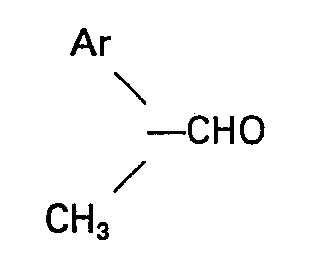
- This invention relates to a method of producing a 2-aryl-propionaldehyde of the formula (wherein Ar denotes substituted or unsubstituted phenyl).
- the compounds obtained by this invention are very useful intermediates in the production of 2-aryl-propionic acids which are useful an antiinflammatory agents.
- the starting material is not necessarily easily available, and the yield of the aldehyde compound is low. Therefore, the methods are not suitable for industrial production.
- the method (3) requires many processes to synthesize the starting material, 2-hydroxy-3-aryl-3-butene acid ester and the total yield of the method is low.
- the starting material chloromethyl-phenyl-ketone
- the reactions in the method require three processes with complicated procedures.
- the Grignard reagent itself is expensive and the use of the reagent requires sufficient equipment and caution to prevent danger.
- a ternary phase by formed by suspending a dimethylpolystyrylsulfonium salt in a mixture of dichloromethane and aqueous sodium hydroxide, followed by reaction with acetophenone in the presence of a phase transfer catalyst such as tetrabutylammonium hydroxide, for epoxidation of acetophenone.
- a phase transfer catalyst such as tetrabutylammonium hydroxide
- the starting material for preparing the sulfonium salt namely polystyrene sulfide
- polystyrene sulfide is not readily available. Even if it is available, it is required in a relatively large quantity as compared with the ketone compound and the recovery and reuse of said polymer requires conversion of a large quantity of the sulfide to a sulfonium salt.
- the phase transfer catalyst is expensive and difficult to recover.
- the purity deterioration rates of 2-(4-isobutylphenyl)-1,2-epoxypropane are 2.4% in the case of heating at 60-70°C for 5 hours, 10.7% at 80-90°C for 5 hours and 13.7%, at 110°C for 5 hours.
- One aspect of the invention is directed to a method of producing a 2-aryl-propionaldehyde represented by the formula, (wherein Ar denotes substituted or unsubstituted phenyl) which comprises reacting a methyl aryl-ketone represented by the formula Ar-CO-CH 3 (wherein Ar is the same as mentioned above) with phenyldimethylsulfonium methylsulfate of the formula, in an anhydrous organic solvent and in the presence of a powdered alkali metal hydroxide to produce a 2- aryl-1,2-epoxypropane of the formula, (wherein Ar is the same as defined above) and subjecting the epoxypropane compound, in the presence of thioanisole contained in the reaction mixture, to contact with anhydrous magnesium chloride.
- Ar denotes substituted or unsubstituted phenyl
- Another aspect of the present invention is directed to a method for producing the above-mentioned 2- aryl-propionaldehyde which comprises reacting a 2-aryl-epoxypropane of the formula, (wherein Ar is the same as defined above) with anhydrous magnesium chloride in the presence of a soft nucleophile.
- Ar represents phenyl optionally substituted by alkyl, alkoxy, halogen, nitro, amino, acylamino, alkylamino, phenoxy or phenyl.
- Ar represents:
- Phenyldimethylsulfonium methyl sulfate [II] which is employed in the first process of the invention, can be prepared quantitatively by reacting 1 to 1.1 mole of dimethyl sulfate with 1 mole of thioanisole in the absence or presence of an inert solvent such as 1,2-dichloromethane, at 40° to 130°C, preferably 80° to 110°C, for scores of minutes to several hours, under heating and with stirring.
- the methyl sulfate [II] may be isolated from the reaction mixture, although it can be used in carrying out the method of the invention without such isolation.
- the methyl sulfate [II] is preferably used in an amount of 1 to 1.3 moles per mole of the ketone [I].
- the methyl sulfate [II] is dissolved or suspended in an appropriate solvent which is used in an amount of 1 to 10 parts by volume, preferably 2 to 5 parts by volume per part by weight of the ketone [I] and, with stirring, the ketone [I] is added to the solution or suspension, followed by addition of an alkali metal hydroxide in an amount of 1 to 8 moles, preferably 1.5 to 4.5 moles, per mole of said ketone.
- the reaction is allowed to proceed with stirring.
- the reaction temperature may be selected within a wide range of from a low temperature to the boiling point of the solvent emloyed but is preferably within the range of 0° to 70°C, more preferably 15° to 55°C.
- Water-immiscible solvents such as halogenated hydrocarbons (e.g. dichloromethane, 1,2-dichloroethane) and hydrocarbons (e.g. toluene, xylene) may be employed as the reaction medium and this has a significant merit in the practice of the invention.
- halogenated hydrocarbons e.g. dichloromethane, 1,2-dichloroethane
- hydrocarbons e.g. toluene, xylene
- water-miscible solvents such as dimethyl sulfoxide, acetonitrile and tetrahydrofuran can also be employed.
- water-immiscible solvents are advantageous in that they can be readily recovered for reuse by subjecting the reaction mixture to simple aftertreatment, for example washing with water and distillation.
- halogenated hydrocarbons are preferred because of good solubility of methyl sulfate (II) and ease of recovery.
- Sodium hydroxide and potassium hydroxide are preferred alkali metal hydroxides. They are used in the powder-form in a water-free solvent. Preferably an accelerator, 2,6-di-t-butyl-4-methylphenol, is added in a catalyst-like amount.
- the reaction mixture preferably is dehydrated, because it usually contains water as a by-product.
- a dehydrating agent such as anhydrous magnesium sulfate or anhydrous sodium sulfate, stirred at room temperature for scores of minutes to several hours, and then the dehydrating agent is filtered off together with sodium methylsulfate derived from phenyldimethylsulfonium methyl sulfate.
- the dehydrating agent may be used in an amount of 0.1 to 0.5 mole per mole of ketone [I].
- the filtrate thus obtained is usually neutral, consisting of epoxypropane compound [III] and thioanisole (derived from methyl sulfate [II] besides the reaction solvent, and can be employed as it is in the next reaction process without purification.
- the reaction temperature is preferably 0° to 60°C, more preferably 15° to 50°C.
- the reaction time depends upon the reaction temperature and the amount of anhydrous magnesium chloride. However, the reaction can be completed usually within 1 to 20 hours.
- the anhydrous magnesium chloride is preferably employed in the form of a powder and particularly preferred is easily available powder of 100 mesh (Tyler) (about 150 micrometer sieve opening).
- Thioanisole is a soft nucleophile and it can be replaced by other soft nucleophiles, for example, a sulfide such as dimethylsulfide, a thiol such as ethyl mercaptan, mercaptoethanol etc., and a phosphine such as triphenylphosphine.
- thioanisole is most preferable, because it is easy to handle.
- 0.1 to 0.2 mole of the nucleophile per mole of epoxypropane [II] may usually be employed to accomplish the purpose without hindrance, but it may also be employed in a large excess amount serving both as an accelerator and a solvent.
- the reaction efficiency increases in proportion to the surface area of anhydrous magnesium chloride because it is a heterogenous reaction.
- the magnesium chloride is preferably employed in the form of easily available 100 mesh (Tyler) powder, as mentioned previously.
- the product compound [IV] may easily be separate from the reaction mixture by usual fractional distillation, because the compound is very stable to heat.
- the reaction mixture is washed with water, the solvent in the mixture is distilled off by distillation under atmospheric or reduced pressure, and then the compound [IV] can be separated from the residue in high yield and high purity by distillation under reduced pressure.
- the thioanisole When thioanisole is contained in the reaction mixture, the thioanisole can be quantitatively recovered in the above distillation and recycled to the first process as a raw material for producing phenyldimethylsulfonium methylsulfate.
- the temperature of the mixture was raised gradually to 4G-45°C, and then the mixture was stirred for further 2.5 hours at the same temperature to complete the reaction.
- 34.1 g (0.24 mole) of anhydrous sodium sulfate was added thereto.
- the mixture was stirred for 1.5 hours and filtered to remove insoluble materials which were, then, washed with a small quantity of dichloromethane. The washings were combined with the above filtrate.
- the combined solution was poured into a reaction vessel, anhydrous magnesium chloride powder [100 mesh (Tyler)] was added thereto and refluxed for 1.5 hours to complete the reaction.
- the reaction mixture was cooled to room temperature, 7.2 g (0.06 mole) of anhydrous magnesium sulfate was added thereto, stirred for 1 hour, and then, filtered under reduced pressure to remove insoluble materials which was then washed with small quantity of dichloromethane. The washings were combined with the above filtrate.
- the combined solution was poured into a reaction vessel, 3.8 g (0.04 mole) of anhydrous magnesium chloride powder [100 mesh (Tyler)] was added thereto and stirred for 8 hours at room temperature to complete the reaction.
- Phenylmethylsulfonium methylsulfate prepared in the same manner as in Example 2 from 74.5 g (0.6 mole) of thioanisole and 75.5 g (0.6 mole) of dimethylsulfate were added to 370 ml of dichloromethane to give a suspended solution. To the suspension, were added and dissolved 106 g (0.6 mole) of 3-phenoxyacetophenone, 250 mg of 2,6-di-t-butyl-4-methyl-phenol and 40 g (1.0 mole) of powdered sodium hydroxide, and then, stirred for 20 minutes under cooling in a water bath.
- the temperature of the mixture was raised to 4G-45°C, and the mixture was stirred for further 2.5 hours at the same temperature to complete the reaction.
- the reaction mixture was cooled to room temperature, 24 g (0.2 mole) of anhydrous magnesium sulfate was added thereto, stirred for 1 hour, and then filtered to remove insoluble materials which were then washed with small quantity of dichloromethane. The washings were combined with the above filtrate.
- Phenylmethylsulfonium methylsulfate prepared in the same manner as in Example 2 from 74.5 g (0.6 mole) of thioanisole and 75.5 g (0.6 mole) of dimethylsulfate were added into 260 ml of dichloromethane to give a suspended solution. To the suspension were added and dissolved 75.1 g (0.5 mole) of 4-methoxyacetophenone, 0.25 g of 2,6-di-t-butyl-4-methylphenol and 40.0 g (1.0 mole) of powdered sodium hydroxide and stirred for 20 minutes under cooling in a water bath.
- the temperature of the mixture was raised to 4G-45°C, and the mixture was stirred for further 3.5 hours at the same temperature to complete the reaction.
- the mixture was cooled to room temperature, 24 g (0.2 mole) of anhydrous magnesium sulfate was added thereto, stirred for 1 hour, and then filtered to remove insoluble materials which were then washed with small quantity of dichloromethane. The washings were combined with the above filtrate.
- Phenylmethylsulfonium methylsulfate prepared in the same manner as in Example 2 from 74.5 g (0.6 mole) of thioanisole and 75.5 g (0.6 mole) of dimethylsulfate were added into 300 ml of dichloromethane to give a suspended solution. To the suspension were added and dissolved 107.1 g (0.5 mole) of 4-acetyl-2-fluorobiphenyl, 0.25 g of 2,6-di-t-butyl-4-methylphenol and 40.0 g (1.0 mole) of powdered sodium hydroxide, the mixture was stirred for 2.5 hours at 4G-45°C to complete the reaction.
- Example 6 The same procedure as in Example 6 was carried out except for employing 64.0 g (0.8 mole) of 50%. aqueous sodium hydroxide in place of powdered hydroxide. The resulting reaction mixture was analyzed by gas chromatography and it was found that the ratio of 2-(4-isobutylphenyl)-1,2-epoxypropane to isobutylacetophenone in the mixture is 2:3.
- the purity is above 99.0% (by G. C. analysis).
Landscapes
- Chemical & Material Sciences (AREA)
- Organic Chemistry (AREA)
- Organic Low-Molecular-Weight Compounds And Preparation Thereof (AREA)
Description
- This invention relates to a method of producing a 2-aryl-propionaldehyde of the formula
- The compounds obtained by this invention are very useful intermediates in the production of 2-aryl-propionic acids which are useful an antiinflammatory agents.
- Various methods of producing 2-aryl-propionaldehyde have been proposed so far. Namely, there are known, for instance,
- (1) a method wherein a glycidyl acid ester is hydrolyzed to a glycidyl acid metal salt and then subjected to decarboxylation to give an aldehyde derivative [Japanese Patent Application Publication (hereinafter abbreviated as J.P.A. Pub.) No. 24550/1972];
- (2) a method wherein a glycidyl acid ester is treated with an acid to give a 2-aryl-propionaldehyde and 3-methyl-3-aryl-pyruvic acid (J.P.A. Pub. No. 35069/1978 and 41976/1984);
- (3) a method wherein 2-hydroxy-3-aryl-3-butene acid ester is treated with an acid (J.P.A. Pub. No. 37183/1975),
- (4) a method wherein an arylethylene is allowed to react with hydrogen and carbon monoxide in the presence of a catalyst, rhodium compound [Japanese Patent Application Disclosure (hereinafter referred to as J.A.P. Dis.) No. 2483/1979];
- (5) a method wherein methyl-phenyl-ketone is allowed to react with dimethylsulfonium methylide or dimethyloxosulfonium methylide to give 2-aryl-1,2-epoxide which is then subjected to isomerization in-the presence of an acid catalyst (J.P.A. Dis. No. 100040/1976);
- (6) a method wherein methyl-aryl-ketone is allowed to react with trimethylsulfonium methylsulfate in the presence of a base to give 2-aryl-2-methyloxirane which is then subjected to isomerization with an acid (J.P.A. Dis. No. 128933/1976, No. 154428/1981; J.P.A. Pub. No. 40701/1981 and No. 29842/1979); and
- (7) a method wherein chloromethyl-phenyl-ketone is allowed to react with a Grignard reagentto give 2-phenyl-2-hydroxy-1-chloropropane which is then allowed to react with an alkali to give 2-phenyl-1,2-epoxypropane and further a ring-opening reaction is carried out employing anhydrous zinc chloride. (J.P.A. Pub. No. 46829/1978).
- In the methods (1) and (2), the starting material is not necessarily easily available, and the yield of the aldehyde compound is low. Therefore, the methods are not suitable for industrial production.
- The method (3) requires many processes to synthesize the starting material, 2-hydroxy-3-aryl-3-butene acid ester and the total yield of the method is low.
- In the method (4), it is very difficult to obtain or produce the starting material, arylethylene, and a high pressure of 160-200 kg/cm2 is necessary to produce the material. Therefore, this method can not be employed in large scale.
- In the method (5), it is necessary to react sodium hydride, sodium amide, potassium-t-butoxide or sodium methylate etc. with trimethyl ortrimethyloxo sulfonium salt in order to produce dimethylsulfonium methylide of dimethyloxosulfonoium methylide. The above bases are, however, very unstable. Sodium hydride or sodium amide explosively ignites on contact with water and alkali metal alcoholates, such as sodium methylate, lose their activity in the presence of even a slight amount of water. Therefore, it is necessary to carry out the reaction under anhydrous conditions which makes the reaction difficult to handle.
- In the method (6), sodium methylate is employed and it gives the same problem as the above method (5).
- In the case of reacting dimethylsulfonium methylide in the method (5) and in the reaction process of the method (6), there is generated inevitably dimethylsulfide having strong bad smell and inflammability which vaporizes rapidly because of its low boiling point of 37.5-38°C. Therefore, these methods give environmental and safety problems, when employed on industrial scale.
- In the method (7), the starting material, chloromethyl-phenyl-ketone, is hardly available and the reactions in the method require three processes with complicated procedures. Furthermore, the Grignard reagent itself is expensive and the use of the reagent requires sufficient equipment and caution to prevent danger.
- In addition to the foregoing, a reaction wherein 2-aryl-1,2-epoxypropane is isomerized to 2-aryl-propionaldehyde in the presence of an acid catalyst is well known hitherto. This reaction is usually carried out at a relatively high temperature.
- According to check experiments performed by present inventors, the above reaction conditions inevitably cause the formation of by-products, an aryl alcohol compound (V) produced by heat- isomerization and a polymer having undetermined structure.

- If a strong acidic catalyst such as sulfuric acid, anhydrous aluminium chloride, boron trifluoride or anhydrous zinc chloride is employed, the high temperature conditions can be avoided, however, the reaction mixture generates intensive heat by its exothermic reaction, making the mixture colored and causing a large amount of by-products.
- Furthermore, with regard to the methods of converting methyl aryl-ketone to 2-aryl-1,2-epoxypropane, there have been the following reports:
- In Tetrahedron Letters., 1979, 203-206 (1979), it is proposed that a ternary phase by formed by suspending a dimethylpolystyrylsulfonium salt in a mixture of dichloromethane and aqueous sodium hydroxide, followed by reaction with acetophenone in the presence of a phase transfer catalyst such as tetrabutylammonium hydroxide, for epoxidation of acetophenone.
- However, one day is required for the reaction to be completed. The starting material for preparing the sulfonium salt, namely polystyrene sulfide, is not readily available. Even if it is available, it is required in a relatively large quantity as compared with the ketone compound and the recovery and reuse of said polymer requires conversion of a large quantity of the sulfide to a sulfonium salt. The phase transfer catalyst is expensive and difficult to recover.
- Tetrahedron Lett., 1982, 5283-5286 (1982) described conversion of acetophenone to the corresponding epoxy-compound by reaction with a trimethylsulfonium salt in acetonitrile in the presence of potassium hydroxide. However, the yield is only 38%. Check experiments performed by the present inventors have confirmed this low yield.
- The reaction which converts ketones to epoxides using a phenyldimethylsulfonium salt is reported in Tetrahedron Lett., 1962, 661-662 (1962); Ber., 1881-1890 (1963) and J. Organometal. Chem., 191 C4-C6 (1979), among others. In all the procedures described, potassium tert-butoxide is used as the base and dimethyl sulfate as the solvent. The base offers various problems, as already mentioned hereinabove, while the solvent is relatively expensive. Furthermore, 2-aryl-1,2-epoxypropane is inherently unstable to heat, easily isomerized to an aryl alcohol compound and converted to a polymer of undetermined structure, as mentioned previously.
- According to a test performed by the present inventors, the purity deterioration rates of 2-(4-isobutylphenyl)-1,2-epoxypropane are 2.4% in the case of heating at 60-70°C for 5 hours, 10.7% at 80-90°C for 5 hours and 13.7%, at 110°C for 5 hours.
- Therefore, it is desirable to avoid heating as far as possible in the processes of extracing, concentrating and purifying the epoxypropane compound from the reaction mixture. Particularly, when the compound is distilled, it is to be conducted under high vacuum.
- The present inventors, who are not satisfied with the above-mentioned prior art, conducted studies to find a method of producing 2-aryl-propionaldehyde safely and advantageously at low cost.
- As a result, the studies lead to the following findings: that 2-aryl-1,2-epoxypropane is readily formed in high yields in one step when methyl aryl-ketone is reacted with phenyldimethylsulfonium methyl sulfate in the presence of an alkali metal hydroxide, and (2) 2-aryl-propionaldehyde is obtained in very high purity and high yield by contacting the reaction mixture of the above (1) containing the epoxypropane compound with anhydrous magneiusm chloride, or more generally by the epoxypropane compound in the presence of a soft nucleophile such as thioanisole with anhydrous magneiusm chloride, whereby the isomerization proceeds rapidly under mild conditions such as room temperature.
- This invention has been completed on the basis of the above new findings.
- One aspect of the invention is directed to a method of producing a 2-aryl-propionaldehyde represented by the formula,


- Another aspect of the present invention is directed to a method for producing the above-mentioned 2- aryl-propionaldehyde which comprises reacting a 2-aryl-epoxypropane of the formula,

- The reaction formula is shown as follows:

- Preferably, Ar represents phenyl optionally substituted by alkyl, alkoxy, halogen, nitro, amino, acylamino, alkylamino, phenoxy or phenyl. Having regard to known antiinflammatory agents which can be prepared from the 2-aryl-propionic acids obtained by the process of the invention, it is especially preferred that Ar represents:

- Phenyldimethylsulfonium methyl sulfate [II], which is employed in the first process of the invention, can be prepared quantitatively by reacting 1 to 1.1 mole of dimethyl sulfate with 1 mole of thioanisole in the absence or presence of an inert solvent such as 1,2-dichloromethane, at 40° to 130°C, preferably 80° to 110°C, for scores of minutes to several hours, under heating and with stirring. The methyl sulfate [II] may be isolated from the reaction mixture, although it can be used in carrying out the method of the invention without such isolation.
- In the usual practice of this invention, the methyl sulfate [II] is preferably used in an amount of 1 to 1.3 moles per mole of the ketone [I]. The methyl sulfate [II] is dissolved or suspended in an appropriate solvent which is used in an amount of 1 to 10 parts by volume, preferably 2 to 5 parts by volume per part by weight of the ketone [I] and, with stirring, the ketone [I] is added to the solution or suspension, followed by addition of an alkali metal hydroxide in an amount of 1 to 8 moles, preferably 1.5 to 4.5 moles, per mole of said ketone. The reaction is allowed to proceed with stirring.
- The reaction temperature may be selected within a wide range of from a low temperature to the boiling point of the solvent emloyed but is preferably within the range of 0° to 70°C, more preferably 15° to 55°C.
- Water-immiscible solvents such as halogenated hydrocarbons (e.g. dichloromethane, 1,2-dichloroethane) and hydrocarbons (e.g. toluene, xylene) may be employed as the reaction medium and this has a significant merit in the practice of the invention. However, water-miscible solvents such as dimethyl sulfoxide, acetonitrile and tetrahydrofuran can also be employed.
- The use of water-immiscible solvents is advantageous in that they can be readily recovered for reuse by subjecting the reaction mixture to simple aftertreatment, for example washing with water and distillation. Among others, halogenated hydrocarbons are preferred because of good solubility of methyl sulfate (II) and ease of recovery.
- Sodium hydroxide and potassium hydroxide are preferred alkali metal hydroxides. They are used in the powder-form in a water-free solvent. Preferably an accelerator, 2,6-di-t-butyl-4-methylphenol, is added in a catalyst-like amount.
- In the above-mentioned reaction, 2-aryl-1,2-epoxypropane can be produced quantitatively.
- The reaction mixture preferably is dehydrated, because it usually contains water as a by-product. Thus, to the reaction mixture is added a dehydrating agent such as anhydrous magnesium sulfate or anhydrous sodium sulfate, stirred at room temperature for scores of minutes to several hours, and then the dehydrating agent is filtered off together with sodium methylsulfate derived from phenyldimethylsulfonium methyl sulfate.
- The dehydrating agent may be used in an amount of 0.1 to 0.5 mole per mole of ketone [I].
- The filtrate thus obtained is usually neutral, consisting of epoxypropane compound [III] and thioanisole (derived from methyl sulfate [II] besides the reaction solvent, and can be employed as it is in the next reaction process without purification.
- In the second reaction, preferably 0.05 to 0.5 mole, more preferably 0.1 to 0.2 mole, of anhydrous magnesium chloride per mole of the ketone [I] is added to the above-mentioned mixture, and subjected to react with stirring.
- The reaction temperature is preferably 0° to 60°C, more preferably 15° to 50°C. The reaction time depends upon the reaction temperature and the amount of anhydrous magnesium chloride. However, the reaction can be completed usually within 1 to 20 hours.
- The anhydrous magnesium chloride is preferably employed in the form of a powder and particularly preferred is easily available powder of 100 mesh (Tyler) (about 150 micrometer sieve opening).
- In this reaction process, the epoxypropane compound [III] is isomerized by contact with the anhydrous magnesium chloride to the desired product [IV].
- It was found that that reaction is accelerated by the thioanisole existing in the reaction mixture of the former process.
- According to an experiment performed by the present inventors, when 0.2 mole of anhydrous magnesium chloride is employed per mole of 2-(4-isobutylphenyl)-1,2-epoxypropane and stirred in dichloromethane at room temperature, only trace amount of the desired compound is formed along with by-products even after 8 hours of the reaction. On the other hand, when the above reaaction is carried out in the presence of respectively 0.2 mole and 1.0 mole of thioanisole, the reaction is completed after 8 hours and 3 hours, providing the desired propionaldehyde [IV] in high yield without accompanying by-product.
- Thioanisole is a soft nucleophile and it can be replaced by other soft nucleophiles, for example, a sulfide such as dimethylsulfide, a thiol such as ethyl mercaptan, mercaptoethanol etc., and a phosphine such as triphenylphosphine. However thioanisole is most preferable, because it is easy to handle.
- Although it is difficult to define suitable amounts of the soft nucleophile, 0.1 to 0.2 mole of the nucleophile per mole of epoxypropane [II] may usually be employed to accomplish the purpose without hindrance, but it may also be employed in a large excess amount serving both as an accelerator and a solvent.
- The reaction efficiency increases in proportion to the surface area of anhydrous magnesium chloride because it is a heterogenous reaction. However, the magnesium chloride is preferably employed in the form of easily available 100 mesh (Tyler) powder, as mentioned previously.
- By the reaction of this process, 2-aryl-propionaldehyde [IV] is produced in high yield.
- The product compound [IV] may easily be separate from the reaction mixture by usual fractional distillation, because the compound is very stable to heat. For example, the reaction mixture is washed with water, the solvent in the mixture is distilled off by distillation under atmospheric or reduced pressure, and then the compound [IV] can be separated from the residue in high yield and high purity by distillation under reduced pressure.
- When thioanisole is contained in the reaction mixture, the thioanisole can be quantitatively recovered in the above distillation and recycled to the first process as a raw material for producing phenyldimethylsulfonium methylsulfate.
- The invention is further explained in the following non-limiting examples.
- To a suspended solution of 165.2 g (0.66 mole) of phenyldimethylsulfonium methylsulfate in 300 ml of dichloromethane were added with stirring 105.7 g (0.6 mole) of 4-isobutylacetophenone and 0.1_ g of 2,6-dit-butyl-4-methylphenol, and then 48.0 g (1.2 mole) of powdered sodium hydroxide, followed by stirring for 30 minutes under cooling at 20°C in a water bath.
- The temperature of the mixture was raised gradually to 4G-45°C, and then the mixture was stirred for further 2.5 hours at the same temperature to complete the reaction. After cooling the reaction mixture to room temperature, 34.1 g (0.24 mole) of anhydrous sodium sulfate was added thereto. The mixture was stirred for 1.5 hours and filtered to remove insoluble materials which were, then, washed with a small quantity of dichloromethane. The washings were combined with the above filtrate. The combined solution was poured into a reaction vessel, anhydrous magnesium chloride powder [100 mesh (Tyler)] was added thereto and refluxed for 1.5 hours to complete the reaction. After cooling, the reaction mixture was washed with dilute hydrochloric acid and then aqueous sodium chloride, and subjected to distillation under atmospheric pressure to distil dichloromethane. The remaining residue was further subjected to distillation under reduced pressure, whereby, after recovering thioanisole distilled at 72-73°C (8 mmHg), 105.5 g of 2-(4-isobutylphenyl)propionaldehyde distilled at 127-129°C (8 mm Hg) was obtained as anhydrous, colorless oil.
- Yield: 92.5%; purity: above 99% (by GC analysis)
- NMR (in CDCI3) ppm;
- 0.90 (6H, d, J=6cps,

- 1.39 (3H, d, J=7cps,

- 1.84 (1H, m,

- 2.44 (2H, d, J=7cps,

- 3.57 (1H, q, d, J=7,1 cps,

- 7.08 (4H, s, arom)
- 9.60 (1 H, d, J=1cps, -CHO))
- IR: vc=o 1730 cm-1 (Neat)
- To 24.8 g of thioanisole heated to 90°C, 27.8 g of (0.22 mole) of dimethylsulfate was added dropwise with stirring over 30 minutes, while maintaining its temperature at 90-95°C. Stirring of the mixture at the same temperature for 30 minutes resulted in quantitative formation of phenyldimethylsulfonium methylsulfate (sulfonium salt) which formed a solid mass at room temperature. The solid mass was dissolved in 110 ml of hot dichloromethane, then cooled to 0°C with stirring to afford a suspended solution of the sulfonium salt which was employed in the following reaction.
- To the suspension was added with stirring 31.7 g (0.18 mole) of 4-isobutylacetophenone, 0.5 g of 2,6-dit-butyl-4-methylphenol, and then 16.0 g (0.4 mole) of powdered sodium hydroxide while cooling the mixture to 20°C in a water bath. The mixture was gradually warmed up to 35-400C, and then stirred for 3 hours at the same temperature to complete the reaction.
- The reaction mixture was cooled to room temperature, 7.2 g (0.06 mole) of anhydrous magnesium sulfate was added thereto, stirred for 1 hour, and then, filtered under reduced pressure to remove insoluble materials which was then washed with small quantity of dichloromethane. The washings were combined with the above filtrate. The combined solution was poured into a reaction vessel, 3.8 g (0.04 mole) of anhydrous magnesium chloride powder [100 mesh (Tyler)] was added thereto and stirred for 8 hours at room temperature to complete the reaction.
- The reaction mixture thus obtained was treated in the same manner as in Example 1 to give 31.8 g of 2-(4-isobutylphenyl)propionaldehyde). (Yield: 93.0%; Purity: above 99.0%)
- Phenylmethylsulfonium methylsulfate prepared in the same manner as in Example 2 from 74.5 g (0.6 mole) of thioanisole and 75.5 g (0.6 mole) of dimethylsulfate were added to 370 ml of dichloromethane to give a suspended solution. To the suspension, were added and dissolved 106 g (0.6 mole) of 3-phenoxyacetophenone, 250 mg of 2,6-di-t-butyl-4-methyl-phenol and 40 g (1.0 mole) of powdered sodium hydroxide, and then, stirred for 20 minutes under cooling in a water bath. The temperature of the mixture was raised to 4G-45°C, and the mixture was stirred for further 2.5 hours at the same temperature to complete the reaction. The reaction mixture was cooled to room temperature, 24 g (0.2 mole) of anhydrous magnesium sulfate was added thereto, stirred for 1 hour, and then filtered to remove insoluble materials which were then washed with small quantity of dichloromethane. The washings were combined with the above filtrate.
- The combined solution was poured into a reaction vessel, 8.57 g (0.09 mole) of anhydrous magnesium chloride powder [100 mesh (Tyler)] was added thereto and stirred for 8 hours at room temperature to complete the reaction. The reaction mixture was filtered to remove insoluble materials and the filtrate was washed with aqueous sodium chloride and subjected to distillation under atmospheric pressure to distil off dichloromethane.
- The remaining residue was subjected to further distillation under reduced pressure, whereby, after recovering thioanisole distilled at 50-52°C (4 mmHg), 104.8 g of 2-(3-phenoxyphenyl)propionaldehyde distilled at 139-141°C (3.5 mmHg) was obtained as colorless oil. (Yield; 92.7%, Purity; 99%)
- NMR (in CDCI3 ppm;
- 1.38 (3H, d, J=7cps, -CH3)
- 3.52 (1 H, q, d, J=7.1 cps,

- 6.67-7.45 (9H, m, arom)
- 9.55 (1H, d, J=1cps,-CHO)
- IR: vc=o 1726 cm-1 (Neat)
- Phenylmethylsulfonium methylsulfate prepared in the same manner as in Example 2 from 74.5 g (0.6 mole) of thioanisole and 75.5 g (0.6 mole) of dimethylsulfate were added into 260 ml of dichloromethane to give a suspended solution. To the suspension were added and dissolved 75.1 g (0.5 mole) of 4-methoxyacetophenone, 0.25 g of 2,6-di-t-butyl-4-methylphenol and 40.0 g (1.0 mole) of powdered sodium hydroxide and stirred for 20 minutes under cooling in a water bath. The temperature of the mixture was raised to 4G-45°C, and the mixture was stirred for further 3.5 hours at the same temperature to complete the reaction. The mixture was cooled to room temperature, 24 g (0.2 mole) of anhydrous magnesium sulfate was added thereto, stirred for 1 hour, and then filtered to remove insoluble materials which were then washed with small quantity of dichloromethane. The washings were combined with the above filtrate.
- The combined solution was poured into a reaction vessel, 8.57 g (0.09 mole) of anhydrous magnesium chloride powder [100 mesh (Tyler)] was added thereto and stirred for 8 hours at room temperature to complete the reaction. The reaction mixture was washed with dilute hydrochloric acid and then aqueous sodium chloride, and subjected to distillation under atmospheric pressure to distil off dichloromethane.
- The remaining residue was subjected to further distillation under reduced pressure, whereby, after recovering thioanisole distilled at 50-52°C (4 mmHg), 69.8 g of 2-(4-methoxyphenyl)propionaldehyde distilled at 96°C (3.5 mmHg) was obtained as colorless oil. (Yield; 85.0%, Purity; 98.5%)
- NMR (in CDCI3);
- 1.38 (3H, d, J=7cps,
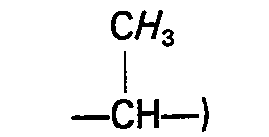
- 3.52 (1H, q, d, J=7.1 cps,

- 3.74 (3H, s, CH30-)
- 6.6-7.4 (4H, m, arom)
- 9.54 (1 H, d, J=1cps, -CHO)
- IR: vc=o 1717 cm-1 (Neat)
- Phenylmethylsulfonium methylsulfate prepared in the same manner as in Example 2 from 74.5 g (0.6 mole) of thioanisole and 75.5 g (0.6 mole) of dimethylsulfate were added into 300 ml of dichloromethane to give a suspended solution. To the suspension were added and dissolved 107.1 g (0.5 mole) of 4-acetyl-2-fluorobiphenyl, 0.25 g of 2,6-di-t-butyl-4-methylphenol and 40.0 g (1.0 mole) of powdered sodium hydroxide, the mixture was stirred for 2.5 hours at 4G-45°C to complete the reaction. The mixture was cooled to room temperature, 2.4 g (0.2 mole) of anhydrous magnesium sulfate was added thereto, stirred for about 1 hour and filtered to remove insoluble materials which were then washed with small quantity of dichloromethane. The washings were combined with the above filtrate. The combined solution was poured into a reaction vessel, 7.14 g (0.075 mole) of anhydrous magnesium chloride powder [100 mesh (Tyler)] was added thereto and refluxed with stirring for 3 hours to complete the reaction.
- After cooling, the reaction mixture was filtered to remove insoluble materials. The filtrate was washed with dilute hydrochloric acid and then aqueous sodium chloride, and subjected to distillation under atmospheric pressure to distil off dichloromethane.
- The remaining residue was subjected to further distillation under reduced pressure to recover thioanisole distilled at 50-52°C (14 mmHg). The remaining residue was subjected to column chromatography on silica gel (n-hexane-toluene) to afford 96.4 g of 2-(2-fluoro-4- bisphenyl)propionaldehyde as colorless oil. (Yield; 84.5%, Purity; 97.5%)
- NMR (in CDCI3) ppm;
- 1.36 (3H, d, J=7cps, -CH3)
- 3.45 (1 H, q, d, J=7.1, cps,

- 6.55-7.90 (8H, m, arom)
- 9.50 (1H, d, J=1 cps, -CHO)
- IR: vc=o 1720 cm-1 (Neat)
- To a stirred suspended solution of 50.1 g (0.2 mole) of phenyldimethylsulfonium methylsulfate in 100 ml of dichloromethane, was added 31.7 g (0.18 mole) of 4-isobutylacetophenone and 16.0 g (0.4 mole) of powdered sodium hydroxide. The mixture was stirred for 8 hours at 25-35°C, and then added with water and stirred, followed by allowing to stand to form two layers.
- The resulting organic layer was separated, washed with water until neutral and distilled under atmospheric pressure to remove dichloromethane. The remaining residue was subjected to fractional distillation under reduced pressure to recover nearly quantatively thioanisole distilled at 43-45°C (1 mmHg) and then 32.9 g of 2-(4-isobutylphenyl)-1,2-epoxypropane distilled at 58-61°C (0.15 mmHg) in 96.1 % yield (on the basis of 4-isobutylacetophenone) as colorless oil.
- The same procedure as in Example 6 was carried out except for employing 64.0 g (0.8 mole) of 50%. aqueous sodium hydroxide in place of powdered hydroxide. The resulting reaction mixture was analyzed by gas chromatography and it was found that the ratio of 2-(4-isobutylphenyl)-1,2-epoxypropane to isobutylacetophenone in the mixture is 2:3.
- 24.8 g (0.2 mole) of thioanisole was heated to 90°C with stirring and 27.8 g (0.22 mole) of dimethyl sulfate was added dropwise thereto over a period of 30 minutes keeping the temperature between 90 and 95°C.
- After the stirring was continued for additional 30 minutes at the same temperature, the reaction mixture was cooled to room temperature to give phenyldimethylsulfonium methylsulfate quantitatively as solid mass.
- The solid mass was dissolved in 110 ml of hot dichloromethane and then cooled with stirring to give a suspended solution of the sulfonium salt and subjected to the following reaction.
- To the suspension was added 31.7 g (0.18 mole) of p-iso-butylacetophenone and 14.4 g (0.36 mole) of powdered sodium hydroxide and the mixture was refluxed for 2 hours with stirring.
- The reaction mixture was worked up in the same manner as described in Example 6 to afford 31.7 g of 2-(4-isobutylphenyl)-1,2-epoxypropane in 92.6% yield.
- To a stirred suspended solution of 50.1 g (0.2 mole) of phenyldimethylsulfonium methylsulfate in 100 ml of 1,2-dichloroethane was added 31.7 g (0.18 mole) of p-isobutylacetophenone and 16.0 g (0.4 mole) of powdered sodium hydroxide, followed by stirring for 10 hours at 30-40°C. The reaction mixture was worked up in the same manner as described in Example 6 to afford 33.0 g of 2-(4-isobutyl-phenyl)-1,2-epoxypropane in 96.4% yield.
- 24.8 g (0.2 mole) of thioanisole was heated to 90°C with stirring and 27.8 g (0.22 mole) of dimethyl sulfate was added thereto at 90-95°C over a period of 30 minutes and stirred for another 30 minutes at the same temperature.
- To the reaction mixture, 100 ml of toluene was added portionwise so as to maintain the temperature above 80°C and then the mixture was cooled gradually with stirring to afford a suspension of phenyldimethylsulfonium methylsulfate in quantitative yield. To the suspension 26.4 (0.15 mole) of p-iso- butylacetophenone and 16.0 g (0.4 mole) of powdered sodium hydroxide was added and the mixture was stirred for 8 hours at 50°C. The reaction mixture was worked up in the same manner as described in Example 6 to afford 24.7 g of 2-(4-isobutylphenyl)-1,2-epoxypropane in 86.7% yield.
- To a solution of 38.0 g (0.2 mole) of 2-(4-isobutylphenyl)-1,2-epoxypropane in 130 ml of dichloromethane was added 3.43 g (0.036 mole) of anhydrous powdered (100 mesh, Tyler) magnesium chloride and 5.0 g (0.04 mole) ofthioanisole and the mixture was stirred for 10 hours at room temperature. The reaction mixture was washed with dilute hydrochloric acid and then with aqueous sodium chloride several times until neutral, and subjected to ditillation under atmospheric pressure to remove dichloromethane. The resulting residue was distilled under reduced pressure to afford 37.4 g of 2-(4-isobutylphenyl)propionaldehyde as colorless oil distilled at 127-130°C (8 mmHg). The yield is 98.5%.
- The purity is above 99.0% (by G. C. analysis).
- NMR (in CDC13) ppm:
- 0.90 (6H, d, J=6cps,

- 1.39 (3H, d, J=7cps,

- 1.84 (1 H, m,

- 2.44 (2H, d, J=7cps,

- 3.57 (1H, q, d, J=7,1 cps,

- 7.08 (4H, s, arom)
- 9.60 (1 H, d, J=1cps, -CHO))
- IR: vc=o 1730 cm-1 (Neat)
- To a solution of 38.0 g (0.2 mole) of 2-(4-isobutylphenyl)-1,2-epoxypropane in 130 ml of dichloromethane was added 2.67 g (0.028 mole) of anhydrous powdered (100 mesh, Tyler) magnesium chloride and 5.0 g (0.04 mole) of thioanisole, and the mixture was refluxed with stirring for 3 hours. After cooling the reaction mixture, insoluble materials were filtered off and washed with small amount of dichloromethane and the washings were combined with the filtrate. The combined solution was washed with aqueous sodium chloride and subjected to distillation under atmospheric pressure to remove dichloromethane. The remaining residue was subjected to distillation under reduced pressure to obtain 36.8 g of 2-(4-isobutylphenyl)propionaldehyde distilled at 127-129°C (8 mmHg) as colorless oil. Yield; 96.8%, purity; above 99%.
Claims (12)


Applications Claiming Priority (4)
| Application Number | Priority Date | Filing Date | Title |
|---|---|---|---|
| JP24241185A JPS62103036A (en) | 1985-10-29 | 1985-10-29 | Production of 2-(substituted aryl) propionaldehyde |
| JP242413/85 | 1985-10-29 | ||
| JP242411/85 | 1985-10-29 | ||
| JP24241385A JPS62103037A (en) | 1985-10-29 | 1985-10-29 | Production of 2-(4-isobutylphenyl)-propionaldehyde |
Publications (2)
| Publication Number | Publication Date |
|---|---|
| EP0220792A1 EP0220792A1 (en) | 1987-05-06 |
| EP0220792B1 true EP0220792B1 (en) | 1990-08-29 |
Family
ID=26535746
Family Applications (1)
| Application Number | Title | Priority Date | Filing Date |
|---|---|---|---|
| EP86304614A Expired - Lifetime EP0220792B1 (en) | 1985-10-29 | 1986-06-16 | A method for producing 2-aryl-propionaldehydes |
Country Status (4)
| Country | Link |
|---|---|
| US (1) | US4670607A (en) |
| EP (1) | EP0220792B1 (en) |
| CA (1) | CA1248140A (en) |
| DE (1) | DE3673755D1 (en) |
Families Citing this family (3)
| Publication number | Priority date | Publication date | Assignee | Title |
|---|---|---|---|---|
| DE4001316A1 (en) * | 1990-01-18 | 1991-07-25 | Henkel Kgaa | METHOD FOR PRODUCING KETONE COMPOUNDS |
| KR20250007021A (en) | 2017-06-09 | 2025-01-13 | 추가이 세이야쿠 가부시키가이샤 | Method for synthesizing peptide containing n-substituted amino acid |
| WO2020111238A1 (en) * | 2018-11-30 | 2020-06-04 | 中外製薬株式会社 | Deprotection method and resin removal method in solid-phase reaction for peptide compound or amide compound, and method for producing peptide compound |
Family Cites Families (11)
| Publication number | Priority date | Publication date | Assignee | Title |
|---|---|---|---|---|
| US2628255A (en) * | 1951-01-02 | 1953-02-10 | Dow Chemical Co | Production of arylacetaldehydes |
| JPS5332955B2 (en) | 1973-08-08 | 1978-09-11 | ||
| US4000131A (en) * | 1974-05-10 | 1976-12-28 | Hoffmann-La Roche Inc. | Process for preparing epoxide-cyclohexyl compound and resultant compound |
| JPS51128933A (en) | 1975-03-28 | 1976-11-10 | Ota Seiyaku Kk | Process for preparing 2-phenylpropionic acid derivatives |
| JPS5335069A (en) | 1976-09-09 | 1978-04-01 | Toppan Printing Co Ltd | Porous fiber product |
| JPS5346829A (en) | 1976-10-08 | 1978-04-26 | Ace Denken Kk | Pachinko game limiting device |
| JPS5429842A (en) | 1977-08-10 | 1979-03-06 | Kubota Ltd | Pouring apparatus |
| JPS5640701A (en) | 1979-09-12 | 1981-04-17 | Sumitomo Heavy Ind Ltd | Measuring method for extent of wear of driving screw |
| JPS56154428A (en) | 1981-01-23 | 1981-11-30 | Ota Seiyaku Kk | Preparation of 2-(4'-isobutylphenyl)propanal |
| JPS5912661A (en) * | 1982-07-13 | 1984-01-23 | Fujitsu Ltd | Variable threshold value type differential signal receiver |
| JPS5941976A (en) | 1982-09-01 | 1984-03-08 | Sony Corp | Controlling circuit of video camera |
-
1986
- 1986-05-16 US US06/864,432 patent/US4670607A/en not_active Expired - Fee Related
- 1986-05-16 CA CA000509322A patent/CA1248140A/en not_active Expired
- 1986-06-16 DE DE8686304614T patent/DE3673755D1/en not_active Expired - Lifetime
- 1986-06-16 EP EP86304614A patent/EP0220792B1/en not_active Expired - Lifetime
Non-Patent Citations (2)
| Title |
|---|
| PATENT ABSTRACTS OF JAPAN, unexamined application, C section, vol.1, no. 84, 06 Aug 1977, The Patent Office Japanese Govt.; p. 1727C77 * |
| PATENT ABSTRACTS OF JAPAN, unexamined applications, C section, vol.1, no. 13, 22 March 1977, The Patent Office Japanese Govt.; p. 772C76 * |
Also Published As
| Publication number | Publication date |
|---|---|
| DE3673755D1 (en) | 1990-10-04 |
| CA1248140A (en) | 1989-01-03 |
| EP0220792A1 (en) | 1987-05-06 |
| US4670607A (en) | 1987-06-02 |
Similar Documents
| Publication | Publication Date | Title |
|---|---|---|
| EP0186117A2 (en) | Process for the production of acylated diketonic compounds | |
| EP0008532B1 (en) | Synthesis of amines | |
| JPS6145617B2 (en) | ||
| JPH0159253B2 (en) | ||
| JPH035458A (en) | Improved process for producing 3,5,6-trichloro- pyridin-2-ol | |
| EP0113107B1 (en) | Process for preparing alcohols | |
| JP4407062B2 (en) | Method for producing diphenyl disulfide derivative | |
| EP0220792A1 (en) | A method for producing 2-aryl-propionaldehydes | |
| Okuma et al. | One-pot synthesis of enantiomerically pure (methylenecyclopropyl) carbinol: a key intermediate to the synthesis of the causative agent of Jamaican vomiting sickness | |
| US4681952A (en) | Intermediates in the preparation of 2,2-dimethyl-3-aryl-cyclopropanecarboxylic acids and esters | |
| US4533754A (en) | Preparation of aldehydes from aryl acid halides and organozinc compounds with complex palladium catalysts | |
| JP4066679B2 (en) | Process for producing aralkyl ketones and catalyst thereof | |
| EP0115406B1 (en) | Process for production of methyl 2-tetradecylgycidate | |
| EP0039089B1 (en) | Process for preparing cyclopentenolones | |
| Kosugi et al. | A simple preparative method for optically pure 1-alkenyl p-tolyl sulfoxides via 1-alkynyl p-tolyl sulfoxides | |
| EP0053842B1 (en) | Process for preparing cyclopentenolones | |
| JPS6289660A (en) | Production of 4-oxo-4,5,6,7-tetrahydroindole | |
| US4163111A (en) | 2-Cyclopentenone derivatives | |
| EP0138575B1 (en) | Process for the preparation of 2,3-cis-1,2,3,4-tetrahydro-5-[(2-hydroxy-3-tert.butylamino)propoxy]-2,3-naphthalenediol and new intermediate for use therein | |
| HUT61274A (en) | Process for regioselective production of 3-substituted 3-aryloxy propaneamine compounds | |
| EP0197428B1 (en) | A method for producing cyclopropanecarboxylic acid derivatives | |
| JPS62103074A (en) | Production of 2-(6-methoxy-2-naphthyl)-1,2-epoxypropane | |
| JP2589564B2 (en) | Preparation of styrene derivatives | |
| JPS637170B2 (en) | ||
| JPH0572895B2 (en) |
Legal Events
| Date | Code | Title | Description |
|---|---|---|---|
| PUAI | Public reference made under article 153(3) epc to a published international application that has entered the european phase |
Free format text: ORIGINAL CODE: 0009012 |
|
| AK | Designated contracting states |
Kind code of ref document: A1 Designated state(s): DE FR GB IT NL |
|
| 17P | Request for examination filed |
Effective date: 19870828 |
|
| 17Q | First examination report despatched |
Effective date: 19890203 |
|
| ITF | It: translation for a ep patent filed | ||
| GRAA | (expected) grant |
Free format text: ORIGINAL CODE: 0009210 |
|
| AK | Designated contracting states |
Kind code of ref document: B1 Designated state(s): DE FR GB IT NL |
|
| REF | Corresponds to: |
Ref document number: 3673755 Country of ref document: DE Date of ref document: 19901004 |
|
| ET | Fr: translation filed | ||
| PG25 | Lapsed in a contracting state [announced via postgrant information from national office to epo] |
Ref country code: GB Effective date: 19910616 |
|
| PLBE | No opposition filed within time limit |
Free format text: ORIGINAL CODE: 0009261 |
|
| STAA | Information on the status of an ep patent application or granted ep patent |
Free format text: STATUS: NO OPPOSITION FILED WITHIN TIME LIMIT |
|
| 26N | No opposition filed | ||
| PG25 | Lapsed in a contracting state [announced via postgrant information from national office to epo] |
Ref country code: NL Effective date: 19920101 |
|
| GBPC | Gb: european patent ceased through non-payment of renewal fee | ||
| NLV4 | Nl: lapsed or anulled due to non-payment of the annual fee | ||
| PG25 | Lapsed in a contracting state [announced via postgrant information from national office to epo] |
Ref country code: FR Effective date: 19920228 |
|
| PG25 | Lapsed in a contracting state [announced via postgrant information from national office to epo] |
Ref country code: DE Effective date: 19920401 |
|
| REG | Reference to a national code |
Ref country code: FR Ref legal event code: ST |
|
| PG25 | Lapsed in a contracting state [announced via postgrant information from national office to epo] |
Ref country code: IT Free format text: LAPSE BECAUSE OF NON-PAYMENT OF DUE FEES;WARNING: LAPSES OF ITALIAN PATENTS WITH EFFECTIVE DATE BEFORE 2007 MAY HAVE OCCURRED AT ANY TIME BEFORE 2007. THE CORRECT EFFECTIVE DATE MAY BE DIFFERENT FROM THE ONE RECORDED. Effective date: 20050616 |