EP0220044A2 - 4(4-oxo-1,4-dihydropyridin-1-yl)phenyl derivatives - Google Patents
4(4-oxo-1,4-dihydropyridin-1-yl)phenyl derivatives Download PDFInfo
- Publication number
- EP0220044A2 EP0220044A2 EP86307911A EP86307911A EP0220044A2 EP 0220044 A2 EP0220044 A2 EP 0220044A2 EP 86307911 A EP86307911 A EP 86307911A EP 86307911 A EP86307911 A EP 86307911A EP 0220044 A2 EP0220044 A2 EP 0220044A2
- Authority
- EP
- European Patent Office
- Prior art keywords
- compound
- formula
- oxo
- dihydropyridin
- hydrogen
- Prior art date
- Legal status (The legal status is an assumption and is not a legal conclusion. Google has not performed a legal analysis and makes no representation as to the accuracy of the status listed.)
- Granted
Links
- 0 CC(C(C)(*)*1)N(C)NC1=O Chemical compound CC(C(C)(*)*1)N(C)NC1=O 0.000 description 10
- MJJNWPBBFIRYCW-UHFFFAOYSA-N CC(N=C1)=CNC1=O Chemical compound CC(N=C1)=CNC1=O MJJNWPBBFIRYCW-UHFFFAOYSA-N 0.000 description 1
- QAOHLESQKJPWKT-UHFFFAOYSA-N Cc(cc(cc1)N(C=C2)C=CC2=O)c1N Chemical compound Cc(cc(cc1)N(C=C2)C=CC2=O)c1N QAOHLESQKJPWKT-UHFFFAOYSA-N 0.000 description 1
Classifications
-
- C—CHEMISTRY; METALLURGY
- C07—ORGANIC CHEMISTRY
- C07D—HETEROCYCLIC COMPOUNDS
- C07D401/00—Heterocyclic compounds containing two or more hetero rings, having nitrogen atoms as the only ring hetero atoms, at least one ring being a six-membered ring with only one nitrogen atom
- C07D401/02—Heterocyclic compounds containing two or more hetero rings, having nitrogen atoms as the only ring hetero atoms, at least one ring being a six-membered ring with only one nitrogen atom containing two hetero rings
- C07D401/04—Heterocyclic compounds containing two or more hetero rings, having nitrogen atoms as the only ring hetero atoms, at least one ring being a six-membered ring with only one nitrogen atom containing two hetero rings directly linked by a ring-member-to-ring-member bond
-
- C—CHEMISTRY; METALLURGY
- C07—ORGANIC CHEMISTRY
- C07D—HETEROCYCLIC COMPOUNDS
- C07D401/00—Heterocyclic compounds containing two or more hetero rings, having nitrogen atoms as the only ring hetero atoms, at least one ring being a six-membered ring with only one nitrogen atom
- C07D401/02—Heterocyclic compounds containing two or more hetero rings, having nitrogen atoms as the only ring hetero atoms, at least one ring being a six-membered ring with only one nitrogen atom containing two hetero rings
- C07D401/10—Heterocyclic compounds containing two or more hetero rings, having nitrogen atoms as the only ring hetero atoms, at least one ring being a six-membered ring with only one nitrogen atom containing two hetero rings linked by a carbon chain containing aromatic rings
-
- C—CHEMISTRY; METALLURGY
- C07—ORGANIC CHEMISTRY
- C07D—HETEROCYCLIC COMPOUNDS
- C07D413/00—Heterocyclic compounds containing two or more hetero rings, at least one ring having nitrogen and oxygen atoms as the only ring hetero atoms
- C07D413/02—Heterocyclic compounds containing two or more hetero rings, at least one ring having nitrogen and oxygen atoms as the only ring hetero atoms containing two hetero rings
- C07D413/10—Heterocyclic compounds containing two or more hetero rings, at least one ring having nitrogen and oxygen atoms as the only ring hetero atoms containing two hetero rings linked by a carbon chain containing aromatic rings
-
- C—CHEMISTRY; METALLURGY
- C07—ORGANIC CHEMISTRY
- C07D—HETEROCYCLIC COMPOUNDS
- C07D417/00—Heterocyclic compounds containing two or more hetero rings, at least one ring having nitrogen and sulfur atoms as the only ring hetero atoms, not provided for by group C07D415/00
- C07D417/02—Heterocyclic compounds containing two or more hetero rings, at least one ring having nitrogen and sulfur atoms as the only ring hetero atoms, not provided for by group C07D415/00 containing two hetero rings
- C07D417/04—Heterocyclic compounds containing two or more hetero rings, at least one ring having nitrogen and sulfur atoms as the only ring hetero atoms, not provided for by group C07D415/00 containing two hetero rings directly linked by a ring-member-to-ring-member bond
-
- C—CHEMISTRY; METALLURGY
- C07—ORGANIC CHEMISTRY
- C07D—HETEROCYCLIC COMPOUNDS
- C07D417/00—Heterocyclic compounds containing two or more hetero rings, at least one ring having nitrogen and sulfur atoms as the only ring hetero atoms, not provided for by group C07D415/00
- C07D417/02—Heterocyclic compounds containing two or more hetero rings, at least one ring having nitrogen and sulfur atoms as the only ring hetero atoms, not provided for by group C07D415/00 containing two hetero rings
- C07D417/10—Heterocyclic compounds containing two or more hetero rings, at least one ring having nitrogen and sulfur atoms as the only ring hetero atoms, not provided for by group C07D415/00 containing two hetero rings linked by a carbon chain containing aromatic rings
Definitions
- This invention covers all tautomeric forms of compounds of formula (1).
- This invention also covers all optical isomers of the compounds of formula (1) in the resolved and racemic states in which R 2 is hydrogen and R 3 together with R 4 form a methylene or 1.2-ethanediyl group, or R 2 is methyl.
- R 2 is hydrogen and R 3 together with R 4 form a methylene or 1.2-ethanediyl group, or R 2 is methyl.
- R 2 is methyl and R 1 , R 3 and R are all hydrogen the (R) isomer of a compound of the formula (1) is preferred.
- R 2 is methyl, R 3 and R 4 are both hydrogen and X is sulphur, oxygen or NH the (S) isomer of a compound of the formula (1) is preferred.
- the compounds of the invention are also bronchodilators and are useful in chronic reversible obstructive lung disease for example asthma and bronchitis. Such conditions can be treated by administration orally, topically, rectally, parenterally or by inhalation. For administration by inhalation dosages are controlled by a valve, are administered as required and for an adult are conveniently in the range 0.1-5.0 mg of a compound of the formula (1) or a pharmaceutically acceptable salt thereof.
- a compound of the formula (8) can be prepared by reacting a compound of the formula (24) wherein B is with a compound of the formula (28): wherein R 6 is as hereinbefore defined and M is a counter-ion, for example an alkali metal ion such as potassium or sodium or is an ammonium ion, in a similar manner to that described in EP-52442 and EP-A-145236.
- a compound of the formula (6) (which is a compound of the formula (24) wherein B is X is halo and R 2 , R 3 and R 4 are as hereinbefore defined provided that R 2 is hydrogen when R 3 together with R 4 forms a methylene or a 1,2-ethanediyl group) can be prepared as hereinbefore described for a compound of the formula ( 24 ).
- a pharmaceutical composition for parenteral administration is prepared by dissolving the title compound of Example 1 (0.025 g) in water (100 ml) with heating. The solution is cooled and is then sterilised by filtration through a 0.22 micron membrane filter and sealed in sterile containers suitable for injections Ph. Eur.
Landscapes
- Chemical & Material Sciences (AREA)
- Organic Chemistry (AREA)
- Pharmaceuticals Containing Other Organic And Inorganic Compounds (AREA)
- Plural Heterocyclic Compounds (AREA)
- Heterocyclic Carbon Compounds Containing A Hetero Ring Having Oxygen Or Sulfur (AREA)
Abstract

Description
- The present invention relates to pyridone derivatives and in particular to such compounds having a substituted phenyl group at the 1-position of the pyridone ring. This invention further relates to processes for their preparation intermediates in their preparation, their use as therapeutic agents and to pharmaceutical compositions containing them. The compounds of this invention are selective phosphodiesterase type III inhibitors and are of use in combatting such conditions wherein such inhibition is thought to be beneficial. Thus the compounds of this invention are positive inotropic agents and vasodilators and are therefore of value in combatting cardiovascular disease, in particular congestive heart failure. In addition the compounds of this invention inhibit platelet aggregation and therefore have an antithrombotic effect. Furthermore the compounds of this invention are bronchodilators and are therefore of use in combatting chronic reversible obstructive lung diseases such as asthma and bronchitis. The major utility of the compounds of this invention is in the treatment of congestive heart failure, for such treatment the compounds have a very desirable profile of activity.
- Accordingly the present invention provides compounds of the formula (1) :
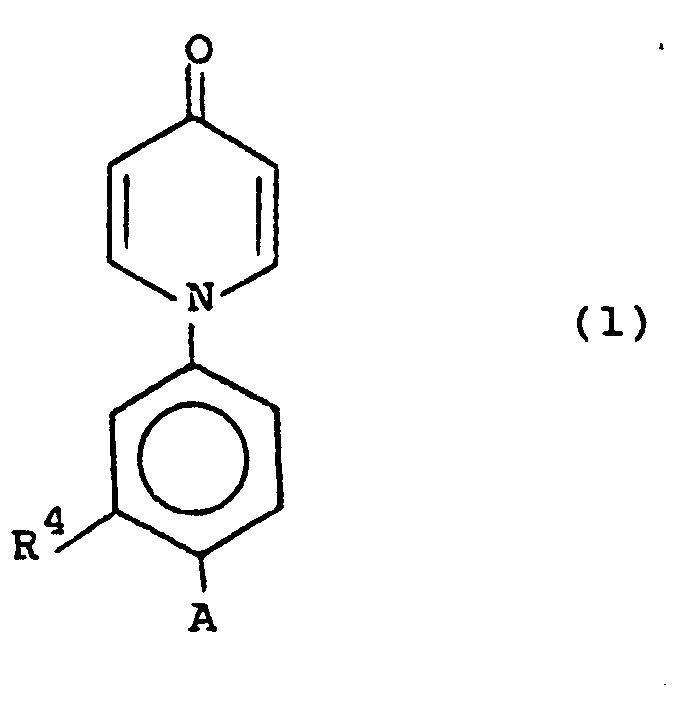
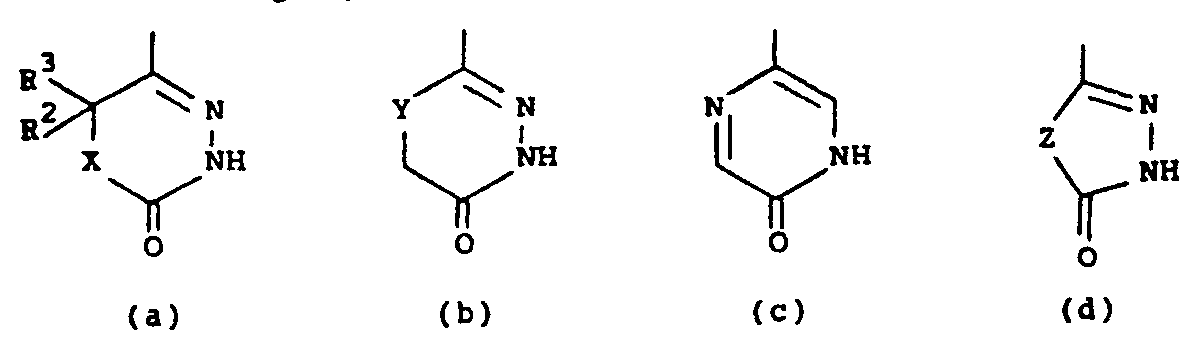
- A is a group of sub-formula (a), (b), (c) or (d):

- X is CHR1, sulphur, oxygen or NH,
- R 1 is hydrogen, or R1 and R2 together form a bond,
- R2 is hydrogen or methyl, or R1 and R2 together form a bond,
- R3 is hydrogen or together with R4 form a methylene or 1,2-ethanediyl group,
- Y is sulphur, oxygen or NH.
- Z is sulphur or oxygen,
- R4 is hydrogen or together with R3 form a methylene or 1.2-ethanediyl group,
- Suitably A is a group of sub-formula (a) thus forming a pyridazin-3-one, dihydropyridazin-3-one, 1,3,4-thiadiazin-2-one, 1,3,4-oxadiazin-2-one,
dihydro-1,2,4-triazin-3-one,
dihydroindeno[1,2-c]pyridazin-3-one,
indeno[1,2-c]pyridazin-3-one,
tetrahydrobenzo[h]cinnolin-3-one,
dihydrobenzo[h]cinnolin-3-one,
dihydroindeno[1,2-e][1,3,4]thiadiazin-2-one or dihydronaphtho[1,2-e][1,3,4]thiadiazin-2-one ring system. - Suitably X is CHR , sulphur or NH, preferably X is CHR 1 or NH.
- Particularly X is CHR 1.
- Suitably when X is CHR1, R and R together form a bond.
- Preferably R2 is methyl.
- Suitably R3 and R4 together form a methylene group.
- Preferably R is hydrogen.
- Suitably A is a group of sub-formula (b) thus forming a 1,3,4-thiadiazin-5-one, 1,3,4-oxadiazin-5-one or dihydro-1,2,4-triazin-6-one ring system.
- Suitably Y is sulphur or oxygen, preferably Y is sulphur.
- Suitably A is a group of sub-formula (c) thus forming a pyrazin-2-one ring system.
- Suitably A is a group of sub-formula (d) thus forming a 1,3,4-thiadiazol-2-one or 1,3,4-oxadiazol-2-one ring system.
- Particular compounds of this invention are :
- 5-methyl-6-[4-(4-oxo-1,4-dihydropyridin-1-yl)phenyl]-4,5-dihydro-3(2H)-pyridazinone.
- 6-[4-(4-oxo-1,4-dihydropyridin-1-yl)phenyl]-4,5-dihydro-3(2H)-pyridazinone,
- 6-[4-(4-oxo-1,4-dihydropyridin-1-yl)phenyl]-3(2H)-pyridazinone.
- 2-[4-(4-oxo-1,4-dihydropyridin-1-yl)phenyl]-4H,6H-1,3,4-thiadiazin-5-one,
- 2-[4-(4-oxo-1,4-dihydropyridin-1-yl)phenyl]-4H,6H-l,3,4-oxadiazin-5-one,
- 6-[4-(4-oxo-1,4-dihydropyridin-1-yl)phenyl]-4,5-dihydro-1,2,4-triazin-3(2H)-one,
- 6-[4-(4-oxo-1,4-dihydropyridin-1-yl)phenyl]-5-methyl-4,5-dihydro-1,2,4-triazin-3(2H)-one,
- 7-(4-oxo-1,4-dihydropyridin-1-yl)-9a-methyl-9,9a-dihydro- indeno[1,2-e][1,3,4]thiadiazin-2(3H)-one,
- 7-(4-oxo-1,4-dihydropyridin-1-yl)-9,9a-dihydroindeno-[1,2-e][1,3,4]thiadiazin-2(3H)-one,
- 5-[4-(4-oxo-1,4-dihydropyridin-1-yl)phenyl]-6-methyl-3H,6H -1,3,4-thiadiazin-2-one,
- 5-[4-(4-oxo-1,4-dihydropyridin-1-yl)phenyl]-2(1H)-pyrazinone,
- 7-(4-oxo-1,4-dihydropyridin-1-yl)-[5H]indeno[1,2-c]-pyridazin-3(2H)-one,
- 8-(4-oxo-1,4-dihydropyridia-1-yl)-4,4a,5,6-tetrahydro- benzo[h]cinnolin-3(2H)-one,
- 5-[4-(4-oxo-1,4-dihydropyridin-1-yl)phenyl]-1,3,4-thiadiazol-2(3H)-one, and
- 5-[4-(4-oxo-1,4-dihydropyridin-1-yl)phenyl]-1,3,4-oxadiazol-2(3H)-one,
- This invention covers all tautomeric forms of compounds of formula (1). This invention also covers all optical isomers of the compounds of formula (1) in the resolved and racemic states in which R2 is hydrogen and R 3 together with R4 form a methylene or 1.2-ethanediyl group, or R2 is methyl. In particular when R2 is methyl and R1, R3 and R are all hydrogen the (R) isomer of a compound of the formula (1) is preferred. When R2 is methyl, R3 and R4 are both hydrogen and X is sulphur, oxygen or NH the (S) isomer of a compound of the formula (1) is preferred.
- Compounds of the formula (1) may form pharmaceutically acceptable salts with acids such as hydrochloric, hydrobromic, sulphuric, phosphoric, methanesulphonic and ethanesulphonic acids.
- Compounds of the formula (1) wherein X is CHR1 and R1 and R 2 together form a bond or A is a group of sub-formula (c) or (d) may form pharmaceutically acceptable salts with metal ions, such as alkali metals for example sodium and potassium, or alkaline earth metals for example calcium and magnesium, or with an ammonium ion.
- In order to use a compound of the formula (1) or a pharmaceutically acceptable salt thereof for the treatment of humans and other mammals it is normally formulated in accordance with standard pharmaceutical practice as a pharmaceutical composition.
- Compounds of formula (1) and their pharmaceutically acceptable salts may be administered in standard manner for the treatment of the indicated diseases, for example orally, parenterally, trans-dermally, rectally, via inhalation or via buccal administration.
- Compounds of formula (1) and their pharmaceutically acceptable salts which are active when given orally or via buccal administration can be formulated as liquids, syrups, tablets, capsules and lozenges. An oral liquid formulation will generally consist of a suspension or solution of the compound or salt in a liquid carrier for example, ethanol, glycerine or water with a flavouring or colouring agent. Where the composition is in the form of a tablet, any pharmaceutical carrier routinely used for preparing solid formulations may be used. Examples of such carriers include magnesium stearate, starch, celluloses, lactose and sucrose. Where the composition is in the form of a capsule, any routine encapsulation is suitable, for example using the aforementioned carriers in a hard gelatin capsule shell. Where the composition is in the form of a soft gelatin shell capsule any pharmaceutical carrier routinely used for preparing dispersions or suspensions may be considered, for example aqueous gums, celluloses, silicates or oils and are incorporated in a soft gelatin capsule shell.
- Typical parenteral compositions consist of a solution or suspension of the compound or salt in a sterile aqueous or non-aqueous carrier optionally containing a parenterally acceptable oil, for example polyethylene glycol, polyvinylpyrrolidone, lecithin, arachis oil, or sesame oil.
- A typical suppository formulation comprises a compound of formula (1) or a pharmaceutically acceptable salt thereof which is active when administered in this way, with a binding and/or lubricating agent, for example polymeric glycols, gelatins, cocoa-butter or other low melting vegetable waxes or fats.
- Typical transdermal formulations comprise a conventional aqueous or non-aqueous vehicle, for example a cream, ointment, lotion or paste or are in the form of a medicated plaster, patch or membrane.
- Typical compositions for inhalation are in the form of a solution, suspension or emulsion that may be administered in the form of an aerosol using a conventional propellant such as dichlorodifluoromethane or trichlorofluoromethane, or are in the form of a powder for insufflation.
- Preferably the composition is in unit dosage form. for example a tablet, capsule or metered aerosol dose, so that the patient may administer to himself a single dose.
- Each dosage unit for oral administration contains suitably from 0.001 mg/Kg to 3 mg/Kg, and preferably from 0.005 mg/Kg to 1.5 mg/Kg, and each dosage unit for parenteral administration contains suitably from 0.001 mg/Kg to 1 mg/Kg, of a compound of formula (1) or a pharmaceutically acceptable salt thereof calculated as the free base.
- The daily dosage regimen for oral administration is suitably about 0.001 mg/Kg to 12 mg/Kg, of a compound of formula (1) or a pharmaceutically acceptable salt thereof calculated as the free base. The daily dosage regimen for parenteral administration is suitably about 0.001 mg/Kg to 4 mg/Kg, for example about 0.005 mg/Kg to 1 mg/Kg, of a compound of the formula (1) or a pharmaceutically acceptable salt thereof calculated as the free base. The active ingredient may be administered from 1 to 4 times a day, sufficient to increase cardiac output. The compositions of the present invention have positive inotropic activity and vasodilator activity and are of use in the treatment of cardiovascular diseases which can be treated by compounds having either or both of these activities. One such disease condition is congestive heart failure. The compounds of the invention are also bronchodilators and are useful in chronic reversible obstructive lung disease for example asthma and bronchitis. Such conditions can be treated by administration orally, topically, rectally, parenterally or by inhalation. For administration by inhalation dosages are controlled by a valve, are administered as required and for an adult are conveniently in the range 0.1-5.0 mg of a compound of the formula (1) or a pharmaceutically acceptable salt thereof.
- The compounds of this invention may be co-administered with other pharmaceutically active compounds, for example in combination, concurrently or sequentially. Conveniently the compounds of this invention and the other active compound or compounds are formulated in a pharmaceutical composition. Examples of compounds which may be included in pharmaceutical compositions with the compounds of the formula (1) are vasodilators for example hydralazine, angiotensin converting enzyme inhibitors for example captopril, anti-anginal agents for example isosorbide nitrate, glyceryl trinitrate and pentaerythritol tetranitrate. anti-arrhythmic agents for example quinidine, procainamide and lignocaine. cardioglycosides for example digoxin and digitoxin, calcium antagonists for example verapamil and nifedipine, diuretics such as thiazides and related compounds for example bendrofluazide, chlorothiazide, chlorothalidone, hydrochlorothiazide, and other diuretics for example frusemide and triamterene, and sedatives for example nitrazepam, flurazepam and diazepam.
- In another aspect the present invention provides a process for the preparation of a compound of the formula (1) or pharmaceutically acceptable salt thereof, which process comprises :
- a) reacting a compound of the formula (2) :

- b) reacting a compound of the formula (3) :

- c) for compounds wherein X is CHR1 and R1 is as hereinbefore defined, reacting a compound of the formula (4) :


- d) for compounds wherein X is NH, reacting a compound of the formula (5) :


- e) for compounds wherein X is sulphur, reacting a compound of the formula (6) :


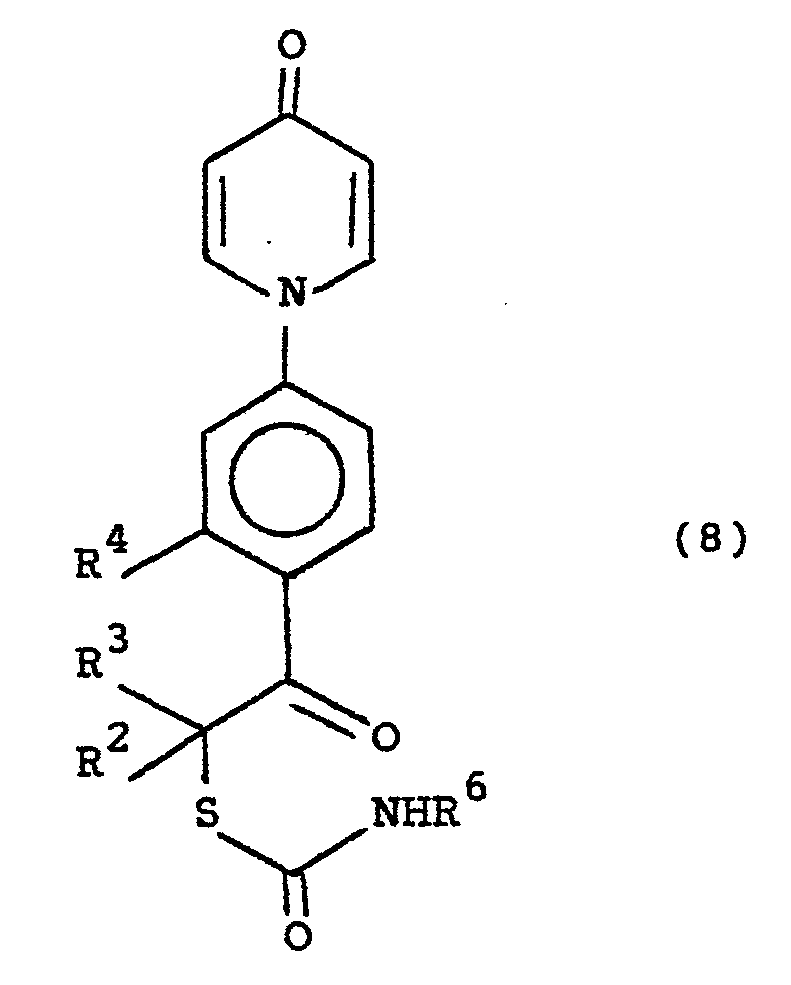
- f) for compounds wherein X is sulphur, cyclising a compound of the formula (8) :
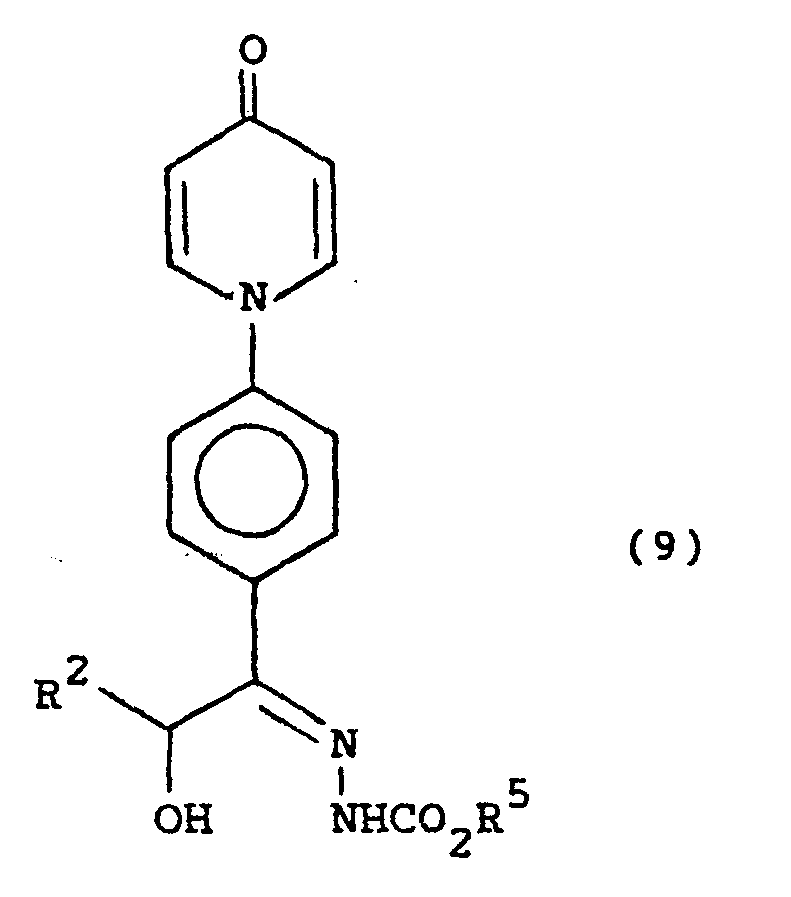
- g) for compounds wherein X is oxygen, cyclising a compound of the formula (9) :

- h) for compounds wherein Y is sulphur, treating a compound of the formula (10) :

- i) for compounds wherein Y is oxygen, cyclising a compound of the formula (11):

- j) for compounds wherein Y is NH, treating a compound of the formula (12) :

and thereafter optionally:- i) dehydrogenating a compound of the formula (1) wherein X is CHR1, R is hydrogen and R is hydrogen to the corresponding compound wherein R 1 and R 2 together form a bond,
- ii) forming a pharmaceutically acceptable salt.
- The reaction between a compound of the formula (2) and 4H-pyran-4-one or a chemical equivalent thereof is suitably performed at ambient or elevated temperature, for example 15°-190°C, preferably 30°-100°C or at the reflux temperature of a suitable solvent. The reaction is conveniently performed in a solvent such as a C1-4alkanol, for example ethanol or n-propanol, aqueous or glacial acetic acid, water or dimethylsulphoxide. Suitably the reaction is performed under acidic conditions, preferably the reaction is carried out in water acidified with hydrochloric acid or acetic acid.
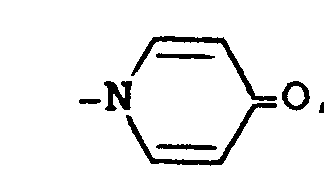
- By a chemical equivalent of 4H-pyran-4-one we mean a reagent which can be reacted with a primary amine to afford a N-substituted pyridin-4-one compound. Examples of chemical equivalents of 4H-pyran-4-one include chelidonic acid (13), l,5-bis(dimethylamino)-1.4-pentadien-3-one (14) (Synth. Commun. 1983, 13, 1137) or 1,4-pentadiyn-3-one (15) (Ber. 1963, 96, 2504) :

- The reaction between a compound of formula (2) and chelidonic acid comprises two decarboxylation steps. Preferably the reaction is performed in a similar manner to that described by Katritzky et al.. Journal Heterocyclic Chemistry 21, 1465-7, (1984), for example in dimethylsulphoxide at reflux.
- The reaction between a compound of the formula (3) and 4-hydroxypyridine is conveniently performed at an elevated temperature, for example between 80° to 150°C. Suitably the reaction is performed in an aprotic solvent, such as dimethylformamide or N-methylpyrrolidin-2-one, in the presence of a base such as sodium hydride or potassium tert-butoxide.
- The reaction between compounds of the formulae (4), (5) or (12) and hydrazine or a chemical equivalent thereof is suitably performed at ambient or elevated temperature, for example 15°C - 120°C, preferably about 30°C - 80°C or at reflux temperature of a suitable solvent. The reaction is conveniently performed in a solvent such as water, a C1-4alkanol for example methanol, ethanol or n-propanol, or aqueous or glacial acetic acid. Suitably in the compounds of the formula (4) X1 is hydroxy, C1-6alkoxy, amino or C1-6alkylamino. When R is OH in the compounds of the formula (4) dehydration either occurs during the reaction or an additional step of dehydration (e.g. treatment with an acid e.g. hydrochloric acid in acetic acid) is carried out. Suitably in a compound of the formula (5) X2 is C1-6 alkoxy. Suitably in a compound of the formula (12) R5 is methyl or ethyl.
- By a chemical equivalent of hydrazine we mean hydrazine hydrate, hydrazine ethanolate or a similar solvate. Preferably hydrazine is used in the form of hydrazine hydrate.
- Suitably the reaction of the compounds of the formulae (6) and (7) is performed in an organic solvent for example a Cl-4alkanol such as ethanol, or in acetonitrile. The reaction is conveniently performed at an elevated temperature for example under reflux conditions. Suitably X3 is bromo or chloro, preferably bromo. Suitably R5 is methyl.
- Suitably the cyclisation of a compound of the formula (8) is performed in an aqueous inorganic acid, for example hydrochloric acid, or in an organic solvent containing an aqueous inorganic acid, for example in a C1-4 alkanol, such as ethanol in admixture with hydrochloric acid. The cyclisation is conveniently performed at an elevated temperature for example 60°C to 140°C, preferably at reflux temperature for convenience.
- The cyclisation may be performed on a compound of the formula (8) wherein R is amino, or a protected variant of the compound of the formula (8), for example protected on the hydrazine function by an acid-labile protecting group for example isopropylidene or benzylidene i.e. R is -N=C(CH3)2 or -N=CHC6H5.
- Suitably the cyclisation of a compound of the formula (9) is performed in the presence of a base, for example sodium ethoxide, in a solvent, for example ethanol, at ambient temperature.
- A compound of the formula (10) is suitably treated with chloro- or bromoacetic acid in aqueous solution in the presence of a base, for example sodium hydroxide, at ambient temperature, followed by acidification of the reaction mixture with for example acetic acid.
- In general the cyclisation of a compound of the formula (11) is performed in the presence of a base, for example sodium hydride, in a dipolar aprotic solvent such as dimethylformamide, or with an alkali metal carbonate such as potassium carbonate in acetone, at an elevated temperature for example under reflux conditions. Suitably X3 in a compound of the formula (11) is bromo or chloro.
- Methods of dehydrogenation of a compound of the formula (1) wherein X is CHR1, and R and R are both hydrogen, include treatment with m-nitrobenzene sulphonic acid and base or with bromine in acetic acid.
- The compounds of the formulae (2) and (3) wherein X is CHR 1, and R1, R2, Rand R are as hereinbefore defined are known, or preparable in conventional manner, from Curran et al., J. Medicinal Chemistry, 17, p273. (1974) and European Patent Applications 0150937 and 0181145.
- The compounds of the formulae (2) and (3) wherein X is oxygen, sulphur or NH, and R3 and R4 are both hydrogen, or Y is oxygen, sulphur or NH are known, or preparable in conventional manner from European Patent Applications 52442 and 123254.
- The compounds of the formulae (2) and (3) wherein X is sulphur and R3 together with R4 is a methylene or 1,2-ethanediyl group are known, or preparable in conventional manner from European Patent Application 145236.
- The compounds of the formulae (2) and (3) wherein A is a pyrazinone ring are known, or preparable in conventional manner from European Patent Application 96517.
- The compounds of the formula (2) wherein Z is oxygen or sulphur can be prepared by reducing a compound of the formula (16) : ,

- Suitably when Z is sulphur the reduction is performed with sodium sulphide in a mixture of dioxane and water. Suitably when Z is oxygen the reduction is performed with hydrogen in the presence of palladium on carbon in a suitable solvent such as ethanol.
- The compounds of the formulae (3) and (16) wherein Z is sulphur are known or preparable in conventional manner from Eur. J. Med. Chem. - Chim. Ther., 1985, 20, No 1. 33-36.
- The compounds of the formulae (3) and (16) wherein Z is oxygen are suitably prepared from a compound of the formula (17) :

- The (-) and (+) isomers of a compound of the formula (2) wherein R2 is hydrogen and R3 together with R 4 forms a methylene or 1.2-ethanediyl group, or R 2 is methyl can be separated by passage of racemic compound over a chiral phase chromatography column. The appropriate fractions are collected, rechromatographed as necessary, solvent is evaporated and the desired isomer isolated in conventional manner. The (-) and (+) isomers of a compound of the formula (2) wherein R2 is methyl and R 1, R and R are all hydrogen are respectively the (R) and (S) isomers.
- The resolved form of a compound of the formula (1) can be prepared by reaction of the corresponding resolved form of a compound of formula (2) with 4H-pyran-4-one or a chemical equivalent thereof.
- The compounds of the formula (4) wherein B is

- a) by reaction of a compound of the formula (18) :

- b) for compounds wherein X1 is amino, hydroxy or C1-6alkoxy, by reaction of a compound of the formula (4):

- The compounds of the formula (4) wherein B is fluoro or

- a) for compounds wherein X is hydroxy, R is hydroxy and R2 is hydrogen, or R and R2 together form a bond, by reaction of a compound of the formula (19) :


- b) for compounds wherein X1 is C1-6alkoxy or hydroxy and R is hydrogen, by formation of the sodium derivative of a compound of the formula (20) :


- c) for compounds wherein X is hydroxy or amino, R is hydrogen and R2, R and R4 are as hereinbefore defined provided that R2 is hydrogen when R3 together with R4 forms a methylene or 1.2-ethanediyl group, by reaction of a compound of formula (20) as hereinbefore defined provided that R2 is hydrogen when R3 together with R4 forms a methylene or 1,2-ethanediyl group, with a Mannich reagent to give an intermediate of formula (21) in which R5 is C1-6alkyl, followed by optional quaternisation to give an intermediate of formula (22) in which X is a halide or methylsulphate, treatment with potassium cyanide to give a nitrile of formula (23) and hydrolysis.

- Examples of Mannich reagents are a mixture of dimethylamine and formaldehyde, and bis(dimethylamino)-methane. Preferably a slight excess of Mannich reagent is used, for example 1.3 molar equivalents. Preferably the reaction is carried out in the presence of an inert organic solvent for example C1-4alkanols. Preferably the reaction is carried out at an elevated temperature, for example 60-100°C, preferably at the reflux temperature of the reaction mixture.
- Preferably quaternisation is carried out by reaction with an alkyl halide or a dialkyl sulphate.
- Preferably the treatment with potassium cyanide is carried out in the presence of a solvent, for example water, C1-4alkanols, acetic acid and aqueous mixtures thereof.
- The acids (4) wherein X1 is hydroxy can be prepared by hydrolysis of the nitriles (23), using aqueous acids or bases, carried out at elevated temperatures, e.g. 100°C.
- The amides (4) wherein X1 is amino are prepared by hydrolysis of the nitriles (23), using concentrated acids, preferably concentrated sulphuric acid, carried out at moderate temperatures;
- d) for compounds wherein X1 is hydroxy and R is hydrogen, by reaction of a compound of the formula (24) wherein B is fluoro or

- Suitably X5 is chloro or bromo, preferably chloro.
- Suitably the hydrolysis is carried out under aqueous acidic conditions, preferably when B is fluoro with a co-solvent such as dioxan.

- The compounds of the formula (24) wherein X5 is bromo can be prepared by bromination of a compound of the formula (20). Suitably the bromination is carried out using bromine or N-bromosuccinimide in a suitable solvent, preferably using bromine in acetic acid.
- The compounds of the formula (24) wherein X5 is chloro and R3 and R 4 are both hydrogen can be prepared by acylation of fluorobenzene or N-phenylpyridin-4-one with an a-chloroacylchloride of formula (26) :
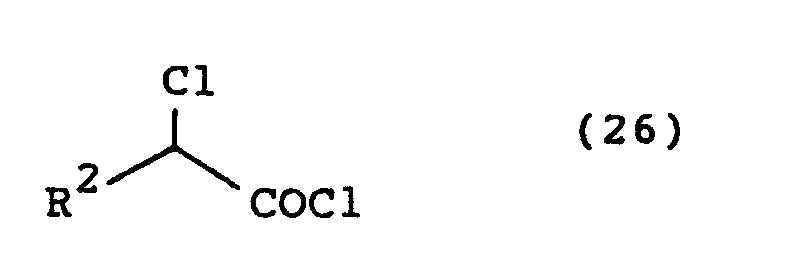
- Suitably the acylation is carried out in the presence of a Lewis acid catalyst, such as aluminium trichloride. Suitably the acylation is carried out in a suitable solvent, such as dichloromethane or trichlorobenzene.
- The compounds of the formula (20) wherein B is

- a) by reaction of a compound of the formula (20) wherein B is fluoro with 4-hydroxypyridine. Suitably the reaction is performed at an elevated temperature, for example at about 80-150°C. Suitably the reaction is performed in an aprotic solvent, such as dimethylformamide, or N-methylpyrrolidin-2-one in the presence of a base such as sodium hydride or potassium tert-butoxide, or
- b) by reaction of a compound of the formula (27):

- Compounds of the formula (20) wherein B is fluoro and compounds of the formulae (18) and (27) are known, or preparable in conventional manner, from Curran et al., J. Medicinal Chemistry, 17, p273, (1974) and European Patent Applications 0150937 and 0181145.
- A compound of the formula (5) wherein B is

- A compound of the formula (5) wherein B is

- A compound of the formula (8) can be prepared by reacting a compound of the formula (24) wherein B is


- A compound of the formula (6) (which is a compound of the formula (24) wherein B is

- A compound of the formula (9) can be prepared from a compound of the formula (24) wherein B is

- A compound of the formula (10) can be prepared from 4-(4-oxo-1.4-dihydropyridin-1-yl)benzaldehyde in a similar manner to that described in EP-52442, for example by successive treatment with i) sulphur and piperidine, ii) bromoacetic acid, iii) hydrogen sulphide and iv) hydrazine or a chemical equivalent thereof. 4-(4-Oxo-1,4-dihydropyridin-1-yl)benzaldehyde can be prepared by reacting 4-fluorobenzaldehyde with 4-hydroxypyridine.
- A compound of the formula (11) can be prepared from ethyl 4-fluorobenzoate in a similar manner to that described in U.S.P. 4,508,718 and EP-52442, for example by successive treatment with i) 4-hydroxypyridine in the presence of a base such as sodium hydride, ii) hydrazine or a chemical equivalent thereof and iii) a haloacetyl- halide such as chloroacetylchloride in the presence of a base such as potassium carbonate or triethylamine.
- A compound of the formula (12) can be prepared in a similar manner to that described in EP-52442, for example from 4-(4-oxo-1.4-dihydropyridin-I-yl)benzoyl chloride by successive treatment with i) an alkyl glycinate and ii) an oxonium tetrafluoroborate of the formula (R5)3OBF4 wherein R5is C1-6alkyl. Suitably the 4-substituted benzoyl chloride is prepared by treating 4-aminobenzoic acid with 4H-pyran-4-one or a chemical equivalent thereof to afford 4-(4-oxo-1,4-dihydropyridin-1-yl)benzoic acid which is treated with thionyl chloride.
- Pharmaceutically acceptable acid addition salts of the compounds of the formula (1) may be prepared from the corresponding base of the compounds of the formula (1) in conventional manner. For example the base may be reacted with an acid in a C1-4alkanol, or an ion-exchange resin may be used. The salts of the compounds of the formula (1) may be interconverted using ion-exchange resins. Non-pharmaceutically acceptable salts are therefore of use as they can be converted to pharmaceutically acceptable salts.
- Pharmaceutically acceptable base addition salts of the compounds of the formula (1) may be prepared by standard methods, for example by reacting a solution of the compound of the formula (1) with a solution of the base.
- The following biological test methods, data, Description and Examples serve to illustrate this invention.
- In anaesthetised cats pretreated with a ganglion blocker (mecamylamine or pempidine) and propranolol, the compounds of the Examples cause increases in left ventricular dp/dt max (this is an index of left ventricular contractility) when administered intravenously. The dose to increase left ventricular dp/dt max by 50% is given as the ED50.

- # Relative duration was estimated in the anaesthetised cats following the i.v. administration : *** long : * short
- Minimal changes in blood pressure or heart rate were observed.
- The compound of Example 1 increased left ventricular dp/dt max in conscious dogs after intravenous administration at doses below 0.02 mg/kg. Oral administration caused positive inotropic responses at doses of 0.05 mg/kg and below. These positive inotropic responses persisted for more than 3 hours (maximum duration of measurement) without changes in blood pressure or heart rate. Therefore this compound is particularly beneficial with regard to 'force-rate' selectivity. In contrast amrinone is less active and is of shorter duration.
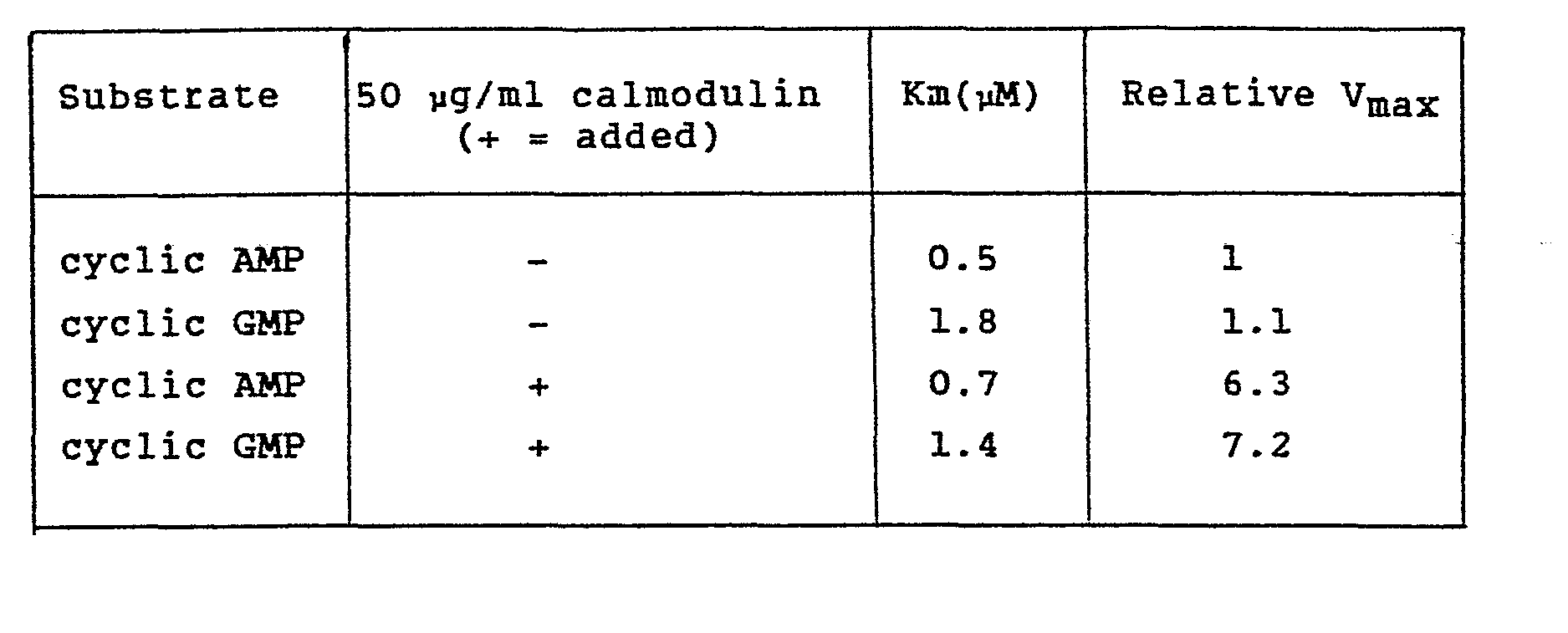
- Three peaks of cyclic nucleotide phosphodiesterase activity [PDE (Peak I), PDE (Peak II) and PDE (Peak III)] from cat heart were separated by chromatography on DEAE Sepharose CL-6B (Diethylaminoethyl Cellulose with a bead size of 45-165 microns). Sepharose is a registered trademark of Pharmacia Fine Chemicals Inc. The high-speed supernatant from a cat heart homogenate (2 g tissue in 20 ml 20 mM PIPES (Piperazine-N-N'-bis[2-ethanesulfonic acid]), 50 mM Na acetate. pH 6.5) was applied to a 15 x 1.5 cm column of DEAE-Sepharose equilibrated with the homogenisation buffer. The PDE activities were eluted with a gradient of 0.05-1 M Na acetate in 20 mM PIPES. There were three major peaks which had the following characteristics:
- PDE (Peak I) - eluted at 0.15 M Na acetate
- PDE (Peak II) - eluted at 0.3 M Na acetate

- PDE (Peak III) - eluted at 0.5 M Na acetate

- PDE (Peak I) has high affinity for cyclic AMP and cyclic GMP and is characterised by an activation by Ca2+/calmodulin complex.
- PDE (Peak II) demonstrates relatively low affinities for both cyclic AMP and cyclic GMP and is not affected by Ca2+/calmodulin complex.
- PDE (Peak III) has high affinity for cyclic AMP. It can also hydrolyse cyclic GMP though the preferred substrate is cyclic AMP. This activity is also insensitive to Ca2+/calmodulin activation.
- The enzyme was assayed by incubation at 37° for 4-30 min in 50 mM Tris. 5 mM MgCl2, pH 7.5 with [3-H] cyclic nucleotide (4 x 10⁵ disintegrations min 1) and [14-C] nucleotide 5' monophosphate (3 x 10³ disintegrations min-1). The assay was stopped by boiling, and the [3-H] 5'monophosphate product separated from substrate on boronate columns (Davis. C.W. and Daly. J.W. (1979) J. Cyclic Nucleotide Res., 5. 65-74). The reaction mixture was diluted with 0.5 ml 100 mM HEPES (N-2-Hydroxyethylpiperazine-N'-2-ethanesulfonic acid). 100 mM NaCl. pH 8.5, and applied to the column. The column was extensively washed with the same buffer, and the 5' nucleotide eluted with 6 ml 0.25 M acetic acid. The recovery of product as judged by [14-C] recovery was approximately 80%. All assays were linear with time of incubation and concentration of enzyme over the range used in these experiments.
- IC50 values (the concentration of inhibitor required for 50% inhibition of activity) were obtained for PDE (Peak III) by incubation of the enzyme at 1 µM cyclic AMP. and a range of inhibitor concentrations from 0.1 x IC50 to 100 x IC50.

- The compounds described in the Examples showed no inhibition at up to 10-4M when incubated with PDE (Peak I) and either no or weak inhibition with respect to PDE (Peak II) i.e. they were selective PDE (Peak III) inhibitors. This specificity is an indication that the compounds are likely to have a force/rate selectivity in their cardiac stimulant activity with a low potential for inducing arrythmias.
- The compounds of the Examples were tested in autoperfused anaesthetised cat hindquarters (autoperfused at constant blood flow). The i.v. dose to decrease hindquarters perfusion pressure (vasodilatation) by 15% is given as ED15.

- Male guinea-pigs of the Dunkin Hartley strain (530 g ± 6 g) were anaesthetised with Sagatal (pentobarbital sodium) (90 mg/kg i.p.). Airway resistance was measured using a modification of the classical Konzett-Rossler technique (Versuchsanordnung zu Untersuchungen an der Bronchialmuskulatur. Naunyn-Schmiedebergs Arch. Exp. Path. Pharmak., 195 : pp 71-74, (1940)). A dose of histamine which gave approximately 150% increase in airway resistance was selected for i.v. administration. Bolus doses of the compound of Example 1 were administered (i.v.) one minute before the histamine challenge.
- The compound of Example 1 reduced the histamine- induced bronchoconstriction. The threshold dose for this compound was 1 x 10⁻⁸ mol/kg. The dose of the compound of Example 1 which reduced the histamine bronchoconstriction by 50% (ED50) was 1.8 x 10⁻⁶ mol/kg, demonstrating in-vivo anti-bronchoconstrictor activity.
- Platelet rich plasma (PRP) was prepared from whole human blood anti-coagulated with 1/10 volume acid citrate dextrose. The citrated blood was centrifuged at 700 g for 5 minutes and the PRP removed. The remaining red cells and plasma were centrifuged for a further 15 minutes at 900 g and the platelet poor plasma removed. This was then mixed with the PRP to give a final platelet count of 2-3 x 10⁸ cells/ml.
- PRP was divided into 0.5 ml aliquots which were preincubated for 2 minutes to 37°C before being placed in the sample chamber of an HG aggregometer connected to a Teckman chart recorder.
- Aspirin was added to a concentration of 100 µM.
- Aggregation to the endoperoxide mimetic U44069 (9,11-epoxymethano-PGH-) was then examined in the absence and presence of a range of concentrations of the compound of Example 1.
- The compound of Example 1 inhibited aggregation induced by the endoperoxide mimetic U44069 (10 µM) in asprin-treated platelet rich plasma with an IC50 value of 0.08 ± 0.01 µM.
- Racemic 6-(4-aminophenyl)-5-methyl-4,5-dihydro-3(2H)-pyridazinone (2.0 g) dissolved in a mixture of acetonitrile (80 ml) and dichloromethane (30 ml) was added to a column of ionically bound (R)-N-(3,5-dinitrobenzoylphenyl)glycine on 40 µm γ-aminopropyl silanized silica (2.1 kg), packed at 1104 kPa (160 p.s.i.) (by slurrying with dichloromethane (1.5 L)) in a Jobin-Yvon medium pressure liquid chromatography system. The column was eluted with dichloromethane/methanol (199:1) over 9 hours at a rate of 80 ml min 1. Detection was by u.v. at 280 nm. A broad peak was obtained from which fractions were collected. The earlier fractions were enriched (-) enantiomer. These fractions were combined and re-chromatographed through the same column with the same eluant.
- The selected column fractions were evaporated, triturated with diethyl ether, filtered and the resultant solid washed with diethyl ether and dried at 80°C for 18 hours to give (-)-6-(4-aminophenyl)-5-methyl-4,5-dihydro-3(2H)-pyridazinone, in approximately 100% enantiomeric excess, m.p. 203-4°C;

- A sample of the (-) isomer was reacted with 3-bromopropionyl chloride to afford enantiomerically pure (-)-6-[4-(3-bromopropionamido)phenyl]-5-methyl-4.5-dihydro-3(2H)-pyridazinone, the absolute configuration of which was shown by a X-ray diffraction study to be (R).
- The later fractions from the first column were enriched (+) enantiomer (approximately 75% enrichment) which was subjected to medium pressure liquid chromatography (Jobin-Yvon system) over a column of ionically bound (S)-N-(3.5-dinitrobenzoyl)phenylglycine on 25-40 um y-aminopropyl silanized silica (55 g) eluting with dichloromethane/methanol (199:1). The appropriate fractions were combined with fractions from another run and re-chromatographed through the same column.
- The selected column fractions were evaporated, triturated with diethyl ether, filtered and the resultant solid washed with diethyl ether and dried at 80°C for 18 hours to give (+)-6-(4-aminophenyl)-5-methyl-4,5-dihydro-3(2H)-pyridazinone, in approximately 100% enantiomeric excess, m.p. 206-8°C; C;

- A stirred mixture of 6-(4-aminophenyl)-5-methyl-4,5-dihydro-3(2H)-pyridazinone (1.0 g). 4H-pyran-4-one (0.52 g), water (20 ml), and concentrated hydrochloric acid (0.41 ml) was heated under reflux for 32 hours. The resultant solid was dissolved in the minimum of hot water and the solution was neutralised with aqueous ammonia to give the crude product, 1.16 g, m.p. 249-256°C. The product was recrystallised first from water to which a little 2N NaOH was added, and then from water alone to give the pure title compound, 0.82 g. m.p. 254-256°C (after melting and resolidifying at about 150°C).
- A stirred mixture of 6-(4-aminophenyl)-4.5-dihydro-3(2H)-pyridazinone hydrochloride (1.5 g), 4H-pyran-4-one (0.7 g), and water (20 ml), was heated under reflux for 4t hours. The resultant solid was dissolved in the minimum of hot water and the solution was neutralised with ammonia to give the crude product. Recrystallisation from water gave the title compound, 0.73 g, m.p. 270-272°C.
- A stirred mixture of 6-(4-aminophenyl)-3(2H)-pyridazinone hydrochloride (1.5 g). 4H-pyran-4-one (0.71 g), and water (20 ml), was heated under reflux for 2 hours. The pH of the hot solution was adjusted to 8 with aqueous ammonia and the mixture was cooled to give the crude product. 1.84 g, m.p. 338-340°C. Recrystallisation from aqueous ethanol gave the title compound, 1.4 g, m.p. 339-3410C.
- A stirred mixture of 2-(4-aminophenyl)-4H,6H-1,3,4-thiadiazin-5-one (1.0 g). 4H-pyran-4-one (0.51 g), water (20 ml) and concentrated hydrochloric acid (0.42 ml), was heated under reflux for 3 hours. The warm solution was neutralised with concentrated aqueous ammonia and cooled to give a solid, 1.33 g. Recrystallisation from methanol gave the title compound, 0.89 g, m.p. 289-291°C.
- In a similar manner to that of Example 4, 2-(4-aminophenyl)-4H,6H-1,3,4-oxadiazin-5-one (1.4 g), gave a crude product which was recrystallised from ethanol to give the title compound. 0.48 g. m.p. decomposed >290°C.
- In a similar manner to that of Example 4, but under a nitrogen atmosphere, 6-(4-aminophenyl)-4y5-dihydro-1,2,4-triazin-3(2H)-one (0.7 g) gave a solid. 0.95 g, m.p. 285-290°C (dec). Recrystallisation from aqueous ethanol gave the title compound. 0.67 g, m.p. 334-335°C (dec).
- In a similar manner to that of Example 6. 6-(4-aminophenyl)-5-methyl-4,5-dihydro-1,2y4-triazin-3(2H)-one (0.7 g), gave a solid (0.83 g), m.p. 314-317°C (dec). Recrystallisation from aqueous ethanol gave the title compound, 0.57 g, m.p. 330-331°C (dec).
- A stirred mixture of 7-amino-9a-methyl-9.9a-dihydro- indeno[1,2-e][1,3,4]thiadiazin-2(3H)-one hydrochloride (1.4 g), 4H-pyran-4-one (0.55 g) and water (20 ml) was heated under reflux for 5½ hours. A partial solution of the crude solid in hot water was neutralised with aqueous ammonia, and the resultant solid was recrystallised twice from aqueous dimethylformamide to give the title compound 0.45 g, m.p. decomposed >250°C.
- In a manner similar to that of Example 8. 7-amino-9,9a-dihydroindeno[1,2-e][1,3,4]thiadiazin-2(3H)-one hydrochloride (1.0 g) gave a solid, 0.87 g, which was recrystallised from aqueous acetic acid to give the title compound, 0.38 g, m.p. decomposed >245°C.
- A stirred mixture of 5-(4-aminophenyl)-6-methyl-3H.6H-1,3,4-thiadiazine-2-one (0.54 g), 4H-pyran-4-one (0.26 g). glacial acetic acid (0.15 g) and water (20 ml) was heated under reflux for 24 hours to give a solid, 0.54 g. Recrystallisation from aqueous ethanol gave the title compound, 0.28 g, which darkened at 265°C and sublimed at 273-275°C.
- A stirred mixture of 5-(4-aminophenyl)-2(lH)pyrazinone hydrochloride (1.5 g, from hydrolysis of the corresponding acetamido derivative with hydrochloric acid), 4H-pyran-4- one (0.71 g) and water (15 ml) was heated under reflux for 2½ hours under a nitrogen atmosphere. The resultant solution was neutralised to give a solid, 1.79 g, m.p. 345°C (dec). Recrystallisation from aqueous ethanol gave the title compound, 0.93 g, m.p. 354-357°C (dec).
- A stirred mixture of 7-amino-[5H]indeno[l,2-c]-pyridazin-3(2H)-one hydrochloride (1.0 g) and 4H-pyran-4- one (0.48 g) in water (10 ml) was heated under reflux for 1 hour in a nitrogen atmosphere. The warm mixture was neutralised with aqueous ammonia to give a solid, 0.9 g, m.p. >300°C. This solid was triturated with warm dilute hydrochloric acid and washed with water to give the title compound, 0.42 g, m.p. >300°C.
- A stirred mixture of 8-amino-4,4a,5,6-tetrahydro- benzo[h]cinnolin-3(2H)-one hydrochloride (1.5 g) and 4H-pyran-4-one (0.84 g) in water (40 ml) was heated under reflux for 2 hours in a nitrogen atmosphere. The resultant solid was washed with dilute hydrochloric acid to give a crude product, 0.5 g. Purification by column chromatography (silica gel. 9:1 chloroform:methanol) gave the title compound 0.18 g, m.p. >300°C.
- i) A solution of 5-(4-nitrophenyl)-1.3.4-thiadiazol-2(3H)-one (2.82 g) and sodium sulphide (2.53 g) in dioxane (20 ml) and water (20 ml) was stirred at 85°C for 2½ hours. The pH of the cooled reaction mixture was adjusted to 14 with aqueous sodium hydroxide (2N) and the resultant solution was extracted with dichloromethane (3 x 20 ml). The aqueous phase was neutralised with dilute hydrochloric acid and the resultant pale yellow solid was recrystallised from aqueous hydrochloric acid to afford 5-(4-aminophenyl)-1.3,4-thiadiazol-2(3H)-one hydrochloride, 1.65 g, m.p. >250°C.
- ii) A mixture of 5-(4-aminophenyl)-1,3,4-thiadiazol-2(3H)-one hydrochloride (1.25 g). 4H-pyran-4-one (0.58 g). ethanol (10 ml) and water (50 ml) was stirred under reflux under nitrogen for 3½ hours. The cooled reaction mixture was filtered and the collected orange solid was washed with aqueous potassium hydrogen carbonate and water and was dried. The crude product (1.35 g) was treated with boiling dimethylformamide (200 ml) and the resultant suspension was cooled and filtered. The collected solid was washed with ethanol and ether, dried and suspended in water (100 ml). Sufficient aqueous sodium hydroxide (2N) was added to the suspension to form a solution which was filtered. The filtrate was acidified to pH 6 with hydrochloric acid which caused the precipitation of the title compound as a yellow solid, 0.96 g, m.p. 343-4°C (decomp).
-
- i) A solution of methyl 4-nitrobenzoate (20 g) and hydrazine hydrate (11 g) in ethanol (200 ml) was stirred under reflux for 5 hours to afford 4-nitrobenzoyl hydrazide 16.8 g, m.p. 217-219°C.
- ii) A solution of carbonyldiimidazole (2.87 g) and 4-nitrobenzoyl hydrazide (1.32 g) in dimethylformamide (30 ml) was stirred at 100°C for one hour. The solvent was removed by evaporation and the resultant solid was recrystallised from ethanol to afford 5-(4-nitrophenyl)-l.,3,4-oxadiazol-2(3H)-one, 0.75 g, m.p. 251-252°C.
- iii) 5-(4-nitrophenyl)-1,3,4-oxadiazol-2(3H)-one, (0.65 g) in ethanol (100 ml) was hydrogenated at 276 kPa (40 p.s.i.) in the presence of palladium on carbon at room temperature for one hour. The reaction mixture was filtered, the filtrate was evaporated to dryness and the resultant yellow solid was recrystallised from ethanol to afford (5-(4-aminophenyl)-1,3,4-oxadiazol-2(3H)-one, 0.46 g, m.p. 172-173°C.
- iv) A mixture of 5-(4-aminophenyl)-1,3,4-oxadiazol-2(3H)-one (0.41 g). 4H-pyran-4-one (0.24 g), and hydrochloric acid (2N, 1.15 ml) in water (25 ml) was stirred under reflux for 3 hours to afford a yellow solid. This solid was added to hot water with stirring and the resulting suspension was made alkaline (pH 8) with aqueous ammonia and was then filtered. The collected solid was dissolved in aqueous potassium carbonate and the resulting solution was neutralised with dilute acetic acid to afford an emulsion from which after centrifugation was obtained the title compound, 0.47 g, m.p. 220°C (decomp), contaminated with potassium acetate.
- A mixture of (R)-6-(4-aminophenyl)-5-methyl-4.5-dihydro-3(2H)-pyridazinone (100 mg). 4H-pyran-4-one (52 mg) and hydrochloric acid (0.1 N, 1 ml) in water (1.3 ml) was stirred under reflux under nitrogen for 3 hours. Aqueous ammonia (880, 0.01 ml) was added to the cooled reaction mixture to afford the title compound which was collected, washed with water and dried, 91 mg, m.p. 257-8°C (softens 120°C). C;

- A mixture of (S)-6-(4-aminophenyl)-5-methyl-4,5-dihydro-3(2H)-pyridazinone (147 mg), 4H-pyran-4-one (78 mg) and hydrochloric acid (0.1 N, 1.5 ml) in water (2 ml) was stirred under reflux under nitrogen for 3 hours. The reaction mixture was cooled to afford the title compound, which was collected, washed with water and dried, 110 mg, m.p. 256-7°C (softens 80°C), C;

- i) A solution of 2-chloropropionyl chloride (49 ml) in dichloromethane (50 ml) was added to a mixture of anhydrous aluminium trichloride (55.5 g) in dichloromethane (120 ml). The mixture was stirred for 10 minutes at room temperature and then a solution of fluorobenzene (39.5 ml) in dichloromethane (30 ml) was added dropwise. The resulting mixture was stirred for one hour, allowed to stand for 16 hours and then poured on to an ice- hydrochloric acid mixture. The two phase mixture was vigorously stirred at room temperature for 12 hours, separated and the aqueous layer washed with dichloromethane (2 x 50 ml). The combined organic extracts were then washed with aqueous sodium hydroxide (3N, 2 x 100 ml), water (1 x 100 ml) and brine (1 x 100 ml), dried (MgS04) and evaporated under reduced pressure to afford 2-chloro-l-(4-fluorophenyl)-1-propanone, 71.3 g.
- ii) Sodium hydride (50% oil dispersion. 3.5 g) was added with caution to a cooled solution of diethyl malonate (11.85 ml) in dimethylformamide (10 ml). The reaction mixture was stirred at room temperature for 30 minutes before a solution of 2-chloro-l-(4-fluorophenyl)-l-propanone (12.13 g) in dimethylformamide (50 ml) was added in small aliquots. The resulting reaction mixture was stirred for 2 hours at room temperature and then water (35 ml) was added. The mixture was extracted with petroleum ether (b.p. 40-60°C ) (3 x 50 ml) and the combined organic extracts were evaporated under reduced pressure to afford ethyl 2-ethoxycarbonyl-3-(4-fluorobenzoyl)butanoate (15.92 g).
- iii) Aqueous hydrochloric acid (50%. 50 ml) was added to a solution of part of the product from ii) (10 g) in dioxan (50 ml). The resulting two phase mixture was stirred under reflux for 28 hours, cooled and extracted with dichloromethane (3 x 50 ml). The combined organic extracts were washed with aqueous sodium hydroxide (2N, 1 x 100 ml, 2 x 50 ml) and the combined basic washings were acidified with concentrated hydrochloric acid to pH 1. The acidified aqueous mixture, containing a precipitated oil, was extracted with dichloromethane (3 x 50 ml). The dichloromethane extracts were combined, washed with water. dried (MgS04) and evaporated to dryness yielding an oil (4.87 g) which on trituration with cyclohexane afforded 3-(4-fluorobenzoyl)butanoic acid as a solid, m.p. 75-78°C.
- iv) A solution of 3-(4-fluorobenzoyl)butanoic acid (8 g). 4-hydroxypyridine (8 g) and sodium hydroxide (4.6 g) in water (80 ml) was heated in an autoclave at 140°C for 20 hours. The reaction mixture was cooled and on acidification to pH3 with dilute hydrochloric acid afforded as a white crystalline precipitate 3-[4-(4-oxo-1.4-dihydropyridin-l-yl)benzoyl]butanoic acid. 9.45 g. m.p. 250-252°C.
- v) Hydrazine hydrate (1.8 g) was added to a suspension of 3-[4-(4-oxo-1,4-dihydropyridin-1-yl)benzoyl]-butanoic acid (5 g) in water (60 ml). The resulting solution was stirred under reflux for 2 hours and cooled to afford the title compound as a pale yellow solid, 4.45 g, m.p. 255-258°C.
- A mixture of 6-(4-aminophenyl)-5-methyl-4,5-dihydro-3(2H)-pyridazinone (101 mg), 1.5-bis(dimethylaminol-1,4-pentadien-3-one (84 mg) and hydrochloric acid (IN, 0.5 ml) in water (1.5 ml) was stirred at room temperature for 4 hours. More hydrochloric acid (lN, 0.5 ml) was added and the reaction mixture was stirred at room temperature for 18 hours and then under reflux for 4 hours to afford a quantity of red insoluble material. The hot aqueous solvent was decanted off from the insoluble material, was allowed to cool and was seeded to afford the title compound, 41 mg, m.p. 245-249°C.
- A pharmaceutical composition for parenteral administration is prepared by dissolving the title compound of Example 1 (0.025 g) in water (100 ml) with heating. The solution is cooled and is then sterilised by filtration through a 0.22 micron membrane filter and sealed in sterile containers suitable for injections Ph. Eur.
- Compositions containing the compound of Example 1 (0.05 g) in water (100 ml) are prepared in analogous manner.
- Pharmaceutical compositions for oral administration are prepared by combining the following : % w/w

with the proviso that X is CHR1 or sulphur when R3 together with R4 form a methylene or 1,2-ethanediyl group.
and pharmaceutically acceptable salts thereof.
Claims (20)


with the proviso that X is CHR1 or sulphur when R together with R 4 form a methylene or 1,2-ethanediyl group.
or a pharmaceutically acceptable salt thereof.






Priority Applications (1)
| Application Number | Priority Date | Filing Date | Title |
|---|---|---|---|
| AT86307911T ATE60600T1 (en) | 1985-10-17 | 1986-10-13 | 4(4-OXO-1,4-DIHYDROPYRIDIN-1-YL)PHENYL DERIVATIVES |
Applications Claiming Priority (4)
| Application Number | Priority Date | Filing Date | Title |
|---|---|---|---|
| GB858525654A GB8525654D0 (en) | 1985-10-17 | 1985-10-17 | Chemical compounds |
| GB8525654 | 1985-10-17 | ||
| GB868601667A GB8601667D0 (en) | 1986-01-23 | 1986-01-23 | Chemical compounds |
| GB8601667 | 1986-01-23 |
Publications (3)
| Publication Number | Publication Date |
|---|---|
| EP0220044A2 true EP0220044A2 (en) | 1987-04-29 |
| EP0220044A3 EP0220044A3 (en) | 1988-02-24 |
| EP0220044B1 EP0220044B1 (en) | 1991-01-30 |
Family
ID=26289898
Family Applications (1)
| Application Number | Title | Priority Date | Filing Date |
|---|---|---|---|
| EP86307911A Expired - Lifetime EP0220044B1 (en) | 1985-10-17 | 1986-10-13 | 4(4-oxo-1,4-dihydropyridin-1-yl)phenyl derivatives |
Country Status (16)
| Country | Link |
|---|---|
| US (2) | US4906628A (en) |
| EP (1) | EP0220044B1 (en) |
| CN (1) | CN1009092B (en) |
| AU (1) | AU586042B2 (en) |
| DE (1) | DE3677316D1 (en) |
| DK (1) | DK491186A (en) |
| ES (1) | ES2031821T3 (en) |
| FI (1) | FI864193A7 (en) |
| GR (1) | GR3001555T3 (en) |
| HU (1) | HU196788B (en) |
| IL (1) | IL80296A (en) |
| NO (1) | NO864126L (en) |
| NZ (1) | NZ217931A (en) |
| PH (1) | PH22428A (en) |
| PT (1) | PT83530B (en) |
| ZW (1) | ZW20586A1 (en) |
Cited By (22)
| Publication number | Priority date | Publication date | Assignee | Title |
|---|---|---|---|---|
| EP0260102A3 (en) * | 1986-09-11 | 1989-08-23 | Smith Kline & French Laboratories Limited | Chemical process |
| EP0381374A1 (en) * | 1989-01-27 | 1990-08-08 | Les Laboratoires Beecham S.A. | Phosphodiesterase inhibitors |
| EP0399196A1 (en) * | 1989-04-25 | 1990-11-28 | HEUMANN PHARMA GMBH & CO | Diazine derivatives, process for their preparation, and medicaments containing these compounds |
| US5314883A (en) * | 1990-04-25 | 1994-05-24 | Nissan Chemical Industries Ltd. | 5-heteroarylamino-6-oxy-substituted 3(2H)-pyridazinones |
| EP2088154A1 (en) | 2004-03-09 | 2009-08-12 | Ironwood Pharmaceuticals, Inc. | Methods and compositions for the treatment of gastrointestinal disorders |
| EP2218442A1 (en) | 2005-11-09 | 2010-08-18 | CombinatoRx, Inc. | Methods, compositions, and kits for the treatment of ophthalmic disorders |
| WO2011069038A2 (en) | 2009-12-03 | 2011-06-09 | Synergy Pharmaceuticals, Inc. | Agonists of guanylate cyclase useful for the treatment of hypercholesterolemia, atherosclerosis, coronary heart disease, gallstone, obesity and other cardiovascular diseases |
| WO2012118972A2 (en) | 2011-03-01 | 2012-09-07 | Synegy Pharmaceuticals Inc. | Process of preparing guanylate cyclase c agonists |
| WO2013106547A1 (en) | 2012-01-10 | 2013-07-18 | President And Fellows Of Harvard College | Beta-cell replication promoting compounds and methods of their use |
| WO2013138352A1 (en) | 2012-03-15 | 2013-09-19 | Synergy Pharmaceuticals Inc. | Formulations of guanylate cyclase c agonists and methods of use |
| WO2014131024A2 (en) | 2013-02-25 | 2014-08-28 | Synergy Pharmaceuticals Inc. | Agonists of guanylate cyclase and their uses |
| WO2014151200A2 (en) | 2013-03-15 | 2014-09-25 | Synergy Pharmaceuticals Inc. | Compositions useful for the treatment of gastrointestinal disorders |
| WO2014151206A1 (en) | 2013-03-15 | 2014-09-25 | Synergy Pharmaceuticals Inc. | Agonists of guanylate cyclase and their uses |
| EP2810951A2 (en) | 2008-06-04 | 2014-12-10 | Synergy Pharmaceuticals Inc. | Agonists of guanylate cyclase useful for the treatment of gastrointestinal disorders, inflammation, cancer and other disorders |
| WO2014197720A2 (en) | 2013-06-05 | 2014-12-11 | Synergy Pharmaceuticals, Inc. | Ultra-pure agonists of guanylate cyclase c, method of making and using same |
| WO2015021358A2 (en) | 2013-08-09 | 2015-02-12 | Dominique Charmot | Compounds and methods for inhibiting phosphate transport |
| EP2998314A1 (en) | 2007-06-04 | 2016-03-23 | Synergy Pharmaceuticals Inc. | Agonists of guanylate cyclase useful for the treatment of gastrointestinal disorders, inflammation, cancer and other disorders |
| EP3241839A1 (en) | 2008-07-16 | 2017-11-08 | Synergy Pharmaceuticals Inc. | Agonists of guanylate cyclase useful for the treatment of gastrointestinal, inflammation, cancer and other disorders |
| WO2019025554A1 (en) * | 2017-08-04 | 2019-02-07 | Bayer Aktiengesellschaft | 6-phenyl-4,5-dihydropyridazin-3(2h)-one derivatives as pde3a and pde3b inhibitors for treating cancer |
| WO2020237096A1 (en) | 2019-05-21 | 2020-11-26 | Ardelyx, Inc. | Combination for lowering serum phosphate in a patient |
| US11427553B2 (en) | 2017-08-04 | 2022-08-30 | Bayer Aktiengesellschaft | Dihydrooxadiazinones |
| US12427153B2 (en) | 2019-02-01 | 2025-09-30 | Bayer Aktiengesellschaft | 1,2,4-triazin-3(2H)-one compounds for the treatment of hyperproliferative diseases |
Families Citing this family (29)
| Publication number | Priority date | Publication date | Assignee | Title |
|---|---|---|---|---|
| US4962110A (en) * | 1985-03-12 | 1990-10-09 | Smith Kline & French Laboratories Limited | Pyridazinone derivatives |
| GB8610369D0 (en) * | 1986-04-28 | 1986-06-04 | Smith Kline French Lab | Heterocyclic compounds |
| DE69131268T2 (en) * | 1990-09-21 | 1999-12-30 | Rohm And Haas Co., Philadelphia | Dihydropyridazinone and pyridazinone as fungicides |
| CN1038249C (en) * | 1991-08-28 | 1998-05-06 | 罗姆和哈斯公司 | Fungicidal compositions containing dihydropyridazinones and related compounds |
| US5958926A (en) * | 1996-11-01 | 1999-09-28 | Nitromed, Inc. | Nitrosated and nitrosylated phosphodiesterase inhibitor compounds, compositions and their uses |
| DE102004011512B4 (en) * | 2004-03-08 | 2022-01-13 | Boehringer Ingelheim Vetmedica Gmbh | Pharmaceutical preparation containing pimobendan |
| US8980894B2 (en) | 2004-03-25 | 2015-03-17 | Boehringer Ingelheim Vetmedica Gmbh | Use of PDE III inhibitors for the treatment of asymptomatic (occult) heart failure |
| EP1579862A1 (en) * | 2004-03-25 | 2005-09-28 | Boehringer Ingelheim Vetmedica Gmbh | Use of PDE III inhibitors for the reduction of heart size in mammals suffering from heart failure |
| JP2009506069A (en) | 2005-08-26 | 2009-02-12 | ブレインセルス,インコーポレイティド | Neurogenesis through modulation of muscarinic receptors |
| EP2258359A3 (en) | 2005-08-26 | 2011-04-06 | Braincells, Inc. | Neurogenesis by muscarinic receptor modulation with sabcomelin |
| US7985756B2 (en) | 2005-10-21 | 2011-07-26 | Braincells Inc. | Modulation of neurogenesis by PDE inhibition |
| WO2007053596A1 (en) | 2005-10-31 | 2007-05-10 | Braincells, Inc. | Gaba receptor mediated modulation of neurogenesis |
| WO2007054514A2 (en) * | 2005-11-14 | 2007-05-18 | Boehringer Ingelheim Vetmedica Gmbh | Use of pde iii inhibitors or calcium sensitizers for the treatment of asymptomatic (occult) heart failure |
| US20100216734A1 (en) * | 2006-03-08 | 2010-08-26 | Braincells, Inc. | Modulation of neurogenesis by nootropic agents |
| CA2643199A1 (en) * | 2006-03-08 | 2007-09-13 | Braincells, Inc. | Modulation of neurogenesis by nootropic agents |
| WO2007134077A2 (en) | 2006-05-09 | 2007-11-22 | Braincells, Inc. | 5 ht receptor mediated neurogenesis |
| US20100009983A1 (en) * | 2006-05-09 | 2010-01-14 | Braincells, Inc. | 5 ht receptor mediated neurogenesis |
| WO2007134136A2 (en) | 2006-05-09 | 2007-11-22 | Braincells, Inc. | Neurogenesis by modulating angiotensin |
| EP2068872A1 (en) * | 2006-09-08 | 2009-06-17 | Braincells, Inc. | Combinations containing a 4-acylaminopyridine derivative |
| EP2066355A2 (en) * | 2006-09-19 | 2009-06-10 | Braincells, Inc. | Combination comprising a peroxisome proliferator activated receptor agent and a second neurogenic agent for treating a nervous system disorder, increasing neurodifferentiation and increasing neurogenesis |
| US20100184806A1 (en) | 2006-09-19 | 2010-07-22 | Braincells, Inc. | Modulation of neurogenesis by ppar agents |
| EP1920785A1 (en) | 2006-11-07 | 2008-05-14 | Boehringer Ingelheim Vetmedica Gmbh | Liquid preparation comprising a complex of pimobendan and cyclodextrin |
| MX2011005444A (en) | 2008-11-25 | 2011-06-09 | Boehringer Ingelheim Vetmed | PHOSPHODIESTERASE TYPE III (PDE III) INHIBITORS OR CA<sup>2+</sup>-SENSITIZING AGENTS FOR THE TREATMENT OF HYPERTROPHIC CARDIOMYOPATHY. |
| WO2010099217A1 (en) | 2009-02-25 | 2010-09-02 | Braincells, Inc. | Modulation of neurogenesis using d-cycloserine combinations |
| EP3167876B1 (en) | 2012-03-15 | 2021-09-08 | Boehringer Ingelheim Vetmedica GmbH | Pharmaceutical tablet formulation for the veterinary medical sector, method of production and use thereof |
| DK3021832T3 (en) | 2013-07-19 | 2021-05-25 | Boehringer Ingelheim Vetmedica Gmbh | PRESERVED ETHERIFIED CYCLODEXTRINE DERIVATIVES CONTAINING LIQUID AQUATIC PHARMACEUTICAL COMPOSITION |
| ES2593210T3 (en) | 2013-12-04 | 2016-12-07 | Boehringer Ingelheim Vetmedica Gmbh | Improved pharmaceutical compositions of pimobendan |
| US10537570B2 (en) | 2016-04-06 | 2020-01-21 | Boehringer Ingelheim Vetmedica Gmbh | Use of pimobendan for the reduction of heart size and/or the delay of onset of clinical symptoms in patients with asymptomatic heart failure due to mitral valve disease |
| DE102021105255B4 (en) * | 2021-03-04 | 2022-10-13 | Festo Se & Co. Kg | Device with components connected via a connection interface and method for connecting components |
Family Cites Families (2)
| Publication number | Priority date | Publication date | Assignee | Title |
|---|---|---|---|---|
| IL69407A (en) * | 1982-08-23 | 1987-10-20 | Warner Lambert Co | 2(1h)-pyridinones,their preparation and pharmaceutical compositions containing them |
| DE3600891A1 (en) * | 1986-01-15 | 1987-07-16 | Bayer Ag | 1,8-BRIDGED 4-CHINOLON-3-CARBONIC ACIDS AND MEDICINAL PRODUCTS CONTAINING THEM |
-
1986
- 1986-10-13 ZW ZW205/86A patent/ZW20586A1/en unknown
- 1986-10-13 DE DE8686307911T patent/DE3677316D1/en not_active Expired - Lifetime
- 1986-10-13 PT PT83530A patent/PT83530B/en not_active IP Right Cessation
- 1986-10-13 EP EP86307911A patent/EP0220044B1/en not_active Expired - Lifetime
- 1986-10-13 ES ES198686307911T patent/ES2031821T3/en not_active Expired - Lifetime
- 1986-10-14 IL IL80296A patent/IL80296A/en unknown
- 1986-10-14 DK DK491186A patent/DK491186A/en not_active Application Discontinuation
- 1986-10-14 US US06/918,425 patent/US4906628A/en not_active Expired - Lifetime
- 1986-10-14 PH PH34365A patent/PH22428A/en unknown
- 1986-10-15 NZ NZ217931A patent/NZ217931A/en unknown
- 1986-10-16 FI FI864193A patent/FI864193A7/en not_active IP Right Cessation
- 1986-10-16 CN CN86106546A patent/CN1009092B/en not_active Expired
- 1986-10-16 HU HU864319A patent/HU196788B/en not_active IP Right Cessation
- 1986-10-16 NO NO864126A patent/NO864126L/en unknown
- 1986-10-16 AU AU64166/86A patent/AU586042B2/en not_active Ceased
-
1989
- 1989-12-18 US US07/452,072 patent/US5066653A/en not_active Expired - Lifetime
-
1991
- 1991-03-05 GR GR91400270T patent/GR3001555T3/en unknown
Cited By (35)
| Publication number | Priority date | Publication date | Assignee | Title |
|---|---|---|---|---|
| EP0260102A3 (en) * | 1986-09-11 | 1989-08-23 | Smith Kline & French Laboratories Limited | Chemical process |
| EP0381374A1 (en) * | 1989-01-27 | 1990-08-08 | Les Laboratoires Beecham S.A. | Phosphodiesterase inhibitors |
| EP0399196A1 (en) * | 1989-04-25 | 1990-11-28 | HEUMANN PHARMA GMBH & CO | Diazine derivatives, process for their preparation, and medicaments containing these compounds |
| US5108998A (en) * | 1989-04-25 | 1992-04-28 | Heumann Pharma Gmbh & Co. | Cardiotonic thiadiazine derivatives |
| US5314883A (en) * | 1990-04-25 | 1994-05-24 | Nissan Chemical Industries Ltd. | 5-heteroarylamino-6-oxy-substituted 3(2H)-pyridazinones |
| US5318968A (en) * | 1990-04-25 | 1994-06-07 | Nissan Chemical Industries Ltd. | 5-heteroarylamino-6-oxy-substituted 3(2H)-pyridazinones |
| EP2088154A1 (en) | 2004-03-09 | 2009-08-12 | Ironwood Pharmaceuticals, Inc. | Methods and compositions for the treatment of gastrointestinal disorders |
| EP2218442A1 (en) | 2005-11-09 | 2010-08-18 | CombinatoRx, Inc. | Methods, compositions, and kits for the treatment of ophthalmic disorders |
| EP2998314A1 (en) | 2007-06-04 | 2016-03-23 | Synergy Pharmaceuticals Inc. | Agonists of guanylate cyclase useful for the treatment of gastrointestinal disorders, inflammation, cancer and other disorders |
| EP2810951A2 (en) | 2008-06-04 | 2014-12-10 | Synergy Pharmaceuticals Inc. | Agonists of guanylate cyclase useful for the treatment of gastrointestinal disorders, inflammation, cancer and other disorders |
| EP3241839A1 (en) | 2008-07-16 | 2017-11-08 | Synergy Pharmaceuticals Inc. | Agonists of guanylate cyclase useful for the treatment of gastrointestinal, inflammation, cancer and other disorders |
| WO2011069038A2 (en) | 2009-12-03 | 2011-06-09 | Synergy Pharmaceuticals, Inc. | Agonists of guanylate cyclase useful for the treatment of hypercholesterolemia, atherosclerosis, coronary heart disease, gallstone, obesity and other cardiovascular diseases |
| EP2923706A1 (en) | 2009-12-03 | 2015-09-30 | Synergy Pharmaceuticals Inc. | Agonists of guanylate cyclase useful for the treatment of hypercholesterolemia |
| WO2012118972A2 (en) | 2011-03-01 | 2012-09-07 | Synegy Pharmaceuticals Inc. | Process of preparing guanylate cyclase c agonists |
| WO2013106547A1 (en) | 2012-01-10 | 2013-07-18 | President And Fellows Of Harvard College | Beta-cell replication promoting compounds and methods of their use |
| EP4309673A2 (en) | 2012-03-15 | 2024-01-24 | Bausch Health Ireland Limited | Formulations of guanylate cyclase c agonists and methods of use |
| WO2013138352A1 (en) | 2012-03-15 | 2013-09-19 | Synergy Pharmaceuticals Inc. | Formulations of guanylate cyclase c agonists and methods of use |
| EP3708179A1 (en) | 2012-03-15 | 2020-09-16 | Bausch Health Ireland Limited | Formulations of guanylate cyclase c agonists and methods of use |
| EP3718557A2 (en) | 2013-02-25 | 2020-10-07 | Bausch Health Ireland Limited | Guanylate cyclase receptor agonist sp-333 for use in colonic cleansing |
| WO2014131024A2 (en) | 2013-02-25 | 2014-08-28 | Synergy Pharmaceuticals Inc. | Agonists of guanylate cyclase and their uses |
| WO2014151206A1 (en) | 2013-03-15 | 2014-09-25 | Synergy Pharmaceuticals Inc. | Agonists of guanylate cyclase and their uses |
| WO2014151200A2 (en) | 2013-03-15 | 2014-09-25 | Synergy Pharmaceuticals Inc. | Compositions useful for the treatment of gastrointestinal disorders |
| EP4424697A2 (en) | 2013-06-05 | 2024-09-04 | Bausch Health Ireland Limited | Ultra-pure agonists of guanylate cyclase c, method of making and using same |
| WO2014197720A2 (en) | 2013-06-05 | 2014-12-11 | Synergy Pharmaceuticals, Inc. | Ultra-pure agonists of guanylate cyclase c, method of making and using same |
| EP3492106A1 (en) | 2013-08-09 | 2019-06-05 | Ardelyx, Inc. | Compounds and methods for inhibiting phosphate transport |
| EP3884935A1 (en) | 2013-08-09 | 2021-09-29 | Ardelyx, Inc. | Compounds and methods for inhibiting phosphate transport |
| WO2015021358A2 (en) | 2013-08-09 | 2015-02-12 | Dominique Charmot | Compounds and methods for inhibiting phosphate transport |
| WO2019025554A1 (en) * | 2017-08-04 | 2019-02-07 | Bayer Aktiengesellschaft | 6-phenyl-4,5-dihydropyridazin-3(2h)-one derivatives as pde3a and pde3b inhibitors for treating cancer |
| US11427553B2 (en) | 2017-08-04 | 2022-08-30 | Bayer Aktiengesellschaft | Dihydrooxadiazinones |
| US11773070B2 (en) | 2017-08-04 | 2023-10-03 | Bayer Aktiengesellschaft | Dihydrooxadiazinones |
| US11897867B2 (en) | 2017-08-04 | 2024-02-13 | Bayer Aktiengesellschaft | 6-phenyl-4,5-dihydropyridazin-3(2H)-one derivatives as PDE3A and PDE3B inhibitors for treating cancer |
| US12258323B2 (en) | 2017-08-04 | 2025-03-25 | Bayer Aktiengesellschaft | Dihydrooxadiazinones |
| US12427153B2 (en) | 2019-02-01 | 2025-09-30 | Bayer Aktiengesellschaft | 1,2,4-triazin-3(2H)-one compounds for the treatment of hyperproliferative diseases |
| WO2020237096A1 (en) | 2019-05-21 | 2020-11-26 | Ardelyx, Inc. | Combination for lowering serum phosphate in a patient |
| EP4706758A2 (en) | 2019-05-21 | 2026-03-11 | Ardelyx, Inc. | Methods for inhibiting phosphate transport |
Also Published As
| Publication number | Publication date |
|---|---|
| GR3001555T3 (en) | 1992-11-23 |
| US4906628A (en) | 1990-03-06 |
| DK491186D0 (en) | 1986-10-14 |
| AU6416686A (en) | 1987-04-30 |
| ES2031821T3 (en) | 1993-01-01 |
| EP0220044B1 (en) | 1991-01-30 |
| CN86106546A (en) | 1987-05-20 |
| DE3677316D1 (en) | 1991-03-07 |
| PT83530B (en) | 1989-05-31 |
| ZW20586A1 (en) | 1988-05-25 |
| HUT41769A (en) | 1987-05-28 |
| DK491186A (en) | 1987-04-18 |
| AU586042B2 (en) | 1989-06-29 |
| NO864126D0 (en) | 1986-10-16 |
| PT83530A (en) | 1986-11-01 |
| HU196788B (en) | 1989-01-30 |
| US5066653A (en) | 1991-11-19 |
| FI864193A0 (en) | 1986-10-16 |
| CN1009092B (en) | 1990-08-08 |
| IL80296A (en) | 1990-06-10 |
| EP0220044A3 (en) | 1988-02-24 |
| NO864126L (en) | 1987-04-21 |
| NZ217931A (en) | 1989-04-26 |
| PH22428A (en) | 1988-09-12 |
| FI864193A7 (en) | 1987-04-18 |
Similar Documents
| Publication | Publication Date | Title |
|---|---|---|
| US5066653A (en) | Chemical compounds | |
| EP0371731B1 (en) | Quinazolinone derivatives | |
| KR880001374B1 (en) | Process for preparing 2-pheno yalkyl-1,2,4-triazol-3 one antidepressants | |
| EP1206474B1 (en) | Sulfonylphenylpyrazole compounds useful as cox-2 inhibitors | |
| KR920006781B1 (en) | Method of preparing for dihydropyridazinone derivatives | |
| CA1254200A (en) | Compounds with a nitrogen-containing heterocyclic nucleus, their preparation and drugs in which they are present | |
| DE19533975A1 (en) | Arylalkyl diazinones | |
| EP0208518B1 (en) | 6-phenyl-pyridazinyl compounds | |
| DK162218B (en) | 3-OXO-4-CARBOXAMIDOPYRIDAZINES FOR THE SYNTHESIS OF HIS UNKNOWN 4-CYANO-PYRIDAZINES | |
| EP0201988B1 (en) | Dihydropyridazinone derivatives | |
| EP0347027A2 (en) | Phenylpyridone derivatives,processes for their preparation and pharmaceutical compositions containing them. | |
| HU182213B (en) | Process for preparing new pyrazolo-benzodiazepine compounds | |
| US5246928A (en) | Thiadiazinones for stimulating cardiac activity | |
| US4492699A (en) | Triazolobenzodiazepine derivatives | |
| EP0201765A2 (en) | 3(2H)Pyridazinone, process for its preparation and anti-allergic agent containing it | |
| EP0199465B1 (en) | Cyanoalkanimidamido compounds | |
| US4766123A (en) | Methylamidine compounds | |
| EP0618204B1 (en) | Heterocyclic compound and cardiotonic containing the same as active ingredient | |
| JPH05397B2 (en) | ||
| US4904664A (en) | Benzene compounds having two pyridazinone substituents | |
| US4962110A (en) | Pyridazinone derivatives | |
| EP0247724B1 (en) | Thiadiazinon derivatives | |
| EP0197664A2 (en) | 2-Aminopyrimidinone derivatives | |
| JPS61212583A (en) | 2-aminopyrimidine derivative | |
| JPS61212582A (en) | Dihydropyridazinone derivative |
Legal Events
| Date | Code | Title | Description |
|---|---|---|---|
| PUAI | Public reference made under article 153(3) epc to a published international application that has entered the european phase |
Free format text: ORIGINAL CODE: 0009012 |
|
| 17P | Request for examination filed |
Effective date: 19861017 |
|
| AK | Designated contracting states |
Kind code of ref document: A2 Designated state(s): AT BE CH DE ES FR GB GR IT LI LU NL SE |
|
| PUAL | Search report despatched |
Free format text: ORIGINAL CODE: 0009013 |
|
| AK | Designated contracting states |
Kind code of ref document: A3 Designated state(s): AT BE CH DE ES FR GB GR IT LI LU NL SE |
|
| 17Q | First examination report despatched |
Effective date: 19890823 |
|
| GRAA | (expected) grant |
Free format text: ORIGINAL CODE: 0009210 |
|
| AK | Designated contracting states |
Kind code of ref document: B1 Designated state(s): AT BE CH DE ES FR GB GR IT LI LU NL SE |
|
| REF | Corresponds to: |
Ref document number: 60600 Country of ref document: AT Date of ref document: 19910215 Kind code of ref document: T |
|
| ITF | It: translation for a ep patent filed | ||
| REF | Corresponds to: |
Ref document number: 3677316 Country of ref document: DE Date of ref document: 19910307 |
|
| ET | Fr: translation filed | ||
| PLBE | No opposition filed within time limit |
Free format text: ORIGINAL CODE: 0009261 |
|
| STAA | Information on the status of an ep patent application or granted ep patent |
Free format text: STATUS: NO OPPOSITION FILED WITHIN TIME LIMIT |
|
| 26N | No opposition filed | ||
| REG | Reference to a national code |
Ref country code: GR Ref legal event code: FG4A Free format text: 3001555 |
|
| PGFP | Annual fee paid to national office [announced via postgrant information from national office to epo] |
Ref country code: AT Payment date: 19920923 Year of fee payment: 7 |
|
| PGFP | Annual fee paid to national office [announced via postgrant information from national office to epo] |
Ref country code: SE Payment date: 19920924 Year of fee payment: 7 |
|
| PGFP | Annual fee paid to national office [announced via postgrant information from national office to epo] |
Ref country code: ES Payment date: 19921019 Year of fee payment: 7 |
|
| PGFP | Annual fee paid to national office [announced via postgrant information from national office to epo] |
Ref country code: GR Payment date: 19921029 Year of fee payment: 7 |
|
| PGFP | Annual fee paid to national office [announced via postgrant information from national office to epo] |
Ref country code: LU Payment date: 19921204 Year of fee payment: 7 |
|
| REG | Reference to a national code |
Ref country code: ES Ref legal event code: FG2A Ref document number: 2031821 Country of ref document: ES Kind code of ref document: T3 |
|
| EPTA | Lu: last paid annual fee | ||
| PGFP | Annual fee paid to national office [announced via postgrant information from national office to epo] |
Ref country code: GB Payment date: 19930917 Year of fee payment: 8 |
|
| PGFP | Annual fee paid to national office [announced via postgrant information from national office to epo] |
Ref country code: BE Payment date: 19931012 Year of fee payment: 8 |
|
| PG25 | Lapsed in a contracting state [announced via postgrant information from national office to epo] |
Ref country code: LU Free format text: LAPSE BECAUSE OF NON-PAYMENT OF DUE FEES Effective date: 19931013 Ref country code: AT Effective date: 19931013 |
|
| PGFP | Annual fee paid to national office [announced via postgrant information from national office to epo] |
Ref country code: FR Payment date: 19931013 Year of fee payment: 8 |
|
| PG25 | Lapsed in a contracting state [announced via postgrant information from national office to epo] |
Ref country code: SE Effective date: 19931014 Ref country code: ES Free format text: LAPSE BECAUSE OF EXPIRATION OF PROTECTION Effective date: 19931014 |
|
| PGFP | Annual fee paid to national office [announced via postgrant information from national office to epo] |
Ref country code: DE Payment date: 19931026 Year of fee payment: 8 |
|
| PGFP | Annual fee paid to national office [announced via postgrant information from national office to epo] |
Ref country code: NL Payment date: 19931031 Year of fee payment: 8 |
|
| PGFP | Annual fee paid to national office [announced via postgrant information from national office to epo] |
Ref country code: CH Payment date: 19931217 Year of fee payment: 8 |
|
| PG25 | Lapsed in a contracting state [announced via postgrant information from national office to epo] |
Ref country code: GR Free format text: THE PATENT HAS BEEN ANNULLED BY A DECISION OF A NATIONAL AUTHORITY Effective date: 19940430 |
|
| PG25 | Lapsed in a contracting state [announced via postgrant information from national office to epo] |
Ref country code: GB Effective date: 19941013 |
|
| PG25 | Lapsed in a contracting state [announced via postgrant information from national office to epo] |
Ref country code: LI Effective date: 19941031 Ref country code: CH Effective date: 19941031 Ref country code: BE Effective date: 19941031 |
|
| REG | Reference to a national code |
Ref country code: GR Ref legal event code: MM2A Free format text: 3001555 |
|
| EUG | Se: european patent has lapsed |
Ref document number: 86307911.7 Effective date: 19940510 |
|
| BERE | Be: lapsed |
Owner name: SMITH KLINE & FRENCH LABORATORIES LTD Effective date: 19941031 |
|
| PG25 | Lapsed in a contracting state [announced via postgrant information from national office to epo] |
Ref country code: NL Effective date: 19950501 |
|
| GBPC | Gb: european patent ceased through non-payment of renewal fee |
Effective date: 19941013 |
|
| NLV4 | Nl: lapsed or anulled due to non-payment of the annual fee | ||
| PG25 | Lapsed in a contracting state [announced via postgrant information from national office to epo] |
Ref country code: FR Effective date: 19950630 |
|
| REG | Reference to a national code |
Ref country code: CH Ref legal event code: PL |
|
| PG25 | Lapsed in a contracting state [announced via postgrant information from national office to epo] |
Ref country code: DE Effective date: 19950701 |
|
| REG | Reference to a national code |
Ref country code: FR Ref legal event code: ST |
|
| REG | Reference to a national code |
Ref country code: ES Ref legal event code: FD2A Effective date: 19990601 |
|
| PG25 | Lapsed in a contracting state [announced via postgrant information from national office to epo] |
Ref country code: IT Free format text: LAPSE BECAUSE OF NON-PAYMENT OF DUE FEES;WARNING: LAPSES OF ITALIAN PATENTS WITH EFFECTIVE DATE BEFORE 2007 MAY HAVE OCCURRED AT ANY TIME BEFORE 2007. THE CORRECT EFFECTIVE DATE MAY BE DIFFERENT FROM THE ONE RECORDED. Effective date: 20051013 |