EP0213079A2 - Thienylalkylester von alpha-Imidazolinon-nicotin- und -benzoesäuren - Google Patents
Thienylalkylester von alpha-Imidazolinon-nicotin- und -benzoesäuren Download PDFInfo
- Publication number
- EP0213079A2 EP0213079A2 EP86810366A EP86810366A EP0213079A2 EP 0213079 A2 EP0213079 A2 EP 0213079A2 EP 86810366 A EP86810366 A EP 86810366A EP 86810366 A EP86810366 A EP 86810366A EP 0213079 A2 EP0213079 A2 EP 0213079A2
- Authority
- EP
- European Patent Office
- Prior art keywords
- methyl
- formula
- isopropyl
- alkyl
- oxo
- Prior art date
- Legal status (The legal status is an assumption and is not a legal conclusion. Google has not performed a legal analysis and makes no representation as to the accuracy of the status listed.)
- Withdrawn
Links
- 0 CC1C(CC*)CCC1 Chemical compound CC1C(CC*)CCC1 0.000 description 3
Classifications
-
- A—HUMAN NECESSITIES
- A01—AGRICULTURE; FORESTRY; ANIMAL HUSBANDRY; HUNTING; TRAPPING; FISHING
- A01N—PRESERVATION OF BODIES OF HUMANS OR ANIMALS OR PLANTS OR PARTS THEREOF; BIOCIDES, e.g. AS DISINFECTANTS, AS PESTICIDES OR AS HERBICIDES; PEST REPELLANTS OR ATTRACTANTS; PLANT GROWTH REGULATORS
- A01N43/00—Biocides, pest repellants or attractants, or plant growth regulators containing heterocyclic compounds
- A01N43/48—Biocides, pest repellants or attractants, or plant growth regulators containing heterocyclic compounds having rings with two nitrogen atoms as the only ring hetero atoms
- A01N43/50—1,3-Diazoles; Hydrogenated 1,3-diazoles
-
- A—HUMAN NECESSITIES
- A01—AGRICULTURE; FORESTRY; ANIMAL HUSBANDRY; HUNTING; TRAPPING; FISHING
- A01N—PRESERVATION OF BODIES OF HUMANS OR ANIMALS OR PLANTS OR PARTS THEREOF; BIOCIDES, e.g. AS DISINFECTANTS, AS PESTICIDES OR AS HERBICIDES; PEST REPELLANTS OR ATTRACTANTS; PLANT GROWTH REGULATORS
- A01N43/00—Biocides, pest repellants or attractants, or plant growth regulators containing heterocyclic compounds
- A01N43/64—Biocides, pest repellants or attractants, or plant growth regulators containing heterocyclic compounds having rings with three nitrogen atoms as the only ring hetero atoms
- A01N43/66—1,3,5-Triazines, not hydrogenated and not substituted at the ring nitrogen atoms
-
- A—HUMAN NECESSITIES
- A01—AGRICULTURE; FORESTRY; ANIMAL HUSBANDRY; HUNTING; TRAPPING; FISHING
- A01N—PRESERVATION OF BODIES OF HUMANS OR ANIMALS OR PLANTS OR PARTS THEREOF; BIOCIDES, e.g. AS DISINFECTANTS, AS PESTICIDES OR AS HERBICIDES; PEST REPELLANTS OR ATTRACTANTS; PLANT GROWTH REGULATORS
- A01N43/00—Biocides, pest repellants or attractants, or plant growth regulators containing heterocyclic compounds
- A01N43/72—Biocides, pest repellants or attractants, or plant growth regulators containing heterocyclic compounds having rings with nitrogen atoms and oxygen or sulfur atoms as ring hetero atoms
- A01N43/74—Biocides, pest repellants or attractants, or plant growth regulators containing heterocyclic compounds having rings with nitrogen atoms and oxygen or sulfur atoms as ring hetero atoms five-membered rings with one nitrogen atom and either one oxygen atom or one sulfur atom in positions 1,3
- A01N43/78—1,3-Thiazoles; Hydrogenated 1,3-thiazoles
-
- C—CHEMISTRY; METALLURGY
- C07—ORGANIC CHEMISTRY
- C07D—HETEROCYCLIC COMPOUNDS
- C07D401/00—Heterocyclic compounds containing two or more hetero rings, having nitrogen atoms as the only ring hetero atoms, at least one ring being a six-membered ring with only one nitrogen atom
- C07D401/02—Heterocyclic compounds containing two or more hetero rings, having nitrogen atoms as the only ring hetero atoms, at least one ring being a six-membered ring with only one nitrogen atom containing two hetero rings
- C07D401/04—Heterocyclic compounds containing two or more hetero rings, having nitrogen atoms as the only ring hetero atoms, at least one ring being a six-membered ring with only one nitrogen atom containing two hetero rings directly linked by a ring-member-to-ring-member bond
-
- C—CHEMISTRY; METALLURGY
- C07—ORGANIC CHEMISTRY
- C07D—HETEROCYCLIC COMPOUNDS
- C07D401/00—Heterocyclic compounds containing two or more hetero rings, having nitrogen atoms as the only ring hetero atoms, at least one ring being a six-membered ring with only one nitrogen atom
- C07D401/14—Heterocyclic compounds containing two or more hetero rings, having nitrogen atoms as the only ring hetero atoms, at least one ring being a six-membered ring with only one nitrogen atom containing three or more hetero rings
-
- C—CHEMISTRY; METALLURGY
- C07—ORGANIC CHEMISTRY
- C07D—HETEROCYCLIC COMPOUNDS
- C07D409/00—Heterocyclic compounds containing two or more hetero rings, at least one ring having sulfur atoms as the only ring hetero atoms
- C07D409/02—Heterocyclic compounds containing two or more hetero rings, at least one ring having sulfur atoms as the only ring hetero atoms containing two hetero rings
- C07D409/12—Heterocyclic compounds containing two or more hetero rings, at least one ring having sulfur atoms as the only ring hetero atoms containing two hetero rings linked by a chain containing hetero atoms as chain links
-
- C—CHEMISTRY; METALLURGY
- C07—ORGANIC CHEMISTRY
- C07D—HETEROCYCLIC COMPOUNDS
- C07D409/00—Heterocyclic compounds containing two or more hetero rings, at least one ring having sulfur atoms as the only ring hetero atoms
- C07D409/14—Heterocyclic compounds containing two or more hetero rings, at least one ring having sulfur atoms as the only ring hetero atoms containing three or more hetero rings
-
- C—CHEMISTRY; METALLURGY
- C07—ORGANIC CHEMISTRY
- C07D—HETEROCYCLIC COMPOUNDS
- C07D417/00—Heterocyclic compounds containing two or more hetero rings, at least one ring having nitrogen and sulfur atoms as the only ring hetero atoms, not provided for by group C07D415/00
- C07D417/02—Heterocyclic compounds containing two or more hetero rings, at least one ring having nitrogen and sulfur atoms as the only ring hetero atoms, not provided for by group C07D415/00 containing two hetero rings
- C07D417/12—Heterocyclic compounds containing two or more hetero rings, at least one ring having nitrogen and sulfur atoms as the only ring hetero atoms, not provided for by group C07D415/00 containing two hetero rings linked by a chain containing hetero atoms as chain links
-
- C—CHEMISTRY; METALLURGY
- C07—ORGANIC CHEMISTRY
- C07D—HETEROCYCLIC COMPOUNDS
- C07D417/00—Heterocyclic compounds containing two or more hetero rings, at least one ring having nitrogen and sulfur atoms as the only ring hetero atoms, not provided for by group C07D415/00
- C07D417/14—Heterocyclic compounds containing two or more hetero rings, at least one ring having nitrogen and sulfur atoms as the only ring hetero atoms, not provided for by group C07D415/00 containing three or more hetero rings
Definitions
- the present invention relates to new thiazolylalkyl and thienyl alkyl esters of a-imidazolinone-nicotinic and benzoic acids with herbicidal and plant growth-regulating action, and to the preparation of these new compounds. It also relates to agents which contain the new imidazolinone compounds and to their use for selectively controlling weeds or for regulating plant growth.
- the new thiazolylalkyl, thienyl alkyl esters of a-imidazolinone nicotinic and benzoic acids correspond to the formula I.
- A is a straight-chain or branched C 1 -C 6 alkylene bridge
- Q and Q 1 independently of one another per nitrogen or the methine group
- R 1 and R 2 independently of each other per hydrogen or C 1 -C 4 alkyl
- X and Y independently of each other
- the alkyl radicals can be straight-chain or branched and the meaning of methyl, methylene, ethyl, ethylene, propyl, propylene, isopropyl, 1- or 2-methylethylene, butyl, butylene, sec.butyl, 1 -Methylpropylene, isobutyl, 2-methylpropylene, tert-butyl, 2,2-dimethylethylene, 1,2-dimethylethylene.
- Halogen means fluorine, chlorine, bromine or iodine.
- the inventive method for producing the imidazolinone compounds of formula I consists in that a compound of formula IIa or. IIb wherein Q, X and Y have the meaning given under formula I, in an inert organic solvent or diluent, in the presence of a basic agent with a thiazolyl alcohol or thienyl alcohol of the formula III, wherein A, Qi, R 1 and R 2 have the meaning given under formula I.
- solvents for these reactions are anhydrous hydrocarbons, ethers or ketones, such as Benzene, toluene, xylene, hexane, cyclohexane, diisopropyl ether, tetrahydrofuran, dioxane.
- N- (a-isopropyl-a-methyl-acetamido) phthalimide can be obtained by condensing phthalic anhydride with 2-amino- (a-isopropyl-a-methyl) acetonitrile. The nitrile must then be converted to the acid amide by heating in aqueous acid.
- a pyridine-2,3-dicarboxylic acid-a-isopropyl-a-methyl-acetamide of the formula IV can be prepared according to a simple process by adding an unsaturated hydrazone with a 2-chloro or 2-bromo-N- (a- isopropyl - «- methyl acetonitrile) succinimide condensed and acidic hydrolysis followed, according to the scheme
- the starting materials of formula IIb are obtained by using the above N- ( ⁇ -isopropyl- ⁇ -methylacetamido) -2,3-pyridinecarboximide or phthalimide in the presence of a base such as sodium hydroxide solution to give 2- (4-isopropyl-4-methyl -5-oxo-imidazolidine) nicotinic acid derivative.
- dehydrating agents for this cyclization come e.g. Boiling on a water cutter, a molar amount of a strong acid e.g. concentrated sulfuric acid or an anhydride, or a water-absorbing reagent such as cyclohexanecarbodiimide, thionyl chloride or phosgene in the presence of some dimethylformamide in question.
- a strong acid e.g. concentrated sulfuric acid or an anhydride
- a water-absorbing reagent such as cyclohexanecarbodiimide, thionyl chloride or phosgene in the presence of some dimethylformamide in question.
- the reactions are carried out at temperatures between 0 ° C and 200 ° C, i.e. if necessary, the mixture is heated to the boiling point of the reaction mixture and, if necessary, cooled with ice / water or ice / brine bath.
- inorganic bases such as sodium hydroxide, sodium carbonate, sodium hydride, calcium hydroxide, calcium carbonate, potassium hydroxide, potassium carbonate, and tertiary inorganic bases such as triethylamine are suitable as bases for these reactions.
- Suitable solvents are e.g. polar, aprotic solvents that can be used alone or in mixtures of at least two solvents.
- the nicotinic acid esters have proven to be very active, in which both Q and Q 1 are nitrogen, R 1 , R 2 and Y are each hydrogen or C 1 -C 4 -alkyl and which correspond to the formula Ia
- nicotinic acid thienyl alkyl esters in which Q is nitrogen, Q 1 is the methine group R 1 , Rz, X and Y are each hydrogen or C 1 -C 4 alkyl and correspond to the formula Ib.
- the benzoethiadiazolylalkyl esters, Q methine, Q 1 nitrogen and R 1 , R 2 , X and Y each represent hydrogen or C 1 -C 4 alkyl or X and Y together mean the butadiene bridge and which correspond to the formula Ic.
- the 2- (5-isopropyl-5-methyl-4-oxo-4,5-dihydro-imidazolin-2-yl) -benzoic acid (4-methyl-thiadiazol-5-ylethyl) ester has proven to be particularly effective.
- the benzoate or naphthoeklathienylalkylester show good effects, wherein Q and Q 1 methine, R 1 , R 2 , X and Y each represent hydrogen or C 1 -C 4 alkyl or X and Y together represent the butadiene bridge and which correspond to the formula Ie furthermore the 3-quinolinic acid thiazolylalkyl and thienyl alkyl esters, in which Q denotes nitrogen, Q 1 nitrogen or methine, R 1 and Rz each represent hydrogen or C 1 -C 4 alkyl and X and Y together represent the butadiene bridge, correspond to the formula If
- the invention relates to all diastereomeric and enantiomeric isomers of the compounds of formula I.
- the active compounds of the formula I are generally used successfully with application rates of 0.05 to 4 kg / ha, in particular 0.1 to 1 kg / ha.
- the compounds of the formula I are notable for good selective growth-inhibiting and selective herbicidal properties which make them excellent for use in crops of useful plants, in particular in cereals, cotton, soybeans, corn and rice. Weeds are sometimes damaged, which previously could only be dealt with with total herbicides.
- the compounds of formula I also have strong plant growth-inhibiting properties. Both monocots and dicots are impaired in their growth.
- legumes which are often cultivated in agriculture in tropical regions as "cover crops” can be selectively grown by the compounds of the formula I. be inhibited so that soil erosion between the crop plants is prevented, but the "cover crops” cannot become a competition for the crop.
- An inhibition of vegetative growth allows a denser cultivation of the crop in many crop plants, so that an additional yield, based on the soil area, can be achieved.
- Another mechanism of increasing yield with growth inhibitors is based on the fact that the nutrients benefit the bloom and fruit formation to a greater extent, while vegetative growth is restricted.
- the invention also relates to herbicidal and plant growth-regulating compositions which comprise a new active ingredient of the formula I, and to processes for pre- and post-emergent weed control and for inhibiting the growth of monocotyledonous and dicotyledonous plants, in particular grasses, tropical soil coverers and tobacco avarice shoots.
- the compounds of the formula I are used in unchanged form or, preferably, as agents together with the auxiliaries customary in formulation technology and are therefore, for example, to emulsion concentrates, directly sprayable or dilutable solutions, diluted emulsions, wettable powders, soluble powders, dusts, granules, also encapsulations in e.g. polymeric materials processed in a known manner.
- the application methods such as spraying, atomizing, dusting, scattering or pouring, are selected in the same way as the type of agent, in accordance with the desired objectives and the given conditions.
- the formulations i.e. the agents, preparations or compositions containing the active ingredient of formula I and optionally a solid or liquid additive are prepared in a known manner, e.g. by intimately mixing and / or grinding the active ingredients with extenders, e.g. with solvents, solid carriers, and optionally surface-active compounds (surfactants).
- extenders e.g. with solvents, solid carriers, and optionally surface-active compounds (surfactants).
- Possible solvents are: aromatic hydrocarbons, preferably fractions c 8 to C 12 , such as xylene mixtures or substituted naphthalenes, phthalic esters such as dibutyl or dicotyl phthalate, aliphatic hydrocarbons such as cyclohexane or paraffins, alcohols and glycols and their ethers and esters, such as Ethanol, ethylene glycol, ethylene glycol monomethyl or ethyl ether, ketones such as cyclohexanone, strongly polar solvents such as N-methyl-2-pyrrolidone, dimethyl sulfoxide or dimethylformamide, and optionally epoxidized vegetable oils such as epoxidized coconut oil or soybean oil; or water.
- aromatic hydrocarbons preferably fractions c 8 to C 12
- phthalic esters such as dibutyl or dicotyl phthalate
- aliphatic hydrocarbons such as cyclohexane or paraffins
- solid carriers e.g. natural dust, such as calcite, talc, kaolin, montmorillonite or attapulgite
- solid carriers e.g. natural dust, such as calcite, talc, kaolin, montmorillonite or attapulgite
- highly disperse silica or highly disperse absorbent polymers can also be added.
- adsorptive granulate carriers come porous types such as Pumice stone, broken brick, sepiolite or bentonite, as non-sorptive carrier materials e.g. Calcite or sand in question.
- a large number of pregranulated materials of inorganic or organic nature such as, in particular, dolomite or comminuted plant residues can be used.
- suitable surface-active compounds are nonionic, cationic and / or anionic surfactants with good emulsifying, dispersing and wetting properties.
- surfactants are also to be understood as mixtures of surfactants.
- Suitable anionic surfactants can be both so-called water-soluble soaps and water-soluble synthetic surface-active compounds.
- the soaps are the alkali, alkaline earth or optionally substituted ammonium salts of higher fatty acids (C 1D- C 22 ), such as the Na or K salts of oleic or stearic acid, or of natural fatty acid mixtures, for example from coconut or Tallow oil can be obtained.
- C 1D- C 22 the Na or K salts of oleic or stearic acid, or of natural fatty acid mixtures, for example from coconut or Tallow oil can be obtained.
- the fatty acid methyl taurine salts should also be mentioned.
- the fatty sulfates or sulfates are usually present as alkali, alkaline earth or optionally substituted ammonium salts and have an alkyl radical with 8 to 22 carbon atoms, alkyl also including the alkyl part of acyl radicals, e.g. the Na or Ca salt of lignin sulfonic acid, dodecylsulfuric acid ester or a fatty alcohol sulfate mixture made from natural fatty acids.
- This subheading also includes the salts of sulfuric acid esters and sulfonic acids from fatty alcohol / ethylene oxide adducts.
- the sulfonated benzimidazole derivatives preferably contain 2-sulfonic acid groups and a fatty acid residue with 8-22 carbon atoms.
- Alkylarylsulfonates are e.g. the sodium, calcium or triethanolamine salts of dodecylbenzenesulfonic acid, dibutylnaphthalenesulfonic acid or a naphthalenesulfonic acid-formaldehyde condensation product.
- Corresponding phosphates such as e.g. Salts of the phosphoric acid ester of a p-nonylphenol (4-14) ethylene oxide adduct or phospholipids in question.
- Suitable nonionic surfactants are primarily polyglycol ether derivatives of aliphatic or cycloaliphatic alcohols, saturated or unsaturated fatty acids and alkylphenols, which can contain 3 to 10 glycol ether groups and 8 to 20 carbon atoms in the (aliphatic) hydrocarbon radical and 6 to 18 carbon atoms in the alkyl radical of the alkylphenols .
- nonionic surfactants are the water-soluble polyethylene oxide adducts containing 20 to 250 ethylene glycol ether groups and 10 to 100 propylene glycol ether groups with polypropylene glycol, ethylene diaminopolypropylene glycol and alkyl polypropylene glycol with 1 to 10 carbon atoms in the alkyl chain.
- the compounds mentioned usually contain 1 to 5 ethylene glycol units per propylene glycol unit.
- nonionic surfactants are nonylphenol polyethoxyethanols, castor oil polyglycol ethers, polypropylene-polyethylene oxide adducts, tributylphenoxypolyethanol, polyethylene glycol and octylphenoxypolyethoxyethanol.
- Fatty acid esters of polyoxyethylene sorbitan such as polyoxyethylene sorbitan trioleate, are also suitable.
- the cationic surfactants are primarily quaternary ammonium salts which contain at least one alkyl radical having 8 to 22 carbon atoms as N substituents and have low, optionally halogenated alkyl, benzyl or low hydroxyalkyl radicals as further substituents.
- the salts are preferably in the form of halides, methyl sulfates or ethyl sulfates, e.g. the stearyltrimethylammonium chloride or the benzyldi (2-chloroethyl) ethylammonium bromide.
- the pesticidal preparations generally contain 0.1 to 95%, in particular 0.1 to 80%, active ingredient of the formula I, 1 to 99.9% of a solid or liquid additive and 0 to 25%, in particular 0.1 to 25 % of a surfactant.
- preferred formulations are composed as follows: (% a weight percent)
- Emulsifiable concentrates are:
- the use forms can be diluted down to 0.001% of active ingredient.
- the application rates are usually 0.005 to 5 kg As / ha.
- the agents can also contain other additives such as stabilizers, defoamers, viscosity regulators, binders, adhesives and fertilizers or other active ingredients to achieve special effects.
- the first fractions contain excess thienyl ethanol, from the following the product is isolated by evaporation and drying in vacuo as a light oil, which crystallizes on rubbing. This gives 9 g of the title product, which melts at 84-87 °.
- the active ingredient is mixed well with the additives and ground well in a suitable mill.
- Spray powder is obtained which can be diluted with water to form suspensions of any desired concentration.
- Emulsions of any desired concentration can be prepared from this concentrate by dilution with water.
- Ready-to-use dusts are obtained by mixing the active ingredient with the carrier and grinding it in a suitable mill.
- the active ingredient is mixed with the additives, ground and moistened with water. This mixture is extruded and then dried in an air stream.
- the finely ground active ingredient is applied evenly in a mixer to the kaolin moistened with polyethylene glycol. In this way, dust-free coated granules are obtained.
- the finely ground active ingredient is intimately mixed with the additives. This gives a suspension concentrate from which suspensions of any desired concentration can be prepared by dilution with water.
- test vessels After saturating the non-adsorptive vermiculite with an aqueous active ingredient emulsion in deionized water, which contains the active ingredients in a concentration of 70.8 ppm, seeds of the following plants are sown on the surface. Nasturtium offcinalis, Agrostis tenuis, Stellaria media and Digitaria sanguinalis.
- the test vessels are then kept in a climatic chamber at 20 ° C, lighting of approx. 20 kLux and a relative air humidity of 70%.
- the pots are covered with translucent material to increase the local humidity and watered with deodorized water.
- 0.5% of a commercially available liquid fertilizer 3 Greenzit
- the test is evaluated and the effect on the test plants is assessed on the scale given in Example 4.
- the plant cups are then placed in the greenhouse under optimal growth conditions for the rice weeds, ie at 25 ° -30 ° C. and high atmospheric humidity. The experiments are evaluated 3 weeks after application.
- Example 9 Inhibition of growth in tropical ground cover legumes (cover crops).
- test plants centrosema plumieri and centrosema pubescens
- the test plants are grown to the fully grown stage and cut back to a height of 60 cm.
- the active ingredient is injected as an aqueous emulsion.
- the test plants are kept at 70% relative air humidity and 6000 lux artificial light, 14 hours a day, at temperatures of 27 ° during the day and 21 ° C at night.
- the test is evaluated 4 weeks after the application.
- the new growth compared to the control is estimated and weighed and the phytotoxicity is assessed.
- the plants treated with the active ingredients in Tables 1-6 at a rate of 50-3000 g / ha showed a significant reduction in new growth (less than 20% of the new growth in untreated control plants) without the test plants being damaged in the process.
- Soybeans of the "Hark” variety are sown in plastic containers with a soil / peat / sand mixture in a ratio of 6: 3: 1 and placed in a climatic chamber. Through optimal temperature selection, lighting, adding fertilizer and irrigation, the plants develop after about 5 weeks until the 5-6 trifolia leaf stage. At this point, the plants are sprayed with the aqueous broth of an active ingredient of the formula I until thoroughly wetted. The active ingredient concentration is up to 100 g ai / ha. The evaluation takes place about 5 weeks after application of the active ingredient. In comparison to untreated control plants, the active compounds according to the invention in Tables 1-6 cause a noticeable increase in the number and weight of the pods in the main shoot.
- Hordeum vulgare (summer barley) and Secale (summer rye) are sown in cereals in the greenhouse and watered as required.
- the sprouts are sprayed about 21 days after sowing with the aqueous spray mixture of an active ingredient from Tables 1-6.
- the amount of active ingredient is up to 100 g active ingredient per hectare.
- the growth of the grain is assessed 21 days after application. Compared to untreated controls, the treated plants show a reduction in new growth (60-90% of the control), and in some cases an increase in stem diameter.
- the grasses Lolium perenne, Poa pratensis, Festuca ovina, Dactylis glomerate and Cynodon dactylon are sown in plastic trays with a soil-peat-sand mixture (6: 3: 1) in the greenhouse and watered as required.
- the accumulated grasses are cut back to a height of 4 cm weekly and sprayed with the aqueous spray mixture of an active ingredient from Tables 1-6 about 50 days after sowing and one day after the last cut.
- the amount of active ingredient is equivalent to up to 500 g of active ingredient per hectare.
- the growth of the grass is assessed 21 days after application.
- the tested compounds bring about a 10-30% reduction in new growth compared to the untreated control.
- Cotton plants of the Deltapine variety were grown in clay pots in a greenhouse. After the capsule binding had been completed, they were sprayed with aqueous preparations of an active ingredient at a rate which corresponded to 1.2, 0.6 and 0.3 kg / ha in the field. Untreated plants were left as controls. The test was evaluated 3, 7 and 14 days after application of the active substance by determining the degree of defoliation (% fallen leaves) and desiccation (% drying out of the leaves remaining on the plant).
Landscapes
- Organic Chemistry (AREA)
- Chemical & Material Sciences (AREA)
- Life Sciences & Earth Sciences (AREA)
- Dentistry (AREA)
- Health & Medical Sciences (AREA)
- Engineering & Computer Science (AREA)
- Plant Pathology (AREA)
- General Health & Medical Sciences (AREA)
- Wood Science & Technology (AREA)
- Zoology (AREA)
- Environmental Sciences (AREA)
- Pest Control & Pesticides (AREA)
- Agronomy & Crop Science (AREA)
- Plural Heterocyclic Compounds (AREA)
- Agricultural Chemicals And Associated Chemicals (AREA)
Abstract
Description
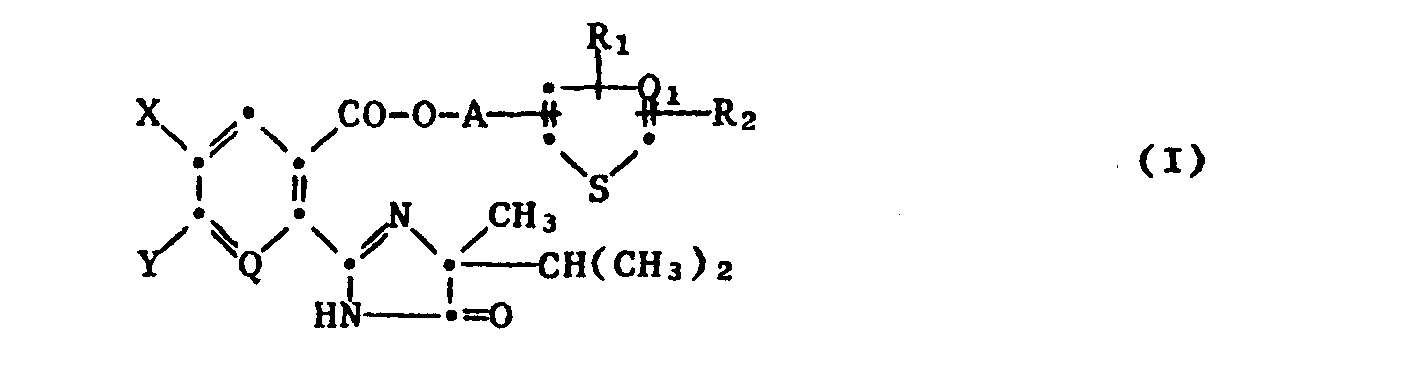
- Die vorliegende Erfindung betrifft neue Thiazolylalkyl- und Thienylalkylester von a-Imidazolinon-nicotin- und -benzoesäuren mit herbizider und den Pflanzenwuchs regulierender Wirkung, sowie die Herstellung dieser neuen Verbindungen. Ferner betrifft sie Mittel, welche die neuen Imidazolinon-Verbindungen enthalten sowie deren Verwendung zur selektiven Bekämpfung von Unkräutern oder zur Regulierung des Pflanzenwuchses.
- Die neuen Thiazolylalkyl-, Thienylalkylester von a-Imidazolinon-nicotin- und -benzoesäuren entsprechen der Formel I

- In diesen Definitionen können die Alkylreste, wie auch die Alkylenreste, geradkettig oder verzweigt sein und die Bedeutung von Methyl, Methylen, Aethyl, Aethylen, Propyl, Propylen, Isopropyl, 1- oder 2-Methyläthylen, Butyl, Butylen, sec. Butyl, 1-Methylpropylen, Isobutyl, 2-Methylpropylen, tert.-Butyl, 2,2-Dimethyläthylen, 1,2-Dimethyläthylen, haben.
- Halogen bedeutet Fluor, Chlor, Brom oder Iod.
- Die Herstellung solcher Verbindungen lässt sich durch folgendes Schema darstellen:

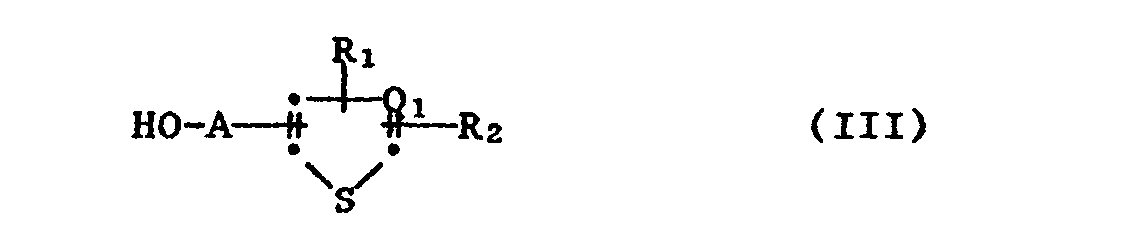
- Das erfindungsgemässe Verfahren zur Herstellung der Imidazolinon-Verbindungen der Formel I besteht darin, dass man eine Verbindung der Formel IIa resp. IIb

- Als Lösungsmittel für diese Umsetzungen eignen sich möglichst wasserfreie Kohlenwasserstoffe, Aether oder Ketone, wie z.B. Benzol, Toluol, Xylol, Hexan, Cyclohexan, Diisopropyläther, Tetrahydrofuran, Dioxan.
- Als basische Mittel kommen z.B. Natriumhydrid, 1,8-Diaza-bicyclo-[5.4.0]undec-7-en, tert. Amine und Alkalihydroxide in Frage.
- Diese Reaktionen werden bei Temperaturen zwischen 0 und 200° durchgeführt, im allgemeinen beim Siedepunkt des Reaktionsgemisches.
- Ausgangsprodukte der Formel IIa sind bekannt und oder nach bekannten Methoden herstellbar, z.B. gemäss der Europäischen Offenlegungsschrift EP-A 41 623 indem man unter basischen Bedingungen ein N-(α-Isopropyl-α-methylacetamido)-2,3-pyridincarbonsäureimid oder -phthalimid gemäss folgenden dem Schema umsetzt.

- Das N-(a-Isopropyl-a-methyl-acetamido)-phthalimid kann durch Kondensation von Phthalsäureanhydrid mit 2-Amino-(a-isopropyl-a-methyl)-acetonitril erhalten werden. Anschliessend muss das Nitril durch Erwärmen in wässriger Säure zum Säureamid umgewandelt werden.
- Ein Pyridin-2,3-dicarbonsäure-a-isopropyl-a-methyl-acetamid der Formel IV kann gemäss einem einfachen Verfahren hergestellt werden, indem man ein ungesättigtes Hydrazon mit einem 2-Chlor- oder 2-Brom-N-(a-isopropyl-«-methyl-acetonitril) succinimid kondensiert und eine saure Hydrolyse anachliesst, gemäss dem Schema

- In diesen Formeln bedeuten R' und R" je Wasserstoff oder CI-C4-Alkyl, Hal Chlor oder Brom, während X und Y die unter der Formel I gegebene Bedeutung haben.
- Die Ausgangsstoffe der Formel IIb werden erhalten, indem man das obige N-(α-Isopropyl-α-methylacetamido)-2,3-pyridincarbonsäureimid oder -phthalsäureimid in Gegenwart einer Base wie z.B. Natronlauge zum 2-(4-Isopropyl-4-methyl-5-oxo-imidazolidin)-nicotinsäurederivat umwandelt.

- welches sich beim Behandeln mit einem wasserentziehenden Mittel in einem inerten organischen Lösungsmittel unter Verlust eines Wassermoleküls zum Ausgangsprodukt der Formel IIb (2-Isopropyl-2-methyl-3H-imidazo [1',2':1,2]pyrrolo[3,4-b]pyridin 3,5-dion) umwandelt. Solche Nicotinsäureester und ihre Herstellung sind auch in der Europäischen Offenlegungsschrift EP-A 41 623 beschrieben.
- Als wasserentziehende Mittel für diese Cyclisation kommen z.B. Kochen am Wasserabschneider, eine molare Menge einer starken Säure z.B. konzentrierter Schwefelsäure oder eines Anhydrides, oder ein wasserabsorbierende Reagentien wie Cyclohexancarbodiimid, Thionylchlorid oder Phosgen in Gegenwart von etwas Dimethylformamid in Frage.
- Die Reaktionen werden soweit sie sich nicht schon bei Raumtemperatur durchführen lassen bei Temperaturen zwischen 0°C und 200°C durchgeführt, d.h. man erhitzt - falls nötig - bis zum Siedepunkt des Reaktionsgemisches und kühlt wenn nötig mit Eis/Wasser oder Eis/Solebad ab.
- Als Basen kommen für diese Reaktionen vor allem anorganische Basen wie Natriumhydroxid, Natriumcarbonat, Natriumhydrid, Calciumhydroxid, Calciumcarbonat, Kaliumhydroxid, Kaliumcarbonat, sowie tertiäre inorganische Basen wie Triäthylamin in Frage.
- Geeignete Lösungsmittel sind z.B. polare, aprotische Lösungsmittel, die alleine oder in Mischungen aus mindestens zwei Lösungsmitteln verwendet werden können.
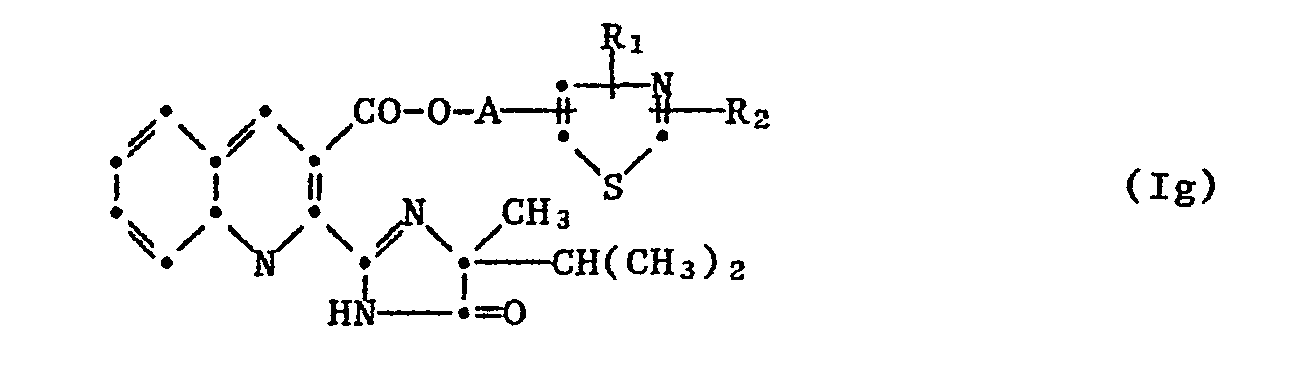
- Unter den neuen Estern der Formel I haben sich die Nicotinsäureester als sehr aktiv erwiesen, in denen sowohl Q und Q1 Stickstoff, R1, R2 und Y je Wasserstoff oder C1-C4-Alkyl bedeuten und welche der Formel la entsprechen
-
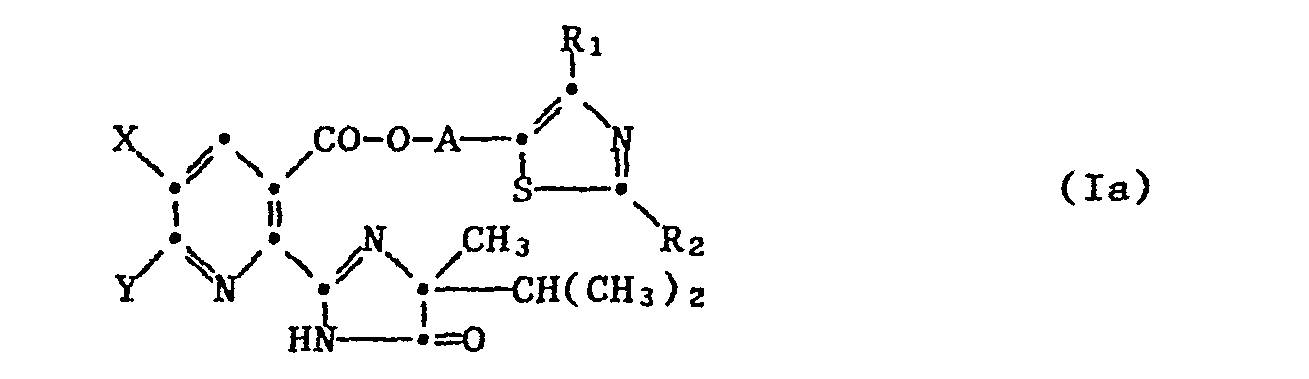
- 2-(5-Isopropyl-5-methyl-4-oxo-4,5-dihydro-imidazolin-2-yl)-nicotinsäure-(4-methyl-thiazol-5-yl-äthyl)ester, 5-Methyl-2-(5-isopropyl-5-methyl-4-oxo-4,5-dihydro-imidazolin-2-yl)-nicotinsäure-(4-methyl-thiazol-5-yl-äthyl)ester, 5-n-Propyl-2-(5-isopropyl-5-methyl-4-oxo-4,5-dihydro-imidazolin-2-yl)-nicotinsäure-(4-methyl-thiazol-5-yl-äthyl)ester, 5-Isopropyl-2-(5-isopropyl-5-methyl-4-oxo-4,5-dihydro-imidazolin-2-yl)-nicotinsäure-(4-methyl-thiazol-5-yl-äthyl)ester.
- Ebenso wirksam waren die Nicotinsäure-thienylalkylester in welchen Q Stickstoff, Q1 die Methingruppe R1, Rz, X und Y je Wasserstoff oder C1-C4-Alkyl bedeuten und die Formel Ib entsprechen.

- 2-(5-Isopropyl-5-methyl-4-oxo-4,5-dihydro-imidazolin-2-yl)-nicotinsäure-thiophen-2-yl-äthylester, 5-Methyl-2-(5-isopropyl-5-methyl-4-oxo-4,5-dihydro-imidazolin-2-yl)-nicotinsäure-(4-methyl-thiophen-2-yl-äthyl)ester,
- 5-Aethyl-2-(5-isopropyl-5-methyl-4-oxo-4,5-dihydro-imidazolin-2-yl)-nicotinsäure-(4-methyl-thiophen-2-yläthyl)ester, 5-Methyl-2-(5-isopropyl-5-methyl-4-oxo-4,5-dihydro-imidazolin-2-yl)-nicotinsäure-(4-methyl-thiophen-2-ylmethyl)ester, 5-Aethyl-2-(5-isopropyl-5-methyl-4-oxo-4,5-dihydro-imidazolin-2-yl)-nicotinsäure-(4-methyl-thiophen-2-ylmethyl)ester,
- Weiterhin wirksam waren die Benzoethiadiazolylalkylester, Q Methin, Q1 Stickstoff und R1, R2, X und Y je Wasserstoff oder C1-C4-Alkyl oder X und Y zusammen die Butadienbrücke bedeuten und welche der Formel Ic entsprechen.

- Als besonders wirksam hat sich der 2-(5-Isopropyl-5-methyl-4-oxo-4,5-dihydro-imidazolin-2-yl)-benzoesäure-(4-methyl-thiadiazol-5- yläthyl)ester erwiesen.
- Gute Wirkung zeigen die Benzoe- oder Naphthoesäurethienylalkylester, worin Q und Q1 Methin, R1, R2, X und Y je Wasserstoff oder C1-C4-Alkyl oder X und Y zusammen die Butadienbrücke bedeuten und die der Formel Ie entsprechen


- Die Wirkstoffe der Formel I werden in der Regel mit Aufwandmengen von 0,05 bis 4 kg/ha insbesondere 0,1 bis 1 kg/ha erfolgreich eingesetzt.
- Bei geringeren Aufwandmengen zeichnen sich die Verbindungen der Formel I durch gute selektiv-wuchshemmende und selektiv-herbizide Eigenschaften aus, die sie ausgezeichnet zum Einsatz in Kulturen von Nutzpflanzen, insbesondere in Getreide, Baumwolle, Soja, Mais und Reis, befähigen. Es werden dabei teilweise auch Unkräuter geschädigt, welchen bisher nur mit Totalherbiziden beizukommen war.
- Die Wirkungsart dieser Wirkstoffe ist unüblich. Viele sind translozierbar, d.h. sie werden von der Pflanze aufgenommen und an andere Stellen transportiert, wo sie dann zur Wirkung kommen. So gelingt es beispielsweise, durch Oberflächenbehandlung perennierende Unkräuter bis in die Wurzeln zu schädigen. Die neuen Verbindungen der Formel I wirken bereits bei - im Vergleich zu anderen Herbiziden und Wuchsregulatoren - sehr geringen Aufwandmengen.
- Die Verbindungen der Formel I haben ausserdem starke pflanzenwuchshemmende Eigenschaften. Es werden sowohl Monokotyledonen als auch Dikotyledonen in ihrem Wachstum beeinträchtigt.
- So können z.B. die in der Landwirtschaft in tropischen Gegenden häufig als "cover crops" (Bodenbedecker) angepflanzten Leguminosen durch die Verbindungen der Formel I in ihrem Wachstum selektiv gehemmt werden, so dass zwar die Bodenerosion zwischen den Kulturpflanzen verhindert wird, die "cover crops" jedoch nicht zur Konkurrenz für die Kultur werden können.
- Eine Hemmung des vegetativen Wachstums erlaubt bei vielen Kulturpflanzen eine dichtere Anpflanzung der Kultur, so dass ein Mehrertrag, bezogen auf die Bodenfläche, erzielt werden kann.
- Ein weiterer Mechanismus der Ertragssteigerung mit Wachstumshemmern beruht darauf, dass die Nährstoffe in stärkerem Masse der Blüten-und Fruchtbildung zugute kommen, während das vegetative Wachstum eingeschränkt wird.
- Bei grösseren Aufwandmengen werden alle getesteten Pflanzen in ihrer Entwicklung so geschädigt, dass sie absterben.
- Die Erfindung betrifft auch herbizide und pflanzenwachstumsregulierende Mittel, welche einen neuen Wirkstoff der Formel I enthalten, sowie Verfahren zur pre- und post-emergenten Unkrautbekämpfung und zur Hemmung des Pflanzenwuchses von monokotylen und dikotylen Pflanzen, insbesondere Gräsern, tropischen Bodenbedeckern und Tabakgeiztrieben.
- Die Verbindungen der Formel I werden in unveränderter Form oder vorzugsweise als Mittel zusammen mit den in der Formulierungstechnik üblichen Hilfsmitteln eingesetzt und werden daher z.B. zu Emulsionskonzentraten, direkt versprühbaren oder verdünnbaren Lösungen, verdünnten Emulsionen, Spritzpulvern, löslichen Pulvern, Stäubemitteln, Granulaten, auch Verkapselungen in z.B. polymeren Stoffen in bekannter Weise verarbeitet. Die Anwendungsverfahren wie Versprühen, Vernebeln, Verstäuben, Verstreuen oder Giessen werden gleich wie die Art der Mittel den angestrebten Zielen und den gegebenen Verhältnissen entsprechend gewählt.
- Die Formulierungen, d.h. die den Wirkstoff der Formel I und gegebenenfalls einen festen oder flüssigen Zusatzstoff enthaltenden Mittel, Zubereitungen oder Zusammensetzungen werden in bekannter Weise hergestellt, z.B. durch inniges Vermischen und/oder Vermahlen der wirkstoffe mit Streckmitteln, wie z.B. mit Lösungsmitteln, festen Trägerstoffen, und gegebenenfalls oberflächenaktiven Verbindungen (Tensiden).
- Als Lösungsmittel können in Frage kommen: Aromatische Kohlenwasserstoffe, bevorzugt die Fraktionen c8 bis C12, wie z.B. Xylolgemische oder substituierte Naphthaline, Phthalsäureester wie Dibutyl- oder Dicotylphthalat, aliphatische Kohlenwasserstoffe wie Cyclohexan oder Paraffine, Alkohole und Glykole sowie deren Aether und Ester, wie Aethanol, Aethylenglykol, Aethylenglykolmonomethyl-oder -äthyläther, Ketone wie Cyclohexanon, stark polare Lösungsmittel wie N-Methyl-2-pyrrolidon, Dimethylsulfoxid oder Dimethylformamid, sowie gegebenenfalls epoxidierte Pflanzenöle, wie epoxidiertes Kokosnussöl oder Sojaöl; oder Wasser.
- Als feste Trägerstoffe, z.B. für Stäubemittel und dispergierbare Pulver, werden in der Regel natürliche Gesteinsmehle verwendet, wie Calcit, Talkum, Kaolin, Montmorillonit oder Attapulgit. Zur Verbesserung der physikalischen Eigenschaften können auch hochdisperse Kieselsäure oder hochdisperse saugfähige Polymerisate zugesetzt werden. Als gekörnte, adsorptive Granulatträger kommen poröse Typen wie z.B. Bimsstein, Ziegelbruch, Sepiolit oder Bentonit, als nicht sorptive Trägermaterialien z.B. Calcit oder Sand in Frage. Darüberhinaus kann eine Vielzahl von vorgranulierten Materialien anorganischer oder organischer Natur wie insbesondere Dolomit oder zerkleinerte Pflanzenrückstände verwendet werden.
- Als oberflächenaktive Verbindungen kommen je nach der Art des zu formulierenden Wirkstoffes der Formel I nichtionogene, kation-und/oder anionaktive Tenside mit guten Emulgier-, Dispergier-und Netzeigenschaften in Betracht. Unter Tensiden sind auch Tensidgemische zu verstehen.
- Geeignete anionische Tenside können sowohl sog. wasserlösliche Seifen als auch wasserlösliche synthetische oberflächenaktive Verbindungen sein.
- Als Seifen seien die Alkali-, Erdalkali- oder gegebenenfalls substituierte Ammoniumsalze von höheren Fettsäuren (C1D-C22), wie z.B. die Na- oder K-Salze der Oel- oder Stearinsäure, oder von natürlichen Fettsäuregemischen, die z.B. aus Kokosnuss- oder Talgöl gewonnen werden können, genannt. Ferner sind auch die Fettsäuremethyl-taurinsalze zu erwähnen.
- Häufiger werden jedoch sogenannte synthetische Tenside verwendet, insbesondere Fettsulfonate, Fettsulfate, sulfonierte Benzimidazolderivate oder Alkylarylsulfonate.
- Die Fettsulfate oder -sulfate liegen in der Regel als Alkali-, Erdalkali- oder gegebenenfalls substituierte Ammoniumsalze vor und weisen einen Alkylrest mit 8 bis 22 C-Atomen auf, wobei Alkyl auch den Alkylteil von Acylresten einschliesst, z.B. das Na- oder Ca-Salz der Ligninsulfonsäure, des Dodecylschwefelsäureesters oder eines aus natürlichen Fettsäuren hergestellten Fettalkoholsulfatgemisches. Hierher gehören auch die Salze der Schwefelsäureester und Sulfonsäuren von Fettalkohol-Aethylenoxid-Addukten. Die sulfonierten Benzimidazolderivate enthalten vorzugsweise 2-Sulfonsäuregruppen und einen Fettsäurerest mit 8-22 C-Atomen. Alkylarylsulfonate sind z.B. die Na-, Ca- oder Triäthanolaminsalze der Dodecylbenzolsulfonsäure, der Dibutylnaphthalinsulfonsäure oder eines Naphthalinsulfonsäure-Formaldehydkondensationsproduktes.
- Ferner kommen auch entsprechende Phosphate wie z.B. Salze des Phosphorsäureesters eines p-Nonylphenol-(4-14)-Aethylenoxid-Adduktes oder Phospholipide in Frage.
- Als nicht ionische Tenside kommen in erster Linie Polyglykolätherderivate von aliphatischen oder cycloaliphatischen Alkoholen, gesättigten oder ungesättigten Fettsäuren und Alkylphenolen in Frage, die 3 bis 10 Glykoläthergruppen und 8 bis 20 Kohlensotffatome im (aliphatischen) Kohlenwasserstoffrest und 6 bis 18 Kohlenstoffatome im Alkylrest der Alkylphenole enthalten können.
- Weitere geeignete nichtionische Tenside sind die wasserlöslichen, 20 bis 250 Aethylenglykoläthergruppen und 10 bis 100 Propylenglykoläthergruppen enthaltenden Polyäthylenoxidaddukte an Polypropylenglykol, Aethylendiaminopolypropylenglykol und Alkylpolypropylenglykol mit 1 bis 10 Kohlenstoffdatomen in der Alkylkette. Die genannten Verbindungen enthalten üblicherweise pro Propylenglykol-Einheit 1 bis 5 Aethylenglykoleinheiten.
- Als Beispiele nichtionischer Tenside seien Nonylphenolpolyäthoxy- äthanole, Ricinusölpolyglykoläther, Polypropylen-Polyäthylenoxidaddukte, Tributylphenoxypolyäthanol Polyäthylenglykol und Octylphenoxypolyäthoxyäthanol erwähnt.
- Ferner kommen auch Fettsäureester von Polyoxyäthylensorbitan wie das Polyoxyäthylensorbitan-trioleat in Betracht.
- Bei den kationischen Tensiden handelt es sich vor allem um quaternäre Ammoniumsalze, welche als N-Substituenten mindestens einen Alkylrest mit 8 bis 22 C-Atomen enthalten und als weitere Substituenten niedrige, gegebenenfalls halogenierte Alkyl-, Benzyl- oder niedrige Hydroxyalkylreste aufweisen. Die Salze liegen vorzugsweise als Halogenide, Methylsulfate oder Aethylsulfate vor, z.B. das Stearyltrimethylammoniumchlorid oder das Benzyldi(2-chloräthyl)-äthylammoniumbromid.
- Die in der Formulierungstechnik gebräuchlichen Tenside sind u.a. in folgenden Publikationen beschrieben:
- "Mc Cutcheon's Detergents and Emulsifiers Annual"
- MC Publishing Corp., Ridgewood, New Jersey, 1979.
- Dr. Helmut Stache "Tensid Taschenbuch"
- Carl Hanser Verlag, München/Wien 1981.
- Die pestiziden Zubereitungen enthalten in der Regel 0,1 bis 95 %, insbesondere 0,1 bis 80 %, Wirkstoff der Formel I, 1 bis 99,9 % eines festen oder flüssigen Zusatzstoffes und 0 bis 25 %, insbesondere 0,1 bis 25 % eines Tensides.
- Insbesondere setzen sich bevorzugte Formulierungen folgendermassen zusammen: (% a Gewichtsprozent)
-

-

-

-

-

- Während als Handelsware eher konzentrierte Mittel bevorzugt werden, verwendet der Endverbraucher in der Regel verdünnte Mittel. Die Anwendungsformen können bis hinab zu 0,001 % an Wirkstoff verdünnt werden. Die Aufwandmengen betragen in der Regel 0,005 bis 5 kg As/ha.
- Die Mittel können auch weitere Zusätze wie Stabilisatoren, Entschäumer, Viskositätsregulatoren, Bindemittel, Haftmittel sowie Dünger oder andere Wirkstoffe zur Erzielung spezieller Effekte enthalten.
- Die nachfolgenden Beispiele veranschaulichen die Herstellung einiger Verbindungen der Formel I. Weitere in entsprechender Weise hergestellte Wirkstoffe sind in den anschliessenden Tabellen aufgeführt. Temperaturangaben beziehen sich auf Celsius-Grade, Drucke sind in Millibar angegeben.
- Beispiel 1: Herstellung von 2-(5-Isopropyl-5-methyl-4-oxo-4,5-di- hydro-imidazolin-2-yl)-nicotinsäure-(4-methyl-thiazol-5-yl)-äthyl)-ester

- In einem Sulfierkolben wird das Gemisch von 9 g 3,5-Dioxo-2-isopropyl-2-methyl-2,3-dihydroimidazo[1',2':1,2]5-H-pyrrolo[3,4-b]-pyridin in 50 ml Tetrahydrofuran, 5,5 g 5-(2-Hydroxyäthyl)-4-methyl- thiazol und 2 Tropfen 1,8-Diazabicyclo[5.4.0]undec-7-en 3 Stunden am Rückfluss gekocht, dann dampft man das Lösungsmittel am Vakuum ein und verreibt den zunächst öligen Rückstand mit 50 ml Aether. Es kristallisieren 7,7 g des Produkts. Eine weitere Portion kann durch Einengen der Mutterlauge und Kristallisation aus Aceton/Aether erhalten werden. Die Kristalle schmelzen bei 154-157°. Ausbeute 8.5 g.
- Das als Ausgangsmaterial benötigte 3,5-Dioxo-2-isopropyl-2-methyl-2,3-dihydro-imidazo[1',2':1,2]5-H-pyrrolo[3,4-b]pyridin wird wie folgt hergestellt:

- Zu einer Lösung von 11,1 g Dicyclohexylcarbodiimid in 100 ml Methylenchlorid gibt man unter Rühren 15,6 g (0.05 Mol) 2-(5-Isopropyl-5-methyl)-2-oxo-2-imidazolin-2-yl-nicotinsaure und rührt zwei Stunden bei Raumtemperatur weiter. Dann nutscht man den entstandenen Dicyclohexylharnstoff ab und wäscht den Rückstand mit wenig Methylenchlorid nach. Das Filtrat wird eingedampft und der Rückstand aus Essigsäureäthylester/Hexan umkristallisiert. Man erhält so das Titelprodukt in 91%iger Ausbeute (12.1 g) als Kristalle, die bei 132-133° schmelzen.
- In analoger Weise dazu werden die folgenden Ausgangsprodukte erhalten.

- Beispiel 2: Herstellung von 2-(5-Isopropyl-5-methyl-4-oxo-4,5-di- hydro-imidazolin-2-yl)-nicotinsäure-thienyl-2-yl-äthylester

- Eine Lösung von 10 g 2-(2-Thienyl)-äthanol wird in 100 ml trockenem Toluol unter Stickstoffatmosphäre langsam mit einem Gramm Natriumhydrid (80 % in Weissöl) versetzt. Nach 15 Minuten werden 10 g 3-Isopropyl-3-methyl-3H-imidazo[1',2':1,2]pyrrolo-[3,4-h]pyridin-2,5-dion zugegeben und für eine Stunde am Rückfluss erhitzt. Zur Aufarbeitung dampft man die Reaktionsmischung am Vakuum ein und chromatographiert den Rückstand an einer Kieselgel-Säule mit Tetrahydrofuran/Petroläther 1:2 als Laufmittel. Die ersten Fraktionen enthalten überschüssiges Thienyläthanol, aus den darauffolgenden wird das Produkt durch Eindampfen und Trocknen am Vakuum als helles Oel isoliert, welches beim Anreiben kristallisiert. Man erhält so 9 g Titelprodukt, welches bei 84-87° schmilzt.
- Das als Ausgangsmaterial benötigte 3-Isopropyl-3-methyl-3H-imidazo-[1',2':1.2]pyrrolo-[3,4-b]pyridin-2,5-dion] wird wie folgt hergestellt:

- Eine Lösung von 5,7-Dihydro-a-isopropyl-u-methyl-5,7-dioxo-6H-pyrrolo-[3,4-b]pyridin-6-acetamid (Smp. 82°C) in 100 ml Toluol wird unter Zugabe von 0,5 g gepulvertem Natriumhydroxid während 2 Stunden am Wasserabschneider unter Rückfluss erhitzt. Nach dem Erkalten filtriert man die Reaktionslösung durch Kieselgel, wäscht mit Essigsäureäthylester nach und dampft das Filtrat ein. Der Rückstand wird aus Essigsäureäthylester/Petroläther auskristallisiert. Man erhält so 13,1 g der obigen Verbindung, welche bei 116°C schmilzt.
- In analoger Weise dazu werden die folgenden Ausgangsverbindungen erhalten.


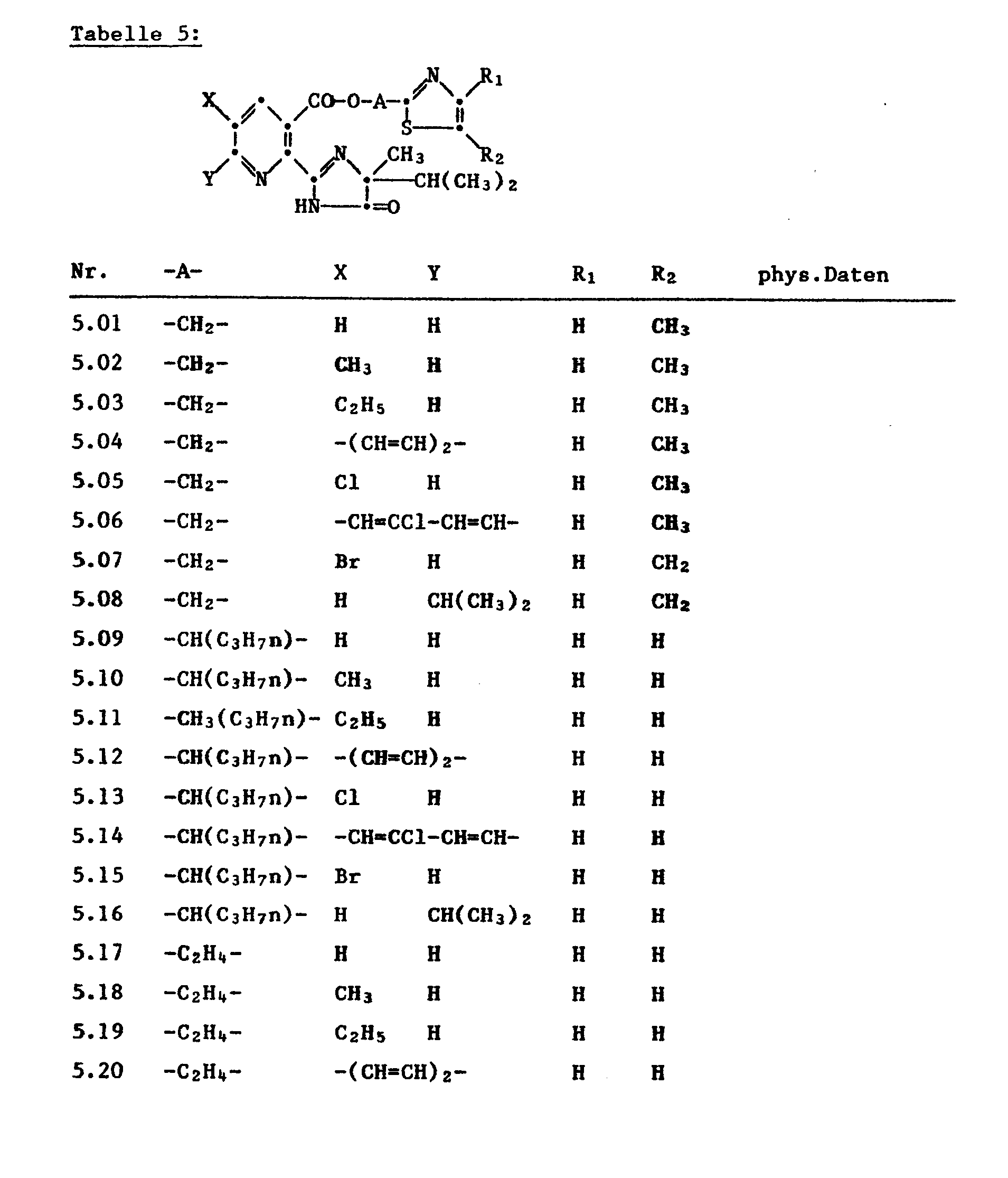
- In analoger Weise zu den Beispielen 1 und 2 und in sinngemässer Anwendung der entsprechenden Ausgangsprodukte werden die in den folgenden Tabellen aufgeführten Verbindungen erhalten:




-


- Aus diesem Konzentrat können durch Verdünnen mit Wasser Emulsionen jeder gewünschten Konzentration hergestellt werden.
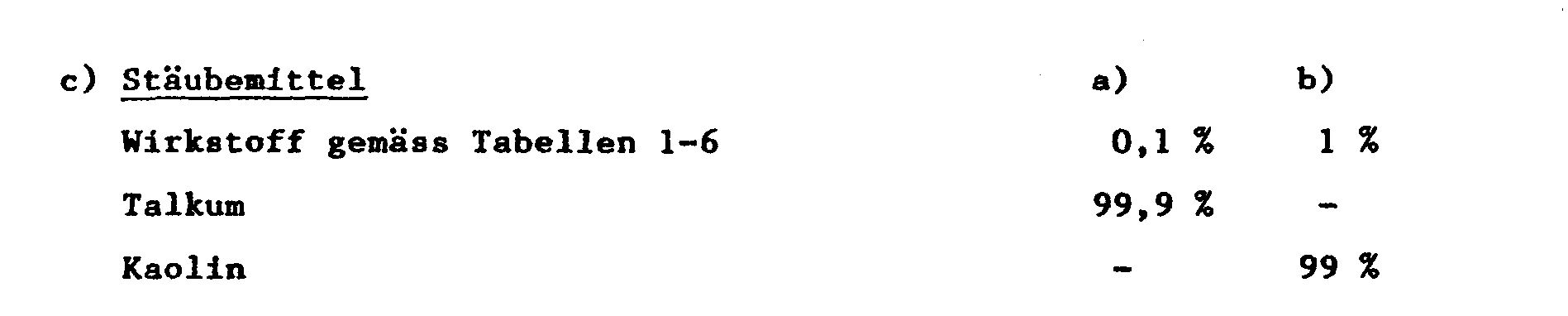
- Man erhält anwendungsfertige Stäubemittel, indem der Wirkstoff mit dem Träger vermischt und auf einer geeigneten Mühle vermahlen wird.

- Der Wirkstoff wird mit den Zusatzstoffen vermischt, vermahlen und mit Wasser angefeuchtet. Dieses Gemisch wird extrudiert und anschliessend im Luftstrom getrocknet.

- Der fein gemahlene Wirkstoff wird in einem Mischer auf das mit Polyäthylenglykol angefeuchtete Kaolin gleichmässig aufgetragen. Auf diese Weise erhält man staubfreie UmhUllungs-Granulate.

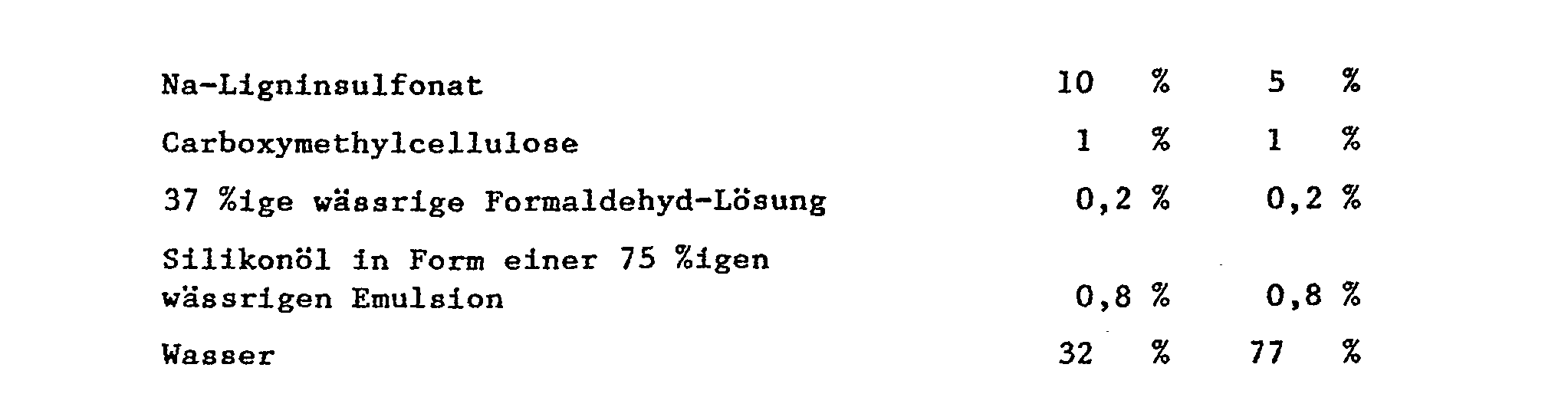
- Der fein gemahlene Wirkstoff wird mit den Zusatzstoffen innig vermischt. Man erhält so ein Suspensions-Konzentrat, aus welchem durch Verdünnen mit Wasser Suspensionen jeder gewünschten Konzentration hergestellt werden können.

- Im Gewächshaus wird unmittelbar nach der Einsaat der Versuchspflanzen in Saatschalen die Erdoberfläche mit einer wässrigen Dispersion der Wirkstoffe, erhalten aus einem 25 %igen Emulsionskonzentrat behandelt. Es werden Konzentrationen von 4 kg Wirksubstanz/Hektar angewendet. Die Saatschalen werden im Gewächshaus bei 22-25°C und 50-70 % relativer Luftfeuchtigkeit gehalten und der Versuch nach 3 Wochen ausgewertet und die Resultate nach folgender Notenskala ausgewertet.
- 1 Pflanze hat nicht gekeimt oder ist eingegangen
- 2-3 sehr starke Schäden
- 4 starke Schäden
- 5 mittlere Schäden, die Pflanzen sind verkümmert
- 6 Schäden, die Pflanze kann regenerieren
- 7-8 leichte Schäden
- 9 normales Wachstum, wie unbehandelte Pflanzen
- In diesem Versuch zeigten die Verbindungen der Tabellen 3-8 starke Herbizidwirkung. Einige Resultate sind in der Tabelle 7 zusammengefasst.

- Eine Anzahl Unkräuter, sowohl monokotyle wie dikotyle, wurden nach dem Auflaufen (im 4- bis 6-Blattstadium) mit einer wässrigen Wirkstoffdispersion in einer Dosierung von 4 kg Wirksubstanz pro Hektar auf die Pflanzen gespritzt und diese bei 24°-26°C und 45-60 % relativer Luftfeuchtigkeit gehalten. 15 Tage nach der Behandlung wird der Versuch nach der obigen Notenskala ausgewertet. Auch in diesem Versuch zeigen die Verbindungen der Tabellen 1-6 starke bis sehr starke Herbizidwirkung. Einige Resultate sind in der Tabelle 8 zusammengefasst.

- Die Resultate sind in der Tabelle 9 zusammengefasst:

- Die Wasserunkräuter Echinochloa crus galli und Monocharia vag. werden in Plastikbechern (60 cmz Oberfläche, 500 ml Volumen) ausgesät. Nach der Saat wird bis zur Erdoberfläche mit Wasser aufgefüllt. 3 Tage nach der Saat wird der Wasserspiegel bis leicht über die Erdoberfläche erhöht (3-5 mm). Die Applikation erfolgt 3 Tage nach der Saat mit einer wässrigen Emulsion der Prüfsubstanzen durch eine Spritzung auf die Gefässe. Die Dosis entspricht einer Wirkstoffmenge von 4 kg AS pro Hektar (Spritzbrühmenge = 550 1/ha. Die Pflanzenbecher werden dann im Gewächshaus unter optimalen Wachstumsbedingungen für die Reisunkräuter aufgestellt, d.h. bei 25°-30°C und hoher Luftfeuchtigkeit. Die Auswertung der Versuche findet 3 Wochen nach Applikation statt.
- Die geprüften Verbindungen der Tabelle 1-6 zeigten in diesem Versuch gute Wirkung.
- Die Versuchspflanzen (centrosema plumieri und centrosema pubescens) werden bis zum ausgewachsenen Stadium herangezogen und bis auf eine Höhe von 60 cm zurückgeschnitten. Nach 7 Tagen wird der Wirkstoff als wässrige Emulsion gespritzt. Die Versuchspflanzen werden bei 70 % relativer Luftfeuchtigkeit und 6000 lux Kunstlicht, pro Tag 14 Stunden, bei Temperaturen von 27° bei Tag und 21°C bei Nacht gehalten. 4 Wochen nach der Applikation wird der Versuch ausgewertet. Es werden dabei der Neuzuwachs im Vergleich zur Kontrolle abgeschätzt und gewogen und die Phytotoxizität bewertet. In diesem Versuch zeigen die mit den Wirkstoffen der Tabellen 1-6 in Aufwandmengen von 50-3000 g/ha behandelten Pflanzen eine deutliche Reduktion des Neuzuwachses (weniger als 20 % des Neuzuwachses bei unbehandelten Kontrollpflanzen), ohne dass dabei die Versuchspflanzen geschädigt wurden.
- In Kunststoffbehältern mit einem Erde-Torf-Sandgemisch im Verhältnis 6:3:1 werden Sojabohnen der Sorte "Hark" angesät und in eine Klimakammer gegeben. Durch optimale Temperaturwahl, Beleuchtung, Düngerzugabe und Bewässerung entwickeln sich die Pflanzen nach ca. 5 Wochen bis zum 5-6 Trifolia-Blattstadium. Zu diesem Zeitpunkt werden die Pflanzen mit der wässrigen Brühe eines Wirkstoffs der Formel I bis zur guten Benetzung besprüht. Die Wirkstoffkonzentration beträgt bis zu 100 g AS/ha. Die Auswertung erfolgt ca. 5 Wochen nach der Applikation des Wirkstoffs. Im Vergleich zu unbehandelten Kontrollpflanzen bewirken die erfindungsgemässen Wirkstoffe der Tabellen 1-6 eine merklicher Erhöhung der Anzahl und des Gewichts der Schoten im Haupttrieb.
- In Kunststofftöpfen mit sterilisierter Erde werden in Getreidearten Hordeum vulgare (Sommergerste) und Secale (Sommerroggen) im Gewächshaus angesät und nach Bedarf bewässert. Die Sprösslinge werden ca. 21 Tage nach der Aussaat mit der wässrigen Spritzbrühe eines Wirkstoffes der Tabellen 1-6 besprüht. Die Wirkstoffmenge beträgt bis zu 100 g Aktivsubstanz pro Hektar. 21 Tage nach Applikation wird das Wachstum des Getreides beurteilt. Die behandelten Pflanzen weisen im Vergleich zu unbehandelten Kontrollen eine Verringerung des Neuzuwachses (60-90 % der Kontrolle), sowie teilweise eine Zunahme der Stengeldurchmesser auf.
- In Kunststoffschalen mit Erde-Torf-Sand-Gemisch (6:3:1) werden die Gräser Lolium perenne, Poa pratensis, Festuca ovina, Dactylis glomerate und Cynodon dactylon im Gewächshaus angesät und nach Bedarf bewässert. Die aufgelaufenen Gräser werden wöchentlich bis auf 4 cm Höhe zurückgeschnitten und ca. 50 Tage nach der Aussaat und einen Tag nach dem letzten Schnitt mit der wässrigen Spritzbrühe eines Wirkstoffes der Tabellen 1-6 besprüht. Die Wirkstoffmenge beträgt umgerechnet bis zu 500 g Aktivsubstanz pro Hektar. 21 Tage nach Applikation wird das Wachstum der Gräser beurteilt.
- Die geprüften Verbindungen bewirken eine Reduzierung des Neuzuwachses von um 10-30 % im Vergleich zur unbehandelten Kontrolle.
- In einem Gewächshaus wurden Baumwollpflanzen der Sorte Deltapine in Tontöpfen angezogen. Nach abgeschlossener Kapselbindung wurden sie mit wässerigen Zubereitungen eines Wirkstoffes in einer Aufwandmenge, die 1,2, 0,6 und 0,3 kg/ha im Feld entspräche, gespritzt. Unbehandelte Pflanzen wurden als Kontrolle belassen. Die Auswertung des Versuches erfolgte 3, 7 und 14 Tage nach Applikation der Wirksubstanz durch Bestimmen des Grades an Defoliation (% abgefallene Blätter) und an Desiccation (% Austrocknung der an der Pflanze verbleibenden Blätter).
- In diesem Versuch beliessen die geprüften Verbindungen der Tabellen 1-6 bei Aufwandmengen von 0,6 und 1,2 kg/ha nach 7 Tagen bloss noch wenige vertrocknete Blätter auf den Pflanzen (> 80 % Blattfall und Austrocknung).
Claims (23)




Applications Claiming Priority (5)
| Application Number | Priority Date | Filing Date | Title |
|---|---|---|---|
| CH3643/85 | 1985-08-23 | ||
| CH364385 | 1985-08-23 | ||
| CH811/86 | 1986-02-28 | ||
| CH81186 | 1986-02-28 | ||
| DE3818541A DE3818541A1 (de) | 1985-08-23 | 1988-05-31 | Neue substituierte imidazolone mit herbizider wirkung |
Publications (2)
| Publication Number | Publication Date |
|---|---|
| EP0213079A2 true EP0213079A2 (de) | 1987-03-04 |
| EP0213079A3 EP0213079A3 (de) | 1987-08-05 |
Family
ID=39356656
Family Applications (1)
| Application Number | Title | Priority Date | Filing Date |
|---|---|---|---|
| EP86810366A Withdrawn EP0213079A3 (de) | 1985-08-23 | 1986-08-18 | Thienylalkylester von alpha-Imidazolinon-nicotin- und -benzoesäuren |
Country Status (7)
| Country | Link |
|---|---|
| US (1) | US4851029A (de) |
| EP (1) | EP0213079A3 (de) |
| BR (1) | BR8604008A (de) |
| CA (1) | CA1254211A (de) |
| DE (1) | DE3818541A1 (de) |
| ES (1) | ES2001564A6 (de) |
| IL (1) | IL79793A (de) |
Cited By (2)
| Publication number | Priority date | Publication date | Assignee | Title |
|---|---|---|---|---|
| WO1991013069A1 (en) * | 1990-02-28 | 1991-09-05 | Korea Research Institute Of Chemical Technology | Herbicidal pyridine derivatives and their salts of 3-(aminooxoacetyl)-2-(2-imidazolin-2-yl) |
| WO1999032464A1 (en) * | 1997-12-22 | 1999-07-01 | Novartis Ag | Thiazole-, isothiazole- and thiadiazole-derivatives having microbicidal and plant immunizing activities |
Families Citing this family (3)
| Publication number | Priority date | Publication date | Assignee | Title |
|---|---|---|---|---|
| US5120854A (en) * | 1987-08-17 | 1992-06-09 | American Cyanamid Company | Benzenesulfonyl carboxamide compounds and intermediate compounds |
| US5256629A (en) * | 1992-06-03 | 1993-10-26 | American Cyanamid Company | 3-(substituted ketone and alcohol)-2-(2-imidazolin-2-yl) pyridine compounds useful as herbicidal agents |
| US6143694A (en) * | 1998-01-09 | 2000-11-07 | Taylor; John B. | Non-auxin preharvest curing aids for tobacco |
Family Cites Families (4)
| Publication number | Priority date | Publication date | Assignee | Title |
|---|---|---|---|---|
| ATE43845T1 (de) * | 1983-06-02 | 1989-06-15 | American Cyanamid Co | (2-imidazolin-2-yl)thieno-und furo(2,3-b)-und (3,2-b)-pyridine und zwischenprodukte, ihre herstellung und ihre verwendung als herbizide mittel. |
| AR241812A1 (es) * | 1983-08-02 | 1992-12-30 | American Cyanamit Company | Nuevas hidroimidazo pirrolopirinas, o vinolinas, tieno-y furo¡2,3b¿ piridinas dihidrotieno-y furo ¡2,3b¿ piridinas, tieno-y furo ¡3,2b¿ piridinas tautomeros de las mismas. |
| US4608079A (en) * | 1983-08-02 | 1986-08-26 | American Cyanamid Company | Imidazolidinones, and imidazolidinethiones, process and intermediates for the preparation thereof, and use of said compounds as herbicidal agents |
| ATE37182T1 (de) * | 1983-08-02 | 1988-09-15 | American Cyanamid Co | Imidazolinone und imidazolidinthione, verfahren zu deren herstellung und verwendung dieser verbindungen als herbizide. |
-
1986
- 1986-08-18 US US06/897,249 patent/US4851029A/en not_active Expired - Fee Related
- 1986-08-18 EP EP86810366A patent/EP0213079A3/de not_active Withdrawn
- 1986-08-21 IL IL79793A patent/IL79793A/xx unknown
- 1986-08-21 CA CA000516459A patent/CA1254211A/en not_active Expired
- 1986-08-22 ES ES8601281A patent/ES2001564A6/es not_active Expired
- 1986-08-22 BR BR8604008A patent/BR8604008A/pt unknown
-
1988
- 1988-05-31 DE DE3818541A patent/DE3818541A1/de not_active Withdrawn
Cited By (2)
| Publication number | Priority date | Publication date | Assignee | Title |
|---|---|---|---|---|
| WO1991013069A1 (en) * | 1990-02-28 | 1991-09-05 | Korea Research Institute Of Chemical Technology | Herbicidal pyridine derivatives and their salts of 3-(aminooxoacetyl)-2-(2-imidazolin-2-yl) |
| WO1999032464A1 (en) * | 1997-12-22 | 1999-07-01 | Novartis Ag | Thiazole-, isothiazole- and thiadiazole-derivatives having microbicidal and plant immunizing activities |
Also Published As
| Publication number | Publication date |
|---|---|
| IL79793A0 (en) | 1986-11-30 |
| EP0213079A3 (de) | 1987-08-05 |
| US4851029A (en) | 1989-07-25 |
| ES2001564A6 (es) | 1988-06-01 |
| CA1254211A (en) | 1989-05-16 |
| BR8604008A (pt) | 1987-03-24 |
| IL79793A (en) | 1991-01-31 |
| DE3818541A1 (de) | 1988-10-06 |
Similar Documents
| Publication | Publication Date | Title |
|---|---|---|
| EP0126713B1 (de) | Cyclohexandion-carbonsäurederivate mit herbizider und das Pflanzenwachstum regulierender Wirkung | |
| EP0262096B1 (de) | Aminopyrazinone und Aminotriazinone | |
| CH649081A5 (de) | Triaza-verbindungen. | |
| EP0207894B1 (de) | Herbizid wirkende Derivate des N-Phenyl-3,4,5,6-tetrahydrophthalsäureimides | |
| EP0459949B1 (de) | Sulfonylharnstoffe mit herbizider und pflanzenwuchsregulierender Wirkung | |
| EP0177450B1 (de) | Verfahren zur Herstellung von Cyclohexandion-carbonsäurederivaten mit herbizider und das Pflanzenwachstum regulierender Wirkung | |
| EP0195745B1 (de) | Heterocyclisch kondensierte Pyridin-Verbindungen als Herbizide | |
| EP0211805A2 (de) | Neue N-(2-Fluorphenyl)-azolidine | |
| EP0296109A2 (de) | 2-(Imidazolin-2-yl)nicotinsäurederivate | |
| EP0156773B1 (de) | Cyclohexenon-carbonsäurederivate mit herbizider und das Pflanzenwachstum regulierender Wirkung | |
| EP0152378A2 (de) | Herbizide Sulfonylharnstoffe | |
| EP0434624B1 (de) | Triazolylsulfonamide | |
| EP0125205A1 (de) | N-Phenylsulfonyl-N'-pyrimidinyl- und -triazinylharnstoffe | |
| EP0210137B1 (de) | Anellierte Triazol-Verbindungen | |
| EP0233151B1 (de) | Ester als Herbizide | |
| EP0169815B1 (de) | N-Arylsulfonyl-N'-triazinyl- und -pyrimidinylharnstoffe | |
| EP0215738A1 (de) | Heterocyclylalkylester von 2-Imidazolinon-nicotinsäuren | |
| EP0058639B1 (de) | 2-(4-(6-Halogen-chinoxalinyl-2-oxy)-phenoxy)-propionsäureester, Verfahren zu ihrer Herstellung sowie ihre Verwendung als Herbizide und Pflanzenwuchsregulatoren | |
| EP0305332A2 (de) | Imidazol-Derivate | |
| EP0397602A1 (de) | Neue N-Phenylpyrrolidine | |
| EP0225290B1 (de) | Herbizid wirkende Epoxide | |
| EP0402316B1 (de) | Sulfonylharnstoffe | |
| EP0471646B1 (de) | Sulfonylharnstoffe als Herbizide | |
| EP0145664A2 (de) | Herbizide Sulfonylharnstoffe | |
| EP0102924A2 (de) | N-Azidophenylsulfonyl-N'-pyrimidinyl- und -triazinylharnstoffe |
Legal Events
| Date | Code | Title | Description |
|---|---|---|---|
| PUAI | Public reference made under article 153(3) epc to a published international application that has entered the european phase |
Free format text: ORIGINAL CODE: 0009012 |
|
| 17P | Request for examination filed |
Effective date: 19860820 |
|
| AK | Designated contracting states |
Kind code of ref document: A2 Designated state(s): BE CH DE FR GB IT LI NL |
|
| PUAL | Search report despatched |
Free format text: ORIGINAL CODE: 0009013 |
|
| AK | Designated contracting states |
Kind code of ref document: A3 Designated state(s): BE CH DE FR GB IT LI NL |
|
| 17Q | First examination report despatched |
Effective date: 19890719 |
|
| STAA | Information on the status of an ep patent application or granted ep patent |
Free format text: STATUS: THE APPLICATION IS DEEMED TO BE WITHDRAWN |
|
| 18D | Application deemed to be withdrawn |
Effective date: 19920302 |
|
| RIN1 | Information on inventor provided before grant (corrected) |
Inventor name: DUERR, DIETER, DR. Inventor name: SZCZEPANSKI, HENRY, DR. |