EP0212656A1 - Method for joining plasics material to dissimilar material - Google Patents
Method for joining plasics material to dissimilar material Download PDFInfo
- Publication number
- EP0212656A1 EP0212656A1 EP86111782A EP86111782A EP0212656A1 EP 0212656 A1 EP0212656 A1 EP 0212656A1 EP 86111782 A EP86111782 A EP 86111782A EP 86111782 A EP86111782 A EP 86111782A EP 0212656 A1 EP0212656 A1 EP 0212656A1
- Authority
- EP
- European Patent Office
- Prior art keywords
- set forth
- laser
- probe
- laser beam
- plastics material
- Prior art date
- Legal status (The legal status is an assumption and is not a legal conclusion. Google has not performed a legal analysis and makes no representation as to the accuracy of the status listed.)
- Withdrawn
Links
- 239000000463 material Substances 0.000 title claims abstract description 80
- 238000000034 method Methods 0.000 title claims description 35
- 239000004033 plastic Substances 0.000 claims abstract description 53
- 229920003023 plastic Polymers 0.000 claims abstract description 51
- 239000000523 sample Substances 0.000 claims abstract description 39
- 239000000155 melt Substances 0.000 claims abstract description 9
- 239000011521 glass Substances 0.000 claims abstract description 7
- 239000000919 ceramic Substances 0.000 claims description 9
- XEEYBQQBJWHFJM-UHFFFAOYSA-N Iron Chemical compound [Fe] XEEYBQQBJWHFJM-UHFFFAOYSA-N 0.000 claims description 8
- 229920002285 poly(styrene-co-acrylonitrile) Polymers 0.000 claims description 8
- 239000004743 Polypropylene Substances 0.000 claims description 7
- 239000006229 carbon black Substances 0.000 claims description 7
- 229910052751 metal Inorganic materials 0.000 claims description 6
- 239000002184 metal Substances 0.000 claims description 6
- -1 polyethylene Polymers 0.000 claims description 6
- 229910000831 Steel Inorganic materials 0.000 claims description 5
- 239000003365 glass fiber Substances 0.000 claims description 5
- 229920001155 polypropylene Polymers 0.000 claims description 5
- 239000010959 steel Substances 0.000 claims description 5
- XKRFYHLGVUSROY-UHFFFAOYSA-N Argon Chemical compound [Ar] XKRFYHLGVUSROY-UHFFFAOYSA-N 0.000 claims description 4
- IJGRMHOSHXDMSA-UHFFFAOYSA-N Atomic nitrogen Chemical compound N#N IJGRMHOSHXDMSA-UHFFFAOYSA-N 0.000 claims description 4
- VYPSYNLAJGMNEJ-UHFFFAOYSA-N Silicium dioxide Chemical compound O=[Si]=O VYPSYNLAJGMNEJ-UHFFFAOYSA-N 0.000 claims description 4
- MCMNRKCIXSYSNV-UHFFFAOYSA-N Zirconium dioxide Chemical compound O=[Zr]=O MCMNRKCIXSYSNV-UHFFFAOYSA-N 0.000 claims description 4
- 229910052742 iron Inorganic materials 0.000 claims description 4
- 150000004767 nitrides Chemical class 0.000 claims description 4
- 229910001369 Brass Inorganic materials 0.000 claims description 2
- RYGMFSIKBFXOCR-UHFFFAOYSA-N Copper Chemical compound [Cu] RYGMFSIKBFXOCR-UHFFFAOYSA-N 0.000 claims description 2
- UFHFLCQGNIYNRP-UHFFFAOYSA-N Hydrogen Chemical compound [H][H] UFHFLCQGNIYNRP-UHFFFAOYSA-N 0.000 claims description 2
- HCHKCACWOHOZIP-UHFFFAOYSA-N Zinc Chemical compound [Zn] HCHKCACWOHOZIP-UHFFFAOYSA-N 0.000 claims description 2
- 229910052782 aluminium Inorganic materials 0.000 claims description 2
- XAGFODPZIPBFFR-UHFFFAOYSA-N aluminium Chemical compound [Al] XAGFODPZIPBFFR-UHFFFAOYSA-N 0.000 claims description 2
- PNEYBMLMFCGWSK-UHFFFAOYSA-N aluminium oxide Inorganic materials [O-2].[O-2].[O-2].[Al+3].[Al+3] PNEYBMLMFCGWSK-UHFFFAOYSA-N 0.000 claims description 2
- 229910052786 argon Inorganic materials 0.000 claims description 2
- 239000010951 brass Substances 0.000 claims description 2
- 239000004568 cement Substances 0.000 claims description 2
- 229910052802 copper Inorganic materials 0.000 claims description 2
- 239000010949 copper Substances 0.000 claims description 2
- 229910052878 cordierite Inorganic materials 0.000 claims description 2
- 210000003298 dental enamel Anatomy 0.000 claims description 2
- JSKIRARMQDRGJZ-UHFFFAOYSA-N dimagnesium dioxido-bis[(1-oxido-3-oxo-2,4,6,8,9-pentaoxa-1,3-disila-5,7-dialuminabicyclo[3.3.1]nonan-7-yl)oxy]silane Chemical compound [Mg++].[Mg++].[O-][Si]([O-])(O[Al]1O[Al]2O[Si](=O)O[Si]([O-])(O1)O2)O[Al]1O[Al]2O[Si](=O)O[Si]([O-])(O1)O2 JSKIRARMQDRGJZ-UHFFFAOYSA-N 0.000 claims description 2
- CPBQJMYROZQQJC-UHFFFAOYSA-N helium neon Chemical compound [He].[Ne] CPBQJMYROZQQJC-UHFFFAOYSA-N 0.000 claims description 2
- 239000001257 hydrogen Substances 0.000 claims description 2
- 229910052739 hydrogen Inorganic materials 0.000 claims description 2
- 229910052743 krypton Inorganic materials 0.000 claims description 2
- DNNSSWSSYDEUBZ-UHFFFAOYSA-N krypton atom Chemical compound [Kr] DNNSSWSSYDEUBZ-UHFFFAOYSA-N 0.000 claims description 2
- 150000001247 metal acetylides Chemical class 0.000 claims description 2
- 229910052757 nitrogen Inorganic materials 0.000 claims description 2
- 238000003825 pressing Methods 0.000 claims description 2
- 239000010979 ruby Substances 0.000 claims description 2
- 229910001750 ruby Inorganic materials 0.000 claims description 2
- 229910001220 stainless steel Inorganic materials 0.000 claims description 2
- 239000010935 stainless steel Substances 0.000 claims description 2
- 229910052725 zinc Inorganic materials 0.000 claims description 2
- 239000011701 zinc Substances 0.000 claims description 2
- 239000004698 Polyethylene Substances 0.000 claims 1
- 238000010521 absorption reaction Methods 0.000 claims 1
- 229920000573 polyethylene Polymers 0.000 claims 1
- SCUZVMOVTVSBLE-UHFFFAOYSA-N prop-2-enenitrile;styrene Chemical compound C=CC#N.C=CC1=CC=CC=C1 SCUZVMOVTVSBLE-UHFFFAOYSA-N 0.000 claims 1
- 229920000638 styrene acrylonitrile Polymers 0.000 claims 1
- 238000010438 heat treatment Methods 0.000 description 12
- 239000007769 metal material Substances 0.000 description 9
- 229920005989 resin Polymers 0.000 description 6
- 239000011347 resin Substances 0.000 description 6
- 238000005476 soldering Methods 0.000 description 6
- XEEYBQQBJWHFJM-BJUDXGSMSA-N Iron-55 Chemical compound [55Fe] XEEYBQQBJWHFJM-BJUDXGSMSA-N 0.000 description 4
- 229910019901 yttrium aluminum garnet Inorganic materials 0.000 description 4
- JNDMLEXHDPKVFC-UHFFFAOYSA-N aluminum;oxygen(2-);yttrium(3+) Chemical compound [O-2].[O-2].[O-2].[Al+3].[Y+3] JNDMLEXHDPKVFC-UHFFFAOYSA-N 0.000 description 3
- 238000002844 melting Methods 0.000 description 3
- 230000008018 melting Effects 0.000 description 3
- 238000000465 moulding Methods 0.000 description 3
- 230000005540 biological transmission Effects 0.000 description 2
- 229920013716 polyethylene resin Polymers 0.000 description 2
- 239000000853 adhesive Substances 0.000 description 1
- 230000001070 adhesive effect Effects 0.000 description 1
- 235000010210 aluminium Nutrition 0.000 description 1
- 238000004140 cleaning Methods 0.000 description 1
- 238000007796 conventional method Methods 0.000 description 1
- 229920001577 copolymer Polymers 0.000 description 1
- 230000013011 mating Effects 0.000 description 1
- 238000010079 rubber tapping Methods 0.000 description 1
- 229920003002 synthetic resin Polymers 0.000 description 1
- 239000000057 synthetic resin Substances 0.000 description 1
Images


Classifications
-
- B—PERFORMING OPERATIONS; TRANSPORTING
- B29—WORKING OF PLASTICS; WORKING OF SUBSTANCES IN A PLASTIC STATE IN GENERAL
- B29C—SHAPING OR JOINING OF PLASTICS; SHAPING OF MATERIAL IN A PLASTIC STATE, NOT OTHERWISE PROVIDED FOR; AFTER-TREATMENT OF THE SHAPED PRODUCTS, e.g. REPAIRING
- B29C65/00—Joining or sealing of preformed parts, e.g. welding of plastics materials; Apparatus therefor
- B29C65/02—Joining or sealing of preformed parts, e.g. welding of plastics materials; Apparatus therefor by heating, with or without pressure
- B29C65/14—Joining or sealing of preformed parts, e.g. welding of plastics materials; Apparatus therefor by heating, with or without pressure using wave energy, i.e. electromagnetic radiation, or particle radiation
- B29C65/16—Laser beams
- B29C65/1677—Laser beams making use of an absorber or impact modifier
-
- B—PERFORMING OPERATIONS; TRANSPORTING
- B29—WORKING OF PLASTICS; WORKING OF SUBSTANCES IN A PLASTIC STATE IN GENERAL
- B29C—SHAPING OR JOINING OF PLASTICS; SHAPING OF MATERIAL IN A PLASTIC STATE, NOT OTHERWISE PROVIDED FOR; AFTER-TREATMENT OF THE SHAPED PRODUCTS, e.g. REPAIRING
- B29C65/00—Joining or sealing of preformed parts, e.g. welding of plastics materials; Apparatus therefor
- B29C65/02—Joining or sealing of preformed parts, e.g. welding of plastics materials; Apparatus therefor by heating, with or without pressure
- B29C65/14—Joining or sealing of preformed parts, e.g. welding of plastics materials; Apparatus therefor by heating, with or without pressure using wave energy, i.e. electromagnetic radiation, or particle radiation
- B29C65/16—Laser beams
- B29C65/1629—Laser beams characterised by the way of heating the interface
- B29C65/1632—Laser beams characterised by the way of heating the interface direct heating the surfaces to be joined
-
- B—PERFORMING OPERATIONS; TRANSPORTING
- B29—WORKING OF PLASTICS; WORKING OF SUBSTANCES IN A PLASTIC STATE IN GENERAL
- B29C—SHAPING OR JOINING OF PLASTICS; SHAPING OF MATERIAL IN A PLASTIC STATE, NOT OTHERWISE PROVIDED FOR; AFTER-TREATMENT OF THE SHAPED PRODUCTS, e.g. REPAIRING
- B29C65/00—Joining or sealing of preformed parts, e.g. welding of plastics materials; Apparatus therefor
- B29C65/56—Joining or sealing of preformed parts, e.g. welding of plastics materials; Apparatus therefor using mechanical means or mechanical connections, e.g. form-fits
- B29C65/58—Snap connection
-
- B—PERFORMING OPERATIONS; TRANSPORTING
- B29—WORKING OF PLASTICS; WORKING OF SUBSTANCES IN A PLASTIC STATE IN GENERAL
- B29C—SHAPING OR JOINING OF PLASTICS; SHAPING OF MATERIAL IN A PLASTIC STATE, NOT OTHERWISE PROVIDED FOR; AFTER-TREATMENT OF THE SHAPED PRODUCTS, e.g. REPAIRING
- B29C65/00—Joining or sealing of preformed parts, e.g. welding of plastics materials; Apparatus therefor
- B29C65/56—Joining or sealing of preformed parts, e.g. welding of plastics materials; Apparatus therefor using mechanical means or mechanical connections, e.g. form-fits
- B29C65/60—Riveting or staking
- B29C65/606—Riveting or staking the rivets being integral with one of the parts to be joined, i.e. staking
-
- B—PERFORMING OPERATIONS; TRANSPORTING
- B29—WORKING OF PLASTICS; WORKING OF SUBSTANCES IN A PLASTIC STATE IN GENERAL
- B29C—SHAPING OR JOINING OF PLASTICS; SHAPING OF MATERIAL IN A PLASTIC STATE, NOT OTHERWISE PROVIDED FOR; AFTER-TREATMENT OF THE SHAPED PRODUCTS, e.g. REPAIRING
- B29C65/00—Joining or sealing of preformed parts, e.g. welding of plastics materials; Apparatus therefor
- B29C65/56—Joining or sealing of preformed parts, e.g. welding of plastics materials; Apparatus therefor using mechanical means or mechanical connections, e.g. form-fits
- B29C65/60—Riveting or staking
- B29C65/606—Riveting or staking the rivets being integral with one of the parts to be joined, i.e. staking
- B29C65/607—Riveting or staking the rivets being integral with one of the parts to be joined, i.e. staking the integral rivets being hollow
-
- B—PERFORMING OPERATIONS; TRANSPORTING
- B29—WORKING OF PLASTICS; WORKING OF SUBSTANCES IN A PLASTIC STATE IN GENERAL
- B29C—SHAPING OR JOINING OF PLASTICS; SHAPING OF MATERIAL IN A PLASTIC STATE, NOT OTHERWISE PROVIDED FOR; AFTER-TREATMENT OF THE SHAPED PRODUCTS, e.g. REPAIRING
- B29C65/00—Joining or sealing of preformed parts, e.g. welding of plastics materials; Apparatus therefor
- B29C65/56—Joining or sealing of preformed parts, e.g. welding of plastics materials; Apparatus therefor using mechanical means or mechanical connections, e.g. form-fits
- B29C65/60—Riveting or staking
- B29C65/606—Riveting or staking the rivets being integral with one of the parts to be joined, i.e. staking
- B29C65/609—Riveting or staking the rivets being integral with one of the parts to be joined, i.e. staking the integral rivets being plunge-formed
-
- B—PERFORMING OPERATIONS; TRANSPORTING
- B29—WORKING OF PLASTICS; WORKING OF SUBSTANCES IN A PLASTIC STATE IN GENERAL
- B29C—SHAPING OR JOINING OF PLASTICS; SHAPING OF MATERIAL IN A PLASTIC STATE, NOT OTHERWISE PROVIDED FOR; AFTER-TREATMENT OF THE SHAPED PRODUCTS, e.g. REPAIRING
- B29C65/00—Joining or sealing of preformed parts, e.g. welding of plastics materials; Apparatus therefor
- B29C65/72—Joining or sealing of preformed parts, e.g. welding of plastics materials; Apparatus therefor by combined operations or combined techniques, e.g. welding and stitching
-
- B—PERFORMING OPERATIONS; TRANSPORTING
- B29—WORKING OF PLASTICS; WORKING OF SUBSTANCES IN A PLASTIC STATE IN GENERAL
- B29C—SHAPING OR JOINING OF PLASTICS; SHAPING OF MATERIAL IN A PLASTIC STATE, NOT OTHERWISE PROVIDED FOR; AFTER-TREATMENT OF THE SHAPED PRODUCTS, e.g. REPAIRING
- B29C66/00—General aspects of processes or apparatus for joining preformed parts
- B29C66/01—General aspects dealing with the joint area or with the area to be joined
- B29C66/05—Particular design of joint configurations
- B29C66/20—Particular design of joint configurations particular design of the joint lines, e.g. of the weld lines
- B29C66/21—Particular design of joint configurations particular design of the joint lines, e.g. of the weld lines said joint lines being formed by a single dot or dash or by several dots or dashes, i.e. spot joining or spot welding
-
- B—PERFORMING OPERATIONS; TRANSPORTING
- B29—WORKING OF PLASTICS; WORKING OF SUBSTANCES IN A PLASTIC STATE IN GENERAL
- B29C—SHAPING OR JOINING OF PLASTICS; SHAPING OF MATERIAL IN A PLASTIC STATE, NOT OTHERWISE PROVIDED FOR; AFTER-TREATMENT OF THE SHAPED PRODUCTS, e.g. REPAIRING
- B29C66/00—General aspects of processes or apparatus for joining preformed parts
- B29C66/40—General aspects of joining substantially flat articles, e.g. plates, sheets or web-like materials; Making flat seams in tubular or hollow articles; Joining single elements to substantially flat surfaces
- B29C66/41—Joining substantially flat articles ; Making flat seams in tubular or hollow articles
- B29C66/43—Joining a relatively small portion of the surface of said articles
-
- B—PERFORMING OPERATIONS; TRANSPORTING
- B29—WORKING OF PLASTICS; WORKING OF SUBSTANCES IN A PLASTIC STATE IN GENERAL
- B29C—SHAPING OR JOINING OF PLASTICS; SHAPING OF MATERIAL IN A PLASTIC STATE, NOT OTHERWISE PROVIDED FOR; AFTER-TREATMENT OF THE SHAPED PRODUCTS, e.g. REPAIRING
- B29C66/00—General aspects of processes or apparatus for joining preformed parts
- B29C66/70—General aspects of processes or apparatus for joining preformed parts characterised by the composition, physical properties or the structure of the material of the parts to be joined; Joining with non-plastics material
- B29C66/73—General aspects of processes or apparatus for joining preformed parts characterised by the composition, physical properties or the structure of the material of the parts to be joined; Joining with non-plastics material characterised by the intensive physical properties of the material of the parts to be joined, by the optical properties of the material of the parts to be joined, by the extensive physical properties of the parts to be joined, by the state of the material of the parts to be joined or by the material of the parts to be joined being a thermoplastic or a thermoset
- B29C66/739—General aspects of processes or apparatus for joining preformed parts characterised by the composition, physical properties or the structure of the material of the parts to be joined; Joining with non-plastics material characterised by the intensive physical properties of the material of the parts to be joined, by the optical properties of the material of the parts to be joined, by the extensive physical properties of the parts to be joined, by the state of the material of the parts to be joined or by the material of the parts to be joined being a thermoplastic or a thermoset characterised by the material of the parts to be joined being a thermoplastic or a thermoset
- B29C66/7392—General aspects of processes or apparatus for joining preformed parts characterised by the composition, physical properties or the structure of the material of the parts to be joined; Joining with non-plastics material characterised by the intensive physical properties of the material of the parts to be joined, by the optical properties of the material of the parts to be joined, by the extensive physical properties of the parts to be joined, by the state of the material of the parts to be joined or by the material of the parts to be joined being a thermoplastic or a thermoset characterised by the material of the parts to be joined being a thermoplastic or a thermoset characterised by the material of at least one of the parts being a thermoplastic
-
- B—PERFORMING OPERATIONS; TRANSPORTING
- B29—WORKING OF PLASTICS; WORKING OF SUBSTANCES IN A PLASTIC STATE IN GENERAL
- B29C—SHAPING OR JOINING OF PLASTICS; SHAPING OF MATERIAL IN A PLASTIC STATE, NOT OTHERWISE PROVIDED FOR; AFTER-TREATMENT OF THE SHAPED PRODUCTS, e.g. REPAIRING
- B29C66/00—General aspects of processes or apparatus for joining preformed parts
- B29C66/70—General aspects of processes or apparatus for joining preformed parts characterised by the composition, physical properties or the structure of the material of the parts to be joined; Joining with non-plastics material
- B29C66/74—Joining plastics material to non-plastics material
-
- B—PERFORMING OPERATIONS; TRANSPORTING
- B29—WORKING OF PLASTICS; WORKING OF SUBSTANCES IN A PLASTIC STATE IN GENERAL
- B29C—SHAPING OR JOINING OF PLASTICS; SHAPING OF MATERIAL IN A PLASTIC STATE, NOT OTHERWISE PROVIDED FOR; AFTER-TREATMENT OF THE SHAPED PRODUCTS, e.g. REPAIRING
- B29C66/00—General aspects of processes or apparatus for joining preformed parts
- B29C66/80—General aspects of machine operations or constructions and parts thereof
- B29C66/81—General aspects of the pressing elements, i.e. the elements applying pressure on the parts to be joined in the area to be joined, e.g. the welding jaws or clamps
- B29C66/812—General aspects of the pressing elements, i.e. the elements applying pressure on the parts to be joined in the area to be joined, e.g. the welding jaws or clamps characterised by the composition, by the structure, by the intensive physical properties or by the optical properties of the material constituting the pressing elements, e.g. constituting the welding jaws or clamps
- B29C66/8126—General aspects of the pressing elements, i.e. the elements applying pressure on the parts to be joined in the area to be joined, e.g. the welding jaws or clamps characterised by the composition, by the structure, by the intensive physical properties or by the optical properties of the material constituting the pressing elements, e.g. constituting the welding jaws or clamps characterised by the intensive physical properties or by the optical properties of the material constituting the pressing elements, e.g. constituting the welding jaws or clamps
- B29C66/81266—Optical properties, e.g. transparency, reflectivity
- B29C66/81267—Transparent to electromagnetic radiation, e.g. to visible light
-
- B—PERFORMING OPERATIONS; TRANSPORTING
- B29—WORKING OF PLASTICS; WORKING OF SUBSTANCES IN A PLASTIC STATE IN GENERAL
- B29C—SHAPING OR JOINING OF PLASTICS; SHAPING OF MATERIAL IN A PLASTIC STATE, NOT OTHERWISE PROVIDED FOR; AFTER-TREATMENT OF THE SHAPED PRODUCTS, e.g. REPAIRING
- B29C66/00—General aspects of processes or apparatus for joining preformed parts
- B29C66/80—General aspects of machine operations or constructions and parts thereof
- B29C66/81—General aspects of the pressing elements, i.e. the elements applying pressure on the parts to be joined in the area to be joined, e.g. the welding jaws or clamps
- B29C66/814—General aspects of the pressing elements, i.e. the elements applying pressure on the parts to be joined in the area to be joined, e.g. the welding jaws or clamps characterised by the design of the pressing elements, e.g. of the welding jaws or clamps
- B29C66/8141—General aspects of the pressing elements, i.e. the elements applying pressure on the parts to be joined in the area to be joined, e.g. the welding jaws or clamps characterised by the design of the pressing elements, e.g. of the welding jaws or clamps characterised by the surface geometry of the part of the pressing elements, e.g. welding jaws or clamps, coming into contact with the parts to be joined
- B29C66/81411—General aspects of the pressing elements, i.e. the elements applying pressure on the parts to be joined in the area to be joined, e.g. the welding jaws or clamps characterised by the design of the pressing elements, e.g. of the welding jaws or clamps characterised by the surface geometry of the part of the pressing elements, e.g. welding jaws or clamps, coming into contact with the parts to be joined characterised by its cross-section, e.g. transversal or longitudinal, being non-flat
- B29C66/81421—General aspects of the pressing elements, i.e. the elements applying pressure on the parts to be joined in the area to be joined, e.g. the welding jaws or clamps characterised by the design of the pressing elements, e.g. of the welding jaws or clamps characterised by the surface geometry of the part of the pressing elements, e.g. welding jaws or clamps, coming into contact with the parts to be joined characterised by its cross-section, e.g. transversal or longitudinal, being non-flat being convex or concave
- B29C66/81423—General aspects of the pressing elements, i.e. the elements applying pressure on the parts to be joined in the area to be joined, e.g. the welding jaws or clamps characterised by the design of the pressing elements, e.g. of the welding jaws or clamps characterised by the surface geometry of the part of the pressing elements, e.g. welding jaws or clamps, coming into contact with the parts to be joined characterised by its cross-section, e.g. transversal or longitudinal, being non-flat being convex or concave being concave
-
- B—PERFORMING OPERATIONS; TRANSPORTING
- B29—WORKING OF PLASTICS; WORKING OF SUBSTANCES IN A PLASTIC STATE IN GENERAL
- B29C—SHAPING OR JOINING OF PLASTICS; SHAPING OF MATERIAL IN A PLASTIC STATE, NOT OTHERWISE PROVIDED FOR; AFTER-TREATMENT OF THE SHAPED PRODUCTS, e.g. REPAIRING
- B29C66/00—General aspects of processes or apparatus for joining preformed parts
- B29C66/80—General aspects of machine operations or constructions and parts thereof
- B29C66/81—General aspects of the pressing elements, i.e. the elements applying pressure on the parts to be joined in the area to be joined, e.g. the welding jaws or clamps
- B29C66/814—General aspects of the pressing elements, i.e. the elements applying pressure on the parts to be joined in the area to be joined, e.g. the welding jaws or clamps characterised by the design of the pressing elements, e.g. of the welding jaws or clamps
- B29C66/8141—General aspects of the pressing elements, i.e. the elements applying pressure on the parts to be joined in the area to be joined, e.g. the welding jaws or clamps characterised by the design of the pressing elements, e.g. of the welding jaws or clamps characterised by the surface geometry of the part of the pressing elements, e.g. welding jaws or clamps, coming into contact with the parts to be joined
- B29C66/81427—General aspects of the pressing elements, i.e. the elements applying pressure on the parts to be joined in the area to be joined, e.g. the welding jaws or clamps characterised by the design of the pressing elements, e.g. of the welding jaws or clamps characterised by the surface geometry of the part of the pressing elements, e.g. welding jaws or clamps, coming into contact with the parts to be joined comprising a single ridge, e.g. for making a weakening line; comprising a single tooth
- B29C66/81429—General aspects of the pressing elements, i.e. the elements applying pressure on the parts to be joined in the area to be joined, e.g. the welding jaws or clamps characterised by the design of the pressing elements, e.g. of the welding jaws or clamps characterised by the surface geometry of the part of the pressing elements, e.g. welding jaws or clamps, coming into contact with the parts to be joined comprising a single ridge, e.g. for making a weakening line; comprising a single tooth comprising a single tooth
-
- B—PERFORMING OPERATIONS; TRANSPORTING
- B29—WORKING OF PLASTICS; WORKING OF SUBSTANCES IN A PLASTIC STATE IN GENERAL
- B29C—SHAPING OR JOINING OF PLASTICS; SHAPING OF MATERIAL IN A PLASTIC STATE, NOT OTHERWISE PROVIDED FOR; AFTER-TREATMENT OF THE SHAPED PRODUCTS, e.g. REPAIRING
- B29C66/00—General aspects of processes or apparatus for joining preformed parts
- B29C66/80—General aspects of machine operations or constructions and parts thereof
- B29C66/81—General aspects of the pressing elements, i.e. the elements applying pressure on the parts to be joined in the area to be joined, e.g. the welding jaws or clamps
- B29C66/814—General aspects of the pressing elements, i.e. the elements applying pressure on the parts to be joined in the area to be joined, e.g. the welding jaws or clamps characterised by the design of the pressing elements, e.g. of the welding jaws or clamps
- B29C66/8141—General aspects of the pressing elements, i.e. the elements applying pressure on the parts to be joined in the area to be joined, e.g. the welding jaws or clamps characterised by the design of the pressing elements, e.g. of the welding jaws or clamps characterised by the surface geometry of the part of the pressing elements, e.g. welding jaws or clamps, coming into contact with the parts to be joined
- B29C66/81431—General aspects of the pressing elements, i.e. the elements applying pressure on the parts to be joined in the area to be joined, e.g. the welding jaws or clamps characterised by the design of the pressing elements, e.g. of the welding jaws or clamps characterised by the surface geometry of the part of the pressing elements, e.g. welding jaws or clamps, coming into contact with the parts to be joined comprising a single cavity, e.g. a groove
-
- B—PERFORMING OPERATIONS; TRANSPORTING
- B29—WORKING OF PLASTICS; WORKING OF SUBSTANCES IN A PLASTIC STATE IN GENERAL
- B29C—SHAPING OR JOINING OF PLASTICS; SHAPING OF MATERIAL IN A PLASTIC STATE, NOT OTHERWISE PROVIDED FOR; AFTER-TREATMENT OF THE SHAPED PRODUCTS, e.g. REPAIRING
- B29C66/00—General aspects of processes or apparatus for joining preformed parts
- B29C66/80—General aspects of machine operations or constructions and parts thereof
- B29C66/83—General aspects of machine operations or constructions and parts thereof characterised by the movement of the joining or pressing tools
- B29C66/832—Reciprocating joining or pressing tools
- B29C66/8322—Joining or pressing tools reciprocating along one axis
-
- B—PERFORMING OPERATIONS; TRANSPORTING
- B29—WORKING OF PLASTICS; WORKING OF SUBSTANCES IN A PLASTIC STATE IN GENERAL
- B29C—SHAPING OR JOINING OF PLASTICS; SHAPING OF MATERIAL IN A PLASTIC STATE, NOT OTHERWISE PROVIDED FOR; AFTER-TREATMENT OF THE SHAPED PRODUCTS, e.g. REPAIRING
- B29C65/00—Joining or sealing of preformed parts, e.g. welding of plastics materials; Apparatus therefor
- B29C65/02—Joining or sealing of preformed parts, e.g. welding of plastics materials; Apparatus therefor by heating, with or without pressure
- B29C65/08—Joining or sealing of preformed parts, e.g. welding of plastics materials; Apparatus therefor by heating, with or without pressure using ultrasonic vibrations
-
- B—PERFORMING OPERATIONS; TRANSPORTING
- B29—WORKING OF PLASTICS; WORKING OF SUBSTANCES IN A PLASTIC STATE IN GENERAL
- B29C—SHAPING OR JOINING OF PLASTICS; SHAPING OF MATERIAL IN A PLASTIC STATE, NOT OTHERWISE PROVIDED FOR; AFTER-TREATMENT OF THE SHAPED PRODUCTS, e.g. REPAIRING
- B29C65/00—Joining or sealing of preformed parts, e.g. welding of plastics materials; Apparatus therefor
- B29C65/02—Joining or sealing of preformed parts, e.g. welding of plastics materials; Apparatus therefor by heating, with or without pressure
- B29C65/14—Joining or sealing of preformed parts, e.g. welding of plastics materials; Apparatus therefor by heating, with or without pressure using wave energy, i.e. electromagnetic radiation, or particle radiation
- B29C65/16—Laser beams
- B29C65/1603—Laser beams characterised by the type of electromagnetic radiation
- B29C65/1606—Ultraviolet [UV] radiation, e.g. by ultraviolet excimer lasers
-
- B—PERFORMING OPERATIONS; TRANSPORTING
- B29—WORKING OF PLASTICS; WORKING OF SUBSTANCES IN A PLASTIC STATE IN GENERAL
- B29C—SHAPING OR JOINING OF PLASTICS; SHAPING OF MATERIAL IN A PLASTIC STATE, NOT OTHERWISE PROVIDED FOR; AFTER-TREATMENT OF THE SHAPED PRODUCTS, e.g. REPAIRING
- B29C65/00—Joining or sealing of preformed parts, e.g. welding of plastics materials; Apparatus therefor
- B29C65/02—Joining or sealing of preformed parts, e.g. welding of plastics materials; Apparatus therefor by heating, with or without pressure
- B29C65/14—Joining or sealing of preformed parts, e.g. welding of plastics materials; Apparatus therefor by heating, with or without pressure using wave energy, i.e. electromagnetic radiation, or particle radiation
- B29C65/16—Laser beams
- B29C65/1603—Laser beams characterised by the type of electromagnetic radiation
- B29C65/1612—Infrared [IR] radiation, e.g. by infrared lasers
- B29C65/1616—Near infrared radiation [NIR], e.g. by YAG lasers
-
- B—PERFORMING OPERATIONS; TRANSPORTING
- B29—WORKING OF PLASTICS; WORKING OF SUBSTANCES IN A PLASTIC STATE IN GENERAL
- B29C—SHAPING OR JOINING OF PLASTICS; SHAPING OF MATERIAL IN A PLASTIC STATE, NOT OTHERWISE PROVIDED FOR; AFTER-TREATMENT OF THE SHAPED PRODUCTS, e.g. REPAIRING
- B29C66/00—General aspects of processes or apparatus for joining preformed parts
- B29C66/40—General aspects of joining substantially flat articles, e.g. plates, sheets or web-like materials; Making flat seams in tubular or hollow articles; Joining single elements to substantially flat surfaces
- B29C66/41—Joining substantially flat articles ; Making flat seams in tubular or hollow articles
-
- B—PERFORMING OPERATIONS; TRANSPORTING
- B29—WORKING OF PLASTICS; WORKING OF SUBSTANCES IN A PLASTIC STATE IN GENERAL
- B29C—SHAPING OR JOINING OF PLASTICS; SHAPING OF MATERIAL IN A PLASTIC STATE, NOT OTHERWISE PROVIDED FOR; AFTER-TREATMENT OF THE SHAPED PRODUCTS, e.g. REPAIRING
- B29C66/00—General aspects of processes or apparatus for joining preformed parts
- B29C66/70—General aspects of processes or apparatus for joining preformed parts characterised by the composition, physical properties or the structure of the material of the parts to be joined; Joining with non-plastics material
- B29C66/71—General aspects of processes or apparatus for joining preformed parts characterised by the composition, physical properties or the structure of the material of the parts to be joined; Joining with non-plastics material characterised by the composition of the plastics material of the parts to be joined
-
- B—PERFORMING OPERATIONS; TRANSPORTING
- B29—WORKING OF PLASTICS; WORKING OF SUBSTANCES IN A PLASTIC STATE IN GENERAL
- B29C—SHAPING OR JOINING OF PLASTICS; SHAPING OF MATERIAL IN A PLASTIC STATE, NOT OTHERWISE PROVIDED FOR; AFTER-TREATMENT OF THE SHAPED PRODUCTS, e.g. REPAIRING
- B29C66/00—General aspects of processes or apparatus for joining preformed parts
- B29C66/70—General aspects of processes or apparatus for joining preformed parts characterised by the composition, physical properties or the structure of the material of the parts to be joined; Joining with non-plastics material
- B29C66/72—General aspects of processes or apparatus for joining preformed parts characterised by the composition, physical properties or the structure of the material of the parts to be joined; Joining with non-plastics material characterised by the structure of the material of the parts to be joined
- B29C66/721—Fibre-reinforced materials
- B29C66/7212—Fibre-reinforced materials characterised by the composition of the fibres
-
- B—PERFORMING OPERATIONS; TRANSPORTING
- B29—WORKING OF PLASTICS; WORKING OF SUBSTANCES IN A PLASTIC STATE IN GENERAL
- B29C—SHAPING OR JOINING OF PLASTICS; SHAPING OF MATERIAL IN A PLASTIC STATE, NOT OTHERWISE PROVIDED FOR; AFTER-TREATMENT OF THE SHAPED PRODUCTS, e.g. REPAIRING
- B29C66/00—General aspects of processes or apparatus for joining preformed parts
- B29C66/70—General aspects of processes or apparatus for joining preformed parts characterised by the composition, physical properties or the structure of the material of the parts to be joined; Joining with non-plastics material
- B29C66/74—Joining plastics material to non-plastics material
- B29C66/742—Joining plastics material to non-plastics material to metals or their alloys
-
- B—PERFORMING OPERATIONS; TRANSPORTING
- B29—WORKING OF PLASTICS; WORKING OF SUBSTANCES IN A PLASTIC STATE IN GENERAL
- B29C—SHAPING OR JOINING OF PLASTICS; SHAPING OF MATERIAL IN A PLASTIC STATE, NOT OTHERWISE PROVIDED FOR; AFTER-TREATMENT OF THE SHAPED PRODUCTS, e.g. REPAIRING
- B29C66/00—General aspects of processes or apparatus for joining preformed parts
- B29C66/70—General aspects of processes or apparatus for joining preformed parts characterised by the composition, physical properties or the structure of the material of the parts to be joined; Joining with non-plastics material
- B29C66/74—Joining plastics material to non-plastics material
- B29C66/746—Joining plastics material to non-plastics material to inorganic materials not provided for in groups B29C66/742 - B29C66/744
- B29C66/7461—Ceramics
-
- B—PERFORMING OPERATIONS; TRANSPORTING
- B29—WORKING OF PLASTICS; WORKING OF SUBSTANCES IN A PLASTIC STATE IN GENERAL
- B29C—SHAPING OR JOINING OF PLASTICS; SHAPING OF MATERIAL IN A PLASTIC STATE, NOT OTHERWISE PROVIDED FOR; AFTER-TREATMENT OF THE SHAPED PRODUCTS, e.g. REPAIRING
- B29C66/00—General aspects of processes or apparatus for joining preformed parts
- B29C66/70—General aspects of processes or apparatus for joining preformed parts characterised by the composition, physical properties or the structure of the material of the parts to be joined; Joining with non-plastics material
- B29C66/74—Joining plastics material to non-plastics material
- B29C66/746—Joining plastics material to non-plastics material to inorganic materials not provided for in groups B29C66/742 - B29C66/744
- B29C66/7465—Glass
-
- B—PERFORMING OPERATIONS; TRANSPORTING
- B29—WORKING OF PLASTICS; WORKING OF SUBSTANCES IN A PLASTIC STATE IN GENERAL
- B29C—SHAPING OR JOINING OF PLASTICS; SHAPING OF MATERIAL IN A PLASTIC STATE, NOT OTHERWISE PROVIDED FOR; AFTER-TREATMENT OF THE SHAPED PRODUCTS, e.g. REPAIRING
- B29C66/00—General aspects of processes or apparatus for joining preformed parts
- B29C66/80—General aspects of machine operations or constructions and parts thereof
- B29C66/81—General aspects of the pressing elements, i.e. the elements applying pressure on the parts to be joined in the area to be joined, e.g. the welding jaws or clamps
- B29C66/812—General aspects of the pressing elements, i.e. the elements applying pressure on the parts to be joined in the area to be joined, e.g. the welding jaws or clamps characterised by the composition, by the structure, by the intensive physical properties or by the optical properties of the material constituting the pressing elements, e.g. constituting the welding jaws or clamps
- B29C66/8122—General aspects of the pressing elements, i.e. the elements applying pressure on the parts to be joined in the area to be joined, e.g. the welding jaws or clamps characterised by the composition, by the structure, by the intensive physical properties or by the optical properties of the material constituting the pressing elements, e.g. constituting the welding jaws or clamps characterised by the composition of the material constituting the pressing elements, e.g. constituting the welding jaws or clamps
-
- B—PERFORMING OPERATIONS; TRANSPORTING
- B29—WORKING OF PLASTICS; WORKING OF SUBSTANCES IN A PLASTIC STATE IN GENERAL
- B29K—INDEXING SCHEME ASSOCIATED WITH SUBCLASSES B29B, B29C OR B29D, RELATING TO MOULDING MATERIALS OR TO MATERIALS FOR MOULDS, REINFORCEMENTS, FILLERS OR PREFORMED PARTS, e.g. INSERTS
- B29K2023/00—Use of polyalkenes or derivatives thereof as moulding material
- B29K2023/04—Polymers of ethylene
- B29K2023/06—PE, i.e. polyethylene
-
- B—PERFORMING OPERATIONS; TRANSPORTING
- B29—WORKING OF PLASTICS; WORKING OF SUBSTANCES IN A PLASTIC STATE IN GENERAL
- B29K—INDEXING SCHEME ASSOCIATED WITH SUBCLASSES B29B, B29C OR B29D, RELATING TO MOULDING MATERIALS OR TO MATERIALS FOR MOULDS, REINFORCEMENTS, FILLERS OR PREFORMED PARTS, e.g. INSERTS
- B29K2023/00—Use of polyalkenes or derivatives thereof as moulding material
- B29K2023/10—Polymers of propylene
- B29K2023/12—PP, i.e. polypropylene
-
- B—PERFORMING OPERATIONS; TRANSPORTING
- B29—WORKING OF PLASTICS; WORKING OF SUBSTANCES IN A PLASTIC STATE IN GENERAL
- B29K—INDEXING SCHEME ASSOCIATED WITH SUBCLASSES B29B, B29C OR B29D, RELATING TO MOULDING MATERIALS OR TO MATERIALS FOR MOULDS, REINFORCEMENTS, FILLERS OR PREFORMED PARTS, e.g. INSERTS
- B29K2305/00—Use of metals, their alloys or their compounds, as reinforcement
- B29K2305/02—Aluminium
-
- B—PERFORMING OPERATIONS; TRANSPORTING
- B29—WORKING OF PLASTICS; WORKING OF SUBSTANCES IN A PLASTIC STATE IN GENERAL
- B29K—INDEXING SCHEME ASSOCIATED WITH SUBCLASSES B29B, B29C OR B29D, RELATING TO MOULDING MATERIALS OR TO MATERIALS FOR MOULDS, REINFORCEMENTS, FILLERS OR PREFORMED PARTS, e.g. INSERTS
- B29K2305/00—Use of metals, their alloys or their compounds, as reinforcement
- B29K2305/08—Transition metals
- B29K2305/10—Copper
-
- B—PERFORMING OPERATIONS; TRANSPORTING
- B29—WORKING OF PLASTICS; WORKING OF SUBSTANCES IN A PLASTIC STATE IN GENERAL
- B29K—INDEXING SCHEME ASSOCIATED WITH SUBCLASSES B29B, B29C OR B29D, RELATING TO MOULDING MATERIALS OR TO MATERIALS FOR MOULDS, REINFORCEMENTS, FILLERS OR PREFORMED PARTS, e.g. INSERTS
- B29K2305/00—Use of metals, their alloys or their compounds, as reinforcement
- B29K2305/08—Transition metals
- B29K2305/12—Iron
-
- B—PERFORMING OPERATIONS; TRANSPORTING
- B29—WORKING OF PLASTICS; WORKING OF SUBSTANCES IN A PLASTIC STATE IN GENERAL
- B29K—INDEXING SCHEME ASSOCIATED WITH SUBCLASSES B29B, B29C OR B29D, RELATING TO MOULDING MATERIALS OR TO MATERIALS FOR MOULDS, REINFORCEMENTS, FILLERS OR PREFORMED PARTS, e.g. INSERTS
- B29K2309/00—Use of inorganic materials not provided for in groups B29K2303/00 - B29K2307/00, as reinforcement
- B29K2309/02—Ceramics
-
- B—PERFORMING OPERATIONS; TRANSPORTING
- B29—WORKING OF PLASTICS; WORKING OF SUBSTANCES IN A PLASTIC STATE IN GENERAL
- B29K—INDEXING SCHEME ASSOCIATED WITH SUBCLASSES B29B, B29C OR B29D, RELATING TO MOULDING MATERIALS OR TO MATERIALS FOR MOULDS, REINFORCEMENTS, FILLERS OR PREFORMED PARTS, e.g. INSERTS
- B29K2309/00—Use of inorganic materials not provided for in groups B29K2303/00 - B29K2307/00, as reinforcement
- B29K2309/08—Glass
-
- B—PERFORMING OPERATIONS; TRANSPORTING
- B29—WORKING OF PLASTICS; WORKING OF SUBSTANCES IN A PLASTIC STATE IN GENERAL
- B29K—INDEXING SCHEME ASSOCIATED WITH SUBCLASSES B29B, B29C OR B29D, RELATING TO MOULDING MATERIALS OR TO MATERIALS FOR MOULDS, REINFORCEMENTS, FILLERS OR PREFORMED PARTS, e.g. INSERTS
- B29K2909/00—Use of inorganic materials not provided for in groups B29K2803/00 - B29K2807/00, as mould material
- B29K2909/08—Glass
-
- B—PERFORMING OPERATIONS; TRANSPORTING
- B29—WORKING OF PLASTICS; WORKING OF SUBSTANCES IN A PLASTIC STATE IN GENERAL
- B29K—INDEXING SCHEME ASSOCIATED WITH SUBCLASSES B29B, B29C OR B29D, RELATING TO MOULDING MATERIALS OR TO MATERIALS FOR MOULDS, REINFORCEMENTS, FILLERS OR PREFORMED PARTS, e.g. INSERTS
- B29K2995/00—Properties of moulding materials, reinforcements, fillers, preformed parts or moulds
- B29K2995/0018—Properties of moulding materials, reinforcements, fillers, preformed parts or moulds having particular optical properties, e.g. fluorescent or phosphorescent
- B29K2995/0026—Transparent
- B29K2995/0027—Transparent for light outside the visible spectrum
Definitions
- the present invention relates to a method for joining plastics material, e.g., a synthetic resin material, to a dissimilar material placed thereon by the application of a laser beam.
- plastics material e.g., a synthetic resin material
- plastics material 30 and a projection 31 for joining which is formed on plastics material 30 at the time of molding.
- This projection is inserted into an opening or hole 33 formed, e.g., bored through metal material 32 to which the plastics material is joined.
- an appropriate heating means such as a soldering iron, high frequency heating means, and ultrasonic heating means (not shown) so that melt 31a covers the periphery of hole 33 in metal material 32.
- plastics material 40 and metal material 43 to be joined to each other.
- the plastics material is provided with a projection 42 having a barb 41 which is formed simultaneously with the molding of the plastics material.
- the metal material 43 which is a mating part, has an opening or hole 44.
- a mechanical joining method as shown in Fig. 5 is generally used.
- Fig. 5 there is shown a 5 mm thick plate 51 made of styrene-acrylonitrile copolymer, and there is also shown an 0.8 mm thick metal plate 52 placed on plate 51.
- the metal plate has an opening or hole 53 therein. Joining of the two plates 51 and 52 is accomplished as follows. Heating tip 56 (heated with about 20 W) of soldering iron 55 is pressed, through hole 53 in metal plate 52, against plastic plate 51, so that the surface of the plastic plate is melted.
- melt 51a of plastic plate 51 is forced out through the gap between the heating tip and the hole until periphery 54 of hole 53 is covered with melt 51a. Finally, heating tip 56 of soldering iron 55 is removed from plastic plate 51. Melt 51a solidifies and the two plates 51 and 52 are joined together.
- This mechanical joining method has a disadvantage in that the melt of the plastic tends to stick or adhere to heating tip 56 when the soldering iron 55 is removed because heating tip 56 is brought into direct contact with plate 51 for heating and melting. This leads to poor joining and makes it necessary to remove melt 51a which adheres to heating tip 56 each time when joining is carried out.
- the joining method of this invention provides a secure joint and obviates the removal of unnecessary melt.
- the method of this invention resides in the joining of a plastics material capable of absorbing a laser beam to a dissimilar material placed thereon and comprises applying a laser beam through a probe, e.g. a glass probe, to the surface of the plastics material, e.g. from above, through an opening in the dissimilar material, thereby melting the plastics material, and pressing said probe against the resultant melt, thereby forcing the melt through and out of the opening in the dissimilar material.
- a probe e.g. a glass probe
- the dissimilar material placed on the plastics material may be any material different from the plastics material. It includes metal materials such as iron, copper, zinc, brass aluminum and stainless steel. It also includes conventional ceramics such as glass, enamel, refractory and cement, and new ceramics such as alumina, zirconia, cordierite, nitrides, carbides and borides.
- the plastics material placed under the dissimilar material may be any material that absorbs a laser beam.
- the material includes, for example, plastics such as polyethylene resin, polypropylene resin and styrene-acrylonitrile copolymer each having incorporated therein from 0.3 to 0.7 wt% of auxiliary material such as carbon black.
- the material also includes glass fiber reinforced plastics such as polyethylene resin, polypropylene resin and styrene-acrylonitrile copolymer each having incorporated therein from 0.3 to 0.7 wt% of auxiliary material such as carbon black.
- the combination of the two materials to be joined may be selected from the foregoing materials without any restriction.
- the laser which can be used for joining includes, for exam strictlyple, a glass-neodymium3+ laser, a YAG (yttrium aluminum garnet)-neodymium3+ laser, a ruby laser, a helium-neon laser, a krypton laser, an argon laser, a hydrogen laser and a nitrogen laser.
- the glass-neodymium3+ and YAG-neodymium3+ lasers are preferred.
- the laser beam employed for joining should have a proper wavelength, preferably shorter than 1.06 ⁇ m. When a wavelength longer than 1.06 ⁇ m is used, the laser beam may not heat and melt the plastics material.
- the laser should have a proper output in the range of 5 W to 100 W, preferably 5 W to 30 W. With an output below 5 W, the laser beam takes a long time to heat and melt and plastics material. With an output in excess of 100 W, the laser may cause the plastics material to evaporate or deteriorate, leading to a poor joint.
- the copolymer assumes a black color because it contains 0.5 wt% of carbon black therein so that it absorbs a laser beam having a wavelength shorter than 1.06 ⁇ m.
- plastics plate 1 On plastics plate 1 is placed an 0.8 mm thick steel plate 2 having opening 3 about 5 mm in diameter.
- the emitting nozzle of a YAG-neodymium3+ laser apparatus is provided with a cylindrical probe 5 made of quartz glass.
- This cylindrical probe is 3 mm in diameter, slightly smaller than the diameter of hole 3 bored through the steel plate.
- Probe 5 made of quartz glass permits the transmission of the YAG laser beam Y having a wavelength of 1.06 ⁇ m.
- Fig. 1(a) The joining of the two plates 1 and 2 placed one over the other as shown in Fig. 1(a) is accomplished as follows.
- Probe 5 extending from emitting nozzle 4 is inserted from above into opening 3 bored through steel plate 2 so that the tip of the probe comes into contact with plate 1 of styrene-acrylonitrile copolymer.
- a laser beam Y (output: 20 W, wavelength: 1.06 ⁇ m) generated by the YAG-neodymium3+ laser apparatus is applied through the emitting nozzle and a condenser lens 6 attached thereto.
- the laser beam passes through probe 5 and reaches the surface of the styrene-acrylonitrile copolymer plate 1.
- Laser beam Y accumulates energy that heats and melts the surface of plate 1.
- probe 5 When plate 1 is melted by the laser beam to a desired extent, probe 5 is pressed against the molten part as shown as Fig. 1(c). Probe 5 forces melt 1a of plate 1 out of the gap between plate 2 and hole 3 to such an extent that periphery 3a of hole 3 is covered with melt 1a. Application of the laser beam Y is suspended, and probe 5 is retracted upward as shown in Fig. 1(d). Being made of quartz glass, probe 5 can be easily retracted without sticking or adherence of melt 1a. Finally, melt 1a covering periphery 3a of hole 3 solidifies, completing the secure joining of plate 1 of styrene-acrylonitrile copolymer and steel plate 2.
- a 5 mm thick plate 11 of propropylene resin which assumes a black color because it contains 0.6 wt% of carbon black so that it absorbs a laser beam having a wavelength shorter than 1.06 ⁇ m.
- plastics plate 11 On plastics plate 11 is placed a 1.2 mm thick plate 12 of a nitride ceramic having therein an opening or hole 13 about 5 mm in diameter.
- the emitting nozzle of a YAG-neodymium3+ laser apparatus is provided with a probe 15 made of high-silica glass.
- Probe 15 has a cylindrical projection 15a 3 mm in diameter, slightly smaller than the diameter of hole 13 bored through ceramics plate 12.
- the root of projection 15a is surrounded by a hemitoroidal groove 15b which is large enough to cover periphery 13a of hole 13 bored through plate 12.
- Probe 15 made of high-silica glass permits the transmission of YAG laser beam Y having a wavelength of 1.06 ⁇ m.
- Fig. 2(a) The joining of the two plates 11 and 12 placed one over the other as shown in Fig. 2(a) is accomplished as follows.
- Projection 15a of probe 15 is inserted from above into hole 13 bored through ceramics plate 12 so that the tip of the probe projection comes into contact with plate 11 of polypropylene resin.
- a laser beam Y (output: 20 W, wavelength: 1.06 ⁇ m) generated by the YAG-neodymium3+ laser apparatus is applied through condenser lens 16.
- the laser beam passes through projection 15a of probe 15 and reaches the surface of plate 11 of polypropylene resin.
- Laser beam Y accumulates energy that heats and melts the surface of plate 11.
- the joining of a plastics material to a dissimilar material is accomplished by applying a laser beam to the plastics material through an opening or hole bored in the dissimilar material placed on the former.
- the laser beam is introduced through a probe, e.g. a probe made of glass.
- the probe is pressed against the plastics material so that the molten part of the plastics material is forced out.
- the molten part solidifies to achieve joining.
- a probe made of glass can be easily retracted without the melt sticking to the probe. This eliminates the necessity of cleaning the probe each time the joining operation is performed.
- the application of a laser beam melts the plastics material faster than a soldering iron which has been used in conventional joining operations. This leads to an efficient joining operation.
- the hole formed after retraction of the probe can be utilized as an unthreaded hole for a self-tapping screw or machine screw, in the event that the joining fails and needs repair.
Landscapes
- Engineering & Computer Science (AREA)
- Mechanical Engineering (AREA)
- Physics & Mathematics (AREA)
- Electromagnetism (AREA)
- Optics & Photonics (AREA)
- Health & Medical Sciences (AREA)
- Toxicology (AREA)
- Lining Or Joining Of Plastics Or The Like (AREA)
Abstract
A plastics material (1) and a dissimilar material (2) placed thereon are joined the each other by applying a laser beam to the former through an opening (3) or hole made in the latter. The laser beam is introduced through a probe (5), e.g. a glass probe, which is pressed against the plastics material as it is melted, so that the melt is forced out of the hole. After the retraction of the probe, the melt solidifies to achieve joining.
Description
- The present invention relates to a method for joining plastics material, e.g., a synthetic resin material, to a dissimilar material placed thereon by the application of a laser beam.
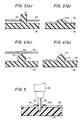
- Heretofore, the mechanical joining methods as shown in Figs. 3 and 4 (sectional views) were generally used to join a plastics material to a dissimilar material such as a metal.
- In Figs. 3(a) and 3(b), there are shown
plastics material 30 and aprojection 31 for joining which is formed onplastics material 30 at the time of molding. This projection is inserted into an opening orhole 33 formed, e.g., bored throughmetal material 32 to which the plastics material is joined. When the twomaterials projection 31 onplastics material 30 inserted intohole 33 inmetal material 32, andprojection 31 onplastics material 30 is melted by an appropriate heating means such as a soldering iron, high frequency heating means, and ultrasonic heating means (not shown) so thatmelt 31a covers the periphery ofhole 33 inmetal material 32. - In Figs. 4(a) and 4(b), there are shown
plastics material 40 andmetal material 43 to be joined to each other. The plastics material is provided with aprojection 42 having abarb 41 which is formed simultaneously with the molding of the plastics material. Themetal material 43, which is a mating part, has an opening orhole 44. When the two materials are to be joined to each other,metal material 43 is placed overplastics material 40, withhole 44 inmetal material 43 just aboveprojection 42 onplastics material 40, as shown in Fig. 4(a). Subsequently,projection 42 onplastics material 40 is forced intohole 44 inmetal material 43, so thatbarb 41 holds the twomaterials - These mechanical joining methods, however, have a disadvantage in that it is necessary to form
projections plastics materials - To overcome these disadvantages, a mechanical joining method as shown in Fig. 5 is generally used. In Fig. 5, there is shown a 5 mm
thick plate 51 made of styrene-acrylonitrile copolymer, and there is also shown an 0.8 mmthick metal plate 52 placed onplate 51. The metal plate has an opening orhole 53 therein. Joining of the twoplates soldering iron 55 is pressed, throughhole 53 inmetal plate 52, againstplastic plate 51, so that the surface of the plastic plate is melted. Asheating tip 56 ofsoldering iron 55 is forced in, melt 51a ofplastic plate 51 is forced out through the gap between the heating tip and the hole untilperiphery 54 ofhole 53 is covered withmelt 51a. Finally,heating tip 56 ofsoldering iron 55 is removed fromplastic plate 51.Melt 51a solidifies and the twoplates - This mechanical joining method, however, has a disadvantage in that the melt of the plastic tends to stick or adhere to
heating tip 56 when thesoldering iron 55 is removed becauseheating tip 56 is brought into direct contact withplate 51 for heating and melting. This leads to poor joining and makes it necessary to removemelt 51a which adheres toheating tip 56 each time when joining is carried out. - Accordingly, it is an object of the invention to provide an improved method for joining a plastics material to a dissimilar material which eliminates the above-mentioned disadvantages. It is another object of the invention to provide a method for joining a plastics material to a dissimilar material by applying a laser beam to the former for heating and melting.
- Additional objects and advantages of the present invention will be set forth in part in the description that follows and in part will be obvious from the description or may be learned by practice of the invention. The objects and advantages of the invention may be realized and obtained by the method particularly pointed out in the appended claims.
- The joining method of this invention provides a secure joint and obviates the removal of unnecessary melt.
- To achieve the above objects and in accordance with the purpose of the invention as embodied and broadly described herein, the method of this invention resides in the joining of a plastics material capable of absorbing a laser beam to a dissimilar material placed thereon and comprises applying a laser beam through a probe, e.g. a glass probe, to the surface of the plastics material, e.g. from above, through an opening in the dissimilar material, thereby melting the plastics material, and pressing said probe against the resultant melt, thereby forcing the melt through and out of the opening in the dissimilar material.
- The dissimilar material placed on the plastics material may be any material different from the plastics material. It includes metal materials such as iron, copper, zinc, brass aluminum and stainless steel. It also includes conventional ceramics such as glass, enamel, refractory and cement, and new ceramics such as alumina, zirconia, cordierite, nitrides, carbides and borides.
- The plastics material placed under the dissimilar material may be any material that absorbs a laser beam. The material includes, for example, plastics such as polyethylene resin, polypropylene resin and styrene-acrylonitrile copolymer each having incorporated therein from 0.3 to 0.7 wt% of auxiliary material such as carbon black. The material also includes glass fiber reinforced plastics such as polyethylene resin, polypropylene resin and styrene-acrylonitrile copolymer each having incorporated therein from 0.3 to 0.7 wt% of auxiliary material such as carbon black.
- The combination of the two materials to be joined may be selected from the foregoing materials without any restriction.
- The laser which can be used for joining includes, for example, a glass-neodymium³⁺ laser, a YAG (yttrium aluminum garnet)-neodymium³⁺ laser, a ruby laser, a helium-neon laser, a krypton laser, an argon laser, a hydrogen laser and a nitrogen laser. The glass-neodymium³⁺ and YAG-neodymium³⁺ lasers are preferred.
- The laser beam employed for joining should have a proper wavelength, preferably shorter than 1.06 µm. When a wavelength longer than 1.06 µm is used, the laser beam may not heat and melt the plastics material. In addition, the laser should have a proper output in the range of 5 W to 100 W, preferably 5 W to 30 W. With an output below 5 W, the laser beam takes a long time to heat and melt and plastics material. With an output in excess of 100 W, the laser may cause the plastics material to evaporate or deteriorate, leading to a poor joint.
- The accompanying drawings, which are incorporated in and constitute a part of this specification, illustrate embodiments of the invention and, together with the description, serve to explain the principles of the invention.
-
- Figs. 1(a) to 1(d) are schematic sectional views illustrating one example of the method of the present invention for joining a plastics material to a dissimilar material.
- Figs. 2(a) to 2(d) are schematic sectional views illustrating another example of the method of the present invention for joining a plastics material to a dissimilar material.
- Figs. 3(a) and 3(b), Figs. 4(a) and 4(b), and Fig. 5 are schematic sectional views illustrating conventional methods for joining a plastics material to a dissimilar material.
- Reference will now be made in detail to presently preferred embodiments of the invention, examples of which are illustrated in the accompanying drawings. Throughout the drawings, like reference characters are used to designate like elements.
- In Figs. 1(a) and 1(b), there is shown a 5 mm
thick plate 1 of styrene-acrylonitrile copolymer reinforced with glass fiber. The copolymer assumes a black color because it contains 0.5 wt% of carbon black therein so that it absorbs a laser beam having a wavelength shorter than 1.06 µm. - On
plastics plate 1 is placed an 0.8 mmthick steel plate 2 having opening 3 about 5 mm in diameter. - The emitting nozzle of a YAG-neodymium³⁺ laser apparatus is provided with a
cylindrical probe 5 made of quartz glass. This cylindrical probe is 3 mm in diameter, slightly smaller than the diameter ofhole 3 bored through the steel plate.Probe 5 made of quartz glass permits the transmission of the YAG laser beam Y having a wavelength of 1.06 µm. - The joining of the two
plates Probe 5 extending from emittingnozzle 4 is inserted from above into opening 3 bored throughsteel plate 2 so that the tip of the probe comes into contact withplate 1 of styrene-acrylonitrile copolymer. A laser beam Y (output: 20 W, wavelength: 1.06 µm) generated by the YAG-neodymium³⁺ laser apparatus is applied through the emitting nozzle and acondenser lens 6 attached thereto. The laser beam passes throughprobe 5 and reaches the surface of the styrene-acrylonitrile copolymer plate 1. Laser beam Y accumulates energy that heats and melts the surface ofplate 1. Whenplate 1 is melted by the laser beam to a desired extent,probe 5 is pressed against the molten part as shown as Fig. 1(c).Probe 5 forces melt 1a ofplate 1 out of the gap betweenplate 2 andhole 3 to such an extent thatperiphery 3a ofhole 3 is covered withmelt 1a. Application of the laser beam Y is suspended, andprobe 5 is retracted upward as shown in Fig. 1(d). Being made of quartz glass,probe 5 can be easily retracted without sticking or adherence ofmelt 1a. Finally, melt1a covering periphery 3a ofhole 3 solidifies, completing the secure joining ofplate 1 of styrene-acrylonitrile copolymer andsteel plate 2. - In Figs. 2(a) and 2(b), there is shown a 5 mm
thick plate 11 of propropylene resin which assumes a black color because it contains 0.6 wt% of carbon black so that it absorbs a laser beam having a wavelength shorter than 1.06 µm. - On
plastics plate 11 is placed a 1.2 mmthick plate 12 of a nitride ceramic having therein an opening orhole 13 about 5 mm in diameter. - The emitting nozzle of a YAG-neodymium³⁺ laser apparatus is provided with a
probe 15 made of high-silica glass.Probe 15 has acylindrical projection 15ahole 13 bored throughceramics plate 12. The root ofprojection 15a is surrounded by ahemitoroidal groove 15b which is large enough to coverperiphery 13a ofhole 13 bored throughplate 12.Probe 15 made of high-silica glass permits the transmission of YAG laser beam Y having a wavelength of 1.06 µm. - The joining of the two
plates Projection 15a ofprobe 15 is inserted from above intohole 13 bored throughceramics plate 12 so that the tip of the probe projection comes into contact withplate 11 of polypropylene resin. A laser beam Y (output: 20 W, wavelength: 1.06 µm) generated by the YAG-neodymium³⁺ laser apparatus is applied throughcondenser lens 16. The laser beam passes throughprojection 15a ofprobe 15 and reaches the surface ofplate 11 of polypropylene resin. Laser beam Y accumulates energy that heats and melts the surface ofplate 11. Whenplate 11 is melted by the laser beam to a desired extent, the projection ofprobe 15 is pressed against the molten part as shown in Fig. 2(c).Projection 15a forces melt 11a ofplate 11 out of the gap betweenplate 12 andhole 13.Melt 11a is forced down byhemitoroidal groove 15b so that theperiphery 13a ofhole 13 is covered withmelt 11a. Application of the laser beam Y is suspended, and emittingnozzle 14 is retracted upward as shown in Fig. 2(d). Being made of high-silica glass,probe 15 can be easily retracted withoutmelt 11a sticking thereto. Finally,hemitoroidal melt 11a covering periphery 13a ofhole 13 solidifies, completing the secure joining ofplate 11 of polypropylene resin andceramic plate 12. - According to the present invention, the joining of a plastics material to a dissimilar material is accomplished by applying a laser beam to the plastics material through an opening or hole bored in the dissimilar material placed on the former. The laser beam is introduced through a probe, e.g. a probe made of glass. During application of the laser beam, the probe is pressed against the plastics material so that the molten part of the plastics material is forced out. The molten part solidifies to achieve joining. A probe made of glass can be easily retracted without the melt sticking to the probe. This eliminates the necessity of cleaning the probe each time the joining operation is performed. The application of a laser beam melts the plastics material faster than a soldering iron which has been used in conventional joining operations. This leads to an efficient joining operation. The hole formed after retraction of the probe can be utilized as an unthreaded hole for a self-tapping screw or machine screw, in the event that the joining fails and needs repair.
Claims (22)
1. A method of joining a plastics material capable of absorbing a laser beam to a dissimilar material placed thereon which comprises applying a laser beam through a probe to the surface of the plastics material through an opening in the dissimilar material to melt the plastics material, and pressing said probe against the resultant melt to force the melt through said opening in the dissimilar material.
2. The method as set forth in claim 1 wherein said probe is a glass probe.
3. The method as set forth in claim 1 wherein the dissimilar material is a metal or a ceramic.
4. The method as set forth in claim 3 wherein the metal is selected from iron, copper, zinc, brass, aluminum and stainless steel.
5. The method as set forth in claim 3 wherein the ceramic is selected from glass, enamel, refractory, cement, alumina, zirconia cordierite, nitrides, carbides and borides.
6. The method as set forth in claim 3 wherein the dissimilar material is steel or a nitride ceramic.
7. The method as set forth in claim 1 wherein the plastics material is at least one member selected from polyethylene, polypropylene and styrene-acrylonitrile copolymer, said plastics material containing from 0.3 to 0.7 wt% of an auxiliary material to aid in absorption of a laser beam.
8. The method set forth in claim 7 wherein said auxiliary material is carbon black.
9. The method set forth in claim 8 wherein said plastics material is glass fiber reinforced.
10. The method set forth in claim 7 wherein said plastics material is glass fiber reinforced.
11. The method as set forth in claim 1 wherein the plastics material is glass fiber reinforced styrene-acrylonitrile copolymer containing 0.5 wt% of carbon black.
12. The method as set forth in claim 1 wherein the plastics material is polypropylene containing 0.6 wt% of carbon black.
13. The method as set forth in claim 1 wherein the laser beam is provided by a laser selected from a glass-neodymium³⁺ laser, a YAG-neodymium³⁺ laser, a ruby laser, a helium-neon laser, a krypton laser, an argon laser, a hydrogen laser and a nitrogen laser.
14. The method as set forth in claim 1 wherein the laser beam is provided by a YAT-neodymium³⁺ laser or a glass-neodymium³⁺ laser.
15. The method as set forth in claim 14, wherein the laser beam is provided by a YAG-neodymium³⁺ laser.
16. The method as set forth in claim 14, wherein the laser beam has a wavelength shorter than 1.06 µm.
17. The method as set forth in claim 1 wherein the laser beam has a wavelength shorter than 1.06 µm.
18. The method as set forth in claim 17 wherein the laser has an output of 5 W to 100 W.
19. The method as set forth in claim 18 wherein the laser has an output of 5 W to 30 W.
20. The method as set forth in claim 1 wherein the probe is a quartz glass probe or a high-silica glass probe.
21. The method as set forth in claim 1 wherein the probe is of cylindrical shape.
22. The method as set forth in claim 1 wherein the opening in the dissimilar material is round.
Applications Claiming Priority (2)
| Application Number | Priority Date | Filing Date | Title |
|---|---|---|---|
| JP190189/85 | 1985-08-29 | ||
| JP60190189A JPS6250125A (en) | 1985-08-29 | 1985-08-29 | Method for connecting synthetic resin material with different kind of material |
Publications (1)
| Publication Number | Publication Date |
|---|---|
| EP0212656A1 true EP0212656A1 (en) | 1987-03-04 |
Family
ID=16253932
Family Applications (1)
| Application Number | Title | Priority Date | Filing Date |
|---|---|---|---|
| EP86111782A Withdrawn EP0212656A1 (en) | 1985-08-29 | 1986-08-26 | Method for joining plasics material to dissimilar material |
Country Status (2)
| Country | Link |
|---|---|
| EP (1) | EP0212656A1 (en) |
| JP (1) | JPS6250125A (en) |
Cited By (11)
| Publication number | Priority date | Publication date | Assignee | Title |
|---|---|---|---|---|
| EP0322999A3 (en) * | 1987-12-31 | 1991-04-03 | Gencorp Inc. | Heat riveting rubber for effecting a mechanical lock |
| DE4011801A1 (en) * | 1990-04-12 | 1991-10-17 | Messer Griesheim Gmbh | METHOD FOR THERMALLY COATING SURFACES WITH A FLUOROPOLYMER |
| DE102005035495A1 (en) * | 2005-07-26 | 2007-02-01 | Faurecia Innenraum Systeme Gmbh | Method and apparatus for laser welding |
| WO2008030741A1 (en) * | 2006-09-06 | 2008-03-13 | Brady Worldwide, Inc. | Method of attaching a label to a thermoplastic substrate |
| WO2009061680A1 (en) * | 2007-11-07 | 2009-05-14 | Brady Worldwide, Inc. | Device and method for attaching a label to a substrate |
| WO2009059752A3 (en) * | 2007-11-07 | 2009-12-03 | Solarion Ag | Method and means for connecting thin metal layers |
| US8066047B2 (en) | 2006-09-06 | 2011-11-29 | Brady Worldwide, Inc. | Device for attaching a label to a substrate |
| US9061282B2 (en) | 2000-11-20 | 2015-06-23 | Lgc Genomics Limited | Reaction plate |
| FR3042730A1 (en) * | 2015-10-23 | 2017-04-28 | Centre Technique Des Ind Mec | METHOD AND TOOL FOR ASSEMBLING TWO ELEMENTS |
| WO2019057581A1 (en) * | 2017-09-21 | 2019-03-28 | Continental Automotive Gmbh | NIET CONNECTION AND METHOD FOR MANUFACTURING A NIET CONNECTION |
| WO2022028761A1 (en) * | 2020-08-04 | 2022-02-10 | Lpkf Laser & Electronics Ag | Method for producing plastic parts with glass inserts, and plastic parts with glass inserts |
Families Citing this family (1)
| Publication number | Priority date | Publication date | Assignee | Title |
|---|---|---|---|---|
| US20190061272A1 (en) * | 2017-08-28 | 2019-02-28 | GM Global Technology Operations LLC | Method for laser welding of non-transmissive composite materials |
Citations (5)
| Publication number | Priority date | Publication date | Assignee | Title |
|---|---|---|---|---|
| US3560291A (en) * | 1964-03-27 | 1971-02-02 | Mobil Oil Corp | Bonding thermoplastic resin films by means of radiation from a laser source |
| US4069080A (en) * | 1976-06-11 | 1978-01-17 | W. R. Grace & Co. | Method and apparatus of bonding superposed sheets of polymeric material in a linear weld |
| US4106962A (en) * | 1977-07-14 | 1978-08-15 | Ncr Corporation | Method of fastening metal part to plastic part |
| US4414166A (en) * | 1982-01-04 | 1983-11-08 | International Business Machines Corporation | Laser joining of thermoplastic and thermosetting materials |
| EP0159170A2 (en) * | 1984-04-10 | 1985-10-23 | Toyota Jidosha Kabushiki Kaisha | A process for joining different kinds of synthetic resins |
-
1985
- 1985-08-29 JP JP60190189A patent/JPS6250125A/en active Pending
-
1986
- 1986-08-26 EP EP86111782A patent/EP0212656A1/en not_active Withdrawn
Patent Citations (5)
| Publication number | Priority date | Publication date | Assignee | Title |
|---|---|---|---|---|
| US3560291A (en) * | 1964-03-27 | 1971-02-02 | Mobil Oil Corp | Bonding thermoplastic resin films by means of radiation from a laser source |
| US4069080A (en) * | 1976-06-11 | 1978-01-17 | W. R. Grace & Co. | Method and apparatus of bonding superposed sheets of polymeric material in a linear weld |
| US4106962A (en) * | 1977-07-14 | 1978-08-15 | Ncr Corporation | Method of fastening metal part to plastic part |
| US4414166A (en) * | 1982-01-04 | 1983-11-08 | International Business Machines Corporation | Laser joining of thermoplastic and thermosetting materials |
| EP0159170A2 (en) * | 1984-04-10 | 1985-10-23 | Toyota Jidosha Kabushiki Kaisha | A process for joining different kinds of synthetic resins |
Cited By (19)
| Publication number | Priority date | Publication date | Assignee | Title |
|---|---|---|---|---|
| EP0322999A3 (en) * | 1987-12-31 | 1991-04-03 | Gencorp Inc. | Heat riveting rubber for effecting a mechanical lock |
| DE4011801A1 (en) * | 1990-04-12 | 1991-10-17 | Messer Griesheim Gmbh | METHOD FOR THERMALLY COATING SURFACES WITH A FLUOROPOLYMER |
| US9061282B2 (en) | 2000-11-20 | 2015-06-23 | Lgc Genomics Limited | Reaction plate |
| US9539575B2 (en) | 2000-11-20 | 2017-01-10 | Lgc Genomics Limited | Reaction plate |
| DE102005035495A1 (en) * | 2005-07-26 | 2007-02-01 | Faurecia Innenraum Systeme Gmbh | Method and apparatus for laser welding |
| DE102005035495B4 (en) * | 2005-07-26 | 2007-08-02 | Faurecia Innenraum Systeme Gmbh | Method and apparatus for laser welding |
| WO2008030741A1 (en) * | 2006-09-06 | 2008-03-13 | Brady Worldwide, Inc. | Method of attaching a label to a thermoplastic substrate |
| US7691218B2 (en) | 2006-09-06 | 2010-04-06 | Brady Worldwide, Inc. | Method of attaching a label to a thermoplastic substrate |
| US7967934B2 (en) | 2006-09-06 | 2011-06-28 | Brady Worldwide, Inc. | Method of attaching a label to a thermoplastic substrate |
| US8066047B2 (en) | 2006-09-06 | 2011-11-29 | Brady Worldwide, Inc. | Device for attaching a label to a substrate |
| CN101939157A (en) * | 2007-11-07 | 2011-01-05 | 勃来迪环球股份有限公司 | Apparatus and method for attaching label to substrate |
| CN101939157B (en) * | 2007-11-07 | 2013-05-29 | 勃来迪环球股份有限公司 | Device and method for attaching a label to a substrate |
| WO2009059752A3 (en) * | 2007-11-07 | 2009-12-03 | Solarion Ag | Method and means for connecting thin metal layers |
| WO2009061680A1 (en) * | 2007-11-07 | 2009-05-14 | Brady Worldwide, Inc. | Device and method for attaching a label to a substrate |
| FR3042730A1 (en) * | 2015-10-23 | 2017-04-28 | Centre Technique Des Ind Mec | METHOD AND TOOL FOR ASSEMBLING TWO ELEMENTS |
| WO2019057581A1 (en) * | 2017-09-21 | 2019-03-28 | Continental Automotive Gmbh | NIET CONNECTION AND METHOD FOR MANUFACTURING A NIET CONNECTION |
| CN111108294A (en) * | 2017-09-21 | 2020-05-05 | 大陆汽车有限责任公司 | Rivet connection device and method for producing a rivet connection |
| US12128634B2 (en) | 2017-09-21 | 2024-10-29 | Continental Automotive Gmbh | Rivet connection and method for producing a rivet connection |
| WO2022028761A1 (en) * | 2020-08-04 | 2022-02-10 | Lpkf Laser & Electronics Ag | Method for producing plastic parts with glass inserts, and plastic parts with glass inserts |
Also Published As
| Publication number | Publication date |
|---|---|
| JPS6250125A (en) | 1987-03-04 |
Similar Documents
| Publication | Publication Date | Title |
|---|---|---|
| US5701669A (en) | Repair method for lengthening turbine blades | |
| EP0084631B1 (en) | Laser joining of thermoplastic and non-thermoplastic materials | |
| US4865680A (en) | Ultrasonic securing system | |
| US4865687A (en) | Ultrasonic securing method | |
| EP0719643A3 (en) | A liquid jet head manufacturing method and a liquid jet head manufactured by said manufacturing method | |
| JPS60214931A (en) | Bonding of different synthetic resin materials | |
| EP0158528A2 (en) | A process for joining different kinds of synthetic resins | |
| JPS6250125A (en) | Method for connecting synthetic resin material with different kind of material | |
| JPS60228131A (en) | Mechanical jointing of heterogeneous synthetic resin materials | |
| JPS6264528A (en) | Joining of synthetic resin material and different material | |
| JPH0651215B2 (en) | Method for welding low density thermoplastics | |
| JPS6264527A (en) | Joining of synthetic resin material and different material | |
| JPS60212330A (en) | Joining of heterogeneous synthetic resin materials | |
| JPS6271626A (en) | Jointing of synthetic resin material and different kind material | |
| JPS6271625A (en) | Method for jointing synthetic resin material with different kind material | |
| JPS60225733A (en) | Mechanical joining of heterogeneous synthetic resin material | |
| JPS60222229A (en) | Method for bonding different kinds of synthetic resin materials | |
| JPS60214930A (en) | Mechanical bonding of different synthetic resin materials | |
| JPS6274631A (en) | Joining of synthetic resin material | |
| JPS60229736A (en) | Joining method of different kinds of synthetic resin materials | |
| JPS6274630A (en) | Joining of synthetic resin material | |
| JPS61116525A (en) | Connecting method of synthetic resin material | |
| JPS6253818A (en) | Joining of synthetic resin material | |
| JPS6249170B2 (en) | ||
| JPS60225735A (en) | Joining of heterogeneous synthetic resin material |
Legal Events
| Date | Code | Title | Description |
|---|---|---|---|
| PUAI | Public reference made under article 153(3) epc to a published international application that has entered the european phase |
Free format text: ORIGINAL CODE: 0009012 |
|
| AK | Designated contracting states |
Kind code of ref document: A1 Designated state(s): DE GB |
|
| 17P | Request for examination filed |
Effective date: 19870813 |
|
| 17Q | First examination report despatched |
Effective date: 19881108 |
|
| STAA | Information on the status of an ep patent application or granted ep patent |
Free format text: STATUS: THE APPLICATION IS DEEMED TO BE WITHDRAWN |
|
| 18D | Application deemed to be withdrawn |
Effective date: 19900201 |
|
| RIN1 | Information on inventor provided before grant (corrected) |
Inventor name: NAKAMATA, HIDEO |