EP0205293A2 - Verfahren zur Herstellung von Antikörpern - Google Patents
Verfahren zur Herstellung von Antikörpern Download PDFInfo
- Publication number
- EP0205293A2 EP0205293A2 EP86304163A EP86304163A EP0205293A2 EP 0205293 A2 EP0205293 A2 EP 0205293A2 EP 86304163 A EP86304163 A EP 86304163A EP 86304163 A EP86304163 A EP 86304163A EP 0205293 A2 EP0205293 A2 EP 0205293A2
- Authority
- EP
- European Patent Office
- Prior art keywords
- antibodies
- male
- cells
- host
- implant
- Prior art date
- Legal status (The legal status is an assumption and is not a legal conclusion. Google has not performed a legal analysis and makes no representation as to the accuracy of the status listed.)
- Withdrawn
Links
Images



Classifications
-
- C—CHEMISTRY; METALLURGY
- C07—ORGANIC CHEMISTRY
- C07K—PEPTIDES
- C07K16/00—Immunoglobulins [IG], e.g. monoclonal or polyclonal antibodies
- C07K16/18—Immunoglobulins [IG], e.g. monoclonal or polyclonal antibodies against material from animals or humans
-
- A—HUMAN NECESSITIES
- A61—MEDICAL OR VETERINARY SCIENCE; HYGIENE
- A61K—PREPARATIONS FOR MEDICAL, DENTAL OR TOILETRY PURPOSES
- A61K35/00—Medicinal preparations containing materials or reaction products thereof with undetermined constitution
- A61K35/12—Materials from mammals; Compositions comprising non-specified tissues or cells; Compositions comprising non-embryonic stem cells; Genetically modified cells
- A61K35/48—Reproductive organs
- A61K35/52—Sperm; Prostate; Seminal fluid; Leydig cells of testes
-
- G—PHYSICS
- G01—MEASURING; TESTING
- G01N—INVESTIGATING OR ANALYSING MATERIALS BY DETERMINING THEIR CHEMICAL OR PHYSICAL PROPERTIES
- G01N33/00—Investigating or analysing materials by specific methods not covered by groups G01N1/00 - G01N31/00
- G01N33/48—Biological material, e.g. blood, urine; Haemocytometers
- G01N33/50—Chemical analysis of biological material, e.g. blood, urine; Testing involving biospecific ligand binding methods; Immunological testing
- G01N33/68—Chemical analysis of biological material, e.g. blood, urine; Testing involving biospecific ligand binding methods; Immunological testing involving proteins, peptides or amino acids
- G01N33/689—Chemical analysis of biological material, e.g. blood, urine; Testing involving biospecific ligand binding methods; Immunological testing involving proteins, peptides or amino acids related to pregnancy or the gonads
Definitions
- This invention relates to a method of obtaining antibodies and/or effector cells of the immune system, to the antibodies and/or effector cells thus obtained, and to the use thereof. More particularly, it relates to methods of producing antibodies which react to the male antigen(s) and to the use of such antibodies in the sexing of embryos and sperm.
- the type of antibody which is the subject of the invention is ordinarily identified as the H-Y antibody produced in response to the H-Y antigen, a cell surface component first identified as a histocom- patability antigen responsible for the rejection of the male skin grafts by otherwise syngeneic female mice (1).
- Serological test developed in the 1970's which were presumed to identify the same antigen as that causing graft rejection indicated that the antigen was widely conserved, and that it characterised the heterogametic sex (2).
- SDM serologically determined male
- the antibodies produced in accordance with the method of the invention are referred to herein as "male-specific antibodies" and include both those produced in response to the H-Y antigen and those produced in response to the SDM antigen.
- the term "the male antigen(s)" is intended to include both the H-Y antigen and the SDM antigen.
- the use of the male antigens and in particular the H-Y antigen in sex determination is an area where advancement has been dependent upon mastering the serology of the immunological response of a host to such antigens.
- the usual procedure has been to immunize female hosts (mice) by intraperitoneal or intrapedal injections of syngeneic male cells over an extended period of time.
- These conventional immunization protocols however have produced low titres of antibodies which have been difficult to identify (4,5). Due to these difficulties, the antibodies thus produced have been inferior diagnostic agents in sex determination.
- the invention may broadly be said to consist in a method of stimulating those cells of the immune system which react to the male antigen(s) in order to obtain antibodies and/or effector cells comprising
- the invention may be said to consist in a method of sexing mammalian embryos comprising the steps of
- the invention may be said to consist in a method of sex determination comprising treating live semen with antibodies prepared in accordance with the method as defined above and separating the sperm thus treated into those which have taken up the antibodies and those which have not.
- the invention may be said to consist in a diagnostic kit for use in sex determination comprising antibodies produced according to the method as defined above.and a label for said antibodies.
- the present invention relates to a method of obtaining antibodies and/or effector cells by stimulating cells of the immune system of a female host which react to the presence of male antigen(s) from a male donor.
- the method is performed using a male donor and a female host which are histoincompatible with respect to the male antigen(s).
- the donor/host relationship is such that the donor and host are histoincompatible only with respect to the male antigen(s) but this is not critical. This relationship is conveniently achieved by the use of hosts and donors which are inbred laboratory rodents, for example inbred laboratory rats. Of course, other hosts such as rabbits, guinea pigs and dogs may also be used.
- the first step of the method according to the present invention comprises positioning an implant comprising the male antigen(s) presented on a physiologically-acceptable carrier within or in contact with the splenic substance of the host such that the implant is accessible to the cells of the immune system of the host.
- the implant can be have a variety of forms.
- the implant comprises cells obtained from a male donor.
- the cells are preferably in a form such that they do not migrate from the spleen once they have been positioned within or in contact with the splenic substance. Conveniently, this is achieved by providing the donor cells in the form a single cell suspension, a suspension of dispersed cells or a cellular aggregate.
- the donor cells are in the form of a skin graft which is positioned such that the cut surface of the graft is accessible to the cells of the immune system.
- the implant may comprise a source of purified male antigen(s) coated onto the surface of a pharmaceutically- acceptable material.
- a pharmaceutically- acceptable material is a polystyrene bead, a latex particle or an albumin microsphere but of course other pharmaceutically acceptable carriers may be used.
- the implant is positioned within or in contact with the splenic substance of the female host by breaching the splenic capsule. Subsequent to breaching the splenic capsule, the implant can be positioned in contact with the splenic substance either at the point at which the breach occurs or, as is presently preferred, deep within the substance of the spleen (intrasplenically). Conveniently, the positioning of the implant as above is achieved by the use of a hollow syringe needle in combination with a stylet but this is of course not critical.
- the implant can be positioned in contact with the splenic substance at one site only it can also be positioned at more than one site in order to increase the exposure of the male antigen(s) to the cells of the immune system and the consequent stimulation of effector cells and production of antibodies.
- the second step of the method of the invention comprises allowing the immune system of the female host to respond immunologically to the male antigen(s) in order to stimulate effector cells leading to the production of antibodies.
- Experimental trials have found that the titre of effector celts produced will be greatest a certain period subsequent to the positioning of the implant within or in contact with the splenic substance of the host. This period will however vary depending on the type of implant, on the amount of male antigen and on the type of host.
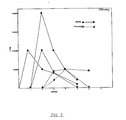
- the antibody titre for certain strains of rats peaks from one to three weeks subsequent to the positioning of the implant (see Figs 2 and 3).
- the third step of the method according to the present invention comprises obtaining antibodies and/or effector cells from the female host by extracting antibodies from the blood or body fluids and effector cells from the blood, spleen, lymph nodes or bone marrow.
- the antibodies are harvested from collected blood using conventional procedures.
- the effector cells are also harvested using conventional procedures, for example by separation from anticoagulated blood over a density gradient.
- the method of the invention described above may also include the preliminary step of preparing an implant in a form suitable for positioning within or in contact with the splenic substance of the female host.
- the implant is a skin graft
- the skin graft is prepared having a high percentage of epidermis relative to the dermis. This is conveniently achieved by performing a pinch graft.
- the effector cells obtained are male-specific antibodies suitable for use in sex determination.
- the effector cells of the immune system obtained are lymphocytes manufacturing male-specific antibodies.
- the lymphocytes making such antibodies are then transformed so that they become immortal in cell culture.
- a number of methods are known in the art for performing this transformation, including fusing the lymphocytes with myeloma cells (9), or exposing them to a suitable virus (as, for example, the exposure of human B lymphocytes to Epstein Barr Virus).
- the polyclonal antibodies obtained according the method of the present invention are then preferably treated to remove auto-antibodies and other unwanted antibodies by selective absorption. Conveniently, this is achieved by selectively absorbing the antibodies with syngeneic female cells, preferably thymocytes or spleen cells.
- the second group of rats was immunized by implantation of syngeneic male skin into the spleen as follows.
- the rats were anaesthetized with ether, and the spleen was delivered through a subcostal incision.
- Pinch grafts of approximately one millimetre in diameter were prepared from a male skin donor by tenting the skin with a needle and slicing off the raised tissue. These grafts (4 per recipient) were loaded into a 18-gauge needle that was inserted into the spleen of each rat. The grafts were displaced in the appropriate position by use of a stylet as the needle was withdrawn. Bleeding from the puncture site was minimal and was controlled with a bacteriology swab. The abdominal incision was closed in two layers. The animals were each bled from the tail vein at weekly intervals and the serum assayed for the presence of male-specific antibodies.
- the assay of the serum obtained from each of the above groups was performed using a recently developed urease enzyme-linked immunosorbent assay (ELISA) protocol that used Daudi cell culture supernatant as the source of male antigen(s) (8).
- ELISA urease enzyme-linked immunosorbent assay
- the serum samples were first absorbed twice for two hours at.37°C with 10 8 syngeneic female rate thymocytes to reduce the background noise from the possible presence of auto-antibodies in the serum.
- a sample of each serum was then subsequently absorbed in a similar manner with 10 8 syngeneic male thymocytes to check the specificity of the response.
- the quantitative absorption data are presented in Figure 1.
- Figure 1 shows that when female thymocytes were used as the antigenic source and probed with antiserum that had been preabsorbed with.male or female thymocytes, high levels of non-specific reactivity (1:2000) were observed in the control assay. The specificity of the antiserum was demonstrated by the strong reaction by female-cell-absorbed antiserum to male thymocytes and the substantial decrease in antibody reactivity toward male thymocytes after this antiserum had been preabsorbed with male cells.
- Daudi cell culture medium was found to be a better source of male-specific antigen for this particular assay because the level of background reactivity was substantially reduced (1:200) compared with that obtained when whole cells were used as the antigenic sources (1:2000). Antibody titres were also reduced in this assay. Once again, the specificity of the antiserum was demonstrated by the reduction of antibody bonding after the serum had been preabsorbed with male cells.
- the antibody production in intrasplenically-immunized BN female rates is shown in Figure 2 and compared with that resulting from conventional immunization protocols.
- the antibody production in accordance with the present invention is characterized by a rapid antibody response with titres reaching maximal values (1:2000-1:4000) in the first one to two weeks, and thereafter rapidly declining by the fifth week.
- BN female rats conventionally immunized both intrapedally and intraperitoneally with male lymphocytes showed a slower antibody response with titres reaching a maximal level of between 1:500-1:1000 at three weeks and maintaining this level over the six week period of the experiment.
- the pattern of H-Y antibody response in the intrasplenic immunized HS rats is shown in Figure 3. This response is similar to that observed for BN rats except that maximal titres were attained slightly later at three weeks and were higher (1:8000) than those for the BN strain. Once maximal antibody titres in the HS rats were reached in the third week the titres rapidly declined to zero by the sixth week. In the intrapedally immunized HS rats the antibody titres were lower than those recorded in the intrasplenic immunized rats (1:1000) and the time for the peak antibody response to occur was delayed. In this group of rats, these antibody titres were maintained over the ten-week experimental period, provided that the weekly booster injections were given.
- the intrasplenic immunization protocol according to the present invention is an effective method for generating high titre male-specific polyclonal antibodies. Furthermore, the advantages of the protocol according to the present invention can be readily appreciated by comparison with the titres of antibodies obtained using the conventional procedure of intrapedal or intraperitoneal injection of male cells.
- the antisera thus obtained are appropriately treated to remove any auto-antibodies which may inadvertently be generated and are then able to be used in specified dilutions as a diagnostic tool for use in sex determination.
- the antibodies prepared according to the method described above can be used in the sexing of both mammalian embryos and sperm.
- the antibodies produced in accordance with the above method may be used either as whole antibody molecules or partial antibody molecules which contain the combining site.
- the method further includes the step of first cleaving the antibody molecule in order to obtain a partial antibody molecule, the F(ab') 2 fragment, containing the combining site. This is performed using conventional methods (10).
- the sexing of mammalian embryos is performed by firstly labelling the the antibodies prepared as above.
- the antibodies can be labelled either directly or indirectly by known methods.
- the method presently used by the applicants is to indirectly label the antibodies by treating them with a physiologically-acceptable fluorescent-labelled anti-immunoglobulin, or with F(ab') 2 fragments therefrom.
- This anti-immunoglobulin preferably has had the antispe- cies activity removed therefrom by absorbtion.
- the labelled anti-immunoglobulin presently used is the FITC anti-rat IgG fragment obtained from Cappel Läboratories in Pennsylvania, U.S.A., and designated 1713-3151.
- other methods of labelling the antibodies either directly or indirectly such as using antibody-coated beads which can be detected visually, may be used.
- the presence or absence of the antibodies in the embryo is detected.
- the physiologically-acceptable fluorescent-labelled anti-immuoglobulin is used as the label
- the attachment of the antibody to any particular embryo is detected visually by the use of a fluorescent microscope.
- numerous methods of labelling antibodies are known in the art and accordingly the method used to detect the presence or absence of the labelled antibody will vary depending on the type of label used.
- the determination of the sex of sperm is performed by treating live semen with antibodies prepared in accordance with the present invention.
- the semen thus treated is separated into those sperm which have taken up the antibodies.and those which have not by using any one of a number of conventional methods.
- the antibody may be attached to microspheres prior to treatment of the semen, the semen being subsequently separated into those which have taken up the antibodies and those which have not by sedimentation.
- the semen thus treated may be separated by use of immunoaffinity methods, by chromotography, or by electrophoresis.
- flagellar plasma membranes were prepared as previously described (11). These were stored at -20°C until required.
- Example 2 Male antigen detection in Flagellar Plasma Membranes by ELISA
- Purified flagellar plasma membranes were diluted 1:50 in ELISA diluting buffer (PBS containing 0.24% BSA, 0.01% NaN 3 ). 30 ⁇ l samples were placed in each well of a NUNC immunoplate and incubated at 37 C for 2hr. The plate was then washed with ELISA washing buffer (PBS pH 7.2, containing 0.05% Tween-20). Doubling dilutions of either female or male absorbed male specific antibodies were than placed in the appropriate wells and the plate was incubated for 1hr at 37 C. After three washes with buffer 30ul of a 1:1000 dilution of urease- conjugated anti-rat IgG was added to each well and the plate was incubated for a further 30min at 37 C.
- This experiment was designed to show the site of antiserum binding to the spermatozoa.
- Washed caudal spermoatozoa were resuspended in a 1:200 dilution of male-specific antiserum in PBS and incubated for 2hr with gentle agitation at room temperature. After a. wash in PBS the cells were resuspended in a 1:10 dilution of FITC-anti-rat IgG [F(ab) 2 ] and incubated for lhr. Following two more washes with PBS the cells were examined by fluoresence microscopy and conventional light microscopy.
- Controls consisted of (i) spermatozoa treated as above except that the male-specific antiserum had been absorbed with male cells, and (11) spermatozoa treated with FITC-labelled anti-rat IgG F(ab) 2 fragments but without prior exposure to the male-specific antiserum.
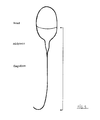
- Figure 5 shows the site of attachment of the male-specific antibody of the invention.
- the antibody attaches to the region between the arrows and can be detected by immunofluorescence.
- fluorescence was detected in about 40% of the sperm. No reaction occurs if the antiserum is previously absorbed with syngeneic male rat cells.
- about 40% of ram sperm obtained from the caudal region of the epididymis appear to contain the male-specific antigen.
- the antibodies produced in accordance with the present invention may also be used in a diagnostic kit for use in sex determination.
- a diagnostic kit for use in sex determination.
- Such a kit comprises antibodies prepared according to the method of the invention together with a label for the antibodies.
- any one of a number of the labels known in the art may be used although a fluorescent-labelled anti-immunoglobulin is preferred.
Landscapes
- Health & Medical Sciences (AREA)
- Life Sciences & Earth Sciences (AREA)
- Chemical & Material Sciences (AREA)
- Immunology (AREA)
- Engineering & Computer Science (AREA)
- Cell Biology (AREA)
- Biomedical Technology (AREA)
- General Health & Medical Sciences (AREA)
- Reproductive Health (AREA)
- Molecular Biology (AREA)
- Medicinal Chemistry (AREA)
- Organic Chemistry (AREA)
- Urology & Nephrology (AREA)
- Biochemistry (AREA)
- Hematology (AREA)
- Proteomics, Peptides & Aminoacids (AREA)
- Biotechnology (AREA)
- Veterinary Medicine (AREA)
- Analytical Chemistry (AREA)
- Gynecology & Obstetrics (AREA)
- Pregnancy & Childbirth (AREA)
- Animal Behavior & Ethology (AREA)
- Epidemiology (AREA)
- Microbiology (AREA)
- Pharmacology & Pharmacy (AREA)
- Zoology (AREA)
- Food Science & Technology (AREA)
- Physics & Mathematics (AREA)
- Public Health (AREA)
- Virology (AREA)
- General Physics & Mathematics (AREA)
- Pathology (AREA)
- Biophysics (AREA)
- Genetics & Genomics (AREA)
- Developmental Biology & Embryology (AREA)
- Peptides Or Proteins (AREA)
- Micro-Organisms Or Cultivation Processes Thereof (AREA)
- Preparation Of Compounds By Using Micro-Organisms (AREA)
Applications Claiming Priority (2)
| Application Number | Priority Date | Filing Date | Title |
|---|---|---|---|
| NZ212274A NZ212274A (en) | 1985-05-31 | 1985-05-31 | Method of producing anti-male antibodies, antibodies so produced and lymphocytes |
| NZ212274 | 1985-05-31 |
Publications (2)
| Publication Number | Publication Date |
|---|---|
| EP0205293A2 true EP0205293A2 (de) | 1986-12-17 |
| EP0205293A3 EP0205293A3 (de) | 1989-03-22 |
Family
ID=19921227
Family Applications (1)
| Application Number | Title | Priority Date | Filing Date |
|---|---|---|---|
| EP86304163A Withdrawn EP0205293A3 (de) | 1985-05-31 | 1986-06-02 | Verfahren zur Herstellung von Antikörpern |
Country Status (3)
| Country | Link |
|---|---|
| EP (1) | EP0205293A3 (de) |
| AU (1) | AU5825486A (de) |
| NZ (1) | NZ212274A (de) |
Cited By (2)
| Publication number | Priority date | Publication date | Assignee | Title |
|---|---|---|---|---|
| EP0387873A1 (de) * | 1989-03-15 | 1990-09-19 | Fuso Pharmaceutical Industries Ltd. | Antikörper gegen menschliches Sperma, ihre Herstellung und Anwendung |
| WO1997007399A1 (en) * | 1995-08-11 | 1997-02-27 | University Of Guelph | Method for identifying sex specific and species specific molecules, molecules identified using the method, and uses of the molecules |
Families Citing this family (1)
| Publication number | Priority date | Publication date | Assignee | Title |
|---|---|---|---|---|
| WO1991017188A1 (en) * | 1990-05-08 | 1991-11-14 | A.B. Technolody Pty. Limited | Separation of mammalian semen into fractions enriched either for spermatozoa containing an x chromosome or for spermatozoa contai ning a y chromosome |
Family Cites Families (4)
| Publication number | Priority date | Publication date | Assignee | Title |
|---|---|---|---|---|
| AU2154077A (en) * | 1976-01-27 | 1978-07-27 | Univ Edinburgh | Control of sex ratio in mammalian offspring |
| US4448767A (en) * | 1977-10-11 | 1984-05-15 | Sumar Corporation | Preparation of monospecific male-specific antibody and the use thereof for increasing the percentage of mammalian offspring of either sex |
| US4191749A (en) * | 1977-10-11 | 1980-03-04 | Bryant Bernard J | Method and material for increasing the percentage of mammalian offspring of either sex |
| GB2070641A (en) * | 1980-02-29 | 1981-09-09 | Bryant B J | Preparation of monospecific male-specific antibody and the use thereof for increasing the percentage of mammalian offspring of either sex |
-
1985
- 1985-05-31 NZ NZ212274A patent/NZ212274A/xx unknown
-
1986
- 1986-06-02 EP EP86304163A patent/EP0205293A3/de not_active Withdrawn
- 1986-06-02 AU AU58254/86A patent/AU5825486A/en not_active Abandoned
Cited By (4)
| Publication number | Priority date | Publication date | Assignee | Title |
|---|---|---|---|---|
| EP0387873A1 (de) * | 1989-03-15 | 1990-09-19 | Fuso Pharmaceutical Industries Ltd. | Antikörper gegen menschliches Sperma, ihre Herstellung und Anwendung |
| US5232834A (en) * | 1989-03-15 | 1993-08-03 | Fuso Pharmaceutical Industries, Ltd. | Anti-human sperm antibody, and its production and use |
| WO1997007399A1 (en) * | 1995-08-11 | 1997-02-27 | University Of Guelph | Method for identifying sex specific and species specific molecules, molecules identified using the method, and uses of the molecules |
| US5840504A (en) * | 1995-08-11 | 1998-11-24 | University Of Guelph | Method for separating sex specific molecules and non-sex specific molecules |
Also Published As
| Publication number | Publication date |
|---|---|
| EP0205293A3 (de) | 1989-03-22 |
| AU5825486A (en) | 1986-12-04 |
| NZ212274A (en) | 1989-06-28 |
Similar Documents
| Publication | Publication Date | Title |
|---|---|---|
| Beer et al. | Major histocompatibility complex antigens, maternal and paternal immune responses, and chronic habitual abortions in humans | |
| US4191749A (en) | Method and material for increasing the percentage of mammalian offspring of either sex | |
| Donaldson et al. | Invasive equine trophoblast expresses conventional class I major histocompatibility complex antigens | |
| Stobo et al. | FUNCTIONAL HETEROGENEITY OF MURINE LYMPHOID CELLS: V. Lymphocytes Lacking Detectable Surface ϑ or Immunoglobulin Determinants | |
| Albini et al. | Immunoglobulin determinants on the surface of chicken lymphoid cells | |
| Giordanengo et al. | Induction of antibodies reactive to cardiac myosin and development of heart alterations in cruzipain‐immunized mice and their offspring | |
| Lee et al. | Monoclonal antibodies to human sperm antigens | |
| Anderson et al. | Immunofluorescence studies on the localization of relaxin in the corpus luteum of the pregnant rat | |
| Gruenberg et al. | Isolation and characterization of the plasma membrane of human erythrocytes infected with the malarial parasite Plasmodium falciparum. | |
| Elhassan et al. | Antigen‐presenting cells in human cutaneous leishmaniasis due to Leishmania major | |
| Hämmerling et al. | Immunofluorescence analysis of Ig determinants of mouse thymocytes and T cells | |
| Beer | Immunologic aspects of normal pregnancy and recurrent spontaneous abortion | |
| Herr et al. | Detection of mouse sperm antigens by a surface labeling and immunoprecipitation approach | |
| JPS62501189A (ja) | 腫瘍↓−胎児に特異的なモノクロナ−ル抗体の調製方法および使用方法 | |
| EP2402757B1 (de) | Verfahren zur Anreicherung von Spermatozoiden in Säugern mit dem X-Chromosom oder Y-Chromosom | |
| CHATTERJEE‐HASROUNI et al. | Allo‐antigenicity of trophoblast cells | |
| Behrman et al. | Rhesus and squirrel monkey placental specific antigen (s) | |
| Pellegrino et al. | Cross-reactivity between human and murine lymphocyte antigens: III. Reactivity of H-2 allo-and xenoantisera with human lymphoid cells | |
| Spooner | The bovine major histocompatibility complex | |
| Willson et al. | Cyto-immunological studies of guinea pig sperm antigens: I. Testicular versus epididymal spermatozoa | |
| Veselský | Immunological properties of seminal vesicle fluid | |
| Zavazava et al. | Quantitative and biochemical characterization of soluble HLA class I antigens shed by cultured human cells | |
| SALING et al. | Anti‐Mouse Sperm Antiserum: Fertility Inhibition In Vitro and Preliminary Antigen Identification | |
| FULLER JR et al. | Immunity, trophoblast, and trophoblastic neoplasia | |
| Vetto et al. | Preparation of specific anti-endothelial cell serum |
Legal Events
| Date | Code | Title | Description |
|---|---|---|---|
| PUAI | Public reference made under article 153(3) epc to a published international application that has entered the european phase |
Free format text: ORIGINAL CODE: 0009012 |
|
| AK | Designated contracting states |
Kind code of ref document: A2 Designated state(s): DE FR GB NL |
|
| PUAL | Search report despatched |
Free format text: ORIGINAL CODE: 0009013 |
|
| AK | Designated contracting states |
Kind code of ref document: A3 Designated state(s): DE FR GB NL |
|
| STAA | Information on the status of an ep patent application or granted ep patent |
Free format text: STATUS: THE APPLICATION IS DEEMED TO BE WITHDRAWN |
|
| 18D | Application deemed to be withdrawn |
Effective date: 19890923 |