EP0202976B1 - Nouveau procédé de préparation de dérivé acrylique de l'urée - Google Patents
Nouveau procédé de préparation de dérivé acrylique de l'urée Download PDFInfo
- Publication number
- EP0202976B1 EP0202976B1 EP86400799A EP86400799A EP0202976B1 EP 0202976 B1 EP0202976 B1 EP 0202976B1 EP 86400799 A EP86400799 A EP 86400799A EP 86400799 A EP86400799 A EP 86400799A EP 0202976 B1 EP0202976 B1 EP 0202976B1
- Authority
- EP
- European Patent Office
- Prior art keywords
- urea
- reaction
- acrylamide
- stage
- parts
- Prior art date
- Legal status (The legal status is an assumption and is not a legal conclusion. Google has not performed a legal analysis and makes no representation as to the accuracy of the status listed.)
- Expired
Links
- 239000004202 carbamide Substances 0.000 title claims abstract description 35
- 238000000034 method Methods 0.000 title claims abstract description 22
- 238000002360 preparation method Methods 0.000 title description 6
- WSFSSNUMVMOOMR-UHFFFAOYSA-N Formaldehyde Chemical compound O=C WSFSSNUMVMOOMR-UHFFFAOYSA-N 0.000 claims abstract description 40
- XSQUKJJJFZCRTK-UHFFFAOYSA-N Urea Chemical compound NC(N)=O XSQUKJJJFZCRTK-UHFFFAOYSA-N 0.000 claims abstract description 29
- 238000006243 chemical reaction Methods 0.000 claims abstract description 22
- 239000000047 product Substances 0.000 claims abstract description 18
- HRPVXLWXLXDGHG-UHFFFAOYSA-N Acrylamide Chemical compound NC(=O)C=C HRPVXLWXLXDGHG-UHFFFAOYSA-N 0.000 claims abstract description 15
- 239000002904 solvent Substances 0.000 claims abstract description 13
- NIXOWILDQLNWCW-UHFFFAOYSA-N acrylic acid group Chemical group C(C=C)(=O)O NIXOWILDQLNWCW-UHFFFAOYSA-N 0.000 claims abstract description 9
- 239000007795 chemical reaction product Substances 0.000 claims abstract description 6
- 230000002378 acidificating effect Effects 0.000 claims abstract description 3
- ZMXDDKWLCZADIW-UHFFFAOYSA-N N,N-Dimethylformamide Chemical compound CN(C)C=O ZMXDDKWLCZADIW-UHFFFAOYSA-N 0.000 claims description 12
- XLYOFNOQVPJJNP-UHFFFAOYSA-N water Substances O XLYOFNOQVPJJNP-UHFFFAOYSA-N 0.000 claims description 9
- IYWCBYFJFZCCGV-UHFFFAOYSA-N formamide;hydrate Chemical compound O.NC=O IYWCBYFJFZCCGV-UHFFFAOYSA-N 0.000 claims 1
- ZMANZCXQSJIPKH-UHFFFAOYSA-N Triethylamine Chemical compound CCN(CC)CC ZMANZCXQSJIPKH-UHFFFAOYSA-N 0.000 description 15
- QIGBRXMKCJKVMJ-UHFFFAOYSA-N Hydroquinone Chemical compound OC1=CC=C(O)C=C1 QIGBRXMKCJKVMJ-UHFFFAOYSA-N 0.000 description 14
- 229960004279 formaldehyde Drugs 0.000 description 14
- JSUCYWKTQFNHPZ-UHFFFAOYSA-N methylideneurea;prop-2-enamide Chemical compound NC(=O)C=C.NC(=O)N=C JSUCYWKTQFNHPZ-UHFFFAOYSA-N 0.000 description 12
- QAOWNCQODCNURD-UHFFFAOYSA-N Sulfuric acid Chemical compound OS(O)(=O)=O QAOWNCQODCNURD-UHFFFAOYSA-N 0.000 description 9
- 239000012429 reaction media Substances 0.000 description 9
- CSCPPACGZOOCGX-UHFFFAOYSA-N Acetone Chemical compound CC(C)=O CSCPPACGZOOCGX-UHFFFAOYSA-N 0.000 description 8
- 238000004458 analytical method Methods 0.000 description 7
- 239000000243 solution Substances 0.000 description 7
- NLHHRLWOUZZQLW-UHFFFAOYSA-N Acrylonitrile Chemical compound C=CC#N NLHHRLWOUZZQLW-UHFFFAOYSA-N 0.000 description 6
- HEMHJVSKTPXQMS-UHFFFAOYSA-M Sodium hydroxide Chemical compound [OH-].[Na+] HEMHJVSKTPXQMS-UHFFFAOYSA-M 0.000 description 6
- 238000002844 melting Methods 0.000 description 6
- 230000008018 melting Effects 0.000 description 6
- 230000015572 biosynthetic process Effects 0.000 description 5
- LCGLNKUTAGEVQW-UHFFFAOYSA-N Dimethyl ether Chemical compound COC LCGLNKUTAGEVQW-UHFFFAOYSA-N 0.000 description 4
- VEXZGXHMUGYJMC-UHFFFAOYSA-N Hydrochloric acid Chemical compound Cl VEXZGXHMUGYJMC-UHFFFAOYSA-N 0.000 description 4
- 229930040373 Paraformaldehyde Natural products 0.000 description 4
- PMZURENOXWZQFD-UHFFFAOYSA-L Sodium Sulfate Chemical compound [Na+].[Na+].[O-]S([O-])(=O)=O PMZURENOXWZQFD-UHFFFAOYSA-L 0.000 description 4
- -1 acrylic urea derivative Chemical class 0.000 description 4
- 238000001914 filtration Methods 0.000 description 4
- 235000019256 formaldehyde Nutrition 0.000 description 4
- 239000000203 mixture Substances 0.000 description 4
- 229920002866 paraformaldehyde Polymers 0.000 description 4
- 239000002244 precipitate Substances 0.000 description 4
- 229920005989 resin Polymers 0.000 description 4
- 239000011347 resin Substances 0.000 description 4
- 238000001816 cooling Methods 0.000 description 3
- 239000003960 organic solvent Substances 0.000 description 3
- 229910052938 sodium sulfate Inorganic materials 0.000 description 3
- 235000011152 sodium sulphate Nutrition 0.000 description 3
- 238000004809 thin layer chromatography Methods 0.000 description 3
- ZCYVEMRRCGMTRW-UHFFFAOYSA-N 7553-56-2 Chemical compound [I] ZCYVEMRRCGMTRW-UHFFFAOYSA-N 0.000 description 2
- NLXLAEXVIDQMFP-UHFFFAOYSA-N Ammonia chloride Chemical compound [NH4+].[Cl-] NLXLAEXVIDQMFP-UHFFFAOYSA-N 0.000 description 2
- 229920001807 Urea-formaldehyde Polymers 0.000 description 2
- 239000002253 acid Substances 0.000 description 2
- 238000002329 infrared spectrum Methods 0.000 description 2
- 229910052740 iodine Inorganic materials 0.000 description 2
- 239000011630 iodine Substances 0.000 description 2
- VNWKTOKETHGBQD-UHFFFAOYSA-N methane Chemical compound C VNWKTOKETHGBQD-UHFFFAOYSA-N 0.000 description 2
- ROTVSFPUWUEJQA-UHFFFAOYSA-N n-[(e)-carbamoyliminomethyl]prop-2-enamide Chemical compound NC(=O)N=CNC(=O)C=C ROTVSFPUWUEJQA-UHFFFAOYSA-N 0.000 description 2
- 238000006386 neutralization reaction Methods 0.000 description 2
- 239000011541 reaction mixture Substances 0.000 description 2
- 238000001953 recrystallisation Methods 0.000 description 2
- 239000000523 sample Substances 0.000 description 2
- 239000000126 substance Substances 0.000 description 2
- 238000003786 synthesis reaction Methods 0.000 description 2
- 238000005406 washing Methods 0.000 description 2
- 239000002023 wood Substances 0.000 description 2
- LBXHRAWDUMTPSE-AOOOYVTPSA-N 4-chloro-N-[(2S,6R)-2,6-dimethyl-1-piperidinyl]-3-sulfamoylbenzamide Chemical compound C[C@H]1CCC[C@@H](C)N1NC(=O)C1=CC=C(Cl)C(S(N)(=O)=O)=C1 LBXHRAWDUMTPSE-AOOOYVTPSA-N 0.000 description 1
- VGGLHLAESQEWCR-UHFFFAOYSA-N N-(hydroxymethyl)urea Chemical compound NC(=O)NCO VGGLHLAESQEWCR-UHFFFAOYSA-N 0.000 description 1
- 238000005481 NMR spectroscopy Methods 0.000 description 1
- FVZCUXZVWHLKAR-UHFFFAOYSA-N OS(O)(=O)=S.I Chemical compound OS(O)(=O)=S.I FVZCUXZVWHLKAR-UHFFFAOYSA-N 0.000 description 1
- 239000000654 additive Substances 0.000 description 1
- 230000000996 additive effect Effects 0.000 description 1
- 239000000853 adhesive Substances 0.000 description 1
- 230000001070 adhesive effect Effects 0.000 description 1
- GZCGUPFRVQAUEE-SLPGGIOYSA-N aldehydo-D-glucose Chemical compound OC[C@@H](O)[C@@H](O)[C@H](O)[C@@H](O)C=O GZCGUPFRVQAUEE-SLPGGIOYSA-N 0.000 description 1
- 229920003180 amino resin Polymers 0.000 description 1
- 235000019270 ammonium chloride Nutrition 0.000 description 1
- 239000007864 aqueous solution Substances 0.000 description 1
- 238000003556 assay Methods 0.000 description 1
- 238000004587 chromatography analysis Methods 0.000 description 1
- 230000000052 comparative effect Effects 0.000 description 1
- 239000003431 cross linking reagent Substances 0.000 description 1
- 239000012470 diluted sample Substances 0.000 description 1
- 239000000706 filtrate Substances 0.000 description 1
- 239000008098 formaldehyde solution Substances 0.000 description 1
- 230000004927 fusion Effects 0.000 description 1
- 239000012535 impurity Substances 0.000 description 1
- 239000003112 inhibitor Substances 0.000 description 1
- 239000010410 layer Substances 0.000 description 1
- 238000004519 manufacturing process Methods 0.000 description 1
- 230000007246 mechanism Effects 0.000 description 1
- 238000000655 nuclear magnetic resonance spectrum Methods 0.000 description 1
- 239000002245 particle Substances 0.000 description 1
- 229920001568 phenolic resin Polymers 0.000 description 1
- 238000006116 polymerization reaction Methods 0.000 description 1
- 238000010992 reflux Methods 0.000 description 1
- 239000002356 single layer Substances 0.000 description 1
- 239000012265 solid product Substances 0.000 description 1
- 239000007858 starting material Substances 0.000 description 1
- DHCDFWKWKRSZHF-UHFFFAOYSA-N sulfurothioic S-acid Chemical compound OS(O)(=O)=S DHCDFWKWKRSZHF-UHFFFAOYSA-N 0.000 description 1
- 230000008961 swelling Effects 0.000 description 1
Images

Classifications
-
- C—CHEMISTRY; METALLURGY
- C07—ORGANIC CHEMISTRY
- C07C—ACYCLIC OR CARBOCYCLIC COMPOUNDS
- C07C275/00—Derivatives of urea, i.e. compounds containing any of the groups, the nitrogen atoms not being part of nitro or nitroso groups
- C07C275/04—Derivatives of urea, i.e. compounds containing any of the groups, the nitrogen atoms not being part of nitro or nitroso groups having nitrogen atoms of urea groups bound to acyclic carbon atoms
- C07C275/06—Derivatives of urea, i.e. compounds containing any of the groups, the nitrogen atoms not being part of nitro or nitroso groups having nitrogen atoms of urea groups bound to acyclic carbon atoms of an acyclic and saturated carbon skeleton
- C07C275/14—Derivatives of urea, i.e. compounds containing any of the groups, the nitrogen atoms not being part of nitro or nitroso groups having nitrogen atoms of urea groups bound to acyclic carbon atoms of an acyclic and saturated carbon skeleton being further substituted by nitrogen atoms not being part of nitro or nitroso groups
-
- C—CHEMISTRY; METALLURGY
- C08—ORGANIC MACROMOLECULAR COMPOUNDS; THEIR PREPARATION OR CHEMICAL WORKING-UP; COMPOSITIONS BASED THEREON
- C08G—MACROMOLECULAR COMPOUNDS OBTAINED OTHERWISE THAN BY REACTIONS ONLY INVOLVING UNSATURATED CARBON-TO-CARBON BONDS
- C08G12/00—Condensation polymers of aldehydes or ketones with only compounds containing hydrogen attached to nitrogen
- C08G12/02—Condensation polymers of aldehydes or ketones with only compounds containing hydrogen attached to nitrogen of aldehydes
- C08G12/04—Condensation polymers of aldehydes or ketones with only compounds containing hydrogen attached to nitrogen of aldehydes with acyclic or carbocyclic compounds
- C08G12/22—Condensation polymers of aldehydes or ketones with only compounds containing hydrogen attached to nitrogen of aldehydes with acyclic or carbocyclic compounds with carboxylic acid amides
Definitions
- the present invention relates to a new process for the preparation of acrylic derivatives of urea, more particularly it has a new process for the preparation of acrylic derivative of urea obtained in particular from urea and acrylamide.
- acrylic derivatives of urea have been known for a long time.
- the acrylic compounds used as starting materials are most often acrylamide or acrylonitrile.
- the melting point is the only characteristic of the acrylic product described in the precipitated Swiss patent, no analytical result making it possible to confirm the structure of the product is indicated.
- the applicant carried out tests using the operating conditions of the previous patent: a product was then obtained by this method, the melting point of which is 131 ° C., but with a very low yield of around 5%, the composition of which, determined by thin-layer chromatographic analysis, reveals the presence of several products among which urea, bisacrylamido-methane, but not acrylamido-methylene-urea, are identified.
- the present invention relates to a process for the preparation of acrylic urea derivative, of formula: from urea, formaldehyde and acrylamide characterized in that one reacts in a first step in a non-reactive solvent acrylamide with formalin at basic pH at least equal to 7 and in that in a second step the reaction product obtained in the first step is reacted with urea at an acidic pH at most equal to 4.5, the amount of urea used being at least equal to one molar equivalent and preferably greater than four equivalents molars for an equivalent calculated on the product of the reaction obtained in the first step.
- the process of the present invention consists in reacting in a non-reactive solvent, acrylamide with formalin at basic pH at least equal to 7.
- the non-reactive solvents which are suitable for carrying out the process of the invention are chosen among water, dimethylformamide; when water is used as solvent the formalin is introduced in the form of an aqueous solution; when an organic solvent is used, formalin is introduced in the form of paraformaldehyde.
- the pH is adjusted to a value at least equal to 7 using, for example, aliphatic amines such as triethylamine for pH values less than 7 the rate of formation of the derivative is reduced.
- this first step is carried out in the presence of an inhibitor of methyl ether polymerization of hydroquinone for example.
- This first step is carried out at a temperature which depends on the nature of the solvent: if the solvent used is water the reaction temperature is close to 50 ° C., if the solvent used is dimethyl formamide, the reaction is carried out at a temperature close to 80 ° C.
- the second step of the process which is the subject of the invention then consists in reacting the product obtained during the first step with urea at an acid pH at most equal to 4.5. It has in fact been found that the implementation of the process carried out at a pH greater than 4.5 leads to conversion rates close to zero.
- the pH is adjusted for example using concentrated sulfuric acid or hydrochloric acid.
- the reaction temperature of this second step also depends on the non-reactive solvent used; if the solvent is water, the reaction is carried out at room temperature, if the solvent is an organic solvent the reaction is carried out at a temperature in the region of 80 ° C.
- the amount of urea used is at least equal to one equivalent and preferably greater than four molar equivalents for an equivalent calculated on the product of the reaction obtained in the first step. It has in fact been found that it is preferable to use four molar equivalents if one wishes to avoid the formation of [NN′bis (acrylamido-methylene) -urea] as an impurity.
- the product obtained according to the process which is the subject of the invention is polymerizable or copolymerizable and condensable with urea in the presence of formalin. It is particularly suitable as an additive in aminoplasts and phenoplasts, in particular those used as wood adhesives; it can also be used as a crosslinking agent.
- the reaction medium is kept at 50 ° C. for 1 hour.
- reaction medium After the reaction medium has cooled and maintained at 10 ° C., 67.6 parts of urea and 15 parts of concentrated hydrochloric acid are added. The pH of the reaction medium is then 1. The reaction medium is stirred for 15 hours at room temperature. A precipitate is formed throughout the reaction. After filtration and recrystallization from water, 27.5 parts of methylene-urea acrylamide are obtained. The reaction yield is 67.5%.
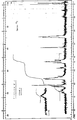
- the infrared spectrum makes it possible to confirm the structure of the product obtained (attached as an appendix in figure 1).
- the reaction medium is heated for 6 hours at 80% C.
- step 1 has the formula:
- step 2 is acrylamide-methylene-urea obtained according to the reaction The following results were obtained
- the determination of the methylol groups was carried out using an iodine-thiosulphate return assay method. According to this method, 50 ml of an aqueous iodine solution are added to a solution containing 1 ml of sample and 10 ml of 2N sodium hydroxide. Excess iodine is dosed for an aqueous thiosulfate solution after addition of 20 cm 3 of 2 N sulfuric acid
- example 3 of Swiss patent 316 404 was carried out using the same operating conditions.
- reaction mixture is kept at room temperature for 12 hours and then neutralized by the addition of a 50% sodium hydroxide solution while cooling in order to keep the mixture at a temperature below 10 ° C.
- reaction yield is 70.6%.
Landscapes
- Chemical & Material Sciences (AREA)
- Organic Chemistry (AREA)
- Health & Medical Sciences (AREA)
- Chemical Kinetics & Catalysis (AREA)
- Medicinal Chemistry (AREA)
- Polymers & Plastics (AREA)
- Organic Low-Molecular-Weight Compounds And Preparation Thereof (AREA)
- Phenolic Resins Or Amino Resins (AREA)
Description
- La présente invention concerne un nouveau procédé de préparation de dérivés acryliques de l'urée, elle a plus particulièrement un nouveau procédé de préparation de dérivé acrylique de l'urée obtenu en particulier à partir d'urée et d'acrylamide.
- Certain dérivés acryliques de l'urée sont connus depuis longtemps. Les composés acryliques utilisés comme produits de départ sont le plus souvent l'acrylamide ou l'acrylonitrile.
- C'est ainsi qu'on a proposé (voir brevet Suisse CIBA N° 316 404) la préparation de l'acrylamido-méthylène-urée selon un procédé en deux étapes qui consiste en faire réagir d'abord, dans une première étape en milieu fortement acide du paraformaldéhyde avec de l'urée, la température du milieu réactionel pouvant s'élever jusqu'à 70°C, puis dans une deuxième étape à additionner à basse température de l'acrylonitrile sur le produit de réaction obtenu dans la première étape. Après neutralisation du milieu réactionnel, les auteurs affirment obtenir un produit de point de fusion égale à 130-131 ° C; le produit obtenu est décrit comme étant l'acrylamido-méthylène-urée dont la formule serait:
-

- Action de l'urée sur le formol en milieu sulfurique selon la réaction:

- Action de l'acrylonitrile sur la monométhyloruréé en présence d'acide sulfurique selon la réaction

- Le point de fusion est la seule caractéristique du produit acrylique décrit dans le brevet suisse précipité, aucun résultat analytique permettant de confirmer la structure du produit est indiqué. Afin de vérifier le bien fondé du procédé mis en oeuvre, la demanderesse a réalisé des essais mettant en oeuvre les conditions opératoires du brevet antérieur: on a alors obtenu par cette méthode un produit dont le point de fusion est de 131 °C, mais avec un rendement très faible voisin de 5% et dont la composition, déterminée par analyse chromatographique en couche mince révèle la présence de plusieurs produits parmi lesquels on identifie l'urée, le bisacrylamido-méthane, mais pas d'acrylamido-méthylène-urée. La même méthode analytique réalisée sur un échantillon neutralisé, mais dilué, contenant tous les produits de la réaction révèle bien effectivement la présence , mais en très faible quantité, d'acrylamido-méthylène-urée. En réalité le produit même s'il se forme en mettant en oeuvre le mode opératoire décrit dans le brevet suisse a peu de chance d'être isolé par la méthode décrite en raison de sa faible solubilité dans l'eau (inférieure à 2% à 20°C) et de son insolubilité dans l'acétone.
- Sans vouloir être lié par des mécanismes chimiques théoriques, la demanderesse pense que la mise en oeuvre des conditions opératoires du brevet suisse conduit à un mélange de bisacrylamido-méthane et d'urée car il semble que la réaction de la lère étape en milieu sulfurique urée + formol


- Le besoin se fait donc sentir de mettre au point un procédé permettant de fabriquer de véritables dérivés acryliques de l'urée à partir d'urée, de formol et d'acrylonitrile.
- La présente invention concerne un procédé de préparation de dérivé acrylique de l'urée, de formule:

- La mise en oeuvre d'un tel procédé permet de préparer le dérivé acrylique de l'urée avec des rendements avoisinant 70% et dont la structure chimique est confirmée par les méthodes analytiques usuelles: analyse élémentaire, spectre Infra-rouge et R.M.N. du proton et du 13 C.
- Le procédé de la présente invention consiste à faire réagir dans un solvant non réactif, l'acrylamide avec le formol à pH basique au moins égal à 7. Les solvants non réactifs qui conviennent pour la mise en oeuvre du procédé de l'invention sont choisis parmi l'eau, le diméthylformamide; lorsqu'on utilise l'eau comme solvant le formol est introduit sous forme de solution aqueuse; lorsqu'on utilise un solvant organique, le formol est introduit sous forme de paraformaldéhyde. On ajuste le pH à une valeur au moins égale à 7 à l'aide , par exemple, d'amines aliphatiques tels que le triéthylamine pour des valeurs de pH inférieur à 7 on réduit la vitesse de formation du dérivé. Préférentiellement, cette première étape est conduite en présence d'un inhibiteur de polymérisation éther méthylique de l'hydroquinone par exemple. Cette première étape est conduite à une température qui dépend de la nature du solvant: si le solvant utilisé est de l'eau la température réactionnelle est voisine de 50°C, si le solvant mis en oeuvre est du diméthyl formamide, la réaction est conduite à une température voisine de 80°C.
- La duxième étape du procédé objet de l'invention consiste ensuite à faire réagir le produit obtenu lors de la première étape avec de l'urée à pH acide au plus égal à 4,5. On a en effet trouvé que la mise en oeuvre du procédé réalisé à pH supérieur à 4,5 conduit à des taux de conversion voisin de zéro. Le pH est ajusté par exemple en utilisant de l'acide sulfurique concentré ou de l'acide chlorhydrique. La température réactionnelle de cette deuxième étape dépend aussi du solvant non réactif mis en oeuvre; si le solvant est de l'eau, la réaction est conduite à température ambiante, si le solvant est un solvant organique la réaction est conduite à une température voisine de 80°C. La quantité d'urée mise en oeuvre est au moins égale à un équivalent et de préférence supérieure à quatre équivalents molaires pour un équivalent calculé sur le produit de la réaction obtenu dans la première étape. On a en effet trouvé qu'il est préférable de mettre en oeuvre quatre équivalents molaires si l'on veut éviter la formation de [NN'bis(acrylamido-méthylène)-urée] comme impurété.
- Le produit obtenu selon le procédé, objet de l'invention, est polymérisable ou copolymérisable et condensable avec l'urée en présence de formol. Il convient particulièrement comme additif dans les aminoplastes et phénoplastes notamment ceux utilisés comme colles à bois; il peut aussi être utilisé comme agent réticulant.
- Les exemples suivants illustrent la présente invention; les quantités sont exprimées en parties en poids:
- Dans un réacteur agité muni d'un condenseur à reflux, on introduit la charge suivante:
- - 20 parties d'acrylamide
- - 22,8 partie d'une solution aqueuse de formol à 37%
- - 0,2 partie de triéthylamine
- - 0,01 partie d'éther méthylique de l'hydroquinone.
- On mantient le milieu réactionnel à 50°C pendant 1 heure.
- Après refroidissement du milieu réactionnel et maintient à 10°C, on ajoute 67,6 parties d'urée et 15 parties d'acide chlorhydrique concentré. Le pH du milieu réactionnel est alors de 1. Le milieu réactionnel est agité pendant 15 heures à températures ambiante. Il se forme un précipité tout au long de la réaction. Après filtration et recristallisation dans l'eau, on obtient 27,5 parties d'acrylamide méthylène-urée. Le rendement de la réaction est de 67,5%.
- Point de fusion: brunissement entre 265-270°C.
- L'analyse élementaire donne les résultatis suivants:
- Trouvé Calculé
- - C: 41,71 41,95
- - H: 6,28 6,29
- - N: 29,24 29,37
- Le spectre infra-rouge permet de confirmer la structure du produit obtenu (ci-joint en annexe figure 1).
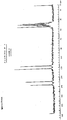
- Le spectre RMN permet de confirmer la structure de l'acrylamido-méthylène-urée (ci-joint en annexe figures 2 et 3).
- Dans le réacteur utilisé dans l'exemple 1, on introduit la charge suivante:
- - 20 parties d'acrylamide
- - 200 parties de diméthylformamide
- - 9 parties de paraformaldéhyde (pureté 94%)
- - 0,4 partie de triéthylamine
- - 0,010 partie d'éther méthylique de l'hydroquinone.
- Le milieu réactionnel est chauffé 6 heures à 80%C.
- Au milieu réactionnel de l'étape 1 et refroidi à 20°C, on ajoute
- - 67,6 parties d'urée
- - 1 partie d'acide sulfurique concentré.
- On chauffe à 80°C pendant 2 heures. Après refroidissement, filtration et recristallisation, on obtient 8 parties d'un produit solide qui présente les caractéristiques suivantes:
- Point de fusion: brunissement entre 265-270°C.
- Analyse élémentaire:
- Trouvé Calculé
- - C: 41,63 41,95
- - H: 6,19 6,29
- - N: 29,30 29,37
- Les spectres Infrarouge et R.M.N. sont identiques à ceux de l'exemple 1.
- Ils confirment la préparation de l'acrylamido-méthylène-urée.
- Les essais suivants ont été réalisés en faisant réagir le produit de la réaction obtenu dans la première étape des exemples 1 ou 2 avec de l'urée: la réaction est conduite à différente température et à pH variable ainsi qu'en mettant en oeuvre différents rapports molaires du produit de réaction obtenu dans l'étape 1, et de l'urée additionnée dans l'étape 2.
- Le produit obtenu dans l'étape 1 a pour formule:


- Le dosage des groupes méthylol a été réalisé en mettant en oeuvre une méthode de dosage en retour iode-thiosulfate. Selon cette méthode on ajoute à une solution contenant 1 ml d'échantillon et 10 ml de soude 2 N, 50 ml d'une solution aqueuse d'iode


- A titre comparatif on a réalisé l'exemple 3 du brevet suisse 316 404 en mettant en oeuvre les mêmes conditions opératoires.
- On dissout 27 parties de paraformaldéhyde dans 180 parties d'acide sulfurique à 98%. Le mélange réactionnel est chauffé à 70°C puis refroidi à une température inférieure à 10°C.
- On ajoute ensuite 54 parties d'urée. On maintient le milieu réactionnel à température ambiante pendant trois heures puis on additionne 47,7 parties d'acrylonitrile après avoir refroidi le milieu à une température de 15°C.
- On maintient le mélange réactionnel à température ambiante pendant 12 heures puis on le neutralise par addition d'une solution de soude à 50% tout en refroidissant afin de maintenir le mélange à une température inférieure à 10°C.
- Après neutralisation le sulfate de sodium formé précipite, il est alors filtré et lavé avec 400 parties d'acétone. Après élimination de l'eau sous vide à une température de 40°C on élimine le sulfate de sodium qui a précipité par filtration et lavage à l'acétone. Le filtrat aquex obtenu et l'acétone de lavage sont ensuite réunis et distillés. Il se forme alors un précipité que l'on sépare par filtration: on en receuille 6 parties. L'analyse par chromatographie sur couche mince permet de mettre en évidence la présence d'urée, de bisacrylamido méthane et de sulfate de sodium. Après refroidissement il se forme un précipité que l'on filtre: sa masse est de 5 parties, son point de fusion est de 131 °C. Par chromatographie en couche mince on identifie de l'urée et du bisacrylamido-méthane. En prélevant un échantillon que l'on neutralise et dilue, on met en évidence des quantité infimes d'acrylamido-méthylène-urée.
- L'exemple 1 est répété en mettant en oeuvre dans la pemière étape:
- - 71 parties d'acrylamide
- - 81 partiesd'unesolutiondeformolà37%
- - 2 parties de triethylamine
- - 0,04 partie d'éther méthylique de l'hydroquinone; dans la deuxième étape.
- - 180 parties d'urée.
- Après traitement on recueille 101 parties d'un pro- duiti: le rendement de la réaction est de 70.6%.
- L'analyse par chromatographie en couche mince permet de mettre en évidence la présence de N,N' bis acrylamido-méthylène-urée.
- Une résine urée-formol présente les caractéristiques suivantes
- Viscosité à 20°C: 5,5 poises
- Extrait sec: 65%
- pH: 8
- F: 0,55
- NH2
- Cette résine est modifiée par 6,5% d'acrylamido méthylène urée. On dispose alors d'une résine qui présente les caractéristiques suivantes:
- Viscosité à 20°C: 3,8 poises
- Extrait sec: 65%
- pH: 8
- F: 0,55
- NH2
- Ces deus résines sont utilisées pour la fabrication de panneaux particules monocouches à partir de copeaux de bois en mettant en oeuvre les mêmes conditions opératoires: les résines sont durcies à l'aide d'une solution de chlorure d'ammonium. Le tableau suivant indique les caractéristiques des panneaux ontenus:
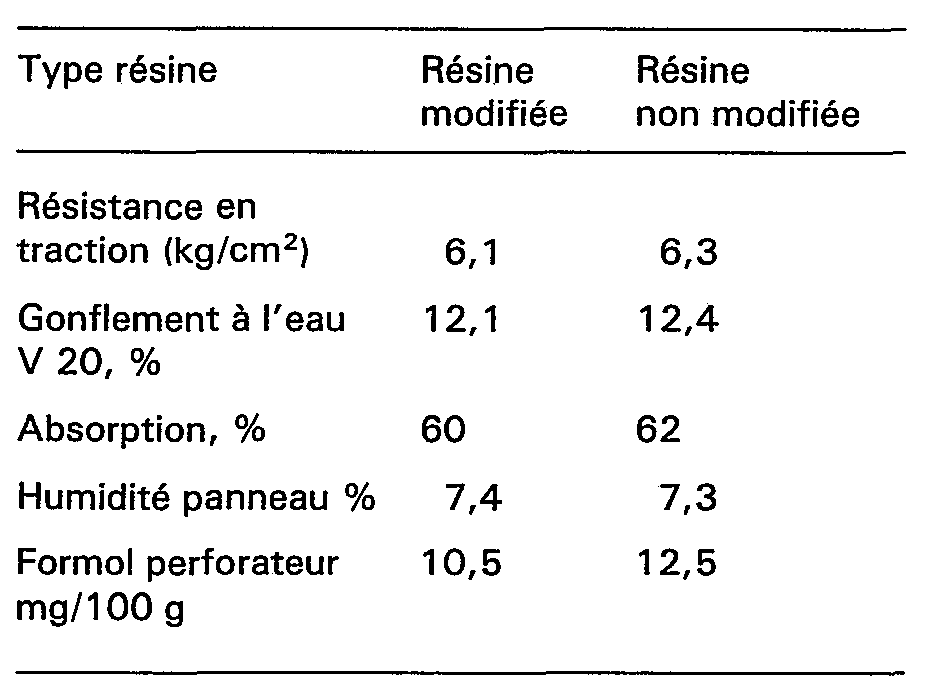
- Les mesures ont été déterminées selon les normes suivantes:
- - Teneur en formol (perforateur): Norme EN 120
- - Epaisseur, masse volumique et humidité: Norme DIN 52361
- - Traction V20: Norme DIN 68763
- - Gonflement (%): Norme DIN 52364
Claims (3)

Priority Applications (1)
| Application Number | Priority Date | Filing Date | Title |
|---|---|---|---|
| AT86400799T ATE35676T1 (de) | 1985-04-23 | 1986-04-15 | Verfahren zur herstellung von harnstoffacrylderivaten. |
Applications Claiming Priority (2)
| Application Number | Priority Date | Filing Date | Title |
|---|---|---|---|
| FR8506103 | 1985-04-23 | ||
| FR8506103A FR2580635B1 (fr) | 1985-04-23 | 1985-04-23 | Nouveau procede de preparation de derive acrylique de l'uree |
Publications (2)
| Publication Number | Publication Date |
|---|---|
| EP0202976A1 EP0202976A1 (fr) | 1986-11-26 |
| EP0202976B1 true EP0202976B1 (fr) | 1988-07-13 |
Family
ID=9318534
Family Applications (1)
| Application Number | Title | Priority Date | Filing Date |
|---|---|---|---|
| EP86400799A Expired EP0202976B1 (fr) | 1985-04-23 | 1986-04-15 | Nouveau procédé de préparation de dérivé acrylique de l'urée |
Country Status (4)
| Country | Link |
|---|---|
| EP (1) | EP0202976B1 (fr) |
| AT (1) | ATE35676T1 (fr) |
| DE (1) | DE3660380D1 (fr) |
| FR (1) | FR2580635B1 (fr) |
Families Citing this family (3)
| Publication number | Priority date | Publication date | Assignee | Title |
|---|---|---|---|---|
| FR2630738B1 (fr) * | 1988-04-29 | 1990-07-13 | Norsolor Sa | Nouveau derive acrylique de l'uree |
| FR2630746B1 (fr) * | 1988-04-29 | 1992-02-21 | Norsolor Sa | Nouveaux additifs convenant dans les resines aminoplastes |
| FR2630745B1 (fr) * | 1988-04-29 | 1992-02-21 | Norsolor Sa | Nouveau procede de fabrication de resines uree-formol |
Family Cites Families (1)
| Publication number | Priority date | Publication date | Assignee | Title |
|---|---|---|---|---|
| CH319838A (de) * | 1952-11-26 | 1957-02-28 | Ciba Geigy | Verfahren zur Herstellung von polymerisierbaren oder copolymerisierbaren amidartigen Verbindungen |
-
1985
- 1985-04-23 FR FR8506103A patent/FR2580635B1/fr not_active Expired
-
1986
- 1986-04-15 AT AT86400799T patent/ATE35676T1/de not_active IP Right Cessation
- 1986-04-15 EP EP86400799A patent/EP0202976B1/fr not_active Expired
- 1986-04-15 DE DE8686400799T patent/DE3660380D1/de not_active Expired
Also Published As
| Publication number | Publication date |
|---|---|
| ATE35676T1 (de) | 1988-07-15 |
| FR2580635B1 (fr) | 1987-05-15 |
| FR2580635A1 (fr) | 1986-10-24 |
| EP0202976A1 (fr) | 1986-11-26 |
| DE3660380D1 (en) | 1988-08-18 |
Similar Documents
| Publication | Publication Date | Title |
|---|---|---|
| FR2664273A1 (fr) | Nouveau procede de preparation du 5-hydroxymethylfurfural a partir de saccharides. | |
| FR2593801A1 (fr) | Procede de preparation de carbonate basique de zinc | |
| CA1261324A (fr) | Procede de preparation de derives de la pteridine | |
| CN1894208A (zh) | 生产维生素a乙酸酯的方法 | |
| EP3313823B1 (fr) | Procédé de synthèse de molécules portant une fonction oxyde de nitrile | |
| EP0164290B1 (fr) | Procédé de déalkylation d'alcaloides et intermédiaires | |
| EP0202976A1 (fr) | Nouveau procédé de préparation de dérivé acrylique de l'urée | |
| EP0148057B1 (fr) | Chitosane 6-sulfate et procédé pour sa préparation | |
| FR2640267A2 (fr) | Procede de synthese de l'azido-3(prime)-desoxy-3(prime)-thymidine et analogues | |
| EP0201386B1 (fr) | Nouveaux dérivés acryliques de l'urée | |
| FR2613718A1 (fr) | Tetramines cycliques monofonctionnalisees, leur procede de preparation, leurs polymeres et utilisation de ces polymeres | |
| EP0189448B1 (fr) | Agent de fluoration de composes organiques notamment de composes acetyleniques, leur procede de preparation et leur utilisation dans les reactions d'addition ou de substitution nucleophile | |
| CA2319673C (fr) | Procede perfectionne de fabrication d'anhydrides (meth)acryliques mixtes de haute purete | |
| FR2564093A1 (fr) | Procede pour la preparation d'adenosine3', 5'-monophosphate cyclique n6-substitue ou des sels correspondants | |
| EP0069001A1 (fr) | Procédé de préparation de dérivés de la tétrahydro-5,6,7,7a 4H-thiéno (3,2-C) pyridinone-2 | |
| EP0340072B1 (fr) | Nouveau dérivé acrylique de l'urée | |
| EP2874995A1 (fr) | Procede de preparation du diaminomaleonitrile | |
| EP0047206A1 (fr) | Procédé de préparation d'aminoalcools polyoxaalkylés ou polyoxaarylés et leur application comme agents de complexation de cations | |
| RU2824124C1 (ru) | Способ получения 4-бром-3-нитробензальдегида | |
| CN1723202A (zh) | 取代的咪唑衍生物的制备方法及该方法中使用的中间体 | |
| FR2667600A1 (fr) | Procede de synthese de monohalogenoalcanoylferrocenes. | |
| SU1747442A1 (ru) | Способ получени имидазола | |
| EP0085604B1 (fr) | Procédé amélioré de fabrication de l'alpha-acétoxy alpha-méthyl N,N'-diacétyl malonamide de haute productivité | |
| EP1086142B1 (fr) | Procede de preparation regioselectif de derives monosulfonyles en c-6 des cyclodextrines | |
| BE494103A (fr) |
Legal Events
| Date | Code | Title | Description |
|---|---|---|---|
| PUAI | Public reference made under article 153(3) epc to a published international application that has entered the european phase |
Free format text: ORIGINAL CODE: 0009012 |
|
| AK | Designated contracting states |
Kind code of ref document: A1 Designated state(s): AT BE CH DE GB IT LI LU NL SE |
|
| RIN1 | Information on inventor provided before grant (corrected) |
Inventor name: LALO, JACK Inventor name: GARRIGUE, ROGER |
|
| 17P | Request for examination filed |
Effective date: 19861217 |
|
| 17Q | First examination report despatched |
Effective date: 19870929 |
|
| ITF | It: translation for a ep patent filed | ||
| GRAA | (expected) grant |
Free format text: ORIGINAL CODE: 0009210 |
|
| RAP1 | Party data changed (applicant data changed or rights of an application transferred) |
Owner name: NORSOLOR S.A. |
|
| RAP1 | Party data changed (applicant data changed or rights of an application transferred) |
Owner name: SOCIETE CHIMIQUE DES CHARBONNAGES S.A. |
|
| RAP1 | Party data changed (applicant data changed or rights of an application transferred) |
Owner name: NORSOLOR S.A. |
|
| AK | Designated contracting states |
Kind code of ref document: B1 Designated state(s): AT BE CH DE GB IT LI LU NL SE |
|
| REF | Corresponds to: |
Ref document number: 35676 Country of ref document: AT Date of ref document: 19880715 Kind code of ref document: T |
|
| REF | Corresponds to: |
Ref document number: 3660380 Country of ref document: DE Date of ref document: 19880818 |
|
| GBT | Gb: translation of ep patent filed (gb section 77(6)(a)/1977) | ||
| PLBE | No opposition filed within time limit |
Free format text: ORIGINAL CODE: 0009261 |
|
| STAA | Information on the status of an ep patent application or granted ep patent |
Free format text: STATUS: NO OPPOSITION FILED WITHIN TIME LIMIT |
|
| 26N | No opposition filed | ||
| ITTA | It: last paid annual fee | ||
| EPTA | Lu: last paid annual fee | ||
| EAL | Se: european patent in force in sweden |
Ref document number: 86400799.2 |
|
| PGFP | Annual fee paid to national office [announced via postgrant information from national office to epo] |
Ref country code: SE Payment date: 19990406 Year of fee payment: 14 |
|
| PGFP | Annual fee paid to national office [announced via postgrant information from national office to epo] |
Ref country code: CH Payment date: 19990413 Year of fee payment: 14 |
|
| PGFP | Annual fee paid to national office [announced via postgrant information from national office to epo] |
Ref country code: GB Payment date: 19990415 Year of fee payment: 14 Ref country code: AT Payment date: 19990415 Year of fee payment: 14 |
|
| PGFP | Annual fee paid to national office [announced via postgrant information from national office to epo] |
Ref country code: LU Payment date: 19990419 Year of fee payment: 14 |
|
| PGFP | Annual fee paid to national office [announced via postgrant information from national office to epo] |
Ref country code: NL Payment date: 19990426 Year of fee payment: 14 Ref country code: DE Payment date: 19990426 Year of fee payment: 14 |
|
| PGFP | Annual fee paid to national office [announced via postgrant information from national office to epo] |
Ref country code: BE Payment date: 19990614 Year of fee payment: 14 |
|
| PG25 | Lapsed in a contracting state [announced via postgrant information from national office to epo] |
Ref country code: LU Free format text: LAPSE BECAUSE OF NON-PAYMENT OF DUE FEES Effective date: 20000415 Ref country code: GB Free format text: LAPSE BECAUSE OF NON-PAYMENT OF DUE FEES Effective date: 20000415 Ref country code: AT Free format text: LAPSE BECAUSE OF NON-PAYMENT OF DUE FEES Effective date: 20000415 |
|
| PG25 | Lapsed in a contracting state [announced via postgrant information from national office to epo] |
Ref country code: SE Free format text: LAPSE BECAUSE OF NON-PAYMENT OF DUE FEES Effective date: 20000416 |
|
| PG25 | Lapsed in a contracting state [announced via postgrant information from national office to epo] |
Ref country code: LI Free format text: LAPSE BECAUSE OF NON-PAYMENT OF DUE FEES Effective date: 20000430 Ref country code: CH Free format text: LAPSE BECAUSE OF NON-PAYMENT OF DUE FEES Effective date: 20000430 Ref country code: BE Free format text: LAPSE BECAUSE OF NON-PAYMENT OF DUE FEES Effective date: 20000430 |
|
| BERE | Be: lapsed |
Owner name: S.A. NORSOLOR Effective date: 20000430 |
|
| PG25 | Lapsed in a contracting state [announced via postgrant information from national office to epo] |
Ref country code: NL Free format text: LAPSE BECAUSE OF NON-PAYMENT OF DUE FEES Effective date: 20001101 |
|
| GBPC | Gb: european patent ceased through non-payment of renewal fee |
Effective date: 20000415 |
|
| EUG | Se: european patent has lapsed |
Ref document number: 86400799.2 |
|
| REG | Reference to a national code |
Ref country code: CH Ref legal event code: PL |
|
| NLV4 | Nl: lapsed or anulled due to non-payment of the annual fee |
Effective date: 20001101 |
|
| PG25 | Lapsed in a contracting state [announced via postgrant information from national office to epo] |
Ref country code: DE Free format text: LAPSE BECAUSE OF NON-PAYMENT OF DUE FEES Effective date: 20010201 |
|
| PG25 | Lapsed in a contracting state [announced via postgrant information from national office to epo] |
Ref country code: IT Free format text: LAPSE BECAUSE OF NON-PAYMENT OF DUE FEES;WARNING: LAPSES OF ITALIAN PATENTS WITH EFFECTIVE DATE BEFORE 2007 MAY HAVE OCCURRED AT ANY TIME BEFORE 2007. THE CORRECT EFFECTIVE DATE MAY BE DIFFERENT FROM THE ONE RECORDED. Effective date: 20050415 |