EP0201196A2 - Benzoquinone derivatives, their production and use - Google Patents
Benzoquinone derivatives, their production and use Download PDFInfo
- Publication number
- EP0201196A2 EP0201196A2 EP86302464A EP86302464A EP0201196A2 EP 0201196 A2 EP0201196 A2 EP 0201196A2 EP 86302464 A EP86302464 A EP 86302464A EP 86302464 A EP86302464 A EP 86302464A EP 0201196 A2 EP0201196 A2 EP 0201196A2
- Authority
- EP
- European Patent Office
- Prior art keywords
- carbon atoms
- compound
- formula
- integer
- alkyl
- Prior art date
- Legal status (The legal status is an assumption and is not a legal conclusion. Google has not performed a legal analysis and makes no representation as to the accuracy of the status listed.)
- Granted
Links
- 238000004519 manufacturing process Methods 0.000 title claims description 10
- 150000004057 1,4-benzoquinones Chemical class 0.000 title description 6
- 150000001875 compounds Chemical class 0.000 claims abstract description 80
- 125000004432 carbon atom Chemical group C* 0.000 claims abstract description 51
- 125000000217 alkyl group Chemical group 0.000 claims abstract description 26
- 229910052739 hydrogen Inorganic materials 0.000 claims abstract description 17
- 239000001257 hydrogen Substances 0.000 claims abstract description 17
- 125000002993 cycloalkylene group Chemical group 0.000 claims abstract description 16
- 125000000843 phenylene group Chemical group C1(=C(C=CC=C1)*)* 0.000 claims abstract description 11
- 208000023589 ischemic disease Diseases 0.000 claims abstract description 7
- 125000004435 hydrogen atom Chemical group [H]* 0.000 claims abstract description 6
- 208000026935 allergic disease Diseases 0.000 claims abstract description 5
- 230000002401 inhibitory effect Effects 0.000 claims abstract description 5
- 150000002978 peroxides Chemical class 0.000 claims description 13
- 125000001589 carboacyl group Chemical group 0.000 claims description 12
- 241000124008 Mammalia Species 0.000 claims description 10
- 238000011282 treatment Methods 0.000 claims description 7
- 125000004956 cyclohexylene group Chemical group 0.000 claims description 5
- UFHFLCQGNIYNRP-UHFFFAOYSA-N Hydrogen Chemical compound [H][H] UFHFLCQGNIYNRP-UHFFFAOYSA-N 0.000 claims description 4
- 125000004051 hexyl group Chemical group [H]C([H])([H])C([H])([H])C([H])([H])C([H])([H])C([H])([H])C([H])([H])* 0.000 claims description 4
- 125000002887 hydroxy group Chemical group [H]O* 0.000 claims description 4
- 230000001590 oxidative effect Effects 0.000 claims description 4
- 239000008194 pharmaceutical composition Substances 0.000 claims description 4
- RCOVVFHAPMWGSL-UHFFFAOYSA-N 2-(10-hydroxy-10-methylundecyl)-5,6-dimethoxy-3-methylcyclohexa-2,5-diene-1,4-dione Chemical compound COC1=C(OC)C(=O)C(CCCCCCCCCC(C)(C)O)=C(C)C1=O RCOVVFHAPMWGSL-UHFFFAOYSA-N 0.000 claims description 3
- 206010019280 Heart failures Diseases 0.000 claims description 3
- 239000004480 active ingredient Substances 0.000 claims description 3
- 150000002431 hydrogen Chemical group 0.000 claims 9
- 230000000172 allergic effect Effects 0.000 claims 2
- 208000010668 atopic eczema Diseases 0.000 claims 2
- 208000037265 diseases, disorders, signs and symptoms Diseases 0.000 claims 2
- 239000000825 pharmaceutical preparation Substances 0.000 claims 2
- 230000000694 effects Effects 0.000 abstract description 4
- 238000002560 therapeutic procedure Methods 0.000 abstract description 4
- 206010008190 Cerebrovascular accident Diseases 0.000 abstract description 2
- 208000006011 Stroke Diseases 0.000 abstract description 2
- 230000002490 cerebral effect Effects 0.000 abstract description 2
- 125000002252 acyl group Chemical group 0.000 abstract 1
- 230000000069 prophylactic effect Effects 0.000 abstract 1
- RTZKZFJDLAIYFH-UHFFFAOYSA-N Diethyl ether Chemical compound CCOCC RTZKZFJDLAIYFH-UHFFFAOYSA-N 0.000 description 44
- 125000000325 methylidene group Chemical group [H]C([H])=* 0.000 description 22
- 239000000203 mixture Substances 0.000 description 17
- 238000006243 chemical reaction Methods 0.000 description 16
- FYSNRJHAOHDILO-UHFFFAOYSA-N thionyl chloride Chemical compound ClS(Cl)=O FYSNRJHAOHDILO-UHFFFAOYSA-N 0.000 description 16
- QTBSBXVTEAMEQO-UHFFFAOYSA-N Acetic acid Chemical compound CC(O)=O QTBSBXVTEAMEQO-UHFFFAOYSA-N 0.000 description 15
- OKKJLVBELUTLKV-UHFFFAOYSA-N Methanol Chemical compound OC OKKJLVBELUTLKV-UHFFFAOYSA-N 0.000 description 15
- XLYOFNOQVPJJNP-UHFFFAOYSA-N water Substances O XLYOFNOQVPJJNP-UHFFFAOYSA-N 0.000 description 15
- 125000002496 methyl group Chemical group [H]C([H])([H])* 0.000 description 14
- 238000000655 nuclear magnetic resonance spectrum Methods 0.000 description 13
- WFDIJRYMOXRFFG-UHFFFAOYSA-N Acetic anhydride Chemical compound CC(=O)OC(C)=O WFDIJRYMOXRFFG-UHFFFAOYSA-N 0.000 description 12
- UIXPTCZPFCVOQF-UHFFFAOYSA-N ubiquinone-0 Chemical compound COC1=C(OC)C(=O)C(C)=CC1=O UIXPTCZPFCVOQF-UHFFFAOYSA-N 0.000 description 12
- 238000000921 elemental analysis Methods 0.000 description 11
- 238000010898 silica gel chromatography Methods 0.000 description 11
- 239000000243 solution Substances 0.000 description 11
- 239000002904 solvent Substances 0.000 description 11
- HEDRZPFGACZZDS-MICDWDOJSA-N Trichloro(2H)methane Chemical compound [2H]C(Cl)(Cl)Cl HEDRZPFGACZZDS-MICDWDOJSA-N 0.000 description 10
- 125000000956 methoxy group Chemical group [H]C([H])([H])O* 0.000 description 10
- LFQSCWFLJHTTHZ-UHFFFAOYSA-N Ethanol Chemical compound CCO LFQSCWFLJHTTHZ-UHFFFAOYSA-N 0.000 description 9
- 238000000034 method Methods 0.000 description 9
- MHAJPDPJQMAIIY-UHFFFAOYSA-N Hydrogen peroxide Chemical compound OO MHAJPDPJQMAIIY-UHFFFAOYSA-N 0.000 description 8
- WYURNTSHIVDZCO-UHFFFAOYSA-N Tetrahydrofuran Chemical compound C1CCOC1 WYURNTSHIVDZCO-UHFFFAOYSA-N 0.000 description 8
- 239000003054 catalyst Substances 0.000 description 7
- HEDRZPFGACZZDS-UHFFFAOYSA-N Chloroform Chemical compound ClC(Cl)Cl HEDRZPFGACZZDS-UHFFFAOYSA-N 0.000 description 6
- XEKOWRVHYACXOJ-UHFFFAOYSA-N Ethyl acetate Chemical compound CCOC(C)=O XEKOWRVHYACXOJ-UHFFFAOYSA-N 0.000 description 6
- YXFVVABEGXRONW-UHFFFAOYSA-N Toluene Chemical compound CC1=CC=CC=C1 YXFVVABEGXRONW-UHFFFAOYSA-N 0.000 description 6
- 239000000284 extract Substances 0.000 description 6
- 238000000862 absorption spectrum Methods 0.000 description 5
- ZKQFHRVKCYFVCN-UHFFFAOYSA-N ethoxyethane;hexane Chemical compound CCOCC.CCCCCC ZKQFHRVKCYFVCN-UHFFFAOYSA-N 0.000 description 5
- 239000003208 petroleum Substances 0.000 description 5
- NGNBDVOYPDDBFK-UHFFFAOYSA-N 2-[2,4-di(pentan-2-yl)phenoxy]acetyl chloride Chemical compound CCCC(C)C1=CC=C(OCC(Cl)=O)C(C(C)CCC)=C1 NGNBDVOYPDDBFK-UHFFFAOYSA-N 0.000 description 4
- YIQLMSZLJQMHRD-UHFFFAOYSA-N 6-(4-hydroxycyclohexyl)hexanoic acid Chemical compound OC1CCC(CCCCCC(O)=O)CC1 YIQLMSZLJQMHRD-UHFFFAOYSA-N 0.000 description 4
- IAZDPXIOMUYVGZ-WFGJKAKNSA-N Dimethyl sulfoxide Chemical compound [2H]C([2H])([2H])S(=O)C([2H])([2H])[2H] IAZDPXIOMUYVGZ-WFGJKAKNSA-N 0.000 description 4
- VEXZGXHMUGYJMC-UHFFFAOYSA-N Hydrochloric acid Chemical compound Cl VEXZGXHMUGYJMC-UHFFFAOYSA-N 0.000 description 4
- JUJWROOIHBZHMG-UHFFFAOYSA-N Pyridine Chemical compound C1=CC=NC=C1 JUJWROOIHBZHMG-UHFFFAOYSA-N 0.000 description 4
- UIIMBOGNXHQVGW-UHFFFAOYSA-M Sodium bicarbonate Chemical compound [Na+].OC([O-])=O UIIMBOGNXHQVGW-UHFFFAOYSA-M 0.000 description 4
- 125000003118 aryl group Chemical group 0.000 description 4
- 238000001816 cooling Methods 0.000 description 4
- 239000012043 crude product Substances 0.000 description 4
- 239000013078 crystal Substances 0.000 description 4
- 150000004795 grignard reagents Chemical class 0.000 description 4
- -1 lipid peroxide Chemical class 0.000 description 4
- 230000003647 oxidation Effects 0.000 description 4
- 238000007254 oxidation reaction Methods 0.000 description 4
- 239000000047 product Substances 0.000 description 4
- 238000001953 recrystallisation Methods 0.000 description 4
- 238000003756 stirring Methods 0.000 description 4
- YLQBMQCUIZJEEH-UHFFFAOYSA-N tetrahydrofuran Natural products C=1C=COC=1 YLQBMQCUIZJEEH-UHFFFAOYSA-N 0.000 description 4
- JOXIMZWYDAKGHI-UHFFFAOYSA-N toluene-4-sulfonic acid Chemical compound CC1=CC=C(S(O)(=O)=O)C=C1 JOXIMZWYDAKGHI-UHFFFAOYSA-N 0.000 description 4
- UHOVQNZJYSORNB-UHFFFAOYSA-N Benzene Chemical compound C1=CC=CC=C1 UHOVQNZJYSORNB-UHFFFAOYSA-N 0.000 description 3
- LYCAIKOWRPUZTN-UHFFFAOYSA-N Ethylene glycol Chemical compound OCCO LYCAIKOWRPUZTN-UHFFFAOYSA-N 0.000 description 3
- 239000007818 Grignard reagent Substances 0.000 description 3
- ZMXDDKWLCZADIW-UHFFFAOYSA-N N,N-Dimethylformamide Chemical compound CN(C)C=O ZMXDDKWLCZADIW-UHFFFAOYSA-N 0.000 description 3
- 241000700159 Rattus Species 0.000 description 3
- VYPSYNLAJGMNEJ-UHFFFAOYSA-N Silicium dioxide Chemical compound O=[Si]=O VYPSYNLAJGMNEJ-UHFFFAOYSA-N 0.000 description 3
- YCYZYNLTIHNUNA-UHFFFAOYSA-N [4-[5-(4,5-dimethoxy-2-methyl-3,6-dioxocyclohexa-1,4-dien-1-yl)pentyl]cyclohexyl] acetate Chemical compound O=C1C(OC)=C(OC)C(=O)C(CCCCCC2CCC(CC2)OC(C)=O)=C1C YCYZYNLTIHNUNA-UHFFFAOYSA-N 0.000 description 3
- 150000001732 carboxylic acid derivatives Chemical class 0.000 description 3
- 238000010531 catalytic reduction reaction Methods 0.000 description 3
- 125000004979 cyclopentylene group Chemical group 0.000 description 3
- IDGUHHHQCWSQLU-UHFFFAOYSA-N ethanol;hydrate Chemical compound O.CCO IDGUHHHQCWSQLU-UHFFFAOYSA-N 0.000 description 3
- 125000001495 ethyl group Chemical group [H]C([H])([H])C([H])([H])* 0.000 description 3
- 239000005457 ice water Substances 0.000 description 3
- INQOMBQAUSQDDS-UHFFFAOYSA-N iodomethane Chemical compound IC INQOMBQAUSQDDS-UHFFFAOYSA-N 0.000 description 3
- 125000001449 isopropyl group Chemical group [H]C([H])([H])C([H])(*)C([H])([H])[H] 0.000 description 3
- 125000000896 monocarboxylic acid group Chemical group 0.000 description 3
- VLKZOEOYAKHREP-UHFFFAOYSA-N n-Hexane Chemical compound CCCCCC VLKZOEOYAKHREP-UHFFFAOYSA-N 0.000 description 3
- 125000004108 n-butyl group Chemical group [H]C([H])([H])C([H])([H])C([H])([H])C([H])([H])* 0.000 description 3
- OWTSKJPRWFIYHU-SFHVURJKSA-N (2s)-5-hydroxy-2-(4-hydroxyphenyl)-7-methoxy-8-(3-methylbut-2-enyl)-2,3-dihydrochromen-4-one Chemical compound C1([C@@H]2CC(=O)C3=C(O)C=C(C(=C3O2)CC=C(C)C)OC)=CC=C(O)C=C1 OWTSKJPRWFIYHU-SFHVURJKSA-N 0.000 description 2
- QPFMBZIOSGYJDE-UHFFFAOYSA-N 1,1,2,2-tetrachloroethane Chemical compound ClC(Cl)C(Cl)Cl QPFMBZIOSGYJDE-UHFFFAOYSA-N 0.000 description 2
- RYHBNJHYFVUHQT-UHFFFAOYSA-N 1,4-Dioxane Chemical compound C1COCCO1 RYHBNJHYFVUHQT-UHFFFAOYSA-N 0.000 description 2
- AZQWKYJCGOJGHM-UHFFFAOYSA-N 1,4-benzoquinone Chemical compound O=C1C=CC(=O)C=C1 AZQWKYJCGOJGHM-UHFFFAOYSA-N 0.000 description 2
- PNMGBOLIPHTLRQ-UHFFFAOYSA-N 2-(10-hydroxy-10-methylundecyl)-5,6-dimethoxy-3-methylphenol Chemical compound COC1=CC(C)=C(CCCCCCCCCC(C)(C)O)C(O)=C1OC PNMGBOLIPHTLRQ-UHFFFAOYSA-N 0.000 description 2
- OQZGYMRYZAKXAF-UHFFFAOYSA-N 2-(4-methylcyclohexyl)acetic acid Chemical compound CC1CCC(CC(O)=O)CC1 OQZGYMRYZAKXAF-UHFFFAOYSA-N 0.000 description 2
- HSRLIWHINIQGLE-UHFFFAOYSA-N 6-(4-methoxyphenyl)hexanoyl 6-(4-methoxyphenyl)hexaneperoxoate Chemical compound C1=CC(OC)=CC=C1CCCCCC(=O)OOC(=O)CCCCCC1=CC=C(OC)C=C1 HSRLIWHINIQGLE-UHFFFAOYSA-N 0.000 description 2
- CSCPPACGZOOCGX-UHFFFAOYSA-N Acetone Chemical compound CC(C)=O CSCPPACGZOOCGX-UHFFFAOYSA-N 0.000 description 2
- NLXLAEXVIDQMFP-UHFFFAOYSA-N Ammonia chloride Chemical compound [NH4+].[Cl-] NLXLAEXVIDQMFP-UHFFFAOYSA-N 0.000 description 2
- INPMVTKYDQCGKU-HDJSIYSDSA-N C(C)(=O)O[C@@H]1CC[C@H](CC1)CCCCCCC(=O)O Chemical compound C(C)(=O)O[C@@H]1CC[C@H](CC1)CCCCCCC(=O)O INPMVTKYDQCGKU-HDJSIYSDSA-N 0.000 description 2
- FYYHWMGAXLPEAU-UHFFFAOYSA-N Magnesium Chemical compound [Mg] FYYHWMGAXLPEAU-UHFFFAOYSA-N 0.000 description 2
- MZRVEZGGRBJDDB-UHFFFAOYSA-N N-Butyllithium Chemical compound [Li]CCCC MZRVEZGGRBJDDB-UHFFFAOYSA-N 0.000 description 2
- CTQNGGLPUBDAKN-UHFFFAOYSA-N O-Xylene Chemical compound CC1=CC=CC=C1C CTQNGGLPUBDAKN-UHFFFAOYSA-N 0.000 description 2
- NHCWDOVSSQYSNT-SHTZXODSSA-N O[C@@H]1CC[C@H](CC1)CCCCCC1=C(C(C(=C(C1=O)OC)OC)=O)C Chemical compound O[C@@H]1CC[C@H](CC1)CCCCCC1=C(C(C(=C(C1=O)OC)OC)=O)C NHCWDOVSSQYSNT-SHTZXODSSA-N 0.000 description 2
- KTUZLOIQCUDUET-HAQNSBGRSA-N O[C@@H]1CC[C@H](CC1)CCCCCCC(=O)O Chemical compound O[C@@H]1CC[C@H](CC1)CCCCCCC(=O)O KTUZLOIQCUDUET-HAQNSBGRSA-N 0.000 description 2
- 235000019502 Orange oil Nutrition 0.000 description 2
- KFSLWBXXFJQRDL-UHFFFAOYSA-N Peracetic acid Chemical compound CC(=O)OO KFSLWBXXFJQRDL-UHFFFAOYSA-N 0.000 description 2
- NBIIXXVUZAFLBC-UHFFFAOYSA-N Phosphoric acid Chemical compound OP(O)(O)=O NBIIXXVUZAFLBC-UHFFFAOYSA-N 0.000 description 2
- FAPWRFPIFSIZLT-UHFFFAOYSA-M Sodium chloride Chemical compound [Na+].[Cl-] FAPWRFPIFSIZLT-UHFFFAOYSA-M 0.000 description 2
- WGLPBDUCMAPZCE-UHFFFAOYSA-N Trioxochromium Chemical compound O=[Cr](=O)=O WGLPBDUCMAPZCE-UHFFFAOYSA-N 0.000 description 2
- PYZHBTDFKDPFMW-UHFFFAOYSA-N [4-[6-(4,5-dimethoxy-2-methyl-3,6-dioxocyclohexa-1,4-dien-1-yl)hexyl]phenyl] acetate Chemical compound O=C1C(OC)=C(OC)C(=O)C(CCCCCCC=2C=CC(OC(C)=O)=CC=2)=C1C PYZHBTDFKDPFMW-UHFFFAOYSA-N 0.000 description 2
- XIESMUSSNLQULJ-UHFFFAOYSA-N [4-[6-[6-(4-acetyloxycyclohexyl)hexanoylperoxy]-6-oxohexyl]cyclohexyl] acetate Chemical compound C1CC(OC(=O)C)CCC1CCCCCC(=O)OOC(=O)CCCCCC1CCC(OC(C)=O)CC1 XIESMUSSNLQULJ-UHFFFAOYSA-N 0.000 description 2
- XYJUVWFKQVKUKP-UHFFFAOYSA-N [4-[7-[7-(4-acetyloxyphenyl)heptanoylperoxy]-7-oxoheptyl]phenyl] acetate Chemical compound C1=CC(OC(=O)C)=CC=C1CCCCCCC(=O)OOC(=O)CCCCCCC1=CC=C(OC(C)=O)C=C1 XYJUVWFKQVKUKP-UHFFFAOYSA-N 0.000 description 2
- 239000002253 acid Substances 0.000 description 2
- 150000008065 acid anhydrides Chemical class 0.000 description 2
- 230000010933 acylation Effects 0.000 description 2
- 238000005917 acylation reaction Methods 0.000 description 2
- 150000001350 alkyl halides Chemical class 0.000 description 2
- 230000029936 alkylation Effects 0.000 description 2
- 238000005804 alkylation reaction Methods 0.000 description 2
- VSCWAEJMTAWNJL-UHFFFAOYSA-K aluminium trichloride Chemical compound Cl[Al](Cl)Cl VSCWAEJMTAWNJL-UHFFFAOYSA-K 0.000 description 2
- 239000007864 aqueous solution Substances 0.000 description 2
- 239000002585 base Substances 0.000 description 2
- RDHPKYGYEGBMSE-UHFFFAOYSA-N bromoethane Chemical compound CCBr RDHPKYGYEGBMSE-UHFFFAOYSA-N 0.000 description 2
- 125000004976 cyclobutylene group Chemical group 0.000 description 2
- 125000004980 cyclopropylene group Chemical group 0.000 description 2
- XBDQKXXYIPTUBI-UHFFFAOYSA-N dimethylselenoniopropionate Natural products CCC(O)=O XBDQKXXYIPTUBI-UHFFFAOYSA-N 0.000 description 2
- 239000008187 granular material Substances 0.000 description 2
- MNWFXJYAOYHMED-UHFFFAOYSA-N heptanoic acid Chemical compound CCCCCCC(O)=O MNWFXJYAOYHMED-UHFFFAOYSA-N 0.000 description 2
- 230000007062 hydrolysis Effects 0.000 description 2
- 238000006460 hydrolysis reaction Methods 0.000 description 2
- 239000012442 inert solvent Substances 0.000 description 2
- 239000007924 injection Substances 0.000 description 2
- 238000002347 injection Methods 0.000 description 2
- 125000000959 isobutyl group Chemical group [H]C([H])([H])C([H])(C([H])([H])[H])C([H])([H])* 0.000 description 2
- ACKFDYCQCBEDNU-UHFFFAOYSA-J lead(2+);tetraacetate Chemical compound [Pb+2].CC([O-])=O.CC([O-])=O.CC([O-])=O.CC([O-])=O ACKFDYCQCBEDNU-UHFFFAOYSA-J 0.000 description 2
- 210000004185 liver Anatomy 0.000 description 2
- NUJOXMJBOLGQSY-UHFFFAOYSA-N manganese dioxide Chemical compound O=[Mn]=O NUJOXMJBOLGQSY-UHFFFAOYSA-N 0.000 description 2
- 229910052751 metal Inorganic materials 0.000 description 2
- 239000002184 metal Substances 0.000 description 2
- LQNUZADURLCDLV-UHFFFAOYSA-N nitrobenzene Chemical compound [O-][N+](=O)C1=CC=CC=C1 LQNUZADURLCDLV-UHFFFAOYSA-N 0.000 description 2
- 239000010502 orange oil Substances 0.000 description 2
- 239000007800 oxidant agent Substances 0.000 description 2
- KMUONIBRACKNSN-UHFFFAOYSA-N potassium dichromate Chemical compound [K+].[K+].[O-][Cr](=O)(=O)O[Cr]([O-])(=O)=O KMUONIBRACKNSN-UHFFFAOYSA-N 0.000 description 2
- 239000000843 powder Substances 0.000 description 2
- 239000002244 precipitate Substances 0.000 description 2
- 238000011321 prophylaxis Methods 0.000 description 2
- 238000000746 purification Methods 0.000 description 2
- UMJSCPRVCHMLSP-UHFFFAOYSA-N pyridine Natural products COC1=CC=CN=C1 UMJSCPRVCHMLSP-UHFFFAOYSA-N 0.000 description 2
- 150000003839 salts Chemical class 0.000 description 2
- 229920006395 saturated elastomer Polymers 0.000 description 2
- NDVLTYZPCACLMA-UHFFFAOYSA-N silver oxide Chemical compound [O-2].[Ag+].[Ag+] NDVLTYZPCACLMA-UHFFFAOYSA-N 0.000 description 2
- 235000017557 sodium bicarbonate Nutrition 0.000 description 2
- 229910000030 sodium bicarbonate Inorganic materials 0.000 description 2
- PFUVRDFDKPNGAV-UHFFFAOYSA-N sodium peroxide Chemical compound [Na+].[Na+].[O-][O-] PFUVRDFDKPNGAV-UHFFFAOYSA-N 0.000 description 2
- 239000000725 suspension Substances 0.000 description 2
- 239000003826 tablet Substances 0.000 description 2
- 239000008096 xylene Substances 0.000 description 2
- 229940005561 1,4-benzoquinone Drugs 0.000 description 1
- 125000004955 1,4-cyclohexylene group Chemical group [H]C1([H])C([H])([H])C([H])([*:1])C([H])([H])C([H])([H])C1([H])[*:2] 0.000 description 1
- 125000001140 1,4-phenylene group Chemical group [H]C1=C([H])C([*:2])=C([H])C([H])=C1[*:1] 0.000 description 1
- LJEUDWSEILCUFG-UHFFFAOYSA-N 1,7-dioxacycloheptadecane-8,17-dione Chemical compound O=C1CCCCCCCCC(=O)OCCCCCO1 LJEUDWSEILCUFG-UHFFFAOYSA-N 0.000 description 1
- BQNBOXHWFZSPIY-UHFFFAOYSA-N 2,3-dimethoxy-5-[5-(4-methoxyphenyl)pentyl]-6-methylcyclohexa-2,5-diene-1,4-dione Chemical compound O=C1C(OC)=C(OC)C(=O)C(CCCCCC=2C=CC(OC)=CC=2)=C1C BQNBOXHWFZSPIY-UHFFFAOYSA-N 0.000 description 1
- YSUGNMPDRSJQKK-UHFFFAOYSA-N 2-[6-(4-hydroxyphenyl)hexyl]-5,6-dimethoxy-3-methylcyclohexa-2,5-diene-1,4-dione Chemical compound O=C1C(OC)=C(OC)C(=O)C(CCCCCCC=2C=CC(O)=CC=2)=C1C YSUGNMPDRSJQKK-UHFFFAOYSA-N 0.000 description 1
- LJGHYPLBDBRCRZ-UHFFFAOYSA-N 3-(3-aminophenyl)sulfonylaniline Chemical compound NC1=CC=CC(S(=O)(=O)C=2C=C(N)C=CC=2)=C1 LJGHYPLBDBRCRZ-UHFFFAOYSA-N 0.000 description 1
- YNJSNEKCXVFDKW-UHFFFAOYSA-N 3-(5-amino-1h-indol-3-yl)-2-azaniumylpropanoate Chemical compound C1=C(N)C=C2C(CC(N)C(O)=O)=CNC2=C1 YNJSNEKCXVFDKW-UHFFFAOYSA-N 0.000 description 1
- DQTMUMLMQOJHCI-UHFFFAOYSA-N 6-(4-hydroxyphenyl)hexanoic acid Chemical compound OC(=O)CCCCCC1=CC=C(O)C=C1 DQTMUMLMQOJHCI-UHFFFAOYSA-N 0.000 description 1
- GYLAUURZVLOHNI-UHFFFAOYSA-N 6-(4-methoxyphenyl)hexanoic acid Chemical compound COC1=CC=C(CCCCCC(O)=O)C=C1 GYLAUURZVLOHNI-UHFFFAOYSA-N 0.000 description 1
- AGRATFNBEAIOSJ-UHFFFAOYSA-N 7-(4-acetyloxyphenyl)heptanoic acid Chemical compound CC(=O)OC1=CC=C(CCCCCCC(O)=O)C=C1 AGRATFNBEAIOSJ-UHFFFAOYSA-N 0.000 description 1
- OSCVBUAGOVHHGC-UHFFFAOYSA-N 7-(4-hydroxyphenyl)heptanoic acid Chemical compound OC(=O)CCCCCCC1=CC=C(O)C=C1 OSCVBUAGOVHHGC-UHFFFAOYSA-N 0.000 description 1
- 206010002383 Angina Pectoris Diseases 0.000 description 1
- LSNNMFCWUKXFEE-UHFFFAOYSA-M Bisulfite Chemical compound OS([O-])=O LSNNMFCWUKXFEE-UHFFFAOYSA-M 0.000 description 1
- QQJIPONPHZQAEA-JOCQHMNTSA-N C(C)(=O)O[C@@H]1CC[C@H](CC1)CCCCCC(=O)O Chemical compound C(C)(=O)O[C@@H]1CC[C@H](CC1)CCCCCC(=O)O QQJIPONPHZQAEA-JOCQHMNTSA-N 0.000 description 1
- WVKHRZNVRKHPNW-PCYFZWJMSA-N C(C)(=O)O[C@@H]1CC[C@H](CC1)CCCCCCC(=O)OOC(CCCCCC[C@@H]1CC[C@H](CC1)OC(C)=O)=O Chemical compound C(C)(=O)O[C@@H]1CC[C@H](CC1)CCCCCCC(=O)OOC(CCCCCC[C@@H]1CC[C@H](CC1)OC(C)=O)=O WVKHRZNVRKHPNW-PCYFZWJMSA-N 0.000 description 1
- WVKHRZNVRKHPNW-HCOFYKJDSA-N C(C)(=O)O[C@H]1CC[C@H](CC1)CCCCCCC(=O)OOC(CCCCCC[C@@H]1CC[C@@H](CC1)OC(C)=O)=O Chemical compound C(C)(=O)O[C@H]1CC[C@H](CC1)CCCCCCC(=O)OOC(CCCCCC[C@@H]1CC[C@@H](CC1)OC(C)=O)=O WVKHRZNVRKHPNW-HCOFYKJDSA-N 0.000 description 1
- 0 CC(C(C(OC)=C1*)=O)=C(****)C1=O Chemical compound CC(C(C(OC)=C1*)=O)=C(****)C1=O 0.000 description 1
- UXVMQQNJUSDDNG-UHFFFAOYSA-L Calcium chloride Chemical compound [Cl-].[Cl-].[Ca+2] UXVMQQNJUSDDNG-UHFFFAOYSA-L 0.000 description 1
- WWZKQHOCKIZLMA-UHFFFAOYSA-N Caprylic acid Natural products CCCCCCCC(O)=O WWZKQHOCKIZLMA-UHFFFAOYSA-N 0.000 description 1
- 241000282693 Cercopithecidae Species 0.000 description 1
- 206010008111 Cerebral haemorrhage Diseases 0.000 description 1
- 238000006214 Clemmensen reduction reaction Methods 0.000 description 1
- 239000004129 EU approved improving agent Substances 0.000 description 1
- 206010016654 Fibrosis Diseases 0.000 description 1
- 238000005727 Friedel-Crafts reaction Methods 0.000 description 1
- 206010061216 Infarction Diseases 0.000 description 1
- 229910021578 Iron(III) chloride Inorganic materials 0.000 description 1
- 239000002841 Lewis acid Substances 0.000 description 1
- 241000699666 Mus <mouse, genus> Species 0.000 description 1
- APEBVIGZVBCDDS-IYARVYRRSA-N O=C1C(OC)=C(OC)C(=O)C(CCCCCC[C@@H]2CC[C@H](CC2)OC(C)=O)=C1C Chemical compound O=C1C(OC)=C(OC)C(=O)C(CCCCCC[C@@H]2CC[C@H](CC2)OC(C)=O)=C1C APEBVIGZVBCDDS-IYARVYRRSA-N 0.000 description 1
- 241000283973 Oryctolagus cuniculus Species 0.000 description 1
- 241000009328 Perro Species 0.000 description 1
- 102000004079 Prolyl Hydroxylases Human genes 0.000 description 1
- 108010043005 Prolyl Hydroxylases Proteins 0.000 description 1
- 206010039085 Rhinitis allergic Diseases 0.000 description 1
- VMHLLURERBWHNL-UHFFFAOYSA-M Sodium acetate Chemical compound [Na+].CC([O-])=O VMHLLURERBWHNL-UHFFFAOYSA-M 0.000 description 1
- 208000024780 Urticaria Diseases 0.000 description 1
- 238000005644 Wolff-Kishner reduction reaction Methods 0.000 description 1
- 125000000218 acetic acid group Chemical group C(C)(=O)* 0.000 description 1
- 230000003213 activating effect Effects 0.000 description 1
- 239000003513 alkali Substances 0.000 description 1
- 150000008051 alkyl sulfates Chemical class 0.000 description 1
- 201000010105 allergic rhinitis Diseases 0.000 description 1
- 229910000147 aluminium phosphate Inorganic materials 0.000 description 1
- 235000019270 ammonium chloride Nutrition 0.000 description 1
- 230000003266 anti-allergic effect Effects 0.000 description 1
- 230000003510 anti-fibrotic effect Effects 0.000 description 1
- 239000000043 antiallergic agent Substances 0.000 description 1
- 208000006673 asthma Diseases 0.000 description 1
- QVGXLLKOCUKJST-UHFFFAOYSA-N atomic oxygen Chemical compound [O] QVGXLLKOCUKJST-UHFFFAOYSA-N 0.000 description 1
- GONOPSZTUGRENK-UHFFFAOYSA-N benzyl(trichloro)silane Chemical compound Cl[Si](Cl)(Cl)CC1=CC=CC=C1 GONOPSZTUGRENK-UHFFFAOYSA-N 0.000 description 1
- 230000015572 biosynthetic process Effects 0.000 description 1
- 210000004556 brain Anatomy 0.000 description 1
- 239000000872 buffer Substances 0.000 description 1
- 239000001110 calcium chloride Substances 0.000 description 1
- 229910001628 calcium chloride Inorganic materials 0.000 description 1
- 239000002775 capsule Substances 0.000 description 1
- QGJOPFRUJISHPQ-NJFSPNSNSA-N carbon disulfide-14c Chemical compound S=[14C]=S QGJOPFRUJISHPQ-NJFSPNSNSA-N 0.000 description 1
- 125000002915 carbonyl group Chemical group [*:2]C([*:1])=O 0.000 description 1
- 150000001244 carboxylic acid anhydrides Chemical class 0.000 description 1
- 230000000747 cardiac effect Effects 0.000 description 1
- 230000003197 catalytic effect Effects 0.000 description 1
- 230000006567 cellular energy metabolism Effects 0.000 description 1
- 206010008118 cerebral infarction Diseases 0.000 description 1
- 208000026106 cerebrovascular disease Diseases 0.000 description 1
- UXTMROKLAAOEQO-UHFFFAOYSA-N chloroform;ethanol Chemical compound CCO.ClC(Cl)Cl UXTMROKLAAOEQO-UHFFFAOYSA-N 0.000 description 1
- NPAQSKHBTMUERN-UHFFFAOYSA-N cobalt(2+) 2-[2-[(2-hydroxyphenyl)methylideneamino]ethyliminomethyl]phenol Chemical compound [Co+2].OC1=CC=CC=C1C=NCCN=CC1=CC=CC=C1O NPAQSKHBTMUERN-UHFFFAOYSA-N 0.000 description 1
- 230000036570 collagen biosynthesis Effects 0.000 description 1
- 238000004440 column chromatography Methods 0.000 description 1
- 238000002425 crystallisation Methods 0.000 description 1
- 230000008025 crystallization Effects 0.000 description 1
- 230000001419 dependent effect Effects 0.000 description 1
- 235000014113 dietary fatty acids Nutrition 0.000 description 1
- 229960004132 diethyl ether Drugs 0.000 description 1
- DENRZWYUOJLTMF-UHFFFAOYSA-N diethyl sulfate Chemical compound CCOS(=O)(=O)OCC DENRZWYUOJLTMF-UHFFFAOYSA-N 0.000 description 1
- 229940008406 diethyl sulfate Drugs 0.000 description 1
- 238000007865 diluting Methods 0.000 description 1
- VAYGXNSJCAHWJZ-UHFFFAOYSA-N dimethyl sulfate Chemical compound COS(=O)(=O)OC VAYGXNSJCAHWJZ-UHFFFAOYSA-N 0.000 description 1
- 239000003814 drug Substances 0.000 description 1
- 229940079593 drug Drugs 0.000 description 1
- 238000010828 elution Methods 0.000 description 1
- 239000012259 ether extract Substances 0.000 description 1
- OAYLNYINCPYISS-UHFFFAOYSA-N ethyl acetate;hexane Chemical compound CCCCCC.CCOC(C)=O OAYLNYINCPYISS-UHFFFAOYSA-N 0.000 description 1
- QTDBPWPSHBVVMQ-UHFFFAOYSA-N ethyl acetate;tetrachloromethane Chemical compound ClC(Cl)(Cl)Cl.CCOC(C)=O QTDBPWPSHBVVMQ-UHFFFAOYSA-N 0.000 description 1
- 238000000605 extraction Methods 0.000 description 1
- 239000000194 fatty acid Substances 0.000 description 1
- 229930195729 fatty acid Natural products 0.000 description 1
- 150000004665 fatty acids Chemical class 0.000 description 1
- 230000002349 favourable effect Effects 0.000 description 1
- 230000004761 fibrosis Effects 0.000 description 1
- 239000000706 filtrate Substances 0.000 description 1
- 238000001914 filtration Methods 0.000 description 1
- 150000004820 halides Chemical class 0.000 description 1
- 125000000268 heptanoyl group Chemical group O=C([*])C([H])([H])C([H])([H])C([H])([H])C([H])([H])C([H])([H])C([H])([H])[H] 0.000 description 1
- FUKUFMFMCZIRNT-UHFFFAOYSA-N hydron;methanol;chloride Chemical compound Cl.OC FUKUFMFMCZIRNT-UHFFFAOYSA-N 0.000 description 1
- 230000007574 infarction Effects 0.000 description 1
- 208000030603 inherited susceptibility to asthma Diseases 0.000 description 1
- 238000011835 investigation Methods 0.000 description 1
- HVTICUPFWKNHNG-UHFFFAOYSA-N iodoethane Chemical compound CCI HVTICUPFWKNHNG-UHFFFAOYSA-N 0.000 description 1
- RBTARNINKXHZNM-UHFFFAOYSA-K iron trichloride Chemical compound Cl[Fe](Cl)Cl RBTARNINKXHZNM-UHFFFAOYSA-K 0.000 description 1
- 150000007517 lewis acids Chemical class 0.000 description 1
- SIAPCJWMELPYOE-UHFFFAOYSA-N lithium hydride Chemical compound [LiH] SIAPCJWMELPYOE-UHFFFAOYSA-N 0.000 description 1
- 229910000103 lithium hydride Inorganic materials 0.000 description 1
- 210000005228 liver tissue Anatomy 0.000 description 1
- 239000011777 magnesium Substances 0.000 description 1
- 229910052749 magnesium Inorganic materials 0.000 description 1
- 239000002207 metabolite Substances 0.000 description 1
- RPNNPZHFJPXFQS-UHFFFAOYSA-N methane;rhodium Chemical compound C.[Rh] RPNNPZHFJPXFQS-UHFFFAOYSA-N 0.000 description 1
- GBMDVOWEEQVZKZ-UHFFFAOYSA-N methanol;hydrate Chemical compound O.OC GBMDVOWEEQVZKZ-UHFFFAOYSA-N 0.000 description 1
- YQEXQXNBNYFWLC-UHFFFAOYSA-N methyl 10-(2-hydroxy-3,4-dimethoxy-6-methylphenyl)decanoate Chemical compound COC(=O)CCCCCCCCCC1=C(C)C=C(OC)C(OC)=C1O YQEXQXNBNYFWLC-UHFFFAOYSA-N 0.000 description 1
- 230000002438 mitochondrial effect Effects 0.000 description 1
- 230000004048 modification Effects 0.000 description 1
- 238000012986 modification Methods 0.000 description 1
- FUZZWVXGSFPDMH-UHFFFAOYSA-N n-hexanoic acid Natural products CCCCCC(O)=O FUZZWVXGSFPDMH-UHFFFAOYSA-N 0.000 description 1
- 125000004123 n-propyl group Chemical group [H]C([H])([H])C([H])([H])C([H])([H])* 0.000 description 1
- 210000000056 organ Anatomy 0.000 description 1
- 239000003960 organic solvent Substances 0.000 description 1
- 229910052760 oxygen Inorganic materials 0.000 description 1
- 239000001301 oxygen Substances 0.000 description 1
- 125000001147 pentyl group Chemical group C(CCCC)* 0.000 description 1
- 230000000144 pharmacologic effect Effects 0.000 description 1
- 150000002989 phenols Chemical class 0.000 description 1
- 239000008363 phosphate buffer Substances 0.000 description 1
- 229920000137 polyphosphoric acid Polymers 0.000 description 1
- 239000012286 potassium permanganate Substances 0.000 description 1
- 235000019260 propionic acid Nutrition 0.000 description 1
- IUVKMZGDUIUOCP-BTNSXGMBSA-N quinbolone Chemical compound O([C@H]1CC[C@H]2[C@H]3[C@@H]([C@]4(C=CC(=O)C=C4CC3)C)CC[C@@]21C)C1=CCCC1 IUVKMZGDUIUOCP-BTNSXGMBSA-N 0.000 description 1
- 150000004053 quinones Chemical class 0.000 description 1
- 239000011541 reaction mixture Substances 0.000 description 1
- 238000006722 reduction reaction Methods 0.000 description 1
- 238000000926 separation method Methods 0.000 description 1
- 239000000741 silica gel Substances 0.000 description 1
- 229910002027 silica gel Inorganic materials 0.000 description 1
- 239000000377 silicon dioxide Substances 0.000 description 1
- 229910001923 silver oxide Inorganic materials 0.000 description 1
- 239000001632 sodium acetate Substances 0.000 description 1
- 235000017281 sodium acetate Nutrition 0.000 description 1
- 239000011780 sodium chloride Substances 0.000 description 1
- 239000007787 solid Substances 0.000 description 1
- 238000001179 sorption measurement Methods 0.000 description 1
- 238000001228 spectrum Methods 0.000 description 1
- 239000007858 starting material Substances 0.000 description 1
- 108010011792 succinate oxidase Proteins 0.000 description 1
- 208000024891 symptom Diseases 0.000 description 1
- 230000001988 toxicity Effects 0.000 description 1
- 231100000419 toxicity Toxicity 0.000 description 1
- ZIBGPFATKBEMQZ-UHFFFAOYSA-N triethylene glycol Chemical compound OCCOCCOCCO ZIBGPFATKBEMQZ-UHFFFAOYSA-N 0.000 description 1
Classifications
-
- C—CHEMISTRY; METALLURGY
- C07—ORGANIC CHEMISTRY
- C07C—ACYCLIC OR CARBOCYCLIC COMPOUNDS
- C07C46/00—Preparation of quinones
-
- A—HUMAN NECESSITIES
- A61—MEDICAL OR VETERINARY SCIENCE; HYGIENE
- A61P—SPECIFIC THERAPEUTIC ACTIVITY OF CHEMICAL COMPOUNDS OR MEDICINAL PREPARATIONS
- A61P37/00—Drugs for immunological or allergic disorders
- A61P37/08—Antiallergic agents
-
- A—HUMAN NECESSITIES
- A61—MEDICAL OR VETERINARY SCIENCE; HYGIENE
- A61P—SPECIFIC THERAPEUTIC ACTIVITY OF CHEMICAL COMPOUNDS OR MEDICINAL PREPARATIONS
- A61P9/00—Drugs for disorders of the cardiovascular system
-
- C—CHEMISTRY; METALLURGY
- C07—ORGANIC CHEMISTRY
- C07C—ACYCLIC OR CARBOCYCLIC COMPOUNDS
- C07C46/00—Preparation of quinones
- C07C46/02—Preparation of quinones by oxidation giving rise to quinoid structures
- C07C46/06—Preparation of quinones by oxidation giving rise to quinoid structures of at least one hydroxy group on a six-membered aromatic ring
-
- C—CHEMISTRY; METALLURGY
- C07—ORGANIC CHEMISTRY
- C07C—ACYCLIC OR CARBOCYCLIC COMPOUNDS
- C07C50/00—Quinones
- C07C50/26—Quinones containing groups having oxygen atoms singly bound to carbon atoms
- C07C50/28—Quinones containing groups having oxygen atoms singly bound to carbon atoms with monocyclic quinoid structure
-
- C—CHEMISTRY; METALLURGY
- C07—ORGANIC CHEMISTRY
- C07C—ACYCLIC OR CARBOCYCLIC COMPOUNDS
- C07C51/00—Preparation of carboxylic acids or their salts, halides or anhydrides
- C07C51/347—Preparation of carboxylic acids or their salts, halides or anhydrides by reactions not involving formation of carboxyl groups
- C07C51/36—Preparation of carboxylic acids or their salts, halides or anhydrides by reactions not involving formation of carboxyl groups by hydrogenation of carbon-to-carbon unsaturated bonds
Definitions
- This invention relates to novel benzoquinone' derivatives useful in the medicinal field, for example as circulatory disturbance-improving agents or antiallergic agents.
- This invention relates to:
- the alkyl having 1 to 4 carbon atoms represented by X includes methyl, ethyl, i-propyl, n-butyl, i-butyl, etc.; the carboxylic acyl having 2 to 4 carbon atoms represented by X includes acetyl, n-propionyl, n-butyryl, etc.
- the cycloalkylene having 3 to 7 carbon atoms represented by Y, Y' and Y 2 includes cyclopropylene, cyclobutylene, cyclopentylene, cyclohexylene, etc.; a preferred example is cyclopentylene or cyclohexylene and the most preferred one is 1,4-cyclohexylene.
- Y is phenylene
- a preferred example is 1,4-phenylene.
- the alkyl having 1 to 4 carbon atoms represented by R, or R 2 includes methyl, ethyl, i-propyl, n-butyl, i-butyl, etc.
- the compounds of general formula (I) show electron-transporting activity in the mitochondrial succinate oxidase system and have cellular energy metabolism activating activity. They also inhibit NADPH-and Fe' '-dependent lipid peroxide formation in the liver and brain.
- the compound (I) has less toxicity.
- the compound (I) shows circulatory disturbance-improving activity in mammals (e.g. human being, mouse, rat, rabbit, dog and monkey), and is used for prophylaxis or therapy of ischemic diseases such as cerebral apoplexy (e.g. cerebral infarction, cerebral hemorrhage, etc.) and cardiac insufficiency (cardiac infarction, angina pectoris, etc.).
- mammals e.g. human being, mouse, rat, rabbit, dog and monkey
- ischemic diseases such as cerebral apoplexy (e.g. cerebral infarction, cerebral hemorrhage, etc.) and cardiac insufficiency (cardiac infarction, angina pectoris, etc.).
- the compound (I) also inhibits the generation and release of SRS-A in mammals mentioned above, and it is used for prophylaxis, or therapy of various allergic diseases due to SRS-A (e.g. bronchial asthma, allergic rhinitis, urticaria).
- the compound (I) has protocellagen proline hydroxylase-inhibiting activity and collagen biosynthesis-inhibiting activity and can be used as an antifibrotic drug for the therapy of organ fibrosis in mammals mentioned above.
- the compounds (I) are hardly liable to side chain oxidation by ⁇ 3- oxidation and, when administered to living bodies, they are long-acting.
- the compounds (I) are orally or parenterally administered either as they are or in admixture with an appropriate carrier or vehicle, for example in the form of powders, granules, tablets or injections.
- compositions containing compounds (I) are produced by any method per se known for the production of powders, capsules, tablets, granules, injections, etc.
- the dose of compounds (I) may vary, and can be selected suitably, depending, for example, on the kind of the objective compounds, symptoms, etc.
- they are administered in a dose of 0.2 to 5 mg/kg, preferably 0.5 to 1.5 mg/kg.
- the compound (1-1) can be prepared by oxidizing a compound (II).
- the means of oxidation may be any means which can convert phenols to quinones.
- the oxidizing agent may be, for example hydrogen peroxide, peracetic acid, perfor- mic acid, perbenzoic acid, potassium permanganate, potassium dichromate, chromic anhydride, potassium nitrosodisulfonate, ferric chloride, silver oxide, manganese dioxide, or catalytic oxygen oxidation with salcomin - (bissalicylideneethylenediiminocobalt) as a catalyst.
- the reaction is carried out in an appropriate solvent.
- the solvent examples include dilute aqueous alkali solutions, acetone, methanol, ethanol, ether, tetrahydrofuran, dioxane, dimethylformamide and acetic acid.
- the reaction temperature and time vary depending on the kind of oxidizing agent employed. Generally and preferably, however, the reaction is carried out at a temperature of about 0°C to 25°C for a period of 0.5 to 5 hours.
- an appropriate buffer such as a phosphate buffer, gives favorable results.
- the compounds (1-2) can be obtained by reacting a compound (III) with a peroxide of the formula (IV).
- reaction between compound (III) and peroxide (IV) is preferably carried out in an appropriate inert solvent, such as hexane, ligroin, toluene, xylene, acetic acid or propionic acid.
- a preferred reaction temperature is about 80°C to 100°C and a preferred reaction period is 0.5 to 5 hours.
- Said reaction may also be conducted under conditions such that the peroxide is formed in the reaction system.
- the compound (III) is reacted with a carboxylic acid of the formula: wherein each symbol has the meaning given above, or with an acid anhydride thereof, in the presence of lead tetraacetate or the like, to give a compound (1-2).
- reaction is conducted essentially in the same manner as the above reaction between compound (III) and peroxide (IV).
- the compounds - (1-2) can be converted, by alkylation or acylation, to the corresponding compounds in which X is alkyl or carboxylic acyl.
- the alkylation is effected by using an alkyl halide (e.g. methyl iodide, ethyl bromide) or an alkyl sulfate (e.g. dimethyl sulfate, diethyl sulfate) in the presence of a base catalyst - (e.g. lithium hydride, butyllithium).
- the acylation is conducted by using carboxy-modified reactive derivative of a fatty acid (e.g. carboxylic acid anhydride, carboxylic acid halide, carboxylic acid metal salt) in the presence of an acid or base catalyst.
- Y 3 is a cycloalkylene having 1 to 7 carbon atoms (e.g. cyclopropylene, cyclobutylene, cyclopentylene, cyclohexylene, etc.), R is alkyl having 1 to 4 carbon atoms (e.g. methyl, ethyl, n-propyl, i-propyl, n-butyl, etc.), and the other symbols have the meaning given above.
- the compound (11-1) can be prepared by reacting a compound (VI) with a Grignard reagent (VII).
- the Grignard reagent (VII) can be prepared by reacting an alkyl halide such as methyl iodide, ethyl iodide, ethyl bromide, etc. with magnesium metal in an organic solvent such as an ether (e.g. diethylether, tetrahydrofuran, dioxan). The reaction is desirably carried out at a temperature ranging from 0°C to 70°C.
- the compound (11-1) can be prepared by adding a compound (VI) to the resulting Grignard reagent (VII), followed by diluting with water and then by acidifying the reaction mixture.
- the compound (11-2) can be prepared by reacting a compound (VIII) with a compound (IX) to give a compound (X), followed by reducing the compound (X).
- the reaction of a compound (VIII) with a compound (IX) is carried out preferably in the presence of a catalyst.
- a catalyst any catalysts employed in the Friedel-Crafts Reaction, for example, sulfonic acid, phosphoric acid, poly phosphoric acid, and Lewis acids such as aluminum chloride are employed. While this reaction occurs in the absence of a solvent, it is usually conducted in the presence of an inert solvent such as nitrobenzene, carbon disulfide, tetrachloroethane.
- the reaction temperature is advantageously about 50°C-150°C.
- the procedure reducing a compound (X) may be any procedure by which the carbonyl of the compounds (X) may be converted to a methylene.
- Clemmensen reduction Wolff-Kishner reduction
- a method comprising converting the starting compound to the dithioacetate and reducing the latter through desulphurization, and catalytic reduction.
- this reaction is advantageously conducted in the presence of a suitable solvent.
- the solvent may be any solvent that does not interfere with the reaction, being exemplified by ether, methanol, ethanol, benzene, toluene, xylene, ethylene glycol, triethylene glycol, acetic acid and so on.
- the aforementioned reduction reactions may each be easily carried out in a routine manner.
- the peroxide represented by the formula (IV) is novel, and can be prepared by reacting an acid halide or an acid anhydride of a carboxylic acid of the formula (V) with a peroxide such as hydrogen peroxide, a metal salt thereof or lead tetraacetate.
- the compounds (V), (VI) and (IX) include novel compounds as well as known compounds within their respective scopes. Such novel compounds can be produced by the same processes as known for the known compounds or by modifications of such processes.
- 6-[6-(4-Acetoxyphenyl)hexyl]-2,3-dimethoxy-5-methyl-1,4-benzoquinone (2.1 g) is dissolved in a mixture of concentrated hydrochloric acid (0.3 ml) and methanol (55 ml), and the solution is allowed to stand at room temperature for 4 hours.
- the methanol is distilled off under reduced pressure, and the residue is diluted with water and extracted with ethyl acetate (200 ml). The extract is washed with water and dried. The solvent is then distilled off under reduced pressure and the residue is purified by silica gel column chromatography.
- trans-6-[5-(4-Acetoxycyclohexyl)pentyl]-2,3-dimethoxy-5-methyl-1,4-benzoquinone (0.415 g) is dissolved in hydrochloric acid-methanol (1:180, 10 ml), and the mixture is stirred at room temperature for 24 hours.
- the solvent. is distilled off under reduced pressure, and the residue is dissolved in ether, washed with aqueous sodium hydrogen carbonate and then with water and dried.
- the ether is distilled off and the residue is subjected to silica gel column chromatography.
- a cis-trans mixture of bis[6-(4-acetox- ycyclohexyl)-hexanoyl] peroxide (500 mg) is reacted with 2,3-dimethoxy-5-methyl-1,4-benzoquinone (182 mg) in the same manner as Example 2.
- Purification of the crude product by silica gel column chromatography gives 80 mg of cis-trans mixture of 6-[5-(4-acetoxycyclohexyl)pentyl]-2,3-dimethoxy-5-methyl-1,4-benzoquinone.
- the first ethyl acetate-carbon tetrachloride (1:9) eluate fraction is recrystallized from etherhexane to give cis-6-[5-(4-hydroxycyclohexyl)pentyl]-2,3-dimethoxy-5-methyt-1,4-benzoquinone (488 mg) as orange needles, m.p.49-51 °C.
- 6-(4-Methoxyphenyl)hexanoic acid (3.7 g) is dissolved in thionyl chloride (5 ml) and the solution is stirred at room temperature overnight. The excess thionyl chloride is distilled off under reduced pressure and the residue is dissolved in petroleum ether (30 ml). Ice water (15 ml) is added to the solution and sodium peroxide (3 g) is added portionwise with ice-cooling and stirring. The mixture is extracted with chloroform and the extract is washed with water and dried. The solvent is then distilled off to give bis[6-(4-methoxyphenyl)-hexanoyl] peroxide.
- trans-6-(4-Hydroxycyclohexyl)hexanoic acid (5 g) is dissolved in acetic anhydride (25 ml), and p-toluenesulfonic acid (10 mg) is added to the solution.
- the mixture is stirred at 60 to 70°C for an hour.
- the excess acetic anhydride is distilled off under reduced pressure and, after addition of water, the mixture is stirred at room temperature for 24 hours and then at 50 to 60°C for a further 5 hours and poured into ice-water.
- trans-6-(4-Acetoxycyclohexyl)hexanoic acid - (4.8 g) is dissolved in thionyl chloride (5 ml), and the solution is allowed to stand at room temperature for 3 days. The excess thionyl chloride is distilled off under reduced pressure to give a crude acid chloride. This product is dissolved in petroleum ether (40 mi), and ice-water (20 ml) is added. Thereafter, sodium peroxide (3 g) is added portionwise with ice-cooling and stirring. The mixture is extracted with chloroform and the extract is washed with saturated aqueous sodium chloride and dried over calcium chloride. The solvent is then distilled off under reduced pressure to give bis[trans-6-(4-acetoxycyclohexyl)hexanoyl] peroxide. Infrared absorption spectrum
- 6-(4-Hydroxyphenyl)hexanoic acid (2 g) is subjected to catalytic reduction in the presence of 5% rhodiumcarbon (500 mg) in ethanol (100 ml) at an initial hydrogen pressure of 10.1 kg/cm 2 .
- the catalyst is filtered off and the filtrate is concentrated under reduced pressure and subjected to silica gel column chromatography. Elution is carried out with 4% ethanol-chloroform to give three fractions. The first fraction is recrystallized from ether-ligroin to give 392 mg of cis-6-(4-hydroxycyclohexyl)-hexanoic acid, m.p. 83-85°C.
- the third fraction is recrystallized from ethanol-water to give 276 mg of trans-6-(4-hydroxycyclohexyl)-hexanoic acid as colorless needles, m.p.120-127°C.
- Ligroin is added to the ether-soluble fraction in the above procedure to give crystals. Recrystallization from ether-petroleum ether gives 8.6 g of cis-7-(4-hydroxycyclohexyl)heptanoic acid as colorless needles, m.p. 75-79°C.
- trans-7-(4-Hydroxycyclohexyl)heptanoic acid (6.5 g) and p-toluenesulfonic acid (15 mg) are stirred in acetic anhydride (32.5 ml) at 60-70°C for 1.5 hours.
- acetic anhydride (32.5 ml)
- the excess acetic anhydride is distilled off under reduced pressure, followed by addition of water (90 ml), and the mixture is stirred for 3 days.
- the resulting crystalline precipitate is collected by filtration and recrystallized from ethyl acetate-hexane to give 6.5 g of trans-7-(4-acetoxycyclohexyl)-heptanoic acid as colorless needles, m.p. 66-68°C.
Landscapes
- Chemical & Material Sciences (AREA)
- Organic Chemistry (AREA)
- Health & Medical Sciences (AREA)
- Engineering & Computer Science (AREA)
- Chemical Kinetics & Catalysis (AREA)
- Life Sciences & Earth Sciences (AREA)
- General Health & Medical Sciences (AREA)
- General Chemical & Material Sciences (AREA)
- Medicinal Chemistry (AREA)
- Nuclear Medicine, Radiotherapy & Molecular Imaging (AREA)
- Animal Behavior & Ethology (AREA)
- Bioinformatics & Cheminformatics (AREA)
- Pharmacology & Pharmacy (AREA)
- Oil, Petroleum & Natural Gas (AREA)
- Veterinary Medicine (AREA)
- Public Health (AREA)
- Heart & Thoracic Surgery (AREA)
- Pulmonology (AREA)
- Immunology (AREA)
- Cardiology (AREA)
- Organic Low-Molecular-Weight Compounds And Preparation Thereof (AREA)
- Acyclic And Carbocyclic Compounds In Medicinal Compositions (AREA)
- Pharmaceuticals Containing Other Organic And Inorganic Compounds (AREA)
Abstract
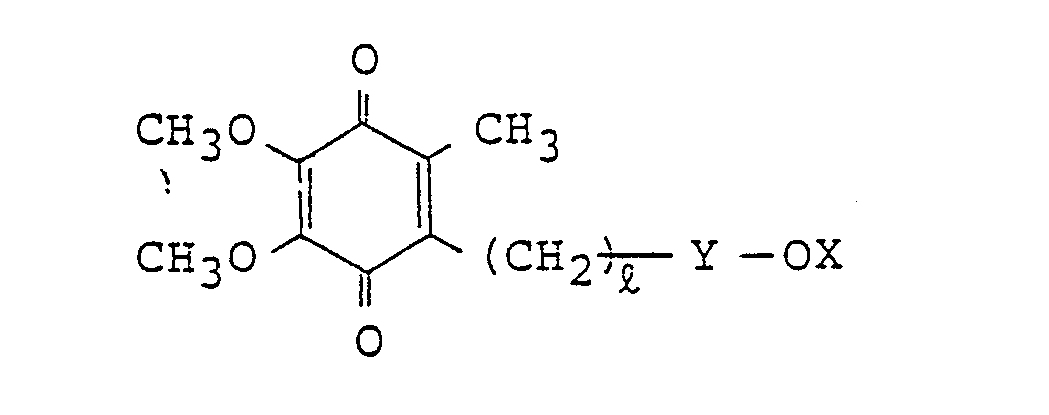

Description
- This invention relates to novel benzoquinone' derivatives useful in the medicinal field, for example as circulatory disturbance-improving agents or antiallergic agents.
- Various benzoquinone derivatives are so far known to have circulatory disturbance-improving activity and antiallergic activity (Japanese Patent Publications Kokai No. 128932/1976, No. 97223/1981 and No. 150014/1981).
- However, these known compounds are metabolized rapidly and are short in duration of their action.
- It is an object of the invention to provide novel benzoquinone derivatives which are at least comparable in pharmacological activity to the known benzoquinone derivatives and at the same time are long-acting.
- This invention relates to:
- 1. Benzoquinone derivatives of the general formula:


- 2. A pharmaceutical composition suitable for the treatment of a mammal suffering from allergic disease due to SRS-A or from ischemic disease, which comprises, as an active ingredient, an effective amount of a compound of the formula (I).
- 3. A method for producing a compound of the formula:


- 4. A method for producing a compound of the formula:


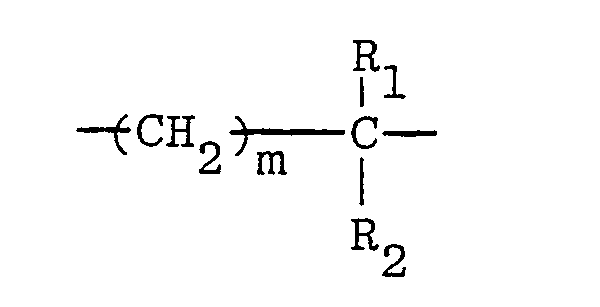
- In the above general formulas (I) to (IV), the alkyl having 1 to 4 carbon atoms represented by X includes methyl, ethyl, i-propyl, n-butyl, i-butyl, etc.; the carboxylic acyl having 2 to 4 carbon atoms represented by X includes acetyl, n-propionyl, n-butyryl, etc. The cycloalkylene having 3 to 7 carbon atoms represented by Y, Y' and Y2 includes cyclopropylene, cyclobutylene, cyclopentylene, cyclohexylene, etc.; a preferred example is cyclopentylene or cyclohexylene and the most preferred one is 1,4-cyclohexylene. When Y is phenylene, a preferred example is 1,4-phenylene.
- The alkyl having 1 to 4 carbon atoms represented by R, or R2 includes methyl, ethyl, i-propyl, n-butyl, i-butyl, etc.
- When the formula -Y-OX represents

- The compounds of general formula (I) show electron-transporting activity in the mitochondrial succinate oxidase system and have cellular energy metabolism activating activity. They also inhibit NADPH-and Fe' '-dependent lipid peroxide formation in the liver and brain.
- The compound (I) has less toxicity. The compound (I) shows circulatory disturbance-improving activity in mammals (e.g. human being, mouse, rat, rabbit, dog and monkey), and is used for prophylaxis or therapy of ischemic diseases such as cerebral apoplexy (e.g. cerebral infarction, cerebral hemorrhage, etc.) and cardiac insufficiency (cardiac infarction, angina pectoris, etc.).
- The compound (I) also inhibits the generation and release of SRS-A in mammals mentioned above, and it is used for prophylaxis, or therapy of various allergic diseases due to SRS-A (e.g. bronchial asthma, allergic rhinitis, urticaria).
- The compound (I) has protocellagen proline hydroxylase-inhibiting activity and collagen biosynthesis-inhibiting activity and can be used as an antifibrotic drug for the therapy of organ fibrosis in mammals mentioned above.
- Furthermore, as shown in a test in which they were incubated with rat liver slices or orally administered to rats, followed by investigation of metabolites in the liver tissue, the compounds (I) are hardly liable to side chain oxidation by {3- oxidation and, when administered to living bodies, they are long-acting.
- The compounds (I) are orally or parenterally administered either as they are or in admixture with an appropriate carrier or vehicle, for example in the form of powders, granules, tablets or injections.
- Pharmaceutical compositions containing compounds (I) are produced by any method per se known for the production of powders, capsules, tablets, granules, injections, etc.
- The dose of compounds (I) may vary, and can be selected suitably, depending, for example, on the kind of the objective compounds, symptoms, etc. For improving circulatory disturbances, they are administered in a dose of 0.2 to 5 mg/kg, preferably 0.5 to 1.5 mg/kg.
- The compound (1-1) can be prepared by oxidizing a compound (II). The means of oxidation may be any means which can convert phenols to quinones. Thus, the oxidizing agent may be, for example hydrogen peroxide, peracetic acid, perfor- mic acid, perbenzoic acid, potassium permanganate, potassium dichromate, chromic anhydride, potassium nitrosodisulfonate, ferric chloride, silver oxide, manganese dioxide, or catalytic oxygen oxidation with salcomin - (bissalicylideneethylenediiminocobalt) as a catalyst. The reaction is carried out in an appropriate solvent. Examples of the solvent are dilute aqueous alkali solutions, acetone, methanol, ethanol, ether, tetrahydrofuran, dioxane, dimethylformamide and acetic acid. The reaction temperature and time vary depending on the kind of oxidizing agent employed. Generally and preferably, however, the reaction is carried out at a temperature of about 0°C to 25°C for a period of 0.5 to 5 hours. The use of an appropriate buffer, such as a phosphate buffer, gives favorable results.
- The compounds (1-2) can be obtained by reacting a compound (III) with a peroxide of the formula (IV).
- The reaction between compound (III) and peroxide (IV) is preferably carried out in an appropriate inert solvent, such as hexane, ligroin, toluene, xylene, acetic acid or propionic acid. A preferred reaction temperature is about 80°C to 100°C and a preferred reaction period is 0.5 to 5 hours.
- Said reaction may also be conducted under conditions such that the peroxide is formed in the reaction system. For instance, the compound (III) is reacted with a carboxylic acid of the formula:

- The reaction is conducted essentially in the same manner as the above reaction between compound (III) and peroxide (IV).
- When X is a hydrogen atom, the compounds - (1-2) can be converted, by alkylation or acylation, to the corresponding compounds in which X is alkyl or carboxylic acyl. The alkylation is effected by using an alkyl halide (e.g. methyl iodide, ethyl bromide) or an alkyl sulfate (e.g. dimethyl sulfate, diethyl sulfate) in the presence of a base catalyst - (e.g. lithium hydride, butyllithium). The acylation is conducted by using carboxy-modified reactive derivative of a fatty acid (e.g. carboxylic acid anhydride, carboxylic acid halide, carboxylic acid metal salt) in the presence of an acid or base catalyst.
- When the thus-obtained compounds (1-2) have an acylated hydroxy group, they can be converted, by hydrolysis using a per se known means, to the corresponding compounds (1-2) in which X is a hydrogen atom.
- The compound (II) shown above is novel and can be prepared by the following procedures:

- In the above formulas, Y3 is a cycloalkylene having 1 to 7 carbon atoms (e.g. cyclopropylene, cyclobutylene, cyclopentylene, cyclohexylene, etc.), R is alkyl having 1 to 4 carbon atoms (e.g. methyl, ethyl, n-propyl, i-propyl, n-butyl, etc.), and the other symbols have the meaning given above.
- The compound (11-1) can be prepared by reacting a compound (VI) with a Grignard reagent (VII). The Grignard reagent (VII) can be prepared by reacting an alkyl halide such as methyl iodide, ethyl iodide, ethyl bromide, etc. with magnesium metal in an organic solvent such as an ether (e.g. diethylether, tetrahydrofuran, dioxan). The reaction is desirably carried out at a temperature ranging from 0°C to 70°C. The compound (11-1) can be prepared by adding a compound (VI) to the resulting Grignard reagent (VII), followed by diluting with water and then by acidifying the reaction mixture.
- The compound (11-2) can be prepared by reacting a compound (VIII) with a compound (IX) to give a compound (X), followed by reducing the compound (X).
- The reaction of a compound (VIII) with a compound (IX) is carried out preferably in the presence of a catalyst. As the catalyst, any catalysts employed in the Friedel-Crafts Reaction, for example, sulfonic acid, phosphoric acid, poly phosphoric acid, and Lewis acids such as aluminum chloride are employed. While this reaction occurs in the absence of a solvent, it is usually conducted in the presence of an inert solvent such as nitrobenzene, carbon disulfide, tetrachloroethane. The reaction temperature is advantageously about 50°C-150°C.
- The procedure reducing a compound (X) may be any procedure by which the carbonyl of the compounds (X) may be converted to a methylene. As such procedures, there may be mentioned Clemmensen reduction, Wolff-Kishner reduction, a method comprising converting the starting compound to the dithioacetate and reducing the latter through desulphurization, and catalytic reduction. Generally, this reaction is advantageously conducted in the presence of a suitable solvent. The solvent may be any solvent that does not interfere with the reaction, being exemplified by ether, methanol, ethanol, benzene, toluene, xylene, ethylene glycol, triethylene glycol, acetic acid and so on. The aforementioned reduction reactions may each be easily carried out in a routine manner.
- The peroxide represented by the formula (IV) is novel, and can be prepared by reacting an acid halide or an acid anhydride of a carboxylic acid of the formula (V) with a peroxide such as hydrogen peroxide, a metal salt thereof or lead tetraacetate.
- The compounds (V), (VI) and (IX) include novel compounds as well as known compounds within their respective scopes. Such novel compounds can be produced by the same processes as known for the known compounds or by modifications of such processes.
- Potassium nitrosodisulfonate (12 g) and sodium acetate (12 g) are suspended in methanol-water - (5:2, 210 ml), and 11-(2-hydroxy-3,4-dimethoxy-6-methylphenyl)-2-methylundecan-2-ol (2.4 g) is added thereto. The mixture is stirred at 50°C for 14 hours and then diluted with water (100 ml). The methanol is distilled off. The aqueous solution is extracted with ethyl acetate (200 ml), and the extract is washed with water, dried and concentrated under reduced pressure. The residue is subjected to silica gel column chromatography to give 1.7 g of 6-(10-hydroxy-10-methylundecyl)-2,3-dimethoxy-5-methyl-1,4-benzoquinone as an orange oil.
- (in deuteriochloroform,δ value): 1.18 (CH3, singlet), 1.32 (CH2, singlet), 1.98 (CH3 on the ring, singlet), 2.17 (OH, singlet), 1.38-1.60 (CHz on the ring, mul- tiptet), 3.95 (OCH3, singlet).
- Elemental analysis for C21H34O5:
- Calcd. C, 68.82; H, 9.35.
- Found C, 68.63; H, 9.27.
- Bis[6-(4-methoxyphenyl)hexanoyl] peroxide - (3.6 g) is added portionwise to a solution of 2,3-dimethoxy-5-methyl-1,4-benzoquinone (1.48 g) in acetic acid (30 ml) with stirring at 95°C. The mixture is heated for an hour and the acetic acid is distilled off under reduced pressure. The residue is diluted with water and extracted with ether. The ether extract is washed with water, dried and concentrated under reduced pressure. The residue is subjected to silica gel column chromatography to give 0.46 g of 2,3-dimethoxy-6-[5-(4-methoxyphenyl)pentyl]-5-methyl-1,4-benzoquinone as an orange oil.
- Bis[7-(4-acetoxyphenyl)heptanoyl] peroxide - (8.96 g) is reacted with 2,3-dimethoxy-5-methyl-1,4-benzoquinone (3.1 g) in the same manner as Example 2, followed by purification by silica gel column chromatography to give 2.1 g of 6-[6-(4-acetoxyphenyl)hexyl]-2,3-dimethoxy-5-methyl-1,4-benzoquinone.
-

- (in deuteriochloroform,δ value): 1.40 (CH2, broad), 2.00 (CH3 on the ring, singlet), 2.29 - (COCH3,singlet), 2.53 (CH2 on the ring, multiplet), 3.97 (OCH3, singlet).
- 6-[6-(4-Acetoxyphenyl)hexyl]-2,3-dimethoxy-5-methyl-1,4-benzoquinone (2.1 g) is dissolved in a mixture of concentrated hydrochloric acid (0.3 ml) and methanol (55 ml), and the solution is allowed to stand at room temperature for 4 hours. The methanol is distilled off under reduced pressure, and the residue is diluted with water and extracted with ethyl acetate (200 ml). The extract is washed with water and dried. The solvent is then distilled off under reduced pressure and the residue is purified by silica gel column chromatography. The fractions containing the desired product are recrystallized from ether-hexane to give 830 mg of 6-[6-(4-hydroxyphenyl)hexyl]-2,3-dimethoxy-5-methyl-1,4-benzoquinone, m.p. 87-88°C.
- Nuclear magnetic resonance spectrum
- (in deuteriochloroform,b value): 1.80-1.00 (CH2, multiplet), 2.17 (CH3 on the ring, singlet), 2.17-2.67 - (CH2 on the ring, multiplet), 3.98(OCH3,singlet), 5.1 (OH, singlet), 6.63 (aromatic H, doublet), 6.93 (aromatic H, doublet).
- Elemental analysis for C21H26O5 :
- Calcd. C, 70.37; H, 7.31
- Found C, 70.09; H, 7.38.
- Bis[trans-6-(4-acetoxycyclohexyl)hexanoyl] peroxide (4.8 g) is reacted with 2,3-dimethoxy-5-methyl-1,4-benzoquinone (1.7 g) in the same manner as Example 2. Crystallization from petroleum ether gives 814 mg of trans-6-[5-(4-acetox- ycyclohexyl)pentyl]-2,3-dimethoxy-5-methyl-1,4-benzoquinone as orange crystals, m.p. 33-34°C.
- Elemental analysis for C22H32O6:
- Calcd. C, 67.32; H, 8.22
- Found C, 67.59; H, 8.17.
- trans-6-[5-(4-Acetoxycyclohexyl)pentyl]-2,3-dimethoxy-5-methyl-1,4-benzoquinone (0.415 g) is dissolved in hydrochloric acid-methanol (1:180, 10 ml), and the mixture is stirred at room temperature for 24 hours. The solvent. is distilled off under reduced pressure, and the residue is dissolved in ether, washed with aqueous sodium hydrogen carbonate and then with water and dried. The ether is distilled off and the residue is subjected to silica gel column chromatography. Recrystallization of the desired fractions from ether-hexane gives trans-6-[5-(4-hydroxycyclohexyl)pentyl]-2,3-dimethoxy-5-methyl-1,4-benzoquinone as orange needles, m.p. 64-65°C.
- (in deuteriochloroform,δ value): 0.97-1.90 - (CH2,multiplet), 2.00 (CH3 on the ring, singlet), 2.43 (CH2 on the ring, triplet), 3.53 (>C HOH, broad), 3.98 (OCH3, singlet).
- Elemental analysis for C20H30O5:
- Calcd. C, 68.54; H, 8.63
- Found C, 68.78; H, 8.33.
- A cis-trans mixture of bis[6-(4-acetox- ycyclohexyl)-hexanoyl] peroxide (500 mg) is reacted with 2,3-dimethoxy-5-methyl-1,4-benzoquinone (182 mg) in the same manner as Example 2. Purification of the crude product by silica gel column chromatography gives 80 mg of cis-trans mixture of 6-[5-(4-acetoxycyclohexyl)pentyl]-2,3-dimethoxy-5-methyl-1,4-benzoquinone.
- (in deuteriochloroform,δ value): 1.28 (CH2, broad), 2.00 (CH3 on the ring, singlet), 2.02 (OCOCH3, singlet), 2.43 (CH2 on the ring, triplet), 3.97(OCH3, singlet), 4.92 (>CHOCO-, broad).
- A cis-trans mixture of 6-[5-(4-acetox- ycyclohexyl)-pentyl]-2,3-dimethoxy-5-methyl-1,4-benzoquinone (1.3 g) is subjected to hydrolysis in the same manner as Example 6, followed by separation by silica get column chromatography. The first ethyl acetate-carbon tetrachloride (1:9) eluate fraction is recrystallized from etherhexane to give cis-6-[5-(4-hydroxycyclohexyl)pentyl]-2,3-dimethoxy-5-methyt-1,4-benzoquinone (488 mg) as orange needles, m.p.49-51 °C.
- (in deuteriochloroform,δ value): 1.13-1.70 (CH2,broad), 2.02 (CH3 on the ring, singlet), 2.47 - (CH2 on the ring triplet), 3.98 (OCH3,>CHOH, singlet).
- Recrystallization of the second fraction from etherhexane gives trans-6-[5-(4-hydroxycyclohexyl)pentyl]-2,3-dimethoxy-5-methyl-1,4-benzoquinone (216 mg) as orange needles, m.p. 64-65°C.
- Bis[trans-7-(4-acetoxycyclohexyl)heptanoyl] peroxide (5.9 g) is reacted with 2,3-dimethoxy-5-methyl-1,4-benzoquinone (1.82 g) in the same manner as Example 2. Thereafter, the crude product is purified by silica gel column chromatogarphy to give trans-6-[6-(4-acetoxycyclohexyl)hexyl]-2,3-dimethoxy-5-methyl1,4-benzoquinone (22 g). This product is hydrolyzed in the same manner as Example 6 and subjected to silica gel column chromatography. The desired fractions are recrystallized from ether-petroleum ether to give trans-6-[6-(4-hydroxycyctohexyl)hexyl]-2,3-dimethoxy-5-methyl-1,4-benzoquinone (0.9 g) as orange needles, m.p. 69-71°C.
- (in deuteriochlflroform,δ value): 1.00-2.10 (CH2, multiplet), 2.00 (CH3 on the ring singlet), 2.42 (CH2 on the ring, triplet), 3.47 (>CHOH, broad), 3.97 (OCH3, singlet).
- Elemental analysis for C21H22O5:
- Calcd. C, 69.20; H, 8.85
- Found C, 69.26; H, 8.66.
- Bis[cis-7-(4-acetoxycyclohexyl)heptanoyl] peroxide (26.5 g) is reacted with 2,3-dimethoxy-5-methyl-1,4-benzoquinone (4.95 g) in the same manner as Example 2. Thereafter, the crude product is purified by silica gel column chromatography to give cis-6-[6-(4-acetoxycyclohexyl)hexyl]-2,3-dimethoxy-5-methyl-1,4-benzoquinone (5.95 g). This product is hydrolyzed in the same manner as Example 6' and then subjected to silica gel column chromatography. The desired fractions are recrystallized from ether-hexane to give cis-6-[6-(4-hydroxycyclohexyl)hexyl]-2,3-dimethoxy-5-methyl-1,4-benzoquinone (1.73 g) as orange needles, m.p. 33.5-35.5°C.
- Elemental analysis for C21H22O5 :
- Calcd. C, 69.20; H, 8.85
- Found C, 69.32; H, 8.56.
- A solution of methyl iodide (4.9 g) in ether - (17.3 ml ) is added dropwise to a suspension of magnesium (0.92 g) in ether (6 ml). The suspension is warmed at 40°C for 40 minutes, and tetrahydrofuran (50 ml) is added thereto, followed by addition of a solution of methyl 10-(2-hydroxy-3,4-dimethoxy-6-methylphenyl) decanoate (4.99 g) in tetrahydrofuran (50 ml) over 1.5 hours. The mixture is stirred at 40°C for 30 minutes, and saturated aqueous ammonium chloride solution is added, followed by extraction with ether (300 ml). The extract is washed with water, dried and concentrated. The residue is isolated and purified by silica gel column chromatography using chloroform to give 11-(2-hydroxy-3,4-dimethoxy-6-methylphenyl)-2-methylundecan-2-ol (2.375 g, 48%).
- (in deuteriochloroform,6 value): 1.18 (CH3, singlet), 1.32 (CH2, singlet), 2.17 (CH3 on the ring, singlet), 1.40-1.64 (CH2 on the ring, multiplet), 3.80, 3.83 - (OCH3, singlet), 6.02 (OH, singlet), 6.17 (H on the ring, singlet).
- 6-(4-Methoxyphenyl)hexanoic acid (3.7 g) is dissolved in thionyl chloride (5 ml) and the solution is stirred at room temperature overnight. The excess thionyl chloride is distilled off under reduced pressure and the residue is dissolved in petroleum ether (30 ml). Ice water (15 ml) is added to the solution and sodium peroxide (3 g) is added portionwise with ice-cooling and stirring. The mixture is extracted with chloroform and the extract is washed with water and dried. The solvent is then distilled off to give bis[6-(4-methoxyphenyl)-hexanoyl] peroxide.
- 7-(4-Acetoxyphenyl)heptanoic acid (10 g) is dissolved in thionyl chloride (14 ml) and the solution is heated at 70°C for 1.5 hours. The excess thionyl chloride is distilled off under reduced pressure to give a crude acid chloride.
-

- The above crude acid chloride (11.2 g) is dissolved in ether (75 ml), and 30% aqueous hydrogen peroxide (3.5 ml) is added dropwise thereto at 0 to 5°C. Thereafter, pyridine (7.2 ml) is added, and the mixture is stirred at room temperature for an hour. The ether layer is separated, washed with water and dried, and the ether is distilled off under reduced pressure to give bis[7-(4-acetoxyphenyl)-heptanoyl] peroxide (8.9 g, 90%) as a white solid. Infrared absorption spectrum


- trans-6-(4-Hydroxycyclohexyl)hexanoic acid (5 g) is dissolved in acetic anhydride (25 ml), and p-toluenesulfonic acid (10 mg) is added to the solution. The mixture is stirred at 60 to 70°C for an hour. The excess acetic anhydride is distilled off under reduced pressure and, after addition of water, the mixture is stirred at room temperature for 24 hours and then at 50 to 60°C for a further 5 hours and poured into ice-water. The resulting crystalline precipitate is recrystallized from ethanol-water to give 4.93 g (82%) of trans-6-(4-acetox- ycyclohexyl)hexanoic acid as colorless needles, m.p. 82-86°C.
- Nuclear magnetic resonance spectrum (in deuteriochloroform,δ value): 0.9-1.9 (CH2, multiplet), 2.00 (COCH3, singlet), 2,32 (CH2COO, triplet), 4.60 (>CH-OCO, broad), 10.12 (COOH, broad).
- trans-6-(4-Acetoxycyclohexyl)hexanoic acid - (4.8 g) is dissolved in thionyl chloride (5 ml), and the solution is allowed to stand at room temperature for 3 days. The excess thionyl chloride is distilled off under reduced pressure to give a crude acid chloride. This product is dissolved in petroleum ether (40 mi), and ice-water (20 ml) is added. Thereafter, sodium peroxide (3 g) is added portionwise with ice-cooling and stirring. The mixture is extracted with chloroform and the extract is washed with saturated aqueous sodium chloride and dried over calcium chloride. The solvent is then distilled off under reduced pressure to give bis[trans-6-(4-acetoxycyclohexyl)hexanoyl] peroxide. Infrared absorption spectrum


- 6-(4-Hydroxyphenyl)hexanoic acid (2 g) is subjected to catalytic reduction in the presence of 5% rhodiumcarbon (500 mg) in ethanol (100 ml) at an initial hydrogen pressure of 10.1 kg/cm2. The catalyst is filtered off and the filtrate is concentrated under reduced pressure and subjected to silica gel column chromatography. Elution is carried out with 4% ethanol-chloroform to give three fractions. The first fraction is recrystallized from ether-ligroin to give 392 mg of cis-6-(4-hydroxycyclohexyl)-hexanoic acid, m.p. 83-85°C.
- Elemental analysis for C12H22O3:
- Calcd. C, 67.25; H, 10.35
- Found C, 67.47; H, 10.53.
- The third fraction is recrystallized from ethanol-water to give 276 mg of trans-6-(4-hydroxycyclohexyl)-hexanoic acid as colorless needles, m.p.120-127°C.
- Elemental analysis for C12H22O3 :
- Calcd. C, 67.25; H, 10.35,
- From the second fraction, there is obtained 922 mg of a cis-trans mixture of 6-(4-hydroxycyclohexyl)hexanoic acid.
- 7-(4-Hydroxyphenyl)heptanoic acid (20 g) is subjected to similar catalytic reduction as Reference Example 5 in 80% ethanol. Ether is added to the crude product to give crystals. Recrystallization from ethanol-water and then from i-propanol-ether gives trans-7-(4-hydroxycyclohexyl)heptanoic acid - (7 g) as colorless needles, m.p. 123-128°C.
- Ligroin is added to the ether-soluble fraction in the above procedure to give crystals. Recrystallization from ether-petroleum ether gives 8.6 g of cis-7-(4-hydroxycyclohexyl)heptanoic acid as colorless needles, m.p. 75-79°C.
- Elemental analysis for C13H2O3:
- Calcd. C, 68.38; H, 10.59,
- Found C, 68.56; H, 10.36.
- trans-7-(4-Hydroxycyclohexyl)heptanoic acid (6.5 g) and p-toluenesulfonic acid (15 mg) are stirred in acetic anhydride (32.5 ml) at 60-70°C for 1.5 hours. The excess acetic anhydride is distilled off under reduced pressure, followed by addition of water (90 ml), and the mixture is stirred for 3 days. The resulting crystalline precipitate is collected by filtration and recrystallized from ethyl acetate-hexane to give 6.5 g of trans-7-(4-acetoxycyclohexyl)-heptanoic acid as colorless needles, m.p. 66-68°C.
- (in deuteriochloroform,& value): 0.82-2.13 - (CH2,multiplet), 2.03 (COCH,, singlet), 2.35 - (CH2COO, triplet), 4.65 (>CH-OH, broad), 8.13 - (COOH, broad),
- Infrared absorption spectrum
-

- Elemental analysis for C15H26O4 :
- Calcd. C, 66.63; H, 9.69,
- Found C, 66.81; H, 9.83.
- Thionyl chloride (6 ml) is added to trans-7-(4-acetoxycyclohexyl)heptanoic acid (6 g), and the mixture is stirred at room temperature for 2 hours and then at 60°C for an hour. The excess thionyl chloride is distilled off under reduced pressure. The thus-obtained crude acid chloride is dissolved in ether (39 ml), and aqueous hydrogen peroxide - (1.87 g) is added thereto with ice-cooling and stirring, followed by dropwise addition of pyridine - (2.09 g) over 15 minutes. The mixture is stirred with ice-cooling for 15 minutes and at room temperature for 1.5 hours and then extracted with ether. The extract is washed with 3 N hydrochloric acid (100 ml), water and further with 5% aqueous solution of sodium hydrogen carbonate and dried. The solvent is then distilled off under reduced pressure to give 5.9 g of bis[trans-7-(4-acetox- ycyclohexyl)heptanoyl] peroxide. as white crystals.
-


- 1730 (OCOCH,).
Claims (24)




Priority Applications (1)
| Application Number | Priority Date | Filing Date | Title |
|---|---|---|---|
| AT86302464T ATE64921T1 (en) | 1985-04-08 | 1986-04-03 | BENZOQUINONE DERIVATIVES, THEIR PREPARATION AND USE. |
Applications Claiming Priority (2)
| Application Number | Priority Date | Filing Date | Title |
|---|---|---|---|
| JP7508185 | 1985-04-08 | ||
| JP75081/85 | 1985-04-08 |
Publications (3)
| Publication Number | Publication Date |
|---|---|
| EP0201196A2 true EP0201196A2 (en) | 1986-11-12 |
| EP0201196A3 EP0201196A3 (en) | 1987-08-05 |
| EP0201196B1 EP0201196B1 (en) | 1991-07-03 |
Family
ID=13565870
Family Applications (1)
| Application Number | Title | Priority Date | Filing Date |
|---|---|---|---|
| EP19860302464 Expired - Lifetime EP0201196B1 (en) | 1985-04-08 | 1986-04-03 | Benzoquinone derivatives, their production and use |
Country Status (7)
| Country | Link |
|---|---|
| US (1) | US4897420A (en) |
| EP (1) | EP0201196B1 (en) |
| JP (1) | JPH0745428B2 (en) |
| AT (1) | ATE64921T1 (en) |
| CA (1) | CA1312086C (en) |
| DE (1) | DE3680023D1 (en) |
| HU (1) | HU197715B (en) |
Cited By (2)
| Publication number | Priority date | Publication date | Assignee | Title |
|---|---|---|---|---|
| WO2012022468A2 (en) | 2010-08-16 | 2012-02-23 | Santhera Pharmaceuticals (Schweiz) Ag | Benzoquinone derivatives as modulators of mitchondrial function |
| WO2012022467A3 (en) * | 2010-08-16 | 2012-06-28 | Santhera Pharmaceuticals (Schweiz) Ag | Novel benzoquinone derivatives and use thereof as modulators of mitochondrial function |
Families Citing this family (3)
| Publication number | Priority date | Publication date | Assignee | Title |
|---|---|---|---|---|
| JPH02128131A (en) * | 1988-11-07 | 1990-05-16 | Matsushita Electric Ind Co Ltd | pressure sensor |
| WO2009111576A2 (en) * | 2008-03-05 | 2009-09-11 | Edison Pharmaceuticals, Inc. | 2-SUBSTITUTED-p-QUINONE DERIVATIVES FOR TREATMENT OF OXIDATIVE STRESS DISEASES |
| US8263094B2 (en) * | 2008-09-23 | 2012-09-11 | Eastman Chemical Company | Esters of 4,5-disubstituted-oxy-2-methyl-3,6-dioxo-cyclohexa-1,4-dienyl alkyl acids and preparation thereof |
Family Cites Families (13)
| Publication number | Priority date | Publication date | Assignee | Title |
|---|---|---|---|---|
| BE583085A (en) * | 1958-10-08 | 1960-03-28 | Merck & Co Inc | Quinonic compounds and their preparation. |
| US3261849A (en) * | 1963-03-19 | 1966-07-19 | Merck & Co Inc | Alkyl gamma-hydroxyl-1,4-quinones |
| US3644435A (en) * | 1968-06-20 | 1972-02-22 | Karl Folkers | 6-alkyl or 6-alkenyl-2 3-dimethoxy-5-hydroxy-1 4-benzoquinones and hydroquinones |
| US3728362A (en) * | 1970-02-07 | 1973-04-17 | Takeda Chemical Industries Ltd | (3-methyl-5-carboxy-2-pentenyl)quinones |
| US3728363A (en) * | 1970-03-17 | 1973-04-17 | Takeda Chemical Industries Ltd | Quinone derivatives |
| JPS5919930B2 (en) * | 1974-05-02 | 1984-05-09 | 武田薬品工業株式会社 | Method for producing quinonic acid derivatives |
| JPS567734A (en) * | 1979-06-28 | 1981-01-27 | Takeda Chem Ind Ltd | Preparation of quinone derivative |
| DE3069496D1 (en) * | 1979-06-28 | 1984-11-29 | Takeda Chemical Industries Ltd | 2,3-DIALKOXY-1,4-QUINONE DERIVATIVES; METHOD OF PRODUCING 1,4-QUINONE DERIVATIVES |
| JPS567737A (en) * | 1979-07-02 | 1981-01-27 | Takeda Chem Ind Ltd | Physiologically active quinone and its preparation |
| JPS5697223A (en) * | 1979-12-30 | 1981-08-05 | Takeda Chem Ind Ltd | Tissue metabolism activator |
| JPS56150014A (en) * | 1980-04-21 | 1981-11-20 | Takeda Chem Ind Ltd | Antiallergic agent |
| JPS57131735A (en) * | 1981-02-09 | 1982-08-14 | Takeda Chem Ind Ltd | Preparation of quinones |
| JPS58174313A (en) * | 1982-04-06 | 1983-10-13 | Takeda Chem Ind Ltd | Fibrosing suppressing agent for animal tissue |
-
1986
- 1986-04-03 AT AT86302464T patent/ATE64921T1/en not_active IP Right Cessation
- 1986-04-03 DE DE8686302464T patent/DE3680023D1/en not_active Expired - Fee Related
- 1986-04-03 EP EP19860302464 patent/EP0201196B1/en not_active Expired - Lifetime
- 1986-04-07 HU HU861456A patent/HU197715B/en not_active IP Right Cessation
- 1986-04-07 CA CA000505979A patent/CA1312086C/en not_active Expired - Lifetime
- 1986-04-08 JP JP61080329A patent/JPH0745428B2/en not_active Expired - Fee Related
-
1988
- 1988-12-05 US US07/280,153 patent/US4897420A/en not_active Expired - Fee Related
Cited By (3)
| Publication number | Priority date | Publication date | Assignee | Title |
|---|---|---|---|---|
| WO2012022468A2 (en) | 2010-08-16 | 2012-02-23 | Santhera Pharmaceuticals (Schweiz) Ag | Benzoquinone derivatives as modulators of mitchondrial function |
| WO2012022468A3 (en) * | 2010-08-16 | 2012-06-28 | Santhera Pharmaceuticals (Schweiz) Ag | Benzoquinone derivatives as modulators of mitchondrial function |
| WO2012022467A3 (en) * | 2010-08-16 | 2012-06-28 | Santhera Pharmaceuticals (Schweiz) Ag | Novel benzoquinone derivatives and use thereof as modulators of mitochondrial function |
Also Published As
| Publication number | Publication date |
|---|---|
| HUT42048A (en) | 1987-06-29 |
| DE3680023D1 (en) | 1991-08-08 |
| JPS6230736A (en) | 1987-02-09 |
| ATE64921T1 (en) | 1991-07-15 |
| EP0201196B1 (en) | 1991-07-03 |
| HU197715B (en) | 1989-05-29 |
| US4897420A (en) | 1990-01-30 |
| EP0201196A3 (en) | 1987-08-05 |
| JPH0745428B2 (en) | 1995-05-17 |
| CA1312086C (en) | 1992-12-29 |
Similar Documents
| Publication | Publication Date | Title |
|---|---|---|
| Cragoe Jr et al. | Agents for the treatment of brain edema. 2.[(2, 3, 9, 9a-Tetrahydro-3-oxo-9a-substituted-1H-fluoren-7-yl) oxy] alkanoic acids and some of their analogs | |
| US4818441A (en) | Quinine derivatines | |
| EP0038160A1 (en) | Quinone compounds, their production and use | |
| EP0007985B1 (en) | 6-chloro-2,3-dihydroxy-1,4-naphthoquinone and its 2,3-diesters, and their preparation | |
| Knight et al. | The synthesis of tritium-labeled 14α-methyl-5α-cholest-7-en-3β-ol and its enzymatic demethylation | |
| US4495104A (en) | Quinone carboxylic acids and ester derivatives | |
| US3728363A (en) | Quinone derivatives | |
| EP0201196B1 (en) | Benzoquinone derivatives, their production and use | |
| US4013690A (en) | Organic compounds | |
| EP0021841A2 (en) | 2,3-Dialkoxy-1,4-quinone derivatives; method of producing 1,4-quinone derivatives | |
| Inglett et al. | Oxidation of hindered 6-hydroxychromans | |
| JP2959785B2 (en) | Anti-androgen compound | |
| US4046760A (en) | Process for preparing 1-α-hydroxy cholesterol derivatives | |
| US3753979A (en) | Substituted 1,2alpha-methylene-6,7alpha-halomethylene-20-spirox-4-en-3-ones or 3-ols and acyl esters thereof | |
| OKAMOTO et al. | Synthesis, metabolism, and in vitro biological activities of 6-(10-hydroxydecyl)-2, 3-dimethoxy-5-methyl-1, 4-benzoquinone (CV-2619)-related compounds | |
| EP0104631B1 (en) | Clavulone derivatives, process for preparing the same, and use of said compounds | |
| PT86665B (en) | PROCESS FOR THE PREPARATION OF LANOSTEROIS SUBSTITUTED IN POSITIONS 14 AND 15 AND OF HYPOCOLESTEROLEMIC COMPOSITIONS CONTAINING THEM | |
| CA1196003A (en) | Quinone compounds, their production and use | |
| EP0036502B1 (en) | 2-alkyl-5-hydroxy-1,4-naphthoquinones, process for their manufacture and pharmaceutical preparations containing these compounds | |
| US4758587A (en) | Naphthalene anti-psoriatic agents | |
| US3331868A (en) | A-nor-b-norsteroids and intermediates | |
| US3644500A (en) | Naphthoic acid derivatives | |
| JPS6112660A (en) | Novel 2-pyrrolidone derivative and antiinflammatory therefrom | |
| WO1997003940A1 (en) | Novel 6-substituted-5,8-dioxy-1,4-naphthoquinone derivatives | |
| US4432982A (en) | Polycyclic compounds substituted on the A-ring, pharmaceutical compositions containing them, and methods of treating psoriasis with them |
Legal Events
| Date | Code | Title | Description |
|---|---|---|---|
| PUAI | Public reference made under article 153(3) epc to a published international application that has entered the european phase |
Free format text: ORIGINAL CODE: 0009012 |
|
| AK | Designated contracting states |
Kind code of ref document: A2 Designated state(s): AT BE CH DE FR GB IT LI LU NL SE |
|
| PUAB | Information related to the publication of an a document modified or deleted |
Free format text: ORIGINAL CODE: 0009199EPPU |
|
| RA1 | Application published (corrected) |
Date of ref document: 19861217 Kind code of ref document: A2 |
|
| PUAL | Search report despatched |
Free format text: ORIGINAL CODE: 0009013 |
|
| AK | Designated contracting states |
Kind code of ref document: A3 Designated state(s): AT BE CH DE FR GB IT LI LU NL SE |
|
| 17P | Request for examination filed |
Effective date: 19880130 |
|
| 17Q | First examination report despatched |
Effective date: 19890314 |
|
| RAP1 | Party data changed (applicant data changed or rights of an application transferred) |
Owner name: TAKEDA CHEMICAL INDUSTRIES, LTD. |
|
| GRAA | (expected) grant |
Free format text: ORIGINAL CODE: 0009210 |
|
| AK | Designated contracting states |
Kind code of ref document: B1 Designated state(s): AT BE CH DE FR GB IT LI LU NL SE |
|
| REF | Corresponds to: |
Ref document number: 64921 Country of ref document: AT Date of ref document: 19910715 Kind code of ref document: T |
|
| ITF | It: translation for a ep patent filed | ||
| ET | Fr: translation filed | ||
| REF | Corresponds to: |
Ref document number: 3680023 Country of ref document: DE Date of ref document: 19910808 |
|
| PGFP | Annual fee paid to national office [announced via postgrant information from national office to epo] |
Ref country code: AT Payment date: 19920305 Year of fee payment: 7 |
|
| PGFP | Annual fee paid to national office [announced via postgrant information from national office to epo] |
Ref country code: BE Payment date: 19920324 Year of fee payment: 7 |
|
| PGFP | Annual fee paid to national office [announced via postgrant information from national office to epo] |
Ref country code: SE Payment date: 19920325 Year of fee payment: 7 |
|
| PGFP | Annual fee paid to national office [announced via postgrant information from national office to epo] |
Ref country code: LU Payment date: 19920401 Year of fee payment: 7 |
|
| RAP4 | Party data changed (patent owner data changed or rights of a patent transferred) |
Owner name: TAKEDA CHEMICAL INDUSTRIES, LTD. |
|
| PGFP | Annual fee paid to national office [announced via postgrant information from national office to epo] |
Ref country code: NL Payment date: 19920430 Year of fee payment: 7 |
|
| PLBE | No opposition filed within time limit |
Free format text: ORIGINAL CODE: 0009261 |
|
| STAA | Information on the status of an ep patent application or granted ep patent |
Free format text: STATUS: NO OPPOSITION FILED WITHIN TIME LIMIT |
|
| 26N | No opposition filed | ||
| EPTA | Lu: last paid annual fee | ||
| PG25 | Lapsed in a contracting state [announced via postgrant information from national office to epo] |
Ref country code: LU Free format text: LAPSE BECAUSE OF NON-PAYMENT OF DUE FEES Effective date: 19930403 Ref country code: AT Effective date: 19930403 |
|
| PG25 | Lapsed in a contracting state [announced via postgrant information from national office to epo] |
Ref country code: SE Effective date: 19930404 |
|
| PG25 | Lapsed in a contracting state [announced via postgrant information from national office to epo] |
Ref country code: BE Effective date: 19930430 |
|
| BERE | Be: lapsed |
Owner name: TAKEDA CHEMICAL INDUSTRIES LTD Effective date: 19930430 |
|
| PG25 | Lapsed in a contracting state [announced via postgrant information from national office to epo] |
Ref country code: NL Effective date: 19931101 |
|
| NLV4 | Nl: lapsed or anulled due to non-payment of the annual fee | ||
| EUG | Se: european patent has lapsed |
Ref document number: 86302464.2 Effective date: 19931110 |
|
| PGFP | Annual fee paid to national office [announced via postgrant information from national office to epo] |
Ref country code: GB Payment date: 19990408 Year of fee payment: 14 |
|
| PGFP | Annual fee paid to national office [announced via postgrant information from national office to epo] |
Ref country code: FR Payment date: 19990409 Year of fee payment: 14 Ref country code: DE Payment date: 19990409 Year of fee payment: 14 |
|
| PGFP | Annual fee paid to national office [announced via postgrant information from national office to epo] |
Ref country code: CH Payment date: 19990413 Year of fee payment: 14 |
|
| PG25 | Lapsed in a contracting state [announced via postgrant information from national office to epo] |
Ref country code: GB Free format text: LAPSE BECAUSE OF NON-PAYMENT OF DUE FEES Effective date: 20000403 |
|
| PG25 | Lapsed in a contracting state [announced via postgrant information from national office to epo] |
Ref country code: LI Free format text: LAPSE BECAUSE OF NON-PAYMENT OF DUE FEES Effective date: 20000430 Ref country code: CH Free format text: LAPSE BECAUSE OF NON-PAYMENT OF DUE FEES Effective date: 20000430 |
|
| GBPC | Gb: european patent ceased through non-payment of renewal fee |
Effective date: 20000403 |
|
| REG | Reference to a national code |
Ref country code: CH Ref legal event code: PL |
|
| PG25 | Lapsed in a contracting state [announced via postgrant information from national office to epo] |
Ref country code: FR Free format text: LAPSE BECAUSE OF NON-PAYMENT OF DUE FEES Effective date: 20001229 |
|
| PG25 | Lapsed in a contracting state [announced via postgrant information from national office to epo] |
Ref country code: DE Free format text: LAPSE BECAUSE OF NON-PAYMENT OF DUE FEES Effective date: 20010201 |
|
| REG | Reference to a national code |
Ref country code: FR Ref legal event code: ST |
|
| PG25 | Lapsed in a contracting state [announced via postgrant information from national office to epo] |
Ref country code: IT Free format text: LAPSE BECAUSE OF NON-PAYMENT OF DUE FEES;WARNING: LAPSES OF ITALIAN PATENTS WITH EFFECTIVE DATE BEFORE 2007 MAY HAVE OCCURRED AT ANY TIME BEFORE 2007. THE CORRECT EFFECTIVE DATE MAY BE DIFFERENT FROM THE ONE RECORDED. Effective date: 20050403 |