EP0200467B1 - Superoxide dismutase combined with a poly(alkylene oxide) - Google Patents
Superoxide dismutase combined with a poly(alkylene oxide) Download PDFInfo
- Publication number
- EP0200467B1 EP0200467B1 EP86303058A EP86303058A EP0200467B1 EP 0200467 B1 EP0200467 B1 EP 0200467B1 EP 86303058 A EP86303058 A EP 86303058A EP 86303058 A EP86303058 A EP 86303058A EP 0200467 B1 EP0200467 B1 EP 0200467B1
- Authority
- EP
- European Patent Office
- Prior art keywords
- poly
- sod
- superoxide dismutase
- alkylene oxide
- modified
- Prior art date
- Legal status (The legal status is an assumption and is not a legal conclusion. Google has not performed a legal analysis and makes no representation as to the accuracy of the status listed.)
- Expired - Lifetime
Links
- 102000019197 Superoxide Dismutase Human genes 0.000 title claims description 139
- 108010012715 Superoxide dismutase Proteins 0.000 title claims description 139
- 229920000233 poly(alkylene oxides) Polymers 0.000 title claims description 38
- -1 poly(ethylene oxide) Polymers 0.000 claims description 32
- 229920003171 Poly (ethylene oxide) Polymers 0.000 claims description 19
- OUUQCZGPVNCOIJ-UHFFFAOYSA-M Superoxide Chemical class [O-][O] OUUQCZGPVNCOIJ-UHFFFAOYSA-M 0.000 claims description 16
- 238000000034 method Methods 0.000 claims description 15
- IAYPIBMASNFSPL-UHFFFAOYSA-N Ethylene oxide Chemical compound C1CO1 IAYPIBMASNFSPL-UHFFFAOYSA-N 0.000 claims description 9
- 125000003178 carboxy group Chemical group [H]OC(*)=O 0.000 claims description 9
- DHMQDGOQFOQNFH-UHFFFAOYSA-N Glycine Chemical compound NCC(O)=O DHMQDGOQFOQNFH-UHFFFAOYSA-N 0.000 claims description 8
- 150000001413 amino acids Chemical class 0.000 claims description 5
- 239000004471 Glycine Substances 0.000 claims description 4
- 230000004048 modification Effects 0.000 claims description 4
- 238000012986 modification Methods 0.000 claims description 4
- 239000004472 Lysine Substances 0.000 claims description 3
- KDXKERNSBIXSRK-UHFFFAOYSA-N Lysine Natural products NCCCCC(N)C(O)=O KDXKERNSBIXSRK-UHFFFAOYSA-N 0.000 claims description 3
- GOOHAUXETOMSMM-UHFFFAOYSA-N Propylene oxide Chemical compound CC1CO1 GOOHAUXETOMSMM-UHFFFAOYSA-N 0.000 claims description 3
- 229920001577 copolymer Polymers 0.000 claims description 3
- 238000004519 manufacturing process Methods 0.000 claims description 3
- 239000003085 diluting agent Substances 0.000 claims description 2
- 239000003937 drug carrier Substances 0.000 claims description 2
- 239000008194 pharmaceutical composition Substances 0.000 claims description 2
- 229920001451 polypropylene glycol Polymers 0.000 claims description 2
- 230000015572 biosynthetic process Effects 0.000 claims 1
- 230000000694 effects Effects 0.000 description 27
- RTZKZFJDLAIYFH-UHFFFAOYSA-N Diethyl ether Chemical compound CCOCC RTZKZFJDLAIYFH-UHFFFAOYSA-N 0.000 description 18
- 239000000203 mixture Substances 0.000 description 17
- 239000013078 crystal Substances 0.000 description 12
- 241000283690 Bos taurus Species 0.000 description 10
- ZMXDDKWLCZADIW-UHFFFAOYSA-N N,N-Dimethylformamide Chemical compound CN(C)C=O ZMXDDKWLCZADIW-UHFFFAOYSA-N 0.000 description 10
- 238000006243 chemical reaction Methods 0.000 description 10
- 239000000243 solution Substances 0.000 description 10
- 230000017531 blood circulation Effects 0.000 description 8
- 150000002148 esters Chemical class 0.000 description 8
- 102000004190 Enzymes Human genes 0.000 description 7
- 108090000790 Enzymes Proteins 0.000 description 7
- 238000001914 filtration Methods 0.000 description 7
- 239000008363 phosphate buffer Substances 0.000 description 7
- 239000000047 product Substances 0.000 description 7
- 239000003795 chemical substances by application Substances 0.000 description 6
- XLYOFNOQVPJJNP-UHFFFAOYSA-N water Substances O XLYOFNOQVPJJNP-UHFFFAOYSA-N 0.000 description 6
- 230000004087 circulation Effects 0.000 description 5
- 239000000126 substance Substances 0.000 description 5
- 230000004083 survival effect Effects 0.000 description 5
- 108091003079 Bovine Serum Albumin Proteins 0.000 description 4
- QOSSAOTZNIDXMA-UHFFFAOYSA-N Dicylcohexylcarbodiimide Chemical compound C1CCCCC1N=C=NC1CCCCC1 QOSSAOTZNIDXMA-UHFFFAOYSA-N 0.000 description 4
- VEXZGXHMUGYJMC-UHFFFAOYSA-N Hydrochloric acid Chemical compound Cl VEXZGXHMUGYJMC-UHFFFAOYSA-N 0.000 description 4
- 241000699670 Mus sp. Species 0.000 description 4
- 206010028980 Neoplasm Diseases 0.000 description 4
- 229940098773 bovine serum albumin Drugs 0.000 description 4
- 150000001875 compounds Chemical class 0.000 description 4
- 239000000706 filtrate Substances 0.000 description 4
- 229920001983 poloxamer Polymers 0.000 description 4
- 239000011541 reaction mixture Substances 0.000 description 4
- 239000007858 starting material Substances 0.000 description 4
- 206010027476 Metastases Diseases 0.000 description 3
- 241000700159 Rattus Species 0.000 description 3
- HEMHJVSKTPXQMS-UHFFFAOYSA-M Sodium hydroxide Chemical compound [OH-].[Na+] HEMHJVSKTPXQMS-UHFFFAOYSA-M 0.000 description 3
- 125000003277 amino group Chemical group 0.000 description 3
- 210000004369 blood Anatomy 0.000 description 3
- 239000008280 blood Substances 0.000 description 3
- 239000003054 catalyst Substances 0.000 description 3
- 239000003814 drug Substances 0.000 description 3
- 238000002356 laser light scattering Methods 0.000 description 3
- 238000002054 transplantation Methods 0.000 description 3
- ADFXKUOMJKEIND-UHFFFAOYSA-N 1,3-dicyclohexylurea Chemical compound C1CCCCC1NC(=O)NC1CCCCC1 ADFXKUOMJKEIND-UHFFFAOYSA-N 0.000 description 2
- BTJIUGUIPKRLHP-UHFFFAOYSA-N 4-nitrophenol Chemical compound OC1=CC=C([N+]([O-])=O)C=C1 BTJIUGUIPKRLHP-UHFFFAOYSA-N 0.000 description 2
- YYROPELSRYBVMQ-UHFFFAOYSA-N 4-toluenesulfonyl chloride Chemical compound CC1=CC=C(S(Cl)(=O)=O)C=C1 YYROPELSRYBVMQ-UHFFFAOYSA-N 0.000 description 2
- OKTJSMMVPCPJKN-UHFFFAOYSA-N Carbon Chemical compound [C] OKTJSMMVPCPJKN-UHFFFAOYSA-N 0.000 description 2
- LFQSCWFLJHTTHZ-UHFFFAOYSA-N Ethanol Chemical compound CCO LFQSCWFLJHTTHZ-UHFFFAOYSA-N 0.000 description 2
- LYCAIKOWRPUZTN-UHFFFAOYSA-N Ethylene glycol Chemical compound OCCO LYCAIKOWRPUZTN-UHFFFAOYSA-N 0.000 description 2
- OAKJQQAXSVQMHS-UHFFFAOYSA-N Hydrazine Chemical compound NN OAKJQQAXSVQMHS-UHFFFAOYSA-N 0.000 description 2
- NQTADLQHYWFPDB-UHFFFAOYSA-N N-Hydroxysuccinimide Chemical compound ON1C(=O)CCC1=O NQTADLQHYWFPDB-UHFFFAOYSA-N 0.000 description 2
- KDLHZDBZIXYQEI-UHFFFAOYSA-N Palladium Chemical compound [Pd] KDLHZDBZIXYQEI-UHFFFAOYSA-N 0.000 description 2
- FAPWRFPIFSIZLT-UHFFFAOYSA-M Sodium chloride Chemical compound [Na+].[Cl-] FAPWRFPIFSIZLT-UHFFFAOYSA-M 0.000 description 2
- 238000010521 absorption reaction Methods 0.000 description 2
- 239000002253 acid Substances 0.000 description 2
- 239000007864 aqueous solution Substances 0.000 description 2
- QVGXLLKOCUKJST-UHFFFAOYSA-N atomic oxygen Chemical compound [O] QVGXLLKOCUKJST-UHFFFAOYSA-N 0.000 description 2
- 239000007853 buffer solution Substances 0.000 description 2
- 210000004027 cell Anatomy 0.000 description 2
- 238000007385 chemical modification Methods 0.000 description 2
- 230000007423 decrease Effects 0.000 description 2
- 230000001419 dependent effect Effects 0.000 description 2
- 229940079593 drug Drugs 0.000 description 2
- 125000002887 hydroxy group Chemical group [H]O* 0.000 description 2
- 238000010253 intravenous injection Methods 0.000 description 2
- 208000020816 lung neoplasm Diseases 0.000 description 2
- 208000037841 lung tumor Diseases 0.000 description 2
- 230000009401 metastasis Effects 0.000 description 2
- 244000005700 microbiome Species 0.000 description 2
- 229910052760 oxygen Inorganic materials 0.000 description 2
- 239000001301 oxygen Substances 0.000 description 2
- IZUPBVBPLAPZRR-UHFFFAOYSA-N pentachlorophenol Chemical compound OC1=C(Cl)C(Cl)=C(Cl)C(Cl)=C1Cl IZUPBVBPLAPZRR-UHFFFAOYSA-N 0.000 description 2
- BASFCYQUMIYNBI-UHFFFAOYSA-N platinum Chemical compound [Pt] BASFCYQUMIYNBI-UHFFFAOYSA-N 0.000 description 2
- 231100000614 poison Toxicity 0.000 description 2
- 229920000642 polymer Polymers 0.000 description 2
- 102000004169 proteins and genes Human genes 0.000 description 2
- 108090000623 proteins and genes Proteins 0.000 description 2
- 239000011347 resin Substances 0.000 description 2
- 229920005989 resin Polymers 0.000 description 2
- 238000000926 separation method Methods 0.000 description 2
- NDVLTYZPCACLMA-UHFFFAOYSA-N silver oxide Chemical compound [O-2].[Ag+].[Ag+] NDVLTYZPCACLMA-UHFFFAOYSA-N 0.000 description 2
- 239000007787 solid Substances 0.000 description 2
- 239000003440 toxic substance Substances 0.000 description 2
- 238000000108 ultra-filtration Methods 0.000 description 2
- RYHBNJHYFVUHQT-UHFFFAOYSA-N 1,4-Dioxane Chemical compound C1COCCO1 RYHBNJHYFVUHQT-UHFFFAOYSA-N 0.000 description 1
- LMDZBCPBFSXMTL-UHFFFAOYSA-N 1-Ethyl-3-(3-dimethylaminopropyl)carbodiimide Substances CCN=C=NCCCN(C)C LMDZBCPBFSXMTL-UHFFFAOYSA-N 0.000 description 1
- FALRKNHUBBKYCC-UHFFFAOYSA-N 2-(chloromethyl)pyridine-3-carbonitrile Chemical compound ClCC1=NC=CC=C1C#N FALRKNHUBBKYCC-UHFFFAOYSA-N 0.000 description 1
- HZAXFHJVJLSVMW-UHFFFAOYSA-N 2-Aminoethan-1-ol Chemical compound NCCO HZAXFHJVJLSVMW-UHFFFAOYSA-N 0.000 description 1
- CFMZSMGAMPBRBE-UHFFFAOYSA-N 2-hydroxyisoindole-1,3-dione Chemical compound C1=CC=C2C(=O)N(O)C(=O)C2=C1 CFMZSMGAMPBRBE-UHFFFAOYSA-N 0.000 description 1
- FPQQSJJWHUJYPU-UHFFFAOYSA-N 3-(dimethylamino)propyliminomethylidene-ethylazanium;chloride Chemical compound Cl.CCN=C=NCCCN(C)C FPQQSJJWHUJYPU-UHFFFAOYSA-N 0.000 description 1
- 206010067484 Adverse reaction Diseases 0.000 description 1
- 241000283086 Equidae Species 0.000 description 1
- 241000588724 Escherichia coli Species 0.000 description 1
- 229920001917 Ficoll Polymers 0.000 description 1
- 206010061216 Infarction Diseases 0.000 description 1
- OFOBLEOULBTSOW-UHFFFAOYSA-N Malonic acid Chemical compound OC(=O)CC(O)=O OFOBLEOULBTSOW-UHFFFAOYSA-N 0.000 description 1
- 241000124008 Mammalia Species 0.000 description 1
- 241001494479 Pecora Species 0.000 description 1
- 241000700157 Rattus norvegicus Species 0.000 description 1
- 101000930457 Rattus norvegicus Albumin Proteins 0.000 description 1
- 240000004808 Saccharomyces cerevisiae Species 0.000 description 1
- 229920005654 Sephadex Polymers 0.000 description 1
- 239000012507 Sephadex™ Substances 0.000 description 1
- BLRPTPMANUNPDV-UHFFFAOYSA-N Silane Chemical compound [SiH4] BLRPTPMANUNPDV-UHFFFAOYSA-N 0.000 description 1
- 241000282898 Sus scrofa Species 0.000 description 1
- 230000009471 action Effects 0.000 description 1
- 239000004480 active ingredient Substances 0.000 description 1
- 230000006838 adverse reaction Effects 0.000 description 1
- 125000003368 amide group Chemical group 0.000 description 1
- 150000001412 amines Chemical class 0.000 description 1
- 239000003957 anion exchange resin Substances 0.000 description 1
- 230000003110 anti-inflammatory effect Effects 0.000 description 1
- 229920001400 block copolymer Polymers 0.000 description 1
- 230000037396 body weight Effects 0.000 description 1
- 239000000872 buffer Substances 0.000 description 1
- 150000001732 carboxylic acid derivatives Chemical class 0.000 description 1
- 230000000747 cardiac effect Effects 0.000 description 1
- 230000008859 change Effects 0.000 description 1
- 239000007822 coupling agent Substances 0.000 description 1
- 230000003247 decreasing effect Effects 0.000 description 1
- 238000009826 distribution Methods 0.000 description 1
- 239000003480 eluent Substances 0.000 description 1
- 230000002255 enzymatic effect Effects 0.000 description 1
- 210000003743 erythrocyte Anatomy 0.000 description 1
- 210000003191 femoral vein Anatomy 0.000 description 1
- 238000005194 fractionation Methods 0.000 description 1
- 238000004108 freeze drying Methods 0.000 description 1
- 238000002523 gelfiltration Methods 0.000 description 1
- 238000010353 genetic engineering Methods 0.000 description 1
- 238000004128 high performance liquid chromatography Methods 0.000 description 1
- WGCNASOHLSPBMP-UHFFFAOYSA-N hydroxyacetaldehyde Natural products OCC=O WGCNASOHLSPBMP-UHFFFAOYSA-N 0.000 description 1
- 230000006872 improvement Effects 0.000 description 1
- 239000012535 impurity Substances 0.000 description 1
- 230000007574 infarction Effects 0.000 description 1
- 230000005764 inhibitory process Effects 0.000 description 1
- 238000002347 injection Methods 0.000 description 1
- 239000007924 injection Substances 0.000 description 1
- 239000002198 insoluble material Substances 0.000 description 1
- 208000023589 ischemic disease Diseases 0.000 description 1
- 230000003902 lesion Effects 0.000 description 1
- 210000004072 lung Anatomy 0.000 description 1
- 239000000463 material Substances 0.000 description 1
- 238000005259 measurement Methods 0.000 description 1
- 239000012528 membrane Substances 0.000 description 1
- 125000000956 methoxy group Chemical group [H]C([H])([H])O* 0.000 description 1
- TZBAVQKIEKDGFH-UHFFFAOYSA-N n-[2-(diethylamino)ethyl]-1-benzothiophene-2-carboxamide;hydrochloride Chemical compound [Cl-].C1=CC=C2SC(C(=O)NCC[NH+](CC)CC)=CC2=C1 TZBAVQKIEKDGFH-UHFFFAOYSA-N 0.000 description 1
- 230000001590 oxidative effect Effects 0.000 description 1
- 229910052763 palladium Inorganic materials 0.000 description 1
- 238000010647 peptide synthesis reaction Methods 0.000 description 1
- 230000000144 pharmacologic effect Effects 0.000 description 1
- 229910052697 platinum Inorganic materials 0.000 description 1
- 230000002265 prevention Effects 0.000 description 1
- 230000000717 retained effect Effects 0.000 description 1
- 229910000077 silane Inorganic materials 0.000 description 1
- 229910001923 silver oxide Inorganic materials 0.000 description 1
- 238000003756 stirring Methods 0.000 description 1
- 229940014800 succinic anhydride Drugs 0.000 description 1
- 238000005303 weighing Methods 0.000 description 1
Images


Classifications
-
- C—CHEMISTRY; METALLURGY
- C12—BIOCHEMISTRY; BEER; SPIRITS; WINE; VINEGAR; MICROBIOLOGY; ENZYMOLOGY; MUTATION OR GENETIC ENGINEERING
- C12N—MICROORGANISMS OR ENZYMES; COMPOSITIONS THEREOF; PROPAGATING, PRESERVING, OR MAINTAINING MICROORGANISMS; MUTATION OR GENETIC ENGINEERING; CULTURE MEDIA
- C12N9/00—Enzymes; Proenzymes; Compositions thereof; Processes for preparing, activating, inhibiting, separating or purifying enzymes
- C12N9/96—Stabilising an enzyme by forming an adduct or a composition; Forming enzyme conjugates
-
- A—HUMAN NECESSITIES
- A61—MEDICAL OR VETERINARY SCIENCE; HYGIENE
- A61K—PREPARATIONS FOR MEDICAL, DENTAL OR TOILETRY PURPOSES
- A61K38/00—Medicinal preparations containing peptides
- A61K38/16—Peptides having more than 20 amino acids; Gastrins; Somatostatins; Melanotropins; Derivatives thereof
- A61K38/43—Enzymes; Proenzymes; Derivatives thereof
- A61K38/44—Oxidoreductases (1)
- A61K38/446—Superoxide dismutase (1.15)
-
- A—HUMAN NECESSITIES
- A61—MEDICAL OR VETERINARY SCIENCE; HYGIENE
- A61K—PREPARATIONS FOR MEDICAL, DENTAL OR TOILETRY PURPOSES
- A61K47/00—Medicinal preparations characterised by the non-active ingredients used, e.g. carriers or inert additives; Targeting or modifying agents chemically bound to the active ingredient
- A61K47/50—Medicinal preparations characterised by the non-active ingredients used, e.g. carriers or inert additives; Targeting or modifying agents chemically bound to the active ingredient the non-active ingredient being chemically bound to the active ingredient, e.g. polymer-drug conjugates
- A61K47/51—Medicinal preparations characterised by the non-active ingredients used, e.g. carriers or inert additives; Targeting or modifying agents chemically bound to the active ingredient the non-active ingredient being chemically bound to the active ingredient, e.g. polymer-drug conjugates the non-active ingredient being a modifying agent
- A61K47/56—Medicinal preparations characterised by the non-active ingredients used, e.g. carriers or inert additives; Targeting or modifying agents chemically bound to the active ingredient the non-active ingredient being chemically bound to the active ingredient, e.g. polymer-drug conjugates the non-active ingredient being a modifying agent the modifying agent being an organic macromolecular compound, e.g. an oligomeric, polymeric or dendrimeric molecule
- A61K47/59—Medicinal preparations characterised by the non-active ingredients used, e.g. carriers or inert additives; Targeting or modifying agents chemically bound to the active ingredient the non-active ingredient being chemically bound to the active ingredient, e.g. polymer-drug conjugates the non-active ingredient being a modifying agent the modifying agent being an organic macromolecular compound, e.g. an oligomeric, polymeric or dendrimeric molecule obtained otherwise than by reactions only involving carbon-to-carbon unsaturated bonds, e.g. polyureas or polyurethanes
- A61K47/60—Medicinal preparations characterised by the non-active ingredients used, e.g. carriers or inert additives; Targeting or modifying agents chemically bound to the active ingredient the non-active ingredient being chemically bound to the active ingredient, e.g. polymer-drug conjugates the non-active ingredient being a modifying agent the modifying agent being an organic macromolecular compound, e.g. an oligomeric, polymeric or dendrimeric molecule obtained otherwise than by reactions only involving carbon-to-carbon unsaturated bonds, e.g. polyureas or polyurethanes the organic macromolecular compound being a polyoxyalkylene oligomer, polymer or dendrimer, e.g. PEG, PPG, PEO or polyglycerol
-
- C—CHEMISTRY; METALLURGY
- C12—BIOCHEMISTRY; BEER; SPIRITS; WINE; VINEGAR; MICROBIOLOGY; ENZYMOLOGY; MUTATION OR GENETIC ENGINEERING
- C12N—MICROORGANISMS OR ENZYMES; COMPOSITIONS THEREOF; PROPAGATING, PRESERVING, OR MAINTAINING MICROORGANISMS; MUTATION OR GENETIC ENGINEERING; CULTURE MEDIA
- C12N9/00—Enzymes; Proenzymes; Compositions thereof; Processes for preparing, activating, inhibiting, separating or purifying enzymes
- C12N9/0004—Oxidoreductases (1.)
- C12N9/0089—Oxidoreductases (1.) acting on superoxide as acceptor (1.15)
Definitions
- the present invention relates to a novel stabilized superoxide dismutase, hereinafter referred to as "stabilized SOD” or “modified SOD”, for use as an active ingredient of medicines such as antiinflammatory argents, ischemic disease treating agents, cardiac infarction treating agents, radial ray lesion treating agents, tumor metastasis-preventing agents and stroke treating agents.
- stabilized SOD superoxide dismutase
- modified SOD for use as an active ingredient of medicines such as antiinflammatory argents, ischemic disease treating agents, cardiac infarction treating agents, radial ray lesion treating agents, tumor metastasis-preventing agents and stroke treating agents.
- SOD Superoxide dismutase
- the inventors of the present invention have attempted to solve the above problems and to develop modified SOD whose SOD activity is high and whose half survival time in the blood circulation is long, and have succeeded in the production of a novel superoxide dismutase combined chemically with a poly(alkylene oxide), wherein said modified superoxide dismutase has a molecular structure in which both ends of a poly(alkylene oxide) moiety are attached to superoxide dismutase, and have found that this modified superoxide dismutase is very stable in the blood circulation and moreover, that the SOD activity is not lost by the chemical modification. They have thus solved the above problems.
- the present invention provides, in a superoxide dismutase chemically modified with poly(alkylene oxide), the improvement wherein said modified superoxide dismutase has a molecular structure in which both ends of a poly(alkylene oxide) molecule are attached to superoxide dismutase.
- said modified superoxide dismutase has a molecular structure in which both ends of a poly(alkylene oxide) molecule are attached to superoxide dismutase.
- only one end of said poly(alkylene oxide) is attached to superoxide dismutase, the other end thereof comprising a carboxyl group protected by an amino acid (e.g. glycine or lysine).
- the present invention also provides a pharmaceutical composition comprising modified superoxide dismutase of the invention, and a pharmaceutically-acceptable carrier or diluent.
- the stabilized SOD of the present invention preferably has a molecular weight of from 70,000 to 500,000, more preferably from 70,000 to 200,000. Furthermore, it usually has a high SOD activity of from 85 to 100%.
- the number of said poly(alkylene oxide) molecules attached to one molecule of SOD is usually from 0.5 to 10, preferably from 1 to 6.
- the poly(alkylene oxide) used in the present invention is preferably a polymer soluble in water, for example, poly(ethylene oxide), poly(propylene oxide), or a copolymer of ethylene oxide and propylene oxide.
- the molecular weight of the polymer is preferably about 400 to 20,000.
- poly(alkylene oxide) having carboxyl groups at both ends of the molecule is preferably used as a starting material.
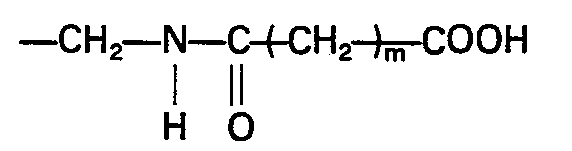
- the structure of the end of the molecule is, for example, one of the following structures: wherein m is an integer of from 1 to 12.
- the poly(alkylene oxide) derivative having carboxyl groups at both ends of the molecule can be produced, for example, by the following methods.
- the poly(alkylene oxide) can be oxidized with oxygen in the presence of an oxidizing catalyst such as platinum or palladium. Hydroxyl groups at both ends of the poly(alkylene oxide) may be reacted with an acid such as a monohalogenated carboxylic acid, a diazo carboxylic acid or the like.
- the hydroxyl groups at both ends of the poly(alkylene oxide) may be reacted with tosyl chloride and hydrazine to form an amino group (see M. Mutter, Tetrahedron Letters 2839,1978), and then the thus formed amino group may be reacted with a dicarboxylic acid to form an amide bond.
- the stabilized SOD of the present invention can contain any SOD modified chemically with poly(alkylene oxide), provided that said modified SOD has a structure in which both end groups of a poly(alkylene oxide) molecule are attached to the SOD. Examples thereof are shown in Figure 1, in which the divided circles indicate SOD molecules and the meandering lines indicate poly(alkylene oxide) moieties.
- the stabilized SOD of the present invention can be obtained by combining the poly(alkylene oxide) (or an activated derivative thereof as mentioned above) as obtained above, with SOD via an amide bond.
- the stabilized SOD of the present invention there can be present not only one molecule as shown in Figure 1, but also a mixture containing at least some or all of the molecules.
- the amide bond is preferably formed by the use of a coupling agent such as 1-ethyl-3-(3-dimethylaminopropyl)-carbodiimide hydrochloride.
- a coupling agent such as 1-ethyl-3-(3-dimethylaminopropyl)-carbodiimide hydrochloride.
- Another preferred method involves the use of a carboxylic acid-activating agent, as in ordinary peptide synthesis, such as N-hydroxy succinimide, N-hydroxy phthalimide, p-nitrophenol, or pentachlorophenol, with the help of dicyclohexylcarbodiimide, to produce an activated ester of the poly(alkylene oxide) and the reaction of the activated ester with SOD to exchange an amide group.
- the latter method, using the active ester is better than the former from the viewpoint of obtaining a modified enzyme of high activity.
- the reaction of the SOD is preferably carried out as follows. SOD is dissolved in water or in a buffer of pH 6.5 to 10.0, preferably from 7.2 to 8.5, wherein the concentration of SOD is from 0.1 to 10%, preferably from 0.5 to 3%, and then the activated poly(alkylene oxide) is added thereto in an amount of from 1 to 100 moles, preferably from 2 to 15 moles, of the activated poly(alkylene oxide) derivative to one mole of SOD.
- concentration of SOD and the molar amount of the activated poly(alkylene oxide) added, the molecular weight of the stabilized SOD can be controlled.
- the reaction between the poly(alkylene oxide) and the SOD is carried out in the presence of an amino acid such as glycine or lysine, and an amine such as monoethanol amine, it is easier to obtain stabilized SOD of a preferred molecular weight distribution, the preferred molecular weight being 70,000 to 200,000.
- an amino acid such as glycine or lysine
- an amine such as monoethanol amine
- the SOD of the present invention may be not only a single compound, for example, as illustrated in Figure 1, but also a composition containing at least one of these-,single compounds. Also, a composition having a desired ratio of single compounds, one to another, can be easily produced.
- the SOD of this invention is not limited to the kinds of molecules illustrated in Figure 1, but includes molecules of modified SOD of higher molecular weight than those shown in Figure 1, and also includes modified SOD having various structural formulae.
- the stabilized SOD as produced is usually in the form of a mixture of molecules, rather than in the form of a single molecule, and of course all of these molecules are within the scope of the present invention.
- the stabilized SOD may contain impurities such as the starting material or non-crosslinked compounds which do not contain a crosslinked structure.
- Such a composition is within the scope of the present invention, particularly when the physicochemical properties, such as the range of molecular weight, are given above.
- the SOD used as a starting material in the present invention includes that obtained from mammals such as cattle, swine, sheep and horses, that obtained from microorganisms such as Escherichia Coli, that obtained from microorganisms obtained by means of genetic engineering, that produced by yeasts, and the like.
- the source of the SOD is not limited.
- An aqueous solution (500 ml) of platinum-palladium-carbon (20 g) as a catalyst, produced by the method disclosed in JP-A-141219/1978 (Kawaken Fine Chemical Co., Inc.), and a poly(ethylene oxide) (200 g) made by Nihon Yushi Co., Inc., Japan (namely Macrogol 4000) were placed in an autoclave and pressured air was fed into the autoclave to adjust the pressure to 10 kg/cm 2 . The mixture was reacted for 10 hours at 90°C.
- the catalyst was removed by filtration from the reaction mixture.
- the solution thus obtained was treated with activated carbon and then recrystallized from water to obtain an acid derivative of poly(ethylene oxide) having carboxyl groups at both ends thereof, in a yield of 180 g.
- a-carboxymethyl, w-carboxymethoxy polyoxyethylene (molecular weight: about 4000) (4.0 g, 0.001 mole) and N-hydroxysuccinimide (0.46 g, 0.004 mole) were dissolved in N,N-dimethylformamide (DMF) (300 ml), and then dicyclohexylcarbodiimide (DCC) (0.84 g, 0.004 mole) was added thereto. The mixture was stirred at room temperature overnight.
- DMF N,N-dimethylformamide
- DCC dicyclohexylcarbodiimide
- SOD Superoxide dismutase
- the molecular weight of the stabilized SOD changed during the first one hour from the start of the reaction. After three hours from the start, the reaction was almost completed. After the completion of the reaction, the activity of the SOD was determined, and the residual activity was found to be 95 ⁇ 5% (total activity: 285000 units) in comparison with the original SOD.
- the reaction mixture was filtered repeatedly using an ultrafiltration membrane capable of hindering the passage of molecules of molecular weight over 30,000, to remove unreacted active ester and the decomposed substances therefrom, and to obtain a modified SOD solution.
- the product was freeze-dried to obtain stabilized SOD in a yield of 107 mg.
- the yield of protein of the stabilized SOD was 83%, the total activity thereof was 236000 units (the residual activity being 95%), and the average number of poly(ethylene oxide) molecules attached to one mole of the enzyme was 2.4.
- the yield of protein of the stabilized SOD was 85%, the residual activity thereof was 94 ⁇ 5%, and the average number of poly(ethylene oxide) molecules attached to one mole of the SOD enzyme was 3.5.
- Pluronic P-94 produced by BASF Wyandotte Co., USA (a block copolymer of ethylene oxide and propylene oxide, average molecular weight: 2750) (11.2 g, 4 mmole) and y-bromo-n-butyric acid ethyl ester (7.8 g, mmole) were dissolved in well-dehydrated DMF (300 ml), and silver oxide (15 g) was added thereto. The mixture was stirred for 24 hours at 50 to 60°C. The reaction mixture was subjected to filtration to remove solid substances.
- the white crystals were dissolved in 0.05 M phosphate buffer (pH 7.4) (200 ml), and the solution was loaded onto a column of the anion exchange resin "BIO-RAD 1 x2" produced by BIORAD Co,; resin content: 300 ml) equilibrated with the same buffer solution, so that a Pluronic derivative having a terminal carboxyl group was adsorbed onto the resin.
- the adsorbed Pluronic derivative was eluted with 0.05 M aqueous hydrochloric acid solution. The eluate was freeze-dried to obtain white crystals in a yield of 7.2 g.
- Bovine SOD 50 mg, 0.0015 mmole, 3000 units/mg
- 0.1 M phosphate buffer pH 7.4, 5 ml
- the above activated ester 33.5 mg, 0.0105 mmole
- the mixture was reacted for 3 hours to obtain stabilized SOD (55 mg).
- the average number of copolymer molecules attached to one mole of the SOD was 5.3, and the residual activity thereof was 85%.
- Bovine SOD 60 mg
- Toyobo Co. 3000 units/mg, 0.018 mmole
- glycine 1.1 mg, 0.015 mmole
- 0.1 M phosphate buffer pH 8.2, 2 ml
- the mixture was reacted for 3 hours in an ice bath to obtain stabilized SOD in a yield of 62 mg.
- the average number of poly(ethylene oxide) molecules attached to one mole of the SOD was 4.5, and the residual activity thereof was 90 ⁇ 5%.
- Poly(ethylene oxide) having an average molecular weight of 3800 daltons was reacted by the method of M. Mutter (Tetrahedron Letters, 2839, 1978) to form a derivative thereof having amino groups at both ends, the structure of both ends being -Q-CH 2 -CH 2 -NH 2 .
- the thus obtained derivative (5 g, 1.3 mmole) was dissolved in well-hydrated dioxane (100 ml), and succinic anhydride (2.5 g, 25.0 mmole) was added thereto. The mixture was reacted for 20 hours at room temperature.
- the reaction solution was added to ethyl ether (1 litre) to obtain a poly(ethylene oxide) derivative having a carboxyl groups at both ends thereof in a yield of 4.8 g.
- poly(ethylene oxide) derivative was activated by the method described in Example 1, to produce the activated derivative thereof.
- Bovine SOD 50 mg, 0.0015 mmole, 3000 units/mg
- 0.1 M phosphate buffer pH 7.5, 2.5 ml
- the activated poly(ethylene oxide) derivative as mentioned above 28 mg, 0.009 mmole
- the average number of poly(ethylene oxide) molecules attached to one mole of the SOD was 4.2, and the residual activity thereof was 88%.
- the modified SOD (m-SOD) obtained in Example 1 was dissolved in a saline solution (5 mg by SOD content in 1 ml saline solution). To the mice, the modified SOD solution (2 mg by SOD content per kg) was injected intravenously once a day for 5 days from the seventh day or fourteenth day after the transplantation.
- the number of colonies and the weight of tumor in the mice treated with the modified SOD decreased below 40% as compared to the non-treated mice.
- the average number of poly(alkylene oxide) molecules attached to the one mol of the modified SOD as produced by the above Examples was determined by the following method.
- the weight of the modified SOD as obtained by freeze-drying was measured, and the sample was dissolved in water so as to give a solution having a concentration of a few percent.
- the ratio by weight of the modified product to the non-modified product was calculated, and thereby the amount of poly(alkylene oxide) attached to the SOD was determined.
- the residual activity was obtained by the following method.
- the starting SOD material and me modified SOD as obtained above were dissolved in appropriate volumes of a buffer solution, and the enzyme activity was determined by the method of J. M. McCord et al (J. Biol. Chem., 244, 6049, 1969).
- the concentration of each enzyme was obtained by the absorption method as mentioned above, and the residual activity was calculated from a comparison in activity after the reaction.
- the weight average molecular weight was determined by a small angle laser light scattering method, using an apparatus as shown in Figure 2.
- this apparatus consists of a pump P (namely an HPLC pump made by Nihon Bunko Co., TRIROTAR VI type), an injector I, a pre-column PC (Guard Column-SW, Toyo Soda Co.), a first separation column C, (G4000SW, 7.5 mm in diameter and 60 cm in length, Toyo Soda Co.), a second separation column C 2 (G3000SW, 7.5 mm in diameter and 60 cm in length, Toyo Soda Co.), a filter F (produced by TEFURON), a small angle laser light scattering appareatus LS (Toyo Soda Co., LS-8), a refractometer RI (Toyo Soda Co., RI-8011), and a recorder RC (in which the eluent was 0.1 M phosphate buffer (pH)
- the fractionation for the determination of molecular weight was carried out by the use of prepacked gel permeation columns of "G4000SW and G3000SW” type, as produced by Toyo Soda Co., Inc., Japan.
- the intensity of scattering and the refractive index were measured by the use of the laser light scattering apparatus LS and the refractometer RI, simultaneously.
- the weight average molecular weight can be obtained from the following equation:
- the survival time in the blood circulation was measured as follows. Three Wistar rats, seven weeks old and weighing 249 to 277 g, qsre used for each sample. The rats were infused with 20 mg of the sample (20 mg SOD content for the modified SOD; 5 mg per rat) dissolved in a silane solution (0.5 ml per rat) per kg of body weight through the femoral vein, and samples of blood, each 0.2 ml, were withdrawn 5,15 and 30 minutes and 1,2,4,8,24 and 48 hours after the injection. Each blood sample was centrifuged, and the SOD activity of the plasma was determined by the method of J. M. McCord et al (J. Biol. Chem., 244, No. 22, 6049-55,1969).
- the activity of the stabilized SOD decreases gradually. It rapidly reduces after a few hours from the administration, and then it reduces slowly.
- the half survival time of SOD activity in the circulation for the stabilized SOD obtained by each of the Examples, of human SOD, and of bovine SOD, and the time for the SOD activity of the enzyme derivatives to be lowered to 30% in the blood circulation, are as given in Table 2 below.
Landscapes
- Health & Medical Sciences (AREA)
- Life Sciences & Earth Sciences (AREA)
- Chemical & Material Sciences (AREA)
- Bioinformatics & Cheminformatics (AREA)
- Engineering & Computer Science (AREA)
- Genetics & Genomics (AREA)
- General Health & Medical Sciences (AREA)
- Medicinal Chemistry (AREA)
- Organic Chemistry (AREA)
- Zoology (AREA)
- Wood Science & Technology (AREA)
- Animal Behavior & Ethology (AREA)
- Biochemistry (AREA)
- Public Health (AREA)
- Veterinary Medicine (AREA)
- Molecular Biology (AREA)
- Biomedical Technology (AREA)
- Biotechnology (AREA)
- Pharmacology & Pharmacy (AREA)
- Microbiology (AREA)
- Epidemiology (AREA)
- General Engineering & Computer Science (AREA)
- Gastroenterology & Hepatology (AREA)
- Proteomics, Peptides & Aminoacids (AREA)
- Immunology (AREA)
- Enzymes And Modification Thereof (AREA)
- Medicines That Contain Protein Lipid Enzymes And Other Medicines (AREA)
Description
- The present invention relates to a novel stabilized superoxide dismutase, hereinafter referred to as "stabilized SOD" or "modified SOD", for use as an active ingredient of medicines such as antiinflammatory argents, ischemic disease treating agents, cardiac infarction treating agents, radial ray lesion treating agents, tumor metastasis-preventing agents and stroke treating agents.
- Superoxide dismutase, hereinafter referred to as "SOD", can be employed as the medicines mentioned above, since it can remove toxic substances derived from oxygen, in a living body.
- However, when SOD is administered in the living body by intravenous injection, the half life of the SOD in the blood circulation is only a few minutes. Therefore the administered SOD is rapidly lost from the circulation in the living body. Accordingly, the enzymatic activity of the SOD cannot be retained for a time sufficient to remove toxic substances to a sufficient extent. Moreover, it causes adverse reactions by the over administration of SOD to the living body.
- In order to resolve the problems mentioned above, many chemical modifications of SOD have been performed in order to extend the life of SOD in the circulation of the living body. The half life time (T-50) of chemically modified SOD in the circulation varies dependent upon the molecular weight of the modified SOD, and therefore modified SOD having a high molecular weight is expected to have a greater half survival time (see (1) E. Boccu, G. P. Velo, F. M. Veronese, Pharmacol. Res. Commun., 14 113,1982; (2) E. Boccu, R. Largajolli. F. M. Veronese, Z. Naturforschung, 38, 94, 1983; and (3) Pyatak et al, Res. Commun. Chem. Pathol. Pharm. 29, 113, 1980).
- In these cases, a large number of poly(alkylene oxide) molecules of which one terminal group is protected with a methoxy group, are chemically attached to one SOD molecule through the other terminal group of the poly(alkylene oxide) to obtain a high molecule weight SOD derivative).
- The method used for the modification of SOD with Ficoll, rat albumin and with poly(ethylene oxide) by P. S. Pyatak et al, is not good enough to be employed for medical uses because the SOD activity is as low as 50% of the original enzyme.
- On the other hand, in the method for modification with methoxypolyethylene glycol, as described by Boccu et al (see references (1) and (2) above), it is not possible to obtain a product having an enzyme activity sufficiently high for medical purposes and having a long half survival time in the blood circulation.
- The inventors of the present invention have attempted to solve the above problems and to develop modified SOD whose SOD activity is high and whose half survival time in the blood circulation is long, and have succeeded in the production of a novel superoxide dismutase combined chemically with a poly(alkylene oxide), wherein said modified superoxide dismutase has a molecular structure in which both ends of a poly(alkylene oxide) moiety are attached to superoxide dismutase, and have found that this modified superoxide dismutase is very stable in the blood circulation and moreover, that the SOD activity is not lost by the chemical modification. They have thus solved the above problems. Thus, the present invention provides, in a superoxide dismutase chemically modified with poly(alkylene oxide), the improvement wherein said modified superoxide dismutase has a molecular structure in which both ends of a poly(alkylene oxide) molecule are attached to superoxide dismutase. In a modification, only one end of said poly(alkylene oxide) is attached to superoxide dismutase, the other end thereof comprising a carboxyl group protected by an amino acid (e.g. glycine or lysine). The present invention also provides a pharmaceutical composition comprising modified superoxide dismutase of the invention, and a pharmaceutically-acceptable carrier or diluent.
- Reference will be made hereinafter, by way of example, to the drawings in which:
- Figure 1 illustrates SOD molecules in accordance with the invention;
- Figure 2 illustrates an apparatus for the measurement of the molecular weight of SOD molecules;
- Figures 3 and 4 are graphs showing properties of the stabilized SOD obtained by Examples 1 and 4 hereinbelow, respectively; and
- Figure 5 is a graph showing the activity changes of the stabilized SOD obtained by Example 1 hereinbelow, and of human and bovine SOD, in the blood circulation.
- The stabilized SOD of the present invention preferably has a molecular weight of from 70,000 to 500,000, more preferably from 70,000 to 200,000. Furthermore, it usually has a high SOD activity of from 85 to 100%.
- The number of said poly(alkylene oxide) molecules attached to one molecule of SOD is usually from 0.5 to 10, preferably from 1 to 6.
- The poly(alkylene oxide) used in the present invention is preferably a polymer soluble in water, for example, poly(ethylene oxide), poly(propylene oxide), or a copolymer of ethylene oxide and propylene oxide. The molecular weight of the polymer is preferably about 400 to 20,000.
- In the reaction for the production of the stabilized SOD, poly(alkylene oxide) having carboxyl groups at both ends of the molecule is preferably used as a starting material. The structure of the end of the molecule is, for example, one of the following structures:



- Having regard to the stability of the product, the above structures (2) and (3) are preferred.
- The poly(alkylene oxide) derivative having carboxyl groups at both ends of the molecule can be produced, for example, by the following methods.
- In case of the structure (2) mentioned above, the poly(alkylene oxide) can be oxidized with oxygen in the presence of an oxidizing catalyst such as platinum or palladium. Hydroxyl groups at both ends of the poly(alkylene oxide) may be reacted with an acid such as a monohalogenated carboxylic acid, a diazo carboxylic acid or the like.
- In case of the structure (3) mentioned above, the hydroxyl groups at both ends of the poly(alkylene oxide) may be reacted with tosyl chloride and hydrazine to form an amino group (see M. Mutter, Tetrahedron Letters 2839,1978), and then the thus formed amino group may be reacted with a dicarboxylic acid to form an amide bond.
- The stabilized SOD of the present invention can contain any SOD modified chemically with poly(alkylene oxide), provided that said modified SOD has a structure in which both end groups of a poly(alkylene oxide) molecule are attached to the SOD. Examples thereof are shown in Figure 1, in which the divided circles indicate SOD molecules and the meandering lines indicate poly(alkylene oxide) moieties.
- The stabilized SOD of the present invention can be obtained by combining the poly(alkylene oxide) (or an activated derivative thereof as mentioned above) as obtained above, with SOD via an amide bond.
- In the stabilized SOD of the present invention, there can be present not only one molecule as shown in Figure 1, but also a mixture containing at least some or all of the molecules.
- The amide bond is preferably formed by the use of a coupling agent such as 1-ethyl-3-(3-dimethylaminopropyl)-carbodiimide hydrochloride. Another preferred method involves the use of a carboxylic acid-activating agent, as in ordinary peptide synthesis, such as N-hydroxy succinimide, N-hydroxy phthalimide, p-nitrophenol, or pentachlorophenol, with the help of dicyclohexylcarbodiimide, to produce an activated ester of the poly(alkylene oxide) and the reaction of the activated ester with SOD to exchange an amide group. The latter method, using the active ester, is better than the former from the viewpoint of obtaining a modified enzyme of high activity.
- The reaction of the SOD is preferably carried out as follows. SOD is dissolved in water or in a buffer of pH 6.5 to 10.0, preferably from 7.2 to 8.5, wherein the concentration of SOD is from 0.1 to 10%, preferably from 0.5 to 3%, and then the activated poly(alkylene oxide) is added thereto in an amount of from 1 to 100 moles, preferably from 2 to 15 moles, of the activated poly(alkylene oxide) derivative to one mole of SOD. By adjusting the concentration of SOD, and the molar amount of the activated poly(alkylene oxide) added, the molecular weight of the stabilized SOD can be controlled.
- If the reaction between the poly(alkylene oxide) and the SOD is carried out in the presence of an amino acid such as glycine or lysine, and an amine such as monoethanol amine, it is easier to obtain stabilized SOD of a preferred molecular weight distribution, the preferred molecular weight being 70,000 to 200,000. In particular, when the concentration of the SOD is over 2.5%, the addition of the amino acid is useful to control the molecular weight so as to fall in the desirable range as given above.
- As mentioned before, the SOD of the present invention may be not only a single compound, for example, as illustrated in Figure 1, but also a composition containing at least one of these-,single compounds. Also, a composition having a desired ratio of single compounds, one to another, can be easily produced.
- The SOD of this invention is not limited to the kinds of molecules illustrated in Figure 1, but includes molecules of modified SOD of higher molecular weight than those shown in Figure 1, and also includes modified SOD having various structural formulae.
- The stabilized SOD as produced is usually in the form of a mixture of molecules, rather than in the form of a single molecule, and of course all of these molecules are within the scope of the present invention. Moreover, the stabilized SOD may contain impurities such as the starting material or non-crosslinked compounds which do not contain a crosslinked structure. Such a composition is within the scope of the present invention, particularly when the physicochemical properties, such as the range of molecular weight, are given above.
- The SOD used as a starting material in the present invention includes that obtained from mammals such as cattle, swine, sheep and horses, that obtained from microorganisms such as Escherichia Coli, that obtained from microorganisms obtained by means of genetic engineering, that produced by yeasts, and the like. The source of the SOD is not limited.
- The present invention will now be illustrated by the following Examples.
- An aqueous solution (500 ml) of platinum-palladium-carbon (20 g) as a catalyst, produced by the method disclosed in JP-A-141219/1978 (Kawaken Fine Chemical Co., Inc.), and a poly(ethylene oxide) (200 g) made by Nihon Yushi Co., Inc., Japan (namely Macrogol 4000) were placed in an autoclave and pressured air was fed into the autoclave to adjust the pressure to 10 kg/cm2. The mixture was reacted for 10 hours at 90°C.
- The catalyst was removed by filtration from the reaction mixture. The solution thus obtained was treated with activated carbon and then recrystallized from water to obtain an acid derivative of poly(ethylene oxide) having carboxyl groups at both ends thereof, in a yield of 180 g.
- The thus-obtained a-carboxymethyl, w-carboxymethoxy polyoxyethylene (molecular weight: about 4000) (4.0 g, 0.001 mole) and N-hydroxysuccinimide (0.46 g, 0.004 mole) were dissolved in N,N-dimethylformamide (DMF) (300 ml), and then dicyclohexylcarbodiimide (DCC) (0.84 g, 0.004 mole) was added thereto. The mixture was stirred at room temperature overnight.
- The crystals of dicyclohexyl urea that formed were separated by filtration. To the filtrate, ethyl ether (600 ml) was added to precipitate crystals of succinimidyl derivative. The crystals were separated by filtration, washed well with ethyl ether, and dried to give white crystals of the polyoxyethylene derivative of the activated ester (4.2 g).
- Superoxide dismutase (SOD) (3000 units/mg; 100 mg, 0.003 mmole) derived from a bovine blood produced by Toyobo Co., Japan was dissolved in 0.1 M phosphate buffer (4 ml) adjusted to pH 7.4, and then the activated derivative as obtained above (37 mg, 0.009 mmole) was added thereto. Thereafter, the mixture was stirred for 3 hours at ice temperature.
- The molecular weight of the stabilized SOD changed during the first one hour from the start of the reaction. After three hours from the start, the reaction was almost completed. After the completion of the reaction, the activity of the SOD was determined, and the residual activity was found to be 95±5% (total activity: 285000 units) in comparison with the original SOD.
- The reaction mixture was filtered repeatedly using an ultrafiltration membrane capable of hindering the passage of molecules of molecular weight over 30,000, to remove unreacted active ester and the decomposed substances therefrom, and to obtain a modified SOD solution. The product was freeze-dried to obtain stabilized SOD in a yield of 107 mg.
- The yield of protein of the stabilized SOD was 83%, the total activity thereof was 236000 units (the residual activity being 95%), and the average number of poly(ethylene oxide) molecules attached to one mole of the enzyme was 2.4.
- SOD derived from human erythrocyte purchased from Sigma Co. (2300 units/mg) was filtered by gel filtration using "Sephadex® G-100 Super fine" produced by Pharmacia Co., Sweden. Fractions having a molecular weight of 32000 and of approximately 32000 were collected and the thus purified human SOD (3050 units/mg) (50 mg, 0.0015 mmole) was dissolved in 0.1 M phosphate buffer (pH 7.4; 2.5 ml), and then the activated poly(ethylene oxide) derivative obtained in Example 1 (30 mg, 0.0075 mmole) was added thereto. The mixture was stirred for 3 hours in an ice bath, and then was filtered repeatedly by ultrafiltration to obtain a fraction with a molecular weight of 30,000. The product was freeze-dried to obtain stabilized SOD in a yield of 60 mg.
- The yield of protein of the stabilized SOD was 85%, the residual activity thereof was 94±5%, and the average number of poly(ethylene oxide) molecules attached to one mole of the SOD enzyme was 3.5.
- Commercially available "Pluronic P-94" produced by BASF Wyandotte Co., USA (a block copolymer of ethylene oxide and propylene oxide, average molecular weight: 2750) (11.2 g, 4 mmole) and y-bromo-n-butyric acid ethyl ester (7.8 g, mmole) were dissolved in well-dehydrated DMF (300 ml), and silver oxide (15 g) was added thereto. The mixture was stirred for 24 hours at 50 to 60°C. The reaction mixture was subjected to filtration to remove solid substances.
- The thus obtained filtrate was added to ethyl ether (2.0 litres) to precipitate the required product. The precipitated substance was further washed well with ethyl ether, dried and dissolved again in water (200 ml). The aqueous solution was warmed to 40 to 50°C, and then 2M aqueous sodium hydroxide solution was slowly added dropwise thereto under stirring to adjust the pH value thereof to a value of 11 to 12.
- After adjustment of pH, the mixture was stirred continuously for 2 hours, and 1 M aqueous hydrochloric acid solution was added thereto to adjust the pH to 6. Water was removed from the reaction mixture by a rotary evaporator. The thus obtained solid substance was dissolved again in DMF (100 mI). Insoluble material was removed by filtration, and the filtrate was added to ethyl ether (1 litre) to precipitate crystals. The crystals were recovered by filtration, washed well with ethyl ether and dried to obtain white crystals in a yield of 10.5 g.
- The white crystals were dissolved in 0.05 M phosphate buffer (pH 7.4) (200 ml), and the solution was loaded onto a column of the anion exchange resin "BIO-RAD 1 x2" produced by BIORAD Co,; resin content: 300 ml) equilibrated with the same buffer solution, so that a Pluronic derivative having a terminal carboxyl group was adsorbed onto the resin. The adsorbed Pluronic derivative was eluted with 0.05 M aqueous hydrochloric acid solution. The eluate was freeze-dried to obtain white crystals in a yield of 7.2 g.
- Thereafter, in the same manner as in Example 1, the Pluronic derivative activated ester was obtained.
- Bovine SOD (50 mg, 0.0015 mmole, 3000 units/mg) produced by Toyobo Co., Japan, was dissolved in 0.1 M phosphate buffer (pH 7.4, 5 ml), and then the above activated ester (33.5 mg, 0.0105 mmole) was added to the mixture, in an ice bath. The mixture was reacted for 3 hours to obtain stabilized SOD (55 mg).
- The average number of copolymer molecules attached to one mole of the SOD was 5.3, and the residual activity thereof was 85%.
- Both ends of poly(ethylene oxide) having an average molecular weight of 1000 daltons were oxidized in the same manner as described in Example 1. The thus obtained poly(ethylene oxide) derivative (4.0 g, 4 mmole) and para-nitrophenol (1.66 g, 12 mmole) were dissolved in DMF (150 ml), and dicyclohexyl carbodiimide (2.48 g, 12 mmole) was added thereto. The mixture was reacted at room temperature overnight.
- After the completion of the reaction, dicyclohexyl urea was removed by filtration, and to the filtrate ethyl ether (2 litres) was added to precipitate crystals. The crystals were washed well with ethyl ether and dried to obtain white crystals in a yield of 3.8 g.
- Bovine SOD (60 mg), produced by Toyobo Co. (3000 units/mg, 0.018 mmole) and glycine (1.1 mg, 0.015 mmole) were dissolved in 0.1 M phosphate buffer (pH 8.2, 2 ml), and then the poly(ethylene oxide) derivative activated ester as obtained above (17 mg, 0.014 mmole) was added thereto. The mixture was reacted for 3 hours in an ice bath to obtain stabilized SOD in a yield of 62 mg.
- The average number of poly(ethylene oxide) molecules attached to one mole of the SOD was 4.5, and the residual activity thereof was 90±5%.
- Poly(ethylene oxide) having an average molecular weight of 3800 daltons was reacted by the method of M. Mutter (Tetrahedron Letters, 2839, 1978) to form a derivative thereof having amino groups at both ends, the structure of both ends being -Q-CH2-CH2-NH2. The thus obtained derivative (5 g, 1.3 mmole) was dissolved in well-hydrated dioxane (100 ml), and succinic anhydride (2.5 g, 25.0 mmole) was added thereto. The mixture was reacted for 20 hours at room temperature. The reaction solution was added to ethyl ether (1 litre) to obtain a poly(ethylene oxide) derivative having a carboxyl groups at both ends thereof in a yield of 4.8 g.
- The thus obtained poly(ethylene oxide) derivative was activated by the method described in Example 1, to produce the activated derivative thereof.
- Bovine SOD (50 mg, 0.0015 mmole, 3000 units/mg), produced by Toyobo Co., Japan was dissolved in 0.1 M phosphate buffer (pH 7.5, 2.5 ml), and then the activated poly(ethylene oxide) derivative as mentioned above (28 mg, 0.009 mmole) was added thereto. The mixture was stirred for 3 hours in an ice bath to obtain stabilized SOD.
- The average number of poly(ethylene oxide) molecules attached to one mole of the SOD was 4.2, and the residual activity thereof was 88%.
- 106 cells of Lewis-lung tumor were implanted onto the foot of a number of C57BL-6 mice, and the implanted tumor was removed at seventh day after the transplantation (n=7).
- The modified SOD (m-SOD) obtained in Example 1 was dissolved in a saline solution (5 mg by SOD content in 1 ml saline solution). To the mice, the modified SOD solution (2 mg by SOD content per kg) was injected intravenously once a day for 5 days from the seventh day or fourteenth day after the transplantation.
- On the 22nd day after the transplantation, the lungs were taken out and the number of colonies of metastasizing cells was determined. The inhibition of the metastasis was evaluated by the decrease of the number of colonies and the weight of metastasizing lung tumor. The results are given in Table 3 below.
- The number of colonies and the weight of tumor in the mice treated with the modified SOD decreased below 40% as compared to the non-treated mice.
- The average number of poly(alkylene oxide) molecules attached to the one mol of the modified SOD as produced by the above Examples was determined by the following method.
- The weight of the modified SOD as obtained by freeze-drying was measured, and the sample was dissolved in water so as to give a solution having a concentration of a few percent. The absorption at 650 to 700 nm thereof (Bovine SOD: 680 nm, Human SOD: 655 nm) were obtained and thereby the amount of SOD as the starting material was determined (Bovine SOD: E=300; Human SOD: E=350). The ratio by weight of the modified product to the non-modified product was calculated, and thereby the amount of poly(alkylene oxide) attached to the SOD was determined.
- The residual activity was obtained by the following method. The starting SOD material and me modified SOD as obtained above were dissolved in appropriate volumes of a buffer solution, and the enzyme activity was determined by the method of J. M. McCord et al (J. Biol. Chem., 244, 6049, 1969).
- The concentration of each enzyme was obtained by the absorption method as mentioned above, and the residual activity was calculated from a comparison in activity after the reaction.
- The residual activity and weight average molecular weight of each stabilized SOD as obtained in the Examples as given in Table 1 below.
- The weight average molecular weight was determined by a small angle laser light scattering method, using an apparatus as shown in Figure 2. As shown in Figure 2, this apparatus consists of a pump P (namely an HPLC pump made by Nihon Bunko Co., TRIROTAR VI type), an injector I, a pre-column PC (Guard Column-SW, Toyo Soda Co.), a first separation column C, (G4000SW, 7.5 mm in diameter and 60 cm in length, Toyo Soda Co.), a second separation column C2 (G3000SW, 7.5 mm in diameter and 60 cm in length, Toyo Soda Co.), a filter F (produced by TEFURON), a small angle laser light scattering appareatus LS (Toyo Soda Co., LS-8), a refractometer RI (Toyo Soda Co., RI-8011), and a recorder RC (in which the eluent was 0.1 M phosphate buffer (pH 6.8) plus 5% ethanol, and the flow rate was 0.5 ml/minute).
- As shown in the Figure, the fractionation for the determination of molecular weight was carried out by the use of prepacked gel permeation columns of "G4000SW and G3000SW" type, as produced by Toyo Soda Co., Inc., Japan. The intensity of scattering and the refractive index (the differential refractive index) were measured by the use of the laser light scattering apparatus LS and the refractometer RI, simultaneously.
- The weight average molecular weight can be obtained from the following equation:

- SLS: Intensity of Scattering
- SRI: Change of Refractive Index.
- The constant, B, is dependent on the apparatus and the substances to be tested, and bovine serum albumin, the molecular weight of which is known (=67000), is employed for the calculation of B. as a standard value. For each sample to be tested, the following amended equation is obtained:

- Bo: the value of B obtained in the case of bovine serum albumin;
- Δn: Intensity of Refractive Index of the sample to be tested;
- Δno: Intensity of Refractive Index of bovine serum albumin;
- C: the concentration of the sample to be tested;
- Co: the concentration of bovine serum albumin.
- Typical variations are as shown in Figures 3 and 4.
- For each stabilized SOD obtained in the Examples, the survival time in the blood circulation was measured as follows. Three Wistar rats, seven weeks old and weighing 249 to 277 g, qsre used for each sample. The rats were infused with 20 mg of the sample (20 mg SOD content for the modified SOD; 5 mg per rat) dissolved in a silane solution (0.5 ml per rat) per kg of body weight through the femoral vein, and samples of blood, each 0.2 ml, were withdrawn 5,15 and 30 minutes and 1,2,4,8,24 and 48 hours after the injection. Each blood sample was centrifuged, and the SOD activity of the plasma was determined by the method of J. M. McCord et al (J. Biol. Chem., 244, No. 22, 6049-55,1969).
- The variation with time of the activity in the blood circulation of the stabilized SOD obtained in Example 1 and of bovine and human SOD are as shown in Figure 5.
- As can be seen from this Figure, the activity of the stabilized SOD decreases gradually. It rapidly reduces after a few hours from the administration, and then it reduces slowly.
- The half survival time of SOD activity in the circulation for the stabilized SOD obtained by each of the Examples, of human SOD, and of bovine SOD, and the time for the SOD activity of the enzyme derivatives to be lowered to 30% in the blood circulation, are as given in Table 2 below.
- From these results, it can be seen that the life of each stabilized SOD in the circulation was very much longer than that of the original SOD.
- It was confirmed that the properties, of the stabilized SOD, necessary for use as a medicine, such as pharmacological action and durability thereof, were improved remarkably, and that the stabilized SOD can give a sufficient effect by intravenous injection.


Claims (12)

Applications Claiming Priority (2)
| Application Number | Priority Date | Filing Date | Title |
|---|---|---|---|
| JP90605/85 | 1985-04-26 | ||
| JP60090605A JPH084504B2 (en) | 1985-04-26 | 1985-04-26 | Stabilized superoxide dismutase |
Publications (3)
| Publication Number | Publication Date |
|---|---|
| EP0200467A2 EP0200467A2 (en) | 1986-11-05 |
| EP0200467A3 EP0200467A3 (en) | 1988-02-24 |
| EP0200467B1 true EP0200467B1 (en) | 1990-12-27 |
Family
ID=14003104
Family Applications (1)
| Application Number | Title | Priority Date | Filing Date |
|---|---|---|---|
| EP86303058A Expired - Lifetime EP0200467B1 (en) | 1985-04-26 | 1986-04-23 | Superoxide dismutase combined with a poly(alkylene oxide) |
Country Status (4)
| Country | Link |
|---|---|
| US (1) | US5066590A (en) |
| EP (1) | EP0200467B1 (en) |
| JP (1) | JPH084504B2 (en) |
| DE (1) | DE3676544D1 (en) |
Families Citing this family (33)
| Publication number | Priority date | Publication date | Assignee | Title |
|---|---|---|---|---|
| US6030611A (en) * | 1984-08-27 | 2000-02-29 | Bio-Technology General Corp. | Therapeutic SOD compositions and uses thereof |
| US5162217A (en) * | 1984-08-27 | 1992-11-10 | Bio-Technology General Corp. | Plasmids for expression of human superoxide dismutase (SOD) analogs containing lambda PL promoter with engineered restriction site for substituting ribosomal binding sites and methods of use thereof |
| US4879109A (en) * | 1986-05-15 | 1989-11-07 | Emory University | Method for treating burns |
| US4968616A (en) * | 1986-05-16 | 1990-11-06 | Masayasu Inoue | Superoxide dismutase derivatives, method of producing same and medicinal use of same |
| JPS63211238A (en) * | 1987-02-27 | 1988-09-02 | Masayasu Inoue | Antiulcer agent |
| US5214132A (en) * | 1986-12-23 | 1993-05-25 | Kyowa Hakko Kogyo Co., Ltd. | Polypeptide derivatives of human granulocyte colony stimulating factor |
| DE3851257T4 (en) * | 1987-05-21 | 1996-07-11 | Masayasu Inoue | Acylated derivative of superoxide dismutase and composition containing the same. |
| DE3853493T2 (en) * | 1987-05-28 | 1995-07-27 | Kuraray Co | Superoxide dismutase derivatives, process for their preparation and their use as medicines. |
| DK310788A (en) * | 1987-06-09 | 1988-12-10 | Int Cardiovascular Med Inc | PREPARATION CONTAINING SUPEROXIDE DISMUTASE, ITS MANUFACTURING AND USE FOR THE TREATMENT OF GLOBAL ISKAEMI |
| IE64284B1 (en) * | 1987-08-03 | 1995-07-26 | Ddi Pharmaceuticals | Conjugates of superoxide dismutase |
| US5080891A (en) * | 1987-08-03 | 1992-01-14 | Ddi Pharmaceuticals, Inc. | Conjugates of superoxide dismutase coupled to high molecular weight polyalkylene glycols |
| US5006333A (en) * | 1987-08-03 | 1991-04-09 | Ddi Pharmaceuticals, Inc. | Conjugates of superoxide dismutase coupled to high molecular weight polyalkylene glycols |
| JPH0196107A (en) * | 1987-10-07 | 1989-04-14 | Kanebo Ltd | Skin cosmetic |
| JPH01199573A (en) * | 1987-10-25 | 1989-08-10 | Kuraray Co Ltd | Superoxide dismutase derivative and production thereof |
| JPH01128910A (en) * | 1987-11-12 | 1989-05-22 | Kanebo Ltd | Skin cosmetic |
| JPH0262829A (en) * | 1988-05-18 | 1990-03-02 | Nippon Kayaku Co Ltd | Preventive and remedy for trauma caused by ischemia |
| JPH02124831A (en) * | 1988-11-02 | 1990-05-14 | Ajinomoto Co Inc | Chemically modified SOD lyophilized preparation |
| JP2978187B2 (en) * | 1989-11-02 | 1999-11-15 | 日本ケミカルリサーチ株式会社 | Method for producing modified superoxide dismutase |
| CA2114240A1 (en) * | 1991-08-05 | 1993-02-18 | Sterling Drug Inc. | Buffered formulation of peg-sod |
| US5414135A (en) * | 1991-12-30 | 1995-05-09 | Sterling Winthrop Inc. | Vinyl sulfone coupling of polyoxyalkylenes to proteins |
| US5470568A (en) * | 1992-02-13 | 1995-11-28 | Arch Development Corporation | Methods and compositions of a polymer (poloxamer) for cell repair |
| FR2687681B1 (en) * | 1992-02-20 | 1995-10-13 | Transgene Sa | POLYETHYLENEGLYCOL-HIRUDINE CONJUGATES, THEIR PREPARATION PROCESS AND THEIR USE FOR THE TREATMENT OF THROMBOSES. |
| US5605687A (en) * | 1992-05-15 | 1997-02-25 | Arch Development Corporation | Methods and compositions of a polymer (poloxamer) for repair of electrical injury |
| CA2101361A1 (en) * | 1992-08-27 | 1994-02-28 | Robert A. Snow | Low diol polyalkylene oxide biologically active proteinaceous substances |
| US5817292A (en) * | 1992-10-14 | 1998-10-06 | Nycomed Imaging As | MR imaging compositions and methods |
| WO1994008624A2 (en) * | 1992-10-14 | 1994-04-28 | Sterling Winthrop Inc. | Therapeutic and diagnostic imaging compositions and methods |
| DE69312951T2 (en) * | 1992-10-14 | 1997-12-11 | Nycomed Imaging As | CHELATE POLYMERS |
| US5298410A (en) * | 1993-02-25 | 1994-03-29 | Sterling Winthrop Inc. | Lyophilized formulation of polyethylene oxide modified proteins with increased shelf-life |
| US5977310A (en) * | 1995-03-10 | 1999-11-02 | Toshikazu Nakamura And Sumitomo Pharmaceuticals Co., Ltd. | Peg-modified HGF |
| WO1996029987A1 (en) | 1995-03-24 | 1996-10-03 | Focal, Inc. | Reduction of adhesions using controlled delivery of active oxygen inhibitors |
| US6410680B1 (en) | 2000-06-21 | 2002-06-25 | Dendrimolecular, Inc. | Dendrimer constructs and metal complexes thereof having superoxide dismutase activity |
| US20140120075A1 (en) * | 2011-05-24 | 2014-05-01 | Board Of Regents Of The University Of Nebraska | Nanozyme Compositions and Methods of Synthesis and Use Thereof |
| CN103805587A (en) * | 2014-01-13 | 2014-05-21 | 李健 | Superoxide dismutase fatty acid clathrate compound and preparation method thereof |
Family Cites Families (2)
| Publication number | Priority date | Publication date | Assignee | Title |
|---|---|---|---|---|
| NL6812443A (en) * | 1968-08-31 | 1970-03-03 | ||
| DE3273448D1 (en) * | 1981-07-22 | 1986-10-30 | Takeda Chemical Industries Ltd | Immobilized superoxide dismutase, its production and pharmaceutical composition |
-
1985
- 1985-04-26 JP JP60090605A patent/JPH084504B2/en not_active Expired - Lifetime
-
1986
- 1986-04-23 DE DE8686303058T patent/DE3676544D1/en not_active Expired - Lifetime
- 1986-04-23 EP EP86303058A patent/EP0200467B1/en not_active Expired - Lifetime
-
1989
- 1989-02-02 US US07/304,914 patent/US5066590A/en not_active Expired - Fee Related
Also Published As
| Publication number | Publication date |
|---|---|
| JPH084504B2 (en) | 1996-01-24 |
| DE3676544D1 (en) | 1991-02-07 |
| JPS61249388A (en) | 1986-11-06 |
| EP0200467A3 (en) | 1988-02-24 |
| EP0200467A2 (en) | 1986-11-05 |
| US5066590A (en) | 1991-11-19 |
Similar Documents
| Publication | Publication Date | Title |
|---|---|---|
| EP0200467B1 (en) | Superoxide dismutase combined with a poly(alkylene oxide) | |
| US5283317A (en) | Intermediates for conjugation of polypeptides with high molecular weight polyalkylene glycols | |
| AU675798B2 (en) | Low diol polyalkylene oxide biologically active proteinaceous substances | |
| CA1283046C (en) | Tumor necrosis factor formulation | |
| US4609546A (en) | Long-acting composition | |
| US5770577A (en) | BDNF and NT-3 polypeptides selectively linked to polyethylene glycol | |
| EP2459226B1 (en) | Glycopolysialylation of proteins other than blood coagulation proteins | |
| AU2007207268B2 (en) | Medicament for treatment of tumor and the use thereof | |
| US7799549B2 (en) | Methods for increasing protein polyethylene glycol (PEG) conjugation | |
| WO2002009766A1 (en) | Highly reactive branched polymer and proteins or peptides conjugated with the polymer | |
| WO1994028024A1 (en) | Carbohydrate-modified polymer conjugates with erythropoietic activity | |
| JPH0525470B2 (en) | ||
| JP2022058911A (en) | Glycopolysialylation of non-blood coagulation protein | |
| EP0377613B1 (en) | Conjugates of superoxide dismutase | |
| KR100596940B1 (en) | Conjugates comprising folic acid antagonist and carrier | |
| EP0325270A2 (en) | Anticancer conjugates | |
| Kimura et al. | A new tactic for the treatment of jaundice: an injectable polymer-conjugated bilirubin oxidase | |
| AU2004224466A1 (en) | Biologically active material conjugated with biocompatible polymer with 1:1 complex, preparation method thereof and pharmaceutical composition comprising the same | |
| CN101591649B (en) | Methoxypolyethylene glycol-modified arginine deiminase, preparation thereof and use thereof | |
| KR19990023798A (en) | Antitumor agents | |
| RU2556378C2 (en) | Conjugate of glycoprotein, possessing erythropoietin activity, with poly-1,4-ethylenepiperazine n-oxide derivatives (versions), pharmaceutical composition and method of conjugate obtaining | |
| JPH10509208A (en) | Functionalized polymers for site-specific binding | |
| HK1230101A (en) | Glycopolysialylation of proteins other than blood coagulation proteins | |
| HK1171667B (en) | Glycopolysialylation of proteins other than blood coagulation proteins |
Legal Events
| Date | Code | Title | Description |
|---|---|---|---|
| PUAI | Public reference made under article 153(3) epc to a published international application that has entered the european phase |
Free format text: ORIGINAL CODE: 0009012 |
|
| AK | Designated contracting states |
Kind code of ref document: A2 Designated state(s): CH DE FR GB LI |
|
| PUAL | Search report despatched |
Free format text: ORIGINAL CODE: 0009013 |
|
| AK | Designated contracting states |
Kind code of ref document: A3 Designated state(s): CH DE FR GB LI |
|
| 17P | Request for examination filed |
Effective date: 19880811 |
|
| 17Q | First examination report despatched |
Effective date: 19900425 |
|
| GRAA | (expected) grant |
Free format text: ORIGINAL CODE: 0009210 |
|
| AK | Designated contracting states |
Kind code of ref document: B1 Designated state(s): CH DE FR GB LI |
|
| ET | Fr: translation filed | ||
| REF | Corresponds to: |
Ref document number: 3676544 Country of ref document: DE Date of ref document: 19910207 |
|
| PLBE | No opposition filed within time limit |
Free format text: ORIGINAL CODE: 0009261 |
|
| STAA | Information on the status of an ep patent application or granted ep patent |
Free format text: STATUS: NO OPPOSITION FILED WITHIN TIME LIMIT |
|
| 26N | No opposition filed | ||
| PGFP | Annual fee paid to national office [announced via postgrant information from national office to epo] |
Ref country code: FR Payment date: 19970320 Year of fee payment: 12 |
|
| PGFP | Annual fee paid to national office [announced via postgrant information from national office to epo] |
Ref country code: GB Payment date: 19970324 Year of fee payment: 12 |
|
| PGFP | Annual fee paid to national office [announced via postgrant information from national office to epo] |
Ref country code: CH Payment date: 19970422 Year of fee payment: 12 |
|
| PGFP | Annual fee paid to national office [announced via postgrant information from national office to epo] |
Ref country code: DE Payment date: 19970630 Year of fee payment: 12 |
|
| PG25 | Lapsed in a contracting state [announced via postgrant information from national office to epo] |
Ref country code: GB Free format text: LAPSE BECAUSE OF NON-PAYMENT OF DUE FEES Effective date: 19980423 |
|
| PG25 | Lapsed in a contracting state [announced via postgrant information from national office to epo] |
Ref country code: LI Free format text: LAPSE BECAUSE OF NON-PAYMENT OF DUE FEES Effective date: 19980430 Ref country code: FR Free format text: THE PATENT HAS BEEN ANNULLED BY A DECISION OF A NATIONAL AUTHORITY Effective date: 19980430 Ref country code: CH Free format text: LAPSE BECAUSE OF NON-PAYMENT OF DUE FEES Effective date: 19980430 |
|
| REG | Reference to a national code |
Ref country code: CH Ref legal event code: PL |
|
| GBPC | Gb: european patent ceased through non-payment of renewal fee |
Effective date: 19980423 |
|
| PG25 | Lapsed in a contracting state [announced via postgrant information from national office to epo] |
Ref country code: DE Free format text: LAPSE BECAUSE OF NON-PAYMENT OF DUE FEES Effective date: 19990202 |
|
| REG | Reference to a national code |
Ref country code: FR Ref legal event code: ST |