EP0192701B1 - Stabilized, catalyzed water activated polyurethane systems - Google Patents
Stabilized, catalyzed water activated polyurethane systems Download PDFInfo
- Publication number
- EP0192701B1 EP0192701B1 EP85904341A EP85904341A EP0192701B1 EP 0192701 B1 EP0192701 B1 EP 0192701B1 EP 85904341 A EP85904341 A EP 85904341A EP 85904341 A EP85904341 A EP 85904341A EP 0192701 B1 EP0192701 B1 EP 0192701B1
- Authority
- EP
- European Patent Office
- Prior art keywords
- catalyst
- shelf life
- stabilizer
- systems
- orthopaedic
- Prior art date
- Legal status (The legal status is an assumption and is not a legal conclusion. Google has not performed a legal analysis and makes no representation as to the accuracy of the status listed.)
- Expired
Links
- XLYOFNOQVPJJNP-UHFFFAOYSA-N water Substances O XLYOFNOQVPJJNP-UHFFFAOYSA-N 0.000 title claims abstract description 17
- 229920002635 polyurethane Polymers 0.000 title claims abstract description 15
- 239000004814 polyurethane Substances 0.000 title claims abstract description 15
- 239000003054 catalyst Substances 0.000 claims abstract description 37
- 239000003381 stabilizer Substances 0.000 claims abstract description 32
- AFVFQIVMOAPDHO-UHFFFAOYSA-N Methanesulfonic acid Chemical compound CS(O)(=O)=O AFVFQIVMOAPDHO-UHFFFAOYSA-N 0.000 claims abstract description 26
- 239000000463 material Substances 0.000 claims abstract description 22
- 229920001730 Moisture cure polyurethane Polymers 0.000 claims abstract description 20
- RTZKZFJDLAIYFH-UHFFFAOYSA-N Diethyl ether Chemical compound CCOCC RTZKZFJDLAIYFH-UHFFFAOYSA-N 0.000 claims abstract description 16
- 229960004132 diethyl ether Drugs 0.000 claims abstract description 6
- 239000000203 mixture Substances 0.000 claims abstract description 6
- 229940098779 methanesulfonic acid Drugs 0.000 claims abstract description 5
- 239000000758 substrate Substances 0.000 claims abstract description 5
- 238000005266 casting Methods 0.000 claims description 11
- 229920005862 polyol Polymers 0.000 claims description 6
- 150000003077 polyols Chemical class 0.000 claims description 6
- UPMLOUAZCHDJJD-UHFFFAOYSA-N 4,4'-Diphenylmethane Diisocyanate Chemical compound C1=CC(N=C=O)=CC=C1CC1=CC=C(N=C=O)C=C1 UPMLOUAZCHDJJD-UHFFFAOYSA-N 0.000 claims description 5
- 239000007795 chemical reaction product Substances 0.000 claims description 5
- 150000002009 diols Chemical class 0.000 claims description 5
- 150000004072 triols Chemical class 0.000 claims description 4
- 125000005442 diisocyanate group Chemical group 0.000 claims description 3
- 239000012970 tertiary amine catalyst Substances 0.000 abstract description 4
- 150000003512 tertiary amines Chemical class 0.000 abstract description 4
- 238000006243 chemical reaction Methods 0.000 description 15
- 238000006116 polymerization reaction Methods 0.000 description 8
- ZMSQJSMSLXVTKN-UHFFFAOYSA-N 4-[2-(2-morpholin-4-ylethoxy)ethyl]morpholine Chemical group C1COCCN1CCOCCN1CCOCC1 ZMSQJSMSLXVTKN-UHFFFAOYSA-N 0.000 description 7
- 239000000047 product Substances 0.000 description 7
- ZMANZCXQSJIPKH-UHFFFAOYSA-N Triethylamine Chemical compound CCN(CC)CC ZMANZCXQSJIPKH-UHFFFAOYSA-N 0.000 description 6
- 229920006395 saturated elastomer Polymers 0.000 description 6
- PASDCCFISLVPSO-UHFFFAOYSA-N benzoyl chloride Chemical compound ClC(=O)C1=CC=CC=C1 PASDCCFISLVPSO-UHFFFAOYSA-N 0.000 description 5
- 150000001875 compounds Chemical class 0.000 description 5
- 238000007654 immersion Methods 0.000 description 5
- 229920005989 resin Polymers 0.000 description 5
- 239000011347 resin Substances 0.000 description 5
- JOYRKODLDBILNP-UHFFFAOYSA-N Ethyl urethane Chemical compound CCOC(N)=O JOYRKODLDBILNP-UHFFFAOYSA-N 0.000 description 4
- 239000012948 isocyanate Substances 0.000 description 4
- GTEXIOINCJRBIO-UHFFFAOYSA-N 2-[2-(dimethylamino)ethoxy]-n,n-dimethylethanamine Chemical compound CN(C)CCOCCN(C)C GTEXIOINCJRBIO-UHFFFAOYSA-N 0.000 description 3
- 239000000969 carrier Substances 0.000 description 3
- MTHSVFCYNBDYFN-UHFFFAOYSA-N diethylene glycol Chemical compound OCCOCCO MTHSVFCYNBDYFN-UHFFFAOYSA-N 0.000 description 3
- 239000004744 fabric Substances 0.000 description 3
- 150000002513 isocyanates Chemical class 0.000 description 3
- 230000000399 orthopedic effect Effects 0.000 description 3
- 229920000642 polymer Polymers 0.000 description 3
- 230000002028 premature Effects 0.000 description 3
- 239000002516 radical scavenger Substances 0.000 description 3
- 150000003839 salts Chemical class 0.000 description 3
- -1 2,6-dimethylmorpholino Chemical group 0.000 description 2
- XDGWKBYFXMRODP-UHFFFAOYSA-N 4-[2-[2-(2,6-dimethylmorpholin-4-yl)ethoxy]ethyl]-2,6-dimethylmorpholine Chemical compound C1C(C)OC(C)CN1CCOCCN1CC(C)OC(C)C1 XDGWKBYFXMRODP-UHFFFAOYSA-N 0.000 description 2
- IJGRMHOSHXDMSA-UHFFFAOYSA-N Atomic nitrogen Chemical compound N#N IJGRMHOSHXDMSA-UHFFFAOYSA-N 0.000 description 2
- YNAVUWVOSKDBBP-UHFFFAOYSA-N Morpholine Natural products C1COCCN1 YNAVUWVOSKDBBP-UHFFFAOYSA-N 0.000 description 2
- NBIIXXVUZAFLBC-UHFFFAOYSA-N Phosphoric acid Chemical compound OP(O)(O)=O NBIIXXVUZAFLBC-UHFFFAOYSA-N 0.000 description 2
- 239000004721 Polyphenylene oxide Substances 0.000 description 2
- 239000002253 acid Substances 0.000 description 2
- 230000032683 aging Effects 0.000 description 2
- XAGFODPZIPBFFR-UHFFFAOYSA-N aluminium Chemical compound [Al] XAGFODPZIPBFFR-UHFFFAOYSA-N 0.000 description 2
- 229910052782 aluminium Inorganic materials 0.000 description 2
- 239000012876 carrier material Substances 0.000 description 2
- 238000000576 coating method Methods 0.000 description 2
- 238000010276 construction Methods 0.000 description 2
- 230000000694 effects Effects 0.000 description 2
- 229910052500 inorganic mineral Inorganic materials 0.000 description 2
- 239000007788 liquid Substances 0.000 description 2
- 238000004519 manufacturing process Methods 0.000 description 2
- 238000000034 method Methods 0.000 description 2
- 239000011707 mineral Substances 0.000 description 2
- 229920000570 polyether Polymers 0.000 description 2
- 239000011541 reaction mixture Substances 0.000 description 2
- 238000011084 recovery Methods 0.000 description 2
- 238000007086 side reaction Methods 0.000 description 2
- 238000003860 storage Methods 0.000 description 2
- 239000000126 substance Substances 0.000 description 2
- HNVIQLPOGUDBSU-UHFFFAOYSA-N 2,6-dimethylmorpholine Chemical compound CC1CNCC(C)O1 HNVIQLPOGUDBSU-UHFFFAOYSA-N 0.000 description 1
- 229920004511 Dow Corning® 200 Fluid Polymers 0.000 description 1
- XSTXAVWGXDQKEL-UHFFFAOYSA-N Trichloroethylene Chemical compound ClC=C(Cl)Cl XSTXAVWGXDQKEL-UHFFFAOYSA-N 0.000 description 1
- 229910000147 aluminium phosphate Inorganic materials 0.000 description 1
- 238000004458 analytical method Methods 0.000 description 1
- 239000002518 antifoaming agent Substances 0.000 description 1
- HIFVAOIJYDXIJG-UHFFFAOYSA-N benzylbenzene;isocyanic acid Chemical class N=C=O.N=C=O.C=1C=CC=CC=1CC1=CC=CC=C1 HIFVAOIJYDXIJG-UHFFFAOYSA-N 0.000 description 1
- 230000015572 biosynthetic process Effects 0.000 description 1
- 238000009835 boiling Methods 0.000 description 1
- OSGAYBCDTDRGGQ-UHFFFAOYSA-L calcium sulfate Inorganic materials [Ca+2].[O-]S([O-])(=O)=O OSGAYBCDTDRGGQ-UHFFFAOYSA-L 0.000 description 1
- ZOMBKNNSYQHRCA-UHFFFAOYSA-J calcium sulfate hemihydrate Chemical compound O.[Ca+2].[Ca+2].[O-]S([O-])(=O)=O.[O-]S([O-])(=O)=O ZOMBKNNSYQHRCA-UHFFFAOYSA-J 0.000 description 1
- 238000007796 conventional method Methods 0.000 description 1
- 238000001816 cooling Methods 0.000 description 1
- 238000001035 drying Methods 0.000 description 1
- 239000006260 foam Substances 0.000 description 1
- 238000004817 gas chromatography Methods 0.000 description 1
- 239000011507 gypsum plaster Substances 0.000 description 1
- 231100001231 less toxic Toxicity 0.000 description 1
- 231100000053 low toxicity Toxicity 0.000 description 1
- 238000000465 moulding Methods 0.000 description 1
- 229910052757 nitrogen Inorganic materials 0.000 description 1
- 239000003973 paint Substances 0.000 description 1
- 230000037361 pathway Effects 0.000 description 1
- 229920003023 plastic Polymers 0.000 description 1
- 239000004033 plastic Substances 0.000 description 1
- 229920005903 polyol mixture Polymers 0.000 description 1
- 238000004382 potting Methods 0.000 description 1
- 238000010992 reflux Methods 0.000 description 1
- 239000007787 solid Substances 0.000 description 1
- 238000007711 solidification Methods 0.000 description 1
- 230000008023 solidification Effects 0.000 description 1
- 230000000087 stabilizing effect Effects 0.000 description 1
- 238000006467 substitution reaction Methods 0.000 description 1
- 239000004094 surface-active agent Substances 0.000 description 1
- 238000003786 synthesis reaction Methods 0.000 description 1
- 238000005829 trimerization reaction Methods 0.000 description 1
- AVWRKZWQTYIKIY-UHFFFAOYSA-N urea-1-carboxylic acid Chemical compound NC(=O)NC(O)=O AVWRKZWQTYIKIY-UHFFFAOYSA-N 0.000 description 1
- 239000002966 varnish Substances 0.000 description 1
Images
Classifications
-
- C—CHEMISTRY; METALLURGY
- C08—ORGANIC MACROMOLECULAR COMPOUNDS; THEIR PREPARATION OR CHEMICAL WORKING-UP; COMPOSITIONS BASED THEREON
- C08G—MACROMOLECULAR COMPOUNDS OBTAINED OTHERWISE THAN BY REACTIONS ONLY INVOLVING UNSATURATED CARBON-TO-CARBON BONDS
- C08G18/00—Polymeric products of isocyanates or isothiocyanates
- C08G18/06—Polymeric products of isocyanates or isothiocyanates with compounds having active hydrogen
- C08G18/08—Processes
- C08G18/16—Catalysts
- C08G18/18—Catalysts containing secondary or tertiary amines or salts thereof
- C08G18/20—Heterocyclic amines; Salts thereof
- C08G18/2081—Heterocyclic amines; Salts thereof containing at least two non-condensed heterocyclic rings
-
- A—HUMAN NECESSITIES
- A61—MEDICAL OR VETERINARY SCIENCE; HYGIENE
- A61L—METHODS OR APPARATUS FOR STERILISING MATERIALS OR OBJECTS IN GENERAL; DISINFECTION, STERILISATION OR DEODORISATION OF AIR; CHEMICAL ASPECTS OF BANDAGES, DRESSINGS, ABSORBENT PADS OR SURGICAL ARTICLES; MATERIALS FOR BANDAGES, DRESSINGS, ABSORBENT PADS OR SURGICAL ARTICLES
- A61L15/00—Chemical aspects of, or use of materials for, bandages, dressings or absorbent pads
- A61L15/07—Stiffening bandages
- A61L15/12—Stiffening bandages containing macromolecular materials
-
- C—CHEMISTRY; METALLURGY
- C08—ORGANIC MACROMOLECULAR COMPOUNDS; THEIR PREPARATION OR CHEMICAL WORKING-UP; COMPOSITIONS BASED THEREON
- C08G—MACROMOLECULAR COMPOUNDS OBTAINED OTHERWISE THAN BY REACTIONS ONLY INVOLVING UNSATURATED CARBON-TO-CARBON BONDS
- C08G18/00—Polymeric products of isocyanates or isothiocyanates
- C08G18/06—Polymeric products of isocyanates or isothiocyanates with compounds having active hydrogen
- C08G18/08—Processes
- C08G18/089—Reaction retarding agents
-
- C—CHEMISTRY; METALLURGY
- C08—ORGANIC MACROMOLECULAR COMPOUNDS; THEIR PREPARATION OR CHEMICAL WORKING-UP; COMPOSITIONS BASED THEREON
- C08G—MACROMOLECULAR COMPOUNDS OBTAINED OTHERWISE THAN BY REACTIONS ONLY INVOLVING UNSATURATED CARBON-TO-CARBON BONDS
- C08G18/00—Polymeric products of isocyanates or isothiocyanates
- C08G18/06—Polymeric products of isocyanates or isothiocyanates with compounds having active hydrogen
- C08G18/08—Processes
- C08G18/10—Prepolymer processes involving reaction of isocyanates or isothiocyanates with compounds having active hydrogen in a first reaction step
-
- C—CHEMISTRY; METALLURGY
- C08—ORGANIC MACROMOLECULAR COMPOUNDS; THEIR PREPARATION OR CHEMICAL WORKING-UP; COMPOSITIONS BASED THEREON
- C08G—MACROMOLECULAR COMPOUNDS OBTAINED OTHERWISE THAN BY REACTIONS ONLY INVOLVING UNSATURATED CARBON-TO-CARBON BONDS
- C08G18/00—Polymeric products of isocyanates or isothiocyanates
- C08G18/06—Polymeric products of isocyanates or isothiocyanates with compounds having active hydrogen
- C08G18/08—Processes
- C08G18/16—Catalysts
- C08G18/18—Catalysts containing secondary or tertiary amines or salts thereof
- C08G18/1875—Catalysts containing secondary or tertiary amines or salts thereof containing ammonium salts or mixtures of secondary of tertiary amines and acids
-
- C—CHEMISTRY; METALLURGY
- C08—ORGANIC MACROMOLECULAR COMPOUNDS; THEIR PREPARATION OR CHEMICAL WORKING-UP; COMPOSITIONS BASED THEREON
- C08G—MACROMOLECULAR COMPOUNDS OBTAINED OTHERWISE THAN BY REACTIONS ONLY INVOLVING UNSATURATED CARBON-TO-CARBON BONDS
- C08G18/00—Polymeric products of isocyanates or isothiocyanates
- C08G18/06—Polymeric products of isocyanates or isothiocyanates with compounds having active hydrogen
- C08G18/08—Processes
- C08G18/16—Catalysts
- C08G18/18—Catalysts containing secondary or tertiary amines or salts thereof
- C08G18/20—Heterocyclic amines; Salts thereof
Definitions
- This invention relates to curable orthopaedic polyurethane casting systems, which are generally comprised of a flexible substrate, a polyurethane prepolymer, a catalyst therefore, and optionally a stabilizer for the system.
- the systems may generally be cured, or polymerized, by treatment with water, such as through exposure to moisture in the air or by immersion in water.
- Polyurethanes have long been known as excellent high polymer plastic which, owing to the wide variety of characteristics that can be introduced into the polymer by control of the chemical nature of the systems, have been employed in extremely varied applications. Among applications that may be mentioned are paints and varnishes, coatings, construction and constructional materials, bearings and friction parts, etc.
- One particular application that has received increased attention in recent years is the use of polyurethane polymers carried on a flexible, pliable or drapeable fabric which may be arranged about a limb or other portion of a patient's body, and thereafter cured to form a cast or splint.
- This type of material enjoys a large number of advantages over prior art materials such as Plaster of Paris, in that the material is lightweight, water resistant, may be made porous, is X-ray transparent, etc.
- the polyurethane system employed therein is comprised of a prepolymer which is the reaction product of an isocyanate and a polyol, together with a catalyst and a stabilizer and an antifoamant.
- the catalyst is provided to ensure relatively quick curing times upon immersion of the carrier fabric saturated with this system in water, such that the cast "sets", or becomes rigid, in less than about 15 minutes.
- the stabilizer is normally introduced to prevent the catalyst from auto-catalyzing alternative reactions to the polyurethane polymerization.
- One alternative reaction is the allophanate reaction which is well known in the art, and together with isocyanate trimerization is primarily responsible for the premature solidification or polymerization of polyurethane systems which are intended to be stored for substantial periods of time prior to use.
- the use of a catalyst in a polyurethane prepolymer system complicates the problems of storage stability, in that catalyst which catalyze the urethane polymerization reaction also tend to catalyze these alternative reactions. As these reactions proceed in the absence of water, such products generally have no appreciable storage life.
- the stabilizer is introduced to the system in order to bind to the catalyst, or prevent the catalyst from catalyzing the undesirable reaction before the system is immersed in water.
- the water immersion frees the catalyst to activate the polyurethane polymerization, thus resulting in rapid curing.
- the stabilizer is preferably identified as a mineral acid.
- It is an object of this invention to provide an orthopaedic casting bandage comprising a stabilized, catalyzed polyurethane prepolymer system that is suitable for saturation of the carrier material or substrate upon immersion in water, which system and saturated carrier has excellent stability and shelf life.
- a water-curable orthopaedic cast bandage which is stable in the absence of water and comprises:
- the catalyst is highly selective in favour of the prepolymer/water reaction, yielding even better cure times than those secured in the prior art, while substantially extending shelf life. This shelf life can be even further extended by use of MSA as a stabilizing agent.
- This invention is also premised, in part, on the discovery that methane sulfonic acid, hereinafter referred to as 'MSA', significantly extends the shelf life, or pre-polymerization stability, of polyurethane systems including tertiary amine catalyst.
- 'MSA' methane sulfonic acid
- the stabilizer should be present in amounts of 0.01-1.0% by weight based on the prepolymer composition.
- a particularly preferred amount for use in orthopaedic casting applications is less than 0.3% by weight, preferably 0.01-0.05% by weight.
- MSA stabilizer may be added to virtually any polyurethane prepolymer system wherein shelf life or extended stability is desirable, certain specific applications include:
- MSA In addition to the universal applicability of the MSA as a stabilizer for polyurethane prepolymer system catalyzed with a tertiary amine, the MSA also enjoys other advantages over prior art stabilizers, such as the phosphoric acid and benzoyl chloride mentioned above. In particular, for any given application, much less MSA need be used to secure the same effects as benzoyl chloride. At given levels, the stability achieved through the use of MSA is dramatically improved. The superior qualities of MSA stabilized systems are illustrated by the examples set forth hereinbelow.
- This product was further diluted with 212.5 grams of Isonate 240 (an NCO prepolymer available from Upjohn Co.; NCO equivalent weight 225 based primarily on diphenylmethane diisocyanate and diphenylmethane diisocyanate adducts.).
- the percent of NCO was measured to be 13.0.
- the ratio of total NCO to total OH equivalents was 4.06:1.00.
- the polyurethane prepolymer was catalyzed by the prior art and the claimed invention.
- a surfactant optional, Dow Corning 200 fluid or Dow Corning Antifoam A at 0.01 to 0.3 PHR
- the indicated amounts of a stabilizer and a catalyst were added to the prepolymer.
- a 4-mil thick resin film of each system was drawn on a clean aluminum surface, and dipped in water (4-mil wet film thickness).
- a Gardner @ film draw down bar was used to draw the film.
- the set time was measured at the time of onset of "through cure” of the resin, i.e., a thoroughly polymerized film.
- the surface cure time, or tack free time measured the time that takes to form a thin surface film.
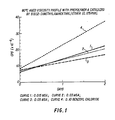
- FIG. 1 shows the stabilizing effect of MSA compared with that of benzoyl chloride in Prepolymer A which was catalyzed using the preferred catalyst of U.S. Patent 4,427,002, bis(2-dimethylaminoethyl)-ether (A-99 from Union Carbide).
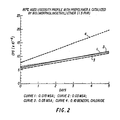
- Figure 2 shows the results with the preferred catalyst of U.S. Patent 4,433,680, bismorpholinodiethylether (BMDEE).
- MSA is particularly desirable as a stabilizing agent, owing to its low toxicity, is in orthopaedic casting or splinting materials prepared from carriers or fabrics saturated with catalyzed polyurethane prepolymer systems, as indicated above.
- suitable polyurethane prepolymer systems, and carriers saturated with the systems are those identified in US Patents 4,411,262 and 4,427,002.
- the MSA stabilizer can be substituted for the mineral acid stabilizer of US Patent 4,427,002.
- the MSA out-performs the benzoyl chloride stabilizer of US Patent 4,433,680.
- MSA as a stabilizer in systems catalyzed with the bis(2,6-dimethylmorpholino)diethylether further improves the stability, without sacrificing fast cure times. This is demonstrated by the various systems based on Prepolymer A described above reflected in Table 1.
- the catalyzed system of this invention provides a means of greatly extending shelf-life, without sacrificing cure time, regardless of the stabilizer employed (if any).
- only a slightly greater amount of the Bis-2,6 catalyst is needed to exhibit identical cure times observed with the BMDEE catalyst, about 1.6 PHR vs. 1.5 PHR for the prior art.
- the shelf life of the system of the invention is indicated to be about 1.5-2 times the prior art.
- the Bis-2,6 catalyst employed herein can be prepared by a number of synthesis routes.
- One method for producing the compound is disclosed in U.S. Patent 4,095,022.
- bis(2,6-dimethylmorpholino)-diethylether can be prepared by the following reaction pathway:
- a scavenger such as a TEA (triethylamine) scavenger, may be added to the reaction mixture to trap HCI evolution.
- the temperature may be taken to the boiling point of the HCI scavenger, with mild refluxing.
- the reaction mixture upon completion of the reaction, divides into a liquid and solid portion.
- the liquid when condensed, may be vacuumed distilled, to give purities in excess of 99% of the desired product.
- a certain amount of the product is lost as a salt, but this salt can be recovered through conventional techniques. Without recovery, yield is 60% theoretical. With recovery, the yield is substantially higher.
- the catalyst was also synthesized by the reaction of diethylene glycol and 2,6-dimethylmorpholine.
- polyurethane prepolymer is a preferred embodiment.
- Alternative embodiments suitable for use in the invention as an orthopaedic casting material are the reaction products described in U.S. Patent 4,411,262.
- Particularly preferred prepolymers for use in orthopedic casting materials are disclosed in U.S. Patent 4,427,002.
- triols are selected from the following commercially available products: LG168 (available from Union Carbide having an OH No. of 176.0), LG56 (from Union Carbide, having an OH No. of 57.4), LHT112 (available from Union Carbide, having a OH No. of 114.4), ET700 (available from Witco and having an OH No. value of 233.6), ET1500 (also available from Witco and having an OH No. of 108.4) and Polyol 34-28 (available from Union Carbide, and having an OH No. of 28.0).
- LG168 available from Union Carbide having an OH No. of 176.0
- LG56 from Union Carbide, having an OH No. of 57.4
- LHT112 available from Union Carbide, having a OH No. of 114.4
- ET700 available from Witco and having an OH No. value of 233.6
- ET1500 also available from Witco and having an OH No. of 108.4
- the catalyst should be present in the prepolymer system in amounts of 0.5%-10%. Particularly preferred amounts range from about 1 %-5%, by weight of the total mixture.
- the catalyst employed herein has additional advantages in the particular application of orthopedic casting materials. Due to its lower volatility than prior art catalysts, the catalyst of this invention results in a less objectionable odor, which is important in a hospital or medical field setting. At the same time, the catalyst is markedly less toxic than previously prepared catalysts, a critical consideration whenever health care fields are considered.
Landscapes
- Chemical & Material Sciences (AREA)
- Health & Medical Sciences (AREA)
- Chemical Kinetics & Catalysis (AREA)
- Medicinal Chemistry (AREA)
- Polymers & Plastics (AREA)
- Organic Chemistry (AREA)
- Epidemiology (AREA)
- Materials Engineering (AREA)
- Engineering & Computer Science (AREA)
- Life Sciences & Earth Sciences (AREA)
- Animal Behavior & Ethology (AREA)
- General Health & Medical Sciences (AREA)
- Public Health (AREA)
- Veterinary Medicine (AREA)
- Polyurethanes Or Polyureas (AREA)
- Materials For Medical Uses (AREA)
- Heterocyclic Carbon Compounds Containing A Hetero Ring Having Nitrogen And Oxygen As The Only Ring Hetero Atoms (AREA)
- Orthopedics, Nursing, And Contraception (AREA)
- Compositions Of Macromolecular Compounds (AREA)
Abstract
Description
- This invention relates to curable orthopaedic polyurethane casting systems, which are generally comprised of a flexible substrate, a polyurethane prepolymer, a catalyst therefore, and optionally a stabilizer for the system. The systems may generally be cured, or polymerized, by treatment with water, such as through exposure to moisture in the air or by immersion in water.
- Polyurethanes have long been known as excellent high polymer plastic which, owing to the wide variety of characteristics that can be introduced into the polymer by control of the chemical nature of the systems, have been employed in extremely varied applications. Among applications that may be mentioned are paints and varnishes, coatings, construction and constructional materials, bearings and friction parts, etc. One particular application that has received increased attention in recent years is the use of polyurethane polymers carried on a flexible, pliable or drapeable fabric which may be arranged about a limb or other portion of a patient's body, and thereafter cured to form a cast or splint. This type of material enjoys a large number of advantages over prior art materials such as Plaster of Paris, in that the material is lightweight, water resistant, may be made porous, is X-ray transparent, etc.
- One exemplary medical cast or splint or similar orthopaedic device is disclosed and claimed in US Patent 4,427,002. The polyurethane system employed therein is comprised of a prepolymer which is the reaction product of an isocyanate and a polyol, together with a catalyst and a stabilizer and an antifoamant. The catalyst is provided to ensure relatively quick curing times upon immersion of the carrier fabric saturated with this system in water, such that the cast "sets", or becomes rigid, in less than about 15 minutes.
- The stabilizer is normally introduced to prevent the catalyst from auto-catalyzing alternative reactions to the polyurethane polymerization. One alternative reaction, is the allophanate reaction which is well known in the art, and together with isocyanate trimerization is primarily responsible for the premature solidification or polymerization of polyurethane systems which are intended to be stored for substantial periods of time prior to use. The use of a catalyst in a polyurethane prepolymer system complicates the problems of storage stability, in that catalyst which catalyze the urethane polymerization reaction also tend to catalyze these alternative reactions. As these reactions proceed in the absence of water, such products generally have no appreciable storage life.
- The stabilizer is introduced to the system in order to bind to the catalyst, or prevent the catalyst from catalyzing the undesirable reaction before the system is immersed in water. The water immersion frees the catalyst to activate the polyurethane polymerization, thus resulting in rapid curing. In the above-referenced US Patent 4,427,002, the stabilizer is preferably identified as a mineral acid.
- Another reference directed to orthopaedic casting materials in US Patent 4,411,262. A wide variety of isocyanate/polyol reaction product systems are disclosed therein, and the reference identifies the use of certain catalysts in conjunction with those prepolymers to improve the cure times secured. The reference does not specifically discuss the use of any stabilizer.
- Another recent document discussing orthopaedic casting materials comprised of a polyurethane prepolymer system-saturated carrier material is US Patent 4,433,680. The particular catalyst employed in the reference is dimorpholinodiethylether. The particular discovery leading to that patent was the observation that the catalyst, which had been used in polyurethane systems for some time, gave both extended shelf life (i.e., did not excessively catalyze the side reactions) while, at the same time, gave excellent cure times upon water immersion (sufficiently catalyzed the water-isocyanate, or urethane, reaction). The reference identifies the use of benzoyl chloride as a stabilizing agent.
Column 3, lines 59-60. - Despite the above-referenced attempts to provide a catalyzed, stabilized polyurethane prepolymer system, there remains a need to find a stabilized system where premature polymerization is reduced or eliminated. Additionally, there continues to be a need for a catalyst and stabilizer system that will provide sufficient polyurethane cure times for the orthopaedic applications discussed above, and yet yield good shelf life and stability in excess of the dimorpholinodiethylether previously employed.
- We have now found that good shelf life can be obtained, together with good setting or drying times. with catalyzed polyurethane prepolymer systems, employing a novel tertiary amine catalyst.
- It is an object of this invention to provide an orthopaedic casting bandage comprising a stabilized, catalyzed polyurethane prepolymer system that is suitable for saturation of the carrier material or substrate upon immersion in water, which system and saturated carrier has excellent stability and shelf life.
- In accordance with the present invention there is provided a water-curable orthopaedic cast bandage which is stable in the absence of water and comprises:
- a flexible substrate, coated with a polyurethane prepolymer system comprising a polyurethane prepolymer and a catalyst characterised in that the catalyst comprises bis(2,6-dimethylmorpholino)diethylether.
- The catalyst is highly selective in favour of the prepolymer/water reaction, yielding even better cure times than those secured in the prior art, while substantially extending shelf life. This shelf life can be even further extended by use of MSA as a stabilizing agent.
- Figure 1 is a graphic comparison of shelf life and stability of stabilized systems employing a bis(2-dimethylaminoethyl)ether catalyst.
- Figure 2 is a similar graph reflecting systems with a bismorpholinodiethylether catalyst.
- Applicants have discovered that when a polyurethane prepolymer is catalyzed with bis(2,6-dimethyl- morpholino)diethylether (hereinafter alternatively referred to as Bis-2,6), shelf is enormously improved, while set or dry times, the time it takes the water-immersed saturated carrier to cure after wrapping about the patient, are as good or better than prior art systems.
- This invention is also premised, in part, on the discovery that methane sulfonic acid, hereinafter referred to as 'MSA', significantly extends the shelf life, or pre-polymerization stability, of polyurethane systems including tertiary amine catalyst. Although the exact nature of the MSA activity is unknown, it is believed that the stabilizer "complexes" with the tertiary amine, forming a salttype compound, which is not free to catalyze the side reactions which results in premature polymerization and short shelf life. This complex, or salt, is broken down upon exposure to water, which exposure liberates the tertiary amine catalyst, and frees it to catalyze the prepolymer-water reaction, or urethane polymerization which is desirable. In almost every application where catalyzed prepolymer systems are employed, it is desirable, from a commercial standpoint if no other, to extent the stability, or shelf life, of the system. The best of Applicants' knowledge, MSA is the best stabilizing agent of broad or universal applicability to tertiary amine catalyzed systems which yields the substantial improvements of shelf life secured herein.
- In most applications, the stabilizer should be present in amounts of 0.01-1.0% by weight based on the prepolymer composition. A particularly preferred amount for use in orthopaedic casting applications is less than 0.3% by weight, preferably 0.01-0.05% by weight.
- Although, as noted, the MSA stabilizer may be added to virtually any polyurethane prepolymer system wherein shelf life or extended stability is desirable, certain specific applications include:
- 1 Urethane Foams
- 2 Coatings
- 3 Moulding
- 4 Encapsulating and Potting Materials, etc.
- In addition to the universal applicability of the MSA as a stabilizer for polyurethane prepolymer system catalyzed with a tertiary amine, the MSA also enjoys other advantages over prior art stabilizers, such as the phosphoric acid and benzoyl chloride mentioned above. In particular, for any given application, much less MSA need be used to secure the same effects as benzoyl chloride. At given levels, the stability achieved through the use of MSA is dramatically improved. The superior qualities of MSA stabilized systems are illustrated by the examples set forth hereinbelow.
- The following procedure was used to prepare PrepolymerA.
- A 1-liter resin kettle equipment with a thermometer, a mechanical stirrer and nitrogen blanketing was charged with 366.6 grams of 143-L (a diisocyanate available from Upjohn, NCO equivalent 143.5 and based primarily on diphenylmethane diisocyanate with polycarbodiimide adducts); 244.2 grams of P-1010 (a polyether diol available from BASF, having a OH equivalent of 500) and 26.8 grams of LG-650 (a polyether triol available from Union Carbide having a OH equivalent of 86.3). The contents were thoroughly mixed and heated toward 80°C, and held at this temperature until the reaction exotherm raised the temperature to about 100°C. The maximum temperature during the reaction was 100°C. Heat was removed, and the mixture was cooled to 80°C. A sample was withdrawn, to determine NCO content. (Percent NCO measured to be 11.8; in theory, 11.6).
- This product was further diluted with 212.5 grams of Isonate 240 (an NCO prepolymer available from Upjohn Co.; NCO equivalent weight 225 based primarily on diphenylmethane diisocyanate and diphenylmethane diisocyanate adducts.). The percent of NCO was measured to be 13.0. The ratio of total NCO to total OH equivalents was 4.06:1.00.
- The polyurethane prepolymer was catalyzed by the prior art and the claimed invention. To the prepolymer was added a surfactant (optional, Dow Corning 200 fluid or Dow Corning Antifoam A at 0.01 to 0.3 PHR), and the indicated amounts of a stabilizer and a catalyst.
- To determine the set time, or cure rate, of the catalyzed resin system, a 4-mil thick resin film of each system was drawn on a clean aluminum surface, and dipped in water (4-mil wet film thickness). A Gardner@ film draw down bar was used to draw the film. The set time was measured at the time of onset of "through cure" of the resin, i.e., a thoroughly polymerized film. The surface cure time, or tack free time, measured the time that takes to form a thin surface film.
- To measure viscosity, an indicator of shelf life stability, the compound neat resins were packaged in aluminum pouches under N2 in a dry box. They were placed in an oven which had been preheated to a constant temperature. The sample was taken out after the given time and allowed to cool to room temperature (75°F). This cooling was allowed to occur overnight. The viscosity of the equilibrated samples was then measured. As indicated in U.S. Patent 4,433,680, this type of accelerated aging is an excellent indicator of shelf stability, a lower viscosity over any equal amount of time of aging indicating superior shelf life. See
column 4, lines 37-51. - The Figure 1 shows the stabilizing effect of MSA compared with that of benzoyl chloride in Prepolymer A which was catalyzed using the preferred catalyst of U.S. Patent 4,427,002, bis(2-dimethylaminoethyl)-ether (A-99 from Union Carbide). Figure 2 shows the results with the preferred catalyst of U.S. Patent 4,433,680, bismorpholinodiethylether (BMDEE).
- One particular application where MSA is particularly desirable as a stabilizing agent, owing to its low toxicity, is in orthopaedic casting or splinting materials prepared from carriers or fabrics saturated with catalyzed polyurethane prepolymer systems, as indicated above. Among suitable polyurethane prepolymer systems, and carriers saturated with the systems, are those identified in US Patents 4,411,262 and 4,427,002. In particular, the MSA stabilizer can be substituted for the mineral acid stabilizer of US Patent 4,427,002. Additionally, the MSA out-performs the benzoyl chloride stabilizer of US Patent 4,433,680.
- However, even employing MSA as a stabilizer, the necessary cure times cannot be achieved and at the same time maintain satisfactory shelf life or stability for orthopaedic applications. Accordingly, it is another aspect of this invention to provide a stabilized, catalyzed system that meets with the unique demands of this particular application.
- Use of MSA as a stabilizer in systems catalyzed with the bis(2,6-dimethylmorpholino)diethylether further improves the stability, without sacrificing fast cure times. This is demonstrated by the various systems based on Prepolymer A described above reflected in Table 1.

- As reflected in the table, the superior properties of the system employing the particular substituted dimprpholinodiethylether employed herein, quick curing time with extended shelf life, are quite remarkable as compared with the base, unsubstituted compound (BMDEE).
- Thus, the catalyzed system of this invention provides a means of greatly extending shelf-life, without sacrificing cure time, regardless of the stabilizer employed (if any). In fact, only a slightly greater amount of the Bis-2,6 catalyst is needed to exhibit identical cure times observed with the BMDEE catalyst, about 1.6 PHR vs. 1.5 PHR for the prior art. The shelf life of the system of the invention is indicated to be about 1.5-2 times the prior art.
- The Bis-2,6 catalyst employed herein can be prepared by a number of synthesis routes. One method for producing the compound is disclosed in U.S. Patent 4,095,022. Alternatively, bis(2,6-dimethylmorpholino)-diethylether can be prepared by the following reaction pathway:

- bis(2,6-dimethylmorpholinoethyl)ether

- To force the reaction to completion, a slight excess of the morpholine compound may be added, such as about 2.4:1.0. A scavenger, such as a TEA (triethylamine) scavenger, may be added to the reaction mixture to trap HCI evolution. The temperature may be taken to the boiling point of the HCI scavenger, with mild refluxing.
- The reaction mixture, upon completion of the reaction, divides into a liquid and solid portion. The liquid, when condensed, may be vacuumed distilled, to give purities in excess of 99% of the desired product. A certain amount of the product is lost as a salt, but this salt can be recovered through conventional techniques. Without recovery, yield is 60% theoretical. With recovery, the yield is substantially higher.
- The catalyst was also synthesized by the reaction of diethylene glycol and 2,6-dimethylmorpholine.

- bis(2,6 - dimethylmorpholinoethyl)ether

- A study of the reaction product indicates that the catalyst contains a mixture of cis and trans substituted morpholine ring structures, as demonstrated by gas chromatography analysis.
- The above-described polyurethane prepolymer is a preferred embodiment. Alternative embodiments suitable for use in the invention as an orthopaedic casting material are the reaction products described in U.S. Patent 4,411,262. Particularly preferred prepolymers for use in orthopedic casting materials are disclosed in U.S. Patent 4,427,002. Of particular importance are prepolymers based on a diphenylmethane diisocyanate, and a polyol mixture of diols and triols; the diols being selected from the following commercially available compounds: PPG1025 (available from Union Carbide and having an OH No. of 111.4), PPG2025 (also available from Union Carbide and having an OH No. of 56.5), ED1000 (available from Witco, having an OH No. of 111.3), Polyol 24-32 (available from Union Carbide having an OH No. of 32.0); and the triols are selected from the following commercially available products: LG168 (available from Union Carbide having an OH No. of 176.0), LG56 (from Union Carbide, having an OH No. of 57.4), LHT112 (available from Union Carbide, having a OH No. of 114.4), ET700 (available from Witco and having an OH No. value of 233.6), ET1500 (also available from Witco and having an OH No. of 108.4) and Polyol 34-28 (available from Union Carbide, and having an OH No. of 28.0).
- Based on the prepolymer employed, the catalyst should be present in the prepolymer system in amounts of 0.5%-10%. Particularly preferred amounts range from about 1 %-5%, by weight of the total mixture.
- In addition to its excellent set times, and dramatically improved shelf life, the catalyst employed herein has additional advantages in the particular application of orthopedic casting materials. Due to its lower volatility than prior art catalysts, the catalyst of this invention results in a less objectionable odor, which is important in a hospital or medical field setting. At the same time, the catalyst is markedly less toxic than previously prepared catalysts, a critical consideration whenever health care fields are considered.
- The invention herein has been disclosed with reference to particular chemical systems, products and materials. In particular, the universally applicable stabilizer of the invention, methane sulfonic acid has been identified in particular catalyzed, prepolymer systems. These systems should not be taken to be limiting, and the stabilizer has utility in polyurethane systems in general. Accordingly, variations of the specific examples set forth herein will occur to those of ordinary skill in the art without the exercise of inventive faculty.
- Similarly, the orthopedic casting materal claimed herein has been described with reference to particular prepolymer systems and particular carriers. Substitution of a web or carrier of different materials or construction, as long as the material remains suitable for draping and curing about a limb or other portion of a patient's body to be immobilized, do not take the resulting product outside the scope of this invention. Additionally, other prepolymer systems, which may cure more slowly or more rapidly than those identified herein are suitable for use, provided the set times are not intolerably long. Of course, variations in the amounts included, and methods of production, will occur to those of ordinary skill in the art, without the exercise of inventive faculty. All these variations remain within the scope of the invention, as claimed below.
Claims (8)
Priority Applications (1)
| Application Number | Priority Date | Filing Date | Title |
|---|---|---|---|
| AT85904341T ATE58287T1 (en) | 1984-08-21 | 1985-08-21 | STABILIZED, CATALYzed, WATER-ACTIVATED POLYURETHANE SYSTEMS. |
Applications Claiming Priority (2)
| Application Number | Priority Date | Filing Date | Title |
|---|---|---|---|
| US06/642,773 US4574793A (en) | 1984-08-21 | 1984-08-21 | Stabilized, catalyzed water activated polyurethane systems |
| US642773 | 1996-05-03 |
Publications (3)
| Publication Number | Publication Date |
|---|---|
| EP0192701A1 EP0192701A1 (en) | 1986-09-03 |
| EP0192701A4 EP0192701A4 (en) | 1987-01-20 |
| EP0192701B1 true EP0192701B1 (en) | 1990-11-14 |
Family
ID=24577948
Family Applications (1)
| Application Number | Title | Priority Date | Filing Date |
|---|---|---|---|
| EP85904341A Expired EP0192701B1 (en) | 1984-08-21 | 1985-08-21 | Stabilized, catalyzed water activated polyurethane systems |
Country Status (6)
| Country | Link |
|---|---|
| US (1) | US4574793A (en) |
| EP (1) | EP0192701B1 (en) |
| JP (1) | JP2672086B2 (en) |
| AU (1) | AU589154B2 (en) |
| DE (1) | DE3580584D1 (en) |
| WO (1) | WO1986001397A1 (en) |
Families Citing this family (43)
| Publication number | Priority date | Publication date | Assignee | Title |
|---|---|---|---|---|
| US4839456A (en) * | 1983-07-12 | 1989-06-13 | Keith Kent | Self-adhesive, drag reducing polymeric coating |
| DE3326566A1 (en) * | 1983-07-22 | 1985-01-31 | Bayer Ag, 5090 Leverkusen | REVERSIBLE BLOCKED CATALYSTS CONTAINING POLYISOCYANATE PREPARATIONS, A METHOD FOR THE PRODUCTION THEREOF, THEIR USE FOR THE PRODUCTION OF POLYURETHANE PLASTICS AND ATTACHMENT PRODUCTS OF SULFONYLINE ANALYZINE ANALYZER TIN (IV) CARBOXYLATE STRUCTURE |
| US4705840A (en) * | 1985-10-04 | 1987-11-10 | Minnesota Mining And Manufacturing Company | Catalysts for the curing of a water-curable isocyanate-functional prepolymer |
| US4871845A (en) * | 1985-10-04 | 1989-10-03 | Minnesota Mining And Manufacturing Company | Catalysts for the curing of a water-curable isocyanate-functional prepolymer |
| GB8624645D0 (en) * | 1986-10-14 | 1986-11-19 | Smith & Nephew Ass | Bandages |
| US4758648A (en) * | 1986-10-20 | 1988-07-19 | Essex Specialty Products, Inc. | High speed cure sealant |
| US4934356A (en) * | 1987-01-15 | 1990-06-19 | Carapace Incorporated | Water-activated orthopedic cast composition having colorant |
| EP0295031A3 (en) * | 1987-06-12 | 1991-05-08 | SMITH & NEPHEW plc | Orthopaedic splinting material |
| US4962762A (en) * | 1989-02-21 | 1990-10-16 | Beekil Steven L | Modular self-contained orthotic device |
| JPH078982B2 (en) * | 1989-05-25 | 1995-02-01 | サンスター技研株式会社 | Moisture curable sealant composition |
| DE3918177A1 (en) * | 1989-06-03 | 1990-12-06 | Bayer Ag | SUPPORT WITH STRICTLY REDUCED FOAMING |
| CN1053891A (en) * | 1990-09-15 | 1991-08-21 | 李海晟 | Stably catalyzed hydro-active polyurethane bandage |
| US5088484A (en) * | 1990-10-05 | 1992-02-18 | Carolina Narrow Fabric Company | Orthopedic casting bandage |
| US5646229A (en) * | 1991-04-08 | 1997-07-08 | Sekisui Kagaku Kogyo Kabushiki Kaisha | Compositions for moisture curing hot melt adhesives |
| US5268470A (en) * | 1991-07-12 | 1993-12-07 | Buckman Laboratories Internation, Inc. | Diamine compounds, method of making same, method of use of same and intermediates |
| JP3328307B2 (en) * | 1991-11-28 | 2002-09-24 | ユニチカ株式会社 | Orthopedic sheet composition |
| CN1051717C (en) * | 1992-08-14 | 2000-04-26 | 李海晟 | Polyurethane orthopaedic bandage material and its preparation method |
| US6159877A (en) * | 1993-01-25 | 2000-12-12 | 3M Innovative Properties Company | Fabric backing for orthopedic support materials |
| US5512354A (en) * | 1993-01-25 | 1996-04-30 | Minnesota Mining And Manufacturing Company | Fabric backing for orthopedic support materials |
| JP2951506B2 (en) * | 1993-06-22 | 1999-09-20 | サンアプロ株式会社 | Polyurethane resin composition and surgical casting tape |
| JPH07163649A (en) * | 1993-11-10 | 1995-06-27 | Arukea Kk | Water-curable fixing material |
| AU667448B2 (en) * | 1994-02-22 | 1996-03-21 | National Starch And Chemical Investment Holding Corporation | Catalyst for reactive hot melt adhesives |
| JP3497559B2 (en) * | 1994-04-20 | 2004-02-16 | アルケア株式会社 | Orthopedic orthosis |
| US5616625A (en) * | 1995-02-17 | 1997-04-01 | National Starch And Chemical Investment Holding Corporation | Reactive hot melt foam |
| DE69612781T2 (en) * | 1995-03-31 | 2001-10-04 | Huntsman Corp., Austin | Dimorpholinodiethyl ether with improved isocyanate stability |
| US5849864A (en) * | 1996-08-01 | 1998-12-15 | Ashland Chemical Company | Sulfonic acid blocked metal catalysts for amine trigger urethane reactions |
| US5723534A (en) * | 1996-10-11 | 1998-03-03 | Polyfoam Products, Inc. | Two part polyurethane-based adhesive system |
| KR100238101B1 (en) * | 1996-10-31 | 2000-02-01 | 김윤 | Process for manufacturing casting tape |
| US20040039146A1 (en) * | 1998-03-16 | 2004-02-26 | Trent Shidaker | Moisture resistant polyurethane prepolymers |
| KR100266962B1 (en) * | 1998-03-23 | 2006-03-23 | 우삼의료기 주식회사 | Orthopedic casting article |
| DE19838168A1 (en) * | 1998-08-21 | 2000-02-24 | Basf Ag | Mixture containing isocyanates and organic and / or inorganic acids and / or acid derivatives |
| KR20010001279A (en) * | 1999-06-03 | 2001-01-05 | 김형순 | Orthopedic Casting Tape and Method of Preparing the Same |
| US6695801B1 (en) | 2001-12-14 | 2004-02-24 | Russ Toronto | Form-in-place foam orthopedic splint system |
| ES2259745T3 (en) * | 2002-09-27 | 2006-10-16 | Dainippon Ink And Chemicals, Inc. | COMPOSITION OF CURRENT THERMOFUSIFLE URETHANE RESIN FOR MOISTURE AND SOLVENT EXEMPT. |
| JP4673814B2 (en) * | 2006-09-21 | 2011-04-20 | 三井化学株式会社 | Polythiourethane polymerization catalyst, polymerizable composition containing the same, optical material obtained therefrom, and method for producing the same |
| US20110081492A1 (en) * | 2009-10-05 | 2011-04-07 | Michael Michalewich | Methods of curing polyurethane prepolymers for golf balls |
| US20110081490A1 (en) * | 2009-10-05 | 2011-04-07 | Brian Comeau | Methods of curing polyurea prepolymers for golf balls |
| US20110081497A1 (en) * | 2009-10-05 | 2011-04-07 | Brian Comeau | Methods of curing polyurea prepolymers for golf balls |
| BR112013012443A2 (en) * | 2010-11-19 | 2016-08-30 | Hüttenes Albertus Chemische Werke Gmbh | polyisocyanate component for a casting material binder system, solution containing polyisocyanate, use of a polyisocyanate component or a solution containing polyisocyanate, casting material binder casting system, two component binder system for preparation of a casting polyurethane resin, use of a polyisocyanate component, mixing for the preparation of a casting core or mold, casting or casting core, method for preparing a casting core or mold and use of an acid sulfonic of the general formula r-so²-oh |
| EP2789320B1 (en) | 2013-04-12 | 2018-05-23 | 3M Innovative Properties Company | Knit fabric for orthopedic support material |
| DE102015201614A1 (en) * | 2014-09-10 | 2016-03-10 | Hüttenes-Albertus Chemische Werke GmbH | Two-component binder system for the polyurethane cold box process |
| DE102016122620B4 (en) | 2016-11-23 | 2019-08-14 | Lisa Dräxlmaier GmbH | Use of an aqueous solution for accelerating the curing of polyurethane resin compositions, and methods for accelerated curing of polyurethane resin compositions |
| CN116783257A (en) | 2020-12-16 | 2023-09-19 | 汉高股份有限及两合公司 | Liquid moisture-curable polyurethane with improved adhesion to aluminum |
Family Cites Families (10)
| Publication number | Priority date | Publication date | Assignee | Title |
|---|---|---|---|---|
| US3074911A (en) * | 1957-12-05 | 1963-01-22 | Du Pont | Polyurethane resin coating composition containing carbamyl chloride stabilizer |
| US3645925A (en) * | 1970-07-31 | 1972-02-29 | Jefferson Chem Co Inc | 4 4'-dimorpholinodiethyl ether catalyst for polyurethane preparation |
| US3789045A (en) * | 1972-11-13 | 1974-01-29 | Gen Mills Chem Inc | Reaction of polyisocyanates with compounds containing blocked amine groups in the presence of acids or metal salts of acids |
| AT337991B (en) * | 1975-04-15 | 1977-07-25 | Sika Ag | METHOD FOR THE CATALYZED MANUFACTURING OF POLYURETHANE PREPOLYMERS |
| DE2559255C2 (en) * | 1975-12-31 | 1985-03-28 | Bayer Ag, 5090 Leverkusen | Process for the production of inorganic-organic plastics |
| US4048107A (en) * | 1976-01-12 | 1977-09-13 | Olin Corporation | Polyurethane foam preparation using amio acetal catalyst |
| JPS5560554A (en) * | 1978-10-31 | 1980-05-07 | Sanyo Chem Ind Ltd | Stable polyurethane solution |
| JPS5580455A (en) * | 1978-12-11 | 1980-06-17 | Sanyo Chem Ind Ltd | Stable polyurethane solution |
| US4427002A (en) * | 1981-11-18 | 1984-01-24 | Hexcel Corporation | Cold water curable orthopedic cast |
| US4433680A (en) * | 1982-02-10 | 1984-02-28 | Johnson & Johnson Products, Inc. | Polyurethane casting material |
-
1984
- 1984-08-21 US US06/642,773 patent/US4574793A/en not_active Expired - Fee Related
-
1985
- 1985-08-21 WO PCT/US1985/001577 patent/WO1986001397A1/en not_active Ceased
- 1985-08-21 DE DE8585904341T patent/DE3580584D1/en not_active Expired - Lifetime
- 1985-08-21 EP EP85904341A patent/EP0192701B1/en not_active Expired
-
1986
- 1986-01-22 AU AU52607/86A patent/AU589154B2/en not_active Ceased
- 1986-01-24 JP JP61013573A patent/JP2672086B2/en not_active Expired - Lifetime
Also Published As
| Publication number | Publication date |
|---|---|
| AU589154B2 (en) | 1989-10-05 |
| EP0192701A4 (en) | 1987-01-20 |
| JPS62172008A (en) | 1987-07-29 |
| JP2672086B2 (en) | 1997-11-05 |
| AU5260786A (en) | 1987-07-23 |
| US4574793A (en) | 1986-03-11 |
| WO1986001397A1 (en) | 1986-03-13 |
| DE3580584D1 (en) | 1990-12-20 |
| EP0192701A1 (en) | 1986-09-03 |
Similar Documents
| Publication | Publication Date | Title |
|---|---|---|
| US4574793A (en) | Stabilized, catalyzed water activated polyurethane systems | |
| EP0086621B1 (en) | Polyurethane casting material | |
| JP3974942B2 (en) | Hydrophilic and adhesive polyurethane gel composition | |
| KR100219421B1 (en) | Orthopaedic casting polyurethane foam and preparing method thereof | |
| JPS5858045A (en) | Medical foamable injection molding substance | |
| US4771082A (en) | Polyurethane foam composition for immobilization in traumatology | |
| JPH08154966A (en) | Polyurethane bandage material and method for preparing same | |
| CA1306645C (en) | Fast-setting casting tape | |
| PT96238B (en) | A process for the preparation of an orthopedic material for molding based on a polyisocyanate prepolymer having a reduced adhesion and a reduced slippage. | |
| US5195946A (en) | Stable catalytic and aqua-activated polyurethane casting bandage | |
| CA1295768C (en) | Stabilized, catalyzed water activated polyurethane systems | |
| EP0414701B1 (en) | Orthopaedic material of isocyanate resin | |
| US6353077B2 (en) | Curable compositions | |
| KR100654425B1 (en) | Hydrocurable polyurethane resin composition and semi-cast casting tape using the same | |
| JPS58149912A (en) | Manufacture of siloxylated metal-containing catalyst and use for manufacture of urethane foam and elastomer | |
| JPH03215268A (en) | Fixing bandage largely reduced in expanding ability | |
| RU2069219C1 (en) | Polyurethane composition for dressing material | |
| US3642044A (en) | The production of polyurethanes employing organopolymercurial catalysts | |
| WO1995026995A1 (en) | Casting material | |
| KR0167828B1 (en) | Moisture Curable Polyurethane Resin Composition | |
| JPH10504855A (en) | Bonded catalyst | |
| JP3014786B2 (en) | Hardener for hydraulic cast | |
| JPS62223213A (en) | Moisture-curable urethane prepolymer | |
| JPH02102215A (en) | Moisture-curable urethane prepolymer composition and moisture-curable fixing material for medical use | |
| JPH02182716A (en) | Manufacture of polyurethane, and substituted triamino-iminophosphorane |
Legal Events
| Date | Code | Title | Description |
|---|---|---|---|
| PUAI | Public reference made under article 153(3) epc to a published international application that has entered the european phase |
Free format text: ORIGINAL CODE: 0009012 |
|
| 17P | Request for examination filed |
Effective date: 19860225 |
|
| AK | Designated contracting states |
Kind code of ref document: A1 Designated state(s): AT BE CH DE FR GB IT LI LU NL SE |
|
| A4 | Supplementary search report drawn up and despatched |
Effective date: 19870120 |
|
| RAP1 | Party data changed (applicant data changed or rights of an application transferred) |
Owner name: SMITH & NEPHEW CASTING INC. |
|
| 17Q | First examination report despatched |
Effective date: 19880923 |
|
| ITF | It: translation for a ep patent filed | ||
| GRAA | (expected) grant |
Free format text: ORIGINAL CODE: 0009210 |
|
| AK | Designated contracting states |
Kind code of ref document: B1 Designated state(s): AT BE CH DE FR GB IT LI LU NL SE |
|
| REF | Corresponds to: |
Ref document number: 58287 Country of ref document: AT Date of ref document: 19901115 Kind code of ref document: T |
|
| REF | Corresponds to: |
Ref document number: 3580584 Country of ref document: DE Date of ref document: 19901220 |
|
| ET | Fr: translation filed | ||
| ITTA | It: last paid annual fee | ||
| PLBE | No opposition filed within time limit |
Free format text: ORIGINAL CODE: 0009261 |
|
| STAA | Information on the status of an ep patent application or granted ep patent |
Free format text: STATUS: NO OPPOSITION FILED WITHIN TIME LIMIT |
|
| 26N | No opposition filed | ||
| EPTA | Lu: last paid annual fee | ||
| EAL | Se: european patent in force in sweden |
Ref document number: 85904341.6 |
|
| PGFP | Annual fee paid to national office [announced via postgrant information from national office to epo] |
Ref country code: SE Payment date: 19990804 Year of fee payment: 15 |
|
| PGFP | Annual fee paid to national office [announced via postgrant information from national office to epo] |
Ref country code: FR Payment date: 19990810 Year of fee payment: 15 |
|
| PGFP | Annual fee paid to national office [announced via postgrant information from national office to epo] |
Ref country code: AT Payment date: 19990812 Year of fee payment: 15 |
|
| PGFP | Annual fee paid to national office [announced via postgrant information from national office to epo] |
Ref country code: GB Payment date: 19990818 Year of fee payment: 15 |
|
| PGFP | Annual fee paid to national office [announced via postgrant information from national office to epo] |
Ref country code: DE Payment date: 19990823 Year of fee payment: 15 |
|
| PGFP | Annual fee paid to national office [announced via postgrant information from national office to epo] |
Ref country code: LU Payment date: 19990827 Year of fee payment: 15 |
|
| PGFP | Annual fee paid to national office [announced via postgrant information from national office to epo] |
Ref country code: NL Payment date: 19990830 Year of fee payment: 15 |
|
| PGFP | Annual fee paid to national office [announced via postgrant information from national office to epo] |
Ref country code: CH Payment date: 19990930 Year of fee payment: 15 |
|
| PGFP | Annual fee paid to national office [announced via postgrant information from national office to epo] |
Ref country code: BE Payment date: 19991013 Year of fee payment: 15 |
|
| PG25 | Lapsed in a contracting state [announced via postgrant information from national office to epo] |
Ref country code: LU Free format text: LAPSE BECAUSE OF NON-PAYMENT OF DUE FEES Effective date: 20000821 Ref country code: GB Free format text: LAPSE BECAUSE OF NON-PAYMENT OF DUE FEES Effective date: 20000821 Ref country code: AT Free format text: LAPSE BECAUSE OF NON-PAYMENT OF DUE FEES Effective date: 20000821 |
|
| PG25 | Lapsed in a contracting state [announced via postgrant information from national office to epo] |
Ref country code: SE Free format text: LAPSE BECAUSE OF NON-PAYMENT OF DUE FEES Effective date: 20000822 |
|
| PG25 | Lapsed in a contracting state [announced via postgrant information from national office to epo] |
Ref country code: LI Free format text: LAPSE BECAUSE OF NON-PAYMENT OF DUE FEES Effective date: 20000831 Ref country code: CH Free format text: LAPSE BECAUSE OF NON-PAYMENT OF DUE FEES Effective date: 20000831 Ref country code: BE Free format text: LAPSE BECAUSE OF NON-PAYMENT OF DUE FEES Effective date: 20000831 |
|
| BERE | Be: lapsed |
Owner name: SMITH & NEPHEW CASTING INC. Effective date: 20000831 |
|
| PG25 | Lapsed in a contracting state [announced via postgrant information from national office to epo] |
Ref country code: NL Free format text: LAPSE BECAUSE OF NON-PAYMENT OF DUE FEES Effective date: 20010301 |
|
| GBPC | Gb: european patent ceased through non-payment of renewal fee |
Effective date: 20000821 |
|
| REG | Reference to a national code |
Ref country code: CH Ref legal event code: PL |
|
| EUG | Se: european patent has lapsed |
Ref document number: 85904341.6 |
|
| PG25 | Lapsed in a contracting state [announced via postgrant information from national office to epo] |
Ref country code: FR Free format text: LAPSE BECAUSE OF NON-PAYMENT OF DUE FEES Effective date: 20010430 |
|
| NLV4 | Nl: lapsed or anulled due to non-payment of the annual fee |
Effective date: 20010301 |
|
| PG25 | Lapsed in a contracting state [announced via postgrant information from national office to epo] |
Ref country code: DE Free format text: LAPSE BECAUSE OF NON-PAYMENT OF DUE FEES Effective date: 20010501 |
|
| REG | Reference to a national code |
Ref country code: FR Ref legal event code: ST |