EP0184576B1 - Promoters for the expression of foreign genes in yeast, plasmids comprising them, and uses thereof for the production of polypeptides - Google Patents
Promoters for the expression of foreign genes in yeast, plasmids comprising them, and uses thereof for the production of polypeptides Download PDFInfo
- Publication number
- EP0184576B1 EP0184576B1 EP85870171A EP85870171A EP0184576B1 EP 0184576 B1 EP0184576 B1 EP 0184576B1 EP 85870171 A EP85870171 A EP 85870171A EP 85870171 A EP85870171 A EP 85870171A EP 0184576 B1 EP0184576 B1 EP 0184576B1
- Authority
- EP
- European Patent Office
- Prior art keywords
- plasmid
- yeast
- process according
- promoter
- site
- Prior art date
- Legal status (The legal status is an assumption and is not a legal conclusion. Google has not performed a legal analysis and makes no representation as to the accuracy of the status listed.)
- Expired - Lifetime
Links
- 0 C*(CC=C=N)=*=CCC(*)C=C Chemical compound C*(CC=C=N)=*=CCC(*)C=C 0.000 description 1
Images





Classifications
-
- C—CHEMISTRY; METALLURGY
- C12—BIOCHEMISTRY; BEER; SPIRITS; WINE; VINEGAR; MICROBIOLOGY; ENZYMOLOGY; MUTATION OR GENETIC ENGINEERING
- C12N—MICROORGANISMS OR ENZYMES; COMPOSITIONS THEREOF; PROPAGATING, PRESERVING, OR MAINTAINING MICROORGANISMS; MUTATION OR GENETIC ENGINEERING; CULTURE MEDIA
- C12N9/00—Enzymes; Proenzymes; Compositions thereof; Processes for preparing, activating, inhibiting, separating or purifying enzymes
- C12N9/14—Hydrolases (3)
- C12N9/24—Hydrolases (3) acting on glycosyl compounds (3.2)
- C12N9/2402—Hydrolases (3) acting on glycosyl compounds (3.2) hydrolysing O- and S- glycosyl compounds (3.2.1)
- C12N9/2405—Glucanases
- C12N9/2408—Glucanases acting on alpha -1,4-glucosidic bonds
- C12N9/2411—Amylases
- C12N9/2414—Alpha-amylase (3.2.1.1.)
- C12N9/2417—Alpha-amylase (3.2.1.1.) from microbiological source
-
- C—CHEMISTRY; METALLURGY
- C12—BIOCHEMISTRY; BEER; SPIRITS; WINE; VINEGAR; MICROBIOLOGY; ENZYMOLOGY; MUTATION OR GENETIC ENGINEERING
- C12N—MICROORGANISMS OR ENZYMES; COMPOSITIONS THEREOF; PROPAGATING, PRESERVING, OR MAINTAINING MICROORGANISMS; MUTATION OR GENETIC ENGINEERING; CULTURE MEDIA
- C12N15/00—Mutation or genetic engineering; DNA or RNA concerning genetic engineering, vectors, e.g. plasmids, or their isolation, preparation or purification; Use of hosts therefor
- C12N15/09—Recombinant DNA-technology
- C12N15/63—Introduction of foreign genetic material using vectors; Vectors; Use of hosts therefor; Regulation of expression
- C12N15/79—Vectors or expression systems specially adapted for eukaryotic hosts
- C12N15/80—Vectors or expression systems specially adapted for eukaryotic hosts for fungi
- C12N15/81—Vectors or expression systems specially adapted for eukaryotic hosts for fungi for yeasts
-
- C—CHEMISTRY; METALLURGY
- C12—BIOCHEMISTRY; BEER; SPIRITS; WINE; VINEGAR; MICROBIOLOGY; ENZYMOLOGY; MUTATION OR GENETIC ENGINEERING
- C12N—MICROORGANISMS OR ENZYMES; COMPOSITIONS THEREOF; PROPAGATING, PRESERVING, OR MAINTAINING MICROORGANISMS; MUTATION OR GENETIC ENGINEERING; CULTURE MEDIA
- C12N9/00—Enzymes; Proenzymes; Compositions thereof; Processes for preparing, activating, inhibiting, separating or purifying enzymes
- C12N9/14—Hydrolases (3)
- C12N9/24—Hydrolases (3) acting on glycosyl compounds (3.2)
- C12N9/2402—Hydrolases (3) acting on glycosyl compounds (3.2) hydrolysing O- and S- glycosyl compounds (3.2.1)
- C12N9/2462—Lysozyme (3.2.1.17)
Definitions
- yeast promoter which is recognized by the yeast RNA polymerase II and causes the synthesis of the corresponding RNA messenger.
Landscapes
- Life Sciences & Earth Sciences (AREA)
- Health & Medical Sciences (AREA)
- Engineering & Computer Science (AREA)
- Chemical & Material Sciences (AREA)
- Genetics & Genomics (AREA)
- Zoology (AREA)
- Bioinformatics & Cheminformatics (AREA)
- Wood Science & Technology (AREA)
- Organic Chemistry (AREA)
- Biomedical Technology (AREA)
- Biotechnology (AREA)
- General Engineering & Computer Science (AREA)
- Molecular Biology (AREA)
- Microbiology (AREA)
- Biochemistry (AREA)
- General Health & Medical Sciences (AREA)
- Medicinal Chemistry (AREA)
- Mycology (AREA)
- Physics & Mathematics (AREA)
- Biophysics (AREA)
- Plant Pathology (AREA)
- Micro-Organisms Or Cultivation Processes Thereof (AREA)
- Preparation Of Compounds By Using Micro-Organisms (AREA)
- Enzymes And Modification Thereof (AREA)
Abstract
Description
- The present invention relates to fragments of yeast DNA comprising a promoter capable of ensuring the expression in yeast of genes coding for polypeptides, generally for heterologous polypeptides. It also relates to vector plasmids comprising said fragments and to yeasts transformed by said plasmids.
- New genetic engineering techniques permit the expression in various organisms of genes coding for foreign proteins. One example of this, among many others, is the synthesis of human interferons by the yeast Saccharomyces cerevisiae (R. A. Hitzman et al., Science 219, 1983, 620).
- A prerequisite of the expression of a gene in yeast is the location, upstream thereof, of a yeast promoter which is recognized by the yeast RNA polymerase II and causes the synthesis of the corresponding RNA messenger. Several such yeast promoters have already been described. In many cases, however the expression levels obtained were low and unpractical for industrial applications, especially when said promoters were used for the expression of foreign genes (T. Atkinson et al., Biochemical Soc. Trans. 12, 1984, 215).
- It is therefore essential to dispose of efficient promoters in order to genetically manipulate yeasts in such a way that they can be used for practical purposes.
- An object of the present invention is to provide such promoters. Another object is to provide vector plasmids wherein said promoters are fused with heterologous genes so as to ensure the expression in yeast of said heterologous genes into the corresponding polypeptides. The yeasts transformed by said plasmids are a further object of the invention, as are the new polypeptides produced by said yeasts. Still another object is to provide a process for producing polypeptides by growing said transformed yeasts.
- These various objects are accomplished by the use as a base promoter of a fragment of yeast DNA having the following nucleotide sequence:as well as of the mutants and sub-fragments thereof having retained the promoter function.

- In the detailed description of the invention given hereafter and in the examples, reference will be made to the appended drawings in which
- Figure 1 represents the construction of plasmid YEpZ36 used as probe for isolating yeast promoters. This construction is obtained by ligation of a fragment from plasmid pJDB207 containing the LEU2 marker gene and the 2-micron yeast plasmid replication origin with a fragment from plasmid pLG400 containing the lacZ gene coding for the Escherichia coli β-galactosidase.
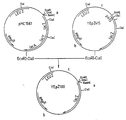
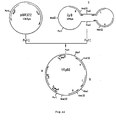
- Figure 2 represents the construction of plasmid YEpZ415 bearing the base promoter of the invention (p415) by ligation of four fragments from plasmids YEpZ36, YEpZ414 and pJDB207.
- Figure 3 shows the sequence of promoter p415 comprising the yeast sequence located between sites EcoRl and Mbol, and wherein appear several elements currently found in other strong yeast promoters: the TATA box, the CT block, closely, followed by the CAAGC sequence.
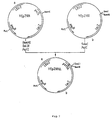
- Figures 4 and 5 respectively represent the construction of plasmids YEpZ100 and pJ04 which in their turn are used, as shown by Figure 6, for the construction of plasmid YEpZ101 comprising a variant of promoter p415 associated to a Hindlll - BamHl fragment.
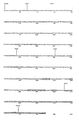
- Figure 7 represents the construction, from plasmids YEpZ100 and YEpZ101, of plasmids YEpZΔ comprising several variants of promoter p415 obtained by deletions carried out with Ba131 enzyme. The variants thus obtained (p415Δ2, p415Δ4 and p415Δ5) are shown in Figure 8.
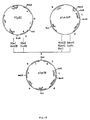
- Figure 9 represents the construction of vectors plys△29, plys△49 and plys△59 carrying chicken lysozyme cDNA. This construction was made by univocal ligation of 5 purified fragments from plasmids YEpZ415, YEpZ101Δ, plysA9, pK01 and pJDB207.
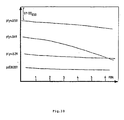
- Figure 10 shows that all extracts of yeasts transformed by plasmids plys△49 and plys△59 are capable of lysing E. coli cells treated with EDTA to render them sensitive to lysozyme action.
- Figure 11 represents the construction of plasmid YEpB2 by ligation of the fragments obtained by the action of Pstl restriction enzyme on plasmid pBR322 and on the 2-micron yeast endogenous plasmid.
- Figure 12 represents the construction of the expression vector plys50 by univocal ligation of five purified fragments from plasmids YEpB2 and plysΔ9.
- The isolation of the base promoter of the invention, hereinafter called p415, used known methods. It relied on the observation (L. Guarente, Meth. Enzymol. 101, 1983, 181; M. J. Casadaban et al., ibid. 100, 1983, 293) that the gene lacZ coding for the (β-galactosidase of E. coli can, under certain conditions, be expressed in the yeast S. cerevisiae and that this expression can be monitored by the blue colour of the yeast colonies when grown on the chromogenic indicator X-gal. This blue colour is due to hydrolytic cleavage of the indicator by (β-galactosidase, and the rate of this cleavage depends on the amount of (β-galactosidase synthesized.
- Therefore, the blue colour of the colony depends on the efficiency of (β-galactosidase expression, which in turn depends, among other things, on the force of the yeast promoter used. Thus among a selection of yeast promoters, the strongest may give the blue colour more rapidly and this can be verified quantatitively by enzyme assay of (△-galactosidase activity.
- A prerequisite for the isolation of yeast promoters according to the above method is a vector capable of replication and selection in yeast, that contains the lacZ gene of E. coli but does not express this in yeast due to the absence of a suitable promoter. Said vector further has to fulfill the following conditions. It should be capable of replicating in the yeast by means of a sequence recognized by the replication machinery of the yeast. It should be capable of selection and maintenance in yeast due to the presence of a marker gene. It should be potentially capable of expressing the lacZ gene in yeast when given a suitable promoter. It should comprise a unique restriction site upstream of this gene, for the insertion of small fragments of yeast DNA likely to comprise a promoter.
- The construction of such a vector is outlined in Figure 1. Two known plasmids, pJDB207 (J. D. Beggs et al., Nature 283, 1980, 835) and pLG400 (L. Guarente et al., Cell 20, 1980, 543), were combined using classical techniques. This combination resulted in plasmid YEpZ36 that is capable of replication in S. cerevisiae by virtue of the replication origin of the 2-micron endogenous plasmid from pJDB207. It also carries the LEU2 marker gene which makes it capable of selection and maintenance in yeast having a leu2 mutation. It has a unique BamHl site where small fragments generated by the Mbol restriction enzyme can be inserted.
- Isolation of the promoter of the present invention with the hereabove described promoter probe vector was carried out as follows. DNA fragments resulting from a partial digest, with the Mbol restriction enzyme of total DNA of S. cerevisiae KL14-4A (G. Foge et al., J. Mol. Biol. 99, 1975, 203) were inserted into the BamHl site of the hereabove described plasmid YEpZ36, and the recombinant DNA thus obtained was used to transform the leu2- strain of S. cerevisiae GRF18.
- The transformed yeast colonies were screened on X-gal medium for (β-galactosidase production. Several clones appeared positive upon transfer for X-gal medium, and the most active one, as determined by (β-galactosidase assays, was selected for the isolation of the promoter of the invention.
- Plasmid DNA for this clone isolated after transfer to E. coli, showed a 980 bp insert, that contained an EcoRl site 630 bp before the (β-galatosidase gene. The promoter ensuring transcription of the (β-galactosidase was found to be associated to this 630 bp fragment, as replacement of the 350 bp fragment preceding the EcoRl site did not affect (β-galactosidase activity. The method of construction whereby the 350 bp fragment was deleted is detailed on Figure 2, where the initial 980 bph fragment is referred to as p414. The DNA sequence of the 630 bp fragment with the beginning of the lacZ gene of E. coli was determined according to the method of A. M. Maxam and W. Gilbert (Proc. Acad. Sci. U.S.A. 74,1977, 560; Methods Enzymol. 65, 1980, 499) and is shown in Figure 3. Two translation initiation codons (ATG) are present in the correct reading frame at positions 558 and 732. However, the results of a subcloning experiment have shown that only the lacZ proximal ATG (position 732) is active. It is interestinq to note that this ATG is not the initiator codon of a yeast gene, but part of the E. coli lacl gene that was used in the construction of the pLG400 vector (Guarante et al., Cell. 20, 1980, 543). For clarity, the fragment comprised between sites EcoRl and Pvull, and comprising the latter ATG, will hereinafter be referred to as the p415 promoter.
- To improve the ease of handling of the p415 promoter as hereabove isolated, both ends were flanked with unique restriction sites in current use. In this way, it can be moved from one plasmid to another, according to the application envisioned, and downstream insertion of a foreign gene for expression from the promoter is facilitated.
- The following examples describe the details of a construction giving plasmid YEpZ101 wherein the promoter of the invention is associated upstream to a Hindlll fragment and downstream to a BamHl fragment, this latter being able to serve for the introduction of foreign genes, as also described in the examples. However, other constructions whereby the p415 promoter would be flanked with other restriction sites as EcoRl, Clal, Hindlll, Sphl, Sail, Sacl, Pstl, Xbal, Xhol can evidently also be considered, and the variants thus obtained of this promoter are within the scope of the invention.
- Other variants of promoter p415, obtained by various deletions, also bring practical advantages of interest. As a matter of fact, promoter p415 as it is included into plasmid YEpZ101 is advantageous for the expression of a gene, such as the lacZ gene of pMC1587 or YEpZ100 (Figure 4) that lacks an ATG initiator codon, since this is provided by the promoter itself just upstream of the BamHl site. However, in the case of a gene that already has its own initiator codon, promoter p415 of plasmid YEpZ101 cannot be used as such. It is indeed known that in eucaryotes, yeast included, the first ATG codon of the messenger RNA is normallv used. Thus a second ATG introduced would have one of two effects, according to whether it would be in phase or out of phase with the ATG codon of the promoter. In the latter case, a polypeptide would be produced which would be totally different from that coded by the gene. In the former case, the amino acids corresponding to the codons between the first and the second ATG's would be added to the polypeptide at the amino end. Thus, a polypeptide differing from that normally coded by the gene, though perhaps not inactive, would be obtained; this is unfavorable since substitutes as close as possible to the natural products are sought in most genetic engineering applications. This situation is especially unfavorable when it is also attempted to make use, as in the examples, of the signal sequence of a natural product to ensure its export outside of the transformed yeast cell.
- For the above considerations, it was necessary to have variants of promoter p415 not comprising the ATG initiator codon, while retaining the immediately downstream restriction site. The following examples describe such deletions from plasmid YEpZ101, starting from site BamHl. Several variants of promoter p415 were obtained which comprise a BamHl site at various distances from the Hindlll end:p415△2, p415△4 and p415Δ5. It is obvious that the BamHl and Hindlll ends in these variants can be replaced by other restriction sites just as in the case of the original p415 promoter.
- One of the variants, p415△4, proved particularly good for the expression of the chicken lysozyme gene in yeasts. This result, in itself surprising considering the present knowledge of translation and transcription in yeast, demonstrates that other modifications of promoter p415, obtained either by the same technique or by any other in vitro or in vivo method, could effect improvements with respect to the results described in the present application. The different variants thus obtained are evidently also to be considered as being comprised in the present invention.
- As one skilled in the art realizes, the promoters according to the invention can be used to express foreign genes in yeast if they are correctly associated to the gene to be expressed in a vector plasmid capable of replication into an as high as possible number of copies. This vector should therefore comprise a replication origin recognized by the host cell, and also a marker gene allowing visualisation and selection of the cells which have effectively been transformed by the plasmid.
- A great number of expression vectors comprising these different elements have been constructed, especially for the transformation of yeasts of the S. cerevisiae species. They generally comprise either the replication origin of the 2-micron plasmid present in most strains of this species, or even an autonomous ARS replication segment of chromosomal origin.
- A gene coding for an enzyme involved in the biosynthesis of an essential metabolite, e.g. an amino acid, is generally used as marker. The host cell is then used in a yeast strain which has become by mutation auxotrophic for said metabolite. When growing this strain on a medium free of said metabolite, only those cells transformed by a plasmid carrying the missing gene will be able to grow. Typical examples of such markers are the LEU2 or TRP1 genes coding for an enzyme involved in the biosynthesis of leucine and tryptophane respectively. These expression vectors should also comprise one or preferably several restriction sites where to insert the coding part of interest and the various elements required for optimizing the expression thereof: promoters, terminators and other control elements.
- In addition, these plasmids often comprise bacterial sequences capable of ensuring their replication and selection in an intermediate bacterial host, e.g, E. coli. As classical examples of such shuttle plasmids, it may be cited YEpl3 (J. R. Broach et al., Gene 8, 1979, 121) pFL1-4 (M. R. Chevallier et al., Gene 11, 1980, 11), and pJDB207 (J. D. Beggs, Alfred Benson Symposium No 16, Munksgaard, Copenhagen 1981, p.383).
- According to a preferred embodiment of the invention, mainly when the host cell belongs to the S. cerevisiae species, the plasmid used comprises at least the REP functions of the 2-micron endogenous plasmid sequence. These functions generally give a better stability to the plasmid, especially if the host cell has previously been cured of its 2-micron plasmids (C. P. Hollenberg, Curr. Top. Microbiol. Immunol. 96, 1982, 119; R. M. Walmsley et al., Mol. Gen. Genet., 1983, 261). Classical examples of such vectors are plasmids pJDB219 and pJDB248 (J. D. Beggs, Nature 275, 1978, 104). Another vector of this type is described in the following examples.
- These various plasmids may be used as vectors to ensure expression in yeast of heterologous genes suitably positioned upstream of the promoters of the invention. Examples of particular constructions are given as illustrations in the present application, but many other possibilities obviously exist, and various combinations of replication origins, marker genes and other structural elements may obviously be used to obtain similar results. The various expression vectors which can thus be constructed to express heterologous genes by virtue of the promoters of the invention must be considered as being within the scope of the invention.
- The transformed cells obtained in these various cases are also part of the invention. Although most of the techniques developed to transform yeast cells have mostly been applied to the S. cerevisiae species, the invention also comprises the cells obtained by transforming other species and genera of yeast with expression vectors of the type hereabove described. As examples of other yeasts, it may be cited Saccharomycopsis lipolytica, Schizosaccharomyces pombe, Kluyveromyces lactis, etc.... However, according to a preferred embodiment of the invention, transformable host cells from the Saccharomyces genus and preferably from the S. cerevisiae species will be used. As examples of transformable strains from this species, it may be cited AH22 and GRF18 amongst many others.
- The DNA fragments which can be expressed in yeast according to this invention may have various origins. They may be procaryotic genes, as the E. coli, 0-gaiactosidase gene whose expression is described in one of the following examples. The DNA fragment may also be an eucaryotic gene as far as it does not comprise introns as yeast is unable to ensure maturation of the messenger RNA from the transcription of fragmented genes (J. C. Beggs et al., Nature 283, 1980, 835). In this case, it is however possible to express the corresponding cDNA, as described herebelow in another examples showing chicken lysozyme expressed in yeast. Many other genes can similarly be expressed, whether they are of bacterial, vegetable, animal or human origin. New polypeptides that would thus be expressed are obviouly also within the scope of the invention.
- When a yeast strain has been induced according to the present invention to produce one or another of these polypeptides, it is necessary to multiply it under the conditions most favourable to its growth in order to take advantage of this new property. One skilled in the art will easily determine these conditions according to the characteristics peculiar to the yeast strain used as host. As transformed yeasts have in most cases a more or less important tendency to lose artifically-constructed plasmids, it is advantageous to use a culture medium such as to exert a positive selection pressure on them. When the strain is an auxotrophic mutant for one or another essential metabolite and when the vector plasmid used comprises a marker gene capable of restoring the strain prototrophy, e.g. the LEU2 or TRP1 genes hereabove mentioned, this selection pressure may be exerted by omitting said metabolite from the culture medium. If, on the contrary, the plasmid comprises as marker a gene capable of conferring to the yeast a more or less marked resistance to a growth inhibitor, e.g. an antibiotic such as G418 (J. Jimenez and J. Davies, Nature 287, 1980, 869) or an herbicide such as diuron (Belgian Patent 899,607 to the Applicant), the selection pressure in favour of the transformed yeast can be applied by growing it in a medium supplemented with this inhibitor. Other means exist to obtain the same result and may also be used to practice the invention.
- When transformed yeasts have been grown under conditions ensuring the best production of the polypeptide of interest, this polypeptide still has to be recovered. Many techniques are available which those skilled in the art will combine to obtain in each case the best recovery yield and the greatest purity of the desired polypeptide. However, according to a preferred embodiment, the gene expressed upon intervention of promoter p415 or one of the variants thereof will preferably be equipped with a leader sequence coding for a signal peptide capable of ensuring the transport of the product through the plasmid membrane of the transformed cell. In this case, the separation of the polypeptide formed will indeed be considerably easier, whether it is liberated into the medium from where it will be recovered by classical methods, including adsorption and/or precipitation, or it remains associated with the yeast wall from where it will have to be separated by other methods.
- The various aspects of the invention will appear more specifically in the following examples which are purely illustrative.
- Plasmid YEpZ415, the construction of which contributed, as hereabove described, to the isolation of promoter p415 according to the invention, was used to transform S. cerevisiae GRF18 (Leu-, His-) yeast strain with selection of the clones prototrophic for leucine.
- The specific (β-galactosidase activity of these clones was measured on cellular extracts by the method of M. J. Miller (Experiments in Molecular Genetics, 1972, Cold Spring Harbor Laboratory, Cold Spring Harbor, N.Y.), as modified by M. Crabeel et al. (EMBO J., 2, 1983, 205). The protein concentration of the extracts has on the other hand been determined by the method of M. M. Bradford (Anal. Biochem. 72, 1976, 1948). The specific activity was of 7733 (β-galactosidase units, corresponding to 2.57% of the total proteins of the extract.
- In this example, promoter p415 according to the invention was flanked by two restriction sites commonly used in genetic engineering (Hindlll and BamHl), and used in this form to express the lacZ gene of E. coli in a plasmid called YEpZ101. This operation was carried out in several steps which required the construction of two intermediate plasmids: YEpZ100 and pJ04.
- 2.1 YEpZ100 (Figure 4) was constructed from pMC1587 (M. J. Casadaban et al., Methods in
Enzymology 100, 1983, 293) and YEpZ415 of which it combines the advantages: it has the beginning of the lacZ gene and the group of restriction sites EcoRl, Smal and BamHl of pMC1587; it has the end of the lacZ gene of YEpZ415, whereby are eliminated the lacY and lacA genes of pMC1587 which would uselessly increase the size of the plasmid, it has the further advantage of keeping the high number of copies characteristic to the plasmids derived from pJDB207, e.g. YEp2415 (E. Erhart and C. P. Hollenberg, J. Bacteriol. 156, 1983, 625). - 2.2 pJ04 (Figure 5) was constructed by introducing the Rsal-Pvull fragment of promoter p415 (Figure 3) into the Smal site of plasmid pMC1587. The operation has three results:
- (i) the ATG initiation codon immediately upstream of site Pvull is retained.
- (ii) the Pvull site of p415 and the Smal site of pMC1587 are destroyed;
- (iii) a BamHl site is introduced immediately downstream of the ATG initiator codon, this site often being used for the cloning of foreign genes.
- 2.3 YEpZ101 was then constructed by combining DNA fragments from three of the plasmids described above, by a process involving three ligation events (Figure 6). In this construction, the lacZ gene, the ampR gene, the replication origin in E. coli, the LEU2 gene, and the replication origin is S. cerevisiae (from the 2- micron plasmid) all derive from YEpZ100. The promoter p415 is reconstituted intact from two parts: (a) the 5' terminal half present in the Hindlll―Clal fragment of YEpZ415, and (b) the 3' proximal half present in the Clal―BamHl fragment from pJ04. The net result of these operations is that the promoter p415 is now bounded by a unique Hindlll site upstream and a unique BamHl site downstream, the latter being able to serve for the introduction of foreign genes as described herebelow.
- 2.4 The plasmid YEpZ101 constructed as just described was used to transform the yeast. By operating as described in the preceding example, there was obtained a specific (β-galactosidase activity indentical to that conferred by plasmid YEpZ415.
- To express in yeast the chicken lysozyme gene, plasmid plys△9 was available which comprises the complete full cDNA of chicken lysozyme with its own ATG codon as described in Belgian patent 901,223. This cDNA had still to be appropriately combined with a yeast promoter as described for the β-galactosidase gene in the preceding example. However, for the reasons given above, as said cDNA comprises its own ATG initiation condon, it was not possible for this construction to use a plasmid such as YEpZ101 comprising promoter p415 which itself comprises an ATG codon. A variant of this plasmid free from this ATG codon was therefore required.
- 3.1 A series of unidirectional deletions was made with enzyme Ba131 starting from site BamHl of YEpZ101. The plasmids thus shortened were then cleaved at the unique Pstl site, and the fragments between the Pstl site and the end digested by Bal31 were inserted between the Pstl and Smal sites of plasmid YEpZ100 (Figure 7). This operation has two results:
- (i) The ATG initiation codon immediately upstream of the BamHl site of YEpZ101 is destroyed;
- (ii) the BamHl site is also destroyed but it is restored by fusion of the deleted end point with the Smal site adjacent to the BamHl site in plasmid YEpZ100.
- The deletions thus carried out resulted in promoters p415△2, p415△4 and p415△5 (Figure 8), carried by plasmids YEpZ101△2, YEpZ101△4 and YEpZ101A5, respectively.
- 3.2 The promoters thus obtained had still to be associated, through an appropriate construction, with the chicken cDNA carried by plasmid plys△9. In the case of promoter p415△2, this construction was made by simultaneous ligation of the five following fragments:
- (a) a Hindlll―BamHl fragment from plasmid YEpZ101△2, comprising promoter p415△2;
- (b) a Sphl―BamHl fragment from plys△9, comprising the complete cDNA of lysozyme;
- (c) an EcoRI-Sphl fragment form plasmid pKO1 (K. McKenney et al., in "Gene amplification and analysis", J. G. Chririkjan and T. Panas editors, Elsevier/North Holland, New York, 1981, p. 383) to be used as a junction between fragments (b) and (d),
- (d) a Pstl-EcoRl fragment from plasmid YEpZ415 comprising the origin of replication and one half of the (β-lactamase gene of pBR322, and
- (e) a Hindlll-Pstl fragment from pJDB207 comprising the 2-micron-LEU2 segment and the other half of the β-lactamase gene.
- Before ligation, these various fragments were purified, and, since they have different and complementary sticky ends, only one viable plasmid resulted from this ligation: plys△29 (Fig. 9).
- By proceeding in the same way with two other fragments derived by deletion from promoter p415 (p415A4 and p415Δ5), two other plasmids were produced: plys△49 and plys△59. These three plasmids thus only differ by the fact that the promoter is positioned at various distances from the lysozyme cDNA, this resulting during transcription in different distances between the beginning (the 5' end) of the corresponding messenger RNAs and the natural AUG translation start site.
- 3.3 THe plasmids constructed as described hereabove were then transformed into GRF18 strain (Leu-, His-) of the yeast S. cerevisiae, followed by selection for clones prototrophic for leucine (Leu+).
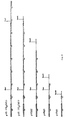
- These clones were then ground with glass beads, and the obtained lysates were clarified by centrifugation). Their lysozyme activity was tested by determining the decrease in optical density of a suspension of E. coli cells by the method of Mc Macken et al. (J. Mol. Biol. 49, 1970, 639). In Figure 10 the initial values of the optical density at 650 nm (OD650) were identical for all clones (0.7), but they have been shifted on the diagram for a sake of clarity. The results of Figure 10 show a significant activity for GRF18 (plys△49), and somewhat less for cells transformed by plasmid plys△59.
- Similar results were obtained by using a method in which the cells used as indicator for the action of lysozyme were those of the bacterium Micrococcus lysodeikticus (G. Alderton et al., J. Biol Chem. 157, 1945, 43).
- In a different type of assay, lysoyzme was evidenced around transformed colonies growing on Petri dishes covered with a lawn of M. lysodeikticus. In this case, lysozyme expression was visualised by a transparent halo of bacterial lysis around the colonies. In agreement with the results using cell-free lysates, the halo of lysis was greatest with plys△49 indicating that this clone was the best producer of lysozyme. This result also showed that the lysozyme is exported from the yeast cell since it must of necessity be extracellular in order to lyse the bacterial indicator.
- Figure 10 also shows that by operating in the same way with the plys△29 clone, no cell lysis could be observed. The sequences responsible for the proomoter function should therefore not only be present upstream of the gene to express, but also be suitably positioned with respect to this gene.
- 4.1 The vector pJDB207 upon which the lysozyme expression plasmids plys△29, plysA49 (described hereabove) are based does not contain the entire 2-micron yeast plasmid and is consequently dependant on the presence of the endogenous 2-micron plasmid (found in most strains of S. cerevisiae) for its continued maintainance. This leads to such an unstable situation that the the pJDB207-type plasmids are frequently lost from the cell (E. Erhaert and C. P. Hollenberg, J. Bacteriol. 156,1983, 625, and M. Jarayam et al., Cell 34,1983, 95). In contrast, the natural 2-micron plasmid is stably inherited. It is indeed known that plasmids constructed in such a way that they contain the entire 2-micron plasmid pJDB219, are more stable than those of the pJDB207-type (C. P. Hollenberg, Curr. Top. Microbiol. Immunol. 96, 1982, 119; R. M. Walmsely et al., Mol. Gen. Genet. 1983, 361). Such plasmids are therefore more useful for long term growth, as for example in industrial fermentations.
- To construct such a complete 2-micron vector, plasmid YEpB2 (Figure 11) was used, which was previously made by cloning the entire 2-micron plasmid into pBR322 at their mutually unique Pstl sites. Two fragments from YEpB2 and two fragments from plysΔ49 were then combined to give plys50 (Figure 12). In this plasmid, the three 2-micron genes A, B and C are intact and the lysozyme gene is expressed from the p415△4 promoter as in plys△49 described in the preceding example.
- 4.2 After transforming the GRF18 strain (His-, Leu-) ofS. cerevisiae by plasmids plys50 and pJDB207, the transformed cells obtained in both cases were separately grown on a minimum medium supplemented with histidine (0.002%). When the cultures had reached the stationary phase (optical density of about 5) (cell dry weight = about 1.5 g/I of culture), the cells were separated from the culture medium by centrifugation, suspended in a 0.1 M pH7 phosphate buffer, and ground with glass beads.
- Lysozyme activity in the supernatant and the lysote from both cultures was determined by their ability to lyse from both cultures was detemined by their ability to lyse M. lysodeikticus cells according to the method of D. Shugar (Biochem. Biophys. Acta, 8, 1952, 302). No activity was detected in a homogenate of the strain transformed by plasmid pJDB207, whereas a lysozyme activity of 35 units per ml of culture could be shown for that of straing GRE18(plys50).
- By determining total proteins according to the method of D. Herbert et al. (Methods in Microbiol.58, 1971, 209) as modified by C. Wang and R. L. Smith (Anal. Biochem. 63, 1975, 414), taking into account the specific activity of commercial purified lysozyme (Boehringer Monnheim), it was drawn that lysozyme produced by yeast in the above conditions accounts for about 0.8% of the soluble yeast proteins.
- Strains GRF19(plys△49) and AH22cir°(plys50) have been deposited on December 5, 1984 at the Centraal Bureau voor Schimmelcultures.
Oosterstraat 1, P.O. Box 273, NL-3740 AG Baarn (The Netherlands) where they have been respectively given accession numbers CBS 7130 and CBS 7129.
Claims (17)


Priority Applications (1)
| Application Number | Priority Date | Filing Date | Title |
|---|---|---|---|
| AT85870171T ATE54167T1 (en) | 1984-12-06 | 1985-12-05 | PROMOTERS FOR THE EXPRESSION OF FOREIGN GENES IN YEAST, PLASMIDS CONTAINING THESE PROMOTERS AND THEIR USE TO PRODUCTION POLYPEPTIDES. |
Applications Claiming Priority (2)
| Application Number | Priority Date | Filing Date | Title |
|---|---|---|---|
| BE214123 | 1984-12-06 | ||
| BE0/214123A BE901222A (en) | 1984-12-06 | 1984-12-06 | New promoter for expressing foreign genes in yeast - is 740 nucleotide sequence situated between endonuclease restriction sites |
Publications (2)
| Publication Number | Publication Date |
|---|---|
| EP0184576A1 EP0184576A1 (en) | 1986-06-11 |
| EP0184576B1 true EP0184576B1 (en) | 1990-06-27 |
Family
ID=3843826
Family Applications (1)
| Application Number | Title | Priority Date | Filing Date |
|---|---|---|---|
| EP85870171A Expired - Lifetime EP0184576B1 (en) | 1984-12-06 | 1985-12-05 | Promoters for the expression of foreign genes in yeast, plasmids comprising them, and uses thereof for the production of polypeptides |
Country Status (6)
| Country | Link |
|---|---|
| US (1) | US4990446A (en) |
| EP (1) | EP0184576B1 (en) |
| JP (1) | JPH06104065B2 (en) |
| AT (1) | ATE54167T1 (en) |
| CA (1) | CA1280080C (en) |
| DE (1) | DE3578435D1 (en) |
Families Citing this family (51)
| Publication number | Priority date | Publication date | Assignee | Title |
|---|---|---|---|---|
| AU633370B2 (en) * | 1989-10-16 | 1993-01-28 | Amgen, Inc. | N-acetylmuramidase m1 |
| ATE491029T1 (en) | 1996-10-16 | 2010-12-15 | Zymogenetics Inc | FIBROBLAST GROWTH FACTORS HOMOLOGUE |
| AU772172B2 (en) | 1998-09-23 | 2004-04-08 | Zymogenetics Inc. | Cytokine receptor zalpha11 |
| CA2354325C (en) | 1998-12-07 | 2011-08-16 | Zymogenetics, Inc. | Growth factor homolog zvegf3 |
| TR200101998T2 (en) | 1999-01-07 | 2002-06-21 | Zymogenetics, Inc. | Soluble receptor BR 43x2 and methods of use |
| US7833529B1 (en) | 1999-01-07 | 2010-11-16 | Zymogenetics, Inc. | Methods for inhibiting B lymphocyte proliferation with soluble ztnf4 receptor |
| DK1165791T3 (en) | 1999-03-09 | 2008-02-11 | Zymogenetics Inc | Human cytokine as zalpha receptor ligand and its use |
| DE60045931D1 (en) | 1999-07-07 | 2011-06-16 | Zymogenetics Inc | Human receptor for cytokines |
| JP2003524415A (en) | 1999-12-23 | 2003-08-19 | ザイモジェネティクス,インコーポレイティド | Cytokine ZCYTO18 |
| WO2001087933A2 (en) | 2000-05-11 | 2001-11-22 | Zymogenetics, Inc. | Zsig33-like peptides |
| WO2002000721A2 (en) | 2000-06-26 | 2002-01-03 | Zymogenetics, Inc. | Cytokine receptor zcytor17 |
| ATE360696T1 (en) | 2000-06-30 | 2007-05-15 | Zymogenetics Inc | INTERFERON-LIKE PROTEIN ZCYTO21 |
| US7009045B2 (en) * | 2000-07-14 | 2006-03-07 | Archer-Daniels-Midland Company | Transformation systems for flavinogenic yeast |
| EP1736545A3 (en) | 2000-08-08 | 2007-03-28 | ZymoGenetics, Inc. | Soluble zcytor 11 cytokine receptors |
| CA2438682A1 (en) | 2001-02-20 | 2002-08-29 | Zymogenetics, Inc. | Antibodies that bind both bcma and taci |
| EA010594B1 (en) | 2001-05-24 | 2008-10-30 | Займодженетикс, Инк. | Taci-immunoglobulin fusion proteins |
| MXPA04004167A (en) | 2001-11-05 | 2004-07-08 | Zymogenetics Inc | Il-21 antagonists. |
| ES2377188T3 (en) | 2002-01-18 | 2012-03-23 | Zymogenetics, Inc. | New cytokine ligand ZCYTOR17 |
| ES2382800T3 (en) | 2002-01-18 | 2012-06-13 | Zymogenetics, Inc. | Multimers Zcytor17 cytokine receptors |
| EP1497415B1 (en) | 2002-04-19 | 2010-12-29 | ZymoGenetics, L.L.C. | Methods for detection or modulation of the interaction of a cytokine receptor with its ligand |
| PT2251353E (en) | 2003-08-07 | 2013-05-07 | Zymogenetics Inc | Homogeneous preparations of il-29 |
| ATE517914T1 (en) | 2004-03-08 | 2011-08-15 | Zymogenetics Inc | DIMERIC FUSION PROTEINS AND MATERIALS AND METHODS FOR THE PRODUCTION THEREOF |
| WO2006012644A2 (en) | 2004-07-29 | 2006-02-02 | Zymogenetics, Inc. | Use of il-28 and il-29 to treat cancer |
| EP1781784A2 (en) | 2004-08-02 | 2007-05-09 | BASF Plant Science GmbH | Method for isolation of transcription termination sequences |
| EP2192132A3 (en) | 2005-02-08 | 2010-08-18 | ZymoGenetics, Inc. | Anti-IL-20, anti-IL22 and anti-IL-22RA antibodies and binding partners and methods of using in inflammation |
| JP2008544746A (en) | 2005-05-12 | 2008-12-11 | ザイモジェネティクス, インコーポレイテッド | Compositions and methods for modulating immune responses |
| WO2007019573A2 (en) | 2005-08-09 | 2007-02-15 | Zymogenetics, Inc. | Methods for the treatment and prevention of abnormal cell proliferation using taci-fusion molecules |
| CN101262876A (en) * | 2005-08-09 | 2008-09-10 | 酶遗传学股份有限公司 | Method of treating B cell malignancies with TACI-IG fusion molecules |
| CN101489573B (en) * | 2006-05-15 | 2013-05-22 | 阿雷斯贸易股份有限公司 | Methods for treating autoimmune diseases using a TACI-Ig fusion molecule |
| EP2164863A4 (en) | 2007-06-15 | 2010-07-28 | Univ Arkansas | METHODS OF DISPENSING MOLECULE TO CELLS USING RICIN SUBUNIT AND ASSOCIATED COMPOSITIONS |
| EP2602263B1 (en) | 2007-11-21 | 2019-07-17 | Roskilde Universitet | Polypeptides comprising an ice-binding activity |
| EP2231702A1 (en) * | 2007-12-21 | 2010-09-29 | Ifxa A/s | Protease inhibitor |
| MX2010008083A (en) * | 2008-01-25 | 2010-12-20 | Univ Aarhus | Selective exosite inhibition of papp-a activity against igfbp-4. |
| ES2456296T3 (en) | 2008-03-27 | 2014-04-21 | Zymogenetics, Inc. | Compositions and procedures for inhibiting PDGFR beta and VEGF-A |
| US8658766B2 (en) | 2008-06-27 | 2014-02-25 | Zymogenetics, Inc. | Soluble hybrid Fcγ receptors and related methods |
| US8822642B2 (en) | 2010-06-09 | 2014-09-02 | Zymogenetics, Inc. | Dimeric fusion proteins and related compositions and methods |
| SG10201606285YA (en) | 2012-02-01 | 2016-09-29 | Synthetic Genomics Inc | Materials and methods for the synthesis of error-minimized nucleic acid molecules |
| WO2014202089A2 (en) | 2013-06-18 | 2014-12-24 | Roskilde Universitet | Variants of anti-freeze polypeptides |
| DK3328881T3 (en) | 2015-09-08 | 2019-10-07 | Theripion Inc | APOA-1 FUSION POLYPEPTIDES AND RELATED COMPOSITIONS AND PROCEDURES |
| KR102784293B1 (en) | 2015-09-21 | 2025-03-20 | 압테보 리서치 앤드 디벨롭먼트 엘엘씨 | CD3 binding polypeptide |
| WO2018136163A2 (en) | 2016-12-09 | 2018-07-26 | Theripion, Inc. | Tandem apoa-1 fusion polypeptides |
| IL272103B2 (en) | 2017-07-20 | 2024-10-01 | Aptevo Res & Development Llc | Antigen-binding proteins that bind to 5T4 and 4-1BB, as well as compositions and methods for treating cancer related to them |
| AU2018391831B2 (en) | 2017-12-20 | 2022-08-04 | Harbour Biomed (Shanghai) Co., Ltd | Antibodies binding CTLA-4 and uses thereof |
| WO2019132765A1 (en) | 2017-12-27 | 2019-07-04 | Imunami Laboratories Pte. Ltd. | Recombinant polypeptides and methods of use thereof |
| US10150801B1 (en) | 2017-12-27 | 2018-12-11 | Imunami Laboratories Pte. Ltd. | Recombinant polypeptides and methods of use thereof |
| EP4021512A1 (en) | 2019-08-26 | 2022-07-06 | Imunami Laboratories Pte. Ltd. | Recombinant polypeptides and methods of use thereof |
| US10675332B1 (en) | 2019-08-26 | 2020-06-09 | Imunami Laboratories Pte. Ltd. | Recombinant polypeptides and methods of use thereof |
| EP4168034B1 (en) | 2020-06-22 | 2025-11-26 | Imunami Laboratories Pte. Ltd. | Recombinant alpha-a-crystallin and combinations for use in the treatment of cancer |
| AU2022224584A1 (en) | 2021-02-19 | 2023-09-21 | Theripion, Inc. | Paraoxonase fusion polypeptides and related compositions and methods |
| CN120584137A (en) | 2023-01-06 | 2025-09-02 | 阿帕特夫研究和发展有限公司 | Bispecific PD-L1 and CD40 binding molecules and uses thereof |
| WO2024259220A1 (en) | 2023-06-15 | 2024-12-19 | Theripion, Inc. | Pon3 and evolved pon1 fusion polypeptides |
Family Cites Families (5)
| Publication number | Priority date | Publication date | Assignee | Title |
|---|---|---|---|---|
| FR2441659A1 (en) * | 1978-11-14 | 1980-06-13 | Anvar | NOVEL HYBRID PLASMIDS AND MICROORGANISMS CONTAINING THEM |
| AU560472B2 (en) * | 1981-08-25 | 1987-04-09 | Celltech Limited | Yeast expression vectors |
| JPS5974988A (en) * | 1982-10-20 | 1984-04-27 | Suntory Ltd | Induction developable plasmid vector of yeast and method for utilizing the same |
| US4661454A (en) * | 1983-02-28 | 1987-04-28 | Collaborative Research, Inc. | GAL1 yeast promoter linked to non galactokinase gene |
| NZ207925A (en) * | 1983-04-25 | 1988-05-30 | Genentech Inc | Yeast expression vehicle consisting of a yeast promoter and signal peptide encoding region linked to a heterologus peptide coding region; expression and culture |
-
1985
- 1985-12-05 EP EP85870171A patent/EP0184576B1/en not_active Expired - Lifetime
- 1985-12-05 AT AT85870171T patent/ATE54167T1/en not_active IP Right Cessation
- 1985-12-05 US US06/804,928 patent/US4990446A/en not_active Expired - Lifetime
- 1985-12-05 DE DE8585870171T patent/DE3578435D1/en not_active Expired - Lifetime
- 1985-12-05 CA CA000496939A patent/CA1280080C/en not_active Expired - Lifetime
- 1985-12-06 JP JP60273531A patent/JPH06104065B2/en not_active Expired - Lifetime
Also Published As
| Publication number | Publication date |
|---|---|
| ATE54167T1 (en) | 1990-07-15 |
| JPH06104065B2 (en) | 1994-12-21 |
| US4990446A (en) | 1991-02-05 |
| EP0184576A1 (en) | 1986-06-11 |
| JPS61185190A (en) | 1986-08-18 |
| CA1280080C (en) | 1991-02-12 |
| DE3578435D1 (en) | 1990-08-02 |
Similar Documents
| Publication | Publication Date | Title |
|---|---|---|
| US4990446A (en) | Promoters for the expression of foreign genes in yeast, plasmids comprising them, and use thereof for the production of polypeptides | |
| CA1224735A (en) | Cloning system for kluyveromyces species | |
| JP3437850B2 (en) | Pichia pastoris acid phosphatase gene | |
| US4885242A (en) | Genes from pichia histidine pathway and uses thereof | |
| USRE37767E1 (en) | Highly stable recombinant yeasts for the production of recombinant proteins | |
| US4943529A (en) | Kluyveromyces as a host strain | |
| Lambert et al. | Genetic analysis of regulatory mutants affecting synthesis of extracellular proteinases in the yeast Yarrowia lipolytica: identification of a RIM101/pacC homolog | |
| US4882279A (en) | Site selective genomic modification of yeast of the genus pichia | |
| EP0184575B1 (en) | Transformed yeasts producing lysozyme, plasmids used for this transformation, and uses thereof | |
| EP1223219A2 (en) | Inducible promoter and secretion signal for use in schizosaccharomyces pombe, expression vector containing them and their use | |
| US5068185A (en) | Trains of yeast for the expression of heterologous genes | |
| GB2191491A (en) | Dna segment coding for a specific lipase, vectors for the expression thereof, microorganisms transformed by these vectors and use of these microorganisms for the production of the lipase | |
| US5679544A (en) | Modified Kluyveromyces yeasts, their preparation and use | |
| JPH08500014A (en) | K. Promoter of K. lactis transaldolase gene and use thereof | |
| EP0128743A2 (en) | Expression of foreign genes in yeast | |
| US7132522B1 (en) | Regulatory sequences and expression cassettes for yeasts, especially for kluyveromyces | |
| US6596513B2 (en) | Kluyveromyces lactis maltase/maltose permease bi-directional promoter and use thereof | |
| EP0173668B1 (en) | Recombinant saccharomyces | |
| JPH0775551B2 (en) | Stable DNA constructs for expression of alpha-1-antitrypsin | |
| HU196454B (en) | Process for producing yeast vector of much reproduces | |
| JPH0832241B2 (en) | Novel gene, vector, transformant using the same, and use thereof |
Legal Events
| Date | Code | Title | Description |
|---|---|---|---|
| PUAI | Public reference made under article 153(3) epc to a published international application that has entered the european phase |
Free format text: ORIGINAL CODE: 0009012 |
|
| AK | Designated contracting states |
Kind code of ref document: A1 Designated state(s): AT BE CH DE FR GB IT LI LU NL SE |
|
| 17P | Request for examination filed |
Effective date: 19861030 |
|
| 17Q | First examination report despatched |
Effective date: 19880803 |
|
| RAP1 | Party data changed (applicant data changed or rights of an application transferred) |
Owner name: FINA RESEARCH S.A. |
|
| GRAA | (expected) grant |
Free format text: ORIGINAL CODE: 0009210 |
|
| AK | Designated contracting states |
Kind code of ref document: B1 Designated state(s): AT BE CH DE FR GB IT LI LU NL SE |
|
| REF | Corresponds to: |
Ref document number: 54167 Country of ref document: AT Date of ref document: 19900715 Kind code of ref document: T |
|
| ET | Fr: translation filed | ||
| REF | Corresponds to: |
Ref document number: 3578435 Country of ref document: DE Date of ref document: 19900802 |
|
| ITF | It: translation for a ep patent filed | ||
| PLBE | No opposition filed within time limit |
Free format text: ORIGINAL CODE: 0009261 |
|
| STAA | Information on the status of an ep patent application or granted ep patent |
Free format text: STATUS: NO OPPOSITION FILED WITHIN TIME LIMIT |
|
| 26N | No opposition filed | ||
| ITTA | It: last paid annual fee | ||
| EPTA | Lu: last paid annual fee | ||
| EAL | Se: european patent in force in sweden |
Ref document number: 85870171.7 |
|
| REG | Reference to a national code |
Ref country code: GB Ref legal event code: IF02 |
|
| PGFP | Annual fee paid to national office [announced via postgrant information from national office to epo] |
Ref country code: GB Payment date: 20041122 Year of fee payment: 20 |
|
| PGFP | Annual fee paid to national office [announced via postgrant information from national office to epo] |
Ref country code: SE Payment date: 20041209 Year of fee payment: 20 |
|
| PGFP | Annual fee paid to national office [announced via postgrant information from national office to epo] |
Ref country code: NL Payment date: 20041210 Year of fee payment: 20 Ref country code: LU Payment date: 20041210 Year of fee payment: 20 Ref country code: CH Payment date: 20041210 Year of fee payment: 20 |
|
| PGFP | Annual fee paid to national office [announced via postgrant information from national office to epo] |
Ref country code: FR Payment date: 20041213 Year of fee payment: 20 Ref country code: DE Payment date: 20041213 Year of fee payment: 20 Ref country code: AT Payment date: 20041213 Year of fee payment: 20 |
|
| PGFP | Annual fee paid to national office [announced via postgrant information from national office to epo] |
Ref country code: BE Payment date: 20041227 Year of fee payment: 20 |
|
| REG | Reference to a national code |
Ref country code: CH Ref legal event code: PFA Owner name: TOTAL PETROCHEMICALS RESEARCH FELUY Free format text: FINA RESEARCH S.A.#ZONE INDUSTRIELLE C#SENEFFE (BE) -TRANSFER TO- TOTAL PETROCHEMICALS RESEARCH FELUY#ZONE INDUSTRIELLE C#7181 SENEFFE (FELUY) (BE) Ref country code: CH Ref legal event code: NV Representative=s name: LUCHS & PARTNER PATENTANWAELTE |
|
| NLT1 | Nl: modifications of names registered in virtue of documents presented to the patent office pursuant to art. 16 a, paragraph 1 |
Owner name: TOTAL PETROCHEMICALS RESEARCH FELUY Owner name: ATOFINA RESEARCH |
|
| PG25 | Lapsed in a contracting state [announced via postgrant information from national office to epo] |
Ref country code: GB Free format text: LAPSE BECAUSE OF EXPIRATION OF PROTECTION Effective date: 20051204 |
|
| PG25 | Lapsed in a contracting state [announced via postgrant information from national office to epo] |
Ref country code: NL Free format text: LAPSE BECAUSE OF EXPIRATION OF PROTECTION Effective date: 20051205 |
|
| REG | Reference to a national code |
Ref country code: GB Ref legal event code: PE20 |
|
| REG | Reference to a national code |
Ref country code: CH Ref legal event code: PL |
|
| NLV7 | Nl: ceased due to reaching the maximum lifetime of a patent |
Effective date: 20051205 |
|
| EUG | Se: european patent has lapsed | ||
| BE20 | Be: patent expired |
Owner name: S.A. *FINA RESEARCH Effective date: 20051205 |