EP0180045A2 - Benzanthrinderivate - Google Patents
Benzanthrinderivate Download PDFInfo
- Publication number
- EP0180045A2 EP0180045A2 EP85112352A EP85112352A EP0180045A2 EP 0180045 A2 EP0180045 A2 EP 0180045A2 EP 85112352 A EP85112352 A EP 85112352A EP 85112352 A EP85112352 A EP 85112352A EP 0180045 A2 EP0180045 A2 EP 0180045A2
- Authority
- EP
- European Patent Office
- Prior art keywords
- accompanying
- benzanthrin
- magnetic resonance
- nuclear magnetic
- compounds
- Prior art date
- Legal status (The legal status is an assumption and is not a legal conclusion. Google has not performed a legal analysis and makes no representation as to the accuracy of the status listed.)
- Withdrawn
Links
- 0 CN(*)C(CC(C(C(*I)=CC(C1C(C(c2cccc(*)c22)=O)=C3C2=O)C=C3O)=C1O)SC1)[C@]1O Chemical compound CN(*)C(CC(C(C(*I)=CC(C1C(C(c2cccc(*)c22)=O)=C3C2=O)C=C3O)=C1O)SC1)[C@]1O 0.000 description 1
Images

Classifications
-
- C—CHEMISTRY; METALLURGY
- C07—ORGANIC CHEMISTRY
- C07H—SUGARS; DERIVATIVES THEREOF; NUCLEOSIDES; NUCLEOTIDES; NUCLEIC ACIDS
- C07H15/00—Compounds containing hydrocarbon or substituted hydrocarbon radicals directly attached to hetero atoms of saccharide radicals
- C07H15/20—Carbocyclic rings
- C07H15/24—Condensed ring systems having three or more rings
- C07H15/244—Anthraquinone radicals, e.g. sennosides
-
- C—CHEMISTRY; METALLURGY
- C12—BIOCHEMISTRY; BEER; SPIRITS; WINE; VINEGAR; MICROBIOLOGY; ENZYMOLOGY; MUTATION OR GENETIC ENGINEERING
- C12N—MICROORGANISMS OR ENZYMES; COMPOSITIONS THEREOF; PROPAGATING, PRESERVING, OR MAINTAINING MICROORGANISMS; MUTATION OR GENETIC ENGINEERING; CULTURE MEDIA
- C12N1/00—Microorganisms; Compositions thereof; Processes of propagating, maintaining or preserving microorganisms or compositions thereof; Processes of preparing or isolating a composition containing a microorganism; Culture media therefor
- C12N1/20—Bacteria; Culture media therefor
- C12N1/205—Bacterial isolates
-
- C—CHEMISTRY; METALLURGY
- C12—BIOCHEMISTRY; BEER; SPIRITS; WINE; VINEGAR; MICROBIOLOGY; ENZYMOLOGY; MUTATION OR GENETIC ENGINEERING
- C12P—FERMENTATION OR ENZYME-USING PROCESSES TO SYNTHESISE A DESIRED CHEMICAL COMPOUND OR COMPOSITION OR TO SEPARATE OPTICAL ISOMERS FROM A RACEMIC MIXTURE
- C12P19/00—Preparation of compounds containing saccharide radicals
- C12P19/44—Preparation of O-glycosides, e.g. glucosides
- C12P19/56—Preparation of O-glycosides, e.g. glucosides having an oxygen atom of the saccharide radical directly bound to a condensed ring system having three or more carbocyclic rings, e.g. daunomycin, adriamycin
-
- C—CHEMISTRY; METALLURGY
- C12—BIOCHEMISTRY; BEER; SPIRITS; WINE; VINEGAR; MICROBIOLOGY; ENZYMOLOGY; MUTATION OR GENETIC ENGINEERING
- C12R—INDEXING SCHEME ASSOCIATED WITH SUBCLASSES C12C - C12Q, RELATING TO MICROORGANISMS
- C12R2001/00—Microorganisms ; Processes using microorganisms
- C12R2001/01—Bacteria or Actinomycetales ; using bacteria or Actinomycetales
- C12R2001/365—Nocardia
Definitions
- This invention relates to new antibiotic and cytotoxic agents and a process for making the same.
- cytotoxic compounds are in demand, particularly anti-cancer compounds.
- the benzanthrins exhibit antibacterial activity against various Gram-positive bacteria and cytotoxic activity.
- the benzanthrins are produced by a microorganism belonging to the genus Nocardia in yields of about 3 mcg/ml. These benzanthrins are produced by growing the .culture in a nutrient medium. Thereafter, once isolated from the culture medium by solvent extraction with a water immiscible organic solvent followed by chromatography, the compounds of the invention are in - substantially pure form.
- the benzanthrins are produced by fermentation of a microorganism belong to the genus Nocardia.
- a particularly suitable microorganism is a phage resistant mutant of Nocardia lurida designated B-7. This strain has been deposited in the Agricultural Research Service Culture Collection at Northern Regional Research Center, 1815 North University Street, Peoria, Illinois 61604 and has been given the accession number NRRL 15820.
- Nocardia lurida B7 is a single clone isolated as a phage resistant variant of Nocardia lurida NRRL 2430.
- Nocardia lurida NRRL 2430 is described by Philip and Schenck in U.S. Patent No. 2,990,329 issued June 27, 1961, and by Pridham and Lyons, Developments in Industrial Microbiology, Uol. 10, p. 208 (1969).
- N. lurida grows with intertwined, branched mycelium which is non-septate initially but segments in 48 hours and is completely fragmented by 72 to 96 hours. The fragments are smooth-walled, rod-shaped, 0.8 to 1.5 microns in length with well-defined ends.
- N. lurida utilizes glucose, xylose, arabinose, fructose, galactose, D-mannitol and salicin. It is unable to grow when Rhamnose, sucrose, raffinose, starch or inositol are the sole carbon source.
- N. lurida contains the meso form of diaminopimelic acid. The major sugars in whole cell hydrolysates are arabinose and galactose.
- N. lurida is not acid-fast and does not contain mycolic acids.
- Cultivation of strain B-7 for the production of benzanthrins is carried out in liquid media.
- An assimilable carbon source such as glucose is used in combination with an organic nitrogen source such as peptone, lactalbumin, spray dried lard water, NZ amine, pepticase, soytone plus yeast extract or whole yeast and sodium chloride.
- Calcium carbonate is added to aid in controlling the pH of the fermentation.
- Other organic and inorganic ingredients may be added to stimulate production of the compounds of the invention.
- a liquid, submerged, stirred culture process is preferred for the production of the compounds of the invention. Fermentations are carried out at a temperature range of 23°C to 28°C.
- the pH of the fermentation is preferably maintained between 6 and 9. Compounds of the invention are produced and accumulated between 2 and 12 days after inoculation of the fermentation.
- A4B seed flasks (Table 1) were inoculated from A26a agar slant cultures of 8-7. Seed flasks were incubated on a Gump rotary shaker (250 rpm) at 24°C for 48 hours. At that time, 5% vegetative inoculum was transferred aseptically to fermentation flasks containing the following ingredients: no pH adjustment cold tap H 2 0 QS to 1.0 liter Uol/flask: 50 ml/500 ml Erlenmeyer flask closed with cotton plugs Sterilization: 30 min, 121°C, 15-16 lb pressure *Sterile glucose monohydrate was added post-sterilization.
- Fermentation flasks were incubated on a Gump rotary shaker (250 rpm) at 24°C for 72 hours. At that time, the fermentation beer (50 ml) was adjusted to pH 6, saturated with sodium chloride and then extracted twice with 1/4 volume of n-butanol. The butanol extracts were combined, evaporated to dryness under vacuum and reconstituted in methanol. The methanol solution of the butanol extract residue was applied to a cellulose sheet made by Eastman Kodak Co., Rochester, New York, which was developed upflow in a solvent system consisting of 1% aqueous p-toluene- sulfonic acid saturated with methylisobutylketone.
- the cellulose sheet was dried 24-48 hours and placed on a bioautograph plate seeded with Staphylococcus aureus ATCC 6538P. The bioautograph plate was incubated overnight at 32°C. Antibiotic activity was observed at R f 0.5 (relative mobility of sample/solvent front). Yellow/orange color on the cellulose sheet coincided with the antibiotic activity.
- A48 seed flasks (Table 1) were inoculated from A26a agar slant cultures of B-7. Seed flasks were incubated on a Gump rotary shaker (250 rpm) at 24°C for 48 hours. At that time, 5% vegetative inoculum'was transferred aseptically to 300 fermentation flasks containing the following ingredients:
- Fermentation flasks were incubated on a Gump rotary shaker (250 rpm) at 24°C for 72 hours at which time the fermentation beer in the flasks was harvested and pooled.
- a 50 ml aliquot of the fermentation beer was adjusted to pH 7, saturated with sodium chloride and extracted twice with 1/4 volume of n-butanol.
- the butanol extracts were combined and dried under vacuum and reconstituted in methanol.
- a second 50 ml aliquot of the fermentation beer was adjusted to pH 8.5.
- the beer was centrifuged, and the supernate was extracted three times with 1/2 volume of methylene chloride.
- the methylene chloride extracts were combined, dried under vacuum and reconstituted in methanol.
- the butanol and methylene chloride extracts were applied to silica gel, thin-layer (Analtech GF) plates which were developed in three solvent systems. After development, the plates were dried and examined with visible and short-wave UU light. The thin-layer plates were then placed on bioautograph agar plates seeded with Staphylococcus aureus ATCC 6538P for 1 hour. The thin-layer plates were removed and the bioautograph plates were placed in a 32°C incubator overnight. The bioautograph plates were then examined for the presence of antibiotic activity. In three solvent systems as indicated in Table 2, an antibiotic active against Staphylococcus aureus was observed. This compound was yellow/orange in color and absorbed short-wave UU light.
- A4B seed flasks (Table 1) were inoculated from A26a agar slant cultures of 8-7. Seed flasks were incubated on a Gump rotary shaker (250 rpm) at 24°C for 48 hours. At that time, 5% vegetative inoculum was transferred aseptically to sterile 14 liter stainless steel fermentors containing the following medium and conditions:
- Fermentors were incubated for 9 days. Fifty ml samples of fermentation beer were taken daily for both butanol and methylene chloride extractions.
- the extracts were chromatographed on silica gel, thin-layer (Analtech GF) plates. As described in Example 2, a yellow/orange colored antibiotic active against Staphylococcus aureus, was observed at 90 hr, 114 hr and 138 hr in the fermentation.
- A48 seed flasks (Table 1) were inoculated from A26a agar slant cultures of B-7. Seed flasks were incubated on a Gump rotary shaker (250 rpm) at 24°C for 48 hours. At that time, 5% vegetative inoculum was transferred aseptically to fermentation flasks containing the following ingredients: distilled H 2 0 q.s. to 1.0 liter Uol/flask: 50 ml/500 ml Erlenmeyer flask closed with rayon plugs Sterilization: 30 min, 121°C, 15-16 lb pressure *Sterile glucose monohydrate was added post-sterilization.
- Fermentation flasks were incubated on a Gump rotary shaker (250 rpm) at 24°C for 72 hours at which time the fermentation beer in the flasks was harvested.
- a 50 ml aliquot of the harvested fermentation beer was adjusted to pH 8.5 and then extracted three times with 1/2 volume of methylene chloride.
- the methylene chloride extracts were combined, dried under vacuum and reconstituted in methanol.
- the methylene chloride extracts (in methanol) were applied to silica gel (Analtech GF) thin-layer plates.
- a methanolic saturated sodium chloride solution was also applied to each extract on the silica gel thin-layer plates.
- the thin-layer plates were then developed in a solvent system consisting methylene chloride:methanol:water (70:30:1) for 45 minutes and then dried. Two orange colored products were observed at R f 0.15 and 0.23 under visible light which also absorbed short-wave UU light.
- thin-layer plates were then placed on bioautograph plates seeded with Staphylacoccus aureus ATCC 6538P for 1 hour. The thin-layer plates were removed and the bioautograph plates were placed in a 32°C incubator overnight. The bioautograph plates were then examined for antibiotic activity. Two compounds which inhibited Staphylacoccus aureus were observed at R f 0.15 and 0.23 which coincided with the two orange colored UU absorbing products.
- Example 2 The whole broth (13 L) from Example 2 was adjusted to pH 6.5 and the mycelium was pelleted by centrifugation. The supernate was saturated with sodium chloride and extracted twice with 1/4 volume of n-butanol. The butanol was evaporated in vacuo leaving 14 g of an oily residue. This material was dissolved in a minimal amount of 50% aqueous methanol and charged onto a flash column packed with 90 g of C-8 capped silica gel (40 um) such as that made by J. T. Baker Chemical Co., Philipsburg, New Jersey, equilibrated in 0.01 M NH 4 HC0 3 (pH 7.8).
- C-8 capped silica gel 40 um
- the activity was eluted with a step gradient consisting of: (1) NH 4 HCO 3 buffer, (2) NH 4 HC0 3 buffer - MeOH (20:80) and (3) MeOH. All active fractions were combined and further purified by prep HPLC (such as ODS-3 made by Whatman, Inc., Clifton, New Jersey) with 0.1% Et 3 N MeOH. Evaporation of the solvent afforded 45 mg of benzanthrin as a dark red amorphous solid giving a FAB (Fast Atom Bombardment) positive ion mass spectrum with M+1 + 635 m/z, mass matched at 635.2957; theoretical for C 35 H 43 N 2 0 9 is 635.2969.
- FAB Fast Atom Bombardment
- Example 2 The whole broth (15 L) from Example 2 was pH adjusted to pH 6.5 and the mycelium was pelleted. The pH of the supernate was then adjusted to 8.5 and the supernate was extracted twice with 1/4 volumes of CH 2 Cl 2 . Evaporation of the solvent left 0.8 g of solid residue which was 18-fold more pure than the butanol extract above. Final purification and separation was achieved by countercurrent chromatography on an Ito planet coil centrifuge using MeOH-H 2 O-CHCl 3 -CCL 4 (4:1:1:4 or 35:15:25:25).
- the isolated compounds of the invention are soluble in lower alcohols, ethyl acetate, acetone, benzene, chloroform, methylene chloride, carbon tetrachloride, ethyl ether, tetrahydrofuran.
- the isolated compounds of the invention are soluble in lower alcohols, dimethylsulfoxide and water.
- Zinc dust distillation of benzanthrins A and B provided the same product which had UU and mass spectra consistent with a benz[a]anthracene aromatic nucleus of structure A shown hereinbelow.
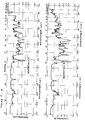
- the infrared (IR) spectra of the compounds of the invention in CDC1 3 are shown in FIGURE 1.
- the observed absorption bands are consistent with the hypothesis that the compounds of the invention include a quinone structure.
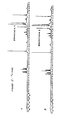
- FIGURE 3 shows the carbon-13 nuclear magnetic resonance spectra of the compounds of the invention in CD 2 C1 2 .
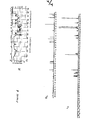
- FIGURE 4 shows infrared and NMR data for the degradation compound, structure C hereinabove, which is a benzanthrin pseudoaglycone so described because it still possesses a sugar in the form of a C-glycoside linkage.
- This data reaffirms the hypothesis that the compounds of the invention include a quinone structure.
- the present invention contemplates the pharmaceutically acceptable nontoxic acid addition salts of the compounds of the invention including the mineral acid addition salts such as hydrochloride, hydrobromide, hydroiodide, sulfate, sulfamate and phosphate and the organic addition salts such as maleate, acetate, citrate, oxalate, succinate, benzoate, tartrate, fumarate, malate, mandelate, ascorbate and the like.
- mineral acid addition salts such as hydrochloride, hydrobromide, hydroiodide, sulfate, sulfamate and phosphate
- organic addition salts such as maleate, acetate, citrate, oxalate, succinate, benzoate, tartrate, fumarate, malate, mandelate, ascorbate and the like.
- benzanthrin pseudoaglycone compounds similar to structure B are useful as intermediates for the synthetic conversion of either benzanthrin A to benzanthrin B or benzanthrin B to benzanthrin A.
- Benzanthrins A and B may be interconverted by starting with the benzylated pseudoaglycone (1) derived from either A or B and carrying out the processes of Examples 5 and 6 with either sugar bromide (4) or (5) to give either (7) or (8), respectively, as a final product.
- the antibacterial activity of the compounds of the invention against a variety of microorganisms is illustrated in Table 3.
- Minimum inhibitory concentrations were determined by the agar dilution method using brain heart infusion agar with 10 5 CFU (colony forming units) as the inoculum.
- the compounds of the invention can be used alone or in combination with other antibacterial agents to prevent the growth of, or reduce the number of, organisms present in various environments.
- the compounds of the invention can be used in papermill systems to inhibit the growth of cultures which are known to produce slime in such systems.
- the compounds of the invention are also useful as oil preservatives, for example, as a bacteriostatic agent for inhibiting the growth of Staphylococcus aureus which is known to cause spoilage in cutting oils.
- the compounds of the invention are useful in wash solutions for sanitation purposes, as in the washing of hands and the cleaning of equipment, floors, or furnishings of contaminated rooms or laboratories; the compounds of the invention are also useful as an industrial preservative, for example, as a bacteriostatic rinse for laundered clothes and for impregnating paper and fabrics, and the compounds of the invention are useful for suppressing the growth of sensitive organisms in plate-assays and other microbiological media.
- the compounds of the invention can be used in treating infections caused by susceptible organisms in warm-blooded animals.
- cytotoxic activity of the compounds of the invention can be tested by a KB antitumor test.
- KB cells are derived from human epidermoid carcinoma of the mouth and are cultivated on Eagel's basal medium plus 10% serum. Stock cells are fed 24 hours before testing. Test drug is added on day 0 or day 1. Results are expressed as the dose which inhibits growth to 50% of control growth by 3 days after drug addition.
Landscapes
- Chemical & Material Sciences (AREA)
- Organic Chemistry (AREA)
- Life Sciences & Earth Sciences (AREA)
- Engineering & Computer Science (AREA)
- Health & Medical Sciences (AREA)
- Biotechnology (AREA)
- Genetics & Genomics (AREA)
- Zoology (AREA)
- Wood Science & Technology (AREA)
- Bioinformatics & Cheminformatics (AREA)
- Biochemistry (AREA)
- General Health & Medical Sciences (AREA)
- Microbiology (AREA)
- General Engineering & Computer Science (AREA)
- Virology (AREA)
- Biomedical Technology (AREA)
- Tropical Medicine & Parasitology (AREA)
- Medicinal Chemistry (AREA)
- Molecular Biology (AREA)
- Chemical Kinetics & Catalysis (AREA)
- General Chemical & Material Sciences (AREA)
- Pharmaceuticals Containing Other Organic And Inorganic Compounds (AREA)
- Organic Low-Molecular-Weight Compounds And Preparation Thereof (AREA)
Applications Claiming Priority (4)
| Application Number | Priority Date | Filing Date | Title |
|---|---|---|---|
| US65596284A | 1984-09-28 | 1984-09-28 | |
| US655962 | 1984-09-28 | ||
| US77521885A | 1985-09-16 | 1985-09-16 | |
| US775218 | 2001-02-01 |
Publications (2)
| Publication Number | Publication Date |
|---|---|
| EP0180045A2 true EP0180045A2 (de) | 1986-05-07 |
| EP0180045A3 EP0180045A3 (de) | 1986-10-29 |
Family
ID=27097081
Family Applications (1)
| Application Number | Title | Priority Date | Filing Date |
|---|---|---|---|
| EP85112352A Withdrawn EP0180045A3 (de) | 1984-09-28 | 1985-09-30 | Benzanthrinderivate |
Country Status (1)
| Country | Link |
|---|---|
| EP (1) | EP0180045A3 (de) |
Cited By (2)
| Publication number | Priority date | Publication date | Assignee | Title |
|---|---|---|---|---|
| WO2011091778A1 (de) | 2010-01-28 | 2011-08-04 | Leibniz-Institut für Meereswissenschaften | Herstellung und verwendung antibakterieller, antiproliferativer und antiphytopathogener benzanthrine |
| CN103408612A (zh) * | 2013-04-12 | 2013-11-27 | 中国科学院成都生物研究所 | 菲及二氢菲类化合物及其应用 |
Family Cites Families (1)
| Publication number | Priority date | Publication date | Assignee | Title |
|---|---|---|---|---|
| US2990329A (en) * | 1957-02-11 | 1961-06-27 | Abbott Lab | Preparation of ristocetin a salts |
-
1985
- 1985-09-30 EP EP85112352A patent/EP0180045A3/de not_active Withdrawn
Cited By (5)
| Publication number | Priority date | Publication date | Assignee | Title |
|---|---|---|---|---|
| WO2011091778A1 (de) | 2010-01-28 | 2011-08-04 | Leibniz-Institut für Meereswissenschaften | Herstellung und verwendung antibakterieller, antiproliferativer und antiphytopathogener benzanthrine |
| DE102010006245A1 (de) | 2010-01-28 | 2011-09-15 | Leibniz-Institut für Meereswissenschaften | Herstellung und Verwendung antibakterieller, antiproliferativer und antiphytopathogener Benzanthrine |
| DE102010006245B4 (de) * | 2010-01-28 | 2014-02-13 | Helmholtz-Zentrum für Ozeanforschung Kiel (Geomar) | Mayamycin-Verbindungen, Verfahren zu deren Herstellung, deren Verwendungen und diese enthaltendes kosmetisches Produkt |
| CN103408612A (zh) * | 2013-04-12 | 2013-11-27 | 中国科学院成都生物研究所 | 菲及二氢菲类化合物及其应用 |
| CN103408612B (zh) * | 2013-04-12 | 2015-12-09 | 中国科学院成都生物研究所 | 菲及二氢菲类化合物及其应用 |
Also Published As
| Publication number | Publication date |
|---|---|
| EP0180045A3 (de) | 1986-10-29 |
Similar Documents
| Publication | Publication Date | Title |
|---|---|---|
| Aoki et al. | Nocardicin A, a new monocyclic β-lactam antibiotic I. Discovery, isolation and characterization | |
| US3993749A (en) | Rapamycin and process of preparation | |
| US4918174A (en) | Tiacumicin compounds | |
| US4161523A (en) | Rosamicin esters, acid addition salts and methods for production thereof | |
| US4007167A (en) | Antibiotic BM123 and production thereof | |
| US4992425A (en) | Antibiotics BU-3608D and BU-3608E | |
| CA1225053A (en) | Methods and compounds and compositions for treating protozoal infections with a novel antibiotic | |
| US4018972A (en) | Antibacterial agents cis-BM123γ1 and cis-BM123γ2 | |
| US4478831A (en) | Antibiotics, pharmaceutical compositions and method of use | |
| US4234690A (en) | Method for producing rosaramicin (rosamicin) | |
| EP0180045A2 (de) | Benzanthrinderivate | |
| US3592925A (en) | Antibiotics ah272alpha2 and ah272beta2 and process for producing same | |
| US4440751A (en) | Broad spectrum antibiotic complex produced by a novel micromonospora | |
| US3991052A (en) | Antibiotic A-30641 | |
| US3655879A (en) | Rufomycin | |
| Kluepfel et al. | Metabolism of barbital by Streptomyces mediterranei | |
| Taniguchi et al. | Isolation and biological activity of aspermutarubrol, a self-growth-inhibitor from Aspergillus sydowi | |
| EP0002589B1 (de) | A-40104 Antibiotika, ihre Herstellung, und diese enthaltende Zusammensetzungen | |
| US3898327A (en) | Antibiotic azdimycin | |
| US5516686A (en) | Fungicidal antibiotic producing Streptomyces sp. NCIMB 40212 | |
| US5096817A (en) | Process for producing antibiotics BU-3608 D and BU-3608 E | |
| US4628046A (en) | Antibiotic LL-C23201δ | |
| US4230692A (en) | Ravidomycin and process of preparation | |
| US4216206A (en) | Antibiotics S 53210/A-I, S 53210/A-II and S 53210/A-III | |
| US3711605A (en) | Antibiotic a150a |
Legal Events
| Date | Code | Title | Description |
|---|---|---|---|
| PUAI | Public reference made under article 153(3) epc to a published international application that has entered the european phase |
Free format text: ORIGINAL CODE: 0009012 |
|
| AK | Designated contracting states |
Kind code of ref document: A2 Designated state(s): BE CH DE FR GB IT LI NL SE |
|
| PUAL | Search report despatched |
Free format text: ORIGINAL CODE: 0009013 |
|
| AK | Designated contracting states |
Kind code of ref document: A3 Designated state(s): BE CH DE FR GB IT LI NL SE |
|
| STAA | Information on the status of an ep patent application or granted ep patent |
Free format text: STATUS: THE APPLICATION IS DEEMED TO BE WITHDRAWN |
|
| 18D | Application deemed to be withdrawn |
Effective date: 19870430 |
|
| RIN1 | Information on inventor provided before grant (corrected) |
Inventor name: THERIAULT, ROBERT JOHN, SR. Inventor name: RASMUSSEN, RONALD ROBERT |