EP0157553A2 - Antifungische Substanzen und ihre Herstellung und sie enthaltende Mittel - Google Patents
Antifungische Substanzen und ihre Herstellung und sie enthaltende Mittel Download PDFInfo
- Publication number
- EP0157553A2 EP0157553A2 EP85301983A EP85301983A EP0157553A2 EP 0157553 A2 EP0157553 A2 EP 0157553A2 EP 85301983 A EP85301983 A EP 85301983A EP 85301983 A EP85301983 A EP 85301983A EP 0157553 A2 EP0157553 A2 EP 0157553A2
- Authority
- EP
- European Patent Office
- Prior art keywords
- compound
- compounds
- streptomyces hygroscopicus
- medium
- growth
- Prior art date
- Legal status (The legal status is an assumption and is not a legal conclusion. Google has not performed a legal analysis and makes no representation as to the accuracy of the status listed.)
- Granted
Links
Images
Classifications
-
- A—HUMAN NECESSITIES
- A01—AGRICULTURE; FORESTRY; ANIMAL HUSBANDRY; HUNTING; TRAPPING; FISHING
- A01N—PRESERVATION OF BODIES OF HUMANS OR ANIMALS OR PLANTS OR PARTS THEREOF; BIOCIDES, e.g. AS DISINFECTANTS, AS PESTICIDES OR AS HERBICIDES; PEST REPELLANTS OR ATTRACTANTS; PLANT GROWTH REGULATORS
- A01N57/00—Biocides, pest repellants or attractants, or plant growth regulators containing organic phosphorus compounds
- A01N57/10—Biocides, pest repellants or attractants, or plant growth regulators containing organic phosphorus compounds having phosphorus-to-oxygen bonds or phosphorus-to-sulfur bonds
- A01N57/12—Biocides, pest repellants or attractants, or plant growth regulators containing organic phosphorus compounds having phosphorus-to-oxygen bonds or phosphorus-to-sulfur bonds containing acyclic or cycloaliphatic radicals
-
- C—CHEMISTRY; METALLURGY
- C07—ORGANIC CHEMISTRY
- C07F—ACYCLIC, CARBOCYCLIC OR HETEROCYCLIC COMPOUNDS CONTAINING ELEMENTS OTHER THAN CARBON, HYDROGEN, HALOGEN, OXYGEN, NITROGEN, SULFUR, SELENIUM OR TELLURIUM
- C07F9/00—Compounds containing elements of Groups 5 or 15 of the Periodic Table
- C07F9/02—Phosphorus compounds
- C07F9/06—Phosphorus compounds without P—C bonds
- C07F9/08—Esters of oxyacids of phosphorus
- C07F9/09—Esters of phosphoric acids
- C07F9/117—Esters of phosphoric acids with cycloaliphatic alcohols
-
- C—CHEMISTRY; METALLURGY
- C12—BIOCHEMISTRY; BEER; SPIRITS; WINE; VINEGAR; MICROBIOLOGY; ENZYMOLOGY; MUTATION OR GENETIC ENGINEERING
- C12N—MICROORGANISMS OR ENZYMES; COMPOSITIONS THEREOF; PROPAGATING, PRESERVING, OR MAINTAINING MICROORGANISMS; MUTATION OR GENETIC ENGINEERING; CULTURE MEDIA
- C12N1/00—Microorganisms; Compositions thereof; Processes of propagating, maintaining or preserving microorganisms or compositions thereof; Processes of preparing or isolating a composition containing a microorganism; Culture media therefor
- C12N1/20—Bacteria; Culture media therefor
- C12N1/205—Bacterial isolates
-
- C—CHEMISTRY; METALLURGY
- C12—BIOCHEMISTRY; BEER; SPIRITS; WINE; VINEGAR; MICROBIOLOGY; ENZYMOLOGY; MUTATION OR GENETIC ENGINEERING
- C12P—FERMENTATION OR ENZYME-USING PROCESSES TO SYNTHESISE A DESIRED CHEMICAL COMPOUND OR COMPOSITION OR TO SEPARATE OPTICAL ISOMERS FROM A RACEMIC MIXTURE
- C12P13/00—Preparation of nitrogen-containing organic compounds
-
- C—CHEMISTRY; METALLURGY
- C12—BIOCHEMISTRY; BEER; SPIRITS; WINE; VINEGAR; MICROBIOLOGY; ENZYMOLOGY; MUTATION OR GENETIC ENGINEERING
- C12R—INDEXING SCHEME ASSOCIATED WITH SUBCLASSES C12C - C12Q, RELATING TO MICROORGANISMS
- C12R2001/00—Microorganisms ; Processes using microorganisms
- C12R2001/01—Bacteria or Actinomycetales ; using bacteria or Actinomycetales
- C12R2001/465—Streptomyces
- C12R2001/55—Streptomyces hygroscopicus
-
- Y—GENERAL TAGGING OF NEW TECHNOLOGICAL DEVELOPMENTS; GENERAL TAGGING OF CROSS-SECTIONAL TECHNOLOGIES SPANNING OVER SEVERAL SECTIONS OF THE IPC; TECHNICAL SUBJECTS COVERED BY FORMER USPC CROSS-REFERENCE ART COLLECTIONS [XRACs] AND DIGESTS
- Y10—TECHNICAL SUBJECTS COVERED BY FORMER USPC
- Y10S—TECHNICAL SUBJECTS COVERED BY FORMER USPC CROSS-REFERENCE ART COLLECTIONS [XRACs] AND DIGESTS
- Y10S435/00—Chemistry: molecular biology and microbiology
- Y10S435/8215—Microorganisms
- Y10S435/822—Microorganisms using bacteria or actinomycetales
- Y10S435/886—Streptomyces
- Y10S435/898—Streptomyces hygroscopicus
Definitions
- This invention relates to antifungal substances.
- the present invention results from the discovery of a previously undescribed strain of a microorganism, which, when grown in a nutrient medium under controlled conditions, produces a series of novel antifungal substances, which may be recovered and purified as described below.
- the microorganism capable of producing these compounds is of a new strain of the microorganism Streptomyces hygroscopicus.
- One such culture, isolated from soil, is designated MA-5000 in the culture collection of Merck & Co., Inc., Rahway, New Jersey.
- a sample of this culture, capable of producing the novel compound was deposited on 2 November 1983, without restriction as to availability, in the permanent culture collection of the American Type Culture Collection at 12301 Parklawn Drive, Rockville, Maryland 20852, and has been assigned the accession number ATCC 39476.
- Streptomyces hygroscopicus MA-5000 The morphological and cultural characteristics of Streptomyces hygroscopicus MA-5000 are set forth below.
- spore chains coalesce to form dark moist areas.
- Spore surface by electron microscope (TEM) shows a smooth surface on some spores and a rough to warty surface on others.
- ISP Medium 4 Inorganic salts-starch agar
- the above description is illustrative of a strain of Streptomyces hygroscopicus MA-5000 which can be employed in the production of the instant compound.
- the present invention also embraces mutants of the above described microorganism. For example, those mutants which are obtained by natural selection or those produced by mutating agents including ionizing radiation such as ultraviolet irradiation, or chemical mutagens such as nitrosoguanidine or the like treatments are also included within the ambit of this invention.
- the instant compound is produced during the aerobic fermentation of suitable aqueous nutrient media under conditions described hereinafter, with a producing strain of Streptomyces hygroscopicus MA-5000.
- Aqueous media such as those used for the production of many antibiotic substances are suitable for use in this process for the production of this macrocyclic compound.
- Such nutrient media contain sources of carbon and nitrogen assimilable by the microorganism and generally low levels of inorganic salts.
- the fermentation media may contain traces of metals necessary for the growth of the microorganisms, and production of the desired compound. These are usually present in sufficient concentrations in the complex sources of carbon and nitrogen, which may be used as nutrient sources, but can, of course, be added separately to the medium if desired.
- carbohydrates such as sugars, for example dextrose, sucrose, maltose, lactose, dextran, cerelose, corn meal, oat flour, and the like, and starches are suitable sources of assimilable carbon in the nutrient media.
- the exact quantity of the carbon source which is utilized in the medium will depend, in part, upon the other ingredients in the medium, but it is usually found that an amount of carbohydrate between 0.5 and 5% by weight of the medium is satisfactory.
- These carbon sources can be used individually or several such carbon sources may be combined in the same medium.
- Various nitrogen sources such as yeast hydrolysates, yeast autolysates, yeast cells, tomato paste, corn meal, oat flour, soybean meal, caesin hydrolysates, yeast extracts, corn steep liquors, distillers solubles, cottonseed meal, meat extract and the like, are readily assimilable by Streptomyces hygroscopicus MA-5000 in the production of the instant compound.
- the various sources of nitrogen can be used alone or in combination in amounts ranging from 0.2 to 6% by weight of the medium.
- the customary salts capable of yielding sodium, potassium, magnesium, ammonium, calcium, phosphate, sulfate, chloride, carbonate, and like ions. Also included are trace metals such as cobalt, manganese, and the like. For the best production of the instant compound, the addition of calcium carbonate to the production medium is most preferred.
- the fermentation employing Streptomyces hygroscopicus MA-5000 can be conducted at temperatures ranging from about 20°C to about 40°C. For optimum results, it is most convenient to conduct these fermentations at a temperature in the range of from about 24°C to about 30°C. Temperatures of about 27-28°C are most preferred.
- the pH of the nutrient medium suitable for producing the instant compounds can vary from about 5.0 to 8.5 with a preferred range of from about 6.0 to 7.5.
- Small scale fermentations are conveniently carried out by placing suitable quantities of nutrient medium in a flask employing known sterile techniques, inoculating the flask with either spores or vegetative cellular growth of Streptomyces hygroscopicus MA-5000 loosely stoppering the flask with cotton and permitting the fermentation to proceed in a constant room temperature of about 28°C on a rotary shaker at from 95 to 300 rpm for about 2 to 10 days.
- suitable tanks provided with an agitator and a means of aerating the fermentation medium.
- the nutrient medium is made up in the tank and after sterilization is inoculated with a source of vegetative cellular growth of Streptomyces hygroscopicus MA-5000.
- the fermentation is allowed to continue for from 1 to 8 days while agitating and/or aerating the nutrient medium at a temperature in the range of from about 24 to 37°C.
- the degree of aeration is dependent upon several factors such as the size of the fermentor, agitation speed, and the like.
- the larger scale fermentations are agitated at about 95 to 300 RPM and about 2 to 20 cubic feet per minute (CFM) of air.
- novel compound of this invention is found primarily in the mycelium on termination of the Streptomyces hygroscopicus MA-5000 fermentation and may be removed and separated therefrom as described below.
- the separation of the novel compound from the whole fermentation broth and the recovery of said compounds is carried out by solvent extraction and application of chromatographic fractionations with various chromatographic techniques and solvent systems.
- the instant compound has slight solubility in water, but is soluble in organic solvents. This property may be conveniently employed to recover the compound from the fermentation broth.
- the whole fermentation broth is combined with approximately an equal volume of an organic solvent.
- a water immiscible solvent such as ethyl acetate, methylene chloride, chloroform and the like. Generally several extractions are desirable to achieve maximum recovery.
- the solvent removes the instant compound is well as other substances lacking the antifungal activity of the instant compound. If the solvent is a water immiscible one, the layers are separated and the organic solvent is evaporated under reduced pressure.
- the residue is placed onto a chromatography column containing preferably, silica gel.
- the column retains the desired products and some impurities, but lets many of the impurities, particularly the nonpolar impurities, pass through.
- the column is washed with a moderately polar organic solvent such as methylene chloride or chloroform to further remove impurities, and is then washed with a mixture of methylene chloride or chloroform and an organic solvent of which acetone, methanol, and ethanol and the like are preferred.
- the solvent is evaporated and the residue further chromatographed using column chromatography, thin layer chromatograpy, preparative layer chromatography, high pressure liquid chromatography and the like, with silica gel, aluminum oxide, ion exchange resins, dextran gels and the like, as the chromatographic medium, with various solvents and combinations of solvents as the eluent.
- Thin layer, high pressure, liquid and preparative layer chromatography may be employed to detect the presence of, and to isolate the instant compound.
- the use of the foregoing techniques as well as others known to those skilled in the art, will afford purified compositions containing the instant compound.
- the presence of the desired compound is determined by analyzing the various chromatographic fractions for physico-chemical characteristics.
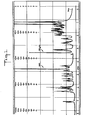
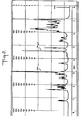
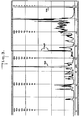
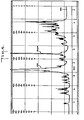
- the structures of the instant compound have been determined by detailed analysis of the various spectral characteristics of the compounds, in particular their nuclear magnetic resonance, mass, ultraviolet and infrared spectra.
- Fields of technology adversely affected by the lack of effective fungicides are many and include the paint, wood, textile, cosmetic, leather, tobacco, fur, rope, paper, pulp, plastics, fuel, rubber and food industries. Fungicides are also utilized for agricultural application, for instance in preventing or minimizing fungus growth on plants, fruits, seeds or soil.
- the compounds of the invention are effective in controlling the growth of Aspergillus species, for example A. niger, A. flavus, A. fumigatus, A. oryzae, A. luchensis, A. versicolor, A. sydowi, A. nidulans, A. flaucus and A. terreus, Penicillium species, for example, P. notatum, P. roqueforti, P. chrysogenum, P. oxalicum, P. spinulosum, P. martensii, P. citrinium, P. digitatum, P. expansum, P. italicum, P. cyclopium, and P.
- Aspergillus species for example A. niger, A. flavus, A. fumigatus, A. oryzae, A. luchensis, A. versicolor, A. sydowi, A. nidulans, A. fla
- fungi may be found on cosmetics, leather, electrical insulation, textiles, and numerous other materials capable of supporting their growth.
- the compounds of this invention may be employed in treatment of plants, soils, fruits, seeds, fur, wood and the like.
- the fungicidal effectiveness of these compounds has been demonstrated against soil fungi, such as Rhizoctonia solani, Fusarium solani, and Pythium ultimum, plant fungi, for instance Erysiphe polygoni and Alternaria solani as well as against saprophytes known to attack wood, pulp and lumber such as Lenzites trabea and Ceratocystis pilifera and the fungus Pullularia pullulans which attacks paint.
- the compounds of this invention are useful in controlling those agricultural fungus infections that attack growing plants.
- the compounds are particularly effective against those fungi, which cause rice blast, tomato late blight, tomato early blight, wheat leaf rust, bean powdery mildew and tomato Fusarium wilt.
- the compounds may be utilized in diverse formulations, solid, including finely divided powders and granular materials as well as liquid, such as solutions, emulsions, suspensions, concentrates, emulsifiable concentrate, slurries and the like, depending upon the application intended and the formulation media desired.
- compositions containing such compounds as essentially active ingredients thereof, which compositions may also include finely divided dry or liquid diluents, extenders, fillers, conditioners and excipients, including various clays, diatomaceous earth, talc, and the like, r ' water and various organic liquids such as lower alkanols, for example ethanol and isopropanol, or kerosene, benzene, toluene and other oetroleum distillate fractions or mixtures thereof.
- lower alkanols for example ethanol and isopropanol, or kerosene, benzene, toluene and other oetroleum distillate fractions or mixtures thereof.
- one or more of the compounds may be uniformly distributed in a vehicle that is chemically compatible with the particular compound selected, noninhibiting with respect to the action of the antifungal and essentially non-injurious to body tissue under the conditions of use.
- the compounds of the invention may be used in combination one with the other as well as with other fungicidally active materials.
- soil as used herein is intended to include all media capable of supporting the growth of plants and may include humus, sand, manure, compost, artifically created plant growth solution, and the like.
- fungicides of the invention are effective against fungal diseases of plants, and may be effectively used either by direct contact with the foliage or systemically, by introduction through the roots.
- Culture MA5000 is maintained in the lyophilized state in a 1.0 ml ampule containing 0.15 ml of a skim milk suspension of the culture.
- the second eluate was concentrated in vacuo to 4 liters and eluted to 16 liters with water.
- This solution was passed through a 16 liter Amberlite XAD-2 column. After a water wash the column was eluted with 48 liters 10% aqueous acetone, 48 liters 20% aqueous acetone and 50% aqueous acetone.
- the third eluate was concentrated to an aqueous solution of 4 liters which was extracted twice with 8.8 liters butanol. The butanol extracts were concentrated to a small volume and the activity precipitated with the addition of hexane.
- the precipitate was chromatographed on a 500 ml Mallinkrodt CC-7 silica gel column in acetone with stepwise increases of methanol in acetone. Active cuts were combined and chromatographed on a 225 ml LH-20 column in methanol. Active cuts were combined and rechromatographed on the same column in 25% acetone/methanol yielding 549 mg. Aliquots of this purified preparation were chromatographed on a preparative RP-2, 10 ⁇ m HPLC column (9 mm x 30 cm) using a methanol - 1% HoAc gradient system. Fractions of the three separated components were combined, concentrated to aqueous solutions and freeze-dried to yield the following samples:
- Example I using "E" Stage fermentation 2 The fermentation of Example I using "E" Stage fermentation 2 was carried out twice and each 400 liter fermentation was filtered 320 liters through a press after addition of celite. Each mycelial cake was extracted with 320 liters of 50% aqueous acetone for one hour. The acetone extracts were filtered and concentrated to aqueous solutions. These extracts and the filtrates were individually extracted with a half volume of methylene chloride and then each extracted twice with a half volume of butanol. The butanol extracts were combined and evaporated onto 8 liters Grace silica gel. The coated gel was eluted sequentially with ethyl acetate, acetone, 10% methanol/acetone and 100% methanol.
- the methanol eluate was concentrated (180 gm) onto 700 ml Baker silica gel and placed on top of a two-liter silica gel column. This column was eluted with acetone, then stepwise with 20-40-75% methanol/acetone.
- the active cuts were concentrated, extracted with butanol (16 am) and chromatographed on a two-liter EM 25-40 ⁇ m RP C-18 column with isocratic elution of 60/40 methanol/0.01M PO 4 pH 6.5. Cuts were combined based on their zone size and analytical HPLC analysis and rechromatographed on a 200 ml EM 25-40 pm RP C-18 column using 55/45 methanol/buffer. Final purification of the individual active components was achieved by chromatography on a 10 ⁇ m RP C-18 column, 9 mm x 50 cm.
Landscapes
- Life Sciences & Earth Sciences (AREA)
- Chemical & Material Sciences (AREA)
- Organic Chemistry (AREA)
- Health & Medical Sciences (AREA)
- Engineering & Computer Science (AREA)
- Zoology (AREA)
- Wood Science & Technology (AREA)
- General Health & Medical Sciences (AREA)
- Bioinformatics & Cheminformatics (AREA)
- Genetics & Genomics (AREA)
- Biochemistry (AREA)
- Biotechnology (AREA)
- General Engineering & Computer Science (AREA)
- Microbiology (AREA)
- Virology (AREA)
- Plant Pathology (AREA)
- Tropical Medicine & Parasitology (AREA)
- Medicinal Chemistry (AREA)
- Molecular Biology (AREA)
- Agronomy & Crop Science (AREA)
- Pest Control & Pesticides (AREA)
- Biomedical Technology (AREA)
- Dentistry (AREA)
- Environmental Sciences (AREA)
- Chemical Kinetics & Catalysis (AREA)
- General Chemical & Material Sciences (AREA)
- Preparation Of Compounds By Using Micro-Organisms (AREA)
- Micro-Organisms Or Cultivation Processes Thereof (AREA)
- Agricultural Chemicals And Associated Chemicals (AREA)
Applications Claiming Priority (2)
| Application Number | Priority Date | Filing Date | Title |
|---|---|---|---|
| US593448 | 1984-03-26 | ||
| US06/593,448 US4575500A (en) | 1984-03-26 | 1984-03-26 | Antifungal substances and process for their production |
Publications (3)
| Publication Number | Publication Date |
|---|---|
| EP0157553A2 true EP0157553A2 (de) | 1985-10-09 |
| EP0157553A3 EP0157553A3 (en) | 1986-02-19 |
| EP0157553B1 EP0157553B1 (de) | 1988-06-01 |
Family
ID=24374752
Family Applications (1)
| Application Number | Title | Priority Date | Filing Date |
|---|---|---|---|
| EP85301983A Expired EP0157553B1 (de) | 1984-03-26 | 1985-03-22 | Antifungische Substanzen und ihre Herstellung und sie enthaltende Mittel |
Country Status (4)
| Country | Link |
|---|---|
| US (1) | US4575500A (de) |
| EP (1) | EP0157553B1 (de) |
| JP (1) | JPS60252491A (de) |
| DE (1) | DE3563052D1 (de) |
Cited By (2)
| Publication number | Priority date | Publication date | Assignee | Title |
|---|---|---|---|---|
| EP0329361A3 (en) * | 1988-02-13 | 1990-10-31 | Suntory Limited | 2-pyranone derivatives and process for production thereof |
| US9376648B2 (en) | 2008-04-07 | 2016-06-28 | The Procter & Gamble Company | Foam manipulation compositions containing fine particles |
Families Citing this family (8)
| Publication number | Priority date | Publication date | Assignee | Title |
|---|---|---|---|---|
| US4806263A (en) * | 1986-01-02 | 1989-02-21 | Ppg Industries, Inc. | Fungicidal and algicidal detergent compositions |
| JP2865302B2 (ja) * | 1988-02-13 | 1999-03-08 | サントリー株式会社 | 2―ピラノン誘導体及びその製造法並びにそれを含む抗菌剤 |
| US4979244A (en) * | 1988-05-23 | 1990-12-25 | Dirk Bastenhof | Wave valve |
| AU649116B2 (en) * | 1991-03-27 | 1994-05-12 | Sankyo Company Limited | New compounds, named the "Leustroducins", their preparation and their therapeutic uses |
| US5700354A (en) * | 1993-06-16 | 1997-12-23 | Ranpak Corp. | Paper strengthened with solubilized collagen and method |
| US5711853A (en) * | 1993-06-16 | 1998-01-27 | Ranpak Corp. | Paper strengthened with solubilized collagen and method |
| US5714042A (en) * | 1993-06-16 | 1998-02-03 | Ranpak Corporation | Paper strengthened with solubilized collagen and method |
| US5316942A (en) * | 1993-06-16 | 1994-05-31 | Battelle Memorial Institute | Process for the production of low-cost soluble high-molecular weight collagen |
-
1984
- 1984-03-26 US US06/593,448 patent/US4575500A/en not_active Expired - Fee Related
-
1985
- 1985-03-22 EP EP85301983A patent/EP0157553B1/de not_active Expired
- 1985-03-22 DE DE8585301983T patent/DE3563052D1/de not_active Expired
- 1985-03-26 JP JP60059695A patent/JPS60252491A/ja active Pending
Non-Patent Citations (2)
| Title |
|---|
| No relevant documents have been disclosed * |
| None * |
Cited By (2)
| Publication number | Priority date | Publication date | Assignee | Title |
|---|---|---|---|---|
| EP0329361A3 (en) * | 1988-02-13 | 1990-10-31 | Suntory Limited | 2-pyranone derivatives and process for production thereof |
| US9376648B2 (en) | 2008-04-07 | 2016-06-28 | The Procter & Gamble Company | Foam manipulation compositions containing fine particles |
Also Published As
| Publication number | Publication date |
|---|---|
| JPS60252491A (ja) | 1985-12-13 |
| EP0157553A3 (en) | 1986-02-19 |
| EP0157553B1 (de) | 1988-06-01 |
| DE3563052D1 (en) | 1988-07-07 |
| US4575500A (en) | 1986-03-11 |
Similar Documents
| Publication | Publication Date | Title |
|---|---|---|
| EP0157553B1 (de) | Antifungische Substanzen und ihre Herstellung und sie enthaltende Mittel | |
| CA1289966C (en) | Antifungal tri-yne carbonates | |
| CA2004197C (en) | Ab-021 antibiotics and process for producing them | |
| US5028537A (en) | Novel antifungal substances and process for their production | |
| EP0396378B1 (de) | Fungizide Mittel | |
| JP2865302B2 (ja) | 2―ピラノン誘導体及びその製造法並びにそれを含む抗菌剤 | |
| US5130445A (en) | Antifungal substances and process for their production | |
| NZ227005A (en) | Polycyclic compounds, derivatives of paraherquamide, from fermentation of penicillium charlesii mf 5123; pesticidal compositions | |
| US5164389A (en) | Anthelmintic bioconversion products | |
| EP0329361B1 (de) | 2-Pyranon-Derivat und Verfahren zu dessen Herstellung | |
| US5089530A (en) | Novel fermentation product with antiparasitic activity | |
| US5019593A (en) | Antifungal fermentation products and compositions thereof | |
| US4847284A (en) | Antifungal fermentation product and derivatives and compositions thereof | |
| US5279829A (en) | Fungicidal antibiotic from Streptomyces NCIMB 40212 | |
| EP0293133A2 (de) | Mikroorganismen und Prozesse zur Herstellung von fungiziden Tri-yne-Carbonaten | |
| WO1997023486A1 (en) | Active bio-compounds | |
| US4588822A (en) | Physiologically active substances SS 12538, their preparation and a novel microorganism producing same | |
| AU4945893A (en) | A fungicidal compound | |
| US5196327A (en) | Process for producing antifungal fermentation products and compositions thereof | |
| US6172006B1 (en) | Furyl-pyridone compounds, useful as fungicides and obtained from the fungus Cladobotryum | |
| EP0234752A1 (de) | Antifungizide beta-lactone | |
| US4730039A (en) | Leucanicidin | |
| EP0648214A1 (de) | Verbindungen mit fungiciden aktivität | |
| US5275938A (en) | Process for producing leucanicidin | |
| EP0050964A2 (de) | Makrozyklische Laktone, deren Herstellung und Anwendung als Parasiten tötendes Mittel, deren Zusammensetzungen und eine biologische Züchtung, welche zu ihrer Herstellung dient |
Legal Events
| Date | Code | Title | Description |
|---|---|---|---|
| PUAI | Public reference made under article 153(3) epc to a published international application that has entered the european phase |
Free format text: ORIGINAL CODE: 0009012 |
|
| AK | Designated contracting states |
Designated state(s): CH DE FR GB IT LI NL |
|
| ITCL | It: translation for ep claims filed |
Representative=s name: SOCIETA' ITALIANA BREVETTI S.P.A. |
|
| PUAL | Search report despatched |
Free format text: ORIGINAL CODE: 0009013 |
|
| AK | Designated contracting states |
Designated state(s): CH DE FR GB IT LI NL |
|
| 17P | Request for examination filed |
Effective date: 19860628 |
|
| 17Q | First examination report despatched |
Effective date: 19870819 |
|
| GRAA | (expected) grant |
Free format text: ORIGINAL CODE: 0009210 |
|
| AK | Designated contracting states |
Kind code of ref document: B1 Designated state(s): CH DE FR GB IT LI NL |
|
| ITF | It: translation for a ep patent filed | ||
| REF | Corresponds to: |
Ref document number: 3563052 Country of ref document: DE Date of ref document: 19880707 |
|
| ET | Fr: translation filed | ||
| PGFP | Annual fee paid to national office [announced via postgrant information from national office to epo] |
Ref country code: CH Payment date: 19890207 Year of fee payment: 5 |
|
| PGFP | Annual fee paid to national office [announced via postgrant information from national office to epo] |
Ref country code: DE Payment date: 19890330 Year of fee payment: 5 |
|
| ITTA | It: last paid annual fee | ||
| PG25 | Lapsed in a contracting state [announced via postgrant information from national office to epo] |
Ref country code: FR Effective date: 19890331 |
|
| PGFP | Annual fee paid to national office [announced via postgrant information from national office to epo] |
Ref country code: NL Payment date: 19890331 Year of fee payment: 5 Ref country code: GB Payment date: 19890331 Year of fee payment: 5 |
|
| PLBE | No opposition filed within time limit |
Free format text: ORIGINAL CODE: 0009261 |
|
| STAA | Information on the status of an ep patent application or granted ep patent |
Free format text: STATUS: NO OPPOSITION FILED WITHIN TIME LIMIT |
|
| 26N | No opposition filed | ||
| PG25 | Lapsed in a contracting state [announced via postgrant information from national office to epo] |
Ref country code: GB Effective date: 19900322 |
|
| PG25 | Lapsed in a contracting state [announced via postgrant information from national office to epo] |
Ref country code: LI Effective date: 19900331 Ref country code: CH Effective date: 19900331 |
|
| PG25 | Lapsed in a contracting state [announced via postgrant information from national office to epo] |
Ref country code: NL Effective date: 19901001 |
|
| NLV4 | Nl: lapsed or anulled due to non-payment of the annual fee | ||
| GBPC | Gb: european patent ceased through non-payment of renewal fee | ||
| REG | Reference to a national code |
Ref country code: CH Ref legal event code: PL |
|
| PG25 | Lapsed in a contracting state [announced via postgrant information from national office to epo] |
Ref country code: DE Effective date: 19901201 |
|
| REG | Reference to a national code |
Ref country code: FR Ref legal event code: ST |