EP0154511B1 - Benzopyran racemates useful for treating cardiovascular diseases - Google Patents
Benzopyran racemates useful for treating cardiovascular diseases Download PDFInfo
- Publication number
- EP0154511B1 EP0154511B1 EP85301348A EP85301348A EP0154511B1 EP 0154511 B1 EP0154511 B1 EP 0154511B1 EP 85301348 A EP85301348 A EP 85301348A EP 85301348 A EP85301348 A EP 85301348A EP 0154511 B1 EP0154511 B1 EP 0154511B1
- Authority
- EP
- European Patent Office
- Prior art keywords
- racemate
- racemates
- formula
- acid addition
- pharmaceutical composition
- Prior art date
- Legal status (The legal status is an assumption and is not a legal conclusion. Google has not performed a legal analysis and makes no representation as to the accuracy of the status listed.)
- Expired
Links
- 0 COc1c2OCC(*)Cc2ccc1 Chemical compound COc1c2OCC(*)Cc2ccc1 0.000 description 1
Classifications
-
- A—HUMAN NECESSITIES
- A61—MEDICAL OR VETERINARY SCIENCE; HYGIENE
- A61K—PREPARATIONS FOR MEDICAL, DENTAL OR TOILETRY PURPOSES
- A61K31/00—Medicinal preparations containing organic active ingredients
- A61K31/33—Heterocyclic compounds
- A61K31/335—Heterocyclic compounds having oxygen as the only ring hetero atom, e.g. fungichromin
- A61K31/35—Heterocyclic compounds having oxygen as the only ring hetero atom, e.g. fungichromin having six-membered rings with one oxygen as the only ring hetero atom
-
- C—CHEMISTRY; METALLURGY
- C07—ORGANIC CHEMISTRY
- C07D—HETEROCYCLIC COMPOUNDS
- C07D311/00—Heterocyclic compounds containing six-membered rings having one oxygen atom as the only hetero atom, condensed with other rings
- C07D311/02—Heterocyclic compounds containing six-membered rings having one oxygen atom as the only hetero atom, condensed with other rings ortho- or peri-condensed with carbocyclic rings or ring systems
- C07D311/04—Benzo[b]pyrans, not hydrogenated in the carbocyclic ring
- C07D311/58—Benzo[b]pyrans, not hydrogenated in the carbocyclic ring other than with oxygen or sulphur atoms in position 2 or 4
- C07D311/64—Benzo[b]pyrans, not hydrogenated in the carbocyclic ring other than with oxygen or sulphur atoms in position 2 or 4 with oxygen atoms directly attached in position 8
Definitions
- This invention relates to two racemates of 3,4-dihydro-8-(2'-hydroxy-3'-isopropylamino)propoxy-3-nitroxy-2H-1-benzopyran (to be abbreviated K-351 in this invention), acid addition salts of these racemates, a process for converting the two racemates to each other, and also to a pharmaceutical composition comprising each of the two racemates.
- K-351 has asymmetric carbon atoms at the 3-position of the benzopyran ring and the 2'- position of the side chain, two racemats, i.e. 4 optical isomers, can exist theoretically. However, no mention has previously been made on the racemates or optical isomers of K-351, and no method for their separation or resolution has been known.
- the present inventors have studied the optical isomers of K-351 and their pharmacological activities, and have found that K-351 can be easily separated into two racemates, and the separated two racemates exhibit different pharmacological activities.
- the inventors have further discovered that by selectively administering one of the racemates toa patient according to his condition, the trouble of side effects can be reduced, and a therapeutic effect can be obtained efficiently.
- racemate K-351 A shows toxi ⁇ ity, vasodilating activity and hypotensive activity nearly equivalent to those of K-351 but its beta-blocking activity is about one-tenth of that of K-351
- racemate K-351B has toxicity, vasodilating activity and hypotensive activity nearly equivalent to those of K-351 but its beta-blocking activity is about 2 times as strong as that of K-351.
- the racemate K-351A has been found to be useful as drugs for cardiovascular diseases such as an agent for treating the hypertension of patents who have a tendency to cardiac failure, bradycardia, etc., an agent for treating angina pectoris with a spasm of the coronary artery, and an agent for treating myocardial infarction.
- the racemate K-351B has been found to be useful as drugs for cardiovascular diseases such as hypotensive agent and an antiarrhythmic agent.
- process for converting one of the racemates of 3,4-dihydro-8-(2'-hydroxy-3'-isopropylamino)propoxy-3-nitroxy-2H-1-benzopyran (K-351) into the other, namely the racemate K-351A into the racemate K-351 B or vice versa which comprises reacting said one racemate with a compound represented by the following formula (I) wherein R represents an alkyl, cycloalkyl, aryl or aralkyl group, or its reactive derivative to form a compound represented by the following formula (II) wherein R is as defined above, reacting the resulting compound with an inversion reagent to form an oxazolinium ion represented by the following formula (III) wherein R is as defined above, allowing an acid to act on the oxazolinium ion and then hydrolyzing it.
- the starting racemate K-351A or K-351 B can be separated from K-351 by using a recrystall
- both racemates can be industrially used in good yields by converting one of the racemates into the other desired racemate.
- To convert the racemates it is sufficient only to change the arrangement of one of the 2'-position of the side chain and the 3-position of the benzopyran ring of one of the racemates.
- the crystallization can be performed by known recrystallization techniques. For example, K-351 is dissolved in a solvent such as ethyl acetate, and the first crystals are collected. Recrystallization of the first crystals several times from the same solvent can give the racemate K-351A as a nearly pure product.
- the mother liquor left after collection of the first crystals is concentrated to dryness and an acid such as oxylic acid, acetic acid, fumaric acid and maleic acid is allowed to act on it to form an acid addition salt.
- the salt is recrystallized several times from a solvent such as methanol, ethanol, isopropanol and water either singly or in combination, and then converted to a free base in a customary manner. Recrystallization of the free base from the aforesaid solvents can give pure racemate K-351 B.
- the racemate K-351A is useful as a hypotensive agent having vasodilating action and as agent for treating angina pectoris, myocardial infarction, cardiac failure, etc.
- the racemate K-351 B is useful as a hypotensive agent having beta-blocking action and as an antiarrhythmic agent.
- These racemates may be used as agents for treating cardiovascular diseases in the form of free bases or physiologically acceptable acid addition salts such as salts with hydrochloric acid, sulfuric acid, acetic acid, lactic acid, oxalic acid, maleic acid and p-toluenesulfonic acid.
- a pharmaceutical compositoin comprising (1) an amount, effective for the treatment of cardiovascular diseases, of a racemate K-351A composed of an optical isomer (2'S), (3S) K-351 of the following formula (A-1) and an optical isomer (2'R), (3R) K-351 of the following formula (A-2) or a pharmaceutically acceptable acid addition salt thereof, and (2) a pharmaceutically acceptable diluent or carrier.
- a pharmaceutical composition comprising (1) an amount, effective for the treatment of cardiovascular diseases, of a racemate K-351 B composed of an optical isomer (2'R), (3S) K-351 of the following formula (B-1) and an optical isomer (2'S), (3B) K-351 of the following formula (B-2) or a pharmaceutically acceptable acid addition salt thereof and (2) a pharmaceutically acceptable diluent or carrier.
- the amount of the racemate K-351A or K-351 B or an acid addition salt thereof is, for example, about 0.01 to about 99% by weight based on the total weight of the pharmaceutical composition.
- Liquid or solid carriers or diluents may be used in formulating the pharmaceutical composition of this invention. They may include excipients, binders, lubricants, emulsifiers, etc. known in pharmaceutical production.
- these carriers or diluents include starches such as potato starch, wheat starch, corn starch and rice starch; sugars such as lactose, sucrose, glucose, mannitol and sorbitol; celluloses such as crystalline cellulose, calcium carboxymethyl cellulose and hydroxypropyl cellulose of a low degree of substitution; inorganic substances such as potassium phosphate, calcium sulfate, calcium carbonate and talc; binder compounds such as gelatin, gum arabic, methyl cellulose, sodium carboxymethyl cellulose, polyvinyl pyrrolidone and hydroxypropyl celulose; polyhydric alcohol ester-type nonionic surfactants such as fatty acid monoglycerides, sorbitan fatty acid esters, sucrose
- compositions may be in any dosage forms known in the art of formulating pharmaceutical, such as suppostitories, powders, -granules, tablets, sublingual tablets, liquid preparations, injectable preparations and suspension.
- compositions of this invention may be administered through any of peroral and parenteral routes, such as intravenous, sublingual or interarectal administration.
- peroral and parenteral routes such as intravenous, sublingual or interarectal administration.
- the oral route is preferred.
- the dose may be changed as desired.
- the reacemate K ⁇ 351A or racemate K-351 B may be administered in a dose of about 1 to about 100 mg/body/day, preferably about 5 to about 50 mg/body/ day.
- the compounds of this invention have low toxicity as shown by their acute toxicityu (LD 50 ).
- Acute toxicity:-Racemate K-351A, racemate K-351 B, and K-351 were each subjected to an acute toxicity test using mice and rats, and the LD 50 values of these compounds were determined. The results are shown in Table 1.
- Racemate K-351A, racemate K-351 B, and K-351 were each tested for their antagonistic acition on isoproterenol, i.e. their beta-blocking action, using isolated atrium and trachea of guinea pigs.
- the results are shown in Table 2.
- pA 2 shows the reciprocal logarithm of the molar concentration of each test compound required to shift the dose-response curve of isoproterenol parallel toward a higher dose side by 2 times
- Racemate K-351A, racemate K-351 B, and K-351 were each tested for their antagonistic action on potassium contracture (direct vaso-relaxing activity) and their antagonistic action on the contractile activity of norepinephrine (NE) (alpha-blocking activity) using the isolated superior mesenteric artery of dogs.
- the results are shown in Table 3.
- pD 2 represents the reciprocal logarithm of the molar concentration of each test compound required to inhibit the maximum reaction of potassium (25 m MK + ) by an extent of 50%; and pA 2 represents the reciprocal logarithm of the molar concentration of each test compound required to shift the dose-response curve of norepinephrine paralley toward a high dose side by 2 times.
- Recrystallization of 100 g of K-351 from 500 ml of ethyl acetate gave 70 g of the first crystals. Recrystallization of 70 g of the first crystals from ethyl acetate gave 46 g of the first crystals. The same operation was further repeated twice to give 30 g of racemate K-351A having a purity of 98% as colorless needles having a melting point of 138 to 140°C.
- the oxalate was dissolved in a saturated aqueous solution of sodium hydrogen carbonate, and extracted and recrystallized from ethyl acetate to give 17.1 g of racemate K-351 B having a purity of about 98% as colorless needles having a melting point of 118 to 119°C.
- the ingredients in A) were uniformly mixed and then kneaded with the solution B).
- the mixture was granulated by an extrusion method, dried in vacuum at 50°C, and sieved to form granules.
- the above ingredients were uniformly mixed and by adding 25 parts of ethanol, kneaded.
- the mixture was granulated by a crushing method, then dried in vacuum at 50°C, and sieved to form subtilized granules.
Landscapes
- Chemical & Material Sciences (AREA)
- Health & Medical Sciences (AREA)
- Organic Chemistry (AREA)
- Animal Behavior & Ethology (AREA)
- Epidemiology (AREA)
- Life Sciences & Earth Sciences (AREA)
- Pharmacology & Pharmacy (AREA)
- General Health & Medical Sciences (AREA)
- Public Health (AREA)
- Veterinary Medicine (AREA)
- Medicinal Chemistry (AREA)
- Pharmaceuticals Containing Other Organic And Inorganic Compounds (AREA)
- Pyrane Compounds (AREA)
Description
- This invention relates to two racemates of 3,4-dihydro-8-(2'-hydroxy-3'-isopropylamino)propoxy-3-nitroxy-2H-1-benzopyran (to be abbreviated K-351 in this invention), acid addition salts of these racemates, a process for converting the two racemates to each other, and also to a pharmaceutical composition comprising each of the two racemates.
- K-351 is a known compound represented by the following formula

- Since K-351 has asymmetric carbon atoms at the 3-position of the benzopyran ring and the 2'- position of the side chain, two racemats, i.e. 4 optical isomers, can exist theoretically. However, no mention has previously been made on the racemates or optical isomers of K-351, and no method for their separation or resolution has been known.
- The present inventors have studied the optical isomers of K-351 and their pharmacological activities, and have found that K-351 can be easily separated into two racemates, and the separated two racemates exhibit different pharmacological activities. The inventors have further discovered that by selectively administering one of the racemates toa patient according to his condition, the trouble of side effects can be reduced, and a therapeutic effect can be obtained efficiently.
- Investigations of the present inventors have shown that separation of K-351 by, for example, recrystallization gives two kinds of crystals, i.e. a racemate having high crystallinity and a racemate having low crystallinity. A high-performance liquid chromatographic study of derivatives of these racemates has shown that the racemate having high crystallinity is a racemate (to be referred to as racemate K-351A in this invention) composed of an optical isomer (2'S), (3S) K-351 of the following formula (A-1) and an optical isomer (2'R), (3R) K-351 of the following formula (A-2), and that the racemate having low crystallinity is a racemate (to be referred to as racemate K-351 B in this invention) composed of an optical isomer (2'R), (3S) K-351 and an optical isomer (2'S), (3R) K-351 of the following formula (B-2).


- The investigations of the present inventors have also shown that the racemate K-351 A shows toxiεity, vasodilating activity and hypotensive activity nearly equivalent to those of K-351 but its beta-blocking activity is about one-tenth of that of K-351, and that the racemate K-351B has toxicity, vasodilating activity and hypotensive activity nearly equivalent to those of K-351 but its beta-blocking activity is about 2 times as strong as that of K-351. The racemate K-351A has been found to be useful as drugs for cardiovascular diseases such as an agent for treating the hypertension of patents who have a tendency to cardiac failure, bradycardia, etc., an agent for treating angina pectoris with a spasm of the coronary artery, and an agent for treating myocardial infarction. The racemate K-351B has been found to be useful as drugs for cardiovascular diseases such as hypotensive agent and an antiarrhythmic agent.
- It has been found therefore that by separating K-351 into these two racemates K-351 A and K-351 B and administering one of the racemates according to the condition of a patient, the patient can be treated efficiently with reduced mainfestation of side-effects.
- A method of obtaining one of the racemates K-351A and K-351B by separating K-351 into the two racemates and purifying them cannot give the desired one racemate in quantities, and is also disadvantageous in regard to industrial operations and cost. Further investigations of the inventors made in order to overcome this disadvantage have led to the finding an industrially advantageous process for converting the reacemate K-351 A into the racemate K-351 B or vice versa.
- It is an object of this invention therefore to provide novel racemate K-351A and a novel racemate K-351 B, and acid addition salts of these racemates.
- Another object of this is to provide a pharmaceutical composition comprising the novel racemate K-351A, or the novel racemate K-351 B or a pharmaceutically acceptable acid addition salt thereof as an active ingredient.
- Still another object of this invention is to provide a process for converting one of the racemates K-351A and 351B into the other.
- The above and other objects and advantages of this invention will become more apparent from the following description.
- According to this invention, there is provided a racemate selected from the group consisting of a racemate K-351A composed of an optical isomer (2'S), (3S) K-351 of the following formula (A―1) and an optical isomer (2'R), (3R) K-351 of the following formula (A-2)


- According to this invention, there is also provided process for converting one of the racemates of 3,4-dihydro-8-(2'-hydroxy-3'-isopropylamino)propoxy-3-nitroxy-2H-1-benzopyran (K-351) into the other, namely the racemate K-351A into the racemate K-351 B or vice versa, which comprises reacting said one racemate with a compound represented by the following formula (I)


- Application of the above process to the racemate K-351A can effect conversion of (2'S), (3S) K-351 into (2'R), (3S) K-351, and (2'R), (3R) K-351 into (2'S), (3R) K-351. Application of the above process to the racemate K-351 B can effect conversion of (2'R), (3S) K-351 into (2'S), (3S) K-351, and (2'S), (3R) K-351 into (2'R), (3R) K-351.
- According to the above conversion process, both racemates can be industrially used in good yields by converting one of the racemates into the other desired racemate. To convert the racemates, it is sufficient only to change the arrangement of one of the 2'-position of the side chain and the 3-position of the benzopyran ring of one of the racemates. According to the process of this invention, the objective'can be achieved by acylating the side-chain amino group of one of the racemates with the compound of formula (I) or its reactive derivative to form the compound of formula (II), allowing an inversion reagent to act on the compound of formula (II) to form an oxazole ring and form an oxazolinium ion of formula (III), allowing an acid to act on it to cleave the ring and thereby changing the arrangement of the hydroxyl group, and thereafter or simultaneously hydrolyzing the oxazolinium ion, whereby the arrangement of the side-chain 2'-position is converted.
- The conversion of (2'S) K-351 into (2'R) K-351 by the process of this invention can be schematically shown as follows. R in these formulae is as defined hereinabove.


- The individual steps of the conversion process of this invention will be described below in detail. (1) Separation of the racemates K-351A and K-351B from K-351 and their purifiction
- The free base of K-351 is separated into two racemates by recrystallization. A racemate having high crystallinity after recrystallization is racemate K-351A, and a racemate having low crystallinity after recrystallization is racemate K-351 B. Recrystallization solvents that can be used for this purpose include, for example, ethyl acetate, methanol, ethanol, isopropanol, acetone, benzene, touene, chloroform, and tetrahydrofuran.
- The crystallization can be performed by known recrystallization techniques. For example, K-351 is dissolved in a solvent such as ethyl acetate, and the first crystals are collected. Recrystallization of the first crystals several times from the same solvent can give the racemate K-351A as a nearly pure product. The mother liquor left after collection of the first crystals is concentrated to dryness and an acid such as oxylic acid, acetic acid, fumaric acid and maleic acid is allowed to act on it to form an acid addition salt. The salt is recrystallized several times from a solvent such as methanol, ethanol, isopropanol and water either singly or in combination, and then converted to a free base in a customary manner. Recrystallization of the free base from the aforesaid solvents can give pure racemate K-351 B.
- (2) Reaction of the recemate K-351A (or K-351 B) with a carboxylic acid of the following formula

- Examples of the alkyl group for the substituent R of the carboxylic acid of formula (I) are linear or branched alkyl groups having 1 to 5 carbon atoms such as methyl, ethyl, tert.-butyl and tert:-amyl groups. A cyclohexyl group is an example of the cycloalkyl group for R. Examples of the aryl group for R are aryl groups having 6 to 10 carbon atoms such as phenyl, p-(or o-)nitrophenyl and naphthyl groups. Examples of the aralkyl group for R are phenyl-lower alkyl groups which may have a substituent, such as benzyl and p-methoxybenzyl, group. Examples of the reactive derivatives of the carboxylic acid of formula (I) are acid halides such as acid chlorides and bromides, azides, acid anhydrides, mixed acid anhydrides, and active esters such as phenyl, cyanomethyl, N-hydroxysuccinimide, and N-hydroxyphthalimide esters.
- The reaction is carried out preferably in a solvent in the presence of a dehydrating or condensing agent. N,N-dicyclohexylcarbodiimide, for example, can be used as the dehydrating agent. Examples of the condensing agent include chloroformates; and phosphite esters such as diesters of chlorophosphorous acid, monoesters of dichlorophosphorous acid and tetraethyl pyrophosphite. Examples of the solvent are chloroform, tetrahydrofuran, benzene, methylene chloride and mixtures thereof.
- The reaction temperature and time can be properly selected and changed. For example, the reaction may be carried out at a temperature of about -50 to about 100°C for a period of about 1 to about 50 hours.
- The separation and purification of the reaction product can be carried out in a customary manner, for example by solvent extraction or chromatography. Depending upon the reaction conditions, a by-product compound may be formed by the simultaneous esterification of the hydroxyl group at the 2'-position of the side chain with the carboxylic acid of formula (I). Separation of this compound from the desired compound can be carried out easily, for example, by silica gel column chromatography.
- (3) The reaction of the inversion reagent upon the compound of formula (II) results in the formation of an oxazole ring, and an oxazolinium ion of formula (III) is obtained.
- Examples of the inversion reagent include thionyl chloride, p-toluenesulfonyl chloride, benzene sulfonyl chloride, o-(or p-)nitrobenzenesulfonyl chloride, phosphorus trichloride, phosphorus tribromide and phosphorus oxychloride. This reaction can be carried out by allowing, the inversion reagent to act on the compound of formula (II) at about 0 to about 100°C for about 1 to about 100 hours in the presence or absence of a solvent. The solvent may be the same as exemplified hereinabove in section (2). The inversion reagent may be used in excess to cause it to serve concurrently as solvent. The separation and purification of the reaction product (III) can be carried out in a customary manner, for example by solvent extraction or chromatography. The crude product may be used as a starting material for the next step without particularly purifying it.
- (4) The action of an acid on the compound (III) causes cleavage of the ring, and the ester of K-351 represented by formula (IV) is obtained.
- The acid may be an inorganic acid such as hydrochloric acid, sulfuric acid, nitric acid and phosphoric acid, or an organic acid such as acetic acid. The reaction is carried out, for example, in a solvent at about 0 to about 100°C, and is completed, for example, in about 1 to about 30 hours. The solvent may be the same as exemplified in section (2) above. The separation and purification of the reaction product can be carried out in a customary manner, for example by solvent extraction or chromatography. It may also be used directly in the subsequent reaction without purification.
- (5) When the compound of formula (IV) is subsequently hydrolyzed to remove the acyl group, the desired reacemate K-351 B (or K-351A) with the change of the arrangement of the side chain 2'-position can be obtained. The hydrolysis can be carried out by using acids or alkalies. Alkaline hydrolysis is preferred. An alkali hydroxide such as sodium hydroxide and potassium hydroxide is preferably used as the alkali. The reaction is carried out in the aforesaid solvent at a temperature of, for example, about 0 to about 100°C for several minutes to about 20 hours. The separation and purification of the reaction product can be carried out in a customary manner, for example by solvent extraction or chromatography.
- The racemate K-351A is useful as a hypotensive agent having vasodilating action and as agent for treating angina pectoris, myocardial infarction, cardiac failure, etc. The racemate K-351 B is useful as a hypotensive agent having beta-blocking action and as an antiarrhythmic agent. These racemates may be used as agents for treating cardiovascular diseases in the form of free bases or physiologically acceptable acid addition salts such as salts with hydrochloric acid, sulfuric acid, acetic acid, lactic acid, oxalic acid, maleic acid and p-toluenesulfonic acid.
- Thus, according to this invention, there is provided a pharmaceutical compositoin comprising (1) an amount, effective for the treatment of cardiovascular diseases, of a racemate K-351A composed of an optical isomer (2'S), (3S) K-351 of the following formula (A-1) and an optical isomer (2'R), (3R) K-351 of the following formula (A-2)

- According to this invention, there is also provided a pharmaceutical composition comprising (1) an amount, effective for the treatment of cardiovascular diseases, of a racemate K-351 B composed of an optical isomer (2'R), (3S) K-351 of the following formula (B-1) and an optical isomer (2'S), (3B) K-351 of the following formula (B-2)

- In the above pharmaceutical compositions, the amount of the racemate K-351A or K-351 B or an acid addition salt thereof is, for example, about 0.01 to about 99% by weight based on the total weight of the pharmaceutical composition.
- Liquid or solid carriers or diluents may be used in formulating the pharmaceutical composition of this invention. they may include excipients, binders, lubricants, emulsifiers, etc. known in pharmaceutical production. Examples of these carriers or diluents include starches such as potato starch, wheat starch, corn starch and rice starch; sugars such as lactose, sucrose, glucose, mannitol and sorbitol; celluloses such as crystalline cellulose, calcium carboxymethyl cellulose and hydroxypropyl cellulose of a low degree of substitution; inorganic substances such as potassium phosphate, calcium sulfate, calcium carbonate and talc; binder compounds such as gelatin, gum arabic, methyl cellulose, sodium carboxymethyl cellulose, polyvinyl pyrrolidone and hydroxypropyl celulose; polyhydric alcohol ester-type nonionic surfactants such as fatty acid monoglycerides, sorbitan fatty acid esters, sucrose and polyglycerol fatty acid esters; and polyoxyethylene-type nonionic surfactants.
- The pharmaceutical compositions may be in any dosage forms known in the art of formulating pharmaceutical, such as suppostitories, powders, -granules, tablets, sublingual tablets, liquid preparations, injectable preparations and suspension.
- The pharmaceutical compositions of this invention may be administered through any of peroral and parenteral routes, such as intravenous, sublingual or interarectal administration. For long-term administration, the oral route is preferred.
- The dose may be changed as desired. For example, the reacemate K―351A or racemate K-351 B may be administered in a dose of about 1 to about 100 mg/body/day, preferably about 5 to about 50 mg/body/ day. The compounds of this invention have low toxicity as shown by their acute toxicityu (LD50).
- Some examples are given below for testing the pharmacological efficacy of the compounds in accordance with this invention.
- Acute toxicity:-Racemate K-351A, racemate K-351 B, and K-351 were each subjected to an acute toxicity test using mice and rats, and the LD50 values of these compounds were determined. The results are shown in Table 1.

- The results of Table 1 show no clear difference in acute toxicity LD50 value among racemate K-351A, racemate K-351 B, and K-351.
- Racemate K-351A, racemate K-351 B, and K-351 were each tested for their antagonistic acition on isoproterenol, i.e. their beta-blocking action, using isolated atrium and trachea of guinea pigs. The results are shown in Table 2. In the table, pA2 shows the reciprocal logarithm of the molar concentration of each test compound required to shift the dose-response curve of isoproterenol parallel toward a higher dose side by 2 times
-

- The results show that the beta-blocking activity of racemate K-351A is about one-tenth of that of K-351, and the beta-blocking activity of racemate K-351 B is about twice that of K-351.
- Racemate K-351A, racemate K-351 B, and K-351 were each tested for their antagonistic action on potassium contracture (direct vaso-relaxing activity) and their antagonistic action on the contractile activity of norepinephrine (NE) (alpha-blocking activity) using the isolated superior mesenteric artery of dogs. The results are shown in Table 3.
- In the table pD2 represents the reciprocal logarithm of the molar concentration of each test compound required to inhibit the maximum reaction of potassium (25 m MK+) by an extent of 50%; and pA2 represents the reciprocal logarithm of the molar concentration of each test compound required to shift the dose-response curve of norepinephrine paralley toward a high dose side by 2 times.

- The results given in Table 3 demonstrate that there is hardly any difference in vasodilating activity among racemate K-351A, racemate K-351B, and K-351.
- The hypotensive actions of racemate K-351A, racemate K-351 and K-351 were examined on spontaenously hypertensive rats which were conscious and unrestrained. Changes with time of the systolic blood pressure (SBP), diastolic blood pressure (DBP) and heart rate (HR) of the animals were determined, when each of the compounds was adminstered once (10 mg/kg po) and the results are shown in Table 4.
- It is seen that reacemate K-351 B has a slightly stronger hypotensive activity than racemate K-351A, and K-351 shows a hypotensive activity of a degree intermediate between them. However, no essential difference in hypotensive activity is considered to exist among the three compounds tested.

- The following Examples illustrate the present invention more specifically.
- Recrystallization of 100 g of K-351 from 500 ml of ethyl acetate gave 70 g of the first crystals. Recrystallization of 70 g of the first crystals from ethyl acetate gave 46 g of the first crystals. The same operation was further repeated twice to give 30 g of racemate K-351A having a purity of 98% as colorless needles having a melting point of 138 to 140°C.
-
- 1.08 (6H, d, J=6Hz)
- 2.9-2.7 (3H, m,

- 3.03-3.28 (2H, m,
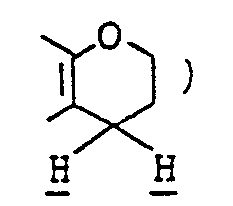
- 3.9-4,1 (3H, m,

- 4.28-4.42 (2H, m,

- 5.45 (lH, m,

- 6.6-6.9 (3H, m, aromatic H)
- IR value:

- High-performance liquid chromatography:
- Measured by using the di-p-nitrobenzoate of the racemic mixture.
- Hold time: 15.2 minutes
- Column: Partisil-10
- Solvent: hexane-ethyl acetate (8:5)
- Flow rate: 0.8 ml/min.
- The initial mother liquor left after separation of reacemate K-351A wa concentrated to dryness and dissolved in methanol and 45 g of oxalic acid was added. The resulting crude oxalate salt was recrystallized four times from methanol to give racemate K-351 B oxalate having a melting point of 179 to 181°C.
- The oxalate was dissolved in a saturated aqueous solution of sodium hydrogen carbonate, and extracted and recrystallized from ethyl acetate to give 17.1 g of racemate K-351 B having a purity of about 98% as colorless needles having a melting point of 118 to 119°C.
- High-performance liquid chromatography:
- Measured under the same conditions as above using the same derivative as above.
- Retention time: 12 minutes
- The NMR and IR values of this product agreed with those of racemate K-351A given above.
- Conversion of reacemate K-351 A to racemate K-351 B:-
- (a) 1.640 g of K-351A obtained above was dissolved in 15 ml of pyridine, and 1.02 g of p-nitrobenzoyl chloride was added. The mixture was stirred overnight at room temperature. To the reaction mixture was added 100 ml of ethyl acetate, and the mixture was washed successively with dilute hydrochloric acid, a dilute aqueous solution of sodium hydrogen carbonate and water. The solvents were evaporated. The residue was separated and purifed by silica gel column chromatography [solvent: benzenechloroform (3:2)]. From the first fraction, 1.047 g (yield 43.8%) of 3,4-dihydro-8-[2'-hydroxy-3'-(n-isopropyl-N-p-nitrobenzoyl)amino]propoxy-3-nitroxy-2H-1-benzopyran as a yellowish brown viscous oil. - NMR value: δ CDCl3, ppm
- 1.25 (6H, d, J=6Hz, CH3)
- 5.42-5.62 (1H, m, C3-H)
- 6.70-7.00 (3H, m,
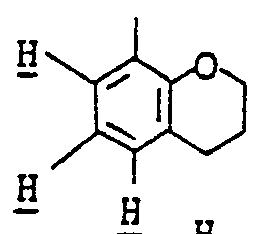
- 7.64 (2H, d, J=7.5Hz, -N

- 8.36 (2H, d, J=7.5Hz, -N-CO


- (b) 325 mg of the resulting monobenzoate was added to 0.50 ml of cooled thionyl chloride, and the mixture was stirred for 3 hours at room temperature. Concentrating the reaction mixture gave a brown viscous oil. The oil was dissolved in 30 ml of ethanol, and 1 ml of 2N hydrochloric acid was added. The mixture was stirred overnight at room temperature. Concentrating the reaction mixture gave 450 mg of crude 3,4-di- hydro-8-(3'-isoporpylamino-2'-p-nitrobenzoyloxy)propoxy-3-nitroxy-2H-1-benzopyran hydrochloride as a brown viscous oil.
- IR value:


- 1630 and 1278 (ON02)
- IR value:
- (c) 450 mg of the resulting crude ester was dissolved in 10 ml of methanol and 1 ml of a 4N aqueous solution of sodium hydroxide. The mixture was stirred for 3 hours at room temperature. The reaction mixture was acidified with dilute hydrochloric acid, and then concentrated. To the residue was added 200 ml of ethyl acetate, and the mixture was extracted with 40 ml of 2N hydrochloric acid. The extract was made basic by adding 2N sodium hydroxide, and then extracted with 50 ml of chloroform. The extract was washed with water, and then the solvent was evaporated. The residue was recrystallized from ethyl acetate/ hexane to give 175 mg (yield 78.5% from mono-N-benzoate) of racemate K-351 B as colorless needles having a melting point of 118 to 121°C.
- The NMR and IR spectra of this product agreed with the spectra of the racemate K-351 B obtained in Example 1. The high-performance liquid chromatogram of this product agreed with that of the derivative of racemate K-351B obtained in Example 1.
- Conversion of racemate K-351B to racemate K-351A
- (a) 1.640 g of racemate K-351 B obtained in Example 1 was treated in the same way as in Example 1, (a) to give 0.725 g (yield 30.3%) of the N-(p-nitro)benzamide of racemate K-351 B as a yellowish brown viscous oil.
- The NMR and IR values of the product agreed with those of the N-(p-nitro)benzamide of racemate K-351 A.
- (b) 480 mg of the resulting N-(p-nitro)benzamide was treated in the same way as in Example 1 (b) and (c) to give 300 mg (yield 91.9%) of racemate K-351 A as colorless needles having a melting point of 139 to 141°C.
- This product agreed in NMR and IR spectra with racemate K-351A obtained in Example 1. The high- perforamance liquid chromatogram of this product determined by using its di-p-nitrobenzoate derivative agreed with that of the racemate K-351A derivative obtained in Example 1.
-

- The above ingredients were uniformly mixed and tableted into tablets each having a diameter of 5 mm and weighing 50 mg by a direct tableting method.
-
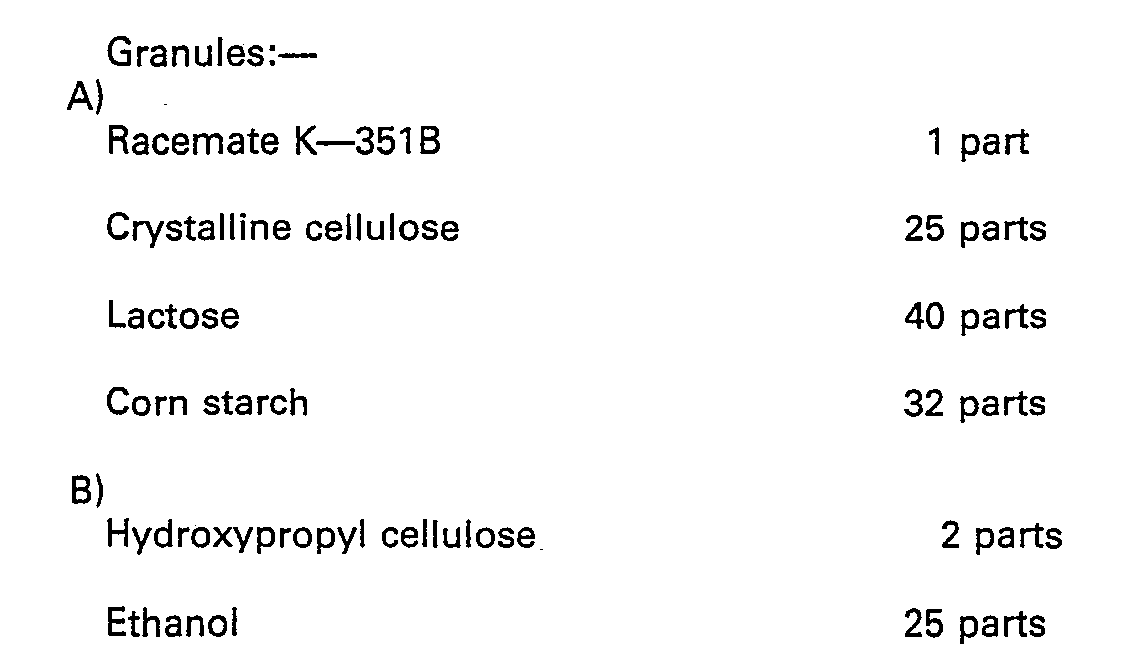
- The ingredients in A) were uniformly mixed and then kneaded with the solution B). The mixture was granulated by an extrusion method, dried in vacuum at 50°C, and sieved to form granules.
-

- The above ingredients were uniformly mixed and by adding 25 parts of ethanol, kneaded. The mixture was granulated by a crushing method, then dried in vacuum at 50°C, and sieved to form subtilized granules.
-

- The above ingredients were uniformly mixed. 90 mg of the resulting mixtures were filled in each of No. 5 lock capsules to form capsules.
Claims (10)


Applications Claiming Priority (2)
| Application Number | Priority Date | Filing Date | Title |
|---|---|---|---|
| JP59036178A JPS60181083A (en) | 1984-02-29 | 1984-02-29 | Novel racemic compound and its conversion |
| JP36178/84 | 1984-02-29 |
Publications (3)
| Publication Number | Publication Date |
|---|---|
| EP0154511A2 EP0154511A2 (en) | 1985-09-11 |
| EP0154511A3 EP0154511A3 (en) | 1986-06-11 |
| EP0154511B1 true EP0154511B1 (en) | 1988-11-09 |
Family
ID=12462480
Family Applications (1)
| Application Number | Title | Priority Date | Filing Date |
|---|---|---|---|
| EP85301348A Expired EP0154511B1 (en) | 1984-02-29 | 1985-02-27 | Benzopyran racemates useful for treating cardiovascular diseases |
Country Status (4)
| Country | Link |
|---|---|
| US (1) | US4727085A (en) |
| EP (1) | EP0154511B1 (en) |
| JP (1) | JPS60181083A (en) |
| DE (1) | DE3566118D1 (en) |
Families Citing this family (5)
| Publication number | Priority date | Publication date | Assignee | Title |
|---|---|---|---|---|
| EP1670459A4 (en) * | 2003-08-20 | 2009-03-25 | Nitromed Inc | NITROSIS AND NITROSYL CARDIOVASCULAR COMPOUNDS, COMPOSITIONS AND METHODS OF USE |
| EP1778617A1 (en) * | 2004-07-20 | 2007-05-02 | NicOx S.A. | Process for preparing nitrooxy esters, nitrooxy thioesters, nitrooxy carbonates and nitrooxy thiocarbonates, intermediates useful in said process and preparation thereof |
| WO2006052899A2 (en) * | 2004-11-08 | 2006-05-18 | Nitromed, Inc. | Nitrosated and nitrosylated compounds, compositions and methods for the treatment of ophthalmic disorders |
| JP4749759B2 (en) * | 2005-05-12 | 2011-08-17 | 株式会社トクヤマ | Method for producing dihydrobenzopyran compound |
| JP4810136B2 (en) * | 2005-06-28 | 2011-11-09 | 株式会社トクヤマ | Method for producing dihydrobenzopyran compound |
Family Cites Families (5)
| Publication number | Priority date | Publication date | Assignee | Title |
|---|---|---|---|---|
| JPS557481A (en) * | 1978-12-18 | 1980-01-19 | Taigaasu Polymer Kk | Production device for steel wire-reinforced resin hose |
| JPS55106619A (en) * | 1979-02-09 | 1980-08-15 | Hitachi Ltd | Mill guide device for rolling mill |
| US4394382A (en) * | 1980-06-17 | 1983-07-19 | Kowa Company, Ltd. | Dihydrobenzopyran compounds and pharmaceutical composition comprising said compounds |
| JPS6054317B2 (en) * | 1980-06-17 | 1985-11-29 | 興和株式会社 | New benzopyran derivatives |
| JPS5710661A (en) * | 1980-06-24 | 1982-01-20 | Canon Inc | Recording liquid |
-
1984
- 1984-02-29 JP JP59036178A patent/JPS60181083A/en active Pending
-
1985
- 1985-02-27 EP EP85301348A patent/EP0154511B1/en not_active Expired
- 1985-02-27 DE DE8585301348T patent/DE3566118D1/en not_active Expired
- 1985-02-28 US US06/706,748 patent/US4727085A/en not_active Expired - Fee Related
Also Published As
| Publication number | Publication date |
|---|---|
| US4727085A (en) | 1988-02-23 |
| EP0154511A3 (en) | 1986-06-11 |
| JPS60181083A (en) | 1985-09-14 |
| EP0154511A2 (en) | 1985-09-11 |
| DE3566118D1 (en) | 1988-12-15 |
Similar Documents
| Publication | Publication Date | Title |
|---|---|---|
| US4757069A (en) | Pyridazodiazepine derivatives | |
| US4312872A (en) | 1-Alka-2,4-dienyl-2-hydroxymethyl-3,4,5-trihydroxypiperidines as inhibitors of α-glucoside hydrolases | |
| US4727085A (en) | Racemates of 3,4-dihydro-8-(2'-hydroxy-3'-isopropylamino)propoxy-3-nitroxy-2H-1-benzopyran, process for converting them and pharmaceutical compositions thereof | |
| US4678803A (en) | Optical isomers, processes for production thereof and pharmaceutical composition thereof | |
| EP0312432A1 (en) | 2,2-Dimethyl chromene derivatives, preparation process and pharmaceutical compositions containing them | |
| CA2433190C (en) | Amlodipine hemimaleate | |
| BE897617A (en) | ACETYLSALICYLIC ACID THIOESTERS PROCESS FOR THEIR PREPARATION AND PHARMACEUTICAL COMPOSITIONS CONTAINING THE SAME | |
| EP0093945B1 (en) | 1,4-dihydropyridine derivatives | |
| US4794115A (en) | Method of treating hyperlipemia | |
| JPS6225149B2 (en) | ||
| EP0266956A2 (en) | Azulene derivatives and pharmaceutical compositions containing them | |
| EP0124777B1 (en) | 1,4-dihydropyridine derivatives | |
| US3043746A (en) | 2-(4-biphenylyl)-delta-hexenoic acid and derivatives as anticholesterinemic agents | |
| CA1039728A (en) | Reserpine derivatives | |
| US4358441A (en) | Nicotinic derivatives of glucosamine and related pharmaceutical compositions | |
| US4883796A (en) | Oxime ethers of 2,6-dioxabicyclo(3.3.0)octanones, and compositions and methods for treatment of a cardiac disease or circulatory with them | |
| JPS6012358B2 (en) | Production method of new antibiotic compound | |
| BE900370R (en) | 4-1-Hydroxy-ureido or carboxy-amino 1,3,2-oxaza:phosphorin(s) - cytotoxic agents for malignant tumours and leukaemia having lower toxicity than cyclo-phosphamide | |
| JPH02111778A (en) | Nigerishin derivative and its production | |
| US4769374A (en) | Tetrahydroisoquinoline ethyl esters of 1,4-dihydropyridines and antihypertensive compositions | |
| US4672055A (en) | Erythromycin salt with mucosecretolytic and fluidizing activity and pharmaceutical compositions thereof | |
| EP0175850B1 (en) | Derivative of cyclohexenemethanol having a mucosecretolytic activity, process for its preparation and pharmaceutical compositions containing the same | |
| US5149865A (en) | New p-oxibenzoic acid derivatives, process for their preparation and their use as drug | |
| KR950013764B1 (en) | Pyroglutamide derivatives, method of preparing them and antidementia composition containing them | |
| KR930011040B1 (en) | Novel benzopyran derivatives and process for preparation thereof |
Legal Events
| Date | Code | Title | Description |
|---|---|---|---|
| PUAI | Public reference made under article 153(3) epc to a published international application that has entered the european phase |
Free format text: ORIGINAL CODE: 0009012 |
|
| AK | Designated contracting states |
Designated state(s): BE CH DE FR GB IT LI NL SE |
|
| PUAL | Search report despatched |
Free format text: ORIGINAL CODE: 0009013 |
|
| AK | Designated contracting states |
Kind code of ref document: A3 Designated state(s): BE CH DE FR GB IT LI NL SE |
|
| 17P | Request for examination filed |
Effective date: 19860818 |
|
| 17Q | First examination report despatched |
Effective date: 19871228 |
|
| GRAA | (expected) grant |
Free format text: ORIGINAL CODE: 0009210 |
|
| AK | Designated contracting states |
Kind code of ref document: B1 Designated state(s): BE CH DE FR GB IT LI NL SE |
|
| ITF | It: translation for a ep patent filed | ||
| REF | Corresponds to: |
Ref document number: 3566118 Country of ref document: DE Date of ref document: 19881215 |
|
| ET | Fr: translation filed | ||
| PLBE | No opposition filed within time limit |
Free format text: ORIGINAL CODE: 0009261 |
|
| STAA | Information on the status of an ep patent application or granted ep patent |
Free format text: STATUS: NO OPPOSITION FILED WITHIN TIME LIMIT |
|
| 26N | No opposition filed | ||
| ITTA | It: last paid annual fee | ||
| EAL | Se: european patent in force in sweden |
Ref document number: 85301348.0 |
|
| PGFP | Annual fee paid to national office [announced via postgrant information from national office to epo] |
Ref country code: FR Payment date: 19970211 Year of fee payment: 13 |
|
| PGFP | Annual fee paid to national office [announced via postgrant information from national office to epo] |
Ref country code: SE Payment date: 19970217 Year of fee payment: 13 |
|
| PGFP | Annual fee paid to national office [announced via postgrant information from national office to epo] |
Ref country code: GB Payment date: 19970218 Year of fee payment: 13 |
|
| PGFP | Annual fee paid to national office [announced via postgrant information from national office to epo] |
Ref country code: NL Payment date: 19970227 Year of fee payment: 13 |
|
| PGFP | Annual fee paid to national office [announced via postgrant information from national office to epo] |
Ref country code: DE Payment date: 19970307 Year of fee payment: 13 |
|
| PGFP | Annual fee paid to national office [announced via postgrant information from national office to epo] |
Ref country code: CH Payment date: 19970311 Year of fee payment: 13 |
|
| PGFP | Annual fee paid to national office [announced via postgrant information from national office to epo] |
Ref country code: BE Payment date: 19970410 Year of fee payment: 13 |
|
| PG25 | Lapsed in a contracting state [announced via postgrant information from national office to epo] |
Ref country code: GB Free format text: LAPSE BECAUSE OF NON-PAYMENT OF DUE FEES Effective date: 19980227 |
|
| PG25 | Lapsed in a contracting state [announced via postgrant information from national office to epo] |
Ref country code: SE Free format text: LAPSE BECAUSE OF NON-PAYMENT OF DUE FEES Effective date: 19980228 Ref country code: LI Free format text: LAPSE BECAUSE OF NON-PAYMENT OF DUE FEES Effective date: 19980228 Ref country code: FR Free format text: THE PATENT HAS BEEN ANNULLED BY A DECISION OF A NATIONAL AUTHORITY Effective date: 19980228 Ref country code: CH Free format text: LAPSE BECAUSE OF NON-PAYMENT OF DUE FEES Effective date: 19980228 Ref country code: BE Free format text: LAPSE BECAUSE OF NON-PAYMENT OF DUE FEES Effective date: 19980228 |
|
| BERE | Be: lapsed |
Owner name: KOWA CY LTD Effective date: 19980228 |
|
| PG25 | Lapsed in a contracting state [announced via postgrant information from national office to epo] |
Ref country code: NL Free format text: LAPSE BECAUSE OF NON-PAYMENT OF DUE FEES Effective date: 19980901 |
|
| GBPC | Gb: european patent ceased through non-payment of renewal fee |
Effective date: 19980227 |
|
| REG | Reference to a national code |
Ref country code: CH Ref legal event code: PL |
|
| EUG | Se: european patent has lapsed |
Ref document number: 85301348.0 |
|
| NLV4 | Nl: lapsed or anulled due to non-payment of the annual fee |
Effective date: 19980901 |
|
| PG25 | Lapsed in a contracting state [announced via postgrant information from national office to epo] |
Ref country code: DE Free format text: LAPSE BECAUSE OF NON-PAYMENT OF DUE FEES Effective date: 19981103 |
|
| REG | Reference to a national code |
Ref country code: FR Ref legal event code: ST |