EP0150598B1 - Production of reinforced rubber composition - Google Patents
Production of reinforced rubber composition Download PDFInfo
- Publication number
- EP0150598B1 EP0150598B1 EP84308713A EP84308713A EP0150598B1 EP 0150598 B1 EP0150598 B1 EP 0150598B1 EP 84308713 A EP84308713 A EP 84308713A EP 84308713 A EP84308713 A EP 84308713A EP 0150598 B1 EP0150598 B1 EP 0150598B1
- Authority
- EP
- European Patent Office
- Prior art keywords
- rubber
- weight
- parts
- thermoplastic polymer
- synthetic rubber
- Prior art date
- Legal status (The legal status is an assumption and is not a legal conclusion. Google has not performed a legal analysis and makes no representation as to the accuracy of the status listed.)
- Expired
Links
Classifications
-
- C—CHEMISTRY; METALLURGY
- C08—ORGANIC MACROMOLECULAR COMPOUNDS; THEIR PREPARATION OR CHEMICAL WORKING-UP; COMPOSITIONS BASED THEREON
- C08G—MACROMOLECULAR COMPOUNDS OBTAINED OTHERWISE THAN BY REACTIONS ONLY INVOLVING UNSATURATED CARBON-TO-CARBON BONDS
- C08G81/00—Macromolecular compounds obtained by interreacting polymers in the absence of monomers, e.g. block polymers
- C08G81/02—Macromolecular compounds obtained by interreacting polymers in the absence of monomers, e.g. block polymers at least one of the polymers being obtained by reactions involving only carbon-to-carbon unsaturated bonds
- C08G81/024—Block or graft polymers containing sequences of polymers of C08C or C08F and of polymers of C08G
- C08G81/028—Block or graft polymers containing sequences of polymers of C08C or C08F and of polymers of C08G containing polyamide sequences
-
- C—CHEMISTRY; METALLURGY
- C08—ORGANIC MACROMOLECULAR COMPOUNDS; THEIR PREPARATION OR CHEMICAL WORKING-UP; COMPOSITIONS BASED THEREON
- C08K—Use of inorganic or non-macromolecular organic substances as compounding ingredients
- C08K7/00—Use of ingredients characterised by shape
- C08K7/02—Fibres or whiskers
-
- C—CHEMISTRY; METALLURGY
- C08—ORGANIC MACROMOLECULAR COMPOUNDS; THEIR PREPARATION OR CHEMICAL WORKING-UP; COMPOSITIONS BASED THEREON
- C08L—COMPOSITIONS OF MACROMOLECULAR COMPOUNDS
- C08L21/00—Compositions of unspecified rubbers
-
- C—CHEMISTRY; METALLURGY
- C08—ORGANIC MACROMOLECULAR COMPOUNDS; THEIR PREPARATION OR CHEMICAL WORKING-UP; COMPOSITIONS BASED THEREON
- C08L—COMPOSITIONS OF MACROMOLECULAR COMPOUNDS
- C08L51/00—Compositions of graft polymers in which the grafted component is obtained by reactions only involving carbon-to-carbon unsaturated bonds; Compositions of derivatives of such polymers
- C08L51/08—Compositions of graft polymers in which the grafted component is obtained by reactions only involving carbon-to-carbon unsaturated bonds; Compositions of derivatives of such polymers grafted on to macromolecular compounds obtained otherwise than by reactions only involving unsaturated carbon-to-carbon bonds
-
- C—CHEMISTRY; METALLURGY
- C08—ORGANIC MACROMOLECULAR COMPOUNDS; THEIR PREPARATION OR CHEMICAL WORKING-UP; COMPOSITIONS BASED THEREON
- C08L—COMPOSITIONS OF MACROMOLECULAR COMPOUNDS
- C08L77/00—Compositions of polyamides obtained by reactions forming a carboxylic amide link in the main chain; Compositions of derivatives of such polymers
-
- C—CHEMISTRY; METALLURGY
- C08—ORGANIC MACROMOLECULAR COMPOUNDS; THEIR PREPARATION OR CHEMICAL WORKING-UP; COMPOSITIONS BASED THEREON
- C08L—COMPOSITIONS OF MACROMOLECULAR COMPOUNDS
- C08L9/00—Compositions of homopolymers or copolymers of conjugated diene hydrocarbons
-
- C—CHEMISTRY; METALLURGY
- C08—ORGANIC MACROMOLECULAR COMPOUNDS; THEIR PREPARATION OR CHEMICAL WORKING-UP; COMPOSITIONS BASED THEREON
- C08L—COMPOSITIONS OF MACROMOLECULAR COMPOUNDS
- C08L2312/00—Crosslinking
- C08L2312/04—Crosslinking with phenolic resin
-
- Y—GENERAL TAGGING OF NEW TECHNOLOGICAL DEVELOPMENTS; GENERAL TAGGING OF CROSS-SECTIONAL TECHNOLOGIES SPANNING OVER SEVERAL SECTIONS OF THE IPC; TECHNICAL SUBJECTS COVERED BY FORMER USPC CROSS-REFERENCE ART COLLECTIONS [XRACs] AND DIGESTS
- Y10—TECHNICAL SUBJECTS COVERED BY FORMER USPC
- Y10T—TECHNICAL SUBJECTS COVERED BY FORMER US CLASSIFICATION
- Y10T152/00—Resilient tires and wheels
- Y10T152/10—Tires, resilient
Definitions
- the present invention relates to a process for producing a novel reinforced composition having an excellent productivity and workability and capable of providing a vulcanizate having an excellent strength and modulus, and also to a vulcanizate obtained therefrom.
- Reinforced rubber compositions used in tires have heretofore been prepared by incorporating short fibers made of, for example, nylon (i.e., polyamide), polyester, or formalized polyvinyl alcohol, into vulcanizable rubber.
- the reinforced rubber compositions thus produced have a disadvantage in that the strength and modulus of the vulcanizates derived therefrom, especially at high elongation, are not sufficiently high. This is because the diameter of the fibers is large and no bonding occurs between the fibers and the rubber.
- reinforced rubber compositions capable of providing vulcanizates having a higher strength and modulus.
- Japanes Unexamined Patent Publication (Kokai) No. 53-8682 proposes both a process for reinforcing elastomer and a reinforced elastomer composition.
- a fiber-forming polymer is mixed with rubber followed by extrusion of the resultant mixture.
- the reinforced rubber composition thus obtained, however, has the disadvantages of low tensile strength, low modulus at a high elongation, and low peeling strength which exhibits an adhesive force with other materials, of the vulcanizates thereof because fibers having a large diameter and film are formed and because no bonding occurs between the rubber and polymer (i.e., fiber) at the interface of the fibers and the rubber.
- a fiber-reinforced rubber composition suitable for use as parts of a tire cannot be obtained according to this proposal.
- the present inventors proposed a process for producing fiber-reinforced rubber compositions, in Japanese Patent Application No. 56-117044.
- 100 parts by weight of vulcanizable rubber, 1 to 70 parts by weight of nylon having a number-average molecular weight of less than 200,000, and 0.2 to 2.5 parts by weight, based on 100 parts by weight of the total amount of the rubber and the thermoplastic polymer, of a resol type alkylphenol formaldehyde resin precondensate are mixed together at a temperature of not less than the melting point of the thermoplastic polymer, but not more than 270°C, the mixture is extruded from an extruder at a temperature of not less than the melting point of the thermoplastic polymer, but not more than 270°C, and the extrudate is drawn at a temperature of less than the melting point of the thermoplastic polymer.
- EP 079718 describes a fibre-reinforced rubber composition in which vulcanizable rubber and a thermoplastic polymer having amide groups are grafted to each other through a resol-type alkylphenol formaldehyde precondensate or a novolak type phenol formaldehyde resin precondensate at an interface of the fibre. In this process no tackifier is present in the mixture in which grafting takes place.
- An object of the present invention is to eliminate the above-mentioned disadvantages of the prior art and to provide a process for producing a reinforced rubber composition capable of providing a vulcanizate having an excellent strength and modulus.
- a reinforced rubber composition having an excellent productivity and working properties and capable of providing a vulcanizate having an excellent modulus at both low and high elongation and an excellent tensile strength and adhesive force, can be produced.
- a tackifier should be included in the vulcanizable synthetic rubber other than butadiene rubber.
- the vulcanizable synthetic rubbers usable in the present invention are those, with the exception of butadiene rubbers, e.g., butadiene rubber (BR), styrene-butadiene rubber (SBR), and nitrile-butadiene rubber (NBR), which can be vulcanized to form rubber elastic articles.
- BR butadiene rubber
- SBR styrene-butadiene rubber
- NBR nitrile-butadiene rubber
- Typical examples of such rubber are polyisoprene (IR), polychloroprene (CR), butyl rubber (IIR), chlorinated butyl rubber (CIIR), brominated butyl rubber (BIIR), and ethylene-propylene rubber (EPDM). These synthetic rubbers can be used alone or in any mixture thereof.
- IR isoprene rubber
- IIR butyl rubber
- EPDM ethylene-propylene rubber
- the ML, +4 (100°C) of the vulcanizable synthetic rubber is preferably 30 to 200.
- Tackifiers usable in the present invention are those which are compatible with the above-mentioned synthetic rubber, which exhibit the desired tackifying effect on the synthetic rubber, and which are not reactive with the synthetic rubber or which have a very low reactivity with the synthetic rubber (i.e., no substantial reaction occurs, upon heating, between the synthetic rubber and the tackifier).
- Typical examples of the tackifiers are cumarone resins such as cumarone-indene resin, non-reactive alkylphenol-formaldehyde resins, the rosin-modified products thereof, and modified abeitic acid derivatives thereof, alkylphenol-acetylene resins, hydrogenated rosin and the modified products thereof, terpene-modified phenol resin and polyterpene resin, petroleum hydrocarbon resins such as polybutene, and rosin derivatives such as zinc resinate.
- cumarone resins such as cumarone-indene resin, non-reactive alkylphenol-formaldehyde resins, the rosin-modified products thereof, and modified abeitic acid derivatives thereof, alkylphenol-acetylene resins, hydrogenated rosin and the modified products thereof, terpene-modified phenol resin and polyterpene resin, petroleum hydrocarbon resins such as polybutene, and rosin derivatives such as zinc resinate.
- the tackifier is used in the present invention in an amount of 0.5 to 20 parts by weight, preferably, 0.5 to 10 parts by weight, based on 100 parts by weight of the synthetic rubber other than butadiene rubber such as BR and SBR (i.e., "the synthetic rubber” hereinbelow).
- thermoplastic polymer having -(CO)-NH- groups can be dispersed in the form of fine fibres in the synthetic rubber, in spite of the use of the synthetic rubber, by including the tackifier in the specified synthetic rubber.
- the above-mentioned vulcanizable synthetic rubber having the tackifier dispersed therein should be used as a continuous phase and the thermoplastic polymer having -(CO)NH- groups should be dispersed in the form of fine fibres in the continuous phase.
- thermoplastic polymers having groups are those having a melting point of 170°C to 235°C, preferably 190°C to 225°C, and more preferably 200°C to 220°C, for example, nylon such as nylon 6, nylon 610, nylon 12, nylon 611, and nylon 612; polyurea such as polyheptanethylene urea and polyundecamethylene urea; and polyurethane. These materials can be used alone or in any mixture thereof. Of these polymers, nylon is preferably used in the present invention.
- the thermplastic polymers used in the present invention preferably have a number-average molecular weight of 200,000 or less. Furthermore, these polymers may be copolymers of monomers having -CONH group and monomers having the other groups.
- the thermoplastic polymer is used in an amount of 1 to 200 parts bv weight, preferably 30 to 200 parts by weight, based on 100 parts by weight of the synthetic rubber.
- the use of a too small amount of the thermoplastic polymer does not tend to improve the modulus, whereas the use of a too large amount of the thermoplastic polymer tends to result in the decrease in the strength and adhesion properties.
- a desired rubber composition capable of providing a vulcanizate having a large tensile strength and a large adhesive force to other substrates can be obtained by dispersing the specified thermoplastic polymer in the form of fine fibres in the above-mentioned synthetic rubber.
- the fine fibres of the thermoplastic polymer dispersed in the above-mentioned vulcanizable synthetic rubber have an average diameter of 0.05 to 0.8 um, preferably 0.05 to 0.3 pm. 90% by weight or more of these fine fibres should preferably have a diameter of not more than 1 ⁇ m and a circular cross-section.
- the length of the fibres is preferably 10 pm or more and 90% by weight or more of these fine fibres should preferably have a length of not more than 1000 ⁇ m.
- thermoplastic polymer and vulcanizable synthetic rubber should be grafted through a novolak type phenol resin at the interface of the above-mentioned fibres and the synthetic rubber.
- the novolak type phenol formaldehyde resins usable in the present invention are soluble and meltable resins, or their modified products, obtained from condensation reactions of phenol such as phenol or bisphenol with formaldehyde (or paraformaldehyde) in the presence of a known acidic catalyst such as sulfuric acid, hydrochloric acid, phosphoric acid, or oxalic acid.
- the novolak type phenol formaldehyde resin is used in an amount of 0.2 to 5 parts by weight, preferably 0.5 to 3 parts by weight, based on 100 parts by weight of the total amount of the synthetic rubber and the thermoplastic polymer.
- the use of a too small amount of the novolak type phenol formaldehyde resin tends to decrease the strength and adhesion properties, whereas the use of a too large amount of the novolak type phenol formaldehyde resin tends to result in the decrease in the modulus.
- 100 parts by weight of the vulcanizable synthetic rubber, 1 to 20 parts by weight of the thermoplastic polymer, 0.5 to 20 parts by weight of the tackifier, 0.2 to 5 parts by weight, based on 100 parts by weight of the total amount of the synthetic rubber and the thermoplastic polymer, of the novolak type phenol resin, and 1 to 50 parts by weight, based on 100 parts by weight of the novolak type phenol resin, of a compound capable of providing formaldehyde upon heating (i.e., "a formaldehyde-producing compound”) are mixed at a temperature of not less than the melting point of the thermoplastic, especially the melting point plus 5°C or more but not more than 260°C, for 1 to 30 minutes, especially 1 to 15 minutes, by using, for example, a Brabender plastograph, Banbury mixer, or a roll mill, preferably under an inert gas atmosphere.
- thermoplastic polymer can be dispersed in the form of fine fibers in a continuous phase of the synthetic rubber and the thermoplastic polymer and the synthetic rubber are grafted through the novolak type phenol resin at the interface of the fibers.
- the extruded strands can be wound (or taken off) and then the strands may be rolled (or stretched) at a temperature lower than the melting point of the thermoplastic polymer.
- the formaldehyde-producing compounds usable in the present invention are those capable of producing formaldehyde upon heating.
- examples of such compounds are hexamethylene tetramine, acetaldehyde ammonia having the formula paraformaldehyde, a-polyoxymethylene, polyhydric methylol melamine derivatives, oxazolidine derivatives, and polyhydric methylol acetylene urea. These compounds can be used alone or in any mixture thereof.
- the order of the addition of the above-mentioned components in the mixing step of the present invention is not specifically limited. However, the following method is most desirable. That is, the vulcanizable synthetic rubber and, optionally, an antioxidant are first charged into a mixing device to effect mastication of the rubber. Then, the thermoplastic polymer is charged into the mixing device to effect the mixing. The thermoplastic polymer is melted during the mixing and the tackifier and the novolak type phenol resin are then charged into the mixing device. After the mixing, the formaldehyde-producing compound is charged and the mixture is mixed for, for example, a further 1 to 30 minutes.
- thermoplastic polymer can be finely and uniformly dispersed in the synthetic rubber having the tackifier incorporated thereinto and the synthetic rubber and the thermoplastic polymer are grafted through the novolak type phenol resin.
- the preferable graft ratio of the reinforced rubber composition is 5% to 30% by weight, more preferably 10% to 30% by weight.
- graft ratio used herein means the percent ratio of the weight of the vulcanizable synthetic rubber graft bonded to the fibers of the thermoplastic polymer in an interface of the fibers to the weight of the thermoplastic polymer fibers in the vulcanizable synthetic rubber (i.e., synthetic rubber/thermoplastic polymer fiberx100).
- a conventional low volatile- antioxidant i.e, an aging prevention agent
- antioxidants are N - (3 - methacryloyloxy - 2 - hydroxypropyl) - N' - phenyl - p - phenylenediamine, phenyl - a - naphthylamine, phenyl - (3 - naphthylamine, N,N' - diphenyl - p - phenylenediamine, N - isopropyl - N' - phenyl - p - phenylenediamine, N - cyclohexyl - N' - phenyl - p - phenylenediamine, 2,6 - di - tert - butyl -
- the extrusion of the mixture may be carried out through, for example, a circular die or a rectangular die to form an extrudate in the form of a strand or sheet.
- a circular die a die having an extruding nozzle with an inner diameter of 0.1 to 5 mm and a ratio (UD) of length (L) to the inner diameter (D) of 1 to 20 is preferable.
- a rectangular die a die having a slit gap of 0.1 to 5 mm, a width of 0.2 to 200 mm, and a die land length of 10 to 20 mm is preferable.
- the circular die is most desirable. Circular dies having either one extruding nozzle or many extruding nozzles (i.e., multifold type) can be used in the practice of the present invention.
- the mixture obtained above is then extruded by any conventional extruding means such as a screw type extruder.
- the extrusion can be carried out at a screw tip temperature of not less than the melting point of the thermoplastic polymer but not more than 270°C and at a die temperature of not less than the melting point, more preferably not less than the melting point plus 5°C of the thermoplastic polymer but not more than 270°C, more preferably not more than 260°C.
- the extrudate of the present reinforced rubber composition extruded from the extrusion nozzles is first cooled to a temperature of less than the melting point of the thermoplastic polymer by air cooling, water cooling, or inert solvent cooling (e.g., cooling in which cooled methanol is used) or by making the distance between the die and the winding machine (or take-up machine) longer, with or without stretching, preferably while the extrudate is continuously stretched.
- the cooled extrudate is wound by a winding machine such as a bobbin or take-up rolls at a winding speed of, for example, 1 to 100 m/min, more preferably 5 to 100 m/min.
- the preferable temperature of the winding machine during winding of the strands is 0°C to 100°C.
- the graft reaction of the synthetic rubber and the thermoplastic polymer is effected through the novolak type phenol resin and, since breakage of the strands rarely occurs during the extrusion, a long run operation and a reinforced rubber composition providing a vulcanizate having excellent fatigue properties can be obtained.
- the reinforced rubber composition of the present invention can be vulcanized to form a vulcanizate, i.e., a reinforced elastic product.
- the reinforced rubber composition can be vulcanized alone or together with an added vulcanizable rubber.
- the vulcanizing agents usable in vulcanization of the present reinforced rubber composition can be any conventional vulcanizing agent such as sulfur, organic peroxides, and sulfur-containing compounds.
- the compounding of the vulcanizing agent into the reinforced rubber composition can be carried out in any conventional manner.
- the desirable amount of the vulcanizing agent is 0.5 to 10 parts by weight based on 100 parts by weight of the rubber.
- additives also can be used in the vulcanization of the present reinforced rubber composition.
- additives are: reinforcing agents such as various grades of carbon black, white carbon, activated calcium carbonate, ultrafine powdered magnesium silicate, high styrene resin, cumarone-indene resin, phenol resin, lignin, modified melamine resin, and petroleum resin; fillers such as various grades of calcium carbonate, basic magnesium carbonate, clay, zinc oxide, diatomacous earth, reclaimed rubber, powdered rubber, and ebonite powder; vulcanization accelerators such as aldehyde ammonias, aldehydeamines, guanidines, thioureas, thiazoles, thiurams, dithiocarbamates, and xanthates; vulcanization accelerator aids such as metal oxides and fatty acid; and antioxidants such as aminealdehydes, amineketones, amines, phenols, imidazo
- the vulcanization per se can be carried out by any conventional method.
- the vulcanization temperature largely depends on the kind of the vulcanizable rubber to be vulcanized and the intended use of the vulcanizate, it is generally 150°C to 180°C.
- the reinforced rubber composition of the present invention can be suitably used as tire inner members such as belts, carcasses, and beads; tire outer members such as treads and sidewalls; industrial applications such as belts and hoses; footwear; and golf balls.
- the novolak type phenol-formaldehyde resin composition (i.e., "550 PL" hereinbelow) used in the following Examples is a commercially available product manufactured by Plastic Industries Ltd.
- This powder crystalline novolak type phenol-formaldehyde which is prepared from the condensation reaction of phenol and paraformaldehyde in the presence of an oxalic acid catalyst, has a softening point of 106°C, a water content of 0.12% by weight, and a free phenol content of 0.12% by weight.
- a 100 parts of isoprene rubber having a ML, +4 (100°C) of 90 (Kuraprene@ IR10 manufactured by Kurarey Co., Ltd.) was charged into a Banbury mixer set at 100°C under N 2 atmosphere and at a rotor revolution number of 155 rpm and was masticated for 30 seconds.
- the M 1+4 (100°C) of the resultant rubber was 60.
- the mixture thus obtained was extruded under nitrogen from a 30 mm ⁇ extruder provided with a 6 hole circular die having an inner nozzle diameter of 2 mm and a ratio (UD) of a length L to an inner diameter D of 2 at a die temperature of 245°C.
- UD ratio of a length L to an inner diameter D of 2 at a die temperature of 245°C.
- the mixture was extruded in the form of a strand.
- the strand was wound through guide rolls onto a bobbin located 3 m below and at a position perpendicularly downward from the nozzle and guide rolls, at a draft ratio of 10 and a winding speed of 20 m/min.
- the desired reinforced rubber composition i.e., masterbatch composition
- a 2 g amount of the reinforced rubber composition obtained in Example 1 obtained above was added to 200 ml of benzene at a room temperature and the rubber content in the composition was dissolved in benzene.
- the slurry thus obtained was centrifugally separated at a room temperature into a solution portion and a precipitation portion.
- the precipitation portion was repeatedly subjected to the above-mentioned procedure seven times. Thereafter, the final precipitation portion obtained was dried to obtain nylon fiber.
- the nylon fiber thus obtained was dissolved in a mixed solvent of phenol and ortho-dichlorobenzene (at a weight ratio of 1:3) and was analyzed according to a 'H nuclear magnetic resonance (NMR) spectrum analysis, using tetramethylsilane as an internal standard.
- NMR nuclear magnetic resonance
- a mol ratio of the 6-nylon and natural rubber was determined by measurement of the area of the signals of the methyl and methylene groups derived from natural rubber, the methylene group adjacent to the CO group, the methylene group adjacent to the NH group, and the other three methylene groups, derived from the 6-nylon.
- the shape of the nylon fiber was observed by a scanning electron microscope (manufactured by Hitachi Ltd.) at a magnification time of 10,000. The fiber was extremely fine and had a circular cross-section.
- the reinforced rubber composition obtained above was vulcanized at a temperature of 150°C for a period of 40 minutes, according to the formulation shown below. The results are also shown in Table 1.
- Reinforced rubber compositions were prepared in the same manner as in Example 1, except that the addition amounts of novolak 550 PL and Tamanol 510 were changed as shown in Table 1.
- the addition amount of hexamethylenetetramine was 10% by weight based on the weight of the novolak 550 PL (This was the same as in the following examples).
- a reinforced rubber composition was prepared in the same manner as in Example 1, except that no Tamanol 510 was used and that the ratio of 6-nylon to isoprene rubber was changed as shown in Table 1.
- Reinforced rubber compositions were prepared in the same manner as in Example 1, except that the amounts of 6-nylon, novolak 550 PL, and Tamanol 510, which were charged into the Banbury mixer, were changed as shown in Table 2.
- a reinforced rubber composition was prepared in the same manner as in Example 1, except that the addition amounts of 6-nylon, novolak 550 PL, and Tamanol 510 were changed as shown in Table 2.
- Reinforced rubber compositions were prepared in the same manner as in Example 1, except that the types of tackifier were changed.
- Reinforced rubber compositions were prepared in the same manner as in Example 1, except that the types of the synthetic rubber and the addition amounts of 6-nylon, novolak 550 PL, and Tamanol 510 were changed as shown in Table 4.
- the fine fibers of the thermoplastic polymer dispersed in the vulcanizable synthetic rubber were in the form of a circular cross-section. 100% by weight of these fine fibers had a diameter of 1 pm or less and an average diameter of about 0.2 pm and 90% by weight or more of these fine fibers had a length of 1000 pm or less.
Landscapes
- Chemical & Material Sciences (AREA)
- Health & Medical Sciences (AREA)
- Chemical Kinetics & Catalysis (AREA)
- Medicinal Chemistry (AREA)
- Polymers & Plastics (AREA)
- Organic Chemistry (AREA)
- Compositions Of Macromolecular Compounds (AREA)
- Other Resins Obtained By Reactions Not Involving Carbon-To-Carbon Unsaturated Bonds (AREA)
Description
- The present invention relates to a process for producing a novel reinforced composition having an excellent productivity and workability and capable of providing a vulcanizate having an excellent strength and modulus, and also to a vulcanizate obtained therefrom.
- Reinforced rubber compositions used in tires have heretofore been prepared by incorporating short fibers made of, for example, nylon (i.e., polyamide), polyester, or formalized polyvinyl alcohol, into vulcanizable rubber. The reinforced rubber compositions thus produced, however, have a disadvantage in that the strength and modulus of the vulcanizates derived therefrom, especially at high elongation, are not sufficiently high. This is because the diameter of the fibers is large and no bonding occurs between the fibers and the rubber. Thus, there is a demand for the development of reinforced rubber compositions capable of providing vulcanizates having a higher strength and modulus.
- Under these circumstances, Japanes Unexamined Patent Publication (Kokai) No. 53-8682 proposes both a process for reinforcing elastomer and a reinforced elastomer composition. According to this proposal, a fiber-forming polymer is mixed with rubber followed by extrusion of the resultant mixture. The reinforced rubber composition thus obtained, however, has the disadvantages of low tensile strength, low modulus at a high elongation, and low peeling strength which exhibits an adhesive force with other materials, of the vulcanizates thereof because fibers having a large diameter and film are formed and because no bonding occurs between the rubber and polymer (i.e., fiber) at the interface of the fibers and the rubber. Thus, a fiber-reinforced rubber composition suitable for use as parts of a tire cannot be obtained according to this proposal.
- To improve conventional reinforced rubber compositions, the present inventors proposed a process for producing fiber-reinforced rubber compositions, in Japanese Patent Application No. 56-117044. According to this process, 100 parts by weight of vulcanizable rubber, 1 to 70 parts by weight of nylon having a number-average molecular weight of less than 200,000, and 0.2 to 2.5 parts by weight, based on 100 parts by weight of the total amount of the rubber and the thermoplastic polymer, of a resol type alkylphenol formaldehyde resin precondensate are mixed together at a temperature of not less than the melting point of the thermoplastic polymer, but not more than 270°C, the mixture is extruded from an extruder at a temperature of not less than the melting point of the thermoplastic polymer, but not more than 270°C, and the extrudate is drawn at a temperature of less than the melting point of the thermoplastic polymer.
- However, this production process still involves practical disadvantages. For example, since a resol type alkylphenol resin capable of reacting with the rubber upon heating is used, the control of the graft reaction between the nylon and the rubber under heating is difficult. Also, the rubber usable in this process is limited to natural rubber, and nylon fibers having a large diameter are sometimes included in the rubber. Furthermore, when the amount of the nylon is more than 70 parts by weight based on 100 parts by weight of the rubber, the nylon is included in the form of film in the rubber. Thus, a reinforced rubber composition having only a small nylon content can be obtained and, therefore, the rubber product obtained by using, as a masterbatch composition, this reinforced rubber composition becomes expensive and does not have sufficiently satisfactory quality.
- EP 079718 describes a fibre-reinforced rubber composition in which vulcanizable rubber and a thermoplastic polymer having amide groups are grafted to each other through a resol-type alkylphenol formaldehyde precondensate or a novolak type phenol formaldehyde resin precondensate at an interface of the fibre. In this process no tackifier is present in the mixture in which grafting takes place.
- An object of the present invention is to eliminate the above-mentioned disadvantages of the prior art and to provide a process for producing a reinforced rubber composition capable of providing a vulcanizate having an excellent strength and modulus.
- Other objects and advantages of the present invention will be apparent from the following description.
- In accordance with the present invention, there is provided a process for producing a reinforced rubber composition comprising the steps of:
- (i) mixing, at a temperature not less than the melting point of the thermoplastic polymer, (a) 100 parts by weight of a vulcanizable synthetic rubber other than a butadiene rubber, (b) 1 to 200 parts by weight of a thermoplastic polymer having

- (ii) extruding the resultant mixture from an extruder followed by winding to thereby disperse the thermoplastic polymer in the form of fine fibres having an average diameter of 0.05 to 0.8 pm in a continuous phase comprising the synthetic rubber; and
- (iii) grafting the vulcanizable synthetic rubber onto the thermoplastic polymer at the interface of the fine fibres through the novolak type phenol resin.
- According to the present invention, a reinforced rubber composition having an excellent productivity and working properties and capable of providing a vulcanizate having an excellent modulus at both low and high elongation and an excellent tensile strength and adhesive force, can be produced.
- It is essential in the present invention that a tackifier should be included in the vulcanizable synthetic rubber other than butadiene rubber.
- The vulcanizable synthetic rubbers usable in the present invention are those, with the exception of butadiene rubbers, e.g., butadiene rubber (BR), styrene-butadiene rubber (SBR), and nitrile-butadiene rubber (NBR), which can be vulcanized to form rubber elastic articles. Typical examples of such rubber are polyisoprene (IR), polychloroprene (CR), butyl rubber (IIR), chlorinated butyl rubber (CIIR), brominated butyl rubber (BIIR), and ethylene-propylene rubber (EPDM). These synthetic rubbers can be used alone or in any mixture thereof. Of these materials, isoprene rubber (IR), butyl rubber (IIR), and ethylene-propylene rubber (EPDM) are preferably used in the present invention. The ML, +4 (100°C) of the vulcanizable synthetic rubber is preferably 30 to 200.
- Tackifiers usable in the present invention are those which are compatible with the above-mentioned synthetic rubber, which exhibit the desired tackifying effect on the synthetic rubber, and which are not reactive with the synthetic rubber or which have a very low reactivity with the synthetic rubber (i.e., no substantial reaction occurs, upon heating, between the synthetic rubber and the tackifier). Typical examples of the tackifiers are cumarone resins such as cumarone-indene resin, non-reactive alkylphenol-formaldehyde resins, the rosin-modified products thereof, and modified abeitic acid derivatives thereof, alkylphenol-acetylene resins, hydrogenated rosin and the modified products thereof, terpene-modified phenol resin and polyterpene resin, petroleum hydrocarbon resins such as polybutene, and rosin derivatives such as zinc resinate. These tackifiers can be used along or in any mixture thereof.
- The tackifier is used in the present invention in an amount of 0.5 to 20 parts by weight, preferably, 0.5 to 10 parts by weight, based on 100 parts by weight of the synthetic rubber other than butadiene rubber such as BR and SBR (i.e., "the synthetic rubber" hereinbelow).
- The use of a too small amount of the tackifier tends to result in poor improvement in the modulus, whereas the use of a too large amount of the tackifier tends to result in the decrease in the strength and adhesion properties.
- According to the present invention, the thermoplastic polymer having -(CO)-NH- groups can be dispersed in the form of fine fibres in the synthetic rubber, in spite of the use of the synthetic rubber, by including the tackifier in the specified synthetic rubber.
- Thus, in the present invention, the above-mentioned vulcanizable synthetic rubber having the tackifier dispersed therein should be used as a continuous phase and the thermoplastic polymer having -(CO)NH- groups should be dispersed in the form of fine fibres in the continuous phase.
- Typical examples of the above-mentioned thermoplastic polymers having
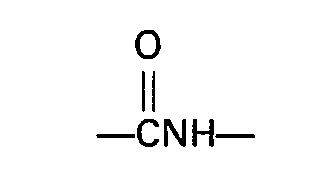
- According to the present invention, the thermoplastic polymer is used in an amount of 1 to 200 parts bv weight, preferably 30 to 200 parts by weight, based on 100 parts by weight of the synthetic rubber. The use of a too small amount of the thermoplastic polymer does not tend to improve the modulus, whereas the use of a too large amount of the thermoplastic polymer tends to result in the decrease in the strength and adhesion properties.
- According to the present invention, a desired rubber composition capable of providing a vulcanizate having a large tensile strength and a large adhesive force to other substrates can be obtained by dispersing the specified thermoplastic polymer in the form of fine fibres in the above-mentioned synthetic rubber.
- The fine fibres of the thermoplastic polymer dispersed in the above-mentioned vulcanizable synthetic rubber have an average diameter of 0.05 to 0.8 um, preferably 0.05 to 0.3 pm. 90% by weight or more of these fine fibres should preferably have a diameter of not more than 1 µm and a circular cross-section. The length of the fibres is preferably 10 pm or more and 90% by weight or more of these fine fibres should preferably have a length of not more than 1000 µm.
- Furthermore, according to the present invention, the above-mentioned thermoplastic polymer and vulcanizable synthetic rubber should be grafted through a novolak type phenol resin at the interface of the above-mentioned fibres and the synthetic rubber.
- The novolak type phenol formaldehyde resins usable in the present invention are soluble and meltable resins, or their modified products, obtained from condensation reactions of phenol such as phenol or bisphenol with formaldehyde (or paraformaldehyde) in the presence of a known acidic catalyst such as sulfuric acid, hydrochloric acid, phosphoric acid, or oxalic acid.
- The novolak type phenol formaldehyde resin is used in an amount of 0.2 to 5 parts by weight, preferably 0.5 to 3 parts by weight, based on 100 parts by weight of the total amount of the synthetic rubber and the thermoplastic polymer. The use of a too small amount of the novolak type phenol formaldehyde resin tends to decrease the strength and adhesion properties, whereas the use of a too large amount of the novolak type phenol formaldehyde resin tends to result in the decrease in the modulus.
- According to the preferred embodiment of the present invention, 100 parts by weight of the vulcanizable synthetic rubber, 1 to 20 parts by weight of the thermoplastic polymer, 0.5 to 20 parts by weight of the tackifier, 0.2 to 5 parts by weight, based on 100 parts by weight of the total amount of the synthetic rubber and the thermoplastic polymer, of the novolak type phenol resin, and 1 to 50 parts by weight, based on 100 parts by weight of the novolak type phenol resin, of a compound capable of providing formaldehyde upon heating (i.e., "a formaldehyde-producing compound") are mixed at a temperature of not less than the melting point of the thermoplastic, especially the melting point plus 5°C or more but not more than 260°C, for 1 to 30 minutes, especially 1 to 15 minutes, by using, for example, a Brabender plastograph, Banbury mixer, or a roll mill, preferably under an inert gas atmosphere. The mixture is then extruded from an extruder at a temperature of, especially, not less than the melting point of the thermoplastic polymer but not more than 270°C, followed by winding. Thus, the thermoplastic polymer can be dispersed in the form of fine fibers in a continuous phase of the synthetic rubber and the thermoplastic polymer and the synthetic rubber are grafted through the novolak type phenol resin at the interface of the fibers. In the above-mentioned process, the extruded strands can be wound (or taken off) and then the strands may be rolled (or stretched) at a temperature lower than the melting point of the thermoplastic polymer.
- The formaldehyde-producing compounds usable in the present invention are those capable of producing formaldehyde upon heating. Examples of such compounds are hexamethylene tetramine, acetaldehyde ammonia having the formula

- The order of the addition of the above-mentioned components in the mixing step of the present invention is not specifically limited. However, the following method is most desirable. That is, the vulcanizable synthetic rubber and, optionally, an antioxidant are first charged into a mixing device to effect mastication of the rubber. Then, the thermoplastic polymer is charged into the mixing device to effect the mixing. The thermoplastic polymer is melted during the mixing and the tackifier and the novolak type phenol resin are then charged into the mixing device. After the mixing, the formaldehyde-producing compound is charged and the mixture is mixed for, for example, a further 1 to 30 minutes. As a result, the above-mentioned thermoplastic polymer can be finely and uniformly dispersed in the synthetic rubber having the tackifier incorporated thereinto and the synthetic rubber and the thermoplastic polymer are grafted through the novolak type phenol resin.
- In the present invention, the preferable graft ratio of the reinforced rubber composition is 5% to 30% by weight, more preferably 10% to 30% by weight. The term "graft ratio" used herein means the percent ratio of the weight of the vulcanizable synthetic rubber graft bonded to the fibers of the thermoplastic polymer in an interface of the fibers to the weight of the thermoplastic polymer fibers in the vulcanizable synthetic rubber (i.e., synthetic rubber/thermoplastic polymer fiberx100).
- Furthermore, to prevent gelation of the vulcanizable synthetic rubber during the mixing step and the subsequent extruding step, a conventional low volatile- antioxidant (i.e, an aging prevention agent) can be compounded to the vulcanizable synthetic rubber. Examples of such antioxidants are N - (3 - methacryloyloxy - 2 - hydroxypropyl) - N' - phenyl - p - phenylenediamine, phenyl - a - naphthylamine, phenyl - (3 - naphthylamine, N,N' - diphenyl - p - phenylenediamine, N - isopropyl - N' - phenyl - p - phenylenediamine, N - cyclohexyl - N' - phenyl - p - phenylenediamine, 2,6 - di - tert - butyl - 4 - methylphenol, 2,6 - di - tert - butyl - a - dimethylamine - p - cresol, and 2,2' - dihydroxy - 3,3' - di(a - methylcyclohexyl) - 5,5' - dimethyldiphenylmethane.
- The extrusion of the mixture may be carried out through, for example, a circular die or a rectangular die to form an extrudate in the form of a strand or sheet. Where a circular die is used, a die having an extruding nozzle with an inner diameter of 0.1 to 5 mm and a ratio (UD) of length (L) to the inner diameter (D) of 1 to 20 is preferable. Where a rectangular die is used, a die having a slit gap of 0.1 to 5 mm, a width of 0.2 to 200 mm, and a die land length of 10 to 20 mm is preferable. For practical use, the circular die is most desirable. Circular dies having either one extruding nozzle or many extruding nozzles (i.e., multifold type) can be used in the practice of the present invention.
- The mixture obtained above is then extruded by any conventional extruding means such as a screw type extruder. Preferably, the extrusion can be carried out at a screw tip temperature of not less than the melting point of the thermoplastic polymer but not more than 270°C and at a die temperature of not less than the melting point, more preferably not less than the melting point plus 5°C of the thermoplastic polymer but not more than 270°C, more preferably not more than 260°C.
- The extrudate of the present reinforced rubber composition extruded from the extrusion nozzles is first cooled to a temperature of less than the melting point of the thermoplastic polymer by air cooling, water cooling, or inert solvent cooling (e.g., cooling in which cooled methanol is used) or by making the distance between the die and the winding machine (or take-up machine) longer, with or without stretching, preferably while the extrudate is continuously stretched. The cooled extrudate is wound by a winding machine such as a bobbin or take-up rolls at a winding speed of, for example, 1 to 100 m/min, more preferably 5 to 100 m/min. The preferable temperature of the winding machine during winding of the strands is 0°C to 100°C. When the strands are stretched, the desirable reinforced rubber composition can be obtained by cooling, stretching, and winding the strands.
- According to the present invention, the graft reaction of the synthetic rubber and the thermoplastic polymer is effected through the novolak type phenol resin and, since breakage of the strands rarely occurs during the extrusion, a long run operation and a reinforced rubber composition providing a vulcanizate having excellent fatigue properties can be obtained.
- The reinforced rubber composition of the present invention can be vulcanized to form a vulcanizate, i.e., a reinforced elastic product. The reinforced rubber composition can be vulcanized alone or together with an added vulcanizable rubber.
- The vulcanizing agents usable in vulcanization of the present reinforced rubber composition can be any conventional vulcanizing agent such as sulfur, organic peroxides, and sulfur-containing compounds. The compounding of the vulcanizing agent into the reinforced rubber composition can be carried out in any conventional manner. The desirable amount of the vulcanizing agent is 0.5 to 10 parts by weight based on 100 parts by weight of the rubber.
- Various conventional additives also can be used in the vulcanization of the present reinforced rubber composition. Examples of such additives are: reinforcing agents such as various grades of carbon black, white carbon, activated calcium carbonate, ultrafine powdered magnesium silicate, high styrene resin, cumarone-indene resin, phenol resin, lignin, modified melamine resin, and petroleum resin; fillers such as various grades of calcium carbonate, basic magnesium carbonate, clay, zinc oxide, diatomacous earth, reclaimed rubber, powdered rubber, and ebonite powder; vulcanization accelerators such as aldehyde ammonias, aldehydeamines, guanidines, thioureas, thiazoles, thiurams, dithiocarbamates, and xanthates; vulcanization accelerator aids such as metal oxides and fatty acid; and antioxidants such as aminealdehydes, amineketones, amines, phenols, imidazoles, sulfur-containing and phosphorus- containing antioxidants, vulcanization retarders, and flame retarders.
- The vulcanization per se can be carried out by any conventional method. Although the vulcanization temperature largely depends on the kind of the vulcanizable rubber to be vulcanized and the intended use of the vulcanizate, it is generally 150°C to 180°C.
- The vulcanizate thus obtained, has an excellent modulus at both low and high elongation, an excellent tensile and tear strength, and excellent adhesion properties and fatigue characteristics. Therefore, the reinforced rubber composition of the present invention can be suitably used as tire inner members such as belts, carcasses, and beads; tire outer members such as treads and sidewalls; industrial applications such as belts and hoses; footwear; and golf balls.
- The present invention will now be further illustrated by, but is by no means limited to, the following examples, wherein all parts and percentages are expressed on a weight basis unless otherwise specified. The physical properties of vulcanizates obtained from reinforced rubber compositions of the following examples were determined according to JIS (Japanese Industrial Standards) K6301 methods.
- The novolak type phenol-formaldehyde resin composition (i.e., "550 PL" hereinbelow) used in the following Examples is a commercially available product manufactured by Plastic Industries Ltd. This powder crystalline novolak type phenol-formaldehyde, which is prepared from the condensation reaction of phenol and paraformaldehyde in the presence of an oxalic acid catalyst, has a softening point of 106°C, a water content of 0.12% by weight, and a free phenol content of 0.12% by weight.
- A 100 parts of isoprene rubber having a ML,+4 (100°C) of 90 (Kuraprene@ IR10 manufactured by Kurarey Co., Ltd.) was charged into a Banbury mixer set at 100°C under N2 atmosphere and at a rotor revolution number of 155 rpm and was masticated for 30 seconds. The M1+4(100°C) of the resultant rubber was 60. Then, 1.0 part of N - (3 - methacryloyloxy - 2 - hydroxypropyl) - N' - phenyl - p - phenylenediamine (Nocrac@ G-1, Ouchi-Shinko Chemical Industry Co., Ltd.) and 100 parts of 6-nylon (m.p.=221°C, molecular weight 30000) were charged into the Banbury mixer and mixed for 3 minutes. Furthermore, 2 parts of a tackifier, Tamanol@ 510 (non-reactive alkylphenol-formaldehyde resin manufactured by Arakawa Chemical Industry Co., Ltd.) and 1.5 part of novolak 550 PL were charged into the Banbury mixer and mixed for 2 minutes. Thereafter, 0.15 parts of hexamethylenetetramine was charged into the Banbury mixer and mixed for 2.5 minutes. During the mixing, the temperature of the mixture in the Banbury mixer was raised to about 230°C. The mixture was then dumped from the Banbury mixer.
- The mixture thus obtained was extruded under nitrogen from a 30 mmΦ extruder provided with a 6 hole circular die having an inner nozzle diameter of 2 mm and a ratio (UD) of a length L to an inner diameter D of 2 at a die temperature of 245°C. Thus, the mixture was extruded in the form of a strand. The strand was wound through guide rolls onto a bobbin located 3 m below and at a position perpendicularly downward from the nozzle and guide rolls, at a draft ratio of 10 and a winding speed of 20 m/min. Thus, the desired reinforced rubber composition (i.e., masterbatch composition) was prepared.
- A 2 g amount of the reinforced rubber composition obtained in Example 1 obtained above was added to 200 ml of benzene at a room temperature and the rubber content in the composition was dissolved in benzene. The slurry thus obtained was centrifugally separated at a room temperature into a solution portion and a precipitation portion. The precipitation portion was repeatedly subjected to the above-mentioned procedure seven times. Thereafter, the final precipitation portion obtained was dried to obtain nylon fiber. The nylon fiber thus obtained was dissolved in a mixed solvent of phenol and ortho-dichlorobenzene (at a weight ratio of 1:3) and was analyzed according to a 'H nuclear magnetic resonance (NMR) spectrum analysis, using tetramethylsilane as an internal standard. From the NMR chart, a mol ratio of the 6-nylon and natural rubber was determined by measurement of the area of the signals of the methyl and methylene groups derived from natural rubber, the methylene group adjacent to the CO group, the methylene group adjacent to the NH group, and the other three methylene groups, derived from the 6-nylon. Thus obtaining the calculated graft ratio. The shape of the nylon fiber was observed by a scanning electron microscope (manufactured by Hitachi Ltd.) at a magnification time of 10,000. The fiber was extremely fine and had a circular cross-section.
- The results are shown in Table 1 below.
- The reinforced rubber composition obtained above was vulcanized at a temperature of 150°C for a period of 40 minutes, according to the formulation shown below. The results are also shown in Table 1.

- Reinforced rubber compositions were prepared in the same manner as in Example 1, except that the addition amounts of novolak 550 PL and Tamanol 510 were changed as shown in Table 1. The addition amount of hexamethylenetetramine was 10% by weight based on the weight of the novolak 550 PL (This was the same as in the following examples).
- The results are shown in Table 1.
- A reinforced rubber composition was prepared in the same manner as in Example 1, except that no Tamanol 510 was used and that the ratio of 6-nylon to isoprene rubber was changed as shown in Table 1.
- The results are shown in Table 1.
- The physical properties of a vulcanizate obtained from natural rubber and polyisoprene in the same compounding ratio as in Example 1 are shown in Table 1.

- Reinforced rubber compositions were prepared in the same manner as in Example 1, except that the amounts of 6-nylon, novolak 550 PL, and Tamanol 510, which were charged into the Banbury mixer, were changed as shown in Table 2.
- The results are shown in Table 2.
- A reinforced rubber composition was prepared in the same manner as in Example 1, except that the addition amounts of 6-nylon, novolak 550 PL, and Tamanol 510 were changed as shown in Table 2.
- The results are shown in Table 2.
- Reinforced rubber compositions were prepared in the same manner as in Example 1, except that the types of tackifier were changed.
- The results are shown in Table 3.
- Reinforced rubber compositions were prepared in the same manner as in Example 1, except that the types of the synthetic rubber and the addition amounts of 6-nylon, novolak 550 PL, and Tamanol 510 were changed as shown in Table 4.
- The results are shown in Table 4.
- In all Examples shown above, no breakage of the strands occurred when the strands were continuously taken off for 2 hours.
- In each Example according to the present invention, the fine fibers of the thermoplastic polymer dispersed in the vulcanizable synthetic rubber were in the form of a circular cross-section. 100% by weight of these fine fibers had a diameter of 1 pm or less and an average diameter of about 0.2 pm and 90% by weight or more of these fine fibers had a length of 1000 pm or less.


Claims (4)

Applications Claiming Priority (2)
| Application Number | Priority Date | Filing Date | Title |
|---|---|---|---|
| JP58244814A JPS60139729A (en) | 1983-12-27 | 1983-12-27 | Production of reinforced rubber composition |
| JP244814/83 | 1983-12-27 |
Publications (3)
| Publication Number | Publication Date |
|---|---|
| EP0150598A2 EP0150598A2 (en) | 1985-08-07 |
| EP0150598A3 EP0150598A3 (en) | 1985-08-21 |
| EP0150598B1 true EP0150598B1 (en) | 1988-09-14 |
Family
ID=17124344
Family Applications (1)
| Application Number | Title | Priority Date | Filing Date |
|---|---|---|---|
| EP84308713A Expired EP0150598B1 (en) | 1983-12-27 | 1984-12-14 | Production of reinforced rubber composition |
Country Status (4)
| Country | Link |
|---|---|
| US (1) | US4602063A (en) |
| EP (1) | EP0150598B1 (en) |
| JP (1) | JPS60139729A (en) |
| DE (1) | DE3474032D1 (en) |
Families Citing this family (21)
| Publication number | Priority date | Publication date | Assignee | Title |
|---|---|---|---|---|
| CA1213995A (en) * | 1981-11-05 | 1986-11-12 | Shinji Yamamoto | Fiber-reinforced rubber composition and production process thereof and fiber-reinforced elastic product |
| EP0265070B1 (en) * | 1986-09-26 | 1991-10-09 | Ube Industries, Ltd. | Fiber-reinforced rubber composition and production process and use thereof |
| US5145905A (en) * | 1986-12-03 | 1992-09-08 | Hoechst Ag | Vulcanizates comprised of different diene rubber components, and novolak |
| US5226987A (en) * | 1988-07-27 | 1993-07-13 | Toyo Tire & Rubber Company Limited | Radial tire for heavy load vehicles including a rubber reinforcing layer between belt and tread |
| JPH02251550A (en) * | 1989-03-24 | 1990-10-09 | Ube Ind Ltd | Fiber-reinforced composition and production thereof |
| US5189101A (en) * | 1990-03-05 | 1993-02-23 | The Goodyear Tire & Rubber Company | Sulfur vulcanized elastomers reinforced with aramid-polydiene copolymers |
| JPH05271480A (en) * | 1992-03-27 | 1993-10-19 | Bando Chem Ind Ltd | Rubber composition and driving belt made by using it |
| US5501908A (en) * | 1993-03-26 | 1996-03-26 | Bando Chemical Industries, Ltd. | Rubber composition and transmission belt using the same |
| JP2002020538A (en) * | 2000-07-13 | 2002-01-23 | Denki Kagaku Kogyo Kk | Powder vulcanized rubber composition |
| JP2002020544A (en) * | 2000-07-13 | 2002-01-23 | Denki Kagaku Kogyo Kk | Powder vulcanized rubber composition |
| KR100375634B1 (en) * | 2000-11-30 | 2003-03-10 | 금호산업 주식회사 | Rubber composition of tire tread for car |
| KR100401738B1 (en) * | 2001-06-04 | 2003-10-17 | 한국타이어 주식회사 | Rubber composition |
| DE10162771A1 (en) * | 2001-12-20 | 2003-07-10 | Solutia Germany Gmbh & Co Kg | Use of plasticized novolaks as an additive to rubber compounds |
| US20090056845A1 (en) * | 2007-08-27 | 2009-03-05 | Paul Harry Sandstrom | Rubber composition and tire having component containing combination of emulsion sbr and tackifying resin |
| KR101444115B1 (en) * | 2012-11-26 | 2014-09-26 | 한국타이어 주식회사 | Rubber composition for tire belt cushion and tire manufactured by using the same |
| RU2658039C2 (en) * | 2014-02-28 | 2018-06-19 | Эксонмобил Кемикэл Пейтентс Инк. | Mooney viscosity stable brominated elastomers |
| CN113631321B (en) * | 2019-03-29 | 2024-06-21 | 杰富意钢铁株式会社 | Method for manufacturing high-strength welded joint for extremely low temperature |
| KR102639546B1 (en) * | 2019-03-29 | 2024-02-21 | 제이에프이 스틸 가부시키가이샤 | Solid wire for gas metal arc welding and gas metal arc welding method |
| WO2020203334A1 (en) * | 2019-03-29 | 2020-10-08 | Jfeスチール株式会社 | Filler material for tig welding use |
| CN116529407B (en) | 2020-11-26 | 2024-12-27 | 杰富意钢铁株式会社 | Welded joint and method for manufacturing same |
| EP4169990A1 (en) * | 2021-10-22 | 2023-04-26 | Bridgestone Europe NV/SA | Rubber coating for radiofrequency identification devices for tyres |
Family Cites Families (4)
| Publication number | Priority date | Publication date | Assignee | Title |
|---|---|---|---|---|
| CA1076727A (en) * | 1976-03-22 | 1980-04-29 | Ashland Oil | Modified phenolic tackifier |
| JPS56117044A (en) * | 1980-02-15 | 1981-09-14 | Matsushita Electric Works Ltd | Execution of built-in kotatu |
| US4393154A (en) * | 1981-07-30 | 1983-07-12 | The Goodyear Tire & Rubber Company | Curable long fiber loaded rubber composition and method of making same |
| CA1213995A (en) * | 1981-11-05 | 1986-11-12 | Shinji Yamamoto | Fiber-reinforced rubber composition and production process thereof and fiber-reinforced elastic product |
-
1983
- 1983-12-27 JP JP58244814A patent/JPS60139729A/en active Granted
-
1984
- 1984-12-14 EP EP84308713A patent/EP0150598B1/en not_active Expired
- 1984-12-14 DE DE8484308713T patent/DE3474032D1/en not_active Expired
- 1984-12-26 US US06/686,278 patent/US4602063A/en not_active Expired - Lifetime
Also Published As
| Publication number | Publication date |
|---|---|
| JPS60139729A (en) | 1985-07-24 |
| US4602063A (en) | 1986-07-22 |
| EP0150598A2 (en) | 1985-08-07 |
| DE3474032D1 (en) | 1988-10-20 |
| EP0150598A3 (en) | 1985-08-21 |
| JPH0321572B2 (en) | 1991-03-25 |
Similar Documents
| Publication | Publication Date | Title |
|---|---|---|
| US4602063A (en) | Production of reinforced rubber composition | |
| US5049610A (en) | Fiber-reinforced rubber composition and production process and use thereof | |
| US5043388A (en) | Fiber-reinforced rubber composition and production process thereof and fiber-reinforced elastic product | |
| CA1240090A (en) | Universal cement for natural and synthetic rubber tire compounds | |
| EP1699838B1 (en) | Novolak resins and rubber compositions comprising the same | |
| KR900006525B1 (en) | Reinforced rubber composition and production thereof | |
| US5283289A (en) | Fiber-reinforced rubber composition and production process thereof and fiber-reinforced elastic product | |
| US4535119A (en) | Rubber composition for coating tire cord | |
| US4532291A (en) | Bead filler rubber composition | |
| JPH0117494B2 (en) | ||
| JP2545059B2 (en) | Pneumatic radial tire with improved durability due to short fiber reinforced rubber | |
| JP4479124B2 (en) | Rubber composition | |
| JPH0369941B2 (en) | ||
| JPS6395243A (en) | Bead filler rubber composition | |
| JPS59199732A (en) | Rubber composition for belt cushion | |
| JPS63179945A (en) | Reinforced rubber composition and production thereof | |
| JPS60177042A (en) | Rubber belt | |
| JPH0687807B2 (en) | Tape rubber for shoes | |
| JPS62227939A (en) | Continuous preparation of reinforced rubber composition | |
| JPH0433300B2 (en) | ||
| JPS63179946A (en) | Rubber composition | |
| US20050158544A1 (en) | Latex, fluid treatments for bonding, fibrous members, and composite member consisting of fiber member and vulcanized rubber members | |
| JPS59204638A (en) | Rubber composition for side wall | |
| JPS60181144A (en) | Rubber screen | |
| JPS59204636A (en) | Composition for rubber chafer |
Legal Events
| Date | Code | Title | Description |
|---|---|---|---|
| PUAI | Public reference made under article 153(3) epc to a published international application that has entered the european phase |
Free format text: ORIGINAL CODE: 0009012 |
|
| PUAL | Search report despatched |
Free format text: ORIGINAL CODE: 0009013 |
|
| 17P | Request for examination filed |
Effective date: 19841224 |
|
| AK | Designated contracting states |
Designated state(s): DE FR GB |
|
| AK | Designated contracting states |
Designated state(s): DE FR GB |
|
| 17Q | First examination report despatched |
Effective date: 19870507 |
|
| GRAA | (expected) grant |
Free format text: ORIGINAL CODE: 0009210 |
|
| AK | Designated contracting states |
Kind code of ref document: B1 Designated state(s): DE FR GB |
|
| REF | Corresponds to: |
Ref document number: 3474032 Country of ref document: DE Date of ref document: 19881020 |
|
| ET | Fr: translation filed | ||
| PLBE | No opposition filed within time limit |
Free format text: ORIGINAL CODE: 0009261 |
|
| STAA | Information on the status of an ep patent application or granted ep patent |
Free format text: STATUS: NO OPPOSITION FILED WITHIN TIME LIMIT |
|
| 26N | No opposition filed | ||
| PGFP | Annual fee paid to national office [announced via postgrant information from national office to epo] |
Ref country code: GB Payment date: 19971205 Year of fee payment: 14 |
|
| PGFP | Annual fee paid to national office [announced via postgrant information from national office to epo] |
Ref country code: DE Payment date: 19971222 Year of fee payment: 14 |
|
| PGFP | Annual fee paid to national office [announced via postgrant information from national office to epo] |
Ref country code: FR Payment date: 19981209 Year of fee payment: 15 |
|
| PG25 | Lapsed in a contracting state [announced via postgrant information from national office to epo] |
Ref country code: GB Free format text: LAPSE BECAUSE OF NON-PAYMENT OF DUE FEES Effective date: 19981214 |
|
| GBPC | Gb: european patent ceased through non-payment of renewal fee |
Effective date: 19981214 |
|
| PG25 | Lapsed in a contracting state [announced via postgrant information from national office to epo] |
Ref country code: DE Free format text: LAPSE BECAUSE OF NON-PAYMENT OF DUE FEES Effective date: 19991001 |
|
| PG25 | Lapsed in a contracting state [announced via postgrant information from national office to epo] |
Ref country code: FR Free format text: LAPSE BECAUSE OF NON-PAYMENT OF DUE FEES Effective date: 20000831 |
|
| REG | Reference to a national code |
Ref country code: FR Ref legal event code: ST |