EP0146354B1 - Recombinant gamma interferons and pharmaceutical compositions containing them - Google Patents
Recombinant gamma interferons and pharmaceutical compositions containing them Download PDFInfo
- Publication number
- EP0146354B1 EP0146354B1 EP84308710A EP84308710A EP0146354B1 EP 0146354 B1 EP0146354 B1 EP 0146354B1 EP 84308710 A EP84308710 A EP 84308710A EP 84308710 A EP84308710 A EP 84308710A EP 0146354 B1 EP0146354 B1 EP 0146354B1
- Authority
- EP
- European Patent Office
- Prior art keywords
- polypeptide
- gamma interferon
- amino acid
- gamma
- sequence
- Prior art date
- Legal status (The legal status is an assumption and is not a legal conclusion. Google has not performed a legal analysis and makes no representation as to the accuracy of the status listed.)
- Expired - Lifetime
Links
Images


Classifications
-
- C—CHEMISTRY; METALLURGY
- C12—BIOCHEMISTRY; BEER; SPIRITS; WINE; VINEGAR; MICROBIOLOGY; ENZYMOLOGY; MUTATION OR GENETIC ENGINEERING
- C12N—MICROORGANISMS OR ENZYMES; COMPOSITIONS THEREOF; PROPAGATING, PRESERVING, OR MAINTAINING MICROORGANISMS; MUTATION OR GENETIC ENGINEERING; CULTURE MEDIA
- C12N15/00—Mutation or genetic engineering; DNA or RNA concerning genetic engineering, vectors, e.g. plasmids, or their isolation, preparation or purification; Use of hosts therefor
-
- C—CHEMISTRY; METALLURGY
- C07—ORGANIC CHEMISTRY
- C07K—PEPTIDES
- C07K14/00—Peptides having more than 20 amino acids; Gastrins; Somatostatins; Melanotropins; Derivatives thereof
- C07K14/435—Peptides having more than 20 amino acids; Gastrins; Somatostatins; Melanotropins; Derivatives thereof from animals; from humans
- C07K14/52—Cytokines; Lymphokines; Interferons
- C07K14/555—Interferons [IFN]
- C07K14/57—IFN-gamma
-
- A—HUMAN NECESSITIES
- A61—MEDICAL OR VETERINARY SCIENCE; HYGIENE
- A61P—SPECIFIC THERAPEUTIC ACTIVITY OF CHEMICAL COMPOUNDS OR MEDICINAL PREPARATIONS
- A61P35/00—Antineoplastic agents
-
- A—HUMAN NECESSITIES
- A61—MEDICAL OR VETERINARY SCIENCE; HYGIENE
- A61P—SPECIFIC THERAPEUTIC ACTIVITY OF CHEMICAL COMPOUNDS OR MEDICINAL PREPARATIONS
- A61P43/00—Drugs for specific purposes, not provided for in groups A61P1/00-A61P41/00
-
- A—HUMAN NECESSITIES
- A61—MEDICAL OR VETERINARY SCIENCE; HYGIENE
- A61K—PREPARATIONS FOR MEDICAL, DENTAL OR TOILETRY PURPOSES
- A61K38/00—Medicinal preparations containing peptides
-
- Y—GENERAL TAGGING OF NEW TECHNOLOGICAL DEVELOPMENTS; GENERAL TAGGING OF CROSS-SECTIONAL TECHNOLOGIES SPANNING OVER SEVERAL SECTIONS OF THE IPC; TECHNICAL SUBJECTS COVERED BY FORMER USPC CROSS-REFERENCE ART COLLECTIONS [XRACs] AND DIGESTS
- Y10—TECHNICAL SUBJECTS COVERED BY FORMER USPC
- Y10S—TECHNICAL SUBJECTS COVERED BY FORMER USPC CROSS-REFERENCE ART COLLECTIONS [XRACs] AND DIGESTS
- Y10S435/00—Chemistry: molecular biology and microbiology
- Y10S435/811—Interferon
-
- Y—GENERAL TAGGING OF NEW TECHNOLOGICAL DEVELOPMENTS; GENERAL TAGGING OF CROSS-SECTIONAL TECHNOLOGIES SPANNING OVER SEVERAL SECTIONS OF THE IPC; TECHNICAL SUBJECTS COVERED BY FORMER USPC CROSS-REFERENCE ART COLLECTIONS [XRACs] AND DIGESTS
- Y10—TECHNICAL SUBJECTS COVERED BY FORMER USPC
- Y10S—TECHNICAL SUBJECTS COVERED BY FORMER USPC CROSS-REFERENCE ART COLLECTIONS [XRACs] AND DIGESTS
- Y10S930/00—Peptide or protein sequence
- Y10S930/01—Peptide or protein sequence
- Y10S930/14—Lymphokine; related peptides
- Y10S930/142—Interferon
-
- Y—GENERAL TAGGING OF NEW TECHNOLOGICAL DEVELOPMENTS; GENERAL TAGGING OF CROSS-SECTIONAL TECHNOLOGIES SPANNING OVER SEVERAL SECTIONS OF THE IPC; TECHNICAL SUBJECTS COVERED BY FORMER USPC CROSS-REFERENCE ART COLLECTIONS [XRACs] AND DIGESTS
- Y10—TECHNICAL SUBJECTS COVERED BY FORMER USPC
- Y10S—TECHNICAL SUBJECTS COVERED BY FORMER USPC CROSS-REFERENCE ART COLLECTIONS [XRACs] AND DIGESTS
- Y10S930/00—Peptide or protein sequence
- Y10S930/01—Peptide or protein sequence
- Y10S930/30—Signal or leader sequence
Definitions
- Human interferons can be classified in three groups on the basis of different antigenicity and biological and biochemical properties.
- the first group comprises a family of leukocyte interferons which are normally produced mainly by constituent cells of human blood upon viral induction. These have been microbially produced and found to be biologically active (1,2,3). Their biological properties have prompted their use in the clinic as therapeutic agents for the treatment of viral infections and malignant conditions (4).
- Human gamma interferon (also variously referred to as immune interferon, ⁇ -interferon, IIF or IFN- ⁇ ) exhibits the antiviral and anti-proliferative properties characteristic of the interferons but, in contrast to leukocyte and fibroblast interferons, is pH 2 labile. Prior to the production of gamma interferons via recombinant DNA technology, it had been produced mainly upon mitogenic induction of lymphocytes. Human gamma interferon is clearly antigenically distinct from the leukocyte and fibroblast interferons.
- Gray, Goeddel and co-workers were the first to report expression of a recombinant gamma interferon (6), which has proven to exhibit the characteristic properties of human gamma interferon, i.e., anti-viral and anti-proliferative activity coupled with pH 2 lability.
- the recombinant gamma interferon of Gray and Goeddel, as produced in E . coli consisted of 146 amino acids, the N-terminal portion of the molecule commencing with the sequence CYS-TYR-CYS-.
- the present invention provides gamma interferon polypeptides modified at the N-terminal and/or C-terminal regions with respect to the sequence disclosed in Gray et al, supra, by in one aspect providing a gamma interferon polypeptide consisting of amino acid sequence, extending from the N-terminus : wherein: X is a methionine residue, Y is a glutamine residue and Z consists of n amino acids in the sequence 127-143 depicted in Fig. 1 hereof where n is zero or an integer of from 1 to 17; or X is hydrogen, Y is either a glutamine or a pyroglutamate residue and Z consists of n amino acids in the sequence 127-143 depicted in Fig.
- compositions comprising such gamma interferon polypeptides.
- Z may be part of the sequence starting with Gly 127, or it may be part or all of said sequence in the case where X is a methionine residue.
- the CYS-TYR-CYS- containing recombinant gamma interferon earlier reported by Gray and co-workers benefited from formulation with human serum albumin in aid of stabilization.
- the presence of serum albumin in the final lyophilized product requires that certain quality control steps be performed in advance of lyophilization rather than upon finished product.
- the material in lyophilized form has proven to be sufficiently stable without the inclusion of serum albumin.
- the gamma interferons of the invention may be formulated with pharmaceutically acceptable levels of human serum albumin.
- the CYS-TYR-CYS- lacking recombinant human gamma interferons of the invention appear in cytopathic effect inhibition testing to be markedly more active as antiviral agents than their CYS-TYR-CYS- containing analogs.
- the activity is conventionally assayed in microtiter plates by inhibition of the cytopathic effect (CPE) of encephalomyocarditis virus on human lung carcinoma cells A549. See (12).
- Recombinant derived gamma interferon in addition to its bearing an initial methionine when produced in hosts where the methionine is not intracellularly cleaved, appears to exhibit a major species having 139 amino acids (based on the numbering system of Figure 1) and a minor species having 143 amino acids.
- the composition of the two species contains greater than about 95 percent, most preferably greater than about 97 percent of the species having 139 amino acids. Trypsin digestion under limiting conditions likewise removes various portions of the sequence downstream from about amino acid 126.
- Recombinant gamma interferon in our hands following such limiting trypsin digestion include species variously extending through amino acids 125, (126 with an initial methionine) 129, 131 and 134.
- Species having at least about 129 amino acids, and especially at least about 131 amino acids, i.e., species having from about 129 to 143 amino acids are essentially functionally fully active.
- the recombinant gamma interferons as claimed are believed to form "dimers", defined for the purpose of this disclosure as a combination of two such polypeptides (which polypeptides may have the same or a different number of amino acids).
- the nature of the chemical combining mechanism is not fully understood, but is believed to be other than covalent bonding. This combination into dimers appears to occur spontaneously and is believed to be inevitable in the systems described herein.
- the recombinant gamma interferons of the present invention when administered, they will usually be in the dimerized form.
- the invention includes recombinant gamma interferon compositions which (prior to formulation) are greater than about 95 percent pure, preferably more than about 98 percent pure, which compositions are for that reason likewise distinct from native gamma interferons heretofore available.
- Embodiments of the invention as claimed in which the N-terminal amino acid residue is methionyl are likewise distinct from gamma interferons produced within the human body, and appear also for that reason to be distinct, beyond their deletion of CYS-TYR-CYS-, from those whose sequence is reported by Gray et al. (6).
- the replicable expression vehicles referred to herein are double- stranded DNA moieties, preferably plasmids, comprising an origin of replication, a promoter or promoter-operator, a sequence encoding a ribosome binding site, a codon for a translation start signal, and in proper reading phase therewith a gene encoding the recombinant gamma interferon of interest, followed by codon(s) for a translation stop.
- the general techniques and lexicography of recombinant DNA technology are well understood to the art-skilled, who are referred in any event to (11) for background information pertinent to the practice of the present invention, mutatis mutandis, in all its embodiments and legally cognizable equivalents.
- Recombinant DNA clones containing gamma interferon cDNA sequences were prepared as described in (6) and in the aforementioned GB 2107718 with messenger RNA from induced human peripheral blood lymphocytes.
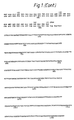
- the DNA sequence of clone p67 is shown in Figure 1.
- a 5' untranslated region is followed by 69 nucleotides encoding a precursor or signal peptide of 23 amino acids, 429 nucleotides coding for a mature interferon polypeptide of 143 amino acids, and 587 nucleotides of 3' untranslated sequence.
- Confluent monolayers of COS-7 cells in 60 mm petri dishes were transfected in duplicate with DNA using the modified DEAE-dextran procedure. Three days after DNA addition, the media was removed. Each set of plates received 2 mls DMEM supplemented with either 100 ⁇ Ci S35-methionine or S35-cysteine. After 16 hours incubation in the presence of the radiolabeled amino acid, the media was removed and 500 ⁇ l immunoprecipitated using an anti-gamma-interferon monoclonal antibody or an anti-HBsAg monoclonal antibody as the first antibody and a rabbit anti-mouse IgG antibody (Cappell Inc.) as the second antibody.
- the production of recombinant Human Interferon - Gamma (rIFN- ⁇ ) using E . coli W3110/p ⁇ - CYC5 is carried out in batches ranging in volume from 10 to 1000 liters. After fermentation, the interferon containg E . coli cells are recovered from the broth for isolation and purification of rIFN- ⁇ . The following is a description of the fermentation and cell recovery processes.
- a stock culture is prepared in sterile baffled culture flasks containing 150 to 500 mL of a sterile medium having the following composition.
- the inoculum is prepared in the medium previously described (L.B. Broth) in either shaker flasks or small fermenters. After incubation at about 37°C for approximately 8 hours, the inoculum is transferred to a fermenter. The volume of the inoculum is between 2 to 10 percent of the volume of the fermentation.
- E . coli cells are suspended in a medium which contains salts and an appropriate buffer in the pH range of 6 to 9, preferably about 9.
- Recombinant gamma interferon is extracted by homogenization of the cell suspension in a high pressure colloid mill such as a Gaulin mill.
- Sufficient polyethyleneimine is added to the solution to produce a 0.1 to 1% W/V solution.
- the supernatant contains gamma interferon.
- the supernatant from part (a) is adsorbed to a silica based adsorbant which is washed to remove impurities with appropriate salt solutions in the pH range of 6 to 9.
- Recombinant gamma interferon is eluted using a solution containing 0.5 - 1.0 M tetramethyl ammonium chloride. All operations in this step are performed in the pH range of 7 to 9.
- the eluent from part (c) is adsorbed to a medium of calcium phosphate which is then washed to remove impurities.
- the recombinant gamma interferon is eluted by increasing the salt concentration in a gradient of increasing phosphate concentration. All operations in this step are performed in the pH range of between 7 and 9.
- the eluent from part (d) is dialysed and adsorbed to an anion exchange chromatography medium which is then washed to remove impurities.
- the recombinant gamma interferon is eluted from the anion exchange medium with a gradient of increasing salt concentration.
- Typical anion exchange chromatography media are carboxymethyl cellulose and sulphoethyl cellulose. All operations in this step are performed in the pH range of between 7 and 9.
- the eluent from part (e) is applied to a gel permeation medium and the column is developed with a salt containing medium.
- the appropriate recombinant gamma interferon containing fractions are pooled to produce the bulk drug substance. All operations in this step are performed in the pH range of between 7 and 9.
- Recombinant gamma interferon made in accordance with the foregoing is preferably formulated for parenteral administration according to the following Table.
- interferons of the invention may be employed in medically appropriate dosage ranges, e.g., 1.0 mg/M of body surface area.
- r-HuIFN-gamma recombinant gamma interferon (r-HuIFN-gamma) (6.5 mg), prepared as described herein, was desalted over a small Sephadex G-25 molecular sieving column (PD-10, Pharmacia) into 0.10 M Ammonium Bicarbonate buffer, pH 8.5 to a final protein concentration of 2.1 mg/ml.
- a dilute trypsin solution (Worthington TPCK trypsin, 10 ⁇ g/ml in 0.001 M HCl, 16 ⁇ l) was added to 1.9 ml (4.0 mg) of the r-HuIFN-gamma solution, mixed and incubated at room temperature (trypsin:protein:1:25,000).
- Protein peaks as determined by absorbance at 214 nm and 280 nm were preparatively collected and stored covered at 4°C until analyzed. Typical analyses for selected peaks included:
- samples are taken to dryness by rotary evaporation, resuspended in 0.5 ml of water and redried. Prior to fractionation by HPLC, samples were redissolved in 50% formic acid to a protein concentration of approximately 1 mg/ml.
- gamma interferons of any length within the range 126aa-143aa (excluding N-terminal methionine) will be expressed from appropriately tailored genes.
- the gene depicted in Figure 1 contains a Fnu4H restriction site at Following restriction with Fnu4H, synthetic oligonucleotides encoding any desired sequence followed by a "stop" codon and a linker compatible with an available restiction site in the expression plasmid may be ligated to the fore part of the gamma interferon gene.
- the sequence wherein X encodes one or more amino acids may be ligated into the E . coli expression vehicle exemplified above following digestion of the plasmid with Fnu4H and BgIII, a stop codon resulting from ligation thusly
- the specific antiviral activity of recombinant human IFN-gamma is approximately three times higher than the activity of the modified rIFN-gamma molecule with three additional amino acids (cys-tyr-cys) at the N-terminus.
Landscapes
- Health & Medical Sciences (AREA)
- Chemical & Material Sciences (AREA)
- Life Sciences & Earth Sciences (AREA)
- Organic Chemistry (AREA)
- Genetics & Genomics (AREA)
- General Health & Medical Sciences (AREA)
- Zoology (AREA)
- Engineering & Computer Science (AREA)
- Medicinal Chemistry (AREA)
- Molecular Biology (AREA)
- Bioinformatics & Cheminformatics (AREA)
- Biophysics (AREA)
- Biochemistry (AREA)
- Veterinary Medicine (AREA)
- Biomedical Technology (AREA)
- Toxicology (AREA)
- Public Health (AREA)
- Gastroenterology & Hepatology (AREA)
- Chemical Kinetics & Catalysis (AREA)
- Animal Behavior & Ethology (AREA)
- General Chemical & Material Sciences (AREA)
- Pharmacology & Pharmacy (AREA)
- Proteomics, Peptides & Aminoacids (AREA)
- Wood Science & Technology (AREA)
- Nuclear Medicine, Radiotherapy & Molecular Imaging (AREA)
- Biotechnology (AREA)
- General Engineering & Computer Science (AREA)
- Plant Pathology (AREA)
- Microbiology (AREA)
- Physics & Mathematics (AREA)
- Medicines That Contain Protein Lipid Enzymes And Other Medicines (AREA)
- Peptides Or Proteins (AREA)
- Preparation Of Compounds By Using Micro-Organisms (AREA)
- Micro-Organisms Or Cultivation Processes Thereof (AREA)
- Saccharide Compounds (AREA)
Abstract
Description
- The present invention relates to the field of recombinant DNA technology, to means and methods utilizing such technology in the preparation of recombinant gamma interferons having enhanced stability, to their production and to the various products of such production and their uses.
- This application is related to GB 2107718.
- The publications and other materials used herein to illuminate the background of the invention and in particular cases to provide additional details respecting its practice are for convenience numerically referenced in the following text and respectively grouped in the appended bibliography.
- Human interferons can be classified in three groups on the basis of different antigenicity and biological and biochemical properties. The first group comprises a family of leukocyte interferons which are normally produced mainly by constituent cells of human blood upon viral induction. These have been microbially produced and found to be biologically active (1,2,3). Their biological properties have prompted their use in the clinic as therapeutic agents for the treatment of viral infections and malignant conditions (4).
- In the second group is human fibroblast interferon, normally produced by fibroblasts upon viral induction, which has likewise been microbially produced and found to exhibit a wide range of biological activities (5). Clinical trials also indicate its potential therapeutical value. The leukocyte and fibroblast interferons exhibit very clear similarities in their biological properties despite the fact that the degree of homology at the amino acid level is relatively low. Both groups of interferons contain from about 165 to about 166 amino acids and are acid stable proteins.
- Human gamma interferon (also variously referred to as immune interferon, γ-interferon, IIF or IFN-γ) exhibits the antiviral and anti-proliferative properties characteristic of the interferons but, in contrast to leukocyte and fibroblast interferons, is
pH 2 labile. Prior to the production of gamma interferons via recombinant DNA technology, it had been produced mainly upon mitogenic induction of lymphocytes. Human gamma interferon is clearly antigenically distinct from the leukocyte and fibroblast interferons. Gray, Goeddel and co-workers were the first to report expression of a recombinant gamma interferon (6), which has proven to exhibit the characteristic properties of human gamma interferon, i.e., anti-viral and anti-proliferative activity coupled withpH 2 lability. The recombinant gamma interferon of Gray and Goeddel, as produced in E. coli, consisted of 146 amino acids, the N-terminal portion of the molecule commencing with the sequence CYS-TYR-CYS-. Derynck and others subsequently reported (7) a further recombinant gamma interferon having the same N-terminus and a single amino acid substitution, the polypeptide perhaps constituting an allelic variant of that earlier reported in reference (6). Other workers have reported the production of still further recombinant gamma interferons in which one or more of the amino acids present in Goeddel and Gray's original publication (6) have allegedly been substituted. - For example, Alton et al (17) report on a series of IFN-gammas wherein a single amino acid substitution at position 81 of the Gray et al (6) gamma interferon resulted in an IFN-gamma that retained only 70 percent of the activity (on a relative basis) and wherein an additional deletion of the cys-tyr-cys at
positions - In our hands, recombinant gamma interferons whose N-terminal amino acid sequence comprises cysteine residues have proven problematic from the standpoint of oligomerization which may involve participation of sulfhydryl groups of one or more of the cysteine residues in disulfide bond formation. Our inability to completely reduce these putative disulfide linkages suggests the problem may be more complex, possibly also involving reaction through the hydroxyl function of the cysteine-bounded tyrosine residue. These recombinant interferons have proven somewhat unstable and, whether resulting from such instability or otherwise, have proven of less than optimal utility.
- The present invention provides gamma interferon polypeptides modified at the N-terminal and/or C-terminal regions with respect to the sequence disclosed in Gray et al, supra, by in one aspect providing a gamma interferon polypeptide consisting of amino acid sequence, extending from the N-terminus :wherein:

X is a methionine residue, Y is a glutamine residue and Z consists of n amino acids in the sequence 127-143 depicted in Fig. 1 hereof where n is zero or an integer of from 1 to 17; or X is hydrogen, Y is either a glutamine or a pyroglutamate residue and Z consists of n amino acids in the sequence 127-143 depicted in Fig. 1 hereof where n is zero or an integer of from 1 to 16; or a modification or allelic variation of the said amino acid sequence which (modification or variation) exhibits biological activity equivalent to or greater than that of gamma interferon of the amino acid sequence 1-143 depicted in Fig. 1 hereof, but excluding those of the said modifications and variations which contain any gamma interferon amino acid sequence contiguously upstream of Y or contiguously downstream of Z. - In another aspect the invention provides pharmaceutical compositions comprising such gamma interferon polypeptides. Z may be part of the sequencestarting with Gly 127, or it may be part or all of said sequence in the case where X is a methionine residue.

- The invention also provides corresponding expression vectors capable of producing such interferon polypeptides, and transformants useful in the production through recombinant DNA technology of the interferon polypeptides of the invention. Preferred embodiments of the invention exhibit greatly improved stability and activity relative to those previously described in the literature.
- The manner in which these and other objects of the invention are attained will be apparent from the detailed description which follows and from the accompanying drawings, in which:
- Fig. 1 illustrates
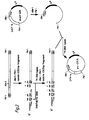
amino acids 1 through 143 of a recombinant gamma interferon of the present invention and DNA sequence encoding the amino acid sequence preceded by a signal sequence, which DNA sequence is flanked by regions of 5'- and 3'-untranslated DNAs. - Fig. 2 illustrates schematically a plasmid coding for direct synthesis of a recombinant gamma interferon of the present invention in E. coli and its preparation.
- Fig. 3 records data demonstrating the enhanced stability of gamma interferon prepared according to the present invention.
- We have learned that native human gamma interferon (i.e., that arising from mitogen induction of human peripheral blood lymphocytes and subsequent purification) is a polypeptide which lacks the CYS-TYR-CYS- N-terminus assigned by Gray et al. to the recombinant gamma interferon whose sequence is depicted in (6). Tryptic digests of highly purified native gamma interferon in our hands included sequences whose amino acid composition generally corresponded to that of the N-terminal portion of the Gray et al. recombinant gamma interferon of (6), less CYS-TYR-CYS. Amino acid sequence analysis from the N-terminus of native gamma interferon proved unavailing, giving rise to the inference that the alpha amino acid at the N-terminus of the molecule was protected. Since the first amino acid beyond the second cysteine of Gray et al. (6) for which the cDNA coded was GLN (glutamine), we surmised that cyclization of the GLN residue had left instead pyroglutamate, such that the N-terminus was blocked. Removal of pyroglutamate with pyroglutamate aminopeptidase left a free alpha amino group associated with ASP, the next encoded amino acid, and sequence analysis could proceed, permitting the first reported characterization of native human gamma interferon.
- Appropriate alteration of cDNA for CYS-TYR-CYS- containing recombinant human gamma interferon permitted the direct expression in E. coli of novel recombinant gamma interferon from a cDNA encoding the protein whose full sequence is set out supra, X being MET and Y being GLN. The N-terminal methionine is an artifact encoded by the mRNA translational "start" signal AUG which, in the particular case of E. coli expression exemplified, is not processed away by host systems. In other microbial systems, e.g., pseudomonas, methionine may be removed; it does not in any event appear required for activity. Where methionine is removed and depending upon the system employed, the GLN residue may cyclize to the pyroglutamate form, again without any believed impairment of activity.
- In our hands, the CYS-TYR-CYS- containing recombinant gamma interferon earlier reported by Gray and co-workers benefited from formulation with human serum albumin in aid of stabilization. The presence of serum albumin in the final lyophilized product, however, requires that certain quality control steps be performed in advance of lyophilization rather than upon finished product. In the case of the novel recombinant gamma interferon of present invention, on the other hand, the material in lyophilized form has proven to be sufficiently stable without the inclusion of serum albumin. Where desired, however, the gamma interferons of the invention may be formulated with pharmaceutically acceptable levels of human serum albumin.
- Beyond the foregoing, the CYS-TYR-CYS- lacking recombinant human gamma interferons of the invention appear in cytopathic effect inhibition testing to be markedly more active as antiviral agents than their CYS-TYR-CYS- containing analogs. The activity is conventionally assayed in microtiter plates by inhibition of the cytopathic effect (CPE) of encephalomyocarditis virus on human lung carcinoma cells A549. See (12).
- The recombinant gamma interferons of the invention include all those comprising
amino acids 1 to about 126 of the full sequence provided above. Gamma interferons variously truncated at the carboxy terminal end relative to the full sequence continue to exhibit the characteristic properties of human gamma interferon, albeit at diminished levels in some cases, so long asamino acids 1 to about 126 are present. Indeed, experiments with the CYS-TYR-CYS- containing analog reported at (7) showed that extraneous sequences could be substituted for the amino acid sequence following amino acid 132 (by the present numbering system) without loss of activity. See, e.g., (8). Preliminary evidence in our hands supports the hypothesis that whileamino acids 1 to about 126 (THR) are relatively tightly bound in a three-dimensional configuration we associate with activity, remaining amino acids of the full sequence are by comparison less confined and relatively sensitive to proteolysis. Trypsin digestion under limiting conditions removes various portions of the sequence downstream from amino acid 126, but not upstream therefrom. Native gamma interferon moieties in our hands include molecules variously extending throughamino acids 127, 128, 129, 130, 132 and 134. We have seen fully active recombinant gamma interferon whose amino acid sequence following methionine consisted variously of amino acids (beyond MET) 1 to about 139 and 1 to about 131, the latter obtained by limited digestion of recombinant gamma interferon with trypsin followed by sequence confirmation. Similar trypsin digested fragments variously ending at about amino acids (beyond MET) 128 and 129 retained activity, albeit substantially diminished. On the other hand, material having 125 amino acids (in addition to N-terminal methionine), the threonine at position 126 and following amino acids having been digested away, exhibited less than 1% the activity of undigested material in CPE inhibition assay. - Recombinant derived gamma interferon, in addition to its bearing an initial methionine when produced in hosts where the methionine is not intracellularly cleaved, appears to exhibit a major species having 139 amino acids (based on the numbering system of Figure 1) and a minor species having 143 amino acids. The composition of the two species contains greater than about 95 percent, most preferably greater than about 97 percent of the species having 139 amino acids. Trypsin digestion under limiting conditions likewise removes various portions of the sequence downstream from about amino acid 126. Recombinant gamma interferon in our hands following such limiting trypsin digestion include species variously extending through amino acids 125, (126 with an initial methionine) 129, 131 and 134. These species have retained activity, albeit substantially diminished, in the zone extending from about amino acid 125 to about 129. Species having at least about 129 amino acids, and especially at least about 131 amino acids, i.e., species having from about 129 to 143 amino acids are essentially functionally fully active.
- By reference to "recombinant gamma interferon" herein we intend a polypeptide (whether or not glycosylated by the cell in which it is produced) expressed in a transformant cell from a replicable expression vehicle arising from recombinant DNA technology, the polypeptide exhibiting in greater or less degree the antiviral and antiproliferative activity in humans and
pH 2 labile properties characteristic of native human gamma interferon. - The recombinant gamma interferons as claimed are believed to form "dimers", defined for the purpose of this disclosure as a combination of two such polypeptides (which polypeptides may have the same or a different number of amino acids). The nature of the chemical combining mechanism is not fully understood, but is believed to be other than covalent bonding. This combination into dimers appears to occur spontaneously and is believed to be inevitable in the systems described herein. Thus, when the recombinant gamma interferons of the present invention are administered, they will usually be in the dimerized form.
- Furthermore, subject to the terms of the appended claims, it is to be understood that here, similarly to the disclosures in the literature relating to differently characterized recombinant gamma interferons (8, 9), amino acid substitutions or additions, particularly single amino acid substitutions and addition or substitution of groups of amino acids upstream or downstream from about amino acid 126 in the recombinant gamma interferons disclosed herein are possible without destroying the interferon activity of the polypeptides from which such modifications are derived. It is believed that it will be obvious to those skilled in the art to make such substitutions or additions without departing from the scope of the present invention claimed. Again, the recombinant gamma interferons of the present invention as claimed include species having modifications and allelic variations of the full sequence (see Figure 1) which exhibit biological activity equivalent to or greater than that of the full sequence.
- Characteristically, purified recombinant gamma interferons will be essentially free of other proteins of human origin, and are so to be distinguished from the native human gamma interferon compositions heretofore available.
- The invention includes recombinant gamma interferon compositions which (prior to formulation) are greater than about 95 percent pure, preferably more than about 98 percent pure, which compositions are for that reason likewise distinct from native gamma interferons heretofore available.
- Embodiments of the invention as claimed in which the N-terminal amino acid residue is methionyl are likewise distinct from gamma interferons produced within the human body, and appear also for that reason to be distinct, beyond their deletion of CYS-TYR-CYS-, from those whose sequence is reported by Gray et al. (6).
- The replicable expression vehicles referred to herein are double- stranded DNA moieties, preferably plasmids, comprising an origin of replication, a promoter or promoter-operator, a sequence encoding a ribosome binding site, a codon for a translation start signal, and in proper reading phase therewith a gene encoding the recombinant gamma interferon of interest, followed by codon(s) for a translation stop. At the present stage the general techniques and lexicography of recombinant DNA technology are well understood to the art-skilled, who are referred in any event to (11) for background information pertinent to the practice of the present invention, mutatis mutandis, in all its embodiments and legally cognizable equivalents.
- Recombinant DNA clones containing gamma interferon cDNA sequences were prepared as described in (6) and in the aforementioned GB 2107718 with messenger RNA from induced human peripheral blood lymphocytes. The DNA sequence of clone p67 is shown in Figure 1. A 5' untranslated region is followed by 69 nucleotides encoding a precursor or signal peptide of 23 amino acids, 429 nucleotides coding for a mature interferon polypeptide of 143 amino acids, and 587 nucleotides of 3' untranslated sequence.
- To express high levels of recombinant IFN-γ in E. coli, the initiation of protein synthesis must occur at an ATG codon immediately preceding the glutamine codon (amino acid one) of the mature polypeptide rather than at the ATG of the signal peptide (amino acid S1) (Fig. 1). The procedure followed to express the cDNA insert of p67 directly in E. coli is outlined in Fig. 2. The approach was similar to that used to express in E. coli the cDNA insert of Gray et al. (6).
- An AvaII restriction site located at
codon 2 of the presumed mature coding sequence was utilized to remove the signal peptide coding region. Two synthetic deoxyoligonucleotides were designed which restore the codons foramino acids coli W# 110/pγ-CYC5. - Expression of a gene encoding both the signal peptide and gamma interferon, as indicated in Figure 1, was effected in COS-7 cells (16) in the presence of radioactively labeled cysteine and methionine, confirming the production from the gene of mature gamma interferon whose N-terminal amino acids are as indicated in Figure 1 (unlike the case involving E. coli expression, the expression product of mammalian cell systems like that exemplified here lacks N-terminal methionine).
- Confluent monolayers of COS-7 cells in 60 mm petri dishes were transfected in duplicate with DNA using the modified DEAE-dextran procedure. Three days after DNA addition, the media was removed. Each set of plates received 2 mls DMEM supplemented with either 100 µCi S³⁵-methionine or S³⁵-cysteine. After 16 hours incubation in the presence of the radiolabeled amino acid, the media was removed and 500 µl immunoprecipitated using an anti-gamma-interferon monoclonal antibody or an anti-HBsAg monoclonal antibody as the first antibody and a rabbit anti-mouse IgG antibody (Cappell Inc.) as the second antibody. Reaction with the antibody and the subsequent binding to Staphlycoccus A cells (Calbiochem) are as described by Berman, P. et al. (18). The samples were resuspended in SDS-mercaptoethanol and electrophoresed on 10Δ SDS-PAGE gels. The gel was fixed in 7Δ acetic acid in ethanol, soaked in Enhance (New England Nuclear) fluor solution, dried down, and exposed for two weeks using Kodak AR5 film and an intensifying screen (Dupont).
- Plasmids used in this study were pSVgamma69 (11); pDL RI (19), a hepatitis B virus surface antigen expression vector upon which pSVgamma69 was based; and pDL Rlgamma Sau, a polycistronic plasmid containing the 830 bp SAU3a fragment of pSVgamma69 (11) spanning the entire gamma-interferon encoding sequences inserted into the EcoRI site of pDL RI. The latter plasmid produces a transcript containing both the gamma-interferon and the HBsAg coding regions.
- Comparison of S³⁵-Cysteine and S³⁵-Methionine labeled proteins which react with either anti-gamma-interferon (A) or anti-HBsAg (B) antibodies showed that no material migrating at either the glycosylated (29,000 MW) or monoglycosylated position (18,000 MW) was specifically immunoprecipitated from S³⁵-Cys labeled pDL RI-gamma Sau transfected cells using anti-gamma-interferon antibody, in contrast to the S³⁵-met labeled cells which showed the immunoprecipitation of interferon-gamma.
- The production of recombinant Human Interferon - Gamma (rIFN-γ) using E. coli W3110/pγ- CYC5 is carried out in batches ranging in volume from 10 to 1000 liters. After fermentation, the interferon containg E. coli cells are recovered from the broth for isolation and purification of rIFN-γ. The following is a description of the fermentation and cell recovery processes.
- A stock culture is prepared in sterile baffled culture flasks containing 150 to 500 mL of a sterile medium having the following composition.
- Bactotryptone 10 g/L
- Yeast Extract 5 g/L
- Sodium Chloride 5-10 mg/L
- The inoculum is prepared in the medium previously described (L.B. Broth) in either shaker flasks or small fermenters. After incubation at about 37°C for approximately 8 hours, the inoculum is transferred to a fermenter. The volume of the inoculum is between 2 to 10 percent of the volume of the fermentation.
- Recombinant Interferon - Gamma production is carried out in fermenters with working volume of about 10 to 1000 liters. The fermentation medium is composed of:

The fermentation is carried out at 25-40°C Other operating conditions are as follows:Agitation (rpm) 100-1000 Aeration (vvm) 0.5-1.5 (Supplemented with oxygen when necessary) pH 6.5-7.5 (Controlled by the addition of ammonium hydroxide) - E. coli cells are suspended in a medium which contains salts and an appropriate buffer in the pH range of 6 to 9, preferably about 9. Recombinant gamma interferon is extracted by homogenization of the cell suspension in a high pressure colloid mill such as a Gaulin mill. Sufficient polyethyleneimine is added to the solution to produce a 0.1 to 1% W/V solution. The supernatant contains gamma interferon.
- The supernatant from part (a) is adsorbed to a silica based adsorbant which is washed to remove impurities with appropriate salt solutions in the pH range of 6 to 9. Recombinant gamma interferon is eluted using a solution containing 0.5 - 1.0 M tetramethyl ammonium chloride. All operations in this step are performed in the pH range of 7 to 9.
- The eluent from part (b) is dialysed and adsorbed to an anion exchange chromatography medium which is then washed to remove impurities. Recombinant gamma interferon is eluted with a gradient of increasing salt. Typical anion exchange resins applicable for this step include carboxymethyl cellulose and sulphoethyl cellulose. All operations are performed in the pH range of between 7 and 9.
- The eluent from part (c) is adsorbed to a medium of calcium phosphate which is then washed to remove impurities. The recombinant gamma interferon is eluted by increasing the salt concentration in a gradient of increasing phosphate concentration. All operations in this step are performed in the pH range of between 7 and 9.
- The eluent from part (d) is dialysed and adsorbed to an anion exchange chromatography medium which is then washed to remove impurities. The recombinant gamma interferon is eluted from the anion exchange medium with a gradient of increasing salt concentration. Typical anion exchange chromatography media are carboxymethyl cellulose and sulphoethyl cellulose. All operations in this step are performed in the pH range of between 7 and 9.
- The eluent from part (e) is applied to a gel permeation medium and the column is developed with a salt containing medium. The appropriate recombinant gamma interferon containing fractions are pooled to produce the bulk drug substance. All operations in this step are performed in the pH range of between 7 and 9.
- To determine the c-terminal sequence samples were dialyzed into 70 percent formic acid, cleaved with cyanogen bromide and the resulting peptides separated on an Altex Ultrasphere C8 reverse phase HPLC column. Peaks were collected and analyzed by amino acid and sequence analysis. One C-terminal peptide was found: - leu-phe-arg-gly-arg (residues 135-139, Figure 1). In some cases another additional peptide was detected: -leu-phe-arg-gly-arg-arg-ala-ser-gln (residues 135-143, Figure 1). To determine the ratio of these two peptides, known amounts (by amino acid analysis) were loaded onto the reverse phase HPLC column and the respective peak heights determined. Each of three production lots contained less than about two percent of the long peptide (135-143, Figure 1), the balance being the 5-mer. This data is consistent with E. coli production of a mixture of 139 amino acid-containing and 143 amino acid-containing gamma interferons (excluding the N-terminal methionine, which is also present in each case) in the relative proportions, respectively, of about 98.2 percent.
- Recombinant gamma interferon made in accordance with the foregoing is preferably formulated for parenteral administration according to the following Table.

- The interferons of the invention may be employed in medically appropriate dosage ranges, e.g., 1.0 mg/M of body surface area.
- To establish the activity of various gamma interferons differing in their carboxy-termini gamma interferon prepared as describd in the E. coli example, supra, was digested with trypsin to various degrees and tested by CPE assay with A549 cells as described within.
- A sample of recombinant gamma interferon (r-HuIFN-gamma) (6.5 mg), prepared as described herein, was desalted over a small Sephadex G-25 molecular sieving column (PD-10, Pharmacia) into 0.10 M Ammonium Bicarbonate buffer, pH 8.5 to a final protein concentration of 2.1 mg/ml. A dilute trypsin solution (Worthington TPCK trypsin, 10 µg/ml in 0.001 M HCl, 16 µl) was added to 1.9 ml (4.0 mg) of the r-HuIFN-gamma solution, mixed and incubated at room temperature (trypsin:protein:1:25,000). Samples were removed from the incubation mixture at 1 hr., 3.5 hrs., 5.75 hrs., 8 hrs. and 10.25 hrs. At 8 hrs., an additional 15 µl (150 ng) of dilute trypsin solution was added in order to accelerate the reaction for the last time point sample at 10.25 hrs.
- Fractionation of each time point sample into its respective components was performed on a Waters HPLC system using a BioRad Biogel HPHT Column. The time point aliquot in bicarbonate buffer was loaded directly (by manual injection) to the column at the time of sampling. The column was equilibrated in 0.01 M sodium phospate pH 8.0, 30 µM calcium chloride and protein was eluted from the column utilizing a linear gradient of the equilibration buffer and 0.5 M sodium phosphate buffer pH 8.0, 0.6 µM calcium chloride.
- Protein peaks as determined by absorbance at 214 nm and 280 nm were preparatively collected and stored covered at 4°C until analyzed. Typical analyses for selected peaks included:
- 1. Antiviral activity in the human lung carcinona A549/EMC virus assay system (13).
- 2. SDS/PAGE fractionation by standard techniques employing the Laemmli gel system (14).
- 3. Protein concentration determination by the commercial (Pierce Chemical Co., Rockford, IL.) dye binding procedure.
- 4. Cyanogen bromide protein cleavage and subsequent HPLC analysis for peptide identification (15).
- After cleavage, samples are taken to dryness by rotary evaporation, resuspended in 0.5 ml of water and redried. Prior to fractionation by HPLC, samples were redissolved in 50% formic acid to a protein concentration of approximately 1 mg/ml.
- Peptides were fractionated using a Waters HPLC system employing an Altex Ultrasphere Octyl column and a trifluoroacetic acid/water - trifluoroacetic acid/acetonitrile linear elution gradient. Wherever possible, peptides were identified by amino acid analysis. Table I lists comparative data for shortened forms of r-HUIFN-γ:

- It will be appreciated that gamma interferons of any length within the range 126aa-143aa (excluding N-terminal methionine) will be expressed from appropriately tailored genes. Thus, for example, the gene depicted in Figure 1 contains a Fnu4H restriction site atFollowing restriction with Fnu4H, synthetic oligonucleotides encoding any desired sequence followed by a "stop" codon and a linker compatible with an available restiction site in the expression plasmid may be ligated to the fore part of the gamma interferon gene. For example, the sequence
 wherein X encodes one or more amino acids may be ligated into the E. coli expression vehicle exemplified above following digestion of the plasmid with Fnu4H and BgIII, a stop codon resulting from ligation thusly

-
- To each well add 100 microliters of a suspension of human lung carcinoma (A549) cells (ATCC No. CCL 185) which have been adjusted to contain 4 x 10⁵ cells/ml in Eagles MEM.
- Incubate plates at 37°C for approximately 18 hours.
- After 18 to 24 hours incubation, add to each well in the first column, 80 microliters additional medium.
- Add to a well in the
first column 20 microliters of a sample to be assayed for interferon activity. - Transfer 100 microliters of the contents of each well in the first column horizontally to each well in second column.
- Continue to transfer 100 microliters of the contents of a well from column to subsequent column until a total of 10 transfers are performed ending in
column 11. - After 24 hours of incubation, challenge all wells, except cell controls, with 50 microliters of encephalomyocarditis virus at a multiplicity of infection which results in 100 % cytopathic effect in 24 hours after infection.
- Cover trays with lids and incubate at 37°C for 24 hours.
- Pour off fluid from all wells and stain 5-15 minutes with 0.5% crystal violet.
- Viability of cells is determined by observation of stained cells.
- Titer of a sample is the reciprocal of the dilution where 50% viable cells remain.
- The activity of all samples is normalized by the Reference Units Conversion Factor which is calculated from:

- Using the A549/EMCV bioassay systems standardized with IFN-gamma reference material provided by the NIH, the specific antiviral activity of recombinant human IFN-gamma is approximately three times higher than the activity of the modified rIFN-gamma molecule with three additional amino acids (cys-tyr-cys) at the N-terminus.
- Based again on the above mentioned measure of bioactivity (A549/EMCV), formulated and vialed rIFN-gamma continues to be stable (no loss of biological activity) three months after production (stored at 4°C).
-
- rIFN-gamma:
- Des Cys-Tyr-Cys recombinant interferon gamma in the form of a solution (20 mM sodium succinate, 0.15 M NaCl, pH 6). The material was prepared in accordance with the E. coli Example above. The specific activity was 2.7 × 10⁷ IU/mg protein.
- CTC-rIFN-gamma:
- Recombinant interferon gamma having "Cys-Tyr-Cys" structure at the N-terminus of the molecule in the form of a solution (20 mM sodium succinate, 0.15 M NaCl, pH 6). The specific activity was 1.3 × 10⁷ IU/mg protein.
- HuIFN-beta:
- Lyophilized human fibroblast interferon produced in human diploid foreskin fibroblast with a specific activity of more than 1 × 10⁷ IU/mg protein prepared by Toray Ind., Inc. A vial contains 3 × 10⁶ IU HuIFN-beta and 3 mg human serum albumin.
- HuIFN-alpha:
- Human natural leukocyte interferon with a specific activity of 4 × 10⁶ IU/mg protein supplied in the form of solution by Dr. K. Cantell, Central Public Health Laboratory, Helsinki, Finland.
- Control:
- Placebo containing 3 mg human serum albumin.
- Culture Medium:
- Eagle's minimum essential medium supplemented with 10 percent heat-inactivated precolostrum newborn calf serum ("PNCS") and 2 mM L-glutamine was used with Hela, KB, HMV-l, FL, and J-lll cells. Dulbecco's minimum essential medium containing 10 percent heat-inactivated PNCS, 100 µg/ml kanamycin, and 2 mM L-glutamine was used with A549 cells. RPMI 1640 medium supplemented with heat-inactivated PNCS and 100 µg/ml kanamycin was used with the remaining human cells listed in Table 2.
- The test cells suspended in the culture medium were seeded into plastic tissue culture plates at a concentration of 5 × 10³ cells/0.5 ml/well. Various amounts of interferon dissolved in the corresponding culture medium (0.5 ml) were added subsequently (day 0). Cultivation was carried out at 37°C in a humidified atmosphere of 5 percent CO₂ and 95 percent air. On day 6 the culture media were removed and the cells in suspension culture were directly suspended in Isoton II (Coulter Electronics Inc.) for cell counting in a Coulter counter. The cells forming a sheet in plastic vessels were pre-treated with 0.05 percent trypsin-0.02 percent EDTA to prepared single cell suspension in Isoton II (Coulter Electronics Inc.). Antiproliferative activity of interferon was expressed as the antiviral units required to produce 50 percent reduction of cell number (IC50, IU/ml) compared to the control culture (without interferon).
- As shown in the table, the antiproliferation activity of rIFN-gamma varied markedly depending on the human cell species. In this case KATO-III, siglet-ring cell carcinoma of the stomach, was highly sensitive, the cell line showing the IC₅₀ of 1.2 IU/ml, while Daudi cells, Burkitt's lymphoma, which were highly sensitive to type II interferon (HuIFN-alpha, HuIFN-beta), were insensitive to type II interferon including rIFN-gamma. Lung adenocarcinoma (PC-8, PC-12) was insensitive to all interferon species tested. The anticellular spectrum between rIFN-gamma and CTC-rIFN-gamma was almost the same and it was generally apparent that the antiproliferative efficacy of rIFN-gamma was superior to that of CTC-rIFN-gamma. In the case of comparison between four interferons, the highest efficacy was obtained from rIFN-gamma except for Daudi cells.
- 1 × 10⁶ IU/vial of lyophilized rIFN-gamma prepared in accordance with the E. coli Example above and 1 × 10⁶ IU/vial of lyophilized rIFN-gamma having a "Cys-Tyr-Cys" structure at the

- In vitro stability of interferons was evaluated by the determination of the residual anti-viral activity in various fluids. Incubations were initiated by addition of the above interferon solutions into nine volumes of rabbit serum, human serum or Eagle's MEM which were pre-incubated 10 min. in a water bath incubator at 37°C or 4°C. At 0, 0.25, 0.5, 1, 4, 8, 24, 72 and 144 hr., an aliquot was harvested and mixed with the nine volumes of Eagle's MEM. The samples were kept frozen at -80°C in a deep freezer until the assay of interferon titer. Interferon titer was assayed by the CPE50 reduction method using human amniotic cells (FL cell) challenged with Sindbis virus. The results are indicated in Figure 3 as percentages of residual titer against the additional titer.
- While the invention has been exemplified by reference to the preferred embodiments in which expression is effected in E. coli and in COS-7 cells, It will be apparent that the gamma interferons as claimed may be produced in other systems as well such as other bacterial strains, yeast and tissue culture systems, as to which see GB 2107718 and (6). Thus, the invention is not confined to the most preferred embodiments, but instead extends to all legally cognizable equivalents of the claims which follow.
-
- 1. Goeddel, D. et al., Nature 287, 411 (1980)
- 2. Goeddel, D. et al., Nature 290, 20 (1981)
- 3. Yelverton, E. et al.,
Nucleic Acids Research 9, 731 (1981) - 4. Gutterman et al., Annals of Int. Med. 93, 399 (1980)
- 5. Goeddel, D. et al.,
Nucleic Acids Research 8, 4057 (1980) - 6. Gray, P. et al., Nature 295, 503-508 (1982)
- 7. Derynck, R. et al.,
Nucleic Acids Research 10, 3605 (1982) - 8. Derynck, R. et al., Interferon Scientific Memoranda, August 1982, Memo-I-A1193/2.
- 9. Derynck, R. et al., "Expression of Human Interferon Gamma in Heterologous Systems" in Experimental Manipulation of Gene Expression, Academic Press, Inc. (1983) at 247
- 10. Goeddel, D. et al., Nature 287, 411-416 (1980)
- 11. European Patent-Application of Goeddel, D. et al., EPO publication No. 0 077 670.
- 12. W. E. Stewart II in "The Interferon System" Springer Verlag (New York) pp. 13-26 (1979).
- 13. Stewart, "Interferon Systems"'Ed.: Stewart, p.13 Springer-Derlag, New York (1979)
- 14. Laemmli, Nature 227, 680 (1970)
- 15. Gross, et al., Methods in Enzymology, XI, 238
- 16. Gluzman, Cell 23, 175 (1981)
- 17. Alton et al., "Production, Characterization and Biological Effects of Recombinant DNA Derived Human IFN-alpha and IFN-gamma Analogs," The Biology of the Interferon System, DeMaeyer and Schellekens, Eds., Elselvier Science Publ. (1983).
- 18. Berman et al., Science 222, 524 (1983)
- 19. Simonsen et al., Mol. Cell. Biol. 3, 2250 (1983)
The inoculated flask is then incubated on a shaker at 25-37° C until the absorbance at 550 nm reaches approximately 1.0. Approximately 50 percent v/v of 30 percent v/v dimethyl sulfoxide is added to the broth. One (1) mL aliquots are immediately dispensed into sterile vials and capped. The vials are stored at -60°C or below. Each fermentation is started using a replicate stock culture for inoculum.
Claims (26)
- A gamma interferon polypeptide consisting of the amino acid sequence, extending from the N-terminus:wherein:

x is a methionine residue, Y is a glutamine residue and Z consists of n amino acids in the sequence 127-143 depicted in Fig. 1 hereof where n is zero or an integer of from 1 to 17; or x is hydrogen, Y is either a glutamine or a pyroglutamate residue and Z consists of n amino acids in the sequence 127-143 depicted in Fig. 1 hereof where n is zero or an integer of from 1 to 16; or a modification or allelic variation of the said amino acid sequence which (modification or variation) exhibits biological activity equivalent to or greater than that of gamma interferon of the amino acid sequence 1-143 depicted in Fig. 1 hereof, but excluding those of the said modifications and variations which contain any gamma interferon amino acid sequence contiguously upstream of Y or contiguously downstream of Z. - A polypeptide according to claim 1 wherein X is methionine.
- A polypeptide according to claim 2 wherein Z is part or all of the sequence:starting with GLY 127.

- A polypeptide of claim 1, wherein Z comprises the sequence:

- A polypeptide of Claim 1, wherein Z comprises the sequence:

- A polypeptide of Claim 1, wherein Z comprises the sequence:

- A replicable expression vehicle capable, in a transformant microorganism or cell culture, of expressing a recombinant gamma interferon polypeptide as defined in any one of claims 1 to 6.
- An expression vehicle according to claim 7 for use in a bacterium.
- A microorganism or cell which has been transformed with the replicable expression vehicle of claim 7 or claim 8.
- A process which comprises culturing a transformed microorganism or cell culture of claim 9 to produce said gamma interferon polypeptide.
- A composition suitable for pharmaceutical administration comprising a gamma interferon polypeptide of any one of claims 1 to 6.
- A composition of claim 11 comprising a mixture of polypeptides of claim 1, in one of which Z is the sequence Gly 127 to Glu 143 and in another of which Z is the sequence Gly 127 to Arg 139, said two sequences being as set forth above.
- A composition of claim 12 wherein the polypeptide in which Z is Gly 127 to Arg 139 is in a major amount relative to the polypeptide in which Z is Gly 127 to Glu 143.
- A composition of claim 12 wherein the polypeptide in which Z is Gly 127 to Arg 139 comprises greater than about 95% of the polypeptide mixture.
- A composition of claim 12 wherein the polypeptide in which Z is Gly 127 to Arg 139 comprises greater than about 97% of the polypeptide mixture.
- A composition of any one of claims 12 to 15 wherein X is methionine.
- A composition according to any one of claims 11 to 16 comprising also a pharmaceutically acceptable level of human serum albumin.
- A mixture of gamma interferon polypeptides comprising: (i) a polypeptide of claim 1 in which n is 13, and (ii) a polypeptide of claim 1 in which n is 17.
- A gamma interferon mixture according to claim 18 wherein species (i) is in a major amount relative to species (ii).
- A gamma interferon mixture according to claim 19 wherein the composition of the two species of gamma interferon contains greater than about 95% of species (i).
- A gamma interferon mixture according to claim 20 wherein said ratio is greater than about 97% of species (i).
- A gamma interferon mixture according to any one of claims 18 to 21, wherein X is methionine.
- A gamma interferon mixture according to any one of claims 18 to 22 wherein in species (i) Z is the amino acid sequence Gly 127 to Arg 139 as set forth above.
- A gamma interferon mixture according to any one of claims 18 to 23 wherein in species (ii) Z is the amino acid sequence Gly 127 to Gln 143 as set forth above.
- A gamma interferon mixture according to claim 20 wherein X comprises methionine, Z in species (i) is the amino acid sequence Gly 127 to Arg 139 as set forth above, and z in species (ii) is the amino acid sequence Gly 127 to Gln 143 as set forth above.
- A gamma interferon mixture according to claim 18 as obtainable by expression in E.coli of recombinant DNA encoding the amino acid sequence 1 to 143 as set forth above, immediately preceded by an ATG translational start codon and followed by a translational stop codon.
Applications Claiming Priority (4)
| Application Number | Priority Date | Filing Date | Title |
|---|---|---|---|
| US56200983A | 1983-12-16 | 1983-12-16 | |
| US06/584,217 US4855238A (en) | 1983-12-16 | 1984-02-27 | Recombinant gamma interferons having enhanced stability and methods therefor |
| US584217 | 1984-02-27 | ||
| US562009 | 1984-02-27 |
Publications (4)
| Publication Number | Publication Date |
|---|---|
| EP0146354A2 EP0146354A2 (en) | 1985-06-26 |
| EP0146354A3 EP0146354A3 (en) | 1986-03-19 |
| EP0146354B1 true EP0146354B1 (en) | 1996-03-13 |
| EP0146354B2 EP0146354B2 (en) | 2001-10-24 |
Family
ID=27072811
Family Applications (1)
| Application Number | Title | Priority Date | Filing Date |
|---|---|---|---|
| EP84308710A Expired - Lifetime EP0146354B2 (en) | 1983-12-16 | 1984-12-14 | Recombinant gamma interferons and pharmaceutical compositions containing them |
Country Status (23)
| Country | Link |
|---|---|
| US (4) | US4855238A (en) |
| EP (1) | EP0146354B2 (en) |
| JP (6) | JPH0789935B2 (en) |
| KR (1) | KR940008978B1 (en) |
| AT (1) | ATE135405T1 (en) |
| AU (1) | AU597872B2 (en) |
| CA (1) | CA1341573C (en) |
| CY (1) | CY1945A (en) |
| DE (1) | DE3486424T3 (en) |
| DK (1) | DK166832B1 (en) |
| ES (1) | ES8801553A1 (en) |
| FI (1) | FI91884C (en) |
| GR (1) | GR82468B (en) |
| HK (1) | HK175996A (en) |
| HU (1) | HU202278B (en) |
| IE (1) | IE72494B1 (en) |
| IL (1) | IL73803A (en) |
| LV (1) | LV11633B (en) |
| MY (1) | MY102899A (en) |
| NO (1) | NO178789C (en) |
| OA (1) | OA07902A (en) |
| PH (1) | PH24790A (en) |
| PT (1) | PT79691A (en) |
Families Citing this family (108)
| Publication number | Priority date | Publication date | Assignee | Title |
|---|---|---|---|---|
| JPS58110548A (en) * | 1981-12-24 | 1983-07-01 | Asahi Chem Ind Co Ltd | Novel physiologically active peptide |
| GB8406910D0 (en) * | 1984-03-16 | 1984-04-18 | Biogen Nv | Gamma interferon |
| US6936694B1 (en) | 1982-05-06 | 2005-08-30 | Intermune, Inc. | Manufacture and expression of large structural genes |
| ZA846554B (en) * | 1983-09-20 | 1985-04-24 | Hoffmann La Roche | Immune interferon and method for its purification |
| US4855238A (en) | 1983-12-16 | 1989-08-08 | Genentech, Inc. | Recombinant gamma interferons having enhanced stability and methods therefor |
| MX9203641A (en) * | 1983-12-16 | 1992-07-01 | Genentech Inc | RECOMBINANT GAMMA INTERFERONS THAT HAVE IMPROVED STABILITY AND BIOTECHNOLOGICAL METHODS FOR THEIR OBTAINING. |
| JPS60172999A (en) * | 1983-12-20 | 1985-09-06 | Suntory Ltd | Novel basic polypeptide and its preparation |
| US4758656A (en) * | 1983-12-26 | 1988-07-19 | Kyowa Hakko Kogyo Co., Ltd. | Novel human interferon-gamma polypeptide derivative |
| EP0318765A1 (en) * | 1984-03-16 | 1989-06-07 | Biogen, Inc. | A modified gamma interferon dna sequences encoding it and process for producing it |
| DE3414831A1 (en) * | 1984-04-19 | 1985-10-31 | Hoechst Ag, 6230 Frankfurt | PRODUCTION OF POLYPEPTIDES WITH HUMAN GAMMA INTERFERON ACTIVITY |
| IL75302A0 (en) * | 1984-06-06 | 1985-09-29 | Takeda Chemical Industries Ltd | Novel polypeptide and production thereof |
| CA1302320C (en) * | 1984-06-11 | 1992-06-02 | Hideo Niwa | Expression of human cromosomal interferon-_ in animal cells |
| JPS61108397A (en) * | 1984-10-31 | 1986-05-27 | Green Cross Corp:The | Production of interferon-gamma protein |
| JPS6156195A (en) * | 1985-03-01 | 1986-03-20 | Asahi Chem Ind Co Ltd | Novel physiologically active peptide |
| US4873312A (en) * | 1985-04-25 | 1989-10-10 | Amgen | Method for purifying interferon and composition of matter produced thereby |
| EP0200417B1 (en) * | 1985-04-30 | 1992-10-21 | Takeda Chemical Industries, Ltd. | Production of protein |
| DE3532134A1 (en) * | 1985-09-10 | 1987-03-12 | Basf Ag | METHOD FOR PRODUCING PROTEINS OF SPECIFIC N-TERMINAL STRUCTURE WITH THE AID OF PROKARYONTS |
| DE3536939A1 (en) * | 1985-10-17 | 1987-04-23 | Hoechst Ag | BIOLOGICALLY ACTIVE DERIVATIVES OF HUMAN (GAMMA) INTERFERON, THEIR PRODUCTION AND MEDICINAL PRODUCTS CONTAINING SUCH DERIVATIVES |
| KR970008217B1 (en) * | 1986-08-01 | 1997-05-22 | 알프레드 퍼넷트 | Recombinant vaccines |
| GB8619725D0 (en) * | 1986-08-13 | 1986-09-24 | Hoffmann La Roche | Homogenous interferon fragments |
| US5157004A (en) * | 1986-12-27 | 1992-10-20 | Takeda Chemical Industries, Ltd. | Polypeptides and production thereof |
| JP2653061B2 (en) * | 1986-12-27 | 1997-09-10 | 武田薬品工業株式会社 | Novel polypeptide and method for producing the same |
| DE3730331A1 (en) * | 1987-09-10 | 1989-03-30 | Basf Ag | NEW POLYPEPTIDES, METHOD FOR THE PRODUCTION THEREOF, THE VECTORS THEREFOR AND MEDICINAL PRODUCTS THEREOF |
| AT393690B (en) * | 1987-10-08 | 1991-11-25 | Hoffmann La Roche | Homogeneous, recombinant immune interferon fragments |
| US5151265A (en) * | 1987-11-03 | 1992-09-29 | Genentech, Inc. | Gamma interferon formulation |
| ES2154627T3 (en) * | 1988-08-24 | 2001-04-16 | American Cyanamid Co | STABILIZATION OF SOMATOTROPINS THROUGH THE MODIFICATION OF CISTEINE REMAINS USING DIRECTED LOCATION OR CHEMICAL DERIVATIZATION MUTAGENESIS. |
| US5198212A (en) * | 1988-10-31 | 1993-03-30 | University Of Lousville Research Foundation Incorporated | Method and compositions for treatment of trauma-associated sepsis with gamma interferon |
| US6068994A (en) * | 1989-08-07 | 2000-05-30 | Chiron Corporation | Ubiquitin expression system |
| BG52073B2 (en) * | 1990-01-24 | 1996-04-30 | Inst Molekuljarna Biolog | Method for the preparation of recombinant human noncystein -interferon, free of n-end methionine |
| ATE112686T1 (en) * | 1990-08-31 | 1994-10-15 | Schering Corp | METHODS OF USE OF HUMAN GAMMA INTERFERON 4-134. |
| DE4036856C1 (en) * | 1990-11-19 | 1992-05-27 | Fraunhofer-Gesellschaft Zur Foerderung Der Angewandten Forschung Ev, 8000 Muenchen, De | |
| US5227158A (en) * | 1991-06-10 | 1993-07-13 | Genentech, Inc. | Method of stimulating hepatocyte proliferation by administration of hepatocyte growth factor and gamma-interferon |
| FR2686899B1 (en) | 1992-01-31 | 1995-09-01 | Rhone Poulenc Rorer Sa | NOVEL BIOLOGICALLY ACTIVE POLYPEPTIDES, THEIR PREPARATION AND PHARMACEUTICAL COMPOSITIONS CONTAINING THEM. |
| US5328989A (en) * | 1993-03-05 | 1994-07-12 | Schering-Plough | Purification of human interleukin-10 from a cell culture medium |
| AU7116394A (en) * | 1993-07-01 | 1995-01-24 | Merck & Co., Inc. | Culture medium for recombinant yeasts |
| TW249202B (en) * | 1993-08-13 | 1995-06-11 | Ciba Gerigy Corp | |
| US6977074B2 (en) | 1997-07-10 | 2005-12-20 | Mannkind Corporation | Method of inducing a CTL response |
| CN1269805A (en) * | 1997-07-14 | 2000-10-11 | 博尔德生物技术公司 | Derivatives of growth hormone and related proteins |
| US6753165B1 (en) * | 1999-01-14 | 2004-06-22 | Bolder Biotechnology, Inc. | Methods for making proteins containing free cysteine residues |
| US20080076706A1 (en) | 1997-07-14 | 2008-03-27 | Bolder Biotechnology, Inc. | Derivatives of Growth Hormone and Related Proteins, and Methods of Use Thereof |
| US7495087B2 (en) | 1997-07-14 | 2009-02-24 | Bolder Biotechnology, Inc. | Cysteine muteins in the C-D loop of human interleukin-11 |
| US7153943B2 (en) * | 1997-07-14 | 2006-12-26 | Bolder Biotechnology, Inc. | Derivatives of growth hormone and related proteins, and methods of use thereof |
| ES2267258T3 (en) | 1998-04-02 | 2007-03-01 | Genentech, Inc. | CARDIAC HYPERTROPHY TREATMENT. |
| US8288126B2 (en) | 1999-01-14 | 2012-10-16 | Bolder Biotechnology, Inc. | Methods for making proteins containing free cysteine residues |
| RU2140285C1 (en) * | 1999-01-25 | 1999-10-27 | Гапонюк Петр Яковлевич | Antiviral agent - nasal drops "grippferon" |
| JP2003507006A (en) * | 1999-05-20 | 2003-02-25 | サイオス,インコーポレーテッド | Vascular endothelial growth factor variant |
| CA2374050A1 (en) * | 1999-05-20 | 2000-11-30 | Scios Inc. | Vascular endothelial growth factor dimers |
| US7230081B1 (en) | 1999-11-12 | 2007-06-12 | Maxygen Holdings, Ltd. | Interferon gamma conjugates |
| SK8292002A3 (en) | 1999-11-12 | 2002-12-03 | Maxygen Holdings Ltd | A conjugate exhibiting interferon gamma activity, nucleotide sequence encoding for a polypeptide fraction of conjugate, an expression vector and a host cell containing nucleotide sequence, pharmaceutical composition comprising the same and use thereof |
| EP1274720A4 (en) | 2000-04-12 | 2004-08-18 | Human Genome Sciences Inc | ALBUMIN FUSED PROTEINS |
| IL152804A0 (en) * | 2000-05-16 | 2003-06-24 | Bolder Biotechnology Inc | Methods for refolding proteins containing free cysteine residues |
| US20020197235A1 (en) * | 2000-11-03 | 2002-12-26 | Moran Stanford Mark | Method for short-term and long-term drug dosimetry |
| AU2002246955B2 (en) * | 2001-01-09 | 2007-03-22 | Baylor Research Institute | Methods for treating autoimmune diseases in a subject and in vitro diagnostic assays |
| US6958388B2 (en) | 2001-04-06 | 2005-10-25 | Maxygen, Aps | Interferon gamma polypeptide variants |
| US7038015B2 (en) * | 2001-04-06 | 2006-05-02 | Maxygen Holdings, Ltd. | Interferon gamma polypeptide variants |
| IL161630A0 (en) * | 2001-11-06 | 2004-09-27 | Applied Research Systems | Methods of treating endometreosis |
| IL161762A0 (en) * | 2001-11-06 | 2005-11-20 | Applied Research Systems | Estradiol inhibiting agents in breast cancer |
| CA2466228A1 (en) * | 2001-11-09 | 2003-08-07 | Biomedicines, Inc. | Method for treating diseases with omega interferon |
| AU2002346686A1 (en) * | 2001-12-07 | 2003-06-23 | Intermune, Inc. | Compositions and method for treating hepatitis virus infection |
| PT1463751E (en) | 2001-12-21 | 2013-08-26 | Human Genome Sciences Inc | ALBUMINE FUSION PROTEINS |
| WO2004005341A2 (en) * | 2002-07-03 | 2004-01-15 | Maxygen Holdings Ltd. | Full-length interferon gamma polypeptide variants |
| US7731947B2 (en) | 2003-11-17 | 2010-06-08 | Intarcia Therapeutics, Inc. | Composition and dosage form comprising an interferon particle formulation and suspending vehicle |
| CA2513213C (en) | 2003-01-22 | 2013-07-30 | Human Genome Sciences, Inc. | Albumin fusion proteins |
| JP2007525188A (en) | 2003-05-16 | 2007-09-06 | インターミューン インコーポレイテッド | Synthetic chemokine receptor ligands and methods of use thereof |
| WO2004103296A2 (en) * | 2003-05-16 | 2004-12-02 | Intermune, Inc. | Methods of treating idiopathic pulmonary fibrosis |
| TW201245229A (en) | 2003-10-14 | 2012-11-16 | Hoffmann La Roche | Macrocyclic carboxylic acids and acylsulfonamides as inhibitors of HCV replication |
| US7407973B2 (en) * | 2003-10-24 | 2008-08-05 | Intermune, Inc. | Use of pirfenidone in therapeutic regimens |
| CN103755800B (en) | 2004-02-02 | 2016-02-24 | Ambrx公司 | Modified human interferon polypeptides and its purposes |
| US7597884B2 (en) | 2004-08-09 | 2009-10-06 | Alios Biopharma, Inc. | Hyperglycosylated polypeptide variants and methods of use |
| JP2006141263A (en) * | 2004-11-18 | 2006-06-08 | Kyoto Univ | Method for producing (R) -hydroxynitrile lyase |
| US11246913B2 (en) | 2005-02-03 | 2022-02-15 | Intarcia Therapeutics, Inc. | Suspension formulation comprising an insulinotropic peptide |
| WO2006083761A2 (en) | 2005-02-03 | 2006-08-10 | Alza Corporation | Solvent/polymer solutions as suspension vehicles |
| EP1877434A2 (en) * | 2005-05-04 | 2008-01-16 | Nautilus Biotech | Modified interferon-gamma polypeptides and methods for using modified interferon-gamma polypeptides |
| KR101106510B1 (en) | 2006-05-30 | 2012-01-20 | 인타르시아 세라퓨틱스 인코포레이티드 | Two-piece, internal-channel osmotic delivery system flow modulator |
| CA2670821C (en) | 2006-08-09 | 2012-05-15 | Intarcia Therapeutics, Inc. | Osmotic delivery systems and piston assemblies |
| US20090181078A1 (en) | 2006-09-26 | 2009-07-16 | Infectious Disease Research Institute | Vaccine composition containing synthetic adjuvant |
| KR101378872B1 (en) | 2006-09-26 | 2014-04-11 | 인펙셔스 디지즈 리서치 인스티튜트 (아이디알아이) | Vaccine composition containing synthetic adjuvant |
| US8617531B2 (en) * | 2006-12-14 | 2013-12-31 | Bolder Biotechnology, Inc. | Methods of making proteins and peptides containing a single free cysteine |
| CA2683610C (en) | 2007-04-23 | 2013-01-08 | Intarcia Therapeutics, Inc. | Suspension formulations of insulinotropic peptides and uses thereof |
| KR20100019467A (en) | 2007-05-02 | 2010-02-18 | 암브룩스, 인코포레이티드 | Modified interferon beta polypeptides and their uses |
| NZ602170A (en) | 2008-02-08 | 2014-03-28 | Ambrx Inc | Modified leptin polypeptides and their uses |
| WO2009102467A2 (en) | 2008-02-13 | 2009-08-20 | Intarcia Therapeutics, Inc. | Devices, formulations, and methods for delivery of multiple beneficial agents |
| US8243103B2 (en) * | 2009-05-29 | 2012-08-14 | Exelis, Inc. | Laser aiming spot distinguishing methods and apparatus |
| SI2437753T1 (en) | 2009-06-05 | 2016-12-30 | Infectious Disease Research Institute | Synthetic glucopyranosyl lipid adjuvants and vaccine compositions containing them |
| MX378797B (en) | 2009-09-28 | 2025-03-10 | Intarcia Therapeutics Inc | RAPID ESTABLISHMENT AND/OR TERMINATION OF SUBSTANTIAL STEADY STATE DRUG SUPPLY. |
| WO2011092367A1 (en) * | 2010-02-01 | 2011-08-04 | Digna Biotech,S.L. | Method for producing interferon alpha 5 |
| US20120208755A1 (en) | 2011-02-16 | 2012-08-16 | Intarcia Therapeutics, Inc. | Compositions, Devices and Methods of Use Thereof for the Treatment of Cancers |
| AU2012243039B2 (en) | 2011-04-08 | 2017-07-13 | Immune Design Corp. | Immunogenic compositions and methods of using the compositions for inducing humoral and cellular immune responses |
| WO2013024156A2 (en) | 2011-08-17 | 2013-02-21 | INSERM (Institut National de la Santé et de la Recherche Médicale) | Combinations of anti-hcv-entry factor antibodies and interferons for the treatment and the prevention of hcv infection |
| WO2013024158A1 (en) | 2011-08-17 | 2013-02-21 | INSERM (Institut National de la Santé et de la Recherche Médicale) | Combinations of protein kinase inhibitors and interferons or of protein kinase inhibitors and direct acting antivirals for the treatment and the prevention of hcv infection |
| CN110339160A (en) | 2012-02-07 | 2019-10-18 | 传染性疾病研究院 | Improvement adjuvant formulation and its application method comprising TLR4 agonist |
| PT2850431T (en) | 2012-05-16 | 2018-07-23 | Immune Design Corp | HSV-2 VACCINES |
| WO2014033266A1 (en) | 2012-08-31 | 2014-03-06 | INSERM (Institut National de la Santé et de la Recherche Médicale) | Anti-sr-bi antibodies for the inhibition of hepatitis c virus infection |
| EP3711768A1 (en) | 2013-04-18 | 2020-09-23 | Immune Design Corp. | Gla monotherapy for use in cancer treatment |
| US9463198B2 (en) | 2013-06-04 | 2016-10-11 | Infectious Disease Research Institute | Compositions and methods for reducing or preventing metastasis |
| US9889085B1 (en) | 2014-09-30 | 2018-02-13 | Intarcia Therapeutics, Inc. | Therapeutic methods for the treatment of diabetes and related conditions for patients with high baseline HbA1c |
| CN113598842A (en) | 2015-06-03 | 2021-11-05 | 因塔西亚制药公司 | Implant placement and removal system |
| KR102574993B1 (en) | 2016-05-16 | 2023-09-06 | 인타르시아 세라퓨틱스 인코포레이티드 | Glucagon-receptor selective polypeptides and methods of use thereof |
| EP4112638A1 (en) | 2016-05-16 | 2023-01-04 | Access to Advanced Health Institute | Formulation containing tlr agonist and methods of use |
| KR102748354B1 (en) | 2016-06-01 | 2024-12-31 | 액세스 투 어드밴스드 헬스 인스티튜트 | Nanoalum particles containing sizing agent |
| USD860451S1 (en) | 2016-06-02 | 2019-09-17 | Intarcia Therapeutics, Inc. | Implant removal tool |
| USD840030S1 (en) | 2016-06-02 | 2019-02-05 | Intarcia Therapeutics, Inc. | Implant placement guide |
| JP7204643B2 (en) | 2016-10-24 | 2023-01-16 | オリオニス バイオサイエンシズ ビーブイ | Targeted mutant interferon-gamma and its uses |
| WO2018129058A1 (en) | 2017-01-03 | 2018-07-12 | Intarcia Therapeutics, Inc. | Methods comprising continuous administration of a glp-1 receptor agonist and co-adminstration of a drug |
| AU2018321893A1 (en) | 2017-08-23 | 2020-03-19 | Wayne State University | In vivo immunoimaging of interferon-gamma |
| CN111315406A (en) | 2017-09-08 | 2020-06-19 | 传染病研究所 | Liposome formulations including saponins and methods of use |
| KR20230013021A (en) | 2020-03-19 | 2023-01-26 | 트리젤 엘티디. | Temperature-responsive virus storage system |
| CN115666618A (en) | 2020-03-30 | 2023-01-31 | 崔泽尔有限公司 | Compositions and methods for treating cancer |
Family Cites Families (49)
| Publication number | Priority date | Publication date | Assignee | Title |
|---|---|---|---|---|
| NL7404590A (en) * | 1974-04-03 | 1975-10-07 | Stichting Rega V Z W | METHOD OF REACTIVATING INTERFERON. |
| NL7404589A (en) * | 1974-04-03 | 1975-10-07 | Stichting Rega V Z W | PROCEDURE FOR STABILIZING INTERFERON. |
| US4332892A (en) * | 1979-01-15 | 1982-06-01 | President And Fellows Of Harvard College | Protein synthesis |
| JPS5598118A (en) * | 1979-01-18 | 1980-07-25 | Hayashibara Takeshi | Preparation of type-2 interferon and drug containing the same |
| AU538665B2 (en) * | 1979-10-30 | 1984-08-23 | Juridical Foundation, Japanese Foundation For Cancer Research | Human interferon dna |
| IL58765A (en) * | 1979-11-21 | 1986-09-30 | Yeda Res & Dev | Process for the production of essentially pure messenger rna of human fibroblast interferon and process for the production of interferon beta |
| GB2068970B (en) * | 1980-02-06 | 1983-06-22 | Searle & Co | Recombinant dna technique for the preparation of a protein resembling human interferon |
| DE3005897A1 (en) * | 1980-02-16 | 1981-09-03 | Hoechst Ag, 6000 Frankfurt | GENERAL PRODUCT OF A HIGHER ORGANISM FROM A MICROORGANISM CONTAINING THIS GENE |
| US4338397A (en) * | 1980-04-11 | 1982-07-06 | President And Fellows Of Harvard College | Mature protein synthesis |
| US4460685A (en) * | 1980-05-29 | 1984-07-17 | New York University | Method of enhancing the production of human γ Interferon |
| US4311639A (en) * | 1980-07-25 | 1982-01-19 | E. I. Du Pont De Nemours And Company | Immunogenic interferon peptides |
| US4341761A (en) * | 1980-07-25 | 1982-07-27 | E. I. Du Pont De Nemours And Company | Antibodies to immunogenic peptides and their use to purify human fibroblast interferon |
| FI64813C (en) * | 1980-12-31 | 1984-01-10 | Ilkka Antero Palva | FOERFARANDE FOER PRODUCERING AV ETT UTVALT AEGGVITEAEMNE OCH VID FOERFARANDET ANVAENDA REKOMBINANTPLASMIDVEKTORER |
| US4382027A (en) * | 1981-08-18 | 1983-05-03 | Meloy Laboratories, Inc. | Purification of human immune interferon |
| IL65475A0 (en) * | 1981-04-17 | 1982-07-30 | Meloy Lab | Production of immune interferon and its mrna |
| US4404188A (en) * | 1981-07-29 | 1983-09-13 | Massachusetts General Hospital | Purified Mullerian Inhibiting Substance and method of purification |
| US5096705A (en) * | 1981-10-19 | 1992-03-17 | Genentech, Inc. | Human immune interferon |
| US5582824A (en) * | 1981-10-19 | 1996-12-10 | Genentech, Inc. | Recombinant DES-CYS-TYR-CYS human immune interferon |
| AU561343B2 (en) * | 1981-10-19 | 1987-05-07 | Genentech Inc. | Human immune interferon by recombinant dna |
| US4361509A (en) * | 1981-12-14 | 1982-11-30 | Scripps Clinic And Research Foundation | Ultrapurification of factor VIII using monoclonal antibodies |
| JPS58110548A (en) * | 1981-12-24 | 1983-07-01 | Asahi Chem Ind Co Ltd | Novel physiologically active peptide |
| US4388234A (en) * | 1981-12-28 | 1983-06-14 | Hoffmann-La Roche Inc. | Peptide isolation |
| US5004689A (en) * | 1982-02-22 | 1991-04-02 | Biogen, Massachusetts | DNA sequences, recombinant DNA molecules and processes for producing human gamma interferon-like polypeptides in high yields |
| ZA831094B (en) * | 1982-02-22 | 1983-11-30 | Biogen Nv | Dna sequences,recombinant dna molecules and processes for producing human immune interferon-like polypeptides |
| ZA83768B (en) * | 1982-03-01 | 1983-10-26 | Hoffmann La Roche | Homogeneous human immune interferon and process therefor |
| IL68100A0 (en) * | 1982-03-24 | 1983-06-15 | Takeda Chemical Industries Ltd | Novel dna and use thereof |
| US6936694B1 (en) * | 1982-05-06 | 2005-08-30 | Intermune, Inc. | Manufacture and expression of large structural genes |
| JPH0787797B2 (en) * | 1982-05-20 | 1995-09-27 | サントリー株式会社 | Method for producing human gamma interferon-like polypeptide |
| US4681848A (en) * | 1982-09-22 | 1987-07-21 | Takeda Chemical Industries, Ltd. | Novel peptide and use thereof |
| IL69851A0 (en) * | 1982-09-30 | 1983-12-30 | Japan Found Cancer | Novel dna and recombinant plasmid containing the same |
| WO1984002129A1 (en) * | 1982-11-22 | 1984-06-07 | Takeda Chemical Industries Ltd | Human immune interferon protein and process for its preparation |
| US4432895A (en) * | 1982-11-24 | 1984-02-21 | Hoffmann-La Roche Inc. | Monomeric interferons |
| US4485017A (en) * | 1982-12-22 | 1984-11-27 | Cetus Corporation | Isolation of human interferon by immunosorbent and high performance liquid chromatography |
| JPH0740925B2 (en) * | 1983-03-14 | 1995-05-10 | 協和醗酵工業株式会社 | Novel human interferon-γ polypeptide |
| JPS59169494A (en) * | 1983-03-17 | 1984-09-25 | Takeda Chem Ind Ltd | Novel recombinant dna and its use |
| US4599306A (en) * | 1983-04-15 | 1986-07-08 | Amgen | Monoclonal antibodies which specifically bind to human immune interferon |
| ZA844082B (en) * | 1983-06-01 | 1985-09-25 | Hoffmann La Roche | Polypeptides having interferon activity |
| IL72773A0 (en) * | 1983-08-29 | 1984-11-30 | Meloy Lab | Production of immune interferon and its mrna |
| US4476049A (en) * | 1983-09-20 | 1984-10-09 | Hoffmann-La Roche Inc. | Method for the extraction of immune interferon |
| US4604284A (en) * | 1983-09-20 | 1986-08-05 | Hoffmann-La Roche Inc. | Homogeneous immune interferon fragment |
| US4681930A (en) * | 1983-09-20 | 1987-07-21 | Hoffmann-La Roche Inc. | Immune interferon and a method for its extraction and purification |
| JPS6079000A (en) * | 1983-10-04 | 1985-05-04 | Takeda Chem Ind Ltd | Preparation of human gamma type interferon monomer |
| JPH0788398B2 (en) * | 1983-10-17 | 1995-09-27 | サントリー株式会社 | Novel bioactive polypeptide and method for producing the same |
| JPS60118196A (en) * | 1983-11-30 | 1985-06-25 | Takeda Chem Ind Ltd | Production of interferon |
| FR2556365B1 (en) * | 1983-12-09 | 1987-07-31 | Transgene Sa | INTERFERON-G CLONING AND EXPRESSION VECTORS, TRANSFORMED BACTERIA AND PROCESS FOR PREPARING INTERFERON-G |
| US4855238A (en) * | 1983-12-16 | 1989-08-08 | Genentech, Inc. | Recombinant gamma interferons having enhanced stability and methods therefor |
| MX9203641A (en) * | 1983-12-16 | 1992-07-01 | Genentech Inc | RECOMBINANT GAMMA INTERFERONS THAT HAVE IMPROVED STABILITY AND BIOTECHNOLOGICAL METHODS FOR THEIR OBTAINING. |
| IL75302A0 (en) * | 1984-06-06 | 1985-09-29 | Takeda Chemical Industries Ltd | Novel polypeptide and production thereof |
| JP2653061B2 (en) | 1986-12-27 | 1997-09-10 | 武田薬品工業株式会社 | Novel polypeptide and method for producing the same |
-
1984
- 1984-02-27 US US06/584,217 patent/US4855238A/en not_active Expired - Lifetime
- 1984-12-11 IL IL73803A patent/IL73803A/en not_active IP Right Cessation
- 1984-12-12 PH PH31568A patent/PH24790A/en unknown
- 1984-12-13 CA CA000470076A patent/CA1341573C/en not_active Expired - Fee Related
- 1984-12-13 FI FI844934A patent/FI91884C/en active IP Right Grant
- 1984-12-13 IE IE320384A patent/IE72494B1/en not_active IP Right Cessation
- 1984-12-13 KR KR1019840007908A patent/KR940008978B1/en not_active Expired - Lifetime
- 1984-12-13 JP JP59263699A patent/JPH0789935B2/en not_active Expired - Lifetime
- 1984-12-13 AU AU36635/84A patent/AU597872B2/en not_active Expired
- 1984-12-14 PT PT79691A patent/PT79691A/en unknown
- 1984-12-14 NO NO845042A patent/NO178789C/en not_active IP Right Cessation
- 1984-12-14 CY CY194584A patent/CY1945A/en unknown
- 1984-12-14 DE DE3486424T patent/DE3486424T3/en not_active Expired - Lifetime
- 1984-12-14 HU HU844669A patent/HU202278B/en unknown
- 1984-12-14 EP EP84308710A patent/EP0146354B2/en not_active Expired - Lifetime
- 1984-12-14 GR GR82468A patent/GR82468B/en unknown
- 1984-12-14 AT AT84308710T patent/ATE135405T1/en not_active IP Right Cessation
- 1984-12-14 ES ES538620A patent/ES8801553A1/en not_active Expired
- 1984-12-14 DK DK600984A patent/DK166832B1/en not_active IP Right Cessation
- 1984-12-17 OA OA58479A patent/OA07902A/en unknown
-
1987
- 1987-09-21 MY MYPI87001799A patent/MY102899A/en unknown
-
1990
- 1990-09-10 JP JP2239776A patent/JPH0794477B2/en not_active Expired - Lifetime
-
1994
- 1994-03-24 US US08/221,542 patent/US5595888A/en not_active Expired - Fee Related
- 1994-07-13 JP JP6161166A patent/JP2580491B2/en not_active Expired - Lifetime
- 1994-09-23 US US08/311,765 patent/US5574137A/en not_active Expired - Lifetime
-
1995
- 1995-05-10 JP JP7111822A patent/JP2545206B2/en not_active Expired - Lifetime
- 1995-06-02 US US08/460,539 patent/US6497871B1/en not_active Expired - Lifetime
-
1996
- 1996-03-12 JP JP8054569A patent/JP2719128B2/en not_active Expired - Lifetime
- 1996-07-17 LV LVP-96-250A patent/LV11633B/en unknown
- 1996-09-19 HK HK175996A patent/HK175996A/en not_active IP Right Cessation
-
1997
- 1997-08-04 JP JP9208916A patent/JP2886145B2/en not_active Expired - Lifetime
Also Published As
Similar Documents
| Publication | Publication Date | Title |
|---|---|---|
| EP0146354B2 (en) | Recombinant gamma interferons and pharmaceutical compositions containing them | |
| US5690925A (en) | Recombinant gamma interferons having enhanced stability and methods therefor | |
| EP0225579B1 (en) | Covalently linked polypeptide cell modulators | |
| Rinderknecht et al. | Natural human interferon-gamma. Complete amino acid sequence and determination of sites of glycosylation. | |
| US4929554A (en) | Human immune interferon | |
| US5582824A (en) | Recombinant DES-CYS-TYR-CYS human immune interferon | |
| Fukunaga et al. | Constitutive production of human interferons by mouse cells with bovine papillomavirus as a vector. | |
| Pontzer et al. | Structure/function studies with interferon tau: evidence for multiple active sites | |
| US4980455A (en) | Novel polypeptides and production thereof | |
| US4855409A (en) | Novel polypeptides and method of producing same | |
| US5157004A (en) | Polypeptides and production thereof | |
| MIYATA et al. | Pruification of Natural Human Interferon-Gamma by Antibody Affinity Chromatography: Analysis of Constituent Protein Species in the Dimers | |
| JPS615096A (en) | Novel polypeptide and its preparation | |
| Le et al. | Purification and properties of a novel recombinant human hybrid interferon, σ-4 α2/α1 | |
| US6001589A (en) | Method of identifying proteins modified by disease states related thereto | |
| Stebbing | AMGen, Inc., 1900 Oak Terrace Lane, Thousand Oaks | |
| Stebbing | Interferon hybrids: prospects for therapy |
Legal Events
| Date | Code | Title | Description |
|---|---|---|---|
| PUAI | Public reference made under article 153(3) epc to a published international application that has entered the european phase |
Free format text: ORIGINAL CODE: 0009012 |
|
| AK | Designated contracting states |
Designated state(s): AT BE CH DE FR GB IT LI LU NL SE |
|
| PUAL | Search report despatched |
Free format text: ORIGINAL CODE: 0009013 |
|
| AK | Designated contracting states |
Kind code of ref document: A3 Designated state(s): AT BE CH DE FR GB IT LI LU NL SE |
|
| 17P | Request for examination filed |
Effective date: 19860212 |
|
| 17Q | First examination report despatched |
Effective date: 19880711 |
|
| EL | Fr: translation of claims filed | ||
| 111L | Licence recorded |
Free format text: 0100 BOEHRINGER INGELHEIM INTERNATIONAL GMBH |
|
| GRAA | (expected) grant |
Free format text: ORIGINAL CODE: 0009210 |
|
| AK | Designated contracting states |
Kind code of ref document: B1 Designated state(s): AT BE CH DE FR GB IT LI LU NL SE |
|
| REF | Corresponds to: |
Ref document number: 135405 Country of ref document: AT Date of ref document: 19960315 Kind code of ref document: T |
|
| REF | Corresponds to: |
Ref document number: 3486424 Country of ref document: DE Date of ref document: 19960418 |
|
| ET | Fr: translation filed | ||
| ITF | It: translation for a ep patent filed | ||
| MEDD | It: supplementary protection certificate for pharmaceutical products: granted |
Free format text: CCP 542, 19960911; GENENTECH INC. |
|
| PLAV | Examination of admissibility of opposition |
Free format text: ORIGINAL CODE: EPIDOS OPEX |
|
| PLBQ | Unpublished change to opponent data |
Free format text: ORIGINAL CODE: EPIDOS OPPO |
|
| PLBI | Opposition filed |
Free format text: ORIGINAL CODE: 0009260 |
|
| PLBF | Reply of patent proprietor to notice(s) of opposition |
Free format text: ORIGINAL CODE: EPIDOS OBSO |
|
| PLAB | Opposition data, opponent's data or that of the opponent's representative modified |
Free format text: ORIGINAL CODE: 0009299OPPO |
|
| 26 | Opposition filed |
Opponent name: GENENTECH, INC. Effective date: 19961210 |
|
| R26 | Opposition filed (corrected) |
Opponent name: AMGEN INC. Effective date: 19961210 |
|
| NLR1 | Nl: opposition has been filed with the epo |
Opponent name: GENENTECH, INC. |
|
| NLR1 | Nl: opposition has been filed with the epo |
Opponent name: AMGEN INC. |
|
| PLBF | Reply of patent proprietor to notice(s) of opposition |
Free format text: ORIGINAL CODE: EPIDOS OBSO |
|
| PLBF | Reply of patent proprietor to notice(s) of opposition |
Free format text: ORIGINAL CODE: EPIDOS OBSO |
|
| PLAW | Interlocutory decision in opposition |
Free format text: ORIGINAL CODE: EPIDOS IDOP |
|
| APAC | Appeal dossier modified |
Free format text: ORIGINAL CODE: EPIDOS NOAPO |
|
| APAE | Appeal reference modified |
Free format text: ORIGINAL CODE: EPIDOS REFNO |
|
| APAC | Appeal dossier modified |
Free format text: ORIGINAL CODE: EPIDOS NOAPO |
|
| PLAW | Interlocutory decision in opposition |
Free format text: ORIGINAL CODE: EPIDOS IDOP |
|
| PUAH | Patent maintained in amended form |
Free format text: ORIGINAL CODE: 0009272 |
|
| STAA | Information on the status of an ep patent application or granted ep patent |
Free format text: STATUS: PATENT MAINTAINED AS AMENDED |
|
| 27A | Patent maintained in amended form |
Effective date: 20011024 |
|
| AK | Designated contracting states |
Kind code of ref document: B2 Designated state(s): AT BE CH DE FR GB IT LI LU NL SE |
|
| NLR2 | Nl: decision of opposition | ||
| APAC | Appeal dossier modified |
Free format text: ORIGINAL CODE: EPIDOS NOAPO |
|
| REG | Reference to a national code |
Ref country code: GB Ref legal event code: IF02 |
|
| ET3 | Fr: translation filed ** decision concerning opposition | ||
| NLR3 | Nl: receipt of modified translations in the netherlands language after an opposition procedure | ||
| PGFP | Annual fee paid to national office [announced via postgrant information from national office to epo] |
Ref country code: SE Payment date: 20031204 Year of fee payment: 20 |
|
| PGFP | Annual fee paid to national office [announced via postgrant information from national office to epo] |
Ref country code: NL Payment date: 20031205 Year of fee payment: 20 |
|
| PGFP | Annual fee paid to national office [announced via postgrant information from national office to epo] |
Ref country code: GB Payment date: 20031210 Year of fee payment: 20 Ref country code: FR Payment date: 20031210 Year of fee payment: 20 |
|
| PGFP | Annual fee paid to national office [announced via postgrant information from national office to epo] |
Ref country code: AT Payment date: 20031211 Year of fee payment: 20 |
|
| PGFP | Annual fee paid to national office [announced via postgrant information from national office to epo] |
Ref country code: LU Payment date: 20031216 Year of fee payment: 20 |
|
| PGFP | Annual fee paid to national office [announced via postgrant information from national office to epo] |
Ref country code: CH Payment date: 20031223 Year of fee payment: 20 |
|
| PGFP | Annual fee paid to national office [announced via postgrant information from national office to epo] |
Ref country code: DE Payment date: 20031229 Year of fee payment: 20 |
|
| PGFP | Annual fee paid to national office [announced via postgrant information from national office to epo] |
Ref country code: BE Payment date: 20040212 Year of fee payment: 20 |
|
| PG25 | Lapsed in a contracting state [announced via postgrant information from national office to epo] |
Ref country code: LI Free format text: LAPSE BECAUSE OF EXPIRATION OF PROTECTION Effective date: 20041213 Ref country code: GB Free format text: LAPSE BECAUSE OF EXPIRATION OF PROTECTION Effective date: 20041213 Ref country code: CH Free format text: LAPSE BECAUSE OF EXPIRATION OF PROTECTION Effective date: 20041213 |
|
| PG25 | Lapsed in a contracting state [announced via postgrant information from national office to epo] |
Ref country code: NL Free format text: LAPSE BECAUSE OF EXPIRATION OF PROTECTION Effective date: 20041214 Ref country code: LU Free format text: LAPSE BECAUSE OF EXPIRATION OF PROTECTION Effective date: 20041214 |
|
| BE20 | Be: patent expired |
Owner name: *GENENTECH INC. Effective date: 20041214 |
|
| REG | Reference to a national code |
Ref country code: GB Ref legal event code: PE20 |
|
| EUG | Se: european patent has lapsed | ||
| NLV7 | Nl: ceased due to reaching the maximum lifetime of a patent |
Effective date: 20041214 |
|
| EUG | Se: european patent has lapsed | ||
| APAH | Appeal reference modified |
Free format text: ORIGINAL CODE: EPIDOSCREFNO |
|
| REG | Reference to a national code |
Ref country code: CH Ref legal event code: AEN Free format text: MAINTIEN DU BREVET DONT L'ETENDUE A ETE MODIFIEE |