EP0140468A1 - Procédé combiné pour la production d'huiles lubrifiantes à partir de pétroles bruts marginaux - Google Patents
Procédé combiné pour la production d'huiles lubrifiantes à partir de pétroles bruts marginaux Download PDFInfo
- Publication number
- EP0140468A1 EP0140468A1 EP84304382A EP84304382A EP0140468A1 EP 0140468 A1 EP0140468 A1 EP 0140468A1 EP 84304382 A EP84304382 A EP 84304382A EP 84304382 A EP84304382 A EP 84304382A EP 0140468 A1 EP0140468 A1 EP 0140468A1
- Authority
- EP
- European Patent Office
- Prior art keywords
- raffinate
- zsm
- dewaxed
- hydrotreating
- dewaxing
- Prior art date
- Legal status (The legal status is an assumption and is not a legal conclusion. Google has not performed a legal analysis and makes no representation as to the accuracy of the status listed.)
- Granted
Links
- 238000000034 method Methods 0.000 title claims abstract description 23
- 239000010687 lubricating oil Substances 0.000 title abstract description 11
- 230000003197 catalytic effect Effects 0.000 claims abstract description 17
- 239000002904 solvent Substances 0.000 claims abstract description 16
- 238000006477 desulfuration reaction Methods 0.000 claims abstract description 11
- 230000023556 desulfurization Effects 0.000 claims abstract description 11
- 238000000605 extraction Methods 0.000 claims abstract description 6
- 239000003054 catalyst Substances 0.000 claims description 38
- 239000003921 oil Substances 0.000 claims description 37
- 239000010457 zeolite Substances 0.000 claims description 27
- HNPSIPDUKPIQMN-UHFFFAOYSA-N dioxosilane;oxo(oxoalumanyloxy)alumane Chemical compound O=[Si]=O.O=[Al]O[Al]=O HNPSIPDUKPIQMN-UHFFFAOYSA-N 0.000 claims description 25
- 229910021536 Zeolite Inorganic materials 0.000 claims description 20
- 239000001257 hydrogen Substances 0.000 claims description 20
- 229910052739 hydrogen Inorganic materials 0.000 claims description 20
- UFHFLCQGNIYNRP-UHFFFAOYSA-N Hydrogen Chemical compound [H][H] UFHFLCQGNIYNRP-UHFFFAOYSA-N 0.000 claims description 19
- VYPSYNLAJGMNEJ-UHFFFAOYSA-N Silicium dioxide Chemical compound O=[Si]=O VYPSYNLAJGMNEJ-UHFFFAOYSA-N 0.000 claims description 14
- 238000005984 hydrogenation reaction Methods 0.000 claims description 12
- PNEYBMLMFCGWSK-UHFFFAOYSA-N aluminium oxide Inorganic materials [O-2].[O-2].[O-2].[Al+3].[Al+3] PNEYBMLMFCGWSK-UHFFFAOYSA-N 0.000 claims description 10
- 239000010779 crude oil Substances 0.000 claims description 9
- 239000000203 mixture Substances 0.000 claims description 8
- PXHVJJICTQNCMI-UHFFFAOYSA-N Nickel Chemical group [Ni] PXHVJJICTQNCMI-UHFFFAOYSA-N 0.000 claims description 7
- 238000009835 boiling Methods 0.000 claims description 7
- 238000004519 manufacturing process Methods 0.000 claims description 7
- 239000000377 silicon dioxide Substances 0.000 claims description 7
- 229910052751 metal Inorganic materials 0.000 claims description 6
- 239000002184 metal Substances 0.000 claims description 6
- 229910000323 aluminium silicate Inorganic materials 0.000 claims description 5
- 150000004945 aromatic hydrocarbons Chemical class 0.000 claims description 4
- 230000000694 effects Effects 0.000 claims description 4
- 230000002378 acidificating effect Effects 0.000 claims description 3
- 229930195733 hydrocarbon Natural products 0.000 claims description 3
- 150000002430 hydrocarbons Chemical class 0.000 claims description 3
- 239000007788 liquid Substances 0.000 claims description 3
- 238000002156 mixing Methods 0.000 claims description 3
- 229910052759 nickel Inorganic materials 0.000 claims description 3
- MOWMLACGTDMJRV-UHFFFAOYSA-N nickel tungsten Chemical compound [Ni].[W] MOWMLACGTDMJRV-UHFFFAOYSA-N 0.000 claims description 3
- BASFCYQUMIYNBI-UHFFFAOYSA-N platinum Chemical compound [Pt] BASFCYQUMIYNBI-UHFFFAOYSA-N 0.000 claims description 3
- 150000001491 aromatic compounds Chemical class 0.000 claims description 2
- 150000001875 compounds Chemical class 0.000 claims description 2
- HYBBIBNJHNGZAN-UHFFFAOYSA-N furfural Chemical compound O=CC1=CC=CO1 HYBBIBNJHNGZAN-UHFFFAOYSA-N 0.000 abstract description 12
- 239000000047 product Substances 0.000 description 15
- 239000001993 wax Substances 0.000 description 14
- 238000002441 X-ray diffraction Methods 0.000 description 8
- 239000002585 base Substances 0.000 description 8
- 230000015572 biosynthetic process Effects 0.000 description 6
- 238000006243 chemical reaction Methods 0.000 description 6
- 238000004821 distillation Methods 0.000 description 6
- 239000000463 material Substances 0.000 description 4
- 239000011159 matrix material Substances 0.000 description 4
- 230000003647 oxidation Effects 0.000 description 4
- 238000007254 oxidation reaction Methods 0.000 description 4
- 239000003208 petroleum Substances 0.000 description 4
- 238000000638 solvent extraction Methods 0.000 description 4
- 150000003464 sulfur compounds Chemical class 0.000 description 4
- ZWEHNKRNPOVVGH-UHFFFAOYSA-N 2-Butanone Chemical compound CCC(C)=O ZWEHNKRNPOVVGH-UHFFFAOYSA-N 0.000 description 3
- YXFVVABEGXRONW-UHFFFAOYSA-N Toluene Chemical compound CC1=CC=CC=C1 YXFVVABEGXRONW-UHFFFAOYSA-N 0.000 description 3
- 239000002253 acid Substances 0.000 description 3
- 150000001340 alkali metals Chemical group 0.000 description 3
- 238000001354 calcination Methods 0.000 description 3
- 238000005336 cracking Methods 0.000 description 3
- 125000004435 hydrogen atom Chemical group [H]* 0.000 description 3
- 150000002892 organic cations Chemical class 0.000 description 3
- UFWIBTONFRDIAS-UHFFFAOYSA-N Naphthalene Chemical compound C1=CC=CC2=CC=CC=C21 UFWIBTONFRDIAS-UHFFFAOYSA-N 0.000 description 2
- KDLHZDBZIXYQEI-UHFFFAOYSA-N Palladium Chemical compound [Pd] KDLHZDBZIXYQEI-UHFFFAOYSA-N 0.000 description 2
- ATUOYWHBWRKTHZ-UHFFFAOYSA-N Propane Chemical compound CCC ATUOYWHBWRKTHZ-UHFFFAOYSA-N 0.000 description 2
- NINIDFKCEFEMDL-UHFFFAOYSA-N Sulfur Chemical compound [S] NINIDFKCEFEMDL-UHFFFAOYSA-N 0.000 description 2
- RAHZWNYVWXNFOC-UHFFFAOYSA-N Sulphur dioxide Chemical compound O=S=O RAHZWNYVWXNFOC-UHFFFAOYSA-N 0.000 description 2
- MCMNRKCIXSYSNV-UHFFFAOYSA-N ZrO2 Inorganic materials O=[Zr]=O MCMNRKCIXSYSNV-UHFFFAOYSA-N 0.000 description 2
- 230000002411 adverse Effects 0.000 description 2
- 229910052783 alkali metal Inorganic materials 0.000 description 2
- 235000012211 aluminium silicate Nutrition 0.000 description 2
- QGZKDVFQNNGYKY-UHFFFAOYSA-O ammonium group Chemical group [NH4+] QGZKDVFQNNGYKY-UHFFFAOYSA-O 0.000 description 2
- 150000003863 ammonium salts Chemical class 0.000 description 2
- -1 aromatic sulfur compounds Chemical class 0.000 description 2
- 239000002131 composite material Substances 0.000 description 2
- 239000000470 constituent Substances 0.000 description 2
- 230000007423 decrease Effects 0.000 description 2
- 239000007789 gas Substances 0.000 description 2
- NLYAJNPCOHFWQQ-UHFFFAOYSA-N kaolin Chemical compound O.O.O=[Al]O[Si](=O)O[Si](=O)O[Al]=O NLYAJNPCOHFWQQ-UHFFFAOYSA-N 0.000 description 2
- 229910044991 metal oxide Inorganic materials 0.000 description 2
- 150000004706 metal oxides Chemical class 0.000 description 2
- 230000004048 modification Effects 0.000 description 2
- 238000012986 modification Methods 0.000 description 2
- JKQOBWVOAYFWKG-UHFFFAOYSA-N molybdenum trioxide Chemical compound O=[Mo](=O)=O JKQOBWVOAYFWKG-UHFFFAOYSA-N 0.000 description 2
- 230000000737 periodic effect Effects 0.000 description 2
- 239000007787 solid Substances 0.000 description 2
- 229910052717 sulfur Inorganic materials 0.000 description 2
- 239000011593 sulfur Substances 0.000 description 2
- 239000005995 Aluminium silicate Substances 0.000 description 1
- WKBOTKDWSSQWDR-UHFFFAOYSA-N Bromine atom Chemical compound [Br] WKBOTKDWSSQWDR-UHFFFAOYSA-N 0.000 description 1
- OYPRJOBELJOOCE-UHFFFAOYSA-N Calcium Chemical compound [Ca] OYPRJOBELJOOCE-UHFFFAOYSA-N 0.000 description 1
- RYGMFSIKBFXOCR-UHFFFAOYSA-N Copper Chemical compound [Cu] RYGMFSIKBFXOCR-UHFFFAOYSA-N 0.000 description 1
- LFQSCWFLJHTTHZ-UHFFFAOYSA-N Ethanol Chemical compound CCO LFQSCWFLJHTTHZ-UHFFFAOYSA-N 0.000 description 1
- BPQQTUXANYXVAA-UHFFFAOYSA-N Orthosilicate Chemical compound [O-][Si]([O-])([O-])[O-] BPQQTUXANYXVAA-UHFFFAOYSA-N 0.000 description 1
- ISWSIDIOOBJBQZ-UHFFFAOYSA-N Phenol Chemical compound OC1=CC=CC=C1 ISWSIDIOOBJBQZ-UHFFFAOYSA-N 0.000 description 1
- 241000982035 Sparattosyce Species 0.000 description 1
- HCHKCACWOHOZIP-UHFFFAOYSA-N Zinc Chemical compound [Zn] HCHKCACWOHOZIP-UHFFFAOYSA-N 0.000 description 1
- 238000010306 acid treatment Methods 0.000 description 1
- 239000000654 additive Substances 0.000 description 1
- 230000000996 additive effect Effects 0.000 description 1
- 150000001336 alkenes Chemical class 0.000 description 1
- HPTYUNKZVDYXLP-UHFFFAOYSA-N aluminum;trihydroxy(trihydroxysilyloxy)silane;hydrate Chemical group O.[Al].[Al].O[Si](O)(O)O[Si](O)(O)O HPTYUNKZVDYXLP-UHFFFAOYSA-N 0.000 description 1
- 125000003118 aryl group Chemical group 0.000 description 1
- GDTBXPJZTBHREO-UHFFFAOYSA-N bromine Substances BrBr GDTBXPJZTBHREO-UHFFFAOYSA-N 0.000 description 1
- 229910052794 bromium Inorganic materials 0.000 description 1
- 239000006227 byproduct Substances 0.000 description 1
- 229910052791 calcium Inorganic materials 0.000 description 1
- 239000011575 calcium Substances 0.000 description 1
- 238000004517 catalytic hydrocracking Methods 0.000 description 1
- 150000001768 cations Chemical class 0.000 description 1
- 238000007385 chemical modification Methods 0.000 description 1
- 239000004927 clay Substances 0.000 description 1
- KYYSIVCCYWZZLR-UHFFFAOYSA-N cobalt(2+);dioxido(dioxo)molybdenum Chemical compound [Co+2].[O-][Mo]([O-])(=O)=O KYYSIVCCYWZZLR-UHFFFAOYSA-N 0.000 description 1
- 229910052802 copper Inorganic materials 0.000 description 1
- 239000010949 copper Substances 0.000 description 1
- 238000006356 dehydrogenation reaction Methods 0.000 description 1
- GUJOJGAPFQRJSV-UHFFFAOYSA-N dialuminum;dioxosilane;oxygen(2-);hydrate Chemical compound O.[O-2].[O-2].[O-2].[Al+3].[Al+3].O=[Si]=O.O=[Si]=O.O=[Si]=O.O=[Si]=O GUJOJGAPFQRJSV-UHFFFAOYSA-N 0.000 description 1
- 229910001649 dickite Inorganic materials 0.000 description 1
- NLPVCCRZRNXTLT-UHFFFAOYSA-N dioxido(dioxo)molybdenum;nickel(2+) Chemical compound [Ni+2].[O-][Mo]([O-])(=O)=O NLPVCCRZRNXTLT-UHFFFAOYSA-N 0.000 description 1
- 230000009977 dual effect Effects 0.000 description 1
- 238000005516 engineering process Methods 0.000 description 1
- 238000011156 evaluation Methods 0.000 description 1
- 239000012634 fragment Substances 0.000 description 1
- 239000000499 gel Substances 0.000 description 1
- 229910052621 halloysite Inorganic materials 0.000 description 1
- 238000010438 heat treatment Methods 0.000 description 1
- 150000002431 hydrogen Chemical class 0.000 description 1
- 229910010272 inorganic material Inorganic materials 0.000 description 1
- 239000011147 inorganic material Substances 0.000 description 1
- 229910052500 inorganic mineral Inorganic materials 0.000 description 1
- 229910052809 inorganic oxide Inorganic materials 0.000 description 1
- 238000005342 ion exchange Methods 0.000 description 1
- 150000002500 ions Chemical class 0.000 description 1
- 229910052622 kaolinite Inorganic materials 0.000 description 1
- 239000000395 magnesium oxide Substances 0.000 description 1
- CPLXHLVBOLITMK-UHFFFAOYSA-N magnesium oxide Inorganic materials [Mg]=O CPLXHLVBOLITMK-UHFFFAOYSA-N 0.000 description 1
- 238000002844 melting Methods 0.000 description 1
- 230000008018 melting Effects 0.000 description 1
- 239000011707 mineral Substances 0.000 description 1
- 229910052901 montmorillonite Inorganic materials 0.000 description 1
- QJGQUHMNIGDVPM-UHFFFAOYSA-N nitrogen group Chemical group [N] QJGQUHMNIGDVPM-UHFFFAOYSA-N 0.000 description 1
- 238000005457 optimization Methods 0.000 description 1
- 230000001590 oxidative effect Effects 0.000 description 1
- 229910052763 palladium Inorganic materials 0.000 description 1
- 239000012188 paraffin wax Substances 0.000 description 1
- 239000002244 precipitate Substances 0.000 description 1
- 238000001556 precipitation Methods 0.000 description 1
- 238000012545 processing Methods 0.000 description 1
- 230000002035 prolonged effect Effects 0.000 description 1
- 239000001294 propane Substances 0.000 description 1
- 229910052761 rare earth metal Inorganic materials 0.000 description 1
- 150000002910 rare earth metals Chemical class 0.000 description 1
- 238000011084 recovery Methods 0.000 description 1
- 238000007670 refining Methods 0.000 description 1
- 238000012552 review Methods 0.000 description 1
- 239000010802 sludge Substances 0.000 description 1
- 238000001179 sorption measurement Methods 0.000 description 1
- 239000007858 starting material Substances 0.000 description 1
- 238000003860 storage Methods 0.000 description 1
- 239000000126 substance Substances 0.000 description 1
- GWEVSGVZZGPLCZ-UHFFFAOYSA-N titanium dioxide Inorganic materials O=[Ti]=O GWEVSGVZZGPLCZ-UHFFFAOYSA-N 0.000 description 1
- 229910052721 tungsten Inorganic materials 0.000 description 1
- 238000010977 unit operation Methods 0.000 description 1
- 238000010792 warming Methods 0.000 description 1
- 229910052725 zinc Inorganic materials 0.000 description 1
- 239000011701 zinc Substances 0.000 description 1
Images

Classifications
-
- C—CHEMISTRY; METALLURGY
- C10—PETROLEUM, GAS OR COKE INDUSTRIES; TECHNICAL GASES CONTAINING CARBON MONOXIDE; FUELS; LUBRICANTS; PEAT
- C10G—CRACKING HYDROCARBON OILS; PRODUCTION OF LIQUID HYDROCARBON MIXTURES, e.g. BY DESTRUCTIVE HYDROGENATION, OLIGOMERISATION, POLYMERISATION; RECOVERY OF HYDROCARBON OILS FROM OIL-SHALE, OIL-SAND, OR GASES; REFINING MIXTURES MAINLY CONSISTING OF HYDROCARBONS; REFORMING OF NAPHTHA; MINERAL WAXES
- C10G45/00—Refining of hydrocarbon oils using hydrogen or hydrogen-generating compounds
- C10G45/58—Refining of hydrocarbon oils using hydrogen or hydrogen-generating compounds to change the structural skeleton of some of the hydrocarbon content without cracking the other hydrocarbons present, e.g. lowering pour point; Selective hydrocracking of normal paraffins
- C10G45/60—Refining of hydrocarbon oils using hydrogen or hydrogen-generating compounds to change the structural skeleton of some of the hydrocarbon content without cracking the other hydrocarbons present, e.g. lowering pour point; Selective hydrocracking of normal paraffins characterised by the catalyst used
- C10G45/64—Refining of hydrocarbon oils using hydrogen or hydrogen-generating compounds to change the structural skeleton of some of the hydrocarbon content without cracking the other hydrocarbons present, e.g. lowering pour point; Selective hydrocracking of normal paraffins characterised by the catalyst used containing crystalline alumino-silicates, e.g. molecular sieves
-
- C—CHEMISTRY; METALLURGY
- C10—PETROLEUM, GAS OR COKE INDUSTRIES; TECHNICAL GASES CONTAINING CARBON MONOXIDE; FUELS; LUBRICANTS; PEAT
- C10G—CRACKING HYDROCARBON OILS; PRODUCTION OF LIQUID HYDROCARBON MIXTURES, e.g. BY DESTRUCTIVE HYDROGENATION, OLIGOMERISATION, POLYMERISATION; RECOVERY OF HYDROCARBON OILS FROM OIL-SHALE, OIL-SAND, OR GASES; REFINING MIXTURES MAINLY CONSISTING OF HYDROCARBONS; REFORMING OF NAPHTHA; MINERAL WAXES
- C10G67/00—Treatment of hydrocarbon oils by at least one hydrotreatment process and at least one process for refining in the absence of hydrogen only
- C10G67/02—Treatment of hydrocarbon oils by at least one hydrotreatment process and at least one process for refining in the absence of hydrogen only plural serial stages only
- C10G67/04—Treatment of hydrocarbon oils by at least one hydrotreatment process and at least one process for refining in the absence of hydrogen only plural serial stages only including solvent extraction as the refining step in the absence of hydrogen
- C10G67/0409—Extraction of unsaturated hydrocarbons
Definitions
- This invention is concerned with manufacture of high grade viscous oil products from crude petroleum fractions. It is particularly directed to the manufacture of high quality lube basestock oils from crude stocks of high wax content, commonly classified as “wax base” as compared with the "naphthenic base” crudes.
- the latter crudes are relatively lean and straight chain paraffins and yield viscous fractions which inherently posses low pour points.
- the invention is concerned with improving the viscosity index of lube basestock oils obtained from marginal lube crudes.
- High quality lube basestock oils are conventionally prepared by refining distillate fractions or the residuum prepared by vacuum distilling a suitable crude oil from which the lighter portion has been removed by distillation in an atmospheric tower.
- the charge to the vacuum tower is commonly referred to as a "long residuum” and residuum from the vacuum tower is distinguished from the starting material by referring to it as the “short residuum”.
- the vacuum distillate fractions are upgraded by a sequence of unit operations, the first of which is solvent extraction with a solvent selective for aromatic hydrocarbons.
- This step serves to remove aromatic hydrocarbons of low viscosity index and provides a raffinate of improved viscosity index and quality.
- Various processes have been used in this extraction stage, and these employ solvents such as furfural, phenol, sulfur dioxide, and others.
- the short residuum because it contains most of the asphaltenes of the crude oil, is conventionally treated to remove these asphalt-like constituents prior to solvent extraction to increase the viscosity index.
- the raffinate from the solvent extraction step contains paraffins which adversely affect the pour point.
- the waxy raffinate regardless of whether prepared from a distillate fraction or from the short residuum, must be dewaxed.
- Various dewaxing procedures have been used, and the art has gone in the direction of treatment with a solvent such as methyl ethyl ketone/toluene mixtures to remove the wax and prepare a dewaxed raffinate.
- the dewaxed raffinate may then be finished by any number of sorption or catalytic processes to improve color and oxidation stability.
- the quality of the lube basestock oil prepared by the sequence of operations outlined above depends on the particular crude chosen as well as the severity of treatment for each of the treatment steps.
- crudes such as Arab Heavy have been found previously to be unsatisfactory crudes for making lubes having a viscosity index (V.I.) of 100 using conventional furfural extraction and solvent dewaxing processing steps and are thus characterized as giving marginal quality lubricating oils.
- V.I. viscosity index
- the yield of high quality lube basestock oil also depends on these factors, and as a rule, the higher quality sought, the less the yield.
- naphthenic crudes are favored because less loss is encountered, particularly in the dewaxing step.
- waxy crudes are more readily available, and it would be desirable to provide a process for preparing high quality lube basestock oils in good yields from such waxy crude oils to broaden the crude sources for making lubes.
- a stabilized lubricating oil stock resistant to oxidation and sludge formation upon exposure to a highly oxidative environment is formed by contacting a high viscosity lubricating oil stock with hydrogen in the presence of a catalyst of low acidity comprised of a platinum- group metal on a solid refractory inorganic oxide support.
- a stabilized lube oil product obtained by hydrocrackiic is produced by contacting a lube oil product before or after dewaxing with a catalyst having hydrogenation-dehydrogenation activity and hydrogen at a pressure in the range from atmospheric up to about 100 psig (791 kPa) under conditions of temperature in the range of 4 00°F (204°C) to about 800°F (427°C).
- a two-stage process for preparing a high quality lube basestock oil is disclosed in U. S. Patent No. 4,181,598 in which a raffinate is mixed with hydrogen and the mixture contacted with a dewaxing catalyst comprising a ZSM-5 type catalyst to convert the wax contained in the raffinate to low boiling hydrocarbons and subsequently, contacting the dewaxed raffinate in the presence of hydrogen at a temperature of 425-600°F (218-316°C) with a hydrotreating catalyst comprising a hydrogenation component on a non-acid support such as cobalt-molybdate or nickel-molybdate on alumina. Hydrotreating the dewaxed raffinate is limited to saturate olefins and reduce product color without causing appreciable desulfurization.
- Another object of the invention is to produce light and air stable lubricating oils with V.I. in the order of 100 from marginal crude feedstocks.
- the present invention provides a process for preparing a high quality lube basestock oil from waxy crude oil.
- Such a process comprises (A) extracting a waxy crude oil distillate fraction that boils within the range of from 316°C to 593°C (600°F to 1100°F), or a deasphalted short residuum fraction of such a waxy crude oil, with an aromatic hydrocarbon solvent in order to yield a wax-containing raffinate from which undesirable compounds have been removed; (B)mixing the wax-containing raffinate with hydrogen and contacting this mixture under particular temperature conditions with a particular type of dewaxing catalyst to thereby convert wax contained in the raffinate to lower boiling hydrocarbons; and (C) cascading this dewaxed raffinate to a hydrotreating zone wherein the dewaxed raffinate is contacted in the presence of hydrogen with a particular type of hydrotreating catalyst under particular reaction conditions to hydrotreat the dewaxed raffinate to substantially complete
- the dewaxing catalyst emoloyed in the dewaxing step is a catalyst comprising an aluminosilicate zeolite having a silica/alumina ratio of at least 12 and a constraint index of from 1 to 12. Temperature in the dewaxing step ranges from 260°C to 357°C (500°F to 675°F).
- the hydrotreating catalyst employed in the hydrotreating zone comprises a strong hydrogenation component on a non-acidic support.
- Conditions in the hydrotreating zone include a hydrogen partial pressure of from about 6996 kPa to 20786 kpa (1000 psig to 3000 psig), a temperature of from about 260°C to 357°C (500°F to 675°F) and a liquid hourly space velocity of from about 0.1 to 2.0.
- the present invention is thus based on the discovery that the obtainable light and air stability and high viscosity index of the resulting product coincides with essentially complete desulfurization of this dewaxed lube product.
- Light and air stable lubricating oils with a viscosity index in the order of 100 can thus be produced from marginal crude feedstocks.
- the wax base crudes (sometimes called "paraffin base") from which the chargestock is derived by distillation constitute a well-recognized class of crude petroleums.
- Many scales have been devised for classification of crude, some of which are described in chapter VII, Evaluation of Oil Stocks of "Petroleum Refinery Engineering," w. L . Nelson, McGraw Hill, 1941.
- a convenient scale identified by Nelson at paqe 69 involves determination of the cloud point of the U.S. Bureau of Mines (key fraction #2) which boils between 527°F (275°C) and 572°F (300°C) at 40 mm (5333 Pa) pressure. If the cloud point of this fraction is above 5°F (-l5°C), the crude is considered to be wax base.
- a suitable chargestock such as a propane deasphalted short residuum fraction or a fraction having an initial boiling point of at least about 450°F (232°C), and preferably at least about 600°F (316°C), and a final boiling point less than about 1100°F (593°C) is prepared by distillation of such wax base crude.
- Such fraction can than be solvent refined by counter current extraction with at least an equal volume (100 volume percent) of a selective solvent such as furfural. It is preferred to use about 1.5-3.0 volumes of solvent per volume of oil.
- the solvent e.g., furfural, raffinate can be subjected to catalytic dewaxing by mixing with hydrogen and contacting at 500-675°F (260-357°C) with a catalyst containing a hydrogenation metal and zeolite ZSM-5 or other related silicate zeolites having a silica/alumina ratio of at least 12 and a Constraint Index of 1-12 using a liquid hourly space velocity (LFSV) of 0.1-2.0 volumes of charge oil per volume of catalyst per hour.
- LFSV liquid hourly space velocity
- the preferred space velocity is 0.5-1.0 LHSV.
- the effluent of catalytic dewaxing can then be cascaded into a hydrotreater containing, as catalyst, a strong hydrogenation component on a non-acid support, such as supported nickel- tungsten or platinum on alumina.
- a hydrotreater operates at temperatures of 500-675°F (260-357°C) and at elevated pressures within the range of 1000-3000 psiq (6996-20786 kPa), preferably 1200-2500 p sig (8375-17 33 8 kPa) and a space velocity like that of the catalytic dewaxing reactor.
- the catalytic dewaxing reaction can be carried out at hydrogen partial pressures of 150-3000 psia (1034-20684 kPa), at the reactor inlet, and preferably at 250-1500 psia (1724-10342 kPa).
- Dewaxing and hydrotreating operate at 500 to 5000 standard cubic feet of hydrogen per barrel of feed (SCF/bbl)(89 to 890 nl of H 2 /1 of feed), preferably 1500-2500 SCF/bbl (267-445 nl/l). It is preferred to dewax at the same pressure as the hydrotreat stage.
- the dewaxed effluent is converted over the strong hydrogenating catalyst to a material having a viscosity index (V.I.) of approximately 100, e.g., from 95 to 105.
- the viscosity index is an empirical number indicating the effect of change of temperature on the viscosity of an oil.
- a low viscosity index signifies a relatively large change of viscosity with temperature, and vice versa.
- the steepness of the viscosity-temperature curve of the sample is interpolated between that of a Pennsylvania Oil (denoted as 100 VI) and that of a Texas Coastal Oil (denoted 0 VI), both of which reference oils have the same viscosity as the sample at 210OF (99°C).
- the high viscosity index of the lube obtained coincides with substantially complete desulfurization. While further cracking increases V.I., loss of yield increases and both light and air stability suffer.
- the higher melting point waxes so removed are those of higher market value than the waxes removed in conventionally taking the product to a still lower pour point below 10°F (-12°C).
- cracked (and hydrogenated) fragments from cracking wax molecules in the catalytic dewaxer will have adverse effects on flash and fire points of the dewaxed raffinate product and are therefore removed by distillation of the product to flash and fire point specifications.
- the catalyst employed in the catalytic dewaxing reaction zone and the temperature in ûhat reaction zone are important to success in obtaining good yields and very low pour point product.
- the strong hydrotreater catalyst may be any of the catalysts commercially available for that purpose but the temperature should be held within narrow limits for the desired cracking (desulfurization).
- the solvent extraction technique is well understood in the art and needs no detailed review here.
- the severity of extraction is adjusted to composition of the chargestock to meet specifications for the particular lube basestock and the contemplated end-use; this severity will be determined in practice of this invention in accordance with well established practices.
- the catalytic dewaxing step can be conducted at temperatures of 500-675°F (260-357°C). At temperatures above about 675°F (357°C), bromine number of the product generally increases significantly and the oxidation stability decreases.
- the dewaxing catalyst is preferably a composite of hydrogenation metal, preferably a metal of Group VIII of the Periodic Table, associated with the acid form of an aluminosilicate zeolite having a silica/alumina ratio of at least about 12, and a constrained access to the intracrystalline free space as measured by having a Constraint Index of from about 1 to 12.
- Zeolite materials of silica/alumina molar ratio greater than 12 and Constraint Index of 1 to 12 are used in the dewaxing catalyst employed in the present invention.
- Such zeolites, also known as ZSM-5 type zeolites, are well known. This use as dewaxing catalysts has, for example been described in U.S. Patent 4,358,363.
- Crystalline zeolites of the type useful in the dewaxing catalysts of the present invention include ZSM-5, ZSM-11, ZSM-12, ZSM-23, ZSM-35, ZSM-38, ZSM-48 and zeolite beta, with ZSM-5 being particularly preferred.
- ZSM-5 is described in greater detail in U.S. Patent Nos. 3,702,886 and RE 29,948, which patents provide the X-ray diffraction pattern of the therein disclosed ZSM-5.
- ZSM-11 is described in U.S. Patent No. 3,709,979, which discloses in particular the X-ray diffraction pattern of ZSM-11.
- ZSM-12 is described in U.S. Patent No. 3,832,449, which discloses in particular the X-ray diffraction pattern of ZSM-1 2 .
- ZSM-23 is described in U.S. Patent No. 4,076,842, which discloses in particular the X-ray diffraction pattern of ZSM-2 3 .
- ZSM-35 is described in U.S. Patent No. 4,016,245, which discloses in particular the X-ray diffraction pattern of ZSM-35.
- ZSM-38 is described in U.S. Patent No. 4,046,859, which discloses in particular the X-ray diffraction pattern of ZSM-38.
- ZSM-48 is described in U.S. Patent No. 4,375,573 and European Patent Publication EP-A-0015132, which discloses in particular the X-ray diffraction pattern of ZSM-48.
- Zeolite beta is described in greater detail in U.S. Patent Nos. 3-,308,069 and RE 28,341, which patents disclose in particular the X-ray diffraction pattern of zeolite beta.
- a ZSM-5 type zeolite also useful herein includes the highly siliceous ZSM-5 described in U.S. Patent 4,067,724 and referred to in that patent as "silicalite.”
- the specific zeolites described, when prepared in the presence of organic cations, are catalytically inactive, possibly because the intracrystalline free space is occupied by organic cations from the forming solution. They may be activated by heating in an inert atmosphere at 1000°F (538°C) for 1 hour, for example, followed by base exchange with ammonium salts followed by calcination at 1000°F (538°C) in air.
- the presence of organic cations in the forming solution may not be absolutely essential to the formation of this type zeolite; however, the presence of these cations does appear to favor the formation of this special type of zeolite. More generally, it is desirable to activate this tyoe catalyst by base exchange with ammonium salts followed by calcination in air at about 1000°F (538°C) for from about 15 minutes to about 24 hours.
- the zeolite when synthesized in the alkali metal form, is conveniently converted to the hydrogen form, generally bey intermediate formation of the ammonium form as a result of ammonium form to yield the hydrogen form.
- other forms of the zeolite wherein the original alkali metal has been reduced to less than about 1.5 percent by weight may be used.
- the original alkali metal of the zeolite may be replaced by ion exchange with other suitable ions of Groups IB to VIII of the Periodic Table, including, by way of example, nickel, copper, zinc, palladium, calcium or rare earth metals.
- crystalline aluminosilicate zeolite in another material resistant to the temperature and other conditions employed in the process.
- matrix materials include synthetic or naturally occurring substances as well as inorganic materials such as clay, silica and/or metal oxides. The latter may be either naturally occurring or in the form of gelatinous precipitates or gels Including mixtures of silica and metal oxides.
- Naturally occurring clays which can be composited with the zeolite include those of the montmorillonite and kaolin families, which families include the sub-bentonites and the kaolins commonly known as Dixie, McNamee-Georgia and Florida clays or others in which the main mineral constituent is halloysite, kaolinite, dickite, nacrite or anauxite.
- Such clays can be used in the raw state as originally mined or initially subjected to calcination, acid treatment or chemical modification.
- the zeolites employed herein may be composited with a porous matrix material, such as alumina, silica-alumina, silica-magnesia, silica- zirconia, silica-thoria, silica-berylia, silica-titania as well as ternary compositions, such as silica-alumina-thoria, silica- alumina-magnesia and silica-magnesia-zirconia.
- the matrix may be in the form of a cogel.
- the relative proportions of zeolite component and matrix may vary widely with the zeolite content ranging from between about 1 to about 99 percent by weight and more usually in the range of about 5 to about 80 percent by weight of the composite.
- the total effluent of the catalytic dewaxing step including the hydrogen, is cascaded into a hydrotreating reactor of the type now generally employed for finishing of lubricating oil stocks.
- the hydrotreater is sized to handle the total dewaxer effluent.
- some modification of the cascade operation is contemplated, such as interstage recovery of gasoline boiling range by-product, it is to be understood that such modification contemplates no substantial interruption or substantial delay in passing the dewaxed raffinate to the hydrotreater.
- “cascading” means passing the dewaxed raffinate plus hydrogen to hydrotreating without storage of the dewaxer effluent.
- any of the known hydrotreating catalysts consisting of a strong hydrogenation component on a non-acidic support may be employed in the hydrotreating step.
- Such catalysts include, for example, nickel-tungsten on silica-alumina or platinum on alumina.
- temperature control is required for production of high quality products having the desired desulfurization and thus high V.I as well as light and air stability.
- the effluent of the hydrotreater is topped by distillation, i.e., the most volatile components are removed, to meet flash and fire point specifications.
- the crude source of this Example is Arab Heavy. Distillation of the crude yielded 9.1% volume vacuum distillate, above a 27.3% volume vacuum resid. The vacuum distillate had the properties as set forth in Table 1.
- the vacuum distillate was furfural extracted at 195°F using a solvent/oil ration of 200.
- the yield of raffinate was 53.3 wt.% and had the following properties:
- the raffinate obtained above was processed under dewaxing conditions to a pour point of +25°F (-4°C) usinq a dual catalyst bed of Ni/ZSM-5 followed by Co/Mo/Al.
- the dewaxing conditions are as follows:
- the viscosity index of the oil is too low to be of commercial value as is that obtained by conventional solvent dewaxing of the raffinate (about 90).
- the viscosity of the catalytically dewaxed oil is undesirably high.
- the catalytically dewaxed oil of Example 1 having the properties set forth in TAble 2 was hydrotreated over a commercial catalyst Ni/W/Ti/SiAl (ICR-106TM from Chevron).
- the catalyst samples contained 19.7 wt.% W, 6.5 wt.% Ni, 4.5 wt.% Ti, 0.04 wt.% CoO, 0.03 wt.% MoO 3 , and the remainder is silica- alumina.
- the catalyst was sulfided before use. Conditions of the hydrotreating were as follows:
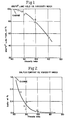
- Figures 1-5 are obtained from the data set forth in Table 3.
- lube yield is about 80 wt.%, and at 110 V.I. yield drops sharply to 55 wt.%.
- the V.I. at 100 matches that obtained from premium lube stocks, such as Arab Light using conventional solvent dewaxing technology.
- the haze in the 91 V.I. sample was a very fine divided white material as opposed to the reddish-brown coarse floc characteristic of hydrocracked oils. Warming of the oil by direct sunlight reduced the haze considerably. Pn alcohol thermometer taped to the window read 115°F (46°C) while the room temperature was 78°F (26°C). Late in the day, as the oil cooled, the haze returned. This reversibility of the haze would fit wax formation. The charge oil containing all its aromatic sulfur compounds does not form haze, which suggests that the addition of sulfur compounds normally used in the additive package could inhibit the haze.
Landscapes
- Chemical & Material Sciences (AREA)
- Oil, Petroleum & Natural Gas (AREA)
- Crystallography & Structural Chemistry (AREA)
- Engineering & Computer Science (AREA)
- Chemical Kinetics & Catalysis (AREA)
- General Chemical & Material Sciences (AREA)
- Organic Chemistry (AREA)
- Production Of Liquid Hydrocarbon Mixture For Refining Petroleum (AREA)
Applications Claiming Priority (2)
| Application Number | Priority Date | Filing Date | Title |
|---|---|---|---|
| US52833183A | 1983-08-31 | 1983-08-31 | |
| US528331 | 1983-08-31 |
Publications (2)
| Publication Number | Publication Date |
|---|---|
| EP0140468A1 true EP0140468A1 (fr) | 1985-05-08 |
| EP0140468B1 EP0140468B1 (fr) | 1989-01-11 |
Family
ID=24105238
Family Applications (1)
| Application Number | Title | Priority Date | Filing Date |
|---|---|---|---|
| EP84304382A Expired EP0140468B1 (fr) | 1983-08-31 | 1984-06-28 | Procédé combiné pour la production d'huiles lubrifiantes à partir de pétroles bruts marginaux |
Country Status (8)
| Country | Link |
|---|---|
| EP (1) | EP0140468B1 (fr) |
| JP (1) | JPS6055083A (fr) |
| AU (1) | AU574688B2 (fr) |
| BR (1) | BR8403436A (fr) |
| CA (1) | CA1252410A (fr) |
| DE (1) | DE3476080D1 (fr) |
| IN (1) | IN161436B (fr) |
| ZA (1) | ZA845040B (fr) |
Cited By (9)
| Publication number | Priority date | Publication date | Assignee | Title |
|---|---|---|---|---|
| EP0271265A1 (fr) * | 1986-12-04 | 1988-06-15 | Mobil Oil Corporation | Procédé pour réduire les points d'écoulement et de trouble d'huiles lubrifiantes d'hydrocraquage |
| WO2004033587A3 (fr) * | 2002-10-08 | 2004-07-01 | Exxonmobil Res & Eng Co | Procede integre de deparaffinage catalytique |
| US6951605B2 (en) | 2002-10-08 | 2005-10-04 | Exxonmobil Research And Engineering Company | Method for making lube basestocks |
| US7077947B2 (en) | 2002-10-08 | 2006-07-18 | Exxonmobil Research And Engineering Company | Process for preparing basestocks having high VI using oxygenated dewaxing catalyst |
| US7087152B2 (en) | 2002-10-08 | 2006-08-08 | Exxonmobil Research And Engineering Company | Wax isomerate yield enhancement by oxygenate pretreatment of feed |
| US7125818B2 (en) | 2002-10-08 | 2006-10-24 | Exxonmobil Research & Engineering Co. | Catalyst for wax isomerate yield enhancement by oxygenate pretreatment |
| US7220350B2 (en) | 2002-10-08 | 2007-05-22 | Exxonmobil Research And Engineering Company | Wax isomerate yield enhancement by oxygenate pretreatment of catalyst |
| US7282137B2 (en) | 2002-10-08 | 2007-10-16 | Exxonmobil Research And Engineering Company | Process for preparing basestocks having high VI |
| US7704379B2 (en) | 2002-10-08 | 2010-04-27 | Exxonmobil Research And Engineering Company | Dual catalyst system for hydroisomerization of Fischer-Tropsch wax and waxy raffinate |
Families Citing this family (4)
| Publication number | Priority date | Publication date | Assignee | Title |
|---|---|---|---|---|
| GB8425837D0 (en) * | 1984-10-12 | 1984-11-21 | Shell Int Research | Manufacture of lubricating base oils |
| JPH07116453B2 (ja) * | 1987-06-06 | 1995-12-13 | 出光興産株式会社 | 流動パラフィンの製造方法 |
| US7201838B2 (en) | 2002-10-08 | 2007-04-10 | Exxonmobil Research And Engineering Company | Oxygenate treatment of dewaxing catalyst for greater yield of dewaxed product |
| US7344631B2 (en) | 2002-10-08 | 2008-03-18 | Exxonmobil Research And Engineering Company | Oxygenate treatment of dewaxing catalyst for greater yield of dewaxed product |
Citations (1)
| Publication number | Priority date | Publication date | Assignee | Title |
|---|---|---|---|---|
| US4181598A (en) * | 1977-07-20 | 1980-01-01 | Mobil Oil Corporation | Manufacture of lube base stock oil |
Family Cites Families (1)
| Publication number | Priority date | Publication date | Assignee | Title |
|---|---|---|---|---|
| US4137148A (en) * | 1977-07-20 | 1979-01-30 | Mobil Oil Corporation | Manufacture of specialty oils |
-
1984
- 1984-06-26 AU AU29900/84A patent/AU574688B2/en not_active Ceased
- 1984-06-28 DE DE8484304382T patent/DE3476080D1/de not_active Expired
- 1984-06-28 EP EP84304382A patent/EP0140468B1/fr not_active Expired
- 1984-07-02 IN IN477/MAS/84A patent/IN161436B/en unknown
- 1984-07-02 ZA ZA845040A patent/ZA845040B/xx unknown
- 1984-07-10 BR BR8403436A patent/BR8403436A/pt unknown
- 1984-07-10 JP JP59141548A patent/JPS6055083A/ja active Pending
- 1984-07-11 CA CA000458613A patent/CA1252410A/fr not_active Expired
Patent Citations (1)
| Publication number | Priority date | Publication date | Assignee | Title |
|---|---|---|---|---|
| US4181598A (en) * | 1977-07-20 | 1980-01-01 | Mobil Oil Corporation | Manufacture of lube base stock oil |
Cited By (10)
| Publication number | Priority date | Publication date | Assignee | Title |
|---|---|---|---|---|
| EP0271265A1 (fr) * | 1986-12-04 | 1988-06-15 | Mobil Oil Corporation | Procédé pour réduire les points d'écoulement et de trouble d'huiles lubrifiantes d'hydrocraquage |
| WO2004033587A3 (fr) * | 2002-10-08 | 2004-07-01 | Exxonmobil Res & Eng Co | Procede integre de deparaffinage catalytique |
| US6951605B2 (en) | 2002-10-08 | 2005-10-04 | Exxonmobil Research And Engineering Company | Method for making lube basestocks |
| US7077947B2 (en) | 2002-10-08 | 2006-07-18 | Exxonmobil Research And Engineering Company | Process for preparing basestocks having high VI using oxygenated dewaxing catalyst |
| US7087152B2 (en) | 2002-10-08 | 2006-08-08 | Exxonmobil Research And Engineering Company | Wax isomerate yield enhancement by oxygenate pretreatment of feed |
| US7125818B2 (en) | 2002-10-08 | 2006-10-24 | Exxonmobil Research & Engineering Co. | Catalyst for wax isomerate yield enhancement by oxygenate pretreatment |
| US7220350B2 (en) | 2002-10-08 | 2007-05-22 | Exxonmobil Research And Engineering Company | Wax isomerate yield enhancement by oxygenate pretreatment of catalyst |
| US7282137B2 (en) | 2002-10-08 | 2007-10-16 | Exxonmobil Research And Engineering Company | Process for preparing basestocks having high VI |
| US7429318B2 (en) | 2002-10-08 | 2008-09-30 | Exxonmobil Research And Engineering Company | Process for preparing basestocks having high VI using oxygenated dewaxing catalyst |
| US7704379B2 (en) | 2002-10-08 | 2010-04-27 | Exxonmobil Research And Engineering Company | Dual catalyst system for hydroisomerization of Fischer-Tropsch wax and waxy raffinate |
Also Published As
| Publication number | Publication date |
|---|---|
| ZA845040B (en) | 1986-02-26 |
| IN161436B (fr) | 1987-12-05 |
| BR8403436A (pt) | 1985-06-25 |
| AU2990084A (en) | 1985-03-07 |
| AU574688B2 (en) | 1988-07-14 |
| JPS6055083A (ja) | 1985-03-29 |
| DE3476080D1 (en) | 1989-02-16 |
| CA1252410A (fr) | 1989-04-11 |
| EP0140468B1 (fr) | 1989-01-11 |
Similar Documents
| Publication | Publication Date | Title |
|---|---|---|
| EP0018778B1 (fr) | Déparaffinage catalytique d'huiles d'hydrocarbures | |
| US4181598A (en) | Manufacture of lube base stock oil | |
| US4437975A (en) | Manufacture of lube base stock oil | |
| EP0028874B1 (fr) | Procédé pour la préparation d'huiles de base pour lubrification | |
| US4137148A (en) | Manufacture of specialty oils | |
| EP0163449B1 (fr) | Déparaffinage catalytique d'huiles lubrifiantes | |
| EP0938532B1 (fr) | Procede de deparaffinage a haute selectivite de forme, retardant le vieillissement du catalyseur | |
| EP0011926B1 (fr) | Production d'huiles lubrifiantes à haut indice de viscosité | |
| US5885438A (en) | Wax hydroisomerization process | |
| RU2211855C2 (ru) | Способ каталитической депарафинизации углеводородного сырья и способ получения базовых смазочных масел с его использованием | |
| EP0016530B1 (fr) | Déparaffinage catalytique d'huiles hydrocarbonées avec de l'offrétite synthétique | |
| US6475374B1 (en) | Production of lubricating oils by a combination catalyst system | |
| US4610778A (en) | Two-stage hydrocarbon dewaxing process | |
| EP0324528A1 (fr) | Procédé de préparation d'une huile lubrifiante de base | |
| EP0140468B1 (fr) | Procédé combiné pour la production d'huiles lubrifiantes à partir de pétroles bruts marginaux | |
| US4490242A (en) | Two-stage hydrocarbon dewaxing hydrotreating process | |
| US4541919A (en) | Shape selective dewaxing using coke modified large pore zeolites | |
| EP0134637B1 (fr) | Amélioration de l'indice de viscosité d'un lubrifiant à base déparaffinée par désulfuration partielle en lit hydrogénant | |
| CA1117455A (fr) | Fabrication d'une huile lubrifiante | |
| EP0188898B1 (fr) | Procédé de déparaffinage en cascade | |
| US5053117A (en) | Catalytic dewaxing | |
| CN1926221B (zh) | 连续制备两种或多种基础油级分和中间馏分的方法 | |
| EP0104807B1 (fr) | Emploi de haute pression pour l'amélioration de la qualité de produit et l'augmentation de la longueur du cycle dans le déparaffinage catalytique des lubrifiants | |
| US5332490A (en) | Catalytic process for dewaxing hydrocarbon feedstocks | |
| EP0181066A2 (fr) | Procédé pour déparaffiner des distillats lourds et des liquides résiduels |
Legal Events
| Date | Code | Title | Description |
|---|---|---|---|
| PUAI | Public reference made under article 153(3) epc to a published international application that has entered the european phase |
Free format text: ORIGINAL CODE: 0009012 |
|
| AK | Designated contracting states |
Designated state(s): BE DE FR GB IT NL |
|
| 17P | Request for examination filed |
Effective date: 19851014 |
|
| 17Q | First examination report despatched |
Effective date: 19861002 |
|
| D17Q | First examination report despatched (deleted) | ||
| GRAA | (expected) grant |
Free format text: ORIGINAL CODE: 0009210 |
|
| AK | Designated contracting states |
Kind code of ref document: B1 Designated state(s): BE DE FR GB IT NL |
|
| REF | Corresponds to: |
Ref document number: 3476080 Country of ref document: DE Date of ref document: 19890216 |
|
| ET | Fr: translation filed | ||
| PGFP | Annual fee paid to national office [announced via postgrant information from national office to epo] |
Ref country code: DE Payment date: 19890316 Year of fee payment: 6 |
|
| PGFP | Annual fee paid to national office [announced via postgrant information from national office to epo] |
Ref country code: GB Payment date: 19890331 Year of fee payment: 6 |
|
| PGFP | Annual fee paid to national office [announced via postgrant information from national office to epo] |
Ref country code: FR Payment date: 19890405 Year of fee payment: 6 |
|
| ITF | It: translation for a ep patent filed | ||
| PGFP | Annual fee paid to national office [announced via postgrant information from national office to epo] |
Ref country code: BE Payment date: 19890517 Year of fee payment: 6 |
|
| PGFP | Annual fee paid to national office [announced via postgrant information from national office to epo] |
Ref country code: NL Payment date: 19890630 Year of fee payment: 6 |
|
| PLBE | No opposition filed within time limit |
Free format text: ORIGINAL CODE: 0009261 |
|
| STAA | Information on the status of an ep patent application or granted ep patent |
Free format text: STATUS: NO OPPOSITION FILED WITHIN TIME LIMIT |
|
| 26N | No opposition filed | ||
| PG25 | Lapsed in a contracting state [announced via postgrant information from national office to epo] |
Ref country code: GB Effective date: 19900628 |
|
| PG25 | Lapsed in a contracting state [announced via postgrant information from national office to epo] |
Ref country code: BE Effective date: 19900630 |
|
| BERE | Be: lapsed |
Owner name: MOBIL OIL CORP. Effective date: 19900630 |
|
| PG25 | Lapsed in a contracting state [announced via postgrant information from national office to epo] |
Ref country code: NL Effective date: 19910101 |
|
| NLV4 | Nl: lapsed or anulled due to non-payment of the annual fee | ||
| GBPC | Gb: european patent ceased through non-payment of renewal fee | ||
| PG25 | Lapsed in a contracting state [announced via postgrant information from national office to epo] |
Ref country code: FR Effective date: 19910228 |
|
| PG25 | Lapsed in a contracting state [announced via postgrant information from national office to epo] |
Ref country code: DE Effective date: 19910301 |
|
| REG | Reference to a national code |
Ref country code: FR Ref legal event code: ST |