EP0132716B1 - Lubricating paint compositions - Google Patents
Lubricating paint compositions Download PDFInfo
- Publication number
- EP0132716B1 EP0132716B1 EP84108225A EP84108225A EP0132716B1 EP 0132716 B1 EP0132716 B1 EP 0132716B1 EP 84108225 A EP84108225 A EP 84108225A EP 84108225 A EP84108225 A EP 84108225A EP 0132716 B1 EP0132716 B1 EP 0132716B1
- Authority
- EP
- European Patent Office
- Prior art keywords
- binder
- paint
- lubricant
- oil
- liquid
- Prior art date
- Legal status (The legal status is an assumption and is not a legal conclusion. Google has not performed a legal analysis and makes no representation as to the accuracy of the status listed.)
- Expired
Links
Images




Classifications
-
- C—CHEMISTRY; METALLURGY
- C09—DYES; PAINTS; POLISHES; NATURAL RESINS; ADHESIVES; COMPOSITIONS NOT OTHERWISE PROVIDED FOR; APPLICATIONS OF MATERIALS NOT OTHERWISE PROVIDED FOR
- C09D—COATING COMPOSITIONS, e.g. PAINTS, VARNISHES OR LACQUERS; FILLING PASTES; CHEMICAL PAINT OR INK REMOVERS; INKS; CORRECTING FLUIDS; WOODSTAINS; PASTES OR SOLIDS FOR COLOURING OR PRINTING; USE OF MATERIALS THEREFOR
- C09D5/00—Coating compositions, e.g. paints, varnishes or lacquers, characterised by their physical nature or the effects produced; Filling pastes
-
- C—CHEMISTRY; METALLURGY
- C09—DYES; PAINTS; POLISHES; NATURAL RESINS; ADHESIVES; COMPOSITIONS NOT OTHERWISE PROVIDED FOR; APPLICATIONS OF MATERIALS NOT OTHERWISE PROVIDED FOR
- C09D—COATING COMPOSITIONS, e.g. PAINTS, VARNISHES OR LACQUERS; FILLING PASTES; CHEMICAL PAINT OR INK REMOVERS; INKS; CORRECTING FLUIDS; WOODSTAINS; PASTES OR SOLIDS FOR COLOURING OR PRINTING; USE OF MATERIALS THEREFOR
- C09D7/00—Features of coating compositions, not provided for in group C09D5/00; Processes for incorporating ingredients in coating compositions
- C09D7/40—Additives
- C09D7/65—Additives macromolecular
-
- C—CHEMISTRY; METALLURGY
- C08—ORGANIC MACROMOLECULAR COMPOUNDS; THEIR PREPARATION OR CHEMICAL WORKING-UP; COMPOSITIONS BASED THEREON
- C08L—COMPOSITIONS OF MACROMOLECULAR COMPOUNDS
- C08L71/00—Compositions of polyethers obtained by reactions forming an ether link in the main chain; Compositions of derivatives of such polymers
- C08L71/02—Polyalkylene oxides
- C08L71/03—Polyepihalohydrins
Definitions
- the present invention relates to the combination of paints with suitable lubricants to realize coatings used to facilitate the sliding between mechanical parts, and more particularly, to a suspension of liquid lubricants within the paint.
- Lubrication by fluids is well known in the art.
- Lubricating fluids are utilized to give extended life to mechanical parts that are in contact with each other and subjected to some type of sliding engagement with each other.
- Lubricants therefore prevent seizures between mechanical parts, material transfer between mechanical parts, adhesion of parts to each other, and abrasion due to surface profiles, by maintaining a low and rather small coefficient of friction between the parts, resulting in a minimal loss of energy and a minimal loss of materials.
- Lubricating fluids are particularly well suited for lubrication purposes because they are able to regenerate themselves even after shearing mergeations.
- Solid lubricants are partially analogous to fluid lubricants. Solid lubricants generally have a low adhesion to metals and are easily sheared in a manner parallel to the surface to which they are applied. However, the regeneration in solid lubricants is less complete as the regeneration in-fluid lubricants. Solid lubricants are typically used where lubrication by fluids creates a problem of holding the fluids in place, or a risk of degradation, or evaporation e.g. in vacuum and/or high temperature applications.
- Solid lubricants can be deposited directly on surfaces, but this requires expensive technology with the resulting coating being very thin; otherwise, brittle coatings are formed.
- Dry film lubricants have been suggested because they are less expensive to manufacture and can be of sufficient thickness to insure a sufficient quantity of solid lubricant. Dry film lubricants appeared a short time after the first solid lubricants.
- Dry film lubricants comprise a binder, which assures adhesion to the substrate, and one or several types of solid lubricants which result in a low coefficient of friction between sliding surfaces.
- the most widely known solid lubricants in use are molybdenum sulfide (MoS 2 ), graphite and polytetrafluoroethylene (PTFE).
- Tadaoki Satoh and Naoko Takano have dissolved small quantities of oil in the lubricating paints to reduce the superficial tensions and risks of cracking in the dried paint layer.
- oil When oil is dissolved in a paint, the paint becomes less brittle when subjected to high loading conditions or an oscillating type force.
- Japanese Patent No. 56-84952 refers to a lubricating paint containing from 0.5 to 3.0 weight percent of a lubricant having molecular weight of 3,000 AMU' S , which is not in the liquid state at room temperature.
- Japanese Patent No. 53 ⁇ 116,486 refers to an insulated electrical wire having a superficial coating containing from .03 to 5.0 weight percent silicon oil which produces a low coefficient of friction, prevents folding and enhances shock resistance.
- Japanese Patent No. 56-70880 discloses a double lubricating coating obtained by fusion of resin powder containing mineral, vegetable or animal oils upon the surface of the coated object.
- the present invention was made in view of the foregoing background, and to overcome the foregoing drawbacks. It is accordingly an object of this invention to provide a lubricating layer consisting of a paint comprising isolated drops of non-dissolved liquid lubricant, providing reduced coefficients of friction and reduced wear of sliding parts. Only the non-dissolved part of the liquid lubricant is effective in reducing friction and wear.
- the dissolved part of oil introduced into the binder should not exceed 30 volume %, preferably 8 volume % of the binder, the other part of oil being non-dissolved in the binder. This dissolved part reduces the binder mechanical properties.
- a lubricating paint for sliding parts comprises:
- a lubricating paint composition comprises a non-fluorinated organic or non-organic binder and a fluorinated synthetic lubricant such as perfluorinated polyethers, fluorinated polysiloxanes and perfluorinated or partially fluorinated hydrocarbons.
- Figure 1 displays a substrate (1) upon which a binder (2) is coated.
- the binder (2) includes non-dissolved, suspended lubricant droplets (3) therein.
- Figure 2 shows an object (4) contacting the surface of the binder (2).
- the object (4) experiences friction between itself and the surface of the binder (2).
- Figure 3 discloses a situation where the object (4) has worn the binder (2) down to one of the lubricant inclusions (3).
- the object (4) is now in direct contact with the lubricant stored in the inclusion (3), and Figure 4 shows a subsequent dispersement of the lubricant onto the surface of the binder (2).
- the oil or liquid lubricant on the surface provides lubrication between the object (4) and the binder surface, thereby reducing the coefficient of friction between the two parts and decreasing the rate of wear of the binder (2).
- Figure 5 discloses a suspended solid lubricant (5) within the matrix of a binder (2) and a non-dissolved, suspended liquid lubricant (3) also within the matrix.
- the solid lubricant may be of one composition or of different compositions such as PTFE, MoS 2 , graphite, graphite fluoride, WS 2 , WSe 2 ; however, the solid lubricant is considerably less efficient than liquid lubricants.
- Figure 5 also shows that the substrate (1) has an intermediate coating (6) on a modified or rough surface which permits a greater adherence of the lubricating paint to the substrate (1).
- Figure 6 shows similar solid lubricant (5) and liquid lubricant (3) included within binder (2), and an intermediate coating (6) such as a primer paint, a rust resistant metal or a phosphate, placed upon substrate (1), with an intermediate coating surface profile providing better adherence of the lubricating paint to the substrate (1).
- an intermediate coating (6) such as a primer paint, a rust resistant metal or a phosphate
- the substrate or the intermediate coating prior to the application of the paint the substrate or the intermediate coating have been submitted to sandblasting, shotblasting or to a rectification leaving crooked asperities. If desired, the paint is applied on self-adhering material.
- Thick coatings of lubricating paints are realizable by using hardenable, two-component binders such as epoxy and polyurethane resins, which harden without the necessity of exposure to the air.
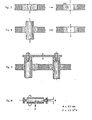
- Figures 7, and 9 show different methods of using thick lubricating paint coatings.
- Figure 7 shows the application of a thick coating within a hole or opening in a piece and subsequent machining of the coating until a desired shape and size is achieved.
- Figure 8 shows a forming part which was first coated with an anti-adhesion product, positioned within a hole in another piece, upon-which a thick coating has been applied. The anti-adhesion coating on the forming piece results in the application of a thick lubricating paint coating adhering only to the support and not to the forming part.
- Figure 9 shows the same method of obtaining accurate dimensions of thick lubricating paint coatings, but applied to two parts.
- the parts positioned within the lubricating coating paint are designed to operate in the position shown and are therefore not removed while the lubricating paint coating is cast on them and hardened in place. This results in higher precision, thereby eliminating any possible dimensional errors, and since the sliding parts are precoated with an anti-adhesive product, the thick lubricating paint coating will not adhere to their surfaces.
- the lubricating paints differ in a unique way from porous bearings which contain a liquid lubricant. Porous bearings are widespread and quite helpful, but because the pores communicate with each other, the oil therein slowly disappears by use and contact with the atmosphere at the peripheral regions of the bearing. Conversely, the lubricating paints do not suffer from such a drawback because the oil is contained within a binder, and it does not contact the atmosphere when not in use. The only time it comes into contact with the atmosphere is when the binder is worn down by frictional contact with a moving part. The oil is thus kept in a sheltered state until it needs to be used.
- lubricant Several types of oil can be used as the included lubricant, and the decision on which lubricant to use is a matter of the insolubility of the lubricants in the binder.
- Mineral, vegetal and animal oils are less favorable for such applications than synthetic lubricants such as perfluorinated polyethers, perfluorinated or partially fluorinated hydrocarbons, fluorinated polysiloxanes, alkyl/aryl-polysiloxanes and polyolefins.
- Oils on perfluorinated polyethyloxypolyether base are insoluble in most non-fluorinated binders, as for example phenolic resins, epoxy resins, glycerophthalic varnish, alkyd and amine resins, acryloisocyanate resins.
- phenolic resins epoxy resins
- glycerophthalic varnish alkyd and amine resins
- acryloisocyanate resins oils on perfluorinated polyethyloxypolyether base are insoluble in most non-fluorinated binders, as for example phenolic resins, epoxy resins, glycerophthalic varnish, alkyd and amine resins, acryloisocyanate resins.
- a typical example of perfluorinated polyethyloxy polyether is Fomblin Z@ of Montecatini-Edison (U.S. patent 3,715.378).
- perfluorinated polyisopropyloxy polyethers are perfluorinated polyisopropyloxy polyethers (Fomblin Y@ oi)s of Montecatini-Edison (U.S. patent 3,665,041)) or similar oils, such as Krytox@ (U.S. patent 3,242,218).
- oils are insoluble, as for example perfluorinated polyethers (e.g. Fomblin Z@ 25 and Fomblin Y@ 25), polyglycol (a moderately priced synthetic oil), a motor oil, such as SAE 30@ (a mineral oil), ground-nut (a vegetal oil), ox foot (an animal oil).
- perfluorinated polyethers e.g. Fomblin Z@ 25 and Fomblin Y@ 25
- polyglycol a moderately priced synthetic oil
- a motor oil such as SAE 30@ (a mineral oil), ground-nut (a vegetal oil), ox foot (an animal oil).
- One method involves a one-component organic paint, preferably transparent, as for example glycerophthalic varnishes and alkyd and amine resins, so that the solubility of the oil within the binder can be visually observed. It is necessary to choose oils which dissolve little or not at all within the binder and also maintain a stable emulsion after the mixture has been agitated. After agitation the mixture is spread onto a desired surface, then dried and cured according to the curing specification of the binder manufacturer.
- a one-component organic paint preferably transparent, as for example glycerophthalic varnishes and alkyd and amine resins
- an oil emulsion can be prepared with just one of the two components by dispersing the lubricant within one of the components, by appropriate agitation means, and then introducing the second component into the emulsion.
- the mixture is then spread onto the piece, dried and cured according to the specifications of the binder manufacturer.
- a lubricating coating paint having a solid lubricant therein the same procedures as described above can be used.
- the introduction of the solid lubricant such as PTFE, MoS 2 or graphite, graphite fluoride, WS 2 , WSe 2 , can occur either before or after the addition of oil into the binder.
- the mixture is then spread, dried and cured.
- the binder can be made more fluid.
- Three different procedures to realize the . paint can be used:
- the densities of the oil, paint and solvent(s) must be closely matched if the mixtures and emulsions are to remain stable until the binder hardens. Therefore, tensioactive agents such as naphthalene sulfonate or non-ionic agents, or agents acting on the rheological behavior of the mixture can be used to stabilize such emulsions.
- the viscosity of the binder is also important. As the viscosity of the emulsion increases, so does the stability of the emulsion. However, it is difficult to obtain thin coatings with highly viscous binders. Also, a high viscosity binder results in the introduction of more air bubbles during mechanical agitation. Therefore, undesired porosity will be achieved in the binder. The bubbles are unfavorable because they introduce irregularities in the binder which result in fatigue effects in the binder.
- One method of removing the included bubbles is to perform the drying and curing after outgassing in a partial vacuum (0.1 to 0.8 bar).
- the paints can be applied by various methods: They can be spread on flat surfaces with a paint brush or a roller, parts can be immersed in the lubricating paint, they can be applied by atomization with a spray gun, or by atomization of a specially prepared spray within a spray can having insoluble oil, for example Fomblin Z@25 or Y@25 oil introduced therein, which must be vigorously shaken before use.
- the lubricating paints can be applied either on the totality of a surface or only on partial portions of a surface. Care must be taken to insure that the surface is clean before attempting to adhere a lubricating paint to it. However, the adhesion of the mixture to the surface is not affected by the presence of the included oil.
- Thick coatings of the lubricating paint can be realized by the aforementioned procedure discussed in connection with Figures 7, 8 and 9.
- the form and dimension of the liquid lubricant inclusions depend on the type of binder, the type of liquid lubricant, the thickness and the manufacturing method of the paint. In thick coatings of up to 10 mm or more, the form of the liquid lubricant inclusions is typically spherical with a diameter of 0.1 to 1000-pm. In thin coatings of up to approximately 10 pm, the form of the liquid lubricant inclusions is typically thin and disk-like, with a diameter of 0.1 to 1000 ⁇ m and a thickness of 0.1 to 5 ⁇ m.
- the amount of liquid lubricants in the paint is typically 0.1 to 45 volume %, according to the type of binder, the type of liquid lubricant and the intended application.
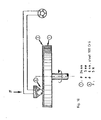
- the lubricating paints can be easily tested by one of two different devices: a pin on disk-type friction machine or a Microtribometer.
- the pin on disk-type friction machine is a universal apparatus known by most who test self-lubricating materials or those who study dry friction.
- the apparatus consists of a rotating disk, which is in contact with a steel ball, which is pressed toward the surface of the rotating disk with a predetermined force.
- the coefficient of friction is measured as a function of time.
- the rate of wear of the coating is calculated by examining the profile of the worn surfaces by some type of Profilometer.
- a pin on disk-type friction machine is shown in Figure 10.
- Tests conducted with a Microtribometer are performed on a micromechanical scale using an apparatus of axial-bearing geometry as shown in Figure 11. This results in the ability to measure the coefficient of friction as a function of rotating speed.
- Emralon@ 330 phenolic resin binder with PTFE solid lubricant
- Emralon@ 330 phenolic resin binder with PTFE solid lubricant
- One favorable oil that can be dispersed within the Emralon@ 330 consists of perfluorinated hydrocarbons, manufactured by the 3M Company (Minnesota Mining Manufacturing). The oil was introduced in an amount equivalent to 10 weight percent into the Emralon(g) 330. The mixture was mechanically agitated in a small container before being spread, dried and cured for one hour at 150°C.
- Figure 12 shows a plot of wear rate versus the amount, in both weight percent and volume percent, of oil incorporated in the paint. In this instance, it appears that only about 0.5 volume percent of oil needs to be included within the paint to obtain a substantially low wear rate, while a minimum appears to exist at approximately 1.5 volume percent oil. At greater than 1.5 volume percent oil, the wear rate increases because of the decrease in the mechanical resistance of the paint. At approximately 10 volume percent oil and above, the paint loses much oil and a hydrodynamic situation exists.
- Figure 13 is a plot showing the friction coefficient versus the amount of oil, in both volume and weight percent, incorporated into the paint.
- Figure 13 shows that the friction decreases by increasing the amount of oil incorporated in the paint.
- an acceptably low coefficient of friction is present at the corresponding minimum wear rate. Therefore, when viewing Figures 12 and 13 together it becomes apparent that a very significantly reduced wear rate (reduction by a factor of 100) can be achieved at about the same oil content that yields an acceptably low friction coefficient, that being the range of about 0.5 to 1.5 volume percent of oil incorporated in the binder.
- the optimum concentration of oil depends upon the desired use for the coated piece.
- a paint having a high percentage of oil included within the binder should be chosen.
- a paint having somewhere between 1.5 and 3.0 volume percent of oil should be chosen so that better mechanical resistance will be obtained.
- the potential proportions of oil which are useable cover a wide scope of volume percentages. which must be chosen to meet the individual circumstances.
- the paints used can be reduced in viscosity by two different methods.
- a solvent can be introduced into the binder and oil emulsion, or the oil can first be diluted by the diluent and then both introduced into the binder.
- Example 3 The paint and oil used in Example 3 have been diluted in three different ways and the results are given in Table 3. I
- the F p mbtin Z@ 25 oil is not soluble in the binder alone but it is soluble in the trifluorotrichlorethane which also dissolves the binder.
- the special "epoxy solvent” dissolves the binder, but not the oil.
- Fomblin Z@ 25 oil was introduced in a commercial acrylic spray-can into a transparent paint used for automobiles. After vigorously shaking the container, samples were covered with this paint and the coating did not show high mechanical qualities but did have unexpectedly advantageous friction results as shown in Table 4.
- Table 4 shows that as the number of coatings increases the lifetime also increases.
- the tape having no lubricating paint showed the coefficient roughly six times higher than the tape with 3 volume percent oil included therein and a lifetime equivalent to 25 percent of the lifetime of the paint with the 3 volume percent oil included therein.
- a Microtribometer was used to measure the coefficient of friction in 0.1 mm diameter bearings which were formed by the method shown in Figure 7. The results of the Microtribometer test are shown in Figure 14, which is a plot of the friction coefficient versus the rotating speed of the Microtribometer in dry and humid air.
- the mineral oil reduces the wear by a factor 10; another order of magnitude in wear reduction is given with synthetic oil. With high performance synthetic oil wear is 3 orders of magnitude lower.
- a perfluorated polyether oil (Fomblin Z@03) has been introduced (1.5 volume percent in spray can, which gives 30 weight percent of oil in the dry films).
- the solid film lubricant has a non-organic and non-metallic binder containing MoS 2 and, as a solvent, a fluorated hydrocarbon.
- the lifetime increased by a factor of 40.
- a perfluorated polyether oil (Fomblin Z®03) was introduced (2% weight in liquid, giving 30% weight of oil in the dry form) into a solid film lubricant.
- the solid film lubricant has a thermosetting resin and contains PTFE powder.
- the lifetimes obtained (revolutions up to friction coefficient of 0.3) were:
- the lifetime increased by a factor of 131.
Landscapes
- Chemical & Material Sciences (AREA)
- Life Sciences & Earth Sciences (AREA)
- Engineering & Computer Science (AREA)
- Materials Engineering (AREA)
- Wood Science & Technology (AREA)
- Organic Chemistry (AREA)
- Paints Or Removers (AREA)
- Lubricants (AREA)
Abstract
Description
- The present invention relates to the combination of paints with suitable lubricants to realize coatings used to facilitate the sliding between mechanical parts, and more particularly, to a suspension of liquid lubricants within the paint.
- Lubrication by fluids, such as oil or grease, is well known in the art. Lubricating fluids are utilized to give extended life to mechanical parts that are in contact with each other and subjected to some type of sliding engagement with each other. Lubricants therefore prevent seizures between mechanical parts, material transfer between mechanical parts, adhesion of parts to each other, and abrasion due to surface profiles, by maintaining a low and rather small coefficient of friction between the parts, resulting in a minimal loss of energy and a minimal loss of materials.
- Lubricating fluids are particularly well suited for lubrication purposes because they are able to regenerate themselves even after shearing sollicitations. Solid lubricants are partially analogous to fluid lubricants. Solid lubricants generally have a low adhesion to metals and are easily sheared in a manner parallel to the surface to which they are applied. However, the regeneration in solid lubricants is less complete as the regeneration in-fluid lubricants. Solid lubricants are typically used where lubrication by fluids creates a problem of holding the fluids in place, or a risk of degradation, or evaporation e.g. in vacuum and/or high temperature applications.
- Solid lubricants can be deposited directly on surfaces, but this requires expensive technology with the resulting coating being very thin; otherwise, brittle coatings are formed.
- Dry film lubricants have been suggested because they are less expensive to manufacture and can be of sufficient thickness to insure a sufficient quantity of solid lubricant. Dry film lubricants appeared a short time after the first solid lubricants.
- Dry film lubricants comprise a binder, which assures adhesion to the substrate, and one or several types of solid lubricants which result in a low coefficient of friction between sliding surfaces. The most widely known solid lubricants in use are molybdenum sulfide (MoS2), graphite and polytetrafluoroethylene (PTFE).
- Several companies in Japan have described sliding paints in which oil was added.
- Tadaoki Satoh and Naoko Takano (UDC'667.613.7 620.191.36) have dissolved small quantities of oil in the lubricating paints to reduce the superficial tensions and risks of cracking in the dried paint layer. When oil is dissolved in a paint, the paint becomes less brittle when subjected to high loading conditions or an oscillating type force.
- In Japanese Patents No. 53-147737 and No. 54-112939, oil is added to the top coating of certain paints in order to avoid the adhesion of posters to the surface of the coated object.
- Japanese Patent No. 56-84952 refers to a lubricating paint containing from 0.5 to 3.0 weight percent of a lubricant having molecular weight of 3,000 AMU'S, which is not in the liquid state at room temperature.
- Japanese Patent No. 53―116,486 refers to an insulated electrical wire having a superficial coating containing from .03 to 5.0 weight percent silicon oil which produces a low coefficient of friction, prevents folding and enhances shock resistance.
- Japanese Patent No. 56-70880 discloses a double lubricating coating obtained by fusion of resin powder containing mineral, vegetable or animal oils upon the surface of the coated object.
- All of the prior art suggests that the added oil in the paint is homogeneously dissolved in the paint. Therefore, the lubricant does not function as liquid oil when it is homogeneously dissolved into the binder. Hence, efficient lubrication is not achieved, resulting in no reduction of wear on the sliding parts.
- The present invention was made in view of the foregoing background, and to overcome the foregoing drawbacks. It is accordingly an object of this invention to provide a lubricating layer consisting of a paint comprising isolated drops of non-dissolved liquid lubricant, providing reduced coefficients of friction and reduced wear of sliding parts. Only the non-dissolved part of the liquid lubricant is effective in reducing friction and wear.
- The dissolved part of oil introduced into the binder should not exceed 30 volume %, preferably 8 volume % of the binder, the other part of oil being non-dissolved in the binder. This dissolved part reduces the binder mechanical properties.
- To attain the above objects a lubricating paint for sliding parts comprises:
- a non-dissolved suspension of a liquid lubricant within a paint, providing lubrication between two contacting surfaces, as the binder material, which suspends the lubricant, wears down from sliding contact between the two surfaces. Hence, some non-dissolved droplets of lubricant spills onto the surface of the binder resulting in a decreased coefficient of friction and increased service expectancy of both sliding parts.
- The binder used in the present invention is a non-metallic binder. According to a preferred embodiment of the invention a lubricating paint composition comprises a non-fluorinated organic or non-organic binder and a fluorinated synthetic lubricant such as perfluorinated polyethers, fluorinated polysiloxanes and perfluorinated or partially fluorinated hydrocarbons. The above objects, features and advantages of the present invention will become more apparent from reading the following description of the preferred embodiments taken in connection with the accompanying drawings, wherein:
- Figure 1 is a schematic cross-sectional view of a coating of lubricating paint with non-dissolved, suspended oil inclusions, placed upon a substrate;
- Figure 2 is a schematic cross-sectional view of a coating of lubricating paint with non-dissolved, suspended liquid lubricant inclusions therein, placed on a substrate, with the lubricating paint in contact with a sliding part;
- Figure 3 is a schematic cross-sectional view of a coating of lubricating paint which has been slightly worn on its surface;
- Figure 4 is a schematic cross-sectional view showing a sliding part rupturing a non-dissolved, suspended liquid lubricant inclusion and spreading the liquid upon the surface of the binder, providing low friction and low wear;
- Figure 5 is a schematic cross-sectional view of a binder attached to an intermediate coating deposited on a roughened substrate, the binder having non-dissolved, suspended inclusions of both solid and liquid lubricants which may be roughened by sand blasting, shot blasting or rectification leaving crooked asperities.
- Figure 6 is a schematic cross-sectional view of a binder attached to a rough intermediate coating deposited on a substrate, the binder having non-dissolved, suspended inclusions of both solid and liquid lubricants;
- Figure 7 is a schematic cross-sectional view of a thick coating of a lubricating paint in a bore showing subsequent machining of the thick lubricating paint, forming a bearing;
- Figure 8 is a schematic cross-sectional view of a forming process for a thick coating of a lubricating paint in an opening, the lubricating coating being hardened in place, adhering to the hollow part hollowed by the cylindrical form previously coated with an antiadhesion product;
- Figure 9 is a schematic cross-sectional view of a forming process for a thick coating of a lubricating point in two bores which together with the Figure 8 process provides a precision alignment of the two bores;
- Figure 10 is a partially schematic view of a pin on disk type friction measuring machine;
- Figure 11 is a partially schematic view of a friction testing device known as a Microtriobometer;
- Figure 12 is a plot of the measured wear rate of a lubricating paint versus the amount of oil incorporated in the paint;
- Figure 13 is a plot of the measured friction coefficient of a lubricating paint versus the amount of oil incorporated in the paint;
- Figure 14 is a plot of the coefficient of friction versus the rotating speed of the Microtriobometer measured in two different atmospheres.
- Referring first to Figures 1-4, schematic, cross-sectional views of a sequential operation are disclosed. Figure 1 displays a substrate (1) upon which a binder (2) is coated. The binder (2) includes non-dissolved, suspended lubricant droplets (3) therein. Figure 2 shows an object (4) contacting the surface of the binder (2). The object (4) experiences friction between itself and the surface of the binder (2). When the binder surface does not have any lubricant thereon, a relatively rapid wear rate occurs, resulting in a loss of binder material in the area of contact between the object (4) and the binder (2). Figure 3 discloses a situation where the object (4) has worn the binder (2) down to one of the lubricant inclusions (3). The object (4) is now in direct contact with the lubricant stored in the inclusion (3), and Figure 4 shows a subsequent dispersement of the lubricant onto the surface of the binder (2). The oil or liquid lubricant on the surface provides lubrication between the object (4) and the binder surface, thereby reducing the coefficient of friction between the two parts and decreasing the rate of wear of the binder (2).
- If a proper amount of oil or other lubricant is present within the binder, then a sufficient amount of oil will always be present upon the surface for providing lubrication between the object (4) and the binder (2). This results in extremely reduced wear in comparison to a lubricating paint which does not utilize lubricant inclusions.
- Figure 5 discloses a suspended solid lubricant (5) within the matrix of a binder (2) and a non-dissolved, suspended liquid lubricant (3) also within the matrix. The solid lubricant may be of one composition or of different compositions such as PTFE, MoS2, graphite, graphite fluoride, WS2, WSe2; however, the solid lubricant is considerably less efficient than liquid lubricants. Figure 5 also shows that the substrate (1) has an intermediate coating (6) on a modified or rough surface which permits a greater adherence of the lubricating paint to the substrate (1).
- Figure 6 shows similar solid lubricant (5) and liquid lubricant (3) included within binder (2), and an intermediate coating (6) such as a primer paint, a rust resistant metal or a phosphate, placed upon substrate (1), with an intermediate coating surface profile providing better adherence of the lubricating paint to the substrate (1). According to a preferred embodiment of the present invention, prior to the application of the paint the substrate or the intermediate coating have been submitted to sandblasting, shotblasting or to a rectification leaving crooked asperities. If desired, the paint is applied on self-adhering material.
- Thick coatings of lubricating paints are realizable by using hardenable, two-component binders such as epoxy and polyurethane resins, which harden without the necessity of exposure to the air. Figures 7, and 9 show different methods of using thick lubricating paint coatings.
- Figure 7 shows the application of a thick coating within a hole or opening in a piece and subsequent machining of the coating until a desired shape and size is achieved. Figure 8 shows a forming part which was first coated with an anti-adhesion product, positioned within a hole in another piece, upon-which a thick coating has been applied. The anti-adhesion coating on the forming piece results in the application of a thick lubricating paint coating adhering only to the support and not to the forming part.
- Figure 9 shows the same method of obtaining accurate dimensions of thick lubricating paint coatings, but applied to two parts. The parts positioned within the lubricating coating paint are designed to operate in the position shown and are therefore not removed while the lubricating paint coating is cast on them and hardened in place. This results in higher precision, thereby eliminating any possible dimensional errors, and since the sliding parts are precoated with an anti-adhesive product, the thick lubricating paint coating will not adhere to their surfaces.
- The lubricating paints differ in a unique way from porous bearings which contain a liquid lubricant. Porous bearings are widespread and quite helpful, but because the pores communicate with each other, the oil therein slowly disappears by use and contact with the atmosphere at the peripheral regions of the bearing. Conversely, the lubricating paints do not suffer from such a drawback because the oil is contained within a binder, and it does not contact the atmosphere when not in use. The only time it comes into contact with the atmosphere is when the binder is worn down by frictional contact with a moving part. The oil is thus kept in a sheltered state until it needs to be used.
- This makes lubricating paints useful for mechanisms which must be stored for a long time before use, for example, firearms, switches which are not used for long periods of time, horological mechanisms stocked for long durations of time, etc.
- Several types of oil can be used as the included lubricant, and the decision on which lubricant to use is a matter of the insolubility of the lubricants in the binder. Mineral, vegetal and animal oils are less favorable for such applications than synthetic lubricants such as perfluorinated polyethers, perfluorinated or partially fluorinated hydrocarbons, fluorinated polysiloxanes, alkyl/aryl-polysiloxanes and polyolefins. Oils on perfluorinated polyethyloxypolyether base are insoluble in most non-fluorinated binders, as for example phenolic resins, epoxy resins, glycerophthalic varnish, alkyd and amine resins, acryloisocyanate resins. A typical example of perfluorinated polyethyloxy polyether is Fomblin Z@ of Montecatini-Edison (U.S. patent 3,715.378).
- Some other, but less efficient perfluorinated polyethers are perfluorinated polyisopropyloxy polyethers (Fomblin Y@ oi)s of Montecatini-Edison (U.S. patent 3,665,041)) or similar oils, such as Krytox@ (U.S. patent 3,242,218).
- In some binders, such as solvent free epoxy resins, almost all oils are insoluble, as for example perfluorinated polyethers (e.g. Fomblin Z@ 25 and Fomblin Y@ 25), polyglycol (a moderately priced synthetic oil), a motor oil, such as
SAE 30@ (a mineral oil), ground-nut (a vegetal oil), ox foot (an animal oil). - The following examples describe different variations in the preparation process of lubricating paints.
- One method involves a one-component organic paint, preferably transparent, as for example glycerophthalic varnishes and alkyd and amine resins, so that the solubility of the oil within the binder can be visually observed. It is necessary to choose oils which dissolve little or not at all within the binder and also maintain a stable emulsion after the mixture has been agitated. After agitation the mixture is spread onto a desired surface, then dried and cured according to the curing specification of the binder manufacturer.
- In order to obtain a harder coating, the immediately aforedescribed procedure is again utilized, but with a slight difference, namely that a two-component paint such as epoxy or polyurethane resin is used. The oil is introduced into the two-component mixture. The mixture is then spread onto the surface to be coated, dried and hardened. Similarly, an oil emulsion can be prepared with just one of the two components by dispersing the lubricant within one of the components, by appropriate agitation means, and then introducing the second component into the emulsion.
- The mixture is then spread onto the piece, dried and cured according to the specifications of the binder manufacturer.
- To obtain a lubricating coating paint having a solid lubricant therein, the same procedures as described above can be used. However, the introduction of the solid lubricant such as PTFE, MoS2 or graphite, graphite fluoride, WS2, WSe2, can occur either before or after the addition of oil into the binder. The mixture is then spread, dried and cured.
- Problems can arise when attempting to obtain an emulsion of an oil within a binder. The oil may coagulate, thereby forming large drops, or the oil may dissolve in the binder. If a transparent binder is being used, either of these two defects can be visually observed. However, if a non-transparent binder is being used, the only way to verify proper inclusion of the oil droplets within the binder is to perform some type of friction test upon the coated piece.
- To obtain thin coatings, the binder can be made more fluid. Three different procedures to realize the . paint can be used:
- 1) A solvent is introduced into the suspension of binder and oil. Before proceeding so, a check must be made to verify that the oil is not soluble in the paint. The solvent can or cannot dissolve the oil.
- 2) The oil and the diluter are mixed (if the solvent does not dissolve the oil) and the mixture is introduced into the paint.
- 3) The oil is dissolved in the diluent and the liquid thereby obtained is introduced into the binder. In this case, the mechanical shaking of the mixture does not influence the size of the drops of oil which will take shape in the paint. Their dimensions are a function of the drying speed, of the curing and of the superficial tensions.
- The densities of the oil, paint and solvent(s) must be closely matched if the mixtures and emulsions are to remain stable until the binder hardens. Therefore, tensioactive agents such as naphthalene sulfonate or non-ionic agents, or agents acting on the rheological behavior of the mixture can be used to stabilize such emulsions.
- The viscosity of the binder is also important. As the viscosity of the emulsion increases, so does the stability of the emulsion. However, it is difficult to obtain thin coatings with highly viscous binders. Also, a high viscosity binder results in the introduction of more air bubbles during mechanical agitation. Therefore, undesired porosity will be achieved in the binder. The bubbles are unfavorable because they introduce irregularities in the binder which result in fatigue effects in the binder. One method of removing the included bubbles is to perform the drying and curing after outgassing in a partial vacuum (0.1 to 0.8 bar).
- The paints can be applied by various methods: They can be spread on flat surfaces with a paint brush or a roller, parts can be immersed in the lubricating paint, they can be applied by atomization with a spray gun, or by atomization of a specially prepared spray within a spray can having insoluble oil, for example Fomblin Z@25 or Y@25 oil introduced therein, which must be vigorously shaken before use. The lubricating paints can be applied either on the totality of a surface or only on partial portions of a surface. Care must be taken to insure that the surface is clean before attempting to adhere a lubricating paint to it. However, the adhesion of the mixture to the surface is not affected by the presence of the included oil.
- Thick coatings of the lubricating paint can be realized by the aforementioned procedure discussed in connection with Figures 7, 8 and 9.
- The form and dimension of the liquid lubricant inclusions depend on the type of binder, the type of liquid lubricant, the thickness and the manufacturing method of the paint. In thick coatings of up to 10 mm or more, the form of the liquid lubricant inclusions is typically spherical with a diameter of 0.1 to 1000-pm. In thin coatings of up to approximately 10 pm, the form of the liquid lubricant inclusions is typically thin and disk-like, with a diameter of 0.1 to 1000 µm and a thickness of 0.1 to 5 µm.
- The amount of liquid lubricants in the paint is typically 0.1 to 45 volume %, according to the type of binder, the type of liquid lubricant and the intended application.
- The lubricating paints can be easily tested by one of two different devices: a pin on disk-type friction machine or a Microtribometer. The pin on disk-type friction machine is a universal apparatus known by most who test self-lubricating materials or those who study dry friction. The apparatus consists of a rotating disk, which is in contact with a steel ball, which is pressed toward the surface of the rotating disk with a predetermined force. During the test, the coefficient of friction is measured as a function of time. At the end of the test, the rate of wear of the coating is calculated by examining the profile of the worn surfaces by some type of Profilometer. A pin on disk-type friction machine is shown in Figure 10.
- Tests conducted with a Microtribometer are performed on a micromechanical scale using an apparatus of axial-bearing geometry as shown in Figure 11. This results in the ability to measure the coefficient of friction as a function of rotating speed.
- To examine the true utility of a lubricating paint one must put it into actual service. However, only qualitative results would be possible from such experimentation, for example only results pertaining to favorable versus nonfavorable duration or performance as opposed to quantative results which are obtained by some type of friction machine.
- The following examples illustrate the present invention and are presented without inferring any specific limitations. The following examples are results of use of a pin on disk-type friction machine having a 0.1 meter per second sliding speed, a 5.0 Newton contact force between the steel (100Cr6) 6 mm diameter ball and a steel. disk coated with various lubricating paints.
- A commercial lubricating paint, known as Emralon@ 330 (phenolic resin binder with PTFE solid lubricant), manufactured by Acheson Colloids Company, Michigan, was tested for coefficient of friction and rate of wear with and without lubricating oil incorporated therein. One favorable oil that can be dispersed within the Emralon@ 330 consists of perfluorinated hydrocarbons, manufactured by the 3M Company (Minnesota Mining Manufacturing). The oil was introduced in an amount equivalent to 10 weight percent into the Emralon(g) 330. The mixture was mechanically agitated in a small container before being spread, dried and cured for one hour at 150°C.

- The inclusion of oil produced favorable results. While the coefficient of friction was not significantly reduced, the rate of wear of the coating was reduced by a factor of approximately 40.
- Various combinations of paint and oil mixtures have been tested and are disclosed in Table 2. Oils which have given favorable results when combined with different paints have been indicated. In all favorable cases, the coefficients of friction were reduced. All paints were prepared in proportions prescribed by the supplier and by introducing 10 weight percent oil in the mixture and then manually agitating the solution in a small container, with the mixture subsequently dried and cured according to the bindersupplier specifications. The last entry in each of the columns under the four different paints indicates the wear rate of the paint without oil inclusions therein, while the chart when read horizontally and vertically indicates the wear rates of the paints with oil inclusions.

- The two-component paint using Etokat as the binder and the oil Fomblin Z@ 25 as the lubricant, was manually shaken and spread on a disk and c.ured. This mixture was tested to determine an optimum oil inclusion amount. The results of varying the percentage of oil included in the paint are shown in Figures 12 and 13.
- Figure 12 shows a plot of wear rate versus the amount, in both weight percent and volume percent, of oil incorporated in the paint. In this instance, it appears that only about 0.5 volume percent of oil needs to be included within the paint to obtain a substantially low wear rate, while a minimum appears to exist at approximately 1.5 volume percent oil. At greater than 1.5 volume percent oil, the wear rate increases because of the decrease in the mechanical resistance of the paint. At approximately 10 volume percent oil and above, the paint loses much oil and a hydrodynamic situation exists.
- Figure 13 is a plot showing the friction coefficient versus the amount of oil, in both volume and weight percent, incorporated into the paint. Figure 13 shows that the friction decreases by increasing the amount of oil incorporated in the paint. However, an acceptably low coefficient of friction is present at the corresponding minimum wear rate. Therefore, when viewing Figures 12 and 13 together it becomes apparent that a very significantly reduced wear rate (reduction by a factor of 100) can be achieved at about the same oil content that yields an acceptably low friction coefficient, that being the range of about 0.5 to 1.5 volume percent of oil incorporated in the binder. However, the optimum concentration of oil depends upon the desired use for the coated piece.
- In cases where a significant amount of oil is required or where the friction creating contact surface is frequently changing, or the oil is easily eliminated, a paint having a high percentage of oil included within the binder should be chosen. In other instances, where the contacted surfaces are within a clean environment and the contacting friction surfaces are always identical and of minimal roughness, a paint having somewhere between 1.5 and 3.0 volume percent of oil should be chosen so that better mechanical resistance will be obtained. The potential proportions of oil which are useable cover a wide scope of volume percentages. which must be chosen to meet the individual circumstances.
- The small drops of oil within the binder having, for example, approximately 0.5 weight percent of oil included therein, had a diameter ranging between about 2 and 17 pm.
- The paints used can be reduced in viscosity by two different methods. A solvent can be introduced into the binder and oil emulsion, or the oil can first be diluted by the diluent and then both introduced into the binder.
- The paint and oil used in Example 3 have been diluted in three different ways and the results are given in Table 3.

- The Fpmbtin Z@ 25 oil is not soluble in the binder alone but it is soluble in the trifluorotrichlorethane which also dissolves the binder. The special "epoxy solvent" dissolves the binder, but not the oil.
- Fomblin Z@ 25 oil was introduced in a commercial acrylic spray-can into a transparent paint used for automobiles. After vigorously shaking the container, samples were covered with this paint and the coating did not show high mechanical qualities but did have unexpectedly advantageous friction results as shown in Table 4.

- Table 4 shows that as the number of coatings increases the lifetime also increases.
- An Etokat@ paint (epoxy resin of Example 2) with 3 volume percent of oil (Fomblin Z@ 25 of Example 2) included therein was applied with a paint brush on brown PVC adhesive tape. The tape was then stuck on a brass disk and tested for friction on a ball-disk testing machine, which yielded the results shown in Table 5.

- The tape having no lubricating paint showed the coefficient roughly six times higher than the tape with 3 volume percent oil included therein and a lifetime equivalent to 25 percent of the lifetime of the paint with the 3 volume percent oil included therein.
- A binder comprised of A Y 103 Araldite@ (Epoxy resin "Bisphenol A" (Epichlorohydrin) of Ciba-Geigy), was used with hardener HY 951@ (Triethylene tetramine of Ciba-Geigy), to form a binder for a thick coating of a lubricating paint having 5 volume percent of Fomblin Z@ 25 oil incorporated therein. A Microtribometer was used to measure the coefficient of friction in 0.1 mm diameter bearings which were formed by the method shown in Figure 7. The results of the Microtribometer test are shown in Figure 14, which is a plot of the friction coefficient versus the rotating speed of the Microtribometer in dry and humid air.
- In a solvent free two-component epoxy binder used for building paints, without the mineral adjunction, different oils were introduced in 10% weight quantity. An emulsion was formed and applied to steel disks. After normal air curing, the coated disks were tested on a pin on disk machine. The results obtained are:

- Compared to the normal binder, the mineral oil reduces the wear by a
factor 10; another order of magnitude in wear reduction is given with synthetic oil. With high performance synthetic oil wear is 3 orders of magnitude lower. - In a solid lubricant spray (Molykote@321 R), a perfluorated polyether oil (Fomblin Z@03) has been introduced (1.5 volume percent in spray can, which gives 30 weight percent of oil in the dry films). The solid film lubricant has a non-organic and non-metallic binder containing MoS2 and, as a solvent, a fluorated hydrocarbon.
- The sprayed coatings on steel disks, tested on a pin disk machine in humid air, show the following life-times (revolutions up to a friction coefficient of 0.3):

- The lifetime increased by a factor of 40.
- A perfluorated polyether oil (Fomblin Z®03) was introduced (2% weight in liquid, giving 30% weight of oil in the dry form) into a solid film lubricant. The solid film lubricant has a thermosetting resin and contains PTFE powder.
- The coating obtained by painting steel disks, cured for one hour at 200°C, was tested on a pin on disk testing machine, in humid air. The lifetimes obtained (revolutions up to friction coefficient of 0.3) were:

- The lifetime increased by a factor of 131.
Claims (16)
Priority Applications (1)
| Application Number | Priority Date | Filing Date | Title |
|---|---|---|---|
| AT84108225T ATE30330T1 (en) | 1983-07-15 | 1984-07-12 | SMOOTHING COLOR COMPOSITION. |
Applications Claiming Priority (2)
| Application Number | Priority Date | Filing Date | Title |
|---|---|---|---|
| CH3885/83A CH661523A5 (en) | 1983-07-15 | 1983-07-15 | LUBRICANT VARNISHES WITH OIL INCLUSIONS. |
| CH3885/83 | 1983-07-15 |
Publications (2)
| Publication Number | Publication Date |
|---|---|
| EP0132716A1 EP0132716A1 (en) | 1985-02-13 |
| EP0132716B1 true EP0132716B1 (en) | 1987-10-21 |
Family
ID=4265596
Family Applications (1)
| Application Number | Title | Priority Date | Filing Date |
|---|---|---|---|
| EP84108225A Expired EP0132716B1 (en) | 1983-07-15 | 1984-07-12 | Lubricating paint compositions |
Country Status (6)
| Country | Link |
|---|---|
| US (1) | US4937010A (en) |
| EP (1) | EP0132716B1 (en) |
| JP (1) | JPS6038475A (en) |
| AT (1) | ATE30330T1 (en) |
| CH (1) | CH661523A5 (en) |
| DE (1) | DE3466888D1 (en) |
Families Citing this family (17)
| Publication number | Priority date | Publication date | Assignee | Title |
|---|---|---|---|---|
| JPH02140255A (en) * | 1988-11-21 | 1990-05-29 | Asahi Glass Co Ltd | Coating composition |
| CH683479B5 (en) * | 1991-09-27 | 1994-09-30 | Suisse Electronique Microtech | self-lubricating material and parts manufacturing micromechanical process in such a material. |
| DE69626579T2 (en) * | 1995-07-19 | 2003-11-20 | Nippon Telegraph And Telephone Corp., Tokio/Tokyo | Water repellent composition, fluorocarbon polymer coating composition and coating film |
| JPH09272884A (en) * | 1996-04-03 | 1997-10-21 | Dow Corning Asia Ltd | Aqueous coating agent for lubricating film formation |
| DE19633947A1 (en) * | 1996-08-22 | 1998-02-26 | Bayerische Motoren Werke Ag | Attachment, in particular for motor vehicle interiors |
| NZ517423A (en) * | 1999-10-08 | 2004-01-30 | Anthony Khouri | Vehicle mounted plastics drum for concrete mixing and methods of manufacture thereof |
| AUPS275302A0 (en) * | 2002-05-31 | 2002-06-27 | Khouri, Anthony | Vehicle mounted concrete mixing drum and method of manufacture thereof |
| NL1024027C2 (en) * | 2003-07-31 | 2005-02-01 | Tno | Slip varnish. |
| AU2003259863A1 (en) * | 2003-08-15 | 2005-03-10 | Composite Technology R And D Pty Limited | Mixing drum blade support |
| AU2003276849A1 (en) | 2003-08-15 | 2005-03-10 | Composite Technology R & D Pty Limited | Mixing drum drive ring |
| CA2535779C (en) * | 2003-08-15 | 2011-09-27 | Mcneilus Truck And Manufacturing, Inc. | Mixing drum hatch |
| BR0318465A (en) * | 2003-08-15 | 2006-09-12 | Mc Neilus Truck & Mfg Inc | concrete mixing truck to transport concrete from one location to another and mixing drum |
| EP1660289A4 (en) * | 2003-08-15 | 2009-01-07 | Mc Neilus Truck & Mfg Inc | Mixing drum blade |
| AU2004318001A1 (en) * | 2004-03-04 | 2005-10-13 | Composite Technology R & D Pty Limited | Mixing drum |
| US7850364B2 (en) * | 2004-05-18 | 2010-12-14 | Mcneilus Truck And Manufacturing, Inc. | Concrete batch plant with polymeric mixer drum |
| JP7372087B2 (en) * | 2018-09-06 | 2023-10-31 | 花王株式会社 | Flow resistance reducer |
| JP7347907B1 (en) * | 2023-03-24 | 2023-09-20 | 住鉱潤滑剤株式会社 | Paint composition for forming dry lubricant film, dry lubricant film |
Family Cites Families (7)
| Publication number | Priority date | Publication date | Assignee | Title |
|---|---|---|---|---|
| JPS52140303A (en) * | 1976-05-18 | 1977-11-22 | Sony Corp | Magnetic record medium |
| JPS53147737A (en) * | 1977-05-30 | 1978-12-22 | Kansai Paint Co Ltd | Coating applicaion for preventing paper sticking |
| JPS54112939A (en) * | 1978-02-22 | 1979-09-04 | Hitachi Chem Co Ltd | Adhesive for copper-clad laminate |
| JPS5850664B2 (en) * | 1979-05-10 | 1983-11-11 | 信越化学工業株式会社 | Modifier for synthetic resin |
| FR2469437A1 (en) * | 1979-11-09 | 1981-05-22 | Bois Raymond | Anti-adhesive coatings for brush or spray application - with anti adhesion additive such as silicone oil, vegetable oil or mineral oil, esp. for concrete casting moulds |
| JPS5670880A (en) * | 1979-11-10 | 1981-06-13 | Oiles Ind Co Ltd | Preparation of composite layered slide material made of synthetic resin |
| JPS5684952A (en) * | 1979-12-14 | 1981-07-10 | Nippon Steel Corp | Coating steel plate for droneeanddredrone can and droneeanddironing can |
-
1983
- 1983-07-15 CH CH3885/83A patent/CH661523A5/en not_active IP Right Cessation
-
1984
- 1984-06-29 JP JP59135022A patent/JPS6038475A/en active Granted
- 1984-07-12 DE DE8484108225T patent/DE3466888D1/en not_active Expired
- 1984-07-12 AT AT84108225T patent/ATE30330T1/en not_active IP Right Cessation
- 1984-07-12 EP EP84108225A patent/EP0132716B1/en not_active Expired
-
1988
- 1988-09-28 US US07/251,074 patent/US4937010A/en not_active Expired - Fee Related
Also Published As
| Publication number | Publication date |
|---|---|
| CH661523A5 (en) | 1987-07-31 |
| DE3466888D1 (en) | 1987-11-26 |
| US4937010A (en) | 1990-06-26 |
| ATE30330T1 (en) | 1987-11-15 |
| JPS6259154B2 (en) | 1987-12-09 |
| JPS6038475A (en) | 1985-02-28 |
| EP0132716A1 (en) | 1985-02-13 |
Similar Documents
| Publication | Publication Date | Title |
|---|---|---|
| EP0132716A1 (en) | Lubricating paint compositions | |
| US8883697B2 (en) | Wear resistant lubricious composite | |
| Bandeira et al. | Tribological performance of PTFE-based coating modified with microencapsulated [HMIM][NTf2] ionic liquid | |
| EP0226279B1 (en) | Process for lubricating magnetic disks, and to magnetic disks | |
| JPS61155345A (en) | End group-containing fluoropolyethers rendered with anchor function and manufacture | |
| CA1285929C (en) | Composition based on polytetrafluoroethylene suited for obtaining a self-lubricating layer on porous bronze bearings | |
| Campbell et al. | Solid Lubricants. | |
| US4200541A (en) | Bearing materials | |
| EP0194465A2 (en) | Lubricating compositions having improved film-forming properties | |
| CN1059224C (en) | Corrosionproof lubricant coating based on molybdenum disulfide | |
| CN1073968A (en) | Dry-film lubricant | |
| EP0129721B1 (en) | Magnetic recording materials | |
| CN109971311B (en) | A kind of self-healing, self-lubricating bifunctional anti-corrosion coating and preparation method thereof | |
| JPWO2020144980A1 (en) | Composition for sliding member and sliding member | |
| US5342655A (en) | Solid film lubricant | |
| JPH11256183A (en) | Solid film lubricant | |
| Jansen et al. | Relative lifetimes of several space liquid lubricants using a vacuum spiral orbit tribometer (SOT) | |
| JP2002221229A (en) | Rolling bearing | |
| JPS6376908A (en) | Rolling bearing | |
| US12355172B2 (en) | Contact member, connector, composition, and method for producing contact member | |
| US3717576A (en) | Graphite fluoride-synthetic resin composite material | |
| JP2017155201A (en) | Coating composition for dryable lubrication film and dryable lubrication film | |
| JPH06229424A (en) | Rolling bearing | |
| US20010004409A1 (en) | Rolling device | |
| Kondo et al. | Lubrication of modified perfluoropolyether on magnetic media |
Legal Events
| Date | Code | Title | Description |
|---|---|---|---|
| PUAI | Public reference made under article 153(3) epc to a published international application that has entered the european phase |
Free format text: ORIGINAL CODE: 0009012 |
|
| AK | Designated contracting states |
Designated state(s): AT BE CH DE FR GB IT LI LU NL SE |
|
| 17P | Request for examination filed |
Effective date: 19850424 |
|
| 17Q | First examination report despatched |
Effective date: 19860516 |
|
| GRAA | (expected) grant |
Free format text: ORIGINAL CODE: 0009210 |
|
| AK | Designated contracting states |
Kind code of ref document: B1 Designated state(s): AT BE CH DE FR GB IT LI LU NL SE |
|
| PG25 | Lapsed in a contracting state [announced via postgrant information from national office to epo] |
Ref country code: LI Effective date: 19871021 Ref country code: CH Effective date: 19871021 |
|
| REF | Corresponds to: |
Ref document number: 30330 Country of ref document: AT Date of ref document: 19871115 Kind code of ref document: T |
|
| PG25 | Lapsed in a contracting state [announced via postgrant information from national office to epo] |
Ref country code: SE Effective date: 19871031 |
|
| ITF | It: translation for a ep patent filed | ||
| REF | Corresponds to: |
Ref document number: 3466888 Country of ref document: DE Date of ref document: 19871126 |
|
| ET | Fr: translation filed | ||
| REG | Reference to a national code |
Ref country code: CH Ref legal event code: PL |
|
| PLBI | Opposition filed |
Free format text: ORIGINAL CODE: 0009260 |
|
| PG25 | Lapsed in a contracting state [announced via postgrant information from national office to epo] |
Ref country code: LU Free format text: LAPSE BECAUSE OF NON-PAYMENT OF DUE FEES Effective date: 19880731 |
|
| 26 | Opposition filed |
Opponent name: DOW CORNING GMBH Effective date: 19880720 |
|
| NLR1 | Nl: opposition has been filed with the epo |
Opponent name: DOW CORNING GMBH |
|
| PLBM | Termination of opposition procedure: date of legal effect published |
Free format text: ORIGINAL CODE: 0009276 |
|
| STAA | Information on the status of an ep patent application or granted ep patent |
Free format text: STATUS: OPPOSITION PROCEDURE CLOSED |
|
| 27C | Opposition proceedings terminated |
Effective date: 19891222 |
|
| ITTA | It: last paid annual fee | ||
| NLR2 | Nl: decision of opposition | ||
| PGFP | Annual fee paid to national office [announced via postgrant information from national office to epo] |
Ref country code: AT Payment date: 19980715 Year of fee payment: 15 |
|
| PGFP | Annual fee paid to national office [announced via postgrant information from national office to epo] |
Ref country code: BE Payment date: 19980723 Year of fee payment: 15 |
|
| PGFP | Annual fee paid to national office [announced via postgrant information from national office to epo] |
Ref country code: NL Payment date: 19980731 Year of fee payment: 15 |
|
| PGFP | Annual fee paid to national office [announced via postgrant information from national office to epo] |
Ref country code: GB Payment date: 19990706 Year of fee payment: 16 |
|
| PG25 | Lapsed in a contracting state [announced via postgrant information from national office to epo] |
Ref country code: AT Free format text: LAPSE BECAUSE OF NON-PAYMENT OF DUE FEES Effective date: 19990712 |
|
| PG25 | Lapsed in a contracting state [announced via postgrant information from national office to epo] |
Ref country code: BE Free format text: LAPSE BECAUSE OF NON-PAYMENT OF DUE FEES Effective date: 19990731 |
|
| BERE | Be: lapsed |
Owner name: LABORATOIRE SUISSE DE RECHERCHES HORLOGERES Effective date: 19990731 |
|
| PG25 | Lapsed in a contracting state [announced via postgrant information from national office to epo] |
Ref country code: NL Free format text: LAPSE BECAUSE OF NON-PAYMENT OF DUE FEES Effective date: 20000201 |
|
| NLV4 | Nl: lapsed or anulled due to non-payment of the annual fee |
Effective date: 20000201 |
|
| PGFP | Annual fee paid to national office [announced via postgrant information from national office to epo] |
Ref country code: FR Payment date: 20000621 Year of fee payment: 17 |
|
| PG25 | Lapsed in a contracting state [announced via postgrant information from national office to epo] |
Ref country code: GB Free format text: LAPSE BECAUSE OF NON-PAYMENT OF DUE FEES Effective date: 20000712 |
|
| PGFP | Annual fee paid to national office [announced via postgrant information from national office to epo] |
Ref country code: DE Payment date: 20001002 Year of fee payment: 17 |
|
| GBPC | Gb: european patent ceased through non-payment of renewal fee |
Effective date: 20000712 |
|
| PG25 | Lapsed in a contracting state [announced via postgrant information from national office to epo] |
Ref country code: FR Free format text: LAPSE BECAUSE OF NON-PAYMENT OF DUE FEES Effective date: 20020329 |
|
| PG25 | Lapsed in a contracting state [announced via postgrant information from national office to epo] |
Ref country code: DE Free format text: LAPSE BECAUSE OF NON-PAYMENT OF DUE FEES Effective date: 20020501 |
|
| REG | Reference to a national code |
Ref country code: FR Ref legal event code: ST |