EP0131839B1 - Quinoline antibacterial compounds - Google Patents
Quinoline antibacterial compounds Download PDFInfo
- Publication number
- EP0131839B1 EP0131839B1 EP84107688A EP84107688A EP0131839B1 EP 0131839 B1 EP0131839 B1 EP 0131839B1 EP 84107688 A EP84107688 A EP 84107688A EP 84107688 A EP84107688 A EP 84107688A EP 0131839 B1 EP0131839 B1 EP 0131839B1
- Authority
- EP
- European Patent Office
- Prior art keywords
- hydrogen
- compound
- quinoline
- fluorophenyl
- oxo
- Prior art date
- Legal status (The legal status is an assumption and is not a legal conclusion. Google has not performed a legal analysis and makes no representation as to the accuracy of the status listed.)
- Expired
Links
- 150000001875 compounds Chemical class 0.000 title claims abstract description 49
- 230000000844 anti-bacterial effect Effects 0.000 title claims abstract description 10
- SMWDFEZZVXVKRB-UHFFFAOYSA-N Quinoline Chemical compound N1=CC=CC2=CC=CC=C21 SMWDFEZZVXVKRB-UHFFFAOYSA-N 0.000 title 2
- 229910052739 hydrogen Inorganic materials 0.000 claims abstract description 30
- 239000001257 hydrogen Substances 0.000 claims abstract description 30
- 125000001997 phenyl group Chemical group [H]C1=C([H])C([H])=C(*)C([H])=C1[H] 0.000 claims abstract description 27
- 125000004435 hydrogen atom Chemical group [H]* 0.000 claims abstract description 20
- 125000000623 heterocyclic group Chemical group 0.000 claims abstract description 8
- -1 methylenedioxy Chemical group 0.000 claims description 36
- 239000000203 mixture Substances 0.000 claims description 21
- 125000001255 4-fluorophenyl group Chemical group [H]C1=C([H])C(*)=C([H])C([H])=C1F 0.000 claims description 19
- 125000000217 alkyl group Chemical group 0.000 claims description 16
- 125000004193 piperazinyl group Chemical group 0.000 claims description 11
- 125000001424 substituent group Chemical group 0.000 claims description 11
- 125000004051 hexyl group Chemical group [H]C([H])([H])C([H])([H])C([H])([H])C([H])([H])C([H])([H])C([H])([H])* 0.000 claims description 9
- 238000000034 method Methods 0.000 claims description 9
- 150000002431 hydrogen Chemical group 0.000 claims description 8
- 125000004215 2,4-difluorophenyl group Chemical group [H]C1=C([H])C(*)=C(F)C([H])=C1F 0.000 claims description 6
- 208000035143 Bacterial infection Diseases 0.000 claims description 5
- 208000022362 bacterial infectious disease Diseases 0.000 claims description 5
- 125000003178 carboxy group Chemical group [H]OC(*)=O 0.000 claims description 5
- 229910052736 halogen Inorganic materials 0.000 claims description 5
- 150000002367 halogens Chemical group 0.000 claims description 5
- 150000003839 salts Chemical class 0.000 claims description 5
- 125000001589 carboacyl group Chemical group 0.000 claims description 4
- 239000002552 dosage form Substances 0.000 claims description 4
- 125000004432 carbon atom Chemical group C* 0.000 claims description 3
- 239000003085 diluting agent Substances 0.000 claims description 3
- 125000002887 hydroxy group Chemical group [H]O* 0.000 claims description 3
- ILNJBIQQAIIMEY-UHFFFAOYSA-N 4-oxo-1h-quinoline-3-carboxylic acid Chemical class C1=CC=CC2=C(O)C(C(=O)O)=CN=C21 ILNJBIQQAIIMEY-UHFFFAOYSA-N 0.000 claims description 2
- UFHFLCQGNIYNRP-UHFFFAOYSA-N Hydrogen Chemical compound [H][H] UFHFLCQGNIYNRP-UHFFFAOYSA-N 0.000 claims description 2
- 125000004212 difluorophenyl group Chemical group 0.000 claims 2
- 239000003814 drug Substances 0.000 claims 2
- 229940079593 drug Drugs 0.000 claims 2
- 238000004519 manufacturing process Methods 0.000 claims 2
- 125000004169 (C1-C6) alkyl group Chemical group 0.000 claims 1
- 125000001207 fluorophenyl group Chemical group 0.000 claims 1
- 125000001475 halogen functional group Chemical group 0.000 claims 1
- 125000001931 aliphatic group Chemical group 0.000 abstract description 2
- 150000001412 amines Chemical class 0.000 abstract description 2
- 125000006615 aromatic heterocyclic group Chemical group 0.000 abstract 1
- 125000002943 quinolinyl group Chemical class N1=C(C=CC2=CC=CC=C12)* 0.000 abstract 1
- OMUZOXVXSLERBD-UHFFFAOYSA-N 7-(3-aminopyrrolidin-1-yl)-6-fluoro-1-(4-hydroxyphenyl)-4-oxoquinoline-3-carboxylic acid;hydrochloride Chemical compound Cl.C1C(N)CCN1C(C(=C1)F)=CC2=C1C(=O)C(C(O)=O)=CN2C1=CC=C(O)C=C1 OMUZOXVXSLERBD-UHFFFAOYSA-N 0.000 description 29
- LFQSCWFLJHTTHZ-UHFFFAOYSA-N Ethanol Chemical compound CCO LFQSCWFLJHTTHZ-UHFFFAOYSA-N 0.000 description 27
- QCQCHGYLTSGIGX-GHXANHINSA-N 4-[[(3ar,5ar,5br,7ar,9s,11ar,11br,13as)-5a,5b,8,8,11a-pentamethyl-3a-[(5-methylpyridine-3-carbonyl)amino]-2-oxo-1-propan-2-yl-4,5,6,7,7a,9,10,11,11b,12,13,13a-dodecahydro-3h-cyclopenta[a]chrysen-9-yl]oxy]-2,2-dimethyl-4-oxobutanoic acid Chemical compound N([C@@]12CC[C@@]3(C)[C@]4(C)CC[C@H]5C(C)(C)[C@@H](OC(=O)CC(C)(C)C(O)=O)CC[C@]5(C)[C@H]4CC[C@@H]3C1=C(C(C2)=O)C(C)C)C(=O)C1=CN=CC(C)=C1 QCQCHGYLTSGIGX-GHXANHINSA-N 0.000 description 20
- PAYRUJLWNCNPSJ-UHFFFAOYSA-N N-phenyl amine Natural products NC1=CC=CC=C1 PAYRUJLWNCNPSJ-UHFFFAOYSA-N 0.000 description 20
- 239000002253 acid Substances 0.000 description 20
- GLUUGHFHXGJENI-UHFFFAOYSA-N diethylenediamine Natural products C1CNCCN1 GLUUGHFHXGJENI-UHFFFAOYSA-N 0.000 description 19
- 239000000243 solution Substances 0.000 description 19
- FAKJFAMIABOKBW-UHFFFAOYSA-N 1-(2,4-dichloro-5-fluorophenyl)ethanone Chemical compound CC(=O)C1=CC(F)=C(Cl)C=C1Cl FAKJFAMIABOKBW-UHFFFAOYSA-N 0.000 description 18
- DJXNJVFEFSWHLY-UHFFFAOYSA-N quinoline-3-carboxylic acid Chemical class C1=CC=CC2=CC(C(=O)O)=CN=C21 DJXNJVFEFSWHLY-UHFFFAOYSA-N 0.000 description 16
- HEMHJVSKTPXQMS-UHFFFAOYSA-M Sodium hydroxide Chemical group [OH-].[Na+] HEMHJVSKTPXQMS-UHFFFAOYSA-M 0.000 description 15
- JQRIKWHVMIRRIC-UHFFFAOYSA-N 7-chloro-6-fluoro-1-(4-methoxyphenyl)-4-oxoquinoline-3-carboxylic acid Chemical compound C1=CC(OC)=CC=C1N1C2=CC(Cl)=C(F)C=C2C(=O)C(C(O)=O)=C1 JQRIKWHVMIRRIC-UHFFFAOYSA-N 0.000 description 13
- XLYOFNOQVPJJNP-UHFFFAOYSA-N water Chemical compound O XLYOFNOQVPJJNP-UHFFFAOYSA-N 0.000 description 13
- 239000002904 solvent Substances 0.000 description 10
- QTBSBXVTEAMEQO-UHFFFAOYSA-N Acetic acid Chemical compound CC(O)=O QTBSBXVTEAMEQO-UHFFFAOYSA-N 0.000 description 9
- ZMXDDKWLCZADIW-UHFFFAOYSA-N N,N-Dimethylformamide Chemical compound CN(C)C=O ZMXDDKWLCZADIW-UHFFFAOYSA-N 0.000 description 9
- 239000007787 solid Substances 0.000 description 9
- ZPDINCURCCHBQE-UHFFFAOYSA-N 7-chloro-6-fluoro-4-oxo-1-phenylquinoline-3-carboxylic acid Chemical compound C12=CC(Cl)=C(F)C=C2C(=O)C(C(=O)O)=CN1C1=CC=CC=C1 ZPDINCURCCHBQE-UHFFFAOYSA-N 0.000 description 8
- VEXZGXHMUGYJMC-UHFFFAOYSA-N Hydrochloric acid Chemical compound Cl VEXZGXHMUGYJMC-UHFFFAOYSA-N 0.000 description 8
- 238000006243 chemical reaction Methods 0.000 description 8
- PVOAHINGSUIXLS-UHFFFAOYSA-N 1-Methylpiperazine Chemical compound CN1CCNCC1 PVOAHINGSUIXLS-UHFFFAOYSA-N 0.000 description 7
- MEKOFIRRDATTAG-UHFFFAOYSA-N 2,2,5,8-tetramethyl-3,4-dihydrochromen-6-ol Chemical compound C1CC(C)(C)OC2=C1C(C)=C(O)C=C2C MEKOFIRRDATTAG-UHFFFAOYSA-N 0.000 description 7
- 125000004198 2-fluorophenyl group Chemical group [H]C1=C([H])C(F)=C(*)C([H])=C1[H] 0.000 description 7
- 125000000590 4-methylphenyl group Chemical group [H]C1=C([H])C(=C([H])C([H])=C1*)C([H])([H])[H] 0.000 description 7
- SECXISVLQFMRJM-UHFFFAOYSA-N N-Methylpyrrolidone Chemical compound CN1CCCC1=O SECXISVLQFMRJM-UHFFFAOYSA-N 0.000 description 7
- 125000003854 p-chlorophenyl group Chemical group [H]C1=C([H])C(*)=C([H])C([H])=C1Cl 0.000 description 7
- 0 *c(c(F)c1)cc(N(*)C=C2*)c1C2=O Chemical compound *c(c(F)c1)cc(N(*)C=C2*)c1C2=O 0.000 description 6
- WFDIJRYMOXRFFG-UHFFFAOYSA-N Acetic anhydride Chemical compound CC(=O)OC(C)=O WFDIJRYMOXRFFG-UHFFFAOYSA-N 0.000 description 6
- YMWUJEATGCHHMB-UHFFFAOYSA-N Dichloromethane Chemical compound ClCCl YMWUJEATGCHHMB-UHFFFAOYSA-N 0.000 description 6
- XEKOWRVHYACXOJ-UHFFFAOYSA-N Ethyl acetate Chemical compound CCOC(C)=O XEKOWRVHYACXOJ-UHFFFAOYSA-N 0.000 description 6
- WYURNTSHIVDZCO-UHFFFAOYSA-N Tetrahydrofuran Chemical compound C1CCOC1 WYURNTSHIVDZCO-UHFFFAOYSA-N 0.000 description 6
- 239000002585 base Substances 0.000 description 6
- 230000000875 corresponding effect Effects 0.000 description 6
- HIXDQWDOVZUNNA-UHFFFAOYSA-N 2-(3,4-dimethoxyphenyl)-5-hydroxy-7-methoxychromen-4-one Chemical compound C=1C(OC)=CC(O)=C(C(C=2)=O)C=1OC=2C1=CC=C(OC)C(OC)=C1 HIXDQWDOVZUNNA-UHFFFAOYSA-N 0.000 description 5
- 125000004180 3-fluorophenyl group Chemical group [H]C1=C([H])C(*)=C([H])C(F)=C1[H] 0.000 description 5
- 125000004172 4-methoxyphenyl group Chemical group [H]C1=C([H])C(OC([H])([H])[H])=C([H])C([H])=C1* 0.000 description 5
- LNDZQOCPDSKPRL-UHFFFAOYSA-N 6-fluoro-4-oxo-1-phenyl-7-piperazin-1-ylquinoline-3-carboxylic acid Chemical compound C12=CC(N3CCNCC3)=C(F)C=C2C(=O)C(C(=O)O)=CN1C1=CC=CC=C1 LNDZQOCPDSKPRL-UHFFFAOYSA-N 0.000 description 5
- RTZKZFJDLAIYFH-UHFFFAOYSA-N ether Substances CCOCC RTZKZFJDLAIYFH-UHFFFAOYSA-N 0.000 description 5
- 125000001495 ethyl group Chemical group [H]C([H])([H])C([H])([H])* 0.000 description 5
- 239000000047 product Substances 0.000 description 5
- 239000000725 suspension Substances 0.000 description 5
- YNAVUWVOSKDBBP-UHFFFAOYSA-N Morpholine Chemical compound C1COCCN1 YNAVUWVOSKDBBP-UHFFFAOYSA-N 0.000 description 4
- 229940027991 antiseptic and disinfectant quinoline derivative Drugs 0.000 description 4
- 239000003701 inert diluent Substances 0.000 description 4
- VLKZOEOYAKHREP-UHFFFAOYSA-N n-Hexane Chemical compound CCCCCC VLKZOEOYAKHREP-UHFFFAOYSA-N 0.000 description 4
- 150000003248 quinolines Chemical class 0.000 description 4
- JSLUSQSYDLPXHJ-UHFFFAOYSA-N 6-fluoro-1-(4-fluorophenyl)-7-[3-(methylamino)pyrrolidin-1-yl]-4-oxoquinoline-3-carboxylic acid Chemical compound C1C(NC)CCN1C(C(=C1)F)=CC2=C1C(=O)C(C(O)=O)=CN2C1=CC=C(F)C=C1 JSLUSQSYDLPXHJ-UHFFFAOYSA-N 0.000 description 3
- LHDJHAUXLFWFHX-UHFFFAOYSA-N 7-(3-aminopyrrolidin-1-yl)-6-fluoro-1-(4-fluorophenyl)-4-oxoquinoline-3-carboxylic acid Chemical compound C1C(N)CCN1C(C(=C1)F)=CC2=C1C(=O)C(C(O)=O)=CN2C1=CC=C(F)C=C1 LHDJHAUXLFWFHX-UHFFFAOYSA-N 0.000 description 3
- FBAMWRYINJFGPJ-UHFFFAOYSA-N 7-chloro-6-fluoro-1-(4-fluorophenyl)-4-oxoquinoline-3-carboxylic acid Chemical compound C12=CC(Cl)=C(F)C=C2C(=O)C(C(=O)O)=CN1C1=CC=C(F)C=C1 FBAMWRYINJFGPJ-UHFFFAOYSA-N 0.000 description 3
- DGAQECJNVWCQMB-PUAWFVPOSA-M Ilexoside XXIX Chemical compound C[C@@H]1CC[C@@]2(CC[C@@]3(C(=CC[C@H]4[C@]3(CC[C@@H]5[C@@]4(CC[C@@H](C5(C)C)OS(=O)(=O)[O-])C)C)[C@@H]2[C@]1(C)O)C)C(=O)O[C@H]6[C@@H]([C@H]([C@@H]([C@H](O6)CO)O)O)O.[Na+] DGAQECJNVWCQMB-PUAWFVPOSA-M 0.000 description 3
- OKKJLVBELUTLKV-UHFFFAOYSA-N Methanol Chemical compound OC OKKJLVBELUTLKV-UHFFFAOYSA-N 0.000 description 3
- DNIAPMSPPWPWGF-UHFFFAOYSA-N Propylene glycol Chemical compound CC(O)CO DNIAPMSPPWPWGF-UHFFFAOYSA-N 0.000 description 3
- 239000004480 active ingredient Substances 0.000 description 3
- 150000001448 anilines Chemical class 0.000 description 3
- 150000002148 esters Chemical class 0.000 description 3
- 239000007788 liquid Substances 0.000 description 3
- 239000006187 pill Substances 0.000 description 3
- 239000002244 precipitate Substances 0.000 description 3
- 229910052708 sodium Inorganic materials 0.000 description 3
- 239000011734 sodium Substances 0.000 description 3
- 238000003756 stirring Methods 0.000 description 3
- 239000003826 tablet Substances 0.000 description 3
- GUFVLIDVTHOZEJ-UHFFFAOYSA-N 4-oxo-7-piperazin-1-yl-1h-quinoline-3-carboxylic acid Chemical class C=1C=C2C(=O)C(C(=O)O)=CNC2=CC=1N1CCNCC1 GUFVLIDVTHOZEJ-UHFFFAOYSA-N 0.000 description 2
- XBHBWNFJWIASRO-UHFFFAOYSA-N 6-fluoro-1-(4-fluorophenyl)-4-oxo-7-(1-piperazinyl)-3-quinolinecarboxylic acid Chemical compound C12=CC(N3CCNCC3)=C(F)C=C2C(=O)C(C(=O)O)=CN1C1=CC=C(F)C=C1 XBHBWNFJWIASRO-UHFFFAOYSA-N 0.000 description 2
- PVEJGMQLRSFBKT-UHFFFAOYSA-N 6-fluoro-1-(4-fluorophenyl)-4-oxo-7-thiomorpholin-4-ylquinoline-3-carboxylic acid Chemical compound C12=CC(N3CCSCC3)=C(F)C=C2C(=O)C(C(=O)O)=CN1C1=CC=C(F)C=C1 PVEJGMQLRSFBKT-UHFFFAOYSA-N 0.000 description 2
- ODPMCMZVMWSRDZ-UHFFFAOYSA-N 6-fluoro-1-(4-hydroxyphenyl)-4-oxo-7-piperazin-1-ylquinoline-3-carboxylic acid Chemical compound C12=CC(N3CCNCC3)=C(F)C=C2C(=O)C(C(=O)O)=CN1C1=CC=C(O)C=C1 ODPMCMZVMWSRDZ-UHFFFAOYSA-N 0.000 description 2
- QEFDSJQBPGAMEG-UHFFFAOYSA-N 6-fluoro-1-(4-methylphenyl)-4-oxo-7-piperazin-1-ylquinoline-3-carboxylic acid Chemical compound C1=CC(C)=CC=C1N1C2=CC(N3CCNCC3)=C(F)C=C2C(=O)C(C(O)=O)=C1 QEFDSJQBPGAMEG-UHFFFAOYSA-N 0.000 description 2
- WDLYMRGLMZNZDF-UHFFFAOYSA-N 6-fluoro-7-morpholin-4-yl-4-oxo-1-phenylquinoline-3-carboxylic acid Chemical compound C12=CC(N3CCOCC3)=C(F)C=C2C(=O)C(C(=O)O)=CN1C1=CC=CC=C1 WDLYMRGLMZNZDF-UHFFFAOYSA-N 0.000 description 2
- RKTHURGQCPDPBA-UHFFFAOYSA-N 7-(3-aminopyrrolidin-1-yl)-6-fluoro-4-oxo-1-phenylquinoline-3-carboxylic acid Chemical compound C1C(N)CCN1C(C(=C1)F)=CC2=C1C(=O)C(C(O)=O)=CN2C1=CC=CC=C1 RKTHURGQCPDPBA-UHFFFAOYSA-N 0.000 description 2
- WJISURFRPUDUEE-UHFFFAOYSA-N 7-chloro-6-fluoro-1-(4-hydroxyphenyl)-4-oxoquinoline-3-carboxylic acid Chemical compound C12=CC(Cl)=C(F)C=C2C(=O)C(C(=O)O)=CN1C1=CC=C(O)C=C1 WJISURFRPUDUEE-UHFFFAOYSA-N 0.000 description 2
- KWOLFJPFCHCOCG-UHFFFAOYSA-N Acetophenone Chemical compound CC(=O)C1=CC=CC=C1 KWOLFJPFCHCOCG-UHFFFAOYSA-N 0.000 description 2
- XTHFKEDIFFGKHM-UHFFFAOYSA-N Dimethoxyethane Chemical compound COCCOC XTHFKEDIFFGKHM-UHFFFAOYSA-N 0.000 description 2
- KEAYESYHFKHZAL-UHFFFAOYSA-N Sodium Chemical compound [Na] KEAYESYHFKHZAL-UHFFFAOYSA-N 0.000 description 2
- 239000002671 adjuvant Substances 0.000 description 2
- 229910052784 alkaline earth metal Inorganic materials 0.000 description 2
- 239000007864 aqueous solution Substances 0.000 description 2
- 239000002775 capsule Substances 0.000 description 2
- MVPPADPHJFYWMZ-UHFFFAOYSA-N chlorobenzene Chemical compound ClC1=CC=CC=C1 MVPPADPHJFYWMZ-UHFFFAOYSA-N 0.000 description 2
- NKDDWNXOKDWJAK-UHFFFAOYSA-N dimethoxymethane Chemical compound COCOC NKDDWNXOKDWJAK-UHFFFAOYSA-N 0.000 description 2
- 238000006073 displacement reaction Methods 0.000 description 2
- 239000003937 drug carrier Substances 0.000 description 2
- 239000003995 emulsifying agent Substances 0.000 description 2
- 230000001804 emulsifying effect Effects 0.000 description 2
- 239000000839 emulsion Substances 0.000 description 2
- 229940093499 ethyl acetate Drugs 0.000 description 2
- 235000019439 ethyl acetate Nutrition 0.000 description 2
- 239000007924 injection Substances 0.000 description 2
- 238000002347 injection Methods 0.000 description 2
- HQKMJHAJHXVSDF-UHFFFAOYSA-L magnesium stearate Chemical compound [Mg+2].CCCCCCCCCCCCCCCCCC([O-])=O.CCCCCCCCCCCCCCCCCC([O-])=O HQKMJHAJHXVSDF-UHFFFAOYSA-L 0.000 description 2
- 125000002496 methyl group Chemical group [H]C([H])([H])* 0.000 description 2
- AVAWMINJNRAQFS-UHFFFAOYSA-N n,n-dimethylpyrrolidin-3-amine Chemical compound CN(C)C1CCNC1 AVAWMINJNRAQFS-UHFFFAOYSA-N 0.000 description 2
- 239000003921 oil Substances 0.000 description 2
- 239000012053 oil suspension Substances 0.000 description 2
- 235000019198 oils Nutrition 0.000 description 2
- RZXMPPFPUUCRFN-UHFFFAOYSA-N p-toluidine Chemical compound CC1=CC=C(N)C=C1 RZXMPPFPUUCRFN-UHFFFAOYSA-N 0.000 description 2
- 125000000719 pyrrolidinyl group Chemical group 0.000 description 2
- 239000011541 reaction mixture Substances 0.000 description 2
- 229910000104 sodium hydride Inorganic materials 0.000 description 2
- 239000012312 sodium hydride Substances 0.000 description 2
- 239000007909 solid dosage form Substances 0.000 description 2
- 239000000829 suppository Substances 0.000 description 2
- YLQBMQCUIZJEEH-UHFFFAOYSA-N tetrahydrofuran Natural products C=1C=COC=1 YLQBMQCUIZJEEH-UHFFFAOYSA-N 0.000 description 2
- BRNULMACUQOKMR-UHFFFAOYSA-N thiomorpholine Chemical compound C1CSCCN1 BRNULMACUQOKMR-UHFFFAOYSA-N 0.000 description 2
- VZCYOOQTPOCHFL-UHFFFAOYSA-N trans-butenedioic acid Natural products OC(=O)C=CC(O)=O VZCYOOQTPOCHFL-UHFFFAOYSA-N 0.000 description 2
- 239000000080 wetting agent Substances 0.000 description 2
- AAMFCDRGHVWGAW-UHFFFAOYSA-N 1-(2,4-difluorophenyl)-6-fluoro-4-oxo-7-piperazin-1-ylquinoline-3-carboxylic acid Chemical compound C12=CC(N3CCNCC3)=C(F)C=C2C(=O)C(C(=O)O)=CN1C1=CC=C(F)C=C1F AAMFCDRGHVWGAW-UHFFFAOYSA-N 0.000 description 1
- BJAIPQXHPCWFOA-UHFFFAOYSA-N 1-(2,4-difluorophenyl)-7-[3-(dimethylamino)pyrrolidin-1-yl]-6-fluoro-4-oxoquinoline-3-carboxylic acid Chemical compound C1C(N(C)C)CCN1C(C(=C1)F)=CC2=C1C(=O)C(C(O)=O)=CN2C1=CC=C(F)C=C1F BJAIPQXHPCWFOA-UHFFFAOYSA-N 0.000 description 1
- KZZORAQLFRLNGQ-UHFFFAOYSA-N 1-(4-bromophenyl)-6-fluoro-4-oxo-7-piperazin-1-ylquinoline-3-carboxylic acid Chemical compound C12=CC(N3CCNCC3)=C(F)C=C2C(=O)C(C(=O)O)=CN1C1=CC=C(Br)C=C1 KZZORAQLFRLNGQ-UHFFFAOYSA-N 0.000 description 1
- SXGXCNFCFOPZOW-UHFFFAOYSA-N 1-(4-chlorophenyl)-6-fluoro-4-oxo-2-piperazin-1-ylquinoline-3-carboxylic acid Chemical compound C=1C=C(Cl)C=CC=1N1C2=CC=C(F)C=C2C(=O)C(C(=O)O)=C1N1CCNCC1 SXGXCNFCFOPZOW-UHFFFAOYSA-N 0.000 description 1
- ADJYBZROBYWXRW-UHFFFAOYSA-N 1-(4-chlorophenyl)-6-fluoro-4-oxo-7-piperazin-1-ylquinoline-3-carboxylic acid Chemical compound C12=CC(N3CCNCC3)=C(F)C=C2C(=O)C(C(=O)O)=CN1C1=CC=C(Cl)C=C1 ADJYBZROBYWXRW-UHFFFAOYSA-N 0.000 description 1
- HWWAMQNWBBVENP-UHFFFAOYSA-N 1-amino-4-oxoquinoline-3-carboxylic acid Chemical class C1=CC=C2N(N)C=C(C(O)=O)C(=O)C2=C1 HWWAMQNWBBVENP-UHFFFAOYSA-N 0.000 description 1
- LIMCHGQOYGTFDH-UHFFFAOYSA-N 1-cyclohexa-2,5-dien-1-yl-6-fluoro-4-oxoquinoline-3-carboxylic acid Chemical compound C12=CC=C(F)C=C2C(=O)C(C(=O)O)=CN1C1C=CCC=C1 LIMCHGQOYGTFDH-UHFFFAOYSA-N 0.000 description 1
- WGCYRFWNGRMRJA-UHFFFAOYSA-N 1-ethylpiperazine Chemical compound CCN1CCNCC1 WGCYRFWNGRMRJA-UHFFFAOYSA-N 0.000 description 1
- NGNBDVOYPDDBFK-UHFFFAOYSA-N 2-[2,4-di(pentan-2-yl)phenoxy]acetyl chloride Chemical compound CCCC(C)C1=CC=C(OCC(Cl)=O)C(C(C)CCC)=C1 NGNBDVOYPDDBFK-UHFFFAOYSA-N 0.000 description 1
- FTZQXOJYPFINKJ-UHFFFAOYSA-N 2-fluoroaniline Chemical compound NC1=CC=CC=C1F FTZQXOJYPFINKJ-UHFFFAOYSA-N 0.000 description 1
- QZVQQUVWFIZUBQ-UHFFFAOYSA-N 3-fluoroaniline Chemical compound NC1=CC=CC(F)=C1 QZVQQUVWFIZUBQ-UHFFFAOYSA-N 0.000 description 1
- PLIKAWJENQZMHA-UHFFFAOYSA-N 4-aminophenol Chemical compound NC1=CC=C(O)C=C1 PLIKAWJENQZMHA-UHFFFAOYSA-N 0.000 description 1
- QSNSCYSYFYORTR-UHFFFAOYSA-N 4-chloroaniline Chemical compound NC1=CC=C(Cl)C=C1 QSNSCYSYFYORTR-UHFFFAOYSA-N 0.000 description 1
- KRZCOLNOCZKSDF-UHFFFAOYSA-N 4-fluoroaniline Chemical compound NC1=CC=C(F)C=C1 KRZCOLNOCZKSDF-UHFFFAOYSA-N 0.000 description 1
- SVOCSSPPJITSSN-UHFFFAOYSA-N 6-fluoro-1-(2-fluorophenyl)-4-oxo-2-piperazin-1-ylquinoline-3-carboxylic acid Chemical compound C=1C=CC=C(F)C=1N1C2=CC=C(F)C=C2C(=O)C(C(=O)O)=C1N1CCNCC1 SVOCSSPPJITSSN-UHFFFAOYSA-N 0.000 description 1
- ARZDSVFJNIANND-UHFFFAOYSA-N 6-fluoro-1-(2-fluorophenyl)-4-oxo-7-piperazin-1-ylquinoline-3-carboxylic acid Chemical compound C12=CC(N3CCNCC3)=C(F)C=C2C(=O)C(C(=O)O)=CN1C1=CC=CC=C1F ARZDSVFJNIANND-UHFFFAOYSA-N 0.000 description 1
- ZOZNRCBKOAEONL-UHFFFAOYSA-N 6-fluoro-1-(3-fluorophenyl)-4-oxo-2-piperazin-1-ylquinoline-3-carboxylic acid Chemical compound C=1C=CC(F)=CC=1N1C2=CC=C(F)C=C2C(=O)C(C(=O)O)=C1N1CCNCC1 ZOZNRCBKOAEONL-UHFFFAOYSA-N 0.000 description 1
- NSHVCBPBJCZADI-UHFFFAOYSA-N 6-fluoro-1-(3-fluorophenyl)-4-oxo-7-piperazin-1-ylquinoline-3-carboxylic acid Chemical compound C12=CC(N3CCNCC3)=C(F)C=C2C(=O)C(C(=O)O)=CN1C1=CC=CC(F)=C1 NSHVCBPBJCZADI-UHFFFAOYSA-N 0.000 description 1
- OMGCHPHZOOFRIQ-UHFFFAOYSA-N 6-fluoro-1-(4-fluorophenyl)-4-oxo-2-piperazin-1-ylquinoline-3-carboxylic acid Chemical compound C=1C=C(F)C=CC=1N1C2=CC=C(F)C=C2C(=O)C(C(=O)O)=C1N1CCNCC1 OMGCHPHZOOFRIQ-UHFFFAOYSA-N 0.000 description 1
- VQJDQQGGVLGRJN-UHFFFAOYSA-N 6-fluoro-1-(4-hydroxyphenyl)-4-oxo-2-piperazin-1-ylquinoline-3-carboxylic acid Chemical compound C=1C=C(O)C=CC=1N1C2=CC=C(F)C=C2C(=O)C(C(=O)O)=C1N1CCNCC1 VQJDQQGGVLGRJN-UHFFFAOYSA-N 0.000 description 1
- FRHZOUPWLRXGMT-UHFFFAOYSA-N 6-fluoro-1-(4-methoxyphenyl)-4-oxo-2-piperazin-1-ylquinoline-3-carboxylic acid Chemical compound C1=CC(OC)=CC=C1N1C2=CC=C(F)C=C2C(=O)C(C(O)=O)=C1N1CCNCC1 FRHZOUPWLRXGMT-UHFFFAOYSA-N 0.000 description 1
- NWIWVTIRFXWVKH-UHFFFAOYSA-N 6-fluoro-1-(4-methoxyphenyl)-4-oxo-7-piperazin-1-ylquinoline-3-carboxylic acid Chemical compound C1=CC(OC)=CC=C1N1C2=CC(N3CCNCC3)=C(F)C=C2C(=O)C(C(O)=O)=C1 NWIWVTIRFXWVKH-UHFFFAOYSA-N 0.000 description 1
- RNFVYNHWISDANK-UHFFFAOYSA-N 6-fluoro-1-(4-methoxyphenyl)-7-(1-methylpiperazin-2-yl)-4-oxoquinoline-3-carboxylic acid Chemical compound COC1=CC=C(C=C1)N1C=C(C(C2=CC(=C(C=C12)C1N(CCNC1)C)F)=O)C(=O)O RNFVYNHWISDANK-UHFFFAOYSA-N 0.000 description 1
- OZRUUQRIZHVMCC-UHFFFAOYSA-N 7-(3-acetamidopyrrolidin-1-yl)-6-fluoro-4-oxo-1-phenylquinoline-3-carboxylic acid Chemical compound C1C(NC(=O)C)CCN1C(C(=C1)F)=CC2=C1C(=O)C(C(O)=O)=CN2C1=CC=CC=C1 OZRUUQRIZHVMCC-UHFFFAOYSA-N 0.000 description 1
- NGVXNSZRKXVDCJ-UHFFFAOYSA-N 7-(3-aminopyrrolidin-1-yl)-1-(1,4-difluorocyclohexa-2,4-dien-1-yl)-6-fluoro-4-oxoquinoline-3-carboxylic acid Chemical compound C1C(N)CCN1C(C(=C1)F)=CC2=C1C(=O)C(C(O)=O)=CN2C1(F)C=CC(F)=CC1 NGVXNSZRKXVDCJ-UHFFFAOYSA-N 0.000 description 1
- NKJFSQHVQUPQQN-UHFFFAOYSA-N 7-(3-aminopyrrolidin-1-yl)-6-fluoro-1-(4-fluorophenyl)-4-oxoquinoline-3-carboxylic acid;hydrochloride Chemical compound Cl.C1C(N)CCN1C(C(=C1)F)=CC2=C1C(=O)C(C(O)=O)=CN2C1=CC=C(F)C=C1 NKJFSQHVQUPQQN-UHFFFAOYSA-N 0.000 description 1
- UYLPZMOVXLHQAW-UHFFFAOYSA-N 7-(3-aminopyrrolidin-1-yl)-6-fluoro-1-(4-hydroxyphenyl)-4-oxoquinoline-3-carboxylic acid Chemical compound C1C(N)CCN1C(C(=C1)F)=CC2=C1C(=O)C(C(O)=O)=CN2C1=CC=C(O)C=C1 UYLPZMOVXLHQAW-UHFFFAOYSA-N 0.000 description 1
- OSLNLORLIWUNRI-UHFFFAOYSA-N 7-[3-(dimethylamino)pyrrolidin-1-yl]-6-fluoro-1-(4-fluorophenyl)-4-oxoquinoline-3-carboxylic acid Chemical compound C1C(N(C)C)CCN1C(C(=C1)F)=CC2=C1C(=O)C(C(O)=O)=CN2C1=CC=C(F)C=C1 OSLNLORLIWUNRI-UHFFFAOYSA-N 0.000 description 1
- DAGSWJYRXSSYLW-UHFFFAOYSA-N 7-chloro-1-(4-chlorophenyl)-6-fluoro-4-oxoquinoline-3-carboxylic acid Chemical compound C12=CC(Cl)=C(F)C=C2C(=O)C(C(=O)O)=CN1C1=CC=C(Cl)C=C1 DAGSWJYRXSSYLW-UHFFFAOYSA-N 0.000 description 1
- QTSRVQDDGDNILW-UHFFFAOYSA-N 7-chloro-6-fluoro-1-(2-fluorophenyl)-4-oxoquinoline-3-carboxylic acid Chemical compound C12=CC(Cl)=C(F)C=C2C(=O)C(C(=O)O)=CN1C1=CC=CC=C1F QTSRVQDDGDNILW-UHFFFAOYSA-N 0.000 description 1
- HDWZXJUBHCUFHJ-UHFFFAOYSA-N 7-chloro-6-fluoro-1-(3-fluorophenyl)-4-oxoquinoline-3-carboxylic acid Chemical compound C12=CC(Cl)=C(F)C=C2C(=O)C(C(=O)O)=CN1C1=CC=CC(F)=C1 HDWZXJUBHCUFHJ-UHFFFAOYSA-N 0.000 description 1
- NOWLDFNJZJKBJD-UHFFFAOYSA-N 7-chloro-6-fluoro-1-(4-methylphenyl)-4-oxoquinoline-3-carboxylic acid Chemical compound C1=CC(C)=CC=C1N1C2=CC(Cl)=C(F)C=C2C(=O)C(C(O)=O)=C1 NOWLDFNJZJKBJD-UHFFFAOYSA-N 0.000 description 1
- QTBSBXVTEAMEQO-UHFFFAOYSA-M Acetate Chemical compound CC([O-])=O QTBSBXVTEAMEQO-UHFFFAOYSA-M 0.000 description 1
- 241000589291 Acinetobacter Species 0.000 description 1
- GUBGYTABKSRVRQ-XLOQQCSPSA-N Alpha-Lactose Chemical compound O[C@@H]1[C@@H](O)[C@@H](O)[C@@H](CO)O[C@H]1O[C@@H]1[C@@H](CO)O[C@H](O)[C@H](O)[C@H]1O GUBGYTABKSRVRQ-XLOQQCSPSA-N 0.000 description 1
- 241000894006 Bacteria Species 0.000 description 1
- 241000606125 Bacteroides Species 0.000 description 1
- BTBUEUYNUDRHOZ-UHFFFAOYSA-N Borate Chemical compound [O-]B([O-])[O-] BTBUEUYNUDRHOZ-UHFFFAOYSA-N 0.000 description 1
- 241000589562 Brucella Species 0.000 description 1
- OYPRJOBELJOOCE-UHFFFAOYSA-N Calcium Chemical compound [Ca] OYPRJOBELJOOCE-UHFFFAOYSA-N 0.000 description 1
- 229930186147 Cephalosporin Natural products 0.000 description 1
- KRKNYBCHXYNGOX-UHFFFAOYSA-K Citrate Chemical compound [O-]C(=O)CC(O)(CC([O-])=O)C([O-])=O KRKNYBCHXYNGOX-UHFFFAOYSA-K 0.000 description 1
- 241000588923 Citrobacter Species 0.000 description 1
- 241000193403 Clostridium Species 0.000 description 1
- FEWJPZIEWOKRBE-JCYAYHJZSA-N Dextrotartaric acid Chemical compound OC(=O)[C@H](O)[C@@H](O)C(O)=O FEWJPZIEWOKRBE-JCYAYHJZSA-N 0.000 description 1
- OIFBSDVPJOWBCH-UHFFFAOYSA-N Diethyl carbonate Chemical compound CCOC(=O)OCC OIFBSDVPJOWBCH-UHFFFAOYSA-N 0.000 description 1
- LVGKNOAMLMIIKO-UHFFFAOYSA-N Elaidinsaeure-aethylester Natural products CCCCCCCCC=CCCCCCCCC(=O)OCC LVGKNOAMLMIIKO-UHFFFAOYSA-N 0.000 description 1
- 241000588914 Enterobacter Species 0.000 description 1
- 241000588722 Escherichia Species 0.000 description 1
- VZCYOOQTPOCHFL-OWOJBTEDSA-N Fumaric acid Chemical compound OC(=O)\C=C\C(O)=O VZCYOOQTPOCHFL-OWOJBTEDSA-N 0.000 description 1
- 241000606790 Haemophilus Species 0.000 description 1
- CPELXLSAUQHCOX-UHFFFAOYSA-N Hydrogen bromide Chemical compound Br CPELXLSAUQHCOX-UHFFFAOYSA-N 0.000 description 1
- 241000588748 Klebsiella Species 0.000 description 1
- JVTAAEKCZFNVCJ-UHFFFAOYSA-M Lactate Chemical compound CC(O)C([O-])=O JVTAAEKCZFNVCJ-UHFFFAOYSA-M 0.000 description 1
- 241000186660 Lactobacillus Species 0.000 description 1
- GUBGYTABKSRVRQ-QKKXKWKRSA-N Lactose Natural products OC[C@H]1O[C@@H](O[C@H]2[C@H](O)[C@@H](O)C(O)O[C@@H]2CO)[C@H](O)[C@@H](O)[C@H]1O GUBGYTABKSRVRQ-QKKXKWKRSA-N 0.000 description 1
- 241001465754 Metazoa Species 0.000 description 1
- MUBZPKHOEPUJKR-UHFFFAOYSA-N Oxalic acid Chemical compound OC(=O)C(O)=O MUBZPKHOEPUJKR-UHFFFAOYSA-N 0.000 description 1
- 229910019142 PO4 Inorganic materials 0.000 description 1
- 229930182555 Penicillin Natural products 0.000 description 1
- JGSARLDLIJGVTE-MBNYWOFBSA-N Penicillin G Chemical compound N([C@H]1[C@H]2SC([C@@H](N2C1=O)C(O)=O)(C)C)C(=O)CC1=CC=CC=C1 JGSARLDLIJGVTE-MBNYWOFBSA-N 0.000 description 1
- 241000206591 Peptococcus Species 0.000 description 1
- 239000002202 Polyethylene glycol Substances 0.000 description 1
- ZLMJMSJWJFRBEC-UHFFFAOYSA-N Potassium Chemical compound [K] ZLMJMSJWJFRBEC-UHFFFAOYSA-N 0.000 description 1
- 241000588769 Proteus <enterobacteria> Species 0.000 description 1
- 241000589516 Pseudomonas Species 0.000 description 1
- 241000607142 Salmonella Species 0.000 description 1
- 241000192023 Sarcina Species 0.000 description 1
- 241000607720 Serratia Species 0.000 description 1
- 241000607768 Shigella Species 0.000 description 1
- 229920002472 Starch Polymers 0.000 description 1
- 241000194017 Streptococcus Species 0.000 description 1
- CZMRCDWAGMRECN-UGDNZRGBSA-N Sucrose Chemical compound O[C@H]1[C@H](O)[C@@H](CO)O[C@@]1(CO)O[C@@H]1[C@H](O)[C@@H](O)[C@H](O)[C@@H](CO)O1 CZMRCDWAGMRECN-UGDNZRGBSA-N 0.000 description 1
- 229930006000 Sucrose Natural products 0.000 description 1
- QAOWNCQODCNURD-UHFFFAOYSA-L Sulfate Chemical compound [O-]S([O-])(=O)=O QAOWNCQODCNURD-UHFFFAOYSA-L 0.000 description 1
- CIUQDSCDWFSTQR-UHFFFAOYSA-N [C]1=CC=CC=C1 Chemical class [C]1=CC=CC=C1 CIUQDSCDWFSTQR-UHFFFAOYSA-N 0.000 description 1
- 229940022663 acetate Drugs 0.000 description 1
- 125000002777 acetyl group Chemical group [H]C([H])([H])C(*)=O 0.000 description 1
- 150000008065 acid anhydrides Chemical class 0.000 description 1
- 239000003377 acid catalyst Substances 0.000 description 1
- 239000013543 active substance Substances 0.000 description 1
- 229910052783 alkali metal Inorganic materials 0.000 description 1
- 150000001340 alkali metals Chemical class 0.000 description 1
- 150000004703 alkoxides Chemical class 0.000 description 1
- 125000003545 alkoxy group Chemical group 0.000 description 1
- 125000003277 amino group Chemical group 0.000 description 1
- 239000000010 aprotic solvent Substances 0.000 description 1
- 125000003118 aryl group Chemical group 0.000 description 1
- 125000002393 azetidinyl group Chemical group 0.000 description 1
- 230000001580 bacterial effect Effects 0.000 description 1
- WPYMKLBDIGXBTP-UHFFFAOYSA-N benzoic acid Chemical compound OC(=O)C1=CC=CC=C1 WPYMKLBDIGXBTP-UHFFFAOYSA-N 0.000 description 1
- 125000001797 benzyl group Chemical group [H]C1=C([H])C([H])=C(C([H])=C1[H])C([H])([H])* 0.000 description 1
- 230000003115 biocidal effect Effects 0.000 description 1
- 230000015572 biosynthetic process Effects 0.000 description 1
- 230000037396 body weight Effects 0.000 description 1
- 125000001246 bromo group Chemical group Br* 0.000 description 1
- 239000006172 buffering agent Substances 0.000 description 1
- 125000000484 butyl group Chemical group [H]C([*])([H])C([H])([H])C([H])([H])C([H])([H])[H] 0.000 description 1
- 229910052791 calcium Inorganic materials 0.000 description 1
- 239000011575 calcium Substances 0.000 description 1
- FATUQANACHZLRT-KMRXSBRUSA-L calcium glucoheptonate Chemical compound [Ca+2].OC[C@@H](O)[C@@H](O)[C@H](O)[C@@H](O)C(O)C([O-])=O.OC[C@@H](O)[C@@H](O)[C@H](O)[C@@H](O)C(O)C([O-])=O FATUQANACHZLRT-KMRXSBRUSA-L 0.000 description 1
- 125000003262 carboxylic acid ester group Chemical group [H]C([H])([*:2])OC(=O)C([H])([H])[*:1] 0.000 description 1
- 239000000969 carrier Substances 0.000 description 1
- 229940124587 cephalosporin Drugs 0.000 description 1
- 150000001780 cephalosporins Chemical class 0.000 description 1
- 125000001309 chloro group Chemical group Cl* 0.000 description 1
- GGRHYQCXXYLUTL-UHFFFAOYSA-N chloromethyl 2,2-dimethylpropanoate Chemical compound CC(C)(C)C(=O)OCCl GGRHYQCXXYLUTL-UHFFFAOYSA-N 0.000 description 1
- 229940110456 cocoa butter Drugs 0.000 description 1
- 235000019868 cocoa butter Nutrition 0.000 description 1
- 125000000753 cycloalkyl group Chemical group 0.000 description 1
- 239000002270 dispersing agent Substances 0.000 description 1
- POULHZVOKOAJMA-UHFFFAOYSA-M dodecanoate Chemical compound CCCCCCCCCCCC([O-])=O POULHZVOKOAJMA-UHFFFAOYSA-M 0.000 description 1
- MOTZDAYCYVMXPC-UHFFFAOYSA-N dodecyl hydrogen sulfate Chemical class CCCCCCCCCCCCOS(O)(=O)=O MOTZDAYCYVMXPC-UHFFFAOYSA-N 0.000 description 1
- 239000002702 enteric coating Substances 0.000 description 1
- 238000009505 enteric coating Methods 0.000 description 1
- 230000032050 esterification Effects 0.000 description 1
- 238000005886 esterification reaction Methods 0.000 description 1
- LVGKNOAMLMIIKO-QXMHVHEDSA-N ethyl oleate Chemical compound CCCCCCCC\C=C/CCCCCCCC(=O)OCC LVGKNOAMLMIIKO-QXMHVHEDSA-N 0.000 description 1
- 229940093471 ethyl oleate Drugs 0.000 description 1
- 230000001747 exhibiting effect Effects 0.000 description 1
- 238000001914 filtration Methods 0.000 description 1
- 239000000796 flavoring agent Substances 0.000 description 1
- 125000001153 fluoro group Chemical group F* 0.000 description 1
- 239000008187 granular material Substances 0.000 description 1
- 150000004820 halides Chemical class 0.000 description 1
- IPCSVZSSVZVIGE-UHFFFAOYSA-M hexadecanoate Chemical compound CCCCCCCCCCCCCCCC([O-])=O IPCSVZSSVZVIGE-UHFFFAOYSA-M 0.000 description 1
- 150000003840 hydrochlorides Chemical class 0.000 description 1
- QAOWNCQODCNURD-UHFFFAOYSA-M hydrogensulfate Chemical compound OS([O-])(=O)=O QAOWNCQODCNURD-UHFFFAOYSA-M 0.000 description 1
- 230000007062 hydrolysis Effects 0.000 description 1
- 238000006460 hydrolysis reaction Methods 0.000 description 1
- 238000011065 in-situ storage Methods 0.000 description 1
- 208000015181 infectious disease Diseases 0.000 description 1
- 230000005764 inhibitory process Effects 0.000 description 1
- 125000002346 iodo group Chemical group I* 0.000 description 1
- 238000002955 isolation Methods 0.000 description 1
- 125000001449 isopropyl group Chemical group [H]C([H])([H])C([H])(*)C([H])([H])[H] 0.000 description 1
- 229940039696 lactobacillus Drugs 0.000 description 1
- 229940099584 lactobionate Drugs 0.000 description 1
- JYTUSYBCFIZPBE-AMTLMPIISA-N lactobionic acid Chemical compound OC(=O)[C@H](O)[C@@H](O)[C@@H]([C@H](O)CO)O[C@@H]1O[C@H](CO)[C@H](O)[C@H](O)[C@H]1O JYTUSYBCFIZPBE-AMTLMPIISA-N 0.000 description 1
- 239000008101 lactose Substances 0.000 description 1
- 229940070765 laurate Drugs 0.000 description 1
- 239000008297 liquid dosage form Substances 0.000 description 1
- 239000000314 lubricant Substances 0.000 description 1
- 159000000003 magnesium salts Chemical class 0.000 description 1
- 235000019359 magnesium stearate Nutrition 0.000 description 1
- 229910052943 magnesium sulfate Inorganic materials 0.000 description 1
- VZCYOOQTPOCHFL-UPHRSURJSA-N maleic acid Chemical compound OC(=O)\C=C/C(O)=O VZCYOOQTPOCHFL-UPHRSURJSA-N 0.000 description 1
- 229910052751 metal Inorganic materials 0.000 description 1
- 239000002184 metal Substances 0.000 description 1
- 229910052987 metal hydride Inorganic materials 0.000 description 1
- 150000004681 metal hydrides Chemical class 0.000 description 1
- 150000007522 mineralic acids Chemical class 0.000 description 1
- JPIGXMNVGKVJMC-UHFFFAOYSA-N n-(2-oxopyrrolidin-3-yl)acetamide Chemical compound CC(=O)NC1CCNC1=O JPIGXMNVGKVJMC-UHFFFAOYSA-N 0.000 description 1
- 239000012299 nitrogen atmosphere Substances 0.000 description 1
- 125000004433 nitrogen atom Chemical group N* 0.000 description 1
- 239000012457 nonaqueous media Substances 0.000 description 1
- 231100000252 nontoxic Toxicity 0.000 description 1
- 230000003000 nontoxic effect Effects 0.000 description 1
- QIQXTHQIDYTFRH-UHFFFAOYSA-N octadecanoic acid Chemical compound CCCCCCCCCCCCCCCCCC(O)=O QIQXTHQIDYTFRH-UHFFFAOYSA-N 0.000 description 1
- 229940049964 oleate Drugs 0.000 description 1
- ZQPPMHVWECSIRJ-KTKRTIGZSA-N oleic acid Chemical compound CCCCCCCC\C=C/CCCCCCCC(O)=O ZQPPMHVWECSIRJ-KTKRTIGZSA-N 0.000 description 1
- 235000008390 olive oil Nutrition 0.000 description 1
- 239000004006 olive oil Substances 0.000 description 1
- 150000007524 organic acids Chemical class 0.000 description 1
- 150000002895 organic esters Chemical class 0.000 description 1
- 239000012074 organic phase Substances 0.000 description 1
- 229940039748 oxalate Drugs 0.000 description 1
- BHAAPTBBJKJZER-UHFFFAOYSA-N p-anisidine Chemical compound COC1=CC=C(N)C=C1 BHAAPTBBJKJZER-UHFFFAOYSA-N 0.000 description 1
- 229940049954 penicillin Drugs 0.000 description 1
- 239000002304 perfume Substances 0.000 description 1
- 239000000546 pharmaceutical excipient Substances 0.000 description 1
- NBIIXXVUZAFLBC-UHFFFAOYSA-K phosphate Chemical compound [O-]P([O-])([O-])=O NBIIXXVUZAFLBC-UHFFFAOYSA-K 0.000 description 1
- 239000010452 phosphate Substances 0.000 description 1
- 150000004885 piperazines Chemical class 0.000 description 1
- 125000003386 piperidinyl group Chemical group 0.000 description 1
- 229920001223 polyethylene glycol Polymers 0.000 description 1
- 229910052700 potassium Inorganic materials 0.000 description 1
- 239000011591 potassium Substances 0.000 description 1
- NTTOTNSKUYCDAV-UHFFFAOYSA-N potassium hydride Chemical compound [KH] NTTOTNSKUYCDAV-UHFFFAOYSA-N 0.000 description 1
- 229910000105 potassium hydride Inorganic materials 0.000 description 1
- 239000000843 powder Substances 0.000 description 1
- 239000003755 preservative agent Substances 0.000 description 1
- 125000001436 propyl group Chemical group [H]C([*])([H])C([H])([H])C([H])([H])[H] 0.000 description 1
- 238000000746 purification Methods 0.000 description 1
- 238000010992 reflux Methods 0.000 description 1
- 238000007363 ring formation reaction Methods 0.000 description 1
- 229920006395 saturated elastomer Polymers 0.000 description 1
- QDRKDTQENPPHOJ-UHFFFAOYSA-N sodium ethoxide Chemical compound [Na+].CC[O-] QDRKDTQENPPHOJ-UHFFFAOYSA-N 0.000 description 1
- 159000000000 sodium salts Chemical class 0.000 description 1
- 239000008247 solid mixture Substances 0.000 description 1
- 238000001228 spectrum Methods 0.000 description 1
- 239000008107 starch Substances 0.000 description 1
- 235000019698 starch Nutrition 0.000 description 1
- 239000008223 sterile water Substances 0.000 description 1
- 239000003206 sterilizing agent Substances 0.000 description 1
- 239000000126 substance Substances 0.000 description 1
- KDYFGRWQOYBRFD-UHFFFAOYSA-L succinate(2-) Chemical compound [O-]C(=O)CCC([O-])=O KDYFGRWQOYBRFD-UHFFFAOYSA-L 0.000 description 1
- 239000005720 sucrose Substances 0.000 description 1
- 239000000375 suspending agent Substances 0.000 description 1
- 239000003765 sweetening agent Substances 0.000 description 1
- 239000006188 syrup Substances 0.000 description 1
- 235000020357 syrup Nutrition 0.000 description 1
- 229940095064 tartrate Drugs 0.000 description 1
- RWRDLPDLKQPQOW-UHFFFAOYSA-N tetrahydropyrrole Substances C1CCNC1 RWRDLPDLKQPQOW-UHFFFAOYSA-N 0.000 description 1
- JOXIMZWYDAKGHI-UHFFFAOYSA-N toluene-4-sulfonic acid Chemical compound CC1=CC=C(S(O)(=O)=O)C=C1 JOXIMZWYDAKGHI-UHFFFAOYSA-N 0.000 description 1
- GKASDNZWUGIAMG-UHFFFAOYSA-N triethyl orthoformate Chemical compound CCOC(OCC)OCC GKASDNZWUGIAMG-UHFFFAOYSA-N 0.000 description 1
- 229940070710 valerate Drugs 0.000 description 1
- NQPDZGIKBAWPEJ-UHFFFAOYSA-N valeric acid Chemical compound CCCCC(O)=O NQPDZGIKBAWPEJ-UHFFFAOYSA-N 0.000 description 1
- 235000015112 vegetable and seed oil Nutrition 0.000 description 1
- 239000008158 vegetable oil Substances 0.000 description 1
- 239000003981 vehicle Substances 0.000 description 1
- 125000000391 vinyl group Chemical group [H]C([*])=C([H])[H] 0.000 description 1
- 229920002554 vinyl polymer Polymers 0.000 description 1
- 238000009736 wetting Methods 0.000 description 1
Classifications
-
- C—CHEMISTRY; METALLURGY
- C07—ORGANIC CHEMISTRY
- C07D—HETEROCYCLIC COMPOUNDS
- C07D215/00—Heterocyclic compounds containing quinoline or hydrogenated quinoline ring systems
- C07D215/02—Heterocyclic compounds containing quinoline or hydrogenated quinoline ring systems having no bond between the ring nitrogen atom and a non-ring member or having only hydrogen atoms or carbon atoms directly attached to the ring nitrogen atom
- C07D215/16—Heterocyclic compounds containing quinoline or hydrogenated quinoline ring systems having no bond between the ring nitrogen atom and a non-ring member or having only hydrogen atoms or carbon atoms directly attached to the ring nitrogen atom with hetero atoms or with carbon atoms having three bonds to hetero atoms with at the most one bond to halogen, e.g. ester or nitrile radicals, directly attached to ring carbon atoms
- C07D215/20—Oxygen atoms
- C07D215/22—Oxygen atoms attached in position 2 or 4
-
- C—CHEMISTRY; METALLURGY
- C07—ORGANIC CHEMISTRY
- C07D—HETEROCYCLIC COMPOUNDS
- C07D215/00—Heterocyclic compounds containing quinoline or hydrogenated quinoline ring systems
- C07D215/02—Heterocyclic compounds containing quinoline or hydrogenated quinoline ring systems having no bond between the ring nitrogen atom and a non-ring member or having only hydrogen atoms or carbon atoms directly attached to the ring nitrogen atom
- C07D215/16—Heterocyclic compounds containing quinoline or hydrogenated quinoline ring systems having no bond between the ring nitrogen atom and a non-ring member or having only hydrogen atoms or carbon atoms directly attached to the ring nitrogen atom with hetero atoms or with carbon atoms having three bonds to hetero atoms with at the most one bond to halogen, e.g. ester or nitrile radicals, directly attached to ring carbon atoms
- C07D215/48—Carbon atoms having three bonds to hetero atoms with at the most one bond to halogen
- C07D215/54—Carbon atoms having three bonds to hetero atoms with at the most one bond to halogen attached in position 3
- C07D215/56—Carbon atoms having three bonds to hetero atoms with at the most one bond to halogen attached in position 3 with oxygen atoms in position 4
-
- C—CHEMISTRY; METALLURGY
- C07—ORGANIC CHEMISTRY
- C07D—HETEROCYCLIC COMPOUNDS
- C07D231/00—Heterocyclic compounds containing 1,2-diazole or hydrogenated 1,2-diazole rings
- C07D231/02—Heterocyclic compounds containing 1,2-diazole or hydrogenated 1,2-diazole rings not condensed with other rings
- C07D231/10—Heterocyclic compounds containing 1,2-diazole or hydrogenated 1,2-diazole rings not condensed with other rings having two or three double bonds between ring members or between ring members and non-ring members
- C07D231/12—Heterocyclic compounds containing 1,2-diazole or hydrogenated 1,2-diazole rings not condensed with other rings having two or three double bonds between ring members or between ring members and non-ring members with only hydrogen atoms, hydrocarbon or substituted hydrocarbon radicals, directly attached to ring carbon atoms
-
- C—CHEMISTRY; METALLURGY
- C07—ORGANIC CHEMISTRY
- C07D—HETEROCYCLIC COMPOUNDS
- C07D233/00—Heterocyclic compounds containing 1,3-diazole or hydrogenated 1,3-diazole rings, not condensed with other rings
- C07D233/54—Heterocyclic compounds containing 1,3-diazole or hydrogenated 1,3-diazole rings, not condensed with other rings having two double bonds between ring members or between ring members and non-ring members
- C07D233/56—Heterocyclic compounds containing 1,3-diazole or hydrogenated 1,3-diazole rings, not condensed with other rings having two double bonds between ring members or between ring members and non-ring members with only hydrogen atoms or radicals containing only hydrogen and carbon atoms, attached to ring carbon atoms
-
- C—CHEMISTRY; METALLURGY
- C07—ORGANIC CHEMISTRY
- C07D—HETEROCYCLIC COMPOUNDS
- C07D249/00—Heterocyclic compounds containing five-membered rings having three nitrogen atoms as the only ring hetero atoms
- C07D249/02—Heterocyclic compounds containing five-membered rings having three nitrogen atoms as the only ring hetero atoms not condensed with other rings
- C07D249/08—1,2,4-Triazoles; Hydrogenated 1,2,4-triazoles
-
- C—CHEMISTRY; METALLURGY
- C07—ORGANIC CHEMISTRY
- C07D—HETEROCYCLIC COMPOUNDS
- C07D401/00—Heterocyclic compounds containing two or more hetero rings, having nitrogen atoms as the only ring hetero atoms, at least one ring being a six-membered ring with only one nitrogen atom
- C07D401/02—Heterocyclic compounds containing two or more hetero rings, having nitrogen atoms as the only ring hetero atoms, at least one ring being a six-membered ring with only one nitrogen atom containing two hetero rings
- C07D401/04—Heterocyclic compounds containing two or more hetero rings, having nitrogen atoms as the only ring hetero atoms, at least one ring being a six-membered ring with only one nitrogen atom containing two hetero rings directly linked by a ring-member-to-ring-member bond
-
- C—CHEMISTRY; METALLURGY
- C07—ORGANIC CHEMISTRY
- C07D—HETEROCYCLIC COMPOUNDS
- C07D405/00—Heterocyclic compounds containing both one or more hetero rings having oxygen atoms as the only ring hetero atoms, and one or more rings having nitrogen as the only ring hetero atom
- C07D405/02—Heterocyclic compounds containing both one or more hetero rings having oxygen atoms as the only ring hetero atoms, and one or more rings having nitrogen as the only ring hetero atom containing two hetero rings
- C07D405/04—Heterocyclic compounds containing both one or more hetero rings having oxygen atoms as the only ring hetero atoms, and one or more rings having nitrogen as the only ring hetero atom containing two hetero rings directly linked by a ring-member-to-ring-member bond
-
- C—CHEMISTRY; METALLURGY
- C07—ORGANIC CHEMISTRY
- C07D—HETEROCYCLIC COMPOUNDS
- C07D409/00—Heterocyclic compounds containing two or more hetero rings, at least one ring having sulfur atoms as the only ring hetero atoms
- C07D409/02—Heterocyclic compounds containing two or more hetero rings, at least one ring having sulfur atoms as the only ring hetero atoms containing two hetero rings
- C07D409/04—Heterocyclic compounds containing two or more hetero rings, at least one ring having sulfur atoms as the only ring hetero atoms containing two hetero rings directly linked by a ring-member-to-ring-member bond
-
- C—CHEMISTRY; METALLURGY
- C07—ORGANIC CHEMISTRY
- C07D—HETEROCYCLIC COMPOUNDS
- C07D417/00—Heterocyclic compounds containing two or more hetero rings, at least one ring having nitrogen and sulfur atoms as the only ring hetero atoms, not provided for by group C07D415/00
- C07D417/02—Heterocyclic compounds containing two or more hetero rings, at least one ring having nitrogen and sulfur atoms as the only ring hetero atoms, not provided for by group C07D415/00 containing two hetero rings
- C07D417/04—Heterocyclic compounds containing two or more hetero rings, at least one ring having nitrogen and sulfur atoms as the only ring hetero atoms, not provided for by group C07D415/00 containing two hetero rings directly linked by a ring-member-to-ring-member bond
-
- Y—GENERAL TAGGING OF NEW TECHNOLOGICAL DEVELOPMENTS; GENERAL TAGGING OF CROSS-SECTIONAL TECHNOLOGIES SPANNING OVER SEVERAL SECTIONS OF THE IPC; TECHNICAL SUBJECTS COVERED BY FORMER USPC CROSS-REFERENCE ART COLLECTIONS [XRACs] AND DIGESTS
- Y02—TECHNOLOGIES OR APPLICATIONS FOR MITIGATION OR ADAPTATION AGAINST CLIMATE CHANGE
- Y02P—CLIMATE CHANGE MITIGATION TECHNOLOGIES IN THE PRODUCTION OR PROCESSING OF GOODS
- Y02P20/00—Technologies relating to chemical industry
- Y02P20/50—Improvements relating to the production of bulk chemicals
- Y02P20/55—Design of synthesis routes, e.g. reducing the use of auxiliary or protecting groups
Definitions
- This invention relates to new and useful quinoline derivatives having antibacterial properties, to compositions containing the new quinoline derivatives and these new quinoline derivatives for use in methods of treating mammalian patients.
- Patent No. 4,284,629 various 4-oxo-1,4-dihydroquinoline-3-carboxylic acids are disclosed in which the 1 position substituent may be cycloalkyl, although corresponding derivatives containing a 7-piperazinyl substituent are not disclosed.
- From GB-A-1 147 336 (substituted) 1-aryl-1,4-dihydro-4-oxo-quinoline-3-carboxylic acid derivatives are known having antibacterial activity. While the compounds of the foregoing patents may be useful in certain respects, the search continues for new quinoline derivatives which have improved properties or are otherwise useful in the treatment of bacterial infections.
- the present invention relates to new 7-substituted 6-fluoro-1,4-dihydro-4-oxo-quinoline-3-carboxylic acids or esters having a substituted or unsubstituted phenyl radical or an aromatic heterocyclic radical in the 1 position, to compositions of the new compounds together with pharmaceutically acceptable carriers, and to uses of the new compounds in the treatment of bacterial infections.
- R 1 is hydrogen or a carboxy protecting group
- R is a phenyl group having the formula: wherein R 2 is one or more groups selected from the group consisting of hydrogen, halogen, methylenedioxy, C 1 to C 6 alkyl, and a group having the formula: wherein R 3 is hydrogen or C 1 to C 6 alkyl
- Z is a heterocyclic ring having the structure: wherein R 4 is CH 2 , (CH 2 ) 2 or (CH 2 ) n NH ⁇ wherein n is 1 or 2 and substituted derivatives thereof, wherein said substituents are selected from one or more of C 1 to C 6 alkyl and ⁇ NR 5 R 6 wherein R 5 and R 6 are independently selected from hydrogen, C 1 to C 6 alkyl and alkanoyl; and pharmaceutically acceptable salts thereof.
- halogen refers to chloro, bromo, fluoro, and iodo groups
- C 1 to C 4 alkyl refers to lower alkyl groups including methyl, ethyl, propyl, isopropyl, butyl.
- R 2 can be amongst other straight or branched chain C 1 to C 6 alkyl or a group of the formula -O-R 3 .
- Representative groups of this type include a hydroxy group and a lower alkoxy group, such as methoxy, ethoxy, propoxy, etc.
- carboxy-protecting group refers to and includes the residue of a carboxylic acid ester group.
- carboxy-protecting groups are well known to those skilled in the art, having been extensively used in the protection of carboxyl groups in the penicillin and cephalosporin fields, as described in U.S. Patent Nos. 3,840,556 and 3,719,667, the disclosures of which are incorporated herein by reference. In general, such carboxy-protecting groups can be reiatively easily cleaved to yield the corresponding free carboxy group.
- heterocyclic rings representing Z are, in accordance with the preferred practice of the invention, aliphatic (saturated) heterocyclic rings containing 1 or 2 N atoms. Also included are substituted derivatives of such heterocyclic rings wherein the substituent is one or more of a C 1 to C 4 alkyl group, an amine group having the formula: wherein R 5 and R 6 are each independently selected from the group consisting of hydrogen, C, to C 4 alkyl and alkanoyl.
- heterocyclic groups representing Z are azetidinyl groups, piperazinyl groups, piperidinyl groups, pyrrolidinyl groups.
- the preferred compounds of the present invention are those having the formula:
- R is phenyl or substituted phenyl wherein the substituent on the phenyl group is one or more of alkyl, halogen, methylenedioxy, or hydroxy, R 1 is as described above, preferably hydrogen, and Z is piperazinyl, substituted piperazinyl or substituted pyrrolidinyl as described above.
- Such preferred compounds include 1 - phenyl - 6 - fluoro - 1,4 - dihydro - 4 - oxo - 7 - (1 - piperazinyl) - quinoline - 3 - carboxylic acid, 1 - phenyl - 6 - fluoro - 1,4 - dihydro - 4 - oxo - 7 - (1 - (4 - methyl) - piperazinyl) - quinoline - 3 - carboxylic acid, 1 - p - fluorophenyl - 6 - fluoro - 1,4-dihydro - 4 - oxo - 7 - (1 - piperazinyl) - quinoline - 3 - carboxylic acid, 1 - p - fluorophenyl - 6 - fluoro -1,4 - dihydro - 4 - oxo - 7 - ( 1 ( 4 -
- the term "pharmaceutically acceptable salts” means the nontoxic acid addition or alkaline earth metal salts of the compounds of Formula I. These salts can be prepared in situ during the final isolation and purification of the compounds of Formula I, or by separately reacting the base or acid functions with a suitable organic or inorganic acid or base, respectively.
- Representative acid addition salts include the hydrochloride, hydrobromide, sulfate, bisulfate, acetate, oxalate, valerate, oleate, palmitate, stearate, laurate, borate, benzoate, lactate, phosphate, tosylate, citrate, maleate, fumarate, succinate, tartrate, napsylate, glucoheptonate, lactobionate, lauryl sulfate salts and the like.
- Representative alkali metal or alkaline earth metal salts include the sodium, calcium, potassium, and magnesium salts, and the like.
- the preferred compounds of the invention possess antibacterial activity against a wide spectrum of gram positive and gram negative bacteria.
- the compounds of the invention are therefore useful in the antibiotic treatment of susceptible bacterial infections in both humans and animals.
- the compounds may be used in scrub solutions, for surface inhibition of bacterial growth, e.g., on counter surfaces, and the like.
- Susceptible organisms generally include those gram positive and gram negative, aerobic and anazerobic organisms whose growth can be inhibited by the compounds of the inventions, such as Staphyloccus, Lactobacillus, Streptococcus, Sarcina, Escherichia, Enterobacter, Klebsiella, Pseudomonas, Acinetobacter, Proteus, Citrobacter, Nisseria, Baccullus, Bacteroides, Peptococcus, Clostridium, Salmonella, Shigella, Serratia, Haemophilus, Brucella, and other organisms.
- the compounds of the invention exhibit increased and improved solubility characteristics as compared with prior quinoline-3-carboxylic acid compounds in the art.
- the compounds of Formula I may also be formulated into compositions together with pharmaceutically acceptable carriers for parenteral injection, for oral administration in solid or liquid form, for rectal administration and the like.
- compositions according to the invention for parenteral injection may comprise pharmaceutically acceptable sterile aqueous or nonaqueous solutions, suspensions or emulsions.
- suitable nonaqueous carriers, diluents, solvents or vehicles include propylene glycol, polyethylene glycol, vegetable oils, such as olive oil, and injectable organic esters such as ethyl oleate.
- Such compositions may also contain adjuvants such as preserving, wetting, emulsifying, and dispersing agents. They may be sterilized, for example, by filtration through a bacteria-retaining filter, or by incorporating sterilizing agents in the form of sterile solid compositions which can be dissolved in sterile water, or some other sterile injectable medium immediately before use.
- Solid dosage forms for oral administation include capsules, tablets, pills, powders and granules.
- the active compound is admixed with at least one inert diluent such as sucrose, lactose or starch.
- Such dosage forms can also comprise, as in normal practice, additional substances other than inert diluents, e.g., lubricating agents such as magnesium stearate.
- the dosage forms may also comprise buffering agents. Tablets and pills can additionally be prepared with enteric coatings.
- Liquid dosage forms for oral administration include pharmaceutically acceptable emulsions, solutions, suspensions, syrups and elixirs containing inert diluents commonly used in the art, such as water. Besides such inert diluents, compositions can also include adjuvants, such as wetting agents, emulsifying and suspending agents, and sweetening, flavoring and perfuming agents.
- compositions for rectal administration are preferably suppositories which may contain, in addition to the active substance, excipients such as cocoa butter or a suppository wax.
- Actual dosage levels of active ingredient in the compositions of the invention may be varied so as to obtain an amount of active ingredient effective to achieve antibacterial activity in accordance with the desired method of administration.
- the selected dosage level therefore depends upon the nature of the active compound administered, the route of administration, the desired duration of treatment and other factors.
- daily dosage levels of the compounds of Formula I of about 0.1 to about 750, more preferably about 0.25 to about 500 and most preferably about 0.5 to about 300 mg. of active ingredient per kg. of body weight are effective when administered orally to a mammalian patient suffering from an infection caused by a susceptible organism.
- the daily dose may be divided into multiple doses for administration, e.g., two to four times per day.
- the compounds of Formula I may be prepared in accordance with the following reaction scheme:
- R 6 may be an alkyl group of, for example, 1 to 10 carbon atoms, but is preferably lower alkyl, such as ethyl.
- Suitable bases include the metal hydrides, such as sodium hydride, potassium hydride and the like, as well as metal alkoxides in alcohol, such as sodium ethoxide in ethanol.
- the presently preferred base for this purpose is sodium hydroxide.
- Formation of the B-ketoester (3) is facilitated by reacting the acetophenone (1) with the dialkoxycarbonate (2) at elevated temperatures, such as from about 20°C to about 120°C, and preferably from about 30°C to about 90°C until completion of the reaction.
- the B-ketoester may then be separated from the reaction mixture in conventional manner.
- the B-ketoester (3) is then treated with a trialkylorthoformate (4) in the presence of an acid anhydride, preferably acetic anhydride, followed by reaction with substituted or unsubstituted aniline or other aromatic heterocyclic amine (5) to obtain the enaminoketoester (6).
- R 7 may be an alkyl group of, for example, from 1 to 10 carbon atoms, but is preferably lower alkyl, such as ethyl.
- Reaction with the trialkylorthoformate is preferably conducted at elevated temperatures, such as from about 50° to about 150°C, preferably from about 100°C to about 140°, to obtain an oily liquid as an unisolated intermediate (shown in brackets in the reaction scheme).
- Reaction of the latter with the substituted or unsubstituted aniline or aromatic heterocyclic amine (5) is preferably conducted in an appropriate aprotic or nonaprotic solvent, preferably methylene chloride or tetrahydrofuran, and may be conducted at room or suitable elevated temperature, as desired.
- the enaminoketoester (6) is then cyclized, such as by treatment with a strong base as defined above, preferably sodium hydride, to obtain the 1-aryl-1,4-dihydro-4-oxo-quinoline-3-carboxylic acid ester (7).
- Cyclization is conducted in the presence of an aprotic solvents such as dimethoxyethane, dimethylformamide, tetrahydrofuran or chlorobenzene, and is preferably conducted at temperatures of about 20°C to about 145°C, more preferably at the reflux temperature of the solvent employed.
- ester (7) is subjected to hydrolysis, such as by treatment with sodium hydroxide, to form the free acid, followed by displacement of the 7-chloro radical with substituted or unsubstituted piperazine or other heterocyclic amines (8) as described above by techniques known in the art to obtain the desired 1-aryl-6-fluoro-7-substituted amino-1,4-dihydroxy-4-oxo-quinoline-3-carboxylic acid (9).
- the 1-aryl-6-fluoro-7-substituted amino-1,4-dihydro-4-oxo-quinoline-3-carboxylic acid (9) can then be converted into the corresponding ester (10), if desired, by conventional esterification procedures, such as by treating the free acid (9) with the appropriate alcohol in the presence of an acid catalyst, by converting the free acid (9) into the corresponding acid chloride followed by displacement of the chloro radical with the appropriate alcohol, or by treating the sodium salt of the acid (9) with a suitable reactive halide, such as chloro-methyl-pivalate in dimethoxyethane to obtain, for example, the pivaloyloxymethyl ester (1) wherein R 2 is -CH 2 0COC(CH 3 ) 3 .
Landscapes
- Chemical & Material Sciences (AREA)
- Organic Chemistry (AREA)
- Pharmaceuticals Containing Other Organic And Inorganic Compounds (AREA)
- Plural Heterocyclic Compounds (AREA)
- Nitrogen Condensed Heterocyclic Rings (AREA)
- Quinoline Compounds (AREA)
- Agricultural Chemicals And Associated Chemicals (AREA)
- Saccharide Compounds (AREA)
Abstract
Description
- This invention relates to new and useful quinoline derivatives having antibacterial properties, to compositions containing the new quinoline derivatives and these new quinoline derivatives for use in methods of treating mammalian patients.
- It is known that certain 7-piperazinyl-4-oxo-1,4-dihydroquinoline-3-carboxylic acids exhibit antibacterial properties. For example, U.S. Patent No. 4,017,622 discloses certain 7-piperazinyl-4-oxo-1,4-dihydroquinoline-3-carboxylic acid derivatives wherein the 1 position substituent is alkyl, benzyl or acetyl. U.S. Patent No. 4,292,317 discloses certain 7-piperazinyl-6-4-halo-oxo-1,4-dihydroquinoline-3-carboxylic acid derivatives wherein the the 1 position substituent is methyl, ethyl, vinyl or alkyl. In U.S. Patent No. 4,284,629, various 4-oxo-1,4-dihydroquinoline-3-carboxylic acids are disclosed in which the 1 position substituent may be cycloalkyl, although corresponding derivatives containing a 7-piperazinyl substituent are not disclosed. From GB-A-1 147 336 (substituted) 1-aryl-1,4-dihydro-4-oxo-quinoline-3-carboxylic acid derivatives are known having antibacterial activity. While the compounds of the foregoing patents may be useful in certain respects, the search continues for new quinoline derivatives which have improved properties or are otherwise useful in the treatment of bacterial infections.
- The present invention relates to new 7-substituted 6-fluoro-1,4-dihydro-4-oxo-quinoline-3-carboxylic acids or esters having a substituted or unsubstituted phenyl radical or an aromatic heterocyclic radical in the 1 position, to compositions of the new compounds together with pharmaceutically acceptable carriers, and to uses of the new compounds in the treatment of bacterial infections.
- The compounds, of the invention can be represented by the following Formula I:


- As used herein, the term "halogen" refers to chloro, bromo, fluoro, and iodo groups, while the term "C1 to C4 alkyl" refers to lower alkyl groups including methyl, ethyl, propyl, isopropyl, butyl.
- As indicated above, R2 can be amongst other straight or branched chain C1 to C6 alkyl or a group of the formula -O-R3. Representative groups of this type include a hydroxy group and a lower alkoxy group, such as methoxy, ethoxy, propoxy, etc.
- As used herein, the term "carboxy-protecting group" refers to and includes the residue of a carboxylic acid ester group. Such carboxy-protecting groups are well known to those skilled in the art, having been extensively used in the protection of carboxyl groups in the penicillin and cephalosporin fields, as described in U.S. Patent Nos. 3,840,556 and 3,719,667, the disclosures of which are incorporated herein by reference. In general, such carboxy-protecting groups can be reiatively easily cleaved to yield the corresponding free carboxy group.
- The heterocyclic rings representing Z are, in accordance with the preferred practice of the invention, aliphatic (saturated) heterocyclic rings containing 1 or 2 N atoms. Also included are substituted derivatives of such heterocyclic rings wherein the substituent is one or more of a C1 to C4 alkyl group, an amine group having the formula:

- Illustrative of the heterocyclic groups representing Z are azetidinyl groups, piperazinyl groups, piperidinyl groups, pyrrolidinyl groups.
- The preferred compounds of the present invention are those having the formula:

- wherein R is phenyl or substituted phenyl wherein the substituent on the phenyl group is one or more of alkyl, halogen, methylenedioxy, or hydroxy, R1 is as described above, preferably hydrogen, and Z is piperazinyl, substituted piperazinyl or substituted pyrrolidinyl as described above.
- Representative of such preferred compounds include 1 - phenyl - 6 - fluoro - 1,4 - dihydro - 4 - oxo - 7 - (1 - piperazinyl) - quinoline - 3 - carboxylic acid, 1 - phenyl - 6 - fluoro - 1,4 - dihydro - 4 - oxo - 7 - (1 - (4 - methyl) - piperazinyl) - quinoline - 3 - carboxylic acid, 1 - p - fluorophenyl - 6 - fluoro - 1,4-dihydro - 4 - oxo - 7 - (1 - piperazinyl) - quinoline - 3 - carboxylic acid, 1 - p - fluorophenyl - 6 - fluoro -1,4 - dihydro - 4 - oxo - 7 - (1 (4 - methyl) - piperazinyl) - quinoline - 3 - carboxylic acid, 1 - p - bromophenyl - 6 - fluoro - 1,4 - dihydro - 4 oxo - 7 - (1 - piperazinyl) - quinoline - 3 - carboxylic acid, 1 - p - hydroxyphenyl - 6 - fluoro - 1,4 - dihydro - 4 - oxo - 7 - (1 - piperazinyl) - quinoline - 3 - carboxylic acid, 1 - (2,4 - difluorophenyl) - 6 - fluoro -1,4 - dihydro - 4 - oxo - 7 - (1 - piperazinyl) - quinoline - 3 - carboxylic acid, 1 - p - fluorophenyl - 6 - fluoro - 1,4 - dihydro - 4 - oxo - 7 - (1 - (4 - acetyl) - piperazinyl) - quinoline - 3 - carboxylic acid, 1 - p - fluorophenyl - 6 - fluoro - 1,4 - dihydro - 4 - oxo - 7-(3-amino-1-pyrrolidinyl) - quinoline - 3 - carboxylic acid, 1 - p - fluorophenyl - 6 - fluoro - 1,4 - dihydro - 4 - oxo - 7 - (3-methylamino - 1 - pyrrolidinyl) - quinoline - 3 - carboxylic acid, 1 - p fluorophenyl - 6 - fluoro - 1,4 - dihydro - 4 - oxo - 7 - (3 - dimethylamino - 1 - pyrrolidinyl) - quinoline - 3 - carboxylic acid and 1 - (2,4 - difluorophenyl) - 6 - fluoro - 1,4 - dihydro - 4 - oxo - 7 - (3 - dimethylamino - 1 - pyrrolidinyl) - quinoline - 3 - carboxylic acid.
- As used herein, the term "pharmaceutically acceptable salts" means the nontoxic acid addition or alkaline earth metal salts of the compounds of Formula I. These salts can be prepared in situ during the final isolation and purification of the compounds of Formula I, or by separately reacting the base or acid functions with a suitable organic or inorganic acid or base, respectively. Representative acid addition salts include the hydrochloride, hydrobromide, sulfate, bisulfate, acetate, oxalate, valerate, oleate, palmitate, stearate, laurate, borate, benzoate, lactate, phosphate, tosylate, citrate, maleate, fumarate, succinate, tartrate, napsylate, glucoheptonate, lactobionate, lauryl sulfate salts and the like. Representative alkali metal or alkaline earth metal salts include the sodium, calcium, potassium, and magnesium salts, and the like.
- It has been found that the preferred compounds of the invention possess antibacterial activity against a wide spectrum of gram positive and gram negative bacteria. The compounds of the invention are therefore useful in the antibiotic treatment of susceptible bacterial infections in both humans and animals. In addition, the compounds may be used in scrub solutions, for surface inhibition of bacterial growth, e.g., on counter surfaces, and the like. Susceptible organisms generally include those gram positive and gram negative, aerobic and anazerobic organisms whose growth can be inhibited by the compounds of the inventions, such as Staphyloccus, Lactobacillus, Streptococcus, Sarcina, Escherichia, Enterobacter, Klebsiella, Pseudomonas, Acinetobacter, Proteus, Citrobacter, Nisseria, Baccullus, Bacteroides, Peptococcus, Clostridium, Salmonella, Shigella, Serratia, Haemophilus, Brucella, and other organisms. In addition to exhibiting highly effective antibacterial activity, the compounds of the invention exhibit increased and improved solubility characteristics as compared with prior quinoline-3-carboxylic acid compounds in the art.
- The compounds of Formula I may also be formulated into compositions together with pharmaceutically acceptable carriers for parenteral injection, for oral administration in solid or liquid form, for rectal administration and the like.
- Compositions according to the invention for parenteral injection may comprise pharmaceutically acceptable sterile aqueous or nonaqueous solutions, suspensions or emulsions. Examples of suitable nonaqueous carriers, diluents, solvents or vehicles include propylene glycol, polyethylene glycol, vegetable oils, such as olive oil, and injectable organic esters such as ethyl oleate. Such compositions may also contain adjuvants such as preserving, wetting, emulsifying, and dispersing agents. They may be sterilized, for example, by filtration through a bacteria-retaining filter, or by incorporating sterilizing agents in the form of sterile solid compositions which can be dissolved in sterile water, or some other sterile injectable medium immediately before use.
- Solid dosage forms for oral administation include capsules, tablets, pills, powders and granules. In such solid dosage forms, the active compound is admixed with at least one inert diluent such as sucrose, lactose or starch. Such dosage forms can also comprise, as in normal practice, additional substances other than inert diluents, e.g., lubricating agents such as magnesium stearate. In the case of capsules, tablets and pills, the dosage forms may also comprise buffering agents. Tablets and pills can additionally be prepared with enteric coatings.
- Liquid dosage forms for oral administration include pharmaceutically acceptable emulsions, solutions, suspensions, syrups and elixirs containing inert diluents commonly used in the art, such as water. Besides such inert diluents, compositions can also include adjuvants, such as wetting agents, emulsifying and suspending agents, and sweetening, flavoring and perfuming agents.
- Compositions for rectal administration are preferably suppositories which may contain, in addition to the active substance, excipients such as cocoa butter or a suppository wax.
- Actual dosage levels of active ingredient in the compositions of the invention may be varied so as to obtain an amount of active ingredient effective to achieve antibacterial activity in accordance with the desired method of administration. The selected dosage level therefore depends upon the nature of the active compound administered, the route of administration, the desired duration of treatment and other factors. Generally, daily dosage levels of the compounds of Formula I of about 0.1 to about 750, more preferably about 0.25 to about 500 and most preferably about 0.5 to about 300 mg. of active ingredient per kg. of body weight are effective when administered orally to a mammalian patient suffering from an infection caused by a susceptible organism. If desired, the daily dose may be divided into multiple doses for administration, e.g., two to four times per day.
- . The compounds of Formula I may be prepared in accordance with the following reaction scheme:

- In accordance with the foregoing reaction scheme, 2,4-dichloro-5-fluoro-acetophenone (1) is reacted with a dialkoxycarbonate (2) in the presence of a strong base to obtain the corresponding B-ketoester (3). In the dialkoxycarbonate (2), R6 may be an alkyl group of, for example, 1 to 10 carbon atoms, but is preferably lower alkyl, such as ethyl. Suitable bases include the metal hydrides, such as sodium hydride, potassium hydride and the like, as well as metal alkoxides in alcohol, such as sodium ethoxide in ethanol. The presently preferred base for this purpose is sodium hydroxide. Formation of the B-ketoester (3) is facilitated by reacting the acetophenone (1) with the dialkoxycarbonate (2) at elevated temperatures, such as from about 20°C to about 120°C, and preferably from about 30°C to about 90°C until completion of the reaction. The B-ketoester may then be separated from the reaction mixture in conventional manner.
- The B-ketoester (3) is then treated with a trialkylorthoformate (4) in the presence of an acid anhydride, preferably acetic anhydride, followed by reaction with substituted or unsubstituted aniline or other aromatic heterocyclic amine (5) to obtain the enaminoketoester (6). In the trialkylorthoformate (4). R7 may be an alkyl group of, for example, from 1 to 10 carbon atoms, but is preferably lower alkyl, such as ethyl. Reaction with the trialkylorthoformate is preferably conducted at elevated temperatures, such as from about 50° to about 150°C, preferably from about 100°C to about 140°, to obtain an oily liquid as an unisolated intermediate (shown in brackets in the reaction scheme). Reaction of the latter with the substituted or unsubstituted aniline or aromatic heterocyclic amine (5) is preferably conducted in an appropriate aprotic or nonaprotic solvent, preferably methylene chloride or tetrahydrofuran, and may be conducted at room or suitable elevated temperature, as desired.
- The enaminoketoester (6) is then cyclized, such as by treatment with a strong base as defined above, preferably sodium hydride, to obtain the 1-aryl-1,4-dihydro-4-oxo-quinoline-3-carboxylic acid ester (7). Cyclization is conducted in the presence of an aprotic solvents such as dimethoxyethane, dimethylformamide, tetrahydrofuran or chlorobenzene, and is preferably conducted at temperatures of about 20°C to about 145°C, more preferably at the reflux temperature of the solvent employed.
- The ester (7) is subjected to hydrolysis, such as by treatment with sodium hydroxide, to form the free acid, followed by displacement of the 7-chloro radical with substituted or unsubstituted piperazine or other heterocyclic amines (8) as described above by techniques known in the art to obtain the desired 1-aryl-6-fluoro-7-substituted amino-1,4-dihydroxy-4-oxo-quinoline-3-carboxylic acid (9).
- The 1-aryl-6-fluoro-7-substituted amino-1,4-dihydro-4-oxo-quinoline-3-carboxylic acid (9) can then be converted into the corresponding ester (10), if desired, by conventional esterification procedures, such as by treating the free acid (9) with the appropriate alcohol in the presence of an acid catalyst, by converting the free acid (9) into the corresponding acid chloride followed by displacement of the chloro radical with the appropriate alcohol, or by treating the sodium salt of the acid (9) with a suitable reactive halide, such as chloro-methyl-pivalate in dimethoxyethane to obtain, for example, the pivaloyloxymethyl ester (1) wherein R2 is -CH20COC(CH3)3.
- The foregoing may be better understood from the following examples, which are presented for purposes of illustration and are not intended to limit the scope of the inventive concepts. As used in the following examples, the references to compounds, such as (1), (2), (3), etc., and to substituents, such as R, R1, R2, etc., refer to the correspondings and substituents in the foregoing scheme.
- 1-phenyl-6-fluoro-1,4-dihydro-4-oxo-7 (1-piperazinyl) quinoline-3-carboxylic acid
- a) To a cold solution of 20.5 g. 2,4-dichloro-5-fluoroacetophenone in 300 ml. diethylcarbonate is slowly added 8.2 g. 60% sodium hydride-in-oil suspension. The mixture is heated at 80°C for 1-1/2 hours, then poured into 700 ml. ice cold water solution containing 25 ml. acetic acid. The mixture is extracted with three 400 ml. portions of ether. The organic phase is dried over MgS04, evaporated and the obtained liquid is distilled at 111°C at 0.7 mm. of Hg. pressure to give 22.2 g. of (3) wherein R6=C2H5.
- b) A solution of 15.18 g. of B-ketoester (3) (R6=C2H5) in 14 ml. of triethylorthoformate and 35 ml. of acetic anhydride is heated at 135°C for 1-1/2 hours with the removal of the ethyl acetate formed during the reaction. The solution is evaporated under reduced pressure to a mobile oil, The oil is then dissolved in 150 ml. of methylene chloride and 7.5 ml. of aniline is added into the solution. After 1 hour, the solution is evaporated to dryness and crystallized from 200 mi. of hexane and 5 ml. of ether yielding (6), wherein R6=C2H5and R=phenyl in 89% yield, m.p. 96-97°C.
- c) To a cold solution of 13.9 g. of the preceding product (6), R6=C2H5, R=phenyl in 140 ml. dimethoxymethane (DME) is slowly added 1.49 g. of a 60% sodium hydride-in-oil suspension. The mixture is refluxed for 4-1/2 hours and is cooled and diluted with water to a volume of 1.5 liters. The mixture is then filtered and the solid is washed with a 1:1 hexane/ether solution to obtain 10.4 g. of (7) wherein R6=C2H5and R=phenyl in 81% yield.
- d) To a suspension of 5.4 g. of (7) (R6=C2H5, R=phenyl) in 30 ml. THF is added a sodium hydroxide solution (0.73 g. in 20 ml. H20). The mixture is heated at 80°C for 1 hour resulting in a clear solution which is evaporated under reduced pressure to dryness. The solid is dissolved in 200 ml. H20, and 2 ml. acetic acid is added. The resulting precipitate is filtered and washed with cold water, crystallized from dimethylformamide (DMF) to produce 4.6 g. of 7-chloro-1-phenyl-6-fluoro-1,4-dihydro-4-oxo-quinoline-3-carboxylic acid (7) (Rs=hydrogen, R=phenyl), m.p. 271-273°C.
- e) To a solution of 1.25 g. of 7-chloro-1-phenyl-6-fluoro-1,4-dihydro-4-oxo-quinoline-3-carboxylic acid in 15 ml. of 1-methyl-2-pyrrolidine at 115°C is added 2 ml. piperazine. After stiring at 100°C for 20 hours, the solvent is removed by reduced pressure to dryness. Ethanol is added to the residue and the resulting mixture is filtered and washed with ether and then washed with very small amounts of cold water. The resulting dried solid is suspended in 30 ml. H20 and 2.35 ml. 1N HCI is added to and warmed to dissolve. Removal of the solvent under reduced presssure gives 835 mg. hydrochloride salt of 1-phenyl-6-fluoro-1,4-dihydro-4-oxo-7-(1-piperazinyl)-quinoline-3-carboxylic acid (9) (R=phenyi,

- To the hydrochloride salt is added one molar equivalent of an aqueous solution of sodium hydroxide, and the resulting precipitate is filtered to obtain 1-phenyl-6-fluoro-1,4-dihydro-4-oxo-7-(1-piperazinyl)-quinoline-3-carboxylic acid.
- f) Alternatively, the title compound is prepared as follows: To a suspension of 5.87 g. of compound (7) (R6=H,R=phenyl; product of 1(d)) in 40 ml. 1-methyl-2-pyrrolidinone at 120°C under nitrogen atmosphere is added 9.5 ml. of N-carboethoxy-p-piperazine. After 20 hours, the solvent is removed under reduced pressure, and the residue is suspended in 150 ml. ethanol and refluxed for 1/2 hour. The reaction mixture is then cooled and filtered. The resulting solid is washed with cold ethanol and water to obtain 6.15 g. of compound (9) (R=phenyl,

- To a suspension of 5.5 g. of the preceding compound (9) (R=phenyl,


- The procedure of Example 1 can be repeated, replacing piperazine in Example 1(e) with N-methylpiperazine to obtain 1-phenyl-6-fluoro-1,4-dihydro-4-oxo-7-(l-(4-methyl)-piperazinyl)-quinoline-3-carboxylic acid (9) (R=phenyl

- The procedure of Example 1 can be repeated, replacing piperazine in Example 1(e) with N-ethylpiperazine to obtain the 1-phenyl-6-fluoro-1,4-dihydro-4-oxo-7-(1-(4-ethyl)-piperazinyl)-quinoline-3-carboxylic acid (9) (R=phenyl,

- 1-p-fluorophenyl-6-fluoro-1,4-dihydro-4-oxo-(1-piperazinyl)quinoline-3-carboxylic acid
- a) In the described fashion as Example 1(b), replacing aniline with p-fluoroaniline, one can obtain the enaminoketoester (6) R6―C2H5, R=p-fluorophenyl) in 78% yield, m.p. 108°C.
- b) By following the Example 1(c) and 1(d), the preceding compound (6) R6=C2H5, R=p-fluorophenyl) can yield 7-chloro-1-p-fluorophenyl-6-fluoro-1,4-dihydro-4-oxo-quinoline-3-carboxylic acid (7) (R6=H, R=p-fluorophenyl).
- c) In the described fashion as Example 1 (e), the above acid (7) (R6=H, R=p-fluorophenyl) can give the desired 1-p-fluoro-phenyl-6-fluoro-1,4-dihydro-4-oxo-7-(1-piperazinyl)quinoline-3-carboxylic acid (9)

- In the described fashion as Example 1 (e), replacing piperazine with N-methylpiperazine, the acid (7) (Rs=H, R=p-fluorophenyl in Example 4(b) can yield the described 1-p-fluorophenyl-6-fluoro-1,4-dihydro-4-oxo-7-(1-(4-methyl)-piperazinyl)quinoline-3-carboxylic acid (9)

- 1-p-chlorophenyl-6-fluoro-1,4-dihydro-4-oxo-(1-piperazinyl)quinoline-3-carboxylic acid
- a) In the described fashion as Example 1(b), replacing aniline with p-chloroaniline, one can obtain the enaminoketoester (6) R6=C2H5, R=p-chlorophenyl) in 64% yield.
- b) By following Example 1(c) and 1(d), the preceding compound (6) R6=C2H5, R=p-chlorophenyl) can yield 7-chloro-1-p-chlorophenyl-6-fluoro-1,4-dihydro-4-oxo-quinoline-3-carboxylic acid (7) (R6=H, R-p-chlorophenyl).
- c) In the described fashion as Example 1 (e), the above acid (7) (R6=H, R=p-chlorophenyl) can give the desired 1-p-chlorophenyl-6-fluoro-1,4-dihydro-4-oxo-7-(piperazinyl)quinoline-3-carboxylic acid (9)

- In the described fashion as Example 1(e), replacing piperazine with N-methylpiperazine, the acid (7) (R6=H, R=p-chlorophenyl in Example 6(b) can yield the desired 1-p-chlorophenyl-6-fluoro-1,4-dihydro-4-oxo-7-(1-(4-methyl)-piperazinyl)quinoline-3-carboxylic acid (9)

- 1-p-methoxyphenyl-6-fluoro-1,4-dihydro-4-oxo-(1-piperazinyl)quinoline-3-carboxylic acid
- a) In the described fashion as Example 1(b), replacing aniline with p-methoxyaniline, one can obtain the enaminoketoester (6) R6=C2H5, R=p-OCH3-phenyl) in 77% yield (m.p. 105°C).
- b) By following the Example 1(c) and 1(d), the preceding compound (6) R6=C2H5, R=p-methoxyphenyl) can yield 7-chloro-1-p-methoxyphenyl-6-fluoro-1,4-dihydro-4-oxo-quinoline-3-carboxylic acid (7) (R6=H, R=p-methoxyphenyl).
- c) In the described fashion as Example 1(e), the above acid (7) (R6=H, R=p-methoxyphenyl) can give the desired 1-p-methoxyphenyl-6-fluoro-1,4-dihydro-4-oxo-7-(1-piperazinyl)-quinoline-3-carboxylic acid (9)

- In the described fashion as Example 1(e), replacing piperazine with N-methylpiperazine, the acid (7) (Rs=H, R=p-methoxyphenyl in Example 8(b) can yield the described 1-p-methoxyphenyl-6-fluoro-1,4-dihydro-4-oxo-7-(l-(methyl)-piperazinyl)quinoline-3-carboxylic acid (9)

- 1-p-methylphenyl-6-fluoro-1,4-dihydro-4-oxo-7-(piperazinyl)quinoline-3-carboxylic acid
- a) In the described fashion as Example 1 (b), replacing aniline with p-methylaniline, one can obtain the enaminoketoester (6) R6=C2H5, R=p-methylphenyl) in 80% yield (m.p. 115.5°C).
- b) By following the Example 1(c) and 1(d),thepreceding compound (6) R6=C2H5, R=p-methylphenyl) can yield 7-chloro-1-p-methylphenyl-6-fluoro-1,4-dihydro-4-oxo-quinoline-3-carboxylic acid (7) (R6=H, R=p-methylphenyl).
- c) In the described fashion as Example 1 (e), the above acid (7) (R6=H, R=p-methylphenyl) can give the desired 1-p-methylphenyl-6-fluoro-1,4-dihydro-4-oxo-7-(1-piperazinyl)-quinoline-3-carboxylic acid (9)

- In the described fashion as Example 1(e), replacing piperazine with N-methylpiperazine, the acid (7) (R6=H, R=p-methylphenyl in Example 10(b) can yield the desired 1-p-methylphenyl-6-fluoro-1,4-dihydro-4-oxo-7-(1-(4-methyl)-piperazinyl)quinoline-3-carboxylic acid (9)

- 1-p-hydroxyphenyl-6-fluoro-1,4-dihydro-4-oxo-(1-piperazinyl)quinoline-3-carboxylic acid
- a) In the described fashion as Example 1 (b), replacing aniline with p-hydroxyaniline, one can obtain the enaminoketoester (6) R6=C2H., R=p-hydroxyphenyl) in 84% yield.
- b) By following the Example 1 (c) and 1 (d), the preceding compound (6) R6=C2H5, R=p-hydroxyphenyl) can yield 7-chloro-1-p-hydroxyphenyl-6-fluoro-1,4-dihydro-4-oxo-quinoline-3-carboxylic acid (7) (R6=H, R=p-hydroxyphenyl) in good yield.
- c) In the described fashion as Example 1 (e), the above acid (7) (R6=H, R=p-hydroxyphenyl) can give the desired 1-p-hydroxyphenyl-6-fluoro-1,4-dihydro-4-oxo-7-(1-piperazinyl)-quinoline-3-carboxylic acid (9)

- In the described fashion as Example 1(e), replacing piperazine with N-methylpiperazine, the acid (7) (R6=H, R=p-hydroxyphenyl) in Example 12(b) can yield the desired 1-p-hydroxyphenyl-6-fluoro-1,4-dihydro-4-oxo-7-(l-(4-methyl)-piperazinyl)quinoline-3-carboxylic acid (9)

- 1-o-fluorophenyl-6-fluoro-1,4-dihydro-4-oxo-(1-piperazinyl)quinoline-3-carboxylic acid
- a) In the described fashion as Example 1(b), replacing aniline with o-fluoroaniline, one can obtain the enaminoketoester (7) (R6=C2H6, R=o-fluorophenyl) in 78.8% yield (m.p. 90-92°C).
- b) By following the Example 1(c) and 1(d), the preceding compound (6) (R6=C2H5, R=o-fluorophenyl) can yield 7-chloro-1-o-fluorophenyl-6-fluoro-1,4-dihydro-4-oxo-quinoline-3-carboxylic acid (7) (R6=H, R=o-fluorophenyl).
- c) In the described fashion as Example 1 (e), the above acid (7) (R6=H, R=o-fluorophenyl) can give the desired 1-o-fluorophenyl-6-fluoro-1,4-dihydro-4-oxo-7-(1-piperazinyl)-quinoline-3-carboxylic acid (9)

- In the described fashion as Example 1(e), replacing piperazine with N-methylpiperazine, the-acid (7) (R6=H, R=o-fluorophenyl) in Example 14(b) can yield the desired 1-o-fluorophenyl-6-fluoro-1,4-dihydro-4-oxo-7-(1-(4-methyl)-piperazinyl)quinoline-3-carboxylic acid (9)
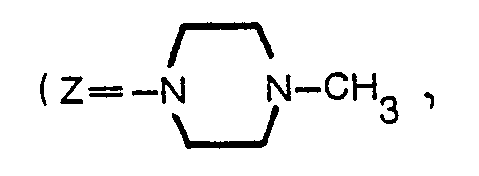
-
- a) In the described fashion as Example 1 (b), replacing aniline with m-fluoroaniline, one can obtain the enaminoketoester (6) (R6=C2H5, R=m-fluorophenyl) in 68.5% yield (m.p. 103-104°C).
- b) By following the Example 1(c) and 1 (d), the preceding compound (6) (R6=C2H5, R=m-fluorophenyl) can yield 7-chloro-1-m-fluorophenyl-6-fluoro-1,4-dihydro-4-oxo-quinoline-3-carboxylic acid (7) (R6=H, R=m-fluorophenyl).
- c) In the described fashion as Example 1 (e), the above acid (7) (R6=H, R=m-fluorophenyl) can give the desired 1-m-fluorophenyl-6-fluoro-1,4-dihydro-4-oxo-7-(1-piperazinyl)-quinoline-3-carboxylic acid (9)

- In a similar fashion as Example 1, the use of various substituted anilines and other amino aromatic compounds in place of aniline and the use of appropriate N-substituted piperazine, the following additional compounds and their hydrochloride salts can be made as summarized in Table I.

- To a solution of 3.36 g. of 7-chloro-1-p-fluoro-phenyl-6-fluoro-4-oxo-quinoline-3-carboxylic acid (the product of Example 4 (b)) in 35 ml. of 1-methyl-2-pyrrolidinone at 115°C is added 4.13 g. of thiomorpholine. After stirring at 115°C for 20 hours, the solvent is removed by reduced pressure to dryness. Methanol is added to the residue and the resulting mixture is filtered and washed with ethylacetate and then washed with water. The solid is dried, yielding 2.51 g. 1-p-fluorophenyl-6-fluoro-1,4-dihydro-4-oxo-7-thiomorpholino-quinoline-3-carboxylic acid (9)
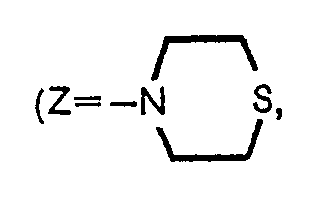
- To a solution of 2.5 g. of 7-chloro-1-phenyl-6-fluoro-1,4-dihydro-4-oxo-quinoline-3-carboxylic acid in 30 ml. of 1-methyl-2-pyrrolidinone at 115°C is added in 4 ml. of morpholine. After stirring at 115°C for 20 hours, the solvent is removed by reduced pressure to dryness. Ethanol is added to the residue and the resulting mixture is filtered and washed with ethanol and then water. The solid is dried, yielding 1.98 g. 1-phenyl-6-fluoro-1,4-dihydro-4-oxo-7-morpholino-quinoline-3-carboxylic acid (9)

- a) To a solution of 1.5 g. of 7-chloro-1-phenyl-6-fluoro-1,4-dihydro-4-oxo-quinoline-3-carboxylic acid in 20 ml. of 1-methyl-2-pyrrolidone at 115°C is added 3 g. of 3-acetamido-pyrrolidone. After stirring at 100°C for 20 hours, the solvent is removed by reduced pressure to dryness. Ethanol is added to the residue and washed with ether and then diluted cold hydrochloric acid and then water. The solid is dried, yielding 1.60 g. 1-phenyl-6-fluoro-1,4-dihydro-4-oxo-7-(3-acetamido-1-pyrrolidinyl)-quinoline-3-carboxylic acid (9) ·

- b) The above product is then hydrolysed with hydrochloric acid at 80°C to give 1-phenyl-6-fluoro-1,4-dihydro-4-oxo-7-(3-amino-1-pyrrolidinyl)quinoline-3-carboxylic acid (9)

- In the described fashion as Example 20, replacing the 7-chloro-1-phenyl-6-fluoro-1,4-dihydro-4-oxo- quinoline-3-carboxylic acid with 7-chloro-1-p-fluorophenyl-6-fluoro-1,4-dihydro-4-oxo-quinoline-3-carboxylic acid, one can obtain the 1-p-fluorophenyl-6-fluoro-1,4-dihydro-4-oxo-7-(3-amino-1-pyrrolidinyl)quinoline-3-carboxylic acid hydrochloride salt (9)

- In the described fashion as Example 20, replacing the 7-chloro-1-phenyl-6-fluoro-1,4-dihydro-4-oxo- quinoline-3-carboxylic acid with 7-chloro-1-p-hydroxyphenyl-6-fluoro-1,4-dihydro-4-oxo-quinoline-3-carboxylic acid, one can obtain the 1-p-hydroxyphenyl-6-fluoro-1,4-dihydro-4-oxo-7-(3-amino-1-pyrrolidinyl)quinoline-3-carboxylic acid hydrochloride salt (9)

- In the described fashion as Example 20, replacing the 7-chloro-1-phenyl-6-fluoro-1,4-dihydro-4-oxo- quinoline-3-carboxylic acid with 7-chloro-1-0, p-dihydrophenyl-6-fluoro-1,4-dihydro-4-oxo-quinoline-3-carboxylic acid, one can obtain the 1-o, p-difluorophenyl-6-fluoro-1,4-dihydro-4-oxo-7-(3-amino-1-pyrrolidinyl)quinoline-3-carboxylic acid and its hydrochloride salt (9)

- The procedure of Reference Example 18 can be repeated, replacing thiomorpholine with 3-dimethylamino pyrrolidine to obtain 1-p-fluorophenyl-6-fluoro-1,4-dihydro-4-oxo-7-(3-dimethylamino-1-pyrrolidinyl)quinoline-3-carboxylic acid and its hydrochloride salt (9)

- 1-p-fluorophenyl-6-fluoro-1,4-dihydro-4-oxo-7-(3-methylamino-1-pyrrolidinyl)quinoline-3-carboxylic acid
- a) The procedure of Example 24 can be repeated, replacing 3-dimethylamino pyrrolidine with 3-N-methylacetamidopyrrolidine to obtain 1-p-fluorophenyl-6-fluoro-1,4-dihydro-4-oxo-7-(3-N-methyl- acetamidopyrrolidinyl)quinoline-3-carboxylic acid (9) Z=N-NHCOCH3, R=4-fluorophenyl.
- b) The above product is then hydrolysed with hydrochloric acid at 80°C to give 1-p-fluorophenyl-6-fluoro-1,4-dihydro-4-oxo-7-(3-methylaminopyrrolidinyl)quinoline-3-carboxylic acid.
- In similar fashion as Reference Example 19, the use of various 1-aryl-7-chloro-6-fluoro-1,4-dihydro-4-oxo-quinoline-3-carboxylic acids (7), wherein aryl represents R, in place of 7-chloro-1-phenyl-6-fluoro-1,4-dihydro-4-oxo-quinoline-3-carboxylic acid (7) (R=phenyl) and the use of appropriate substituted amines in place of morpholine, the following additional compounds can be made as summarized in Table III.

Claims (24)


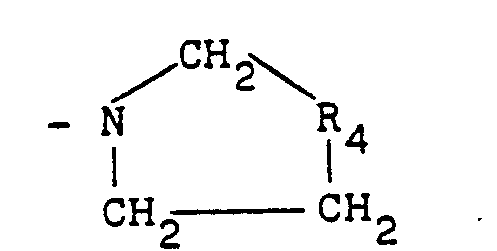
Priority Applications (1)
| Application Number | Priority Date | Filing Date | Title |
|---|---|---|---|
| AT84107688T ATE40551T1 (en) | 1983-07-18 | 1984-07-03 | ANTIBACTERIAL QUINOLINE COMPOUNDS. |
Applications Claiming Priority (6)
| Application Number | Priority Date | Filing Date | Title |
|---|---|---|---|
| US51471683A | 1983-07-18 | 1983-07-18 | |
| US514716 | 1983-07-18 | ||
| US57422784A | 1984-01-26 | 1984-01-26 | |
| US574227 | 1984-01-26 | ||
| US59785484A | 1984-04-09 | 1984-04-09 | |
| US597854 | 1984-04-09 |
Publications (2)
| Publication Number | Publication Date |
|---|---|
| EP0131839A1 EP0131839A1 (en) | 1985-01-23 |
| EP0131839B1 true EP0131839B1 (en) | 1989-02-01 |
Family
ID=27414582
Family Applications (1)
| Application Number | Title | Priority Date | Filing Date |
|---|---|---|---|
| EP84107688A Expired EP0131839B1 (en) | 1983-07-18 | 1984-07-03 | Quinoline antibacterial compounds |
Country Status (14)
| Country | Link |
|---|---|
| EP (1) | EP0131839B1 (en) |
| KR (1) | KR900005025B1 (en) |
| AT (1) | ATE40551T1 (en) |
| AU (1) | AU576323B2 (en) |
| DE (2) | DE3476540D1 (en) |
| DK (1) | DK168289B1 (en) |
| ES (1) | ES533916A0 (en) |
| GR (1) | GR79948B (en) |
| IE (1) | IE58333B1 (en) |
| IL (1) | IL72100A (en) |
| LU (1) | LU90159I2 (en) |
| MX (1) | MX9202947A (en) |
| NL (1) | NL970010I2 (en) |
| NZ (1) | NZ208470A (en) |
Cited By (1)
| Publication number | Priority date | Publication date | Assignee | Title |
|---|---|---|---|---|
| US9012474B2 (en) | 2006-02-17 | 2015-04-21 | Idexx Laboratories Inc. | Fluoroquinolone compositions |
Families Citing this family (41)
| Publication number | Priority date | Publication date | Assignee | Title |
|---|---|---|---|---|
| EP0154780B1 (en) * | 1984-01-26 | 1990-04-11 | Abbott Laboratories | Quinoline antibacterial compounds |
| EP0181521A1 (en) * | 1984-10-19 | 1986-05-21 | Otsuka Pharmaceutical Co., Ltd. | Antimicrobial 1-substituted Phenyl-4-oxoquinoline-3-carboxylic acid compounds |
| US4617308A (en) * | 1985-01-25 | 1986-10-14 | Warner-Lambert Company | 7-substituted amino-1-aryl-6,8-difluoro-1,4-dihydro-4-oxo-3-quinolinecarboxylic acids and derivatives thereof as antibacterial agents |
| US4755513A (en) * | 1985-01-30 | 1988-07-05 | Otsuka Pharmaceutical Company, Limited | Antimicrobial 1-substituted phenyl-4-oxoquinoline-3-carboxylic acid compounds |
| IT1200470B (en) * | 1985-05-10 | 1989-01-18 | Schering Spa | ANTIBACTERIAL ACTIVITY COMPOUNDS, THEIR PREPARATION AND RELATED PHARMACEUTICAL COMPOSITIONS |
| US4684648A (en) * | 1985-05-10 | 1987-08-04 | Otsuka Pharmaceutical Company Limited | Antimicrobial 1-substituted phenyl-4-oxoquinoline-3-carboxylic acid compounds and compositions thereof |
| DE3517535A1 (en) * | 1985-05-15 | 1986-11-20 | Bayer Ag, 5090 Leverkusen | 1-ARYL-4-CHINOLON-3-CARBONIC ACIDS |
| IT1201437B (en) * | 1985-07-22 | 1989-02-02 | Uason Srl | DERIVED FROM CHINOLIN-3-CARBOXYLIC ACID, PROCEDURE FOR ITS PREPARATION AND PHARMACEUTICAL COMPOSITIONS CONTAINING IT |
| IN166416B (en) * | 1985-09-18 | 1990-05-05 | Pfizer | |
| EP0224121A3 (en) * | 1985-11-19 | 1987-11-11 | ROTTAPHARM S.p.A. | 7-[4-amino-piperazinyl]- or 7-[4-chloro-piperazinyl]quinolinone derivatives, a process for the preparation thereof and pharmaceutical compositions containing them |
| DE3601567A1 (en) * | 1986-01-21 | 1987-07-23 | Bayer Ag | 7- (AZABICYCLOALKYL) -CHINOLONCARBONIC ACID AND -NAPHTHYRIDON-CARBONIC ACID DERIVATIVES |
| US5153204A (en) * | 1986-03-01 | 1992-10-06 | Bayer Aktiengesellschaft | 7-(1-Pyrrolidinyl)-quinolonecarboxylic acid derivatives |
| DE3606698A1 (en) * | 1986-03-01 | 1987-09-03 | Bayer Ag | 7- (1-PYRROLIDINYL) -CHINOLONCARBONIC ACID DERIVATIVES |
| US4762845A (en) * | 1986-05-21 | 1988-08-09 | Abbott Laboratories | 7-(3-Substituted imino-1-pyrrolidinyl)-quinolone-3-carboxylic acids |
| EP0251308B1 (en) * | 1986-07-04 | 1990-11-22 | Chemie Linz Gesellschaft m.b.H. | 4-quinolone-3-carboxylic-acid derivatives, process for their synthesis and pharmaceutical preparations containing them |
| US4771055A (en) * | 1986-07-28 | 1988-09-13 | Warner-Lambert Company | 7-[[3-(aminomethyl)-3-alkyl]-1-pyrrolidinyl]-quinoline-carboxylic acids |
| DE3641661A1 (en) * | 1986-12-05 | 1988-06-30 | Bayer Ag | METHOD FOR PRODUCING CHINOLON CARBONIC ACID ESTERS |
| WO1988010253A1 (en) * | 1987-06-24 | 1988-12-29 | Chinoin Gyógyszer és Vegyészeti Termékek Gyára Rt. | Process for the preparation of quinoline carboxylic acid derivatives |
| US5380845A (en) * | 1987-06-24 | 1995-01-10 | Chinoin Gyogyszer- Es Vegyeszeti Termekek Gyara Rt. | Process for the preparation of quinoline carboxylic acid derivatives |
| US4962112A (en) * | 1987-08-04 | 1990-10-09 | Abbott Laboratories | 7-(2-methyl-4-aminopyrrolidinyl)naphthryidine and quinoline compounds |
| NZ225926A (en) * | 1987-09-08 | 1990-04-26 | Sterling Drug Inc | 7-pyridinyl-4-oxo-3-quinolinecarboxylic acid derivatives, and pharmaceutical compositions |
| US5039683A (en) * | 1987-10-26 | 1991-08-13 | Pfizer Inc. | Azetidinyl quinolone carboxylic acids and esters |
| NZ229605A (en) * | 1988-07-15 | 1990-07-26 | Abbott Lab | Preparation of 1,4-dihydro-6-fluoro-7-(piperazin-1-yl)-4-oxo-3-quinoline (or naphthyridine) carboxylic acid derivatives |
| IE76284B1 (en) * | 1988-09-22 | 1997-10-08 | Abbott Lab | Amino acid quinoline and naphthyridine derivatives |
| DE3934082A1 (en) * | 1989-10-12 | 1991-04-18 | Bayer Ag | CHINOLON CARBONIC ACID DERIVATIVES, METHOD FOR THE PRODUCTION THEREOF AND THEIR USE AS AN ANTIVIRAL AGENT |
| FR2655545B1 (en) | 1989-12-11 | 1994-06-10 | Rhone Poulenc Sante | NEW THERAPEUTIC APPLICATION OF FLUOROQUINOLONE DERIVATIVES. |
| AU647772B2 (en) * | 1989-12-29 | 1994-03-31 | Abbott Laboratories | Quinolone carboxylic acid--metal ion--acid complexes |
| ES2019551A6 (en) * | 1990-04-11 | 1991-06-16 | Ercros Sa | Process for obtaining derivatives of 6-fluoro-1,4-dihydro-4-oxo-7-piperazinyl-3-quinolinecarboxylic acid and derivatives of acrylate used in said process |
| DE4120646A1 (en) * | 1991-06-22 | 1992-12-24 | Bayer Ag | 7-ISOINDOLINYL-CHINOLONE AND NAPHTHYRIDONE CARBONIC ACID DERIVATIVES |
| DE4121214A1 (en) * | 1991-06-27 | 1993-01-14 | Bayer Ag | 7-AZAISOINDOLINYL CHINOLONE AND NAPHTHYRIDONE CARBONIC ACID DERIVATIVES |
| ES2049640B1 (en) * | 1992-06-18 | 1994-12-16 | Genesis Para La Investigacion | PROCEDURE FOR THE PREPARATION OF QUINOLIN CARBOXYLIC ACIDS. |
| DE4303657A1 (en) * | 1993-02-09 | 1994-08-11 | Bayer Ag | New quinolone and naphthyridonecarboxylic acid derivatives |
| US5532239A (en) * | 1993-08-02 | 1996-07-02 | Assistance Publique - Hopitaux De Paris | Therapeutic application of fluoroquinolone derivatives |
| AU679961B2 (en) * | 1993-08-13 | 1997-07-17 | Dong Wha Pharmaceutical Industrial Co., Ltd. | Novel quinolone carboxylic acid derivatives |
| DE4425648A1 (en) * | 1994-07-20 | 1996-01-25 | Bayer Ag | Novel 6 and 6,8-substituted 1- [4- (1H-1,2,4-triazol-1-ylmethyl) phenyl] quinolonecarboxylic acids |
| RU2171252C2 (en) * | 1995-09-22 | 2001-07-27 | Вакунага Фармасьютикал КО., Лтд. | Amino compounds for preparing novel derivatives of pyridone-carboxylic acid and salts thereof |
| ES2321042T3 (en) * | 1997-09-15 | 2009-06-01 | THE PROCTER & GAMBLE COMPANY | ANTIMICROBIAL QUINOLONES, COMPOSITIONS AND USES OF THE SAME. |
| SE9904108D0 (en) | 1999-11-15 | 1999-11-15 | New Pharma Research Ab | New compounds |
| KR200277479Y1 (en) * | 2001-07-16 | 2002-06-03 | 김형섭 | Film backward drive apparatus of packing apparatus |
| US7973022B2 (en) | 2006-02-17 | 2011-07-05 | Idexx Laboratories, Inc. | Fluoroquinolone carboxylic acid salt compositions |
| WO2017217441A1 (en) | 2016-06-15 | 2017-12-21 | 湧永製薬株式会社 | Novel pyridonecarboxylic acid derivative or salt thereof |
Citations (2)
| Publication number | Priority date | Publication date | Assignee | Title |
|---|---|---|---|---|
| GB1147336A (en) * | 1965-06-14 | 1969-04-02 | Lilly Industries Ltd | Quinoline-3-carboxylic acid derivatives |
| US4017622A (en) * | 1972-12-18 | 1977-04-12 | Dainippon Pharmaceutical Co., Ltd. | Piperazine derivatives |
Family Cites Families (3)
| Publication number | Priority date | Publication date | Assignee | Title |
|---|---|---|---|---|
| SE444566B (en) * | 1977-09-20 | 1986-04-21 | Bellon Labor Sa Roger | 7-DIALKYLAMINE-6-HALOGEN-4-OXO-1,4-DIHYDROQINOLINE-3-CARBOXYLIC ACID, PROCEDURES FOR PREPARING THEREOF AND PHARMACEUTICAL PREPARATION OF THEREOF |
| DE3028520A1 (en) * | 1980-07-28 | 1982-02-25 | Dynamit Nobel Ag, 5210 Troisdorf | METHOD FOR PRODUCING CHINOLINES, NAPHTYRIDINES AND OTHER NITROGEN BI-HETEROCYCLES |
| JPS57145862A (en) * | 1981-03-06 | 1982-09-09 | Kyorin Pharmaceut Co Ltd | Quinolinecarboxylic acid derivative |
-
1984
- 1984-06-12 NZ NZ208470A patent/NZ208470A/en unknown
- 1984-06-13 IL IL72100A patent/IL72100A/en unknown
- 1984-07-02 ES ES533916A patent/ES533916A0/en active Granted
- 1984-07-03 DE DE8484107688T patent/DE3476540D1/en not_active Expired
- 1984-07-03 EP EP84107688A patent/EP0131839B1/en not_active Expired
- 1984-07-03 DE DE1998175001 patent/DE19875001I2/en active Active
- 1984-07-03 AT AT84107688T patent/ATE40551T1/en active
- 1984-07-06 DK DK333984A patent/DK168289B1/en not_active IP Right Cessation
- 1984-07-13 GR GR75306A patent/GR79948B/el unknown
- 1984-07-13 AU AU30563/84A patent/AU576323B2/en not_active Ceased
- 1984-07-16 KR KR1019840004179A patent/KR900005025B1/en not_active Expired
- 1984-07-17 IE IE184684A patent/IE58333B1/en not_active IP Right Cessation
-
1992
- 1992-06-17 MX MX9202947A patent/MX9202947A/en unknown
-
1997
- 1997-02-27 NL NL970010C patent/NL970010I2/en unknown
- 1997-10-29 LU LU90159C patent/LU90159I2/en unknown
Patent Citations (2)
| Publication number | Priority date | Publication date | Assignee | Title |
|---|---|---|---|---|
| GB1147336A (en) * | 1965-06-14 | 1969-04-02 | Lilly Industries Ltd | Quinoline-3-carboxylic acid derivatives |
| US4017622A (en) * | 1972-12-18 | 1977-04-12 | Dainippon Pharmaceutical Co., Ltd. | Piperazine derivatives |
Cited By (1)
| Publication number | Priority date | Publication date | Assignee | Title |
|---|---|---|---|---|
| US9012474B2 (en) | 2006-02-17 | 2015-04-21 | Idexx Laboratories Inc. | Fluoroquinolone compositions |
Also Published As
| Publication number | Publication date |
|---|---|
| NL970010I2 (en) | 1997-10-01 |
| AU3056384A (en) | 1985-01-24 |
| DE19875001I2 (en) | 2001-11-22 |
| IE58333B1 (en) | 1993-09-08 |
| DK333984D0 (en) | 1984-07-06 |
| ES8602673A1 (en) | 1985-12-01 |
| LU90159I2 (en) | 1998-01-21 |
| NL970010I1 (en) | 1997-05-01 |
| AU576323B2 (en) | 1988-08-25 |
| ES533916A0 (en) | 1985-12-01 |
| IL72100A (en) | 1988-09-30 |
| ATE40551T1 (en) | 1989-02-15 |
| MX9202947A (en) | 1992-07-01 |
| DK168289B1 (en) | 1994-03-07 |
| DE3476540D1 (en) | 1989-03-09 |
| GR79948B (en) | 1984-10-31 |
| EP0131839A1 (en) | 1985-01-23 |
| IL72100A0 (en) | 1984-10-31 |
| KR900005025B1 (en) | 1990-07-18 |
| IE841846L (en) | 1985-01-18 |
| NZ208470A (en) | 1988-06-30 |
| DK333984A (en) | 1985-01-19 |
| KR850001171A (en) | 1985-03-16 |
Similar Documents
| Publication | Publication Date | Title |
|---|---|---|
| EP0131839A1 (en) | Quinoline antibacterial compounds | |
| US4730000A (en) | Quinoline antibacterial compounds | |
| KR870001016B1 (en) | Process for preparing 6-fluoro-1,4-dihydro-4-oxo-7-substituted piperazinylquinoline-3-carboxylic acid derivatives | |
| EP0154780B1 (en) | Quinoline antibacterial compounds | |
| FI77855C (en) | FOERFARANDE FOER FRAMSTAELLNING AV THERAPEUTISKT ANVAENDBARA 6-FLUOR-1,4-DIHYDRO-4-OXO-3-KINOLINKARBOXYLSYRADERIVAT. | |
| NZ225626A (en) | 8-trifluoromethylquinolone-3-carboxylic acid derivatives and pharmaceutical compositions | |
| US5527910A (en) | Pyridone carboxylic acid compounds and their uses for treating infectious diseases caused by bacteria | |
| US4472405A (en) | Antimicrobial 6,7-dihydro-5,8-dimethyl-9 fluoro-1-oxo-1H, 5H-benzo (ij) quinolizine-2-carboxylic acid and derivatives | |
| EP0160284B1 (en) | Quino-benoxazine antibacterial compounds | |
| US4616019A (en) | Naphthyridine antibacterial compounds | |
| CA1153374A (en) | Piperazinylbenzoheterocyclic compounds | |
| EP0153580B2 (en) | Naphthyridine antibacterial compounds | |
| US4774246A (en) | Quinoline antibacterial compounds | |
| EP0090424B1 (en) | New quinolone compounds and preparation thereof | |
| US4607032A (en) | Quino-benoxazine antibacterial compounds | |
| EP0109285A1 (en) | 6,7-Dihydro-8-(imidazol-1-yl)-5-methyl-1-oxo-1H,5H-benzo(ij)quinolizine-2-carboxylic acids and derivatives | |
| US4533663A (en) | Quino-benzothiazine antibacterial compounds | |
| US4540694A (en) | 1-Pyridine substituted quino-benoxazines and antibacterial use | |
| US4528285A (en) | Methylenedioxy quino-benzothiazine derivatives | |
| GB1598915A (en) | 1,4-dihydro-quinoline-3-carboxylic acid derivatives process for their preparation and composition containing them | |
| EP0162333B1 (en) | Quino-benzothiazine antibacterial compounds | |
| US4542133A (en) | Methylenedioxy quino-benoxazine derivatives and antibacterial use | |
| US4529725A (en) | 1-Pyridine substituted quino-benzothiazine | |
| US4720495A (en) | Benzo[ij]quinolizine-2-carboxylic acids useful for treating bacterial infection | |
| US4889857A (en) | Quinolonecarboxylic acid compounds and pharmaceutical use thereof |
Legal Events
| Date | Code | Title | Description |
|---|---|---|---|
| PUAI | Public reference made under article 153(3) epc to a published international application that has entered the european phase |
Free format text: ORIGINAL CODE: 0009012 |
|
| AK | Designated contracting states |
Designated state(s): AT BE CH DE FR GB IT LI LU NL SE |
|
| 17P | Request for examination filed |
Effective date: 19850607 |
|
| 17Q | First examination report despatched |
Effective date: 19860808 |
|
| D17Q | First examination report despatched (deleted) | ||
| GRAA | (expected) grant |
Free format text: ORIGINAL CODE: 0009210 |
|
| AK | Designated contracting states |
Kind code of ref document: B1 Designated state(s): AT BE CH DE FR GB IT LI LU NL SE |
|
| REF | Corresponds to: |
Ref document number: 40551 Country of ref document: AT Date of ref document: 19890215 Kind code of ref document: T |
|
| REF | Corresponds to: |
Ref document number: 3476540 Country of ref document: DE Date of ref document: 19890309 |
|
| ET | Fr: translation filed | ||
| ITF | It: translation for a ep patent filed | ||
| REG | Reference to a national code |
Ref country code: AT Ref legal event code: UEP Ref document number: 40551 Country of ref document: AT Kind code of ref document: T |
|
| PLBE | No opposition filed within time limit |
Free format text: ORIGINAL CODE: 0009261 |
|
| STAA | Information on the status of an ep patent application or granted ep patent |
Free format text: STATUS: NO OPPOSITION FILED WITHIN TIME LIMIT |
|
| 26N | No opposition filed | ||
| MEDD | It: supplementary protection certificate for pharmaceutical products: granted |
Free format text: CCP 211, 19920504; ABBOTT LABORATORIES |
|
| ITTA | It: last paid annual fee | ||
| EPTA | Lu: last paid annual fee | ||
| EAL | Se: european patent in force in sweden |
Ref document number: 84107688.8 |
|
| REG | Reference to a national code |
Ref country code: NL Ref legal event code: AC1 Free format text: NLAC1 970010, 970227 |
|
| REG | Reference to a national code |
Ref country code: NL Ref legal event code: KC1 Free format text: NLKC1 970010, 20040703, EXPIRES: 20090702 |
|
| REG | Reference to a national code |
Ref country code: GB Ref legal event code: CTFF Free format text: GBCTFFSPC/GB97/080, 970925 |
|
| REG | Reference to a national code |
Ref country code: LU Ref legal event code: CCP Free format text: LUCCP 90159, EXPIRES: 20090703 |
|
| REG | Reference to a national code |
Ref country code: CH Ref legal event code: SPCF Free format text: PRODUCT NAME: DIFLOXACIN UND SEIN HYDROCHLORID; IKS-NR. 54235/19971216 Spc suppl protection certif: C00131839/01 Filing date: 19980206 |
|
| REG | Reference to a national code |
Ref country code: AT Ref legal event code: ESZA Spc suppl protection certif: SZ 70/1997 Filing date: 19971204 Ref country code: AT Ref legal event code: EEZF Free format text: PRODUCT NAME: DIFLOXACIN UND DESSEN HYDROCHLORID Spc suppl protection certif: SZ 70/1997 Filing date: 19971204 Extension date: 20090703 |
|
| REG | Reference to a national code |
Ref country code: FR Ref legal event code: CP Free format text: PRODUCT NAME: DIFLOXACINE; NAT. REGISTRATION NO/DATE: EU/2/97/003/001 19980116; FIRST REGISTRATION: NL - REG NL 8865 19960909 Spc suppl protection certif: 98C0020 Filing date: 19980708 |
|
| REG | Reference to a national code |
Ref country code: SE Ref legal event code: SPCF Free format text: 9890021, 980116 |
|
| MEDD | It: supplementary protection certificate for pharmaceutical products: granted |
Free format text: CCP 619, 19980526; ABBOTT LABORATORIES |
|
| REG | Reference to a national code |
Ref country code: FR Ref legal event code: CR Free format text: FRCR 98C0020, 980708 |
|
| REG | Reference to a national code |
Ref country code: FR Ref legal event code: CP |
|
| CCPV | Be: grant of a complementary protection certificate |
Free format text: 098C0022, EXPIRES: 20090703 |
|
| REG | Reference to a national code |
Ref country code: SE Ref legal event code: SPCG Free format text: 9890021, 980116, EXPIRES: 20090709 |
|
| REG | Reference to a national code |
Ref country code: FR Ref legal event code: CY Free format text: FRCY 98C0020, 19980708, EXPIRES: 20090702 |
|
| REG | Reference to a national code |
Ref country code: GB Ref legal event code: IF02 |
|
| REG | Reference to a national code |
Ref country code: GB Ref legal event code: CTFG Spc suppl protection certif: SPC/GB97/080 Filing date: 20030217 Expiry date: 20090702 |
|
| PGFP | Annual fee paid to national office [announced via postgrant information from national office to epo] |
Ref country code: GB Payment date: 20030612 Year of fee payment: 20 |
|
| PGFP | Annual fee paid to national office [announced via postgrant information from national office to epo] |
Ref country code: AT Payment date: 20030613 Year of fee payment: 20 |
|
| PGFP | Annual fee paid to national office [announced via postgrant information from national office to epo] |
Ref country code: NL Payment date: 20030619 Year of fee payment: 20 |
|
| PGFP | Annual fee paid to national office [announced via postgrant information from national office to epo] |
Ref country code: LU Payment date: 20030626 Year of fee payment: 20 |
|
| PGFP | Annual fee paid to national office [announced via postgrant information from national office to epo] |
Ref country code: FR Payment date: 20030702 Year of fee payment: 20 |
|
| PGFP | Annual fee paid to national office [announced via postgrant information from national office to epo] |
Ref country code: SE Payment date: 20030703 Year of fee payment: 20 |
|
| PGFP | Annual fee paid to national office [announced via postgrant information from national office to epo] |
Ref country code: DE Payment date: 20030731 Year of fee payment: 20 |
|
| PGFP | Annual fee paid to national office [announced via postgrant information from national office to epo] |
Ref country code: BE Payment date: 20030811 Year of fee payment: 20 |
|
| PGFP | Annual fee paid to national office [announced via postgrant information from national office to epo] |
Ref country code: CH Payment date: 20030915 Year of fee payment: 20 |
|
| PG25 | Lapsed in a contracting state [announced via postgrant information from national office to epo] |
Ref country code: LI Free format text: LAPSE BECAUSE OF EXPIRATION OF PROTECTION Effective date: 20040702 Ref country code: GB Free format text: LAPSE BECAUSE OF EXPIRATION OF PROTECTION Effective date: 20040702 Ref country code: CH Free format text: LAPSE BECAUSE OF EXPIRATION OF PROTECTION Effective date: 20040702 |
|
| PG25 | Lapsed in a contracting state [announced via postgrant information from national office to epo] |
Ref country code: NL Free format text: LAPSE BECAUSE OF EXPIRATION OF PROTECTION Effective date: 20040703 Ref country code: LU Free format text: LAPSE BECAUSE OF EXPIRATION OF PROTECTION Effective date: 20040703 Ref country code: AT Free format text: LAPSE BECAUSE OF EXPIRATION OF PROTECTION Effective date: 20040703 |
|
| REG | Reference to a national code |
Ref country code: GB Ref legal event code: PE20 Ref country code: GB Ref legal event code: CTFE Free format text: SPC/GB97/080: 20040703, EXPIRES: 20090702 Spc suppl protection certif: SPC/GB97/080 Filing date: 20040703 Expiry date: 20090702 |
|
| REG | Reference to a national code |
Ref country code: CH Ref legal event code: PL |
|
| BE20 | Be: patent expired |
Owner name: *ABBOTT LABORATORIES Effective date: 20040703 |
|
| EUG | Se: european patent has lapsed | ||
| NLV7 | Nl: ceased due to reaching the maximum lifetime of a patent |
Effective date: 20040703 |
|
| REG | Reference to a national code |
Ref country code: AT Ref legal event code: EELA Ref document number: 40551 Country of ref document: AT Kind code of ref document: T |
|
| REG | Reference to a national code |
Ref country code: CH Ref legal event code: SPCN Free format text: FORMER REPRESENTATIVE: A. BRAUN, BRAUN, HERITIER, ESCHMANN AG PATENTANWAELTE, CH Spc suppl protection certif: C00131839/01 Representative=s name: BOHEST AG, CH |
|
| REG | Reference to a national code |
Ref country code: CH Ref legal event code: SPCL Spc suppl protection certif: C00131839/01 |
|
| REG | Reference to a national code |
Ref country code: GB Ref legal event code: SPCE Free format text: PRODUCT NAME: DIFLOXACIN, OPTIONALLY IN THE FORM OF A PHARMACEUTICALLY OR VETERINARILY ACCEPTABLE SALT.; REGISTERED: NL NL 8865 19960909; NL NL 8866 19960909; NL NL 8867 19960909; NL NL 8868 19960909; UK 13162/4000 19970319; UK 13162/4001 19970319; UK 13162/4002 19970319; UK 13162/4003 19970319 Spc suppl protection certif: SPC/GB97/080 Filing date: 19970925 Expiry date: 20040703 Extension date: 20090702 |