EP0130554B1 - Physiologisch aktive Substanz, Verfahren zu ihrer Herstellung und pharmazeutische Zubereitung, die sie enthält - Google Patents
Physiologisch aktive Substanz, Verfahren zu ihrer Herstellung und pharmazeutische Zubereitung, die sie enthält Download PDFInfo
- Publication number
- EP0130554B1 EP0130554B1 EP84107409A EP84107409A EP0130554B1 EP 0130554 B1 EP0130554 B1 EP 0130554B1 EP 84107409 A EP84107409 A EP 84107409A EP 84107409 A EP84107409 A EP 84107409A EP 0130554 B1 EP0130554 B1 EP 0130554B1
- Authority
- EP
- European Patent Office
- Prior art keywords
- formula
- pharmaceutical composition
- column
- physiologically active
- active substance
- Prior art date
- Legal status (The legal status is an assumption and is not a legal conclusion. Google has not performed a legal analysis and makes no representation as to the accuracy of the status listed.)
- Expired
Links
- YZJBKEBOMYOVHX-UHFFFAOYSA-N Cc(cc(CC(CO)NC1CO)c1c1O)c1OC Chemical compound Cc(cc(CC(CO)NC1CO)c1c1O)c1OC YZJBKEBOMYOVHX-UHFFFAOYSA-N 0.000 description 1
Images
Classifications
-
- C—CHEMISTRY; METALLURGY
- C07—ORGANIC CHEMISTRY
- C07D—HETEROCYCLIC COMPOUNDS
- C07D217/00—Heterocyclic compounds containing isoquinoline or hydrogenated isoquinoline ring systems
- C07D217/12—Heterocyclic compounds containing isoquinoline or hydrogenated isoquinoline ring systems with radicals, substituted by hetero atoms, attached to carbon atoms of the nitrogen-containing ring
- C07D217/14—Heterocyclic compounds containing isoquinoline or hydrogenated isoquinoline ring systems with radicals, substituted by hetero atoms, attached to carbon atoms of the nitrogen-containing ring other than aralkyl radicals
- C07D217/16—Heterocyclic compounds containing isoquinoline or hydrogenated isoquinoline ring systems with radicals, substituted by hetero atoms, attached to carbon atoms of the nitrogen-containing ring other than aralkyl radicals substituted by oxygen atoms
-
- A—HUMAN NECESSITIES
- A61—MEDICAL OR VETERINARY SCIENCE; HYGIENE
- A61P—SPECIFIC THERAPEUTIC ACTIVITY OF CHEMICAL COMPOUNDS OR MEDICINAL PREPARATIONS
- A61P25/00—Drugs for disorders of the nervous system
- A61P25/02—Drugs for disorders of the nervous system for peripheral neuropathies
-
- C—CHEMISTRY; METALLURGY
- C12—BIOCHEMISTRY; BEER; SPIRITS; WINE; VINEGAR; MICROBIOLOGY; ENZYMOLOGY; MUTATION OR GENETIC ENGINEERING
- C12N—MICROORGANISMS OR ENZYMES; COMPOSITIONS THEREOF; PROPAGATING, PRESERVING, OR MAINTAINING MICROORGANISMS; MUTATION OR GENETIC ENGINEERING; CULTURE MEDIA
- C12N1/00—Microorganisms; Compositions thereof; Processes of propagating, maintaining or preserving microorganisms or compositions thereof; Processes of preparing or isolating a composition containing a microorganism; Culture media therefor
- C12N1/20—Bacteria; Culture media therefor
- C12N1/205—Bacterial isolates
-
- C—CHEMISTRY; METALLURGY
- C12—BIOCHEMISTRY; BEER; SPIRITS; WINE; VINEGAR; MICROBIOLOGY; ENZYMOLOGY; MUTATION OR GENETIC ENGINEERING
- C12P—FERMENTATION OR ENZYME-USING PROCESSES TO SYNTHESISE A DESIRED CHEMICAL COMPOUND OR COMPOSITION OR TO SEPARATE OPTICAL ISOMERS FROM A RACEMIC MIXTURE
- C12P17/00—Preparation of heterocyclic carbon compounds with only O, N, S, Se or Te as ring hetero atoms
- C12P17/10—Nitrogen as only ring hetero atom
- C12P17/12—Nitrogen as only ring hetero atom containing a six-membered hetero ring
-
- C—CHEMISTRY; METALLURGY
- C12—BIOCHEMISTRY; BEER; SPIRITS; WINE; VINEGAR; MICROBIOLOGY; ENZYMOLOGY; MUTATION OR GENETIC ENGINEERING
- C12R—INDEXING SCHEME ASSOCIATED WITH SUBCLASSES C12C - C12Q, RELATING TO MICROORGANISMS
- C12R2001/00—Microorganisms ; Processes using microorganisms
- C12R2001/01—Bacteria or Actinomycetales ; using bacteria or Actinomycetales
- C12R2001/465—Streptomyces
Definitions
- This invention relates to a novel, physiologically active substance and a process for producing the same.
- New physiologically active substances useful as medicaments are always in demand.
- a physiologically active substance having an activity to block a sympathetic nerve receptor is produced in a culture liquor of a microorganism belonging to the genus Streptomyces, and further it has been found by investigation of its physico-chemical properties that the substance isolated and purified from the culture liquor is a novel, physiologically active substance, having a tetrahydroisoquinoline ring.
- the substance has been named MY336-a.
- MY336-a has a quite different structure from these compounds, and has no agonistic activity on adrenergic receptor, while it has an antagonistic activity.
- MY336-a The properties of MY336-a, a process for producing the substance, its pharmacological action and a pharmaceutical composition containing the substance are described hereinafter.
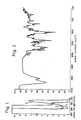
- the physiologically active substance MY336-a according to the present invention has the following physico-chemical properties:
- MY336-a is a novel substance having the following chemical structure of formula (I):
- MY336-a can be obtained by culturing an MY336-a producing strain belonging to the genus Streptomyces in a nutrient medium, thereby forming and accumulating MY336-a in the culture liquor, and recovering the substance from the culture liquor.
- MY336-a producing strains belonging to the genus Streptomyces is Streptomyces gabonae ATCC 15282, which is deposited with and available to the public from the American Type Culture Collection.
- Culturing for producing MY336-a is carried out in the following manner.
- Either a synthetic medium or a natural medium may be used as long as it contains suitable carbon sources and nitrogen sources.
- glucose, starch, dextrin, mannose, fructose, sucrose or molasses can be used alone or in combination.
- hydrocarbons, alcohols or organic acids can also be used, depending upon the assimilability of microorganisms.
- inorganic and organic nitrogen-containing compounds such as ammonium chloride, ammonium sulfate, urea, ammonium nitrate or sodium nitrate and nitrogen-containing natural products such as peptone, meat extract, yeast extract, dry yeast, corn steep liquor, soybean meal, casamino acid, soluble vegetable protein or cotton seed residues can be used alone or in combination.
- inorganic salts such as sodium chloride, potassium chloride, calcium carbonate or phosphates can be appropriately used, and organic and inorganic substances capable of promoting growth of the microorganism used for production of MY336-a can also be appropriately used.
- a liquid culturing method particularly a submerged stirring culture method is most suitable for culturing strains of the present invention.
- Culturing is desirably carried out at a temperature of 25-40°C and at a pH of around neutrality.
- MY336-a is formed and accumulated in the culture liquor usually after 1-12 days of liquid culturing. When the accumulation in the culture liquor reaches a maximum, culturing is discontinued and the desired substance is isolated and purified from the filtrate of the culture liquor obtained by filtering off the cells.
- the culture liquor filtrate is adjusted to pH 4 with hydrochloric acid and then passed through a column filled with Diaion HP-10. Then, the column is thoroughly washed and eluted with an aqueous 50% methanol solution. Fractions containing MY336-a are joined together, and methanol is removed therefrom by distillation under reduced pressure. Then, the residue is passed through a column of Diaion SK-1 B (NH'4). After washing with water, the column is eluted with 2N aqueous ammonia. Fractions containing MY336-a are joined together and concentrated under reduced pressure.
- the concentrate is neutralized, and passed through a column of Sephadex C-25. After washing with water, the column is eluted with a concentration gradient of 0-0.05M phosphate buffer (pH 8.0). Fractions containing MY336-a are joined together, concentrated under reduced pressure, and freeze dried, whereby a crude preparation of MY336-a is obtained.
- the crude preparation is subjected to silica gel chromatography with a solvent of n-butanol:ethanol:chloroform:concentrated aqueous ammonia (4:5:2:2), and then fractions containing MY336-a are joined together and concentrated to dryness under reduced pressure.
- the residue is dissolved in a small amount of methanol, and the solution is allowed to stand at room temperature to deposit crystals of MY336-a.
- crystals of MY336-a By recrystallization of the crytals from methanol, pure, colorless, needle-like crystals of MY336-a can be obtained.
- MY336-a has an activity to block a sympathetic nerve receptor and can be applied to curing of hypertension, arhythmia, myocardial infraction, angina pectoris or anxiety solitary neurosis.
- the invention includes within its scope a pharmaceutical composition
- a pharmaceutical composition comprising, as an active ingredient, MY336-a in associateion with at least one of pharmaceutical carriers or diluents.
- MY336-a is administered by parenteral (intramuscular, intraperitoneal, intravenous or subcutaneous injection routes), oral or rectal route of administration and can be formulated in dosage forms appropriate for each route of administration.
- Preparations according to this invention for parenteral administration include sterile aqueous or non-aqueous solutions, suspensions or emulsions.
- non-aqueous solvents or vehicles are propylene glycol, polyethylene glycols, vegetable oils such as olive oil, and injectable organic esters such as ethyl oleate.
- Such dosage forms may also contain adjuvants such as preserving, wetting, emulsifying and dispersing agents. They may be sterilized by, for example, filtration through a bacteria-retaining filter, by incorporating sterilizing agents into the compositions, by irradiating the compositions or by heating the compositions. They can also be manufactured in the form of sterile solid compositions which can be dissolved in sterile water or some other sterile injectable medium immediately before use.
- compositions for oral administration may be presented in a form suitable for absorption by the gastrointestinal tract.
- Tablets and capsules for oral administration may be in the unit dose presentation form, and may contain conventional excipients such as binding agents, for example, syrup, acacia, gelatin, sorbitol, tragacanth or polyvinyl-pyrrolidone; fillers, for example, lactose, sugar, maize-starch, calcium phosphate, sorbitol or glycine; lubricants, for example, magnesium stearate, talc, polyethylene glycol, silica; disintegrants, for example, potato starch or acceptable wetting agent such as sodium lauryl sulfate.
- the tablets may be coated according to methods well known in the arts.
- Oral liquid preparations may be in the form of aqueous or oily suspension, solution, emulsion, syrup or may be presented as a dry product, for reconstitution with water or other suitable vehicle before use.
- Such liquid preparations may contain conventional additive such as suspending agents, for example, sorbitol syrup, methyl cellulose, glucose sugar syrup, gelatin, hydroxy-ethylcellulose, carboxymethylcellulose, aluminum stearate gel, emulsifying agents, for example, lecithin or sorbitan monooleate; non-aqueous vehicles, which may include edible oils, for example, almond oil, coconut oil, propylene glycol or ethyl alcohol; preservatives, for example, methyl or propyl p-hydroxybenzoates or sorbic acid.
- suspending agents for example, sorbitol syrup, methyl cellulose, glucose sugar syrup, gelatin, hydroxy-ethylcellulose, carboxymethylcellulose, aluminum stearate gel, emulsifying agents, for example, le
- compositions for rectal administration are preferably suppositories which may contain, in addition to the active substance, excipients such as polyethylene glycols, a triglyceride mixture of saturated fatty acids, cocoa butter or a suppository wax.
- excipients such as polyethylene glycols, a triglyceride mixture of saturated fatty acids, cocoa butter or a suppository wax.
- the dosage of active ingredient in the compositions of this invention may be varied; however, it is necessary that the amount of the active ingredient shall be such that a suitable dosage form is obtained.
- the slected dosage depends upon the desired therapeutic effect, on the route of administration, and on the duration of the treatment.
- the present pharmaceutical composition is administered to a human patient as the active ingredient in a dosage of 2-10 mg/kg/day for oral administration, or 0.01-0.2 mg/kg/day for parenteral or rectal administration.
- Streptomyces gabonae ATCC 15282 is used, and as a first seed medium, a medium containing 1 g/dl glucose, 1 g/dl soluble starch, 0.3 g/dl beef extract, 0.5 g/dl yeast extract, 0.5 g/dl Bactotryptone, and 0.2% of calcium carbonate (pH 7.2 before sterilization) is used.
- a medium containing 1 g/dl glucose, 1 g/dl soluble starch, 0.3 g/dl beef extract, 0.5 g/dl yeast extract, 0.5 g/dl Bactotryptone, and 0.2% of calcium carbonate (pH 7.2 before sterilization) is used.
- One loopful of the seed microorganism is inoculated in 10 ml of the seed medium in a 50 ml-large test tube and cultured with shaking at 30°C for 4 days.
- 50 ml of the seed culture liquor (corresponding to the volume of 5 test tubes) is inoculated in 500 ml of a second seed medium in a 2 I-Erlenmeyer flask provided with a baffle.
- the composition of the second seed medium is the same as that of the first seed medium.
- the second seed culturing is conducted at 30°C for 2 days, and 500 ml of the second seed culture liquor is inoculated in 15 of a main fermentation medium in a 30 I-stainless steel jar fermenter.
- the composition of the main fermentation medium is 3 g/dl dextrin, 2 g/dl soybean meal, 0.25 g/dl corn steep liquor, 0.05 g/dl dipolassium hydrogen phosphate, 0.05 g/dl magnesium sulfate heptahydrate, 0.03 g/dl potassium chloride, and 0.3 g/dl calcium carbonate (pH 7.8 before sterilization).
- the main fermentation culturing is conducted at 30°C for 42 hours by aeration-stirring (agitation: 350 rpm, aeration: 15 I/min).
- the pH of 30 I of the thus obtained fermented liquor (corresponding to 2 units of said 30 I-jar fermenter) is adjusted to 4.0 with concentrated hydrochloric acid, and the fermented liquor is centrifuged in a Sharpless centrifugal separator to separate a supernatant from the cells.
- the supernatant is passed through a column filled with 2 I of Diaion HP-10.
- the column is eluted with 10 I of an aqueous 50% (V/V) methanol solution, and the eluate is concentrated to 3 I under reduced pressure.
- the concentrate is adjusted to pH 5, and passed through a column filled with 2 I of Diaion SK-1 B (NH + 4 ).
- the column After washing with 6 I of water, the column is eluted with 6 I of 1N aqueous ammonia. The eluates are joined together and concentrated to 2 I under reduced pressure, and the concentrate is adjusted to pH 7.0 with hydrochloric acid, and passed through a column filled with 600 ml of CM Sephadex C-25. After washing with 1.8 I of water, the column is eluted with 1.8 I of 0.01 M phosphate buffer (pH 8), and then further with 1.8 I of 0.05M phosphate buffer (pH 8.0).
- Fractions eluted by the 0.05M phosphate buffer are joined together, and passed through a column filled with 300 ml of Diaion SK-1 B (NH + 4 ). After washing with 1 I of water, the column is eluted with 900 ml of 1N aqueous ammonia. The eluates are joined together and concentrated to 100 ml under reduced pressure, and then the concentrate is adjusted to pH 7.0 with hydrochloric acid and passed through a column filled with 400 ml of CM Sephadex C-25. After washing with 1.2 I of water, the column is eluted with a concentration gradient between 2 I of water and 2 1 of 0.05M phosphate buffer (pH 8.0).
- MY336-a is eluted.
- the fractions containing MY336-a are joined together, and passed through a column filled with 100 ml of Diaion SK ⁇ 1B (NH + 4 ). After washing with 300 ml of water, the column is eluted with 1N aqueous ammonia, and the elutate is concentrated to dryness under reduced pressure.
- the residue is thoroughly mixed with silica gel, and the mixture is placed on the top end of silica gel column filled using a solvent of n-butanol:ethanol:chloroform:concentrated aqueous ammonia (4:5:2:2). Then, the column is eluted with the same solvent. Fractions containing MY336-a are joined together, and concentrated under reduced pressure to remove the solvent and further to dryness. The residue is dissolved in a small amount of methanol and the solution is left standing at 10°C to deposit crystals. By recrystalllizing the crystals from methanol, 50 mg of colorless, needle-like crystals of pure MY336-a can be obtained. MY336-a in the purification procedure can be monitored by iodine colorization after development in silica gel thin layer chromatography.
- Atria were rapidly isolated from guinea pigs (body weight: 500-700G).and mounted in an organ bath. The bath was filled with 30 ml oxygenated (95% 0 2 , 5%. CO2) Krebs-Henseleit's solution at 31 ⁇ 1°C. Atria were allowed to beat spontaneously and the contractions were isometrically recorded using force- displacement transducers. Resting force was adjusted to 0.5 g. Then, atria rate was measured. Then, a solution of isoproterenol hydrochloride in a very small amount of water was added thereto to make the isoproterenol hydrochloride concentration to be 10- 9 g/ml, and atrial rate was measured.
- the solution was discarded and the bath was filled with Krebs-Henseleit's solution, and allowed to stand until the atrial rate was brought back.
- Inhibitory activity was assessed by comparing positive chronotropic effects due to isoproterenol hydrochloride, which is exhibited by increase of atrial rates, before and after addition of MY336-a.
- MY336-a (30 ⁇ g/ml) blocked the positive chronotropic effect induced by isoproterenol hydrochloride at 10 -9 g/ml by 84.9%.
Landscapes
- Chemical & Material Sciences (AREA)
- Organic Chemistry (AREA)
- Health & Medical Sciences (AREA)
- Engineering & Computer Science (AREA)
- Life Sciences & Earth Sciences (AREA)
- Bioinformatics & Cheminformatics (AREA)
- Zoology (AREA)
- Wood Science & Technology (AREA)
- Genetics & Genomics (AREA)
- Biotechnology (AREA)
- General Health & Medical Sciences (AREA)
- Chemical Kinetics & Catalysis (AREA)
- General Chemical & Material Sciences (AREA)
- Biomedical Technology (AREA)
- General Engineering & Computer Science (AREA)
- Medicinal Chemistry (AREA)
- Biochemistry (AREA)
- Microbiology (AREA)
- Public Health (AREA)
- Veterinary Medicine (AREA)
- Neurosurgery (AREA)
- Neurology (AREA)
- Pharmacology & Pharmacy (AREA)
- Animal Behavior & Ethology (AREA)
- Nuclear Medicine, Radiotherapy & Molecular Imaging (AREA)
- Tropical Medicine & Parasitology (AREA)
- Virology (AREA)
- Preparation Of Compounds By Using Micro-Organisms (AREA)
- Pharmaceuticals Containing Other Organic And Inorganic Compounds (AREA)
- Medicines Containing Material From Animals Or Micro-Organisms (AREA)
- Compounds Of Unknown Constitution (AREA)
Claims (4)


Applications Claiming Priority (2)
| Application Number | Priority Date | Filing Date | Title |
|---|---|---|---|
| JP119415/83 | 1983-06-30 | ||
| JP58119415A JPS609493A (ja) | 1983-06-30 | 1983-06-30 | 新規生理活性物質MY336−aおよびその製造法 |
Publications (2)
| Publication Number | Publication Date |
|---|---|
| EP0130554A1 EP0130554A1 (de) | 1985-01-09 |
| EP0130554B1 true EP0130554B1 (de) | 1988-02-24 |
Family
ID=14760896
Family Applications (1)
| Application Number | Title | Priority Date | Filing Date |
|---|---|---|---|
| EP84107409A Expired EP0130554B1 (de) | 1983-06-30 | 1984-06-28 | Physiologisch aktive Substanz, Verfahren zu ihrer Herstellung und pharmazeutische Zubereitung, die sie enthält |
Country Status (3)
| Country | Link |
|---|---|
| EP (1) | EP0130554B1 (de) |
| JP (1) | JPS609493A (de) |
| DE (1) | DE3469438D1 (de) |
Families Citing this family (1)
| Publication number | Priority date | Publication date | Assignee | Title |
|---|---|---|---|---|
| US4902695A (en) * | 1989-02-13 | 1990-02-20 | Eli Lilly And Company | Excitatory amino acid receptor antagonists |
Family Cites Families (1)
| Publication number | Priority date | Publication date | Assignee | Title |
|---|---|---|---|---|
| US3846432A (en) * | 1970-12-29 | 1974-11-05 | Fujisawa Pharmaceutical Co | Derivatives of 1,2,3,4-tetrahydroisoquinoline |
-
1983
- 1983-06-30 JP JP58119415A patent/JPS609493A/ja active Pending
-
1984
- 1984-06-28 DE DE8484107409T patent/DE3469438D1/de not_active Expired
- 1984-06-28 EP EP84107409A patent/EP0130554B1/de not_active Expired
Also Published As
| Publication number | Publication date |
|---|---|
| DE3469438D1 (en) | 1988-03-31 |
| JPS609493A (ja) | 1985-01-18 |
| EP0130554A1 (de) | 1985-01-09 |
Similar Documents
| Publication | Publication Date | Title |
|---|---|---|
| EP0349049B1 (de) | Immununterdrückende Verbindungen | |
| EP0349061A2 (de) | Immunsuppressives Agens | |
| JP3039780B2 (ja) | 免疫抑制剤の生産法 | |
| JPH0320279A (ja) | 新規免疫抑制剤 | |
| EP0388956B1 (de) | Phthalinidderivat, pharmazeutische Zubereitung und Verwendung | |
| US3973608A (en) | Microbial production of certain isoflavones | |
| JPS6310953B2 (de) | ||
| US3974184A (en) | Microbial production of certain isoflavones | |
| EP0001709A2 (de) | Deoxynarasin Antibiotika, ihre Herstellung und Verwendung | |
| EP0378321A2 (de) | Mikrobielles Umwandlungsprodukt von L-683-590 | |
| EP0130554B1 (de) | Physiologisch aktive Substanz, Verfahren zu ihrer Herstellung und pharmazeutische Zubereitung, die sie enthält | |
| EP0116690A1 (de) | Anti-virale Zusammensetzung welche ein Indol-N-Glycosid enthält | |
| CA2404312A1 (en) | Chemokine receptor antagonists | |
| JPH06502536A (ja) | 有機化合物の新規生物学的リン酸化方法 | |
| CA1230567A (en) | Cl-1957a antibiotic compound and its production | |
| JPH0359913B2 (de) | ||
| CA1232852A (en) | Cl-1957b antibiotic compound and its production | |
| EP0156524A2 (de) | 2'-Chloropentostatin, eine diese Verbindung enthaltende pharmazeutische Zusammensetzung und ein Mikroorganismus zur Herstellung dieser Verbindung | |
| US6004995A (en) | Macrolide compound 0406 | |
| JP3688446B2 (ja) | 新規テルペン系化合物0406tp−1 | |
| US4918100A (en) | CL-1957B antibiotic compound and its production | |
| EP0136923B1 (de) | 2-Amino-1,9-dihydro-6H-Purin-6-one-7-oxyde, die pharmazeutisch verträglichen Salze und ein Verfahren zu ihrer Herstellung | |
| EP0282322A2 (de) | Serotonin-Inhibitoren und sie enthaltende pharmazeutische Zusammensetzungen und mikrobielle Verfahren und Organismen für ihre Herstellung | |
| KR0130473B1 (ko) | 새로운 항생물질, 베나노마이신 a와 b 및 덱실오실베나노마이신 b와 이들의 제조 방법과 용도 | |
| JPH06228004A (ja) | 免疫抑制剤およびその製造方法 |
Legal Events
| Date | Code | Title | Description |
|---|---|---|---|
| PUAI | Public reference made under article 153(3) epc to a published international application that has entered the european phase |
Free format text: ORIGINAL CODE: 0009012 |
|
| AK | Designated contracting states |
Designated state(s): DE FR GB IT |
|
| 17P | Request for examination filed |
Effective date: 19850515 |
|
| 17Q | First examination report despatched |
Effective date: 19860623 |
|
| GRAA | (expected) grant |
Free format text: ORIGINAL CODE: 0009210 |
|
| AK | Designated contracting states |
Kind code of ref document: B1 Designated state(s): DE FR GB IT |
|
| ITF | It: translation for a ep patent filed | ||
| REF | Corresponds to: |
Ref document number: 3469438 Country of ref document: DE Date of ref document: 19880331 |
|
| ET | Fr: translation filed | ||
| PLBE | No opposition filed within time limit |
Free format text: ORIGINAL CODE: 0009261 |
|
| STAA | Information on the status of an ep patent application or granted ep patent |
Free format text: STATUS: NO OPPOSITION FILED WITHIN TIME LIMIT |
|
| 26N | No opposition filed | ||
| PGFP | Annual fee paid to national office [announced via postgrant information from national office to epo] |
Ref country code: FR Payment date: 19920619 Year of fee payment: 9 |
|
| PGFP | Annual fee paid to national office [announced via postgrant information from national office to epo] |
Ref country code: DE Payment date: 19930621 Year of fee payment: 10 |
|
| PGFP | Annual fee paid to national office [announced via postgrant information from national office to epo] |
Ref country code: GB Payment date: 19930622 Year of fee payment: 10 |
|
| ITTA | It: last paid annual fee | ||
| PG25 | Lapsed in a contracting state [announced via postgrant information from national office to epo] |
Ref country code: FR Effective date: 19940228 |
|
| REG | Reference to a national code |
Ref country code: FR Ref legal event code: ST |
|
| PG25 | Lapsed in a contracting state [announced via postgrant information from national office to epo] |
Ref country code: GB Effective date: 19940628 |
|
| GBPC | Gb: european patent ceased through non-payment of renewal fee |
Effective date: 19940628 |
|
| PG25 | Lapsed in a contracting state [announced via postgrant information from national office to epo] |
Ref country code: DE Effective date: 19950301 |