EP0102256A2 - Verfahren zur Reinigung einer Süssstofflösung - Google Patents
Verfahren zur Reinigung einer Süssstofflösung Download PDFInfo
- Publication number
- EP0102256A2 EP0102256A2 EP83401307A EP83401307A EP0102256A2 EP 0102256 A2 EP0102256 A2 EP 0102256A2 EP 83401307 A EP83401307 A EP 83401307A EP 83401307 A EP83401307 A EP 83401307A EP 0102256 A2 EP0102256 A2 EP 0102256A2
- Authority
- EP
- European Patent Office
- Prior art keywords
- exchange resin
- syrup
- microporous adsorbent
- cation
- microporous
- Prior art date
- Legal status (The legal status is an assumption and is not a legal conclusion. Google has not performed a legal analysis and makes no representation as to the accuracy of the status listed.)
- Withdrawn
Links
Images



Classifications
-
- C—CHEMISTRY; METALLURGY
- C13—SUGAR INDUSTRY
- C13B—PRODUCTION OF SUCROSE; APPARATUS SPECIALLY ADAPTED THEREFOR
- C13B20/00—Purification of sugar juices
- C13B20/14—Purification of sugar juices using ion-exchange materials
-
- C—CHEMISTRY; METALLURGY
- C13—SUGAR INDUSTRY
- C13K—SACCHARIDES OBTAINED FROM NATURAL SOURCES OR BY HYDROLYSIS OF NATURALLY OCCURRING DISACCHARIDES, OLIGOSACCHARIDES OR POLYSACCHARIDES
- C13K1/00—Glucose; Glucose-containing syrups
- C13K1/06—Glucose; Glucose-containing syrups obtained by saccharification of starch or raw materials containing starch
- C13K1/08—Purifying
-
- C—CHEMISTRY; METALLURGY
- C13—SUGAR INDUSTRY
- C13K—SACCHARIDES OBTAINED FROM NATURAL SOURCES OR BY HYDROLYSIS OF NATURALLY OCCURRING DISACCHARIDES, OLIGOSACCHARIDES OR POLYSACCHARIDES
- C13K11/00—Fructose
Definitions
- Ion-exchange resins may be poisoned by the adsorption of substances that are either very difficult to remove or are very easily removed from the polymeric structure of the resin.
- a guard chamber containing activated carbon has been employed for the protection of an anion exchange resin column used in the purification of uranium values. This system operates in a pH range of 5-10. See, U.S. Patent No. 4,296,075.
- Cation and anion exchange resin pairs are used extensively in the purification of sweetener solutions, for example, corn syrups, cane syrups, beet syrups and in other sweetener applications.
- These ion-exchange resin systems are especially useful in purifying dextrose syrups for the production of high fructose corn syrups (HFCS).
- HFCS high fructose corn syrups
- These resins are employed for the removal of ash, specifically conductometric ash as measured by the beverage industry.
- a key cause of unwanted syrup conductance is the presence of salts resulting from neutralization reactions during the processing of the syrup. While the cation and anion exchange resins are effective in removing these salts, other components present in crude sweetener solution also contribute to this undesirable syrup conductivity.
- These other components are generally weak organic acids, generated by the breakdown of starches or proteins. These acids include citric, glutamic, lactic, tartaric and others. Generally, the specific acids are not identified. Rather, the mixture of acids in the syrup are termed "titratable acidity". These weak organic acids are removed by the anion exchange resin as negatively charged organic anions. However, due to the low charge density of some of these acids, they are easily displaced from the anion exchange .resin. This results in an early rollover of the organic acids from the anion exchange resin causing an unacceptable rise in syrup conductance. This rollover or bleed of organic acids into the syrup triggers a need for regeneration of the anion exchange resin before it has been fully utilized. Others of these acids will not be readily displaced and will occupy exchange sites which are then unavailable to the inorganic ash constituents thereby also shortening the useful resin cycle. Such exchange resin system downtime is wasteful both from a processing (time) standpoint and an economic standpoint.
- microporous adsorbents such as activated carbon for the protection of ion exchange resins. These other applications are described in greater detail herein below.
- an improved sweetener solution purification process which comprises: (a) passing crude sweetener solution through a bed containing a cation exchange resin, thereby lowering the syrup pH; (b) passing the effluent of said cation exchange resin through a bed containing a microporous adsorbent, thereby adsorbing weak organic acids contributing to titratable acidity; and (c) passing the effluent from said microporous adsorbent through a bed containing an anion exchange resin.
- the present invention involves the use of a microporous adsorbent in a sweetener solution refining process to protect the anion resin of the cation-anion exchange resin system.
- sweetener solution are intended to include those crude sugar solutions recognized in the art as common “sweeteners", for example, corn syrup, cane syrup, beet syrup, high fructose syrup, high dextrose syrup, sorbitol and the like.
- microporous adsorbent are intended to include those common adsorbents having microporous intersticies (pore volume) of more than 0.1 cc/gram in pores of 100A or less, including activated carbon, alumina, silica, : Ambersorb type macrorecticular resins, zeolites, microporous clays and the like.
- the preferred microporous adsorbent is activated carbon. Activated carbon may be employed in any convenient form, granular, powder, or a mixture of both.
- sweetener solution impurities some of which are generated in the cation resin bed, such as proteins, hydroxy methyl furfuryl, fragments of the cation resin and unidentified organics not contributing to titratable acidity, are rendered less soluble at low pH and will also be adsorbed by a properly positioned microporous bed.
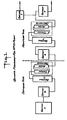
- FIG. I A conventional high fructose corn syrup purification process is described in FIG. I.
- the process is generally divided into two areas; dextrose purification and fructose purification. While this general description is directed to a column operation, it is anticipated that a batch processing operation will derive a similar benefit from the present invention.
- the dextrose syrup is passed through a column of activated carbon (Section C) for decolorization and removal of some impurities.
- the syrup pH at this point is about 3.5-5.0 and it has been found that many weak organic acids contributing to titratable acidity are not effectively adsorbed by this activated carbon.
- the carbon treated syrup passes next to the cation-anion exchange system (Section D) wherein first a cation and second an anion exchange resin remove salts and other impurities.
- the syrup exiting the cation exchange resin has a pH below 3.0 (preferably 2.5 or less).
- the syrup exiting the anion exchange resin has a pH of from 3.5 to 5.0.
- the use of a microporous adsorbent in this ion exchange system would delay the organic acid rollover from the anion exchange resin and thus improve the overall process efficiency.
- the purified dextrose syrup is then converted into high fructose corn syrup (HFCS) by enzymatic conversion (Section E).
- HFCS high fructose corn syrup
- Activated carbon is again employed to decolorize the syrup and adsorb impurities (Section F).
- the syrup pH is between 4.0 and 5.0 entering and exiting this carbon bed and it has been found that any remaining weak organic acids are not adsorbed.
- the fructose syrup is then passed through an ion-exchange system (Section G) to remove salts and other impurities remaining in the syrup.
- ion-exchange system Section G
- the use of a microporous adsorbent in this ion-exchange system will again delay the rollover from the anion exchange resin and thus improve the overall process efficiency.
- the purified syrup is then either concentrated by evaporation (Section H) or again passed through a cation exchange resin to upgrade the syrup from 42% HFCS to 55% HFCS (Section I).
- adsorbents other than activated carbon at the low pH ion-exchange sites may also prevent the premature need for regenerating the anion exchange resin.
- adsorbents other than activated carbon at the low pH ion-exchange sites may also prevent the premature need for regenerating the anion exchange resin.
- microporous adsorbents capable of adsorbing the acids responsible for titratable acidity and other solution impurities include: Ambersorb Macrorecticular Resins (Rohm & Haas Co.), Fuller's Earth and other microporous clays, zeolite sieves, silica gel, alumina, and the like.
- a two inch diameter bed containing 12 g of acid washed PCB activated carbon (available from Calgon Corporation, Pittsburgh, Pa.) was inserted between a cation and anion exchange resin pair (see FIG. II).
- Untreated dextrose syrup was run through the carbon containing system and the conductance breakthrough of the system was measured.
- Conductance of the solution was measured in 100 ml increments on a Cole-Parmer Model 1481-00 conductivity meter.
- the unit of conductance generally used in the sweetener industry are micromhos.
- the conductance breakthrough plots show when (in terms of volume treated) an ion exchange resin system has ceased adsorbing ionic species contributing to solution conductivity.
- This conductance breakthrough was plotted against the conductance breakthrough of the same ion-exchange resin system without the carbon bed inserted.
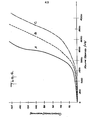
- FIG. III shows these two curves.
- Curve A represents the untreated (no carbon) syrup while curve B represents the treated syrup.
- an extension of anion resin lifetime of about 30 percent was shown as measured by the increased volume of syrup treated by the carbon containing system.
- Example 1 The carbon bed employed in Example 1 was regenerated using conditions conventionally used for regeneration of the anion exchange resin, i.e., caustic (NaOH) wash (about 2 wt%) followed by water rinse (to a pH of about 9.0).
- the conductance breakthrough test was repeated, as in Example I, using the regenerated PCB activated carbon and fresh supplies of cation and anion exchange resins.
- the conductance breakthrough curves shown in FIG. IV show an extension of anion resin of about 49%. This improvement over the virgin carbon is probably due to better wetting of the carbon bed following the caustic regeneration.
- Curve A represents an untreated (no carbon) system
- curve B represents a virgin carbon system
- curve C represents a regenerated carbon breakthrough cycle.
- caustic solutions such as NH 4 0H, KOH, Na 2 CO 3 , NaHCO 3 , Ca(OH) 2 , Mg(OH) 2 and the like, may be employed so long as a high pH is attained.
- an acid rinse neutralization
- a series of acid-water rinses or water-acid rinses could be employed.
- FIG. V shows the breakthrough curves D, for the untreated anion effluent and E, for the carbon treated effluent.
- the extension factor here is smaller than that seen on the dextrose side of the process because most of the organic acids likely to interfere with the fructose side anion exchange resin have already been removed earlier in the processing.
- adsorption of the weak organic acids contributing to titratable acidity by microporous adsorbents will occur best at low pH.
- Low pH conditions exist within the cation exchange resin bed. Therefore a mixture of the cation exchange resin and activated carbon or another microporous adsorbent would also be expected to delay premature exhaustion.of the anion exchange resin as does carbon treatment of the cation exchange resin effluent.
- a low pH condition also exists initially in the anion exchange bed. After some time passes, however, the anion exchange process raises the pH of the syrup within this anion bed. However, one could mix a microporous adsorbent with the anion exchange resin for additional protection of the anion bed.
- Mixtures of ion exchange resin (cation or anion) with the microporous adsorbent may vary from 1 percent by volume microporous adsorbent to 99 percent by volume microporous adsorbent.
- the quality of the adsorbent that is, its adsorptive capacity will be a determinative factor.
- a preferred amount in a mixture with an ion exchange resin would be from 10 percent to 50 percent by volume carbon.
- a microporous adsorbent placed following a cation exchange resin could also precede a mixed cation/anion resin bed and serve as a useful adsorber of undesirable contaminants.
- sweetener solution refineries may employ mixed cation/anion r.esin beds in their refining process.
- the use of a cation resin bed, followed by, for example, an activated carbon bed, would improve the sweetener solution purification by removing organics not adsorbed earlier in the processing, thus extending the lifetime-of the mixed cation/anion resin system.
- a properly positioned microporous adsorbent could be used to enhance the performance of a cation exchange resin.
- ion exchange resins used in the treatment of condensate water systems rely on a cation resin to remove weak organic bases from aqueous solutions and retain them as the positively charged species.
- weak organic bases include aniline, purine, pyridine, toluidine, quinoline and other common organic amines with pK a of greater than 7. These weak organic bases become less water soluble at high pH.
- these bases could easily be removed by a microporous adsorbent, thus reserving the cation exchange resin for those materials not adsorbed, thereby extending its useful lifetime.
- the solution being purified would initially enter an anion exchange resin, exiting at a high pH and then pass to the cation exchange resin.
- the microporous adsorbent could be (1) mixed with either of the ion-exchange beds or (2) placed between the beds as a separate adsorber.
Landscapes
- Chemical & Material Sciences (AREA)
- Life Sciences & Earth Sciences (AREA)
- Biochemistry (AREA)
- Organic Chemistry (AREA)
- Health & Medical Sciences (AREA)
- Emergency Medicine (AREA)
- General Health & Medical Sciences (AREA)
- Treatment Of Liquids With Adsorbents In General (AREA)
- Seasonings (AREA)
Applications Claiming Priority (4)
| Application Number | Priority Date | Filing Date | Title |
|---|---|---|---|
| US39321182A | 1982-06-28 | 1982-06-28 | |
| US393211 | 1982-06-28 | ||
| US44145882A | 1982-11-15 | 1982-11-15 | |
| US441458 | 1982-11-15 |
Publications (2)
| Publication Number | Publication Date |
|---|---|
| EP0102256A2 true EP0102256A2 (de) | 1984-03-07 |
| EP0102256A3 EP0102256A3 (de) | 1986-11-12 |
Family
ID=27014206
Family Applications (1)
| Application Number | Title | Priority Date | Filing Date |
|---|---|---|---|
| EP83401307A Withdrawn EP0102256A3 (de) | 1982-06-28 | 1983-06-23 | Verfahren zur Reinigung einer Süssstofflösung |
Country Status (11)
| Country | Link |
|---|---|
| EP (1) | EP0102256A3 (de) |
| AU (1) | AU1628283A (de) |
| CA (1) | CA1195171A (de) |
| DK (1) | DK294683A (de) |
| ES (1) | ES523411A0 (de) |
| FI (1) | FI832251A7 (de) |
| GR (1) | GR77519B (de) |
| IL (1) | IL69039A0 (de) |
| NO (1) | NO832331L (de) |
| PH (1) | PH22132A (de) |
| PT (1) | PT76904B (de) |
Cited By (5)
| Publication number | Priority date | Publication date | Assignee | Title |
|---|---|---|---|---|
| EP0262711A1 (de) * | 1986-09-12 | 1988-04-06 | Coöperatieve Vereniging Suiker Unie U.A. | Verfahren zur Entsalzung des Dünnsaftes von Zuckerrüben |
| EP0292662A3 (de) * | 1987-03-31 | 1991-01-16 | The Dow Chemical Company | Verfahren zur Mineralsalzentziehung aus Zucker enthaltenden Lösungen |
| AT401996B (de) * | 1989-08-29 | 1997-01-27 | Ybbstaler Fruchtsaft Gmbh | Verfahren zur behandlung von entaromatisierten frucht- bzw. gemüsesäften |
| EP0554818B1 (de) * | 1992-02-07 | 1998-05-06 | National Starch and Chemical Investment Holding Corporation | Reinigung von Polysacchariden |
| WO2004108969A1 (en) * | 2003-06-06 | 2004-12-16 | Cargill, Incorporated | Method of refining sucrose |
Families Citing this family (1)
| Publication number | Priority date | Publication date | Assignee | Title |
|---|---|---|---|---|
| CN110573252B (zh) * | 2017-04-28 | 2024-09-27 | Ddp特种电子材料美国有限责任公司 | 功能性树脂颗粒 |
Family Cites Families (7)
| Publication number | Priority date | Publication date | Assignee | Title |
|---|---|---|---|---|
| BE439426A (de) * | ||||
| US2415539A (en) * | 1944-11-15 | 1947-02-11 | Wilson Jones Co | Punch |
| FR949323A (fr) * | 1946-07-12 | 1949-08-26 | Dorr Co | Procédé de traitement des liquides sucrés impurs |
| US2526111A (en) * | 1949-04-19 | 1950-10-17 | Bartz John Paul | Production of white sugar from colored sugar bearing fluids without molasses as a by-product |
| US2911329A (en) * | 1953-04-10 | 1959-11-03 | American Cyanamid Co | Sugar purification with ion exchangers |
| GB1066231A (en) * | 1963-03-08 | 1967-04-26 | Union Tank Car Co | Improvements in or relating to the treatment of liquids |
| US4187120A (en) * | 1978-05-30 | 1980-02-05 | Ecodyne Corporation | Method for purification of polyhydric alcohols |
-
1983
- 1983-06-20 PH PH29083A patent/PH22132A/en unknown
- 1983-06-20 FI FI832251A patent/FI832251A7/fi not_active Application Discontinuation
- 1983-06-20 ES ES523411A patent/ES523411A0/es active Granted
- 1983-06-21 PT PT76904A patent/PT76904B/pt unknown
- 1983-06-21 IL IL69039A patent/IL69039A0/xx unknown
- 1983-06-23 EP EP83401307A patent/EP0102256A3/de not_active Withdrawn
- 1983-06-23 GR GR71766A patent/GR77519B/el unknown
- 1983-06-27 AU AU16282/83A patent/AU1628283A/en not_active Abandoned
- 1983-06-27 DK DK294683A patent/DK294683A/da not_active Application Discontinuation
- 1983-06-27 CA CA000431271A patent/CA1195171A/en not_active Expired
- 1983-06-27 NO NO832331A patent/NO832331L/no unknown
Cited By (6)
| Publication number | Priority date | Publication date | Assignee | Title |
|---|---|---|---|---|
| EP0262711A1 (de) * | 1986-09-12 | 1988-04-06 | Coöperatieve Vereniging Suiker Unie U.A. | Verfahren zur Entsalzung des Dünnsaftes von Zuckerrüben |
| US4799965A (en) * | 1986-09-12 | 1989-01-24 | Cooperatieve Vereniging Suiker Unie U.A. | Method for demineralizing beet sugar thin juice |
| EP0292662A3 (de) * | 1987-03-31 | 1991-01-16 | The Dow Chemical Company | Verfahren zur Mineralsalzentziehung aus Zucker enthaltenden Lösungen |
| AT401996B (de) * | 1989-08-29 | 1997-01-27 | Ybbstaler Fruchtsaft Gmbh | Verfahren zur behandlung von entaromatisierten frucht- bzw. gemüsesäften |
| EP0554818B1 (de) * | 1992-02-07 | 1998-05-06 | National Starch and Chemical Investment Holding Corporation | Reinigung von Polysacchariden |
| WO2004108969A1 (en) * | 2003-06-06 | 2004-12-16 | Cargill, Incorporated | Method of refining sucrose |
Also Published As
| Publication number | Publication date |
|---|---|
| DK294683D0 (da) | 1983-06-27 |
| PH22132A (en) | 1988-06-01 |
| ES8503486A1 (es) | 1985-04-01 |
| PT76904A (en) | 1983-07-01 |
| GR77519B (de) | 1984-09-24 |
| IL69039A0 (en) | 1983-10-31 |
| FI832251A0 (fi) | 1983-06-20 |
| CA1195171A (en) | 1985-10-15 |
| AU1628283A (en) | 1984-01-05 |
| EP0102256A3 (de) | 1986-11-12 |
| PT76904B (en) | 1986-04-09 |
| FI832251L (fi) | 1983-12-29 |
| NO832331L (no) | 1983-12-29 |
| ES523411A0 (es) | 1985-04-01 |
| DK294683A (da) | 1983-12-29 |
| FI832251A7 (fi) | 1983-12-29 |
Similar Documents
| Publication | Publication Date | Title |
|---|---|---|
| US3878127A (en) | Method of manufacturing a zeolitic absorbent | |
| EP0115631B1 (de) | Trennung von Mannose durch selektive Adsorption über zeolitische Molekularsiebe | |
| US4968353A (en) | Method for refining sugar liquor | |
| US4098691A (en) | Purification of water for boiler | |
| US4587953A (en) | Sweetener solution purification process | |
| US4319057A (en) | Regeneration of molecular sieves | |
| CA1195171A (en) | Sweetner solution purification process | |
| McKay et al. | Simplified optimisation procedure for fixed bed adsorption systems | |
| EP0365635B1 (de) | Verfahren zum entfärben wässeriger zuckerlösungen unter verwendung eines adsorbierenden harzes und auslösen der farbkörper aus den adsorbierenden harzen | |
| US3438892A (en) | Drying fluids with regenerable sulfonate cation-exchange resins | |
| US2962438A (en) | Ion exchange process for water purification | |
| WO1998050588A1 (en) | Process for purifying sugar solutions | |
| US6642168B1 (en) | Method for metal loading of a multi-bed adsorbent system | |
| JPH07206804A (ja) | タウリンの精製方法 | |
| JPH0577400B2 (de) | ||
| JPS5914760A (ja) | 甘味剤溶液の精製方法 | |
| JPH0251672B2 (de) | ||
| KR102577226B1 (ko) | 약염기성 음이온 교환수지를 이용한 당 함유 용액의 정제 방법 | |
| US2471213A (en) | Treatment of aqueous liquids | |
| JP3592495B2 (ja) | ショ糖液精製装置およびショ糖液精製装置の再生方法 | |
| JP2845489B2 (ja) | 混床式ショ糖液精製装置の再生法 | |
| US5057629A (en) | Process for reducing isopropyl alcohol in diisopropyl ether | |
| JP2661698B2 (ja) | 糖液の精製方法 | |
| EP0106466A2 (de) | Ausscheidung von mit Sulfonharzen extraktionsfähigen Stoffen aus wässrigen Zuckerlösungen mittels eines akrylischen Anionaustauschharzes | |
| JP4800931B2 (ja) | 糖液の精製方法および精製装置 |
Legal Events
| Date | Code | Title | Description |
|---|---|---|---|
| PUAI | Public reference made under article 153(3) epc to a published international application that has entered the european phase |
Free format text: ORIGINAL CODE: 0009012 |
|
| AK | Designated contracting states |
Designated state(s): AT BE CH DE FR GB IT LI NL SE |
|
| ITCL | It: translation for ep claims filed |
Representative=s name: SOCIETA' ITALIANA BREVETTI S.P.A. |
|
| PUAL | Search report despatched |
Free format text: ORIGINAL CODE: 0009013 |
|
| AK | Designated contracting states |
Kind code of ref document: A3 Designated state(s): AT BE CH DE FR GB IT LI NL SE |
|
| 17P | Request for examination filed |
Effective date: 19870209 |
|
| RAP1 | Party data changed (applicant data changed or rights of an application transferred) |
Owner name: CALGON CARBON CORPORATION |
|
| 17Q | First examination report despatched |
Effective date: 19870817 |
|
| STAA | Information on the status of an ep patent application or granted ep patent |
Free format text: STATUS: THE APPLICATION IS DEEMED TO BE WITHDRAWN |
|
| 18D | Application deemed to be withdrawn |
Effective date: 19880917 |
|
| RIN1 | Information on inventor provided before grant (corrected) |
Inventor name: ROSENE, MICHAEL R. |