EP0086053B1 - Process for synthesizing peptides or peptide derivatives - Google Patents
Process for synthesizing peptides or peptide derivatives Download PDFInfo
- Publication number
- EP0086053B1 EP0086053B1 EP83300362A EP83300362A EP0086053B1 EP 0086053 B1 EP0086053 B1 EP 0086053B1 EP 83300362 A EP83300362 A EP 83300362A EP 83300362 A EP83300362 A EP 83300362A EP 0086053 B1 EP0086053 B1 EP 0086053B1
- Authority
- EP
- European Patent Office
- Prior art keywords
- amino acid
- trna synthetase
- aminoacyl
- reaction
- reaction mixture
- Prior art date
- Legal status (The legal status is an assumption and is not a legal conclusion. Google has not performed a legal analysis and makes no representation as to the accuracy of the status listed.)
- Expired
Links
Classifications
-
- C—CHEMISTRY; METALLURGY
- C12—BIOCHEMISTRY; BEER; SPIRITS; WINE; VINEGAR; MICROBIOLOGY; ENZYMOLOGY; MUTATION OR GENETIC ENGINEERING
- C12P—FERMENTATION OR ENZYME-USING PROCESSES TO SYNTHESISE A DESIRED CHEMICAL COMPOUND OR COMPOSITION OR TO SEPARATE OPTICAL ISOMERS FROM A RACEMIC MIXTURE
- C12P21/00—Preparation of peptides or proteins
- C12P21/02—Preparation of peptides or proteins having a known sequence of two or more amino acids, e.g. glutathione
Definitions
- the present invention relates to a novel process for synthesizing peptides or peptide derivatives.
- a known process for synthesizing peptide by enzymatic synthesis involves using a special enzyme which synthesizes only one peptide having a specified amino acid arrangement, in addition to the protease process.
- enzymes include glutathione synthesizing enzyme which synthesizes tripeptide having an arrangement of glutamic acid/cystein/glycine as described in Japanese Patent Application (OPI) No. 122793/79 (The term "OPI" as used herein refers to a "published unexamined Japanese patent application”.) and gramicidin S synthesizing enzyme which synthesize gramicidin S of decapeptide as described in Gendai Kagaku, Dec. 1974, page 12.
- An object of the present invention is to provide a novel process for synthesizing a peptide or derivatives thereof which can be generally utilized, capable of eliminating the racemization and side reactions.
- An another object of the present invention is to provide a novel process for synthesizing a peptide or derivatives thereof which can be generally utilized, without the need for the protecting the end amino group which causes the occurrence of the complexity of operation and deteriorates economic efficiency.
- aminoacyl-tRNA synthetase which is not known to function in the formation of a peptide bond, which is an enzyme having a function of bonding amino acid to tRNA which is a nucleic acid is surprisingly capable of synthesizing peptides.
- the above described object can be attained by using such an enzyme as a condensing agent.
- the present invention involves a process for synthesizing peptides or peptide derivatives which comprises using aminoacyl-tRNA ⁇ synthetase as a condensing agent when synthesizing peptides or peptide derivatives from amino acids.
- useful peptides or peptide derivatives can be produced at a moderate price without using protective groups.
- the useful peptides and peptide derivatives can be effectively produced without causing the occurrences of the racemization and side reactions.
- a characteristic of the present invention is the ability to synthesize peptides or peptide derivatives in high yield without protecting amino groups by using aminoacyl-tRNA synthetase as a condensing agent in the process.
- the peptides are synthesized by a enzymatic process.
- Aminoacyl-tRNA synthetase used in the present invention belongs to enzyme classification 6.1.1, which is an enzyme having a catalytic function for the following reaction: Examples of it include those obtained from animal tissue such as rabbits, horses, cattle, rats, chickens or snakes, etc., those obtained from vegetable tissue such as rice plants, potatoes or tomatoes, etc. and those obtained from microbes such as molds, yeasts, fungi, bacteria or Actinomycetes, etc. or seaweeds. Particularly, those obtained from microbes are preferred, because treatment of them is easily carried out.
- thermophilic bacteria such as bacillus stearothermophilus, Thermus thermophilus, Thermus flavus, Clostridium thermoaceticum or Thermus aquaticus are most preferred with respect to the stability of enzymes.
- aminoacyl-tRNA synthetase can be obtained by crushing the above described tissue or cells with a homogenizer or a cell mill and purifying by a conventional enzyme purification process such as chromatography such as DEAE-cellulose column chromatography or hydroxy apatite column chromatography, etc. or fractional precipitation by ammonium sulfate, etc. as described in, for example, Biochemistry, Vol. 13, page 2307 (1974).
- Useful aminoacyl-tRNA synthetases include those having specificity to various a-amino acids.
- useful enzymes include tyrosyl-tRNA synthetase having specificity to tyrosine, leucyl-tRNA synthetase having specificity to leucine and valyl-tRNA synthetase having specificity to valine.
- isoleucyl-tRNA synthetase phenyl-alanyl-tRNA synthetase alanyl-tRNA synthetase, glutamyl-tRNA synthetase, aspartyl-tRNA synthetase, methionyl-tRNA synthetase, histidyl-tRNA synthetase, lysyl-tRNA synthetase, threonyl-tRNA synthetase and seryl-tRNA synthetase, etc.
- the aminoacyl-tRNA synthetase may be used as a crude enzyme extract solution containing aminoacyl-tRNA synthetase which is obtained by crushing the above described tissue or cells by a homogenizer or a cell mill, etc. and treating the resulting crude extract solution with a cation exchange resin having phosphoric acid groups.
- the above described crude extract solution may be added to the cation exchange resin having phosphoric acid groups which are equilibrated with a buffer solution having a pH of 3 to 12 and, preferably, 6 to 9 and, most preferably, 7 to 8 and a concentration of 1 mM to 1M and, preferably 20 mM to 100 mM (batch process).
- the crude extract solution may be allowed to pass through a column packed with the above described resin (column process).
- the treatment is carried out at a temperature which maintains the activity of the aminoacyl-tRNA synthetase. It is generally preferred to carry out the treatment at a temperature of 0°C to 70°C and, more preferably, 0°C to 30°C.
- any solution may be added if it dissolves aminoacyl-tRNA synthetase resulting in the desired pH.
- Preferred examples of such solutions include a tris-hydrochloric acid buffer solution, a HEPES buffer solution, a triethanolamine buffer solution, an imidazole buffer solution and a phosphoric acid buffer solution, etc, more preferably phosphoric acid buffer solution.
- sulfhydrylating agents such as mercaptoethanol or dithiothreitol, etc.
- protease inhibitors such as phenylmethylsulfonyl fluoride, etc.
- chelating agents such as sodium ethylenediaminetetraacetate, etc.
- the crude extract solution is added to a cation exchange resin having phosphoric acid groups which are equilibrated with the above described buffer solution, followed by stirring for 5 minutes or more and, preferably, 30 minutes or more.
- the enzyme absorbed is eluted with the same buffer solution, the above described solution having a different pH, a buffer solution having a different concentration or a buffer solution containing other salts. Accordingly, a crude enzyme solution containing aminoacyl-tRNA synthetase can be obtained.
- an absorption-desorption operation for the desired enzyme is carried out in a column, the principle of which is the same as that of the batch process.
- the treatment is preferably carried out as rapidly as possible, and it is preferably carried out at a velocity of 1 cm - h- 1 or more in the column. Further, considering separation ability, it is more preferred if the velocity in the'column is not more than 60 cm - h-'.
- Salts used for elutiori in the batch 'process and the column process include any substance which completely dissociates but it is particularly preferred to use a salt wherein the component becoming a pair ion of the ion exchange group is the same of that in the buffer solution used.
- the resulting crude enzyme solution containing aminoacyl-tRNA synthetase may be used as it is, or it may be used in a solid state prepared by freeze drying.
- the resulting crude enzyme solution containing aminoacyl-tRNA synthetase may be subjected to DEAE resin treatment so that it can be used for the synthesis of peptides.
- the cation exchange resin having phosphoric acid groups used in the present invention may be any material wherein the exchange group is a phosphoric acid group.
- peptides or peptide derivatives can be synthesized by reacting an amino acid with an amino acid derivative derived from amino acids with the reaction be carried out in the presence of aminoacyl-tRNA synthetase. Further, according to the present invention, peptides or peptide derivatives can be synthesized by previously reacting an amino acid with aminoacyl-tRNA synthetase and reacting the resulting reaction mixture with an amino acid derivative.
- Amino acids suitably used for previously reacting with aminoacyl-tRNA synthetase include tyrosine, alanine, leucine, isoleucine, phenylalanine, methionine, lysine, serine, valine, asparagine, aspartic acid, glycine, glutamine, glutamic acid, cysteine, threonine, tryptophane, histidine or proline etc., which may be any of L-compound and D-compound.
- useful amino acid derivatives include esters, thioesters, amides and hydroxamides, etc.
- a-amino acids such as glycine, alanine, leucine, isoleucine, phenylalanine, glutamic acid, glutamine, norleucine, cysteine, tyrosine, alginine, valine, lysine, histidine, aspartic acid, aspargine, methionine, tryptophane, arginine or threonine, etc.
- a-amino acids such as (3-alanine or (3-aminoisobutyric acid, etc., nitrogen containing y-amino acids such as creatine, etc., y-amino acids such as piperidic acid, etc., and s-amino acids such as e-aminocapronic acid, etc.
- the amino acid derivatives are not limited to the above described compounds, if they have a free amino group.
- Various esters can be used such as simple hydrocarbon esters including methyl, ethyl, propyl, cyclohexyl, phenyl or benzyl ester as well as esters prepared by esterifying 3'-OH of tRNA with the above described amino acids.
- useful amides include free amides as well as oligopeptides and polypeptides wherein amide bonds are formed with different kinds or the same kinds of amino acid. It is also possible to use esters, thioesters, hydroxamides and ethers of the above described oligopeptides and polypeptides.
- the above described amino acid derivatives may be used in the form of an aqueous solution or in a solid state.
- the reaction mixture is prepared by mixing an amino acid with aminoacyl-tRNA synthetase in a buffer solution having a pH of 5 to 11, preferably, 6 to 10 and, more preferably 7 to 10 in the presence of adenosine triphosphate or deoxyadenosine triphosphate.
- the reaction is preferably carried out at a temperature of, generally, 0°C to 70°C and, more preferably 0°C to 30°C in order to maintain the activity of the enzyme.
- the reaction pressure may be carried out at atmospheric pressure.
- Useful buffer solutions include any solution which dissolves amino acid, adenosine triphosphate, deoxyadenosine triphosphate and aminoacyl-tRNA synthetase so as to have a desired pH.
- buffer solution examples include a tris-hydrochloric acid buffer solution, a HEPES buffer solution, a triethanolamine buffer solution, a maleate buffer solution and a phosphoric acid buffer solution, etc.
- the pH value and concentration of the preferred buffer solution are preferably 7 to 8 and 20 mM to 100 mM, respectively.
- mixed media prepared by adding hydrophilic organic solvent to these buffer solutions can be used, if they satisfy the above described requirements.
- hydrophilic organic solvents include ethers such as dioxane or tetrahydrofuran, etc., dimethylsulfoxide, dimethylformamide, acetonitrile and acetone, etc.
- the concentration of the hydrophilic organic solvent in the whole reacting solution is in a range of 0.5 to 85%, preferably 5 to 60%, and more preferably 10 to 50%. Further, since the hydrophilic organic solvent needs merely be present when carrying out the peptization reaction, it may be added at any time. When the hydrophilic organic solvent is used, it is possible to reduce the concentration of the amino acid derivative as a raw material. Furthermore, in order to smoothly carry out the reaction and to prevent deactivation of the enzyme, divalent cations such as magnesium or manganese, etc., sulfhydrylating agents such as mercaptoethanol or dithiothreitol, etc. and pyrophosphatase may be added alone or as a mixture of them to the reaction system.
- divalent cations such as magnesium or manganese, etc.
- sulfhydrylating agents such as mercaptoethanol or dithiothreitol, etc. and pyrophosphatase may be added alone or as a mixture of
- each additive is 0.01 mM to 500 mM of divalent cation, 0.001 mM to 100 mM of sulfhydrylating agent and 0.001 units/ ml to 100 units/ml of pyrophosphatase, respectively.
- the optimum concentration is 0.1 mM to 10 mM of divalent cation, 0.01 mM to 1 mM of sulfhydrylating agent and 1 unit/ml to 10 units/mi of pyrophosphatase, respectively.
- the amounts of the amino acid, aminoacyl-tRNA synthetase and adenosine triphosphate or deoxyadenosine triphosphate used are not particularly limited, but it is preferred to carry out the reaction in a molar ratio of amino acid to aminoacyl-tRNA synthetase of 10:1 to 1:10 and a molar ratio of amino acid to adenosine triphosphate or deoxyadenosine triphosphate of 1:10 to 1:100, in order to obtain a practical yield.
- the reaction is carried out under the above described condition it smoothly proceeds and concludes within a few seconds to 30 minutes.
- the reaction mixture is then allowed to react with an amino acid derivative by blending, by which the desired peptide or peptide derivative can be obtained (this stage is called, hereinafter, "peptization").
- the reaction mixture may be used as it is for the peptization reaction.
- it also may be used after the adenosine triphosphate, adenosine monophosphate or pyrophosphoric acid, etc. present after the reaction is removed by gel chromatography with G-25 (produced by Pharmacia Co.) or G-75 (produced by Pharmacia Co.), etc.
- the peptization reaction is preferably carried out at a temperature of 0°C to 70°C.
- the reaction In order to prevent deactivation of the enzyme and obtain a proper reaction rate, it is preferred to carry out the reaction at 10°C to 50°C, more preferably at 20°C to 40°C. Further, the pH during the reaction is in the range of 5 to 11, preferably 6 to 11, and more preferably 7 to 9.
- the reaction mixture and an amino acid derivative are blended in a ratio by volume of, for example, 1:0.1 to 1:100. Further, the concentration of amino acid derivative used in this case is in a range of 10 mM to 10 M, and preferably 100 mM to 2 M, but a lower concentration may be used.
- an amino acid and an amino acid derivative are reacted in the presence of aminoacyl-tRNA synthetase by previously obtaining a mixture of the amino acid and the amino acid derivative and blending the resulting mixture with aminoacyl-tRNA synthetase or by previously obtaining a mixture of amino acid derivative and aminoacyl-tRNA synthetase and blending the resulting mixture with an amino acid.
- aminoacyl-tRNA synthetase by previously obtaining a mixture of the amino acid and the amino acid derivative and blending the resulting mixture with amino acid.
- an amino acid and an amino acid derivative are previously blended in the above described buffer solution in the presence of adenosine triphosphate or deoxyadenosine triphosphate, or an amino acid derivative and aminoacyl-tRNA synthetase are previously blended in the above described buffer solution in the presence of adenosine triphosphate or deoxyadenosine triphosphate.
- the above described sulfhydrylating agent and pyrophosphatase may be added alone or as a mixture in order to smoothly carry out the subsequent reaction and to prevent deactivation of enzyme.
- the amounts of these components are as described above, but the amount of aminoacyl-tRNA synthetase is about 1/1,000 to 1/10,000 of the above described amount.
- the resulting mixture of an amino acid and an amino acid derivative is then blended with aminoacyl-tRNA synthetase or the resulting mixture of an amino acid derivative and aminoacyl-tRNA synthetase is blended with an amino acid to react the amino acid with the amino acid derivative in the presence of the aminoacyl-tRNA synthetase.
- the pH and the temperature during this reaction are the same as those in case of the above described peptization.
- Peptization under the above described condition concludes within a few seconds to a few days, by which the desired peptides or peptide derivatives can be obtained.
- the peptide derivatives obtained by the present invention are useful as various hormones such as bradykinin having antihypertensive activity or somatostatin having an internal or external secretion controlling function and other biologically active substances such as antibiotic peptides or seasoning peptides, etc.
- the above described useful peptides or peptide derivatives can be produced at a moderate price without using protective groups.
- the useful peptides and peptide derivatives can be effectively produced without causing the occurrences of the racemization and side reactions.
- 1.5 g of aspartyl-tRNA synthetase having specificity to aspartic acid was obtained from 150 kg of Escherichia coli K-12 by the same column operation as in Reference Example 1.
- arginyl-tRNA synthetase having specificity to arginine was obtained from 100 kg of Bacillus stearothermophilus UK-788 (Deposition No. 5141 in Fermentation Research Institute) by the same column operation as in Reference Example 1.
- tyrosyl-tRNA synthetase having specificity to tyrosine obtained in Reference Example 1 0.4 g of magnesium chloride, 0.1 g of disodium adenosine triphosphate, 1 mg of L-tyrosine, 200 units of pyrophosphatase (produced by Boehringer Mannheim Co.) and 0.01 mg of dithiothreitol were dissolved in 200 ml of a 20 mM HEPES buffer solution at pH 8.0, and they were reacted at 4°C for 15 minutes to obtain a reaction mixture, 4 g of L-phenylalanine methyl ester was added to the resulting reaction mixture and well blended, and the mixture was allowed to stand for a day while maintaining the reaction temperature at 30°C to carry out the reaction.
- reaction mixture was blended with 4 g of ⁇ -alanylamide to react at 50°C for 10 minutes.
- the resulting reaction solution was treated with a ⁇ Bondapak C 18 column by the same method as in Example 1 to carry out separation, by which 1 mg of L - seryl - ⁇ - alanylamide was obtained.
- the resulting reaction solution was put in a ⁇ Bondapak C 18 column (produced by Waters Co.) and treated with an aqueous solution of acetonitrile/50 mM potassium phosphate: 85/15 having pH 7 as a developing solvent to separate 17 mg of L - tyrosyl - L - phenylalanine ethyl ester.
- reaction was carried out for 2 hours while maintaining the pH at 7.5 and the reaction temperature at 40°C. Then the resulting reaction solution was treated by the same method as in Example 5 to separate 17.5 mg of L - tyrosyl. - L-alginine t - butyl ester.
- Example 8 the reaction was carried out by the same method as in Example 6 using D-tyrosine instead of L-tyrosine in Example 6 (Example 8). As the result, 17.0 mg of D - tyrosyl - L - alginine - t - butyl ester was obtained.
- Example 14 the reaction was carried out by the same method as in Example 12 using D-alginine 1 mg instead of L-alginine in Example 12 (Example 14).
- Example 17 D - tyrosyl - L - leucine ethyl ester
- This fraction was collected and concentration and desalting was carried out, by which a crude enzyme solution containing tyrosyl-tRNA synthetase having specificity to tyrosine was obtained in a high yield of 80% or more.
- the above described operations were all carried out at 4°C.
- a crude extract solution obtained by the same method as in Example 1 using 55 kg of Bacillus stearothermophilus was added to phosphoric acid Celex (produced by Bio-Rad Co.) which was previously equilibrated with a 20 mM phosphoric acid buffer solution (pH 7.5) containing 5 mM mercaptoethanol, 2 mM sodium ethylenediaminetetraacetate and 0.1 mM phosphophenylsulfonyl fluoride, and the mixture was stirred for 30 minutes.
- a crude extract solution obtained from baker's yeast by the same procedure as in Example 19 was allowed to pass through a column packed with cellulose phosphate (produced by Serva Co.) which was previously equilibrated with a 50 mM phosphoric acid buffer solution (pH 7.0) containing 10 mM mercaptoethanol, 20 mM sodium ethylenediaminetetraacetate and 0.1 mM phosphophenylsulfonyl fluoride.
- pH 7.0 phosphoric acid buffer solution
- a crude enzyme solution containing methionyl-tRNA synthetase was eluted. It was freeze-dried to obtain a powdery enzyme sample.
- the yield had a tendency to decrease, as compared with Example 21, because of side reactions caused by the influence of other enzymes present in the crude extract solution.
- a crude extract solution containing seryl-tRNA synthetase was obtained from rabbit liver by the same procedure as in Example 1 using a homogenizer. This crude extract solution was added to cellulose phosphate (produced by Whatman Co.) which was previously equilibrated with a 25 mM imidazole buffer solution (pH 7.5) containing 1 mM dithiothreitol, 2 mM sodium ethylenediaminetetraacetate and 0.1 mM phosphophenylsulfonyl fluoride, and the mixture was stirred for one hour. After being allowed to stand, the supernatant was removed. When elution was carried out with a solution prepared by adding potassium chloride to the above described buffer solution, seryl-tRNA synthetase was eluted.
Landscapes
- Life Sciences & Earth Sciences (AREA)
- Chemical & Material Sciences (AREA)
- Organic Chemistry (AREA)
- Engineering & Computer Science (AREA)
- Wood Science & Technology (AREA)
- Health & Medical Sciences (AREA)
- Zoology (AREA)
- General Chemical & Material Sciences (AREA)
- Molecular Biology (AREA)
- Microbiology (AREA)
- Proteomics, Peptides & Aminoacids (AREA)
- Chemical Kinetics & Catalysis (AREA)
- Biotechnology (AREA)
- Biochemistry (AREA)
- Bioinformatics & Cheminformatics (AREA)
- General Engineering & Computer Science (AREA)
- General Health & Medical Sciences (AREA)
- Genetics & Genomics (AREA)
- Preparation Of Compounds By Using Micro-Organisms (AREA)
- Enzymes And Modification Thereof (AREA)
Description
- The present invention relates to a novel process for synthesizing peptides or peptide derivatives.
- In recent years, the various physiological activities have become known as have the importance of peptides as medical supplies for medical treatment, diagnosis or other uses and as seasoning agents. Accordingly, there has been a great deal of development of the processes for synthesizing peptides. Chief processes for synthesizing peptides which are now known can be classified into chemical synthesis processes and enzymatic synthesis processes as described in Pharmacia Review, No. 3, pages 27-47 (1980). The chemical synthesis processes include condensing amino acids one by one by an azide process, a mixed acid anhydride process, an active ester process or a carbodiimide process and a process which comprises condensing with fragments. However, in any of these chemical synthesis processes, there are various problems. More specifically, racemization and side reactions are easily caused and the reaction time is long and the end amino group must be previously protected with a protective group before the reaction. With respect to the fragment condensation process, there is a serious fault in the racemization is particularly easily caused.
- In order to avoid the occurrence of racemization as much as possible, a enzymatic synthesis process using protease has been proposed in U.S. Patent 4,119,493. In this process, however, complexity of operation is still not improved, because the reaction time is long and the end amino group must be protected. Further, the enzymatic synthesis process using protease has a serious fault in that the desired peptide cannot be obtained frequently, because the formed peptide is decomposed during synthesis thereof because the enzyme used has an inherent activity which involves decomposing peptides. Particularly, when applying this process to the synthesis of oligopeptide, there is a serious fault in that undesired peptide is obtained wherein a part of the amino acids are lacking in Journal of Biological Chemistry, Vol. 256, page 1301 (1981). A known process for synthesizing peptide by enzymatic synthesis involves using a special enzyme which synthesizes only one peptide having a specified amino acid arrangement, in addition to the protease process. Examples of such enzymes include glutathione synthesizing enzyme which synthesizes tripeptide having an arrangement of glutamic acid/cystein/glycine as described in Japanese Patent Application (OPI) No. 122793/79 (The term "OPI" as used herein refers to a "published unexamined Japanese patent application".) and gramicidin S synthesizing enzyme which synthesize gramicidin S of decapeptide as described in Gendai Kagaku, Dec. 1974, page 12. However, these enzymes are special ones and a desired suitable peptide can not be synthesized because only one limited kind of peptide is synthesized by them. Therefore, under existing circumstances, this process can not be used as a general process for synthesizing peptides.
- An object of the present invention is to provide a novel process for synthesizing a peptide or derivatives thereof which can be generally utilized, capable of eliminating the racemization and side reactions.
- An another object of the present invention is to provide a novel process for synthesizing a peptide or derivatives thereof which can be generally utilized, without the need for the protecting the end amino group which causes the occurrence of the complexity of operation and deteriorates economic efficiency.
- As a result of earnest studies to attain the above described object, the present inventors have found that aminoacyl-tRNA synthetase which is not known to function in the formation of a peptide bond, which is an enzyme having a function of bonding amino acid to tRNA which is a nucleic acid is surprisingly capable of synthesizing peptides. The above described object can be attained by using such an enzyme as a condensing agent.
- The present invention involves a process for synthesizing peptides or peptide derivatives which comprises using aminoacyl-tRNA` synthetase as a condensing agent when synthesizing peptides or peptide derivatives from amino acids.
- According to the present invention, useful peptides or peptide derivatives can be produced at a moderate price without using protective groups.
- Further, the useful peptides and peptide derivatives can be effectively produced without causing the occurrences of the racemization and side reactions.
- A characteristic of the present invention is the ability to synthesize peptides or peptide derivatives in high yield without protecting amino groups by using aminoacyl-tRNA synthetase as a condensing agent in the process. The peptides are synthesized by a enzymatic process.
- Aminoacyl-tRNA synthetase used in the present invention belongs to enzyme classification 6.1.1, which is an enzyme having a catalytic function for the following reaction:

- These various kinds of aminoacyl-tRNA synthetase can be obtained by crushing the above described tissue or cells with a homogenizer or a cell mill and purifying by a conventional enzyme purification process such as chromatography such as DEAE-cellulose column chromatography or hydroxy apatite column chromatography, etc. or fractional precipitation by ammonium sulfate, etc. as described in, for example, Biochemistry, Vol. 13, page 2307 (1974). Useful aminoacyl-tRNA synthetases include those having specificity to various a-amino acids. Examples of useful enzymes include tyrosyl-tRNA synthetase having specificity to tyrosine, leucyl-tRNA synthetase having specificity to leucine and valyl-tRNA synthetase having specificity to valine. In addition, there are isoleucyl-tRNA synthetase, phenyl-alanyl-tRNA synthetase alanyl-tRNA synthetase, glutamyl-tRNA synthetase, aspartyl-tRNA synthetase, methionyl-tRNA synthetase, histidyl-tRNA synthetase, lysyl-tRNA synthetase, threonyl-tRNA synthetase and seryl-tRNA synthetase, etc.
- In the present invention, the aminoacyl-tRNA synthetase may be used as a crude enzyme extract solution containing aminoacyl-tRNA synthetase which is obtained by crushing the above described tissue or cells by a homogenizer or a cell mill, etc. and treating the resulting crude extract solution with a cation exchange resin having phosphoric acid groups.
- In order to carry out treatment with the cation exchange resin having phosphoric acid groups, the above described crude extract solution may be added to the cation exchange resin having phosphoric acid groups which are equilibrated with a buffer solution having a pH of 3 to 12 and, preferably, 6 to 9 and, most preferably, 7 to 8 and a concentration of 1 mM to 1M and, preferably 20 mM to 100 mM (batch process). Alternatively, the crude extract solution may be allowed to pass through a column packed with the above described resin (column process).
- In these cases, the treatment is carried out at a temperature which maintains the activity of the aminoacyl-tRNA synthetase. It is generally preferred to carry out the treatment at a temperature of 0°C to 70°C and, more preferably, 0°C to 30°C. Further, as the buffer solution used, any solution may be added if it dissolves aminoacyl-tRNA synthetase resulting in the desired pH. Preferred examples of such solutions include a tris-hydrochloric acid buffer solution, a HEPES buffer solution, a triethanolamine buffer solution, an imidazole buffer solution and a phosphoric acid buffer solution, etc, more preferably phosphoric acid buffer solution.
- In order to prevent deactivation of the enzyme, sulfhydrylating agents such as mercaptoethanol or dithiothreitol, etc., protease inhibitors such as phenylmethylsulfonyl fluoride, etc., and chelating agents such as sodium ethylenediaminetetraacetate, etc. may be added to the buffer solution.
- In order to carry out treatment with the above described batch process, the crude extract solution is added to a cation exchange resin having phosphoric acid groups which are equilibrated with the above described buffer solution, followed by stirring for 5 minutes or more and, preferably, 30 minutes or more. After being allowed to stand for a while, the enzyme absorbed is eluted with the same buffer solution, the above described solution having a different pH, a buffer solution having a different concentration or a buffer solution containing other salts. Accordingly, a crude enzyme solution containing aminoacyl-tRNA synthetase can be obtained. Further, in order to carry out treatment with the column process, for example, an absorption-desorption operation for the desired enzyme is carried out in a column, the principle of which is the same as that of the batch process. The treatment is preferably carried out as rapidly as possible, and it is preferably carried out at a velocity of 1 cm - h-1 or more in the column. Further, considering separation ability, it is more preferred if the velocity in the'column is not more than 60 cm - h-'. Salts used for elutiori in the batch 'process and the column process, include any substance which completely dissociates but it is particularly preferred to use a salt wherein the component becoming a pair ion of the ion exchange group is the same of that in the buffer solution used.
- The resulting crude enzyme solution containing aminoacyl-tRNA synthetase may be used as it is, or it may be used in a solid state prepared by freeze drying.
- The resulting crude enzyme solution containing aminoacyl-tRNA synthetase may be subjected to DEAE resin treatment so that it can be used for the synthesis of peptides.
- The cation exchange resin having phosphoric acid groups used in the present invention may be any material wherein the exchange group is a phosphoric acid group. Particularly, it is preferred to use cellulose phosphate resin using cellulose as a base material (for example, those produced by Whatman Co., Bio-Rad Co. and Serva Co.) because a crude enzyme solution containing a desired aminoacyl-tRNA synthetase can be prepared rapidly in a high yield, whereby peptides or peptide derivatives can be synthesized in a high yield by using such a crude enzyme solution.
- In the following, the process for synthesizing peptides or peptide derivatives from amino acids according to the present invention is illustrated in detail. According to the present invention, peptides or peptide derivatives can be synthesized by reacting an amino acid with an amino acid derivative derived from amino acids with the reaction be carried out in the presence of aminoacyl-tRNA synthetase. Further, according to the present invention, peptides or peptide derivatives can be synthesized by previously reacting an amino acid with aminoacyl-tRNA synthetase and reacting the resulting reaction mixture with an amino acid derivative. Amino acids suitably used for previously reacting with aminoacyl-tRNA synthetase include tyrosine, alanine, leucine, isoleucine, phenylalanine, methionine, lysine, serine, valine, asparagine, aspartic acid, glycine, glutamine, glutamic acid, cysteine, threonine, tryptophane, histidine or proline etc., which may be any of L-compound and D-compound. Further, useful amino acid derivatives include esters, thioesters, amides and hydroxamides, etc. of various amino acids, for example, a-amino acids such as glycine, alanine, leucine, isoleucine, phenylalanine, glutamic acid, glutamine, norleucine, cysteine, tyrosine, alginine, valine, lysine, histidine, aspartic acid, aspargine, methionine, tryptophane, arginine or threonine, etc., a-amino acids such as (3-alanine or (3-aminoisobutyric acid, etc., nitrogen containing y-amino acids such as creatine, etc., y-amino acids such as piperidic acid, etc., and s-amino acids such as e-aminocapronic acid, etc. However, the amino acid derivatives are not limited to the above described compounds, if they have a free amino group. Various esters can be used such as simple hydrocarbon esters including methyl, ethyl, propyl, cyclohexyl, phenyl or benzyl ester as well as esters prepared by esterifying 3'-OH of tRNA with the above described amino acids. Further, useful amides include free amides as well as oligopeptides and polypeptides wherein amide bonds are formed with different kinds or the same kinds of amino acid. It is also possible to use esters, thioesters, hydroxamides and ethers of the above described oligopeptides and polypeptides. Further, the above described amino acid derivatives may be used in the form of an aqueous solution or in a solid state.
- The reaction mixture is prepared by mixing an amino acid with aminoacyl-tRNA synthetase in a buffer solution having a pH of 5 to 11, preferably, 6 to 10 and, more preferably 7 to 10 in the presence of adenosine triphosphate or deoxyadenosine triphosphate. In this case, the reaction is preferably carried out at a temperature of, generally, 0°C to 70°C and, more preferably 0°C to 30°C in order to maintain the activity of the enzyme. The reaction pressure may be carried out at atmospheric pressure. Useful buffer solutions include any solution which dissolves amino acid, adenosine triphosphate, deoxyadenosine triphosphate and aminoacyl-tRNA synthetase so as to have a desired pH. Examples of the buffer solution include a tris-hydrochloric acid buffer solution, a HEPES buffer solution, a triethanolamine buffer solution, a maleate buffer solution and a phosphoric acid buffer solution, etc. The pH value and concentration of the preferred buffer solution are preferably 7 to 8 and 20 mM to 100 mM, respectively. Further, mixed media prepared by adding hydrophilic organic solvent to these buffer solutions can be used, if they satisfy the above described requirements. Examples of such hydrophilic organic solvents include ethers such as dioxane or tetrahydrofuran, etc., dimethylsulfoxide, dimethylformamide, acetonitrile and acetone, etc.
- The concentration of the hydrophilic organic solvent in the whole reacting solution is in a range of 0.5 to 85%, preferably 5 to 60%, and more preferably 10 to 50%. Further, since the hydrophilic organic solvent needs merely be present when carrying out the peptization reaction, it may be added at any time. When the hydrophilic organic solvent is used, it is possible to reduce the concentration of the amino acid derivative as a raw material. Furthermore, in order to smoothly carry out the reaction and to prevent deactivation of the enzyme, divalent cations such as magnesium or manganese, etc., sulfhydrylating agents such as mercaptoethanol or dithiothreitol, etc. and pyrophosphatase may be added alone or as a mixture of them to the reaction system. The preferred concentration of each additive is 0.01 mM to 500 mM of divalent cation, 0.001 mM to 100 mM of sulfhydrylating agent and 0.001 units/ ml to 100 units/ml of pyrophosphatase, respectively. The optimum concentration is 0.1 mM to 10 mM of divalent cation, 0.01 mM to 1 mM of sulfhydrylating agent and 1 unit/ml to 10 units/mi of pyrophosphatase, respectively.
- The amounts of the amino acid, aminoacyl-tRNA synthetase and adenosine triphosphate or deoxyadenosine triphosphate used are not particularly limited, but it is preferred to carry out the reaction in a molar ratio of amino acid to aminoacyl-tRNA synthetase of 10:1 to 1:10 and a molar ratio of amino acid to adenosine triphosphate or deoxyadenosine triphosphate of 1:10 to 1:100, in order to obtain a practical yield. When the reaction is carried out under the above described condition it smoothly proceeds and concludes within a few seconds to 30 minutes.
- The resulting reaction mixture is then allowed to react with an amino acid derivative by blending, by which the desired peptide or peptide derivative can be obtained (this stage is called, hereinafter, "peptization"). In this case, the reaction mixture may be used as it is for the peptization reaction. However, it also may be used after the adenosine triphosphate, adenosine monophosphate or pyrophosphoric acid, etc. present after the reaction is removed by gel chromatography with G-25 (produced by Pharmacia Co.) or G-75 (produced by Pharmacia Co.), etc. Further, the peptization reaction is preferably carried out at a temperature of 0°C to 70°C. In order to prevent deactivation of the enzyme and obtain a proper reaction rate, it is preferred to carry out the reaction at 10°C to 50°C, more preferably at 20°C to 40°C. Further, the pH during the reaction is in the range of 5 to 11, preferably 6 to 11, and more preferably 7 to 9.
- The reaction mixture and an amino acid derivative are blended in a ratio by volume of, for example, 1:0.1 to 1:100. Further, the concentration of amino acid derivative used in this case is in a range of 10 mM to 10 M, and preferably 100 mM to 2 M, but a lower concentration may be used.
- Particularly, in the present invention, an amino acid and an amino acid derivative are reacted in the presence of aminoacyl-tRNA synthetase by previously obtaining a mixture of the amino acid and the amino acid derivative and blending the resulting mixture with aminoacyl-tRNA synthetase or by previously obtaining a mixture of amino acid derivative and aminoacyl-tRNA synthetase and blending the resulting mixture with an amino acid. When such a reaction is carried out, peptides or peptide derivatives are obtained in a high yield, even if the concentration of expensive aminoacyl-tRNA synthetase is very low. In order to synthesize peptides or peptide derivatives by this process, an amino acid and an amino acid derivative are previously blended in the above described buffer solution in the presence of adenosine triphosphate or deoxyadenosine triphosphate, or an amino acid derivative and aminoacyl-tRNA synthetase are previously blended in the above described buffer solution in the presence of adenosine triphosphate or deoxyadenosine triphosphate. In this case, the above described sulfhydrylating agent and pyrophosphatase may be added alone or as a mixture in order to smoothly carry out the subsequent reaction and to prevent deactivation of enzyme. The amounts of these components are as described above, but the amount of aminoacyl-tRNA synthetase is about 1/1,000 to 1/10,000 of the above described amount.
- The resulting mixture of an amino acid and an amino acid derivative is then blended with aminoacyl-tRNA synthetase or the resulting mixture of an amino acid derivative and aminoacyl-tRNA synthetase is blended with an amino acid to react the amino acid with the amino acid derivative in the presence of the aminoacyl-tRNA synthetase. The pH and the temperature during this reaction are the same as those in case of the above described peptization.
- Peptization under the above described condition concludes within a few seconds to a few days, by which the desired peptides or peptide derivatives can be obtained.
- The peptide derivatives obtained by the present invention are useful as various hormones such as bradykinin having antihypertensive activity or somatostatin having an internal or external secretion controlling function and other biologically active substances such as antibiotic peptides or seasoning peptides, etc.
- According to the present invention, the above described useful peptides or peptide derivatives can be produced at a moderate price without using protective groups.
- Further, the useful peptides and peptide derivatives can be effectively produced without causing the occurrences of the racemization and side reactions.
- In the following, the present invention is illustrated in greater detail by examples.
- After 500 kg of Bacillus stearothermophilus NCA 1503 was crushed by a Dinomill (produced by Shinmaru Enterprises Co.), the resulting crude extract solution was purified by chromatography with DEAE-cellulose (produced by Whatman Co.), chromatography with hydroxyapatite (produced by Seikagaku Kogyo Co.), ammonium sulfate fractionation, chromatography with Gel ACA 34 (produced by LKB Co.) and chromatography with DEAE cellulose to obtain 8.3 g of tyrosyl-tRNA synthetase having specificity to tyrosine.
- After 1000 kg of Saccharomyces cerevisiae aS288C was crushed by a Dynomill, the resulting crude extract solution was subjected to ammonium sulfate fractionation, chromatography with DEAE-cellulose, chromatography with cellulose phosphate (produced by Whatman Co.), chromatography with DEAE-Sephacel (produced by Pharmacia Co.), chromatography with Ultrogel ACA34 and chromatography with CM-cellulose (produced by Whatman Co.) to obtain 3.2 g of leucyl-tRNA synthetase having specificity to leucine.
- After 1000 kg of rabbit liver was crushed by a Waring blender, it was centrifugally processed (15,000 g). The supernatant solution was subjected to ultracentrifugation (105,000 g) to obtain a soluble protein fraction. It was then subjected to ammonium sulfate fractionation, gel chromatography with Sephadex G-200 (produced by Pharmacia Co.), chromatography with DEAE-Sephacel and chromatography with hydroxyapatite to obtain 4.5 g of methionyl-tRNA synthetase.
- 1.5 g of aspartyl-tRNA synthetase having specificity to aspartic acid was obtained from 150 kg of Escherichia coli K-12 by the same column operation as in Reference Example 1.
- 1.1 g of arginyl-tRNA synthetase having specificity to arginine was obtained from 100 kg of Bacillus stearothermophilus UK-788 (Deposition No. 5141 in Fermentation Research Institute) by the same column operation as in Reference Example 1.
- 0.6 g of tyrosyl-tRNA synthetase having specificity to tyrosine obtained in Reference Example 1, 0.4 g of magnesium chloride, 0.1 g of disodium adenosine triphosphate, 1 mg of L-tyrosine, 200 units of pyrophosphatase (produced by Boehringer Mannheim Co.) and 0.01 mg of dithiothreitol were dissolved in 200 ml of a 20 mM HEPES buffer solution at pH 8.0, and they were reacted at 4°C for 15 minutes to obtain a reaction mixture, 4 g of L-phenylalanine methyl ester was added to the resulting reaction mixture and well blended, and the mixture was allowed to stand for a day while maintaining the reaction temperature at 30°C to carry out the reaction.
- 200 ml of acetone was added to the resulting reaction solution. After precipitates were filtered out, the supernatant solution was concentrated by an evaporator to about 20 ml, and it was put in a µ Bondapak C,8 column (produced by Waters Co.) and treated with an aqueous solution of acetonitrile/50 mM pxtassium phosphate: 85/15 having pH 7 as a developing solution to separate 0.4 mg of L - tyrosyl - L - phenylalanine methyl ester.
- Elementary analysis of it (Cl9H22N204=342.39) was as follows:

- 4 g of tyrosyl-tRNA synthetase used in Example 1, 250 mg of magnesium chloride, 200 mg of disodium adenosine triphosphate, 9 mg of L-tyrosine, 200 units of pyrophosphatase (produced by Boehringer Mannheim Co.) and 0.01 mg of. dithiothreitol were dissolved in 20 ml of a 10 mM HEPES buffer solution at pH 8.5. After conducting the reaction at 4°C for 20 minutes, the reaction mixture was put in a G-75 (produced by Pharmacia Co.) column and elution was carried out with the same HEPES buffer solution as described above to collect 30 ml of the fraction of voids, and a reaction mixture was isolated. To the isolation reaction mixture, 4 g of D-leucine ethyl ester was added and well blended, 'and the mixture was allowed to react for 30 minutes while maintaining the reaction temperature at 20°C.
- The resulting reaction solution was put in a µ Bondapak C18 column, and separation was carried out by the same manner as in Example 1 to obtain 16 mg of L - tyrosyl - D - leucine ethyl ester.
- Elementary analysis of it (C17H26N2O4=322.39) was as follows:

- 20 mg of tyrosyl-tRNA synthetase obtained from baker's yeast in the same manner as in Reference Example 1 according to the process described in J. Biol. Chem., 63, 434 (1968), 20 mg of magnesium chloride, 5 mg of disodium adenosine triphosphate, 0.1 mg of D-tyrosine, 10 units of pyrophosphatase (produced by Boehringer Mannheim Co.) and 20 µl of mercaptoethanol were added to 20 ml of a 30 mM 2,5-dimethylimidazole buffer solution having pH 9. After being allowed to react similarly to Example 2, a reaction mixture was isolated similarly to Example 2. 1 g of L-leucine ethyl ester was added in a solid state to the resulting reaction mixture to react at 20°C for 5 hours. To the resulting reaction product, 20 ml of acetone was added, and the produced precipitate was filtered out. After being concentrated to about 10 ml by an evaporator, separation was carried out by the same manner as in Example 1 to obtain 0.15 mg of D - tyrosyl - L - leucine ethyl ester.
- Elementary analysis of it (C17H26N2O4=322.39) was as follows:

- 0.4 g of seryl-tRNA synthetase obtained from porcine pancreas by the same method as in Reference Example 3 according to the description of J. Biol. Chem. 237, 3698 (1962), 50 mg of magnesium chloride, 20 mg of disodium deoxyadenosine triphosphate, 1 mg of L-serine, 200 units of pyrophosphatase (produced by B6ehringer Mannheim Co.) and 0.01 mg of dithiothreitol were reacted by the same method as in . Example 2, and a reaction mixture was obtained using a G-25 column (produced by Pharmacia Co.).
- The reaction mixture was blended with 4 g of β-alanylamide to react at 50°C for 10 minutes. The resulting reaction solution was treated with a µ Bondapak C18 column by the same method as in Example 1 to carry out separation, by which 1 mg of L - seryl - β - alanylamide was obtained.
- Elementary analysis of it (C6H13N3O3=175.19) was as follows:

- To 45 ml of a 20 mM PIPES buffer solution containing 8 g of L-phenylalanine ethyl ester having pH 7.0, 0.15 g of magnesium chloride, 0.3 g of disodium adenosine triphosphate, 10 mg of L-tyrosine, 200 units of pyrophosphatase (produced by B6ehringer Mannheim Co.) and 0.01 mg of dithiothreitol were added, and the volume of the mixture was adjusted to 5 ml. While maintaining the pH of the mixture at 7.0, 0.6 mg (1/1000 of the amount in Example 1) of tyrosyl-tRNA synthetase obtained in Reference Example 1 was added thereto and well blended. The mixture was allowed to stand for one day while maintaining the reaction temperature at 30°C to carry out the reaction.
- The resulting reaction solution was put in a µ Bondapak C18 column (produced by Waters Co.) and treated with an aqueous solution of acetonitrile/50 mM potassium phosphate: 85/15 having pH 7 as a developing solvent to separate 17 mg of L - tyrosyl - L - phenylalanine ethyl ester.
- Elementary analysis of it (C2oH24N204=356.42) was as follows:

- To 45 ml of a 50 mM PIPES buffer solution containing 9.5 g of L - alginine - t - butyl ester having pH 7.5, 100 mg of magnesium chloride, 200 mg of disodium adenosine triphosphate, 9 mg of L-tyrosine, 200 units of pyrophosphatase (produced by Boeh ringer Mannheim Co.) and 0.01 mg of dithiothreitol were added, and the volume was adjusted to 50 ml while maintaining the pH of the mixture at 7.5. To the resulting mixture, 0.4 mg (1/10000 of the amount in Example 2) of tyrosyl-tRNA synthetase obtained in Reference Example 1 was added and well blended. The reaction was carried out for 2 hours while maintaining the pH at 7.5 and the reaction temperature at 40°C. Then the resulting reaction solution was treated by the same method as in Example 5 to separate 17.5 mg of L - tyrosyl. - L-alginine t - butyl ester.
- Elementary analysis of it (C19H31N5O4=393.49) was as follows;

- 8.3 g of D-alginine ethyl ester was added instead of L - alginine - t - butyl ester, and the reaction was carried out by the same method as in Example 6 (Example 7). As the result, 16 mg of L - tyrosyl - D - alginine ethyl ester was obtained.
- Further, the reaction was carried out by the same method as in Example 6 using D-tyrosine instead of L-tyrosine in Example 6 (Example 8). As the result, 17.0 mg of D - tyrosyl - L - alginine - t - butyl ester was obtained.
- To 13 ml of a 30 mM 2,5-dimethylimidazole buffer solution containing 2 g of L-phenylalanine methyl ester having pH 7.2, 20 mg of magnesium chloride, 50 mg of disodium adenosine triphosphate, 10 units of pyrophosphatase (produced by B6ehringer Mannheim Co.), 20 µl of mercaptoethanol and 3 mg of leucyl-tRNA synthetase obtained in Reference Example 2 were added, and the volume was adjusted to 15 ml while maintaining the pH of the mixture at 7.2. To the resulting mixture, 1 mg of D-leucine was added and well blended, and the reaction was carried out for 5 hours while maintaining the pH at 7.2 and the reaction temperature at 20°C.
- The resulted reaction mixture was treated with a Bondapak C18 column by the same method as in Examples 5 to separate 2.0 mg of D - leucyl - L - phenylalanine methyl ester.
- Elementary analysis of it (Cl6H24N203=292.36) was as follows:

- To 35 ml of a 50 mM phosphoric acid buffer solution containing 5 g of β-alanylamid'e having pH 7.5, 100 mg of magnesium chloride, 2 mg of L-methionine, 100 units of pyrophosphatase (produced by B6ehringer Mannheim Co.) and 0.01 mg of dithiothreitol were added to obtain a mixture solution. To the resulting mixture, 1 mg of methionyl-tRNA synthetase obtained in Reference Example 3 was added, and the volume thereof was adjusted to 40 ml while maintaining the pH of the mixture at 7.5. To the mixture, 100 mg of disodium deoxyadenosine triphosphate was added, and the reaction was carried out by the same method as in Example 9 while maintaining the pH at 7.5 to separate 2.4 mg of L - methionyl - β - alanylamide.
- Elementary analysis of it (C8H17N3O2S=219.30) was as follows:
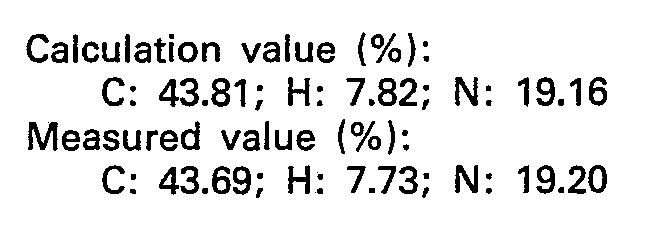
- To 45 ml of a 20 mM HEPES buffer solution containing 8 g of L-phenylalanine ethyl ester having pH 7.1, 150 mg of magnesium chloride, 300 mg of disodium adenosine triphosphate, 2 mg of L-asparagic acid, 200 units of pyrophosphatase (produced by B6ehringer Mannheim Co.) and 0.01 mg of dithiothreitol were added, and the resulting mixture was adjusted so as to have a pH of 7.1 and a volume of 50 ml. To the resulting mixture, 0.1 mg of aspartyl-tRNA synthetase obtained in Reference Example 4 was added and well blended, and the mixture was allowed to stand for one day while maintaining the pH at 7.1 and the reaction temperature at 30°C to carry out the reaction. The resulting reaction solution was treated by the same method as in Example 5 to obtain 3.4 mg of L - aspartyl - L - phenylalanine ethyl ester.
- To 45 ml of a 20 mM HEPES buffer solution containing 4 g of L - tyrosyl - t - butyl ester having pH 8.0, 300 mg of magnesium chloride, 350 mg of disodium adenosine triphosphate, 1 mg of L-alginine, 200 units of pyrophosphatase (B6ehringer Mannheim Co.) and 0.01 mg of dithiothreitol were added, and the resulting mixture was adjusted so as to have a pH of 8.0 and a volume of 50 ml. To the resulting mixture, 0.4 mg of alginyl-tRNA synthetase obtained in Reference Example 5 was added and well blended. The mixture was treated by the same method as in Example 5 while maintaining the pH at 8.0 to obtain 0.5 mg of L - alginyl - L - tyrosine - t - butyl ester.
- The reaction was carried out by the same method as in Example 12 using D-tyrosine t-butyl ester instead of L-tyrosine t-butyl ester (Example 13).
- As the result, 0.4 mg of L - alginyl - D - tyrosine t-butyl ester was obtained.
- Further, the reaction was carried out by the same method as in Example 12 using D-alginine 1 mg instead of L-alginine in Example 12 (Example 14).
- As the result, 0.4 mg of D - alginyl - L - tyrosine t-butyl ester was obtained.
- 0.4 g of tyrosyl-tRNA synthetase obtained in Reference Example 1, 0.4 g of magnesium chloride, 0.1 g of disodium adenosine triphosphate, 1 mg of L-tyrosine, 200 units of pyrophosphatase (produced by B6ehringer Mannheim Co.) and 0.01 mg of dithiothreitol were dissolved in 140 ml of a 20 mM HEPES buffer solution having pH 8.0, and the resulting mixture was reacted at 4°C for 15 minutes to obtain a reaction mixture. To the resulting reaction mixture, 0.4 g (1/10 of the amount in Example 1) of L - phenylalanine methyl ester and 60 ml (30% by volume) of acetonitrile were added and well blended. The mixture was allowed to stand for one day while maintaining the reaction temperature at 30°C to carry out the reaction.
- 200 ml of acetone was added to the resulting reaction solution. After precipitates were filtered out, the supernatant solution was concentrated to about 20 ml by an evaporator, and it was put in a p Bondapak C18 column (produced by Waters Co.) and treated with an aqueous solution of acetonitrile/50 mM potassium phosphate: 85/15 having pH 7 as a developing solution to separate 0.4 mg of L - tyrosyl - L - phenylalanine methyl ester.
- Elementary analysis of it (C19H22N2O4=342.39) was as follows:

- 5 g of tyrosyl-tRNA synthetase used in Example 1, 450 mg of magnesium chloride, 300 mg of disodium adenosine triphosphate, 9 mg of L-tyrosine, 200 units of pyrophosphatase (produced by Bóehringer Mannheim Co.) and 0.01 mg of dithiothreitol were dissolved in 20 ml of a 10 mM buffer solution having pH 8.5. After the mixture was reacted at 4°C for 20 minutes, the reaction mixture was put in a G-75 column (produced by Pharmacia Co.), and elution was carried out with the same HEPES buffer solution as described above to collect 30 ml of fraction in voids, and the reaction mixture was isolated. To the isolated reaction mixture, 0.5 g (1/8 of the amount in Example 2) of D-leucine ethyl ester and 15 ml (42% by volume) of acetonitrile were added and well blended, and the mixture was allowed to react for 30 minutes while maintaining the reaction temperature at 20°C.
- The resulted reaction solution was put in a Bondapak C18 column, and separation was carried out by the same method as in Example 1 to obtain 15 mg of L - tyrosyl - D - leucine ethyl ester.
- Elementary analysis of it (Cl7H26N204=322.39) was as follows:

- 20 mg of tyrosyl-tRNA synthetase prepared from baker's yeast according to the method described in Example 3, 50 mg of magnesium chloride, 20 mg of disodium adenosine triphosphate, 0.1 mg of D-tyrosine, 10 units of .pyrophosphatase (produced by Boehringer Mannheim Co.) and 2.0 µl of mercaptoethanol were added to 20 ml.of a 30 mM 2,5-dimethylimidazole buffer solution having pH 9. After reacting by the same method as in Example 16, the reaction mixture was isolated. To the reaction mixture, 0.1 g (1/10 of the amount of Example 3) of L-leucine ethyl ester and 10 ml (25% by volume) of acetonitrile were added to carry out the reaction at 20°C for 5 hours. 20 ml of acetone was added to the resulting reaction product and formed precipitates were filtered out. After being concentrated to about 10 ml by an evaporator, separation was carried out by the same method as in Example 1 to obtain D - tyrosyl - L - leucine ethyl ester (Example 17).
- The same procedure as described above was carried out while adding 15 ml of dimethyl sulfoxide instead of 10 ml of acetonitrile (Example 18).
- As a result the yield of D - tyrosyl - L - leucine ethyl ester was as follows:

- 6 . kg of Bacillus stearothermophilus was suspended in 12 liters of a 100 mM tris-hydrochloric acid buffer solution (pH 7.5). After cells were crushed by a Dynomill, insoluble materials were removed by centrifugal separation to obtain a crude extract solution containing tyrosyl-tRNA synthetase having specificity to tyrosine. The above described crude extract solution was allowed to pass through a column packed with cellulose phosphate (produced by Whatman Co.) which was previously equilibrated with a 50 mM phosphoric acid buffer solution (pH 7.0) containing 5 mM mercaptoethanol, 2 mM sodium ethylenediaminetetraacetate and 0.1 mM phosphophenylsulfonyl fluoride. When elution was carried out at a linear velocity of 60 cm - hr with a solution prepared by adding potassium chloride to the above described buffer solution, tyrosyl-tRNA synthetase was eluted. This fraction was collected and concentration and desalting was carried out, by which a crude enzyme solution containing tyrosyl-tRNA synthetase having specificity to tyrosine was obtained in a high yield of 80% or more. The above described operations were all carried out at 4°C.
- 30 g of the crude enzyme solution containing tyrosyl-tRNA synthetase obtained by treating with the phosphoric acid group containing cation exchange resin as described above (purity 1%), 0.4 g of magnesium chloride, 0.1 g of disodium adenosine triphosphate, 1 mg of L-tyrosine, 200 units of pyrophosphatase (produced by B6ehringer Mannheim Co.) and 0.01 mg of dithiothreitol were dissolved in 200 ml of a 20 mM HEPES buffer solution having pH 8.0, and the mixture was blended at 4°C for 15 minutes. To the resulting mixture, 4 g of L-alanine methyl ester was added and well blended, and the resulting mixture was allowed to stand for one day while maintaining the reaction temperature at 30°C to carry out the reaction.
- 200 ml of acetone was added to the resulting reaction solution. After precipitates were filtered out, the supernatant solution was concentrated to about 20 ml by an evaporator, and it was put in a Bondapak C18 column (produced by Waters Co.) and treated with an aqueous solution of acetonitrile/50 mM potassium phosphate: 85/15 having pH 7 as a developing solution to separate 0.4 mg of L - tyrosyl - L - phenylalanine methyl ester.
- Elementary analysis of it (Cl9H22N204=342.39) was as follows:
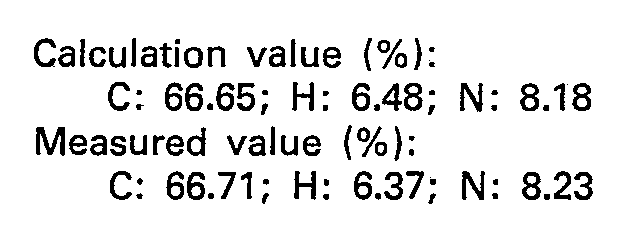
- A crude extract solution obtained by the same method as in Example 1 using 55 kg of Bacillus stearothermophilus was added to phosphoric acid Celex (produced by Bio-Rad Co.) which was previously equilibrated with a 20 mM phosphoric acid buffer solution (pH 7.5) containing 5 mM mercaptoethanol, 2 mM sodium ethylenediaminetetraacetate and 0.1 mM phosphophenylsulfonyl fluoride, and the mixture was stirred for 30 minutes. After being allowed to stand for a few minutes, the supernatant was removed, and elution was carried out with a solution obtained by adding sodium chloride to the above described buffer solution, by which tyrosyl-tRNA synthetase was eluted. The above described operations were all carried out at 30°C. 27 g of the crude enzyme solution containing tyrosyl-tRNA synthetase obtained by treating with the phosphoric acid group containing cation exchange resin (purity 1%), 450 mg of magnesium chloride. 300 mg of disodium adenosine triphosphate, 9 mg of L-tyrosine, 200 units of pyrophosphatase (produced by B6ehringer Mannheim Co.) and 0.01 mg of dithiothreitol were dissolved in 200 ml of a 25 mM phosphoric acid buffer solution having pH 8.5. After the reaction was carried out at 4°C for 20 minutes, the reaction mixture was put in a G-75 column (produced by Pharmacia Co.) and elution was carried out with a HEPES buffer solution to collect 300 ml of the fraction in voids, by which the reaction mixture was isolated. To the isolated mixture, 1.0 g of D-valine methyl ester was added and well blended, and the reaction was carried out for 30 minutes while maintaining the reaction temperature at 20°C.
- The resulting reaction solution was then added to 1 liter of acetone. After precipitates were filtered out, the supernatant solution was concentrated to about 30 ml by an evaporator, and it was put in a 11 Bondapak C18 column. Separation was carried out by the same method as in Example 1 to obtain 14.6 mg of L - tyrosyl - D - valine methyl ester.
- Elementary analysis of it (C15H22N2O4=294.36) was as follows:

- A crude extract solution obtained from baker's yeast by the same procedure as in Example 19 was allowed to pass through a column packed with cellulose phosphate (produced by Serva Co.) which was previously equilibrated with a 50 mM phosphoric acid buffer solution (pH 7.0) containing 10 mM mercaptoethanol, 20 mM sodium ethylenediaminetetraacetate and 0.1 mM phosphophenylsulfonyl fluoride. When elution was carried out at a linear velocity of 10 cm - h-' with a solution prepared by adding potassium chloride to the above described buffer solution, a crude enzyme solution containing methionyl-tRNA synthetase was eluted. It was freeze-dried to obtain a powdery enzyme sample.
- 2 g of the crude enzyme sample containing methionyl-tRNA synthetase obtained by treating with the phosphoric acid group containing cation exchange resin (purity 10%), 50 mg of magnesium chloride, 40 mg of disodium adenosine triphosphate, 1 mg of D-methionine, 10 units of pyrophosphatase (produced by Boehringer Mannheim Co.) and 20 µl of mercaptoethanol were added to 30 ml of a 50 mM 2,5-dimethylimidazole buffer solution having pH 9.0. After reacting by the same method as in Example 20, the reaction mixture was isolated by the same method as in Example 2. 1 g of L-leucine ethyl ester was added in a solid state to the resulting reaction mixture to carry out the reaction at 20°C for 5 hours. 20 ml of acetone was added to the resulting reaction product, and formed precipitates were filtered out. After being concentrated to about 10 ml by an evaporator, separation was carried out by the same method as in Example 1 to obtain 1.8 mg of D - methionyl - L - leucine ethyl ester (Example 21).
- Elementary analysis of it (C13H26N2O3S1= 290.43) was as follows:

- Further, using the crude extract solution obtained as described above without treating with the phosphoric acid group containing cation exchange resin, the reaction was carried out by the same method as described above to obtain 0.2 mg of D - methionyl - L - leucine ethyl ester (Example 22).
- The yield had a tendency to decrease, as compared with Example 21, because of side reactions caused by the influence of other enzymes present in the crude extract solution.
- A crude extract solution containing seryl-tRNA synthetase was obtained from rabbit liver by the same procedure as in Example 1 using a homogenizer. This crude extract solution was added to cellulose phosphate (produced by Whatman Co.) which was previously equilibrated with a 25 mM imidazole buffer solution (pH 7.5) containing 1 mM dithiothreitol, 2 mM sodium ethylenediaminetetraacetate and 0.1 mM phosphophenylsulfonyl fluoride, and the mixture was stirred for one hour. After being allowed to stand, the supernatant was removed. When elution was carried out with a solution prepared by adding potassium chloride to the above described buffer solution, seryl-tRNA synthetase was eluted.
- Using 3 g of the resulting crude enzyme solution containing seryl-tRNA synthetase (purity 10%), 50 mg of magnesium chloride, 50 mg of disodium deoxyadenosine triphosphate, 1 mg of L-serine, 200 units of pyrophosphatase (produced by Bóehringer Mannheim Co.) and 0.01 mg of dithiothreitol, the reaction was carried out by the same method as in Example 3, and a reaction mixture was obtained using a G-25 column (produced by Pharmacia Co.), Then, 4 g of β-alanylamide was added thereto and blended to carry out the reaction at 50°C for 10 minutes. The resulting reaction solution was treated with a pBondapak C18 column by the same method as in Example to separate 1.3 mg of L - seryl - β - alanylamide (Example 23).
- Elementary analysis of it (C6H,3N303=175.19) was as follows:

- Further, using the crude extract solution obtained as described above without treating with the phosphoric acid group-containing cation exchange resin, the reaction was carried out by the same method as described above to obtain 0.2 mg of L - seryl - β - alanylamide (Example 24). From the above examples, it can be seen that when the crude enzyme solution containing seryl-tRNA synthetase obtained by treating with the phosphoric acid group-containing cation exchange resin, the yield of the L - seryl - β - alanylamide is increased and it is produced at a moderate price, whereas when the crude extract solution obtained without treating with the phosphoric acid group-containing cation exchange resin, it tends to show a low yield of the L - seryl - β - alanylamide.
Claims (17)
Applications Claiming Priority (8)
| Application Number | Priority Date | Filing Date | Title |
|---|---|---|---|
| JP10336/82 | 1982-01-26 | ||
| JP1033682A JPS58146539A (en) | 1982-01-26 | 1982-01-26 | Method for synthesizing peptides or peptide derivatives |
| JP90425/82 | 1982-05-27 | ||
| JP57090426A JPS58209992A (en) | 1982-05-27 | 1982-05-27 | Synthesis of peptide or peptide derivative |
| JP9042582A JPS58209991A (en) | 1982-05-27 | 1982-05-27 | Method for synthesizing peptides or peptide derivatives |
| JP90426/82 | 1982-05-27 | ||
| JP21620682A JPS59106298A (en) | 1982-12-09 | 1982-12-09 | Method for synthesizing peptides or peptide derivatives |
| JP216206/82 | 1982-12-09 |
Publications (2)
| Publication Number | Publication Date |
|---|---|
| EP0086053A1 EP0086053A1 (en) | 1983-08-17 |
| EP0086053B1 true EP0086053B1 (en) | 1986-01-02 |
Family
ID=27455376
Family Applications (1)
| Application Number | Title | Priority Date | Filing Date |
|---|---|---|---|
| EP83300362A Expired EP0086053B1 (en) | 1982-01-26 | 1983-01-25 | Process for synthesizing peptides or peptide derivatives |
Country Status (5)
| Country | Link |
|---|---|
| US (1) | US4572894A (en) |
| EP (1) | EP0086053B1 (en) |
| CA (1) | CA1194440A (en) |
| DE (1) | DE3361649D1 (en) |
| DK (1) | DK28283A (en) |
Families Citing this family (14)
| Publication number | Priority date | Publication date | Assignee | Title |
|---|---|---|---|---|
| US4568640A (en) * | 1981-05-11 | 1986-02-04 | Harvey Rubin | Method of inserting amino acid analogs into proteins |
| US4722840A (en) * | 1984-09-12 | 1988-02-02 | Chiron Corporation | Hybrid particle immunogens |
| JPS62278992A (en) * | 1986-05-28 | 1987-12-03 | Unitika Ltd | Production of diadenosine-tetraphosphate or derivative thereof |
| DK72587D0 (en) * | 1987-02-13 | 1987-02-13 | Carlsberg Biotechnology Ltd | PROCEDURE FOR ENZYMATIC DIPEPTID PREPARATION |
| US5266684A (en) * | 1988-05-02 | 1993-11-30 | The Reagents Of The University Of California | Peptide mixtures |
| US5498523A (en) * | 1988-07-12 | 1996-03-12 | President And Fellows Of Harvard College | DNA sequencing with pyrophosphatase |
| US4962020A (en) * | 1988-07-12 | 1990-10-09 | President And Fellows Of Harvard College | DNA sequencing |
| US5002872A (en) * | 1989-05-10 | 1991-03-26 | W. R. Grace & Co.-Conn. | Enzyme mediated coupling reactions |
| EP0623680B1 (en) * | 1993-04-23 | 1999-01-13 | Degussa Aktiengesellschaft | Process to synthesize peptides and its use |
| US20090118139A1 (en) * | 2000-11-07 | 2009-05-07 | Caliper Life Sciences, Inc. | Microfluidic method and system for enzyme inhibition activity screening |
| US7539639B2 (en) * | 2001-10-15 | 2009-05-26 | Intel Corporation | Exchange of information |
| FR2846326A1 (en) * | 2002-10-29 | 2004-04-30 | Isochem Sa | Purification of N-carboxyanhydrides of amino acids, useful as intermediates due to activation of the acid function and protection of the amide function, comprises contacting with silica in non-polar solvent |
| WO2009028253A1 (en) * | 2007-08-31 | 2009-03-05 | Kyowa Hakko Bio Co., Ltd. | Peptide production method |
| RU2012129311A (en) | 2012-07-11 | 2014-01-20 | Закрытое акционерное общество " Научно-исследовательский институт Аджиномото-Генетика" (ЗАО "АГРИ") | DNA ENCODING A DIPEPTIDE-SYNTHESIS FARMER (OPTIONS), BACTERIA OF THE GENUS ESCHERICHIA AND METHOD FOR PRODUCING DIPEPTIDES USING ITS USE |
Family Cites Families (4)
| Publication number | Priority date | Publication date | Assignee | Title |
|---|---|---|---|---|
| SE333935B (en) * | 1964-07-03 | 1971-04-05 | Sundkvist Med Fa Ingenjoersfa | |
| US4119493A (en) * | 1975-10-23 | 1978-10-10 | (Zaidanhojin) Sagami Chemical Research Center | Process for producing a peptide |
| JPS55135595A (en) * | 1979-04-03 | 1980-10-22 | Toyo Soda Mfg Co Ltd | Preparation of dipeptide |
| US4506011A (en) * | 1981-09-05 | 1985-03-19 | Toyo Soda Manufacturing Co., Ltd. | Process for preparation of aspartylphenylalanine alkyl esters |
-
1983
- 1983-01-25 DE DE8383300362T patent/DE3361649D1/en not_active Expired
- 1983-01-25 EP EP83300362A patent/EP0086053B1/en not_active Expired
- 1983-01-25 DK DK28283A patent/DK28283A/en not_active Application Discontinuation
- 1983-01-26 US US06/461,307 patent/US4572894A/en not_active Expired - Lifetime
- 1983-01-26 CA CA000420242A patent/CA1194440A/en not_active Expired
Also Published As
| Publication number | Publication date |
|---|---|
| DE3361649D1 (en) | 1986-02-13 |
| US4572894A (en) | 1986-02-25 |
| DK28283D0 (en) | 1983-01-25 |
| EP0086053A1 (en) | 1983-08-17 |
| DK28283A (en) | 1983-07-27 |
| CA1194440A (en) | 1985-10-01 |
Similar Documents
| Publication | Publication Date | Title |
|---|---|---|
| EP0086053B1 (en) | Process for synthesizing peptides or peptide derivatives | |
| Kimoto et al. | Detection of NG, NG-dimethylarginine dimethylaminohydrolase in human tissues using a monoclonal antibody | |
| Nakayama et al. | Purification and properties of gamma-glutamyltranspeptidase from Proteus mirabilis | |
| Michaud et al. | Partial purification and specificity studies of the d‐glutamate‐adding and d‐alanyl‐d‐alanine‐adding enzymes from Escherichia coli K12 | |
| US8236533B2 (en) | Process for the production of γ-glutamylcysteine | |
| FAHNESTOCK et al. | Synthesis by ribosomes of viral coat protein containing ester linkages | |
| Mooz et al. | [201] Glutathione biosynthesis: I. γ-Glutamylcysteine Synthetase (Hog Liver) II. Glutathione (Tripeptide) Synthetase (Yeast) | |
| Puigserver et al. | A method for improving the nutritional value of food proteins: covalent attachment of amino acids | |
| JPH0453515B2 (en) | ||
| JPH029800B2 (en) | ||
| JPH0143558B2 (en) | ||
| US5369016A (en) | Peptide amidase and the use thereof | |
| JPH0143557B2 (en) | ||
| JPH0453512B2 (en) | ||
| JPH0453514B2 (en) | ||
| Kuehl et al. | Tryptophanyl transfer ribonucleic acid synthetase of Escherichia coli. Character of required thiol group and structure of thiol peptides. | |
| Toledo et al. | Methylation of elongation factor EF-Tu affects the rate of trypsin degradation and tRNA-dependent GTP hydrolysis | |
| JPH0722515B2 (en) | Process for producing peptide or peptide derivative | |
| JPH0559715B2 (en) | ||
| Söderholm et al. | Aspartate caramoyltransferase from wild type and rudimentary Drosophila melanogaster | |
| JPS6296097A (en) | Production of peptide or peptide derivative | |
| Klubes et al. | Synthesis of enantiomers of S-(1, 2-dichlorovinyl)-[3-14C cysteine: Their use with Escherichia coli B | |
| JPH0532027B2 (en) | ||
| AU2006228996B2 (en) | Process for the production of gamma-glutamylcysteine | |
| US5134073A (en) | Microbiologically produced n-acetyl-2,3-didehydroleucine acylase |
Legal Events
| Date | Code | Title | Description |
|---|---|---|---|
| PUAI | Public reference made under article 153(3) epc to a published international application that has entered the european phase |
Free format text: ORIGINAL CODE: 0009012 |
|
| AK | Designated contracting states |
Designated state(s): CH DE FR GB IT LI SE |
|
| 17P | Request for examination filed |
Effective date: 19840209 |
|
| ITF | It: translation for a ep patent filed | ||
| GRAA | (expected) grant |
Free format text: ORIGINAL CODE: 0009210 |
|
| AK | Designated contracting states |
Designated state(s): CH DE FR GB IT LI SE |
|
| ET | Fr: translation filed | ||
| REF | Corresponds to: |
Ref document number: 3361649 Country of ref document: DE Date of ref document: 19860213 |
|
| PLBE | No opposition filed within time limit |
Free format text: ORIGINAL CODE: 0009261 |
|
| STAA | Information on the status of an ep patent application or granted ep patent |
Free format text: STATUS: NO OPPOSITION FILED WITHIN TIME LIMIT |
|
| 26N | No opposition filed | ||
| ITTA | It: last paid annual fee | ||
| EAL | Se: european patent in force in sweden |
Ref document number: 83300362.7 |
|
| PGFP | Annual fee paid to national office [announced via postgrant information from national office to epo] |
Ref country code: FR Payment date: 19970109 Year of fee payment: 15 |
|
| PGFP | Annual fee paid to national office [announced via postgrant information from national office to epo] |
Ref country code: SE Payment date: 19970115 Year of fee payment: 15 |
|
| PGFP | Annual fee paid to national office [announced via postgrant information from national office to epo] |
Ref country code: CH Payment date: 19970206 Year of fee payment: 15 |
|
| PGFP | Annual fee paid to national office [announced via postgrant information from national office to epo] |
Ref country code: GB Payment date: 19980116 Year of fee payment: 16 |
|
| PG25 | Lapsed in a contracting state [announced via postgrant information from national office to epo] |
Ref country code: SE Free format text: LAPSE BECAUSE OF NON-PAYMENT OF DUE FEES Effective date: 19980126 |
|
| PG25 | Lapsed in a contracting state [announced via postgrant information from national office to epo] |
Ref country code: LI Free format text: LAPSE BECAUSE OF NON-PAYMENT OF DUE FEES Effective date: 19980131 Ref country code: FR Free format text: THE PATENT HAS BEEN ANNULLED BY A DECISION OF A NATIONAL AUTHORITY Effective date: 19980131 Ref country code: CH Free format text: LAPSE BECAUSE OF NON-PAYMENT OF DUE FEES Effective date: 19980131 |
|
| PGFP | Annual fee paid to national office [announced via postgrant information from national office to epo] |
Ref country code: DE Payment date: 19980202 Year of fee payment: 16 |
|
| REG | Reference to a national code |
Ref country code: CH Ref legal event code: PL |
|
| EUG | Se: european patent has lapsed |
Ref document number: 83300362.7 |
|
| REG | Reference to a national code |
Ref country code: FR Ref legal event code: ST |
|
| PG25 | Lapsed in a contracting state [announced via postgrant information from national office to epo] |
Ref country code: GB Free format text: LAPSE BECAUSE OF NON-PAYMENT OF DUE FEES Effective date: 19990125 |
|
| GBPC | Gb: european patent ceased through non-payment of renewal fee |
Effective date: 19990125 |
|
| PG25 | Lapsed in a contracting state [announced via postgrant information from national office to epo] |
Ref country code: DE Free format text: LAPSE BECAUSE OF NON-PAYMENT OF DUE FEES Effective date: 19991103 |