EP0050453B1 - An oil-resistant gasket material and packing material - Google Patents
An oil-resistant gasket material and packing material Download PDFInfo
- Publication number
- EP0050453B1 EP0050453B1 EP81304683A EP81304683A EP0050453B1 EP 0050453 B1 EP0050453 B1 EP 0050453B1 EP 81304683 A EP81304683 A EP 81304683A EP 81304683 A EP81304683 A EP 81304683A EP 0050453 B1 EP0050453 B1 EP 0050453B1
- Authority
- EP
- European Patent Office
- Prior art keywords
- radicals
- parts
- weight
- organic
- amount
- Prior art date
- Legal status (The legal status is an assumption and is not a legal conclusion. Google has not performed a legal analysis and makes no representation as to the accuracy of the status listed.)
- Expired
Links
- 0 CCC(C)C(*=C)(N(*)*)[O+] Chemical compound CCC(C)C(*=C)(N(*)*)[O+] 0.000 description 1
Classifications
-
- C—CHEMISTRY; METALLURGY
- C08—ORGANIC MACROMOLECULAR COMPOUNDS; THEIR PREPARATION OR CHEMICAL WORKING-UP; COMPOSITIONS BASED THEREON
- C08K—Use of inorganic or non-macromolecular organic substances as compounding ingredients
- C08K5/00—Use of organic ingredients
- C08K5/54—Silicon-containing compounds
-
- C—CHEMISTRY; METALLURGY
- C08—ORGANIC MACROMOLECULAR COMPOUNDS; THEIR PREPARATION OR CHEMICAL WORKING-UP; COMPOSITIONS BASED THEREON
- C08G—MACROMOLECULAR COMPOUNDS OBTAINED OTHERWISE THAN BY REACTIONS ONLY INVOLVING UNSATURATED CARBON-TO-CARBON BONDS
- C08G77/00—Macromolecular compounds obtained by reactions forming a linkage containing silicon with or without sulfur, nitrogen, oxygen or carbon in the main chain of the macromolecule
- C08G77/04—Polysiloxanes
- C08G77/38—Polysiloxanes modified by chemical after-treatment
-
- C—CHEMISTRY; METALLURGY
- C08—ORGANIC MACROMOLECULAR COMPOUNDS; THEIR PREPARATION OR CHEMICAL WORKING-UP; COMPOSITIONS BASED THEREON
- C08L—COMPOSITIONS OF MACROMOLECULAR COMPOUNDS
- C08L83/00—Compositions of macromolecular compounds obtained by reactions forming in the main chain of the macromolecule a linkage containing silicon with or without sulfur, nitrogen, oxygen or carbon only; Compositions of derivatives of such polymers
- C08L83/04—Polysiloxanes
- C08L83/08—Polysiloxanes containing silicon bound to organic groups containing atoms other than carbon, hydrogen and oxygen
-
- C—CHEMISTRY; METALLURGY
- C09—DYES; PAINTS; POLISHES; NATURAL RESINS; ADHESIVES; COMPOSITIONS NOT OTHERWISE PROVIDED FOR; APPLICATIONS OF MATERIALS NOT OTHERWISE PROVIDED FOR
- C09K—MATERIALS FOR MISCELLANEOUS APPLICATIONS, NOT PROVIDED FOR ELSEWHERE
- C09K3/00—Materials not provided for elsewhere
- C09K3/10—Materials in mouldable or extrudable form for sealing or packing joints or covers
-
- C—CHEMISTRY; METALLURGY
- C08—ORGANIC MACROMOLECULAR COMPOUNDS; THEIR PREPARATION OR CHEMICAL WORKING-UP; COMPOSITIONS BASED THEREON
- C08G—MACROMOLECULAR COMPOUNDS OBTAINED OTHERWISE THAN BY REACTIONS ONLY INVOLVING UNSATURATED CARBON-TO-CARBON BONDS
- C08G77/00—Macromolecular compounds obtained by reactions forming a linkage containing silicon with or without sulfur, nitrogen, oxygen or carbon in the main chain of the macromolecule
- C08G77/04—Polysiloxanes
- C08G77/14—Polysiloxanes containing silicon bound to oxygen-containing groups
- C08G77/16—Polysiloxanes containing silicon bound to oxygen-containing groups to hydroxy groups
-
- C—CHEMISTRY; METALLURGY
- C08—ORGANIC MACROMOLECULAR COMPOUNDS; THEIR PREPARATION OR CHEMICAL WORKING-UP; COMPOSITIONS BASED THEREON
- C08G—MACROMOLECULAR COMPOUNDS OBTAINED OTHERWISE THAN BY REACTIONS ONLY INVOLVING UNSATURATED CARBON-TO-CARBON BONDS
- C08G77/00—Macromolecular compounds obtained by reactions forming a linkage containing silicon with or without sulfur, nitrogen, oxygen or carbon in the main chain of the macromolecule
- C08G77/04—Polysiloxanes
- C08G77/14—Polysiloxanes containing silicon bound to oxygen-containing groups
- C08G77/18—Polysiloxanes containing silicon bound to oxygen-containing groups to alkoxy or aryloxy groups
-
- C—CHEMISTRY; METALLURGY
- C08—ORGANIC MACROMOLECULAR COMPOUNDS; THEIR PREPARATION OR CHEMICAL WORKING-UP; COMPOSITIONS BASED THEREON
- C08G—MACROMOLECULAR COMPOUNDS OBTAINED OTHERWISE THAN BY REACTIONS ONLY INVOLVING UNSATURATED CARBON-TO-CARBON BONDS
- C08G77/00—Macromolecular compounds obtained by reactions forming a linkage containing silicon with or without sulfur, nitrogen, oxygen or carbon in the main chain of the macromolecule
- C08G77/04—Polysiloxanes
- C08G77/20—Polysiloxanes containing silicon bound to unsaturated aliphatic groups
-
- C—CHEMISTRY; METALLURGY
- C08—ORGANIC MACROMOLECULAR COMPOUNDS; THEIR PREPARATION OR CHEMICAL WORKING-UP; COMPOSITIONS BASED THEREON
- C08G—MACROMOLECULAR COMPOUNDS OBTAINED OTHERWISE THAN BY REACTIONS ONLY INVOLVING UNSATURATED CARBON-TO-CARBON BONDS
- C08G77/00—Macromolecular compounds obtained by reactions forming a linkage containing silicon with or without sulfur, nitrogen, oxygen or carbon in the main chain of the macromolecule
- C08G77/04—Polysiloxanes
- C08G77/22—Polysiloxanes containing silicon bound to organic groups containing atoms other than carbon, hydrogen and oxygen
- C08G77/24—Polysiloxanes containing silicon bound to organic groups containing atoms other than carbon, hydrogen and oxygen halogen-containing groups
-
- C—CHEMISTRY; METALLURGY
- C08—ORGANIC MACROMOLECULAR COMPOUNDS; THEIR PREPARATION OR CHEMICAL WORKING-UP; COMPOSITIONS BASED THEREON
- C08G—MACROMOLECULAR COMPOUNDS OBTAINED OTHERWISE THAN BY REACTIONS ONLY INVOLVING UNSATURATED CARBON-TO-CARBON BONDS
- C08G77/00—Macromolecular compounds obtained by reactions forming a linkage containing silicon with or without sulfur, nitrogen, oxygen or carbon in the main chain of the macromolecule
- C08G77/04—Polysiloxanes
- C08G77/22—Polysiloxanes containing silicon bound to organic groups containing atoms other than carbon, hydrogen and oxygen
- C08G77/26—Polysiloxanes containing silicon bound to organic groups containing atoms other than carbon, hydrogen and oxygen nitrogen-containing groups
-
- C—CHEMISTRY; METALLURGY
- C08—ORGANIC MACROMOLECULAR COMPOUNDS; THEIR PREPARATION OR CHEMICAL WORKING-UP; COMPOSITIONS BASED THEREON
- C08G—MACROMOLECULAR COMPOUNDS OBTAINED OTHERWISE THAN BY REACTIONS ONLY INVOLVING UNSATURATED CARBON-TO-CARBON BONDS
- C08G77/00—Macromolecular compounds obtained by reactions forming a linkage containing silicon with or without sulfur, nitrogen, oxygen or carbon in the main chain of the macromolecule
- C08G77/70—Siloxanes defined by use of the MDTQ nomenclature
Definitions
- This invention relates to a room temperature vulcanizable organosiloxane elastomeric composition which is useful as an oil-resistant gasket material and packing material.
- Conventional oil-resistant gasket materials and packing materials are in forms made from materials such as cork, asbestos paper, semimetallic material, or cork rubber.
- BE-A-880152 discloses a silicone resin composition
- a silicone resin composition comprising an organopolysiloxane containing hydroxyl groups and alkenyl radicals, an alkoxy silane, an aminoalkylalkoxysilane and an organopolysiloxane having alkoxy groups.
- the present invention relates to a room temperature vulcanizable organosiloxane elastomeric composition which is useful as an oil-resistant gasket material and packing material, which does not exhibit the conventional drawbacks mentioned above, which is resistant to hot hydrocarbon oil, and which is curable at room temperature.
- the present invention relates to a room temperature vulcanizable organosiloxane elastomeric composition
- a room temperature vulcanizable organosiloxane elastomeric composition comprising a product obtained by mixing (A) 100 parts by weight of a linear polyorganosiloxane, the organic radicals attached to the polysiloxane chain being monovalent radicals selected from monovalent hydrocarbon radicals, halogenated monovalent hydrocarbon radicals, and cyanoalkyl radicals, at least 0.5 percent of the total number of organic radicals being alkenyl radicals on the average, the polyorganosiloxane being terminated by silicon-bonded hydroxyl radicals or silicon-bonded organic moisture-hydrolyzable radicals, and having a viscosity at 25°C of from 0.0001 to 0.1 m 2 /s, (B) 5 to 300 parts by weight filler, (C) 0.2 to 10 parts by weight of a silane or polysiloxane in which there is
- the product obtained by mixing ingredients (A), (B), (C), (D), and (E) is preferably a composition which is storage stable when protected from exposure to moisture, but cures to an elastomer when exposed to moisture.
- the polyorganosiloxane of (A) is preferably a polydiorganosiloxane terminated with silicon-bonded organic moisture-hydrolyzable radicals.
- the linear polyorganosiloxane of component (A) is an essentially linear, that is, linear or slightly branched chain structure and its termination are hydroxyl radicals or organic moisture-hydrolyzable radicals bonded to a silicon atom. Although the number of hydroxyl radicals or hydrolyzable radicals bonded to the same silicon atom is 1, 2 or 3, and at least 2 should be contained in one molecule of the polyorganosiloxane.
- the hydrolyzable radicals are those conventionally used in room temperature vulcanizable organosiloxane elastomeric compositions and include alkoxy radicals, acyloxy radicals, ketoxime radicals, N-substituted amino radicals, N-substituted amide radicals, and N-substituted aminoxy radicals. However, it is not limited to these radicals.
- At least 0.5% of the organic groups bonded to silicon atoms are alkenyl radicals on the average.
- the number of alkenyl radicals being 0.5% on the average means that when (A) is a single polymer, 0.5% of the total organic radicals bonded to silicon atoms in each molecule are alkenyl radicals; on the other hand, when (A) is a mixture of polymers, such as a mixture which contains polymers possessing alkenyl radicals bonded to silicon atoms, and polymers which do not possess alkenyl radicals bonded to silicon atoms, 0.5% of the total number of organic radicals bonded to silicon atoms of all polymers in the mixture are alkenyl radicals.
- the alkenyl radicals are vinyl radicals, allyl radicals and 2-butenyl radicals.
- the preferred alkenyl radical is vinyl.
- alkenyl radicals in (A) Although the upper limit for the number of alkenyl radicals in (A) is 100%, preparation of such polymers for industrial purposes is not practical and therefore a practical amount of alkenyl radicals is from 0.5 to 50% of the organic radicals.
- the preferred range of alkenyl radicals is from 0.5 to 25% of the organic radicals.
- the organic radicals bonded to silicon atoms in (A) can be monovalent hydrocarbon radicals, halogenated monovalent hydrocarbon radicals, and cyanoalkyl radicals.
- organic radicals bonded to silicon atoms, other than alkenyl radicals are monovalent hydrocarbon radicals such as alkyl radicals such as methyl, ethyl, isopropyl, hexyl, and octadecyl radicals, cycloalkyl radicals such as cyclohexyl and cyclopentyl radicals, alkaryl radicals such as benzyl and a-phenylethyl radicals, aryl radicals such as phenyl, 4-biphenylyl, naphthyl, tolyl, and xylyl radicals; the halogenated derivatives of the monovalent hydrocarbon radicals; and cyanoalkyl radicals such as 0-cyanoethyl, y-cyanopropyl, and ⁇
- the preferred siloxane unit which constitute the principal chain of (A) include dimethylsiloxane, methylvinylsiloxane, methylphenylsiloxane, methyl(3,3,3-trifluoropropyl)siloxane, and diphenylsiloxane.
- the viscosity range of (A) at 25°C should be 0.0001 to 0.1 m 2 /s on the average.
- "0.0001 to 0.1 m 2 /s on the average” means that (A) can be a polymer with a viscosity in the range of 0.0001 to 0.1 m 2 /s or a mixture of polymers which has an average viscosity in the range of 0.0001 to 0.1 m 2 /s.
- the viscosity of each polymer can be less than 0.0001 m 2 /s or can exceed 0.1 m 2 /s as long as the above-mentioned specification is, satisfied.
- Component (A) preferably has a viscosity in the range from 0.0005 to 0.02 m 2 /s.
- the filler, component (B) can maintain the viscosity and fluidity of the composition of this invention in a range appropriate for a gasket material and a packing material and can also be used to generate mechanical properties in the cured rubber.
- the filler can be inorganic or organic. However, it is preferably inorganic from the standpoint of oil resistance.
- a typical inorganic filler is silica filler.
- a silica filler can be reinforcing silica filler or non-reinforcing silica filler.
- Reinforcing silica fillers include fumed silica, precipitated silica, fumed or precipitated silica which has been converted into a hydrophobic material by coating with hexamethyldisilazane or trimethylchlorosilane, silica aerogel, and silica xerogel.
- Non-reinforcing silica fillers include crushed or pulverized quartz, diatomaceous earth and similar compounds.
- Fumed silica is preferred from the standpoint of fluidity and rubber properties after curing, and its specific surface area should be in the range of 130 to 300 m2/g..
- inorganic fillers include calcium carbonate, magnesium oxide, aluminum hydroxide, iron oxide, zinc oxide, titanium oxide, finely pulverized mica, and carbon black.
- the quantity of (B) to be added is 5 to 300 parts by weight and can be varied to achieve desired viscosity and fluidity of the composition and mechanical properties of the cured rubber.
- the preferred quantity of reinforcing silica filler or carbon black is 5 to 30 parts by weight and the preferred quantity of non-reinforcing silica filler or other fillers is 15 to 200 parts by weight.
- Component (B) can be a single filler mentioned above or a mixture of two or more of these fillers.
- Component (C) is an organosilane or organosiloxane in which one molecule possesses at least one aminoalkyl radical and at least one silicon atom-bonded alkoxyl radical or aminoalkoxy radical.
- Component (C) exhibits a multiplicative effect with the alkenyl radical of component (A) by increasing the resistance to hot hydrocarbon oil and by increasing the adhesive strength of the cure elastomer to substrates.
- the alkoxy radicals include methoxy, ethoxy, propoxy, butoxy, and methoxyethoxy, preferrably containing from one to six carbon atoms per radical.
- the aminoalkoxy radicals include -OCH 2 CH 2 NH 2 .
- Examples of (C) are y-aminopropyltriethoxysilane of the formula y-aminopropyldimethylethoxysilane of the formula N-(trimethoxysilylpropyl)ethylenediamine of the formula N-(dimethoxymethylsilylpropyl)ethylenediamine of the formula 5-aminobutyl(methyl)diethoxysilane of the formula N,N'-bis(y-propyltriethoxysilyl)ethylenediamine of the formula ⁇ -aminopropyltri( ⁇ -methoxyethoxy)silane of the formula organosilane of the formula organosilane of the formula organosiloxane of the formula organosiloxane of the formula condensation products of partially hydrolyzed y-aminopropyltrimethoxysilane, and condensation products of partially hydrolyzed organosilane of the formula H 2 NC 2 CH 2 O(CH 2 ) 3 Si(
- Component (C) is preferably aminoalkyltrialkoxysilanes and N-(trialkoxysilylalkyl)alkylenediamine.
- the quantity of (C) is 0.2 to 10 parts by weight. When this quantity is less than 0.2 part by weight, the composition does not exhibit satisfactory oil resistance and adhesive properties. On the other hand, when this quantity exceeds 10 parts by weight, the composition does not exhibit satisfactory heat resistance.
- the preferred quantity of (C) is from 0.3 to 6 parts by weight.
- Component (D) can be a silicon compound which has at least three silicon-bonded organic moisture-hydrolyzable radicals, such as silanes and siloxanes.
- silanes or siloxanes are alkoxysilanes such as tetraethoxysilane, methyltrimethoxysilane, ethyltrimethoxysilane, vinyltrimethoxysilane, 3,3,3-trifluoropropyltrimethoxysilane, (3-cyanoethyltrimethoxysilane, tetraisopropoxysilane, tetrabutoxysilane, phenyltrimethoxysilane, octadecyltrimethoxysilane, tetra-(I3-chloroethoxy)silane, tetra-(-2,2,2-trifluoroethoxy)silane, propyltris( ⁇ -chlorobutoxy)silane, and methyltri
- the quantity of (D) can be appropriately determined by considering whether a gasket material or packing material is a one- or two-package type, and whether the terminal silicon atom-bonded radical of (A) is a hydroxyl radical or a hydrolyzable radical, and by considering the terminal silicon atom-bonded radical concentration of (A). In an extreme case, when the terminal silicon atom-bonded radicals are hydrolyzable radicals whose number is at least 3 in one molecule of (A), the quantity of silane or siloxane, (D), can be 0.
- composition of components (A), (B), and (C) is curable at room temperature in the absence of (D)
- the phrase "an amount sufficient to make a mixture of (A), (B), and (C) curable at room temperature" specified in the claims can mean 0.
- the terminal silicon atom-bonded hydrolyzable radical of (A) is desirably identical to the hydrolyzable radical of component (D).
- One-package compositions which are stored in containers sealed from moisture and curable at room temperature upon exposure to moisture can be made from (A), (B), and (C) in which (A) has at least three hydrolyzable radicals per molecule.
- Such one-package compositions can also contain a quantity of (D), such as up to 10 parts by weight or more.
- One-package compositions can also be made by mixing (A), (B), (C), and (D) wherein (A) is hydroxyl terminated.
- the quantity of (D) should be sufficient enough to provide at least one mole of (D) molecules for each mole of hydroxyl radical in (A).
- Two-package compositions are those wherein (A) containing hydroxyl termination and (B) is packaged in one container and (C) and (D) is packaged in another container.
- the moles of alkoxy, alkoxyalkoxy, and aminoalkoxy plus the moles of hydrolyzable radical in (D) are approximately equivalent to the moles of hydroxyl radical in (A).
- one-package and two-package compositions are to exemplify the nature of the two forms most often found in the silicone rubber art.
- the practitioner in the silicone rubber art will recognize other variations of one-package and two-package compositions suitable for the presently defined compositions.
- Component (E) is a catalyst for accelerating the cure of the composition at room temperature.
- Component (E) is optional to the extent that some of the variations of the composition do not require a catalyst for curing at room temperature.
- a catalyst can be used if desired or is required for room temperature cure. The necessity of this catalyst depends on the types of terminal silicon atom-bonded hydrolyzable radicals of component (A) and the hydrolyzable radicals of component (D). This catalyst is not needed for certain types of hydrolyzable radicals but is indispensable for other types of hydrolyzable radicals.
- a composition of (A), (B), and (C) or a composition of (A), (B), (C), and (D) is curable at room temperature in the absence of this catalyst, the phrase "a catalytic quantity of a curing acceleration catalyst" specified in the claims can be 0.
- the type of catalyst used depends on the type of hydrolyzable radical group mentioned above, and it should be appropriately selected.
- Typical examples of (E) are metal salts of monocarboxylic acids such as dialkyltin diacylates such as dibutyltin diacetate, dibutyltin 2-ethylhexoate, and dibutyltin dilaurate, and other salts such as lead 2-ethyloctoate, butyltin tri-2-ethylhexoate, iron 2-ethylhexoate, cobalt 2-ethylhexoate, manganese 2-ethylhexoate, tin (II) caprilate, tin naphthenate, tin oleate, tin butyrate, zinc naphthenate, zinc stearate, and titanium naphthenate; organic titanates such as tetrabutyl titanate, tetraphenyl titanate, tetra-2-ethylhexyl titanate, tetraoctadecyl titanate, triethanol
- Patent No. 3,294,739, issued to Weyenberg and (3-dicarbonyttitanium compounds (refer to U.S. Patent No. 3,334,067, issued to Weyenberg) of the general formula in which R 1 is a monovalent hydrocarbon radical having from 1 to 18 inclusive carbon atoms, R 2 is a hydrogen atom or a monovalent hydrocarbon radical of 1 to 18 inclusive carbon atoms, R 3 is a monovalent hydrocarbon radical or an aliphatic hydrocarbonoxy radical each having from 1 to 18 inclusive carbon atoms, Z is an aliphatic hydrocarbonoxy radical having from 1 to 18 inclusive carbon atoms, an acyloxy radical having from 1 to 18 inclusive carbon atoms, hydroxyl radical, and divalent oxygen atoms forming a TiOTi linkage; and amines such as hexylamine and dodecylamine; amine salts such as hexylamine acetate and dodecylamine phosphate; quaternary ammonium salts such as
- composition of this invention can be produced simply by blending the above-mentioned components such as (A), (B), and (C) or (A), (B), (C), and (E) or (A), (B), (C), and (D), or (A), (B), (C), (D), and (E).
- hydrophobic treating agents such as diphenylsilane diol and hexamethyldisilazane, for hydrophilic silica filler can be used.
- heat-resistant agents such as cerium oxide, cerium hydroxide, or fumed titanium dioxide; various pigments; flame retardants such as platinum, manganese carbonate, or azoisobutyronitrile; and oil resistance-improving agents such as zinc borate, all of which are traditionally added to room temperature-curable silicone rubber, can also be added to the composition produced by the method of this invention.
- Oil-resistant gasket material and packing material produced from the compositions of this invention can be cured at room temperature to become an elastomer which adheres to the substrates during the curing process. Because the elastomer obtained from the composition of this invention are very resistant to hot hydrocarbon oil, they are useful as gasket material and packing material for an auto engine oil-pan, marine diesel engine headcover, auto transmission-pan or rotary engine.
- the best room temperature vulcanizable organosiloxane elastomeric compositions comprise a product obtained by mixing (A) 100 parts by weight of a linear hydroxyl endblocked polyorganosiloxane in which the silicon-bonded organic radicals are methyl and vinyl, 0.5 to 25% on the average of the said organic radicals are vinyl, and the viscosity at 25°C is in the range of from 0.0005 to 0.02 m 2 /s, (B) 5 to 30 parts by weight of a reinforcing silica filler, (C) 0.3 to 6 parts by weight of gamma-aminopropyltrialkoxysilane or N-trialkoxysilylpropylethylenediamine, and (D) an amount of an organotri(ketoxime)silane sufficient to make a mixture of (A), (B), and (C) curable at room temperature upon exposure to moisture and storable in a package which protects the composition from moisture intrusion, and (E) a cat
- parts means “parts by weight” and the viscosity is the measured value at 25°C.
- Mixtures were prepared by blending 100 parts of a hydroxyl endblocked polydiorganosiloxane containing dimethylsiloxane units and methylvinylsiloxane units and having a viscosity of 0.015 m 2 /s with 8 parts of phenyltriethoxysilane, 12 parts of fumed silica having a specific surface area of 130 m 2 /g, one part of gamma-aminopropyltriethoxysilane, and 0.5 part of dibutyltin dilaurate.
- the amount of methylvinylsiloxane unit is sufficient to provide the vinyl content indicated in Table I as a percentage of the total number of methyl and vinyl radicals in the polydiorganosiloxane.
- the resulting mixture was defoamed and then packaged in aluminum foil tubes which were sealed to prevent exposure to moisture. This mixture did not undergo and change in quality after storing at room temperature for 6 months. The mixture was then extruded from the aluminum foil tube and cured at room temperature for 2 days to obtain a 2 mm-thick sheet.
- This sheet was immersed in lubricating oil #3 shown in JIS K-6301 at 150°C for 3 days.
- the kinetic viscosity of this oil is in the range of 0.00003196 to 0.00003418 m 2 /s at 37.8°C.
- the change in hardness was measured and the results are reported in Table I.
- Example No. 5 For comparison, a sheet was manufactured by a method identical to that of Example 1 with the exception that hydroxyl endblocked polydimethylsiloxane, was used in place of the vinyl containing polydiorganosiloxane. These results are also reported in Table I as comparison Example No. 5.
- composition of vinyl-containing polysiloxane was very resistant to hot hydrocarbon oil.
- Mixtures were prepared by blending 100 parts of a polysiloxane mixture having an average viscosity of 0.005 m 2 /s and an average vinyl radical content of 1.1 % based on the total number of organic groups in the polysiloxane mixture with 5 parts of fumed silica having a specific surface area of 200 m 2 /g, 50 parts of diatomaceous earth powder, 8 parts of vinyltris(methylethylketoxime)silane, and the quantity of N-(trimethoxysilylpropyl)ethylenediamine as shown in Table II.
- the polysiloxane mixture was a blend of 90 parts of a hydroxyl endblocked polydiorganosiloxane containing 90 mol % dimethylsiloxane units and 10 mol % diphenylsiloxane units and having a viscosity of 0.012 m 2 /s and 10 parts of a hydroxyl endblocked polydiorganosiloxane containing 90 mol % of dimethylsiloxane units and 10 mol % methylvinylsiloxane units and having a viscosity of 0.00001 m 2 /s.
- the resulting mixture was defoamed and cured at room temperature for 7 days to obtain a sheet.
- the hardness, tensile strength and elongation at break of the above-mentioned sheet were measured by the methods of JIS K-6301.
- composition was made into a sheet 1 mm thick with a contact area of 25 mm x 25 mm and was inserted between 2 sheets of cold-rolled stainless steel plate (length: 100 mm; width: 25 mm; thickness: 1 mm) and cured at room temperature for 7 days.
- the tensile shear adhesive strength of the composite was then measured.
- the tensile shear adhesive strength of the composite which had been immersed in 10W-30 motor oil at 120°C for 10 days was also measured.
- Table II demonstrates that N-(trimethoxysilylpropyl)ethylenediamine in combination with vinyl containing polyorganosiloxanes exhibited a significant increase in resistance to hot hydrocarbon oil and in adhesive properties.
- a mixture was prepared by combining 100 parts of a methyldimethoxysiloxy endblocked polydiorganosiloxane containing dimethylsiloxane units and methylvinylsiloxane and having a viscosity of 0.02 m 2 /s with 30 parts of fumed silica having a specific surface area of 200 m 2 /s and having been treated with hexamethyldisilazane.
- the vinyl content of the polydiorganosiloxane is 5% based on the total number of methyl and vinyl radicals in the polydiorganosiloxane.
- the resulting mixture was heated at 150°C for 2 hours.
- composition was stored in a moisture-impermeable container for 3 months without hardening. After 3 months, the composition was extruded from the container and allowed to cure at room temperature for 72 hours. The resistance of this composition to hot hydrocarbon oil was examined by the method identical to that of Example 1. The results are reported in Table III.
- Silicone rubber sheets were manufactured by the method identical to that of Example 2 with the exceptions that one of the methyltriacetoxysilane, methyltris(normal-butylamino)silane, and methyltris-(N,N-diethylaminoxy)silane was used instead of vinyltris(methylethylketoxime)silane and in the same amount, and 2 parts of organopolysiloxane with the formula of was used instead of N-(trimethoxysilylpropyl)ethylenediamine. Resistance to hot hydrocarbon oil was examined by the method of Example 1. The results showed that the change in hardness was ⁇ 1 in every case, which indicated excellent oil resistance.
Landscapes
- Chemical & Material Sciences (AREA)
- Organic Chemistry (AREA)
- Health & Medical Sciences (AREA)
- Chemical Kinetics & Catalysis (AREA)
- Medicinal Chemistry (AREA)
- Polymers & Plastics (AREA)
- General Chemical & Material Sciences (AREA)
- Engineering & Computer Science (AREA)
- Materials Engineering (AREA)
- Compositions Of Macromolecular Compounds (AREA)
- Sealing Material Composition (AREA)
Description
- This invention relates to a room temperature vulcanizable organosiloxane elastomeric composition which is useful as an oil-resistant gasket material and packing material.
- Conventional oil-resistant gasket materials and packing materials are in forms made from materials such as cork, asbestos paper, semimetallic material, or cork rubber.
- However, these gasket materials and packing materials exhibit drawbacks such as high cost, difficulty in storage management, and lack of applicability to three-face-connecting points.
- An adhesive, room-temperature-curable silicone rubber composition which is described in Japanese Patent No. Sho 46[1971]-11,272, published March 22, 1971, to Ichiro Hashishiro and Susumu Horii, has recently been used in the auto industry, especially as gasket material and packing material in car engines; however, this composition is not resistant to hot hydrocarbon oil, with the result that it suffers from oil leaks in long-term usage. For this reason, it is unsatisfactory as a gasket material and packing material.
- BE-A-880152 discloses a silicone resin composition comprising an organopolysiloxane containing hydroxyl groups and alkenyl radicals, an alkoxy silane, an aminoalkylalkoxysilane and an organopolysiloxane having alkoxy groups.
- The present invention relates to a room temperature vulcanizable organosiloxane elastomeric composition which is useful as an oil-resistant gasket material and packing material, which does not exhibit the conventional drawbacks mentioned above, which is resistant to hot hydrocarbon oil, and which is curable at room temperature.
- The present invention relates to a room temperature vulcanizable organosiloxane elastomeric composition comprising a product obtained by mixing (A) 100 parts by weight of a linear polyorganosiloxane, the organic radicals attached to the polysiloxane chain being monovalent radicals selected from monovalent hydrocarbon radicals, halogenated monovalent hydrocarbon radicals, and cyanoalkyl radicals, at least 0.5 percent of the total number of organic radicals being alkenyl radicals on the average, the polyorganosiloxane being terminated by silicon-bonded hydroxyl radicals or silicon-bonded organic moisture-hydrolyzable radicals, and having a viscosity at 25°C of from 0.0001 to 0.1 m2/s, (B) 5 to 300 parts by weight filler, (C) 0.2 to 10 parts by weight of a silane or polysiloxane in which there is present in each molecule at least one aminoalkyl radical bonded to a silicon atom through a silicon-carbon bond and in which there is present in each molecule at least one silicon-bonded alkoxy radical or aminoalkoxy radical, (D) an amount sufficient to make a mixture of (A), (B), and (C) curable at room temperature of a silicon compound having in each molecule at least three silicon-bonded organic moisture-hydrolyzable radicals, and (E) optionally, a catalytic quantity of a curing-acceleration catalyst.
- The product obtained by mixing ingredients (A), (B), (C), (D), and (E) is preferably a composition which is storage stable when protected from exposure to moisture, but cures to an elastomer when exposed to moisture. The polyorganosiloxane of (A) is preferably a polydiorganosiloxane terminated with silicon-bonded organic moisture-hydrolyzable radicals.
- The linear polyorganosiloxane of component (A) is an essentially linear, that is, linear or slightly branched chain structure and its termination are hydroxyl radicals or organic moisture-hydrolyzable radicals bonded to a silicon atom. Although the number of hydroxyl radicals or hydrolyzable radicals bonded to the same silicon atom is 1, 2 or 3, and at least 2 should be contained in one molecule of the polyorganosiloxane. The hydrolyzable radicals are those conventionally used in room temperature vulcanizable organosiloxane elastomeric compositions and include alkoxy radicals, acyloxy radicals, ketoxime radicals, N-substituted amino radicals, N-substituted amide radicals, and N-substituted aminoxy radicals. However, it is not limited to these radicals.
- In (A), at least 0.5% of the organic groups bonded to silicon atoms are alkenyl radicals on the average. When the number of alkenyl radicals is less than 0.5%, the composition is not resistant to hot hydrocarbon oil. The number of alkenyl radicals being 0.5% on the average means that when (A) is a single polymer, 0.5% of the total organic radicals bonded to silicon atoms in each molecule are alkenyl radicals; on the other hand, when (A) is a mixture of polymers, such as a mixture which contains polymers possessing alkenyl radicals bonded to silicon atoms, and polymers which do not possess alkenyl radicals bonded to silicon atoms, 0.5% of the total number of organic radicals bonded to silicon atoms of all polymers in the mixture are alkenyl radicals. Examples of the alkenyl radicals are vinyl radicals, allyl radicals and 2-butenyl radicals. The preferred alkenyl radical is vinyl.
- Although the upper limit for the number of alkenyl radicals in (A) is 100%, preparation of such polymers for industrial purposes is not practical and therefore a practical amount of alkenyl radicals is from 0.5 to 50% of the organic radicals. The preferred range of alkenyl radicals is from 0.5 to 25% of the organic radicals.
- The organic radicals bonded to silicon atoms in (A) can be monovalent hydrocarbon radicals, halogenated monovalent hydrocarbon radicals, and cyanoalkyl radicals. Examples of organic radicals bonded to silicon atoms, other than alkenyl radicals, are monovalent hydrocarbon radicals such as alkyl radicals such as methyl, ethyl, isopropyl, hexyl, and octadecyl radicals, cycloalkyl radicals such as cyclohexyl and cyclopentyl radicals, alkaryl radicals such as benzyl and a-phenylethyl radicals, aryl radicals such as phenyl, 4-biphenylyl, naphthyl, tolyl, and xylyl radicals; the halogenated derivatives of the monovalent hydrocarbon radicals; and cyanoalkyl radicals such as 0-cyanoethyl, y-cyanopropyl, and β-cyanobutyl radicals. One molecule can contain one or more different radicals. Preferred organic radicals, other than alkenyl, are methyl, phenyl, and 3,3,3-trifluoropropyl.
- The preferred siloxane unit which constitute the principal chain of (A) include dimethylsiloxane, methylvinylsiloxane, methylphenylsiloxane, methyl(3,3,3-trifluoropropyl)siloxane, and diphenylsiloxane.
- The viscosity range of (A) at 25°C should be 0.0001 to 0.1 m2/s on the average. "0.0001 to 0.1 m2/s on the average" means that (A) can be a polymer with a viscosity in the range of 0.0001 to 0.1 m2/s or a mixture of polymers which has an average viscosity in the range of 0.0001 to 0.1 m2/s. The viscosity of each polymer can be less than 0.0001 m2/s or can exceed 0.1 m2/s as long as the above-mentioned specification is, satisfied.
- The filler, component (B), can maintain the viscosity and fluidity of the composition of this invention in a range appropriate for a gasket material and a packing material and can also be used to generate mechanical properties in the cured rubber. The filler can be inorganic or organic. However, it is preferably inorganic from the standpoint of oil resistance. A typical inorganic filler is silica filler.
- A silica filler can be reinforcing silica filler or non-reinforcing silica filler. Reinforcing silica fillers include fumed silica, precipitated silica, fumed or precipitated silica which has been converted into a hydrophobic material by coating with hexamethyldisilazane or trimethylchlorosilane, silica aerogel, and silica xerogel. Non-reinforcing silica fillers include crushed or pulverized quartz, diatomaceous earth and similar compounds.
- Fumed silica is preferred from the standpoint of fluidity and rubber properties after curing, and its specific surface area should be in the range of 130 to 300 m2/g..
- Other inorganic fillers include calcium carbonate, magnesium oxide, aluminum hydroxide, iron oxide, zinc oxide, titanium oxide, finely pulverized mica, and carbon black.
- The quantity of (B) to be added is 5 to 300 parts by weight and can be varied to achieve desired viscosity and fluidity of the composition and mechanical properties of the cured rubber. The preferred quantity of reinforcing silica filler or carbon black is 5 to 30 parts by weight and the preferred quantity of non-reinforcing silica filler or other fillers is 15 to 200 parts by weight. Component (B) can be a single filler mentioned above or a mixture of two or more of these fillers.
- Component (C) is an organosilane or organosiloxane in which one molecule possesses at least one aminoalkyl radical and at least one silicon atom-bonded alkoxyl radical or aminoalkoxy radical. Component (C) exhibits a multiplicative effect with the alkenyl radical of component (A) by increasing the resistance to hot hydrocarbon oil and by increasing the adhesive strength of the cure elastomer to substrates. The alkoxy radicals include methoxy, ethoxy, propoxy, butoxy, and methoxyethoxy, preferrably containing from one to six carbon atoms per radical. The aminoalkoxy radicals include -OCH2CH2NH2. Examples of (C) are y-aminopropyltriethoxysilane of the formula


- Component (C) is preferably aminoalkyltrialkoxysilanes and N-(trialkoxysilylalkyl)alkylenediamine.
- The quantity of (C) is 0.2 to 10 parts by weight. When this quantity is less than 0.2 part by weight, the composition does not exhibit satisfactory oil resistance and adhesive properties. On the other hand, when this quantity exceeds 10 parts by weight, the composition does not exhibit satisfactory heat resistance. The preferred quantity of (C) is from 0.3 to 6 parts by weight.
- Component (D) can be a silicon compound which has at least three silicon-bonded organic moisture-hydrolyzable radicals, such as silanes and siloxanes. Examples of these silanes or siloxanes are alkoxysilanes such as tetraethoxysilane, methyltrimethoxysilane, ethyltrimethoxysilane, vinyltrimethoxysilane, 3,3,3-trifluoropropyltrimethoxysilane, (3-cyanoethyltrimethoxysilane, tetraisopropoxysilane, tetrabutoxysilane, phenyltrimethoxysilane, octadecyltrimethoxysilane, tetra-(I3-chloroethoxy)silane, tetra-(-2,2,2-trifluoroethoxy)silane, propyltris(δ-chlorobutoxy)silane, and methyltris(methoxyethoxy)silane; alkoxysiloxanes such ethylpolysilicate and dimethyltetramethoxydisiloxane; vinyloxysilanes such as methyltri(a-methylvinyloxy)silane, and vinyltri(a-methylvinyloxy)silane; acyloxysilanes such as methyl- tris(acetoxy)silane, vinyltris(acetoxy)silane, and phenyltris(acetoxy)silane; ketoximesilanes such as methyltris(methylethylketoxime)silane, vinyltris(methylethylketoxime)silane, phenyltris(methylethyl- ketoxime)silane, methyl(diethylketoxime)silane; N-substituted aminosilanes such as methyltris(cyclo- hexylamino)silane and vinyltris(normal-butylamino)silane; N-substituted amidosilanes such as methyl- tris(N-methylacetamido)silane, methyltris-(N-butylacetamido)silane, and methyltris(N-cyclohexyl- acetamido)silane, N-substituted aminoxysilanes such as methyltris(N,N-diethylaminoxy))silane; and N-substituted aminoxysiloxanes such as

- The quantity of (D) can be appropriately determined by considering whether a gasket material or packing material is a one- or two-package type, and whether the terminal silicon atom-bonded radical of (A) is a hydroxyl radical or a hydrolyzable radical, and by considering the terminal silicon atom-bonded radical concentration of (A). In an extreme case, when the terminal silicon atom-bonded radicals are hydrolyzable radicals whose number is at least 3 in one molecule of (A), the quantity of silane or siloxane, (D), can be 0. If a composition of components (A), (B), and (C) is curable at room temperature in the absence of (D), the phrase "an amount sufficient to make a mixture of (A), (B), and (C) curable at room temperature" specified in the claims can mean 0. The terminal silicon atom-bonded hydrolyzable radical of (A) is desirably identical to the hydrolyzable radical of component (D).
- One-package compositions which are stored in containers sealed from moisture and curable at room temperature upon exposure to moisture can be made from (A), (B), and (C) in which (A) has at least three hydrolyzable radicals per molecule. Such one-package compositions can also contain a quantity of (D), such as up to 10 parts by weight or more. One-package compositions can also be made by mixing (A), (B), (C), and (D) wherein (A) is hydroxyl terminated. Here, the quantity of (D) should be sufficient enough to provide at least one mole of (D) molecules for each mole of hydroxyl radical in (A).
- Two-package compositions are those wherein (A) containing hydroxyl termination and (B) is packaged in one container and (C) and (D) is packaged in another container. In this situation, the moles of alkoxy, alkoxyalkoxy, and aminoalkoxy plus the moles of hydrolyzable radical in (D) are approximately equivalent to the moles of hydroxyl radical in (A). When the contents of the two packages are mixed, the resulting composition cures at room temperature to an elastomer.
- The illustrations of one-package and two-package compositions are to exemplify the nature of the two forms most often found in the silicone rubber art. The practitioner in the silicone rubber art will recognize other variations of one-package and two-package compositions suitable for the presently defined compositions.
- Component (E) is a catalyst for accelerating the cure of the composition at room temperature. Component (E) is optional to the extent that some of the variations of the composition do not require a catalyst for curing at room temperature. A catalyst can be used if desired or is required for room temperature cure. The necessity of this catalyst depends on the types of terminal silicon atom-bonded hydrolyzable radicals of component (A) and the hydrolyzable radicals of component (D). This catalyst is not needed for certain types of hydrolyzable radicals but is indispensable for other types of hydrolyzable radicals. If a composition of (A), (B), and (C) or a composition of (A), (B), (C), and (D) is curable at room temperature in the absence of this catalyst, the phrase "a catalytic quantity of a curing acceleration catalyst" specified in the claims can be 0. The type of catalyst used depends on the type of hydrolyzable radical group mentioned above, and it should be appropriately selected. Typical examples of (E) are metal salts of monocarboxylic acids such as dialkyltin diacylates such as dibutyltin diacetate, dibutyltin 2-ethylhexoate, and dibutyltin dilaurate, and other salts such as lead 2-ethyloctoate, butyltin tri-2-ethylhexoate, iron 2-ethylhexoate, cobalt 2-ethylhexoate, manganese 2-ethylhexoate, tin (II) caprilate, tin naphthenate, tin oleate, tin butyrate, zinc naphthenate, zinc stearate, and titanium naphthenate; organic titanates such as tetrabutyl titanate, tetraphenyl titanate, tetra-2-ethylhexyl titanate, tetraoctadecyl titanate, triethanolamine titanate, ethylene glycol titanate, organosiloxytitanium compounds in which an organosiloxy group is bonded to a titanium atom in the form of Si-O-Ti (refer to U.S. Patent No. 3,294,739, issued to Weyenberg), and (3-dicarbonyttitanium compounds (refer to U.S. Patent No. 3,334,067, issued to Weyenberg) of the general formula

- The composition of this invention can be produced simply by blending the above-mentioned components such as (A), (B), and (C) or (A), (B), (C), and (E) or (A), (B), (C), and (D), or (A), (B), (C), (D), and (E). If necessary, hydrophobic treating agents such as diphenylsilane diol and hexamethyldisilazane, for hydrophilic silica filler can be used. Also heat-resistant agents such as cerium oxide, cerium hydroxide, or fumed titanium dioxide; various pigments; flame retardants such as platinum, manganese carbonate, or azoisobutyronitrile; and oil resistance-improving agents such as zinc borate, all of which are traditionally added to room temperature-curable silicone rubber, can also be added to the composition produced by the method of this invention. Oil-resistant gasket material and packing material produced from the compositions of this invention can be cured at room temperature to become an elastomer which adheres to the substrates during the curing process. Because the elastomer obtained from the composition of this invention are very resistant to hot hydrocarbon oil, they are useful as gasket material and packing material for an auto engine oil-pan, marine diesel engine headcover, auto transmission-pan or rotary engine.
- The best room temperature vulcanizable organosiloxane elastomeric compositions comprise a product obtained by mixing (A) 100 parts by weight of a linear hydroxyl endblocked polyorganosiloxane in which the silicon-bonded organic radicals are methyl and vinyl, 0.5 to 25% on the average of the said organic radicals are vinyl, and the viscosity at 25°C is in the range of from 0.0005 to 0.02 m2/s, (B) 5 to 30 parts by weight of a reinforcing silica filler, (C) 0.3 to 6 parts by weight of gamma-aminopropyltrialkoxysilane or N-trialkoxysilylpropylethylenediamine, and (D) an amount of an organotri(ketoxime)silane sufficient to make a mixture of (A), (B), and (C) curable at room temperature upon exposure to moisture and storable in a package which protects the composition from moisture intrusion, and (E) a catalytic quantity of diorganotin diacylate.
- This invention will be further explained by using demonstrative examples which should not be construed as limiting the invention which is defined by the claims. In the examples, "parts" means "parts by weight" and the viscosity is the measured value at 25°C.
- Mixtures were prepared by blending 100 parts of a hydroxyl endblocked polydiorganosiloxane containing dimethylsiloxane units and methylvinylsiloxane units and having a viscosity of 0.015 m2/s with 8 parts of phenyltriethoxysilane, 12 parts of fumed silica having a specific surface area of 130 m2/g, one part of gamma-aminopropyltriethoxysilane, and 0.5 part of dibutyltin dilaurate. For each composition in Table I, the amount of methylvinylsiloxane unit is sufficient to provide the vinyl content indicated in Table I as a percentage of the total number of methyl and vinyl radicals in the polydiorganosiloxane. The resulting mixture was defoamed and then packaged in aluminum foil tubes which were sealed to prevent exposure to moisture. This mixture did not undergo and change in quality after storing at room temperature for 6 months. The mixture was then extruded from the aluminum foil tube and cured at room temperature for 2 days to obtain a 2 mm-thick sheet.
- This sheet was immersed in lubricating oil #3 shown in JIS K-6301 at 150°C for 3 days. The kinetic viscosity of this oil is in the range of 0.00003196 to 0.00003418 m2/s at 37.8°C. The change in hardness was measured and the results are reported in Table I.
- For comparison, a sheet was manufactured by a method identical to that of Example 1 with the exception that hydroxyl endblocked polydimethylsiloxane, was used in place of the vinyl containing polydiorganosiloxane. These results are also reported in Table I as comparison Example No. 5.
- These results demonstrated that the composition of vinyl-containing polysiloxane was very resistant to hot hydrocarbon oil.
- Mixtures were prepared by blending 100 parts of a polysiloxane mixture having an average viscosity of 0.005 m2/s and an average vinyl radical content of 1.1 % based on the total number of organic groups in the polysiloxane mixture with 5 parts of fumed silica having a specific surface area of 200 m2/g, 50 parts of diatomaceous earth powder, 8 parts of vinyltris(methylethylketoxime)silane, and the quantity of N-(trimethoxysilylpropyl)ethylenediamine as shown in Table II. The polysiloxane mixture was a blend of 90 parts of a hydroxyl endblocked polydiorganosiloxane containing 90 mol % dimethylsiloxane units and 10 mol % diphenylsiloxane units and having a viscosity of 0.012 m2/s and 10 parts of a hydroxyl endblocked polydiorganosiloxane containing 90 mol % of dimethylsiloxane units and 10 mol % methylvinylsiloxane units and having a viscosity of 0.00001 m2/s. The resulting mixture was defoamed and cured at room temperature for 7 days to obtain a sheet.
- The hardness, tensile strength and elongation at break of the above-mentioned sheet were measured by the methods of JIS K-6301.
- To examine the relative resistance to hot hydrocarbon oil, the hardness, tensile strength and elongation at the break of the above-mentioned sheet were measured after the sheet has been immersed in 10W-30 motor oil at 150°C for 14 days. These results are reported in Table II.
- The above-mentioned composition was made into a sheet 1 mm thick with a contact area of 25 mm x 25 mm and was inserted between 2 sheets of cold-rolled stainless steel plate (length: 100 mm; width: 25 mm; thickness: 1 mm) and cured at room temperature for 7 days. The tensile shear adhesive strength of the composite was then measured. The tensile shear adhesive strength of the composite which had been immersed in 10W-30 motor oil at 120°C for 10 days was also measured. The results are reported in Table II. Table II demonstrates that N-(trimethoxysilylpropyl)ethylenediamine in combination with vinyl containing polyorganosiloxanes exhibited a significant increase in resistance to hot hydrocarbon oil and in adhesive properties.
- A mixture was prepared by combining 100 parts of a methyldimethoxysiloxy endblocked polydiorganosiloxane containing dimethylsiloxane units and methylvinylsiloxane and having a viscosity of 0.02 m2/s with 30 parts of fumed silica having a specific surface area of 200 m2/s and having been treated with hexamethyldisilazane. The vinyl content of the polydiorganosiloxane is 5% based on the total number of methyl and vinyl radicals in the polydiorganosiloxane. The resulting mixture was heated at 150°C for 2 hours. After the mixture cooled, it was mixed with 1 part of gamma-aminopropyltriethoxysilane, 8 parts of methyltrimethoxysilane and 0.5 part of bis-(acetylacetonyl)diisopropyl titanate.
- The above-mentioned composition was stored in a moisture-impermeable container for 3 months without hardening. After 3 months, the composition was extruded from the container and allowed to cure at room temperature for 72 hours. The resistance of this composition to hot hydrocarbon oil was examined by the method identical to that of Example 1. The results are reported in Table III.
- For comparison, the experiment was carried out by the method identical to that mentioned above with the exception that methyldimethoxysiloxy endblocked polydimethylsiloxane, replaced the vinyl containing polydiorganosiloxane. The results are also reported in Table III.
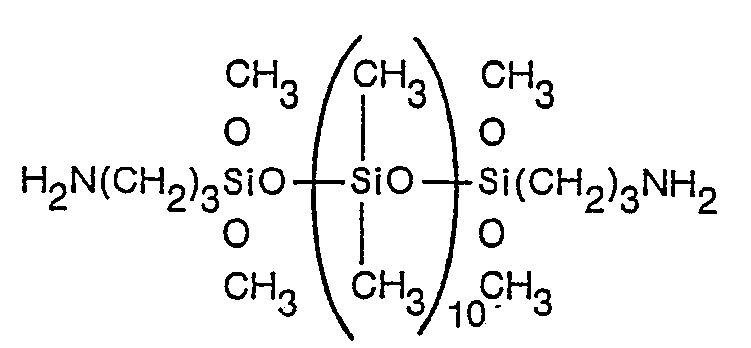
- Silicone rubber sheets were manufactured by the method identical to that of Example 2 with the exceptions that one of the methyltriacetoxysilane, methyltris(normal-butylamino)silane, and methyltris-(N,N-diethylaminoxy)silane was used instead of vinyltris(methylethylketoxime)silane and in the same amount, and 2 parts of organopolysiloxane with the formula of


Claims (14)

Applications Claiming Priority (2)
| Application Number | Priority Date | Filing Date | Title |
|---|---|---|---|
| JP147403/80 | 1980-10-21 | ||
| JP55147403A JPS5770176A (en) | 1980-10-21 | 1980-10-21 | Oil-resistant gasket packing material |
Publications (2)
| Publication Number | Publication Date |
|---|---|
| EP0050453A1 EP0050453A1 (en) | 1982-04-28 |
| EP0050453B1 true EP0050453B1 (en) | 1985-04-24 |
Family
ID=15429494
Family Applications (1)
| Application Number | Title | Priority Date | Filing Date |
|---|---|---|---|
| EP81304683A Expired EP0050453B1 (en) | 1980-10-21 | 1981-10-08 | An oil-resistant gasket material and packing material |
Country Status (9)
| Country | Link |
|---|---|
| EP (1) | EP0050453B1 (en) |
| JP (1) | JPS5770176A (en) |
| KR (1) | KR880001389B1 (en) |
| AU (1) | AU544549B2 (en) |
| BR (1) | BR8106767A (en) |
| DE (1) | DE3170158D1 (en) |
| ES (1) | ES506398A0 (en) |
| SE (1) | SE8105940L (en) |
| ZA (1) | ZA817025B (en) |
Families Citing this family (22)
| Publication number | Priority date | Publication date | Assignee | Title |
|---|---|---|---|---|
| US4483973A (en) * | 1982-02-17 | 1984-11-20 | General Electric Company | Adhesion promoters for one-component RTV silicone compositions |
| JPS59108076A (en) * | 1982-12-11 | 1984-06-22 | Nichias Corp | Packing |
| GB8401016D0 (en) * | 1984-01-14 | 1984-02-15 | Hagen Perennatorwerk | Organopolysiloxane compositions |
| JPS61204289A (en) * | 1985-03-06 | 1986-09-10 | Sunstar Giken Kk | Moisture-curable sealing material composition |
| DE3524452A1 (en) * | 1985-07-09 | 1987-01-15 | Bayer Ag | RTV SILICONE PASTE WITH SHORTENED CURING TIME |
| JPH0830181B2 (en) * | 1986-08-25 | 1996-03-27 | 東レ・ダウコ−ニング・シリコ−ン株式会社 | Gasket / packing material composition |
| JP2568406B2 (en) * | 1987-04-08 | 1997-01-08 | 株式会社 スリ−ボンド | Oil resistant sealant composition |
| DE3808200A1 (en) * | 1988-03-11 | 1989-09-21 | Wacker Chemie Gmbh | AT ROOM TEMPERATURE TO COMPATIBLE TO PAINTABLE ELASTOMER CROSSLINKING ORGANOPOLYSILOXANES |
| FR2629827B1 (en) * | 1988-04-07 | 1991-02-15 | Rhone Poulenc Chimie | ORGANOPOLYSILOXANE COMPOSITION WITH CETIMINOXY FUNCTION CURABLE IN SELF-ADHERENT ELASTOMER |
| FR2629828B1 (en) * | 1988-04-07 | 1991-02-15 | Rhone Poulenc Chimie | ORGANOPOLYSILOXANE COMPOSITION WITH ACYLOXY FUNCTION CURABLE IN SELF-ADHERENT ELASTOMER |
| FR2658828A1 (en) * | 1990-02-27 | 1991-08-30 | Rhone Poulenc Chimie | ORGANOPOLYSILOXANE COMPOSITION WITH CETIMINOXY FUNCTION CURABLE IN ELASTOMER WITHOUT ORGANOMETALLIC CATALYST. |
| JP2671573B2 (en) * | 1990-07-18 | 1997-10-29 | 東芝シリコーン 株式会社 | Room temperature curable silicone sealant composition |
| CA2089287A1 (en) * | 1992-03-25 | 1993-09-26 | John J. Dziark | One-part room temperature vulcanizing compositions with improved oil resistance and adhesion |
| DE69323960T2 (en) * | 1992-11-25 | 1999-11-11 | General Electric Co., Schenectady | One-component composition vulcanizing at room temperature |
| US5717009A (en) * | 1994-01-21 | 1998-02-10 | Toshiba Silicone Co., Ltd. | Adhesive composition and process for curing the same |
| EP0718369A1 (en) | 1994-12-22 | 1996-06-26 | Dow Corning Corporation | Method of reducing hot hydrocarbon oil swell of filled silicone sealant gaskets |
| TW538096B (en) * | 1999-06-25 | 2003-06-21 | Shinetsu Chemical Co | Nitrogen atom-containing polysiloxanes, their preparation, and fiber and fabric finishing agent compositions |
| ATE358698T1 (en) | 1999-11-17 | 2007-04-15 | Henkel Corp | USE OF LIQUID RESISTANT SILICONE COMPOSITIONS FOR SEALING MAGNESIUM ALLOYS |
| KR101331648B1 (en) * | 2007-10-05 | 2013-11-20 | (주)엘지하우시스 | Gasket for window |
| DE102012203273A1 (en) * | 2012-03-01 | 2013-09-05 | Wacker Chemie Ag | Crosslinkable compositions based on organosilicon compounds |
| KR102554516B1 (en) * | 2017-01-30 | 2023-07-13 | 다우 도레이 캄파니 리미티드 | Coatings for concrete structures |
| CN118027887B (en) * | 2024-04-12 | 2024-07-05 | 有行鲨鱼(上海)科技股份有限公司 | Single-component silicone plane sealant for automobile and preparation method thereof |
Family Cites Families (4)
| Publication number | Priority date | Publication date | Assignee | Title |
|---|---|---|---|---|
| DE1934356C3 (en) * | 1969-07-07 | 1974-03-14 | Wacker-Chemie Gmbh, 8000 Muenchen | Preparations for the production of coatings which repel tacky substances |
| JPS5125070B2 (en) * | 1972-07-11 | 1976-07-28 | ||
| ZA792523B (en) * | 1978-06-27 | 1981-04-29 | Gen Electric | Curable compositions and process |
| JPS5531806A (en) * | 1978-08-25 | 1980-03-06 | Toray Silicone Co Ltd | Silicone resin composition |
-
1980
- 1980-10-21 JP JP55147403A patent/JPS5770176A/en active Granted
-
1981
- 1981-10-07 SE SE8105940A patent/SE8105940L/en unknown
- 1981-10-08 DE DE8181304683T patent/DE3170158D1/en not_active Expired
- 1981-10-08 EP EP81304683A patent/EP0050453B1/en not_active Expired
- 1981-10-12 ZA ZA817025A patent/ZA817025B/en unknown
- 1981-10-20 ES ES506398A patent/ES506398A0/en active Granted
- 1981-10-20 AU AU76625/81A patent/AU544549B2/en not_active Ceased
- 1981-10-20 BR BR8106767A patent/BR8106767A/en unknown
- 1981-10-21 KR KR1019810003983A patent/KR880001389B1/en not_active Expired
Also Published As
| Publication number | Publication date |
|---|---|
| ES8304184A1 (en) | 1983-02-16 |
| EP0050453A1 (en) | 1982-04-28 |
| AU544549B2 (en) | 1985-06-06 |
| DE3170158D1 (en) | 1985-05-30 |
| ZA817025B (en) | 1983-02-23 |
| SE8105940L (en) | 1982-04-22 |
| BR8106767A (en) | 1982-07-06 |
| ES506398A0 (en) | 1983-02-16 |
| JPH0129833B2 (en) | 1989-06-14 |
| KR830007749A (en) | 1983-11-07 |
| KR880001389B1 (en) | 1988-07-30 |
| JPS5770176A (en) | 1982-04-30 |
| AU7662581A (en) | 1982-09-09 |
Similar Documents
| Publication | Publication Date | Title |
|---|---|---|
| KR880001389B1 (en) | Room temperature-curable organosiloxane elastomer composition | |
| US3542901A (en) | Organosilicon compositions | |
| US5079324A (en) | Lioh catalyzed preparation of alkoxylated diorganopolysiloxanes | |
| US4387177A (en) | Room temperature curable organopolysiloxane compositions and methods for their preparation | |
| EP0261418B2 (en) | Gasket/packing material with excellent adhesiveness and resistance to coolants | |
| US4454262A (en) | Room temperature curable polyorganosiloxane composition containing spindle shaped calcium carbonate | |
| CA1233477A (en) | Room temperature vulcanizable organopolysiloxane compositions | |
| EP0104179A4 (en) | COPRECIPITORS FOR ALKOXY-FUNCTIONAL RTV COMPOSITIONS WITH A COMPONENT AND METHODS. | |
| CN104334644B (en) | Cross-linkable composition based on organo-silicon compound | |
| CN102459491B (en) | Method for sealing and assembling components of a drive train | |
| JPH05262989A (en) | Room temperature curable organopolysiloxane composition | |
| US5180771A (en) | Room temperature curable organopolysiloxane composition | |
| JP3029537B2 (en) | Preparation method of room temperature curable polyorganosiloxane composition | |
| US6878769B2 (en) | Room temperature curable organopolysiloxane compositions | |
| US4731411A (en) | Process for producing alkoxy-terminated polysiloxanes | |
| JPH0333749B2 (en) | ||
| US4965333A (en) | RTV organopolysiloxane compositions | |
| US4968760A (en) | Paintable organopolysiloxane compositions which crosslink at room temperature to form elastomers | |
| KR20000028850A (en) | Process for sealing components exposed to aggressive functional fluids and rtv silicone compositions suitable for use therein | |
| US3280072A (en) | Organopolysiloxane elastomers | |
| EP0081119A1 (en) | Room temperature vulcanizable polyorganosiloxane compositions containing alcoholic and carboxylic organofunctionality | |
| EP0110251A2 (en) | Process for producing alkoxy-terminated polysiloxanes | |
| JPH0343310B2 (en) | ||
| EP0092044A2 (en) | Room temperature-curable polyorganosiloxane compositions having resistance to soiling | |
| EP0106363A2 (en) | Water resistant room temperature vulcanizable polyorganosiloxane compositions and method for preparing same |
Legal Events
| Date | Code | Title | Description |
|---|---|---|---|
| PUAI | Public reference made under article 153(3) epc to a published international application that has entered the european phase |
Free format text: ORIGINAL CODE: 0009012 |
|
| AK | Designated contracting states |
Designated state(s): BE DE FR GB IT NL |
|
| 17P | Request for examination filed |
Effective date: 19820930 |
|
| ITF | It: translation for a ep patent filed | ||
| GRAA | (expected) grant |
Free format text: ORIGINAL CODE: 0009210 |
|
| AK | Designated contracting states |
Designated state(s): BE DE FR GB IT NL |
|
| REF | Corresponds to: |
Ref document number: 3170158 Country of ref document: DE Date of ref document: 19850530 |
|
| ET | Fr: translation filed | ||
| PLBE | No opposition filed within time limit |
Free format text: ORIGINAL CODE: 0009261 |
|
| STAA | Information on the status of an ep patent application or granted ep patent |
Free format text: STATUS: NO OPPOSITION FILED WITHIN TIME LIMIT |
|
| 26N | No opposition filed | ||
| PGFP | Annual fee paid to national office [announced via postgrant information from national office to epo] |
Ref country code: FR Payment date: 19900831 Year of fee payment: 10 |
|
| PGFP | Annual fee paid to national office [announced via postgrant information from national office to epo] |
Ref country code: DE Payment date: 19900906 Year of fee payment: 10 |
|
| PGFP | Annual fee paid to national office [announced via postgrant information from national office to epo] |
Ref country code: GB Payment date: 19900917 Year of fee payment: 10 |
|
| PGFP | Annual fee paid to national office [announced via postgrant information from national office to epo] |
Ref country code: BE Payment date: 19900926 Year of fee payment: 10 |
|
| ITTA | It: last paid annual fee | ||
| PGFP | Annual fee paid to national office [announced via postgrant information from national office to epo] |
Ref country code: NL Payment date: 19901031 Year of fee payment: 10 |
|
| PG25 | Lapsed in a contracting state [announced via postgrant information from national office to epo] |
Ref country code: GB Effective date: 19911008 |
|
| PG25 | Lapsed in a contracting state [announced via postgrant information from national office to epo] |
Ref country code: BE Effective date: 19911031 |
|
| BERE | Be: lapsed |
Owner name: TORAY SILICONE CY LTD Effective date: 19911031 |
|
| PG25 | Lapsed in a contracting state [announced via postgrant information from national office to epo] |
Ref country code: NL Effective date: 19920501 |
|
| GBPC | Gb: european patent ceased through non-payment of renewal fee | ||
| NLV4 | Nl: lapsed or anulled due to non-payment of the annual fee | ||
| PG25 | Lapsed in a contracting state [announced via postgrant information from national office to epo] |
Ref country code: FR Effective date: 19920630 |
|
| PG25 | Lapsed in a contracting state [announced via postgrant information from national office to epo] |
Ref country code: DE Effective date: 19920701 |
|
| REG | Reference to a national code |
Ref country code: FR Ref legal event code: ST |