EP0017536B1 - Process for the preparation of somatostatine - Google Patents
Process for the preparation of somatostatine Download PDFInfo
- Publication number
- EP0017536B1 EP0017536B1 EP80400356A EP80400356A EP0017536B1 EP 0017536 B1 EP0017536 B1 EP 0017536B1 EP 80400356 A EP80400356 A EP 80400356A EP 80400356 A EP80400356 A EP 80400356A EP 0017536 B1 EP0017536 B1 EP 0017536B1
- Authority
- EP
- European Patent Office
- Prior art keywords
- dmf
- protected
- ccm
- epaw
- acid
- Prior art date
- Legal status (The legal status is an assumption and is not a legal conclusion. Google has not performed a legal analysis and makes no representation as to the accuracy of the status listed.)
- Expired
Links
- 238000000034 method Methods 0.000 title claims description 35
- 230000008569 process Effects 0.000 title claims description 23
- NHXLMOGPVYXJNR-ATOGVRKGSA-N somatostatin Chemical compound C([C@H]1C(=O)N[C@H](C(N[C@@H](CO)C(=O)N[C@@H](CSSC[C@@H](C(=O)N[C@@H](CCCCN)C(=O)N[C@@H](CC(N)=O)C(=O)N[C@@H](CC=2C=CC=CC=2)C(=O)N[C@@H](CC=2C=CC=CC=2)C(=O)N[C@@H](CC=2C3=CC=CC=C3NC=2)C(=O)N[C@@H](CCCCN)C(=O)N[C@H](C(=O)N1)[C@@H](C)O)NC(=O)CNC(=O)[C@H](C)N)C(O)=O)=O)[C@H](O)C)C1=CC=CC=C1 NHXLMOGPVYXJNR-ATOGVRKGSA-N 0.000 title claims description 17
- 238000002360 preparation method Methods 0.000 title claims 2
- ZMXDDKWLCZADIW-UHFFFAOYSA-N N,N-Dimethylformamide Chemical compound CN(C)C=O ZMXDDKWLCZADIW-UHFFFAOYSA-N 0.000 claims description 170
- XLYOFNOQVPJJNP-UHFFFAOYSA-N water Substances O XLYOFNOQVPJJNP-UHFFFAOYSA-N 0.000 claims description 76
- 229910001868 water Inorganic materials 0.000 claims description 55
- -1 phenyl- azobenzylsulfonylethyloxy Chemical group 0.000 claims description 39
- DTQVDTLACAAQTR-UHFFFAOYSA-N Trifluoroacetic acid Chemical compound OC(=O)C(F)(F)F DTQVDTLACAAQTR-UHFFFAOYSA-N 0.000 claims description 36
- 238000006243 chemical reaction Methods 0.000 claims description 22
- 239000002904 solvent Substances 0.000 claims description 19
- RDOXTESZEPMUJZ-UHFFFAOYSA-N anisole Chemical compound COC1=CC=CC=C1 RDOXTESZEPMUJZ-UHFFFAOYSA-N 0.000 claims description 18
- 108090000765 processed proteins & peptides Proteins 0.000 claims description 18
- 102000005157 Somatostatin Human genes 0.000 claims description 17
- 108010056088 Somatostatin Proteins 0.000 claims description 17
- 229960000553 somatostatin Drugs 0.000 claims description 17
- JMTMSDXUXJISAY-UHFFFAOYSA-N 2H-benzotriazol-4-ol Chemical compound OC1=CC=CC2=C1N=NN2 JMTMSDXUXJISAY-UHFFFAOYSA-N 0.000 claims description 16
- 239000002253 acid Substances 0.000 claims description 16
- 238000005859 coupling reaction Methods 0.000 claims description 16
- VEXZGXHMUGYJMC-UHFFFAOYSA-N Hydrochloric acid Chemical compound Cl VEXZGXHMUGYJMC-UHFFFAOYSA-N 0.000 claims description 14
- 235000018417 cysteine Nutrition 0.000 claims description 13
- XUJNEKJLAYXESH-UHFFFAOYSA-N cysteine Natural products SCC(N)C(O)=O XUJNEKJLAYXESH-UHFFFAOYSA-N 0.000 claims description 12
- 235000001014 amino acid Nutrition 0.000 claims description 11
- 150000001413 amino acids Chemical class 0.000 claims description 11
- 238000000746 purification Methods 0.000 claims description 11
- DHBXNPKRAUYBTH-UHFFFAOYSA-N 1,1-ethanedithiol Chemical compound CC(S)S DHBXNPKRAUYBTH-UHFFFAOYSA-N 0.000 claims description 10
- 230000008878 coupling Effects 0.000 claims description 10
- 238000010168 coupling process Methods 0.000 claims description 10
- 102000004196 processed proteins & peptides Human genes 0.000 claims description 10
- UZKWTJUDCOPSNM-UHFFFAOYSA-N methoxybenzene Substances CCCCOC=C UZKWTJUDCOPSNM-UHFFFAOYSA-N 0.000 claims description 9
- 238000005406 washing Methods 0.000 claims description 9
- 230000015572 biosynthetic process Effects 0.000 claims description 8
- BDAGIHXWWSANSR-UHFFFAOYSA-N methanoic acid Natural products OC=O BDAGIHXWWSANSR-UHFFFAOYSA-N 0.000 claims description 8
- IAZDPXIOMUYVGZ-UHFFFAOYSA-N Dimethylsulphoxide Chemical compound CS(C)=O IAZDPXIOMUYVGZ-UHFFFAOYSA-N 0.000 claims description 7
- 150000002148 esters Chemical class 0.000 claims description 7
- QOSSAOTZNIDXMA-UHFFFAOYSA-N Dicylcohexylcarbodiimide Chemical compound C1CCCCC1N=C=NC1CCCCC1 QOSSAOTZNIDXMA-UHFFFAOYSA-N 0.000 claims description 6
- 150000001412 amines Chemical group 0.000 claims description 6
- 239000004472 Lysine Substances 0.000 claims description 5
- KDXKERNSBIXSRK-UHFFFAOYSA-N Lysine Natural products NCCCCC(N)C(O)=O KDXKERNSBIXSRK-UHFFFAOYSA-N 0.000 claims description 5
- XWJDVNOOYSANGI-ATOGVRKGSA-N dihydrosomatostatin Chemical compound C([C@H](NC(=O)[C@H](CC(N)=O)NC(=O)[C@H](CCCCN)NC(=O)[C@H](CS)NC(=O)CNC(=O)[C@@H](N)C)C(=O)N[C@@H](CC=1C=CC=CC=1)C(=O)N[C@@H](CC=1C2=CC=CC=C2NC=1)C(=O)N[C@@H](CCCCN)C(=O)N[C@@H]([C@@H](C)O)C(=O)N[C@@H](CC=1C=CC=CC=1)C(=O)N[C@@H]([C@@H](C)O)C(=O)N[C@@H](CO)C(=O)N[C@@H](CS)C(O)=O)C1=CC=CC=C1 XWJDVNOOYSANGI-ATOGVRKGSA-N 0.000 claims description 5
- 108700042470 dihydrosomatostatin Proteins 0.000 claims description 5
- 239000007790 solid phase Substances 0.000 claims description 5
- 150000003573 thiols Chemical class 0.000 claims description 5
- OSWFIVFLDKOXQC-UHFFFAOYSA-N 4-(3-methoxyphenyl)aniline Chemical compound COC1=CC=CC(C=2C=CC(N)=CC=2)=C1 OSWFIVFLDKOXQC-UHFFFAOYSA-N 0.000 claims description 4
- QIVBCDIJIAJPQS-VIFPVBQESA-N L-tryptophane Chemical compound C1=CC=C2C(C[C@H](N)C(O)=O)=CNC2=C1 QIVBCDIJIAJPQS-VIFPVBQESA-N 0.000 claims description 4
- 235000019253 formic acid Nutrition 0.000 claims description 4
- 230000004224 protection Effects 0.000 claims description 4
- 239000012190 activator Substances 0.000 claims description 3
- TZCXTZWJZNENPQ-UHFFFAOYSA-L barium sulfate Chemical compound [Ba+2].[O-]S([O-])(=O)=O TZCXTZWJZNENPQ-UHFFFAOYSA-L 0.000 claims description 3
- 229910052601 baryte Inorganic materials 0.000 claims description 3
- 239000010428 baryte Substances 0.000 claims description 3
- 125000003396 thiol group Chemical group [H]S* 0.000 claims description 3
- 229960004799 tryptophan Drugs 0.000 claims description 3
- 238000010306 acid treatment Methods 0.000 claims description 2
- 235000004279 alanine Nutrition 0.000 claims description 2
- 239000007822 coupling agent Substances 0.000 claims description 2
- DNJIEGIFACGWOD-UHFFFAOYSA-N ethyl mercaptane Natural products CCS DNJIEGIFACGWOD-UHFFFAOYSA-N 0.000 claims description 2
- 239000012535 impurity Substances 0.000 claims description 2
- 150000002475 indoles Chemical class 0.000 claims description 2
- 239000003960 organic solvent Substances 0.000 claims description 2
- 238000005897 peptide coupling reaction Methods 0.000 claims description 2
- 125000002924 primary amino group Chemical group [H]N([H])* 0.000 claims description 2
- DGVVWUTYPXICAM-UHFFFAOYSA-N β‐Mercaptoethanol Chemical compound OCCS DGVVWUTYPXICAM-UHFFFAOYSA-N 0.000 claims description 2
- 229960001760 dimethyl sulfoxide Drugs 0.000 claims 3
- BWGNESOTFCXPMA-UHFFFAOYSA-N Dihydrogen disulfide Chemical compound SS BWGNESOTFCXPMA-UHFFFAOYSA-N 0.000 claims 1
- QNAYBMKLOCPYGJ-REOHCLBHSA-N L-alanine Chemical compound C[C@H](N)C(O)=O QNAYBMKLOCPYGJ-REOHCLBHSA-N 0.000 claims 1
- 230000000694 effects Effects 0.000 claims 1
- XYFCBTPGUUZFHI-UHFFFAOYSA-O phosphonium Chemical compound [PH4+] XYFCBTPGUUZFHI-UHFFFAOYSA-O 0.000 claims 1
- 230000000750 progressive effect Effects 0.000 claims 1
- 230000001012 protector Effects 0.000 claims 1
- RTZKZFJDLAIYFH-UHFFFAOYSA-N Diethyl ether Chemical compound CCOCC RTZKZFJDLAIYFH-UHFFFAOYSA-N 0.000 description 78
- QTBSBXVTEAMEQO-UHFFFAOYSA-N Acetic acid Chemical compound CC(O)=O QTBSBXVTEAMEQO-UHFFFAOYSA-N 0.000 description 58
- 239000000243 solution Substances 0.000 description 50
- XEKOWRVHYACXOJ-UHFFFAOYSA-N Ethyl acetate Chemical compound CCOC(C)=O XEKOWRVHYACXOJ-UHFFFAOYSA-N 0.000 description 45
- 239000000047 product Substances 0.000 description 45
- OKKJLVBELUTLKV-UHFFFAOYSA-N Methanol Chemical compound OC OKKJLVBELUTLKV-UHFFFAOYSA-N 0.000 description 43
- CSCPPACGZOOCGX-UHFFFAOYSA-N Acetone Chemical compound CC(C)=O CSCPPACGZOOCGX-UHFFFAOYSA-N 0.000 description 39
- KFZMGEQAYNKOFK-UHFFFAOYSA-N Isopropanol Chemical compound CC(C)O KFZMGEQAYNKOFK-UHFFFAOYSA-N 0.000 description 37
- 239000000203 mixture Substances 0.000 description 34
- HVCNXQOWACZAFN-UHFFFAOYSA-N 4-ethylmorpholine Chemical compound CCN1CCOCC1 HVCNXQOWACZAFN-UHFFFAOYSA-N 0.000 description 27
- 239000007787 solid Substances 0.000 description 26
- DTQVDTLACAAQTR-UHFFFAOYSA-M Trifluoroacetate Chemical compound [O-]C(=O)C(F)(F)F DTQVDTLACAAQTR-UHFFFAOYSA-M 0.000 description 25
- 238000003756 stirring Methods 0.000 description 24
- 238000001035 drying Methods 0.000 description 15
- NPZTUJOABDZTLV-UHFFFAOYSA-N hydroxybenzotriazole Substances O=C1C=CC=C2NNN=C12 NPZTUJOABDZTLV-UHFFFAOYSA-N 0.000 description 15
- YMWUJEATGCHHMB-UHFFFAOYSA-N Dichloromethane Chemical compound ClCCl YMWUJEATGCHHMB-UHFFFAOYSA-N 0.000 description 12
- 238000001704 evaporation Methods 0.000 description 12
- 239000012071 phase Substances 0.000 description 12
- 239000002244 precipitate Substances 0.000 description 11
- 230000008020 evaporation Effects 0.000 description 10
- HEMHJVSKTPXQMS-UHFFFAOYSA-M Sodium hydroxide Chemical compound [OH-].[Na+] HEMHJVSKTPXQMS-UHFFFAOYSA-M 0.000 description 9
- 229960000583 acetic acid Drugs 0.000 description 9
- 229940024606 amino acid Drugs 0.000 description 9
- 239000003480 eluent Substances 0.000 description 9
- 238000003786 synthesis reaction Methods 0.000 description 9
- JUJWROOIHBZHMG-UHFFFAOYSA-N Pyridine Chemical compound C1=CC=NC=C1 JUJWROOIHBZHMG-UHFFFAOYSA-N 0.000 description 8
- FAPWRFPIFSIZLT-UHFFFAOYSA-M Sodium chloride Chemical class [Na+].[Cl-] FAPWRFPIFSIZLT-UHFFFAOYSA-M 0.000 description 7
- UBBSASFKEJHWOE-UHFFFAOYSA-M potassium hydrogen sulfate sulfuric acid Chemical compound [K+].OS(O)(=O)=O.OS([O-])(=O)=O UBBSASFKEJHWOE-UHFFFAOYSA-M 0.000 description 7
- 238000011282 treatment Methods 0.000 description 7
- UIIMBOGNXHQVGW-UHFFFAOYSA-M Sodium bicarbonate Chemical compound [Na+].OC([O-])=O UIIMBOGNXHQVGW-UHFFFAOYSA-M 0.000 description 6
- 125000006239 protecting group Chemical group 0.000 description 6
- 238000004809 thin layer chromatography Methods 0.000 description 6
- VYPSYNLAJGMNEJ-UHFFFAOYSA-N Silicium dioxide Chemical compound O=[Si]=O VYPSYNLAJGMNEJ-UHFFFAOYSA-N 0.000 description 5
- 238000004587 chromatography analysis Methods 0.000 description 5
- XUJNEKJLAYXESH-UHFFFAOYSA-L cysteinate(2-) Chemical compound [S-]CC(N)C([O-])=O XUJNEKJLAYXESH-UHFFFAOYSA-L 0.000 description 5
- 229960002433 cysteine Drugs 0.000 description 5
- 125000000151 cysteine group Chemical group N[C@@H](CS)C(=O)* 0.000 description 5
- 239000000499 gel Substances 0.000 description 5
- 238000004128 high performance liquid chromatography Methods 0.000 description 5
- 239000003921 oil Substances 0.000 description 5
- 235000019198 oils Nutrition 0.000 description 5
- FTNRWCPWDWRPAV-BZSNNMDCSA-N Asn-Phe-Phe Chemical compound C([C@H](NC(=O)[C@H](CC(N)=O)N)C(=O)N[C@@H](CC=1C=CC=CC=1)C(O)=O)C1=CC=CC=C1 FTNRWCPWDWRPAV-BZSNNMDCSA-N 0.000 description 4
- IJGRMHOSHXDMSA-UHFFFAOYSA-N Atomic nitrogen Chemical compound N#N IJGRMHOSHXDMSA-UHFFFAOYSA-N 0.000 description 4
- CSNNHWWHGAXBCP-UHFFFAOYSA-L Magnesium sulfate Chemical compound [Mg+2].[O-][S+2]([O-])([O-])[O-] CSNNHWWHGAXBCP-UHFFFAOYSA-L 0.000 description 4
- KWYUFKZDYYNOTN-UHFFFAOYSA-M Potassium hydroxide Chemical compound [OH-].[K+] KWYUFKZDYYNOTN-UHFFFAOYSA-M 0.000 description 4
- 239000007864 aqueous solution Substances 0.000 description 4
- 230000008901 benefit Effects 0.000 description 4
- 238000001816 cooling Methods 0.000 description 4
- 238000010438 heat treatment Methods 0.000 description 4
- 235000018977 lysine Nutrition 0.000 description 4
- 229920001184 polypeptide Polymers 0.000 description 4
- 238000001556 precipitation Methods 0.000 description 4
- UMJSCPRVCHMLSP-UHFFFAOYSA-N pyridine Natural products COC1=CC=CN=C1 UMJSCPRVCHMLSP-UHFFFAOYSA-N 0.000 description 4
- 229920006395 saturated elastomer Polymers 0.000 description 4
- USFZMSVCRYTOJT-UHFFFAOYSA-N Ammonium acetate Chemical compound N.CC(O)=O USFZMSVCRYTOJT-UHFFFAOYSA-N 0.000 description 3
- RWSOTUBLDIXVET-UHFFFAOYSA-N Dihydrogen sulfide Chemical compound S RWSOTUBLDIXVET-UHFFFAOYSA-N 0.000 description 3
- LFQSCWFLJHTTHZ-UHFFFAOYSA-N Ethanol Chemical compound CCO LFQSCWFLJHTTHZ-UHFFFAOYSA-N 0.000 description 3
- VAHDSGPSHKXALR-MLCQCVOFSA-N N[C@@H](CCCCN)C(=O)N[C@@H](CC(N)=O)C(=O)N[C@@H](CC1=CC=CC=C1)C(=O)N[C@@H](CC1=CC=CC=C1)C(=O)O Chemical compound N[C@@H](CCCCN)C(=O)N[C@@H](CC(N)=O)C(=O)N[C@@H](CC1=CC=CC=C1)C(=O)N[C@@H](CC1=CC=CC=C1)C(=O)O VAHDSGPSHKXALR-MLCQCVOFSA-N 0.000 description 3
- 229920005654 Sephadex Polymers 0.000 description 3
- 239000012507 Sephadex™ Substances 0.000 description 3
- UIIMBOGNXHQVGW-DEQYMQKBSA-M Sodium bicarbonate-14C Chemical compound [Na+].O[14C]([O-])=O UIIMBOGNXHQVGW-DEQYMQKBSA-M 0.000 description 3
- 239000007795 chemical reaction product Substances 0.000 description 3
- 238000009826 distribution Methods 0.000 description 3
- 229910000037 hydrogen sulfide Inorganic materials 0.000 description 3
- 239000007791 liquid phase Substances 0.000 description 3
- 230000003647 oxidation Effects 0.000 description 3
- 238000007254 oxidation reaction Methods 0.000 description 3
- BWHMMNNQKKPAPP-UHFFFAOYSA-L potassium carbonate Chemical compound [K+].[K+].[O-]C([O-])=O BWHMMNNQKKPAPP-UHFFFAOYSA-L 0.000 description 3
- 230000028327 secretion Effects 0.000 description 3
- 235000017557 sodium bicarbonate Nutrition 0.000 description 3
- 229910000030 sodium bicarbonate Inorganic materials 0.000 description 3
- 239000011780 sodium chloride Substances 0.000 description 3
- 239000003643 water by type Substances 0.000 description 3
- QZIWWFMMLBBICG-KRWDZBQOSA-N (4-nitrophenyl) (2s)-2-[(2-methylpropan-2-yl)oxycarbonylamino]-3-phenylpropanoate Chemical compound C([C@H](NC(=O)OC(C)(C)C)C(=O)OC=1C=CC(=CC=1)[N+]([O-])=O)C1=CC=CC=C1 QZIWWFMMLBBICG-KRWDZBQOSA-N 0.000 description 2
- RYHBNJHYFVUHQT-UHFFFAOYSA-N 1,4-Dioxane Chemical compound C1COCCO1 RYHBNJHYFVUHQT-UHFFFAOYSA-N 0.000 description 2
- DLFVBJFMPXGRIB-UHFFFAOYSA-N Acetamide Chemical compound CC(N)=O DLFVBJFMPXGRIB-UHFFFAOYSA-N 0.000 description 2
- 239000005695 Ammonium acetate Substances 0.000 description 2
- CURLTUGMZLYLDI-UHFFFAOYSA-N Carbon dioxide Chemical compound O=C=O CURLTUGMZLYLDI-UHFFFAOYSA-N 0.000 description 2
- 108010016626 Dipeptides Proteins 0.000 description 2
- DHMQDGOQFOQNFH-UHFFFAOYSA-N Glycine Chemical compound NCC(O)=O DHMQDGOQFOQNFH-UHFFFAOYSA-N 0.000 description 2
- XUJNEKJLAYXESH-REOHCLBHSA-N L-Cysteine Chemical compound SC[C@H](N)C(O)=O XUJNEKJLAYXESH-REOHCLBHSA-N 0.000 description 2
- 229940043376 ammonium acetate Drugs 0.000 description 2
- 235000019257 ammonium acetate Nutrition 0.000 description 2
- 238000004458 analytical method Methods 0.000 description 2
- 239000008346 aqueous phase Substances 0.000 description 2
- AYJRCSIUFZENHW-UHFFFAOYSA-L barium carbonate Chemical compound [Ba+2].[O-]C([O-])=O AYJRCSIUFZENHW-UHFFFAOYSA-L 0.000 description 2
- 239000007979 citrate buffer Substances 0.000 description 2
- 150000001875 compounds Chemical class 0.000 description 2
- 238000000354 decomposition reaction Methods 0.000 description 2
- 239000012153 distilled water Substances 0.000 description 2
- 239000012156 elution solvent Substances 0.000 description 2
- 239000000284 extract Substances 0.000 description 2
- 238000001914 filtration Methods 0.000 description 2
- 125000000623 heterocyclic group Chemical class 0.000 description 2
- 230000005764 inhibitory process Effects 0.000 description 2
- NOESYZHRGYRDHS-UHFFFAOYSA-N insulin Chemical compound N1C(=O)C(NC(=O)C(CCC(N)=O)NC(=O)C(CCC(O)=O)NC(=O)C(C(C)C)NC(=O)C(NC(=O)CN)C(C)CC)CSSCC(C(NC(CO)C(=O)NC(CC(C)C)C(=O)NC(CC=2C=CC(O)=CC=2)C(=O)NC(CCC(N)=O)C(=O)NC(CC(C)C)C(=O)NC(CCC(O)=O)C(=O)NC(CC(N)=O)C(=O)NC(CC=2C=CC(O)=CC=2)C(=O)NC(CSSCC(NC(=O)C(C(C)C)NC(=O)C(CC(C)C)NC(=O)C(CC=2C=CC(O)=CC=2)NC(=O)C(CC(C)C)NC(=O)C(C)NC(=O)C(CCC(O)=O)NC(=O)C(C(C)C)NC(=O)C(CC(C)C)NC(=O)C(CC=2NC=NC=2)NC(=O)C(CO)NC(=O)CNC2=O)C(=O)NCC(=O)NC(CCC(O)=O)C(=O)NC(CCCNC(N)=N)C(=O)NCC(=O)NC(CC=3C=CC=CC=3)C(=O)NC(CC=3C=CC=CC=3)C(=O)NC(CC=3C=CC(O)=CC=3)C(=O)NC(C(C)O)C(=O)N3C(CCC3)C(=O)NC(CCCCN)C(=O)NC(C)C(O)=O)C(=O)NC(CC(N)=O)C(O)=O)=O)NC(=O)C(C(C)CC)NC(=O)C(CO)NC(=O)C(C(C)O)NC(=O)C1CSSCC2NC(=O)C(CC(C)C)NC(=O)C(NC(=O)C(CCC(N)=O)NC(=O)C(CC(N)=O)NC(=O)C(NC(=O)C(N)CC=1C=CC=CC=1)C(C)C)CC1=CN=CN1 NOESYZHRGYRDHS-UHFFFAOYSA-N 0.000 description 2
- 238000002955 isolation Methods 0.000 description 2
- 229910052943 magnesium sulfate Inorganic materials 0.000 description 2
- 235000019341 magnesium sulphate Nutrition 0.000 description 2
- 229910052751 metal Inorganic materials 0.000 description 2
- 239000002184 metal Substances 0.000 description 2
- 125000000896 monocarboxylic acid group Chemical group 0.000 description 2
- HWJHZLJIIWOTGZ-UHFFFAOYSA-N n-(hydroxymethyl)acetamide Chemical compound CC(=O)NCO HWJHZLJIIWOTGZ-UHFFFAOYSA-N 0.000 description 2
- 229910052757 nitrogen Inorganic materials 0.000 description 2
- 230000003071 parasitic effect Effects 0.000 description 2
- 238000004810 partition chromatography Methods 0.000 description 2
- 229910000343 potassium bisulfate Inorganic materials 0.000 description 2
- 239000000843 powder Substances 0.000 description 2
- XTUSEBKMEQERQV-UHFFFAOYSA-N propan-2-ol;hydrate Chemical compound O.CC(C)O XTUSEBKMEQERQV-UHFFFAOYSA-N 0.000 description 2
- 238000007348 radical reaction Methods 0.000 description 2
- 239000000376 reactant Substances 0.000 description 2
- 238000011160 research Methods 0.000 description 2
- 239000011347 resin Substances 0.000 description 2
- 229920005989 resin Polymers 0.000 description 2
- 150000003839 salts Chemical class 0.000 description 2
- 239000000377 silicon dioxide Substances 0.000 description 2
- SQGYOTSLMSWVJD-UHFFFAOYSA-N silver(1+) nitrate Chemical compound [Ag+].[O-]N(=O)=O SQGYOTSLMSWVJD-UHFFFAOYSA-N 0.000 description 2
- 238000010532 solid phase synthesis reaction Methods 0.000 description 2
- 238000004611 spectroscopical analysis Methods 0.000 description 2
- 239000006228 supernatant Substances 0.000 description 2
- DLYUQMMRRRQYAE-UHFFFAOYSA-N tetraphosphorus decaoxide Chemical compound O1P(O2)(=O)OP3(=O)OP1(=O)OP2(=O)O3 DLYUQMMRRRQYAE-UHFFFAOYSA-N 0.000 description 2
- QJYSXZHTKNMTMY-JEDNCBNOSA-N (2r)-2-(acetamidomethylamino)-3-sulfanylpropanoic acid;hydrochloride Chemical compound Cl.CC(=O)NCN[C@@H](CS)C(O)=O QJYSXZHTKNMTMY-JEDNCBNOSA-N 0.000 description 1
- HLCTYBOTPCIHTG-QMMMGPOBSA-N (2r)-3-(acetamidomethylsulfanyl)-2-[(2-methylpropan-2-yl)oxycarbonylamino]propanoic acid Chemical compound CC(=O)NCSC[C@@H](C(O)=O)NC(=O)OC(C)(C)C HLCTYBOTPCIHTG-QMMMGPOBSA-N 0.000 description 1
- IKECUIUPUTXBGF-TWUVWWFLSA-N (2r)-3-(acetamidomethylsulfanyl)-2-[[(2s)-3-hydroxy-2-[[(2s,3r)-3-hydroxy-2-[[(2s)-2-[(2-methylpropan-2-yl)oxycarbonylamino]-3-phenylpropanoyl]amino]butanoyl]amino]propanoyl]amino]propanoic acid Chemical compound CC(=O)NCSC[C@@H](C(O)=O)NC(=O)[C@H](CO)NC(=O)[C@H]([C@H](O)C)NC(=O)[C@@H](NC(=O)OC(C)(C)C)CC1=CC=CC=C1 IKECUIUPUTXBGF-TWUVWWFLSA-N 0.000 description 1
- QFQYGJMNIDGZSG-YFKPBYRVSA-N (2r)-3-(acetamidomethylsulfanyl)-2-azaniumylpropanoate Chemical compound CC(=O)NCSC[C@H]([NH3+])C([O-])=O QFQYGJMNIDGZSG-YFKPBYRVSA-N 0.000 description 1
- USZXSHCALFVFOD-LURJTMIESA-N (2s)-2-(butoxycarbonylamino)-3-hydroxypropanoic acid Chemical compound CCCCOC(=O)N[C@@H](CO)C(O)=O USZXSHCALFVFOD-LURJTMIESA-N 0.000 description 1
- VMSSHBURKGNFCO-FKBYEOEOSA-N (2s)-2-[[(2s)-2-[[(2s)-4-amino-2-[(2-nitrophenyl)sulfanylamino]-4-oxobutanoyl]amino]-3-phenylpropanoyl]amino]-3-phenylpropanoic acid Chemical compound N([C@@H](CC(=O)N)C(=O)N[C@@H](CC=1C=CC=CC=1)C(=O)N[C@@H](CC=1C=CC=CC=1)C(O)=O)SC1=CC=CC=C1[N+]([O-])=O VMSSHBURKGNFCO-FKBYEOEOSA-N 0.000 description 1
- WXYGVKADAIJGHB-ZDUSSCGKSA-N (2s)-3-(1h-indol-2-yl)-2-[(2-methylpropan-2-yl)oxycarbonylamino]propanoic acid Chemical compound C1=CC=C2NC(C[C@H](NC(=O)OC(C)(C)C)C(O)=O)=CC2=C1 WXYGVKADAIJGHB-ZDUSSCGKSA-N 0.000 description 1
- ADFXKUOMJKEIND-UHFFFAOYSA-N 1,3-dicyclohexylurea Chemical compound C1CCCCC1NC(=O)NC1CCCCC1 ADFXKUOMJKEIND-UHFFFAOYSA-N 0.000 description 1
- RNHDAKUGFHSZEV-UHFFFAOYSA-N 1,4-dioxane;hydrate Chemical compound O.C1COCCO1 RNHDAKUGFHSZEV-UHFFFAOYSA-N 0.000 description 1
- YDKOTSPCYUOAIX-UHFFFAOYSA-N 1-[(4-phenyldiazenylphenyl)methylsulfonyl]ethanol Chemical compound C1=CC(CS(=O)(=O)C(O)C)=CC=C1N=NC1=CC=CC=C1 YDKOTSPCYUOAIX-UHFFFAOYSA-N 0.000 description 1
- FUIQPFOXKWIACS-DQEYMECFSA-N 2-[(4-phenyldiazenylphenyl)methylsulfonyl]ethyl (2r)-3-(acetamidomethylsulfanyl)-2-[[(2s)-3-hydroxy-2-[(2-methylpropan-2-yl)oxycarbonylamino]propanoyl]amino]propanoate Chemical compound C1=CC(CS(=O)(=O)CCOC(=O)[C@@H](NC(=O)[C@H](CO)NC(=O)OC(C)(C)C)CSCNC(=O)C)=CC=C1N=NC1=CC=CC=C1 FUIQPFOXKWIACS-DQEYMECFSA-N 0.000 description 1
- KUOQIHTXLWEQFX-ZDHBKHQISA-N 2-[(4-phenyldiazenylphenyl)methylsulfonyl]ethyl (2r)-3-(acetamidomethylsulfanyl)-2-[[(2s)-3-hydroxy-2-[[(2s,3r)-3-hydroxy-2-[[(2s)-2-[[(2s,3r)-3-hydroxy-2-[(2-methylpropan-2-yl)oxycarbonylamino]butanoyl]amino]-3-phenylpropanoyl]amino]butanoyl]amino]propan Chemical compound C([C@H](NC(=O)[C@@H](NC(=O)OC(C)(C)C)[C@H](O)C)C(=O)N[C@@H]([C@@H](C)O)C(=O)N[C@@H](CO)C(=O)N[C@@H](CSCNC(C)=O)C(=O)OCCS(=O)(=O)CC=1C=CC(=CC=1)N=NC=1C=CC=CC=1)C1=CC=CC=C1 KUOQIHTXLWEQFX-ZDHBKHQISA-N 0.000 description 1
- JTNCEQNHURODLX-UHFFFAOYSA-N 2-phenylethanimidamide Chemical compound NC(=N)CC1=CC=CC=C1 JTNCEQNHURODLX-UHFFFAOYSA-N 0.000 description 1
- QTBSBXVTEAMEQO-UHFFFAOYSA-M Acetate Chemical compound CC([O-])=O QTBSBXVTEAMEQO-UHFFFAOYSA-M 0.000 description 1
- 206010000599 Acromegaly Diseases 0.000 description 1
- NLXLAEXVIDQMFP-UHFFFAOYSA-N Ammonium chloride Substances [NH4+].[Cl-] NLXLAEXVIDQMFP-UHFFFAOYSA-N 0.000 description 1
- VHUUQVKOLVNVRT-UHFFFAOYSA-N Ammonium hydroxide Chemical compound [NH4+].[OH-] VHUUQVKOLVNVRT-UHFFFAOYSA-N 0.000 description 1
- DCXYFEDJOCDNAF-UHFFFAOYSA-N Asparagine Natural products OC(=O)C(N)CC(N)=O DCXYFEDJOCDNAF-UHFFFAOYSA-N 0.000 description 1
- BVKZGUZCCUSVTD-UHFFFAOYSA-M Bicarbonate Chemical compound OC([O-])=O BVKZGUZCCUSVTD-UHFFFAOYSA-M 0.000 description 1
- 241001480079 Corymbia calophylla Species 0.000 description 1
- 241000447437 Gerreidae Species 0.000 description 1
- 102400000321 Glucagon Human genes 0.000 description 1
- 108060003199 Glucagon Proteins 0.000 description 1
- 239000004471 Glycine Substances 0.000 description 1
- 102000018997 Growth Hormone Human genes 0.000 description 1
- 108010051696 Growth Hormone Proteins 0.000 description 1
- DGAQECJNVWCQMB-PUAWFVPOSA-M Ilexoside XXIX Chemical compound C[C@@H]1CC[C@@]2(CC[C@@]3(C(=CC[C@H]4[C@]3(CC[C@@H]5[C@@]4(CC[C@@H](C5(C)C)OS(=O)(=O)[O-])C)C)[C@@H]2[C@]1(C)O)C)C(=O)O[C@H]6[C@@H]([C@H]([C@@H]([C@H](O6)CO)O)O)O.[Na+] DGAQECJNVWCQMB-PUAWFVPOSA-M 0.000 description 1
- 102000004877 Insulin Human genes 0.000 description 1
- 108090001061 Insulin Proteins 0.000 description 1
- DCXYFEDJOCDNAF-REOHCLBHSA-N L-asparagine Chemical compound OC(=O)[C@@H](N)CC(N)=O DCXYFEDJOCDNAF-REOHCLBHSA-N 0.000 description 1
- 125000001176 L-lysyl group Chemical group [H]N([H])[C@]([H])(C(=O)[*])C([H])([H])C([H])([H])C([H])([H])C(N([H])[H])([H])[H] 0.000 description 1
- 125000002842 L-seryl group Chemical group O=C([*])[C@](N([H])[H])([H])C([H])([H])O[H] 0.000 description 1
- 235000006552 Liquidambar styraciflua Nutrition 0.000 description 1
- 235000019502 Orange oil Nutrition 0.000 description 1
- 102400000050 Oxytocin Human genes 0.000 description 1
- 101800000989 Oxytocin Proteins 0.000 description 1
- XNOPRXBHLZRZKH-UHFFFAOYSA-N Oxytocin Natural products N1C(=O)C(N)CSSCC(C(=O)N2C(CCC2)C(=O)NC(CC(C)C)C(=O)NCC(N)=O)NC(=O)C(CC(N)=O)NC(=O)C(CCC(N)=O)NC(=O)C(C(C)CC)NC(=O)C1CC1=CC=C(O)C=C1 XNOPRXBHLZRZKH-UHFFFAOYSA-N 0.000 description 1
- 229930040373 Paraformaldehyde Natural products 0.000 description 1
- 241001494479 Pecora Species 0.000 description 1
- GKZIWHRNKRBEOH-HOTGVXAUSA-N Phe-Phe Chemical compound C([C@H]([NH3+])C(=O)N[C@@H](CC=1C=CC=CC=1)C([O-])=O)C1=CC=CC=C1 GKZIWHRNKRBEOH-HOTGVXAUSA-N 0.000 description 1
- ZLMJMSJWJFRBEC-UHFFFAOYSA-N Potassium Chemical compound [K] ZLMJMSJWJFRBEC-UHFFFAOYSA-N 0.000 description 1
- MTCFGRXMJLQNBG-UHFFFAOYSA-N Serine Natural products OCC(N)C(O)=O MTCFGRXMJLQNBG-UHFFFAOYSA-N 0.000 description 1
- UCKMPCXJQFINFW-UHFFFAOYSA-N Sulphide Chemical compound [S-2] UCKMPCXJQFINFW-UHFFFAOYSA-N 0.000 description 1
- AYFVYJQAPQTCCC-UHFFFAOYSA-N Threonine Natural products CC(O)C(N)C(O)=O AYFVYJQAPQTCCC-UHFFFAOYSA-N 0.000 description 1
- 239000004473 Threonine Substances 0.000 description 1
- QIVBCDIJIAJPQS-UHFFFAOYSA-N Tryptophan Natural products C1=CC=C2C(CC(N)C(O)=O)=CNC2=C1 QIVBCDIJIAJPQS-UHFFFAOYSA-N 0.000 description 1
- GXBMIBRIOWHPDT-UHFFFAOYSA-N Vasopressin Natural products N1C(=O)C(CC=2C=C(O)C=CC=2)NC(=O)C(N)CSSCC(C(=O)N2C(CCC2)C(=O)NC(CCCN=C(N)N)C(=O)NCC(N)=O)NC(=O)C(CC(N)=O)NC(=O)C(CCC(N)=O)NC(=O)C1CC1=CC=CC=C1 GXBMIBRIOWHPDT-UHFFFAOYSA-N 0.000 description 1
- 108010004977 Vasopressins Proteins 0.000 description 1
- 102000002852 Vasopressins Human genes 0.000 description 1
- SZWPOAKLKGUXDD-JEDNCBNOSA-N [(1r)-2-(acetamidomethylsulfanyl)-1-carboxyethyl]azanium;chloride Chemical compound Cl.CC(=O)NCSC[C@H](N)C(O)=O SZWPOAKLKGUXDD-JEDNCBNOSA-N 0.000 description 1
- 230000002378 acidificating effect Effects 0.000 description 1
- 230000009471 action Effects 0.000 description 1
- 239000002671 adjuvant Substances 0.000 description 1
- 238000013019 agitation Methods 0.000 description 1
- 125000003295 alanine group Chemical group N[C@@H](C)C(=O)* 0.000 description 1
- 108010047495 alanylglycine Proteins 0.000 description 1
- 150000001371 alpha-amino acids Chemical class 0.000 description 1
- 235000008206 alpha-amino acids Nutrition 0.000 description 1
- 230000004075 alteration Effects 0.000 description 1
- 235000011114 ammonium hydroxide Nutrition 0.000 description 1
- KBZOIRJILGZLEJ-LGYYRGKSSA-N argipressin Chemical compound C([C@H]1C(=O)N[C@@H](CCC(N)=O)C(=O)N[C@@H](CC(N)=O)C(=O)N[C@@H](CSSC[C@@H](C(N[C@@H](CC=2C=CC(O)=CC=2)C(=O)N1)=O)N)C(=O)N1[C@@H](CCC1)C(=O)N[C@@H](CCCN=C(N)N)C(=O)NCC(N)=O)C1=CC=CC=C1 KBZOIRJILGZLEJ-LGYYRGKSSA-N 0.000 description 1
- 235000009582 asparagine Nutrition 0.000 description 1
- 229960001230 asparagine Drugs 0.000 description 1
- 239000012298 atmosphere Substances 0.000 description 1
- QVGXLLKOCUKJST-UHFFFAOYSA-N atomic oxygen Chemical compound [O] QVGXLLKOCUKJST-UHFFFAOYSA-N 0.000 description 1
- 229910052788 barium Inorganic materials 0.000 description 1
- DSAJWYNOEDNPEQ-UHFFFAOYSA-N barium atom Chemical compound [Ba] DSAJWYNOEDNPEQ-UHFFFAOYSA-N 0.000 description 1
- 230000009286 beneficial effect Effects 0.000 description 1
- 230000004071 biological effect Effects 0.000 description 1
- 210000004899 c-terminal region Anatomy 0.000 description 1
- 150000004657 carbamic acid derivatives Chemical class 0.000 description 1
- 239000001569 carbon dioxide Substances 0.000 description 1
- 229910002092 carbon dioxide Inorganic materials 0.000 description 1
- 230000015556 catabolic process Effects 0.000 description 1
- 238000005119 centrifugation Methods 0.000 description 1
- 239000013043 chemical agent Substances 0.000 description 1
- 239000003153 chemical reaction reagent Substances 0.000 description 1
- 239000007810 chemical reaction solvent Substances 0.000 description 1
- 238000003776 cleavage reaction Methods 0.000 description 1
- 238000004891 communication Methods 0.000 description 1
- 238000009833 condensation Methods 0.000 description 1
- 230000005494 condensation Effects 0.000 description 1
- 239000012043 crude product Substances 0.000 description 1
- 238000002425 crystallisation Methods 0.000 description 1
- 230000008025 crystallization Effects 0.000 description 1
- 125000004122 cyclic group Chemical group 0.000 description 1
- 150000001945 cysteines Chemical class 0.000 description 1
- 238000007872 degassing Methods 0.000 description 1
- 238000006731 degradation reaction Methods 0.000 description 1
- 239000012024 dehydrating agents Substances 0.000 description 1
- 238000010511 deprotection reaction Methods 0.000 description 1
- 206010012601 diabetes mellitus Diseases 0.000 description 1
- 238000010586 diagram Methods 0.000 description 1
- 230000001079 digestive effect Effects 0.000 description 1
- 238000004090 dissolution Methods 0.000 description 1
- 230000006334 disulfide bridging Effects 0.000 description 1
- 239000003814 drug Substances 0.000 description 1
- 230000008030 elimination Effects 0.000 description 1
- 238000003379 elimination reaction Methods 0.000 description 1
- 238000010828 elution Methods 0.000 description 1
- MHYCRLGKOZWVEF-UHFFFAOYSA-N ethyl acetate;hydrate Chemical compound O.CCOC(C)=O MHYCRLGKOZWVEF-UHFFFAOYSA-N 0.000 description 1
- 238000002474 experimental method Methods 0.000 description 1
- 239000012634 fragment Substances 0.000 description 1
- 238000004108 freeze drying Methods 0.000 description 1
- 239000007789 gas Substances 0.000 description 1
- 239000012362 glacial acetic acid Substances 0.000 description 1
- 239000011521 glass Substances 0.000 description 1
- MASNOZXLGMXCHN-ZLPAWPGGSA-N glucagon Chemical compound C([C@@H](C(=O)N[C@H](C(=O)N[C@@H](CCC(N)=O)C(=O)N[C@@H](CC=1C2=CC=CC=C2NC=1)C(=O)N[C@@H](CC(C)C)C(=O)N[C@@H](CCSC)C(=O)N[C@@H](CC(N)=O)C(=O)N[C@@H]([C@@H](C)O)C(O)=O)C(C)C)NC(=O)[C@H](CC(O)=O)NC(=O)[C@H](CCC(N)=O)NC(=O)[C@H](C)NC(=O)[C@H](CCCNC(N)=N)NC(=O)[C@H](CCCNC(N)=N)NC(=O)[C@H](CO)NC(=O)[C@H](CC(O)=O)NC(=O)[C@H](CC(C)C)NC(=O)[C@H](CC=1C=CC(O)=CC=1)NC(=O)[C@H](CCCCN)NC(=O)[C@H](CO)NC(=O)[C@H](CC=1C=CC(O)=CC=1)NC(=O)[C@H](CC(O)=O)NC(=O)[C@H](CO)NC(=O)[C@@H](NC(=O)[C@H](CC=1C=CC=CC=1)NC(=O)[C@@H](NC(=O)CNC(=O)[C@H](CCC(N)=O)NC(=O)[C@H](CO)NC(=O)[C@@H](N)CC=1NC=NC=1)[C@@H](C)O)[C@@H](C)O)C1=CC=CC=C1 MASNOZXLGMXCHN-ZLPAWPGGSA-N 0.000 description 1
- 229960004666 glucagon Drugs 0.000 description 1
- 239000000122 growth hormone Substances 0.000 description 1
- 229910001385 heavy metal Inorganic materials 0.000 description 1
- QAOWNCQODCNURD-UHFFFAOYSA-M hydrogensulfate Chemical compound OS([O-])(=O)=O QAOWNCQODCNURD-UHFFFAOYSA-M 0.000 description 1
- 125000002887 hydroxy group Chemical group [H]O* 0.000 description 1
- 210000003016 hypothalamus Anatomy 0.000 description 1
- 238000009776 industrial production Methods 0.000 description 1
- 239000011261 inert gas Substances 0.000 description 1
- 239000002198 insoluble material Substances 0.000 description 1
- 229940125396 insulin Drugs 0.000 description 1
- 238000011835 investigation Methods 0.000 description 1
- 238000005342 ion exchange Methods 0.000 description 1
- 150000002500 ions Chemical class 0.000 description 1
- 238000005304 joining Methods 0.000 description 1
- 239000007788 liquid Substances 0.000 description 1
- 150000002669 lysines Chemical class 0.000 description 1
- QSHDDOUJBYECFT-UHFFFAOYSA-N mercury Chemical compound [Hg] QSHDDOUJBYECFT-UHFFFAOYSA-N 0.000 description 1
- 229910052753 mercury Inorganic materials 0.000 description 1
- 238000012544 monitoring process Methods 0.000 description 1
- WHQSYGRFZMUQGQ-UHFFFAOYSA-N n,n-dimethylformamide;hydrate Chemical compound O.CN(C)C=O WHQSYGRFZMUQGQ-UHFFFAOYSA-N 0.000 description 1
- 230000017066 negative regulation of growth Effects 0.000 description 1
- 239000010502 orange oil Substances 0.000 description 1
- 150000007530 organic bases Chemical class 0.000 description 1
- 239000001301 oxygen Substances 0.000 description 1
- 229910052760 oxygen Inorganic materials 0.000 description 1
- XNOPRXBHLZRZKH-DSZYJQQASA-N oxytocin Chemical compound C([C@H]1C(=O)N[C@H](C(N[C@@H](CCC(N)=O)C(=O)N[C@@H](CC(N)=O)C(=O)N[C@@H](CSSC[C@H](N)C(=O)N1)C(=O)N1[C@@H](CCC1)C(=O)N[C@@H](CC(C)C)C(=O)NCC(N)=O)=O)[C@@H](C)CC)C1=CC=C(O)C=C1 XNOPRXBHLZRZKH-DSZYJQQASA-N 0.000 description 1
- 229960001723 oxytocin Drugs 0.000 description 1
- 235000014594 pastries Nutrition 0.000 description 1
- 108010073025 phenylalanylphenylalanine Proteins 0.000 description 1
- 238000006116 polymerization reaction Methods 0.000 description 1
- 229920006324 polyoxymethylene Polymers 0.000 description 1
- 229940072033 potash Drugs 0.000 description 1
- 239000011591 potassium Substances 0.000 description 1
- 229910052700 potassium Inorganic materials 0.000 description 1
- 235000015320 potassium carbonate Nutrition 0.000 description 1
- 229910000027 potassium carbonate Inorganic materials 0.000 description 1
- 235000011181 potassium carbonates Nutrition 0.000 description 1
- OTYBMLCTZGSZBG-UHFFFAOYSA-L potassium sulfate Chemical compound [K+].[K+].[O-]S([O-])(=O)=O OTYBMLCTZGSZBG-UHFFFAOYSA-L 0.000 description 1
- 229910052939 potassium sulfate Inorganic materials 0.000 description 1
- 235000011151 potassium sulphates Nutrition 0.000 description 1
- LJPYJRMMPVFEKR-UHFFFAOYSA-N prop-2-ynylurea Chemical compound NC(=O)NCC#C LJPYJRMMPVFEKR-UHFFFAOYSA-N 0.000 description 1
- 230000006340 racemization Effects 0.000 description 1
- 239000012429 reaction media Substances 0.000 description 1
- 239000011541 reaction mixture Substances 0.000 description 1
- 238000007127 saponification reaction Methods 0.000 description 1
- 239000012047 saturated solution Substances 0.000 description 1
- 230000007017 scission Effects 0.000 description 1
- 230000035945 sensitivity Effects 0.000 description 1
- 229960001153 serine Drugs 0.000 description 1
- 239000000741 silica gel Substances 0.000 description 1
- 229910002027 silica gel Inorganic materials 0.000 description 1
- 229910052709 silver Inorganic materials 0.000 description 1
- 239000004332 silver Substances 0.000 description 1
- 229910001961 silver nitrate Inorganic materials 0.000 description 1
- 239000011734 sodium Substances 0.000 description 1
- 229910052708 sodium Inorganic materials 0.000 description 1
- GGCZERPQGJTIQP-UHFFFAOYSA-N sodium;9,10-dioxoanthracene-2-sulfonic acid Chemical compound [Na+].C1=CC=C2C(=O)C3=CC(S(=O)(=O)O)=CC=C3C(=O)C2=C1 GGCZERPQGJTIQP-UHFFFAOYSA-N 0.000 description 1
- 238000007711 solidification Methods 0.000 description 1
- 230000008023 solidification Effects 0.000 description 1
- 238000009987 spinning Methods 0.000 description 1
- 239000012258 stirred mixture Substances 0.000 description 1
- 239000000126 substance Substances 0.000 description 1
- PGWMQVQLSMAHHO-UHFFFAOYSA-N sulfanylidenesilver Chemical compound [Ag]=S PGWMQVQLSMAHHO-UHFFFAOYSA-N 0.000 description 1
- 239000000725 suspension Substances 0.000 description 1
- ISHLCKAQWKBMAU-UHFFFAOYSA-N tert-butyl n-diazocarbamate Chemical compound CC(C)(C)OC(=O)N=[N+]=[N-] ISHLCKAQWKBMAU-UHFFFAOYSA-N 0.000 description 1
- 229940124597 therapeutic agent Drugs 0.000 description 1
- 238000007738 vacuum evaporation Methods 0.000 description 1
- 229960003726 vasopressin Drugs 0.000 description 1
Images
Classifications
-
- C—CHEMISTRY; METALLURGY
- C07—ORGANIC CHEMISTRY
- C07K—PEPTIDES
- C07K14/00—Peptides having more than 20 amino acids; Gastrins; Somatostatins; Melanotropins; Derivatives thereof
- C07K14/435—Peptides having more than 20 amino acids; Gastrins; Somatostatins; Melanotropins; Derivatives thereof from animals; from humans
- C07K14/575—Hormones
- C07K14/655—Somatostatins
-
- A—HUMAN NECESSITIES
- A61—MEDICAL OR VETERINARY SCIENCE; HYGIENE
- A61K—PREPARATIONS FOR MEDICAL, DENTAL OR TOILETRY PURPOSES
- A61K38/00—Medicinal preparations containing peptides
-
- Y—GENERAL TAGGING OF NEW TECHNOLOGICAL DEVELOPMENTS; GENERAL TAGGING OF CROSS-SECTIONAL TECHNOLOGIES SPANNING OVER SEVERAL SECTIONS OF THE IPC; TECHNICAL SUBJECTS COVERED BY FORMER USPC CROSS-REFERENCE ART COLLECTIONS [XRACs] AND DIGESTS
- Y10—TECHNICAL SUBJECTS COVERED BY FORMER USPC
- Y10S—TECHNICAL SUBJECTS COVERED BY FORMER USPC CROSS-REFERENCE ART COLLECTIONS [XRACs] AND DIGESTS
- Y10S930/00—Peptide or protein sequence
- Y10S930/01—Peptide or protein sequence
- Y10S930/16—Somatostatin; related peptides
Definitions
- Somatostatin was isolated by the Guillemin team from extracts of sheep hypothalamus [accounts from the Académie des Sciences de Paris, 275, 2913 (1972)]. The same team indicated the structure which corresponds to a cyclic tetradecapeptide with a disulfide bond joining the cysteine groups in positions 3 and 14:
- Somatostatin has a wide variety of biological effects, particularly in the inhibition of growth hormone secretion and the inhibition of insulin and glucagon secretions, as well as the inhibition of certain digestive secretions.
- somatostatin has proved to be of particular interest as a therapeutic agent, in particular for the treatment of acromegaly, of diabetes, as well as in gastroenterology. Consequently, it has proved necessary to produce sufficient quantities of very pure somatostatin to continue the clinical investigations of the product.
- the object of the process according to the invention is to overcome all these difficulties and to make it possible to obtain large quantities of high purity somatostatin.
- This process is a step-by-step process, called the “Stepwise process" from the C terminal, characterized in that one uses, from the start of the synthesis, a group protecting the acid function of cysteine in position 14, which insolubilizes the molecule in water and the usual organic solvents with the exception of dimethylformamide and dimethylsulfoxide.
- the peptide coupling reactions are carried out in solution in dimethylformamide and the reaction product is isolated either by evaporation of dimethylformamide, or by precipitation by addition of a second solvent which insolubilizes it.
- the crude peptide thus obtained is purified by washing in solid phase using appropriate solvents which dissolve the impurities.
- the yields obtained at each stage are excellent and are between 90 and 98% of theory.
- the first element of the synthesis is constituted by the N-t-butoxycarbonyl S-acetamidomethyl L-p-phenylazobenzylsulfonylethyl cysteinate.
- This compound is new and is obtained by condensation of N-t-butoxycarbonyl S-acetamidomethylcysteine on p-phenylazobenzylsulfonylethanol in the presence of a dehydrating agent such as dicyclohexylcarbodiimide.
- This compound is obtained with an excellent yield; it is not very soluble in water and has an orange-yellow coloration which facilitates chromatographic monitoring.
- the protective group of the tert-butyloxycarbonyl amine can be easily removed using a strong acid, such as trifluoroacetic acid or formic acid containing 1% hydrochloric acid.
- the polypeptide chain is elongated by coupling the amino acid according to suitably protected, if necessary.
- Each coupling phase is followed by a selective operation to release the amine, which will react when the next peptide bond is created.
- the operation is carried out in a strong acid medium such as trifluoroacetic acid or formic acid containing 1% hydrochloric acid.
- the temporary protective groups of the amino functions at a, cleavable in an acid medium are chosen from the family of carbamates. These are either the N-tert-butoxycarbonyl group (Boc) or the N-a-biphenylisopropyloxycarbonyl group (B Poc).
- L-tryptophan As soon as L-tryptophan is in place (position 8), it becomes essential, at the time of the cleavage phases of the intermediate protective groups, to use chemical adjuvants which protect the indole nucleus from parasitic reactions specific for this heterocycle.
- anisole in the medium prevents radical reactions, while the use of thiols such as ethanedithiol or mercapto-ethanol avoids parasitic oxidation of this heterocycle.
- the ⁇ -amino acids suitably protected in the form of esters. activated.
- the reaction solvent is chosen so as to keep both the reactants and the reaction products in solution.
- the solvents of choice taking into account the insolubility of the polypeptides obtained, are dimethylformamide and dimethylsulfoxide.
- a coupling activator such as hydroxybenzotriazole
- the yields are excellent at all levels and the purity of the products is satisfactory.
- the controls are carried out by thin layer chromatography on silica gel plates in different elution media.
- a variant of the process consists in separately performing the synthesis of heptapeptides 1 to 7 and 8 to 14 also according to the same principle of Stepwise.
- the two heptapeptides are then coupled by a suitable chemical agent in tetradecapeptide.
- This variant has the advantage of not subjecting tryptophan, an amino acid which is particularly sensitive to oxidation and to radical reactions, to a series of reactions to carry out the deprotection phases subsequent to each coupling of amino acids 1 to 7.
- Heptapeptide 8 to 14 is identical to the intermediate heptapeptide of the complete Stepwise strategy.
- Heptapeptide 1 to 7 is obtained by a particular process in which the terminal acid is not protected during the elongation phase, which makes it possible to carry out the coupling reactions in the liquid phase and the washes in the solid phase.
- This tripeptide H-Asn-Phe-Phe-OH is used in its terminal free acid form for the following operations.
- Each amino acid is introduced in the form of an activated ester and the reaction is carried out in the presence of an accelerator such as hydroxybenzotriazole and in the presence of a non-racemizing organic base such as N-ethylmorpholine.
- an accelerator such as hydroxybenzotriazole
- a non-racemizing organic base such as N-ethylmorpholine.
- the coupling between the two heptapeptides can be carried out in dimethylformamide in the presence of a coupling agent such as dicyclohexylcarbodiimide, or else using a carboxylic function activator such as benzotriazolyloxy- (tridimethylamino) hexafluorophosphate - phosphonium.
- a coupling agent such as dicyclohexylcarbodiimide
- a carboxylic function activator such as benzotriazolyloxy- (tridimethylamino) hexafluorophosphate - phosphonium.
- the tetradecapeptide obtained by this route is absolutely identical to that obtained by the complete Stepwise process.
- a treatment in a strong acid medium such as trifluoroacetic acid makes it possible to release the amine function of the alanine in position 1.
- a strong base such as the baryte
- the protective groups of the side chains of the two lysines are both removed and the ester on the cysteine in position 14.
- Treatment with hydrogen sulfide makes it possible to remove the metal in the form of insoluble sulfide which is easy to remove.
- the solution thus obtained contains dihydrosomatostatin which it is possible to isolate by evaporation at room temperature.
- the solution is subjected to the final disulfide bridging using known oxidation techniques already used for somatostatin itself or for other polypeptides such as vasopressin or oxytocin.
- the purification phases are limited to washing operations in heterogeneous phase.
- acetamide 250 g of acetamide, 150 g of polyoxymethylene and 2.5 g of potassium carbonate are sprayed together and melted at 100 ° C. After 1 h at this temperature and cooling to 50-60 ° C., 0.5 ml of 12 N aqueous potassium hydroxide is added and left in the refrigerator overnight. The solid solid is taken up in the minimum of pure acetone (about 200 ml) to dissolve it at room temperature. The product crystallizes by cooling for a few hours at -30 ° C, it is then quickly filtered and dried.
- a second jet of approximately 50 g can be obtained by concentrating the solvent.
- a CCM / AcOET ⁇ CH 3 OH control: 96/4 (volume / volume) makes it possible to verify the total conversion of PseOH (Rf - 0.50-0.55) into the expected product (Rf - 0.42-0.50 ). If it is not complete, add a little in excess because the elimination of residual PseOH is difficult.
- the temperature is allowed to gradually rise to room temperature (20 ° C), avoiding any heating.
- the reaction is complete in 6 h.
- the DMF is then evaporated under high vacuum at 30-35 ° C and the residue taken up in 200 ml of ethyl acetate.
- the dicyclohexylurea is filtered and the following washes are carried out: aqueous potassium sulfate and bisulfate, water, 5% aqueous sodium bicarbonate, water, each washing being repeated two or three times.
- the dosage of the product either by HPLC or by dosage of the thiol functions, shows a purity of about 70%.
- the silver salt obtained from 7 g of di-Acm-3.14-dihydrosomatostatin is transformed into 3.14-dihydrosomatostatin, according to the technique of Example 30.
- the solution in dimethylformamide-water obtained after treatment with the hydrogen sulfide, centrifugation and degassing is diluted in 4.6 l of a 5% aqueous acetic acid solution and gradually added over 18 h to 5.6 l of degassed water containing 12 g of potassium ferricyanide and 24 g of ammonium acetate.
- the pH of the medium is maintained throughout the duration of the operation at 6.9 by addition of 8% ammonia solution. This reaction must be carried out with good stirring and under a permanent atmosphere of inert gas (nitrogen).
- the pH of the medium is brought to 5 by addition of acetic acid.
- the solution is filtered through Biorad AG 3 x 4 resin in order to remove the complex ions, then the product is fixed on a weak acid resin, Biorex 70 type. Wash with a dilute solution (5%) of acetic acid and then elute the product with a concentrated acid solution (50%).
- Example 36 106 g of the trifluoroacetate of Example 36 are dissolved in 700 ml of DMF containing 116 ml of water and 32.40 ml of N-ethylmorpholine. Then 54.64 g of dissolved in 466 ml of DMF and 18 g of hydroxybenzotriazole. It is brought back to pH 7.7 by addition of N-ethylmorpholine and the mixture is stirred for 2 h at room temperature while maintaining the pH at this value.
- a precipitate is formed, the mixture is left stirring for 1 hour in the ice, then left to stand for 1 hour and wrung.
- Example 38 119 g of the trifluoroacetate of Example 38 are dissolved in 780 ml of dimethylformamide containing 130 ml of water, then 30.3 ml of N-ethylmorpholine is added and, immediately, 51.1 g of Boc ⁇ Ala ⁇ Gly ⁇ OTcp dissolved in 518 ml of dimethylformamide.
- the first solution is added to the second and the pH is maintained at 7 by the addition of N-ethylmorpholine.
- the mixture is left stirring at room temperature overnight.
- the reaction mixture is poured into two volumes of ether. The mixture is left stirring for 10 min, then 10 min at rest at room temperature. The precipitate obtained is filtered off and washed thoroughly with ether.
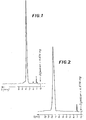
- the device used is composed of a "Waters Associates” liquid chromatograph: universal injector model U 6 K, pump model 6000 A, multi-wavelength detector model 450, Sefram recorder model Servotrace.
Landscapes
- Health & Medical Sciences (AREA)
- Life Sciences & Earth Sciences (AREA)
- Chemical & Material Sciences (AREA)
- Proteomics, Peptides & Aminoacids (AREA)
- Organic Chemistry (AREA)
- General Health & Medical Sciences (AREA)
- Medicinal Chemistry (AREA)
- Public Health (AREA)
- Zoology (AREA)
- Epidemiology (AREA)
- Animal Behavior & Ethology (AREA)
- Immunology (AREA)
- Bioinformatics & Cheminformatics (AREA)
- Veterinary Medicine (AREA)
- Endocrinology (AREA)
- Toxicology (AREA)
- Pharmacology & Pharmacy (AREA)
- Gastroenterology & Hepatology (AREA)
- Biochemistry (AREA)
- Biophysics (AREA)
- Genetics & Genomics (AREA)
- Molecular Biology (AREA)
- Engineering & Computer Science (AREA)
- Peptides Or Proteins (AREA)
- Medicines That Contain Protein Lipid Enzymes And Other Medicines (AREA)
- Organic Low-Molecular-Weight Compounds And Preparation Thereof (AREA)
Description
La somatostatine a été isolée par l'équipe de Guillemin à partir d'extraits d'hypothalamus de moutons [comptes de l'Académie des Sciences de Paris, 275, 2913 (1972)]. La même équipe en a indiqué la structure qui correspond à un tétradécapeptide cyclique avec une liaison disulfure réunissant les groupes cystéine en positions 3 et 14:
Dans cette formule, tous les aminoacides, à l'exception de la glycine, sont dans la configuration L et les abréviations utilisées pour les aminoacides sont celles recommandées par la Commission IUPAC-IUB de nomenclature biochimique [Journal of Biological Chemistry, 247, 977 (1972)].In this formula, all the amino acids, with the exception of glycine, are in the L configuration and the abbreviations used for the amino acids are those recommended by the IUPAC-IUB Commission for Biochemical Nomenclature [Journal of Biological Chemistry, 247, 977 ( 1972)].
La somatostatine possède une grande variété d'effets biologiques, en particulier au niveau de l'inhibition de la sécrétion de l'hormone de croissance et de l'inhibition des sécrétions d'insuline et de glucagon, ainsi que de l'inhibition de certaines sécrétions digestives.Somatostatin has a wide variety of biological effects, particularly in the inhibition of growth hormone secretion and the inhibition of insulin and glucagon secretions, as well as the inhibition of certain digestive secretions.
Par suite, la somatostatine s'est révélée particulièrement intéressante en tant qu'agent thérapeutique, en particulier pour le traitement de l'acromégalie, du diabète, ainsi qu'en gastro- entérologie. En conséquence, il s'est révélé néccessaire de produire des quantités suffisantes de somatostatine très pure pour poursuivre les investigations cliniques du produit.As a result, somatostatin has proved to be of particular interest as a therapeutic agent, in particular for the treatment of acromegaly, of diabetes, as well as in gastroenterology. Consequently, it has proved necessary to produce sufficient quantities of very pure somatostatin to continue the clinical investigations of the product.
Différentes synthèses de la somatostatine ont déjà été décrites.Various syntheses of somatostatin have already been described.
Certaines méthodes proposées utilisent la synthèse en phase solide (brevets des Etats-Unis d'Amérique n° 3 862 925 et n° 3 904 594 en particulier), alors que d'autres ont lieu en phase liquide selon la technique des fragments [Helvetica Chemica Acta, 57, 730 (1974), ou Biochemical Biophysical Research Communication 54, 234 (1973), etc.). Enfin, dernièrement, un procédé "Stepwise" a été mentionné [International Journal of Peptides and Proteines Research, 11, 329 (1978)].Some of the proposed methods use solid phase synthesis (United States patents 3,862,925 and 3,904,594 in particular), while others take place in the liquid phase using the fragment technique [Helvetica Chemica Acta, 57, 730 (1974), or Biochemical Biophysical Research Communication 54, 234 (1973), etc.). Finally, lately, a "Stepwise" process has been mentioned [International Journal of Peptides and Proteines Research, 11, 329 (1978)].
Toutefois, ces différents procédés sont tous inadaptés à une production industrielle à grande échelle de la somatostatine.However, these different processes are all unsuitable for large-scale industrial production of somatostatin.
Ainsi, il est connu que les procédés de synthèse des peptides en phase solide ne sont pas transposables à l'échelle industrielle, en particulier à cause des difficultés rencontrées pour scinder le polypeptide de son support après la phase d'élongation. La scission nécessite des moyens énergiques et s'accompagne d'une dégradation importante conduisant à des rendements faibles et nécessitant des purifications subséquentes longues et difficiles.Thus, it is known that the methods of synthesis of peptides in the solid phase cannot be transposed to an industrial scale, in particular because of the difficulties encountered in splitting the polypeptide from its support after the elongation phase. The split requires energetic means and is accompanied by significant degradation leading to low yields and requiring subsequent long and difficult purifications.
De même, les différentes synthèses en phase liquide connues à ce jour ne conduisent à la somatostatine qu'avec des rendements très faibles et nécessitent des purifications laborieuses et nombreuses pendant les phases intermédiaires.Similarly, the various liquid phase syntheses known to date only lead to somatostatin with very low yields and require laborious and numerous purifications during the intermediate phases.
Le procédé suivant l'invention a pour objet de surmonter toutes ces difficultés et de permettre l'obtention de quantités importantes de somatostatine de haute pureté. Ce procédé est un procédé étape par étape, dit "procédé Stepwise" à partir du C terminal, caractérisé en ce qu'on utilise, dès le début de la synthèse, un groupement protecteur de la fonction acide de la cystéine en position 14, qui insolubilise la molécule dans l'eau et les solvants organiques usuels à l'exception du diméthylformamide et du diméthylsulfoxyde. Les réactions de couplage peptidique sont effectuées en solution dans le diméthylformamide et le produit de la réaction est isolé soit par évaporation du diméthylformamide, soit par précipitation par addition d'un deuxième solvant qui l'insolubilise. Le peptide brut ainsi obtenu est purifié par des lavages en phase solide à l'aide de solvants appropriés qui dissolvent les impuretés.The object of the process according to the invention is to overcome all these difficulties and to make it possible to obtain large quantities of high purity somatostatin. This process is a step-by-step process, called the "Stepwise process" from the C terminal, characterized in that one uses, from the start of the synthesis, a group protecting the acid function of cysteine in position 14, which insolubilizes the molecule in water and the usual organic solvents with the exception of dimethylformamide and dimethylsulfoxide. The peptide coupling reactions are carried out in solution in dimethylformamide and the reaction product is isolated either by evaporation of dimethylformamide, or by precipitation by addition of a second solvent which insolubilizes it. The crude peptide thus obtained is purified by washing in solid phase using appropriate solvents which dissolve the impurities.
Cette technique présente donc au niveau des lavages les mêmes avantages que la synthèse en phase solide sans en présenter les inconvénients (risque de réaction incomplète au niveau du couplage en particulier).This technique therefore has the same advantages in washing as the solid phase synthesis without having the disadvantages (risk of incomplete reaction in terms of coupling in particular).
Les rendements obtenus à chaque étape sont excellents et se situent entre 90 et 98% de la théorie.The yields obtained at each stage are excellent and are between 90 and 98% of theory.
Dans le procédé utilisé, les fonctions hydroxyle de la sérine et des deux molécules de thréonine n'ont pas besoin d'être protégées, ce qui représente un avantage important car ces protections sont toujours difficiles à réaliser. Les protections des chaînes latérales des deux molécules de lysine (fonction amine en ∞) et de la fonction acide terminale de la cystéine en position 14 ont été choisies de façon à résister aux traitements acides nécessaires pendant les phases d'élongation pour libérer les protections temporaires des fonctions α-aminées.In the process used, the hydroxyl functions of the serine and of the two threonine molecules do not need to be protected, which represents an important advantage since these protections are always difficult to achieve. The side chain protections of the two lysine molecules (fonction amine function) and of the terminal acid function of cysteine at position 14 were chosen so as to resist the acid treatments necessary during the elongation phases to release the temporary protections α-amino functions.
Ce sont donc des groupes protecteurs clivables seulement en milieu basique fort, à savoir le groupe méthanesulfonyléthyloxycarbonyle (MSC) pour les amines en co des molécules de lysine et le groupe phénylazobenzylsulfonyléthyloxy (OPSE) pour la fonction acide de la cystéine en position 14. C'est ce dernier groupement qui confère en particulier, dès le départ, leur caractère d'insolubilité aux différents peptides intermédiaires obtenus au cours de la phase d'élongation.They are therefore cleavable protective groups only in strong basic medium, namely the methanesulfonylethyloxycarbonyl group (MSC) for the amines in co of lysine molecules and the phenylazobenzylsulfonylethyloxy group (OPSE) for the acid function of cysteine in position 14. C ' is the latter group which in particular confers, from the start, their insolubility to the various intermediate peptides obtained during the elongation phase.
Enfin, les deux groupements thiol des molécules de cystéine en positions 3 et 14 ont été protégés par un groupement qui résiste à la fois aux conditions acides et basiques, afin de pouvoir être conservé jusqu'à la fin de la synthèse. Le groupement protecteur ainsi choisi est le groupe acétamidométhyle (Acm).Finally, the two thiol groups of the cysteine molecules in
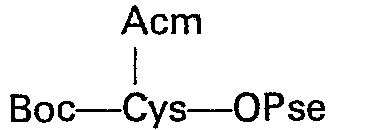
Le premier élément de la synthèse est constitué par le N-t-butoxycarbonyl S-acétamidométhyl L-cystéinate de p-phénylazobenzylsulfonyléthyle.The first element of the synthesis is constituted by the N-t-butoxycarbonyl S-acetamidomethyl L-p-phenylazobenzylsulfonylethyl cysteinate.
Ce composé est nouveau et s'obtient par condensation de la N-t-butoxycarbonyl S-acétamidométhylcystéine su le p-phénylazobenzylsulfonyléthanol en présence d'un agent de déshydratation tel que le dicyclohexylcarbodiimide.This compound is new and is obtained by condensation of N-t-butoxycarbonyl S-acetamidomethylcysteine on p-phenylazobenzylsulfonylethanol in the presence of a dehydrating agent such as dicyclohexylcarbodiimide.
Ce composé est obtenu avec un excellent rendement; il est peu soluble dans l'eau et présente une coloration jaune orangé facilitant les suivis chromatographiques. Enfin, le groupement protecteur de l'amine tertiobutyloxycarbonyle peut être facilement éliminé à l'aidé d'un acide fort, tel que l'acide trifluoracétique ou l'acide formique contenant 1% d'acide chlorhydrique.This compound is obtained with an excellent yield; it is not very soluble in water and has an orange-yellow coloration which facilitates chromatographic monitoring. Finally, the protective group of the tert-butyloxycarbonyl amine can be easily removed using a strong acid, such as trifluoroacetic acid or formic acid containing 1% hydrochloric acid.
A partir de ce produit de départ, on procède à l'élongation de la chaîne polypeptidique par couplage de l'acide aminé suivant convenablement protégé, si nécessaire.From this starting product, the polypeptide chain is elongated by coupling the amino acid according to suitably protected, if necessary.
Chaque phase de couplage est suivie d'une opération sélective de libération de l'amine qui va entrer en réaction lors de la création de la liaison peptidique suivante. On opère en milieu acide fort tel que l'acide trifluoracétique ou l'acide formique à 1% d'acide chlorhydrique.Each coupling phase is followed by a selective operation to release the amine, which will react when the next peptide bond is created. The operation is carried out in a strong acid medium such as trifluoroacetic acid or formic acid containing 1% hydrochloric acid.
Les groupes protecteurs temporaires des fonctions aminées en a, clivables en milieu acide, sont choisis dans la famille des carbamates. Ce sont soit le groupe N-tertiobutoxycarbonyle (Boc), soit le groupe N-a-biphénylisopropyloxycarbonyl (B Poc).The temporary protective groups of the amino functions at a, cleavable in an acid medium, are chosen from the family of carbamates. These are either the N-tert-butoxycarbonyl group (Boc) or the N-a-biphenylisopropyloxycarbonyl group (B Poc).
Dès que le L-tryptophane est en place (position 8), il devient indispensable, au moment des phases de clivage des groupements protecteurs intermédiaires, d'utiliser des adjuvants chimiques qui protègent le noyau indole de réactions parasites spécifiques de cet hétérocycle.As soon as L-tryptophan is in place (position 8), it becomes essential, at the time of the cleavage phases of the intermediate protective groups, to use chemical adjuvants which protect the indole nucleus from parasitic reactions specific for this heterocycle.
C'est ainsi que l'addition d'anisole dans le milieu prévient les réactions radicalaires, tandis que l'utilisation de thiols tels que l'éthanedithiol ou le mercapto-éthanol évite les oxydations parasites de cet hétérocycle.Thus the addition of anisole in the medium prevents radical reactions, while the use of thiols such as ethanedithiol or mercapto-ethanol avoids parasitic oxidation of this heterocycle.
D'un façon générale, on préfère utiliser dans les phases de couplage les a-aminoacides convenablement protégés sous forme d'esters. activés.In general, it is preferred to use in the coupling phases the α-amino acids suitably protected in the form of esters. activated.
Le solvant de réaction est choisi de façon à maintenir en solution à la fois les réactifs et les produits de la réaction. Les solvants de choix, compte tenu de caractère d'insolubilité des polypeptides obtenus, sont le diméthylformamide et le diméthylsulfoxyde.The reaction solvent is chosen so as to keep both the reactants and the reaction products in solution. The solvents of choice, taking into account the insolubility of the polypeptides obtained, are dimethylformamide and dimethylsulfoxide.
L'utilisation d'un activateur de couplage, tel que l'hydroxybenzotriazole, a un effet bénéfique sur la vitesse de réaction tout en minimisant les risques de racémisation.The use of a coupling activator, such as hydroxybenzotriazole, has a beneficial effect on the reaction rate while minimizing the risks of racemization.
Enfin, il est avantageux d'introduire les deux derniers aminoacides ensemble sous la forme de dipeptide activé.Finally, it is advantageous to introduce the last two amino acids together in the form of activated dipeptide.
L'ensemble des opérations est représenté dans les schémas de synthèse et Il ci-après.All the operations are represented in the summary diagrams and II below.
Les rendements sont excellents à tous les niveaux et la pureté des produits est satisfaisante. Les contrôles sont effectués par chromatographie en couche mince sur plaques de silicagel dans différents milieux d'élution.


Une variante du procédé consiste à effecteur séparément la synthèse des heptapeptides 1 à 7 et 8 à 14 également selon le même principe du Stepwise. Les deux heptapeptides sont ensuite couplés par un agent chimique convenable en tétradécapeptide.A variant of the process consists in separately performing the synthesis of
Cette variante présente l'avantage de ne pas soumettre le tryptophane, aminoacide particulièrement sensible à l'oxydation et aux réactions radicalaires, à une suite de réactions pour effectuer les phases de déprotection subséquentes à chaque couplage des aminoacides 1 à 7.This variant has the advantage of not subjecting tryptophan, an amino acid which is particularly sensitive to oxidation and to radical reactions, to a series of reactions to carry out the deprotection phases subsequent to each coupling of
L'heptapeptide 8 à 14:

L'heptapeptide 1 à 7:

On part du dipeptide connu H-Phe-Phe-OCH3, sur lequel on fait réagir l'ester orthonitrophénolique de l'orthonitrophénylsulfénamino asparagine dans le diméthylformamide. Le tripeptide est isolé par précipitation avec de l'éther et purifié par des lavages en phase solide. Ce tripeptide est entièrement déprotégé par un traitement basique (saponification de l'ester), puis par acidolyse qui libère la fonction amine de la lysine.We start from the known dipeptide H-Phe-Phe-OCH 3 , on which the orthonitrophenolic ester of orthonitrophenylsulfenamino asparagine is reacted in dimethylformamide. The tripeptide is isolated by precipitation with ether and purified by washing in solid phase. This tripeptide is completely deprotected by a basic treatment (saponification of the ester), then by acidolysis which releases the amine function from lysine.
Ce tripeptide H-Asn-Phe-Phe-OH est utilisé sous sa forme acide libre terminal pour la suite des opérations.This tripeptide H-Asn-Phe-Phe-OH is used in its terminal free acid form for the following operations.
Chaque acide aminé est introduit sous forme d'ester activé et la réaction est conduite en présence d'un accélérateur tel que l'hydroxybenzotriazole et en présence d'une base organique non racémisante telle que la N-éthylmorpholine.Each amino acid is introduced in the form of an activated ester and the reaction is carried out in the presence of an accelerator such as hydroxybenzotriazole and in the presence of a non-racemizing organic base such as N-ethylmorpholine.
L'ensemble des différentes étapes est rassemblé sur le schéma de synthèse III ci-après.All of the different stages are collated on synthesis scheme III below.
Le couplage entre les deux heptapeptides peut être effectué dans le diméthylformamide en présence d'un agent de couplage tel que le dicyclohexylcarbodiimide, ou bien à l'aide d'un activateur de la fonction carboxylique comme l'hexafluorophosphate de benzotriazolyloxy-(tridiméthylamino)-phosphonium.The coupling between the two heptapeptides can be carried out in dimethylformamide in the presence of a coupling agent such as dicyclohexylcarbodiimide, or else using a carboxylic function activator such as benzotriazolyloxy- (tridimethylamino) hexafluorophosphate - phosphonium.
Le tétradécapeptide obtenu par cette voie est absoluement identique à celui obtenu par le procédé Stepwise complet.The tetradecapeptide obtained by this route is absolutely identical to that obtained by the complete Stepwise process.
Quelle que soit la variante utilisée, on aboutit ainsi au tétradécapeptide protégé:

Un traitement en milieu acide fort tel que l'acide trifluoroacétique permet de libérer la fonction amine de l'alanine en position 1. Par action d'une base forte telle que la baryte, pendant un temps relativement court (15 à 30 min) et à température ambiante sur une solution du produit dans le diméthylformamide, on élimine à la fois les groupes protecteurs des chaînes latérales des deux lysines et l'ester sur la cystéine en position 14.A treatment in a strong acid medium such as trifluoroacetic acid makes it possible to release the amine function of the alanine in
On est ansi conduit à la di-S-acétamidométhyl-3,14-dihydrosomatostatine qui est soumise à une purification avant d'aborder les étapes finales.

On peut utiliser, pour la purification, différentes méthodes telles que la distribution à contre- courant, la chromatographie de partition sur gel, la chormatographie sur échangeurs d'ions, etc. Sur des quantités importantes, la distribution à contrecourant s'est avérée la méthode de choix et permet d'obtenir un produit de pureté supérieure ou égale à 98%. La libération de la fonction thiol des deux cystéines s'obtient facilement selon des méthodes connues, à savoir par traitement par un sel de métal lourd tel que le mercure ou l'argent. Il est possible, éventuellement, d'isoler le sel de la dihydrosomatostatine avec le métal. Celui-ci peut être conservé, si besoin est, et sans altération, pendant plusieurs semaines à +4°C à l'abri de la lumière.Different methods can be used for purification, such as counter-current distribution, gel partition chromatography, ion exchange chormatography, etc. On large quantities, countercurrent distribution has proven to be the method of choice and makes it possible to obtain a product with a purity greater than or equal to 98%. The release of the thiol function of the two cysteines is easily obtained by known methods, namely by treatment with a heavy metal salt such as mercury or silver. It is possible, optionally, to isolate the salt of dihydrosomatostatin with the metal. This can be stored, if necessary, and without alteration, for several weeks at + 4 ° C protected from light.
Un traitement par l'hydrogène sulfuré permet d'éliminer le métal sous forme de sulfure insoluble facile à éliminer.Treatment with hydrogen sulfide makes it possible to remove the metal in the form of insoluble sulfide which is easy to remove.
La solution ainsi obtenue contient la dihydrosomatostatine qu'il est possible d'isoler par évaporation à température ambiante.The solution thus obtained contains dihydrosomatostatin which it is possible to isolate by evaporation at room temperature.
Le plus souvent, la solution est soumise au pontage final en disulfure en utilisant des techniques connues d'oxydation déjà utilisées pour la somatostatine elle-même ou pour d'autres polypeptides tels que la vasopressine ou l'oxytocine. On peut, par exemple, utiliser l'oxygène de l'air, ou encore le ferricyanure de potassium. On a de toute, façon intérêt à opérer en solution très diluée, de façon à minimiser au maximum les réactions de polymérisation.Most often, the solution is subjected to the final disulfide bridging using known oxidation techniques already used for somatostatin itself or for other polypeptides such as vasopressin or oxytocin. One can, for example, use oxygen from the air, or alternatively potassium ferricyanide. In any case, it is advantageous to operate in a very dilute solution, so as to minimize polymerization reactions as much as possible.
Dans le schéma IV ci-après, l'ensemble des opérations à partir du tétradécapeptide protégé est résumé. La somatostatine brute ainsi obtenue ne nécessite qu'une chromatographie de perméation sur gel de Sephadex G 25 pour obtenir un produit de haute pureté dont le titre est supérieur à 98% par détermination en HPLC.In scheme IV below, the set of operations starting from the protected tetradecapeptide is summarized. The crude somatostatin thus obtained requires only permeation chromatography on Sephadex G 25 gel to obtain a high purity product whose titer is greater than 98% by determination in HPLC.
Le procédé ainsi décrit permet de préparer des quantités importantes de somatostatine en n'effectuant des purifications poussées qu'à deux niveaux:
- - di-S-acétamidométhyl-3,14 dihydrosomatostatine,
- - somatostatine elle-même.
- - di-S-acetamidomethyl-3,14 dihydrosomatostatin,
- - somatostatin itself.
Dans toutes les autres étapes, les phases de purification sont limitées à des opérations de lavage en phase hétérogène.

Les caractéristiques et avantages du procédé selon l'invention seront mieux compris à la lecture des exemples suivants.The characteristics and advantages of the method according to the invention will be better understood on reading the following examples.
Dans les exemples qui vont suivre, les abréviations suivantes seront utilisées.



250 g d'acétamide, 150 g polyoxyméthylène et 2,5 g de carbonate de potassium sont pulvérisés ensemble et fondus à 100°C. Après 1 h à cette température et refroidissement vers 50-60°C, on ajoute 0,5 ml de potasse aqueuse 12 N et abandonne au réfrigérateur une nuit. Le solide pris en masse est repris dans le minimum d'acétone pure (environ 200 ml) pour le dissoudre à température ambiante. Le produit cristallise par refroidissement quelques heures à -30°C, il est alors filtré rapidement et séché.250 g of acetamide, 150 g of polyoxymethylene and 2.5 g of potassium carbonate are sprayed together and melted at 100 ° C. After 1 h at this temperature and cooling to 50-60 ° C., 0.5 ml of 12 N aqueous potassium hydroxide is added and left in the refrigerator overnight. The solid solid is taken up in the minimum of pure acetone (about 200 ml) to dissolve it at room temperature. The product crystallizes by cooling for a few hours at -30 ° C, it is then quickly filtered and dried.
On obtient ainsi 170 g; Fc 45-50°C.170 g are thus obtained; Mp 45-50 ° C.
Un deuxième jet d'environ 50 g peut être obtenu en concentrant le solvant.A second jet of approximately 50 g can be obtained by concentrating the solvent.

75 g (0,84 mole) d'acétamido méthanol en solution dans 300 ml de dioxanne sont ajoutés goutte à goutte à température ambiante à un mélange bien agité de 88 g (0,5 mole) de chlorhydrate de L-cystéine monohydrate dans 1 250 ml de dioxanne, 22 ml d'acide chlorhydrique concentré et 40 ml d'eau. L'agitation est poursuivie 30 min, l'huile formée est décantée et le solvant qu'elle contient est évaporé en évaporateur rotatif à 30°C. Le résidu est repris par de l'éthanol qui est évaporé à son tour pour déshydrater le produit; il cristallise progressivement et est filtré sous vide, lavé à l'isopropanol, puis à l'éther et séché sous vide.75 g (0.84 mole) of acetamido methanol in solution in 300 ml of dioxane are added dropwise at room temperature to a well stirred mixture of 88 g (0.5 mole) of L-cysteine hydrochloride monohydrate in 1 250 ml of dioxane, 22 ml of concentrated hydrochloric acid and 40 ml of water. Stirring is continued for 30 min, the oil formed is decanted and the solvent which it contains is evaporated in a rotary evaporator at 30 ° C. The residue is taken up in ethanol which is in turn evaporated to dehydrate the product; it gradually crystallizes and is filtered under vacuum, washed with isopropanol, then with ether and dried under vacuum.
On obtient ainsi 90 g (rendement 80%); Fc 162-165°C.
-
-
Un échantillon recristallisé dans le mélange isopropanol-eau 80/20 (volume/volume) fournit un produit de Fc 166-169°C.
-
-

- 19,5 g (83%); Fc 112-114°C.
-

-

- 19.5 g (83%); Mp 112-114 ° C.
-
-


Un contrôle CCM/AcOET―CH3OH: 96/4 (volume/volume) permet de vérifier la conversion totale de PseOH (Rf - 0,50-0,55) en produit attendu (Rf - 0,42-0,50). Si elle n'est pas complète, rajouter un peu de

L'isolement du produit se fait de ia manière suivante: la dicycfohexylurée (DCU) est filtrée, la pyridine évaporée sous vide à 30°C, le résidu repris par de l'acétate d'éthyle et la DCU filtrée encore, puis la solution lavée successivement par une solution de bisulfatesulfate de potassium (pH=2,0), de l'eau, une solution de bicarbonate de sodium à 5% dans l'eau, puis à l'eau et séchée sur sulfate de magnésium. Après filtration, on évapore le solvant, la gomme rouge obtenue se solidifie progressivement par contact avec 400 ml d'éther anhydre. Le gel obtenu est pulvérisé et filtré, rincé à l'éther anhydre et séché.
- Poids: 53,3 g; rendement 92%; Fc 75-77°C.
-

-

- CCM/AcO Et - MeOH Rf = 0,50; BEW1 Rf = 0,69.
- Truth Rf = 0,50; BPEW1 Rf = 0,77.
- Weight: 53.3 g; 92% yield; Mp 75-77 ° C.
-
-
- TLC / AcO Et - MeOH Rf = 0.50; BEW 1 Rf = 0.69.
- Truth Rf = 0.50; BPEW 1 Rf = 0.77.


Après 10 min à cette température, la réaction est terminée. Le solvant est évaporé sous vide le plus rapidement possible à température <30°C. Le résidu huileux repris dans 15 ml de méthanol est versé goutte à goutte dans 150 ml d'éther anhydre agité à 0°C. Le produit est filtré, rincé à l'éther anhydre et séché en présence d'anyhdride phosphorique sous vide. On obtient ainsi 5,0 g (97%) d'un chlorhydrate de Fc 160-162°C (décomposition). 

Après 1 h à -10°C, on laisse la température remonter progressivement à la température ambiante (20°C) en évitant tout échauffement.After 1 h at -10 ° C, the temperature is allowed to gradually rise to room temperature (20 ° C), avoiding any heating.
La réaction est complète en 6 h. Le DMF est alors évaporé sous haut vide à 30-35°C et le résidu repris dans 200 ml d'acétate d'éthyle. La dicyclohexylurée est filtrée et on procède aux lavages suivants: sulfate et bisulfate de potassium aqueux, eau, bicarbonate de sodium aqueux à 5%, eau, chaque lavage étant répété deux ou trois fois.The reaction is complete in 6 h. The DMF is then evaporated under high vacuum at 30-35 ° C and the residue taken up in 200 ml of ethyl acetate. The dicyclohexylurea is filtered and the following washes are carried out: aqueous potassium sulfate and bisulfate, water, 5% aqueous sodium bicarbonate, water, each washing being repeated two or three times.
Après séchage sur sulfate de magnésium à température ambiante le solvant est concentré à environ 50 ml. Le produit précipite en gel par refroidissement une nuit à 0°C. Il est filtré, rincé par un peu d'acétate d'éthyle, puis à l'éther anhydre et séché sous vide sans chauffer.
- Rendement: 5,3 g (80%); Fc 111-113°C.
- CCM/BEW, Rf = 0,63
- BPEW, Rf = 0,70 Révélateur Reindel-Hoppe
- EPAW2 Rf = 0,74
- Yield: 5.3 g (80%); Mp 111-113 ° C.
- CCM / BEW, Rf = 0.63
- BPEW, Rf = 0.70 Reindel-Hoppe Developer
- EPAW2 Rf = 0, 74
Dans ces divers systèmes, le produit renferme un peu de decyclohexylurée (Rf 0,80 à 0,86) qui s'éliminera au stade suivant.
-
-
38,5 g de

- Rendement: 38,5 g (97%).
- CCM/EPAW2 Rf = 0,30
- BPEW1 Rf = 0,60
- EBPEW Rf = 0,50
- Yield: 38.5 g (97%).
- CCM / EPAW 2 Rf = 0.30
- BPEW 1 Rf = 0.60
- EBPEW Rf = 0.50

6,80 g de trifluoracétate de

- 7,5 g (98%); Fc= 136-138°C.
- CCM/EPAW2 Rf = 0,70
- BEW, Rf = 0,69
- EBPEW Rf=0,86
- 7.5 g (98%); Mp = 136-138 ° C.
- CCM / EPAW 2 Rf = 0.70
- BEW, Rf = 0.69
- EBPEW Rf = 0.86

7,67 g (0,01 mole) de

- On
obtient 7,34 g du trifluoracétate (94%). - CCM/EPAW2 Rf = 0,30, produit pur
- EPAW1 Rf = 0,52, produit pur
- 7.34 g of trifluoroacetate (94%) are obtained.
- CCM / EPAW 2 Rf = 0.30, pure product
- EPAW 1 Rf = 0.52, pure product


Après une nuit au réfrigérateur, le produit est isolé par évaporation du DMF sous vide poussé à 30°C maximum, lavages du solide obtenu par l'eau, une solution bisulfate-sulfate de potassium, l'eau, le bicarbonate de sodium aqueux, l'eau et, après un léger séchage, par l'isopropanol et, enfin, à l'éther.
- On
obtient ainsi 8,22 g (90%); Fc 153―155°C. - CCM/EPAW, Rf = 0,84
- EPAW2 Rf = 0,67
- BEW1 Rf = 0,75
- BPEW1 Rf = 0,75
-
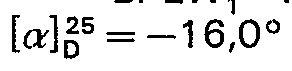
- 8.22 g (90%) are thus obtained; Mp 153―155 ° C.
- CCM / EPAW, Rf = 0.84
- EPAW 2 Rf = 0.67
- BEW 1 Rf = 0.75
- BPEW 1 Rf = 0.75
-

9,14 g de

- On
obtient ainsi 9,0 g (97%) d'un produit pur. - CCM/EPAW, Rf = 0,47
- EPAW2 Rf = 0,39
- BPEW1 Rf = 0,65
- EBPEW Rf = 0,65
- (

- 9.0 g (97%) of a pure product are thus obtained.
- CCM / EPAW, Rf = 0.47
- EPAW 2 Rf = 0.39
- BPEW 1 Rf = 0.65
- EBPEW Rf = 0.65
- ((


On obtient ainsi 9,1 g (90%) de produit. Sa pureté n'est généralement pas satisfaisante en CCM et il doit subir des lavages par les mélanges: isopropanol-eau: 50/50, puis 75/25, puis 100/0 (50 à 100 ml par lavage).
- Rendement 86%.
- Le produit pur présente les caractéristiques suivantes:
- CCM/EPAW1 Rf = 0,79
- EPAW2 Rf = 0,63
- BEW1 Rf = 0,66
- TRUTH Rf = 0,05
- Fc 169-172°C
-

- Yield 86%.
- The pure product has the following characteristics:
- CCM / EPAW 1 Rf = 0.79
- EPAW 2 Rf = 0.63
- BEW 1 Rf = 0.66
- TRUTH Rf = 0.05
- Fc 169-172 ° C
-

20,3 g de

- On obtient 20,3 g (98%).
- CCM/EPAW1 Rf = 0,50
- EPAW2 Rf = 0,33
- EBPEW Rf = 0,69
-

- 20.3 g (98%) are obtained.
- CCM / EPAW 1 Rf = 0.50
- EPAW 2 Rf = 0.33
- EBPEW Rf = 0.69
-

10,29 g du trifluoracétate du pentapeptide


On obtient ainsi 11,4 g (88%) d'un produit qui, généralement, doit subir des lavages répétés à l'acétone (de 25 à 50 ml).11.4 g (88%) of a product are thus obtained which, generally, must undergo repeated washing with acetone (from 25 to 50 ml).
On obtient ainsi, avec un rendement de 80 à 85% un produit pur; Fc 172-174°C. CCM/EPAW1 Rf=0,75
- EPAW2 Rf = 0,50
- BEW1 Rf=0,57
-

- EPAW 2 Rf = 0.50
- BEW 1 Rf = 0, 57
-

6,47 g (5 millimoles) de

Le produit pèse 6,40 g (97%) et est pratiquement pur en- CCM/EPAW2 Rf=0,25
- EPAW1 Rf=0,50:
- The product weighs 6.40 g (97%) and is practically pure in
- CCM / EPAW 2 Rf = 0.25
- EPAW 1 Rf = 0.50:

13,075 g de trifluoracétate de

- CCM/EAPW2 Rf ~ 0,50
- (C

- CCM / EAPW 2 Rf ~ 0.50
- (VS


- On obtient ainsi, après séchage: 1,37 g (85%).
- Ce produit est caractérisé par:
- Fc 158-160°C.
-

- CCM/BEW, Rf = 0,70
- EPAW, Rf = 0,76
- EBPEW Rf = 0,77
- After drying, 1.37 g (85%) are thus obtained.
- This product is characterized by:
- Mp 158-160 ° C.
-
- CCM / BEW, Rf = 0.70
- EPAW, Rf = 0.76
- EBPEW Rf = 0.77

1,30 g de l'heptapeptide de l'exemple 14 est ajouté en une minute environ à un mélange préalablement refroidi à 5°C de 13 ml d'acide trifluoracétique, 1,3 ml d'éthanedithiol et 0,65 ml d'anisole. Après 2 min d'agitation à cette température, les réactifs volatils sont évaporés sous vide sans chauffer et le résidu repris par deux fois 15 ml de méthanol qui est évaporé à chaque fois sous vide. Le résidu trituré en présence de 15 ml d'isopropanol est filtré. On le lave ensuite par trois fois 15 ml du même solvant tiède (40°C environ) puis à l'éther et sèche.1.30 g of the heptapeptide of Example 14 is added in about one minute to a mixture previously cooled to 5 ° C of 13 ml of trifluoroacetic acid, 1.3 ml of ethanedithiol and 0.65 ml of anisole. After 2 min of stirring at this temperature, the volatile reactants are evaporated under vacuum without heating and the residue taken up twice with 15 ml of methanol which is evaporated each time under vacuum. The triturated residue in the presence of 15 ml of isopropanol is filtered. It is then washed with three times 15 ml of the same lukewarm solvent (approximately 40 ° C.) then with ether and dried.
On obtient ainsi 1,10 g (92%) du trifluoracétate qui se révèle pur en CCM dans les mélanges suivants:
- EPAW1 Rf = 0,36
- BEW2 Rf = 0,36
- EPAW 1 Rf = 0.36
- BEW 2 Rf = 0.36

13,4 g du trifluoracétate de l'heptapeptide de l'exemple 15 en solution dans 130 ml de DMF sont traités successivement par 2,3 ml de N-éthylmorpholine, 2,43 g d'hydroxybenzotriazole et 4,25 g de Boc-Phe-ONp au bain de glace. Après 1 h de séjour à température ambiante, un contrôle CCM montre que la réaction est terminée. Le DMF est alors évaporé sous haut vide et le résidu agité en présence de glace se solidifie progressivement. Il est filtré, lavé, à l'eau et séché, puis lavé deux fois par l'isopropanol et trois fois par de l'acétone tiède (40°C).13.4 g of the trifluoroacetate of the heptapeptide of Example 15 in solution in 130 ml of DMF are treated successively with 2.3 ml of N-ethylmorpholine, 2.43 g of hydroxybenzotriazole and 4.25 g of Boc- Phe-ONp in an ice bath. After 1 hour of stay at room temperature, a TLC control shows that the reaction is complete. The DMF is then evaporated under high vacuum and the residue stirred in the presence of ice gradually solidifies. It is filtered, washed with water and dried, then washed twice with isopropanol and three times with warm acetone (40 ° C).
On obtient ainsi 13,6 g (93%) d'un produit de pureté correcte en chromatographie. CCM/EPAW1 Rf=0,77
- EPAW2 Rf=0,58
- BPEW1 Rf = 0,69
- BEW1 Rf = 0,67
- EBPEW Rf = 0,91
-
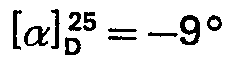
- EPAW 2 Rf = 0.58
- BPEW 1 Rf = 0.69
- BEW 1 Rf = 0.67
- EBPEW Rf = 0.91
-

13,4 g (8,2 moles) de l'octapeptide de l'exemple 16 sont ajoutés à un mélange préalablement refroidi à 5°C de 130 ml TFA, 13 ml d'éthanedithiol et 6,5 ml d'anisole. L'agitation est poursuivie 15 min à température ambiante.13.4 g (8.2 moles) of the octapeptide of Example 16 are added to a mixture previously cooled to 5 ° C of 130 ml TFA, 13 ml of ethanedithiol and 6.5 ml of anisole. Agitation is continued for 15 min at room temperature.
On évapore sous vide à température ambiante, puis on reprend le résidu deux fois par 70 ml de méthanol en évaporant à chaque fois le solvant. Puis on reprend le produit dans l'isopropanol et filtre le solide qu'on lave deux fois avec 70 ml d'isopropanol tiède (40°C). On lave abondamment avec de l'éther anhydre et sèche.
- On obtient ainsi 13,1 g (97%) de produit pur.
- CCM/EPAW1 Rf=0,38
- EPAW2 Rf = 0,32
- BEW1 Rf=0,42
- EBPEW Rf=0,75
- 13.1 g (97%) of pure product are thus obtained.
- CCM / EPAW 1 Rf = 0.38
- EPAW 2 Rf = 0.32
- BEW 1 Rf = 0.42
- EBPEW Rf = 0.75

13,1 g de trifluoracétate de

- Après séchage, il pèse 13,5 g (95%).
- CCM/EPAW2 Rf = 0,62
- BPEW, Rf = 0,70
- EBPEW Rf=0,94
-

- After drying, it weighs 13.5 g (95%).
- CCM / EPAW 2 Rf = 0.62
- BPEW, Rf = 0.70
- EBPEW Rf = 0.94
-

Une solution de 0,98 g du trifluoracétate de

- On
obtient finalement 1,02 g (89%) de produit pur. - CCM/EPAW1 Rf = 0,82
- EPAW2 Rf = 0,58
-

- F. 222-224°C (décomposition).
- 1.02 g (89%) of pure product is finally obtained.
- CCM / EPAW 1 Rf = 0.82
- EPAW 2 Rf = 0.58
-
- M. 222-224 ° C (decomposition).

A température du laboratoire, on prépare le mélange suivant: TFA 300 ml, éthanedithiol 30 ml, anisole 15 ml. On additionne 30 g de

Ce résidu est versé sur 700 ml de mélange propanol-2/éther éthylique 50/50 (volume/volume). Le précipité est essoré, lavé par le même mélange, puis par l'éther seul.
- Après séchage, on obtient 30,2 g (100%).
- CCM/EPAW2 Rf = 0,40.
- After drying, 30.2 g (100%) are obtained.
- CCM / EPAW 2 Rf = 0.40.


- Après séchage, on obtient 28 g (87%).
- CCM/EPAW2 Rf = 0,70
-

- After drying, 28 g (87%) are obtained.
- CCM / EPAW 2 Rf = 0.70
-

- Après séchage, on obtient 28,5 g (100%).
- CCM/EPAW2 Rf = 0,60.
- After drying, 28.5 g (100%) are obtained.
- CCM / EPAW 2 Rf = 0.60.

Dans 310 ml de DMF anhydre, on dissout 30,5 g du trifiuoracétate obtenu à l'exemple 22, puis on ajoute de la N-éthylmorpholine (4,05 ml), hydroxybenzotriazole (4,32 g) et

- Après séchage, on obtient 32 g (92%).
- CCM/EPAW2 Rf = 0,70
- BEW1 Rf=0,50
-
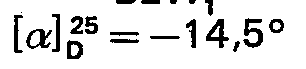
- After drying, 32 g (92%) are obtained.
- CCM / EPAW 2 Rf = 0.70
- BEW 1 Rf = 0.50
-

- CCM/EPAW1 Rf = 0,50.
- CCM / EPAW 1 Rf = 0.50.


- Après séchage on obtient 32,8 g (93%).
- CCM/EPAW2 Rf = 0,75
- BPEW1 Rf = 0,65.
- After drying, 32.8 g (93%) are obtained.
- CCM / EPAW 2 Rf = 0.75
- BPEW 1 Rf = 0.65.

- Après séchage, on obtient 33 g (100%).
- CCM/EPAW1 Rf = 0,40.
- After drying, 33 g (100%) are obtained.
- CCM / EPAW 1 Rf = 0.40.

On dissout 33 g du trifluoracétate de l'exemple 26 dans 330 ml de DMF, puis ajoute 3,6 ml de N-éthylmorpholine, 3,5 g d'hydroxybenzotriazole et 7,16 g de Boc-Ala-Gly-OTcp. La réaction est achevée au bout de 45 min à température ambiante. Le DMF est évaporé sous vide jusqu'à un volume résiduel d'environ 80 ml. On verse sur le mélange eau-glace (600 ml). On essore le solide, lave par l'eau, le méthanol (trois fois) et l'acétone (trois fois).
- Après séchage, on obtient 32 g (93%).
- CCM/EPAW2 Rf = 0,70
- BPEW1 Rf = 0,60
-

- After drying, 32 g (93%) are obtained.
- CCM / EPAW 2 Rf = 0.70
- BPEW 1 Rf = 0.60
-

On met en suspension 24,7 g du tétradécapeptide de l'exemple 27 dans 170 ml de dichlorométhane additionné de 20 ml d'éthanedithiol et 10 ml d'anisole. On ajoute 200 ml de TFA. Après 20 min à température ambiante, on évapore le TFA sous vide jusqu'à un volume résiduel de 60 ml environ. On verse le résidu sur du propanol-2 (600 ml). On essore, lave et sèche.
- On obtient 24,8 g du produit (100%).
- CCM/EPAW2 Rf = 0,50.
- 24.8 g of product are obtained (100%).
- CCM / EPAW 2 Rf = 0.50.
On dissout 57,5 g du trifluoracétate obtenu à l'exemple 28 dans 1 150 ml de DMF. On ajoute 115 ml de méthanol. On place au bain de glace puis, lorsque la température est inférieure à 5°C, on a commence l'addition d'une solution de baryte 0,2N (1 150 ml). L'addition a lieu en 40 min avec une température maximale de 15°C. Après la fin de l'addition de baryte, on agite sans bain de glace jusqu'à la température de ~-18°C. A ce moment, on fait barboter un courant de gaz carbonique dans le milieu pour atteindre pH 5-6. On centrifuge le carbonate de baryum. Le surnageant est évaporé sous vide à 35-40°C jusqu'à volume résiduel de 600 ml. Ce résidu est versé sous bonne agitation dans 4 000 ml d'acétate d'éthyle: un solide précipite. On agite pendant 1 h puis essore sur verre fritté, lave et sèche (à l'air puis au dessiccateur).57.5 g of the trifluoroacetate obtained in Example 28 are dissolved in 1150 ml of DMF. 115 ml of methanol are added. It is placed in an ice bath and then, when the temperature is below 5 ° C., the addition of a 0.2N baryte solution (1150 ml) is started. The addition takes place in 40 min with a maximum temperature of 15 ° C. After the end of the barium addition, the mixture is stirred without an ice bath up to the temperature of ~ -18 ° C. At this time, a stream of carbon dioxide is bubbled through the medium to reach pH 5-6. The barium carbonate is centrifuged. The supernatant is evaporated under vacuum at 35-40 ° C to a residual volume of 600 ml. This residue is poured with good stirring into 4,000 ml of ethyl acetate: a solid precipitates. The mixture is stirred for 1 hour and then wrung on sintered glass, washed and dried (in air then in a desiccator).
Rendement 42 g (100%) en produit brut.Yield 42 g (100%) in crude product.
La purification par chromatographic de partition sur colonne de Séphadex G 25 F ou par distribution à contre-courant permet d'obtenir un produit de très haute pureté, titrant plus de 98% en HPLC.
- Le rendement est de 48%.
- CCM/BPEW1 Rf = 0,40.
- The yield is 48%.
- CCM / BPEW 1 Rf = 0.40.
1,61 g de di-Acm-3,14-dihydrosomatostatine sont dissous dans 80 ml de AcOH pur et 72 ml d'eau distillée (mélange dégazé). A température du laboratoire, à l'obscurité, sous azote et sous agitation, on ajoute 8,2 ml de solution de nitrate d'argent. 1 N. On agite pendant 16 h. On évapore à sec, lave par l'eau distillée dégazée. On reprend dans le mélange DMF/eau (60/40) dégazé. On fait ensuite passer un courant d'hydrogène sulfuré, centrifuge le sulfur d'argent et évapore à sec le surnageant. On dissout le résidue dans 50 ml d'eau dégazée et lyophilise.
- Rendement: 1,3 g (86%).
- Yield: 1.3 g (86%).
Le dosage du produit, soit par HPLC, soit par dosage des fonctions thiol, fait apparaître une pureté d'environ 70%.The dosage of the product, either by HPLC or by dosage of the thiol functions, shows a purity of about 70%.
Le sel d'argent obtenu à partir de 7 g de di-Acm-3,14-dihydrosomatostatine est transformé en 3,14-dihydrosomatostatine, selon la technique de l'exemple 30. La solution dans le diméthylformamide-eau obtenue après traitement à l'hydrogène sulfuré, centrifugation et dégazage est diluée dans 4,6 1 d'une solution aqueuse d'acide acétique à 5% et ajoutée graduellement pendant 18 h à 5,6 1 d'eau dégazée contenant 12 g de ferricyanure de potassium et 24 g d'acétate d'ammonium.The silver salt obtained from 7 g of di-Acm-3.14-dihydrosomatostatin is transformed into 3.14-dihydrosomatostatin, according to the technique of Example 30. The solution in dimethylformamide-water obtained after treatment with the hydrogen sulfide, centrifugation and degassing is diluted in 4.6 l of a 5% aqueous acetic acid solution and gradually added over 18 h to 5.6 l of degassed water containing 12 g of potassium ferricyanide and 24 g of ammonium acetate.
Le pH du milieu est maintenu pendant toute le durée de l'opération à 6,9 par addition de solution d'ammoniaque à 8%. Cette réaction doit être effectuée sous bonne agitation et sous atmosphère permanente de gaz inerte (azote).The pH of the medium is maintained throughout the duration of the operation at 6.9 by addition of 8% ammonia solution. This reaction must be carried out with good stirring and under a permanent atmosphere of inert gas (nitrogen).
Après la fin de la réaction, le pH du milieu est amené à 5 par addition d'acide acétique. On filtre la solution sur résine Biorad AG 3 x 4 afin d'éliminer les ions complexes, puis on fixe le produit sur une résine acide faible, type Biorex 70. On lave par une solution diluée (5%) d'acide acétique et on élue ensuite le produit par une solution d'acide concentrée (50%).After the end of the reaction, the pH of the medium is brought to 5 by addition of acetic acid. The solution is filtered through Biorad AG 3 x 4 resin in order to remove the complex ions, then the product is fixed on a weak acid resin, Biorex 70 type. Wash with a dilute solution (5%) of acetic acid and then elute the product with a concentrated acid solution (50%).
Après évaporation à sec de la solution sous vide poussé et sans chauffer, on obtient 5,2 g d'un produit brut de réaction.After evaporation to dryness of the solution under high vacuum and without heating, 5.2 g of a crude reaction product are obtained.
Le produit est purifié sur colonne Séphadex G 25 (H=2 000 cm ¢ 50) en utilisant l'acide acétique N comme éluant. On obtient après lyophilisation 2,9 g d'un produit pulvérulent blanc titrant 98,4% en HPLC analytique.The product is purified on a Sephadex G 25 column (H = 2000 cm ¢ 50) using acetic acid N as eluent. After lyophilization, 2.9 g of a white pulverulent product titrating 98.4% in analytical HPLC are obtained.
Rendement: 46%; analyse d'acides a-aminés: conforme. 
- CCM/BPEW1 Rf = 0,40.
- CCM / BPEW 1 Rf = 0.40.

On dissout 80 g de H―Phe―Phe―OCH3, CF3COOH dans 890 ml de DMF contenant 23 ml de N-éthylmorpholine. On ajoute alors 71,1 g de Nps-Asn-ONSu et 23 g d'hydroxybenzotriazole. On ajuste le pH à 7 par addition de N-éthylmorpholine et on agite une nuit à température ambiante.80 g of H ― Phe ― Phe ― OCH 3 , CF 3 COOH are dissolved in 890 ml of DMF containing 23 ml of N-ethylmorpholine. 71.1 g of Nps-Asn-ONSu and 23 g of hydroxybenzotriazole are then added. The pH is adjusted to 7 by addition of N-ethylmorpholine and the mixture is stirred overnight at room temperature.
On évapore à sec jusqu'à l'obtention d'une huile orange épaisse. On reprend le résidu dans l'éther, on triture et on obtient un solide jaune. On l'essore et on le lave à l'eau (deux fois 900 ml), puis au méthanol (deux fois 900 ml).
- On essore, on lave à l'éther et le produit est séché à l'air.
- Rendement: 88,50 g (82,1%).
- CCM/éluant BEW,
- tache unique.
-
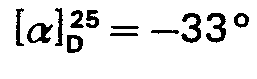
- It is filtered, washed with ether and the product is air dried.
- Yield: 88.50 g (82.1%).
- CCM / eluent BEW,
- single spot.
-

Dans un ballon muni d'une bonne agitation, on dissout presque totalement 139 g du tripeptide de l'exemple 32 dans 1 200 ml de pyridine, puis on ajoute 253 ml de soude N. L'agitation est poursuivie pendant 30 min à température ambiante.In a flask provided with good stirring, 139 g of the tripeptide of Example 32 are almost completely dissolved in 1,200 ml of pyridine, then 253 ml of sodium hydroxide are added. Stirring is continued for 30 min at room temperature .
Un solide commence à précipiter, on ajoute 2 430 ml d'éther pour terminer la précipitation. Le solide jaune formé est essoré, puis repris dans 3 800 ml d'eau et acidifié en une seule fois par 1 300 ml d'acide acétique glacial. Le solide obtenu est essoré, puis lavé à l'eau et essoré. On effectue un deuxième lavage avec du méthanol.
- Après essorage, le produit est séché.
- Rendement: 127,46 g (94%).
- CCM/éluant BPEW2
- une tache.
-

- After spinning, the product is dried.
- Yield: 127.46 g (94%).
- CCM / eluent BPEW 2
- a spot.
-
L-asparaginyl L-phénylalanyl L-phénylalanine, chlorhydrate.

On dissout 150 g de Nps-Asn-Phe-Phe-OH dans 1,32 I de DMF. On ajoute ensuite 2,5 équivalents d'une solution HCI gaz dans le méthanol anhydre (283 cm3 de solution 2,28 N) en maintenant la température à 20°C. Le milieu est agité pendant 30 min, puis évaporé à sec à 30°C/0,5 mm Hg.
- Le résidu pâteaux est trituré dans l'acétate d'éthyle jusqu'à l'obtention d'un solide. Le solide est essoré et lavé plusieurs fois à l'éther et séché.
- Rendement: 118,38 g (98%).
- CCM/éluant BPEW,
- une tache.
-

- The pastry residue is triturated in ethyl acetate until a solid is obtained. The solid is drained and washed several times with ether and dried.
- Yield: 118.38 g (98%).
- CCM / eluent BPEW,
- a spot.
-


Au bout de ces 2 h, on rajoute 6,3 g de

Un précipité se forme que l'on abandonne quelques heures au réfrigérateur. Le solide est essoré, lavé avec le minimum d'acétate d'éthyle, puis abondamment à l'éther. Le produit obtenu est ensuite lavé avec 1,2 I de solution sulfate-bisulfate de potassium pendant 30 min. Il est essoré, bien lavé à l'eau, essoré et repris dans l'éther, puis essoré et séché.
- Rendement 85g (95%).
- CCM/éluant BEW1
- une tache.
-

- Yield 85g (95%).
- CCM / eluent BEW 1
- a spot.
-

On dissout 82 g du peptide de l'exemple 35 dans 400 ml de TFApréalablement refroidi à +5°C et continue l'agitation 15 min à température ambiante. On filtre l'insoluble s'il y a lieu.82 g of the peptide of Example 35 are dissolved in 400 ml of TFA previously cooled to + 5 ° C and stirring is continued for 15 min at room temperature. The insoluble material is filtered if necessary.
On évapore (30°C/0,1 mm) jusqu'à obtention d'une huile. On reprend cette huile par 1,6 I d'isopropanol et 100 ml d'acétate d'éthyle. Il en résulte une précipitation immédiate.
- On essore, lave à l'éther et sèche.
- Rendement: 76,82 g (92%).
- CCM/éluant BEW1
- une tache.
-

- It is filtered, washed with ether and dried.
- Yield: 76.82 g (92%).
- CCM / eluent BEW 1
- a spot.
-
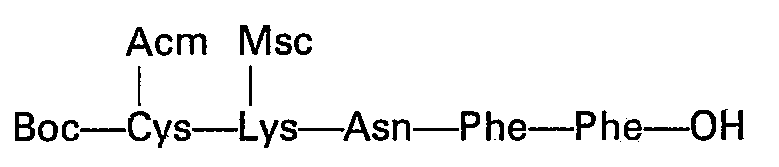

Au bout de ces 2 h, on rajoute 5,46 g de

Un précipité se forme, on laisse sous agitation 1 h dans la glace, puis on abandonne au repos 1 h et on essore.A precipitate is formed, the mixture is left stirring for 1 hour in the ice, then left to stand for 1 hour and wrung.
On reprend le résidu dans un peu d'eau, on le triture, on essore, puis on le reprend dans 2,4 1 de solution de sulfate-bisulfate de potassium et on agite 2 h. On essore, on lave à l'eau, puis on le fait sécher à l'air. On reprend le solide par le minimum d'acétone (700 ml), on le triture et on rejoute 4 à 5 volumes d'éther. On essore le précipité, lave à l'éther et sèche.
- Rendement: 123,15 g (96,3%).
- CCM/éluant BEW,
- tache unique
-
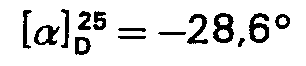
- Yield: 123.15 g (96.3%).
- CCM / eluent BEW,
- single spot
-

On ajoute 86,44 g du peptide de l'exemple 37 à un mélange de 346 ml d'acide trifluoracétique et 34,6 ml d'éthanedithiol refroidi préalablement à 0°C.86.44 g of the peptide of Example 37 are added to a mixture of 346 ml of trifluoroacetic acid and 34.6 ml of ethanedithiol cooled beforehand to 0 ° C.
Le solide se dissout en 15 min environ et la solution est conservée 15 min à température ambiante sous agitation. On évapore à sec (30°C/0,1 mm Hg), puis on reprend dans l'acétate d'éthyle et évapore. On répète deux fois ce traitement puis on reprend dans l'éther et essore. On lave abondamment à l'éther et sèche.
- Poudre btanche.
- Rendement: 85,96 g (98%).
- CCM/éluant BEW1
- une tache
-

- White powder.
- Yield: 85.96 g (98%).
- CCM / eluent BEW 1
- a spot
-

On dissout 119 g du trifluoracétate de l'exemple 38 dans 780 ml de diméthylformamide contenant 130 ml d'eau, puis on ajoute 30,3 ml de N-éthylmorpholine et, aussitôt, 51,1 g de Boc―Ala―Gly―OTcp en solution dans 518 ml de diméthylformamide.119 g of the trifluoroacetate of Example 38 are dissolved in 780 ml of dimethylformamide containing 130 ml of water, then 30.3 ml of N-ethylmorpholine is added and, immediately, 51.1 g of Boc ― Ala ― Gly ― OTcp dissolved in 518 ml of dimethylformamide.
On ajoute ensuite 16,21 g d'hydroxybenzotriazole sec et poursuit l'agitation à température ambiante pendant 2 h, après avoir ajusté le pH à 7,7 par la N-éthylmorpholine.16.21 g of dry hydroxybenzotriazole are then added and stirring continues at room temperature for 2 h, after adjusting the pH to 7.7 with N-ethylmorpholine.
On ajoute ensuite 5,11 g de Boc―Aia―Giy―OTcp solide. On ajuste à nouveau le pH à 7,7 par la N-éthylmorpholine et laisse agiter une nuit à température ambiante.5.11 g of solid Boc ― Aia ― Giy ― OTcp are then added. The pH is again adjusted to 7.7 with N-ethylmorpholine and the mixture is left to stir overnight at room temperature.
On évapore à sec (30°C/0,1 mm Hg). L'huile obtenu est reprise par un mélange de 1 litre d'acétate d'éthyle et 1 litre d'eau presque saturée en chlorure de sodium. On porte le pH à 5-5,5 par de l'acide acétique et laisse agiter vigoureusement dans un bain de glace pendant 1 h.Evaporated to dryness (30 ° C / 0.1 mm Hg). The oil obtained is taken up in a mixture of 1 liter of ethyl acetate and 1 liter of water almost saturated with sodium chloride. The pH is brought to 5-5.5 with acetic acid and allowed to stir vigorously in an ice bath for 1 h.
On essore le solide, lave le gâteau par un peu de mélange acétate d'éthyle-eau presque saturée de chlorure de sodium. On triture ensuite le solide dans le minimum d'eau, puis on essore le solide et agite pendant 2 h avec une solution tamponnée à pH 2 (solution sulfate-bisulfate de potassium). On essore, lave à l'eau et sèche une nuit à l'air. On lave ensuite abondamment à l'ether.
- On obtient une poudre blanche.
- Rendement: 129,1 g (98%).
- CCM/éluants BPEW,
- EPAW,
- une tache.
- (C = 1, DMF).

- A white powder is obtained.
- Yield: 129.1 g (98%).
- CCM / BPEW elected officials,
- EPAW,
- a spot.
- (C = 1, DMF).

On dissout 75,5 g du trifluoracétate de l'heptapeptide de l'exemple 15 dans 1 150 ml de diméthylformamide et ajoute à la solution 6,3 ml de N-éthylmorpholine. Par ailleurs, on dissout 58,13 g de l'heptapeptide de l'exemple 39 dans 1 430 ml de diméthylformamide et ajoute à cette solution 10,81 g de dicyclohexylcarbodiimide et 14,18 g d'hydroxybenzotriazole sec.75.5 g of the trifluoroacetate of the heptapeptide of Example 15 are dissolved in 1150 ml of dimethylformamide and 6.3 ml of N-ethylmorpholine are added to the solution. Furthermore, 58.13 g of the heptapeptide of Example 39 are dissolved in 1,430 ml of dimethylformamide and 10.81 g of dicyclohexylcarbodiimide and 14.18 g of dry hydroxybenzotriazole are added to this solution.
On ajoute la première solution dans la deuxième et maintient le pH à 7 par addition de N-éthylmorpholine. On laisse sous agitation à température ambiante toute la nuit.The first solution is added to the second and the pH is maintained at 7 by the addition of N-ethylmorpholine. The mixture is left stirring at room temperature overnight.
On verse le mélange réactionnel dans deux volumes d'éther. On laisse sous agitation 10 min, puis 10 min au repos à température ambiante. On essore le précipité obtenu et lave abondamment à l'éther.The reaction mixture is poured into two volumes of ether. The mixture is left stirring for 10 min, then 10 min at rest at room temperature. The precipitate obtained is filtered off and washed thoroughly with ether.
Le solide ainsi obtenu est mis sous agitation vigoureuse pendant 1 h dans 1 litre d'éther. On essore et sèche.
- On obtient un solide jaune.
- Rendement: 100 g (81%).
- Ce produit est en tout point identique à celui obtenu dans l'exemple 27.
- A yellow solid is obtained.
- Yield: 100 g (81%).
- This product is identical in all respects to that obtained in Example 27.
Ainsi qu'il a été dit précédemment les purifications poussées n'interviennent qu'à deux stades du procédé de synthèse selon l'invention, à savoir le di-Acm-3,14-dihydrosomatostatine et la somatostatine elle-même.As has been said previously, the thorough purifications only take place at two stages of the synthesis process according to the invention, namely di-Acm-3,14-dihydrosomatostatin and somatostatin itself.
Par suite, dans toutes les autres étapes, les contrôles analytiques sont limités à des chromatographies sur couche mince de silice dans divers systèmes solvants, ainsi qu'il est indiqué dans les exemples.Consequently, in all the other steps, the analytical controls are limited to chromatography on a thin layer of silica in various solvent systems, as indicated in the examples.
Par contre, pour les deux étapes de purification poussée, les contrôles analytiques sont beaucoup plus importants. Aux méthodes usuelles en chimie peptidique, telles que l'analyse d'acides aminés, vient s'ajouter une méthode de contrôle par HPLC.On the other hand, for the two stages of advanced purification, the analytical controls are much more important. In addition to the usual methods in peptide chemistry, such as amino acid analysis, there is an HPLC control method.
L'appareil utilisé est composé d'un chromatographe liquide "Waters Associates": injecteur universel modèle U 6 K, pompe modèle 6000 A, détecteur multilongueur d'onde modèle 450, enregistreur Sefram modèle Servotrace.The device used is composed of a "Waters Associates" liquid chromatograph: universal injector model U 6 K, pump model 6000 A, multi-wavelength detector model 450, Sefram recorder model Servotrace.
Les conditions de chromatographie sont les suivantes:
- Colonne: colonne 300 x 3,9 mm remplie du support
p Bondapak C 18 10 pm (Waters Associates). Solvant d'élution: le solvant d'élution est composé de mélange:
- - solution aqueuse d'acétate d'ammonium 10-2M tamponnée à
pH 4 par de l'acide acétique: 700 ml, - - acétronitrile pour spectroscopie: 250 ml.
- Débit: 4 ml/min.
- Pression: 210 bars.
- Détecteur: détecteur UV à 210 nm.
Sensibilité - Enregistreur: 10 mV pleine échelle, déroulement 1 cm/min.
- Column: column 300 x 3.9 mm filled with support
p Bondapak C 18 10 pm (Waters Associates). Elution solvent: the elution solvent is composed of a mixture:
- - aqueous solution of ammonium acetate 10- 2 M buffered at
pH 4 with acetic acid: 700 ml, - - acetronitrile for spectroscopy: 250 ml.
- Flow rate: 4 ml / min.
- Pressure: 210 bars.
- Detector: UV detector at 210 nm.
- Sensitivity 0.2 DO full scale.
- Recorder: 10 mV full scale, unwinding 1 cm / min.
Les chromatogrammes obtenus avec le di-Acm-3,14-dihydrosomatostatine et la somatostatine sont représentés, respectivement, dans les figures 1 et 2.The chromatograms obtained with di-Acm-3,14-dihydrosomatostatin and somatostatin are shown, respectively, in Figures 1 and 2.
Ils montrent clairement l'unicité du produit après les purifications mentionnées dans les exemples correspondants.They clearly show the uniqueness of the product after the purifications mentioned in the corresponding examples.
Claims (9)


Applications Claiming Priority (2)
| Application Number | Priority Date | Filing Date | Title |
|---|---|---|---|
| FR7907430 | 1979-03-23 | ||
| FR7907430A FR2451915A1 (en) | 1979-03-23 | 1979-03-23 | NEW PROCESS FOR THE PREPARATION OF SOMATOSTATIN |
Publications (3)
| Publication Number | Publication Date |
|---|---|
| EP0017536A2 EP0017536A2 (en) | 1980-10-15 |
| EP0017536A3 EP0017536A3 (en) | 1981-01-07 |
| EP0017536B1 true EP0017536B1 (en) | 1983-03-23 |
Family
ID=9223514
Family Applications (1)
| Application Number | Title | Priority Date | Filing Date |
|---|---|---|---|
| EP80400356A Expired EP0017536B1 (en) | 1979-03-23 | 1980-03-18 | Process for the preparation of somatostatine |
Country Status (6)
| Country | Link |
|---|---|
| US (1) | US4337194A (en) |
| EP (1) | EP0017536B1 (en) |
| JP (1) | JPS55162754A (en) |
| CA (1) | CA1137467A (en) |
| DE (1) | DE3062396D1 (en) |
| FR (1) | FR2451915A1 (en) |
Families Citing this family (12)
| Publication number | Priority date | Publication date | Assignee | Title |
|---|---|---|---|---|
| US4528134A (en) * | 1982-12-27 | 1985-07-09 | University Of Tn Research Corporation | Method of separating A14 -125 I-insulin from heterogeneously labeled insulin molecules for biological studies |
| US4581168A (en) * | 1983-02-21 | 1986-04-08 | Sanofi | Synthesis of hpGRF (Somatocrinin) in liquid phase and intermediate peptides |
| FR2652581B1 (en) * | 1989-10-02 | 1991-12-13 | Rhone Poulenc Chimie | METHOD FOR SOLUBILIZING PEPTIDES AND METHOD FOR SYNTHESIS OF PEPTIDES. |
| US5840838A (en) * | 1996-02-29 | 1998-11-24 | University Of Kentucky Research Foundation | Process for enhancing the activity of amyloid β peptides |
| AU9436298A (en) * | 1998-08-20 | 2000-03-14 | Orpegen Pharma Gesellschaft Fur Biotechnologische Forschung, Entwicklung Und Produktion MBH | Method for producing biostatin (tt-232 triacetate) and the analogs thereof |
| US6783947B1 (en) | 1999-09-09 | 2004-08-31 | Dade Behring Marburg Gmbh | Protecting groups for biological labeling |
| DK1927584T3 (en) * | 2005-09-20 | 2017-02-20 | Jitsubo Co Ltd | CARRIER FOR SEPARATION, PROCEDURE FOR SEPARATION OF CONNECTION AND PROCEDURE FOR SYNTHESIS OF PEPTIDE USING THE CARRIER |
| PL2334177T3 (en) | 2008-10-01 | 2016-10-31 | Peptide toxin formulation | |
| CN101570570B (en) * | 2009-06-03 | 2013-07-10 | 兰州大学 | Synthetic method for somatostatin |
| KR100991096B1 (en) | 2010-01-11 | 2010-11-01 | 동국제약 주식회사 | A Method for preparing octreotide using by solid phase synthesis |
| FR3090636B1 (en) | 2018-12-24 | 2021-01-01 | Strainchem | Peptide Synthesis Process |
| FR3095646B1 (en) | 2019-05-02 | 2024-02-23 | Strainchem | METHOD FOR PRODUCING PEPTIDES OR PROTEINS OR PEPTIDOMIMETICS |
Family Cites Families (7)
| Publication number | Priority date | Publication date | Assignee | Title |
|---|---|---|---|---|
| FR1396655A (en) * | 1963-04-24 | 1965-04-23 | Organon Nv | Process for the preparation of lysine derivatives |
| US3917581A (en) * | 1974-08-01 | 1975-11-04 | Ayerst Mckenna & Harrison | Derivatives of somatostatin and process therefor |
| US3917578A (en) * | 1973-12-10 | 1975-11-04 | Ayerst Mckenna & Harrison | Process for producing somatostatin and intermediates |
| US3933784A (en) * | 1975-01-27 | 1976-01-20 | American Home Products Corporation | Des-(ser13)-srif and intermediates |
| JPS5848524B2 (en) * | 1976-06-28 | 1983-10-28 | 武田薬品工業株式会社 | Method for removing thiol protecting group |
| US4100153A (en) * | 1977-05-11 | 1978-07-11 | American Home Products Corporation | (D-Trp5)-somatostatin and analogues thereof |
| US4216141A (en) * | 1978-07-19 | 1980-08-05 | The Salk Institute For Biological Studies | Method for cyclization of peptides |
-
1979
- 1979-03-23 FR FR7907430A patent/FR2451915A1/en active Granted
-
1980
- 1980-03-03 US US06/126,993 patent/US4337194A/en not_active Expired - Lifetime
- 1980-03-06 CA CA000347140A patent/CA1137467A/en not_active Expired
- 1980-03-18 EP EP80400356A patent/EP0017536B1/en not_active Expired
- 1980-03-18 DE DE8080400356T patent/DE3062396D1/en not_active Expired
- 1980-03-22 JP JP3579980A patent/JPS55162754A/en active Pending
Also Published As
| Publication number | Publication date |
|---|---|
| DE3062396D1 (en) | 1983-04-28 |
| JPS55162754A (en) | 1980-12-18 |
| EP0017536A2 (en) | 1980-10-15 |
| US4337194A (en) | 1982-06-29 |
| EP0017536A3 (en) | 1981-01-07 |
| FR2451915A1 (en) | 1980-10-17 |
| FR2451915B1 (en) | 1983-09-16 |
| CA1137467A (en) | 1982-12-14 |
Similar Documents
| Publication | Publication Date | Title |
|---|---|---|
| EP0104964B1 (en) | Peptide derivatives as inhibitors of acid proteases | |
| FR2550204A1 (en) | PEPTIDE DERIVATIVES OF (NLE8, NLE1B, TYR34) -H-PTH | |
| US5510333A (en) | Inhibitors of Cathepsin G and elastase for preventing connective tissue degradation | |
| EP0017536A2 (en) | Process for the preparation of somatostatine | |
| EP0192554A1 (en) | Peptide derivatives inhibiting renin and acid proteases | |
| CH627734A5 (en) | PROCESS FOR THE SYNTHESIS OF MODIFIED PEPTIDES. | |
| EP0122818B1 (en) | Liquid-phase synthesis of hpgrf (somatocrinin) and intermediate peptides | |
| EP0184243B1 (en) | Process for the synthesis of peptides | |
| EP0187095B1 (en) | Esters of tri- and tetrapeptides, inhibitors of gastric secretion, preparation process and pharmaceutical compositions containing them | |
| EP0171315B1 (en) | Process for the synthesis of hgrf (somatocrinin) in the liquid phase, and intermediary peptides | |
| CH635571A5 (en) | TETRAPEPTIDES AND THERAPEUTIC COMPOSITION CONTAINING THEM. | |
| JPS6345398B2 (en) | ||
| FR2557114A1 (en) | NOVEL DERIVATIVES OF GONADOLIBERIN, PROCESS FOR THEIR PREPARATION AND PHARMACEUTICAL COMPOSITIONS CONTAINING SAME | |
| LU85269A1 (en) | NOVEL SOMATOSTATIN COMPOUNDS, PROCESS FOR THEIR SYNTHESIS, PREPARATION FOR VETERINARY USE CONTAINING SAID COMPOUNDS AND PROCESS FOR THE TREATMENT OF ANIMALS | |
| EP0188947B1 (en) | Reduced peptides, inhibitors of gastric secretion, preparation process and pharmaceutical compositions containing them | |
| EP0562659B1 (en) | Process to synthetise peptides and new intermediates thereof | |
| CA1273750A (en) | Analogues of polypeptides hypocalcemia-inducing compounds which spare the body's calcium preparation, use as a drug and compositions containing such analogues | |
| EP0354108A1 (en) | Amino acids and peptides with a modified tyrosine, their preparation and their use as medicines | |
| JPS5848524B2 (en) | Method for removing thiol protecting group | |
| EP0204788B1 (en) | New hypocalcemic polypeptides, preparation thereof and drugs containing these active principles | |
| EP0565607B1 (en) | Protection group, compoud protected by this group and device for grafting the protection group onto the compound being protected | |
| FR2522656A1 (en) | Somatostatin analogue peptide growth hormone inhibitors - inhibit insulin and glucagon secretion and are resistant to proteolytic hydrolysis | |
| JPS5967254A (en) | Preparation of caerulein intermediate | |
| FR2523126A1 (en) | Somatostatin analogues having different activity profiles - inhibit growth hormone, insulin and glucagon secretion, with reduced effect on gastric secretion | |
| ATSUUMI et al. | Renin inhibitors. II. Synthesis and structure-activity relationships of N-terminus modified inhibitors containing a homostatine analogue |
Legal Events
| Date | Code | Title | Description |
|---|---|---|---|
| PUAI | Public reference made under article 153(3) epc to a published international application that has entered the european phase |
Free format text: ORIGINAL CODE: 0009012 |
|
| AK | Designated contracting states |
Designated state(s): CH DE GB IT SE |
|
| PUAL | Search report despatched |
Free format text: ORIGINAL CODE: 0009013 |
|
| AK | Designated contracting states |
Designated state(s): CH DE GB IT SE |
|
| 17P | Request for examination filed |
Effective date: 19810625 |
|
| RAP1 | Party data changed (applicant data changed or rights of an application transferred) |
Owner name: SANOFI, SOCIETE ANONYME |
|
| ITF | It: translation for a ep patent filed | ||
| GRAA | (expected) grant |
Free format text: ORIGINAL CODE: 0009210 |
|
| AK | Designated contracting states |
Designated state(s): CH DE GB IT SE |
|
| REF | Corresponds to: |
Ref document number: 3062396 Country of ref document: DE Date of ref document: 19830428 |
|
| ITTA | It: last paid annual fee | ||
| PGFP | Annual fee paid to national office [announced via postgrant information from national office to epo] |
Ref country code: GB Payment date: 19940311 Year of fee payment: 15 |
|
| PGFP | Annual fee paid to national office [announced via postgrant information from national office to epo] |
Ref country code: CH Payment date: 19940316 Year of fee payment: 15 |
|
| PGFP | Annual fee paid to national office [announced via postgrant information from national office to epo] |
Ref country code: SE Payment date: 19940317 Year of fee payment: 15 |
|
| PGFP | Annual fee paid to national office [announced via postgrant information from national office to epo] |
Ref country code: DE Payment date: 19940326 Year of fee payment: 15 |
|
| EAL | Se: european patent in force in sweden |
Ref document number: 80400356.4 |
|
| PG25 | Lapsed in a contracting state [announced via postgrant information from national office to epo] |
Ref country code: GB Effective date: 19950318 |
|
| PG25 | Lapsed in a contracting state [announced via postgrant information from national office to epo] |
Ref country code: SE Effective date: 19950319 |
|
| PG25 | Lapsed in a contracting state [announced via postgrant information from national office to epo] |
Ref country code: CH Effective date: 19950331 |
|
| GBPC | Gb: european patent ceased through non-payment of renewal fee |
Effective date: 19950318 |
|
| REG | Reference to a national code |
Ref country code: CH Ref legal event code: PL |
|
| PG25 | Lapsed in a contracting state [announced via postgrant information from national office to epo] |
Ref country code: DE Effective date: 19951201 |
|
| EUG | Se: european patent has lapsed |
Ref document number: 80400356.4 |
|
| PLBE | No opposition filed within time limit |
Free format text: ORIGINAL CODE: 0009261 |
|
| STAA | Information on the status of an ep patent application or granted ep patent |
Free format text: STATUS: NO OPPOSITION FILED WITHIN TIME LIMIT |