EP0012349A2 - Process for producing phthalocyanine reactive dyestuffs - Google Patents
Process for producing phthalocyanine reactive dyestuffs Download PDFInfo
- Publication number
- EP0012349A2 EP0012349A2 EP79104935A EP79104935A EP0012349A2 EP 0012349 A2 EP0012349 A2 EP 0012349A2 EP 79104935 A EP79104935 A EP 79104935A EP 79104935 A EP79104935 A EP 79104935A EP 0012349 A2 EP0012349 A2 EP 0012349A2
- Authority
- EP
- European Patent Office
- Prior art keywords
- formula
- optionally substituted
- mol
- phthalocyanine
- arylene
- Prior art date
- Legal status (The legal status is an assumption and is not a legal conclusion. Google has not performed a legal analysis and makes no representation as to the accuracy of the status listed.)
- Granted
Links
- 0 CC(C(**)=C(*)N=C(C)F)=N Chemical compound CC(C(**)=C(*)N=C(C)F)=N 0.000 description 5
Classifications
-
- C—CHEMISTRY; METALLURGY
- C09—DYES; PAINTS; POLISHES; NATURAL RESINS; ADHESIVES; COMPOSITIONS NOT OTHERWISE PROVIDED FOR; APPLICATIONS OF MATERIALS NOT OTHERWISE PROVIDED FOR
- C09B—ORGANIC DYES OR CLOSELY-RELATED COMPOUNDS FOR PRODUCING DYES, e.g. PIGMENTS; MORDANTS; LAKES
- C09B62/00—Reactive dyes, i.e. dyes which form covalent bonds with the substrates or which polymerise with themselves
- C09B62/02—Reactive dyes, i.e. dyes which form covalent bonds with the substrates or which polymerise with themselves with the reactive group directly attached to a heterocyclic ring
- C09B62/022—Reactive dyes, i.e. dyes which form covalent bonds with the substrates or which polymerise with themselves with the reactive group directly attached to a heterocyclic ring the heterocyclic ring being alternatively specified
- C09B62/036—Porphines; Azaporphines
Definitions
- Suitable monoacylated diamines of the formula (IV) are, for example, 2-aminoformanilide, 3-aminoacetanilide, 3-aminophenyloxyamidic acid, 4-aminoformanilide, 4-aminoacetanilide, 2-aminoacetanilide, 4-amino- (acetylmethyl) -aniloxy, 4-aminophenylamyl, 4-aminophenyl 5-dichloro-4-aminoacetanilide, 4-amino-2-formylaminotoluene, 4-amino-2-acetylaminotoluene, 2-amino-4-acetylaminotoluene, 2-amino-4- (acetylethylamino) toluene, [(3- Amino-4-methylphenyl) -amin7-oxoacetic acid, (4'-amino-4-diphenylyl) -oxamic
- monoacylated diamines of the formula (IV) are those in which arylene is a phenyl radical which is optionally substituted by methyl or ethyl groups or by halogen atoms, such as e.g. 3-aminoformanilide, 3-aminoacetanilide, 3-aminophenyloxamic acid, 4-aminoformanilide, 4-aminophenyloxamic acid, 2,5-dichloro-4-aminoacetanilide, 4-amino- (acetyl-methylaniline), 4-amino-2-formylaminotoluene and 2-amino-4-acetylaminotoluene.
- arylene is a phenyl radical which is optionally substituted by methyl or ethyl groups or by halogen atoms
- arylene is a phenyl radical which is optionally substituted by methyl or ethyl groups or by halogen atoms, such
- Suitable compounds of the formula (VI) are 2,4,6-trifluoro-5-chloropyrimidine, 2,4-difluoro-5-chloro-6-methylpyrimidine, 2,4,6-trifluoropyrimidine and 2,4- Difluoro-5-chloro-1,3-pyrimidine.
- the phthalocyanine sulfonic acid chloride sulfonic acids are prepared in a known manner by treating copper phthalocyanine or nickel phthalocyanine or their sulfonic acids with chlorosulfonic acid at 100 ° to 145 °, temperatures between 110 ° and 138 ° C. being preferred.
- the ratio of the sulfochloride groups and sulfonic acid groups to one another can be varied by varying the amount of chlorosulfonic acid.
- the ratio of p and q can be varied by post-treating the chlorosulfonic acid melt with a suitable amount of thionyl chloride, phosphorus oxychloride or phosphorus pentachloride, preferably at temperatures between 70 ° and 95 ° C.
- the dyes obtained by the process according to the invention are suitable for dyeing and printing cellulose.
- those dyes are particularly suitable which have no sulfo or carboxy group in the arylene radical.
- the chlorosulfonic acid solution is poured onto ice, the ice-cold suspension is suctioned off and the filter cake is washed with about 400 ml of ice water, to which 150 ml of 30% hydrochloric acid have been added.
- Half of the paste of the phthalocyanine derivative obtained by experiment b) is dissolved in 500 ml of water at a pH of 5 to 6 and the solution is cooled to 0.degree.
- the solution of the difluorotriazine derivative obtained in the previous paragraph is run into this solution, the pH being kept at 5 to 6 with sodium carbonate solution.
- the temperature of the reaction solution is raised to 25 ° -30 ° C. and the dye is salted out after the reaction with KC1 has ended.
- the dye is filtered off, washed briefly with dilute KCl solution and dried at 50 ° to 60 ° C.
- the dye is obtained in practically quantitative yield and is in the form of its free acid of the formula corresponds. It dyes cotton in green tones with excellent fastness properties.
- the chlorosulfonic acid solution is poured onto ice, the ice-cold suspension is suctioned off and the filter cake is washed with about 4000 ml of ice water, to which 150 ml of 30% hydrochloric acid have been added.
- Half of the paste of the phthalocyanine derivative obtained by experiment b) is dissolved in 500 ml of water at a pH of 5 to 6 and the solution is cooled to 0.degree.
- the solution of the difluorotriazine derivative obtained in the previous paragraph is run into this solution, the pH being adjusted with soda solution holds on 5 to 6.
- the temperature of the reaction solution is raised to 25 ° C. and the dye is salted out after the reaction has ended.
- the dye is filtered off, washed briefly with dilute NaCl solution and dried at 50 ° C to 60 ° C.
- the dye is obtained in very good yield in the form of its free acid of the formula corresponds. It dyes cotton in turquoise-blue tones with excellent fastness properties.
- a solution of copper phthalocyanine sulfochloride sulfonic acid in chlorosulfonic acid with about 1.0 sulfone is obtained in this way acid groups and 2,9-sulfonic acid chloride groups per copper phthalocyanine molecule.
- the chlorosulfonic acid solution is poured onto ice, the ice-cold suspension is suctioned off and the filter cake is washed with about 4000 ml of ice water, to which 150 ml of 30% hydrochloric acid have been added.
- Half of the paste of the phthalocyanine derivative obtained by experiment b) is dissolved in 500 ml of water at a pH of 5 to 6 and the solution is cooled to 0.degree.
- the solution of the difluorotriazine derivative obtained in the previous paragraph is run into this solution, the pH being kept at 5 to 6 with sodium carbonate solution.
- the temperature is raised to the reaction solution at 25 0 C and the dyestuff is salted out after the reaction.
- the dye is filtered off, washed briefly with dilute NaCl solution and dried at 50 ° to 60 ° C.
- the dye is obtained in practically quantitative yield and is in the form of its free acid of the formula corresponds. It dyes cotton in turquoise tones with excellent fastness properties.
- the dyed material is then removed from the dyeing liquor, the adhering liquor is removed by wringing or pressing, and the material is rinsed thoroughly first with cold water and then with hot water until the wash liquor is no longer bled on.
- the dyed material is in 500 ml of a liquor containing 0.5 g of sodium alkyl sulfonate, soaped for 20 minutes at boiling temperature, rinsed again and at 60 - 70 0 C dried in a drying cabinet. The cotton is dyed in a wet-fast, clear and bluish green tone.
- the fabric so blocked is clamped on a tenter and dried in a drying cabinet for 15 minutes at 60 - 70 ° C and then steamed for 3 minutes at 102 ° C.
- the dyed material is then rinsed thoroughly, first with cold water and then with hot water until the washing liquor is no longer bled on.
- the dyed material is then soaped in 500 ml of a liquor containing 0.5 g of sodium alkyl sulfonate at boiling temperature for 20 minutes, rinsed again and dried at 60-70 ° C. in a drying cabinet.
- the dye is applied in a wet-fast, clear, turquoise blue tone.
- a 20 g woolen strand is used in a dyebath at 40 ° C and heated to 80 ° C within 15 minutes. At this temperature, the mixture is left for 30 minutes, heated to the boil and held at this temperature for about an hour. After rinsing with water, a potting and walk-safe, turquoise blue color is obtained.
- a piece of cotton is printed with a printing paste consisting of 50 g of dye from Example 2, 150 g of urea, 20 g of sodium bicarbonate, 10 g of sodium m-nitrobenzene-sulfonic acid, 450 g of a highly viscous alginate thickener and 320 g of water and placed in a damper, e.g. of the Mather-Platt type, steamed at 103 ° C. The pressure is then rinsed with cold, then with hot and finally with cold water. You get a wet-fast, turquoise blue print.
Landscapes
- Chemical & Material Sciences (AREA)
- Organic Chemistry (AREA)
- Coloring (AREA)
Abstract
Phthalocyaninfarbstoffe der Formel

worin
- Pc = Rest eines Kupfer- oder Nickel-Phthalocyanins R1, R2,
- R3, R4 = Wasserstoff oder Alkyl

- R5, R6 = H oder KW-Rest
- R7 = H,CI
- R8 = H, F, CH3
- a = 1 bis 3
- b = 0 bis 2
- c =1 bis 2 und a+b+c=4,
erhält man in besonders vorteilhafter Weise, wenn Verbindungen der Formel

worin
- p = 0,5 bis 1,8
- q = 1,2 bis 3,5 und p + q = 2 bis 4,
mit c Mol einer Verbindung der Formel

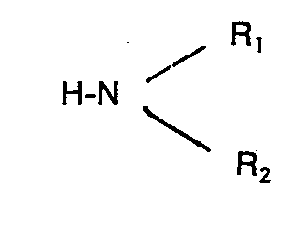
und gegebenenfalls b Mol eines Amins der Formel
umsetzt, die Acylaminogruppe abspaltet und den erhaltenen Phthalocyaninfarbstoff mit c Mol einer Verbindung der Formeln A oder B zur Reaktion bringt.Phthalocyanine dyes of the formula
wherein
- Pc = residue of a copper or nickel phthalocyanine R 1 , R 2 ,
- R 3 , R 4 = hydrogen or alkyl
- R 5 , R 6 = H or KW remainder
- R 7 = H, CI
- R 8 = H, F, CH 3
- a = 1 to 3
- b = 0 to 2
- c = 1 to 2 and a + b + c = 4,
is obtained in a particularly advantageous manner when compounds of the formula
wherein
- p = 0.5 to 1.8
- q = 1 , 2 to 3 , 5 and p + q = 2 to 4 ,
with c mol of a compound of the formula
and optionally b mol of an amine of the formula
reacted, the acylamino group is split off and the resulting phthalocyanine dye is reacted with c mol of a compound of the formulas A or B.
Description
Es wurde nun gefunden, daß man Phthalocyaninreaktivfarbstoffe der Formel

worin
- Pc = Rest eines Kupfer- oder Nickel-Phthalocyanins
- R1, R2 = Wasserstoff, gegebenenfalls substituiertes Alkyl
- R3, R4 = Wasserstoff, gegebenenfalls substituiertes Alkyl
- Arylen = ein- oder mehrgliedriges, gegebenenfalls substituiertes Arylen, das gegebenenfalls durch ein Sauerstoffatom oder eine Imino-, Carbonyl-, Carbonamid-, Harnstoff-, Sulfonyl- oder Sulfonamid-Gruppe unterbrochen sein kann

- R5, R6 = Wasserstoff, gegebenenfalls substituiertes Alkyl, gegebenenfalls substituiertes Aralkyl oder gegebenenfalls substituiertes Aryl,
- R7 = H, Cl
- R8 = H, F, CH 3
- a = 1 bis 3
- b = 0 bis 2
- c = 1 bis 2 und a + b + c = 4
in besonders vorteilhafter Weise erhält durch Umsetzung von Phthalocyaninsulfonsäurechlorid-sulfonsäuren der Formel

- worin p = 0,5 bis 1,8 (vorzugsweise 0,8 bis 1,4 oder, falls b = O, 1,0 bis 1,6)
- q = 1,2 bis 3,5 und p + q = 2 bis 4,
mit c Mol eines monoacylierten Arylendiamins der Formel

worin R3, R4 und Arylen die obengenannte Bedeutung haben und Acyl eine Acylgruppe darstellt, und gegebenenfalls b Mol eines Amins der Formel

worin R1 und R2 die obengenannte Bedeutung haben,
anschließender Verseifung der Acylaminogruppe und folgender Umsetzung mit c Mol einer Verbindung der Formel

oder mit c Mol einer Verbindung der Formel

worin R5 - R8 die oben angegebene Bedeutung haben.It has now been found that phthalocyanine reactive dyes of the formula
wherein
- Pc = residue of a copper or nickel phthalocyanine
- R 1 , R 2 = hydrogen, optionally substituted alkyl
- R 3 , R 4 = hydrogen, optionally substituted alkyl
- Arylene = one- or multi-membered, optionally substituted arylene, which may optionally be interrupted by an oxygen atom or an imino, carbonyl, carbonamide, urea, sulfonyl or sulfonamide group
- R 5 , R 6 = hydrogen, optionally substituted alkyl, optionally substituted aralkyl or optionally substituted aryl,
- R 7 = H, Cl
- R8 = H, F, C H 3
- a = 1 to 3
- b = 0 to 2
- c = 1 to 2 and a + b + c = 4
obtained in a particularly advantageous manner by reacting phthalocyaninesulfonic acid chloride sulfonic acids of the formula
- where p = 0.5 to 1.8 (preferably 0.8 to 1.4 or, if b = 0, 1.0 to 1.6)
- q = 1.2 to 3.5 and p + q = 2 to 4,
with c mole of a monoacylated arylene diamine of the formula
wherein R 3 , R 4 and arylene have the meaning given above and acyl represents an acyl group, and optionally b mol of an amine of the formula
wherein R 1 and R 2 have the meaning given above,
subsequent saponification of the acylamino group and subsequent reaction with c mol of a compound of the formula
or with c mol of a compound of the formula
wherein R 5 - R 8 have the meaning given above.
Der Umsatz von Phthalocyaninsulfochlorid-sulfonsäure der Formel (III) mit monoacylierten Diaminen der Formel (IV) und gegebenenfalls Aminen der Formel (V) erfolgt in bekannter Weise in wäßrig oder wäßrig/organischem Medium bei Temperaturen von 0° bis 80° und in einem pH-Bereich von 4 bis 12.The conversion of phthalocyanine sulfochloride sulfonic acid of the formula (III) with monoacylated diamines of the formula (IV) and optionally amines of the formula (V) takes place in a known manner in aqueous or aqueous / organic medium at temperatures from 0 ° to 80 ° and in a pH - Range from 4 to 12.
Geeignete monoacylierte Diamine der Formel (IV) sind beispielsweise 2-Aminoformanilid, 3-Aminoacetanilid, 3-Aminophenyloxyamidsäure, 4-Aminoformanilid, 4-Aminoacetanilid, 2-Aminoacetanilid, 4-Amino-(acetylmethyl)-anilin, 4-Aminophenyloxyamidsäure, 2,5-Dichlor-4-aminoacetanilid, 4-Amino-2-formylaminotoluol, 4-Amino-2- acetylaminotoluol, 2-Amino-4-acetylaminotoluol, 2-Ami- no-4-(acetyläthylamino)-toluol, [(3-Amino-4-methylphenyl)-aming7-oxoessigsäure, (4'-Amino-4-diphenylyl)-oxamidsäure, 2-Amino-4-acetylaminobenzoesäure, 2-Ami- no-5-acetylaminobenzoesäure, 3-Amino-5-acetylaminobenzoesäure, 4-Amino-4'-acetylaminodiphenyl-2-sulfonsäure, 2-Sulfo-4-aminophenyl-oxamidsäure und (5-Sulfo-3-ami- no-2-methylphenyl)-oxamidsäure.Suitable monoacylated diamines of the formula (IV) are, for example, 2-aminoformanilide, 3-aminoacetanilide, 3-aminophenyloxyamidic acid, 4-aminoformanilide, 4-aminoacetanilide, 2-aminoacetanilide, 4-amino- (acetylmethyl) -aniloxy, 4-aminophenylamyl, 4-aminophenyl 5-dichloro-4-aminoacetanilide, 4-amino-2-formylaminotoluene, 4-amino-2-acetylaminotoluene, 2-amino-4-acetylaminotoluene, 2-amino-4- (acetylethylamino) toluene, [(3- Amino-4-methylphenyl) -amin7-oxoacetic acid, (4'-amino-4-diphenylyl) -oxamic acid, 2-amino-4-acetylaminobenzoic acid, 2-amino-5-acetylaminobenzoic acid, 3-amino-5-acetylaminobenzoic acid, 4-amino-4'-acetylaminodiphenyl-2-sulfonic acid, 2-sulfo-4-aminophenyl oxamic acid and (5-sulfo-3-amino-2-methylphenyl) oxamic acid.
Innerhalb dieser Gruppe sind besonders geeignete monoacylierte Diamine der Formel (IV) solche, bei denen Arylen einen Phenylrest darstellt, der gegebenenfalls durch Methyl- oder Äthylgruppen oder durch HalogenAtome substituiert ist, wie z.B. 3-Aminoformanilid, 3-Aminoacetanilid, 3-Aminophenyloxamidsäure, 4-Aminoformanilid, 4-Aminophenyloxamidsäure, 2,5-Dichlor-4-aminoacetanilid, 4-Amino-(acetyl-methylanilin), 4-Ami- no-2-formylaminotoluol und 2-Amino-4-acetylaminotoluol.Within this group, particularly suitable monoacylated diamines of the formula (IV) are those in which arylene is a phenyl radical which is optionally substituted by methyl or ethyl groups or by halogen atoms, such as e.g. 3-aminoformanilide, 3-aminoacetanilide, 3-aminophenyloxamic acid, 4-aminoformanilide, 4-aminophenyloxamic acid, 2,5-dichloro-4-aminoacetanilide, 4-amino- (acetyl-methylaniline), 4-amino-2-formylaminotoluene and 2-amino-4-acetylaminotoluene.
Geeignete Verbindungen der Formel (VI) sind 2,4,6-Trifluor-5-chlor-pyrimidin, 2,4-Difluor-5-chlor-6-methyl- pyrimidin, 2,4,6-Trifluorpyrimidin und 2,4-Difluor-5-chlor-1,3-pyrimidin.Suitable compounds of the formula (VI) are 2,4,6-trifluoro-5-chloropyrimidine, 2,4-difluoro-5-chloro-6-methylpyrimidine, 2,4,6-trifluoropyrimidine and 2,4- Difluoro-5-chloro-1,3-pyrimidine.
Geeignete Verbindungen der Formel (VII) sind in der Literatur in großer Zahl beschrieben. Besonders bevorzugt sind hierbei Verbindungen, in denen der Rest -NR5R6 die Gruppierung


Die Herstellung der Phthalocyaninsulfonsäurechlorid-sulfonsäuren erfolgt in bekannter Weise durch Behandlung von Kupferphthalocyanin oder Nickelphthalocyanin oder deren Sulfonsäuren mit Chlorsulfonsäure bei 100° bis 145°, wobei Temperaturen zwischen 110° und 138°C bevorzugt sind. Hierbei kann man durch Variation der Chlorsulfonsäuremenge das Verhältnis der Sulfochloridgruppen und Sulfonsäuregruppen zueinander variieren. Daneben kann man das Verhältnis von p und q durch Nachbehandlung der Chlorsulfonsäure-Schmelze mit einer geeigneten Menge Thionylchlorid, Phosphoroxychlorid oder Phosphorpentachlorid vorzugsweise bei Temperaturen zwischen 70° und 95°C variieren.The phthalocyanine sulfonic acid chloride sulfonic acids are prepared in a known manner by treating copper phthalocyanine or nickel phthalocyanine or their sulfonic acids with chlorosulfonic acid at 100 ° to 145 °, temperatures between 110 ° and 138 ° C. being preferred. The ratio of the sulfochloride groups and sulfonic acid groups to one another can be varied by varying the amount of chlorosulfonic acid. In addition, the ratio of p and q can be varied by post-treating the chlorosulfonic acid melt with a suitable amount of thionyl chloride, phosphorus oxychloride or phosphorus pentachloride, preferably at temperatures between 70 ° and 95 ° C.
Die nach dem erfindungsgemäßen Verfahren erhaltenen Farbstoffe eignen sich zum Färben und Bedrucken von Cellulose. Zum Färben aus langer Flotte und zum Klotzfärben eignen sich insbesondere diejenigen Farbstoffe, die im Arylenrest keine Sulfo- oder Carboxygruppe aufweisen.The dyes obtained by the process according to the invention are suitable for dyeing and printing cellulose. For dyeing from a long liquor and for pad dyeing, those dyes are particularly suitable which have no sulfo or carboxy group in the arylene radical.
a) In 310·g Chlorsulfonsäure werden 57,2 g Nickelphthalocyanin eingerührt. Man steigert die Temperatur auf 132°C und rührt 6 Stunden bei 132° - 134°C, kühlt auf 85°C ab und rührt bei dieser Temperatur in 1/3 Stunde 19 g Thionylchlorid ein. Hierauf rührt man noch 4 Stunden bei 90° - 92°C nach und kühlt die Schmelze auf 25° - 30°C ab. Man erhält auf diese Weise eine Lösung von Nickelphthalocyaninsulfochloridsulfonsäure in Chlorsulfonsäure mit etwa 1,4-Sulfonsäuregruppen und 2,6 Sulfonsäurechloridgruppen je Nickelphthalocyanin-Molekül.a) 57.2 g of nickel phthalocyanine are stirred into 310 g of chlorosulfonic acid. The temperature is raised to 132 ° C. and the mixture is stirred at 132 ° -134 ° C. for 6 hours, cooled to 85 ° C. and 19 g of thionyl chloride are stirred in at this temperature in 1/3 hour. The mixture is then stirred for a further 4 hours at 90 ° -92 ° C. and the melt is cooled to 25 ° -30 ° C. In this way, a solution of nickel phthalocyanine sulfochloride sulfonic acid in chlorosulfonic acid with about 1,4-sulfonic acid groups and 2.6 sulfonic acid chloride groups per nickel phthalocyanine molecule is obtained.
Die Chlorsulfonsäure-Lösung wird auf Eis gegeben, die eiskalte Suspension abgesaugt und das Nutschgut mit etwa 400 ml Eiswasser, dem 150 ml Salzsäure (30 %ig) zugesetzt sind, gewaschen.The chlorosulfonic acid solution is poured onto ice, the ice-cold suspension is suctioned off and the filter cake is washed with about 400 ml of ice water, to which 150 ml of 30% hydrochloric acid have been added.
b) Die Nickelphthalocyaninsulfonsäure-sulfosäurechlorid-Paste wird in Eiswasser angeschlagen und mit Natronlauge neutralisiert. Nun gibt man 16,3 g 3-Aminoformanilid zu. Man steigert die Temperatur in etwa 1 1/2 Stunden auf 20° - 25°C und rührt bis zur Beendigung der Umsetzung bei dieser Temperatur. Während der gesamten Reaktionszeit hält man den pH-Wert der Suspension durch portionsweise Zugabe von 14 g NaHCO3 bei 6 - 7. Anschließend stellt man den pH-Wert der Suspension mit Natronlauge auf 9,5 bis 10 und steigert unter Einhalten dieses pH-Wertes die Temperatur der Lösung innerhalb von 4 Stunden auf 75°C.b) The nickel phthalocyanine sulfonic acid sulfonic acid chloride paste is struck in ice water and neutralized with sodium hydroxide solution. Now 16.3 g of 3-aminoformanilide are added. The temperature is raised to 20 ° -25 ° C. in about 1 1/2 hours and the mixture is stirred at this temperature until the reaction has ended. During the entire reaction time, the pH of the suspension is kept at 6-7 by adding 14 g of NaHCO 3 in portions. Then the pH of the suspension is adjusted to 9.5 to 10 with sodium hydroxide solution and increased while maintaining this pH the temperature of the solution to 75 ° C within 4 hours.
Zur Verseifung der Formylamino-Gruppe läßt man 500 ml 30 %iger Salzsäure zulaufen, verseift 2 Stunden bei 75°- 80°C, saugt das Reaktionsprodukt ab und wäscht es mit 1000 ml 1,5 %iger Salzsäure.To saponify the formylamino group, 500 ml of 30% hydrochloric acid are run in, saponified at 75 ° -80 ° C. for 2 hours, the reaction product is filtered off with suction and washed with 1000 ml of 1.5% hydrochloric acid.
c) In 250 ml Eiswasser werden 13,6 g Anilin-3-sulfonsäure angeschlagen. Man stellt den pH-Wert der Suspension mit Natronlauge auf pH 4,0 und läßt unter gutem Rühren 10,7 g 2,4,6-Trifluor-1,3,5-triazin zutropfen, wobei man'die Temperatur der Lösung zwischen 0° und 3°C und den pH-Wert mit Hilfe von Sodalösung zwischen 3,0 und 4,0 hält.c) 13.6 g of aniline-3-sulfonic acid are struck in 250 ml of ice water. The pH of the suspension is adjusted to pH 4.0 with sodium hydroxide solution and 10.7 g of 2,4,6-trifluoro-1,3,5-triazine are added dropwise with thorough stirring, the temperature of the solution being between 0 ° and 3 ° C and the pH with soda solution between 3.0 and 4.0.
Man löst die Hälfte der Paste des durch Versuch b) erhaltenen Phthalocyanin-Derivates bei einem pH-Wert von 5 bis 6 in 500 ml Wasser und kühlt die Lösung auf 0°C. In diese Lösung läßt man die Lösung des in vorstehendem Absatz erhaltenen Difluortriazin-Derivates einlaufen, wobei man den pH-Wert mit Sodalösung auf 5 bis 6 hält. Man steigert die Temperatur der Reaktionslösung auf 25° - 30°C und salzt den Farbstoff nach Beendigung der Umsetzung mit KC1 aus. Der Farbstoff wird abgesaugt, kurz mit verdünnter KCl-Lösung gewaschen und bei 50° bis 60°C getrocknet. Man erhält in praktisch quantitativer Ausbeute den Farbstoff, der in Form seiner freien Säure der Formel

d) Man löst die Hälfte der Paste des durch Versuch b) erhaltenen Phthalocyanin-Derivates bei einem pH-Wert von 7 in 500 ml Wasser. Unter gutem Rühren läßt man.bei 18° - 22°C in 5 bis 10 Minuten 10 g 5-Chlor-2,4,6-trifluorpyrimidin zutropfen, wobei man den pH-Wert der Lösung mit verdünnter Natronlauge zwischen 6,5 und 7,0 hält. Man rührt bis zur Beendigung der Reaktion bei pH 6,5 - 7,0 nach, salzt den Farbstoff mit NaCl aus, saugt ab, wäscht mit verdünnter Kochsalzlösung nach und trocknet bei 60°C. Man erhält in praktisch quantitativer Ausbeute den Farbstoff, der in Form der freien Säure der Formel

e) Arbeitet man wie unter d) beschrieben, gibt jedoch anstelle der 10 g 5-Chlor-2,4,6-trifluorpyrimidin 10 g 2,4-Difluor-6-methylamino-1,3,5-triazin zu und führt die Umsetzung bei pH 5,5 bis 6,5 durch, so erhält man in praktisch quantitativer Ausbeute den Farbstoff, der in Form seiner freien Säure der Formel

f) Arbeitet man wie unter d) beschrieben, gibt jedoch anstelle der 10 g 5-Chlor-2,4,6-trifluorpyrimidin 10 g 2,4-Difluor-5-chlor-6-methylpyrimidin zu und führt die Umsetzung in einem pH-Bereich von 6,0 bis 6,5 und bei einer Temperatur von 25 - 30°C durch, so erhält man in sehr guter Ausbeute den Farbstoff, der in Form seiner freien Säure der Formel

a) In 310 g Chlorsulfonsäure werden 57,5 g Kupferphthalocyanin eingerührt. Man steigert die Temperatur auf 1340C und rührt 6 Stunden bei 134° - 136°C, kühlt auf 85°C ab und rührt bei dieser Temperatur in 1/2 Stunde 19 g Thionylchlorid ein. Anschließend rührt man noch 4 Stunden bei 90° - 92°C nach und kühlt die Schmelze auf 25° - 30°C ab. Man erhält auf diese Weise eine Lösung von Kupferphthalocyaninsulfochlorid-sulfonsäure in Chlorsulfonsäure mit etwa 1,35 Sulfonsäure-Gruppen und 2,6 Sulfonsäurechlorid-Gruppen je Kupferphthalocyanin-Molekül.a) 57.5 g of copper phthalocyanine are stirred into 310 g of chlorosulfonic acid. The temperature is raised to 134 0 C and stirred for 6 hours at 134 ° - 136 ° C, cooled to 85 ° C and stirred at this temperature for 1/2 hour in 19 g of thionyl chloride. The mixture is then stirred for a further 4 hours at 90 ° -92 ° C. and the melt is cooled to 25 ° -30 ° C. In this way a solution of copper phthalocyanine sulfochloride sulfonic acid in chlorosulfonic acid with about 1.35 sulfonic acid groups and 2.6 sulfonic acid chloride groups per copper phthalocyanine molecule is obtained.
Die Chlorsulfonsäure-Lösung wird auf Eis gegeben, die eiskalte Suspension abgesaugt und das Nutschgut mit etwa 4000 ml Eiswasser, dem 150 ml Salzsäure (30 %ig) zugesetzt sind, gewaschen.The chlorosulfonic acid solution is poured onto ice, the ice-cold suspension is suctioned off and the filter cake is washed with about 4000 ml of ice water, to which 150 ml of 30% hydrochloric acid have been added.
b) Die Kupferphthalocyaninsulfonsäure-sulfochlorid-Paste wird in Eiswasser angeschlagen und mit Natronlauge neutralisiert. Nun gibt man 23,4 g 3-Aminophenyloxamidsäure zu. Unter Einstellen und Einhalten eines pH-Wertes von 8,0 - 8,5 läßt man 175 ml 8 %ige Natronlauge zutropfen, wobei man die Temperatur der Suspension innerhalb einer Stunde auf 20° - 23°C steigert. Anschließend gibt man 75 ml 2n-Ammoniak zu und stellt mit Natronlauge auf pH 10. Unter Einhalten dieses pH-Wertes rührt man noch einige Stunden bei 20°-25°C und steigert die Temperatur der Lösung dann langsam auf 65°C.b) The copper phthalocyanine sulfonic acid sulfochloride paste is struck in ice water and washed with Na neutralized tron lye. Now add 23.4 g of 3-aminophenyloxamic acid. While adjusting and maintaining a pH of 8.0-8.5, 175 ml of 8% sodium hydroxide solution are added dropwise, the temperature of the suspension being raised to 20 ° -23 ° C. within one hour. Then 75 ml of 2N ammonia are added and the pH is adjusted to 10 with sodium hydroxide solution. While maintaining this pH, stirring is continued for a few hours at 20 ° -25 ° C. and the temperature of the solution is then slowly increased to 65 ° C.
Zur Verseifung der Oxalylamino-Gruppe läßt man 500 ml 30 %iger Salzsäure zulaufen, verseift 2 Stunden bei 80°C, saugt das Reaktionsprodukt ab und wäscht es mit 1000 ml 1 %iger Salzsäure.To saponify the oxalylamino group, 500 ml of 30% hydrochloric acid are run in, saponified at 80 ° C. for 2 hours, the reaction product is filtered off with suction and washed with 1000 ml of 1% hydrochloric acid.
c) In 250 ml Eiswasser werden 13,6 g Anilin-3-sulfonsäure angeschlagen. Man stellt den pH-Wert der Suspension mit Natronlauge auf 4,0 und läßt unter gutem Rühren 10,7 g 2,4,6-Trifluor-1,3,5-triazin zutropfen, wobei man die Temperatur der Lösung zwischen 0° und 3°C und den pH-Wert mit-Hilfe von Sodalösung zwischen 3,0 und 4,0 hält.c) 13.6 g of aniline-3-sulfonic acid are struck in 250 ml of ice water. The pH of the suspension is adjusted to 4.0 with sodium hydroxide solution and 10.7 g of 2,4,6-trifluoro-1,3,5-triazine are added dropwise with thorough stirring, the temperature of the solution being between 0 ° and 3 ° C and the pH with - with the help of soda solution between 3.0 and 4.0.
Man löst die Hälfte der Paste des durch Versuch b) erhaltenen Phthalocyanin-Derivates bei einem pH-Wert von 5 bis 6 in 500 ml Wasser und kühlt die Lösung auf 0°C ab. In diese Lösung läßt man die Lösung des in vorstehendem Absatz erhaltenen Difluortriazin-Derivates einlaufen, wobei man den pH-Wert mit Sodalösung auf 5 bis 6 hält. Man steigert die Temperatur der Reaktionslösung auf 25°C und salzt den Farbstoff nach Beendigung der Umsetzung aus. Der Farbstoff wird abgesaugt, kurz mit verd. NaCl-Lösung gewaschen und bei 50°C bis 60°C getrocknet. Man erhält in sehr guter Ausbeute den Farbstoff der in Form seiner freien Säure der Formel

d) Man löst die Hälfte der Paste des durch Versuch b) erhaltenen Kupferphthalocyanin-Derivates bei einem pH-Wert von 7 in 750 ml Wasser. Unter gutem Rühren läßt man bei 18° - 22°C in 5 bis 10 Minuten 10 g 5-Chlor-2,4,6-trifluorpyrimidin zutropfen, wobei man den pH-Wert der Lösung mit verdünnter Natronlauge zwischen 6,5 und 7,0 hält. Man rührt bis zur Beendigung der Reaktion, salzt den Farbstoff mit NaCl aus, saugt ab, wäscht mit verdünnter Kochsalzlösung nach und trocknet bei 60°C. Man erhält in sehr guter Ausbeute den Farbstoff, der in Form seiner freien Säure der Formel

e) Arbeitet man wie unter d) beschrieben, gibt jedoch anstelle der 10 g 5-Chlor-2,4,6-trifluorpyrimidin 10 g 2,4-Difluor-6-methylamino-1,3,5-triazin zu und führt die Umsetzung bei einem pH-Wert von 5,5 bis 6,5 durch, so erhält man in sehr guter Ausbeute den Farbstoff, der in Form seiner freien Säure der Formel

f) Arbeitet man wie unter d) beschrieben, gibt jedoch anstelle der 10 g 5-Chlor-2,4,6-trifluorpyrimidin 10 g 2,4-Difluor-5-chlor-6-methylpyrimidin zu und führt die Umsetzung in einem pH-Bereich von 6,0 - 6,5 und bei einer Temperatur von 25 - 30°C durch, so erhält man in sehr guter Ausbeute den Farbstoff, der in Form seiner freien Säure der Formel

a) In 310 g Chlorsulfonsäure werden 57,5 g Kupferphthalocyanin eingerührt. Man steigert die Temperatur auf 134°C und rührt 6 Stunden bei 1340 - 136°C, kühlt auf 85°C ab und rührt bei dieser Temperatur in 1/2 Stunde 33 g Thionylchlorid ein. Anschließend rührt man noch 4 Stünden bei 90° - 92°C nach und kühlt die Schmelze auf 25° - 30°C ab. Man erhält auf diese Weise eine Lösung von Kupferphthalocyaninsulfochloridsulfonsäure in Chlorsulfonsäure mit etwa 1,0 Sulfonsäure-Gruppen und 2,9-Sulfonsäurechlorid-Gruppen je Kupferphthalocyanin-Molekül.a) 57.5 g of copper phthalocyanine are stirred into 310 g of chlorosulfonic acid. The temperature is raised to 134 ° C and stirred for 6 hours at 134 0 to 136 ° C, cooled to 85 ° C and stirred at this temperature for 1/2 hour in 33 g of thionyl chloride. The mixture is then stirred for a further 4 hours at 90 ° -92 ° C. and the melt is cooled to 25 ° -30 ° C. A solution of copper phthalocyanine sulfochloride sulfonic acid in chlorosulfonic acid with about 1.0 sulfone is obtained in this way acid groups and 2,9-sulfonic acid chloride groups per copper phthalocyanine molecule.
Die Chlorsulfonsäure-Lösung wird auf Eis gegeben, die eiskalte Suspension abgesaugt und das Nutschgut mit etwa 4000 ml Eiswasser, dem 150 ml Salzsäure (30 %ig) zugesetzt sind, gewaschen.The chlorosulfonic acid solution is poured onto ice, the ice-cold suspension is suctioned off and the filter cake is washed with about 4000 ml of ice water, to which 150 ml of 30% hydrochloric acid have been added.
b) Die Kupferphthalocyaninsulfonsäure-sulfochlorid-Paste wird in Eiswasser angeschlagen und mit Natronlauge neutralisiert. Nun gibt man 16,3 g 4-Aminoformanilid zu. Zur Umsetzung des Amins hält man den pH-Wert des Reaktionsgemisches durch allmähliche Zugabe von 15 g NaHC03 einige Stunden zwischen 6 und 7, wobei man die Temperatur auf 20°- 25°C steigert. Anschließend gibt man 75 ml 2n-Ammoniak zu und stellt mit Natronlauge auf pH 10. Unter Einhalten dieses pH-Wertes rührt man noch einige Stunden bei 200 - 25°C und steigert die Temperatur der Lösung dann langsam auf 60 - 65°C.b) The copper phthalocyanine sulfonic acid sulfochloride paste is struck in ice water and neutralized with sodium hydroxide solution. Now 16.3 g of 4-aminoformanilide are added. For the reaction of the amine the pH value of the reaction mixture is maintained by the gradual addition of 15 g of NaHC0 3 few hours between 6 and 7 wherein the temperature at 20 ° - 25 ° C increases. Are then added 75 ml of 2N ammonia are added and with sodium hydroxide to pH 10. By maintaining this pH value is stirred for some hours at 20 0 - 25 ° C and then increases the temperature of the solution slowly to 60-65 ° C.
Zur Verseifung der Formamino-Gruppe läßt man 500 ml 30 %iger Salzsäure zulaufen, verseift 2 Stunden bei 80°C, saugt das Reaktionsprodukt ab und wäscht es mit 1000 ml 1 %iger Salzsäure.To saponify the formamino group, 500 ml of 30% hydrochloric acid are run in, saponified at 80 ° C. for 2 hours, the reaction product is filtered off with suction and washed with 1000 ml of 1% hydrochloric acid.
c) In 250 ml Eiswasser werden 13,6 g Anilin-3-sulfonsäure angeschlagen. Man stellt den pH-Wert der Suspension mit Natronlauge auf 4,0 und läßt unter gutem Rühren 10,7 g 2,4,6-Trifluor-1,3,5-triazin zutropfen, wobei man die Temperatur der Lösung zwischen 0° und 3°C und den pH-Wert mit Hilfe von Sodalösung zwischen 3,0 und 4,0 hält.c) 13.6 g of aniline-3-sulfonic acid are struck in 250 ml of ice water. The pH of the suspension is adjusted to 4.0 with sodium hydroxide solution and 10.7 g of 2,4,6-trifluoro-1,3,5-triazine are added dropwise with thorough stirring, the temperature of the solution being between 0 ° and 3 ° C and the pH with soda solution between 3.0 and 4.0.
Man löst die Hälfte der Paste des durch Versuch b) erhaltenen Phthalocyanin-Derivates bei einem pH-Wert von 5 bis 6 in 500 ml Wasser und kühlt die Lösung auf 0°C ab. In diese Lösung läßt man die Lösung des in vorstehendem Absatz erhaltenen Difluortriazin-Derivates einlaufen, wobei man den pH-Wert mit Sodalösung auf 5 bis 6 hält. Man steigert die Temperatur der Reaktionslösung auf 250C und salzt den Farbstoff nach Beendigung der Umsetzung aus. Der Farbstoff wird abgesaugt, kurz mit verdünnter NaCl-Lösung gewaschen und bei 50° bis 60°C getrocknet. Man erhält in praktisch quantitativer Ausbeute den Farbstoff, der in Form seiner freien Säure der Formel

d) Man löst die Hälfte der Paste des durch Versuch b) erhaltenen Kupferphthalocyanin-Derivates bei einem pH-Wert von 7 in 750 ml Wasser. Unter gutem Rühren läßt man bei 18° - 22°C in 5 bis. 10 Minuten 10 g 5-Chlor-2,4,6-trifluorpyrimidin zutropfen, wobei man den pH-Wert der Lösung mit verdünnter Natronlauge zwischen 6,5 und 7,0 hält. Man rührt bis zur Beendigung der Reaktion, salzt den Farbstoff mit NaCl aus, saugt ab, wäscht mit verdünnter Kochsalzlösung nach und trocknet bei 60°C. Man erhält in sehr guter Ausbeute den Farbstoff, der in Form seiner freien Säure der Formel

e) Arbeitet man wie unter d) beschrieben, gibt jedoch anstelle der 10 g 5-Chlor-2,4,6-trifluorpyrimidin 10 g 2,4-Difluor-6-methylamino-1,3,5-triazin zu und führt die Umsetzung bei einem pH-Wert von 5,5 bis 6,5 durch, so erhält man in sehr guter Ausbeute den Farbstoff, der in Form seiner freien Säure der Formel

In einem Färbebecher von 550 ml Inhalt, der sich in einem beheizbaren Wasserbad befindet, werden 220 ml Wasser von 20 - 25°C vorgelegt. Man teigt 0,3 g Farbstoff, erhalten nach Beispiel 1 d mit 2 ml kaltem Wasser gut an und fügt 48 ml heißes Wasser (70°C) zu. Die Farbstofflösung mit einem pH-Wert von 7 - 8 wird dem vorgelegten Wasser zugegeben, wobei 10 g Baumwollgarn in dieser Färbeflotte ständig in Bewegung gehalten werden. Innerhalb von 10 Minuten erhöht man die Temperatur der Färbeflotte auf 60°C, setzt 15 g Natriumsulfat (wasserfrei) zu und färbt 30 Minuten weiter. Dann fügt man der Färbeflotte 2 g Natriumcarbonat zu und färbt 60 Minuten bei 60°C. Man entnimmt dann das gefärbte Material der Färbeflotte, entfernt die anhaftende Flotte durch Auswringen oder Abpressen und spült das Material gründlich zunächst mit kaltem Wasser und dann mit heißem Wasser so lange, bis die Spülflotte nicht mehr angeblutet wird. Anschließend wird das gefärbte Material in 500 ml einer Flotte, die 0,5 g Natriumalkylsulfonat enthält, 20 Minuten lang bei Siedetemperatur geseift, erneut gespült und bei 60 - 700C in einem Trockenschrank getrocknet. Die Baumwolle wird in naßechtem, klarem und blaustichig grünem Ton eingefärbt.220 ml of water at 20-25 ° C. are placed in a staining beaker with a volume of 550 ml, which is in a heatable water bath. 0.3 g of dye is doughed, obtained according to Example 1 d with 2 ml of cold water and 48 ml of hot water (70 ° C.) are added. The dye solution with a pH value of 7 - 8 is added to the water provided, 10 g of cotton yarn in this dye liquor being kept in constant motion. Within 10 minutes, the temperature of the dyeing liquor is increased to 60 ° C., 15 g of sodium sulfate (anhydrous) are added and the dyeing is continued for 30 minutes. Then 2 g of sodium carbonate are added to the dyeing liquor and dyeing at 60 ° C. for 60 minutes. The dyed material is then removed from the dyeing liquor, the adhering liquor is removed by wringing or pressing, and the material is rinsed thoroughly first with cold water and then with hot water until the wash liquor is no longer bled on. The dyed material is in 500 ml of a liquor containing 0.5 g of sodium alkyl sulfonate, soaped for 20 minutes at boiling temperature, rinsed again and at 60 - 70 0 C dried in a drying cabinet. The cotton is dyed in a wet-fast, clear and bluish green tone.
3 g Farbstoff, den man nach Beispiel 2 c erhält, werden mit 5 g Harnstoff und 1 g m-Nitrobenzol-sulfonsaurem Natrium verrührt, mit 10 ml Wasser von 20 - 25°C gut angeteigt und mit 80 ml Wasser von 20°C unter Umrühren bei pH 7 - 8 gelöst. Zu dieser Lösung gibt man 20 ml einer 10 %igen Natriumcarbonat-Lösung. Mit der so erhaltenen Klotzflotte werden 20 g Baumwoll-Gewebe auf einem Laborfoulard geklotzt, dessen Walzen mit einem solchen Druck aufeinandergepreßt sind, daß die Flottenaufnahme des Baumwollgewebes ca. 80 % seines Trockengewichtes beträgt. Das so geklotzte Gewebe wird auf einem Spannrahmen aufgespannt und im Trockenschrank während 15 Minuten bei 60 - 70°C getrocknet und anschließend 3 Minuten bei 102°C gedämpft. Man spült dann das gefärbte Material gründlich, zunächst mit kaltem Wasser und dann mit heißem Wasser so lange, bis die Spülflotte nicht mehr angeblutet wird. Anschließend wird das gefärbte Material in 500 ml einer Flotte, die 0,5 g Natriumalkylsulfonat enthält, 20 Minuten lang bei Siedetemperatur geseift, erneut gespült und bei 60 - 70°C in einem Trockenschrank getrocknet.3 g of dye, which is obtained according to Example 2 c, with 5 g of urea and 1 g of m-nitrobenzene sulfonic acid Rem sodium mixed, well pasted with 10 ml of water at 20-25 ° C and dissolved with 80 ml of water at 20 ° C with stirring at pH 7-8. 20 ml of a 10% sodium carbonate solution are added to this solution. With the padding liquor obtained in this way, 20 g of cotton fabric is padded on a laboratory foulard, the rollers of which are pressed against one another with such pressure that the liquor absorption of the cotton fabric is approximately 80% of its dry weight. The fabric so blocked is clamped on a tenter and dried in a drying cabinet for 15 minutes at 60 - 70 ° C and then steamed for 3 minutes at 102 ° C. The dyed material is then rinsed thoroughly, first with cold water and then with hot water until the washing liquor is no longer bled on. The dyed material is then soaped in 500 ml of a liquor containing 0.5 g of sodium alkyl sulfonate at boiling temperature for 20 minutes, rinsed again and dried at 60-70 ° C. in a drying cabinet.
Der Farbstoff ist in einem naßechten, klaren, türkisblauen Ton aufgezogen.The dye is applied in a wet-fast, clear, turquoise blue tone.
Mit einem 20 g-Wollstrang wird bei 40°C in ein Färbebad eingegangen, das aus


Ein Baumwollstück wird mit einer Druckpaste, bestehend aus 50 g Farbstoff des Beispiels 2 d 150 g Harnstoff, 20 g Natriumbicarbonat, 10 g m-Nitrobenzol-sulfonsaurem Natrium, 450 g einer hochviskosen Alginatverdickung und 320 g Wasser, bedruckt und in einen Dämpfer, z.B. des Typs Mather-Platt, bei 103°C gedämpft. Der Druck wird dann mit kaltem, dann mit heißem und schließlich wieder mit kaltem Wasser gespült. Man erhält einen naßechten, türkisblauen Druck.A piece of cotton is printed with a printing paste consisting of 50 g of dye from Example 2, 150 g of urea, 20 g of sodium bicarbonate, 10 g of sodium m-nitrobenzene-sulfonic acid, 450 g of a highly viscous alginate thickener and 320 g of water and placed in a damper, e.g. of the Mather-Platt type, steamed at 103 ° C. The pressure is then rinsed with cold, then with hot and finally with cold water. You get a wet-fast, turquoise blue print.
Claims (4)

worin

dadurch gekennzeichnet, daß man Phthalocyaninsulfochlorid-sulfonsäuren der Formel

worin
mit c Mol eines monoacylierten Arylendiamins der Formel

worin R3, R4 und Arylen die obengenannte Bedeutung haben und Acyl eine Acylgruppe darstellt,
und gegebenenfalls b Mol eines Amins der Formel


wherein
characterized in that phthalocyanine sulfochloride sulfonic acids of the formula
wherein
with c mole of a monoacylated arylene diamine of the formula
wherein R 3 , R 4 and arylene have the meaning given above and acyl represents an acyl group,
and optionally b mol of an amine of the formula

worin

dadurch gekennzeichnet, daß man Phthalocyaninsulfochlorid-sulfonsäuren der Formel

worin
mit c Mol eines monoacylierten Arylendiamins der Formel

worin R3, R4 und Arylen die obengenannte Bedeutung haben und Acyl eine Acylgruppe darstellt,
und gegebenenfalls b Mol eines Amins der Formel


wherein
characterized in that phthalocyanine sulfochloride sulfonic acids of the formula
wherein
with c mole of a monoacylated arylene diamine of the formula
wherein R 3 , R 4 and arylene have the meaning given above and acyl represents an acyl group,
and optionally b mol of an amine of the formula

worin


dadurch gekennzeichnet, daß man Phthalocyaninsulfochlorid-sulfonsäuren der Formel

worin 1
mit c Mol eines monoacylierten Arylendiamins der Formel

und gegebenenfalls b Mol eines Amins der Formel


wherein
characterized in that phthalocyanine sulfochloride sulfonic acids of the formula
where 1
with c mole of a monoacylated arylene diamine of the formula
and optionally b mol of an amine of the formula

worin

dadurch gekennzeichnet, daß man Phthalocyaninsulfochlorid-sulfonsäuren der Formel

worin p = 0,5 bis 1,8 (vorzugsweise 1,0 bis 1,6) q = 1,2 bis 3,5 und p + q = 3 bis 4,
mit c Mol eines monoacylierten Arylendiamins der Formel

worin R31 R4 und Arylen die obengenannte Bedeutung haben und Acyl eine Acylgruppe darstellt, umsetzt, die Acylaminogruppe verseift und die erhaltenen Aminophthalocyaninfarbstoffe mit c Mol einer Verbindung der Formel


wherein
characterized in that phthalocyanine sulfochloride sulfonic acids of the formula
where p = 0.5 to 1.8 (preferably 1.0 to 1.6) q = 1.2 to 3.5 and p + q = 3 to 4,
with c mole of a monoacylated arylene diamine of the formula
wherein R 31 R 4 and arylene have the abovementioned meaning and acyl represents an acyl group, reacted, the acylamino group is saponified and the aminophthalocyanine dyes obtained with c mol of a compound of the formula
Applications Claiming Priority (2)
| Application Number | Priority Date | Filing Date | Title |
|---|---|---|---|
| DE19782853823 DE2853823A1 (en) | 1978-12-13 | 1978-12-13 | METHOD FOR THE PRODUCTION OF PHTHALOCYANIN REACTIVE DYES |
| DE2853823 | 1978-12-13 |
Publications (3)
| Publication Number | Publication Date |
|---|---|
| EP0012349A2 true EP0012349A2 (en) | 1980-06-25 |
| EP0012349A3 EP0012349A3 (en) | 1980-07-23 |
| EP0012349B1 EP0012349B1 (en) | 1981-11-04 |
Family
ID=6057065
Family Applications (1)
| Application Number | Title | Priority Date | Filing Date |
|---|---|---|---|
| EP79104935A Expired EP0012349B1 (en) | 1978-12-13 | 1979-12-05 | Process for producing phthalocyanine reactive dyestuffs |
Country Status (5)
| Country | Link |
|---|---|
| US (1) | US4246174A (en) |
| EP (1) | EP0012349B1 (en) |
| JP (1) | JPS5582164A (en) |
| BR (1) | BR7908130A (en) |
| DE (2) | DE2853823A1 (en) |
Families Citing this family (9)
| Publication number | Priority date | Publication date | Assignee | Title |
|---|---|---|---|---|
| DE2901546A1 (en) * | 1979-01-16 | 1980-07-24 | Bayer Ag | REACTIVE DYES |
| JPS6147757A (en) * | 1984-08-16 | 1986-03-08 | Mitsubishi Chem Ind Ltd | Reaction type phthalocyanine dye |
| DE3930738B4 (en) * | 1988-09-23 | 2004-07-29 | Clariant Finance (Bvi) Ltd. | Phthalocyanine reactive dyes, their preparation and their use |
| DE3840164A1 (en) * | 1988-11-29 | 1990-08-09 | Bayer Ag | REACTIVE DYES |
| DE3843558A1 (en) * | 1988-12-23 | 1990-06-28 | Bayer Ag | REACTIVE DYES |
| DE4005015C2 (en) * | 1989-02-23 | 2003-09-18 | Clariant Finance Bvi Ltd | Cationic phthalocyanine dyes |
| DE4016712A1 (en) * | 1990-05-24 | 1991-11-28 | Bayer Ag | DYE MIXTURES |
| DE4114587A1 (en) * | 1991-05-04 | 1992-11-05 | Bayer Ag | SOLID DYE PREPARATIONS WITH IMPROVED WATER SOLUBILITY |
| DE29922562U1 (en) | 1999-12-22 | 2000-05-04 | Trw Repa Gmbh | Airbag module with gas routing device |
Family Cites Families (12)
| Publication number | Priority date | Publication date | Assignee | Title |
|---|---|---|---|---|
| US2288478A (en) * | 1938-05-24 | 1942-06-30 | Gen Aniline & Film Corp | Phthalocyanine sulphonic acid chloride |
| GB916094A (en) * | 1958-05-28 | 1963-01-16 | Sandoz Ltd | Improvements in or relating to pyrimidine dyestuffs |
| US4052386A (en) * | 1966-09-10 | 1977-10-04 | Bayer Aktiengesellschaft | Reactive phthalocyanine dyestuffs containing a fluoropyrimidinyl group |
| DE1644171A1 (en) * | 1966-09-10 | 1970-07-30 | Bayer Ag | Reactive dyes and processes for their preparation |
| DE1644208C3 (en) * | 1967-04-19 | 1978-06-01 | Bayer Ag, 5090 Leverkusen | Reactive dyes |
| US4115378A (en) * | 1967-04-19 | 1978-09-19 | Bayer Aktiengesellschaft | Water soluble reactive axodyestuffs containing a fluorotriazinyl group attached via a nitrogen bridge to the dyestuff molecule |
| CH501712A (en) | 1968-01-12 | 1971-01-15 | Bayer Ag | Process for the preparation of phthalocyanine reactive dyes |
| DE1928677C3 (en) * | 1969-06-06 | 1978-11-09 | Bayer Ag, 5090 Leverkusen | Phthalocyanine dyes and their use for dyeing and printing cellulosic materials |
| US3989692A (en) * | 1972-02-23 | 1976-11-02 | Bayer Aktiengesellschaft | Reactive dyestuffs |
| CH626650A5 (en) | 1974-12-18 | 1981-11-30 | Ciba Geigy Ag | |
| IT1121683B (en) * | 1975-11-06 | 1986-04-10 | Ciba Geigy Ag | REACTIVE DYES FOR FIBER DE PROCEDURE FOR THEIR PRODUCTION AND APPLICATION |
| DE2729011C2 (en) * | 1977-06-28 | 1987-01-15 | Bayer Ag, 5090 Leverkusen | Reactive dyes |
-
1978
- 1978-12-13 DE DE19782853823 patent/DE2853823A1/en not_active Withdrawn
-
1979
- 1979-11-26 US US06/097,576 patent/US4246174A/en not_active Expired - Lifetime
- 1979-12-05 EP EP79104935A patent/EP0012349B1/en not_active Expired
- 1979-12-05 DE DE7979104935T patent/DE2961277D1/en not_active Expired
- 1979-12-11 JP JP15987479A patent/JPS5582164A/en active Pending
- 1979-12-12 BR BR7908130A patent/BR7908130A/en unknown
Also Published As
| Publication number | Publication date |
|---|---|
| BR7908130A (en) | 1980-10-07 |
| DE2961277D1 (en) | 1982-01-14 |
| JPS5582164A (en) | 1980-06-20 |
| US4246174A (en) | 1981-01-20 |
| DE2853823A1 (en) | 1980-07-03 |
| EP0012349B1 (en) | 1981-11-04 |
| EP0012349A3 (en) | 1980-07-23 |
Similar Documents
| Publication | Publication Date | Title |
|---|---|---|
| CH628670A5 (en) | Method for producing reactive dyes. | |
| EP0040790A2 (en) | Process for dyeing and printing textile materials containing hydroxyl and/or carbon-amide groups | |
| EP0028788B1 (en) | Copper complex formazane compounds, process for their preparation and their use as dyestuffs | |
| DE3727909A1 (en) | WATER-SOLUBLE PHTHALOCYANINE COMPOUNDS, METHOD FOR THE PRODUCTION THEREOF AND THEIR USE AS DYES | |
| EP0012349B1 (en) | Process for producing phthalocyanine reactive dyestuffs | |
| DE1135589B (en) | Process for the production of azo dyes | |
| CH645125A5 (en) | METHOD FOR PRODUCING WATER-SOLUBLE PHTHALOCYANINE DYES. | |
| DE2729011C2 (en) | Reactive dyes | |
| DE2849068C2 (en) | Reactive dyes | |
| EP0036522B1 (en) | Water-soluble nickel-containing azophthalocyanine dyestuffs and their use | |
| EP0014318B1 (en) | Reactive dyestuffs, their preparation and their use for dyeing materials containing hydroxyl or amide groups | |
| DE1127322C2 (en) | Process for dyeing and printing cellulosic textile materials | |
| DE1444719A1 (en) | Process for the preparation of metal-containing formazan dyes | |
| DE1904112A1 (en) | Process for the production of fiber-reactive, heavy metal-containing formazan dyes | |
| DE1233517B (en) | Process for the production of dyes | |
| DE1180868B (en) | Process for the preparation of phthalocyanine dyes | |
| DE1795140C3 (en) | Water-soluble phthalocyanine dyes, processes for their production and their use for dyeing or printing fiber materials made from native or regenerated cellulose, wool, silk, linear polyamides and leather | |
| AT223303B (en) | Process for the preparation of new reactive phthalocyanine dyes | |
| DE1444703C3 (en) | Phthalocyanine reactive dyes and process for their preparation | |
| DE2848671A1 (en) | REACTIVE DYES | |
| DE2745481C2 (en) | Water-soluble phthalocyanine compounds, process for their preparation, their use as dyes for cellulose, polyamide fibers and leather | |
| EP0586339A1 (en) | Azo dyes, process for their preparation and the use thereof | |
| DE1164004B (en) | Process for the preparation of dyes of the tetrazaporphin series | |
| AT220739B (en) | Process for the production of new dyes | |
| AT207977B (en) | Process for the production of new phthalocyanine dyes |
Legal Events
| Date | Code | Title | Description |
|---|---|---|---|
| PUAI | Public reference made under article 153(3) epc to a published international application that has entered the european phase |
Free format text: ORIGINAL CODE: 0009012 |
|
| PUAL | Search report despatched |
Free format text: ORIGINAL CODE: 0009013 |
|
| 17P | Request for examination filed | ||
| AK | Designated contracting states |
Designated state(s): CH DE FR GB IT |
|
| AK | Designated contracting states |
Designated state(s): CH DE FR GB IT |
|
| ITF | It: translation for a ep patent filed | ||
| GRAA | (expected) grant |
Free format text: ORIGINAL CODE: 0009210 |
|
| AK | Designated contracting states |
Designated state(s): CH DE FR GB IT |
|
| REF | Corresponds to: |
Ref document number: 2961277 Country of ref document: DE Date of ref document: 19820114 |
|
| PGFP | Annual fee paid to national office [announced via postgrant information from national office to epo] |
Ref country code: DE Payment date: 19891118 Year of fee payment: 11 |
|
| PGFP | Annual fee paid to national office [announced via postgrant information from national office to epo] |
Ref country code: CH Payment date: 19891124 Year of fee payment: 11 |
|
| PGFP | Annual fee paid to national office [announced via postgrant information from national office to epo] |
Ref country code: GB Payment date: 19891130 Year of fee payment: 11 |
|
| PGFP | Annual fee paid to national office [announced via postgrant information from national office to epo] |
Ref country code: FR Payment date: 19891208 Year of fee payment: 11 |
|
| PG25 | Lapsed in a contracting state [announced via postgrant information from national office to epo] |
Ref country code: GB Effective date: 19901205 |
|
| PG25 | Lapsed in a contracting state [announced via postgrant information from national office to epo] |
Ref country code: CH Effective date: 19901231 |
|
| GBPC | Gb: european patent ceased through non-payment of renewal fee | ||
| PG25 | Lapsed in a contracting state [announced via postgrant information from national office to epo] |
Ref country code: FR Effective date: 19910830 |
|
| REG | Reference to a national code |
Ref country code: CH Ref legal event code: PL |
|
| PG25 | Lapsed in a contracting state [announced via postgrant information from national office to epo] |
Ref country code: DE Effective date: 19910903 |
|
| REG | Reference to a national code |
Ref country code: FR Ref legal event code: ST |
|
| PLBE | No opposition filed within time limit |
Free format text: ORIGINAL CODE: 0009261 |
|
| STAA | Information on the status of an ep patent application or granted ep patent |
Free format text: STATUS: NO OPPOSITION FILED WITHIN TIME LIMIT |