DE69918090T2 - RECOMBINANT ADENO ASSOCIATED VIRAL VECTOR CODING ALPHA-1 ANTITRYPSIN FOR GENE THERAPY - Google Patents
RECOMBINANT ADENO ASSOCIATED VIRAL VECTOR CODING ALPHA-1 ANTITRYPSIN FOR GENE THERAPY Download PDFInfo
- Publication number
- DE69918090T2 DE69918090T2 DE69918090T DE69918090T DE69918090T2 DE 69918090 T2 DE69918090 T2 DE 69918090T2 DE 69918090 T DE69918090 T DE 69918090T DE 69918090 T DE69918090 T DE 69918090T DE 69918090 T2 DE69918090 T2 DE 69918090T2
- Authority
- DE
- Germany
- Prior art keywords
- promoter
- vector
- viral vector
- host cell
- viral
- Prior art date
- Legal status (The legal status is an assumption and is not a legal conclusion. Google has not performed a legal analysis and makes no representation as to the accuracy of the status listed.)
- Expired - Lifetime
Links
- 239000013603 viral vector Substances 0.000 title claims description 22
- 108010050122 alpha 1-Antitrypsin Proteins 0.000 title claims description 20
- 102000015395 alpha 1-Antitrypsin Human genes 0.000 title claims description 20
- 238000001415 gene therapy Methods 0.000 title abstract description 11
- 229940024142 alpha 1-antitrypsin Drugs 0.000 title description 15
- 239000013598 vector Substances 0.000 claims abstract description 115
- 238000002560 therapeutic procedure Methods 0.000 claims abstract description 9
- 208000006682 alpha 1-Antitrypsin Deficiency Diseases 0.000 claims abstract description 6
- 210000004027 cell Anatomy 0.000 claims description 59
- 239000002245 particle Substances 0.000 claims description 38
- 238000002347 injection Methods 0.000 claims description 32
- 239000007924 injection Substances 0.000 claims description 32
- 210000003205 muscle Anatomy 0.000 claims description 16
- 108091033319 polynucleotide Proteins 0.000 claims description 15
- 102000040430 polynucleotide Human genes 0.000 claims description 15
- 239000002157 polynucleotide Substances 0.000 claims description 15
- 239000003623 enhancer Substances 0.000 claims description 13
- 230000003612 virological effect Effects 0.000 claims description 11
- 101000823116 Homo sapiens Alpha-1-antitrypsin Proteins 0.000 claims description 10
- 208000015181 infectious disease Diseases 0.000 claims description 10
- 210000003098 myoblast Anatomy 0.000 claims description 9
- 102000007469 Actins Human genes 0.000 claims description 8
- 108010085238 Actins Proteins 0.000 claims description 8
- 241000124008 Mammalia Species 0.000 claims description 8
- 239000012634 fragment Substances 0.000 claims description 7
- 239000000203 mixture Substances 0.000 claims description 7
- 238000002360 preparation method Methods 0.000 claims description 4
- 108010068250 Herpes Simplex Virus Protein Vmw65 Proteins 0.000 claims description 3
- 210000003494 hepatocyte Anatomy 0.000 claims description 3
- 230000007547 defect Effects 0.000 claims description 2
- 239000003814 drug Substances 0.000 claims description 2
- 102000051631 human SERPINA1 Human genes 0.000 claims description 2
- 210000005260 human cell Anatomy 0.000 claims description 2
- 210000005265 lung cell Anatomy 0.000 claims description 2
- 239000003937 drug carrier Substances 0.000 claims 2
- 229940079593 drug Drugs 0.000 claims 1
- 230000014509 gene expression Effects 0.000 abstract description 46
- 241001465754 Metazoa Species 0.000 abstract description 33
- 108090000623 proteins and genes Proteins 0.000 abstract description 28
- 238000000034 method Methods 0.000 abstract description 25
- 102000004169 proteins and genes Human genes 0.000 abstract description 23
- 239000000463 material Substances 0.000 abstract description 11
- 230000002068 genetic effect Effects 0.000 abstract description 7
- 241000282412 Homo Species 0.000 abstract description 5
- 208000037265 diseases, disorders, signs and symptoms Diseases 0.000 abstract description 5
- 208000026350 Inborn Genetic disease Diseases 0.000 abstract description 4
- 230000000694 effects Effects 0.000 abstract description 4
- 208000016361 genetic disease Diseases 0.000 abstract description 4
- 230000002950 deficient Effects 0.000 abstract 1
- 241000699666 Mus <mouse, genus> Species 0.000 description 26
- 241000699670 Mus sp. Species 0.000 description 25
- 108020004414 DNA Proteins 0.000 description 23
- 210000002966 serum Anatomy 0.000 description 23
- 230000028327 secretion Effects 0.000 description 19
- 239000013612 plasmid Substances 0.000 description 16
- 238000001727 in vivo Methods 0.000 description 15
- 238000010361 transduction Methods 0.000 description 15
- 230000026683 transduction Effects 0.000 description 15
- 238000001890 transfection Methods 0.000 description 13
- 238000002474 experimental method Methods 0.000 description 11
- 239000002773 nucleotide Substances 0.000 description 11
- 125000003729 nucleotide group Chemical group 0.000 description 11
- 238000000338 in vitro Methods 0.000 description 9
- 238000002965 ELISA Methods 0.000 description 8
- 241000700605 Viruses Species 0.000 description 8
- 238000010790 dilution Methods 0.000 description 8
- 239000012895 dilution Substances 0.000 description 8
- 210000003240 portal vein Anatomy 0.000 description 8
- 210000001519 tissue Anatomy 0.000 description 8
- 238000011579 SCID mouse model Methods 0.000 description 7
- 238000002668 animal-assisted therapy Methods 0.000 description 7
- 210000004185 liver Anatomy 0.000 description 7
- 210000005229 liver cell Anatomy 0.000 description 7
- 230000001225 therapeutic effect Effects 0.000 description 7
- 210000003462 vein Anatomy 0.000 description 7
- 239000013607 AAV vector Substances 0.000 description 6
- 241000829100 Macaca mulatta polyomavirus 1 Species 0.000 description 6
- 239000002299 complementary DNA Substances 0.000 description 6
- BULVZWIRKLYCBC-UHFFFAOYSA-N phorate Chemical compound CCOP(=S)(OCC)SCSCC BULVZWIRKLYCBC-UHFFFAOYSA-N 0.000 description 6
- 208000002267 Anti-neutrophil cytoplasmic antibody-associated vasculitis Diseases 0.000 description 5
- 241000702421 Dependoparvovirus Species 0.000 description 5
- 238000012286 ELISA Assay Methods 0.000 description 5
- 108700028146 Genetic Enhancer Elements Proteins 0.000 description 5
- 239000000427 antigen Substances 0.000 description 5
- 102000036639 antigens Human genes 0.000 description 5
- 108091007433 antigens Proteins 0.000 description 5
- 230000002458 infectious effect Effects 0.000 description 5
- 210000004072 lung Anatomy 0.000 description 5
- 241000283707 Capra Species 0.000 description 4
- 102000010292 Peptide Elongation Factor 1 Human genes 0.000 description 4
- 108010077524 Peptide Elongation Factor 1 Proteins 0.000 description 4
- 201000010099 disease Diseases 0.000 description 4
- 230000001965 increasing effect Effects 0.000 description 4
- 210000004698 lymphocyte Anatomy 0.000 description 4
- 210000002027 skeletal muscle Anatomy 0.000 description 4
- 102000004506 Blood Proteins Human genes 0.000 description 3
- 108010017384 Blood Proteins Proteins 0.000 description 3
- 108091092195 Intron Proteins 0.000 description 3
- FAPWRFPIFSIZLT-UHFFFAOYSA-M Sodium chloride Chemical compound [Na+].[Cl-] FAPWRFPIFSIZLT-UHFFFAOYSA-M 0.000 description 3
- 238000006243 chemical reaction Methods 0.000 description 3
- 238000005516 engineering process Methods 0.000 description 3
- 239000013604 expression vector Substances 0.000 description 3
- 230000028993 immune response Effects 0.000 description 3
- 230000007774 longterm Effects 0.000 description 3
- 230000004048 modification Effects 0.000 description 3
- 238000012986 modification Methods 0.000 description 3
- 239000000047 product Substances 0.000 description 3
- 230000002441 reversible effect Effects 0.000 description 3
- 210000003491 skin Anatomy 0.000 description 3
- 108091029842 small nuclear ribonucleic acid Proteins 0.000 description 3
- 230000001988 toxicity Effects 0.000 description 3
- 231100000419 toxicity Toxicity 0.000 description 3
- 108091026890 Coding region Proteins 0.000 description 2
- 108091028732 Concatemer Proteins 0.000 description 2
- 102000004127 Cytokines Human genes 0.000 description 2
- 108090000695 Cytokines Proteins 0.000 description 2
- 208000027219 Deficiency disease Diseases 0.000 description 2
- 102000016911 Deoxyribonucleases Human genes 0.000 description 2
- 108010053770 Deoxyribonucleases Proteins 0.000 description 2
- 108010043121 Green Fluorescent Proteins Proteins 0.000 description 2
- 102000004144 Green Fluorescent Proteins Human genes 0.000 description 2
- 101000653735 Homo sapiens Transcriptional enhancer factor TEF-1 Proteins 0.000 description 2
- 102000015696 Interleukins Human genes 0.000 description 2
- 108010063738 Interleukins Proteins 0.000 description 2
- 102000055120 MEF2 Transcription Factors Human genes 0.000 description 2
- 108010018650 MEF2 Transcription Factors Proteins 0.000 description 2
- 241000609499 Palicourea Species 0.000 description 2
- 102000003992 Peroxidases Human genes 0.000 description 2
- 108010047620 Phytohemagglutinins Proteins 0.000 description 2
- 108091034057 RNA (poly(A)) Proteins 0.000 description 2
- 238000002105 Southern blotting Methods 0.000 description 2
- 102000006601 Thymidine Kinase Human genes 0.000 description 2
- 108020004440 Thymidine kinase Proteins 0.000 description 2
- 102100029898 Transcriptional enhancer factor TEF-1 Human genes 0.000 description 2
- 210000004102 animal cell Anatomy 0.000 description 2
- 238000003556 assay Methods 0.000 description 2
- 230000008901 benefit Effects 0.000 description 2
- 238000001516 cell proliferation assay Methods 0.000 description 2
- 239000003153 chemical reaction reagent Substances 0.000 description 2
- 210000000349 chromosome Anatomy 0.000 description 2
- 230000009089 cytolysis Effects 0.000 description 2
- 230000003111 delayed effect Effects 0.000 description 2
- 238000001514 detection method Methods 0.000 description 2
- 230000029087 digestion Effects 0.000 description 2
- 239000006260 foam Substances 0.000 description 2
- 238000009472 formulation Methods 0.000 description 2
- 239000005090 green fluorescent protein Substances 0.000 description 2
- 230000002163 immunogen Effects 0.000 description 2
- 238000001802 infusion Methods 0.000 description 2
- 230000010354 integration Effects 0.000 description 2
- 229940047122 interleukins Drugs 0.000 description 2
- 230000021633 leukocyte mediated immunity Effects 0.000 description 2
- 210000004962 mammalian cell Anatomy 0.000 description 2
- 238000004519 manufacturing process Methods 0.000 description 2
- 210000000663 muscle cell Anatomy 0.000 description 2
- 210000001087 myotubule Anatomy 0.000 description 2
- 230000002093 peripheral effect Effects 0.000 description 2
- 108040007629 peroxidase activity proteins Proteins 0.000 description 2
- 230000001885 phytohemagglutinin Effects 0.000 description 2
- 239000013641 positive control Substances 0.000 description 2
- 210000003314 quadriceps muscle Anatomy 0.000 description 2
- 239000013608 rAAV vector Substances 0.000 description 2
- 239000000523 sample Substances 0.000 description 2
- 239000011780 sodium chloride Substances 0.000 description 2
- 210000000952 spleen Anatomy 0.000 description 2
- 238000010561 standard procedure Methods 0.000 description 2
- 230000000638 stimulation Effects 0.000 description 2
- 239000011550 stock solution Substances 0.000 description 2
- 230000002459 sustained effect Effects 0.000 description 2
- 238000010998 test method Methods 0.000 description 2
- 229940104230 thymidine Drugs 0.000 description 2
- 238000013518 transcription Methods 0.000 description 2
- 230000035897 transcription Effects 0.000 description 2
- 230000002103 transcriptional effect Effects 0.000 description 2
- YFDSDPIBEUFTMI-UHFFFAOYSA-N tribromoethanol Chemical compound OCC(Br)(Br)Br YFDSDPIBEUFTMI-UHFFFAOYSA-N 0.000 description 2
- 229950004616 tribromoethanol Drugs 0.000 description 2
- 241000701161 unidentified adenovirus Species 0.000 description 2
- 238000011144 upstream manufacturing Methods 0.000 description 2
- 238000005406 washing Methods 0.000 description 2
- GEYOCULIXLDCMW-UHFFFAOYSA-N 1,2-phenylenediamine Chemical compound NC1=CC=CC=C1N GEYOCULIXLDCMW-UHFFFAOYSA-N 0.000 description 1
- NHBKXEKEPDILRR-UHFFFAOYSA-N 2,3-bis(butanoylsulfanyl)propyl butanoate Chemical compound CCCC(=O)OCC(SC(=O)CCC)CSC(=O)CCC NHBKXEKEPDILRR-UHFFFAOYSA-N 0.000 description 1
- XMTQQYYKAHVGBJ-UHFFFAOYSA-N 3-(3,4-DICHLOROPHENYL)-1,1-DIMETHYLUREA Chemical compound CN(C)C(=O)NC1=CC=C(Cl)C(Cl)=C1 XMTQQYYKAHVGBJ-UHFFFAOYSA-N 0.000 description 1
- 206010002091 Anaesthesia Diseases 0.000 description 1
- 208000023275 Autoimmune disease Diseases 0.000 description 1
- 208000035143 Bacterial infection Diseases 0.000 description 1
- 101100297345 Caenorhabditis elegans pgl-2 gene Proteins 0.000 description 1
- 206010010099 Combined immunodeficiency Diseases 0.000 description 1
- 241000701022 Cytomegalovirus Species 0.000 description 1
- 102000053602 DNA Human genes 0.000 description 1
- 102000016942 Elastin Human genes 0.000 description 1
- 108010014258 Elastin Proteins 0.000 description 1
- 206010014561 Emphysema Diseases 0.000 description 1
- 102000004190 Enzymes Human genes 0.000 description 1
- 108090000790 Enzymes Proteins 0.000 description 1
- 241000283073 Equus caballus Species 0.000 description 1
- 241000282326 Felis catus Species 0.000 description 1
- 101000834253 Gallus gallus Actin, cytoplasmic 1 Proteins 0.000 description 1
- 208000031220 Hemophilia Diseases 0.000 description 1
- 208000009292 Hemophilia A Diseases 0.000 description 1
- HTTJABKRGRZYRN-UHFFFAOYSA-N Heparin Chemical compound OC1C(NC(=O)C)C(O)OC(COS(O)(=O)=O)C1OC1C(OS(O)(=O)=O)C(O)C(OC2C(C(OS(O)(=O)=O)C(OC3C(C(O)C(O)C(O3)C(O)=O)OS(O)(=O)=O)C(CO)O2)NS(O)(=O)=O)C(C(O)=O)O1 HTTJABKRGRZYRN-UHFFFAOYSA-N 0.000 description 1
- 108010001336 Horseradish Peroxidase Proteins 0.000 description 1
- 241000484121 Human parvovirus Species 0.000 description 1
- 208000029462 Immunodeficiency disease Diseases 0.000 description 1
- 206010061218 Inflammation Diseases 0.000 description 1
- 102000014150 Interferons Human genes 0.000 description 1
- 108010050904 Interferons Proteins 0.000 description 1
- 102000000588 Interleukin-2 Human genes 0.000 description 1
- 108010002350 Interleukin-2 Proteins 0.000 description 1
- 108010025815 Kanamycin Kinase Proteins 0.000 description 1
- 102000016267 Leptin Human genes 0.000 description 1
- 108010092277 Leptin Proteins 0.000 description 1
- 108010028275 Leukocyte Elastase Proteins 0.000 description 1
- 102000016799 Leukocyte elastase Human genes 0.000 description 1
- 239000005089 Luciferase Substances 0.000 description 1
- 208000019693 Lung disease Diseases 0.000 description 1
- 102000008072 Lymphokines Human genes 0.000 description 1
- 108010074338 Lymphokines Proteins 0.000 description 1
- 241001529936 Murinae Species 0.000 description 1
- 102000005604 Myosin Heavy Chains Human genes 0.000 description 1
- 241001045988 Neogene Species 0.000 description 1
- 206010028980 Neoplasm Diseases 0.000 description 1
- 208000012902 Nervous system disease Diseases 0.000 description 1
- 208000025966 Neurological disease Diseases 0.000 description 1
- 239000004677 Nylon Substances 0.000 description 1
- 241000283973 Oryctolagus cuniculus Species 0.000 description 1
- 241000282579 Pan Species 0.000 description 1
- 241001494479 Pecora Species 0.000 description 1
- 241000009328 Perro Species 0.000 description 1
- 241001505332 Polyomavirus sp. Species 0.000 description 1
- 229920001213 Polysorbate 20 Polymers 0.000 description 1
- 241000288906 Primates Species 0.000 description 1
- 108091081062 Repeated sequence (DNA) Proteins 0.000 description 1
- 241000714474 Rous sarcoma virus Species 0.000 description 1
- 229920002684 Sepharose Polymers 0.000 description 1
- 108700025832 Serum Response Element Proteins 0.000 description 1
- 102000004446 Serum Response Factor Human genes 0.000 description 1
- 102000039471 Small Nuclear RNA Human genes 0.000 description 1
- 101710172711 Structural protein Proteins 0.000 description 1
- QAOWNCQODCNURD-UHFFFAOYSA-L Sulfate Chemical compound [O-]S([O-])(=O)=O QAOWNCQODCNURD-UHFFFAOYSA-L 0.000 description 1
- 230000005867 T cell response Effects 0.000 description 1
- 108091034131 VA RNA Proteins 0.000 description 1
- 108010051583 Ventricular Myosins Proteins 0.000 description 1
- 208000036142 Viral infection Diseases 0.000 description 1
- HMNZFMSWFCAGGW-XPWSMXQVSA-N [3-[hydroxy(2-hydroxyethoxy)phosphoryl]oxy-2-[(e)-octadec-9-enoyl]oxypropyl] (e)-octadec-9-enoate Chemical compound CCCCCCCC\C=C\CCCCCCCC(=O)OCC(COP(O)(=O)OCCO)OC(=O)CCCCCCC\C=C\CCCCCCCC HMNZFMSWFCAGGW-XPWSMXQVSA-N 0.000 description 1
- 230000003187 abdominal effect Effects 0.000 description 1
- 230000005856 abnormality Effects 0.000 description 1
- 238000002835 absorbance Methods 0.000 description 1
- 230000009471 action Effects 0.000 description 1
- 201000009628 adenosine deaminase deficiency Diseases 0.000 description 1
- 230000037005 anaesthesia Effects 0.000 description 1
- 208000036556 autosomal recessive T cell-negative B cell-negative NK cell-negative due to adenosine deaminase deficiency severe combined immunodeficiency Diseases 0.000 description 1
- 230000001580 bacterial effect Effects 0.000 description 1
- 208000022362 bacterial infectious disease Diseases 0.000 description 1
- 235000015278 beef Nutrition 0.000 description 1
- 230000008827 biological function Effects 0.000 description 1
- 230000015572 biosynthetic process Effects 0.000 description 1
- 230000000903 blocking effect Effects 0.000 description 1
- 210000004369 blood Anatomy 0.000 description 1
- 239000008280 blood Substances 0.000 description 1
- 210000004556 brain Anatomy 0.000 description 1
- 206010006451 bronchitis Diseases 0.000 description 1
- 239000001506 calcium phosphate Substances 0.000 description 1
- 229910000389 calcium phosphate Inorganic materials 0.000 description 1
- 235000011010 calcium phosphates Nutrition 0.000 description 1
- 201000011510 cancer Diseases 0.000 description 1
- 230000015556 catabolic process Effects 0.000 description 1
- 230000008859 change Effects 0.000 description 1
- 230000001684 chronic effect Effects 0.000 description 1
- 235000019504 cigarettes Nutrition 0.000 description 1
- 230000001112 coagulating effect Effects 0.000 description 1
- 230000002860 competitive effect Effects 0.000 description 1
- 230000001276 controlling effect Effects 0.000 description 1
- 238000011461 current therapy Methods 0.000 description 1
- 238000005520 cutting process Methods 0.000 description 1
- 230000007812 deficiency Effects 0.000 description 1
- 238000006731 degradation reaction Methods 0.000 description 1
- 238000012217 deletion Methods 0.000 description 1
- 230000037430 deletion Effects 0.000 description 1
- 206010012601 diabetes mellitus Diseases 0.000 description 1
- 231100000673 dose–response relationship Toxicity 0.000 description 1
- 230000005584 early death Effects 0.000 description 1
- 229920002549 elastin Polymers 0.000 description 1
- 229920001971 elastomer Polymers 0.000 description 1
- 238000004520 electroporation Methods 0.000 description 1
- 239000013613 expression plasmid Substances 0.000 description 1
- 238000000605 extraction Methods 0.000 description 1
- 239000000835 fiber Substances 0.000 description 1
- 239000012530 fluid Substances 0.000 description 1
- 239000003102 growth factor Substances 0.000 description 1
- 238000003306 harvesting Methods 0.000 description 1
- 210000002216 heart Anatomy 0.000 description 1
- 229960002897 heparin Drugs 0.000 description 1
- 229920000669 heparin Polymers 0.000 description 1
- 210000003917 human chromosome Anatomy 0.000 description 1
- 230000028996 humoral immune response Effects 0.000 description 1
- 230000001900 immune effect Effects 0.000 description 1
- 238000003119 immunoblot Methods 0.000 description 1
- 238000011534 incubation Methods 0.000 description 1
- 230000001939 inductive effect Effects 0.000 description 1
- 230000004054 inflammatory process Effects 0.000 description 1
- 229940047124 interferons Drugs 0.000 description 1
- 210000000936 intestine Anatomy 0.000 description 1
- 238000001990 intravenous administration Methods 0.000 description 1
- NBQNWMBBSKPBAY-UHFFFAOYSA-N iodixanol Chemical compound IC=1C(C(=O)NCC(O)CO)=C(I)C(C(=O)NCC(O)CO)=C(I)C=1N(C(=O)C)CC(O)CN(C(C)=O)C1=C(I)C(C(=O)NCC(O)CO)=C(I)C(C(=O)NCC(O)CO)=C1I NBQNWMBBSKPBAY-UHFFFAOYSA-N 0.000 description 1
- 229960004359 iodixanol Drugs 0.000 description 1
- 210000001630 jejunum Anatomy 0.000 description 1
- 210000003734 kidney Anatomy 0.000 description 1
- NRYBAZVQPHGZNS-ZSOCWYAHSA-N leptin Chemical compound O=C([C@H](CO)NC(=O)[C@H](CC(C)C)NC(=O)[C@H](CC(O)=O)NC(=O)[C@H](CC(C)C)NC(=O)[C@H](CCC(N)=O)NC(=O)[C@H](CC=1C2=CC=CC=C2NC=1)NC(=O)[C@H](CC(C)C)NC(=O)[C@@H](NC(=O)[C@H](CC(O)=O)NC(=O)[C@H](CCC(N)=O)NC(=O)[C@H](CC(C)C)NC(=O)[C@H](CO)NC(=O)CNC(=O)[C@H](CCC(N)=O)NC(=O)[C@@H](N)CC(C)C)CCSC)N1CCC[C@H]1C(=O)NCC(=O)N[C@@H](CS)C(O)=O NRYBAZVQPHGZNS-ZSOCWYAHSA-N 0.000 description 1
- 229940039781 leptin Drugs 0.000 description 1
- 239000002502 liposome Substances 0.000 description 1
- 210000003141 lower extremity Anatomy 0.000 description 1
- 230000007246 mechanism Effects 0.000 description 1
- 230000001404 mediated effect Effects 0.000 description 1
- 210000000713 mesentery Anatomy 0.000 description 1
- 239000003226 mitogen Substances 0.000 description 1
- 239000011259 mixed solution Substances 0.000 description 1
- 210000000107 myocyte Anatomy 0.000 description 1
- 239000013642 negative control Substances 0.000 description 1
- 101150091879 neo gene Proteins 0.000 description 1
- 230000001613 neoplastic effect Effects 0.000 description 1
- 231100000252 nontoxic Toxicity 0.000 description 1
- 230000003000 nontoxic effect Effects 0.000 description 1
- 229920001778 nylon Polymers 0.000 description 1
- 210000000056 organ Anatomy 0.000 description 1
- 238000004806 packaging method and process Methods 0.000 description 1
- 210000000496 pancreas Anatomy 0.000 description 1
- 230000001717 pathogenic effect Effects 0.000 description 1
- 239000000137 peptide hydrolase inhibitor Substances 0.000 description 1
- 210000003200 peritoneal cavity Anatomy 0.000 description 1
- 230000008488 polyadenylation Effects 0.000 description 1
- 239000000256 polyoxyethylene sorbitan monolaurate Substances 0.000 description 1
- 235000015277 pork Nutrition 0.000 description 1
- 239000002244 precipitate Substances 0.000 description 1
- 230000008569 process Effects 0.000 description 1
- 230000035755 proliferation Effects 0.000 description 1
- 210000004061 pubic symphysis Anatomy 0.000 description 1
- 238000000746 purification Methods 0.000 description 1
- 230000009257 reactivity Effects 0.000 description 1
- 230000001105 regulatory effect Effects 0.000 description 1
- 238000003345 scintillation counting Methods 0.000 description 1
- 230000003248 secreting effect Effects 0.000 description 1
- 230000003584 silencer Effects 0.000 description 1
- 239000000779 smoke Substances 0.000 description 1
- 210000004988 splenocyte Anatomy 0.000 description 1
- 238000007920 subcutaneous administration Methods 0.000 description 1
- 239000006228 supernatant Substances 0.000 description 1
- 230000003319 supportive effect Effects 0.000 description 1
- 238000001356 surgical procedure Methods 0.000 description 1
- 238000003786 synthesis reaction Methods 0.000 description 1
- 238000012360 testing method Methods 0.000 description 1
- 210000003437 trachea Anatomy 0.000 description 1
- 238000012546 transfer Methods 0.000 description 1
- QORWJWZARLRLPR-UHFFFAOYSA-H tricalcium bis(phosphate) Chemical compound [Ca+2].[Ca+2].[Ca+2].[O-]P([O-])([O-])=O.[O-]P([O-])([O-])=O QORWJWZARLRLPR-UHFFFAOYSA-H 0.000 description 1
- 238000005199 ultracentrifugation Methods 0.000 description 1
- 230000009385 viral infection Effects 0.000 description 1
- 210000002845 virion Anatomy 0.000 description 1
- XLYOFNOQVPJJNP-UHFFFAOYSA-N water Substances O XLYOFNOQVPJJNP-UHFFFAOYSA-N 0.000 description 1
- 230000003442 weekly effect Effects 0.000 description 1
- 239000012224 working solution Substances 0.000 description 1
Classifications
-
- C—CHEMISTRY; METALLURGY
- C07—ORGANIC CHEMISTRY
- C07K—PEPTIDES
- C07K14/00—Peptides having more than 20 amino acids; Gastrins; Somatostatins; Melanotropins; Derivatives thereof
- C07K14/81—Protease inhibitors
- C07K14/8107—Endopeptidase (E.C. 3.4.21-99) inhibitors
- C07K14/811—Serine protease (E.C. 3.4.21) inhibitors
- C07K14/8121—Serpins
- C07K14/8125—Alpha-1-antitrypsin
-
- A—HUMAN NECESSITIES
- A61—MEDICAL OR VETERINARY SCIENCE; HYGIENE
- A61K—PREPARATIONS FOR MEDICAL, DENTAL OR TOILETRY PURPOSES
- A61K38/00—Medicinal preparations containing peptides
- A61K38/16—Peptides having more than 20 amino acids; Gastrins; Somatostatins; Melanotropins; Derivatives thereof
- A61K38/55—Protease inhibitors
- A61K38/57—Protease inhibitors from animals; from humans
-
- A—HUMAN NECESSITIES
- A61—MEDICAL OR VETERINARY SCIENCE; HYGIENE
- A61P—SPECIFIC THERAPEUTIC ACTIVITY OF CHEMICAL COMPOUNDS OR MEDICINAL PREPARATIONS
- A61P3/00—Drugs for disorders of the metabolism
- A61P3/08—Drugs for disorders of the metabolism for glucose homeostasis
- A61P3/10—Drugs for disorders of the metabolism for glucose homeostasis for hyperglycaemia, e.g. antidiabetics
-
- C—CHEMISTRY; METALLURGY
- C12—BIOCHEMISTRY; BEER; SPIRITS; WINE; VINEGAR; MICROBIOLOGY; ENZYMOLOGY; MUTATION OR GENETIC ENGINEERING
- C12N—MICROORGANISMS OR ENZYMES; COMPOSITIONS THEREOF; PROPAGATING, PRESERVING, OR MAINTAINING MICROORGANISMS; MUTATION OR GENETIC ENGINEERING; CULTURE MEDIA
- C12N15/00—Mutation or genetic engineering; DNA or RNA concerning genetic engineering, vectors, e.g. plasmids, or their isolation, preparation or purification; Use of hosts therefor
- C12N15/09—Recombinant DNA-technology
- C12N15/63—Introduction of foreign genetic material using vectors; Vectors; Use of hosts therefor; Regulation of expression
- C12N15/79—Vectors or expression systems specially adapted for eukaryotic hosts
- C12N15/85—Vectors or expression systems specially adapted for eukaryotic hosts for animal cells
- C12N15/86—Viral vectors
-
- A—HUMAN NECESSITIES
- A61—MEDICAL OR VETERINARY SCIENCE; HYGIENE
- A61K—PREPARATIONS FOR MEDICAL, DENTAL OR TOILETRY PURPOSES
- A61K48/00—Medicinal preparations containing genetic material which is inserted into cells of the living body to treat genetic diseases; Gene therapy
-
- C—CHEMISTRY; METALLURGY
- C12—BIOCHEMISTRY; BEER; SPIRITS; WINE; VINEGAR; MICROBIOLOGY; ENZYMOLOGY; MUTATION OR GENETIC ENGINEERING
- C12N—MICROORGANISMS OR ENZYMES; COMPOSITIONS THEREOF; PROPAGATING, PRESERVING, OR MAINTAINING MICROORGANISMS; MUTATION OR GENETIC ENGINEERING; CULTURE MEDIA
- C12N2750/00—MICROORGANISMS OR ENZYMES; COMPOSITIONS THEREOF; PROPAGATING, PRESERVING, OR MAINTAINING MICROORGANISMS; MUTATION OR GENETIC ENGINEERING; CULTURE MEDIA ssDNA viruses
- C12N2750/00011—Details
- C12N2750/14011—Parvoviridae
- C12N2750/14111—Dependovirus, e.g. adenoassociated viruses
- C12N2750/14141—Use of virus, viral particle or viral elements as a vector
- C12N2750/14143—Use of virus, viral particle or viral elements as a vector viral genome or elements thereof as genetic vector
Landscapes
- Health & Medical Sciences (AREA)
- Life Sciences & Earth Sciences (AREA)
- Chemical & Material Sciences (AREA)
- Genetics & Genomics (AREA)
- Organic Chemistry (AREA)
- Engineering & Computer Science (AREA)
- General Health & Medical Sciences (AREA)
- Bioinformatics & Cheminformatics (AREA)
- Zoology (AREA)
- Medicinal Chemistry (AREA)
- Biophysics (AREA)
- Biomedical Technology (AREA)
- Molecular Biology (AREA)
- Proteomics, Peptides & Aminoacids (AREA)
- Wood Science & Technology (AREA)
- General Engineering & Computer Science (AREA)
- Biotechnology (AREA)
- Biochemistry (AREA)
- Gastroenterology & Hepatology (AREA)
- Public Health (AREA)
- Pharmacology & Pharmacy (AREA)
- Diabetes (AREA)
- Veterinary Medicine (AREA)
- Animal Behavior & Ethology (AREA)
- Microbiology (AREA)
- Epidemiology (AREA)
- Plant Pathology (AREA)
- Immunology (AREA)
- Physics & Mathematics (AREA)
- Virology (AREA)
- Endocrinology (AREA)
- Emergency Medicine (AREA)
- Hematology (AREA)
- Obesity (AREA)
- Chemical Kinetics & Catalysis (AREA)
- General Chemical & Material Sciences (AREA)
- Nuclear Medicine, Radiotherapy & Molecular Imaging (AREA)
- Medicines Containing Material From Animals Or Micro-Organisms (AREA)
- Medicines That Contain Protein Lipid Enzymes And Other Medicines (AREA)
- Micro-Organisms Or Cultivation Processes Thereof (AREA)
Abstract
Description
Hintergrund der ErfindungBackground of the invention
Alpha-1-Antitrypsin (AAT) Mangel ist die zweit häufigste monogenetische Lungenerkrankung des Menschen, die für 3% aller frühen Tode aufgrund chronischer Emphysembronchitis verantwortlich ist. Das AAT-Protein wird normalerweise in der Leber erzeugt, in das Serum sekretiert und zur Lunge zirkuliert, wo es das feine unterstützende Netzwerk der Elastinfasern vor dem Abbau durch neutrophile Elastase schützt. Die gegenwärtige Therapie für den AAT-Mangel umfaßt das Vermeiden der Exposition gegenüber Zigarettenrauch und die wöchentliche intravenöse Infusion rekombinanten humanen AAT-Proteins (hAAT). Versuche gentherapeutische Strategien zu entwickeln, um das AAT entweder in der Lunge selbst oder innerhalb einer Anzahl anderer Gewebe, die zur AAT-Sekretion in der Lage sind, zu ersetzten, sind durch die kurze Dauer der Expression von einigen der Vektoren und durch die relativ hohen zirkulierenden Mengen des AATs, die für die therapeutische Wirkung erforderlich sind, beschränkt worden. Verfahren der Gentherapie sind im U.S. Patent Nr. 5,399,346 beschrieben.Alpha-1 antitrypsin (AAT) Deficiency is the second most common Human monogenic lung disease accounting for 3% of all early Death due to chronic emphysema bronchitis. The AAT protein is normally produced in the liver, into the Serum secreted and circulated to the lungs, where there is the fine supportive network protects elastin fibers from degradation by neutrophil elastase. The current Therapy for AAT deficiency includes avoidance of exposure Cigarette smoke and the weekly intravenous Infusion of recombinant human AAT protein (hAAT). Try gene therapy Develop strategies to get the AAT either in the lungs themselves or within a number of other tissues responsible for AAT secretion are able to replace are due to the short duration of expression from some of the vectors and by the relatively high circulating ones Quantities of AATs required for the therapeutic effect required have been limited. Methods of gene therapy are described in U.S. Pat. Patent No. 5,399,346.
Es ist kürzlich gezeigt worden, daß Adeno-assoziierter Virus-(AAV)-Vektoren zur stabilen in vivo Expression in der Lage sind und weniger immunogen sein können als andere virale Vektoren (Flotte et al., 1996; Xiao et al., 1996; Kessler et al., 1996; Jooss et al., 1998). AAV ist ein nicht-pathogener humaner Parvovirus, dessen Lebenszyklus natürlicherweise einen Mechanismus für eine langfristige Latenz umfaßt. Im Falle von Wildtyp AAV (wtAAV) beruht diese Beständigkeit auf der Orts-spezifischen Integration an einer Stelle des humanen Chromosoms 19 (die AAVSI-Stelle) in der Mehrzahl der Zellen (Kotin et al., 1990) während die Beständigkeit rekombinanter AAV-(rAAV)-Vektoren auf der Kombination einer episomalen Beständigkeit und der Integration an nicht-Chromosom 19 Orten zu beruhen scheint (Afione et al., 1996; Kearns et al., 1996). Die Latenz des rekombinanten AAVs unterscheidet sich von der von wtAAV dadurch, daß wtAAV in Abwesenheit eines Helfervirus (z. B. Adenovirus) rasch in doppelsträngige DNA umgewandelt wird, während für rAAV die Synthese des Führungsstrangs in Abwesenheit des Helfervirus verzögert ist (Fisher et al., 1996; Ferrari et al., 1996). U.S. Patent Nr. 5,658,785 beschreibt einen Adeno-assoziierten Virusvektor und Verfahren für den Gentransfer in Zellen.It is recent been shown to be adeno-associated Virus (AAV) vectors capable of stable in vivo expression and may be less immunogenic than other viral vectors (Flotte et al., 1996; Xiao et al., 1996; Kessler et al., 1996; Jooss et al., 1998). AAV is a non-pathogenic human parvovirus whose Life cycle naturally a mechanism for includes a long-term latency. In the case of wild-type AAV (wtAAV) this resistance is based on the site-specific integration in one place of human Chromosome 19 (the AAVSI site) in the majority of cells (Kotin et al., 1990) during the durability recombinant AAV (rAAV) vectors on the combination of an episomal resistance and integration seems to be based on non-chromosome 19 sites (Afione et al., 1996; Kearns et al., 1996). The latency of the recombinant AAVs differs from that of wtAAV in that wtAAV in the absence of a helper virus (eg, adenovirus) rapidly into double-stranded DNA is converted while for rAAV the synthesis of the leader strand delayed in the absence of the helper virus (Fisher et al., 1996; Ferrari et al., 1996). U.S. Patent No. 5,658,785 describes a Adeno-associated virus vector and methods for gene transfer into cells.
Kessler et al. (1996) zeigt, daß Mäuseskelettmuskelfasern, die durch einen rAAV Vektor transduziert waren zu einer beständigen Sekretion biologisch aktiven humanen Erithropoietin (hEpo) in der Lage waren scheinbar ohne eine bedeutende Immunantwort gegen das sekretier tierte hEpo auszulösen. Siehe auch U.S. Patent Nr. 5,858,351, daß an Podsakoff et al. erteilt worden ist. Gleichermaßen haben Murphy et al. (1997) die Expression und Sekretion beständiger Mengen Leptins ob/ob Mäusen nach AAV-Muskeltransduktion beobachtet. Brantly et al. (U.S. Patent Nr. 5,439,824) offenbart Verfahren für die Erhöhung von AAT unter Verwendung von Vektoren, die das Intron II des humanen AAT-Gens umfassen. Die Menge der beobachteten Leptin-Expression war jedoch nur im Bereich von 2 bis 5 ng/ml. Die Therapie von AAT-Mangel erfordert jedoch Serummengen von mindestens 800 μg/ml. Daher verbleibt ein Bedürfnis im Stand der Technik für Mittel, um therapeutisch nützliche Mengen eines Proteins an eine Person, die einer solchen Behandlung bedarf, zur Verfügung zu stellen.Kessler et al. (1996) shows that mouse skeletal muscle fibers, those transduced by a rAAV vector were consistent in secretion biologically active human erithropoietin (hEpo) were able to appear without a significant immune response against the secreted hEPO trigger. See also U.S. Patent No. 5,858,351, to Podsakoff et al. granted has been. equally Murphy et al. (1997) the expression and secretion of consistent amounts Leptins ob / ob mice observed after AAV muscle transduction. Brantly et al. (U.S. No. 5,439,824) discloses methods for increasing AAT using Vectors comprising the intron II of the human AAT gene. The amount However, the observed leptin expression was only in the range of 2 to 5 ng / ml. However, therapy for AAT deficiency requires serum levels of at least 800 μg / ml. Therefore, a need remains in the prior art for Means to be therapeutically useful Quantities of a protein to a person undergoing such treatment needed, available too put.
Kurze Zusammenfassung der ErfindungShort Summary the invention
Die vorliegende Erfindung betrifft Materialien und Verwendungen davon für die Gentherapie. Ein Aspekt der Erfindung betrifft Vektoren, die verwendet werden können, um eine genetische Therapie in Tieren oder Menschen zur Verfügung zu stellen, die eine genetische Erkrankung aufweisen, bei der relativ hohe Expressionsmengen eines Proteins erforderlich sind, um die Erkrankung zu behandeln. Die Vektoren der Erfindung beruhen auf Adeno-assoziierten Virus (AAV). Die Vektoren sind entworfen worden, um hohe Mengen der im Vektor enthaltenen heterologen DNA zur Verfügung zu stellen. In einer Ausführungsform umfassen die Vektoren umgekehrte AAV-terminale Wiederholungssequenzen und konstitutive oder regulierbare Promotoren, um hohe Mengen der Genexpression zu steuern. Die vorliegende Erfindung offenbart auch Verfahren für die Behandlung von Tieren oder Menschen, die einer Gentherapie bedürfen z. B. um eine genetische Mangelerkrankung zu krrigieren.The The present invention relates to materials and uses thereof for the Gene therapy. One aspect of the invention relates to vectors that use can be to provide a genetic therapy in animals or humans too who have a genetic disease in which relative high levels of expression of a protein are required to complete the To treat disease. The vectors of the invention are based on Adeno-associated virus (AAV). The vectors have been designed to provide high levels of heterologous DNA contained in the vector put. In one embodiment For example, the vectors include inverted AAV terminal repeats and constitutive or regulatable promoters to high levels of To control gene expression. The present invention also discloses Procedure for the treatment of animals or humans requiring gene therapy, e.g. B. to krrigieren a genetic deficiency disease.
In einem ersten Aspekt der vorliegenden Erfindung wird ein rekombinanter Adenoassoziierter viraler Vektor zur Verfügung gestellt, der ein Polynukleotid umfaßt, das für ein α-1-Antitrypsin-Polypeptid oder ein biologisch wirksames Fragment oder eine Variante davon kodiert, das wirksam mit einem Promotor ausgewählt aus der Gruppe bestehend aus einem CMV-Promotor, einem β-Aktin-Promotor, einem hybriden CMV-Enhancer/β-Promotor, einem EF1-Promotor, einem U1a-Promotor, einem U1b-Promotor, einem Tet-induzierbaren Promotor und einem VP16-LexA-Promotor verknüpft ist, der das Polynukleotid exprimiert, um das α-1-Αntitrypsin-Polypeptid, das Fragment oder die Variante in einer Säugetierwirtszelle herzustellen.In a first aspect of the present invention there is provided a recombinant adeno-associated viral vector comprising a polynucleotide encoding an α-1 antitrypsin polypeptide or a biologically active fragment or a variant thereof, which is efficiently selected from a promoter the group consisting of a CMV promoter, a β-actin promoter, a hybrid CMV enhancer / β promoter, an EF1 promoter, a U1a promoter, a U1b promoter, a Tet-inducible Promoter and a VP16 LexA promoter expressing the polynucleotide to produce the α-1-antitrypsin polypeptide, fragment or variant in a mammalian host cell.
In einem zweiten Aspekt wird eine Zusammensetzung zur Verfügung gestellt, die den rekombinanten Adeno-assoziierten viralen Vektor, ein virales Partikel oder die Wirtszelle für die Verwendung in der Therapie umfaßt.In In a second aspect, a composition is provided the recombinant adeno-associated viral vector, a viral vector Particle or the host cell for includes use in therapy.
In einem dritten Aspekt wird die Verwendung eines rekombinanten Adeno-assoziierten viralen Vektors, des viralen Partikels, der viralen Wirtszelle oder der Zusammensetzung der vorliegenden Erfindung für die Herstellung eines Medikaments für die Behandlung eines α-1-Antitrypsinmangels oder -defekts in einem Säugetier zur Verfügung gestellt.In A third aspect is the use of a recombinant adeno-associated viral vector, the viral particle, the viral host cell or the composition of the present invention for the manufacture of a medicament for the Treatment of an α-1 antitrypsin deficiency or defect in a mammal disposal posed.
Kurze Beschreibung der ZeichnungenShort description the drawings
Die AAT-Expression wurde unter Verwendung eines ELISA-Testverfahrens, das spezifisch für humanes AAT ist, nachgewiesen.The AAT expression was determined using an ELISA test procedure, that specific for human AAT is detected.
Daten aus den Transfektionsexperimenten deuten daraufhin, daß die Expression von p43CB-AT in vitro mindestens dreimal höher war als die von C-AT.dates from the transfection experiments indicate that expression of p43CB-AT in at least three times higher in vitro was like that of C-AT.
Detaillierte Offenbarung der ErfindungDetailed revelation the invention
Die vorliegende Erfindung betrifft neue Materialien und Verwendungen davon, um einem Säugetier oder einem Menschen, der einen Zustand oder eine Erkrankung wie eine genetische Mangelerkrankungen aufweist, bei dem (der) hohe Expressionsmengen eines Proteins erforderlich sind, um die Erkrankung oder den Zustand zu behandeln, eine Gentherapie zur Verfügung zu stellen. In einem offenbarten Verfahren wird ein viraler Vektor in Zellen eines Tieres eingeführt, wobei ein therapeutisches Protein hergestellt wird, wodurch dem Tier eine genetische Therapie zur Verfügung gestellt wird. In einer Ausführungsform umfaßt ein offenbartes Verfahren, das Einführen einer wirksamen Menge viraler Partikel oder eines Vektors, der ein rekombinantes Genom umfaßt, welches heterologe Polynukleotide, die für ein bei der Gentherapie nützliches Protein kodieren und das durch die Zelle oder das Gewebe exprimiert werden kann, in eine Tierzelle oder Gewebe. Die Expression des heterologen Polynukleotids führt zur Erzeugung des Proteins. Vorzugsweise ist das therapcutische Protein, das durch das heterologe Polynukleotid kodiert wird, ein Serumprotein. In einer bevorzugten Ausführungsform ist das Vektormaterial, das das heterologe Polynukleotid umfaßt, in ein Chromosom der Zelle oder des Wirtstiers integriert.The The present invention relates to new materials and uses of it, to a mammal or a person who has a condition or a disease like one has genetic deficiency diseases at the high levels of expression a protein is needed to treat the condition or the condition to treat, to provide a gene therapy. In one revealed Method, a viral vector is introduced into cells of an animal, wherein a therapeutic protein is produced, thereby giving the animal a genetic therapy available is provided. In one embodiment comprises a disclosed method, the introduction of an effective amount viral particle or a vector containing a recombinant genome comprises which heterologous polynucleotides useful for gene therapy Protein and that expressed by the cell or tissue can be in an animal cell or tissue. Expression of the heterologous Polynucleotide leads for the production of the protein. Preferably, the therapeutic protein is which is encoded by the heterologous polynucleotide, a serum protein. In a preferred embodiment is the vector material comprising the heterologous polynucleotide in one Chromosome of the cell or host animal integrated.
In einer Ausführungsform ist ein rekombinanter Polynukleotid-Vektor der vorliegenden Erfindung vom Adeno-assoziierten Virus (AAV) abgeleitet und umfaßt einen konstitutiven oder regulierbaren Promotor, der dazu in der Lage ist, ausreichende Mengen der Expression der heterologen DNA in dem viralen Vektor zu steuern. Vorzugsweise umfaßt ein rekombinanter Vektor der Erfindung umgekehrte terminale Wiederholungssequenzen des AAVs wie die, die in WO 93/24641 beschrieben sind. In einer bevorzugten Ausführungsform umfaßt ein Vektor der vorliegenden Erfindung Polynukleotidsequenzen des pTR-UF5-Plasmids. Das pTR-UF5- Plasmid ist eine modifizierte Version der pTRBS-UF/UF1/UF2/UFB-Plasmidserien (Zolotukhin et al., 1996). Das pTR-UF5-Plasmid enthält Modifikationen der Sequenz, die für das Grünfluoreszierendeprotein (GFP) kodieren.In one embodiment, a recombinant polynucleotide vector of the present invention is derived from the adeno-associated virus (AAV) and comprises a constitutive or regulatable promoter capable of controlling sufficient levels of expression of the heterologous DNA in the viral vector. Preferably, a recombinant vector of the invention comprises reverse terminal repeat sequences of the AAV, such as those described in WO 93/24641. In a preferred embodiment, a vector of the present invention comprises polynucleotide sequences of the pTR-UF5 plasmid. The pTR-UF5 plasmid is a modified version of the pTR BS- UF / UF1 / UF2 / UFB plasmid series (Zolotukhin et al., 1996). The pTR-UF5 plasmid contains modifications of the sequence that code for the green fluorescent protein (GFP).
Promotoren, die im Zusammenhang der vorliegenden Erfindung nützlich sind, umfassen beispielsweise den Zytomegalovirus "immediate early" Promotor (CMV), den human Elongationsfaktor 1-alpha-Promotor (EF1), die kleinen nukleären RNA-Promotoren (U1a und U1b), den α-Myosin schwere Ketten-Promotor, den Simian virus 40-Promotor (SV40), den Rous sarcoma virus-Promotor (RSV), den Adenovirus "major late" Promotor, den β-Aktin-Promotor und hybride Regulatinselemente, die einen CMV-Enhancer/β-Aktin-Promotor umfassen. Für diese Promotoren ist es gezeigt worden, daß sie in einer großen Auswahl von Säugetierzellen eine Aktivität aufweisen. Zusätzlich zu den oben beschriebenen natürlichen Promotoren können synthetische Promotoren in der vorliegenden Erfindung verwendet werden. Beispielsweise ein synthetischer Enhancer, der beliebig aus Spc5-12-abgeleiteten Elementen, der Muskel-spezifische Elemente, Serum response factor Bindungselemente (SRE), Myozyten-spezifischen Enhancer-Faktor-1 (MEF-1), Myozyten-spezifischen Enhancer-Faktor-2 (MEF-2), Transkriptions-Enhancer Faktor-1 (TEF-1) und SP-1 umfaßt (Li et al., 1999; Deshpande et al., 1997; Stewart et al., 1996; Mitchell et al., 1989; Briggs et al., 1986; Pitluk et al., 1991) können in den Vektoren der vorliegenden Erfindung verwendet werden.Promoters For example, those useful in the context of the present invention include the cytomegalovirus "immediate early "promoter (CMV), the human elongation factor 1-alpha promoter (EF1), the small nuclear RNA promoters (U1a and U1b), the α myosin heavy chain promoter, the Simian virus 40 promoter (SV40), the Rous sarcoma virus promoter (RSV), the adenovirus "major late "promoter, the β-actin promoter and hybrid Regulatinselemente comprising a CMV enhancer / β-actin promoter. For this Promoters have been shown to be in a wide range of mammalian cells an activity exhibit. additionally to the natural ones described above Promoters can synthetic promoters used in the present invention become. For example, a synthetic enhancer that is arbitrary from Spc5-12-derived elements, the muscle-specific elements, Serum response factor binding elements (SRE), myocyte-specific Enhancer Factor-1 (MEF-1), myocyte-specific enhancer factor-2 (MEF-2), transcriptional enhancer Factor-1 (TEF-1) and SP-1 (Li et al., 1999; Deshpande et al., 1997; Stewart et al., 1996; Mitchell et al., 1989; Briggs et al., 1986; Pitluk et al., 1991) can be found in the vectors of the present invention are used.
Die Promotoren sind wirksam mit heterologer DNA verknüpft, die für das interessierende Protein kodiert. Mit "wirksam verknüpft" ist beabsichtigt, daß das Promotorelement relativ zu der kodierenden Sequenz positioniert ist, um in der Lage zu sein die Expression der kodierer, den Sequenz zu bewirken.The Promoters are effectively linked to heterologous DNA, which for the protein of interest. By "operably linked" is intended that the promoter element positioned relative to the coding sequence to be the expression of the coder to effect the sequence.
Promotoren, die besonders für die Expression von Proteinen in Muskelzellen nützlich sind, umfassen beispielsweise hybride CMV/β-Aktin-Promotoren, CMV-Promotoren, synthetische Promotoren und EF1-Promotor. Die für die Expression eines Proteins in Leberzellen besonders nützlichen Promotoren umfassen beispielsweise hybride CMV/β-Aktin-Promotoren und EF1-Promotoren.Promoters especially for For example, expression of proteins in muscle cells is useful hybrid CMV / β-actin promoters, CMV promoters, synthetic promoters and EF1 promoter. The expression of a protein in liver cells particularly useful promoters for example, hybrid CMV / β actin promoters and EF1 promoters.
Für die Verwendung mit den Vektoren der vorliegenden Erfindung werden auch induzierbare und zelltypspezifische Promotoren erwogen. Beispielsweise können Tet-induzierbare Pro motoren (Clontech, Palo Alto, CA) und VP16-LexA-Promotoren (Nettelbeck et al., 1998) in der vorliegenden Erfindung verwendet werden.For the use with the vectors of the present invention are also inducible and cell type specific promoters. For example, Tet-inducible Pro motors (Clontech, Palo Alto, CA) and VP16 LexA promoters (Nettelbeck et al., 1998) can be used in the present invention.
Die Vektoren können auch Introns umfassen, die in die Polynukleotidsequenz des Vektors als Mittel für die Erhöhung der Expression der heterologen DNA, die für ein interessierendes Protein kodiert, eingeführt sind. Beispielsweise kann ein Intron zwischen einer Promotorsequenz und der Region, die auf den Vektor für das interessierende Protein kodiert, eingeführt werden. Introns können auch in die kodierende Region eingeführt werden. Transkriptionelle Enhancer-Elemente, die dadurch wirken können, daß sie die Mengen der Transkription von einem gegebenen Promotor erhöhen, können auch von Vektoren der Erfindung umfaßt sein. Enhancer können im Allgemeinen im Hinblick auf die Promotorsequenzen entweder in 3' oder 5' Orientierung gesetzt werden.The Vectors can also include introns encoding the polynucleotide sequence of the vector as a means for the increase the expression of the heterologous DNA coding for a protein of interest encoded, are introduced. For example, an intron between a promoter sequence and the region pointing to the vector for that encoded protein of interest. Introns can too introduced into the coding region become. Transcriptional enhancer elements that act by it can, that she may also increase the levels of transcription from a given promoter of vectors of the invention be. Enhancers can generally in terms of the promoter sequences either in 3 'or 5' orientation set become.
Heterologe Polynukleotide in den rekombinanten Vektor können beispielsweise Polynukleotide umfassen, die für normale funktionelle Proteine kodieren, die den therapeutischen Ersatz normaler biologischer Funktionen in Tieren zur Verfügung stellen, die von genetischen Erkrankungen betroffen sind, welche das Tier dazu bringen ein defektes Protein oder unnatürliche oder verringerte Mengen des Proteins herzustellen. Die Proteine und die Polynukleotidsequenzen, die sie kodieren, die durch Gentherapie unter Verwendung der vorliegenden Erfindung zur Verfügung gestellt werden können, umfassen, sind aber nicht eingeschränkt auf Antiproteasen, Enzyme, strukturelle Proteine, koagulierende Faktoren, Interleukine, Zytokine, Wachstumsfaktoren, Interferone und Lymphokine. In einer beispielhaften Ausführungsform kodiert die heterologe DNA in einem rekombinanten AAV-Vektor das humane alpha-1-Antitrypsin-Protein.heterologous Polynucleotides in the recombinant vector may include, for example, polynucleotides include that for encode normal functional proteins that are therapeutic To provide replacement of normal biological functions in animals, which are affected by genetic diseases that the animal to bring a broken protein or unnatural or reduced amounts of the protein. The proteins and polynucleotide sequences, they encode by gene therapy using the present Invention available can be provided include but are not limited to antiproteases, enzymes, structural proteins, coagulating factors, interleukins, cytokines, Growth factors, interferons and lymphokines. In an exemplary embodiment encodes the heterologous DNA in a recombinant AAV vector the human alpha-1-antitrypsin protein.
Die Gentherapieverfahren der vorliegenden Erfindung können durch ex vivo oder in vivo Behandlung der Patientenzellen oder des Gewebes durchgeführt werden. Die Zellen und Gewebe, die im Umfang der Erfindung erwogen werden, umfassen beispielsweise Muskel, Leber, Haut und andere Zellen und Gewebe, die dazu in der Lage sind Serumproteine zu produzieren und zu sekretieren. Die Vektoren der Erfindung können in geeignete Zellen, Zellinien oder Gewebe unter Verwendung vom im Stand der Technik bekannten Verfahren eingeführt werden. Die viralen Partikel und Vektoren können in vitro oder in vivo in die Zellen oder Gewebe eingeführt werden. Dafür erwogene Verfahren umfassen Transfektion, Transduktion, Injektion und Inhalation. Beispielsweise können Vektoren in Zellen unter Verwendung von Liposo men, die die betreffenden Vektoren enthalten, durch direkte Transfektion mit dem Vektor allein, durch Elektroporation oder durch Partikelbombardierung eingeführt werden. In einer beispielhaften Ausführungsform werden Muskelzellen in vivo durch Injektion viraler Partikel, die den rekombinanten Vektor umfassen, in das Muskelgewebe eines Tiers injiziert. In einer anderen Ausführungsform werden Leberzellen in vivo durch Injektion des rekombinanten Virus in entweder die Pfortader oder in periphere Venen injiziert.The gene therapy methods of the present invention may be performed by ex vivo or in vivo treatment of the patient's cells or tissue. The cells and tissues contemplated within the scope of the invention include, for example, muscle, liver, skin, and other cells and tissues capable of producing and secreting serum proteins. The vectors of the invention may be introduced into suitable cells, cell lines or tissues using methods known in the art. The viral particles and vectors can be introduced into the cells or tissues in vitro or in vivo be introduced. Methods contemplated for this include transfection, transduction, injection and inhalation. For example, vectors can be introduced into cells using liposomes containing the subject vectors by direct transfection with the vector alone, by electroporation or by particle bombardment. In an exemplary embodiment, muscle cells are injected into the muscle tissue of an animal in vivo by injecting viral particles comprising the recombinant vector. In another embodiment, liver cells are injected in vivo by injecting the recombinant virus into either the portal vein or peripheral veins.
Die Materialien der vorliegenden Erfindung können verwendet werden, um eine genetische Therapie für jeden Zustand oder Erkrankung zur Verfügung zu stellen, der (die) durch Protein oder Zytokininfusion, wie beispielsweise der α-1-Antitrypsin-Mangel, die Hämophilie, der Adenosindeaminasemangel und die Diabetes behandelbar ist, zur Verfügung zu stellen. Die Verfahren der vorliegenden Erfindung können auch verwendet werden, um eine genetische Therapie für die Behandlung von Zuständen, wie beispielsweise Krebs, Autoimmunerkrankungen, neurologische Erkrankungen, Immunschwächeerkrankungen und bakterielle und virale Infektionen zur Verfügung zu stellen. Beispielsweise kann die vorliegende Erfindung verwendet werden, um eine genetische Therapie einem Patienten zur Verfügung zu stellen, bei dem die Zellen des Patienten transformiert werden, um Interleukine, wie Interleukin-2 zu exprimieren und herzustellen.The Materials of the present invention can be used to provide a genetic therapy for to provide any condition or disease that by protein or cytokine infusion, such as α-1-antitrypsin deficiency, hemophilia, the adenosine deaminase deficiency and diabetes is treatable to disposal to deliver. The methods of the present invention may also used to be a genetic therapy for the treatment of conditions such as for example cancer, autoimmune diseases, neurological diseases, immunodeficiency diseases and to provide bacterial and viral infections. For example For example, the present invention can be used to genetically engineer To provide therapy to a patient in which the Cells of the patient are transformed to interleukins, such as Interleukin-2 express and produce.
Tiere, die mit den Materialien der Erfindung behandelt werden können, umfassen Säugetiere wie Rind-, Schwein-, Pferd-, Schaf-, Katze- und Hund-Säugetiere. Vorzugsweise sind die Säugetiere Primaten wie Schimpansen und Menschen.animals, which can be treated with the materials of the invention include mammals such as beef, pork, horse, sheep, cat and dog mammals. Preferably, the mammals are Primates like chimpanzees and humans.
Die vorliegende Erfindung betrifft auch Zellen, die rekombinante Vektoren der vorliegenden Erfindung enthalten. Die Zellen können beispielsweise Tierzellen, wie Säugetierzellen sein. Vorzugsweise sind die Zellen menschliche Zellen. Am meisten bevorzugt sind die Zellen menschliche Muskelfasern oder Myoblasten, Hepatozyten oder Lungenzellen. In einer bevorzugten Ausführungsform ist ein rekombinanter Vektor der vorliegenden Erfindung stabil in das Wirtszellgenom integriert. Die Zellinien, die den rekombinanten Vektor enthalten, sind auch im Umfang dieser Erfindung enthalten.The The present invention also relates to cells which are recombinant vectors of the present invention. For example, the cells can Animal cells, such as mammalian cells be. Preferably, the cells are human cells. Most preferably the cells are human muscle fibers or myoblasts, Hepatocytes or lung cells. In a preferred embodiment For example, a recombinant vector of the present invention is stable in integrates the host cell genome. The cell lines containing the recombinant Vector are also included within the scope of this invention.
In einer beispielhaften Ausführungsform wurden rekombinante AAV-Vektoren, die das humane AAT-Gen (hAAT) umfassen, entweder unter Verwendung des CMV-Promotors (AAV-C-AT) oder des humanen Elongationsfaktor 1-alpha-Promotors (EF1) (AAV-E-AT), um die Expression zu steuern, konstruiert und unter Verwendung von Standardverfahren verpackt. Eine Mäusemyoblastenzellinie C2C12 wurde mit jedem Vektor transduziert und die Expression von hAAT in das Medium wurde mit einem ELISA gemessen. In vitro führte das EF1-Promotorkonstrukt zu einer 10-fach höheren hAAT-Expression als das CMV-Promotorkonstrukt. Die in vivo Transduktion wurde durch die Injektion von Dosen mit bis zu 1,4 × 10¹³ DNase-resistenten Partikeln jedes Vektors in Skelettmuskeln einer Vielzahl verschiedene Mäusestämme (umfassend C57B1/6, Balb/c und SCID) durchgeführt. In vivo führten die CMV-Promotorkonstrukte zu höheren Expressionsmengen mit anhaltenden Serummengen von bis zu 800 μg/ml in SCID-Mäusen, ungefähr 10 000-fach höher als die, die vorher von AAV-Vektoren in Muskel sekretierten Proteinen beobachtet worden ist. Bei niedrigeren Dosen war sowohl in C57B1/6 und in SCID-Mäusen die Expression für mehrere Wochen verzögert, aber verblieb für über 10 Wochen ohne ein Absinken. Somit stellte eine Erhöhung der Dosierung des AAV-Vektors bei Transduktion des Skelettmuskels ein Mittel für den Ersatz von AAT oder anderer Serumproteine zur Verfügung.In an exemplary embodiment, recombinant AAV vectors comprising the human AAT gene (hAAT) were synthesized using either the CMV promoter (AAV-C-AT) or the human elongation factor 1-alpha promoter (EF1) (AAV). E-AT) to direct expression, constructed and packaged using standard procedures. A mouse myoblast cell line C2C12 was transduced with each vector and the expression of hAAT in the medium was measured by ELISA. In vitro, the EF1 promoter construct resulted in 10-fold higher hAAT expression than the CMV promoter construct. In vivo transduction was performed by injecting doses of up to 1.4 x 10 13 DNase-resistant particles from each vector into skeletal muscles of a variety of mouse strains (including C57B1 / 6, Balb / c and SCID). In vivo, the CMV promoter constructs resulted in higher expression levels with sustained serum levels of up to 800 μg / ml in SCID mice, approximately 10,000-fold higher than those previously observed by AAV vectors in muscle-secreted proteins. At lower doses, in both C57B1 / 6 and SCID mice, expression was delayed for several weeks, but remained for over 10 weeks without a drop. Thus, increasing the dosage of the AAV vector in skeletal muscle transduction provided a means for the replacement of AAT or other serum proteins.
Die Transduktion von Muskel unter Verwendung der Vektoren der vorliegenden Erfindung bietet mehrere Vorteile dadurch, daß sie stabil, nicht toxisch und relativ wenig immunogen ist. Des weiteren ist es für bestimmte Transkriptionspromotoren wie den CMV-Promotor, der in anderen Zusammenhängen deutlich runterreguliert zu sein scheint, gefunden worden, daß sie, wenn wie in der vorliegenden Erfindung verwendet, über den Zeitablauf aktiv blieben. Unter Verwendung der Materialien und Verfahren der vorliegenden Erfindung können Mikrogramm/ml Serrummengen eines therapeutischen Proteins erreicht werden. In einer beispielhaften Ausführungsform stellen die Mengen der erreichten in vivo Proteinexpressionen eine 10.000-fach oder größere Erhöhung im Vergleich zu vorher publizierten Ergebnissen dar. Zusätzlich war eine Dosis-Wirkungszusammenhang über einen Bereich verwendeter Dosen nachweisbar, was eine weitere Erhöhung der Expressionsmengen zur Verfügung stellt, wenn die Vektordosis erhöht wird.The Transduction of muscle using the vectors of the present Invention provides several advantages in that it is stable, non-toxic and relatively little is immunogenic. Furthermore, it is for certain Transcriptional promoters, such as the CMV promoter, are evident in other contexts seems to have been down regulated, found that if as used in the present invention remained active over time. Using the materials and methods of the present invention Invention can Microgram / ml serum amounts of a therapeutic protein become. In an exemplary embodiment, the amounts represent of the in vivo protein expressions reached a 10,000-fold or bigger increase in Compared to previously published results. Additionally a dose-effect relationship about a range of used doses detectable, which further increases the Expression levels available Represents when the vector dose increases becomes.
In einer weiteren Ausführungsform der Erfindung wurden rekombinante AAV-Vektoren, d. h. C-AT, p43C-AT, p43CB-AT, E-AT und dE-AT die das humane AAT-Gen (hAAT) umfaßen, konstruiert und unter Verwendung von Standardtechniken verpackt. Eine Mäuseleberzellinie HO15 wurde mit jedem Vektor transfiziert und die Expression von hAAT in das Medium wurde durch ELISA gemessen. Die in vitro Transduktion mit p43CB-AT-Vektor zeigte die größten Mengen der hAAT-Expression. In vivo ergab der p43CB-AT-Vektor auch höhere Mengen der Expression. Die Pfortaderverabreichung schien die wirksamere Verabreichungsroute zu sein, da Mäuse, die in dieser Weise injiziert wurden, höhere Expressionsmengen zeigten, als die, die periphere Veneninjektion erhielten. Die Transduktion der Leber stellt dieselben Vorteile wie Muskel zur Verfügung, aber Hepatozyten können bei der Sekretion von Proteinen effizienter sein.In another embodiment of the invention, recombinant AAV vectors, ie C-AT, p43C-AT, p43CB-AT, E-AT and dE-AT comprising the human AAT gene (hAAT), were constructed and packaged using standard techniques , A mouse liver cell line HO15 was transfected with each vector and the expression of hAAT in the medium was measured by ELISA. In vitro transduction with p43CB AT vector showed the highest levels of hAAT expression. In vivo, the p43CB AT vector also yielded higher levels of expression. Portal vein administration appeared to be the more effective route of administration, as mice injected in this way showed higher levels of expression than those receiving peripheral venous injection. Transduction of the liver provides the same benefits as muscle, but hepatocytes can be more efficient in secretion of proteins.
Die Dosierung des rekombinanten Vektors oder des Virus, der an ein Tier verabreicht wird, das einer solchen Handlung bedarf, kann durch den Durchschnittskliniker beruhend auf verschiedene Parametern wie dem Weg der Verabreichung, dem Stadium der betroffenen Krankheit oder des Zustandes und ähnlichem, bestimmt werden. Typischerweise wird der rekombinante Virus der Erfindung in Dosen zwischen 105 und 1014 infektiösen Einheiten verabreicht. Die rekombinanten Vektoren und Viren der vorliegenden Erfindung können unter Verwendung von Verfahren und Materialien der Formulierung, die im Stand der Technik bekannt sind, zubereitet werden. Eine Vielzahl von Formulierungen können in Remington's Pharmaceutical Sciences, 15. Ausgabe (1975) gefunden werden.The dosage of the recombinant vector or virus administered to an animal in need of such action can be determined by the average clinician based on various parameters such as the route of administration, the stage of the disease or condition concerned, and the like. Typically, the recombinant virus of the invention is administered in doses between 10 5 and 10 14 infectious units. The recombinant vectors and viruses of the present invention may be prepared using methods and materials of the formulation known in the art. A variety of formulations can be found in Remington's Pharmaceutical Sciences, 15th Edition (1975).
Materialien und Methodenmaterials and methods
Herstellung
der rAAV-Plasmide. Die rAAV-AAT-Vektorplasmide, die für diese
Experimente verwendet worden sind, sind diagrammartig wiedergegeben
(
Das Konstrukt dE-AT, ist von E-AT durch Deletion des Silencers (352 bp) durch SacII-Schnitt (Wakabayashi-Ito et al., 1994) abgeleitet. C-AT2 ist zu C-AT ähnlich mit dem Unterschied, daß SV40-Introns und poly(A)-Sequenzen die cDNA des hAATs flankieren. Das p43C-AT wurde durch Einfügen der hAAT cDNA in ein AAV-Vektor-Plasmid (p43), das den CMV-Promotor, Intron- und poly(A)-Sequenzen aufweist, hergestellt. Das p43CB-AT wird durch das Ersetzen des CMV-Promotors durch den CMV-Enhancer und die Huhn-β-Aktin-Promotorsequenzen abgeleitet. Der p43C-AT-IN ist vom p43C-AT durch das Einfügen der Intron II-Sequenzen des hAAT-Gens in die hAAT cDNA abgeleitet (Brantly et al., 1995).The Construct dE-AT, is from E-AT by deletion of the silencer (352 bp) by SacII cut (Wakabayashi-Ito et al., 1994). C-AT2 is similar to C-AT the difference being that SV40 introns and poly (A) sequences flank the cDNA of the hAAT. The p43C-AT was by inserting hAAT cDNA into an AAV vector plasmid (p43) containing the CMV promoter, Intron and poly (A) sequences. The p43CB AT is replaced by the CMV promoter by the CMV enhancer and the chicken β-actin promoter sequences derived. The p43C-AT-IN is from the p43C-AT by inserting the Intron II sequences of the hAAT gene are derived into the hAAT cDNA (Brantly et al., 1995).
Verpackung der rAAV-Vektoren. Die Vektoren wurden unter Verwendung einer Modifikation des von Ferrari et al. (1997) beschriebenen Verfahrens verpackt. In Kürze: wurden Plasmide, die die AAV rep und cap-Gene enthielten (Li et al., 1997) und die die Ad-Gene (E2a, E4 und VA-RNA) enthielten, wurden zusammen mit geeigneten AAV-AAT-Vektorplasmiden in 293-Zellen, die in Cell Factories (Nunc) wachsen gelassen wurden, transfiziert. Die Zellen wurden durch Trypsinierung geerntet und durch Gefrier-Tau-Lyse zerstört, um die Vektorvirionen freizusetzen, die dann durch Iodixanol gradienten Ultrazentrifugation gereinigt wurden gefolgt von einer Heparinsepharose-Affinitäts-Säulenreinigung. Alternativ kann der rekombinante Virus gemäß der Verfahren, die in Zolotukhin et al. (1999) beschrieben sind, zubereitet werden.packaging of the rAAV vectors. The vectors were generated using a modification Ferrari et al. (1997). Shortly: For example, plasmids containing the AAV rep and cap genes (Li et al., 1997) and containing the Ad genes (E2a, E4 and VA RNA), were co-administered with appropriate AAV AAT vector plasmids in 293 cells, which were grown in Cell Factories (Nunc), transfected. The cells were harvested by trypsinization and by freeze-thaw lysis destroyed, to release the vector virions, which then gradient through iodixanol Ultracentrifugation were followed by a heparin Sepharose affinity column purification. Alternatively, the recombinant virus according to the method described in Zolotukhin et al. (1999).
Die physikalischen Titer der Vektorzubereitungen wurden durch quantitative kompetitive PCR bewertete und ihre bialogischen Titer durch das Infektionszentrumtestverfahren. Die Gegenwart von Wildtyp-AAV wurde auch unter Verwendung derselben Testverfahren mit geeigneten internen AAV-Proben bestimmt. Die C-AT-Stammlösung hoher Dosierung hatte einen Partikel-Titer von 2,0 × 10¹⁴ Partikel/ml und einen Infektionstiter von 5,0 × 10¹¹ infektiösen Einheiten (i. e.)/ml (Partikel zu i. e. Verhältnis = 400 : 1). Das C-AT niedriger Dosierung zeigte 8 × 10¹² Partikel/ml und 1,2 × 10¹⁰ i. e./ml (Partikel zu i. e. = 667 : 1). Für die E-AT Experimente waren die Titer 1 × 10¹³ Partikel/ml und 2,5 × 10¹⁰ i. e./ml (Partikel zu i. e. = 400 : 1). Die C-AT-Stocklösung niedriger Dosierung hatte ein wt-ähnlichen AAV-Partikeltiter (d. h. positive AAV-Genom-PCR) entsprechen dem 0,1-fachen des rekombinanten Titers aber keinen nachweisbaren infektiösen wtAAV. Die anderen zwei Zubereitungen wiesen einen wtähnlichen AAV-Partikeltiter < 10–5-fach des rekombinanten Titers und keinen nachweisbaren infektiösen wtAAV auf.The physical titers of the vector preparations were assessed by quantitative competitive PCR and their bialog titer by the infection center assay. The presence of wild-type AAV was also determined using the same assays with appropriate internal AAV samples. The high dose C-AT stock solution had a particle titer of 2.0 x 10 14 particles / ml and an infection titer of 5.0 x 10 11 infectious units (ie) / ml (particle to ratio = 400: 1) , The low dose C-AT showed 8 x 10 12 particles / ml and 1.2 x 10 10 i / ml (particle to ie = 667: 1). For the E-AT experiments the titers were 1 x 10 13 particles / ml and 2.5 x 10 10 ie / ml (particle to ie = 400: 1). The low dose C-AT stock solution had a wt-like AAV particle titer (ie positive AAV genome PCR) equal to 0.1 times the recombinant titer but no detectable infectious wtAAV. The other two preparations had a wt-like AAV particle titer <10 -5 times the recombinant titer and no detectable infectious wtAAV.
In vitro Transfektions- und Transduktionsexperimente. Die Mäuse C2C12-Myoblastenlinie wurde für die in vitro Transfektions- und Transduktionsexperimente verwendet. Die Zellen wurden in 35 mm Vertiefungen mit ungefähr 4 × 10⁵ Zellen pro Vertiefung wachsen gelassen und mit 5 μg jeder Plasmid-DNA unter Verwendung von Superfect (Qiagen Corp.) transfiziert. Die Sekretion von hAAT in das Medium wurde 2 Tage nach der Transfektion unter Verwendung eines Antigen-Fänger-ELISA-Testverfahrens mit Standards bewertet (Brantly et al., 1991). Ein SV40-Promotor-Luziferase-Expressionsplasmid pGL2 (Promega) wurde als interne Kontrolle verwendet. Für die Transduktionsexperimente wurden Zellen unter ähnlichen Bedingungen wachsen gelassen und mit Vektor mit einer Überinfektionsrate die von 4 × 10⁵ bis 4 × 10⁶ Partikeln pro Zelle reichte, transduziert. Die Zellen wurden in Gegenwart von Genitizinsulfat (350 μg/ml) passagiert und Genitizin-resistente Klone wurden für die hAAT-Sekretionsstudien isoliert.In vitro transfection and transduction experiments. The mouse C2C12 myoblast line was used for the in vitro transfection and transduction experiments. The cells were grown in 35 mm wells at approximately 4 x 10 5 cells per well and transfected with 5 μg of each plasmid DNA using Superfect (Qiagen Corp.). The secretion of hAAT into the medium was evaluated 2 days post-transfection using a standards antigen-capture ELISA assay (Brantly et al., 1991). An SV40 promoter-luciferase expression plasmid pGL2 (Promega) was used as an internal control. For the transduction experiments, cells were grown under similar conditions and transduced with vector at an over-infection rate ranging from 4 x 10 5 to 4 x 10 6 particles per cell. The cells were passaged in the presence of genitin sulfate (350 μg / ml) and genitizin resistant clones were isolated for the hAAT secretion studies.
In vivo Injektionen von AAV-C-AT und AAV-E-AT-Vektoren in Mäusemuskel. Die Mäusestämme (C57B1/6, SCID, und Balb/c) wurden vom Jackson Laboratories (Bar Harbor, ME) erhalten und unter speziellen Pathogen-freien Bedingungen gemäß einem durch das University of Florida Institutional Animal Care and Use Commitee bestätigtem Protokoll behandelt. Die Tiere wurden durch Metaphan-Inhalation anästhesiert und Teilmengen des Vektors wurden perkutan in den Quatrizeps femoris-Muskel beider hinterer Gliedmaßen injiziert. Das Volumen des Vektors reicht von 50 bis 100 μl pro Injektionsstelle und die Gesamtmenge des pro Tier injezierten Vektors reichte von 5 × 10¹⁰ bis 1,4 × 10¹³ DNase-resistente Partikel.In vivo injections of AAV-C-AT and AAV-E-AT vectors into mouse muscle. The mouse strains (C57B1 / 6, SCID, and Balb / c) were obtained from the Jackson Laboratories (Bar Harbor, ME) and treated under specific pathogen-free conditions according to a protocol approved by the University of Florida Institutional Animal Care and Use Committee. The animals were anesthetized by metaphane inhalation and aliquots of the vector were injected percutaneously into the quadriceps femoris muscle of both hind limbs. The volume of the vector ranges from 50 to 100 μl per injection site and the total amount of vector injected per animal ranged from 5 x 10 10 to 1.4 x 10 13 DNase resistant particles.
Antigen-Fänger-ELISA-Testverfahren für die hAAT Expression. Mikrotiterplatten (Immulon 4, Dynex Technologies, Chantilly, VA) wurden mit 100 μl einer 1 : 200 Verdünnung von Ziegen anti-Mensch AAT (CAPPEL/ICN) in Vollers-Puffer (Na2CO3 = 2,76 g, NaHCO3 = 1,916 g, NaN3 = 0,2 g, d·H2O = 1 Liter, anpassen des pH = 9,6) über Nacht bei 4°C beschichtet. Nach dem Waschen wurden Standards und unbekannte Proben, die hAAT enthielten, in den Platten bei 37°C für 1 Stunde inkubiert. Nach dem Blockieren mit 3% BSA in PBS-Tween 20 bei 37°C für 1 Stunde wurde ein zweiten Antikörper (1 : 1 000 Verdünnung des Kaninchen anti-Mensch-AAT, Boehringer Mannheim) mit dem Fängerantigen bei 37°C für 1 Stunde reagiert. Die Detektion wurde unter Verwendung einer dritten Antikörperinkubation (1 : 800 Verdünnung eines Ziegen anti-Kaninchen IgG-Peroxidase-Konjugats, 37°C) durchgeführt, gefolgt von dem Nachweis von o-Phenylendiamin (OPD, Sigma) und dem Messen der Absorption bei 490 nm.Antigen capture ELISA assay for hAAT expression. Microtiter plates (Immulon 4, Dynex Technologies, Chantilly, VA) were incubated with 100 μl of a 1: 200 dilution of goat anti-human AAT (CAPPEL / ICN) in Vollers buffer (Na 2 CO 3 = 2.76 g, NaHCO 3 = 1.916 g, NaN 3 = 0.2 g, d H 2 O = 1 liter, adjust pH = 9.6) overnight at 4 ° C. After washing, standards and unknown samples containing hAAT were incubated in the plates at 37 ° C for 1 hour. After blocking with 3% BSA in PBS-Tween 20 at 37 ° C for 1 hour, a second antibody (1: 1000 dilution of rabbit anti-human AAT, Boehringer Mannheim) with the capture antigen at 37 ° C for 1 hour responding. Detection was performed using a third antibody incubation (1: 800 dilution of a goat anti-rabbit IgG peroxidase conjugate, 37 ° C), followed by detection of o-phenylenediamine (OPD, Sigma) and measuring absorbance at 490 nm.
ELISA-Testverfahren für anti-hAAT und anti-AAV VP3-Antikörper. Die Vertiefungen wurden mit Antigen (1 μg des hAAT oder 100 ng des VP3) bei 4°C über Nacht beschichtet, mit 3% BSA blockiert und dann mit Verdünnungen von entweder Testserum oder mit positiven Kontrollantikörpern bei 37°C für 1 Stunde reagiert. Nach dem Waschen wurde ein Ziegen anti-Maus IgG-Peroxidasekonjugat als Zweitantikörper (1 : 1500-Verdünnung) verwendet, um gebundenen anti-AAT-Antikörper unter Verwendung einer Standard OPD-Reaktion, wie oben beschrieben nachzuweisen. Die Antikörpermengen wurden durch Vergleich mit einer Standardkurve, die durch die Reaktion von Verdünnung eines bekannten positiven monoklonalen Antikörpers gegen VP3 und hAAT erzeugt wurde, verglichen.ELISA assay for anti-hAAT and anti-AAV VP3 antibodies. The wells were probed with antigen (1 μg of hAAT or 100 ng of VP3) at 4 ° C overnight coated, blocked with 3% BSA and then with dilutions from either test serum or with positive control antibodies 37 ° C for 1 hour responding. After washing, a goat anti-mouse IgG peroxidase conjugate was obtained as secondary antibody (1: 1500 dilution) used to bind anti-AAT antibodies using a Standard OPD reaction as demonstrated above. The antibody levels were compared with a standard curve by the reaction of dilution of a known positive monoclonal antibody against VP3 and hAAT was compared.
Lymphozytenproliferationstestverfahren um eine Zell-vermittelte Immunantworten nachzuweisen. Lymphozytenproliferationstestverfahren wurden durchgeführt, um die T-Zell-Antworten auf die hAAT- und VP3-Antikörpergene nachzuweisen. Frisch isolierte Splenozyten wurden in Primärkultur in 96 Vertiefungsplatten wachsen gelassen, die mit 0, 0,1, 1 und 10 μg von entweder hAAT oder VP3 in RPMI-C+medium beschichtet waren. Am dritten Tag wurde ein 3H-Thymidinpuls hinzugefügt und die Zellen wurden am vierten Tag für die Lyse und die Scintillationszählung geerntet. Phytohemagglutinin (PHA) wurde als Mitogen für die positiven Kontrollvertiefungen verwendet. Ein Stimulationsindex wurde für jede Antigendosierungsmenge durch das Teilen der Zählung pro Minute (cpm) des 3H-Thymidins, das in die Antigen-stimulierten Zeilen eingebaut wurde, durch die cpm in einer Kontrollvertiefung (unstimuliert) berechnet.Lymphocyte proliferation assay to detect cell-mediated immune responses. Lymphocyte proliferation assay procedures were performed to detect T cell responses to the hAAT and VP3 antibody genes. Freshly isolated splenocytes were grown in primary culture in 96-well plates coated with 0, 0.1, 1 and 10 μg of either hAAT or VP3 in RPMI-C + medium. On the third day, a 3 H-thymidine pulse was added and the cells were harvested on the fourth day for lysis and scintillation counting. Phytohemagglutinin (PHA) was used as a mitogen for the positive control wells. A stimulation index was calculated for each antigen dosage amount by dividing the count per minute (cpm) of the 3 H-thymidine incorporated into the antigen-stimulated cells by the cpm in a control well (unstimulated).
Es folgen Beispiele, die die Verfahren für die Durchführung der Erfindung illustrieren. Diese Beispiele sollten nicht als beschränkend interpretiert werden. Alle Prozentzahlen sind, wenn nicht anders bemerkt nach Gewicht und alle Lösungsgemischanteile nach Volumen.It Examples that follow the procedures for the implementation of the Illustrate the invention. These examples should not be interpreted as limiting become. All percentages are by weight unless otherwise noted and all mixed solution portions by volume.
Beispiel 1 – In vitro Studie in Mäuse C2C12-MyoblastenExample 1 - In vitro Study in mice C2C12 myoblasts
Um
die relative Stärke
einer Anzahl konstitutiv aktiver Promotoren im Zusammenhang der AAV-AAT-Vektoren
zu bestimmen, wurden verpackbare AAV-AAT-Expressionsvektoren, die
einen der CMV, EF1, U1a oder U1b-Promotoren enthielten (
Um
die Menge und das Andauern der Expression im Zusammenhang der Vektor-Transduktion zu charakterisieren,
wurden Kulturen der C2C12-Zellen mit entweder AAV-E-AT oder mit AAV-C-AT
mit einer Überinfektionsrate,
die von 4 × 10⁵ bis 4 × 10⁶ DNaseresistenten Partikeln pro Zelle reichte,
infiziert. Die Zellen wurden auf die Expression des neo-Gens (das
in jedem der AAV-Konstrukte vorhanden war) durch Wachstum in G418-enthaltenen Medium
selektiert. Mehrere Zellklone und zusammengeführte Zellpopulationen wurden
unabhängig
voneinander 4 Wochen nach der Transduktion auf ihre AAT-Expression
hin untersucht (
Beispeil 2 – in vivo Expression von hAAT in MäuseskelettmuskelExample 2 - in vivo Expression of hAAT in mouse skeletal muscle
Um
zu bestimmen, ob die AAV-AAT-Konstrukte in vivo in Skelettmuskel
aktiv sein würden,
wurden Dosen des Vektors in den Quatrizeps femoris-Muskel der Mäuse injiziert.
Die zirkulierenden Serummengen des hAATs wurden dann für 11 bis
15 Wochen nach der anfänglichen
Injektion gemessen. Vier Salzlösungen-injizierte
Tiere jedes Mäusestamms
dienten als Kontrollen. Im Falle des C-AT-Vektors (
Beispiel 3 – Immunologische StudienExample 3 - Immunological studies
In Studien in Balb/c-Mäusen waren die Antikörpermengen gegen hAAT in zwei von drei injizierten Tieren hoch. Das eine, das keine zirkulierenden anti-hAATs aufwies, war das einzige Tier mit hAAT-Expressionsmengen, die den in den C57B1/6- und SCID-Gruppen ähnlich waren. Die Hochdosis C57-C-AT Injektionsgruppe hatte nachweisbare Mengen des gegen VP3 gerichteten Antikörpers aber nicht gegen hAAT.In Studies in Balb / c mice were the antibody levels against hAAT in two out of three injected animals. The one, the no circulating anti-hAATs was the only animal with hAAT expression levels similar to those in the C57B1 / 6 and SCID groups. The high dose C57-C-AT injection group had detectable levels of the antibody directed against VP3 but not against hAAT.
Um zu bestimmen, ob irgendeine Zell-vermittelte Immunantwort aufgebaut wurde, wurden Lymphozytenproliferationstestverfahren entweder unter Verwendung von hAAT oder AAV-VP3 zur Antikörperstimulation von primären Milzlymphozyten, die zum Zeitpunkt der Opferung des Tieres 16 Wochen nach der Vektorinjektion gesammelt wurden, durchgeführt. Unter Verwendung dieses Verfahrens waren keine Immunantworten in irgendeiner der Mäuse nachweisbar.Around to determine if any cell-mediated immune response is built up lymphocyte proliferation test methods were either under Use of hAAT or AAV-VP3 for antibody stimulation of primary Spleen lymphocytes at the time of sacrifice of the animal 16 weeks after vector injection were collected. Under Use of this method was not immune responses in any of the mice detectable.
Beispiel 4 – Fehlen der Toxizität auf Grund der direkten VektorinjektionExample 4 - Absence toxicity due to the direct vector injection
Um zu bestimmen, ob irgendeine direkte Toxizität, Inflammation oder eine neoplastische Veränderung mit der Vektorinjektion assoziiert war, wurden die Tiere einer vollständigen Leichenschau unterzogen. Die histopathalogische Untersuchung wurde an 5 μm Schnitten durchgeführt, die von der Stelle der Vektorinjektion und einer Reihe anderer Organe, umfassend das Gehirn, Herz, Lungen, Luftröhre, Pankreas, Milz, Leber, Niere und Jejunum entnommen wurden. Es wurden keine histologischen Abnormalitäten an irgendeiner dieser Stel len selbst bei den Mäusen, die humane Immunantworten gegen hAAT entwickelten, beobachtet.Around to determine if any direct toxicity, inflammation or neoplastic Change with the vector injection was associated, the animals became a complete morgue subjected. The histopathological examination was performed on 5 μm sections carried out, those from the vector injection site and a number of other organs, comprising the brain, heart, lungs, trachea, pancreas, spleen, liver, Kidney and jejunum were taken. There were no histological abnormalities at any of these sites even in the mice, the human immune responses developed against hAAT.
Beispiel 5 – Molekulare Hinweise auf die Beständigkeit des AAV-AAT-VektorsExample 5 - Molecular Notes on the resistance of the AAV AAT vector
Um
die Gegenwart der Vektor-DNA zu bestätigen, wurde eine vektorspezifische
PCR (neo Primer 5'-TATGGGATCGGCCATTGAAC-3', und 5'-CCTGATGCTCTTC-GTCCAGA-3') an DNA durchgeführt, die
aus 3 SCID-Mäusen
16 Wochen nach der Injektion mit C-AT-Vektor extrahiert wurde und die PCR-Produkte
wurden durch Southern-Blot Analyse mit einer 32P-markierten
vektorspezifischen Sonde (
Beispiel 6 – In vivo Expression von hAAT in MäuseleberExample 6 - In vivo Expression of hAAT in mouse liver
Die Pfortader- oder Schwanzveneninjektionen wurden an 18 weiblichen 8–10 Wochen alten C57BL/6-Mäusen durchgeführt. Das Injektionsvolumen betrug 100 μl pro Maus.The Portal vein or tail vein injections were performed on 18 female 8-10 weeks old C57BL / 6 mice carried out. The injection volume was 100 μl per mouse.
Jede Gruppe wies die folgenden Parameter auf:
- 1. Gruppe 1: 100 μl PBS n = 4.
- 2. Gruppe 2: 100 μl p43CB-AT (3 × 10¹⁰ IE/Tier) n = 3.
- 3. Gruppe 3: 100 μl p43CB-AT (4 × 10⁹ IE/Tier) n = 4.
- 4. Gruppe 4: 100 μl C-AT (4 × 10⁹ IE/Tier) n = 2.
- 5. Gruppe 5: 100 μl E-AT (4 × 10⁹ IE/Tier) n = 4.
- 6. Gruppe 6: EATM TV = 100 μl über Schwanzveneninjektion von E-AT (4 × 10⁹ IE/Tier) n = 3.
- 7. Gruppe 0: 100 μl PBS über Schwanzveneninjektion n = 2.
- 1st group 1: 100 μl PBS n = 4.
- 2. Group 2: 100 μl of p43CB-AT (3 x 10 10 IU / animal) n = 3.
- 3. Group 3: 100 μl of p43CB-AT (4 x 10 9 IU / animal) n = 4.
- 4. Group 4: 100 μl C-AT (4 × 10 9 IU / animal) n = 2.
- 5. Group 5: 100 μl E-AT (4 × 10 9 IU / animal) n = 4.
- 6. Group 6: EATM TV = 100 μl via tail vein injection of E-AT (4 x 10 9 IU / animal) n = 3.
- 7. Group 0: 100 μl PBS via tail vein injection n = 2.
Eine Gesamtzahl von 22 Tieren wurden in dieser Studie verwendet.A A total of 22 animals were used in this study.
Alle Tiere wurden mit 2-2-2-Tribromethanol (Avertin) unter Verwendung einer Arbeitslösung von 20 mg/ml mit einer Dosierung von 0,5 mg/g IP anästhesiert. Einen 2 cm Einschnitt entlang der ventralen abdominalen Mittellinie wurde von der pubischen Symphyse kranial bis zum xyphoiden Fortsatz durch die Haut- und Muskelschichten gemacht. Die Pfortader wurde durch das Zurückziehen der Gedärme und des angehefteten Mesenteriums zur linken Seite des Tiers offengelegt. Zusätzlich wurde der quadratische und der rechte mediale Lappen der Leber kranial zurückgezogen. Die Innereien und der Peritonealraum wurden beständig mit 0,9% NaCl gespült.All Animals were using 2-2-2 tribromoethanol (Avertin) using a working solution of 20 mg / ml anesthetized at a dosage of 0.5 mg / g IP. Make a 2 cm incision along the ventral abdominal midline was from the pubic symphysis cranial to the xyphoid process made through the skin and muscle layers. The portal vein was by withdrawing the intestines and the attached mesentery to the left side of the animal. additionally The quadratic and right medial lobes of the liver became cranial withdrawn. The innards and the peritoneal cavity were consistently rinsed with 0.9% NaCl.
Virus oder PBS wurde in die Pfortader unter Verwendung einer 30 g Nadel, die an einer 100 μl Kapilar-Pipette befestigt war unter Verwendung einer Mundverabreichung über einen Gummischlauch und einen selbstverschließenden doppellagigen 0,8 μm Drummond-Filter verabreicht. Ein kleines Stück Gel-Schaum (0,5 × 0,5 cm) wurde auf die Injektionsstelle aufgetragen, bevor die Nadel aus der Pfortader entfernt wurde. Die Nadel wurde unter dem Gel-Schaum hervorgezogen und das Stück wurde mit einer Pinzette am Platz gehalten während die Innereien wieder in den Peritonalraum gebracht wurden.virus or PBS was inserted into the portal vein using a 30 g needle, on a 100 μl Kapilar pipette was attached using an oral administration over one Rubber hose and a self-closing double-layered 0.8 μm Drummond filter administered. A small piece Gel foam (0.5 x 0.5 cm) was applied to the injection site before the needle was removed from the portal vein. The needle was pulled out from under the gel foam and the piece was held in place with tweezers while the innards again were brought into the peritonal space.
Der Muskel und die Haut wurde in einer Schicht unter Verwendung von zwei einfachen unterbrochenen 3-0 Nylonwundnähten mit einer FS-1 Schneidenadel geschlossen. Die Operationen wurden auf einem temperaturgeregelten Operationstisch durchgeführt, der entworfen war, um eine Temperatur von 37 Grad zu halten. Für die Erholung von der Anästhesie wurden die Tiere unter eine Wärmelampe gesetzt, die eingestellt war, um eine Umgebungstemperatur von etwa 37 Grad zu bewahren und subkutane Flüssigkeit wurde gegeben wenn ein deutlicher Blutverlust während des chirurgischen Eingriffs aufgetreten war.Of the Muscle and skin was used in a layer using two simple interrupted 3-0 nylon sutures with a FS-1 cutting needle closed. The operations were on a temperature controlled Operating table performed, which was designed to hold a temperature of 37 degrees. For the rest from anesthesia The animals were under a heat lamp set that was set to an ambient temperature of about Preserve 37 degrees and subcutaneous fluid was given if one significant blood loss during the surgical procedure had occurred.
Die
Serummengen des hAATs in den Mäusen
wurden 2 Wochen nach der Injektion gemessen. Serummengen von etwa
200–150 μg/ml hAAT
wurden in Mäusen
gemessen, die p43CB-AT-Vektor erhielten (
Beispiel 7 – In vivo Expression des hAATs in MäuselungeExample 7 - In vivo Expression of the hAAT in mouse lung
Mäuse wurden
intratracheal entweder mit C-AT oder p43CB-AT-Vektor injiziert.
Die Serummengen des hAATs in den Mäusen wurden am Tag 3, 14 und
31 nach der Injektion gemessen (
Es sollte verstanden werden, daß die hierin beschriebenen Beispiele und Ausführungsformen lediglich illustrativen Zwecken dienen, und daß verschiedene Modifikationen und Änderungen im Lichte davon dem Fachmann nahe gelegt werden und vom Bereich dieser Anmeldung und dem Umfang der angefügten Ansprüche umfaßt sind.It should be understood that the Examples described herein and embodiments are merely illustrative Serve purposes, and that different Modifications and changes in the light of it being suggested to the specialist and of the area this application and the scope of the appended claims.
Literaturzitatereferences
- U.S. Patent Nr. 5,399,346U.S. Patent No. 5,399,346
- U.S. Patent Nr. 5,439,824U.S. Patent No. 5,439,824
- U.S. Patent Nr. 5,658,785U.S. Patent No. 5,658,785
- U.S. Patent Nr. 5,858,351U.S. Patent No. 5,858,351
- Afione, S. A., Conrad, C. K., Kearns, W. G., Chunduru, S., Adams, R., Reynolds, T. C., Guggino, W. B., Cutting, G. R., Carter, B. J. und Flotte, T. R. (1996) J. Virol. 70: 3235–3241.Afione, S.A., Conrad, C.K., Kearns, W.G., Chunduru, S., Adams, R., Reynolds, T.C., Guggino, W.B., Cutting, G.R., Carter, B. J. and Fleet, T.R. (1996) J. Virol. 70: 3235-3241.
- Brantly, M. L., Wittes, J. T., Vogelmeier, C. F., Hubbard, R. C., Fells, G. A., Crystal, R. G. (1991) Chest 100: 703–708.Brantly, M.L., Wittes, J.T., Vogelmeier, C.F., Hubbard, R. C., Fells, G.A., Crystal, R.G. (1991) Chest 100: 703-708.
- Briggs, M. R., Kadonga, J. T., Bell, S. P., Tjian, R. (1986) Science 234: 47–52.Briggs, M.R., Kadonga, J.T., Bell, S.P., Tjian, R. (1986) Science 234: 47-52.
- Carter et al. (1983) Virology 126: 505–515.Carter et al. (1983) Virology 126: 505-515.
- Deshpande, N., Chopra, A., Rangarajan, A., Shashidhara, L. S., Rodrigues, V., Krishna, S. (1997) J. Biol. Chem 272(16): 10644–10668.Deshpande, N., Chopra, A., Rangarajan, A., Shashidhara, L.S. Rodrigues, V., Krishna, S. (1997) J. Biol. Chem 272 (16): 10644-10668.
- Garver, R. I., Jr., Chytil, A., Courney, M., Crystal, R. G. (1987) Science 237: 762–764.Garver, R.I., Jr., Chytil, A., Courney, M., Crystal, R.G. (1987) Science 237: 762-764.
- Ferrari, F. K., Samulski, T., Shenk, T., Samulski, R. J. (1995) J. Virol. 70: 3227–3234.Ferrari, F.K., Samulski, T., Shenk, T., Samulski, R.J. (1995) J. Virol. 70: 3227-3234.
- Ferrari, F. K., Xiao, X., McCarty, D. M., Samulski, R. J. (1997) Nature Med 3: 1295–97.Ferrari, F.K., Xiao, X., McCarty, D.M., Samulski, R.J. (1997) Nature Med 3: 1295-97.
- Fisher, K. J., Gao, G. P., Weitzman, M. D., DeMatteo, R., Burda, J. F., Wilson, J. M. (1996) J. Virol. 70: 520–532.Fisher, K.J., Gao, G.P., Weitzman, M.D., DeMatteo, R., Burda, J.F., Wilson, J.M. (1996) J. Virol. 70: 520-532.
- Flotte, T. R., Afione, S. A., Conrad, C., McGrath, S. A., Solow, R., Oka, H., Zeitlin, P. L., Guggino, W. B., Carter, B. J. (1993) Proc. Natl. Acad. Sci. USA 90: 10613–10617.Flotte, T.R., Afione, S.A., Conrad, C., McGrath, S.A., Solow, R., Oka, H., Zeitlin, P.L., Guggino, W.B., Carter, B.J. (1993) Proc. Natl. Acad. Sci. USA 90: 10613-10617.
- Jooss, K., Yang, Y., Fisher, K. J., Wilson, J. M. (1998) J. Virol. 72: 4212–4223.Jooss, K., Yang, Y., Fisher, K.J., Wilson, J.M. (1998) J. Virol. 72: 4212-4223.
- Li, X., Eastman, E. M., Schwartz, R. J., Draghia-Akli, R. (1999) Nat. Biotechnol. 17(3): 241–245.Li, X., Eastman, E.M., Schwartz, R.J., Draghia-Akli, R. (1999) Nat. Biotechnol. 17 (3): 241-245.
- Li et al. (1997) J. Virol. 71: 5236–43.Li et al. (1997) J. Virol. 71: 5236-43.
- Kearns, W. G., Afione, S. A., Fulmer, S. B., Caruso, J., Flotte, T. R., Cutting, G. R. (1996) Gene Ther. 3: 748–755.Kearns, W.G., Afione, S.A., Fulmer, S.B., Caruso, J., Fleet, T.R., Cutting, G.R. (1996) Gene Ther. 3: 748-755.
- Kessler, P. D., Podsakoff, G., Chen, X., McQuiston, S. A., Colosim, P. C., Matelis, L. A., Kurtzman, G. und Byrne, B. J. (1996) Proc. Natl. Acad. Sci. USA 93: 14082–14087.Kessler, P.D., Podsakoff, G., Chen, X., McQuiston, S.A., Colosim, P.C., Matelis, L.A., Kurtzman, G. and Byrne, B.J. (1996) Proc. Natl. Acad. Sci. USA 93: 14082-14087.
- Klein, R. L. et al. (1998) Exp. Neurol. 150: 183–194.Klein, R.L. et al. (1998) Exp. Neurol. 150: 183-194.
- Kotin, R. M., Siniscalco, M., Samulski, R. J., Zhu, X. D., Hunter, L., Laughlin, C. A., McLaughlin, S., Muzyczka, N., Rochi, M., Berns, K. I. (1990) Proc. Natl. Acad. Sci. USA 87: 2211–2215.Kotin, R.M., Siniscalco, M., Samulski, R.J., Zhu, X. D., Hunter, L., Laughlin, C.A., McLaughlin, S., Muzyczka, N., Rochi, M., Berns, K.I. (1990) Proc. Natl. Acad. Sci. USA 87: 2211-2215.
- Mitchell, P. J., Tjian, R. (1989) Science 245: 371–378.Mitchell, P.J., Tjian, R. (1989) Science 245: 371-378.
- Murphy, J. E., Zhou, S., Giese, K., Williams, L. T., Escobedo, J. A., Dwarki, V. J. (1997) Proc. Natl. Acad. Sci. USA 94: 13921–13926, 1997.Murphy, J.E., Zhou, S., Giese, K., Williams, L.T., Escobedo, J.A., Dwarki, V.J. (1997) Proc. Natl. Acad. Sci. USA 94: 13921-13926, 1997th
- Nettelbeck, D. M., Jerome V., Müller R. (1998) Gene Ther. 5 (12) 1656–1664.Nettelbeck, D.M., Jerome V., Müller R. (1998) Gene Ther. 5 (12) 1656-1664.
- Pitluk, Z. W., Ward, D. C. (1991) J. Virol. 65: 6661–6670.Pitluk, Z.W., Ward, D.C. (1991) J. Virol. 65: 6661-6670.
- Stewart, A. F., Richard, III, C. W., Suzow, J., Stephan D., Weremowicz, S., Morton, C. C., Andra, C. N. (1996) Genomics 37 (1): 68–76.Stewart, A.F., Richard, III, C.W., Suzow, J., Stephan D., Weremowicz, S., Morton, C.C., Andra, C.N. (1996) Genomics 37 (1): 68-76.
- Xiao, X., Li, J., Samulski, R. J. (1996) J. Virol. 70: 8098–8108.Xiao, X., Li, J., Samulski, R.J. (1996) J. Virol. 70: 8098-8108.
- Zolotukhin, S., Potter, M., Hauswirth, W., Guy, J., Muzyczka, N. (1996) J. Virol. 70 (7): 4646–4654.Zolotukhin, S., Potter, M., Hauswirth, W., Guy, J., Muzyczka, N. (1996) J. Virol. 70 (7): 4646-4654.
- Zolotukhin, S. et al. (1999) Gene Ther. (6).Zolotukhin, S. et al. (1999) Gene Ther. (6).
SEQUENCE
LISTING 


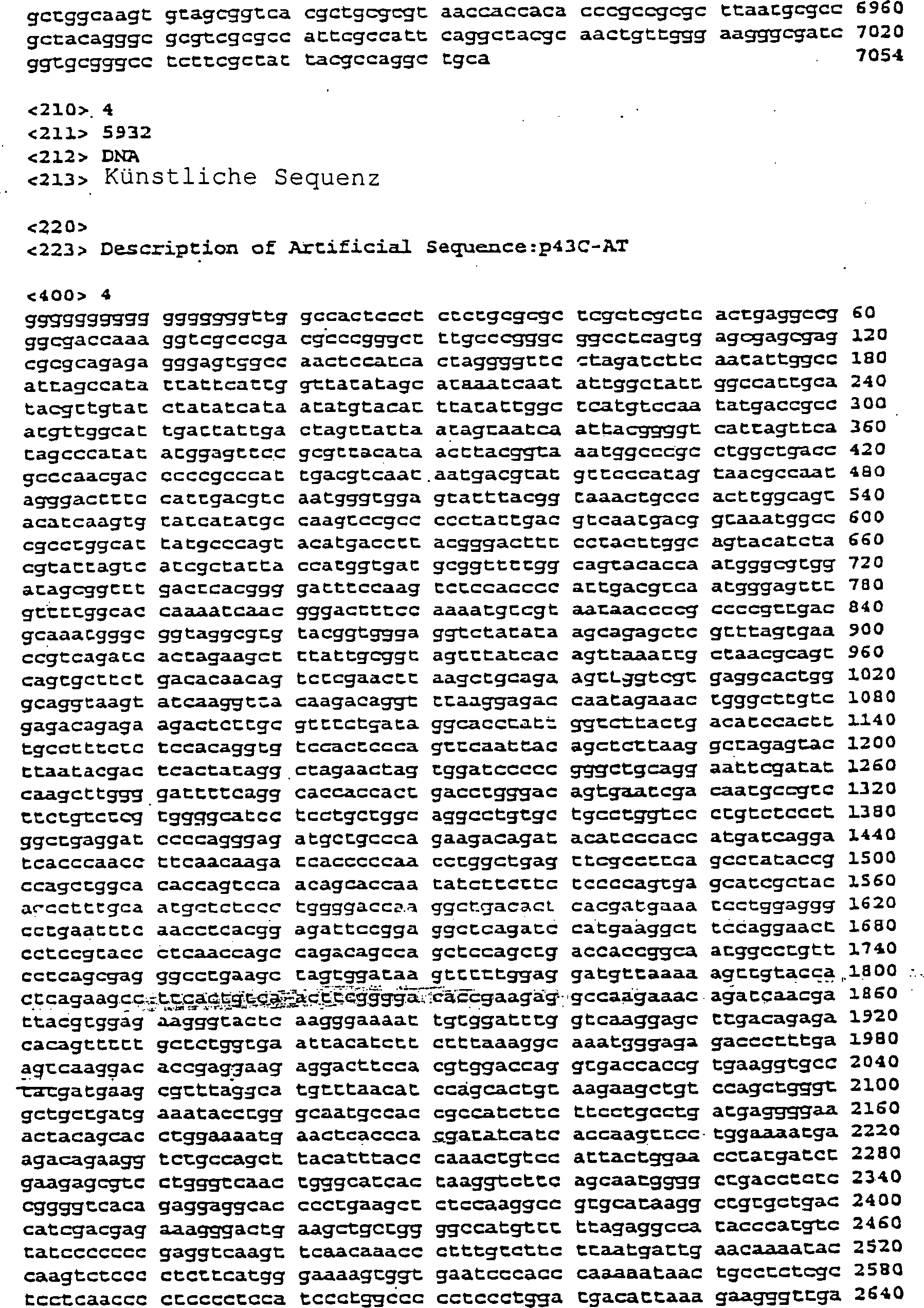


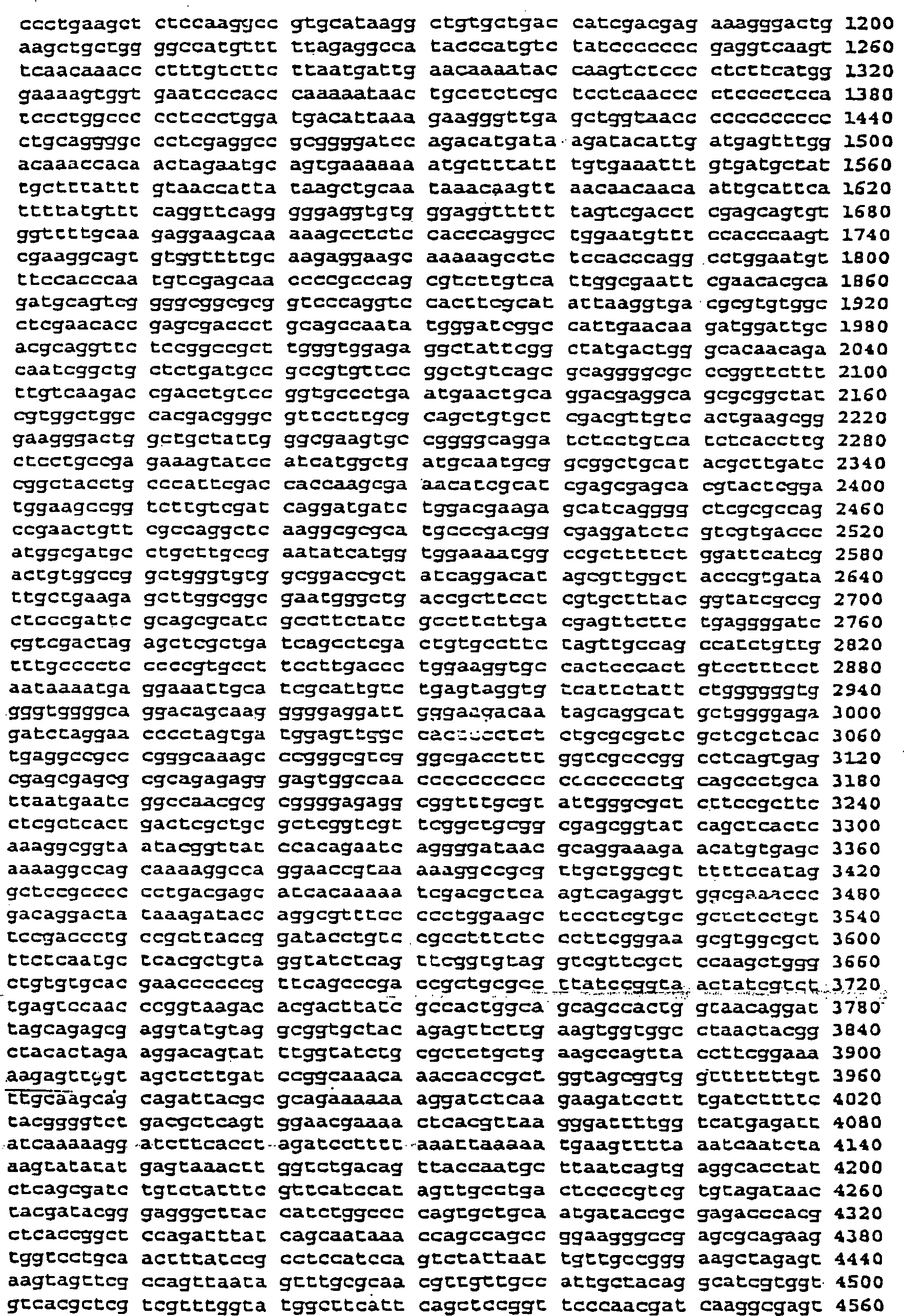

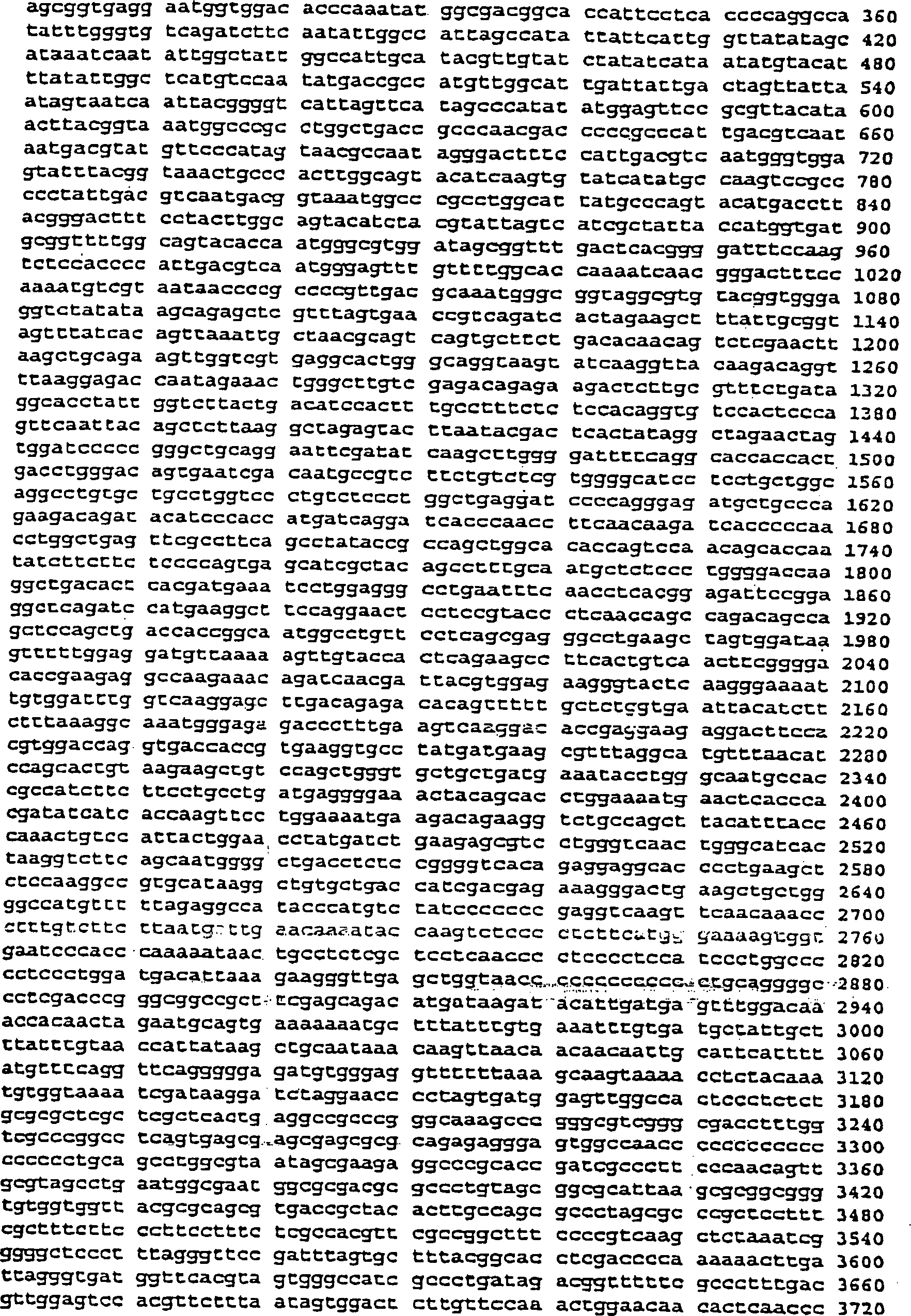


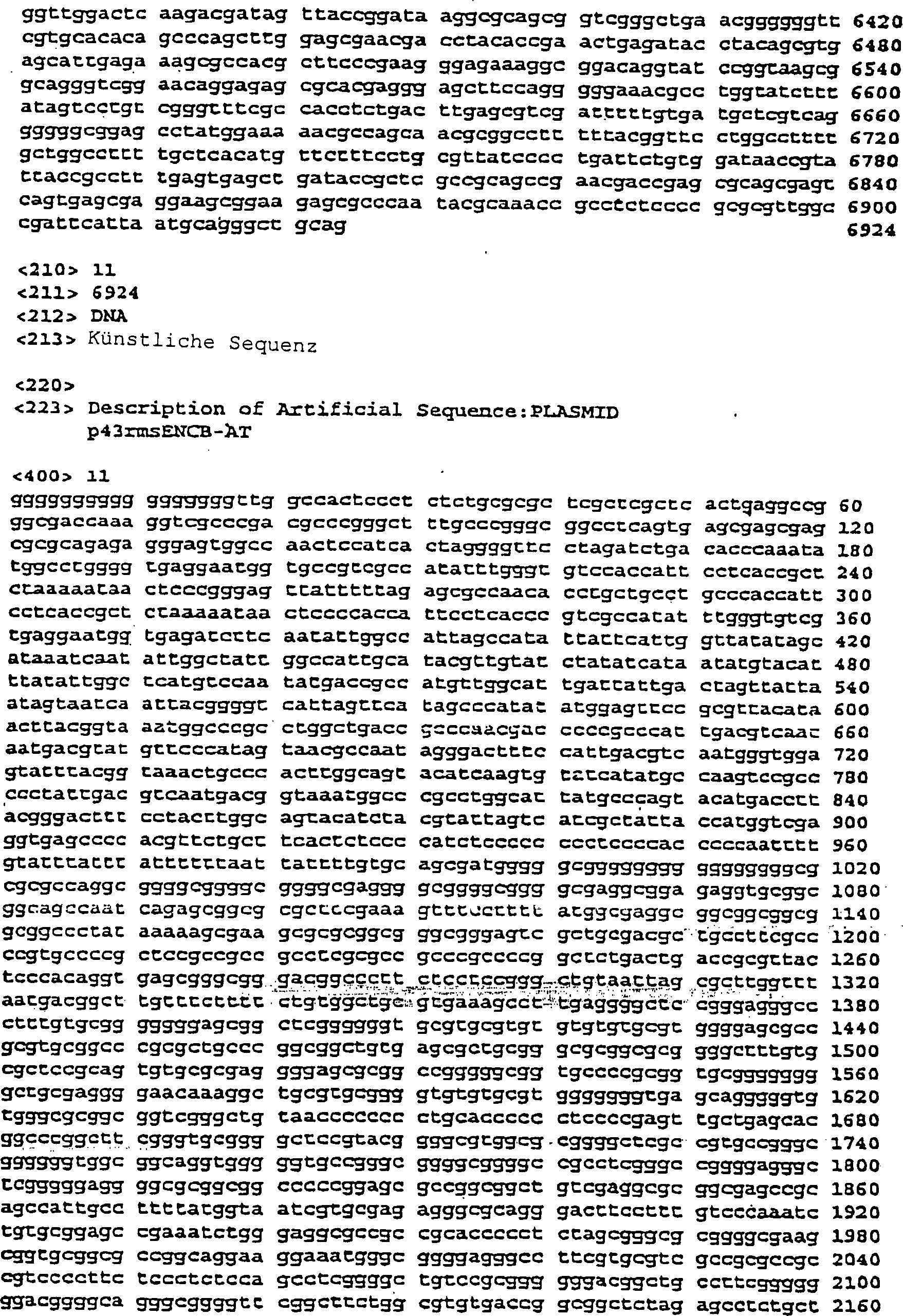
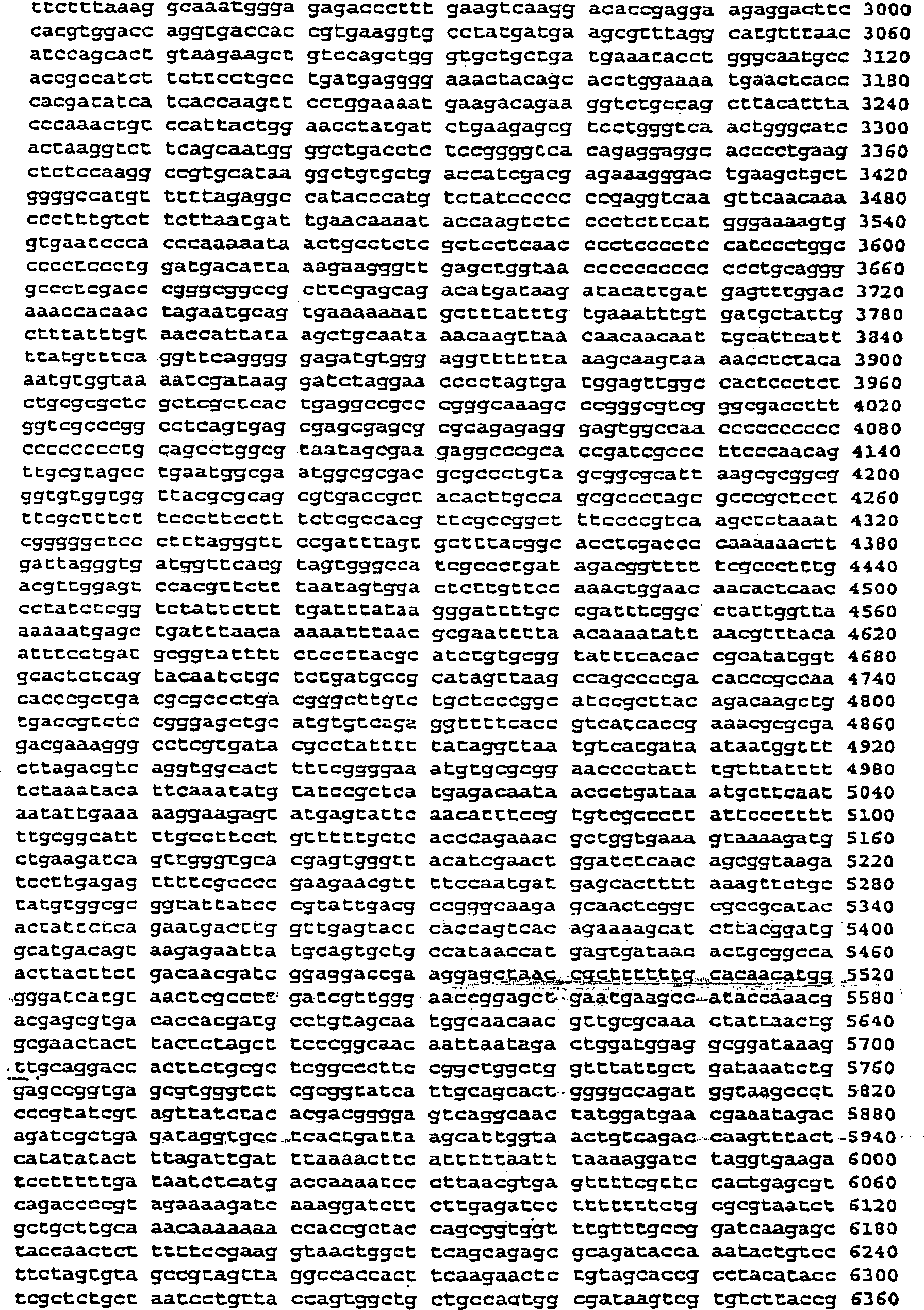


Claims (19)
Applications Claiming Priority (3)
| Application Number | Priority Date | Filing Date | Title |
|---|---|---|---|
| US8302598P | 1998-04-24 | 1998-04-24 | |
| US83025P | 1998-04-24 | ||
| PCT/US1999/008921 WO1999055564A2 (en) | 1998-04-24 | 1999-04-23 | Materials and methods for gene therapy |
Publications (2)
| Publication Number | Publication Date |
|---|---|
| DE69918090D1 DE69918090D1 (en) | 2004-07-22 |
| DE69918090T2 true DE69918090T2 (en) | 2005-06-16 |
Family
ID=22175690
Family Applications (1)
| Application Number | Title | Priority Date | Filing Date |
|---|---|---|---|
| DE69918090T Expired - Lifetime DE69918090T2 (en) | 1998-04-24 | 1999-04-23 | RECOMBINANT ADENO ASSOCIATED VIRAL VECTOR CODING ALPHA-1 ANTITRYPSIN FOR GENE THERAPY |
Country Status (10)
| Country | Link |
|---|---|
| US (4) | US6461606B1 (en) |
| EP (1) | EP1071806B1 (en) |
| AT (1) | ATE269412T1 (en) |
| AU (1) | AU3663699A (en) |
| CA (1) | CA2326327C (en) |
| DE (1) | DE69918090T2 (en) |
| DK (1) | DK1071806T3 (en) |
| ES (1) | ES2219011T3 (en) |
| NZ (1) | NZ507308A (en) |
| PT (1) | PT1071806E (en) |
Families Citing this family (23)
| Publication number | Priority date | Publication date | Assignee | Title |
|---|---|---|---|---|
| US6759237B1 (en) * | 1998-11-05 | 2004-07-06 | The Trustees Of The University Of Pennsylvania | Adeno-associated virus serotype 1 nucleic acid sequences, vectors and host cells containing same |
| US6821775B1 (en) * | 2000-02-11 | 2004-11-23 | Genvec, Inc. | Viral vector encoding pigment epithelium-derived factor |
| CN1293196C (en) | 2000-05-26 | 2007-01-03 | 大日本住友制药株式会社 | Novel recombinant adenovirus vector with relieved side effects |
| EP1390490B1 (en) * | 2001-05-24 | 2009-04-15 | Genzyme Corporation | Muscle-specific expression vectors |
| US7312202B2 (en) * | 2003-02-18 | 2007-12-25 | Board Of Regents, The University Of Texas System | Rationally designed and chemically synthesized promoter for genetic vaccine and gene therapy |
| ES2247942B1 (en) * | 2004-08-27 | 2006-10-01 | Instituto Nacional De Investigacion Y Tecnologia Agraria Y Alimentaria (Inia) | GENE CONSTRUCTION, VECTOR AND DNA VACCINE FOR THE VACCINATION OF AQUATIC ANIMALS. |
| US7479550B2 (en) * | 2006-06-02 | 2009-01-20 | The Board Of Regents Of The University Of Texas System | Amyloid β gene vaccines |
| ES2579231T3 (en) * | 2008-01-15 | 2016-08-08 | Abbvie Inc | Enhanced mammalian expression vectors and uses thereof |
| US9375491B2 (en) | 2011-10-28 | 2016-06-28 | University Of Florida Research Foundation, Inc. | Chimeric promoter for cone photoreceptor targeted gene therapy |
| MX365403B (en) | 2012-01-09 | 2019-05-31 | Serpin Pharma Llc | Peptides and methods of using same. |
| EP3253406B1 (en) | 2015-02-05 | 2023-11-01 | Canem Holdings, LLC | Compositions for treating granulomatosis with polyangiitis |
| CA2979120A1 (en) | 2015-03-03 | 2016-09-09 | Fondazione Telethon | Multiple aav vector system for expressing genes over 5 kilobases, comprising at least one degradation signal and uses thereof |
| AU2016317726B2 (en) | 2015-08-28 | 2022-05-26 | Serpin Pharma, Llc | Methods for treatment of diseases |
| WO2017055370A1 (en) | 2015-09-28 | 2017-04-06 | Fondazione Telethon | Treatment of bone growth disorders |
| ES2984415T3 (en) * | 2017-12-12 | 2024-10-29 | Kamada Ltd | Methods to induce immune tolerance and reduce anti-drug antibody response |
| JP7590962B2 (en) | 2018-11-05 | 2024-11-27 | アレン インスティテュート | Artificial expression constructs for selectively regulating gene expression in cortical excitatory neurons |
| CA3142948A1 (en) | 2019-02-15 | 2020-08-20 | Allen Institute | Artificial expression constructs for selectively modulating gene expression in selected neuronal cell populations |
| WO2021207077A1 (en) * | 2020-04-06 | 2021-10-14 | Homology Medicines, Inc. | Adeno-associated virus compositions for ids gene transfer and methods of use thereof |
| WO2023213817A1 (en) | 2022-05-02 | 2023-11-09 | Fondazione Telethon Ets | Gene therapy for gyrate atrophy of the choroid and retina |
| WO2024036250A2 (en) * | 2022-08-10 | 2024-02-15 | Homology Medicines, Inc. | Adeno-associated virus compositions for arsa gene transfer and methods of use thereof |
| IT202300004443A1 (en) | 2023-03-09 | 2024-09-09 | Int Centre For Genetic Engineering And Biotechnology Icgeb | HUMAN ALPHA GALACTOSIDASE CODING SEQUENCE FOR THE TREATMENT OF FABRY DISEASE |
| EP4724470A1 (en) | 2023-06-12 | 2026-04-15 | Children's Hospital Medical Center | Aav-cftr vectors and methods of using same |
| CN117223676B (en) * | 2023-09-25 | 2024-08-20 | 武汉大学 | Breeding methods, auxiliary breeding reagents and preventive drugs for animals with mid-face malformation |
Family Cites Families (14)
| Publication number | Priority date | Publication date | Assignee | Title |
|---|---|---|---|---|
| US4797368A (en) | 1985-03-15 | 1989-01-10 | The United States Of America As Represented By The Department Of Health And Human Services | Adeno-associated virus as eukaryotic expression vector |
| US5139941A (en) | 1985-10-31 | 1992-08-18 | University Of Florida Research Foundation, Inc. | AAV transduction vectors |
| US5399346A (en) | 1989-06-14 | 1995-03-21 | The United States Of America As Represented By The Department Of Health And Human Services | Gene therapy |
| US6261834B1 (en) * | 1991-11-08 | 2001-07-17 | Research Corporation Technologies, Inc. | Vector for gene therapy |
| US5587308A (en) | 1992-06-02 | 1996-12-24 | The United States Of America As Represented By The Department Of Health & Human Services | Modified adeno-associated virus vector capable of expression from a novel promoter |
| US5439824A (en) * | 1993-05-06 | 1995-08-08 | The United States Of America | Increased expression of α-1-antitrypsin in expression vectors through the inclusion of intron II |
| EP0733103B1 (en) | 1993-11-09 | 2004-03-03 | Targeted Genetics Corporation | Generation of high titers of recombinant aav vectors |
| US5693531A (en) * | 1993-11-24 | 1997-12-02 | The United States Of America As Represented By The Department Of Health And Human Services | Vector systems for the generation of adeno-associated virus particles |
| US5658785A (en) | 1994-06-06 | 1997-08-19 | Children's Hospital, Inc. | Adeno-associated virus materials and methods |
| US6204059B1 (en) * | 1994-06-30 | 2001-03-20 | University Of Pittsburgh | AAV capsid vehicles for molecular transfer |
| US5652224A (en) * | 1995-02-24 | 1997-07-29 | The Trustees Of The University Of Pennsylvania | Methods and compositions for gene therapy for the treatment of defects in lipoprotein metabolism |
| US5846528A (en) | 1996-01-18 | 1998-12-08 | Avigen, Inc. | Treating anemia using recombinant adeno-associated virus virions comprising an EPO DNA sequence |
| US5858351A (en) | 1996-01-18 | 1999-01-12 | Avigen, Inc. | Methods for delivering DNA to muscle cells using recombinant adeno-associated virus vectors |
| US6723707B1 (en) * | 1997-08-25 | 2004-04-20 | The Trustees Of The University Of Pennsylvania | Use of insulin-like growth factor-I in muscle |
-
1999
- 1999-04-23 DE DE69918090T patent/DE69918090T2/en not_active Expired - Lifetime
- 1999-04-23 DK DK99918810T patent/DK1071806T3/en active
- 1999-04-23 CA CA002326327A patent/CA2326327C/en not_active Expired - Fee Related
- 1999-04-23 EP EP99918810A patent/EP1071806B1/en not_active Expired - Lifetime
- 1999-04-23 AT AT99918810T patent/ATE269412T1/en active
- 1999-04-23 AU AU36636/99A patent/AU3663699A/en not_active Abandoned
- 1999-04-23 US US09/299,141 patent/US6461606B1/en not_active Expired - Lifetime
- 1999-04-23 ES ES99918810T patent/ES2219011T3/en not_active Expired - Lifetime
- 1999-04-23 NZ NZ507308A patent/NZ507308A/en not_active IP Right Cessation
- 1999-04-23 PT PT99918810T patent/PT1071806E/en unknown
-
2002
- 2002-10-08 US US10/267,117 patent/US20030082162A1/en not_active Abandoned
-
2003
- 2003-01-10 US US10/340,112 patent/US20030095949A1/en not_active Abandoned
-
2007
- 2007-10-31 US US11/932,912 patent/US20090186002A1/en not_active Abandoned
Also Published As
| Publication number | Publication date |
|---|---|
| WO1999055564A8 (en) | 1999-12-02 |
| ATE269412T1 (en) | 2004-07-15 |
| DE69918090D1 (en) | 2004-07-22 |
| EP1071806A2 (en) | 2001-01-31 |
| WO1999055564A1 (en) | 1999-11-04 |
| CA2326327A1 (en) | 1999-11-04 |
| PT1071806E (en) | 2004-09-30 |
| WO1999055564A9 (en) | 2000-04-06 |
| HK1035205A1 (en) | 2001-11-16 |
| DK1071806T3 (en) | 2004-07-19 |
| US20090186002A1 (en) | 2009-07-23 |
| NZ507308A (en) | 2003-01-31 |
| ES2219011T3 (en) | 2004-11-16 |
| AU3663699A (en) | 1999-11-16 |
| EP1071806B1 (en) | 2004-06-16 |
| US20030082162A1 (en) | 2003-05-01 |
| US6461606B1 (en) | 2002-10-08 |
| CA2326327C (en) | 2009-06-16 |
| US20030095949A1 (en) | 2003-05-22 |
Similar Documents
| Publication | Publication Date | Title |
|---|---|---|
| US20090186002A1 (en) | rAAV-delivered alpha-1-antitrypsin compositions and method for the treatment and prevention of diabetes | |
| DE60129229T2 (en) | ADENO-ASSOCIATED VIRUS-MEDIATED TRANSMISSION OF ANGIOGENIC FACTORS | |
| DE69936104T2 (en) | NUCLEIC ACID SEQUENCES OF ADENO ASSOCIATED VIRUS OF SEROTYPE I, AND VECTORS AND HOST CELLS THEREOF | |
| DE69824859T2 (en) | METHODS OF INCREASING THE EFFICIENCY OF RECOMBINANT AAV PRODUCTS | |
| DE69738351T2 (en) | PROCEDURE FOR GENERIC APPLICATION THROUGH RECOMBINANT ADENO-ASSOCIATED VIRUSED GENE THERAPY | |
| DE69114997T2 (en) | Recombinant vectors from adeno-associated viruses. | |
| DE69535340T2 (en) | Recombinant adeno-associated virus | |
| DE60034478T2 (en) | VECTORS AND TRANSGENES WITH REGULATORY ELEMENTS FOR GENETIC ADMINISTRATION IN LIVER | |
| DE69936778T2 (en) | ADENO ASSOCIATED VIRUS VECTORS AND THEIR USES | |
| DE69331194T2 (en) | ADENO ASSOCIATED VIRUS WITH REVERSE TERMINAL REPEAT SEQUENCES AS A PROMOTOR FOR THE TRANSFER OF A FUNCTIONAL CFTR GENE IN VIVO | |
| DE69433592T2 (en) | THE ACHIEVEMENT OF HIGH TITERS OF THE RECOMBINANT AAV VECTOR | |
| DE69232983T2 (en) | ADENO-ASSOCIATED VIRUS 2 BASAL VECTORS | |
| DE60117550T2 (en) | DOUBLE-SIDED PARVOVIRUS VECTORS | |
| DE3852823T2 (en) | TRANSDUCTION-CHANGED FIBROBLASTS AND THEIR USE. | |
| DE69829471T2 (en) | LENTIVIRUS-BASED GENTRANSFER VECTORS | |
| EP0844887B1 (en) | Aav transduction of myoblasts | |
| EP0934411A1 (en) | Compositions for treating anemia | |
| DE19933288A1 (en) | Structural protein of adeno-associated virus with altered antigenicity, its production and use | |
| WO1997026336A9 (en) | Compositions for treating anemia | |
| DE69614527T2 (en) | RETROVIRAL VECTORS FROM POULTRY SARCOM LEUCOSE VIRUS ALLOW THE TRANSFER OF GENES IN MAMMALINE CELLS AND THEIR THERAPEUTIC APPLICATIONS | |
| DE69930625T2 (en) | RECOMBINANT AAV VECTORS FOR GENE THERAPY OF HEMOPHILIA A | |
| DE69727492T2 (en) | GENETIC MODIFICATION OF HEMATOPOIETIC REPOPULATION OF STEM CELLS IN PRIMATES | |
| EP3536794A2 (en) | Peptides having specificity for the lungs | |
| KR102839746B1 (en) | Promoter for expression a gene in retinal cell and vector system comprising the same | |
| DE69534948T2 (en) | RETROVIRAL VECTORS FOR EXPRESSION IN EMBRYONAL CELLS |
Legal Events
| Date | Code | Title | Description |
|---|---|---|---|
| 8364 | No opposition during term of opposition |