DE102020128362A1 - Method and system for diagnosing engine misfire - Google Patents
Method and system for diagnosing engine misfire Download PDFInfo
- Publication number
- DE102020128362A1 DE102020128362A1 DE102020128362.8A DE102020128362A DE102020128362A1 DE 102020128362 A1 DE102020128362 A1 DE 102020128362A1 DE 102020128362 A DE102020128362 A DE 102020128362A DE 102020128362 A1 DE102020128362 A1 DE 102020128362A1
- Authority
- DE
- Germany
- Prior art keywords
- misfire
- condition
- engine
- eng
- exhaust valve
- Prior art date
- Legal status (The legal status is an assumption and is not a legal conclusion. Google has not performed a legal analysis and makes no representation as to the accuracy of the status listed.)
- Withdrawn
Links
Images

Classifications
-
- G—PHYSICS
- G01—MEASURING; TESTING
- G01N—INVESTIGATING OR ANALYSING MATERIALS BY DETERMINING THEIR CHEMICAL OR PHYSICAL PROPERTIES
- G01N33/00—Investigating or analysing materials by specific methods not covered by groups G01N1/00 - G01N31/00
- G01N33/0004—Gaseous mixtures, e.g. polluted air
- G01N33/0009—General constructional details of gas analysers, e.g. portable test equipment
- G01N33/0027—General constructional details of gas analysers, e.g. portable test equipment concerning the detector
- G01N33/0036—General constructional details of gas analysers, e.g. portable test equipment concerning the detector specially adapted to detect a particular component
-
- F—MECHANICAL ENGINEERING; LIGHTING; HEATING; WEAPONS; BLASTING
- F02—COMBUSTION ENGINES; HOT-GAS OR COMBUSTION-PRODUCT ENGINE PLANTS
- F02D—CONTROLLING COMBUSTION ENGINES
- F02D41/00—Electrical control of supply of combustible mixture or its constituents
- F02D41/22—Safety or indicating devices for abnormal conditions
-
- F—MECHANICAL ENGINEERING; LIGHTING; HEATING; WEAPONS; BLASTING
- F02—COMBUSTION ENGINES; HOT-GAS OR COMBUSTION-PRODUCT ENGINE PLANTS
- F02D—CONTROLLING COMBUSTION ENGINES
- F02D41/00—Electrical control of supply of combustible mixture or its constituents
- F02D41/02—Circuit arrangements for generating control signals
- F02D41/14—Introducing closed-loop corrections
- F02D41/1438—Introducing closed-loop corrections using means for determining characteristics of the combustion gases; Sensors therefor
- F02D41/1439—Introducing closed-loop corrections using means for determining characteristics of the combustion gases; Sensors therefor characterised by the position of the sensor
- F02D41/1441—Plural sensors
-
- F—MECHANICAL ENGINEERING; LIGHTING; HEATING; WEAPONS; BLASTING
- F02—COMBUSTION ENGINES; HOT-GAS OR COMBUSTION-PRODUCT ENGINE PLANTS
- F02D—CONTROLLING COMBUSTION ENGINES
- F02D41/00—Electrical control of supply of combustible mixture or its constituents
- F02D41/02—Circuit arrangements for generating control signals
- F02D41/14—Introducing closed-loop corrections
- F02D41/1438—Introducing closed-loop corrections using means for determining characteristics of the combustion gases; Sensors therefor
- F02D41/1444—Introducing closed-loop corrections using means for determining characteristics of the combustion gases; Sensors therefor characterised by the characteristics of the combustion gases
- F02D41/1446—Introducing closed-loop corrections using means for determining characteristics of the combustion gases; Sensors therefor characterised by the characteristics of the combustion gases the characteristics being exhaust temperatures
-
- F—MECHANICAL ENGINEERING; LIGHTING; HEATING; WEAPONS; BLASTING
- F02—COMBUSTION ENGINES; HOT-GAS OR COMBUSTION-PRODUCT ENGINE PLANTS
- F02D—CONTROLLING COMBUSTION ENGINES
- F02D41/00—Electrical control of supply of combustible mixture or its constituents
- F02D41/02—Circuit arrangements for generating control signals
- F02D41/14—Introducing closed-loop corrections
- F02D41/1438—Introducing closed-loop corrections using means for determining characteristics of the combustion gases; Sensors therefor
- F02D41/1444—Introducing closed-loop corrections using means for determining characteristics of the combustion gases; Sensors therefor characterised by the characteristics of the combustion gases
- F02D41/1454—Introducing closed-loop corrections using means for determining characteristics of the combustion gases; Sensors therefor characterised by the characteristics of the combustion gases the characteristics being an oxygen content or concentration or the air-fuel ratio
-
- F—MECHANICAL ENGINEERING; LIGHTING; HEATING; WEAPONS; BLASTING
- F02—COMBUSTION ENGINES; HOT-GAS OR COMBUSTION-PRODUCT ENGINE PLANTS
- F02D—CONTROLLING COMBUSTION ENGINES
- F02D41/00—Electrical control of supply of combustible mixture or its constituents
- F02D41/02—Circuit arrangements for generating control signals
- F02D41/18—Circuit arrangements for generating control signals by measuring intake air flow
-
- F—MECHANICAL ENGINEERING; LIGHTING; HEATING; WEAPONS; BLASTING
- F02—COMBUSTION ENGINES; HOT-GAS OR COMBUSTION-PRODUCT ENGINE PLANTS
- F02D—CONTROLLING COMBUSTION ENGINES
- F02D41/00—Electrical control of supply of combustible mixture or its constituents
- F02D41/24—Electrical control of supply of combustible mixture or its constituents characterised by the use of digital means
- F02D41/2406—Electrical control of supply of combustible mixture or its constituents characterised by the use of digital means using essentially read only memories
-
- G—PHYSICS
- G01—MEASURING; TESTING
- G01K—MEASURING TEMPERATURE; MEASURING QUANTITY OF HEAT; THERMALLY-SENSITIVE ELEMENTS NOT OTHERWISE PROVIDED FOR
- G01K13/00—Thermometers specially adapted for specific purposes
- G01K13/02—Thermometers specially adapted for specific purposes for measuring temperature of moving fluids or granular materials capable of flow
-
- G—PHYSICS
- G01—MEASURING; TESTING
- G01K—MEASURING TEMPERATURE; MEASURING QUANTITY OF HEAT; THERMALLY-SENSITIVE ELEMENTS NOT OTHERWISE PROVIDED FOR
- G01K13/00—Thermometers specially adapted for specific purposes
- G01K13/02—Thermometers specially adapted for specific purposes for measuring temperature of moving fluids or granular materials capable of flow
- G01K13/024—Thermometers specially adapted for specific purposes for measuring temperature of moving fluids or granular materials capable of flow of moving gases
-
- G—PHYSICS
- G01—MEASURING; TESTING
- G01L—MEASURING FORCE, STRESS, TORQUE, WORK, MECHANICAL POWER, MECHANICAL EFFICIENCY, OR FLUID PRESSURE
- G01L5/00—Apparatus for, or methods of, measuring force, work, mechanical power, or torque, specially adapted for specific purposes
-
- G—PHYSICS
- G01—MEASURING; TESTING
- G01M—TESTING STATIC OR DYNAMIC BALANCE OF MACHINES OR STRUCTURES; TESTING OF STRUCTURES OR APPARATUS, NOT OTHERWISE PROVIDED FOR
- G01M15/00—Testing of engines
- G01M15/04—Testing internal-combustion engines
- G01M15/05—Testing internal-combustion engines by combined monitoring of two or more different engine parameters
-
- G—PHYSICS
- G01—MEASURING; TESTING
- G01M—TESTING STATIC OR DYNAMIC BALANCE OF MACHINES OR STRUCTURES; TESTING OF STRUCTURES OR APPARATUS, NOT OTHERWISE PROVIDED FOR
- G01M15/00—Testing of engines
- G01M15/04—Testing internal-combustion engines
- G01M15/11—Testing internal-combustion engines by detecting misfire
-
- G—PHYSICS
- G07—CHECKING-DEVICES
- G07C—TIME OR ATTENDANCE REGISTERS; REGISTERING OR INDICATING THE WORKING OF MACHINES; GENERATING RANDOM NUMBERS; VOTING OR LOTTERY APPARATUS; ARRANGEMENTS, SYSTEMS OR APPARATUS FOR CHECKING NOT PROVIDED FOR ELSEWHERE
- G07C5/00—Registering or indicating the working of vehicles
- G07C5/08—Registering or indicating performance data other than driving, working, idle, or waiting time, with or without registering driving, working, idle or waiting time
- G07C5/0841—Registering performance data
- G07C5/085—Registering performance data using electronic data carriers
-
- F—MECHANICAL ENGINEERING; LIGHTING; HEATING; WEAPONS; BLASTING
- F01—MACHINES OR ENGINES IN GENERAL; ENGINE PLANTS IN GENERAL; STEAM ENGINES
- F01N—GAS-FLOW SILENCERS OR EXHAUST APPARATUS FOR MACHINES OR ENGINES IN GENERAL; GAS-FLOW SILENCERS OR EXHAUST APPARATUS FOR INTERNAL-COMBUSTION ENGINES
- F01N2560/00—Exhaust systems with means for detecting or measuring exhaust gas components or characteristics
- F01N2560/02—Exhaust systems with means for detecting or measuring exhaust gas components or characteristics the means being an exhaust gas sensor
- F01N2560/025—Exhaust systems with means for detecting or measuring exhaust gas components or characteristics the means being an exhaust gas sensor for measuring or detecting O2, e.g. lambda sensors
-
- F—MECHANICAL ENGINEERING; LIGHTING; HEATING; WEAPONS; BLASTING
- F01—MACHINES OR ENGINES IN GENERAL; ENGINE PLANTS IN GENERAL; STEAM ENGINES
- F01N—GAS-FLOW SILENCERS OR EXHAUST APPARATUS FOR MACHINES OR ENGINES IN GENERAL; GAS-FLOW SILENCERS OR EXHAUST APPARATUS FOR INTERNAL-COMBUSTION ENGINES
- F01N2560/00—Exhaust systems with means for detecting or measuring exhaust gas components or characteristics
- F01N2560/06—Exhaust systems with means for detecting or measuring exhaust gas components or characteristics the means being a temperature sensor
-
- F—MECHANICAL ENGINEERING; LIGHTING; HEATING; WEAPONS; BLASTING
- F02—COMBUSTION ENGINES; HOT-GAS OR COMBUSTION-PRODUCT ENGINE PLANTS
- F02D—CONTROLLING COMBUSTION ENGINES
- F02D41/00—Electrical control of supply of combustible mixture or its constituents
- F02D41/22—Safety or indicating devices for abnormal conditions
- F02D2041/224—Diagnosis of the fuel system
-
- F—MECHANICAL ENGINEERING; LIGHTING; HEATING; WEAPONS; BLASTING
- F02—COMBUSTION ENGINES; HOT-GAS OR COMBUSTION-PRODUCT ENGINE PLANTS
- F02D—CONTROLLING COMBUSTION ENGINES
- F02D41/00—Electrical control of supply of combustible mixture or its constituents
- F02D41/22—Safety or indicating devices for abnormal conditions
- F02D2041/224—Diagnosis of the fuel system
- F02D2041/225—Leakage detection
-
- F—MECHANICAL ENGINEERING; LIGHTING; HEATING; WEAPONS; BLASTING
- F02—COMBUSTION ENGINES; HOT-GAS OR COMBUSTION-PRODUCT ENGINE PLANTS
- F02D—CONTROLLING COMBUSTION ENGINES
- F02D2200/00—Input parameters for engine control
- F02D2200/02—Input parameters for engine control the parameters being related to the engine
- F02D2200/04—Engine intake system parameters
- F02D2200/0406—Intake manifold pressure
-
- F—MECHANICAL ENGINEERING; LIGHTING; HEATING; WEAPONS; BLASTING
- F02—COMBUSTION ENGINES; HOT-GAS OR COMBUSTION-PRODUCT ENGINE PLANTS
- F02D—CONTROLLING COMBUSTION ENGINES
- F02D2200/00—Input parameters for engine control
- F02D2200/02—Input parameters for engine control the parameters being related to the engine
- F02D2200/04—Engine intake system parameters
- F02D2200/0414—Air temperature
-
- F—MECHANICAL ENGINEERING; LIGHTING; HEATING; WEAPONS; BLASTING
- F02—COMBUSTION ENGINES; HOT-GAS OR COMBUSTION-PRODUCT ENGINE PLANTS
- F02D—CONTROLLING COMBUSTION ENGINES
- F02D2200/00—Input parameters for engine control
- F02D2200/02—Input parameters for engine control the parameters being related to the engine
- F02D2200/08—Exhaust gas treatment apparatus parameters
- F02D2200/0814—Oxygen storage amount
-
- F—MECHANICAL ENGINEERING; LIGHTING; HEATING; WEAPONS; BLASTING
- F02—COMBUSTION ENGINES; HOT-GAS OR COMBUSTION-PRODUCT ENGINE PLANTS
- F02D—CONTROLLING COMBUSTION ENGINES
- F02D2200/00—Input parameters for engine control
- F02D2200/02—Input parameters for engine control the parameters being related to the engine
- F02D2200/10—Parameters related to the engine output, e.g. engine torque or engine speed
- F02D2200/1002—Output torque
-
- F—MECHANICAL ENGINEERING; LIGHTING; HEATING; WEAPONS; BLASTING
- F02—COMBUSTION ENGINES; HOT-GAS OR COMBUSTION-PRODUCT ENGINE PLANTS
- F02D—CONTROLLING COMBUSTION ENGINES
- F02D2200/00—Input parameters for engine control
- F02D2200/02—Input parameters for engine control the parameters being related to the engine
- F02D2200/10—Parameters related to the engine output, e.g. engine torque or engine speed
- F02D2200/1015—Engines misfires
-
- G—PHYSICS
- G01—MEASURING; TESTING
- G01K—MEASURING TEMPERATURE; MEASURING QUANTITY OF HEAT; THERMALLY-SENSITIVE ELEMENTS NOT OTHERWISE PROVIDED FOR
- G01K2205/00—Application of thermometers in motors, e.g. of a vehicle
- G01K2205/02—Application of thermometers in motors, e.g. of a vehicle for measuring inlet gas temperature
-
- G—PHYSICS
- G01—MEASURING; TESTING
- G01K—MEASURING TEMPERATURE; MEASURING QUANTITY OF HEAT; THERMALLY-SENSITIVE ELEMENTS NOT OTHERWISE PROVIDED FOR
- G01K2205/00—Application of thermometers in motors, e.g. of a vehicle
- G01K2205/04—Application of thermometers in motors, e.g. of a vehicle for measuring exhaust gas temperature
-
- Y—GENERAL TAGGING OF NEW TECHNOLOGICAL DEVELOPMENTS; GENERAL TAGGING OF CROSS-SECTIONAL TECHNOLOGIES SPANNING OVER SEVERAL SECTIONS OF THE IPC; TECHNICAL SUBJECTS COVERED BY FORMER USPC CROSS-REFERENCE ART COLLECTIONS [XRACs] AND DIGESTS
- Y02—TECHNOLOGIES OR APPLICATIONS FOR MITIGATION OR ADAPTATION AGAINST CLIMATE CHANGE
- Y02T—CLIMATE CHANGE MITIGATION TECHNOLOGIES RELATED TO TRANSPORTATION
- Y02T10/00—Road transport of goods or passengers
- Y02T10/10—Internal combustion engine [ICE] based vehicles
- Y02T10/40—Engine management systems
Landscapes
- Engineering & Computer Science (AREA)
- Chemical & Material Sciences (AREA)
- Combustion & Propulsion (AREA)
- Physics & Mathematics (AREA)
- General Physics & Mathematics (AREA)
- Mechanical Engineering (AREA)
- General Engineering & Computer Science (AREA)
- Life Sciences & Earth Sciences (AREA)
- Health & Medical Sciences (AREA)
- Food Science & Technology (AREA)
- Medicinal Chemistry (AREA)
- Analytical Chemistry (AREA)
- Biochemistry (AREA)
- General Health & Medical Sciences (AREA)
- Immunology (AREA)
- Pathology (AREA)
- Combined Controls Of Internal Combustion Engines (AREA)
- Electrical Control Of Air Or Fuel Supplied To Internal-Combustion Engine (AREA)
Abstract
Verfahren und System zum Diagnostizieren von Motor-Fehlzünden, aufweisend: eine Messeinheit (100), welche mindestens einen Sensor zum Detektieren von mindestens einem Detektionswert aufweist, welcher mit einem Betrieb des Motors (ENG) assoziiert ist, und eine elektronische Steuereinheit (200), welche konfiguriert ist, um zu ermitteln, ob ein Fehlzünden des Motors (ENG) aufgrund von Auslassventilleckage aufgetreten ist, basierend auf den Detektionswerten von der Messeinheit (100), und um einen Betrieb auszuführen, welcher mit dem Fehlzünden aufgrund von Auslassventilleckage korrespondiert, wenn das Fehlzünden aufgrund von Auslassventilleckage aufgetreten ist, wobei die elektronische Steuereinheit (200) einen Fehlzündung-Code für Auslassventilleckage in einem Speicher (210) speichert, wenn das Fehlzünden aufgrund von Auslassventilleckage aufgetreten ist.A method and system for diagnosing engine misfire, comprising: a measurement unit (100) having at least one sensor for detecting at least one detection value associated with operation of the engine (ENG), and an electronic control unit (200), which is configured to determine whether an engine (ENG) misfire due to exhaust valve leakage has occurred based on the detection values from the measuring unit (100), and to perform an operation corresponding to the misfire due to exhaust valve leakage if the misfire has occurred due to exhaust valve leakage, wherein the electronic control unit (200) stores an exhaust valve leakage misfire code in memory (210) when the misfire has occurred due to exhaust valve leakage.
Description
Hintergrundbackground
(a) Gebiet der Erfindung/Offenbarung(a) Field of Invention / Disclosure
Die vorliegende Erfindung/Offenbarung betrifft Verfahren und Systeme zum Diagnostizieren eines Fehlzündens (bzw. einer Fehlzündung) eines Motors (z.B. eines Verbrennungsmotors).The present invention / disclosure relates to methods and systems for diagnosing a misfire (or misfire) of an engine (e.g., an internal combustion engine).
(b) Beschreibung der verwandten Technik(b) Description of the related art
Im Allgemeinen ist ein Motor (z.B. ein Verbrennungsmotor) eine Vorrichtung, welche Kraft (z.B. Antriebskraft) erzeugt durch Verbrennen von Luft und Kraftstoff in einem Zylinder.In general, an engine (e.g. internal combustion engine) is a device that generates power (e.g. driving force) by burning air and fuel in a cylinder.
Damit das Luft/Kraftstoff-Gemisch, wie erwartet, in dem Zylinder normal verbrennt, müssen verschiedene Variablen, wie beispielsweise im Fall eines Benzinmotors (z.B. eines Ottomotors) das Verhältnis von Luft und Kraftstoff, der Kraftstoffeinspritzzeitpunkt und der Zündzeitpunkt, wie vorgesehen betrieben werden. Aufgrund von verschiedenen Faktoren kann das Luft/Kraftstoff-Gemisch in dem Zylinder nicht ausreichend (d.h. normal) verbrannt werden; ein solcher Fall wird als ein Fehlzünden (bzw. eine Fehlzündung) bezeichnet.In order for the air / fuel mixture to burn normally in the cylinder as expected, various variables, such as in the case of a gasoline engine (e.g. Otto engine), the air-fuel ratio, the fuel injection timing and the ignition timing, must be operated as intended. Due to various factors, the air / fuel mixture in the cylinder cannot be sufficiently (i.e. normally) burned; such a case is called a misfire (or a misfire).
Wenn ein Fehlzünden auftritt, reagiert der Kraftstoff nicht ausreichend mit Luft und kann unverbrannt abgegeben (z.B. ausgestoßen) werden. Zum Beispiel kann Kohlenwasserstoff (HC) in einer großen Menge abgegeben werden. Da unverbranntes Gas zu Verschmutzung führt, sollte ein Fehlzünden als ein Fahrzeuginterne-Diagnostik-Parameter (z.B. als ein „On-Board“-Diagnostik-Parameter (OBD-Parameter)) diagnostiziert werden. If a misfire occurs, the fuel does not react adequately with air and can be given off (e.g. expelled) unburned. For example, hydrocarbon (HC) can be discharged in a large amount. Since unburned gas leads to pollution, a misfire should be diagnosed as an internal vehicle diagnostic parameter (e.g. as an "on-board" diagnostic parameter (OBD parameter)).
Das unverbrannte Gas kann übermäßige Oxidationsreaktionen in Reinigungsvorrichtungen, wie Katalysatoren (z.B. Abgaskatalysatoren), verursachen und kann Komponenten (z.B. Bauteile), wie Katalysatoren, in einem Auslasssystem (z.B. einem Abgassystem) eines Fahrzeugs (z.B. eines Kraftfahrzeugs) beschädigen.The unburned gas can cause excessive oxidation reactions in cleaning devices such as catalytic converters (e.g. catalytic converters) and can damage components (e.g. structural parts) such as catalytic converters in an exhaust system (e.g. an exhaust system) of a vehicle (e.g. an automobile).
Ein Verfahren und ein System, welche in der Lage sind, verschiedenes Fehlzünden (bzw. verschiedene Fehlzündungen) zu überwachen und die Ursache davon zu analysieren oder zu ermitteln, können erwünscht sein, um Umweltprobleme, wie beispielsweise Verschmutzung, zu verringern und die Dauerhaftigkeit einer Fahrzeugreinigungsvorrichtung zu verbessern.A method and system capable of monitoring various misfires (or various misfires) and analyzing or determining the cause thereof may be desirable in order to reduce environmental problems such as pollution and the durability of a vehicle cleaning device to improve.
Die obigen Informationen, welche in diesem „Hintergrund“-Abschnitt dargelegt sind, dienen lediglich zur Verbesserung des Verständnisses des Hintergrunds der Erfindung/Offenbarung.The above information, which is set out in this “Background” section, is only intended to improve understanding of the background of the invention / disclosure.
Kurzbeschreibung der Erfindung/OffenbarungBrief Description of the Invention / Disclosure
Ein beispielhaftes System zum Diagnostizieren eines Fehlzündens eines Motors (z.B. eines Verbrennungsmotors) weist auf: eine Messeinheit, welche mindestens einen Sensor zum Detektieren von mindestens einem Detektionswert aufweist, welcher mit einem Betrieb (z.B. einem Betriebszustand) des Motors assoziiert ist, und eine elektronische Steuereinheit (z.B. ein Motorsteuergerät; z.B. eine „ECU“), welche konfiguriert ist, um zu ermitteln, ob ein Fehlzünden des Motors aufgrund von Auslassventilleckage (z.B. einer Undichtigkeit eines Auslassventils bzw. einer Auslassklappe) aufgetreten ist, basierend auf den Detektionswerten von der Messeinheit, und um einen Betrieb (z.B. einen Betriebsvorgang) durchzuführen, welcher mit dem Fehlzünden aufgrund von Auslassventilleckage korrespondiert, wenn das Fehlzünden aufgrund von Auslassventilleckage aufgetreten ist. Die elektronische Steuereinheit kann einen Fehlzündung-Code für Auslassventilleckage (z.B. einen Code, welcher für das Fehlzünden aufgrund von Abgasventilleckage steht) in einem Speicher speichern, wenn das Fehlzünden aufgrund von Auslassventilleckage aufgetreten ist.An exemplary system for diagnosing a misfire of an engine (eg an internal combustion engine) comprises: a measuring unit which has at least one sensor for detecting at least one detection value which is associated with an operation (eg an operating state) of the engine, and an electronic control unit (e.g. an engine control unit; e.g. an "ECU"), which is configured to determine whether a misfire of the engine has occurred due to exhaust valve leakage (e.g. a leak in an exhaust valve or an exhaust flap), based on the detection values from the measuring unit, and to perform an operation (eg, an operation) corresponding to the exhaust valve leakage misfire when the exhaust valve leakage misfire has occurred. The electronic control unit may store a misfire code for exhaust valve leakage (e.g., a code representing misfire due to exhaust valve leakage) in a memory when the misfire has occurred due to exhaust valve leakage.
Die elektronische Steuereinheit kann konfiguriert sein, um einen Ausgangsdrehmomentabfall des Motors zu detektieren, den Motor über ein optimales Luft/Kraftstoff-Verhältnis zu steuern, wenn der Ausgangsdrehmomentabfall des Motors detektiert wird, einen Ausgangsdrehmomentabfall des Motors zu zählen (z.B. eine Häufigkeit des Auftretens des Ausgangsdrehmomentabfalls des Motors zu zählen), während des Steuerns des Motors über das optimale Luft/KraftstoffVerhältnis, und zu ermitteln, ob das Fehlzünden aufgrund von Auslassventilleckage aufgetreten ist, wenn der Ausgangsdrehmomentabfall-Zählwert über einer vorbestimmten Zahl liegt.The electronic control unit may be configured to detect an output torque drop of the engine, to control the engine via an optimal air / fuel ratio when the output torque drop of the engine is detected, to count an output torque drop of the engine (e.g. a frequency of occurrence of the output torque drop of the engine) while controlling the engine through the optimal air / fuel ratio and determining if the exhaust valve leakage misfire has occurred when the output torque decay count is above a predetermined number.
Der Fehlzündung-Code für Auslassventilleckage kann Informationen über einen Fehlzündung-Auftritt-Betriebspunkt (z.B. einen Fehlzündung-Auftritt-Motorbetriebspunkt) aufweisen, an welchem das Fehlzünden aufgrund von Auslassventilleckage aufgetreten ist.The misfire code for exhaust valve leakage may include information on a misfire occurrence operating point (e.g., a misfire occurrence engine operating point) at which the misfire occurred due to exhaust valve leakage.
Wenn das Fehlzünden aufgrund von Auslassventilleckage aufgetreten ist, kann die elektronische Steuereinheit den Motor an einem Betriebspunkt steuern unter Vermeiden des Fehlzündung-Auftritt-Betriebspunktes.When the misfire has occurred due to exhaust valve leakage, the electronic control unit can control the engine at an operating point avoiding the misfire occurrence operating point.
Die elektronische Steuereinheit kann konfiguriert sein, um zu ermitteln, ob ein Code, welcher mit einem Fehlzünden aufgrund von einem Einspritzfehler und/oder einem Zündfehler korrespondiert, bereits in dem Speicher gespeichert ist, wenn der Ausgangsdrehmomentabfall-Zählwert oberhalb einer vorbestimmten Zahl liegt, kann zusätzlich einen weiteren Code speichern, welcher angibt, dass ein Fehlzünden zusätzlich aufgetreten ist, wenn der Code, welcher mit einem Fehlzünden aufgrund von einem Einspritzfehler und/oder einem Zündfehler korrespondiert, bereits in dem Speicher gespeichert ist, und kann das Ermitteln, ob das Fehlzünden aufgrund von Auslassventilleckage aufgetreten ist, durchführen, nur wenn der Code, welcher mit einem Fehlzünden aufgrund von einem Einspritzfehler und/oder einem Zündfehler korrespondiert, in dem Speicher nicht gespeichert ist.The electronic control unit can be configured to determine whether a code which corresponds to a misfire due to an injection error and / or an ignition error, is already stored in the memory when the output torque drop count is above a predetermined number, can additionally store a further code which indicates that a misfire has additionally occurred if the code, which with a misfire due to an injection error and / or corresponds to an ignition fault is already stored in the memory and can determine whether the misfire has occurred due to exhaust valve leakage only if the code which corresponds to a misfire due to an injection error and / or an ignition error is in the memory is not saved.
Die Messeinheit kann aufweisen: einen MAF-Sensor (z.B. einen Luftmassensensor bzw. einen Luftmengenmesser) zum Detektieren von einer Einlassluftmenge, welche dem Motor (z.B. dem Verbrennungsmotor) zugeführt wird, einen Stromaufwärts-Sauerstoffsensor (z.B. einen stromaufwärts gelegenen Sauerstoffsensor; z.B. einen vorgeschalteten Sauerstoffsensor) zum Detektieren von einer Stromaufwärts-Sauerstoffkonzentration eines Katalysators des Motors, einen MAP-Sensor (z.B. einen Krümmer-Absolutdruck-Sensor bzw. einen Einlasskrümmer-Absolutdruck-Sensor) zum Detektieren von einem Einlasskrümmerdruck (bzw. einem Krümmerdruck) des Motors, einen Auslasstemperatursensor zum Detektieren von einer Auslasstemperatur des Motors, und einen Einlasskrümmertemperatursensor (bzw. einen Krümmertemperatursensor; nachfolgend „Einlasskrümmertemperatursensor“ genannt) zum Detektieren von einer Einlasskrümmertemperatur (bzw. einer Krümmertemperatur) des Motors.The measuring unit can have: a MAF sensor (e.g. an air mass sensor or an air flow meter) for detecting an intake air quantity which is supplied to the engine (e.g. the internal combustion engine), an upstream oxygen sensor (e.g. an upstream oxygen sensor; e.g. an upstream oxygen sensor ) for detecting an upstream oxygen concentration of a catalytic converter of the engine, a MAP sensor (e.g. a manifold absolute pressure sensor or an intake manifold absolute pressure sensor) for detecting an intake manifold pressure (or a manifold pressure) of the engine, an exhaust temperature sensor for detecting an exhaust temperature of the engine, and an intake manifold temperature sensor (or a manifold temperature sensor; hereinafter referred to as “intake manifold temperature sensor”) for detecting an intake manifold temperature (or a manifold temperature) of the engine.
Die elektronische Steuereinheit kann ermitteln, ob das Fehlzünden aufgrund von Auslassventilleckage aufgetreten ist, basierend auf einer Kombination von mindestens einer von:
- (einer ersten Bedingung) ob sich die Einlassluftmenge, welche mittels des MAF-Sensors detektiert wird, verglichen mit einer normalen Verbrennung verringert hat, (einer zweiten Bedingung) ob sich die Stromaufwärts-Sauerstoffkonzentration, welche mittels des Stromaufwärts-Sauerstoffsensors detektiert wird,
- verglichen mit der normalen Verbrennung erhöht hat, (einer dritten Bedingung) ob sich der Einlasskrümmerdruck, welcher mittels des MAP-Sensors detektiert wird, verglichen mit der normalen Verbrennung erhöht hat, (einer vierten Bedingung) ob sich die Auslasstemperatur, welche mittels des Auslasstemperatursensors detektiert wird, verglichen mit der normalen Verbrennung erhöht hat, und (einer fünften Bedingung) ob sich die Einlasskrümmertemperatur, welche mittels des Einlasskrümmertemperatursensors detektiert wird, verglichen mit der normalen Verbrennung erhöht hat.
- (a first condition) whether the intake air amount detected by the MAF sensor has decreased compared to normal combustion, (a second condition) whether the upstream oxygen concentration detected by the upstream oxygen sensor has increased,
- has increased compared to normal combustion (a third condition) whether the intake manifold pressure detected by the MAP sensor has increased compared to normal combustion (a fourth condition) whether the exhaust temperature detected by the exhaust temperature sensor has increased is increased compared to normal combustion, and (a fifth condition) whether the intake manifold temperature detected by means of the intake manifold temperature sensor has increased compared to normal combustion.
In diesem Fall kann die elektronische Steuereinheit ermitteln, dass das Fehlzünden aufgrund von Auslassventilleckage aufgetreten ist, wenn die erste Bedingung, die zweite Bedingung, die dritte Bedingung und die fünfte Bedingung alle erfüllt sind.In this case, the electronic control unit can determine that the exhaust valve leakage misfire has occurred when the first condition, the second condition, the third condition, and the fifth condition are all met.
Alternativ kann die elektronische Steuereinheit ermitteln, dass das Fehlzünden aufgrund von Auslassventilleckage aufgetreten ist, wenn die erste Bedingung, die zweite Bedingung, die dritte Bedingung, die vierte Bedingung und die fünfte Bedingung alle erfüllt sind.Alternatively, the electronic control unit may determine that the exhaust valve leakage misfire has occurred when the first condition, the second condition, the third condition, the fourth condition, and the fifth condition are all met.
Bei einer exemplarischen Abwandlung kann die Messeinheit aufweisen: einen MAF-Sensor zum Detektieren von einer Einlassluftmenge, welche dem Motor zugeführt wird, einen Stromaufwärts-Sauerstoffsensor zum Detektieren von einer Stromaufwärts-Sauerstoffkonzentration eines Katalysators des Motors, einen MAP-Sensor zum Detektieren von einem Einlasskrümmerdruck des Motors, und einen Auslasstemperatursensor zum Detektieren von einer Auslasstemperatur des Motors. Die elektronische Steuereinheit kann ermitteln, ob das Fehlzünden aufgrund von Auslassventilleckage aufgetreten ist, basierend auf einer Kombination von mindestens einer von: (einer ersten Bedingung) ob die Einlassluftmenge, welche von dem MAF-Sensor detektiert wird, verglichen mit einer normalen Verbrennung abgenommen hat, (einer zweiten Bedingung) ob sich die Stromaufwärts-Sauerstoffkonzentration, welche mittels des Stromaufwärts-Sauerstoffsensors detektiert wird, verglichen mit der normalen Verbrennung erhöht hat, (einer dritten Bedingung) ob sich der Einlasskrümmerdruck, welcher mittels des MAP-Sensors detektiert wird, verglichen mit der normalen Verbrennung erhöht hat, und (einer vierten Bedingung) ob sich die Auslasstemperatur, welche mittels des Auslasstemperatursensors detektiert wird, verglichen mit der normalen Verbrennung erhöht hat.In an exemplary modification, the measuring unit may include: a MAF sensor for detecting an amount of intake air supplied to the engine, an upstream oxygen sensor for detecting an upstream oxygen concentration of a catalytic converter of the engine, a MAP sensor for detecting an intake manifold pressure of the engine, and an exhaust temperature sensor for detecting an exhaust temperature of the engine. The electronic control unit may determine whether the misfire occurred due to exhaust valve leakage based on a combination of at least one of: (a first condition) whether the amount of intake air detected by the MAF sensor has decreased compared to normal combustion; (a second condition) whether the upstream oxygen concentration detected by the upstream oxygen sensor has increased compared to normal combustion, (a third condition) whether the intake manifold pressure detected by the MAP sensor has increased compared to the normal combustion has increased, and (a fourth condition) whether the exhaust temperature, which is detected by means of the exhaust temperature sensor, has increased compared with the normal combustion.
In diesem Fall kann die elektronische Steuereinheit ermitteln, dass das Fehlzünden aufgrund von Auslassventilleckage aufgetreten ist, wenn die erste Bedingung, die zweite Bedingung und die dritte Bedingung alle erfüllt sind.In this case, the electronic control unit can determine that the misfire occurred due to exhaust valve leakage when the first condition, the second condition, and the third condition are all met.
Alternativ kann die elektronische Steuereinheit ermitteln, dass das Fehlzünden aufgrund von Auslassventilleckage aufgetreten ist, wenn die erste Bedingung, die zweite Bedingung, die dritte Bedingung und die vierte Bedingung alle erfüllt sind.Alternatively, the electronic control unit may determine that the exhaust valve leakage misfire has occurred when the first condition, the second condition, the third condition, and the fourth condition are all met.
Ein exemplarisches Verfahren zum Diagnostizieren eines Fehlzündens eines Motors (z.B. eines Verbrennungsmotors) weist auf: Empfangen eines Detektionswertes von einer Messeinheit, welche mindestens einen Sensor zum Detektieren von mindestens einem Detektionswert aufweist, welcher mit einem Betrieb (z.B. einem Betriebszustand) des Motors assoziiert ist, Detektieren von einem Ausgangsdrehmomentabfall des Motors, Steuern des Motors über ein optimales Luft/Kraftstoff-Verhältnis, wenn der Ausgangsdrehmomentabfall des Motors detektiert wird, Zählen eines Ausgangsdrehmomentabfalls des Motors (z.B. Zählen einer Häufigkeit des Auftretens eines Ausgangsdrehmomentabfalls des Motors) während des Steuerns des Motors über das optimale Luft/Kraftstoff-Verhältnis, Ermitteln, ob ein Fehlzünden aufgrund von Auslassventilleckage aufgetreten ist, wenn der Ausgangsdrehmomentabfall-Zählwert oberhalb von einer vorbestimmten Zahl liegt, und Speichern eines Fehlzündung-Codes in einem Speicher, wenn das Fehlzünden aufgrund von Auslassventilleckage aufgetreten ist.An exemplary method for diagnosing a misfire of an engine (eg an internal combustion engine) comprises: receiving a detection value from a measuring unit, which at least one sensor for detecting at least one detection value which is associated with an operation (e.g. an operating state) of the engine, detecting an output torque drop of the engine, controlling the engine via an optimal air / fuel ratio when the output torque drop of the engine is detected counting an output torque drop of the engine (e.g., counting a frequency of occurrence of an output torque drop of the engine) while controlling the engine via the optimal air / fuel ratio, determining whether a misfire has occurred due to exhaust valve leakage when the output torque drop count is above is of a predetermined number and storing a misfire code in memory when the misfire has occurred due to exhaust valve leakage.
Das Speichern des Fehlzündung-Codes in dem Speicher kann das Speichern von Informationen über den Fehlzündung-Auftritt-Betriebspunkt, an welchem das Fehlzünden aufgrund von Auslassventilleckage aufgetreten ist, in dem Speicher aufweisen.Storing the misfire code in memory may include storing in memory information about the misfire occurrence operating point at which the misfire occurred due to exhaust valve leakage.
Ein exemplarisches Verfahren zum Diagnostizieren eines Fehlzündens eines Motors kann ferner das Steuern des Motors an einem Betriebspunkt aufweisen unter Vermeiden des Fehlzündung-Auftritt-Betriebspunktes, wenn das Fehlzünden aufgrund von Auslassventilleckage aufgetreten ist.An exemplary method for diagnosing a misfire of an engine may further include controlling the engine at an operating point avoiding the misfire occurrence operating point when the misfire has occurred due to exhaust valve leakage.
Ein exemplarisches Verfahren zum Diagnostizieren eines Fehlzündens eines Motors kann ferner aufweisen: Ermitteln, ob ein Code, welcher mit einem Fehlzünden aufgrund von einem Einspritzfehler und/oder einem Zündfehler korrespondiert, bereits in dem Speicher gespeichert ist, wenn der Ausgangsdrehmomentabfall-Zählwert oberhalb einer vorbestimmten Zahl liegt, und zusätzliches Speichern eines weiteren Codes, welcher angibt, dass ein Fehlzünden zusätzlich aufgetreten ist, wenn der Code, welcher mit einem Fehlzünden aufgrund von einem Einspritzfehler und/oder einem Zündfehler bereits in dem Speicher gespeichert ist. In diesem Fall kann das Ermitteln, ob das Fehlzünden aufgrund von Auslassventilleckage aufgetreten ist, durchgeführt werden, wenn der Code, welcher mit einem Fehlzünden aufgrund von einem Einspritzfehler und/oder einem Zündfehler in dem Speicher nicht gespeichert ist.An exemplary method for diagnosing an engine misfire may further include: determining whether a code corresponding to an injection failure and / or an ignition failure is already stored in memory when the output torque droop count is above a predetermined number and additional storage of a further code, which indicates that a misfire has also occurred if the code, which with a misfire due to an injection error and / or an ignition error is already stored in the memory. In this case, the determination of whether the misfire has occurred due to exhaust valve leakage can be performed when the code associated with a misfire due to an injection failure and / or an ignition failure is not stored in the memory.
Ob das Fehlzünden aufgrund von Auslassventilleckage aufgetreten ist, kann ermittelt werden basierend auf einer Kombination von mindestens einer von: (einer ersten Bedingung) ob eine Einlassluftmenge, welche dem Motor zugeführt wird, verglichen mit einer normalen Verbrennung abgenommen hat, (einer zweiten Bedingung) ob sich eine Stromaufwärts-Sauerstoffkonzentration eines Katalysators des Motors verglichen mit der normalen Verbrennung erhöht hat, (einer dritten Bedingung) ob sich ein Einlasskrümmerdruck des Motors verglichen mit der normalen Verbrennung erhöht hat, (einer vierten Bedingung) ob sich eine Auslasstemperatur des Motors verglichen mit der normalen Verbrennung erhöht hat, und (einer fünften Bedingung) ob sich eine Einlasskrümmertemperatur des Motors verglichen mit der normalen Verbrennung erhöht hat.Whether the misfire has occurred due to exhaust valve leakage can be determined based on a combination of at least one of: (a first condition) whether an amount of intake air supplied to the engine has decreased compared to normal combustion (a second condition) whether an upstream oxygen concentration of a catalyst of the engine has increased compared to normal combustion (a third condition) whether an intake manifold pressure of the engine has increased compared to normal combustion (a fourth condition) whether an outlet temperature of the engine has increased compared to normal combustion, and (a fifth condition) whether an intake manifold temperature of the engine has increased compared to normal combustion.
In diesem Fall kann ermittelt werden, dass das Fehlzünden aufgrund von Auslassventilleckage aufgetreten ist, wenn die erste Bedingung, die zweite Bedingung, die dritte Bedingung und die fünfte Bedingung alle erfüllt sind.In this case, it can be determined that the misfire has occurred due to exhaust valve leakage when the first condition, the second condition, the third condition, and the fifth condition are all met.
Alternativ kann ermittelt werden, dass das Fehlzünden aufgrund von Auslassventilleckage aufgetreten ist, wenn die erste Bedingung, die zweite Bedingung, die dritte Bedingung, die vierte Bedingung und die fünfte Bedingung alle erfüllt sind.Alternatively, it may be determined that the exhaust valve leakage misfire has occurred when the first condition, the second condition, the third condition, the fourth condition, and the fifth condition are all met.
Ob das Fehlzünden aufgrund von Auslassventilleckage aufgetreten ist, kann ermittelt werden basierend auf einer Kombination von mindestens einer von: (einer ersten Bedingung) ob eine Einlassluftmenge, welche dem Motor zugeführt wird, verglichen mit einer normalen Verbrennung abgenommen hat, (einer zweiten Bedingung) ob sich eine Stromaufwärts-Sauerstoffkonzentration des Katalysators des Motors verglichen mit der normalen Verbrennung erhöht hat, (einer dritten Bedingung) ob sich ein Einlasskrümmerdruck des Motors verglichen mit der normalen Verbrennung erhöht hat, und (einer vierten Bedingung) ob sich eine Auslasstemperatur des Motors verglichen mit der normalen Verbrennung erhöht hat.Whether the misfire has occurred due to exhaust valve leakage can be determined based on a combination of at least one of: (a first condition) whether an amount of intake air supplied to the engine has decreased compared to normal combustion (a second condition) whether an upstream oxygen concentration of the catalyst of the engine has increased compared to normal combustion, (a third condition) whether an intake manifold pressure of the engine has increased compared to normal combustion, and (a fourth condition) whether an exhaust temperature of the engine has increased compared to normal combustion has increased.
In diesem Fall kann ermittelt werden, dass das Fehlzünden aufgrund von Auslassventilleckage aufgetreten ist, wenn die erste Bedingung, die zweite Bedingung und die dritte Bedingung alle erfüllt sind.In this case, it can be determined that the misfire has occurred due to exhaust valve leakage when the first condition, the second condition, and the third condition are all met.
Gemäß einem Verfahren und einem System zum Diagnostizieren eines Fehlzündens (bzw. einer Fehlzündung) eines Motors, welche einer exemplarischen Ausführungsform entsprechen, kann ein Fehlzünden aufgrund von Auslassventilleckage diagnostiziert werden. Daher ist die Ursache der Fehlzündungen, welche diagnostiziert werden, diversifiziert. Darüber hinaus kann der Motor stabil (z.B. zuverlässig) gesteuert werden, sogar wenn das Fehlzünden aufgrund von Auslassventilleckage auftritt.According to a method and system for diagnosing a misfire (or misfire) of an engine according to an exemplary embodiment, a misfire due to exhaust valve leakage may be diagnosed. Therefore, the cause of the misfires that are diagnosed is diversified. In addition, the engine can be controlled stably (e.g., reliably) even when the misfire occurs due to exhaust valve leakage.
Andere Effekte, welche erzielt werden können oder vorhergesagt werden durch eine exemplarische Ausführungsform, werden in einer detaillierten Beschreibung der vorliegenden Erfindung/Offenbarung explizit oder implizit beschrieben. Das heißt, verschiedene Effekte, welche gemäß einer exemplarischen Ausführungsform vorhergesagt sind, werden in der folgenden detaillierten Beschreibung beschrieben.Other effects that can be achieved or are predicted by an exemplary embodiment are explicitly or implicitly described in a detailed description of the present invention / disclosure. This means, various effects predicted according to an exemplary embodiment are described in the following detailed description.
FigurenlisteFigure list
-
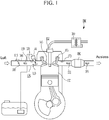
1 ist ein schematisches Schaubild, welches einen Motor darstellt, welcher verwendet wird mit einem System zum Diagnostizieren eines Fehlzündens eines Motors gemäß einer exemplarischen Ausführungsform.1 FIG. 13 is a schematic diagram illustrating an engine used with a system for diagnosing a misfire of an engine according to an exemplary embodiment. -
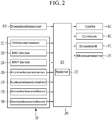
2 ist ein Blockdiagramm, welches ein System zum Diagnostizieren eines Fehlzündens eines Motors gemäß einer exemplarischen Ausführungsform darstellt.2 Figure 13 is a block diagram illustrating a system for diagnosing a misfire of an engine in accordance with an exemplary embodiment. -
3 ist eine Tabelle, welche die Veränderungen bei exemplarischen Detektionswerten zusammenfasst, welche von Sensoren gemessen werden, wenn ein Fehlzünden in einem Motor auftritt.3 Fig. 13 is a table summarizing the changes in exemplary detection values measured by sensors when a misfire occurs in an engine. -
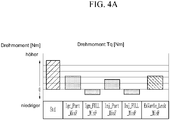
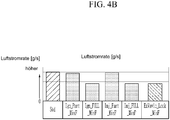
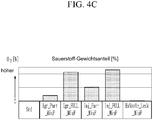
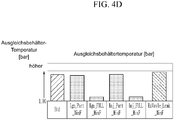
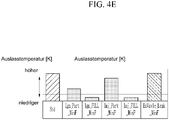
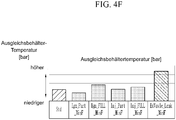
4A bis4F sind Schaubilder, welche exemplarische Werte von jedem Sensor zeigen, welche bei normaler Verbrennung und in exemplarischen Fehlzündung-Situationen detektiert werden.4A until4F are graphs showing exemplary values from each sensor detected in normal combustion and in exemplary misfire situations. -
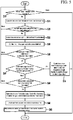
5 ist ein Flussdiagramm, welches ein Verfahren zum Diagnostizieren eines Fehlzündens eines Motors gemäß einer exemplarischen Ausführungsform darstellt.5 FIG. 3 is a flow diagram illustrating a method for diagnosing a misfire of an engine in accordance with an exemplary embodiment.
Detaillierte BeschreibungDetailed description
Die vorliegende Erfindung/Offenbarung wird nachfolgend ausführlicher beschrieben mit Bezug auf die angehängten Zeichnungen, in welchen exemplarische Ausführungsformen der Erfindung/Offenbarung gezeigt sind. Wie der Fachmann erkennen würde, können die beschriebenen Ausführungsformen in verschiedenen Weisen modifiziert werden, ganz ohne sich dabei von dem Umfang der vorliegenden Erfindung/Offenbarung zu entfernen.The present invention / disclosure is described in more detail below with reference to the appended drawings, in which exemplary embodiments of the invention / disclosure are shown. As those skilled in the art would recognize, the described embodiments can be modified in various ways without thereby departing from the scope of the present invention / disclosure.
Ferner, da bei den beispielhaften Ausführungsformen gleiche Bezugszeichen gleiche Elemente, welche die gleichen Konfigurationen haben, kennzeichnen, ist eine erste exemplarische Ausführungsform stellvertretend beschrieben, und bei anderen exemplarischen Ausführungsformen sind nur von der ersten beispielhaften Ausführungsform unterschiedliche Konfigurationen beschrieben.Further, since the same reference numerals denote the same elements having the same configurations in the exemplary embodiments, a first exemplary embodiment is described by way of example, and in other exemplary embodiments, only configurations different from the first exemplary embodiment are described.
Um die vorliegende Erfindung/Offenbarung klarzustellen, werden Teile, welche nicht die Beschreibung betreffen, weggelassen, und die gleichen sowie wesensgleichen Elemente werden mit denselben Bezugszeichnen über die Spezifikation hinweg bezeichnet.In order to clarify the present invention / disclosure, parts that do not relate to the description are omitted, and the same and identical elements are denoted by the same reference numerals throughout the specification.
Darüber hinaus, solange nicht explizit gegenteilig beschrieben, werden das Wort „aufweisen“ und Variationen, wie beispielsweise „aufweist“ oder „aufweisend“, verstanden, den Einbezug der angegebenen Elemente zu implizieren, aber nicht den Ausschluss irgendwelcher anderen Elemente.Furthermore, unless explicitly stated to the contrary, the word “have” and variations such as “has” or “having” are understood to imply the inclusion of the specified elements, but not the exclusion of any other elements.
Über diese Spezifikation und die Ansprüche hinweg, welche folgen, kann, wenn beschrieben ist, dass ein Element mit einem anderen Element „verbunden“ ist, das Element mit dem anderen Element „direkt verbunden“ oder mit dem anderen Element über ein drittes Element „elektrisch verbunden“ (z.B. „indirekt verbunden“) sein. Darüber hinaus, solange nicht explizit anders beschrieben, werden das Wort „aufweisen“ und Variationen, wie beispielsweise „aufweist“ oder „aufweisend“, verstanden, den Einbezug der angegebenen Elemente zu dem implizieren, aber nicht den Ausschluss von irgendwelchen anderen Elementen.Throughout this specification and the claims that follow, when an element is described as being "connected" to another element, the element may be "directly connected" to the other element or "electrically connected" to the other element through a third element connected ”(e.g.“ indirectly connected ”). In addition, unless explicitly stated otherwise, the word “having” and variations such as “having” or “having” are understood to imply the inclusion of the specified elements, but not the exclusion of any other elements.
In der folgenden Beschreibung ist das Einteilen von Namen von Komponenten in „erste/r/s“, „zweite/r/s“ und dergleichen dafür da, um die Namen zu unterteilen (z.B. unterscheidbar zu machen), weil die Namen der Komponenten dieselben sind, und dabei ist eine Reihenfolge davon nicht unbedingt beschränkt.In the following description, the division of names of components into “first”, “second” and the like is there to subdivide the names (e.g. to make them distinguishable) because the names of the components are the same and an order thereof is not necessarily limited.
Eine exemplarische Ausführungsform zielt darauf ab, ein Verfahren und ein System bereitzustellen, welche in der Lage sind, ein Fehlzünden eines Motors, einschließlich eines Fehlzündens aufgrund von Auslassventilleckage, zu diagnostizieren basierend auf Detektionswerten von Sensoren, welche in einem Motor bereitgestellt sind.An exemplary embodiment aims to provide a method and system capable of diagnosing misfire of an engine, including misfire due to exhaust valve leakage, based on detection values from sensors provided in an engine.
Wenn die Ursache von verschiedenen Fehlzündungen akkurater ermittelt wird, ist es möglich, die Teile, welche eine Wartung benötigen, akkurater anzugeben.By determining the cause of various misfires more accurately, it is possible to more accurately identify the parts that require maintenance.
Wie in
Der Motor ENG ist mit einem Drosselventil (z.B. einer Drosselklappe) 110 zum Steuern einer Einlassluftmenge ausgestattet, und das Drosselventil 110 ist mit einem Drosselpositionssensor 115 zum Detektieren von einer Drosselventilöffnung ausgestattet. Wenn das Drosselventil 110 offen ist, kann die Luft in einen Einlasspfad (z.B. einen Einlasskanal) 105 hinein gesaugt werden. Ein Einlassluftmengensensor (z.B. ein Luftmassenstromsensor (MAF-Sensor); nachfolgend bezeichnet als ein „MAF-Sensor“) 120 ist an dem Einlasspfad 105 angeordnet, um die Einlassluftmenge zu detektieren, welche dem Motor ENG zugeführt wird.The engine ENG is equipped with a throttle valve (eg, a throttle valve) 110 for controlling an intake air amount, and the
Der Motor ENG ist mit einem Einlassventil (z.B. einer Einlassklappe) 145 ausgestattet, um die Einlassluft in den Zylinder 150 hinein aufzunehmen, und ist mit einem Auslassventil (z.B. einer Auslassklappe) 165 ausgestattet, um Verbrennungsgas aus dem Zylinder 150 heraus abzugeben.The engine ENG is equipped with an intake valve (e.g., an intake door) 145 to take the intake air into the
In der folgenden Beschreibung wird verstanden, dass der Einlasskrümmer, von welchem eine Temperatur und ein Druck detektiert werden, einen Ausgleichsbehälter (z.B. einen Druckausgleichsbehälter) aufweist.In the following description, it is understood that the intake manifold from which a temperature and a pressure are detected includes a surge tank (e.g., a surge tank).
Gemäß dem Betrieb (z.B. dem Betriebszustand) des Motors ENG, zum Beispiel gemäß der Bedienung des Drosselventils 110 und des Einlassventils 145, variiert ein Druck innerhalb des Einlasskrümmers 125, und ein Einlasskrümmerdrucksensor (z.B. ein Einlasskrümmer-Absolutdruck-Sensor (MAP-Sensor); nachfolgend als „MAP-Sensor“ bezeichnet) 130 befindet sich an dem Einlasskrümmer 125, um den Druck innerhalb des Einlasskrümmers 125 zu detektieren.According to the operation (e.g., the operating state) of the engine ENG, e.g., according to the operation of the
Darüber hinaus kann ein Einlasskrümmertemperatursensor 135, zum Detektieren von einer Temperatur in dem Einlasskrümmer 125, an dem Einlasskrümmer 125 angeordnet sein.In addition, an intake
Für normalen Betrieb des Motors ENG ist es notwendig, die Einlasslufttemperatur zu detektieren. Als ein Beispiel kann ein Temperatursensor (nicht gezeigt) in dem MAF-Sensor 120 verwendet werden, um eine Einlasslufttemperatur zu detektieren. Als ein weiteres Beispiel kann, wenn der Einlasskrümmertemperatursensor 135 bereitgestellt ist, die Einlasslufttemperatur mittels des Einlasskrümmertemperatursensors 135 detektiert werden. For normal operation of the engine ENG, it is necessary to detect the intake air temperature. As an example, a temperature sensor (not shown) in
Der Motor ENG berechnet die Einlassluftmenge basierend auf einer Einlassluftmenge, welche mittels des MAF-Sensors 120 detektiert wird, einem Einlasskrümmerdruck, welcher mittels des MAP-Sensors 130 detektiert wird, und einer Einlasslufttemperatur, welche mittels des MAF-Sensors 120 und/oder des Einlasskrümmertemperatursensors 135 detektiert wird. Dann bildet der Motor ENG ein Luft/Kraftstoff-Gemisch durch Einspritzen einer Kraftstoffmenge, welche mit der berechneten Einlassluftmenge korrespondiert, mittels der Einspritzvorrichtung 140 und verbrennt das Luft/KraftstoffGemisch in dem Zylinder 150.The engine ENG calculates the intake air amount based on an intake air amount detected by the
Die Einspritzvorrichtung 140 bezieht Kraftstoff über eine Kraftstoffleitung von dem Kraftstofftank und spritzt eine Kraftstoffmenge ein, welche durch die Steuerung (z.B. den Steuervorgang) einer elektronischen Steuereinheit (ECU) (z.B. eines Motorsteuergeräts) 200 (wie in
Eine Zündkerze 155, welche mittels einer Zündspule 160 betätigt (z.B. gezündet) wird, ist an einer Seite des Zylinders 150 (z.B. an einer Oberseite des Zylinders) angeordnet, um die Verbrennung des Luft/Kraftstoff-Gemisches durch Zünden des Luft/Kraftstoff-Gemisches in dem Zylinder 150 auszulösen.A
Verbrennungsgas, welches in dem Zylinder 150 verbrannt wird, wird an die Umgebung des Zylinders 150 durch die Betätigung des Auslassventils 165 ausgegeben und bildet das Auslassgas. Da das Auslassgas durch den Katalysator 180 hindurch geht, wird die vollständige Verbrennung von dem unverbrannten Teil begünstigt und schädliche Gase werden entfernt.Combustion gas that is burned in the
In dem Auslasssystem (z.B. dem Abgassystem) des Motors ENG ist ein Auslasstemperatursensor 170 angeordnet, welcher die Temperatur des Auslassgases detektiert, welches von dem Auslasshub ausgestoßen wird. Ein Stromaufwärts-Sauerstoffsensor 175 ist stromaufwärts von dem Katalysator 180 des Motors ENG angeordnet, um eine Sauerstoffkonzentration des Auslassgases zu detektieren, welches durch den Stromaufwärts-Strom (z.B. den Zustrom) des Katalysators 180 hindurchströmt, und um ein korrespondierendes Signal zu erzeugen. Ein Stromabwärts-Sauerstoffsensor 185 kann zusätzlich stromabwärts von dem Katalysator 108 angeordnet sein, um die Sauerstoffkonzentration des Auslassgases zu detektieren, welches durch den Stromabwärts-Strom (z.B. den Auslass-Strom) des Katalysator 180 hindurchströmt, und um ein korrespondierendes Signal zu erzeugen.In the exhaust system (eg, the exhaust system) of the engine ENG, there is disposed an
Der Motor ENG weist eine elektronische Steuereinheit (ECU) 200 auf, welche den Gesamtbetrieb des Motors ENG steuert. Die ECU 200 steuert die Einspritzvorrichtung 140 und die Zündspule 160 basierend auf Detektionswerten von verschiedenen Sensoren, welche stromaufwärts und stromabwärts von dem Zylinder 150 angeordnet sind. Wenn nötig kann die ECU 200 zusätzlich das Drosselventil 110 steuern (z.B. bei einem Drosselsystem, welches als ein „Drosseln-per-Draht“ bezeichnet wird).The engine ENG has an electronic control unit (ECU) 200 that controls the overall operation of the engine ENG. The
Die ECU 200 überwacht den Betrieb des Motors ENG basierend auf den Detektionswerten von verschiedenen Sensoren, welche in dem Stromaufwärts-Strom (z.B. dem Zustrom) und dem Stromabwärts-Strom (z.B. dem Auslass-Strom) von dem Zylinder 150 angeordnet sind (z.B. welche stromaufwärts und stromabwärts von dem Zylinder 150 angeordnet sind). Beim Überwachen des Betriebs des Motors ENG kann die ECU 200 ein Fehlzünden des Motors ENG überwachen (z.B. beobachten), und kann dementsprechend den Betrieb des Motors ENG unterschiedlich steuern.The
Wie in
Die Messeinheit 100 weist auf: einen Drehmomentsensor 101 zum Detektieren von dem Ausgangsdrehmoment des Motors ENG, den MAF-Sensor 120 zum Detektieren von der Einlassluftmenge, welche dem Motor ENG zugeführt wird, den MAP-Sensor 130 zum Detektieren von dem Druck in dem Einlasskrümmer, und den Auslasstemperatursensor 170 zum Detektieren von der Temperatur des Auslassgases, welches bei einem Auslasshub des Motors ENG ausgestoßen wird. Der MAF-Sensor 120 kann zusätzlich eine Einlasslufttemperatur detektieren, zusätzlich zu der Einlassluftmenge, welche dem Motor ENG zugeführt wird.The measuring
Darüber hinaus weist die Messeinheit 100 ferner einen Stromaufwärts-Sauerstoffsensor 175 auf, welcher in dem Stromaufwärts-Strom (z.B. dem Zustrom) des Katalysators 180 des Motors ENG angeordnet ist (z.B. welcher stromaufwärts von dem Katalysator (180) angeordnet ist), und detektiert eine Sauerstoffkonzentration des Auslassgases, welches durch den Stromaufwärts-Strom des Katalysators hindurchströmt, wodurch ein korrespondierendes Signal erzeugt wird.In addition, the measuring
Optional kann die Messeinheit 100 ferner den Einlasskrümmertemperatursensor 135 zum Detektieren von einer Temperatur in dem Einlasskrümmer 125 aufweisen. Darüber hinaus kann die Messeinheit 100 ferner den Stromabwärts-Sauerstoffsensor 185 aufweisen, welcher stromabwärts von dem Katalysator 180 angeordnet ist, und kann eine Sauerstoffkonzentration des Auslassgases detektieren, welches durch den Stromabwärts-Strom (z.B. den Auslass-Strom) des Katalysators hindurchströmt, wodurch ein korrespondierendes Signal erzeugt wird.Optionally, the
Ein System zum Diagnostizieren eines Fehlzündens eines Motors gemäß einer exemplarischen Ausführungsform weist ferner die ECU 200 auf, und die ECU 200 ermittelt ein Fehlzünden des Motors ENG basierend auf dem Detektionswert von der Messeinheit 100 und führt einen Betrieb, welcher damit korrespondiert, aus.A system for diagnosing engine misfire according to an exemplary embodiment further includes the
Das heißt, ein System zum Diagnostizieren eines Fehlzündens eines Motors gemäß einer exemplarischen Ausführungsform ist dafür vorgesehen, um eine Fehlzündung-Ermittlung (z.B. ein Fehlzündung-Ermitteln) und eine korrespondierenden Betrieb (z.B. einen korrespondierenden Betriebszustand) mittels der ECU 200 durchzuführen, welche den Gesamtbetrieb des Motors ENG steuert. Jedoch ist die vorliegende Erfindung/Offenbarung nicht darauf beschränkt. Es ist auch möglich, die Fehlzündung-Ermittlung des Motors gemäß einer exemplarischen Ausführungsform mittels einer elektrischen Steuereinheit durchzuführen, welche von der ECU 200, welche den Gesamtbetrieb des Motors steuert, separat ist.That is, a system for diagnosing a misfire of an engine according to an exemplary embodiment is provided to perform a misfire determination (e.g., a misfire determination) and a corresponding operation (e.g., a corresponding operating state) by means of the
Bei einer exemplarischen Ausführungsform kann der Drehmomentsensor 101 als ein physikalischer (z.B. ein gegenständlicher) Sensor implementiert sein, welcher ein tatsächliches Drehmoment des Motors ENG misst. Bei einem anderen Beispiel kann die ECU 200 das Ausgangsdrehmoment des Motors ENG aus den Detektionswerten berechnen, welche von verschiedenen Sensoren des Motors ENG erlangt werden. In diesem Fall kann mindestens ein Sensor, welcher Detektionswerte basierend auf der Berechnung des Ausgangsdrehmoments durch die ECU 200 zur Verfügung stellt, als der Drehmomentsensor 101 bezeichnet werden.In an exemplary embodiment, the
Bei einem System zum Diagnostizieren eines Fehlzündens eines Motors gemäß einer exemplarischen Ausführungsform kann die ECU 200 den Betrieb des Motors ENG steuern durch Steuern der Einspritzvorrichtung (z.B. des Injektors) 140 und der Zündspule 160 oder durch zusätzliches Steuern des Drosselventils 110.In a system for diagnosing a misfire of an engine according to one example In the second embodiment, the
Ein Speicher 210 ist in der ECU 200 installiert, und die ECU 200 speichert einen Fehlzündung-Code, welcher mit dem Speicher 210 korrespondiert, wenn ein Fehlzünden des Motors ENG basierend auf einem Detektionswert von der Messeinheit 100 ermittelt wird.A
Darüber hinaus kann die ECU 200 den Fahrer warnen durch das Aufleuchtenlassen einer Motorwarnleuchte 290, wenn das Fehlzünden des Motors ENG ermittelt wird.In addition, the
Die ECU 200 kann mit mindestens einem Mikroprozessor implementiert sein, welcher durch ein vorbestimmtes Programm betriebsfähig ist, und das vorbestimmte Programm kann einen Befehlssatz aufweisen zum Durchführen jedes Schrittes, welcher in einem Verfahren zum Diagnostizieren eines Fehlzündens eines Motors gemäß einer exemplarischen Ausführungsform, welche untenstehend beschrieben ist, beinhaltet ist.The
Der Fehlzündung-Code kann aufweisen: ob ein Fehlzünden aufgetreten ist, die Ursache des Fehlzündens und andere Informationen über das Fehlzünden, wie benötigt.The misfire code can include: whether a misfire occurred, the cause of the misfire, and other information about the misfire, as needed.
Zusätzlich zu dem Fehlzünden aufgrund von einem Einspritzfehler und/oder einem Zündfehler, kann ein System zum Diagnostizieren eines Fehlzündens eines Motors gemäß einer exemplarischen Ausführungsform auch ein Fehlzünden aufgrund von Auslassventilleckage ermitteln. Da es für die Ermittlung des Fehlzündens aufgrund von einem Einspritzfehler und/oder einem Zündfehler Verfahren gibt, welche dem Fachmann bekannt sind, wird eine zusätzliche Beschreibung weggelassen.In addition to misfire due to an injection failure and / or an ignition failure, a system for diagnosing a misfire of an engine according to an exemplary embodiment may also determine a misfire due to exhaust valve leakage. Since there are methods for determining the misfire due to an injection failure and / or an ignition failure which are known to those skilled in the art, an additional description is omitted.
Auslassventilleckage bedeutet, dass Auslassgas von der Auslassöffnung des Motors ENG rückwärts in den Zylinder 150 hinein leckt (z.B. zurückströmt), weil das Auslassventil nicht vollständig geschlossen ist.Exhaust valve leakage means that exhaust gas is leaking backward (e.g., flowing back) into
Wenn der Betrieb des Motors ENG andauert, dauert das Betätigen des Auslassventils an und dementsprechend, wenn das Ventil aufgrund von einseitigem Verschleiß, etc. abgenutzt ist, kann ein Zustand auftreten, in welchem das Ventil nicht vollständig geschlossen ist. Darüber hinaus kann ein Leck (z.B. eine Leckstelle; z.B. eine Undichtigkeit) bei dem Ventil ausgelöst werden, wenn sich Ruß an der Ventilsitzfläche ablagert. Darüber hinaus, wenn die elastische Kraft (z.B. die Federkraft) einer Ventilfeder (z.B. einer Klappenfeder) des Auslassventils vermindert ist, verlangsamt sich der Schließvorgang des Auslassventils, und die Zeitdauer, während welcher das Auslassventil offen ist, ist unbeabsichtigt verlängert, so dass das Auslassgas in den Zylinder hinein zurückströmen kann.When the operation of the engine ENG continues, the exhaust valve continues to be operated, and accordingly, when the valve is worn due to unilateral wear, etc., a state in which the valve is not fully closed may arise. In addition, a leak (e.g. a leak; e.g. a leak) can be triggered in the valve if soot is deposited on the valve seat surface. In addition, when the elastic force (e.g. the spring force) of a valve spring (e.g. a flap spring) of the exhaust valve is decreased, the closing operation of the exhaust valve slows down, and the length of time during which the exhaust valve is open is unintentionally lengthened, so that the exhaust gas can flow back into the cylinder.
Nachfolgend wird das Prinzip, nach welchem ein Fehlzünden aufgrund von Auslassventilleckage ermittelt werden kann, im Detail beschrieben.In the following, the principle according to which a misfire due to exhaust valve leakage can be determined is described in detail.
Wenn Leckage aufgrund von unbeabsichtigtem Öffnen (bzw. einer unbeabsichtigten Öffnung) bei dem Schließvorgang des Auslassventils auftritt, kann Auslassgas in den Zylinder hinein zurückströmen, was sich als ein Effekt auswirkt, dass Auslassgas nicht ausreichend ausgestoßen wird und in dem Zylinder verbleibt.If leakage occurs due to inadvertent opening (or opening) in the closing operation of the exhaust valve, exhaust gas may flow back into the cylinder, which has an effect that exhaust gas is not sufficiently discharged and remains in the cylinder.
Daher beeinflusst dies den nachfolgenden Einlasshub derart, dass die Einlassluftmenge verringert wird.Therefore, it affects the subsequent intake stroke so that the amount of intake air is decreased.
Wenn die Einlassluftmenge bei dem Einlasshub verglichen mit einer beabsichtigten Menge durch das in dem Zylinder verbleibende Auslassgas reduziert ist, wird die Flussrate des Einlasses (z.B. des Einlassgases) verringert, und daher wird die Temperatur des Einlasssystems (z.B. die Temperatur in dem Einlasskrümmer) höher als beabsichtigt und der Druck in dem Einlasskrümmer (z.B. in einem Druckausgleichbehälter) steigt über das beabsichtigte Niveau.When the intake air amount in the intake stroke is reduced compared to an intended amount by the exhaust gas remaining in the cylinder, the flow rate of the intake (e.g., the intake gas) is decreased, and therefore the temperature of the intake system (e.g., the temperature in the intake manifold) becomes higher than is intended and the pressure in the intake manifold (e.g. in a surge tank) rises above the intended level.
Bei einem Auftreten eines Fehlzündens aufgrund von einem Einspritzfehler oder einem Zündfehler, fällt die Auslasstemperatur rapide ab. Im Gegensatz dazu, obwohl das Fehlzünden aufgrund von Auslassventilleckage auftreten kann wegen des zurückgebliebenen Gases, welches durch den Rückstrom des Auslassgases verursacht wird, wird die Auslasstemperatur (d.h. die Temperatur des Auslassgases) erhöht im Vergleich mit dem Fehlzünden aufgrund von einem Einspritzfehler oder einem Zündfehler.If a misfire occurs due to an injection failure or an ignition failure, the outlet temperature drops rapidly. In contrast, although the misfire due to exhaust valve leakage may occur due to the retained gas caused by the backflow of the exhaust gas, the exhaust temperature (i.e., the temperature of the exhaust gas) is increased compared with the misfire due to an injection failure or an ignition failure.
In dem Fall von einem Fehlzünden aufgrund von Auslassventilleckage, verglichen mit dem allgemeinen Fehlzünden aufgrund von einem Einspritzfehler und/oder einem Zündfehler, ist die Einlassluftmenge stark reduziert und Kraftstoff wird dementsprechend eingespritzt. Daher erreicht die Sauerstoffkonzentration, welche mittels des Stromaufwärts-Sauerstoffsensor 175 detektiert wird, ein verglichen mit der normalen Verbrennung leicht erhöhtes Niveau und wird sehr viel geringer (eine Spannung eines Sauerstoffsensors wird sehr viel höher) als die Sauerstoffkonzentration des Stromaufwärts-Sauerstoffsensors 175 bei einem Fehlzünden aufgrund von einem Zündfehler und/oder einem Einspritzfehler.In the case of misfire due to exhaust valve leakage compared to the general misfire due to injection failure and / or ignition failure, the amount of intake air is greatly reduced and fuel is injected accordingly. Therefore, the oxygen concentration detected by the
In
Das erste vorbestimmte Verhältnis und das zweite vorbestimmte Verhältnis können abhängig von den Sensoren als unterschiedliche Werte festgelegt sein. Zum Beispiel kann eine zweiprozentige Veränderung (z.B. eine Veränderung von 2%) in dem Detektionswert für den MAF-Sensor 120 als gleichbleibend angesehen werden, aber kann für den Einlasskrümmertemperatursensor 135 als mehr als das erste festgelegte Verhältnis angesehen werden. Das erste vorbestimmte Verhältnis und das zweite vorbestimmte Verhältnis können für den Detektionswert jedes Sensors experimentell festgelegt sein/werden gemäß dem Bestreben des Konstrukteurs eines bestimmten Motors.The first predetermined ratio and the second predetermined ratio can be set as different values depending on the sensors. For example, a two percent change (e.g., a 2% change) in the detection value for the
Die
Wie oben erwähnt, hängen die spezifischen Detektionswerte, welche von Sensoren bei dem Motor-Fehlzünden (z.B. bei dem Fehlzünden des Motors) generiert werden, von den speziellen Motorspezifikationen und dem Betriebszustand zu dem Zeitpunkt des Fehlzündens ab. Daher zeigen die
In den
Bezugnehmend auf
Bezugnehmend auf
Bezugnehmend auf
Bezugnehmend auf
Bezugnehmend auf
Bezugnehmend auf
Bezugnehmend auf
Bezugnehmend auf diese Phänomene ist es möglich basierend auf den von der Messeinheit 100 detektierten Detektionswerten ein Fehlzünden aufgrund von Auslassventilleckage zu ermitteln, welches nicht ermittelt werden kann während des Ermittelns eines Fehlzündens aufgrund von einem Einspritzfehler und einem Zündfehler, was untenstehend detailliert beschrieben ist.Referring to these phenomena, based on the detection values detected by the measuring
Zuerst, in Schritt S510, empfängt die ECU 200 einen Detektionswert von jedem Sensor in der Messeinheit 100 (z.B. von jedem Sensor der Messeinheit 100), und ermittelt, ob jeder Sensor normal funktioniert. Ob ein Sensor normal funktioniert oder nicht, kann auf verschiedene Weisen ermittelt werden, zum Beispiel basierend darauf, ob ein Ausgangswert des Sensors innerhalb eines vorbestimmten Normalbereiches liegt.First, in step S510, the
Nachfolgend, in Schritt S515, speichert die ECU 200 die Detektionswerte der Sensoren in der Messeinheit 100 in dem Speicher 210 (z.B. speichert die ECU 200 die Detektionswerte der Sensoren der Messeinheit 100 in dem Speicher 210). In diesem Schritt S515 können Ausgangswerte der Sensoren bei der normalen Verbrennung gespeichert werden, und können zum Ermitteln, ob ein Fehlzünden auftritt, verwendet werden.Subsequently, in step S515, the
Zum Beispiel kann die Einlassluftmenge in Bezug auf den MAF-Sensor 120 gespeichert werden, kann der Einlasskrümmerdruck in Bezug auf den MAP-Sensor 130 gespeichert werden, kann die Einlasskrümmertemperatur (z.B. die Druckausgleichsbehältertemperatur) in Bezug auf den Einlasskrümmertemperatursensor 135 gespeichert werden, kann die Auslasstemperatur in Bezug auf den Auslasstemperatursensor 170 gespeichert werden, kann die Stromaufwärts-Sauerstoffkonzentration (oder die Ausgangsspannung des Stromaufwärts-Sauerstoffsensors 175) in Bezug auf den Stromaufwärts-Sauerstoffsensor 175 gespeichert werden, und kann die Stromabwärts-Sauerstoffkonzentration (oder die Ausgangsspannung des Stromabwärts-Sauerstoffsensors) in Bezug auf den Stromabwärts-Sauerstoffsensor 185 gespeichert werden.For example, the amount of intake air can be stored with respect to the
Nachfolgend in Schritt S520 ermittelt die ECU 200, ob ein Abfall bezüglich des Ausgangsdrehmomentes Tq des Motors ENG detektiert ist/wurde. Wenn ein Fehlzünden auftritt, wird das Ausgangsdrehmoment des Motors ENG augenblicklich reduziert. In diesem Fall dreht sich der Motor ENG nicht gleichmäßig und Vibration (z.B. Schwingung) tritt auf, was generell als „Motorlaufunruhe-Auftreten“ bezeichnet wird. Das heißt, der Schritt S520 kann verstanden werden, als dass er ermittelt, ob die Motorlaufunruhe auftritt.Subsequently in step S520, the
Wenn der Ausgangsdrehmomentabfall des Motors ENG nicht detektiert wird (S520-Nein), fährt die ECU 200 mit dem anfänglichen Schritt S510 fort.When the output torque drop of the engine ENG is not detected (S520-No), the
Wenn der Ausgangsdrehmomentabfall des Motors ENG detektiert wird (S520-Ja), steuert die ECU 200 den Motor ENG über ein optimales Luft/Kraftstoff-Verhältnis in Schritt S525, und zählt das Auftreten (z.B. die Anzahl/Häufigkeit des Auftretens) des Ausgangsdrehmomentabfalls in Schritt S530.When the output torque drop of the engine ENG is detected (S520-Yes), the
Der Schritt S525 des Steuerns des Motors ENG über das optimale Luft/Kraftstoff-Verhältnis ist dafür da, um die Genauigkeit der Diagnostik basierend auf dem Detektionswert des Stromaufwärts-Sauerstoffsensors 175 zu verbessern. Das heißt, abhängig von der Bedienung (z.B. dem Bedienvorgang) des Fahrers (z.B. Fuß auf einem Bremspedal, einem Gaspedal und dergleichen) kann die ECU 200 den Motor ENG über ein Luft/Kraftstoff-Verhältnis (z.B. ein Luft/KraftstoffVerhältnis für ein maximales Ausgangsdrehmoment oder für die beste Kraftstoffeffizienz), welches sich von dem optimalen Luft/Kraftstoff-Verhältnis (z.B. einem theoretischen Luft/Kraftstoff-Verhältnis) unterscheidet, steuern. Es kann verstanden werden, dass in diesem Fall der Stromaufwärts-Sauerstoffsensor 175 den Sauerstoffkonzentrationswert leicht abweichend von 0 ausgeben kann, sogar bei der normalen Verbrennung. Das heißt, im Schritt S525 wird der Motor ENG in einem Betriebszustand gesteuert, welcher einen Nullwert (0) hinsichtlich der Sauerstoffkonzentration an dem Stromaufwärts-Sauerstoffsensor 175 ausgibt.The step S525 of controlling the engine ENG about the optimal air-fuel ratio is to improve the accuracy of the diagnosis based on the detection value of the
Bei dem Schritt S530 wird die Anzahl des Auftretens des Ausgangsdrehmomentabfalls bei der Verbrennung des Motors ENG in solch einem Steuerzustand gezählt, welche nachfolgend als Ausgangsdrehmomentabfall-Zählwert bezeichnet wird.In step S530, the number of occurrences of the output torque drop in the combustion of the engine ENG in such a control state, which is hereinafter referred to as the output torque drop count value, is counted.
Nachfolgend in Schritt S535 ermittelt die ECU 200, ob der Ausgangsdrehmomentabfall-Zählwert des Motors ENG in dem Optimales-Luft/Kraftstoff-Verhältnis-Modus oberhalb einer vorbestimmten Zahl liegt.Subsequently in step S535, the
Wenn der Ausgangsdrehmomentabfall-Zählwert des Motors ENG in dem Optimales-Luft/Kraftstoff-Verhältnis-Modus unterhalb der vorbestimmten Zahl liegt (S535-Nein), fährt die ECU 200 mit dem anfänglichen Schritt S510 fort. Zu diesem Zeitpunkt kann die ECU 200 einen akkumulierten (z.B. hochgezählten) Ausgangsdrehmomentabfall-Zählwert zurücksetzen.When the output torque drop count of the engine ENG in the optimal air-fuel ratio mode is below the predetermined number (S535-No), the
Wenn der Ausgangsdrehmomentabfall-Zählwert des Motors ENG in dem Optimales-Luft/Kraftstoff-Verhältnis-Modus oberhalb der vorbestimmten Zahl liegt (S535-Ja), ermittelt die ECU 200 in Schritt S540, ob ein Fehlzündung-Code für einen Einspritzfehler und/oder einen Zündfehler bereits in dem Speicher gespeichert ist.If the output torque drop count of the engine ENG in the optimal air-fuel ratio mode is above the predetermined number (S535-Yes), the
Das heißt, die ECU 200 ist grundsätzlich in der Lage zum Ermitteln des Fehlzündens aufgrund von einem Einspritzfehler und/oder einem Zündfehler basierend auf den Detektionswerten von der Messeinheit 100, und wenn das Fehlzünden aufgrund von einem Einspritzfehler und/oder einem Zündfehler ermittelt wird, ist die ECU 200 konfiguriert, um einen korrespondierenden Fehlzündung-Code für den Einspritzfehler/Zündfehler in dem Speicher 210 zu speichern.That is, the
Wenn der Fehlzündung-Code für einen Einspritzfehler und/oder einen Zündfehler bereits in dem Speicher 210 gespeichert ist (S540-Ja), speichert die ECU 200 in Schritt S545 zusätzlich einen weiteren Code, welcher angibt, dass ein Fehlzünden zusätzlich aufgetreten ist, in dem Speicher 210.If the misfire code for an injection failure and / or an ignition failure is already stored in the memory 210 (S540-Yes), the
Wenn der Fehlzündung-Code für einen Einspritzfehler und/oder einen Zündfehler bereits in dem Speicher 210 gespeichert ist, kann die ECU 200 möglicherweise eine korrespondierende fehlersichere Steuerung (z.B. eine Sicherheitssteuerung bzw. einen Sicherheitssteuerungsvorgang) ausführen, wie beispielsweise einen Notlauf-Modus (z.B. ein Notlauf-Programm). Daher ermittelt die ECU 200 in dem Schritt S545 ferner nicht, ob das detektierte Fehlzünden auf Auslassventilleckage zurückzuführen ist, und speichert nur den Code, welcher angibt, dass ein weiteres Fehlzünden zusätzlich aufgetreten ist.If the misfire code for an injection failure and / or an ignition failure is already stored in the
In dem Schritt S545, kann die ECU 200 auch einen Code speichern, welcher angibt, dass nicht ferner ermittelt ist/wurde, ob das Fehlzünden auf Auslassventilleckage zurückzuführen ist. Derart gespeicherte Daten ermöglichen eine akkuratere Beurteilung bei der Wartung des Fahrzeugs, indem sie erlauben, dass Fehlzündung-Aufzeichnungen später durch die OBD (z.B. die fahrzeuginterne Diagnoseeinrichtung bzw. die „On-Board“-Diagnoseeinrichtung) oder dergleichen durchgesehen (z.B. untersucht) werden.In step S545, the
Wenn der Fehlzündung-Code für einen Einspritzfehler und/oder einen Zündfehler in dem Speicher 210 nicht gespeichert ist (S540-Nein), ermittelt die ECU 200 in Schritt S550, ob ein Fehlzünden aufgrund von Auslassventilleckage aufgetreten ist.If the misfire code for an injection failure and / or an ignition failure is not stored in the memory 210 (S540-No), the
Ob das Fehlzünden aufgrund von Auslassventilleckage aufgetreten ist, kann ermittelt werden basierend auf einer Kombination von mindestens einer Bedingung von:
- (einer ersten Bedingung) ob sich eine Einlassluftmenge, welche mittels des MAF-
Sensors 120 detektiert wird, verglichen mit der normalen Verbrennung verringert hat, - (einer zweiten Bedingung) ob sich eine Stromaufwärts-Sauerstoffkonzentration, welche mittels des Stromaufwärts-
Sauerstoffsensors 175 detektiert wird, verglichen mit der normalen Verbrennung erhöht hat, - (einer dritten Bedingung) ob sich der Einlasskrümmerdruck, welcher mittels des MAP-
Sensors 130 detektiert wird, verglichen mit der normalen Verbrennung erhöht hat, - (einer vierten Bedingung) ob sich die Auslasstemperatur, welche mittels des
Auslasstemperatursensors 170 detektiert wird, verglichen mit der normalen Verbrennung erhöht hat, und - (einer fünften Bedingung) ob sich die Einlasskrümmertemperatur, welche mittels des
Einlasskrümmertemperatursensors 135 detektiert wird, verglichen mit der normalen Verbrennung erhöht hat.
- (a first condition) whether an intake air amount detected by the
MAF sensor 120 has decreased compared to normal combustion, - (a second condition) whether an upstream oxygen concentration detected by the
upstream oxygen sensor 175 has increased compared to normal combustion, - (a third condition) whether the intake manifold pressure detected by the
MAP sensor 130 has increased compared to normal combustion, - (a fourth condition) whether the exhaust temperature detected by the
exhaust temperature sensor 170 has increased compared to normal combustion, and - (a fifth condition) whether the intake manifold temperature detected by the intake
manifold temperature sensor 135 has increased compared with normal combustion.
Zum Beispiel kann die ECU 200 ermitteln, dass das Fehlzünden aufgrund von Auslassventilleckage aufgetreten ist, wenn die erste Bedingung, die zweite Bedingung, die dritte Bedingung, die vierte Bedingung und die fünfte Bedingung alle erfüllt sind. Dahingegen, als ein anderes Beispiel, welches die vierte Bedingung ausschließt: Sind die erste Bedingung, die zweite Bedingung, die dritte Bedingung und die fünfte Bedingung alle erfüllt, kann die ECU 200 ermitteln, dass das Fehlzünden aufgrund von Auslassventilleckage aufgetreten ist.For example, the
Jedoch wurde obenstehend beschrieben, dass die Messeinheit 100 einen oder mehrere Sensoren ausschließen kann, zum Beispiel den Einlasskrümmertemperatursensor 135.However, it was described above that the
In diesem Fall kann ermittelt werden, ob das Fehlzünden aufgrund von Auslassventilleckage aufgetreten ist, basierend auf einer Kombination von mindestens einer Bedingung von:
- (der ersten Bedingung) ob sich die Einlassluftmenge, welche mittels des MAF-
Sensor 120 detektiert wird, verglichen mit der normalen Verbrennung verringert hat, - (der zweiten Bedingung) ob sich die Stromaufwärts-Sauerstoffkonzentration, welche mittels des Stromaufwärts-
Sauerstoffsensors 175 detektiert wird, verglichen mit der normalen Verbrennung erhöht hat, - (der dritten Bedingung) ob sich der Einlasskrümmerdruck, welcher mittels des MAP-
Sensors 130 detektiert wird, verglichen mit der normalen Verbrennung erhöht hat, und - (der vierten Bedingung) ob sich die Auslasstemperatur, welche mittels des
Auslasstemperatursensors 170 detektiert wird, verglichen mit der normalen Verbrennung erhöht hat, - unter Ausschluss der fünften Bedingung.
- (the first condition) whether the intake air amount detected by the
MAF sensor 120 has decreased compared to normal combustion, - (the second condition) whether the upstream oxygen concentration detected by the
upstream oxygen sensor 175 has increased compared to normal combustion, - (the third condition) whether the intake manifold pressure detected by the
MAP sensor 130 has increased compared to normal combustion, and - (the fourth condition) whether the exhaust temperature, which is detected by means of the
exhaust temperature sensor 170, has increased compared to normal combustion, - excluding the fifth condition.
Zum Beispiel kann die ECU 200 ermitteln, dass das Fehlzünden aufgrund von Auslassventilleckage aufgetreten ist, wenn die erste Bedingung, die zweite Bedingung, die dritte Bedingung und die vierte Bedingung alle erfüllt sind. Dahingegen, als ein an weiteres Beispiel, unter Ausschluss der vierten Bedingung: Sind die erste Bedingung, die zweite Bedingung und die dritte Bedingung alle erfüllt, kann die ECU 200 ermitteln, dass das Fehlzünden aufgrund von Auslassventilleckage aufgetreten ist.For example, the
Wenn Fehlzünden aufgrund von Auslassventilleckage nicht aufgetreten ist (S550-Nein), fährt die ECU 200 mit dem anfänglichen Schritt S510 fort. Zu diesem Zeitpunkt kann die ECU 200 den akkumulierten (z.B. hochgezählten) Ausgangsdrehmomentabfall-Zählwert zurücksetzen.If misfire has not occurred due to exhaust valve leakage (S550-No), the
Wenn das Fehlzünden aufgrund von Auslassventilleckage aufgetreten ist (S550-Ja), erzeugt die ECU 200 in Schritt S555 einen Fehlzündung-Code, welcher mit dem Fehlzünden aufgrund von Auslassventilleckage korrespondiert, und speichert den Fehler-Code (z.B. den Fehlzündung-Code) in dem Speicher 210. In dem Schritt S555 kann die ECU 200 auch eine weitere Information in dem Speicher 210 speichern, wie beispielsweise einen Fahrzeugbetriebszustand (z.B. Motordrehzahl und dergleichen), eine Bedienung (z.B. einen Bedienvorgang) des Fahrers (z.B. Drossel-Eingabe (z.B. Drosselventil-Eingabe bzw. Gashebel/Gaspedal-Eingabe)) und dergleichen) und einen Motorsteuerungszustand (z.B. eine Kraftstoffeinspritzmenge, einen Zündzeitpunkt und eine tatsächliche Drossel-Öffnung (z.B. eine tatsächliche Drosselventil-Öffnung)).If the misfire has occurred due to exhaust valve leakage (S550-Yes), the
Nachfolgend in Schritt S560, kann die ECU 200 den Fahrer darauf aufmerksam machen (z.B. warnen), den Motor zu überprüfen, durch Aufleuchtenlassen der Motorwarnleuchte 290.Subsequent to step S560, the
Darüber hinaus, wenn das Fehlzünden aufgrund von Auslassventilleckage aufgetreten ist (S550-Ja), kann die ECU 200 den Motor ENG in Schritt S565 steuern unter Vermeiden des Motorsteuerzustandes, in welchem das Fehlzünden aufgrund von Auslassventilleckage aufgetreten ist.In addition, when the misfire has occurred due to exhaust valve leakage (S550-Yes), the
Ausführlicher: Während die ECU 200 den Motor ENG gemäß der Bedienung des Fahrers, wie beispielsweise einer Drossel-Eingabe (z.B. einer Gashebel/Gaspedal-Eingabe), und dem Fahrzeugbetriebszustand, wie beispielsweise einer Motordrehzahl, steuert, kann dieselbe Bedienung (z.B. derselbe Bedienvorgang) des Fahrers in demselben Fahrzeugbetriebszustand eingegeben werden. Zu diesem Zeitpunkt wird erwartet, dass die ECU 200 das Fehlzünden aufgrund von Auslassventilleckage hat (z.B. das Fehlzünden aufgrund von Auslassventilleckage auftritt), wenn derselbe Steuervorgang (d.h. dieselbe Kraftstoffeinspritzung und derselbe Kraftstoffeinspritzzeitpunkt, derselbe Zündzeitpunkt und dieselbe Drosselöffnung) auf den Motor angewendet wird. Daher kann die ECU 200 den Motor ENG steuern unter Vermeiden des Betriebspunktes (z.B. der Motordrehzahl, der Kraftstoffeinspritzmenge und des Kraftstoffeinspritzzeitpunkts, des Zündzeitpunkts, der Drosselöffnung und dergleichen), an welchem das Fehlzünden aufgrund von Auslassventilleckage aufgetreten ist.More specifically, while the
Zum Beispiel, wenn ein aktueller Betriebspunkt mit dem Betriebspunkt, an welchem das Fehlzünden aufgrund von Auslassventilleckage aufgetreten ist, korrespondiert, kann die ECU 200 den Zündzeitpunkt der Zündkerze 155 durch die Zündspule 160 verzögern, um den Betriebspunkt des Fehlzündens aufgrund von Auslassventilleckage zu vermeiden, wodurch dasselbe Fehlzünden vermieden wird.For example, if a current operating point corresponds to the operating point at which the misfire occurred due to exhaust valve leakage, the
Daher, weil die ECU 200 den Motor ENG durch Vermeiden des Betriebspunktes, an welchem das Fehlzünden aufgrund von Auslassventilleckage aufgetreten ist, steuern kann, kann ein Motorschaden (z.B. eine Motorbeschädigung) aufgrund von abnormaler Verbrennung minimiert werden und Ausgangsleistungsverlust kann minimiert werden, während der Fahrer das Fahrzeug zu der Wartung bewegt (z.B. zu der Werkstatt fährt).Therefore, because the
Auch wenn diese Erfindung/Offenbarung in Verbindung mit dem, was aktuell als praktische beispielhafte Ausführungsformen angesehen wird, beschrieben wurde, soll verstanden sein, dass die Erfindung/Offenbarung nicht auf die offenbarten Ausführungsformen beschränkt ist. Im Gegenteil ist es vorgesehen, verschiedene Modifikationen und wesensgleiche Anordnungen abzudecken, welche innerhalb des Geltungsbereiches der angehängten Ansprüche liegen.While this invention / disclosure has been described in connection with what is currently considered to be practical exemplary embodiments, it is to be understood that the invention / disclosure is not limited to the disclosed embodiments. On the contrary, it is intended to cover various modifications and identical arrangements which are within the scope of the appended claims.
Claims (20)
Applications Claiming Priority (2)
| Application Number | Priority Date | Filing Date | Title |
|---|---|---|---|
| KR1020200081911A KR20220004282A (en) | 2020-07-03 | 2020-07-03 | Method and system for determinng misfire of engine |
| KR10-2020-0081911 | 2020-07-03 |
Publications (1)
| Publication Number | Publication Date |
|---|---|
| DE102020128362A1 true DE102020128362A1 (en) | 2022-01-05 |
Family
ID=79019614
Family Applications (1)
| Application Number | Title | Priority Date | Filing Date |
|---|---|---|---|
| DE102020128362.8A Withdrawn DE102020128362A1 (en) | 2020-07-03 | 2020-10-28 | Method and system for diagnosing engine misfire |
Country Status (3)
| Country | Link |
|---|---|
| US (1) | US20220003182A1 (en) |
| KR (1) | KR20220004282A (en) |
| DE (1) | DE102020128362A1 (en) |
Families Citing this family (1)
| Publication number | Priority date | Publication date | Assignee | Title |
|---|---|---|---|---|
| KR102675460B1 (en) * | 2023-10-27 | 2024-06-17 | 주식회사 아임토리 | Apparatus and Method for monitoring and artificial intelligence prediction of Engine cylinder temperature of ship |
-
2020
- 2020-07-03 KR KR1020200081911A patent/KR20220004282A/en not_active Withdrawn
- 2020-10-05 US US17/063,381 patent/US20220003182A1/en not_active Abandoned
- 2020-10-28 DE DE102020128362.8A patent/DE102020128362A1/en not_active Withdrawn
Also Published As
| Publication number | Publication date |
|---|---|
| KR20220004282A (en) | 2022-01-11 |
| US20220003182A1 (en) | 2022-01-06 |
Similar Documents
| Publication | Publication Date | Title |
|---|---|---|
| DE102012206001B4 (en) | A method for diagnosing a fault condition of a sticking area of a nitrogen oxide sensor in a vehicle as well as a vehicle using this method | |
| EP3631186B1 (en) | Method for the diagnosis of an internal combustion engine of a motor vehicle, and of the devices connected to the internal combustion engine, and system for carrying out the method. | |
| DE102012112627B4 (en) | An abnormality diagnosis apparatus for an engine control system | |
| WO2009115542A1 (en) | Diagnostic method and diagnostic system for a particle filter of an internal combustion engine, in particular for a soot filter in a diesel motor vehicle | |
| DE102015112359B4 (en) | CONTROL SYSTEM AND METHOD FOR THE DIAGNOSIS OF MOTOR EXHAUSTIVE STEAM ON THE BASIS OF A DETECTION OF A TRANSIENT DRIVING CYCLE | |
| DE10016623A1 (en) | Real-time engine misfire detection method | |
| WO2017021183A1 (en) | Method for identifying faulty components of a fuel injection system | |
| DE19811574A1 (en) | Vehicle internal combustion (IC) engine catalyst functionability monitoring method | |
| EP1074718B1 (en) | Method for testing plausibility of engine and probe parameters using a wide range lambda sensor | |
| DE102011089503A1 (en) | Diagnostic procedure for particulate filter arranged in effluent stream of combustion engine, involves comparing detected particle mass concentration with selected particle mass concentration threshold value | |
| DE10211282A1 (en) | Method for controlling and / or diagnosing a fuel metering system, computer program, control device and internal combustion engine | |
| DE102011077097A1 (en) | Method for diagnosing particulate filter in exhaust gas duct of e.g. diesel engine of passenger car, involves non-classifying validation of diagnosis result for filter depending on filter validation rather than filter diagnosis result | |
| EP1180210B2 (en) | Method and device for controlling an internal combustion engine with an exhaust treatment system | |
| DE102010025662A1 (en) | Method and device for operating an internal combustion engine | |
| DE102011122165B4 (en) | Method for determining a soot particle filter efficiency of a soot particle filter | |
| DE102010030633B4 (en) | Method for determining the condition of a component arranged in an exhaust gas area of an internal combustion engine | |
| DE102013220814B3 (en) | Diagnostic method and diagnostic device for detecting a defective fuel injector of an internal combustion engine | |
| DE19924294B4 (en) | Passive and active misfire diagnostics for internal combustion engines | |
| DE102006003593B4 (en) | Apparatus and method for protecting a catalyst from misfire | |
| DE102012215804A1 (en) | Method for determining defect of internal combustion engine of motor vehicle, involves carrying out particle concentration measurement, which follows active change of function or operating state of internal combustion engine | |
| DE102008031696B4 (en) | Device for detecting a combustion misfire of an internal combustion engine | |
| DE102014200360A1 (en) | Electronic control device for detecting mixture differences in an internal combustion engine | |
| DE102005046955B3 (en) | Method for recognizing combustion misfire in combustion chamber of cylinder of internal combustion engine, involves recognition of combustion misfire in one of cylinder dependent on operation parameter of internal combustion engine | |
| AT522114B1 (en) | Method for functional testing of an exhaust gas aftertreatment system of a gasoline engine and a gasoline engine arrangement | |
| Unger et al. | The OBD II system in the VOLVO 850 Turbo |
Legal Events
| Date | Code | Title | Description |
|---|---|---|---|
| R012 | Request for examination validly filed | ||
| R119 | Application deemed withdrawn, or ip right lapsed, due to non-payment of renewal fee |