DE102018009819A1 - The calyx wing A fluid dynamic profile for generating lift with significantly reduced resistance, among other things. for aircraft wings and propeller blades - Google Patents
The calyx wing A fluid dynamic profile for generating lift with significantly reduced resistance, among other things. for aircraft wings and propeller blades Download PDFInfo
- Publication number
- DE102018009819A1 DE102018009819A1 DE102018009819.3A DE102018009819A DE102018009819A1 DE 102018009819 A1 DE102018009819 A1 DE 102018009819A1 DE 102018009819 A DE102018009819 A DE 102018009819A DE 102018009819 A1 DE102018009819 A1 DE 102018009819A1
- Authority
- DE
- Germany
- Prior art keywords
- wing
- profile
- fluid dynamic
- curvature
- dynamic profile
- Prior art date
- Legal status (The legal status is an assumption and is not a legal conclusion. Google has not performed a legal analysis and makes no representation as to the accuracy of the status listed.)
- Granted
Links
Images
Classifications
-
- B—PERFORMING OPERATIONS; TRANSPORTING
- B64—AIRCRAFT; AVIATION; COSMONAUTICS
- B64C—AEROPLANES; HELICOPTERS
- B64C3/00—Wings
- B64C3/10—Shape of wings
- B64C3/16—Frontal aspect
-
- B—PERFORMING OPERATIONS; TRANSPORTING
- B64—AIRCRAFT; AVIATION; COSMONAUTICS
- B64C—AEROPLANES; HELICOPTERS
- B64C3/00—Wings
- B64C3/10—Shape of wings
- B64C3/14—Aerofoil profile
-
- B—PERFORMING OPERATIONS; TRANSPORTING
- B64—AIRCRAFT; AVIATION; COSMONAUTICS
- B64C—AEROPLANES; HELICOPTERS
- B64C11/00—Propellers, e.g. of ducted type; Features common to propellers and rotors for rotorcraft
- B64C11/16—Blades
- B64C11/18—Aerodynamic features
-
- B—PERFORMING OPERATIONS; TRANSPORTING
- B64—AIRCRAFT; AVIATION; COSMONAUTICS
- B64C—AEROPLANES; HELICOPTERS
- B64C27/00—Rotorcraft; Rotors peculiar thereto
- B64C27/32—Rotors
- B64C27/46—Blades
- B64C27/467—Aerodynamic features
-
- B—PERFORMING OPERATIONS; TRANSPORTING
- B64—AIRCRAFT; AVIATION; COSMONAUTICS
- B64C—AEROPLANES; HELICOPTERS
- B64C3/00—Wings
- B64C3/10—Shape of wings
- B64C3/14—Aerofoil profile
- B64C2003/142—Aerofoil profile with variable camber along the airfoil chord
-
- Y—GENERAL TAGGING OF NEW TECHNOLOGICAL DEVELOPMENTS; GENERAL TAGGING OF CROSS-SECTIONAL TECHNOLOGIES SPANNING OVER SEVERAL SECTIONS OF THE IPC; TECHNICAL SUBJECTS COVERED BY FORMER USPC CROSS-REFERENCE ART COLLECTIONS [XRACs] AND DIGESTS
- Y02—TECHNOLOGIES OR APPLICATIONS FOR MITIGATION OR ADAPTATION AGAINST CLIMATE CHANGE
- Y02T—CLIMATE CHANGE MITIGATION TECHNOLOGIES RELATED TO TRANSPORTATION
- Y02T50/00—Aeronautics or air transport
- Y02T50/10—Drag reduction
Landscapes
- Engineering & Computer Science (AREA)
- Aviation & Aerospace Engineering (AREA)
- Mechanical Engineering (AREA)
- Physics & Mathematics (AREA)
- Fluid Mechanics (AREA)
- Structures Of Non-Positive Displacement Pumps (AREA)
- Aerodynamic Tests, Hydrodynamic Tests, Wind Tunnels, And Water Tanks (AREA)
Abstract
Bei der Auftriebserzeugung - etwa bei Flugzeugtragflächen, Rotorblättern von Helikoptern und Drohnen, Blättern von Propellern und Schaufeln von Turbinen - wünscht man sich einen hohen Auftrieb bei geringem Widerstand.
Bei Flugzeugen sollen auch Verwirbelungen - besonders an den Flügelspitzen - vermieden werden, die einerseits dem Auftrieb entgegenwirken, und andererseits zu Gefährdungen für den nachfolgenden Luftverkehr führen können.
Durch eine Formgebung, die in der Technik bislang keine Verwendung findet, ermöglicht der Kelchflügel einen hohen Auftrieb bei vergleichsweise geringem Widerstand bei gleichzeitiger Vermeidung von Randwirbeln und Ausnutzung der anderenfalls verwirbelten Luft für weiteren Auftrieb.
In aircraft, turbulence should also be avoided - especially at the wing tips - which on the one hand counteracts the lift and on the other hand can pose a danger to subsequent air traffic.
Due to a shape that has not been used in technology to date, the goblet wing enables high buoyancy with comparatively low resistance while at the same time avoiding edge eddies and utilizing the otherwise swirled air for further buoyancy.
Description
Stand der TechnikState of the art
Profile von Tragflächen, Propellern etc. erzeugen üblicherweise Auftrieb durch Anströmung eines aerodynamischen Profils, das je nach Einsatzzweck u.a. durch Dicke, Wölbung und Einstellwinkel charakterisiert ist. Dabei werden die von Newton und Bernoulli formulierten aerodynamischen Gesetzmäßigkeiten genutzt.Profiles of wings, propellers, etc. usually generate lift through the flow of an aerodynamic profile, which depending on the application, among other things. is characterized by thickness, curvature and setting angle. The aerodynamic laws formulated by Newton and Bernoulli are used.
Der Auftrieb kommt zum einen Teil durch den Druckunterschied zwischen Ober und Unterseite des Profils zustande, das durch die spezifische Kombination von Dicke, Wölbung und anderen seiner Parameter charakterisiert ist. Zum anderen Teil trifft bei entsprechendem Anstellwinkel Luft auf die Unterseite des Profils auf und wird dadurch nach unten abgelenkt, wodurch das Profil als Gegenreaktion angehoben wird.The lift comes partly from the pressure difference between the top and bottom of the profile, which is characterized by the specific combination of thickness, curvature and other of its parameters. On the other hand, air hits the underside of the profile at a corresponding angle of attack and is thereby deflected downward, which raises the profile as a counter-reaction.
AusführungsbeispielEmbodiment
Nachteiledisadvantage
Durch die Dicke üblicher aerodynamischer Profile steht den auftreffenden Luftpartikelchen immer vergleichsweise viel Fläche im Weg, an der sie abprallen, wodurch sie die Vorwärtsbewegung bremsen. Dem Auftrieb steht somit immer ein vergleichsweise hoher Widerstand entgegen.Due to the thickness of common aerodynamic profiles, there is always a comparatively large area in the way of the impinging air particles where they bounce off, which means that they slow down the forward movement. So there is always a comparatively high resistance to the buoyancy.
Ein Teil der auftreffenden Luftteilchen - etwa an der Vorderkante oder bei erhöhtem Anstellwinkel an der Unterseite - wird zu einer abrupten Richtungsänderung veranlasst, was wiederum zu Wirbeln und Widerständen führt.Some of the air particles hitting it - for example at the front edge or with an increased angle of attack on the underside - are caused to change direction abruptly, which in turn leads to eddies and resistance.
Durch den Druckunterschied zwischen Flügelober- und Unterseite entstehen außerdem Randwirbel, die dem Auftrieb deutlich entgegenwirken und - im Falle von Flugzeugtragflächen - außerdem nachfolgenden Luftverkehr erheblich gefährden können.The pressure difference between the upper and lower wings also creates edge vortices, which counteract the lift significantly and - in the case of aircraft wings - can also significantly endanger subsequent air traffic.
Lösungsolution
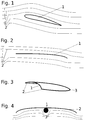
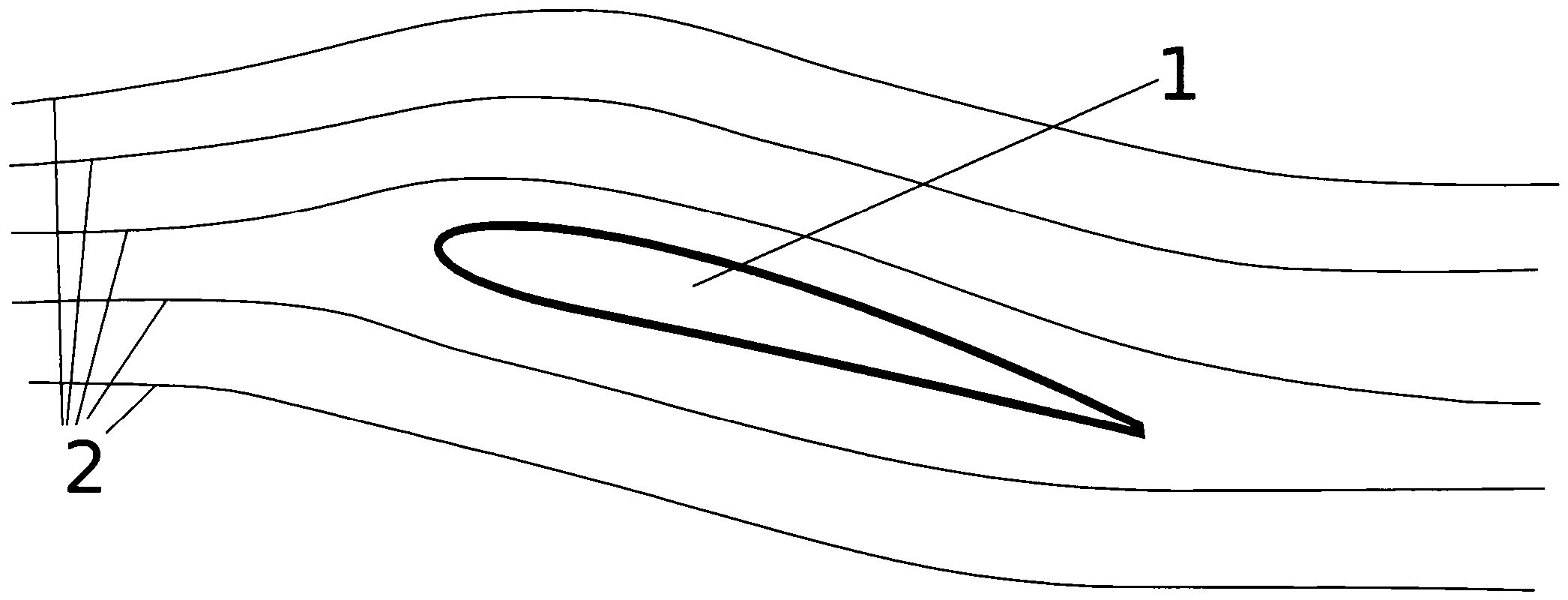
Der Kelchflügel ist im Gegensatz zum herkömmlichen Flügel über das gesamte Profil hinweg vergleichsweise dünn. Er muss so dick sein, wie es konstruktiv bedingt nötig ist, um ausreichende Stabilität aufzuweisen, aber nicht unbedingt dicker. Die Dicke kann, muss sich aber nicht im Verlauf des Profils ändern. Dadurch bietet er der anströmenden Luft deutlich weniger Widerstand als ein traditionelles Profil. Nach hinten hin ist der Flügel zunehmend nach unten gewölbt. Dadurch wird die anströmende Luft sanft und langsam zunehmend nach unten abgelenkt. Es kommt das Auftriebsprinzip nach Newton und nicht das von Bernoulli zum Einsatz: Die Ablenkung der Luft bildet die Aktion und als Gegenreaktion entsteht am Tragflügel ein Auftrieb.In contrast to the conventional wing, the calyx wing is comparatively thin over the entire profile. It has to be as thick as is necessary for the construction in order to have sufficient stability, but not necessarily thicker. The thickness can, but does not have to change in the course of the profile. As a result, it offers significantly less resistance to the incoming air than a traditional profile. The wing is increasingly curved downwards towards the rear. The incoming air is gradually and gently deflected downwards. The Newton principle of buoyancy is used, not Bernoulli's: the air is deflected and the counter-reaction creates a lift on the wing.
In
Wirbelbildungen durch abrupte Richtungsänderung der Luftpartikelchen - wie an der Vorderkante eines herkömmlichen Tragflügels oder dessen Unterkante bei erhöhtem Anstellwinkel - werden somit weitgehend vermieden.Vortex formation due to an abrupt change in direction of the air particles - such as on the front edge of a conventional wing or its lower edge with an increased angle of attack - is thus largely avoided.
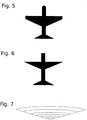
Die Wölbung nach hinten setzt sich aber auch zu den Tragflächenspitzen hin fort, die also ebenfalls nach unten gewölbt sind.
Es werden somit also alle Hauptströmungen, die am Tragflügel auftreten für die Auftriebserzeugung genutzt. Durch die Dünne des Profils und die sanfte Ablenkung werden aber Widerstand reduziert und Wirbelbildungen vermieden.So all main currents that occur on the wing are used to generate lift. The thinness of the profile and the gentle distraction reduce resistance and prevent eddy formation.
Es ist zu beachten, dass bei dieser Art von Auftriebserzeugung beim Flugzeug ein Nickmoment entstehen kann, das z.B. mittels Höhenruderausschlags oder durch konstruktive Maßnahmen - etwa der Anbringung der Tragflächen weiter vorne am Flugzeugrumpf als sonst üblich - auszugleichen ist.It should be noted that this type of buoyancy generation on the aircraft can give rise to a pitching moment, e.g. by means of elevator deflection or by constructive measures - such as the attachment of the wings further to the fuselage than is usual - to be compensated.
AusführungsbeispielEmbodiment
In einer einfachen Ausführung kann man sich den Kelchflügel wie einen umgedrehten antiken Kelch oder eine Frisbee vorstellen, der / die ungefähr in der Mitte (oder zumindest in einiger Entfernung vom Rand) vertikal durchgeschnitten und von dem / der nur noch der kleinere Teil übrig ist. Die Schnittfläche bildet die Flügelvorderkante und die Wölbung verläuft nach hinten und zur Seite hin nach unten. Das entspricht dem im
Vorteilebenefits
- 1. Dem Auftrieb steht ein deutlich verringerter Widerstand entgegen.1. The buoyancy is opposed by a significantly reduced resistance.
- 2. Verwirbelungen der Luft durch abrupte Richtungsänderung der Luftteilchen werden stark reduziert.2. Air turbulence caused by abrupt changes in the direction of the air particles is greatly reduced.
- 3. Die seitlich abströmende Luft wird zusätzlichen zur Auftriebserzeugung genutzt.3. The air flowing off to the side is also used to generate lift.
-
4. Randwirbeln wird entgegengewirkt, was folgende Vorteile mit sich bringt
- 1. Erhöhung der Sicherheit für den nachfolgenden Verkehr
- 2. Weitere Erhöhung des Auftriebs, da die Fläche nicht durch auftreffende Wirbelschleppen nach unten gedrückt wird.
- 1. Increasing security for the following traffic
- 2. Further increase in buoyancy, since the surface is not pressed down by impinging vortices.
Dadurch wird
- 1. ein wesentlich energieeffizienteres und dadurch ökonomisch und ökologisch weit vertretbareres Fliegen möglich
- 2. die Sicherheit im Luftverkehr erhöht
- 3. die Auslastung und Wirtschaftlichkeit von Flughäfen erhöht, die durch verminderte Wirbelschleppenbildung die Abflugfrequenzen erhöhen können.
- 4. Der Luftraum potentiell besser nutzbar, weil auch Teile des Luftraumes genutzt werden können, die zuvor durch Wirbelschleppen nicht durchfliegbar gewesen waren.
- 1. a much more energy efficient and therefore economically and ecologically more justifiable flying possible
- 2. Increases aviation security
- 3. Increases the capacity utilization and economy of airports, which can increase the departure frequencies by reducing the formation of eddies.
- 4. The air space is potentially better usable because parts of the air space can also be used that could not be flown through by vortex dragging.
VariationsmöglichkeitenVariation options
FormgebungShaping
Die oben beschriebene Grundform kann beliebig variiert werden, solange das Profil in der Normalkonfiguration durch eine nach hinten und zu den Seiten hin jeweils zunehmende Wölbung charakterisiert ist.The basic shape described above can be varied as long as the profile in the normal configuration is characterized by an increasing curvature towards the rear and towards the sides.
PfeilungSweep
Flügelspitzen sind beim Kelchflügel naturgemäß höheren Belastungen als bei herkömmlichen Tragflächen ausgesetzt, weil sie ja auch zur Auftriebserzeugung genutzt werden. Dem kann durch negative Pfeilung der Flügelhinterkante entgegengewirkt werden, wodurch die seitlich abströmende Luft zumindest teilweise auch über die Tragflächenhinterkante abströmt.
Vorteiladvantage
Der Entstehung und den Auswirkungen von Randwirbeln - insbesondere auf den Aufrieb - wird maximal entgegengewirkt.The emergence and the effects of vertebrae - especially on the abrasion - is counteracted to a maximum.
Variable WölbungVariable curvature
Wenn die Wölbung an der Hinterseite des Kelchflügels oder Teilen davon (Klappen) variabel und steuerbar gemacht wird, lässt sich der Auftrieb beliebig regulieren. Dadurch kann einerseits die Funktion von Landeklappen, andererseits die der Querruder ausgeführt werden - abhängig davon, ob die Wölbung an beiden Seiten gleich- oder gegensinnig eingeleitet wird.If the curvature on the back of the chalice wing or parts thereof (flaps) is made variable and controllable, the buoyancy can be regulated as desired. This allows the flaps to function on the one hand and the ailerons on the other - depending on whether the curvature is initiated in the same or opposite direction on both sides.
Für die Verwendung als Tragfläche für Flugzeuge sollte die Wölbungen auf beiden Seiten der Tragfläche unabhängig voneinander steuerbar sein, damit koordinierter Kurvenflug möglich ist.For use as an aircraft wing, the curvatures on both sides of the wing should be controllable independently of one another so that coordinated cornering is possible.
Realisiert werden kann eine variable Wölbung - entweder ganz oder zumindest annäherungsweise - z.B. durch die Verwendung
- 1. von Fowlerklappen
- 2. von ähnlichen Klappen oder gesamten Flügelhinterkanten, die - wie Fowlerklappen - aus mehreren Gliedern bestehen, aber nicht ausgefahren werden müssen, sondern nur zueinander ausschlagen, in einer Weise dass näherungsweise eine nach hinten zunehmende Wölbung erreicht wird. Das kann z.B.
- a. durch Gliedflächen mit nach hinten abnehmender Länge geschehen -
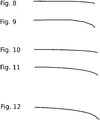
8 zeigt ein solches Profil im Reiseflug und9 eines mit verstärkter Wölbung in z.B. Start-, Steigflug- oder Landekonfiguration - oder - b. durch solche, die, je weiter sie sich am Tragflächenende befinden, stärker ausschlagen als die Vorausliegenden.
- a. durch Gliedflächen mit nach hinten abnehmender Länge geschehen -
- 3. eines biegsamen Materials, das sich - wenn es gekrümmt wird - zum Tragflächenende stärker krümmt.
10 zeigt ein solches Profil in Reiseflug- und11 in Start-, Steiglfug- oder Landekonfiguration.
- 1. from Fowler flaps
- 2. of similar flaps or entire trailing edges of the wing, which - like Fowler flaps - consist of several links, but do not have to be extended, but only deflect towards one another, in such a way that a curvature that increases towards the rear is approximately achieved. For example,
- a. done by limbs with decreasing length -
8th shows such a profile in cruise and9 one with increased curvature in e.g. take-off, climb or landing configuration - or - b. by those that, the further they are at the end of the wing, deflect more than the others in front.
- a. done by limbs with decreasing length -
- 3. a flexible material which, when bent, bends more towards the end of the wing.
10th shows such a profile in cruise and11 in take-off, climb or landing configuration.
Die Wölbung muss v.a. an den Tragflächenhinterkanten variabel gemacht werden. Die Tragflächenspitzen hingegen können über eine weiterhin konstante Wölbung verfügen, denn immer wenn ein Auftrieb entsteht, kommt auch ein Druckunterschied zustande, der an der Tragflächenspitze nach Ausgleich sucht und umgelenkt werden muss, um Randwirbel zu vermeiden und für zusätzlichen Auftrieb zu sorgen.The curvature must above all be made variable at the trailing edge of the wing. The wing tips, on the other hand, can continue to have a constant curvature, because whenever a lift occurs, there is also a pressure difference that has to be compensated for at the wing tip and has to be redirected to avoid edge eddies and to provide additional lift.
Vorteilebenefits
- · Der Auftrieb kann stufenlos reguliert werdenThe buoyancy can be regulated continuously
- · Der Anstellwinkel muss zur Erhöhung des Auftriebs nicht verändert werden, was bessere Sicht bei Steigflug und Landung und dadurch deutlich mehr Sicherheit bewirkt.· The angle of attack does not have to be changed to increase buoyancy, which results in better visibility during climbing and landing and thus significantly more safety.
- · So gut wie jedes Flugzeug kann dadurch mit Kurzstart und -landeeigenschaften (STOL) versehen werden.· Almost every aircraft can be given a short take-off and landing characteristics (STOL).
ÜbergangskanteTransition edge
Am Profilende und an seine Spitzen geht der nach unten abgelenkte Luftstrom in den Regulärvorbeiströmenden über. Dabei trifft Luft höheren Drucks unter dem Profil mit solcher niedrigeren Drucks über dem Profil zusammen. Dabei können - gerade bei hohem Auftrieb durch starke Wölbung - wieder Wirbel entstehen. Dem kann durch eine Übergangskante entgegengewirkt werden, die den Luftstrom sanft ein stückweit in die Richtung zurückleitet, in die er ohnehin strömen würde, dabei aber ein zu frühes Zusammentreffen der Luftströme über und unter dem Profil verhindert. Dadurch lassen sich auch diese Wirbel reduzieren.At the end of the profile and at its tips, the air flow deflected downwards merges with the regular flow. Air of higher pressure below the profile meets such lower pressure above the profile. Thereby - especially with high buoyancy due to strong curvature - eddies can arise again. This can be counteracted by a transition edge that gently directs the airflow back a little in the direction in which it would flow anyway, but prevents the airflows from coming together too soon above and below the profile. This also reduces these eddies.
Die Kante kann starr sein, aus einem flexiblen Material oder aus mehreren bzw. - wie bei den Federn eines Vogels - vielen flexiblen oder teilflexiblen Elementen bestehen.
EinsatzbereicheAreas of application
Tragfläche für FlugzeugeAirplane wing
Bei der Gestaltung dieses Profils wurde zuallererst an Flugzeugtragflächen gedacht, um einen energieeffiezienten Auftrieb zu ermöglichen.When designing this profile, the first thing that was thought of was aircraft wings to enable energy-efficient lift.
Propeller- und Rotorblätter und VerdichterschaufelnPropeller and rotor blades and compressor blades
Blätter von Luftschrauben (z.B. für Flugzeuge oder Ventilatoren), Helikopterrotoren, Schiffsschrauben und Verdichterschaufeln in Turbinentriebwerken können genauso nach dem Kelchflügelprinzip gebaut werden, um Leistung zu optimieren und dadurch höheren Durchsatz und / oder geringeren Energieverbrauch zu ermöglichen und weiterhin - außer im Fall von Verdichterschaufeln - die Beeinflussung der Umwelt durch Wirbelbildung zu minimieren.Sheets of propellers (e.g. for aircraft or fans), helicopter rotors, propellers and compressor blades in turbine engines can also be built according to the calyx wing principle in order to optimize performance and thereby enable higher throughput and / or lower energy consumption and furthermore - except in the case of compressor blades - to minimize the impact on the environment through vortex formation.
Die Flügelvorderkante muss in Drehrichtung zeigen.The leading edge of the wing must point in the direction of rotation.
TurbinenTurbines
In Turbinen können Kelchflügel für eine optimierte Ausnutzung des Fluidstroms eingesetzt werden. Die Flügelvorderkante muss hierbei gerade in Richtung des anströmenden Fluids zeigen.Goblet vanes can be used in turbines to optimize the fluid flow. The leading edge of the wing must point straight in the direction of the incoming fluid.
Claims (5)
Applications Claiming Priority (2)
| Application Number | Priority Date | Filing Date | Title |
|---|---|---|---|
| DE202018004829.1U DE202018004829U1 (en) | 2018-10-18 | 2018-10-18 | Goblet - a fluid dynamic profile for lift generation with significantly reduced resistance u.a. for aircraft wings and propeller blades |
| DE202018004829.1 | 2018-10-18 |
Publications (2)
| Publication Number | Publication Date |
|---|---|
| DE102018009819A1 true DE102018009819A1 (en) | 2020-04-23 |
| DE102018009819B4 DE102018009819B4 (en) | 2025-08-28 |
Family
ID=65441790
Family Applications (2)
| Application Number | Title | Priority Date | Filing Date |
|---|---|---|---|
| DE202018004829.1U Expired - Lifetime DE202018004829U1 (en) | 2018-10-18 | 2018-10-18 | Goblet - a fluid dynamic profile for lift generation with significantly reduced resistance u.a. for aircraft wings and propeller blades |
| DE102018009819.3A Active DE102018009819B4 (en) | 2018-10-18 | 2018-12-14 | The cup wing A fluid dynamic profile for generating lift with significantly reduced drag for aircraft wings and propeller blades, among others |
Family Applications Before (1)
| Application Number | Title | Priority Date | Filing Date |
|---|---|---|---|
| DE202018004829.1U Expired - Lifetime DE202018004829U1 (en) | 2018-10-18 | 2018-10-18 | Goblet - a fluid dynamic profile for lift generation with significantly reduced resistance u.a. for aircraft wings and propeller blades |
Country Status (1)
| Country | Link |
|---|---|
| DE (2) | DE202018004829U1 (en) |
Citations (4)
| Publication number | Priority date | Publication date | Assignee | Title |
|---|---|---|---|---|
| DE10317258A1 (en) * | 2003-04-14 | 2004-11-18 | Eads Deutschland Gmbh | Adjustment mechanism for a shape-variable wing |
| US20090224102A1 (en) * | 2008-03-06 | 2009-09-10 | White Walter W | Aircraft Wing and Fuselage Structure |
| EP2423104A1 (en) * | 2010-08-27 | 2012-02-29 | Cornerstone Research Group, Inc. | Passive adaptive structures |
| US9145198B1 (en) * | 2013-01-04 | 2015-09-29 | The Boeing Company | Variable camber airfoil system |
-
2018
- 2018-10-18 DE DE202018004829.1U patent/DE202018004829U1/en not_active Expired - Lifetime
- 2018-12-14 DE DE102018009819.3A patent/DE102018009819B4/en active Active
Patent Citations (4)
| Publication number | Priority date | Publication date | Assignee | Title |
|---|---|---|---|---|
| DE10317258A1 (en) * | 2003-04-14 | 2004-11-18 | Eads Deutschland Gmbh | Adjustment mechanism for a shape-variable wing |
| US20090224102A1 (en) * | 2008-03-06 | 2009-09-10 | White Walter W | Aircraft Wing and Fuselage Structure |
| EP2423104A1 (en) * | 2010-08-27 | 2012-02-29 | Cornerstone Research Group, Inc. | Passive adaptive structures |
| US9145198B1 (en) * | 2013-01-04 | 2015-09-29 | The Boeing Company | Variable camber airfoil system |
Also Published As
| Publication number | Publication date |
|---|---|
| DE202018004829U1 (en) | 2019-02-04 |
| DE102018009819B4 (en) | 2025-08-28 |
Similar Documents
| Publication | Publication Date | Title |
|---|---|---|
| US20190322354A1 (en) | Lifting surfaces and associated method | |
| CN114026022B (en) | Fixed-wing aircraft with rear rotor and T-tail | |
| DE60310138T2 (en) | PLANE WITH FORWARD OPENING AND LOWERED MUDGUAGES FOR GYRO MANAGEMENT | |
| CN111655576A (en) | Fixed-wing aircraft with rear rotors | |
| US20200023945A1 (en) | Aerodynamic surface of an aircraft | |
| CN112937851A (en) | Vertical take-off and landing fixed wing aircraft using coanda effect for increasing lift | |
| DE102018133171A1 (en) | Aircraft | |
| EP3310653B1 (en) | Fluid flow control for an aerofoil | |
| DE102015113404A1 (en) | Multifunctional flap system to improve energy efficiency | |
| DE102015113347A1 (en) | Multifunctional flaps for improving energy efficiency and safety | |
| WO1988000153A1 (en) | Aircraft | |
| EP3248866B1 (en) | Yaw control in an aircraft | |
| US3009670A (en) | Airplane with adjustable wings and tail | |
| CN205168892U (en) | Shutter wing formula gyroplane that verts | |
| DE102018009819B4 (en) | The cup wing A fluid dynamic profile for generating lift with significantly reduced drag for aircraft wings and propeller blades, among others | |
| EP0080460A1 (en) | FRONT EDGE SWIVEL VALVE FOR WINGS. | |
| WO2019239123A1 (en) | Wing-tip device | |
| CN205366050U (en) | Fixed -wing unmanned aerial vehicle | |
| US11396367B2 (en) | Vortex reduction apparatus for use with airfoils | |
| CN108116659A (en) | A kind of deformation wingtip sail piece | |
| US2125738A (en) | Airfoil | |
| DE102022005062B4 (en) | Wing arrangement | |
| EP4452749B1 (en) | Wing assembly comprising a main wing and a front wing attached thereto in front of the main wing against a direction of flow | |
| RU230079U1 (en) | A single element of mechanization of the upper part of the aircraft and swept wing extensions | |
| DE102017128164A1 (en) | plane |
Legal Events
| Date | Code | Title | Description |
|---|---|---|---|
| R086 | Non-binding declaration of licensing interest | ||
| R012 | Request for examination validly filed | ||
| R016 | Response to examination communication | ||
| R016 | Response to examination communication | ||
| R016 | Response to examination communication | ||
| R018 | Grant decision by examination section/examining division | ||
| R084 | Declaration of willingness to licence | ||
| R020 | Patent grant now final |