DE102012217841A1 - Apparatus and method for demonstrating the visual impression of a wearer of spectacles with polarizing spectacle lenses - Google Patents

Apparatus and method for demonstrating the visual impression of a wearer of spectacles with polarizing spectacle lenses Download PDF

Info

Publication number
DE102012217841A1
DE102012217841A1 DE102012217841.4A DE102012217841A DE102012217841A1 DE 102012217841 A1 DE102012217841 A1 DE 102012217841A1 DE 102012217841 A DE102012217841 A DE 102012217841A DE 102012217841 A1 DE102012217841 A1 DE 102012217841A1
Authority
DE
Germany
Prior art keywords
image
polarization
polarizing
polarization direction
pixels
Prior art date
Legal status (The legal status is an assumption and is not a legal conclusion. Google has not performed a legal analysis and makes no representation as to the accuracy of the status listed.)
Pending
Application number
DE102012217841.4A
Other languages
German (de)
Inventor
Peter Pacher
Dieter Braunger
Current Assignee (The listed assignees may be inaccurate. Google has not performed a legal analysis and makes no representation or warranty as to the accuracy of the list.)
Carl Zeiss Vision International GmbH
Carl Zeiss AG
Original Assignee
Carl Zeiss Vision International GmbH
Carl Zeiss AG
Priority date (The priority date is an assumption and is not a legal conclusion. Google has not performed a legal analysis and makes no representation as to the accuracy of the date listed.)
Filing date
Publication date
Application filed by Carl Zeiss Vision International GmbH, Carl Zeiss AG filed Critical Carl Zeiss Vision International GmbH
Priority to DE102012217841.4A priority Critical patent/DE102012217841A1/en
Priority to BR112015006899-5A priority patent/BR112015006899B1/en
Priority to PCT/EP2013/069711 priority patent/WO2014048873A1/en
Priority to ES13770657.8T priority patent/ES2605634T3/en
Priority to EP13770657.8A priority patent/EP2901208B1/en
Publication of DE102012217841A1 publication Critical patent/DE102012217841A1/en
Priority to US14/672,197 priority patent/US10325521B2/en
Pending legal-status Critical Current

Links

Images

Classifications

    • GPHYSICS
    • G09EDUCATION; CRYPTOGRAPHY; DISPLAY; ADVERTISING; SEALS
    • G09BEDUCATIONAL OR DEMONSTRATION APPLIANCES; APPLIANCES FOR TEACHING, OR COMMUNICATING WITH, THE BLIND, DEAF OR MUTE; MODELS; PLANETARIA; GLOBES; MAPS; DIAGRAMS
    • G09B23/00Models for scientific, medical, or mathematical purposes, e.g. full-sized devices for demonstration purposes
    • G09B23/06Models for scientific, medical, or mathematical purposes, e.g. full-sized devices for demonstration purposes for physics
    • G09B23/22Models for scientific, medical, or mathematical purposes, e.g. full-sized devices for demonstration purposes for physics for optics
    • GPHYSICS
    • G01MEASURING; TESTING
    • G01MTESTING STATIC OR DYNAMIC BALANCE OF MACHINES OR STRUCTURES; TESTING OF STRUCTURES OR APPARATUS, NOT OTHERWISE PROVIDED FOR
    • G01M11/00Testing of optical apparatus; Testing structures by optical methods not otherwise provided for
    • G01M11/02Testing optical properties
    • GPHYSICS
    • G01MEASURING; TESTING
    • G01MTESTING STATIC OR DYNAMIC BALANCE OF MACHINES OR STRUCTURES; TESTING OF STRUCTURES OR APPARATUS, NOT OTHERWISE PROVIDED FOR
    • G01M11/00Testing of optical apparatus; Testing structures by optical methods not otherwise provided for
    • G01M11/02Testing optical properties
    • G01M11/0242Testing optical properties by measuring geometrical properties or aberrations
    • G01M11/0257Testing optical properties by measuring geometrical properties or aberrations by analyzing the image formed by the object to be tested
    • G01M11/0264Testing optical properties by measuring geometrical properties or aberrations by analyzing the image formed by the object to be tested by using targets or reference patterns
    • GPHYSICS
    • G02OPTICS
    • G02BOPTICAL ELEMENTS, SYSTEMS OR APPARATUS
    • G02B30/00Optical systems or apparatus for producing three-dimensional [3D] effects, e.g. stereoscopic images
    • G02B30/20Optical systems or apparatus for producing three-dimensional [3D] effects, e.g. stereoscopic images by providing first and second parallax images to an observer's left and right eyes
    • G02B30/22Optical systems or apparatus for producing three-dimensional [3D] effects, e.g. stereoscopic images by providing first and second parallax images to an observer's left and right eyes of the stereoscopic type
    • G02B30/25Optical systems or apparatus for producing three-dimensional [3D] effects, e.g. stereoscopic images by providing first and second parallax images to an observer's left and right eyes of the stereoscopic type using polarisation techniques
    • GPHYSICS
    • G02OPTICS
    • G02CSPECTACLES; SUNGLASSES OR GOGGLES INSOFAR AS THEY HAVE THE SAME FEATURES AS SPECTACLES; CONTACT LENSES
    • G02C7/00Optical parts
    • G02C7/12Polarisers

Landscapes

  • Physics & Mathematics (AREA)
  • General Physics & Mathematics (AREA)
  • Optics & Photonics (AREA)
  • Health & Medical Sciences (AREA)
  • Ophthalmology & Optometry (AREA)
  • Chemical & Material Sciences (AREA)
  • Analytical Chemistry (AREA)
  • Engineering & Computer Science (AREA)
  • General Health & Medical Sciences (AREA)
  • Geometry (AREA)
  • Computational Mathematics (AREA)
  • Mathematical Analysis (AREA)
  • Mathematical Optimization (AREA)
  • Mathematical Physics (AREA)
  • Pure & Applied Mathematics (AREA)
  • Business, Economics & Management (AREA)
  • Algebra (AREA)
  • Educational Administration (AREA)
  • Educational Technology (AREA)
  • Theoretical Computer Science (AREA)
  • Polarising Elements (AREA)

Abstract

Die Erfindung besteht in einer Vorrichtung (100) zur Demonstration des Seheindrucks für einen Träger (170) einer Brille (400) mit polarisierenden Brillengläsern (410a, 410b) mit einem Speicher (152) zum Bereitstellen eines ersten Bildes (114) mit einem Motiv und einer zugehörigen ersten Polarisationsrichtung, einem Speicher (152) zum Bereitstellen eines zweiten Bildes (116) mit demselben Motiv und einer zugehörigen zweiten von der ersten Polarisationsrichtung verschiedenen Polarisationsrichtung und mit einer Anzeigeeinrichtung (110) zum Anzeigen des ersten Bildes (114) mit in der ersten Polarisationsrichtung polarisiertem Licht und des zweiten Bildes (116) mit in der zweiten Polarisationsrichtung polarisiertem Licht in überlagerter Darstellung (118), so dass das Motiv des ersten Bildes und das Motiv des zweiten Bildes formidentisch zusammenfallen.The invention relates to a device (100) for demonstrating the visual impression for a wearer (170) of glasses (400) with polarizing glasses (410a, 410b) with a memory (152) for providing a first image (114) with a motif and an associated first polarization direction, a memory (152) for providing a second image (116) with the same motif and an associated second polarization direction different from the first polarization direction and with a display device (110) for displaying the first image (114) in the first Polarization direction of polarized light and the second image (116) with light polarized in the second polarization direction in a superimposed representation (118), so that the motif of the first image and the motif of the second image coincide in identical form.

Description

Die Erfindung betrifft eine Vorrichtung zur Demonstration des Seheindrucks für einen Träger einer Brille mit polarisierenden Brillengläsern nach dem Oberbegriff des Patentanspruchs 1 sowie ein Verfahren zur Demonstration des Seheindrucks für einen Träger einer Brille mit polarisierenden Brillengläsern nach dem Oberbegriff des Patentanspruchs 8. The invention relates to a device for demonstrating the visual impression for a wearer of spectacles with polarizing spectacle lenses according to the preamble of patent claim 1 and to a method for demonstrating the visual impression for a wearer of spectacles with polarizing spectacle lenses according to the preamble of patent claim 8.

Unter Brillengläsern werden im Rahmen der vorliegenden Erfindung alle Arten von optischen Korrekturgläsern oder Korrekturlinsen sowie auch Gläser oder Linsen ohne optische Korrektur verstanden, die Bestandteil einer Brille sind und durch die der Brillenträger bei bestimmungsgemäßem Gebrauch blickt. Es gibt Brillengläser aus Kunststoff und solche aus Mineralglas. In the context of the present invention, eyeglass lenses are understood to mean all types of optical corrective lenses or corrective lenses as well as lenses or lenses without optical correction, which are part of a pair of spectacles and through which the wearer looks when used as intended. There are plastic lenses and those made of mineral glass.

Polarisation beschreibt die Richtung einer Schwingung einer elektromagnetischen Welle. Natürliches Licht wird meist unpolarisiert als Überlagerung von verschiedenen Wellen von elektromagnetischer Strahlung mit unterschiedlicher Schwingungsebene und -phase wahrgenommen. Nach Reflexion an einer Grenzfläche weist das reflektierte Licht teilweise eine Polarisationsrichtung auf. Polarization describes the direction of a vibration of an electromagnetic wave. Natural light is mostly unpolarized perceived as a superposition of different waves of electromagnetic radiation with different vibration level and phase. After reflection at an interface, the reflected light partially has a polarization direction.

Ein polarisierendes Brillenglas ist in der DIN EN ISO 13666 (1998) definiert als ein Brillenglas, das unterschiedliche Lichtabsorption in Abhängigkeit von der Polarisation des auftreffenden Lichtes besitzt. Die Orientierung der maximalen Transmission des elektrischen Feldvektors der elektromagnetischen Strahlung durch ein polarisierendes Brillenglas wird als Polarisationsachse des Brillenglases bezeichnet. Die Lage der Polarisationsachse in der Fassung wird in Grad (°) angegeben, wobei 0° eine horizontale Ausrichtung und 90° eine vertikale Ausrichtung der Polarisationsachse beschreibt. Die Transmissionsebene eines polarisierenden Brillenglases ist definiert als eine das Brillenglas schneidende Ebene, in der die Ausbreitungsrichtung der übertragenen Strahlung enthalten ist und die parallel zur Orientierung der maximalen Transmission des elektrischen Feldvektors der übertragenen Strahlung ist. Die Polarisationsebene eines polarisierenden Brillenglases ist normal zur Transmissionsebene und wird oft durch Markierungen auf einem polarisierenden Brillenglas gekennzeichnet. Ein Aufbau zur Bestimmung der Polarisationsebene wird beispielsweise in der DIN EN ISO 8980-3:2004 oder den DIN EN 1836:2005 + A1:2007 (D) gezeigt. A polarizing lens is in the DIN EN ISO 13666 (1998) defined as a spectacle lens having different light absorption depending on the polarization of the incident light. The orientation of the maximum transmission of the electric field vector of the electromagnetic radiation through a polarizing spectacle lens is referred to as the polarization axis of the spectacle lens. The position of the polarization axis in the socket is given in degrees (°), where 0 ° describes a horizontal orientation and 90 ° a vertical orientation of the polarization axis. The transmission plane of a polarizing spectacle lens is defined as a plane intersecting the spectacle lens in which the propagation direction of the transmitted radiation is contained and which is parallel to the orientation of the maximum transmission of the electric field vector of the transmitted radiation. The polarization plane of a polarizing spectacle lens is normal to the transmission plane and is often characterized by marks on a polarizing spectacle lens. A structure for determining the polarization plane is used, for example, in US Pat DIN EN ISO 8980-3: 2004 or the DIN EN 1836: 2005 + A1: 2007 (D) shown.

Es gibt Brillengläser, die dauerhaft eine vorzugsweise vorbestimmte polarisierende Eigenschaft besitzen und solche, bei denen sich die polarisierende Eigenschaft ändern kann. Zu letzteren zählen auch sogenannte phototrope Brillengläser. Bestandteil derartiger Brillengläser ist ein phototropes Material z.B. in Form einer Beschichtung oder in Form von Zusätzen zum Brillenglaskörper. Ein phototropes Material ist ein Material, das seine Lichttransmissionseigenschaften reversibel in Abhängigkeit von der Bestrahlungsstärke und den Wellenlängen der auftreffenden Strahlung ändert. Dabei kann die Veränderung der Lichttransmissionseigenschaften rein die Absorption verändern oder aber auch einen polarisierenden Effekt erzeugen. There are spectacle lenses which permanently have a preferably predetermined polarizing property and those in which the polarizing property can change. The latter also include so-called photochromic lenses. Component of such lenses is a phototropic material, e.g. in the form of a coating or in the form of additives to the lens body. A phototropic material is a material that reversibly changes its light transmission properties depending on the irradiance and the wavelengths of the incident radiation. The change in the light transmission properties can change the absorption purely or else produce a polarizing effect.

Bei einer polarisierenden Brille sind die zwei polarisierenden Brillengläser in einer Fassung fest eingebaut. Darunter ist zu verstehen, dass zwischen der Fassung und den Brillengläsern eine mechanisch feste Verbindung besteht. Es können also zur Fixierung der Brillengläser sowohl Vollrandfassungen, Tragrandfassungen, Rimfassungen als auch randlose Fassungen vorgesehen sein. In the case of polarized glasses, the two polarizing lenses are permanently installed in one mount. By this is meant that there is a mechanically strong connection between the socket and the lenses. It can therefore be provided for fixing the lenses both full-rim frames, carrying grids, Rimfassungen and rimless versions.

Polarisierende Brillengläser finden hauptsächlich Verwendung in Sonnenbrillen. Bei derartigen polarisierenden Brillengläsern, welche die Blendung durch die Sonne reduzieren sollen, ist die Transmissionsebene aus den nachfolgenden Gründen normalerweise vertikal und die Polarisationsebene horizontal orientiert. Polarizing lenses are mainly used in sunglasses. In the case of such polarizing spectacle lenses, which are intended to reduce the glare from the sun, the transmission plane is normally vertical and the plane of polarization oriented horizontally for the following reasons.

Bekanntlich ist der sogenannte Brewster Winkel der Winkel zur Normalen einer Grenzfläche, bei welchem einfallendes Licht so reflektiert wird, dass nur die parallel zur Grenzfläche (also senkrecht zur Einfallsebene) polarisierten Anteile reflektiert werden (s-polarisiert). Bei einer horizontalen Grenzfläche (wie beispielsweise bei einer Wasseroberfläche) ist unter diesem Winkel reflektiertes Licht daher horizontal polarisiert. Unter anderen, vom Brewster Winkel abweichenden Winkeln, hat das reflektierte Licht zusätzlich in der Einfallsebene liegende polarisierte Anteile (p-polarisiert). Bei einer polarisierenden Brille wie beispielsweise einer Sonnenbrille mit polarisierenden Brillengläsern ist die Polarisationsachse vertikal (90°) orientiert und die Polarisationsebene ist horizontal (0°) orientiert. Brillengläser mit vertikaler Polarisationsachse oder horizontaler Polarisationsebene sind also für vertikal polarisiertes Licht durchlässig. Damit sind Reflexionen auf horizontalen Flächen (wie beispielsweise Wasseroberflächen) für den Brillenträger stark reduziert. As is known, the so-called Brewster angle is the angle to the normal of an interface in which incident light is reflected so that only those polarized parallel to the interface (ie perpendicular to the plane of incidence) polarized components are reflected (s-polarized). For a horizontal interface (such as a water surface) light reflected at this angle is therefore horizontally polarized. Among other angles different from the Brewster angle, the reflected light additionally has polarized portions (p-polarized) lying in the plane of incidence. In polarizing glasses such as sunglasses with polarizing lenses, the polarization axis is oriented vertically (90 °) and the polarization plane is oriented horizontally (0 °). Eyeglass lenses with a vertical polarization axis or horizontal plane of polarization are therefore permeable to vertically polarized light. Thus, reflections on horizontal surfaces (such as water surfaces) are greatly reduced for the wearer.

Polarisierende Brillen bestehen aus zwei polarisierenden Brillengläsern, welche fest in einer Fassung eingebaut sind, wobei die beiden definierten Polarisationsebenen der beiden polarisierenden Brillengläser nach der DIN EN 1836:2005 + A1:2007 nicht mehr als 6° voneinander abweichen dürfen. Polarizing spectacles consist of two polarizing spectacle lenses which are fixedly mounted in a socket, wherein the two defined polarization planes of the two polarizing spectacle lenses after the DIN EN 1836: 2005 + A1: 2007 not more than 6 ° apart.

Die DIN EN 1836:2005 + A1:2007 (D) sieht ferner vor, dass die Polarisationsebene bei Sonnenbrillen um nicht mehr als +/–5° von der Horizontalen abweichen darf. Das bedeutet, dass polarisierende Brillengläser so in der Fassung eingebaut sein müssen, dass deren Polarisationsachse um nicht mehr als +/–5° von der Vertikalen abweichen. Solche Sonnenbrillen sind beispielsweise in der US 747,235 beschrieben. The DIN EN 1836: 2005 + A1: 2007 (E) also provides that the polarization plane in sunglasses may not deviate more than +/- 5 ° from the horizontal. That means polarizing Eyeglass lenses must be installed in the socket so that their polarization axis deviate by no more than +/- 5 ° from the vertical. Such sunglasses are for example in the US 747,235 described.

Der Polarisationsgrad oder die Polarisationseffizienz quantifizieren die Güte der Polarisation eines Brillenglases. Die Begriffe Polarisationsgrad und Polarisationseffizienz werden in der Literatur oft als äquivalent angesehen. Der Polarisationsgrad und die Polarisationseffizienz werden in der DIN EN 1836 und der DIN EN ISO 13666 definiert. Der Polarisationsgrad P ist definiert als P = (Imax – Imin)/(Imax + Imin), wobei Imax und Imin die Extremwerte des Lichttransmissionsgrades I bezeichnen. Zur Ermittlung des Polarisationsgrades wird das polarisierende Brillenglas auf einer Seite mit 100 % linear polarisiertem Licht mit einer definierten Polarisationsebene und mit einer Intensität bestrahlt. Auf der gegenüberliegenden Seite des polarisierenden Brillenglases kann die Intensität abhängig von der Winkelstellung des polarisierenden Brillenglases relativ zur definierten Polarisationsebene gemessen werden. Für einen bestimmten Winkel wird der Maximalwert Imax des Lichttransmissionsgrades I ein Maximum erreichen. Diesen Winkel bezeichnet die Polarisationsachse. Bei dieser Winkelstellung ist jede zur definierten Polarisationsebene des einfallenden Lichts parallele Ebene eine Transmissionsebene des polarisierenden Brillenglases. Bei einem anderen Winkel tritt der Minimalwert Imin des Lichttransmissionsgrades I auf. Imin tritt meist bei einem zur Polarisationsachse um 90° abweichenden Winkel auf. Bei dieser Winkelstellung ist jede zur definierten Polarisationsebene des einfallenden Lichts parallele Ebene eine Polarisationsebene des polarisierenden Brillenglases. Auch die Angabe des Polarisationsverhältnisses R = Imax/Imin kann zu Beurteilung der Qualität von polarisierenden Brillengläsern verwendet werden. The degree of polarization or the polarization efficiency quantify the quality of the polarization of a spectacle lens. The terms polarization degree and polarization efficiency are often considered equivalent in the literature. The degree of polarization and the polarization efficiency are shown in the DIN EN 1836 and the DIN EN ISO 13666 Are defined. The degree of polarization P is defined as P = (I max -I min ) / (I max + I min ), where I max and I min denote the extreme values of the light transmittance I. To determine the degree of polarization, the polarizing spectacle lens is irradiated on one side with 100% linearly polarized light having a defined polarization plane and with an intensity. On the opposite side of the polarizing spectacle lens, the intensity can be measured as a function of the angular position of the polarizing spectacle lens relative to the defined polarization plane. For a certain angle, the maximum value I max of the light transmittance I will reach a maximum. This angle is called the polarization axis. In this angular position, each plane parallel to the defined polarization plane of the incident light is a plane of transmission of the polarizing spectacle lens. At a different angle, the minimum value I min of the light transmittance I occurs. I min usually occurs at an angle deviating from the polarization axis by 90 °. In this angular position, each plane parallel to the defined polarization plane of the incident light is a polarization plane of the polarizing spectacle lens. The indication of the polarization ratio R = I max / I min can also be used to assess the quality of polarizing spectacle lenses.

Polarisierende Brillengläser müssen gemäß DIN EN 1836:2005 + A1:2007 (D) und DIN EN ISO 8980-3:2004 ein Verhältnis zwischen maximaler und minimaler Lichttransmission größer als 8:1 bzw. größer als 4:1 aufweisen. Polarisierende Brillengläser erreichen damit einen Polarisationsgrad von 78 % bzw. 60 %. Qualitativ hochwertige Gläser haben einen Polarisationsgrad von mehr als 99%. Polarizing lenses must comply with DIN EN 1836: 2005 + A1: 2007 (E) and DIN EN ISO 8980-3: 2004 a ratio between maximum and minimum light transmission greater than 8: 1 or greater than 4: 1. Polarizing spectacle lenses thus achieve a degree of polarization of 78% and 60%, respectively. High-quality glasses have a degree of polarization of more than 99%.

Derartige Kennzahlen sind jedoch für einen Brillenträger nur schwer fassbare Größen. Ohne eigene Vergleichs- oder Erfahrungswerte oder ohne Kenntnis der Bedeutung der Kennzahlen ist es für den Brillenträger in der Regel kaum möglich qualitativ hochwertige Brillengläser von qualitativ minderwertigeren Brillengläsern zu unterscheiden. However, such ratios are difficult to grasp for a wearer of glasses. Without their own comparative or empirical values or without knowledge of the significance of the key figures, it is generally hardly possible for the wearer to distinguish between high-quality spectacle lenses and lower-quality spectacle lenses.

Zur Demonstration der polarisierenden Eigenschaft von z.B. Sonnenbrillen mit polarisierenden Brillengläsern werden daher heute oft Aufkleber oder kleine Embleme verwendet, welche Licht mit einer definierten Polarisationsrichtung reflektieren. Dabei kann der Brillenträger durch polarisierende Brillengläser die Aufkleber oder Embleme betrachten. Wenn die Aufkleber oder Embleme relativ zu den polarisierenden Brillengläser in einer Fassung rotiert werden, so ist eine Intensitätsänderung bemerkbar, welche bei nicht polarisierenden Brillengläsern nicht auftritt. Damit kann jedoch keinerlei Aussage über die Qualität polarisierender Brillengläser in einer Fassung getroffen werden, sondern nur eine einfache Unterscheidung zwischen polarisierenden Brillengläsern in einer Fassung und nicht polarisierenden Brillengläsern in einer Fassung. To demonstrate the polarizing property of e.g. Sunglasses with polarizing lenses are therefore often used today stickers or small emblems, which reflect light with a defined direction of polarization. The spectacle wearer can look at the stickers or emblems through polarizing lenses. When the stickers or emblems are rotated relative to the polarizing lenses in a mount, a change in intensity is noticeable, which does not occur with non-polarizing lenses. Thus, however, no statement can be made about the quality of polarizing lenses in a version, but only a simple distinction between polarizing lenses in a version and non-polarizing lenses in a version.

Weitere Demonstratoren beruhen darauf, dass einem Testbild mittels halbdurchlässiger Folie eine simulierte Reflexion überlagert wird. Bei Betrachtung des Demonstrators durch eine polarisierende Brille wird die simulierte Reflexion in ihrer Intensität stark verringert und das ursprüngliche Bild ist mit erhöhtem Kontrast zu sehen. Auch hier ist keine Unterscheidung der Qualität möglich. Außerdem zeigt diese Art von Demonstratoren nur ein einzelnes Testbild, welches gegebenenfalls nicht den Gebrauchsbedingungen des Brillenträgers entspricht. Other demonstrators are based on the fact that a simulated reflection is superimposed on a test pattern by means of semipermeable film. When the demonstrator is viewed through polarized glasses, the intensity of the simulated reflection is greatly reduced and the original image is seen with increased contrast. Again, no distinction of quality is possible. In addition, this type of demonstrator shows only a single test image, which may not meet the conditions of use of the wearer.

Aus dem Stand der Technik sind ferner Sehprüfgeräte bekannt, die mit Hilfe von Sehzeichentafeln oder Displays Sehzeichen mit polarisiertem Licht unterschiedlicher Polarisationsrichtung anzeigen. Bei bestimmungsgemäßem Gebrauch trägt ein Proband eine Brille mit zwei unterschiedlich polarisierten Brillengläsern, wobei die Polarisationsachsen der beiden Brillengläser senkrecht aufeinander stehen. Damit wird erreicht, dass der Proband ein angezeigtes Sehzeichen oder Teile davon nur mit einem Auge und andere Teile nur mit dem anderen Auge wahrnehmen kann. Sehprüfgeräte are also known from the prior art, which show with the help of Sehzeichentafeln or displays optotypes with polarized light of different polarization direction. When used as intended, a subject wearing spectacles with two differently polarized lenses, the polarization axes of the two lenses are perpendicular to each other. This ensures that the subject can perceive a displayed optotype or parts of it only with one eye and other parts only with the other eye.

Ein derartiges Sehprüfgerät ist beispielsweise aus der EP 0 512 443 A1 bekannt. Das Sehprüfgerät besteht im Wesentlichen aus zwei Polarisationsfolien und zwei Flüssigkristall-Displays, welche alternierend angeordnet sind. Diese Anordnung ist in der Lage, das von einer Lichtquelle kommende Licht so zu beeinflussen, dass Sehzeichen oder Teile davon gezielt nur von einem Auge oder aber von beiden Augen gesehen werden können. Die Lichtquelle beleuchtet mit ihrem Licht zunächst die erste farbneutrale, durchsichtige Polarisationsfolie. Das durch die erste Polarisationsfolie fallende Licht durchdringt das erste ggf. farbige Display und beleuchtet die zweite, farbneutrale Polarisationsfolie. Das durch die zweite Polarisationsfolie fallende Licht durchdringt das zweite Display, wonach das Licht das Sehprüfgerät verlässt. Mit einem derartigen Sehprüfgerät kann man nun Figuren und Zeichnungen darstellen, indem man die einzelnen Flüssigkristallzellen antreibt. Soll das dargestellte Sehzeichen verändert werden, so erfolgt ein entsprechender Befehl über eine Tastatur an eine Schalteinrichtung, welche in gewünschter Art und Weise die beiden Treiberschaltungen der beiden Displays ansteuert. Such Sehzustgerät is for example from the EP 0 512 443 A1 known. The vision tester consists essentially of two polarizing films and two liquid crystal displays, which are arranged alternately. This arrangement is capable of influencing the light coming from a light source in such a way that optotypes or parts thereof can be seen specifically only by one eye or both eyes. The light source initially illuminates the first color-neutral, transparent polarization film with its light. The light passing through the first polarizing film penetrates the first possibly colored display and illuminates the second, color-neutral polarizing film. The light passing through the second polarizing film penetrates the second display, after which the light leaves the visual inspection device. With such a Sehprüfgerät can now represent figures and drawings by driving the individual liquid crystal cells. Should that displayed optotypes are changed, then a corresponding command via a keyboard to a switching device, which controls the two driver circuits of the two displays in the desired manner.

Die EP 0 595 023 A1 beschreibt ein Sehprüfgerät im wesentlichen bestehend aus mindestens einem Vektographenfilm mit vielen einzelnen Polarisationselementen und mindestens einem Bildschirm. Die Polarisationselemente sind streifenförmig angeordnet, wobei die Polarisationselemente eines Streifens dieselbe Polarisationsrichtung besitzen. Die Polarisationselemente in den nebeneinander angeordneten Streifen haben aufeinander senkrecht stehende Polarisationsachsen. Explizit angemerkt wird in der Veröffentlichung, dass die Flüssigkeitskristall-Displays normalerweise aus mehreren hundertmal mehrere hundert LCD-Elementen bestehen, so dass bei genügend großem Abstand des Betrachters vom Display keine Streifen sichtbar sind. The EP 0 595 023 A1 describes a visual inspection device essentially consisting of at least one vector film with many individual polarization elements and at least one screen. The polarization elements are arranged in strips, the polarization elements of a strip having the same direction of polarization. The polarization elements in the juxtaposed strips have mutually perpendicular polarization axes. Explicitly noted in the publication that the liquid crystal displays usually consist of several hundred times several hundred LCD elements, so that at sufficiently large distance of the viewer from the display no streaks are visible.

Die DE 199 47 775 A1 beschreibt eine Testeinrichtung ähnlich der in der EP 0 595 023 A1 beschriebenen Art. Den Augen des Probanden werden waagerechte – übereinander angeordnete Zeilenpaare dargeboten, wobei durch die Testeinrichtung jeweils nur eine Zeile für das eine Auge und die andere Zeile für das andere Auge bereitgestellt wird. The DE 199 47 775 A1 describes a test device similar to the one in EP 0 595 023 A1 The eyes of the subject are presented horizontally - line pairs arranged one above the other, whereby only one line is provided for the one eye and the other line for the other eye by the test device.

Die DE 100 07 020 A1 betrifft ein Nahsehprüfgerät zur Anzeige von Sehzeichentafeln. Auf jeder Sehzeichentafel ist ein bzw. sind mehrere Sehzeichen zur Prüfung der Sehfähigkeit des Benutzers angeordnet. Eine Sehzeichentafel zeigt einen Stereotest, durch den die räumliche Wahrnehmung des Probanden überprüft wird. Aufgrund der horizontal versetzten, unterschiedlich polarisierten Dreiecke erscheinen diese zu einem in der Mitte der Sehzeichentafel angeordneten, schwarz dargestellten und für beide Augen wahrnehmbaren Punkt räumlich versetzt. The DE 100 07 020 A1 relates to a Nahsehprüfgerät for displaying chartboards. On each chart board one or more optotypes are arranged to check the user's vision. A chart shows a stereo test, which checks the spatial perception of the subject. Due to the horizontally offset, differently polarized triangles, these appear spatially offset from one another in the center of the chart of signs arranged in black and visible to both eyes.

Diese Sehprüfgeräte sind konzipiert für Brillen mit polarisierenden Brillengläsern, deren Polarisationsachsen einen von Null verschiedenen Winkel, üblicherweise einen 90°-Winkel, einschließen. Ein mit dem Display des jeweiligen Sehprüfgeräts gerade angezeigtes Sehzeichen kann zwar beim Träger einer Brille mit polarisierten Brillengläsern mit parallel ausgerichteten Polarisationsachsen in Abhängigkeit von der Güte der Polarisationseigenschaften einen anderen Seheindruck hervorrufen, der Brillenträger kann jedoch im allgemeinen anhand des Seheindrucks nicht beurteilen, ob er eine qualitativ hochwertige oder eine minderwertige Brille trägt. These vision testers are designed for spectacles with polarizing lenses whose polarization axes include a non-zero angle, usually a 90 ° angle. Although an optometry currently displayed with the display of the respective Sehprüfgeräts may cause a different visual impression in the wearer of spectacles with polarized lenses with parallel polarization axes depending on the quality of the polarization properties, the wearer of glasses, however, generally can not judge whether he has a wearing high quality or low quality glasses.

Die US 2006/0203338 A1 , von der die Erfindung ausgeht, beschreibt ein gestapeltes Display zur Darstellung von dreidimensionalen Bildern und Videos. Es werden zwei überlagerte, polarisierte Bildmuster erzeugt, welche sich durch unterschiedliche Polarisationsebenen unterscheiden. Die zwei Bildmuster rufen durch zeitgleiches Betrachten durch eine Brille mit polarisierten Brillengläsern mit um 90° unterschiedlichen Polarisationsachsen beim Betrachter einen dreidimensionalen Seheindruck hervor. Ein dreidimensionaler Seheindruck lässt sich nur erzeugen, wenn die beiden Bildmuster einen Gegenstand aus unterschiedlichen Perspektiven zeigen. Die beiden Bildmuster sind also nicht deckungsgleich. Die Motive der beiden Bildmuster sind also nicht identisch. Betrachtet man das Display mit einer Brille mit polarisierten Brillengläsern mit parallel zueinander ausgerichteten Polarisationsachsen, so nimmt man entweder nur eines der beiden Bildmuster mit einem der beiden Augen wahr und zwar dann, wenn die Polarisationsrichtung des Lichts von diesem Bildmuster gerade mit der Orientierung der Polarisationsachse der Brillengläser zusammenfällt, oder man nimmt beide Bildmuster mit beiden Augen gleichzeitig wahr, was einen verschwommenen Seheindruck hervorruft, weil die beiden Motive nicht identisch und nicht deckungsgleich sind. Eine Aussage über die Güte der polarisierten Brille ist nicht möglich. The US 2006/0203338 A1 , from which the invention proceeds, describes a stacked display for displaying three-dimensional images and videos. Two superimposed, polarized image patterns are generated, which differ in different polarization planes. The two image patterns evoke a three-dimensional visual impression in the observer by simultaneously viewing through glasses with polarized spectacle lenses with polarization axes that are different by 90 °. A three-dimensional visual impression can only be produced if the two image patterns show an object from different perspectives. The two image patterns are not congruent. The motifs of the two image patterns are therefore not identical. Looking at the display with glasses with polarized lenses with parallel polarization axes, so you perceive either only one of the two image patterns with one of the two eyes and that if the polarization direction of the light from this image pattern just with the orientation of the polarization axis Eyeglass lenses coincide, or one perceives both image patterns with both eyes simultaneously, which causes a blurred visual impression, because the two motifs are not identical and not congruent. A statement about the quality of the polarized glasses is not possible.

Aufgabe der Erfindung ist es, eine Vorrichtung und ein Verfahren zur Demonstration des Seheindrucks für einen Träger einer Brille mit polarisierenden Brillengläsern bereitzustellen, mit dem die Qualität und Funktionalität der polarisierenden Brille sowohl für den Käufer als auch den Verkäufer überprüft werden kann. The object of the invention is to provide a device and a method for demonstrating the visual impression for a wearer of spectacles with polarizing spectacle lenses, with which the quality and functionality of the polarizing spectacles can be checked both for the buyer and the seller.

Diese Aufgabe wird durch eine Vorrichtung mit den Merkmalen des Patentanspruchs 1 sowie durch ein Verfahren mit den Merkmalen des Patentanspruchs 8 gelöst. This object is achieved by a device having the features of patent claim 1 and by a method having the features of patent claim 8.

Vorteilhafte Ausführungen und Weiterbildungen der Erfindung sind Gegenstand der Unteransprüche. Advantageous embodiments and modifications of the invention are the subject of the dependent claims.

Die erfindungsgemäße Vorrichtung zur Demonstration des Seheindrucks für einen Träger einer Brille mit polarisierenden Brillengläsern umfasst einen Speicher zum Bereitstellen eines ersten Bildes mit einem Motiv und einer zugehörigen ersten Polarisationsrichtung, einen Speicher zum Bereitstellen eines zweiten Bildes mit einem Motiv und einer zugehörigen zweiten von der ersten Polarisationsrichtung verschiedenen Polarisationsrichtung sowie eine Anzeigeeinrichtung zum Anzeigen des ersten Bildes mit in der ersten Polarisationsrichtung polarisiertem Licht und des zweiten Bildes mit in der zweiten Polarisationsrichtung polarisiertem Licht in überlagerter Darstellung. Erfindungsgemäß handelt es sich bei den beiden Motiven des ersten und zweiten Bildes um dasselbe Motiv. Abweichend von der in der US 2006/0203338 A1 beschriebenen Vorrichtung erfolgt die Anzeige des ersten Bildes und des zweiten Bildes so, dass das Motiv des ersten Bildes und das Motiv des zweiten Bildes formidentisch zusammenfallen. Die beiden Motive des ersten und zweiten Bildes stimmen also in ihrer Größe und Form überein und sind weder in für den Betrachter wahrnehmbarer Weise in lateraler Richtung noch in der Tiefe versetzt. The inventive device for demonstrating the visual impression for a wearer of spectacles with polarizing spectacle lenses comprises a memory for providing a first image with a motif and an associated first polarization direction, a memory for providing a second image with a motif and an associated second of the first polarization direction different polarization direction and a display device for displaying the first image with polarized in the first polarization light and the second image with in the second polarization polarized light in a superposed representation. According to the invention, the two motifs of the first and second images are the same motif. Notwithstanding the in the US 2006/0203338 A1 described device the display of the first image and the second image takes place in such a way that the motif of the first image and the motif of the second image coincide in identical shape. The two motifs of the first and second image are thus identical in their size and shape and are not offset in the lateral direction or in the depth in perceptible manner for the observer.

Der Begriff „Überlagerung“ bedeutet auch, dass die Bilder für den Betrachter gleichzeitig wahrgenommen werden oder anders ausgedrückt, dass der Betrachter nicht den Eindruck hat, diese würden ihm nacheinander angezeigt. Dies bedeutet, dass jedes der polarisierten Bildmuster zumindest zehn Mal pro Sekunde dargestellt wird, wobei diese Anzeige der Einzelbilder durchaus im Wechsel erfolgen kann, solange das menschliche Auge diesen Umstand nicht zu erkennen vermag. The term "overlay" also means that the images are perceived simultaneously for the viewer or, in other words, that the viewer does not have the impression that they are displayed one after the other. This means that each of the polarized image patterns is displayed at least ten times per second, whereby this display of the individual images can quite possibly take place alternately, as long as the human eye is unable to recognize this circumstance.

Ein Betrachter nimmt die beiden deckungsgleichen Motive mit bloßem Auge als ein einziges Motiv wahr. Trägt der Betrachter eine polarisierende Brille mit zwei Brillengläsern identischer Polarisationsachse in bestimmungsgemäßer Weise, so nimmt er die Bilder nur insoweit wahr, als diese polarisierte Anteile aufweisen, die mit der Polarisationsachse der Brillengläser zusammenfallen. Damit ist es möglich, durch geeignete Wahl des Motivs und der Polarisationsrichtungen der beiden Bilder beim Betrachter der Anzeigeeinrichtung einen Seheindruck zu erzeugen, der dem entspricht, den er hätte, wenn er das Motiv nicht als Abbild auf der Anzeigeeinrichtung sehen würde, sondern im Original z.B. als tatsächlich existierenden Gegenstand oder in Form einer Landschaft mit und ggf. ohne Verwendung einer polarisierenden Brille. A viewer perceives the two congruent motifs with the naked eye as a single motif. If the observer wears polarized spectacles with two spectacle lenses of identical polarization axis in the intended manner, he perceives the images only insofar as they have polarized components that coincide with the polarization axis of the spectacle lenses. This makes it possible, by suitable choice of the motif and the polarization directions of the two images in the viewer of the display device to produce a visual impression that corresponds to what he would have if he would not see the subject as an image on the display device, but in the original, for example. as actually existing object or in the form of a landscape with and possibly without the use of polarizing glasses.

Es sei hiermit ausdrücklich klargestellt, dass der Begriff „Motiv“ im Sinne von Bildmotiv zu verstehen ist, nämlich als der wesentliche inhaltliche Bestandteil eines Bildes wie z.B. einer Fotographie oder einer Graphik. Die Betonung liegt auf einem zentral dargestellten Objekt (Person, Gebäude, Teil einer Landschaft oder Situation). It is hereby expressly clarified that the term "motif" is to be understood in the sense of image motif, namely as the essential constituent part of an image, such as, for example, an image. a photograph or a graphic. The emphasis is on a centralized object (person, building, part of a landscape or situation).

Besonders eindrucksvoll lässt sich einem Betrachter die Wirkung einer polarisierenden Brille zeigen, wenn ihm ein seiner natürlichen Umgebung entsprechendes Motiv dargeboten wird. Ein derartiges Motiv kann z.B. eine sich aus dem Meer erhebende Insel bei klarem Himmel und strahlender Sonne sein. Ein Betrachter wird mit bloßem Auge starke Reflexionen des Sonnenlichts an der Wasseroberfläche wahrnehmen. Trägt der Betrachter eine polarisierende Sonnenbrille werden diese Reflexionen für ihn unsichtbar und er kann bei hinreichend klarem Wasser sogar auf den Grund sehen. Ziel der Erfindung ist es, insbesondere diese natürliche Situation für den Betrachter auf der Anzeigeeinrichtung künstlich nachzubilden. The effect of polarizing glasses can be particularly impressive for an observer when he is presented with a motif that corresponds to his natural surroundings. Such a motif may e.g. a rising island from the sea with clear skies and bright sun. A viewer will perceive with the naked eye strong reflections of the sunlight at the water surface. If the viewer wears polarized sunglasses, these reflections become invisible to him and he can even see the bottom with sufficiently clear water. The aim of the invention is, in particular, to artificially reproduce this natural situation for the viewer on the display device.

Grundsätzlich ist es möglich, das vorstehend genannte Motiv und die beiden Bilder mit zugeordneter unterschiedlicher Polarisationsrichtung künstlich z.B. in Form einer Computergraphik zu erzeugen. Ein der Realität im Allgemeinen näher kommender Seheindruck lässt sich erzeugen, wenn das erste Bild eine fotographische Aufnahme einer Kamera mit vorgeschaltetem Polarisationsfilter mit einer ersten Polarisationsachse ist und wenn das zweite Bild ebenfalls eine fotographische Aufnahme einer Kamera mit vorgeschaltetem Polarisationsfilter mit einer zweiten von der ersten Polarisationsachse verschiedenen Polarisationsachse ist. Selbstverständlich ist es auch möglich, wenn nur eines der Bilder eine entsprechende fotographische Kameraaufnahme ist und das andere Bild z.B. aus einer entsprechende Modifikation des einen Bildes mit Hilfe eines Computers erzeugt wird. Um die erfindungsgemäße Formidentität der Motive in beiden Bildern zu erhalten, ist es im ersten Fall natürlich günstig, wenn die beiden fotographischen Aufnahmen von ein und derselben Kamera gemacht werden und wenn deren Einstellungen unverändert beibehalten werden. Auch die Aufnahmerichtung und Entfernung zum Objekt ist selbstverständlich vorzugsweise identisch bei beiden Aufnahmen zu wählen. In principle, it is possible to artificially transfer the above-mentioned motif and the two images having an associated different polarization direction, e.g. in the form of a computer graphic. A visual impression generally approaching reality in general can be produced if the first image is a photographic image of a camera with an upstream polarization filter with a first polarization axis and if the second image is also a photographic image of a camera with upstream polarization filter with a second of the first polarization axis different polarization axis is. Of course, it is also possible if only one of the images is a corresponding photographic camera shot and the other image is e.g. is generated from a corresponding modification of the one image using a computer. In order to obtain the shape identity of the motifs according to the invention in both images, it is of course advantageous in the first case if the two photographic images are taken by one and the same camera and if their settings are maintained unchanged. Of course, the shooting direction and distance to the object are also preferably to be selected identically for both shots.

Es ist ferner möglich, bewegliche Motive, also beispielsweise in Form eines Videos mit einer fortlaufenden Sequenz an Bildern der vorstehend beschriebenen Art darzustellen. Ein derartiges bewegliches Motiv kann z.B. durch eine bewegte Kamera erzeugt werden. Insbesondere kann damit eine Folge von verschiedenen Betrachtungssituationen zeitlich nacheinander demonstriert werden. It is also possible to display moving subjects, that is, for example, in the form of a video with a continuous sequence of images of the type described above. Such a moving subject may e.g. be generated by a moving camera. In particular, a sequence of different viewing situations can thus be demonstrated one after the other in chronological order.

Um die erfindungsgemäß erforderliche Formidentität der Motive in beiden Bildsequenzen zu erhalten, ist es natürlich günstig, wenn die beiden einander entsprechenden Videoaufnahmen gleichzeitig von zwei Videokameras mit jeweils vorgeschalteten Polarisationsfiltern mit jeweils unterschiedlich ausgerichteten Polarisationsachsen gemacht werden und wenn deren Einstellungen identisch gewählt sind. Auch die Aufnahmerichtung und Entfernung zum Objekt ist selbstverständlich vorzugsweise gleich bei beiden Videoaufnahmen zu wählen, was durch eine mechanische Verbindung der zwei Videokameras sowie starrer Ausrichtung auf dasselbe Motiv erfolgt. In order to obtain the shape identity of the motifs required according to the invention in both image sequences, it is of course advantageous if the two corresponding video recordings are made simultaneously by two video cameras each with upstream polarization filters each having differently oriented polarization axes and if their settings are selected to be identical. Of course, the direction of pickup and distance to the object is also preferably to be selected the same for both video recordings, which takes place by a mechanical connection of the two video cameras and a rigid orientation to the same subject.

Eine Alternative zur Verwendung zweier (Video-)Kameras oder einer (Video-)Kamera mit (fortlaufend sequentiell) im Wechsel erfolgender (Video-)Bildaufnahme mit Polarisationsfilter mit einer ersten Polarisationsachsausrichtung und mit Polarisationsfilter mit einer von der ersten Ausrichtung der Polarisationsachse abweichender zweiten Ausrichtung der Polarisationsachse kann auch eine einzige (Video-)Kamera zum Einsatz kommen, welcher ein Polarisationsfilter vorgeschaltet ist, der lokal unterschiedlich ausgerichtete Polarisationsachsen aufweist. Anders ausgedrückt weist das Polarisationsfilter an verschiedenen Stellen eine Polarisationsachse auf, die in eine erste Richtung ausgerichtet ist und an anderen Stellen eine Polarisationsachse, die in eine andere, von der ersten Richtung abweichende Richtung ausgerichtet ist. Diese Stellen mit unterschiedlicher Polarisationsachsausrichtung können z.B. entsprechend der hellen und dunklen Felder eines Schachbretts (d.h. helles Feld = Filterwirkung mit erster Polarisationsachsrichtung und dunkles Feld = Filterwirkung mit zweiter Polarisationsachsrichtung) oder streifenartig im Wechsel angeordnet sein. An alternative to using two (video) cameras or a (video) camera with (sequentially sequential) alternating (video) image acquisition with polarization filter with a first polarization axis alignment and with polarization filter with a second orientation deviating from the first orientation of the polarization axis The polarization axis can also be a single (video) camera are used, which is preceded by a polarizing filter, the locally different having aligned polarization axes. In other words, the polarizing filter has at different locations a polarization axis aligned in a first direction and at other locations a polarization axis oriented in a different direction from the first direction. These locations with different polarization axis alignment can be arranged, for example, corresponding to the bright and dark fields of a chess board (ie bright field = filter effect with first polarization axis direction and dark field = filter effect with second polarization axis direction) or strip-like in alternation.

Um einem Betrachter die Wirkung einer polarisierenden Brille zu demonstrieren, wäre es grundsätzlich möglich, als erstes und zweites Bild exakt dasselbe Bild zu verwenden, weil sich die Helligkeit mit der polarisierenden Brille gegenüber einer Betrachtung mit bloßem Auge verringert. Der Unterschied des Seheindrucks mit und ohne polarisierender Brille lässt sich jedoch besonders gut zeigen, wenn sich das erste Bild und das zweite Bild in wenigstens einer optischen Eigenschaft, insbesondere in wenigstens einer der optischen Eigenschaften aus der Gruppe Kontrast, Helligkeit, Sättigung und Farbton unterscheiden. Das Wissen über die Maßgeblichkeit dieser Eigenschaften ist insbesondere dann hilfreich, wenn wenigstens eines der beiden Bilder keine unmittelbare fotographische Aufnahme ist, sondern mit Hilfe technischer Hilfsmittel, wie spezielle optische und/oder rechnerische Filter, aus einer fotographischen Aufnahme erzeugt wurde, oder wenn wenigstens eines der beiden Bilder rein mittels computerimplementierten Hilfsmitteln erzeugt wurde. In order to demonstrate to an observer the effect of polarizing glasses, it would basically be possible to use exactly the same image as first and second image, because the brightness with the polarizing glasses is reduced compared to viewing with the naked eye. However, the difference of the visual impression with and without polarizing glasses can be shown particularly well if the first image and the second image differ in at least one optical property, in particular in at least one of the optical properties from the group contrast, brightness, saturation and hue. The knowledge of the relevance of these properties is particularly helpful if at least one of the two images is not an immediate photographic record, but with the help of technical aids, such as special optical and / or computational filters, produced from a photographic recording, or if at least one the two images was generated purely by computer-implemented tools.

Die Unterscheidung der Bilder in den optischen Eigenschaften ist für den Betrachter dann besonders eindrucksvoll, wenn in den Bildern zumindest zehn unterschiedliche Helligkeitswerte und/oder zehn unterschiedliche Farbwerte enthalten sind. Die unterschiedlichen optischen Eigenschaften der dargestellten Bilder äußern sich konkret in der Darstellbarkeit verminderter Reflexe, verminderter Spiegelungen, dunkleres Blau, Sichtbarkeit eines Regenbogens in einem der beiden Bilder. Die unterschiedlichen optischen Eigenschaften umfassen nicht den Bildaufbau oder verschiedene Ansichten oder Blickwinkel eines dreidimensionalen Objektes. The distinction of the images in the optical properties is particularly impressive for the viewer if the images contain at least ten different brightness values and / or ten different color values. Specifically, the different optical properties of the images presented express themselves in the depiction of diminished reflections, diminished reflections, darker blue, the visibility of a rainbow in one of the two images. The different optical properties do not include image composition or different views or angles of view of a three-dimensional object.

Es gibt verschiedene Möglichkeiten der Anzeige der beiden Bilder auf der Anzeigeeinrichtung. Dies kann zum einen an der Art der verwendeten Anzeigeeinrichtung und/oder auch an der Aufbereitung der Bilder zu deren Anzeige. Es gibt z.B. Anzeigeeinrichtungen, deren Bildpunkte (Pixel) in der Art der Felder eines Schachbretts angeordnet sind. Es gibt auch Anzeigeeinrichtungen, deren „Bildpunkte“ streifenförmig verlaufen. Es gibt Anzeigeeinrichtungen, bei denen die Polarisationsachse einzelner Bildpunkte fest vorgegeben ist. Bei anderen Anzeigeeinrichtungen kann die Polarisationsachse sämtlicher Felder in beliebiger Weise eingestellt werden. Anzeigeeinrichtungen bei denen die Polarisationsachse einzelner Bildpunkte fest vorgegeben ist, können z.B. schachbrettmusterartig mit hellen und dunklen Feldern aufgebaut sein, wobei die den hellen Feldern des Schachbretts entsprechenden Bildpunkte eine Polarisationsachse aufweisen und die den dunklen Feldern entsprechenden Bildpunkte eine andere Polarisationsachse. Bei Anzeigeeinrichtungen mit bildpunktuell einstellbarer Polarisationsachse ist es dann wiederum möglich, diese mit Hilfe einer geeigneten Software in der Art von Anzeigeeinrichtungen mit fest vorgegebenen Polarisationsachse zu betreiben, indem vorbestimmten Bildpunkten stets dieselbe Polarisationsachse zugewiesen wird. There are various ways of displaying the two images on the display device. This can be due to the type of display used and / or the preparation of the images for their display. There are e.g. Display devices whose pixels are arranged in the manner of the fields of a chessboard. There are also display devices whose "pixels" are striped. There are display devices in which the polarization axis of individual pixels is fixed. In other display devices, the polarization axis of all fields can be adjusted in any way. Display devices in which the polarization axis of individual pixels is fixed, can be used e.g. be constructed like a checkerboard pattern with light and dark fields, wherein the bright fields of the chess board corresponding pixels have a polarization axis and the dark fields corresponding pixels have a different polarization axis. In display devices with pixel-adjustable polarization axis, it is then possible to operate them with the aid of suitable software in the form of display devices with a fixed predetermined polarization axis by predetermined pixels is always assigned the same polarization axis.

Unter Bildpunkten mit einer definierten Polarisationsachse sind solche Bildpunkte zu verstehen, welche alle zumindest 80 %, vorzugsweise zumindest 90 %, weiter vorzugsweise mindestens 95 % linear polarisierte Strahlung erzeugen, wobei der elektrische Vektor der Strahlung der Bildpunkte in einer zur Polarisationsebene parallelen Ebene enthalten ist. Pixels with a defined polarization axis are to be understood as those pixels which all produce at least 80%, preferably at least 90%, more preferably at least 95% linearly polarized radiation, the electric vector of the radiation of the pixels being contained in a plane parallel to the plane of polarization.

Basierend auf dieser Erkenntnis kann die Anzeigeeinrichtung so eingerichtet sein, dass das angezeigte erste Bild aus ersten in der Art der Felder einer einzigen der Farben eines Schachbrettmusters angeordneten Bildpunkten besteht und dass das angezeigte zweite Bild aus zweiten in der Art der Felder der anderen Farbe des Schachbrettmusters angeordneten Bildpunkten besteht. Diese Anzeige eignet sich besonders für den Fall, wenn das menschliche Auge beim Betrachten die einzelnen Pixel nicht getrennt nebeneinander wahrnimmt, wie z.B. bei einem Computer- oder Fernsehbildschirm. Based on this insight, the display device may be arranged such that the displayed first image consists of first pixels arranged in the manner of the fields of a single of the colors of a checkerboard pattern, and the displayed second image of second in the manner of the fields of the other color of the checkerboard pattern arranged pixels exists. This display is particularly suitable for the case when the human eye when viewing the individual pixels not separately perceived side by side, such as. on a computer or TV screen.

Die Anzeigeeinrichtung kann aber auch derart eingerichtet sein, dass das erste Bild aus in der Art aller Felder eines Schachbrettmusters angeordneten Bildpunkten besteht und dass das zweite Bild aus denselben Bildpunkten besteht und dass die jeweiligen angezeigten Bildpunkte die Information des entsprechenden Bildpunktes des ersten Bildes und die Information des entsprechenden Bildpunktes des zweiten Bildes enthält, wobei die Polarisationsrichtung der Vektoraddition der die Intensität berücksichtigenden Polarisationsrichtungsvektoren der entsprechenden Bildpunkte des ersten Bildes und des zweiten Bildes entspricht. However, the display device can also be set up such that the first image consists of pixels arranged in the manner of all fields of a checkerboard pattern and that the second image consists of the same pixels and that the respective pixels displayed are the information of the corresponding pixel of the first image and the information of the corresponding pixel of the second image, wherein the polarization direction of the vector addition corresponds to the intensity-taking polarization direction vectors of the corresponding pixels of the first image and the second image.

Grundsätzlich ist es möglich zur erfindungsgemäßen Demonstration in jeglicher Art linear polarisierte Bilder einander überlagert anzuzeigen soweit sich deren Polarisationsrichtungen unterscheiden. In besonders einfacher Weise lässt der polarisierende Effekt von polarisierenden Brillengläsern zeigen, wenn die erste Polarisationsrichtung senkrecht zu der zweiten Polarisationsrichtung ist. Damit lässt sich durch entsprechende Positionierung des Probanden und bekannter Orientierung der Polarisationsachse seiner polarisierender Brille festlegen, welches der beiden Bilder er wahrnimmt und welches nicht. In principle, it is possible for the demonstration according to the invention in any way linearly polarized images superimposed to show as far as their polarization directions differ. The polarizing effect of polarizing spectacle lenses is particularly simple show when the first polarization direction is perpendicular to the second polarization direction. This can be determined by appropriate positioning of the subject and known orientation of the polarization axis of his polarizing glasses, which of the two images he perceives and which not.

Es ist grundsätzlich möglich, die Anzeigeeinrichtung derart auszubilden, dass ein Betrachter einen dreidimensionalen Seheindruck erhält. Die Anzeigeeinrichtung muss dann Bereiche aufweisen, die ausschließlich für das linke Auge des Betrachters sichtbar sind und Bereiche, die ausschließlich für das rechte Auge des Betrachters sichtbar sind. Jeder der Bereiche für sich muss dann zum Anzeigen eines ersten Bildes mit in der ersten Polarisationsrichtung polarisiertem Licht und eines zweiten Bildes mit in der zweiten Polarisationsrichtung polarisiertem Licht in überlagerter Darstellung ausgebildet sein, so dass das Motiv des ersten Bildes und das Motiv des zweiten Bildes formidentisch zusammenfallen. Der dreidimensionale Seheindruck wird dadurch erzeugt, dass die Darstellung des Motivs des ersten Bereichs und des Motivs des zweiten Bereichs nicht formidentisch zusammenfallen. It is basically possible to design the display device such that a viewer receives a three-dimensional visual impression. The display device must then have areas that are visible only to the left eye of the viewer and areas that are visible only to the right eye of the viewer. Each of the areas per se must then be designed to display a first image with polarized light in the first polarization direction and a second image polarized in the second polarization light in superimposed representation, so that the motif of the first image and the motif of the second image form identical coincide. The three-dimensional visual impression is produced by the fact that the representation of the motif of the first region and of the motif of the second region do not coincide in a shape identical to one another.

Auf dem auf der in dem optischen Strahlengang zu den Augen des Probanden weisenden Seite der Anzeigeeinrichtung ist zu diesem Zweck eine Optikbaugruppe angeordnet, die das von einer ersten Gruppe ausgewählter Bereiche der Anzeigeeinrichtung dem optischen Strahlengang zugeführte Licht von dem Licht trennt, das dem Strahlengang von einer zweiten Gruppe ausgewählter Bereiche der Anzeigeeinrichtung zugeführt ist, um dem linken Auge des Probanden das Licht aus der ersten Gruppe ausgewählter Bereiche der Anzeigeeinrichtung zuzuführen und das Licht aus der zweiten Gruppe ausgewählter Bereiche der Anzeigeeinrichtung zu dem rechten Auge des Probanden zu leiten. On the side of the display device facing in the optical beam path to the eyes of the subject, an optical assembly is arranged for this purpose, which separates the light supplied from a first group of selected areas of the display device to the optical beam path from the light emitted from the beam path second group of selected areas of the display device is supplied to the left eye of the subject, the light from the first group of selected areas of the display device and to direct the light from the second group of selected areas of the display device to the right eye of the subject.

Die Optikbaugruppe für das Trennen des Lichts der ersten und zweiten Gruppe ausgewählter Bereiche der Anzeigeeinrichtung mit einem als Parallaxebarriere wirkenden Blendensystem auszubilden. Hierfür kann das Blendensystem z.B. als eine Maske mit abwechselnd lichtdurchlässigen und lichtundurchlässigen Bereichen ausgebildet sein. Form the optics assembly for separating the light of the first and second groups of selected regions of the display device with a diaphragm system acting as a parallax barrier. For this purpose, the diaphragm system can e.g. be formed as a mask with alternating translucent and opaque areas.

Die abwechselnd lichtdurchlässigen und lichtundurchlässigen Bereiche der Maske können eine Schachbrettform oder eine Streifenform haben. Zweckmäßigerweise sind die Schachbrettform der Bildpunkte und die Schachbrett- oder Streifenform der Maske parallel zueinander angeordnet bzw. ausgerichtet. The alternately translucent and opaque areas of the mask may have a checkerboard shape or a stripe shape. The chessboard shape of the pixels and the checkerboard or stripe shape of the mask are expediently arranged or aligned parallel to one another.

Im allgemeinen Teil der Beschreibungseinleitung wurde darauf hingewiesen, dass auch phototrope Brillengläser zu den polarisierenden Brillengläsern zählen. Um die Wirkungsweise derartiger Brillengläser zu demonstrieren, sieht die Erfindung fakultativ eine Lichtquelle zum Aktivieren der phototropen Brillengläsern vor. In the general part of the introduction to the description, it has been pointed out that photochromic spectacle lenses also belong to the polarizing spectacle lenses. To demonstrate the operation of such spectacle lenses, the invention optionally provides a light source for activating the photochromic spectacle lenses.

Das erfindungsgemäße Verfahren zur Demonstration des Seheindrucks für einen Träger einer Brille mit polarisierenden Brillengläsern, umfasst die folgenden Schritte:

  • a) Bereitstellen eines ersten Bildes mit einem Motiv und einer zugehörigen ersten Polarisationsrichtung
  • b) Bereitstellen eines zweiten Bildes mit demselben Motiv und einer zugehörigen zweiten von der ersten Polarisationsrichtung verschiedenen Polarisationsrichtung
  • c) Anzeigen des ersten Bildes mit in der ersten Polarisationsrichtung polarisiertem Licht und des zweiten Bildes mit in der zweiten Polarisationsrichtung polarisiertem Licht in überlagerter Darstellung, so dass das Motiv des ersten Bildes und das Motiv des zweiten Bildes formidentisch zusammenfallen.
The inventive method for demonstrating the visual impression for a wearer of spectacles with polarizing spectacle lenses comprises the following steps:
  • a) providing a first image with a motif and an associated first polarization direction
  • b) providing a second image having the same motif and an associated second polarization direction different from the first polarization direction
  • c) displaying the first image with light polarized in the first polarization direction and the second image with polarized light in the second polarization direction in superimposed representation, so that the motif of the first image and the motif of the second image coincide in identical shape.

Als erstes Bild kann wie oben zur erfindungsgemäßen Vorrichtung bereits ausgeführt wurde eine fotographische Aufnahme einer Kamera mit vorgeschaltetem Polarisationsfilter mit einer ersten Polarisationsachse verwendet werden. Alternativ oder zusätzlich kann auch als zweites Bild eine fotographische Aufnahme einer Kamera mit vorgeschaltetem Polarisationsfilter mit einer zweiten von der ersten Polarisationsachse verschiedenen Polarisationsachse verwendet werden. Diese können z.B. zusammen mit der Information über die Richtung der Polarisationsachse des verwendeten Filters als der jeweiligen zugehörigen Polarisationsrichtung abgespeichert werden. Letzteres ist jedoch nicht zwingend erforderlich. Die bereitgestellte jeweilige zugehörige Polarisationsrichtung kann auch jede andere beliebige Polarisationsrichtung sein. Zur Erzeugung einer möglichst realistischen Anzeige wird jedoch die Richtung der Polarisationsachse und der Polarisationsrichtung zusammenfallen (Die gleiche Orientierung von Aufnahmebild und Anzeigebild wird natürlich vorausgesetzt). As a first image, as already mentioned above for the device according to the invention, a photographic image of a camera with an upstream polarization filter having a first polarization axis can be used. Alternatively or additionally, a photographic image of a camera with an upstream polarization filter with a second polarization axis different from the first polarization axis can also be used as the second image. These may e.g. stored together with the information about the direction of the polarization axis of the filter used as the respective associated polarization direction. The latter is not mandatory. The respective associated polarization direction provided can also be any other polarization direction. However, the direction of the polarization axis and the polarization direction will coincide to produce the most realistic display possible (the same orientation of the recorded image and the display image is of course assumed).

Bei dem erfindungsgemäßen Verfahren ist es von Vorteil, wenn sich das erste Bild und das zweite Bild in wenigstens einer optischen Eigenschaft, insbesondere in wenigstens einer der optischen Eigenschaften aus der Gruppe Kontrast, Helligkeit, Sättigung und Farbton unterscheiden. Die Gründe wurden oben zu der Beschreibung der erfindungsgemäßen Vorrichtung bereits dargelegt. In the method according to the invention, it is advantageous if the first image and the second image differ in at least one optical property, in particular in at least one of the optical properties from the group contrast, brightness, saturation and hue. The reasons have already been set out above for the description of the device according to the invention.

Es ist einerseits möglich, dass das angezeigte erste Bild aus ersten in der Art der Felder einer einzigen der Farben eines Schachbrettmusters angeordneten Bildpunkten besteht und dass das angezeigte zweite Bild aus zweiten in der Art der Felder der anderen Farbe des Schachbrettmusters angeordneten Bildpunkten besteht und es ist weiter möglich, dass das erste Bild aus in der Art der Felder eines Schachbrettmusters angeordneten Bildpunkten besteht und dass das zweite Bild aus denselben Bildpunkten besteht und dass die jeweiligen angezeigten Bildpunkte die Information des entsprechenden Bildpunktes des ersten Bildes und die Information des entsprechenden Bildpunktes des zweiten Bildes enthält, wobei die Polarisationsrichtung der Vektoraddition der die Intensität berücksichtigenden Polarisationsrichtungsvektoren der entsprechenden Bildpunkte des ersten Bildes und des zweiten Bildes entspricht. It is possible, on the one hand, for the displayed first image to be first in the manner of the fields of a single one of the colors of a checkerboard pattern arranged pixels and that the displayed second image consists of second arranged in the nature of the fields of the other color of the checkerboard pattern pixels and it is further possible that the first image consists of arranged in the nature of the fields of a checkerboard pattern pixels and that the second image consists of the same pixels, and that the respective displayed pixels contain the information of the corresponding pixel of the first image and the information of the corresponding pixel of the second image, the polarization direction of the vector addition corresponding to the intensity-taking polarization direction vectors of the corresponding pixels of the first image and the second image ,

Da eine herkömmliche Sonnenbrille polarisierende Gläser besitzt, deren Polarisationsachse um nicht mehr als +/–5° von der Vertikalen abweichen, ist es günstig, wenn die erste Polarisationsrichtung horizontal und die zweite Polarisationsrichtung vertikal ausgerichtet wird. Die Polarisationsrichtung eines der beiden Bilder entspricht demzufolge der Richtung der Polarisationsachse der Brillengläser und die Polarisationsrichtung des anderen der beiden Bilder steht senkrecht auf dieser Polarisationsachse. Demzufolge nimmt der Brillenträger mit polarisierender Brille nur das eine der Bilder wahr, während er ohne polarisierende Brille beide Bilder in Überlagerung sieht. Bei Betrachtung der Bilderzeugungseinrichtung ohne polarisierende Brillengläser ist die Überlagerung aller polarisierten Bilder sichtbar, da das bloße Auge Licht mit verschiedenen Polarisationsrichtungen nicht unterscheiden kann. Since conventional sunglasses have polarizing lenses whose polarization axes do not deviate more than +/- 5 ° from the vertical, it is favorable if the first polarization direction is oriented horizontally and the second polarization direction is aligned vertically. The polarization direction of one of the two images therefore corresponds to the direction of the polarization axis of the spectacle lenses and the polarization direction of the other of the two images is perpendicular to this polarization axis. As a result, the spectacle wearer with polarized glasses only perceives one of the images, while he sees both images in superposition without polarizing glasses. When viewing the imaging device without polarizing lenses, the superposition of all polarized images is visible because the naked eye can not distinguish light with different polarization directions.

Das Verfahren nach der Erfindung kann folgenden weiteren Verfahrensschritt umfassen:

  • d) Positionieren eines Probanden zum Betrachten der angezeigten Bilder in überlagerter Darstellung wahlweise mit dem bloßen Auge und/oder durch eine Brille mit nicht-polarisierenden Brillengläsern und/oder durch die Brille mit den polarisierenden Brillengläsern.
The process according to the invention may comprise the following further process step:
  • d) positioning a subject for viewing the displayed images in a superimposed representation optionally with the naked eye and / or by glasses with non-polarizing lenses and / or by the glasses with the polarizing lenses.

Damit werden dem Probanden die unterschiedlichen Seheindrücke mit dem bloßen Auge, durch eine Brille mit nicht-polarisierenden Brillengläsern und durch eine Brille mit den polarisierenden Brillengläsern verdeutlicht und der Proband wird die Vorzüge von polarisierenden Brillengläsern erkennen. Thus, the subject's different visual impressions with the naked eye, by glasses with non-polarizing lenses and glasses with the polarizing lenses are clarified and the subject will recognize the benefits of polarizing lenses.

In diesem Zusammenhang kann dem Probanden auf Nachfrage auch die Funktionsweise und die Wirkung phototroper Brillengläser nahegebracht werden. Es ist daher vorgesehen bei Bedarf eine die phototropen Brillengläser aktivierende Lichtquelle einzuschalten. In this context, the subject on demand, the functioning and the effect of photochromic lenses can be taught. It is therefore intended if necessary to turn on a photochromic lenses activating the light source.

Die Lichtquelle kann z.B. eine UV-Lampe sein. Mittels einer derartigen UV-Lampe, welche geeignet ist, phototrope Brillengläser zu aktivieren, kann z.B. eine phototrope polarisierende Brille für 60 Sekunden mit ultraviolettem Licht bestrahlt werden. Die so bestrahlte phototrope polarisierende Brille zeigt nach Bestrahlung polarisierende Eigenschaften. Eine Testperson kann dann die Qualität dieser Brille überprüfen. The light source may e.g. be a UV lamp. By means of such a UV lamp, which is suitable for activating photochromic lenses, can e.g. a photochromic polarizing glasses are irradiated for 60 seconds with ultraviolet light. The thus irradiated photochromic polarizing glasses show polarizing properties after irradiation. A test subject can then check the quality of these glasses.

Unter Umständen ist es sinnvoll, dass die zur Aktivierung geeignete Lampe zumindest ab dem Positionieren eines Probanden dauerhaft leuchtet, sodass eine konstante Aktivierung der phototropen polarisierenden Brillengläser erfolgt. Under certain circumstances, it makes sense for the lamp suitable for activation to be permanently lit at least from the position of a subject, so that a constant activation of the photochromic polarizing spectacle lenses takes place.

Die Erfindung wird nachfolgend anhand der Zeichnung näher beschrieben. Gleiche oder funktionsgleiche Komponenten sind in den Figuren mit identischen Bezugszeichen versehen. Es zeigen: The invention will be described in more detail with reference to the drawing. The same or functionally identical components are provided in the figures with identical reference numerals. Show it:

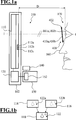
1 ein Ausführungsbeispiel einer erfindungsgemäßen Vorrichtung mit einem Display zur Demonstration des Seheindrucks für einen Träger einer Brille mit polarisierenden Brillengläsern
a) Aufbau der Vorrichtung
b) Bildüberlagerung mit der Vorrichtung
1 An embodiment of a device according to the invention with a display for demonstrating the visual impression for a wearer of glasses with polarizing lenses
a) Construction of the device
b) Image overlay with the device

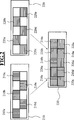
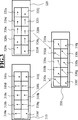
2 eine erste Variante für die Anordnung polarisierender Bildpunkte in dem Display der Vorrichtung nach der 1 2 a first variant for the arrangement of polarizing pixels in the display of the device according to the 1

3 eine zweite Variante für die Anordnung polarisierender Bildpunkte in dem Display der Vorrichtung nach der 1 3 a second variant for the arrangement of polarizing pixels in the display of the device according to the 1

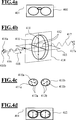
4 einen prinzipiellen Aufbau von polarisierenden Brillengläsern in einer Brillenfassung
a) Brille mit Fassung und Brillenglashorizontale
b) Polarisationswirkung eines polarisierenden Brillenglases in perspektivischer Darstellung
c) polarisierende Brillengläser mit unterschiedlicher Polarisationsachse
d) polarisierende Brille mit vertikal polarisierenden Brillengläsern
4 a basic structure of polarizing lenses in a spectacle frame
a) Glasses with frame and lens horizontal
b) Polarization effect of a polarizing spectacle lens in a perspective view
c) polarizing spectacle lenses with different polarization axis
d) polarizing glasses with vertically polarizing lenses

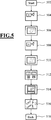
5 ein schematisches Ablaufdiagramm eines erfindungsgemäßen Verfahrens zur Demonstration des Seheindrucks für einen Träger einer Brille mit polarisierenden Brillengläsern 5 a schematic flow diagram of a method according to the invention for demonstrating the visual impression for a wearer of glasses with polarizing lenses

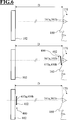
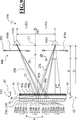
6 schematische Darstellung der Beurteilung der Güte von polarisierenden Brillengläsern mit einer Vorrichtung nach der 1 6 schematic representation of the assessment of the quality of polarizing spectacle lenses with a device according to the 1

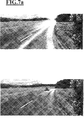
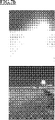
7 eine Auswahl an Motiven für Bilder zur Durchführung des Verfahrens nach der 5
a) Straßenverkehrsmotiv:
Bild oben: Aufnahme mit Polarisationsfilter mit horizontaler Polarisationsachse
Bild unten: Aufnahme mit Polarisationsfilter mit vertikaler Polarisationsachse
b) Strandmotiv:
Bild oben: Aufnahme mit Polarisationsfilter mit horizontaler Polarisationsachse
Bild unten: Aufnahme mit Polarisationsfilter mit vertikaler Polarisationsachse
7 a selection of motifs for pictures to carry out the method according to the 5
a) Traffic motive:
Picture above: Image with polarization filter with horizontal polarization axis
Picture below: Image with polarization filter with vertical polarization axis
b) Beach theme:
Picture above: Image with polarization filter with horizontal polarization axis
Picture below: Image with polarization filter with vertical polarization axis

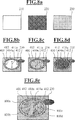
8 eine Defekterkennung basierend auf einem einfachen Bildmuster
a) zwei polarisierende Bilder und überlagertes Bild
b) sichtbares Bild bei Betrachtung des überlagerten Bildes nach a) mit einem polarisierenden Brillenglas mit vertikaler Polarisationsachse
c) sichtbares Bild bei Betrachtung des überlagerten Bildes nach a) mit einem polarisierenden Brillenglas mit 45° geneigter Polarisationsachse
d) sichtbares Bild bei Betrachtung des überlagerten Bildes nach a) mit einem polarisierenden Brillenglas mit horizontaler Polarisationsachse
e) sichtbares Bild bei Betrachtung des überlagerten Bildes nach a) mit einem polarisierenden Brillenglas mit nicht einheitlicher Polarisationsachse
8th a defect detection based on a simple image pattern
a) two polarizing images and superimposed image
b) visible image when viewing the superimposed image according to a) with a polarizing spectacle lens with vertical polarization axis
c) visible image when viewing the superimposed image according to a) with a polarizing spectacle lens with 45 ° inclined polarization axis
d) visible image when viewing the superimposed image according to a) with a polarizing spectacle lens with horizontal polarization axis
e) visible image when viewing the superimposed image according to a) with a polarizing spectacle lens with non-uniform polarization axis

9 eine Variante für die Anordnung polarisierender Bildpunkte sowie einer Parallaxiermaske in dem Display der Vorrichtung nach der 1 zur Erzeugung eines dreidimensionalen Seheindrucks 9 a variant for the arrangement of polarizing pixels and a Parallaxiermaske in the display of the device according to the 1 for generating a three-dimensional visual impression

10 die Anordnung polarisierender Bildpunkte in dem Display der Vorrichtung des Ausführungsbeispiels nach der 9 10 the arrangement of polarizing pixels in the display of the device of the embodiment according to the 9

11 die Anordnung durchlässiger und nichtdurchlässiger Bereiche in der Parallaxiermaske des Ausführungsbeispiels nach der 9. 11 the arrangement of transmissive and non-transmissive regions in the parallax mask of the embodiment according to the 9 ,

Die 1a) zeigt den schematischen Aufbau einer erfindungsgemäßen Vorrichtung 100 zum Testen der beiden polarisierenden Brillengläser 410a, 410b einer Brille 400. Die Vorrichtung 100 umfasst eine Bilderzeugungseinrichtung 102. Die Bilderzeugungseinrichtung 102 enthält eine Anzeigeeinrichtung in Form eines Displays 110 mit einer Vielzahl an Bildpunkten 112a, 112b, 112c, die über eine Treibergruppe 120 und eine Rechnereinheit 150 mit Speicher 152 angesteuert werden. Weiterhin ist im Ausführungsbeispiel nach der 1 eine Lichtquelle 140 zum Aktivieren von phototropen Brillengläsern 410a, 410b vorgesehen. The 1a ) shows the schematic structure of a device according to the invention 100 for testing the two polarizing lenses 410a . 410b a pair of glasses 400 , The device 100 comprises an imaging device 102 , The image forming device 102 contains a display device in the form of a display 110 with a large number of pixels 112a . 112b . 112c that have a driver group 120 and a computer unit 150 with memory 152 be controlled. Furthermore, in the embodiment of the 1 a light source 140 for activating photochromic lenses 410a . 410b intended.

Die Schemazeichnung der 1 zeigt weiter einen Probanden 170, der das Display 110 der Bilderzeugungseinrichtung 102 aus einem Abstand D betrachtet. Der Abstand D liegt im Bereich 30 cm < D < 7 m. Der Proband 160 trägt auf seiner Nase 160 eine Brille 400 mit zwei polarisierenden Brillengläsern 410a, 410b. Vor den Augen 161a und 161b des Probanden 170 befinden sich demnach polarisierende Brillengläser 410a, 410b in einer Fassung 402. The schematic drawing of 1 continues to show a subject 170 that the display 110 the image forming device 102 viewed from a distance D. The distance D is in the range 30 cm <D <7 m. The subject 160 carries on his nose 160 glasses 400 with two polarizing lenses 410a . 410b , In front of the eyes 161a and 161b of the subject 170 are therefore polarizing lenses 410a . 410b in a version 402 ,

Das Display 110 ist beispielsweise als Leuchtdiodenmatrix Display (nachfolgend als LED Matrix Display bezeichnet) oder als Flüssigkristallmatrix Display (nachfolgend als LC Matrix Display bezeichnet) ausgeführt. the display 110 is for example as a light-emitting diode matrix display (hereinafter referred to as LED matrix display) or as a liquid crystal matrix display (hereinafter referred to as LC matrix display) executed.

Jeder Bildpunkt 112a, 112b, 112c des Displays 110 weist eine eindeutig definierte Polarisationsebene auf. Zur Festlegung der Polarisationsebene eines jeden Bildpunktes 112a, 112b, 112c gibt es verschiedene Möglichkeiten. Every pixel 112a . 112b . 112c of the display 110 has a clearly defined polarization plane. Defining the polarization plane of each pixel 112a . 112b . 112c There are different possibilities.

So kann die jeweilige Polarisationsebene der Bildpunkte 112a, 112b, 112c beispielsweise hardwaremäßig, also z.B. mittels entsprechender Polarisationsfolien, vorgegeben sein. Dabei haben vorteilhafterweise Gruppen von Bildpunkten 112a, 112c dieselbe definierte Polarisationsebene. Über die Treibergruppe 120 und die Rechnereinheit 150 werden in diesem Fall die Intensitäten jedes einzelnen der Bildpunkte 112a, 112b, 112c eingestellt. Thus, the respective polarization plane of the pixels 112a . 112b . 112c For example, in terms of hardware, so for example by means of appropriate polarizing films, be given. In this case, advantageously have groups of pixels 112a . 112c the same defined polarization plane. About the driver group 120 and the computer unit 150 in this case, the intensities of each of the pixels 112a . 112b . 112c set.

Die Definition der Polarisationsebene von Bildpunkten 111 kann alternativ auch durch die Treibergruppe 120 und die Rechnereinheit 150 vorgegeben werden. Dies ist beispielsweise bei sogenannten Dual Stack LC Displays möglich. Über die Treibergruppe 120 und die Rechnereinheit 150 werden dann die Intensitäten und die Polarisationsebene jedes einzelnen der Bildpunkte 112a, 112b, 112c eingestellt. The definition of the polarization plane of pixels 111 can alternatively also by the driver group 120 and the computer unit 150 be specified. This is possible, for example, in so-called dual stack LC displays. About the driver group 120 and the computer unit 150 then the intensities and the plane of polarization of each one of the pixels 112a . 112b . 112c set.

Es gibt Displays, bei denen nur eine Wahl zwischen diskreten, fest vorgegebenen Polarisationsebenen besteht. Bei anderen Displays kann die Polarisationsebene der Bildpunkte 112a, 112b, 112c in einem Winkelbereich zwischen 0° und 90° verändert werden. There are displays in which there is only one choice between discrete, fixed polarization planes. For other displays, the polarization level of the pixels 112a . 112b . 112c be changed in an angular range between 0 ° and 90 °.

In dem Speicher 152 sind zwei Bilder 114, 116 mit demselben Motiv 122 abgespeichert. Zu jedem Bild 114, 116 ist eine Polarisationsrichtung abgespeichert, wobei die Polarisationsrichtung des einen Bildes 114 von der Polarisationsrichtung des anderen Bildes 116 abweicht. Unter Abspeichern einer Polarisationsrichtung versteht man die Hinterlegung einer abrufbaren Information zum Anzeigen der Bilder 114, 116 mit linear polarisiertem Licht vorgegebener Polarisationsrichtung. Dies schließt den Fall ein, dass die jeweiligen Bilder 114, 116 über die Bildpunkte eines Displays ausgegeben werden, die mit einem Filter ausgestattet sind, dessen Polarisationsachse der zugeordneten Polarisationsrichtung entspricht. In the store 152 are two pictures 114 . 116 with the same motive 122 stored. To every picture 114 . 116 is stored a polarization direction, wherein the polarization direction of the one image 114 from the polarization direction of the other image 116 differs. Storing a direction of polarization means the deposit of retrievable information for displaying the images 114 . 116 with linearly polarized light of predetermined polarization direction. This includes the case that the respective pictures 114 . 116 output via the pixels of a display, which are equipped with a filter whose polarization axis corresponds to the associated polarization direction.

Mit Hilfe des Displays 110 werden nach der Erfindung gleichzeitig die zwei Bilder 114, 116 einander überlagert als Anzeigebild 118 angezeigt und zwar derart, dass das Motiv 122a des ersten Bildes 114 und das Motiv 122b des zweiten Bildes 116 formidentisch das Motiv 122 bildend zusammenfallen, wie dies in 1b) vereinfacht schematisch gezeigt ist. With the help of the display 110 become according to the invention at the same time the two pictures 114 . 116 superposed as a display image 118 displayed in such a way that the subject 122a of the first picture 114 and the motive 122b of the second image 116 identical in shape to the motif 122 forming coincide, as in 1b ) simplified is shown schematically.

Eine mögliche Anordnung der Bildpunkte zur Anzeige des ersten Bildes 210 und der Bildpunkte zur Anzeige des zweiten Bildes 220 zeigt die 2. Das erste Bild 210 besteht aus den Bildpunkten 210a, 210b, 210c, 210d, 210e mit einer ersten definierten Polarisationsebene. Diese definierte Polarisationsebene kann z.B. 90° zur Horizontalen einnehmen, also eine vertikale Ausrichtung aufweisen. Es ist ebenfalls möglich, dass die definierte Polarisationsebene z.B. 45° zur Horizontalen einnimmt. Das zweite Bild 220 besteht aus den Bildpunkten 220a, 220b, 220c, 220d, 220e mit einer zweiten definierten Polarisationsebene. Die erste und die zweite definierte Polarisationsebene können einen Winkel von 90° bilden. Es ist möglich, dass die zweite definierte Polarisationsebene z.B. 0° zur Horizontalen einnimmt, also eine horizontale Ausrichtung aufweist. Es ist ebenfalls möglich, dass die zweite Polarisationsebene z.B. 135° zur Horizontalen einnimmt. A possible arrangement of the pixels for displaying the first image 210 and the pixels for displaying the second image 220 show the 2 , The first picture 210 consists of the pixels 210a . 210b . 210c . 210d . 210e with a first defined polarization plane. This defined polarization plane can, for example, occupy 90 ° to the horizontal, that is to say have a vertical orientation. It is also possible that the defined polarization plane occupies, for example, 45 ° to the horizontal. The second picture 220 consists of the pixels 220a . 220b . 220c . 220d . 220e with a second defined polarization plane. The first and the second defined polarization plane can form an angle of 90 °. It is possible that the second defined polarization plane occupies, for example, 0 ° to the horizontal, that is, has a horizontal orientation. It is also possible that the second polarization plane occupies, for example, 135 ° to the horizontal.

2 zeigt außerdem ein Beispiel für ein überlagertes polarisiertes Bild 230, welches sowohl aus dem Bild 210 mit Bildpunkten 210a, 210b, 210c, 210d, 210e mit einer ersten definierten Polarisationsebene sowie aus dem Bild 220 mit Bildpunkten 220a, 220b, 220c, 220d, 220e mit einer zweiten definierten Polarisationsebene besteht. 2 also shows an example of a superimposed polarized image 230 which both from the picture 210 with pixels 210a . 210b . 210c . 210d . 210e with a first defined polarization plane as well as from the image 220 with pixels 220a . 220b . 220c . 220d . 220e consists of a second defined polarization plane.

Die 3 zeigt eine zweite Variante für die Anordnung polarisierender Bildpunkte. Das erste Bild 310 besteht aus den Bildpunkten 310a, 310b, 310c, 310d, 310e, 310f, 310g, 310h, 310i, 310k mit einer ersten definierten Polarisationsrichtung und Intensität. Diese definierte Polarisationsrichtung ist im Ausführungsbeispiel vertikal. Das zweite Bild 320 besteht aus den Bildpunkten 320a, 320b, 320c, 320d, 320e, 320f, 320g, 320h, 320i, 320k mit einer zweiten definierten Polarisationsrichtung und Intensität. Die erste und die zweite definierte Polarisationsrichtung schließen einen Winkel von 90° ein. In beiden Fällen sind abweichende Orientierungen möglich. The 3 shows a second variant for the arrangement of polarizing pixels. The first picture 310 consists of the pixels 310a . 310b . 310c . 310d . 310e . 310f . 310g . 310h . 310i . 310k with a first defined polarization direction and intensity. This defined polarization direction is vertical in the exemplary embodiment. The second picture 320 consists of the pixels 320a . 320b . 320c . 320d . 320e . 320f . 320g . 320h . 320i . 320k with a second defined polarization direction and intensity. The first and second defined directions of polarization enclose an angle of 90 °. In both cases different orientations are possible.

Die Überlagerung der beiden Bilder 310 und 320 zum angezeigten Bild 330 erfolgt punktweise durch Vektoraddition des elektrischen Feldvektors, welcher Intensität (Betrag) und Polarisationsrichtung des von den jeweiligen Bildpunkten 330a, 330b, 330c, 330d, 330e, 330f, 330g, 330h, 330i, 330k ausgehenden Lichts berücksichtigt. The overlay of the two pictures 310 and 320 to the displayed image 330 takes place pointwise by vector addition of the electric field vector, which intensity (magnitude) and polarization direction of the respective pixels 330a . 330b . 330c . 330d . 330e . 330f . 330g . 330h . 330i . 330k outgoing light.

Die 4 zeigt den Aufbau von polarisierenden Brillengläsern 400. In eine Fassung 400 (4a)) mit einer Fassungshorizontalen 401 werden polarisierende Brillengläser 410, 410a, 410b eingebaut (4b), 4c)). Trifft unpolarisiertes Licht 416 auf ein polarisierendes Brillenglas 410, wie dies in 4b) gezeigt ist, so wird nur ein Teil 417 übertragen und zwar (abgesehen von Reflexions- und Absorptionsverlusten) der Teil der elektromagnetischen Strahlung des auftreffenden Lichts 416, dessen Polarisationsrichtung 416a mit der Polarisationsachse 411 des Brillenglases 414 zusammenfällt. Die Polarisationsrichtung des transmittierten Lichts 417 ist in der Zeichnung mit dem Bezugszeichen 417a gekennzeichnet. Der Teil der elektromagnetischen Strahlung des auftreffenden Lichts 416, dessen Polarisationsrichtung 416b nicht mit der Polarisationsachse 411 des Brillenglases 414 zusammenfällt wird entweder reflektiert oder absorbiert. The 4 shows the structure of polarizing lenses 400 , In a version 400 ( 4a )) with a horizontal frame 401 become polarizing lenses 410 . 410a . 410b built-in ( 4b ) 4c )). Makes unpolarized light 416 on a polarizing lens 410 like this in 4b ) is shown, so only one part 417 transferred (except for reflection and absorption losses) of the part of the electromagnetic radiation of the incident light 416 , its polarization direction 416a with the polarization axis 411 of the spectacle lens 414 coincides. The polarization direction of the transmitted light 417 is in the drawing by the reference numeral 417a characterized. The part of the electromagnetic radiation of the incident light 416 , its polarization direction 416b not with the polarization axis 411 of the spectacle lens 414 coincides is either reflected or absorbed.

Ferner sind in der 4b) die Transmissionsebene 414 und die Polarisationsebene 413 eingezeichnet. Die Transmissionsebene 414 des polarisierenden Brillenglases 410 ist eine Ebene, die das Brillenglas 410 schneidet und in der die Ausbreitungsrichtung 418 der übertragenen Strahlung 417 enthalten ist und die parallel zur Orientierung 416a der maximalen Transmission des elektrischen Vektors der übertragenen Strahlung ist. Die Transmissionsebene 414 kann daher die Polarisationsachse 411 beinhalten. Die Normalebene zur Transmissionsebene 414 wird Polarisationsebene 413 genannt und wird durch Markierungen 412 an dem Brillenglas 410 gekennzeichnet. Furthermore, in the 4b ) the transmission plane 414 and the polarization plane 413 located. The transmission level 414 of the polarizing spectacle lens 410 is a plane that the spectacle lens 410 cuts and in the propagation direction 418 the transmitted radiation 417 is included and parallel to the orientation 416a the maximum transmission of the electrical vector of the transmitted radiation is. The transmission level 414 can therefore the polarization axis 411 include. The normal plane to the transmission plane 414 becomes polarization plane 413 called and is marked by marks 412 on the spectacle lens 410 characterized.

Polarisierende Brillengläser 410, 410a, 410b sind also dadurch gekennzeichnet, dass diese eine definierte Polarisationsachse 411, 411a, 411b aufweisen, wie dies auch in der 4c) noch einmal graphisch verdeutlicht ist. Durch Einbau von polarisierenden Brillengläsern 410a, 410b in eine Fassung 400 wird die Lage der Polarisationsachsen 411a, 411b und der optional durch die Markierungen 412a, 412b gekennzeichneten Polarisationsebenen relativ zur Fassungshorizontalen 401 definiert. In 4d) sind Brillengläser in einer Fassung 420 mit definierten Polarisationsachsen 411a, 411b von jeweils 90° (vertikale Ausrichtung) gezeigt. Die optional durch die Markierungen 412a, 412b gekennzeichneten Polarisationsebenen sind im Koordinatensystem der Fassung horizontal ausgerichtet, also parallel zu der Fassungshorizontalen 401. Diese Ausrichtung ist gewünscht etwa bei Sonnenbrillen, um Reflektionen von horizontalen Flächen zu minimieren. Polarizing lenses 410 . 410a . 410b are thus characterized in that they have a defined polarization axis 411 . 411a . 411b have, as in the 4c ) is again graphically clarified. By incorporation of polarizing lenses 410a . 410b in a version 400 becomes the location of the polarization axes 411a . 411b and optionally by the markers 412a . 412b marked polarization planes relative to the horizontal frame 401 Are defined. In 4d ) are spectacle lenses in a socket 420 with defined polarization axes 411a . 411b of each 90 ° (vertical orientation) shown. The optional by the markings 412a . 412b marked polarization planes are aligned horizontally in the coordinate system of the socket, ie parallel to the horizontal frame 401 , This alignment is desirable in sunglasses, for example, to minimize reflections from horizontal surfaces.

Die 5 zeigt ein Verfahren zur Demonstration des Seheindrucks für einen Träger einer Brille mit polarisierenden Brillengläsern in schematischer Darstellung:
Ausgangspunkt ist zunächst die Suche nach einem geeigneten Motiv anhand dessen dem Träger die Wirkung einer polarisierenden Brille verdeutlicht werden soll (nicht in 5 dargestellt, 502). Die 7 zeigt eine Auswahl an Motiven für Bilder, die von dem Erfinder als besonders geeignet angesehen werden, weil sie einen Seheindruck unter natürlichen Umgebungsbedingungen simulieren lassen. Dargestellt ist jeweils links ein Bild eines Gegenstands oder einer Landschaft, wie der Gegenstand oder die Landschaft vom unmittelbaren Betrachter mit bloßem Auge wahrgenommen wird und rechts ein Bild des Gegenstands oder der Landschaft, wie der Betrachter den Gegenstand oder die Landschaft sieht, wenn er eine polarisierende Brille bestimmungsgemäß trägt.
The 5 shows a method for demonstrating the visual impression for a wearer of spectacles with polarizing spectacle lenses in a schematic representation:
The starting point is first of all the search for a suitable motif by means of which the wearer should be made aware of the effect of polarizing glasses (not in 5 shown, 502 ). The 7 shows a selection of motifs for images that are considered by the inventor to be particularly suitable, because they can simulate a visual impression under natural environmental conditions. Shown is on the left, an image of an object or a landscape, how the object or the landscape is perceived by the immediate observer with the naked eye, and on the right an image of the object or the landscape, as the observer sees the object or the landscape, if he has a polarizing spectacle as intended wearing.

Von einem für geeignet befundenen Motiv wird in einem ersten Schritt 504 eine fotographische Aufnahme einer Kamera mit vorgeschaltetem Polarisationsfilter mit einer ersten Polarisationsachse gemacht. Die Polarisationsachse verläuft in dem dargestellten Beispiel in vertikaler Richtung. Das Speichern des Bildes der Kamera ist in Schritt 506 gezeigt. Mit derselben Kamera wird von dem Motiv in einem weiteren Schritt 508 eine fotographische Aufnahme mit vorgeschaltetem Polarisationsfilter aber mit einer zweiten von der ersten Polarisationsachse abweichenden Polarisationsachse gemacht. Die zweite Polarisationsachse verläuft in dem dargestellten Beispiel in horizontaler Richtung. Das Speichern des zweiten Bildes der Kamera ist in Schritt 508 gezeigt. From a motive found suitable is in a first step 504 a photographic image of a camera with upstream polarization filter made with a first polarization axis. The polarization axis runs in the illustrated example in the vertical direction. Saving the image of the camera is in step 506 shown. Using the same camera will take the subject in a further step 508 a photograph with upstream polarization filter but made with a second deviating from the first polarization axis polarization axis. The second polarization axis runs in the illustrated example in the horizontal direction. Saving the second image of the camera is in step 508 shown.

In einem nachfolgenden Schritt 512 werden das erste Bild zusammen mit der zugehörigen ersten Polarisationsrichtung und das zweite Bild zusammen mit der zugehörigen zweiten Polarisationsrichtung bereitgestellt. In dem Schritt 514 erfolgt ein Anzeigen des ersten Bildes mit in der ersten Polarisationsrichtung polarisiertem Licht und des zweiten Bildes mit in der zweiten Polarisationsrichtung polarisiertem Licht in überlagerter Darstellung, so dass das Motiv des ersten Bildes und das Motiv des zweiten Bildes formidentisch zusammenfallen. In a subsequent step 512 the first image is provided together with the associated first polarization direction and the second image together with the associated second polarization direction. In the step 514 the first image is displayed with light polarized in the first polarization direction and the second image with light polarized in the second polarization direction in superposed representation, so that the motif of the first image and the motif of the second image coincide in identical shape.

In dem nachfolgenden Schritt 516 wird einem Probanden 170, einem potentiellen Träger einer polarisierenden Brille, das angezeigte überlagerte Bild zur Ansicht gezeigt. Der Träger 170 wird so positioniert, dass er die angezeigten Bilder in überlagerter Darstellung wahlweise mit dem bloßen Auge 161a, 161b und/oder durch eine Brille mit nicht-polarisierenden Brillengläsern und/oder durch die Brille 400 mit den polarisierenden Brillengläsern 410a, 410b betrachten kann. In the following step 516 becomes a subject 170 , a potential wearer of polarizing glasses, the displayed overlaid image for viewing. The carrier 170 is positioned so that it displays the displayed images in a superimposed representation optionally with the naked eye 161a . 161b and / or through glasses with non-polarizing lenses and / or through the glasses 400 with the polarizing lenses 410a . 410b can look at.

Die 6 zeigt diesen Vorgang in schematischer Darstellung. Der 6a entnimmt man die Bilderzeugungseinrichtung 100 aus der 1, welche von dem Probanden 170 im Abstand D betrachtet wird, wobei zwischen den Augen 161a, 161b des Probanden 160 und der Bilderzeugungseinrichtung 100 keinerlei polarisierendes Element, wie beispielsweise polarisierende Brillengläser in einer Fassung, positioniert ist. Es wird eine Überlagerung der Bilder wahrgenommen. The 6 shows this process in a schematic representation. Of the 6a If you take the imaging device 100 from the 1 which of the subject 170 being looked at the distance D, being between the eyes 161a . 161b of the subject 160 and the image forming device 100 no polarizing element, such as polarizing lenses in a socket, is positioned. It is perceived a superposition of images.

Bei unterschiedlicher definierter erster und zweiter Polarisationsebene von Bildpunkten 112a, 112b, 112c, ... wird ohne polarisierendes Element, wie beispielsweise polarisierende Brillengläser im Strahlengang kein von der Polarisationsachse abhängiger Intensitätsunterschied zwischen dem ersten polarisierten Bild und dem zweiten polarisierten Bild wahrgenommen. At different defined first and second polarization plane of pixels 112a . 112b . 112c , ... is perceived without polarizing element, such as polarizing lenses in the beam path no dependent on the polarization axis intensity difference between the first polarized image and the second polarized image.

Wenn sich zwischen den Augen 161a, 161b des Probanden 170 und der Bilderzeugungseinrichtung 100 polarisierende Brillengläser in einer Fassung befinden, so wird bei unterschiedlicher definierter erster und zweiter Polarisationsebene von Bildern ein Unterschied in den Intensitäten der Bilder wahrgenommen. Dieser Unterschied in den Intensitäten kann zu Vergleichen zwischen verschiedenen polarisierenden Brillengläsern in einer Fassung verwendet werden. Insbesondere kann untersucht werden, ob Brillengläser in der Fassung polarisierende Eigenschaften aufweisen. If between the eyes 161a . 161b of the subject 170 and the image forming device 100 polarizing spectacle lenses are in a version, so at different defined first and second polarization plane of images, a difference in the intensities of the images is perceived. This difference in intensities can be used to compare between different polarizing lenses in a socket. In particular, it can be examined whether spectacle lenses in the version have polarizing properties.

4b) zeigt den Fall, dass die Brille 400 umfassend die polarisierenden Brillengläser 410a, 410b in der Fassung 402 in örtlicher Nähe zum Probanden 170 platziert werden. Unter in örtlicher Nähe zum Probanden 170 ist zu versehen, dass der Abstand vom Probanden 170 zu den polarisierenden Brillengläsern 410a, 410b weniger als 30% des Abstands D beträgt. Insbesondere können die polarisierenden Brillengläser 410a, 410b in der Fassung 402 in bestimmungsgemäßer Weise vom Probanden 170 auf der Nase 160 getragen werden. 4b ) shows the case that the glasses 400 comprising the polarizing lenses 410a . 410b in the version 402 in close proximity to the subject 170 to be placed. Sub in local proximity to the subject 170 is to provide that the distance from the subject 170 to the polarizing lenses 410a . 410b less than 30% of the distance D is. In particular, the polarizing spectacle lenses 410a . 410b in the version 402 as intended by the subject 170 on the nose 160 be worn.

4c) zeigt den Fall, dass die polarisierende Brille 400 in örtlicher Nähe zur Bilderzeugungseinrichtung 100 platziert ist. Unter in örtlicher Nähe ist zu versehen, dass der Abstand der Bilderzeugungseinrichtung 100 zu den polarisierenden Brillengläser in einer Fassung 320 weniger als 30% des Abstands D betragen. Insbesondere kann die polarisierende Brille 400 im Abstand von 0 cm bis 10 cm zur Bilderzeugungseinrichtung 100 platziert sein. 4c ) shows the case that the polarizing glasses 400 in close proximity to the imaging device 100 is placed. Submerged in local proximity is to provide that the distance of the imaging device 100 to the polarizing lenses in a socket 320 less than 30% of the distance D. In particular, the polarizing glasses 400 at a distance of 0 cm to 10 cm to the imaging device 100 be placed.

8a) zeigt ein erstes polarisiertes Bild 210 und ein zweites polarisiertes Bild 220, sowie das entstehende überlagerte polarisierte Bild 230. Das erste und zweite polarisierte Bild 210, 220 unterscheiden sich in den optischen Eigenschaften. In diesem Ausführungsbeispiel besteht das erste polarisierte Bild 210 aus Bildpunkten (z.B. entsprechend den Bildpunkten 210a, 210b, 210c,.. nach der 2) mit einer ersten definierten Polarisationsebene, wobei die Polarisationsebene vertikal ist. Das zweite polarisierte Bild 220 besteht aus Bildpunkten (z.B. 220a, 220b, 220c,..) mit einer zweiten definierten Polarisationsebene, wobei die Polarisationsebene horizontal ist. Das erste Bild 210 ist vollflächig in einer ersten Farbe, das zweite Bild 220 ist vollflächig in einer zweiten Farbe gehalten. In diesem Beispiel wird als erste Farbe die Farbe Grün gewählt, als zweite Farbe wird die Farbe Rot gewählt. 8a ) shows a first polarized image 210 and a second polarized image 220 , as well as the resulting superimposed polarized image 230 , The first and second polarized image 210 . 220 differ in the optical properties. In this embodiment, the first polarized image exists 210 from pixels (eg corresponding to the pixels 210a . 210b . 210c ,.. after 2 ) having a first defined polarization plane, the polarization plane being vertical. The second polarized picture 220 consists of pixels (eg 220a . 220b . 220c ..) with a second defined polarization plane, the polarization plane being horizontal. The first picture 210 is the entire surface in a first color, the second image 220 is held over the entire surface in a second color. This example will be the first one The color green is selected, the color red is chosen as the second color.

Wenn zwischen den Augen 161a, 161b des Probanden 160 und der Bilderzeugungseinrichtung 100 keinerlei polarisierendes Element, wie beispielsweise polarisierende Brillengläser 410a, 410b in einer Fassung 402, positioniert ist, so wird das überlagerte polarisierte Bild 230 wahrgenommen. If between the eyes 161a . 161b of the subject 160 and the image forming device 100 no polarizing element, such as polarizing lenses 410a . 410b in a version 402 , is positioned, then becomes the superimposed polarized image 230 perceived.

Das überlagerte polarisierte Bild 230 erscheint in diesem ersten Ausführungsbeispiel als Gelb. Wenn sich zwischen den Augen 161a, 161b des Probanden 160 und dem Display 110 polarisierende Brillengläser 410a, 410b befinden, welche wie bei Sonnenbrillen gewünscht, für beide polarisierende Brillengläser 410a, 410b eine definierte Polarisationsachse 411a, 411b von jeweils 90° aufweisen bzw. jeweils eine horizontal ausgerichtete, parallel zu einer Fassungshorizontalen 401 liegende Polarisationsebene aufweisen, welche durch Markierungen 412, 412a, 412b gekennzeichnet sein können, so wird bei hohem Polarisationsgrad P nur das erste Bild 210 zur Anzeige gebracht, da für diesen Fall die Polarisationsebene der Bildpunkte 210a, 210b, 210c des ersten Bildes 210 mit der Polarisationsachse 411a der polarisierten Brillengläser 410a, 410b annähernd parallel sind. Damit stimmt die Transmissionsebene 414 mit der Polarisationsebene der Bildpunkte 210a, 210b, 210c des ersten Bildes 210 überein. Die Polarisationsebene der Bildpunkte 220a, 220b, 220c des zweiten Bildes 220 schließt mit den Polarisationsachse 410a, 410b der polarisierten Brillengläser 410a, 410b einen Winkel von 90° ein bzw. stimmt mit der Polarisationsebene überein, sodass das zweite Bild 220 nur mit sehr geringer Intensität wahrgenommen wird. The superimposed polarized image 230 appears as yellow in this first embodiment. If between the eyes 161a . 161b of the subject 160 and the display 110 polarizing lenses 410a . 410b which are as desired for sunglasses, for both polarizing lenses 410a . 410b a defined polarization axis 411a . 411b each having 90 ° or in each case a horizontally oriented, parallel to a horizontal frame 401 lying polarization plane, which by markings 412 . 412a . 412b may be marked, then at high polarization P only the first image 210 displayed, since in this case the polarization plane of the pixels 210a . 210b . 210c of the first picture 210 with the polarization axis 411a the polarized lenses 410a . 410b are approximately parallel. This agrees with the transmission level 414 with the plane of polarization of the pixels 210a . 210b . 210c of the first picture 210 match. The polarization plane of the pixels 220a . 220b . 220c of the second picture 220 closes with the polarization axis 410a . 410b the polarized lenses 410a . 410b an angle of 90 ° or agrees with the polarization plane, so that the second image 220 is perceived only with very low intensity.

In diesem ersten Ausführungsbeispiel ist es unerheblich, ob die polarisierenden Brillengläser 410a, 410b in der Fassung 402 wie in 6b) gezeigt in örtlicher Nähe zum Probanden 170 platziert werden oder wie in 6c) in örtlicher Nähe zur Bilderzeugungseinrichtung 100 platziert werden. In this first embodiment, it is irrelevant whether the polarizing lenses 410a . 410b in the version 402 as in 6b ) shown in close proximity to the subject 170 be placed or as in 6c ) in close proximity to the imaging device 100 to be placed.

In einem weiteren graphisch nicht dargestellten Ausführungsbeispiel werden zwei formidentische Bilder mit einer Intensitätsverteilung B1(x, y) und B2(x, y) im Computer erzeugt. x und y sind dabei der Index der Spalte bzw. Zeile am Display, der Funktionswert B1 bzw. B2 an einem solchen Punkt x, y gibt die Helligkeit eines Bildpunktes an, bzw. bei farbiger Darstellung die Helligkeit der jeweiligen Farbe Rot, Grün, und Blau. Das Bild B1 unterscheidet sich nur in den optischen Eigenschaften von Bild B2. Insbesondere zeigt das Bild B1 verminderte Reflexe, verminderte Blendungen oder ähnliches. Mathematisch gilt für jeden Punkt x, y, dass B2(x, y) >= B1(x, y) ist. In a further embodiment, which is not illustrated graphically, two form-identical images with an intensity distribution B1 (x, y) and B2 (x, y) are generated in the computer. x and y are the index of the column or line on the display, the function value B1 or B2 at such a point x, y indicates the brightness of a pixel, or in color representation, the brightness of the respective color red, green, and Blue. The picture B1 differs only in the optical properties of picture B2. In particular, image B1 shows diminished reflections, diminished glare or the like. Mathematically, for every point x, y, it holds that B2 (x, y)> = B1 (x, y).

Wird nun ein erstes polarisiertes Bild 210 durch die Intensitätsverteilung B1(x, y) und ein zweites polarisiertes Bild 220 durch die Intensitätsverteilung B2(x, y) – B1(x, y) dargestellt, so ergibt sich das entstehende überlagerte polarisierte Bild 230 zu einer Intensitätsverteilung B2(x, y). Will now be a first polarized image 210 by the intensity distribution B1 (x, y) and a second polarized image 220 represented by the intensity distribution B2 (x, y) -B1 (x, y), the resulting superimposed polarized image results 230 to an intensity distribution B2 (x, y).

Wenn zwischen den Augen 161a, 161b des Probanden 160 und der Bilderzeugungseinrichtung 100 keinerlei polarisierendes Element, wie beispielsweise polarisierende Brillengläser 410a, 410b in einer Fassung 402, positioniert ist, so wird das überlagerte polarisierte Bild 230, also die Intensitätsverteilung B2(x, y) wahrgenommen. If between the eyes 161a . 161b of the subject 160 and the image forming device 100 no polarizing element, such as polarizing lenses 410a . 410b in a version 402 , is positioned, then becomes the superimposed polarized image 230 , ie the intensity distribution B2 (x, y) is perceived.

Wenn sich zwischen den Augen 161a, 161b des Probanden 160 und dem Display 110 polarisierende Brillengläser 410a, 410b befinden, welche wie bei Sonnenbrillen gewünscht, für beide polarisierende Brillengläser 410a, 410b eine definierte Polarisationsachse 411a, 411b von jeweils 90° aufweisen bzw. jeweils eine horizontal ausgerichtete, parallel zu einer Fassungshorizontalen 401 liegende Polarisationsebene aufweist, welche durch Markierungen 412, 412a, 412b gekennzeichnet sein kann, so wird bei hohem Polarisationsgrad P nur das erste Bild 210, also die Intensitätsverteilung B1(x, y) zur Anzeige gebracht, da für diesen Fall die Polarisationsebene der Bildpunkte 210a, 210b, 210c des ersten Bildes 210 zu der Polarisationsachse 411a der polarisierten Brillengläser 410a, 410b annähernd parallel ist. Damit stimmt die Transmissionsebene 414 mit der Polarisationsebene der Bildpunkte 210a, 210b, 210c des ersten Bildes 210 überein. Die Polarisationsebene der Bildpunkte 220a, 220b, 220c des zweiten Bildes 220 schließt mit den Polarisationsachse 410a, 410b der polarisierten Brillengläser 410a, 410b einen Winkel von 90° ein bzw. stimmt mit der Polarisationsebene überein, sodass das zweite Bild 220 nur mit sehr geringer Intensität wahrgenommen wird. If between the eyes 161a . 161b of the subject 160 and the display 110 polarizing lenses 410a . 410b which are as desired for sunglasses, for both polarizing lenses 410a . 410b a defined polarization axis 411a . 411b each having 90 ° or in each case a horizontally oriented, parallel to a horizontal frame 401 lying polarization plane, which by markings 412 . 412a . 412b can be characterized, then at high polarization P only the first image 210 , Thus, the intensity distribution B1 (x, y) brought to the display, since in this case the polarization plane of the pixels 210a . 210b . 210c of the first picture 210 to the polarization axis 411a the polarized lenses 410a . 410b is approximately parallel. This agrees with the transmission level 414 with the plane of polarization of the pixels 210a . 210b . 210c of the first picture 210 match. The polarization plane of the pixels 220a . 220b . 220c of the second picture 220 closes with the polarization axis 410a . 410b the polarized lenses 410a . 410b an angle of 90 ° or agrees with the polarization plane, so that the second image 220 is perceived only with very low intensity.

Bei polarisierenden Brillengläsern 410a, 410b in einer Fassung 402 mit einer für beide polarisierende Brillengläser 410a, 410b definierten Polarisationsachse 411a, 411b, welche von 90° verschieden ist, oder bei geringem Polarisationsgrad P oder bei anderen Qualitätsmängeln, wie etwa uneinheitlichem Verlauf des Polarisationsgrads über der Oberfläche der Brillengläser 410a, 410b, sieht der Brillenträger 170 eine Überlagerung des ersten und zweiten Bildes 210, 220, wie sie in 8c) gezeigt ist. Ein direkter Vergleich zwischen verschiedenen Qualitäten von polarisierenden Brillengläsern 410a, 410b wird damit möglich. For polarizing lenses 410a . 410b in a version 402 with a polarizing lens for both 410a . 410b defined polarization axis 411a . 411b , which is different from 90 °, or at a low degree of polarization P or other quality defects, such as non-uniform course of the degree of polarization over the surface of the lenses 410a . 410b , the spectacle wearer sees 170 a superposition of the first and second image 210 . 220 as they are in 8c ) is shown. A direct comparison between different qualities of polarizing lenses 410a . 410b becomes possible with it.

Bei gänzlich von 90° abweichender Polarisationsachse 411a, 411b der polarisierenden Brillengläser 410a, 410b bzw. gänzlich von der Fassungshorizontalen 401 abweichenden Polarisationsebene, ist es möglich, dass das zweite Bild 220 mit höherer Intensität wahrgenommen wird wie das erste Bild 210. Dieser Fall ist in der 8d) gezeigt. For polarization axis deviating completely from 90 ° 411a . 411b the polarizing lenses 410a . 410b or entirely from the horizontal version 401 deviating polarization plane, it is possible that the second image 220 with higher Intensity is perceived as the first picture 210 , This case is in the 8d ).

8e) zeigt ein Beispiel für einen realistischen Fall des Seheindrucks mit polarisierenden Brillengläsern 410a, 410b von geringer Qualität wie er aus vielen Experimenten bekannt ist. Dabei ist der Seheindruck durch des polarisierende Brillenglases 410 mit einer Polarisationsachse 411a gezeigt. In der Mitte des polarisierenden Brillenglases 410 wird noch überwiegend das erste polarisierende Bildmuster 210 angezeigt. Im vorliegenden Beispiel ist in der Mitte nur die Farbe Grün zu sehen. Am Rand des polarisierenden Brillenglases 410 ist bereits eine Überlagerung des ersten und zweiten Bildes 210, 220 zu sehen. Der Farbeindruck ist bereits Gelb. Zusätzlich sind Inhomogenitäten des polarisierenden Brillenglases 410 zu erkennen, welche in Form von Zonen mit geringem Polarisationsgrad 800a, 800b, 800c, 800d sichtbar werden. 8e ) shows an example of a realistic case of visual impression with polarizing spectacle lenses 410a . 410b of low quality as known from many experiments. Here is the visual impression of the polarizing spectacle lens 410 with a polarization axis 411a shown. In the middle of the polarizing lens 410 is still predominantly the first polarizing image pattern 210 displayed. In the present example, only the color green is visible in the middle. At the edge of the polarizing lens 410 is already a superposition of the first and second image 210 . 220 to see. The color impression is already yellow. In addition, there are inhomogeneities of the polarizing spectacle lens 410 to recognize which in the form of zones with a low degree of polarization 800a . 800b . 800c . 800d become visible.

Es ist demnach mit der vorliegenden Erfindung möglich, verschiedene Mängel an polarisierenden Brillengläsern 410a, 410b sichtbar zu machen. It is therefore possible with the present invention, various shortcomings of polarizing lenses 410a . 410b to make visible.

Die 9 zeigt in Verbindung mit den 10 und 11 eine Vorrichtung 100, mit der ein dreidimensionaler Seheindruck für einen Betrachter 170 erzeugt werden kann. Die 9 ist ein Teilschnitt der in der 1 gezeigten Anordnung umfassend die erfindungsgemäße Vorrichtung 100 und den Probanden 170 entlang der Linie I-I in 1. The 9 shows in conjunction with the 10 and 11 a device 100 , with a three-dimensional visual impression for a viewer 170 can be generated. The 9 is a partial section of the in the 1 shown arrangement comprising the device according to the invention 100 and the subjects 170 along the line II in 1 ,

Das in der 9 gezeigte Display 110 umfasst eine Anordnung 1230 einer Vielzahl an Bildpunkten 210a, 210b, 210c, ... 1210a, 1210b, 1210c, ..., 220a, 220b, 220c, ... 1220a, 1220b, 1220c, ..., die schachbrettmusterartig angeordnet sind, wie die 10 auszugsweise in Draufsicht zeigt. Die Bildpunkte 210a, 210b, 210c, 210d, 210m, 210n, ... sowie 220a, 220b, 220c, 220d, 220m, 220n ... sind zur ausschließlichen Betrachtung durch das linke Auge 161a, die Bildpunkte 1210a, 1210b, 1210c, 1210d, 1210m, 1210n, ... sowie 1220a, 1220b, 1220c, 1220d, 1220m, 1220n ... sind zur ausschließlichen Betrachtung durch das rechte Auge 161b vorgesehen. Licht 25a, 25b, das durch die Bildpunkte 210a, 210b, 210c, ... 1210a, 1210b, 1210c in Richtung des Betrachters 170 aus dem Display 110 austritt, weist eine lineare Polarisierung mit vertikaler Polarisationsrichtung auf. Licht 25a, 25b, das durch die Bildpunkte 220a, 220b, 220c, ... 1220a, 1220b, 1220c, ... in Richtung des Betrachters 170 aus dem Display 110 austritt, weist eine lineare Polarisierung mit horizontaler Polarisationsrichtung auf. That in the 9 shown display 110 includes an arrangement 1230 a multitude of pixels 210a . 210b . 210c , ... 1210a . 1210b . 1210c , ..., 220a . 220b . 220c , ... 1220a . 1220b . 1220c , ..., which are arranged like a checkerboard pattern 10 extracts in plan view shows. The pixels 210a . 210b . 210c . 210d . 210m . 210n , ... such as 220a . 220b . 220c . 220d . 220m . 220n ... are for exclusive viewing through the left eye 161a , the pixels 1210a . 1210b . 1210c . 1210d . 1210m . 1210n , ... such as 1220a . 1220b . 1220c . 1220d . 1220m . 1220n ... are for the exclusive consideration of the right eye 161b intended. light 25a . 25b passing through the pixels 210a . 210b . 210c , ... 1210a . 1210b . 1210c in the direction of the viewer 170 from the display 110 exit, has a linear polarization with vertical polarization direction. light 25a . 25b passing through the pixels 220a . 220b . 220c , ... 1220a . 1220b . 1220c , ... in the direction of the viewer 170 from the display 110 exit, has a linear polarization with horizontal polarization direction.

Damit ergibt sich für jedes Auge 161a, 161b ein überlagertes Bild 230, 1230 mit horizontal und vertikal polarisierten Bildpunkten 210a, 210b, 210c, ... 1210a, 1210b, 1210c, ..., 220a, 220b, 220c, ... 1220a, 1220b, 1220c, ... so wie dies oben zur 2 bereits ausführlich beschrieben wurde. This results for every eye 161a . 161b a superimposed picture 230 . 1230 with horizontally and vertically polarized pixels 210a . 210b . 210c , ... 1210a . 1210b . 1210c , ..., 220a . 220b . 220c , ... 1220a . 1220b . 1220c , like the one above 2 has already been described in detail.

Das Display 110 ist im vorliegenden Ausführungsbeispiel mit einer ein Blendensystem bildenden Parallaxemaske 37 ausgestattet. Die Maske 37 des Blendensystems 36 ist auf einem durchsichtigen Trägerelement 38 angeordnet. Die 11 zeigt einen Abschnitt dieser Maske 37 für das Blendensystem in Draufsicht. the display 110 is in the present embodiment with a diaphragm system forming parallax mask 37 fitted. The mask 37 of the iris system 36 is on a transparent support element 38 arranged. The 11 shows a section of this mask 37 for the blind system in plan view.

Die Maske 37 hat zueinander versetzt angeordnete Bereiche 90a, 90b, 90c, .... , die für das Licht 25a, 25b der Bildpunkte 210a, 210b, 210c, ... 1210a, 1210b, 1210c, ..., 220a, 220b, 220c, ... 1220a, 1220b, 1220c, ... des Displays 110 undurchlässig sind. Die Bereiche 92a, 92b, 92c, ... der Maske 37 sind komplementär zu den Bereichen 90a, 90b, 90c, .... Für das Licht 25a, 25b des Displays 110 sind die Bereiche 92a, 92b, 92c, ... durchlässig. The mask 37 has areas offset from one another 90a . 90b . 90c , ...., that for the light 25a . 25b of the pixels 210a . 210b . 210c , ... 1210a . 1210b . 1210c , ..., 220a . 220b . 220c , ... 1220a . 1220b . 1220c , ... of the display 110 impermeable. The areas 92a . 92b . 92c , ... the mask 37 are complementary to the fields 90a . 90b . 90c , .... for the light 25a . 25b of the display 110 are the areas 92a . 92b . 92c , ... permeable.

Die Bereiche 90a, 90b, 90c, ... einerseits und die Bereiche 92a, 92b, 92c, ... , 94b, 94c, ... andererseits haben jeweils ähnlich wie die Bildpunkte 210a, 210b, 210c, ... 1210a, 1210b, 1210c, ..., 220a, 220b, 220c, ... 1220a, 1220b, 1220c, ... eine Rechteckform. Die Bereiche 90a, 90b, 90c, ... und 92a, 92b, 92c sind in aufeinanderfolgenden Zeilen 94 angeordnet. In zueinander benachbarten Zeilen 94a, 94b; 94b, 94c sind die für das Licht durchlässigen Bereiche 92a, 92b, 92c, .. zu den für das Licht 25a, 25b undurchlässigen Bereichen 90a, 90b, 90c, ... versetzt positioniert. Die Breite BMu der für das Licht 25a, 25b undurchlässigen Bereiche 92a. 92b. 92c, ... ist größer als die Breite BMd der Bereiche, die für das Licht 25a, 25b durchlässig sind. Bevorzugt gilt hier: BMd = ½ BMu (1) The areas 90a . 90b . 90c , ... on the one hand and the areas 92a . 92b . 92c , ..., 94b . 94c , ... on the other hand, each have similar to the pixels 210a . 210b . 210c , ... 1210a . 1210b . 1210c , ..., 220a . 220b . 220c , ... 1220a . 1220b . 1220c , ... a rectangular shape. The areas 90a . 90b . 90c , ... and 92a . 92b . 92c are in consecutive lines 94 arranged. In adjacent lines 94a . 94b ; 94b . 94c are the light transmitting areas 92a . 92b . 92c .. to the light 25a . 25b impermeable areas 90a . 90b . 90c , ... offset positioned. The width B Mu of the light 25a . 25b impermeable areas 92a , 92b , 92c , ... is greater than the width B Md of the areas responsible for the light 25a . 25b are permeable. Preferably applies here: B Md = ½ B Mu (1)

Mit den für das Licht des Displays 110 durchlässigen und undurchlässigen rechteckförmigen Bereichen 90a, 90b, 90c; 92a, 92b, 92c trennt die Maske 37 das Licht 25a, 25b für das linke und rechte Auge 161a, 161b des Probanden 170 in der Lichtdurchtrittsebene 41. Die Lichtdurchtrittsebene 41 der Maske 37 ist in dem Display 110 frei verlagerbar. Hierzu enthält das Display 110 eine (nicht dargestellte) Verstelleinrichtung für das Blendensystem. Mit der Verstelleinrichtung kann das Blendensystem entsprechend dem in der 9 gezeigten Doppelpfeil 43 in der horizontalen Richtung und in der zu der Richtung des Doppelpfeils 43 senkrechten horizontalen Richtung bewegt werden. Für das Verstellen enthält die Verstelleinrichtung einen piezoelektrischen Antrieb, der über eine Treiberbaugruppe mittels des Rechners 150 in Abhängigkeit einer mit einer nicht dargestellten Kamera erfassten Winkelposition α der Augen 161a, 161b des Probanden 170 von dem Display 110 gesteuert werden kann. Die Verstelleinrichtung ermöglicht es, den Abstand z der Ebene 42 des Displays 110 von der Lichtdurchtrittsebene 41 der Blende 37 in dem Bereich 8 mm ≤ z ≤ 15 mm zu variieren. Entsprechend der mittels dem Computer 150 und der nicht dargestellten Kamera erfassten Zentrum 27 der Pupillendistanz PD wird mit der Verstelleinrichtung das Blendensystem so eingestellt und nachgeführt, dass die Gerade 29 durch die Punkte 27 und die vertikale Linie 31 hinter der Blende 37 auf der Ebene 42 des Displays 110 die Grenze zweier benachbarter Display-Zonen 210a/220a, 1210a/1220a, 210b/1210b ... trifft. Die Position der Display-Zonen 210a/220a, 210b/1210b ... und der Display-Zonen 1210a/1220a, 1210b/1220b, ... des Displays 110 wird dabei der Verlagerung der Maske 37 angepasst. Für das Verstellen des Blendensystems bestimmt der Computer 150 aus dem Winkel γ, unter dem die Kamera das Zentrum 27 der Pupillendistanz PD in Bezug auf die Flächennormale 29 in dem Zentrum 31 der Maske 37 erfasst, eine günstige horizontale Verschiebung V der Maske 37 parallel zu der Richtung 39, d.h. senkrecht zur Zeichnungsebene und parallel zu der Lichtdurchtrittsebene 41 mit V: = z tanγ. (2) With the for the light of the display 110 permeable and impermeable rectangular areas 90a . 90b . 90c ; 92a . 92b . 92c separates the mask 37 the light 25a . 25b for the left and right eye 161a . 161b of the subject 170 in the light passage plane 41 , The light passage plane 41 the mask 37 is in the display 110 freely relocatable. The display contains this 110 an adjusting device (not shown) for the diaphragm system. With the adjustment, the diaphragm system according to the in the 9 shown double arrow 43 in the horizontal direction and in the direction of the double arrow 43 vertical horizontal direction to be moved. For adjustment, the adjusting device includes a piezoelectric drive, which via a driver assembly by means of the computer 150 depending on a detected with a camera, not shown angular position α of the eyes 161a . 161b of the subject 170 from the display 110 can be controlled. The adjustment allows the distance z of the plane 42 of displays 110 from the light transmission plane 41 the aperture 37 to vary in the range 8 mm ≤ z ≤ 15 mm. According to the by means of the computer 150 and the camera, not shown, center 27 the pupillary distance PD is adjusted with the adjusting the aperture system and tracked that the straight line 29 through the dots 27 and the vertical line 31 behind the aperture 37 on the layer 42 of the display 110 the border of two adjacent display zones 210a / 220a . 1210a / 1220a . 210b / 1210b ... meets. The position of the display zones 210a / 220a . 210b / 1210b ... and the display zones 1210a / 1220a . 1210b / 1220b , ... of the display 110 This is the shift of the mask 37 customized. The computer determines the adjustment of the iris system 150 from the angle γ, under which the camera is the center 27 the pupillary distance PD with respect to the surface normal 29 in the center 31 the mask 37 detected, a favorable horizontal shift V of the mask 37 parallel to the direction 39 ie perpendicular to the plane of the drawing and parallel to the light passage plane 41 With V: = z tanγ. (2)

Die günstige Verschiebung der Maske 37 genügt also folgender Beziehung: V/z = S/g (3) The favorable shift of the mask 37 So the following relationship is sufficient: V / z = S / g (3)

Dabei ist S die Ablage des Zentrums der senkrechten Projektion der Pupillendistanz PD in der der Ebene 41 der Maske 37 von der Flächennormale 29 auf der vertikalen Linie 29. g ist der Abstand des Probanden 170 von der Lichtdurchtrittsebene 41 des Blendensystems. Here, S is the filing of the center of the perpendicular projection of the pupillary distance PD in the plane 41 the mask 37 from the surface normal 29 on the vertical line 29 , g is the distance of the subject 170 from the light transmission plane 41 of the iris system.

BezugszeichenlisteLIST OF REFERENCE NUMBERS

αα
Sehwinkel  viewing angle
ββ
Winkel  angle
B1B1
Intensitätsverteilung intensity distribution
B2B2
Intensitätsverteilungintensity distribution
DD
Abstand des Probanden vom Display Distance of the subject from the display
BMd B Md
Breite der durchlässigen Bereiche der Maske Width of the permeable areas of the mask
BMu B Mu
Breite der lichtundurchlässigen Bereiche der Maske Width of the opaque areas of the mask
g G
Abstand des Probanden von der Lichtdurchtrittsebene Distance of the subject from the light passage level
γγ
Winkel  angle
PD PD
Pupillendistanz pupillary distance
S S
Ablage filing
V V
Verschiebung shift
x x
Richtung, Index Direction, index
y y
Richtung, Index Direction, index
z z
Richtung, Abstand Direction, distance
25a 25a
Licht für das rechte Auge Light for the right eye
25b 25b
Licht für das linke Auge Light for the left eye
27 27
Punkt Point
29 29
Gerade Just
31 31
Punkt Point
37 37
Maske mask
38 38
Trägerelement support element
41 41
Lichtdurchtrittsebene Light transmission level
42 42
Ebene level
43 43
Doppelpfeil double arrow
90a 90a
undurchlässiger Bereich impermeable area
90b 90b
undurchlässiger Bereich impermeable area
90c 90c
undurchlässiger Bereich impermeable area
......
92a 92a
durchlässiger Bereich permeable area
92b 92b
durchlässiger Bereich permeable area
92c 92c
durchlässiger Bereich permeable area
......
100 100
Vorrichtung contraption
102 102
Bilderzeugungseinrichtung Imaging device
110 110
Display display
112a 112a
Bildpunkt pixel
112b 112b
Bildpunkt pixel
112c 112c
Bildpunkt pixel
114 114
erstes Bild first picture
116 116
zweites Bild second picture
118 118
Anzeigebild display image
120 120
Treibergruppe driver group
122a 122a
Motiv des ersten Bildes Motif of the first picture
122b 122b
Motiv des zweiten Bildes Motif of the second picture
122 122
Motiv motive
140 140
Lichtquelle zum Aktivieren von phototropen Brillengläsern Light source for activating photochromic lenses
150 150
Rechnereinheit, Computer Computer unit, computer
152 152
Speicher Storage
160 160
Nase nose
161a 161a
rechtes Auge right eye
161b 161b
linkes Auge left eye
170 170
Proband Family
210 210
erstes polarisiertes Bild first polarized picture
210a 210a
Bildpunkt mit einer ersten definierten Polarisationsachse Pixel with a first defined polarization axis
210b 210b
Bildpunkt mit einer ersten definierten Polarisationsachse Pixel with a first defined polarization axis
210c 210c
Bildpunkt mit einer ersten definierten Polarisationsachse Pixel with a first defined polarization axis
......
220 220
zweites polarisiertes Bild second polarized picture
220a 220a
Bildpunkt mit einer zweiten definierten Polarisationsachse Pixel with a second defined polarization axis
220b 220b
Bildpunkt mit einer zweiten definierten Polarisationsachse Pixel with a second defined polarization axis
220c 220c
Bildpunkt mit einer zweiten definierten Polarisationsachse Pixel with a second defined polarization axis
......
230 230
überlagertes polarisiertes Bild superimposed polarized image
310 310
erstes polarisiertes Bild first polarized picture
310a 310a
Bildpunkt mit einer ersten definierten Polarisationsachse Pixel with a first defined polarization axis
310b 310b
Bildpunkt mit einer ersten definierten Polarisationsachse Pixel with a first defined polarization axis
310c 310c
Bildpunkt mit einer ersten definierten Polarisationsachse Pixel with a first defined polarization axis
... ...
320 320
zweites polarisiertes Bild second polarized picture
320a 320a
Bildpunkt mit einer zweiten definierten Polarisationsachse Pixel with a second defined polarization axis
320b 320b
Bildpunkt mit einer zweiten definierten Polarisationsachse Pixel with a second defined polarization axis
320c 320c
Bildpunkt mit einer zweiten definierten Polarisationsachse Pixel with a second defined polarization axis
......
330 330
überlagertes polarisiertes Bild superimposed polarized image
330a 330a
Bildpunkt mit durch Vektoraddition ermittelter Polarisationsachse Pixel with polarization axis determined by vector addition
330b 330b
Bildpunkt mit durch Vektoraddition ermittelter Polarisationsachse Pixel with polarization axis determined by vector addition
330c 330c
Bildpunkt mit durch Vektoraddition ermittelter Polarisationsachse Pixel with polarization axis determined by vector addition
......
400 400
Brille glasses
402 402
Fassung version
404 404
Fassungshorizontale Horizontal version
410 410
polarisierendes Brillenglas polarizing spectacle lens
410a 410a
polarisierendes Brillenglas für das rechte Auge polarizing lens for the right eye
410b 410b
polarisierendes Brillenglas für das linke Auge polarizing lens for the left eye
411 411
Polarisationsachse polarization axis
411a 411a
Polarisationsachse polarization axis
411b 411b
Polarisationsachse polarization axis
412 412
Markierungen marks
412a 412a
Markierungen marks
412b 412b
Markierungen marks
413 413
Polarisationsebene plane of polarization
414 414
Transmissionsebene transmission level
416 416
auf Brillenglas auftreffendes Licht light striking spectacle lenses
416a 416a
Polarisationsrichtung polarization direction
416b 416b
Polarisationsrichtung polarization direction
417 417
Brillenglas transmittierendes Licht Spectacle lens transmissive light
417a 417a
Polarisationsrichtung polarization direction
418 418
Ausbreitungsrichtung propagation direction
420 420
polarisierende Brillengläser in einer Fassung polarizing lenses in a socket
502 502
Verfahrensschritt step
504 504
Verfahrensschritt step
506 506
Verfahrensschritt step
508 508
Verfahrensschritt step
510 510
Verfahrensschritt step
512 512
Verfahrensschritt step
514 514
Verfahrensschritt step
516 516
Verfahrensschritt step
518 518
Verfahrensschritt step
800a 800a
Zone mit geringem Polarisationsgrad Zone with low degree of polarization
800b 800b
Zone mit geringem Polarisationsgrad Zone with low degree of polarization
800c 800c
Zone mit geringem Polarisationsgrad Zone with low degree of polarization
800d 800d
Zone mit geringem Polarisationsgrad Zone with low degree of polarization
1210 1210
erstes polarisiertes Bild für das rechte Auge first polarized image for the right eye
1210a1210a
Bildpunkt mit einer ersten definierten Polarisationsachse  Pixel with a first defined polarization axis
1210b1210b
Bildpunkt mit einer ersten definierten Polarisationsachse  Pixel with a first defined polarization axis
1210c1210c
Bildpunkt mit einer ersten definierten Polarisationsachse  Pixel with a first defined polarization axis
......
1220 1220
zweites polarisiertes Bild für das linke Auge second polarized image for the left eye
1220a1220a
Bildpunkt mit einer zweiten definierten Polarisationsachse  Pixel with a second defined polarization axis
1220b1220b
Bildpunkt mit einer zweiten definierten Polarisationsachse  Pixel with a second defined polarization axis
1220c1220c
Bildpunkt mit einer zweiten definierten Polarisationsachse  Pixel with a second defined polarization axis
......
1230 1230
überlagertes polarisiertes Bild superimposed polarized image

ZITATE ENTHALTEN IN DER BESCHREIBUNG QUOTES INCLUDE IN THE DESCRIPTION

Diese Liste der vom Anmelder aufgeführten Dokumente wurde automatisiert erzeugt und ist ausschließlich zur besseren Information des Lesers aufgenommen. Die Liste ist nicht Bestandteil der deutschen Patent- bzw. Gebrauchsmusteranmeldung. Das DPMA übernimmt keinerlei Haftung für etwaige Fehler oder Auslassungen.This list of the documents listed by the applicant has been generated automatically and is included solely for the better information of the reader. The list is not part of the German patent or utility model application. The DPMA assumes no liability for any errors or omissions.

Zitierte PatentliteraturCited patent literature

  • US 747235 [0010] US 747235 [0010]
  • EP 0512443 A1 [0017] EP 0512443 A1 [0017]
  • EP 0595023 A1 [0018, 0019] EP 0595023 A1 [0018, 0019]
  • DE 19947775 A1 [0019] DE 19947775 A1 [0019]
  • DE 10007020 A1 [0020] DE 10007020 A1 [0020]
  • US 2006/0203338 A1 [0022, 0026] US 2006/0203338 A1 [0022, 0026]

Zitierte Nicht-PatentliteraturCited non-patent literature

  • DIN EN ISO 13666 (1998) [0004] DIN EN ISO 13666 (1998) [0004]
  • DIN EN ISO 8980-3:2004 [0004] DIN EN ISO 8980-3: 2004 [0004]
  • DIN EN 1836:2005 + A1:2007 [0004] DIN EN 1836: 2005 + A1: 2007 [0004]
  • DIN EN 1836:2005 + A1:2007 [0009] DIN EN 1836: 2005 + A1: 2007 [0009]
  • DIN EN 1836:2005 + A1:2007 (D) [0010] DIN EN 1836: 2005 + A1: 2007 (D) [0010]
  • DIN EN 1836 [0011] DIN EN 1836 [0011]
  • DIN EN ISO 13666 [0011] DIN EN ISO 13666 [0011]
  • DIN EN 1836:2005 + A1:2007 (D) [0012] DIN EN 1836: 2005 + A1: 2007 (D) [0012]
  • DIN EN ISO 8980-3:2004 [0012] DIN EN ISO 8980-3: 2004 [0012]

Claims (15)

Vorrichtung (100) zur Demonstration des Seheindrucks für einen Träger (170) einer Brille (400) mit polarisierenden Brillengläsern (410a, 410b) mit a) einem Speicher (152) zum Bereitstellen eines ersten Bildes (114, 210, 310) mit einem Motiv und einer zugehörigen ersten Polarisationsrichtung b) einem Speicher (152) zum Bereitstellen eines zweiten Bildes (116, 220, 310) mit demselben Motiv und einer zugehörigen zweiten von der ersten Polarisationsrichtung verschiedenen Polarisationsrichtung c) einer Anzeigeeinrichtung (110) zum Anzeigen des ersten Bildes (114, 210, 310) mit in der ersten Polarisationsrichtung polarisiertem Licht und des zweiten Bildes (116, 220, 320) mit in der zweiten Polarisationsrichtung polarisiertem Licht in überlagerter Darstellung (118, 230, 330), so dass das Motiv des ersten Bildes (114, 210, 310) und das Motiv des zweiten Bildes (116, 220, 320) formidentisch zusammenfallen. Contraption ( 100 ) for demonstrating the visual impression of a wearer ( 170 ) of glasses ( 400 ) with polarizing spectacle lenses ( 410a . 410b ) with a) a memory ( 152 ) for providing a first image ( 114 . 210 . 310 ) with a motif and an associated first polarization direction b) a memory ( 152 ) for providing a second image ( 116 . 220 . 310 ) with the same motif and a corresponding second polarization direction different from the first polarization direction c) of a display device ( 110 ) to display the first image ( 114 . 210 . 310 ) with light polarized in the first polarization direction and the second image ( 116 . 220 . 320 ) with light polarized in the second polarization direction in superimposed representation ( 118 . 230 . 330 ), so that the motif of the first image ( 114 . 210 . 310 ) and the motif of the second image ( 116 . 220 . 320 ) coincide identically. Vorrichtung (100) nach Anspruch 1, dadurch gekennzeichnet, dass das erste Bild (114, 210, 310) eine fotographische Aufnahme einer Kamera mit vorgeschaltetem Polarisationsfilter mit einer ersten Polarisationsachse ist und/oder dass das zweite Bild (116, 220, 320) eine fotographische Aufnahme einer Kamera mit vorgeschaltetem Polarisationsfilter mit einer zweiten von der ersten Polarisationsachse verschiedenen Polarisationsachse ist. Contraption ( 100 ) according to claim 1, characterized in that the first image ( 114 . 210 . 310 ) is a photographic image of a camera with an upstream polarization filter with a first polarization axis and / or that the second image ( 116 . 220 . 320 ) is a photographic image of a camera with upstream polarization filter with a second polarization axis different from the first polarization axis. Vorrichtung (100) nach einem der vorangegangenen Ansprüche, dadurch gekennzeichnet, dass sich das erste Bild (114, 210, 310)und das zweite Bild (116, 220, 320) in wenigstens einer optischen Eigenschaft, insbesondere in wenigstens einer der optischen Eigenschaften aus der Gruppe Kontrast, Helligkeit, Sättigung und Farbton unterscheiden. Contraption ( 100 ) according to one of the preceding claims, characterized in that the first image ( 114 . 210 . 310 ) and the second image ( 116 . 220 . 320 ) differ in at least one optical property, in particular in at least one of the optical properties from the group of contrast, brightness, saturation and hue. Vorrichtung (100) nach einem der vorangegangenen Ansprüche, dadurch gekennzeichnet, dass das angezeigte erste Bild (114, 210) aus ersten in der Art der Felder einer einzigen der Farben eines Schachbrettmusters angeordneten Bildpunkten (112a, 112c, 210a, 210b, 210c, 210d, 210e) besteht und dass das angezeigte zweite Bild (116, 220) aus zweiten in der Art der Felder der anderen Farbe des Schachbrettmusters angeordneten Bildpunkten (112b, 220a, 220b, 220c, 220d, 220e) besteht. Contraption ( 100 ) according to one of the preceding claims, characterized in that the displayed first image ( 114 . 210 ) of first pixels arranged in the manner of the fields of a single of the colors of a checkerboard pattern ( 112a . 112c . 210a . 210b . 210c . 210d . 210e ) and that the displayed second image ( 116 . 220 ) of second pixels arranged in the manner of the fields of the other color of the checkerboard pattern ( 112b . 220a . 220b . 220c . 220d . 220e ) consists. Vorrichtung (100) nach einem der Ansprüche 1 bis 3, dadurch gekennzeichnet, dass das erste Bild (114, 310) aus in der Art der Felder eines Schachbrettmusters angeordneten Bildpunkten (112a, 112b, 112c, 310a, 310b, 310c, ...) besteht und dass das zweite Bild (116, 320) aus denselben Bildpunkten (112a, 112b, 112c, 320a, 320b, 320c,..) besteht und dass die jeweiligen angezeigten Bildpunkte (330a, 330b, 330c, ...) die Information des entsprechenden Bildpunktes (310a, 310b, 310c, ...) des ersten Bildes (114, 310) und die Information des entsprechenden Bildpunktes (320a, 320b, 320c,..) des zweiten Bildes (116, 320) enthält, wobei die Polarisationsrichtung der Vektoraddition der die Intensität berücksichtigenden Polarisationsrichtungsvektoren der entsprechenden Bildpunkte (310a, 310b, 310c, ..., 320a, 320b, 320c,..) des ersten Bildes (114, 310) und des zweiten Bildes (116, 320) entspricht. Contraption ( 100 ) according to one of claims 1 to 3, characterized in that the first image ( 114 . 310 ) arranged in the nature of the fields of a checkerboard pattern pixels ( 112a . 112b . 112c . 310a . 310b . 310c , ...) and that the second image ( 116 . 320 ) from the same pixels ( 112a . 112b . 112c . 320a . 320b . 320c ..) and that the respective displayed pixels ( 330a . 330b . 330c , ...) the information of the corresponding pixel ( 310a . 310b . 310c , ...) of the first picture ( 114 . 310 ) and the information of the corresponding pixel ( 320a . 320b . 320c , ..) of the second image ( 116 . 320 ), wherein the polarization direction of the vector addition of the intensity-taking polarization direction vectors of the corresponding pixels ( 310a . 310b . 310c , ..., 320a . 320b . 320c , ..) of the first image ( 114 . 310 ) and the second image ( 116 . 320 ) corresponds. Vorrichtung (100) nach einem der vorangegangenen Ansprüche, dadurch gekennzeichnet, dass eine Optikbaugruppe (37) vorgesehen ist, die das von einer ersten Gruppe vorbestimmter Bereiche (210a, 210b, 210c, 210d, 210m, 210n, ... sowie 220a, 220b, 220c, 220d, 220m, 220n) der Anzeigeeinrichtung (110) dem optischen Strahlengang zugeführte Licht (25a) von dem Licht (25b) trennt, das dem Strahlengang von einer zweiten Gruppe vorbestimmter Bereiche (1210a, 1210b, 1210c, 1210d, 1210m, 1210n, ... 1220a, 1220b, 1220c, 1220d, 1220m, 1220n ...) der Anzeigeeinrichtung (110) zugeführt ist, um dem linken Auge (161a) des Trägers (170) das Licht (25a) aus der ersten Gruppe ausgewählter Bereiche (210a, 210b, 210c, 210d, 210m, 210n, ..., 220a, 220b, 220c, 220d, 220m, 220n) der Anzeigeeinrichtung (110) zuzuführen und das Licht (25b) aus der zweiten Gruppe ausgewählter Bereiche der Anzeigeeinrichtung (110) zu dem rechten Auge (161b) des Trägers (170) zu leiten. Contraption ( 100 ) according to one of the preceding claims, characterized in that an optical assembly ( 37 ) provided by a first group of predetermined areas ( 210a . 210b . 210c . 210d . 210m . 210n , ... such as 220a . 220b . 220c . 220d . 220m . 220n ) of the display device ( 110 ) light supplied to the optical beam path ( 25a ) of the light ( 25b ) separating the beam path from a second group of predetermined areas ( 1210a . 1210b . 1210c . 1210d . 1210m . 1210n , ... 1220a . 1220b . 1220c . 1220d . 1220m . 1220n ...) of the display device ( 110 ) is fed to the left eye ( 161a ) of the carrier ( 170 ) the light ( 25a ) from the first group of selected areas ( 210a . 210b . 210c . 210d . 210m . 210n , ..., 220a . 220b . 220c . 220d . 220m . 220n ) of the display device ( 110 ) and the light ( 25b ) from the second group of selected areas of the display device ( 110 ) to the right eye ( 161b ) of the carrier ( 170 ). Vorrichtung (100) nach einem der vorangegangenen Ansprüche, dadurch gekennzeichnet, dass eine Lichtquelle (140) zum Aktivieren von phototropen Brillengläsern (410a, 410b) vorhanden ist. Contraption ( 100 ) according to one of the preceding claims, characterized in that a light source ( 140 ) for activating photochromic spectacle lenses ( 410a . 410b ) is available. Verfahren zur Demonstration des Seheindrucks für einen Träger (170) einer Brille (400) mit polarisierenden Brillengläsern (410a, 410b), umfassend die Schritte: a) Bereitstellen (512) eines ersten Bildes (114, 210, 310) mit einem Motiv und einer zugehörigen ersten Polarisationsrichtung b) Bereitstellen (512) eines zweiten Bildes (116, 220, 310) mit demselben Motiv und einer zugehörigen zweiten von der ersten Polarisationsrichtung verschiedenen Polarisationsrichtung c) Anzeigen (514) des ersten Bildes (114, 210, 310) mit in der ersten Polarisationsrichtung polarisiertem Licht und des zweiten Bildes (116, 220, 310) mit in der zweiten Polarisationsrichtung polarisiertem Licht in überlagerter Darstellung (118, 230, 330), so dass das Motiv des ersten Bildes (114, 210, 310) und das Motiv des zweiten Bildes (116, 220, 310) formidentisch zusammenfallen. Method for demonstrating the visual impression of a wearer ( 170 ) of glasses ( 400 ) with polarizing spectacle lenses ( 410a . 410b ), comprising the steps of: a) providing ( 512 ) of a first image ( 114 . 210 . 310 ) with a motif and an associated first polarization direction b) provide ( 512 ) of a second image ( 116 . 220 . 310 ) with the same motif and a corresponding second polarization direction different from the first polarization direction c) displays ( 514 ) of the first image ( 114 . 210 . 310 ) with light polarized in the first polarization direction and the second image ( 116 . 220 . 310 ) with light polarized in the second polarization direction in superimposed representation ( 118 . 230 . 330 ), so that the motif of the first image ( 114 . 210 . 310 ) and the motif of the second image ( 116 . 220 . 310 ) coincide identically. Verfahren nach Anspruch 8, dadurch gekennzeichnet, dass als erstes Bild (114, 210, 310) eine fotographische Aufnahme einer Kamera mit vorgeschaltetem Polarisationsfilter mit einer ersten Polarisationsachse verwendet wird und/oder dass als zweites Bild (116, 220, 310) eine fotographische Aufnahme einer Kamera mit vorgeschaltetem Polarisationsfilter mit einer zweiten von der ersten Polarisationsachse verschiedenen Polarisationsachse verwendet wird. Method according to claim 8, characterized in that as the first image ( 114 . 210 . 310 ) is a photographic image of a camera with upstream polarizing filter is used with a first polarization axis and / or that as second picture ( 116 . 220 . 310 ) a photographic image of a camera with upstream polarization filter is used with a second polarization axis different from the first polarization axis. Verfahren nach einem der Ansprüche 8 oder 9, dadurch gekennzeichnet, dass sich das erste Bild (114, 210, 310) und das zweite Bild (116, 220, 310) in wenigstens einer optischen Eigenschaft, insbesondere in wenigstens einer der optischen Eigenschaften aus der Gruppe Kontrast, Helligkeit, Sättigung und Farbton unterscheiden. Method according to one of claims 8 or 9, characterized in that the first image ( 114 . 210 . 310 ) and the second image ( 116 . 220 . 310 ) differ in at least one optical property, in particular in at least one of the optical properties from the group of contrast, brightness, saturation and hue. Verfahren nach einem der Ansprüche 8 bis 10, dadurch gekennzeichnet, dass das angezeigte erste Bild (114, 210) aus ersten in der Art der Felder einer einzigen der Farben eines Schachbrettmusters angeordneten Bildpunkten (112a, 112b, 210a, 210b, 210c, ...) besteht und dass das angezeigte zweite Bild (116, 220) aus zweiten in der Art der Felder der anderen Farbe des Schachbrettmusters angeordneten Bildpunkten (112a, 220a, 220b, 220c, ...) besteht. Method according to one of claims 8 to 10, characterized in that the displayed first image ( 114 . 210 ) of first pixels arranged in the manner of the fields of a single of the colors of a checkerboard pattern ( 112a . 112b . 210a . 210b . 210c , ...) and that the displayed second image ( 116 . 220 ) of second pixels arranged in the manner of the fields of the other color of the checkerboard pattern ( 112a . 220a . 220b . 220c , ...) consists. Verfahren nach einem der Ansprüche 8 bis 10, dadurch gekennzeichnet, dass das erste Bild (114, 310) aus in der Art der Felder eines Schachbrettmusters angeordneten Bildpunkten (112a, 112b, 112c, 310a, 310b, 310c, ...) besteht und dass das zweite Bild (116, 320) aus denselben Bildpunkten (112a, 112b, 112c, 320a, 320b, 320c, ...) besteht und dass die jeweiligen angezeigten Bildpunkte (112a, 112b, 112c, 330a, 330b, 330c, ...) die Information des entsprechenden Bildpunktes (112a, 112b, 112c, 310a, 310b, 310c, ...) des ersten Bildes (114, 310) und die Information des entsprechenden Bildpunktes (112a, 112b, 112c, 320a, 320b, 320c, ...) des zweiten Bildes (116, 320) enthält, wobei die Polarisationsrichtung der Vektoraddition der die Intensität berücksichtigenden Polarisationsrichtungsvektoren der entsprechenden Bildpunkte (112a, 112b, 112c, 310a, 310b, 310c, ..., 320a, 320b, 320c, ...) des ersten Bildes (114, 310) und des zweiten Bildes (116, 320) entspricht. Method according to one of claims 8 to 10, characterized in that the first image ( 114 . 310 ) arranged in the nature of the fields of a checkerboard pattern pixels ( 112a . 112b . 112c . 310a . 310b . 310c , ...) and that the second image ( 116 . 320 ) from the same pixels ( 112a . 112b . 112c . 320a . 320b . 320c , ...) and that the respective displayed pixels ( 112a . 112b . 112c . 330a . 330b . 330c , ...) the information of the corresponding pixel ( 112a . 112b . 112c . 310a . 310b . 310c , ...) of the first picture ( 114 . 310 ) and the information of the corresponding pixel ( 112a . 112b . 112c . 320a . 320b . 320c , ...) of the second picture ( 116 . 320 ), wherein the polarization direction of the vector addition of the intensity-taking polarization direction vectors of the corresponding pixels ( 112a . 112b . 112c . 310a . 310b . 310c , ..., 320a . 320b . 320c , ...) of the first picture ( 114 . 310 ) and the second image ( 116 . 320 ) corresponds. Verfahren nach einem der Ansprüche 8 bis 12, dadurch gekennzeichnet, dass die erste Polarisationsrichtung horizontal und die zweite Polarisationsrichtung vertikal ausgerichtet wird. Method according to one of claims 8 to 12, characterized in that the first polarization direction is aligned horizontally and the second polarization direction vertically. Verfahren nach einem der Ansprüche 8 bis 13, gekennzeichnet durch den Schritt: d) Positionieren (516) des Trägers (170) zum Betrachten der angezeigten Bilder (114, 210, 310, 116, 220, 320) in überlagerter Darstellung (118, 230, 330) wahlweise mit dem bloßen Auge (161a, 161b) und/oder durch eine Brille mit nicht-polarisierenden Brillengläsern und/oder durch die Brille (400) mit den polarisierenden Brillengläsern (410a, 410b). Method according to one of claims 8 to 13, characterized by the step: d) positioning ( 516 ) of the carrier ( 170 ) to view the displayed images ( 114 . 210 . 310 . 116 . 220 . 320 ) in superimposed representation ( 118 . 230 . 330 ) optionally with the naked eye ( 161a . 161b ) and / or through glasses with non-polarizing lenses and / or through the glasses ( 400 ) with the polarizing spectacle lenses ( 410a . 410b ). Verfahren nach Anspruch 14, dadurch gekennzeichnet, dass die polarisierenden Brillengläser phototrope Brillengläser (410a, 410b) sind und dass eine die phototropen Brillengläser (410a, 410b) aktivierende Lichtquelle (140) eingeschaltet wird. A method according to claim 14, characterized in that the polarizing spectacle lenses photochromic lenses ( 410a . 410b ) and that one of the photochromic lenses ( 410a . 410b ) activating light source ( 140 ) is turned on.
DE102012217841.4A 2012-09-28 2012-09-28 Apparatus and method for demonstrating the visual impression of a wearer of spectacles with polarizing spectacle lenses Pending DE102012217841A1 (en)

Priority Applications (6)

Application Number Priority Date Filing Date Title
DE102012217841.4A DE102012217841A1 (en) 2012-09-28 2012-09-28 Apparatus and method for demonstrating the visual impression of a wearer of spectacles with polarizing spectacle lenses
BR112015006899-5A BR112015006899B1 (en) 2012-09-28 2013-09-23 device and process for demonstrating the visual impression of a spectacle wearer with polarizing spectacle lenses
PCT/EP2013/069711 WO2014048873A1 (en) 2012-09-28 2013-09-23 Device and method for demonstrating the visual impression for a wearer of a pair of spectacles with polarizing spectacle lenses
ES13770657.8T ES2605634T3 (en) 2012-09-28 2013-09-23 Device and procedure for demonstrating visual impression for a wearer of glasses with polarizing crystals
EP13770657.8A EP2901208B1 (en) 2012-09-28 2013-09-23 Device and method for demonstrating the visual impression for a wearer of a pair of spectacles with polarizing spectacle lenses
US14/672,197 US10325521B2 (en) 2012-09-28 2015-03-29 Apparatus and method for demonstrating the visual impression for a wearer of spectacles having polarizing spectacle lenses

Applications Claiming Priority (1)

Application Number Priority Date Filing Date Title
DE102012217841.4A DE102012217841A1 (en) 2012-09-28 2012-09-28 Apparatus and method for demonstrating the visual impression of a wearer of spectacles with polarizing spectacle lenses

Publications (1)

Publication Number Publication Date
DE102012217841A1 true DE102012217841A1 (en) 2014-04-03

Family

ID=50276245

Family Applications (1)

Application Number Title Priority Date Filing Date
DE102012217841.4A Pending DE102012217841A1 (en) 2012-09-28 2012-09-28 Apparatus and method for demonstrating the visual impression of a wearer of spectacles with polarizing spectacle lenses

Country Status (6)

Country Link
US (1) US10325521B2 (en)
EP (1) EP2901208B1 (en)
BR (1) BR112015006899B1 (en)
DE (1) DE102012217841A1 (en)
ES (1) ES2605634T3 (en)
WO (1) WO2014048873A1 (en)

Cited By (2)

* Cited by examiner, † Cited by third party
Publication number Priority date Publication date Assignee Title
CN104739362A (en) * 2015-02-13 2015-07-01 富阳学院 Remote control adjustable visual acuity chart
CN111724668A (en) * 2020-07-24 2020-09-29 长春理工大学 Optical axis alignment method and device for multi-light source hybrid solar simulation device

Families Citing this family (5)

* Cited by examiner, † Cited by third party
Publication number Priority date Publication date Assignee Title
US20160352974A1 (en) * 2015-05-27 2016-12-01 Allan N. Hytowitz Using Comparative Pixel and Luminance Adjustment for Creating a Varying Acuity Perception
US9671626B2 (en) * 2016-05-19 2017-06-06 Maximilian Ralph Peter von und zu Liechtenstein Apparatus and method for augmenting human vision by means of adaptive polarization filter grids
CN109118919B (en) * 2018-09-17 2024-10-15 安徽新华学院 Pixel jigsaw system for demonstrating polarization characteristics of light and method thereof
CN109342025B (en) * 2018-09-27 2022-03-29 西北工业大学 Method for testing polarization transmittance of infrared polarization imaging camera with split-focus plane
CN112326202B (en) * 2020-10-23 2022-12-09 歌尔光学科技有限公司 Binocular parallax test method, device and tooling for virtual reality equipment

Citations (6)

* Cited by examiner, † Cited by third party
Publication number Priority date Publication date Assignee Title
US747235A (en) 1903-04-15 1903-12-15 Joseph H Saris Carbureter for liquid-fuel engines.
EP0512443A1 (en) 1991-05-08 1992-11-11 Firma Carl Zeiss Visual testing system
DE4235753A1 (en) * 1992-10-23 1994-04-28 Zeiss Carl Fa Imaging system for stereoscopic vision
DE19947775A1 (en) 1998-10-29 2000-05-04 Zeiss Carl Fa Test device for binocular vision using electronic video system with polarized character sequence, polarization spectacles, presents one line of pair for one eye, other line for other eye
DE10007020A1 (en) 2000-02-16 2001-08-30 Zeiss Carl Near vision test device has vision test character field, further test field(s) containing reading specimen(s); reading specimens for monocular and binocular reading can be provided
US20060203338A1 (en) 2005-03-12 2006-09-14 Polaris Sensor Technologies, Inc. System and method for dual stacked panel display

Family Cites Families (5)

* Cited by examiner, † Cited by third party
Publication number Priority date Publication date Assignee Title
GB747235A (en) 1953-05-13 1956-03-28 Polaroid Corp Improvements in or relating to opthalmic devices
US5142642A (en) * 1988-08-24 1992-08-25 Kabushiki Kaisha Toshiba Stereoscopic television system
EP0595817A1 (en) 1991-04-25 1994-05-11 BAUMANN, Rudolf Binocular device for determination of refraction
DE102004054064A1 (en) * 2004-11-05 2006-05-11 Lumos Gmbh Device for reduction of glare has optical element which lets light through it only in one polarized direction while it reflects light from other direction whereby device is in form of card or foil whose elements are connected together
JP5055406B2 (en) * 2010-06-30 2012-10-24 ソニー株式会社 Phase difference element and display device

Patent Citations (7)

* Cited by examiner, † Cited by third party
Publication number Priority date Publication date Assignee Title
US747235A (en) 1903-04-15 1903-12-15 Joseph H Saris Carbureter for liquid-fuel engines.
EP0512443A1 (en) 1991-05-08 1992-11-11 Firma Carl Zeiss Visual testing system
DE4235753A1 (en) * 1992-10-23 1994-04-28 Zeiss Carl Fa Imaging system for stereoscopic vision
EP0595023A1 (en) 1992-10-23 1994-05-04 Carl Zeiss Image-forming system for stereoscopic viewing
DE19947775A1 (en) 1998-10-29 2000-05-04 Zeiss Carl Fa Test device for binocular vision using electronic video system with polarized character sequence, polarization spectacles, presents one line of pair for one eye, other line for other eye
DE10007020A1 (en) 2000-02-16 2001-08-30 Zeiss Carl Near vision test device has vision test character field, further test field(s) containing reading specimen(s); reading specimens for monocular and binocular reading can be provided
US20060203338A1 (en) 2005-03-12 2006-09-14 Polaris Sensor Technologies, Inc. System and method for dual stacked panel display

Non-Patent Citations (6)

* Cited by examiner, † Cited by third party
Title
DIN EN 1836
DIN EN 1836:2005 + A1:2007
DIN EN 1836:2005 + A1:2007 (D)
DIN EN ISO 13666
DIN EN ISO 13666 (1998)
DIN EN ISO 8980-3:2004

Cited By (3)

* Cited by examiner, † Cited by third party
Publication number Priority date Publication date Assignee Title
CN104739362A (en) * 2015-02-13 2015-07-01 富阳学院 Remote control adjustable visual acuity chart
CN104739362B (en) * 2015-02-13 2016-08-24 富阳学院 A kind of remote control adjustable visual chart
CN111724668A (en) * 2020-07-24 2020-09-29 长春理工大学 Optical axis alignment method and device for multi-light source hybrid solar simulation device

Also Published As

Publication number Publication date
US20150206455A1 (en) 2015-07-23
EP2901208A1 (en) 2015-08-05
EP2901208B1 (en) 2016-09-14
BR112015006899B1 (en) 2021-01-19
US10325521B2 (en) 2019-06-18
WO2014048873A1 (en) 2014-04-03
BR112015006899A2 (en) 2017-07-04
ES2605634T3 (en) 2017-03-15

Similar Documents

Publication Publication Date Title
EP2901208B1 (en) Device and method for demonstrating the visual impression for a wearer of a pair of spectacles with polarizing spectacle lenses
DE60103540T2 (en) STRUCTURED LIGHT SOURCE
DE69602935T2 (en) METHOD AND DEVICE FOR PRESENTING STEREOSCOPIC IMAGES
EP1252756B1 (en) Method and system for the three-dimensional representation
EP0595023B1 (en) Image-forming system for stereoscopic viewing
DE69305536T2 (en) METHOD AND DEVICE FOR PLAYING STEREOSCOPIC IMAGES
DE69508960T2 (en) STEREOSCOPIC DISPLAY METHOD AND DEVICE THEREFOR
EP2606815B1 (en) Eye testing device
DE2707912A1 (en) DEVICE FOR TESTING THE VISION OF THE EYES OF AN EYES AND A PERSON AND USE OF THIS DEVICE
DE102012013683A1 (en) Spectacle lens, process for its preparation and apparatus for producing a spectacle lens
EP2831662B1 (en) Visualization system for three-dimensional images
DE102006060736B4 (en) Display device and method for displaying an image
DE19746576A1 (en) Process for image formation on a color screen and a suitable color screen
DE102005009444A1 (en) Method for autostereoscopic display of a stereoscopic image template displayed on a display device
DE2624372C3 (en) Device for photogrammetric reproduction
DE102004010369A1 (en) Apparatus and method for the stereoscopic reproduction of image information on a screen
AT510974B1 (en) GLASSES FOR PRODUCING A SPATIAL IMAGE IMPRINT
EP1689162A2 (en) System for the three dimensional representation
WO2005106563A2 (en) System for observing stereoscopic images
DE102009056591A1 (en) Method for displaying image information and autostereoscopic screen
DE2828910A1 (en) STEREO IMAGE VIEWER
DE102004044802A1 (en) Arrangement for optionally three-dimensionally perceptible or two-dimensional representation of images
DE602005005830T2 (en) ON-SCREEN RELIEF DISPLAY METHOD AND DEVICE
WO1996031797A1 (en) Method and device for generating 3d images
DE3428038A1 (en) Method for obtaining a three-dimensional impression of an image when viewing a planar image, and arrangement for carrying out the method

Legal Events

Date Code Title Description
R012 Request for examination validly filed
R016 Response to examination communication